THE FUTURE OF MANUFACTURING IN EUROPE 2015-2020:
THE CHALLENGE FOR SUSTAINABILITY


Case Study: Automotive Industry –
            Personal Cars


INTEGRATION OF RESULTS FOR SELECTED KEY
SECTORS


     Jürgen Wengel, Philine Warnke
     Fraunhofer Institute for Systems and Innovation Research, Karlsruhe
     Josefina Lindbom
     JRC-IPTS, Sevilla


     Karlsruhe, February 2003
1


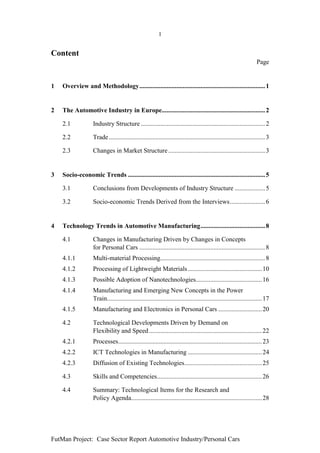
Content
                                                                                                                    Page


1   Overview and Methodology.............................................................................. 1


2   The Automotive Industry in Europe................................................................ 2

    2.1             Industry Structure ............................................................................. 2

    2.2             Trade................................................................................................. 3

    2.3             Changes in Market Structure ............................................................ 3


3   Socio-economic Trends ..................................................................................... 5

    3.1             Conclusions from Developments of Industry Structure ................... 5

    3.2             Socio-economic Trends Derived from the Interviews...................... 6


4   Technology Trends in Automotive Manufacturing........................................ 8

    4.1             Changes in Manufacturing Driven by Changes in Concepts
                    for Personal Cars .............................................................................. 8
    4.1.1           Multi-material Processing................................................................. 8
    4.1.2           Processing of Lightweight Materials .............................................. 10
    4.1.3           Possible Adoption of Nanotechnologies......................................... 16
    4.1.4           Manufacturing and Emerging New Concepts in the Power
                    Train................................................................................................ 17
    4.1.5           Manufacturing and Electronics in Personal Cars ........................... 20

    4.2             Technological Developments Driven by Demand on
                    Flexibility and Speed ...................................................................... 22
    4.2.1           Processes......................................................................................... 23
    4.2.2           ICT Technologies in Manufacturing .............................................. 24
    4.2.3           Diffusion of Existing Technologies................................................ 25

    4.3             Skills and Competencies................................................................. 26

    4.4             Summary: Technological Items for the Research and
                    Policy Agenda................................................................................. 28


FutMan Project: Case Sector Report Automotive Industry/Personal Cars
2


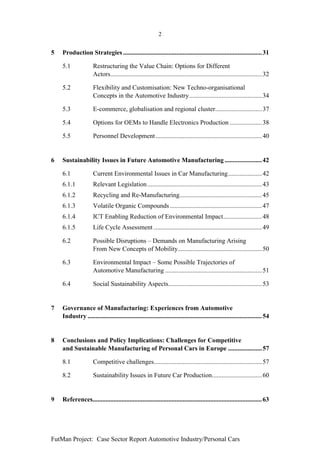
5   Production Strategies ...................................................................................... 31

    5.1              Restructuring the Value Chain: Options for Different
                     Actors.............................................................................................. 32

    5.2              Flexibility and Customisation: New Techno-organisational
                     Concepts in the Automotive Industry............................................. 34

    5.3              E-commerce, globalisation and regional cluster............................. 37

    5.4              Options for OEMs to Handle Electronics Production .................... 38

    5.5              Personnel Development .................................................................. 40


6   Sustainability Issues in Future Automotive Manufacturing ....................... 42

    6.1              Current Environmental Issues in Car Manufacturing..................... 42
    6.1.1            Relevant Legislation ....................................................................... 43
    6.1.2            Recycling and Re-Manufacturing................................................... 45
    6.1.3            Volatile Organic Compounds ......................................................... 47
    6.1.4            ICT Enabling Reduction of Environmental Impact........................ 48
    6.1.5            Life Cycle Assessment ................................................................... 49

    6.2              Possible Disruptions – Demands on Manufacturing Arising
                     From New Concepts of Mobility.................................................... 50

    6.3              Environmental Impact – Some Possible Trajectories of
                     Automotive Manufacturing ............................................................ 51

    6.4              Social Sustainability Aspects.......................................................... 53


7   Governance of Manufacturing: Experiences from Automotive
    Industry ............................................................................................................ 54


8   Conclusions and Policy Implications: Challenges for Competitive
    and Sustainable Manufacturing of Personal Cars in Europe ..................... 57

    8.1              Competitive challenges................................................................... 57

    8.2              Sustainability Issues in Future Car Production............................... 60


9   References......................................................................................................... 63


FutMan Project: Case Sector Report Automotive Industry/Personal Cars
1


1           Overview and Methodology


The aim of the case studies in the FutMan project is to integrate and focus the re-
sults from the analysis of the three projects strands (i.e. materials, transformation
processes and industrial organisation) for key sectors of manufacturing in Europe.
This case study is dealing with the automotive industry concentrating on the manu-
facturing of personal cars. To get a picture of the current trends and expected future
developments in the automotive industry, a variety of literature sources was evalu-
ated. To underpin the results and to introduce different perspectives, interviews with
experts from the sectors were carried out by the FutMan project consortium. The
interview partners in the automotive sector were European experts working at dif-
ferent stages in the value chain. Approximately 20 of the experts interviewed were
directly involved into manufacturing of personal cars. Some others could provide
insights into the automotive sector from other perspectives (e.g. automation or in-
strumentation). The results of these interviews constitute an important part of this
case study.

This report is proceeding as follows. In section 2 some basic information about the
structure of the European automotive industry is given. Ongoing changes in the
organisation of the manufacturing of personal cars are described. In section 3 socio-
economic developments that are driving this sector are identified. Section 4 dis-
cusses the main technological trends that are emerging in the manufacturing of per-
sonal cars at the moment. As manufacturing is heavily depending on the character-
istics of the cars that will be produced in the future, this section is organised along
specific technological features like materials, power-train concepts and electronic
devices. Another strand of developments is associated with the growing demand on
flexibility in manufacturing. In section 5 the focus is on organisational strategies
that are adopted in the automotive industry to cope with the demands of globalised
markets. Section 6 is dealing with sustainability issues. As the FutMan project is
explicitly aiming at „maintaining a competitive and sustainable manufacturing sys-
tem“ in Europe the challenges raised by sustainability are given special emphasis.
Therefore current and future environmental concerns raised in manufacturing of
personal cars, aspects of social sustainability and competitiveness are discussed. In
section 7, the results from the research on governance in the framework of the Fut-
Man project are evaluated in respect to car manufacturing. The influence of legisla-
tion on the strategies of relevant actors from the automotive sector is analysed. Fi-
nally, section 8 summarises the main conclusions and implications for technology
policy, especially with regard to FP6.


FutMan Project: Case Sector Report Automotive Industry/Personal Cars
2


2           The Automotive Industry in Europe


2.1         Industry Structure

The transport equipment sector is the largest sector in the manufacturing industry
and within this sector, the manufacture of motor vehicles including their parts,
components and equipment is by far the biggest, resulting alone in over 10% of EU
total manufacturing value. Furthermore, the production of transport equipment is
also of major importance to upstream activities, most notably metal processing,
rubber, plastics, electronics, textiles and engineering.

The importance of the automotive industry for the Western European market is in-
disputable. In 2000, one third of the global production of cars was produced in
Western Europe (i.e. 20 million passenger cars). In 1995, it was by far the industry
sector in the EU with the highest number of people employed: 1.2 million persons
work in manufacturing and assembling of motor vehicles and over half a million
work in manufacturing of parts for motor vehicles. Adding up the jobs that are indi-
rectly related to the industry, automobile manufacturers employ over 12 million EU
citizens.

It is an industry that closely follows the general business activity even though a se-
vere downturn in the early 1990s shows how the recession affected the production
of cars even more than the total manufacturing in Western Europe. During this time
period, the manufacturing of cars declined while the production of parts and acces-
sories experienced a strong growth. During the latter part of the 90s, a general rapid
expansion in production took place as consumer demand recovered, and in 1997,
production value totalled over 370 billion euros.

According to OECD estimates, the total number of vehicles in OECD countries is
expected to grow by 32 % from 1997 to 2020 and, on a global scale, with 74 % in
the same time period. The European Commission estimates in its White Paper
“European Transport Policy for 2010: Time to decide” that the demand for the
transport of goods within the EU will increase with 38 %, and the demand for pas-
senger transport by 24 % between 1998 and 2010.

The activities are spread out over most Member States but for both sub sectors,
motor vehicles as well as parts and accessories, Germany is the largest producer
with about 40 % of the production respectively. The industry is also particularly
important in the Swedish, French, Italian, Spanish and UK economies. The manu-


FutMan Project: Case Sector Report Automotive Industry/Personal Cars
3


facturing of motor vehicles is largely done in very big companies (the world’s three
largest companies in 1998 were all car manufacturers). In the EU, Volkswagen,
Ford (Volvo), PSA Peugeot Citroen, General Motors and Renault are the biggest
players in the manufacturing of passenger cars.

In comparison with the main international actors, the USA and Japan, the patterns
differ between the two sub sectors. For the production of motor vehicles, the EU
was the leading producer in the Triad accounting for 42 % in 1995 while the USA
produced one third and Japan the remaining quarter. The situation is reversed for
parts and accessories where Japan represents half of the production and the USA
and the EU produce one quarter each.


2.2         Trade

The industry is an important positive contributor to the EU trade balance. In 1999,
the trade balance surplus exceeded 30 bn euros. The single most important exporter
to the EU is still Japan, even though there has been a slight decrease since the 80s.
The USA sells a substantial share of parts and accessories to the EU but the U.S.
share of motor vehicles market in Europe is relatively low. For both sectors, several
Eastern European countries have become increasingly important and Hungary, the
Czech Republic and Poland together have a share of over 20 % of the EU import.
The main destination for EU exports is the USA, accounting for more than a quarter
of the export of parts and accessories and as much as almost 40 % of motor vehi-
cles. Just as for imports, several Eastern European countries have grown in impor-
tance as trade partners but also Brazil and Mexico have increased their share. Japan
and Switzerland keep being important export destinations for motor vehicles.


2.3         Changes in Market Structure

A number of manufacturers dominate on the European level. When looking at indi-
vidual Member State markets, these are often dominated by domestic manufactur-
ers. These tend to have larger distribution infrastructure in their respective domestic
markets and the customers’ preference for cars produced within the country still
plays an important role. The need to reduce this dependency on domestic markets
and to improve the competitiveness on markets elsewhere is of utmost importance.
This is continuously being done, by investing in transplant production facilities and
by joint ventures. There has been a reduction in the number of independent manu-
facturers, as niche producers have been acquired by high-volume manufacturers. In
the late 1990s the leading firms grow significantly through mergers and acquisitions
rather than by internal growth. Consolidation between the world’s largest vehicle


FutMan Project: Case Sector Report Automotive Industry/Personal Cars
4


manufacturers is a fact and one example is Daimler-Benz (D) and Chrysler (USA).
As costs continue to increase, partnerships and alliances are providing a cost-
effective method to develop a competitive selection and to reduce dependence on
domestic markets.

Investments made by EU manufacturers abroad rose and were close to 40 billion
euros in 1998. Again, Germany is the most active country, carrying out almost 75 %
of the EU investment abroad. At the same time, and especially during the beginning
of the last decade, there was a high degree of investment by south-east Asian pro-
ducers in Europe, often justified as being in anticipation of the creation of the single
market.

The globalisation process has greatly affected the sector and has resulted in leading
manufacturers setting up transplants and negotiating alliances throughout the world.
This has often lead to the development of transport specific geographical clusters.

With an almost saturated demand in mature markets, attention is turned to countries
like China, Malaysia, Indonesia and India in search of new customers. The densely
populated countries of south-east Asia are considered as one of the key markets in
the future with increasing mobility requirements and growing prosperity.


FutMan Project: Case Sector Report Automotive Industry/Personal Cars
5


3           Socio-economic Trends


3.1         Conclusions from Developments of Industry Structure

In the preceding sections, the European automotive industry was presented in gen-
eral terms. It has been shown that the organisation of production processes in the
automotive industry is subject to severe restructuring.

The important overall directions were clearly outlined: Concentration of OEMs and
suppliers, further internationalisation of manufacturing, shift of competencies be-
tween OEMs and suppliers and further pyramidisation of the demand chain. Nev-
ertheless it is by no means clear how the new structures will exactly look like. Many
actors are still struggling to position themselves in the new organisation of the
value-chain and there are distinctively different strategies for dealing with the chal-
lenges of this re-organisation. For European R&D policy it is of importance to
know the different options and to evaluate the effects on the competitiveness of
European manufacturing but also their relation to changing demand patterns.

The following questions regarding socio-economic trends are considered to be of
importance in respect to the objectives of the FutMan project and will therefore be
further investigated in the course of this report:
•   What does the tiering of the supply chain mean for companies on different posi-
    tions in the value chain? Which options are there especially for SMEs to position
    themselves?
•   What new forms of co-operation are arising? What are the implications of these
    forms for competitiveness and sustainability?
•   Are there ways to meet the internationalisation of manufacturing for globalised
    markets that are more compatible with the aims of sustainable manufacturing
    than others?
•   How do different technological options (e.g. ICT technologies, manufacturing
    processes) relate to organisational change? Are there enabling technologies for
    more sustainable solutions? Do desirable solutions for the organisation of work
    require technical developments?
•   What are the demands on skills and competencies arising from the organisational
    and technological changes that are expected?
•   Is the car industry setting or at least influencing socio-economic trends and how?


FutMan Project: Case Sector Report Automotive Industry/Personal Cars
6


•   How are the relations between global car manufacturers especially in Europe, US
    and Japan influencing the developments? What does it mean that instead of sim-
    ple competition there is a complex network of interaction being daily re-shaped
    by joint ventures, transplants, mergers and changes in capital structure?
•   Is the diversity and fragmentation of European car manufacturing working as a
    strength or a weakness?


3.2           Socio-economic Trends Derived from the Interviews

Much has been said about socio-economic drivers in the strand reports and the sce-
nario workshops which applies to automotive industry just the same as to industry
in general. Nevertheless there are some issues taking a special meaning in the auto-
motive sector. In the following paragraphs some items that were mentioned as rele-
vant drivers for their industry by the interviewees are listed.

Increasing individualisation is driving the need for customised cars with a multi-
tude of special features.1 Several experts from the automotive sector think that cus-
tomers will be ordering their individual car to be manufactured in 2020.

In addition to this, changing values are perceived to influence several different
lines of developments like increasing safety demand.

“The overall attitude in society with respect to technology is determining product concepts in per-
sonal cars (e.g. technology as toy or "hidden" technology). Especially ideas about replacing tasks of
the human drivers by technical control systems (up to automatic guiding systems) are dependent on
the direction the public opinion is taking. There seems to be a latent conflict between freedom and
safety and it is still unclear in which direction concepts of personal cars are heading. Current trends
are conflicting.” (electronic system supplier)


The ageing of population in Europe means that bigger shares of drivers will have
special needs e.g. in respect to comfort, support of eyesight etc.. This will effect
several new features in personal cars.

Lack of young workforce in Europe is perceived differently. Automotive manu-
facturers are often very attractive to workers because of the high wages so the ma-
jority of the companies is not worrying about lack of workforce very much. How-
ever, some experts were concerned with the issue and there is a general fear that
European workforce will not be skilled enough in the future when education funds
are reduced.

1 cf. (Sun Microsystems Inc., 2000, p.7 ff.)


FutMan Project: Case Sector Report Automotive Industry/Personal Cars
7


“It is also important to make the best use of different ages and combine the right teams and let them
learn from each other. Generally, older workers have a lot of experience and practical knowledge
while the younger ones have more theoretical knowledge and are faster”(modules supplier)


“In the future it will be a challenge to make the work place attractive and attract and keep the right
people.” (contract manufacturer)


Resources: It is obvious that oil resources are of special concern for the automotive
industry. The anticipation of future scarcity of conventional fuels is a major driver
for several technological developments that were described in section 4. Above this
there seems to be no specific lack of resources. Though the companies are trying
not to become dependent on one special material. Prices of material resources (e.g.
magnesium) are observed closely.

Environmental legislation clearly is one of the major drivers of developments in
the automotive sector. This holds especially for the take-back regulations and emis-
sions standards. But several other regulatory measures are important as well (see
section 6.1.1)

Globalised production is a fact in the automotive sector. Nevertheless the demand
for global production is still driving new developments (see section 4.2).

“Environmental awareness has increased but is now no major driver for technological development
because it does not influence the decision to purchase cars. This is because slight differences in
environmental friendliness are not perceived by the majority of customers. The willingness to spend
extra money is mainly dependent on useful extra functions.” (electronic system supplier)


FutMan Project: Case Sector Report Automotive Industry/Personal Cars
8


4             Technology Trends in Automotive Manufacturing


“The main problem of the whole automotive sector is the lack of willingness or ability for real inno-
vation. R&D is invested mainly in improvement of existing solutions instead of radically new con-
cepts.” (electronic systems supplier)


In the strand report „transformation processes“ it was concluded that manufacturing
is almost entirely reactive to developments in other areas instead of developing on
its own line to a considerable extent as well. Particularly, manufacturing is driven
by product trends on the one hand, especially new materials, and by demands from
globalised markets like flexibility and increasing competition on the other hand.

Both drivers are simultaneously shaping the development and adoption of manu-
facturing technologies. This is especially true for automotive manufacturing where
several new product trends are arising at the moment and which is far ahead in the
internationalisation of production. For analytical purposes we will first discuss
technological trends driven by new features of personal cars. Afterwards (4.2) we
will outline which technological trends in manufacturing are expected to arise as a
reaction on the rising demands on flexibility and speed.

“80% of new developments originate from the automotive sector, thus this will be the driving force
in the future” (materials and mechatronics expert from applied research unit)


The automotive industry is a prime sector in driving new technological develop-
ments. Because of its high R&D expenses, this industry is determining the direc-
tions of research in several areas. Accordingly, many of the technological develop-
ments that were outlined in the strand reports as well as discrete transformation pro-
cesses are driven by the needs of the automotive industry or at least relevant for
automotive applications.


4.1           Changes in Manufacturing Driven by Changes in Con-
              cepts for Personal Cars


4.1.1         Multi-material Processing

The adoption of new materials in cars is a very important driver for the develop-
ment and implementation of new manufacturing technologies in the automotive


FutMan Project: Case Sector Report Automotive Industry/Personal Cars
9


industry. This was stated by several of the experts as well as in the automotive
group of the FutMan Scenario workshops.

The variety of materials used in automotive design is steadily increasing and there
is a clear trend to use specific materials for specific purposes (multi-material de-
sign). Though the quantitative division between advanced and classical materials
depends on the background described for the trajectories of materials development
outlined in the materials strand report by CMI2, it becomes clear that hybrid materi-
als and composites will increasingly be used in any of the trajectories. Another
trend mentioned in the interviews and in the environmental reports of car manufac-
turers (though of minor importance in R&D expenditure) is the use of biodegrad-
able materials to be used for interior parts.

Though the trend to multi-material design or material-mix seems to be universally
acknowledged and is expected to be increasing, it is by no means clear which mate-
rials will be the “winners” of this process. Instead it is obvious that there is severe
competition between different kinds of materials to be used in cars especially in
light weight construction (see 4.1.2). Associated with the current competition are
powerful associations of material providers from different regions of the world.

“By the way, the steel industry and its aluminium counterparts are not co-operating but fight each
other.” (manufacturer of aluminium parts of the car)


As each type of material is connected with specific demands on manufacturing pro-
cesses, it is clear that competition between future materials will be accompanied by
competition between manufacturing processes. In general there is a very strong
need for processes that can be adapted to the needs of different materials and for
machines that can be programmed or configured to perform different processes.

In addition, there will be an increasing need for new ways of joining different mate-
rials. Accordingly, adhesives are expected to gain in importance in car manufactur-
ing. For example, in the BMW 7 there is an increase of glue line from 8 to 150 me-
ters from one model to the next.3 Newly developed adhesives that are resistant
against oil are allowing the increasing use of this technology in car manufacturing.4
In addition to its suitability for multi-material design, adhesion is reducing weight
and increasing stiffness. Especially photo-bondings (adhesives hardening under
light) seem to be of growing interest.5

2 cf. strand report materials prepared by CMI
3 cf. materials strand report by CMI and ( 2002d)
4 Nevertheless the contact with oil from other processes has to be very limited. Another problem is
  warming of adhesives through welding of neighbouring parts. (e.g. 2002c)
5 cf. ( 2002f)


FutMan Project: Case Sector Report Automotive Industry/Personal Cars
10


Other promising joining technologies for different materials in cars like collar join-
ing6 and different variants of snap fastening are arising. These processes are non-
thermal, do not need any lubrication and can be combined with adhesives. Also
coated materials can be joined.

As was pointed out in the materials strand report, the need for specific materials for
specific functions will lead to an increasing integration of materials design into the
design of manufacturing processes. Costs will be reduced by adapting processes
especially designed for specific materials (see materials report prepared by CMI).
There will be a simultaneous optimising of product, process and material properties.
In this optimisation, modelling and simulation will play a very important role. A
number of experts named the improvement of the interface between production,
process and material properties via simulation as a prime research issue in order to
enhance competitiveness of European car manufacturing.

“adhesion means application of additional material between components. This is problematic for
material quality as well as for environmental reasons. Therefore (laser)welding of plastics is the
better solution” (manufacturer of machine tools for laser welding)


From a recycling point of view, multi-material design is highly problematic. The
more different materials are being used in a product, the more difficult and expen-
sive are the re-manufacturing and recycling processes. Neither is it clear how dif-
ferent new joining technologies relate to recycling demands. Nevertheless, recy-
cling can be enabled by some measures like labelling the materials used and consid-
eration of re-manufacturing at the development of new joining methods. For exam-
ple, some adhesives are loosening when heated and this enables easy recycling. This
aspect should be stressed in any research support measure. Accordingly, joining
technologies for new materials with a view to recycling ability were also considered
as one of the two most important cross cutting issues for research priorities by the
automotive group at the scenario workshop.


4.1.2        Processing of Lightweight Materials

In order to reduce the fuel consumption, designers in the automotive industry are
aiming at reducing the weight of cars as far as possible. By 2020, the weight of a
car is expected to be reduced by 17% (250 kg).7 Accordingly, weight reduction is


6 Mechanical process where a collar is produced in a sheet metal by pressing a punching tool
  through it. The plastic component can then be joined to the metal sheet by simple pressing
  (similar to clinch technology)
7 cf. (Mercer und HypoVereinsbank, 2001b)


FutMan Project: Case Sector Report Automotive Industry/Personal Cars
11


one of the main drivers of material selection in automotive industry. The following
developments are generally expected8:
•   Body-Exterior: use of aluminium, magnesium and plastics in the very near future
•   Body-Structure: metal foams (2003), steel/aluminium-space-frame (2004),
    sandwich-structure (2005), composites (2006), plastics (2015).

However, especially with respect to the body structure, it is by no means clear to
what extent these advanced solutions will be applied. Some of these technologies
might be confined to niche-cars and there are experts who reckon that the conven-
tional steel frame will stay on the market for quite some time. When manufacturers
have decided for a certain materials concept for car bodies, they are likely to stay
with it for quite some time instead of switching to the next trend.

The scenario automotive group expects a general increase in the use of aluminium
and magnesium. Additionally, the emergence of other lightweight materials is ex-
pected in case the political background is characterised by a high degree of con-
certed policy.

“As of 2007 and onwards, coated and completely coloured plastics (fully recyclable) will have a
breakthrough in personal cars ... This will need completely new competencies from designers.”
(automotive OEM)


Magnesium
While magnesium is considered to have increasing importance but is confined in its
use for niche applications, aluminium is widely expected to be of growing impor-
tance in all areas of car manufacturing.9 However, some studies are expecting a rise
of average magnesium share in a car from the current ca 2.3 kg up to 113 kg.10
There are advantages with magnesium such as the low weight (one third of the
weight of aluminium), but also disadvantages such as high costs and safety prob-
lems in processing the material. Nevertheless, prices are expected to fall from
around 2010 due to expanded use of resources in China.

“The introduction of magnesium-alloys will require completely new production technologies, for
example, magnesium can not be formed easily”(Materials and Mechatronics expert from research
unit)


8 cf. (Mercer und HypoVereinsbank, 2001a, p. 7 ff.)
9 For detailed information on different alloys cf. CMI strand report on materials
10 These figure were obtained for Ford. Cf. e.g. ( 2002i)


FutMan Project: Case Sector Report Automotive Industry/Personal Cars
12


Aluminium
As the first car manufacturer, Audi started with mass manufacturing of aluminium
bodies for the A2 in 2000.

Examples for advanced aluminium applications in cars:
components                             processes
Door:                                  die casting, extrusion, press
Range Rover, Opel Omega                joining: mix from adhesion, welding,
                                       riveting, screwing11
Audi A3                                laser-welding
Motor parts                            sintering
Full body:
Audi A8, A2                            hydroforming, laser welding

The use of aluminium depends very much on the development of adequate proc-
essing technologies. High investments are necessary to switch to a new material in
car manufacturing. For example, it is reckoned that Audi planned for five years and
invested more than 150 million Euros for their new aluminium manufacturing
site.12

“The aluminium car industry today would gain very much in competitiveness if the extrusion tech-
nology could be developed further and there are many aluminium automotive industries in Europe”
(aluminium parts supplier)


For aluminium, the main processes being currently under investigation are: laser
processing (detailed discussion see below), extrusion processes (see material strand
report by CMI), hydroforming13, flow-forming (a kind of rolling which is done
immediately after casting)14, compact-spraying (a powder-metallurgy process),
foaming and sintering.

From the environmental point of view, there are two aspects to be considered with
respect to aluminium. On the one hand, it needs a high amount of primary energy
for its production. On the other hand, it can be reused at a high energy level which
gives it an advantage over plastics in recycling (magnesium has roughly the same
advantage). Overall, with increasing taxes on energy use, aluminium is becoming a
more expensive material.


11 cf. ( 2002a)
12 cf. ( 2001)
13 A process where tubes are formed into very complex structures by extremely high pressure. This
   process is also interesting because it reduces process steps and parts needed.
14 cf. VDI nachrichten 2002h


FutMan Project: Case Sector Report Automotive Industry/Personal Cars
13


“Extrusion of aluminium can be used in many areas where steel on the contrary needs to be welded
together. Accordingly, aluminium profiles can have varying/floating thickness which is a clear
benefit.” (aluminium parts supplier)


“There is still a growing demand for low fuel vehicles in combination with recyclable materials.
Thermoplastics are light, strong and in this aspect good for automobiles but they can not be recy-
cled. That is where aluminium comes in. It weighs a third of steel and even though thicker parts are
needed than for steel, the total weight is much less.”(company producing aluminium chassis)


Steel
Some interview partners pointed out that the variety of steel offered is steadily in-
creasing which means that there is also a high potential for light weight steel appli-
cations in the automotive sector. In particular, highly compact steel products are
competing with aluminium. Because of their high strength, their use is also inducing
important weight reductions.15 In addition, steel is cheaper than many other materi-
als and easy to recycle. The steel industry has started a special initiative to develop
steel light weight concepts for cars and promote it to the automotive industry
(ULSAC – Ultra light steel auto closures).

Plastics
There is a heavy competition between plastics, composites and light metals to be
used for several purposes in personal cars. Several car manufacturers have started to
use plastics for parts of the body.

There is particularly one possible usage of plastics, which could lead to a disruptive
change for automotive manufacturing. If plastics can be coated and coloured “from
the beginning”, paint-shops that today account for a substantial part of the automo-
tive manufacturing process might vanish.

Nevertheless, the use of plastics raises several questions with respect to recycling.
To make re-use possible, it is important to use only a limited number of plastics and
to label the components (see also section 6.1.2).

“Use of plastics will mean a complete restructuring of manufacturing. Issues like clean room
manufacturing will arise. New joining technologies will be needed. Plank concepts will have to be
adapted. Automation will be much higher.” (OEM manufacturing planner)


15 cf. 2002e and 2002g


FutMan Project: Case Sector Report Automotive Industry/Personal Cars
14


Other materials
Hybrid materials like foamed metals are also expected to gain importance but com-
posites and hybrid materials are generally difficult to reuse. It is therefore recom-
mendable to integrate recycling considerations into research projects dealing with
light weight construction, just as for multi-material processing.

Regarding new materials, as one of the interviewees pointed out, there are several
possibilities for weight reduction that have not even been investigated by now be-
cause of high costs. For example, titanium has a high potential as a light weight
material but is much too expensive at the moment. Another promising material that
is considered for automotive applications only in very pre-application projects is
carbon composite, which is expected to bring weight reductions up to 40%.16

Laser
The necessity to use plastics, hybrids and composites has brought about a variety of
new processes. A key technology for processing light weight materials is laser
processing. Laser welding has revolutionised the manufacturing of cars as several
materials can be welded with a high degree of safety and exactness. The application
of laser welding in serial manufacturing is rising at the moment and is expected to
be further expanding according to literature as well as by several of the experts in-
terviewed.17 While laser welding and cutting of conventional blank sheets and laser
cracking of motor parts are already widely implemented, the processing of innova-
tive materials like foamed metals is currently under way. Application of laser tech-
nology to plastics and composites as well as to several alloy metals and hardened
materials is heavily investigated at the moment and even processing of copper for
electronics applications is considered. For example, regarding plastics, VW is using
laser welding robots for cutting covering plastics. Automotive suppliers are in-
creasingly using laser welding for plastic housings (e.g. of electronic components).
Furthermore, laser soldering and laser welding for micro applications like sensors
are being tested.

For all these advanced applications, process control and quality control are key is-
sues. Digital image processing is essential for testing welding seam quality.18 Sen-
sors are of high importance to enable such control concepts as a variety of parame-
ters have to be surveyed with a high degree of exactness. Furthermore, new kinds of
laser sources have to be investigated to allow further applications.


16 The EU project “Tecabs” (Technologies for carbon fibre reinforced, modular, automotive struc-
   tures) which is co-ordinated by Volkswagen is dealing with this issue.
17 E.g. the new Audi A2 has 30m laser weld seams
18 cf. ( 2001)


FutMan Project: Case Sector Report Automotive Industry/Personal Cars
15


Which of these technologies do you think have the potential for disruptive changes for your indus-
try?
“Laser technology for joining materials. To some extent it is available already today, but it is very
expensive. This will develop in the future and will result in decreased usage of material since with
this technology, two materials (or pieces of materials) can be joined lying next to each other without
overlap (which is the case with today’s joining technologies).”
(Automotive systems supplier)


Apart from the mentioned positive aspects on safety, laser technology is also ad-
vantageous for high degrees of automation (see below) and supports process inte-
gration. Furthermore, it is extremely fast and flexible. Because no tools are needed,
there is no wear out. Laser technology therefore seems to be a key process for com-
petitiveness of manufacturing of personal cars in Europe.

“Lightweight construction is driven by the need for highly automated production at
high wage locations” (OEM manufacturing planner)

As one expert mentioned, not all manufacturing processes are equally easy to auto-
mate and therefore suitable for production in high-wage locations (see also strate-
gies section). Therefore, choice of materials which go along with certain processes
has an impact not only on the nature of the jobs in car manufacturing but also on the
location of these jobs. The expert thought the application of highly automated light
weight manufacturing essential for the survival of European car manufacturing.

Conclusions
In summary it can be concluded that there is a multitude of trends in light weight
construction and that some developments are heading in different directions. At the
moment, it can not be foreseen in which state light weight construction in car manu-
facturing will stabilise. Nevertheless, it is clear that the direction of change will
have major impacts in the following areas:
•   car manufacturing processes and therefore on the opportunities for machine tool
    manufacturers and automotive suppliers
•   recycling possibilities and environmental burden
•   employment issues

Accordingly, there is an urgent need for innovative concepts for light weight design
and manufacturing that takes into account the whole vehicle life cycle including
manufacturing. Therefore, in the interest of competitiveness and sustainability, it is
highly recommendable to investigate this area more closely. The high degree of
uncertainty at present about life cycle developments at the same time makes it pos-
sible to actually affect developments in this area. For example, it might be worth-
while to invest into one of the more far reaching alternatives instead of risking a


FutMan Project: Case Sector Report Automotive Industry/Personal Cars
16


lock in into half-way solutions. At the same time, some solutions that seem to be
very advanced with respect to weight reduction might lead to outsourcing of manu-
facturing operations or bring up new recycling problems.


4.1.3         Possible Adoption of Nanotechnologies

In the materials and transformation processes strand reports, future applications of
nano-science were discussed in detail. Several of the applications named there are
of relevance in the automotive industry.

As sensor technologies are considered to be of high importance for the cars them-
selves as well as for manufacturing processes19, nanotechnologies that enable
smaller sensors with higher sensitivity would allow for major progresses in the
automotive sector. Example of applications mentioned by the experts were how
sensors could be used to tell the driver when he comes too close to the car in front
of him and when to brake or not etc.

Other impacts are expected with nano-powders20 that help to improve powder-
metallurgy methods. This would certainly have an effect on the industry since pow-
der-metallurgy is widely expected to be increasingly used in car manufacturing.
Nevertheless, is has to be diligently considered if or how nanopowders can be recy-
cled. If this issue can not be solved, these methods are not likely to be taken up in
the automotive sector since there is a strong pressure to recycle large parts of old
cars (see section 6.1.2).

In the interviews, the main issue raised in connection with nano-technology was
coating and painting. The majority of the automotive experts that were interviewed
expected applications of nanotechnology in car manufacturing in the time period up
to 2020 in this area.

New coatings for chassis and body as well as for other parts, which would result in
harder and stronger material would at the same time allow for thinner materials and,
thus, lighter cars.

There is a major effort of car manufacturers to replace current coating methods to
reduce VOC emissions (see all environmental reports listed). Several car manufac-
turers have developed alternatives to classical painting methods, but most of them
are still difficult to apply universally. Therefore, the use of nano-coatings, espe-


19 This was pointed out especially in the strand report transformation processes.
20 A detailed explanation of nano powders can be found in the strand report materials Annex I


FutMan Project: Case Sector Report Automotive Industry/Personal Cars
17


cially for plastics, is highly interesting. Furthermore, nano-coatings are expected to
bring new improved surface quality and to add interesting features to the surfaces.

Examples for this are:
•   Dirt repellent coatings for lights and window screens
•   Self cleaning coatings
•   Shining foils
•   Tire coatings improving adhesion


Moreover, with nano-coatings used to improve tooling, as was suggested in the
strand report for transformation processes, this will be of high importance to the
automotive sector due to the fact that new tools are needed to meet the increasing
demands on fast processing of different materials. New tool coatings would be even
more interesting – due to cost considerations as well as to environmental concerns -
if coolants or lubricants can be avoided or reduced through their use.


4.1.4       Manufacturing and Emerging New Concepts in the Power
            Train

The car industry’s answer to the request of making the transport system more sus-
tainable is not least the development of new propulsion systems. There are several
directions taken, from the incremental innovation of the traditional combustion en-
gines via the use of alternative fuels like natural gas and synthetic as well as renew-
able fuel up to electrical power using hybrid concepts. The most radical and in-
creasingly probable change is the use of fuel cells. Therefore, in the following,
changes and challenges connected with this innovation are elaborated.

The fuel cell implies considerable technical changes throughout the sector and this
will also have far-reaching impacts on the related equipment producing industries
concerned with the motor and its periphery (cf. Wengel/Schirrmeister 2000). The
drive train and motor accounts for around one third of the value of a car. Demand
will tend to shift away from mechanical parts such as crankshafts, cylinders and
pistons, towards process-technical and electro-technical components such as electri-
cal motors or gas generating equipment. There will thus be completely new manu-
facturing processes for car engines. An important question is how the traditional
innovation partnerships between automotive companies and machine tool manu-
facturers will react to that challenge. These co-operations mark a leading edge of
machine tool innovations and are also a stronghold of European manufacturing
sectors.


FutMan Project: Case Sector Report Automotive Industry/Personal Cars
18


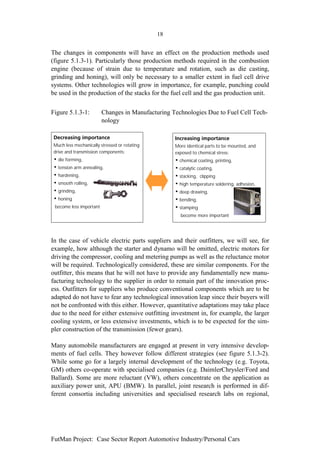
The changes in components will have an effect on the production methods used
(figure 5.1.3-1). Particularly those production methods required in the combustion
engine (because of strain due to temperature and rotation, such as die casting,
grinding and honing), will only be necessary to a smaller extent in fuel cell drive
systems. Other technologies will grow in importance, for example, punching could
be used in the production of the stacks for the fuel cell and the gas production unit.


Figure 5.1.3-1:          Changes in Manufacturing Technologies Due to Fuel Cell Tech-
                         nology

Decreasing importance                              Increasing importance
Much less mechanically stressed or rotating        More identical parts to be mounted, and
drive and transmission components:                 exposed to chemical stress:
• die forming,                                     • chemical coating, printing,
• tension arm annealing,                           • catalytic coating,
• hardening,                                       • stacking, clipping
• smooth rolling,                                  • high temperature soldering, adhesion,
• grinding,                                        • deep drawing,
• honing                                           • bending,
 become less important                             • stamping
                                                     become more important


In the case of vehicle electric parts suppliers and their outfitters, we will see, for
example, how although the starter and dynamo will be omitted, electric motors for
driving the compressor, cooling and metering pumps as well as the reluctance motor
will be required. Technologically considered, these are similar components. For the
outfitter, this means that he will not have to provide any fundamentally new manu-
facturing technology to the supplier in order to remain part of the innovation proc-
ess. Outfitters for suppliers who produce conventional components which are to be
adapted do not have to fear any technological innovation leap since their buyers will
not be confronted with this either. However, quantitative adaptations may take place
due to the need for either extensive outfitting investment in, for example, the larger
cooling system, or less extensive investments, which is to be expected for the sim-
pler construction of the transmission (fewer gears).

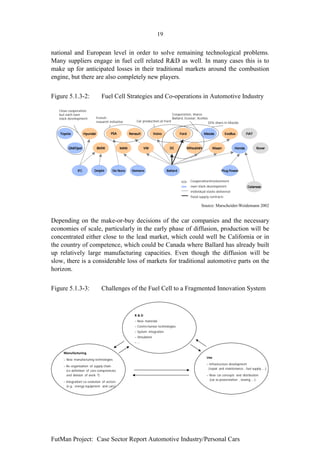
Many automobile manufacturers are engaged at present in very intensive develop-
ments of fuel cells. They however follow different strategies (see figure 5.1.3-2).
While some go for a largely internal development of the technology (e.g. Toyota,
GM) others co-operate with specialised companies (e.g. DaimlerChrysler/Ford and
Ballard). Some are more reluctant (VW), others concentrate on the application as
auxiliary power unit, APU (BMW). In parallel, joint research is performed in dif-
ferent consortia including universities and specialised research labs on regional,


FutMan Project: Case Sector Report Automotive Industry/Personal Cars
19


national and European level in order to solve remaining technological problems.
Many suppliers engage in fuel cell related R&D as well. In many cases this is to
make up for anticipated losses in their traditional markets around the combustion
engine, but there are also completely new players.


Figure 5.1.3-2:                   Fuel Cell Strategies and Co-operations in Automotive Industry

   Close cooperation
   but each own                                                                   Cooperation, shares
   stack development           French                                             Ballard, Ecostar, Xcellsis
                               research initiative       Car production at Ford
                                                                                                            33% share in Mazda


   Toyota            Hyundai             PSA         Renault           Volvo             Ford                Mazda           EvoBus        FIAT


        GM/Opel                BMW             MAN              VW               DC             Mitsubishi          Nissan        Honda           Rover


               IFC         Delphi         De Nora     Siemens                  Ballard                                   Plug Power


                                                                                                  Cooperation/involvement
                                                                                                  own stack development                     Celanese
                                                                                                  individual stacks delivered
                                                                                                  fixed supply contracts

                                                                                                         Source: Marscheider-Weidemann 2002


Depending on the make-or-buy decisions of the car companies and the necessary
economies of scale, particularly in the early phase of diffusion, production will be
concentrated either close to the lead market, which could well be California or in
the country of competence, which could be Canada where Ballard has already built
up relatively large manufacturing capacities. Even though the diffusion will be
slow, there is a considerable loss of markets for traditional automotive parts on the
horizon.

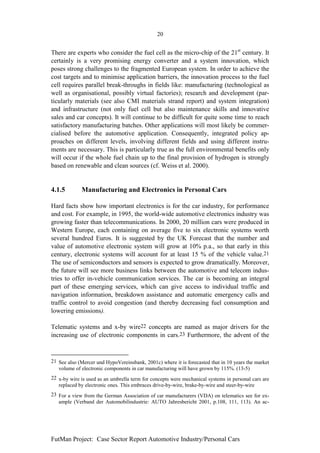
Figure 5.1.3-3:                   Challenges of the Fuel Cell to a Fragmented Innovation System


                                                        R&D
                                                        – New materials
                                                        – Contro /sensor technologies
                                                        – System integration
                                                        – Simulation
                                                        – ...


     Manufacturing
                                                                                                              Use
     – New manufacturing technologies
                                                                                                              – Infrastructure development
     – Re-organisation of supply chain
                                                                                                               (repair and maintenance , fuel supply ,...)
       (re-definition of core competencies
       and division of work ?)                                                                                – New car concepts and distribution
                                                                                                                (car as powerstation , leasing ,...)
     – Integration/ co-evolution of sectors
       (e.g.: energy equipment and cars )


FutMan Project: Case Sector Report Automotive Industry/Personal Cars
20


There are experts who consider the fuel cell as the micro-chip of the 21st century. It
certainly is a very promising energy converter and a system innovation, which
poses strong challenges to the fragmented European system. In order to achieve the
cost targets and to minimise application barriers, the innovation process to the fuel
cell requires parallel break-throughs in fields like: manufacturing (technological as
well as organisational, possibly virtual factories); research and development (par-
ticularly materials (see also CMI materials strand report) and system integration)
and infrastructure (not only fuel cell but also maintenance skills and innovative
sales and car concepts). It will continue to be difficult for quite some time to reach
satisfactory manufacturing batches. Other applications will most likely be commer-
cialised before the automotive application. Consequently, integrated policy ap-
proaches on different levels, involving different fields and using different instru-
ments are necessary. This is particularly true as the full environmental benefits only
will occur if the whole fuel chain up to the final provision of hydrogen is strongly
based on renewable and clean sources (cf. Weiss et al. 2000).


4.1.5        Manufacturing and Electronics in Personal Cars

Hard facts show how important electronics is for the car industry, for performance
and cost. For example, in 1995, the world-wide automotive electronics industry was
growing faster than telecommunications. In 2000, 20 million cars were produced in
Western Europe, each containing on average five to six electronic systems worth
several hundred Euros. It is suggested by the UK Forecast that the number and
value of automotive electronic system will grow at 10% p.a., so that early in this
century, electronic systems will account for at least 15 % of the vehicle value.21
The use of semiconductors and sensors is expected to grow dramatically. Moreover,
the future will see more business links between the automotive and telecom indus-
tries to offer in-vehicle communication services. The car is becoming an integral
part of these emerging services, which can give access to individual traffic and
navigation information, breakdown assistance and automatic emergency calls and
traffic control to avoid congestion (and thereby decreasing fuel consumption and
lowering emissions).

Telematic systems and x-by wire22 concepts are named as major drivers for the
increasing use of electronic components in cars.23 Furthermore, the advent of the


21 See also (Mercer und HypoVereinsbank, 2001c) where it is forecasted that in 10 years the market
   volume of electronic components in car manufacturing will have grown by 115%. (13-5)
22 x-by wire is used as an umbrella term for concepts were mechanical systems in personal cars are
   replaced by electronic ones. This embraces drive-by-wire, brake-by-wire and steer-by-wire
23 For a view from the German Association of car manufacturers (VDA) on telematics see for ex-
   ample (Verband der Automobilindustrie: AUTO Jahresbericht 2001, p.108, 111, 113). An ac-


FutMan Project: Case Sector Report Automotive Industry/Personal Cars
21


fuel cell is expected to bring a further push for electronic systems in the car.24 In
addition, the increasing use of cars as “office” is fostering the integration of elec-
tronic devices into the car’s interior.

From the results of the automotive scenario working groups, it becomes very clear
that electronic systems in personal cars might evolve on very different trajectories
depending on the development of the socio-economic background. For example, it
can be expected that there will be very sophisticated IT systems in the car to enable
multi-modality when public and private sector work together effectively. Differ-
ently, in more fragmented and individualistic futures, electronic components will
serve to add features to cars that enable their owners to differentiate themselves. It
can thus be concluded that the share of electronics in cars will be rising regardless
of how the specific applications will look like. This means that the ability to deal
with electronic components in personal cars will become ever more important in the
future.

“the car like one big computer ... ” (contract manufacturer)


At the moment, manufacturing of electronic components is posing several techno-
logical challenges as well as organisational problems to companies in the automo-
tive sector. It is still unclear whether there will be a major effort by automotive
companies to take on electronic production as a new core competency (see also
strategies section). Considering the multitude of issues and applications, it is to be
excepted that, if such an effort is made by European car manufacturers, this will be
a major push for electronics manufacturing in Europe, which, at the moment, is not
very strong.25

The following technological issues are raised by literature and interviewees (for the
organisational challenges see section 5.4):
•   Integrating electronics in the car almost always means thinking in mechatronics
    systems since, in the end, there are always mechanical components involved.26
    Accordingly, mechatronics is considered as extremely important for car design
    and manufacturing. It is mentioned how mechatronics poses high demands on
    interdisciplinary thinking and communication abilities (see section 4.3).


    count of the European perspective can be found in the IPTS Futures technology map, p. 50 and
    58
24 cf. Marscheider-Weidemann et al., 2002 and Wengel and Schirrmeister, 2000
25 This consideration is further elaborated in section 5
26 Mechatronics is mainly understood rather as a concept than a specific technology. The main
   feature of the concept being to think of electronic mechanic and other (pneumatic, hydraulic,
   magnetic etc.) components as an integrated system instead of a coupling of components


FutMan Project: Case Sector Report Automotive Industry/Personal Cars
22


•   Manufacturing of electronic components is changing classical patterns of car
    manufacturing. For example, the need for clean room production poses difficul-
    ties for today’s car manufacturers.
•   Standards are a major problem for the development of electronic components
    and in this respect. Systems integration is the main future challenge.
•   Simultaneous development of hardware and software is highly problematic.
    There is still no general quality standard for software systems in car manufac-
    turing.
•   There is a trend towards integrating electronic components directly into plastic
    parts of the car like instrument panels (“molded interconnect devices”).27 The
    use of flexible interconnects might save manufacturing steps and soldering
    points. However, this needs new repair concepts on the OEM side. The impact
    on recycling is still unclear.
•   With electronic components increasingly used close to the motor block, there
    will be a need for high temperature electronics, which will require other materi-
    als than silicon.
•   Failure of electronic components is becoming a major reason for car break-
    downs. Repair concepts therefore have to be adapted to the increased use of
    electronics.
•   Small scale manufacturing of electronic components might be a way to establish
    electronics as a competency of automotive manufacturers (OEMs and system
    suppliers).

“Sure, OEMs would like to do electronics by themselves. It’s just that their quality control is much to
bad and their software standards are much to confused to do this.” (Electronic systems supplier)


4.2           Technological Developments Driven by Demand on Flexi-
              bility and Speed

The automotive industry is under pressure to perform extremely fast and in a flexi-
ble way. Both factors are driven, on the one hand, by an increasing demand of indi-
vidual cars for special purposes and, on the other hand, by tightening competition
on globalised markets. Lead times and product life cycles have become significantly
shorter. Hence, flexibility as well as speed requirements are widely perceived as the
major current and future drivers of automotive manufacturing. The automotive in-
dustry in Europe is struggling to fulfil these demands. Several companies are en-
countering severe problems in combining quality and speed requirements. The

27 cf. 2002b


FutMan Project: Case Sector Report Automotive Industry/Personal Cars
23


technological trends emerging from this struggle will be discussed in the following
section (for the organisational strategies dealing with these issues see section 5).

“There are normally 1-2 years between the client’s request to the actual deliver. This time span has
continuously shortened since the car manufacturers decide as late as possible but keep the starting
date for assembling the car (we get sort of squeezed in between which again calls for standardised
solutions).”(producer of assembly lines and other equipment for automotive OEMs)


It should be noted that short life cycles of cars, rising multitude of variants as well
as short development times are by no means “natural laws”. They are the result of a
certain way of globalised manufacturing and use of cars, which may not be the most
sustainable choices. This section can therefore be interpreted in two directions. On
the one hand, measures can be taken to help the European automotive industry to
meet the demands of globalised manufacturing in its current face. On the other
hand, it can be attempted to change the political background to strengthen other
forms of globalisation.

This twofold perspective is also present in the results of the automotive working
group at the scenario workshops. The working group expects flexibility demands to
be further rising if the socio-economic background leads to an increasing emphasis
on individual values. This goes along with an emphasis on modular production.
Nevertheless, the number of variants is expected to increase even when there will be
a high degree of collective values. Regarding speed, the focus in this case is more
on updating of existing mobility solutions than on fast exchange of cars. Demands
on flexibility and speed are dealt with through multi-local organisational solutions
combined with sophisticated technological applications.


4.2.1         Processes

The increasing need for speed in production is enforcing an integration of proc-
esses. It is sought to reduce the amount of manufacturing steps and to apply proc-
esses that do not need specialised tools, but can be adapted to different functions by
programming. The whole manufacturing chain is radically changing to achieve
these aims. While OEMs are most concerned with time to market and fast ramp up,
suppliers need to adapt to fast changing demands of OEMs and contract manufac-
turers. The latter, which are manufacturing for different OEMs, again have very
special flexibility needs.

A clear „winner“ in the competition of fast and flexible processes is laser technol-
ogy which is extremely fast and flexible and can be highly automated. Accordingly,
laser processes are increasingly used (also because of their suitability for many dif-
ferent materials (see above)). Hydroforming and pressing with high forces are also
expected to gain importance as they reduce the number of manufacturing steps.


FutMan Project: Case Sector Report Automotive Industry/Personal Cars
24


Another trend being pushed by the need for process integration is the near-net shape
processing. Near net shape processes have been considered as one of the two most
important cross cutting issues for research priorities by the automotive working
group at the FutMan scenario workshops. This is very much in line with the results
of the interview analysis. It is sought to use casting processes to get very near the
final form with only the minimum of finishing operations. Powder-metallurgy proc-
esses like sintering are expected to become even more refined and to rise in impor-
tance in the future.28 These kinds of processes can be combined with rapid manu-
facturing concepts. From an environmental point of view, this is also interesting as
material and energy can be saved. However, some powders might be difficult to
recycle. It was mentioned how these processes easily can be adapted to concepts of
regional localised production.

For all these new processes, it is, again, simulation and modelling that are enabling
progress. However, a better understanding of the processes involved is needed to
optimise their performance via simulation.29

“Major topic for research on a European level: Simulation of forming processes especially bending
e.g. of magnesium. Actors from software suppliers as well as manufacturers have to be in-
volved.”(automotive OEM)


However, it is not just processes alone that are enabling flexible and fast manufac-
turing of cars. At least as important are innovative concepts of manufacturing or-
ganisation that are implemented at car manufacturers to realise mass customisation.
The main concepts under way are modularization and platform concepts (see sec-
tion 5).


4.2.2         ICT Technologies in Manufacturing

To integrate the high level of process optimisation and control with advanced con-
cepts of manufacturing organisation, innovative planning methods are needed.
Therefore, the automotive industry has widely adopted approaches for using virtual
reality for planning of manufacturing. The method of „Digital Mock Up“ that was
developed from 3D CAD has been long adopted by the industry. At the moment, it
is sought to integrate all levels of simulation to a „digital factory“. Though this ex-
pression is very often used nowadays, the realisation of the concepts will be posing
research problems until 2020 at least. At the moment, there is a multitude of prob-
lems in integrating even low levels of factory planning. Furthermore, it seems that

28 For a detailed description of near net shape processes see CMI strand report especially Annex I
29 see CMI strand report Annex I „intelligent processing“ for details


FutMan Project: Case Sector Report Automotive Industry/Personal Cars
25


engineers do not always easily take up these technologies as an aiding tool but pro-
ceed on their usual way of planning.

“VR is encountering the same problem as CAD did at its first introduction: In the beginning the pen
is always faster” (automotive OEM)


As the digital factory is embracing all sorts of human knowledge and human activi-
ties, several aspects of social sustainability are encountered. To realise a sustainable
kind of knowledge production it is highly important to integrate different kinds of
knowledge into modelling procedures in a participant approach.30 Funding should
try to strengthen this point of simulation research. Car manufacturers offer an ideal
starting point for such interdisciplinary simulation efforts mainly due to two rea-
sons. On the one hand, technologies aiding virtual manufacturing are relatively
widespread in the automotive sector and, on the other hand, there is a tradition of
advanced and participant approaches on organisation of work.


4.2.3         Diffusion of Existing Technologies

In the strand report “transformation processes”, the difference between first R&D
success in manufacturing processes and the widespread application of these proc-
esses especially in SMEs was emphasised. It has been shown how different manu-
facturing technologies are adopted by companies at different speed. In the automo-
tive sector where there is an enormous span in sizes of companies along the value
chain this is especially important to keep in mind. Asynchronies in technological
advances between suppliers and OEMs will cause decreases in competitiveness for
the whole demand and supply chain. Therefore, “diffusion” should be considered as
a major aspect in research projects dealing with manufacturing processes in the
automotive sector.

Regarding diffusion, it is important to realise that this does not only mean applica-
tion of already developed concepts. It has to be acknowledged that, in the course of
its application in different contexts of manufacturing as well as in companies with
different organisational needs, the processes are continually reshaped. This adapta-
tion to special needs is vital for successful diffusion with a positive influence on
competitiveness. Therefore, even when research is envisaged with a time perspec-
tive of 2020, the continuous further development of existing technologies should
not be neglected. Especially with the aim to foster sustainable manufacturing solu-
tions, there is a high potential in the adjustment of existing clean technologies to the
demands of different applications and to promote their quick diffusion also to


30 This aspect has also been stressed in the strand report transformation processes, where simulation
   turned out to be one of the most important enablers for future manufacturing processes.


FutMan Project: Case Sector Report Automotive Industry/Personal Cars
26


SMEs. The competitiveness of the whole European automotive sector is depending
on successful diffusion of advanced manufacturing concepts.
Examples for technologies that are already developed but where a high potential is
still to be expected by further diffusion and adjustment are:
•   advanced automation concepts,
•   teleservice,
•   man-machine interfaces,
•   dry processing,
•   laser-technologies.


4.3          Skills and Competencies

The technology trends that were described are influencing changes in the demands
on skills and competencies. It is obvious that the increasing need for simultaneous
optimisation of materials and processes is leading to an increasing demand on the
ability of interdisciplinary teamwork and communication skills.31 This holds for
staff at every position in the manufacturing enterprise but especially for R&D per-
sonnel. For several reasons this is even more urgent in the automotive sector than in
other industries. Because many production steps are done by specialised companies
there is a high necessity to communicate between experts from OEMs and suppliers
at different levels. The increasing amount of electronic components in cars (see
above) is demanding an integration of electronics and other design issues. Software
concepts have to be integrated and adapted to the hardware needs.

New design tools that help to integrate new concepts like virtual reality for factory
planning have to be understood and used. With the increasing need for modelling to
realise advanced process control and high levels of automation, the importance of
basic sciences in manufacturing is widely expected to rise.

From this multitude of new requirements, it follows that, for the product design as
well as for process planning in automotive manufacturing, people being able to in-
tegrate several technological “worlds” are needed. There are different views as to
whether teams of specialists being able to communicate with each other or promo-
tion of generalists will be the right solution.


31 The automotive working group considers new interdisciplinary skill requirements being a robust
   trend in the future.


FutMan Project: Case Sector Report Automotive Industry/Personal Cars
27


“scarcity of people with the right knowledge in software could delay the virtual factory, which we
are awaiting” (automotive OEM)


Several interviewees pointed out that mechatronics which integrates several of these
aspects is rather a way of thinking than a specific technology and that the “mecha-
tronics philosophy” needs to be taken up by designers to a larger extent.

On the workers level, the handling of electronic components (in automated manu-
facturing systems as well as in the cars themselves) will require several new skills
and competencies. IT knowledge will become still more important and should there-
fore be integrated in professional education.

It seems that at the moment the automotive industry is struggling with these prob-
lems on both levels.

“Operators need increasingly more training. The engineers have to use simulation programs using
3D. In general, multidisciplinarity will be important.”
(supplier of assembly lines to automotive OEMs)


Some studies mention that qualification planning should be done with a longer per-
spective and Foresight activities should be evaluated early with respect to their im-
plications for qualification requirements.

Finally, several interviewees expressed how a high level of basic knowledge will
become necessary for all personnel in the automotive industry. Furthermore, it is
thought that the ability to solve problems will become more important than a high
amount of stored knowledge. It was repeatedly stated that flexible manufacturing
processes need intelligent interfaces between man and machine, which means
highly developed man machine interfaces on the one side and highly competent
humans on the other.

“Combining knowledge of different areas is essential to handle multi-material design, teams of spe-
cialists are required, communication skills across expertise are important, international thinking is
crucial.” (automotive OEM)


“Humans should be kept out of manufacturing wherever possible to avoid mistakes.” (automotive
system supplier)


FutMan Project: Case Sector Report Automotive Industry/Personal Cars
28


4.4           Summary: Technological Items for the Research and
              Policy Agenda

“The one litre car is possible even now, but research costs are so high that the car will be much too
expensive to be sold. Car manufacturers are not able to finance such projects though they can be
used to learn from for current developments. In the future, situations like this where there is a gap
between what can be done and what is done will become even more common” (automotive OEM)


In the following section, several technology topics will be listed that were derived
as possible issues for research that would help to ensure competitiveness of Euro-
pean car manufacturing. It is obvious that the automotive industry will take up most
of these research topics without public R&D funding. Nevertheless, as becomes
clear from the above citation, car manufacturers, for obvious reasons, will not go
very much beyond what is regarded necessary from an economic and market point
of view on their own. Furthermore, sustainability criteria will not be integrated in
these research projects as much as they could be.

As the directions of many developments are still unclear and a large diversity of
concepts is emerging, it seems reasonable to employ highly targeted funding strate-
gies to bring sustainability issues into all the research topics that are important in
the sector at the moment instead of focussing on particular technologies. Hopefully,
from such a multitude of approaches, a variety of customised sustainability solu-
tions adequate for different contexts will arise.

For the reasons named above, the list presented here should be seen as tentative.
Final conclusions should only be drawn in connection with the results from the fol-
lowing sections. In addition, it should be noted (as was discussed in more detail in
the strand report on transformation processes) that diffusion of technologies that are
currently established only in some companies might be well worth funding for rea-
sons of competitiveness and sustainability.

“Many of these technologies are already under way or even used by advanced large-scale manu-
facturers, but are still far from being applied by SMEs.” (Materials and Mechatronics expert from
research unit)


Interviewed experts from industry pointed out that funding should emphasise fast
and cheap applications. It was proposed to build pools of possible users for research
projects as well as joint projects between providers (e.g. of software or machine
tools companies together with users). It was mentioned how there might be resis-
tance to co-operate between competitors, but that such co-operations will be essen-
tial for European competitiveness.


FutMan Project: Case Sector Report Automotive Industry/Personal Cars
29


In the following overview, areas of research topics that can be derived from the
trends described above are listed. Specific topics that were mentioned by the inter-
viewees are assigned to these groups. Possible sustainability concerns are also men-
tioned.
Design and manufacturing of light weight materials
•   titanium extraction (lower price)
•   joining technologies for different light weight materials with view to recycling /
    re-manufacturing
•   coloured plastics (alternatives to classical coatings)
Advanced manufacturing processes
•   laser technology
•   mechatronic
•   rapid manufacturing, rapid tooling
•   nanotechnology for coatings, sensors, and catalysts
•   hydroforming (or other methods for varying material thickness (in the same
    piece)
•   soldering without lead (process control, quality assurance)
•   manufacturing of multi-material components (with an integrated assessment of
    sustainability concerns like recycling and emissions but also effect on working
    conditions in manufacturing).
Near net shape processes
•   powder-metallurgy, sintering (especially application oriented, view to recycling
    important)
•   rapid manufacturing
•   closed mould injection processes (aid small companies)
Process simulation
•   simulation of new materials as well as simulation of the interface between tools
    and materials
•   simulation of forming processes especially bending e.g. of magnesium. Actors
    from software suppliers as well as manufacturers have to be involved
Planning and control of manufacturing processes
•   methods for recycling environmentally friendly product and the process design
    needed in order to produce them
•   integrated automation concepts
•   control technologies with adequate sensors (especially for welding and bending)


FutMan Project: Case Sector Report Automotive Industry/Personal Cars
30


•   standards for electronic systems as well as for software and control systems
•   man-machine interfaces
•   virtual reality for planning of manufacturing (with a view to social sustainability
    aspects)
•   simulation and expert systems to aid quality control in electronic systems pro-
    duction (reliability-simulation), especially for soldering. Possible research con-
    stellation: European user and provider companies in soldering. This project
    would especially aid soldering without lead.


FutMan Project: Case Sector Report Automotive Industry/Personal Cars
31


5            Production Strategies


The companies in the automotive industry follow different strategies in order to
cope with developments in their environment including markets, competitors,
regulation, shifts in values, economic cycles, societal demand, factor cost and avail-
ability. Quite contrary to the situation a few years ago with „lean production“, there
does not seem to be „one best way“ how to organise the production of cars. At the
same time, strategies are not only a (re-active) answer to the outside world. They
are also to a great extent original solutions taking into account enabling technolo-
gies and ideas or progress in relevant sciences thus incorporating technological as
well as organisational, managerial, or qualification measures. The main (future)
demands realised by the automotive experts we talked to do not surprise: increased
flexibility, growing individualism, speedy innovation, continuous cost reduction.
However, some issues should be noted that are not so generally referred to: better
reliability/quality, extended functionality, improved sustainability. These issues are
rather considered as (current) problems than as (future) trends or requirements and
may thus be underestimated in their relevance as drivers.

In the recent past, a number of trends in the automotive industry have been obvious,
namely a sharp decrease with respect to the number of independent OEMs and the
opposite trend with respect to brands and car models. However, it is far from clear
whether this will continue. This is also true for the share of work between OEMs
and suppliers. In the last years, the vertical range of manufacture has dropped with
OEMs quite significantly from 23 to 30 % while the supply volume has quadrupled.
In this context, new forms and frontiers of competition arise or are already to be
observed. Besides the horizontal competition between suppliers for a certain part (or
system),
•   manufacturing departments of the OEMs compete with suppliers,
•   decisions on the vertical division of work within a supply chain become less ob-
    vious, and
•   tasks shift between the production and the service sector in both directions.

In the interviews with automotive experts the project team tried to identify typical
general as well as individual strategies in the sector. This was only partly successful
for two reasons. Those familiar with company specific strategies were often reluc-
tant to disclose them. Others, addressed as technical experts, hesitated to talk about
such aspects in more than a fairly general way. Given this background, in this
chapter, which discusses several issues including supply chain management, new
organisational concepts, e-commerce, globalisation, clusters, mass customisation
etc. , we refer to existing studies to add to the results from the interviews.


FutMan Project: Case Sector Report Automotive Industry/Personal Cars
32


5.1         Restructuring the Value Chain: Options for Different Ac-
            tors

The OEM as a brand owner reduced to core competencies such as design, market-
ing, and (possibly) system integration (PricewaterhouseCoopers, 2000) constitutes
the one end of the spectrum of possible futures of the automotive industry. The (re-
)integration of sales, design, manufacturing, re-manufacturing and recycling with
OEMs could be the other end. The decreasing vertical range of manufacture with
OEMs, the growth of contract manufacturing by specialised companies/assemblers
(like Valmet or Magna), or the increasing responsibility of suppliers – and engi-
neering firms – for technological innovation seem to support the first vision.32
However, there are some indications of a shift back towards the latter. Some OEMs
seem to be re-thinking their core competencies and others are aiming at building-up
or maintaining production/process knowledge by increased R&D for example.

Another dimension of the restructuring is the geographical allocation of the supply
chain. Again, the spectrum is broad and ranges from local clusters („supplier
parks“) to global sourcing concepts („world-wide trade of parts“ VDA, p. 53). Di-
verse concepts such as “manufacturing close to the market” or “centralisation in
order to achieve economies of scale” are emerging in parallel. The respective size
and integration of the sites belong here as well. Several new and specific plant con-
cepts such as the „gläserne Manufaktur“ (transparent craft factory) of Volkswagen
in Dresden, Germany, or the SMART manufacturing consortium in Hambach,
France, have been developed. Green field sites with comprehensive compensatory
ecological measures (e.g. Rastatt factory of DC in Germany) exist beside ambitious
attempts of “sustainable factory renewal” (e.g. Rouge factory of Ford in USA). Es-
pecially where space is disposable, condominia of OEM and suppliers are tested
(e.g. Skoda).

Consequently, there are different types of supply chains and supplier roles. The
suppliers respectively need and have different competencies. Although a further
segmentation and specialisation of the value chain is expected along dimensions
like innovation and cost, application and process, or niche and volume33 a large
variety of successful strategies may still be performed. Even if the predicted con-
centration of the automotive suppliers (e.g. Mercer/HypoVereinsbank, 2001: “the
top 20 will share 50 % of the volume in 2010 against 27 % today and only 3500 of
5500 companies will survive”) is realised there is room and need for different busi-
ness models (see figure 5.1-1). The diversity of company competencies and their


32 cf. VDA, AUTO Jahresbericht 2001; Nederlandse Vereniging Algemene Toelevering (NEVAT),
   2002a, pp. 9, 13, 14; Mercer und HypoVereinsbank, 2001d; Jürgens, 2002
33 cf. for example: Jürgens 2002; Nederlandse Vereniging Algemene Toelevering (NEVAT), 2002b
   p. 13 ff; Mercer/HypoVereinsbank 2001, p. 9 ff.


FutMan Project: Case Sector Report Automotive Industry/Personal Cars
33


interlinkages – e.g. through the sharing of platforms – may actually be an important
success factor for the automotive industry in Europe to achieve both innovation and
productivity. Thus suppliers become an important driver for innovation.

“Instead of waiting for the OEM’s demands it is important to initiate own innova-
tions.” (component supplier)


Figure 5.1-1:       Supplier Strategies


                                  ⊕

                                  component
                                       specia-   Module/
                                        list
                ⊕   Supplier of
                                                 system
                                                 specialist   System
                    volumes
                                                              integrator


                              Niche
                              markets


                                                              ⊕
                                                                           Source: Mercer 2001


Jürgens (2002) suggests that there is a distinctive European approach how the inter-
action and specialisation between OEMs and suppliers is organised, using terms like
„new network approach“ (p. 32) or „emerging network structures“ (p. 36). He con-
cludes that this kind of concept dominated in the late 1990s and may lead in the
future to advantages over the „pyramid structure of hierarchical OEM-centred sup-
plier relations found in Japan“ (Jürgens, 2002 p. 36). The US automotive industry
with their OEM-owned but not OEM-centred mega suppliers seem to be in an in-
termediate position. But also in the European approach, the relationship between
supplier and OEM remains augmented with conflict.


“OEMs are on the one hand meddling with the processes of their electronic systems
suppliers on the other hand they are calling for them to take full responsibility”
(electronic systems supplier)


FutMan Project: Case Sector Report Automotive Industry/Personal Cars
34


While the restructuring of the supply chain and related strategies are very much
discussed with respect to the future of car manufacturing other, more radical
changes which question the current product and production paradigm played a very
little role in the several strategic studies and in our interviews, too. They largely
seem to be limited to scientific and partly political debates under the heading „from
the automotive to a mobility industry“ (Volkert, 2002). Such new concepts would
very much concern the distribution chain and the relation to the customers: New co-
operations to better integrate different modes of transport would emerge. Finally,
instead of selling a car together with services a service (mobility) together with (the
use of) cars would be sold. This would certainly have consequences for the design
of cars (modularity, robustness, up-gradability, etc.) as well as for the design of
other modes of transport and the infrastructure, and in turn for the manufacturing
process (cf. expert group 2001 and their concept of sufficiency). Product and manu-
facturing technology may lose in importance for OEMs (Matthies and Heideloff,
2002, p.8). Already, they are increasingly concerned with improving their compe-
tencies in services, distribution, or aftersales support. They also face competition in
this respect. However, these activities are still either confined to small market parts
as car rental or meant to support traditional selling of cars. A shift towards „selling
customised mobility“ which could very much improve sustainability of the transport
sector and related industries is unlikely to emerge as a self-driven sector strategy
but would require favourable political and societal framework conditions as it has
become very clear from the results of the FutMan scenario workshops (see also
chapter 7).


5.2         Flexibility and Customisation: New Techno-
            organisational Concepts in the Automotive Industry

Ten years ago, the Japanese model „lean production“ was the portfolio for organis-
ing manufacturing processes. Today it is obvious that there is more to being com-
petitive although many elements of the lean production concept have become stan-
dard means of organisation. Building on particular traditions of industrial relations
and participatory organisation, European firms have successfully gone even further
with respect to team work, designing holistic tasks, or increasing worker responsi-
bility (Jürgens 2002, p. 14 ff.). However, it seems that today the efforts for organ-
isational modernisation of the production in the automotive industry are slowing
down and steps back are even taken in some companies. The interviewees also
rarely referred to organisational modernisation in forms like „lean production“ as a
very relevant strategy. But the automotive industry still is at the forefront and as
figure 5.2.1 shows, has forced its suppliers to apply the concepts.


FutMan Project: Case Sector Report Automotive Industry/Personal Cars
35


Figure 5.2-1:              Use of Selected Organisational Concepts by Automotive Suppli-
                           ers Compared to Other Company Groups in Germany

 70
 %
          automotive suppliers
 60
          suppliers to other sectors (only)

 50       final producers (only)


 40

 30

 20

 10

  0
      mass customization   process cost calculation      simultaneous     temporary development      target costing
                                                          engineering             teams


                                                      Source; Fraunhofer ISI manufacturing innovation survey 2001 (n=1630)


While the lean production concept – even in the European approach – focused pre-
dominantly on productivity and cost issues, today flexibility and the ability to cus-
tomise products are gaining importance. One of the major problems in this respect
is how to handle increasing complexity and how to ensure integration while main-
taining economies of scale and keeping capital lockup in manufacturing equipment
under control.

The most important and also common strategy in this respect is the use of platforms
and modularisation („construction kits“). This is done on different levels of the sup-
ply chain and with respect to the product as well as with respect to the manufactur-
ing equipment. Almost all interviewees underlined that these concepts are kept at
the back of everyone’s mind. However, there seem to be different approaches
among OEMs in Europe and in Japan of how to balance the reduction of complexity
on the one hand and the integration of the different modules and systems into one
working car on the other hand. While European companies rely increasingly on
networking with strong, independent suppliers, the Japanese tend to a more hierar-
chical system (Jürgens, 2002). While the first seems to have advantages with re-
spect to innovation the second may foster the reliability of the car as a whole.

Another means of reducing complexity and making the manufacturing process reli-
able and flexible could be the localisation of production in possibly smaller facto-
ries close to relevant markets. However, references to such philosophies were rather
made in the context of the vision chapter of our interview guide (see boxes) and in
the scenario workshops than with respect to actual strategies. But recent new fac-
tory projects show that this path is possible.


FutMan Project: Case Sector Report Automotive Industry/Personal Cars
36


Vision for manufacturing of cars in 2020: “Small scale factories producing 5-10.000
cars/year. The space frame and other basic parts would come from suppliers closer to the
assembly factories. In the factories, components chosen by the customer are added.”
(Automotive OEM)

“An industrial system capable of producing;
• Hybrid cars with 2-3 litres/100 km combined cycle, interval depending on size of car.
• 4 months product development time for a new car model, achieved through “SMED” (a
    technology in production achieving for single minute of dye) in product development
    and automatic product development milieu.
• 2 year model market life cycle.
• Local/regional plants.
Digital industrial systems throughout from customer/market to supply chain.”
(Automotive sector Foresight expert)

Increasing flexibility is not only looked for with respect to product variants but with
respect to the volume or capacity of production, too. Therefore build-operate-own
or pay-on-production concepts have raised major awareness, not least as new credit
regimes (Basel II) may lead to new assessments of capital lock-in due to machinery
investments. However, the number of examples is still small, and equipment pro-
ducers are quite reluctant although product-service packages which lead in this di-
rection are more and more demanded. 34

“Service is very important. The customer expects them to be there for them naturally when-
ever they need it. They take a lot of things for granted which they do not pay for like train-
ing, design, support, further developments etc.”... (supplier of modules)

“Service is increasingly demanded from suppliers by the OEMs. Often the service
offer decides who gets the contract. Nevertheless, there is little willingness to pay
for service.” (electronic system supplier)

The integration or combination of the physical product with related services is not
only a phenomenon with complex equipment and machinery, but increasingly
reaches the car itself and many systems integrated in the car. The future obligation
to provide recycling facilities is one example, 24 hour service another. Conse-
quently, the organisation of these processes and their integration in existing com-
pany structures is on the agenda including the care for new skills needed.

Not only the latter points out the great importance of personnel development. Flexi-
bility and innovation set high standards for the qualification and management of the

34 Fords “pay on production” approach is mentioned as an example in several studies e.g. Jürgens,
   2002, p 7. and Dudenhöffer 2001


FutMan Project: Case Sector Report Automotive Industry/Personal Cars
37


workforce. Flexible working time models, life-long learning concepts, or personal
development strategies and capacities are therefore already quite common in the
automotive industry. They are enabling factors or pre-requisites for many of the
above mentioned strategies while the reverse, the requirements of such concepts
with respect to equipment and work organisation are yet underestimated and taken
too little into account.


5.3         E-commerce, globalisation and regional cluster

About 15-20 years ago Computer Integrated Manufacturing (CIM) – not least
pushed by the automotive industry – was the paradigm for future competitive manu-
facturing. Already several years ago, the concept had lost its attractiveness as a ho-
listic strategy, not least due to a re-assessment of its pre-dominating philosophy of
centralisation and technology-centrism. Nevertheless, by and by the underlying
principles and technologies have become reality in the factories. Today, to some
extent similar concepts for the integration of the supply chains (SCM) and the inter-
action with (potential) suppliers and customers (e-commerce) are implemented. The
knowledge management discussion could be mentioned in this context, too. The
issue of excessive centralisation and orientation at technological solutions is again
on the agenda. And the automotive industry is at the forefront raising, for instance,
the question of balance of power in supply chains and of access for small and me-
dium sized enterprises.

The interviews as well as the literature underline the precursor role of the automo-
tive OEM with respect to the use of new information and communication technolo-
gies like internet based manufacturing concepts (e.g.VDA p.15). Visions of univer-
sal digitalisation (even including virtual reality) seem to drive strategy develop-
ments to a significant amount. The attempts go in both directions, towards the sup-
pliers and towards the consumers:

Certainly, the internet (technology) is considered a major enabling and determining
factor of the re-structuring of the supply chain. However, the trends connected with
the new possibilities are not unambiguous. While internet auctions of OEMs for
part suppliers raised major awareness, the lack of emphasis this topic is given in our
interviews as well as in strategic studies suggests that there are still more single
tests than general strategies. Furthermore, the expectations that the new communi-
cation possibilities mainly support globalisation and global sourcing are to some
extent contradicted by the increasing relevance and targeted development of re-
gional automotive cluster which seem to make use of and profit even more from
electronic communication.


FutMan Project: Case Sector Report Automotive Industry/Personal Cars
38


Figure 5.3-1:               Use of E-business-related Technologies with Automotive Sup-
                            pliers Compared to Other Company Groups in Germany

 80%
           automotive suppliers
 70%
           suppliers to other sectors (only)
 60%
           final producers (only)
 50%

 40%

 30%

 20%

 10%

  0%
        sale via internet     purchase via internet     product data exchange   production control   use of teleservice
         (e-commerce)           (e-procurement)              (CAD-CAD)            data exchange


                                                      Source: Fraunhofer ISI Manufacturing Innovation Survey 2001 ( n=1630)


Another ambivalent point in this respect is the commitment to general versus pro-
prietary or sector specific standards and solutions. The latter is or at least has been
the dominant approach in the automotive sector as many existing standards with
respect to manufacturing and the existence of an own net in Europe (ENX) indicate.
Data from the 2001 Fraunhofer ISI Manufacturing Innovation Survey in German
industry reflect this situation (Figure 5.3-1). While automotive suppliers only show
average or less (compared to final producers) activities in e-business, the specific
exchange of product, production or machine data (teleservice) is comparatively
more common for them. Some suppliers expressed concerns about obligations to
participate in OEM-specific electronic systems.

The impact of the automotive OEMs‘ e-strategies towards the consumers only have
an indirect, nonetheless important, impact on manufacturing. The trend is towards
build-to-order which is already common in Europe and finally towards online or-
dering by the consumer. This is combined with shorter lead times and more variants
which might call for decentralised or localised solutions as small, flexible factories
integrated in supplier parks and using desk top manufacturing processes in the long
run.


5.4           Options for OEMs to Handle Electronics Production

The increasing relevance of electronics in the car by volume as well as by its func-
tional role is obvious. In many cases not only mechanical or hydraulic elements but
also the former (internal) producer or suppliers are replaced. Such an example is the


FutMan Project: Case Sector Report Automotive Industry/Personal Cars
39


camshaft which could be replaced by electrical valve trains which would probably
shift the market from mechanical manufacturing specialists to big electronic engi-
neering companies Therefore the competence to develop and manufacture elec-
tronic systems and components including the related software belongs to the core
competencies of car making nowadays. However, it is not so obvious if and how
OEMs as well as the different supplier groups should and could keep or build up
such competencies in-house.

According to our interviews and the literature (albeit weak in this respect) there is
concern that competencies have already or will shift to much to big suppliers which
in turn would lead to dependence on the side of the OEMs (e. g. Dudenhöffer 2001,
73). In addition, problems of integrating the different systems ensuring their com-
patibility within the car as well as their tolerance to the outside world are increas-
ing. Apparently, strategic answers are diverse with respect to the degree to which
competencies between R&D and manufacturing are in- or outsourced and they dif-
fer for different fields, not least depending on the current availability and distribu-
tion of competencies.

In Europe (and the USA), the division of work already went quite far whereas Japa-
nese OEM tend more towards a „total competence approach“ and internal develop-
ment of critical electronic/IT competence. However, some European companies,
namely Volkswagen and DaimlerChrysler, „try to retain competencies in all strate-
gic areas resp. gain competencies in new areas such as electronics“ (Jürgens 2002,
20pp). This approach is obviously supported if not demanded also from the side of
the employees (cf. VW’s board of employee representatives initiative for an elec-
tronic strategy and competence building, Volkerts 2002). The assignment of ex-
tended responsibilities with suppliers on the other hand seems to have resulted in
more innovation (ABS, ESP, electronic fuel injection, etc.).

The question of how the core role of electronics is tackled by the different actors in
the automotive sector is still open. In addition, the high volumes in the automotive
market are interesting to specialist companies yet mainly active in other sectors
such as computing or telecommunications. Consequently and as the interviews have
proven, the minimum strategy is to retain or gain coupling competence in electron-
ics while the extreme strategy to manufacture electronic components like micro
chips in-house even in the remote future will not be taken up. Some companies (and
apparently not only OEM) try to develop and establish platforms on which suppliers
can develop own solutions in order to ensure integration and compatibility.


FutMan Project: Case Sector Report Automotive Industry/Personal Cars
40


5.5          Personnel Development

To accomplish the above strategies many competencies are needed on the company
level. At the top, there certainly is the ability to manage complexity, comprising, for
instance, networking, integration of different (technical, economic, and social) per-
spectives, work in and with different cultural backgrounds. As regards scientific
disciplines, electronics (including mechatronics and telecommunication) play a key
role as well as materials technologies. And these again have to be complemented by
competencies on regional, national and European level.

Regarding skills and competencies as an own subject of corporate strategies in the
automotive industry one has to aim at the individual level together with appropriate
knowledge management strategies. Interdisciplinarity, team working, communica-
tion skills, international thinking, self-organisation are commonly mentioned skills
thought to be increasingly needed in the future (e.g. in the scenario working group
and in the interviews). But the concern is also about the openness and interest for
technology and the „hard“ sciences in the young generations. Recommendations
with respect to skills and competencies were therefore as follows:
•   Integrate qualification implications into technology Foresight projects. Imple-
    ment results at companies as fast as possible.
•   Promote interdisciplinarity at universities as well as in professional training.
•   Promote communication skills in technical and scientific university courses and
    in professional training.
•   Strengthen basic natural sciences in technical study courses.
•   Promote exchanges between industry and academia (not only one change after
    university but several switches in the course of a professional career).
•   Promote “enthusiasm” for science and technology in pupils from an early age on
    e.g. by development of more lively, vivid and motivating ways of teaching.

“Co-operation between companies and individuals across disciplines and cultures
is the essential core-competence in future manufacturing
As long as this necessity is recognised it poses no severe problems (systematic
schooling of personnel). Nevertheless, there is a danger for many SMEs that are
still ignoring the issue. These companies will not survive in the global market.”
(electronics system provider)

„Workforce skills: social and management skills are critical for the new models and
important for realizing a high degree of motivation. If there are such skills it will be
necessary to develop “self-organisation” skills. A departure from a “civil servant
mentality”.“
(materials and mechatronics expert from research unit)


FutMan Project: Case Sector Report Automotive Industry/Personal Cars
41


The leading companies have elaborated strategies for competence building. How-
ever, interviews showed that in these strategies, particularly in the automotive clus-
ter, there is a subliminal philosophy of „selection of the best“. Fully aware of the
demographic challenges, interviewees were nevertheless convinced that this is to be
kept up for the future and that there will be no problem to attract the people needed.
Supposing, demographic change leads to severe shortages in labour supply, well
recommended automotive companies and suppliers may successfully compete for
well trained personnel but would then leave the problem to others possibly less ca-
pable to cope with it. In other words, other ("selective") strategies than those that
are economically sound and desirable from a societal perspective will be dominat-
ing.


FutMan Project: Case Sector Report Automotive Industry/Personal Cars
42


6            Sustainability Issues in Future Automotive Manufac-
             turing


When discussing sustainability issues in automotive manufacturing, several levels
of analysis have to be pursued. On the one hand, within a time period up to 2020, a
different approach to mobility might have changed personal cars in many ways.
Anticipating these changes and their effect on manufacturing is certainly an impor-
tant part of ensuring lasting competitiveness and sustainability of automotive manu-
facturing in Europe. On the other hand, it is clear that there are several develop-
ments under way in automotive manufacturing today which will affect environment
and socio-economic structures in a lasting manner. Accordingly, to discuss these
kinds of issues is of major importance when determining needs for R&D support for
sustainable manufacturing. The automotive expert group at the scenario workshop
gave due consideration to both perspectives by looking at effects of different base-
line scenarios on manufacturing on the one hand, and naming trends arising from
current developments on the other. In this section, we will also point at both per-
spectives.

On the level of corporate strategies, the communication of environmental and social
consciousness seems to be a “must”. Automotive companies are leading in several
sustainability initiatives, like: certification according to ISO 14000, environmental
reporting (e.g. within the Global Reporting Initiative), commitment to CERES prin-
ciples and participation in the World Business Council on Sustainable Develop-
ment. At the same time, cost and functional issues are the main arguments when it
comes to business decisions about product and process innovations. Although the
overall commitment of the top-management to sustainability certainly strengthens
the backbone of the many individuals in the companies aiming at increased
sustainability, the general diffusion down the management levels and the supply
chain is by no means comprehensive. Actually, it seems to have slowed down in
recent years.


6.1          Current Environmental Issues in Car Manufacturing35

Although manufacturing of personal cars is not particularly environmentally prob-
lematic, the high manufacturing volume of the sector results in major impact on the
environment.

35 This section is not dealing with manufacturing of environmental friendly cars but with demands
   on manufacturing itself from environmental concerns. For a list on research topics arising with
   “Eco car manufacturing” see minutes of the automotive group in the scenario workshops and
   sections 4.1.4 as well as 4.1.2 in this study.


FutMan Project: Case Sector Report Automotive Industry/Personal Cars
43


The main issues that are raised in this context are:
•   recycling/saving of resources
•   life-cycle assessment
•   emissions (primarily from coating and painting)

These topics will be dealt with in the following section after giving a short overview
over current environmental legislation that is being perceived as driving environ-
mental forces in the automotive sector.

From the interviews with automotive experts, it has become clear that most of them
considered environmental aspects in manufacturing not primarily driven by con-
sumer demands. It was stated that environmental awareness has been rising for a
time but is now declining again. Individual features are considered as more impor-
tant for consumers. In addition, it was reckoned that it is too difficult for customers
to differentiate between more or less environmental friendly produced cars. There-
fore, environmental regulations which are numerous and tight in automotive manu-
facturing are perceived as the main drivers of environmental improvements in car
manufacturing.

Most publications dealing with environmental issues concerning personal cars as
well as the environmental reports from automotive manufacturers are focussing on
the environmental impact of the vehicle’s use phase while touching only slightly on
manufacturing issues. However, most car manufacturing companies are introducing
more topics related to manufacturing in their environmental reports and projects
like the UNEP mobility forum are discussing the subject.36


6.1.1         Relevant Legislation

There is a large variety of special regulations directly aimed at car manufacturing.
Furthermore, car manufacturers are affected by several general regulations con-
cerning manufacturing.

An important European directive for the automotive industry is the „European Un-
ion Eco Management and Audit Scheme“ (EMAS), which has been revised and
newly implemented in April 2001 (EMAS II). EMAS is a tool aimed at encouraging
companies to continuously assess and improve their environmental management
and processes. It is one of the instruments aiming at implementing the strategy of
Integrated Product Policy (IPP), which is concerned with cost effectively reducing


36 see Industry as a partner for sustainable development, 2002a, p. 28


FutMan Project: Case Sector Report Automotive Industry/Personal Cars
44


products impacts throughout their life-cycle. 37 Accordingly, IPP is an instrument
that integrates product and manufacturing aspects. Another world-wide instrument
is the ISO 14000 standard. Both management systems are in place with many inter-
national automotive manufacturers.38 Some automotive OEMs such as General
Motors require ISO 14000-compliant Environmental Management Systems to be
implemented from their first tier suppliers.

The automotive industry is heavily affected by the EU water regulations that were
implemented in December 2000. According to the German association of car manu-
facturers some substances used in car manufacturing (like chlorinealcanes used as
lubricants in metal processing) have to be replaced due to this.39

Another subject where European legislation is influencing the automotive sector is
waste disposal. In the light of the expected increase of electronic components in
personal cars, it is to be expected that the question of electronic waste will be of
growing importance for car recycling and disposal. At the moment, electronic com-
ponents in cars are treated by the car take-back directive. This means that they are
not counted as electronic waste but as part of the car.

The “Directive on integrated pollution prevention and control” (IPPC) is expected
to become another important driver for the installation of environmental technolo-
gies in car manufacturing. The IPPC is regulating how operators of industrial in-
stallations must apply for a permit based on BAT (best available techniques).40

National, international and EU regulations aiming at reducing Volatile Organic
Compounds (VOC) emissions are heavily influencing car manufacturing because of
the high amount of VOCs generated in paint shops. (see 6.1.3)

A major driver for environmental design issues in the automotive industry is the
end-of-life vehicle directive under which car makers are required to provide for free
take-back of new vehicles from the 1st of July 2002 and of all vehicles from the 1st
of January 2007. Furthermore, certain shares of utilisation are determined: In 2015,
95% of a vehicle’s weight has to be utilised. From this share, only 10% thermal
utilisation will be allowed and the rest has to be material recycling. An ISO norm is
being developed to calculate recyclability. To comply with this directive, product


37 Cf. Green Paper on integrated product policy, 2001a and Environmental technology for sustain-
   able development, 2002a.
38 In “Industry as a partner for sustainable development, 2002e” it is reported which of these in-
   struments are currently implemented at automotive OEMs.
39 Verband der Automobilindustrie, AUTO Jahresbericht 2001, p.155
40 Cf. Environmental technology for sustainable development, 2002c


FutMan Project: Case Sector Report Automotive Industry/Personal Cars
45


and process design methods have to be reviewed with respect to recycling (see sec-
tion 6.1.2).


6.1.2         Recycling and Re-Manufacturing

Recycling of cars is a major concern for sustainability reasons. The aim is to save
material and energy resources as well as to reduce landfill through waste disposal.
Though it is generally acknowledged that recycling will gain in importance, the
extent of this is very much depending on the political and societal background. The
scenario automotive group is expecting the possibility of breaking the link between
growth, use of resources and generation of waste only if a very high level of shared
responsibility between individuals and government will be reached. Only in this
case, „product and process design will be guided by the precautionary principle.
Closed-loop production and supply chains will be priorities for manufacturing proc-
ess innovation.“ Life time control of the product is then reckoned to become a very
prominent feature.

Nevertheless, reuse and recycling of resources are also pursued by manufacturers
for reasons of cost reduction. Major savings can be achieved through lowering en-
ergy and material use in manufacturing by application of recycling concepts. Ac-
cordingly, cost considerations as well as the necessity to comply to tightening
regulations has driven most car manufacturers to initiate research projects on recy-
cling issues like dismantling technologies, recycling friendly design or biodegrad-
able materials.

Considering the prominent influence of legislation on the direction of environmen-
tally beneficial innovations, particular care has to be taken that the effects of regu-
lations are matching their objectives. This is especially important at the moment
with respect to the European directive for car recycling and take-back.

A crucial political issue with respect to overall sustainability in the context of the
EU directive is the possible competition between the recycling approach and the
development of other concepts of the use of cars like intensification or prolonga-
tion/durability. Depending on the way the European directive is specified and im-
plemented it might be disadvantageous to such concepts as well as to the use of bio-
degradable and renewable material. It has to be taken care that the new rules do not
hinder promising innovation paths towards improved sustainability of the automo-
tive system.

“The car manufacturers will probably soon have to take care of the cars that go out of the market. In
some situations, this is thought of (when producing the car) but in others not. When joining materi-
als it is not really thought of how to disassemble the car when scraping it.”(automotive OEM)


FutMan Project: Case Sector Report Automotive Industry/Personal Cars
46


As the FutMan project is explicitly focussing on ways to enable sustainable manu-
facturing in Europe, we have taken particular care to extract information with re-
spect to recycling and remanufacturing issues in our interviews as well as in our
literature survey. Several of the results regarding specific topics have been men-
tioned in the preceding sections.

However, there are some general findings which we think are important to be taken
into account in R&D funding in the automotive sector:
•   There is no one best way of recycling but a diversity of concepts suitable for
    different contexts. Alternative solutions have to be carefully evaluated against
    each other with respect to different criteria.
•   Recycling/remanufacturing issues have to be integrated into every research
    project (e.g. materials research or process research) instead of being investigated
    in isolation. Furthermore, it is highly important to integrate these questions from
    the start instead of leaving them to the final research stadium to avoid end-of-
    pipe solutions. Choice of materials and manufacturing processes (especially
    joining methods) are heavily determining recycling/re-manufacturing possibili-
    ties.
•   Knowledge about the recycling impact of design decisions has to be gathered in
    a comprehensive way and spread on every level of car manufacturing. Several
    experts expressed their will to implement recycling friendly design wherever
    possible but pointed out the lack of consistent and operable information. There-
    fore, methods and tools for Life cycle assessment are strong enablers for recy-
    cling (see also section 6.1.5)
•   The fewer materials that are used in a product the better it is for recycling.
•   Labelling concepts for products, parts and materials are important for recycling.
    As labelling of products and parts is also being investigated for safety and liabil-
    ity reasons and for adding special features to products, there seems to be a good
    opportunity for integrating recycling demands via strategic funding. Neverthe-
    less, in current labelling projects, this is usually no real issue. Moreover, there
    does not seem to be any connection between the above labelling attempts and the
    many approaches to fulfil information needs for manufacturing planning and
    control purposes. Integrating these different attempts to provide partly the same
    information for different purposes holds potential for synergy effects.


Another topic that should be thought of with regard to recycling is the co-operation
between actors along the value chain. Concepts for recycling have to be developed
between several partners. Suppliers play an important role here, e.g. by submitting
information on their parts but also as initiators of recycling concepts for their mod-
ules. Virtual reality laboratories could be an enabler for co-ordinating re-


FutMan Project: Case Sector Report Automotive Industry/Personal Cars
47


manufacturing/recycling projects between actors. Care should be taken so that VR
projects are directed at this issue.

Furthermore, there are different organisational options for recycling activities to
take place. Depending on the political and societal background, there might be more
regional/on-site solutions or centralised concepts. A large variety of small firms
specialised on disassembly and recycling or a monopolistic or oligopolistic recy-
cling industry might evolve.41


6.1.3        Volatile Organic Compounds

Most of industrial volatile organic compounds emissions come from the car body
paint shops in final assembly plants. They stem primarily from paint solvents
(primers, lacquers, varnish), but also from cleaning and adhesion processes. Car
manufacturers have introduced a number of solutions to reduce these emissions to
comply with current legislation.42 There are different options like:
•   paints with a low solvent content,
•   water based paints,
•   powder coating technologies,
•   systems to treat the air in paint booths,
•   improvements of painting processes (e.g. introduction of robots),
•   solvent recovery,
•   aluminium casting instead of steel casting,
•   design to reduce painting altogether.

Most of these solutions are used in pioneer applications and are not yet widespread
in global production sites. Accordingly, VOC reduction in automotive manufactur-
ing and its diffusion is still a major topic in order to reduce the environmental im-
pact of automotive manufacturing. However, as it has been mentioned in section 4,
radical changes in materials concepts like the use of new readily coated plastics or
nanotechnology for coating might bring completely different solutions. Some de-
velopments in socio-economic background might change the need for colouring
(see section 6.2).


41 See also scenario automotive minutes
42 See for instance: PSA Rapport Environnement 2001, p.28, Nissan Environmental Performance,
   2000, p.25 ; BMW Group Sustainable Value Report 2001, p.48 ; DaimlerChrysler Environmental
   Report 2002, p.28, 31 ; General Motors Environmental Report 2000/2001, p. 3.27; Fiat Group
   Environmental Report 2001, p. 9, 11


FutMan Project: Case Sector Report Automotive Industry/Personal Cars
48


6.1.4         ICT Enabling Reduction of Environmental Impact

There is a high potential for ICT to help reaching environmental benefits in manu-
facturing in general and in the automotive industry in particular since a huge vol-
ume of materials has to be moved and processed.

One of the areas where improvements are expected is logistics: “Process re-
engineering for e-business can reduce material use and transport; unused stocks and
warehousing can be reduced, better transport and logistics can cut the number of
journeys etc.”.43 Nevertheless, it should be noticed that a severe reduction of trans-
port of materials and components can only be reached by manufacturing concepts
that allow regionally adapted mass customisation (see strategies section).44

Furthermore, special software tools are valuable instruments for creating data col-
lections, which are important for recycling and re-manufacturing efforts. A good
example is the International Material Data System (IMDS) developed by a joint
effort of several car manufacturers to store data regarding materials used in compo-
nents to enable effective recycling.45

Another highly emphasised issue is simulation to aid process and manufacturing
planning. With the aid of simulation, processes can be optimised with respect to
energy and materials use. Model based control concepts can be implemented with
the same objectives. Furthermore, digital prototyping reduces the need of material
for physical prototypes of components as well as for processing tools.

Although simulation and modelling are powerful enablers to reduce the environ-
mental impact of car manufacturing, this aim is by no means automatically fulfilled
when simulation is applied. It has to be made very clear that simulation will enable
engineers to influence only those parameters that have been consciously studied in
the modelling. To reach objectives like reduction of energy use by simulation ef-
forts, it is vital to ensure that the modelling is including the relevant parameters.
R&D support for modelling and simulation should therefore stress the importance
of including environmentally relevant parameters into simulation models.


43 Cf. Environmental technology for sustainable development, 2002b
44 Cf. also discussion of “multi-locality” issue in the scenario automotive workshop.
45 Cf. VW Environmental Report, 2002, p.74


FutMan Project: Case Sector Report Automotive Industry/Personal Cars
49


Example from Fiat/Iveco46:

“Better process control during the machining and assembly of these new engines
and the development of more effective procedures to test their performance lowered
engine testing time to just two minutes compared with 30 minutes in the past. This
improvement produced major savings in the consumption of energy and cooling
water and helped reduce emissions into the atmosphere.”

While the improvements expected by ICT in car manufacturing mentioned until
now have been of a more incremental nature, there are more radical changes associ-
ated with the role of ICT in new mobility concepts. For example, some mobility
needs could be replaced by communication offers altogether (see section 6.2).


6.1.5        Life Cycle Assessment

In the scenario workshop automotive group, life time product control is expected to
become more important in cases where a high degree of concerted policy action is
possible. However already today, it is often mentioned (e.g. by many interviewed
experts) that methods of life-cycle assessment (LCA) are gaining in importance
very rapidly at the moment. This has not come up primarily for environmental rea-
sons but for the sake of cost reduction. Costs that are expected at the end of product
life cycles as well as disposal costs for by-products are becoming more important
for customers. Through development of special calculation and software tools, it is
sought to evaluate these costs early on. As mentioned above, these tools can be im-
portant enablers for recycling and other environmental concerns like reduction of
emissions. This development is highly interesting for sustainable manufacturing.47
Similar to the area of labelling, it seems to be possible to strengthen environmental
concerns by linking this objective with the development that is under way for eco-
nomic reasons.

For example, DaimlerChrysler has used LCA as a method to evaluate the environ-
mental impact of a product throughout its life-cycle in the course of its “Design for
environment” initiative. One element of LCA is the “life cycle inventory”, which
allows manufacturers to obtain detailed information about material flow and energy
consumption. Carmakers in Germany (Volkswagen) and Sweden (Volvo) have al-
ready implemented this approach and Volvo has published environmental product
declarations with detailed product information based on extensive Life Cycle As-


46 Cf. Fiat Group Environmental Report 2001, p.11.
47 This is also very much in line with the Integrated Product Policy outlined in the EU Commissions
   “Green Paper on integrated product policy, 2001b”.


FutMan Project: Case Sector Report Automotive Industry/Personal Cars
50


sessments. Data from production, the use phase and end-of-life treatment are in-
cluded.48

Nevertheless, it must be recognised that LCA has been developed mainly for rea-
sons of cost reduction. It is therefore necessary to broaden its specific perspective to
optimise sustainability gain. It could furthermore be beneficial to add criteria arising
from social sustainability to the evaluations. Accordingly, it seems to be worthwhile
to promote life cycle assessment projects while at the same time ensuring that
sustainability criteria are taken up in these projects.

Another issue that needs support is the integration of supplier companies, especially
SMEs, into LCA projects.


6.2            Possible Disruptions – Demands on Manufacturing Aris-
               ing From New Concepts of Mobility

“New Mobility Concepts:
-     For the automotive industry in the future it won’t be sufficient any more to sell cars. Instead it
      will be necessary to provide mobility as a service..
-     Mobility is understood as participation in a network, including communication functions.
-     The automobile together with other means of transportation is only one part of such a transport
      concept (for example supply of automobiles at railroad-stations).” (Automotive OEM)


This case study is not the place for a detailed discussion of new concepts of mobil-
ity. However, when considering manufacturing in 2020, this issue can not be en-
tirely omitted. In case of more disruptive changes in socio–economic background
(e.g. through extremely rising oil prices), it might well be that completely different
ways of mobility provision will be arising. As is mentioned in the notes from the
scenarios, a “multi-modal mobility”49, with an emphasis on mobility service instead
of car sale and a focus on public transport might evolve.50
Obviously, such a development will not be without consequences for the manufac-
turing of personal cars. For example, if the individual car loses its importance as a
status symbol, the demand for more car variants will take completely different di-
rections. For example, it might be very important for persons of different heights or

48 Cf. “Industry as a partner for sustainable development, 2002c”
49 Such concepts are not just dreams of environmental activists. Automotive industry itself or at
   least the parts of their organisations which are dealing with future developments is developing
   similar ideas for future traffic. E.g. in “Industry as a partner for sustainable development, 2002d”,
   p. 14 “inter-modality” is defined as: “continuously improved links with the traffic infrastructure”.
   Usually the focus of industry approaches is very much on ICT solutions to optimise traffic
50 A list of research priorities for mobility provision has been elaborated by the scenario group


FutMan Project: Case Sector Report Automotive Industry/Personal Cars
51


different abilities to be able to use a car. At the same time, several features that are
now enforcing complex manufacturing processes might lose importance.

ICT technologies in order to connect to a system of mobility provision and to enable
the change of modalities will be vital. Shift to public transport for long distances or
severe restrictions on car speed might lead to a need for ultra light hypercars with
less emphasis on crash safety.

All these changes will significantly affect manufacturing concepts. Furthermore, the
same driving forces that change mobility concepts are expected to drive manufac-
turing into localised concepts and closed loop production. All these considerations
are suggesting that policy makers aiming at changing mobility concepts should in-
tegrate manufacturing into their policy action. If process innovation is not consid-
ered together with product changes, manufacturing might become a major barrier
for the realisation of “new mobility” visions.


6.3         Environmental Impact – Some Possible Trajectories of
            Automotive Manufacturing

Concerning manufacturing technologies, it is impossible to speak of general tech-
nological paths. However, regarding sustainable manufacturing in the automotive
sector, we conclude from the outcomes of the strand reports, scenarios and this case
study that three different trajectories are to be envisaged:
(1) End-of-the-pipe perfection
In this trajectory it will be sought to optimise current manufacturing activities in the
automotive sector with respect to environmental impact. For example, advanced
recycling technologies will be developed specifically for each different car variant,
which has been designed following cost reduction and functional criteria. Car
manufacturing will be highly reactive to product development. There will be dili-
gent observance of regulations at each location but no proactive attempt to be ahead
of legislation through completely innovative concepts. Manufacturing and mobility
concepts will be linked through the number of cars that is ordered alone.
(2) Life-cycle orientation
In this trajectory an integrated planning of car-design and manufacturing processes
with respect to sustainability concerns will evolve. Recycling and re-manufacturing
issues will be considered in the planning of product and process at a very early
stage. Questions of workplace safety and work quality will also be integrated from
the start. This integration will be based on a very close co-ordination between proc-
ess and product design. Advanced methods for product life cycle management will
include environmental data.


FutMan Project: Case Sector Report Automotive Industry/Personal Cars
52


(3) Sufficiency turn
In this trajectory a turn in consumer demands together with a concerted policy effort
will lead to completely different concepts of use and production.51 Sufficiency will
replace efficiency as the main strategy for producing and consuming. Concepts of
take-back, re-use, rental systems and leasing systems will be dominating. Durability
of products and suitability for re-use will be important criteria for product develop-
ment. Services will become the most important way of value adding. As described
in section 6.3, this will particularly affect mobility concepts and, therefore, manu-
facturing of personal cars. Furthermore, the way machines and plants are used and
planned in automotive manufacturing will be different from now.

We are well aware of how in other parts of the FutMan project – especially the ma-
terials strand report52 – it was much more sought to link different technology tra-
jectories with different levels of sustainability. Coming from a manufacturing per-
spective, which differs slightly from the view of scientific materials research, we
are much more reluctant to define such definite relations between technological
progress and sustainability gain. While it will often be true that advanced manufac-
turing processes will be more environmentally benign, there is no guaranty that this
will always be the case. Sometimes advanced materials will be posing severe envi-
ronmental problems. The environmental benefit of a new process or material can
only be evaluated with a view on the whole product life cycle for every specific
case.

Nevertheless, there is one finding from the materials strand report we can clearly
support from our results. The more it is possible to adapt materials and manufac-
turing processes to each other in a very early stage of product and process design
the better sustainability issues can be integrated in a proactive way. New concepts
of functional material design can therefore be a very strong enabler for sustainable
manufacturing. However, their pure availability is no guarantee to their sustainable
use. Here lies another big challenge for technology policy and R&D funding. For
every regulating or promoting measure, it has to be carefully evaluated which of the
trajectories outlined above it is promoting and to which developments it might pose
barriers.


51 The need for such a turn to reach sustainable manufacturing is clearly outlined in: Sustainable
   Production. Challenges & objectives for EU Research Policy. Report of the Expert Group on
   Competitive & Sustainable production and related Service Inustries in Europe in the Period to
   2020., 2001, where a more detailed elaboration of this trajectory and its effects on European
   Manufacturing can be found
52 Cf.: CMI strand report materials


FutMan Project: Case Sector Report Automotive Industry/Personal Cars
53


6.4         Social Sustainability Aspects

“Funny enough German manufacturing is competitive where wage costs are highest
like in the automotive industry” (Foresight expert)

There are many aspects of social sustainability involved in automotive manufactur-
ing. As the automotive industry is one of the main employers in Europe and to some
extent a lighthouse with respect to manufacturing organisation, it is obvious that
changes in its manufacturing strategies are affecting working conditions in Europe
in a special way. Furthermore, in automotive industry there is a long tradition of
joint efforts between unions and management to develop advanced organisational
concepts. Several aspects touching social sustainability issues have been mentioned
in this report. The central topics were:
•   Relation between automation and material choice on the one hand and automa-
    tion and the ability to manufacture at high wage locations
•   Necessity of adequate man-machine interfaces
•   Necessity to include local know how and experiences from all levels of manu-
    facturing into modelling and simulation approaches
•   Necessity of proactive planning of development of workers’ skills and compe-
    tencies
•   Conflicts between workers mobility and human demands on living conditions in
    Europe

Some automotive OEMs are still partly owned by public authorities and there are
many single plants which are of paramount importance for a certain region. In addi-
tion, strong employee representation as well as established labour relations support
corporate social sustainability. Therefore, flexibility and personal development
measures are often implemented with specific social concern and aims. Volkswagen
for instance developed and realised a number of initiatives which were widely rec-
ognised: general working time reduction to avoid layoffs, VW Coaching (a training
and temporary employment agency), Wolfsburg AG (a joint company of VW and
the city of Wolfsburg to undertake regional development initiatives) or the “5000 x
5000” model to create new jobs especially for registered unemployed integrating
specific training schemes.

“Internal organisation of firms: small organisational units with flat hierarchies and
a high degree of autonomy and responsibility of the organisational units, e.g. based
on groupwork. Motivation- and creativity-enhancing work models are needed. Ob-
viously, these models also put more pressure on the employees.”
(materials and mechatronics expert from research unit)


FutMan Project: Case Sector Report Automotive Industry/Personal Cars
54


7            Governance of Manufacturing: Experiences from
             Automotive Industry


In the FutMan strand report on governance it is mentioned that governance is
deeply affected by the growing complexity, uncertainty and ambiguity of S&T re-
lated decisions (Miles and Weber, 2002). It is very much debated how societal ob-
jectives like sustainability can be incorporated into decision making processes of
private and public actors. On the other hand, it is clear that „policy choices can ex-
ert a major influence on the trajectories that certain industries will take in the future
– though this influence is often hard to ascertain in advance“ (ibid.). From the back-
ground of the emerging risk society it is expected that there will be an increasing
„receptiveness to the view that manufacturing processes should be governed so as to
take much fuller account of their environmental consequences“ (ibid.). Accordingly
it is expected that „actors will increasingly be held responsible for various things
that were traditionally regarded as externalities“.

Nevertheless, it is stressed that learning processes of social groups are necessary to
find out strategies towards sustainability.

To describe manufacturing regimes in a way to make it accessible to governance
analysis the term „sociotechnical constituency“ which was developed by Molina53
is proposed. A sociotechnical constituency is defined as a „dynamic ensemble of
technical constituents (tools, machines etc.) and social constituents (people and their
values, interest groups, etc.) which interact and shape each other in the course of the
creation, production and diffusion of specific technologies“.

To describe a systemic shift of a sociotechnical constituency the notion of „transi-
tion“ is used. „Transition management“ is described as a „process aimed at explor-
ing, guiding and fostering such transitions, aiming to help movement toward more
sustainable outcomes“. It is pointed out that to reach such transitions an interactive
development of collective transition goals is needed.

Though this is but a very rough sketch of this approach, it is obvious that it outlines
a fruitful approach to describing manufacturing sectors in a way that helps locate
enablers for promoting sustainable manufacturing. Therefore, an attempt will be
made to describe automotive industry as a sociotechnical constituency and to iden-
tify starting points for a successful transition management.

The whole approach of the FutMan sector case studies can be interpreted as an at-
tempt to describe a sociotechnical constituency. It was explicitly aimed to identify


53 cf. (Miles and Weber, 2002)


FutMan Project: Case Sector Report Automotive Industry/Personal Cars
55


interactions between socio-economic and technological developments and to avoid
isolated perspectives e.g. on technology push issues.

In this case study, as well as in the scenario workshops, possible socio-economic
development paths were linked to organisational issues as well as technological
developments in manufacturing. In the course of this case study it was shown that
in automotive manufacturing there are several trajectories uncertain yet (e.g. in light
weight construction or in electronics production) so there is a high potential for
governing measures. On the other hand it has become clear that there is already an
extremely high number of governing measures, especially regulations.

Moreover, it is obvious that the automotive industry is one of the industries that at
the earliest and strongest is facing the increasing demand of taking on responsibil-
ity, that is expected by the governance strand report. While it seems that consumer
demand on green products is lessening (except in respect to fuel usage) the pressure
from governments to care not only for environmental impacts but also for safety
issues is severely increasing.

In spite of this, the interview results from the automotive industry seemed to imply
that policy objectives like reducing environmental impacts are not really incorpo-
rated into the industries decision processes. Though regulations are of course recog-
nised, there is little striving to anticipate tightening legislation and to bring up own
solutions to future problems. Publications from car manufacturers industry associa-
tion are suggesting that EU legislation activities are observed with a high degree of
scepticism by industrial actors.54

On the other hand, several of the environmental reports and other publications from
automotive companies give a very different impression. They show the automotive
industry as continuously aiming at sustainability improvements. Several projects
like WBCS55 or the UNEP mobility forum56 prove that the automotive industry is
preparing for some of the radical transitions which their associations are still
strongly resisting. This shows that there is no uniform actor like „automotive in-
dustry“. There is a variety of perspectives from actors on different positions of the
value chain and even from different departments of one and the same company.


54 In (accenture, 2002, p.7) it is also stated that new mobility concepts are seen very sceptically by
   actors from the automotive industry. The interviews are implying that the willingness of actors to
   take up the challenge of such concepts depends on cultural changes which points to the impor-
   tance of national systems of innovation for transition management.
55 http://www.wbcsdmobility.org/
56 cf. Industry as a partner for sustainable development, 2002b which was prepared by UNEP
   (United Nations Environment program). Several automotive OEMs are taking part in a multi-
   stakeholder process initiated by UNEP to development sustainable strategies for the automotive
   sector. Cf. www.uneptie.org/wssd.


FutMan Project: Case Sector Report Automotive Industry/Personal Cars
56


Therefore, it can be concluded that it is of high importance to include this manifold
perspectives into an interactive development of transition goals.

In our opinion there is one aspect of integrating perspectives resulting from our
studies that should be particularly stressed when governance of mobility questions
is discussed. Manufacturing is an essential part of the automotive sectors „socio-
technical constituency“. When it is attempted to reach mobility goals or even just
technological changes in cars without considering the impacts for manufacturing of
cars, there will be little success. This is not just because of the high relevance of car
manufacturing for European employment, but also because every change in car
concepts - even a change of materials - might imply enormous changes in manu-
facturing processes and even organisation. These changes have their own impacts
on sustainability that might even be reverse to the ones that result from the product
changes. Therefore it is vital for transition management in the automotive sector to
take an integrated view on product and production innovation.57 While manufac-
turing can be a powerful enabler of change in car concepts, it might also pose a
major barrier when its needs are not recognised.

An integrated view on the automotive sector like it was advocated here has clearly
been developed by the automotive working group in the scenario workshops. It is
stated by the scenarios that government actions are vital for some developments
(e.g. hydrogen infrastructure can only be developed when there is a high degree of
integrated policy). But it is also recognised that only shared responsibility of differ-
ent actors will be enabling real changes. Accordingly the attitudes of citizens are
seen as one of the major driving features of the future. The importance of linking
organisational and technological changes is clearly underlined by the scenario re-
sults.

Different socio-technical trajectories were thus elaborated on. The possible trajecto-
ries that were highlighted by the scenario experts (mobility provision, eco car
manufacturing and multi-locality/modality) have a high potential to be used as tran-
sition goals in the automotive sector.


57 This was also stressed by the automotive working group in the scenario workshops.


FutMan Project: Case Sector Report Automotive Industry/Personal Cars
57


8           Conclusions and Policy Implications: Challenges for
            Competitive and Sustainable Manufacturing of Per-
            sonal Cars in Europe


The automotive industry is, as regards employment, turnover, or exports one of the
most important sectors and it is also a stronghold of the European manufacturing
sectors. The competive strength is based on socio-economic as well as on techno-
logical factors. Moreover, the automotive sector is in many respects a model for
advanced manufacturing methods in Europe, be it as a forerunner in organisational
and managerial innovation or as a test bed for new manufacturing technologies.


8.1         Competitive challenges

After having successfully weathered through such challenges as lean produc-
tion/toyotism or the wave of concentration, there are new challenges ahead. Our
studies – beside more specific technological trends and sustainability aspects –
point out three major competitive issues in car manufacturing:


(1)   The re-structuring of the supply (and distribution) chains.

The value-added process in the automotive sector today is global. Pyramidisation of
the supply chain and specialisation of suppliers is taking place. However, contrary
to former expectations regional supply clusters exist beside global sourcing. Rather
than total dependencies of suppliers new balances of power and specific strategies
on different stages of the supply chain seem to emerge. In the last years, the Euro-
pean automotive OEMs have other than their US and, even more, than their Japa-
nese counterparts followed a strategy of networking with their (main) suppliers in-
stead of applying hierarchical structures. Thus they have made use of productivity
and innovation capacities with their value chain partners. Of course, this strategy is
heightening the problem of integration of the different solutions in the car system.
This strategy seems to have been successful although it nibbles from the competen-
cies of the OEMs and could endanger their competitive position, if taken to the ex-
treme and, as long as competiveness is not reinforced on the distribution and mar-
keting side. From a macro-economic point of view, such networks of (relatively)
strong independent companies could be more easily accessible to appropriate tech-
nological progress from the outside.

Against this background, policy should try to strengthen the ability and willing-
ness for networking on the European level. Organisational as well as technologi-
cal platforms for such networking could support European advantages and ease the


FutMan Project: Case Sector Report Automotive Industry/Personal Cars
58


integration. European diversity might at the same time prove an advantage in an
automotive world which is increasingly characterised by complexity, variety and
uncertainty. At the moment there is no consistent trend for the automotive industry,
technology policy has to prepare for a diversity of concepts, partly complementing
and partly contradicting each other. This situation might improve the chance of in-
fluencing trajectories in a way which is leading to better sustainability of the pro-
duction and use of cars. The contest between the different concepts or approaches is
by no means decided. Policy does not have to deal with a dominating trend which is
difficult to be influenced or even (re-)directed.


(2)   The increasing „electronification“ of the car.

From a European perspective the strategies of the big players in the automotive
sector with respect to electronics get particular relevance when looking at the tech-
nological competitiveness of different European industries vis-a-vis the United
States and Japan. Generally speaking, competitiveness is very good in automotive
but weak in electronics (cf. TLF 2002). Increasing relevance of electronics in the
car could be a vehicle to build up competencies to improve Europe’s position in
electronics in general, starting from the stronghold in automotive applications. It
could also be a means of reinforcing Europe’s competitive edge in telecommunica-
tions as communication in many forms will enter the car and other means of trans-
port. Terms like „intelligent networked vehicle“ (Holfelder, DC) or „the car as one
big computer“ (interviewee) underline this. On the other hand, increasing use of
electronics – possibly hand in hand with the fuel cell – could pave the way for the
US and Japan to close in on Europe’s strength in the automotive sector.

Consequently, it seems reasonable to particularly strengthen the ability of the
European automotive industry to develop and manufacture electronic systems,
modules, and (car-specific) components. Initiatives for European (and/or com-
pany) platforms for electronics in the car, possibly specific to application fields,
should be fostered, e.g. via standard setting and pre-normative research. Centres and
networks of excellence in „automotive electronics“ may help establishing such a
„European“ scientific discipline. There are strengths of European firms in electronic
manufacturing equipment which could be more strongly directed towards automo-
tive applications.


(3)   The emergence of new propulsion systems and car concepts.

For almost a decade the automotive industry has been seriously working on the fuel
cell as an alternative to the combustion engine which being certainly one of the core
competencies in car making. Apart from all environmental issues connected with
this technology, such a revolution of the propulsion concept for cars and conse-
quently the fuel and maintenance infrastructure is a principal starting point for fun-


FutMan Project: Case Sector Report Automotive Industry/Personal Cars
59


damental shifts in the competitive position of the companies (and regions) con-
cerned.

Sound (and public) scientific studies to identify and compare the respective posi-
tions in fuel cell technologies do not yet exist. However, here the United States are
certainly much stronger than usual in automotive technologies. With respect to
automotive OEMs, DaimlerChrysler and Toyota are considered to pursue a neck-
and-neck race. Given the probable slow diffusion of fuell cell cars in the beginning,
manufacturing of fuel cell stacks and main parts of the periphery will be concen-
trated on a few if not single sites close to the current technological know how (eg. at
Ballard in Canada). This could be a preliminary choice of location increasingly be-
coming difficult to rescind. Even though it is not yet finally decided who will manu-
facture fuel cells (OEM or supplier), with which technology, and in which division
of work and composition of the supply chain.

There is no obvious simple strategy for technology policy, but it is clear that there is
a strong need for integrated policies in order to take account of the system in-
novation character of the fuel cell technology. Time seems ripe to shift from or,
at least, add more co-ordination on the European level to the current, in many as-
pects fragmented, approaches. The establishment of the fuel cell advisory group is
already a first step. In the USA, a group of interested parties, namely companies
active in fuel cell technology development across different sectors, has proposed to
the federal US government a strategic action plan comprising a wide range of care-
fully targeted (although certainly not entirely altruistic) support measures which
could also be read as a roadmap for fuel cell technology.58

The automotive application of the fuel cell has pushed the innovation process in
recent years, but it is common sense that first commercially viable applications will
be in other fields: the portable and stationary use. Therefore, it is important to rein-
force interaction between the different sectors in order to allow the automotive
industry to learn from earlier broad application experiences elsewhere and in turn to
ease access to automotive advances in R&D. This should also include increased
communication between the different scientific disciplines (material sciences,
physics, chemics, electronics/mechatronics, nanotechnology, etc.) needed and activ
in fuel cell related research. Furthermore, it has to be taken care that the variety of
European, national, and regional measures to support fuel cell technological devel-
opment and transfer lead to a critical mass. Today it yet seems unbalanced towards
competition rather than complementarity and breakthroughs. At the same time


58 Breakthrough Technologies Institute (2002): Fuel Cell and Hydrogen: The Path Forward. A
   Comprehensive Strategy For Federal Investment in Fuel Cell Technology and Fuel Infrastruc-
   ture; www.fuelcellpath.org


FutMan Project: Case Sector Report Automotive Industry/Personal Cars
60


Fuel cell technology is still largely a matter of research and development and in-
creasingly of pilot and demonstration projects. However, it is also about time to
design diffusion policies in order to build lead markets as experience has shown
that time is needed for implementation. Beside support of the demand (e.g. through
public and cooperative procurement) framework conditions should be considered
attentively (e.g. replacement of hampering regulation and roadmaps for fuel and skil
infrastructure establishment). Here, sustainability aspects have to be carefully taken
into account as the fuel cell is not per se the environmentally superior solution.


8.2         Sustainability and Future Car Production

Given the role model character of automotive manufacturing and its paramount im-
portance for employment in Europe it seems appropriate to think carefully about
improving social sustainability. Today, risks and opportunities for the workforce in
the automotive sector are rather presented by an increased demand for flexibility
which impends often to be achieved at the expences of the individual employee and
with structural changes in the supply chain which put (at least certain) jobs at risk
than with new manufacturing technologies. Although these issues have to be ad-
dressed on different levels with a variety of measures we will concentrate on two
aspects: the strengthening of production modernisation as a self-contained „ca-
pacity“ with companies (comparable to R&D) and the continuous development of
the skills and competencies of the people.

In order to favour corporate instead of individual solutions of flexibilisation (e.g.
with respect to production and working times) so that the difficult solution of intel-
ligent manufacturing at home stands a chance against the obvious and easy solution
of outsourcing to low-cost locations, more capacity and competence for holistic
thinking on new manufacturing concepts is to be provided. If one liked to get to
new, very innovative solutions, manufacturing in its technical as well as its organ-
isational dimension has to be given a head-start by providing independent and pro-
fessional capacities for manufacturing innovation development and planning on the
company level. This could disentangle production innovation from its determination
by product design and predominantly technological views. While OEMs in the
automotive industry increasingly reinforce their own competencies small and me-
dium sized companies lag such opportunities and will probably need public support
to improve the situation, not least with respect to foresight.

“We’re ahead or at the front in safety, working conditions, industrial systems de-
sign, automation, but maybe a bit “gold plating” our production equipment invest-
ments.” (automotive foresight expert)


FutMan Project: Case Sector Report Automotive Industry/Personal Cars
61


This report has made several references to the relevance of skills and competencies
and the need of personnel development e.g. life-long learning. Clearly, the qualifi-
cation of the workforce is an important factor of European competitiveness and it
has to be taken care that it is maintained and further developed. For the individual,
good skills are a major factor of safeguarding against flexibilisation demands and
structural changes. However, an important topic is the balance between specialised
know how and general qualifications like communication and management skills,
the latter being more and more indispensable. If life-long learning is really to be
achieved, the companies have to play a decisive role possibly in co-operation with
public institutions. On the one hand, this regards improving the permeability be-
tween private and public research institutions and careers. On the other hand, gen-
eral staff training schemes and qualifying work organisations are needed. The
automotive industry is a forerunner in this respect. From a societal perspective
however, it is worth mentioning that a very selective approach is typically inter-
woven with these strategies. Even in the face of dramatic demographic change, such
strategies are thought to be maintained. Therefore, policy has to find ways of how
obliging the automotive sector to take part in a broader and less selective up-
grading of skills and competencies of the workforce.
It goes without saying that the transport sector accounts for an ever increasing1 high
share of the environmental burden humans put on the Earth. The automotive indus-
try is well aware of this and is undertaking many environmental initiatives. How-
ever, it is not so clear whether this happens at the highest, or at least the optimal
speed, in this direction. With respect to ecological sustainability, in chapter 6 we
have distinguished three possible trajectories for the automotive industry: the per-
fection of end-of-pipe recycling processes, a life-cycle orientation in product de-
sign, and a sufficiency turn with new mobility concepts.

The first seems most likely in the today’s world were cost and functional properties
of the product still largely determine decisions in product design. For instance, cost
or functional advantages provided by new materials are quickly adopted as individ-
ual demands drive industry. If environmental regulation than requires taking care of
environmental harms, for instance advanced recycling technology rather than an-
ticipatory design for environment will form the solution. A „World Economy Sce-
nario“ (see scenario report) would be a possible background for this trajectory al-
though the „Focus Europe Scenario“ could also maintain such traditional solutions.

In the „Focus Europe Scenario“ the above trajectory of early consideration of envi-
ronmental consequences in the design of products and manufacturing processes
might also get through. A little less speed in innovation in favour of an integrated
product policy –Europe follows even on its own – would give the ecological argu-
ment more room and could result in more integrated solutions.


FutMan Project: Case Sector Report Automotive Industry/Personal Cars
62


The disruptive change or sufficiency turn of the third trajectory in which new con-
cepts of intensified use of cars replace the current ownership model will require a
more consistent „Sustainable Times Scenario“ where private attitudes and public
measures aim at sustainable mobility concepts. However, in the „Local Standard
Scenario“ also regional niches for sufficiency solutions could emerge.

Although sustainability in the automotive sector seems to be inherent to the use of
cars, manufacturing is an important factor, too. While it accounts for only a very
small share of the environmental impact of cars, nevertheless due to the size of the
sector small improvements might sometimes present more relevant gains for the
environment than big steps forward in a small industry. But more important, the
inertia of the automotive production system might be hampering the transfer to suf-
ficiency concepts in transport.


FutMan Project: Case Sector Report Automotive Industry/Personal Cars
63


9          References


accenture (Ed.) (2002): Auto 2010.

Association des Constructeurs Européens d' Automobiles and United Nations Envi-
     ronment Programme (ACEA) (ed.): Industry As a Partner for Sustainable De-
     velopment. (2002)

Automobil-Produktion 2002a: 40 Kilo leichter, No. 05/2002, p. 154

Automobil-Produktion 2002b: Allianz sichert globale Präsenz, No. 05/2002, pp.
    138-140

Automobil-Produktion 2002c: Ausgeklügelte Prozess-Kontrolle, No. 05/2002, pp.
    132-133

Automobil-Produktion 2002d: Bald 140 Kilo pro Fahrzeug, No. 05/2002, pp. 152-
    153

Automobil-Produktion 2002e: Hightech-Klebstoffe als Problemlöser, No. 05/2002,
    pp. 146-151

BMW Group Sustainable Value Report 2001. (2001) http://www.bmwgroup.com/

DaimlerChrysler Environmental Report 2002. (2002)
    http://www.daimlerchrysler.com/environ/report2002/pdf/Magazin2002.pdf

Dudenhöffer, F. (2001): Trends Der Automobilwirtschaft: Ein Neues Branchenbild
    Entsteht. In: Fahrzeugkonzepte Für Das 2. Jahrhundert Automobiltechnik,
    VDI Gesellschaft Fahrzeug und Verkehrstechnik (Ed.) , Düsseldorf 2001,
    pp. 141-154

Environmental Technology for Sustainable Development. European Commission
     COM 2002/0122 final (2002)

Fiat Group Environmental Report 2001. (2002)
      http://www.fiatgroup.com/pdf/2002/rend2001uk.pdf

General Motors Environmental Report 2000/2001. (2001)
     http://www.gm.com/company/gmability/sustainability/reports/01/home.html

Green Paper on Integrated Product Policy. European Commission COM (2001) 68
     final (2001)


FutMan Project: Case Sector Report Automotive Industry/Personal Cars
64


Jürgens, Ullrich (2002): Characteristics of the European Automotive System. Is
     There a Distinctive European Approach? Co-Ordinating Competencies and
     Knowledge in the Auto Industry (CoCKEAS) WP 5. Final Report. Science
     Center Berlin for Social Research (WZB)

Marscheider-Weidemann, Frank; Wengel, Jürgen; Schirrmeister, Elna (Eds.)
     (2002): Auswirkungen Des Einsatzes Der Brennstoffzelle Im Kraftfahrzeug
     Auf Die Industrie in Nordrhein-Westfalen. Final Report. Karlsruhe/Jülich/
     Mülheim

Matthies, Gregor; Heideloff, Frank (2002): From Durables to Fast Moving Con-
     sumer Goods - What´s Changing the Face of the Automotive Industry. Bain &
     Company

Mercer und HypoVereinsbank (Ed.) (2001): Automobiltechnologie 2010

Miles, Ian; Weber, Matthias (2002): Governance, Social Attitudes and Politics:
     Implications for the Transformation of Manufacturing. FutMan Internal Pa-
     per

Nederlandse Vereniging Algemene Toelevering (NEVAT) (Ed.) (2002): Zuliefe-
     rung Und Outsourcing - Ein Zukunftsszenario

Nissan Environmental Performance. (2000)
     http://www.nissan-global.com/EN/TECHNOLOGY/contents_e.html

PricewaterhouseCoopers (Ed.) (2000): The Second Automotive Century

PSA-Peugeot-Citroen (ed.): PSA Rapport Environnement 2001.             (2002)
    http://www.psa-peugeot-citroen.com/document/publication/ Rapport_environ-
    nement_2001_en1019169447.pdf

Sun Microsystems Inc. (Ed.) (2000): The Global Automotive Industry 2000 - The
    Virtual Future

Sustainable Production. Challenges & Objectives for EU Research Policy. Report
      of the Expert Group on Competitive & Sustainable Production and Related
      Service Inustries in Europe in the Period to 2020. European Commission
      EUR 19880 (2001)

VDI-Z Integrierte Produktion 2001: Digitale Bildverarbeitung gewährleistet
    Qualität im Automobilbau (Eckl, L.), No. 5/2001, pp. 46-47


FutMan Project: Case Sector Report Automotive Industry/Personal Cars
65


VDI-Z Integrierte Produktion 2002a: Hochfeste Stahlwerkstoffe für Kfz, No. 6/2002,
    p. 65

VDI-Z Integrierte Produktion 2002b: Wasserstoffbildung bei der Magnesiumbear-
    beitung (Weck, M.; Marpert, M.; Behrens, P.), No. 5/2002, pp. 83-86

Verband der Automobilindustrie (ed.): AUTO Jahresbericht 2001. Frankfurt a. M.
     (2001)

Volkert, Klaus (2002): Vorausschauende Standortpolitik - Strategien Und Er-
     fahrungen Aus Der Sicht Des Gesamtbeirats Der Volkswagen AG.

VW Environmental Report. (2002) http://www.volkswagen-umwelt.de/_download/

Weiss, Malcolm A.; Heywood, John, B. et al. (2000): On the Road in 2020. A life-
     cycle analysis of new automobile technologies. Energy Laboratory Massachu-
     setts Institute of technology. Cambridge Massachusetts. NIT EL 00-003

Wengel, Jürgen; Schirrmeister, Elna (Eds.) (2000): The Innovation Process From
    the Internal Combustion Engine to Fuel Cells

Werkstoffe: Auch Bei Verbundkonstruktionen Im Automobilbau Bewährt Sich Das
     Leichtmetall (2002), in: VDI Nachrichten


FutMan Project: Case Sector Report Automotive Industry/Personal Cars

Auto case

  • 1.
    THE FUTURE OFMANUFACTURING IN EUROPE 2015-2020: THE CHALLENGE FOR SUSTAINABILITY Case Study: Automotive Industry – Personal Cars INTEGRATION OF RESULTS FOR SELECTED KEY SECTORS Jürgen Wengel, Philine Warnke Fraunhofer Institute for Systems and Innovation Research, Karlsruhe Josefina Lindbom JRC-IPTS, Sevilla Karlsruhe, February 2003
  • 2.
    1 Content Page 1 Overview and Methodology.............................................................................. 1 2 The Automotive Industry in Europe................................................................ 2 2.1 Industry Structure ............................................................................. 2 2.2 Trade................................................................................................. 3 2.3 Changes in Market Structure ............................................................ 3 3 Socio-economic Trends ..................................................................................... 5 3.1 Conclusions from Developments of Industry Structure ................... 5 3.2 Socio-economic Trends Derived from the Interviews...................... 6 4 Technology Trends in Automotive Manufacturing........................................ 8 4.1 Changes in Manufacturing Driven by Changes in Concepts for Personal Cars .............................................................................. 8 4.1.1 Multi-material Processing................................................................. 8 4.1.2 Processing of Lightweight Materials .............................................. 10 4.1.3 Possible Adoption of Nanotechnologies......................................... 16 4.1.4 Manufacturing and Emerging New Concepts in the Power Train................................................................................................ 17 4.1.5 Manufacturing and Electronics in Personal Cars ........................... 20 4.2 Technological Developments Driven by Demand on Flexibility and Speed ...................................................................... 22 4.2.1 Processes......................................................................................... 23 4.2.2 ICT Technologies in Manufacturing .............................................. 24 4.2.3 Diffusion of Existing Technologies................................................ 25 4.3 Skills and Competencies................................................................. 26 4.4 Summary: Technological Items for the Research and Policy Agenda................................................................................. 28 FutMan Project: Case Sector Report Automotive Industry/Personal Cars
  • 3.
    2 5 Production Strategies ...................................................................................... 31 5.1 Restructuring the Value Chain: Options for Different Actors.............................................................................................. 32 5.2 Flexibility and Customisation: New Techno-organisational Concepts in the Automotive Industry............................................. 34 5.3 E-commerce, globalisation and regional cluster............................. 37 5.4 Options for OEMs to Handle Electronics Production .................... 38 5.5 Personnel Development .................................................................. 40 6 Sustainability Issues in Future Automotive Manufacturing ....................... 42 6.1 Current Environmental Issues in Car Manufacturing..................... 42 6.1.1 Relevant Legislation ....................................................................... 43 6.1.2 Recycling and Re-Manufacturing................................................... 45 6.1.3 Volatile Organic Compounds ......................................................... 47 6.1.4 ICT Enabling Reduction of Environmental Impact........................ 48 6.1.5 Life Cycle Assessment ................................................................... 49 6.2 Possible Disruptions – Demands on Manufacturing Arising From New Concepts of Mobility.................................................... 50 6.3 Environmental Impact – Some Possible Trajectories of Automotive Manufacturing ............................................................ 51 6.4 Social Sustainability Aspects.......................................................... 53 7 Governance of Manufacturing: Experiences from Automotive Industry ............................................................................................................ 54 8 Conclusions and Policy Implications: Challenges for Competitive and Sustainable Manufacturing of Personal Cars in Europe ..................... 57 8.1 Competitive challenges................................................................... 57 8.2 Sustainability Issues in Future Car Production............................... 60 9 References......................................................................................................... 63 FutMan Project: Case Sector Report Automotive Industry/Personal Cars
  • 4.
    1 1 Overview and Methodology The aim of the case studies in the FutMan project is to integrate and focus the re- sults from the analysis of the three projects strands (i.e. materials, transformation processes and industrial organisation) for key sectors of manufacturing in Europe. This case study is dealing with the automotive industry concentrating on the manu- facturing of personal cars. To get a picture of the current trends and expected future developments in the automotive industry, a variety of literature sources was evalu- ated. To underpin the results and to introduce different perspectives, interviews with experts from the sectors were carried out by the FutMan project consortium. The interview partners in the automotive sector were European experts working at dif- ferent stages in the value chain. Approximately 20 of the experts interviewed were directly involved into manufacturing of personal cars. Some others could provide insights into the automotive sector from other perspectives (e.g. automation or in- strumentation). The results of these interviews constitute an important part of this case study. This report is proceeding as follows. In section 2 some basic information about the structure of the European automotive industry is given. Ongoing changes in the organisation of the manufacturing of personal cars are described. In section 3 socio- economic developments that are driving this sector are identified. Section 4 dis- cusses the main technological trends that are emerging in the manufacturing of per- sonal cars at the moment. As manufacturing is heavily depending on the character- istics of the cars that will be produced in the future, this section is organised along specific technological features like materials, power-train concepts and electronic devices. Another strand of developments is associated with the growing demand on flexibility in manufacturing. In section 5 the focus is on organisational strategies that are adopted in the automotive industry to cope with the demands of globalised markets. Section 6 is dealing with sustainability issues. As the FutMan project is explicitly aiming at „maintaining a competitive and sustainable manufacturing sys- tem“ in Europe the challenges raised by sustainability are given special emphasis. Therefore current and future environmental concerns raised in manufacturing of personal cars, aspects of social sustainability and competitiveness are discussed. In section 7, the results from the research on governance in the framework of the Fut- Man project are evaluated in respect to car manufacturing. The influence of legisla- tion on the strategies of relevant actors from the automotive sector is analysed. Fi- nally, section 8 summarises the main conclusions and implications for technology policy, especially with regard to FP6. FutMan Project: Case Sector Report Automotive Industry/Personal Cars
  • 5.
    2 2 The Automotive Industry in Europe 2.1 Industry Structure The transport equipment sector is the largest sector in the manufacturing industry and within this sector, the manufacture of motor vehicles including their parts, components and equipment is by far the biggest, resulting alone in over 10% of EU total manufacturing value. Furthermore, the production of transport equipment is also of major importance to upstream activities, most notably metal processing, rubber, plastics, electronics, textiles and engineering. The importance of the automotive industry for the Western European market is in- disputable. In 2000, one third of the global production of cars was produced in Western Europe (i.e. 20 million passenger cars). In 1995, it was by far the industry sector in the EU with the highest number of people employed: 1.2 million persons work in manufacturing and assembling of motor vehicles and over half a million work in manufacturing of parts for motor vehicles. Adding up the jobs that are indi- rectly related to the industry, automobile manufacturers employ over 12 million EU citizens. It is an industry that closely follows the general business activity even though a se- vere downturn in the early 1990s shows how the recession affected the production of cars even more than the total manufacturing in Western Europe. During this time period, the manufacturing of cars declined while the production of parts and acces- sories experienced a strong growth. During the latter part of the 90s, a general rapid expansion in production took place as consumer demand recovered, and in 1997, production value totalled over 370 billion euros. According to OECD estimates, the total number of vehicles in OECD countries is expected to grow by 32 % from 1997 to 2020 and, on a global scale, with 74 % in the same time period. The European Commission estimates in its White Paper “European Transport Policy for 2010: Time to decide” that the demand for the transport of goods within the EU will increase with 38 %, and the demand for pas- senger transport by 24 % between 1998 and 2010. The activities are spread out over most Member States but for both sub sectors, motor vehicles as well as parts and accessories, Germany is the largest producer with about 40 % of the production respectively. The industry is also particularly important in the Swedish, French, Italian, Spanish and UK economies. The manu- FutMan Project: Case Sector Report Automotive Industry/Personal Cars
  • 6.
    3 facturing of motorvehicles is largely done in very big companies (the world’s three largest companies in 1998 were all car manufacturers). In the EU, Volkswagen, Ford (Volvo), PSA Peugeot Citroen, General Motors and Renault are the biggest players in the manufacturing of passenger cars. In comparison with the main international actors, the USA and Japan, the patterns differ between the two sub sectors. For the production of motor vehicles, the EU was the leading producer in the Triad accounting for 42 % in 1995 while the USA produced one third and Japan the remaining quarter. The situation is reversed for parts and accessories where Japan represents half of the production and the USA and the EU produce one quarter each. 2.2 Trade The industry is an important positive contributor to the EU trade balance. In 1999, the trade balance surplus exceeded 30 bn euros. The single most important exporter to the EU is still Japan, even though there has been a slight decrease since the 80s. The USA sells a substantial share of parts and accessories to the EU but the U.S. share of motor vehicles market in Europe is relatively low. For both sectors, several Eastern European countries have become increasingly important and Hungary, the Czech Republic and Poland together have a share of over 20 % of the EU import. The main destination for EU exports is the USA, accounting for more than a quarter of the export of parts and accessories and as much as almost 40 % of motor vehi- cles. Just as for imports, several Eastern European countries have grown in impor- tance as trade partners but also Brazil and Mexico have increased their share. Japan and Switzerland keep being important export destinations for motor vehicles. 2.3 Changes in Market Structure A number of manufacturers dominate on the European level. When looking at indi- vidual Member State markets, these are often dominated by domestic manufactur- ers. These tend to have larger distribution infrastructure in their respective domestic markets and the customers’ preference for cars produced within the country still plays an important role. The need to reduce this dependency on domestic markets and to improve the competitiveness on markets elsewhere is of utmost importance. This is continuously being done, by investing in transplant production facilities and by joint ventures. There has been a reduction in the number of independent manu- facturers, as niche producers have been acquired by high-volume manufacturers. In the late 1990s the leading firms grow significantly through mergers and acquisitions rather than by internal growth. Consolidation between the world’s largest vehicle FutMan Project: Case Sector Report Automotive Industry/Personal Cars
  • 7.
    4 manufacturers is afact and one example is Daimler-Benz (D) and Chrysler (USA). As costs continue to increase, partnerships and alliances are providing a cost- effective method to develop a competitive selection and to reduce dependence on domestic markets. Investments made by EU manufacturers abroad rose and were close to 40 billion euros in 1998. Again, Germany is the most active country, carrying out almost 75 % of the EU investment abroad. At the same time, and especially during the beginning of the last decade, there was a high degree of investment by south-east Asian pro- ducers in Europe, often justified as being in anticipation of the creation of the single market. The globalisation process has greatly affected the sector and has resulted in leading manufacturers setting up transplants and negotiating alliances throughout the world. This has often lead to the development of transport specific geographical clusters. With an almost saturated demand in mature markets, attention is turned to countries like China, Malaysia, Indonesia and India in search of new customers. The densely populated countries of south-east Asia are considered as one of the key markets in the future with increasing mobility requirements and growing prosperity. FutMan Project: Case Sector Report Automotive Industry/Personal Cars
  • 8.
    5 3 Socio-economic Trends 3.1 Conclusions from Developments of Industry Structure In the preceding sections, the European automotive industry was presented in gen- eral terms. It has been shown that the organisation of production processes in the automotive industry is subject to severe restructuring. The important overall directions were clearly outlined: Concentration of OEMs and suppliers, further internationalisation of manufacturing, shift of competencies be- tween OEMs and suppliers and further pyramidisation of the demand chain. Nev- ertheless it is by no means clear how the new structures will exactly look like. Many actors are still struggling to position themselves in the new organisation of the value-chain and there are distinctively different strategies for dealing with the chal- lenges of this re-organisation. For European R&D policy it is of importance to know the different options and to evaluate the effects on the competitiveness of European manufacturing but also their relation to changing demand patterns. The following questions regarding socio-economic trends are considered to be of importance in respect to the objectives of the FutMan project and will therefore be further investigated in the course of this report: • What does the tiering of the supply chain mean for companies on different posi- tions in the value chain? Which options are there especially for SMEs to position themselves? • What new forms of co-operation are arising? What are the implications of these forms for competitiveness and sustainability? • Are there ways to meet the internationalisation of manufacturing for globalised markets that are more compatible with the aims of sustainable manufacturing than others? • How do different technological options (e.g. ICT technologies, manufacturing processes) relate to organisational change? Are there enabling technologies for more sustainable solutions? Do desirable solutions for the organisation of work require technical developments? • What are the demands on skills and competencies arising from the organisational and technological changes that are expected? • Is the car industry setting or at least influencing socio-economic trends and how? FutMan Project: Case Sector Report Automotive Industry/Personal Cars
  • 9.
    6 • How are the relations between global car manufacturers especially in Europe, US and Japan influencing the developments? What does it mean that instead of sim- ple competition there is a complex network of interaction being daily re-shaped by joint ventures, transplants, mergers and changes in capital structure? • Is the diversity and fragmentation of European car manufacturing working as a strength or a weakness? 3.2 Socio-economic Trends Derived from the Interviews Much has been said about socio-economic drivers in the strand reports and the sce- nario workshops which applies to automotive industry just the same as to industry in general. Nevertheless there are some issues taking a special meaning in the auto- motive sector. In the following paragraphs some items that were mentioned as rele- vant drivers for their industry by the interviewees are listed. Increasing individualisation is driving the need for customised cars with a multi- tude of special features.1 Several experts from the automotive sector think that cus- tomers will be ordering their individual car to be manufactured in 2020. In addition to this, changing values are perceived to influence several different lines of developments like increasing safety demand. “The overall attitude in society with respect to technology is determining product concepts in per- sonal cars (e.g. technology as toy or "hidden" technology). Especially ideas about replacing tasks of the human drivers by technical control systems (up to automatic guiding systems) are dependent on the direction the public opinion is taking. There seems to be a latent conflict between freedom and safety and it is still unclear in which direction concepts of personal cars are heading. Current trends are conflicting.” (electronic system supplier) The ageing of population in Europe means that bigger shares of drivers will have special needs e.g. in respect to comfort, support of eyesight etc.. This will effect several new features in personal cars. Lack of young workforce in Europe is perceived differently. Automotive manu- facturers are often very attractive to workers because of the high wages so the ma- jority of the companies is not worrying about lack of workforce very much. How- ever, some experts were concerned with the issue and there is a general fear that European workforce will not be skilled enough in the future when education funds are reduced. 1 cf. (Sun Microsystems Inc., 2000, p.7 ff.) FutMan Project: Case Sector Report Automotive Industry/Personal Cars
  • 10.
    7 “It is alsoimportant to make the best use of different ages and combine the right teams and let them learn from each other. Generally, older workers have a lot of experience and practical knowledge while the younger ones have more theoretical knowledge and are faster”(modules supplier) “In the future it will be a challenge to make the work place attractive and attract and keep the right people.” (contract manufacturer) Resources: It is obvious that oil resources are of special concern for the automotive industry. The anticipation of future scarcity of conventional fuels is a major driver for several technological developments that were described in section 4. Above this there seems to be no specific lack of resources. Though the companies are trying not to become dependent on one special material. Prices of material resources (e.g. magnesium) are observed closely. Environmental legislation clearly is one of the major drivers of developments in the automotive sector. This holds especially for the take-back regulations and emis- sions standards. But several other regulatory measures are important as well (see section 6.1.1) Globalised production is a fact in the automotive sector. Nevertheless the demand for global production is still driving new developments (see section 4.2). “Environmental awareness has increased but is now no major driver for technological development because it does not influence the decision to purchase cars. This is because slight differences in environmental friendliness are not perceived by the majority of customers. The willingness to spend extra money is mainly dependent on useful extra functions.” (electronic system supplier) FutMan Project: Case Sector Report Automotive Industry/Personal Cars
  • 11.
    8 4 Technology Trends in Automotive Manufacturing “The main problem of the whole automotive sector is the lack of willingness or ability for real inno- vation. R&D is invested mainly in improvement of existing solutions instead of radically new con- cepts.” (electronic systems supplier) In the strand report „transformation processes“ it was concluded that manufacturing is almost entirely reactive to developments in other areas instead of developing on its own line to a considerable extent as well. Particularly, manufacturing is driven by product trends on the one hand, especially new materials, and by demands from globalised markets like flexibility and increasing competition on the other hand. Both drivers are simultaneously shaping the development and adoption of manu- facturing technologies. This is especially true for automotive manufacturing where several new product trends are arising at the moment and which is far ahead in the internationalisation of production. For analytical purposes we will first discuss technological trends driven by new features of personal cars. Afterwards (4.2) we will outline which technological trends in manufacturing are expected to arise as a reaction on the rising demands on flexibility and speed. “80% of new developments originate from the automotive sector, thus this will be the driving force in the future” (materials and mechatronics expert from applied research unit) The automotive industry is a prime sector in driving new technological develop- ments. Because of its high R&D expenses, this industry is determining the direc- tions of research in several areas. Accordingly, many of the technological develop- ments that were outlined in the strand reports as well as discrete transformation pro- cesses are driven by the needs of the automotive industry or at least relevant for automotive applications. 4.1 Changes in Manufacturing Driven by Changes in Con- cepts for Personal Cars 4.1.1 Multi-material Processing The adoption of new materials in cars is a very important driver for the develop- ment and implementation of new manufacturing technologies in the automotive FutMan Project: Case Sector Report Automotive Industry/Personal Cars
  • 12.
    9 industry. This wasstated by several of the experts as well as in the automotive group of the FutMan Scenario workshops. The variety of materials used in automotive design is steadily increasing and there is a clear trend to use specific materials for specific purposes (multi-material de- sign). Though the quantitative division between advanced and classical materials depends on the background described for the trajectories of materials development outlined in the materials strand report by CMI2, it becomes clear that hybrid materi- als and composites will increasingly be used in any of the trajectories. Another trend mentioned in the interviews and in the environmental reports of car manufac- turers (though of minor importance in R&D expenditure) is the use of biodegrad- able materials to be used for interior parts. Though the trend to multi-material design or material-mix seems to be universally acknowledged and is expected to be increasing, it is by no means clear which mate- rials will be the “winners” of this process. Instead it is obvious that there is severe competition between different kinds of materials to be used in cars especially in light weight construction (see 4.1.2). Associated with the current competition are powerful associations of material providers from different regions of the world. “By the way, the steel industry and its aluminium counterparts are not co-operating but fight each other.” (manufacturer of aluminium parts of the car) As each type of material is connected with specific demands on manufacturing pro- cesses, it is clear that competition between future materials will be accompanied by competition between manufacturing processes. In general there is a very strong need for processes that can be adapted to the needs of different materials and for machines that can be programmed or configured to perform different processes. In addition, there will be an increasing need for new ways of joining different mate- rials. Accordingly, adhesives are expected to gain in importance in car manufactur- ing. For example, in the BMW 7 there is an increase of glue line from 8 to 150 me- ters from one model to the next.3 Newly developed adhesives that are resistant against oil are allowing the increasing use of this technology in car manufacturing.4 In addition to its suitability for multi-material design, adhesion is reducing weight and increasing stiffness. Especially photo-bondings (adhesives hardening under light) seem to be of growing interest.5 2 cf. strand report materials prepared by CMI 3 cf. materials strand report by CMI and ( 2002d) 4 Nevertheless the contact with oil from other processes has to be very limited. Another problem is warming of adhesives through welding of neighbouring parts. (e.g. 2002c) 5 cf. ( 2002f) FutMan Project: Case Sector Report Automotive Industry/Personal Cars
  • 13.
    10 Other promising joiningtechnologies for different materials in cars like collar join- ing6 and different variants of snap fastening are arising. These processes are non- thermal, do not need any lubrication and can be combined with adhesives. Also coated materials can be joined. As was pointed out in the materials strand report, the need for specific materials for specific functions will lead to an increasing integration of materials design into the design of manufacturing processes. Costs will be reduced by adapting processes especially designed for specific materials (see materials report prepared by CMI). There will be a simultaneous optimising of product, process and material properties. In this optimisation, modelling and simulation will play a very important role. A number of experts named the improvement of the interface between production, process and material properties via simulation as a prime research issue in order to enhance competitiveness of European car manufacturing. “adhesion means application of additional material between components. This is problematic for material quality as well as for environmental reasons. Therefore (laser)welding of plastics is the better solution” (manufacturer of machine tools for laser welding) From a recycling point of view, multi-material design is highly problematic. The more different materials are being used in a product, the more difficult and expen- sive are the re-manufacturing and recycling processes. Neither is it clear how dif- ferent new joining technologies relate to recycling demands. Nevertheless, recy- cling can be enabled by some measures like labelling the materials used and consid- eration of re-manufacturing at the development of new joining methods. For exam- ple, some adhesives are loosening when heated and this enables easy recycling. This aspect should be stressed in any research support measure. Accordingly, joining technologies for new materials with a view to recycling ability were also considered as one of the two most important cross cutting issues for research priorities by the automotive group at the scenario workshop. 4.1.2 Processing of Lightweight Materials In order to reduce the fuel consumption, designers in the automotive industry are aiming at reducing the weight of cars as far as possible. By 2020, the weight of a car is expected to be reduced by 17% (250 kg).7 Accordingly, weight reduction is 6 Mechanical process where a collar is produced in a sheet metal by pressing a punching tool through it. The plastic component can then be joined to the metal sheet by simple pressing (similar to clinch technology) 7 cf. (Mercer und HypoVereinsbank, 2001b) FutMan Project: Case Sector Report Automotive Industry/Personal Cars
  • 14.
    11 one of themain drivers of material selection in automotive industry. The following developments are generally expected8: • Body-Exterior: use of aluminium, magnesium and plastics in the very near future • Body-Structure: metal foams (2003), steel/aluminium-space-frame (2004), sandwich-structure (2005), composites (2006), plastics (2015). However, especially with respect to the body structure, it is by no means clear to what extent these advanced solutions will be applied. Some of these technologies might be confined to niche-cars and there are experts who reckon that the conven- tional steel frame will stay on the market for quite some time. When manufacturers have decided for a certain materials concept for car bodies, they are likely to stay with it for quite some time instead of switching to the next trend. The scenario automotive group expects a general increase in the use of aluminium and magnesium. Additionally, the emergence of other lightweight materials is ex- pected in case the political background is characterised by a high degree of con- certed policy. “As of 2007 and onwards, coated and completely coloured plastics (fully recyclable) will have a breakthrough in personal cars ... This will need completely new competencies from designers.” (automotive OEM) Magnesium While magnesium is considered to have increasing importance but is confined in its use for niche applications, aluminium is widely expected to be of growing impor- tance in all areas of car manufacturing.9 However, some studies are expecting a rise of average magnesium share in a car from the current ca 2.3 kg up to 113 kg.10 There are advantages with magnesium such as the low weight (one third of the weight of aluminium), but also disadvantages such as high costs and safety prob- lems in processing the material. Nevertheless, prices are expected to fall from around 2010 due to expanded use of resources in China. “The introduction of magnesium-alloys will require completely new production technologies, for example, magnesium can not be formed easily”(Materials and Mechatronics expert from research unit) 8 cf. (Mercer und HypoVereinsbank, 2001a, p. 7 ff.) 9 For detailed information on different alloys cf. CMI strand report on materials 10 These figure were obtained for Ford. Cf. e.g. ( 2002i) FutMan Project: Case Sector Report Automotive Industry/Personal Cars
  • 15.
    12 Aluminium As the firstcar manufacturer, Audi started with mass manufacturing of aluminium bodies for the A2 in 2000. Examples for advanced aluminium applications in cars: components processes Door: die casting, extrusion, press Range Rover, Opel Omega joining: mix from adhesion, welding, riveting, screwing11 Audi A3 laser-welding Motor parts sintering Full body: Audi A8, A2 hydroforming, laser welding The use of aluminium depends very much on the development of adequate proc- essing technologies. High investments are necessary to switch to a new material in car manufacturing. For example, it is reckoned that Audi planned for five years and invested more than 150 million Euros for their new aluminium manufacturing site.12 “The aluminium car industry today would gain very much in competitiveness if the extrusion tech- nology could be developed further and there are many aluminium automotive industries in Europe” (aluminium parts supplier) For aluminium, the main processes being currently under investigation are: laser processing (detailed discussion see below), extrusion processes (see material strand report by CMI), hydroforming13, flow-forming (a kind of rolling which is done immediately after casting)14, compact-spraying (a powder-metallurgy process), foaming and sintering. From the environmental point of view, there are two aspects to be considered with respect to aluminium. On the one hand, it needs a high amount of primary energy for its production. On the other hand, it can be reused at a high energy level which gives it an advantage over plastics in recycling (magnesium has roughly the same advantage). Overall, with increasing taxes on energy use, aluminium is becoming a more expensive material. 11 cf. ( 2002a) 12 cf. ( 2001) 13 A process where tubes are formed into very complex structures by extremely high pressure. This process is also interesting because it reduces process steps and parts needed. 14 cf. VDI nachrichten 2002h FutMan Project: Case Sector Report Automotive Industry/Personal Cars
  • 16.
    13 “Extrusion of aluminiumcan be used in many areas where steel on the contrary needs to be welded together. Accordingly, aluminium profiles can have varying/floating thickness which is a clear benefit.” (aluminium parts supplier) “There is still a growing demand for low fuel vehicles in combination with recyclable materials. Thermoplastics are light, strong and in this aspect good for automobiles but they can not be recy- cled. That is where aluminium comes in. It weighs a third of steel and even though thicker parts are needed than for steel, the total weight is much less.”(company producing aluminium chassis) Steel Some interview partners pointed out that the variety of steel offered is steadily in- creasing which means that there is also a high potential for light weight steel appli- cations in the automotive sector. In particular, highly compact steel products are competing with aluminium. Because of their high strength, their use is also inducing important weight reductions.15 In addition, steel is cheaper than many other materi- als and easy to recycle. The steel industry has started a special initiative to develop steel light weight concepts for cars and promote it to the automotive industry (ULSAC – Ultra light steel auto closures). Plastics There is a heavy competition between plastics, composites and light metals to be used for several purposes in personal cars. Several car manufacturers have started to use plastics for parts of the body. There is particularly one possible usage of plastics, which could lead to a disruptive change for automotive manufacturing. If plastics can be coated and coloured “from the beginning”, paint-shops that today account for a substantial part of the automo- tive manufacturing process might vanish. Nevertheless, the use of plastics raises several questions with respect to recycling. To make re-use possible, it is important to use only a limited number of plastics and to label the components (see also section 6.1.2). “Use of plastics will mean a complete restructuring of manufacturing. Issues like clean room manufacturing will arise. New joining technologies will be needed. Plank concepts will have to be adapted. Automation will be much higher.” (OEM manufacturing planner) 15 cf. 2002e and 2002g FutMan Project: Case Sector Report Automotive Industry/Personal Cars
  • 17.
    14 Other materials Hybrid materialslike foamed metals are also expected to gain importance but com- posites and hybrid materials are generally difficult to reuse. It is therefore recom- mendable to integrate recycling considerations into research projects dealing with light weight construction, just as for multi-material processing. Regarding new materials, as one of the interviewees pointed out, there are several possibilities for weight reduction that have not even been investigated by now be- cause of high costs. For example, titanium has a high potential as a light weight material but is much too expensive at the moment. Another promising material that is considered for automotive applications only in very pre-application projects is carbon composite, which is expected to bring weight reductions up to 40%.16 Laser The necessity to use plastics, hybrids and composites has brought about a variety of new processes. A key technology for processing light weight materials is laser processing. Laser welding has revolutionised the manufacturing of cars as several materials can be welded with a high degree of safety and exactness. The application of laser welding in serial manufacturing is rising at the moment and is expected to be further expanding according to literature as well as by several of the experts in- terviewed.17 While laser welding and cutting of conventional blank sheets and laser cracking of motor parts are already widely implemented, the processing of innova- tive materials like foamed metals is currently under way. Application of laser tech- nology to plastics and composites as well as to several alloy metals and hardened materials is heavily investigated at the moment and even processing of copper for electronics applications is considered. For example, regarding plastics, VW is using laser welding robots for cutting covering plastics. Automotive suppliers are in- creasingly using laser welding for plastic housings (e.g. of electronic components). Furthermore, laser soldering and laser welding for micro applications like sensors are being tested. For all these advanced applications, process control and quality control are key is- sues. Digital image processing is essential for testing welding seam quality.18 Sen- sors are of high importance to enable such control concepts as a variety of parame- ters have to be surveyed with a high degree of exactness. Furthermore, new kinds of laser sources have to be investigated to allow further applications. 16 The EU project “Tecabs” (Technologies for carbon fibre reinforced, modular, automotive struc- tures) which is co-ordinated by Volkswagen is dealing with this issue. 17 E.g. the new Audi A2 has 30m laser weld seams 18 cf. ( 2001) FutMan Project: Case Sector Report Automotive Industry/Personal Cars
  • 18.
    15 Which of thesetechnologies do you think have the potential for disruptive changes for your indus- try? “Laser technology for joining materials. To some extent it is available already today, but it is very expensive. This will develop in the future and will result in decreased usage of material since with this technology, two materials (or pieces of materials) can be joined lying next to each other without overlap (which is the case with today’s joining technologies).” (Automotive systems supplier) Apart from the mentioned positive aspects on safety, laser technology is also ad- vantageous for high degrees of automation (see below) and supports process inte- gration. Furthermore, it is extremely fast and flexible. Because no tools are needed, there is no wear out. Laser technology therefore seems to be a key process for com- petitiveness of manufacturing of personal cars in Europe. “Lightweight construction is driven by the need for highly automated production at high wage locations” (OEM manufacturing planner) As one expert mentioned, not all manufacturing processes are equally easy to auto- mate and therefore suitable for production in high-wage locations (see also strate- gies section). Therefore, choice of materials which go along with certain processes has an impact not only on the nature of the jobs in car manufacturing but also on the location of these jobs. The expert thought the application of highly automated light weight manufacturing essential for the survival of European car manufacturing. Conclusions In summary it can be concluded that there is a multitude of trends in light weight construction and that some developments are heading in different directions. At the moment, it can not be foreseen in which state light weight construction in car manu- facturing will stabilise. Nevertheless, it is clear that the direction of change will have major impacts in the following areas: • car manufacturing processes and therefore on the opportunities for machine tool manufacturers and automotive suppliers • recycling possibilities and environmental burden • employment issues Accordingly, there is an urgent need for innovative concepts for light weight design and manufacturing that takes into account the whole vehicle life cycle including manufacturing. Therefore, in the interest of competitiveness and sustainability, it is highly recommendable to investigate this area more closely. The high degree of uncertainty at present about life cycle developments at the same time makes it pos- sible to actually affect developments in this area. For example, it might be worth- while to invest into one of the more far reaching alternatives instead of risking a FutMan Project: Case Sector Report Automotive Industry/Personal Cars
  • 19.
    16 lock in intohalf-way solutions. At the same time, some solutions that seem to be very advanced with respect to weight reduction might lead to outsourcing of manu- facturing operations or bring up new recycling problems. 4.1.3 Possible Adoption of Nanotechnologies In the materials and transformation processes strand reports, future applications of nano-science were discussed in detail. Several of the applications named there are of relevance in the automotive industry. As sensor technologies are considered to be of high importance for the cars them- selves as well as for manufacturing processes19, nanotechnologies that enable smaller sensors with higher sensitivity would allow for major progresses in the automotive sector. Example of applications mentioned by the experts were how sensors could be used to tell the driver when he comes too close to the car in front of him and when to brake or not etc. Other impacts are expected with nano-powders20 that help to improve powder- metallurgy methods. This would certainly have an effect on the industry since pow- der-metallurgy is widely expected to be increasingly used in car manufacturing. Nevertheless, is has to be diligently considered if or how nanopowders can be recy- cled. If this issue can not be solved, these methods are not likely to be taken up in the automotive sector since there is a strong pressure to recycle large parts of old cars (see section 6.1.2). In the interviews, the main issue raised in connection with nano-technology was coating and painting. The majority of the automotive experts that were interviewed expected applications of nanotechnology in car manufacturing in the time period up to 2020 in this area. New coatings for chassis and body as well as for other parts, which would result in harder and stronger material would at the same time allow for thinner materials and, thus, lighter cars. There is a major effort of car manufacturers to replace current coating methods to reduce VOC emissions (see all environmental reports listed). Several car manufac- turers have developed alternatives to classical painting methods, but most of them are still difficult to apply universally. Therefore, the use of nano-coatings, espe- 19 This was pointed out especially in the strand report transformation processes. 20 A detailed explanation of nano powders can be found in the strand report materials Annex I FutMan Project: Case Sector Report Automotive Industry/Personal Cars
  • 20.
    17 cially for plastics,is highly interesting. Furthermore, nano-coatings are expected to bring new improved surface quality and to add interesting features to the surfaces. Examples for this are: • Dirt repellent coatings for lights and window screens • Self cleaning coatings • Shining foils • Tire coatings improving adhesion Moreover, with nano-coatings used to improve tooling, as was suggested in the strand report for transformation processes, this will be of high importance to the automotive sector due to the fact that new tools are needed to meet the increasing demands on fast processing of different materials. New tool coatings would be even more interesting – due to cost considerations as well as to environmental concerns - if coolants or lubricants can be avoided or reduced through their use. 4.1.4 Manufacturing and Emerging New Concepts in the Power Train The car industry’s answer to the request of making the transport system more sus- tainable is not least the development of new propulsion systems. There are several directions taken, from the incremental innovation of the traditional combustion en- gines via the use of alternative fuels like natural gas and synthetic as well as renew- able fuel up to electrical power using hybrid concepts. The most radical and in- creasingly probable change is the use of fuel cells. Therefore, in the following, changes and challenges connected with this innovation are elaborated. The fuel cell implies considerable technical changes throughout the sector and this will also have far-reaching impacts on the related equipment producing industries concerned with the motor and its periphery (cf. Wengel/Schirrmeister 2000). The drive train and motor accounts for around one third of the value of a car. Demand will tend to shift away from mechanical parts such as crankshafts, cylinders and pistons, towards process-technical and electro-technical components such as electri- cal motors or gas generating equipment. There will thus be completely new manu- facturing processes for car engines. An important question is how the traditional innovation partnerships between automotive companies and machine tool manu- facturers will react to that challenge. These co-operations mark a leading edge of machine tool innovations and are also a stronghold of European manufacturing sectors. FutMan Project: Case Sector Report Automotive Industry/Personal Cars
  • 21.
    18 The changes incomponents will have an effect on the production methods used (figure 5.1.3-1). Particularly those production methods required in the combustion engine (because of strain due to temperature and rotation, such as die casting, grinding and honing), will only be necessary to a smaller extent in fuel cell drive systems. Other technologies will grow in importance, for example, punching could be used in the production of the stacks for the fuel cell and the gas production unit. Figure 5.1.3-1: Changes in Manufacturing Technologies Due to Fuel Cell Tech- nology Decreasing importance Increasing importance Much less mechanically stressed or rotating More identical parts to be mounted, and drive and transmission components: exposed to chemical stress: • die forming, • chemical coating, printing, • tension arm annealing, • catalytic coating, • hardening, • stacking, clipping • smooth rolling, • high temperature soldering, adhesion, • grinding, • deep drawing, • honing • bending, become less important • stamping become more important In the case of vehicle electric parts suppliers and their outfitters, we will see, for example, how although the starter and dynamo will be omitted, electric motors for driving the compressor, cooling and metering pumps as well as the reluctance motor will be required. Technologically considered, these are similar components. For the outfitter, this means that he will not have to provide any fundamentally new manu- facturing technology to the supplier in order to remain part of the innovation proc- ess. Outfitters for suppliers who produce conventional components which are to be adapted do not have to fear any technological innovation leap since their buyers will not be confronted with this either. However, quantitative adaptations may take place due to the need for either extensive outfitting investment in, for example, the larger cooling system, or less extensive investments, which is to be expected for the sim- pler construction of the transmission (fewer gears). Many automobile manufacturers are engaged at present in very intensive develop- ments of fuel cells. They however follow different strategies (see figure 5.1.3-2). While some go for a largely internal development of the technology (e.g. Toyota, GM) others co-operate with specialised companies (e.g. DaimlerChrysler/Ford and Ballard). Some are more reluctant (VW), others concentrate on the application as auxiliary power unit, APU (BMW). In parallel, joint research is performed in dif- ferent consortia including universities and specialised research labs on regional, FutMan Project: Case Sector Report Automotive Industry/Personal Cars
  • 22.
    19 national and Europeanlevel in order to solve remaining technological problems. Many suppliers engage in fuel cell related R&D as well. In many cases this is to make up for anticipated losses in their traditional markets around the combustion engine, but there are also completely new players. Figure 5.1.3-2: Fuel Cell Strategies and Co-operations in Automotive Industry Close cooperation but each own Cooperation, shares stack development French Ballard, Ecostar, Xcellsis research initiative Car production at Ford 33% share in Mazda Toyota Hyundai PSA Renault Volvo Ford Mazda EvoBus FIAT GM/Opel BMW MAN VW DC Mitsubishi Nissan Honda Rover IFC Delphi De Nora Siemens Ballard Plug Power Cooperation/involvement own stack development Celanese individual stacks delivered fixed supply contracts Source: Marscheider-Weidemann 2002 Depending on the make-or-buy decisions of the car companies and the necessary economies of scale, particularly in the early phase of diffusion, production will be concentrated either close to the lead market, which could well be California or in the country of competence, which could be Canada where Ballard has already built up relatively large manufacturing capacities. Even though the diffusion will be slow, there is a considerable loss of markets for traditional automotive parts on the horizon. Figure 5.1.3-3: Challenges of the Fuel Cell to a Fragmented Innovation System R&D – New materials – Contro /sensor technologies – System integration – Simulation – ... Manufacturing Use – New manufacturing technologies – Infrastructure development – Re-organisation of supply chain (repair and maintenance , fuel supply ,...) (re-definition of core competencies and division of work ?) – New car concepts and distribution (car as powerstation , leasing ,...) – Integration/ co-evolution of sectors (e.g.: energy equipment and cars ) FutMan Project: Case Sector Report Automotive Industry/Personal Cars
  • 23.
    20 There are expertswho consider the fuel cell as the micro-chip of the 21st century. It certainly is a very promising energy converter and a system innovation, which poses strong challenges to the fragmented European system. In order to achieve the cost targets and to minimise application barriers, the innovation process to the fuel cell requires parallel break-throughs in fields like: manufacturing (technological as well as organisational, possibly virtual factories); research and development (par- ticularly materials (see also CMI materials strand report) and system integration) and infrastructure (not only fuel cell but also maintenance skills and innovative sales and car concepts). It will continue to be difficult for quite some time to reach satisfactory manufacturing batches. Other applications will most likely be commer- cialised before the automotive application. Consequently, integrated policy ap- proaches on different levels, involving different fields and using different instru- ments are necessary. This is particularly true as the full environmental benefits only will occur if the whole fuel chain up to the final provision of hydrogen is strongly based on renewable and clean sources (cf. Weiss et al. 2000). 4.1.5 Manufacturing and Electronics in Personal Cars Hard facts show how important electronics is for the car industry, for performance and cost. For example, in 1995, the world-wide automotive electronics industry was growing faster than telecommunications. In 2000, 20 million cars were produced in Western Europe, each containing on average five to six electronic systems worth several hundred Euros. It is suggested by the UK Forecast that the number and value of automotive electronic system will grow at 10% p.a., so that early in this century, electronic systems will account for at least 15 % of the vehicle value.21 The use of semiconductors and sensors is expected to grow dramatically. Moreover, the future will see more business links between the automotive and telecom indus- tries to offer in-vehicle communication services. The car is becoming an integral part of these emerging services, which can give access to individual traffic and navigation information, breakdown assistance and automatic emergency calls and traffic control to avoid congestion (and thereby decreasing fuel consumption and lowering emissions). Telematic systems and x-by wire22 concepts are named as major drivers for the increasing use of electronic components in cars.23 Furthermore, the advent of the 21 See also (Mercer und HypoVereinsbank, 2001c) where it is forecasted that in 10 years the market volume of electronic components in car manufacturing will have grown by 115%. (13-5) 22 x-by wire is used as an umbrella term for concepts were mechanical systems in personal cars are replaced by electronic ones. This embraces drive-by-wire, brake-by-wire and steer-by-wire 23 For a view from the German Association of car manufacturers (VDA) on telematics see for ex- ample (Verband der Automobilindustrie: AUTO Jahresbericht 2001, p.108, 111, 113). An ac- FutMan Project: Case Sector Report Automotive Industry/Personal Cars
  • 24.
    21 fuel cell isexpected to bring a further push for electronic systems in the car.24 In addition, the increasing use of cars as “office” is fostering the integration of elec- tronic devices into the car’s interior. From the results of the automotive scenario working groups, it becomes very clear that electronic systems in personal cars might evolve on very different trajectories depending on the development of the socio-economic background. For example, it can be expected that there will be very sophisticated IT systems in the car to enable multi-modality when public and private sector work together effectively. Differ- ently, in more fragmented and individualistic futures, electronic components will serve to add features to cars that enable their owners to differentiate themselves. It can thus be concluded that the share of electronics in cars will be rising regardless of how the specific applications will look like. This means that the ability to deal with electronic components in personal cars will become ever more important in the future. “the car like one big computer ... ” (contract manufacturer) At the moment, manufacturing of electronic components is posing several techno- logical challenges as well as organisational problems to companies in the automo- tive sector. It is still unclear whether there will be a major effort by automotive companies to take on electronic production as a new core competency (see also strategies section). Considering the multitude of issues and applications, it is to be excepted that, if such an effort is made by European car manufacturers, this will be a major push for electronics manufacturing in Europe, which, at the moment, is not very strong.25 The following technological issues are raised by literature and interviewees (for the organisational challenges see section 5.4): • Integrating electronics in the car almost always means thinking in mechatronics systems since, in the end, there are always mechanical components involved.26 Accordingly, mechatronics is considered as extremely important for car design and manufacturing. It is mentioned how mechatronics poses high demands on interdisciplinary thinking and communication abilities (see section 4.3). count of the European perspective can be found in the IPTS Futures technology map, p. 50 and 58 24 cf. Marscheider-Weidemann et al., 2002 and Wengel and Schirrmeister, 2000 25 This consideration is further elaborated in section 5 26 Mechatronics is mainly understood rather as a concept than a specific technology. The main feature of the concept being to think of electronic mechanic and other (pneumatic, hydraulic, magnetic etc.) components as an integrated system instead of a coupling of components FutMan Project: Case Sector Report Automotive Industry/Personal Cars
  • 25.
    22 • Manufacturing of electronic components is changing classical patterns of car manufacturing. For example, the need for clean room production poses difficul- ties for today’s car manufacturers. • Standards are a major problem for the development of electronic components and in this respect. Systems integration is the main future challenge. • Simultaneous development of hardware and software is highly problematic. There is still no general quality standard for software systems in car manufac- turing. • There is a trend towards integrating electronic components directly into plastic parts of the car like instrument panels (“molded interconnect devices”).27 The use of flexible interconnects might save manufacturing steps and soldering points. However, this needs new repair concepts on the OEM side. The impact on recycling is still unclear. • With electronic components increasingly used close to the motor block, there will be a need for high temperature electronics, which will require other materi- als than silicon. • Failure of electronic components is becoming a major reason for car break- downs. Repair concepts therefore have to be adapted to the increased use of electronics. • Small scale manufacturing of electronic components might be a way to establish electronics as a competency of automotive manufacturers (OEMs and system suppliers). “Sure, OEMs would like to do electronics by themselves. It’s just that their quality control is much to bad and their software standards are much to confused to do this.” (Electronic systems supplier) 4.2 Technological Developments Driven by Demand on Flexi- bility and Speed The automotive industry is under pressure to perform extremely fast and in a flexi- ble way. Both factors are driven, on the one hand, by an increasing demand of indi- vidual cars for special purposes and, on the other hand, by tightening competition on globalised markets. Lead times and product life cycles have become significantly shorter. Hence, flexibility as well as speed requirements are widely perceived as the major current and future drivers of automotive manufacturing. The automotive in- dustry in Europe is struggling to fulfil these demands. Several companies are en- countering severe problems in combining quality and speed requirements. The 27 cf. 2002b FutMan Project: Case Sector Report Automotive Industry/Personal Cars
  • 26.
    23 technological trends emergingfrom this struggle will be discussed in the following section (for the organisational strategies dealing with these issues see section 5). “There are normally 1-2 years between the client’s request to the actual deliver. This time span has continuously shortened since the car manufacturers decide as late as possible but keep the starting date for assembling the car (we get sort of squeezed in between which again calls for standardised solutions).”(producer of assembly lines and other equipment for automotive OEMs) It should be noted that short life cycles of cars, rising multitude of variants as well as short development times are by no means “natural laws”. They are the result of a certain way of globalised manufacturing and use of cars, which may not be the most sustainable choices. This section can therefore be interpreted in two directions. On the one hand, measures can be taken to help the European automotive industry to meet the demands of globalised manufacturing in its current face. On the other hand, it can be attempted to change the political background to strengthen other forms of globalisation. This twofold perspective is also present in the results of the automotive working group at the scenario workshops. The working group expects flexibility demands to be further rising if the socio-economic background leads to an increasing emphasis on individual values. This goes along with an emphasis on modular production. Nevertheless, the number of variants is expected to increase even when there will be a high degree of collective values. Regarding speed, the focus in this case is more on updating of existing mobility solutions than on fast exchange of cars. Demands on flexibility and speed are dealt with through multi-local organisational solutions combined with sophisticated technological applications. 4.2.1 Processes The increasing need for speed in production is enforcing an integration of proc- esses. It is sought to reduce the amount of manufacturing steps and to apply proc- esses that do not need specialised tools, but can be adapted to different functions by programming. The whole manufacturing chain is radically changing to achieve these aims. While OEMs are most concerned with time to market and fast ramp up, suppliers need to adapt to fast changing demands of OEMs and contract manufac- turers. The latter, which are manufacturing for different OEMs, again have very special flexibility needs. A clear „winner“ in the competition of fast and flexible processes is laser technol- ogy which is extremely fast and flexible and can be highly automated. Accordingly, laser processes are increasingly used (also because of their suitability for many dif- ferent materials (see above)). Hydroforming and pressing with high forces are also expected to gain importance as they reduce the number of manufacturing steps. FutMan Project: Case Sector Report Automotive Industry/Personal Cars
  • 27.
    24 Another trend beingpushed by the need for process integration is the near-net shape processing. Near net shape processes have been considered as one of the two most important cross cutting issues for research priorities by the automotive working group at the FutMan scenario workshops. This is very much in line with the results of the interview analysis. It is sought to use casting processes to get very near the final form with only the minimum of finishing operations. Powder-metallurgy proc- esses like sintering are expected to become even more refined and to rise in impor- tance in the future.28 These kinds of processes can be combined with rapid manu- facturing concepts. From an environmental point of view, this is also interesting as material and energy can be saved. However, some powders might be difficult to recycle. It was mentioned how these processes easily can be adapted to concepts of regional localised production. For all these new processes, it is, again, simulation and modelling that are enabling progress. However, a better understanding of the processes involved is needed to optimise their performance via simulation.29 “Major topic for research on a European level: Simulation of forming processes especially bending e.g. of magnesium. Actors from software suppliers as well as manufacturers have to be in- volved.”(automotive OEM) However, it is not just processes alone that are enabling flexible and fast manufac- turing of cars. At least as important are innovative concepts of manufacturing or- ganisation that are implemented at car manufacturers to realise mass customisation. The main concepts under way are modularization and platform concepts (see sec- tion 5). 4.2.2 ICT Technologies in Manufacturing To integrate the high level of process optimisation and control with advanced con- cepts of manufacturing organisation, innovative planning methods are needed. Therefore, the automotive industry has widely adopted approaches for using virtual reality for planning of manufacturing. The method of „Digital Mock Up“ that was developed from 3D CAD has been long adopted by the industry. At the moment, it is sought to integrate all levels of simulation to a „digital factory“. Though this ex- pression is very often used nowadays, the realisation of the concepts will be posing research problems until 2020 at least. At the moment, there is a multitude of prob- lems in integrating even low levels of factory planning. Furthermore, it seems that 28 For a detailed description of near net shape processes see CMI strand report especially Annex I 29 see CMI strand report Annex I „intelligent processing“ for details FutMan Project: Case Sector Report Automotive Industry/Personal Cars
  • 28.
    25 engineers do notalways easily take up these technologies as an aiding tool but pro- ceed on their usual way of planning. “VR is encountering the same problem as CAD did at its first introduction: In the beginning the pen is always faster” (automotive OEM) As the digital factory is embracing all sorts of human knowledge and human activi- ties, several aspects of social sustainability are encountered. To realise a sustainable kind of knowledge production it is highly important to integrate different kinds of knowledge into modelling procedures in a participant approach.30 Funding should try to strengthen this point of simulation research. Car manufacturers offer an ideal starting point for such interdisciplinary simulation efforts mainly due to two rea- sons. On the one hand, technologies aiding virtual manufacturing are relatively widespread in the automotive sector and, on the other hand, there is a tradition of advanced and participant approaches on organisation of work. 4.2.3 Diffusion of Existing Technologies In the strand report “transformation processes”, the difference between first R&D success in manufacturing processes and the widespread application of these proc- esses especially in SMEs was emphasised. It has been shown how different manu- facturing technologies are adopted by companies at different speed. In the automo- tive sector where there is an enormous span in sizes of companies along the value chain this is especially important to keep in mind. Asynchronies in technological advances between suppliers and OEMs will cause decreases in competitiveness for the whole demand and supply chain. Therefore, “diffusion” should be considered as a major aspect in research projects dealing with manufacturing processes in the automotive sector. Regarding diffusion, it is important to realise that this does not only mean applica- tion of already developed concepts. It has to be acknowledged that, in the course of its application in different contexts of manufacturing as well as in companies with different organisational needs, the processes are continually reshaped. This adapta- tion to special needs is vital for successful diffusion with a positive influence on competitiveness. Therefore, even when research is envisaged with a time perspec- tive of 2020, the continuous further development of existing technologies should not be neglected. Especially with the aim to foster sustainable manufacturing solu- tions, there is a high potential in the adjustment of existing clean technologies to the demands of different applications and to promote their quick diffusion also to 30 This aspect has also been stressed in the strand report transformation processes, where simulation turned out to be one of the most important enablers for future manufacturing processes. FutMan Project: Case Sector Report Automotive Industry/Personal Cars
  • 29.
    26 SMEs. The competitivenessof the whole European automotive sector is depending on successful diffusion of advanced manufacturing concepts. Examples for technologies that are already developed but where a high potential is still to be expected by further diffusion and adjustment are: • advanced automation concepts, • teleservice, • man-machine interfaces, • dry processing, • laser-technologies. 4.3 Skills and Competencies The technology trends that were described are influencing changes in the demands on skills and competencies. It is obvious that the increasing need for simultaneous optimisation of materials and processes is leading to an increasing demand on the ability of interdisciplinary teamwork and communication skills.31 This holds for staff at every position in the manufacturing enterprise but especially for R&D per- sonnel. For several reasons this is even more urgent in the automotive sector than in other industries. Because many production steps are done by specialised companies there is a high necessity to communicate between experts from OEMs and suppliers at different levels. The increasing amount of electronic components in cars (see above) is demanding an integration of electronics and other design issues. Software concepts have to be integrated and adapted to the hardware needs. New design tools that help to integrate new concepts like virtual reality for factory planning have to be understood and used. With the increasing need for modelling to realise advanced process control and high levels of automation, the importance of basic sciences in manufacturing is widely expected to rise. From this multitude of new requirements, it follows that, for the product design as well as for process planning in automotive manufacturing, people being able to in- tegrate several technological “worlds” are needed. There are different views as to whether teams of specialists being able to communicate with each other or promo- tion of generalists will be the right solution. 31 The automotive working group considers new interdisciplinary skill requirements being a robust trend in the future. FutMan Project: Case Sector Report Automotive Industry/Personal Cars
  • 30.
    27 “scarcity of peoplewith the right knowledge in software could delay the virtual factory, which we are awaiting” (automotive OEM) Several interviewees pointed out that mechatronics which integrates several of these aspects is rather a way of thinking than a specific technology and that the “mecha- tronics philosophy” needs to be taken up by designers to a larger extent. On the workers level, the handling of electronic components (in automated manu- facturing systems as well as in the cars themselves) will require several new skills and competencies. IT knowledge will become still more important and should there- fore be integrated in professional education. It seems that at the moment the automotive industry is struggling with these prob- lems on both levels. “Operators need increasingly more training. The engineers have to use simulation programs using 3D. In general, multidisciplinarity will be important.” (supplier of assembly lines to automotive OEMs) Some studies mention that qualification planning should be done with a longer per- spective and Foresight activities should be evaluated early with respect to their im- plications for qualification requirements. Finally, several interviewees expressed how a high level of basic knowledge will become necessary for all personnel in the automotive industry. Furthermore, it is thought that the ability to solve problems will become more important than a high amount of stored knowledge. It was repeatedly stated that flexible manufacturing processes need intelligent interfaces between man and machine, which means highly developed man machine interfaces on the one side and highly competent humans on the other. “Combining knowledge of different areas is essential to handle multi-material design, teams of spe- cialists are required, communication skills across expertise are important, international thinking is crucial.” (automotive OEM) “Humans should be kept out of manufacturing wherever possible to avoid mistakes.” (automotive system supplier) FutMan Project: Case Sector Report Automotive Industry/Personal Cars
  • 31.
    28 4.4 Summary: Technological Items for the Research and Policy Agenda “The one litre car is possible even now, but research costs are so high that the car will be much too expensive to be sold. Car manufacturers are not able to finance such projects though they can be used to learn from for current developments. In the future, situations like this where there is a gap between what can be done and what is done will become even more common” (automotive OEM) In the following section, several technology topics will be listed that were derived as possible issues for research that would help to ensure competitiveness of Euro- pean car manufacturing. It is obvious that the automotive industry will take up most of these research topics without public R&D funding. Nevertheless, as becomes clear from the above citation, car manufacturers, for obvious reasons, will not go very much beyond what is regarded necessary from an economic and market point of view on their own. Furthermore, sustainability criteria will not be integrated in these research projects as much as they could be. As the directions of many developments are still unclear and a large diversity of concepts is emerging, it seems reasonable to employ highly targeted funding strate- gies to bring sustainability issues into all the research topics that are important in the sector at the moment instead of focussing on particular technologies. Hopefully, from such a multitude of approaches, a variety of customised sustainability solu- tions adequate for different contexts will arise. For the reasons named above, the list presented here should be seen as tentative. Final conclusions should only be drawn in connection with the results from the fol- lowing sections. In addition, it should be noted (as was discussed in more detail in the strand report on transformation processes) that diffusion of technologies that are currently established only in some companies might be well worth funding for rea- sons of competitiveness and sustainability. “Many of these technologies are already under way or even used by advanced large-scale manu- facturers, but are still far from being applied by SMEs.” (Materials and Mechatronics expert from research unit) Interviewed experts from industry pointed out that funding should emphasise fast and cheap applications. It was proposed to build pools of possible users for research projects as well as joint projects between providers (e.g. of software or machine tools companies together with users). It was mentioned how there might be resis- tance to co-operate between competitors, but that such co-operations will be essen- tial for European competitiveness. FutMan Project: Case Sector Report Automotive Industry/Personal Cars
  • 32.
    29 In the followingoverview, areas of research topics that can be derived from the trends described above are listed. Specific topics that were mentioned by the inter- viewees are assigned to these groups. Possible sustainability concerns are also men- tioned. Design and manufacturing of light weight materials • titanium extraction (lower price) • joining technologies for different light weight materials with view to recycling / re-manufacturing • coloured plastics (alternatives to classical coatings) Advanced manufacturing processes • laser technology • mechatronic • rapid manufacturing, rapid tooling • nanotechnology for coatings, sensors, and catalysts • hydroforming (or other methods for varying material thickness (in the same piece) • soldering without lead (process control, quality assurance) • manufacturing of multi-material components (with an integrated assessment of sustainability concerns like recycling and emissions but also effect on working conditions in manufacturing). Near net shape processes • powder-metallurgy, sintering (especially application oriented, view to recycling important) • rapid manufacturing • closed mould injection processes (aid small companies) Process simulation • simulation of new materials as well as simulation of the interface between tools and materials • simulation of forming processes especially bending e.g. of magnesium. Actors from software suppliers as well as manufacturers have to be involved Planning and control of manufacturing processes • methods for recycling environmentally friendly product and the process design needed in order to produce them • integrated automation concepts • control technologies with adequate sensors (especially for welding and bending) FutMan Project: Case Sector Report Automotive Industry/Personal Cars
  • 33.
    30 • standards for electronic systems as well as for software and control systems • man-machine interfaces • virtual reality for planning of manufacturing (with a view to social sustainability aspects) • simulation and expert systems to aid quality control in electronic systems pro- duction (reliability-simulation), especially for soldering. Possible research con- stellation: European user and provider companies in soldering. This project would especially aid soldering without lead. FutMan Project: Case Sector Report Automotive Industry/Personal Cars
  • 34.
    31 5 Production Strategies The companies in the automotive industry follow different strategies in order to cope with developments in their environment including markets, competitors, regulation, shifts in values, economic cycles, societal demand, factor cost and avail- ability. Quite contrary to the situation a few years ago with „lean production“, there does not seem to be „one best way“ how to organise the production of cars. At the same time, strategies are not only a (re-active) answer to the outside world. They are also to a great extent original solutions taking into account enabling technolo- gies and ideas or progress in relevant sciences thus incorporating technological as well as organisational, managerial, or qualification measures. The main (future) demands realised by the automotive experts we talked to do not surprise: increased flexibility, growing individualism, speedy innovation, continuous cost reduction. However, some issues should be noted that are not so generally referred to: better reliability/quality, extended functionality, improved sustainability. These issues are rather considered as (current) problems than as (future) trends or requirements and may thus be underestimated in their relevance as drivers. In the recent past, a number of trends in the automotive industry have been obvious, namely a sharp decrease with respect to the number of independent OEMs and the opposite trend with respect to brands and car models. However, it is far from clear whether this will continue. This is also true for the share of work between OEMs and suppliers. In the last years, the vertical range of manufacture has dropped with OEMs quite significantly from 23 to 30 % while the supply volume has quadrupled. In this context, new forms and frontiers of competition arise or are already to be observed. Besides the horizontal competition between suppliers for a certain part (or system), • manufacturing departments of the OEMs compete with suppliers, • decisions on the vertical division of work within a supply chain become less ob- vious, and • tasks shift between the production and the service sector in both directions. In the interviews with automotive experts the project team tried to identify typical general as well as individual strategies in the sector. This was only partly successful for two reasons. Those familiar with company specific strategies were often reluc- tant to disclose them. Others, addressed as technical experts, hesitated to talk about such aspects in more than a fairly general way. Given this background, in this chapter, which discusses several issues including supply chain management, new organisational concepts, e-commerce, globalisation, clusters, mass customisation etc. , we refer to existing studies to add to the results from the interviews. FutMan Project: Case Sector Report Automotive Industry/Personal Cars
  • 35.
    32 5.1 Restructuring the Value Chain: Options for Different Ac- tors The OEM as a brand owner reduced to core competencies such as design, market- ing, and (possibly) system integration (PricewaterhouseCoopers, 2000) constitutes the one end of the spectrum of possible futures of the automotive industry. The (re- )integration of sales, design, manufacturing, re-manufacturing and recycling with OEMs could be the other end. The decreasing vertical range of manufacture with OEMs, the growth of contract manufacturing by specialised companies/assemblers (like Valmet or Magna), or the increasing responsibility of suppliers – and engi- neering firms – for technological innovation seem to support the first vision.32 However, there are some indications of a shift back towards the latter. Some OEMs seem to be re-thinking their core competencies and others are aiming at building-up or maintaining production/process knowledge by increased R&D for example. Another dimension of the restructuring is the geographical allocation of the supply chain. Again, the spectrum is broad and ranges from local clusters („supplier parks“) to global sourcing concepts („world-wide trade of parts“ VDA, p. 53). Di- verse concepts such as “manufacturing close to the market” or “centralisation in order to achieve economies of scale” are emerging in parallel. The respective size and integration of the sites belong here as well. Several new and specific plant con- cepts such as the „gläserne Manufaktur“ (transparent craft factory) of Volkswagen in Dresden, Germany, or the SMART manufacturing consortium in Hambach, France, have been developed. Green field sites with comprehensive compensatory ecological measures (e.g. Rastatt factory of DC in Germany) exist beside ambitious attempts of “sustainable factory renewal” (e.g. Rouge factory of Ford in USA). Es- pecially where space is disposable, condominia of OEM and suppliers are tested (e.g. Skoda). Consequently, there are different types of supply chains and supplier roles. The suppliers respectively need and have different competencies. Although a further segmentation and specialisation of the value chain is expected along dimensions like innovation and cost, application and process, or niche and volume33 a large variety of successful strategies may still be performed. Even if the predicted con- centration of the automotive suppliers (e.g. Mercer/HypoVereinsbank, 2001: “the top 20 will share 50 % of the volume in 2010 against 27 % today and only 3500 of 5500 companies will survive”) is realised there is room and need for different busi- ness models (see figure 5.1-1). The diversity of company competencies and their 32 cf. VDA, AUTO Jahresbericht 2001; Nederlandse Vereniging Algemene Toelevering (NEVAT), 2002a, pp. 9, 13, 14; Mercer und HypoVereinsbank, 2001d; Jürgens, 2002 33 cf. for example: Jürgens 2002; Nederlandse Vereniging Algemene Toelevering (NEVAT), 2002b p. 13 ff; Mercer/HypoVereinsbank 2001, p. 9 ff. FutMan Project: Case Sector Report Automotive Industry/Personal Cars
  • 36.
    33 interlinkages – e.g.through the sharing of platforms – may actually be an important success factor for the automotive industry in Europe to achieve both innovation and productivity. Thus suppliers become an important driver for innovation. “Instead of waiting for the OEM’s demands it is important to initiate own innova- tions.” (component supplier) Figure 5.1-1: Supplier Strategies ⊕ component specia- Module/ list ⊕ Supplier of system specialist System volumes integrator Niche markets ⊕ Source: Mercer 2001 Jürgens (2002) suggests that there is a distinctive European approach how the inter- action and specialisation between OEMs and suppliers is organised, using terms like „new network approach“ (p. 32) or „emerging network structures“ (p. 36). He con- cludes that this kind of concept dominated in the late 1990s and may lead in the future to advantages over the „pyramid structure of hierarchical OEM-centred sup- plier relations found in Japan“ (Jürgens, 2002 p. 36). The US automotive industry with their OEM-owned but not OEM-centred mega suppliers seem to be in an in- termediate position. But also in the European approach, the relationship between supplier and OEM remains augmented with conflict. “OEMs are on the one hand meddling with the processes of their electronic systems suppliers on the other hand they are calling for them to take full responsibility” (electronic systems supplier) FutMan Project: Case Sector Report Automotive Industry/Personal Cars
  • 37.
    34 While the restructuringof the supply chain and related strategies are very much discussed with respect to the future of car manufacturing other, more radical changes which question the current product and production paradigm played a very little role in the several strategic studies and in our interviews, too. They largely seem to be limited to scientific and partly political debates under the heading „from the automotive to a mobility industry“ (Volkert, 2002). Such new concepts would very much concern the distribution chain and the relation to the customers: New co- operations to better integrate different modes of transport would emerge. Finally, instead of selling a car together with services a service (mobility) together with (the use of) cars would be sold. This would certainly have consequences for the design of cars (modularity, robustness, up-gradability, etc.) as well as for the design of other modes of transport and the infrastructure, and in turn for the manufacturing process (cf. expert group 2001 and their concept of sufficiency). Product and manu- facturing technology may lose in importance for OEMs (Matthies and Heideloff, 2002, p.8). Already, they are increasingly concerned with improving their compe- tencies in services, distribution, or aftersales support. They also face competition in this respect. However, these activities are still either confined to small market parts as car rental or meant to support traditional selling of cars. A shift towards „selling customised mobility“ which could very much improve sustainability of the transport sector and related industries is unlikely to emerge as a self-driven sector strategy but would require favourable political and societal framework conditions as it has become very clear from the results of the FutMan scenario workshops (see also chapter 7). 5.2 Flexibility and Customisation: New Techno- organisational Concepts in the Automotive Industry Ten years ago, the Japanese model „lean production“ was the portfolio for organis- ing manufacturing processes. Today it is obvious that there is more to being com- petitive although many elements of the lean production concept have become stan- dard means of organisation. Building on particular traditions of industrial relations and participatory organisation, European firms have successfully gone even further with respect to team work, designing holistic tasks, or increasing worker responsi- bility (Jürgens 2002, p. 14 ff.). However, it seems that today the efforts for organ- isational modernisation of the production in the automotive industry are slowing down and steps back are even taken in some companies. The interviewees also rarely referred to organisational modernisation in forms like „lean production“ as a very relevant strategy. But the automotive industry still is at the forefront and as figure 5.2.1 shows, has forced its suppliers to apply the concepts. FutMan Project: Case Sector Report Automotive Industry/Personal Cars
  • 38.
    35 Figure 5.2-1: Use of Selected Organisational Concepts by Automotive Suppli- ers Compared to Other Company Groups in Germany 70 % automotive suppliers 60 suppliers to other sectors (only) 50 final producers (only) 40 30 20 10 0 mass customization process cost calculation simultaneous temporary development target costing engineering teams Source; Fraunhofer ISI manufacturing innovation survey 2001 (n=1630) While the lean production concept – even in the European approach – focused pre- dominantly on productivity and cost issues, today flexibility and the ability to cus- tomise products are gaining importance. One of the major problems in this respect is how to handle increasing complexity and how to ensure integration while main- taining economies of scale and keeping capital lockup in manufacturing equipment under control. The most important and also common strategy in this respect is the use of platforms and modularisation („construction kits“). This is done on different levels of the sup- ply chain and with respect to the product as well as with respect to the manufactur- ing equipment. Almost all interviewees underlined that these concepts are kept at the back of everyone’s mind. However, there seem to be different approaches among OEMs in Europe and in Japan of how to balance the reduction of complexity on the one hand and the integration of the different modules and systems into one working car on the other hand. While European companies rely increasingly on networking with strong, independent suppliers, the Japanese tend to a more hierar- chical system (Jürgens, 2002). While the first seems to have advantages with re- spect to innovation the second may foster the reliability of the car as a whole. Another means of reducing complexity and making the manufacturing process reli- able and flexible could be the localisation of production in possibly smaller facto- ries close to relevant markets. However, references to such philosophies were rather made in the context of the vision chapter of our interview guide (see boxes) and in the scenario workshops than with respect to actual strategies. But recent new fac- tory projects show that this path is possible. FutMan Project: Case Sector Report Automotive Industry/Personal Cars
  • 39.
    36 Vision for manufacturingof cars in 2020: “Small scale factories producing 5-10.000 cars/year. The space frame and other basic parts would come from suppliers closer to the assembly factories. In the factories, components chosen by the customer are added.” (Automotive OEM) “An industrial system capable of producing; • Hybrid cars with 2-3 litres/100 km combined cycle, interval depending on size of car. • 4 months product development time for a new car model, achieved through “SMED” (a technology in production achieving for single minute of dye) in product development and automatic product development milieu. • 2 year model market life cycle. • Local/regional plants. Digital industrial systems throughout from customer/market to supply chain.” (Automotive sector Foresight expert) Increasing flexibility is not only looked for with respect to product variants but with respect to the volume or capacity of production, too. Therefore build-operate-own or pay-on-production concepts have raised major awareness, not least as new credit regimes (Basel II) may lead to new assessments of capital lock-in due to machinery investments. However, the number of examples is still small, and equipment pro- ducers are quite reluctant although product-service packages which lead in this di- rection are more and more demanded. 34 “Service is very important. The customer expects them to be there for them naturally when- ever they need it. They take a lot of things for granted which they do not pay for like train- ing, design, support, further developments etc.”... (supplier of modules) “Service is increasingly demanded from suppliers by the OEMs. Often the service offer decides who gets the contract. Nevertheless, there is little willingness to pay for service.” (electronic system supplier) The integration or combination of the physical product with related services is not only a phenomenon with complex equipment and machinery, but increasingly reaches the car itself and many systems integrated in the car. The future obligation to provide recycling facilities is one example, 24 hour service another. Conse- quently, the organisation of these processes and their integration in existing com- pany structures is on the agenda including the care for new skills needed. Not only the latter points out the great importance of personnel development. Flexi- bility and innovation set high standards for the qualification and management of the 34 Fords “pay on production” approach is mentioned as an example in several studies e.g. Jürgens, 2002, p 7. and Dudenhöffer 2001 FutMan Project: Case Sector Report Automotive Industry/Personal Cars
  • 40.
    37 workforce. Flexible workingtime models, life-long learning concepts, or personal development strategies and capacities are therefore already quite common in the automotive industry. They are enabling factors or pre-requisites for many of the above mentioned strategies while the reverse, the requirements of such concepts with respect to equipment and work organisation are yet underestimated and taken too little into account. 5.3 E-commerce, globalisation and regional cluster About 15-20 years ago Computer Integrated Manufacturing (CIM) – not least pushed by the automotive industry – was the paradigm for future competitive manu- facturing. Already several years ago, the concept had lost its attractiveness as a ho- listic strategy, not least due to a re-assessment of its pre-dominating philosophy of centralisation and technology-centrism. Nevertheless, by and by the underlying principles and technologies have become reality in the factories. Today, to some extent similar concepts for the integration of the supply chains (SCM) and the inter- action with (potential) suppliers and customers (e-commerce) are implemented. The knowledge management discussion could be mentioned in this context, too. The issue of excessive centralisation and orientation at technological solutions is again on the agenda. And the automotive industry is at the forefront raising, for instance, the question of balance of power in supply chains and of access for small and me- dium sized enterprises. The interviews as well as the literature underline the precursor role of the automo- tive OEM with respect to the use of new information and communication technolo- gies like internet based manufacturing concepts (e.g.VDA p.15). Visions of univer- sal digitalisation (even including virtual reality) seem to drive strategy develop- ments to a significant amount. The attempts go in both directions, towards the sup- pliers and towards the consumers: Certainly, the internet (technology) is considered a major enabling and determining factor of the re-structuring of the supply chain. However, the trends connected with the new possibilities are not unambiguous. While internet auctions of OEMs for part suppliers raised major awareness, the lack of emphasis this topic is given in our interviews as well as in strategic studies suggests that there are still more single tests than general strategies. Furthermore, the expectations that the new communi- cation possibilities mainly support globalisation and global sourcing are to some extent contradicted by the increasing relevance and targeted development of re- gional automotive cluster which seem to make use of and profit even more from electronic communication. FutMan Project: Case Sector Report Automotive Industry/Personal Cars
  • 41.
    38 Figure 5.3-1: Use of E-business-related Technologies with Automotive Sup- pliers Compared to Other Company Groups in Germany 80% automotive suppliers 70% suppliers to other sectors (only) 60% final producers (only) 50% 40% 30% 20% 10% 0% sale via internet purchase via internet product data exchange production control use of teleservice (e-commerce) (e-procurement) (CAD-CAD) data exchange Source: Fraunhofer ISI Manufacturing Innovation Survey 2001 ( n=1630) Another ambivalent point in this respect is the commitment to general versus pro- prietary or sector specific standards and solutions. The latter is or at least has been the dominant approach in the automotive sector as many existing standards with respect to manufacturing and the existence of an own net in Europe (ENX) indicate. Data from the 2001 Fraunhofer ISI Manufacturing Innovation Survey in German industry reflect this situation (Figure 5.3-1). While automotive suppliers only show average or less (compared to final producers) activities in e-business, the specific exchange of product, production or machine data (teleservice) is comparatively more common for them. Some suppliers expressed concerns about obligations to participate in OEM-specific electronic systems. The impact of the automotive OEMs‘ e-strategies towards the consumers only have an indirect, nonetheless important, impact on manufacturing. The trend is towards build-to-order which is already common in Europe and finally towards online or- dering by the consumer. This is combined with shorter lead times and more variants which might call for decentralised or localised solutions as small, flexible factories integrated in supplier parks and using desk top manufacturing processes in the long run. 5.4 Options for OEMs to Handle Electronics Production The increasing relevance of electronics in the car by volume as well as by its func- tional role is obvious. In many cases not only mechanical or hydraulic elements but also the former (internal) producer or suppliers are replaced. Such an example is the FutMan Project: Case Sector Report Automotive Industry/Personal Cars
  • 42.
    39 camshaft which couldbe replaced by electrical valve trains which would probably shift the market from mechanical manufacturing specialists to big electronic engi- neering companies Therefore the competence to develop and manufacture elec- tronic systems and components including the related software belongs to the core competencies of car making nowadays. However, it is not so obvious if and how OEMs as well as the different supplier groups should and could keep or build up such competencies in-house. According to our interviews and the literature (albeit weak in this respect) there is concern that competencies have already or will shift to much to big suppliers which in turn would lead to dependence on the side of the OEMs (e. g. Dudenhöffer 2001, 73). In addition, problems of integrating the different systems ensuring their com- patibility within the car as well as their tolerance to the outside world are increas- ing. Apparently, strategic answers are diverse with respect to the degree to which competencies between R&D and manufacturing are in- or outsourced and they dif- fer for different fields, not least depending on the current availability and distribu- tion of competencies. In Europe (and the USA), the division of work already went quite far whereas Japa- nese OEM tend more towards a „total competence approach“ and internal develop- ment of critical electronic/IT competence. However, some European companies, namely Volkswagen and DaimlerChrysler, „try to retain competencies in all strate- gic areas resp. gain competencies in new areas such as electronics“ (Jürgens 2002, 20pp). This approach is obviously supported if not demanded also from the side of the employees (cf. VW’s board of employee representatives initiative for an elec- tronic strategy and competence building, Volkerts 2002). The assignment of ex- tended responsibilities with suppliers on the other hand seems to have resulted in more innovation (ABS, ESP, electronic fuel injection, etc.). The question of how the core role of electronics is tackled by the different actors in the automotive sector is still open. In addition, the high volumes in the automotive market are interesting to specialist companies yet mainly active in other sectors such as computing or telecommunications. Consequently and as the interviews have proven, the minimum strategy is to retain or gain coupling competence in electron- ics while the extreme strategy to manufacture electronic components like micro chips in-house even in the remote future will not be taken up. Some companies (and apparently not only OEM) try to develop and establish platforms on which suppliers can develop own solutions in order to ensure integration and compatibility. FutMan Project: Case Sector Report Automotive Industry/Personal Cars
  • 43.
    40 5.5 Personnel Development To accomplish the above strategies many competencies are needed on the company level. At the top, there certainly is the ability to manage complexity, comprising, for instance, networking, integration of different (technical, economic, and social) per- spectives, work in and with different cultural backgrounds. As regards scientific disciplines, electronics (including mechatronics and telecommunication) play a key role as well as materials technologies. And these again have to be complemented by competencies on regional, national and European level. Regarding skills and competencies as an own subject of corporate strategies in the automotive industry one has to aim at the individual level together with appropriate knowledge management strategies. Interdisciplinarity, team working, communica- tion skills, international thinking, self-organisation are commonly mentioned skills thought to be increasingly needed in the future (e.g. in the scenario working group and in the interviews). But the concern is also about the openness and interest for technology and the „hard“ sciences in the young generations. Recommendations with respect to skills and competencies were therefore as follows: • Integrate qualification implications into technology Foresight projects. Imple- ment results at companies as fast as possible. • Promote interdisciplinarity at universities as well as in professional training. • Promote communication skills in technical and scientific university courses and in professional training. • Strengthen basic natural sciences in technical study courses. • Promote exchanges between industry and academia (not only one change after university but several switches in the course of a professional career). • Promote “enthusiasm” for science and technology in pupils from an early age on e.g. by development of more lively, vivid and motivating ways of teaching. “Co-operation between companies and individuals across disciplines and cultures is the essential core-competence in future manufacturing As long as this necessity is recognised it poses no severe problems (systematic schooling of personnel). Nevertheless, there is a danger for many SMEs that are still ignoring the issue. These companies will not survive in the global market.” (electronics system provider) „Workforce skills: social and management skills are critical for the new models and important for realizing a high degree of motivation. If there are such skills it will be necessary to develop “self-organisation” skills. A departure from a “civil servant mentality”.“ (materials and mechatronics expert from research unit) FutMan Project: Case Sector Report Automotive Industry/Personal Cars
  • 44.
    41 The leading companieshave elaborated strategies for competence building. How- ever, interviews showed that in these strategies, particularly in the automotive clus- ter, there is a subliminal philosophy of „selection of the best“. Fully aware of the demographic challenges, interviewees were nevertheless convinced that this is to be kept up for the future and that there will be no problem to attract the people needed. Supposing, demographic change leads to severe shortages in labour supply, well recommended automotive companies and suppliers may successfully compete for well trained personnel but would then leave the problem to others possibly less ca- pable to cope with it. In other words, other ("selective") strategies than those that are economically sound and desirable from a societal perspective will be dominat- ing. FutMan Project: Case Sector Report Automotive Industry/Personal Cars
  • 45.
    42 6 Sustainability Issues in Future Automotive Manufac- turing When discussing sustainability issues in automotive manufacturing, several levels of analysis have to be pursued. On the one hand, within a time period up to 2020, a different approach to mobility might have changed personal cars in many ways. Anticipating these changes and their effect on manufacturing is certainly an impor- tant part of ensuring lasting competitiveness and sustainability of automotive manu- facturing in Europe. On the other hand, it is clear that there are several develop- ments under way in automotive manufacturing today which will affect environment and socio-economic structures in a lasting manner. Accordingly, to discuss these kinds of issues is of major importance when determining needs for R&D support for sustainable manufacturing. The automotive expert group at the scenario workshop gave due consideration to both perspectives by looking at effects of different base- line scenarios on manufacturing on the one hand, and naming trends arising from current developments on the other. In this section, we will also point at both per- spectives. On the level of corporate strategies, the communication of environmental and social consciousness seems to be a “must”. Automotive companies are leading in several sustainability initiatives, like: certification according to ISO 14000, environmental reporting (e.g. within the Global Reporting Initiative), commitment to CERES prin- ciples and participation in the World Business Council on Sustainable Develop- ment. At the same time, cost and functional issues are the main arguments when it comes to business decisions about product and process innovations. Although the overall commitment of the top-management to sustainability certainly strengthens the backbone of the many individuals in the companies aiming at increased sustainability, the general diffusion down the management levels and the supply chain is by no means comprehensive. Actually, it seems to have slowed down in recent years. 6.1 Current Environmental Issues in Car Manufacturing35 Although manufacturing of personal cars is not particularly environmentally prob- lematic, the high manufacturing volume of the sector results in major impact on the environment. 35 This section is not dealing with manufacturing of environmental friendly cars but with demands on manufacturing itself from environmental concerns. For a list on research topics arising with “Eco car manufacturing” see minutes of the automotive group in the scenario workshops and sections 4.1.4 as well as 4.1.2 in this study. FutMan Project: Case Sector Report Automotive Industry/Personal Cars
  • 46.
    43 The main issuesthat are raised in this context are: • recycling/saving of resources • life-cycle assessment • emissions (primarily from coating and painting) These topics will be dealt with in the following section after giving a short overview over current environmental legislation that is being perceived as driving environ- mental forces in the automotive sector. From the interviews with automotive experts, it has become clear that most of them considered environmental aspects in manufacturing not primarily driven by con- sumer demands. It was stated that environmental awareness has been rising for a time but is now declining again. Individual features are considered as more impor- tant for consumers. In addition, it was reckoned that it is too difficult for customers to differentiate between more or less environmental friendly produced cars. There- fore, environmental regulations which are numerous and tight in automotive manu- facturing are perceived as the main drivers of environmental improvements in car manufacturing. Most publications dealing with environmental issues concerning personal cars as well as the environmental reports from automotive manufacturers are focussing on the environmental impact of the vehicle’s use phase while touching only slightly on manufacturing issues. However, most car manufacturing companies are introducing more topics related to manufacturing in their environmental reports and projects like the UNEP mobility forum are discussing the subject.36 6.1.1 Relevant Legislation There is a large variety of special regulations directly aimed at car manufacturing. Furthermore, car manufacturers are affected by several general regulations con- cerning manufacturing. An important European directive for the automotive industry is the „European Un- ion Eco Management and Audit Scheme“ (EMAS), which has been revised and newly implemented in April 2001 (EMAS II). EMAS is a tool aimed at encouraging companies to continuously assess and improve their environmental management and processes. It is one of the instruments aiming at implementing the strategy of Integrated Product Policy (IPP), which is concerned with cost effectively reducing 36 see Industry as a partner for sustainable development, 2002a, p. 28 FutMan Project: Case Sector Report Automotive Industry/Personal Cars
  • 47.
    44 products impacts throughouttheir life-cycle. 37 Accordingly, IPP is an instrument that integrates product and manufacturing aspects. Another world-wide instrument is the ISO 14000 standard. Both management systems are in place with many inter- national automotive manufacturers.38 Some automotive OEMs such as General Motors require ISO 14000-compliant Environmental Management Systems to be implemented from their first tier suppliers. The automotive industry is heavily affected by the EU water regulations that were implemented in December 2000. According to the German association of car manu- facturers some substances used in car manufacturing (like chlorinealcanes used as lubricants in metal processing) have to be replaced due to this.39 Another subject where European legislation is influencing the automotive sector is waste disposal. In the light of the expected increase of electronic components in personal cars, it is to be expected that the question of electronic waste will be of growing importance for car recycling and disposal. At the moment, electronic com- ponents in cars are treated by the car take-back directive. This means that they are not counted as electronic waste but as part of the car. The “Directive on integrated pollution prevention and control” (IPPC) is expected to become another important driver for the installation of environmental technolo- gies in car manufacturing. The IPPC is regulating how operators of industrial in- stallations must apply for a permit based on BAT (best available techniques).40 National, international and EU regulations aiming at reducing Volatile Organic Compounds (VOC) emissions are heavily influencing car manufacturing because of the high amount of VOCs generated in paint shops. (see 6.1.3) A major driver for environmental design issues in the automotive industry is the end-of-life vehicle directive under which car makers are required to provide for free take-back of new vehicles from the 1st of July 2002 and of all vehicles from the 1st of January 2007. Furthermore, certain shares of utilisation are determined: In 2015, 95% of a vehicle’s weight has to be utilised. From this share, only 10% thermal utilisation will be allowed and the rest has to be material recycling. An ISO norm is being developed to calculate recyclability. To comply with this directive, product 37 Cf. Green Paper on integrated product policy, 2001a and Environmental technology for sustain- able development, 2002a. 38 In “Industry as a partner for sustainable development, 2002e” it is reported which of these in- struments are currently implemented at automotive OEMs. 39 Verband der Automobilindustrie, AUTO Jahresbericht 2001, p.155 40 Cf. Environmental technology for sustainable development, 2002c FutMan Project: Case Sector Report Automotive Industry/Personal Cars
  • 48.
    45 and process designmethods have to be reviewed with respect to recycling (see sec- tion 6.1.2). 6.1.2 Recycling and Re-Manufacturing Recycling of cars is a major concern for sustainability reasons. The aim is to save material and energy resources as well as to reduce landfill through waste disposal. Though it is generally acknowledged that recycling will gain in importance, the extent of this is very much depending on the political and societal background. The scenario automotive group is expecting the possibility of breaking the link between growth, use of resources and generation of waste only if a very high level of shared responsibility between individuals and government will be reached. Only in this case, „product and process design will be guided by the precautionary principle. Closed-loop production and supply chains will be priorities for manufacturing proc- ess innovation.“ Life time control of the product is then reckoned to become a very prominent feature. Nevertheless, reuse and recycling of resources are also pursued by manufacturers for reasons of cost reduction. Major savings can be achieved through lowering en- ergy and material use in manufacturing by application of recycling concepts. Ac- cordingly, cost considerations as well as the necessity to comply to tightening regulations has driven most car manufacturers to initiate research projects on recy- cling issues like dismantling technologies, recycling friendly design or biodegrad- able materials. Considering the prominent influence of legislation on the direction of environmen- tally beneficial innovations, particular care has to be taken that the effects of regu- lations are matching their objectives. This is especially important at the moment with respect to the European directive for car recycling and take-back. A crucial political issue with respect to overall sustainability in the context of the EU directive is the possible competition between the recycling approach and the development of other concepts of the use of cars like intensification or prolonga- tion/durability. Depending on the way the European directive is specified and im- plemented it might be disadvantageous to such concepts as well as to the use of bio- degradable and renewable material. It has to be taken care that the new rules do not hinder promising innovation paths towards improved sustainability of the automo- tive system. “The car manufacturers will probably soon have to take care of the cars that go out of the market. In some situations, this is thought of (when producing the car) but in others not. When joining materi- als it is not really thought of how to disassemble the car when scraping it.”(automotive OEM) FutMan Project: Case Sector Report Automotive Industry/Personal Cars
  • 49.
    46 As the FutManproject is explicitly focussing on ways to enable sustainable manu- facturing in Europe, we have taken particular care to extract information with re- spect to recycling and remanufacturing issues in our interviews as well as in our literature survey. Several of the results regarding specific topics have been men- tioned in the preceding sections. However, there are some general findings which we think are important to be taken into account in R&D funding in the automotive sector: • There is no one best way of recycling but a diversity of concepts suitable for different contexts. Alternative solutions have to be carefully evaluated against each other with respect to different criteria. • Recycling/remanufacturing issues have to be integrated into every research project (e.g. materials research or process research) instead of being investigated in isolation. Furthermore, it is highly important to integrate these questions from the start instead of leaving them to the final research stadium to avoid end-of- pipe solutions. Choice of materials and manufacturing processes (especially joining methods) are heavily determining recycling/re-manufacturing possibili- ties. • Knowledge about the recycling impact of design decisions has to be gathered in a comprehensive way and spread on every level of car manufacturing. Several experts expressed their will to implement recycling friendly design wherever possible but pointed out the lack of consistent and operable information. There- fore, methods and tools for Life cycle assessment are strong enablers for recy- cling (see also section 6.1.5) • The fewer materials that are used in a product the better it is for recycling. • Labelling concepts for products, parts and materials are important for recycling. As labelling of products and parts is also being investigated for safety and liabil- ity reasons and for adding special features to products, there seems to be a good opportunity for integrating recycling demands via strategic funding. Neverthe- less, in current labelling projects, this is usually no real issue. Moreover, there does not seem to be any connection between the above labelling attempts and the many approaches to fulfil information needs for manufacturing planning and control purposes. Integrating these different attempts to provide partly the same information for different purposes holds potential for synergy effects. Another topic that should be thought of with regard to recycling is the co-operation between actors along the value chain. Concepts for recycling have to be developed between several partners. Suppliers play an important role here, e.g. by submitting information on their parts but also as initiators of recycling concepts for their mod- ules. Virtual reality laboratories could be an enabler for co-ordinating re- FutMan Project: Case Sector Report Automotive Industry/Personal Cars
  • 50.
    47 manufacturing/recycling projects betweenactors. Care should be taken so that VR projects are directed at this issue. Furthermore, there are different organisational options for recycling activities to take place. Depending on the political and societal background, there might be more regional/on-site solutions or centralised concepts. A large variety of small firms specialised on disassembly and recycling or a monopolistic or oligopolistic recy- cling industry might evolve.41 6.1.3 Volatile Organic Compounds Most of industrial volatile organic compounds emissions come from the car body paint shops in final assembly plants. They stem primarily from paint solvents (primers, lacquers, varnish), but also from cleaning and adhesion processes. Car manufacturers have introduced a number of solutions to reduce these emissions to comply with current legislation.42 There are different options like: • paints with a low solvent content, • water based paints, • powder coating technologies, • systems to treat the air in paint booths, • improvements of painting processes (e.g. introduction of robots), • solvent recovery, • aluminium casting instead of steel casting, • design to reduce painting altogether. Most of these solutions are used in pioneer applications and are not yet widespread in global production sites. Accordingly, VOC reduction in automotive manufactur- ing and its diffusion is still a major topic in order to reduce the environmental im- pact of automotive manufacturing. However, as it has been mentioned in section 4, radical changes in materials concepts like the use of new readily coated plastics or nanotechnology for coating might bring completely different solutions. Some de- velopments in socio-economic background might change the need for colouring (see section 6.2). 41 See also scenario automotive minutes 42 See for instance: PSA Rapport Environnement 2001, p.28, Nissan Environmental Performance, 2000, p.25 ; BMW Group Sustainable Value Report 2001, p.48 ; DaimlerChrysler Environmental Report 2002, p.28, 31 ; General Motors Environmental Report 2000/2001, p. 3.27; Fiat Group Environmental Report 2001, p. 9, 11 FutMan Project: Case Sector Report Automotive Industry/Personal Cars
  • 51.
    48 6.1.4 ICT Enabling Reduction of Environmental Impact There is a high potential for ICT to help reaching environmental benefits in manu- facturing in general and in the automotive industry in particular since a huge vol- ume of materials has to be moved and processed. One of the areas where improvements are expected is logistics: “Process re- engineering for e-business can reduce material use and transport; unused stocks and warehousing can be reduced, better transport and logistics can cut the number of journeys etc.”.43 Nevertheless, it should be noticed that a severe reduction of trans- port of materials and components can only be reached by manufacturing concepts that allow regionally adapted mass customisation (see strategies section).44 Furthermore, special software tools are valuable instruments for creating data col- lections, which are important for recycling and re-manufacturing efforts. A good example is the International Material Data System (IMDS) developed by a joint effort of several car manufacturers to store data regarding materials used in compo- nents to enable effective recycling.45 Another highly emphasised issue is simulation to aid process and manufacturing planning. With the aid of simulation, processes can be optimised with respect to energy and materials use. Model based control concepts can be implemented with the same objectives. Furthermore, digital prototyping reduces the need of material for physical prototypes of components as well as for processing tools. Although simulation and modelling are powerful enablers to reduce the environ- mental impact of car manufacturing, this aim is by no means automatically fulfilled when simulation is applied. It has to be made very clear that simulation will enable engineers to influence only those parameters that have been consciously studied in the modelling. To reach objectives like reduction of energy use by simulation ef- forts, it is vital to ensure that the modelling is including the relevant parameters. R&D support for modelling and simulation should therefore stress the importance of including environmentally relevant parameters into simulation models. 43 Cf. Environmental technology for sustainable development, 2002b 44 Cf. also discussion of “multi-locality” issue in the scenario automotive workshop. 45 Cf. VW Environmental Report, 2002, p.74 FutMan Project: Case Sector Report Automotive Industry/Personal Cars
  • 52.
    49 Example from Fiat/Iveco46: “Betterprocess control during the machining and assembly of these new engines and the development of more effective procedures to test their performance lowered engine testing time to just two minutes compared with 30 minutes in the past. This improvement produced major savings in the consumption of energy and cooling water and helped reduce emissions into the atmosphere.” While the improvements expected by ICT in car manufacturing mentioned until now have been of a more incremental nature, there are more radical changes associ- ated with the role of ICT in new mobility concepts. For example, some mobility needs could be replaced by communication offers altogether (see section 6.2). 6.1.5 Life Cycle Assessment In the scenario workshop automotive group, life time product control is expected to become more important in cases where a high degree of concerted policy action is possible. However already today, it is often mentioned (e.g. by many interviewed experts) that methods of life-cycle assessment (LCA) are gaining in importance very rapidly at the moment. This has not come up primarily for environmental rea- sons but for the sake of cost reduction. Costs that are expected at the end of product life cycles as well as disposal costs for by-products are becoming more important for customers. Through development of special calculation and software tools, it is sought to evaluate these costs early on. As mentioned above, these tools can be im- portant enablers for recycling and other environmental concerns like reduction of emissions. This development is highly interesting for sustainable manufacturing.47 Similar to the area of labelling, it seems to be possible to strengthen environmental concerns by linking this objective with the development that is under way for eco- nomic reasons. For example, DaimlerChrysler has used LCA as a method to evaluate the environ- mental impact of a product throughout its life-cycle in the course of its “Design for environment” initiative. One element of LCA is the “life cycle inventory”, which allows manufacturers to obtain detailed information about material flow and energy consumption. Carmakers in Germany (Volkswagen) and Sweden (Volvo) have al- ready implemented this approach and Volvo has published environmental product declarations with detailed product information based on extensive Life Cycle As- 46 Cf. Fiat Group Environmental Report 2001, p.11. 47 This is also very much in line with the Integrated Product Policy outlined in the EU Commissions “Green Paper on integrated product policy, 2001b”. FutMan Project: Case Sector Report Automotive Industry/Personal Cars
  • 53.
    50 sessments. Data fromproduction, the use phase and end-of-life treatment are in- cluded.48 Nevertheless, it must be recognised that LCA has been developed mainly for rea- sons of cost reduction. It is therefore necessary to broaden its specific perspective to optimise sustainability gain. It could furthermore be beneficial to add criteria arising from social sustainability to the evaluations. Accordingly, it seems to be worthwhile to promote life cycle assessment projects while at the same time ensuring that sustainability criteria are taken up in these projects. Another issue that needs support is the integration of supplier companies, especially SMEs, into LCA projects. 6.2 Possible Disruptions – Demands on Manufacturing Aris- ing From New Concepts of Mobility “New Mobility Concepts: - For the automotive industry in the future it won’t be sufficient any more to sell cars. Instead it will be necessary to provide mobility as a service.. - Mobility is understood as participation in a network, including communication functions. - The automobile together with other means of transportation is only one part of such a transport concept (for example supply of automobiles at railroad-stations).” (Automotive OEM) This case study is not the place for a detailed discussion of new concepts of mobil- ity. However, when considering manufacturing in 2020, this issue can not be en- tirely omitted. In case of more disruptive changes in socio–economic background (e.g. through extremely rising oil prices), it might well be that completely different ways of mobility provision will be arising. As is mentioned in the notes from the scenarios, a “multi-modal mobility”49, with an emphasis on mobility service instead of car sale and a focus on public transport might evolve.50 Obviously, such a development will not be without consequences for the manufac- turing of personal cars. For example, if the individual car loses its importance as a status symbol, the demand for more car variants will take completely different di- rections. For example, it might be very important for persons of different heights or 48 Cf. “Industry as a partner for sustainable development, 2002c” 49 Such concepts are not just dreams of environmental activists. Automotive industry itself or at least the parts of their organisations which are dealing with future developments is developing similar ideas for future traffic. E.g. in “Industry as a partner for sustainable development, 2002d”, p. 14 “inter-modality” is defined as: “continuously improved links with the traffic infrastructure”. Usually the focus of industry approaches is very much on ICT solutions to optimise traffic 50 A list of research priorities for mobility provision has been elaborated by the scenario group FutMan Project: Case Sector Report Automotive Industry/Personal Cars
  • 54.
    51 different abilities tobe able to use a car. At the same time, several features that are now enforcing complex manufacturing processes might lose importance. ICT technologies in order to connect to a system of mobility provision and to enable the change of modalities will be vital. Shift to public transport for long distances or severe restrictions on car speed might lead to a need for ultra light hypercars with less emphasis on crash safety. All these changes will significantly affect manufacturing concepts. Furthermore, the same driving forces that change mobility concepts are expected to drive manufac- turing into localised concepts and closed loop production. All these considerations are suggesting that policy makers aiming at changing mobility concepts should in- tegrate manufacturing into their policy action. If process innovation is not consid- ered together with product changes, manufacturing might become a major barrier for the realisation of “new mobility” visions. 6.3 Environmental Impact – Some Possible Trajectories of Automotive Manufacturing Concerning manufacturing technologies, it is impossible to speak of general tech- nological paths. However, regarding sustainable manufacturing in the automotive sector, we conclude from the outcomes of the strand reports, scenarios and this case study that three different trajectories are to be envisaged: (1) End-of-the-pipe perfection In this trajectory it will be sought to optimise current manufacturing activities in the automotive sector with respect to environmental impact. For example, advanced recycling technologies will be developed specifically for each different car variant, which has been designed following cost reduction and functional criteria. Car manufacturing will be highly reactive to product development. There will be dili- gent observance of regulations at each location but no proactive attempt to be ahead of legislation through completely innovative concepts. Manufacturing and mobility concepts will be linked through the number of cars that is ordered alone. (2) Life-cycle orientation In this trajectory an integrated planning of car-design and manufacturing processes with respect to sustainability concerns will evolve. Recycling and re-manufacturing issues will be considered in the planning of product and process at a very early stage. Questions of workplace safety and work quality will also be integrated from the start. This integration will be based on a very close co-ordination between proc- ess and product design. Advanced methods for product life cycle management will include environmental data. FutMan Project: Case Sector Report Automotive Industry/Personal Cars
  • 55.
    52 (3) Sufficiency turn Inthis trajectory a turn in consumer demands together with a concerted policy effort will lead to completely different concepts of use and production.51 Sufficiency will replace efficiency as the main strategy for producing and consuming. Concepts of take-back, re-use, rental systems and leasing systems will be dominating. Durability of products and suitability for re-use will be important criteria for product develop- ment. Services will become the most important way of value adding. As described in section 6.3, this will particularly affect mobility concepts and, therefore, manu- facturing of personal cars. Furthermore, the way machines and plants are used and planned in automotive manufacturing will be different from now. We are well aware of how in other parts of the FutMan project – especially the ma- terials strand report52 – it was much more sought to link different technology tra- jectories with different levels of sustainability. Coming from a manufacturing per- spective, which differs slightly from the view of scientific materials research, we are much more reluctant to define such definite relations between technological progress and sustainability gain. While it will often be true that advanced manufac- turing processes will be more environmentally benign, there is no guaranty that this will always be the case. Sometimes advanced materials will be posing severe envi- ronmental problems. The environmental benefit of a new process or material can only be evaluated with a view on the whole product life cycle for every specific case. Nevertheless, there is one finding from the materials strand report we can clearly support from our results. The more it is possible to adapt materials and manufac- turing processes to each other in a very early stage of product and process design the better sustainability issues can be integrated in a proactive way. New concepts of functional material design can therefore be a very strong enabler for sustainable manufacturing. However, their pure availability is no guarantee to their sustainable use. Here lies another big challenge for technology policy and R&D funding. For every regulating or promoting measure, it has to be carefully evaluated which of the trajectories outlined above it is promoting and to which developments it might pose barriers. 51 The need for such a turn to reach sustainable manufacturing is clearly outlined in: Sustainable Production. Challenges & objectives for EU Research Policy. Report of the Expert Group on Competitive & Sustainable production and related Service Inustries in Europe in the Period to 2020., 2001, where a more detailed elaboration of this trajectory and its effects on European Manufacturing can be found 52 Cf.: CMI strand report materials FutMan Project: Case Sector Report Automotive Industry/Personal Cars
  • 56.
    53 6.4 Social Sustainability Aspects “Funny enough German manufacturing is competitive where wage costs are highest like in the automotive industry” (Foresight expert) There are many aspects of social sustainability involved in automotive manufactur- ing. As the automotive industry is one of the main employers in Europe and to some extent a lighthouse with respect to manufacturing organisation, it is obvious that changes in its manufacturing strategies are affecting working conditions in Europe in a special way. Furthermore, in automotive industry there is a long tradition of joint efforts between unions and management to develop advanced organisational concepts. Several aspects touching social sustainability issues have been mentioned in this report. The central topics were: • Relation between automation and material choice on the one hand and automa- tion and the ability to manufacture at high wage locations • Necessity of adequate man-machine interfaces • Necessity to include local know how and experiences from all levels of manu- facturing into modelling and simulation approaches • Necessity of proactive planning of development of workers’ skills and compe- tencies • Conflicts between workers mobility and human demands on living conditions in Europe Some automotive OEMs are still partly owned by public authorities and there are many single plants which are of paramount importance for a certain region. In addi- tion, strong employee representation as well as established labour relations support corporate social sustainability. Therefore, flexibility and personal development measures are often implemented with specific social concern and aims. Volkswagen for instance developed and realised a number of initiatives which were widely rec- ognised: general working time reduction to avoid layoffs, VW Coaching (a training and temporary employment agency), Wolfsburg AG (a joint company of VW and the city of Wolfsburg to undertake regional development initiatives) or the “5000 x 5000” model to create new jobs especially for registered unemployed integrating specific training schemes. “Internal organisation of firms: small organisational units with flat hierarchies and a high degree of autonomy and responsibility of the organisational units, e.g. based on groupwork. Motivation- and creativity-enhancing work models are needed. Ob- viously, these models also put more pressure on the employees.” (materials and mechatronics expert from research unit) FutMan Project: Case Sector Report Automotive Industry/Personal Cars
  • 57.
    54 7 Governance of Manufacturing: Experiences from Automotive Industry In the FutMan strand report on governance it is mentioned that governance is deeply affected by the growing complexity, uncertainty and ambiguity of S&T re- lated decisions (Miles and Weber, 2002). It is very much debated how societal ob- jectives like sustainability can be incorporated into decision making processes of private and public actors. On the other hand, it is clear that „policy choices can ex- ert a major influence on the trajectories that certain industries will take in the future – though this influence is often hard to ascertain in advance“ (ibid.). From the back- ground of the emerging risk society it is expected that there will be an increasing „receptiveness to the view that manufacturing processes should be governed so as to take much fuller account of their environmental consequences“ (ibid.). Accordingly it is expected that „actors will increasingly be held responsible for various things that were traditionally regarded as externalities“. Nevertheless, it is stressed that learning processes of social groups are necessary to find out strategies towards sustainability. To describe manufacturing regimes in a way to make it accessible to governance analysis the term „sociotechnical constituency“ which was developed by Molina53 is proposed. A sociotechnical constituency is defined as a „dynamic ensemble of technical constituents (tools, machines etc.) and social constituents (people and their values, interest groups, etc.) which interact and shape each other in the course of the creation, production and diffusion of specific technologies“. To describe a systemic shift of a sociotechnical constituency the notion of „transi- tion“ is used. „Transition management“ is described as a „process aimed at explor- ing, guiding and fostering such transitions, aiming to help movement toward more sustainable outcomes“. It is pointed out that to reach such transitions an interactive development of collective transition goals is needed. Though this is but a very rough sketch of this approach, it is obvious that it outlines a fruitful approach to describing manufacturing sectors in a way that helps locate enablers for promoting sustainable manufacturing. Therefore, an attempt will be made to describe automotive industry as a sociotechnical constituency and to iden- tify starting points for a successful transition management. The whole approach of the FutMan sector case studies can be interpreted as an at- tempt to describe a sociotechnical constituency. It was explicitly aimed to identify 53 cf. (Miles and Weber, 2002) FutMan Project: Case Sector Report Automotive Industry/Personal Cars
  • 58.
    55 interactions between socio-economicand technological developments and to avoid isolated perspectives e.g. on technology push issues. In this case study, as well as in the scenario workshops, possible socio-economic development paths were linked to organisational issues as well as technological developments in manufacturing. In the course of this case study it was shown that in automotive manufacturing there are several trajectories uncertain yet (e.g. in light weight construction or in electronics production) so there is a high potential for governing measures. On the other hand it has become clear that there is already an extremely high number of governing measures, especially regulations. Moreover, it is obvious that the automotive industry is one of the industries that at the earliest and strongest is facing the increasing demand of taking on responsibil- ity, that is expected by the governance strand report. While it seems that consumer demand on green products is lessening (except in respect to fuel usage) the pressure from governments to care not only for environmental impacts but also for safety issues is severely increasing. In spite of this, the interview results from the automotive industry seemed to imply that policy objectives like reducing environmental impacts are not really incorpo- rated into the industries decision processes. Though regulations are of course recog- nised, there is little striving to anticipate tightening legislation and to bring up own solutions to future problems. Publications from car manufacturers industry associa- tion are suggesting that EU legislation activities are observed with a high degree of scepticism by industrial actors.54 On the other hand, several of the environmental reports and other publications from automotive companies give a very different impression. They show the automotive industry as continuously aiming at sustainability improvements. Several projects like WBCS55 or the UNEP mobility forum56 prove that the automotive industry is preparing for some of the radical transitions which their associations are still strongly resisting. This shows that there is no uniform actor like „automotive in- dustry“. There is a variety of perspectives from actors on different positions of the value chain and even from different departments of one and the same company. 54 In (accenture, 2002, p.7) it is also stated that new mobility concepts are seen very sceptically by actors from the automotive industry. The interviews are implying that the willingness of actors to take up the challenge of such concepts depends on cultural changes which points to the impor- tance of national systems of innovation for transition management. 55 http://www.wbcsdmobility.org/ 56 cf. Industry as a partner for sustainable development, 2002b which was prepared by UNEP (United Nations Environment program). Several automotive OEMs are taking part in a multi- stakeholder process initiated by UNEP to development sustainable strategies for the automotive sector. Cf. www.uneptie.org/wssd. FutMan Project: Case Sector Report Automotive Industry/Personal Cars
  • 59.
    56 Therefore, it canbe concluded that it is of high importance to include this manifold perspectives into an interactive development of transition goals. In our opinion there is one aspect of integrating perspectives resulting from our studies that should be particularly stressed when governance of mobility questions is discussed. Manufacturing is an essential part of the automotive sectors „socio- technical constituency“. When it is attempted to reach mobility goals or even just technological changes in cars without considering the impacts for manufacturing of cars, there will be little success. This is not just because of the high relevance of car manufacturing for European employment, but also because every change in car concepts - even a change of materials - might imply enormous changes in manu- facturing processes and even organisation. These changes have their own impacts on sustainability that might even be reverse to the ones that result from the product changes. Therefore it is vital for transition management in the automotive sector to take an integrated view on product and production innovation.57 While manufac- turing can be a powerful enabler of change in car concepts, it might also pose a major barrier when its needs are not recognised. An integrated view on the automotive sector like it was advocated here has clearly been developed by the automotive working group in the scenario workshops. It is stated by the scenarios that government actions are vital for some developments (e.g. hydrogen infrastructure can only be developed when there is a high degree of integrated policy). But it is also recognised that only shared responsibility of differ- ent actors will be enabling real changes. Accordingly the attitudes of citizens are seen as one of the major driving features of the future. The importance of linking organisational and technological changes is clearly underlined by the scenario re- sults. Different socio-technical trajectories were thus elaborated on. The possible trajecto- ries that were highlighted by the scenario experts (mobility provision, eco car manufacturing and multi-locality/modality) have a high potential to be used as tran- sition goals in the automotive sector. 57 This was also stressed by the automotive working group in the scenario workshops. FutMan Project: Case Sector Report Automotive Industry/Personal Cars
  • 60.
    57 8 Conclusions and Policy Implications: Challenges for Competitive and Sustainable Manufacturing of Per- sonal Cars in Europe The automotive industry is, as regards employment, turnover, or exports one of the most important sectors and it is also a stronghold of the European manufacturing sectors. The competive strength is based on socio-economic as well as on techno- logical factors. Moreover, the automotive sector is in many respects a model for advanced manufacturing methods in Europe, be it as a forerunner in organisational and managerial innovation or as a test bed for new manufacturing technologies. 8.1 Competitive challenges After having successfully weathered through such challenges as lean produc- tion/toyotism or the wave of concentration, there are new challenges ahead. Our studies – beside more specific technological trends and sustainability aspects – point out three major competitive issues in car manufacturing: (1) The re-structuring of the supply (and distribution) chains. The value-added process in the automotive sector today is global. Pyramidisation of the supply chain and specialisation of suppliers is taking place. However, contrary to former expectations regional supply clusters exist beside global sourcing. Rather than total dependencies of suppliers new balances of power and specific strategies on different stages of the supply chain seem to emerge. In the last years, the Euro- pean automotive OEMs have other than their US and, even more, than their Japa- nese counterparts followed a strategy of networking with their (main) suppliers in- stead of applying hierarchical structures. Thus they have made use of productivity and innovation capacities with their value chain partners. Of course, this strategy is heightening the problem of integration of the different solutions in the car system. This strategy seems to have been successful although it nibbles from the competen- cies of the OEMs and could endanger their competitive position, if taken to the ex- treme and, as long as competiveness is not reinforced on the distribution and mar- keting side. From a macro-economic point of view, such networks of (relatively) strong independent companies could be more easily accessible to appropriate tech- nological progress from the outside. Against this background, policy should try to strengthen the ability and willing- ness for networking on the European level. Organisational as well as technologi- cal platforms for such networking could support European advantages and ease the FutMan Project: Case Sector Report Automotive Industry/Personal Cars
  • 61.
    58 integration. European diversitymight at the same time prove an advantage in an automotive world which is increasingly characterised by complexity, variety and uncertainty. At the moment there is no consistent trend for the automotive industry, technology policy has to prepare for a diversity of concepts, partly complementing and partly contradicting each other. This situation might improve the chance of in- fluencing trajectories in a way which is leading to better sustainability of the pro- duction and use of cars. The contest between the different concepts or approaches is by no means decided. Policy does not have to deal with a dominating trend which is difficult to be influenced or even (re-)directed. (2) The increasing „electronification“ of the car. From a European perspective the strategies of the big players in the automotive sector with respect to electronics get particular relevance when looking at the tech- nological competitiveness of different European industries vis-a-vis the United States and Japan. Generally speaking, competitiveness is very good in automotive but weak in electronics (cf. TLF 2002). Increasing relevance of electronics in the car could be a vehicle to build up competencies to improve Europe’s position in electronics in general, starting from the stronghold in automotive applications. It could also be a means of reinforcing Europe’s competitive edge in telecommunica- tions as communication in many forms will enter the car and other means of trans- port. Terms like „intelligent networked vehicle“ (Holfelder, DC) or „the car as one big computer“ (interviewee) underline this. On the other hand, increasing use of electronics – possibly hand in hand with the fuel cell – could pave the way for the US and Japan to close in on Europe’s strength in the automotive sector. Consequently, it seems reasonable to particularly strengthen the ability of the European automotive industry to develop and manufacture electronic systems, modules, and (car-specific) components. Initiatives for European (and/or com- pany) platforms for electronics in the car, possibly specific to application fields, should be fostered, e.g. via standard setting and pre-normative research. Centres and networks of excellence in „automotive electronics“ may help establishing such a „European“ scientific discipline. There are strengths of European firms in electronic manufacturing equipment which could be more strongly directed towards automo- tive applications. (3) The emergence of new propulsion systems and car concepts. For almost a decade the automotive industry has been seriously working on the fuel cell as an alternative to the combustion engine which being certainly one of the core competencies in car making. Apart from all environmental issues connected with this technology, such a revolution of the propulsion concept for cars and conse- quently the fuel and maintenance infrastructure is a principal starting point for fun- FutMan Project: Case Sector Report Automotive Industry/Personal Cars
  • 62.
    59 damental shifts inthe competitive position of the companies (and regions) con- cerned. Sound (and public) scientific studies to identify and compare the respective posi- tions in fuel cell technologies do not yet exist. However, here the United States are certainly much stronger than usual in automotive technologies. With respect to automotive OEMs, DaimlerChrysler and Toyota are considered to pursue a neck- and-neck race. Given the probable slow diffusion of fuell cell cars in the beginning, manufacturing of fuel cell stacks and main parts of the periphery will be concen- trated on a few if not single sites close to the current technological know how (eg. at Ballard in Canada). This could be a preliminary choice of location increasingly be- coming difficult to rescind. Even though it is not yet finally decided who will manu- facture fuel cells (OEM or supplier), with which technology, and in which division of work and composition of the supply chain. There is no obvious simple strategy for technology policy, but it is clear that there is a strong need for integrated policies in order to take account of the system in- novation character of the fuel cell technology. Time seems ripe to shift from or, at least, add more co-ordination on the European level to the current, in many as- pects fragmented, approaches. The establishment of the fuel cell advisory group is already a first step. In the USA, a group of interested parties, namely companies active in fuel cell technology development across different sectors, has proposed to the federal US government a strategic action plan comprising a wide range of care- fully targeted (although certainly not entirely altruistic) support measures which could also be read as a roadmap for fuel cell technology.58 The automotive application of the fuel cell has pushed the innovation process in recent years, but it is common sense that first commercially viable applications will be in other fields: the portable and stationary use. Therefore, it is important to rein- force interaction between the different sectors in order to allow the automotive industry to learn from earlier broad application experiences elsewhere and in turn to ease access to automotive advances in R&D. This should also include increased communication between the different scientific disciplines (material sciences, physics, chemics, electronics/mechatronics, nanotechnology, etc.) needed and activ in fuel cell related research. Furthermore, it has to be taken care that the variety of European, national, and regional measures to support fuel cell technological devel- opment and transfer lead to a critical mass. Today it yet seems unbalanced towards competition rather than complementarity and breakthroughs. At the same time 58 Breakthrough Technologies Institute (2002): Fuel Cell and Hydrogen: The Path Forward. A Comprehensive Strategy For Federal Investment in Fuel Cell Technology and Fuel Infrastruc- ture; www.fuelcellpath.org FutMan Project: Case Sector Report Automotive Industry/Personal Cars
  • 63.
    60 Fuel cell technologyis still largely a matter of research and development and in- creasingly of pilot and demonstration projects. However, it is also about time to design diffusion policies in order to build lead markets as experience has shown that time is needed for implementation. Beside support of the demand (e.g. through public and cooperative procurement) framework conditions should be considered attentively (e.g. replacement of hampering regulation and roadmaps for fuel and skil infrastructure establishment). Here, sustainability aspects have to be carefully taken into account as the fuel cell is not per se the environmentally superior solution. 8.2 Sustainability and Future Car Production Given the role model character of automotive manufacturing and its paramount im- portance for employment in Europe it seems appropriate to think carefully about improving social sustainability. Today, risks and opportunities for the workforce in the automotive sector are rather presented by an increased demand for flexibility which impends often to be achieved at the expences of the individual employee and with structural changes in the supply chain which put (at least certain) jobs at risk than with new manufacturing technologies. Although these issues have to be ad- dressed on different levels with a variety of measures we will concentrate on two aspects: the strengthening of production modernisation as a self-contained „ca- pacity“ with companies (comparable to R&D) and the continuous development of the skills and competencies of the people. In order to favour corporate instead of individual solutions of flexibilisation (e.g. with respect to production and working times) so that the difficult solution of intel- ligent manufacturing at home stands a chance against the obvious and easy solution of outsourcing to low-cost locations, more capacity and competence for holistic thinking on new manufacturing concepts is to be provided. If one liked to get to new, very innovative solutions, manufacturing in its technical as well as its organ- isational dimension has to be given a head-start by providing independent and pro- fessional capacities for manufacturing innovation development and planning on the company level. This could disentangle production innovation from its determination by product design and predominantly technological views. While OEMs in the automotive industry increasingly reinforce their own competencies small and me- dium sized companies lag such opportunities and will probably need public support to improve the situation, not least with respect to foresight. “We’re ahead or at the front in safety, working conditions, industrial systems de- sign, automation, but maybe a bit “gold plating” our production equipment invest- ments.” (automotive foresight expert) FutMan Project: Case Sector Report Automotive Industry/Personal Cars
  • 64.
    61 This report hasmade several references to the relevance of skills and competencies and the need of personnel development e.g. life-long learning. Clearly, the qualifi- cation of the workforce is an important factor of European competitiveness and it has to be taken care that it is maintained and further developed. For the individual, good skills are a major factor of safeguarding against flexibilisation demands and structural changes. However, an important topic is the balance between specialised know how and general qualifications like communication and management skills, the latter being more and more indispensable. If life-long learning is really to be achieved, the companies have to play a decisive role possibly in co-operation with public institutions. On the one hand, this regards improving the permeability be- tween private and public research institutions and careers. On the other hand, gen- eral staff training schemes and qualifying work organisations are needed. The automotive industry is a forerunner in this respect. From a societal perspective however, it is worth mentioning that a very selective approach is typically inter- woven with these strategies. Even in the face of dramatic demographic change, such strategies are thought to be maintained. Therefore, policy has to find ways of how obliging the automotive sector to take part in a broader and less selective up- grading of skills and competencies of the workforce. It goes without saying that the transport sector accounts for an ever increasing1 high share of the environmental burden humans put on the Earth. The automotive indus- try is well aware of this and is undertaking many environmental initiatives. How- ever, it is not so clear whether this happens at the highest, or at least the optimal speed, in this direction. With respect to ecological sustainability, in chapter 6 we have distinguished three possible trajectories for the automotive industry: the per- fection of end-of-pipe recycling processes, a life-cycle orientation in product de- sign, and a sufficiency turn with new mobility concepts. The first seems most likely in the today’s world were cost and functional properties of the product still largely determine decisions in product design. For instance, cost or functional advantages provided by new materials are quickly adopted as individ- ual demands drive industry. If environmental regulation than requires taking care of environmental harms, for instance advanced recycling technology rather than an- ticipatory design for environment will form the solution. A „World Economy Sce- nario“ (see scenario report) would be a possible background for this trajectory al- though the „Focus Europe Scenario“ could also maintain such traditional solutions. In the „Focus Europe Scenario“ the above trajectory of early consideration of envi- ronmental consequences in the design of products and manufacturing processes might also get through. A little less speed in innovation in favour of an integrated product policy –Europe follows even on its own – would give the ecological argu- ment more room and could result in more integrated solutions. FutMan Project: Case Sector Report Automotive Industry/Personal Cars
  • 65.
    62 The disruptive changeor sufficiency turn of the third trajectory in which new con- cepts of intensified use of cars replace the current ownership model will require a more consistent „Sustainable Times Scenario“ where private attitudes and public measures aim at sustainable mobility concepts. However, in the „Local Standard Scenario“ also regional niches for sufficiency solutions could emerge. Although sustainability in the automotive sector seems to be inherent to the use of cars, manufacturing is an important factor, too. While it accounts for only a very small share of the environmental impact of cars, nevertheless due to the size of the sector small improvements might sometimes present more relevant gains for the environment than big steps forward in a small industry. But more important, the inertia of the automotive production system might be hampering the transfer to suf- ficiency concepts in transport. FutMan Project: Case Sector Report Automotive Industry/Personal Cars
  • 66.
    63 9 References accenture (Ed.) (2002): Auto 2010. Association des Constructeurs Européens d' Automobiles and United Nations Envi- ronment Programme (ACEA) (ed.): Industry As a Partner for Sustainable De- velopment. (2002) Automobil-Produktion 2002a: 40 Kilo leichter, No. 05/2002, p. 154 Automobil-Produktion 2002b: Allianz sichert globale Präsenz, No. 05/2002, pp. 138-140 Automobil-Produktion 2002c: Ausgeklügelte Prozess-Kontrolle, No. 05/2002, pp. 132-133 Automobil-Produktion 2002d: Bald 140 Kilo pro Fahrzeug, No. 05/2002, pp. 152- 153 Automobil-Produktion 2002e: Hightech-Klebstoffe als Problemlöser, No. 05/2002, pp. 146-151 BMW Group Sustainable Value Report 2001. (2001) http://www.bmwgroup.com/ DaimlerChrysler Environmental Report 2002. (2002) http://www.daimlerchrysler.com/environ/report2002/pdf/Magazin2002.pdf Dudenhöffer, F. (2001): Trends Der Automobilwirtschaft: Ein Neues Branchenbild Entsteht. In: Fahrzeugkonzepte Für Das 2. Jahrhundert Automobiltechnik, VDI Gesellschaft Fahrzeug und Verkehrstechnik (Ed.) , Düsseldorf 2001, pp. 141-154 Environmental Technology for Sustainable Development. European Commission COM 2002/0122 final (2002) Fiat Group Environmental Report 2001. (2002) http://www.fiatgroup.com/pdf/2002/rend2001uk.pdf General Motors Environmental Report 2000/2001. (2001) http://www.gm.com/company/gmability/sustainability/reports/01/home.html Green Paper on Integrated Product Policy. European Commission COM (2001) 68 final (2001) FutMan Project: Case Sector Report Automotive Industry/Personal Cars
  • 67.
    64 Jürgens, Ullrich (2002):Characteristics of the European Automotive System. Is There a Distinctive European Approach? Co-Ordinating Competencies and Knowledge in the Auto Industry (CoCKEAS) WP 5. Final Report. Science Center Berlin for Social Research (WZB) Marscheider-Weidemann, Frank; Wengel, Jürgen; Schirrmeister, Elna (Eds.) (2002): Auswirkungen Des Einsatzes Der Brennstoffzelle Im Kraftfahrzeug Auf Die Industrie in Nordrhein-Westfalen. Final Report. Karlsruhe/Jülich/ Mülheim Matthies, Gregor; Heideloff, Frank (2002): From Durables to Fast Moving Con- sumer Goods - What´s Changing the Face of the Automotive Industry. Bain & Company Mercer und HypoVereinsbank (Ed.) (2001): Automobiltechnologie 2010 Miles, Ian; Weber, Matthias (2002): Governance, Social Attitudes and Politics: Implications for the Transformation of Manufacturing. FutMan Internal Pa- per Nederlandse Vereniging Algemene Toelevering (NEVAT) (Ed.) (2002): Zuliefe- rung Und Outsourcing - Ein Zukunftsszenario Nissan Environmental Performance. (2000) http://www.nissan-global.com/EN/TECHNOLOGY/contents_e.html PricewaterhouseCoopers (Ed.) (2000): The Second Automotive Century PSA-Peugeot-Citroen (ed.): PSA Rapport Environnement 2001. (2002) http://www.psa-peugeot-citroen.com/document/publication/ Rapport_environ- nement_2001_en1019169447.pdf Sun Microsystems Inc. (Ed.) (2000): The Global Automotive Industry 2000 - The Virtual Future Sustainable Production. Challenges & Objectives for EU Research Policy. Report of the Expert Group on Competitive & Sustainable Production and Related Service Inustries in Europe in the Period to 2020. European Commission EUR 19880 (2001) VDI-Z Integrierte Produktion 2001: Digitale Bildverarbeitung gewährleistet Qualität im Automobilbau (Eckl, L.), No. 5/2001, pp. 46-47 FutMan Project: Case Sector Report Automotive Industry/Personal Cars
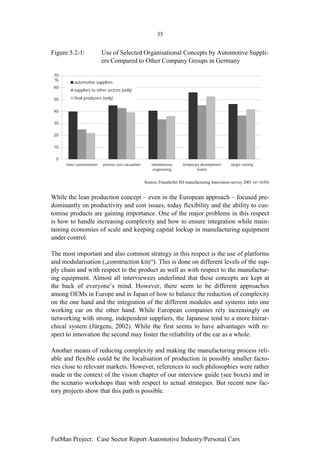
  • 68.
    65 VDI-Z Integrierte Produktion2002a: Hochfeste Stahlwerkstoffe für Kfz, No. 6/2002, p. 65 VDI-Z Integrierte Produktion 2002b: Wasserstoffbildung bei der Magnesiumbear- beitung (Weck, M.; Marpert, M.; Behrens, P.), No. 5/2002, pp. 83-86 Verband der Automobilindustrie (ed.): AUTO Jahresbericht 2001. Frankfurt a. M. (2001) Volkert, Klaus (2002): Vorausschauende Standortpolitik - Strategien Und Er- fahrungen Aus Der Sicht Des Gesamtbeirats Der Volkswagen AG. VW Environmental Report. (2002) http://www.volkswagen-umwelt.de/_download/ Weiss, Malcolm A.; Heywood, John, B. et al. (2000): On the Road in 2020. A life- cycle analysis of new automobile technologies. Energy Laboratory Massachu- setts Institute of technology. Cambridge Massachusetts. NIT EL 00-003 Wengel, Jürgen; Schirrmeister, Elna (Eds.) (2000): The Innovation Process From the Internal Combustion Engine to Fuel Cells Werkstoffe: Auch Bei Verbundkonstruktionen Im Automobilbau Bewährt Sich Das Leichtmetall (2002), in: VDI Nachrichten FutMan Project: Case Sector Report Automotive Industry/Personal Cars