Bringing the Austrians
Back to Austria
Remberto Latorre-Artus
Main Contributions
Subjective Theory of Value
The Marginal Revolution
Business Cycle Theory (Capital-Based
Macroeconomic Theory)
The Economic Calculation Problem
The underlying causes
behind:
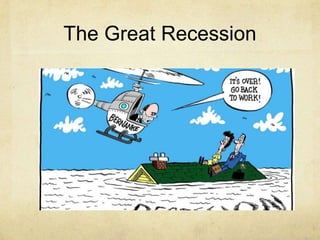
The Great Recession
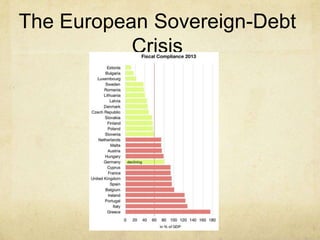
The European Sovereign-Debt Crisis
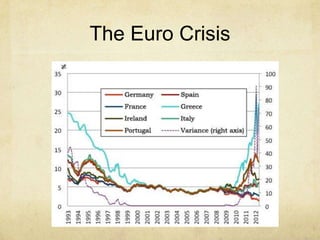
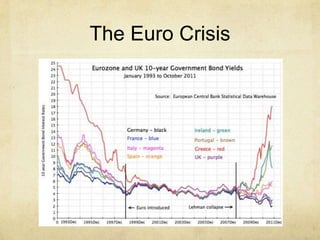
The Euro Crisis
Questions (Audience
chooses):
Will the Fed lose monetary policy sink the US
dollar?

Will the Euro survive Portugal, Italy, Greece and
Spain sovereign-debt crises?
Should Germany Lead or Leave!?

What is the Austrian recipe?
If Mises and Hayek were alive today what would
they recommend? (And where do they differ?)
What is the Austrian paradigm?
It places individuals at the center (purposeful
actions of individuals)

Marginalism.
Incentives matter.
Solution based on Human Action (not Human
Design) and thus,
AE is down to earth, easy to understand and
based on common sense.
How to understand the global
crises?
Macroeconomic Propositions have Microeconomic
Foundations
Austrian Business Cycle Theory (Capital-Based
Macroeconomic Theory)
Böhm-Bawerk built upon the TIME PREFERENCE ideas of
Carl Menger  there is always a difference in value
between present goods and future goods of equal quality,
quantity, and form. Moreover, the value of future goods
diminishes as the length of time necessary for their
completion increases.
Austrian Economics understand that “K” is never
homogeneous.

Inter-temporal consumption.
How to understand the global
crises?
*This is the key insight of the Austrians: you cannot
pretend to massage Aggregates and expect a perfect
“trickling down.” Instead, if you interfere, you will create
market distortions.
What distortions? Mainly interfering with the market
signals of the price system (Supply and Demand for
Money).
Therefore, booms and bust cycles are NOT a normal
feature of a market economy
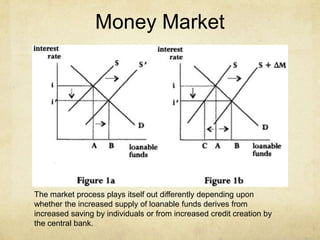
Money Market

The market process plays itself out differently depending upon
whether the increased supply of loanable funds derives from
increased saving by individuals or from increased credit creation by
the central bank.
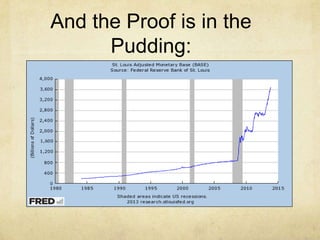
And the Proof is in the
Pudding:
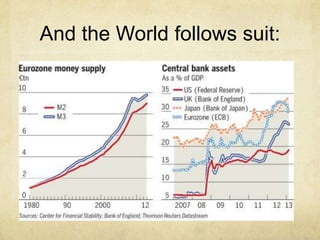
And the World follows suit:
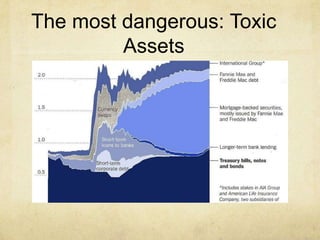
The most dangerous: Toxic
Assets
Moving to the Crises
The Great Recession
The European Sovereign-Debt Crisis
The Euro Crisis
The Great Recession
The European Sovereign-Debt
Crisis
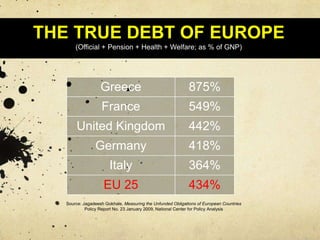
THE TRUE DEBT OF EUROPE
(Official + Pension + Health + Welfare; as % of GNP)

Greece

875%

France

549%

United Kingdom

442%

Germany

418%

Italy

364%

EU 25

434%

Source: Jagadeesh Gokhale, Measuring the Unfunded Obligations of European Countries
Policy Report No. 23 January 2009, National Center for Policy Analysis
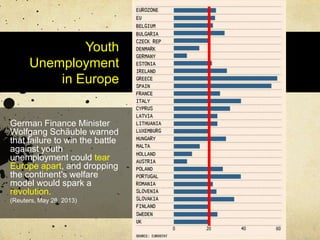
Youth
Unemployment
in Europe

German Finance Minister
Wolfgang Schäuble warned
that failure to win the battle
against youth
unemployment could tear
Europe apart, and dropping
the continent's welfare
model would spark a
revolution.
(Reuters, May 28, 2013)
The Euro Crisis
The Euro Crisis
Conclusions
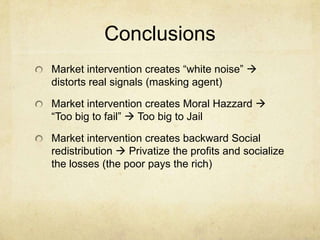
Market intervention creates “white noise” 
distorts real signals (masking agent)

Market intervention creates Moral Hazzard 
“Too big to fail”  Too big to Jail
Market intervention creates backward Social
redistribution  Privatize the profits and socialize
the losses (the poor pays the rich)
Conclusions
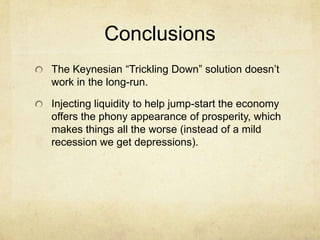
The Keynesian “Trickling Down” solution doesn’t
work in the long-run.

Injecting liquidity to help jump-start the economy
offers the phony appearance of prosperity, which
makes things all the worse (instead of a mild
recession we get depressions).
The Austrian Recipe:
Stop the Madoff Scheme (QE) right now, before it’s
too late!
Allowing an organic correction, i.e. allow markets to
do the job and liquidate malinvestments.
Allow people to figure out where are the sectors of
the economy starving for new resources.
It is people (risking their own capital, and using
information closer to them and the signals of the price
system) who can figure out better where, how and in
which ways the new money should go.
The Austrian Recipe:
There is no non-arbitrary way for a central planer to figure
all this out on his own.

Trust in the power of Human Action vs Human Design.
The private sector has a lot to be blamed for, but they
reacted to incentives emanating from the central authority
and thus…

…Don’t blame the pig, blame the one scratching his
back!!!
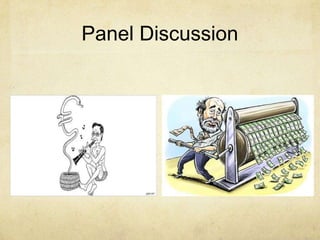
Panel Discussion
PPT and Literature
remberto.latorre@gmail.com
Twitter: @libertywrap
Policymic: http://rem.policymic.com

Austrian Economics Center and Hayek Institut
r.latorre@austriancenter.com
http://www.austriancenter.com
http://www.hayek-institut.at

Austrians back to Austria

  • 1.
    Bringing the Austrians Backto Austria Remberto Latorre-Artus
  • 2.
    Main Contributions Subjective Theoryof Value The Marginal Revolution Business Cycle Theory (Capital-Based Macroeconomic Theory) The Economic Calculation Problem
  • 3.
    The underlying causes behind: TheGreat Recession The European Sovereign-Debt Crisis The Euro Crisis
  • 4.
    Questions (Audience chooses): Will theFed lose monetary policy sink the US dollar? Will the Euro survive Portugal, Italy, Greece and Spain sovereign-debt crises? Should Germany Lead or Leave!? What is the Austrian recipe? If Mises and Hayek were alive today what would they recommend? (And where do they differ?)
  • 5.
    What is theAustrian paradigm? It places individuals at the center (purposeful actions of individuals) Marginalism. Incentives matter. Solution based on Human Action (not Human Design) and thus, AE is down to earth, easy to understand and based on common sense.
  • 6.
    How to understandthe global crises? Macroeconomic Propositions have Microeconomic Foundations Austrian Business Cycle Theory (Capital-Based Macroeconomic Theory) Böhm-Bawerk built upon the TIME PREFERENCE ideas of Carl Menger  there is always a difference in value between present goods and future goods of equal quality, quantity, and form. Moreover, the value of future goods diminishes as the length of time necessary for their completion increases. Austrian Economics understand that “K” is never homogeneous. Inter-temporal consumption.
  • 7.
    How to understandthe global crises? *This is the key insight of the Austrians: you cannot pretend to massage Aggregates and expect a perfect “trickling down.” Instead, if you interfere, you will create market distortions. What distortions? Mainly interfering with the market signals of the price system (Supply and Demand for Money). Therefore, booms and bust cycles are NOT a normal feature of a market economy
  • 8.
    Money Market The marketprocess plays itself out differently depending upon whether the increased supply of loanable funds derives from increased saving by individuals or from increased credit creation by the central bank.
  • 9.
    And the Proofis in the Pudding:
  • 10.
    And the Worldfollows suit:
  • 11.
    The most dangerous:Toxic Assets
  • 12.
    Moving to theCrises The Great Recession The European Sovereign-Debt Crisis The Euro Crisis
  • 13.
  • 14.
  • 15.
    THE TRUE DEBTOF EUROPE (Official + Pension + Health + Welfare; as % of GNP) Greece 875% France 549% United Kingdom 442% Germany 418% Italy 364% EU 25 434% Source: Jagadeesh Gokhale, Measuring the Unfunded Obligations of European Countries Policy Report No. 23 January 2009, National Center for Policy Analysis
  • 16.
    Youth Unemployment in Europe German FinanceMinister Wolfgang Schäuble warned that failure to win the battle against youth unemployment could tear Europe apart, and dropping the continent's welfare model would spark a revolution. (Reuters, May 28, 2013)
  • 17.
  • 18.
  • 19.
    Conclusions Market intervention creates“white noise”  distorts real signals (masking agent) Market intervention creates Moral Hazzard  “Too big to fail”  Too big to Jail Market intervention creates backward Social redistribution  Privatize the profits and socialize the losses (the poor pays the rich)
  • 20.
    Conclusions The Keynesian “TricklingDown” solution doesn’t work in the long-run. Injecting liquidity to help jump-start the economy offers the phony appearance of prosperity, which makes things all the worse (instead of a mild recession we get depressions).
  • 21.
    The Austrian Recipe: Stopthe Madoff Scheme (QE) right now, before it’s too late! Allowing an organic correction, i.e. allow markets to do the job and liquidate malinvestments. Allow people to figure out where are the sectors of the economy starving for new resources. It is people (risking their own capital, and using information closer to them and the signals of the price system) who can figure out better where, how and in which ways the new money should go.
  • 22.
    The Austrian Recipe: Thereis no non-arbitrary way for a central planer to figure all this out on his own. Trust in the power of Human Action vs Human Design. The private sector has a lot to be blamed for, but they reacted to incentives emanating from the central authority and thus… …Don’t blame the pig, blame the one scratching his back!!!
  • 23.
  • 24.
    PPT and Literature remberto.latorre@gmail.com Twitter:@libertywrap Policymic: http://rem.policymic.com Austrian Economics Center and Hayek Institut r.latorre@austriancenter.com http://www.austriancenter.com http://www.hayek-institut.at