Auditing A Practical Approach Canadian 2nd Edition Moroney Solutions Manual
Auditing A Practical Approach Canadian 2nd Edition Moroney Solutions Manual
Auditing A Practical Approach Canadian 2nd Edition Moroney Solutions Manual
Auditing A Practical Approach Canadian 2nd Edition Moroney Solutions Manual
Auditing A Practical Approach Canadian 2nd Edition Moroney Solutions Manual
1.
Visit https://testbankdeal.com todownload the full version and
explore more testbank or solutions manual
Auditing A Practical Approach Canadian 2nd Edition
Moroney Solutions Manual
_____ Click the link below to download _____
https://testbankdeal.com/product/auditing-a-practical-
approach-canadian-2nd-edition-moroney-solutions-manual/
Explore and download more testbank or solutions manual at testbankdeal.com
2.
Here are somerecommended products that we believe you will be
interested in. You can click the link to download.
Auditing A Practical Approach Canadian 2nd Edition Moroney
Test Bank
https://testbankdeal.com/product/auditing-a-practical-approach-
canadian-2nd-edition-moroney-test-bank/
Auditing A Practical Approach 3rd Edition Moroney
Solutions Manual
https://testbankdeal.com/product/auditing-a-practical-approach-3rd-
edition-moroney-solutions-manual/
Auditing A Practical Approach 1st Edition Moroney
Solutions Manual
https://testbankdeal.com/product/auditing-a-practical-approach-1st-
edition-moroney-solutions-manual/
Essentials of Comparative Politics 4th Edition ONeil Test
Bank
https://testbankdeal.com/product/essentials-of-comparative-
politics-4th-edition-oneil-test-bank/
3.
Methods Doing SocialResearch 4th Edition Jackson Test
Bank
https://testbankdeal.com/product/methods-doing-social-research-4th-
edition-jackson-test-bank/
Earth Portrait of a Planet 6th Edition Marshak Solutions
Manual
https://testbankdeal.com/product/earth-portrait-of-a-planet-6th-
edition-marshak-solutions-manual/
Financial Accounting A Critical Approach CANADIAN Canadian
4th Edition John Friedlan Test Bank
https://testbankdeal.com/product/financial-accounting-a-critical-
approach-canadian-canadian-4th-edition-john-friedlan-test-bank/
Essentials of Modern Business Statistics with Microsoft
Excel 5th Edition Anderson Test Bank
https://testbankdeal.com/product/essentials-of-modern-business-
statistics-with-microsoft-excel-5th-edition-anderson-test-bank/
Introduction to Clinical Psychology 4th Edition Hunsley
Test Bank
https://testbankdeal.com/product/introduction-to-clinical-
psychology-4th-edition-hunsley-test-bank/
4.
Handbook of Informaticsfor Nurses and Healthcare
Professionals 5th Edition Hebda Test Bank
https://testbankdeal.com/product/handbook-of-informatics-for-nurses-
and-healthcare-professionals-5th-edition-hebda-test-bank/
5.
Solutions Manual
to accompany
Auditing:APractical
Approach
Chapter 6 – Sampling and overview of the risk response phase of the audit
SOLUTIONS TO REVIEW QUESTIONS
REVIEW QUESTION 6.1
Sampling risk relates to the chance that the sample is not representative of the
population. If the sample is representative of the population, both the sample results
and the results from testing the entire population would lead to the same conclusion.
Overreliance on an ineffective system of internal controls occurs when the sample
results indicate that internal controls are effective, but they are not. In this case the
auditor concludes, based on testing the sample, that the control risk is lower than it
really is. The auditor will not perform more testing and will rely on the controls. The
auditor faces the risk that they will not detect a material misstatement and provide an
inappropriate audit opinion.
Under-reliance on an effective system of internal controls occurs when the sample
results indicate that internal controls are not effective, but they really are. In this case,
the auditor concludes that the control risk is higher than it really is, and performs more
testing or decides not to rely on the internal controls. The auditor will eventually realize
that the controls are better than first thought, but additional time and money will be
spent on testing which was not necessary.
Both overreliance and under-reliance are problems for the auditor. The first exposes the
auditor to a higher audit risk than they planned, and the second exposes the auditor to
greater expense. The implications for the auditor depend on the extent of the problem
(i.e., whether the over or under reliance was extreme) and chance. For example, just
6.
because internal controlsare not as effective as they appear doesn’t mean that a
material or pervasive error will definitely occur in the client’s financial statements.
REVIEW QUESTION 6.2
Non-sampling risk is the risk that the auditor reaches an inappropriate conclusion for
any reason not related to sampling risk. For example, the auditor could misinterpret the
evidence or draw the wrong conclusion from the results because they didn’t understand
them. The auditor could have chosen the wrong type of test, or applied the test to
transactions from the wrong period. The auditor could have been given incorrect
information by management to conceal a fraud, which they didn’t detect using other
techniques. When testing controls, the auditor could choose to test a control that was
not critical to the integrity of the data. When gathering substantive evidence, the auditor
could make a mistake when recalculating a subtotal of a subsidiary ledger, or compare
the subtotal with the control account at the wrong date.
REVIEW QUESTION 6.2 (Continued)
Non-sampling risk is determined by the auditor’s expertise, experience and understanding of
the client. It differs from sampling risk which is created by using sampling from a population,
rather than examining every item. Even when examining every item in a population, an
auditor still faces non-sampling risk.
REVIEW QUESTION 6.3
Non-statistical sampling does not involve random selection and probability theory to
evaluate the results.
Non-statistical sampling is easier to use than statistical sampling and generally lower cost. The
auditor selects a sample that they believe is appropriate, and is used when the auditor
believes the account is low risk and the auditor has access to adequate corroborating
evidence from other sources.
Main methods are:
• Haphazard selection: selection of a sample by an auditor without using a methodical
technique. The auditor could introduce human bias (e.g., select items that are easier
to reach).
• Block selection: select items that are grouped together. Bias can be introduced where
the items are sorted in a sequence (e.g., date order).
• Judgemental selection: auditor uses judgement to select items that they believe
should be included in the testing (e.g., just after a new computer system is installed).
REVIEW QUESTION 6.4
7.
(1) If theauditor believes that the control is likely to be more effective, the auditor will seek to
rely on that control and reduce substantive testing. This means that the auditor will need
greater assurance and gather more appropriate audit evidence that the control does work
effectively. Greater assurance is provided by increasing the sample size.
(2) The acceptable, or tolerable, rate of deviation refers to the number of deviations (or
control errors) that the auditor will accept or tolerate. If the auditor is prepared to accept
more deviations, less audit evidence is required, and thus a smaller sample size is
required.
(3) The expected rate of deviation is the actual level of deviations that the auditor expects to
find in the population from the control, not the level that the auditor is prepared to tolerate.
If the auditor expects a higher rate of deviation than in the past, for example because the
client has changed its systems, the auditor will need to gather more evidence on which to
base their conclusion. This means that the sample size will be increased.
REVIEW QUESTION 6.4 (Continued)
(4) The auditor’s confidence in the test results is greater when there is more evidence
on which to base their conclusions. This means that if the desired level of
assurance, or confidence, that the tolerable rate of deviation is not exceeded by the
actual rate of deviation in the population is higher, the sample size must be larger.
(5) The number of units in the population has only a negligible effect on the sample size.
If the sampling is representative, a larger population should have little effect on the
ability of the auditor to draw a conclusion.
REVIEW QUESTION 6.5
Stratification occurs when the auditor divides the population into groups and then
selects items from each group. An example of when this would be appropriate is where
an entity has both cash and credit sales. As credit sales are generally riskier that cash
sales, sales could be divided into the two groups before a sample is selected.
REVIEW QUESTION 6.6
The auditor must consider whether an error is likely to be unique, and thus not likely to
be repeated throughout the population being tested. The auditor would also consider
whether the population was stratified before sampling. If neither of these circumstances
applies, the auditor would project the error to the population of sales invoices.
If the sample error is $25,300, it would not be appropriate to conclude that sales are
misstated by the same amount because this error was discovered in a sample of sales
8.
invoices. In thiscase, we are not told the total of sales invoices in the sample or the
total of sales invoices in the population, so an estimate of the projected error cannot be
made. However, to make the estimate the auditor would consider the size of the error in
relation to the sample size (sample error / sample size), and then the sample error rate
in relation to the population size (by multiplying sample error/sample size by the
population size).
REVIEW QUESTION 6.7
Tests of controls are audit procedures designed to evaluate the operating effectiveness
of controls in preventing, detecting and correcting, material misstatements at the
assertion level.
Substantive procedures are audit procedures designed to detect material misstatement
at the assertion level.
REVIEW QUESTION 6.7 (Continued)
Therefore, the difference between the two types of audit procedures is whether they
provide evidence about the effectiveness of the control systems at preventing or
detecting material misstatements from entering the accounts, or about the existence of
material misstatements in the accounts.
The results of the tests of controls indicate how likely it is that material misstatements
exist in the accounts. If it is unlikely that these misstatement exist (i.e., control risk is
low), then the auditor has gained some assurance from the control tests about the fair
presentation of the financial statements. The auditor then needs to gather only a limited
amount of evidence from substantive tests and can use less expensive and less
extensive substantive procedures. If it is likely that misstatements exist in the accounts
(i.e., control risk is high), then the auditor has only limited assurance from the control
tests about the fair presentation of the financial statements. The auditor must gain more
assurance from substantive tests and therefore is required to use more effective and
extensive substantive procedures. The auditor makes decisions about the nature,
timing, and extent of substantive procedures to achieve the required level of quality and
quantity of evidence from substantive testing.
REVIEW QUESTION 6.8
Analytical procedures can be used at various stages of the audit. CAS 315 Identifying
and Assessing the Risks of Material Misstatement Through Understanding the Entity
and Its Environment requires an auditor to obtain an understanding of the entity’s
internal controls, and design appropriate responses to the assessed risk of material
misstatement. The auditor could perform substantive procedures or tests of controls
concurrently with risk assessment procedures when it is efficient to do so. Paras A7-A9
9.
of CAS 315discuss the use of analytical procedures to help identify risks, such as those
revealed by unusual transactions or events and amounts, ratios or trends. For example,
the auditor could use the client’s interim trial balance to analyze relationships between
data such as cost of sales and sales, between non-financial data such as employee
numbers and financial data such as payroll expense, to identify areas or risk that would
require further testing.
CAS 330 The Auditor’s Responses to Assessed Risks requires the auditor to gather
sufficient appropriate audit evidence through designing and implementing the
appropriate responses to the assessed risk of material misstatement. For example, an
auditor could use a combination of procedures to gather evidence about the
effectiveness of controls. The auditor could make enquiries of management to obtain
explanations about the results of analytical procedures which indicate there is unusual
variance between budgeted and actual amounts.
REVIEW QUESTION 6.8 (Continued)
CAS 520 Analytical Procedures explains how analytical procedures are used as
substantive tests. It notes that substantive analytical procedures are generally more
applicable to large volumes of transactions that tend to be predictable over time (para
A6). These types of transactions could include expenses such as insurance, rent, power
related to asset values, building size, and production activity, respectively.
REVIEW QUESTION 6.9
Stratification is the process of dividing a population into groups of sampling units with
similar characteristics. This helps reduce the sample size as once items with similar
characteristics are segregated, fewer items in this strata need to be tested. This is
because by grouping items with similar characteristics, then items are homogeneous
and there is little benefit in increasing the sample size to confirm earlier findings.
An example of where this is appropriate is for accounts receivable where the auditor
may segregate high dollar items or items that are long overdue.
.
REVIEW QUESTION 6.10
High risk clients are more likely to have material misstatements in their accounts.
Auditors are not as able to rely on these client’s internal controls to detect or prevent
material misstatements. If an auditor gathers evidence which shows that the internal
control systems work effectively, there is a low risk that material misstatements will
occur between the date of the testing and the year end. However, if the evidence shows
that the internal control systems do not work effectively (i.e., a high risk client), there is a
10.
high risk thatmaterial misstatements will occur between the date of the testing and the
year end. This means that the auditor must gather evidence up to the year-end and just
after year-end for high risk clients.
11.
SOLUTIONS TO PROFESSIONALAPPLICATION QUESTIONS
PROFESSIONAL APPLICATION 6.1 – Sampling methods
(a)
Bob is conducting substantive testing of sales invoices. In order to gather evidence
about existence, Bob would need to sample the entries in the sales journal and then
vouch to the underlying documents. This would also allow evidence to be gathered
about the details of the sales transactions that is relevant to the accuracy, classification
and cut-off assertions.
In order to gather evidence about completeness of the accounting records, Bob would
sample the invoices, and then trace the details of the transactions to the sales journal.
This would also provide evidence relevant to the accuracy, classification and cut-off
assertions. In this case, Bob has to be careful about which invoices he samples. The
conditions in which the boxes of sales invoices are stored appear to be unsatisfactory.
He will have difficulty identifying the boxes of sales invoices relevant to the current year.
He will also have to be careful not just to sample the invoices that are in boxes near the
door or otherwise easy to access, because this would introduce bias to his sampling
and potentially invalidate his conclusions.
(b)
As noted above, there is an issue about identifying and accessing the sales invoices
because of the unsatisfactory conditions in the storage shed. Other information relevant
to sampling is the difficulties in the administration department. There have been periods
of staff shortages. The auditor should consider stratifying the sample and making sure
that they sample from the periods where staff conditions were different. This would
provide evidence about the effectiveness of controls under different conditions. The
auditor would consider the patterns in customer complaints – do they relate to specific
periods, or specific types of sales? Do the complaints suggest greater risk would apply
to different parts of the year? Overall, controls over sales invoices appear to be poor
and substantive testing should be extensive.
PROFESSIONAL APPLICATION 6.2 – Types of audit sampling and sampling risk
1. D – Non-sampling risk
2. C – Sampling risk
3. A – Statistical sampling
12.
PROFESSIONAL APPLICATION 6.3– Benefits of statistical sampling
Statistical sampling enables the auditor to use the most efficient sample size and to quantify
the sampling risk for the purpose of reaching a statistical conclusion about the population.
The major advantages of statistical sampling versus non-statistical sampling are that it
helps the auditor:
1. Design an efficient sample,
2. Measure the sufficiency of evidence obtained, and
3. Quantify sampling risk.
Disadvantages of statistical sampling to be overcome include the additional costs of:
1. Training auditors in the proper use of sampling techniques,
2. Designing and conducting the sampling application, and
3. The potential lack of consistent application across audit teams due to the
complexity of the underlying concepts.
Fortunately, this audit includes an auditor with training in statistical sampling, which will
mitigate these disadvantages.
PROFESSIONAL APPLICATION 6.4 – Sample selection in practice
(a)
Using a random number generator in Excel or on your calculator, any number between
1-12 may be selected. This corresponds to the appropriate month. For example, if the
random number generator produces the following items 5, 12, 6, and 4 – then May,
December, June, and April will be tested.
(b)
Haphazard selection — Pick any 4 months.
(c)
Block selection — Pick any starting point within the sample, and then pick four
consecutive months.
PROFESSIONAL APPLICATION 6.5 – Potential impact of sampling risk
No, Alexei cannot safely conclude that no additional work is needed, as he has not
considered sampling risk. He has only sampled 30 transactions, which amounted to less
than 1% of the sales balance. Because this is a small sample, the risk that the sample is
not representative of the population is significant. If the true misstatement rate in the
remainder of the population is higher, total misstatement could easily exceed the
tolerable error of misstatement.
13.
PROFESSIONAL APPLICATION 6.5(Continued)
The approach that should be taken is to project the misstatement (i.e., calculate the best
estimate of total misstatement in the population) and incorporate an amount in consideration
of sampling risk. There is an inverse relationship between sample size and sampling risk.
Without statistical methods, judgments about sampling risk are difficult to make. Thus,
sampling risk must be considered.
PROFESSIONAL APPLICATION 6.6 – Sample size selection
Patrizia should select a larger sample size in Case B as all the factors point to more sampling
risk in Case B.
PROFESSIONAL APPLICATION 6.7 – Sampling and non-sampling risk for control testing
(a)
Fred is gathering evidence over cash payment controls. This means that the population
definition must relate to the controls over cash payment transactions. Fred would need to
gain an understanding of controls over cash payments and identify the controls for each type
of potential misstatement, or ‘what could go wrong’ (WCGW). Fred would then sample from
the instances of each control, as required. For example, the cash payments are authorized
by a senior accountant in order to prevent unauthorized payments being made. Fred would
need to consider all authorizations as a population from which to sample. All cash payments
are based on a set of documents assembled and checked by the accounts staff; Fred would
need to regard all these sets of documents as a population and would sample a number of
sets of documents to test if the documents were assembled correctly and checked as
required. Fred would also sample from the processed cash payment transactions and test the
documents and authorizations on which the transactions are based. In this case, the
population is the processed cash payments.
(b)
Sampling risk refers to the possibility of drawing an incorrect conclusion about the population
based on the sample results. There is a possibility that the sample is not representative of the
population, and the sample deviation rate (departure from controls in the sample items) differs
significantly from the population deviation rate (departure from controls in the population).
Sampling risk could lead to the auditor concluding that the population contains more control
deviations than it actually does. In this case, the sample deviation rate is higher than the
population deviation rate. In this case the auditor would under-rely on the controls and
conduct further testing which was not necessary.
14.
PROFESSIONAL APPLICATION 6.7(Continued)
Sampling risk could lead to the auditor concluding that the population contains fewer control
deviations than it actually does. In this case, the sample deviation rate is higher than the
population deviation rate. In this case the auditor would over-rely on the controls and
conclude that the control is working effectively. The auditor would not conduct further testing
and has a higher risk of providing an inappropriate audit opinion.
(c)
Non-sampling risks always exist. The non-sampling risk is the risk that the auditor will make
an inappropriate conclusion based on anything other than sampling risk. That is, the auditor
misinterprets the evidence or misapplies the audit techniques. For example, in this case, the
auditor could fail to detect that cheques were countersigned by the chief accountant by being
careless when reviewing the documents. The auditor could fail to understand the significance
of certain cash payment entries being authorized for maintenance on items which were not
owned by the client (i.e., the maintenance was for a staff member’s private assets). The
auditor could fail to ask the chief accountant about their annual leave (vacation) and the
arrangements for counter-signing cheques whilst away.
PROFESSIONAL APPLICATION 6.8 – Determining sample size for control testing
• The number of accounts payable has increased by 50% since last year. An increase in
the population has a negligible effect on sample size.
• Bunns and Major has changed some of its suppliers. This changes the conditions
affecting accounts payable because the change has been from large corporate
wholesalers to direct dealing with manufacturers. There is a possibility that the two
groups of suppliers would have different levels of quality control over their supplier
statements. The auditor would need to consider if there was a decrease (increase) in
quality, and if so, increase (decrease) the sample size because there is potentially a
greater (lower) degree of error in the supplier statements (an increase/decrease in
the expected rate of deviation of the population to be tested).
• Belief that controls in accounts payable are likely to be operating more effectively than
in previous years because of additional staff, expecting a reduction in control
deviations. An expected reduction in control deviation leads to a lower sample size.
• A lower tolerable rate of deviation because of increased importance of accounts
payable to solvency analysis would lead to an increased sample size for control testing.
• An increased reliance on controls to justify less substantive testing means that the
sample size for control testing will increase (an increase in the extent to which the
auditor’s risk assessment takes into account relevant controls leads to increase in
sample size).
15.
PROFESSIONAL APPLICATION 6.9– Evaluating substantive testing results
(a)
Completed table of projected errors:
Stratum
(1)
Error found
(2)
Sample total
value
(3)
Stratum
total value
(4)
Projected
error
(2)/(3) × (4)
1 $7,930 $101,170 $128,660 $10,085
2 $3,290 $41,990 $76,830 $6,020
3 $8,600 $62,840 $162,280 $22,209
Total $19,820 $206,000 $367,770 $38,314
Projected error ($38,314) is not material if tolerable error is set at $40,000; however,
because this amount is quite close the auditor may want to consider additional testing.
However, it is material if tolerable error is set at $30,000 and the auditor will need to do
more testing.
(b)
Consider results of testing controls for those three months. If results are not consistent
across the year and show that controls are weaker in that period, the auditor would
need more substantive testing for weaker control period, or change the tolerable error
for that period to reflect the weaker controls.
PROFESSIONAL APPLICATION 6.10 – Interpreting sampling documentation
(a)
The test of controls is Test A (Test B is a substantive test). The attribute being tested is
to verify the accounting supervisor’s initials indicating approval.
(b)
Yes. Since the sample was selected randomly from the entire population, then it can be
used to project a value for the entire population.
(c)
Test A is a test of controls, not a substantive test; therefore, it could not be used to
project a value for the population.
(d)
Sampling risk in substantive testing refers to the probability that the auditor will form an
incorrect conclusion about an account balance (that is, reject a correct balance or
accept an incorrect balance) based on the sample results.
16.
PROFESSIONAL APPLICATION 6.11– Results of control testing 1
(a) A tolerable deviation rate (or tolerable rate of deviation) is the rate of deviation
from prescribed controls set by the auditor in which the auditor seeks to obtain an
appropriate level of assurance that the rate of deviation set by the auditor not to
exceed the actual tolerable rate of deviation (see Para 5j CAS 530 Audit
Sampling) This is the maximum error an auditor is willing to accept within the
population tested and still conclude that controls are effective.
If the auditor intends to rely on a control to prevent and detect a material
misstatement, a lower tolerable deviation rate will be set and the sample size will
be increased to provide the auditor with the sufficient evidence required to
demonstrate that the control is effective. However, if the auditor expects to place
relatively more reliance on substantive procedures and reduce the reliance on
the internal control, the tolerable rate of deviation is increased and the sample
size is reduced when testing the control.
(b) ‘Exceptions’ are instances where the controls did not work as planned. In this
case the exception is one instance of part-time staff being paid an incorrect
hourly rate. This is the evidence that the controls on ensuring that correct hourly
rates of pay are used in calculating wages did not work effectively.
(c) Generally, an increase in the number of deviations, or control errors, increases
the confidence required from substantive testing. Greater confidence can come
from different types of tests (for example, tests of details rather than analytical
procedures), timing (covering a greater portion of the financial period, and/or
closer to balance date), and extent (increasing the sample size).
PROFESSIONAL APPLICATION 6.12 – Sampling methods and risk 3 4 5
The population for the tests of depreciation expense is the depreciable items included in
PPE. This includes both new items and existing items. The auditor should ensure that
disposals are removed from the asset register before the sample is taken.
Sampling PPE for the tests of depreciation expense should reflect the changed
conditions and the materiality of PPE to the balance sheet. The changed conditions
relate to the large investment in a new manufacturing process and the associated
increases in PPE acquisitions. The sampled items should include new acquisitions of
PPE (because these have not been tested before for depreciation), plus the larger items
(because the depreciation expense would likely be higher for these items).
Other considerations include the location of items (does FH have different branches?),
and types of equipment (are some pieces of equipment harder to value and make
estimates about useful life and depreciation rates?), and history (does management
made predictable types of misjudgements about useful life?).
17.
PROFESSIONAL APPLICATION 6.12(Continued)
The auditor could formally stratify the sample to select samples of new items and old
items, and different value items, or select a large enough sample to be reasonably sure
that the sample includes all types of items that are likely to be most at risk.
A random sample (either with or without stratification) would allow the auditor to make
conclusions using probability theory. The auditor could supplement the formal
conclusions based on a random sample with evidence obtained from samples of items
considered ‘important’ in the auditor’s judgement. This judgement would relate to the
consideration of which items are more likely to be depreciated inappropriately.
The assertions most at risk are the accuracy of depreciation expense and the valuation
and allocation for PPE (shown as cost less accumulated depreciation).
PROFESSIONAL APPLICATION 6.13 – Projecting errors for PPE
In order to project the error in the sample of $48,500 back to the population we use
information on the sample total value ($1,145,000) and the population total value
($11,345,000). The projection shows: projected error = errors found ÷ sample total value
× stratum total value = $48,500 / $1,145,000 × $11,345,000 = $480,552.
This means that PPE items with a value of $480,552 have inappropriate depreciation
rates. This error equates to approximately 4% of gross PPE, which is usually not
considered material. In this case, the auditor would conclude that the valuation and
allocation assertion for PPE was not violated.
Although we are not given the depreciation rate, the effect on profit before tax is likely to
be less than 4% (i.e., assuming 10% depreciation, the error in the expense is $48,055
which is 2.5% of profit before tax).
However, given that PPE is considered to be one of the most material balances, the
auditor might consider further testing or asking management to adjust the depreciation.
18.
PROFESSIONAL APPLICATION 6.14– Substantive testing and assertions
(a)
The sales team are remunerated in two ways; a base salary plus a bonus based on the
dollar values of sales. The bonus payment increases if the sales person increases
recorded sales. An inappropriate way of increasing sales is to record sales during the
year for samples given to customers, or to record sales to existing customers at year-
end when not ordered and then to reverse immediately after year-end, or to record a
sale prematurely (for example, before shipment to customer). When the sample is
returned following the year-end the sale is reversed or adjusted with a sales return or
allowance. Another way of increasing sales is to falsify sales by recording a sale to a
fictitious customer. The account balance is eventually written off for non-payment of the
account. The sales and accounts receivable account balances are at risk because of
these practices. The assertions at risk are occurrence and existence for the sales
transaction and accounts receivable balance. In addition, the valuation and allocation
assertion for accounts receivable is at risk because the balance does not represent the
amount that is reasonably expected to be received from customers.
(b)
The substantive test described in the question is to take a sample of payments received
by the hospital (i.e., cash receipts) and trace back to the general ledger and customer
account balance. Performing this test will provide evidence about the
existence/occurrence assertion for the accounts receivable and sales balances, and the
valuation and allocation assertion for accounts receivable. If the client receives cash for
the credit of an accounts receivable this is reliable evidence that the recorded sale did
occur and that the balance of accounts receivable was fairly stated at the year-end.
The reference to the bonus structure is to reinforce the risk to the occurrence assertion
for sales and the valuation and allocation assertion for accounts receivable.
PROFESSIONAL APPLICATION 6.15 – Substantive testing versus control testing
(a)
Test 1: This is a substantive test. The test gathers evidence about the balance of trade
creditors at year end and the total of purchases. In particular, the test is gathering
evidence about the date the goods were received and the date the entry is posted.
Test 2: This is a test of controls. The test is gathering evidence about the process of
reviewing and authorising the pricing and discount terms.
(b)
Test 1: Cut-off assertion for purchases, valuation and allocation assertion for trade
creditors. The dates are being verified to ensure the transactions are recorded in the
correct financial period.
19.
PROFESSIONAL APPLICATION 6.15(Continued)
Test 2: Controls over pricing and discounts are relevant to the valuation and allocation
assertion for trade creditors, and the accuracy assertion for purchases.
(c)
Test 1: The test does not address the issue of completeness for trade creditors or fully
address the cut-off assertion for purchases. The key risk for creditors is understatement. By
taking a sample from the list of trade creditors the auditor is not able to detect unrecorded
liabilities. The conclusion is not appropriate.
Test 2: The initial test reveals that 3 out of 20 invoices had not been authorized and incorrect
discounts were recorded. The follow-up shows no pattern. The conclusion refers to the
amount of the discount. This is not appropriate for a test of controls. The issue is whether the
rate of deviation in the control is tolerable. If the deviation rate in the sample is tolerable when
projected to the population, especially given the additional testing, then the auditor could
conclude that there is no significant deviation in the control. The auditor cannot conclude the
valuation of suppliers is fair based on the control tests alone.
(d)
Further procedure for test 1: The auditor should examine suppliers’ invoices and goods
received relating to the period following year-end. These documents could reveal an
unrecorded liability, that is, goods recorded as received after the year-end that were actually
received by the client prior to the year-end.
Further procedure for test 2: As outlined in part (c), the conclusion about the deviation in
controls should be considered in light of the tolerable deviation rate. The substantive testing
needs to be designed given the control risk as revealed by the control tests. Further
procedures would include selecting a sample of suppliers invoices, given the control risk, and
testing of pricing and discounts.
PROFESSIONAL APPLICATION 6.16 – Control testing in previous year
The junior auditor’s suggestion is not appropriate because the auditor needs to have
sufficient appropriate evidence about the effectiveness of controls in the current year. Any
change in either the controls or the conditions would make last year’s evidence not applicable
to the current period. At aminimum, there should be evidence that the conditions remained
the same and that the controls had not altered. The auditor also considers whether the
controls can provide sufficient control in the current circumstances. Even if there had been no
changes since last period, the auditor should still evaluate the effectiveness of the controls
and draw a conclusion on the degree to which the controls can be relied upon.
In this particular case, the controls were assessed with respect to their ability to ensure
compliance with the regulations. It is likely that additional work is required for the controls to
be assessed for effectiveness at preventing or detecting material misstatements at the
assertion level because this is a different objective.
20.
PROFESSIONAL APPLICATION 6.17– Auditing low-value assets
Substantive testing of the furniture at MICA would include:
• Inspection of documents relating to purchase and disposal of items and tracing to
the fixed asset continuity schedule (completeness for additions, valuation and
allocation, existence of items that have been disposed of)
• Inspection of documents relating to purchase of assets (or financing of assets)
for evidence of ownership (rights and obligations) and date of acquisition (cut-off
of additions)
• Vouching of new entries in asset continuity to underlying supplier invoices,
receiving documents, transfer documents (existence, cut-off)
• Inspection of physical assets recorded in the continuity schedule (existence)
• Recalculation of depreciation expense and review of expense relative to asset
values (accuracy, valuation and allocation)
• Review of repairs and maintenance account to ensure that items relate to repairs
and not purchase ofcapital items (classification, completeness)
• Observing staff in central asset purchasing department performing their duties
when updating the asset register (existence, completeness)
• Enquiries of management about asset purchasing decisions (existence, rights
and obligations)
PROFESSIONAL APPLICATION 6.18 – Testing accounts receivable
(a)
Emma will be testing the controls over accounts receivable to support her preliminary
assessment that the control risk is low. Evidence of low control risk allows Emma to
reduce the reliance on substantive testing for accounts receivable. She will be seeking
evidence that the controls over transactions and balances in the accounts receivable
area are effective and consistent. Effective controls mean the entity has a low risk of
violating the assertions: occurrence, completeness, accuracy, cut-off, classification,
existence, rights and obligations, and valuation and allocation.
(b)
If Emma is successful in obtaining evidence that controls are effective and consistent,
she will reduce the reliance on substantive testing. This means that she can use less
effective substantive techniques (e.g., rely more on observation and enquiry and less on
inspection of documents), vary the timing (e.g., conduct more interim testing and less
balance date testing), and reduce the extent of testing (e.g., inspect fewer documents).
PROFESSIONAL APPLICATION 6.18 (Continued)
21.
Emma could usethese common procedures to test the controls:
1. Inspection of documents for evidence of authorization (e.g., of prices, extending
credit to new customers, sales returns)
2. Inspection of documents for evidence that details included have been checked by
appropriate client personnel (e.g., that variations to prices have been authorized
by the sales director, etc.)
3. Observation of client personnel performing various tasks (e.g., opening mail,
reconciling receipts with customer statements)
4. Enquiry of client personnel about how they perform their tasks (e.g., following up
on outstanding accounts, making adjustments to client accounts)
5. Re-performing control procedures to test their effectiveness (e.g., bank
reconciliations, customer statement reconciliations)
22.
Case Study —Cloud 9
(a)
As discussed elsewhere in the solutions, opening a retail store creates new risks for
inventory and receivables (if sales are made on credit). For example, the risk of theft
increases. The store also introduces exposure to the risks associated with leasing
premises and equipment. Sales through a store are directly affected by matters
impacting on consumers, e.g., weather conditions, transport, etc., that are absorbed by
retailers when Cloud 9 makes wholesale sales. There would be additional issues
around cash because cash would be held in the premises and staff would be required to
deposit cash to the bank at the end of each day.
(b)
Recall that Audit Risk = Inherent Risk × Control Risk × Detection Risk. Audit risk (AR),
the risk of giving an inappropriate audit opinion, is a function of the client’s inherent risk
(IR), control risk (CR) and the auditor’s detection risk (DR). The business change would
increase inherent risk, thereby increasing audit risk.
(c)
Inventory will be affected by the need to hold inventory in the store to meet daily sales.
There will be a larger volume of smaller sales made (consumer sales would be smaller
than wholesale sales). There will be movements of inventory from the warehouse to the
store. There could be issues with sales returns as customers return items that do not fit,
etc., and risk of damage to inventory held in the store.
(d)
Assertions that are likely affected by the opening of the store include: occurrence of
sales, existence of inventory (theft issues), valuation of inventory (risk of obsolescence,
damage of goods in store).
(e)
The population would include: inventory items held in the store and warehouse –
sample for inventory; sales made – sample for testing validity or occurrence of sales;
cash receipts made by the store – testing for completeness of cash. The sampling
approach would be to select key items for testing – large sales transactions, inventory
items that make up the largest part of the inventory balance (e.g., high value items), and
take representative samples of the other items. The auditor would be concerned with
completeness of cash receipts and would test controls over cash at the store. Control
testing of inventory would focus on movements of inventory, either from the warehouse
to wholesale customers or to the store, and goods in transit controls. Further details are
provided in chapter 7 solutions.
23.
Research Question 6.1– McKesson & Robbins fraud research
The solution to this research question will depend on the sources selected by the
student and the information gathered.
However, some background on the scandal follows and is intended only as a brief primer.
McKesson & Robbins scandal (1938)
"The McKesson & Robbins, Inc. scandal of 1938 was one of the major financial
scandals of the 20th century. The company McKesson & Robbins, Inc. (now McKesson
Corporation) had been taken over in 1925 by Phillip Musica, who had previously used
Adelphia Pharmaceutical Manufacturing Company as a front for bootlegging operations.
Musica, a twice-convicted felon, used assumed names to conceal his true identity in
taking control of the two companies: Frank D. Costa at Adelphia Pharmaceutical and F.
Donald Coster at McKesson & Robbins. Although he was successful in expanding the
company’s legitimate business operations, Musica recruited three of his brothers, also
working under assumed names, one outside the company and two inside it, to generate
bogus sales documentation and to pay commissions to a shell distribution company
under their control. Eventually, McKesson & Robbins treasurer Julian Thompson
discovered the distribution company was bogus. It was eventually determined that about
$20 million of the $87 million in assets on the company’s balance sheet were phony.
In December 1938, the Securities and Exchange Commission (SEC) opened an
investigation and Musica was arrested. Only after he was booked, fingerprinted and
released on bond did the authorities realize that “Coster” was in reality Musica. His bond
was revoked and he committed suicide before he could be rearrested.
The McKesson & Robbins scandal led to major corporate governance and auditing
reforms. The SEC required that public companies have audit committees of “outside”
directors and that the appointment of auditors be approved by the shareholders. The
American Institute of Accountants (now the American Institute of Certified Public
Accountants) adopted audit standards requiring that auditors verify accounts receivable
and inventory."
(Sources: "http://en.wikipedia.org/wiki/McKesson_%26_Robbins_scandal_(1938)",
retrieved October 2011;and "http://www.americanfraud.com/mckesson.aspx", retrieved
October 2011).
all the actsand proceedings of the governor. The legislative power
was vested in the governor and a council of seven persons, who
were to be appointed by the governor at first, and hold their office
for two years; afterwards they were to be elected by the people. All
the laws of Mexico, and the municipal officers existing in the territory
before the conquest, were continued until altered by the governor
and council.
On the 15th of August, 1846, Commodore Stockton adopted a tariff
of duties on all goods imported from foreign parts, of fifteen per
cent. ad valorem, and a tonnage duty of fifty cents per ton on all
foreign vessels. On the 15th of September, when the elections were
held, Walter Colton, the chaplain of the frigate Congress, was
elected Alcalde of Monterey. In the mean time, a newspaper called
the "Californian," had been established by Messrs. Colton and
Semple. This was the first newspaper issued in California.
Early in September, Commodore Stockton withdrew his forces from
Los Angeles, and proceeded with his squadron to San Francisco.
Scarcely had he arrived when he received intelligence that all the
country below Monterey was in arms and the Mexican flag again
hoisted. The Californians invested the "City of the Angels," on the
23d of September. That place was guarded by thirty riflemen under
Captain Gillespie, and the Californians investing it numbered 300.
Finding himself overpowered, Captain Gillespie capitulated on the
30th, and thence retired with all the foreigners aboard of a sloop-of-
war, and sailed for Monterey. Lieutenant Talbot, who commanded
only nine men at Santa Barbara, refused to surrender, and marched
out with his men, arms in hand. The frigate Savannah was sent to
relieve Los Angeles, but she did not arrive till after the above events
had occurred. Her crew, numbering 320 men, landed at San Pedro
and marched to meet the Californians. About half way between San
Pedro and Los Angeles, about fifteen miles from their ship, the
sailors found the enemy drawn up on a plain. The Californians were
mounted on fine horses, and with artillery, had every advantage.
27.
The sailors wereforced to retreat with a loss of five killed and six
wounded.
Commodore Stockton came down in the Congress to San Pedro, and
then marched for the "City of the Angels," the men dragging six of
the ship's guns. At the Rancho Sepulvida, a large force of the
Californians was posted. Commodore Stockton sent one hundred
men forward to receive the fire of the enemy and then fall back
upon the main body without returning it. The main body was formed
in a triangle, with the guns hid by the men. By the retreat of the
advance party, the enemy were decoyed close to the main force,
when the wings were extended and a deadly fire opened upon the
astonished Californians. More than a hundred were killed, the same
number wounded, and their whole force routed. About a hundred
prisoners were taken, many of whom were at the time on parole and
had signed an obligation not to take up arms during the war.
Commodore Stockton soon mounted his men and prepared for
operations on shore. Skirmishes followed, and were continually
occurring until January, 1847, when a decisive action occurred.
General Kearny had arrived in California, after a long and painful
march overland, and his co-operation was of great service to
Stockton. The Americans left San Diego on the 29th of December, to
march to Los Angeles. The Californians determined to meet them on
their route, and decide the fate of the country in a general battle.
The American force amounted to six hundred men, and was
composed of detachments from the ships Congress, Savannah,
Portsmouth and Cyane, aided by General Kearny, with sixty men on
foot, from the first regiment of United States dragoons, and Captain
Gillespie with sixty mounted riflemen. The troops marched one
hundred and ten miles in ten days, and, on the 8th of January, they
found the Californians in a strong position on the high bank of the
San Gabriel river, with six hundred mounted men and four pieces of
artillery, prepared to dispute the passage of the river. The Americans
waded through the water, dragging their guns with them, exposed to
a galling fire from the enemy, without returning a shot. When they
28.
reached the oppositeshore, the Californians charged upon them, but
were driven back. They then charged up the bank and succeeded in
driving the Californians from their post. Stockton, with his force,
continued his march, and the next day, in crossing the plains of
Mesa, the enemy made another attempt to save their capital. They
were concealed with their artillery in a ravine, until the Americans
came within gun-shot, when they opened a brisk fire upon their right
flank, and at the same time charged both their front and rear. But
the guns of the Californians were soon silenced, and the charge
repelled. The Californians then fled, and the next morning the
Americans entered Los Angeles without opposition. The loss of the
Americans in killed and wounded did not exceed twenty, while that
of their opponents reached between seventy and eighty.
These two battles decided the contest in California. General Flores,
governor and commandant-general of the Californians, as he styled
himself, immediately after the Americans entered Los Angeles, made
his escape and his troops dispersed. The territory became again
tranquil, and the civil government was soon in operation again in the
places where it had been interrupted by the revolt. Commodore
Stockton and General Kearny having a misunderstanding about their
respective powers, Colonel Fremont exercised the duties of governor
and commander-in-chief of California, declining to obey the orders of
General Kearny.
The account of the adventures and skirmishes with which the small
force of United States troops under General Kearny met, while on
their march to San Diego, in Upper California, is one of the most
interesting to which the contest gave birth. The party, which
consisted of one hundred men when it started from Santa Fé,
reached Warner's rancho, the frontier settlement in California, on the
Sonoma route, on the 2d of December, 1846. They continued their
march, and on the 5th were met by a small party of volunteers,
under Captain Gillespie, sent out by Commodore Stockton to meet
them, and inform them of the revolt of the Californians. The party
encamped for the night at Stokes's rancho, about forty miles from
29.
San Diego. Informationwas received that an armed party of
Californians was at San Pasqual, three leagues from Stokes's rancho.
A party of dragoons was sent out to reconnoitre, and they returned
by two o'clock on the morning of the 6th. Their information
determined General Kearny to attack the Californians before
daylight, and arrangements were accordingly made. Captain Johnson
was given the command of an advance party of twelve dragoons,
mounted upon the best horses in possession of the party. Then
followed fifty dragoons, under Captain Moore, mounted mostly on
the tired mules they had ridden from Santa Fé—a distance of 1050
miles. Next came about twenty volunteers, under Captain Gibson.
Then followed two mountain howitzers, with dragoons to manage
them, under charge of Lieutenant Davidson. The remainder of the
dragoons and volunteers were placed under command of Major
Swords, with orders to follow on the trail with the baggage.
As the day of December 6th dawned, the enemy at San Pasqual
were seen to be already in the saddle, and Captain Johnson, with his
advance guard, made a furious charge upon them; he being
supported by the dragoons, the Californians at length gave way.
They had kept up a continual fire from the first appearance of the
dragoons, and had done considerable execution. Captain Johnson
was shot dead in his first charge. The enemy were pursued by
Captain Moore and his dragoons, and they retreated about half a
mile, when seeing an interval between the small advance party of
Captain Moore and the main force coming to his support, they rallied
their whole force, and charged with their lances. For five minutes
they held the ground, doing considerable execution, until the arrival
of the rest of the American party, when they broke and fled. The
troops of Kearny lost two captains, a lieutenant, two sergeants, two
corporals, and twelve privates. Among the wounded were General
Kearny, Lieutenant Warner, Captains Gillespie and Gibson, one
sergeant, one bugleman, and nine privates. The Californians carried
off all their wounded and dead except six.
30.
On the 7ththe march was resumed, and, near San Bernardo,
Kearny's advance encountered and defeated a small party of the
Californians who had taken post on a hill. At San Bernardo, the
troops remained till the morning of the 11th, when they were joined
by a party of sailors and marines, under Lieutenant Gray. They then
proceeded upon their march, and on the 12th, arrived at San Diego;
having thus completed a march of eleven hundred miles through an
enemy's country, with but one hundred men. The force of General
Kearny having joined that of Commodore Stockton, the expedition
against Los Angeles, of which we have given an account in this
chapter, was successfully consummated, and tranquillity restored in
California. General Kearny and Commodore Stockton returned to the
United States in January, 1847, leaving Colonel Fremont to exercise
the office of governor and military commandant of California. No
further events of an importance worth recording occurred till the
treaty of peace between the United States and Mexico.
31.
CHAPTER VI.
DISCOVERY OFTHE GOLD PLACERS.
By the treaty concluded between the United States and Mexico, in
1847, the territory of Upper California became the property of the
United States. Little thought the Mexican government of the value of
the land they were ceding, further than its commercial importance;
and, doubtless, little thought the buyers of the territory, that its soil
was pregnant with a wealth untold, and that its rivers flowed over
golden beds.
This territory, now belonging to the American Union, embraces an
area of 448,961 square miles. It extends along the Pacific coast,
from about the thirty-second parallel of north latitude, a distance of
near seven hundred miles, to the forty-second parallel, the southern
boundary of Oregon. On the east, it is bounded by New Mexico.
During the long period which transpired between its discovery and
its cession to the United States, this vast tract of country was
frequently visited by men of science, from all parts of the world.
Repeated examinations were made by learned and enterprising
officers and civilians; but none of them discovered the important
fact, that the mountain torrents of the Sierra Nevada were
constantly pouring down their golden sands into the valleys of the
Sacramento and San Joaquin. The glittering particles twinkled
beneath their feet, in the ravines which they explored, or glistened
in the watercourses which they forded, yet they passed them by
unheeded. Not a legend or tradition was heard among the white
settlers, or the aborigines, that attracted their curiosity. A nation's
ransom lay within their grasp, but, strange to say, it escaped their
notice—it flashed and sparkled all in vain.[1]
32.
The Russian AmericanCompany had a large establishment at Ross
and Bodega, ninety miles north of San Francisco, founded in the
year 1812; and factories were also established in the territory by the
Hudson Bay Company. Their agents and employes ransacked the
whole country west of the Sierra Nevada, or Snowy Mountain, in
search of game. In 1838, Captain Sutter, formerly an officer in the
Swiss Guards of Charles X., King of France, emigrated from the state
of Missouri to Upper California, and obtained from the Mexican
government a conditional grant of thirty leagues square of land,
bounded on the west by the Sacramento river. Having purchased the
stock, arms, and ammunition of the Russian establishment, he
erected a dwelling and fortification on the left bank of the
Sacramento, about fifty miles from its mouth, and near what was
termed, in allusion to the new settlers, the American Fork. This
formed the nucleus of a thriving settlement, to which Captain Sutter
gave the name of New Helvetia. It is situated at the head of
navigation for vessels on the Sacramento, in latitude 38° 33' 45"
north, and longitude 121° 20' 05" west. During a residence of ten
years in the immediate vicinity of the recently discovered placéras,
or gold regions, Captain Sutter was neither the wiser nor the richer
for the brilliant treasures that lay scattered around him.[2]
In the year 1841, careful examinations of the Bay of San Francisco,
and of the Sacramento River and its tributaries, were made by
Lieutenant Wilkes, the commander of the Exploring Expedition; and
a party under Lieutenant Emmons, of the navy, proceeded up the
valley of the Willamette, crossed the intervening highlands, and
descended the Sacramento. In 1843-4, similar examinations were
made by Captain, afterwards Lieutenant-Colonel Fremont, of the
Topographical Engineers, and in 1846, by Major Emory, of the same
corps. None of these officers made any discoveries of minerals,
although they were led to conjecture, as private individuals who had
visited the country had done, from its volcanic formation and
peculiar geological features, that they might be found to exist in
considerable quantities.[3]
33.
As is oftenthe case, chance at length accomplished what science
had failed to do. In the winter of 1847-8, a Mr. Marshall commenced
the construction of a saw-mill for Captain Sutter, on the north branch
of the American Fork, and about fifty miles above New Helvetia, in a
region abounding with pine timber. The dam and race were
completed, but on attempting to put the mill in motion, it was
ascertained that the tail-race was too narrow to permit the water to
escape with perfect freedom. A strong current was then passed in,
to wash it wider and deeper, by which a large bed of mud and gravel
was thrown up at the foot of the race. Some days after this
occurrence, Mr. Marshall observed a number of brilliant particles on
this deposit of mud, which attracted his attention. On examining
them, he became satisfied that they were gold, and communicated
the fact to Captain Sutter. It was agreed between them, that the
circumstance should not be made public for the present; but, like
the secret of Midas, it could not be concealed. The Mormon
emigrants, of whom Mr. Marshall was one, were soon made
acquainted with the discovery, and in a few weeks all California was
agitated with the startling information.
Business of every kind was neglected, and the ripened grain was left
in the fields unharvested. Nearly the whole population of Upper
California became infected with the mania, and flocked to the mines.
Whalers and merchant vessels entering the ports were abandoned
by their crews, and the American soldiers and sailors deserted in
scores. Upon the disbandment of Colonel Stevenson's regiment,
most of the men made their way to the mineral regions. Within three
months after the discovery, it was computed that there were near
four thousand persons, including Indians, who were mostly
employed by the whites, engaged in washing for gold. Various
modes were adopted to separate the metal from the sand and gravel
—some making use of tin pans, others of close-woven Indian
baskets, and others still, of a rude machine called the cradle, six or
eight feet long, and mounted on rockers, with a coarse grate, or
sieve, at one end, but open at the other. The washings were mainly
confined to the low wet grounds, and the margins of the streams—
34.
the earth beingrarely disturbed more than eighteen inches below
the surface. The value of the gold dust obtained by each man, per
day, is said to have ranged from ten to fifty dollars, and sometimes
even to have far exceeded that. The natural consequence of this
state of things was, that the price of labor, and, indeed, of every
thing, rose immediately from ten to twenty fold.[4]
As may readily be conjectured, every stream and ravine in the valley
of the Sacramento was soon explored. Gold was found on every one
of its tributaries; but the richest earth was discovered near the Rio
de los Plumas, or Feather River,[5] and its branches, the Yuba and
Bear rivers, and on Weber's creek, a tributary of the American Fork.
Explorations were also made in the valley of the San Joaquin, which
resulted in the discovery of gold on the Cosumnes and other
streams, and in the ravines of the Coast Range, west of the valley,
as far down as Ciudad de los Angeles.
In addition to the gold mines, other important discoveries were
made in Upper California. A rich vein of quicksilver was opened at
New Almaden, near Santa Clara, which, with imperfect machinery,—
the heat by which the metal is made to exude from the rock being
applied by a very rude process,—yielded over thirty per cent. This
mine—one of the principal advantages to be derived from which will
be, that the working of the silver mines scattered through the
territory must now become profitable—is superior to those of
Almaden, in Old Spain, and second only to those of Idria, near
Trieste, the richest in the world.
Lead mines were likewise discovered in the neighborhood of
Sonoma, and vast beds of iron ore near the American Fork, yielding
from eighty-five to ninety per cent. Copper, platina, tin, sulphur, zinc,
and cobalt, were discovered every where; coal was found to exist in
large quantities in the Cascade range of Oregon, of which the Sierra
Nevada is a continuation; and in the vicinity of all this mineral
wealth, there are immense quarries of marble and granite, for
building purposes.
35.
Colonel Mason hadsucceeded Colonel Fremont in the post of
governor of California and military commandant. A regiment of New
York troops, under the command of Colonel Stevenson, had been
ordered to California before the conclusion of the treaty of peace,
and formed the principal part of the military force in the territory.
Colonel Mason expressed the opinion, in his official despatch, that
"there is more gold in the country drained by the Sacramento and
San Joaquin rivers, than will pay the cost of the [late] war with
Mexico a hundred times over." Should this even prove to be an
exaggeration, there can be little reason to doubt, when we take into
consideration all the mineral resources of the country, that the
territory of California is by far the richest acquisition made by this
government since its organization.
The appearance of the mines, at the period of Governor Mason's
visit, three months after the discovery, he thus graphically describes:
"At the urgent solicitation of many gentlemen, I delayed there [at
Sutter's Fort] to participate in the first public celebration of our
national anniversary at that fort, but on the 5th resumed the
journey, and proceeded twenty-five miles up the American Fork to a
point on it now known as the Lower Mines, or Mormon Diggins. The
hill-sides were thickly strewn with canvas tents and bush arbors; a
store was erected, and several boarding shanties in operation. The
day was intensely hot, yet about two hundred men were at work in
the full glare of the sun, washing for gold—some with tin pans, some
with close-woven Indian baskets, but the greater part had a rude
machine, known as the cradle. This is on rockers, six or eight feet
long, open at the foot, and at its head has a coarse grate, or sieve;
the bottom is rounded, with small cleats nailed across. Four men are
required to work this machine; one digs the ground in the bank close
by the stream; another carries it to the cradle and empties it on the
grate; a third gives a violent rocking motion to the machine; while a
fourth dashes on water from the stream itself.
36.
"The sieve keepsthe coarse stones from entering the cradle, the
current of water washes off the earthy matter, and the gravel is
gradually carried out at the foot of the machine, leaving the gold
mixed with a heavy, fine black sand above the first cleats. The sand
and gold, mixed together, are then drawn off through auger holes
into a pan below, are dried in the sun, and afterward separated by
blowing off the sand. A party of four men thus employed at the
lower mines, averaged $100 a day. The Indians, and those who have
nothing but pans or willow baskets, gradually wash out the earth
and separate the gravel by hand, leaving nothing but the gold mixed
with sand, which is separated in the manner before described. The
gold in the lower mines is in fine bright scales, of which I send
several specimens.
"From the mill [where the gold was first discovered], Mr. Marshall
guided me up the mountain on the opposite or north bank of the
south fork, where, in the bed of small streams or ravines, now dry, a
great deal of coarse gold has been found. I there saw several parties
at work, all of whom were doing very well; a great many specimens
were shown me, some as heavy as four or five ounces in weight,
and I send three pieces, labeled No. 5, presented by a Mr. Spence.
You will perceive that some of the specimens accompanying this,
hold mechanically pieces of quartz; that the surface is rough, and
evidently moulded in the crevice of a rock. This gold cannot have
been carried far by water, but must have remained near where it
was first deposited from the rock that once bound it. I inquired of
many people if they had encountered the metal in its matrix, but in
every instance they said they had not; but that the gold was
invariably mixed with washed gravel, or lodged in the crevices of
other rocks. All bore testimony that they had found gold in greater
or less quantities in the numerous small gullies or ravines that occur
in that mountainous region.
"On the 7th of July I left the mill, and crossed to a stream emptying
into the American Fork, three or four miles below the saw-mill. I
struck this stream (now known as Weber's creek) at the washings of
37.
Sunol and Co.They had about thirty Indians employed, whom they
payed in merchandise. They were getting gold of a character similar
to that found in the main fork, and doubtless in sufficient quantities
to satisfy them. I send you a small specimen, presented by this
company, of their gold. From this point, we proceeded up the stream
about eight miles, where we found a great many people and Indians
—some engaged in the bed of the stream, and others in the small
side valleys that put into it. These latter are exceedingly rich, and
two ounces were considered an ordinary yield for a day's work. A
small gutter not more than a hundred yards long, by four feet wide
and two or three feet deep, was pointed out to me as the one where
two men—William Daly and Parry McCoon—had, a short time before,
obtained $17,000 worth of gold. Captain Weber informed me that he
knew that these two men had employed four white men and about a
hundred Indians, and that, at the end of one week's work, they paid
off their party, and had left $10,000 worth of this gold. Another
small ravine was shown me, from which had been taken upward of
$12,000 worth of gold. Hundreds of similar ravines, to all
appearances, are as yet untouched. I could not have credited these
reports, had I not seen, in the abundance of the precious metal,
evidence of their truth.
"Mr. Neligh, an agent of Commodore Stockton, had been at work
about three weeks in the neighborhood, and showed me, in bags
and bottles, over $2000 worth of gold; and Mr. Lyman, a gentleman
of education, and worthy of every credit, said he had been engaged,
with four others, with a machine, on the American Fork, just below
Sutter's mill; that they worked eight days, and that his share was at
the rate of fifty dollars a day; but hearing that others were doing
better at Weber's place, they had removed there, and were then on
the point of resuming operations. I might tell of hundreds of similar
instances; but, to illustrate how plentiful the gold was in the pockets
of common laborers, I will mention a single occurrence which took
place in my presence when I was at Weber's store. This store was
nothing but an arbor of bushes, under which he had exposed for
sale goods and groceries suited to his customers. A man came in,
38.
picked up abox of Seidlitz powders, and asked the price. Captain
Weber told him it was not for sale. The man offered an ounce of
gold, but Captain Weber told him it only cost fifty cents, and he did
not wish to sell it. The man then offered an ounce and a half, when
Captain Weber had to take it. The prices of all things are high, and
yet Indians, who before hardly knew what a breech cloth was, can
now afford to buy the most gaudy dresses.
"The country on either side of Weber's creek is much broken up by
hills, and is intersected in every direction by small streams or
ravines, which contain more or less gold. Those that have been
worked are barely scratched; and although thousands of ounces
have been carried away, I do not consider that a serious impression
has been made upon the whole. Every day was developing new and
richer deposits; and the only impression seemed to be, that the
metal would be found in such abundance as seriously to depreciate
in value.
"On the 8th of July, I returned to the lower mines, and on the
following day to Sutter's, where, on the 19th, I was making
preparations for a visit to the Feather, Yuba, and Bear Rivers, when I
received a letter from Commander A. R. Long, United States Navy,
who had just arrived at San Francisco from Mazatlan with a crew for
the sloop-of-war Warren, with orders to take that vessel to the
squadron at La Paz. Captain Long wrote to me that the Mexican
Congress had adjourned without ratifying the treaty of peace, that
he had letters from Commodore Jones, and that his orders were to
sail with the Warren on or before the 20th of July. In consequence of
these, I determined to return to Monterey, and accordingly arrived
here on the 17th of July. Before leaving Sutter's, I satisfied myself
that gold existed in the bed of the Feather River, in the Yuba and
Bear, and in many of the smaller streams that lie between the latter
and the American Fork; also, that it had been found in the
Cosumnes to the south of the American Fork. In each of these
streams the gold is found in small scales, whereas in the intervening
mountains it occurs in coarser lumps.
39.
"Mr. Sinclair, whoserancho is three miles above Sutter's, on the
north side of the American, employs about fifty Indians on the north
fork, not far from its junction with the main stream. He had been
engaged about five weeks when I saw him, and up to that time his
Indians had used simply closely woven willow baskets. His net
proceeds (which I saw) were about $16,000 worth of gold. He
showed me the proceeds of his last week's work—fourteen pounds
avoirdupois of clean-washed gold.
"The principal store at Sutter's Fort, that of Brannan and Co., had
received in payment for goods $36,000 (worth of this gold) from the
1st of May to the 10th of July. Other merchants had also made
extensive sales. Large quantities of goods were daily sent forward to
the mines, as the Indians, heretofore so poor and degraded, have
suddenly become consumers of the luxuries of life. I before
mentioned that the greater part of the farmers and rancheros had
abandoned their fields to go to the mines. This is not the case with
Captain Sutter, who was carefully gathering his wheat, estimated at
40,000 bushels. Flour is already worth at Sutter's thirty-six dollars a
barrel, and soon will be fifty. Unless large quantities of breadstuffs
reach the country, much suffering will occur; but as each man is now
able to pay a large price, it is believed the merchants will bring from
Chili and Oregon a plentiful supply for the coming winter.
"The most moderate estimate I could obtain from men acquainted
with the subject, was, that upward of four thousand men were
working in the gold district, of whom more than one-half were
Indians; and that from $30,000 to $50,000 worth of gold, if not
more, was daily obtained. The entire gold district, with very few
exceptions of grants made some years ago by the Mexican
authorities, is on land belonging to the United States. It was a
matter of serious reflection with me, how I could secure to the
government certain rents or fees for the privilege of procuring this
gold; but upon considering the large extent of country, the character
of the people engaged, and the small scattered force at my
command, I resolved not to interfere, but to permit all to work
40.
freely, unless broilsand crimes should call for interference. I was
surprised to hear that crime of any kind was very unfrequent, and
that no thefts or robberies had been committed in the gold district.
"All live in tents, in bush arbors, or in the open air; and men have
frequently about their persons thousands of dollars worth of this
gold, and it was to me a matter of surprise that so peaceful and
quiet state of things should continue to exist. Conflicting claims to
particular spots of ground may cause collisions, but they will be rare,
as the extent of country is so great, and the gold so abundant, that
for the present there is room enough for all. Still the government is
entitled to rents for this land, and immediate steps should be
devised to collect them, for the longer it is delayed the more difficult
it will become. One plan I would suggest is, to send out from the
United States surveyors with high salaries, bound to serve specified
periods.
"The discovery of these vast deposits of gold has entirely changed
the character of Upper California. Its people, before engaged in
cultivating their small patches of ground, and guarding their herds of
cattle and horses, have all gone to the mines, or are on their way
thither. Laborers of every trade have left their work benches, and
tradesmen their shops. Sailors desert their ships as fast as they
arrive on the coast, and several vessels have gone to sea with hardly
enough hands to spread a sail. Two or three are now at anchor in
San Francisco with no crew on board. Many desertions, too, have
taken place from the garrisons within the influence of these mines;
twenty-six soldiers have deserted from the post of Sonoma, twenty-
four from that of San Francisco, and twenty-four from Monterey. For
a few days the evil appeared so threatening, that great danger
existed that the garrisons would leave in a body; and I refer you to
my orders of the 25th of July, to show the steps adopted to meet
this contingency. I shall spare no exertions to apprehend and punish
deserters, but I believe no time in the history of our country has
presented such temptations to desert as now exist in California.
41.
"The danger ofapprehension is small, and the prospect of high
wages certain; pay and bounties are trifles, as laboring men at the
mines can now earn in one day more than double a soldier's pay and
allowances for a month, and even the pay of a lieutenant or captain
cannot hire a servant. A carpenter or mechanic would not listen to
an offer of less than fifteen or twenty dollars a day. Could any
combination of affairs try a man's fidelity more than this? I really
think some extraordinary mark of favor should be given to those
soldiers who remain faithful to their flag throughout this tempting
crisis.
"Many private letters have gone to the United States, giving
accounts of the vast quantity of gold recently discovered, and it may
be a matter of surprise why I have made no report on this subject at
an earlier date. The reason is, that I could not bring myself to
believe the reports that I heard of the wealth of the gold district until
I visited it myself. I have no hesitation now in saying that there is
more gold in the country drained by the Sacramento and San
Joaquin Rivers than will pay the cost of the present war with Mexico
a hundred times over. No capital is required to obtain this gold, as
the laboring man wants nothing but his pick and shovel and tin pan,
with which to dig and wash the gravel; and many frequently pick
gold out of the crevices of the rocks with their butcher knives, in
pieces of from one to six ounces.
"Mr. Dye, a gentleman residing in Monterey, and worthy of every
credit, has just returned from Feather River. He tells me that the
company to which he belonged worked seven weeks and two days,
with an average of fifty Indians (washers,) and that their gross
product was two hundred and seventy-three pounds of gold. His
share (one seventh,) after paying all expenses, is about thirty-seven
pounds, which he brought with him and exhibited in Monterey. I see
no laboring man from the mines who does not show his two, three,
or four pounds of gold. A soldier of the artillery company returned
here a few days ago from the mines, having been absent on
furlough twenty days. He made by trading and working, during that
42.
time, $1500. Duringthese twenty days he was travelling ten or
eleven days, leaving but a week in which he made a sum of money
greater than he receives in pay, clothes, and rations, during a whole
enlistment of five years. These statements appear incredible, but
they are true.
"Gold is also believed to exist on the eastern slope of the Sierra
Nevada; and when at the mines, I was informed by an intelligent
Mormon that it had been found near the Great Salt Lake by some of
his fraternity. Nearly all the Mormons are leaving California to go to
the Salt Lake, and this they surely would not do unless they were
sure of finding gold there in the same abundance as they now do on
the Sacramento.
"The gold 'placer' near the mission of San Fernando has long been
known, but has been little wrought for want of water. This is a spur
which puts off from the Sierra Nevada (see Fremont's map,) the
same in which the present mines occur. There is, therefore, every
reason to believe, that in the intervening spaces, of five hundred
miles (entirely unexplored) there must be many hidden and rich
deposits. The 'placer' gold is now substituted as the currency of this
country; in trade it passes freely at $16 per ounce; as an article of
commerce its value is not yet fixed. The only purchase I made was
of the specimen No. 7, which I got of Mr. Neligh at $12 the ounce.
That is about the present cash value in the country, although it has
been sold for less. The great demand for goods and provisions,
made by this sudden development of wealth, has increased the
amount of commerce at San Francisco very much, and it will
continue to increase."
The Californian, published at San Francisco on the 14th of August,
furnishes the following interesting account of the Gold Region:
"It was our intention to present our readers with a description of the
extensive gold, silver, and iron mines, recently discovered in the
Sierra Nevada, together with some other important items, for the
good of the people, but we are compelled to defer it for a future
43.
number. Our pricescurrent, many valuable communications, our
marine journal, and other important matters, have also been
crowded out. But to enable our distant readers to draw some idea of
the extent of the gold mine, we will confine our remarks to a few
facts. The country from the Ajuba to the San Joaquin rivers, a
distance of about one hundred and twenty miles, and from the base
toward the summit of the mountains, as far as Snow Hill, about
seventy miles, has been explored, and gold found on every part.
There are now probably 3000 people, including Indians, engaged
collecting gold. The amount collected by each man who works,
ranges from $10 to $350 per day. The publisher of this paper, while
on a tour alone to the mining district, collected, with the aid of a
shovel, pick and tin pan, about twenty inches in diameter, from $44
to $128 a day—averaging $100. The gross amount collected will
probably exceed $600,000, of which amount our merchants have
received about $250,000 worth for goods sold; all within the short
space of eight weeks. The largest piece of gold known to be found
weighed four pounds.
"Labor has ever been high in California, but previous to the
discovery of the placera gold, the rates ranged from $1 to $3 per
day. Since that epoch common labor cannot be obtained, and if to
be had, for no less price than fifty cents per hour, and that the most
common. Carpenters and other mechanics have been offered $15 a
day, but it has been flatly refused. Many of our enterprising citizens
were largely engaged in building, and others wish to commence on
dwellings, warehouses, and the like, but all have had to suspend for
the lack of that all important class of community, the working men."
The following extracts from the published journal of a physician in
California, give accounts of the reception of the news of the gold
discovery in San Francisco, with its consequent effects.
"May 8th.—Captain Fulsom called at Sweeting's to-day. He had seen
a man this morning, who reported that he had just come from a
river called the American Fork, about one hundred miles in the
interior, where he had been gold washing. Captain Fulsom saw the
44.
gold he hadwith him; it was about twenty-three ounces weight, and
in small flakes. The man stated that he was eight days getting it, but
Captain Fulsom hardly believed this. He says that he saw some of
this gold a few weeks since, and thought it was only 'mica,' but good
judges have pronounced it to be genuine metal. He talks, however,
of paying a visit to the place where it is reported to come from. After
he was gone, Bradley stated that the Sacramento settlements, which
Malcolm wished to visit, were in the neighborhood of the American
Fork, and that we might go there together; he thought the distance
was only one hundred and twenty miles.
"May 10th.—Yesterday and to-day nothing has been talked of but
the new gold 'placer,' as people call it. It seems that four other men
had accompanied the person Captain Fulsom saw yesterday, and
that they had each realized a large quantity of gold. They left the
'diggings' on the American Fork, (which it seems is the Rio de los
Americanos, a tributary to the Sacramento) about a week ago, and
stopped a day or two at Sutter's Fort, a few miles this side of the
diggings, on their way; from there they had travelled by boat to San
Francisco. The gold they brought has been examined by the first
Alcalde here and by all the merchants in the place. Bradley showed
us a lump weighing a quarter of an ounce, which he had bought of
one of the men, and for which he gave him three dollars and a half.
I have no doubt in my own mind about its being genuine gold.
Several parties, we hear, are already made up to visit the diggings;
and, according to the newspaper here, a number of people have
actually started off with shovels, mattocks, and pans, to dig the gold
themselves. It is not likely, however, that this will be allowed, for
Captain Fulsom has already written to Colonel Mason about taking
possession of the mine on behalf of the government, it being, as he
says, on public land.
"May 17th.—This place is now in a perfect furor of excitement; all
the work-people have struck. Walking through the town to-day, I
observed that laborers were employed only upon about half-a-dozen
of the fifty new buildings which were in the course of being run up.
45.
The majority ofthe mechanics at this place are making preparations
for moving off to the mines, and several hundred people of all
classes—lawyers, store-keepers, merchants, &c.,—are bitten with the
fever; in fact, there is a regular gold mania springing up. I counted
no less than eighteen houses which were closed, the owners having
left."
The mania continued to increase, and within a few months all the
principal towns were nearly emptied of their population. Gold was
the universal object, and splendid and rapid fortune the universal
hope. No occupation seemed to offer such a prospect as that of
digging gold, and, accordingly, those who were not able to bear the
fatigues of such work, or were at the head of any sort of business in
the different towns, had to pay enormous prices for the labor of
subordinates who performed the meanest services. The prices of all
agricultural and manufactured products became treble the previous
rates.
Soon came the first waves of the tide of emigration that was to flood
the placers of the gold region. The first influx consisted of Mexicans
of the province of Sonoma, Chilians, and some few Chinese. These,
principally took possession of the southern mines, or those on the
San Joaquin and its tributaries. Some few stopped at San Francisco,
and secured lots of ground which they knew would become very
valuable in a short time, and erected temporary stores and
dwellings. This gave the impulse to the progress of the town, and it
soon advanced rapidly in size and population. Then came the
emigration from the Atlantic States of the Union, and the whole
territory felt the progressive and enterprising spirit of the gold-
seekers. The Americans generally took possession of the mines upon
the northern tributaries of the Sacramento River; but as their
numbers increased they pushed towards the southern mines, and
frequent collisions with the foreigners were the consequence. Finally,
a great number of the latter were compelled to leave the country.
47.
CHAPTER VII.
ADVENTURES OFSOME OF THE MINERS, AND INCIDENTS
CONNECTED WITH MINING.
The adventures of the eager gold-seekers in the region of their
hopes, among the washings and the diggings of the placers, cannot
but be interesting. The toil to which the men have to submit if they
would obtain any thing like a satisfaction to their desires, is of a very
irksome character. In the summer season, the heat is intense, and
the principal part of the labor of washing and digging must be
performed exposed to the full blaze of the sun. In the "dry diggings,"
the miners suffer greatly from the want of water. Most of the
provisions having to be transported from the towns on the
Sacramento and San Joaquin, soon grow unwholesome from
exposure to the sultry air of the day and the damp air of the night.
This diet, conjointly with the exposure of the miners, tends to
produce intermittent fever and dysentery. The miners generally
reside in huts of a rude construction, or in canvas tents, which afford
but poor protection from the changes of the weather.
The most prominent man in the neighborhood of the "diggins," is
Captain Sutter, the Daniel Boone of that part of the country. He was
formerly an officer in the Swiss guards of Charles X. of France. After
the revolution of 1830, in that country, he came to the United
States. Emigrating to California, he obtained a grant of land from the
Mexican government, and founded the settlement known as Sutter's
Fort. Upon his land, the first discovery of the richness of the soil was
made, and his house and the settlement around it has been, ever
since, the resort of persons going to and from the placers, and a
depot for provisions and articles used by the miners. Stores and
48.
workshops have beenestablished, and a considerable amount of
business is transacted there. Captain Sutter is held in very great
respect by the people of the settlement and those stopping at his
house on the road to the placers. Several versions of the account of
the discovery of the gold mines have been circulated, but the true
one, in the Captain's own words, is given in a work recently
published.[6] The account is here inserted, both on account of the
interest connected with the discovery, and in order to correct wrong
versions of the matter.
"I was sitting one afternoon," said the Captain, "just after my siesta,
engaged, by-the-bye, in writing a letter to a relation of mine at
Lucerne, when I was interrupted by Mr. Marshall—a gentleman with
whom I had frequent business transactions—bursting hurriedly into
the room. From the unusual agitation in his manner, I imagined that
something serious had occurred, and, as we involuntarily do in this
part of the world, I at once glanced to see if my rifle was in its
proper place. You should know that the mere appearance of Mr.
Marshall at that moment in the fort was quite enough to surprise
me, as he had but two days before left the place to make some
alterations in a mill for sawing pine planks, which he had just run up
for me, some miles higher up the Americanos. When he had
recovered himself a little, he told me that, however great my
surprise might be at his unexpected reappearance, it would be much
greater when I heard the intelligence he had come to bring me.
'Intelligence,' he added, 'which, if properly profited by, would put
both of us in possession of unheard-of wealth—millions and millions
of dollars, in fact.' I frankly own, when I heard this, that I thought
something had touched Marshall's brain, when suddenly all my
misgivings were put an end to by his flinging on the table a handful
of scales of pure virgin gold. I was fairly thunderstruck, and asked
him to explain what all this meant, when he went on to say, that,
according to my instructions, he had thrown the mill-wheel out of
gear, to let the whole body of the water in the dam find a passage
through the tail-race, which was previously too narrow to allow the
water to run off in sufficient quantity, whereby the wheel was
49.
prevented from efficientlyperforming its work. By this alteration the
narrow channel was considerably enlarged, and a mass of sand and
gravel carried off by the force of the torrent. Early in the morning
after this took place, he (Mr. Marshall) was walking along the left
bank of the stream, when he perceived something which he at first
took for a piece of opal—a clear transparent stone, very common
here—glittering on one of the spots laid bare by the sudden
crumbling away of the bank. He paid no attention to this; but while
he was giving directions to the workmen, having observed several
similar glittering fragments, his curiosity was so far excited, that he
stooped down and picked one of them up. 'Do you know,' said Mr.
Marshall to me, 'I positively debated within myself two or three
times whether I should take the trouble to bend my back to pick up
one of the pieces, and had decided on not doing so, when, further
on, another glittering morsel caught my eye—the largest of the
pieces now before you. I condescended to pick it up, and to my
astonishment found that it was a thin scale of what appears to be
pure gold.' He then gathered some twenty or thirty similar pieces,
which on examination convinced him that his suppositions were
right. His first impression was, that this gold had been lost or buried
there by some early Indian tribe—perhaps some of those mysterious
inhabitants of the West, of whom we have no account, but who
dwelt on this continent centuries ago, and built those cities and
temples, the ruins of which are scattered about these solitary wilds.
On proceeding, however, to examine the neighboring soil, he
discovered that it was more or less auriferous. This at once decided
him. He mounted his horse, and rode down to me as fast as it would
carry him, with the news.
"At the conclusion of Mr. Marshall's account," continued Captain
Sutter, "and when I had convinced myself, from the specimens he
had brought with him, that it was not exaggerated, I felt as much
excited as himself. I eagerly inquired if he had shown the gold to the
work people at the mill, and was glad to hear that he had not
spoken to a single person about it. We agreed," said the Captain,
smiling, "not to mention the circumstance to any one, and arranged
50.
to set offearly the next day for the mill. On our arrival, just before
sundown, we poked the sand about in various places, and before
long succeeded in collecting between us, more than an ounce of
gold, mixed up with a good deal of sand. I stayed at Mr. Marshall's
that night, and the next day we proceeded some little distance up
the South Fork, and found that gold existed along the whole course,
not only in the bed of the main stream, where the water had
subsided, but in every little dried-up creek and ravine. Indeed, I
think it is more plentiful in these latter places, for I myself, with
nothing more than a small knife, picked out from a dry gorge, a little
way up the mountain, a solid lump of gold which weighed nearly an
ounce and a half.
"On our return to the mill, we were astonished by the work-people
coming up to us in a body, and showing us small flakes of gold
similar to those we had ourselves procured. Marshall tried to laugh
the matter off with them, and to persuade them that what they had
found was only some shining mineral of trifling value; but one of the
Indians, who had worked at the gold mine in the neighborhood of La
Paz, in Lower California, cried out, 'Oro! oro!' We were disappointed
enough at this discovery, and supposed that the work-people had
been watching our movements, although we thought we had taken
every precaution against being observed by them. I heard,
afterwards, that one of them, a sly Kentuckian, had dogged us
about, and that, looking on the ground to see if he could discover
what we were in search of, he had lighted on some flakes of gold
himself.
"The next day I rode back to the Fort, organized a laboring party, set
the carpenters to work on a few necessary matters, and the next
day, accompanied them to a point of the Fork, where they encamped
for the night. By the following morning I had a party of fifty Indians
fairly at work. The way we first managed was to shovel the soil into
small buckets, or into some of our famous Indian baskets; then
wash all the light earth out, and pick away the stones; after this, we
dried the sand on pieces of canvas, and with long reeds blew away
51.
all but thegold. I have now some rude machines in use, and
upwards of one hundred men employed, chiefly Indians, who are
well fed, and who are allowed whisky three times a day.
"The report soon spread. Some of the gold was sent to San
Francisco, and crowds of people flocked to the diggings. Added to
this, a large emigrant party of Mormons entered California across the
Rocky Mountains, just as the affair was first made known. They
halted at once, and set to work on a spot some thirty miles from
here, where a few of them still remain. When I was last up to the
diggings, there were full eight hundred men at work, at one place
and another, with perhaps something like three hundred more
passing backwards and forwards between here and the mines. I at
first imagined that the gold would soon be exhausted by such
crowds of seekers, but subsequent observations have convinced me
that it will take many years to bring about such a result, even with
ten times the present number of people employed.
"What surprises me," continued the Captain, "is, that this country
should have been visited by so many scientific men, and that not
one of them should have ever stumbled upon the treasures; that
scores of keen eyed trappers should have crossed this valley in every
direction, and tribes of Indians have dwelt in it for centuries, and yet
that this gold should have never been discovered. I myself have
passed the very spot above a hundred times during the last ten
years, but was just as blind as the rest of them, so I must not
wonder at the discovery not having been made earlier."
The plan of operations adopted by most of the miners who were not
Indians or Californians, was to form bands of three, five or ten,
under the command of one of the number, whose name the party
took, and by which it was afterwards known. Some larger companies
were formed in the United States, and repaired to California, and
their operations were of course, on a more extensive scale; they
having all the necessary equipments of gold-washers and miners.
Written rules were generally drawn up for the government of the
parties, varying in particulars according to the peculiar views of the
52.
framers. These rulesprovided for the modus operandi of procuring
the gold, supplying the party with necessaries, attending to the sick,
and the division of the fruits of their labor.
One of the most frequented placers of California is called the
Stanislaus mine, situated near the Stanislaus River. It was one of the
first places worked to any extent by the gold-seekers, but not
satisfying the expectations of some of the most greedy, it has since
been partially abandoned. A description of this mine, and of the
living and operations of its workers in the winter of 1848-49, will
give a good general idea of the toils and privations endured by the
early gold-seekers in that region, and, also, of their mode of
procuring the precious metal at most of the mines. We extract from
a recently published work, distinguished for minuteness of detail and
accuracy of description.[7]
"The mine was a deep ravine, embosomed amidst lofty hills,
surmounted by, and covered with pine, and having, in the bottom
itself, abundance of rock, mud, and sand. Halliday and I encamped
at the very lowest part of the ravine, at a little distance from Don
Emanuel's party; a steep rock which towered above our heads
affording us shelter, and a huge, flat stone beneath our feet
promising a fair substitute for a dry bed. Here then we stretched our
macheers and blankets, and arranged our saddles and bags, so as to
make ourselves as comfortable and warm as possible, although, in
spite of our precautions and contrivances, and of a tolerably good
fire, our encampment was bitterly cold, and we lay exposed to a
heavy dew. We had given up our horses into the charge of the
Indians, and I saw to their being safely placed in the cavallard,
whilst Halliday went to chop wood; a task I was too weak to
perform. I cannot say we slept; we might more correctly be said to
have had a long and most uncomfortable doze, and when morning
broke, we were shivering with cold, and shook the dew in a shower
from our clothes. I consulted with my companion, and urged upon
him the prudence of our setting to work to construct ourselves a sort
of log cabin; otherwise I felt certain, from the experience of the past
53.
night, our sojournat the mines would be likely to prove fatal to one
or both of us. He was, however, far too eager to try his fortune at
digging to listen to my proposal, at which he even smiled, probably
at the bare idea of weather, privation, or toil, being able to affect his
powerful frame. I saw him presently depart up the ravine,
shouldering a pick, and glancing now and then at his knife, whilst I
proceeded in search of materials for constructing a temporary place
of shelter.
"As my strength was unequal to the task of felling timber, I
endeavored to procure four poles, intending to sink them into the
ground, and to stretch on the top of them a bed-tick I had reserved
for the purpose. The contrivance was a sorry one at the best, but
shelter was indispensable; and great was my disappointment—
though I procured the timber after a painful search—to find that the
rocks presented an insuperable obstacle to my employing it as I
intended. My efforts to sink the poles proved utterly futile, and I was
at last compelled to renounce the attempt in despair. I then packed
up our goods into as close a compass as possible; and, having
requested one of the Spaniards in Don Emanuel's party to keep
watch over them, departed to explore the ravine.
"Within a few paces of our encampment there was a large area of
ground, probably half a mile square, the surface of which consisted
of dark soil and slate, and was indented with innumerable holes of
every possible dimension, from six inches to as many feet or more,
wide and deep. In all of these lay abundance of water, of which large
quantities are to be found a little beneath the surface, the ravine
being supplied with it in great abundance by the rains that pour
down from the hills during the wet season. To the extreme right of
our camp, the ground assumed a more rocky character; and, from
the vast deposit of stagnant water, did not seem to offer many
attractions to the miners. Yet there was scarcely a spot in any of
these places where the crow-bar, the pick, or the jack-knife, had not
been busy: evidence that the whole locality must have been
54.
extremely rich inthe precious metal, or it would not have been so
thoroughly worked.
"In crossing the ravine, I was obliged to leap from one mound of
earth to another, to avoid plunging ancle-deep in mud and water. It
was wholly deserted in this part, though formerly so much
frequented; and, with the exception of a few traders, who, having
taken up their station here when times were good, had not yet made
arrangements for removing to a more productive place, not a soul
was to be seen.
"I walked on until I reached the trading-post of Mr. Anderson,
formerly our interpreter in the Lower Country, whom I felt delighted
to meet with again. His shed was situated in one of the dampest
parts of the mine, and consisted of a few upright poles, traversed by
cross-pieces, and covered in with raw hides and leaves, but yet
much exposed at the sides to the wind and the weather. He had a
few barrels of flour and biscuit, which he retailed at two dollars a
pound; for he made no difference between the price of the raw and
the prepared material. The flour would go further, it was true; but
then the biscuit required no cooking on the part of the miner, whose
time was literally money, and whose interest therefore it was to
economize it in every possible manner. He also sold unprepared
coffee and sugar at six Yankee shillings a pound; dried beef at one
dollar and a half; and pork, which was regarded as a great delicacy
here, at two dollars for the same weight. The various articles of
which his stock-in-trade consisted he had brought all the way from
Monterey at considerable labor and expense; but, by the exercise of
extraordinary tact, perseverance, and industry, he had succeeded in
establishing a flourishing business.
"I discovered, however, that he possessed another resource—by
which his gains were marvellously increased—in the services of
seven or eight Indians, whom he kept constantly at work, in the rear
of his shed, digging gold, and whose labor he remunerated with
provisions, and occasional presents of articles of trifling value to him,
but highly esteemed by the Indians. They were watched by an
55.
American overseer, whowas employed by him, to assist in the
general business, particularly in slaughtering; for, as beef was
scarce, he used to send his man in quest of cows and oxen; which
he killed, cut up, salted and dried, in his shed, and watching the
most favorable moment for the operation—namely, when meat could
not be procured at the 'diggins'—never failed to realize his own price
for it.
"Proceeding higher up the ravine, I observed a large tent erected on
the slope of a hill, within a few yards of the bottom, where the gold
is usually found. It was surrounded by a trench, the clay from which,
as it was dug up, had apparently been thrown out against the
canvas, forming a kind of embankment, rendering it at once water
and weather-proof. I ventured into it, encountering on my way an
immense piece of raw beef, suspended from the ridge-pole. Upon
some stones in front, inclosing a small fire, stood a frying-pan, filled
with rich looking beef collops, that set my mouth watering, and
severely tested my honesty; for, although acorns are all very well in
their way, and serve to stay the cravings of the stomach for awhile, I
did not find my appetite any the less sharp, notwithstanding the
quantity I had eaten. But I resisted the temptation, and penetrated
further into the tent. At one side of it lay a crow-bar, and an old
saddle that had seen rough service; yet not a soul appeared, and my
eyes were again ogling the collops, whilst an inward voice whispered
how imprudent it was to leave them frizzling there, when, all at
once, a little man, in a 'hickory shirt,' with his face all bedaubed with
pot-black and grease, darted out of some dark corner, flourishing in
one hand a long bowie knife, and in the other three by no means
delicate slices of fat pork, which he at once dropped into the frying-
pan, stooping down on one knee, and becoming immediately
absorbed in watching the interesting culinary process then going on
in it.
"I came up next with a group of three Sonomeans, or inhabitants of
Sonoma, busily engaged on a small sandy flat—the only one I had
observed—at the bottom of the ravine. There was no water near,
56.
Welcome to ourwebsite – the ideal destination for book lovers and
knowledge seekers. With a mission to inspire endlessly, we offer a
vast collection of books, ranging from classic literary works to
specialized publications, self-development books, and children's
literature. Each book is a new journey of discovery, expanding
knowledge and enriching the soul of the reade
Our website is not just a platform for buying books, but a bridge
connecting readers to the timeless values of culture and wisdom. With
an elegant, user-friendly interface and an intelligent search system,
we are committed to providing a quick and convenient shopping
experience. Additionally, our special promotions and home delivery
services ensure that you save time and fully enjoy the joy of reading.
Let us accompany you on the journey of exploring knowledge and
personal growth!
testbankdeal.com





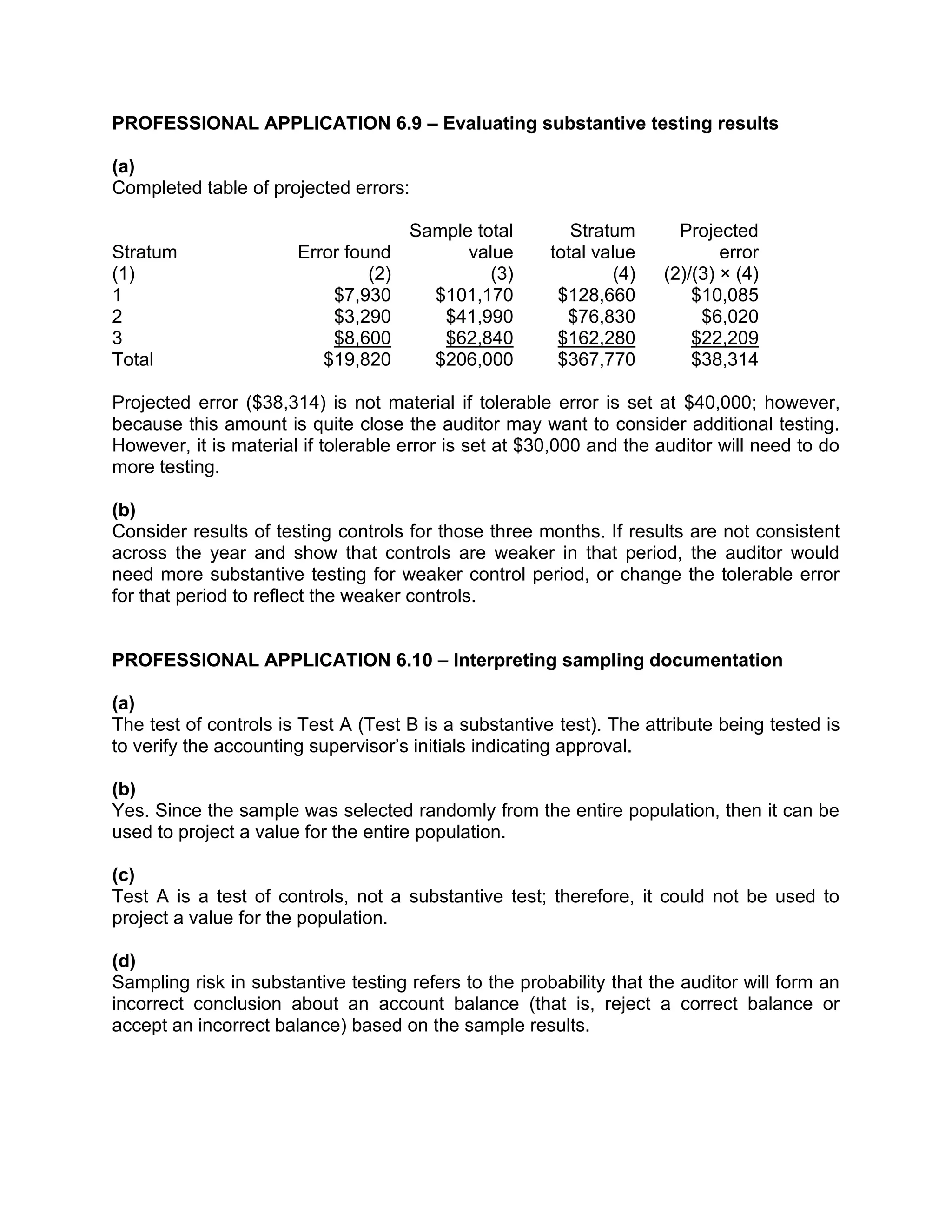
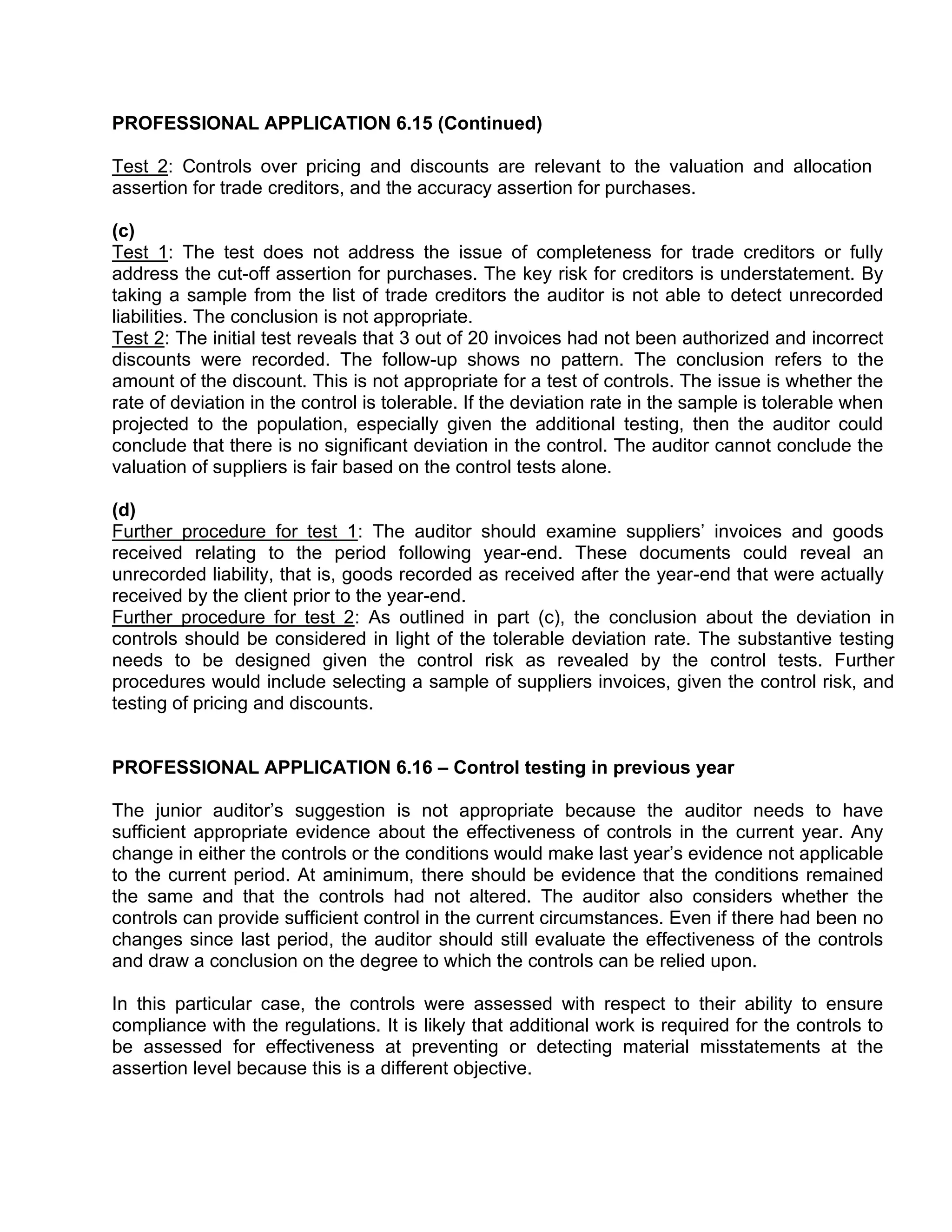
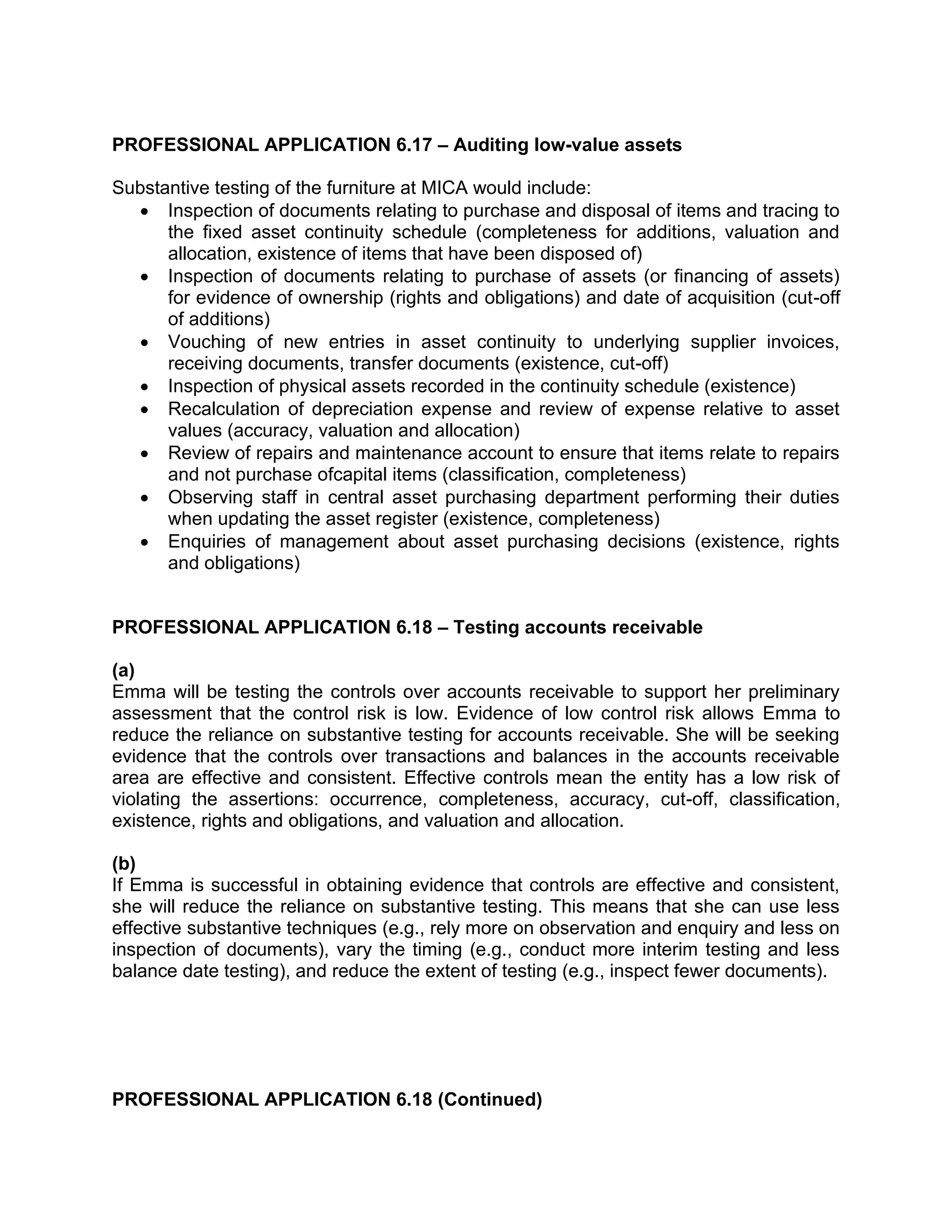
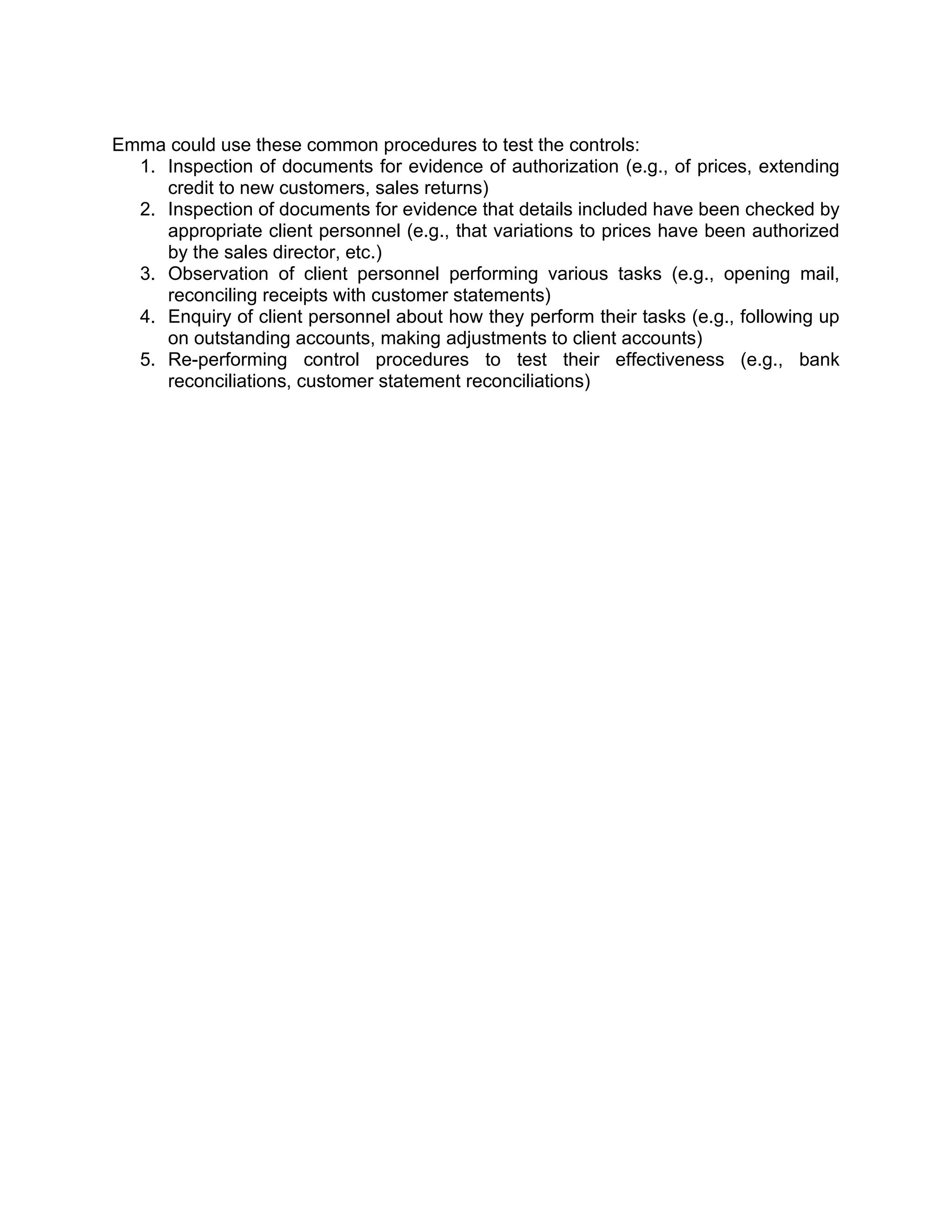
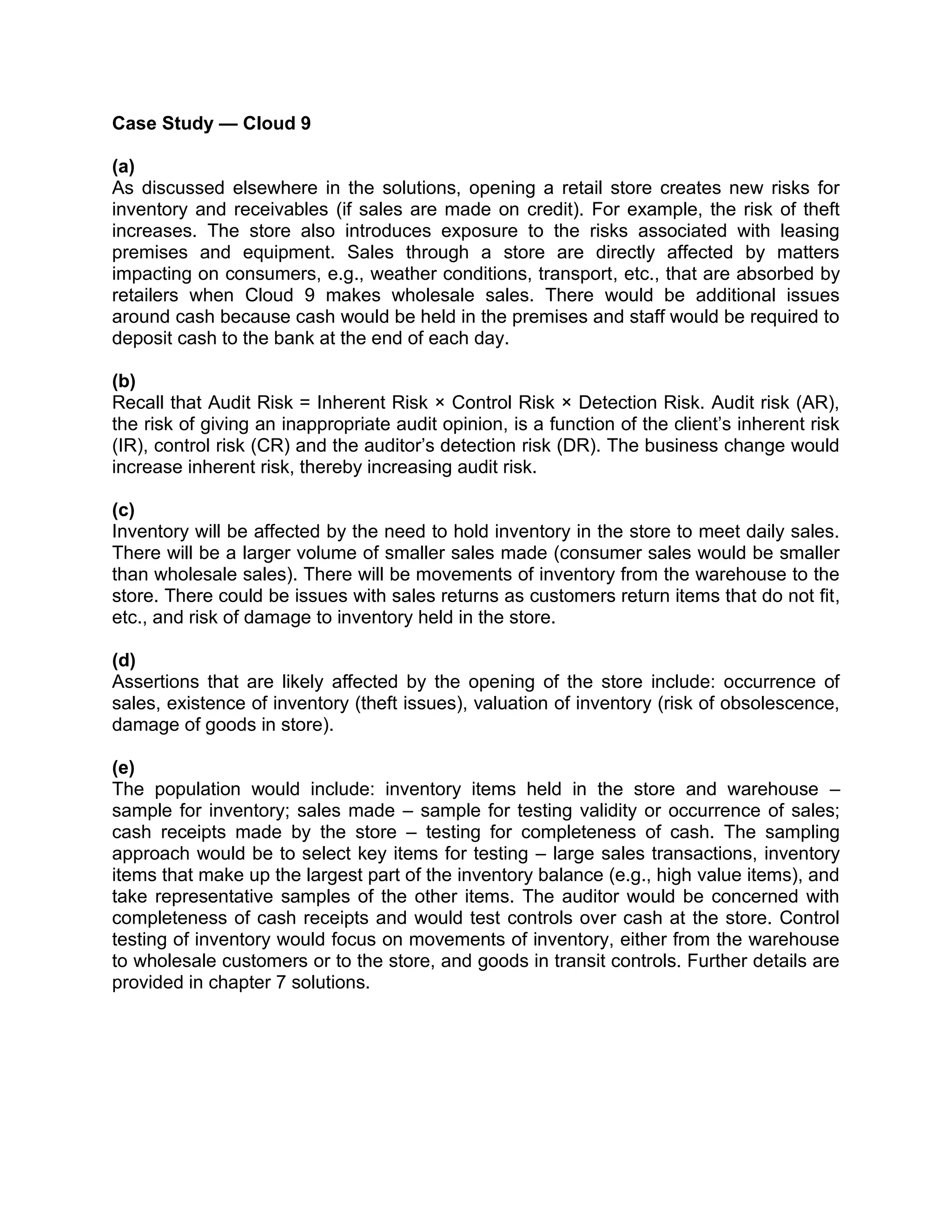

![CHAPTER VI.
DISCOVERY OF THE GOLD PLACERS.
By the treaty concluded between the United States and Mexico, in
1847, the territory of Upper California became the property of the
United States. Little thought the Mexican government of the value of
the land they were ceding, further than its commercial importance;
and, doubtless, little thought the buyers of the territory, that its soil
was pregnant with a wealth untold, and that its rivers flowed over
golden beds.
This territory, now belonging to the American Union, embraces an
area of 448,961 square miles. It extends along the Pacific coast,
from about the thirty-second parallel of north latitude, a distance of
near seven hundred miles, to the forty-second parallel, the southern
boundary of Oregon. On the east, it is bounded by New Mexico.
During the long period which transpired between its discovery and
its cession to the United States, this vast tract of country was
frequently visited by men of science, from all parts of the world.
Repeated examinations were made by learned and enterprising
officers and civilians; but none of them discovered the important
fact, that the mountain torrents of the Sierra Nevada were
constantly pouring down their golden sands into the valleys of the
Sacramento and San Joaquin. The glittering particles twinkled
beneath their feet, in the ravines which they explored, or glistened
in the watercourses which they forded, yet they passed them by
unheeded. Not a legend or tradition was heard among the white
settlers, or the aborigines, that attracted their curiosity. A nation's
ransom lay within their grasp, but, strange to say, it escaped their
notice—it flashed and sparkled all in vain.[1]](https://image.slidesharecdn.com/6372-250310204546-3e757156/75/Auditing-A-Practical-Approach-Canadian-2nd-Edition-Moroney-Solutions-Manual-31-2048.jpg)
![The Russian American Company had a large establishment at Ross
and Bodega, ninety miles north of San Francisco, founded in the
year 1812; and factories were also established in the territory by the
Hudson Bay Company. Their agents and employes ransacked the
whole country west of the Sierra Nevada, or Snowy Mountain, in
search of game. In 1838, Captain Sutter, formerly an officer in the
Swiss Guards of Charles X., King of France, emigrated from the state
of Missouri to Upper California, and obtained from the Mexican
government a conditional grant of thirty leagues square of land,
bounded on the west by the Sacramento river. Having purchased the
stock, arms, and ammunition of the Russian establishment, he
erected a dwelling and fortification on the left bank of the
Sacramento, about fifty miles from its mouth, and near what was
termed, in allusion to the new settlers, the American Fork. This
formed the nucleus of a thriving settlement, to which Captain Sutter
gave the name of New Helvetia. It is situated at the head of
navigation for vessels on the Sacramento, in latitude 38° 33' 45"
north, and longitude 121° 20' 05" west. During a residence of ten
years in the immediate vicinity of the recently discovered placéras,
or gold regions, Captain Sutter was neither the wiser nor the richer
for the brilliant treasures that lay scattered around him.[2]
In the year 1841, careful examinations of the Bay of San Francisco,
and of the Sacramento River and its tributaries, were made by
Lieutenant Wilkes, the commander of the Exploring Expedition; and
a party under Lieutenant Emmons, of the navy, proceeded up the
valley of the Willamette, crossed the intervening highlands, and
descended the Sacramento. In 1843-4, similar examinations were
made by Captain, afterwards Lieutenant-Colonel Fremont, of the
Topographical Engineers, and in 1846, by Major Emory, of the same
corps. None of these officers made any discoveries of minerals,
although they were led to conjecture, as private individuals who had
visited the country had done, from its volcanic formation and
peculiar geological features, that they might be found to exist in
considerable quantities.[3]](https://image.slidesharecdn.com/6372-250310204546-3e757156/75/Auditing-A-Practical-Approach-Canadian-2nd-Edition-Moroney-Solutions-Manual-32-2048.jpg)
![the earth being rarely disturbed more than eighteen inches below
the surface. The value of the gold dust obtained by each man, per
day, is said to have ranged from ten to fifty dollars, and sometimes
even to have far exceeded that. The natural consequence of this
state of things was, that the price of labor, and, indeed, of every
thing, rose immediately from ten to twenty fold.[4]
As may readily be conjectured, every stream and ravine in the valley
of the Sacramento was soon explored. Gold was found on every one
of its tributaries; but the richest earth was discovered near the Rio
de los Plumas, or Feather River,[5] and its branches, the Yuba and
Bear rivers, and on Weber's creek, a tributary of the American Fork.
Explorations were also made in the valley of the San Joaquin, which
resulted in the discovery of gold on the Cosumnes and other
streams, and in the ravines of the Coast Range, west of the valley,
as far down as Ciudad de los Angeles.
In addition to the gold mines, other important discoveries were
made in Upper California. A rich vein of quicksilver was opened at
New Almaden, near Santa Clara, which, with imperfect machinery,—
the heat by which the metal is made to exude from the rock being
applied by a very rude process,—yielded over thirty per cent. This
mine—one of the principal advantages to be derived from which will
be, that the working of the silver mines scattered through the
territory must now become profitable—is superior to those of
Almaden, in Old Spain, and second only to those of Idria, near
Trieste, the richest in the world.
Lead mines were likewise discovered in the neighborhood of
Sonoma, and vast beds of iron ore near the American Fork, yielding
from eighty-five to ninety per cent. Copper, platina, tin, sulphur, zinc,
and cobalt, were discovered every where; coal was found to exist in
large quantities in the Cascade range of Oregon, of which the Sierra
Nevada is a continuation; and in the vicinity of all this mineral
wealth, there are immense quarries of marble and granite, for
building purposes.](https://image.slidesharecdn.com/6372-250310204546-3e757156/75/Auditing-A-Practical-Approach-Canadian-2nd-Edition-Moroney-Solutions-Manual-34-2048.jpg)
![Colonel Mason had succeeded Colonel Fremont in the post of
governor of California and military commandant. A regiment of New
York troops, under the command of Colonel Stevenson, had been
ordered to California before the conclusion of the treaty of peace,
and formed the principal part of the military force in the territory.
Colonel Mason expressed the opinion, in his official despatch, that
"there is more gold in the country drained by the Sacramento and
San Joaquin rivers, than will pay the cost of the [late] war with
Mexico a hundred times over." Should this even prove to be an
exaggeration, there can be little reason to doubt, when we take into
consideration all the mineral resources of the country, that the
territory of California is by far the richest acquisition made by this
government since its organization.
The appearance of the mines, at the period of Governor Mason's
visit, three months after the discovery, he thus graphically describes:
"At the urgent solicitation of many gentlemen, I delayed there [at
Sutter's Fort] to participate in the first public celebration of our
national anniversary at that fort, but on the 5th resumed the
journey, and proceeded twenty-five miles up the American Fork to a
point on it now known as the Lower Mines, or Mormon Diggins. The
hill-sides were thickly strewn with canvas tents and bush arbors; a
store was erected, and several boarding shanties in operation. The
day was intensely hot, yet about two hundred men were at work in
the full glare of the sun, washing for gold—some with tin pans, some
with close-woven Indian baskets, but the greater part had a rude
machine, known as the cradle. This is on rockers, six or eight feet
long, open at the foot, and at its head has a coarse grate, or sieve;
the bottom is rounded, with small cleats nailed across. Four men are
required to work this machine; one digs the ground in the bank close
by the stream; another carries it to the cradle and empties it on the
grate; a third gives a violent rocking motion to the machine; while a
fourth dashes on water from the stream itself.](https://image.slidesharecdn.com/6372-250310204546-3e757156/75/Auditing-A-Practical-Approach-Canadian-2nd-Edition-Moroney-Solutions-Manual-35-2048.jpg)
!["The sieve keeps the coarse stones from entering the cradle, the
current of water washes off the earthy matter, and the gravel is
gradually carried out at the foot of the machine, leaving the gold
mixed with a heavy, fine black sand above the first cleats. The sand
and gold, mixed together, are then drawn off through auger holes
into a pan below, are dried in the sun, and afterward separated by
blowing off the sand. A party of four men thus employed at the
lower mines, averaged $100 a day. The Indians, and those who have
nothing but pans or willow baskets, gradually wash out the earth
and separate the gravel by hand, leaving nothing but the gold mixed
with sand, which is separated in the manner before described. The
gold in the lower mines is in fine bright scales, of which I send
several specimens.
"From the mill [where the gold was first discovered], Mr. Marshall
guided me up the mountain on the opposite or north bank of the
south fork, where, in the bed of small streams or ravines, now dry, a
great deal of coarse gold has been found. I there saw several parties
at work, all of whom were doing very well; a great many specimens
were shown me, some as heavy as four or five ounces in weight,
and I send three pieces, labeled No. 5, presented by a Mr. Spence.
You will perceive that some of the specimens accompanying this,
hold mechanically pieces of quartz; that the surface is rough, and
evidently moulded in the crevice of a rock. This gold cannot have
been carried far by water, but must have remained near where it
was first deposited from the rock that once bound it. I inquired of
many people if they had encountered the metal in its matrix, but in
every instance they said they had not; but that the gold was
invariably mixed with washed gravel, or lodged in the crevices of
other rocks. All bore testimony that they had found gold in greater
or less quantities in the numerous small gullies or ravines that occur
in that mountainous region.
"On the 7th of July I left the mill, and crossed to a stream emptying
into the American Fork, three or four miles below the saw-mill. I
struck this stream (now known as Weber's creek) at the washings of](https://image.slidesharecdn.com/6372-250310204546-3e757156/75/Auditing-A-Practical-Approach-Canadian-2nd-Edition-Moroney-Solutions-Manual-36-2048.jpg)

![workshops have been established, and a considerable amount of
business is transacted there. Captain Sutter is held in very great
respect by the people of the settlement and those stopping at his
house on the road to the placers. Several versions of the account of
the discovery of the gold mines have been circulated, but the true
one, in the Captain's own words, is given in a work recently
published.[6] The account is here inserted, both on account of the
interest connected with the discovery, and in order to correct wrong
versions of the matter.
"I was sitting one afternoon," said the Captain, "just after my siesta,
engaged, by-the-bye, in writing a letter to a relation of mine at
Lucerne, when I was interrupted by Mr. Marshall—a gentleman with
whom I had frequent business transactions—bursting hurriedly into
the room. From the unusual agitation in his manner, I imagined that
something serious had occurred, and, as we involuntarily do in this
part of the world, I at once glanced to see if my rifle was in its
proper place. You should know that the mere appearance of Mr.
Marshall at that moment in the fort was quite enough to surprise
me, as he had but two days before left the place to make some
alterations in a mill for sawing pine planks, which he had just run up
for me, some miles higher up the Americanos. When he had
recovered himself a little, he told me that, however great my
surprise might be at his unexpected reappearance, it would be much
greater when I heard the intelligence he had come to bring me.
'Intelligence,' he added, 'which, if properly profited by, would put
both of us in possession of unheard-of wealth—millions and millions
of dollars, in fact.' I frankly own, when I heard this, that I thought
something had touched Marshall's brain, when suddenly all my
misgivings were put an end to by his flinging on the table a handful
of scales of pure virgin gold. I was fairly thunderstruck, and asked
him to explain what all this meant, when he went on to say, that,
according to my instructions, he had thrown the mill-wheel out of
gear, to let the whole body of the water in the dam find a passage
through the tail-race, which was previously too narrow to allow the
water to run off in sufficient quantity, whereby the wheel was](https://image.slidesharecdn.com/6372-250310204546-3e757156/75/Auditing-A-Practical-Approach-Canadian-2nd-Edition-Moroney-Solutions-Manual-48-2048.jpg)

![framers. These rules provided for the modus operandi of procuring
the gold, supplying the party with necessaries, attending to the sick,
and the division of the fruits of their labor.
One of the most frequented placers of California is called the
Stanislaus mine, situated near the Stanislaus River. It was one of the
first places worked to any extent by the gold-seekers, but not
satisfying the expectations of some of the most greedy, it has since
been partially abandoned. A description of this mine, and of the
living and operations of its workers in the winter of 1848-49, will
give a good general idea of the toils and privations endured by the
early gold-seekers in that region, and, also, of their mode of
procuring the precious metal at most of the mines. We extract from
a recently published work, distinguished for minuteness of detail and
accuracy of description.[7]
"The mine was a deep ravine, embosomed amidst lofty hills,
surmounted by, and covered with pine, and having, in the bottom
itself, abundance of rock, mud, and sand. Halliday and I encamped
at the very lowest part of the ravine, at a little distance from Don
Emanuel's party; a steep rock which towered above our heads
affording us shelter, and a huge, flat stone beneath our feet
promising a fair substitute for a dry bed. Here then we stretched our
macheers and blankets, and arranged our saddles and bags, so as to
make ourselves as comfortable and warm as possible, although, in
spite of our precautions and contrivances, and of a tolerably good
fire, our encampment was bitterly cold, and we lay exposed to a
heavy dew. We had given up our horses into the charge of the
Indians, and I saw to their being safely placed in the cavallard,
whilst Halliday went to chop wood; a task I was too weak to
perform. I cannot say we slept; we might more correctly be said to
have had a long and most uncomfortable doze, and when morning
broke, we were shivering with cold, and shook the dew in a shower
from our clothes. I consulted with my companion, and urged upon
him the prudence of our setting to work to construct ourselves a sort
of log cabin; otherwise I felt certain, from the experience of the past](https://image.slidesharecdn.com/6372-250310204546-3e757156/75/Auditing-A-Practical-Approach-Canadian-2nd-Edition-Moroney-Solutions-Manual-52-2048.jpg)