To learn more about Office of Sustainability, visit
aucegypt.edu/about/sustainable-auc/sustainable-campus
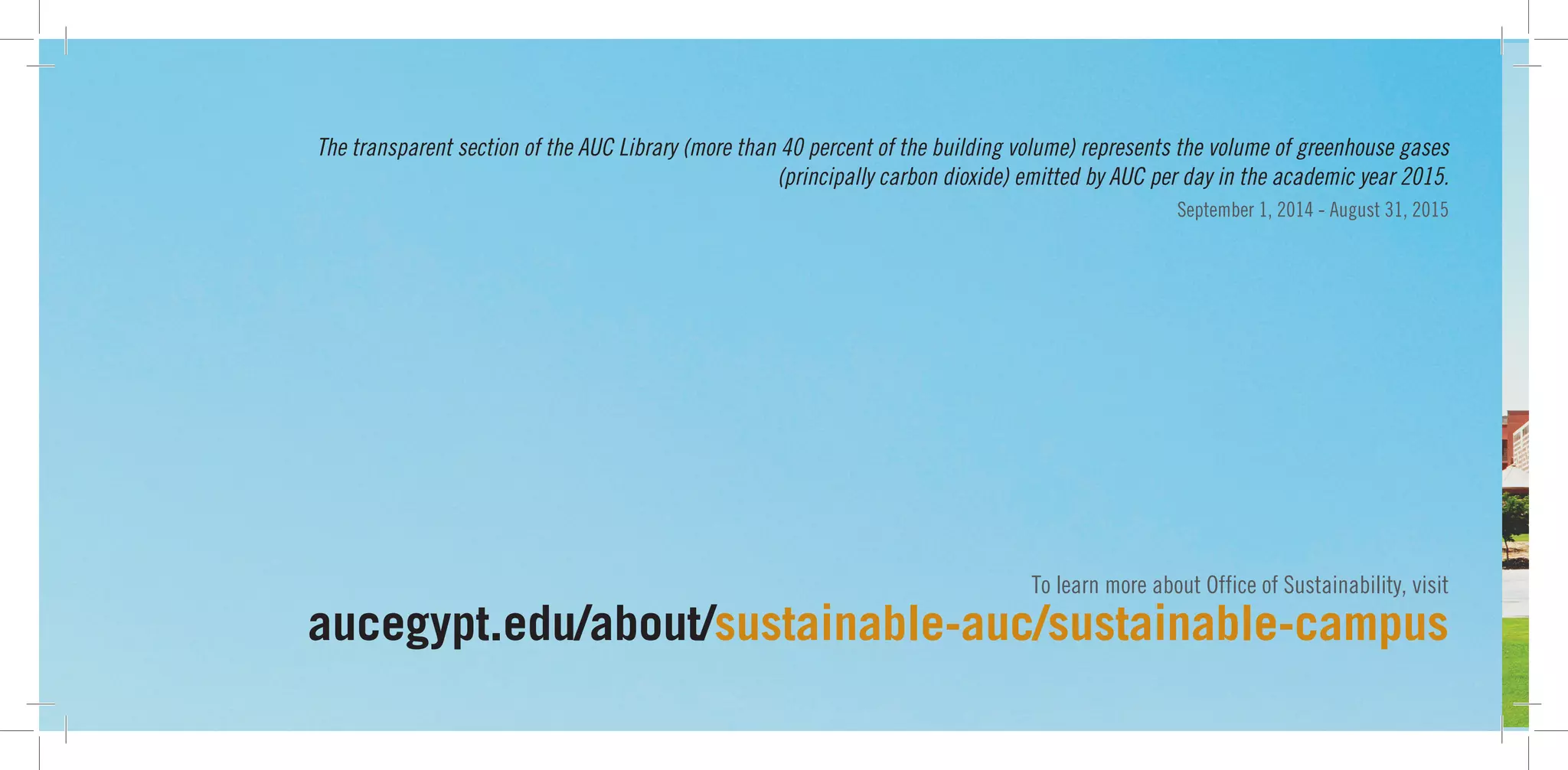
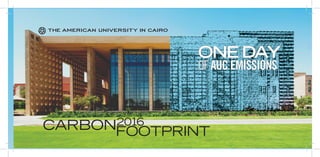
The transparent section of the AUC Library (more than 40 percent of the building volume) represents the volume of greenhouse gases
(principally carbon dioxide) emitted by AUC per day in the academic year 2015.
September 1, 2014 - August 31, 2015
ONE DAY
OFAUCEMISSIONS
CARBONFOOTPRINT
2016
It is a tool to assess the impact of an organization or activity on the
environment by measuring the amount of greenhouse gases — the
cause of global warming — emitted into the atmosphere each year.
At AUC, the main contributors to greenhouse gas emissions are heating
ventilation and air conditioning (HVAC), transportation, electrical
equipment, refrigerant leakage, water supply, domestic hot water,
lighting and solid waste disposal.
The University’s carbon footprint estimates the quantities of
greenhouse gases being emitted into the atmosphere as a result of its
normal operations, including operating the campus and commuting
by faculty, students and staff. It is expressed in metric tons of carbon
dioxide equivalent.
WHAT IS A
CARBON
FOOTPRINT?
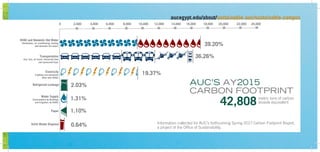
AUC’S AY2015
CARBON FOOTPRINT
24,00022,00020,00018,00016,00014,00012,00010,0008,0006,0004,0002,0000
HVAC and Domestic Hot Water
(Ventilation, air conditioning, heating
and domestic hot water)
Paper
Water Supply
(Consumption by Buildings
and Irrigation, by HVAC)
Solid Waste Disposal
39.20%
Electricity
(Lighting and equipment
other than HVAC)
19.37%
Transportation
(Car, bus, air travel, University fleet
and sponsored trips)
36.26%
1.10%
0.64%
1.31%
Refrigerant Leakage 2.03%
Information collected for AUC’s forthcoming Spring 2017 Carbon Footprint Report,
a project of the Office of Sustainability.
metric tons of carbon
dioxide equivalent42,808
aucegypt.edu/about/sustainable-auc/sustainable-campus
2015
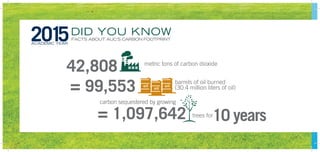
42,808
DID YOU KNOW
ACADEMIC YEAR
metric tons of carbon dioxide
= 99,553
= 1,097,642 10 years
barrels of oil burned
(30.4 million liters of oil)
trees for
carbon sequestered by growing
FACTS ABOUT AUC’S CARBON FOOTPRINT
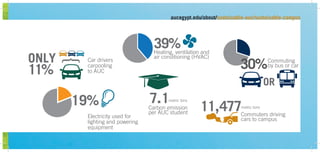
Commuters driving
cars to campus
metric tons
11,477Carbon emission
per AUC student
metric tons7.1
39%Heating, ventilation and
air conditioning (HVAC)
19%
Car drivers
carpooling
to AUC
Electricity used for
lighting and powering
equipment
}ONLY
11%
OR
30%Commuting
by bus or car
aucegypt.edu/about/sustainable-auc/sustainable-campus
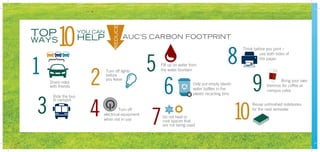
TOP YOU CAN
HELP AUC’S CARBON FOOTPRINT
WAYS10
Do not heat or
cool spaces that
are not being used
Ride the bus
to campus
1 2
3 4
5
REDUCE
Only put empty plastic
water bottles in the
plastic recycling bins6
	 Turn off
electrical equipment
when not in use
7
9 	 Bring your own
thermos for coffee at
campus cafes
10
Fill up on water from
the water fountainTurn off lights
before
you leave
8
Think before you print –
	 use both sides of
	 the paper
}
Share rides
with friends
Reuse unfinished notebooks
for the next semester
wn
Dear AUC community,
Since the establishment of the Office of Sustainability in 2011, The American University in Cairo has
accomplished great strides in improving its energy efficiency to manage a campus of more than 6,000
students in a desert climate. Egypt ranks among the top 10 countries in the world that are most susceptible
to climate change, which makes AUC’s emphasis on sustainability especially timely. Today, with the
publication of the fifth continuous year of the University’s carbon footprint data, we are proud to continue
our tradition of developing, implementing, testing and assessing workable solutions to the challenges of
sustainable development in Egypt’s special environment.
This project is part of the first attempt in the region to measure a University’s impact on climate change.
Although the data is informative, effectively combating climate change requires the effort of individuals.
We hope that the results in this pamphlet will educate, encourage and inspire the AUC community to
incorporate sustainable practices into their everyday lives.
Brian MacDougall
EVP for Administration and Finance
The American University in Cairo
aucegypt.edu/about/sustainable-auc/sustainable-campus

AUCs Carbon footprint-5-May2016 (1)

  • 1.
    To learn moreabout Office of Sustainability, visit aucegypt.edu/about/sustainable-auc/sustainable-campus The transparent section of the AUC Library (more than 40 percent of the building volume) represents the volume of greenhouse gases (principally carbon dioxide) emitted by AUC per day in the academic year 2015. September 1, 2014 - August 31, 2015
  • 2.
  • 3.
    It is atool to assess the impact of an organization or activity on the environment by measuring the amount of greenhouse gases — the cause of global warming — emitted into the atmosphere each year. At AUC, the main contributors to greenhouse gas emissions are heating ventilation and air conditioning (HVAC), transportation, electrical equipment, refrigerant leakage, water supply, domestic hot water, lighting and solid waste disposal. The University’s carbon footprint estimates the quantities of greenhouse gases being emitted into the atmosphere as a result of its normal operations, including operating the campus and commuting by faculty, students and staff. It is expressed in metric tons of carbon dioxide equivalent. WHAT IS A CARBON FOOTPRINT?
  • 4.
    AUC’S AY2015 CARBON FOOTPRINT 24,00022,00020,00018,00016,00014,00012,00010,0008,0006,0004,0002,0000 HVACand Domestic Hot Water (Ventilation, air conditioning, heating and domestic hot water) Paper Water Supply (Consumption by Buildings and Irrigation, by HVAC) Solid Waste Disposal 39.20% Electricity (Lighting and equipment other than HVAC) 19.37% Transportation (Car, bus, air travel, University fleet and sponsored trips) 36.26% 1.10% 0.64% 1.31% Refrigerant Leakage 2.03% Information collected for AUC’s forthcoming Spring 2017 Carbon Footprint Report, a project of the Office of Sustainability. metric tons of carbon dioxide equivalent42,808 aucegypt.edu/about/sustainable-auc/sustainable-campus
  • 5.
    2015 42,808 DID YOU KNOW ACADEMICYEAR metric tons of carbon dioxide = 99,553 = 1,097,642 10 years barrels of oil burned (30.4 million liters of oil) trees for carbon sequestered by growing FACTS ABOUT AUC’S CARBON FOOTPRINT
  • 6.
    Commuters driving cars tocampus metric tons 11,477Carbon emission per AUC student metric tons7.1 39%Heating, ventilation and air conditioning (HVAC) 19% Car drivers carpooling to AUC Electricity used for lighting and powering equipment }ONLY 11% OR 30%Commuting by bus or car aucegypt.edu/about/sustainable-auc/sustainable-campus
  • 7.
    TOP YOU CAN HELPAUC’S CARBON FOOTPRINT WAYS10 Do not heat or cool spaces that are not being used Ride the bus to campus 1 2 3 4 5 REDUCE Only put empty plastic water bottles in the plastic recycling bins6 Turn off electrical equipment when not in use 7 9 Bring your own thermos for coffee at campus cafes 10 Fill up on water from the water fountainTurn off lights before you leave 8 Think before you print – use both sides of the paper } Share rides with friends Reuse unfinished notebooks for the next semester
  • 8.
    wn Dear AUC community, Sincethe establishment of the Office of Sustainability in 2011, The American University in Cairo has accomplished great strides in improving its energy efficiency to manage a campus of more than 6,000 students in a desert climate. Egypt ranks among the top 10 countries in the world that are most susceptible to climate change, which makes AUC’s emphasis on sustainability especially timely. Today, with the publication of the fifth continuous year of the University’s carbon footprint data, we are proud to continue our tradition of developing, implementing, testing and assessing workable solutions to the challenges of sustainable development in Egypt’s special environment. This project is part of the first attempt in the region to measure a University’s impact on climate change. Although the data is informative, effectively combating climate change requires the effort of individuals. We hope that the results in this pamphlet will educate, encourage and inspire the AUC community to incorporate sustainable practices into their everyday lives. Brian MacDougall EVP for Administration and Finance The American University in Cairo aucegypt.edu/about/sustainable-auc/sustainable-campus