The Astro, etc. QuizPresented by Vidyuth
GENERAL INFO24 questions on infinite bounce+10 for direct and passLVC at mid-pointNo audio/video questionsQuestion contributors: Myself, 2D and Rammohan
1Zeus, Percival and Constance were some of the names considered for this, but were eventually disregarded. On 14 March 1930, Falconer Madan, a former librarian at the University of Oxford's Bodleian Library, read a bit of news in The Times. During the course of a conversation with his granddaughter Venetia Burney, an eleven-year-old schoolgirl in Oxford, who was interested in classical mythology as well as astronomy, she suggested a name. And it stuck. What did Venetia name?
Pluto"At my age, I've been largely indifferent to [the debate]; though I suppose I would prefer   it to remain a planet."
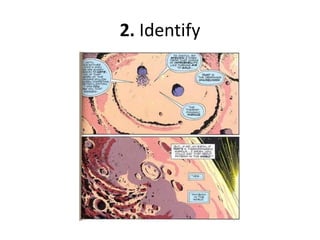
2. Identify
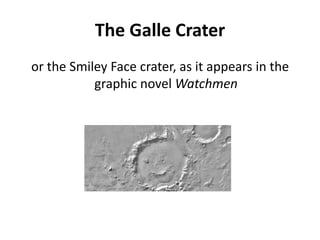
The Galle Crateror the Smiley Face crater, as it appears in the graphic novel Watchmen
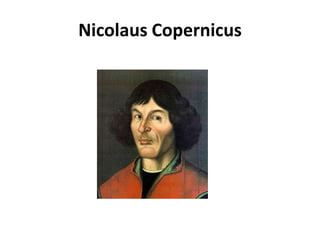
3X‘s book, De revolutionibusorbiumcoelestium (On the Revolutions of the Celestial Spheres), published just before his death in 1543, is often regarded as the starting point of modern astronomy and the defining epiphany that began the scientific revolution. On July 14, 2009, the discoverers, from the Gesellschaft fürSchwerionenforschung in Germany, of chemical element 112 (temporarily named ununbium) proposed that its permanent name be X-ium. "After we had named elements after our city and our state, we wanted to make a statement with a name that was known to everyone," said discovery team leader Sigurd Hofmann. "We didn't want to select someone who was a German. We were looking world-wide." X?
Nicolaus Copernicus
4According to legend, during the Samudra manthan, the asura Xdrank some of the divine nectar. But before the nectar could pass his throat, Mohini (the female avatar of Vishnu) cut off his head. The head, however, remained immortal. Hanuman, in his childhood, famously flew towards the sun, as it appeared to be a big fruit. X arrived and saw Hanuman trying to swallow the sun; little Hanuman, seeing X, was attracted to the curiosity of the disembodied head, and caught him. X?
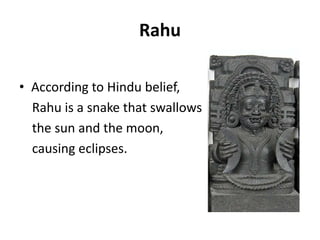
RahuAccording to Hindu belief,Rahu is a snake that swallows    the sun and the moon,     causing eclipses.
5. Identify the logo
6The first known mention of the term Panspermia was in the writings of the 5th century BC Greek philosopher Anaxagoras. In the nineteenth century it was again revived in modern form by several scientists, including Berzelius,Kelvin, Helmholtz and Arrhenius.There is as yet no evidence to support or contradict Panspermia, although the majority view holds that it is unlikely. Simple question. What is Panspermia?
It is the hypothesis that life exists throughout the Universe, distributed by meteoroids, asteroids, and planetoids. Panspermia does not necessarily suggest that life originated only once and subsequently spread through the entire Universe, but instead that once started, it may be able to spread to other environments suitable for replication.
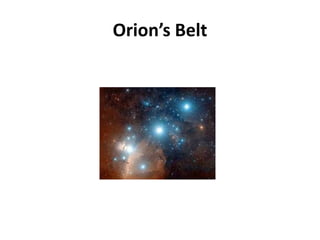
7Richard Hinckley Allen lists many folk names for the X. The English ones include: Jacob's Rod or Staff; Peter's Staff; the Golden Yard-arm; the Ell; the Yard-wand; the Ellwand; Our Lady's Wand; the Magi; the Three Kings; the Three Marys; or simply the Three Stars.The passage "Canst thou bind the sweet influences of Pleiades, or loose the bands of ____?" is found in the Book of Job.Identify.
Orion’s Belt
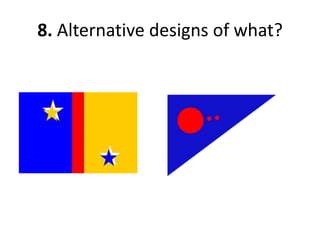
8. Alternative designs of what?
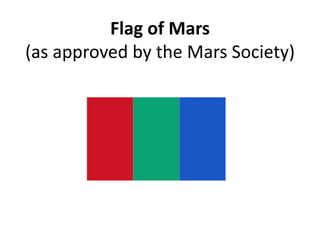
Flag of Mars (as approved by the Mars Society)
9. Objectives of what?Determine the three-dimensional structure and dynamic behaviour of the rings of SaturnDetermine the composition of the satellite surfaces and the geological history of each objectDetermine the nature and origin of the dark material on Iapetus's leading hemisphereMeasure the three-dimensional structure and dynamic behaviour of the magnetosphereStudy the dynamic behaviour of Saturn's atmosphere at cloud levelStudy the time variability of Titan's clouds and hazesCharacterize Titan's surface on a regional scale
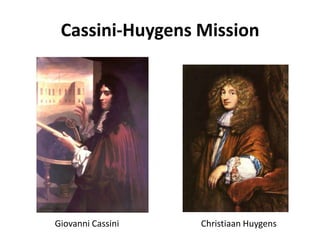
Cassini-Huygens MissionGiovanni CassiniChristiaan Huygens
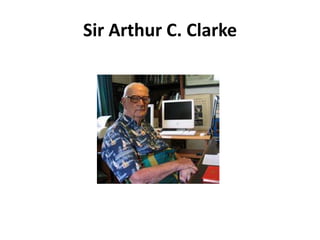
10X’s most important scientific contribution may be his idea that geostationary satellites would be ideal telecommunications relays. He described this concept in a paper titled Extra-Terrestrial Relays — Can Rocket Stations Give Worldwide Radio Coverage?, published 1945. The geostationary orbit is now sometimes known as the X Orbit or the X Belt in his honour. X?
Sir Arthur C. Clarke
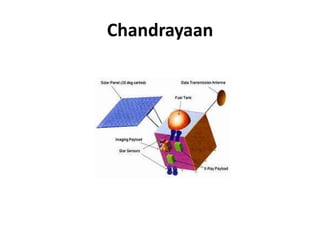
11. Specs of?Mass: 1,380 kg at launch, 675 kg at lunar orbit, and 523 kg after releasing the impactor.Dimensions: Cuboidin shape, approximately 1.5 mPower: Mainly powered by its solar array, which includes one solar panel covering a total area of 2.15 x 1.8 m generating 750 W of peak power, which is stored in a 36 A·h lithium-ion battery for use during eclipses.Propulsion: Bipropellant integrated propulsion system to reach lunar orbit as well as orbit and altitude maintenance while orbiting the Moon. The power plant consists of one 440 N engine and eight 22 N thrusters. Fuel and oxidizer are stored in two tanks of 390 litres each.Navigation and control: Thecraft is 3-axis stabilized with two star sensors, gyros and four reaction wheels. The craft carries dual redundant bus management units for attitude control, sensor processing, antenna orientation, etc.
Chandrayaan
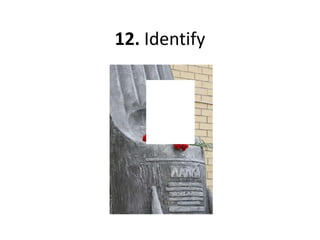
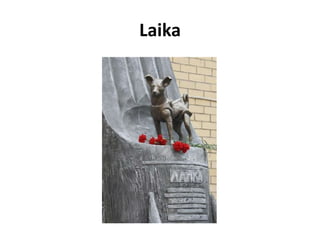
12. Identify
Laika
LVC
RULES6 setsNumber of pictures in each set will varyPoint scheme will be mentioned in each slideNon-exhaustive list
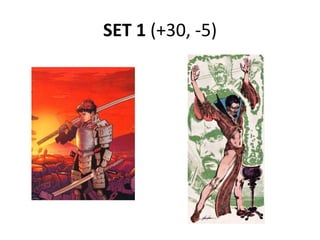
SET 1 (+30, -5)
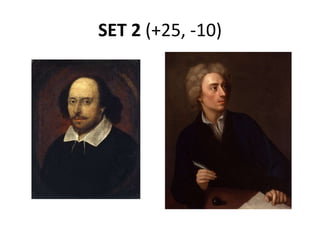
SET 2 (+25, -10)
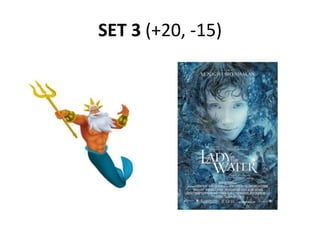
SET 3 (+20, -15)
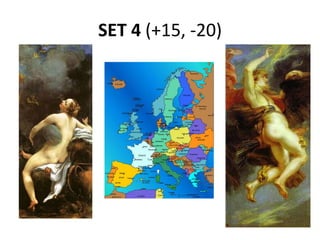
SET 4 (+15, -20)
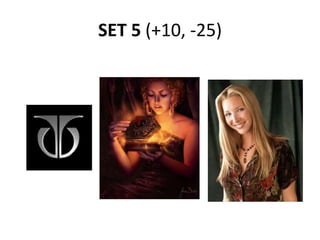
SET 5 (+10, -25)
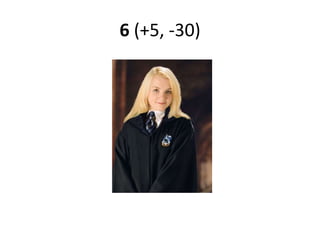
6 (+5, -30)
Moons of planets in the Solar SystemSet 1: Moons of Mars (Phobos and Deimos)Set 2: Moons of Saturn (named after many Shakespearean plays and Rape of the Lock, a poem by Alexander Pope)Set 3: Moons of Neptune (Triton and Nereid)Set 4: Moons of Jupiter (Io, Europa and Ganymede)Set 5: Moons of Saturn (Titan, Pandora and Phoebe)Set 6: Earth (Luna)
13. Written by whom?BeyondThe rim of the star-lightMy loveIs wand'ring in star-flightI knowHe'll find in star-clustered reachesLove,Strange love a star woman teaches.I knowHis journey ends neverHis _______Will go on forever.But tell himWhile he wanders his starry seaRemember, remember me.
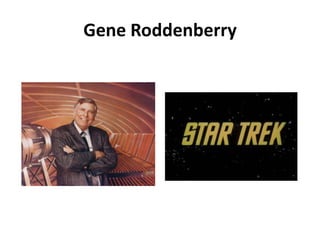
Gene Roddenberry
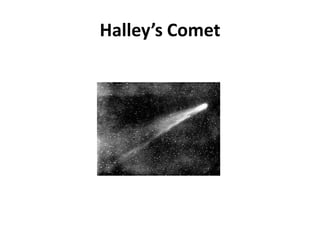
14Mark Twain was born on 30 November 1835, exactly two weeks after X. In his autobiography, published in 1909, he said, “I came in with Xin 1835. ... It will be the greatest disappointment of my life if I don't go out with X. The Almighty has said, no doubt: ‘Now here are these two unaccountable freaks; they came in together, they must go out together.’” Identify.
Halley’s Comet
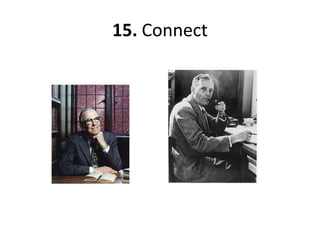
15. Connect
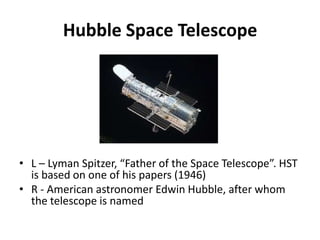
Hubble Space TelescopeL – Lyman Spitzer, “Father of the Space Telescope”. HST is based on one of his papers (1946)R - American astronomer Edwin Hubble, after whom the telescope is named
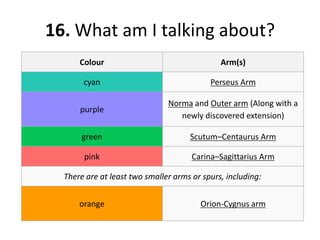
16. What am I talking about?
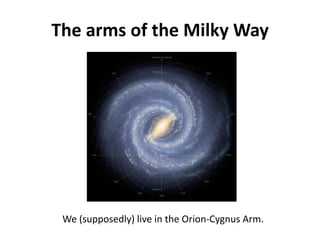
The arms of the Milky WayWe (supposedly) live in the Orion-Cygnus Arm.
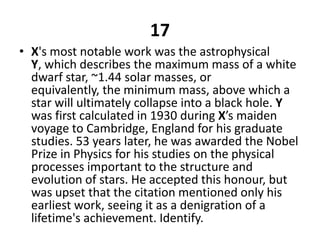
17X's most notable work was the astrophysical Y, which describes the maximum mass of a white dwarf star, ~1.44 solar masses, or equivalently, the minimum mass, above which a star will ultimately collapse into a black hole. Y was first calculated in 1930 during X’s maiden voyage to Cambridge, England for his graduate studies. 53 years later, he was awarded the Nobel Prize in Physics for his studies on the physical processes important to the structure and evolution of stars. He accepted this honour, but was upset that the citation mentioned only his earliest work, seeing it as a denigration of a lifetime's achievement. Identify.
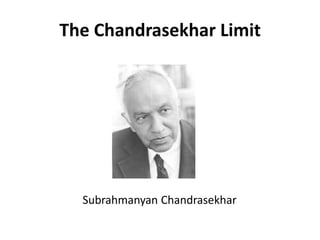
The Chandrasekhar LimitSubrahmanyan Chandrasekhar
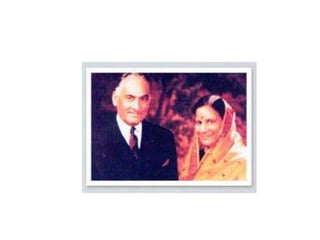
18The man in the picture on the next slide is widely regarded as one of the doyens of Indian industry. He was admired not only for his contributions to industrial productivity and technological advancement, but also for his social commitments. Despite his many preoccupations as a captain of industry, he found the time and energy to initiate pioneering projects for scientific research, education, health and social welfare. There are three famous ______’s named after him, located in three different places in India. Identify.
BM BirlaThe Birla Planetariums in Hyderabad, Kolkata and Chennai. The one in Chennai is said to be the most modern in India, while the one in Hyderabad hosts a Dinosorium as well.
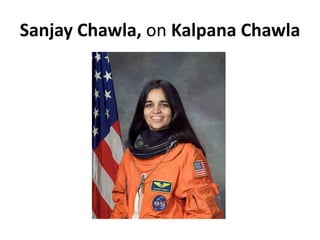
19. Who, about whom?"To me, my sister is not dead. She is immortal. Isn't that what a star is? She is a permanent star in the sky. She will always be up there where she belongs."
Sanjay Chawla, on KalpanaChawla
20The X is a method of measuring a civilization's level of technological advancement. It is only theoretical and in terms of an actual civilization highly speculative; however, it puts energy consumption of an entire civilization in a cosmic perspective. It was first proposed in 1964 and has three designated categories called Type I, II, and III, which are based on the amount of usable energy a civilization has at its disposal, and the degree of space colonization.
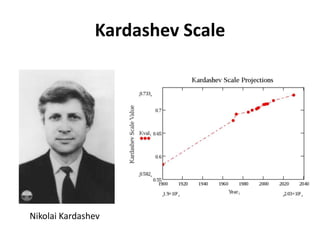
In general terms, a Type I civilization has achieved mastery of the resources of its home planet, Type II of its solar system, and Type III of its galaxy.The human civilization as of 2010 is currently somewhere around 0.72, with calculations suggesting we may attain Type I status in about 100–200 years, Type II status in a few thousand years, and Type III status in about 100,000 to a million years.Identify.
Kardashev ScaleNikolai Kardashev
The three levels of the X can be quantified in units of power (watts) and plotted on an increasing logarithmic scale.Type I — a civilization that is able to harness all of the power available on a single planet — has approximately 1016 or 1017 W available. Earth specifically has an available power of 1.74  × 1017 W. Type II — a civilization that is able to harness all of the power available from a single star, approximately 4  × 1026 W. Again, this figure is variable; the Sun outputs approximately 3.86  × 1026 W. Type III — a civilization that is able to harness all of the power available from a single galaxy, approximately 4  × 1037 W. This figure is extremely variable, since galaxies vary widely in size; the stated figure is the approximate power output of the Milky Way.
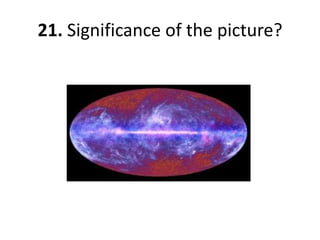
21. Significance of the picture?
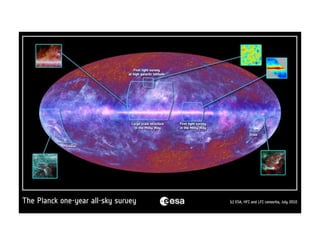
Image of the “entire universe”An all-sky image taken by a telescope on the Planck satellite and released by the European Space Agency. It captures the ‘ghost of the Big Bang’ and is of the afterglow of the birth of the universe, which happened around 14 billion years ago. The image depicts the Milky Way, lots of cosmic dust and a ‘galactic web’ where new stars are, or were, being formed. Or so the scientists say.
22. Identify the logo
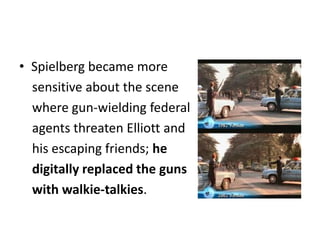
23Not really an astro-related question, but anyway.For the 20th anniversary of the 1982 film E.T. the Extra-Terrestrial, Steven Spielberg, being more sensitive about a particular scene in the original version of the film, used special effects to replace something that was present in that scene with something else in the re-release. Peter Travers of Rolling Stone criticized Spielberg’s move, saying “Is this what two decades have done to free speech?”What did Spielberg do?
Spielberg became more     sensitive about the scene     where gun-wielding federal     agents threaten Elliott and     his escaping friends; he     digitally replaced the guns     with walkie-talkies.
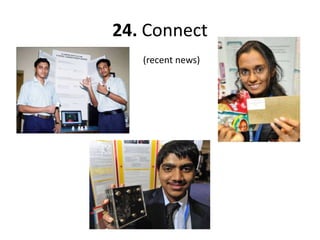
24. Connect(recent news)
Something to be proud of Jayaprakash, Mukherjee, Sarkar and Vaishnav are some of the new minor planets named after Indian students who became eligible for the honour by virtue of their performance at an international school science fair organised by microchip maker Intel.DebarghyaSarkar and AnishMukherjee, both from South Point High School, Kolkata, jointly won the award in the electrical and mechanical engineering category for inventing a tamperproof clamped bottle cap.HetalVaishnav, a Class XII student of Late Shree S. G. Dholakiya Memorial High School in Rajkot, created composite material using non- recyclable multilayered and metallised plastic used for packaging wafers and chewing tobacco.Vishnu Jayaprakash, a Class XII student of ChettinadVidyashram, Chennai, demonstrated a microbial fuel cell that runs on cow dung and inexpensive graphite electrodes.
As always, so long, and thanks for all the fish.

Astro quiz

  • 1.
    The Astro, etc.QuizPresented by Vidyuth
  • 2.
    GENERAL INFO24 questionson infinite bounce+10 for direct and passLVC at mid-pointNo audio/video questionsQuestion contributors: Myself, 2D and Rammohan
  • 3.
    1Zeus, Percival andConstance were some of the names considered for this, but were eventually disregarded. On 14 March 1930, Falconer Madan, a former librarian at the University of Oxford's Bodleian Library, read a bit of news in The Times. During the course of a conversation with his granddaughter Venetia Burney, an eleven-year-old schoolgirl in Oxford, who was interested in classical mythology as well as astronomy, she suggested a name. And it stuck. What did Venetia name?
  • 5.
    Pluto"At my age,I've been largely indifferent to [the debate]; though I suppose I would prefer it to remain a planet."
  • 6.
  • 8.
    The Galle Craterorthe Smiley Face crater, as it appears in the graphic novel Watchmen
  • 9.
    3X‘s book, De revolutionibusorbiumcoelestium (Onthe Revolutions of the Celestial Spheres), published just before his death in 1543, is often regarded as the starting point of modern astronomy and the defining epiphany that began the scientific revolution. On July 14, 2009, the discoverers, from the Gesellschaft fürSchwerionenforschung in Germany, of chemical element 112 (temporarily named ununbium) proposed that its permanent name be X-ium. "After we had named elements after our city and our state, we wanted to make a statement with a name that was known to everyone," said discovery team leader Sigurd Hofmann. "We didn't want to select someone who was a German. We were looking world-wide." X?
  • 11.
  • 12.
    4According to legend,during the Samudra manthan, the asura Xdrank some of the divine nectar. But before the nectar could pass his throat, Mohini (the female avatar of Vishnu) cut off his head. The head, however, remained immortal. Hanuman, in his childhood, famously flew towards the sun, as it appeared to be a big fruit. X arrived and saw Hanuman trying to swallow the sun; little Hanuman, seeing X, was attracted to the curiosity of the disembodied head, and caught him. X?
  • 14.
    RahuAccording to Hindubelief,Rahu is a snake that swallows the sun and the moon, causing eclipses.
  • 15.
  • 18.
    6The first knownmention of the term Panspermia was in the writings of the 5th century BC Greek philosopher Anaxagoras. In the nineteenth century it was again revived in modern form by several scientists, including Berzelius,Kelvin, Helmholtz and Arrhenius.There is as yet no evidence to support or contradict Panspermia, although the majority view holds that it is unlikely. Simple question. What is Panspermia?
  • 20.
    It is thehypothesis that life exists throughout the Universe, distributed by meteoroids, asteroids, and planetoids. Panspermia does not necessarily suggest that life originated only once and subsequently spread through the entire Universe, but instead that once started, it may be able to spread to other environments suitable for replication.
  • 21.
    7Richard Hinckley Allen listsmany folk names for the X. The English ones include: Jacob's Rod or Staff; Peter's Staff; the Golden Yard-arm; the Ell; the Yard-wand; the Ellwand; Our Lady's Wand; the Magi; the Three Kings; the Three Marys; or simply the Three Stars.The passage "Canst thou bind the sweet influences of Pleiades, or loose the bands of ____?" is found in the Book of Job.Identify.
  • 23.
  • 24.
  • 26.
    Flag of Mars(as approved by the Mars Society)
  • 27.
    9. Objectives ofwhat?Determine the three-dimensional structure and dynamic behaviour of the rings of SaturnDetermine the composition of the satellite surfaces and the geological history of each objectDetermine the nature and origin of the dark material on Iapetus's leading hemisphereMeasure the three-dimensional structure and dynamic behaviour of the magnetosphereStudy the dynamic behaviour of Saturn's atmosphere at cloud levelStudy the time variability of Titan's clouds and hazesCharacterize Titan's surface on a regional scale
  • 29.
  • 30.
    10X’s most importantscientific contribution may be his idea that geostationary satellites would be ideal telecommunications relays. He described this concept in a paper titled Extra-Terrestrial Relays — Can Rocket Stations Give Worldwide Radio Coverage?, published 1945. The geostationary orbit is now sometimes known as the X Orbit or the X Belt in his honour. X?
  • 32.
  • 33.
    11. Specs of?Mass:1,380 kg at launch, 675 kg at lunar orbit, and 523 kg after releasing the impactor.Dimensions: Cuboidin shape, approximately 1.5 mPower: Mainly powered by its solar array, which includes one solar panel covering a total area of 2.15 x 1.8 m generating 750 W of peak power, which is stored in a 36 A·h lithium-ion battery for use during eclipses.Propulsion: Bipropellant integrated propulsion system to reach lunar orbit as well as orbit and altitude maintenance while orbiting the Moon. The power plant consists of one 440 N engine and eight 22 N thrusters. Fuel and oxidizer are stored in two tanks of 390 litres each.Navigation and control: Thecraft is 3-axis stabilized with two star sensors, gyros and four reaction wheels. The craft carries dual redundant bus management units for attitude control, sensor processing, antenna orientation, etc.
  • 35.
  • 36.
  • 38.
  • 39.
  • 40.
    RULES6 setsNumber ofpictures in each set will varyPoint scheme will be mentioned in each slideNon-exhaustive list
  • 41.
  • 42.
  • 43.
  • 44.
  • 45.
  • 46.
  • 48.
    Moons of planetsin the Solar SystemSet 1: Moons of Mars (Phobos and Deimos)Set 2: Moons of Saturn (named after many Shakespearean plays and Rape of the Lock, a poem by Alexander Pope)Set 3: Moons of Neptune (Triton and Nereid)Set 4: Moons of Jupiter (Io, Europa and Ganymede)Set 5: Moons of Saturn (Titan, Pandora and Phoebe)Set 6: Earth (Luna)
  • 49.
    13. Written bywhom?BeyondThe rim of the star-lightMy loveIs wand'ring in star-flightI knowHe'll find in star-clustered reachesLove,Strange love a star woman teaches.I knowHis journey ends neverHis _______Will go on forever.But tell himWhile he wanders his starry seaRemember, remember me.
  • 51.
  • 52.
    14Mark Twain was bornon 30 November 1835, exactly two weeks after X. In his autobiography, published in 1909, he said, “I came in with Xin 1835. ... It will be the greatest disappointment of my life if I don't go out with X. The Almighty has said, no doubt: ‘Now here are these two unaccountable freaks; they came in together, they must go out together.’” Identify.
  • 54.
  • 55.
  • 57.
    Hubble Space TelescopeL– Lyman Spitzer, “Father of the Space Telescope”. HST is based on one of his papers (1946)R - American astronomer Edwin Hubble, after whom the telescope is named
  • 58.
    16. What amI talking about?
  • 60.
    The arms ofthe Milky WayWe (supposedly) live in the Orion-Cygnus Arm.
  • 61.
    17X's most notablework was the astrophysical Y, which describes the maximum mass of a white dwarf star, ~1.44 solar masses, or equivalently, the minimum mass, above which a star will ultimately collapse into a black hole. Y was first calculated in 1930 during X’s maiden voyage to Cambridge, England for his graduate studies. 53 years later, he was awarded the Nobel Prize in Physics for his studies on the physical processes important to the structure and evolution of stars. He accepted this honour, but was upset that the citation mentioned only his earliest work, seeing it as a denigration of a lifetime's achievement. Identify.
  • 63.
  • 64.
    18The man inthe picture on the next slide is widely regarded as one of the doyens of Indian industry. He was admired not only for his contributions to industrial productivity and technological advancement, but also for his social commitments. Despite his many preoccupations as a captain of industry, he found the time and energy to initiate pioneering projects for scientific research, education, health and social welfare. There are three famous ______’s named after him, located in three different places in India. Identify.
  • 67.
    BM BirlaThe BirlaPlanetariums in Hyderabad, Kolkata and Chennai. The one in Chennai is said to be the most modern in India, while the one in Hyderabad hosts a Dinosorium as well.
  • 68.
    19. Who, aboutwhom?"To me, my sister is not dead. She is immortal. Isn't that what a star is? She is a permanent star in the sky. She will always be up there where she belongs."
  • 70.
    Sanjay Chawla, onKalpanaChawla
  • 71.
    20The X is a methodof measuring a civilization's level of technological advancement. It is only theoretical and in terms of an actual civilization highly speculative; however, it puts energy consumption of an entire civilization in a cosmic perspective. It was first proposed in 1964 and has three designated categories called Type I, II, and III, which are based on the amount of usable energy a civilization has at its disposal, and the degree of space colonization.
  • 72.
    In general terms,a Type I civilization has achieved mastery of the resources of its home planet, Type II of its solar system, and Type III of its galaxy.The human civilization as of 2010 is currently somewhere around 0.72, with calculations suggesting we may attain Type I status in about 100–200 years, Type II status in a few thousand years, and Type III status in about 100,000 to a million years.Identify.
  • 74.
  • 75.
    The three levelsof the X can be quantified in units of power (watts) and plotted on an increasing logarithmic scale.Type I — a civilization that is able to harness all of the power available on a single planet — has approximately 1016 or 1017 W available. Earth specifically has an available power of 1.74  × 1017 W. Type II — a civilization that is able to harness all of the power available from a single star, approximately 4  × 1026 W. Again, this figure is variable; the Sun outputs approximately 3.86  × 1026 W. Type III — a civilization that is able to harness all of the power available from a single galaxy, approximately 4  × 1037 W. This figure is extremely variable, since galaxies vary widely in size; the stated figure is the approximate power output of the Milky Way.
  • 76.
  • 78.
    Image of the“entire universe”An all-sky image taken by a telescope on the Planck satellite and released by the European Space Agency. It captures the ‘ghost of the Big Bang’ and is of the afterglow of the birth of the universe, which happened around 14 billion years ago. The image depicts the Milky Way, lots of cosmic dust and a ‘galactic web’ where new stars are, or were, being formed. Or so the scientists say.
  • 80.
  • 83.
    23Not really anastro-related question, but anyway.For the 20th anniversary of the 1982 film E.T. the Extra-Terrestrial, Steven Spielberg, being more sensitive about a particular scene in the original version of the film, used special effects to replace something that was present in that scene with something else in the re-release. Peter Travers of Rolling Stone criticized Spielberg’s move, saying “Is this what two decades have done to free speech?”What did Spielberg do?
  • 85.
    Spielberg became more sensitive about the scene where gun-wielding federal agents threaten Elliott and his escaping friends; he digitally replaced the guns with walkie-talkies.
  • 86.
  • 88.
    Something to beproud of Jayaprakash, Mukherjee, Sarkar and Vaishnav are some of the new minor planets named after Indian students who became eligible for the honour by virtue of their performance at an international school science fair organised by microchip maker Intel.DebarghyaSarkar and AnishMukherjee, both from South Point High School, Kolkata, jointly won the award in the electrical and mechanical engineering category for inventing a tamperproof clamped bottle cap.HetalVaishnav, a Class XII student of Late Shree S. G. Dholakiya Memorial High School in Rajkot, created composite material using non- recyclable multilayered and metallised plastic used for packaging wafers and chewing tobacco.Vishnu Jayaprakash, a Class XII student of ChettinadVidyashram, Chennai, demonstrated a microbial fuel cell that runs on cow dung and inexpensive graphite electrodes.
  • 89.
    As always, solong, and thanks for all the fish.