ASTHMA
Asthma is a chronic, or life long, disease that can be serious—even life threatening. There is no cure for
    asthma. The good news is that it can be managed so you can live a normal, healthy life. The more
    you can learn about asthma, the better you and your loved ones can manage living with this
    disease, making the most of every day, and maintaining the quality of life that is important to you.

Asthma is a lung disease that makes it harder to move air in and out of your lungs. There are three
    things that you should know about asthma:

1.   Asthma is chronic. In other words, you live with it every day.

2.   It can be serious – even life threatening.

3.   There is no cure for asthma, but it can be managed so you live a normal, healthy life.
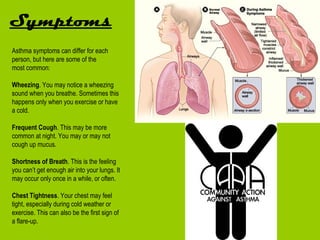
Symptoms
Asthma symptoms can differ for each
person, but here are some of the
most common:

Wheezing. You may notice a wheezing
sound when you breathe. Sometimes this
happens only when you exercise or have
a cold.

Frequent Cough. This may be more
common at night. You may or may not
cough up mucus.

Shortness of Breath. This is the feeling
you can’t get enough air into your lungs. It
may occur only once in a while, or often.

Chest Tightness. Your chest may feel
tight, especially during cold weather or
exercise. This can also be the first sign of
a flare-up.
Once your healthcare provider makes a diagnosis of asthma,
            you will be prescribed medicines to help control your asthma.
Treatment   Medicines prescribed to treat your asthma may seem difficult
            to understand and difficult to use. It is important that you work
            with your healthcare provider on an asthma action plan
            designed specifically for your needs. An asthma action plan
            provides key information on when to take your medicines on
            a daily basis and what to do in an emergency. This will help
            you take control of your asthma so you can live a healthy and
            productive life.

            Bronchodilators. Bronchodilators relax the muscles around the
            airways. When the airways are more open, it is easier to breathe.
            Anti-Inflammatories. help by reducing the swelling and mucus
            production inside the airways.

            Antibiotics. Your doctor may want you to have a prescription for
            an antibiotic or an anti-viral that you keep on hand and that you
            will be told to get filled if you have an infection coming on.
            It is important to take any antibiotic exactly as prescribed and to
            take it all.

            Vaccinations. With asthma, you are at greater risk for serious
            complications from influenza (flu) and pneumonia. To protect
            yourself against the flu you should be immunized every year.
Asthma-Friendly
  Environments
                                                      At Home. The home environment should be the
                                                      safest place for you and your loved ones. There
                                                      are a number of things you can do to help
                                                      safeguard the people in your life who are living
                                                      with asthma. eliminate or reduce asthma triggers,
                                                      or things that will cause asthma symptoms to
                                                      worsen.

                                                      In Schools. To grow into healthy adults, our
                                                      children need to breathe healthy air. With healthy
                                                      air at school, they can learn and play safely. You
At Work. Employees should be safe while on the        have the power to identify and solve unhealthy air
job; that includes protecting the health of their     issues that threaten kids in your own community's
lungs. Dirty air in the workplace threatens           schools. To grow into healthy adults, our children
workers' lives. Healthy air quality is an important   need to breathe healthy air. With healthy air at
element of any safe work environment.                 school, they can learn and play safely. You have
                                                      the power to identify and solve unhealthy air
                                                      issues that threaten kids in your own community's
                                                      schools.
Becoming an Advocate
Federal. The American Lung                 Becoming an Advocate. Policy change at the national or local level
Association actively advocates for         can have a major impact on lives of those living with asthma. Learn
policies at the federal level to benefit   how you can advocate for policies that keep our communities
people with asthma and their families.     healthy and safe.
We speak up for people with asthma
with many federal agencies whose work      National Asthma Public Policy Agenda. The American Lung
directly affects policies, funding and     Association has worked with a number of asthma experts and
programs, including the Centers for        organizations to identify policy changes that could really make a
Disease Control and Prevention, the        difference in the fight against asthma. Included are recommended
U.S. Environmental Protection Agency,      strategies in these six key areas:
the U.S. Department of Health and          •Healthcare Systems and Financing
Human Services and others.                 •Homes
                                           •Outdoor Air
State and Community. The American          •Public Health Infrastructure
Lung Association works in states and       •Schools
communities across the nation to           •Workplace
improve the health and the lives of
people with asthma. The Lung                Guide to Asthma Policy for Housing and Schools. In 2009, the
Association recommends some specific       American Lung Association released the National Asthma Public
policies that all state and local          Policy Agenda which highlighted policy interventions that have been
communities need to act on to help fight   proven effective in reducing the burden of asthma nationwide. To
asthma.                                    help protect the health of children and adults living with asthma,
                                           this Guide to Asthma Policy for Housing & Schools toolkit was
                                           created to support the work of community advocates and policy-
                                           makers focused on asthma policy in homes and schools.
Tomas Posse


Valentin Tear

Asthma posse and tear

  • 1.
    ASTHMA Asthma is achronic, or life long, disease that can be serious—even life threatening. There is no cure for asthma. The good news is that it can be managed so you can live a normal, healthy life. The more you can learn about asthma, the better you and your loved ones can manage living with this disease, making the most of every day, and maintaining the quality of life that is important to you. Asthma is a lung disease that makes it harder to move air in and out of your lungs. There are three things that you should know about asthma: 1. Asthma is chronic. In other words, you live with it every day. 2. It can be serious – even life threatening. 3. There is no cure for asthma, but it can be managed so you live a normal, healthy life.
  • 2.
    Symptoms Asthma symptoms candiffer for each person, but here are some of the most common: Wheezing. You may notice a wheezing sound when you breathe. Sometimes this happens only when you exercise or have a cold. Frequent Cough. This may be more common at night. You may or may not cough up mucus. Shortness of Breath. This is the feeling you can’t get enough air into your lungs. It may occur only once in a while, or often. Chest Tightness. Your chest may feel tight, especially during cold weather or exercise. This can also be the first sign of a flare-up.
  • 3.
    Once your healthcareprovider makes a diagnosis of asthma, you will be prescribed medicines to help control your asthma. Treatment Medicines prescribed to treat your asthma may seem difficult to understand and difficult to use. It is important that you work with your healthcare provider on an asthma action plan designed specifically for your needs. An asthma action plan provides key information on when to take your medicines on a daily basis and what to do in an emergency. This will help you take control of your asthma so you can live a healthy and productive life. Bronchodilators. Bronchodilators relax the muscles around the airways. When the airways are more open, it is easier to breathe. Anti-Inflammatories. help by reducing the swelling and mucus production inside the airways. Antibiotics. Your doctor may want you to have a prescription for an antibiotic or an anti-viral that you keep on hand and that you will be told to get filled if you have an infection coming on. It is important to take any antibiotic exactly as prescribed and to take it all. Vaccinations. With asthma, you are at greater risk for serious complications from influenza (flu) and pneumonia. To protect yourself against the flu you should be immunized every year.
  • 4.
    Asthma-Friendly Environments At Home. The home environment should be the safest place for you and your loved ones. There are a number of things you can do to help safeguard the people in your life who are living with asthma. eliminate or reduce asthma triggers, or things that will cause asthma symptoms to worsen. In Schools. To grow into healthy adults, our children need to breathe healthy air. With healthy air at school, they can learn and play safely. You At Work. Employees should be safe while on the have the power to identify and solve unhealthy air job; that includes protecting the health of their issues that threaten kids in your own community's lungs. Dirty air in the workplace threatens schools. To grow into healthy adults, our children workers' lives. Healthy air quality is an important need to breathe healthy air. With healthy air at element of any safe work environment. school, they can learn and play safely. You have the power to identify and solve unhealthy air issues that threaten kids in your own community's schools.
  • 5.
    Becoming an Advocate Federal.The American Lung Becoming an Advocate. Policy change at the national or local level Association actively advocates for can have a major impact on lives of those living with asthma. Learn policies at the federal level to benefit how you can advocate for policies that keep our communities people with asthma and their families. healthy and safe. We speak up for people with asthma with many federal agencies whose work National Asthma Public Policy Agenda. The American Lung directly affects policies, funding and Association has worked with a number of asthma experts and programs, including the Centers for organizations to identify policy changes that could really make a Disease Control and Prevention, the difference in the fight against asthma. Included are recommended U.S. Environmental Protection Agency, strategies in these six key areas: the U.S. Department of Health and •Healthcare Systems and Financing Human Services and others. •Homes •Outdoor Air State and Community. The American •Public Health Infrastructure Lung Association works in states and •Schools communities across the nation to •Workplace improve the health and the lives of people with asthma. The Lung Guide to Asthma Policy for Housing and Schools. In 2009, the Association recommends some specific American Lung Association released the National Asthma Public policies that all state and local Policy Agenda which highlighted policy interventions that have been communities need to act on to help fight proven effective in reducing the burden of asthma nationwide. To asthma. help protect the health of children and adults living with asthma, this Guide to Asthma Policy for Housing & Schools toolkit was created to support the work of community advocates and policy- makers focused on asthma policy in homes and schools.
  • 6.