Shobhit Shrivas
IIT MADRAS
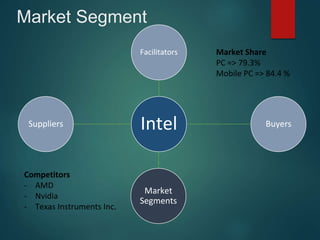
Market Segment
Intel
Facilitators
Buyers
Market
Segments
Suppliers
Competitors
- AMD
- Nvidia
- Texas Instruments Inc.
Market Share
PC => 79.3%
Mobile PC => 84.4 %
Product Mix
&
Industrial Marketing
Environment
Product Mix of INTEL
Processor Mobile Devices
Networking
Products
Intel-Atom-
Processor-Z3570
Value
Processor
Intel Core
Chipsets
Controllers
Adapters
Boards
Galileo
Edison
Intel-Atom-
Processor-Z3736F
Intel-Atom-
Processor-Z3530
Intel-Atom-
Processor-Z3736G
Intel Xeon
Intel Quark
Pentium
Celeron
Switches
Optics
Cables
Workstation
Server
Server
Chipset
PC Chipset
Server Products
RAID
Server board
I/O device
Intel in
Microprocessors
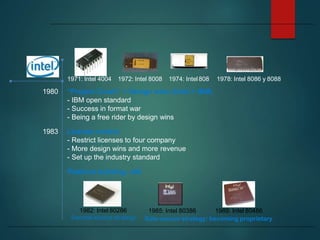
1971: Intel 4004 1972: Intel 8008 1974: Intel 808 1978: Intel 8086 y 8088
1980 “Project Crush” + Design wins (Intel + IBM)
- IBM open standard
- Success in format war
- Being a free rider by design wins
1983 License control
- Restrict licenses to four company
- More design wins and more revenue
- Set up the industry standard
Platform building: x86
1982: Intel 80286
Second-source strategy
1985: Intel 80386 1989: Intel 80486
Sole-source strategy: becoming proprietary
TomDunlap,
senior vice
president
and general
counsel
Intel vs. AMD
“AMD’s products were big, ugly, and late.” (mid-1980)
“By the Pentium generation, AMD couldn’t get any trade secrets and couldn’t
copy our microcode, so our products developed quite differently.” (1995)
1991: AMD AMx86 1996: AMD K5 1996: AMD K6 y AMDK6-2 1999: AMD AthlonK7
(Classic y Thunderbird)
1993: Intel Pentium 1995: Intel Pentium Pro 1997: Intel Pentium II 1999: Intel Pentium III
Industrial Marketing
Strategies
Intel Inside Campaign (1991)
“To educate both the retail sales associates and the consumers about
the value of Intel microprocessors, and to explain to them the
differences between the microprocessors.”
Campaign Highlights:
Association with 200 OEM’s for Brand Recognition.
1st Trademark in the Electric Component Industry.
“Intel Inside” aka Quality & Reliable product for Buyers.
5 years later:
Intel’s link with World Market Leaders : COMPAQ, IBM !
Current Scenario:
 Brand value quantified at US$35 billion (Initial investment US$3.4
billion)
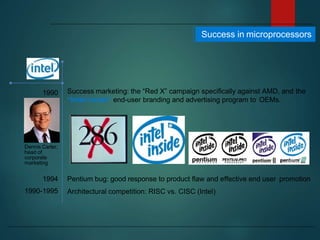
1990 Success marketing: the “Red X” campaign specifically against AMD, and the
“Intel inside” end-user branding and advertising program to OEMs.
Success in microprocessors
Dennis Carter,
head of
corporate
marketing
Pentium bug: good response to product flaw and effective end user promotion
Architectural competition: RISC vs. CISC (Intel)
1994
1990-1995
Intel in
Internet Market
Becoming the builder of the Internet
Intel invested a large amount in such a short time, but not
matured enough for the new competition and new business.
However, it could have been worse if Intel did do so.
1. There was a recession and decreasing on world PC
microprocessor revenue .
2. The competition in new business was even stronger than
its core business .
3. Internally, Intel had a series of implementation errors
(p.15).
2001-2002 Intel shut down businesses ranging from Web hosting, network switching,
and network appliances to Intel consumer products. Barrett introduced a
back-to-basics program to achieve operational excellence.
Why?
Technology Strategies Maidique and Patch (1978)
DRAMs Microprocessors Internet
First-to-Market or
Leader Strategy
Intel Lead Intel Lead Protecting PC and
server platforms
Second-to-Market
or Fast Follower
Strategy Beat by Japanese Block
Establishing new
standards in
network and
communications
(WiFi)
Late-to-Market or
Cost Minimization
Strategy
No complimentary
assets Run and block ?
Market
Segmentation or
Specialist Strategy
Lost the market
Intel got the lead for
segmentation
(brand value)
?
Macro-Environment
6 Major Factors affecting Intel
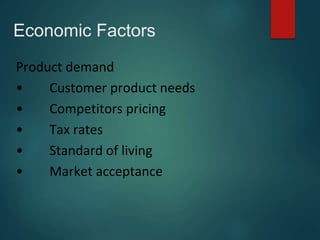
Economic Factors
Product demand
• Customer product needs
• Competitors pricing
• Tax rates
• Standard of living
• Market acceptance
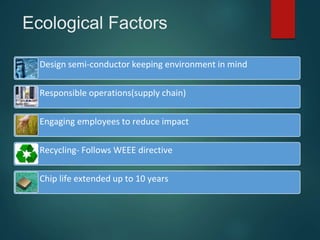
Ecological Factors
Design semi-conductor keeping environment in mind
Responsible operations(supply chain)
Engaging employees to reduce impact
Recycling- Follows WEEE directive
Chip life extended up to 10 years
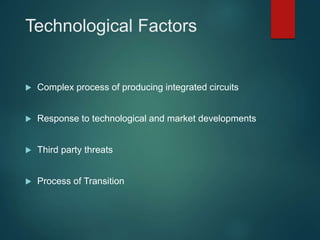
Technological Factors
 Complex process of producing integrated circuits
 Response to technological and market developments
 Third party threats
 Process of Transition
Conclusion:
A product is a bundle of utilities consisting of various product features
and accompanying services.
Intel, by with the help of it’s product knowledge, marketing strategies
and by innovatively changing the features and product according to
the advance technology requirement is the leading brand in the
technology segment.
DISCLAIMER
Created By
Shobhit Shrivas, IIT MADRAS during
Marketing Internship under Prof.
Sameer Mathur, IIM Lucknow

Assignment 1 shobhit

  • 1.
  • 2.
    Market Segment Intel Facilitators Buyers Market Segments Suppliers Competitors - AMD -Nvidia - Texas Instruments Inc. Market Share PC => 79.3% Mobile PC => 84.4 %
  • 3.
  • 4.
    Product Mix ofINTEL Processor Mobile Devices Networking Products Intel-Atom- Processor-Z3570 Value Processor Intel Core Chipsets Controllers Adapters Boards Galileo Edison Intel-Atom- Processor-Z3736F Intel-Atom- Processor-Z3530 Intel-Atom- Processor-Z3736G Intel Xeon Intel Quark Pentium Celeron Switches Optics Cables Workstation Server Server Chipset PC Chipset Server Products RAID Server board I/O device
  • 5.
  • 6.
    1971: Intel 40041972: Intel 8008 1974: Intel 808 1978: Intel 8086 y 8088 1980 “Project Crush” + Design wins (Intel + IBM) - IBM open standard - Success in format war - Being a free rider by design wins 1983 License control - Restrict licenses to four company - More design wins and more revenue - Set up the industry standard Platform building: x86 1982: Intel 80286 Second-source strategy 1985: Intel 80386 1989: Intel 80486 Sole-source strategy: becoming proprietary
  • 7.
    TomDunlap, senior vice president and general counsel Intelvs. AMD “AMD’s products were big, ugly, and late.” (mid-1980) “By the Pentium generation, AMD couldn’t get any trade secrets and couldn’t copy our microcode, so our products developed quite differently.” (1995) 1991: AMD AMx86 1996: AMD K5 1996: AMD K6 y AMDK6-2 1999: AMD AthlonK7 (Classic y Thunderbird) 1993: Intel Pentium 1995: Intel Pentium Pro 1997: Intel Pentium II 1999: Intel Pentium III
  • 8.
  • 10.
    Intel Inside Campaign(1991) “To educate both the retail sales associates and the consumers about the value of Intel microprocessors, and to explain to them the differences between the microprocessors.” Campaign Highlights: Association with 200 OEM’s for Brand Recognition. 1st Trademark in the Electric Component Industry. “Intel Inside” aka Quality & Reliable product for Buyers. 5 years later: Intel’s link with World Market Leaders : COMPAQ, IBM ! Current Scenario:  Brand value quantified at US$35 billion (Initial investment US$3.4 billion)
  • 11.
    1990 Success marketing:the “Red X” campaign specifically against AMD, and the “Intel inside” end-user branding and advertising program to OEMs. Success in microprocessors Dennis Carter, head of corporate marketing Pentium bug: good response to product flaw and effective end user promotion Architectural competition: RISC vs. CISC (Intel) 1994 1990-1995
  • 12.
  • 13.
    Becoming the builderof the Internet Intel invested a large amount in such a short time, but not matured enough for the new competition and new business. However, it could have been worse if Intel did do so. 1. There was a recession and decreasing on world PC microprocessor revenue . 2. The competition in new business was even stronger than its core business . 3. Internally, Intel had a series of implementation errors (p.15). 2001-2002 Intel shut down businesses ranging from Web hosting, network switching, and network appliances to Intel consumer products. Barrett introduced a back-to-basics program to achieve operational excellence. Why?
  • 14.
    Technology Strategies Maidiqueand Patch (1978) DRAMs Microprocessors Internet First-to-Market or Leader Strategy Intel Lead Intel Lead Protecting PC and server platforms Second-to-Market or Fast Follower Strategy Beat by Japanese Block Establishing new standards in network and communications (WiFi) Late-to-Market or Cost Minimization Strategy No complimentary assets Run and block ? Market Segmentation or Specialist Strategy Lost the market Intel got the lead for segmentation (brand value) ?
  • 15.
  • 16.
    6 Major Factorsaffecting Intel
  • 17.
    Economic Factors Product demand •Customer product needs • Competitors pricing • Tax rates • Standard of living • Market acceptance
  • 18.
    Ecological Factors Design semi-conductorkeeping environment in mind Responsible operations(supply chain) Engaging employees to reduce impact Recycling- Follows WEEE directive Chip life extended up to 10 years
  • 19.
    Technological Factors  Complexprocess of producing integrated circuits  Response to technological and market developments  Third party threats  Process of Transition
  • 20.
    Conclusion: A product isa bundle of utilities consisting of various product features and accompanying services. Intel, by with the help of it’s product knowledge, marketing strategies and by innovatively changing the features and product according to the advance technology requirement is the leading brand in the technology segment.
  • 21.
    DISCLAIMER Created By Shobhit Shrivas,IIT MADRAS during Marketing Internship under Prof. Sameer Mathur, IIM Lucknow

Editor's Notes

  • #3 http://en.wikipedia.org/wiki/Intel
  • #19 Wee directive needs to be followed In