Assessment in
Affective Domain
Describes learning objectives that emphasize a
feeling tone, an emotion, or a degree of acceptance
or rejection.
More difficult domain to objectively analyze and
assess since affective objectives vary from simple
attention to selected phenomena to complex.
Internally consistent qualities of character and
conscience.
“Schooled” but not “educated”
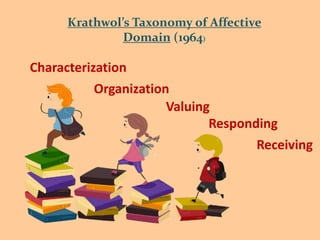
Krathwol’s Taxonomy of Affective
Domain (1964)
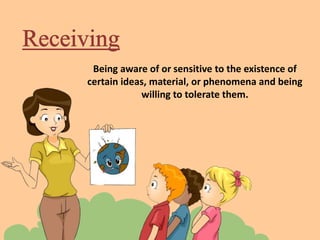
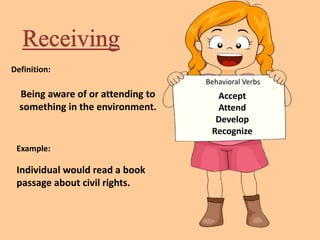
Receiving
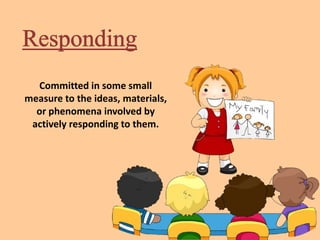
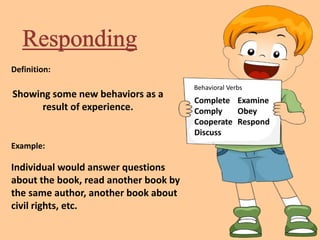
Responding
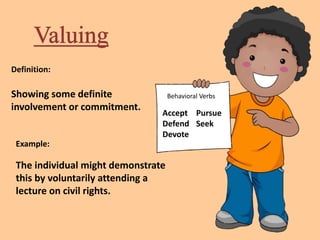
Valuing
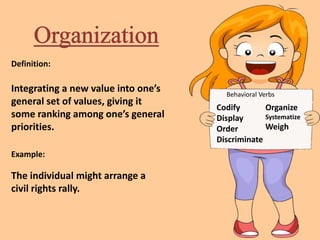
Organization
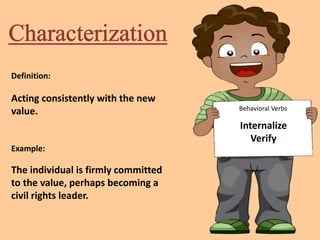
Characterization
Being aware of or sensitive to the existence of
certain ideas, material, or phenomena and being
willing to tolerate them.
Committed in some small
measure to the ideas, materials,
or phenomena involved by
actively responding to them.
Willing to be perceived by
others as valuing certain ideas,
materials, or phenomena.
Already held and bring it into a
harmonious and internally
consistent philosophy.
By value or by value set is to act
consistently in accordance with
values he or she has internalized.
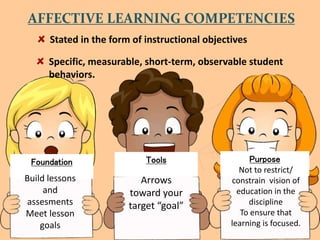
AFFECTIVE LEARNING COMPETENCIES
Stated in the form of instructional objectives
Specific, measurable, short-term, observable student
behaviors.
Foundation
Build lessons
and
assesments
Meet lesson
goals
Arrows
toward your
target “goal”
Purpose
Not to restrict/
constrain vision of
education in the
discipline
To ensure that
learning is focused.
Tools
Definition:
Being aware of or attending to
something in the environment.
Example:
Individual would read a book
passage about civil rights.
Accept
Attend
Develop
Recognize
Behavioral Verbs
Definition:
Showing some new behaviors as a
result of experience.
Example:
Individual would answer questions
about the book, read another book by
the same author, another book about
civil rights, etc.
Complete
Comply
Cooperate
Discuss
Examine
Obey
Respond
Behavioral Verbs
Definition:
Showing some definite
involvement or commitment.
Example:
The individual might demonstrate
this by voluntarily attending a
lecture on civil rights.
Accept
Defend
Devote
Pursue
Seek
Behavioral Verbs
Definition:
Integrating a new value into one’s
general set of values, giving it
some ranking among one’s general
priorities.
Example:
The individual might arrange a
civil rights rally.
Codify
Display
Order
Discriminate
Organize
Systematize
Weigh
Behavioral Verbs
Definition:
Acting consistently with the new
value.
Example:
The individual is firmly committed
to the value, perhaps becoming a
civil rights leader.
Internalize
Verify
Behavioral Verbs
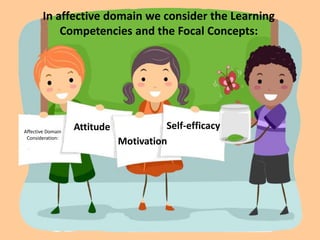
In affective domain we consider the Learning
Competencies and the Focal Concepts:
Attitude
Motivation
Self-efficacy
Affective Domain
Consideration:

assessmentinaffectivedomain-170207082534.pdf

  • 1.
  • 2.
    Describes learning objectivesthat emphasize a feeling tone, an emotion, or a degree of acceptance or rejection. More difficult domain to objectively analyze and assess since affective objectives vary from simple attention to selected phenomena to complex.
  • 3.
    Internally consistent qualitiesof character and conscience. “Schooled” but not “educated”
  • 4.
    Krathwol’s Taxonomy ofAffective Domain (1964) Receiving Responding Valuing Organization Characterization
  • 5.
    Being aware ofor sensitive to the existence of certain ideas, material, or phenomena and being willing to tolerate them.
  • 6.
    Committed in somesmall measure to the ideas, materials, or phenomena involved by actively responding to them.
  • 7.
    Willing to beperceived by others as valuing certain ideas, materials, or phenomena.
  • 8.
    Already held andbring it into a harmonious and internally consistent philosophy.
  • 9.
    By value orby value set is to act consistently in accordance with values he or she has internalized.
  • 10.
    AFFECTIVE LEARNING COMPETENCIES Statedin the form of instructional objectives Specific, measurable, short-term, observable student behaviors. Foundation Build lessons and assesments Meet lesson goals Arrows toward your target “goal” Purpose Not to restrict/ constrain vision of education in the discipline To ensure that learning is focused. Tools
  • 11.
    Definition: Being aware ofor attending to something in the environment. Example: Individual would read a book passage about civil rights. Accept Attend Develop Recognize Behavioral Verbs
  • 12.
    Definition: Showing some newbehaviors as a result of experience. Example: Individual would answer questions about the book, read another book by the same author, another book about civil rights, etc. Complete Comply Cooperate Discuss Examine Obey Respond Behavioral Verbs
  • 13.
    Definition: Showing some definite involvementor commitment. Example: The individual might demonstrate this by voluntarily attending a lecture on civil rights. Accept Defend Devote Pursue Seek Behavioral Verbs
  • 14.
    Definition: Integrating a newvalue into one’s general set of values, giving it some ranking among one’s general priorities. Example: The individual might arrange a civil rights rally. Codify Display Order Discriminate Organize Systematize Weigh Behavioral Verbs
  • 15.
    Definition: Acting consistently withthe new value. Example: The individual is firmly committed to the value, perhaps becoming a civil rights leader. Internalize Verify Behavioral Verbs
  • 16.
    In affective domainwe consider the Learning Competencies and the Focal Concepts: Attitude Motivation Self-efficacy Affective Domain Consideration: