Process Safety Management -
Tips for the Little Guy
What Is Process Safety Management
 Process Safety Management is the
application of management principles
and systems to the identification,
understanding, and control of process
hazards to protect employees, facility
assets and the environment.
What Is Process Safety Management
14 Elements
 Application
 Employee
Participation
 Process Safety
Information
 Process Hazard
Analysis
 Operating Procedures
 Employee Training
 Contractors
 Pre-Start up Safety
Review
 Mechanical Integrity
 Hot Work (Non-routine
Work Authorizations)
 Management of
Change
 Incident Investigation
 Emergency Planning
and Response
 Compliance Audits
1910.119 (a) Application
 Appendix A of 29 CFR 1910.119 contains a
listing of toxic and reactive highly hazardous
chemicals which present a potential for a
catastrophic event at or above the threshold
quantities listed.
 To adequately address this section, identify
what brings you into coverage by the
standard, specifying which processes at the
facility are covered and why.
1910.119 (a) Application
cont.
Consider what you can do to get out of the
situation
 Reduce inventories of highly hazardous
chemicals
 Receive smaller shipments
 Enhance inventory control
 Break up storage locations within the plant to
reduce the amounts on hand to below the
threshold quantity (TQ)
 Substitute listed with non-listed
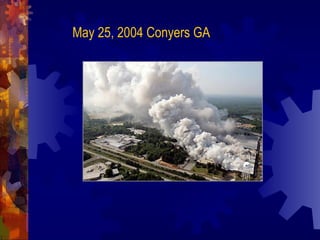
May 25, 2004 Conyers GA
1910.119 (c) Employee
Participation
 Employees are required to be an active part
of the process and your written programs
need to document what roles employees play,
their involvement in the development of the
programs, and continuing participation in the
process.
 An OSHA inspector (CSHO) will attempt to
verify participation by interviewing employees
at random.
1910.119 (c) Employee
Participation cont.
 Consultation / participation with training
and supervision to determine the
frequency and content of initial and
refresher training.
 Consultation / participation to develop
and review operating and maintenance
procedures.
 Consultation / participation in incident
investigations regarding the covered
process.
1910.119 (d) Process Safety
Information
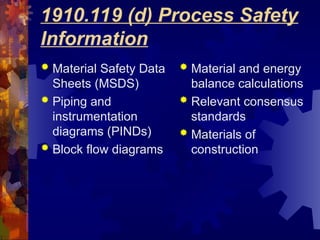
 Material Safety Data
Sheets (MSDS)
 Piping and
instrumentation
diagrams (PINDs)
 Block flow diagrams
 Material and energy
balance calculations
 Relevant consensus
standards
 Materials of
construction
1910.119 (d) Process Safety
Information cont.
 Available to all affected employees [requirement of
1910.119 (c) Employee Participation]
 Available for Process Hazard Analysis and
revalidations [requirement of 1910.119 (e) Process
Hazard Analysis]
 So auditors and CSHOs can find everything!
1910.119 (e) Process Hazard
Analysis
1910.119 (e) Process Hazard
Analysis
 OSHA has suggested formats
 Don’t start until all information is
gathered
 Use a software tool to guide, record,
manage process
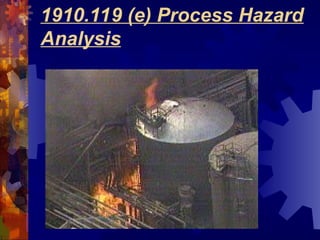
“Catastrophic release means a major
uncontrolled emission, fire, or explosion
involving one or more highly hazardous
chemicals, that presents serious danger
to employees in the workplace.”
1910.119(b)
1910.119 (e) Process Hazard
Analysis
1910.119 (f) Operating
Procedures
 Standard Operating Procedures
 Do in tandem with Job Hazard Analysis
(JHAs)
 Mesh with training program
 Partner with Quality Team (ISO 9001) to
create training matrix and managed
documents
1910.119 (g) Employee
Training
 The employer shall prepare a record:
 Identity of employee.
 Date of training.
 Means to verify that employee
understood training
 At a minimum, refresher training shall be
provided at least every three years and more
often if necessary to each employee involved
in operating a process.
1910.119 (h) Contractors
 Absolute Requirements
 Employer Documentation:
 Contract employee injury and illness logs
related to work in covered process areas.
 Contract Employer Documentation:
 Records showing employees received
training in and understands safe work
practices related to the process on or near
where they will be working so they perform
their jobs safely.
1910.119 (i) Pre-Start up
Safety Review
 Check, double check, and review any
changes, modifications, additions made
in a PSM covered area – before you flip
the switch.
1910.119 (j) Mechanical
Integrity
 The employer shall develop and maintain a master
list of all equipment specifically covered by the
standard, and equipment that is important to safety of
the process.
 Pressure vessels and storage tanks.
 Piping systems including valves and other piping
components.
 Relief and vent systems and devices.
 Emergency shutdown systems.
 Controls (including monitoring devices and sensors,
alarms, and interlocks).
1910.119 (j) Mechanical
Integrity cont.
 Pumps.
 Rotating equipment.
 Heat exchange equipment.
 Electrical generation and distribution
equipment.
 Un-interruptable power supplies.
 Emergency power supply equipment.
 Fire protection equipment.
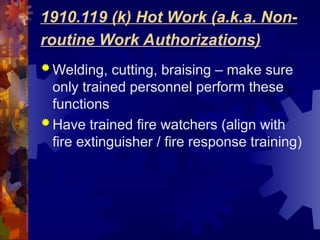
1910.119 (k) Hot Work (a.k.a. Non-
routine Work Authorizations)
 Welding, cutting, braising – make sure
only trained personnel perform these
functions
 Have trained fire watchers (align with
fire extinguisher / fire response training)
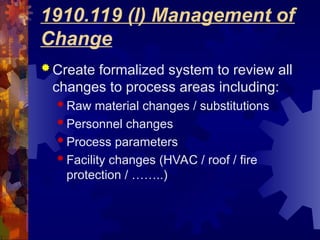
1910.119 (l) Management of
Change
 Create formalized system to review all
changes to process areas including:
 Raw material changes / substitutions
 Personnel changes
 Process parameters
 Facility changes (HVAC / roof / fire
protection / ……..)
1910.119 (l) Management of
Change cont.
 PSI
 Mechanical Integrity
 PINDs
 Hot Work
 Contractor Safety
 Employee Training
 PSSR
 Operating Procedures
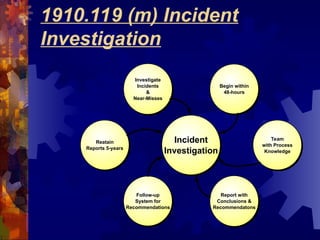
1910.119 (m) Incident
Investigation
Investigate
Incidents
&
Near-Misses
Begin within
48-hours
Team
with Process
Knowledge
Report with
Conclusions &
Recommendatons
Follow-up
System for
Recommendations
Reatain
Reports 5-years
Incident
Investigation
1910.119 (n) Emergency
Planning and Response
 Call in all resources and make plan
comprehensive:
 Information Technology (IT) Disaster
Recovery Plan
 Business Continuity Plan (session #554 @ 4:30)
 Security
 Communications / Public Relations
 Employee Assistance
1910.119 (o) Compliance
Audits
 Ask for the audit protocol ahead of time
 Have a system in place to identify the
location of all PSM documentation
 Identify what's in or out of audit scope
 Ask for money to correct audit items
before the audit is conducted
 Prepare management for report
Resources
 OSHA web site (www.OSHA.gov):
 CPL 2-2.45 – Process Safety Management of Highly
Hazardous Chemicals – Compliance Guidelines and
Enforcement Procedures – 78 pages of gold!
 Appendix C to §1910.119 Compliance Guidelines and
Recommendations for Process Safety Management
(Nonmandatory)
 OSHA training institute
 Safety and Health – Chemical Process Industry – course
#330A. PSM ‘boot camp’ – five days of fun and a three
ring binder!
 AIChE / CCPs
Please Visit!
Booth # 1312
Booth # 1310

ASSE_00004_Process_Safety_Management.ppt

  • 1.
    Process Safety Management- Tips for the Little Guy
  • 2.
    What Is ProcessSafety Management  Process Safety Management is the application of management principles and systems to the identification, understanding, and control of process hazards to protect employees, facility assets and the environment.
  • 4.
    What Is ProcessSafety Management 14 Elements  Application  Employee Participation  Process Safety Information  Process Hazard Analysis  Operating Procedures  Employee Training  Contractors  Pre-Start up Safety Review  Mechanical Integrity  Hot Work (Non-routine Work Authorizations)  Management of Change  Incident Investigation  Emergency Planning and Response  Compliance Audits
  • 6.
    1910.119 (a) Application Appendix A of 29 CFR 1910.119 contains a listing of toxic and reactive highly hazardous chemicals which present a potential for a catastrophic event at or above the threshold quantities listed.  To adequately address this section, identify what brings you into coverage by the standard, specifying which processes at the facility are covered and why.
  • 7.
    1910.119 (a) Application cont. Considerwhat you can do to get out of the situation  Reduce inventories of highly hazardous chemicals  Receive smaller shipments  Enhance inventory control  Break up storage locations within the plant to reduce the amounts on hand to below the threshold quantity (TQ)  Substitute listed with non-listed
  • 8.
    May 25, 2004Conyers GA
  • 9.
    1910.119 (c) Employee Participation Employees are required to be an active part of the process and your written programs need to document what roles employees play, their involvement in the development of the programs, and continuing participation in the process.  An OSHA inspector (CSHO) will attempt to verify participation by interviewing employees at random.
  • 10.
    1910.119 (c) Employee Participationcont.  Consultation / participation with training and supervision to determine the frequency and content of initial and refresher training.  Consultation / participation to develop and review operating and maintenance procedures.  Consultation / participation in incident investigations regarding the covered process.
  • 11.
    1910.119 (d) ProcessSafety Information  Material Safety Data Sheets (MSDS)  Piping and instrumentation diagrams (PINDs)  Block flow diagrams  Material and energy balance calculations  Relevant consensus standards  Materials of construction
  • 12.
    1910.119 (d) ProcessSafety Information cont.  Available to all affected employees [requirement of 1910.119 (c) Employee Participation]  Available for Process Hazard Analysis and revalidations [requirement of 1910.119 (e) Process Hazard Analysis]  So auditors and CSHOs can find everything!
  • 13.
    1910.119 (e) ProcessHazard Analysis
  • 14.
    1910.119 (e) ProcessHazard Analysis  OSHA has suggested formats  Don’t start until all information is gathered  Use a software tool to guide, record, manage process
  • 18.
    “Catastrophic release meansa major uncontrolled emission, fire, or explosion involving one or more highly hazardous chemicals, that presents serious danger to employees in the workplace.” 1910.119(b) 1910.119 (e) Process Hazard Analysis
  • 20.
    1910.119 (f) Operating Procedures Standard Operating Procedures  Do in tandem with Job Hazard Analysis (JHAs)  Mesh with training program  Partner with Quality Team (ISO 9001) to create training matrix and managed documents
  • 21.
    1910.119 (g) Employee Training The employer shall prepare a record:  Identity of employee.  Date of training.  Means to verify that employee understood training  At a minimum, refresher training shall be provided at least every three years and more often if necessary to each employee involved in operating a process.
  • 22.
    1910.119 (h) Contractors Absolute Requirements  Employer Documentation:  Contract employee injury and illness logs related to work in covered process areas.  Contract Employer Documentation:  Records showing employees received training in and understands safe work practices related to the process on or near where they will be working so they perform their jobs safely.
  • 24.
    1910.119 (i) Pre-Startup Safety Review  Check, double check, and review any changes, modifications, additions made in a PSM covered area – before you flip the switch.
  • 25.
    1910.119 (j) Mechanical Integrity The employer shall develop and maintain a master list of all equipment specifically covered by the standard, and equipment that is important to safety of the process.  Pressure vessels and storage tanks.  Piping systems including valves and other piping components.  Relief and vent systems and devices.  Emergency shutdown systems.  Controls (including monitoring devices and sensors, alarms, and interlocks).
  • 26.
    1910.119 (j) Mechanical Integritycont.  Pumps.  Rotating equipment.  Heat exchange equipment.  Electrical generation and distribution equipment.  Un-interruptable power supplies.  Emergency power supply equipment.  Fire protection equipment.
  • 27.
    1910.119 (k) HotWork (a.k.a. Non- routine Work Authorizations)  Welding, cutting, braising – make sure only trained personnel perform these functions  Have trained fire watchers (align with fire extinguisher / fire response training)
  • 30.
    1910.119 (l) Managementof Change  Create formalized system to review all changes to process areas including:  Raw material changes / substitutions  Personnel changes  Process parameters  Facility changes (HVAC / roof / fire protection / ……..)
  • 31.
    1910.119 (l) Managementof Change cont.  PSI  Mechanical Integrity  PINDs  Hot Work  Contractor Safety  Employee Training  PSSR  Operating Procedures
  • 32.
    1910.119 (m) Incident Investigation Investigate Incidents & Near-Misses Beginwithin 48-hours Team with Process Knowledge Report with Conclusions & Recommendatons Follow-up System for Recommendations Reatain Reports 5-years Incident Investigation
  • 33.
    1910.119 (n) Emergency Planningand Response  Call in all resources and make plan comprehensive:  Information Technology (IT) Disaster Recovery Plan  Business Continuity Plan (session #554 @ 4:30)  Security  Communications / Public Relations  Employee Assistance
  • 34.
    1910.119 (o) Compliance Audits Ask for the audit protocol ahead of time  Have a system in place to identify the location of all PSM documentation  Identify what's in or out of audit scope  Ask for money to correct audit items before the audit is conducted  Prepare management for report
  • 36.
    Resources  OSHA website (www.OSHA.gov):  CPL 2-2.45 – Process Safety Management of Highly Hazardous Chemicals – Compliance Guidelines and Enforcement Procedures – 78 pages of gold!  Appendix C to §1910.119 Compliance Guidelines and Recommendations for Process Safety Management (Nonmandatory)  OSHA training institute  Safety and Health – Chemical Process Industry – course #330A. PSM ‘boot camp’ – five days of fun and a three ring binder!  AIChE / CCPs
  • 37.
    Please Visit! Booth #1312 Booth # 1310

Editor's Notes

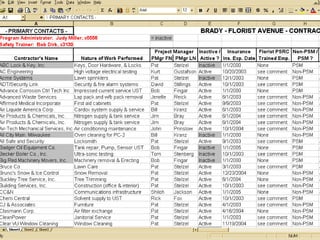
  • #1 By ‘little guy’ I mean small process -- PSM applicability triggered by hitting thresholds for one listed substance. Brady is a global supplier of identification solutions – signs and placards, tapes, labels, software and a wide array of specialty products. In Brady’s case, one facility out of 26 (that’s 115 employees out of 3,500 globally) is affected by OSHA’s Process Safety Management standard. I am responsible for the Environmental and Safety programs for that plant. Today I will share with you some of the strategies our covered facility in Milwaukee has employed to comply with the PSM standard, while functioning within a large organization that is not covered.
  • #2 This is the text book definition of Process Safety Management. PSM is more that the OSHA standard. It originally was developed by AIChe (American Institute of Chemical Engineers) Center for Process Safety, refineries (American Petroleum Institute) and chemical manufacturers (Chemical Manufacturer’s Association -Responsible Care) as a management system for hazardous processes. We’ve all heard the tale of Bhopal, India, where over 2000 died from a release of Isocyanates. OSHA adopted these organizations’ framework, and on their heels was EPA with their Risk Management rule. My presentation today will deal solely on complying with the OSHA standard 1910.119 True Process Safety is a much more rigorous discipline than outlined in the OSHA standard.
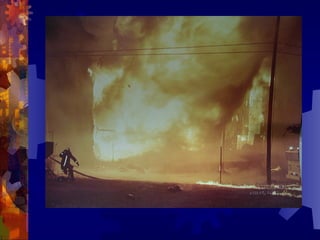
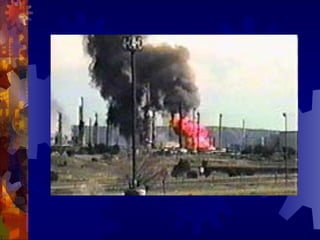
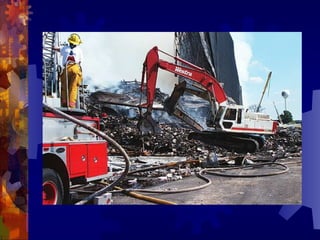
  • #3 Simply put, PSM exists to avoid this…..
  • #4 PSM is an elemental approach. These elements are (in order as they appear in the standard):
  • #5 All these elements interconnect and overlap with themselves, other OSHA compliance programs, and your copany’s processes and procedures, much like a tangled web…. Sometimes its hard to see the forest for all the (dead) trees the standard creates. Let’s briefly look at each element and its interconnections, and try to cut through the tangled web
  • #6 Very basic first step, but one often taken haphazardly… let me explain…. At the covered Brady facility, only two process areas are impacted – the compounding and centralized cleanup areas. These are brought into the program because they are connected to underground storage tanks containing flammable solvents in excess of 10,000 pounds. We consider this connection ‘in process’ since the piping is directly connected to process tanks. These two process areas are segregated from the rest of the plant by walls – a visual and physical barrier. This is done to limit applicability and safeguard the process. In terms of scope, the rule impacts approx. 25,000 facilities – 127 industries and subgroups, and 3 million employees!
  • #7 Run a cost/benefit analysis with your purchasing folks to determine if you can reduce inventory. The price breaks you get for purchasing and/or receiving bulk quantities probably won’t cover the expense and aggravation a full blown PSM program will require! If your company has an ERP (enterprise resource program) make sure the inventory management function is active. If not, lobby to activate it as a means of inventory control and reduction. This strategy is not ‘weaseling’ out. OSHA suggests these options in their own guidance documents. Remember the reason for the standard! Unfortunately in our case, considerable expense went into the underground storage tank system – high tech leak detection and cathode corrosion protection – that Brady was unwilling to abandon the capitol investment.
  • #8 Pool chemical process in plant (chlorine). Mass evacuation was needed to protect neighbors. Interestingly enough, this was not a PSM covered facility. The pool chemicals were not ‘commercial or reagent’ grade so the process was exempt!
  • #9 Front line workers – those that live and breathe the process – are critical to an effective program. OSHA knows it; so should you. At Brady we have made Process Safety and general plant safety a priority by using incentives. We have developed a point system for attending required training and participation in such activities as PHA PSSRs. A minimum number of points must be earned to participate in the company gainsharing program.
  • #10 My advice – find a Ron. Ron has been a fixture at my facility for 25 years. He knows the coating and adhesive compounding process – its history, evolution, and secrets and has participated in building the Brady PSM program. He’s gruff and hard to get to know, but he’s the best asset a Safety Engineer can have. Do whatever you can to involve the ‘Rons’.
  • #11 Here are the dead trees and acronymns
  • #12 What do dead trees do? Combust. Do what you can to digitize, organize and cross reference everything. If the auditor or inspector can’t find it, you don’t have it.
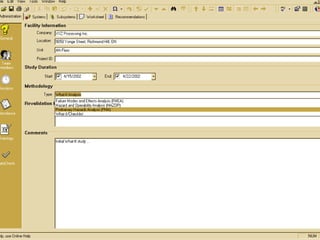
  • #13 AKA the PHA. It’s a comprehensive look at all aspects of the process – what has happened, what could happen, and suggestions (recommendations) for preventing disaster from happening.
  • #14 What-if, checklist, Hazard and Operability Study (HazOp), Failure Mode and effects analysis (FMEA), Fault Tree, or an appropriate equivalent. Information needed: PNIDS, Incidents, Process drawings.
  • #15 The tool we have chosen at Brady is PHA-Pro. There are several software PHA systems out in the marketplace. This particular one lets you choose a methodology that best fits your needs.
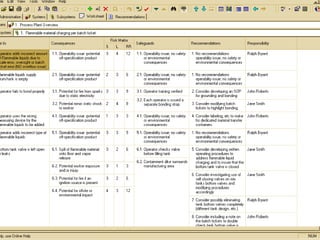
  • #16 The tool allows you to record what-if senerios and rank them on a risk matrix
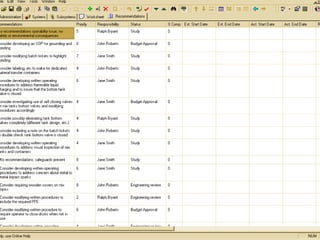
  • #17 More important is the ability to track the resulting recommendations from the PHAs. As your group creates recommendations, have the PHA leader keep the group focused on the reason for the exercise…..
  • #18 I suggest creating a poster and hanging it in the meeting room where the PHA is conducted. Your team is not meeting to troubleshoot quality, productivity or human resource issues! Yes, these are important to the business, and you may want to have a white board to capture good points as they come up, but limit time spent on them. Strive to create a list of relevant recommendations – those that minimize or eliminate the risk of catastrophe
  • #21 Document, document, document. Find a software tool – anything that can demonstrate to a COSH that you’ve made a good faith effort to train your people. Does your Human Resources department have a training tracking software tool? Can you enlist them to keep track of these records? Can the tool filter records by PSM training?
  • #22 Document, document, document. How many times have you heard of fires being caused by contractors working on the roof or HVAC systems? Contactors are very common in our outsourced environment. Without proper training and respect for your processes, they are your weakest link!
  • #26 More dead trees. Intent is to assure that the design, fabrication, procurement, installation, and maintenance of covered process equipment is in keeping with the manner appropriate for its intended purpose.
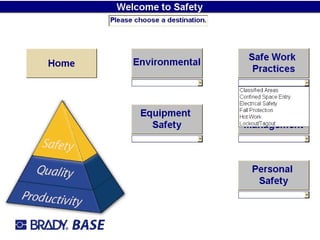
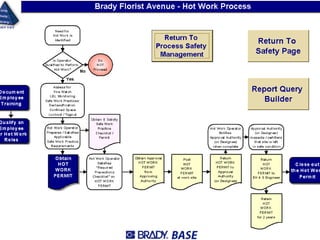
  • #28 Our home-grown data base helps manage various aspects of non-routine tasks in the PSM covered areas, as well as in the rest of the plant. As you can see, it crosses several OSHA required programs. This allows us to have trained employees apply for their own work permits, based on their valid training file. The result is a permit that is traceable for internal auditing.
  • #30 Human Resources / Purchasing / Engineers / Facility Managers – all need to be educated on MOC process
  • #31 One seemingly simple change can create ripples through the many PSM elements. An auditor/ inspector knows this and will follow the trail
  • #32 Make Incident Investigation a plant-wide program (company-wide if you can swing it). If Human Resources manages you Worker’s Compensation Insurance issues, enlist their help (and budget). By integrating incident investigation with overall efforts to reduce injuries, you tap into a larger pot of money. You also have access to trend analysis of OSHA rates that can be compared to industry standards. One caveat….. Have a system to keep PSM incidents separate. Be able to filter these out in case of an audit or inspection.
  • #33 I already know you have a plan, but make sure it was not created in a vacuum, and that other department’s plans weren’t either. Have a meeting of the minds to cover all bases. Take a holistic approach Enlist the geek squad (computer experts), Upper management (business protection), Facilities Managers (security and physical plant), Human Resources, Purchasing (supply chain issues), Marketing (customer service assurance) Make the entire organization aware of your PSM challenges and use someone else's budget when possible!
  • #34 Necessary evil. Lean into it and treat it like an opportunity. Realize that there will be findings and that each is a chance to improve your program. And remember, you’ll do it all again in three years so don’t take the band-aid approach. No one likes to hear their baby is ugly, but its better hearing it from a paid consultant than from OSHA
  • #35 Remember why PSM…… PSM is not a three ring binder that a consultant prepares and you put on your bookshelf to gather dust. It is an ever evolving system that you make work, given your unique business situation and your interpretation of the required elements. Your system won’t and shouldn’t look like Brady’s, (trust me, we have an ugly baby too), but I hope some of the insights I’ve provided can be adapted to your program.
  • #36 You are not alone… This is the digital age and we have so much information on the web. American Institute of Chemical Engineers / Center for Chemical Process Safety
  • #37 Shameless plug for the man and my chumms!