ASP NET Professional Projects 1st Edition Hersh Bhasin
ASP NET Professional Projects 1st Edition Hersh Bhasin
ASP NET Professional Projects 1st Edition Hersh Bhasin
ASP NET Professional Projects 1st Edition Hersh Bhasin
ASP NET Professional Projects 1st Edition Hersh Bhasin
1.
Visit https://ebookultra.com todownload the full version and
explore more ebooks
ASP NET Professional Projects 1st Edition Hersh
Bhasin
_____ Click the link below to download _____
https://ebookultra.com/download/asp-net-professional-
projects-1st-edition-hersh-bhasin/
Explore and download more ebooks at ebookultra.com
2.
Here are somesuggested products you might be interested in.
Click the link to download
Professional ASP NET Design Patterns Scott Millett
https://ebookultra.com/download/professional-asp-net-design-patterns-
scott-millett/
Professional ASP NET MVC 4 1st Edition Jon Galloway
https://ebookultra.com/download/professional-asp-net-mvc-4-1st-
edition-jon-galloway/
Professional ASP NET MVC 3 1st Edition Jon Galloway
https://ebookultra.com/download/professional-asp-net-mvc-3-1st-
edition-jon-galloway/
Professional ASP NET 2 0 XML Thiru Thangarathinam
https://ebookultra.com/download/professional-asp-net-2-0-xml-thiru-
thangarathinam/
3.
Professional IIS 7and ASP NET Integrated Programming Dr.
Shahram Khosravi
https://ebookultra.com/download/professional-iis-7-and-asp-net-
integrated-programming-dr-shahram-khosravi/
Pro Telerik ASP NET and Silverlight Controls Master
Telerik Controls for Advanced ASP NET and Silverlight
Projects 1st Edition José Rolando Guay Paz (Auth.)
https://ebookultra.com/download/pro-telerik-asp-net-and-silverlight-
controls-master-telerik-controls-for-advanced-asp-net-and-silverlight-
projects-1st-edition-jose-rolando-guay-paz-auth/
ASP NET AJAX programmer s reference with ASP NET 2 0 or
ASP NET 3 5 Dr. Shahram Khosravi
https://ebookultra.com/download/asp-net-ajax-programmer-s-reference-
with-asp-net-2-0-or-asp-net-3-5-dr-shahram-khosravi/
Professional ASP NET 3 5 in C Sharp and Visual Basic Bill
Evjen
https://ebookultra.com/download/professional-asp-net-3-5-in-c-sharp-
and-visual-basic-bill-evjen/
ASP NET Bible 1st Edition Mridula Parihar
https://ebookultra.com/download/asp-net-bible-1st-edition-mridula-
parihar/
5.
ASP NET ProfessionalProjects 1st Edition Hersh Bhasin
Digital Instant Download
Author(s): Hersh Bhasin
ISBN(s): 9781931841214, 1931841217
Edition: 1
File Details: PDF, 4.42 MB
Year: 2002
Language: english
wading through mywork and fixing what was wrong and Mingyong Yang for reviewing
my source code and giving valuable suggestions.
About the Author
Hersh Bhasin has been consulting on Microsoft technologies for some nine odd years
and maintains a Web site on emerging technologies like .NET, SOAP, XML at
http://hersh.weblogs.com. He qualified as a Management Accountant from The
Chartered Institute of Management Accountants - UK (CIMA) and also obtained a
Bachelor of Science degree from the University of Punjab, India. He can be contacted at
hersh_b@yahoo.com
Part I: The ASP.NET Programming Environment
Chapter List
Chapter 1: Introducing ASP.NET
Chapter 2: Introducing ASP.NET Web Forms and Controls
Chapter 3: Using ADO.NET in the .NET Framework
Chapter 4: Data Binding
Chapter 5: Input Validation
Chapter 6: User Controls
Chapter 7: Custom Controls
Chapter 8: Business Objects
Chapter 9: Working with ASP.NET Web Services
Chapter 10: ASP.NET Applications
Chapter 11: Caching
Chapter 12: Tracing
Chapter 13: Security
Chapter 1: Introducing ASP.NET
Overview
ASP.NET is a radical evolution of ASP and its associated data access service, ADO,
which is now called ADO.NET. ASP suffered from many limitations—it was unstructured,
so the code intermingled with the presentation logic, which made applications difficult to
understand and maintain. Due to this limitation of ASP, code segregation was not
possible. You could not hand over the presentation logic to a Web designer and the code
to a developer and ask both to work simultaneously on the application. Unlike windows-
based application development, ASP did not have an inherent component or
programming model. ASP developers had to use a combination of markup languages,
scripting environments, and server platforms to get their work done. Tool support was
limited and although Visual InterDev introduced a Visual Basic type interface that
allowed you to drag and drop components such as text boxes and labels onto a form, it
was clunky and added tons of code to the form, which needless to say scared away most
developers from ever using this product.
ADO, the Data Access component of ASP, had been designed with a view to serving the
data access needs of client/server-based applications. Programming for the Web,
however, followed different rules. A client/server application had no need to optimize
database connections and a typical database operation would open a database
connection and leave it open until the looping operation of an ADO recordset was
complete. Database connections in a Web-based environment, however, were
expensive. Web programming required a disconnected way of manipulating data. Thus
the Remote Data Services (RDS) were born. With the advent of XML (eXtensible Markup
Language), the request/response paradigm became the order of the day. To keep up
with this message-based system of communication, HTTP support was added to RDS,
which allowed business logic to be called at the middle tier. XML follows a
9.
heterogeneous and hierarchicaldata model (XMLDOM) whereas MDAC (Microsoft Data
Access Technologies) follows a relational model. To work with XML data we had to make
a choice between MSXML and MDAC. But ADO.NET solves this dilemma. XML support
is built at a very basic level and it is quite similar to working with "database" data. No
longer is choosing between MDAC and MSXML an issue.
Web forms, which will be discussed in Chapter 2, "Introducing ASP.NET Web Forms and
Controls," are the fundamental building blocks of ASP.NET. The concept of "Code
Behind" has been introduced, which is the process of writing pres entation logic and
script in separate files. Code Behind seeks to eliminate the clutter and "spaghetti" code
(spaghetti code is code where the scripting portion intermingles with the presentation
logic) that traditional ASP seemed to encourage. ASP.NET provides a server-based,
event-driven programming model similar to Visual Basic, which enables WYSIWYG tools
like Visual Studio to be used.
ASP.NET introduces two sets of controls, the HTML controls and the Web controls,
which are collectively known as "server controls." These controls render HTML for Web
browsers in addition to providing means of preserving state across round trips, detecting
the browser types (and rendering HTML accordingly), and serving as the building blocks
for composite controls. These controls reside on the server and output plain HTML to the
browser. Since all browsers can understand HTML, they are able to overcome the
classic cross-browser compatibility problem.
The HTML controls (textbox, form, button, and so on) are the normal HTML controls that
we have been using so far, with a new runat="server" attribute added. The sole use
of these controls is to provide a quick migration path to ASP.NET as any HTML control
can be converted to an ASP.NET control by adding the runat="server" attribute. The
Web controls, however, provide a high degree of abstraction and usefulness. Four types
of Web controls exist: Intrinsic controls, Rich controls, List Bound controls, and Validation
controls. Intrinsic controls are the ASP.NET versions of traditional HTML controls, such
as textboxes, buttons, and DropDownList. These controls have a special prefix of
ASP.NET that distinguishes them from the normal HTML controls and they also have a
runat ="server" attribute. Thus a textbox is created as follows:
<asp:TextBox id="Text1" runat="server"/>
The purpose of Web controls is to simplify the nomenclature of a control. Controls that
overlapped in their functionality have been reduced to a single control. Properties like
ForeColor, Font, BackColor, Enabled, and so on are consistent among controls.
The developer thus needs to remember one property setting that he can apply to all
controls.
Rich controls consist of the Calendar and AdRotator. The Calendar outputs HTML for
downlevel browsers (these are browsers that do not support DHTML) or DHTML for
uplevel browsers. The AdRotator displays rotating advertisements.
List bound controls are the subject matter of Chapter 4, "Data Binding." There are three
controls in this category: the DataGrid, the DataList and the DataRepeater. These
controls automate the task of displaying database data as lists and data grids. The
developer applies a number of templates to these controls to achieve a high degree of
customization. The DataGrid can even be used for in-place editing of data.
Validation controls, which are discussed in Chapter 5, "Input Validation," automate the
mundane activity of writing validation code. There are five validation controls and one
validation summary control. The validation controls are the
RequiredFieldValidator, RegularExpressionValidator,
CompareValidator, RangeValidator, CustomValidator, and the
ValidationSummary. The work of each of these controls is evident from its name. For
example, the RequiredFieldValidator does not allow the user to leave the required
field blank. Similarly, the RangeValidator verifies whether user input falls within a
specified range. It is a simple task to incorporate validation in an ASP.NET web form. All
you need to do is associate an input text box with the appropriate validation control.
ADO.NET, the latest avatar of ADO, is discussed in Chapter 3, "Using ADO.NET in the
.NET Framework." ADO has seen a massive overhaul (a complete rewrite would be a
better choice of words) in ADO.NET. The foundation of ADO—the recordset—has been
given the golden handshake. As noted above, the recordset understood only the
10.
relational way ofdoing things, which was appropriate for handling database data. With
the advent of XML, which followed a heterogeneous and hierarchical data model, the
recordset had a hard time keeping up. A new object called the DataSet has been
introduced in ASP.NET. The DataSet is an in-memory copy of the database, complete
with tables, columns, relationships, constraints, and data. It allows relationships to exist
between multiple tables, analogous to a foreign-key relationship in a database. You can
navigate between tables based upon their relationships. The DataSet has some
outstanding qualities. For example, it can talk to a variety of datasources; it can receive
data from a database, an XML file, code, or user input. No matter what the source of the
data within the DataSet is, it is manipulated through the same set of standard APIs. The
DataSet is transmitted as an XML stream and can thus be passed between any objects
(not just COM objects) without interference from firewalls. To transmit an ADO
disconnected recordset from one component to another, COM marshalling had to be
used.
User controls, which are discussed in Chapter 6, "User Controls," are the evolution of the
server-side include files. Include files are static files. User controls, on the
other hand, provide object model support, which enables you to program against
properties and use methods. User controls work much like the ASP intrinsic controls in
that they can expose properties and methods. In Chapter 6, I design a user control that
automates building of the navigation links for a Web site based on the URLs specified in
an XML file.
ASP.NET has a very clean and elegant approach to authoring custom controls. In
Chapter 7, "Custom Controls," I discuss the process of authoring custom controls in
detail. I also show you how to build a component (which I call "GenEditAdd") that you
can use to extend the DataGrid's functionality. The DataGrid does not have the
functionality to insert records. Using the GenEditAdd component, you can automate the
process of record insertion. You can also use the GenEditAdd component in lieu of the
editing functionality provided by the DataGrid, which requires you to code a number of
events. The GenEditAdd component requires simple property settings and the code
generation is automatic.
Encapsulating business logic into components has always been an important part of both
Web and client/server applications. ASP.NET has greatly simplified the process of
registering components. If you have developed COM objects in the past, you must know
the pain involved in registering components. A component had to be registered using the
regsvr32 utility. If the component was modified, the entire Web server had to be stopped
in order to re-register the component. This was called "DLL Hell." In ASP.NET,
components are simply copied and pasted in the bin directory and no registry updates
are required. Chapter 8, "Business Objects," looks at this important topic.
Web service is the main protagonist of the .NET arena and the content of this book and
its projects reflect its importance. A web service is a combination of three things: a
function written in a .NET-compliant language, SOAP, and XML. When you need to
reuse logic in a number of places, the best way to do so is to write the code as a
function. A collection of functions that share some common goal can be combined into a
business object. For example, the four basic database operations are insert, delete,
update, and select. We can write a generic function for each operation and pack them
together in a business object called (say) DataBaseClass. Now this class, together
with its functions, can be initiated and called in any object that needs to use its
functionality. A web service is a Web-enabled business object, which is a collection of
functions that can be called over the Web. Functions written for a web service are written
as normal functions, and the only difference is that the functions are preceded with a
special tag that marks them as web services. A standard called SOAP (Simple Object
Access Protocol) sets out the rules that must be followed by the machine that makes a
function call and the machine that responds to that call by sending a resultset back. The
request and response is made in XML and the XML document follows the rules set out in
the SOAP standard. Exchanging information as XML enables a client application to call a
function on the server, regardless of what operating system each is running, what
programming language each is written in, or what component model is supported on
each. This is because XML is basically a text file that all machines can understand and
because SOAP uses HTTP, which is the most common Internet transfer protocol and
11.
one that isused by essentially all Web browsers. Chapter 9 "Working with ASP.NET
Web Services," provides a detailed discussion on web services.
Chapter 10, "ASP.NET Applications," covers ASP.NET applications. An ASP.NET
application is an IIS virtual directory and its subdirectories. All of your Web application
files go into this folder. This folder has a special subdirectory called bin. All the compiled
business objects and web services reside here. When you want to register a new
component, you just copy and paste the DLL file in this folder (as opposed to using
regsvr32). This folder also contains two special files: web.config and global.asax. The
web.config file is an XML file that you use to configure various facets of the application.
For example, you can use it to set up and configure security, caching, or tracing. The
global.asax file contains application-level program directives, handlers for application
and session-level events, and declarations of objects that are globally accessible to all
parts of the application. In general, this file enhances the functionality that was provided
by the global.asa file in ASP.
Chapter 11, "Caching," deals with caching, which is the process of keeping frequently
visited Web pages in memory. The theory behind caching is that there are some items of
the Web site that are very expensive to construct and that such items should be created
once and then stashed away in memory for a fixed duration of time or until they change.
Subsequent calls to these resources will not re-create the resource but simply retrieve it
from the cache. Such items are typically resources that remain unchanged over a period
of time; for example, shopping lists or price lists.
Chapter 12, "Tracing," discusses tracing. Developers have often resorted to writing a
number of Response.Write() statements in the code to try to debug errant code.
When the problem is located, these debugging statements must be cleared out. This
method is cumbersome and error-prone, because you might accidentally remove code
along with the debugging statements. ASP.NET introduces an elgant way of writing such
debugging code. Debugging is enabled by adding a page-level directive (or by enabling it
in the web.config file). Debugging statements are then written using Trace.write()
instead of Response.Write(). When the form has been debugged, there is no need to
remove these statements from the body of the form. You can simply disable Trace and
these statements will not be displayed in the browser.
Security is discussed in Chapter 13. ASP.NET implements authentication through
authentication providers. These authentication providers are modules that contain code
required to authenticate the credentials of the requesting user. Three authentication
providers are currently available: Windows Authentication, Passport Authentication, and
Cookie Authentication. All three providers are discussed.
In Project 1 (Chapters 14 to 17), I show you how to build a Web-enabled personal
finance manager using ASP.NET web forms. This project is spread over four chapters. In
this project, I take a product that has its roots in the client/server era—a personal finance
accounting module—and revamp it for the Web. A personal finance manager is an
accounting application, such as Quicken or Microsoft Money that enables you to
maintain bank, cash, credit cards, and investment accounts. This project is designed to
be a production quality accounting application and makes use of stored procedures and
database triggers. It's comprised of web forms to maintain your chart of accounts,
transactions details and it even draws up a trial balance report.
The Internet brings some exciting possibilities to the traditional way of designing
applications. The various modules of an accounting application need no longer be
connected with "wire." Using ASP.NET and web services, we can design applications
that can send and receive data using the Internet and HTTP. In Project 2 (which spreads
over five chapters), I build generic database access services that can then be used to
interact with any database. This service has functionality to insert, update, delete, and
select records from a database. This web service accepts a database connection and a
valid SQL query as parameters. If the query is an action query (insert, update, or delete),
the appropriate action is performed. If the query is a select query (which returns a
resultset), a DataSet is returned to the calling object. This DataSet can then be used to
bind a control like a DataGrid. I demonstrate this service by incorporating it in the
personal finance manager that was developed in Project 1. This project also
demonstrates use of the navigation user control that was built in Chapter 6, "User
Controls." This navigation control builds the site navigation of the application using URLs
defined in an XML file.
12.
The advantage ofhaving a navigation system separate from the main application is that
you can add or delete links (by modifying the XML file) without having to change the Web
pages in the application.
In Project 3 (Chapters 23 to 26), I have taken another application that has traditionally
been a client/server application and revamped it for the Web. This is an inventory
management application. This application makes use of the database web service class
that was developed in Project 2. It also makes use of various stored procedures and
triggers.
In Project 4 (Chapters 27 and 28), I enhance the functionality of the custom control
GenEditAdd (which was initially developed in Chapter 7). The GenEditAdd control can be
used to insert or update database records. The DataGrid does not have the capability to
insert records, although it does have editing capabilities. The edit mode of the DataGrid
is quite cumbersome, as you have to code a number of events in the DataGrid for the
process to work. This control was developed to enhance the usefulness of the DataGrid.
It can be hooked up to a DataGrid to provide both editing and insertion capabilities in a
consistent manner. This control works by setting various properties and the code
generation is automated.
In Project 5 (Chapters 29 to 31), I discuss the important features of Visual Studio. In
Chapter 29, "Displaying Database Data Using a Strongly-Typed DataSet," I begin with
an overview of the important features of Visual Studio.NET, focusing on the various
wizards, tools and components available. I'll also show you how to use the typed
DataSet to display database information using the Visual Studio.NET drag and drop
features. In Chapter 30, "Writing CRUD Applications with Visual Studio.NET," I'll show
you how to interact with the database using Visual Studio.NET. I'll show you how to add,
delete, and update database rows. I'll also show you how to customize a DataGrid by
enabling paging and sorting from within the Visual Studio.NET. Finally, in Chapter 31,
"Creating a Web Service Using Visual Studio.NET," I'll show you how to develop and
consume web services with Visual Studio.NET.
Installing the .NET Framework SDK
The .NET SDK can be downloaded from the Microsoft download site at
http://msdn.microsoft.com/net/. It is quite a large download and you might want to
consider ordering a CD, which will ship at a nominal charge.
There are two versions available; a standard version or a premium version. The premium
version includes additional features like output caching, web farm session state, code
access hosting and support for four and above CPUs.
Installation is straightforward and involves running the setup.exe. If prompted, you
should update the Windows Installer Components. You should also apply the latest
patches for your Windows version. You should also update your version of MDAC
(Microsoft Data Access Components) to the latest version, which is currently version 2.7.
If the installer complains that ADO 2.7 is not installed, you can still proceed with the
installation by disregarding the complaint. You will be given a choice to install the SDK
samples. The samples are a rich source of information and you should choose to install
them. A named instance of the Microsoft Data Engine (MSDE) is installed along with the
samples and this contains the sample database.
Tip A limited-time evaluation copy of Microsoft SQL Server can be
obtained from
http://www.microsoft.com/sql/evaluation/trial/2000/default.asp. You
can also order this copy on a CD and only pay the cost of shipping.
After you have SQL Server up and running, install the ASP.NET QuickStart samples.
These samples are an excellent training resource on ASP.NET. To install these samples,
open the Microsoft NET Framework SDK/Samples and QuickStart
Tutorials link, which is added to your programs during the SDK installation and follow
the installation steps. Once the samples are installed, they can be accessed at
http://localhost/quickstart/default.aspx.
13.
After you installthe SDK, all you need is a text editor to write your scripts. You can also
order the Visual Studio CD set (again at a nominal charge) and use it to develop your
scripts. If you have the Visual Studio CDs, the Framework SDK is on the second CD.
I have discussed development with Visual Studio, where appropriate, and one entire
project (Project 5) is dedicated to exploring this development tool. I have left discussion
of Visual Studio till the end because I want my readers to be familiar with the internals of
ASP.NET before using the wizard-like tools of the Visual Studio IDE, which hides the
intricacies of code development. A text editor that
I highly recommend is TextPad, which is shareware and available at
http://www.textpad.com. You can also download the syntax definition file for .NET from
its site. This file will display various ASP.NET keywords in different colors.
Chapter 2: Introducing ASP.NET Web Forms and
Controls
ASP.NET forms are designed to overcome a number of shortcomings inherent in ASP
pages. In these pages the HTML elements and script code are necessarily intertwined
making the resultant page very cluttered. These pages are not easily edited with
WYSIWYG tools. ASP.NET improves on the ASP page and adds many interesting
enhancements to it. It provides a server-based, event-based programming model similar
to Visual Basic. It introduces a technique called "Code Behind," which allows the
developer to keep the script code in a file separate from the HTML markup. ASP.NET
introduces two sets of controls, the HTML controls and the Web Controls, which are
collectively known as "server controls." These controls render HTML for Web browsers in
addition to providing means of preserving state across round trips, detecting the browser
types (and rendering HTML accordingly), and serving as the building blocks for
composite controls. A round trip occurs whenever the user submits a form or an event
occurs that causes a post to the server; for example, the user fills out a text box on a
form and clicks on the submit button. The server processes the information passed onto
it and sends the page back to the client for display. The original state of the form is
maintained by ASP.NET. This means that when the user fills out a text box and submits
the form to the server, the text box will retain this information even after the round trip.
This is a welcome change from traditional ASP programming where the developer had to
take care of maintaining state, as the user-input values were lost after every post.
Basic Techniques
To create an ASP.NET form you simply save a text or HTML file with the .aspx
extension. No special tools are needed and you can use an editor like Notepad for the
job. You can also use Visual Studio.NET, a rapid application development environment
(RAD) that allows you to drag and drop controls onto a form.
ASP.NET forms also provide selective backward compatibility. For example, you can use
normal ASP code and mix script tags with HTML elements using the <% %> blocks. ASP
and ASP.NET applications can run side by side on the IIS without interference. However
ASP applications developed using the Visual Basic Scripting Edition will need to be
modified to port to ASP.NET.
In ASP.NET, script blocks are compiled and not interpreted, leading to enhanced
performance. Compiling the code involves converting the code instructions to the
machine language. In ASP.NET however, code is not compiled to machine language
directly. It is instead compiled to an intermediate language called Microsoft Intermediate
Language (MSIL or IL). IL code is further compiled to machine language using the JIT
compiler (just-in-time compiler). The JIT compiler compiles each portion of code as it is
called, instead of compiling the complete application in one go. This leads to faster start -
up time. The resultant compiled code is stored till the application exits and hence does
not have to be recompiled each time that portion of code gets called. Using this process,
it is expected that execution of IL code will be almost as fast as executing native
machine code.
14.
State Management
Though youcan use the script blocks, they do not lead themselves to a clean
programming environment. Consider the basic requirement of maintaining state in a
"post back" form. This is a form that accepts user input and "posts back" to itself. It
needs to remember the values entered so that, if the user makes a mistake, it can
display the values the user had earlier entered so that he can correct them.
Coding for such a form in the ASP environment has involved using the Response object
to extract the value and a <% =some variable %> block to display the passed value.
Here is an example:
State.asp
<html>
<form method="post">
<br>
<h3> Name: <input name="Name" type=text value="<%=Request.form("Name")%>">
<br> <input type = "submit" value = "Submit">
</form>
</html>
In ASP.NET, state management is enabled automatically when you use server controls
within a form control as follows:
State.aspx
<html>
<body style="background-color='beige'; font-family='verdana'; font-size='10pt'">
<form method="post" runat=server>
<h3> Name: <asp:textbox id="Name" runat="server"/>
<asp:button text="Lookup" runat="server"/>
</form>
</body></html>
Note that the form automatically "remembers" input values. There are a few drawbacks
associated with using server controls for state management. You can only use the
"post" method and can only have a single form on your page.
15.
Page Events
ASP.NET hasobject orientation at its heart. You can code various events in a Visual
Basic–like manner. As the form loads, the Page_Load event is fired, form controls
become available for use and, as the user continues to interact with the form, other
events are generated. The form unload event occurs when the page is unloaded. Due to
this event-based structure, a developer can finally start applying event-based coding
techniques to Web applications. Figure 2.1 shows you how to accept user-input values to
perform a calculation using these techniques.
Figure 2.1: Page Events.
Events.aspx
<%@ Page Language="vb" %>
<html>
<head>
<script Runat="server">
Sub Calculate(src As Object, e As EventArgs)
Amount.Text = Cstr(cint(qty.text)*cint(price.text))
End sub
</script>
</head>
<body style="background-color='beige'; font-family='verdana'; font-size='10pt'">
<h4> Page Events </h4>
<form method="POST" runat="server">
16.
Qty:<asp:TextBox id="Qty" Runat="server"/>
Price:<asp:TextBox id="Price" Runat="server"/>
Amount:<asp:TextBox id="Amount" ReadOnly = "true" Runat="server"/>
<asp:Button id="btnCalculate" Text="Calculate" OnClick="Calculate"
Runat="server"/><br>
</form>
</body>
</html>
At the top of the page, I specify that we are going to be using Visual Basic as the
scripting language with the @ Page Language declaration. Each object can be assigned
an id property. This enables me to extract property values for the object using its id
property. In this example, I am accessing the text property for the Price and Qty
textboxes instead of accessing the posted data using the response object. I put my code
in the OnClick event of the button, thus making use of the new event-based paradigm
of ASP.NET. Finally, note how I am able to set the ReadOnly property of the Amount
textbox simply by setting its property value to "true".
Code Behind
As mentioned earlier, a major limitation of ASP is the way the script code intermingles
with the HTML tags. This makes the separation of content from presentation difficult. The
page becomes difficult to maintain and, in shops where developers and designers work
together, segregation of tasks becomes impossible.
Code Behind is a technique to separate the content from the script. A form can become
really cluttered with script code and html tags. To reduce this clutter you can lift out all
the script code from a web form and put it in a separate file. If you are using Visual Basic
code, this file will have an extension of .vb and if you are using C#, .cs.
The first thing you do in a Code Behind file is to import namespaces. This is the first
construct in the Code Behind file. Namespaces can be thought of as including references
in a Visual Basic project. When you make a reference to a DLL in Visual Basic, you can
access the methods contained in that DLL. Similarly, by importing a namespace, you can
access all the functionality residing within that namespace in your web form. If you do not
use this declaration, you have to provide a fully qualified path when referring to a method
residing in a particular namespace. This fully qualified path name can become very long
(and a pain to type). Using the import directive allows you to directly refer to the method
by name. Here are some of the commonly used Namespaces:
§ The System namespace contains fundamental classes and base classes that
define commonly-used value and reference data types, events and event
handlers, interfaces, attributes, and processing exceptions.
§ The System.Collection namespace contains classes that define lists,
queues, arrays, hashtables and dictionaries.
§ The System.Web.UI.Control is the parent of all Web Form Controls. Three
commonly used controls belong to this namespace—Page, UserControl and
LiteralControl. Every ASP.NET page is compiled to the Page control by the
ASP.NET page framework.
§ The System.Web.UI.WebControl namespace contains classes that define
the ASP.NET server controls.
17.
§ The System.Web.UI.HTMLControlsnamespacecontains classes that define
HTML controls.
§ Namespaces like System.Data, System.Data.OleDb, System.Data.
SqlClient, System.XML are classes that deal with manipulating database, XML
and other data. I will look at these namespaces in Chapter 3.
I will be discussing these namespaces at various places in the book. In this chapter, I will
be discussing the System.Web.UI.WebControl namespace and the
System.Web.UI.HTMLControls namespace.
Note "Imports" is a Visual Basic construct. If you are using C#, you
will substitute "Using" for "Imports".
If you have included Web Controls in your .aspx form and want to refer to them in your
Code Behind file your import construct will look like the following:
Imports System
Imports System.Collections
Imports System.Web.UI
Imports System.Web.UI.WebControls
You then define a class. All your functions and subs go in this class. A Visual Basic Code
Behind file might look like this:
Imports System.Data
Public Class BaseClass
Inherits System.Web.UI.Page
Sub somesub()
End Sub
Function somefunction()
End Function
End Class
Note that I have introduced the Inherits keyword here. The difference between the
Inherits and Imports keyword is that the Imports statement only brings in the
definition of a set of functionality, but does not actually make use of it. It is comparable to
including a reference in Visual Basic. The Inherits keyword is more dynamic. An
object that inherits certain functionality can also override and/or extend the parent
functionality.
This form becomes a base class and one that your aspx page will inherit from.
Inheritance is quite simple. You just have to put a statement at the top of the aspx form:
<%@Page Language="VB" Inherits="BaseClass" Src="nameofCodeBehind.vb" %>
Let's take a look at an example. We will take the Events.aspx file and split it into two
files: events_cb.aspx and events_cb.vb, the Code Behind file.
events_cb.aspx
<%@Page Language="VB" Inherits="BaseClass" Src="events_cb.vb" %>
<html>
<body style="background-color='beige'; font-family='verdana'; font -size='10pt'">
<form method="POST" runat="server">
18.
Qty:<asp:TextBox id="Qty" Runat="server"/>
Price:<asp:TextBox id="Price" Runat="server"/>
Amount:<asp:TextBox id="Amount" ReadOnly = "true" Runat="server"/>
<asp:Button id="btnCalculate" Text="Calculate" OnClick="Calculate"
Runat="server"/><br>
</form>
</body>
</html>
Events_cb.vb
Imports System
Imports System.Collections
Imports System.Web.UI
Imports System.Web.UI.WebControls
Public Class BaseClass
Inherits System.Web.UI.Page
'Each control used on events.aspx to be declared here with same id
Protected qty as textbox
Protected price as textbox
Protected amount as textbox
Sub Page_Load(Source As Object, E As EventArgs)
'this is the page load event
'gets fired each time the page is loaded
response.write("Page Load Event : -->fired <br>")
if NOT (isPostBack)
'the code here gets fired only one at page load
'subsequent reloads do not fire it due to the not isPostBack construct
19.
response.write("The not isPostBackconstruct:--> ensures this does not get fired at
reloads")
end if
End Sub
'This sub moved from the events.aspx form
Sub Calculate(src As Object,e As EventArgs)
Amount.Text = Cstr(cint(qty.text)*cint(price.text))
End Sub
End Class
Let's discuss the example in detail:
1. I have defined a class called BaseClass in the Code Behind file and moved
the Calculate sub from the aspx form into this class. This class inherits
from the System.Web.UI.Page.
2. I will be extracting the text value of textboxes Qty and Price, multi- plying
the two, and putting the result in the Amount textbox. Since I need to access
the property values of these three textboxes from my Code Behind file, I
declare three textboxes with the same id in the Code Behind file like this:
3. Protected qty as textbox
4. Protected price as textbox
Protected amount as textbox
5. The Qty, Price, and Amount textboxes are WebControls since I have
initialized them with the asp: tag prefix. For example, the Qty textbox is
created as follows:
<asp:TextBox id="Qty" Runat="server"/>
Controls exist in the System.Web.UI.WebControls namespace hence I must
import this namespace before I can access their properties by code. This is
done by the import directive at the top of the page:
Imports System.Web.UI.WebControls
6. Finally, I have coded the Page_Load Event to display a message when it gets
fired. This event gets fired each time the page gets loaded.
At times we need to code events that get fired only at the initial page load and
not on subsequent reloads. For example, we can bind a Web Control to a
data source (I will be discussing data binding in Chapter 4) and want the
binding to occur only once at page load.
The isPostBack property of the page lets us determine if posting has
already occurred to the page. Thus we use the following construct to display a
message only on the first load of the page:
IF NOT (isPostBack)
response.write("The not isPostBack construct:—>……")
End If
20.
Server Controls
There havebeen many attempts to encapsulate HTML rendering into controls. We have
had objects like VBXs, OLE controls, and ActiveX controls, all of which attempted to give
us a simple way to generate HTML. The problem with these controls is that they made
the presumption that the users accessing our sites would have the very latest browsers.
The server side controls introduced with ASP.NET make no such requirement of the
browser. They render pure HTML to the browser, thus overcoming the shortcoming of its
client side brethren. These server controls are fully encapsulated objects that expose
events, properties, and methods to programmatic access. They exist independent of the
web form on which they are drawn.
ASP.NET provides two sets of controls: HTML and Web Controls. HTML controls
correspond to traditional HTML controls with the same name. Web Controls provide
features such as automatic browser detection, a consistent object model, and data
binding capabilities.
HTML Controls
HTML controls belong to the System.Web.UI.HTMLControls namespace and derive from
the HTMLControl base class. They are initiated with the runat = "server" attribute.
For example, the following HTML creates an instance of a HTMLInputText named
textbox 1.
<Input type = "text" runat="server" id = "textbox1" value ="test">
These controls map directly to their HTML counterparts and are useful for providing
backward compatibility with ASP. These controls do not provide any abstraction like their
Web Control counterpart and do not automatically detect the requesting browser to
modify the HTML they render. The main use of these controls is to provide a quick
migration path to ASP.NET as existing HTML tags can be upgraded to server controls
just by supplying the runat = "server" attribute.
I have provided examples of various HTML controls in the following example with a
detailed discussion of each one afterwards. Figure 2.2 shows various HTML controls.
Figure 2.2: HTML Controls.
htmlControls.aspx
<input id="Check1" type=checkboxrunat="server"/>
7. HTMLInputHidden
Corresponding HTML tag: <input type = "hidden">
Example:
<input id="HiddenValue" type=hidden value="Initial Value" runat=server>
8. HTMLInputImage
Corresponding HTML tag: <input type = "image">
Example:
<input type=image id="InputImage1"
src="/quickstart/aspplus/images/mango.jpg" runat="server"/>
9. HTMLInputRadioButton
Corresponding HTML tag: <input type = "radio">
Example:
<input type="radio" id="Radio1" name="Mode" runat="server"/>Option
1<br>
<input type="radio" id="Radio2" name="Mode" runat="server"/>Option
2<br>
10. HTMLInputText (password)
Corresponding HTML tag: <input type = "password">
Example:
<input id="Password" type=password size=40 runat=server>
11. HTMLInputText
Corresponding HTML tag: <input type = "text">
Example:
<input id="Name" type=text size=40 runat=server>
12. HTMLSelect
Corresponding HTML tag: <select>
Example:
<select id="Name_sel" runat="server">
<option>Hersh</option>
<option>Ritu</option>
<option>Ria</option>
<option>Bhasin</option>
</select>
Web Controls
A Web Control is created by adding a prefix of asp before a control. This prefix is
actually a namespace of the run time control. The remainder of the tag is the name of the
run time control itself. Like the HTML controls these controls also contain a runat =
"server" attribute. This is an example of a textbox Web Control:
<asp:TextBox runat="server" id = textbox1 value ="test"/>
Since HTML controls can be used server side, we might question the need for another
set of controls that provide similar functionality. The idea with Web Controls is that it
simplifies the nomenclature of a control. Controls that overlapped in their functionality
have been reduced to a single control. For example, consider the three input controls in
the following:
<input id="Name" type=text size=40 runat=server>
<input id="Password" type=password size=40 runat=server>
<textarea id="TextArea1" cols=40 rows=4 runat=server />
24.
Each of thesecontrols are used for accepting input from the user, however, there is no
consistency. Web Controls provide a more logical solution.
<asp:TextBox id="Text1" runat="server"/>
<asp:TextBox id="Text2" TextMode="Password" runat="server"/>
<asp:TextBox id="Text3" TextMode="Multiline" rows="4" runat="server"/>
Now one control provides the functionality of three. This new syntax is much easier to
remember. Furthermore, the WebControl base class from which the Web Controls derive
implement functionality that is common to all Web Controls. Properties such as
ForeColor, Font, BackColor, Selected, Enabled, etc., are consistent among controls. The
developer thus needs to remember one property setting that he can apply to all controls.
These controls provide automatic browser detection. They can customize their
capabilities to match the calling browser requirements. As we will see in Chapter 4, Web
Controls like the DataGrid and DataList can be bound to a data source and can make
HTML rendering a breeze.
Web Controls are of the following types:
§ Intrinsic controls
: The rationalized HTML controls like Text Boxes,
DropDownLists, etc., that start with asp: prefix.
§ ListBound controls
: Controls that simplify the task of generating Html
for a repeating data source. These are controls like the DataGrid,
DataList, Repeater and DataReader.
§ Rich controls
: These consist of the Calendar and AdRotator. The
Calendar outputs HTML for downlevel browsers or DHTML for uplevel
browsers. The AdRotator displays rotating advertisements.
§ Validation controls
: These include controls such as Compare Validator,
Range Validator, RequiredField Validator, RegularExpression Validator,
Custom Validator and Validation Summary. These controls aim to
simplify the process of user input validation.
I will be discussing Intrinsic and Rich controls here. ListBound controls are discussed in
Chapter 3, "Using ADO.NET in the .NET Framework," and validation controls are the
subject matter of Chapter 5, "Input Validation."
Intrinsic Controls
There are a number of intrinsic Web Controls supplied with ASP.NET. These include
controls like TextBoxes, CheckBoxes, Radio Buttons, and DropDown Lists to name a
few. Figure 2.3 shows some of the intrinsic controls. I discuss these controls in detail in
this section.
25.
Figure 2.3: WebControls.
The script for creating these controls can be found in the Web_intrinsic.aspx file, the
listing of which follows.
Web_intrinsic.aspx
<%@ Import Namespace="System.Data" %>
<html>
<body style="background-color='beige'; font-family='verdana'; font -size='10pt'">
<h3><font face="Verdana">Intrinsic Web Controls</font></h3>
<form runat="server">
Text Box:<asp:TextBox id="Text1" runat="server"/>
Password :<asp:TextBox id="Text2" TextMode="Password" runat="server"/>
MultiLine: <asp:TextBox id="Text3" TextMode="Multiline" rows="4" runat="server"/>
<hr>
<B>Check Box</B><br>
<asp:CheckBox runat="server" Text="CheckBox1"
Checked="True"></asp:CheckBox><br>
<B>Radio Button</B><br>
<asp:RadioButton runat="server" Text="RadioButton1" GroupName="Group1"
Checked="true">
</asp:RadioButton>
NavigateUrl="web_intrensic.aspx"></asp:HyperLink><br><br>
Image :<asp:Image runat="server"ImageUrl="gifcon.gif"></asp:Image>
<br>
<asp:Panel runat="server"></asp:Panel>
<hr>
<B>Table</B>
<asp:Table runat="server" GridLines="Both" BorderWidth="1px">
<asp:TableRow>
<asp:TableCell>Column1</asp:TableCell>
<asp:TableCell>Column2</asp:TableCell>
</asp:TableRow>
<asp:TableRow>
<asp:TableCell>Column3</asp:TableCell>
<asp:TableCell>Column4</asp:TableCell>
</asp:TableRow>
</asp:Table>
</form>
</body>
</html>
I now discuss the various controls covered under this category.
§ Text Boxes
Textboxes accept input from users. They can be bound to data. A text box's
appearance can be controlled by its TextMode property. The TextMode property
can either be single-line, multi-line, or password. When it is set to multi-line, the
row's property controls how many lines of input can be accepted from the user.
Here are a few examples:
Text Box: <asp:TextBox id="Text1" runat="server"/>
Password: <asp:TextBox id="Text2" TextMode="Password" runat="server"/>
MultiLine: <asp:TextBox id="Text3" TextMode="Multiline" rows="4" runat="server"/>
§ CheckBox
A check box has the following properties:
o Checked: can be either true or false. When true, it is
in the checked state.
o Text: This is the text that gets displayed beside the check
box.
28.
o AutoPostBack: Ifthis property is true, it causes an
immediate postback to the server when the check box's
checked property is changed.
o TextAlign: Sets the alignment of the check box. Can be
left or right.
Example:
<asp:CheckBox runat="server" Text="CheckBox1" Checked =
"True">
</asp:CheckBox>
§ Radio Button
A radio button is similar to a check box. However, you can display a number of
radio buttons, relating them to the same group. The user will then only be able to
select one radio button from the group.
Example:
<B>Radio Button</B><br>
<asp:RadioButton runat="server" Text="RadioButton1" GroupName = "Group1"
Checked="true">
</asp:RadioButton>
<asp:RadioButton runat="server" Text="RadioButton2" GroupName="Group1">
</asp:RadioButton>
§ CheckBoxList
This control provides a multi-selection checked list. It has the following
properties:
o Selected Property: This property can be checked
to determine the selected item.
o RepeatDirection: Can be horizontal or vertical.
Specifies direction of control rendering.
o RepeatLayout: Can be Table or Flow. Table
means the list will be rendered within a table.
Flow renders it without a table structure.
Example:
<asp:CheckBoxList runat="server">
<asp:ListItem Text="Choice1" Value="1" selected="true"/>
<asp:ListItem Text="Choice2" Value="2" selected="true"/>
</asp:CheckBoxList >
§ RadioButtonList
This control provides a group of radio buttons, which allows only one selected
value. It has the following properties:
o Selected Property: This property can be checked
to determine the selected item.
o RepeatDirection: Can be horizontal or vertical.
Specifies direction of control rendering.
o RepeatLayout: Can be Table or Flow. Table
means that list will be rendered within a table.
Flow renders it without a table structure.
Example:
<asp:RadioButtonList runat="server" RepeatDirection= "horizontal">
<asp:ListItem Text="Choice1" Value="1" selected="true"/>
<asp:ListItem Text="Choice2" Value="2"/>
</asp:RadioButtonList >
§ DropDownList
The DropDownList displays only one item in a list at a time. It can be bound to a
data source.
Examples:
29.
o Adding tothe list using ListItem
<asp:DropDownList id= "dropdown" runat="server">
<asp:ListItem Text="Choice1" Value="1" selected="true"/>
<asp:ListItem Text="Choice2" Value="2"/>
</asp:DropDownList>
o Adding to the list using code
o Sub AddtoList()
o DropDown.Items.Add("choice1")
o DropDown.Items.Add("choice2")
o DropDown.Items.Add("choice3")
End Sub
o Binding to a DataSource
o Sub Page_Load(sender As Object, e As
EventArgs)
o If Not IsPostBack Then
o Dim values as ArrayList= new ArrayList()
o values.Add ("Choice1")
o values.Add ("Choice2")
o values.Add ("Choice3")
o DropDown.DataSource = values
o DropDown.DataBind
o End If
End Sub
o Extracting the Selected Value
textbox1.text = DropDown.SelectedItem.Text
§ List Box
The List Box control renders a scrollable list of values. It allows either a single
option or multiple options to be selected. Multiple selection is enabled by setting
the SelectionMode property to "Multiple".
Examples:
§ Adding to the list using ListItem
§ <asp:ListBox id="list1" runat="server"
SelectionMode="Multiple">
§ <asp:ListItem Text="Choice1" Value="1"
selected="true"/>
§ <asp:ListItem Text="Choice2" Value="2"/>
</asp:ListBox>
o Adding to the list using code
o Sub AddtoList()
o List1.Items.Add("choice1")
o List1.Items.Add("choice2")
o List1.Items.Add("choice3")
30.
End Sub
o Bindingto a DataSource
o Sub Page_Load(sender As Object, e As
EventArgs)
o If Not IsPostBack Then
o Dim values as ArrayList= new ArrayList()
o values.Add ("Choice1")
o values.Add ("Choice2")
o values.Add ("Choice3")
o List1.DataSource = values
o List1.DataBind
o End If
End Sub
o Extracting the Selected Value
textbox1.text = List1.SelectedItem.Text
o Extracting Multiple values (when multi-selection is
enabled)
o Sub GetMultiples()
o Dim item As ListItem
o Dim s As String = ""
o For Each item In List1.Items
o If item.Selected Then
o s += item.Text + "<br/>"
o End If
o Next
o Response.write(s)
End Sub
§ Button
Generates a standard 3D Push button used to submit the page back to the
server.
Example:
<asp:Button runat="server" Text="Click Me">
</asp:Button>
§ LinkButton
The LinkButton has a similar functionality as that of a Button control. It is also
used to submit a page back to the server. However, instead of a button, a link is
generated.
Example:
31.
<asp:LinkButton runat="server" Text="ClickMe">
</asp:linkButton>
§ ImageButton
The ImageButton renders a clickable image, which posts back to the server. Use
this control when you want to display a picture instead of a button.
Example:
<asp:ImageButton runat="server" ImageUrl="gifcon.gif">
</asp:ImageButton>
§ HyperLink
This control displays a hyperlink, which allows the user to navigate to other
URLs.
Example:
<asp:HyperLink runat="server" Text="HyperLink"
NavigateUrl="web_intrensic.aspx">
</asp:HyperLink>
§ Image
The Image control is used to display an image in the page.
Example:
<asp:Image runat="server" ImageUrl="gifcon.gif"></asp:Image>
§ Table
The Table control, along with TableRow and TableCell controls,
programmatically renders tables.
Example:
<B>Table</B>
<asp:Table runat="server" GridLines="Both" BorderWidth="1px">
<asp:TableRow>
<asp:TableCell>Column1</asp:TableCell>
<asp:TableCell>Column2</asp:TableCell>
</asp:TableRow>
<asp:TableRow>
<asp:TableCell>Column3</asp:TableCell>
<asp:TableCell>Column4</asp:TableCell>
</asp:TableRow>
</asp:Table>
§ Panel
The Panel is used as a container for other controls. A number of controls can be
put within a panel tag and made visible or invisible simply by setting the
Visible property to true or false. In Figure 2.4 an example of a panel is given.
Figure 2.4: Panel.
panel.aspx
32.
<%@ Page Language="vb"%>
<html>
<head>
<script Runat="server">
Sub show(src As Object, e As EventArgs)
detailsPanel.visible = "true"
End sub
Sub Hide(src As Object, e As EventArgs)
detailsPanel.visible = "false"
End sub
</script>
</head>
<body style="background-color='beige'; font-family='verdana'; font-size='10pt'">
<H2> Panel</H2>
<form method="POST" runat="server">
<asp:Panel id="detailsPanel" runat="server" Visible="false">
Qty:<asp:TextBox id="Qty" Runat="server"/>
Price: <asp:TextBox id="Price" Runat="server"/>
Amount:<asp:TextBox id="Amount" ReadOnly = "true" Runat="server"/>
</asp:panel>
<asp:Button id="btnShow" Text="Show Panel" OnClick="Show" Runat="server"/>
<asp:Button id="btnhide" Text="Hide Panel" OnClick="Hide" Runat="server"/><br>
<br>
</form>
</body>
</html>
In this example, the textboxes on the form are put within a Panel tag. The "Show"
function set the visible property of the panel to true. This has the effect of showing all
33.
the textboxes onthe form. Likewise the "Hide" function sets the visible property of the
panel to false and hides all the textboxes.
Rich Controls
There are two controls known as "Rich Controls" supplied with ASP.NET. It is expected
that more controls will soon be forthcoming. The AdRotator displays a sequence of
advertisements. The Calendar Control makes it easy to provide date and date navigation
functionality.
§ AdRotator
The AdRotator is a control that produces banner advertisements. Clicking on the
control navigates the browser to a specified URL. A different advertisement is
loaded each time the page is loaded in the browser.
You need to set up an XML file like the following:
Ads.XML
<Advertisements>
<Ad>
<ImageUrl>sos.gif</ImageUrl>
<TargetUrl>www.someurl.com</TargetUrl>
<AlternateText>Sos</AlternateText>
<Keyword>sos</Keyword>
<Impressions>80</Impressions>
</Ad>
<Ad>
<ImageUrl>crylogo.gif</ImageUrl>
<TargetUrl>www.someurl.com</TargetUrl>
<AlternateText>crylogo</AlternateText>
<Keyword>crylogo</Keyword>
<Impressions>80</Impressions>
</Ad>
</Advertisements>
The following properties are set in the XML file. Only the ImageUrl attribute is required;
others are optional.
ImageUrl: The url pointing to the advertisement to be displayed.
TargetUrl: The url to navigate to (when the advertisement is clicked).
AlternateText: The "ALT" attribute.
Impressions: The weight relative to the image to be displayed. The greater the weight,
the more times the ad will be displayed.
In Figure 2.5, you can see what the adRotator looks like.
34.
Figure 2.5: AdRotator.
Youinitiate the adRotator component as follows:
adrotator.aspx
<html>
<body style="background-color='beige'; font-family='verdana'; font -size='10pt'">
<h3><font face="Verdana">AdRotator Control</font></h3>
<form runat=server>
<asp:AdRotator id="ar1" AdvertisementFile="Ads.xml" BorderWidth="1" runat=server />
</form>
</body>
</html>
§ Calendar Control
The Calendar control allows the user to select a certain date, all days in a week
or month. It is very easy to set up; as simple as saying:
<asp:Calendar runat = "server"/>
This gives a no frills basic calendar. However, as in other controls, much of its
functionality can be customized. Here is an example.
Calendar.aspx
<%@ Page Language="VB" %>
<html>
<head>
<script runat="server">
Sub myCal_OnSelectionChanged(Source As Object, E As EventArgs)
Dim sel As Integer
Dim i as integer
Dim s as string
sel = Mycal.SelectedDates.Count
35.
s = ""
Fori = 0 to sel-1
'Beta 2 Code lowercase "d" gives shortdate
'Uppercase "D" will give long date
s = s + Mycal.SelectedDates.Item(i).ToString("d")
next
selDate.Text = s
End Sub
Sub mycal_OnVisibleMonthChanged(Source As Object, E As
MonthChangedEventArgs)
selDate.Text = "Current Month " + " " + E.NewDate.ToString() _
+ " Previous Month : " + E.PreviousDate.ToString()
End Sub
</script>
</head>
<body style="background-color='beige'; font-family='verdana'; font -
size='10pt'">
<form id="myForm" runat="server">
<p>
<asp:Label id="selDate" runat="server" />
</p>
<ASP:Calendar id="myCal" runat="server"
BackColor="#666699" ForeColor="black"
BorderWidth="2"
BorderStyle="Solid" BorderColor="Black"
CellSpacing=2 CellPadding=2
ShowGridLines=true
TitleStyle-BorderColor="#666699"
TitleStyle-BorderWidth="3"
TitleStyle-BackColor="DarkGray"
TitleStyle-Height="50px"
DayHeaderStyle-BorderColor="teal"
DayHeaderStyle-BorderWidth="3"
DayHeaderStyle-BackColor="teal"
DayHeaderStyle-ForeColor="black"
DayHeaderStyle-Height="20px"
DayStyle-Width="50px"
DayStyle-Height="50px"
TodayDayStyle-BorderWidth="3"
WeekEndDayStyle-BackColor="teal"
WeekEndDayStyle-Width="50px"
WeekEndDayStyle-Height="50px"
SelectedDayStyle-BorderColor="firebrick"
SelectedDayStyle-BorderWidth="3"
OtherMonthDayStyle-Width="50px"
OtherMonthDayStyle-Height="50px"
OnSelectionChanged="myCal_OnSelectionChanged"
OnVisibleMonthChanged="mycal_OnVisibleMonthChanged"
runat="server"
SelectionMode = "DayWeekMonth"/>
</form>
36.
</body>
</html>
§ As youcan see, you can control the TitleStyle, DayStyle,
DayHeaderStyle, TodayStyle, WeekEndDayStyle,
SelectedDayStyle, and OtherMonthStyle.
§ The SelectionMode Property: Allows user to select a certain date,
all days in a week or month as shown in Figure 2.6. The property
values can be:
None: No date selection allowed.
Day:Only a certain day can be selected.
DayWeek: A day or a complete week can be selected.
DayWeekMonth: A day, complete week, or whole month, can be selected. By default
this property is set to "Day."
Figure 2.6: Calendar.
§ OnSelectionChanged Event:
This event is fired each time the user makes a day, month, or week selection. I
have specified myCal_OnSelectionChanged sub to fire on this event. The
SelectedDates.Count method extracts the number of days selected. It can make
a single day (SelectionMode = "Day"), a complete Week (SelectionMode
= "DayWeek"), or a complete month (SelectionMode =
"DayWeekMonth").
I then look through the days selected and build a string which extracts the days
and displays it in a TextBox like the following:
For i = 0 to sel-1
s = s + Mycal.SelectedDates.Item(i).ToString("d")
next
selDate.Text = s
§ OnVisibleMonthChanged Event:
This event gets fired each time a month is changed (say you switch from
January to February). I have specified the sub
cal_OnVisibleMonthChanged sub to fire on this event. This sub just
displays the current month and the previous month. The code for this follows:
Sub mycal_OnVisibleMonthChanged(Source As Object, E As
MonthChangedEventArgs)
selDate.Text = "Current Month " + " " + E.NewDate.ToString() _
" Previous Month : " + E.PreviousDate.ToString()
End Sub
37.
Summary
ASP.NET controls encouragegood programming habits. You can logically separate
presentation from code thus avoiding "spaghetti" code. These controls are consistent in
their nomenclature. We have to remember a core set of functionality that is applicable to
all controls. These controls can target any browser, handheld device, or cell phone as
they have the server generate the user interface and send out pure HTML to the
browser. Since every browser understands HTML we can write applications that can
target all client sites irrespective of their browser preferences.
Chapter 3: Using ADO.NET in the .NET Framework
Overview
ADO.NET is a technique whose time has come. If you reflect on ADO, and how it
evolved over time, you will realize that it was a child of the client-server era. It was
steeped in the connection-based method of handling data. A typical database access
operation would open a database connection and leave it open until the looping
operation of the recordset was completed. This method was not suitable for Web
programming which required a disconnected way of manipulating data. This was
because a connection-based data access methodology required a connection to be kept
alive for each client connection. Multiple clients demanding resources from a server
would very soon bring it to its knees. This led to the development of RDS (Remote Data
Services). With the advent of XML, the request/response paradigm became the order of
the day. To keep up with this message-based system of communication HTTP support
was added to RDS, which allowed business logic to be called at the middle tier. XML
data and database data however follow different data models. XML follows a
heterogeneous and hierarchical data model (XMLDOM) whereas MDAC (Microsoft Data
Access Technologies) follows a relational model. Developers were now faced with the
added complexity of choosing between MSXML and MDAC to work with XML data.
Bound controls were introduced in Visual InterDev. These controls were used to connect
to a datasource with limited programming effort. For example, you could drag and drop a
Bound control onto an ASP page and bind it to a datasource (by making a visual
property selection) in a Visual Basic style. This had one major drawback. Visual InterDev
generated a lot of script behind the scenes. This would turn away many of us from ever
using this technique.
These piecemeal changes being made to ADO were pushing it to its limits. The time had
come to rewrite this technology from the ground up and the result is ADO.NET.
ADO.NET has XML support built in at a very basic level and working with XML using this
technology is quite similar to working with database data. No longer is choosing between
MDAC and MSXML an issue. ADO.NET uses a disconnected way of working with
database data and avoids the performance penalty associated with ADO. It has
revitalized this concept of using bound controls and understands what it has to do in
relation to a Bound control without maintaining tons of script in supplementary files. In
fact it is so lean that you can use all the Bound controls and still use a basic editor like
Notepad for your development efforts. ADO is still available (if you should want to use it)
through the .NET COM interoperability services. However, programming in ADO.NET is
quite similar to ADO, thus developers will not be faced with a steep learning curve. There
are four basic things that we need to do with data. Query it, add to it, update it, and
delete from it. In the process we need controls to present data and make it available to
the user. In this chapter, I will discuss various facets of ADO.NET that allow us to
accomplish these requirements. I will commence with discussing the two protagonists of
the ADO.NET architecture; DataSets (the disconnected layer) and Managed Providers
(the connected layer).
38.
The DataSet
The recordsethas been retired. A new object has been introduced in ADO.NET, which is
called the DataSet. You can think of the DataSet as an in-memory copy of the database,
complete with tables, columns, relationships, constraints, and data. It allows for
relationships to exist between multiple tables, analogous to a foreign-key relationship in
a database. You can navigate between tables based upon their relationships. In ADO
one had to rely on SQL commands like Join to relate multiple tables and navigation
involved jumping sequentially from record to record.
A DataSet is not connected to any database and has no knowledge of the source of its
data. An ADO recordset is connected to the database through an OLE DB provider. In
ADO.NET, you communicate with the database through Command objects, the code of
which can be modified. A DataSet can talk to a variety of datasources. It can receive
data from a database, an XML file, from code, or user input. No matter what the source
of the data within the DataSet is, it is manipulated through the same set of standard
APIs.
Since DataSets are transmitted as an XML stream, DataSets can be passed between
any objects (not just COM objects) without interference from firewalls. To transmit an
ADO disconnected recordset from one component to another, COM marshalling had to
be used (marshalling is the process of gathering data from one more applications,
storing the data pieces in a memory buffer and converting it to the format that a receiving
application would understand).
A DataSet contains a table collection (the DataTables collection), which in turn contains
a column collection. A DataSet also contains a row collection, which contains all rows
retrieved from the datasource.
Managed Providers
A DataSet is "blind" as to where the data comes from or where it may go. It is the
responsibility of the Managed Providers to have knowledge to enable the DataSet to
interact with the datasource (which can be a database, an XML file, or user input). A
Managed Provider consists of Connection, Command, DataReader, and DataAdapter
classes. The connection and command objects are similar to their ADO namesakes. The
DataReader is like a forward, read-only recordset and the DataAdapter is the bridge
between the Managed Provider and the DataSet. I shall be dealing with each of these as
I go along.
There are two Managed Providers in ADO.NET:
§ A provider optimized for SQL Server 7 or higher.
§ An OLE DB provider for accessing data other than SQL Server 7 or higher
(though you can also use it for SQL Server).
The SQL Server provider provides direct access to a SQL Server using a protocol called
TDS (Tabular Data System). This provides enhanced benefits when using SQL server.
The OLE DB provider is more generic, and though it can be used with a SQL Server
database, it will not provide any performance enhancements.
In this chapter, I have mostly used the OLE DB provider. Using the SQL provider is quite
similar. In most cases, all you need to do is replace all occurrences of the word "OleDb"
with "Sql" and import the namespace System.Data.SqlClient instead of
System.Data.OleDb.
There are five basic steps involved in building a web form to interact with the data:
1. Import the relevant Namespaces.
2. Connect to the database using the Connection Object (SqlConnection or
OleDbConnection).
3. Populate the DataAdapter Object (SqlDataAdapter or
OleDbDataAdapter) with data from the datasource.
39.
4. Populate aDataSet using the Fill method of DataAdapter.
5. Bind the server control like DataGrid to the DataSet.
I will build a web form to demonstrate these steps. This form will retrieve data from the
master's table and display the result in a grid format. Figure 3.1 shows what the outcome
will look like.
Figure 3.1: Interacting with Data.
MastersGrid.aspx
<%@ Import Namespace="System.Data" %>
<%@ Import Namespace="System.Data.OleDb" %>
<html>
<head>
<H4>Masters Table</H4>
<script language="VB" runat="server">
Sub Page_Load(Source As Object, E As EventArgs)
Dim myConnection As OleDbConnection
Dim myCommand As OleDbDataAdapter
Dim ds As New DataSet
Dim ConnStr As String
Dim SQL As String
'Connection syntax
ConnStr = "Provider=SQLOLEDB; Data Source=(local); Initial Catalog=ASPNET; User
ID=sa"
40.
myConnection = NewOleDbConnection(ConnStr)
'DataSetCommand
SQL = "select * from Masters"
myCommand = New OleDbDataAdapter(SQL, myConnection)
'use Fill method of DataSetCommand to populate dataset
myCommand.Fill(ds, "Masters")
'Binding a Grid
DataGrid1.DataSource=ds.Tables("Masters").DefaultView
DataGrid1.DataBind()
End Sub
</script>
</head>
<body>
<form runat=server>
<asp:DataGrid id="DataGrid1" runat="server" />
</form>
</body>
</html>
I will now discuss the script and introduce you to various steps involved in using
ADO.NET to interact with the database.
Namespace
Namespaces can be thought of as using references in Visual Basic. You need to put a
construct at the top of your page.
For the OLE DB provider, use the following:
<%@ Import Namespace="System.Data" %>
<%@ Import Namespace="System.Data.OleDb" %>
For the SQL provider, use the following:
<%@ Import Namespace="System.Data" %>
<%@ Import Namespace="System.Data.SqlClient" %>
41.
The Connection Object
Aconnection is opened implicitly (as in the preceding example) when using a
DataAdapter or explicitly by calling the Open method on the connection as in the
following example:
OpenExplicit.aspx
<%@ Import Namespace="System.Data" %>
<%@ Import Namespace="System.Data.OleDb" %>
<html>
<script language="VB" runat="server">
Dim myConnection As OleDbConnection
Dim SQL As String
Dim ConnStr As String
Sub Page_Load(Source As Object, E As EventArgs)
ConnStr = "Provider=SQLOLEDB; Data Source=(local); Initial Catalog=ASPNET;User
ID=sa;"
myConnection = New OleDbConnection(ConnStr)
try
Dim mycommand As New OleDbCommand(sql,myConnection)
myConnection.Open()
Response.Write("Opened Connection to " + MyConnection.ConnectionString + "<br>")
catch myException as Exception
Response.Write("Exception: " + myException.ToString())
finally
'Close the connection explicitly
Response.Write("Closed Connection. It is important to close connections explicitly.")
myConnection.Close()
end try
End Sub
</script>
</html>
42.
The DataAdapter Object
ADataSet has no knowledge of the datasource. It keeps track of the changes made to it
and systematically exposes it to the DataAdapter, which can then apply these changes
to the datasource in an optimistic manner.
Populating the DataAdapter object in ADO.NET is similar to populating a command
object in ADO. You pass the DataAdapter object a SQL query string and a connection
object such as in the following example:
SQL = "select * from Masters"
myCommand = New OleDbDataAdapter(SQL, myConnection)
You can see that the syntax for the DataAdapter looks exactly like the command object
syntax in ADO. The appropriate provider's DataAdapter object is populated with the
result of the SQL query statement. An ADO command can only accept one command at
a time, whereas the DataAdapter can be assigned update, delete, and insert commands.
These properties are used when the DataAdapter update method is called. An
update/insert/delete in the DataSet calls the appropriate update/insert/delete command
of the DataAdapter. We can associate a set of stored procedures to perform an update,
insert, or delete which will fire whenever the update method is called on the
DataAdapter.
The Fill method acts as the bridge between the datasource and the DataSet. It loads the
data stored in the DataAdapter into the DataSet. It requires two parameters: the DataSet
name, and the name of the table (in the DataSet) into which to load the data.
The syntax follows:
myCommand.Fill(ds, "Masters")
Finally the DataGrid is bound to the DataSet.
DataGrid1.DataSource=ds.Tables("Masters").DefaultView
DataGrid1.DataBind()
The Command Object
A command is a SQL query, a stored procedure, or a table name that is issued to the
database. The execution of the command can return results from the database and this
resultset can then be passed onto another object such as the DataReader or the
DataAdapter. This in turn can act as a datasource for a Bound control like the DataGrid.
The command can also be an "action" query like an insert, update, or delete query that
does not return any results. The command object for use with MS SQL Server is called
SqlCommand and for use with OLE DB providers is called OleDbCommand.
The command object is constructed by providing a SQL query and a connection object
as parameters to the command object. This is shown in the following example:
ConnStr = "Provider=SQLOLEDB; Data Source=(local); Initial Catalog=ASPNET; User
ID=sa;"
myConnection = New OleDbConnection(ConnStr)
sql = "delete from masters where code_display = 'test'"
Dim mycommand As New OleDbCommand(sql,myConnection)
myConnection.Open()
myCommand.ExecuteNonQuery()
43.
myConnection.Close()
CommandType
The command objecthas a property called CommandType that is used to define the type
of command being sent to the database. There are three CommandTypes available.
These are the Text, StoredProcedure, and TableDirect types.
The Text CommandType is the default. This is a string of SQL text that is issued to the
database as in the following example (I did not explicitly specify the CommandType in
this example, as it is the default):
sql = "delete from masters where code_display = 'test'"
Dim mycommand As New OleDbCommand(sql,myConnection)
The StoredProcedure CommandType is used to execute a database-stored
procedure. You can pass parameters to the stored procedure using the parameters
collection of the command object (this will be discussed in detail later in this chapter) as
in the following example:
Dim myCommand As New OleDbCommand("p_authors", myconnection)
myCommand.CommandType = CommandType.StoredProcedure
objParam = myCommand.Parameters.Add("State", OleDbType.VarChar, 10)
objParam.Direction = ParameterDirection.Input
objParam.Value = "CA"
The TableDirect CommandType is used to provide a table name to the command
object as in the following example:
Dim myCommand As New OleDbCommand("Groups", myconnection)
myCommand.CommandType = CommandType.TableDirect
Executing Commands
The command object provides methods to execute the SQL statement, stored procedure
or return the records from a table name provided to it by the CommandType property.
There are three methods available. These are ExecuteNonQuery, ExecuteReader,
and ExecuteScalar. In addition the SqlCommand class provides two additional
methods. These are the ExecuteResultSet and ExecuteXmlReader. The
ExecuteResultSet is reserved for future use and is consequently not available for
use.
ExecuteNonQuery
This method is used when a result set is not to be returned from the database, for
example:
Dim mycommand As New OleDbCommand( _
"UPDATE Masters Set Opening = 90 WHERE code_display = 'test'", myConnection)
myConnection.Open()
myCommand.ExecuteNonQuery()
myConnection.Close()
ExecuteReader
This method returns a SqlDataReader or OleDbReader object after executing the
command. The Reader object contains the resultset returned from the database and can
be used to bind a Bound control like the DataGrid as in the following example:
Dim myConnection As OleDbConnection
Dim dr As OleDbDataReader
Dim ConnStr As String
44.
'Connect
ConnStr = "Provider=SQLOLEDB;Data Source=(local); Initial Catalog=Pubs; User
ID=sa"
myConnection = New OleDbConnection(ConnStr)
'command
Dim myCommand As New OleDbCommand("p_authors", myconnection)
myCommand.CommandType = CommandType.StoredProcedure
'Parameter object
Dim objParam As OleDbParameter
objParam = myCommand.Parameters.Add("State", OleDbType.VarChar, 10)
objParam.Direction = ParameterDirection.Input
objParam.Value = "CA"
'open the connection and execute the command
myconnection.Open()
'ExecuteReader returns a Reader
dr = myCommand.ExecuteReader()
'bind a grid
DataGrid1.DataSource=dr
DataGrid1.DataBind()
ExecuteScalar
The ExecuteScalar method is used to return a single result from the database (for
example the count of the number of records in a table) as in the following examples:
Dim mycommand As New OleDbCommand( _
"Select count(*) from masters", myConnection)
myConnection.Open()
myobject = myCommand.ExecuteScaler()
myConnection.Close()
Action Queries with the Command Object
Action queries are SQL statements like Insert, Update, and Delete, which return no data.
We use the Command object (OleDbCommand or SqlCommand) instead of the
DataAdapter object to run such queries. A connection must be explicitly opened when
using the Command object (whereas it is automatically opened when using the
DataAdapter). The command is issued by calling an ExecuteNonQuery method, which
returns the number of rows affected.
In the example that follows I will extend the MastersGrid discussed in the
MastersGrid.aspx example and add functionality to insert, delete, and update a record in
the Masters table. Figure 3.2 shows what the result will look like.
45.
Figure 3.2: ActionQueries.
ActionQueries.aspx
<%@ Import Namespace="System.Data" %>
<%@ Import Namespace="System.Data.OleDb" %>
<html>
<script language="VB" runat="server">
Dim myConnection As OleDbConnection
Dim myCommand As OleDbDataAdapter
Dim ds As New DataSet
Dim ConnStr As String
Dim SQL As String
Sub Page_Load(Source As Object, E As EventArgs)
ConnStr = "Provider=SQLOLEDB; Data Source=(local); Initial Catalog=ASPNET;User
ID=sa;"
myConnection = New OleDbConnection(ConnStr)
if NOT (isPostBack)
rebind
end if
End Sub
Sub Show_Click(Sender As Object, E As EventArgs)
46.
Message.Text = "MastersTable Displayed... "
ReBind
End Sub
Sub Insert_click(Sender As Object, E As EventArgs)
try
sql = "Insert into Masters(code_display,code_category,type)"
sql = sql + "Values ('test',701,'E')"
Dim mycommand As New OleDbCommand(sql,myConnection)
myConnection.Open()
myCommand.ExecuteNonQuery()
myConnection.Close()
catch myException as Exception
Response.Write("Exception: " + myException.ToString())
End try
rebind
Message.Text = "Inserted test record... "
End Sub
Sub Delete_click(Sender As Object, E As EventArgs)
sql = "delete from masters where code_display = 'test'"
Dim mycommand As New OleDbCommand(sql,myConnection)
myConnection.Open()
myCommand.ExecuteNonQuery()
myConnection.Close()
rebind
Message.Text = "Deleted all test records..."
End Sub
Sub Update_Click(Sender As Object, E As EventArgs)
47.
try
Dim mycommand AsNew OleDbCommand( _
"UPDATE Masters Set Opening = 90 WHERE code_display = 'test'", _
myConnection)
myConnection.Open()
myCommand.ExecuteNonQuery()
myConnection.Close()
catch myException as Exception
Response.Write("Exception: " + myException.ToString())
End try
rebind
Message.Text = "Updated all test records: Set closing balance = 90...! "
End Sub
Sub ReBind()
SQL = "select * from Masters"
myCommand = New OleDbDataAdapter(SQL, myConnection)
'use Fill method to populate dataset
myCommand.Fill(ds, "Masters")
'Binding a Grid
DataGrid1.DataSource=ds.Tables("Masters").DefaultView
DataGrid1.DataBind()
End Sub
</script>
<body>
<h3><font face="Verdana">Action Queries</font></h3>
<form runat=server>
<asp:button text="Refresh" Onclick="Show_Click" runat=server/>
<asp:button text="Insert" Onclick="Insert_Click" runat=server/>
<asp:button text="Update" Onclick="Update_Click" runat=server/>
48.
<asp:button text="Delete" Onclick="delete_Click"runat=server/>
<asp:label id="Message" runat=server/>
<asp:DataGrid id="DataGrid1" runat="server" />
</form>
</body>
</html>
You will note that the process of populating the DataSets and binding the grid is the
same as in the MastersGrid.aspx example. However, I have moved the variable
declarations outside the Page_Load event to give them global scope over the form. I
have also added four buttons for the insert, update, delete, and refresh functionality.
The if NOT (isPostBack) .. statement ensures that the grid is only loaded once
(on page load). We have four events that fire when the appropriate button is clicked. The
command syntax is straightforward. For example row deletion is achieved by the
following code:
Sub Delete_click(Sender As Object, E As EventArgs)
sql = "delete from masters where code_display = 'test'"
Dim mycommand As New OleDbCommand(sql,myConnection)
myConnection.Open()
myCommand.ExecuteNonQuery()
myConnection.Close()
rebind
Message.Text = "Deleted all test records..."
End Sub
You pass the OleDbCommand a SQL string and an active connection, open the
command, execute it, and then close it. Please note that it is very important to close the
connection or else you may inadvertently exhaust the connection limit while waiting for
the page instances to be garbage-collected.
Stored Procedures
In ADO.NET you can call stored procedures using the command object. You tell the
command object the name of the stored procedure and then add a parameter for each
input parameter required by the stored procedure. I also show you a "short-cut" method
of calling stored procedures in MS SQL Server, where you take advantage of using the
"Execute" keyword of T-SQL. Using this method, you can get away from the drudgery of
populating the parameter collection.
I will use a simple stored procedure called p_authors that accepts a single input
parameter called @state (you can find the code for the examples discussed in this
section in the ...samplesStoredProcedure subdirectory on the book's Web site at
www.premierbooks.com/downloads.asp). This stored procedure needs to be applied to
the pubs database.
p_authors
49.
Create Procedure p_authors
@statevarchar(10)
as
select * from authors where state = @state
Using the Parameters Collection
The command object exposes a Parameters collection that needs to be populated with
each of the parameters expected by the stored procedure. In the example that follows, I
show you how to call the stored procedure p_authors with a parameter of "CA". The
result returned by the database will include all authors in the state of California. I will then
bind this resultset to a DataGrid.
Parameters.aspx
<%@ Import Namespace="System.Data" %>
<%@ Import Namespace="System.Data.OleDb" %>
<html>
<head>
<H4>Using Parameters</H4>
<script language="VB" runat="server">
Sub Page_Load(Source As Object, E As EventArgs)
Dim myConnection As OleDbConnection
Dim dr As OleDbDataReader
Dim ConnStr As String
'Connect
ConnStr = "Provider=SQLOLEDB; Data Source=(local); Initial Catalog=Pubs; User
ID=sa"
myConnection = New OleDbConnection(ConnStr)
'command
Dim myCommand As New OleDbCommand("p_authors", myconnection)
myCommand.CommandType = CommandType.StoredProcedure
50.
'Parameter object
Dim objParamAs OleDbParameter
objParam = myCommand.Parameters.Add("State", OleDbType.VarChar, 10)
objParam.Direction = ParameterDirection.Input
objParam.Value = "CA"
Try
'open the connection and execute the command
myconnection.Open()
'ExecuteReader returns a Reader
dr = myCommand.ExecuteReader()
Catch objError As Exception
'display error details here and stop execution on error
Exit Sub '
End Try
DataGrid1.DataSource=dr
DataGrid1.DataBind()
End Sub
</script>
</head>
<body>
<form runat=server>
<asp:DataGrid id="DataGrid1" runat="server" />
</form>
</body>
</html>
You will note that I have specified the CommandType as StoredProcedure after
passing the name of the stored procedure as a parameter to the command object as
follows:
Dim myCommand As New OleDbCommand("p_authors", myconnection)
emperors in Macedoniaand Thrace, the hangers-on of the Fourth Crusade
in Thessaly, Greece, and the Aegaean Islands, had made so clean a sweep of
the old aristocracy, attached to the soil, that Orkhan’s idea was feasible.
Through these small holdings and through the rapid increase of conquered
territory, the Ottoman sultans were able, almost from the beginning, to
exercise an absolute sovereignty over their expanding dominions, and to
prevent the rise of a class of nobles. The Ottoman Empire has never known
an hereditary nobility. In the later conquests, the Sublime Porte sometimes
granted life rights of governorship, with a tacit understanding that the
succession should go to the son, to local chieftains or to large landowners.
But these concessions were in regions never fully conquered, and remote
from Constantinople. Those to whom these privileges were given had no
part in the central government and no rank outside of their immediate
locality.
In place of military service, every adult Christian paid a special head-tax,
to be used for the support of the army. The Christian was exempt from
military service; the Mussulman was exempt from taxes.[142] This head-tax
was heavy, and so gauged as to keep the Christian, unless he lived in a city,
in economic dependence upon the Moslem landowner. As a general rule,
during the first century and a half of Ottoman conquest, those who held to
the old faith went to the cities and large towns. The Moslem thus became,
without any attempt at forcible conversion or need to massacre, the
undisputed possessor of the country districts.
Aside from the onerous head-tax, there were grave inequalities for the
Christian in matters of law and in intermarriage. After the fall of
Constantinople, Mohammed the Conqueror gave the Christians a large
measure of self-government by putting them in millets (nations) under the
headship of the ecclesiastical authorities. But the inequality in the matter of
intermarriage has never been done away with. A Moslem may marry a
Christian woman, but a Christian is forbidden to marry a Mohammedan
woman. In the earliest days, when there was neither racial nor religious
antipathy and Christian and Moslem lived in close social intercourse, this
law was a powerful proselytizing agency. It furnished a temptation to a
change of faith which, whenever it arose, was far stronger than the
temptation of lands, of power, of economic independence, or of civil
equality.
53.
The moment oneprofessed Islam he became an Osmanli. Religion has
always been the test of nationality in the Ottoman Empire.[143] The
Osmanlis increased from the thousands to the millions, in Macedonia, in
Thrace, and in Asia Minor. Ancestry was quickly forgotten in the midst of
ever-changing conditions and the founding of a new social order. It is still a
characteristic of the Osmanli that he has no surname. The most widely-read
English writer of the seventeenth century on the ‘Turks’ emphasized the
mixture of blood in the Osmanli, when he wrote: ‘At present the blood of
the Turks is so mixed with that of all sorts of Languages and Nations, that
none of them can derive his Lineage from the ancient blood of the
Saracens.’[144]
A majority of the Byzantines whom Orkhan, Murad, and Bayezid
conquered must have become Osmanlis. Once the change of religion was
made, the development of the new race was not difficult. There was much
in common between the Turk of Asia Minor and the Byzantine. An
Armenian contemporary wrote of them as if they were alike.[145] The
Greeks did not take to heart the new régime,[146] for the fiscal evils of the
Byzantine system reconciled them in advance to a change. Nothing could
be worse than that which they had suffered.[147]
Of course, the love of woman, the desire for adventure, hope of
economic independence through rewards of land and removal of onerous
taxes, disgust with the Byzantine administration and with the lack of
support from their rulers and ecclesiastical authorities—these influences did
not cause the conversion of all the Christians. In the cities, where the
inequality and the inconvenience of remaining true to the old faith was
minimized, and where Christianity has always been able to make itself felt
and heard,[148] there was no great temptation to a change of religion. After
the Osmanlis became stronger, and entered into the aggressive period of
conquest, they resorted to other means to swell their numbers. The
institution of the Janissaries, and the permission to enslave those whom
they conquered, gave the Osmanlis more potent and immediately pressing
arguments.
From the completion of the conquest of Bithynia by Orkhan, the
Osmanlis can be called a distinct race with a national consciousness and a
desire for expansion. They can be distinguished from the Turks of the
emirates of Asia Minor and from the Byzantines. The Turk did not absorb
54.
the Greek, nordid the Greek absorb the Turk. Both had taken a new
religion, and if the Turkish language was adopted, it was rather the customs
and laws of the Byzantines which prevailed until the influence of the Arabs,
enhanced as it was with the prestige of centuries of Islam, gained the
ascendancy over Turkish and Byzantine tradition alike. But this did not
occur until the Osmanlis invaded Syria, Egypt, and Mesopotamia at the
beginning of the sixteenth century.
It must be remembered that the Greeks were not the only element added
to the Turkish stock. The adoption of the Turkish language by the Osmanlis
was due not only to the fact that from the beginning it was the military and
governmental language, but to its being the simplest and most vigorous
medium of communication for the different peoples who became Osmanlis.
Calling the Osmanlis Turks, and regarding them as invaders upon the
soil of Europe, is an historical error which has persisted so long that the
Osmanlis themselves have fallen into it! They have always distinguished
themselves from the Turks. This is proved by their own use of that word to
describe a people as different from themselves as were the Greeks. Evliya
effendi spoke of the ‘harsh language of the Turks’, and said of Turbeli
Koïlik, which was conquered by Osman in 1312, ‘Though its inhabitants
are Turks, it is a sweet town.’[149] Hadji Khalfa regarded the Turks as
synonymous with the Tartars, and an altogether foreign race.[150]
Whether their tolerance was actuated by policy, by genuine kindly
feeling, or by indifference,[151] the fact cannot be gainsaid that the
Osmanlis were the first nation in modern history to lay down the principle
of religious freedom as the corner-stone in the building up of their nation.
During the centuries that bear the stain of unremitting persecution of the
Jew and the responsibility for official support of the Inquisition, Christian
and Moslem lived together in harmony under the rule of the Osmanlis. This
was generally, though not universally, the case throughout the fourteenth
century in the Turkish emirates of Asia Minor.[152]
VII
The army of Osman consisted entirely of volunteer horsemen, who were
called akindjis. They wore no specified uniform. But they were superb
riders and moved together ‘like a wall’—an expression that has come down
to the present day in Ottoman military drills.[153] When Osman planned a
55.
campaign, he sentcriers into the villages to proclaim that ‘whoever wanted
to fight’ should be at a certain place on a certain day.
Orkhan was the organizer of the Ottoman army. He and his successor
Murad laid the foundations of a military power which was without rival for
two centuries. Although there is no ground for the claim of many historians
that the Osmanlis were a hundred years ahead of Europe in organizing a
standing army,[154] they were certainly pioneers in the complete
organization of an army on a permanent war footing. Orkhan understood
well the principle qui se laisse payer se laisse commander thirty years
before Charles V of France.
His irregular infantry (azabs) were placed in the front when battle was
engaged.[155] It made little difference how many of these were killed, or
whether they made a good show. They served to draw the first fire of the
enemy. When the enemy’s energy was exhausted or when he was led to
pursue the fleeing azabs, thinking the victory his, he came upon the second
line, which consisted of paid, disciplined troops. These were accustomed to
fighting together, were acquainted with their leaders’ commands and
strategy, and had a tremendous advantage over the usual mercenaries of the
period in that they served a cause to which their lives were devoted and a
sovereign whose interests were identical with their own. Whether this were
due to training begun in the days of adolescence, or to the knowledge that
bravery would be rewarded not by booty alone (always an uncertain
quantity which the ordinary mercenary invariably begins to think of
securing before his fighting work is really accomplished), but by promotion
in the service and substantial gifts of land, the result was the same.
The corps of salaried soldiers were called Kapu-Kali Odjaks, and their
service was centred in the person of their sovereign. They were supposed to
be continually ‘at the door of the Sultan’s tent’. The Sultan paid them
regularly and personally. They served him regularly and personally. When
they went into the field with a commander other than the Sultan, the
commander was regarded, during the term of his commission, as in the
place of the Sultan.[156] There came to be seven of these odjaks: the
janissaries, the adjami-oghlular (novices), the topjis (field-artillerymen),
the djebedjis (smiths), the toparabadjis (artillery and munition drivers), the
khumbaradjis (siege-artillerymen), and the sakkas (water-carriers).[157] It is
impossible to state just when these distinctive corps arose, but they are the
56.
logical development ofOrkhan’s Eulufeli, the year-in and year-out soldiery
who followed arms as a definite profession and enjoyed a regular salary
fixed by law.
The akindjis, cavalry scouts and yet more than that, served as an
advance-guard, and opened up the country to be conquered. The greatest
dangers and the richest rewards fell to them. They were recruited from
among the holders of military fiefs (timarets). Guides (tchaousches) and
regular paid corps of cavalry (spahis) completed the organization.
It may be that Orkhan had learned a valuable lesson from his observation
of the Catalans and of the early Turkish invaders in Europe. For he arranged
his organization in such a way that the army would depend directly upon
him, and not upon subordinates who might be led to put their personal
interests above those of their chief. With the exception of the akindjis,
whose loyalty was secured by their fiefs, there were no irregular bands
raised and led by adventurers. Unity was the first striking characteristic of
the Ottoman army.
The second characteristic was readiness. We have already seen how
Andronicus III ‘gathered in haste’ the army which he tried to oppose to the
Osmanlis. Lack of time for preparation is the excuse for many a Byzantine
disaster. An early and competent traveller wrote that the Osmanlis knew
beforehand just when the Christian armies were coming and where they
could be met to the best advantage. For they were always on a war footing,
and their tchaousches and spies knew how and where to lead. ‘They can
start suddenly, and a hundred Christian soldiers would make more noise
than ten thousand Osmanlis. When the drum is sounded they put themselves
immediately in march, never breaking step, never stopping till the word is
given. Lightly armed, in one night they travel as far as their Christian
adversaries in three days.’[158]
VIII
The fall of Brusa, Nicaea, and Nicomedia did not cause alarm in Europe.
The rise of the Osmanlis had scarcely been noticed, even by the Byzantines!
The Turkish pirates in the Aegaean, who had no connexion whatever with
the Osmanlis,[159] were becoming, however, a menace to the commerce of
the Venetians and Genoese and to the sovereignty of the remaining Latin
princes of Achaia and of the islands. In one of Marino Sanudo’s letters we
57.
find the followingsignificant passage: ‘Marco Gradenigo, writing to me
from Negropont (Euboea) on September eighteenth, 1328, declares that
unless some remedy be found against the Turks, who have marvellously
increased in numbers, Negropont and all the islands of the Archipelago will
be infallibly lost.’[160]
In 1327 Andronicus II wrote to Pope John XXII, calling his attention to
the Turks as a danger to Christendom, and appealing for aid.[161] Nothing
was done at this time. The Byzantines were schismatics, and France at least
was more intent upon a recovery of the Holy Land than upon checking the
advance of the Moslem corsairs.[162]
Andronicus III, in 1333, followed the example of his grandfather by
making another overture to John XXII. He did not scruple to dangle before
the Pope the bait of a reunion of the Churches.[163] The same year Venice
urged Cyprus and Rhodes to join in a coalition against the Turks.[164] The
only practical outcome of the efforts of the popes, the Venetian senate, and
the Byzantine emperors to raise a crusade during the reign of Orkhan was
the capture of Smyrna, in October 1344. Omar bey, emir of Aïdin, had been
caught napping.[165] Smyrna remained in possession of the Knights of
Rhodes until it was taken by Timur in 1403.[166]
The futile agitation in Europe against the reawakening of Islam did not
in any way hurt Orkhan. On the contrary it helped him greatly. Just as the
petty conflict of Andronicus III with Phocaea in 1336 had diverted Orkhan’s
powerful southern neighbours, this interference of the Pope, and the activity
of Rhodes and Venice, contributed to the prosperity and growth of the
Osmanlis by striking a blow at his most dangerous rivals, the Emirs of
Sarukhan, Aïdin, and Hamid. After 1340 Orkhan was ready to extend his
dominion into Europe. He did not have long to wait.
IX
Orkhan had one rival whose goal was similar to his own. Stephen
Dushan, kral of Serbia, was openly aspiring to the imperial throne.
Byzantium had no more formidable enemy than this warrior king, who in
twenty-five years led thirteen campaigns against the Greeks.[167] The
memory of his ephemeral empire has been cherished by the Serbians to this
day. In their folk-lore Stephen Dushan and his deeds are immortalized. The
halo of romance still surrounds the man and his conquests. It is in vain that
58.
historical science hasdemonstrated the purely temporary character of
Stephen’s conquests. It is in vain that he has been divested of the glamour
of the chronicles and songs, and pictured in conformity with fact. To the
Serbian peasant he is Saint Stephen, the glorious Czar, who brought the
Serbian Empire to its zenith. All the cities in which this adventurer and
raider set foot are claimed in the twentieth century as a legitimate part of
‘Greater Serbia’. Men have engaged in a bloody war and have died for this
fiction.[168]
Stephen Dushan demands our attention because he is the one man who
could have anticipated the Osmanlis in winning the inheritance of the
Caesars. A statement of his career is necessary before we take up the
narration of the events which led to the invasion of the Balkan peninsula by
the Osmanlis.
Stephen came into prominence in 1330 during the war which his father,
Urosh, made upon Bulgaria. Czar Michael had repudiated the Serbian
princess Anna in order to marry a sister of Andronicus III. The Bulgarians
were badly beaten. Stephen received for his brilliant part in the campaign
the province of Zenta. Although he was only twenty-three, his ambition to
rule was already awakened. Dissatisfied, he demanded a half of his father’s
possessions. Urosh refused. Stephen marched against him, dethroned him,
and imprisoned him. According to some authorities, he had Urosh killed.
[169] Whether he actually ordered the assassination or not, he profited by the
crime.
During the first decade of his reign, Stephen gathered a majority of the
Serbian-speaking peoples under his rule, pushed down to the Dalmatian
coast, and asserted Serbian supremacy over a large portion of the territory
which his race had hitherto contested with the Bulgarians. His appearance
on the Adriatic led to a nominal alliance with Venice.[170] In 1340 he began
the invasion of lower Macedonia. When the valley of the Vardar was
conquered, he attacked Serres. This city fell into his possession. He now
considered himself ready for the advance on Constantinople. Drunk with
success, he crowned himself at Serres[171] ‘King by the grace of God of
Serbia, of Albania, and of the maritime region, prince of the Bulgarian
empire, and master of almost all the Roman empire’.[172] A few months
later he changed the title to ‘emperor and autocrat of Serbia and Romania’.
[173]
59.
The relations betweenStephen and Venice during the period between
1345 and 1350 show how easily an alliance between the Serbians and the
Venetians might have been concluded. It was a critical time for Orkhan.
Had Stephen Dushan, with the help of the Venetians, attacked
Constantinople before 1350, the Osmanlis would have lost their goal. After
his coronation, the ‘Roman emperor’ sent an embassy to Venice to secure
the Senate’s aid for the definite purpose of acquiring Constantinople.[174] In
1347 the Senate, in response to a second overture, congratulated Stephen on
having been crowned ‘emperor of Constantinople’, but regretted the
impossibility of aiding him. There was a truce between Venice and the
Byzantine Empire, and they were at that moment engaged in a war with
Zara.[175] However, like typical merchants, they consented to sell arms to
Stephen.[176]
In January 1348 the Senate congratulated Stephen upon his exploits,[177]
and later in the same year granted him three, then four, galleys.[178] This
seems to be the extent of the help rendered by Venice to Stephen Dushan.
The success of Stephen in subjugating Thessaly, and his progress farther
south until, in 1349, the Serbian flags waved on the mainland opposite the
Venetian castle of Ptelion in Euboea, alarmed the Venetians. The Senate
complained of the piracy of the Serbians in the Aegaean, and tried to re-
establish peace between Serbians and Greeks.[179] Stephen became more
insistent and the Senate more reluctant. On April 13, 1350, the Senate
considered several demands made upon them by an envoy of ‘Stephen
Dushan, emperor of Serbia and Romania, despot of Arta and count of
Wallachia’. Among them were Venetian citizenship for himself, his wife
and his son, a conference with the Doge at Ragusa, and substantial aid for
the attack upon Constantinople, ‘when he shall have conquered the ten parts
of Romania outside of Constantinople.’[180] The chart of citizenship was
accorded. But he was informed that the Doge never left Venice during his
tenure of office, and that there was a treaty of friendship with the
Byzantines which prevented Venice from joining in an attempt to capture
the imperial city.[181]
Convinced that he could expect no substantial assistance from Venice,
Stephen planned to work the old trick of the Byzantine emperors. The
Serbians were already excommunicated by the Greek Orthodox Church.
60.
Stephen negotiated withthe Pope for the return of the Serbians into the
Roman fold.[182]
When war arose between Venice and Genoa, Stephen sent envoys to
Orkhan to propose a union of the Serbian and Ottoman armies for a
campaign against Constantinople. The marriage of his daughter to Orkhan’s
son was to seal the alliance. Orkhan accepted this proposal. An embassy
was immediately sent to Stephen to arrange the details of the alliance. But
Cantacuzenos determined to prevent this change of Orkhan’s allegiance by
a most drastic measure. He did not fear the anger of Orkhan as greatly as he
feared a union between Orkhan and Dushan. The Ottoman envoys were
ambushed. Some were killed. Those who escaped, together with the
presents destined for Stephen, were taken to Demotika.[183]
Neither Stephen nor Orkhan tried to reopen the negotiations. They
realized that their ambitions were too nearly identical to permit a
harmonious agreement as to a division of the spoils. Macedonia was as hard
to divide in the fourteenth century as it is in the twentieth. After 1351
Stephen watched to see what effect the war between Venice and Genoa was
going to have upon his fortunes. He also intrigued, as Orkhan was doing, in
the civil war of the Byzantines. These were his Capuan days. They were
fatal to the fame of Stephen—outside of the Serbian folk-lore! The first
expedition of Orkhan’s son Soleiman, in 1353, so alarmed Stephen that he
tried to become reconciled to the Orthodox Church. He sent an embassy to
Constantinople, but the patriarch refused his blessing until Stephen had
renounced the title of emperor and his conquests east of the Vardar.[184]
Stephen could not do this. Nor could he wait longer. If he did not strike
quickly, the Osmanlis would be in his path. He took what was now a
gambler’s chance. With eighty thousand men he started for Constantinople.
Death claimed him on the second day of the march.[185] The Serbian
Empire did not outlive its founder.
X
The public life of John Cantacuzenos was contemporary almost to the
year with that of Stephen Dushan. He was associated with Andronicus III in
the capacity of grand chancellor and confidential adviser throughout the
decade which saw the loss of Nicaea and Nicomedia. Shortly after he had
succeeded in deposing his grandfather, Andronicus III was taken with a
61.
violent fever. Hiscrime-stained mind could not rid itself of the idea that he
was going to die, even after he had become convalescent. He solicited
Cantacuzenos to assume the imperial purple. He wanted to abdicate and
take monk’s orders. A drink from a miraculous spring gave him a new grip
on life.[186] For eleven years he lived on, in every crisis irresolute, in every
disaster unkingly, bending always before the stronger will of Cantacuzenos.
In 1341, at the early age of forty-five, his worthless life ended. His legacy
to the Empress Anna and his child heir was the guardianship of his ‘friend
and counsellor, John Cantacuzenos’. The grand chancellor accepted the
regency with alacrity.[187]
Three months after the death of Andronicus III, Cantacuzenos crowned
himself emperor at Demotika. He put the imperial crown also upon the head
of his wife Irene, a Bulgarian princess. Neither in Constantinople nor in
Adrianople were the pretensions of Cantacuzenos admitted. The widow of
Andronicus, Anna of Savoy, refused to acknowledge the usurper. In
Adrianople the inhabitants called in both Bulgarians and Turks to defend
them against Cantacuzenos.[188] The Bulgarian Czar took sides secretly
against his son-in-law.
The year 1342 saw the Byzantines engaged in another terrible civil war.
The self-appointed emperor did not hesitate to go to Pristina and offer to
Stephen Dushan Macedonia as far as Serres in exchange for Serbian aid
against the Palaeologi.[189]
When the Serbian assistance proved unsatisfactory, Cantacuzenos called
in the Turks of Aïdin. Omar, with 83 ships and 29,000 soldiers, came to his
aid, but, because of the severe cold, returned to Asia before anything could
be accomplished.[190] He came back in the spring of 1343 with 290 vessels
and helped Cantacuzenos to enter Salonika. In the fall of this year
Cantacuzenos led his Turkish mercenaries into Thrace. Anna appealed in
vain to Venice to exercise a pressure upon the Turks and Serbians, so that
they would no longer support her rival.[191] In desperation she gave
Alexander of Bulgaria nine strongholds in the Rhodope Mountains in
exchange for a few thousand soldiers. She resorted also to bribing the Turks
in Cantacuzenos’s service, and made overtures to Orkhan.
The crusade of 1344 against the Turks of Aïdin, which resulted in the
capture of Smyrna, prevented Cantacuzenos from continuing to receive
substantial aid from Omar, who died four years later in an attempt to win
62.
back Smyrna.[192] StephenDushan, as we have already seen, was laying
claim to the Byzantine throne himself. Cantacuzenos could turn only to the
Osmanlis.
It was in January 1345 that Cantacuzenos made his infamous proposal to
Orkhan. In exchange for six thousand soldiers he was to give his daughter
Theodora to the Ottoman emir.[193] Orkhan now turned a deaf ear to the
appeals of Anna. This was a better offer. The Osmanlis crossed into Europe.
With their help Cantacuzenos got possession of all the coast cities of the
Black Sea except Sozopolis, besieged Constantinople, ravaged the
neighbourhood of the capital, and won Adrianople.[194]
It was only by threatening to change to the side of the Palaeologi that
Orkhan secured the fulfilment of the bargain. In May 1346 Theodora
became his bride.[195] A few days later, while Cantacuzenos was besieging
the capital with the soldiers for whom he had paid so dearly, the
beleaguered city was awakened by an ominous event. The eastern portion of
the Church of St. Sophia had fallen.[196]
Throughout the year 1346 Constantinople was invested by Cantacuzenos
and his mercenaries. The aristocratic party was almost openly championing
the cause of the usurper, while Anna relied upon the democratic party and
the Genoese. As for the clergy, they and the bulk of the population were
more interested in the ecclesiastical trial of Barlaam for the Bogomile
heresy[197] than in the civil war. In February 1347, while the Synod was in
the act of condemning Barlaam, and Anna was confined to her bed with a
serious illness, partisans of Cantacuzenos left the Golden Gate open. The
‘faithful friend and counsellor’ of Andronicus III entered without
opposition. The garrison had been bribed, and prevented the Genoese from
coming to the rescue of the empress. She yielded only when the palace of
the Blachernae was attacked.
Anna agreed to recognize Cantacuzenos and Irene as co-rulers, and to a
union of the families by the betrothal of Helen, daughter of Cantacuzenos,
to the young John Palaeologos. John, who was fifteen, protested against
marrying the thirteen-year-old Helen. His mother overruled his objections.
In May the marriage took place in the church of the Blachernae, as St.
Sophia was still in ruins. This ceremony was followed by the coronation of
the two emperors, John Cantacuzenos and John Palaeologos, and the three
63.
empresses, Anna, Irene,and Helen.[198] Five rulers for the remnant of the
Byzantine Empire! At that very moment in France, the Marquis de
Montferrat, heir to the Latin emperors of Constantinople, was planning with
the Pope to drive out both Cantacuzenos and Palaeologos.[199]
Orkhan was well satisfied with this entering wedge. He was now son-in-
law of one emperor and brother-in-law of the other. His wife Theodora was
granddaughter of the Bulgarian Czar. He had open to him also a marriage
alliance with Stephen Dushan. The gods were first making mad.
Cantacuzenos was compelled immediately to seek aid again of Orkhan.
While he had been expending his energies against Constantinople, Stephen
Dushan had made great strides in Macedonia. At Scutari, where Orkhan had
come to congratulate his father-in-law upon the happy issue of the struggle
for the imperial purple, Cantacuzenos asked for six thousand Osmanlis to
dislodge the Serbians from the coast cities of Macedonia. Orkhan sent the
soldiers willingly. He must, however, have given them secret instructions,
for after having taken immense booty they returned to Nicomedia without
having captured for Cantacuzenos a single one of the cities held by Stephen.
[200]
XI
It is impossible to believe that Cantacuzenos from this time onwards did
not realize the danger to which he had exposed the state and the noose into
which he had put his neck. The papal archives and the writings of
Cantacuzenos himself reveal the fact that as early as 1347 Cantacuzenos
had appealed to the Pope to unite the western princes in a crusade against
the Osmanlis,[201] that these negotiations were renewed in 1349[202] and
1350,[203] and that in 1353 a last definite appeal was made to Clement by
Cantacuzenos for relief against those whom he had invited into Europe to
fight his battles.[204]
The five years between 1348 and 1353 gave rise to three events which
were fatal to the Byzantine Empire. They made possible the permanent
foothold of the Osmanlis in Europe. A man’s own efforts and a man’s ability
are not the sole factors in his success. Work and genius avail nothing where
opportunity is lacking. Circumstances over which he has no control
contribute largely to the making of a man. Orkhan, at this culminating stage
of his career, when he was ready to lead his people into the promised land,
64.
was aided bythe ‘black death’, the war between Venice and Genoa, and the
conflict between John Cantacuzenos and John Palaeologos.
The ‘black death’ was first heard of in the Euxine ports. It reached
Constantinople in 1347, and spread to Europe the following year. In Italy it
was universal, and lasted three years. From 15 to 20 per cent. of the total
population died.[205] In the maritime cities that had been in close contact
with the East, the duration of the epidemic was longer and the mortality
higher. The moral and economic effect was great throughout Europe. Men
looked with horror upon this inexplicable malady, which struck down every
fifth person. It gave no warning. There were few recoveries. For years after
the last case was recorded there was nervous fear of its return.
Communications with the Levant had been partially cut off.[206] Full
intercourse was not resumed until after Orkhan and the Osmanlis were
rooted in Macedonia and Thrace. Orkhan had no crusade to fear as long as
there lingered in the minds of the European peoples the memory of this
scourge. The bravest and most adventurous were unwilling to fight the
angel of death.
Plagues continued to visit the coast cities of the Balkan peninsula and
Asia Minor from time to time during the rest of the fourteenth and the first
thirty years of the fifteenth century. Between 1348 and 1431, nine great
plagues are recorded.[207] These dates coincide with the most aggressive
period of Ottoman conquest. As the city population was very largely Greek
and Christian, we cannot over-estimate the importance of these epidemics.
They were a valuable auxiliary in enabling the Osmanlis to advance and
assimilate without formidable opposition.
The ‘black death’ had hardly run its course in Italy when the commercial
rivalries of Genoa and Venice culminated in a bitter war, that lasted for two
years, with varying fortunes, until the battle of Lojera in 1353 broke the
sea-power of Genoa. After five centuries of independence the Genoese were
compelled to put themselves under the protection of Milan. The hatred
engendered by this struggle is revealed in the archives of the two republics.
They left unturned no stone to destroy each other. The history of Venice and
Genoa during the fourteenth century reads like that of Sparta and Athens.
The scene of the conflict is the same: the motive, the spirit, and the result
are identical. Venice gained no material advantage from the war. She had
long been alive to the menace of the Osmanlis.[208] She had been warned
65.
by Petrarch ofthe certain danger which a war with Genoa would entail,
whether its outcome were favourable or unfavourable.[209]
The Ottoman and Byzantine historians are silent concerning the relations
of the Osmanlis with the Genoese during this war. That the Genoese asked
for and received aid from Orkhan is certain. There had been a convention
beforehand between the Osmanlis and the Genoese of Pera.[210] Both
against the Greeks and against the Venetians the assistance of Orkhan must
have been substantial.[211] It was remembered with gratitude forty years
later.[212]
The triumphal entry into Constantinople and the sanction of the Church
upon his imperial office did not end the troubles of Cantacuzenos. The first
to turn against him was his own son Matthew, who also wanted to be
emperor. Cantacuzenos appeased him for a time by giving him a portion of
Thrace. Then the Genoese of Pera, dissatisfied with the lowering of the
customs tariff to other nations, burned the Greek galleys and arsenals, and
attacked Constantinople. Cantacuzenos had to leave a sick-bed at Demotika
to hurry to save the city. The Greek fleet was destroyed by the Genoese.
The army of Cantacuzenos failed in an attack upon Galata. Peace was
concluded only when the unhappy emperor agreed to sell more land on the
Golden Horn to the Genoese, and restore them in the customs tariffs to their
former place as ‘most favoured nation’.[213]
In 1349 Cantacuzenos called again upon Orkhan to send soldiers to him
in Europe. Twenty thousand Ottoman cavaliers, under the command of
Matthew, marched against Salonika, which was on the point of giving itself
to Stephen Dushan. Cantacuzenos, with the young emperor John, went by
sea. Orkhan, as on the last occasion, secretly worked against his father-in-
law. After Cantacuzenos had already sailed, he recalled the horsemen who
were with Matthew. It was fortunate for Cantacuzenos that he met at
Amphipolis a Turkish fleet which was about to land a force of raiders to
ravage the country, and persuaded the commander to join with him in a
demonstration against Salonika. Otherwise the expedition would have been
a fiasco. As it was, Salonika surrendered. The army of Cantacuzenos
ascended the Vardar as far as Uskub, which was reoccupied.[214]
It would be too wearisome to go into all the details of the civil war
between Cantacuzenos and John Palaeologos. Involved in it are the
intrigues of Stephen Dushan of Serbia and Alexander of Bulgaria, and the
66.
attitude of Veniceand Genoa. At first it seemed as if Cantacuzenos would
be crushed. The partisans of Palaeologos besieged Matthew in the citadel of
Adrianople. The Genoese of Galata, in spite of the strong Venetian fleet
whose co-operation, however, with the Greeks was lukewarm,[215]
compelled Cantacuzenos to cede Silivria and Heraclea, besides increasing
their Galata lands.[216] In the fall of 1352 the Venetians and Bulgarians
declared openly for Palaeologos.[217]
In desperation Cantacuzenos fell back for the last time upon the
Osmanlis. He robbed the churches of the capital to pay Orkhan for twenty
thousand soldiers, and promised him a fortress in the Thracian Chersonese.
[218] With this help he recaptured Adrianople, and relieved Matthew, who
was still holding the citadel. The Serbians were beaten by Orkhan’s eldest
son, Soleiman, near Demotika. All of Thrace and most of Macedonia
returned to the allegiance of Cantacuzenos.[219]
In 1353 Cantacuzenos seemed to have recovered all the lost ground, and
to be at the height of his fortunes. John Palaeologos, abandoned by his
partisans, was in exile at Tenedos. An attempt to win back Constantinople
by intrigue failed. Cantacuzenos, now practically sole ruler, felt that it was
time to establish a new imperial line. He had Matthew proclaimed co-
emperor.[220] In his prosperity he forgot about Orkhan, who had put him
where he was, he forgot that he had invited the Osmanlis into Europe and
had shown them the fertile valleys of Macedonia and Thrace, that their
fighting men had passed along the military roads of the empire under the
command of himself and his son, that he had mustered Ottoman armies
under the walls of Salonika, of Adrianople, of Demotika, and even of
Constantinople.
XII
The Ottoman historians place the first invasion of European territory by
the Osmanlis in the year of the Hegira 758 (1356), and state that Soleiman
crossed the Hellespont one moonlight night with three hundred warriors,
and seized the castle of Tzympe, between Gallipoli and the Aegaean Sea
end of the strait.[221] It is represented as a romantic adventure, prompted by
a dream in which Soleiman saw the moonbeams make a tempting path for
him from Asia into Europe.[222] The earlier western historians give a
variety of dates. Some ascribe the first crossing to Murad.[223] Several
67.
claim that theOsmanlis were transported by two small Genoese merchant
ships, and that there were sixty thousand of them! The Genoese received a
ducat per head. All the calamities of the ‘Turks’ were brought upon Europe
by the avarice of the Genoese.[224]
We can reject these stories without hesitation, just as we can reject the
date which the Ottoman historians give.[225] The Osmanlis had been
fighting in Europe since 1345. They had come over in large numbers on
different occasions. There is nothing mysterious or romantic about their
first foothold in Europe. In 1352 Cantacuzenos had promised to Orkhan a
fortress in the Thracian Chersonese. Tzympe may have been given to
Soleiman, or it was taken by him when the promise of Cantacuzenos was
not fulfilled. He did not have to cross secretly from Asia. The Ottoman
soldiers were already at home in Europe, and Soleiman had been their
leader in several expeditions.
Shortly after the occupation of Tzympe, one of those earthquakes which
occur so often in the Thracian Chersonese destroyed a portion of the walls
of Gallipoli. This was Soleiman’s opportunity. He occupied the city,
repaired the breaches, and called over from Bithynia the first colony of
Osmanlis. Other colonies followed rapidly, as the soldiers of Soleiman took
Malgara, Bulaïr (the key of the peninsula),[226] and the European littoral of
the Sea of Marmora as far as Rodosto. The advance-guard of the Osmanlis
appeared within a few miles of Constantinople; and ‘conducted themselves
as masters’.[227] This colonization was so quickly and easily effected that
one is led to believe that these colonists were for the most part renegade
Greeks returning to their former homes.
Cantacuzenos now reaped the full harvest of his policy. The patriarch
Callixtus refused to consecrate Matthew. He reproached Cantacuzenos for
having delivered Christians into the hands of the infidels, and accused him
of having given to Orkhan the money sent by a Russian prince for the
restoration of St. Sophia.[228] Compelled to flee for his life to the Genoese
in Galata, the patriarch decided to declare for Palaeologos. When
Cantacuzenos chose a new patriarch, Philotheus, who consented as price of
office to consecrate Matthew, Callixtus excommunicated him. Philotheus
returned the compliment. Then Callixtus sailed for Tenedos to join John
Palaeologos.[229]
68.
Cantacuzenos, feeling theprecariousness of his position at
Constantinople just at the moment when he thought he had triumphed over
every obstacle to his ambition, bitterly reproached Orkhan for not having
kept faith with him. He offered to buy back Tzympe for ten thousand
ducats, and asked Orkhan to order the Osmanlis to leave Gallipoli. Orkhan
accepted the ransom for Tzympe, knowing well that he could reoccupy this
fortress when he wanted to.[230] As for Gallipoli, he declared that he could
not give back what God had given him. Was it not the will of God rather
than force of arms that had opened the gates of Gallipoli to him?
Cantacuzenos sought an interview with his son-in-law, for he thought that
gold might induce the Osmanlis to withdraw. A meeting was arranged in the
Gulf of Nicomedia. When the emperor arrived at the rendezvous, a
messenger from Orkhan reported that his master was ill and could not
come.[231] No way was left open for further negotiations. The rupture was
complete.
After his return to Constantinople, Cantacuzenos sent envoys to the
Serbians and to the Bulgarians to urge a defensive alliance of the Balkan
Christians. They answered, ‘Defend yourself as best you can.’ A second
embassy met with the response from Czar Alexander: ‘Three years ago I
remonstrated with you for your unholy alliances with the Turks. Now that
the storm has broken, let the Byzantines weather it. If the Turks come
against us, we shall know how to defend ourselves.’[232]
The indignation of the Greeks against the man who had sacrificed them
to his inordinate ambition reached the breaking-point in November 1354.
The inhabitants of Constantinople declared for John Palaeologos.
Cantacuzenos was forced to barricade himself in his palace. Protected by
Catalans and other mercenaries, he tried to temporize. He offered to
abdicate if Matthew were allowed to retain the title of emperor with the
governorship of Adrianople and the Rhodope district. Encouraged by a lull
in the storm of popular feeling, he had the audacity to make an ‘appeal to
patriotism’, as he himself put it. He urged the people to support him in an
expedition to retake the provinces conquered by the Serbians and the
Osmanlis. This exhibition of effrontery was greeted with cries of scorn.
Cantacuzenos was publicly accused of wishing to deliver Constantinople to
Orkhan. A second revolution forced his abdication. He became a monk.
Irene took the veil.[233]
69.
John Palaeologos returnedfrom exile, and restored Callixtus to the
patriarchal throne. It took several years of fighting and negotiating to
compel Matthew’s abdication. Not until 1358 did John V become
undisputed ruler of the remnant of the empire in Macedonia and Thrace.
[234] But the mischief was done. The Osmanlis had put their foot as settlers
on European soil.
Cantacuzenos lived for thirty years in the monastery of Mistra, near old
Sparta. It was long enough for him to see the irreparable injury that his
ambition had caused to his country, and to realize how he had destroyed the
people to rule over whom he had sacrificed every higher and nobler instinct.
Cantacuzenos has had a fair trial before the bar of posterity. For many long
years, far removed from the turmoil of the world, were spent in the building
up of his brief of justification. He left a history of his life and times. So he
pleads for himself. But even if we did not have the testimony of Gregoras,
and of the archives of the Italian cities and of the Vatican, to supplement the
story of Cantacuzenos, he would stand condemned by his own record of
facts.
Cantacuzenos had far more natural ability than Andronicus II and
Andronicus III. During the long and arduous struggle to satisfy his personal
ambition, he showed himself a keen, courageous, resourceful leader. At the
beginning of his career he was in a position of commanding influence. His
country was facing a crisis which would have called forth the best and
noblest in one who loved his race, his religion, and his fatherland. But John
Cantacuzenos loved only himself. The legacy of the widow and helpless
child of the friend who had trusted and honoured him gave to Cantacuzenos
the opportunity for developing true greatness in the fulfilment of that
highest of missions—a sacred trust. But Cantacuzenos saw only the
opportunity for taking advantage of a dead man’s faith.
To say that Cantacuzenos was the cause of the downfall of the Byzantine
Empire would be to ignore other forces working to the same end, and to put
too great an emphasis upon the power of an individual human will to shape
the destinies of the world. However, in the stage of world history, leaders of
men are the personification of causes. We group everything around them.
The character and acts of Cantacuzenos reveal the fatal weakness in the
Balkan peninsula of his day. The Ottoman conquest was possible because
there was no consciousness of religious or racial commonweal. How could
70.
this larger devotion,this larger sense of duty and obligation, be expected in
men who were not influenced, much less constrained, by ties of blood and
personal friendship?
XIII
Cantacuzenos ceased to be a factor in Byzantine affairs in 1355. But the
Greeks could not rid themselves as easily of Orkhan. The Osmanlis had
come to stay.
It is impossible to establish with any degree of certainty the conquests of
Soleiman pasha in the hinterland of the Gulf of Saros and of the Sea of
Marmora. But we know that he captured Demotika, and cut off
Constantinople from Adrianople by occupying Tchorlu.[235] If these
important places were retaken by the Byzantines after the premature death
of Soleiman, it was only for a brief time. At the beginning of the reign of
Murad the Osmanlis were firmly ensconced along the coasts of Thrace, and
had made some permanent progress into the interior.
There was a sudden and full awakening on the part of the Greeks to the
knowledge that the Ottoman invasion of 1354 was an irreparable disaster. A
year before Soleiman pasha settled his Moslem colonies in the Thracian
Chersonese, the inhabitants of Philadelphia had felt themselves so
completely abandoned by their emperors that they had appealed directly to
the Pope for aid, promising to return to the Roman communion.[236] At the
approach of the Osmanlis in Thrace, the country population had fled to
Constantinople, abandoning everything. Those who had money to emigrate
elsewhere did so immediately. They had no hope of a change in the fortunes
of their country.[237]
The annalists of the Byzantine Empire record no heroic, bitter resistance
to the army of Soleiman pasha. There was no mayor of the palace, no Joan,
to revive the confidence of the people in their rulers, or to replace the
family that had proved its unfitness. The Greeks had feared Cantacuzenos,
and had attributed their hopeless condition to his alliance with the
Osmanlis. But they could not have greater confidence in John Palaeologos.
For he made no effort, not even in the smallest way, to demonstrate that he
was different from his weak and disloyal forbears.
The Byzantines feared also the intrigues of the Genoese, who were as
persistent in their efforts to undermine the integrity of the Byzantine
71.
Empire, as arethe foreigners to-day engaged in commerce in the Levant to
weaken and destroy the authority of the Ottoman Empire.[238] The
banishment of Cantacuzenos could not save them from the Osmanlis.
Palaeologos could not save them. They could not save themselves. The only
way which occurred to them of preventing the Ottoman conquest was to
give themselves to some Christian power. There were actually plans on foot
to offer the remnant of the empire to Venice, to Hungary, even to Serbia!
[239]
In France, during the fourteenth century, the Turks were not regarded as
a permanent factor in the Near East. Western Asia Minor was not called
‘Turquie’ or ‘Turquemanie’, but ‘the land which the Turks hold’.[240] There
was no such illusion among the Italians. They accustomed themselves very
rapidly to the idea that the Osmanlis, if not the Turkish tribes, were in Asia
Minor and the Aegaean to stay.
The immigration across the Hellespont in 1354 was not looked upon by
those who were acquainted with the weakness and impotence of the
Byzantines as a raid or as a temporary affair. For several years the Genoese
had thought it to their advantage to seek the friendship of Orkhan.[241] In
1355 two far-sighted Venetians wrote the whole truth to the Senate. They
did not mince matters. Matteo Venier, baily at Constantinople, warned the
Senate in the strongest terms about the menace of Ottoman aggrandizement.
[242] Marino Falieri went farther. He pointed out that the Byzantine Empire
must inevitably become the booty of the Osmanlis, and urged his
countrymen to get ahead of them.[243] Prophetic words and daring
suggestion. Had Venice at this time had a Dandolo of the stamp of the
intrepid blind Doge who diverted the Fourth Crusade to wreak his
vengeance upon his mutilators, Islam might have been kept out of Europe.
When John Palaeologos resumed the throne of his fathers, he found
himself as much at the mercy of Orkhan as Cantacuzenos had been. His
dependence is revealed in the story of Halil. Halil, son of Orkhan and
Theodora, was captured by pirates in 1357, and taken to Phocaea. Orkhan
held his brother-in-law responsible for this kidnapping, and called upon him
to rescue his nephew. In February 1358, while the Osmanlis under Soleiman
pasha were advancing in Thrace, we see John V, at the behest of Orkhan,
spending what strength and energy he had in the siege of Phocaea. Later,
when he went back to Constantinople, Orkhan peremptorily ordered him to
72.
return to directin person the siege. John started out, and met his fleet,
which had become anxious about his absence and had given up the siege.
He could not persuade the galleys to turn back with him. So he wrote to
Orkhan begging to be excused from continuing an undertaking beyond his
power to carry through successfully.
Orkhan was inflexible. He had now become the overlord of the
Byzantine emperor. In March 1359 the successor of Constantine went as a
vassal to meet his Ottoman suzerain at Scutari. He appeased the wrath of
Orkhan only by agreeing to pay a half of Halil’s ransom, and by signing a
treaty of peace that was a virtual acceptance of the new status quo in
Thrace. The peace was to be sealed by the betrothal of his ten-year-old
daughter to Halil. It was as errand boy of Orkhan that John V made one
more trip to Phocaea, paid one hundred thousand pieces of gold for Halil,
and brought him to Nicaea. There the betrothal of the Christian princess to
her Moslem cousin was celebrated by splendid fêtes.[244]
John Cantacuzenos introduced the Osmanlis into Europe. John
Palaeologos accepted their presence in Thrace without a struggle. There is
little choice between these two Johns.
XIV
Orkhan died at the end of this memorable decade.[245] If to Osman is
given the honour of being father of a new people, the greater honour of
founding the nation must be ascribed to Orkhan.[246] Few men have
accomplished a greater work and seen more sweeping changes in two
generations. According to popular legend, Orkhan won his spurs as a
warrior, and a bride to boot, at the capture of Biledjik, when he was twelve
years old. His life was spent in fighting and in making permanent the results
of his fighting. He was as simple in his tastes as his father had been. At
Nicaea he distributed soup and bread to the poor with his own hands.[247]
There seems to be no basis for the characterization of Orkhan which the
early western historians handed down to posterity. He was neither vicious
nor cruel nor deceitful. His three striking characteristics were those which
mark all men who have accomplished a great work in history, oneness of
purpose, inexhaustible energy, and an unlimited capacity for detail. He
began life as a village lad of an obscure tribe. After a public career of sixty
years he died, the brother-in-law of the emperor of Byzantium, the friend
73.
and ally ofGenoa, and potentially master of Thrace. The purpose of his life
is summed up in the sentence we find upon his coins: ‘May God cause to
endure the empire of Orkhan, son of Osman.’
74.
CHAPTER III
MURAD
THE OSMANLISLAY THE FOUNDATIONS OF AN EMPIRE IN EUROPE
The use of Ottoman mercenaries in the Byzantine civil wars was fatal to
the Empire. From the very fact that they were Osmanlis and mercenaries,
the auxiliaries of Cantacuzenos were dangerous allies for a man who
claimed to be fighting for his fatherland. The fertile valleys which
Bulgarian and Serbian had so long disputed with Greek fired the
imagination of these ambitious adventurers. The conquest of Macedonia
and Thrace seemed to them as feasible as it was worth while. For they had a
revelation of the weakness of the Balkan peoples that could have come to
them in no other way. It was as if Cantacuzenos had said to Orkhan and his
followers: Here is our country. You see how rich it is. You see how we hate
each other, race striving with race, faction with faction. We have no
patriotism. We have no rulers or leaders actuated by other than purely
selfish motives. Our religion means no more to us than does our fatherland.
Here are our military roads. We give you the opportunity of becoming
acquainted with the easiest routes, of learning the best methods of
provisioning. We initiate you into the art of besieging our cities and our
strongholds. Under our guidance, you discover the vulnerable places in the
walls of our fortresses.
Murad had not enjoyed training in leadership and responsibility to fit
him for his sudden accession to the chieftainship of the Osmanlis. He had
been overshadowed by the heir apparent, and never dreamed of ruling.
Soleiman pasha, brilliant captain and idol of the army, would not have
brooked a rival in popular favour. When Orkhan died, two months after the
fatal fall of his eldest son at Bulaïr, Murad was elevated to the emirship
before he had had time to adjust himself to his new fortunes. But he could
not pause to get his bearings. The army was on the march. The conquest of
Thrace had already been started.
75.
Osman and Orkhanwere able to build up a race and a nation without
notice and, consequently, without hindrance. For their little corner of Asia
Minor had been abandoned by the Byzantines. Since the days when Nicaea
became the capital of the empire, after the Latin conquest of
Constantinople, its commercial relations with Europe were interrupted.
None knew or cared about the rise of the Osmanlis until they appeared in
Thrace. Orkhan had assured himself of his inheritance by patient waiting.
Of Murad immediate action was demanded.
The actual European conquests of Orkhan, outside of the Thracian
Chersonese, had been negligible. But Europe was excited over the capture
of Gallipoli. Murad had little to fear from a union of the indigenous Balkan
elements. Greek and Serbian and Bulgarian hate each other far worse than
they hate the Osmanli. This fact of history, demonstrated so forcibly by the
events of the year 1913, was known and appreciated at its full value by the
earliest of the Ottoman conquerors. There was, however, just cause for
apprehension of the intervention of Hungary in conjunction with the
Serbians, or of Venice in conjunction with the Byzantines. Murad’s success
depended upon his ability to gain an immediate and vital foothold in the
Balkan peninsula.
This foothold was obtained in the epoch-making campaign of 1360-1.
Astounding success attended the initial efforts of Murad. If he were not
himself a trained and seasoned warrior, he had a precious legacy of generals
in whom he could put implicit trust. Realizing his own inexperience, he
created Kara Khalil Tchenderli vizier, and allowed himself to be guided by
the judgement of this tried friend and servant of his grandfather and his
father. To Lalashahin, companion of Soleiman in the capture of Tzympe,
was given the title of beylerbey, and chief command of the army in Thrace.
Adrianople was the goal. To Evrenos bey Murad entrusted a second army,
whose mission was to prevent an attack from the Serbians in the west.[248]
Tchorlu was the first objective point, because its capture would protect
the rear of the army operating against Adrianople. This city, only forty-six
miles from Constantinople, offered a stubborn resistance, and had to be
taken by assault. The commandant was decapitated, the garrison massacred,
and the walls razed.[249] The Osmanlis saw to it that the fate of the
defenders of Tchorlu was heralded far and wide, so that it might serve as a
lesson to other cities before which their armies appeared. Evrenos bey,
76.
pushing forward onthe left, occupied Demotika,[250] and then Gumuldjina.
This operation gave to the Osmanlis control of the basin of the Maritza
River, and removed the danger of a Serbian attack. A column on the right
moved up the coast of the Black Sea and captured Kirk Kilisse, a position
of extreme strategic importance in preventing a possible Bulgarian attempt
to relieve Adrianople by bringing an army through the mountainous country
between the river and the sea.[251]
After the capture of Tchorlu, Murad advanced to Lule Burgas on the
north bank of the Ergene, where he effected a junction with the armies of
Evrenos and Lalashahin. The decisive battle was fought between Bunar
Hissar and Eski Baba, to which point the defenders of Adrianople had
THE EMIRATE OF MURAD
[Largest view.]
advanced.[252] The Byzantines and Bulgarians were defeated. The Greek
commandant of Adrianople, with a portion of his army, managed to flee
down the Maritza to Enos.[253] it is one of the remarkable coincidences of
history that the Osmanlis should have won the first battle which opened up
to them their glorious future in Europe in exactly the same place that was to
witness five hundred and fifty years later their last desperate stand in the
Balkan peninsula.
77.
Deserted by theircommandant, and overwhelmed by the disaster of Eski
Baba, the inhabitants of Adrianople opened their gates to the Osmanlis.[254]
Murad installed Lalashahin in Adrianople, and took up his own head-
quarters in Demotika,[255] where he built a palace and a mosque.
Lalashahin, before settling down in Adrianople, carried his victorious arms
up the valley of the Maritza as far as Philippopolis, which he fortified
strongly. A stone bridge was built across the river.[256] The occupation of
Philippopolis not only gave to the Osmanlis an advantageous base of
operations against the Bulgarians, but also brought them the most fruitful
source of revenue they had yet enjoyed. It enabled them to levy taxes upon
the rice-growing industry. Bulgarians and Serbians were both dependent
upon the harvests of the rice fields around Philippopolis.
II
In fifteen months the Osmanlis had become masters of the principal
strategic points in Thrace. This great campaign, undertaken and carried
through under the spur of necessity, was an auspicious beginning for the
reign of Murad and for the supremacy of the Osmanlis in the Balkan
peninsula. Europe was suffering from another visitation of the Black Death.
[257] The Balkan nations were completely demoralized. So unpopular was
John Palaeologos in his own capital that Murad contemplated entering into
a conspiracy with some Byzantine traitors to have John assassinated and
complete the conquest of the empire.[258] If he did enter fully into this plot,
it was as fortunate for him that the undertaking failed as it was for the
Bulgarians in 1912 that their columns did not pierce the lines of Ottoman
defence at Tchataldja. For the disaster that follows a too extended and too
rapid subjugation of unassimilated masses is as sudden as it is irreparable.
Durable empire-building is governed by a law of homogeneity.
The Osmanlis were still a race of limited numbers, and at the beginning
of their existence as a nation. The process of assimilating the racial
elements in conquered territories, begun by Osman when he first left the
village of Sugut, could not be arrested; for the existence of the Ottoman
state depended upon its continuance. The Greek of Bithynia had lived with
Turk and Moslem for two centuries, and had found him a good neighbour.
There was neither racial antipathy nor abhorrence of the religion of
Mohammed to overcome. Nor had there been the hatred and dread of the
78.
conquered on theone side and the arrogance of the conqueror on the other.
The Anatolian Greeks had been accustomed for generations to the economic
and political conditions that finally caused the majority of them to cast their
fortunes with the rising star of the Osmanlis.
The problem of assimilating the Christians, who formed the total
population of the Balkan peninsula, was a new one. Here were huge and
compact masses of Christians, who had come suddenly under the yoke of
the Osmanlis in the first two years of Murad’s reign. They did not know
their new masters. They did not know Islam. Benevolent assimilation by
voluntary conversion seemed no longer possible. A radical change in the
attitude of the Osmanlis towards the question of religion was demanded.
Wholesale massacre was impracticable, for the Osmanlis had no reserve of
colonists to call upon to replace the indigenous elements. Their position was
still too precarious to allow them to draw freely from their adherents in the
corner of Asia Minor under their dominion. To win the Macedonians and
Thracians by forcible conversion was not feasible. It required the
expenditure of all his military resources for Murad to hold what he had
conquered. He could not add police duty to his already superhuman burden.
Even had he thought of this method of conversion, he would have been
deterred by the nightmare of a crusade.
Murad and his counsellors solved the problem of assimilation by
sanctioning the reduction of captives to slavery, and by creating the corps of
janissaries.
A law was promulgated which gave to the Osmanli soldier absolute right
to the possession of prisoners, unless they consented to profess and practise
Islam. Prisoners were regarded as booty. They could be kept for domestic or
agricultural labour, or sold in the open market, subject to the government’s
equity of one in five. The disgrace, even more than the hardships, of slavery
was so keenly felt by the Greeks[259] that many for whom there was no
other way preferred a change of religion to loss of freedom. The right to
make slaves of prisoners was efficacious in providing wives and concubines
for the conquerors, who were practically without women of their own. The
widows of the fallen, and the daughters of Greeks, Serbians, and
Bulgarians, became the instruments of increasing the Ottoman race. In the
hundred years from Murad I to Mohammed II, the Osmanlis became in
blood the most cosmopolitan and vigorous race the world had known since
79.
the days ofthe Greeks and Romans. Greek, Turkish, Serbian, Bulgarian,
Albanian, Armenian, Wallachian, Hungarian, German, Italian, Russian,
Tartar, Mongol, Circassian, Georgian, Persian, Syrian, and Arabian—this
was the ancestry of the Osmanlis who, under Soleiman the Magnificent,
made the whole world tremble. In richness of blood the only parallel to the
Osmanlis in modern times is the present population of the United States and
Canada.
But this indirect method of conversion as an alternative to slavery did
not immediately increase the masculine element among the Osmanlis. In a
city taken by assault the more virile portion of the male population was
killed off, and those who remained were able to buy life and freedom. Male
slaves were an embarrassment to the ever-moving armies of Murad.
Ransom money was welcomed by the captors. In many cities the
inhabitants surrendered without a struggle, and were secured in their
freedom by the terms of capitulation. In rural districts the threat of slavery
was little felt. The Osmanlis had neither time nor strength to put out the
drag-net. Everywhere in the Balkans refuge in the mountains is easy. Then,
too, the loss of cultivators would have made the highly prized timarets
worthless, and would have caused a famine in foodstuffs or a diminution of
taxes on harvests. Another means of bringing pressure to bear upon the
Christians had to be devised.
The famous corps of the janissaries was, according to the Ottoman
historians, a creation of Orkhan.[260] As a bodyguard of slaves, cut off from
their families and educated and trained to serve nearest the person of the
sovereign, the janissaries may have originated with Orkhan. If so, it was but
the adoption of the idea already put into practice by the sovereigns of Egypt
in the organization of the Mamelukes.[261] But as an agency of forcible
conversion by the incorporation of Christian youths in the Ottoman army,
there is no evidence of its existence before Murad. In fact, historians are
agreed that the janissaries were recruited only from the Christian population
in Europe.[262] So Orkhan could hardly have conceived this scheme. The
problem of which it was a solution did not arise until after Orkhan’s death.
That the corps of the janissaries was an agency for forcible conversion,
and was not created in order to increase the strength and efficiency of the
Ottoman army, is proved by the records we have of the number of
janissaries in the early days of Ottoman history. Murad and Bayezid are
80.
represented as havinga thousand or less janissaries. In the confusion of the
ten years of civil strife among the sons of Bayezid, the janissaries played no
part. There were only twelve hundred janissaries in the time of Mohammed
the Conqueror,[263] and twelve thousand when the Ottoman Empire was at
its zenith under Soleiman the Magnificent.[264] But Mahmud II counted one
hundred and forty thousand in his army.[265] These figures show that this
most celebrated of Ottoman military organizations did not become a
powerful factor until the period of decadence. The janissaries were not, as
has been commonly represented, the principal element of the Osmanlis’
fighting strength in the wars of conquest of the fourteenth and fifteenth
centuries. Their great rôle in Ottoman history was that of maintainers and
defenders of conquests already made. In organizing the janissaries, Murad
was certainly influenced by the desire of forming a bodyguard on whose
loyalty and devotion he could rely implicitly. But his principal purpose was
to emasculate the Christian elements in Macedonia and Thrace, which were
too fanatical or too ignorant to see of their own accord that self-interest
should lead them to renounce their nationality and their religion.
Murad’s law of drafting (devchurmé) provided that in each conquered
district in Europe the privilege of exemption from military service through
the payment of the capitation tax (kharadj) should be denied to Christian
youths. The Osmanlis reserved the right to select at discretion Christian
boys, who were taken from home and kindred and brought up in the
Mohammedan religion. They were trained for service as the Sultan’s
bodyguard. They depended directly upon the sovereign, who paid them
according to a definite scale. Their insignia were the pot and the spoon, and
their officers received names which symbolized the functions of the camp
kitchen.[266]
One is compelled to dissent from the consensus of opinion of European
historians on the organization of the janissaries. Their scathing criticisms
are best summed up in the words of a French historian: ‘It is the most
fearful tribute of human flesh that has ever been levied by victors upon the
vanquished.... It justifies the execration of which the Osmanlis have been
the object on the part of Europeans during centuries. Let us add that, by this
strange mode of recruiting, the Osmanlis have found, at the same time, the
means of taking away from the Christian populations their most virile
81.
element, and ofdoubling their troops without putting arms into the hands of
the conquered.’[267]
The actual number of janissaries under arms refutes the latter part of this
criticism, when it is applied to any one of the Ottoman sovereigns of the
period of conquest. As for putting arms into the hands of the conquered, we
shall see that both Murad and Bayezid availed themselves of the services in
war of their Christian subjects, led by their own princes. The tearing away
of boys from their homes, and the loss of their Christian heritage, is a shock
to humanitarian and religious sensibilities. But we must judge the Osmanlis
of Murad and Bayezid by the Christians of their own century. When we
compare the methods of conquest of the Osmanlis with those of the
Spaniards against the Moors, of the English against the French and Scotch,
of the Italians against each other, we must concede that Murad devised a
humane, clever, and highly successful scheme in the institution of the
janissaries.
The ignorant Balkan peasantry—especially the Slavic elements—prized
their sons far more highly than their daughters. Recruiting for the army was
a greater blow to them than recruiting for the harem. It was the strong,
sturdy son who was chosen. This touched the pocket-book as well as the
heart-strings. The Anatolian Greek, especially of the cities, had been
deterred from becoming a Moslem more by a lack of eagerness to assume
military obligations than by a zeal for his ancestral faith. The Macedonian
Greek, the Bulgarian, and the Serbian regarded the bearing of arms as a
natural obligation. Fighting was a part of living. Better the faith of
Mohammed, then, than the loss of the son’s help with the harvest. That
there were wholesale conversions to Islam as a result of the threat to apply
the law of devchurmé is a logical inference from the fact that Murad never
mustered more than a thousand janissaries.
III
The Byzantine Empire did not recover, even temporarily, from the effect
of Murad’s first campaign in Europe. The fall of Demotika and Adrianople,
followed so closely by that of Philippopolis, removed within eighteen
months the last hope of retrieving the fortunes of the empire. There were
still many places remaining to the Byzantines in Thrace. But the surrender
of the fortresses in the valleys of the Ergene and the Maritza had destroyed
the military prestige of the Byzantines, and foreshadowed the speedy
82.
subjugation of thewhole country. The loss of the revenues of Thrace and of
the great plain south of the main Balkan range reduced the imperial treasury
to dependence upon the port duties and city taxes of Salonika and
Constantinople. For ninety years the shadow of the empire remained. But
whatever power, whatever influence was left to the successors of
Constantine, it was rather in western Europe than in the Balkan peninsula.
The impress of one thousand and thirty years of continuous existence from
the renaming of old Byzantium to the fall of Adrianople was too deep to
vanish in a few years. The decay had been going on for centuries. The final
extinction would of necessity take several generations.
The complete abasement of the Byzantines is revealed in the treaty that
John V Palacologos was compelled to conclude with Murad shortly after
the capture of Philippopolis. In the fall of 1362 or the spring of 1363, John
bound himself to refrain from any attempt to win back what he had lost in
Thrace, either by a separate attack or by joining the Serbians or other
enemies of the Osmanlis. In addition he promised to aid Murad against his
Anatolian enemies, the Turkish emirs.[268]
After this treaty was signed, Murad withdrew to Brusa in order to
provide for the organization of the new possessions that had come to him by
a successful expedition against Angora. His letters, written at this time to
announce to his Anatolian neighbours and to the Moslem princes of Asia
the victories in Thrace, show clearly that he did not yet feel himself strong
enough to assume the position of overlord to the other great emirs of Asia
Minor. While he was in Brusa, in the spring of 1363, an event happened
which led Murad to make the momentous decision that shaped the destinies
of the Ottoman Empire. The first coalition against the Osmanlis was formed
in Europe.
IV
After the fall of Philippopolis, the Greek commandant had succeeded in
escaping, and took refuge with Kral Urosh V of Serbia.[269] He pointed out
to Urosh most eloquently the paucity of numbers of the Osmanlis, their
insecure position, and the danger that would overwhelm the Serbians if they
waited until the Osmanlis were firmly grounded in Thrace. Urged by Pope
Urban V, the princes of Wallachia and Bosnia, together with King Louis of
Hungary, joined the Serbians in upper Macedonia. Under the guidance of
the Greek refugee, they started on a swift march to win back Adrianople. It
83.
was an expeditionundertaken as a crusade. The allies mustered at least
twenty thousand.
Lalashahin had hardly more than twelve thousand men under his
command, and a portion of these were scattered in the captured cities.
Murad, who had started to return to Thrace as soon as he had heard the
news, was detained by the necessity of capturing a fortress on the Sea of
Marmora, near Cyzicus, which was in the hands of a turbulent band of
second-generation Catalans, whom he feared to leave behind him.[270] They
were suspected of plotting with his southern rivals to organize a movement
against his Anatolian possessions.
If the Greeks had had the power or the will to co-operate with the
crusaders, the Ottoman domination in Thrace would have ended even more
suddenly than it had begun. But they made no move. In fact, one of the
Byzantine historians charges John Palaeologos with aiding the Osmanlis!
[271] Lalashahin was able to draw from the garrisons of the recently
occupied cities, and to send forward to meet the crusaders some ten
thousand men under Hadji Ilbeki. It was the intention of Lalashahin to have
this army act wholly on the defensive. If only Hadji Ilbeki could prevent
their passing the Maritza, they would be turned southward towards Enos.
By that time he felt sure that he could rely upon one of three things
happening: dissensions would arise among the crusaders, the Greeks would
be alarmed by the Serbian approach to Enos and the sea and attack the
crusaders, or Murad would have time to bring his army across the
Dardanelles. The one purpose of Lalashahin was to prevent the invasion of
Thrace and the investment of Adrianople.
But Hadji Ilbeki did better than keep the crusaders from crossing the
river. They had already crossed, and had celebrated the unopposed passage
of the Maritza by an evening of feasting. Hadji Ilbeki surprised them as
they were sleeping in a drunken stupor.[272] Without hesitation he fell upon
them like a Gideon. Seized with panic, the crusaders were driven back into
the river. Those who escaped massacre and drowning fled precipitately.
There was no attempt to rally. In the little town of Mariazell, on the
northern frontier of Styria near the foot of the Semmering Alps, there stands
a votive church built by Louis out of gratitude to the Virgin for having
saved him from death in this battle.[273]
84.
Lalashahin, instead ofrewarding the daring of his lieutenant, which had
saved the Osmanlis from an irreparable disaster, was consumed with jealous
fury. His only thought when he received the news was that Hadji Ilbeki had
robbed him of the glory of so great a victory. He had his too successful
subordinate poisoned.[274]
The sudden and complete collapse of the first crusade organized against
the Osmanlis did not give to Murad any false sense of security. He saw in
the successful meeting of this danger, which had threatened to destroy him,
not the opportunity for exultation and for the relaxation of effort, but the
spur for straining still further every nerve to learn and profit by the lesson.
The battle of the Maritza was a warning to Murad. The danger would be
renewed, and renewed soon. It was now for him to make the choice
between remaining an Asiatic emir and becoming a European sovereign,
between endeavouring to impose first his authority on the other emirs of
Asia Minor and the conquest of the Balkan peninsula. Were the Osmanlis to
be on the offensive in Europe or in Asia?
Murad decided to build his empire in the Balkan peninsula. It was not
that he coveted less the mountains and valleys of Asia Minor. It was not that
his ambitions failed to extend to the Taurus. But he had the vision to realize
that the Ottoman race could not subjugate the Turkish elements in Asia
Minor by a gradual assimilation of those elements alone. The race had to
grow, as it began, by the incorporation of the various Christian elements,
which alone possessed the finesse, the knowledge of government, the
organizing capacity necessary to cope with the problems of facing Europe
and inheriting the Byzantine Empire. From Europe, Asia Minor and more
could be conquered: from Asia, no portion of Europe could be conquered.
The Osmanlis do not possess written records of the reign of Murad.
There is no source to which we can go to read what Murad thought or what
others of his day thought or said that he thought. But we know his mind
from his actions. There is no cause for doubt on this point. After the first
campaign in Thrace, Murad had returned to Brusa, and dated his letters
from there. He began to plan an aggressive campaign against his
neighbours. But after the battle of the Maritza, he abandoned Brusa for
Demotika, and three years later, in 1366, Adrianople became the first real
capital of the Ottoman Empire.
85.
Welcome to ourwebsite – the ideal destination for book lovers and
knowledge seekers. With a mission to inspire endlessly, we offer a
vast collection of books, ranging from classic literary works to
specialized publications, self-development books, and children's
literature. Each book is a new journey of discovery, expanding
knowledge and enriching the soul of the reade
Our website is not just a platform for buying books, but a bridge
connecting readers to the timeless values of culture and wisdom. With
an elegant, user-friendly interface and an intelligent search system,
we are committed to providing a quick and convenient shopping
experience. Additionally, our special promotions and home delivery
services ensure that you save time and fully enjoy the joy of reading.
Let us accompany you on the journey of exploring knowledge and
personal growth!
ebookultra.com








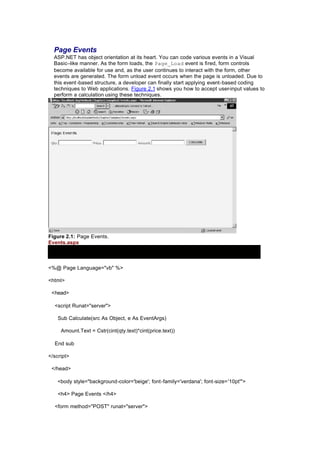
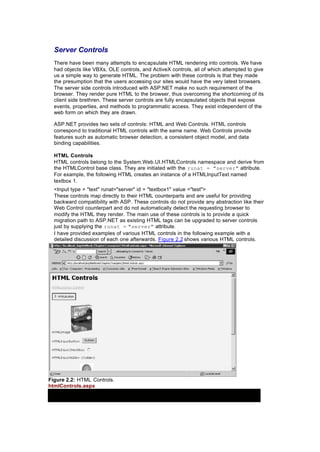
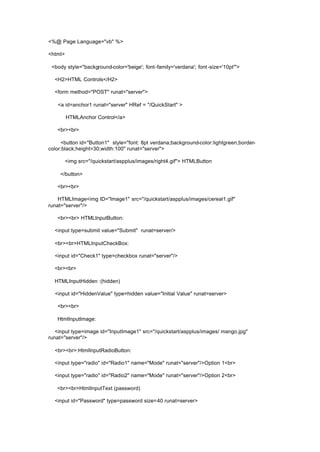
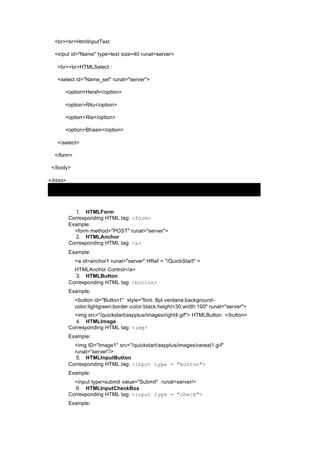
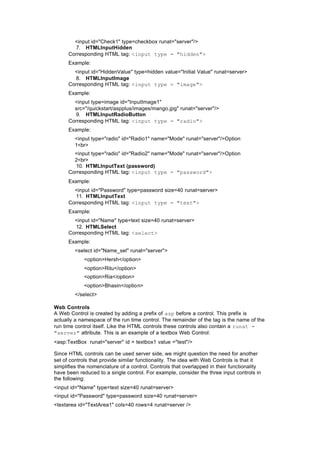
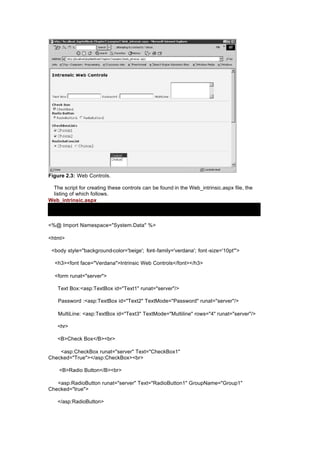

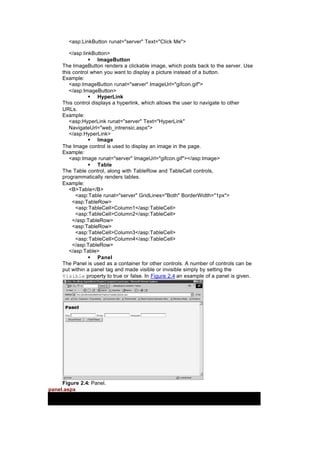
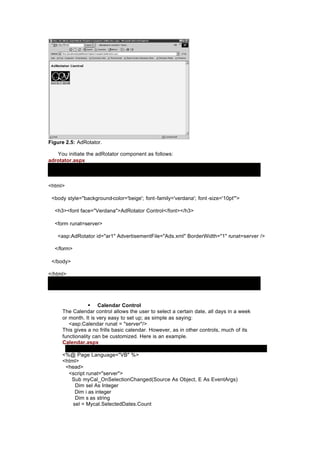
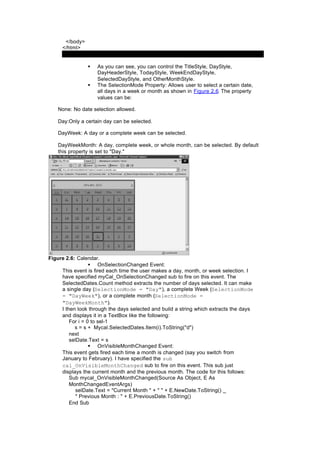
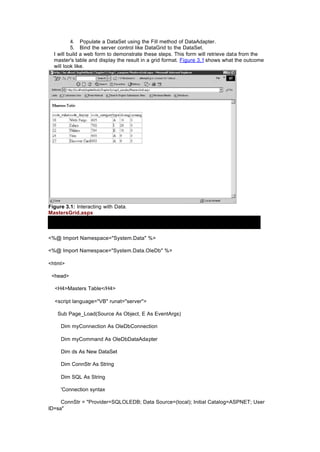
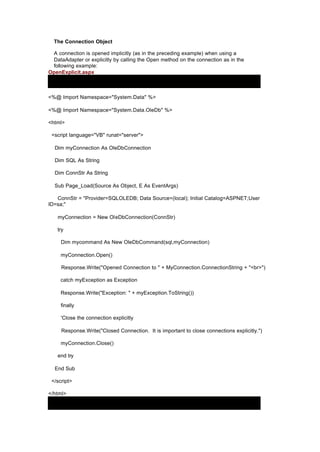
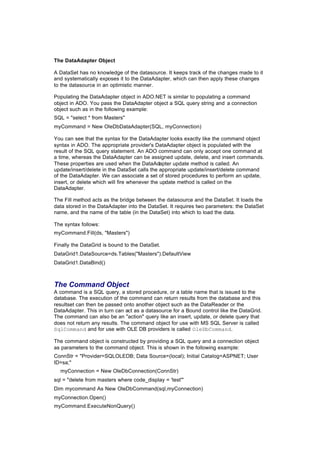
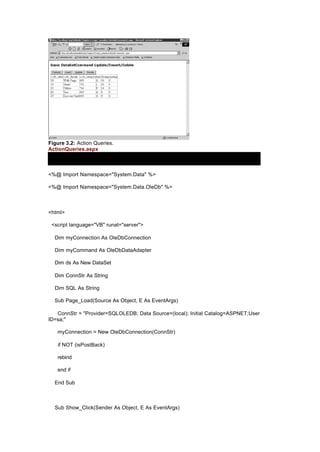
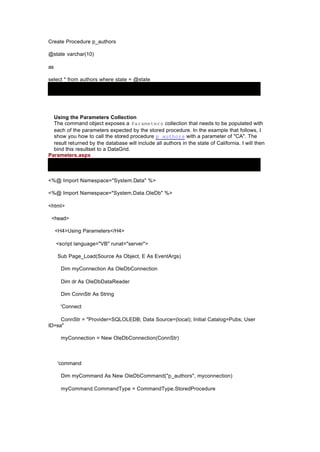
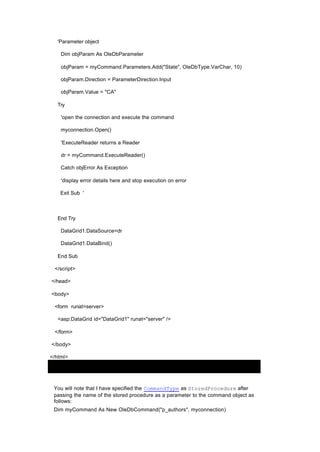

![emperors in Macedonia and Thrace, the hangers-on of the Fourth Crusade
in Thessaly, Greece, and the Aegaean Islands, had made so clean a sweep of
the old aristocracy, attached to the soil, that Orkhan’s idea was feasible.
Through these small holdings and through the rapid increase of conquered
territory, the Ottoman sultans were able, almost from the beginning, to
exercise an absolute sovereignty over their expanding dominions, and to
prevent the rise of a class of nobles. The Ottoman Empire has never known
an hereditary nobility. In the later conquests, the Sublime Porte sometimes
granted life rights of governorship, with a tacit understanding that the
succession should go to the son, to local chieftains or to large landowners.
But these concessions were in regions never fully conquered, and remote
from Constantinople. Those to whom these privileges were given had no
part in the central government and no rank outside of their immediate
locality.
In place of military service, every adult Christian paid a special head-tax,
to be used for the support of the army. The Christian was exempt from
military service; the Mussulman was exempt from taxes.[142] This head-tax
was heavy, and so gauged as to keep the Christian, unless he lived in a city,
in economic dependence upon the Moslem landowner. As a general rule,
during the first century and a half of Ottoman conquest, those who held to
the old faith went to the cities and large towns. The Moslem thus became,
without any attempt at forcible conversion or need to massacre, the
undisputed possessor of the country districts.
Aside from the onerous head-tax, there were grave inequalities for the
Christian in matters of law and in intermarriage. After the fall of
Constantinople, Mohammed the Conqueror gave the Christians a large
measure of self-government by putting them in millets (nations) under the
headship of the ecclesiastical authorities. But the inequality in the matter of
intermarriage has never been done away with. A Moslem may marry a
Christian woman, but a Christian is forbidden to marry a Mohammedan
woman. In the earliest days, when there was neither racial nor religious
antipathy and Christian and Moslem lived in close social intercourse, this
law was a powerful proselytizing agency. It furnished a temptation to a
change of faith which, whenever it arose, was far stronger than the
temptation of lands, of power, of economic independence, or of civil
equality.](https://image.slidesharecdn.com/33118-250226041602-1e1118f9/85/ASP-NET-Professional-Projects-1st-Edition-Hersh-Bhasin-52-320.jpg)
![The moment one professed Islam he became an Osmanli. Religion has
always been the test of nationality in the Ottoman Empire.[143] The
Osmanlis increased from the thousands to the millions, in Macedonia, in
Thrace, and in Asia Minor. Ancestry was quickly forgotten in the midst of
ever-changing conditions and the founding of a new social order. It is still a
characteristic of the Osmanli that he has no surname. The most widely-read
English writer of the seventeenth century on the ‘Turks’ emphasized the
mixture of blood in the Osmanli, when he wrote: ‘At present the blood of
the Turks is so mixed with that of all sorts of Languages and Nations, that
none of them can derive his Lineage from the ancient blood of the
Saracens.’[144]
A majority of the Byzantines whom Orkhan, Murad, and Bayezid
conquered must have become Osmanlis. Once the change of religion was
made, the development of the new race was not difficult. There was much
in common between the Turk of Asia Minor and the Byzantine. An
Armenian contemporary wrote of them as if they were alike.[145] The
Greeks did not take to heart the new régime,[146] for the fiscal evils of the
Byzantine system reconciled them in advance to a change. Nothing could
be worse than that which they had suffered.[147]
Of course, the love of woman, the desire for adventure, hope of
economic independence through rewards of land and removal of onerous
taxes, disgust with the Byzantine administration and with the lack of
support from their rulers and ecclesiastical authorities—these influences did
not cause the conversion of all the Christians. In the cities, where the
inequality and the inconvenience of remaining true to the old faith was
minimized, and where Christianity has always been able to make itself felt
and heard,[148] there was no great temptation to a change of religion. After
the Osmanlis became stronger, and entered into the aggressive period of
conquest, they resorted to other means to swell their numbers. The
institution of the Janissaries, and the permission to enslave those whom
they conquered, gave the Osmanlis more potent and immediately pressing
arguments.
From the completion of the conquest of Bithynia by Orkhan, the
Osmanlis can be called a distinct race with a national consciousness and a
desire for expansion. They can be distinguished from the Turks of the
emirates of Asia Minor and from the Byzantines. The Turk did not absorb](https://image.slidesharecdn.com/33118-250226041602-1e1118f9/85/ASP-NET-Professional-Projects-1st-Edition-Hersh-Bhasin-53-320.jpg)
![the Greek, nor did the Greek absorb the Turk. Both had taken a new
religion, and if the Turkish language was adopted, it was rather the customs
and laws of the Byzantines which prevailed until the influence of the Arabs,
enhanced as it was with the prestige of centuries of Islam, gained the
ascendancy over Turkish and Byzantine tradition alike. But this did not
occur until the Osmanlis invaded Syria, Egypt, and Mesopotamia at the
beginning of the sixteenth century.
It must be remembered that the Greeks were not the only element added
to the Turkish stock. The adoption of the Turkish language by the Osmanlis
was due not only to the fact that from the beginning it was the military and
governmental language, but to its being the simplest and most vigorous
medium of communication for the different peoples who became Osmanlis.
Calling the Osmanlis Turks, and regarding them as invaders upon the
soil of Europe, is an historical error which has persisted so long that the
Osmanlis themselves have fallen into it! They have always distinguished
themselves from the Turks. This is proved by their own use of that word to
describe a people as different from themselves as were the Greeks. Evliya
effendi spoke of the ‘harsh language of the Turks’, and said of Turbeli
Koïlik, which was conquered by Osman in 1312, ‘Though its inhabitants
are Turks, it is a sweet town.’[149] Hadji Khalfa regarded the Turks as
synonymous with the Tartars, and an altogether foreign race.[150]
Whether their tolerance was actuated by policy, by genuine kindly
feeling, or by indifference,[151] the fact cannot be gainsaid that the
Osmanlis were the first nation in modern history to lay down the principle
of religious freedom as the corner-stone in the building up of their nation.
During the centuries that bear the stain of unremitting persecution of the
Jew and the responsibility for official support of the Inquisition, Christian
and Moslem lived together in harmony under the rule of the Osmanlis. This
was generally, though not universally, the case throughout the fourteenth
century in the Turkish emirates of Asia Minor.[152]
VII
The army of Osman consisted entirely of volunteer horsemen, who were
called akindjis. They wore no specified uniform. But they were superb
riders and moved together ‘like a wall’—an expression that has come down
to the present day in Ottoman military drills.[153] When Osman planned a](https://image.slidesharecdn.com/33118-250226041602-1e1118f9/85/ASP-NET-Professional-Projects-1st-Edition-Hersh-Bhasin-54-320.jpg)
![campaign, he sent criers into the villages to proclaim that ‘whoever wanted
to fight’ should be at a certain place on a certain day.
Orkhan was the organizer of the Ottoman army. He and his successor
Murad laid the foundations of a military power which was without rival for
two centuries. Although there is no ground for the claim of many historians
that the Osmanlis were a hundred years ahead of Europe in organizing a
standing army,[154] they were certainly pioneers in the complete
organization of an army on a permanent war footing. Orkhan understood
well the principle qui se laisse payer se laisse commander thirty years
before Charles V of France.
His irregular infantry (azabs) were placed in the front when battle was
engaged.[155] It made little difference how many of these were killed, or
whether they made a good show. They served to draw the first fire of the
enemy. When the enemy’s energy was exhausted or when he was led to
pursue the fleeing azabs, thinking the victory his, he came upon the second
line, which consisted of paid, disciplined troops. These were accustomed to
fighting together, were acquainted with their leaders’ commands and
strategy, and had a tremendous advantage over the usual mercenaries of the
period in that they served a cause to which their lives were devoted and a
sovereign whose interests were identical with their own. Whether this were
due to training begun in the days of adolescence, or to the knowledge that
bravery would be rewarded not by booty alone (always an uncertain
quantity which the ordinary mercenary invariably begins to think of
securing before his fighting work is really accomplished), but by promotion
in the service and substantial gifts of land, the result was the same.
The corps of salaried soldiers were called Kapu-Kali Odjaks, and their
service was centred in the person of their sovereign. They were supposed to
be continually ‘at the door of the Sultan’s tent’. The Sultan paid them
regularly and personally. They served him regularly and personally. When
they went into the field with a commander other than the Sultan, the
commander was regarded, during the term of his commission, as in the
place of the Sultan.[156] There came to be seven of these odjaks: the
janissaries, the adjami-oghlular (novices), the topjis (field-artillerymen),
the djebedjis (smiths), the toparabadjis (artillery and munition drivers), the
khumbaradjis (siege-artillerymen), and the sakkas (water-carriers).[157] It is
impossible to state just when these distinctive corps arose, but they are the](https://image.slidesharecdn.com/33118-250226041602-1e1118f9/85/ASP-NET-Professional-Projects-1st-Edition-Hersh-Bhasin-55-320.jpg)
![logical development of Orkhan’s Eulufeli, the year-in and year-out soldiery
who followed arms as a definite profession and enjoyed a regular salary
fixed by law.
The akindjis, cavalry scouts and yet more than that, served as an
advance-guard, and opened up the country to be conquered. The greatest
dangers and the richest rewards fell to them. They were recruited from
among the holders of military fiefs (timarets). Guides (tchaousches) and
regular paid corps of cavalry (spahis) completed the organization.
It may be that Orkhan had learned a valuable lesson from his observation
of the Catalans and of the early Turkish invaders in Europe. For he arranged
his organization in such a way that the army would depend directly upon
him, and not upon subordinates who might be led to put their personal
interests above those of their chief. With the exception of the akindjis,
whose loyalty was secured by their fiefs, there were no irregular bands
raised and led by adventurers. Unity was the first striking characteristic of
the Ottoman army.
The second characteristic was readiness. We have already seen how
Andronicus III ‘gathered in haste’ the army which he tried to oppose to the
Osmanlis. Lack of time for preparation is the excuse for many a Byzantine
disaster. An early and competent traveller wrote that the Osmanlis knew
beforehand just when the Christian armies were coming and where they
could be met to the best advantage. For they were always on a war footing,
and their tchaousches and spies knew how and where to lead. ‘They can
start suddenly, and a hundred Christian soldiers would make more noise
than ten thousand Osmanlis. When the drum is sounded they put themselves
immediately in march, never breaking step, never stopping till the word is
given. Lightly armed, in one night they travel as far as their Christian
adversaries in three days.’[158]
VIII
The fall of Brusa, Nicaea, and Nicomedia did not cause alarm in Europe.
The rise of the Osmanlis had scarcely been noticed, even by the Byzantines!
The Turkish pirates in the Aegaean, who had no connexion whatever with
the Osmanlis,[159] were becoming, however, a menace to the commerce of
the Venetians and Genoese and to the sovereignty of the remaining Latin
princes of Achaia and of the islands. In one of Marino Sanudo’s letters we](https://image.slidesharecdn.com/33118-250226041602-1e1118f9/85/ASP-NET-Professional-Projects-1st-Edition-Hersh-Bhasin-56-320.jpg)
![find the following significant passage: ‘Marco Gradenigo, writing to me
from Negropont (Euboea) on September eighteenth, 1328, declares that
unless some remedy be found against the Turks, who have marvellously
increased in numbers, Negropont and all the islands of the Archipelago will
be infallibly lost.’[160]
In 1327 Andronicus II wrote to Pope John XXII, calling his attention to
the Turks as a danger to Christendom, and appealing for aid.[161] Nothing
was done at this time. The Byzantines were schismatics, and France at least
was more intent upon a recovery of the Holy Land than upon checking the
advance of the Moslem corsairs.[162]
Andronicus III, in 1333, followed the example of his grandfather by
making another overture to John XXII. He did not scruple to dangle before
the Pope the bait of a reunion of the Churches.[163] The same year Venice
urged Cyprus and Rhodes to join in a coalition against the Turks.[164] The
only practical outcome of the efforts of the popes, the Venetian senate, and
the Byzantine emperors to raise a crusade during the reign of Orkhan was
the capture of Smyrna, in October 1344. Omar bey, emir of Aïdin, had been
caught napping.[165] Smyrna remained in possession of the Knights of
Rhodes until it was taken by Timur in 1403.[166]
The futile agitation in Europe against the reawakening of Islam did not
in any way hurt Orkhan. On the contrary it helped him greatly. Just as the
petty conflict of Andronicus III with Phocaea in 1336 had diverted Orkhan’s
powerful southern neighbours, this interference of the Pope, and the activity
of Rhodes and Venice, contributed to the prosperity and growth of the
Osmanlis by striking a blow at his most dangerous rivals, the Emirs of
Sarukhan, Aïdin, and Hamid. After 1340 Orkhan was ready to extend his
dominion into Europe. He did not have long to wait.
IX
Orkhan had one rival whose goal was similar to his own. Stephen
Dushan, kral of Serbia, was openly aspiring to the imperial throne.
Byzantium had no more formidable enemy than this warrior king, who in
twenty-five years led thirteen campaigns against the Greeks.[167] The
memory of his ephemeral empire has been cherished by the Serbians to this
day. In their folk-lore Stephen Dushan and his deeds are immortalized. The
halo of romance still surrounds the man and his conquests. It is in vain that](https://image.slidesharecdn.com/33118-250226041602-1e1118f9/85/ASP-NET-Professional-Projects-1st-Edition-Hersh-Bhasin-57-320.jpg)
![historical science has demonstrated the purely temporary character of
Stephen’s conquests. It is in vain that he has been divested of the glamour
of the chronicles and songs, and pictured in conformity with fact. To the
Serbian peasant he is Saint Stephen, the glorious Czar, who brought the
Serbian Empire to its zenith. All the cities in which this adventurer and
raider set foot are claimed in the twentieth century as a legitimate part of
‘Greater Serbia’. Men have engaged in a bloody war and have died for this
fiction.[168]
Stephen Dushan demands our attention because he is the one man who
could have anticipated the Osmanlis in winning the inheritance of the
Caesars. A statement of his career is necessary before we take up the
narration of the events which led to the invasion of the Balkan peninsula by
the Osmanlis.
Stephen came into prominence in 1330 during the war which his father,
Urosh, made upon Bulgaria. Czar Michael had repudiated the Serbian
princess Anna in order to marry a sister of Andronicus III. The Bulgarians
were badly beaten. Stephen received for his brilliant part in the campaign
the province of Zenta. Although he was only twenty-three, his ambition to
rule was already awakened. Dissatisfied, he demanded a half of his father’s
possessions. Urosh refused. Stephen marched against him, dethroned him,
and imprisoned him. According to some authorities, he had Urosh killed.
[169] Whether he actually ordered the assassination or not, he profited by the
crime.
During the first decade of his reign, Stephen gathered a majority of the
Serbian-speaking peoples under his rule, pushed down to the Dalmatian
coast, and asserted Serbian supremacy over a large portion of the territory
which his race had hitherto contested with the Bulgarians. His appearance
on the Adriatic led to a nominal alliance with Venice.[170] In 1340 he began
the invasion of lower Macedonia. When the valley of the Vardar was
conquered, he attacked Serres. This city fell into his possession. He now
considered himself ready for the advance on Constantinople. Drunk with
success, he crowned himself at Serres[171] ‘King by the grace of God of
Serbia, of Albania, and of the maritime region, prince of the Bulgarian
empire, and master of almost all the Roman empire’.[172] A few months
later he changed the title to ‘emperor and autocrat of Serbia and Romania’.
[173]](https://image.slidesharecdn.com/33118-250226041602-1e1118f9/85/ASP-NET-Professional-Projects-1st-Edition-Hersh-Bhasin-58-320.jpg)
![The relations between Stephen and Venice during the period between
1345 and 1350 show how easily an alliance between the Serbians and the
Venetians might have been concluded. It was a critical time for Orkhan.
Had Stephen Dushan, with the help of the Venetians, attacked
Constantinople before 1350, the Osmanlis would have lost their goal. After
his coronation, the ‘Roman emperor’ sent an embassy to Venice to secure
the Senate’s aid for the definite purpose of acquiring Constantinople.[174] In
1347 the Senate, in response to a second overture, congratulated Stephen on
having been crowned ‘emperor of Constantinople’, but regretted the
impossibility of aiding him. There was a truce between Venice and the
Byzantine Empire, and they were at that moment engaged in a war with
Zara.[175] However, like typical merchants, they consented to sell arms to
Stephen.[176]
In January 1348 the Senate congratulated Stephen upon his exploits,[177]
and later in the same year granted him three, then four, galleys.[178] This
seems to be the extent of the help rendered by Venice to Stephen Dushan.
The success of Stephen in subjugating Thessaly, and his progress farther
south until, in 1349, the Serbian flags waved on the mainland opposite the
Venetian castle of Ptelion in Euboea, alarmed the Venetians. The Senate
complained of the piracy of the Serbians in the Aegaean, and tried to re-
establish peace between Serbians and Greeks.[179] Stephen became more
insistent and the Senate more reluctant. On April 13, 1350, the Senate
considered several demands made upon them by an envoy of ‘Stephen
Dushan, emperor of Serbia and Romania, despot of Arta and count of
Wallachia’. Among them were Venetian citizenship for himself, his wife
and his son, a conference with the Doge at Ragusa, and substantial aid for
the attack upon Constantinople, ‘when he shall have conquered the ten parts
of Romania outside of Constantinople.’[180] The chart of citizenship was
accorded. But he was informed that the Doge never left Venice during his
tenure of office, and that there was a treaty of friendship with the
Byzantines which prevented Venice from joining in an attempt to capture
the imperial city.[181]
Convinced that he could expect no substantial assistance from Venice,
Stephen planned to work the old trick of the Byzantine emperors. The
Serbians were already excommunicated by the Greek Orthodox Church.](https://image.slidesharecdn.com/33118-250226041602-1e1118f9/85/ASP-NET-Professional-Projects-1st-Edition-Hersh-Bhasin-59-320.jpg)
![Stephen negotiated with the Pope for the return of the Serbians into the
Roman fold.[182]
When war arose between Venice and Genoa, Stephen sent envoys to
Orkhan to propose a union of the Serbian and Ottoman armies for a
campaign against Constantinople. The marriage of his daughter to Orkhan’s
son was to seal the alliance. Orkhan accepted this proposal. An embassy
was immediately sent to Stephen to arrange the details of the alliance. But
Cantacuzenos determined to prevent this change of Orkhan’s allegiance by
a most drastic measure. He did not fear the anger of Orkhan as greatly as he
feared a union between Orkhan and Dushan. The Ottoman envoys were
ambushed. Some were killed. Those who escaped, together with the
presents destined for Stephen, were taken to Demotika.[183]
Neither Stephen nor Orkhan tried to reopen the negotiations. They
realized that their ambitions were too nearly identical to permit a
harmonious agreement as to a division of the spoils. Macedonia was as hard
to divide in the fourteenth century as it is in the twentieth. After 1351
Stephen watched to see what effect the war between Venice and Genoa was
going to have upon his fortunes. He also intrigued, as Orkhan was doing, in
the civil war of the Byzantines. These were his Capuan days. They were
fatal to the fame of Stephen—outside of the Serbian folk-lore! The first
expedition of Orkhan’s son Soleiman, in 1353, so alarmed Stephen that he
tried to become reconciled to the Orthodox Church. He sent an embassy to
Constantinople, but the patriarch refused his blessing until Stephen had
renounced the title of emperor and his conquests east of the Vardar.[184]
Stephen could not do this. Nor could he wait longer. If he did not strike
quickly, the Osmanlis would be in his path. He took what was now a
gambler’s chance. With eighty thousand men he started for Constantinople.
Death claimed him on the second day of the march.[185] The Serbian
Empire did not outlive its founder.
X
The public life of John Cantacuzenos was contemporary almost to the
year with that of Stephen Dushan. He was associated with Andronicus III in
the capacity of grand chancellor and confidential adviser throughout the
decade which saw the loss of Nicaea and Nicomedia. Shortly after he had
succeeded in deposing his grandfather, Andronicus III was taken with a](https://image.slidesharecdn.com/33118-250226041602-1e1118f9/85/ASP-NET-Professional-Projects-1st-Edition-Hersh-Bhasin-60-320.jpg)
![violent fever. His crime-stained mind could not rid itself of the idea that he
was going to die, even after he had become convalescent. He solicited
Cantacuzenos to assume the imperial purple. He wanted to abdicate and
take monk’s orders. A drink from a miraculous spring gave him a new grip
on life.[186] For eleven years he lived on, in every crisis irresolute, in every
disaster unkingly, bending always before the stronger will of Cantacuzenos.
In 1341, at the early age of forty-five, his worthless life ended. His legacy
to the Empress Anna and his child heir was the guardianship of his ‘friend
and counsellor, John Cantacuzenos’. The grand chancellor accepted the
regency with alacrity.[187]
Three months after the death of Andronicus III, Cantacuzenos crowned
himself emperor at Demotika. He put the imperial crown also upon the head
of his wife Irene, a Bulgarian princess. Neither in Constantinople nor in
Adrianople were the pretensions of Cantacuzenos admitted. The widow of
Andronicus, Anna of Savoy, refused to acknowledge the usurper. In
Adrianople the inhabitants called in both Bulgarians and Turks to defend
them against Cantacuzenos.[188] The Bulgarian Czar took sides secretly
against his son-in-law.
The year 1342 saw the Byzantines engaged in another terrible civil war.
The self-appointed emperor did not hesitate to go to Pristina and offer to
Stephen Dushan Macedonia as far as Serres in exchange for Serbian aid
against the Palaeologi.[189]
When the Serbian assistance proved unsatisfactory, Cantacuzenos called
in the Turks of Aïdin. Omar, with 83 ships and 29,000 soldiers, came to his
aid, but, because of the severe cold, returned to Asia before anything could
be accomplished.[190] He came back in the spring of 1343 with 290 vessels
and helped Cantacuzenos to enter Salonika. In the fall of this year
Cantacuzenos led his Turkish mercenaries into Thrace. Anna appealed in
vain to Venice to exercise a pressure upon the Turks and Serbians, so that
they would no longer support her rival.[191] In desperation she gave
Alexander of Bulgaria nine strongholds in the Rhodope Mountains in
exchange for a few thousand soldiers. She resorted also to bribing the Turks
in Cantacuzenos’s service, and made overtures to Orkhan.
The crusade of 1344 against the Turks of Aïdin, which resulted in the
capture of Smyrna, prevented Cantacuzenos from continuing to receive
substantial aid from Omar, who died four years later in an attempt to win](https://image.slidesharecdn.com/33118-250226041602-1e1118f9/85/ASP-NET-Professional-Projects-1st-Edition-Hersh-Bhasin-61-320.jpg)
![back Smyrna.[192] Stephen Dushan, as we have already seen, was laying
claim to the Byzantine throne himself. Cantacuzenos could turn only to the
Osmanlis.
It was in January 1345 that Cantacuzenos made his infamous proposal to
Orkhan. In exchange for six thousand soldiers he was to give his daughter
Theodora to the Ottoman emir.[193] Orkhan now turned a deaf ear to the
appeals of Anna. This was a better offer. The Osmanlis crossed into Europe.
With their help Cantacuzenos got possession of all the coast cities of the
Black Sea except Sozopolis, besieged Constantinople, ravaged the
neighbourhood of the capital, and won Adrianople.[194]
It was only by threatening to change to the side of the Palaeologi that
Orkhan secured the fulfilment of the bargain. In May 1346 Theodora
became his bride.[195] A few days later, while Cantacuzenos was besieging
the capital with the soldiers for whom he had paid so dearly, the
beleaguered city was awakened by an ominous event. The eastern portion of
the Church of St. Sophia had fallen.[196]
Throughout the year 1346 Constantinople was invested by Cantacuzenos
and his mercenaries. The aristocratic party was almost openly championing
the cause of the usurper, while Anna relied upon the democratic party and
the Genoese. As for the clergy, they and the bulk of the population were
more interested in the ecclesiastical trial of Barlaam for the Bogomile
heresy[197] than in the civil war. In February 1347, while the Synod was in
the act of condemning Barlaam, and Anna was confined to her bed with a
serious illness, partisans of Cantacuzenos left the Golden Gate open. The
‘faithful friend and counsellor’ of Andronicus III entered without
opposition. The garrison had been bribed, and prevented the Genoese from
coming to the rescue of the empress. She yielded only when the palace of
the Blachernae was attacked.
Anna agreed to recognize Cantacuzenos and Irene as co-rulers, and to a
union of the families by the betrothal of Helen, daughter of Cantacuzenos,
to the young John Palaeologos. John, who was fifteen, protested against
marrying the thirteen-year-old Helen. His mother overruled his objections.
In May the marriage took place in the church of the Blachernae, as St.
Sophia was still in ruins. This ceremony was followed by the coronation of
the two emperors, John Cantacuzenos and John Palaeologos, and the three](https://image.slidesharecdn.com/33118-250226041602-1e1118f9/85/ASP-NET-Professional-Projects-1st-Edition-Hersh-Bhasin-62-320.jpg)
![empresses, Anna, Irene, and Helen.[198] Five rulers for the remnant of the
Byzantine Empire! At that very moment in France, the Marquis de
Montferrat, heir to the Latin emperors of Constantinople, was planning with
the Pope to drive out both Cantacuzenos and Palaeologos.[199]
Orkhan was well satisfied with this entering wedge. He was now son-in-
law of one emperor and brother-in-law of the other. His wife Theodora was
granddaughter of the Bulgarian Czar. He had open to him also a marriage
alliance with Stephen Dushan. The gods were first making mad.
Cantacuzenos was compelled immediately to seek aid again of Orkhan.
While he had been expending his energies against Constantinople, Stephen
Dushan had made great strides in Macedonia. At Scutari, where Orkhan had
come to congratulate his father-in-law upon the happy issue of the struggle
for the imperial purple, Cantacuzenos asked for six thousand Osmanlis to
dislodge the Serbians from the coast cities of Macedonia. Orkhan sent the
soldiers willingly. He must, however, have given them secret instructions,
for after having taken immense booty they returned to Nicomedia without
having captured for Cantacuzenos a single one of the cities held by Stephen.
[200]
XI
It is impossible to believe that Cantacuzenos from this time onwards did
not realize the danger to which he had exposed the state and the noose into
which he had put his neck. The papal archives and the writings of
Cantacuzenos himself reveal the fact that as early as 1347 Cantacuzenos
had appealed to the Pope to unite the western princes in a crusade against
the Osmanlis,[201] that these negotiations were renewed in 1349[202] and
1350,[203] and that in 1353 a last definite appeal was made to Clement by
Cantacuzenos for relief against those whom he had invited into Europe to
fight his battles.[204]
The five years between 1348 and 1353 gave rise to three events which
were fatal to the Byzantine Empire. They made possible the permanent
foothold of the Osmanlis in Europe. A man’s own efforts and a man’s ability
are not the sole factors in his success. Work and genius avail nothing where
opportunity is lacking. Circumstances over which he has no control
contribute largely to the making of a man. Orkhan, at this culminating stage
of his career, when he was ready to lead his people into the promised land,](https://image.slidesharecdn.com/33118-250226041602-1e1118f9/85/ASP-NET-Professional-Projects-1st-Edition-Hersh-Bhasin-63-320.jpg)
![was aided by the ‘black death’, the war between Venice and Genoa, and the
conflict between John Cantacuzenos and John Palaeologos.
The ‘black death’ was first heard of in the Euxine ports. It reached
Constantinople in 1347, and spread to Europe the following year. In Italy it
was universal, and lasted three years. From 15 to 20 per cent. of the total
population died.[205] In the maritime cities that had been in close contact
with the East, the duration of the epidemic was longer and the mortality
higher. The moral and economic effect was great throughout Europe. Men
looked with horror upon this inexplicable malady, which struck down every
fifth person. It gave no warning. There were few recoveries. For years after
the last case was recorded there was nervous fear of its return.
Communications with the Levant had been partially cut off.[206] Full
intercourse was not resumed until after Orkhan and the Osmanlis were
rooted in Macedonia and Thrace. Orkhan had no crusade to fear as long as
there lingered in the minds of the European peoples the memory of this
scourge. The bravest and most adventurous were unwilling to fight the
angel of death.
Plagues continued to visit the coast cities of the Balkan peninsula and
Asia Minor from time to time during the rest of the fourteenth and the first
thirty years of the fifteenth century. Between 1348 and 1431, nine great
plagues are recorded.[207] These dates coincide with the most aggressive
period of Ottoman conquest. As the city population was very largely Greek
and Christian, we cannot over-estimate the importance of these epidemics.
They were a valuable auxiliary in enabling the Osmanlis to advance and
assimilate without formidable opposition.
The ‘black death’ had hardly run its course in Italy when the commercial
rivalries of Genoa and Venice culminated in a bitter war, that lasted for two
years, with varying fortunes, until the battle of Lojera in 1353 broke the
sea-power of Genoa. After five centuries of independence the Genoese were
compelled to put themselves under the protection of Milan. The hatred
engendered by this struggle is revealed in the archives of the two republics.
They left unturned no stone to destroy each other. The history of Venice and
Genoa during the fourteenth century reads like that of Sparta and Athens.
The scene of the conflict is the same: the motive, the spirit, and the result
are identical. Venice gained no material advantage from the war. She had
long been alive to the menace of the Osmanlis.[208] She had been warned](https://image.slidesharecdn.com/33118-250226041602-1e1118f9/85/ASP-NET-Professional-Projects-1st-Edition-Hersh-Bhasin-64-320.jpg)
![by Petrarch of the certain danger which a war with Genoa would entail,
whether its outcome were favourable or unfavourable.[209]
The Ottoman and Byzantine historians are silent concerning the relations
of the Osmanlis with the Genoese during this war. That the Genoese asked
for and received aid from Orkhan is certain. There had been a convention
beforehand between the Osmanlis and the Genoese of Pera.[210] Both
against the Greeks and against the Venetians the assistance of Orkhan must
have been substantial.[211] It was remembered with gratitude forty years
later.[212]
The triumphal entry into Constantinople and the sanction of the Church
upon his imperial office did not end the troubles of Cantacuzenos. The first
to turn against him was his own son Matthew, who also wanted to be
emperor. Cantacuzenos appeased him for a time by giving him a portion of
Thrace. Then the Genoese of Pera, dissatisfied with the lowering of the
customs tariff to other nations, burned the Greek galleys and arsenals, and
attacked Constantinople. Cantacuzenos had to leave a sick-bed at Demotika
to hurry to save the city. The Greek fleet was destroyed by the Genoese.
The army of Cantacuzenos failed in an attack upon Galata. Peace was
concluded only when the unhappy emperor agreed to sell more land on the
Golden Horn to the Genoese, and restore them in the customs tariffs to their
former place as ‘most favoured nation’.[213]
In 1349 Cantacuzenos called again upon Orkhan to send soldiers to him
in Europe. Twenty thousand Ottoman cavaliers, under the command of
Matthew, marched against Salonika, which was on the point of giving itself
to Stephen Dushan. Cantacuzenos, with the young emperor John, went by
sea. Orkhan, as on the last occasion, secretly worked against his father-in-
law. After Cantacuzenos had already sailed, he recalled the horsemen who
were with Matthew. It was fortunate for Cantacuzenos that he met at
Amphipolis a Turkish fleet which was about to land a force of raiders to
ravage the country, and persuaded the commander to join with him in a
demonstration against Salonika. Otherwise the expedition would have been
a fiasco. As it was, Salonika surrendered. The army of Cantacuzenos
ascended the Vardar as far as Uskub, which was reoccupied.[214]
It would be too wearisome to go into all the details of the civil war
between Cantacuzenos and John Palaeologos. Involved in it are the
intrigues of Stephen Dushan of Serbia and Alexander of Bulgaria, and the](https://image.slidesharecdn.com/33118-250226041602-1e1118f9/85/ASP-NET-Professional-Projects-1st-Edition-Hersh-Bhasin-65-320.jpg)
![attitude of Venice and Genoa. At first it seemed as if Cantacuzenos would
be crushed. The partisans of Palaeologos besieged Matthew in the citadel of
Adrianople. The Genoese of Galata, in spite of the strong Venetian fleet
whose co-operation, however, with the Greeks was lukewarm,[215]
compelled Cantacuzenos to cede Silivria and Heraclea, besides increasing
their Galata lands.[216] In the fall of 1352 the Venetians and Bulgarians
declared openly for Palaeologos.[217]
In desperation Cantacuzenos fell back for the last time upon the
Osmanlis. He robbed the churches of the capital to pay Orkhan for twenty
thousand soldiers, and promised him a fortress in the Thracian Chersonese.
[218] With this help he recaptured Adrianople, and relieved Matthew, who
was still holding the citadel. The Serbians were beaten by Orkhan’s eldest
son, Soleiman, near Demotika. All of Thrace and most of Macedonia
returned to the allegiance of Cantacuzenos.[219]
In 1353 Cantacuzenos seemed to have recovered all the lost ground, and
to be at the height of his fortunes. John Palaeologos, abandoned by his
partisans, was in exile at Tenedos. An attempt to win back Constantinople
by intrigue failed. Cantacuzenos, now practically sole ruler, felt that it was
time to establish a new imperial line. He had Matthew proclaimed co-
emperor.[220] In his prosperity he forgot about Orkhan, who had put him
where he was, he forgot that he had invited the Osmanlis into Europe and
had shown them the fertile valleys of Macedonia and Thrace, that their
fighting men had passed along the military roads of the empire under the
command of himself and his son, that he had mustered Ottoman armies
under the walls of Salonika, of Adrianople, of Demotika, and even of
Constantinople.
XII
The Ottoman historians place the first invasion of European territory by
the Osmanlis in the year of the Hegira 758 (1356), and state that Soleiman
crossed the Hellespont one moonlight night with three hundred warriors,
and seized the castle of Tzympe, between Gallipoli and the Aegaean Sea
end of the strait.[221] It is represented as a romantic adventure, prompted by
a dream in which Soleiman saw the moonbeams make a tempting path for
him from Asia into Europe.[222] The earlier western historians give a
variety of dates. Some ascribe the first crossing to Murad.[223] Several](https://image.slidesharecdn.com/33118-250226041602-1e1118f9/85/ASP-NET-Professional-Projects-1st-Edition-Hersh-Bhasin-66-320.jpg)
![claim that the Osmanlis were transported by two small Genoese merchant
ships, and that there were sixty thousand of them! The Genoese received a
ducat per head. All the calamities of the ‘Turks’ were brought upon Europe
by the avarice of the Genoese.[224]
We can reject these stories without hesitation, just as we can reject the
date which the Ottoman historians give.[225] The Osmanlis had been
fighting in Europe since 1345. They had come over in large numbers on
different occasions. There is nothing mysterious or romantic about their
first foothold in Europe. In 1352 Cantacuzenos had promised to Orkhan a
fortress in the Thracian Chersonese. Tzympe may have been given to
Soleiman, or it was taken by him when the promise of Cantacuzenos was
not fulfilled. He did not have to cross secretly from Asia. The Ottoman
soldiers were already at home in Europe, and Soleiman had been their
leader in several expeditions.
Shortly after the occupation of Tzympe, one of those earthquakes which
occur so often in the Thracian Chersonese destroyed a portion of the walls
of Gallipoli. This was Soleiman’s opportunity. He occupied the city,
repaired the breaches, and called over from Bithynia the first colony of
Osmanlis. Other colonies followed rapidly, as the soldiers of Soleiman took
Malgara, Bulaïr (the key of the peninsula),[226] and the European littoral of
the Sea of Marmora as far as Rodosto. The advance-guard of the Osmanlis
appeared within a few miles of Constantinople; and ‘conducted themselves
as masters’.[227] This colonization was so quickly and easily effected that
one is led to believe that these colonists were for the most part renegade
Greeks returning to their former homes.
Cantacuzenos now reaped the full harvest of his policy. The patriarch
Callixtus refused to consecrate Matthew. He reproached Cantacuzenos for
having delivered Christians into the hands of the infidels, and accused him
of having given to Orkhan the money sent by a Russian prince for the
restoration of St. Sophia.[228] Compelled to flee for his life to the Genoese
in Galata, the patriarch decided to declare for Palaeologos. When
Cantacuzenos chose a new patriarch, Philotheus, who consented as price of
office to consecrate Matthew, Callixtus excommunicated him. Philotheus
returned the compliment. Then Callixtus sailed for Tenedos to join John
Palaeologos.[229]](https://image.slidesharecdn.com/33118-250226041602-1e1118f9/85/ASP-NET-Professional-Projects-1st-Edition-Hersh-Bhasin-67-320.jpg)
![Cantacuzenos, feeling the precariousness of his position at
Constantinople just at the moment when he thought he had triumphed over
every obstacle to his ambition, bitterly reproached Orkhan for not having
kept faith with him. He offered to buy back Tzympe for ten thousand
ducats, and asked Orkhan to order the Osmanlis to leave Gallipoli. Orkhan
accepted the ransom for Tzympe, knowing well that he could reoccupy this
fortress when he wanted to.[230] As for Gallipoli, he declared that he could
not give back what God had given him. Was it not the will of God rather
than force of arms that had opened the gates of Gallipoli to him?
Cantacuzenos sought an interview with his son-in-law, for he thought that
gold might induce the Osmanlis to withdraw. A meeting was arranged in the
Gulf of Nicomedia. When the emperor arrived at the rendezvous, a
messenger from Orkhan reported that his master was ill and could not
come.[231] No way was left open for further negotiations. The rupture was
complete.
After his return to Constantinople, Cantacuzenos sent envoys to the
Serbians and to the Bulgarians to urge a defensive alliance of the Balkan
Christians. They answered, ‘Defend yourself as best you can.’ A second
embassy met with the response from Czar Alexander: ‘Three years ago I
remonstrated with you for your unholy alliances with the Turks. Now that
the storm has broken, let the Byzantines weather it. If the Turks come
against us, we shall know how to defend ourselves.’[232]
The indignation of the Greeks against the man who had sacrificed them
to his inordinate ambition reached the breaking-point in November 1354.
The inhabitants of Constantinople declared for John Palaeologos.
Cantacuzenos was forced to barricade himself in his palace. Protected by
Catalans and other mercenaries, he tried to temporize. He offered to
abdicate if Matthew were allowed to retain the title of emperor with the
governorship of Adrianople and the Rhodope district. Encouraged by a lull
in the storm of popular feeling, he had the audacity to make an ‘appeal to
patriotism’, as he himself put it. He urged the people to support him in an
expedition to retake the provinces conquered by the Serbians and the
Osmanlis. This exhibition of effrontery was greeted with cries of scorn.
Cantacuzenos was publicly accused of wishing to deliver Constantinople to
Orkhan. A second revolution forced his abdication. He became a monk.
Irene took the veil.[233]](https://image.slidesharecdn.com/33118-250226041602-1e1118f9/85/ASP-NET-Professional-Projects-1st-Edition-Hersh-Bhasin-68-320.jpg)
![John Palaeologos returned from exile, and restored Callixtus to the
patriarchal throne. It took several years of fighting and negotiating to
compel Matthew’s abdication. Not until 1358 did John V become
undisputed ruler of the remnant of the empire in Macedonia and Thrace.
[234] But the mischief was done. The Osmanlis had put their foot as settlers
on European soil.
Cantacuzenos lived for thirty years in the monastery of Mistra, near old
Sparta. It was long enough for him to see the irreparable injury that his
ambition had caused to his country, and to realize how he had destroyed the
people to rule over whom he had sacrificed every higher and nobler instinct.
Cantacuzenos has had a fair trial before the bar of posterity. For many long
years, far removed from the turmoil of the world, were spent in the building
up of his brief of justification. He left a history of his life and times. So he
pleads for himself. But even if we did not have the testimony of Gregoras,
and of the archives of the Italian cities and of the Vatican, to supplement the
story of Cantacuzenos, he would stand condemned by his own record of
facts.
Cantacuzenos had far more natural ability than Andronicus II and
Andronicus III. During the long and arduous struggle to satisfy his personal
ambition, he showed himself a keen, courageous, resourceful leader. At the
beginning of his career he was in a position of commanding influence. His
country was facing a crisis which would have called forth the best and
noblest in one who loved his race, his religion, and his fatherland. But John
Cantacuzenos loved only himself. The legacy of the widow and helpless
child of the friend who had trusted and honoured him gave to Cantacuzenos
the opportunity for developing true greatness in the fulfilment of that
highest of missions—a sacred trust. But Cantacuzenos saw only the
opportunity for taking advantage of a dead man’s faith.
To say that Cantacuzenos was the cause of the downfall of the Byzantine
Empire would be to ignore other forces working to the same end, and to put
too great an emphasis upon the power of an individual human will to shape
the destinies of the world. However, in the stage of world history, leaders of
men are the personification of causes. We group everything around them.
The character and acts of Cantacuzenos reveal the fatal weakness in the
Balkan peninsula of his day. The Ottoman conquest was possible because
there was no consciousness of religious or racial commonweal. How could](https://image.slidesharecdn.com/33118-250226041602-1e1118f9/85/ASP-NET-Professional-Projects-1st-Edition-Hersh-Bhasin-69-320.jpg)
![this larger devotion, this larger sense of duty and obligation, be expected in
men who were not influenced, much less constrained, by ties of blood and
personal friendship?
XIII
Cantacuzenos ceased to be a factor in Byzantine affairs in 1355. But the
Greeks could not rid themselves as easily of Orkhan. The Osmanlis had
come to stay.
It is impossible to establish with any degree of certainty the conquests of
Soleiman pasha in the hinterland of the Gulf of Saros and of the Sea of
Marmora. But we know that he captured Demotika, and cut off
Constantinople from Adrianople by occupying Tchorlu.[235] If these
important places were retaken by the Byzantines after the premature death
of Soleiman, it was only for a brief time. At the beginning of the reign of
Murad the Osmanlis were firmly ensconced along the coasts of Thrace, and
had made some permanent progress into the interior.
There was a sudden and full awakening on the part of the Greeks to the
knowledge that the Ottoman invasion of 1354 was an irreparable disaster. A
year before Soleiman pasha settled his Moslem colonies in the Thracian
Chersonese, the inhabitants of Philadelphia had felt themselves so
completely abandoned by their emperors that they had appealed directly to
the Pope for aid, promising to return to the Roman communion.[236] At the
approach of the Osmanlis in Thrace, the country population had fled to
Constantinople, abandoning everything. Those who had money to emigrate
elsewhere did so immediately. They had no hope of a change in the fortunes
of their country.[237]
The annalists of the Byzantine Empire record no heroic, bitter resistance
to the army of Soleiman pasha. There was no mayor of the palace, no Joan,
to revive the confidence of the people in their rulers, or to replace the
family that had proved its unfitness. The Greeks had feared Cantacuzenos,
and had attributed their hopeless condition to his alliance with the
Osmanlis. But they could not have greater confidence in John Palaeologos.
For he made no effort, not even in the smallest way, to demonstrate that he
was different from his weak and disloyal forbears.
The Byzantines feared also the intrigues of the Genoese, who were as
persistent in their efforts to undermine the integrity of the Byzantine](https://image.slidesharecdn.com/33118-250226041602-1e1118f9/85/ASP-NET-Professional-Projects-1st-Edition-Hersh-Bhasin-70-320.jpg)
![Empire, as are the foreigners to-day engaged in commerce in the Levant to
weaken and destroy the authority of the Ottoman Empire.[238] The
banishment of Cantacuzenos could not save them from the Osmanlis.
Palaeologos could not save them. They could not save themselves. The only
way which occurred to them of preventing the Ottoman conquest was to
give themselves to some Christian power. There were actually plans on foot
to offer the remnant of the empire to Venice, to Hungary, even to Serbia!
[239]
In France, during the fourteenth century, the Turks were not regarded as
a permanent factor in the Near East. Western Asia Minor was not called
‘Turquie’ or ‘Turquemanie’, but ‘the land which the Turks hold’.[240] There
was no such illusion among the Italians. They accustomed themselves very
rapidly to the idea that the Osmanlis, if not the Turkish tribes, were in Asia
Minor and the Aegaean to stay.
The immigration across the Hellespont in 1354 was not looked upon by
those who were acquainted with the weakness and impotence of the
Byzantines as a raid or as a temporary affair. For several years the Genoese
had thought it to their advantage to seek the friendship of Orkhan.[241] In
1355 two far-sighted Venetians wrote the whole truth to the Senate. They
did not mince matters. Matteo Venier, baily at Constantinople, warned the
Senate in the strongest terms about the menace of Ottoman aggrandizement.
[242] Marino Falieri went farther. He pointed out that the Byzantine Empire
must inevitably become the booty of the Osmanlis, and urged his
countrymen to get ahead of them.[243] Prophetic words and daring
suggestion. Had Venice at this time had a Dandolo of the stamp of the
intrepid blind Doge who diverted the Fourth Crusade to wreak his
vengeance upon his mutilators, Islam might have been kept out of Europe.
When John Palaeologos resumed the throne of his fathers, he found
himself as much at the mercy of Orkhan as Cantacuzenos had been. His
dependence is revealed in the story of Halil. Halil, son of Orkhan and
Theodora, was captured by pirates in 1357, and taken to Phocaea. Orkhan
held his brother-in-law responsible for this kidnapping, and called upon him
to rescue his nephew. In February 1358, while the Osmanlis under Soleiman
pasha were advancing in Thrace, we see John V, at the behest of Orkhan,
spending what strength and energy he had in the siege of Phocaea. Later,
when he went back to Constantinople, Orkhan peremptorily ordered him to](https://image.slidesharecdn.com/33118-250226041602-1e1118f9/85/ASP-NET-Professional-Projects-1st-Edition-Hersh-Bhasin-71-320.jpg)
![return to direct in person the siege. John started out, and met his fleet,
which had become anxious about his absence and had given up the siege.
He could not persuade the galleys to turn back with him. So he wrote to
Orkhan begging to be excused from continuing an undertaking beyond his
power to carry through successfully.
Orkhan was inflexible. He had now become the overlord of the
Byzantine emperor. In March 1359 the successor of Constantine went as a
vassal to meet his Ottoman suzerain at Scutari. He appeased the wrath of
Orkhan only by agreeing to pay a half of Halil’s ransom, and by signing a
treaty of peace that was a virtual acceptance of the new status quo in
Thrace. The peace was to be sealed by the betrothal of his ten-year-old
daughter to Halil. It was as errand boy of Orkhan that John V made one
more trip to Phocaea, paid one hundred thousand pieces of gold for Halil,
and brought him to Nicaea. There the betrothal of the Christian princess to
her Moslem cousin was celebrated by splendid fêtes.[244]
John Cantacuzenos introduced the Osmanlis into Europe. John
Palaeologos accepted their presence in Thrace without a struggle. There is
little choice between these two Johns.
XIV
Orkhan died at the end of this memorable decade.[245] If to Osman is
given the honour of being father of a new people, the greater honour of
founding the nation must be ascribed to Orkhan.[246] Few men have
accomplished a greater work and seen more sweeping changes in two
generations. According to popular legend, Orkhan won his spurs as a
warrior, and a bride to boot, at the capture of Biledjik, when he was twelve
years old. His life was spent in fighting and in making permanent the results
of his fighting. He was as simple in his tastes as his father had been. At
Nicaea he distributed soup and bread to the poor with his own hands.[247]
There seems to be no basis for the characterization of Orkhan which the
early western historians handed down to posterity. He was neither vicious
nor cruel nor deceitful. His three striking characteristics were those which
mark all men who have accomplished a great work in history, oneness of
purpose, inexhaustible energy, and an unlimited capacity for detail. He
began life as a village lad of an obscure tribe. After a public career of sixty
years he died, the brother-in-law of the emperor of Byzantium, the friend](https://image.slidesharecdn.com/33118-250226041602-1e1118f9/85/ASP-NET-Professional-Projects-1st-Edition-Hersh-Bhasin-72-320.jpg)

![Osman and Orkhan were able to build up a race and a nation without
notice and, consequently, without hindrance. For their little corner of Asia
Minor had been abandoned by the Byzantines. Since the days when Nicaea
became the capital of the empire, after the Latin conquest of
Constantinople, its commercial relations with Europe were interrupted.
None knew or cared about the rise of the Osmanlis until they appeared in
Thrace. Orkhan had assured himself of his inheritance by patient waiting.
Of Murad immediate action was demanded.
The actual European conquests of Orkhan, outside of the Thracian
Chersonese, had been negligible. But Europe was excited over the capture
of Gallipoli. Murad had little to fear from a union of the indigenous Balkan
elements. Greek and Serbian and Bulgarian hate each other far worse than
they hate the Osmanli. This fact of history, demonstrated so forcibly by the
events of the year 1913, was known and appreciated at its full value by the
earliest of the Ottoman conquerors. There was, however, just cause for
apprehension of the intervention of Hungary in conjunction with the
Serbians, or of Venice in conjunction with the Byzantines. Murad’s success
depended upon his ability to gain an immediate and vital foothold in the
Balkan peninsula.
This foothold was obtained in the epoch-making campaign of 1360-1.
Astounding success attended the initial efforts of Murad. If he were not
himself a trained and seasoned warrior, he had a precious legacy of generals
in whom he could put implicit trust. Realizing his own inexperience, he
created Kara Khalil Tchenderli vizier, and allowed himself to be guided by
the judgement of this tried friend and servant of his grandfather and his
father. To Lalashahin, companion of Soleiman in the capture of Tzympe,
was given the title of beylerbey, and chief command of the army in Thrace.
Adrianople was the goal. To Evrenos bey Murad entrusted a second army,
whose mission was to prevent an attack from the Serbians in the west.[248]
Tchorlu was the first objective point, because its capture would protect
the rear of the army operating against Adrianople. This city, only forty-six
miles from Constantinople, offered a stubborn resistance, and had to be
taken by assault. The commandant was decapitated, the garrison massacred,
and the walls razed.[249] The Osmanlis saw to it that the fate of the
defenders of Tchorlu was heralded far and wide, so that it might serve as a
lesson to other cities before which their armies appeared. Evrenos bey,](https://image.slidesharecdn.com/33118-250226041602-1e1118f9/85/ASP-NET-Professional-Projects-1st-Edition-Hersh-Bhasin-75-320.jpg)
![pushing forward on the left, occupied Demotika,[250] and then Gumuldjina.
This operation gave to the Osmanlis control of the basin of the Maritza
River, and removed the danger of a Serbian attack. A column on the right
moved up the coast of the Black Sea and captured Kirk Kilisse, a position
of extreme strategic importance in preventing a possible Bulgarian attempt
to relieve Adrianople by bringing an army through the mountainous country
between the river and the sea.[251]
After the capture of Tchorlu, Murad advanced to Lule Burgas on the
north bank of the Ergene, where he effected a junction with the armies of
Evrenos and Lalashahin. The decisive battle was fought between Bunar
Hissar and Eski Baba, to which point the defenders of Adrianople had
THE EMIRATE OF MURAD
[Largest view.]
advanced.[252] The Byzantines and Bulgarians were defeated. The Greek
commandant of Adrianople, with a portion of his army, managed to flee
down the Maritza to Enos.[253] it is one of the remarkable coincidences of
history that the Osmanlis should have won the first battle which opened up
to them their glorious future in Europe in exactly the same place that was to
witness five hundred and fifty years later their last desperate stand in the
Balkan peninsula.](https://image.slidesharecdn.com/33118-250226041602-1e1118f9/85/ASP-NET-Professional-Projects-1st-Edition-Hersh-Bhasin-76-320.jpg)
![Deserted by their commandant, and overwhelmed by the disaster of Eski
Baba, the inhabitants of Adrianople opened their gates to the Osmanlis.[254]
Murad installed Lalashahin in Adrianople, and took up his own head-
quarters in Demotika,[255] where he built a palace and a mosque.
Lalashahin, before settling down in Adrianople, carried his victorious arms
up the valley of the Maritza as far as Philippopolis, which he fortified
strongly. A stone bridge was built across the river.[256] The occupation of
Philippopolis not only gave to the Osmanlis an advantageous base of
operations against the Bulgarians, but also brought them the most fruitful
source of revenue they had yet enjoyed. It enabled them to levy taxes upon
the rice-growing industry. Bulgarians and Serbians were both dependent
upon the harvests of the rice fields around Philippopolis.
II
In fifteen months the Osmanlis had become masters of the principal
strategic points in Thrace. This great campaign, undertaken and carried
through under the spur of necessity, was an auspicious beginning for the
reign of Murad and for the supremacy of the Osmanlis in the Balkan
peninsula. Europe was suffering from another visitation of the Black Death.
[257] The Balkan nations were completely demoralized. So unpopular was
John Palaeologos in his own capital that Murad contemplated entering into
a conspiracy with some Byzantine traitors to have John assassinated and
complete the conquest of the empire.[258] If he did enter fully into this plot,
it was as fortunate for him that the undertaking failed as it was for the
Bulgarians in 1912 that their columns did not pierce the lines of Ottoman
defence at Tchataldja. For the disaster that follows a too extended and too
rapid subjugation of unassimilated masses is as sudden as it is irreparable.
Durable empire-building is governed by a law of homogeneity.
The Osmanlis were still a race of limited numbers, and at the beginning
of their existence as a nation. The process of assimilating the racial
elements in conquered territories, begun by Osman when he first left the
village of Sugut, could not be arrested; for the existence of the Ottoman
state depended upon its continuance. The Greek of Bithynia had lived with
Turk and Moslem for two centuries, and had found him a good neighbour.
There was neither racial antipathy nor abhorrence of the religion of
Mohammed to overcome. Nor had there been the hatred and dread of the](https://image.slidesharecdn.com/33118-250226041602-1e1118f9/85/ASP-NET-Professional-Projects-1st-Edition-Hersh-Bhasin-77-320.jpg)
![conquered on the one side and the arrogance of the conqueror on the other.
The Anatolian Greeks had been accustomed for generations to the economic
and political conditions that finally caused the majority of them to cast their
fortunes with the rising star of the Osmanlis.
The problem of assimilating the Christians, who formed the total
population of the Balkan peninsula, was a new one. Here were huge and
compact masses of Christians, who had come suddenly under the yoke of
the Osmanlis in the first two years of Murad’s reign. They did not know
their new masters. They did not know Islam. Benevolent assimilation by
voluntary conversion seemed no longer possible. A radical change in the
attitude of the Osmanlis towards the question of religion was demanded.
Wholesale massacre was impracticable, for the Osmanlis had no reserve of
colonists to call upon to replace the indigenous elements. Their position was
still too precarious to allow them to draw freely from their adherents in the
corner of Asia Minor under their dominion. To win the Macedonians and
Thracians by forcible conversion was not feasible. It required the
expenditure of all his military resources for Murad to hold what he had
conquered. He could not add police duty to his already superhuman burden.
Even had he thought of this method of conversion, he would have been
deterred by the nightmare of a crusade.
Murad and his counsellors solved the problem of assimilation by
sanctioning the reduction of captives to slavery, and by creating the corps of
janissaries.
A law was promulgated which gave to the Osmanli soldier absolute right
to the possession of prisoners, unless they consented to profess and practise
Islam. Prisoners were regarded as booty. They could be kept for domestic or
agricultural labour, or sold in the open market, subject to the government’s
equity of one in five. The disgrace, even more than the hardships, of slavery
was so keenly felt by the Greeks[259] that many for whom there was no
other way preferred a change of religion to loss of freedom. The right to
make slaves of prisoners was efficacious in providing wives and concubines
for the conquerors, who were practically without women of their own. The
widows of the fallen, and the daughters of Greeks, Serbians, and
Bulgarians, became the instruments of increasing the Ottoman race. In the
hundred years from Murad I to Mohammed II, the Osmanlis became in
blood the most cosmopolitan and vigorous race the world had known since](https://image.slidesharecdn.com/33118-250226041602-1e1118f9/85/ASP-NET-Professional-Projects-1st-Edition-Hersh-Bhasin-78-320.jpg)
![the days of the Greeks and Romans. Greek, Turkish, Serbian, Bulgarian,
Albanian, Armenian, Wallachian, Hungarian, German, Italian, Russian,
Tartar, Mongol, Circassian, Georgian, Persian, Syrian, and Arabian—this
was the ancestry of the Osmanlis who, under Soleiman the Magnificent,
made the whole world tremble. In richness of blood the only parallel to the
Osmanlis in modern times is the present population of the United States and
Canada.
But this indirect method of conversion as an alternative to slavery did
not immediately increase the masculine element among the Osmanlis. In a
city taken by assault the more virile portion of the male population was
killed off, and those who remained were able to buy life and freedom. Male
slaves were an embarrassment to the ever-moving armies of Murad.
Ransom money was welcomed by the captors. In many cities the
inhabitants surrendered without a struggle, and were secured in their
freedom by the terms of capitulation. In rural districts the threat of slavery
was little felt. The Osmanlis had neither time nor strength to put out the
drag-net. Everywhere in the Balkans refuge in the mountains is easy. Then,
too, the loss of cultivators would have made the highly prized timarets
worthless, and would have caused a famine in foodstuffs or a diminution of
taxes on harvests. Another means of bringing pressure to bear upon the
Christians had to be devised.
The famous corps of the janissaries was, according to the Ottoman
historians, a creation of Orkhan.[260] As a bodyguard of slaves, cut off from
their families and educated and trained to serve nearest the person of the
sovereign, the janissaries may have originated with Orkhan. If so, it was but
the adoption of the idea already put into practice by the sovereigns of Egypt
in the organization of the Mamelukes.[261] But as an agency of forcible
conversion by the incorporation of Christian youths in the Ottoman army,
there is no evidence of its existence before Murad. In fact, historians are
agreed that the janissaries were recruited only from the Christian population
in Europe.[262] So Orkhan could hardly have conceived this scheme. The
problem of which it was a solution did not arise until after Orkhan’s death.
That the corps of the janissaries was an agency for forcible conversion,
and was not created in order to increase the strength and efficiency of the
Ottoman army, is proved by the records we have of the number of
janissaries in the early days of Ottoman history. Murad and Bayezid are](https://image.slidesharecdn.com/33118-250226041602-1e1118f9/85/ASP-NET-Professional-Projects-1st-Edition-Hersh-Bhasin-79-320.jpg)
![represented as having a thousand or less janissaries. In the confusion of the
ten years of civil strife among the sons of Bayezid, the janissaries played no
part. There were only twelve hundred janissaries in the time of Mohammed
the Conqueror,[263] and twelve thousand when the Ottoman Empire was at
its zenith under Soleiman the Magnificent.[264] But Mahmud II counted one
hundred and forty thousand in his army.[265] These figures show that this
most celebrated of Ottoman military organizations did not become a
powerful factor until the period of decadence. The janissaries were not, as
has been commonly represented, the principal element of the Osmanlis’
fighting strength in the wars of conquest of the fourteenth and fifteenth
centuries. Their great rôle in Ottoman history was that of maintainers and
defenders of conquests already made. In organizing the janissaries, Murad
was certainly influenced by the desire of forming a bodyguard on whose
loyalty and devotion he could rely implicitly. But his principal purpose was
to emasculate the Christian elements in Macedonia and Thrace, which were
too fanatical or too ignorant to see of their own accord that self-interest
should lead them to renounce their nationality and their religion.
Murad’s law of drafting (devchurmé) provided that in each conquered
district in Europe the privilege of exemption from military service through
the payment of the capitation tax (kharadj) should be denied to Christian
youths. The Osmanlis reserved the right to select at discretion Christian
boys, who were taken from home and kindred and brought up in the
Mohammedan religion. They were trained for service as the Sultan’s
bodyguard. They depended directly upon the sovereign, who paid them
according to a definite scale. Their insignia were the pot and the spoon, and
their officers received names which symbolized the functions of the camp
kitchen.[266]
One is compelled to dissent from the consensus of opinion of European
historians on the organization of the janissaries. Their scathing criticisms
are best summed up in the words of a French historian: ‘It is the most
fearful tribute of human flesh that has ever been levied by victors upon the
vanquished.... It justifies the execration of which the Osmanlis have been
the object on the part of Europeans during centuries. Let us add that, by this
strange mode of recruiting, the Osmanlis have found, at the same time, the
means of taking away from the Christian populations their most virile](https://image.slidesharecdn.com/33118-250226041602-1e1118f9/85/ASP-NET-Professional-Projects-1st-Edition-Hersh-Bhasin-80-320.jpg)
![element, and of doubling their troops without putting arms into the hands of
the conquered.’[267]
The actual number of janissaries under arms refutes the latter part of this
criticism, when it is applied to any one of the Ottoman sovereigns of the
period of conquest. As for putting arms into the hands of the conquered, we
shall see that both Murad and Bayezid availed themselves of the services in
war of their Christian subjects, led by their own princes. The tearing away
of boys from their homes, and the loss of their Christian heritage, is a shock
to humanitarian and religious sensibilities. But we must judge the Osmanlis
of Murad and Bayezid by the Christians of their own century. When we
compare the methods of conquest of the Osmanlis with those of the
Spaniards against the Moors, of the English against the French and Scotch,
of the Italians against each other, we must concede that Murad devised a
humane, clever, and highly successful scheme in the institution of the
janissaries.
The ignorant Balkan peasantry—especially the Slavic elements—prized
their sons far more highly than their daughters. Recruiting for the army was
a greater blow to them than recruiting for the harem. It was the strong,
sturdy son who was chosen. This touched the pocket-book as well as the
heart-strings. The Anatolian Greek, especially of the cities, had been
deterred from becoming a Moslem more by a lack of eagerness to assume
military obligations than by a zeal for his ancestral faith. The Macedonian
Greek, the Bulgarian, and the Serbian regarded the bearing of arms as a
natural obligation. Fighting was a part of living. Better the faith of
Mohammed, then, than the loss of the son’s help with the harvest. That
there were wholesale conversions to Islam as a result of the threat to apply
the law of devchurmé is a logical inference from the fact that Murad never
mustered more than a thousand janissaries.
III
The Byzantine Empire did not recover, even temporarily, from the effect
of Murad’s first campaign in Europe. The fall of Demotika and Adrianople,
followed so closely by that of Philippopolis, removed within eighteen
months the last hope of retrieving the fortunes of the empire. There were
still many places remaining to the Byzantines in Thrace. But the surrender
of the fortresses in the valleys of the Ergene and the Maritza had destroyed
the military prestige of the Byzantines, and foreshadowed the speedy](https://image.slidesharecdn.com/33118-250226041602-1e1118f9/85/ASP-NET-Professional-Projects-1st-Edition-Hersh-Bhasin-81-320.jpg)
![subjugation of the whole country. The loss of the revenues of Thrace and of
the great plain south of the main Balkan range reduced the imperial treasury
to dependence upon the port duties and city taxes of Salonika and
Constantinople. For ninety years the shadow of the empire remained. But
whatever power, whatever influence was left to the successors of
Constantine, it was rather in western Europe than in the Balkan peninsula.
The impress of one thousand and thirty years of continuous existence from
the renaming of old Byzantium to the fall of Adrianople was too deep to
vanish in a few years. The decay had been going on for centuries. The final
extinction would of necessity take several generations.
The complete abasement of the Byzantines is revealed in the treaty that
John V Palacologos was compelled to conclude with Murad shortly after
the capture of Philippopolis. In the fall of 1362 or the spring of 1363, John
bound himself to refrain from any attempt to win back what he had lost in
Thrace, either by a separate attack or by joining the Serbians or other
enemies of the Osmanlis. In addition he promised to aid Murad against his
Anatolian enemies, the Turkish emirs.[268]
After this treaty was signed, Murad withdrew to Brusa in order to
provide for the organization of the new possessions that had come to him by
a successful expedition against Angora. His letters, written at this time to
announce to his Anatolian neighbours and to the Moslem princes of Asia
the victories in Thrace, show clearly that he did not yet feel himself strong
enough to assume the position of overlord to the other great emirs of Asia
Minor. While he was in Brusa, in the spring of 1363, an event happened
which led Murad to make the momentous decision that shaped the destinies
of the Ottoman Empire. The first coalition against the Osmanlis was formed
in Europe.
IV
After the fall of Philippopolis, the Greek commandant had succeeded in
escaping, and took refuge with Kral Urosh V of Serbia.[269] He pointed out
to Urosh most eloquently the paucity of numbers of the Osmanlis, their
insecure position, and the danger that would overwhelm the Serbians if they
waited until the Osmanlis were firmly grounded in Thrace. Urged by Pope
Urban V, the princes of Wallachia and Bosnia, together with King Louis of
Hungary, joined the Serbians in upper Macedonia. Under the guidance of
the Greek refugee, they started on a swift march to win back Adrianople. It](https://image.slidesharecdn.com/33118-250226041602-1e1118f9/85/ASP-NET-Professional-Projects-1st-Edition-Hersh-Bhasin-82-320.jpg)
![was an expedition undertaken as a crusade. The allies mustered at least
twenty thousand.
Lalashahin had hardly more than twelve thousand men under his
command, and a portion of these were scattered in the captured cities.
Murad, who had started to return to Thrace as soon as he had heard the
news, was detained by the necessity of capturing a fortress on the Sea of
Marmora, near Cyzicus, which was in the hands of a turbulent band of
second-generation Catalans, whom he feared to leave behind him.[270] They
were suspected of plotting with his southern rivals to organize a movement
against his Anatolian possessions.
If the Greeks had had the power or the will to co-operate with the
crusaders, the Ottoman domination in Thrace would have ended even more
suddenly than it had begun. But they made no move. In fact, one of the
Byzantine historians charges John Palaeologos with aiding the Osmanlis!
[271] Lalashahin was able to draw from the garrisons of the recently
occupied cities, and to send forward to meet the crusaders some ten
thousand men under Hadji Ilbeki. It was the intention of Lalashahin to have
this army act wholly on the defensive. If only Hadji Ilbeki could prevent
their passing the Maritza, they would be turned southward towards Enos.
By that time he felt sure that he could rely upon one of three things
happening: dissensions would arise among the crusaders, the Greeks would
be alarmed by the Serbian approach to Enos and the sea and attack the
crusaders, or Murad would have time to bring his army across the
Dardanelles. The one purpose of Lalashahin was to prevent the invasion of
Thrace and the investment of Adrianople.
But Hadji Ilbeki did better than keep the crusaders from crossing the
river. They had already crossed, and had celebrated the unopposed passage
of the Maritza by an evening of feasting. Hadji Ilbeki surprised them as
they were sleeping in a drunken stupor.[272] Without hesitation he fell upon
them like a Gideon. Seized with panic, the crusaders were driven back into
the river. Those who escaped massacre and drowning fled precipitately.
There was no attempt to rally. In the little town of Mariazell, on the
northern frontier of Styria near the foot of the Semmering Alps, there stands
a votive church built by Louis out of gratitude to the Virgin for having
saved him from death in this battle.[273]](https://image.slidesharecdn.com/33118-250226041602-1e1118f9/85/ASP-NET-Professional-Projects-1st-Edition-Hersh-Bhasin-83-320.jpg)
![Lalashahin, instead of rewarding the daring of his lieutenant, which had
saved the Osmanlis from an irreparable disaster, was consumed with jealous
fury. His only thought when he received the news was that Hadji Ilbeki had
robbed him of the glory of so great a victory. He had his too successful
subordinate poisoned.[274]
The sudden and complete collapse of the first crusade organized against
the Osmanlis did not give to Murad any false sense of security. He saw in
the successful meeting of this danger, which had threatened to destroy him,
not the opportunity for exultation and for the relaxation of effort, but the
spur for straining still further every nerve to learn and profit by the lesson.
The battle of the Maritza was a warning to Murad. The danger would be
renewed, and renewed soon. It was now for him to make the choice
between remaining an Asiatic emir and becoming a European sovereign,
between endeavouring to impose first his authority on the other emirs of
Asia Minor and the conquest of the Balkan peninsula. Were the Osmanlis to
be on the offensive in Europe or in Asia?
Murad decided to build his empire in the Balkan peninsula. It was not
that he coveted less the mountains and valleys of Asia Minor. It was not that
his ambitions failed to extend to the Taurus. But he had the vision to realize
that the Ottoman race could not subjugate the Turkish elements in Asia
Minor by a gradual assimilation of those elements alone. The race had to
grow, as it began, by the incorporation of the various Christian elements,
which alone possessed the finesse, the knowledge of government, the
organizing capacity necessary to cope with the problems of facing Europe
and inheriting the Byzantine Empire. From Europe, Asia Minor and more
could be conquered: from Asia, no portion of Europe could be conquered.
The Osmanlis do not possess written records of the reign of Murad.
There is no source to which we can go to read what Murad thought or what
others of his day thought or said that he thought. But we know his mind
from his actions. There is no cause for doubt on this point. After the first
campaign in Thrace, Murad had returned to Brusa, and dated his letters
from there. He began to plan an aggressive campaign against his
neighbours. But after the battle of the Maritza, he abandoned Brusa for
Demotika, and three years later, in 1366, Adrianople became the first real
capital of the Ottoman Empire.](https://image.slidesharecdn.com/33118-250226041602-1e1118f9/85/ASP-NET-Professional-Projects-1st-Edition-Hersh-Bhasin-84-320.jpg)