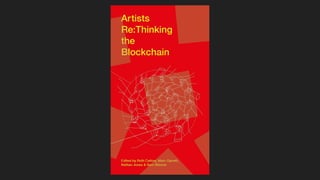
Artists Re:thinking
the Blockchain
Initial Book Offering - Rob Myers
First some big questions
What is art?
We’ve just seen some!
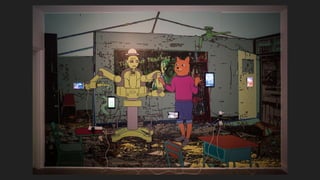
Or look at the BearWhale ➡ ➡ ➡
Artists make art by:
● using techniques (e.g. pen and ink, playing a guitar, token creation)
● and imagery/iconography (e.g the BearWhale, everyday life, kitties)
● to work with ideas (e.g. triumph over fiat, decentralisation, ownership)
What does art have to do with the blockchain?
In art, the blockchain can be that technique, imagery/iconography or idea.
Art can:
● promote and normalise the idea of the blockchain
● critique and unpack the idea of the blockchain
● depict the blockchain and its effects to let people make up their own minds
What does the blockchain have to do with art?
The blockchain can be used as
● a medium for art (art on the blockchain, not necessarily about it)
● a subject of art (art about the blockchain, not necessarily on it)
Cryptocurrency, tokens and DAOs can be used to fund and organise:
● the creation of art
● the curation and exhibition of art
● the sale and ownership of art
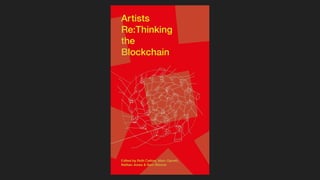
If only there was a convenient guide to
this exciting new area...
The history of the book
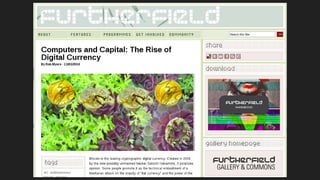
At CoinFest 2014 Vancouver,
local artist Erik Zepka curated the show
“Computers and Capital”
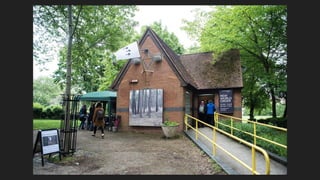
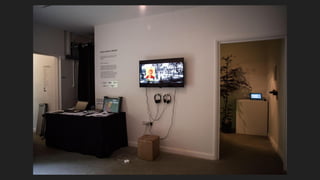
Furtherfield
Furtherfield
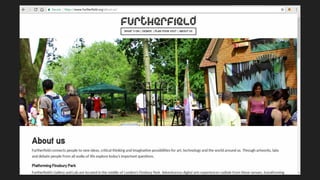
● Artists collective, web site, gallery, hacker space.
● Founded 1997 in London by artists Ruth Catlow and Marc Garrett.
● Dedicated to “Art, society and social change”.
● Produces events, publications, education, exhibitions.
● Current “Art, Data, Money” series of events and publications, including:
- “Change Everything Forever” video
- DAOWO conferences.
- “New World Order” exhibition.
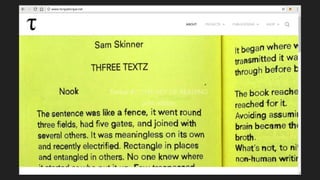
Torque
Torque
● Founded by Nathan Jones and Sam Skinner in the UK in 2012.
● “An itinerant publisher, arts and curatorial platform”.
● Editors of the book along with Ruth & Marc from Furtherfield.
● Good editors make everything better.
Promoting The Book: Bad Shibe
Bad Shibe
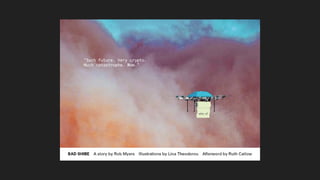
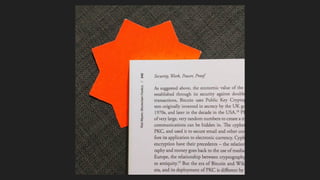
● Zine produced to promote “Artists Re:thinking The Blockchain”.
● A short story written at the end of 2014, published at the start of 2017.
● About a post-everything cryptocurrency-based future.
● With a society that has adopted and corrupted Doge culture to survive.
● The narrator is a tween who doesn’t understand any of this.
● We follow them as they start to question their place in the world…
● ...as one or more disasters may be about to befall it.
● I love Lina’s illustrations, the narrator makes the story hard to illustrate.
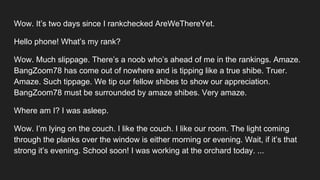
Wow. It’s two days since I rankchecked AreWeThereYet.
Hello phone! What’s my rank?
Wow. Much slippage. There’s a noob who’s ahead of me in the rankings. Amaze.
BangZoom78 has come out of nowhere and is tipping like a true shibe. Truer.
Amaze. Such tippage. We tip our fellow shibes to show our appreciation.
BangZoom78 must be surrounded by amaze shibes. Very amaze.
Where am I? I was asleep.
Wow. I’m lying on the couch. I like the couch. I like our room. The light coming
through the planks over the window is either morning or evening. Wait, if it’s that
strong it’s evening. School soon! I was working at the orchard today. ...
The Book
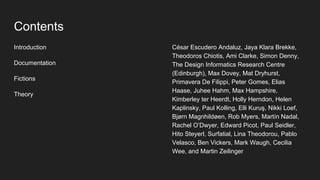
Contents
Introduction
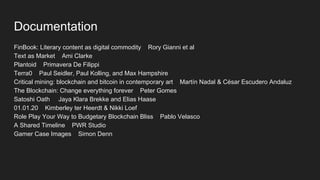
Documentation
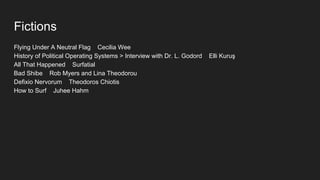
Fictions
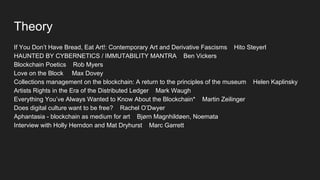
Theory
César Escudero Andaluz, Jaya Klara Brekke,
Theodoros Chiotis, Ami Clarke, Simon Denny,
The Design Informatics Research Centre
(Edinburgh), Max Dovey, Mat Dryhurst,
Primavera De Filippi, Peter Gomes, Elias
Haase, Juhee Hahm, Max Hampshire,
Kimberley ter Heerdt, Holly Herndon, Helen
Kaplinsky, Paul Kolling, Elli Kuruş, Nikki Loef,
Bjørn Magnhildøen, Rob Myers, Martín Nadal,
Rachel O’Dwyer, Edward Picot, Paul Seidler,
Hito Steyerl, Surfatial, Lina Theodorou, Pablo
Velasco, Ben Vickers, Mark Waugh, Cecilia
Wee, and Martin Zeilinger
Documentation
FinBook: Literary content as digital commodity Rory Gianni et al
Text as Market Ami Clarke
Plantoid Primavera De Filippi
Terra0 Paul Seidler, Paul Kolling, and Max Hampshire
Critical mining: blockchain and bitcoin in contemporary art Martín Nadal & César Escudero Andaluz
The Blockchain: Change everything forever Peter Gomes
Satoshi Oath Jaya Klara Brekke and Elias Haase
01.01.20 Kimberley ter Heerdt & Nikki Loef
Role Play Your Way to Budgetary Blockchain Bliss Pablo Velasco
A Shared Timeline PWR Studio
Gamer Case Images Simon Denn
Fictions
Flying Under A Neutral Flag Cecilia Wee
History of Political Operating Systems > Interview with Dr. L. Godord Elli Kuruş
All That Happened Surfatial
Bad Shibe Rob Myers and Lina Theodorou
Defixio Nervorum Theodoros Chiotis
How to Surf Juhee Hahm
Theory
If You Don’t Have Bread, Eat Art!: Contemporary Art and Derivative Fascisms Hito Steyerl
HAUNTED BY CYBERNETICS / IMMUTABILITY MANTRA Ben Vickers
Blockchain Poetics Rob Myers
Love on the Block Max Dovey
Collections management on the blockchain: A return to the principles of the museum Helen Kaplinsky
Artists Rights in the Era of the Distributed Ledger Mark Waugh
Everything You’ve Always Wanted to Know About the Blockchain* Martin Zeilinger
Does digital culture want to be free? Rachel O’Dwyer
Aphantasia - blockchain as medium for art Bjørn Magnhildøen, Noemata
Interview with Holly Herndon and Mat Dryhurst Marc Garrett
Plantoid by Primavera Di Filippi
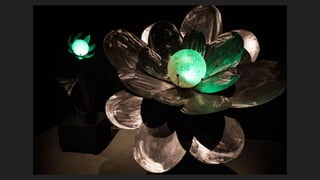
Plantoid
● Sculptures that react to you tipping them in Bitcoin.
● Smart contracts that represent their genome and can commission new ones.
● A model for sustainable funding, creation and exhibition of physical art.
● If successful, they might consume the planet.
Terra0 by Paul Seidler,
Paul Kolling, and Max Hampshire
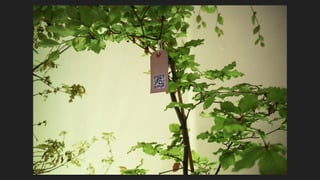
Terra0
● A forest that owns and manages itself as a DAO, a “Deodand”.
● A model of algorithmic governance and resource management.
● If successful, they might save the planet.
Blockchain Poetics by Rob Myers
Blockchain Poetics
● The blockchain is the product of particular ideas of freedom and justice.
● The blockchain touches on ideas of identity, value, truth, order and time.
● The blockchain has a shape, a rhythm, evokes other forms, spaces, events.
● To competently promote or critique the blockchain we need a deeper
understanding of this politics, philosophy and aesthetics.
● This will involve a learning curve for both proponents and critics.
● A lot of this learning will involve the Cypherpunks.
Art can decentralise
this process of learning,
and prototype its lessons
Links
https://keybase.com/robmyers
https://robmyers.org/abcd
https://furtherfield.org/
http://www.torquetorque.net/
https://www.amazon.co.uk/Artists-Re-Blockchain-Ruth-Catlow/dp/0993248748/

Artists re-thinking-the-blockchain

  • 1.
  • 2.
    First some bigquestions
  • 3.
    What is art? We’vejust seen some! Or look at the BearWhale ➡ ➡ ➡ Artists make art by: ● using techniques (e.g. pen and ink, playing a guitar, token creation) ● and imagery/iconography (e.g the BearWhale, everyday life, kitties) ● to work with ideas (e.g. triumph over fiat, decentralisation, ownership)
  • 4.
    What does arthave to do with the blockchain? In art, the blockchain can be that technique, imagery/iconography or idea. Art can: ● promote and normalise the idea of the blockchain ● critique and unpack the idea of the blockchain ● depict the blockchain and its effects to let people make up their own minds
  • 5.
    What does theblockchain have to do with art? The blockchain can be used as ● a medium for art (art on the blockchain, not necessarily about it) ● a subject of art (art about the blockchain, not necessarily on it) Cryptocurrency, tokens and DAOs can be used to fund and organise: ● the creation of art ● the curation and exhibition of art ● the sale and ownership of art
  • 6.
    If only therewas a convenient guide to this exciting new area...
  • 8.
  • 9.
    At CoinFest 2014Vancouver, local artist Erik Zepka curated the show “Computers and Capital”
  • 11.
  • 13.
    Furtherfield ● Artists collective,web site, gallery, hacker space. ● Founded 1997 in London by artists Ruth Catlow and Marc Garrett. ● Dedicated to “Art, society and social change”. ● Produces events, publications, education, exhibitions. ● Current “Art, Data, Money” series of events and publications, including: - “Change Everything Forever” video - DAOWO conferences. - “New World Order” exhibition.
  • 16.
  • 18.
    Torque ● Founded byNathan Jones and Sam Skinner in the UK in 2012. ● “An itinerant publisher, arts and curatorial platform”. ● Editors of the book along with Ruth & Marc from Furtherfield. ● Good editors make everything better.
  • 19.
  • 21.
    Bad Shibe ● Zineproduced to promote “Artists Re:thinking The Blockchain”. ● A short story written at the end of 2014, published at the start of 2017. ● About a post-everything cryptocurrency-based future. ● With a society that has adopted and corrupted Doge culture to survive. ● The narrator is a tween who doesn’t understand any of this. ● We follow them as they start to question their place in the world… ● ...as one or more disasters may be about to befall it. ● I love Lina’s illustrations, the narrator makes the story hard to illustrate.
  • 23.
    Wow. It’s twodays since I rankchecked AreWeThereYet. Hello phone! What’s my rank? Wow. Much slippage. There’s a noob who’s ahead of me in the rankings. Amaze. BangZoom78 has come out of nowhere and is tipping like a true shibe. Truer. Amaze. Such tippage. We tip our fellow shibes to show our appreciation. BangZoom78 must be surrounded by amaze shibes. Very amaze. Where am I? I was asleep. Wow. I’m lying on the couch. I like the couch. I like our room. The light coming through the planks over the window is either morning or evening. Wait, if it’s that strong it’s evening. School soon! I was working at the orchard today. ...
  • 24.
  • 26.
    Contents Introduction Documentation Fictions Theory César Escudero Andaluz,Jaya Klara Brekke, Theodoros Chiotis, Ami Clarke, Simon Denny, The Design Informatics Research Centre (Edinburgh), Max Dovey, Mat Dryhurst, Primavera De Filippi, Peter Gomes, Elias Haase, Juhee Hahm, Max Hampshire, Kimberley ter Heerdt, Holly Herndon, Helen Kaplinsky, Paul Kolling, Elli Kuruş, Nikki Loef, Bjørn Magnhildøen, Rob Myers, Martín Nadal, Rachel O’Dwyer, Edward Picot, Paul Seidler, Hito Steyerl, Surfatial, Lina Theodorou, Pablo Velasco, Ben Vickers, Mark Waugh, Cecilia Wee, and Martin Zeilinger
  • 27.
    Documentation FinBook: Literary contentas digital commodity Rory Gianni et al Text as Market Ami Clarke Plantoid Primavera De Filippi Terra0 Paul Seidler, Paul Kolling, and Max Hampshire Critical mining: blockchain and bitcoin in contemporary art Martín Nadal & César Escudero Andaluz The Blockchain: Change everything forever Peter Gomes Satoshi Oath Jaya Klara Brekke and Elias Haase 01.01.20 Kimberley ter Heerdt & Nikki Loef Role Play Your Way to Budgetary Blockchain Bliss Pablo Velasco A Shared Timeline PWR Studio Gamer Case Images Simon Denn
  • 28.
    Fictions Flying Under ANeutral Flag Cecilia Wee History of Political Operating Systems > Interview with Dr. L. Godord Elli Kuruş All That Happened Surfatial Bad Shibe Rob Myers and Lina Theodorou Defixio Nervorum Theodoros Chiotis How to Surf Juhee Hahm
  • 29.
    Theory If You Don’tHave Bread, Eat Art!: Contemporary Art and Derivative Fascisms Hito Steyerl HAUNTED BY CYBERNETICS / IMMUTABILITY MANTRA Ben Vickers Blockchain Poetics Rob Myers Love on the Block Max Dovey Collections management on the blockchain: A return to the principles of the museum Helen Kaplinsky Artists Rights in the Era of the Distributed Ledger Mark Waugh Everything You’ve Always Wanted to Know About the Blockchain* Martin Zeilinger Does digital culture want to be free? Rachel O’Dwyer Aphantasia - blockchain as medium for art Bjørn Magnhildøen, Noemata Interview with Holly Herndon and Mat Dryhurst Marc Garrett
  • 30.
  • 32.
    Plantoid ● Sculptures thatreact to you tipping them in Bitcoin. ● Smart contracts that represent their genome and can commission new ones. ● A model for sustainable funding, creation and exhibition of physical art. ● If successful, they might consume the planet.
  • 33.
    Terra0 by PaulSeidler, Paul Kolling, and Max Hampshire
  • 35.
    Terra0 ● A forestthat owns and manages itself as a DAO, a “Deodand”. ● A model of algorithmic governance and resource management. ● If successful, they might save the planet.
  • 36.
  • 38.
    Blockchain Poetics ● Theblockchain is the product of particular ideas of freedom and justice. ● The blockchain touches on ideas of identity, value, truth, order and time. ● The blockchain has a shape, a rhythm, evokes other forms, spaces, events. ● To competently promote or critique the blockchain we need a deeper understanding of this politics, philosophy and aesthetics. ● This will involve a learning curve for both proponents and critics. ● A lot of this learning will involve the Cypherpunks.
  • 39.
    Art can decentralise thisprocess of learning, and prototype its lessons
  • 40.