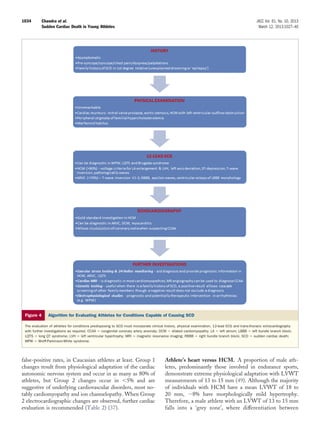
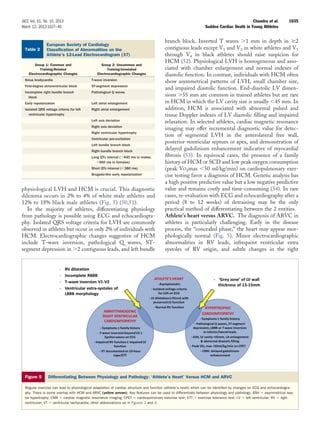
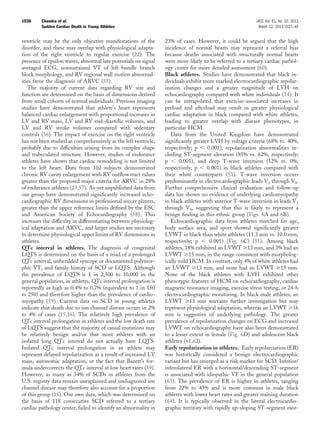
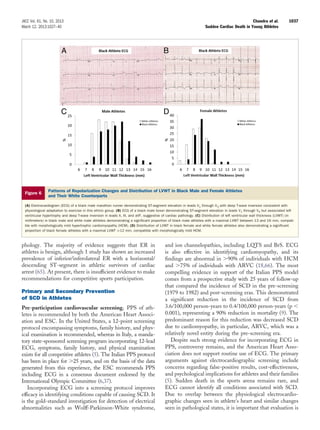
Journal of the American College of Cardiology                                                                                            Vol. 61, No. 10, 2013
© 2013 by the American College of Cardiology Foundation                                                                                ISSN 0735-1097/$36.00
Published by Elsevier Inc.                                                                                        http://dx.doi.org/10.1016/j.jacc.2012.08.1032


  STATE-OF-THE-ART PAPER


      Sudden Cardiac Death in Young Athletes
      Practical Challenges and Diagnostic Dilemmas

      Navin Chandra, BSC (HONS), MBBS,*† Rachel Bastiaenen, MA, MBBS,* Michael Papadakis, MBBS,*†
      Sanjay Sharma, BSC (HONS), MD*†
      London, United Kingdom

                  Sudden cardiac death (SCD) in an athlete is a rare yet highly visible tragedy that generates significant media
                  attention and discussion among medical personnel, sports communities, and laypersons alike. The incidence of
                  SCD is greater in athletes compared with their nonathletic counterparts due to the increased risk associated
                  with strenuous exercise in the context of a quiescent cardiac abnormality. Numerous structural, electrical, and
                  acquired cardiovascular abnormalities are capable of causing SCD, many of which can be identified during life
                  and managed by lifestyle modifications, pharmacotherapy, and device therapy. Strategies for the prevention of
                  SCD, including pre-participation cardiovascular screening, are endorsed by sports governing bodies, but manda-
                  tory pre-participation cardiovascular screening remains rare. Evaluation of athletes poses diagnostic difficulties,
                  particularly differentiating between physiological adaptation to exercise, known as athlete’s heart, and cardio-
                  myopathic processes capable of causing SCD. This paper provides a detailed review regarding the etiology of
                  SCD in young athletes and provides insight into the challenges and dilemmas faced when evaluating ath-
                  letes for underlying pathological conditions. (J Am Coll Cardiol 2013;61:1027–40) © 2013 by the
                  American College of Cardiology Foundation


The beneficial effects of regular exercise for primary and                            are perceived as the healthiest segment of society. Most
secondary prevention of cardiovascular disease are well                              nontraumatic deaths are attributed to cardiovascular abnor-
documented (1). Paradoxically, athletes harboring quiescent                          malities that can be identified during life and managed with
cardiovascular abnormalities are at greater risk of exercise-                        lifestyle modifications including abstinence from exercise of
related sudden cardiac death (SCD). Data from Italy have                             high or moderate intensity, pharmacotherapy, and implant-
shown a 2.8-fold greater risk of SCD among competitive                               able cardioverter-defibrillators (ICDs) (5). Prevention of
athletes compared with their nonathletic counterparts. SCD                           such catastrophes by pre-participation cardiovascular screening
results from intense physical exercise in the context of an                          (PPS) is recommended by learned organizations and sports
underlying cardiovascular abnormality (2). The mechanism                             governing bodies including the European Society of Cardi-
is typically ventricular arrhythmia, probably due to exercise-                       ology (ESC), American Heart Association, and the Inter-
induced catecholamine surges acting on an arrhythmogenic                             national Olympic Committee (6 – 8).
substrate. Postulated contributory mechanisms also include                              This paper provides a detailed review regarding the
dehydration, hyperpyrexia, electrolyte imbalances, and in-                           etiology of SCD in young athletes and provides insight into
creased platelet aggregation associated with exercise (3).                           the challenges and dilemmas faced when evaluating athletes
   The precise definition of an athlete is complex; however,                          for underlying pathological conditions.
for the purposes of this review, we define an athlete as an
individual engaged in regular physical training and partici-
pating in official sports competition with an emphasis on                             Epidemiology of SCD in Athletes
excellence and achievement (4). SCD in a young athlete is
often difficult for the public to comprehend because athletes                         The incidence of SCD among young athletes is a source of
                                                                                     debate, particularly as studies differ in their methodology.
                                                                                     Data compiled retrospectively from media reports, insur-
From the *Cardiovascular Research Centre, St. George’s University of London,         ance claims, and electronic databases are likely to represent
London, United Kingdom; and the †Department of Cardiology, University Hospital       a significant underestimate. The most robust data are
Lewisham, London, United Kingdom. Drs. Chandra and Papadakis are funded by
research grants from the charitable organization Cardiac Risk in the Young (CRY),    derived from prospective, observational studies in Italy using
which supports pre-participation screening in young athletes. Prof. Sharma is        regional registry data with mandatory reporting systems,
consultant cardiologist to CRY and a CRY trustee. Ms. Bastiaenen has reported that   which report incidence rates of 3.6/100,000 per year in the
she has no relationships relevant to the contents of this paper to disclose.
   Manuscript received May 28, 2012; revised manuscript received July 17, 2012,      pre-screening era. More recent cross-sectional studies from
accepted August 13, 2012.                                                            the United States have demonstrated relatively similar
1028      Chandra et al.                                                                                          JACC Vol. 61, No. 10, 2013
          Sudden Cardiac Death in Young Athletes                                                                   March 12, 2013:1027–40


  Abbreviations                figures with incidence rates rang-       in younger athletes, inherited and other acquired cardiovas-
  and Acronyms                 ing from 2.3 to 4.4/100,000 per         cular abnormalities are usually responsible (Fig. 1). Cardio-
                               year (9 –11).                           myopathy, including HCM and arrhythmogenic right ven-
  ARVC ‫ ؍‬arrhythmogenic
  right ventricular               There is a significant male           tricular cardiomyopathy (ARVC), is the most common
  cardiomyopathy               predominance of SCD among               cause of exercise-related SCD (5).
  BrS ‫ ؍‬Brugada syndrome       athletes. Data from the National        Structural cardiac abnormalities. HYPERTROPHIC CARDIO-
  CCAA ‫ ؍‬congenital
                               Center for Catastrophic Sports          MYOPATHY. The reported prevalence of HCM is 0.2% in
  coronary artery anomaly      Injury Research on high school          the general population and 0.07% to 0.08% in athletes (17).
  ECG ‫ ؍‬electrocardiography    and college athletes reported a         HCM is a primary myocardial disorder with an autosomal
  ER ‫ ؍‬early repolarization
                               5-fold higher incidence of SCD          dominant pattern of inheritance, characterized by left ven-
                               in male compared with female            tricular hypertrophy (LVH) in the absence of abnormal
  ESC ‫ ؍‬European Society of
  Cardiology                   athletes (12). In the Veneto re-        loading conditions and myocardial disarray on histology.
  HCM ‫ ؍‬hypertrophic
                               gion of northern Italy, where           Sudden death due to ventricular tachycardia (VT)/
  cardiomyopathy               Ͼ110,000 athletes were evalu-           ventricular fibrillation (VF) is often the first clinical mani-
  ICD ‫ ؍‬implantable
                               ated over a 21-year follow-up           festation (18). Deaths caused by HCM are common in
  cardioverter-defibrillator    period, the incidence rates of          start-stop sports, for example, football and basketball, but
  LQTS ‫ ؍‬long QT syndrome      SCD were 2.6/100,000 person-            rare in endurance events such as rowing, long-distance
  LV ‫ ؍‬left ventricular
                               years in male athletes and 1.1/         cycling, and running. It is hypothesized that the combina-
                               100,000 person-years in their fe-       tion of myocardial hypertrophy, impaired myocardial relax-
  LVH ‫ ؍‬left ventricular
  hypertrophy                  male counterparts (2). Several          ation, myocardial ischemia, and dynamic left ventricular
  LVWT ‫ ؍‬left ventricular
                               factors are implicated in this sex      (LV) outflow obstruction impede augmentation of stroke
  wall thickness               difference including lower partic-      volume for prolonged periods, and individuals with HCM
  MVP ‫ ؍‬mitral valve
                               ipation rates among female ath-         are therefore usually selected out of endurance sports.
  prolapse                     letes at the elite level, although         The diagnosis is made using electrocardiography (ECG)
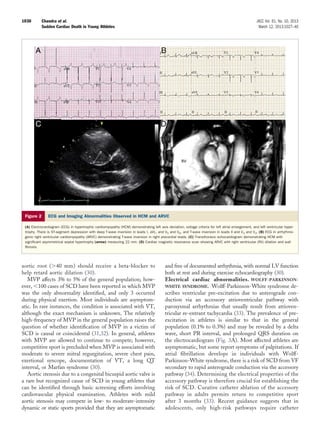
  PPS ‫ ؍‬pre-participation      this trend is changing, and lower       and echocardiography. More than 90% of affected individ-
  screening                    prevalence of cardiac abnormali-        uals have an abnormal resting electrocardiogram (Figs. 2A
  RV ‫ ؍‬right ventricular       ties capable of causing SCD in          and 2C) (19). All individuals with previous cardiac arrest or
  SCD ‫ ؍‬sudden cardiac         females (13).                           sustained VT are at high risk of SCD and require treatment
  death                           Over the past 3 decades, there has   with an ICD. Other recognized risk factors for SCD
  VF ‫ ؍‬ventricular fibrillation been an explosion in the number of      include: 1) unheralded syncope; 2) family history of SCD; 3)
  VT ‫ ؍‬ventricular
                               African/Afro-Caribbean (black)          severe LVH (Ͼ30 mm); 4) sustained or nonsustained VT;
  tachycardia                  athletes competing at the elite level   and 5) attenuated blood pressure response to exercise. These
                               (14). SCD appears to be more com-       5 risk factors have low positive predictive value but high
                               mon in this ethnic group, with a        negative predictive value. Subjects exhibiting Ն1 of the 5
reported incidence rate of 5.6/100,000 per year in the United          risk markers should be considered for prophylactic insertion
States (11). Cardiomyopathy has been consistently demonstrated         of an ICD (20).
as the most common cause of exercise-related SCD in young
athletes. Data from U.S. autopsy series have reported higher death     ARRHYTHMOGENIC RIGHT VENTRICULAR CARDIOMYOPATHY.

rates from hypertrophic cardiomyopathy (HCM) in black com-             ARVC has a reported prevalence of 1/1,000 in the general
pared with white athletes (20% vs. 10%, respectively), raising         population. It is an inherited myocardial disease caused by
concern that this condition may exhibit a more malignant phe-          mutations in genes encoding cardiac desmosomal proteins
notype in black individuals (15).                                      (21). The mechanism of SCD is complex and myocardial
   Sudden death occurs more frequently in certain sports. In           stretch and myocyte detachment during exercise are thought
the United States, basketball and football have the greatest           to result in ventricular arrhythmia and SCD. In survivors,
incidence, whereas in Europe, soccer predominates (16).                focal myocarditis with subsequent healing leads to progres-
Extrapolation of this observation suggests that individuals            sive fibrofatty replacement of the myocardium and a pro-
participating in sports of high dynamic and low isometric              pensity to VT/VF. Macroscopic appearances include right
intensity are at higher risk of death. However, there is the           ventricular (RV) dilation, dysfunction, and aneurysm for-
potential for data bias due to higher participation rates in           mation (22). Exercise exacerbates these pathophysiological
these sports.                                                          changes, and a 5-fold higher risk of SCD in ARVC has
                                                                       been demonstrated during competitive sports compared
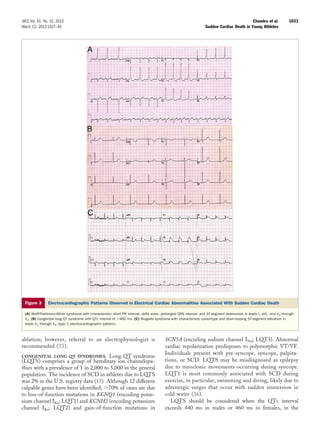
                                                                       with sedentary activity (2). Diagnosis relies on meeting the
Etiology of SCD in Athletes                                            2010 ARVC Task Force criteria, which include symptoms,
                                                                       family history, resting/ambulatory electrocardiographic changes,
In athletes older than 35 years of age, 80% of SCD is                  echocardiographic and cardiac magnetic resonance imaging
frequently due to atherosclerotic coronary artery disease, but         and myocardial tissue characterization (Figs. 2B and 2D)
JACC Vol. 61, No. 10, 2013                                                                                                                Chandra et al.   1029
March 12, 2013:1027–40                                                                                           Sudden Cardiac Death in Young Athletes


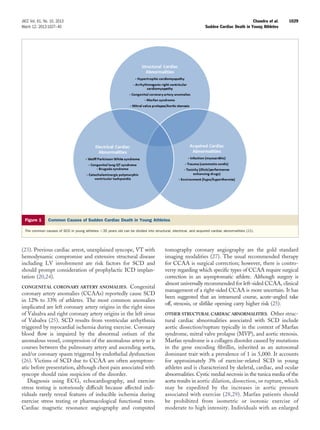
  Figure 1      Common Causes of Sudden Cardiac Death in Young Athletes

  The common causes of SCD in young athletes Ͻ35 years old can be divided into structural, electrical, and acquired cardiac abnormalities (22).


(23). Previous cardiac arrest, unexplained syncope, VT with                             tomography coronary angiography are the gold standard
hemodynamic compromise and extensive structural disease                                 imaging modalities (27). The usual recommended therapy
including LV involvement are risk factors for SCD and                                   for CCAA is surgical correction; however, there is contro-
should prompt consideration of prophylactic ICD implan-                                 versy regarding which specific types of CCAA require surgical
tation (20,24).                                                                         correction in an asymptomatic athlete. Although surgery is
                                                                                        almost universally recommended for left-sided CCAA, clinical
CONGENITAL CORONARY ARTERY ANOMALIES.              Congenital
                                                                                        management of a right-sided CCAA is more uncertain. It has
coronary artery anomalies (CCAAs) reportedly cause SCD
                                                                                        been suggested that an intramural course, acute-angled take
in 12% to 33% of athletes. The most common anomalies
                                                                                        off, stenosis, or slitlike opening carry higher risk (25).
implicated are left coronary artery origins in the right sinus
of Valsalva and right coronary artery origins in the left sinus                         OTHER STRUCTURAL CARDIAC ABNORMALITIES. Other struc-
of Valsalva (25). SCD results from ventricular arrhythmia                               tural cardiac abnormalities associated with SCD include
triggered by myocardial ischemia during exercise. Coronary                              aortic dissection/rupture typically in the context of Marfan
blood flow is impaired by the abnormal ostium of the                                     syndrome, mitral valve prolapse (MVP), and aortic stenosis.
anomalous vessel, compression of the anomalous artery as it                             Marfan syndrome is a collagen disorder caused by mutations
courses between the pulmonary artery and ascending aorta,                               in the gene encoding fibrillin, inherited as an autosomal
and/or coronary spasm triggered by endothelial dysfunction                              dominant trait with a prevalence of 1 in 5,000. It accounts
(26). Victims of SCD due to CCAA are often asymptom-                                    for approximately 3% of exercise-related SCD in young
atic before presentation, although chest pain associated with                           athletes and is characterized by skeletal, cardiac, and ocular
syncope should raise suspicion of the disorder.                                         abnormalities. Cystic medial necrosis in the tunica media of the
   Diagnosis using ECG, echocardiography, and exercise                                  aorta results in aortic dilation, dissection, or rupture, which
stress testing is notoriously difficult because affected indi-                           may be expedited by the increases in aortic pressure
viduals rarely reveal features of inducible ischemia during                             associated with exercise (28,29). Marfan patients should
exercise stress testing or pharmacological functional tests.                            be prohibited from isometric or isotonic exercise of
Cardiac magnetic resonance angiography and computed                                     moderate to high intensity. Individuals with an enlarged
Artigo morte súbita
Artigo morte súbita
Artigo morte súbita
Artigo morte súbita
Artigo morte súbita
Artigo morte súbita
Artigo morte súbita
Artigo morte súbita
Artigo morte súbita
Artigo morte súbita
Artigo morte súbita

Artigo morte súbita

  • 1.
    Journal of theAmerican College of Cardiology Vol. 61, No. 10, 2013 © 2013 by the American College of Cardiology Foundation ISSN 0735-1097/$36.00 Published by Elsevier Inc. http://dx.doi.org/10.1016/j.jacc.2012.08.1032 STATE-OF-THE-ART PAPER Sudden Cardiac Death in Young Athletes Practical Challenges and Diagnostic Dilemmas Navin Chandra, BSC (HONS), MBBS,*† Rachel Bastiaenen, MA, MBBS,* Michael Papadakis, MBBS,*† Sanjay Sharma, BSC (HONS), MD*† London, United Kingdom Sudden cardiac death (SCD) in an athlete is a rare yet highly visible tragedy that generates significant media attention and discussion among medical personnel, sports communities, and laypersons alike. The incidence of SCD is greater in athletes compared with their nonathletic counterparts due to the increased risk associated with strenuous exercise in the context of a quiescent cardiac abnormality. Numerous structural, electrical, and acquired cardiovascular abnormalities are capable of causing SCD, many of which can be identified during life and managed by lifestyle modifications, pharmacotherapy, and device therapy. Strategies for the prevention of SCD, including pre-participation cardiovascular screening, are endorsed by sports governing bodies, but manda- tory pre-participation cardiovascular screening remains rare. Evaluation of athletes poses diagnostic difficulties, particularly differentiating between physiological adaptation to exercise, known as athlete’s heart, and cardio- myopathic processes capable of causing SCD. This paper provides a detailed review regarding the etiology of SCD in young athletes and provides insight into the challenges and dilemmas faced when evaluating ath- letes for underlying pathological conditions. (J Am Coll Cardiol 2013;61:1027–40) © 2013 by the American College of Cardiology Foundation The beneficial effects of regular exercise for primary and are perceived as the healthiest segment of society. Most secondary prevention of cardiovascular disease are well nontraumatic deaths are attributed to cardiovascular abnor- documented (1). Paradoxically, athletes harboring quiescent malities that can be identified during life and managed with cardiovascular abnormalities are at greater risk of exercise- lifestyle modifications including abstinence from exercise of related sudden cardiac death (SCD). Data from Italy have high or moderate intensity, pharmacotherapy, and implant- shown a 2.8-fold greater risk of SCD among competitive able cardioverter-defibrillators (ICDs) (5). Prevention of athletes compared with their nonathletic counterparts. SCD such catastrophes by pre-participation cardiovascular screening results from intense physical exercise in the context of an (PPS) is recommended by learned organizations and sports underlying cardiovascular abnormality (2). The mechanism governing bodies including the European Society of Cardi- is typically ventricular arrhythmia, probably due to exercise- ology (ESC), American Heart Association, and the Inter- induced catecholamine surges acting on an arrhythmogenic national Olympic Committee (6 – 8). substrate. Postulated contributory mechanisms also include This paper provides a detailed review regarding the dehydration, hyperpyrexia, electrolyte imbalances, and in- etiology of SCD in young athletes and provides insight into creased platelet aggregation associated with exercise (3). the challenges and dilemmas faced when evaluating athletes The precise definition of an athlete is complex; however, for underlying pathological conditions. for the purposes of this review, we define an athlete as an individual engaged in regular physical training and partici- pating in official sports competition with an emphasis on Epidemiology of SCD in Athletes excellence and achievement (4). SCD in a young athlete is often difficult for the public to comprehend because athletes The incidence of SCD among young athletes is a source of debate, particularly as studies differ in their methodology. Data compiled retrospectively from media reports, insur- From the *Cardiovascular Research Centre, St. George’s University of London, ance claims, and electronic databases are likely to represent London, United Kingdom; and the †Department of Cardiology, University Hospital a significant underestimate. The most robust data are Lewisham, London, United Kingdom. Drs. Chandra and Papadakis are funded by research grants from the charitable organization Cardiac Risk in the Young (CRY), derived from prospective, observational studies in Italy using which supports pre-participation screening in young athletes. Prof. Sharma is regional registry data with mandatory reporting systems, consultant cardiologist to CRY and a CRY trustee. Ms. Bastiaenen has reported that which report incidence rates of 3.6/100,000 per year in the she has no relationships relevant to the contents of this paper to disclose. Manuscript received May 28, 2012; revised manuscript received July 17, 2012, pre-screening era. More recent cross-sectional studies from accepted August 13, 2012. the United States have demonstrated relatively similar
  • 2.
    1028 Chandra et al. JACC Vol. 61, No. 10, 2013 Sudden Cardiac Death in Young Athletes March 12, 2013:1027–40 Abbreviations figures with incidence rates rang- in younger athletes, inherited and other acquired cardiovas- and Acronyms ing from 2.3 to 4.4/100,000 per cular abnormalities are usually responsible (Fig. 1). Cardio- year (9 –11). myopathy, including HCM and arrhythmogenic right ven- ARVC ‫ ؍‬arrhythmogenic right ventricular There is a significant male tricular cardiomyopathy (ARVC), is the most common cardiomyopathy predominance of SCD among cause of exercise-related SCD (5). BrS ‫ ؍‬Brugada syndrome athletes. Data from the National Structural cardiac abnormalities. HYPERTROPHIC CARDIO- CCAA ‫ ؍‬congenital Center for Catastrophic Sports MYOPATHY. The reported prevalence of HCM is 0.2% in coronary artery anomaly Injury Research on high school the general population and 0.07% to 0.08% in athletes (17). ECG ‫ ؍‬electrocardiography and college athletes reported a HCM is a primary myocardial disorder with an autosomal ER ‫ ؍‬early repolarization 5-fold higher incidence of SCD dominant pattern of inheritance, characterized by left ven- in male compared with female tricular hypertrophy (LVH) in the absence of abnormal ESC ‫ ؍‬European Society of Cardiology athletes (12). In the Veneto re- loading conditions and myocardial disarray on histology. HCM ‫ ؍‬hypertrophic gion of northern Italy, where Sudden death due to ventricular tachycardia (VT)/ cardiomyopathy Ͼ110,000 athletes were evalu- ventricular fibrillation (VF) is often the first clinical mani- ICD ‫ ؍‬implantable ated over a 21-year follow-up festation (18). Deaths caused by HCM are common in cardioverter-defibrillator period, the incidence rates of start-stop sports, for example, football and basketball, but LQTS ‫ ؍‬long QT syndrome SCD were 2.6/100,000 person- rare in endurance events such as rowing, long-distance LV ‫ ؍‬left ventricular years in male athletes and 1.1/ cycling, and running. It is hypothesized that the combina- 100,000 person-years in their fe- tion of myocardial hypertrophy, impaired myocardial relax- LVH ‫ ؍‬left ventricular hypertrophy male counterparts (2). Several ation, myocardial ischemia, and dynamic left ventricular LVWT ‫ ؍‬left ventricular factors are implicated in this sex (LV) outflow obstruction impede augmentation of stroke wall thickness difference including lower partic- volume for prolonged periods, and individuals with HCM MVP ‫ ؍‬mitral valve ipation rates among female ath- are therefore usually selected out of endurance sports. prolapse letes at the elite level, although The diagnosis is made using electrocardiography (ECG) PPS ‫ ؍‬pre-participation this trend is changing, and lower and echocardiography. More than 90% of affected individ- screening prevalence of cardiac abnormali- uals have an abnormal resting electrocardiogram (Figs. 2A RV ‫ ؍‬right ventricular ties capable of causing SCD in and 2C) (19). All individuals with previous cardiac arrest or SCD ‫ ؍‬sudden cardiac females (13). sustained VT are at high risk of SCD and require treatment death Over the past 3 decades, there has with an ICD. Other recognized risk factors for SCD VF ‫ ؍‬ventricular fibrillation been an explosion in the number of include: 1) unheralded syncope; 2) family history of SCD; 3) VT ‫ ؍‬ventricular African/Afro-Caribbean (black) severe LVH (Ͼ30 mm); 4) sustained or nonsustained VT; tachycardia athletes competing at the elite level and 5) attenuated blood pressure response to exercise. These (14). SCD appears to be more com- 5 risk factors have low positive predictive value but high mon in this ethnic group, with a negative predictive value. Subjects exhibiting Ն1 of the 5 reported incidence rate of 5.6/100,000 per year in the United risk markers should be considered for prophylactic insertion States (11). Cardiomyopathy has been consistently demonstrated of an ICD (20). as the most common cause of exercise-related SCD in young athletes. Data from U.S. autopsy series have reported higher death ARRHYTHMOGENIC RIGHT VENTRICULAR CARDIOMYOPATHY. rates from hypertrophic cardiomyopathy (HCM) in black com- ARVC has a reported prevalence of 1/1,000 in the general pared with white athletes (20% vs. 10%, respectively), raising population. It is an inherited myocardial disease caused by concern that this condition may exhibit a more malignant phe- mutations in genes encoding cardiac desmosomal proteins notype in black individuals (15). (21). The mechanism of SCD is complex and myocardial Sudden death occurs more frequently in certain sports. In stretch and myocyte detachment during exercise are thought the United States, basketball and football have the greatest to result in ventricular arrhythmia and SCD. In survivors, incidence, whereas in Europe, soccer predominates (16). focal myocarditis with subsequent healing leads to progres- Extrapolation of this observation suggests that individuals sive fibrofatty replacement of the myocardium and a pro- participating in sports of high dynamic and low isometric pensity to VT/VF. Macroscopic appearances include right intensity are at higher risk of death. However, there is the ventricular (RV) dilation, dysfunction, and aneurysm for- potential for data bias due to higher participation rates in mation (22). Exercise exacerbates these pathophysiological these sports. changes, and a 5-fold higher risk of SCD in ARVC has been demonstrated during competitive sports compared with sedentary activity (2). Diagnosis relies on meeting the Etiology of SCD in Athletes 2010 ARVC Task Force criteria, which include symptoms, family history, resting/ambulatory electrocardiographic changes, In athletes older than 35 years of age, 80% of SCD is echocardiographic and cardiac magnetic resonance imaging frequently due to atherosclerotic coronary artery disease, but and myocardial tissue characterization (Figs. 2B and 2D)
  • 3.
    JACC Vol. 61,No. 10, 2013 Chandra et al. 1029 March 12, 2013:1027–40 Sudden Cardiac Death in Young Athletes Figure 1 Common Causes of Sudden Cardiac Death in Young Athletes The common causes of SCD in young athletes Ͻ35 years old can be divided into structural, electrical, and acquired cardiac abnormalities (22). (23). Previous cardiac arrest, unexplained syncope, VT with tomography coronary angiography are the gold standard hemodynamic compromise and extensive structural disease imaging modalities (27). The usual recommended therapy including LV involvement are risk factors for SCD and for CCAA is surgical correction; however, there is contro- should prompt consideration of prophylactic ICD implan- versy regarding which specific types of CCAA require surgical tation (20,24). correction in an asymptomatic athlete. Although surgery is almost universally recommended for left-sided CCAA, clinical CONGENITAL CORONARY ARTERY ANOMALIES. Congenital management of a right-sided CCAA is more uncertain. It has coronary artery anomalies (CCAAs) reportedly cause SCD been suggested that an intramural course, acute-angled take in 12% to 33% of athletes. The most common anomalies off, stenosis, or slitlike opening carry higher risk (25). implicated are left coronary artery origins in the right sinus of Valsalva and right coronary artery origins in the left sinus OTHER STRUCTURAL CARDIAC ABNORMALITIES. Other struc- of Valsalva (25). SCD results from ventricular arrhythmia tural cardiac abnormalities associated with SCD include triggered by myocardial ischemia during exercise. Coronary aortic dissection/rupture typically in the context of Marfan blood flow is impaired by the abnormal ostium of the syndrome, mitral valve prolapse (MVP), and aortic stenosis. anomalous vessel, compression of the anomalous artery as it Marfan syndrome is a collagen disorder caused by mutations courses between the pulmonary artery and ascending aorta, in the gene encoding fibrillin, inherited as an autosomal and/or coronary spasm triggered by endothelial dysfunction dominant trait with a prevalence of 1 in 5,000. It accounts (26). Victims of SCD due to CCAA are often asymptom- for approximately 3% of exercise-related SCD in young atic before presentation, although chest pain associated with athletes and is characterized by skeletal, cardiac, and ocular syncope should raise suspicion of the disorder. abnormalities. Cystic medial necrosis in the tunica media of the Diagnosis using ECG, echocardiography, and exercise aorta results in aortic dilation, dissection, or rupture, which stress testing is notoriously difficult because affected indi- may be expedited by the increases in aortic pressure viduals rarely reveal features of inducible ischemia during associated with exercise (28,29). Marfan patients should exercise stress testing or pharmacological functional tests. be prohibited from isometric or isotonic exercise of Cardiac magnetic resonance angiography and computed moderate to high intensity. Individuals with an enlarged