Artificial Neural Network
Introduction
"Artificial Neural Networks: A Sub-Field of AI"
• Biologically inspired sub-field of AI modeled after the human brain.
• Computed network based on biological neural networks.
• Similar to human brain, has interconnected neurons in various layers.
• Nodes are linked to each other in the network.
Contd.
• The term "Artificial Neural Network" is derived from Biological neural
networks that develop the structure of a human brain. Similar to the
human brain that has neurons interconnected to one another,
artificial neural networks also have neurons that are interconnected
to one another in various layers of the networks. These neurons are
known as nodes.
The given figure illustrates the typical diagram of Biological Neural Network.
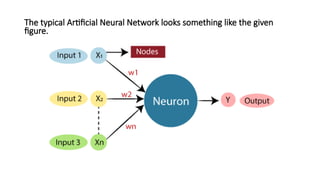
The typical Artificial Neural Network looks something like the given
figure.
Relationship between Biological neural network and
artificial neural network:
Biological Neural Network Artificial Neural Network
Dendrites Inputs
Cell nucleus Nodes
Synapse Weights
Axon Output
The architecture of an artificial neural network:
• In order to define a neural network that consists of a large number of
artificial neurons, which are termed units arranged in a sequence of
layers. Lets us look at various types of layers available in an artificial
neural network.
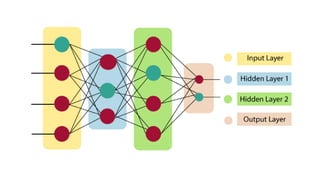
Layer in ANN
• Input Layer:
• As the name suggests, it accepts inputs in several different formats
provided by the programmer.
• Hidden Layer:
• The hidden layer presents in-between input and output layers. It
performs all the calculations to find hidden features and patterns.
Contd.
• Output Layer:
• The input goes through a series of transformations using the hidden layer, which
finally results in output that is conveyed using this layer.
• The artificial neural network takes input and computes the weighted sum of the
inputs and includes a bias. This computation is represented in the form of a
transfer function.
It determines weighted total is passed as an input to an activation function to
produce the output.

Artificial Neural Network for Machine Learning and Deep Learning

  • 1.
  • 2.
    Introduction "Artificial Neural Networks:A Sub-Field of AI" • Biologically inspired sub-field of AI modeled after the human brain. • Computed network based on biological neural networks. • Similar to human brain, has interconnected neurons in various layers. • Nodes are linked to each other in the network.
  • 3.
    Contd. • The term"Artificial Neural Network" is derived from Biological neural networks that develop the structure of a human brain. Similar to the human brain that has neurons interconnected to one another, artificial neural networks also have neurons that are interconnected to one another in various layers of the networks. These neurons are known as nodes.
  • 4.
    The given figureillustrates the typical diagram of Biological Neural Network.
  • 5.
    The typical ArtificialNeural Network looks something like the given figure.
  • 6.
    Relationship between Biologicalneural network and artificial neural network: Biological Neural Network Artificial Neural Network Dendrites Inputs Cell nucleus Nodes Synapse Weights Axon Output
  • 7.
    The architecture ofan artificial neural network: • In order to define a neural network that consists of a large number of artificial neurons, which are termed units arranged in a sequence of layers. Lets us look at various types of layers available in an artificial neural network.
  • 9.
    Layer in ANN •Input Layer: • As the name suggests, it accepts inputs in several different formats provided by the programmer. • Hidden Layer: • The hidden layer presents in-between input and output layers. It performs all the calculations to find hidden features and patterns.
  • 10.
    Contd. • Output Layer: •The input goes through a series of transformations using the hidden layer, which finally results in output that is conveyed using this layer. • The artificial neural network takes input and computes the weighted sum of the inputs and includes a bias. This computation is represented in the form of a transfer function. It determines weighted total is passed as an input to an activation function to produce the output.