The boundaries of
                      visual perception
                          In art and science


Monday, April 1, 13
Monday, April 1, 13
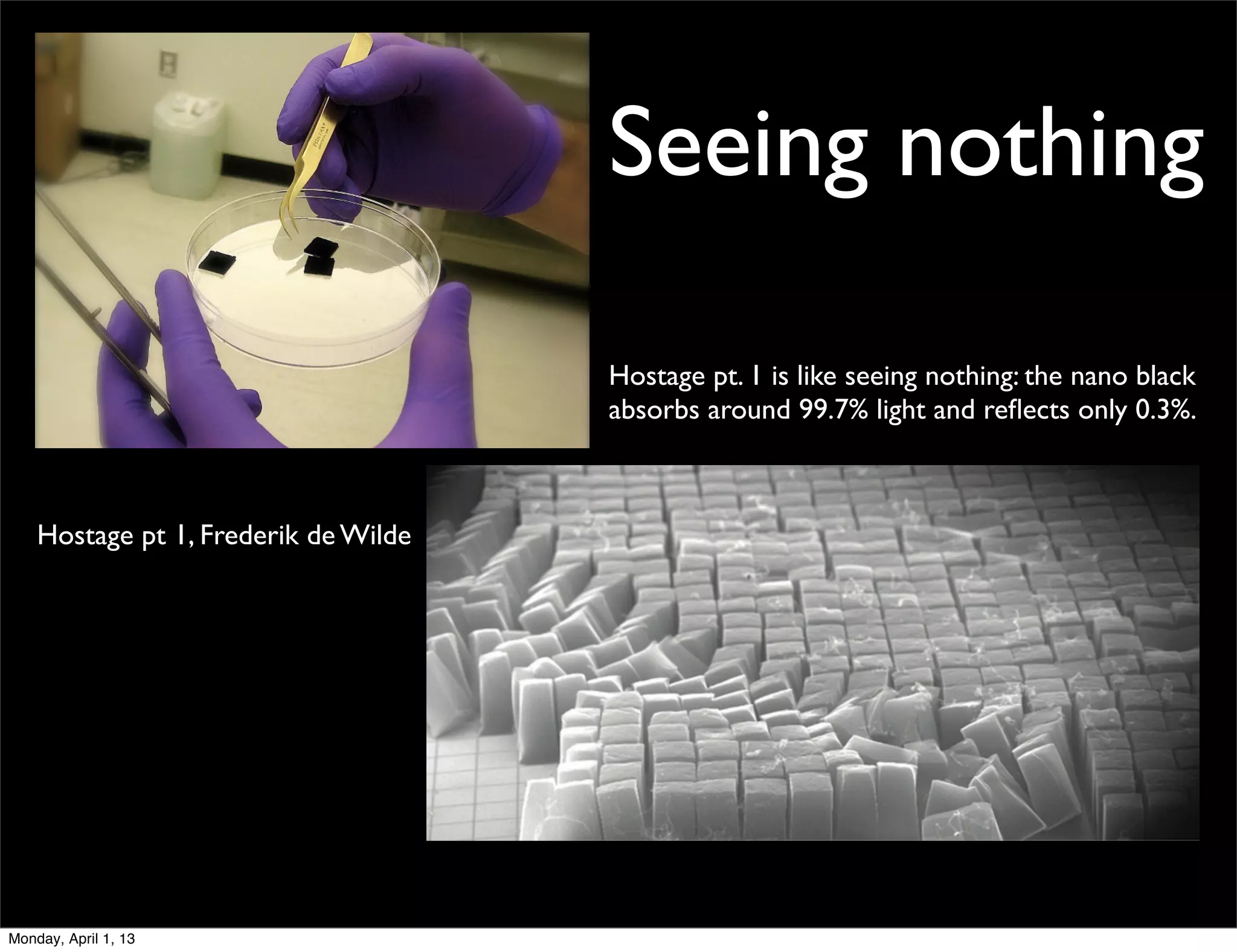
Seeing nothing

                                      Hostage pt. 1 is like seeing nothing: the nano black
                                      absorbs around 99.7% light and reflects only 0.3%.


    Hostage pt 1, Frederik de Wilde


Monday, April 1, 13
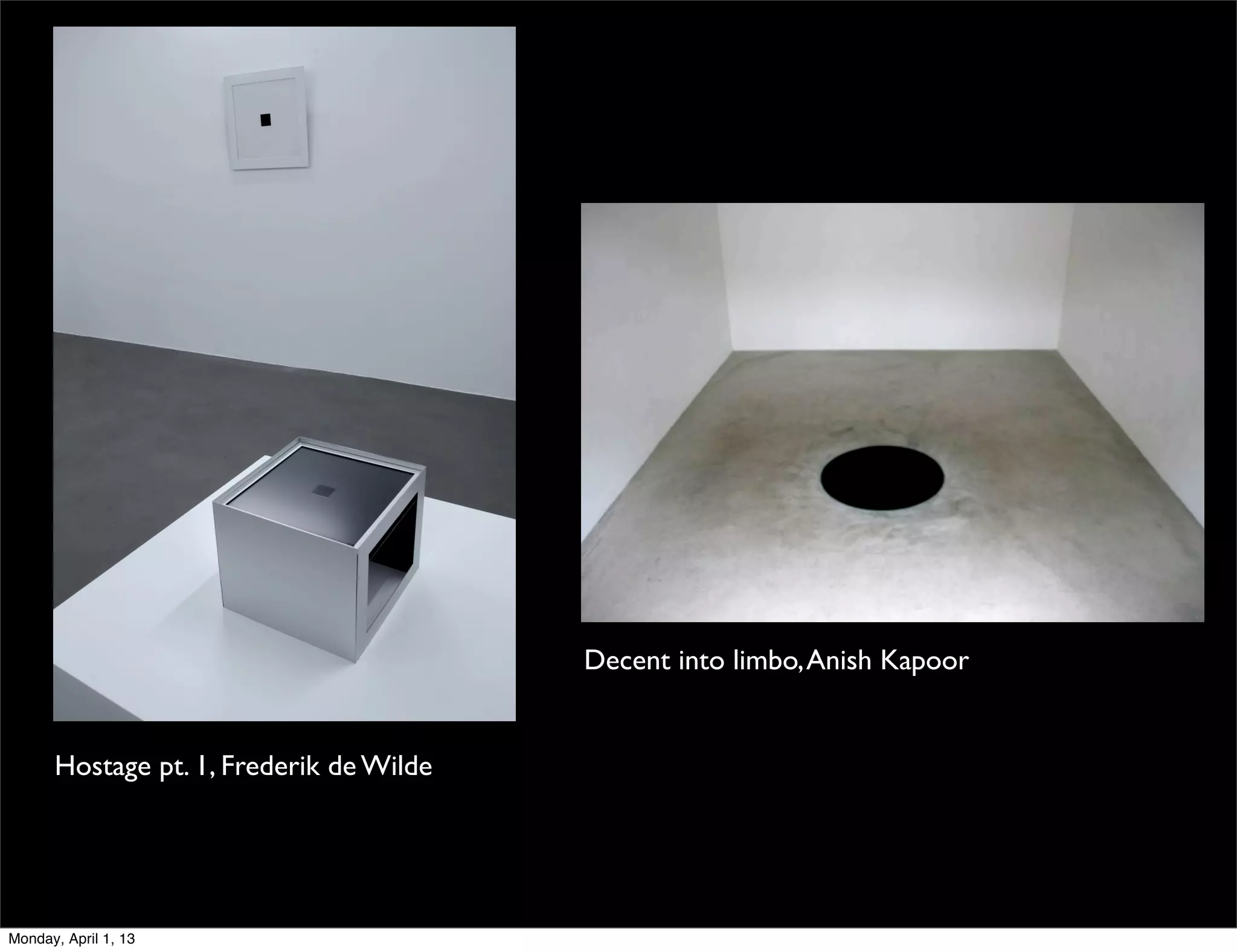
Decent into limbo, Anish Kapoor


      Hostage pt. 1, Frederik de Wilde


Monday, April 1, 13
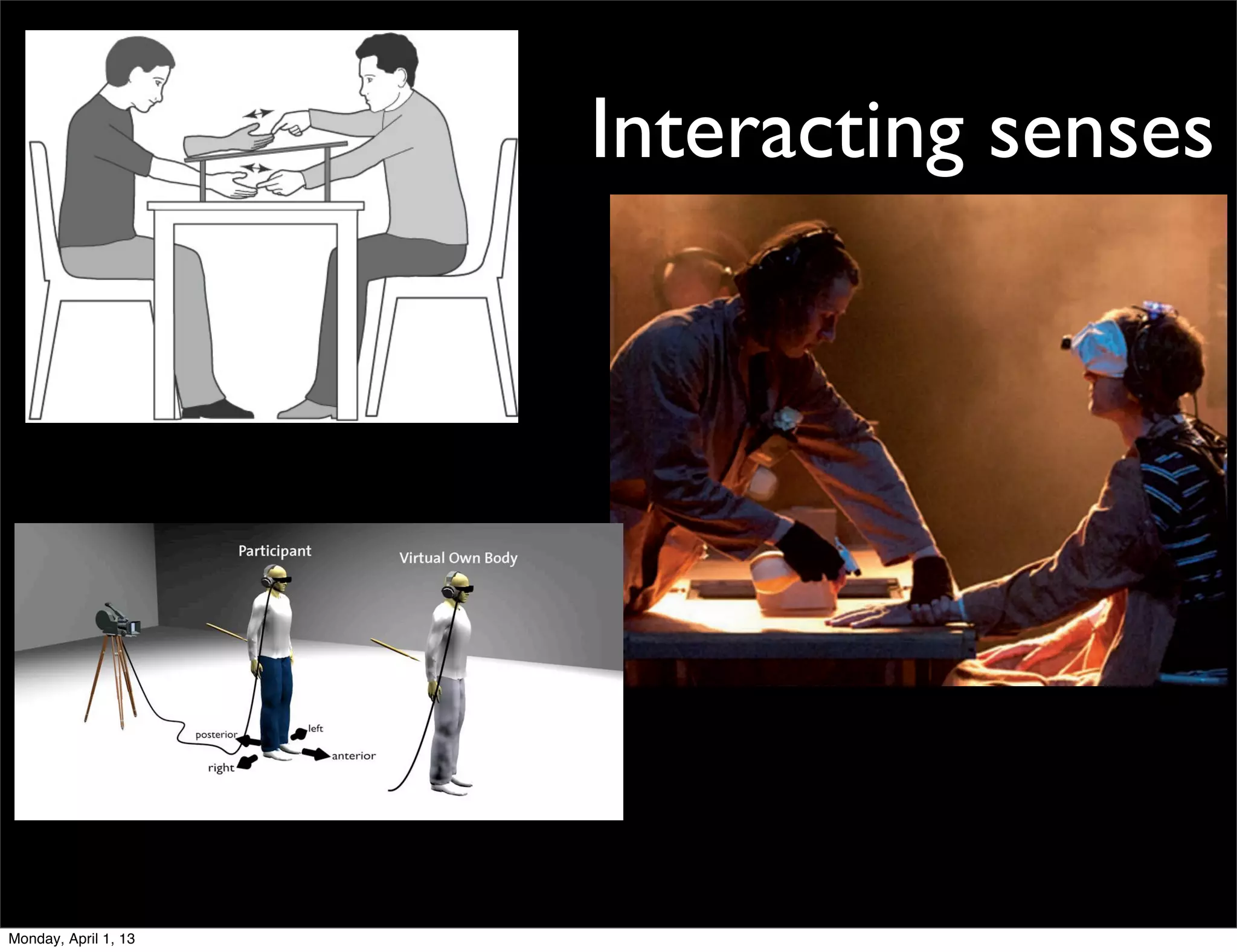
Interacting senses


Monday, April 1, 13
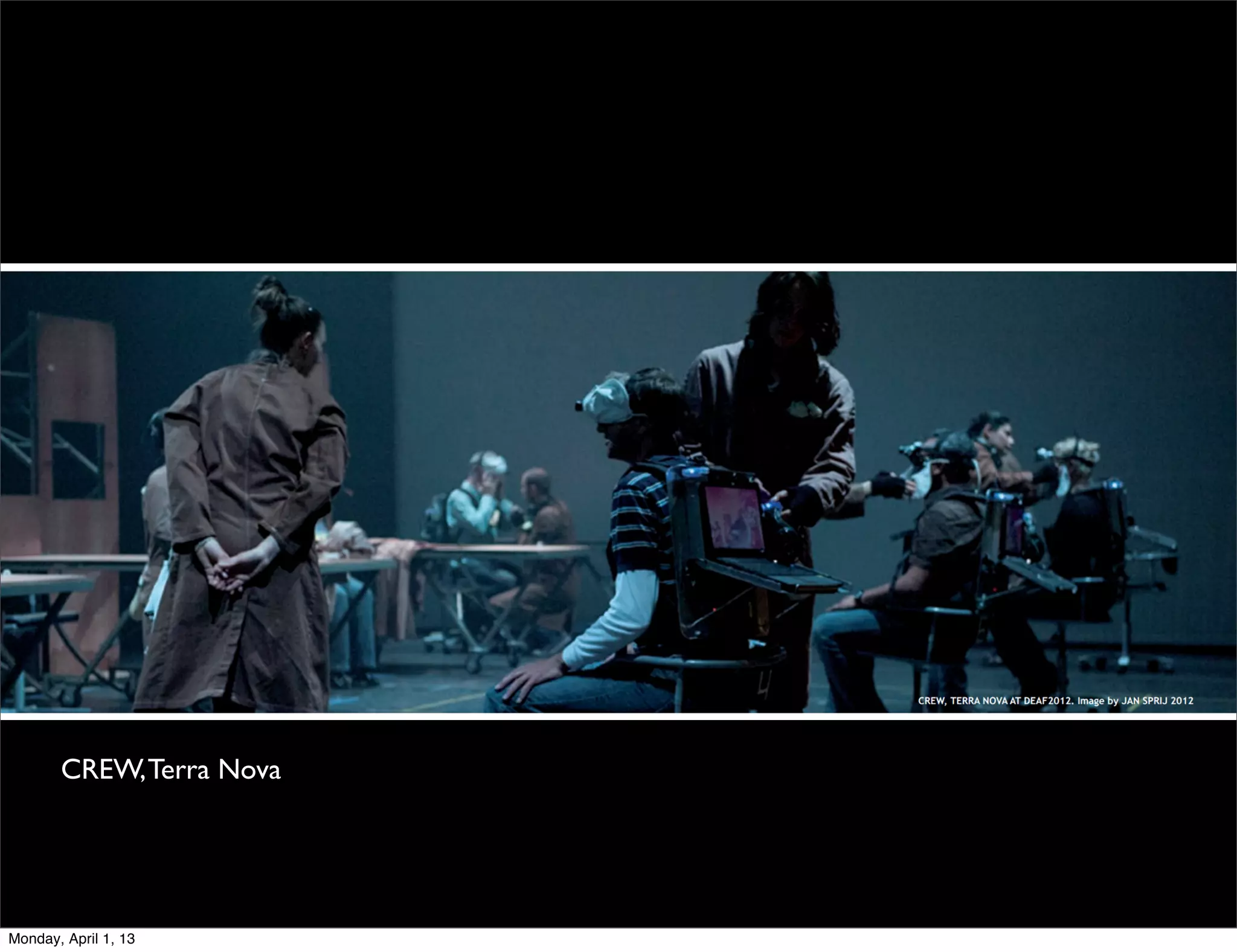
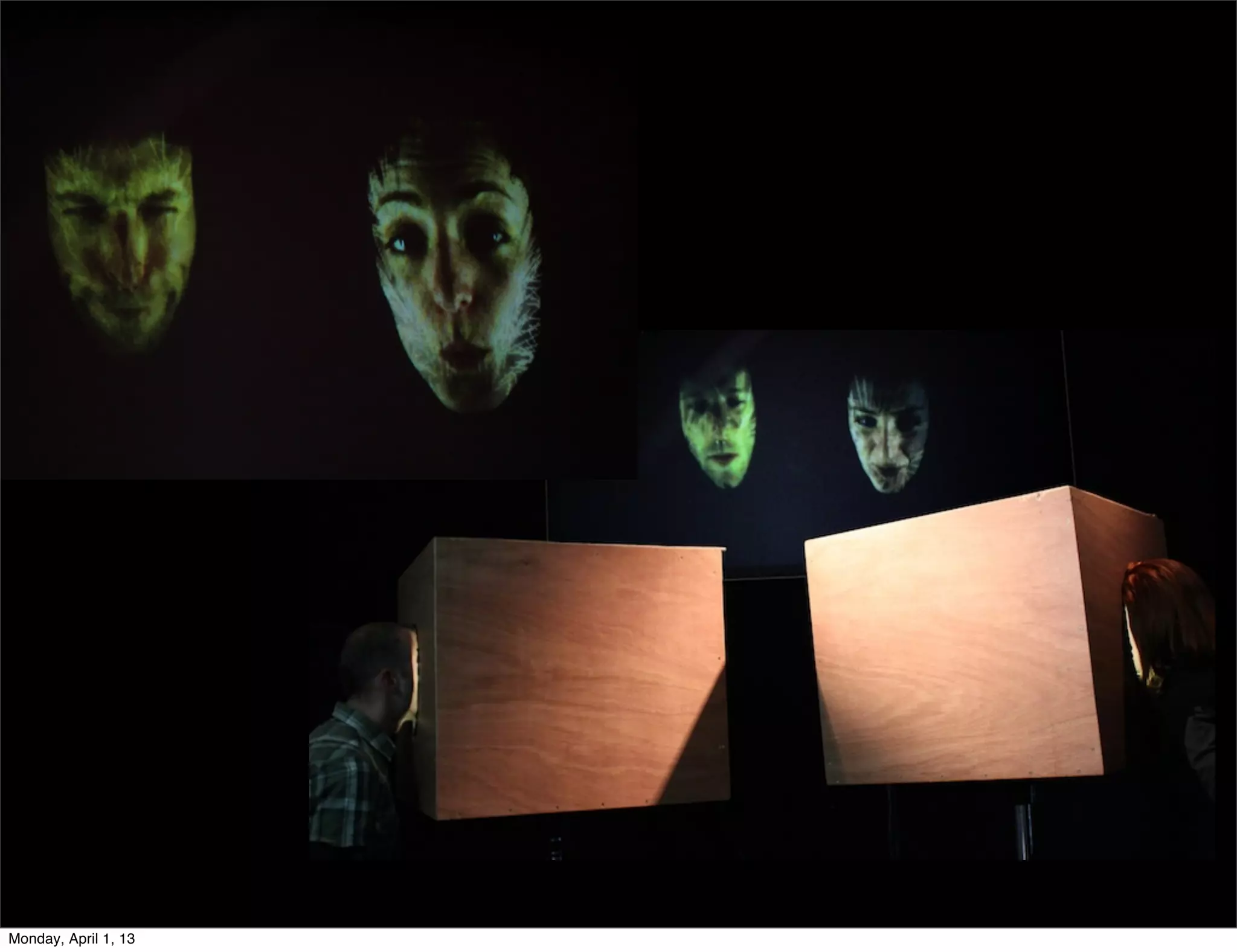
CREW, Terra Nova


Monday, April 1, 13
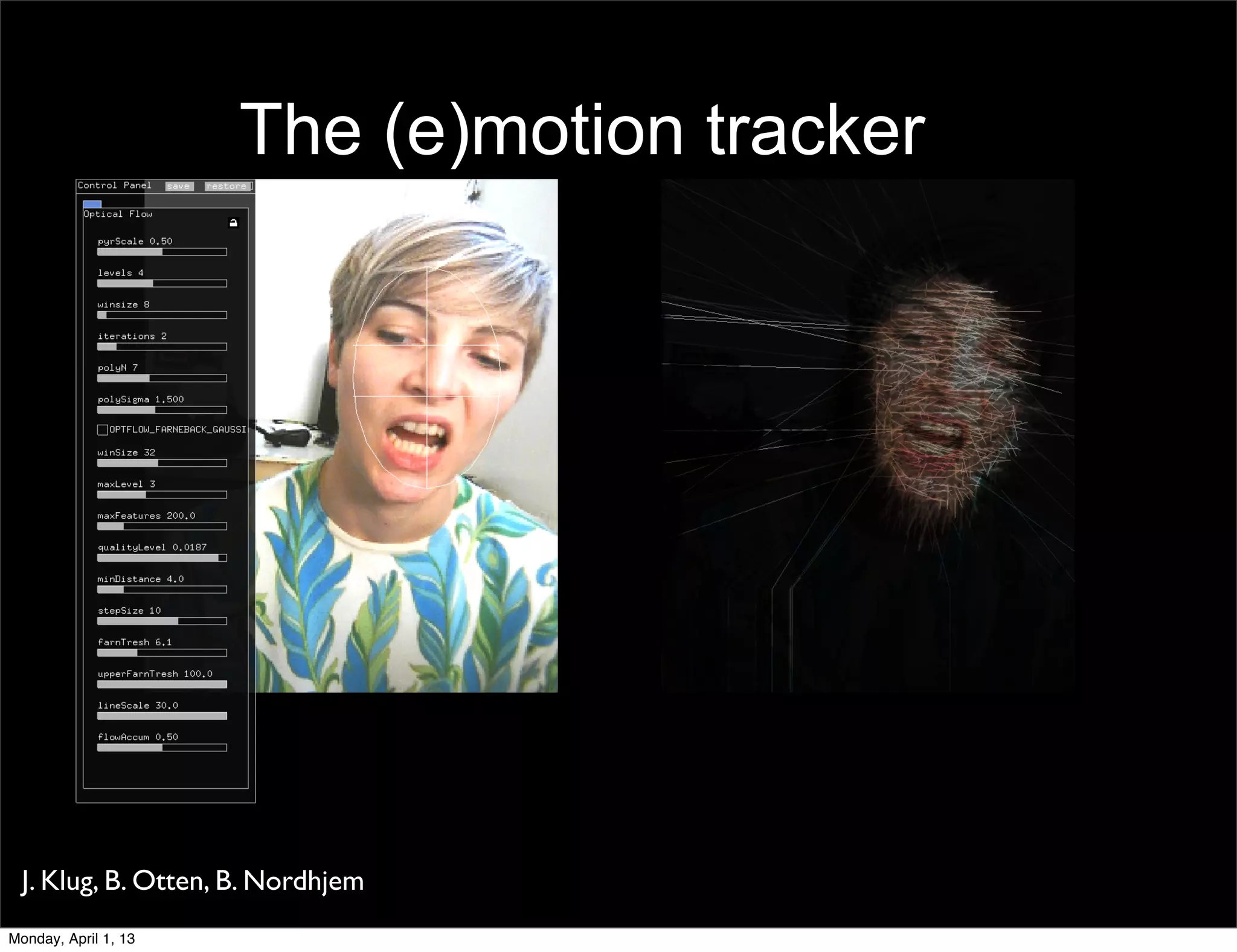
The (e)motion tracker


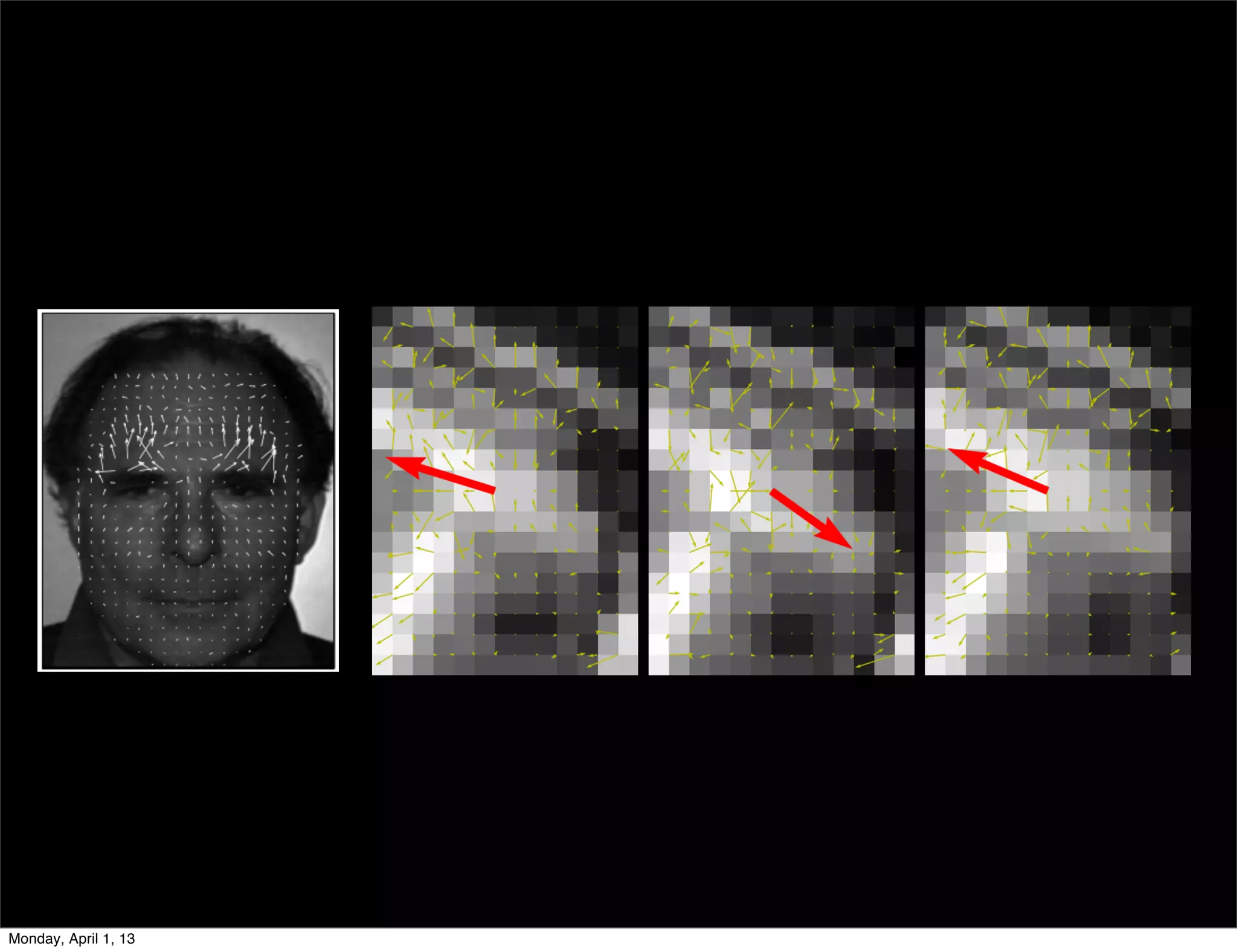
    We analyze six segments of the face. The lines show
    motion vectors.
 J. Klug, B. Otten, B. Nordhjem
Monday, April 1, 13
Monday, April 1, 13
Monday, April 1, 13
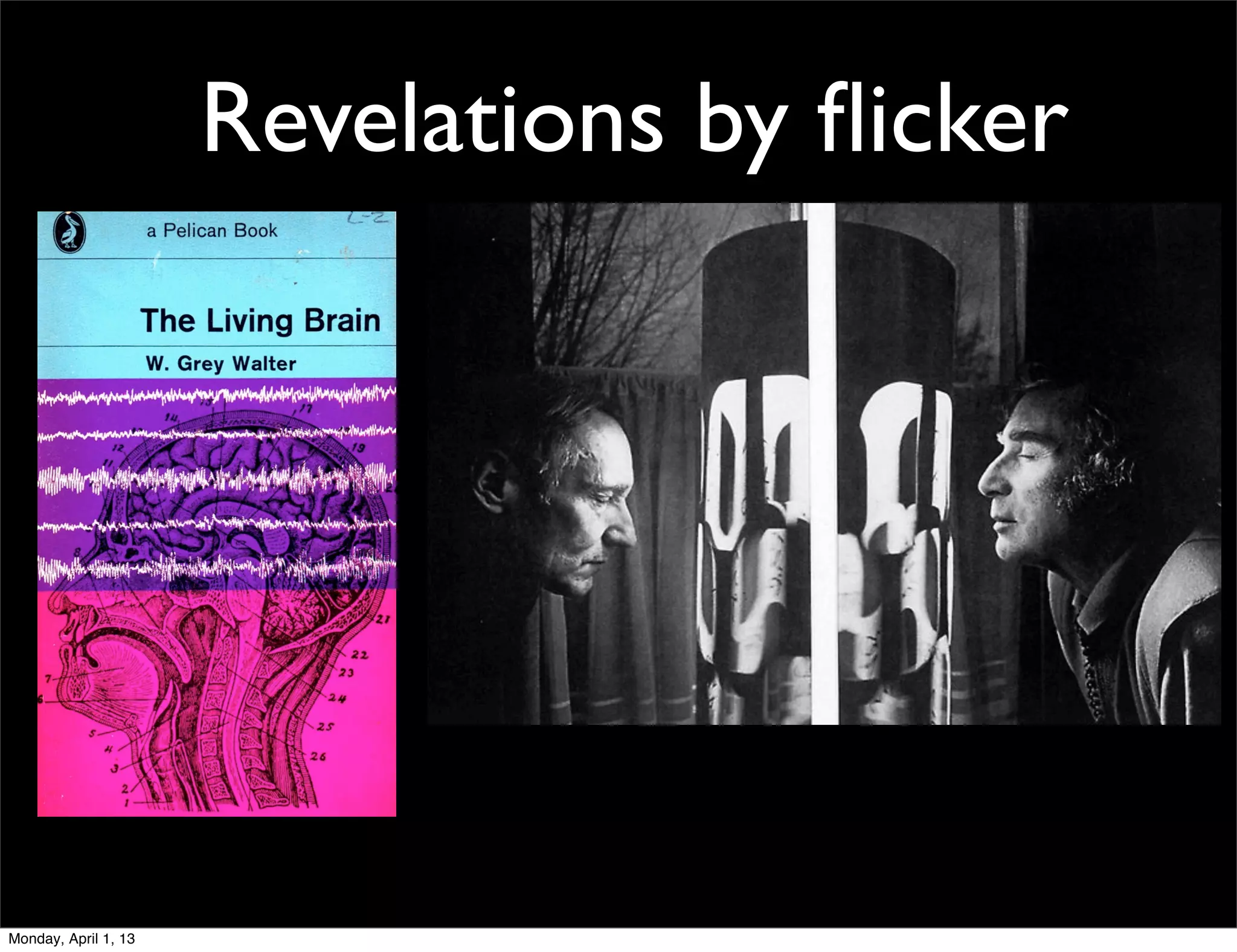
Revelations by flicker


Monday, April 1, 13
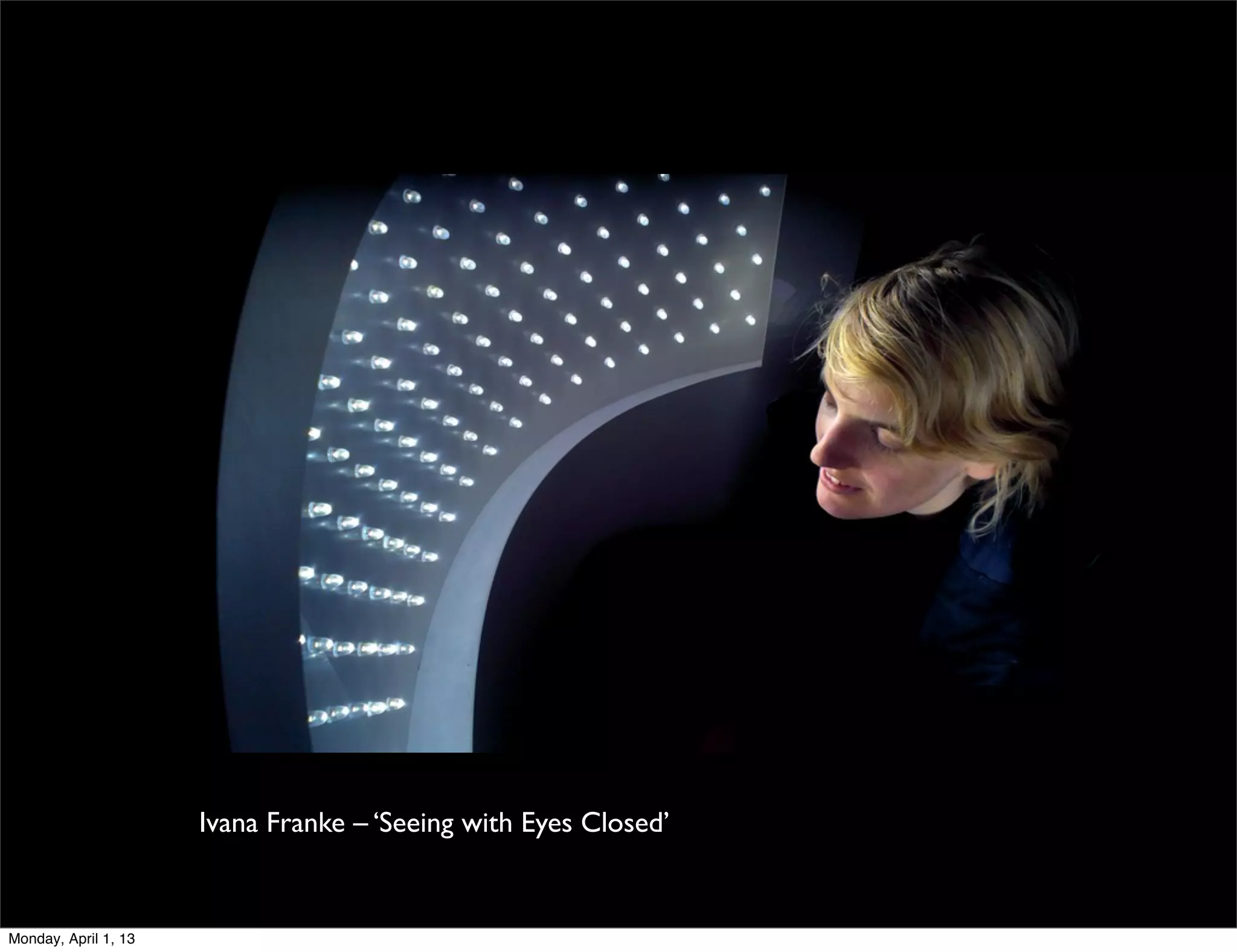
Ivana Franke – ‘Seeing with Eyes Closed’


Monday, April 1, 13
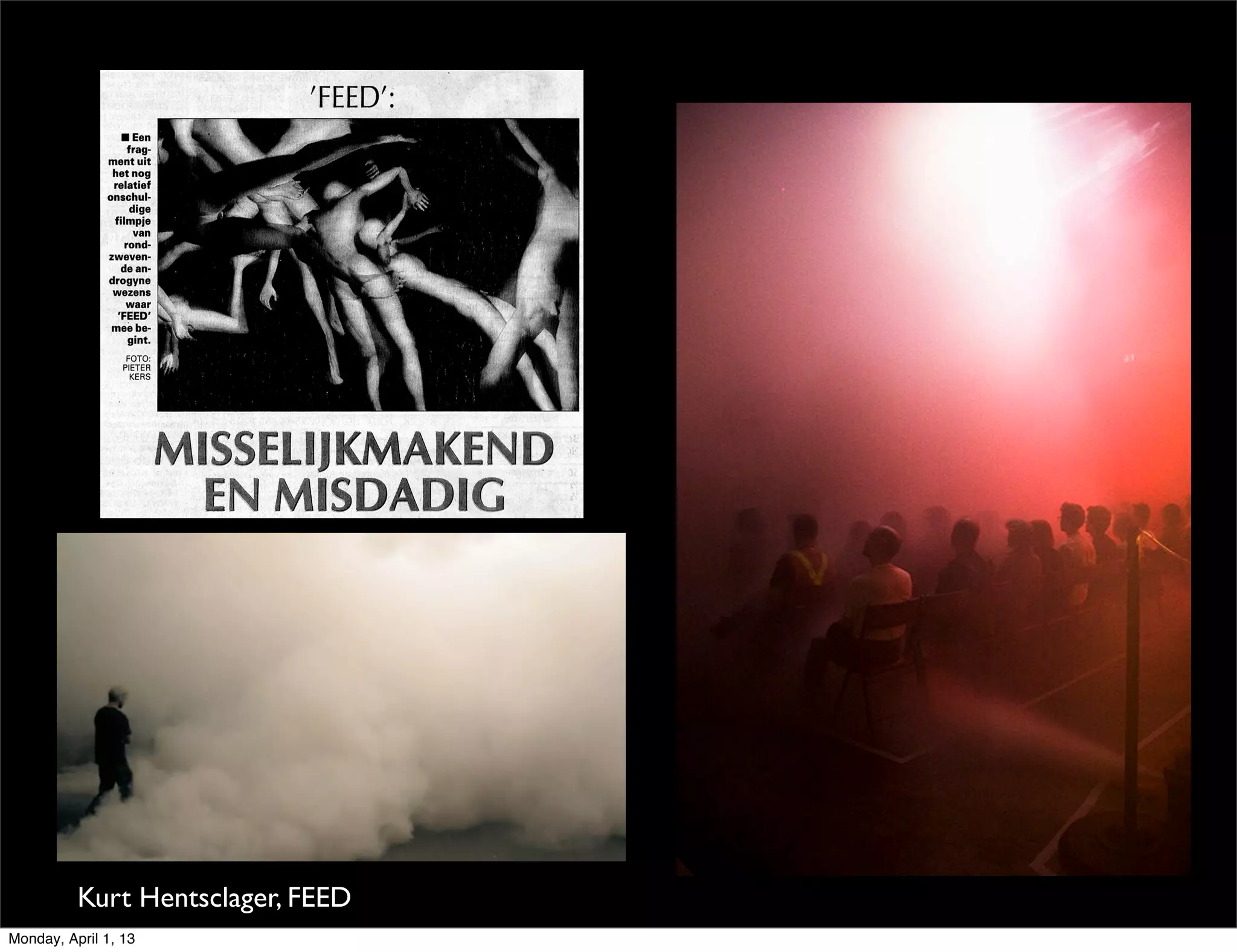
Kurt Hentsclager, FEED
Monday, April 1, 13
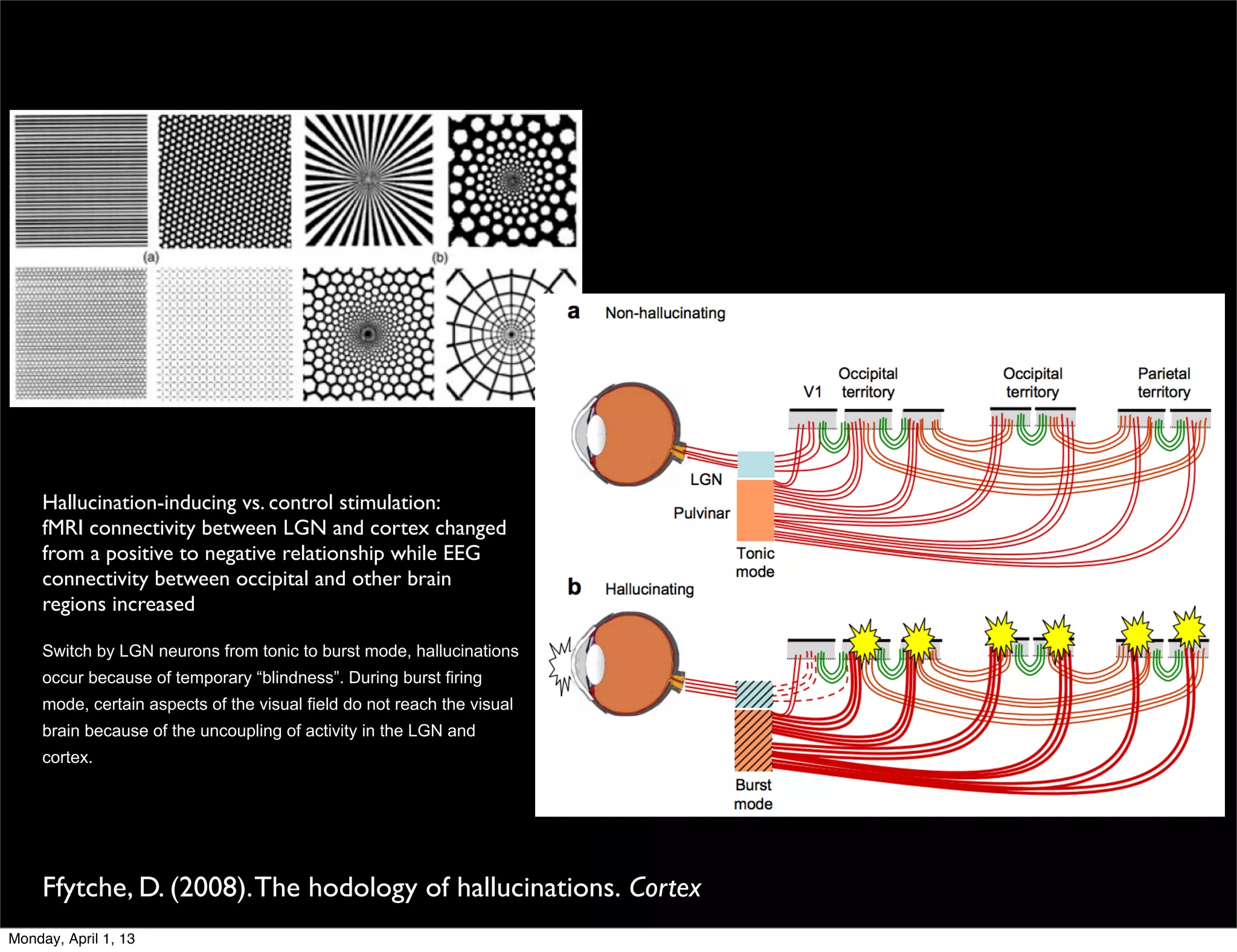
Hallucination-inducing vs. control stimulation:
     fMRI connectivity between LGN and cortex changed
     from a positive to negative relationship while EEG
     connectivity between occipital and other brain
     regions increased

     Switch by LGN neurons from tonic to burst mode, hallucinations
     occur because of temporary “blindness”. During burst firing
     mode, certain aspects of the visual field do not reach the visual
     brain because of the uncoupling of activity in the LGN and
     cortex.


     Ffytche, D. (2008). The hodology of hallucinations. Cortex
Monday, April 1, 13

Art & visual neuroscience