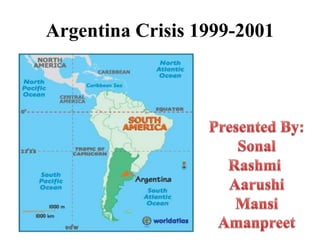

Argentina Crisis 1999-2001
History 
• Rich Natural Resources 
• High Human Capital 
• Reasonable Infrastructure 
• Great Performer in early 1900’s
First Crisis 
• The Argentinean peso was legally pegged to the 
dollar, on a one-to-one basis, a decade ago by 
Economy Minister Domingo Cavallo. In the hope to 
end hyperinflation. 
• But due to devaluation of Brazilian Real investors 
were attracted to invest in Brazil rather than 
Argentina.
Results: 
• Argentina lost the trust of investors 
• The cash outflow from the country increased
Second Crisis 
• The president Carlos Menem acquired lot of debt, in 
both domestic and foreign which lead domestic 
interest rates to increase 
• In early 1990s, privatization was done which had 
already thrown lot of people out of work 
• As privatized companies were utilities, so the prices 
of the utilities increased 
• The economy was facing recession from quite few 
years but it grew steadily worst as domestic demand 
decreased
Results: 
• Higher the borrowings, higher the credit became for 
businesses 
• Due to which many companies were closed 
• Increase in unemployment 
• The downward domestic demand increased debt 
burden
Third crisis 
• The peso was believed to be devalued 
• So people rushed to their banks to convert their peso 
into dollars 
• So to avoid draining of banks, Cavallo enacted a set 
of measures that froze only small amounts of cash 
were allowed to be withdrawn
Results: 
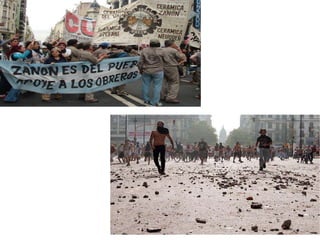
• These measures were followed by many protests in 
the big cities especially in Buenos Aires 
• First only noisy protests and later they included 
property destruction (mainly at banks and big US and 
European companies)
Economic condition during crisis 
• The economy shrank by 20 percent from 1998 to 
2002 
• In terms of income, over 50 percent of Argentines 
were poor 
• Seven out of ten Argentine children were poor at the 
depth of the crisis in 2002
Argentina’s Recovery 
• At the end of 2002 the situation could be normalized 
to a certain extend and new elections were hold 
• The devalued peso made exports more competitive 
abroad, while discouraging imports
Contd… 
• Due to many exports, the Peso became more stable 
• GDP jumped 8.8% in 2003, 9.0% in 2004, 9.2% in 
2005, 8.5% in 2006 and 8.7% in 2007 
• Unemployment has been considerably reduced (it has 
hovered around 7% since 2011)
Conclusion 
• Brazil got a competitive advantage against Argentina 
regarding exports 
• Privatization made the recession of the country go 
worst 
• The measures taken to avoid draining of banks caused 
lots of protest 
• Argentina’s government undertook very important 
steps to recover from the crisis like devaluation of the 
currency
Argentina crisis 1999 2001

Argentina crisis 1999 2001

  • 1.
  • 2.
    History • RichNatural Resources • High Human Capital • Reasonable Infrastructure • Great Performer in early 1900’s
  • 3.
    First Crisis •The Argentinean peso was legally pegged to the dollar, on a one-to-one basis, a decade ago by Economy Minister Domingo Cavallo. In the hope to end hyperinflation. • But due to devaluation of Brazilian Real investors were attracted to invest in Brazil rather than Argentina.
  • 4.
    Results: • Argentinalost the trust of investors • The cash outflow from the country increased
  • 5.
    Second Crisis •The president Carlos Menem acquired lot of debt, in both domestic and foreign which lead domestic interest rates to increase • In early 1990s, privatization was done which had already thrown lot of people out of work • As privatized companies were utilities, so the prices of the utilities increased • The economy was facing recession from quite few years but it grew steadily worst as domestic demand decreased
  • 6.
    Results: • Higherthe borrowings, higher the credit became for businesses • Due to which many companies were closed • Increase in unemployment • The downward domestic demand increased debt burden
  • 7.
    Third crisis •The peso was believed to be devalued • So people rushed to their banks to convert their peso into dollars • So to avoid draining of banks, Cavallo enacted a set of measures that froze only small amounts of cash were allowed to be withdrawn
  • 8.
    Results: • Thesemeasures were followed by many protests in the big cities especially in Buenos Aires • First only noisy protests and later they included property destruction (mainly at banks and big US and European companies)
  • 10.
    Economic condition duringcrisis • The economy shrank by 20 percent from 1998 to 2002 • In terms of income, over 50 percent of Argentines were poor • Seven out of ten Argentine children were poor at the depth of the crisis in 2002
  • 11.
    Argentina’s Recovery •At the end of 2002 the situation could be normalized to a certain extend and new elections were hold • The devalued peso made exports more competitive abroad, while discouraging imports
  • 12.
    Contd… • Dueto many exports, the Peso became more stable • GDP jumped 8.8% in 2003, 9.0% in 2004, 9.2% in 2005, 8.5% in 2006 and 8.7% in 2007 • Unemployment has been considerably reduced (it has hovered around 7% since 2011)
  • 13.
    Conclusion • Brazilgot a competitive advantage against Argentina regarding exports • Privatization made the recession of the country go worst • The measures taken to avoid draining of banks caused lots of protest • Argentina’s government undertook very important steps to recover from the crisis like devaluation of the currency