
Application of United Nations Framework
Classification (UNFC-2009) for managing
phosphogypsum
Dr. Mohamed H. Taha
1) The word gypsum is derived from the Greek word γύψος
(gypsos), "plaster. Gypsum is a sulfate mineral composed of
calcium sulfate dihydrate.
2) Phosphogypsum refers to the calcium sulfate that
produced as a by-product from the production of
phosphoric acid.
Phosphogypsum
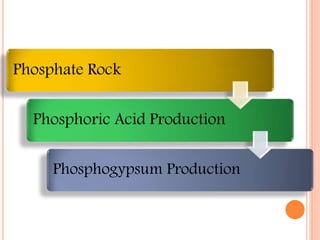
Phosphate Rock
Phosphoric Acid Production
Phosphogypsum Production
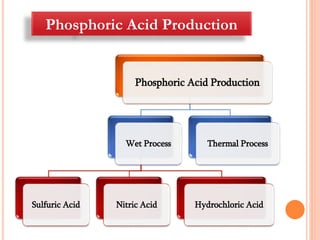
Phosphoric Acid Production
Wet Process
Sulfuric Acid Nitric Acid Hydrochloric Acid
Thermal Process
Phosphoric Acid Production
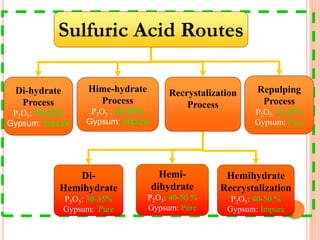
Sulfuric Acid Routes
Di-hydrate
Process
P2O5: 28-30%
Gypsum: Impure
Hime-hydrate
Process
P2O5 : 40-50%
Gypsum: Impure
Recrystalization
Process
Di-
Hemihydrate
P2O5: 30-35%
Gypsum: Pure
Hemi-
dihydrate
P2O5: 40-50 %
Gypsum: Pure
Hemihydrate
Recrystalization
P2O5: 40-50 %
Gypsum: Impure
Repulping
Process
P2O5: 42-45%
Gypsum: Pure
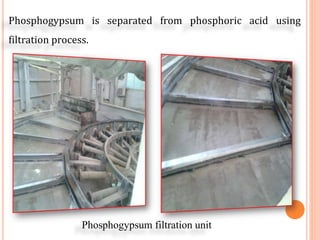
Phosphogypsum is separated from phosphoric acid using
filtration process.
Phosphogypsum filtration unit
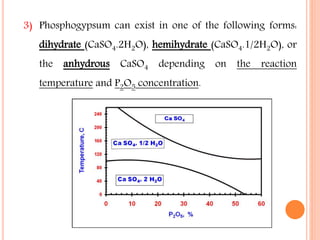
3) Phosphogypsum can exist in one of the following forms:
dihydrate (CaSO4.2H2O), hemihydrate (CaSO4.1/2H2O), or
the anhydrous CaSO4 depending on the reaction
temperature and P2O5 concentration.
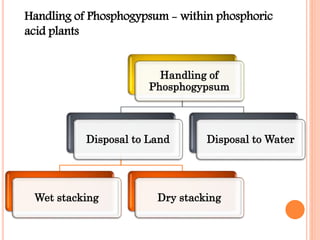
Handling of
Phosphogypsum
Disposal to Land
Wet stacking Dry stacking
Disposal to Water
Handling of Phosphogypsum - within phosphoric
acid plants
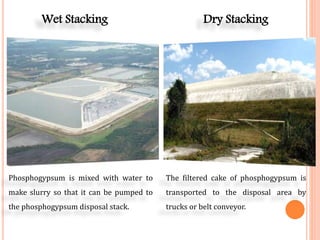
Wet Stacking Dry Stacking
The filtered cake of phosphogypsum is
transported to the disposal area by
trucks or belt conveyor.
Phosphogypsum is mixed with water to
make slurry so that it can be pumped to
the phosphogypsum disposal stack.
 Disposal of Phosphogypsum is a serious techno-economic
problem (≈ $25/ ton storage cost), requires large land area for
dumping (≈ 9 times the production area) and creates
environmental pollution (P2O5, F-, trace elements, radioactivity).
 Approximately, 5 ton of phosphogypsum is generated per ton of
P2O5 recovered. Worldwide, about 280 Mt/Y phosphogypsum is
produced.
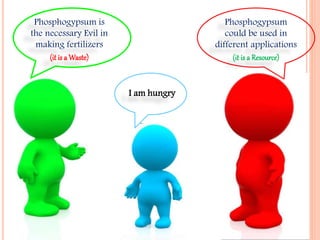
Phosphogypsum is
the necessary Evil in
making fertilizers
(it is a Waste)
Phosphogypsum
could be used in
different applications
(it is a Resource)
I am hungry
Roads Paving
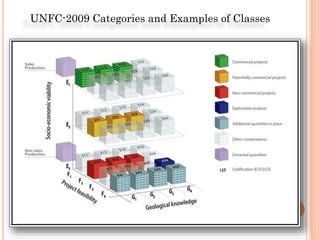
UNFC-2009 Categories and Examples of Classes
 In Egypt, Phosphoric acid is mainly produced by two
companies; Abu-Zaabal Fertilizers and Chemicals
Company (AZFC) and El Nasr Company for Intermediate
Chemicals (NCIC).
 Both companies are producing phosphoric acid using
the wet process based on the dihydrate route.
 The Egyptian phosphoric acid production capacity is
about 150-200 Kt/ Y P2O5 depending on the running
time of the production plant.
 The phosphogypsum production of both companies is
approximately 800-900 Kt/ Year phosphogypsum.
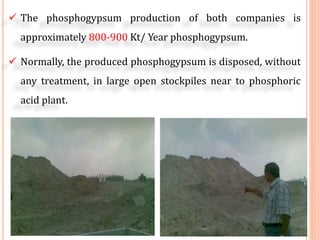
 Normally, the produced phosphogypsum is disposed, without
any treatment, in large open stockpiles near to phosphoric
acid plant.
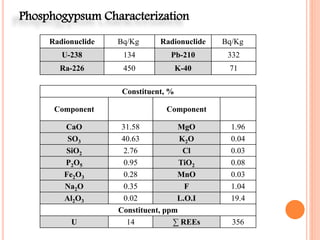
Phosphogypsum Characterization
Radionuclide Bq/Kg Radionuclide Bq/Kg
U-238 134 Pb-210 332
Ra-226 450 K-40 71
Constituent, %
Component Component
CaO 31.58 MgO 1.96
SO3 40.63 K2O 0.04
SiO2 2.76 Cl 0.03
P2O5 0.95 TiO2 0.08
Fe2O3 0.28 MnO 0.03
Na2O 0.35 F 1.04
Al2O3 0.02 L.O.I 19.4
Constituent, ppm
U 14 ∑ REEs 356
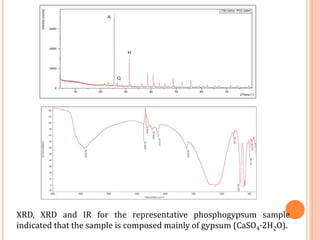
XRD, XRD and IR for the representative phosphogypsum sample
indicated that the sample is composed mainly of gypsum (CaSO4·2H2O).
G - Criteria
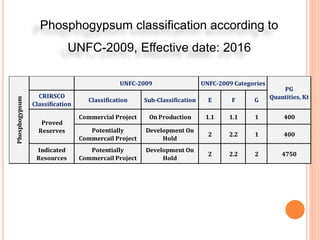
In 2016, Abu-Zaabal Fertilizers and Chemicals Company and
El Nasr Company for Intermediate Chemicals produced
about 800 Kt phosphogypsum. These quantities can be
considered as G 1, i.e., “Proved Reserved”.
The Egyptian Government decided to establish two phosphate
fertilizer complexes in Ain Sokhna Compound and New Valley
Governorate, with estimated annually production capacity of
about 450 and 500 Kt P2O5 respectively. In this regard, there is
about 4.75Mt phosphogypsum is expected to be produced in
Egypt. These quantities can be considered as G 2, i.e.,
“Indicated Resources”.
F - Criteria
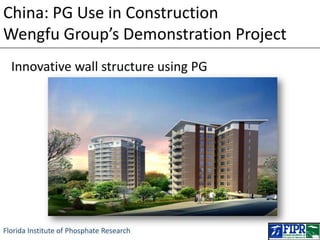
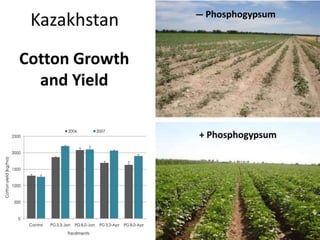
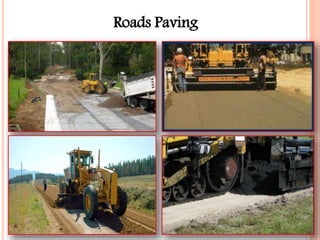
Phosphogypsum has different applications which include; (i)
for use as fertilizer in agriculture, (ii) in cement
manufacturing, (iii) in the production of plaster and boards
and (IV) in road paving. etc…
In 2016, approximately 50 % of the produced phosphogypsum
is used for alkaline soil amendments or re-conditioning. The
remaining part (unsold) of the phosphogypsum is kept in the
open stockpiles. The sold phosphogypsum quantities can be
considered as F 1.1, i.e., “extraction is currently taking
place”.
F - Criteria
Currently, NCIC decide to prepare a prefeasibility study for
utilizing phosphogypsum in cement and bricks applications.
Moreover, there is highly attention for the recovery of REEs
from phosphogypsum. These quantities (which represent the
unsold quantities) can be considered as F 2.2, i.e., “There is a
plan to prepare a prefeasibility study to get more data”.
The same classification could be considered for the quantities
that expected to be produced from the new complexes, where
the companies have the same plans for these quantities.
E - Criteria
Food insecurity is considered one of the major challenges facing
the Government of Egypt. National food supply in Egypt is
negatively affected by low agricultural production.
The Egyptian Government had decided to increase the
investment in phosphate industry to close the gap between the
population growth rate and the agriculture output growth rate.
E - Criteria
The Egyptian Government decided to establish two phosphate
fertilizer complexes in Ain Sokhna Compound and New Valley
Governorate. The total investment in this project is about $2 billion,
and the total production capacity is about 950 Kt P2O5/ year, (about
4.75 Mt phosphogypsum/ year). These projects will enhance the
Egyptian market with 4500 direct workers and 8,000 indirect
workers. These projects are expected to start operation in 2018 and
2020 respectively.
E - Criteria
Most of the Egyptian land is suffering from high alkalinity. Therefore,
improving soli alkalinity is an important part in the agricultural
security program. The preferred addition rate of agricultural gypsum
is 3 tons/ feddan. This means that 4.75 Mt PG which expected to be
produced annually could be used to improve about 1.5 million
feddan. This will increase the agriculture output growth rate, which
will directly enhance the Egyptian food security and increase the
Egyptian GDP.
The new phosphate complex that will be built in the New Valley
Governorate will utilize over 2.0 Mt phosphate rock/ Year. REEs
content in New Valley phosphate is about 2000 mg/ Kg, and
according to about 80 % of REEs will precipitate in the PG during
the wet phosphoric acid production process. This means that the
annual produced PG will be potential resource for about 3.2 Kt
REEs (as a by product). This will enhance effectively the Egyptian
economy and GDP.
E - Criteria
E - Criteria
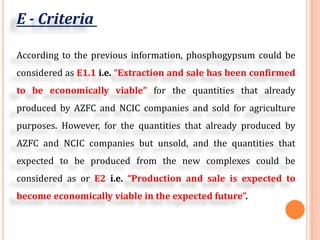
According to the previous information, phosphogypsum could be
considered as E1.1 i.e. “Extraction and sale has been confirmed
to be economically viable” for the quantities that already
produced by AZFC and NCIC companies and sold for agriculture
purposes. However, for the quantities that already produced by
AZFC and NCIC companies but unsold, and the quantities that
expected to be produced from the new complexes could be
considered as or E2 i.e. “Production and sale is expected to
become economically viable in the expected future”.
Phosphogypsum classification according to
UNFC-2009, Effective date: 2016
CRIRSCO
Classification
Classification Sub-Classification E F G
Commercial Project On Production 1.1 1.1 1 400
Potentially
Commercail Project
Development On
Hold
2 2.2 1 400
Indicated
Resources
Potentially
Commercail Project
Development On
Hold
2 2.2 2 4750
Phosphogypsum
PG
Quantities, Kt
Proved
Reserves
UNFC-2009 UNFC-2009 Categories
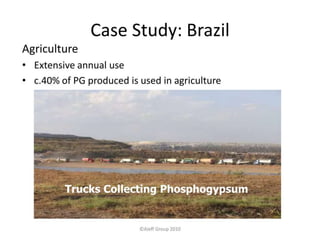
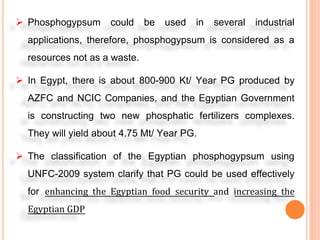
 Phosphogypsum could be used in several industrial
applications, therefore, phosphogypsum is considered as a
resources not as a waste.
 In Egypt, there is about 800-900 Kt/ Year PG produced by
AZFC and NCIC Companies, and the Egyptian Government
is constructing two new phosphatic fertilizers complexes.
They will yield about 4.75 Mt/ Year PG.
 The classification of the Egyptian phosphogypsum using
UNFC-2009 system clarify that PG could be used effectively
for enhancing the Egyptian food security and increasing the
Egyptian GDP
Application of UNFC in Egypt: lessons learned

Application of UNFC in Egypt: lessons learned

  • 1.
    Application of UnitedNations Framework Classification (UNFC-2009) for managing phosphogypsum Dr. Mohamed H. Taha
  • 2.
    1) The wordgypsum is derived from the Greek word γύψος (gypsos), "plaster. Gypsum is a sulfate mineral composed of calcium sulfate dihydrate. 2) Phosphogypsum refers to the calcium sulfate that produced as a by-product from the production of phosphoric acid. Phosphogypsum
  • 3.
    Phosphate Rock Phosphoric AcidProduction Phosphogypsum Production
  • 4.
    Phosphoric Acid Production WetProcess Sulfuric Acid Nitric Acid Hydrochloric Acid Thermal Process Phosphoric Acid Production
  • 5.
    Sulfuric Acid Routes Di-hydrate Process P2O5:28-30% Gypsum: Impure Hime-hydrate Process P2O5 : 40-50% Gypsum: Impure Recrystalization Process Di- Hemihydrate P2O5: 30-35% Gypsum: Pure Hemi- dihydrate P2O5: 40-50 % Gypsum: Pure Hemihydrate Recrystalization P2O5: 40-50 % Gypsum: Impure Repulping Process P2O5: 42-45% Gypsum: Pure
  • 6.
    Phosphogypsum is separatedfrom phosphoric acid using filtration process. Phosphogypsum filtration unit
  • 7.
    3) Phosphogypsum canexist in one of the following forms: dihydrate (CaSO4.2H2O), hemihydrate (CaSO4.1/2H2O), or the anhydrous CaSO4 depending on the reaction temperature and P2O5 concentration.
  • 8.
    Handling of Phosphogypsum Disposal toLand Wet stacking Dry stacking Disposal to Water Handling of Phosphogypsum - within phosphoric acid plants
  • 9.
    Wet Stacking DryStacking The filtered cake of phosphogypsum is transported to the disposal area by trucks or belt conveyor. Phosphogypsum is mixed with water to make slurry so that it can be pumped to the phosphogypsum disposal stack.
  • 10.
     Disposal ofPhosphogypsum is a serious techno-economic problem (≈ $25/ ton storage cost), requires large land area for dumping (≈ 9 times the production area) and creates environmental pollution (P2O5, F-, trace elements, radioactivity).  Approximately, 5 ton of phosphogypsum is generated per ton of P2O5 recovered. Worldwide, about 280 Mt/Y phosphogypsum is produced.
  • 11.
    Phosphogypsum is the necessaryEvil in making fertilizers (it is a Waste) Phosphogypsum could be used in different applications (it is a Resource) I am hungry
  • 15.
  • 17.
    UNFC-2009 Categories andExamples of Classes
  • 18.
     In Egypt,Phosphoric acid is mainly produced by two companies; Abu-Zaabal Fertilizers and Chemicals Company (AZFC) and El Nasr Company for Intermediate Chemicals (NCIC).  Both companies are producing phosphoric acid using the wet process based on the dihydrate route.  The Egyptian phosphoric acid production capacity is about 150-200 Kt/ Y P2O5 depending on the running time of the production plant.
  • 19.
     The phosphogypsumproduction of both companies is approximately 800-900 Kt/ Year phosphogypsum.  Normally, the produced phosphogypsum is disposed, without any treatment, in large open stockpiles near to phosphoric acid plant.
  • 20.
    Phosphogypsum Characterization Radionuclide Bq/KgRadionuclide Bq/Kg U-238 134 Pb-210 332 Ra-226 450 K-40 71 Constituent, % Component Component CaO 31.58 MgO 1.96 SO3 40.63 K2O 0.04 SiO2 2.76 Cl 0.03 P2O5 0.95 TiO2 0.08 Fe2O3 0.28 MnO 0.03 Na2O 0.35 F 1.04 Al2O3 0.02 L.O.I 19.4 Constituent, ppm U 14 ∑ REEs 356
  • 21.
    XRD, XRD andIR for the representative phosphogypsum sample indicated that the sample is composed mainly of gypsum (CaSO4·2H2O).
  • 22.
    G - Criteria In2016, Abu-Zaabal Fertilizers and Chemicals Company and El Nasr Company for Intermediate Chemicals produced about 800 Kt phosphogypsum. These quantities can be considered as G 1, i.e., “Proved Reserved”. The Egyptian Government decided to establish two phosphate fertilizer complexes in Ain Sokhna Compound and New Valley Governorate, with estimated annually production capacity of about 450 and 500 Kt P2O5 respectively. In this regard, there is about 4.75Mt phosphogypsum is expected to be produced in Egypt. These quantities can be considered as G 2, i.e., “Indicated Resources”.
  • 23.
    F - Criteria Phosphogypsumhas different applications which include; (i) for use as fertilizer in agriculture, (ii) in cement manufacturing, (iii) in the production of plaster and boards and (IV) in road paving. etc… In 2016, approximately 50 % of the produced phosphogypsum is used for alkaline soil amendments or re-conditioning. The remaining part (unsold) of the phosphogypsum is kept in the open stockpiles. The sold phosphogypsum quantities can be considered as F 1.1, i.e., “extraction is currently taking place”.
  • 24.
    F - Criteria Currently,NCIC decide to prepare a prefeasibility study for utilizing phosphogypsum in cement and bricks applications. Moreover, there is highly attention for the recovery of REEs from phosphogypsum. These quantities (which represent the unsold quantities) can be considered as F 2.2, i.e., “There is a plan to prepare a prefeasibility study to get more data”. The same classification could be considered for the quantities that expected to be produced from the new complexes, where the companies have the same plans for these quantities.
  • 25.
    E - Criteria Foodinsecurity is considered one of the major challenges facing the Government of Egypt. National food supply in Egypt is negatively affected by low agricultural production. The Egyptian Government had decided to increase the investment in phosphate industry to close the gap between the population growth rate and the agriculture output growth rate.
  • 26.
    E - Criteria TheEgyptian Government decided to establish two phosphate fertilizer complexes in Ain Sokhna Compound and New Valley Governorate. The total investment in this project is about $2 billion, and the total production capacity is about 950 Kt P2O5/ year, (about 4.75 Mt phosphogypsum/ year). These projects will enhance the Egyptian market with 4500 direct workers and 8,000 indirect workers. These projects are expected to start operation in 2018 and 2020 respectively.
  • 27.
    E - Criteria Mostof the Egyptian land is suffering from high alkalinity. Therefore, improving soli alkalinity is an important part in the agricultural security program. The preferred addition rate of agricultural gypsum is 3 tons/ feddan. This means that 4.75 Mt PG which expected to be produced annually could be used to improve about 1.5 million feddan. This will increase the agriculture output growth rate, which will directly enhance the Egyptian food security and increase the Egyptian GDP.
  • 28.
    The new phosphatecomplex that will be built in the New Valley Governorate will utilize over 2.0 Mt phosphate rock/ Year. REEs content in New Valley phosphate is about 2000 mg/ Kg, and according to about 80 % of REEs will precipitate in the PG during the wet phosphoric acid production process. This means that the annual produced PG will be potential resource for about 3.2 Kt REEs (as a by product). This will enhance effectively the Egyptian economy and GDP. E - Criteria
  • 29.
    E - Criteria Accordingto the previous information, phosphogypsum could be considered as E1.1 i.e. “Extraction and sale has been confirmed to be economically viable” for the quantities that already produced by AZFC and NCIC companies and sold for agriculture purposes. However, for the quantities that already produced by AZFC and NCIC companies but unsold, and the quantities that expected to be produced from the new complexes could be considered as or E2 i.e. “Production and sale is expected to become economically viable in the expected future”.
  • 30.
    Phosphogypsum classification accordingto UNFC-2009, Effective date: 2016 CRIRSCO Classification Classification Sub-Classification E F G Commercial Project On Production 1.1 1.1 1 400 Potentially Commercail Project Development On Hold 2 2.2 1 400 Indicated Resources Potentially Commercail Project Development On Hold 2 2.2 2 4750 Phosphogypsum PG Quantities, Kt Proved Reserves UNFC-2009 UNFC-2009 Categories
  • 32.
     Phosphogypsum couldbe used in several industrial applications, therefore, phosphogypsum is considered as a resources not as a waste.  In Egypt, there is about 800-900 Kt/ Year PG produced by AZFC and NCIC Companies, and the Egyptian Government is constructing two new phosphatic fertilizers complexes. They will yield about 4.75 Mt/ Year PG.  The classification of the Egyptian phosphogypsum using UNFC-2009 system clarify that PG could be used effectively for enhancing the Egyptian food security and increasing the Egyptian GDP