LOCATION: DHARAMKOT
Made by :-
Shubhankar (H-
2020-05-051),
Sahil (H-2020-05-
041), Anshul
(H-2020-05-004),
Adhikansh (H-
2020-05-002)
INTRODUCTION
 King of temperate fruit, symbol of health, premier fruit of the
world.
 Deciduous fruit tree.
 Most widely grown temperate fruit of the world.
 Apple bowl of India-Himachal Pradesh Among the fruit apple have
long storage life
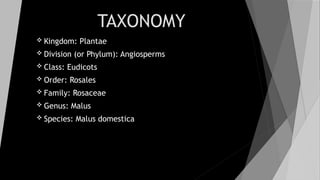
TAXONOMY
 Kingdom: Plantae
 Division (or Phylum): Angiosperms
 Class: Eudicots
 Order: Rosales
 Family: Rosaceae
 Genus: Malus
 Species: Malus domestica
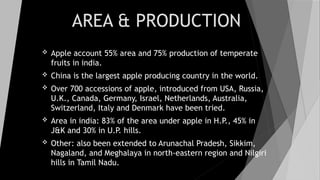
AREA & PRODUCTION
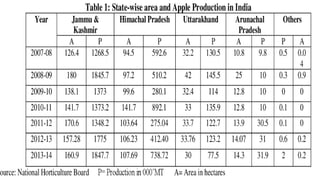
 Apple account 55% area and 75% production of temperate
fruits in india.
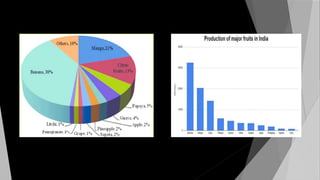
 China is the largest apple producing country in the world.
 Over 700 accessions of apple, introduced from USA, Russia,
U.K., Canada, Germany, Israel, Netherlands, Australia,
Switzerland, Italy and Denmark have been tried.
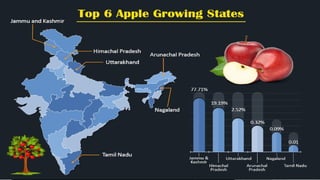
 Area in india: 83% of the area under apple in H.P., 45% in
J&K and 30% in U.P. hills.
 Other: also been extended to Arunachal Pradesh, Sikkim,
Nagaland, and Meghalaya in north-eastern region and Nilgiri
hills in Tamil Nadu.
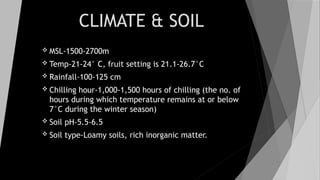
CLIMATE & SOIL
 MSL-1500-2700m
 Temp-21-24° C, fruit setting is 21.1-26.7°C
 Rainfall-100-125 cm
 Chilling hour-1,000-1,500 hours of chilling (the no. of
hours during which temperature remains at or below
7°C during the winter season)
 Soil pH-5.5-6.5
 Soil type-Loamy soils, rich inorganic matter.
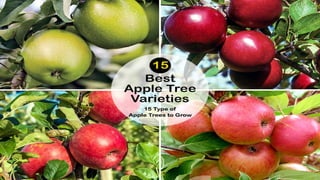
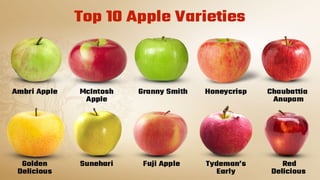
VARIETIES
 Red Delicious: Known for its bright red color and mildly
sweet flavor. Often eaten fresh but not as commonly used
for cooking or baking due to its softer texture.
 Golden Delicious: Has a sweet and mellow flavor with a
yellow to golden skin. Suitable for both fresh eating and
cooking.
 Granny Smith: Recognizable by its bright green color and
tart flavor.
 Often used in baking, as its tartness holds up well in pies
and crisps.
 Fuji: Has a sweet and crisp taste with a yellow and pink
skin. Good for eating fresh and adds a sweet element to
salads.
 Gala: Features a sweet and aromatic flavor with a thin skin.
Popular for fresh eating and salads.
 Honey crisp: Known for its exceptionally crisp texture and sweet-
tart flavor. Often enjoyed fresh and is a favorite for snacking.
 Cortland: Has a sweet-tart flavor and is resistant to browning,
making it suitable for salads and snacks. Often used in baking and
cooking.
 Pink Lady (Cripps Pink): Recognized by its pink blush and sweet-
tart taste. Holds up well in cooking and baking.
 Braeburn: Offers a balanced sweet and tart flavor with a firm
texture. Suitable for both fresh eating and cooking.
 McIntosh: Known for its juicy and tender texture with a sweet and
slightly tart taste. Often used in applesauce and baking.
NUTRITIONAL BENEFITS
 Dietary Fiber: Apples are rich in dietary fiber, especially soluble fiber known
as pectin. Fiber promotes digestive health and helps prevent constipation.
 Vitamins and Minerals:
 Vitamin C: Apples contain vitamin C, an antioxidant that supports the immune
system and helps the body absorb iron.
 Other Vitamins: Apples also provide small amounts of other vitamins, such as
vitamin A, vitamin K, and various B vitamins.
 Minerals: They contain minerals like potassium, which is essential for heart
health.
 Antioxidants: Apples are a good source of antioxidants, including flavonoids
and polyphenols. These compounds help protect cells from oxidative stress
and inflammation.
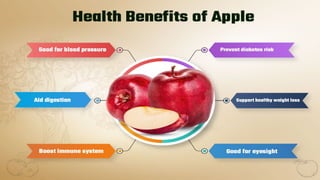
 Heart Health: The fiber and antioxidants in apples contribute to heart health by
lowering cholesterol levels and reducing the risk of cardiovascular disease.
 Blood Sugar Regulation: The fiber content in apples, particularly
soluble fiber, can help regulate blood sugar levels and may be
beneficial for individuals with diabetes.
 Weight Management: The high fiber content in apples can
contribute to a feeling of fullness, potentially aiding in weight
management by reducing overall calorie intake.
 Hydration: Apples have a high water content, contributing to
overall hydration.
 Oral Health: Chewing apples stimulates saliva production, which
can help reduce the risk of tooth decay and maintain oral health.
 Anti-Inflammatory Properties: Some compounds in apples have
anti-inflammatory effects, potentially contributing to overall
health and disease prevention.
VERSATILITY
 Fresh Eating: Enjoy apples as a nutritious and convenient snack. Pair them
with cheese for a simple and tasty appetizer.
 Salads: Add sliced or diced apples to salads for a sweet and crunchy element.
Combine them with leafy greens, nuts, and cheese for a flavorful salad.
 Baking: Use apples in pies, crisps, and cobblers for a classic and comforting
dessert. Bake apple muffins, cakes, or bread for a delicious treat.
 Applesauce: Make homemade applesauce by cooking apples with sugar and
spices. It can be enjoyed on its own or used as a topping or ingredient in various
dishes.
 Smoothies: Blend apples into smoothies for a natural sweetness and extra
fiber. Combine them with yogurt, berries, and greens for a nutritious drink.
 Juicing: Extract apple juice either on its own or as part of a fruit and
vegetable juice blend. Mix it with other fruits or vegetables for a refreshing
beverage.
 Cider and Vinegar: Produce apple cider, which can be enjoyed hot or cold.
Use apple cider vinegar in dressings, marinades, and as a condiment.
 Dried Apples: Dehydrate apple slices to create a portable and nutritious
snack. Incorporate dried apples into trail mixes or granola.
 Stuffing: Include diced apples in stuffing recipes for added sweetness and
texture. Pair them with herbs, nuts, and other ingredients for a flavorful
stuffing.
 Savory Dishes: Incorporate apples into savory dishes like casseroles,
stews, and grain-based salads. Their natural sweetness can complement
the savory and salty flavors in various recipes.
 Preserves and Jams: Make apple preserves, jams, or jellies to spread on
toast or use as a topping. Combine apples with other fruits for a unique
flavor profile.
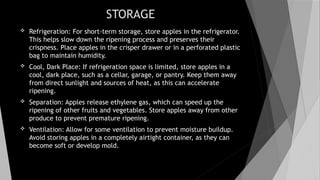
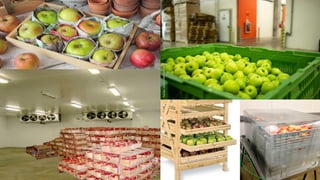
STORAGE
 Refrigeration: For short-term storage, store apples in the refrigerator.
This helps slow down the ripening process and preserves their
crispness. Place apples in the crisper drawer or in a perforated plastic
bag to maintain humidity.
 Cool, Dark Place: If refrigeration space is limited, store apples in a
cool, dark place, such as a cellar, garage, or pantry. Keep them away
from direct sunlight and sources of heat, as this can accelerate
ripening.
 Separation: Apples release ethylene gas, which can speed up the
ripening of other fruits and vegetables. Store apples away from other
produce to prevent premature ripening.
 Ventilation: Allow for some ventilation to prevent moisture buildup.
Avoid storing apples in a completely airtight container, as they can
become soft or develop mold.
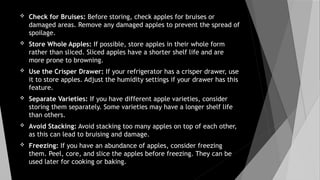
 Check for Bruises: Before storing, check apples for bruises or
damaged areas. Remove any damaged apples to prevent the spread of
spoilage.
 Store Whole Apples: If possible, store apples in their whole form
rather than sliced. Sliced apples have a shorter shelf life and are
more prone to browning.
 Use the Crisper Drawer: If your refrigerator has a crisper drawer, use
it to store apples. Adjust the humidity settings if your drawer has this
feature.
 Separate Varieties: If you have different apple varieties, consider
storing them separately. Some varieties may have a longer shelf life
than others.
 Avoid Stacking: Avoid stacking too many apples on top of each other,
as this can lead to bruising and damage.
 Freezing: If you have an abundance of apples, consider freezing
them. Peel, core, and slice the apples before freezing. They can be
used later for cooking or baking.
 Cultural Significance:
 Apples are often associated with folklore and mythology, such as
the story of Adam and Eve.
 Traditionally linked to health with the saying "an apple a day
keeps the doctor away."
 Environmental Impact:
 Apple trees contribute to environmental health by absorbing
carbon dioxide and producing oxygen.
 Sustainable farming practices are crucial for minimizing the
environmental impact of apple cultivation.
ECONOMIC IMPORTANCE
 Commercial Agriculture: Apples are a major crop in many countries, and
their cultivation supports a large segment of the agricultural industry.
Apple orchards contribute to the overall economy by providing
employment and income for farmers.
 Global Production and Trade: Apples are one of the most widely
cultivated and traded fruits globally. Major apple-producing countries
include China, the United States, Poland, India, and Russia. The
international trade of apples is significant, with countries exporting and
importing apples to meet consumer demand.
 Job Creation: The cultivation, harvesting, and processing of apples
create employment opportunities for a diverse range of workers,
including farmers, seasonal laborers, and workers in processing and
packaging facilities.
 Processing Industry: Apples are processed into various products, including
applesauce, apple juice, cider, dried apples, and apple-based snacks.
The processing industry adds value to the fruit and creates additional
economic opportunities.
 Cider and Beverage Industry: The production of apple cider and other apple-based
beverages has become a growing industry. Craft cider production, in particular, has
seen increased popularity, leading to economic opportunities for local producers.
 Export Revenue: Many countries rely on apple exports as a source of revenue. Exporting
apples allows countries with favorable growing conditions to supply regions with less
suitable climates.
 Tourism and Agritourism: Apple orchards often attract tourists, especially during the
harvest season. Agritourism activities such as apple picking, farm tours, and cider
tastings contribute to local economies.
 Retail and Grocery Industry: Apples are a staple in grocery stores and supermarkets,
contributing to the revenue of the retail and distribution sectors. Their year-round
availability makes them a consistent product in the fresh produce section.
 Biotechnology and Research: Research and development in apple cultivation, disease
resistance, and improved varieties contribute to the agricultural sector's efficiency and
sustainability.
 Job Diversity: The apple industry provides a range of jobs, from agricultural laborers to
scientists working on breeding and disease-resistant varieties, contributing to job
diversity in rural and urban areas.
MEANS OF FINANCE
❖ National Horticulture Board (NHB) Scheme: The NHB offers money
help to farmers who want to grow apple. They provide subsidies and
loans under different programs like the Capital Investment Subsidy
Scheme and the Commercial Horticulture Scheme. Loan:-
Rs.35,30,000
❖ NABARD Loans: The National Bank for Agriculture and Rural
Development (NABARD) offers loans to farmers for apple farming
through schemes like the Farm Sector Promotion Fund and the Rural
Infrastructure Development Fund.
❖ State Government Schemes: Each state in India has its own special
programs to help farmers, including those who want to cultivate
apple. To find out about these options, you can contact your state's
agriculture department or related agencies.
 Agricultural Credit Cooperatives: These are banks and credit
organizations in rural areas. They lend money to farmers for their
farming needs. They are often a good choice for small-scale farmers,
and they offer loans with reasonable interest rates.
 Pradhan Mantri Fasal Bima Yojana (PMFBY): This is an insurance plan
provided by the Indian government. It helps farmers by giving them
insurance coverage and financial support if their crops are damaged
or fail.
 For apple cultivation, the most suitable financial
assistance option would typically be the National
Horticulture Board (NHB) Scheme.
 The NHB offers specific support for horticultural crops and
provides subsidies and loans to help farmers with their
saffron cultivation efforts.
 It is designed to promote and develop horticulture, making
it a good choice for apple cultivation project.
INVESTMENT
 Raw Material ---- Rs.90,000 per hectare
 Employee ---- Rs.2,00,000
 Equipment's ---- Rs.8,50,000
 Soil Preparation {Na, P, K} ---- Rs.20,000 per hectare
 Advertisement ---- Rs.50,000
 Other Supplies (Electricity, water supply etc.) ---- Rs.1,50,000
 Transportation ---- Rs.3,00,000
 Storage ---- Rs.1,00,000
2020 2021 2022 2023
0
500000
1000000
1500000
2000000
2500000
Chart Title
INVERTMENT PROFIT
CULTIVATION PLAN
We have 10 hectare of land.
 40% of land will be used for cultivating golden delicious apple.
 40% of land will be used for cultivating red delicious apple.
 Rest of the 20% of land will be used for developing a cross breed
variety and bee keeping.
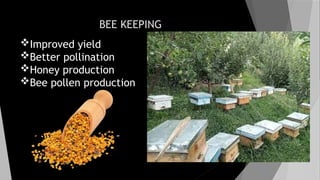
BEE KEEPING
Improved yield
Better pollination
Honey production
Bee pollen production
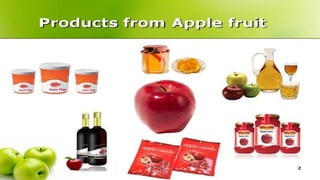
APPLE FRUIT PRODUCTS
 Apple Juice and Cider: Freshly pressed apples are used to make apple
juice and cider.
 Apple Sauce: Cooked and mashed apples can be turned into
applesauce, a versatile condiment.
 Dried Apples: Dehydrated apples become dried fruit snacks .
 Apple Jam and Jelly: Apples can be transformed into sweet spreads.
 Apple Cider Vinegar: Fermented apple juice results in apple cider
vinegar.
 Apple-based Snacks: Sliced and dried apples, as well as apple chips,
are popular healthy snacks.
 Apple-flavored Beverages: Apple flavor is used in various beverages,
from teas to flavored water.
UTILIZATION OF APPLE WASTE
 Use of low grade apples for manufacturing by-products.
 Production of apple jam.
 Production of apple honey mead.
 Utilization of apple peels and pomace.
 Peels are rich source of fiber and pectin.
 Use of apple waste as bio fertilizers.
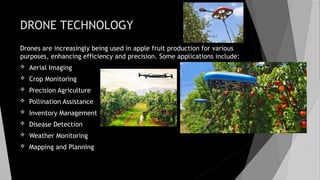
DRONE TECHNOLOGY
Drones are increasingly being used in apple fruit production for various
purposes, enhancing efficiency and precision. Some applications include:
 Aerial Imaging
 Crop Monitoring
 Precision Agriculture
 Pollination Assistance
 Inventory Management
 Disease Detection
 Weather Monitoring
 Mapping and Planning
THANK YOU

Apple presentation idea that gives idea how to write.

  • 1.
    LOCATION: DHARAMKOT Made by:- Shubhankar (H- 2020-05-051), Sahil (H-2020-05- 041), Anshul (H-2020-05-004), Adhikansh (H- 2020-05-002)
  • 3.
    INTRODUCTION  King oftemperate fruit, symbol of health, premier fruit of the world.  Deciduous fruit tree.  Most widely grown temperate fruit of the world.  Apple bowl of India-Himachal Pradesh Among the fruit apple have long storage life
  • 4.
    TAXONOMY  Kingdom: Plantae Division (or Phylum): Angiosperms  Class: Eudicots  Order: Rosales  Family: Rosaceae  Genus: Malus  Species: Malus domestica
  • 5.
    AREA & PRODUCTION Apple account 55% area and 75% production of temperate fruits in india.  China is the largest apple producing country in the world.  Over 700 accessions of apple, introduced from USA, Russia, U.K., Canada, Germany, Israel, Netherlands, Australia, Switzerland, Italy and Denmark have been tried.  Area in india: 83% of the area under apple in H.P., 45% in J&K and 30% in U.P. hills.  Other: also been extended to Arunachal Pradesh, Sikkim, Nagaland, and Meghalaya in north-eastern region and Nilgiri hills in Tamil Nadu.
  • 6.
    CLIMATE & SOIL MSL-1500-2700m  Temp-21-24° C, fruit setting is 21.1-26.7°C  Rainfall-100-125 cm  Chilling hour-1,000-1,500 hours of chilling (the no. of hours during which temperature remains at or below 7°C during the winter season)  Soil pH-5.5-6.5  Soil type-Loamy soils, rich inorganic matter.
  • 9.
    VARIETIES  Red Delicious:Known for its bright red color and mildly sweet flavor. Often eaten fresh but not as commonly used for cooking or baking due to its softer texture.  Golden Delicious: Has a sweet and mellow flavor with a yellow to golden skin. Suitable for both fresh eating and cooking.  Granny Smith: Recognizable by its bright green color and tart flavor.  Often used in baking, as its tartness holds up well in pies and crisps.  Fuji: Has a sweet and crisp taste with a yellow and pink skin. Good for eating fresh and adds a sweet element to salads.
  • 10.
     Gala: Featuresa sweet and aromatic flavor with a thin skin. Popular for fresh eating and salads.  Honey crisp: Known for its exceptionally crisp texture and sweet- tart flavor. Often enjoyed fresh and is a favorite for snacking.  Cortland: Has a sweet-tart flavor and is resistant to browning, making it suitable for salads and snacks. Often used in baking and cooking.  Pink Lady (Cripps Pink): Recognized by its pink blush and sweet- tart taste. Holds up well in cooking and baking.  Braeburn: Offers a balanced sweet and tart flavor with a firm texture. Suitable for both fresh eating and cooking.  McIntosh: Known for its juicy and tender texture with a sweet and slightly tart taste. Often used in applesauce and baking.
  • 12.
    NUTRITIONAL BENEFITS  DietaryFiber: Apples are rich in dietary fiber, especially soluble fiber known as pectin. Fiber promotes digestive health and helps prevent constipation.  Vitamins and Minerals:  Vitamin C: Apples contain vitamin C, an antioxidant that supports the immune system and helps the body absorb iron.  Other Vitamins: Apples also provide small amounts of other vitamins, such as vitamin A, vitamin K, and various B vitamins.  Minerals: They contain minerals like potassium, which is essential for heart health.  Antioxidants: Apples are a good source of antioxidants, including flavonoids and polyphenols. These compounds help protect cells from oxidative stress and inflammation.
  • 13.
     Heart Health:The fiber and antioxidants in apples contribute to heart health by lowering cholesterol levels and reducing the risk of cardiovascular disease.  Blood Sugar Regulation: The fiber content in apples, particularly soluble fiber, can help regulate blood sugar levels and may be beneficial for individuals with diabetes.  Weight Management: The high fiber content in apples can contribute to a feeling of fullness, potentially aiding in weight management by reducing overall calorie intake.  Hydration: Apples have a high water content, contributing to overall hydration.  Oral Health: Chewing apples stimulates saliva production, which can help reduce the risk of tooth decay and maintain oral health.  Anti-Inflammatory Properties: Some compounds in apples have anti-inflammatory effects, potentially contributing to overall health and disease prevention.
  • 14.
    VERSATILITY  Fresh Eating:Enjoy apples as a nutritious and convenient snack. Pair them with cheese for a simple and tasty appetizer.  Salads: Add sliced or diced apples to salads for a sweet and crunchy element. Combine them with leafy greens, nuts, and cheese for a flavorful salad.  Baking: Use apples in pies, crisps, and cobblers for a classic and comforting dessert. Bake apple muffins, cakes, or bread for a delicious treat.  Applesauce: Make homemade applesauce by cooking apples with sugar and spices. It can be enjoyed on its own or used as a topping or ingredient in various dishes.  Smoothies: Blend apples into smoothies for a natural sweetness and extra fiber. Combine them with yogurt, berries, and greens for a nutritious drink.  Juicing: Extract apple juice either on its own or as part of a fruit and vegetable juice blend. Mix it with other fruits or vegetables for a refreshing beverage.
  • 15.
     Cider andVinegar: Produce apple cider, which can be enjoyed hot or cold. Use apple cider vinegar in dressings, marinades, and as a condiment.  Dried Apples: Dehydrate apple slices to create a portable and nutritious snack. Incorporate dried apples into trail mixes or granola.  Stuffing: Include diced apples in stuffing recipes for added sweetness and texture. Pair them with herbs, nuts, and other ingredients for a flavorful stuffing.  Savory Dishes: Incorporate apples into savory dishes like casseroles, stews, and grain-based salads. Their natural sweetness can complement the savory and salty flavors in various recipes.  Preserves and Jams: Make apple preserves, jams, or jellies to spread on toast or use as a topping. Combine apples with other fruits for a unique flavor profile.
  • 17.
    STORAGE  Refrigeration: Forshort-term storage, store apples in the refrigerator. This helps slow down the ripening process and preserves their crispness. Place apples in the crisper drawer or in a perforated plastic bag to maintain humidity.  Cool, Dark Place: If refrigeration space is limited, store apples in a cool, dark place, such as a cellar, garage, or pantry. Keep them away from direct sunlight and sources of heat, as this can accelerate ripening.  Separation: Apples release ethylene gas, which can speed up the ripening of other fruits and vegetables. Store apples away from other produce to prevent premature ripening.  Ventilation: Allow for some ventilation to prevent moisture buildup. Avoid storing apples in a completely airtight container, as they can become soft or develop mold.
  • 18.
     Check forBruises: Before storing, check apples for bruises or damaged areas. Remove any damaged apples to prevent the spread of spoilage.  Store Whole Apples: If possible, store apples in their whole form rather than sliced. Sliced apples have a shorter shelf life and are more prone to browning.  Use the Crisper Drawer: If your refrigerator has a crisper drawer, use it to store apples. Adjust the humidity settings if your drawer has this feature.  Separate Varieties: If you have different apple varieties, consider storing them separately. Some varieties may have a longer shelf life than others.  Avoid Stacking: Avoid stacking too many apples on top of each other, as this can lead to bruising and damage.  Freezing: If you have an abundance of apples, consider freezing them. Peel, core, and slice the apples before freezing. They can be used later for cooking or baking.
  • 20.
     Cultural Significance: Apples are often associated with folklore and mythology, such as the story of Adam and Eve.  Traditionally linked to health with the saying "an apple a day keeps the doctor away."  Environmental Impact:  Apple trees contribute to environmental health by absorbing carbon dioxide and producing oxygen.  Sustainable farming practices are crucial for minimizing the environmental impact of apple cultivation.
  • 21.
    ECONOMIC IMPORTANCE  CommercialAgriculture: Apples are a major crop in many countries, and their cultivation supports a large segment of the agricultural industry. Apple orchards contribute to the overall economy by providing employment and income for farmers.  Global Production and Trade: Apples are one of the most widely cultivated and traded fruits globally. Major apple-producing countries include China, the United States, Poland, India, and Russia. The international trade of apples is significant, with countries exporting and importing apples to meet consumer demand.  Job Creation: The cultivation, harvesting, and processing of apples create employment opportunities for a diverse range of workers, including farmers, seasonal laborers, and workers in processing and packaging facilities.  Processing Industry: Apples are processed into various products, including applesauce, apple juice, cider, dried apples, and apple-based snacks. The processing industry adds value to the fruit and creates additional economic opportunities.
  • 22.
     Cider andBeverage Industry: The production of apple cider and other apple-based beverages has become a growing industry. Craft cider production, in particular, has seen increased popularity, leading to economic opportunities for local producers.  Export Revenue: Many countries rely on apple exports as a source of revenue. Exporting apples allows countries with favorable growing conditions to supply regions with less suitable climates.  Tourism and Agritourism: Apple orchards often attract tourists, especially during the harvest season. Agritourism activities such as apple picking, farm tours, and cider tastings contribute to local economies.  Retail and Grocery Industry: Apples are a staple in grocery stores and supermarkets, contributing to the revenue of the retail and distribution sectors. Their year-round availability makes them a consistent product in the fresh produce section.  Biotechnology and Research: Research and development in apple cultivation, disease resistance, and improved varieties contribute to the agricultural sector's efficiency and sustainability.  Job Diversity: The apple industry provides a range of jobs, from agricultural laborers to scientists working on breeding and disease-resistant varieties, contributing to job diversity in rural and urban areas.
  • 29.
    MEANS OF FINANCE ❖National Horticulture Board (NHB) Scheme: The NHB offers money help to farmers who want to grow apple. They provide subsidies and loans under different programs like the Capital Investment Subsidy Scheme and the Commercial Horticulture Scheme. Loan:- Rs.35,30,000 ❖ NABARD Loans: The National Bank for Agriculture and Rural Development (NABARD) offers loans to farmers for apple farming through schemes like the Farm Sector Promotion Fund and the Rural Infrastructure Development Fund. ❖ State Government Schemes: Each state in India has its own special programs to help farmers, including those who want to cultivate apple. To find out about these options, you can contact your state's agriculture department or related agencies.
  • 30.
     Agricultural CreditCooperatives: These are banks and credit organizations in rural areas. They lend money to farmers for their farming needs. They are often a good choice for small-scale farmers, and they offer loans with reasonable interest rates.  Pradhan Mantri Fasal Bima Yojana (PMFBY): This is an insurance plan provided by the Indian government. It helps farmers by giving them insurance coverage and financial support if their crops are damaged or fail.
  • 31.
     For applecultivation, the most suitable financial assistance option would typically be the National Horticulture Board (NHB) Scheme.  The NHB offers specific support for horticultural crops and provides subsidies and loans to help farmers with their saffron cultivation efforts.  It is designed to promote and develop horticulture, making it a good choice for apple cultivation project.
  • 32.
    INVESTMENT  Raw Material---- Rs.90,000 per hectare  Employee ---- Rs.2,00,000  Equipment's ---- Rs.8,50,000  Soil Preparation {Na, P, K} ---- Rs.20,000 per hectare  Advertisement ---- Rs.50,000  Other Supplies (Electricity, water supply etc.) ---- Rs.1,50,000  Transportation ---- Rs.3,00,000  Storage ---- Rs.1,00,000
  • 33.
    2020 2021 20222023 0 500000 1000000 1500000 2000000 2500000 Chart Title INVERTMENT PROFIT
  • 34.
    CULTIVATION PLAN We have10 hectare of land.  40% of land will be used for cultivating golden delicious apple.  40% of land will be used for cultivating red delicious apple.  Rest of the 20% of land will be used for developing a cross breed variety and bee keeping.
  • 35.
    BEE KEEPING Improved yield Betterpollination Honey production Bee pollen production
  • 36.
    APPLE FRUIT PRODUCTS Apple Juice and Cider: Freshly pressed apples are used to make apple juice and cider.  Apple Sauce: Cooked and mashed apples can be turned into applesauce, a versatile condiment.  Dried Apples: Dehydrated apples become dried fruit snacks .  Apple Jam and Jelly: Apples can be transformed into sweet spreads.  Apple Cider Vinegar: Fermented apple juice results in apple cider vinegar.  Apple-based Snacks: Sliced and dried apples, as well as apple chips, are popular healthy snacks.  Apple-flavored Beverages: Apple flavor is used in various beverages, from teas to flavored water.
  • 38.
    UTILIZATION OF APPLEWASTE  Use of low grade apples for manufacturing by-products.  Production of apple jam.  Production of apple honey mead.  Utilization of apple peels and pomace.  Peels are rich source of fiber and pectin.  Use of apple waste as bio fertilizers.
  • 39.
    DRONE TECHNOLOGY Drones areincreasingly being used in apple fruit production for various purposes, enhancing efficiency and precision. Some applications include:  Aerial Imaging  Crop Monitoring  Precision Agriculture  Pollination Assistance  Inventory Management  Disease Detection  Weather Monitoring  Mapping and Planning
  • 43.