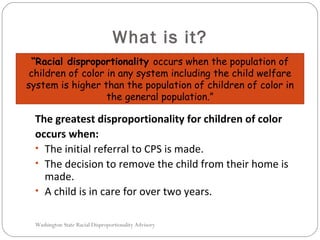
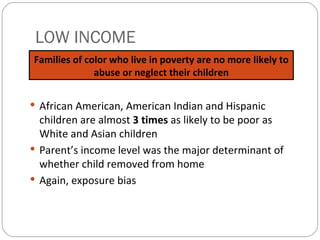
Racial disproportionality occurs in the child welfare system when the population of children of color in foster care is higher than that of the general population. The greatest disproportionality is seen at the initial referral to CPS, the decision to remove a child from the home, and for children who remain in care over two years. Mandated reporters submit most referrals to CPS and their exposure bias contributes to higher disproportionality rates. Poverty also increases the likelihood of removal due to exposure bias, though poverty alone does not increase the likelihood of abuse or neglect. Native American, African American, and Hispanic children experience higher rates of referral and time in foster care compared to white children.