Apache Web Server
Quick and Dirty
Steve Gibbard for SANOG 16
(Originally by Joel Jaeggli for AfNOG 2007)
About Apache
 Apache http server project
 http://httpd.apache.org
 Apache foundation started to support the web
server project, but now extends to a multitude
of other projects.
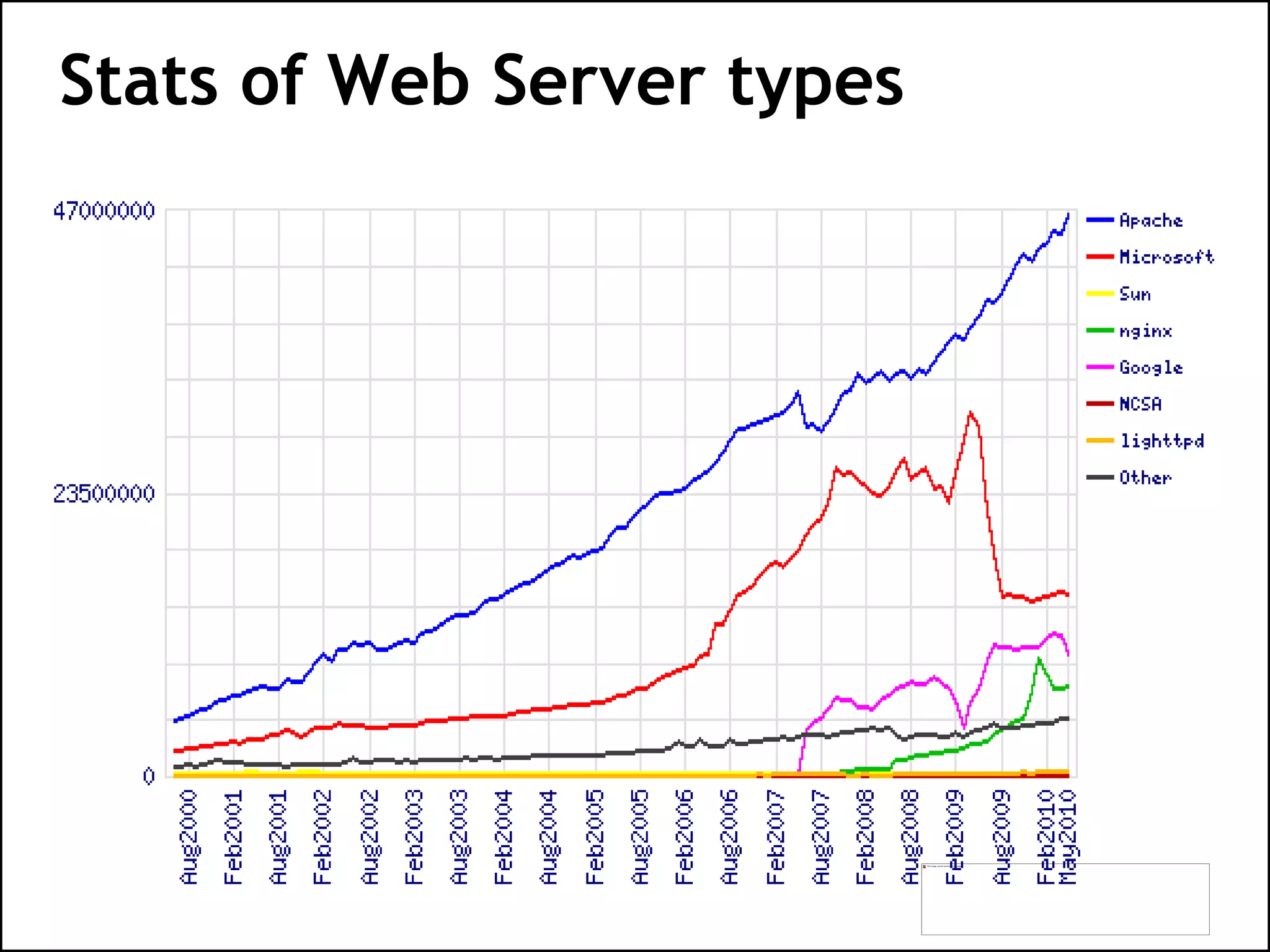
Stats of Web Server types
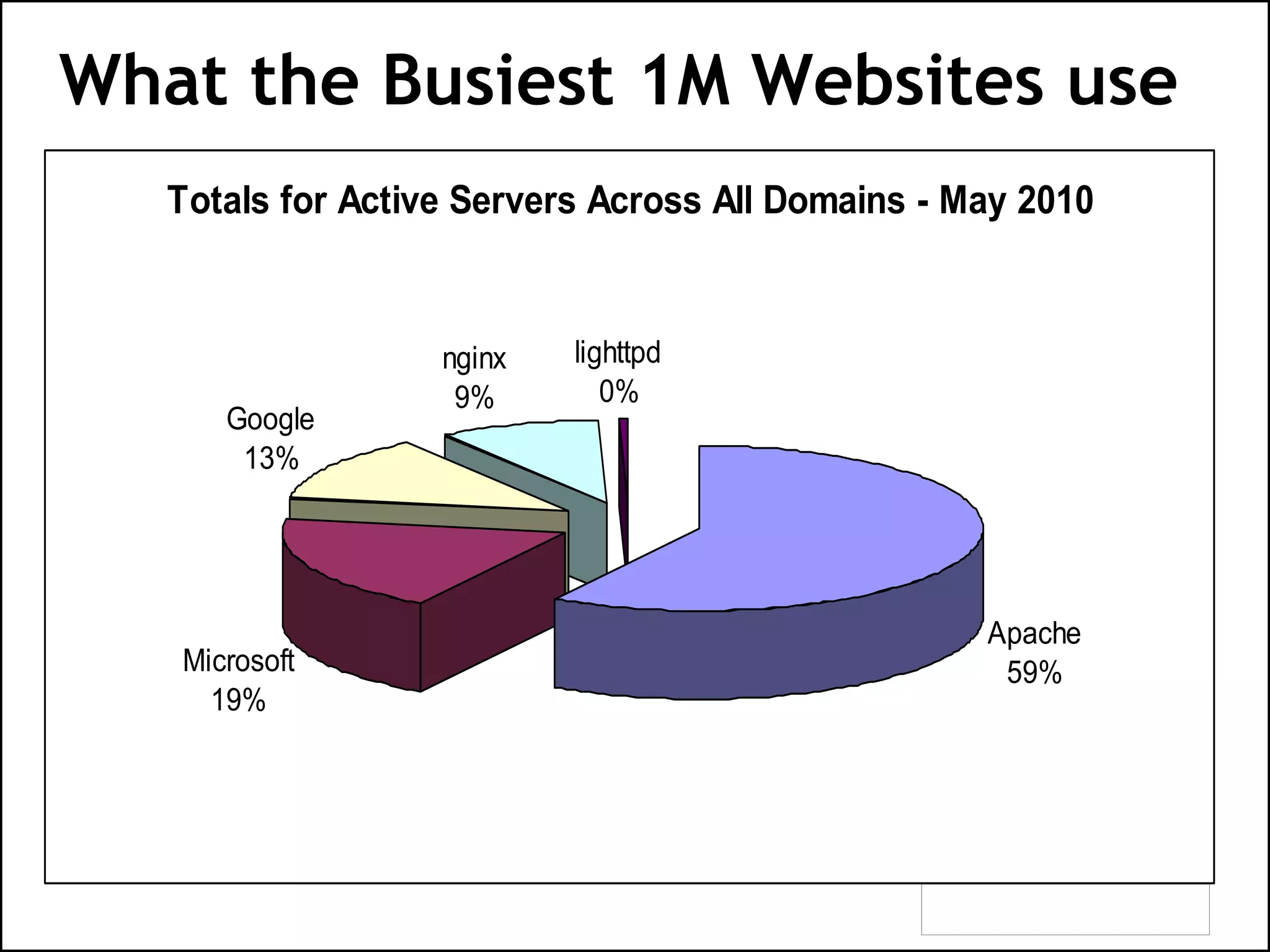
What the Busiest 1M Websites use
Totals for Active Servers Across All Domains - May 2010
Apache
59%
Microsoft
19%
Google
13%
nginx
9%
lighttpd
0%
Apache Installation on FreeBSD
 Apache can be installed from Ports
/usr/ports/www/apache22
 Can be installed from pkg_add
 Or from source if one requires a
more recent version what's on
FreeBSD source ports tree
File System Layout
 config files are in /usr/local/etc/apache22/
 files the webserver will serve are in
/usr/local/www/apache22/data/
 Startup script is
/usr/local/etc/rc.d/apache22
 Take a look in
/usr/local/etc/rc.d/apache22
 Add apache22_enable="YES" to /etc/rc.conf
 Run
/usr/local/etc/rc.d/apache22 start
 Restart
$ apachectl restart
Apache SSL
 Secure Socket Layer (SSL) port is 443
 SSL is important to protect communication
between browser and web-server
 Requires the creation of SSL certificates and
Certificate Signing Requests (CSR)
 For integrity SSL certificates are signed by a
Certificate Authority’s (CA) such as Verisign
 Self signed Certificates will also work but your
browser will not trust it and will give a warning to
users (which most don’t read)
 Refer to the Creating SSL Certificate Exercise
Section
How SSL Works
 Each SSL certificate has a Public and Private
key
 The Public Key is used to encrypt the
information
 The Public Key is accessible to everyone
 The private Key is used to decipher the
information
 The private should be not be disclosed
Role of Certificate Authority
 There are a number of CA that certify
certificates
 Most browsers have pre-included public Keys
from the CA’s
 A CA certified certificate will have validation
information signed by the CA’s private key
 The browser will decrypt the validation
information using the public key and verify
that the certificate is certified by the CA
 If this fails a warning is given
Virtual Hosting
 Apache Provides multiple options of virtual
hosting and scales
 Name Based virtual hosts
 IP Based Virtual Hosts
 Aliases
 Its recommended to use an IP address over
hostnames in virtual hosting configuration
 Refer to virtual hosting Exercise section
Installing PHP & Mysql
 PhP and Mysql implementations have increased
driven mainly by development requests
 LAMP and WAMP are the most common
implementations
 FreeBSD = “FAMP” ?
http://geekybits.blogspot.com/2007/09/creating
-famp-server.html
 Installation via ports and relatively straight
forward
 See PHP & Mysql installation exercise section
Apache and IPv6
 Apache supports IPv4 and IPv6 by default
 Set the listen option to port 80 will listen for
both IPv4 and IPv6
 listen option with IPv4 and IPv6 specific
addresses will invoke different sockets for
each protocol
Listen 196.200.219.xx:80
Listen [2001:4348:0:219:196.200.219:xx]:80
Start Apache!
 /usr/local/etc/rc.d/apache22 start
 Check that you can access
http://localhost in your browser
 Check that you can access
https://localhost in your browser, and
that you get a certificate warning
 Click on the padlock icon in your browser and
check that the certificate details are correct
 Profit!
Apache implementations
 Apache is widely used to serve many content
applications
 Webmail, Blogs, Wiki’s, CMS etc
 Attempt to install wordpress and configure it
Start Exercises

apache.ppt

  • 1.
    Apache Web Server Quickand Dirty Steve Gibbard for SANOG 16 (Originally by Joel Jaeggli for AfNOG 2007)
  • 2.
    About Apache  Apachehttp server project  http://httpd.apache.org  Apache foundation started to support the web server project, but now extends to a multitude of other projects.
  • 3.
    Stats of WebServer types
  • 4.
    What the Busiest1M Websites use Totals for Active Servers Across All Domains - May 2010 Apache 59% Microsoft 19% Google 13% nginx 9% lighttpd 0%
  • 5.
    Apache Installation onFreeBSD  Apache can be installed from Ports /usr/ports/www/apache22  Can be installed from pkg_add  Or from source if one requires a more recent version what's on FreeBSD source ports tree
  • 6.
    File System Layout config files are in /usr/local/etc/apache22/  files the webserver will serve are in /usr/local/www/apache22/data/  Startup script is /usr/local/etc/rc.d/apache22  Take a look in /usr/local/etc/rc.d/apache22  Add apache22_enable="YES" to /etc/rc.conf  Run /usr/local/etc/rc.d/apache22 start  Restart $ apachectl restart
  • 7.
    Apache SSL  SecureSocket Layer (SSL) port is 443  SSL is important to protect communication between browser and web-server  Requires the creation of SSL certificates and Certificate Signing Requests (CSR)  For integrity SSL certificates are signed by a Certificate Authority’s (CA) such as Verisign  Self signed Certificates will also work but your browser will not trust it and will give a warning to users (which most don’t read)  Refer to the Creating SSL Certificate Exercise Section
  • 8.
    How SSL Works Each SSL certificate has a Public and Private key  The Public Key is used to encrypt the information  The Public Key is accessible to everyone  The private Key is used to decipher the information  The private should be not be disclosed
  • 9.
    Role of CertificateAuthority  There are a number of CA that certify certificates  Most browsers have pre-included public Keys from the CA’s  A CA certified certificate will have validation information signed by the CA’s private key  The browser will decrypt the validation information using the public key and verify that the certificate is certified by the CA  If this fails a warning is given
  • 10.
    Virtual Hosting  ApacheProvides multiple options of virtual hosting and scales  Name Based virtual hosts  IP Based Virtual Hosts  Aliases  Its recommended to use an IP address over hostnames in virtual hosting configuration  Refer to virtual hosting Exercise section
  • 11.
    Installing PHP &Mysql  PhP and Mysql implementations have increased driven mainly by development requests  LAMP and WAMP are the most common implementations  FreeBSD = “FAMP” ? http://geekybits.blogspot.com/2007/09/creating -famp-server.html  Installation via ports and relatively straight forward  See PHP & Mysql installation exercise section
  • 12.
    Apache and IPv6 Apache supports IPv4 and IPv6 by default  Set the listen option to port 80 will listen for both IPv4 and IPv6  listen option with IPv4 and IPv6 specific addresses will invoke different sockets for each protocol Listen 196.200.219.xx:80 Listen [2001:4348:0:219:196.200.219:xx]:80
  • 13.
    Start Apache!  /usr/local/etc/rc.d/apache22start  Check that you can access http://localhost in your browser  Check that you can access https://localhost in your browser, and that you get a certificate warning  Click on the padlock icon in your browser and check that the certificate details are correct  Profit!
  • 14.
    Apache implementations  Apacheis widely used to serve many content applications  Webmail, Blogs, Wiki’s, CMS etc  Attempt to install wordpress and configure it
  • 15.