Antigen presenting cells
( APCs)
Antigen processing &
presentation
Foreign protein antigen are degraded into small
antigenic peptides that from complexes with class
| or class || MHC molecule..
This conversion of proteins into MHC associated
peptide fragments is called antigen processing and
presentation.
Antigen presenting cells( APCs)
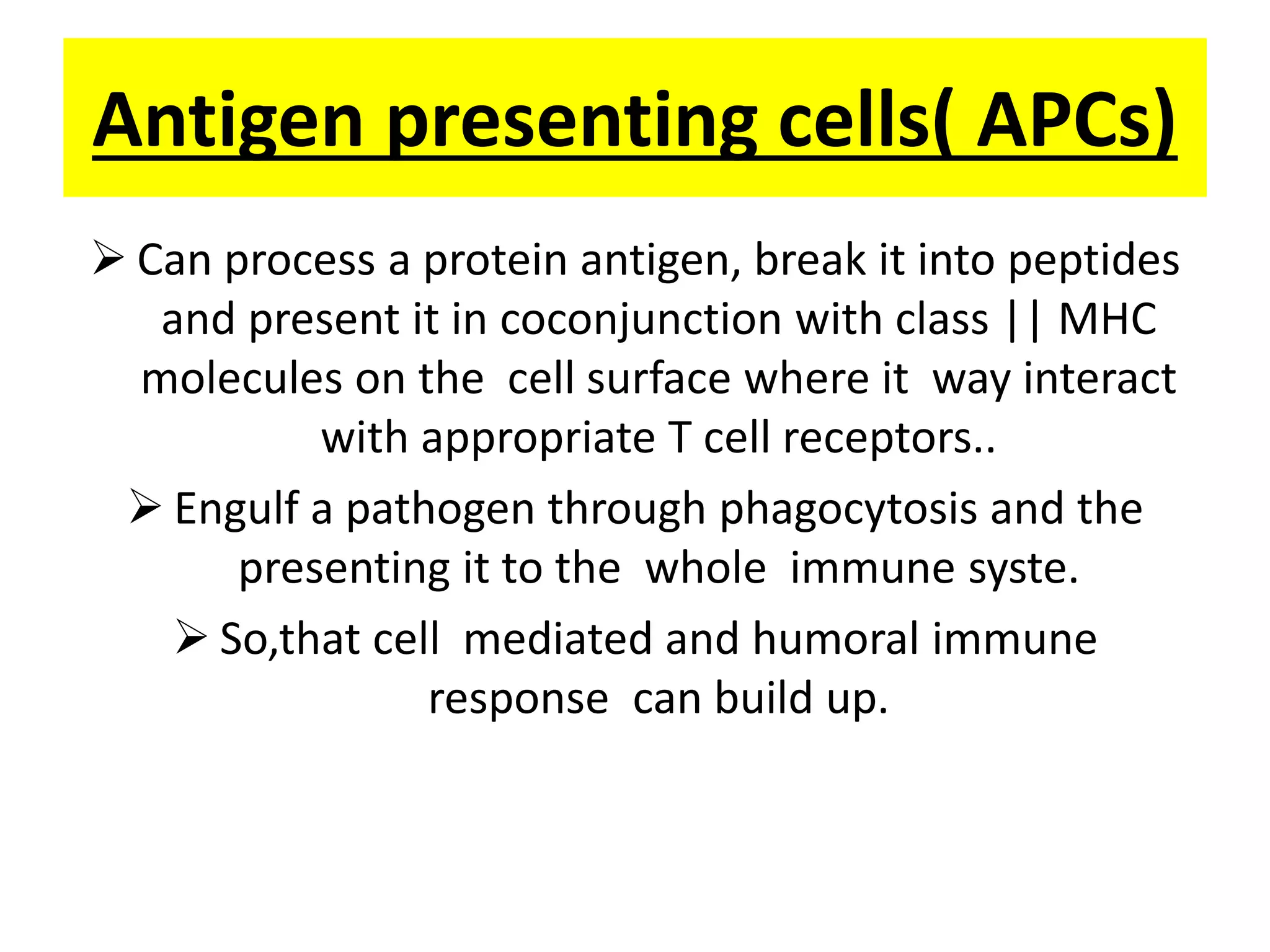
 Can process a protein antigen, break it into peptides
and present it in coconjunction with class || MHC
molecules on the cell surface where it way interact
with appropriate T cell receptors..
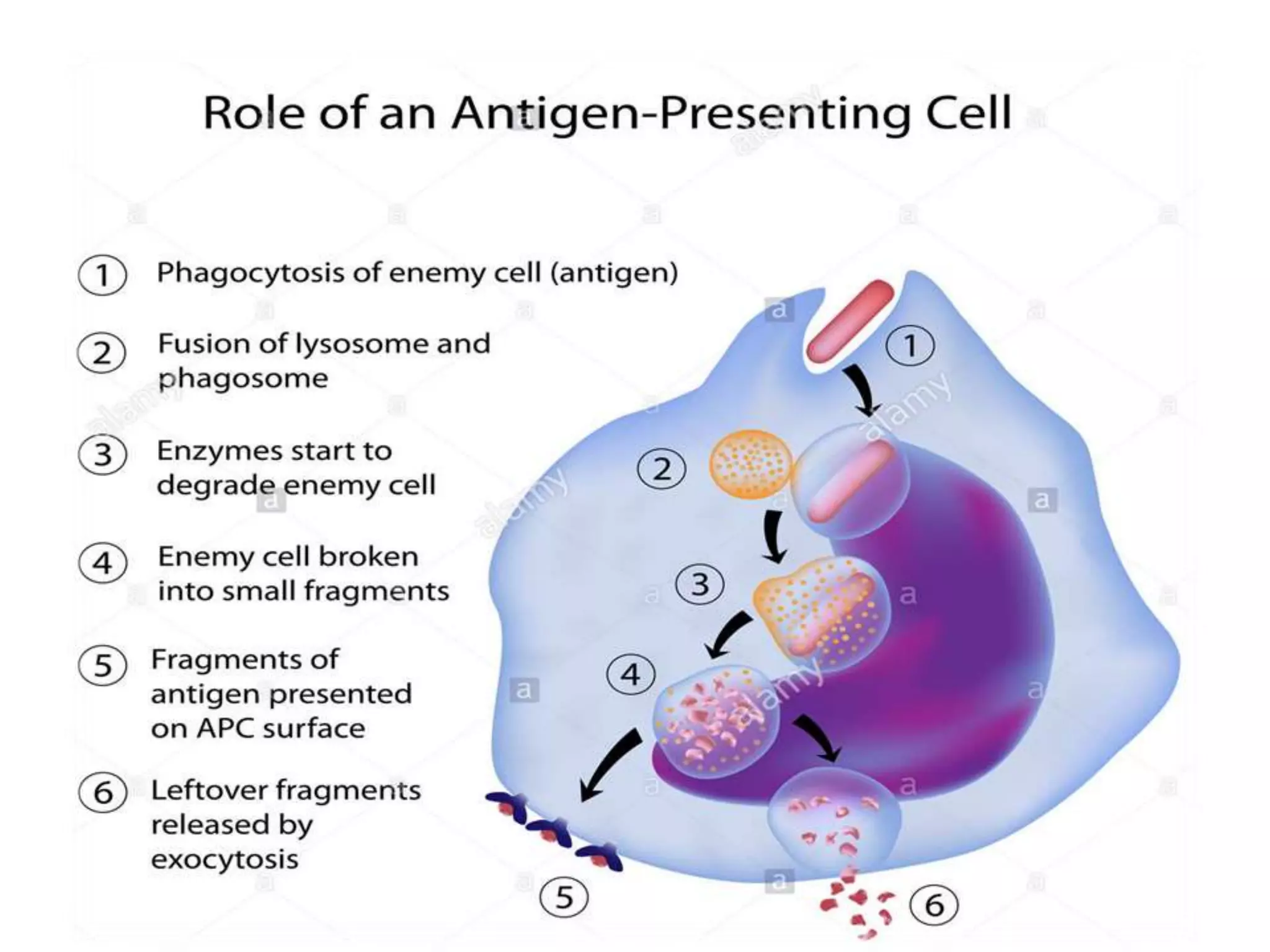
 Engulf a pathogen through phagocytosis and the
presenting it to the whole immune syste.
 So,that cell mediated and humoral immune
response can build up.
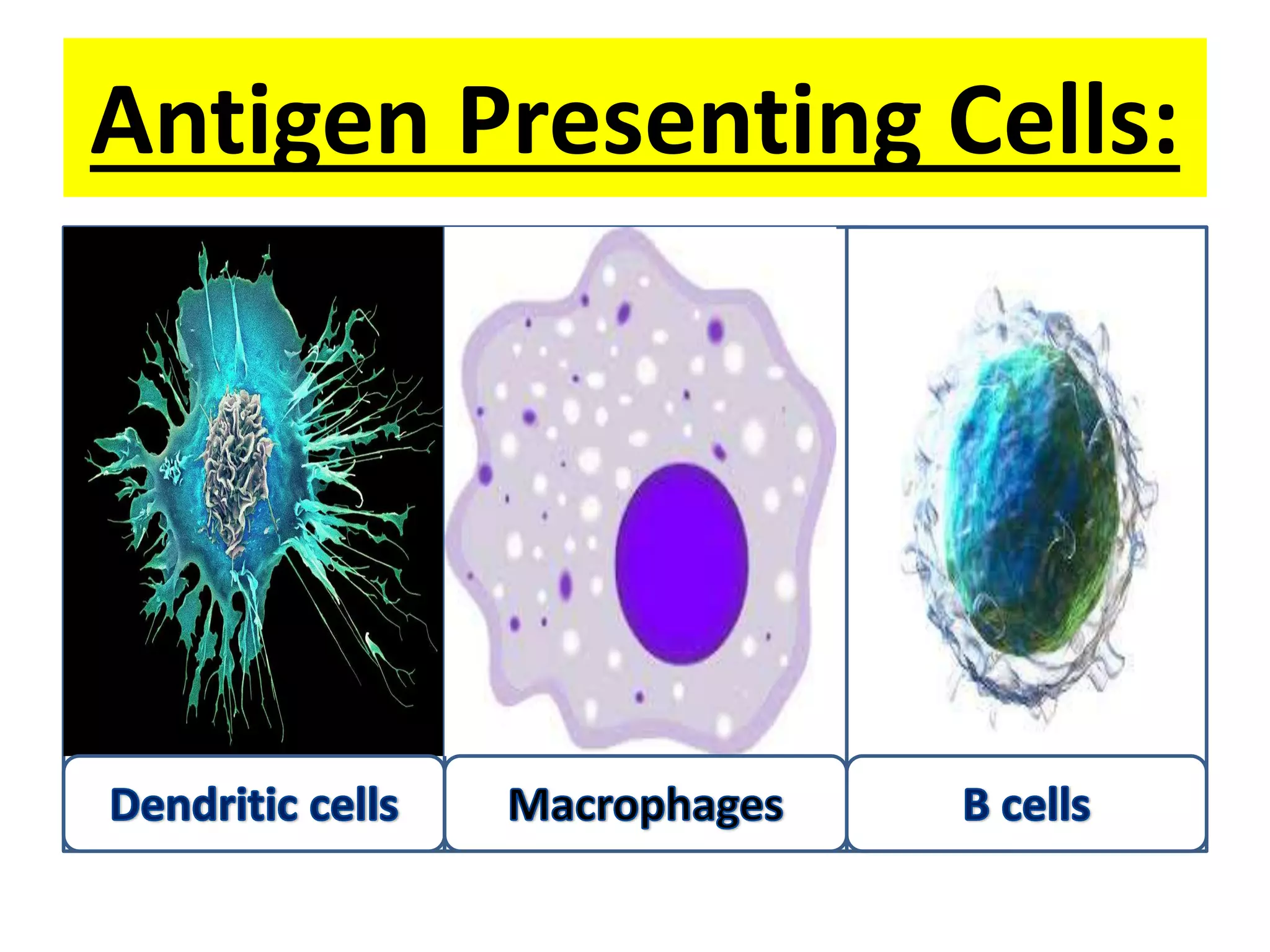
Antigen Presenting Cells:
Dendritic cells:
Dendritic cells are the antigen presenting cells
of mammalian immune system.
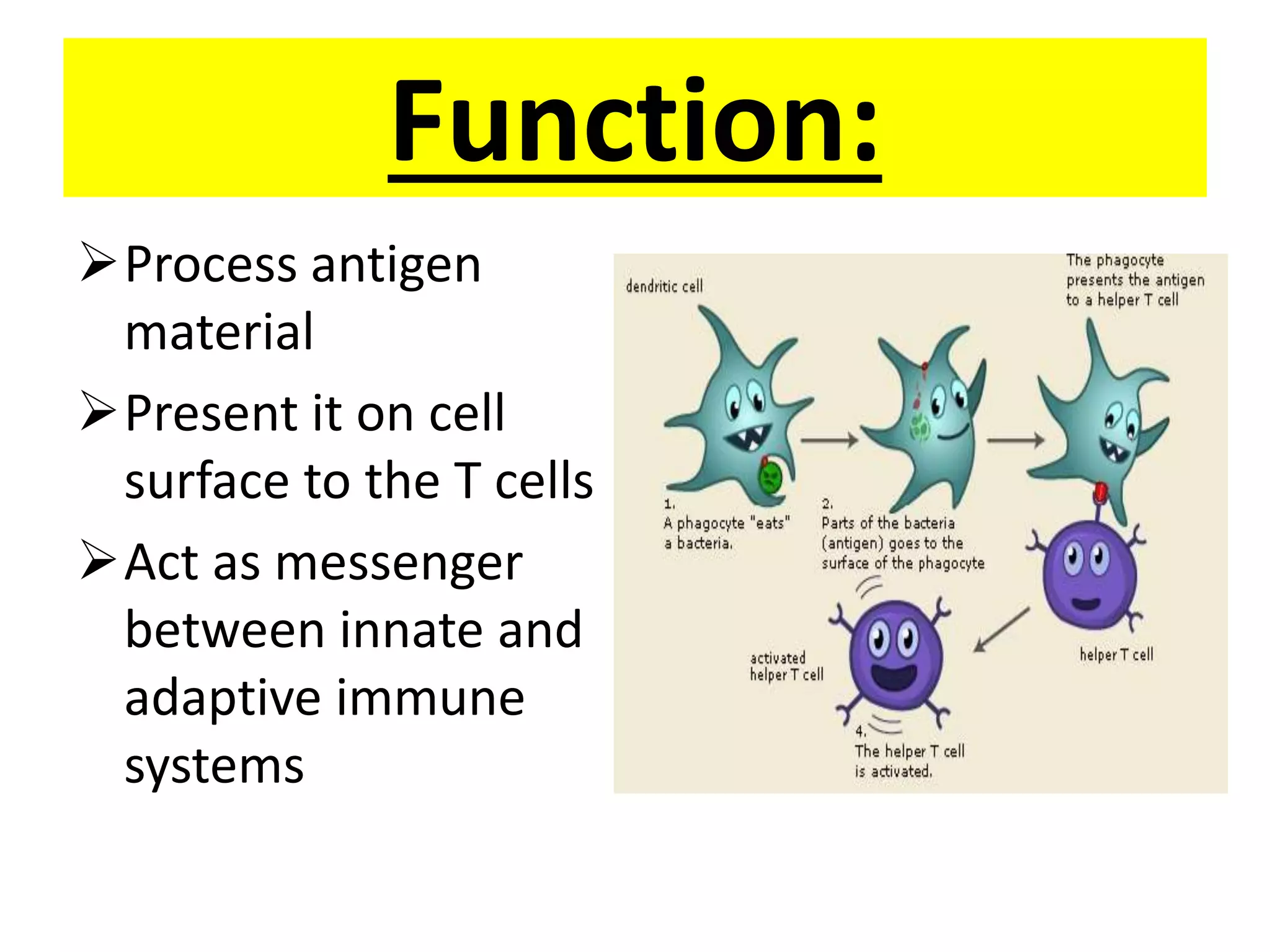
Function:
Process antigen
material
Present it on cell
surface to the T cells
Act as messenger
between innate and
adaptive immune
systems
Classes:
 There are three
major subclasses
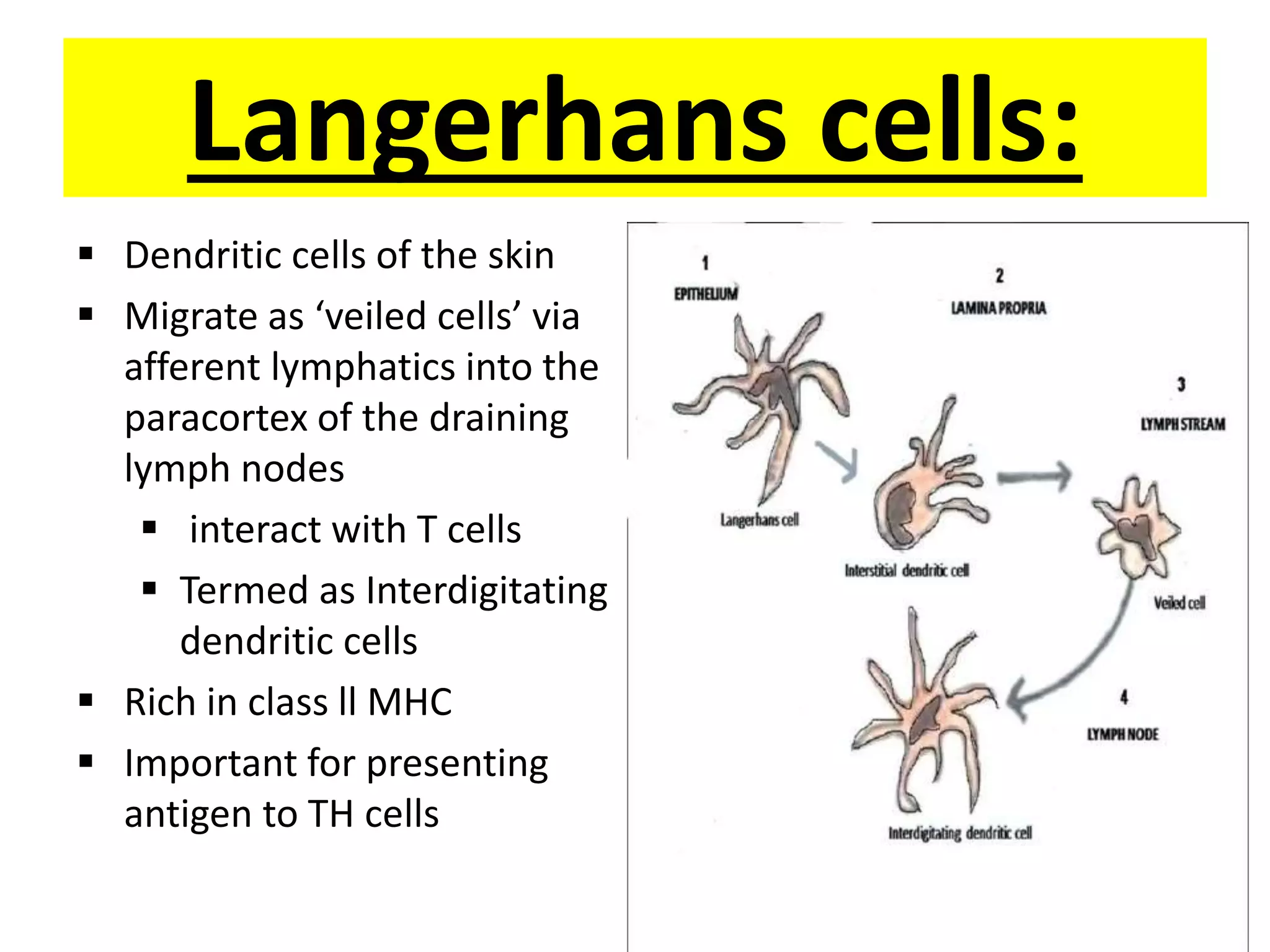
Langerhans cells:
 Dendritic cells of the skin
 Migrate as ‘veiled cells’ via
afferent lymphatics into the
paracortex of the draining
lymph nodes
 interact with T cells
 Termed as Interdigitating
dendritic cells
 Rich in class ll MHC
 Important for presenting
antigen to TH cells
Interdigitating cells:
Present in thymus
Abundant in medulla
Delete T cells that react against self antigen
Negative selection
Follicular dendritic cells:
 Found in primary and secondary follicles of B
cells areas of lymphoid tissue
 Present antigen to B cells
 Non migrating
 Express FC receptors
 Lack class ll MHC molecules
 Bind antigen via complement receptors (CD21,
CD35)
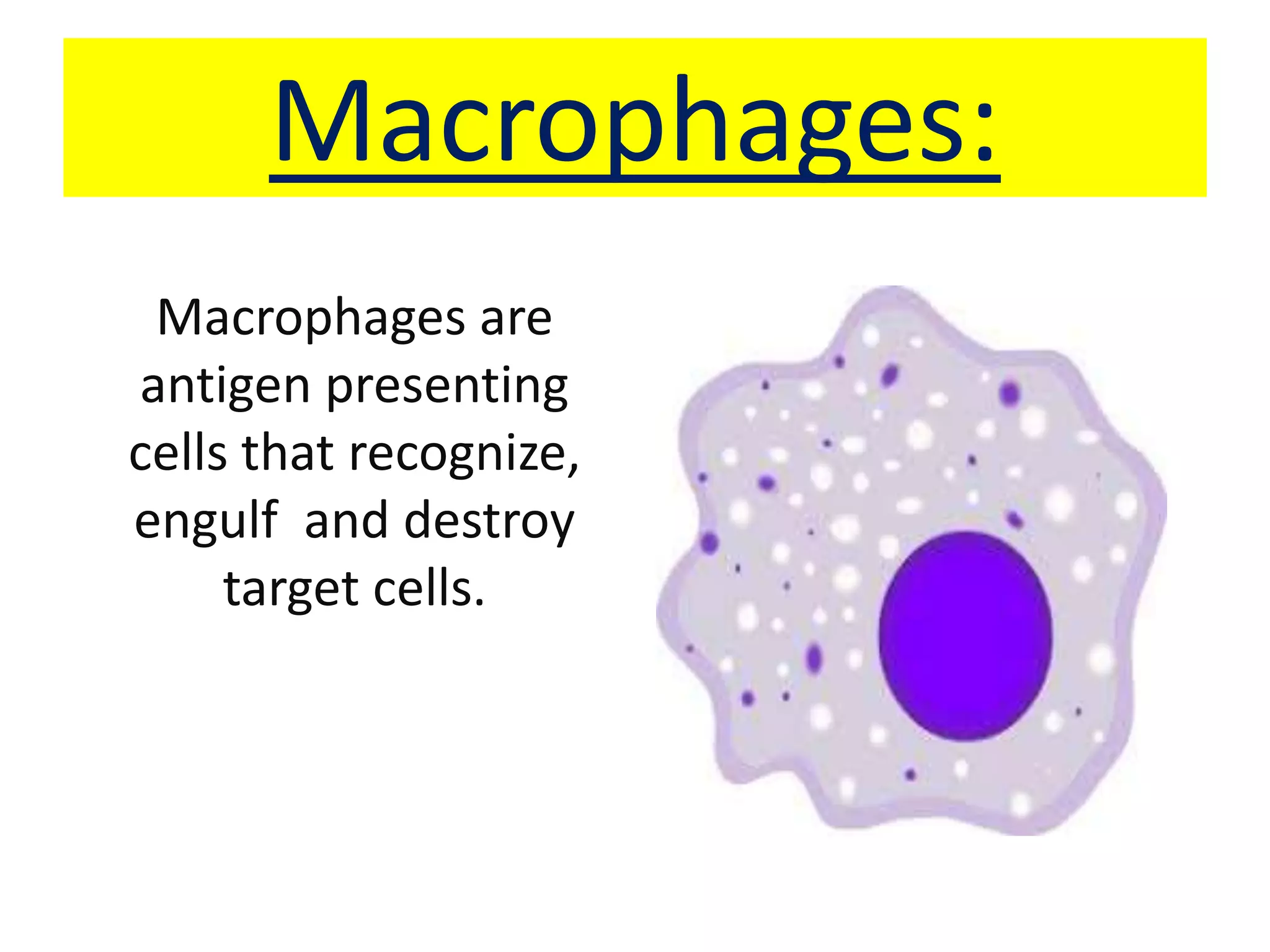
Macrophages:
Macrophages are
antigen presenting
cells that recognize,
engulf and destroy
target cells.
How does a macrophages act as
an antigen presenting cell?
 After the activation,
macrophages are able
to express MHC class II
and co-stimulatory
molecules , including
the B7 complex and can
present phagocytosed
peptide fragments to
helper T cells.
B Cells:
B cells , also known
as B lymphocytes,
are a type of white
blood cell of small
lymphocyte
subtype.
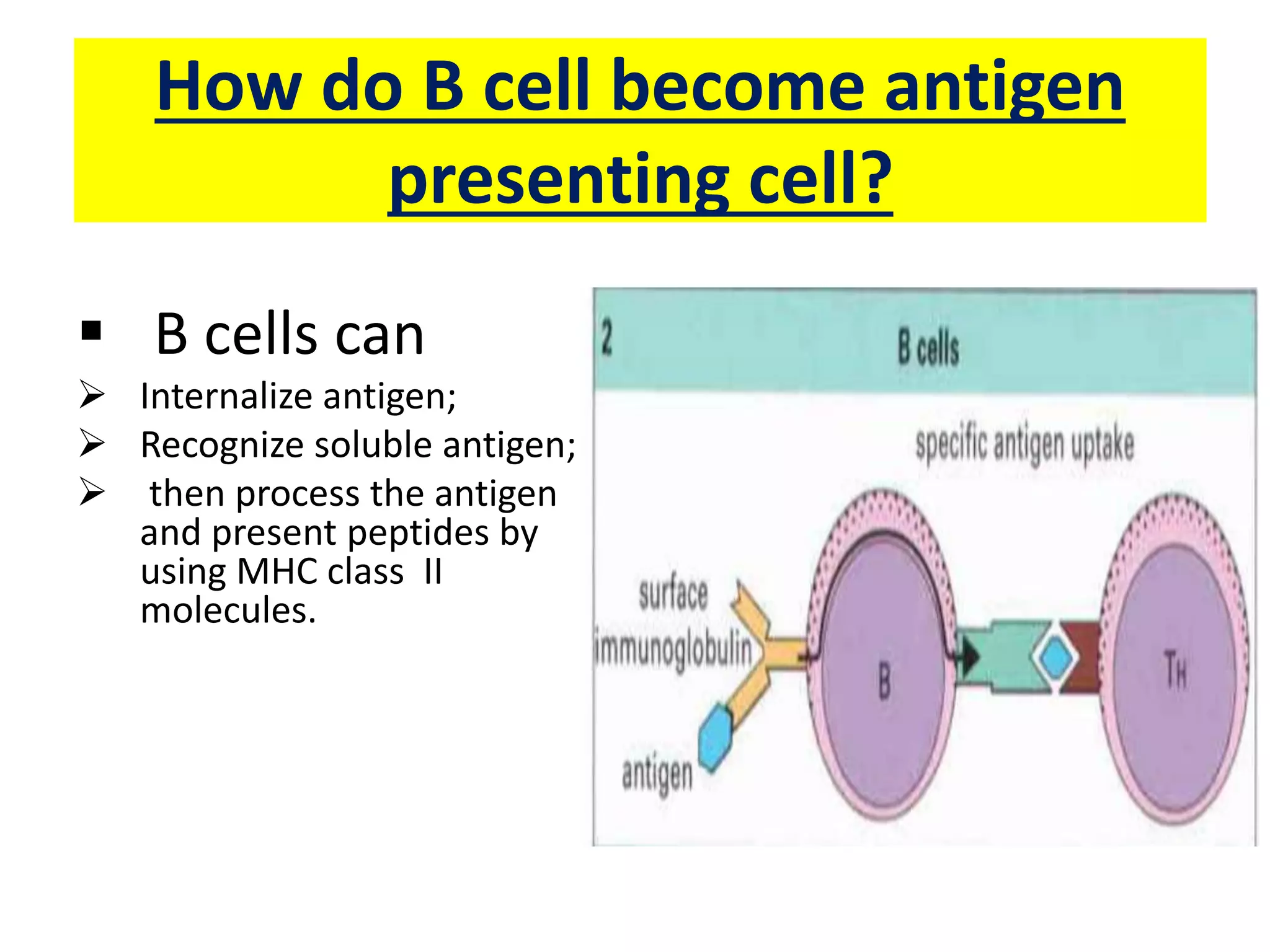
How do B cell become antigen
presenting cell?
 B cells can
 Internalize antigen;
 Recognize soluble antigen;
 then process the antigen
and present peptides by
using MHC class II
molecules.
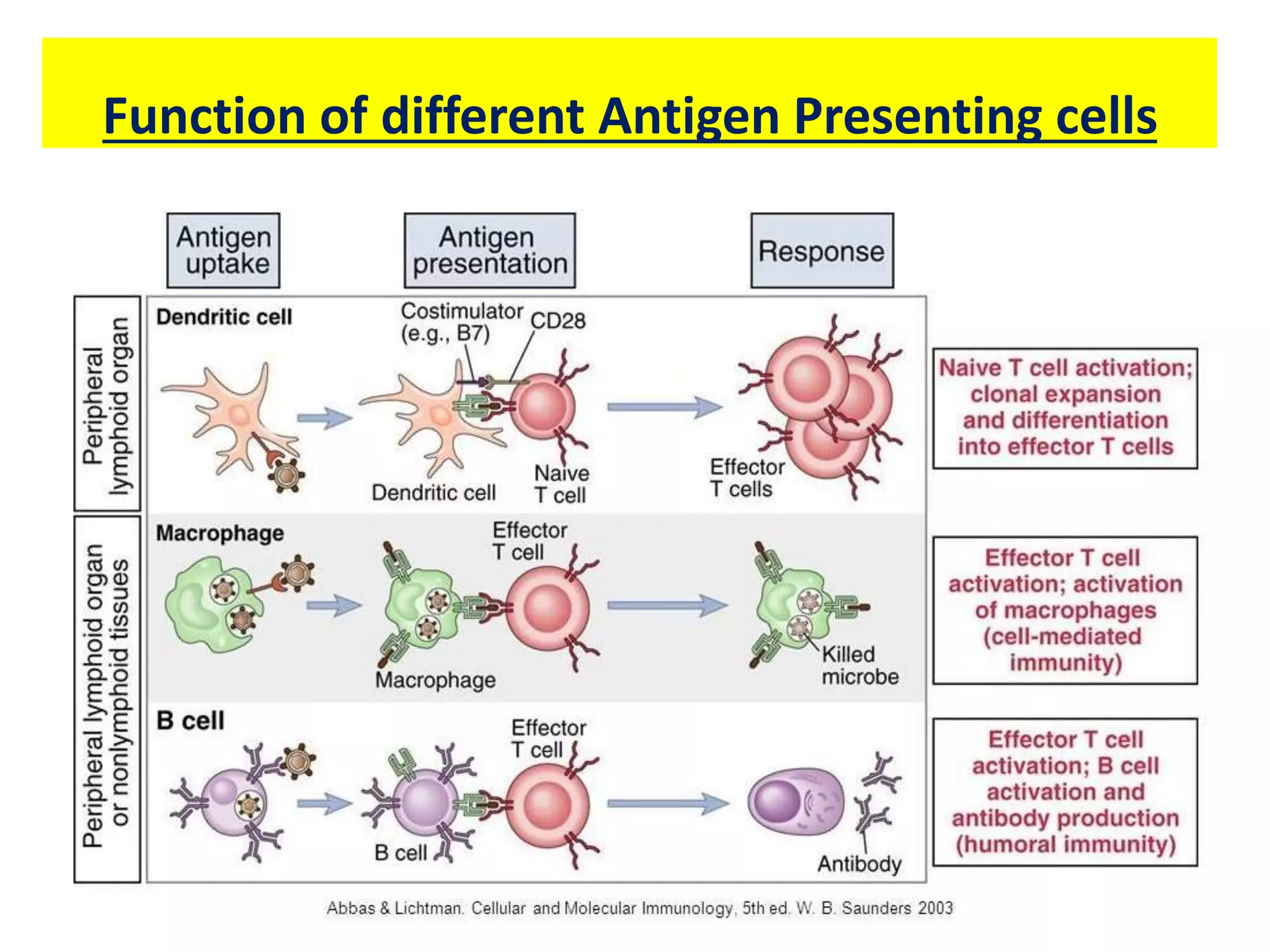
Function of different Antigen Presenting cells
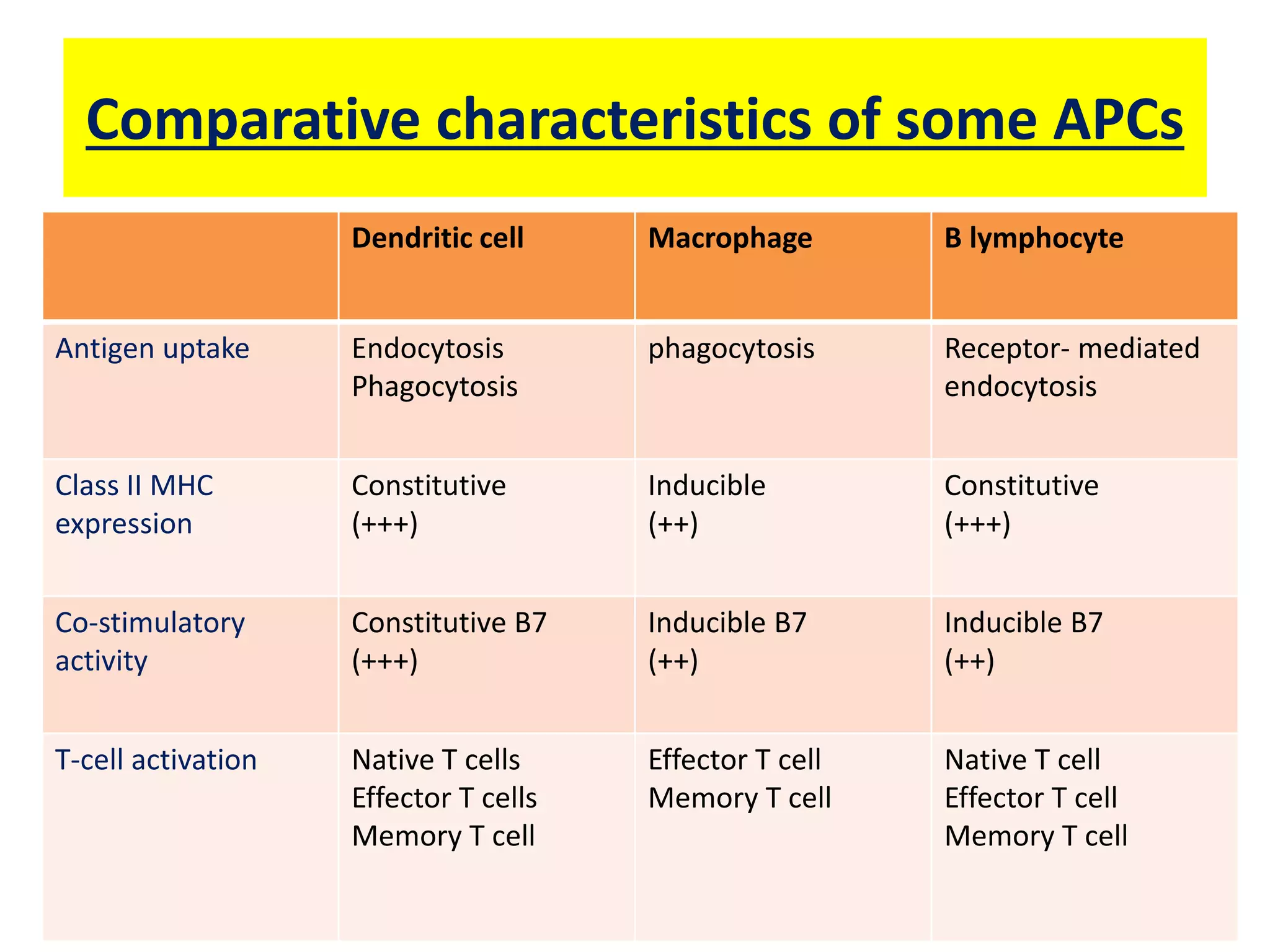
Comparative characteristics of some APCs
Dendritic cell Macrophage B lymphocyte
Antigen uptake Endocytosis
Phagocytosis
phagocytosis Receptor- mediated
endocytosis
Class II MHC
expression
Constitutive
(+++)
Inducible
(++)
Constitutive
(+++)
Co-stimulatory
activity
Constitutive B7
(+++)
Inducible B7
(++)
Inducible B7
(++)
T-cell activation Native T cells
Effector T cells
Memory T cell
Effector T cell
Memory T cell
Native T cell
Effector T cell
Memory T cell
Antigen processing and presentation
The process by which pathogens and their
products are degraded to produce peptide
antigens is known as Antigen Processing
These peptide fragments combine with MHC
molecules inside cell
The MHC-peptide complex thus formed travels
to the cell surface where it displays peptide
fragments to T cells. This is known as Antigen
Presentation.
Components:
MHC(Major Histocompatibility Complex),CD(Cluster of
Designation)4+,CD8+,CD80/86,CD28,IL-1,2..,TCR,etc.
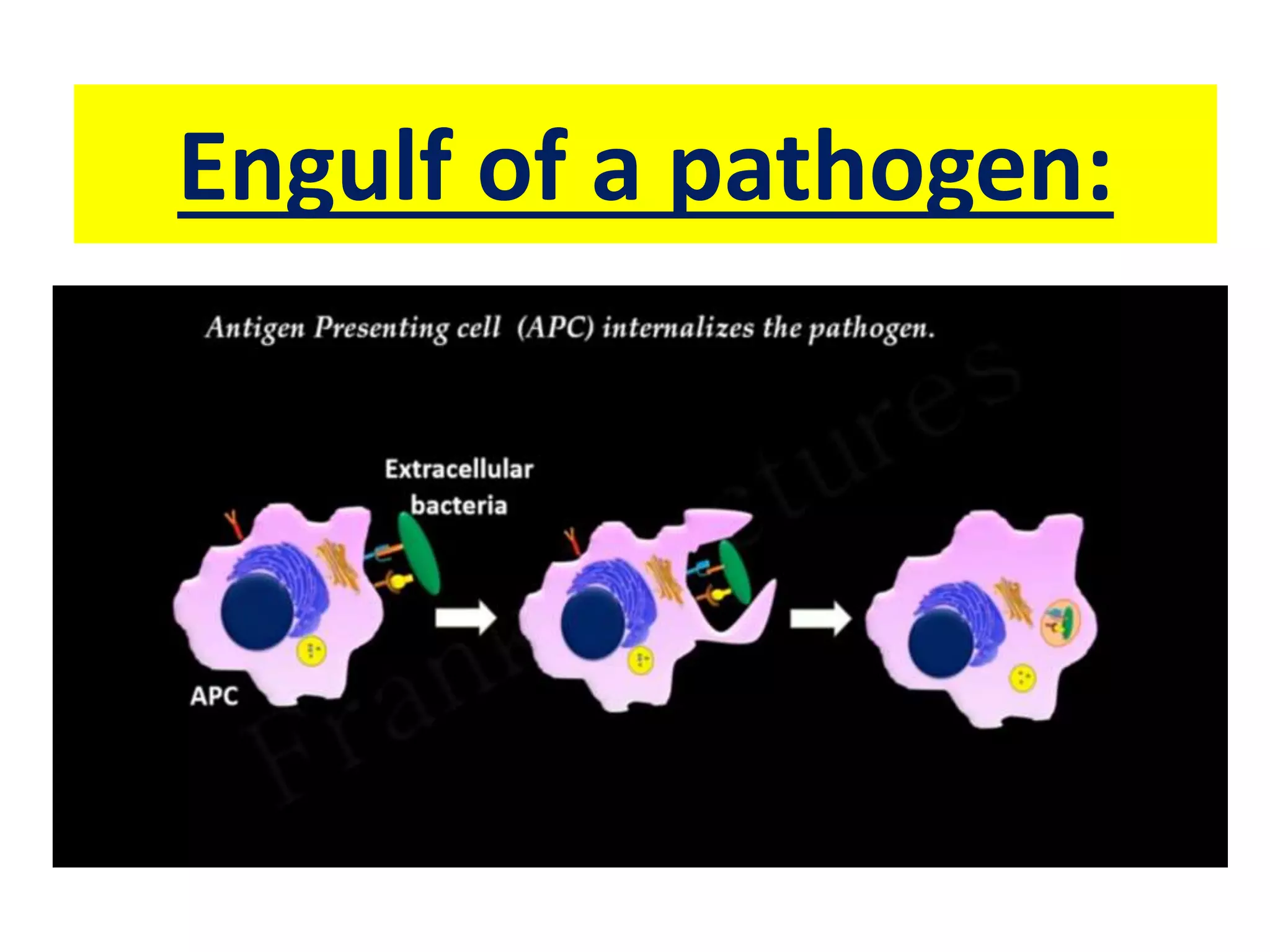
Engulf of a pathogen:
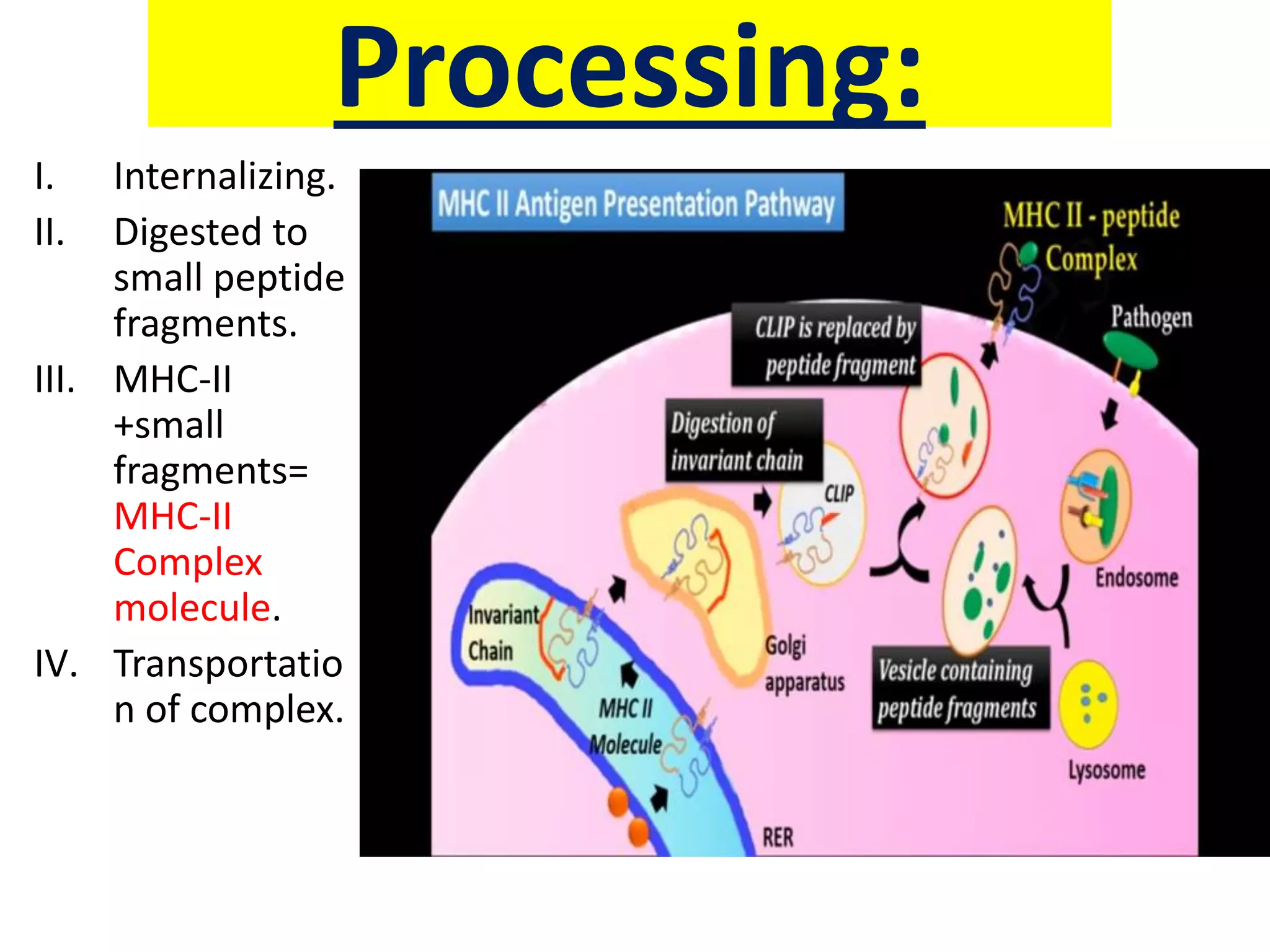
Processing:
I. Internalizing.
II. Digested to
small peptide
fragments.
III. MHC-II
+small
fragments=
MHC-II
Complex
molecule.
IV. Transportatio
n of complex.
Presentation:
 MHC-II
complex shows
antigen
fragments to T
cells.
 T cell
recognization
T-CELL ACTIVATION
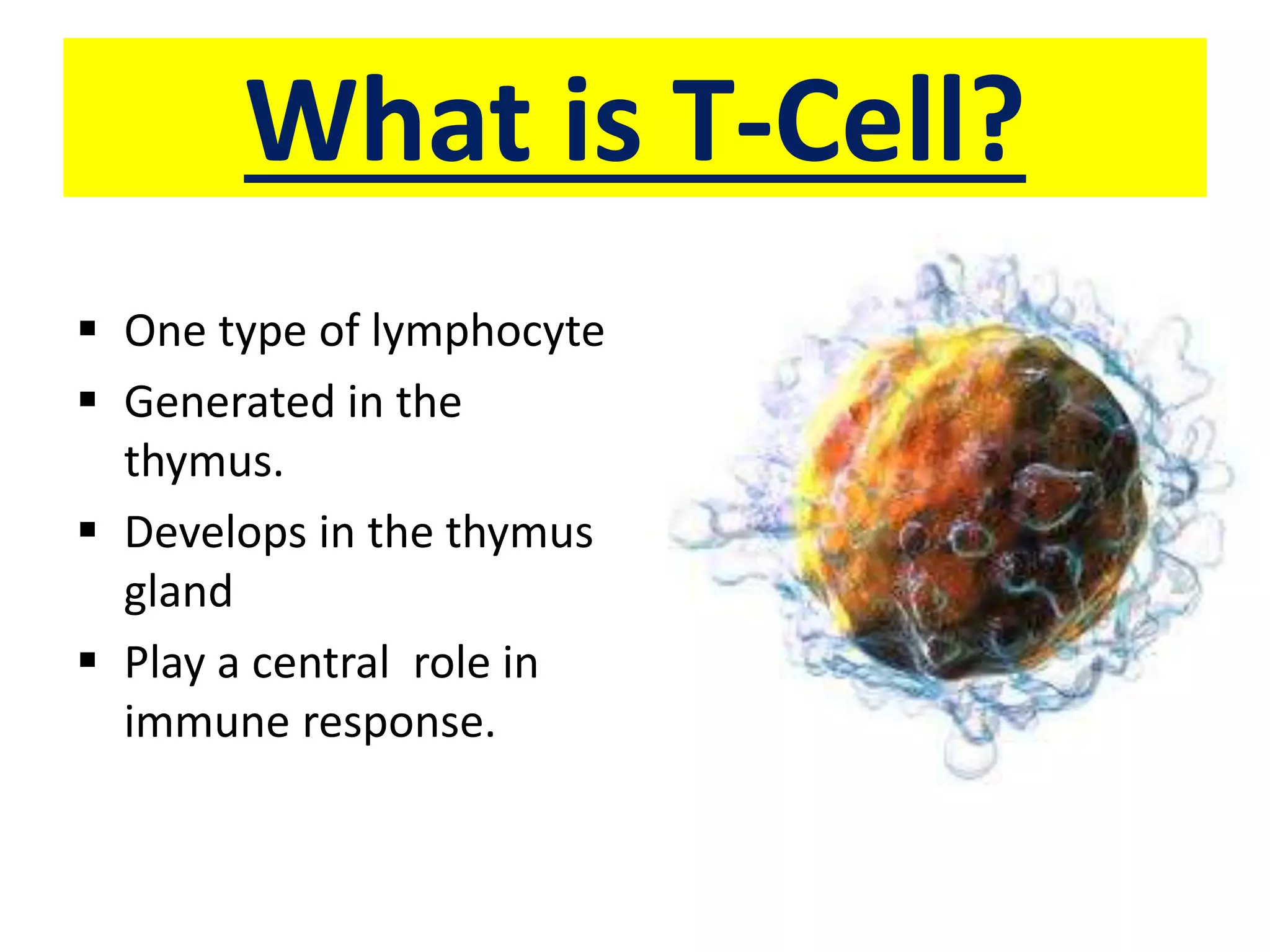
What is T-Cell?
 One type of lymphocyte
 Generated in the
thymus.
 Develops in the thymus
gland
 Play a central role in
immune response.
T cell activation by
antigen presenting cell
What is the antigen presenting cell?
 Heterogeneous group of immune cells
 Presenting antigen for recognition by certain
lymphocytes
 Dendritic cells,B cells, macrophages,Langerhans cells
etc.
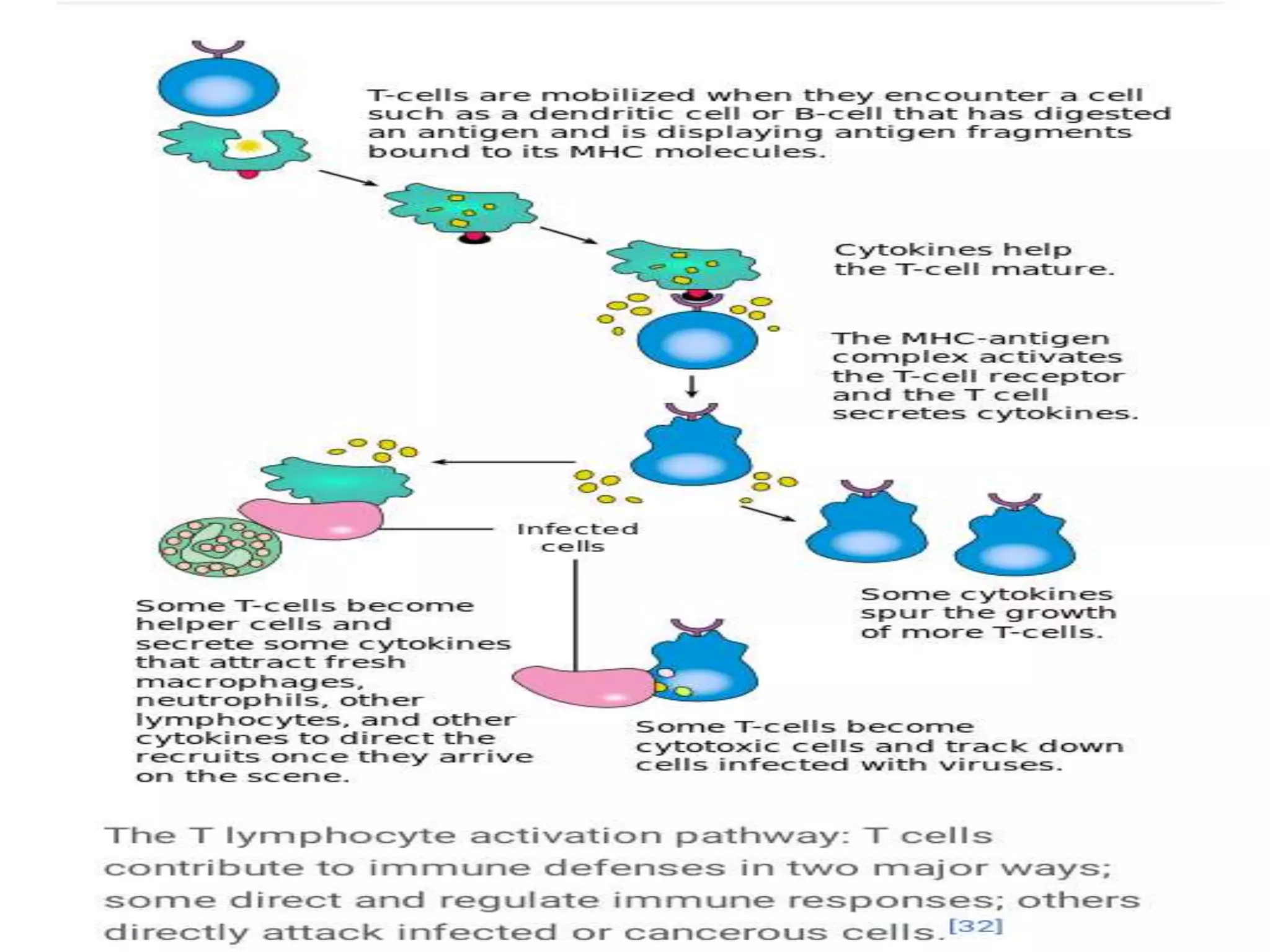
How T-cell is activated?
 Some direct and immune response
 Directly attack infected or cancerous cell
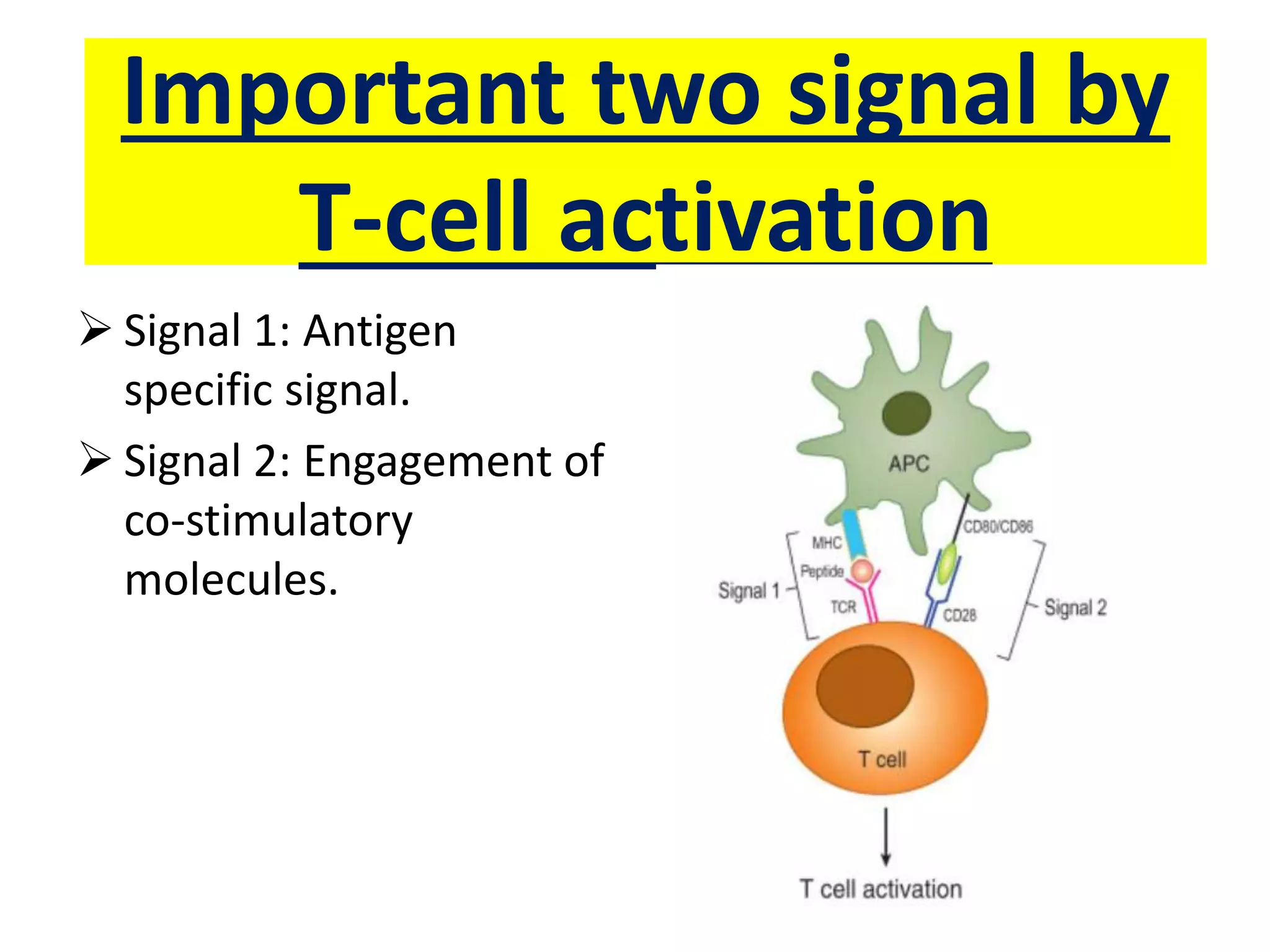
Important two signal by
T-cell activation
 Signal 1: Antigen
specific signal.
 Signal 2: Engagement of
co-stimulatory
molecules.

Antigen Presenting cells(APCs)

  • 1.
  • 2.
    Antigen processing & presentation Foreignprotein antigen are degraded into small antigenic peptides that from complexes with class | or class || MHC molecule.. This conversion of proteins into MHC associated peptide fragments is called antigen processing and presentation.
  • 3.
    Antigen presenting cells(APCs)  Can process a protein antigen, break it into peptides and present it in coconjunction with class || MHC molecules on the cell surface where it way interact with appropriate T cell receptors..  Engulf a pathogen through phagocytosis and the presenting it to the whole immune syste.  So,that cell mediated and humoral immune response can build up.
  • 6.
  • 7.
    Dendritic cells: Dendritic cellsare the antigen presenting cells of mammalian immune system.
  • 8.
    Function: Process antigen material Present iton cell surface to the T cells Act as messenger between innate and adaptive immune systems
  • 9.
    Classes:  There arethree major subclasses
  • 10.
    Langerhans cells:  Dendriticcells of the skin  Migrate as ‘veiled cells’ via afferent lymphatics into the paracortex of the draining lymph nodes  interact with T cells  Termed as Interdigitating dendritic cells  Rich in class ll MHC  Important for presenting antigen to TH cells
  • 11.
    Interdigitating cells: Present inthymus Abundant in medulla Delete T cells that react against self antigen Negative selection
  • 12.
    Follicular dendritic cells: Found in primary and secondary follicles of B cells areas of lymphoid tissue  Present antigen to B cells  Non migrating  Express FC receptors  Lack class ll MHC molecules  Bind antigen via complement receptors (CD21, CD35)
  • 13.
    Macrophages: Macrophages are antigen presenting cellsthat recognize, engulf and destroy target cells.
  • 15.
    How does amacrophages act as an antigen presenting cell?  After the activation, macrophages are able to express MHC class II and co-stimulatory molecules , including the B7 complex and can present phagocytosed peptide fragments to helper T cells.
  • 16.
    B Cells: B cells, also known as B lymphocytes, are a type of white blood cell of small lymphocyte subtype.
  • 17.
    How do Bcell become antigen presenting cell?  B cells can  Internalize antigen;  Recognize soluble antigen;  then process the antigen and present peptides by using MHC class II molecules.
  • 18.
    Function of differentAntigen Presenting cells
  • 19.
    Comparative characteristics ofsome APCs Dendritic cell Macrophage B lymphocyte Antigen uptake Endocytosis Phagocytosis phagocytosis Receptor- mediated endocytosis Class II MHC expression Constitutive (+++) Inducible (++) Constitutive (+++) Co-stimulatory activity Constitutive B7 (+++) Inducible B7 (++) Inducible B7 (++) T-cell activation Native T cells Effector T cells Memory T cell Effector T cell Memory T cell Native T cell Effector T cell Memory T cell
  • 20.
    Antigen processing andpresentation The process by which pathogens and their products are degraded to produce peptide antigens is known as Antigen Processing These peptide fragments combine with MHC molecules inside cell The MHC-peptide complex thus formed travels to the cell surface where it displays peptide fragments to T cells. This is known as Antigen Presentation.
  • 21.
    Components: MHC(Major Histocompatibility Complex),CD(Clusterof Designation)4+,CD8+,CD80/86,CD28,IL-1,2..,TCR,etc.
  • 22.
    Engulf of apathogen:
  • 23.
    Processing: I. Internalizing. II. Digestedto small peptide fragments. III. MHC-II +small fragments= MHC-II Complex molecule. IV. Transportatio n of complex.
  • 24.
  • 25.
  • 26.
    What is T-Cell? One type of lymphocyte  Generated in the thymus.  Develops in the thymus gland  Play a central role in immune response.
  • 27.
    T cell activationby antigen presenting cell What is the antigen presenting cell?  Heterogeneous group of immune cells  Presenting antigen for recognition by certain lymphocytes  Dendritic cells,B cells, macrophages,Langerhans cells etc.
  • 28.
    How T-cell isactivated?  Some direct and immune response  Directly attack infected or cancerous cell
  • 30.
    Important two signalby T-cell activation  Signal 1: Antigen specific signal.  Signal 2: Engagement of co-stimulatory molecules.