Anime
is a form of animation that originated in Japan and has become
increasingly popular around the world. The term "anime" is derived from
the Japanese word for animation, and refers specifically to animation
produced in Japan. Anime has become known for its distinctive visual
style, complex characters, and engaging storylines. This paper will
explore the history of anime, its visual style, genres and themes, and its
impact on popular culture around the world.
History of Anime
The history of anime dates back to the early 20th century,
when Japanese animators began experimenting with animation
techniques influenced by Western animation. In the 1960s and 1970s,
anime became more popular in Japan, with series such as "Astro Boy"
and "Speed Racer" gaining a large following. In the 1980s and 1990s,
anime continued to gain popularity in Japan, with series such as
"Dragon Ball" and "Sailor Moon" becoming iconic.
Anime began to gain an international following in the 1990s, with series
such as "Akira" and "Ghost in the Shell" gaining critical acclaim and
attracting a cult following. The popularity of anime continued to grow in
the 2000s, with series such as "Naruto" and "Bleach" becoming global
phenomena.
Visual Style of Anime
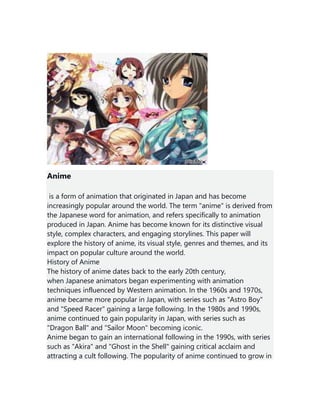
One of the defining features of anime is its distinctive visual style. Anime
often features exaggerated character designs, vibrant colors, and
intricate details. Characters in anime often have large eyes, small noses,
and exaggerated facial expressions, which are used to convey emotions
and reactions. This visual style has become iconic and is instantly
recognizable to fans of anime.
Anime also often incorporates elements of Japanese culture and history,
such as traditional clothing, architecture, and customs. The use of visual
metaphors and symbolism is also a common feature of anime, often
used to convey complex emotions or ideas.
https://linktr.ee/a7med118
Genres and Themes of Anime
Anime covers a wide range of genres and themes, including action,
adventure, romance, comedy, and science fiction, among others.
Many anime series explore mature themes such as love, loss,
and personal growth, and can be emotionally engaging and thought-
provoking.
One popular genre of anime is mecha, which features giant robots or
machines controlled by humans. Mecha anime often explores themes of
war, technology, and the relationship between humans and machines.
Another popular genre is shōnen, which is aimed at young male
audiences and often features action-packed adventures and battles.
Anime has also become known for its complex and well-developed
characters, who often have multi-dimensional personalities and complex
motivations. Many anime series explore mature themes such as love,
loss, and personal growth, and can be emotionally engaging and
thought-provoking.
Impact of Anime on Popular Culture
Anime has become a significant part of popular culture around the
world, with fans enjoying the unique storytelling and visual style that
anime offers. Anime has also had a significant impact on other forms of
popular culture, such as video games and music.
Many popular video games have been influenced by anime, with series
such as "Final Fantasy" and "Persona" featuring anime-inspired character
designs and storytelling. Anime has also had a significant impact on
music, with many popular J-pop and K-pop artists incorporating anime-
inspired visuals and themes into their music videos and performances.
Anime has also led to the development of a vibrant fan community, with
fans around the world connecting through online forums and
conventions. The popularity of anime has also led to the development of
a large market for anime merchandise, including DVDs, manga, and
action figures.
Conclusion
Anime has become a significant part of popular culture around the
world, with fans enjoying the unique storytelling and visual style that
anime offers. The history of anime, its visual style, genres and themes,
and its impact on popular culture have been explored in this paper.
Whether you are a fan of action-packed adventures or complex
character-driven dramas, there is an anime series out there for everyone.
https://linktr.ee/a7med118

Anime.docx

  • 1.
    Anime is a formof animation that originated in Japan and has become increasingly popular around the world. The term "anime" is derived from the Japanese word for animation, and refers specifically to animation produced in Japan. Anime has become known for its distinctive visual style, complex characters, and engaging storylines. This paper will explore the history of anime, its visual style, genres and themes, and its impact on popular culture around the world. History of Anime The history of anime dates back to the early 20th century, when Japanese animators began experimenting with animation techniques influenced by Western animation. In the 1960s and 1970s, anime became more popular in Japan, with series such as "Astro Boy" and "Speed Racer" gaining a large following. In the 1980s and 1990s, anime continued to gain popularity in Japan, with series such as "Dragon Ball" and "Sailor Moon" becoming iconic. Anime began to gain an international following in the 1990s, with series such as "Akira" and "Ghost in the Shell" gaining critical acclaim and attracting a cult following. The popularity of anime continued to grow in
  • 2.
    the 2000s, withseries such as "Naruto" and "Bleach" becoming global phenomena. Visual Style of Anime One of the defining features of anime is its distinctive visual style. Anime often features exaggerated character designs, vibrant colors, and intricate details. Characters in anime often have large eyes, small noses, and exaggerated facial expressions, which are used to convey emotions and reactions. This visual style has become iconic and is instantly recognizable to fans of anime. Anime also often incorporates elements of Japanese culture and history, such as traditional clothing, architecture, and customs. The use of visual metaphors and symbolism is also a common feature of anime, often used to convey complex emotions or ideas. https://linktr.ee/a7med118 Genres and Themes of Anime Anime covers a wide range of genres and themes, including action, adventure, romance, comedy, and science fiction, among others. Many anime series explore mature themes such as love, loss, and personal growth, and can be emotionally engaging and thought- provoking. One popular genre of anime is mecha, which features giant robots or machines controlled by humans. Mecha anime often explores themes of war, technology, and the relationship between humans and machines. Another popular genre is shōnen, which is aimed at young male audiences and often features action-packed adventures and battles. Anime has also become known for its complex and well-developed characters, who often have multi-dimensional personalities and complex motivations. Many anime series explore mature themes such as love, loss, and personal growth, and can be emotionally engaging and thought-provoking. Impact of Anime on Popular Culture Anime has become a significant part of popular culture around the world, with fans enjoying the unique storytelling and visual style that anime offers. Anime has also had a significant impact on other forms of popular culture, such as video games and music.
  • 3.
    Many popular videogames have been influenced by anime, with series such as "Final Fantasy" and "Persona" featuring anime-inspired character designs and storytelling. Anime has also had a significant impact on music, with many popular J-pop and K-pop artists incorporating anime- inspired visuals and themes into their music videos and performances. Anime has also led to the development of a vibrant fan community, with fans around the world connecting through online forums and conventions. The popularity of anime has also led to the development of a large market for anime merchandise, including DVDs, manga, and action figures. Conclusion Anime has become a significant part of popular culture around the world, with fans enjoying the unique storytelling and visual style that anime offers. The history of anime, its visual style, genres and themes, and its impact on popular culture have been explored in this paper. Whether you are a fan of action-packed adventures or complex character-driven dramas, there is an anime series out there for everyone. https://linktr.ee/a7med118