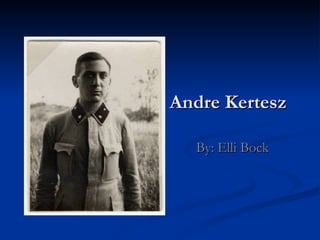
Andre Kertesz By: Elli Bock
Biography July 2 nd , 1894 to September 28 th , 1985 Nationality: Hungarian Studied and had photography as a hobby in Hungary Attended the Hungarian Academy of Commerce in 1912 and got his bachelor’s degree He got a job at a stock exchange where he raised the money to buy his first camera In 1913, he got drafted to the Austro-Hungarian army where he brought his camera along
Biography Cont… Moved to Paris in 1925 and started a career as a freelance photographer He sold a number of pictures to magazines and published some postcards too Did his final work and had published work in the United States after he moved there in 1936 In 1964, after some hard times had been faced for him and his career, he became part of a one man show for the Museum of Modern Art where his career was back on track By the mid 1970’s, he was showing his work in galleries all around the world
Style His first style was a documentary artist. He mostly documented his family When he moved to Paris, he approached journalistic photography where he turned his camera different ways and took pictures from unique view points. He also explored with distorting images When he moved to America, he was forced to take more pictures inside for magazines Near the end of his life, he returned to taking pictures of people and of the city life outside
His inspiration Andre had four main periods in his career, thus creating four different inspirations. Overall, his main inspiration was capturing pictures in the moment. He wanted to capture moments that people didn’t notice and just walked by without thinking.
Inspiration Cont… In his Hungarian period, his inspiration was the people in his pictures. He took pictures of local peasants and people around town and even the Hungarian Army. He wanted to show people all the hard work the army was going through, so he was inspired to keep taking more pictures of them. Do you think that would inspire you?
Inspiration cont… During his French Period where he lived in Paris, he took many pictures for magazines and was published many times. His inspiration was seeing his work being published in famous magazines and having many people from all over Paris look at his work.
Inspiration Cont… During his Later Life period, Andre took many pictures of the Washingon Square Park in America. His inspiration was not only continuing to be so successful, but also having the support of his wife right beside him through it all.
Inspiration cont… His final period of his life was his International Period. During this period his work became known world wide and he had many exhibits everyone. His inspiration was being recognized all around the world and taking such good pictures that his work was able to be displayed world wide. Also, all the awards he got gave him even more inspiration.
 
Description A metal fork is faced down and is balancing on a white bowl There is a shadow from the bowl shown to the right of it on the table and a shadow from the fork on both the table and tip of the bowl Black and white The fork, bowl, and shadows are in focus There’s a strong light hitting the bottom part of fork
Analysis Value- strong black and white, clear shadows that are strongly emphasized Balance Movement- diagonal line of the fork Contrast of black and white
Interpretation Andre takes pictures by what he sees in the moment and may not be seen by everyone “ The moment always dictates my work.. Everybody can work but they don’t necessarily see.. I see a situation and know its right.” – Andre Kertesz These are typical items that you may see everyday but the way they are depicted must have caught his eye. Others may not have noticed anything unique about this arrangement but Andre noticed the uniqueness of it and instantly knew it would be a great picture
Judgment I like this photo because it makes ordinary objects look more distinctive because of the shadows displayed. It adds some sort of mystery to what could have been a normal picture. I don’t lime this photo because I feel it is very easy to take and the shadows could have been noticed by many people.  It is not very difficult to set up or take the picture.
What do you think about this picture?
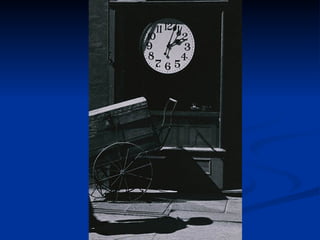
Clock, Paris 1950 Gelatin silver print  9 7/8 x 7 3/4 in.
 
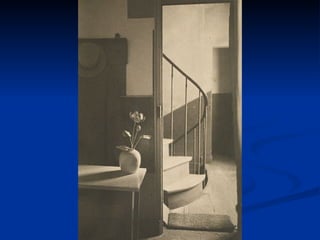
Chez Mondrian, Paris 1926 Gelatin silver print  4 5/16 x 3 1/8 in.
 
The Dancing Faun 1919 Gelatin silver print  2 3/16 x 3 5/16 in.
 
The Lost Cloud, New York 1919 Gelatin silver print  9 3/4 x 6 1/2 in.
 
Meudon, France 1928 Gelatin silver print 9 3/4 x 6 7/8 in.
 
Watchmaker’s Shop 1950 Gelatin silver print 9 3/4 x 6 3/4 in
 
Magda Forstner 1926 Gelatin silver print  4 5/16 x 2 5/16 in.
 
People and Shadows 1928 Gelatin silver print  6 1/4 x 8 11/16 in.
 
Circus Performer 1920 Gelatin silver print 9 7/16 x 7 1/2 in.
 
Satiric Dancer 1926 Gelatin silver print 9 3/4 x 7 3/4 in.
Which photo do you enjoy more?
Works Cited List http://www.chrishorner.net/tag/andre-kertesz/ http://www.chrishorner.net/tag/andre-kertesz/ http://www.pbs.org/wnet/americanmasters/episodes/andre-kertesz/about-andre-kertesz/645/   http:// www.google.com/imgres?imgurl =http://www.bulgergallery.com/dynamic/images/display/Estate_of_Andre_Kertesz_Self_portrait_as_a_soldier_Esta_Hungary_1915_3141_41.jpg&imgrefurl=http://www.bulgergallery.com/dynamic/fr_artwork_display.asp%3FArtworkID%3D3141&usg=__JsUfi9VU9OGjSbDet_-2Kv-Vj3w=&h=400&w=316&sz=19&hl= en&start =7&sig2=oHp6bVv-d1WrQEFj8a5QbA&zoom=1&um=1&itbs=1&tbnid=gc0A-jfvX2HouM:&tbnh=124&tbnw=98&prev=/images%3Fq%3Dandre%2Bkertesz%2Bportraits%26um%3D1%26hl%3Den%26safe%3Dactive%26tbs%3Disch:1&ei=P4g9TY3TOczTgQeG0dCtCA   http://www.urban-photography-art.com/andre-kertesz.html
Multiple Choice Questions 1. Where was Andre born? A. America B. Paris C. Hungary 2. Where did Andre become known world wide? A. America B. Paris C. Hungary 3. In which country did his work get published in Magazines A. America B. Paris C. Hungary

Andre Kertesz

  • 1.
  • 2.
    Biography July 2nd , 1894 to September 28 th , 1985 Nationality: Hungarian Studied and had photography as a hobby in Hungary Attended the Hungarian Academy of Commerce in 1912 and got his bachelor’s degree He got a job at a stock exchange where he raised the money to buy his first camera In 1913, he got drafted to the Austro-Hungarian army where he brought his camera along
  • 3.
    Biography Cont… Movedto Paris in 1925 and started a career as a freelance photographer He sold a number of pictures to magazines and published some postcards too Did his final work and had published work in the United States after he moved there in 1936 In 1964, after some hard times had been faced for him and his career, he became part of a one man show for the Museum of Modern Art where his career was back on track By the mid 1970’s, he was showing his work in galleries all around the world
  • 4.
    Style His firststyle was a documentary artist. He mostly documented his family When he moved to Paris, he approached journalistic photography where he turned his camera different ways and took pictures from unique view points. He also explored with distorting images When he moved to America, he was forced to take more pictures inside for magazines Near the end of his life, he returned to taking pictures of people and of the city life outside
  • 5.
    His inspiration Andrehad four main periods in his career, thus creating four different inspirations. Overall, his main inspiration was capturing pictures in the moment. He wanted to capture moments that people didn’t notice and just walked by without thinking.
  • 6.
    Inspiration Cont… Inhis Hungarian period, his inspiration was the people in his pictures. He took pictures of local peasants and people around town and even the Hungarian Army. He wanted to show people all the hard work the army was going through, so he was inspired to keep taking more pictures of them. Do you think that would inspire you?
  • 7.
    Inspiration cont… Duringhis French Period where he lived in Paris, he took many pictures for magazines and was published many times. His inspiration was seeing his work being published in famous magazines and having many people from all over Paris look at his work.
  • 8.
    Inspiration Cont… Duringhis Later Life period, Andre took many pictures of the Washingon Square Park in America. His inspiration was not only continuing to be so successful, but also having the support of his wife right beside him through it all.
  • 9.
    Inspiration cont… Hisfinal period of his life was his International Period. During this period his work became known world wide and he had many exhibits everyone. His inspiration was being recognized all around the world and taking such good pictures that his work was able to be displayed world wide. Also, all the awards he got gave him even more inspiration.
  • 10.
  • 11.
    Description A metalfork is faced down and is balancing on a white bowl There is a shadow from the bowl shown to the right of it on the table and a shadow from the fork on both the table and tip of the bowl Black and white The fork, bowl, and shadows are in focus There’s a strong light hitting the bottom part of fork
  • 12.
    Analysis Value- strongblack and white, clear shadows that are strongly emphasized Balance Movement- diagonal line of the fork Contrast of black and white
  • 13.
    Interpretation Andre takespictures by what he sees in the moment and may not be seen by everyone “ The moment always dictates my work.. Everybody can work but they don’t necessarily see.. I see a situation and know its right.” – Andre Kertesz These are typical items that you may see everyday but the way they are depicted must have caught his eye. Others may not have noticed anything unique about this arrangement but Andre noticed the uniqueness of it and instantly knew it would be a great picture
  • 14.
    Judgment I likethis photo because it makes ordinary objects look more distinctive because of the shadows displayed. It adds some sort of mystery to what could have been a normal picture. I don’t lime this photo because I feel it is very easy to take and the shadows could have been noticed by many people. It is not very difficult to set up or take the picture.
  • 15.
    What do youthink about this picture?
  • 16.
  • 17.
    Clock, Paris 1950Gelatin silver print 9 7/8 x 7 3/4 in.
  • 18.
  • 19.
    Chez Mondrian, Paris1926 Gelatin silver print 4 5/16 x 3 1/8 in.
  • 20.
  • 21.
    The Dancing Faun1919 Gelatin silver print 2 3/16 x 3 5/16 in.
  • 22.
  • 23.
    The Lost Cloud,New York 1919 Gelatin silver print 9 3/4 x 6 1/2 in.
  • 24.
  • 25.
    Meudon, France 1928Gelatin silver print 9 3/4 x 6 7/8 in.
  • 26.
  • 27.
    Watchmaker’s Shop 1950Gelatin silver print 9 3/4 x 6 3/4 in
  • 28.
  • 29.
    Magda Forstner 1926Gelatin silver print 4 5/16 x 2 5/16 in.
  • 30.
  • 31.
    People and Shadows1928 Gelatin silver print 6 1/4 x 8 11/16 in.
  • 32.
  • 33.
    Circus Performer 1920Gelatin silver print 9 7/16 x 7 1/2 in.
  • 34.
  • 35.
    Satiric Dancer 1926Gelatin silver print 9 3/4 x 7 3/4 in.
  • 36.
    Which photo doyou enjoy more?
  • 37.
    Works Cited Listhttp://www.chrishorner.net/tag/andre-kertesz/ http://www.chrishorner.net/tag/andre-kertesz/ http://www.pbs.org/wnet/americanmasters/episodes/andre-kertesz/about-andre-kertesz/645/ http:// www.google.com/imgres?imgurl =http://www.bulgergallery.com/dynamic/images/display/Estate_of_Andre_Kertesz_Self_portrait_as_a_soldier_Esta_Hungary_1915_3141_41.jpg&imgrefurl=http://www.bulgergallery.com/dynamic/fr_artwork_display.asp%3FArtworkID%3D3141&usg=__JsUfi9VU9OGjSbDet_-2Kv-Vj3w=&h=400&w=316&sz=19&hl= en&start =7&sig2=oHp6bVv-d1WrQEFj8a5QbA&zoom=1&um=1&itbs=1&tbnid=gc0A-jfvX2HouM:&tbnh=124&tbnw=98&prev=/images%3Fq%3Dandre%2Bkertesz%2Bportraits%26um%3D1%26hl%3Den%26safe%3Dactive%26tbs%3Disch:1&ei=P4g9TY3TOczTgQeG0dCtCA http://www.urban-photography-art.com/andre-kertesz.html
  • 38.
    Multiple Choice Questions1. Where was Andre born? A. America B. Paris C. Hungary 2. Where did Andre become known world wide? A. America B. Paris C. Hungary 3. In which country did his work get published in Magazines A. America B. Paris C. Hungary

Editor's Notes

  • #17 Clock of Academie Francaise, Paris 1932 Gelatin Silver Print 9 7/8 x 7 3/4