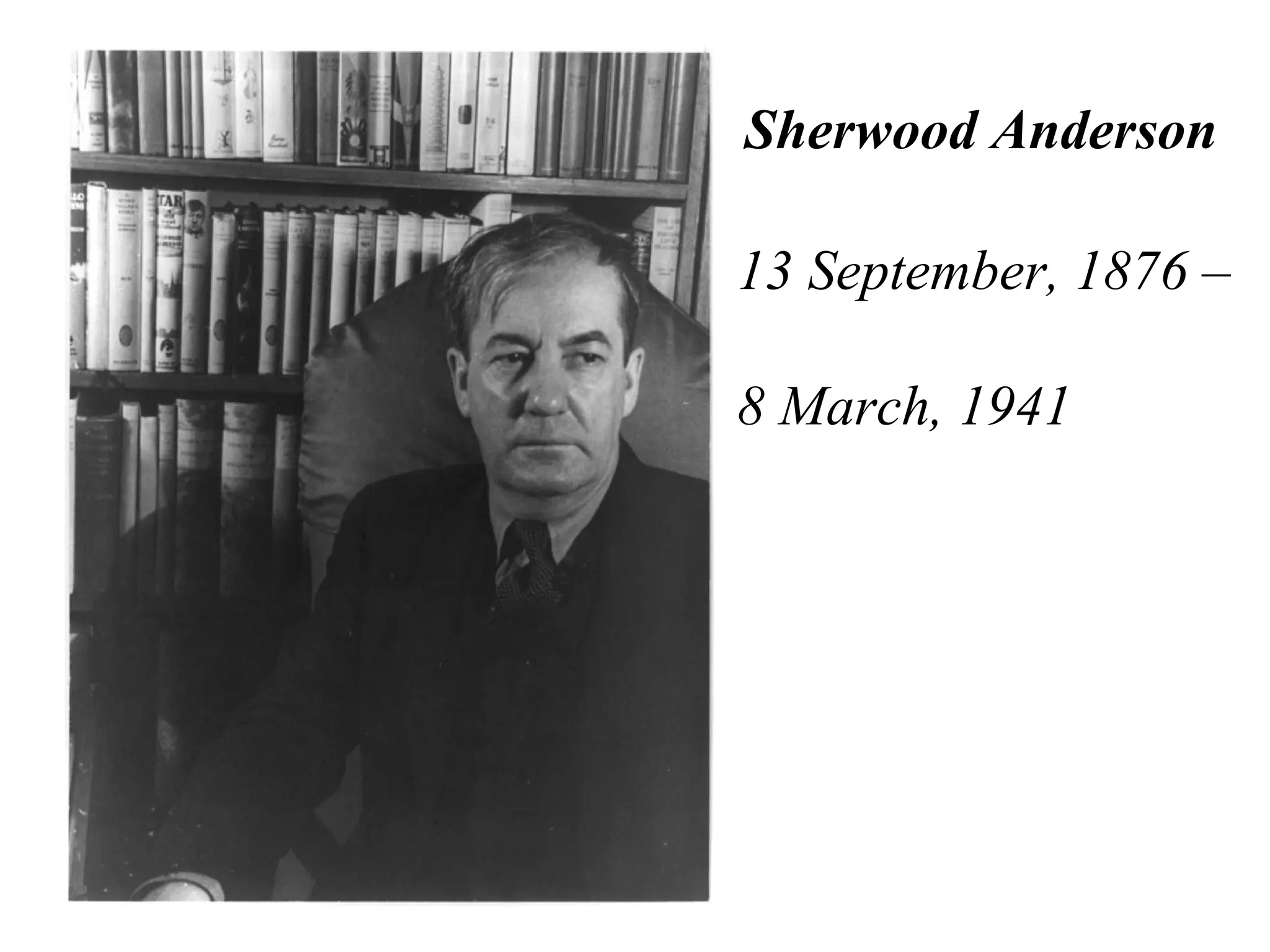
13 September, 1876 –
8 March, 1941
Sherwood Anderson
BiographyBiography
was born in a poor family, he was the third of
seven children.
leave school at the age of 14 to work and help his
family.
moved in Chicago at 18
served in Cuba during the Spanish-American War,
then began a successful business career in
advertising.
suffered from nervous exhaustion and amnesia
he was married 4 times
in 1926 he bought a farm and lived there till the
end of his life.
 ““Windy McPherson's Son”Windy McPherson's Son” (1916), his first
novel. He used his father as the prototype for
Windy, a drifter and teller of tall tales.
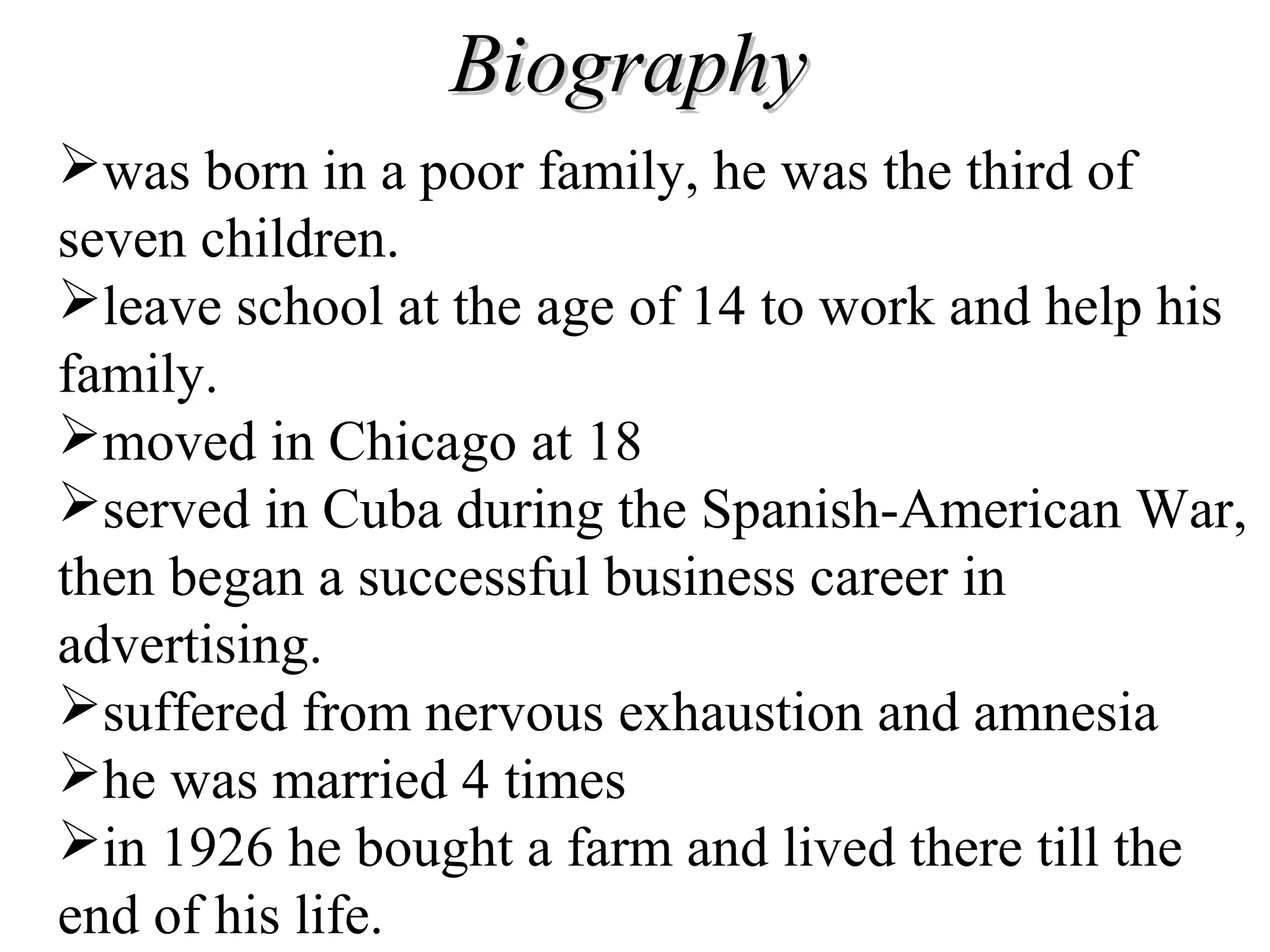
 ““Winesburg, Ohio”Winesburg, Ohio” (1919), a
fictionalized sketches of "grotesques»,
his term for people defeated by false
dreams, people whose illusions have
left them vulnerable.
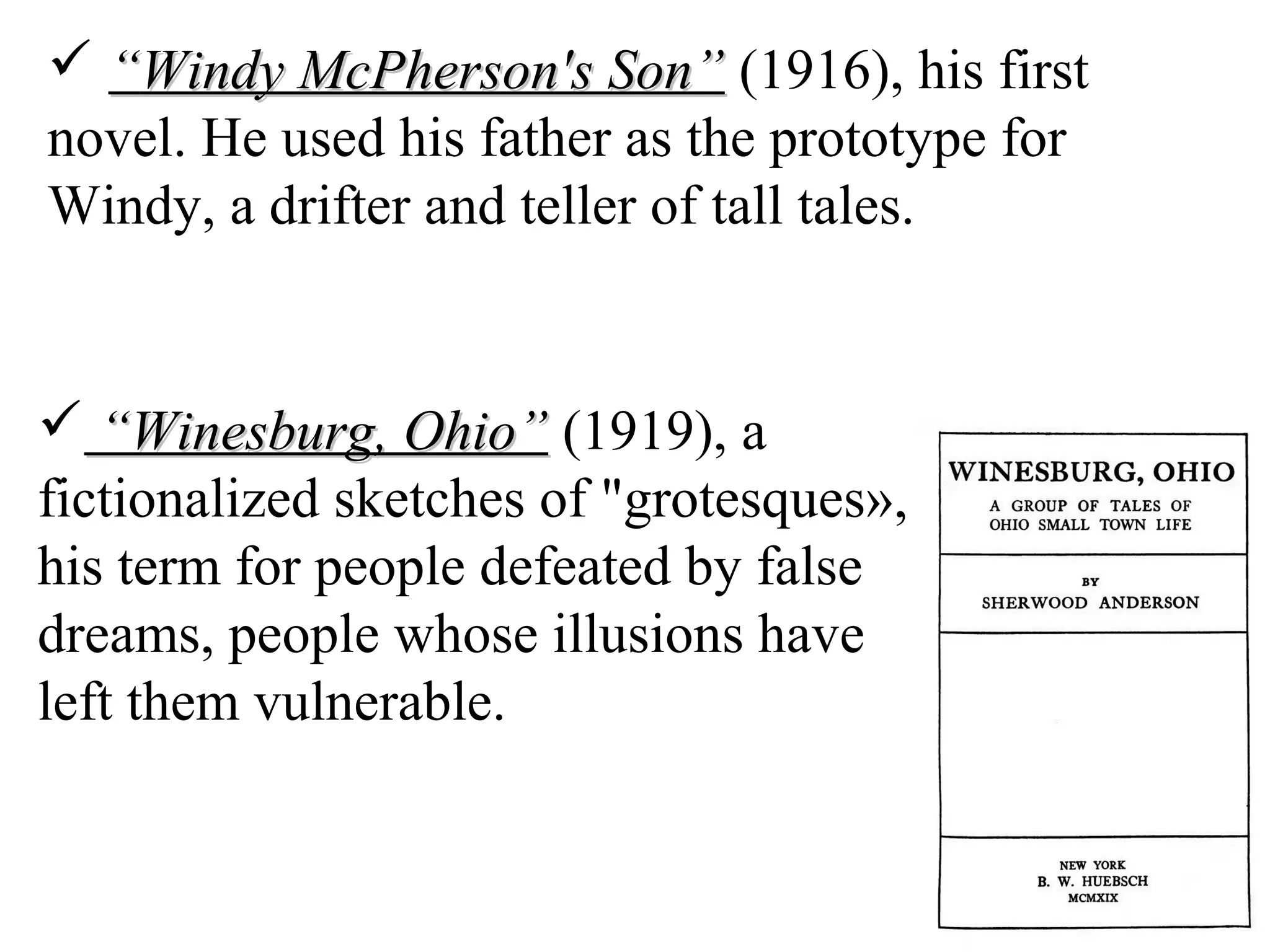
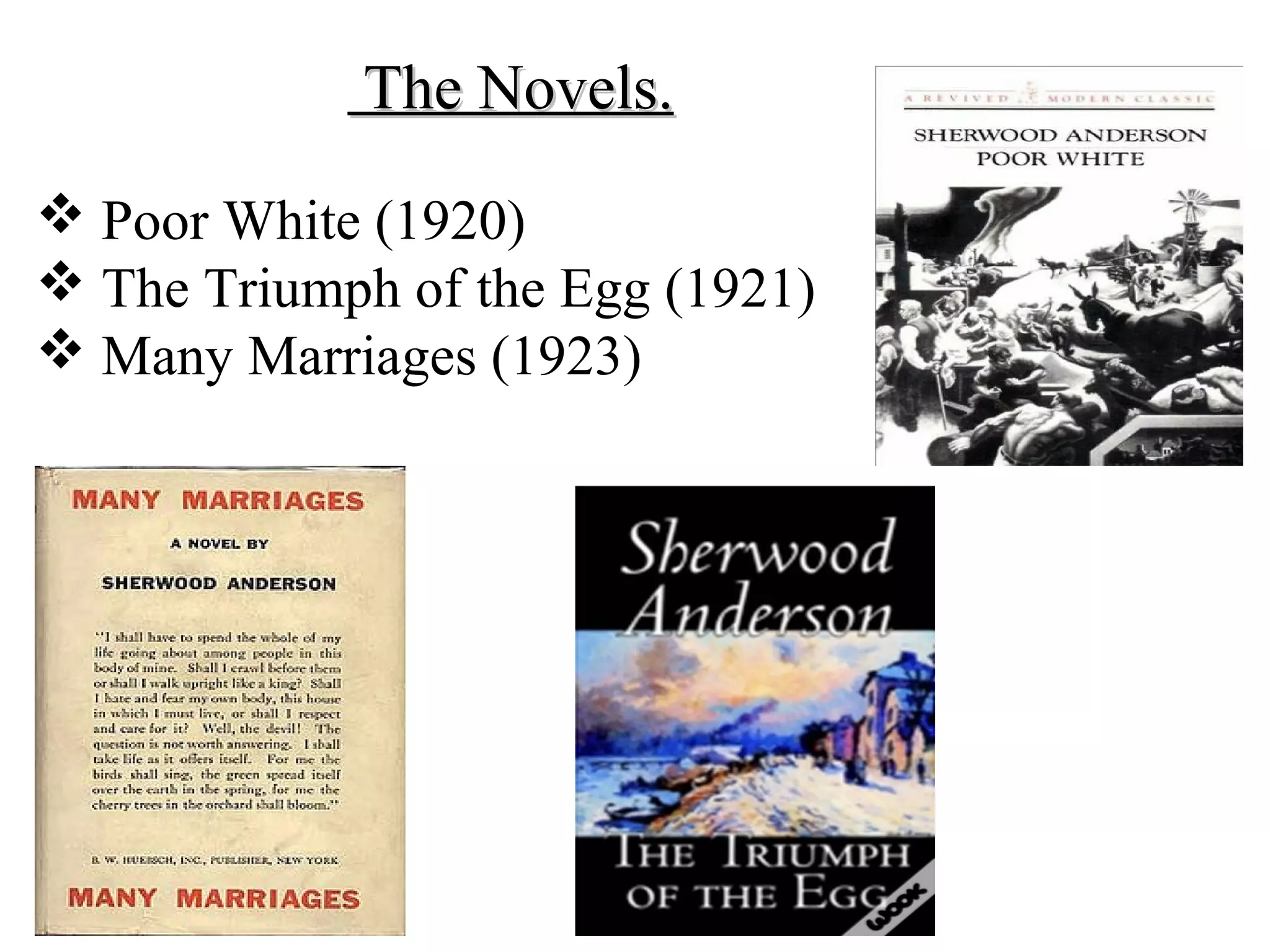
The Novels.The Novels.
 Poor White (1920)
 The Triumph of the Egg (1921)
 Many Marriages (1923)
 Anderson always stresses his characters and their mood.
 He uses a laconic, precise, unsentimental and colloquial
style to reveal the frustration, loneliness, and longing in the
lives of his characters.
 His character are limited by the narrowness of Midwestern
small-town life and by their own .
 He is the first American novelists who introduces new
insights from psychology, including Freudian analysis.
 Explores different questions and problems : racial one,
human frustration, loneliness and alienation, sexual freedom.
 Some of his works are connected with his childhood and
life experience.
 Anderson always stresses his characters and their mood.
 He uses a laconic, precise, unsentimental and colloquial
style to reveal the frustration, loneliness, and longing in the
lives of his characters.
 His character are limited by the narrowness of Midwestern
small-town life and by their own .
 He is the first American novelists who introduces new
insights from psychology, including Freudian analysis.
 Explores different questions and problems : racial one,
human frustration, loneliness and alienation, sexual freedom.
 Some of his works are connected with his childhood and
life experience.

Anderson

  • 1.
    13 September, 1876– 8 March, 1941 Sherwood Anderson
  • 2.
    BiographyBiography was born ina poor family, he was the third of seven children. leave school at the age of 14 to work and help his family. moved in Chicago at 18 served in Cuba during the Spanish-American War, then began a successful business career in advertising. suffered from nervous exhaustion and amnesia he was married 4 times in 1926 he bought a farm and lived there till the end of his life.
  • 3.
     ““Windy McPherson'sSon”Windy McPherson's Son” (1916), his first novel. He used his father as the prototype for Windy, a drifter and teller of tall tales.  ““Winesburg, Ohio”Winesburg, Ohio” (1919), a fictionalized sketches of "grotesques», his term for people defeated by false dreams, people whose illusions have left them vulnerable.
  • 4.
    The Novels.The Novels. Poor White (1920)  The Triumph of the Egg (1921)  Many Marriages (1923)
  • 5.
     Anderson alwaysstresses his characters and their mood.  He uses a laconic, precise, unsentimental and colloquial style to reveal the frustration, loneliness, and longing in the lives of his characters.  His character are limited by the narrowness of Midwestern small-town life and by their own .  He is the first American novelists who introduces new insights from psychology, including Freudian analysis.  Explores different questions and problems : racial one, human frustration, loneliness and alienation, sexual freedom.  Some of his works are connected with his childhood and life experience.
  • 6.
     Anderson alwaysstresses his characters and their mood.  He uses a laconic, precise, unsentimental and colloquial style to reveal the frustration, loneliness, and longing in the lives of his characters.  His character are limited by the narrowness of Midwestern small-town life and by their own .  He is the first American novelists who introduces new insights from psychology, including Freudian analysis.  Explores different questions and problems : racial one, human frustration, loneliness and alienation, sexual freedom.  Some of his works are connected with his childhood and life experience.