Supply Chain Management
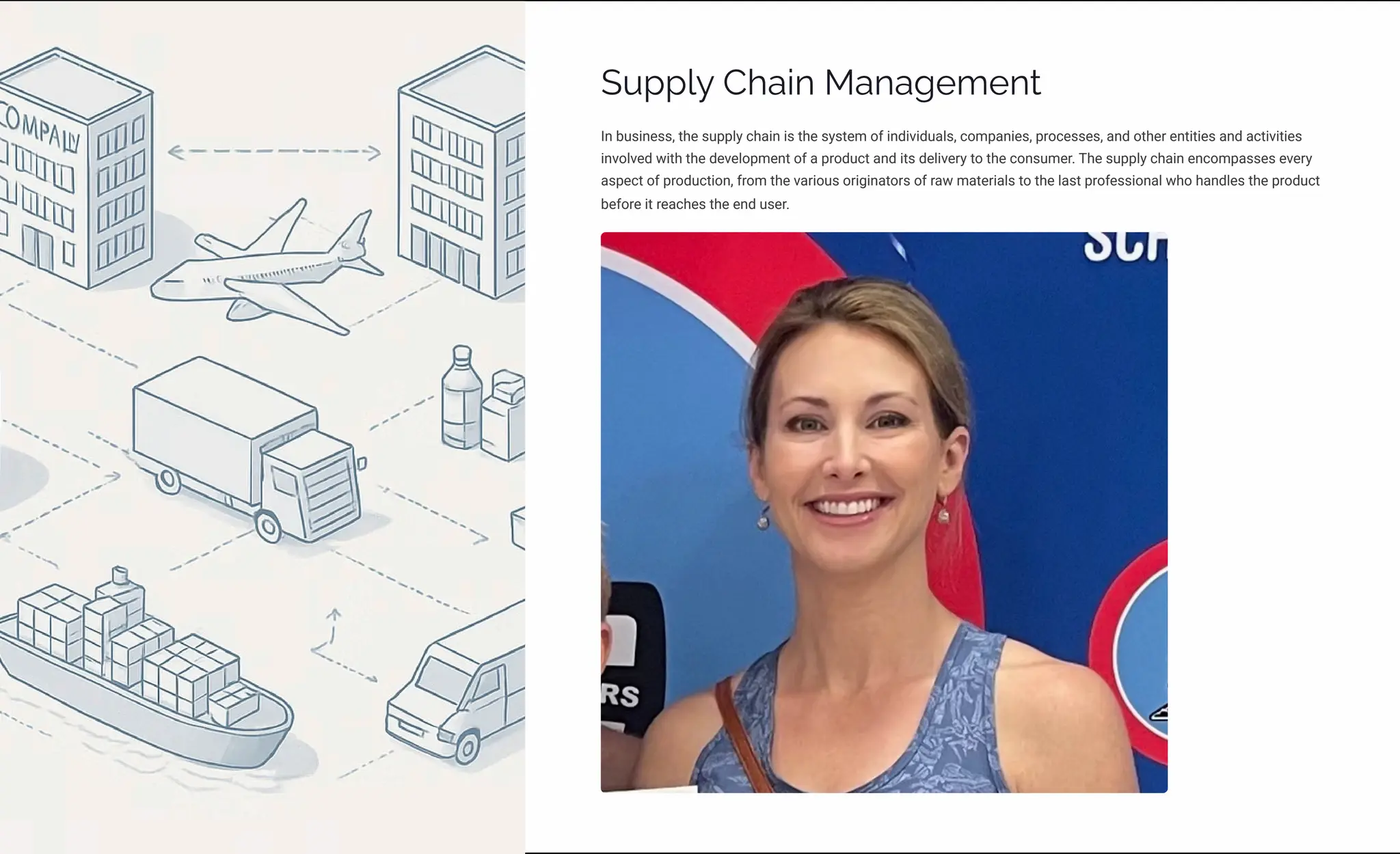
In business, the supply chain is the system of individuals, companies, processes, and other entities and activities
involved with the development of a product and its delivery to the consumer. The supply chain encompasses every
aspect of production, from the various originators of raw materials to the last professional who handles the product
before it reaches the end user.
Tp I³á¾äøaµcp ¾ˆ SĀáá«Ğ
Ca•µ Maµa‰p³pµø
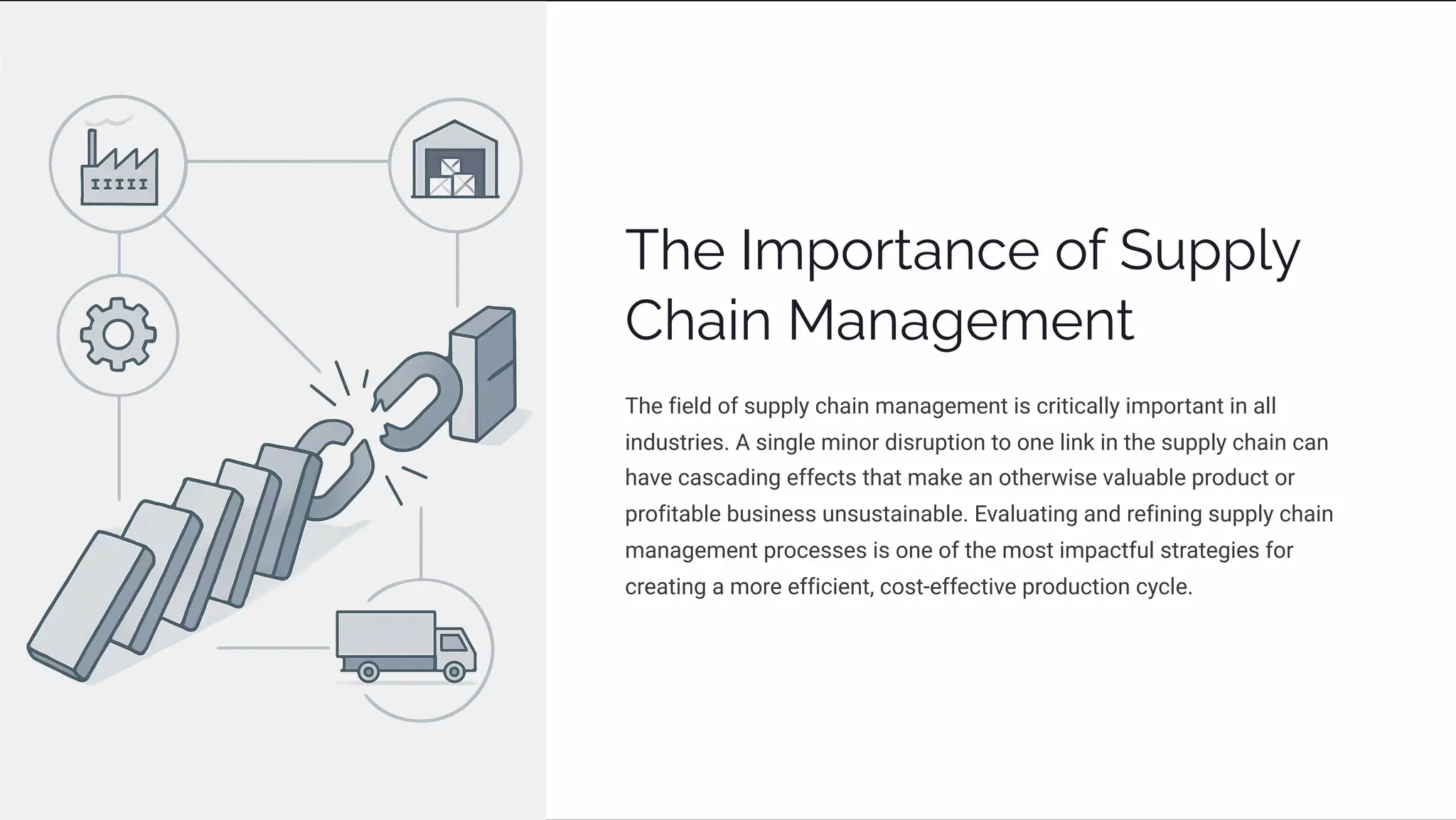
The field of supply chain management is critically important in all
industries. A single minor disruption to one link in the supply chain can
have cascading effects that make an otherwise valuable product or
profitable business unsustainable. Evaluating and refining supply chain
management processes is one of the most impactful strategies for
creating a more efficient, cost-effective production cycle.
The Complexity of Supply Chain Management
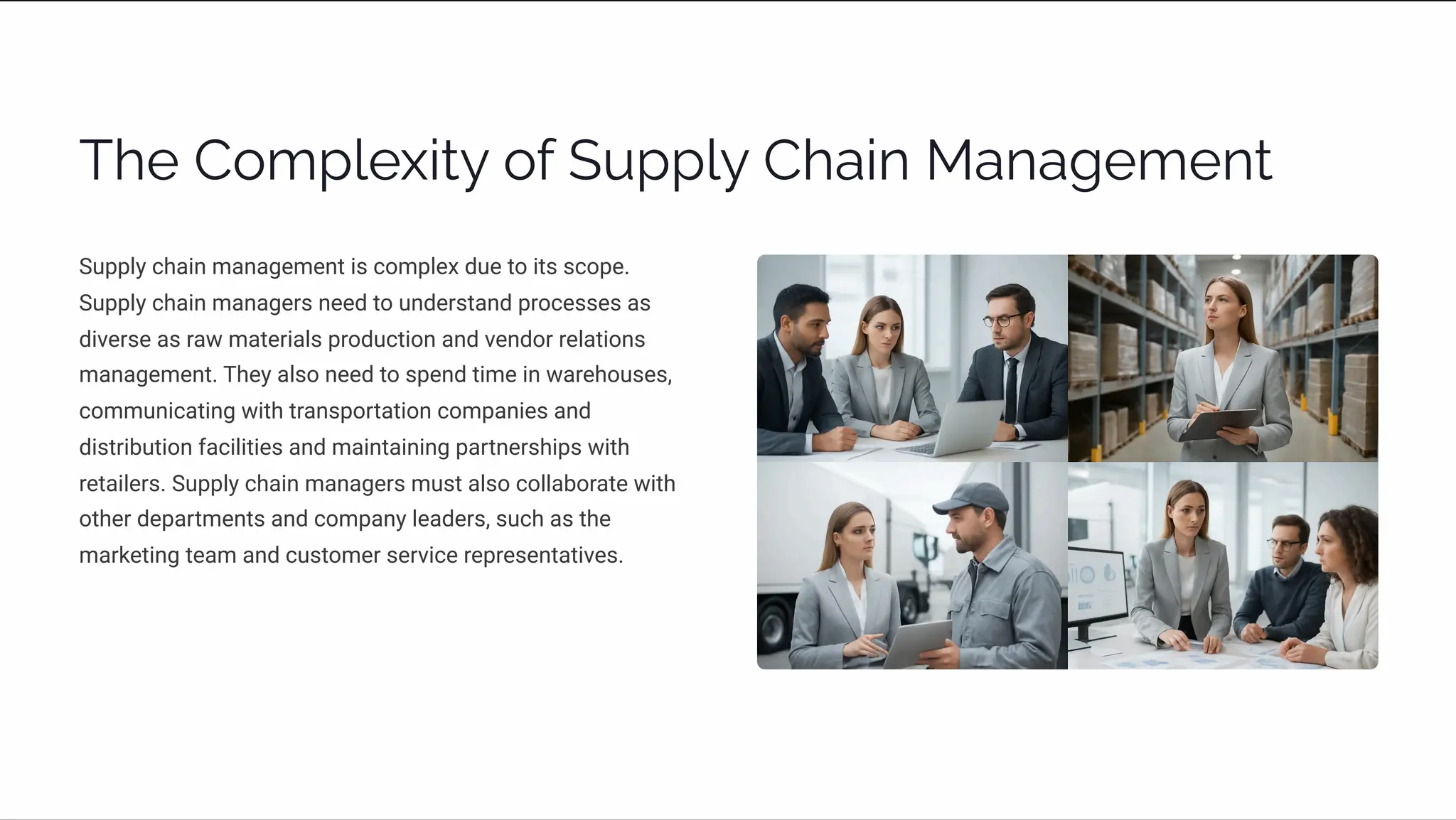
Supply chain management is complex due to its scope.
Supply chain managers need to understand processes as
diverse as raw materials production and vendor relations
management. They also need to spend time in warehouses,
communicating with transportation companies and
distribution facilities and maintaining partnerships with
retailers. Supply chain managers must also collaborate with
other departments and company leaders, such as the
marketing team and customer service representatives.
Tp C¾µø•µĀ¾Āì F«¾Ę M¾jp«
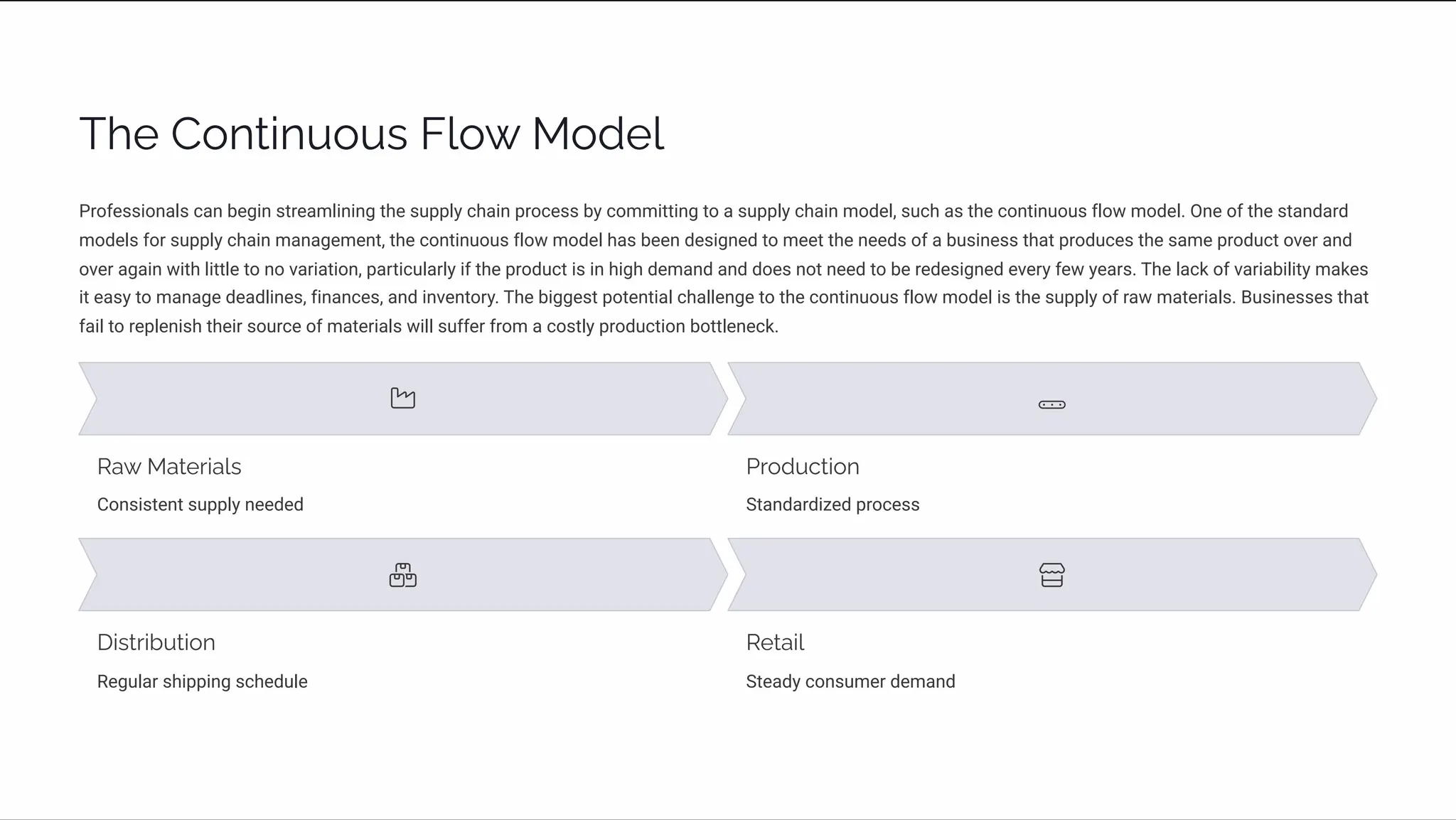
Professionals can begin streamlining the supply chain process by committing to a supply chain model, such as the continuous flow model. One of the standard
models for supply chain management, the continuous flow model has been designed to meet the needs of a business that produces the same product over and
over again with little to no variation, particularly if the product is in high demand and does not need to be redesigned every few years. The lack of variability makes
it easy to manage deadlines, finances, and inventory. The biggest potential challenge to the continuous flow model is the supply of raw materials. Businesses that
fail to replenish their source of materials will suffer from a costly production bottleneck.
RaĘ Maøpä•a«ì
Consistent supply needed
Pä¾jĀcø•¾µ
Standardized process
D•ìøä•bĀø•¾µ
Regular shipping schedule
Rpøa•«
Steady consumer demand
The Fast Chain Model
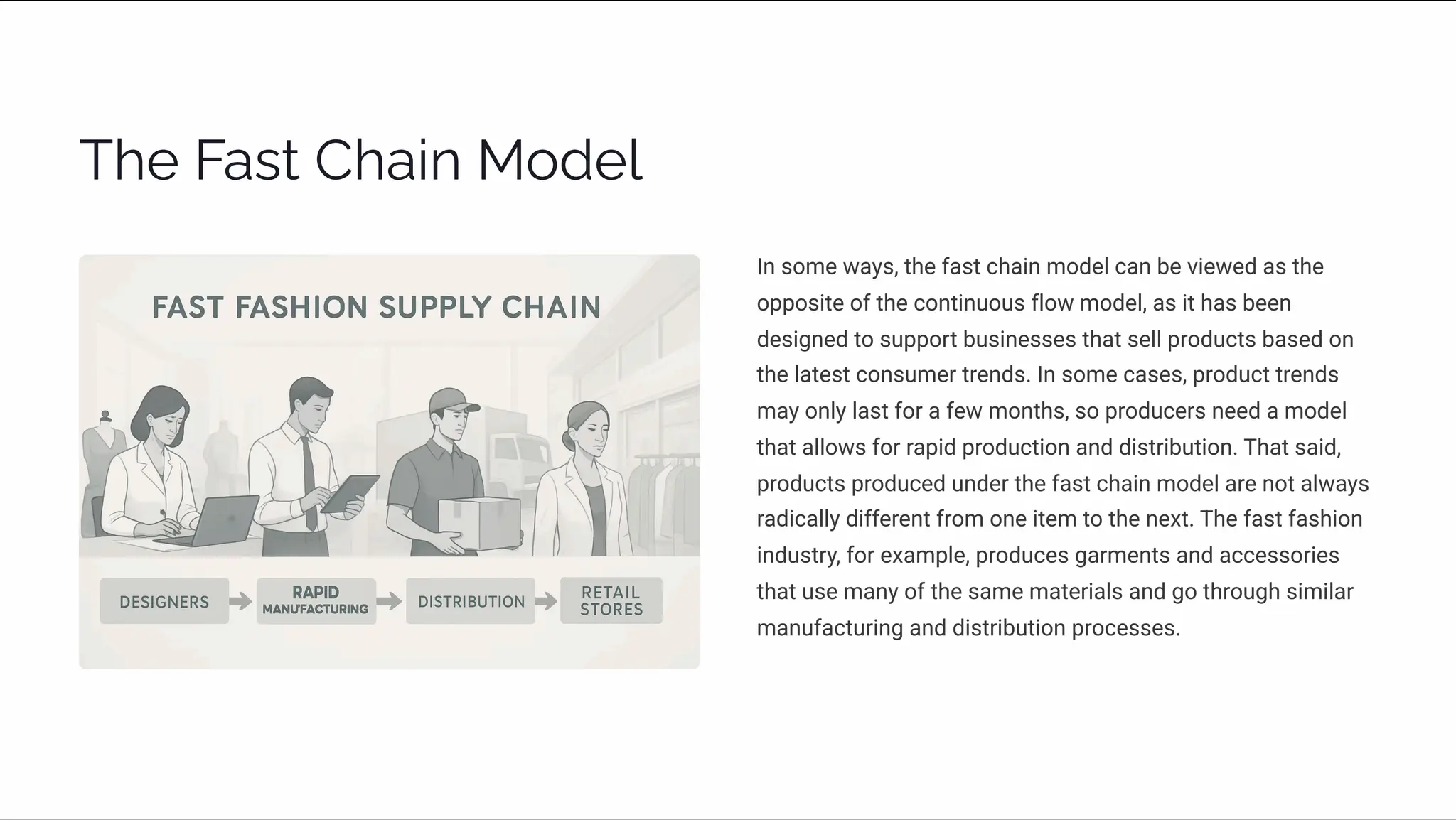
In some ways, the fast chain model can be viewed as the
opposite of the continuous flow model, as it has been
designed to support businesses that sell products based on
the latest consumer trends. In some cases, product trends
may only last for a few months, so producers need a model
that allows for rapid production and distribution. That said,
products produced under the fast chain model are not always
radically different from one item to the next. The fast fashion
industry, for example, produces garments and accessories
that use many of the same materials and go through similar
manufacturing and distribution processes.
Tp F«pĝ•b«p SĀáá«Ğ Ca•µ M¾jp«
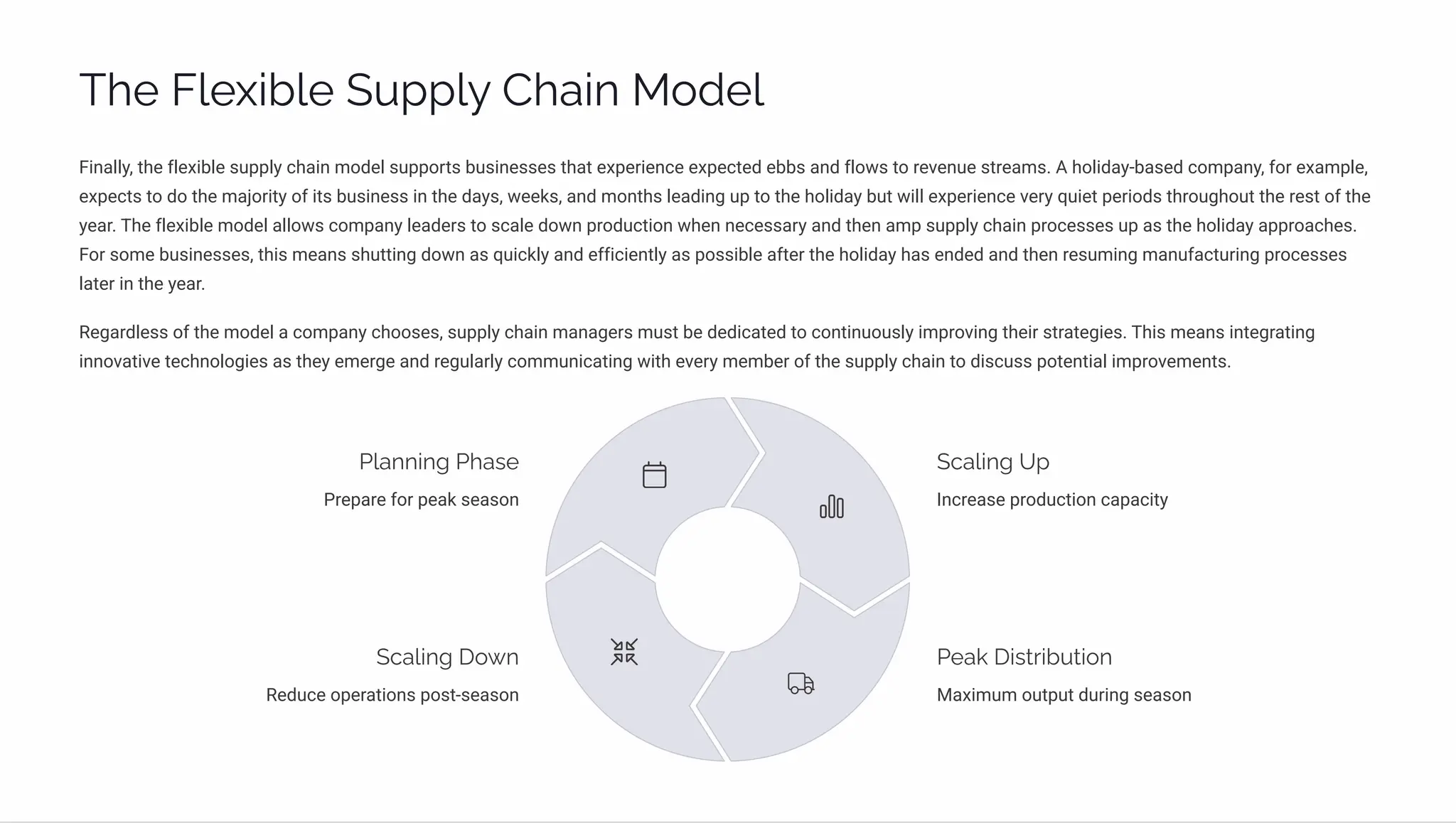
Finally, the flexible supply chain model supports businesses that experience expected ebbs and flows to revenue streams. A holiday-based company, for example,
expects to do the majority of its business in the days, weeks, and months leading up to the holiday but will experience very quiet periods throughout the rest of the
year. The flexible model allows company leaders to scale down production when necessary and then amp supply chain processes up as the holiday approaches.
For some businesses, this means shutting down as quickly and efficiently as possible after the holiday has ended and then resuming manufacturing processes
later in the year.
Regardless of the model a company chooses, supply chain managers must be dedicated to continuously improving their strategies. This means integrating
innovative technologies as they emerge and regularly communicating with every member of the supply chain to discuss potential improvements.
P«aµµ•µ‰ Paìp
Prepare for peak season
Sca«•µ‰ Uá
Increase production capacity
Ppa¨ D•ìøä•bĀø•¾µ
Maximum output during season
Sca«•µ‰ D¾Ęµ
Reduce operations post-season

An Overview of Supply Chain Strategies and Models

  • 1.
    Supply Chain Management Inbusiness, the supply chain is the system of individuals, companies, processes, and other entities and activities involved with the development of a product and its delivery to the consumer. The supply chain encompasses every aspect of production, from the various originators of raw materials to the last professional who handles the product before it reaches the end user.
  • 2.
    Tp I³á¾äøaµcp ¾ˆSĀáá«Ğ Ca•µ Maµa‰p³pµø The field of supply chain management is critically important in all industries. A single minor disruption to one link in the supply chain can have cascading effects that make an otherwise valuable product or profitable business unsustainable. Evaluating and refining supply chain management processes is one of the most impactful strategies for creating a more efficient, cost-effective production cycle.
  • 3.
    The Complexity ofSupply Chain Management Supply chain management is complex due to its scope. Supply chain managers need to understand processes as diverse as raw materials production and vendor relations management. They also need to spend time in warehouses, communicating with transportation companies and distribution facilities and maintaining partnerships with retailers. Supply chain managers must also collaborate with other departments and company leaders, such as the marketing team and customer service representatives.
  • 4.
    Tp C¾µø•µĀ¾Āì F«¾ĘM¾jp« Professionals can begin streamlining the supply chain process by committing to a supply chain model, such as the continuous flow model. One of the standard models for supply chain management, the continuous flow model has been designed to meet the needs of a business that produces the same product over and over again with little to no variation, particularly if the product is in high demand and does not need to be redesigned every few years. The lack of variability makes it easy to manage deadlines, finances, and inventory. The biggest potential challenge to the continuous flow model is the supply of raw materials. Businesses that fail to replenish their source of materials will suffer from a costly production bottleneck. RaĘ Maøpä•a«ì Consistent supply needed Pä¾jĀcø•¾µ Standardized process D•ìøä•bĀø•¾µ Regular shipping schedule Rpøa•« Steady consumer demand
  • 5.
    The Fast ChainModel In some ways, the fast chain model can be viewed as the opposite of the continuous flow model, as it has been designed to support businesses that sell products based on the latest consumer trends. In some cases, product trends may only last for a few months, so producers need a model that allows for rapid production and distribution. That said, products produced under the fast chain model are not always radically different from one item to the next. The fast fashion industry, for example, produces garments and accessories that use many of the same materials and go through similar manufacturing and distribution processes.
  • 6.
    Tp F«pĝ•b«p SĀáá«ĞCa•µ M¾jp« Finally, the flexible supply chain model supports businesses that experience expected ebbs and flows to revenue streams. A holiday-based company, for example, expects to do the majority of its business in the days, weeks, and months leading up to the holiday but will experience very quiet periods throughout the rest of the year. The flexible model allows company leaders to scale down production when necessary and then amp supply chain processes up as the holiday approaches. For some businesses, this means shutting down as quickly and efficiently as possible after the holiday has ended and then resuming manufacturing processes later in the year. Regardless of the model a company chooses, supply chain managers must be dedicated to continuously improving their strategies. This means integrating innovative technologies as they emerge and regularly communicating with every member of the supply chain to discuss potential improvements. P«aµµ•µ‰ Paìp Prepare for peak season Sca«•µ‰ Uá Increase production capacity Ppa¨ D•ìøä•bĀø•¾µ Maximum output during season Sca«•µ‰ D¾Ęµ Reduce operations post-season