An Overview Of Anti-Money
Laundering (AML) Screening
Introduction
AML screening is a critical component of compliance efforts undertaken by financial institutions
to mitigate risks associated with money laundering and other financial crimes. Through the AML
screening process, we can detect and prevent the illegal activities associated with money
laundering. During the screening process, various tools and technologies are utilised to analyse
customer information, transactional data, and other relevant details.
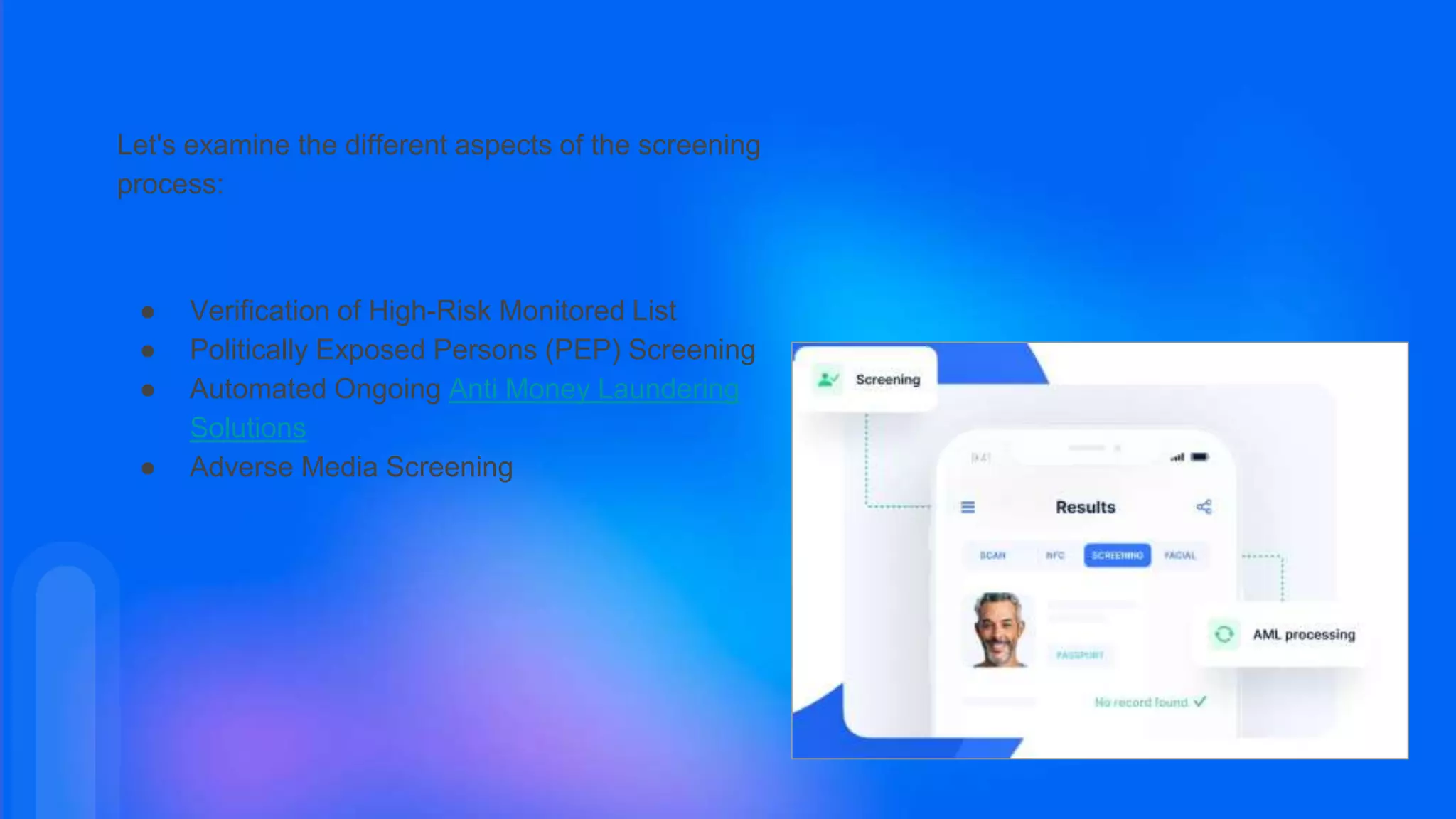
Let's examine the different aspects of the screening
process:
● Verification of High-Risk Monitored List
● Politically Exposed Persons (PEP) Screening
● Automated Ongoing Anti Money Laundering
Solutions
● Adverse Media Screening
Verification of High-Risk Monitored List
● Verifying whether individuals, entities, or transactions are included in
high-risk or monitored lists.
● These lists usually include individuals or entities associated with
money laundering, terrorism financing, or other illegal activities.
Politically Exposed Persons (PEP) Screening
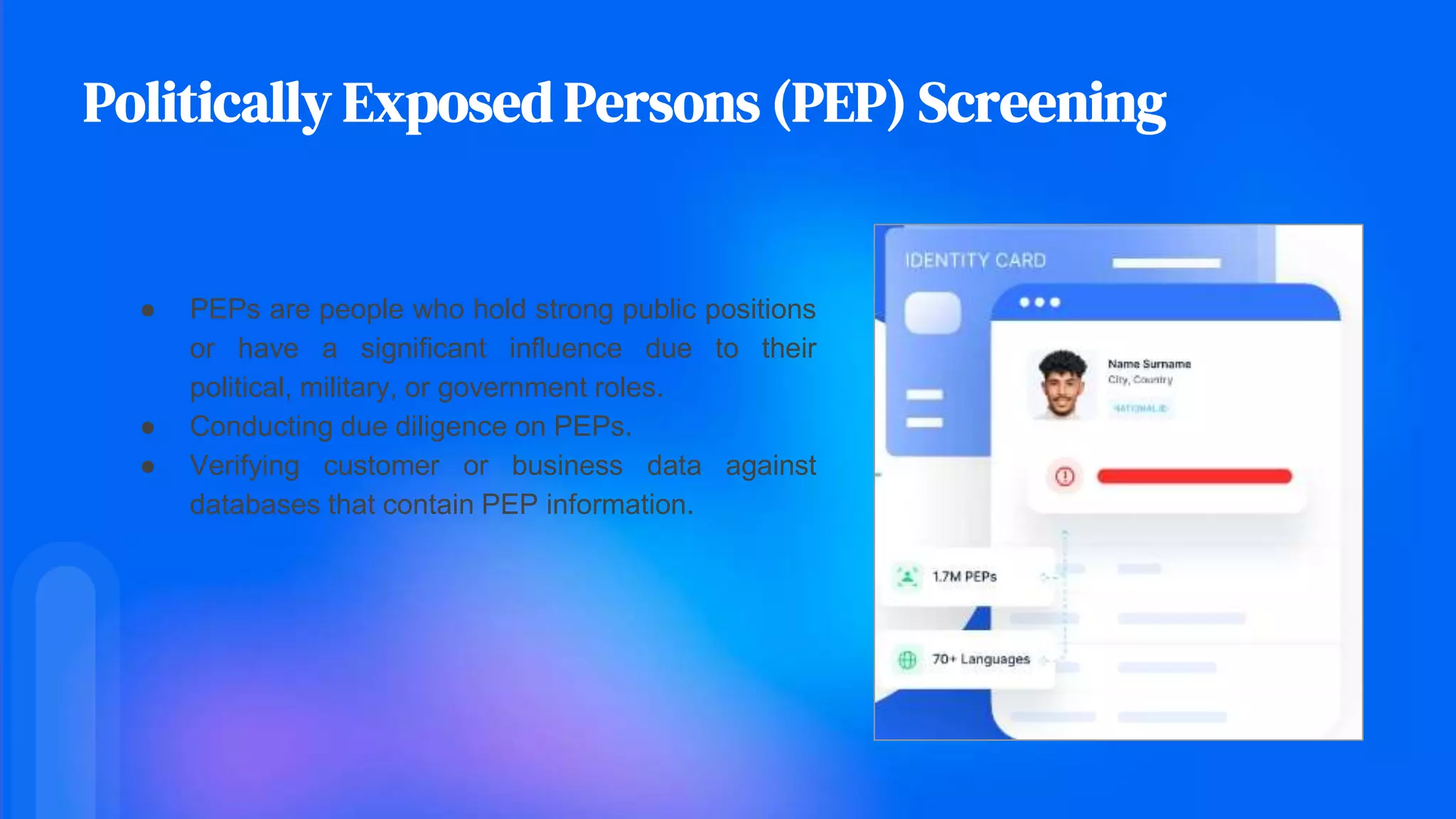
● PEPs are people who hold strong public positions
or have a significant influence due to their
political, military, or government roles.
● Conducting due diligence on PEPs.
● Verifying customer or business data against
databases that contain PEP information.
Automated Ongoing Anti-Money Laundering
Solutions
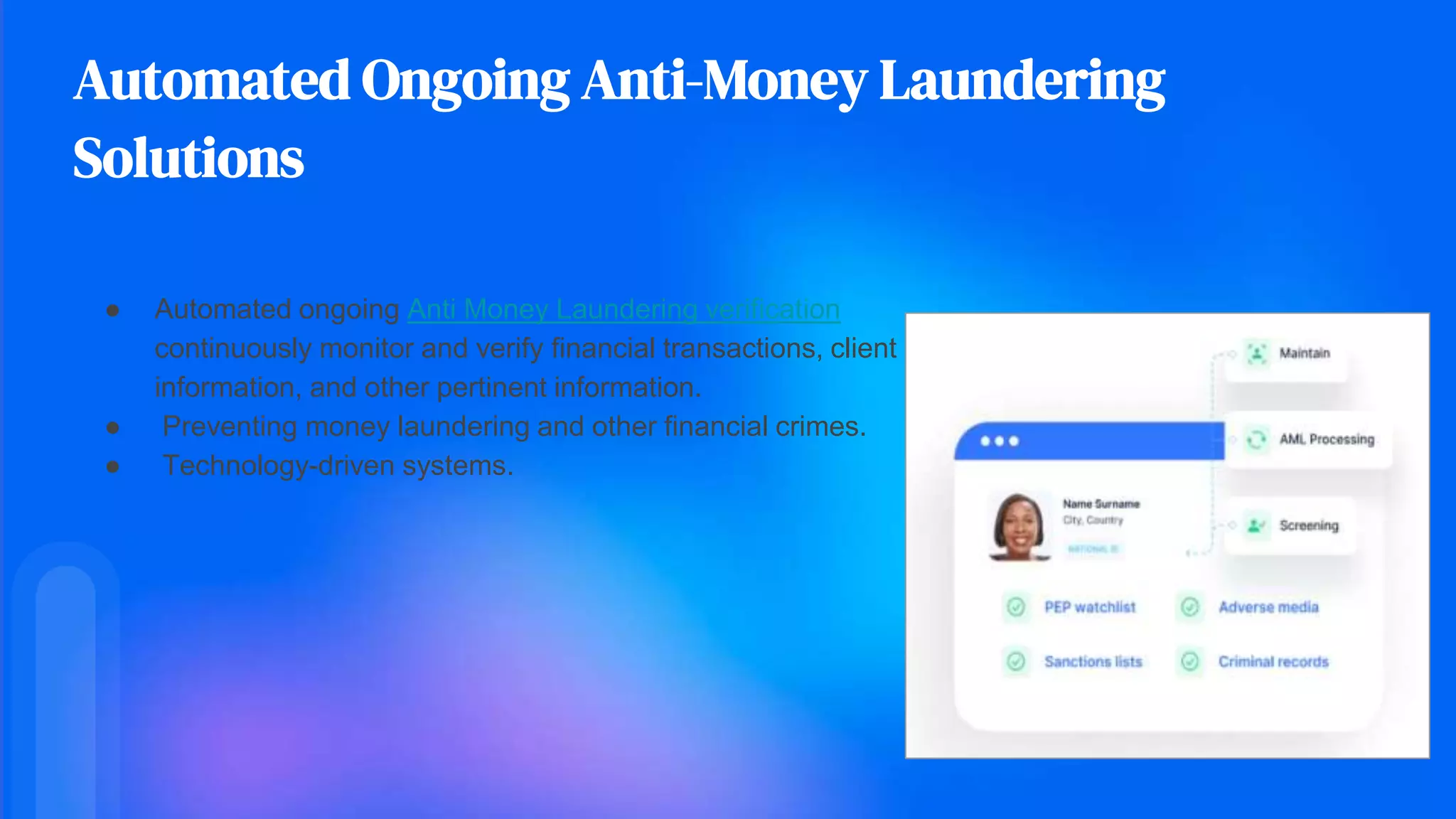
● Automated ongoing Anti Money Laundering verification
continuously monitor and verify financial transactions, client
information, and other pertinent information.
● Preventing money laundering and other financial crimes.
● Technology-driven systems.
Adverse Media Screening
● Obtaining negative or adverse information about people, companies,
and other organisations through media monitoring.
● Monitoring various media sources, such as news stories, blogs,
social media, etc.
● Detecting potentially negative or reputational risks associated with a
particular subject.
Conclusion
In conclusion, Anti Money Laundering screening is a vital process undertaken by financial
institutions to detect and stop money laundering activities. Through the use of various
tools and technologies, such as verifying high-risk lists, conducting PEP screenings, and
monitoring adverse media, AML screening helps ensure compliance with regulations and
provides security against financial crimes.
Thank you

An Overview Of Anti-Money Laundering (AML) Screening

  • 1.
    An Overview OfAnti-Money Laundering (AML) Screening
  • 2.
    Introduction AML screening isa critical component of compliance efforts undertaken by financial institutions to mitigate risks associated with money laundering and other financial crimes. Through the AML screening process, we can detect and prevent the illegal activities associated with money laundering. During the screening process, various tools and technologies are utilised to analyse customer information, transactional data, and other relevant details.
  • 3.
    Let's examine thedifferent aspects of the screening process: ● Verification of High-Risk Monitored List ● Politically Exposed Persons (PEP) Screening ● Automated Ongoing Anti Money Laundering Solutions ● Adverse Media Screening
  • 4.
    Verification of High-RiskMonitored List ● Verifying whether individuals, entities, or transactions are included in high-risk or monitored lists. ● These lists usually include individuals or entities associated with money laundering, terrorism financing, or other illegal activities.
  • 5.
    Politically Exposed Persons(PEP) Screening ● PEPs are people who hold strong public positions or have a significant influence due to their political, military, or government roles. ● Conducting due diligence on PEPs. ● Verifying customer or business data against databases that contain PEP information.
  • 6.
    Automated Ongoing Anti-MoneyLaundering Solutions ● Automated ongoing Anti Money Laundering verification continuously monitor and verify financial transactions, client information, and other pertinent information. ● Preventing money laundering and other financial crimes. ● Technology-driven systems.
  • 7.
    Adverse Media Screening ●Obtaining negative or adverse information about people, companies, and other organisations through media monitoring. ● Monitoring various media sources, such as news stories, blogs, social media, etc. ● Detecting potentially negative or reputational risks associated with a particular subject.
  • 8.
    Conclusion In conclusion, AntiMoney Laundering screening is a vital process undertaken by financial institutions to detect and stop money laundering activities. Through the use of various tools and technologies, such as verifying high-risk lists, conducting PEP screenings, and monitoring adverse media, AML screening helps ensure compliance with regulations and provides security against financial crimes.
  • 9.