Anti Money Laundering &
Combating Financing of
Terrorism
What is Money Laundering ?
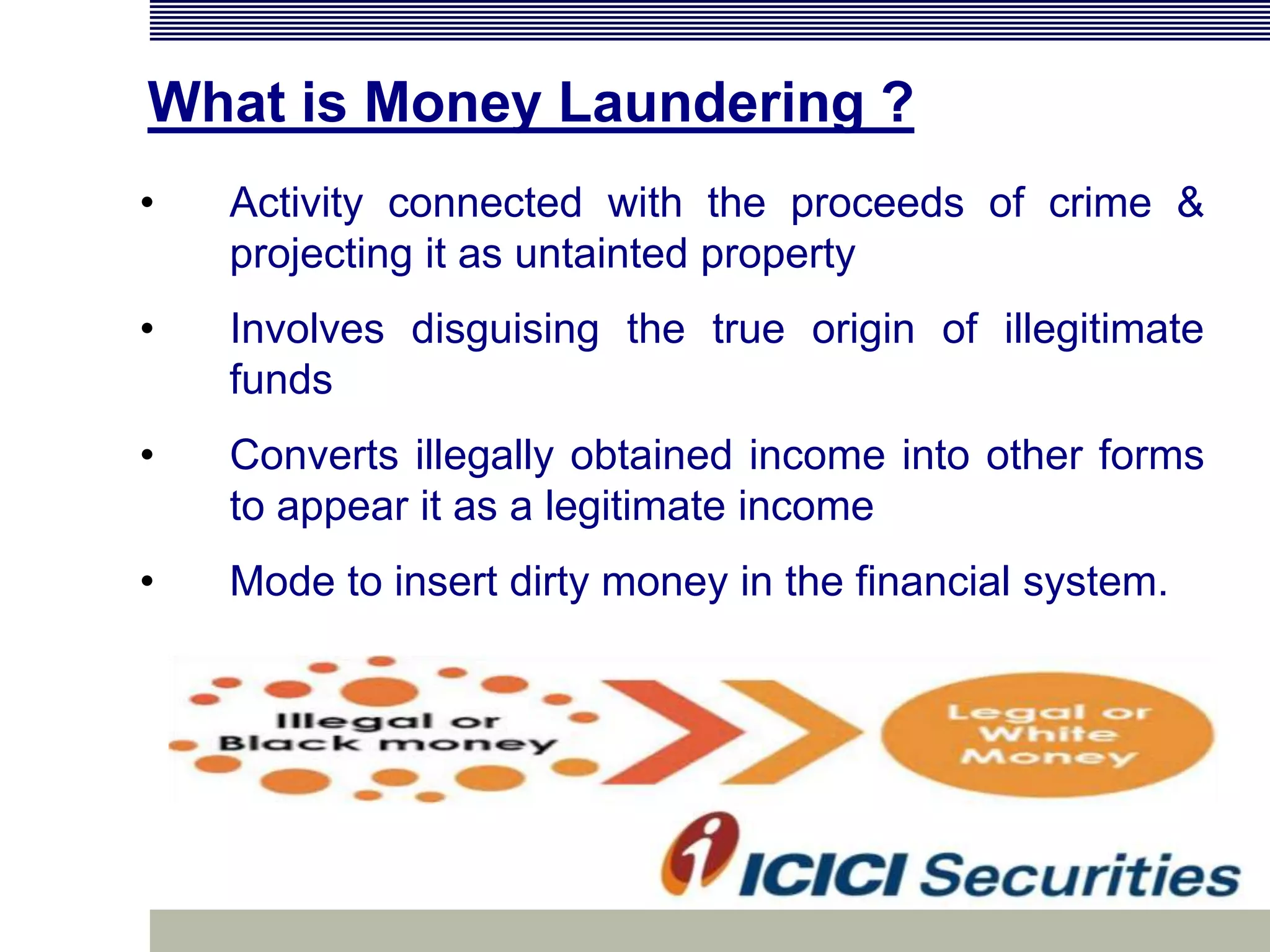
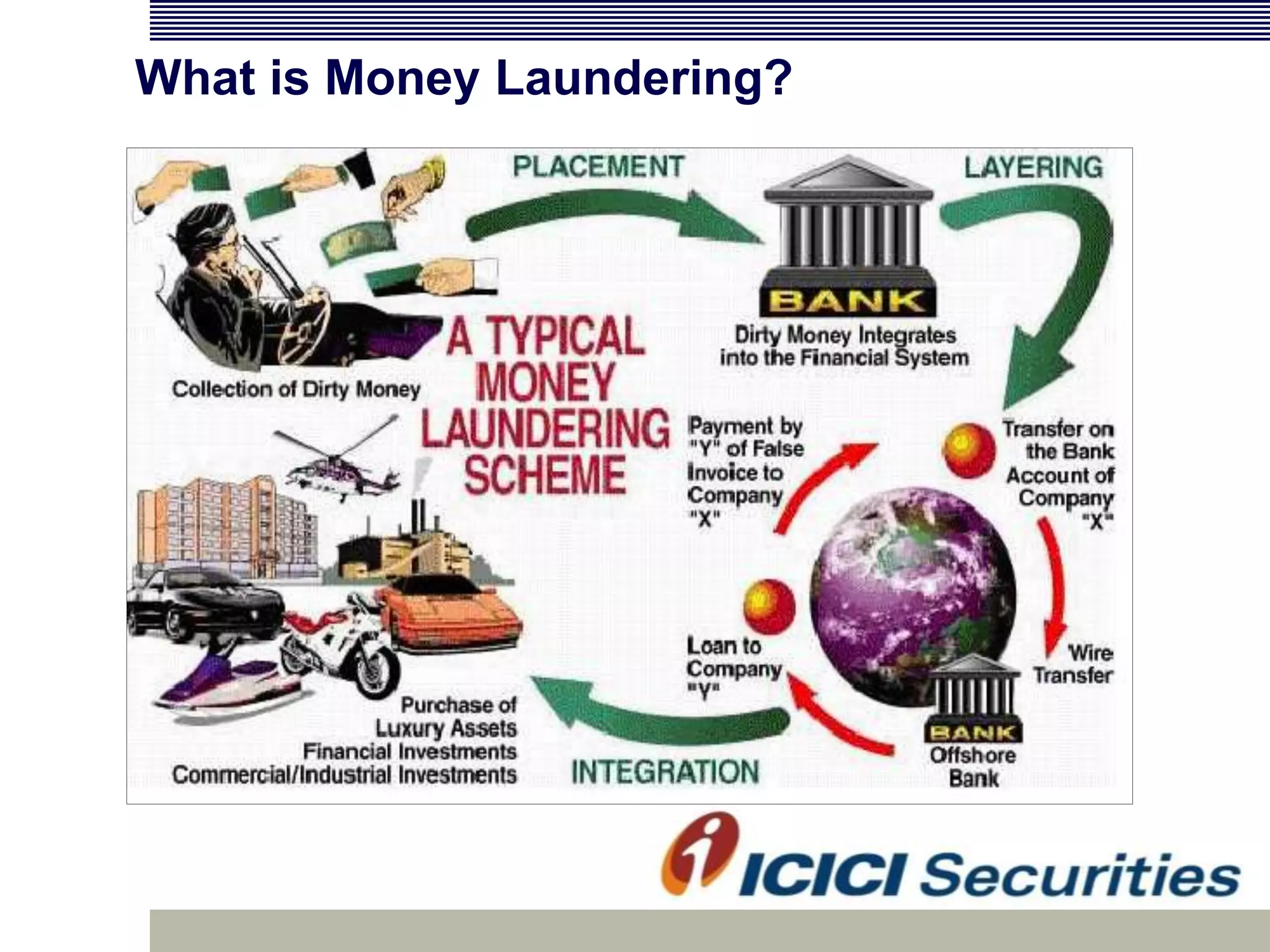
• Activity connected with the proceeds of crime &
projecting it as untainted property
• Involves disguising the true origin of illegitimate
funds
• Converts illegally obtained income into other forms
to appear it as a legitimate income
• Mode to insert dirty money in the financial system.
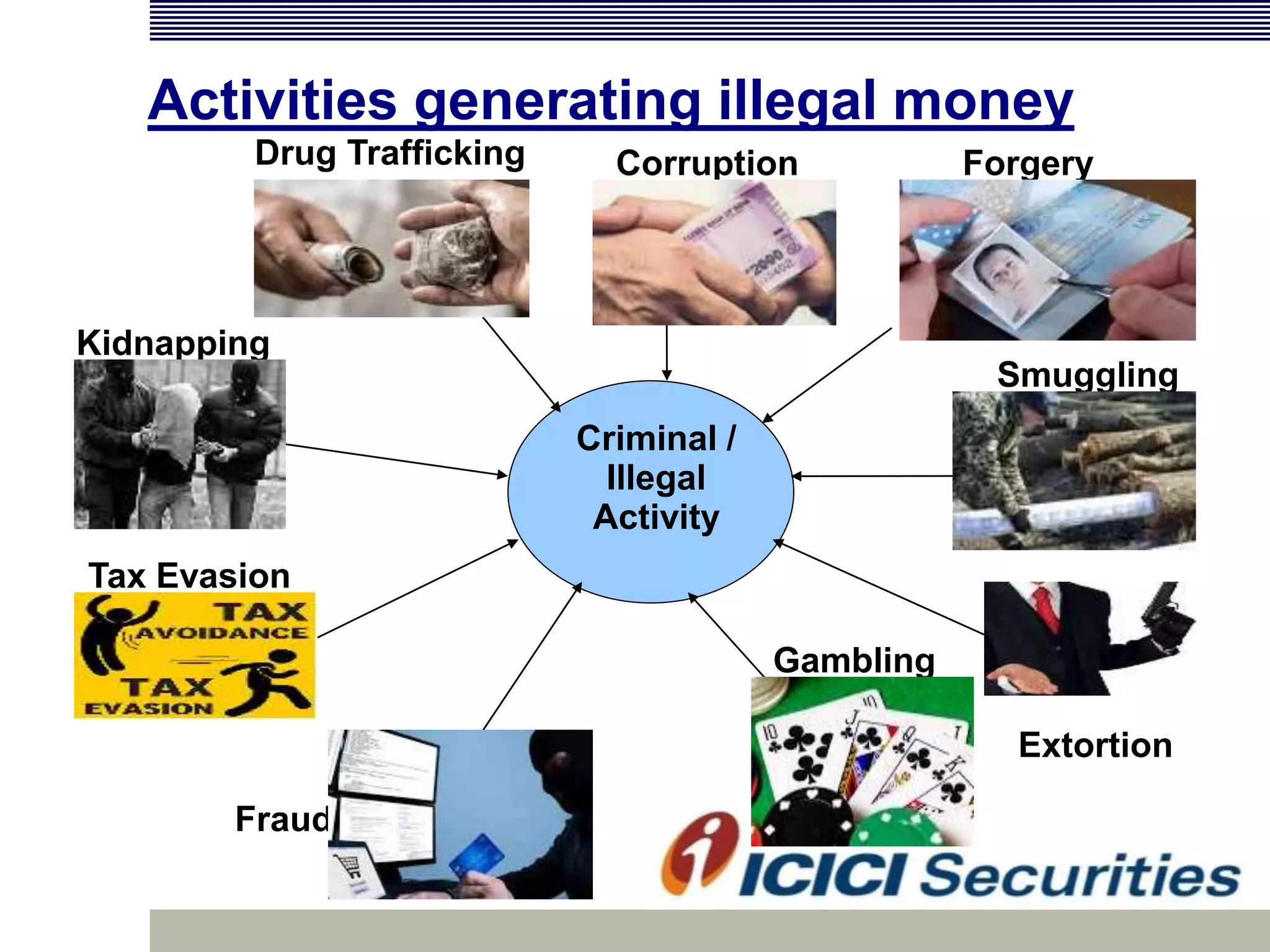
Activities generating illegal money
Kidnapping
Corruption Forgery
Smuggling
Extortion
Gambling
Fraud
Tax Evasion
Criminal /
Illegal
Activity
Drug Trafficking
Stages of Money Laundering
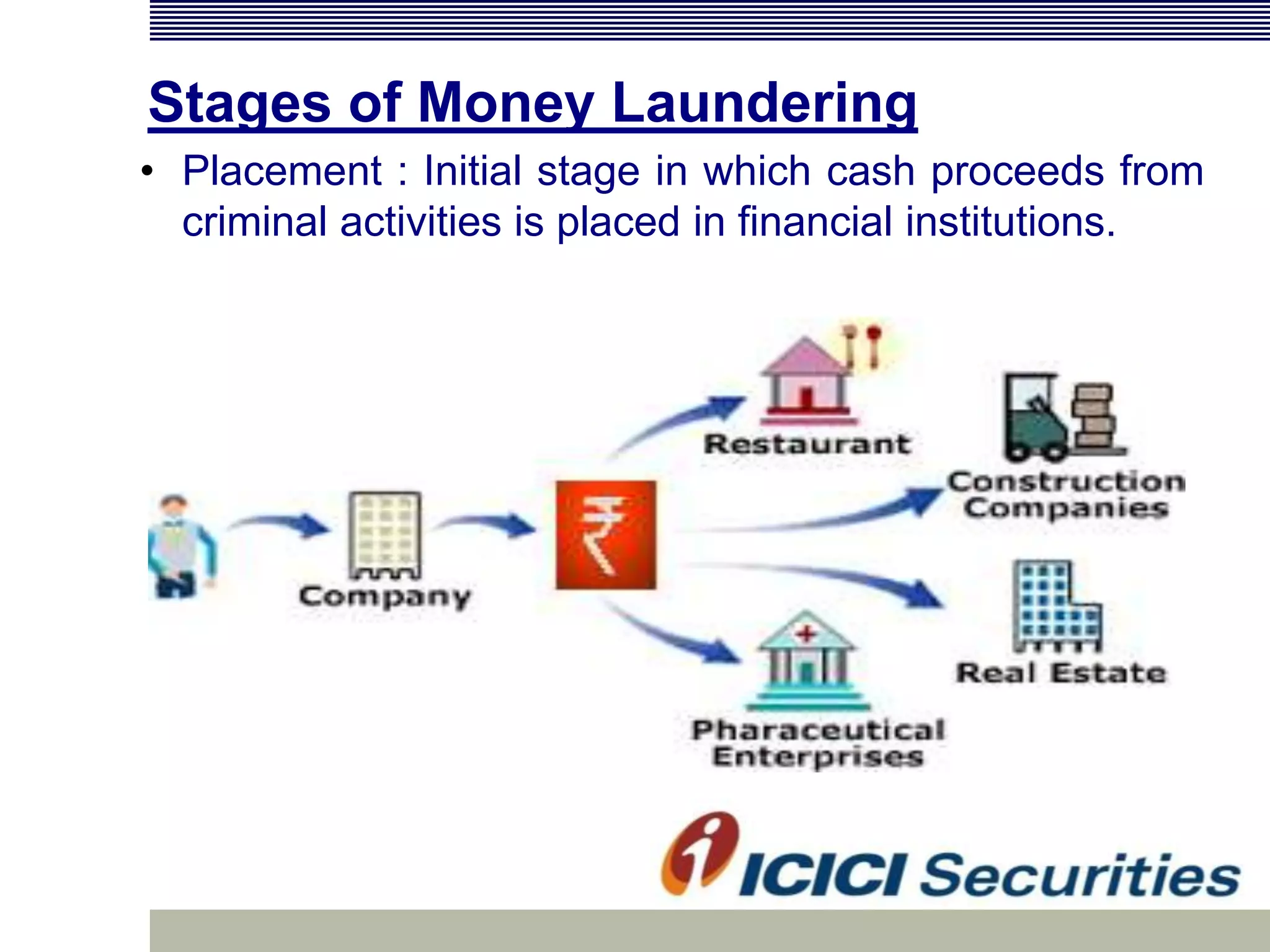
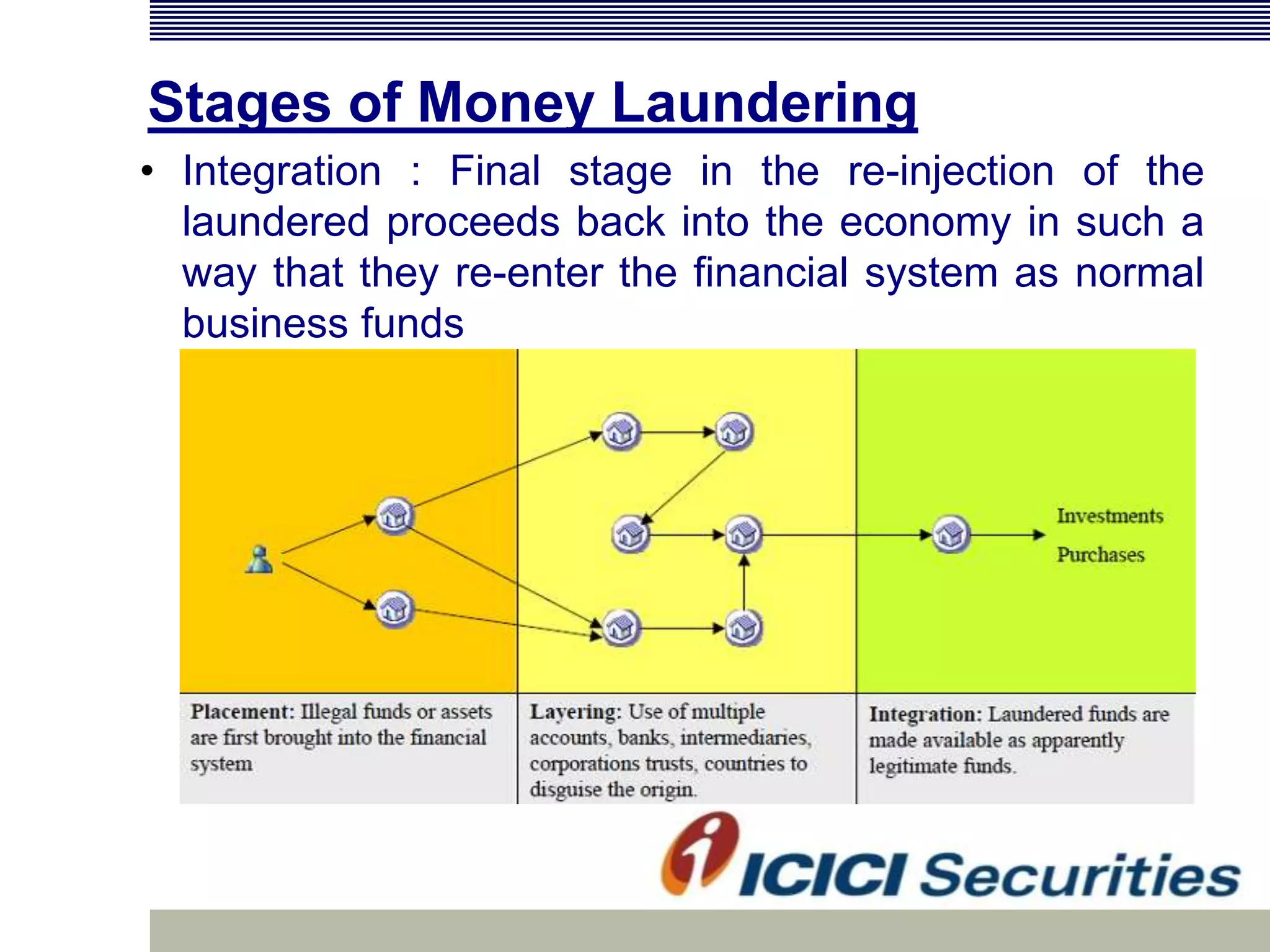
• Placement : Initial stage in which cash proceeds from
criminal activities is placed in financial institutions.
Stages of Money Laundering
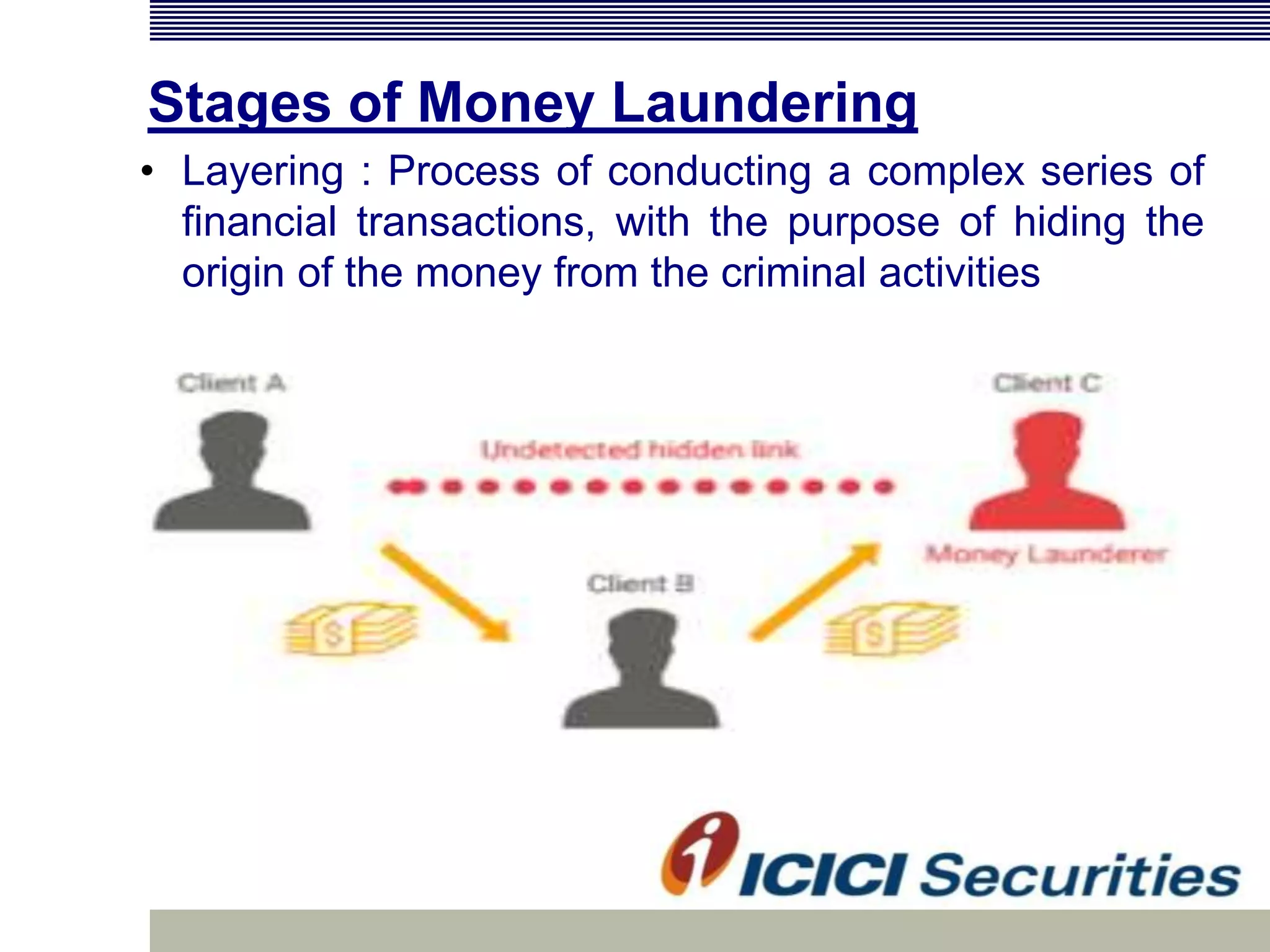
• Layering : Process of conducting a complex series of
financial transactions, with the purpose of hiding the
origin of the money from the criminal activities
Stages of Money Laundering
• Integration : Final stage in the re-injection of the
laundered proceeds back into the economy in such a
way that they re-enter the financial system as normal
business funds
What is Money Laundering?
Prevention of Money Laundering Act,
2002
• PMLA came into force with effect July 01, 2005
• PMLA defines money laundering offence and provides
for the freezing, seizure and confiscation of the
proceeds of crime
• Financial Intelligence Unit–India(FIU-IND) established
in 2004
• Financial Action Task Force (FATF) membership
granted to India in 2010
9
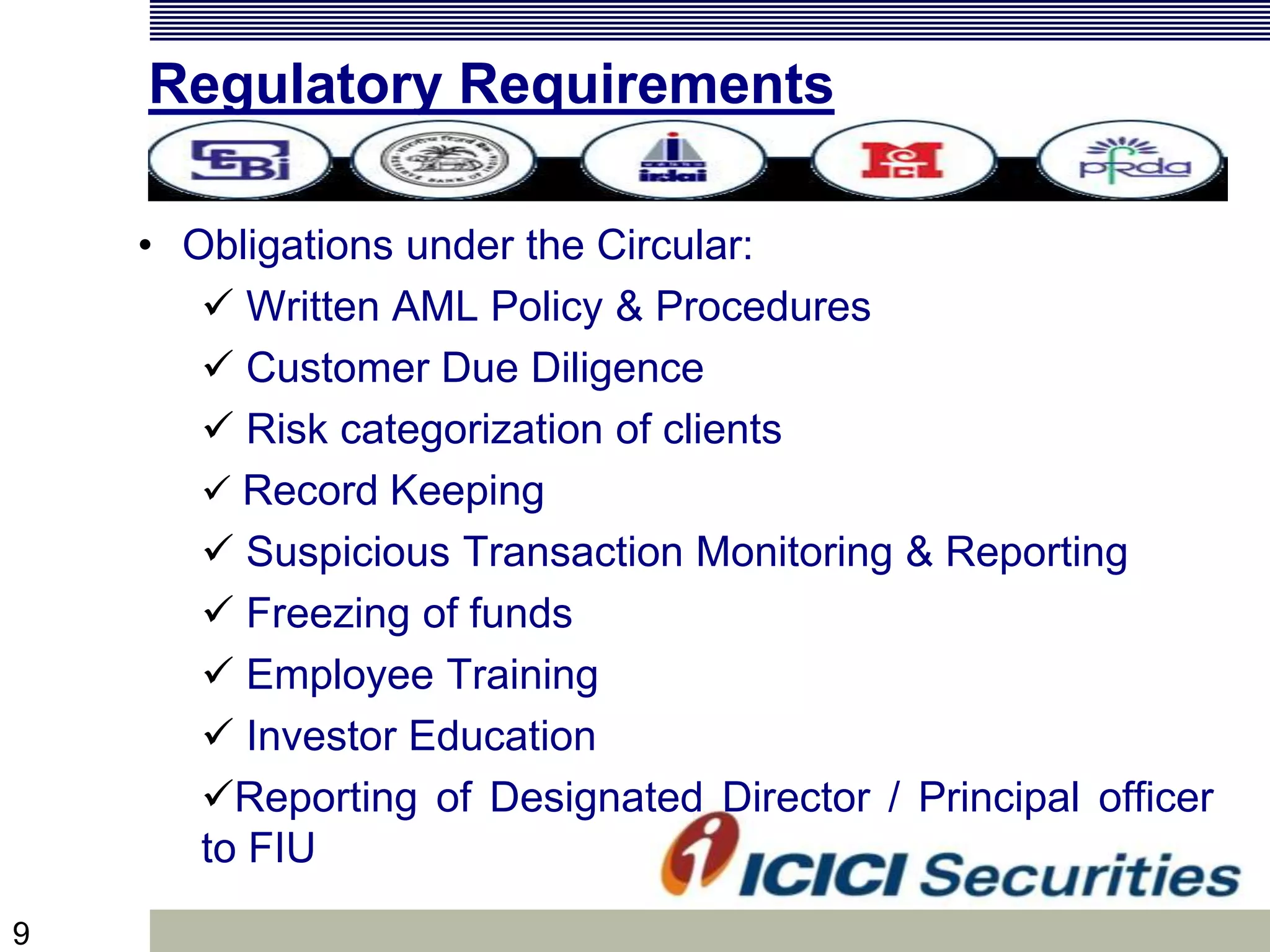
Regulatory Requirements
• Obligations under the Circular:
 Written AML Policy & Procedures
 Customer Due Diligence
 Risk categorization of clients
 Record Keeping
 Suspicious Transaction Monitoring & Reporting
 Freezing of funds
 Employee Training
 Investor Education
Reporting of Designated Director / Principal officer
to FIU
10
Implementation at I-Sec
• AML Policy (reviewed periodically)
• Client Due Diligence (KYC)
• Enhanced Due Diligence (EDD)
• Identification of PEP (Politically Exposed Person)
• Risk categorization of client (High/Low)
• Periodic updation of client detail (income/contact)
• Record Retention
• Risk based monitoring, action as required
• Reporting suspicion (STR)
11
AML requirement
• Clients might be required to submit documents
evidencing source of funds/income tax returns/bank
records etc.
• The above requirements are the ones emanating from
AML and CFT framework.
12
Anti Money Laundering Team
• Daily Transaction monitoring - Alert generation and
analysis
• MIS preparation/ circulation
• Seeking explanation (Income doc./ trade specific)
• RM/Advisor feedback about client/ transaction
• EDD for High Risk clients and approval for account
opening

AMLClientAwareness.ppt

  • 1.
    Anti Money Laundering& Combating Financing of Terrorism
  • 2.
    What is MoneyLaundering ? • Activity connected with the proceeds of crime & projecting it as untainted property • Involves disguising the true origin of illegitimate funds • Converts illegally obtained income into other forms to appear it as a legitimate income • Mode to insert dirty money in the financial system.
  • 3.
    Activities generating illegalmoney Kidnapping Corruption Forgery Smuggling Extortion Gambling Fraud Tax Evasion Criminal / Illegal Activity Drug Trafficking
  • 4.
    Stages of MoneyLaundering • Placement : Initial stage in which cash proceeds from criminal activities is placed in financial institutions.
  • 5.
    Stages of MoneyLaundering • Layering : Process of conducting a complex series of financial transactions, with the purpose of hiding the origin of the money from the criminal activities
  • 6.
    Stages of MoneyLaundering • Integration : Final stage in the re-injection of the laundered proceeds back into the economy in such a way that they re-enter the financial system as normal business funds
  • 7.
    What is MoneyLaundering?
  • 8.
    Prevention of MoneyLaundering Act, 2002 • PMLA came into force with effect July 01, 2005 • PMLA defines money laundering offence and provides for the freezing, seizure and confiscation of the proceeds of crime • Financial Intelligence Unit–India(FIU-IND) established in 2004 • Financial Action Task Force (FATF) membership granted to India in 2010
  • 9.
    9 Regulatory Requirements • Obligationsunder the Circular:  Written AML Policy & Procedures  Customer Due Diligence  Risk categorization of clients  Record Keeping  Suspicious Transaction Monitoring & Reporting  Freezing of funds  Employee Training  Investor Education Reporting of Designated Director / Principal officer to FIU
  • 10.
    10 Implementation at I-Sec •AML Policy (reviewed periodically) • Client Due Diligence (KYC) • Enhanced Due Diligence (EDD) • Identification of PEP (Politically Exposed Person) • Risk categorization of client (High/Low) • Periodic updation of client detail (income/contact) • Record Retention • Risk based monitoring, action as required • Reporting suspicion (STR)
  • 11.
    11 AML requirement • Clientsmight be required to submit documents evidencing source of funds/income tax returns/bank records etc. • The above requirements are the ones emanating from AML and CFT framework.
  • 12.
    12 Anti Money LaunderingTeam • Daily Transaction monitoring - Alert generation and analysis • MIS preparation/ circulation • Seeking explanation (Income doc./ trade specific) • RM/Advisor feedback about client/ transaction • EDD for High Risk clients and approval for account opening