
An Introduction to Workload Modelling for
the Cloud Infrastructure
0
Ravi Yogesh
Web Performance Engineer, Wells Fargo
September 12, 2017
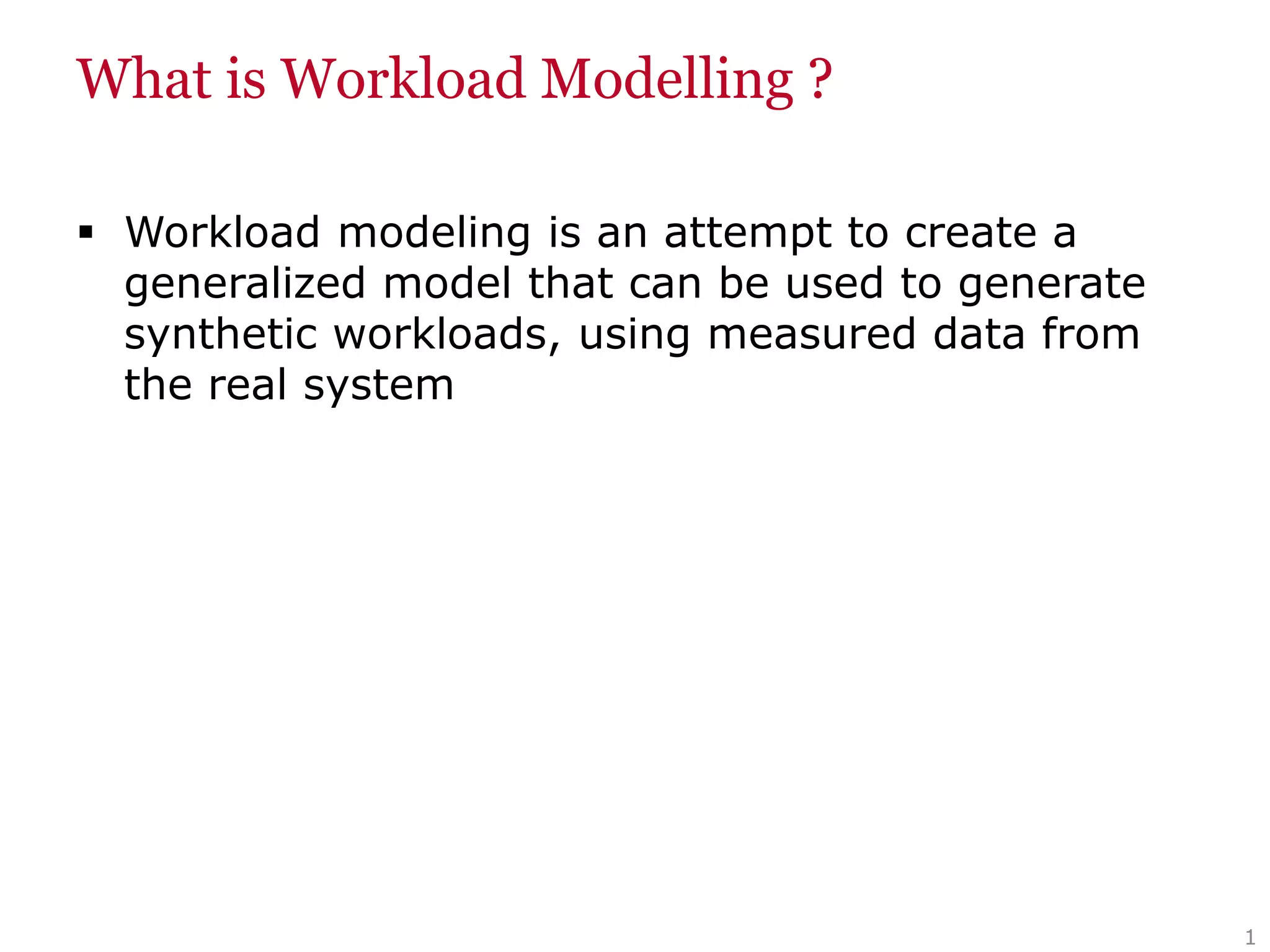
What is Workload Modelling ?
 Workload modeling is an attempt to create a
generalized model that can be used to generate
synthetic workloads, using measured data from
the real system
1
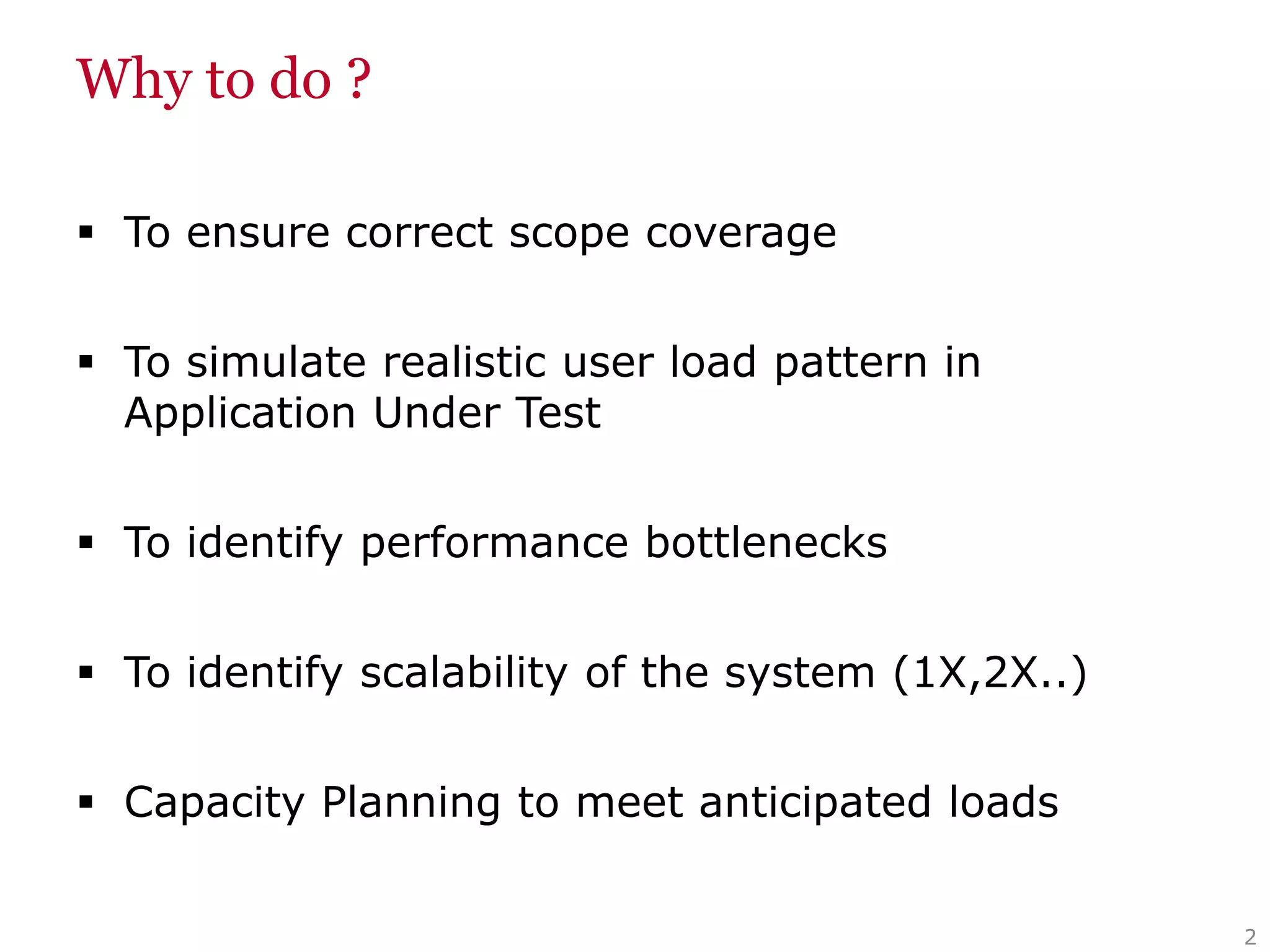
Why to do ?
 To ensure correct scope coverage
 To simulate realistic user load pattern in
Application Under Test
 To identify performance bottlenecks
 To identify scalability of the system (1X,2X..)
 Capacity Planning to meet anticipated loads
2
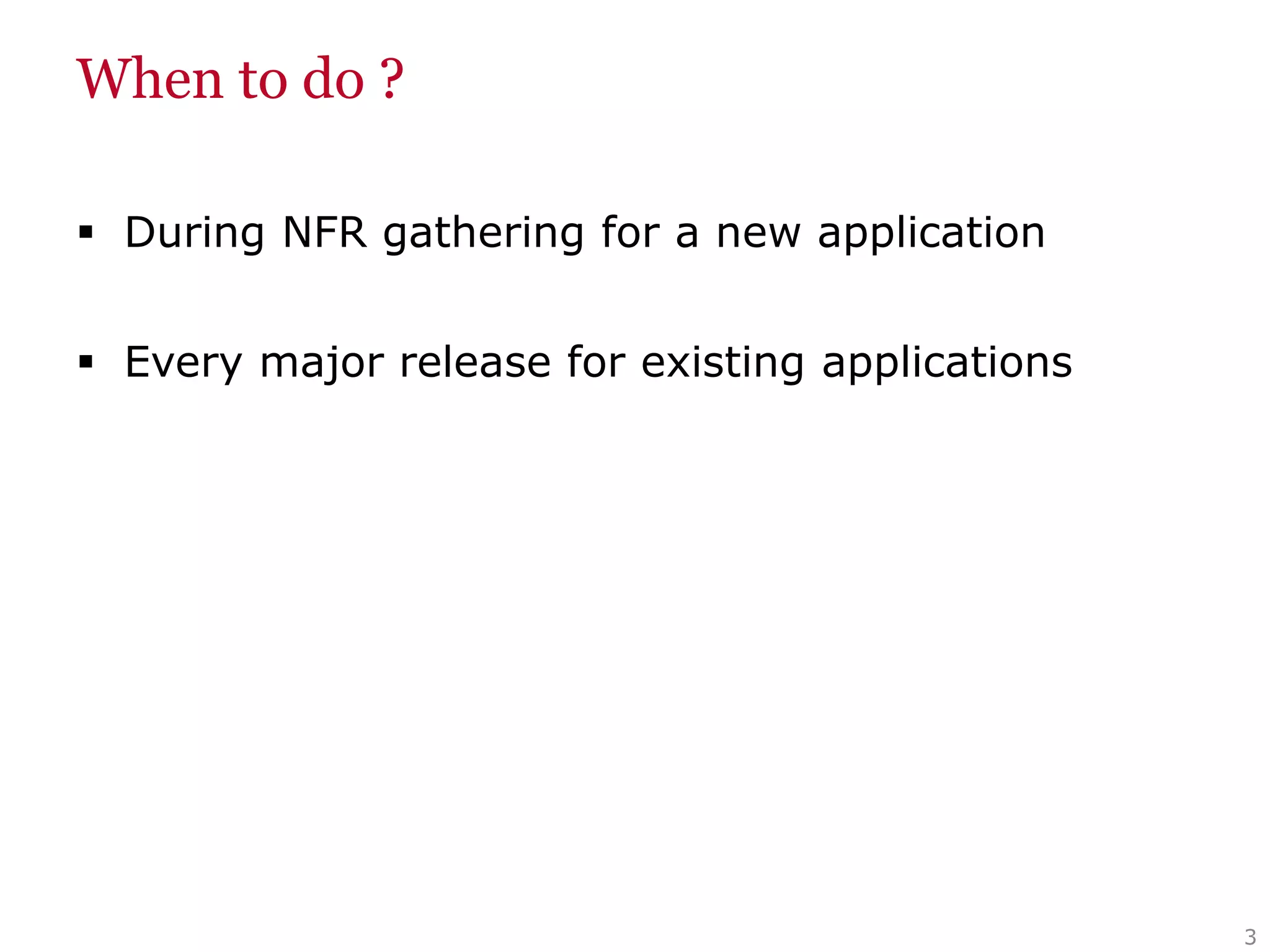
When to do ?
 During NFR gathering for a new application
 Every major release for existing applications
3
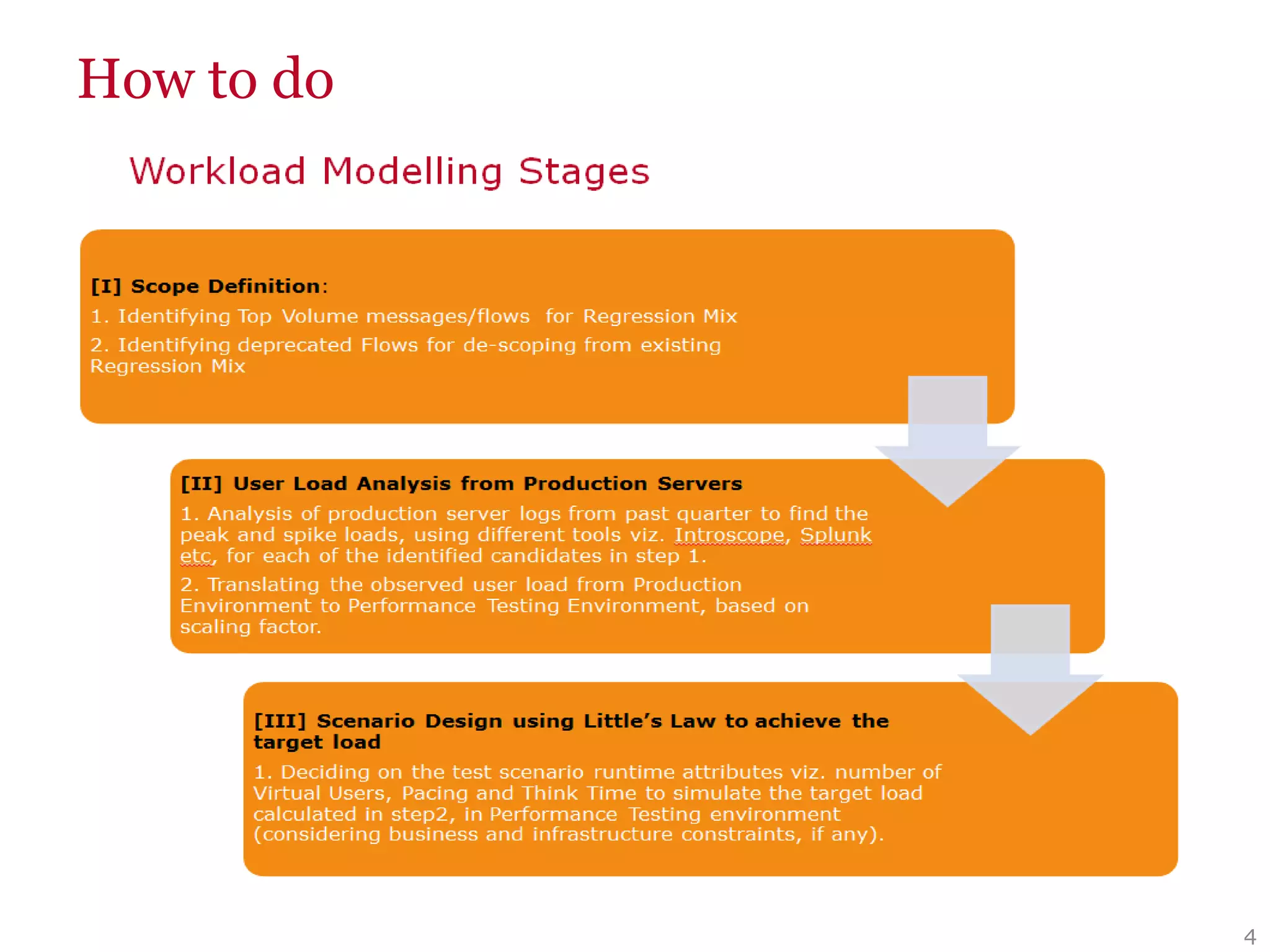
How to do
4
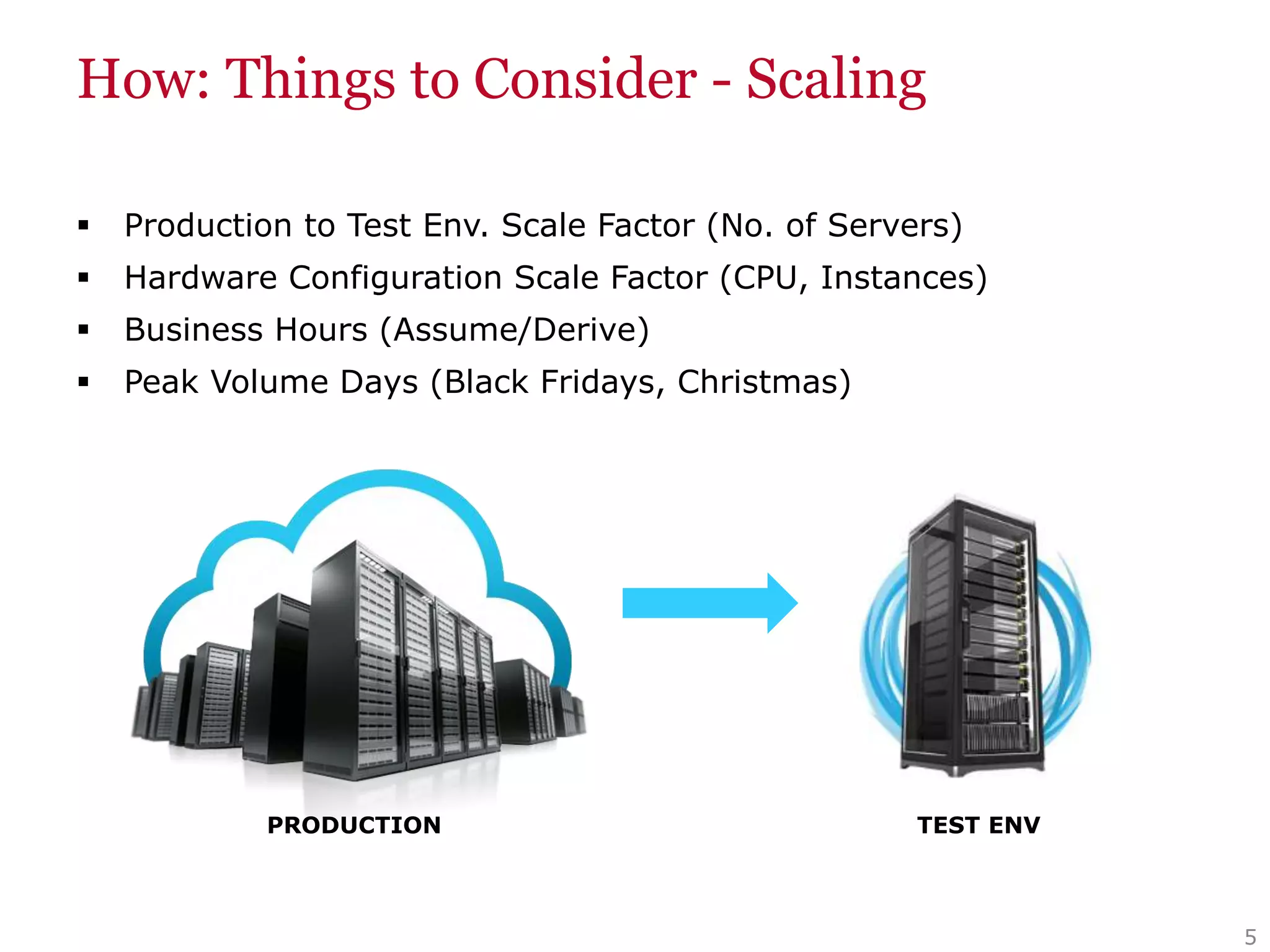
How: Things to Consider - Scaling
 Production to Test Env. Scale Factor (No. of Servers)
 Hardware Configuration Scale Factor (CPU, Instances)
 Business Hours (Assume/Derive)
 Peak Volume Days (Black Fridays, Christmas)
5
PRODUCTION TEST ENV
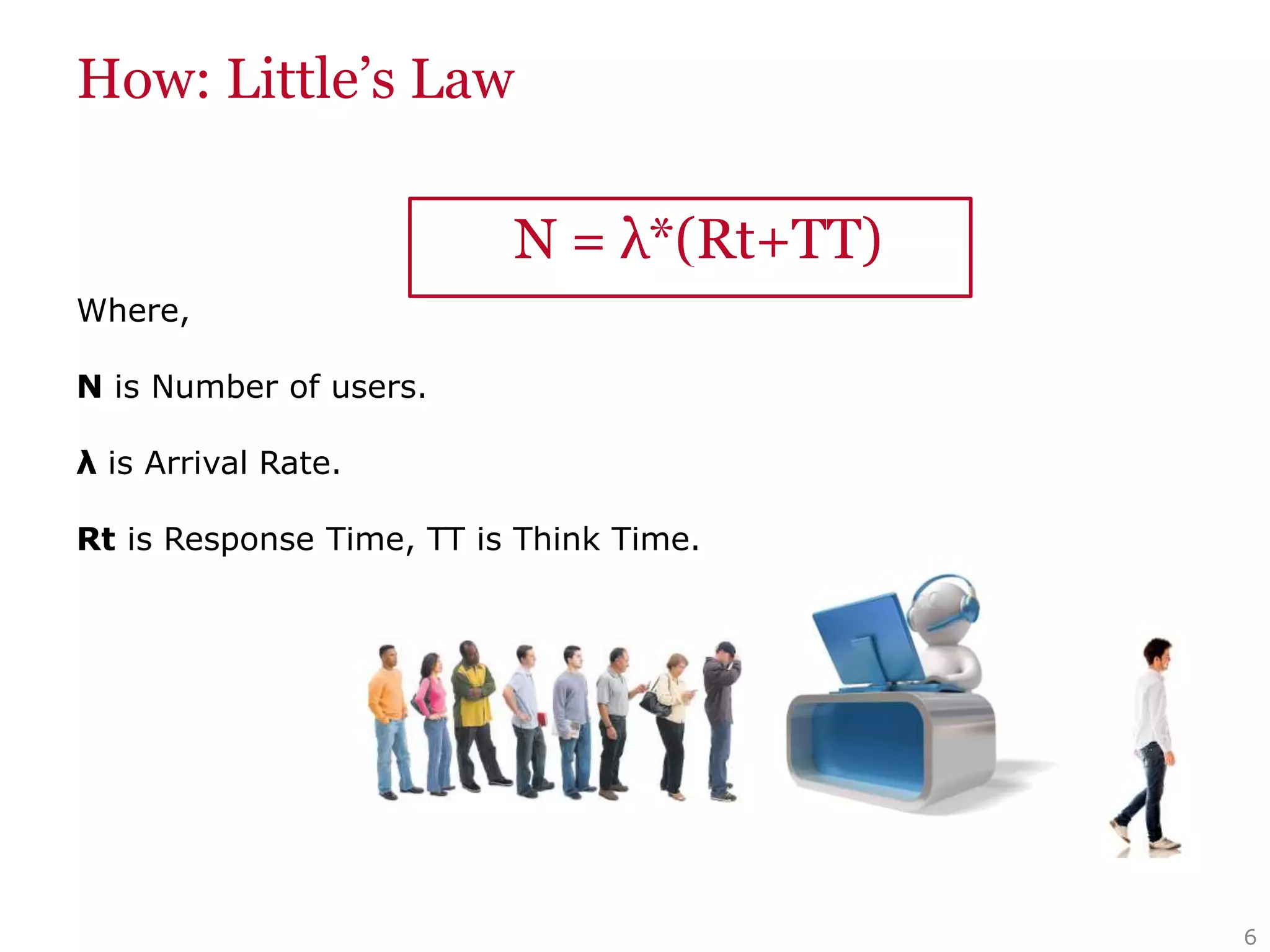
How: Little’s Law
N = λ*(Rt+TT)
Where,
N is Number of users.
λ is Arrival Rate.
Rt is Response Time, TT is Think Time.
6
(
Workload Modelling in the Cloud:
 Need / Criticality
 Challenges over traditional infrastructure
 Solutions and way forward
Workload Modelling in the Cloud:
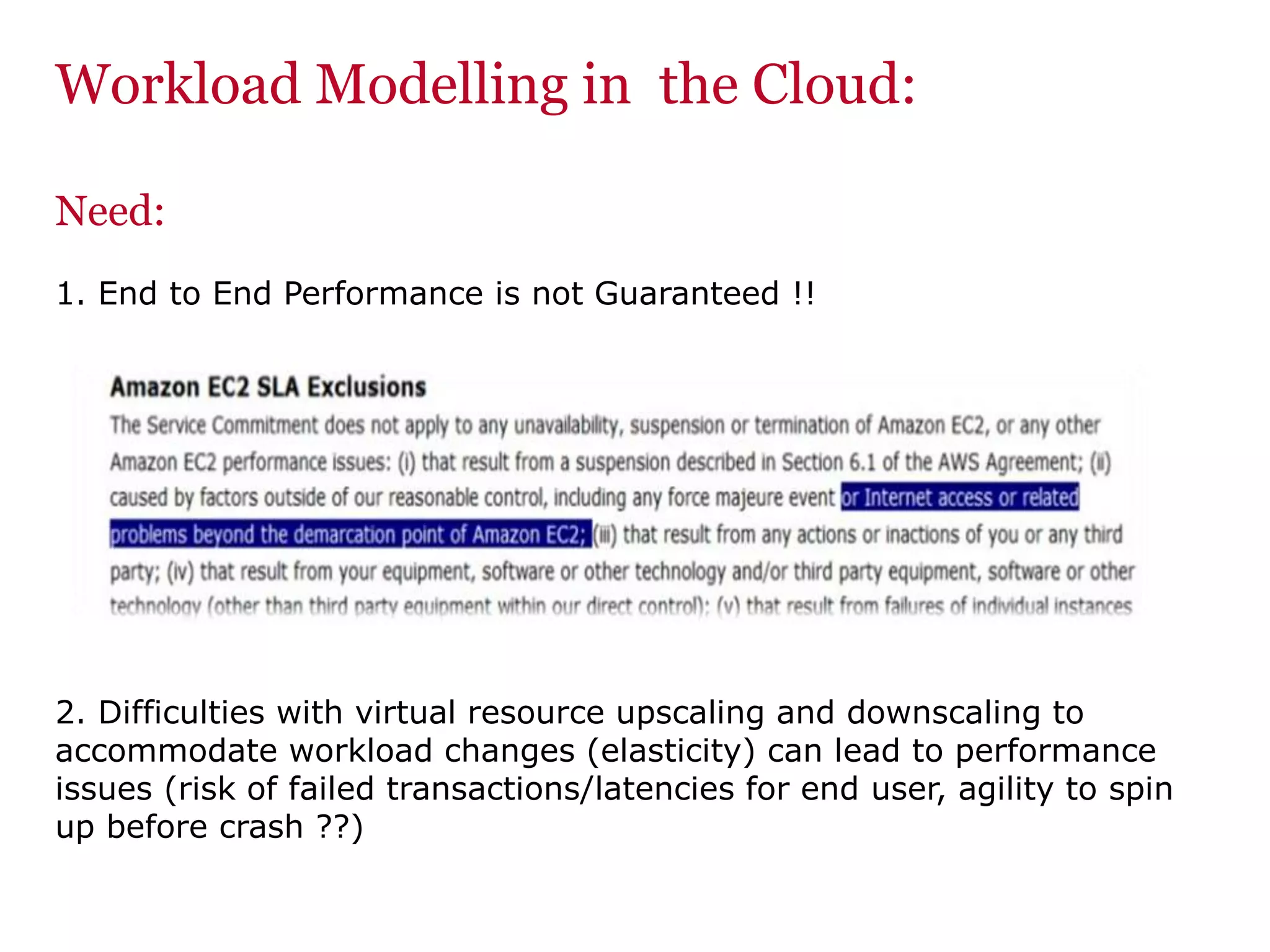
Need:
1. End to End Performance is not Guaranteed !!
2. Difficulties with virtual resource upscaling and downscaling to
accommodate workload changes (elasticity) can lead to performance
issues (risk of failed transactions/latencies for end user, agility to spin
up before crash ??)
Workload Modelling in the Cloud:
Need:
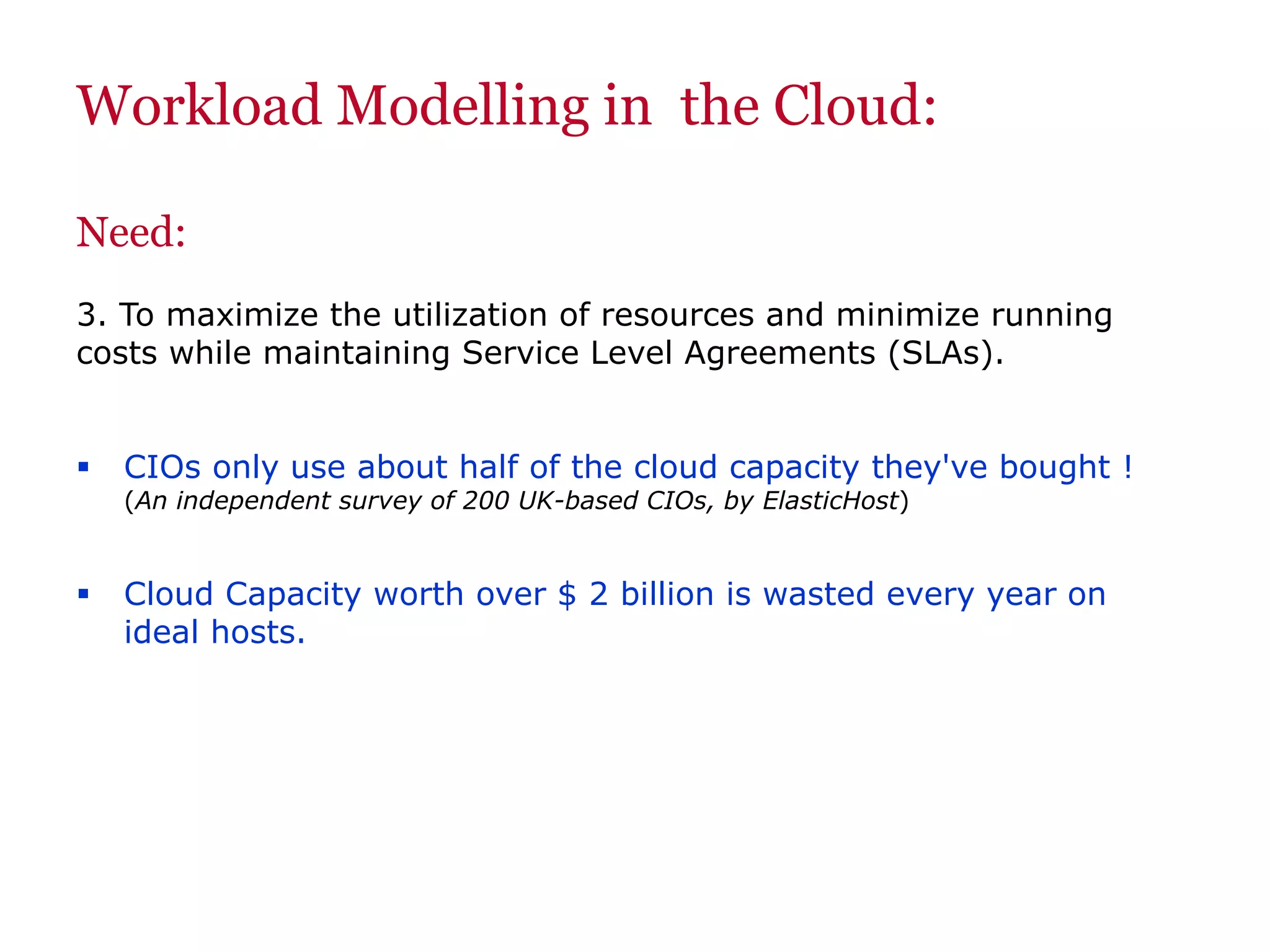
3. To maximize the utilization of resources and minimize running
costs while maintaining Service Level Agreements (SLAs).
 CIOs only use about half of the cloud capacity they've bought !
(An independent survey of 200 UK-based CIOs, by ElasticHost)
 Cloud Capacity worth over $ 2 billion is wasted every year on
ideal hosts.
Workload Modelling in the Cloud:
Challenges:
 Highly Distributed and Dynamic Infrastructure :
(variable number of servers -> difficult to assess load/machine)
 Insufficient Trace-logs for Performance Metrics (business and
confidentiality reasons)
 Hardware platforms heterogeneity (non-identical physical
resources)
 Complex Workload (resource sharing by multiple services)
Workload Modelling in the Cloud :
Way Forward:
• Too Many Variables ?? Automated predictive analytics backed
with AI can help by maintaining a balance between cost and
performance (3rd party tools: Stacktical, Galileo, TeamQuest)
• Application elasticity testing (Single Tenancy for thresholds vs.
Multi Tenancy Testing for elasticity and smoothness of spinning
up/down)
• AWS Tools: Trusted Advisor, Monthly Calculator
• Amazon uses ML to do capacity planning for AWS
12
Questions
References:
1. Performance and Capacity Themes for Cloud Computing, Redpaper IBM
2. How to choose the right cloud model with a workload analysis, IBM
3. Workloads in the Clouds Maria Carla Calzarossa, Marco L. Della Vedova,
Luisa Massari, Dana Petcu, Mo’min I.M. Tabash, Daniele Tessera

An introduction to Workload Modelling for Cloud Applications

  • 1.
    An Introduction toWorkload Modelling for the Cloud Infrastructure 0 Ravi Yogesh Web Performance Engineer, Wells Fargo September 12, 2017
  • 2.
    What is WorkloadModelling ?  Workload modeling is an attempt to create a generalized model that can be used to generate synthetic workloads, using measured data from the real system 1
  • 3.
    Why to do?  To ensure correct scope coverage  To simulate realistic user load pattern in Application Under Test  To identify performance bottlenecks  To identify scalability of the system (1X,2X..)  Capacity Planning to meet anticipated loads 2
  • 4.
    When to do?  During NFR gathering for a new application  Every major release for existing applications 3
  • 5.
  • 6.
    How: Things toConsider - Scaling  Production to Test Env. Scale Factor (No. of Servers)  Hardware Configuration Scale Factor (CPU, Instances)  Business Hours (Assume/Derive)  Peak Volume Days (Black Fridays, Christmas) 5 PRODUCTION TEST ENV
  • 7.
    How: Little’s Law N= λ*(Rt+TT) Where, N is Number of users. λ is Arrival Rate. Rt is Response Time, TT is Think Time. 6 (
  • 8.
    Workload Modelling inthe Cloud:  Need / Criticality  Challenges over traditional infrastructure  Solutions and way forward
  • 9.
    Workload Modelling inthe Cloud: Need: 1. End to End Performance is not Guaranteed !! 2. Difficulties with virtual resource upscaling and downscaling to accommodate workload changes (elasticity) can lead to performance issues (risk of failed transactions/latencies for end user, agility to spin up before crash ??)
  • 10.
    Workload Modelling inthe Cloud: Need: 3. To maximize the utilization of resources and minimize running costs while maintaining Service Level Agreements (SLAs).  CIOs only use about half of the cloud capacity they've bought ! (An independent survey of 200 UK-based CIOs, by ElasticHost)  Cloud Capacity worth over $ 2 billion is wasted every year on ideal hosts.
  • 11.
    Workload Modelling inthe Cloud: Challenges:  Highly Distributed and Dynamic Infrastructure : (variable number of servers -> difficult to assess load/machine)  Insufficient Trace-logs for Performance Metrics (business and confidentiality reasons)  Hardware platforms heterogeneity (non-identical physical resources)  Complex Workload (resource sharing by multiple services)
  • 12.
    Workload Modelling inthe Cloud : Way Forward: • Too Many Variables ?? Automated predictive analytics backed with AI can help by maintaining a balance between cost and performance (3rd party tools: Stacktical, Galileo, TeamQuest) • Application elasticity testing (Single Tenancy for thresholds vs. Multi Tenancy Testing for elasticity and smoothness of spinning up/down) • AWS Tools: Trusted Advisor, Monthly Calculator • Amazon uses ML to do capacity planning for AWS
  • 13.
  • 14.
    References: 1. Performance andCapacity Themes for Cloud Computing, Redpaper IBM 2. How to choose the right cloud model with a workload analysis, IBM 3. Workloads in the Clouds Maria Carla Calzarossa, Marco L. Della Vedova, Luisa Massari, Dana Petcu, Mo’min I.M. Tabash, Daniele Tessera