A Report of the CSIS Harold Brown Chair in
Defense Policy StudiesSEPTEMBER 2014
author
Maren Leed
Amphibious
Shipping
Shortfalls
v*:+:!:+:!
ISBN 978-1-4422-4028-5
1616 Rhode Island Avenue NW | Washington, DC 20036
t. 202.887.0200 |  f. 202.775.3199  |  www.csis.org
ROWMAN & LITTLEFIELD
Lanham • Boulder • New York • Toronto • Plymouth, UK
4501 Forbes Boulevard, Lanham, MD 20706
t. 800.462.6420 | f. 301.429.5749 | www.rowman.com
Cover photo: Oleg Zabielin/Shutterstock.com.
Risks and Opportunities to Bridge the Gap
Ë|xHSLEOCy240285z
Blank
ROWMAN & LITTLEFIELD
Lanham • Boulder • New York • Toronto • Plymouth, UK
Amphibious
Shipping
Shortfalls
Risks and Opportunities to Bridge the Gap
AUTHOR
Maren Leed
CONTRIBUTING AUTHORS
George Flynn, USMC (Ret) Jaimie Hoskins
Geoffrey Anthony, USMC Andrew Metrick
Mark Hooper, USN Samuel Perrella
Ariel Robinson Scott Spector
Melodie Ha Julia Warshafsky
A Report of the CSIS Harold Brown Chair in
Defense Policy Studies
September 2014
About CSIS
For over 50 years, the Center for Strategic and International Studies (CSIS) has worked
to develop solutions to the world’s greatest policy challenges. Today, CSIS scholars are
providing strategic insights and bipartisan policy solutions to help decisionmakers chart
a course toward a better world.
CSIS is a nonprofit organization headquartered in Washington, D.C. The Center’s 220
full-time staff and large network of affiliated scholars conduct research and analysis and
develop policy initiatives that look into the future and anticipate change.
Founded at the height of the Cold War by David M. Abshire and Admiral Arleigh Burke,
CSIS was dedicated to finding ways to sustain American prominence and prosperity as a
force for good in the world. Since 1962, CSIS has become one of the world’s preeminent
international institutions focused on defense and security; regional stability; and
transnational challenges ranging from energy and climate to global health and economic
integration.
Former U.S. senator Sam Nunn has chaired the CSIS Board of Trustees since 1999.
Former deputy secretary of defense John J. Hamre became the Center’s president and
chief executive officer in 2000.
CSIS does not take specific policy positions; accordingly, all views expressed herein
should be understood to be solely those of the author(s).
© 2014 by the Center for Strategic and International Studies. All rights reserved.
ISBN: 978-1-4422-4028-5 (pb); 978-1-4422-4029-2 (eBook)
Center for Strategic & International Studies Rowman & Littlefield
1616 Rhode Island Avenue, NW 4501 Forbes Boulevard
Washington, DC 20036 Lanham, MD 20706
202-887-0200 | www.csis.org 301-459-3366 | www.rowman.com
| III
Contents
Acknowledgments v
Executive Summary vii
Introduction 1
1. The Demand for, and Supply of, Amphibious Shipping 3
2. Mitigating the Amphibious Capability Gap 17
3. A Framework for Assessing Risk 23
4. Risk across the Spectrum of Operations 35
5. Mitigating Risks Associated with Alternative Platforms 45
6. Conclusion 54
Appendix A. Attribute and Characteristic Ratings by
Operational Type 60
Appendix B. Attribute and Characteristic Ratings by Ship 64
Appendix C. Ships’ Attribute and Characteristic
Gaps by Mission 68
Appendix D. Ship Designations and Acronyms 70
Bibliography 72
About the Authors 81
| V
Acknowledgments
This project reflects the support and assistance of literally dozens of experts both in and
out of government. While they are not responsible for how we used their information, they
were extremely generous in providing it, and patient in responding to our frequent follow-
up questions. In the Marine Corps, the study team is deeply indebted to Jim Strock, Mark
Jennings, and their teams in the Seabasing Integration Division and the Futures Directo-
rate within Marine Corps Combat Development and Integration for all they did to share
their deep knowledge of amphibious and non-amphibious ships and how they might be
used. Doug King and his team at the Ellis Group also shared their thinking on future
operating concepts and how various platforms might support Marines in the decades to
come. LtCol Craig Himel from the Global Force Management office in Headquarters Marine
Corps walked us through how Marines have been being employed of late. Multiple divi-
sions in Headquarters Marine Corps (HQMC) Plans, Programs, and Operations spent hours
helping us to better understand ships’ capabilities, how they relate to planned operating
environments, and the changes that are being made to Maritime Prepositioning Squad-
rons. We are particularly grateful to Colonel Lawrence Landon, as well as Major Derek
Crousore, Major Raymond Howard, Major James Pluta, and John Webb for all of their help.
Many on the Navy staff were extremely helpful as well. MajGen Robert Walsh (N95) and
his staff, especially CAPT Erick Ross and LtCol Craig Wonson, gave us insights into the
many challenges across the Navy fleet, to include amphibious ships. CAPT Robert Hein
helped us to better understand his efforts leading a team examining specific ways in which
the Combat Logistics Fleet might help meet demand for amphibious capabilities, and
assisted us in our data gathering. Robert Borka, now on the Navy staff, helped us to reach
back to his former colleagues to get detailed information about various Military Sealift
Command ships. And staff in N91 generously shared historical data on previous 30-year
shipbuilding plans.
We also called upon a number of outside experts. Dr. Eric Labs and Ron O’Rourke of the
Congressional Budget Office and Congressional Research Service, respectively, together
represent some of the deepest knowledge about Navy shipbuilding programs in town. We
were fortunate to rely on both repeatedly for information and key insights.
We are particularly grateful to a number of people who participated in an April 2014
roundtable. In addition to some of those above, these included Doug Bush and Creighton
Greene from the House and Senate Armed Services Committees, John Berry from the Ellis
VI | MAREN LEED
Group, LtCol Keith Couch from the Commandant’s Strategic Initiatives Group, Nate Freier
from the Army War College, CDR Bryon Johnson of N95, Bryan McGrath from the Hudson
Institute, Gene Moran from Capitol Integration, Jonathan Padfield from Huntington Ingalls
Industries, Russell Rumbaugh of the Stimson Center, CDR Michael Stucky from HQMC
POE-50, Scott Taylor from HQMC PPOI, Tom Wetheral from General Dynamics/NASSCO, and
Noel Williams from HQMC Quadrennial Defense Review Integration Group.
The study team is particularly grateful to Huntington Ingalls Industries (HII) for their
sponsorship of this effort. As momentum to make greater use of non-amphibious ships
grows, we believe there is an important opportunity to shape a more structured way of
considering the options. HII’s support allowed us to develop the framework offered here,
and respected our independence at each step along the way.
While this study could not have occurred without the generous participation of all of
those mentioned above, they are not responsible for its contents. Any errors are the fault of
the main author alone.
| VII
Executive Summary
“It is not enough to do your best. You must know what to do, and then do your
best.”
—W. Edwards Deming
For those in the amphibious operations business, these are tough times. Amphibious
ships—the “workhorse of the fleet”1
—are in short supply, and demand for the capabili-
ties they bring to the table shows no sign of abating. Navy and Marine leaders, the Depart-
ment of Defense, and the Congress are actively engaged in managing the risks that result
from this gap in capability, though they are by no means unique to amphibious ships, the
Navy, or the joint force more broadly.
The magnitude of unmet demand for many U.S. military capabilities has forced a shift
in mindset from one of what regional commanders need to what the “system” can reliably
provide. In the amphibious context, this shift has prompted an examination of whether
greater use can be made of other ships currently in the fleet that may be able to offer some
aspects of the broader capability set resident in amphibious vessels.
For the Navy in general and the amphibious fleet in particular, hindsight offers some
clarity about the path to today. Projected fleet requirements had been based on presumed
warfighting demands of the Cold War, and were late taking into account the utility of the
full range of attributes ships possess for steady-state, new normal, or presence operations.
Inventory levels of both amphibious and support ships fell, in some cases vessels were
followed by less capable replacements, and efficiency-driven process changes to manning,
maintenance, and other enabling functions ate into the availability of the ships that
remained. The result is a fleet under significant stress.
For the Marine Corps, this has engendered almost continuous reevaluations of how to
best meet short- and longer-term demands for the specific capabilities amphibious ships
bring to bear. These efforts have spawned multiple initiatives, from the creation of new
units to investments in new technologies to the development of new concepts. The need for
1. Assistant Secretary of the Navy Sean Stackley, testimony at hearing on Department of Defense Authori-
zation of Appropriations for Fiscal Year 2015 and the Future Years Defense Program, U.S. Senate Subcommittee
on Seapower, Committee on Armed Services, April 10, 2014, 14.
VIII | MAREN LEED
innovation is not yet satisfied, however, as the strain on the existing fleet—and thus how
the Marine Corps prefers to do business—will remain for some time.
One area of increasing focus has been how to more broadly leverage non-amphibious
platforms. This approach requires that we view these ships not just as transports or sea
bases (in many cases), but as operational platforms. This study offers a framework to
evaluate what such an expansion of their roles might involve. It begins by identifying key
attributes and supporting characteristics of amphibious capabilities. It then uses them as a
basis for comparison between what is needed for various types of military operations and
a range of amphibious and non-amphibious ships.
This comparison helps to illuminate the degree to which non-amphibious ships can be
utilized in ways that exceed the purposes that drove their original design. The commer-
cially based vessels we evaluated, for example, are (by design) less survivable than am-
phibious ships, which are specifically constructed to operate in hostile environments.
Many of those same commercially based ships, however, have attributes that are relevant
to at least some portions of some operational missions, and can thus make useful—if
circumscribed—contributions.
To facilitate this analysis, this study describes amphibious attributes and supporting
characteristics in some detail. It then offers an initial assessment of how some of those
characteristics relate to a range of operations. In comparing operational needs and specific
ships, it identifies shortfalls that serve as indicators of increased risk if those ships were to
be used independently. For example, at the individual ship level we find that:
• The lowest risk options are in applying alternative platforms to humanitarian and
civic assistance operations such as medical, dental, and engineering services for
local populations, and in security force assistance operations in which Marines train
and exercise with partner militaries;
• All ships, to varying degrees, lack the requisite breadth and projection capabilities
and/or capacity to independently support humanitarian assistance and disaster
relief operations, to such an extent that providing the same level of support that
would be resident in a single large deck amphibious ship would require the employ-
ment of multiple ships in combination;
• Alternative platforms might be able to conduct counter-drug operations against
adversaries that present a low threat, but would need augmentation directly or
through the presence of other ships to lower risks in the areas of air and surface
capabilities; command and control; intelligence, surveillance and reconnaissance;
and crew capacity;
• The use of alternative platforms for maritime interdictions or in support of foreign
internal defense operations, even in an environment expected to be benign, would
involve even more substantial risks that would require mitigation; and
AMPHIBIOUS SHIPPING SHORTFALLS | IX
• Survivability concerns would almost certainly preclude the potential for non-
amphibious platforms to “substitute” for the capabilities provided by amphibious
ships in operations with a reasonable or likely chance of hostilities.
Some of the shortfalls identified in our analysis are more amenable to resolution than
are others; many, for example, could be overcome by operating ships in combination. We
do not examine alternatives in detail, as options to mitigate specific areas of risk are often
bespoke, but we do offer broad areas of consideration that can inform perspectives on the
range and level of effort that might be involved in addressing particular areas where
shortfalls were common.
However, while this analysis may provide useful insights about aspects of platform
employment or a particular ship modification, its utility is intended to be greater. In con-
ducting this analysis, the study team concluded that the most serious challenge for future
U.S. amphibious capabilities is the lack of a common, comprehensive, and systems-based
strategy to serve as a guide for the difficult choices that must continue to be made. At
present, while individual decisions can and are being taken, their system-level effects are
not obvious but are critically important.
The lack of a comprehensive strategy means that policymakers do not have a shared
understanding of how much amphibious capability is “enough,” nor about how best to
allocate scarce resources among the many contributors to those capabilities—be they
amphibious ships, support or transport vessels, “connectors” that enable Marines’ ability
to get and continue to operate ashore, or Marines themselves. It inhibits clear debates
about how best to prioritize within shipbuilding funding accounts that are under growing
pressure, and it encourages short-term focused point solutions while obscuring their
interdependence and long-term implications.
Ultimately, these distinctions among ships, when coupled with more specific and mea-
surable attributes and supporting characteristics, help to establish a foundation for a
broad-based strategy to help guide the evolution of U.S. amphibious capabilities. Develop-
ing a clear, shared strategy to understand and manage the risk that already exists, and to
shape it in a way that is evident and purposeful going forward, is the primary challenge at
hand. This study is aimed at contributing to that effort.
The most serious challenge for future U.S. amphibious capabilities is the lack of a
common, comprehensive, and systems-based strategy to serve as a guide for diffi-
cult choices.
| 1
Introduction
In 2011, the Center for Strategic and International Studies (CSIS) released an analysis of
how U.S. amphibious capabilities contribute to strategic-shaping activities, and what
some of the implications might be to conducting those activities differently. Three years
later, though much has remained the same, there has also been change. One constant has
been the high level of demand for amphibious ships by regional commanders, driven by a
continuously dynamic and complex security environment. Another is the continued rise of
weapons systems, to include ships, which erodes Defense Department (and in this case the
Navy’s) buying power. Both have intensified the pressures resulting from one key area of
change: the Defense Department’s budget was just starting to tighten when our previous
study was released, has since been cut further, and—more significantly—has been highly
uncertain.
As policymakers face the prospects of very difficult choices about how best to allocate
defense resources for many years to come, the Harold Brown Chair at CSIS undertook a
more focused reexamination of U.S. amphibious capabilities. While the previous study
explored these capabilities in a broad sense—ships, aircraft, surface connectors, and
ground vehicles—this effort focuses specifically on shipping. This is because, despite
challenges across the board, ships remain the cornerstone of amphibious operations. Like
the entire Navy fleet, the inventory of amphibious ships falls far short of what regional
commanders are requesting—not just for potential large conflicts, but also for the day-to-
day activities that aim to preclude it, as well as to respond to crises that continue to emerge
in every region. To that end, the Navy and Marine Corps are pursuing multiple avenues to
bridge the gap, to include examining the degree to which “alternative platforms”—that is,
non-amphibious ships—can be leveraged. As Marine Corps Assistant Commandant General
John Paxton recently testified, “In the near term, the Navy and Marine Corps are looking at
alternative platforms that can complement the current amphibious inventory.”1
There are multiple efforts—some complete, others ongoing or not yet under way—that
explore the potential contributions of alternative platforms for missions that would other-
wise be performed by amphibious ships if there were sufficient numbers. Some focus on
specific missions, while others consider specific vessels or combinations thereof. Each of
1. Statement of General John M. Paxton Jr., assistant commandant of the Marine Corps, before the Readi-
ness Subcommittee of the Senate Armed Services Committee on Readiness, March 26, 2014, 17, http://www
.armed-services.senate.gov/imo/media/doc/Paxton_03-26-14.pdf.
2 | MAREN LEED
these yields insights and recommendations that help to inform the realm of the possible—
technically, fiscally, or otherwise.
What is lacking, however, is a broader framework within which policymakers can
develop a strategy—or at least a common basis of consideration for informed analysis—for
determining where alternative platforms offer the most potential, or where the marginal
dollar or steaming day might be better invested in preserving or enhancing amphibious
ships. Absent such a framework, leaders are forced to make a series of incremental deci-
sions based on their individual merits. This approach masks system-level interactions, and
could result in a fleet over the long term that is even more poorly aligned to the environ-
ment than the amphibious fleet of today.
This study aims to develop such a framework, or at least the basic outlines of one that
can be further refined. Chapter 1 describes the amphibious shipping gap, summarizing the
evolution of amphibious shipping goals and relating those to current and projected future
supply. Chapter 2 describes the range of alternatives to address what will be a continuing
gap, of which the use of alternative ships is just one. Chapter 3 builds on the approach used
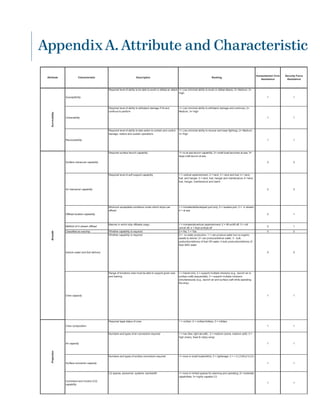
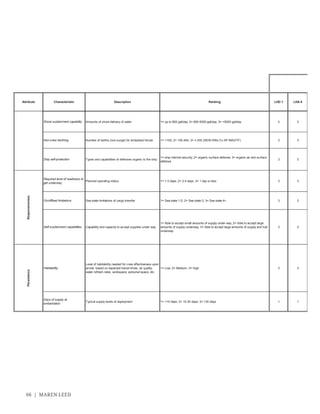
in our previous study by updating and refining a list of the key attributes of amphibious
ships, and then relating those attributes and the characteristics that comprise them to
various military operations, with ratings appearing in Appendix A. Chapter 3 then delin-
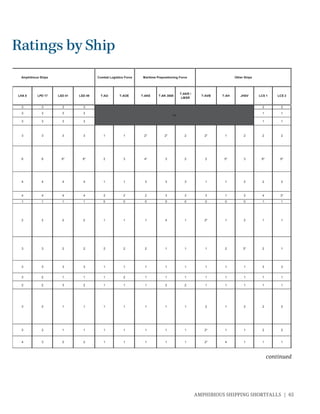
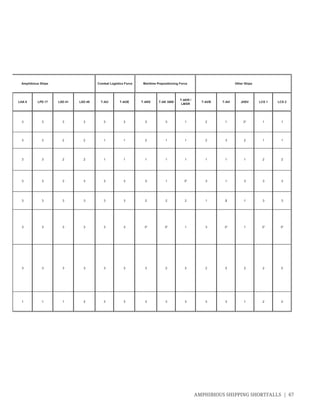
eates 16 ships chosen for the study, both amphibious and non-amphibious, along those
same attributes and characteristics. Ratings for these ships are shown in Appendix B.
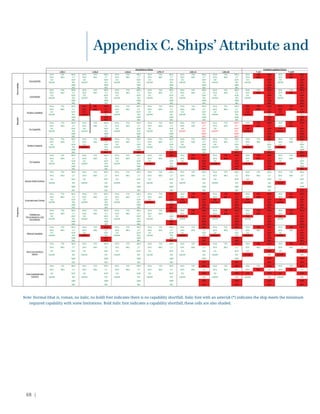
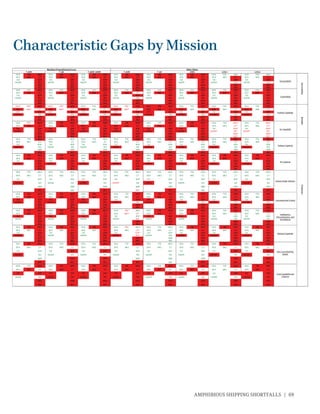
Chapter 4 describes the types of operations in which ships fall short of providing necessary
capability or capacity (also shown graphically in Appendix C). Where shortfalls exist,
employing ships with insufficient capabilities indicates areas of higher risk. Chapter 5
explores some of the key differentiators among those risks, as they are not all of similar
importance and many can be partially or fully mitigated. It then describes some of the
additional factors that should be considered as mitigation options are weighed. Finally,
Chapter 6 offers concluding observations about how the attribute framework can be ap-
plied more broadly to inform a holistic strategy to guide amphibious capabilities going
forward.
| 3
The Demand for, and Supply of,
Amphibious Shipping
Current efforts to examine how some aspects of the demand for amphibious capabilities
can be met in alternative ways have been borne of necessity. In recent years, the gap
between the demand for those capabilities and their supply has been growing. This chap-
ter explains the evolution of how the Defense Department has come to view the require-
ment for amphibious ships and capabilities, how that relates to their supply, and the
prospects for reversing the growing gap between the two in the short and medium term.
Demand for Amphibious Ships
Over time, perspectives on how many amphibious ships (i.e., the inventory) the Depart-
ment of Defense requires has been a function of at least four variables: (1) defense strategy
and the Marine Corps’ contributions to that strategy; (2) spending priorities; (3) operational
concepts; and (4) Marine Corps force structure, equipment size, and weight.1
As these
variables have shifted, goals for how much total lift capacity and the number of ships
required to provide it have fluctuated significantly, with 15 modifications since 1951. In
recent decades, however, the goal for lift has remained relatively stable, changing just once
since 1991.2
After the Cold War ended and up until the mid-2000s, the official goal for amphibious
ships remained at a level sufficient to carry the assault echelon (AE) of 2.5 Marine Expedi-
tionary Brigades (MEBs), with the remainder of the Marine Expeditionary Force (MEF)
being carried by other, less survivable sealift platforms. In 2006, however, the goal was
further reduced to 2.0 MEB AEs arriving via amphibious shipping (again, with the remain-
ing equipment and supplies coming on less survivable platforms), a goal that remains in
place today.3
1. This is a slightly modified version of the causes described in Matthew T. Robinson, Integrated Amphibi-
ous Operations Update Study (DON Lift 2+): A Short History of the Amphibious Lift Requirement (Alexandria,
VA: Center for Naval Analyses, July 2002), 2.
2. Ronald O’Rourke, Navy LPD-17 Amphibious Ship Procurement: Background, Issues, and Options for
Congress (Washington, DC: Congressional Research Service, January 9, 2012), 10.
3. It is important to note that the Marine Corps’ determination that the risk associated with this approach
was acceptable was in part predicated on the assumption that the then-planned Maritime Prepositioning Force-
Future (MPF(F)) would provide sea-based support to a Marine Expeditionary Brigade ashore. The Navy for-
mally canceled MPF(F) in its FY2011 budget request for affordability reasons, eliminating two large-deck
1
4 | MAREN LEED
Based on the size of the MEB AE, this requirement translated into a need for 19 amphib-
ious ships per MEB, or 38 ships. Assuming that approximately 10 percent of the fleet would
be in maintenance at any given point in time (i.e., almost four additional ships), the total
inventory goal was 42 ships. However, this level was deemed unaffordable; in 2007, the
Navy and Marine Corps leaders agreed that the MEB AE could, by displacing some of the
AE’s supplies and equipment onto other sealift, be transported by 17 total amphibious ships
(or 34 for two MEBs, with an additional four ships assumed to be in maintenance, for a total
inventory level of 38). Budgetary conditions were such that they agreed to take even more
risk (i.e., push an even higher percentage of equipment and supplies onto cargo-type ships),
setting the fiscally constrained inventory requirement at 15 ships per MEB AE. This trans-
lated in an available inventory of 30 ships, or a total inventory goal of 33 ships with the
inclusion of the 10 percent “maintenance tax.”
The 2007 reduction in the lift goal from 2.5 to 2.0 MEB AEs came at a time of growing
recognition that U.S. forces from all the military services were needed not only for warf-
ighting missions, but also to engage in regional activities associated with deterrence, crisis
response, and (of particular interest more recently) partnership activities.4
While Defense
Department processes continue to emphasize force requirements based on approved war
plans, the weight given to presence demands has continued to increase over the last few
decades.5
Historically, the warfighting demand for amphibious ships (i.e., the number of ships
required to support Marine forces as reflected in approved war plans) either exceeded the
day-to-day presence or peacetime demand for amphibious ships or formations as expressed
amphibious ships and three Large Medium-Speed Roll-on/Roll-off (LMSR) ships. In subsequent years, the
MPF(F) was restructured to include less capable ships than originally envisioned, especially with respect to
the Mobile Landing Platform (MLP), as reflected by the fact that the revised ships are not, as they would have
originally been, considered Navy battle force ships. Ronald O’Rourke, Navy Force Structure and Shipbuilding
Plans: Background and Issues for Congress (Washington, DC: Congressional Research Service, June 4, 2014), 2–3.
Marine Corps leaders might have made a different determination about the acceptability of reducing the
official requirement from delivering 2.5 to 2.0 MEB AEs if they had foreseen the loss of planned MPF(F)
capabilities.
4. That is, conducting training and exercises with friendly nations.
5. It should also be noted that presence requirements—as expressed by the requests for forces submitted
by regional combatant commands (COCOMs)—are largely unconstrained, and thus often viewed as an inflated
estimate of “true need.” This view has become even more prevalent since fiscal year 2008, when the Joint Staff
explicitly directed the COCOMs, who were perceived to have been suppressing their requests because they
understood the priority being placed on support for operations in Iraq and Afghanistan, to ignore the needs of
current operations and ask for what they felt they required to best accomplish their missions in their respec-
tive geographic areas of responsibility.
Defense Department goals for amphibious shipping have changed 15 times since
1951, but have been stable at an inventory of 42 ships (or a fiscally constrained
inventory of 33) since 2007.
AMPHIBIOUS SHIPPING SHORTFALLS | 5
by the combatant commands (COCOMs),6
or was considered to be the most critical driver of
amphibious fleet size.7
However, for a number of years steady-state demands have ex-
ceeded those driven strictly by war plans, though the two sources are not entirely mutually
exclusive. Given available open-source information, it is impossible to discern how much
overlap there might be in the requirements to satisfy war plans as compared to more
routine peacetime activities.8
Despite this ambiguity, leaders from both the Navy and the
Marine Corps have repeatedly stated that the combined requirements from the two sources
represent 50 or more amphibious ships.9
The basis for these figures, which are signifi-
cantly higher than the needs expressed throughout much of the 2000s, is described more
fully below.
Translating Demand into Presence
As noted above, the 2.0 MEB AE requirement is based on existing war plans, accepting
some unknown level of risk associated with having other elements of the Marine force’s
equipment and supplies transported by less survivable means. The fiscally constrained
inventory goal of 33 ships is designed to produce 30 amphibious ships along timelines that
would meet operational needs. That is, it is not assumed that a 33-ship inventory would
result in 30 available amphibious ships for use during peacetime, but that 30 could be
deployed if all available national means (shipyard facilities, workers, materials, etc.) were
surged to get any ships that were not immediately ready able to leave port in sufficient time
to support the mission.
On a day-to-day basis, the Navy’s fleet is managed in accordance with the planning
assumptions in the Fleet Response Plan (FRP). The FRP has multiple phases that include
maintenance, crew and unit training, and deployments. At present, the FRP cycle for
amphibious ships is colloquially referred to as “7:27,” or a 7-month deployment within each
27-month cycle. Under FRP planning, therefore, each amphibious ship should be available
for deployment 26 percent of the time.10
This does not mean, however, that 26 percent of the
inventory could be assumed to be supporting a COCOM at any given point in time, as ships
must also transit to and from the COCOMs’ areas of responsibility (AORs). (The size of the
6. These are captured in the force allocation process, in which COCOMs submit requests for various
capabilities in support of planned activities and, through requests for forces (RFFs), for emergent needs. These
requests are received by the Joint Staff, which passes them to the military services to provide the requested
capabilities, offer alternative solutions, or state that they cannot support a request.
7. That is, the other activities COCOMs might conduct with amphibious ships that would be in excess of
war plan–derived levels were not considered to be of sufficient import to justify increasing the number of
desired ships.
8. To further complicate the issue, Department of Defense planning models make varying assumptions
about which routine operations might be ceased, with supporting assets reassigned, should a given operational
plan be initiated.
9. See, for example, Hope Hodge Seck, “Amos, retired generals: Marines need more amphibious ships,”
Marine Corps Times, March 27, 2014, http://www.marinecorpstimes.com/article/20140327/NEWS/304070018
/Amos-retired-generals-Marines-need-more-amphibious-ships.
10. The FRP cycle also includes seven months of training time for pre-deployment workups. On the whole,
then, the FRP cycle assumes that ships will be available for training or deployment 52 percent of the time (14 of
27 months).
6 | MAREN LEED
“transit tax” depends on where a ship is deploying from and how far it has to travel. It is
smaller, for example, for ships stationed on the U.S. East Coast deploying across the Atlantic
to Europe than for ships stationed on the West Coast deploying to the Pacific.11
) This analy-
sis assumes an average transit tax of 10 percent of an amphibious ship’s deployed time
(excluding the four ships forward deployed in Japan).
When FRP cycles and transit tax are taken into consideration, the average amphibious
ship is planned to be available to support COCOM missions 23 percent of the time.12
For a
fleet of 33 ships (four of which are already assigned to the Pacific), this translates into
average day-to-day availability of 10.8 ships.
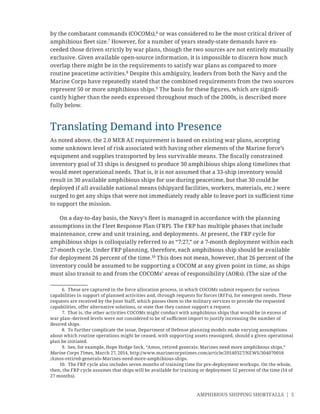
So how does the peacetime supply level, as derived from the wartime demand–shaped
fleet, compare to actual peacetime demands? Figure 1.1 shows the number of amphibious
11. The transit tax is further reduced by forward stationing ships in or closer to the areas where they are
expected to operate. This currently applies to four amphibious ships that are assigned to the Forward Deployed
Naval Force (FDNF), or 7th Fleet, stationed in Japan.
12. The FRP cycle is incorporated into a variety of Navy processes, from scheduling to funding to deter-
mining future requirements. As is discussed later in this chapter, however, the 7/27 cycle has not been support-
able in practice and overestimates sustainable levels of available shipping across the fleet, to include
amphibious ships.
Based on data provided by Marine Corps Combat Development Command, April 2014.
* = Estimated May 2012, ** = estimated December 2012, *** = estimated April 2014.
0
2
4
6
8
10
12
14
16
18
20
2008 2009 2010 2011 2012* 2013** 2014*** 2015***
NumberofAmphibiousShips
Fiscal Year
ARG ships requested Independent ships requested Warfigh ng-inventory availability
Figure 1.1. Presence Demands Relative to Peacetime Levels of Wartime Inventory
Availability, Fiscal Years 2008–2015
AMPHIBIOUS SHIPPING SHORTFALLS | 7
ships the COCOMs have requested each fiscal year (FY) since 2008, projected through FY
2015.13
In each year except 2009 the number of ships is higher, and in some cases substan-
tially higher, than the levels a warfighting-based amphibious ship inventory of 33 provides.
This situation—where combatant command commanders would like to have more of a
given capability than exists in Defense Department inventories—is by no means unique to
amphibious ships. And, as noted earlier, combatant command commanders are not respon-
sible for taking supply into account, and thus their demand signal is unconstrained.
Nevertheless, the data clearly indicate that regional commanders have a strong desire for
amphibious capabilities, either in the aggregate (i.e., as ARG/MEUs) or in smaller force
packages aboard individual amphibious ships.
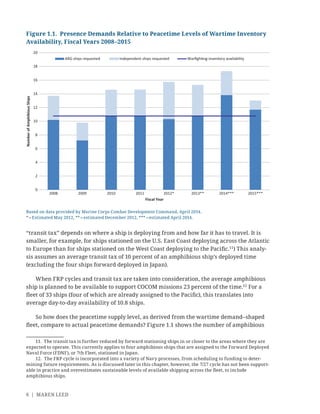
Figure 1.2 presents the same data differently, by calculating the amphibious ship
inventory levels that would be required to satisfy the peacetime demand shown above. The
13. COCOMs request either Amphibious Ready Groups (ARGs) with embarked Marine Expeditionary Units
(ARG/MEU), which are composed of three amphibious ships, or individual ships. They can request them for a
full year or any portion thereof, which results in fractions of ships (e.g., three ships for six months would be
reflected as 1.5 ships).
Figure 1.2. Amphibious Ship Inventory Levels to Meet Presence and Warfighting
Demands, Fiscal Years 2008–2015
Inventory projections conducted by CSIS study team based on data provided by Marine Corps Combat Development
Command, April 2014.
* = Estimated May 2012, ** = estimated December 2012, *** = estimated April 2014.
0
10
20
30
40
50
60
70
80
2008 2009 2010 2011 2012* 2013** 2014*** 2015***
RequiredNumberofAmphibiousShips
Fiscal Year
Requested Presence 2.0 MEB AE (Constrained) 2.0 MEB AE (Unconstrained)
8 | MAREN LEED
Defense Department makes assumptions about availability and transit tax that dictate
these calculations. According to study team interviews, the Defense Department’s 2014
Quadrennial Defense Review assumed that 4.1 ships in the inventory would produce one
year’s worth of presence in a given region.14
Using this calculation, the inventory to satisfy
COCOM demand for amphibious ships over the past seven years has fluctuated between 44
and 71, though again some of this overlaps with demand to meet warfighting needs. The
inventory levels associated with meeting peacetime demands for amphibious ships are
substantially higher than those that would be needed to quickly deploy two MEB AEs, with
either some (unconstrained) or most (constrained) of their equipment transported by other,
less capable ships.
Overall, the two sources of demand for amphibious ships indicate that current regional
commanders (as expressed through their formal requests for ARG/MEUs or single ships) as
well as potential future commanders (should operational plans be employed) would re-
quire an inventory of amphibious ships that falls somewhere between 33 (with risk) and
50+ ships. These levels were further validated by analysis associated with the Marine
Corps’ 2014 order addressing what the Corps terms the “new normal,” or its strategy to
deliver crisis response forces of varying composition to regional commanders around the
world. Although that order is classified, the underlying analysis reportedly found that an
inventory of between 38 and 42 amphibious ships would be needed to support the envi-
sioned level of crisis response capabilities with an acceptable degree of risk.15
As the Navy struggles to maintain all elements of its fleet, amphibious ship inventory
levels, even the ones associated with the lowest expression of the requirement (the fiscally
constrained inventory of 33) are so unattainable as to almost be moot. As the following
section describes, the Navy has struggled not only to sustain the overall size of the amphib-
ious fleet, but to adhere to its plans for the availability of the ships within that fleet.
14. Interview with Doug King, director, Ellis Group, Marine Corps Combat Development Command, May
23, 2014.
15. Study team interview with general officer within Headquarters Marine Corps, May 30, 2014.
Box 1.1. “National” Demand
In addition to demands from regional military commanders, the unique features of
many Navy ships (to include amphibious ships) also make them useful tools for
other national-level missions. For example, the U.S. container ship Cape Ray is
currently stationed in the Mediterranean Sea and is being used to demilitarize
Syrian chemical weapons. Other ships have been used to hold and transport high-
value detainees back to the United States for prosecution. While such missions are
critically important, supporting them can require diverting ships, disrupting
maintenance, and placing other stresses on a Navy fleet already under strain.
AMPHIBIOUS SHIPPING SHORTFALLS | 9
The Supply of Amphibious Ships
At its most basic, the number of amphibious ships that comprise the total inventory is a
factor of the rate at which new ships are built and how long existing ships are kept in
service. (These both, in turn, are the product of a number of other variables, to include
resources for new construction as well as for maintenance, shipyard performance, ship
manning levels, shipbuilding budget priorities, and so on.)
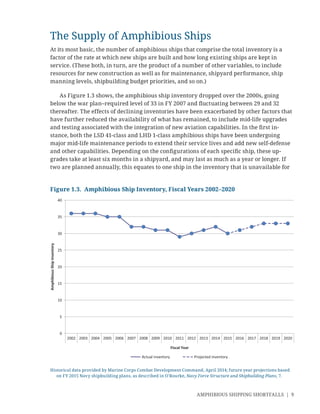
As Figure 1.3 shows, the amphibious ship inventory dropped over the 2000s, going
below the war plan–required level of 33 in FY 2007 and fluctuating between 29 and 32
thereafter. The effects of declining inventories have been exacerbated by other factors that
have further reduced the availability of what has remained, to include mid-life upgrades
and testing associated with the integration of new aviation capabilities. In the first in-
stance, both the LSD 41-class and LHD 1-class amphibious ships have been undergoing
major mid-life maintenance periods to extend their service lives and add new self-defense
and other capabilities. Depending on the configurations of each specific ship, these up-
grades take at least six months in a shipyard, and may last as much as a year or longer. If
two are planned annually, this equates to one ship in the inventory that is unavailable for
Historical data provided by Marine Corps Combat Development Command, April 2014; future year projections based
on FY 2015 Navy shipbuilding plans, as described in O’Rourke, Navy Force Structure and Shipbuilding Plans, 7.
0
5
10
15
20
25
30
35
40
2002 2003 2004 2005 2006 2007 2008 2009 2010 2011 2012 2013 2014 2015 2016 2017 2018 2019 2020
AmphibiousShipInventory
Fiscal Year
Actual inventory Projected inventory
Figure 1.3. Amphibious Ship Inventory, Fiscal Years 2002–2020
10 | MAREN LEED
that year. Integrating other new capabilities into the fleet has imposed an additional,
short-term “inventory tax”: as the F-35B aircraft is being brought on line, the USS Wasp has
been dedicated to associated test and evaluation.16
Both of the above factors are temporary (though spread over years), and will ultimately
result in a more capable fleet. Other factors that have affected amphibious ship availabil-
ity, however, are unequivocally negative. Since the early 2000s, the entire naval fleet, to
include amphibious ships, has experienced readiness challenges. The problems had be-
come sufficiently acute that, in 2009, the commanders of the Navy’s Fleet Forces Command
and Pacific Fleet directed an external review of the Navy’s entire surface fleet. The results
of that review, led by retired Vice Admiral Phillip Balisle, became known as the “Balisle
Report.” That report confirmed that the readiness of surface ships had been degrading for
the previous decade. It attributed those declines to a series of independent decisions taken
to achieve efficiencies in the manpower, training, equipping, command and control, and
maintenance realms.17
Though each was well intentioned, the review panel’s analysis
indicated that the systemic effects of these decisions were poorly understood. As a result,
the group concluded that “the material readiness of the fleet is well below acceptable levels
to support reliable, sustained operations at sea and preserve ships to their full life
expectancy.”18
The Balisle Report made a number of recommendations to improve ship readiness.
Unfortunately, many required a number of years to implement. They also came at a time
when budgets were just beginning to be cut, a problem that has become more acute in the
intervening years. Though Navy and Marine Corps leaders have dedicated immense atten-
tion and focus to reversing readiness declines, challenges persist. Indeed, one internal
Navy analysis reportedly found that, from 2010 to 2012, continued maintenance issues
resulted in a loss in annual availability of 3.5 amphibious ships.19
While we were not able to obtain specific information about the availability of amphib-
ious ships since 2012, our interviews indicate that readiness has not substantially im-
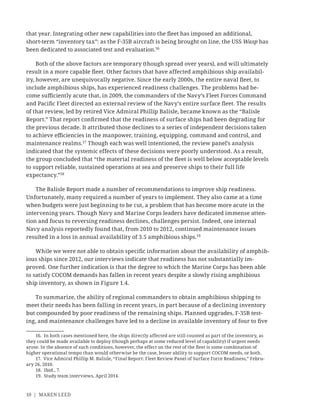
proved. One further indication is that the degree to which the Marine Corps has been able
to satisfy COCOM demands has fallen in recent years despite a slowly rising amphibious
ship inventory, as shown in Figure 1.4.
To summarize, the ability of regional commanders to obtain amphibious shipping to
meet their needs has been falling in recent years, in part because of a declining inventory
but compounded by poor readiness of the remaining ships. Planned upgrades, F-35B test-
ing, and maintenance challenges have led to a decline in available inventory of four to five
16. In both cases mentioned here, the ships directly affected are still counted as part of the inventory, as
they could be made available to deploy (though perhaps at some reduced level of capability) if urgent needs
arose. In the absence of such conditions, however, the effect on the rest of the fleet is some combination of
higher operational tempo than would otherwise be the case, lesser ability to support COCOM needs, or both.
17. Vice Admiral Phillip M. Balisle, “Final Report: Fleet Review Panel of Surface Force Readiness,” Febru-
ary 26, 2010.
18. Ibid., 7.
19. Study team interviews, April 2014.
AMPHIBIOUS SHIPPING SHORTFALLS | 11
ships per year since 2008. As a result, amphibious ship inventories or 32 or lower in recent
years are the practical equivalent to an inventory of 27 or 28 or fewer. While some portion
of the ships that comprise this gap might be able to be put to sea in a case of extreme na-
tional need, the current amphibious fleet would still fall short, and potentially well short,
of even the most conservative current projections of amphibious ship requirements.
Amphibious Supply Going Forward
How long the current shortfall in amphibious shipping persists has both an inventory and
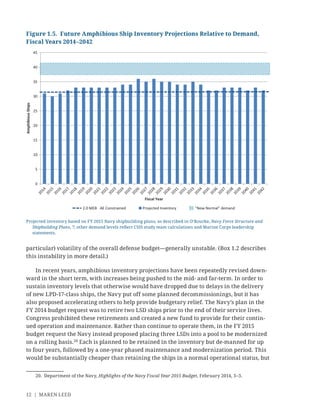
availability component. From an inventory perspective, Figure 1.5 shows the projections
contained in the Navy’s FY 2014 30-year shipbuilding plan. Under the plan, the inventory
does not reach the (already constrained) warfighting inventory level of 33 ships until FY
2025, and it hovers around that level until FY 2040 and beyond.
It remains to be seen, however, if these plans can even be realized. The 30-year plans
are—perhaps not surprisingly given the length of the projection and (in recent years in
Figure 1.4. Amphibious Ship Presence Relative to Requests and Total Inventory,
Fiscal Years 2008–2015
Data provided by Headquarters Marine Corps and Marine Corps Combat Development Command, April 2014.
* = Estimated May 2012, ** = estimated December 2012, *** = estimated April 2014.
0
5
10
15
20
25
30
35
2008 2009 2010 2011 2012* 2013** 2014*** 2015***
NumberofAmphibiousShips
Shipbuilding Report Year
COCOM requested Presence Provided Inventory
12 | MAREN LEED
particular) volatility of the overall defense budget—generally unstable. (Box 1.2 describes
this instability in more detail.)
In recent years, amphibious inventory projections have been repeatedly revised down-
ward in the short term, with increases being pushed to the mid- and far-term. In order to
sustain inventory levels that otherwise would have dropped due to delays in the delivery
of new LPD-17-class ships, the Navy put off some planned decommissionings, but it has
also proposed accelerating others to help provide budgetary relief. The Navy’s plan in the
FY 2014 budget request was to retire two LSD ships prior to the end of their service lives.
Congress prohibited these retirements and created a new fund to provide for their contin-
ued operation and maintenance. Rather than continue to operate them, in the FY 2015
budget request the Navy instead proposed placing three LSDs into a pool to be modernized
on a rolling basis.20
Each is planned to be retained in the inventory but de-manned for up
to four years, followed by a one-year phased maintenance and modernization period. This
would be substantially cheaper than retaining the ships in a normal operational status, but
20. Department of the Navy, Highlights of the Navy Fiscal Year 2015 Budget, February 2014, 3–3.
Figure 1.5. Future Amphibious Ship Inventory Projections Relative to Demand,
Fiscal Years 2014–2042
Projected inventory based on FY 2015 Navy shipbuilding plans, as described in O’Rourke, Navy Force Structure and
Shipbuilding Plans, 7; other demand levels reflect CSIS study team calculations and Marine Corps leadership
statements.
0
5
10
2014
2015
2016
2017
2018
2019
2020
2021
2022
2023
2024
2025
2026
2027
2028
2029
2030
2031
2032
2033
2034
2035
2036
2037
2038
2039
2040
2041
2042
15
20
25
30
35
40
45
AmphibiousShips
Fiscal Year
Projected Inventory2.0 MEB AE Constrained "New Normal" demand
AMPHIBIOUS SHIPPING SHORTFALLS | 13
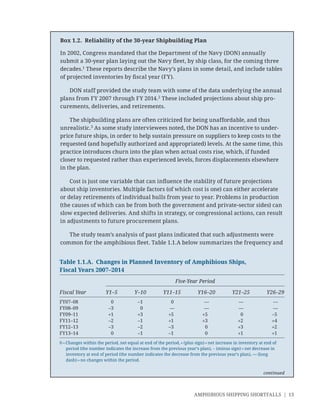
Box 1.2. Reliability of the 30-year Shipbuilding Plan
In 2002, Congress mandated that the Department of the Navy (DON) annually
submit a 30-year plan laying out the Navy fleet, by ship class, for the coming three
decades.1
These reports describe the Navy’s plans in some detail, and include tables
of projected inventories by fiscal year (FY).
DON staff provided the study team with some of the data underlying the annual
plans from FY 2007 through FY 2014.2
These included projections about ship pro-
curements, deliveries, and retirements.
The shipbuilding plans are often criticized for being unaffordable, and thus
unrealistic.3
As some study interviewees noted, the DON has an incentive to under-
price future ships, in order to help sustain pressure on suppliers to keep costs to the
requested (and hopefully authorized and appropriated) levels. At the same time, this
practice introduces churn into the plan when actual costs rise, which, if funded
closer to requested rather than experienced levels, forces displacements elsewhere
in the plan.
Cost is just one variable that can influence the stability of future projections
about ship inventories. Multiple factors (of which cost is one) can either accelerate
or delay retirements of individual hulls from year to year. Problems in production
(the causes of which can be from both the government and private-sector sides) can
slow expected deliveries. And shifts in strategy, or congressional actions, can result
in adjustments to future procurement plans.
The study team’s analysis of past plans indicated that such adjustments were
common for the amphibious fleet. Table 1.1.A below summarizes the frequency and
Table 1.1.A. Changes in Planned Inventory of Amphibious Ships,
Fiscal Years 2007–2014
Five-Year Period
Fiscal Year Y1–5 Y–10 Y11–15 Y16–20 Y21–25 Y26–29
FY07–08 0 −1 0 — — —
FY08–09 −3 0 — — — —
FY09–11 +1 +3 +5 +5 0 −5
FY11–12 −2 −1 +1 +3 +2 +4
FY12–13 −3 −2 −3 0 +3 +2
FY13–14 0 −1 −1 0 +1 +1
0 = Changes within the period, net equal at end of the period, + (plus sign) = net increase in inventory at end of
period (the number indicates the increase from the previous year’s plan), − (minus sign) = net decrease in
inventory at end of period (the number indicates the decrease from the previous year’s plan), — (long
dash) = no changes within the period.
continued
14 | MAREN LEED
would also have the effect of artificially inflating the amphibious ship inventory by one
ship for each of the next 15 years, as the ships would still be counted but unavailable for
anything but national emergencies. Thus if the proposed inactivation (but not decommis-
sioning) of the LSDs is endorsed by the Congress, according to the FY 2015 30-year ship-
building plan21
the inventory of usable amphibious ships will not reach the minimum
expressed requirement of 33 amphibious ships for at least another decade.
Another factor contributing to lower inventory levels has been the evolving plan for
LX(R), the LSD replacement. In the FY 2012 shipbuilding plan, the contract was supposed to
have been awarded in FY 2017. In each of the three subsequent years, the LX(R) has been
delayed an additional year; it is reportedly now planned for FY 2020, and how capable the
Navy can afford to make it remains under negotiation.22
On the availability side, as mentioned above, Navy and Marine Corps leaders have
taken strong actions aimed at improving the readiness of the surface fleet, to include
amphibious ships. The most prominent of these is adoption of an Optimized Fleet Response
Plan (OFRP). Not yet extended to the amphibious fleet, OFRP lengthens the current
21. O’Rourke, Navy Force Structure and Shipbuilding Plans, 7.
22. See, for example, Sam LaGrone, “NAVSEA: Affordability Prompted Second Look at LX(R),” USNI News,
May 29, 2014, http://news.usni.org/2014/05/29/navsea-affordability-prompted-second-look-lxr; and Kris Osborn,
“Navy Considers Commercial Technology for New Amphib,” DoD Buzz, June 1, 2014, http://www.dodbuzz.com
/2014/06/01/navy-considers-commercial-technology-for-new-amphib/.
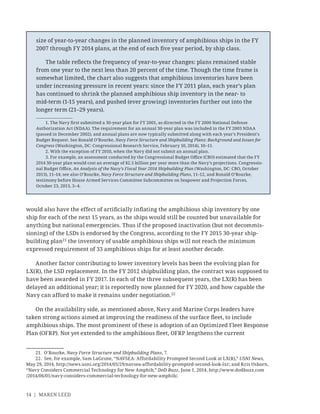
size of year-to-year changes in the planned inventory of amphibious ships in the FY
2007 through FY 2014 plans, at the end of each five year period, by ship class.
The table reflects the frequency of year-to-year changes: plans remained stable
from one year to the next less than 20 percent of the time. Though the time frame is
somewhat limited, the chart also suggests that amphibious inventories have been
under increasing pressure in recent years: since the FY 2011 plan, each year’s plan
has continued to shrink the planned amphibious ship inventory in the near- to
mid-term (1-15 years), and pushed (ever growing) inventories further out into the
longer term (21–29 years).
1. The Navy first submitted a 30-year plan for FY 2001, as directed in the FY 2000 National Defense
Authorization Act (NDAA). The requirement for an annual 30-year plan was included in the FY 2003 NDAA
(passed in December 2002), and annual plans are now typically submitted along with each year’s President’s
Budget Request. See Ronald O’Rourke, Navy Force Structure and Shipbuilding Plans: Background and Issues for
Congress (Washington, DC: Congressional Research Service, February 10, 2014), 10–11.
2. With the exception of FY 2010, when the Navy did not submit an annual plan.
3. For example, an assessment conducted by the Congressional Budget Office (CBO) estimated that the FY
2014 30-year plan would cost an average of $2.5 billion per year more than the Navy’s projections. Congressio-
nal Budget Office, An Analysis of the Navy’s Fiscal Year 2014 Shipbuilding Plan (Washington, DC: CBO, October
2013), 11–14; see also O’Rourke, Navy Force Structure and Shipbuilding Plans, 11–12, and Ronald O’Rourke,
testimony before House Armed Services Committee Subcommittee on Seapower and Projection Forces,
October 23, 2013, 3–4.
AMPHIBIOUS SHIPPING SHORTFALLS | 15
27-month FRP cycle to 36 months, and extends the deployment period within the cycle from
7 to 8 months. It also extends planned maintenance periods, and accounts for interim,
shorter maintenance periods to address emerging issues. Finally, it includes an 8-month
post-deployment period of “sustainment,” during which ships and their crews would be
stationed at their home ports but remain intact and trained, and would be available for
some level of taskings short of the full panoply of the potential missions in a typical deploy-
ment period.
The proposed adjustment is a de jure recognition of the vicious cycle that has been
occurring de facto in the fleet. Reportedly, from 2010 through 2012, maintenance periods
repeatedly exceeded their planned timelines, sometimes by as much as 165 percent.23
The
challenges of getting ships to sea meant that the majority of MEUs trained on ships other
than the ones on which they deployed, and the training for every deployed ARG/MEU was
compressed or incomplete. And getting ships into maintenance was complicated by opera-
tional demand. Only three of eight MEU deployments kept to the planned seven months;
the remaining five lasted for eight-and-one-half months or more.24
Addressing these realities within the current system has proven extremely disruptive,
as each departure from the plan creates a ripple effect throughout the fleet.25
Shipyard
maintenance schedules and associated funding are constantly being adjusted, personnel
movements are affected, and training quality is compromised. Managing some of those
realities means leaders have to constantly engage in trades between the readiness of one
ship versus another in an attempt to keep the entire system functioning while not dis-
abling a specific ship or ARG within it.
While OFRP appears to be a critical step to arrest the downward cycle of surface fleet
readiness, in the short term it will further reduce the availability of existing amphibious
ships. Even if deployments are extended to eight months from the currently planned seven,
deployments will comprise 22 percent of a given ship’s cycle rather than the planned 26
percent under FRP as it is currently constructed. More broadly, under ORFP it will take five
rather than four ships in the inventory to provide one ship’s worth of capability to a re-
gional commander.
23. Study team interviews, May 7, 2014.
24. Untitled HQMC Plans, Programs and Operations briefing provided to study team, May 15, 2014.
25. Some interviewees took an even broader view of the problem, arguing that, as one senior leader put it,
“we have been cheating at solitaire” by rushing ship construction and taking delivery of ships before they are
fully ready, failing to adequately fund maintenance, underestimating the true price of construction and
maintenance, and adjusting the budgets to meet fiscal rather than operational wickets. Study team interviews,
April 2014 and June 12, 2014.
Under current plans, the amphibious ship inventory will not reach the minimum
warfighting-required level of 33 ships until Fiscal Year 2024.
16 | MAREN LEED
How much actual presence will result from the implementation of OFRP will not in fact
be this grim, depending on what decisions are made for how ships in the sustainment
(post-deployment) phase of the new planning cycle will be utilized. If that period is too
heavily leveraged, either for extending planned deployments or for supporting missions
like regional exercises, it runs the risk of perpetuating some of the maintenance challenges
that have led to the current situation. (However, the resulting ripple effects would be much
less pronounced because the revised OFRP cycles reflect a greater degree of slack built in.)
Thus Navy and Marine Corps leaders will have to be judicious as they work through the
rule set that will govern that period in particular.
Looking ahead, there seems little reason to expect that demand for amphibious capa-
bilities will fall. Recent congressional testimony by the regional combatant commanders,
as well as a number of futures documents, reflect a shared view that the conditions that
call for amphibious solutions will continue, if not become more prevalent.26
This suggests
that the current pressures on the amphibious fleet will persist, at least for the next 6 to 10
years. Given the length of ship construction, substantial increases in inventory are un-
achievable in the short term (though any additions would help). Inventory levels beyond
that point are still highly likely to fall short of operational needs (warfighting or otherwise)
would suggest, probably by a substantial margin. And inventory levels could fall further
than is currently envisioned if planned construction is delayed, and/or if ships are decom-
missioned earlier than their originally design supports. Improvements in fleet availability,
whether a result of the implementation of OFRP or other initiatives, will also take years to
manifest. Sustained funding to support necessary maintenance is uncertain in the current
budget environment, and the continued high usage of the amphibious fleet suggests just
keeping pace will remain very difficult.
Given these realities, it is not surprising that Navy and Marine Corps leaders have been
exploring a range of options to help mitigate the effects of amphibious shipping shortfalls.
Chapter 2 provides a broad overview of potential solutions, a brief synopsis of some of the
ongoing efforts in that regard, and the process we employed to examine the operational
risks associated with one specific approach, that of making greater use of non-amphibious
ships.
26. These include Joint Chiefs of Staff, Capstone Concept for Joint Operations, Joint Force 2020 (Washington,
D.C.: Department of Defense, September 10, 2012); Joint Chiefs of Staff, Joint Information Environment White
Paper (Washington, D.C.: Department of Defense, January 22, 2013); Joint Chiefs of Staff, Joint Operational Access
Concept (JOAC) (Washington, D.C.: Department of Defense, January 17, 2012); U.S. Joint Forces Command, Joint
Operating Environment 2010 (Washington, D.C.: Department of Defense, February 18, 2010); and the 2014
posture statements to various congressional oversight committees by the commanders of U.S. Special Opera-
tions Command, U.S. Southern Command, U.S. Pacific Command, U.S. Africa Command, U.S. Central Command,
U.S. European Command, U.S. Transportation Command, and the U.S. Chief of Naval Operations.
| 17
2 Mitigating the Amphibious
Capability Gap
As described in Chapter 1, the inability of amphibious ship inventory to meet growing
demand has been a problem that has been increasing in scope for years. Not surpris-
ingly, therefore, there have been a number of different efforts aimed at developing solu-
tions that would satisfy at least some portion of that gap.
As the study team interacted with various organizations undertaking some of the
current efforts, one point became clear: a shared view of the nature of the problem is
lacking. More specifically, while the capabilities of amphibious ships in particular have
evolved substantially since World War II, to varying degrees they now play at least three
roles. The first is to transport Marines and the Naval Expeditionary Combat Command (and
sometimes Special Operations Forces) and their equipment. The second is to serve as a sea
base, or an operating platform from which forces ashore can be logistically supported,
decreasing the footprint of U.S. forces on land. The third is as warfighting systems in and of
themselves that conduct missions ranging from delivering fires at sea and ashore to intel-
ligence, surveillance, and reconnaissance (ISR).
The inherently utility of amphibious platforms’ multi-role nature is not always fully
accounted for as various Defense Department entities consider how best to address short-
falls in amphibious capabilities. This is in part due to the evolution of the requirement, as
discussed in Chapter 1: the size of the amphibious fleet has historically been expressed in
terms of lift, a term which reinforces the conception that the ships’ principal purpose is
transportation.
As Department of the Navy leaders have begun to talk more frequently about the de-
mands associated with presence, the exact nature of the roles that are most valued is not
clear. COCOM requests are only expressed numerically (i.e., they ask for an ARG/MEU or
single ship) and the Joint Staff, which receives those requests, does not collect systemic data
on the purposes for which those capabilities are being requested. As a result, the Defense
Department as a whole has no objective basis from which to determine which roles the
associated ships play are most in need: transport, sea base, weapons system, some combi-
nation of two, or all three.
The distinction was less critical when the war plan–derived requirement was perceived
to exceed the one associated with presence, because any mitigation solution would be
18 | MAREN LEED
evaluated against its ability to support specific plans. But in the current environment
where an ill-understood presence and crisis response–driven requirement exceeds the
levels demanded by operational plans, the study team found no shared view of which role
or roles are most important, nor, necessarily, of the implications of providing single- or
dual-role platforms as alternatives to address some portion of unmet amphibious demand.
While many are pursuing options, a shared strategy to guide those efforts is lacking.
Alternative platform use is just one of at least four potential ways to address portions of the
amphibious gap, however. Each is briefly described below.
Reduce the Requirement
One way to bridge the supply-demand gap is to take actions that would reduce the
demand. This could be done by continuing to push a greater proportion of the assault
echelon’s equipment and supplies to non-amphibious ships, reducing the number of
ashore MEBs that are needed, or some combination of both. The study team talked with
some in the Defense Department who argued that the 2.0 MEB AE objective is too high,
for example, and that the emergence of anti-access/area denial (A2/AD) threats make the
forcible entry mission upon which that requirement is predicated much less relevant to
current warfighting.1
At least at present, however, this view is at odds with official Department of Defense
(DOD) policy pronouncements. The Quadrennial Defense Review 2014 stated, “We will need
capabilities . . . that can execute forced entry,” and that the proficiency to conduct that
mission will be regained.2
In April 2014, the chairman of the Joint Chiefs of Staff approved
a joint concept for entry operations,3
which validates the need for the mission and is
designed to account for A2/AD advances.
Importantly, Defense leaders appear to accept that presence requirements are even
greater than those associated with current war plans, by a substantial amount. As noted
above, views about the exact nature of this need are varied both in the Defense Depart-
ment and in Congress. However, at present there appears to be a broad consensus that the
1. This argument assumes that the general strategic framework governing Defense Department objectives
will remain in place, but that the means (in this case, a 2.0 MEB AE-sized mission) would be ineffective. There
are also broader arguments that could lead to a lower requirement for amphibious ships, e.g., shifting the
desired strategic ends away from U.S. global leadership, and/or placing lesser emphasis on military means to
achieve national security goals.
2. Department of Defense, Quadrennial Defense Review 2014 (Washington, DC: Department of Defense,
February 2014), 61–62 and 37, respectively.
3. Joint Chiefs of Staff, Joint Concept for Entry Operations (Washington, DC: Department of Defense, April
14, 2014), http://www.dtic.mil/doctrine/concepts/joint_concepts/jceo.pdf.
Amphibious ships play at least three roles: as transporters, as a sea base, and as
warfighting systems.
AMPHIBIOUS SHIPPING SHORTFALLS | 19
currently stated objective of at least 33 for the amphibious ship inventory is, if anything,
under- rather than over-stated.
Buy More Ships
A second option to narrow the gap in amphibious capabilities is to increase inventory by
buying more ships. This is certainly the Marine Corps’ preferred solution, and would be
the most straightforward response to addressing current shortfalls. The primary difficulty,
of course, is fiscal. For years, planned ship construction has been canceled, delayed, or
down-scoped (i.e., reducing the desired ship features) as defense budget pressures have
tightened and shipbuilding construction costs have escalated across the fleet. The problem
is particularly acute given that amphibious ships are funded through the Shipbuilding and
Conversion, Navy (SCN) account. This account is also the source of funding for the refuel-
ing of the reactors from the Navy’s nuclear aircraft carriers, as well as for the replacement
for the Ohio-class submarine, both extremely expensive, high-priority programs that are
putting additional pressure on the amounts available for amphibious ships.4
The Navy’s
FY 2014 30-year shipbuilding plan explicitly acknowledges this pressure (which becomes
particularly problematic in the 2030s), but does not specify how it will be addressed.
As some experts have noted, both the Defense Department and Congress have the
option to decide that amphibious ships are of such importance that additional funds are
warranted, and to reallocate or add funds within the Department of the Navy or the
broader Department of Defense.5
The prospects of such an option may seem bleak given
the conventional wisdom that defense budgets will at best be stable but will more likely
continue to decline; nonetheless, the potential still exists. If additional ships are pursued,
however, their benefit would not be realized in the short term, as they typically take at
least five to seven years for construction and full integration into the fleet.
If additional amphibious ships are deemed too expensive, another option is to buy less
capable amphibious or non-amphibious ships that offer some subset of the desired capa-
bilities. This option was endorsed by some of the experts interviewed by the study team.
While outside the scope of this particular effort, this option would be amenable to exami-
nation subject to the same logic used here: that is, the risks associated with other platforms,
whether existing or newly constructed, should be clearly understood, as should the utility
of any such platform across a broad set of missions, all in the context of the entire amphibi-
ous portfolio.
4. There is an ongoing debate within the defense policy community about the wisdom of using incremen-
tal funding, or a relaxation of the rules that require full, up-front funding for ships so that portions (incre-
ments) can be funded each year. Those in favor argue that this approach helps shipyards to have a more
predictable, stable workload and thus reduce costs, and that it enables better management of the entire SCN
portfolio by avoiding major funding “spikes” that displace other programs. Opponents counter that this masks
the true costs of ships and encourages cost creep, increasing inefficiency.
5. O’Rourke, Navy Force Structure and Shipbuilding Plans, 33.
20 | MAREN LEED
Increase Ship Availability
A third alternative for mitigating gaps in amphibious shipping is to increase the availabil-
ity of the current and planned fleet. As noted in Chapter 1, the adoption of the Optimized
Fleet Response Plan (OFRP) is aimed precisely at that objective, though in the short term it
will result in decreased availability to some yet-unknown degree (and remains dependent,
especially for amphibious ships, on congressional approval of FY 2015 contingency
funding).
Though OFRP is the most comprehensive effort to improve amphibious ship readiness,
a variety of other options are either actively being considered by various organizations
within the Defense Department or have been in the past. These include changing manning
practices (e.g., relying more heavily on civilian mariners rather than military personnel or
making greater use of rotational crews that “fall in” on ships), and/or increasing the num-
ber of ships that are permanently stationed overseas (which vastly reduces transit time).
Increasing civilian manning of Navy platforms is a possibility, though analysis indi-
cates this involves organizational, cultural, and operational adjustments.6
It also invokes
legal issues associated with the types of actions that can be taken by uniformed military
versus civilian personnel. In a related idea, the Navy is again examining whether it should
expand crew swaps, where a ship stays on station and one crew replaces another. Past
experience suggests crew swaps do increase forward presence, but that the practice can
also result in greater maintenance issues, increased administrative burdens, and lower
levels of crew proficiency and morale.7
As one senior Navy official noted, “Experiments in
which this has been done with military crews on large complex warships have not turned
out well.”8
The Navy is also pursuing options to position more of its ships overseas, most notably
the Littoral Combat Ships (LCSs) in Singapore. It is unlikely, however, that significant
opportunities exist to forward deploy more amphibious ships beyond the four that are
stationed in Yokosuka, Japan. While there may be some potential to do so, it is likely limited
given political sensitivities both abroad and here at home. That said, multiple offices in the
Defense Department recognize the utility for presence that comes from any increase in
forward stationing, which, if successful, could provide some relief of the pressures on the
amphibious fleet.9
6. See Anthony DiTrapani and John Keenan, Applying Civilian Manning Practices to USN Ships (Alexan-
dria, VA: Center for Naval Analyses, May 2005); and Steven Wills, “Moving the Navy/CIVMAR Integration
Experiment Forward,” Center for International Maritime Security, November 7, 2013, http://cimsec.org/moving
-navycivmar-integration-experiment-forward/.
7. Eric Labs, Crew Rotation in the Navy: The Long-Term Effect on Forward Presence (Washington, DC:
Congressional Budget Office, October 2007), 3.
8. As quoted in O’Rourke, Navy Force Structure and Shipbuilding Plans, 28.
9. The same unnamed Navy official acknowledged that greater forward home porting “always comes up
as the first choice,” but that few countries beyond those who already permit it are willing to do so. O’Rourke,
Navy Force Structure and Shipbuilding Plans, 28.
AMPHIBIOUS SHIPPING SHORTFALLS | 21
Provide Amphibious Capability Differently
A fourth option for relieving that pressure is to change how amphibious capabilities are
provided. This is another area that is receiving a substantial amount of attention in differ-
ent organizations with the Defense Department, and in the Department of the Navy in
particular. Indeed, the Marine Corps’ latest operational concept explicitly acknowledges
that “there are not enough amphibious ships to meet all [regional commanders’] opera-
tional demands,” and therefore “we need to modify traditional employment methods and
augment amphibious warships by adapting other vessels for sea-based littoral
operations.”10
The Marine Corps has numerous efforts under way to support this direction, some in
collaboration with or being directed by the Navy. These include examining options to
adjust the composition of Amphibious Ready Groups, developing new concepts of opera-
tions to leverage non-amphibious platforms, and identifying packages of equipment that
could be added to Maritime Prepositioning Force (MPF) ships in particular to help increase
their ability to support Marine Corps missions at the more benign end of the spectrum of
operations.
Shortfalls in amphibious shipping have also prompted the Marine Corps to stand up
additional ground-based units to meet needs that it would have preferred to support with
sea-based forces. The Special Purpose Marine Air Ground Task Forces-Crisis Response (SP
MAGTF-CR), a rotational force stationed in Moron, Spain, is a company-sized unit that
self-deploys with four MV-22 tilt-rotor Ospreys. While a useful capability, SP MAGTF-CRs
are a visible manifestation of the challenges in the amphibious fleet. The first such unit’s
experiences to date illustrate why the Marine Corps prefers to be ship rather than land
based: when the force deployed to Italy in May 2014 to prepare for a possible response in
Libya,11
airspace restrictions precluded the MV-22 pilots from retaining their qualifica-
tions to fly at night, a problem that does not exist at sea. The MAGTF-CR also needs to share
assets such as KC-130 aircraft and supporting battalions with others,12
affecting its training
and readiness.
The Way Ahead
From a glass half full perspective, Navy and Marine Corps leaders share the view that
additional amphibious capabilities are needed. On the half empty side, funding to address
the shortfall is in shorter supply than it has been in over a decade. The fact that poorly
understood presence requirements exceed those associated with specific war plans adds
10. U.S. Marine Corps, Expeditionary Force 21 (Washington, DC: Headquarters Marine Corps, March 4,
2014), 21, http://www.mccdc.marines.mil/Portals/172/Docs/MCCDC/EF21/EF21_USMC_Capstone_Concept.pdf.
11. Gina Harkins, “Crisis response Marines positioned closer to Africa,” Marine Corps Times, May 14, 2014,
http://www.marinecorpstimes.com/article/20140514/NEWS/305140058/Crisis-response-Marines-positioned
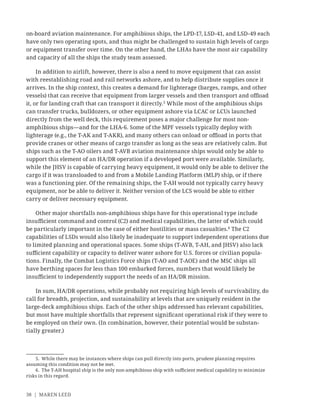
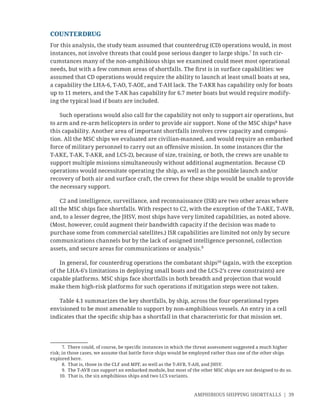
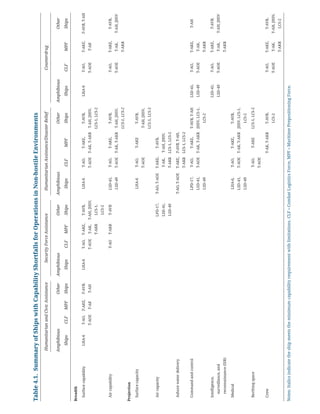
-closer-Africa.
12. Study team interviews with staff at Headquarters Marine Corps, May 21, 2014.
22 | MAREN LEED
further complications, as various organizations are attempting to alleviate stresses in
whatever way they can without a shared sense of priority.
There does not appear to be any serious effort aimed at revising the amphibious ship-
ping requirement downward. Nor are Navy or Defense Department leaders taking actions
to increase the rate at which new amphibious ships will be bought. Some efforts are being
made to increase the availability of the existing amphibious fleet, the most ambitious of
which is the adoption of the OFRP model (though it will decrease availability in the short
term, and funding to fully execute it is uncertain).
The most promising near-term option to partially address amphibious shipping short-
falls, therefore, is to find alternative ways to deploy Marines. None of the available plat-
forms, however, provide the same level of capability in each of the three roles amphibious
ships play: transport, sea base, and weapon system. Fiscal pressures may drive policy-
makers to compromises they would prefer to avoid. But while they may be unavoidable,
policymakers should have a clear picture of the risks and opportunity costs they are as-
suming in pursuing the use of alternative platforms to ensure they can make the best
possible decisions for the future.
To characterize those risks, the study team undertook a four-step process. The first was
to identify the key attributes associated with amphibious capabilities, and the specific
characteristics they comprise. The second was to look across the spectrum of military
operations to determine the minimum requirements, by attribute and characteristic,
associated with each operational type. The third step was to assess each amphibious ship,
as well as ships in the Combat Logistics Force (CLF), Maritime Prepositioning Force (MPF),
and a few others, relative to the attributes and characteristics. The fourth and final step
was to compare, by attribute and characteristic, the ability of each ship to meet the mini-
mum requirements of each type of operation. Cases in which ships fall short of mission
needs represent areas that threaten successful completion of the mission, which we term
“operational risk.”
Chapter 3 describes the first three steps in additional detail, as a foundation for the
analysis that follows. The results of the fourth step are presented in Chapter 4.
| 23
A Framework for Assessing Risk
Navy and Marine Corps leaders at multiple levels clearly see a need to try to maximize
the utility of existing assets in support of COCOM needs. At the same time, those lead-
ers must ensure that they preserve the ability to support those needs over the medium and
longer terms. There is the potential, however, that as policymakers seek answers now,
longer-term risks are rationalized or downplayed. Objectively and systematically framing
those risks helps to guard against optimism bias, the natural tendency to (in this instance)
underestimate the risks, over time, that are associated with making greater use of less
capable platforms in order to help satisfy existing demand.
There are multiple dimensions of risk that are relevant. The first is operational—that is,
the risk to successful completion of any given operation. Another is fiscal, or the risk asso-
ciated with increasing the deficit or paying more for something than might be truly neces-
sary. Both operational and fiscal risk also involve opportunity costs. On the operational
side, if a mitigation strategy for addressing insufficient numbers of amphibious ships
involves the use of other platforms, then a complete assessment of the associated risk must
also include the impact of diverting those other platforms from what they might otherwise
be doing. If those ships require reconfiguration to resume their primary tasks, this too
must be considered. The same holds for fiscal risk: if the intent is to mitigate it by taking
money from elsewhere, the risk to its source (which could be operational, fiscal, or both)
must also be taken into account.
This study takes operational risk as its start point, based on the assumption that, in
general, defense policymakers value effectiveness most highly. (That is, it is more impor-
tant to accomplish the mission than to be efficient, though efficiency runs a close second.)
Policymakers in the executive and legislative branches previously determined that the
fiscal risk of buying additional amphibious ships was greater than the operational risk
associated with foregoing those investments. Even if that determination were to change,
given construction timelines, options to expand the inventory of amphibious ships are
limited in the short term.1
Whether policymakers should do so in order to increase inven-
tory levels five to seven years from now should be at least partially informed by a better
1. The only exception would be to slow the pace of projected retirements. There are four scheduled in the
next five years, the deferment of which would increase the overall inventory. If those ships are in the same
material condition as the fleet as a whole (or are in even worse shape, as is likely if they are planned to be
decommissioned), then they would likely require significant amounts of maintenance time (and money). This
in turn could take resources away from other ships in the fleet or from other important activities. Thus, while
it is likely that some increased availability would result from delaying ships’ planned exits from the fleet, the
3
24 | MAREN LEED
understanding of the operational risks that have already been accepted, which this study
aims to illuminate.
In order to characterize the operational risks associated with the use of platforms other
than amphibious ships, the study team identified how well each platform met operational
requirements across the spectrum of conflict. Doing so required identifying the main
attributes of ships that provide amphibious capability, mapping those to attributes and
their supporting characteristics to both operations and to ships, and finally comparing how
well specific requirements could be met by different platforms.
Attributes and Supporting Characteristics
Amphibious ships possess five main attributes that underpin their contributions to opera-
tions across the spectrum of conflict:
• Survivability, or the ability of a ship to withstand damage and continue conduct-
ing its mission. The degree to which a ship needs to be able to anticipate and avoid,
or if need be, absorb, and recover from any damage is highly variable. Many opera-
tions are planned to be conducted in benign environments; indeed, these are the
types for which alternatives to amphibious ships are specifically being sought.
Some caution, however, that the diffusion of lethal capabilities has made this
assumption more vulnerable to failure. There are multiple options for accounting
for this reality (e.g., providing protection for less survivable ships with other
platforms), but it remains a highly salient factor when considering using non-battle
force ships in new ways.
• Breadth, or the range of functions a given ship can support. One of the main contri-
butions of amphibious ships is their inherently multi-mission capability. Because
they typically carry embarked forces and some number of both aircraft and surface
connectors,2
have some degree of both offensive and defensive armament, and
communications, command and control (C2), and intelligence, surveillance, and
reconnaissance (ISR) capabilities, amphibious ships provide commanders with
multiple tools that can be either employed on their own or as part of a joint or com-
bined3
force. By design, most other ships have a narrower purpose, and thus offer
less breadth.
• Projection capacity, or the amount of various capabilities a given ship possesses
to support operations ashore. As alluded to above, amphibious ships’ primary
purpose is to deploy, project, and sustain Marine air, ground, and
marginal contributions they might continue to make would likely be modest. Buying additional ships would do
much more to alleviate pressures in the mid-term, which in a few years will become the short term.
2. That is, small boats and landing craft, as well as rotary-wing and tilt-rotor aircraft that can deliver
equipment, supplies, and/or forces ashore.
3. That is, with other U.S. military services or with military forces from other countries, respectively.
AMPHIBIOUS SHIPPING SHORTFALLS | 25
logistics elements ashore. While they occasionally support operations at sea, purely
maritime operations are the core competency of the Navy. Similarly, extended
ground force operations, and/or those that can or should be accessed and sustained
from land, are the primary purview of the Army. Therefore, the degree to which
various ships can enable sea-based operations ashore is a key distinguishing
attribute in evaluating how much they contribute to the unique competencies of
the Marine Corps.
• Responsiveness, or the speed with which a given ship can deliver effects ashore
once given a mission. The Marine Corps has often been called the nation’s “9-1-1”
force, and its leaders have recently reinforced that orientation by placing crisis
response at the center of the Corps’ strategy and direction.4
How quickly various
ships can fulfill those responsibilities is a function of a variety of factors, from
where they are stationed, to the speed of the platforms themselves, to the operating
status in which they are maintained.
• Persistence, or the ability to remain in an operating area over time. Although the
Marine Corps does not plan or structure to remain engaged in operations for periods
over 90 days, there are some types of operations whose initiation is uncertain or that
could continue for long enough that a ship would require resupply to remain on
station. While not important for every operation, persistence can be a critical attri-
bute in certain instances.
Each of these attributes has a number of more specific elements or characteristics.
Breadth, for example, includes whether (in the case of a given mission) the capability to
support air operations is needed, and (in the case of ship) whether that ship offers that
capability. Different operations similarly require varying levels of responsiveness, to
include how quickly a ship would need to get under way if the need arose. The funded
readiness level of ships also varies, making them more or less suitable to meet this element
of responsiveness. A list of the most salient amphibious attributes and their supporting
characteristics appears in Box 3.1.5
4. See, for example, U.S. Marine Corps, Expeditionary Force 21; Secretary of Defense Chuck Hagel’s
remarks on the fiscal year 2015 budget, “Remarks by Secretary Hagel and Gen. Dempsey on the fiscal
year 2015 budget preview in the Pentagon Briefing Room,” February 24, 2014, http://www.defense.gov
/Transcripts/ Transcript.aspx?TranscriptID=5377; and 2014 Report to the Senate Appropriations Committee
Subcommittee on Defense on the Posture of the United States Marine Corps, 113th Cong. 5 (2014) (Statement of
General James F. Amos, Commandant of the Marine Corps), March 26, 2014, http://www.appropriations.senate
.gov/sites/default/files/hearings/Gen%20Amos.pdf .
5. In considering the attributes and characteristics most relevant to this study, the intent was not to be
comprehensive but to capture those that were most likely to vary across mission type and across the range of
ships included in the analysis. We did not, for example, include speed and range as characteristics of respon-
siveness, although they vary substantially across the ships we examined. This is because a given ship’s ability
to be responsive is also a function of location relative to the operation, how quickly a response is required, the
load (of both personnel and cargo) the ship is carrying, etc. Because these are so highly variable and not
intrinsic to the platform, they fell outside the bounds of this analysis.
Box 3.1. Five Amphibious Attributes and Supporting Characteristics
Survivability
■ Susceptibility (able to detect or avoid an attack)
■ Vulnerability (able to be hit and continue the mission)
■ Recoverability (able to be hit, recover, and sustain the mission)
Breadth
■ Ability to support air and surface operations
■ Capability and manner of cargo onload and offload
■ Warship classification
■ Ability to deliver water ashore
■ Crew capacity
Projection capacity
■ Crew composition
■ Air and surface connector capacity
■ Command and control capacity
■ Intelligence, surveillance, and reconnaissance (ISR) capacity
■ Medical capacity
■ Capacity for ashore delivery of water
■ Non-crew berthing capacity
■ Self-defense capacity
Responsiveness
■ Time to get under way
■ Sea state limitations
Persistence
■ Capability and capacity to accept underway replenishment, and, if no capability,
of typical days of supply
■ Habitability
AMPHIBIOUS SHIPPING SHORTFALLS | 27
Relating Attributes to Operations
As noted above, the relevance of various ships’ characteristics varies across the spectrum
of conflict. Though all of the ongoing internal Defense Department analyses of which the
study team became aware focus on how non-amphibious ships can contribute to low-end
operations in non-hostile environments, the study team took a more comprehensive ap-
proach. This is both because non-amphibious platforms may be capable of making addi-
tional contributions in areas that might be obscured by a narrower examination, and
because only considering their contributions to partnering and humanitarian activities
might downplay their limitations should the conditions in a given operation become more
challenging.
The range of operations we considered was drawn from joint doctrine,6
which de-
scribes three broad categories of military activities: (1) engagement, security cooperation,
and deterrence; (2) crisis response and limited contingencies; and (3) major operations.
Within these categories, there are numerous examples of specific types of operations. We
refined the list used here by focusing on those types of operations that would likely include
a significant maritime component, or that would specifically benefit from the application of
amphibious capabilities. This excluded operations such as counter-insurgency, which,
although they might include one or more amphibious ships at some point, would not typi-
cally require their unique capabilities, over time, to ensure success. There were also
missions that could be performed from amphibious platforms (but could also be accom-
plished differently), for example, security force assistance (SFA) training with other na-
tions. For these operational types, we attempted to treat their amphibious application. That
is, we viewed the requirements of that operational type in the context of it being per-
formed by the Marine Corps rather than some other service, and thus assumed it involved
some need for ship-based capabilities.7
Once refined, the study team arrived at the follow-
ing list of 12 types of operations that could or would likely be conducted by Marines or
other sea-based forces (e.g., Special Operations Forces or elements of the Navy Expedition-
ary Combat Command).
1. Humanitarian or civic assistance,8
or providing medical, dental, or engineering
services to foreign populations in support of U.S. strategic objectives.
6. Joint Chiefs of Staff, Joint Operations across the Range of Military Operations, Joint Publication 3-0
(Washington, D.C.: United States Joint Forces Command, August 2011), 12–171, passim.
7. The implication of this approach is that that the mission requirements identified in this study are not
generalizable to the joint force as a whole. That is, they do not represent the full range of requirements that
would be needed for security force assistance (SFA) operations, for example, only those that would be needed if
SFA activities were conducted by ship-based Marines.
8. Humanitarian and civic assistance differs from humanitarian assistance and disaster relief operations
in that the former is a planned activity specifically aimed at providing necessary services to foreign popula-
tions to build good will. (The U.S. military typically refers to these some operations as MEDCAPs [medical civic
assistance programs] or DENTCAPs [dental civic assistance programs], where small numbers of U.S. military
forces provide medical or dental services to local populations while also gaining necessary training and valida-
tion of their skills.) Humanitarian assistance and disaster relief, on the other hand, are crisis response opera-
tions in the wake of events such as a refugee crisis or natural disaster.
28 | MAREN LEED
2. Security force assistance, which involves conducting training or exercises with
foreign militaries.9
3. Counterdrug operations to interdict drug shipments or engage traffickers consis-
tent with relevant authorities.
4. Humanitarian assistance and disaster relief 10
to provide emergency aid in the
wake of natural or man-made disasters, either within the United States or abroad.
5. Foreign internal defense operations that provide training or advisory assistance to
foreign militaries that are addressing internal security challenges.
6. Maritime intercepts11
to halt other maritime vessels, and in some instances board
and take control of cargo, personnel, or the vessels themselves.
7. Combating terrorism by taking actions either directly against terrorist networks
or in the environments in which they operate in order to impede their success.
8. Shows of force, which involve positioning a military force with offensive capabili-
ties in an area to illustrate U.S. commitment and deter undesired foreign actions.
9. Non-combatant evacuations to extract endangered civilians from foreign environ-
ments deemed to be unsafe.
10. Recovery operations to search for, locate, recover and return personnel or sensi-
tive equipment.
11. Strikes and raids, which involve conducting attacks to damage or destroy a partic-
ular target (strikes) or to temporarily seize an area (raids).
12. Major operations and campaigns consisting of multi-phased operations, typically
of both large scale and long duration, and that could include large-scale combat.
Each of these operational types has a number of key features that determine the kinds
of capabilities that are required. The expected threat level, for example, drives needs for
survivability and self-defense, and the degree to which an operation is planned in advance
(e.g., humanitarian and civic assistance vs. a strike operation) influences requirements for
9. These first two operational types (humanitarian or civic assistance and security force assistance)
together comprise what is often referred to as theater security cooperation (TSC) activities. They are conducted
according to plans developed by regional commanders to best meet the needs within a particular geographical
area.
10. In joint doctrine the domestic and foreign versions of these operations are treated separately. We have
combined them here under the assumption that the types of required capabilities, while not identical, are
sufficiently similar to highlight the most meaningful issues.
11. Maritime intercept operations (MIOs) are not explicitly named as an example of military operations in
Joint Publication 3-0 (Joint Chiefs of Staff, Joint Operations across the Range of Military Operations). They are
more accurately characterized as a task that could be conducted in support of multiple operational types (e.g.,
counterdrug, counterterrorism, or combating weapons of mass destruction). MIO mission needs are relatively
specific, however, and are a core task upon which all amphibious ships are certified before they deploy.
Because of the importance of the mission and the range of capabilities ships must have to support it, we treated
it on the level of an operational type in this study.
AMPHIBIOUS SHIPPING SHORTFALLS | 29
responsiveness. To differing degrees, the requirements are situationally dependent. For
example, combating terrorism operations would likely occur in a hostile environment, but
the case is less clear for non-combatant evacuations. Some could be driven by general
instability unlikely to involve any violence against U.S. citizens or forces while an evacua-
tion is being conducted, while in other instances the potential for combat could be quite
high.
To address this variability, the study team rated the operational requirements associ-
ated with attributes and characteristics using a 75 percent standard—that is, the level of
capability planners would anticipate in order to meet the needs of 75 percent or more of the
incidences of a given type of operation. So while some foreign internal defense operations
might not require aviation support, for example, if most would, the assigned rating reflects
the most likely planning assumption.
In order to provide some basis for comparison at the ship level, the study team devel-
oped broad ratings for each characteristic. Some were subjective (e.g., low, medium, or
high), while others were objective (e.g., no operating room or assigned medical personnel).
The study team then assigned ratings, based on expected tasks or missions, within a given
operational type, to represent the required capabilities.
After developing our initial ratings, the study team vetted those judgments with knowl-
edgeable staff directorates in Headquarters Marine Corps and Combat Development and
Integration. We also validated them against other studies and modeling efforts those
offices had directed or conducted.12
Appendix A summarizes the rankings, by operational
type, for each of the amphibious ship characteristics.
Relating Attributes to Ships
The next stage in our analysis involved taking the same attributes and characteristics
associated with amphibious ships and rating them relative to a broader range of platforms.
Typically, the Marine Corps plans to meet operational needs with forces embarked on a
combination of ships (e.g., a Marine Expeditionary Unit on board the three amphibious
ships that comprise an Amphibious Ready Group [ARG]). In order to enable a common basis
for comparison, however, the study team used individual ships, as they are typically de-
ployed, as the unit of analysis.
There are a wide variety of ships currently being considered as potential contributors
to amphibious operations. Most are either other Navy combatants (especially the Littoral
Combat Ship) or are owned by Military Sealift Command (MSC). The MSC ships that have
12. Some of these were based on very specific vignettes that were developed by the Joint Staff and the
Office of the Secretary of Defense for various analytic activities. The rankings in this study are consistent with
those efforts.
30 | MAREN LEED
been deemed most useful are primarily those that comprise the Combat Logistics Force
(CLF) and Maritime Prepositioning Force (MPF).13
For the purposes of this study, the CSIS team selected a range of ships currently in the
Navy inventory that possess or could be modified to possess the most relevant types of
capabilities that would contribute to the range of amphibious operations under analysis.
The team did not include single (i.e., one-of-a-kind) ships that are expected to soon be out of
service such as the USS Ponce, an interim afloat forward staging base that is not intended to
be replicated, or the LPD-4, the last of which is scheduled to be retired in the near future.
The team attempted to collect data for the T-AK 3017 Stockham, a particularly interesting
MSC ship because it has been substantially modified in the past to support a broader range
of missions. While this ship remains in the fleet, the study team was unable to clearly
identify its current capabilities. For future analyses, however, the Stockham may present
an interesting case study of the potential of some platform modifications.
In instances where there are multiple variants of a class in the MSC fleet as a whole
(e.g., T-AKR roll-on/roll-off cargo ships and T-AKE cargo ships), the study team focused on a
single version. Additional variants may exist in the broader MSC fleet, and, as with any other
ship, could be included in future analyses utilizing the framework described here. The team
also did not include ships not yet built where requirements are not yet clear (e.g., the replace-
ments for the large deck amphibious ship, amphibious landing ship, or fleet oiler).
Finally, the study team gathered data on but ultimately decided not to explicitly include
the Mobile Landing Platform (MLP) ships. MLP 1 is currently undergoing testing, and is
expected to be fully operational in FY 2015. MLPs 3 and 4, which are a substantially differ-
ent design, are currently under construction and expected to enter the fleet beginning in
FY 2016. MLP 1 and 2 were difficult to evaluate in a manner consistent with other ships
because they are intended to be transfer stations rather than be used as transport or warf-
ighting ships. Thus they are specifically designed to operate in conjunction with other
ships, and have little relevant capability in and of themselves. For example, they do not and
cannot carry surface connectors or equipment. Instead, they are designed to marry up
with a ship that does, but that lacks the capability to offload them directly at sea. The MLP
would load landing craft or equipment onto its deck, which would then be lowered and
launched. Given this design, there was no straightforward way for us to integrate these
ships into our analysis.
The MLP 3 and 4 will differ substantially from the earlier versions; rather than serve as
transfer ships, they are intended to be a sea base from which forces could operate. Much of
their capability is intended to be provided through mission modules that can be taken on
and off the ship as required, none of which are yet constructed. As a result, it was difficult
13. MSC owns a range of ships that extend beyond the CLF and MPF, though most were not included in this
study. The mission of CLF ships is to provide critical supplies to the fleet at sea with oilers and dry cargo/
ammunition ships. MPF ships comprise the Maritime Prepositioning Squadrons, which carry Marine supplies
and equipment forward to shorten Marines’ response times.
AMPHIBIOUS SHIPPING SHORTFALLS | 31
for the study team to assign meaningful values that reflected the intrinsic capabilities of
the platform in a manner consistent with what we did for other vessels.
Using these basic guidelines, the study team examined 16 ship classes that fall into four
general categories: amphibious ships, two categories of MSC-owned ships (those in the
Combat Logistics Force and Maritime Prepositioning Force), and other ships. The specific
ships included are detailed below.
AMPHIBIOUS SHIPS
The study team’s analysis included six amphibious ships.
1. LHD-1, the Wasp-class amphibious assault designed to carry landing craft, helicop-
ters, and short takeoff and landing aircraft to support forces ashore.
2. LHA-6, the America-class amphibious assault ship maximized for aviation (and thus
without a well deck for carrying landing and surface craft).
3. LHA-8, the America-class amphibious assault ship with the well deck restored, the
contract for which is currently under negotiation.
4. LPD-17, the San Antonio–class amphibious transport dock ship designed to deliver
Marines via both land and air.
5. LSD-41, the Whidbey Island–class dock landing ship optimized for transport of
Marine Corps landing craft.
6. LSD-49, the Harpers Ferry–class dock landing ship, which carries fewer landing
craft than the Whidbey Island class but more cargo.
COMBAT LOGISTICS FORCE (CLF) SHIPS
CLF ships are owned by Military Sealift Command (MSC), the Navy component command
of U.S. Transportation Command. MSC operates over 100 different commercially based ships
that support the combatant fleet, primarily with civilian crews. CLF ships provide fuel,
supplies, and ammunition to other ships in the fleet while at sea, either by connecting with
hoses or cables, with helicopters, or both. The study team’s analysis included two ships.
7. T-AO, the Henry J. Kaiser–class oiler.
8. T-AOE, the Supply-class supply ship used to rearm, refuel, and restock.
The CLF also includes T-AKE hulls, as does the Maritime Prepositioning Force (MPF).
The study team focused its analysis on the MPF’s T-AKEs, under the assumption that policy-
makers would be more inclined to put those hulls into service for alternative missions.14
14. The CLF T-AKEs routinely resupply Navy ships, an ongoing priority mission from which they would be
unlikely to be diverted. MPF T-AKEs, on the other hand, carry portions of the sustainment block for a MEB and
32 | MAREN LEED
MARITIME PREPOSITIONING FORCE (MPF) SHIPS
MPF ships are also owned by MSC, and are designed to station Marine Corps equipment
and supplies in forward locations. They are organized into two Maritime Prepositioning
Squadrons (MPSRONs), the loads for which are carefully tailored to support expected
operations in different regions. Box 3.2 describes recent adjustments to the MPSRONs. The
MPF ships studied include the following three:
9. T-AKE, the Lewis and Clark–class dry cargo ship that carries most classes of supply
for MEBs as part of the Maritime Prepositioning Squadrons.
10. T-AK, the 2nd Lt. John P. Bobo–class ship designed to carry vehicles, ammunition.
and dry and liquid cargo.
11. T-AKR/LMSR, the Bob Hope–class15
Large, Medium-Speed, Roll-on/Roll-off (LMSR)
vehicle cargo ship.
OTHER SHIPS
The study team also considered five other ships that are included in some of the ongoing
analyses of alternative platform use. Though the T-AVB was initially acquired as part of the
MPF, it is not included in the Maritime Prepositioning Squadrons and is thus considered
here as an “other” MSC-owned ship. The hospital ship and Joint High Speed Vessel (JHSV)
are also both MSC-owned, while the two versions of the Littoral Combat Ship are part of
the Navy’s surface combatant fleet.
12. T-AVB, the Curtis-class ship that provides aviation logistics support.
13. T-AH, the Mercy-class converted oil tanker now hospital ship, designed to provide
large-scale medical support and normally kept in reduced operating status.
14. JHSV, the Spearhead-class, a high-speed, shallow-draft vessel designed for rapid
regional transport of people or limited amounts of cargo.
15. LCS-1, the Freedom-class fast, relatively shallow-draft surface combatant designed
to carry specific mission modules for greater tailorability.
16. LCS-2, the Independence-class, based on a trimaran hull, with a larger flight deck
than LCS-1 but a fewer number of mission modules.
While there are some other ships that could make contributions to missions ideally
performed by the six class/types of amphibious ships included here, the 16 the study team
examined represent a wide range: purpose built and commercially modified, combatants
do not have a day-to-day requirement. As a result, MPF T-AKEs operate with reduced crews, which means
additional berthing could be available for embarked forces.
15. The other class of T-AKR/LMSRs, the Watson-class, is slightly different from the Bob Hope–class ships
discussed here. Both classes have comparable troop berthing and medical and aviation maneuver capabilities,
but have significant differences in fuel consumption.
AMPHIBIOUS SHIPPING SHORTFALLS | 33
Box 3.2. The Evolution of the Maritime Prepositioning Fleet (MPF)
Another element of the Marine Corps’ efforts to enhance the utility of existing assets
is to update the loads of its MPF ships. While the primary mission of the MPF remains
to support the requirements of a Marine Expeditionary Brigade (MEB) for major
combat operations, the planned adjustments are intended to increase their useful-
ness for other, more frequent operations. This has two key elements: changes to the
equipment that will be put on each ship, and changes to how the lighterage (barges,
ferries, floating ramps, etc.) that support getting that equipment off of the ship for use
will be distributed across the two Maritime Prepositioning Squadrons (MPSRONs).
On the equipment side, for the last 15 years, two MPF ships in each MPSRON
have been loaded with a “MEU slice.” This included the preponderance of equip-
ment and supplies required in order to stand up a Marine Expeditionary Unit
(MEU). The remainder of the MPSRON carried the equipment and supplies that
would be needed to stand up a MEB. The distribution of MEB equipment across the
MPSRON was typically determined administratively—that is, for reasons that
maximized available space or that facilitated maintenance—rather than with the
objective of maximizing its relevance during operations (which might result in less
efficient use of space, for example, but be much faster to get to when needed).
During the ongoing ship maintenance cycle, which extends through FY 2017,
these loads are being reconfigured. As each ship comes in for maintenance, its equip-
ment is being taken off and replaced with an equipment set tailored such that each
ship will be able to provide some level of crisis response capability on its own, or can
be combined to meet the needs of larger or more specific types of operations. Each
MPSRON will have the ability to support multiple specifically tailored and scalable
crisis response force packages (CRFPs) that will enable commanders to select the
equipment sets most useful to the need at hand. Each MPSRON will be capable of
forming two “Light” CRFPs of one to three ships each, one “Medium” CRFP of three
to five ships, or one “Heavy” CRFP that would include all of a MPSRON’s ships. The
ships in the Light CRFPs will primarily carry the equipment and supplies required
for small-scale crisis response operations in a benign environment. To support
larger or contested operations (i.e., those that would require a Medium CRFP or
Heavy CRFP), additional select MPF ships in each MPSRON would be deployed
that, in the aggregate, would support the sustainment of a MEB for up to 30 days of
operations.
Having the right equipment is only half the battle, however; it must also be
delivered ashore. In the past, MPF lighterage has also been allocated to ships admin-
istratively and non-uniformly across the two MPSRONs. The current maintenance
cycle will adjust the distribution of all assigned lighterage to ensure that each CRFP
has organic ship-to-shore connectors and that the lighterage/CRFP assets in each
MPSRON are identical. Should the need arise, this parity will allow for ship substitu-
tions between MPSRONs, reducing operational risk.
34 | MAREN LEED
and support ships, military- and civilian-manned, small and large. They thus offer suffi-
cient insights to demonstrate the utility of an attributes-based methodology.
After identifying the range of ships within the scope of the study, we began assembling
data about each to support characteristic ratings. Those ratings, by ship, are summarized
in Appendix B, and illustrate key differences among ships built for very different pur-
poses. MSC-owned ships are less survivable than are combatants, for example, which are
designed for the purpose of going into harm’s way. And multi-role capabilities, such as a
crew that is sized and trained to conduct disparate and simultaneous operations, are
integral to the purpose of amphibious ships but less relevant for oilers. What is of most
interest is not the differences in and of themselves, but rather in making them explicit in
order to evaluate how useful ships that were not purpose built to conduct sea-based littoral
operations might be in satisfying some aspects of current COCOM demand, and how much
risk and opportunity cost that might entail.
To better understand the operational environments in which these differences matter,
Chapter 4 summarizes the results of our comparison of the 16 ship classes and the mini-
mum requirements for the 12 types of operations we explored.
| 35
4 Risk across the Spectrum
of Operations
Expanding the use of various platforms beyond the original purposes for which they
were built will result in the assumption of some risk, the characterization of which
should be a key factor in subsequent decisions. Having an objective, uniform assessment of
that risk informs choices about how much might be acceptable, and about operational and
fiscal tradeoffs that can be made to help mitigate it.
As a point of departure, the dominant attribute that relates to whether non-combatant
ships can be utilized for some amphibious operations is survivability. Leveraging non-
combatants (in this study, those in the CLF and MPF, as well as the T-AVB, T-AH hospital
ship, and the Joint High Speed Vessel [JHSV]) is principally being considered for low-end or
Phase 0/Phase 11
operations or activities in which the assumed threat is very low. In this
context, the low levels of survivability these ships possess is not a constraint, and in some
cases can even be an asset. Because MSC ships are not warships, they do not carry visible
weapons systems. This lower profile can be more politically acceptable in some countries
where populations are sensitive to a U.S. military presence. In addition, certain MSC ships
(e.g., the JHSV) and the two LCS versions have shallower draft than do amphibious ships,
which allows them access to a greater number of ports. In missions aimed at helping
foreign nations where the threat is assumed to be low, this greater access may offer ex-
panded geographical opportunities or make already planned interactions less logistically
challenging.
Operations in a Non-hostile Environment
Of the operational types examined here, four were assumed to typically occur in a non-
hostile environment:
1. humanitarian or civic assistance (e.g., medical, dental, or engineering support to
other nations’ populations);
1. Joint doctrine describes various phases of operations that range from pre- to post-hostilities. The
phrase “Phase 0,” or “Phase 0/Phase 1,” is sometimes used to refer to operations or activities undertaken when
there is little or no perceived threat, and often to actions that might be taken specifically to attempt to preclude
escalation. See Joint Chiefs of Staff, Joint Operations across the Range of Military Operations, 112.
36 | MAREN LEED
2. security force assistance, or planned exercises or training with other nations’ mili-
taries;
3. humanitarian assistance/disaster relief; and
4. counterdrug operations.2
It is for these four operational types, then, that the contributions of non-amphibious
vessels might be expected to be most relevant. Our analysis finds that this is most true for
the first two, but less so for the last two.
HUMANITARIAN AND CIVIC ASSISTANCE (HCA)
Conducting HCA operations with non-amphibious ships poses the least amount of opera-
tional risk (i.e., involves the fewest number of capability shortfalls) of any of the opera-
tional types we examined. The most important limitations relate to surface connector
capabilities. The study team assumed that if naval (as opposed to land-based) forces were
conducting HCA operations, it must be because ship-based capabilities were required. This
assumption in turn suggests that relevant ships would at a minimum need the ability to
launch or offload small craft (boats, utility craft, or assault vehicles) to put people and/or
equipment ashore.
Five of the ships we examined are unable to do so: the LHA-6, the T-AO and T-AOE, the
T-AVB, and the T-AH. Two more, the T-AKE and T-AK, can meet some of the requirement, as
they can launch very small boats (11 meters or smaller, and, in the case of the T-AK, am-
phibious assault vehicles [AAVs] and Navy lighterage).
SECURITY FORCE ASSISTANCE (SFA)
SFA operations are in many ways similar to HCA operations. They are thus highly amena-
ble to being conducted, with little or no risk, by a broad range of ships. Here too the most
significant shortfalls are in capabilities associated with surface connectors. These short-
falls result from an assumption that if Marines are conducting SFA operations, their
unique core competency (coming ashore from the sea) would be an integral part of what-
ever training was being conducted. As such, these operations were assumed to typically
involve the need to launch a variety of craft at sea, though not in large numbers.
Overall, most ships could transport equipment and a small number of forces to meet
almost all the needs of SFA missions. The non-amphibious ships (and the LHA-6), however,
would not be able to train or demonstrate a key amphibious core competency, the ability to
put forces ashore from the sea in large boats. If this element is crucial to an SFA operation’s
success, these shortfalls suggest that such operations would either need to be conducted
2. This operation could involve some type of armed opposition, but the study team assumed that in most
instances adversaries would lack the capacity to pose serious harm to the ship itself, and therefore that less
survivable ships could be reasonably considered.
AMPHIBIOUS SHIPPING SHORTFALLS | 37
from amphibious ships or that other steps would have to be taken to inject this element
into the operation.
HUMANITARIAN ASSISTANCE AND DISASTER RELIEF (HA/DR)
Providing aid in the form of supplies, medical help, engineering support, and potentially
security in the aftermath of a natural disaster or other crisis is an all too frequent activity,
especially for sea-based forces. Projections indicate that tens of millions more will be
exposed to cyclones and floods in 2030, for example, than they were in 1970.3
Responding to these types of crises is thus likely to remain a central activity for U.S.
Marines. Though HA/DR operations have typically occurred in benign environments, some
argue that this could change. Opportunists seeking to exploit either governance challenges
or the presence of U.S. forces, coupled with the increasing availability of lethal technolo-
gies, may inject hostile elements into purely humanitarian efforts, making these opera-
tions more dangerous in the future.4
For the purposes of this analysis, the study team
posited operations in which there is no significant threat to ships, and thus that the use of
ships with low survivability poses little risk. However, such operations are likely to involve
at least some small security force to protect supplies from looting or diversion, and poten-
tially more significant threats ashore. For this analysis, the study team assumed that any
initial HA/DR response would be provided by military forces, with the expectation that
these and other functions would be transitioned to other organizations (host nation secu-
rity, other U.S. government agencies, or nongovernmental organizations, for example) as
rapidly as possible.
Overall, HA/DR operations are sufficiently large in scale and breadth that they pose
challenges for every one of the ships we examined if they were operating on their own,
with the exception of the large-deck amphibious vessels (LHA-8 and LHD-1). While each of
the ships could contribute, in some cases substantially, to such operations, each would
require at least one additional ship to provide all the requisite capabilities, and possibly
many more. Thus, even though non-combatants may be attractive to help assume portions
of HA/DR responsibilities, except in large force packages (and possibly not even then) they
are unlikely to be able to meet all the demands of such operations.
These missions frequently rely heavily on airlift, especially in environments where
ports and other infrastructure may be damaged. There is thus a need for at least a moder-
ate amount of rotary-wing lift, which exceeds the capabilities and capacities of all the CLF
and MPF ships examined, as well as the T-AVB, T-AH, and JHSV. The LCS ships have some
capacity, but the LCS-1 may be unable to sustain lift operations as it lacks the ability to do
3. Intergovernmental Panel on Climate Change (IPCC), Managing the Risks of Extreme Events and Disasters
to Advance Climate Change Adaptation, ed. Christopher B. Field et al. (New York: Cambridge University Press,
2012), 240–241, https://www.ipcc.ch/pdf/special-reports/srex/SREX_Full_Report.pdf.
4. See, for example, Nathan Freier, Beyond the Last War (Washington, DC: CSIS, April 2013), 48–49,
http://csis.org/files/publication/130424_Freier_BeyondLastWar_Web.pdf; and National Intelligence Council,
Global Trends 2030 (Washington, DC: National Intelligence Council, December 2012), 52, http://www.dni
.gov/files/documents/GlobalTrends_2030.pdf.
38 | MAREN LEED
on-board aviation maintenance. For amphibious ships, the LPD-17, LSD-41, and LSD-49 each
have only two operating spots, and thus might be challenged to sustain high levels of cargo
or equipment transfer over time. On the other hand, the LHAs have the most air capability
and capacity of all the ships the study team assessed.
In addition to airlift, however, there is also a need to move equipment that can assist
with reestablishing road and rail networks ashore, and to help distribute supplies once it
arrives. In the ship context, this creates a demand for lighterage (barges, ramps, and other
vessels) that can receive that equipment from larger vessels and then transport and offload
it, or for landing craft that can transport it directly.5
While most of the amphibious ships
can transfer trucks, bulldozers, or other equipment ashore via LCAC or LCUs launched
directly from the well deck, this requirement poses a major challenge for most non-
amphibious ships—and for the LHA-6. Some of the MPF vessels typically deploy with
lighterage (e.g., the T-AK and T-AKR), and many others can onload or offload in ports that
provide cranes or other means of cargo transfer as long as the seas are relatively calm. But
ships such as the T-AO oilers and T-AVB aviation maintenance ships would only be able to
support this element of an HA/DR operation if a developed port were available. Similarly,
while the JHSV is capable of carrying heavy equipment, it would only be able to deliver the
cargo if it was transloaded to and from a Mobile Landing Platform (MLP) ship, or if there
was a functioning pier. Of the remaining ships, the T-AH would not typically carry heavy
equipment, nor be able to deliver it. Neither version of the LCS would be able to either
carry or deliver necessary equipment.
Other major shortfalls non-amphibious ships have for this operational type include
insufficient command and control (C2) and medical capabilities, the latter of which could
be particularly important in the case of either hostilities or mass casualties.6
The C2
capabilities of LSDs would also likely be inadequate to support independent operations due
to limited planning and operational spaces. Some ships (T-AVB, T-AH, and JHSV) also lack
sufficient capability or capacity to deliver water ashore for U.S. forces or civilian popula-
tions. Finally, the Combat Logistics Force ships (T-AO and T-AOE) and the MSC ships all
have berthing spaces for less than 100 embarked forces, numbers that would likely be
insufficient to independently support the needs of an HA/DR mission.
In sum, HA/DR operations, while probably not requiring high levels of survivability, do
call for breadth, projection, and sustainability at levels that are uniquely resident in the
large-deck amphibious ships. Each of the other ships addressed has relevant capabilities,
but most have multiple shortfalls that represent significant operational risk if they were to
be employed on their own. (In combination, however, their potential would be substan-
tially greater.)
5. While there may be instances where ships can pull directly into ports, prudent planning requires
assuming this condition may not be met.
6. The T-AH hospital ship is the only non-amphibious ship with sufficient medical capability to minimize
risks in this regard.
AMPHIBIOUS SHIPPING SHORTFALLS | 39
COUNTERDRUG
For this analysis, the study team assumed that counterdrug (CD) operations would, in most
instances, not involve threats that could pose serious danger to large ships.7
In such cir-
cumstances many of the non-amphibious ships we examined could meet most operational
needs, but with a few common areas of shortfalls. The first is in surface capabilities: we
assumed that CD operations would require the ability to launch at least small boats at sea,
a capability the LHA-6, T-AO, T-AOE, and T-AH lack. The T-AKR has capability only for boats
up to 11 meters, and the T-AK has capability for 6.7 meter boats but would require modify-
ing the typical load if boats are included.
Such operations would also call for the capability not only to support air operations, but
to arm and re-arm helicopters in order to provide air support. None of the MSC ships8
have
this capability. Another area of important shortfalls involves crew capacity and composi-
tion. All the MSC ships we evaluated are civilian-manned, and would require an embarked
force of military personnel to carry out an offensive mission. In some instances (for the
T-AKE, T-AK, T-AKR, and LCS-2), because of size, training, or both, the crews are unable to
support multiple missions simultaneously without additional augmentation. Because CD
operations would necessitate operating the ship, as well as the possible launch and/or
recovery of both air and surface craft, the crews for these ships would be unable to provide
the necessary support.
C2 and intelligence, surveillance, and reconnaissance (ISR) are two other areas where
all the MSC ships face shortfalls. With respect to C2, with the exception of the T-AKE, T-AVB,
and, to a lesser degree, the JHSV, most ships have very limited capabilities, as noted above.
(Most, however, could augment their bandwidth capacity if the decision was made to
purchase some from commercial satellites.) ISR capabilities are limited not only by secure
communications channels but by the lack of assigned intelligence personnel, collection
assets, and secure areas for communications or analysis.9
In general, for counterdrug operations the combatant ships10
(again, with the exception
of the LHA-6’s limitations in deploying small boats and the LCS-2’s crew constraints) are
capable platforms. MSC ships face shortfalls in both breadth and projection that would
make them high-risk platforms for such operations if mitigation steps were not taken.
Table 4.1 summarizes the key shortfalls, by ship, across the four operational types
envisioned to be most amenable to support by non-amphibious vessels. An entry in a cell
indicates that the specific ship has a shortfall in that characteristic for that mission set.
7. There could, of course, be specific instances in which the threat assessment suggested a much higher
risk; in those cases, we assume that battle force ships would be employed rather than one of the other ships
explored here.
8. That is, those in the CLF and MPF, as well as the T-AVB, T-AH, and JHSV.
9. The T-AVB can support an embarked module, but most of the other MSC ships are not designed to do so.
10. That is, the six amphibious ships and two LCS variants.
Table4.1.SummaryofShipswithCapabilityShortfallsforOperationsinNon-hostileEnvironments
HumanitarianandCivicAssistanceSecurityForceAssistanceHumanitarianAssistance/DisasterReliefCounterdrug
Amphibious
ShipsCLFMPF
Other
Ships
Amphibious
ShipsCLFMPF
Other
Ships
Amphibious
ShipsCLFMPF
Other
Ships
Amphibious
ShipsCLFMPF
Other
Ships
Breadth
SurfacecapabilityLHA-6T-AO,
T-AOE
T-AKE,
T-AK
T-AVB,
T-AH
LHA-6T-AO,
T-AOE
T-AKE,
T-AK,
T-AKR
T-AVB,
T-AH,JHSV,
LCS-1,
LCS-2
LHA-6T-AO,
T-AOE
T-AKE,
T-AK,T-AKR
T-AVB,
T-AH,JHSV,
LCS-1,LCS-2
LHA-6T-AO,
T-AOE
T-AKE,
T-AK
T-AVB,T-AH
AircapabilityT-AOT-AKRT-AVBLSD-41,
LSD-49
T-AO,
T-AOE
T-AKE,
T-AK,T-AKR
T-AVB,
T-AH,JHSV,
LCS-1,LCS-2
T-AO,
T-AOE
T-AKE,
T-AK,
T-AKR
T-AVB,
T-AH,JHSV
Projection
SurfacecapacityLHA-6T-AO,
T-AOE
T-AKET-AVB,
T-AH,JHSV,
LCS-1,LCS-2
AircapacityLPD-17,
LSD-41,
LSD-49
T-AO,T-AOET-AKE,
T-AK,
T-AKR
T-AVB,
T-AH,JHSV,
LCS-1,LCS-2
AshorewaterdeliveryT-AO,T-AOET-AKE,
T-AKR
T-AVB,T-AH,
LCS-1,LCS-2
CommandandcontrolLPD-17,
LSD-41,
LSD-49
T-AO,
T-AOE
T-AKE,
T-AK,T-AKR
T-AVB,T-AH
JHSV,LCS-1,
LCS-2
LSD-41,
LSD-49
T-AO,
T-AOE
T-AKE,
T-AK,
T-AKR
T-AH
Intelligence,
surveillance,and
reconnaissance(ISR)
LSD-41,
LSD-49
T-AO,
T-AOE
T-AKE,
T-AK,
T-AKR
T-AVB,
T-AH,JHSV
MedicalLHA-6,
LSD-41,
LSD-49
T-AO,
T-AOE
T-AKE,
T-AK,T-AKR
T-AVB,
JHSV,LCS-1,
LCS-2
BerthingspaceT-AO,
T-AOE
T-AKELCS-1,LCS-2
CrewT-AK,T-AKRT-AVB,
LCS-2
T-AO,
T-AOE
T-AKE,
T-AK,
T-AKR
T-AVB,
T-AH,JHSV,
LCS-2
Notes:Italicsindicatetheshipmeetstheminimumcapabilityrequirementwithlimitations.CLF=CombatLogisticsForce,MPF=MaritimePrepositioningForce.
AMPHIBIOUS SHIPPING SHORTFALLS | 41
Operations in a Potentially Hostile but
Discretionary Environment
All the other types of operations we examined were assumed to involve at least some level
of likely hostilities, and would thus need ships with some degree of survivability. For some
operational types, however, the requirements may not be as stringent as for others. The
study team considered three aspects of survivability: susceptibility, vulnerability, and
recoverability,11
with susceptibility being the ability to anticipate and avoid damage, vul-
nerability the ability to withstand it, and recoverability the ability to withstand it and
continue to conduct operations.
There are certain types of operations that, if undertaken, would presumably require
seeing them through to completion. There are others, however, that are less central to
immediate U.S. security interests, and that thus could be delayed or aborted if a ship were
or could reasonably expect to be damaged. In these instances, a ship would not necessarily
need high levels of all three aspects of survivability. Instead, the ability to detect and avoid
damage would be important (as no commander would want to risk loss of life or potential
national embarrassment), but the ability to recover and continue would be a lower priority.
In the terms of the study framework, then, the four “permissive environment” missions
discussed above (HCA, SFA, HA/DR, and CD) are assumed to require low levels of all three
aspects of survivability. In other cases, ships would still need to be able to anticipate, avoid,
and withstand damage (i.e., have low susceptibility and vulnerability), but if completion of
the mission were less critical, could in theory have lower levels of recoverability.
The study team identified two types of operations that were assumed to meet these
conditions: foreign internal defense (FID) operations and maritime intercept operations
(MIOs). These operations could be conducted in environments with some low level of
threat; if a ship were harmed, however, it would not require continued involvement. FID
operations are conducted in support of other nations’ forces that are combating an internal
threat. If conducted from a ship, the study team’s assumption was that this capability was
necessary, and thus that the forces operating in support of the mission would be primarily
based on one or more ships. We posited that most of these operations would be relatively
small, and that if a ship were to sustain damage, the likely decision would be to remove it
rather than expect it to continue.
The second operational type is the maritime intercept operation (MIO), and in particu-
lar the visit, board, search, and seizure missions. Assumed to be limited in size, these
operations involve putting a force aboard another ship (either by surface, air, or both) in
order to conduct inspections, interdict contraband, counter piracy, or combat terrorism.
The study team assumed that if a non-combatant was being considered to conduct such
11. These are laid out in Office of the Chief of Naval Operations, Survivability Policy and Standards for
Surface Ships and Craft of the U.S. Navy (Washington, DC: Department of the Navy, September 13, 2012), http://
doni.daps.dla.mil/Directives/09000%20General%20Ship%20Design%20and%20Support/09-00%20General
%20Ship%20Design%20Support/9070.1A.pdf.
42 | MAREN LEED
operations, that the threat environment was deemed to be low. If damage was sustained, or
seemed likely, we postulated that the operation would be aborted, delayed, or reassigned.
Against this backdrop—that leaders felt sufficiently comfortable with the threat level to
employ a non-combatant ship—the study team found shortfalls in many of the same areas
as discussed above.
FOREIGN INTERNAL DEFENSE (FID)
If policymakers were to decide to employ an MSC ship to support FID operations, that ship
would have limited capabilities to detect and avoid an attack. FID operations from a sea
base also require capability and capacity to move forces, supplies, and equipment to and
from the shore, and thus the capability to launch and recover surface landing craft, as well
as conduct air operations and aircraft storage. The LHA-6, TA-O, T-AOE, and T-AH have
shortfalls with respect to the former (as do the T-AKE, T-AK, and T-AKR for boats larger
than 11 meters). For the latter, all the MSC ships other than the T-AKE and T-AH lack a
hangar and/or are unable to fuel helicopters. Neither version of the LCS can support the
full range of tilt-rotor or rotary-wing helicopters; LCS-1 has a hangar for smaller rotorcraft,
and LCS-2 can fit one in a hangar with the doors ajar. All the MSC ships, as well as the LSDs
and LCSs, also lack sufficient air capacity to meet assumed operational needs.
Crews for the T-AKE, T-AK, T-AKR, and LCS-2 would be challenged to conduct multiple
missions without augmentation. The LSDs and all the MSC ships other than the T-AKE and
T-AVB have C2 shortfalls for this operational type, and none can provide the necessary ISR
support. The LSDs have sufficient medical support, in contrast to all the MSC ships other
than the T-AH. The CLF ships, T-AKE, and LCS ships would be unable to provide sufficient
berthing spaces for an embarked force of more than 100 people without modifications.
MARITIME INTERCEPT OPERATIONS (MIO)
As with FID operations, even if policymakers determined that ships would not need to
continue operating if they sustained damage, MSC ships employed for MIO would be chal-
lenged to identify and avoid most threats. Because these operations are typically conducted
in blue water at distances far from shore, the requirements to survive if damaged are
higher than for many other amphibious operations; as such, MSC ships have vulnerability
shortfalls as well.
MIOs are also assumed to require the ability to launch small boats, which is beyond the
capability of the LHA-6, T-AO, T-AOE, and T-AH, and for which the T-AKE, T-AK, and T-AKR
are only partially capable. These operations also require armed helicopter operations,
which none of the MSC ships are capable of supporting.
In terms of crew capacity and composition, the necessity in MIOs to support multiple
missions simultaneously exceeds the typical crew size and/or level of training, thereby
presenting a challenge for all the MSC ships, as well as LCS-2. None of the MSC ships other
Table4.2.SummaryofShipswithCapabilityShortfallsforOperationsinLikelyLowThreat,DiscretionaryOperations
ForeignInternalDefenseMaritimeInterceptOperations
Amphibious
ShipsCLFMPFOtherShips
Amphibious
ShipsCLFMPFOtherShips
Survivability
SusceptibilityT-AO,T-AOET-AKE,T-AK,
T-AKR,
T-AVB,T-AH,
JHSV
T-AO,T-AOET-AKE,T-AK,
T-AKR
T-AVB,T-AH,JHSV
VulnerabilityT-AO,T-AOET-AKE,T-AK,
T-AKR,
T-AVB,T-AH,JHSV,
LCS-1,LCS-2
Breadth
SurfacecapabilityLHA-6T-AO,T-AOET-AKE,T-AKT-AVB,T-AHLHA-6T-AO,T-AOET-AKE,T-AKT-AVB,T-AH
AircapabilityT-AO,T-AOET-AKE,T-AK,
T-AKR
T-AVB,JHSVT-AO,T-AOET-AKE,T-AK,
T-AKR
T-AVB,T-AH,JHSV
Projection
AircapacityLSD-41,
LSD-49
T-AOT-AKE,T-AK,
T-AKR
T-AVB,T-AH,
JHSV,
LCS-1,
LCS-2
LSD-41,
LSD-49
T-AOT-AKE,T-AK,
T-AKR
T-AVB,T-AH,JHSV,
LCS-1,LCS-2
Commandand
control
LSD-41,
LSD-49
T-AO,T-AOET-AKE,T-AK,
T-AKR
T-AHLSD-41,
LSD-49
T-AO,T-AOET-AKE,T-AK,
T-AKR
T-AH
Intelligence,
surveillance,and
reconnaissance
(ISR)
LSD-41,
LSD-49
T-AO,T-AOET-AKE,T-AK,
T-AKR
T-AVB,T-AH,
JHSV
LSD-41,
LSD-49
T-AO,T-AOET-AKE,T-AK,
T-AKR
T-AVB,T-AH,JHSV
MedicalT-AO,T-AOET-AKE,T-AK,
T-AKR
T-AVB,JHSV,
LCS-1,
LCS-2
BerthingspaceT-AO,T-AOET-AKELCS-1,LCS-2
Shipself-protectionT-AO,T-AOET-AKE,T-AK,
T-AKR
T-AVB,T-AH,
JHSV
T-AO,T-AOET-AKE,T-AK,
T-AKR
T-AVB,T-AH,JHSV
CrewT-AK,T-AKRT-AVB,LCS-2T-AO,T-AOET-AKE,T-AK,
T-AKR
T-AVB,T-AH,JHSV,
LCS-2
Notes:Italicsindicatetheshipmeetstheminimumcapabilityrequirementwithlimitations.CLF=CombatLogisticsForce,MPF=MaritimePrepositioningForce.
44 | MAREN LEED
than the T-AOE typically deploy with helicopters, and thus all lack sufficient organic air
assets to meet mission needs. All MSC ships other than the T-AVB and JHSV would face C2
shortfalls. The same is true for ISR, though both could have some limited capabilities with
modifications.
All the MSC vessels would also have very limited capabilities to protect passengers (a
different factor than survivability) if the ship came under attack. Table 4.2 summarizes
the primary shortfalls various ships would face should they be employed for FID or MIO.
An entry in a cell indicates that the specific ship has a shortfall in that characteristic for
that mission set.
Operations in Contested or Hostile Environments
The remainder of the operational types we examined—combating terrorism, show of force,
non-combatant evacuation operations, recovery operations, strikes and raids, and major
operations—were all assumed to take place in mid- to high-threat environments. In each
case, therefore, the low survivability of all MSC ships represents a potential shortfall and
operational risk.12
It is therefore unlikely that any MSC ship or combination of MSC ships
would ever be employed without at least one combatant. The combination of ships could
have significant implications for how many of the other shortfalls associated with a given
MSC ship might be mitigated, but also for how much of the MSC ships’ primary mission
(support to combatants) might be required, and thus in competition with any additional
duties under consideration.
Most MSC ships have shortfalls to conduct these missions that have already been raised:
insufficient C2, ISR, medical, berthing (in some cases), and air and surface connector capa-
bility and/or capacity.13
Again, many of these can be mitigated, if not by modifications to
the ships themselves, then by combining them with other platforms. Considerations that
affect the viability of those options are the subject of Chapter 5.
12. Some reviewers pointed out that non-combatant evacuation operations, in particular, may not involve
hostilities. This may well be true, and in specific instances survivability concerns about MSC ships may be
sufficiently minimal that they could be used to conduct such operations. Again, however, the study team
assumed that if planners applied the 75 percent rule, in at least 75 percent of the cases planners would anticipate
at least some level of hostilities (even if none actually occurred). As a result, the team assumed that policymak-
ers would not expect to be able to use an MSC ship for these missions, though they might be able to on a
case-by-case basis.
13. Many of the combatants we examined also have some limitations in one or more of these areas, either
because of the scale or scope of demands for some types of combat operations.
| 45
5 Mitigating Risks Associated with
Alternative Platforms
The analysis in Chapter 4 offers a method for objectively considering where alternative
platforms could be used to assume, in part or as a whole, operations that might other-
wise be conducted by amphibious ships. (The results of the total analysis, by ship and
attribute, are presented in Appendix C.) Clearly, the risks are lowest for humanitarian and
civic assistance and small-scale security force assistance. For other operational types, the
existence of shortfalls does not necessarily indicate those platforms cannot provide the
necessary capabilities, but that doing so would involve some level of risk. Many of the risks
associated with various shortfalls can be mitigated, at least to some degree. Some steps can
be taken for relatively low cost and with relative ease, while others would be much more
expensive and complex.
One way to overcome shortfalls in any individual ship is by pairing it with one or more
other types—indeed, this is the rationale behind the combinations of platforms that com-
prise the Amphibious Ready Group and the Maritime Prepositioning Squadrons (though for
different purposes). Given the breadth of the fleet, the variety of potential ship combina-
tions is vast, and a detailed analysis of the potential exceeded the scope of this study. (As is
discussed briefly below, pairing the Mobile Landing Platform (MLP), which is specifically
designed to operate in conjunction with other ships, should provide a significant advance
in the realization of sea basing.) In some cases, however, individual ships can be modified
to enhance their capabilities irrespective of other ships, which offers another avenue for
risk mitigation.
Opportunities for modifications are less expensive and complex when they do not
involve structural modifications to the ship, which can be time and materiel intensive.
Unfortunately, it is precisely these kinds of modifications that would be required to ad-
dress the survivability shortfalls of most MSC ships. There is also the potential to enhance
various ships’ abilities to operate with various types of air or surface connectors, though
these too are complicated by structural constraints. Many steps to remediate command and
control, medical, and crew shortfalls, and (to a lesser extent) some intelligence, surveil-
lance, and reconnaissance gaps can be pursued without significant structural change to
the ships (and thus lower cost and difficulty), though their apparent relative ease can be
misleading.
46 | MAREN LEED
The ability of a ship to be modified can be generalized across a class, but ultimately
depends on the specific ship itself. Each adjustment requires careful modeling to deter-
mine placement of materials or weight that might affect the ship’s signature, communica-
tions capabilities, stability, and other factors. This must in turn be followed by
experimentation to gauge overall feasibility and to refine procedures for conducting new
tasks. These results must then be incorporated into various funding, manning, doctrine,
planning, and other processes. In instances where the adjustments are relatively minor
this can be accomplished rapidly. In other cases (e.g., if structural changes are needed that
can only be made during a large-scale maintenance period), fully integrating the change
may take years.
Given the level of effort required to make modifications, policymakers must carefully
consider which ones make the most sense. While specific recommendations for change
were beyond the scope of this analysis, the study team has endeavored to highlight some of
the basic considerations for policymakers as they weigh potential investments to mitigate
some of the risks identified in Chapter 4.
Survivability Risk
The survivability of any ship derives from its construction: the materials and design, how
many compartments it might have, whether it is a single or double hull, and so on. It is thus
very challenging to affordably make substantial improvements in a ship’s survivability.
Box 5.1. T-AH Hospital Ship
Just as with every other ship, the physical shortfalls of the T-AH may be amenable to
adjustment. The study team included the T-AH hospital ship because it has underly-
ing capabilities and capacity that is relevant to many low-end operations in particu-
lar. However, it also has a unique legal status: under international law, attacking a
hospital ship is a war crime. Any use of the ship in a different capacity would
compromise that status, and would have to be undertaken with very careful delib-
eration. Thus, even though the T-AH has characteristics whose utility extends
beyond the operations it currently supports (e.g., the capacity to embark large
numbers of personnel or amounts of cargo), it would not likely be used for opera-
tions beyond its current remit. While it is in theory possible that a T-AH could be
used to support theater security cooperation activities, the modifications that would
be required (e.g., painting over the large red cross) may not merit the limited addi-
tional benefit it might offer. In addition, shifting the ship back and forth between
protected versus non-protected status may confuse its status for future operations,
undermining its utility for its primary mission. As a result, the study team did not
consider T-AH modifications for this phase of the analysis as it did the other plat-
forms included in the study.
AMPHIBIOUS SHIPPING SHORTFALLS | 47
Some steps could be taken to reduce a ship’s susceptibility to damage, such as adding
additional radars or decoy systems. But meaningfully fortifying a vessel’s ability to sustain
damage would likely involve major structural adjustments that would be costly and could
have major implications for stability, speed, or other performance parameters. Recover-
ability could be improved to some degree by adding additional crew members that could
focus on continued operations while others attempted to contain or repair any damage, but
this could be very inefficient and reduce the relative cost advantages of many civilian-
manned ships in particular.
On balance therefore, it would be very challenging to mitigate the risk of ships with low
survivability at the individual ship level. Instead, the traditional approach of operating
them either beyond the range of possible threats or in conjunction with other ships that can
offer protection is likely the most effective and may well be the most efficient. This in turn
suggests that, unless policymakers wish to take substantial operational risk, MSC ships
should be used in support of a very limited set of operations: humanitarian and civic assis-
tance, security force assistance, counterdrug, and humanitarian assistance/disaster relief.
Their employment in foreign internal defense operations would involve some degree of
risk associated with their susceptibility to damage, which policymakers might choose to
accept if they felt sufficiently confident in their understanding of the threat environment,
and/or if they invested in additional capabilities to enhance the ships’ ability to identify or
evade threats. MSC ships’ independent support to maritime intercept operations would
involve even greater risk, as those ships’ ability to sustain damage if they were far from
shore could prove particularly problematic.
MSC ships do have capabilities that would be useful in other types of operations. For
example, the JHSV has significant carrying capacity that could be used to transport hun-
dreds, and possibly more than 1,000, civilian evacuees in a non-combatant evacuation.
However, employing it independently would require putting the ship into an environment
that is on the verge of or already experiencing some level of hostilities. In some situations
this risk may prove acceptable; another alternative could be to extract civilians to a safe
distance with more survivable assets and then put them onto a JHSV for further transport.
Connector Risk
Adequate survivability of a ship is just the first consideration for policymakers. There are
numerous other characteristics that speak to the potential contributions of a given ship to
various operations. If Marines are involved, then the study team assumed that there were
inherent operational advantages to operating from the sea, and to employing Marine Corps
competencies in particular.
On the aviation side, the LCS and MSC ships are all limited by a small number and the
weight-bearing capacity of their operating spots. However, some (e.g., T-AKR/LMSR, T-AKE,
and T-AVB) have large decks that could offer some potential for additional operating spots
48 | MAREN LEED
and the associated control facilities.1
These would obviously take space away from those
ships’ primary mission of transport, and might require reinforced decks or other modifica-
tions that could affect ship performance. They would also require an air control element
and possibly maintenance personnel, which would have to be provided either through a
permanent expansion of the ship’s crew or possibly by embarked forces (but which could
well mean another air mission elsewhere would be going unsupported). Aviation support
presents challenges for all but the big-deck ( LHA or LHD) amphibious ships as well if they
are not operating together. LSDs lack hangars and maintenance areas, though they could
be augmented with aviation personnel, supplies, and equipment prior to deployment. LPDs
have hangars and an air department, but would need additional support for sustained
independent air operations.
The inability of MSC ships to arm helicopters presents risks in any operation that is
likely to involve hostilities, or that require close air support. The MPF ships lack storage
areas for rockets or missiles, and again the crews are not trained for these missions. Add-
ing munitions storage also requires the addition of munitions handling personnel.
That said, in some instances MSC ships have the space to enhance their air capabilities
and/or capacities. With modifications, more may eventually be certified for heavy rotary-
wing (CH-53) or tilt-rotor (MV-22) aircraft.2
Adding personnel and/or taking cargo trans-
port space to create hangars or refueling capabilities, or adding maintenance support
(which involves hangars, support equipment, and certified crews), are possibilities, but
would likely be expensive, require significant additional training, and could substantially
affect MSC ships’ abilities to conduct their primary missions. Thus, while modifications
may be possible, they should be undertaken with a clear understanding of the specific
operational benefits that are being sought, weighed against the financial costs and impacts
on capacity for other missions.
Overcoming shortfalls in surface connector capability or capacity is an equally complex
proposition for individual ships. The limitations matter most for operations that require
getting large numbers of forces or equipment ashore quickly, or on a sustained basis. This
obviously applies to major operations, where the use of MSC ships is likely impractical, but
also to humanitarian assistance/disaster relief and non-combatant evacuations.
The ability to deliver people, cargo, and equipment at scale quickly over water requires
the ability to launch large craft at sea, which in turn requires a well deck and a significant
amount of cargo space. While many MSC ships have the latter, they do not have well decks.
This limitation is the primary reason why the Mobile Landing Platform (MLP), designed to
act as a transfer mechanism between MSC ships and landing craft or lighterage, remains
such a high priority for the Marine Corps. The MLP has been reconceived (and in many
ways made less capable) over time to reduce costs. There are now two ship designs, each
1. Adding basing and operations capabilities to the ships themselves can be relatively affordable. For
example, it is estimated that the modifications to the T-AKR/LMSR to support MH-60 operations would cost
about $4 million. Study team interviews, April 2014.
2. The T-AKE is already certified for V-22.
AMPHIBIOUS SHIPPING SHORTFALLS | 49
with two ships, scheduled to enter the fleet by the end of FY 2017. Those that will be as-
signed to the MPF (MLP 1 and MLP 2) will—when paired with MSC ships that are best
suited to transport equipment, cargo, or personnel—vastly increase the ability of those
ships to deliver capabilities ashore. The afloat forward staging base (AFSB) variants (MLPs
3 and 4) will be assigned to the MSC (and may shift designations to become battle force
ships should the environment require it). They will offer some transfer capability but are
primarily designed to function as a basing platform from which the Marine Corps or
Special Operations Forces can conduct operations ashore from a distance.
Given their limited numbers, it is likely that these ships will be in high demand from
the outset. They will likely be able satisfy some but by no means all unmet regional de-
mand, even for operations in benign environments.3
And because MLPs are also based on a
commercial design, they too will present survivability challenges and their use will almost
certainly be restricted to low-threat areas. And, finally, transfer at sea is always a complex
proposition, with complexity rising as the equipment or cargo increases in size. Thus the
degree to which such transfers will be limited by sea state, weather conditions, and other
factors remains to be seen as testing and experimentation continues.
While less impactful across the full range of military operations, it would be simpler
and more cost effective to enhance the small boat capabilities and capacities of some MSC
ships. T-AKEs, for example, can only launch small boats less than 11 meters long, which
would in many cases be insufficient to demonstrate or train many amphibious-focused
tasks in security force assistance operations.4
Obtaining the certifications to carry larger
vessels is planned, and could increase the number of such operations (and others) that
T-AKEs could support in the future. There may also be opportunities to change traditional
loading plans. The T-AVB, for example, is capable of launching small boats but does not
typically carry them.
Command and Control Risk
Overall, while not easy, adding some level of additional command and control as well as
communications capabilities can be more readily addressed than remedying other short-
falls. As a combatant, the LCS is the only non-amphibious ship we examined with adequate
command and control capabilities to independently support low-end missions. (Even the
LSDs, which were not designed to operate alone, might require more capability for inde-
pendent operations). In various combinations, most MSC ships lack sufficient planning and
operating spaces (the JHSV is the exception), redundant exterior communications capabili-
ties, and/or equipment (radios, etc.).
3. One Marine general recently suggested that MLP 3 could potentially be deployed to Africa in order to
enhance the Marine Corps’ ability to provide crisis response on the continent, though he noted that he would
still prefer to have the greater capabilities of an amphibious ship to meet this need. Megan Eckstein, “Glueck:
Marines need more LPDs to help with crisis response in Africa,” Defense Daily Network, June 26, 2014, http://
defensedaily.com/print-view/?post=63247.
4. The same is also true for T-AKs and T-AKRs.
50 | MAREN LEED
Many of these shortfalls may be able to be overcome with containerized modules.
Again, such modules would require space (which would then be unavailable for other
missions). They would also require power and places to mount antennas that would not
interfere with other ship tasks. Tactical operations center modules for limited operations
being developed for the LCS are relatively affordable (about $2 million each), and may be
able to be expanded to other platforms like the MLP or T-AKE.
Providing a more permanent capability would likely be a much more complicated
proposition, involving extensive rewiring and additional power. Many ships have limited
bandwidth but could access commercial satellite communications with additional funding.
Adding antennas or masts to enhance communications could work with many ships.
Intelligence, Surveillance, and
Reconnaissance Risk
Ships’ ISR capabilities include personnel (analysts), secure communications capabilities to
access other sources of information and disseminate analysis to subordinate forces, sepa-
rate secure facilities to adequately protect information, and organic sensors to collect or
relay sensitive data. Navy combatants are designed with some level of inherent ISR capa-
bility, though not all routinely embark with sufficient capacity to support the full range of
military operations. The LHA/LHDs are the most capable amphibious ships, and if LPDs or
LSDs were to conduct independent operations, they could require augmentation of analysts
in particular. The two LCS versions would be enhanced by embarking H-60 helicopters, as
well as Fire Scout or other unmanned aerial or undersea vehicles.
MSC ships’ shortfalls include but extend beyond manning and sensor deficiencies. For
operations that require some level of basic intelligence support, they would also need
enhanced communications (redundant UHF and VHF channels, for example, and possibly
bandwidth to support video-teleconferencing), some would need wiring to support secure
networks, and most would require secure spaces. Again, modules (containers, antennas,
etc.) could offer some level of capability, probably at reasonable cost, but would require
careful engineering study and reallocation of existing space. Adding capability to support
operations of unmanned platforms could be expensive, though not in every case. For
example, the T-AKE may be able to be certified to operate small unmanned aerial systems
either for logistics or intelligence support, though if intelligence functionality is added
then it might also require enhanced communications, analysts, or other elements of the
processing, exploitation, and dissemination chain.
Medical Risk
Operations have disparate requirements for ship-based medical support. As in other areas,
the LHA/LHDs are the most capable (other than the T-AH). LPD-17 class ships can provide
significant surgical capabilities if surgical teams are embarked, but LSDs lack the requisite
AMPHIBIOUS SHIPPING SHORTFALLS | 51
spaces even if the teams are on board. Expeditionary surgical teams, which are currently
deployed only when necessary,5
are less capable than the full fleet surgical teams but can
enhance any ships’ capabilities if adequate facilities are available. Depending on mission
needs, these include medical waste storage capabilities, sterilization and laboratory equip-
ment, and exam, laboratory, and surgical areas. On the scale needed for lower-end opera-
tions, many of these capabilities could be provided by a containerized module.
A more difficult challenge may be that such augmentation also requires the capability
to conduct medical evacuation (MEDEVAC). Given that most MSC ships do not routinely
deploy with helicopters, they would either have to do so (and not all are capable) or this
capability would have to be provided by another ship or shore-based asset in the vicinity.
Crew Risk
Shortfalls in the capability and/or capacity of ships’ crews are a function of their overall
size and what they are trained to do. Addressing these shortfalls is therefore a function of
increasing manning and expanding their training and certifications. The JHSV crew, for
example, is limited to four hours of mission support daily, which can be allocated to some
combination of air operations, launch and recovery of small boats, or other tasks. Require-
ments beyond that limit could be met either by adding crew (and training) or by assigning
tasks to embarked forces (who also may need to be trained and certified).
Crew challenges are intensified when ships that traditionally operate as part of a larger
formation operate independently or in smaller task forces. Such changes can mean that
support typically offered by other ships, from maintenance to public affairs, must now be
accomplished organically. Adding personnel to perform these tasks can strain berthing
capacity of some ships where it is already limited (e.g., the LCS, which was originally
designed for a very small crew that is now being expanded). Some ships have space for
additional berthing and habitability modules, but these will compete for space with other
mission needs. Deploying separate berthing barges could obviate the need for housing
personnel on a particular ship, but purchasing and then transporting those barges to the
appropriate locations complicate this alternative.
Opportunity Costs
Almost every ship can be modified to reduce risks that stem from using them in ways
beyond that for which they were originally designed. Some of those modifications are
relatively straightforward; others, especially those that would involve structural changes
to address capability and survivability concerns, might be possible but the costs would
likely outweigh expected benefits. At the individual ship level, each modification involves
trades. Increasing the breadth of a given crew’s responsibilities would require additional
5. These are technically referred to as “Expeditionary Resuscitative Surgical Teams.” They are not a
program of record and thus are not routinely funded or planned for in operations.
52 | MAREN LEED
training, and would presumably mean decreasing their depth in some other area. Expand-
ing that crew would require taking space currently being used for one purpose and reallo-
cating it for berthing and other support (e.g., additional bathrooms and showers). Adding
cranes to enable a ship to deploy a broader range of boats or to onload or offload cargo
more efficiently would also take space from something else, and may complicate antenna
placement or ship stability. Thus while the possibilities are almost endless, considering
them carefully and comprehensively is a very large task.
Many efforts are ongoing, both for individual ships and select combinations of ships.
These efforts are well warranted, but policymakers must also consider these issues on a
broader scale. Every specific ship modification mitigates some degree of some type of risk
for some subset of the range of operations. Each also requires funding that would other-
wise be spent elsewhere. The costs include not only the specific modifications, but any
additional personnel and training costs that might be needed to support a new function. If
modifications enable a ship to be operated in a new way, either independently or in combi-
nation with other platforms, then this may drive other requirements (e.g., for additional
oilers to support a larger number of dispersed formations). Thus what appears to be a
relatively modest initial investment ($1 million for enhanced air operations capabilities, for
example), can in fact result in a much higher resource requirement, one that must be
weighed against the amount of operational benefit that is expected to be gained. At some
point, the costs associated with multiple small enhancements to MSC ships aimed at improv-
ing their capabilities or capacity to support low-end operations will exceed those for an
additional amphibious ship that offers capabilities across the full range of operations.6
The
incremental nature of enhancements, however, may mask that reality. Policymakers must
also consider the degree to which greater use of MSC ships will affect their expected service
lives, and thus the frequency with which they must undergo maintenance and/or be re-
placed. Funding to meet these costs will also have to come from somewhere, whether from
within the shipbuilding accounts, elsewhere within the Navy budget, or somewhere else.
Fiscal opportunity costs are important, but so too are operational ones. As noted above,
every enhancement that involves putting something new on a ship means the space now
occupied is not being used for its prior purpose. Some ships face so many shortfalls that
there is not likely the space to mitigate all the associated risk, which would thus have to be
prioritized. More broadly, each ship in the fleet—combatant or MSC—was procured to
perform specific missions; if additional functions are added, the laws of physics demand
that something will be taken away (even if temporarily) somewhere else. The JHSV, for
example, is designed to transport people and equipment. If it is used as a command and
control platform, which it has the potential capacity to support, then it will have less space
available to support embarked forces and the equipment they need to operate ashore.
There are well-developed processes in place to manage these trades at various levels, but
6. For example, one Navy study reportedly found that the 20-year costs of enhancing various MSC ships
and then funding them to support small security force assistance operations were lower than they would be for
LPD, but that LPDs were cheaper when the range of supported operations was extended to include maritime
intercept operations, larger-scale security force assistance, and noncombatant evacuations. Study team
interviews, April 2014.
AMPHIBIOUS SHIPPING SHORTFALLS | 53
high-level policymakers must consider those trades across the entire fleet. For MSC ships in
particular, most of which are tailored for a relatively small set of purposes, making them
multi-purpose enhances their utility. However, it also shifts some risk from whatever
immediate demand is being satisfied to a potential future demand that might be unmet if
restoring the ship (either through reloading it, or, in more extreme cases, un-modifying it)
cannot be accomplished in the requisite timelines. That risk may be deemed acceptable,
but it deserves explicit consideration.
54 |
Conclusion
This study is an examination of the suitability of a subset of Navy ships to independently
perform a subset of operations that require amphibious capabilities. It is not compre-
hensive, and any specific determination about how an individual ship might be modified to
increase its relevance would require much more thorough and informed analysis. What it
does offer, however, is a number of important points for policymakers to consider as they
weigh questions about allocating resources and accepting risk in the range of ships that
support sea-based operations.
Figure 6.1 offers a representation of some of the dimensions of the decisionmaking
space, depicting a notional amphibious ship relative to a commercially based design along
five attributes of amphibious capabilities (see Chapter 3): survivability, breadth, projection
capacity, responsiveness, and persistence. Each ship would be different, of course—among
amphibious ships, for example, the LHA-6’s air projection capacity is greater than that of
an LHD, but its surface projection capacity is much more limited.1
Such differences only matter relative to operational needs, which vary among opera-
tional types as well as within them. Assembling the best match of ships-to-need is, on an
individual basis, the responsibility of commanders, who must then articulate the risks
associated with any shortfalls to their superiors.
The challenge for policymakers, both within the Department of the Navy and beyond, is
to allocate resources today in ways that anticipate the attribute profile future operations
will require. They must do so both for individual types of operations, but (even more
challenging) in the aggregate. They must then use those judgments to inform their manage-
ment of the portfolio of assets that contribute to amphibious capabilities, from ships to
connectors to the Marines themselves.
As described in Chapter 1, the amphibious portfolio is under-invested. There are too
few amphibious ships to meet regional commanders’ needs, whether one takes a purely
warfighting perspective or one that takes the demands of day-to-day crisis response and
engagement with partners into account. Demand has risen, and supply is strained beyond a
sustainable level.
1. The LHD-8 actually offers even greater aviation storage and transport capability than does the LHA-6,
due to a redesign of the flight island. However, it carries less fuel, a slightly modified hangar, and fewer
aviation stores than the LHA-6.
6
AMPHIBIOUS SHIPPING SHORTFALLS | 55
The challenge is that closing the gap between the two with amphibious ships, the most
capable platform, is expensive and is in direct competition with other critical shipbuilding
requirements. Policymakers are the ones that must then determine how best to invest
scarce dollars, but absent the system-level vision, process, and supporting tools to better
support those decisions.
The creation of land-based Special Purpose MAGTF-Crisis Response units has been one
answer to the lack of amphibious ships. Another is the embarkation of Marines on alterna-
tive platforms that offer a lesser degree of survivability, breadth, projection capacity,
responsiveness, and persistence than would a similar force on an amphibious ship, but
more than would otherwise have been possible. Each of these options provides a degree of
capability, but also results in a loss of both flexibility and adaptability that more capable
platforms offer.
To varying degrees, and at various levels of expense, ships designed principally for lift
or transport can expand their breadth, enhance their projection capacity, or (if they are
elevated from reserve to full operating status, for example) increase their responsiveness.
Meaningful increases in survivability are cost prohibitive, which in turn implies that these
ships’ utility must be limited to operations where these risks are low or that survivability
enhancements must be provided by other assets.
Survivability
Breadth
Projec onResponsivenss
Persistence
Amphib MSC ship
Figure 6.1. Notional Tradespace among Amphibious Attributes
56 | MAREN LEED
The analysis in Chapters 3 and 4 highlight some of these trades in its assessments of the
shortfalls between a range of ships and types of operations. It finds that without modifica-
tions, CLF, MPF, and the other ships we examined are best suited to support humanitarian
and civic support activities and security force assistance operations. There is some risk in
using them to support other relatively low-threat taskings such as humanitarian assistance
and disaster relief and counterdrug operations, and (with greater risk) foreign internal
defense and maritime intercepts.
Chapter 5 provides an overview of the considerations that should be taken into account
when evaluating how such risks might be best addressed. When considering platform
modifications, all of the associated costs should be taken into account, both those directly
associated with the modification and expanded usage as well as the associated opportunity
costs.
There are clearly some areas where enhancements to existing MSC or LCS ships are
possible, and would broaden the range of options for their use. Determining when and
where such investments are warranted—across the amphibious portfolio, from ships to
connectors, or from modifications to ships that exist to the design and construction of new
platforms—is all about making choices and managing risk, both operational and fiscal.
Reducing the capabilities of future amphibious ships to make them more affordable in-
creases the likelihood that funding might actually be approved, and may permit invest-
ments in other key areas. But it also reduces the projection capacity of the amphibious
enterprise as a whole. Investing in the development of new connectors to enhance (indi-
rectly) the breadth or power projection of ships built for another purpose can reduce the
risks of insufficient or untimely responses to certain crises. But it can also take money that
might otherwise be spent preserving projection capacity in the amphibious ship fleet.
Such trades are clearly necessary, and may even be desirable. However, they are often
made narrowly and with a short term view, rather than in a systems context. Efforts like
Expeditionary Force 21 offer a vision of what the amphibious system should be able to do,
but realizing that vision is complicated by processes that trade across shipbuilding con-
struction or science and technology as a whole, rather than across a broadly construed
amphibious portfolio. This encourages the treatment of each decision as a static event:
whether there is a favorable cost-benefit analysis for a particular enhancement to ship Y,
for example, or a decreased requirement for ship X, or for increasing the readiness status
of one vessel or the crew of another. Each of these decisions might be well-informed and
supported by solid analysis, but the lack of a common systems view masks their synergistic
effects.
Ultimately, the lack of a comprehensive, common, affordable, and systems-based strat-
egy guiding the amphibious capability portfolio creates the potential for a future “Balisle
Report 2,”2
in which a task force will look back at decisions being made today and deter-
2. As noted in Chapter 2, the 2010 Balisle Report found that U.S. surface ship capabilities had been
severely degraded by a series of sub-optimized decisions that masked their interdependence.
AMPHIBIOUS SHIPPING SHORTFALLS | 57
mine that they collectively will have substantially eroded U.S. amphibious capabilities.
Policymakers are charged with making such choices deliberately; they should not be made
unintentionally. Framing the amphibious portfolio appropriately, and along the dimen-
sions that offer the most meaning, will be a critical step toward the development of a larger
strategy to guide future choices. The analysis offered here will hopefully assist in that
important effort.
Attribute Characteristic Description Ranking
Humanitarian/ Civic
Assistance
Security Force
Assistance
Susceptibility
Required level of ability to be able to avoid or defeat an attack 1= Low (minimal ability to avoid or defeat attack); 2= Medium; 3=
High
1 1
Vulnerability
Required level of ability to withstand damage if hit and
continue to perform
1= Low (minimal ability to withstand damage and continue); 2=
Medium; 3= High
1 1
Recoverability
Required level of ability to take action to contain and control
damage, restore and sustain operations
1= Low (minimal ability to recover and keep fighting); 2= Medium;
3= High
1 1
Surface maneuver capability
Required surface launch capability 1= no at sea launch capability; 2= small boat launches at sea; 3=
large craft launch at sea
2 3
Air manuever capability
Required level of acft support capability 1 = vertical replenishment; 2 = land; 3 = land and fuel; 4 = land,
fuel, and hangar; 5 = land, fuel, hangar and maintenance; 6 =land,
fuel, hangar, maintenance and rearm
2 3
Offload location capability
Minimum acceptable conditions under which ships can
offload
1 = immaterial/developed port only; 2 = austere port; 3 = in stream;
4 = at sea
2 1
Method of in stream offload
Manner in which ship offloads cargo 1 = immaterial/vertical replenishment; 2 = lift on/lift off; 3 = roll
on/roll off; 4 = float on/float off
2 1
Classified as warship Whether capability is required 0 = No; 1 = Yes 0 0
Ashore water and fuel delivery
Whether capability is required 0 = no water production; 1 = can produce water but no organic
assets to deliver; 2= can produce/deliver water; 3 - bulk
production/delivery of fuel OR water; 4 bulk production/delivery of
food AND water
0 0
Crew capacity
Range of functions crew must be able to support given size
and training
1 = transit only; 2 = support multiple missions (e.g., launch air or
surface craft) sequentially; 3 = support multiple missions
simultaneously (e.g., launch air and surface craft while operating
the ship)
1 1
Crew composition
Required legal status of crew 1 = civilian; 2 = civilian/military; 3 = military
1 1
Air capacity
Numbers and types of air connectors required 1 = low (few, light aircraft) ; 2 = medium (some, medium acft); 3 =
high (many, fixed & rotary wing)
1 1
Surface connector capacity
Numbers and types of surface connectors required 1= none or small boats/AAVs; 2 = lighterage; 3 = < 2 LCACs/1LCU
1 1
Command and Control (C2)
capability
C2 spaces, personnel, systems, bandwidth 1= none or limited spaces for planning and operating; 2= moderate
capabilities; 3= highly capable C2
1 1
SurvivabilityBreadthProjection
Appendix A. Attribute and Characteristic
Counterdrug
Humanitarian
Assistance/ Disaster
Relief
Foreign Internal
Defense
Maritime
Intercept
Operations
Combating Terrorism
Show of
Force
Non-combatant
Evacuations
Recovery
Operations
Strikes &
Raids
Major Operations
1 1 2 2 3 3 2 2 3 3
1 1 1 3 2 3 2 2 3 3
1 1 1 1 3 3 2 2 3 3
2 3 2 2 2 3 3 1 3 3
6* 6 4 6* 6 6 6 6 6 6
1 4 2 1 1 4 4 1 4 4
1 4 2 1 1 3 1 1 4 4
0 0 0 0 1 1 0 0 1 1
0 2 1 1 1 0 1 0 1 2
2 2 2 2 2 3 3 2 3 3
2 1 1 2 1 3 2 1 3 3
1 3 2 2 2 2 3 2 2 3
1 2 1 1 1 1 2 1 1 3
2 3 2 2 3 3 3 2 3 3
Ratings by Operational Type
continued
62 | MAREN LEED
Attribute Characteristic Description Ranking
Humanitarian/ Civic
Assistance
Security Force
Assistance
Intelligence, surveillance, and
reconnaissance (ISR) capability
Required level of ISR support based on communications
systems, number and types of analysts, work space,
platforms
1= None or minimal; 2= Moderate capability; 3= Highly capable
1 1
Medical capability
Required level of medical capacity 1= Sick call only, no dedicated staff; 2=
dedicated staff; 3=
unit, <100 beds; 4= > 1 operating room with surgical, intensive care
unit, <200 beds
1 1
Shore sustainment capability Amounts of shore delivery of water 1= up to 800 gal/day; 2= 800-5000 gal/day; 3= >5000 gal/day 1 1
Non-crew berthing
Number of berths (non-surge) for embarked forces (NOT
INCLUSIVE OF CREW)
1= <100; 2= 100-454; 3= > 455 (REIN Rifle Co SP-MAGTF)
1 1
Ship self-protection
Types and capabilities of defenses required (organic to the
ship)
1= ship internal security; 2= organic surface defense; 3= organic
air and surface defense
1 1
Required level of readiness to get
underway
Operating status 1 = low (reduced operating status); 2 = medium (< 5 days); 3 =
high (>5 days)
1 1
On/offload limitations
Maximum sea state level at which mission must be able to be
performed
1= Sea state 1-2; 2= Sea state 3; 3= Sea state 4+
1 1
Self-sustainment capabilities
Capability and capacity to accept supplies under way 1= Able to accept small amounts of supply under way; 2= Able to
accept large amounts of supply under way; 3= Able to accept large
amounts of supply and fuel underway 1 1
Habitability
Level of habitability needed for crew effectiveness upon
arrival - based on expected transit times, air quality, water
refresh rates, workspace, personal space, etc.
1= low; 2= medium; 3= high
2 2
Days of supply at embarkation
Typical supply levels at deployment 1= <15 days; 2= 15-30 days; 3= >30 days
1 1
PersistenceProjectionResponsiveness
AMPHIBIOUS SHIPPING SHORTFALLS | 63
Counterdrug
Humanitarian
Assistance/ Disaster
Relief
Foreign Internal
Defense
Maritime
Intercept
Operations
Combating Terrorism
Show of
Force
Non-combatant
Evacuations
Recovery
Operations
Strikes &
Raids
Major Operations
2 1 2 2 2 2 3 2 3 3
1 3 2 1 2 2 3 2 3 4
1 3 1 1 1 1 2 1 1 3
1 2 2 1 1 2 3 1 2 3
1 1 2 2 2 3 3 3 3 3
1 3 1 2 2 2 3 3 3 1
1 2 2 2 3 2 3 3 3 3
1 3 1 1 1 1 3 1 2 3
2 1 3 2 1 2 1 1 1 1
2 3 2 2 2 2 1 1 2 3
64 |
Attribute Characteristic Description Ranking LHD 1 LHA 6
Susceptibility Ability to avoid or defeat an attack 1= Low (minimal ability to avoid or defeat attack); 2= Medium; 3= High 3 3
Vulnerability
Required level of ability to withstand damage if hit and
continue to perform
1= Low (minimal ability to withstand damage and continue); 2= Medium; 3= High 3 3
Recoverability
Level of ability to take action to contain and control
damage, restore and sustain operations
1= Low (minimal ability to recover and keep fighting); 2= Medium; 3= High 3 3
Surface maneuver capability Highest level of launch mechanism
1= no at sea launch capability; 2= small boat launches at sea; 3= large craft
launch at sea
3 1
Air manuever capability Highest level of aircraft capability
1 = vertical replenishment; 2 = land; 3 = Land and fuel; 4 = land, fuel, and hangar;
5 = land, fuel, hangar, and maintenance; 6 =land, fuel, hangar, maintenance and
rearm
6 6
Offload location capability
Highest level of conditions under which ship can
offload cargo
1 = Developed port only; 2 = austere port; 3 = in stream at anchor; 4 = at sea
4 N/A
Method of in stream offload Manner in which ship on/offloads cargo
1 = vertical or conventional replenishment; 2 = lift on/lift off; 3 = roll on/roll off; 4 =
float on/float off
4 3
0 = No; 1 = Yes 1 1
0 = no water production; 1 = can produce water but no organic assets to deliver;
2= can produce/deliver water; 3 = bulk prod/delivery of fuel OR water; 4 = bulk
production/delivery of fuel AND water
2 2
Crew capacity
Range of functions crew can support given its size and
training
1 = transit only; 2 = support multiple missions sequentially; 3 = support multiple
missions simultaneously
3 3
Crew composition Legal status of crew 1 = civilian; 2 = civilian/military;3 = military 3 3
Air capacity
Judgment based on numbers and types of air
connectors typically deployed on a ship
1 = low; 2 = medium; 3 = high 3 3
Surface connector capacity
Judgment based on numbers and types of surface
connectors typically deployed on a ship
1= none or small boats/AAVs; 2 = lighterage or 1-2 LCACs/1 LCU; 3 = > 2
LCACs/1LCU
3 N/A
Command and control
capability (C2)
C2 spaces, personnel, systems, bandwidth
1= no/few spaces for planning and operating/limited communications capabilities;
2= moderately capable (spaces and communications); 3= highly capable
(joint/combined) C2
3 3
Intelligence, surveillance, and
reconnaissance (ISR)
capability
Judgment based on comms systems, number and
types of analysts, work space, platforms
1= None or minimal; 2= Moderate capability; 3= Highly capable 3 3
Medical capability Number and types of work spaces, medical staff
1= Sick call only, no dedicated staff; 2=
1 operating room with surgical, intensive care unit, <100 beds; 4= > 1 operating
room with surgical, intensive care unit, >200 beds
4 2
Classified as warship
Ashore water and fuel delivery
SurvivabilityProjectionBreadth
Appendix B. Attribute and Characteristic
* = some limitations or caveats; (a) = dissemination of this information is limited for security reasons.
AMPHIBIOUS SHIPPING SHORTFALLS | 65
LHA 8 LPD 17 LSD 41 LSD 49 T-AO T-AOE T-AKE T-AK 3008
T-AKR /
LMSR
T-AVB T-AH JHSV LCS 1 LCS 2
3 3 3 3 2 2
3 3 3 3 1 1
3 3 3 3 1 1
3 3 3 3 1 1 2* 2* 2 2* 1 2 2 2
6 6 6* 6* 2 3 4* 3 2 2 5* 3 6* 6*
4 4 4 4 1 1 3 3 3 1 1 2 2 2
4 4 4 4 2 2 2 3 3 3 1 3 4 3*
1 1 1 1 0 0 0 0 0 0 0 0 1 1
2 2 2 2 1 1 1 4 1 2* 1 2 1 1
3 3 2 2 2 2 2 1 1 1 2 3* 2 1
3 3 3 3 1 1 1 1 1 1 1 1 3 3
3 2 1 1 1 2 1 1 1 1 1 1 1 1
2 2 3 2 1 1 1 2 2 1 1 1 1 1
3 2 1 1 1 1 1 1 1 2 1 2 2 2
3 2 1 1 1 1 1 1 1 2* 1 1 2 2
4 3 2 2 1 1 1 1 1 2* 4 1 1 1
(a)
Other ShipsMaritime Prepositioning ForceCombat Logistics ForceAmphibious Ships
continued
Ratings by Ship
66 | MAREN LEED
Attribute Characteristic Description Ranking LHD 1 LHA 6
Shore sustainment capability Amounts of shore delivery of water 1= up to 800 gal/day; 2= 800-5000 gal/day; 3= >5000 gal/day 3 3
Non-crew berthing Number of berths (non-surge) for embarked forces 1= <100; 2= 100-454; 3= 3 3
Ship self-protection
1= ship internal security; 2= organic surface defense; 3= organic air and surface
defense
3 3
Required level of readiness to
get underway
1= > 5 days; 2= 2-4 days; 3= 1 day or less 3 3
On/offload limitations Sea state limitations of cargo transfer 1= Sea state 1-2; 2= Sea state 3; 3= Sea state 4+ 3 3
Self-sustainment capabilities Capability and capacity to accept supplies under way
1= Able to accept small amounts of supply under way; 2= Able to accept large
amounts of supply underway; 3= Able to accept large amounts of supply and fuel
underway
3 3
Habitability
Level of habitability needed for crew effectiveness upon
arrival- based on expected transit times, air quality,
water refresh rates, workspace, personal space, etc.
1= Low; 2= Medium; 3= High 3 3
Days of supply at
embarkation
1= <15 days; 2= 15-30 days; 3= >30 days 1 1
ResponsivenessPersistence
AMPHIBIOUS SHIPPING SHORTFALLS | 67
LHA 8 LPD 17 LSD 41 LSD 49 T-AO T-AOE T-AKE T-AK 3008
T-AKR /
LMSR
T-AVB T-AH JHSV LCS 1 LCS 2
Other ShipsMaritime Prepositioning ForceCombat Logistics ForceAmphibious Ships
3 3 3 3 3 3 3 3 1 2 1 3* 1 1
3 3 2 2 1 1 2 1 1 2 3 2 1 1
3 3 2 2 1 1 1 1 1 1 1 1 2 2
3 3 3 3 3 3 3 1 3* 3 1 3 3 3
3 3 3 3 3 3 2 2 2 1 3 1 3 3
3 3 3 3 3 3 3* 3* 1 3 3* 1 3* 3*
3 3 3 3 3 3 3 2 2 2 2 2 2 2
1 1 1 2 3 3 3 3 3 3 3 1 2 2
68 |
Appendix C. Ships’ Attribute and
Note: Normal (that is, roman, no italic, no bold) font indicates there is no capability shortfall. Italic font with an asterisk (*) indicates the ship meets the minimum
required capability with some limitations. Bold italic font indicates a capability shortfall; these cells are also shaded.
HCA FID NEO HCA FID NEO HCA FID NEO HCA FID NEO HCA FID NEO HCA FID NEO HCA FID NEO HCA FID NEO
SFA MIO CT SFA MIO CT SFA MIO CT SFA MIO CT SFA MIO CT SFA MIO CT SFA MIO CT SFA MIO CT
CD SOF CD SOF CD SOF CD SOF CD SOF CD SOF CD SOF CD SOF
HA/DR RO HA/DR RO HA/DR RO HA/DR RO HA/DR RO HA/DR RO HA/DR RO HA/DR RO
S&R S&R S&R S&R S&R S&R S&R S&R
MO MO MO MO MO MO MO MO
HCA FID NEO HCA FID NEO HCA FID NEO HCA FID NEO HCA FID NEO HCA FID NEO HCA FID NEO HCA FID NEO
SFA MIO CT SFA MIO CT SFA MIO CT SFA MIO CT SFA MIO CT SFA MIO CT SFA MIO CT SFA MIO CT
CD SOF CD SOF CD SOF CD SOF CD SOF CD SOF CD SOF CD SOF
HA/DR RO HA/DR RO HA/DR RO HA/DR RO HA/DR RO HA/DR RO HA/DR RO HA/DR RO
S&R S&R S&R S&R S&R S&R S&R S&R
MO MO MO MO MO MO MO MO
HCA FID NEO HCA FID NEO HCA FID NEO HCA FID NEO HCA FID NEO HCA FID NEO HCA FID NEO HCA FID NEO
SFA MIO CT SFA MIO CT SFA MIO CT SFA MIO CT SFA MIO CT SFA MIO CT SFA MIO CT SFA MIO CT
CD SOF CD SOF CD SOF CD SOF CD SOF CD SOF CD SOF CD SOF
HA/DR RO HA/DR RO HA/DR RO HA/DR RO HA/DR RO HA/DR RO HA/DR RO HA/DR RO
S&R S&R S&R S&R S&R S&R S&R S&R
MO MO MO MO MO MO MO MO
HCA FID NEO HCA FID NEO HCA FID NEO HCA FID NEO HCA FID NEO* HCA FID NEO* HCA FID NEO HCA FID NEO
SFA MIO CT SFA MIO CT SFA MIO CT SFA MIO CT SFA MIO CT* SFA MIO CT* SFA MIO CT SFA MIO CT
CD SOF CD SOF CD SOF CD SOF CD SOF* CD SOF* CD SOF CD SOF
HA/DR RO HA/DR RO HA/DR RO HA/DR RO HA/DR* RO* HA/DR* RO* HA/DR RO HA/DR RO
S&R S&R S&R S&R S&R* S&R* S&R S&R
MO MO MO MO MO* MO* MO MO
HCA FID NEO HCA FID NEO HCA FID NEO HCA FID NEO HCA FID NEO HCA FID NEO HCA FID NEO HCA FID NEO
SFA MIO CT SFA MIO CT SFA MIO CT SFA MIO CT SFA MIO CT SFA MIO CT SFA MIO CT SFA MIO CT
CD SOF CD SOF CD SOF CD SOF CD SOF CD SOF CD SOF CD SOF
HA/DR RO HA/DR RO HA/DR RO HA/DR RO HA/DR RO HA/DR RO HA/DR RO HA/DR RO
S&R S&R S&R S&R S&R S&R S&R S&R
MO MO MO MO MO MO MO MO
HCA FID NEO HCA FID NEO HCA FID NEO HCA FID NEO HCA FID NEO HCA FID NEO HCA FID NEO HCA FID NEO
SFA MIO CT SFA MIO CT SFA MIO CT SFA MIO CT SFA MIO CT SFA MIO CT SFA MIO CT SFA MIO CT
CD SOF CD SOF CD SOF CD SOF CD SOF CD SOF CD SOF CD SOF
HA/DR RO HA/DR RO HA/DR RO HA/DR RO HA/DR RO HA/DR RO HA/DR RO HA/DR RO
S&R S&R S&R S&R S&R S&R S&R S&R
MO MO MO MO MO MO MO MO
HCA FID NEO HCA FID NEO HCA FID NEO HCA FID NEO HCA FID NEO HCA FID NEO HCA FID NEO HCA FID NEO
SFA MIO CT SFA MIO CT SFA MIO CT SFA MIO CT SFA MIO CT SFA MIO CT SFA MIO CT SFA MIO CT
CD SOF CD SOF CD SOF CD SOF CD SOF CD SOF CD SOF CD SOF
HA/DR RO HA/DR RO HA/DR RO HA/DR RO HA/DR RO HA/DR RO HA/DR RO HA/DR RO
S&R S&R S&R S&R S&R S&R S&R S&R
MO MO MO MO MO MO MO MO
HCA FID NEO HCA FID NEO HCA FID NEO HCA FID NEO HCA FID NEO HCA FID NEO HCA FID NEO HCA FID NEO
SFA MIO CT SFA MIO CT SFA MIO CT SFA MIO CT SFA MIO CT SFA MIO CT SFA MIO CT SFA MIO CT
CD SOF CD SOF CD SOF CD SOF CD SOF CD SOF CD SOF CD SOF
HA/DR RO HA/DR RO HA/DR RO HA/DR RO HA/DR RO HA/DR RO HA/DR RO HA/DR RO
S&R S&R S&R S&R S&R S&R S&R S&R
MO MO MO MO MO MO MO MO
HCA FID NEO HCA FID NEO HCA FID NEO HCA FID NEO HCA FID NEO HCA FID NEO HCA FID NEO HCA FID NEO
SFA MIO CT SFA MIO CT SFA MIO CT SFA MIO CT SFA MIO CT SFA MIO CT SFA MIO CT SFA MIO CT
CD SOF CD SOF CD SOF CD SOF CD SOF CD SOF CD SOF CD SOF
HA/DR RO HA/DR RO HA/DR RO HA/DR RO HA/DR RO HA/DR RO HA/DR RO HA/DR RO
S&R S&R S&R S&R S&R S&R S&R S&R
MO MO MO MO MO MO MO MO
HCA FID NEO HCA FID NEO HCA FID NEO HCA FID NEO HCA FID NEO HCA FID NEO HCA FID NEO HCA FID NEO
SFA MIO CT SFA MIO CT SFA MIO CT SFA MIO CT SFA MIO CT SFA MIO CT SFA MIO CT SFA MIO CT
CD SOF CD SOF CD SOF CD SOF CD SOF CD SOF CD SOF CD SOF
HA/DR RO HA/DR RO HA/DR RO HA/DR RO HA/DR RO HA/DR RO HA/DR RO HA/DR RO
S&R S&R S&R S&R S&R S&R S&R S&R
MO MO MO MO MO MO MO MO
HCA FID NEO HCA FID NEO HCA FID NEO HCA FID NEO HCA FID NEO HCA FID NEO HCA FID NEO HCA FID NEO
SFA MIO CT SFA MIO CT SFA MIO CT SFA MIO CT SFA MIO CT SFA MIO CT SFA MIO CT SFA MIO CT
CD SOF CD SOF CD SOF CD SOF CD SOF CD SOF CD SOF CD SOF
HA/DR RO HA/DR RO HA/DR RO HA/DR RO HA/DR RO HA/DR RO HA/DR RO HA/DR RO
S&R S&R S&R S&R S&R S&R S&R S&R
MO MO MO MO MO MO MO MO
HCA FID NEO HCA FID NEO HCA FID NEO HCA FID NEO HCA FID NEO HCA FID NEO HCA FID NEO HCA FID NEO
SFA MIO CT SFA MIO CT SFA MIO CT SFA MIO CT SFA MIO CT SFA MIO CT SFA MIO CT SFA MIO CT
CD SOF CD SOF CD SOF CD SOF CD SOF CD SOF CD SOF CD SOF
HA/DR RO HA/DR RO HA/DR RO HA/DR RO HA/DR RO HA/DR RO HA/DR RO HA/DR RO
S&R S&R S&R S&R S&R S&R S&R S&R
MO MO MO MO MO MO MO MO
Ashore Water Delivery
Intelligence,
Reconaissance, and
Surveillance
Medical Capability
Surface Capacity
Air Capacity
Breadth
Surface Capability
Non-Crew Berthing
Space
Command and Control
Projection
Crew Capability and
Capacity
Air Capability
Vulnerability
Survivability
Susceptibility
T-AO T-AOELHD-1 LHA-6 LHA-8 LPD-17 LSD-41
Amphibious Ships Combat Logistics Force
LSD-49
AMPHIBIOUS SHIPPING SHORTFALLS | 69
Characteristic Gaps by Mission
HCA FID NEO HCA FID NEO HCA FID NEO HCA FID NEO HCA FID NEO HCA FID NEO HCA FID NEO HCA FID NEO
SFA MIO CT SFA MIO CT SFA MIO CT SFA MIO CT SFA MIO CT SFA MIO CT SFA MIO CT SFA MIO CT
CD SOF CD SOF CD SOF CD SOF CD SOF CD SOF CD SOF CD SOF
HA/DR RO HA/DR RO HA/DR RO HA/DR RO HA/DR RO HA/DR RO HA/DR RO HA/DR RO
S&R S&R S&R S&R S&R S&R S&R S&R
MO MO MO MO MO MO MO MO
HCA FID NEO HCA FID NEO HCA FID NEO HCA FID NEO HCA FID NEO HCA FID NEO HCA FID NEO HCA FID NEO
SFA MIO CT SFA MIO CT SFA MIO CT SFA MIO CT SFA MIO CT SFA MIO CT SFA MIO CT SFA MIO CT
CD SOF CD SOF CD SOF CD SOF CD SOF CD SOF CD SOF CD SOF
HA/DR RO HA/DR RO HA/DR RO HA/DR RO HA/DR RO HA/DR RO HA/DR RO HA/DR RO
S&R S&R S&R S&R S&R S&R S&R S&R
MO MO MO MO MO MO MO MO
HCA* FID* NEO HCA* FID* NEO HCA FID NEO HCA* FID* NEO HCA FID NEO HCA FID NEO HCA FID NEO HCA FID NEO
SFA MIO* CT* SFA MIO* CT* SFA MIO CT SFA MIO* CT* SFA MIO CT SFA MIO CT SFA MIO CT SFA MIO CT
CD* SOF CD* SOF CD SOF CD* SOF CD SOF CD SOF CD SOF CD SOF
HA/DR RO HA/DR RO HA/DR RO HA/DR RO HA/DR RO HA/DR RO HA/DR RO HA/DR RO
S&R S&R S&R S&R S&R S&R S&R S&R
MO MO MO MO MO MO MO MO
HCA FID* NEO HCA FID NEO HCA FID NEO HCA FID NEO HCA FID NEO HCA FID NEO HCA FID NEO* HCA FID NEO*
SFA MIO CT SFA MIO CT SFA MIO CT SFA MIO CT SFA MIO CT SFA MIO CT SFA MIO CT* SFA MIO CT*
CD SOF CD SOF CD SOF CD SOF CD SOF CD SOF CD SOF* CD SOF*
HA/DR RO HA/DR RO HA/DR RO HA/DR RO HA/DR RO HA/DR RO HA/DR* RO* HA/DR* RO*
S&R S&R S&R S&R S&R S&R S&R* S&R*
MO MO MO MO MO MO MO* MO*
HCA FID NEO HCA NEO HCA FID NEO HCA FID NEO HCA FID NEO HCA FID NEO HCA FID NEO HCA FID NEO
SFA MIO CT SFA CT SFA MIO CT SFA MIO CT SFA MIO CT SFA MIO CT SFA MIO CT SFA MIO CT
CD SOF CD SOF CD SOF CD SOF CD SOF CD SOF CD SOF CD SOF
HA/DR RO HA/DR RO HA/DR RO HA/DR RO HA/DR RO HA/DR RO HA/DR RO HA/DR RO
S&R S&R S&R S&R S&R S&R S&R S&R
MO MO MO MO MO MO MO MO
HCA FID NEO HCA FID NEO HCA FID NEO HCA FID NEO HCA FID NEO HCA FID NEO HCA FID NEO HCA FID NEO
SFA MIO CT SFA MIO CT SFA MIO CT SFA MIO CT SFA MIO CT SFA MIO CT SFA MIO CT SFA MIO CT
CD SOF CD SOF CD SOF CD SOF CD SOF CD SOF CD SOF CD SOF
HA/DR RO HA/DR RO HA/DR RO HA/DR RO HA/DR RO HA/DR RO HA/DR RO HA/DR RO
S&R S&R S&R S&R S&R S&R S&R S&R
MO MO MO MO MO MO MO MO
HCA FID NEO HCA FID NEO HCA FID NEO HCA FID NEO HCA FID NEO HCA FID NEO HCA FID NEO HCA FID NEO
SFA MIO CT SFA MIO CT SFA MIO CT SFA MIO CT SFA MIO CT SFA MIO CT SFA MIO CT SFA MIO CT
CD SOF CD SOF CD SOF CD SOF CD SOF CD SOF CD SOF CD SOF
HA/DR RO HA/DR RO HA/DR RO HA/DR* RO HA/DR RO HA/DR RO HA/DR RO HA/DR RO
S&R S&R S&R S&R S&R S&R S&R S&R
MO MO MO MO* MO MO MO MO
HCA FID NEO HCA FID NEO HCA FID NEO HCA FID NEO HCA FID NEO HCA FID NEO HCA FID NEO HCA FID NEO
SFA MIO CT SFA MIO CT SFA MIO CT SFA MIO CT SFA MIO CT SFA MIO CT SFA MIO CT SFA MIO CT
CD SOF CD SOF CD SOF CD SOF CD SOF CD SOF CD SOF CD SOF
HA/DR RO HA/DR RO HA/DR RO HA/DR RO HA/DR RO HA/DR RO HA/DR RO HA/DR RO
S&R S&R S&R S&R S&R S&R S&R S&R
MO MO MO MO MO MO MO MO
HCA FID NEO HCA FID NEO HCA FID NEO HCA FID* NEO HCA FID NEO HCA FID NEO HCA FID NEO HCA FID NEO
SFA MIO CT SFA MIO CT SFA MIO CT SFA MIO* CT* SFA MIO CT SFA MIO CT SFA MIO CT SFA MIO CT
CD SOF CD SOF CD SOF CD SOF CD SOF CD SOF CD SOF CD SOF
HA/DR RO HA/DR RO HA/DR RO HA/DR RO* HA/DR RO HA/DR RO HA/DR RO HA/DR RO
S&R S&R S&R S&R S&R S&R S&R S&R
MO MO MO MO MO MO MO MO
HCA FID NEO HCA FID NEO HCA FID NEO HCA FID* NEO HCA FID NEO HCA FID NEO HCA FID NEO HCA FID NEO
SFA MIO CT SFA MIO CT SFA MIO CT SFA MIO CT* SFA MIO CT SFA MIO CT SFA MIO CT SFA MIO CT
CD SOF CD SOF CD SOF CD SOF* CD SOF CD SOF CD SOF CD SOF
HA/DR RO HA/DR RO HA/DR RO HA/DR RO* HA/DR RO HA/DR RO HA/DR RO HA/DR RO
S&R S&R S&R S&R S&R S&R S&R S&R
MO MO MO MO MO MO MO MO
HCA FID NEO HCA FID NEO HCA FID NEO HCA FID NEO HCA FID NEO HCA FID NEO HCA FID NEO HCA FID NEO
SFA MIO CT SFA MIO CT SFA MIO CT SFA MIO CT SFA MIO CT SFA MIO CT SFA MIO CT SFA MIO CT
CD SOF CD SOF CD SOF CD SOF CD SOF CD SOF CD SOF CD SOF
HA/DR RO HA/DR RO HA/DR RO HA/DR RO HA/DR RO HA/DR RO HA/DR RO HA/DR RO
S&R S&R S&R S&R S&R S&R S&R S&R
MO MO MO MO MO MO MO MO
HCA FID NEO HCA FID NEO HCA FID NEO HCA FID NEO HCA FID NEO HCA FID NEO HCA FID NEO HCA FID NEO
SFA MIO CT SFA MIO CT SFA MIO CT SFA MIO CT SFA MIO CT SFA MIO CT SFA MIO CT SFA MIO CT
CD SOF CD SOF CD SOF CD SOF CD SOF CD SOF CD SOF CD SOF
HA/DR RO HA/DR RO HA/DR RO HA/DR RO HA/DR RO HA/DR RO HA/DR RO HA/DR RO
S&R S&R S&R S&R S&R S&R S&R S&R
MO MO MO MO MO MO MO MO
Crew Capability and
Capacity
Projection
Intelligence,
Reconaissance, and
Surveillance
Medical Capability
Surface Capacity
Air Capacity
Surface Capability
Non-Crew Berthing
Space
Ashore Water Delivery
Command and Control
Breadth
Air Capability
T-AVB
Susceptibility
Survivability
Vulnerability
T-AKE T-AH
Maritime Prepositioning Force Other Ships
JHSV LCS-1 LCS-2T-AK T-AKR/ LMSR
70 |
Appendix D. Ship Designations
and Acronyms
Ship Designations (from Naval Vessels Register)
JHSV Joint High Speed Vessel
LCAC Landing Craft Air Cushion
LCS Littoral Combat Ship
LCU Landing Craft Utility
LHA Amphibious Assault Ship (General Purpose)
LHD Amphibious Assault Ship (Multi-Purpose)
LPD Amphibious Transport Dock
LSD Dock Landing Ship
LX(R) Dock Landing Ship, Replacement
MLP Mobile Landing Platform
T-AH Hospital Ship
T-AK Cargo Ship
T-AKE Dry Cargo /Ammunition Ship
T-AKR Vehicle Cargo Ship
T-AO Oiler
T-AOE Fast Combat Support Ship
T-AVB Aviation Logistics Support Ship
Acronyms
A2/AD anti-access/area denial
AAV amphibious assault vehicle
AE assault echelon
AFSB afloat forward staging base
AOR area of responsibility
AMPHIBIOUS SHIPPING SHORTFALLS | 71
ARG Amphibious Ready Group
C2 command and control
CBO Congressional Budget Office
CLF Combat Logistics Force
COCOM combatant command
CRFP crisis response force package
DENTCAP dental civic assistance program
DOD Department of Defense
DON Department of the Navy
FDNF Forward Deployed Naval Force
FID foreign internal defense
FRP Fleet Response Plan
FY fiscal year
HA/DR humanitarian assistance and disaster relief
HCA humanitarian and civic assistance
ISR intelligence, surveillance, and reconnaissance
MEB Marine Expeditionary Brigade
MEDCAP medical civic assistance program
MEDEVAC medical evacuation
MEF Marine Expeditionary Force
MEU Marine Expeditionary Unit
MIO maritime intercept operation
MPF Maritime Prepositioning Force
MPF(F) Maritime Prepositioning Force-Future
MPSRON Maritime Prepositioning Squadron
MSC Military Sealift Command
NDAA National Defense Authorization Act
OFRP Optimized Fleet Response Plan
RFF request for forces
SCN Shipbuilding and Conversion, Navy (account)
SFA security force assistance
SP MAGTF-CR Special Purpose Marine Air Ground Task Forces-Crisis Response
TSC theater security cooperation
UHF ultra high frequency
VHF very high frequency
72 |
Amos, General James F. 35th Commandant of the Marine Corps, Commandant’s Planning
Guidance 2010. U.S. Marine Corps, 2010. http://www.marines.mil/Portals/59/Publica
tions/ 35th%20CMC’s%20Planning%20Guidance.pdf.
———. 2014 Report o the Senate Appropriations Committee Subcommittee on Defense on the
Posture of the United States Marine Corps, March 26, 2014. http://www.appropriations
.senate.gov/ sites/default/files/hearings/Gen%20Amos.pdf.
Amphibious Capabilities Working Group. Naval Amphibious Capability in the 21st Century:
Strategic Opportunity and a Vision for Change. U.S. Marine Corps, April 27, 2012.
An Independent Assessment of the Navy’s 30-Year Shipbuilding Plan, Before the House Armed
Services Committee, 113th Cong. (2013) (statement of Dr. Eric Labs, Senior Analyst for
Naval Weapons and Forces, Congressional Budget Office).
An Independent Assessment of the Navy’s 30-Year Shipbuilding Plan, Before the House Armed
Services Committee, 113th Cong. (2013) (statement of Ronald O’Rourke, Specialist in
Naval Affairs, Congressional Research Service).
Assistant Secretary of the Navy for Research, Development and Acquisition. LHA (R) Flight
Zero Required Capabilities. Washington, D.C.: Department of the Navy, April 30, 2004.
———. LHA-6 New Amphibious Assault Ship. Washington, D.C.: Department of the Navy,
2011.
Austin III, General Lloyd J. Statement of General Lloyd J. Austin III, Commander U.S. Central
Command, Before the Senate Armed Services Committee on the Posture of U.S. Central
Command. Washington, D.C.: U.S. Senate, 2014.
Azenon, Lieutenant Colonel E. A. “Amphibious Ready Group (ARG), Marine Expeditionary
Unit (MEU) Overview.” Presentation. Washington, D.C.: Headquarters Marine Corps,
May 21, 2014.
Balisle, Vice Admiral Phillip M. Final Report: Fleet Review Panel of Surface Force Readiness.
Washington, D.C.: Department of the Navy, February 26, 2010.
Betsinger, R.D. “Ship to Ship Interoperability Chart.” Washington, D.C.: Marine Corps
Combat Development and Integration, May 8, 2014.
Bibliography
AMPHIBIOUS SHIPPING SHORTFALLS | 73
Breedlove, General Phillip. Statement of General Phillip Breedlove, Commander, U.S. Forces
Europe. Washington, D.C.: U.S. Senate, 2014.
Brown, David. “Navy Mission Essential Task Lists (NMETLs) and METOC MEASURES.”
Presentation. Washington, D.C.: Department of the Navy, May 3, 2007.
Chief of Naval Operations. Capability Development Document for LHA9RO Flight Zero and
Flight One Amphibious Assault Ship Replacement. Washington, D.C.: Department of the
Navy, May 28, 2013.
———. General Guidance for the Classification of Naval Vessels and Battle Force Ship Count-
ing Procedures. Washington, D.C.: Department of the Navy, March 7, 2014.
———. Report to Congress on Annual Long-Range Plan for Construction of Naval Vessels for
FY 2007. Washington, D.C.: Department of the Navy, n.d.
———. Report to Congress on Annual Long-Range Plan for Construction of Naval Vessels for
FY 2008. Washington, D.C.: Department of the Navy, February 2007.
———. Report to Congress on Annual Long-Range Plan for Construction of Naval Vessels
for FY 2009. Washington, D.C.: Department of the Navy, February 2008.
———. Report to Congress on Annual Long-Range Plan for Construction of Naval Vessels for
FY 2013. Washington, D.C.: Department of the Navy, April 2012.
———. Report to Congress on Annual Long-Range Plan for Construction of Naval Vessels for
FY 2014. Washington, D.C.: Department of the Navy, May 2013.
———. Report to Congress on Naval Amphibious Force Structure. Washington, D.C.: Depart-
ment of the Navy, December 2008.
———. Required Operational Capabilities (ROC) and Projected Operational Environment (POE)
for LHA 1 (Tarawa) Class Amphibious Assault Ships. Washington, D.C.: Department of the
Navy, March 21, 2007.
———. Required Operational Capabilities (ROC) and Projected Operational Environment (POE)
for LHD 1 (Wasp) Class Amphibious Assault Ships. Washington, D.C.: Department of the
Navy, June 17, 2005.
———. Required Operational Capabilities (ROC) and Projected Operational Environment (POE)
for LPD 4 (Austin) Class Amphibious Transport Dock Ships. Washington, D.C.: Depart-
ment of the Navy, September 11, 2007.
———. Required Operational Capabilities (ROC) and Projected Operational Environment (POE)
for LPD 17 (San Antonio) Class Amphibious Transport Dock Ships. Washington, D.C.:
Department of the Navy, November 1, 2005.
74 | MAREN LEED
———. Required Operational Capabilities (ROC) and Projected Operational Environment (POE)
for Supply (T-AOE-6) Class Fast Combat Support Ships. Washington, D.C.: Department of
the Navy, September 13, 2007.
———. Required Operational Capabilities (ROC) and Projected Operational Environment (POE)
for the T-AO 187 (Henry J. Kaiser) Class Fleet Oiler with MSC Manning. Washington, D.C.:
Department of the Navy, October 11, 2007.
———. Required Operational Capabilities (ROC) and Projected Operational Environment (POE)
for the T-AOT Ocean Transport Tanker. Washington, D.C.: Department of the Navy, Janu-
ary 18, 2008.
———. Required Operational Capabilities and Projected Operational Environment for Expedi-
tionary Strike Group Staffs. Washington, D.C.: Department of the Navy, July 25, 2011.
———. Required Operational Capabilities and Projected Operational Environment for Joint
High Speed Vessel Logistics Ships. Washington, D.C.: February 14, 2012.
———. Required Operational Capabilities and Projected Operational Environment for LHA 6
(America) Class Amphibious Assault Ship. Washington, D.C.: Department of the Navy,
February 10, 2014.
———. Required Operational Capabilities and Projected Operational Environment for the
Littoral Combat Ship. Washington, D.C.: Department of the Navy, April 8, 2014.
———. Required Operational Capabilities and Projected Operational Environment for LSD 41
(Whidbey Island and Cargo Variant) Class Dock Landing Ships. Washington, D.C.: Depart-
ment of the Navy, May 7, 2007.
———. Required Operational Capabilities and Projected Operational Environment for T-AH 19
Mercy Class Hospital Ships. Washington, D.C.: Department of the Navy, November 8,
2011.
———. Required Operational Capabilities and Projected Operation Environment for the T-AK,
T-AKR, T-AKE, T-AOT, and Mobile Landing Platform Assigned to the Maritime Preposition-
ing Force. Washington, D.C.: Department of the Navy, August 15, 2011.
———. Requirements for Air Capable And Amphibious Assault Ships to Operate Aircraft.
Washington, D.C.: Department of the Navy, June 22, 2012.
———. Survivability Policy and Standards for Surface Ships and Craft of the U.S. Navy. Wash-
ington, D.C.: Department of the Navy, September 13, 2012.
———. “10 Yr Amphib Historical Deployment Rates.” Presentation. Department of the Navy,
n.d.
Commander, Fleet Force Command. “General Administrative Message on Optimized Fleet
Response Plan Update to ALFLTFORCOM, ALPACFLT, CNO Washington, and COMPACFLT
Pearl Harbor HI.” Department of the Navy, July 3, 2014.
AMPHIBIOUS SHIPPING SHORTFALLS | 75
Commander, Naval Surface Forces. Surface Force Training Manual. San Diego, CA: Depart-
ment of the Navy, July 1, 2007.
Department of the Navy Fiscal Year (FY) 2003 Budget Estimates. Washington, D.C.: Depart-
ment of the Navy, February 2002.
Department of the Navy Fiscal Year (FY) 2004/2005 Biennial Budget Estimates. Washington,
D.C.: Department of the Navy, February 2003.
Department of the Navy Fiscal Year (FY) 2005 Budget Estimates. Washington, D.C.: Depart-
ment of the Navy, February 2004.
Department of the Navy Fiscal Year (FY) 2007 Biennial Budget Estimates. Washington, D.C.:
Department of the Navy, February 2006.
Department of the Navy Fiscal Year (FY) 2008/2009 Biennial Budget. Washington, D.C.:
Department of the Navy, February 2007.
Department of the Navy Fiscal Year (FY) 2010 Budget Estimates. Washington, D.C.: Depart-
ment of the Navy, May 2009.
Department of the Navy Fiscal Year (FY) 2012 Budget Estimates. Washington, D.C.: Depart-
ment of the Navy, February 2011.
Department of the Navy Fiscal Year (FY) 2014 Budget Estimates. Washington, D.C.:
Department of the Navy, April 2013.
Department of the Navy Fiscal Year (FY) 2015 Budget Estimates. Washington, D.C.:
Department of the Navy, March 2014.
Deputy Commandant, Combat Development and Integration. 2013 Afloat Marine Air Ground
Task Force (MAGTF) Command and Control, Communications, and Computers (C4) Re-
quired Capabilities (AMC4RC) and Known Shortfalls Letter. Quantico, VA: U.S. Marine
Corps, September 30, 2013.
DiTrapani, Anthony, and John Keenan. Applying Civilian Ship Manning Practice to USN
Ships. Alexandria, VA: Center for Naval Analyses, May 2005.
Donald, Emma. “Jane’s Fighting Ships.” IHS Janes, n.d.
Doyle, Charles. “2d Marine Aircraft Wing Aviation Logistics Ship T-AVB 3 SS Wright.”
Presentation. location unknown, June 30, 2014.
Eckstein, Megan. “Glueck: Marines need more LPDs to help with crisis response in Africa.”
Defense Daily Network, June 26, 2014.
Ellis Group. U.S. “Amphibious Forces: Indispensable Elements of American Seapower.”
Quantico, VA: U.S. Marine Corps, August 27, 2012.
76 | MAREN LEED
Expeditionary Force 21. Washington, D.C.: U.S. Marine Corps, March 4, 2014.
Freier, Nathan. Beyond the Last War, Balancing Ground Forces and Future Challenges Risk in
USCENTCOM and USPACOM. Washington, D.C.: Center for Strategic and International
Studies, April 2013.
Gately, Captain Bernie, and Brad Smith. “PMS 470 Program Overview for Surface Navy
Association Symposium.” Presentation. Naval Sea Systems Command, January 17, 2013.
Glueck Jr., Lieutenant General Kenneth J. “Shaping the Future of the Corps: Marine Corps
Combat Development Command Works to Bridge Gap between Sea and Shore.”
Seapower Magazine 57, no. 4 (April 2014): 22–26.
Greenert, Admiral Jonathan. “CNO Addresses Naval War College Students, Faculty.” Navy
Live. October 25, 2013, http://navylive.dodlive.mil/2013/10/25/cno-addresses-naval-war
-college-students/.
Groves, D. B., and James Strock. Surface Connectors. U.S. Marine Corps, March 28, 2013.
Harkins, Gina. “Crisis response Marines positioned closer to Africa.” Marine Corps Times.
May 14, 2014.
Hearing on the Current Readiness of U.S. Forces, Before the Senate Armed Services Committee,
113th Cong. (March 26, 2014) (General John M. Paxton Jr., USMC, Assistant Commandant,
U.S. Marine Corps).
Hearing on the Department of Defense Authorization of Appropriations for Fiscal Year 2015
and the Future Years Defense Program, Before the Senate Armed Services Committee,
113th Cong. (April 10, 2014) (statement by Sean Stackley, Assistant Secretary of the Navy
for Research, Development and Acquisition).
Hearing on the Fiscal Year 2015 National Defense Authorization Budget Request from the
Department of the Navy, Before the House Armed Services Committee, 113th Cong., March
12, 2014 (statement by Admiral Jonathan Greenert, USN, Chief of Naval Operations, U.S.
Navy).
Hearing on the Navy’s Readiness Posture, Before the House Armed Services Committee, 112th
Cong., March 22, 2012.
Hearing on the Posture of the United States Marine Corps, Before the House Armed Services
Committee, 113th Cong., April 16, 2013 (statement by General James F. Amos, USMC,
Commandant, U.S. Marine Corps).
Hearing on the Posture of the U.S. Northern Command and U.S. Southern Command, Before
the House Armed Services Committee, 113th Cong, March 13, 2014 (statement by General
John F. Kelly, USMC, Commander, U.S. Southern Command).
Hearing on the Posture of the U.S. Special Operation Command and U.S. Transportation
Command, Before the House Armed Services Committee, 113th Cong. (February 27, 2014)
AMPHIBIOUS SHIPPING SHORTFALLS | 77
(statement of Admiral William H. McRaven, USN, Commander, U.S. Special Operations
Command).
Hearing on the Posture of the U.S. Special Operations Command and U.S. Transportation
Command, Before the House Armed Services Committee, 113th Cong. (February 27, 2014)
(statement of General William M. Fraser III, USAF, Commander, U.S. Transportation
Command).
Hearing on U.S. Central Command and U.S. Africa Command, Before the Senate Armed Ser-
vices Committee, 113th Cong. (March 6, 2014) (statement of General David M. Rodriguez,
USA, Commander, U.S. Africa Command).
Hearing on U.S. Pacific Command and U.S. Forces Korea, Before the Senate Armed Services
Committee, 113th Cong. (March 25, 2014) (statement of Admiral Samuel J. Locklear III,
USN, Commander, U.S. Pacific Command).
Hearings on the Department of Defense Authorization of Appropriations for Fiscal Year 2013
and the Future Years Defense Program, Before the Senate Armed Services Committee,
112th Cong. (2012).
Highlights of the Navy Fiscal Year 2015 Budget. Washington, D.C.: Department of the Navy,
February 2014.
Howard, Major Raymond. Study team interview with Major Howard Raymond, Headquar-
ters Marine Corps staff member, May 27, 2014.
Intergovernmental Panel on Climate Change (IPCC). Managing the Risks of Extreme Events
and Disasters to Advance Climate Change Adaptation. A Special Report of Working
Groups I and II of the Intergovernmental Panel on Climate Change. (C. B. Field, V. Bar-
ros, T. F. Stocker, D. Qin, D. J. Dokken, K. L. Ebi, M. D. Mastrandrea, K. J. Mach, G.-K.
Plattner, S. K. Allen, M. Tignor, and P. M. Midgley (eds.). Cambridge University Press,
Cambridge, UK, and New York, NY, USA, 2012, 582 pp.
Joint Operating Environment 2010. Suffolk VA: U.S. Joint Forces Command, February 18,
2010.
King, Doug. Study team interview with Doug King, director of Ellis Group, Marine Corps
Combat Development Command, May 23, 2014.
Labanc, Captain John. “Amphibious Medical Support.” Presentation. U.S. Marine Corps. n.d.
Labs, Doctor Eric. An Analysis of the Navy’s Fiscal Year 2014 Shipbuilding Plan. Congressio-
nal Budget Office, October 18, 2013.
———. Crew Rotation in the Navy: The Long-Term Effect on Forward Presence. Congressional
Budget Office, October, 2007.
78 | MAREN LEED
———. “The Marine Corps: America’s Expeditionary Force in Readiness.” Report presented
at the 39th IFPA-Fletcher Conference on National Security Strategy and Policy, Boston
MA, April 14, 2011.
LaGrone, Sam. “NAVSEA: Affordability Prompted Second Look at LX(R).” USNI News. May 29,
2014. http://news.usni.org/2014/05/29/navsea-affordability-prompted-second-look-lxr.
Leed, Maren, and Benjamin Moody. Tough Choices: Sustaining Amphibious Capabilities’
Contributions to Strategic Shaping. Washington, D.C.: Center for Strategic and Interna-
tional Studies, February 1, 2011.
McGrath, Bryan. “Not Every Flattop Is an Aircraft Carrier: Why Big Deck Amphibs Can’t
Replace the Navy’s CVNs.” Real Clear Defense. May 20, 2014. http://www.realcleardefense
.com/ articles/2014/05/20/not_every_flattop_is_an_aircraft_carrier_107238.html.
“MCPP-N Transformation Update.” Presentation. Marine Corps Prepositioning Program—
Norway. Washington, D.C.: Headquarters Marine Corps, May 21, 2014.
Morrison, Mark. “Navy Mission Essential Task Lists: Information Brief.” Presentation.
Washington, D.C.: Department of the Navy, n.d.
“MPF (SE) Ship Characteristics and Capabilities.” Washington, D.C.: U.S. Marine Corps, n.d.
Naval Air Warfare Center. “Shipboard Aviation Facilities Resume.” Lakehurst, N.J.: Depart-
ment of the Navy, January 1, 2014.
Naval Sea Systems Command. Circular of Requirements for Maritime Prepositioning Ship
TAKX. Washington, D.C.: Department of the Navy, October 14, 1981.
O’Rourke, Ronald. Navy Force Structure and Shipbuilding Plans: Background and Issues for
Congress. Washington, D.C.: Congressional Research Service, June 4, 2014.
———. Navy LPD-17 Amphibious Ship Procurement: Background, Issues, and Options for
Congress. Congressional Research Service, January 9, 2012.
———. Navy TAO(X) Oiler Shipbuilding Program: Background and Issues for Congress. Wash-
ington, DC: Congressional Research Service, May 21, 2014.
Osborn, Kris. “Navy Considers Commercial Technology for New Amphib.” DoD Buzz. June 1,
2014. http://www.dodbuzz.com/2014/06/01/navy-considers-commercial-technology-for
-new-amphib/.
Pluta, Major James. “Maritime Prepositioning Force.” Presentation. Washington, D.C.:
Headquarters Marine Corps, May 21, 2014.
Priddy, J. R. “Amphibious Ship Inventory FY02–FY20.” Quantico, VA: Marine Corps Combat
Development and Integration, May 5, 2014.
AMPHIBIOUS SHIPPING SHORTFALLS | 79
Quadrennial Defense Review Report. Washington, DC: Department of Defense, February
2010.
Quadrennial Defense Review 2014. Washington, DC: Department of Defense, February 2014.
“Remarks by Secretary Hagel and Gen. Dempsey on the fiscal year 2015 budget preview in
the Pentagon Briefing Room.” Department of Defense. February 24, 2014.
Robinson, Matthew T. Integrated Amphibious Operations Update Study (DON Lift 2+): A Short
History of the Amphibious Lift Requirement. Alexandria, VA: Center for Naval Analy-
ses, July 2002.
Seck, Hope Hodge. “Amos, retired generals: Marines need more amphibious ships,” Marine
Corps Times, March 27, 2014. http://www.marinecorpstimes.com/article/20140327
/NEWS/304070018/ Amos-retired-generals-Marines-need-more-amphibious-ships.
Strock, James. “2013 Seabasing Required Capabilities Report.” Presentation. Quantico, VA:
Marine Corps Combat Development and Integration, 2013.
———. “Marine Corps Seabasing: ‘Assured Access for the 21st Century.’” Presentation.
Quantico, VA: U.S. Marine Corps, March 2014.
———. “Marine Corps Shipbuilding Requirements and MPS Enhancement Strategy.” Pre-
sentation. Quantico, VA: U.S. Marine Corps, November 17, 2009.
———. “Seabasing: A Joint Force Enabler in Area-Denial and Anti-Access Environments.”
Presentation. Quantico, VA.: U.S. Marine Corps, n.d.
Study team interview with general officer in Headquarters Marine Corps, May 30, 2014.
Study team interviews with staff in Headquarters Marine Corps, May 21, 2014.
Suess, Gregory, and Lynette McClain. CNA’s Integrated Ship Database: Fourth Quarter CY
2012 Update. Alexandria, VA: Center for Naval Analysis, March 25, 2014.
U.S. Chairman of the Joint Chiefs of Staff. Amphibious Operations, Joint Publication 3-02.
Washington, D.C: Department of Defense, August 10, 2009.
———. Capstone Concept for Joint Operations, Joint Force 2020. Washington, D.C.: Depart-
ment of Defense, September 10, 2012.
———. Joint Concept for Entry Operations. Washington, D.C.: Department of Defense, April
14, 2014. http://www.dtic.mil/doctrine/concepts/joint_concepts/jceo.pdf.
———. Joint Information Environment White Paper. Washington, D.C.: Department of De-
fense, January 22, 2013.
———. Joint Mission Essential Task List (JMETL) Development Handbook. Washington, D.C.:
Department of Defense, September 2002.
80 | MAREN LEED
———. Joint Operational Access Concept (JOAC). Washington, D.C.: Department of Defense,
January 17, 2012.
———. Joint Operations across the Range of Military Operations, Joint Publication 3-0. Wash-
ington, D.C.: Department of Defense, August 2011.
U.S. Marine Corps Plans, Policies & Operations. “Expeditionary Policies Branch (POE)
Amphibious Programs Section (POE-50).” Presentation. Washington, D.C.: U.S. Marine
Corps, May 21, 2014.
———. “MEU/MAGTF Operations Section (POE-30).” Presentation. Washington, D.C.: U.S.
Marine Corps, May 19, 2014.
Warren, David. “Amphibious Ship Capacities Comparison.” Washington, D.C.: U.S. Marine
Corps, n.d.
Wills, Steven. “Moving the Navy/CIVMAR Integration Experiment Forward.” Center for
International Maritime Security. November 7, 2013. http://cimsec.org/moving-navy
civmar-integration-experiment-forward/.
Work, Robert. Thinking about Seabasing: All Ahead, Slow. Washington, D.C.: Center for
Strategic and Budgetary Assessments, March 1, 2006.
| 81
Maren Leed is senior adviser with the Harold Brown Chair in Defense Policy Studies at
CSIS, where she works on a variety of defense-related issues. From 2011 to 2012, she served
as senior adviser to the chief of staff of the U.S. Army. From 2009 to 2011, she was a senior
fellow and director of the New Defense Approaches Project at CSIS, where she led projects
on military personnel costs, the future of ground forces, reforming the military personnel
system, strategic forecasting, organizing for electromagnetic spectrum control, amphibi-
ous capabilities’ contributions to deterrence and shaping missions, and service cultures..
She previously served as an analyst at the RAND Corporation. From 2005 to 2008, she was
assigned as a special assistant to the vice chairman of the Joint Chiefs of Staff. From 2001 to
2005, she was a professional staff member on the Senate Armed Services Committee, where
she handled the operation and maintenance accounts and conducted oversight of military
readiness, training, logistics, and maintenance for committee members. She was an ana-
lyst in the Economic and Manpower Analysis Division of the Office of Program Analysis
and Evaluation in the Office of the Secretary of Defense from 2000 to 2001and was a doc-
toral fellow at RAND from 1995 to 1999. Dr. Leed received her A.B. in political science from
Occidental College and her Ph.D. in quantitative policy analysis from the RAND Graduate
School.
George Flynn (USMC, Ret.) served as the director, Joint Force Development for the Joint
Chiefs of Staff from 2011 through 2013. In this capacity, he reorganized and managed the
Joint Force Development Directorate, the organization that develops new military opera-
tional, concepts, doctrine, and training. From 2008 until 2011, Lieutenant General Flynn
was deputy commandant of the Marine Corps for Combat Development and Integration.
In 2007, he served as the deputy commanding general of Multi-National Corps Iraq. From
2006 until 2007 he was the commanding general, Marine Corps Training and Education
Command. From 2004 until 2006 Lieutenant General Flynn was chief of staff, United States
Special Operations Command. From 2002 until 2004 he was commanding general, Marine
Corps Training Command. Lieutenant General Flynn is a graduate of the National War
College, the College of Naval Command and Staff, Salve Regina University, and the U.S.
Naval Academy.
Geoffrey Anthony (USMC) was commissioned in the United States Marine Corps following
his graduation from Texas A&M University in 1992. Initially serving in Marine Air Support
Squadron 1 in North Carolina, he twice deployed aboard Marine Expeditionary Units to the
Mediterranean Sea. While assigned to Marine Air Support Squadron 3, he served as the
About the Authors
82 | MAREN LEED
Officer in Charge of two squadron level deployments in support of Operation IRAQI FREE-
DOM in 2004 and 2006. He recently served as the squadron commander of Marine Air
Support Squadron 2 in Okinawa, as well as having served in various staff billets. Colonel
Anthony has attended Amphibious Warfare School, Air Command and Staff College and Air
War College in residence, in addition to being a commandant’s fellow at the Center for
Strategic and International Studies from August 2013 until June 2014.
Mark Hooper (USN) has served in a variety of commands and staff assignments in his
25-plus-year Navy career. His operational tours include intelligence officer for Tactical
Electronic Warfare Squadron 131; targets officer for commander, Sixth Fleet in Gaeta,
Italy; and deputy director for intelligence for Combined Joint Task Force-Horn of Africa in
Djibouti. While ashore, he served at U.S. Strategic Command as chief, Strategic Assessments
Division; intelligence officer for the Surface Warfare Directorate (OPNAV N86); director of
Naval Intelligence’s Community Management Staff; group chief, at the Central Intelligence
Agency; and staff director for director of intelligence at U.S. Africa Command. CAPT Hooper
holds a bachelor of science in criminal justice from Georgia Southern College; a master
of arts in organizational management from George Washington University’s Columbian
College of Arts and Sciences; and a master of science in national security studies from the
National War College. He is a qualified information dominance officer and the recipient of
the Office of Naval Intelligence’s Edwin Layton Award for Leadership.
Ariel Robinson is a research assistant with the Brown Chair in Defense Policy Studies at
CSIS. In 2012, she was a legislative intern in the office of Senator Patty Murray (D-WA). She
is a graduate of Wellesley College.
Melodie Ha interned for the Harold Brown Chair in Defense Policy Studies at CSIS in the
summer of 2014. She spent Fall 2013 studying abroad at King’s College London and worked
as an event coordinator for Kurzon for Congress in the summer of 2013. She is currently
pursuing a BA in political science and Chinese language and literature at Wellesley
College.
Jaimie Hoskins is an intern with the Harold Brown Chair in Defense Policy Studies. She
has a B.A. in Middle Eastern and Islamic studies and a B.S. in political science from the
University of Iowa.
Andrew Metrick is a research assistant and program coordinator with the Harold Brown
Chair in Defense Policy Studies at CSIS. His work covers a broad range of issues including
US ground forces, rotary wing aviation, and unmanned systems. Prior to working at CSIS,
he was the team lead for the 2012-2013 Global Go To Think Tank Report responsible for a
global survey process and the production of the final report. Additionally, he served as a
teaching assistant for a capstone writing and research class at the George Washington
University. He holds a B.A. in international affairs from the George Washington University
with concentrations in conflict and security and international politics.
AMPHIBIOUS SHIPPING SHORTFALLS | 83
Samuel Perrella interned with the Harold Brown Chair in Defense Policy Studies at CSIS in
the summer of 2014. In the fall of 2013, he was a policy intern in the White House Initiative
on American Indian and Alaska Native Education at the Department of Education. He is
currently pursuing a bachelor of arts degree in philosophy, politics, and economics (PPE)
at Claremont McKenna College.
Scott Spector is a research intern with the Harold Brown Chair in Defense Policy Studies
at CSIS. Prior to joining CSIS, he interned with the Aspen Institute’s Global Leadership
Network and with the State Department’s Afghanistan Desk. Scott received his bachelor’s
degree in international affairs from the George Washington University, where he is cur-
rently pursuing a master’s degree in security policy studies with concentrations in defense
analysis and transnational security.
Julia Warshafsky interned with the Harold Brown Chair in Defense Policy Studies at CSIS
in the summer of 2014. From June to December 2013, she was a Global Terrorism Database
(GTD) intern at the National Consortium for the Study of Terrorism and Responses to Ter-
rorism (START). She is currently pursuing a bachelor’s degree in political science and
Spanish at Pennsylvania State University.
Blank
A Report of the CSIS Harold Brown Chair in
Defense Policy StudiesSEPTEMBER 2014
author
Maren Leed
Amphibious
Shipping
Shortfalls
v*:+:!:+:!
ISBN 978-1-4422-4028-5
1616 Rhode Island Avenue NW | Washington, DC 20036
t. 202.887.0200 |  f. 202.775.3199  |  www.csis.org
ROWMAN & LITTLEFIELD
Lanham • Boulder • New York • Toronto • Plymouth, UK
4501 Forbes Boulevard, Lanham, MD 20706
t. 800.462.6420 | f. 301.429.5749 | www.rowman.com
Cover photo: Oleg Zabielin/Shutterstock.com.
Risks and Opportunities to Bridge the Gap
Ë|xHSLEOCy240285z

Amphibious Shipping Shortfalls

  • 1.
    A Report ofthe CSIS Harold Brown Chair in Defense Policy StudiesSEPTEMBER 2014 author Maren Leed Amphibious Shipping Shortfalls v*:+:!:+:! ISBN 978-1-4422-4028-5 1616 Rhode Island Avenue NW | Washington, DC 20036 t. 202.887.0200 |  f. 202.775.3199  |  www.csis.org ROWMAN & LITTLEFIELD Lanham • Boulder • New York • Toronto • Plymouth, UK 4501 Forbes Boulevard, Lanham, MD 20706 t. 800.462.6420 | f. 301.429.5749 | www.rowman.com Cover photo: Oleg Zabielin/Shutterstock.com. Risks and Opportunities to Bridge the Gap Ë|xHSLEOCy240285z
  • 2.
  • 3.
    ROWMAN & LITTLEFIELD Lanham• Boulder • New York • Toronto • Plymouth, UK Amphibious Shipping Shortfalls Risks and Opportunities to Bridge the Gap AUTHOR Maren Leed CONTRIBUTING AUTHORS George Flynn, USMC (Ret) Jaimie Hoskins Geoffrey Anthony, USMC Andrew Metrick Mark Hooper, USN Samuel Perrella Ariel Robinson Scott Spector Melodie Ha Julia Warshafsky A Report of the CSIS Harold Brown Chair in Defense Policy Studies September 2014
  • 4.
    About CSIS For over50 years, the Center for Strategic and International Studies (CSIS) has worked to develop solutions to the world’s greatest policy challenges. Today, CSIS scholars are providing strategic insights and bipartisan policy solutions to help decisionmakers chart a course toward a better world. CSIS is a nonprofit organization headquartered in Washington, D.C. The Center’s 220 full-time staff and large network of affiliated scholars conduct research and analysis and develop policy initiatives that look into the future and anticipate change. Founded at the height of the Cold War by David M. Abshire and Admiral Arleigh Burke, CSIS was dedicated to finding ways to sustain American prominence and prosperity as a force for good in the world. Since 1962, CSIS has become one of the world’s preeminent international institutions focused on defense and security; regional stability; and transnational challenges ranging from energy and climate to global health and economic integration. Former U.S. senator Sam Nunn has chaired the CSIS Board of Trustees since 1999. Former deputy secretary of defense John J. Hamre became the Center’s president and chief executive officer in 2000. CSIS does not take specific policy positions; accordingly, all views expressed herein should be understood to be solely those of the author(s). © 2014 by the Center for Strategic and International Studies. All rights reserved. ISBN: 978-1-4422-4028-5 (pb); 978-1-4422-4029-2 (eBook) Center for Strategic & International Studies Rowman & Littlefield 1616 Rhode Island Avenue, NW 4501 Forbes Boulevard Washington, DC 20036 Lanham, MD 20706 202-887-0200 | www.csis.org 301-459-3366 | www.rowman.com
  • 5.
    | III Contents Acknowledgments v ExecutiveSummary vii Introduction 1 1. The Demand for, and Supply of, Amphibious Shipping 3 2. Mitigating the Amphibious Capability Gap 17 3. A Framework for Assessing Risk 23 4. Risk across the Spectrum of Operations 35 5. Mitigating Risks Associated with Alternative Platforms 45 6. Conclusion 54 Appendix A. Attribute and Characteristic Ratings by Operational Type 60 Appendix B. Attribute and Characteristic Ratings by Ship 64 Appendix C. Ships’ Attribute and Characteristic Gaps by Mission 68 Appendix D. Ship Designations and Acronyms 70 Bibliography 72 About the Authors 81
  • 7.
    | V Acknowledgments This projectreflects the support and assistance of literally dozens of experts both in and out of government. While they are not responsible for how we used their information, they were extremely generous in providing it, and patient in responding to our frequent follow- up questions. In the Marine Corps, the study team is deeply indebted to Jim Strock, Mark Jennings, and their teams in the Seabasing Integration Division and the Futures Directo- rate within Marine Corps Combat Development and Integration for all they did to share their deep knowledge of amphibious and non-amphibious ships and how they might be used. Doug King and his team at the Ellis Group also shared their thinking on future operating concepts and how various platforms might support Marines in the decades to come. LtCol Craig Himel from the Global Force Management office in Headquarters Marine Corps walked us through how Marines have been being employed of late. Multiple divi- sions in Headquarters Marine Corps (HQMC) Plans, Programs, and Operations spent hours helping us to better understand ships’ capabilities, how they relate to planned operating environments, and the changes that are being made to Maritime Prepositioning Squad- rons. We are particularly grateful to Colonel Lawrence Landon, as well as Major Derek Crousore, Major Raymond Howard, Major James Pluta, and John Webb for all of their help. Many on the Navy staff were extremely helpful as well. MajGen Robert Walsh (N95) and his staff, especially CAPT Erick Ross and LtCol Craig Wonson, gave us insights into the many challenges across the Navy fleet, to include amphibious ships. CAPT Robert Hein helped us to better understand his efforts leading a team examining specific ways in which the Combat Logistics Fleet might help meet demand for amphibious capabilities, and assisted us in our data gathering. Robert Borka, now on the Navy staff, helped us to reach back to his former colleagues to get detailed information about various Military Sealift Command ships. And staff in N91 generously shared historical data on previous 30-year shipbuilding plans. We also called upon a number of outside experts. Dr. Eric Labs and Ron O’Rourke of the Congressional Budget Office and Congressional Research Service, respectively, together represent some of the deepest knowledge about Navy shipbuilding programs in town. We were fortunate to rely on both repeatedly for information and key insights. We are particularly grateful to a number of people who participated in an April 2014 roundtable. In addition to some of those above, these included Doug Bush and Creighton Greene from the House and Senate Armed Services Committees, John Berry from the Ellis
  • 8.
    VI | MARENLEED Group, LtCol Keith Couch from the Commandant’s Strategic Initiatives Group, Nate Freier from the Army War College, CDR Bryon Johnson of N95, Bryan McGrath from the Hudson Institute, Gene Moran from Capitol Integration, Jonathan Padfield from Huntington Ingalls Industries, Russell Rumbaugh of the Stimson Center, CDR Michael Stucky from HQMC POE-50, Scott Taylor from HQMC PPOI, Tom Wetheral from General Dynamics/NASSCO, and Noel Williams from HQMC Quadrennial Defense Review Integration Group. The study team is particularly grateful to Huntington Ingalls Industries (HII) for their sponsorship of this effort. As momentum to make greater use of non-amphibious ships grows, we believe there is an important opportunity to shape a more structured way of considering the options. HII’s support allowed us to develop the framework offered here, and respected our independence at each step along the way. While this study could not have occurred without the generous participation of all of those mentioned above, they are not responsible for its contents. Any errors are the fault of the main author alone.
  • 9.
    | VII Executive Summary “Itis not enough to do your best. You must know what to do, and then do your best.” —W. Edwards Deming For those in the amphibious operations business, these are tough times. Amphibious ships—the “workhorse of the fleet”1 —are in short supply, and demand for the capabili- ties they bring to the table shows no sign of abating. Navy and Marine leaders, the Depart- ment of Defense, and the Congress are actively engaged in managing the risks that result from this gap in capability, though they are by no means unique to amphibious ships, the Navy, or the joint force more broadly. The magnitude of unmet demand for many U.S. military capabilities has forced a shift in mindset from one of what regional commanders need to what the “system” can reliably provide. In the amphibious context, this shift has prompted an examination of whether greater use can be made of other ships currently in the fleet that may be able to offer some aspects of the broader capability set resident in amphibious vessels. For the Navy in general and the amphibious fleet in particular, hindsight offers some clarity about the path to today. Projected fleet requirements had been based on presumed warfighting demands of the Cold War, and were late taking into account the utility of the full range of attributes ships possess for steady-state, new normal, or presence operations. Inventory levels of both amphibious and support ships fell, in some cases vessels were followed by less capable replacements, and efficiency-driven process changes to manning, maintenance, and other enabling functions ate into the availability of the ships that remained. The result is a fleet under significant stress. For the Marine Corps, this has engendered almost continuous reevaluations of how to best meet short- and longer-term demands for the specific capabilities amphibious ships bring to bear. These efforts have spawned multiple initiatives, from the creation of new units to investments in new technologies to the development of new concepts. The need for 1. Assistant Secretary of the Navy Sean Stackley, testimony at hearing on Department of Defense Authori- zation of Appropriations for Fiscal Year 2015 and the Future Years Defense Program, U.S. Senate Subcommittee on Seapower, Committee on Armed Services, April 10, 2014, 14.
  • 10.
    VIII | MARENLEED innovation is not yet satisfied, however, as the strain on the existing fleet—and thus how the Marine Corps prefers to do business—will remain for some time. One area of increasing focus has been how to more broadly leverage non-amphibious platforms. This approach requires that we view these ships not just as transports or sea bases (in many cases), but as operational platforms. This study offers a framework to evaluate what such an expansion of their roles might involve. It begins by identifying key attributes and supporting characteristics of amphibious capabilities. It then uses them as a basis for comparison between what is needed for various types of military operations and a range of amphibious and non-amphibious ships. This comparison helps to illuminate the degree to which non-amphibious ships can be utilized in ways that exceed the purposes that drove their original design. The commer- cially based vessels we evaluated, for example, are (by design) less survivable than am- phibious ships, which are specifically constructed to operate in hostile environments. Many of those same commercially based ships, however, have attributes that are relevant to at least some portions of some operational missions, and can thus make useful—if circumscribed—contributions. To facilitate this analysis, this study describes amphibious attributes and supporting characteristics in some detail. It then offers an initial assessment of how some of those characteristics relate to a range of operations. In comparing operational needs and specific ships, it identifies shortfalls that serve as indicators of increased risk if those ships were to be used independently. For example, at the individual ship level we find that: • The lowest risk options are in applying alternative platforms to humanitarian and civic assistance operations such as medical, dental, and engineering services for local populations, and in security force assistance operations in which Marines train and exercise with partner militaries; • All ships, to varying degrees, lack the requisite breadth and projection capabilities and/or capacity to independently support humanitarian assistance and disaster relief operations, to such an extent that providing the same level of support that would be resident in a single large deck amphibious ship would require the employ- ment of multiple ships in combination; • Alternative platforms might be able to conduct counter-drug operations against adversaries that present a low threat, but would need augmentation directly or through the presence of other ships to lower risks in the areas of air and surface capabilities; command and control; intelligence, surveillance and reconnaissance; and crew capacity; • The use of alternative platforms for maritime interdictions or in support of foreign internal defense operations, even in an environment expected to be benign, would involve even more substantial risks that would require mitigation; and
  • 11.
    AMPHIBIOUS SHIPPING SHORTFALLS| IX • Survivability concerns would almost certainly preclude the potential for non- amphibious platforms to “substitute” for the capabilities provided by amphibious ships in operations with a reasonable or likely chance of hostilities. Some of the shortfalls identified in our analysis are more amenable to resolution than are others; many, for example, could be overcome by operating ships in combination. We do not examine alternatives in detail, as options to mitigate specific areas of risk are often bespoke, but we do offer broad areas of consideration that can inform perspectives on the range and level of effort that might be involved in addressing particular areas where shortfalls were common. However, while this analysis may provide useful insights about aspects of platform employment or a particular ship modification, its utility is intended to be greater. In con- ducting this analysis, the study team concluded that the most serious challenge for future U.S. amphibious capabilities is the lack of a common, comprehensive, and systems-based strategy to serve as a guide for the difficult choices that must continue to be made. At present, while individual decisions can and are being taken, their system-level effects are not obvious but are critically important. The lack of a comprehensive strategy means that policymakers do not have a shared understanding of how much amphibious capability is “enough,” nor about how best to allocate scarce resources among the many contributors to those capabilities—be they amphibious ships, support or transport vessels, “connectors” that enable Marines’ ability to get and continue to operate ashore, or Marines themselves. It inhibits clear debates about how best to prioritize within shipbuilding funding accounts that are under growing pressure, and it encourages short-term focused point solutions while obscuring their interdependence and long-term implications. Ultimately, these distinctions among ships, when coupled with more specific and mea- surable attributes and supporting characteristics, help to establish a foundation for a broad-based strategy to help guide the evolution of U.S. amphibious capabilities. Develop- ing a clear, shared strategy to understand and manage the risk that already exists, and to shape it in a way that is evident and purposeful going forward, is the primary challenge at hand. This study is aimed at contributing to that effort. The most serious challenge for future U.S. amphibious capabilities is the lack of a common, comprehensive, and systems-based strategy to serve as a guide for diffi- cult choices.
  • 13.
    | 1 Introduction In 2011,the Center for Strategic and International Studies (CSIS) released an analysis of how U.S. amphibious capabilities contribute to strategic-shaping activities, and what some of the implications might be to conducting those activities differently. Three years later, though much has remained the same, there has also been change. One constant has been the high level of demand for amphibious ships by regional commanders, driven by a continuously dynamic and complex security environment. Another is the continued rise of weapons systems, to include ships, which erodes Defense Department (and in this case the Navy’s) buying power. Both have intensified the pressures resulting from one key area of change: the Defense Department’s budget was just starting to tighten when our previous study was released, has since been cut further, and—more significantly—has been highly uncertain. As policymakers face the prospects of very difficult choices about how best to allocate defense resources for many years to come, the Harold Brown Chair at CSIS undertook a more focused reexamination of U.S. amphibious capabilities. While the previous study explored these capabilities in a broad sense—ships, aircraft, surface connectors, and ground vehicles—this effort focuses specifically on shipping. This is because, despite challenges across the board, ships remain the cornerstone of amphibious operations. Like the entire Navy fleet, the inventory of amphibious ships falls far short of what regional commanders are requesting—not just for potential large conflicts, but also for the day-to- day activities that aim to preclude it, as well as to respond to crises that continue to emerge in every region. To that end, the Navy and Marine Corps are pursuing multiple avenues to bridge the gap, to include examining the degree to which “alternative platforms”—that is, non-amphibious ships—can be leveraged. As Marine Corps Assistant Commandant General John Paxton recently testified, “In the near term, the Navy and Marine Corps are looking at alternative platforms that can complement the current amphibious inventory.”1 There are multiple efforts—some complete, others ongoing or not yet under way—that explore the potential contributions of alternative platforms for missions that would other- wise be performed by amphibious ships if there were sufficient numbers. Some focus on specific missions, while others consider specific vessels or combinations thereof. Each of 1. Statement of General John M. Paxton Jr., assistant commandant of the Marine Corps, before the Readi- ness Subcommittee of the Senate Armed Services Committee on Readiness, March 26, 2014, 17, http://www .armed-services.senate.gov/imo/media/doc/Paxton_03-26-14.pdf.
  • 14.
    2 | MARENLEED these yields insights and recommendations that help to inform the realm of the possible— technically, fiscally, or otherwise. What is lacking, however, is a broader framework within which policymakers can develop a strategy—or at least a common basis of consideration for informed analysis—for determining where alternative platforms offer the most potential, or where the marginal dollar or steaming day might be better invested in preserving or enhancing amphibious ships. Absent such a framework, leaders are forced to make a series of incremental deci- sions based on their individual merits. This approach masks system-level interactions, and could result in a fleet over the long term that is even more poorly aligned to the environ- ment than the amphibious fleet of today. This study aims to develop such a framework, or at least the basic outlines of one that can be further refined. Chapter 1 describes the amphibious shipping gap, summarizing the evolution of amphibious shipping goals and relating those to current and projected future supply. Chapter 2 describes the range of alternatives to address what will be a continuing gap, of which the use of alternative ships is just one. Chapter 3 builds on the approach used in our previous study by updating and refining a list of the key attributes of amphibious ships, and then relating those attributes and the characteristics that comprise them to various military operations, with ratings appearing in Appendix A. Chapter 3 then delin- eates 16 ships chosen for the study, both amphibious and non-amphibious, along those same attributes and characteristics. Ratings for these ships are shown in Appendix B. Chapter 4 describes the types of operations in which ships fall short of providing necessary capability or capacity (also shown graphically in Appendix C). Where shortfalls exist, employing ships with insufficient capabilities indicates areas of higher risk. Chapter 5 explores some of the key differentiators among those risks, as they are not all of similar importance and many can be partially or fully mitigated. It then describes some of the additional factors that should be considered as mitigation options are weighed. Finally, Chapter 6 offers concluding observations about how the attribute framework can be ap- plied more broadly to inform a holistic strategy to guide amphibious capabilities going forward.
  • 15.
    | 3 The Demandfor, and Supply of, Amphibious Shipping Current efforts to examine how some aspects of the demand for amphibious capabilities can be met in alternative ways have been borne of necessity. In recent years, the gap between the demand for those capabilities and their supply has been growing. This chap- ter explains the evolution of how the Defense Department has come to view the require- ment for amphibious ships and capabilities, how that relates to their supply, and the prospects for reversing the growing gap between the two in the short and medium term. Demand for Amphibious Ships Over time, perspectives on how many amphibious ships (i.e., the inventory) the Depart- ment of Defense requires has been a function of at least four variables: (1) defense strategy and the Marine Corps’ contributions to that strategy; (2) spending priorities; (3) operational concepts; and (4) Marine Corps force structure, equipment size, and weight.1 As these variables have shifted, goals for how much total lift capacity and the number of ships required to provide it have fluctuated significantly, with 15 modifications since 1951. In recent decades, however, the goal for lift has remained relatively stable, changing just once since 1991.2 After the Cold War ended and up until the mid-2000s, the official goal for amphibious ships remained at a level sufficient to carry the assault echelon (AE) of 2.5 Marine Expedi- tionary Brigades (MEBs), with the remainder of the Marine Expeditionary Force (MEF) being carried by other, less survivable sealift platforms. In 2006, however, the goal was further reduced to 2.0 MEB AEs arriving via amphibious shipping (again, with the remain- ing equipment and supplies coming on less survivable platforms), a goal that remains in place today.3 1. This is a slightly modified version of the causes described in Matthew T. Robinson, Integrated Amphibi- ous Operations Update Study (DON Lift 2+): A Short History of the Amphibious Lift Requirement (Alexandria, VA: Center for Naval Analyses, July 2002), 2. 2. Ronald O’Rourke, Navy LPD-17 Amphibious Ship Procurement: Background, Issues, and Options for Congress (Washington, DC: Congressional Research Service, January 9, 2012), 10. 3. It is important to note that the Marine Corps’ determination that the risk associated with this approach was acceptable was in part predicated on the assumption that the then-planned Maritime Prepositioning Force- Future (MPF(F)) would provide sea-based support to a Marine Expeditionary Brigade ashore. The Navy for- mally canceled MPF(F) in its FY2011 budget request for affordability reasons, eliminating two large-deck 1
  • 16.
    4 | MARENLEED Based on the size of the MEB AE, this requirement translated into a need for 19 amphib- ious ships per MEB, or 38 ships. Assuming that approximately 10 percent of the fleet would be in maintenance at any given point in time (i.e., almost four additional ships), the total inventory goal was 42 ships. However, this level was deemed unaffordable; in 2007, the Navy and Marine Corps leaders agreed that the MEB AE could, by displacing some of the AE’s supplies and equipment onto other sealift, be transported by 17 total amphibious ships (or 34 for two MEBs, with an additional four ships assumed to be in maintenance, for a total inventory level of 38). Budgetary conditions were such that they agreed to take even more risk (i.e., push an even higher percentage of equipment and supplies onto cargo-type ships), setting the fiscally constrained inventory requirement at 15 ships per MEB AE. This trans- lated in an available inventory of 30 ships, or a total inventory goal of 33 ships with the inclusion of the 10 percent “maintenance tax.” The 2007 reduction in the lift goal from 2.5 to 2.0 MEB AEs came at a time of growing recognition that U.S. forces from all the military services were needed not only for warf- ighting missions, but also to engage in regional activities associated with deterrence, crisis response, and (of particular interest more recently) partnership activities.4 While Defense Department processes continue to emphasize force requirements based on approved war plans, the weight given to presence demands has continued to increase over the last few decades.5 Historically, the warfighting demand for amphibious ships (i.e., the number of ships required to support Marine forces as reflected in approved war plans) either exceeded the day-to-day presence or peacetime demand for amphibious ships or formations as expressed amphibious ships and three Large Medium-Speed Roll-on/Roll-off (LMSR) ships. In subsequent years, the MPF(F) was restructured to include less capable ships than originally envisioned, especially with respect to the Mobile Landing Platform (MLP), as reflected by the fact that the revised ships are not, as they would have originally been, considered Navy battle force ships. Ronald O’Rourke, Navy Force Structure and Shipbuilding Plans: Background and Issues for Congress (Washington, DC: Congressional Research Service, June 4, 2014), 2–3. Marine Corps leaders might have made a different determination about the acceptability of reducing the official requirement from delivering 2.5 to 2.0 MEB AEs if they had foreseen the loss of planned MPF(F) capabilities. 4. That is, conducting training and exercises with friendly nations. 5. It should also be noted that presence requirements—as expressed by the requests for forces submitted by regional combatant commands (COCOMs)—are largely unconstrained, and thus often viewed as an inflated estimate of “true need.” This view has become even more prevalent since fiscal year 2008, when the Joint Staff explicitly directed the COCOMs, who were perceived to have been suppressing their requests because they understood the priority being placed on support for operations in Iraq and Afghanistan, to ignore the needs of current operations and ask for what they felt they required to best accomplish their missions in their respec- tive geographic areas of responsibility. Defense Department goals for amphibious shipping have changed 15 times since 1951, but have been stable at an inventory of 42 ships (or a fiscally constrained inventory of 33) since 2007.
  • 17.
    AMPHIBIOUS SHIPPING SHORTFALLS| 5 by the combatant commands (COCOMs),6 or was considered to be the most critical driver of amphibious fleet size.7 However, for a number of years steady-state demands have ex- ceeded those driven strictly by war plans, though the two sources are not entirely mutually exclusive. Given available open-source information, it is impossible to discern how much overlap there might be in the requirements to satisfy war plans as compared to more routine peacetime activities.8 Despite this ambiguity, leaders from both the Navy and the Marine Corps have repeatedly stated that the combined requirements from the two sources represent 50 or more amphibious ships.9 The basis for these figures, which are signifi- cantly higher than the needs expressed throughout much of the 2000s, is described more fully below. Translating Demand into Presence As noted above, the 2.0 MEB AE requirement is based on existing war plans, accepting some unknown level of risk associated with having other elements of the Marine force’s equipment and supplies transported by less survivable means. The fiscally constrained inventory goal of 33 ships is designed to produce 30 amphibious ships along timelines that would meet operational needs. That is, it is not assumed that a 33-ship inventory would result in 30 available amphibious ships for use during peacetime, but that 30 could be deployed if all available national means (shipyard facilities, workers, materials, etc.) were surged to get any ships that were not immediately ready able to leave port in sufficient time to support the mission. On a day-to-day basis, the Navy’s fleet is managed in accordance with the planning assumptions in the Fleet Response Plan (FRP). The FRP has multiple phases that include maintenance, crew and unit training, and deployments. At present, the FRP cycle for amphibious ships is colloquially referred to as “7:27,” or a 7-month deployment within each 27-month cycle. Under FRP planning, therefore, each amphibious ship should be available for deployment 26 percent of the time.10 This does not mean, however, that 26 percent of the inventory could be assumed to be supporting a COCOM at any given point in time, as ships must also transit to and from the COCOMs’ areas of responsibility (AORs). (The size of the 6. These are captured in the force allocation process, in which COCOMs submit requests for various capabilities in support of planned activities and, through requests for forces (RFFs), for emergent needs. These requests are received by the Joint Staff, which passes them to the military services to provide the requested capabilities, offer alternative solutions, or state that they cannot support a request. 7. That is, the other activities COCOMs might conduct with amphibious ships that would be in excess of war plan–derived levels were not considered to be of sufficient import to justify increasing the number of desired ships. 8. To further complicate the issue, Department of Defense planning models make varying assumptions about which routine operations might be ceased, with supporting assets reassigned, should a given operational plan be initiated. 9. See, for example, Hope Hodge Seck, “Amos, retired generals: Marines need more amphibious ships,” Marine Corps Times, March 27, 2014, http://www.marinecorpstimes.com/article/20140327/NEWS/304070018 /Amos-retired-generals-Marines-need-more-amphibious-ships. 10. The FRP cycle also includes seven months of training time for pre-deployment workups. On the whole, then, the FRP cycle assumes that ships will be available for training or deployment 52 percent of the time (14 of 27 months).
  • 18.
    6 | MARENLEED “transit tax” depends on where a ship is deploying from and how far it has to travel. It is smaller, for example, for ships stationed on the U.S. East Coast deploying across the Atlantic to Europe than for ships stationed on the West Coast deploying to the Pacific.11 ) This analy- sis assumes an average transit tax of 10 percent of an amphibious ship’s deployed time (excluding the four ships forward deployed in Japan). When FRP cycles and transit tax are taken into consideration, the average amphibious ship is planned to be available to support COCOM missions 23 percent of the time.12 For a fleet of 33 ships (four of which are already assigned to the Pacific), this translates into average day-to-day availability of 10.8 ships. So how does the peacetime supply level, as derived from the wartime demand–shaped fleet, compare to actual peacetime demands? Figure 1.1 shows the number of amphibious 11. The transit tax is further reduced by forward stationing ships in or closer to the areas where they are expected to operate. This currently applies to four amphibious ships that are assigned to the Forward Deployed Naval Force (FDNF), or 7th Fleet, stationed in Japan. 12. The FRP cycle is incorporated into a variety of Navy processes, from scheduling to funding to deter- mining future requirements. As is discussed later in this chapter, however, the 7/27 cycle has not been support- able in practice and overestimates sustainable levels of available shipping across the fleet, to include amphibious ships. Based on data provided by Marine Corps Combat Development Command, April 2014. * = Estimated May 2012, ** = estimated December 2012, *** = estimated April 2014. 0 2 4 6 8 10 12 14 16 18 20 2008 2009 2010 2011 2012* 2013** 2014*** 2015*** NumberofAmphibiousShips Fiscal Year ARG ships requested Independent ships requested Warfigh ng-inventory availability Figure 1.1. Presence Demands Relative to Peacetime Levels of Wartime Inventory Availability, Fiscal Years 2008–2015
  • 19.
    AMPHIBIOUS SHIPPING SHORTFALLS| 7 ships the COCOMs have requested each fiscal year (FY) since 2008, projected through FY 2015.13 In each year except 2009 the number of ships is higher, and in some cases substan- tially higher, than the levels a warfighting-based amphibious ship inventory of 33 provides. This situation—where combatant command commanders would like to have more of a given capability than exists in Defense Department inventories—is by no means unique to amphibious ships. And, as noted earlier, combatant command commanders are not respon- sible for taking supply into account, and thus their demand signal is unconstrained. Nevertheless, the data clearly indicate that regional commanders have a strong desire for amphibious capabilities, either in the aggregate (i.e., as ARG/MEUs) or in smaller force packages aboard individual amphibious ships. Figure 1.2 presents the same data differently, by calculating the amphibious ship inventory levels that would be required to satisfy the peacetime demand shown above. The 13. COCOMs request either Amphibious Ready Groups (ARGs) with embarked Marine Expeditionary Units (ARG/MEU), which are composed of three amphibious ships, or individual ships. They can request them for a full year or any portion thereof, which results in fractions of ships (e.g., three ships for six months would be reflected as 1.5 ships). Figure 1.2. Amphibious Ship Inventory Levels to Meet Presence and Warfighting Demands, Fiscal Years 2008–2015 Inventory projections conducted by CSIS study team based on data provided by Marine Corps Combat Development Command, April 2014. * = Estimated May 2012, ** = estimated December 2012, *** = estimated April 2014. 0 10 20 30 40 50 60 70 80 2008 2009 2010 2011 2012* 2013** 2014*** 2015*** RequiredNumberofAmphibiousShips Fiscal Year Requested Presence 2.0 MEB AE (Constrained) 2.0 MEB AE (Unconstrained)
  • 20.
    8 | MARENLEED Defense Department makes assumptions about availability and transit tax that dictate these calculations. According to study team interviews, the Defense Department’s 2014 Quadrennial Defense Review assumed that 4.1 ships in the inventory would produce one year’s worth of presence in a given region.14 Using this calculation, the inventory to satisfy COCOM demand for amphibious ships over the past seven years has fluctuated between 44 and 71, though again some of this overlaps with demand to meet warfighting needs. The inventory levels associated with meeting peacetime demands for amphibious ships are substantially higher than those that would be needed to quickly deploy two MEB AEs, with either some (unconstrained) or most (constrained) of their equipment transported by other, less capable ships. Overall, the two sources of demand for amphibious ships indicate that current regional commanders (as expressed through their formal requests for ARG/MEUs or single ships) as well as potential future commanders (should operational plans be employed) would re- quire an inventory of amphibious ships that falls somewhere between 33 (with risk) and 50+ ships. These levels were further validated by analysis associated with the Marine Corps’ 2014 order addressing what the Corps terms the “new normal,” or its strategy to deliver crisis response forces of varying composition to regional commanders around the world. Although that order is classified, the underlying analysis reportedly found that an inventory of between 38 and 42 amphibious ships would be needed to support the envi- sioned level of crisis response capabilities with an acceptable degree of risk.15 As the Navy struggles to maintain all elements of its fleet, amphibious ship inventory levels, even the ones associated with the lowest expression of the requirement (the fiscally constrained inventory of 33) are so unattainable as to almost be moot. As the following section describes, the Navy has struggled not only to sustain the overall size of the amphib- ious fleet, but to adhere to its plans for the availability of the ships within that fleet. 14. Interview with Doug King, director, Ellis Group, Marine Corps Combat Development Command, May 23, 2014. 15. Study team interview with general officer within Headquarters Marine Corps, May 30, 2014. Box 1.1. “National” Demand In addition to demands from regional military commanders, the unique features of many Navy ships (to include amphibious ships) also make them useful tools for other national-level missions. For example, the U.S. container ship Cape Ray is currently stationed in the Mediterranean Sea and is being used to demilitarize Syrian chemical weapons. Other ships have been used to hold and transport high- value detainees back to the United States for prosecution. While such missions are critically important, supporting them can require diverting ships, disrupting maintenance, and placing other stresses on a Navy fleet already under strain.
  • 21.
    AMPHIBIOUS SHIPPING SHORTFALLS| 9 The Supply of Amphibious Ships At its most basic, the number of amphibious ships that comprise the total inventory is a factor of the rate at which new ships are built and how long existing ships are kept in service. (These both, in turn, are the product of a number of other variables, to include resources for new construction as well as for maintenance, shipyard performance, ship manning levels, shipbuilding budget priorities, and so on.) As Figure 1.3 shows, the amphibious ship inventory dropped over the 2000s, going below the war plan–required level of 33 in FY 2007 and fluctuating between 29 and 32 thereafter. The effects of declining inventories have been exacerbated by other factors that have further reduced the availability of what has remained, to include mid-life upgrades and testing associated with the integration of new aviation capabilities. In the first in- stance, both the LSD 41-class and LHD 1-class amphibious ships have been undergoing major mid-life maintenance periods to extend their service lives and add new self-defense and other capabilities. Depending on the configurations of each specific ship, these up- grades take at least six months in a shipyard, and may last as much as a year or longer. If two are planned annually, this equates to one ship in the inventory that is unavailable for Historical data provided by Marine Corps Combat Development Command, April 2014; future year projections based on FY 2015 Navy shipbuilding plans, as described in O’Rourke, Navy Force Structure and Shipbuilding Plans, 7. 0 5 10 15 20 25 30 35 40 2002 2003 2004 2005 2006 2007 2008 2009 2010 2011 2012 2013 2014 2015 2016 2017 2018 2019 2020 AmphibiousShipInventory Fiscal Year Actual inventory Projected inventory Figure 1.3. Amphibious Ship Inventory, Fiscal Years 2002–2020
  • 22.
    10 | MARENLEED that year. Integrating other new capabilities into the fleet has imposed an additional, short-term “inventory tax”: as the F-35B aircraft is being brought on line, the USS Wasp has been dedicated to associated test and evaluation.16 Both of the above factors are temporary (though spread over years), and will ultimately result in a more capable fleet. Other factors that have affected amphibious ship availabil- ity, however, are unequivocally negative. Since the early 2000s, the entire naval fleet, to include amphibious ships, has experienced readiness challenges. The problems had be- come sufficiently acute that, in 2009, the commanders of the Navy’s Fleet Forces Command and Pacific Fleet directed an external review of the Navy’s entire surface fleet. The results of that review, led by retired Vice Admiral Phillip Balisle, became known as the “Balisle Report.” That report confirmed that the readiness of surface ships had been degrading for the previous decade. It attributed those declines to a series of independent decisions taken to achieve efficiencies in the manpower, training, equipping, command and control, and maintenance realms.17 Though each was well intentioned, the review panel’s analysis indicated that the systemic effects of these decisions were poorly understood. As a result, the group concluded that “the material readiness of the fleet is well below acceptable levels to support reliable, sustained operations at sea and preserve ships to their full life expectancy.”18 The Balisle Report made a number of recommendations to improve ship readiness. Unfortunately, many required a number of years to implement. They also came at a time when budgets were just beginning to be cut, a problem that has become more acute in the intervening years. Though Navy and Marine Corps leaders have dedicated immense atten- tion and focus to reversing readiness declines, challenges persist. Indeed, one internal Navy analysis reportedly found that, from 2010 to 2012, continued maintenance issues resulted in a loss in annual availability of 3.5 amphibious ships.19 While we were not able to obtain specific information about the availability of amphib- ious ships since 2012, our interviews indicate that readiness has not substantially im- proved. One further indication is that the degree to which the Marine Corps has been able to satisfy COCOM demands has fallen in recent years despite a slowly rising amphibious ship inventory, as shown in Figure 1.4. To summarize, the ability of regional commanders to obtain amphibious shipping to meet their needs has been falling in recent years, in part because of a declining inventory but compounded by poor readiness of the remaining ships. Planned upgrades, F-35B test- ing, and maintenance challenges have led to a decline in available inventory of four to five 16. In both cases mentioned here, the ships directly affected are still counted as part of the inventory, as they could be made available to deploy (though perhaps at some reduced level of capability) if urgent needs arose. In the absence of such conditions, however, the effect on the rest of the fleet is some combination of higher operational tempo than would otherwise be the case, lesser ability to support COCOM needs, or both. 17. Vice Admiral Phillip M. Balisle, “Final Report: Fleet Review Panel of Surface Force Readiness,” Febru- ary 26, 2010. 18. Ibid., 7. 19. Study team interviews, April 2014.
  • 23.
    AMPHIBIOUS SHIPPING SHORTFALLS| 11 ships per year since 2008. As a result, amphibious ship inventories or 32 or lower in recent years are the practical equivalent to an inventory of 27 or 28 or fewer. While some portion of the ships that comprise this gap might be able to be put to sea in a case of extreme na- tional need, the current amphibious fleet would still fall short, and potentially well short, of even the most conservative current projections of amphibious ship requirements. Amphibious Supply Going Forward How long the current shortfall in amphibious shipping persists has both an inventory and availability component. From an inventory perspective, Figure 1.5 shows the projections contained in the Navy’s FY 2014 30-year shipbuilding plan. Under the plan, the inventory does not reach the (already constrained) warfighting inventory level of 33 ships until FY 2025, and it hovers around that level until FY 2040 and beyond. It remains to be seen, however, if these plans can even be realized. The 30-year plans are—perhaps not surprisingly given the length of the projection and (in recent years in Figure 1.4. Amphibious Ship Presence Relative to Requests and Total Inventory, Fiscal Years 2008–2015 Data provided by Headquarters Marine Corps and Marine Corps Combat Development Command, April 2014. * = Estimated May 2012, ** = estimated December 2012, *** = estimated April 2014. 0 5 10 15 20 25 30 35 2008 2009 2010 2011 2012* 2013** 2014*** 2015*** NumberofAmphibiousShips Shipbuilding Report Year COCOM requested Presence Provided Inventory
  • 24.
    12 | MARENLEED particular) volatility of the overall defense budget—generally unstable. (Box 1.2 describes this instability in more detail.) In recent years, amphibious inventory projections have been repeatedly revised down- ward in the short term, with increases being pushed to the mid- and far-term. In order to sustain inventory levels that otherwise would have dropped due to delays in the delivery of new LPD-17-class ships, the Navy put off some planned decommissionings, but it has also proposed accelerating others to help provide budgetary relief. The Navy’s plan in the FY 2014 budget request was to retire two LSD ships prior to the end of their service lives. Congress prohibited these retirements and created a new fund to provide for their contin- ued operation and maintenance. Rather than continue to operate them, in the FY 2015 budget request the Navy instead proposed placing three LSDs into a pool to be modernized on a rolling basis.20 Each is planned to be retained in the inventory but de-manned for up to four years, followed by a one-year phased maintenance and modernization period. This would be substantially cheaper than retaining the ships in a normal operational status, but 20. Department of the Navy, Highlights of the Navy Fiscal Year 2015 Budget, February 2014, 3–3. Figure 1.5. Future Amphibious Ship Inventory Projections Relative to Demand, Fiscal Years 2014–2042 Projected inventory based on FY 2015 Navy shipbuilding plans, as described in O’Rourke, Navy Force Structure and Shipbuilding Plans, 7; other demand levels reflect CSIS study team calculations and Marine Corps leadership statements. 0 5 10 2014 2015 2016 2017 2018 2019 2020 2021 2022 2023 2024 2025 2026 2027 2028 2029 2030 2031 2032 2033 2034 2035 2036 2037 2038 2039 2040 2041 2042 15 20 25 30 35 40 45 AmphibiousShips Fiscal Year Projected Inventory2.0 MEB AE Constrained "New Normal" demand
  • 25.
    AMPHIBIOUS SHIPPING SHORTFALLS| 13 Box 1.2. Reliability of the 30-year Shipbuilding Plan In 2002, Congress mandated that the Department of the Navy (DON) annually submit a 30-year plan laying out the Navy fleet, by ship class, for the coming three decades.1 These reports describe the Navy’s plans in some detail, and include tables of projected inventories by fiscal year (FY). DON staff provided the study team with some of the data underlying the annual plans from FY 2007 through FY 2014.2 These included projections about ship pro- curements, deliveries, and retirements. The shipbuilding plans are often criticized for being unaffordable, and thus unrealistic.3 As some study interviewees noted, the DON has an incentive to under- price future ships, in order to help sustain pressure on suppliers to keep costs to the requested (and hopefully authorized and appropriated) levels. At the same time, this practice introduces churn into the plan when actual costs rise, which, if funded closer to requested rather than experienced levels, forces displacements elsewhere in the plan. Cost is just one variable that can influence the stability of future projections about ship inventories. Multiple factors (of which cost is one) can either accelerate or delay retirements of individual hulls from year to year. Problems in production (the causes of which can be from both the government and private-sector sides) can slow expected deliveries. And shifts in strategy, or congressional actions, can result in adjustments to future procurement plans. The study team’s analysis of past plans indicated that such adjustments were common for the amphibious fleet. Table 1.1.A below summarizes the frequency and Table 1.1.A. Changes in Planned Inventory of Amphibious Ships, Fiscal Years 2007–2014 Five-Year Period Fiscal Year Y1–5 Y–10 Y11–15 Y16–20 Y21–25 Y26–29 FY07–08 0 −1 0 — — — FY08–09 −3 0 — — — — FY09–11 +1 +3 +5 +5 0 −5 FY11–12 −2 −1 +1 +3 +2 +4 FY12–13 −3 −2 −3 0 +3 +2 FY13–14 0 −1 −1 0 +1 +1 0 = Changes within the period, net equal at end of the period, + (plus sign) = net increase in inventory at end of period (the number indicates the increase from the previous year’s plan), − (minus sign) = net decrease in inventory at end of period (the number indicates the decrease from the previous year’s plan), — (long dash) = no changes within the period. continued
  • 26.
    14 | MARENLEED would also have the effect of artificially inflating the amphibious ship inventory by one ship for each of the next 15 years, as the ships would still be counted but unavailable for anything but national emergencies. Thus if the proposed inactivation (but not decommis- sioning) of the LSDs is endorsed by the Congress, according to the FY 2015 30-year ship- building plan21 the inventory of usable amphibious ships will not reach the minimum expressed requirement of 33 amphibious ships for at least another decade. Another factor contributing to lower inventory levels has been the evolving plan for LX(R), the LSD replacement. In the FY 2012 shipbuilding plan, the contract was supposed to have been awarded in FY 2017. In each of the three subsequent years, the LX(R) has been delayed an additional year; it is reportedly now planned for FY 2020, and how capable the Navy can afford to make it remains under negotiation.22 On the availability side, as mentioned above, Navy and Marine Corps leaders have taken strong actions aimed at improving the readiness of the surface fleet, to include amphibious ships. The most prominent of these is adoption of an Optimized Fleet Response Plan (OFRP). Not yet extended to the amphibious fleet, OFRP lengthens the current 21. O’Rourke, Navy Force Structure and Shipbuilding Plans, 7. 22. See, for example, Sam LaGrone, “NAVSEA: Affordability Prompted Second Look at LX(R),” USNI News, May 29, 2014, http://news.usni.org/2014/05/29/navsea-affordability-prompted-second-look-lxr; and Kris Osborn, “Navy Considers Commercial Technology for New Amphib,” DoD Buzz, June 1, 2014, http://www.dodbuzz.com /2014/06/01/navy-considers-commercial-technology-for-new-amphib/. size of year-to-year changes in the planned inventory of amphibious ships in the FY 2007 through FY 2014 plans, at the end of each five year period, by ship class. The table reflects the frequency of year-to-year changes: plans remained stable from one year to the next less than 20 percent of the time. Though the time frame is somewhat limited, the chart also suggests that amphibious inventories have been under increasing pressure in recent years: since the FY 2011 plan, each year’s plan has continued to shrink the planned amphibious ship inventory in the near- to mid-term (1-15 years), and pushed (ever growing) inventories further out into the longer term (21–29 years). 1. The Navy first submitted a 30-year plan for FY 2001, as directed in the FY 2000 National Defense Authorization Act (NDAA). The requirement for an annual 30-year plan was included in the FY 2003 NDAA (passed in December 2002), and annual plans are now typically submitted along with each year’s President’s Budget Request. See Ronald O’Rourke, Navy Force Structure and Shipbuilding Plans: Background and Issues for Congress (Washington, DC: Congressional Research Service, February 10, 2014), 10–11. 2. With the exception of FY 2010, when the Navy did not submit an annual plan. 3. For example, an assessment conducted by the Congressional Budget Office (CBO) estimated that the FY 2014 30-year plan would cost an average of $2.5 billion per year more than the Navy’s projections. Congressio- nal Budget Office, An Analysis of the Navy’s Fiscal Year 2014 Shipbuilding Plan (Washington, DC: CBO, October 2013), 11–14; see also O’Rourke, Navy Force Structure and Shipbuilding Plans, 11–12, and Ronald O’Rourke, testimony before House Armed Services Committee Subcommittee on Seapower and Projection Forces, October 23, 2013, 3–4.
  • 27.
    AMPHIBIOUS SHIPPING SHORTFALLS| 15 27-month FRP cycle to 36 months, and extends the deployment period within the cycle from 7 to 8 months. It also extends planned maintenance periods, and accounts for interim, shorter maintenance periods to address emerging issues. Finally, it includes an 8-month post-deployment period of “sustainment,” during which ships and their crews would be stationed at their home ports but remain intact and trained, and would be available for some level of taskings short of the full panoply of the potential missions in a typical deploy- ment period. The proposed adjustment is a de jure recognition of the vicious cycle that has been occurring de facto in the fleet. Reportedly, from 2010 through 2012, maintenance periods repeatedly exceeded their planned timelines, sometimes by as much as 165 percent.23 The challenges of getting ships to sea meant that the majority of MEUs trained on ships other than the ones on which they deployed, and the training for every deployed ARG/MEU was compressed or incomplete. And getting ships into maintenance was complicated by opera- tional demand. Only three of eight MEU deployments kept to the planned seven months; the remaining five lasted for eight-and-one-half months or more.24 Addressing these realities within the current system has proven extremely disruptive, as each departure from the plan creates a ripple effect throughout the fleet.25 Shipyard maintenance schedules and associated funding are constantly being adjusted, personnel movements are affected, and training quality is compromised. Managing some of those realities means leaders have to constantly engage in trades between the readiness of one ship versus another in an attempt to keep the entire system functioning while not dis- abling a specific ship or ARG within it. While OFRP appears to be a critical step to arrest the downward cycle of surface fleet readiness, in the short term it will further reduce the availability of existing amphibious ships. Even if deployments are extended to eight months from the currently planned seven, deployments will comprise 22 percent of a given ship’s cycle rather than the planned 26 percent under FRP as it is currently constructed. More broadly, under ORFP it will take five rather than four ships in the inventory to provide one ship’s worth of capability to a re- gional commander. 23. Study team interviews, May 7, 2014. 24. Untitled HQMC Plans, Programs and Operations briefing provided to study team, May 15, 2014. 25. Some interviewees took an even broader view of the problem, arguing that, as one senior leader put it, “we have been cheating at solitaire” by rushing ship construction and taking delivery of ships before they are fully ready, failing to adequately fund maintenance, underestimating the true price of construction and maintenance, and adjusting the budgets to meet fiscal rather than operational wickets. Study team interviews, April 2014 and June 12, 2014. Under current plans, the amphibious ship inventory will not reach the minimum warfighting-required level of 33 ships until Fiscal Year 2024.
  • 28.
    16 | MARENLEED How much actual presence will result from the implementation of OFRP will not in fact be this grim, depending on what decisions are made for how ships in the sustainment (post-deployment) phase of the new planning cycle will be utilized. If that period is too heavily leveraged, either for extending planned deployments or for supporting missions like regional exercises, it runs the risk of perpetuating some of the maintenance challenges that have led to the current situation. (However, the resulting ripple effects would be much less pronounced because the revised OFRP cycles reflect a greater degree of slack built in.) Thus Navy and Marine Corps leaders will have to be judicious as they work through the rule set that will govern that period in particular. Looking ahead, there seems little reason to expect that demand for amphibious capa- bilities will fall. Recent congressional testimony by the regional combatant commanders, as well as a number of futures documents, reflect a shared view that the conditions that call for amphibious solutions will continue, if not become more prevalent.26 This suggests that the current pressures on the amphibious fleet will persist, at least for the next 6 to 10 years. Given the length of ship construction, substantial increases in inventory are un- achievable in the short term (though any additions would help). Inventory levels beyond that point are still highly likely to fall short of operational needs (warfighting or otherwise) would suggest, probably by a substantial margin. And inventory levels could fall further than is currently envisioned if planned construction is delayed, and/or if ships are decom- missioned earlier than their originally design supports. Improvements in fleet availability, whether a result of the implementation of OFRP or other initiatives, will also take years to manifest. Sustained funding to support necessary maintenance is uncertain in the current budget environment, and the continued high usage of the amphibious fleet suggests just keeping pace will remain very difficult. Given these realities, it is not surprising that Navy and Marine Corps leaders have been exploring a range of options to help mitigate the effects of amphibious shipping shortfalls. Chapter 2 provides a broad overview of potential solutions, a brief synopsis of some of the ongoing efforts in that regard, and the process we employed to examine the operational risks associated with one specific approach, that of making greater use of non-amphibious ships. 26. These include Joint Chiefs of Staff, Capstone Concept for Joint Operations, Joint Force 2020 (Washington, D.C.: Department of Defense, September 10, 2012); Joint Chiefs of Staff, Joint Information Environment White Paper (Washington, D.C.: Department of Defense, January 22, 2013); Joint Chiefs of Staff, Joint Operational Access Concept (JOAC) (Washington, D.C.: Department of Defense, January 17, 2012); U.S. Joint Forces Command, Joint Operating Environment 2010 (Washington, D.C.: Department of Defense, February 18, 2010); and the 2014 posture statements to various congressional oversight committees by the commanders of U.S. Special Opera- tions Command, U.S. Southern Command, U.S. Pacific Command, U.S. Africa Command, U.S. Central Command, U.S. European Command, U.S. Transportation Command, and the U.S. Chief of Naval Operations.
  • 29.
    | 17 2 Mitigatingthe Amphibious Capability Gap As described in Chapter 1, the inability of amphibious ship inventory to meet growing demand has been a problem that has been increasing in scope for years. Not surpris- ingly, therefore, there have been a number of different efforts aimed at developing solu- tions that would satisfy at least some portion of that gap. As the study team interacted with various organizations undertaking some of the current efforts, one point became clear: a shared view of the nature of the problem is lacking. More specifically, while the capabilities of amphibious ships in particular have evolved substantially since World War II, to varying degrees they now play at least three roles. The first is to transport Marines and the Naval Expeditionary Combat Command (and sometimes Special Operations Forces) and their equipment. The second is to serve as a sea base, or an operating platform from which forces ashore can be logistically supported, decreasing the footprint of U.S. forces on land. The third is as warfighting systems in and of themselves that conduct missions ranging from delivering fires at sea and ashore to intel- ligence, surveillance, and reconnaissance (ISR). The inherently utility of amphibious platforms’ multi-role nature is not always fully accounted for as various Defense Department entities consider how best to address short- falls in amphibious capabilities. This is in part due to the evolution of the requirement, as discussed in Chapter 1: the size of the amphibious fleet has historically been expressed in terms of lift, a term which reinforces the conception that the ships’ principal purpose is transportation. As Department of the Navy leaders have begun to talk more frequently about the de- mands associated with presence, the exact nature of the roles that are most valued is not clear. COCOM requests are only expressed numerically (i.e., they ask for an ARG/MEU or single ship) and the Joint Staff, which receives those requests, does not collect systemic data on the purposes for which those capabilities are being requested. As a result, the Defense Department as a whole has no objective basis from which to determine which roles the associated ships play are most in need: transport, sea base, weapons system, some combi- nation of two, or all three. The distinction was less critical when the war plan–derived requirement was perceived to exceed the one associated with presence, because any mitigation solution would be
  • 30.
    18 | MARENLEED evaluated against its ability to support specific plans. But in the current environment where an ill-understood presence and crisis response–driven requirement exceeds the levels demanded by operational plans, the study team found no shared view of which role or roles are most important, nor, necessarily, of the implications of providing single- or dual-role platforms as alternatives to address some portion of unmet amphibious demand. While many are pursuing options, a shared strategy to guide those efforts is lacking. Alternative platform use is just one of at least four potential ways to address portions of the amphibious gap, however. Each is briefly described below. Reduce the Requirement One way to bridge the supply-demand gap is to take actions that would reduce the demand. This could be done by continuing to push a greater proportion of the assault echelon’s equipment and supplies to non-amphibious ships, reducing the number of ashore MEBs that are needed, or some combination of both. The study team talked with some in the Defense Department who argued that the 2.0 MEB AE objective is too high, for example, and that the emergence of anti-access/area denial (A2/AD) threats make the forcible entry mission upon which that requirement is predicated much less relevant to current warfighting.1 At least at present, however, this view is at odds with official Department of Defense (DOD) policy pronouncements. The Quadrennial Defense Review 2014 stated, “We will need capabilities . . . that can execute forced entry,” and that the proficiency to conduct that mission will be regained.2 In April 2014, the chairman of the Joint Chiefs of Staff approved a joint concept for entry operations,3 which validates the need for the mission and is designed to account for A2/AD advances. Importantly, Defense leaders appear to accept that presence requirements are even greater than those associated with current war plans, by a substantial amount. As noted above, views about the exact nature of this need are varied both in the Defense Depart- ment and in Congress. However, at present there appears to be a broad consensus that the 1. This argument assumes that the general strategic framework governing Defense Department objectives will remain in place, but that the means (in this case, a 2.0 MEB AE-sized mission) would be ineffective. There are also broader arguments that could lead to a lower requirement for amphibious ships, e.g., shifting the desired strategic ends away from U.S. global leadership, and/or placing lesser emphasis on military means to achieve national security goals. 2. Department of Defense, Quadrennial Defense Review 2014 (Washington, DC: Department of Defense, February 2014), 61–62 and 37, respectively. 3. Joint Chiefs of Staff, Joint Concept for Entry Operations (Washington, DC: Department of Defense, April 14, 2014), http://www.dtic.mil/doctrine/concepts/joint_concepts/jceo.pdf. Amphibious ships play at least three roles: as transporters, as a sea base, and as warfighting systems.
  • 31.
    AMPHIBIOUS SHIPPING SHORTFALLS| 19 currently stated objective of at least 33 for the amphibious ship inventory is, if anything, under- rather than over-stated. Buy More Ships A second option to narrow the gap in amphibious capabilities is to increase inventory by buying more ships. This is certainly the Marine Corps’ preferred solution, and would be the most straightforward response to addressing current shortfalls. The primary difficulty, of course, is fiscal. For years, planned ship construction has been canceled, delayed, or down-scoped (i.e., reducing the desired ship features) as defense budget pressures have tightened and shipbuilding construction costs have escalated across the fleet. The problem is particularly acute given that amphibious ships are funded through the Shipbuilding and Conversion, Navy (SCN) account. This account is also the source of funding for the refuel- ing of the reactors from the Navy’s nuclear aircraft carriers, as well as for the replacement for the Ohio-class submarine, both extremely expensive, high-priority programs that are putting additional pressure on the amounts available for amphibious ships.4 The Navy’s FY 2014 30-year shipbuilding plan explicitly acknowledges this pressure (which becomes particularly problematic in the 2030s), but does not specify how it will be addressed. As some experts have noted, both the Defense Department and Congress have the option to decide that amphibious ships are of such importance that additional funds are warranted, and to reallocate or add funds within the Department of the Navy or the broader Department of Defense.5 The prospects of such an option may seem bleak given the conventional wisdom that defense budgets will at best be stable but will more likely continue to decline; nonetheless, the potential still exists. If additional ships are pursued, however, their benefit would not be realized in the short term, as they typically take at least five to seven years for construction and full integration into the fleet. If additional amphibious ships are deemed too expensive, another option is to buy less capable amphibious or non-amphibious ships that offer some subset of the desired capa- bilities. This option was endorsed by some of the experts interviewed by the study team. While outside the scope of this particular effort, this option would be amenable to exami- nation subject to the same logic used here: that is, the risks associated with other platforms, whether existing or newly constructed, should be clearly understood, as should the utility of any such platform across a broad set of missions, all in the context of the entire amphibi- ous portfolio. 4. There is an ongoing debate within the defense policy community about the wisdom of using incremen- tal funding, or a relaxation of the rules that require full, up-front funding for ships so that portions (incre- ments) can be funded each year. Those in favor argue that this approach helps shipyards to have a more predictable, stable workload and thus reduce costs, and that it enables better management of the entire SCN portfolio by avoiding major funding “spikes” that displace other programs. Opponents counter that this masks the true costs of ships and encourages cost creep, increasing inefficiency. 5. O’Rourke, Navy Force Structure and Shipbuilding Plans, 33.
  • 32.
    20 | MARENLEED Increase Ship Availability A third alternative for mitigating gaps in amphibious shipping is to increase the availabil- ity of the current and planned fleet. As noted in Chapter 1, the adoption of the Optimized Fleet Response Plan (OFRP) is aimed precisely at that objective, though in the short term it will result in decreased availability to some yet-unknown degree (and remains dependent, especially for amphibious ships, on congressional approval of FY 2015 contingency funding). Though OFRP is the most comprehensive effort to improve amphibious ship readiness, a variety of other options are either actively being considered by various organizations within the Defense Department or have been in the past. These include changing manning practices (e.g., relying more heavily on civilian mariners rather than military personnel or making greater use of rotational crews that “fall in” on ships), and/or increasing the num- ber of ships that are permanently stationed overseas (which vastly reduces transit time). Increasing civilian manning of Navy platforms is a possibility, though analysis indi- cates this involves organizational, cultural, and operational adjustments.6 It also invokes legal issues associated with the types of actions that can be taken by uniformed military versus civilian personnel. In a related idea, the Navy is again examining whether it should expand crew swaps, where a ship stays on station and one crew replaces another. Past experience suggests crew swaps do increase forward presence, but that the practice can also result in greater maintenance issues, increased administrative burdens, and lower levels of crew proficiency and morale.7 As one senior Navy official noted, “Experiments in which this has been done with military crews on large complex warships have not turned out well.”8 The Navy is also pursuing options to position more of its ships overseas, most notably the Littoral Combat Ships (LCSs) in Singapore. It is unlikely, however, that significant opportunities exist to forward deploy more amphibious ships beyond the four that are stationed in Yokosuka, Japan. While there may be some potential to do so, it is likely limited given political sensitivities both abroad and here at home. That said, multiple offices in the Defense Department recognize the utility for presence that comes from any increase in forward stationing, which, if successful, could provide some relief of the pressures on the amphibious fleet.9 6. See Anthony DiTrapani and John Keenan, Applying Civilian Manning Practices to USN Ships (Alexan- dria, VA: Center for Naval Analyses, May 2005); and Steven Wills, “Moving the Navy/CIVMAR Integration Experiment Forward,” Center for International Maritime Security, November 7, 2013, http://cimsec.org/moving -navycivmar-integration-experiment-forward/. 7. Eric Labs, Crew Rotation in the Navy: The Long-Term Effect on Forward Presence (Washington, DC: Congressional Budget Office, October 2007), 3. 8. As quoted in O’Rourke, Navy Force Structure and Shipbuilding Plans, 28. 9. The same unnamed Navy official acknowledged that greater forward home porting “always comes up as the first choice,” but that few countries beyond those who already permit it are willing to do so. O’Rourke, Navy Force Structure and Shipbuilding Plans, 28.
  • 33.
    AMPHIBIOUS SHIPPING SHORTFALLS| 21 Provide Amphibious Capability Differently A fourth option for relieving that pressure is to change how amphibious capabilities are provided. This is another area that is receiving a substantial amount of attention in differ- ent organizations with the Defense Department, and in the Department of the Navy in particular. Indeed, the Marine Corps’ latest operational concept explicitly acknowledges that “there are not enough amphibious ships to meet all [regional commanders’] opera- tional demands,” and therefore “we need to modify traditional employment methods and augment amphibious warships by adapting other vessels for sea-based littoral operations.”10 The Marine Corps has numerous efforts under way to support this direction, some in collaboration with or being directed by the Navy. These include examining options to adjust the composition of Amphibious Ready Groups, developing new concepts of opera- tions to leverage non-amphibious platforms, and identifying packages of equipment that could be added to Maritime Prepositioning Force (MPF) ships in particular to help increase their ability to support Marine Corps missions at the more benign end of the spectrum of operations. Shortfalls in amphibious shipping have also prompted the Marine Corps to stand up additional ground-based units to meet needs that it would have preferred to support with sea-based forces. The Special Purpose Marine Air Ground Task Forces-Crisis Response (SP MAGTF-CR), a rotational force stationed in Moron, Spain, is a company-sized unit that self-deploys with four MV-22 tilt-rotor Ospreys. While a useful capability, SP MAGTF-CRs are a visible manifestation of the challenges in the amphibious fleet. The first such unit’s experiences to date illustrate why the Marine Corps prefers to be ship rather than land based: when the force deployed to Italy in May 2014 to prepare for a possible response in Libya,11 airspace restrictions precluded the MV-22 pilots from retaining their qualifica- tions to fly at night, a problem that does not exist at sea. The MAGTF-CR also needs to share assets such as KC-130 aircraft and supporting battalions with others,12 affecting its training and readiness. The Way Ahead From a glass half full perspective, Navy and Marine Corps leaders share the view that additional amphibious capabilities are needed. On the half empty side, funding to address the shortfall is in shorter supply than it has been in over a decade. The fact that poorly understood presence requirements exceed those associated with specific war plans adds 10. U.S. Marine Corps, Expeditionary Force 21 (Washington, DC: Headquarters Marine Corps, March 4, 2014), 21, http://www.mccdc.marines.mil/Portals/172/Docs/MCCDC/EF21/EF21_USMC_Capstone_Concept.pdf. 11. Gina Harkins, “Crisis response Marines positioned closer to Africa,” Marine Corps Times, May 14, 2014, http://www.marinecorpstimes.com/article/20140514/NEWS/305140058/Crisis-response-Marines-positioned -closer-Africa. 12. Study team interviews with staff at Headquarters Marine Corps, May 21, 2014.
  • 34.
    22 | MARENLEED further complications, as various organizations are attempting to alleviate stresses in whatever way they can without a shared sense of priority. There does not appear to be any serious effort aimed at revising the amphibious ship- ping requirement downward. Nor are Navy or Defense Department leaders taking actions to increase the rate at which new amphibious ships will be bought. Some efforts are being made to increase the availability of the existing amphibious fleet, the most ambitious of which is the adoption of the OFRP model (though it will decrease availability in the short term, and funding to fully execute it is uncertain). The most promising near-term option to partially address amphibious shipping short- falls, therefore, is to find alternative ways to deploy Marines. None of the available plat- forms, however, provide the same level of capability in each of the three roles amphibious ships play: transport, sea base, and weapon system. Fiscal pressures may drive policy- makers to compromises they would prefer to avoid. But while they may be unavoidable, policymakers should have a clear picture of the risks and opportunity costs they are as- suming in pursuing the use of alternative platforms to ensure they can make the best possible decisions for the future. To characterize those risks, the study team undertook a four-step process. The first was to identify the key attributes associated with amphibious capabilities, and the specific characteristics they comprise. The second was to look across the spectrum of military operations to determine the minimum requirements, by attribute and characteristic, associated with each operational type. The third step was to assess each amphibious ship, as well as ships in the Combat Logistics Force (CLF), Maritime Prepositioning Force (MPF), and a few others, relative to the attributes and characteristics. The fourth and final step was to compare, by attribute and characteristic, the ability of each ship to meet the mini- mum requirements of each type of operation. Cases in which ships fall short of mission needs represent areas that threaten successful completion of the mission, which we term “operational risk.” Chapter 3 describes the first three steps in additional detail, as a foundation for the analysis that follows. The results of the fourth step are presented in Chapter 4.
  • 35.
    | 23 A Frameworkfor Assessing Risk Navy and Marine Corps leaders at multiple levels clearly see a need to try to maximize the utility of existing assets in support of COCOM needs. At the same time, those lead- ers must ensure that they preserve the ability to support those needs over the medium and longer terms. There is the potential, however, that as policymakers seek answers now, longer-term risks are rationalized or downplayed. Objectively and systematically framing those risks helps to guard against optimism bias, the natural tendency to (in this instance) underestimate the risks, over time, that are associated with making greater use of less capable platforms in order to help satisfy existing demand. There are multiple dimensions of risk that are relevant. The first is operational—that is, the risk to successful completion of any given operation. Another is fiscal, or the risk asso- ciated with increasing the deficit or paying more for something than might be truly neces- sary. Both operational and fiscal risk also involve opportunity costs. On the operational side, if a mitigation strategy for addressing insufficient numbers of amphibious ships involves the use of other platforms, then a complete assessment of the associated risk must also include the impact of diverting those other platforms from what they might otherwise be doing. If those ships require reconfiguration to resume their primary tasks, this too must be considered. The same holds for fiscal risk: if the intent is to mitigate it by taking money from elsewhere, the risk to its source (which could be operational, fiscal, or both) must also be taken into account. This study takes operational risk as its start point, based on the assumption that, in general, defense policymakers value effectiveness most highly. (That is, it is more impor- tant to accomplish the mission than to be efficient, though efficiency runs a close second.) Policymakers in the executive and legislative branches previously determined that the fiscal risk of buying additional amphibious ships was greater than the operational risk associated with foregoing those investments. Even if that determination were to change, given construction timelines, options to expand the inventory of amphibious ships are limited in the short term.1 Whether policymakers should do so in order to increase inven- tory levels five to seven years from now should be at least partially informed by a better 1. The only exception would be to slow the pace of projected retirements. There are four scheduled in the next five years, the deferment of which would increase the overall inventory. If those ships are in the same material condition as the fleet as a whole (or are in even worse shape, as is likely if they are planned to be decommissioned), then they would likely require significant amounts of maintenance time (and money). This in turn could take resources away from other ships in the fleet or from other important activities. Thus, while it is likely that some increased availability would result from delaying ships’ planned exits from the fleet, the 3
  • 36.
    24 | MARENLEED understanding of the operational risks that have already been accepted, which this study aims to illuminate. In order to characterize the operational risks associated with the use of platforms other than amphibious ships, the study team identified how well each platform met operational requirements across the spectrum of conflict. Doing so required identifying the main attributes of ships that provide amphibious capability, mapping those to attributes and their supporting characteristics to both operations and to ships, and finally comparing how well specific requirements could be met by different platforms. Attributes and Supporting Characteristics Amphibious ships possess five main attributes that underpin their contributions to opera- tions across the spectrum of conflict: • Survivability, or the ability of a ship to withstand damage and continue conduct- ing its mission. The degree to which a ship needs to be able to anticipate and avoid, or if need be, absorb, and recover from any damage is highly variable. Many opera- tions are planned to be conducted in benign environments; indeed, these are the types for which alternatives to amphibious ships are specifically being sought. Some caution, however, that the diffusion of lethal capabilities has made this assumption more vulnerable to failure. There are multiple options for accounting for this reality (e.g., providing protection for less survivable ships with other platforms), but it remains a highly salient factor when considering using non-battle force ships in new ways. • Breadth, or the range of functions a given ship can support. One of the main contri- butions of amphibious ships is their inherently multi-mission capability. Because they typically carry embarked forces and some number of both aircraft and surface connectors,2 have some degree of both offensive and defensive armament, and communications, command and control (C2), and intelligence, surveillance, and reconnaissance (ISR) capabilities, amphibious ships provide commanders with multiple tools that can be either employed on their own or as part of a joint or com- bined3 force. By design, most other ships have a narrower purpose, and thus offer less breadth. • Projection capacity, or the amount of various capabilities a given ship possesses to support operations ashore. As alluded to above, amphibious ships’ primary purpose is to deploy, project, and sustain Marine air, ground, and marginal contributions they might continue to make would likely be modest. Buying additional ships would do much more to alleviate pressures in the mid-term, which in a few years will become the short term. 2. That is, small boats and landing craft, as well as rotary-wing and tilt-rotor aircraft that can deliver equipment, supplies, and/or forces ashore. 3. That is, with other U.S. military services or with military forces from other countries, respectively.
  • 37.
    AMPHIBIOUS SHIPPING SHORTFALLS| 25 logistics elements ashore. While they occasionally support operations at sea, purely maritime operations are the core competency of the Navy. Similarly, extended ground force operations, and/or those that can or should be accessed and sustained from land, are the primary purview of the Army. Therefore, the degree to which various ships can enable sea-based operations ashore is a key distinguishing attribute in evaluating how much they contribute to the unique competencies of the Marine Corps. • Responsiveness, or the speed with which a given ship can deliver effects ashore once given a mission. The Marine Corps has often been called the nation’s “9-1-1” force, and its leaders have recently reinforced that orientation by placing crisis response at the center of the Corps’ strategy and direction.4 How quickly various ships can fulfill those responsibilities is a function of a variety of factors, from where they are stationed, to the speed of the platforms themselves, to the operating status in which they are maintained. • Persistence, or the ability to remain in an operating area over time. Although the Marine Corps does not plan or structure to remain engaged in operations for periods over 90 days, there are some types of operations whose initiation is uncertain or that could continue for long enough that a ship would require resupply to remain on station. While not important for every operation, persistence can be a critical attri- bute in certain instances. Each of these attributes has a number of more specific elements or characteristics. Breadth, for example, includes whether (in the case of a given mission) the capability to support air operations is needed, and (in the case of ship) whether that ship offers that capability. Different operations similarly require varying levels of responsiveness, to include how quickly a ship would need to get under way if the need arose. The funded readiness level of ships also varies, making them more or less suitable to meet this element of responsiveness. A list of the most salient amphibious attributes and their supporting characteristics appears in Box 3.1.5 4. See, for example, U.S. Marine Corps, Expeditionary Force 21; Secretary of Defense Chuck Hagel’s remarks on the fiscal year 2015 budget, “Remarks by Secretary Hagel and Gen. Dempsey on the fiscal year 2015 budget preview in the Pentagon Briefing Room,” February 24, 2014, http://www.defense.gov /Transcripts/ Transcript.aspx?TranscriptID=5377; and 2014 Report to the Senate Appropriations Committee Subcommittee on Defense on the Posture of the United States Marine Corps, 113th Cong. 5 (2014) (Statement of General James F. Amos, Commandant of the Marine Corps), March 26, 2014, http://www.appropriations.senate .gov/sites/default/files/hearings/Gen%20Amos.pdf . 5. In considering the attributes and characteristics most relevant to this study, the intent was not to be comprehensive but to capture those that were most likely to vary across mission type and across the range of ships included in the analysis. We did not, for example, include speed and range as characteristics of respon- siveness, although they vary substantially across the ships we examined. This is because a given ship’s ability to be responsive is also a function of location relative to the operation, how quickly a response is required, the load (of both personnel and cargo) the ship is carrying, etc. Because these are so highly variable and not intrinsic to the platform, they fell outside the bounds of this analysis.
  • 38.
    Box 3.1. FiveAmphibious Attributes and Supporting Characteristics Survivability ■ Susceptibility (able to detect or avoid an attack) ■ Vulnerability (able to be hit and continue the mission) ■ Recoverability (able to be hit, recover, and sustain the mission) Breadth ■ Ability to support air and surface operations ■ Capability and manner of cargo onload and offload ■ Warship classification ■ Ability to deliver water ashore ■ Crew capacity Projection capacity ■ Crew composition ■ Air and surface connector capacity ■ Command and control capacity ■ Intelligence, surveillance, and reconnaissance (ISR) capacity ■ Medical capacity ■ Capacity for ashore delivery of water ■ Non-crew berthing capacity ■ Self-defense capacity Responsiveness ■ Time to get under way ■ Sea state limitations Persistence ■ Capability and capacity to accept underway replenishment, and, if no capability, of typical days of supply ■ Habitability
  • 39.
    AMPHIBIOUS SHIPPING SHORTFALLS| 27 Relating Attributes to Operations As noted above, the relevance of various ships’ characteristics varies across the spectrum of conflict. Though all of the ongoing internal Defense Department analyses of which the study team became aware focus on how non-amphibious ships can contribute to low-end operations in non-hostile environments, the study team took a more comprehensive ap- proach. This is both because non-amphibious platforms may be capable of making addi- tional contributions in areas that might be obscured by a narrower examination, and because only considering their contributions to partnering and humanitarian activities might downplay their limitations should the conditions in a given operation become more challenging. The range of operations we considered was drawn from joint doctrine,6 which de- scribes three broad categories of military activities: (1) engagement, security cooperation, and deterrence; (2) crisis response and limited contingencies; and (3) major operations. Within these categories, there are numerous examples of specific types of operations. We refined the list used here by focusing on those types of operations that would likely include a significant maritime component, or that would specifically benefit from the application of amphibious capabilities. This excluded operations such as counter-insurgency, which, although they might include one or more amphibious ships at some point, would not typi- cally require their unique capabilities, over time, to ensure success. There were also missions that could be performed from amphibious platforms (but could also be accom- plished differently), for example, security force assistance (SFA) training with other na- tions. For these operational types, we attempted to treat their amphibious application. That is, we viewed the requirements of that operational type in the context of it being per- formed by the Marine Corps rather than some other service, and thus assumed it involved some need for ship-based capabilities.7 Once refined, the study team arrived at the follow- ing list of 12 types of operations that could or would likely be conducted by Marines or other sea-based forces (e.g., Special Operations Forces or elements of the Navy Expedition- ary Combat Command). 1. Humanitarian or civic assistance,8 or providing medical, dental, or engineering services to foreign populations in support of U.S. strategic objectives. 6. Joint Chiefs of Staff, Joint Operations across the Range of Military Operations, Joint Publication 3-0 (Washington, D.C.: United States Joint Forces Command, August 2011), 12–171, passim. 7. The implication of this approach is that that the mission requirements identified in this study are not generalizable to the joint force as a whole. That is, they do not represent the full range of requirements that would be needed for security force assistance (SFA) operations, for example, only those that would be needed if SFA activities were conducted by ship-based Marines. 8. Humanitarian and civic assistance differs from humanitarian assistance and disaster relief operations in that the former is a planned activity specifically aimed at providing necessary services to foreign popula- tions to build good will. (The U.S. military typically refers to these some operations as MEDCAPs [medical civic assistance programs] or DENTCAPs [dental civic assistance programs], where small numbers of U.S. military forces provide medical or dental services to local populations while also gaining necessary training and valida- tion of their skills.) Humanitarian assistance and disaster relief, on the other hand, are crisis response opera- tions in the wake of events such as a refugee crisis or natural disaster.
  • 40.
    28 | MARENLEED 2. Security force assistance, which involves conducting training or exercises with foreign militaries.9 3. Counterdrug operations to interdict drug shipments or engage traffickers consis- tent with relevant authorities. 4. Humanitarian assistance and disaster relief 10 to provide emergency aid in the wake of natural or man-made disasters, either within the United States or abroad. 5. Foreign internal defense operations that provide training or advisory assistance to foreign militaries that are addressing internal security challenges. 6. Maritime intercepts11 to halt other maritime vessels, and in some instances board and take control of cargo, personnel, or the vessels themselves. 7. Combating terrorism by taking actions either directly against terrorist networks or in the environments in which they operate in order to impede their success. 8. Shows of force, which involve positioning a military force with offensive capabili- ties in an area to illustrate U.S. commitment and deter undesired foreign actions. 9. Non-combatant evacuations to extract endangered civilians from foreign environ- ments deemed to be unsafe. 10. Recovery operations to search for, locate, recover and return personnel or sensi- tive equipment. 11. Strikes and raids, which involve conducting attacks to damage or destroy a partic- ular target (strikes) or to temporarily seize an area (raids). 12. Major operations and campaigns consisting of multi-phased operations, typically of both large scale and long duration, and that could include large-scale combat. Each of these operational types has a number of key features that determine the kinds of capabilities that are required. The expected threat level, for example, drives needs for survivability and self-defense, and the degree to which an operation is planned in advance (e.g., humanitarian and civic assistance vs. a strike operation) influences requirements for 9. These first two operational types (humanitarian or civic assistance and security force assistance) together comprise what is often referred to as theater security cooperation (TSC) activities. They are conducted according to plans developed by regional commanders to best meet the needs within a particular geographical area. 10. In joint doctrine the domestic and foreign versions of these operations are treated separately. We have combined them here under the assumption that the types of required capabilities, while not identical, are sufficiently similar to highlight the most meaningful issues. 11. Maritime intercept operations (MIOs) are not explicitly named as an example of military operations in Joint Publication 3-0 (Joint Chiefs of Staff, Joint Operations across the Range of Military Operations). They are more accurately characterized as a task that could be conducted in support of multiple operational types (e.g., counterdrug, counterterrorism, or combating weapons of mass destruction). MIO mission needs are relatively specific, however, and are a core task upon which all amphibious ships are certified before they deploy. Because of the importance of the mission and the range of capabilities ships must have to support it, we treated it on the level of an operational type in this study.
  • 41.
    AMPHIBIOUS SHIPPING SHORTFALLS| 29 responsiveness. To differing degrees, the requirements are situationally dependent. For example, combating terrorism operations would likely occur in a hostile environment, but the case is less clear for non-combatant evacuations. Some could be driven by general instability unlikely to involve any violence against U.S. citizens or forces while an evacua- tion is being conducted, while in other instances the potential for combat could be quite high. To address this variability, the study team rated the operational requirements associ- ated with attributes and characteristics using a 75 percent standard—that is, the level of capability planners would anticipate in order to meet the needs of 75 percent or more of the incidences of a given type of operation. So while some foreign internal defense operations might not require aviation support, for example, if most would, the assigned rating reflects the most likely planning assumption. In order to provide some basis for comparison at the ship level, the study team devel- oped broad ratings for each characteristic. Some were subjective (e.g., low, medium, or high), while others were objective (e.g., no operating room or assigned medical personnel). The study team then assigned ratings, based on expected tasks or missions, within a given operational type, to represent the required capabilities. After developing our initial ratings, the study team vetted those judgments with knowl- edgeable staff directorates in Headquarters Marine Corps and Combat Development and Integration. We also validated them against other studies and modeling efforts those offices had directed or conducted.12 Appendix A summarizes the rankings, by operational type, for each of the amphibious ship characteristics. Relating Attributes to Ships The next stage in our analysis involved taking the same attributes and characteristics associated with amphibious ships and rating them relative to a broader range of platforms. Typically, the Marine Corps plans to meet operational needs with forces embarked on a combination of ships (e.g., a Marine Expeditionary Unit on board the three amphibious ships that comprise an Amphibious Ready Group [ARG]). In order to enable a common basis for comparison, however, the study team used individual ships, as they are typically de- ployed, as the unit of analysis. There are a wide variety of ships currently being considered as potential contributors to amphibious operations. Most are either other Navy combatants (especially the Littoral Combat Ship) or are owned by Military Sealift Command (MSC). The MSC ships that have 12. Some of these were based on very specific vignettes that were developed by the Joint Staff and the Office of the Secretary of Defense for various analytic activities. The rankings in this study are consistent with those efforts.
  • 42.
    30 | MARENLEED been deemed most useful are primarily those that comprise the Combat Logistics Force (CLF) and Maritime Prepositioning Force (MPF).13 For the purposes of this study, the CSIS team selected a range of ships currently in the Navy inventory that possess or could be modified to possess the most relevant types of capabilities that would contribute to the range of amphibious operations under analysis. The team did not include single (i.e., one-of-a-kind) ships that are expected to soon be out of service such as the USS Ponce, an interim afloat forward staging base that is not intended to be replicated, or the LPD-4, the last of which is scheduled to be retired in the near future. The team attempted to collect data for the T-AK 3017 Stockham, a particularly interesting MSC ship because it has been substantially modified in the past to support a broader range of missions. While this ship remains in the fleet, the study team was unable to clearly identify its current capabilities. For future analyses, however, the Stockham may present an interesting case study of the potential of some platform modifications. In instances where there are multiple variants of a class in the MSC fleet as a whole (e.g., T-AKR roll-on/roll-off cargo ships and T-AKE cargo ships), the study team focused on a single version. Additional variants may exist in the broader MSC fleet, and, as with any other ship, could be included in future analyses utilizing the framework described here. The team also did not include ships not yet built where requirements are not yet clear (e.g., the replace- ments for the large deck amphibious ship, amphibious landing ship, or fleet oiler). Finally, the study team gathered data on but ultimately decided not to explicitly include the Mobile Landing Platform (MLP) ships. MLP 1 is currently undergoing testing, and is expected to be fully operational in FY 2015. MLPs 3 and 4, which are a substantially differ- ent design, are currently under construction and expected to enter the fleet beginning in FY 2016. MLP 1 and 2 were difficult to evaluate in a manner consistent with other ships because they are intended to be transfer stations rather than be used as transport or warf- ighting ships. Thus they are specifically designed to operate in conjunction with other ships, and have little relevant capability in and of themselves. For example, they do not and cannot carry surface connectors or equipment. Instead, they are designed to marry up with a ship that does, but that lacks the capability to offload them directly at sea. The MLP would load landing craft or equipment onto its deck, which would then be lowered and launched. Given this design, there was no straightforward way for us to integrate these ships into our analysis. The MLP 3 and 4 will differ substantially from the earlier versions; rather than serve as transfer ships, they are intended to be a sea base from which forces could operate. Much of their capability is intended to be provided through mission modules that can be taken on and off the ship as required, none of which are yet constructed. As a result, it was difficult 13. MSC owns a range of ships that extend beyond the CLF and MPF, though most were not included in this study. The mission of CLF ships is to provide critical supplies to the fleet at sea with oilers and dry cargo/ ammunition ships. MPF ships comprise the Maritime Prepositioning Squadrons, which carry Marine supplies and equipment forward to shorten Marines’ response times.
  • 43.
    AMPHIBIOUS SHIPPING SHORTFALLS| 31 for the study team to assign meaningful values that reflected the intrinsic capabilities of the platform in a manner consistent with what we did for other vessels. Using these basic guidelines, the study team examined 16 ship classes that fall into four general categories: amphibious ships, two categories of MSC-owned ships (those in the Combat Logistics Force and Maritime Prepositioning Force), and other ships. The specific ships included are detailed below. AMPHIBIOUS SHIPS The study team’s analysis included six amphibious ships. 1. LHD-1, the Wasp-class amphibious assault designed to carry landing craft, helicop- ters, and short takeoff and landing aircraft to support forces ashore. 2. LHA-6, the America-class amphibious assault ship maximized for aviation (and thus without a well deck for carrying landing and surface craft). 3. LHA-8, the America-class amphibious assault ship with the well deck restored, the contract for which is currently under negotiation. 4. LPD-17, the San Antonio–class amphibious transport dock ship designed to deliver Marines via both land and air. 5. LSD-41, the Whidbey Island–class dock landing ship optimized for transport of Marine Corps landing craft. 6. LSD-49, the Harpers Ferry–class dock landing ship, which carries fewer landing craft than the Whidbey Island class but more cargo. COMBAT LOGISTICS FORCE (CLF) SHIPS CLF ships are owned by Military Sealift Command (MSC), the Navy component command of U.S. Transportation Command. MSC operates over 100 different commercially based ships that support the combatant fleet, primarily with civilian crews. CLF ships provide fuel, supplies, and ammunition to other ships in the fleet while at sea, either by connecting with hoses or cables, with helicopters, or both. The study team’s analysis included two ships. 7. T-AO, the Henry J. Kaiser–class oiler. 8. T-AOE, the Supply-class supply ship used to rearm, refuel, and restock. The CLF also includes T-AKE hulls, as does the Maritime Prepositioning Force (MPF). The study team focused its analysis on the MPF’s T-AKEs, under the assumption that policy- makers would be more inclined to put those hulls into service for alternative missions.14 14. The CLF T-AKEs routinely resupply Navy ships, an ongoing priority mission from which they would be unlikely to be diverted. MPF T-AKEs, on the other hand, carry portions of the sustainment block for a MEB and
  • 44.
    32 | MARENLEED MARITIME PREPOSITIONING FORCE (MPF) SHIPS MPF ships are also owned by MSC, and are designed to station Marine Corps equipment and supplies in forward locations. They are organized into two Maritime Prepositioning Squadrons (MPSRONs), the loads for which are carefully tailored to support expected operations in different regions. Box 3.2 describes recent adjustments to the MPSRONs. The MPF ships studied include the following three: 9. T-AKE, the Lewis and Clark–class dry cargo ship that carries most classes of supply for MEBs as part of the Maritime Prepositioning Squadrons. 10. T-AK, the 2nd Lt. John P. Bobo–class ship designed to carry vehicles, ammunition. and dry and liquid cargo. 11. T-AKR/LMSR, the Bob Hope–class15 Large, Medium-Speed, Roll-on/Roll-off (LMSR) vehicle cargo ship. OTHER SHIPS The study team also considered five other ships that are included in some of the ongoing analyses of alternative platform use. Though the T-AVB was initially acquired as part of the MPF, it is not included in the Maritime Prepositioning Squadrons and is thus considered here as an “other” MSC-owned ship. The hospital ship and Joint High Speed Vessel (JHSV) are also both MSC-owned, while the two versions of the Littoral Combat Ship are part of the Navy’s surface combatant fleet. 12. T-AVB, the Curtis-class ship that provides aviation logistics support. 13. T-AH, the Mercy-class converted oil tanker now hospital ship, designed to provide large-scale medical support and normally kept in reduced operating status. 14. JHSV, the Spearhead-class, a high-speed, shallow-draft vessel designed for rapid regional transport of people or limited amounts of cargo. 15. LCS-1, the Freedom-class fast, relatively shallow-draft surface combatant designed to carry specific mission modules for greater tailorability. 16. LCS-2, the Independence-class, based on a trimaran hull, with a larger flight deck than LCS-1 but a fewer number of mission modules. While there are some other ships that could make contributions to missions ideally performed by the six class/types of amphibious ships included here, the 16 the study team examined represent a wide range: purpose built and commercially modified, combatants do not have a day-to-day requirement. As a result, MPF T-AKEs operate with reduced crews, which means additional berthing could be available for embarked forces. 15. The other class of T-AKR/LMSRs, the Watson-class, is slightly different from the Bob Hope–class ships discussed here. Both classes have comparable troop berthing and medical and aviation maneuver capabilities, but have significant differences in fuel consumption.
  • 45.
    AMPHIBIOUS SHIPPING SHORTFALLS| 33 Box 3.2. The Evolution of the Maritime Prepositioning Fleet (MPF) Another element of the Marine Corps’ efforts to enhance the utility of existing assets is to update the loads of its MPF ships. While the primary mission of the MPF remains to support the requirements of a Marine Expeditionary Brigade (MEB) for major combat operations, the planned adjustments are intended to increase their useful- ness for other, more frequent operations. This has two key elements: changes to the equipment that will be put on each ship, and changes to how the lighterage (barges, ferries, floating ramps, etc.) that support getting that equipment off of the ship for use will be distributed across the two Maritime Prepositioning Squadrons (MPSRONs). On the equipment side, for the last 15 years, two MPF ships in each MPSRON have been loaded with a “MEU slice.” This included the preponderance of equip- ment and supplies required in order to stand up a Marine Expeditionary Unit (MEU). The remainder of the MPSRON carried the equipment and supplies that would be needed to stand up a MEB. The distribution of MEB equipment across the MPSRON was typically determined administratively—that is, for reasons that maximized available space or that facilitated maintenance—rather than with the objective of maximizing its relevance during operations (which might result in less efficient use of space, for example, but be much faster to get to when needed). During the ongoing ship maintenance cycle, which extends through FY 2017, these loads are being reconfigured. As each ship comes in for maintenance, its equip- ment is being taken off and replaced with an equipment set tailored such that each ship will be able to provide some level of crisis response capability on its own, or can be combined to meet the needs of larger or more specific types of operations. Each MPSRON will have the ability to support multiple specifically tailored and scalable crisis response force packages (CRFPs) that will enable commanders to select the equipment sets most useful to the need at hand. Each MPSRON will be capable of forming two “Light” CRFPs of one to three ships each, one “Medium” CRFP of three to five ships, or one “Heavy” CRFP that would include all of a MPSRON’s ships. The ships in the Light CRFPs will primarily carry the equipment and supplies required for small-scale crisis response operations in a benign environment. To support larger or contested operations (i.e., those that would require a Medium CRFP or Heavy CRFP), additional select MPF ships in each MPSRON would be deployed that, in the aggregate, would support the sustainment of a MEB for up to 30 days of operations. Having the right equipment is only half the battle, however; it must also be delivered ashore. In the past, MPF lighterage has also been allocated to ships admin- istratively and non-uniformly across the two MPSRONs. The current maintenance cycle will adjust the distribution of all assigned lighterage to ensure that each CRFP has organic ship-to-shore connectors and that the lighterage/CRFP assets in each MPSRON are identical. Should the need arise, this parity will allow for ship substitu- tions between MPSRONs, reducing operational risk.
  • 46.
    34 | MARENLEED and support ships, military- and civilian-manned, small and large. They thus offer suffi- cient insights to demonstrate the utility of an attributes-based methodology. After identifying the range of ships within the scope of the study, we began assembling data about each to support characteristic ratings. Those ratings, by ship, are summarized in Appendix B, and illustrate key differences among ships built for very different pur- poses. MSC-owned ships are less survivable than are combatants, for example, which are designed for the purpose of going into harm’s way. And multi-role capabilities, such as a crew that is sized and trained to conduct disparate and simultaneous operations, are integral to the purpose of amphibious ships but less relevant for oilers. What is of most interest is not the differences in and of themselves, but rather in making them explicit in order to evaluate how useful ships that were not purpose built to conduct sea-based littoral operations might be in satisfying some aspects of current COCOM demand, and how much risk and opportunity cost that might entail. To better understand the operational environments in which these differences matter, Chapter 4 summarizes the results of our comparison of the 16 ship classes and the mini- mum requirements for the 12 types of operations we explored.
  • 47.
    | 35 4 Riskacross the Spectrum of Operations Expanding the use of various platforms beyond the original purposes for which they were built will result in the assumption of some risk, the characterization of which should be a key factor in subsequent decisions. Having an objective, uniform assessment of that risk informs choices about how much might be acceptable, and about operational and fiscal tradeoffs that can be made to help mitigate it. As a point of departure, the dominant attribute that relates to whether non-combatant ships can be utilized for some amphibious operations is survivability. Leveraging non- combatants (in this study, those in the CLF and MPF, as well as the T-AVB, T-AH hospital ship, and the Joint High Speed Vessel [JHSV]) is principally being considered for low-end or Phase 0/Phase 11 operations or activities in which the assumed threat is very low. In this context, the low levels of survivability these ships possess is not a constraint, and in some cases can even be an asset. Because MSC ships are not warships, they do not carry visible weapons systems. This lower profile can be more politically acceptable in some countries where populations are sensitive to a U.S. military presence. In addition, certain MSC ships (e.g., the JHSV) and the two LCS versions have shallower draft than do amphibious ships, which allows them access to a greater number of ports. In missions aimed at helping foreign nations where the threat is assumed to be low, this greater access may offer ex- panded geographical opportunities or make already planned interactions less logistically challenging. Operations in a Non-hostile Environment Of the operational types examined here, four were assumed to typically occur in a non- hostile environment: 1. humanitarian or civic assistance (e.g., medical, dental, or engineering support to other nations’ populations); 1. Joint doctrine describes various phases of operations that range from pre- to post-hostilities. The phrase “Phase 0,” or “Phase 0/Phase 1,” is sometimes used to refer to operations or activities undertaken when there is little or no perceived threat, and often to actions that might be taken specifically to attempt to preclude escalation. See Joint Chiefs of Staff, Joint Operations across the Range of Military Operations, 112.
  • 48.
    36 | MARENLEED 2. security force assistance, or planned exercises or training with other nations’ mili- taries; 3. humanitarian assistance/disaster relief; and 4. counterdrug operations.2 It is for these four operational types, then, that the contributions of non-amphibious vessels might be expected to be most relevant. Our analysis finds that this is most true for the first two, but less so for the last two. HUMANITARIAN AND CIVIC ASSISTANCE (HCA) Conducting HCA operations with non-amphibious ships poses the least amount of opera- tional risk (i.e., involves the fewest number of capability shortfalls) of any of the opera- tional types we examined. The most important limitations relate to surface connector capabilities. The study team assumed that if naval (as opposed to land-based) forces were conducting HCA operations, it must be because ship-based capabilities were required. This assumption in turn suggests that relevant ships would at a minimum need the ability to launch or offload small craft (boats, utility craft, or assault vehicles) to put people and/or equipment ashore. Five of the ships we examined are unable to do so: the LHA-6, the T-AO and T-AOE, the T-AVB, and the T-AH. Two more, the T-AKE and T-AK, can meet some of the requirement, as they can launch very small boats (11 meters or smaller, and, in the case of the T-AK, am- phibious assault vehicles [AAVs] and Navy lighterage). SECURITY FORCE ASSISTANCE (SFA) SFA operations are in many ways similar to HCA operations. They are thus highly amena- ble to being conducted, with little or no risk, by a broad range of ships. Here too the most significant shortfalls are in capabilities associated with surface connectors. These short- falls result from an assumption that if Marines are conducting SFA operations, their unique core competency (coming ashore from the sea) would be an integral part of what- ever training was being conducted. As such, these operations were assumed to typically involve the need to launch a variety of craft at sea, though not in large numbers. Overall, most ships could transport equipment and a small number of forces to meet almost all the needs of SFA missions. The non-amphibious ships (and the LHA-6), however, would not be able to train or demonstrate a key amphibious core competency, the ability to put forces ashore from the sea in large boats. If this element is crucial to an SFA operation’s success, these shortfalls suggest that such operations would either need to be conducted 2. This operation could involve some type of armed opposition, but the study team assumed that in most instances adversaries would lack the capacity to pose serious harm to the ship itself, and therefore that less survivable ships could be reasonably considered.
  • 49.
    AMPHIBIOUS SHIPPING SHORTFALLS| 37 from amphibious ships or that other steps would have to be taken to inject this element into the operation. HUMANITARIAN ASSISTANCE AND DISASTER RELIEF (HA/DR) Providing aid in the form of supplies, medical help, engineering support, and potentially security in the aftermath of a natural disaster or other crisis is an all too frequent activity, especially for sea-based forces. Projections indicate that tens of millions more will be exposed to cyclones and floods in 2030, for example, than they were in 1970.3 Responding to these types of crises is thus likely to remain a central activity for U.S. Marines. Though HA/DR operations have typically occurred in benign environments, some argue that this could change. Opportunists seeking to exploit either governance challenges or the presence of U.S. forces, coupled with the increasing availability of lethal technolo- gies, may inject hostile elements into purely humanitarian efforts, making these opera- tions more dangerous in the future.4 For the purposes of this analysis, the study team posited operations in which there is no significant threat to ships, and thus that the use of ships with low survivability poses little risk. However, such operations are likely to involve at least some small security force to protect supplies from looting or diversion, and poten- tially more significant threats ashore. For this analysis, the study team assumed that any initial HA/DR response would be provided by military forces, with the expectation that these and other functions would be transitioned to other organizations (host nation secu- rity, other U.S. government agencies, or nongovernmental organizations, for example) as rapidly as possible. Overall, HA/DR operations are sufficiently large in scale and breadth that they pose challenges for every one of the ships we examined if they were operating on their own, with the exception of the large-deck amphibious vessels (LHA-8 and LHD-1). While each of the ships could contribute, in some cases substantially, to such operations, each would require at least one additional ship to provide all the requisite capabilities, and possibly many more. Thus, even though non-combatants may be attractive to help assume portions of HA/DR responsibilities, except in large force packages (and possibly not even then) they are unlikely to be able to meet all the demands of such operations. These missions frequently rely heavily on airlift, especially in environments where ports and other infrastructure may be damaged. There is thus a need for at least a moder- ate amount of rotary-wing lift, which exceeds the capabilities and capacities of all the CLF and MPF ships examined, as well as the T-AVB, T-AH, and JHSV. The LCS ships have some capacity, but the LCS-1 may be unable to sustain lift operations as it lacks the ability to do 3. Intergovernmental Panel on Climate Change (IPCC), Managing the Risks of Extreme Events and Disasters to Advance Climate Change Adaptation, ed. Christopher B. Field et al. (New York: Cambridge University Press, 2012), 240–241, https://www.ipcc.ch/pdf/special-reports/srex/SREX_Full_Report.pdf. 4. See, for example, Nathan Freier, Beyond the Last War (Washington, DC: CSIS, April 2013), 48–49, http://csis.org/files/publication/130424_Freier_BeyondLastWar_Web.pdf; and National Intelligence Council, Global Trends 2030 (Washington, DC: National Intelligence Council, December 2012), 52, http://www.dni .gov/files/documents/GlobalTrends_2030.pdf.
  • 50.
    38 | MARENLEED on-board aviation maintenance. For amphibious ships, the LPD-17, LSD-41, and LSD-49 each have only two operating spots, and thus might be challenged to sustain high levels of cargo or equipment transfer over time. On the other hand, the LHAs have the most air capability and capacity of all the ships the study team assessed. In addition to airlift, however, there is also a need to move equipment that can assist with reestablishing road and rail networks ashore, and to help distribute supplies once it arrives. In the ship context, this creates a demand for lighterage (barges, ramps, and other vessels) that can receive that equipment from larger vessels and then transport and offload it, or for landing craft that can transport it directly.5 While most of the amphibious ships can transfer trucks, bulldozers, or other equipment ashore via LCAC or LCUs launched directly from the well deck, this requirement poses a major challenge for most non- amphibious ships—and for the LHA-6. Some of the MPF vessels typically deploy with lighterage (e.g., the T-AK and T-AKR), and many others can onload or offload in ports that provide cranes or other means of cargo transfer as long as the seas are relatively calm. But ships such as the T-AO oilers and T-AVB aviation maintenance ships would only be able to support this element of an HA/DR operation if a developed port were available. Similarly, while the JHSV is capable of carrying heavy equipment, it would only be able to deliver the cargo if it was transloaded to and from a Mobile Landing Platform (MLP) ship, or if there was a functioning pier. Of the remaining ships, the T-AH would not typically carry heavy equipment, nor be able to deliver it. Neither version of the LCS would be able to either carry or deliver necessary equipment. Other major shortfalls non-amphibious ships have for this operational type include insufficient command and control (C2) and medical capabilities, the latter of which could be particularly important in the case of either hostilities or mass casualties.6 The C2 capabilities of LSDs would also likely be inadequate to support independent operations due to limited planning and operational spaces. Some ships (T-AVB, T-AH, and JHSV) also lack sufficient capability or capacity to deliver water ashore for U.S. forces or civilian popula- tions. Finally, the Combat Logistics Force ships (T-AO and T-AOE) and the MSC ships all have berthing spaces for less than 100 embarked forces, numbers that would likely be insufficient to independently support the needs of an HA/DR mission. In sum, HA/DR operations, while probably not requiring high levels of survivability, do call for breadth, projection, and sustainability at levels that are uniquely resident in the large-deck amphibious ships. Each of the other ships addressed has relevant capabilities, but most have multiple shortfalls that represent significant operational risk if they were to be employed on their own. (In combination, however, their potential would be substan- tially greater.) 5. While there may be instances where ships can pull directly into ports, prudent planning requires assuming this condition may not be met. 6. The T-AH hospital ship is the only non-amphibious ship with sufficient medical capability to minimize risks in this regard.
  • 51.
    AMPHIBIOUS SHIPPING SHORTFALLS| 39 COUNTERDRUG For this analysis, the study team assumed that counterdrug (CD) operations would, in most instances, not involve threats that could pose serious danger to large ships.7 In such cir- cumstances many of the non-amphibious ships we examined could meet most operational needs, but with a few common areas of shortfalls. The first is in surface capabilities: we assumed that CD operations would require the ability to launch at least small boats at sea, a capability the LHA-6, T-AO, T-AOE, and T-AH lack. The T-AKR has capability only for boats up to 11 meters, and the T-AK has capability for 6.7 meter boats but would require modify- ing the typical load if boats are included. Such operations would also call for the capability not only to support air operations, but to arm and re-arm helicopters in order to provide air support. None of the MSC ships8 have this capability. Another area of important shortfalls involves crew capacity and composi- tion. All the MSC ships we evaluated are civilian-manned, and would require an embarked force of military personnel to carry out an offensive mission. In some instances (for the T-AKE, T-AK, T-AKR, and LCS-2), because of size, training, or both, the crews are unable to support multiple missions simultaneously without additional augmentation. Because CD operations would necessitate operating the ship, as well as the possible launch and/or recovery of both air and surface craft, the crews for these ships would be unable to provide the necessary support. C2 and intelligence, surveillance, and reconnaissance (ISR) are two other areas where all the MSC ships face shortfalls. With respect to C2, with the exception of the T-AKE, T-AVB, and, to a lesser degree, the JHSV, most ships have very limited capabilities, as noted above. (Most, however, could augment their bandwidth capacity if the decision was made to purchase some from commercial satellites.) ISR capabilities are limited not only by secure communications channels but by the lack of assigned intelligence personnel, collection assets, and secure areas for communications or analysis.9 In general, for counterdrug operations the combatant ships10 (again, with the exception of the LHA-6’s limitations in deploying small boats and the LCS-2’s crew constraints) are capable platforms. MSC ships face shortfalls in both breadth and projection that would make them high-risk platforms for such operations if mitigation steps were not taken. Table 4.1 summarizes the key shortfalls, by ship, across the four operational types envisioned to be most amenable to support by non-amphibious vessels. An entry in a cell indicates that the specific ship has a shortfall in that characteristic for that mission set. 7. There could, of course, be specific instances in which the threat assessment suggested a much higher risk; in those cases, we assume that battle force ships would be employed rather than one of the other ships explored here. 8. That is, those in the CLF and MPF, as well as the T-AVB, T-AH, and JHSV. 9. The T-AVB can support an embarked module, but most of the other MSC ships are not designed to do so. 10. That is, the six amphibious ships and two LCS variants.
  • 52.
    Table4.1.SummaryofShipswithCapabilityShortfallsforOperationsinNon-hostileEnvironments HumanitarianandCivicAssistanceSecurityForceAssistanceHumanitarianAssistance/DisasterReliefCounterdrug Amphibious ShipsCLFMPF Other Ships Amphibious ShipsCLFMPF Other Ships Amphibious ShipsCLFMPF Other Ships Amphibious ShipsCLFMPF Other Ships Breadth SurfacecapabilityLHA-6T-AO, T-AOE T-AKE, T-AK T-AVB, T-AH LHA-6T-AO, T-AOE T-AKE, T-AK, T-AKR T-AVB, T-AH,JHSV, LCS-1, LCS-2 LHA-6T-AO, T-AOE T-AKE, T-AK,T-AKR T-AVB, T-AH,JHSV, LCS-1,LCS-2 LHA-6T-AO, T-AOE T-AKE, T-AK T-AVB,T-AH AircapabilityT-AOT-AKRT-AVBLSD-41, LSD-49 T-AO, T-AOE T-AKE, T-AK,T-AKR T-AVB, T-AH,JHSV, LCS-1,LCS-2 T-AO, T-AOE T-AKE, T-AK, T-AKR T-AVB, T-AH,JHSV Projection SurfacecapacityLHA-6T-AO, T-AOE T-AKET-AVB, T-AH,JHSV, LCS-1,LCS-2 AircapacityLPD-17, LSD-41, LSD-49 T-AO,T-AOET-AKE, T-AK, T-AKR T-AVB, T-AH,JHSV, LCS-1,LCS-2 AshorewaterdeliveryT-AO,T-AOET-AKE, T-AKR T-AVB,T-AH, LCS-1,LCS-2 CommandandcontrolLPD-17, LSD-41, LSD-49 T-AO, T-AOE T-AKE, T-AK,T-AKR T-AVB,T-AH JHSV,LCS-1, LCS-2 LSD-41, LSD-49 T-AO, T-AOE T-AKE, T-AK, T-AKR T-AH Intelligence, surveillance,and reconnaissance(ISR) LSD-41, LSD-49 T-AO, T-AOE T-AKE, T-AK, T-AKR T-AVB, T-AH,JHSV MedicalLHA-6, LSD-41, LSD-49 T-AO, T-AOE T-AKE, T-AK,T-AKR T-AVB, JHSV,LCS-1, LCS-2 BerthingspaceT-AO, T-AOE T-AKELCS-1,LCS-2 CrewT-AK,T-AKRT-AVB, LCS-2 T-AO, T-AOE T-AKE, T-AK, T-AKR T-AVB, T-AH,JHSV, LCS-2 Notes:Italicsindicatetheshipmeetstheminimumcapabilityrequirementwithlimitations.CLF=CombatLogisticsForce,MPF=MaritimePrepositioningForce.
  • 53.
    AMPHIBIOUS SHIPPING SHORTFALLS| 41 Operations in a Potentially Hostile but Discretionary Environment All the other types of operations we examined were assumed to involve at least some level of likely hostilities, and would thus need ships with some degree of survivability. For some operational types, however, the requirements may not be as stringent as for others. The study team considered three aspects of survivability: susceptibility, vulnerability, and recoverability,11 with susceptibility being the ability to anticipate and avoid damage, vul- nerability the ability to withstand it, and recoverability the ability to withstand it and continue to conduct operations. There are certain types of operations that, if undertaken, would presumably require seeing them through to completion. There are others, however, that are less central to immediate U.S. security interests, and that thus could be delayed or aborted if a ship were or could reasonably expect to be damaged. In these instances, a ship would not necessarily need high levels of all three aspects of survivability. Instead, the ability to detect and avoid damage would be important (as no commander would want to risk loss of life or potential national embarrassment), but the ability to recover and continue would be a lower priority. In the terms of the study framework, then, the four “permissive environment” missions discussed above (HCA, SFA, HA/DR, and CD) are assumed to require low levels of all three aspects of survivability. In other cases, ships would still need to be able to anticipate, avoid, and withstand damage (i.e., have low susceptibility and vulnerability), but if completion of the mission were less critical, could in theory have lower levels of recoverability. The study team identified two types of operations that were assumed to meet these conditions: foreign internal defense (FID) operations and maritime intercept operations (MIOs). These operations could be conducted in environments with some low level of threat; if a ship were harmed, however, it would not require continued involvement. FID operations are conducted in support of other nations’ forces that are combating an internal threat. If conducted from a ship, the study team’s assumption was that this capability was necessary, and thus that the forces operating in support of the mission would be primarily based on one or more ships. We posited that most of these operations would be relatively small, and that if a ship were to sustain damage, the likely decision would be to remove it rather than expect it to continue. The second operational type is the maritime intercept operation (MIO), and in particu- lar the visit, board, search, and seizure missions. Assumed to be limited in size, these operations involve putting a force aboard another ship (either by surface, air, or both) in order to conduct inspections, interdict contraband, counter piracy, or combat terrorism. The study team assumed that if a non-combatant was being considered to conduct such 11. These are laid out in Office of the Chief of Naval Operations, Survivability Policy and Standards for Surface Ships and Craft of the U.S. Navy (Washington, DC: Department of the Navy, September 13, 2012), http:// doni.daps.dla.mil/Directives/09000%20General%20Ship%20Design%20and%20Support/09-00%20General %20Ship%20Design%20Support/9070.1A.pdf.
  • 54.
    42 | MARENLEED operations, that the threat environment was deemed to be low. If damage was sustained, or seemed likely, we postulated that the operation would be aborted, delayed, or reassigned. Against this backdrop—that leaders felt sufficiently comfortable with the threat level to employ a non-combatant ship—the study team found shortfalls in many of the same areas as discussed above. FOREIGN INTERNAL DEFENSE (FID) If policymakers were to decide to employ an MSC ship to support FID operations, that ship would have limited capabilities to detect and avoid an attack. FID operations from a sea base also require capability and capacity to move forces, supplies, and equipment to and from the shore, and thus the capability to launch and recover surface landing craft, as well as conduct air operations and aircraft storage. The LHA-6, TA-O, T-AOE, and T-AH have shortfalls with respect to the former (as do the T-AKE, T-AK, and T-AKR for boats larger than 11 meters). For the latter, all the MSC ships other than the T-AKE and T-AH lack a hangar and/or are unable to fuel helicopters. Neither version of the LCS can support the full range of tilt-rotor or rotary-wing helicopters; LCS-1 has a hangar for smaller rotorcraft, and LCS-2 can fit one in a hangar with the doors ajar. All the MSC ships, as well as the LSDs and LCSs, also lack sufficient air capacity to meet assumed operational needs. Crews for the T-AKE, T-AK, T-AKR, and LCS-2 would be challenged to conduct multiple missions without augmentation. The LSDs and all the MSC ships other than the T-AKE and T-AVB have C2 shortfalls for this operational type, and none can provide the necessary ISR support. The LSDs have sufficient medical support, in contrast to all the MSC ships other than the T-AH. The CLF ships, T-AKE, and LCS ships would be unable to provide sufficient berthing spaces for an embarked force of more than 100 people without modifications. MARITIME INTERCEPT OPERATIONS (MIO) As with FID operations, even if policymakers determined that ships would not need to continue operating if they sustained damage, MSC ships employed for MIO would be chal- lenged to identify and avoid most threats. Because these operations are typically conducted in blue water at distances far from shore, the requirements to survive if damaged are higher than for many other amphibious operations; as such, MSC ships have vulnerability shortfalls as well. MIOs are also assumed to require the ability to launch small boats, which is beyond the capability of the LHA-6, T-AO, T-AOE, and T-AH, and for which the T-AKE, T-AK, and T-AKR are only partially capable. These operations also require armed helicopter operations, which none of the MSC ships are capable of supporting. In terms of crew capacity and composition, the necessity in MIOs to support multiple missions simultaneously exceeds the typical crew size and/or level of training, thereby presenting a challenge for all the MSC ships, as well as LCS-2. None of the MSC ships other
  • 55.
    Table4.2.SummaryofShipswithCapabilityShortfallsforOperationsinLikelyLowThreat,DiscretionaryOperations ForeignInternalDefenseMaritimeInterceptOperations Amphibious ShipsCLFMPFOtherShips Amphibious ShipsCLFMPFOtherShips Survivability SusceptibilityT-AO,T-AOET-AKE,T-AK, T-AKR, T-AVB,T-AH, JHSV T-AO,T-AOET-AKE,T-AK, T-AKR T-AVB,T-AH,JHSV VulnerabilityT-AO,T-AOET-AKE,T-AK, T-AKR, T-AVB,T-AH,JHSV, LCS-1,LCS-2 Breadth SurfacecapabilityLHA-6T-AO,T-AOET-AKE,T-AKT-AVB,T-AHLHA-6T-AO,T-AOET-AKE,T-AKT-AVB,T-AH AircapabilityT-AO,T-AOET-AKE,T-AK, T-AKR T-AVB,JHSVT-AO,T-AOET-AKE,T-AK, T-AKR T-AVB,T-AH,JHSV Projection AircapacityLSD-41, LSD-49 T-AOT-AKE,T-AK, T-AKR T-AVB,T-AH, JHSV, LCS-1, LCS-2 LSD-41, LSD-49 T-AOT-AKE,T-AK, T-AKR T-AVB,T-AH,JHSV, LCS-1,LCS-2 Commandand control LSD-41, LSD-49 T-AO,T-AOET-AKE,T-AK, T-AKR T-AHLSD-41, LSD-49 T-AO,T-AOET-AKE,T-AK, T-AKR T-AH Intelligence, surveillance,and reconnaissance (ISR) LSD-41, LSD-49 T-AO,T-AOET-AKE,T-AK, T-AKR T-AVB,T-AH, JHSV LSD-41, LSD-49 T-AO,T-AOET-AKE,T-AK, T-AKR T-AVB,T-AH,JHSV MedicalT-AO,T-AOET-AKE,T-AK, T-AKR T-AVB,JHSV, LCS-1, LCS-2 BerthingspaceT-AO,T-AOET-AKELCS-1,LCS-2 Shipself-protectionT-AO,T-AOET-AKE,T-AK, T-AKR T-AVB,T-AH, JHSV T-AO,T-AOET-AKE,T-AK, T-AKR T-AVB,T-AH,JHSV CrewT-AK,T-AKRT-AVB,LCS-2T-AO,T-AOET-AKE,T-AK, T-AKR T-AVB,T-AH,JHSV, LCS-2 Notes:Italicsindicatetheshipmeetstheminimumcapabilityrequirementwithlimitations.CLF=CombatLogisticsForce,MPF=MaritimePrepositioningForce.
  • 56.
    44 | MARENLEED than the T-AOE typically deploy with helicopters, and thus all lack sufficient organic air assets to meet mission needs. All MSC ships other than the T-AVB and JHSV would face C2 shortfalls. The same is true for ISR, though both could have some limited capabilities with modifications. All the MSC vessels would also have very limited capabilities to protect passengers (a different factor than survivability) if the ship came under attack. Table 4.2 summarizes the primary shortfalls various ships would face should they be employed for FID or MIO. An entry in a cell indicates that the specific ship has a shortfall in that characteristic for that mission set. Operations in Contested or Hostile Environments The remainder of the operational types we examined—combating terrorism, show of force, non-combatant evacuation operations, recovery operations, strikes and raids, and major operations—were all assumed to take place in mid- to high-threat environments. In each case, therefore, the low survivability of all MSC ships represents a potential shortfall and operational risk.12 It is therefore unlikely that any MSC ship or combination of MSC ships would ever be employed without at least one combatant. The combination of ships could have significant implications for how many of the other shortfalls associated with a given MSC ship might be mitigated, but also for how much of the MSC ships’ primary mission (support to combatants) might be required, and thus in competition with any additional duties under consideration. Most MSC ships have shortfalls to conduct these missions that have already been raised: insufficient C2, ISR, medical, berthing (in some cases), and air and surface connector capa- bility and/or capacity.13 Again, many of these can be mitigated, if not by modifications to the ships themselves, then by combining them with other platforms. Considerations that affect the viability of those options are the subject of Chapter 5. 12. Some reviewers pointed out that non-combatant evacuation operations, in particular, may not involve hostilities. This may well be true, and in specific instances survivability concerns about MSC ships may be sufficiently minimal that they could be used to conduct such operations. Again, however, the study team assumed that if planners applied the 75 percent rule, in at least 75 percent of the cases planners would anticipate at least some level of hostilities (even if none actually occurred). As a result, the team assumed that policymak- ers would not expect to be able to use an MSC ship for these missions, though they might be able to on a case-by-case basis. 13. Many of the combatants we examined also have some limitations in one or more of these areas, either because of the scale or scope of demands for some types of combat operations.
  • 57.
    | 45 5 MitigatingRisks Associated with Alternative Platforms The analysis in Chapter 4 offers a method for objectively considering where alternative platforms could be used to assume, in part or as a whole, operations that might other- wise be conducted by amphibious ships. (The results of the total analysis, by ship and attribute, are presented in Appendix C.) Clearly, the risks are lowest for humanitarian and civic assistance and small-scale security force assistance. For other operational types, the existence of shortfalls does not necessarily indicate those platforms cannot provide the necessary capabilities, but that doing so would involve some level of risk. Many of the risks associated with various shortfalls can be mitigated, at least to some degree. Some steps can be taken for relatively low cost and with relative ease, while others would be much more expensive and complex. One way to overcome shortfalls in any individual ship is by pairing it with one or more other types—indeed, this is the rationale behind the combinations of platforms that com- prise the Amphibious Ready Group and the Maritime Prepositioning Squadrons (though for different purposes). Given the breadth of the fleet, the variety of potential ship combina- tions is vast, and a detailed analysis of the potential exceeded the scope of this study. (As is discussed briefly below, pairing the Mobile Landing Platform (MLP), which is specifically designed to operate in conjunction with other ships, should provide a significant advance in the realization of sea basing.) In some cases, however, individual ships can be modified to enhance their capabilities irrespective of other ships, which offers another avenue for risk mitigation. Opportunities for modifications are less expensive and complex when they do not involve structural modifications to the ship, which can be time and materiel intensive. Unfortunately, it is precisely these kinds of modifications that would be required to ad- dress the survivability shortfalls of most MSC ships. There is also the potential to enhance various ships’ abilities to operate with various types of air or surface connectors, though these too are complicated by structural constraints. Many steps to remediate command and control, medical, and crew shortfalls, and (to a lesser extent) some intelligence, surveil- lance, and reconnaissance gaps can be pursued without significant structural change to the ships (and thus lower cost and difficulty), though their apparent relative ease can be misleading.
  • 58.
    46 | MARENLEED The ability of a ship to be modified can be generalized across a class, but ultimately depends on the specific ship itself. Each adjustment requires careful modeling to deter- mine placement of materials or weight that might affect the ship’s signature, communica- tions capabilities, stability, and other factors. This must in turn be followed by experimentation to gauge overall feasibility and to refine procedures for conducting new tasks. These results must then be incorporated into various funding, manning, doctrine, planning, and other processes. In instances where the adjustments are relatively minor this can be accomplished rapidly. In other cases (e.g., if structural changes are needed that can only be made during a large-scale maintenance period), fully integrating the change may take years. Given the level of effort required to make modifications, policymakers must carefully consider which ones make the most sense. While specific recommendations for change were beyond the scope of this analysis, the study team has endeavored to highlight some of the basic considerations for policymakers as they weigh potential investments to mitigate some of the risks identified in Chapter 4. Survivability Risk The survivability of any ship derives from its construction: the materials and design, how many compartments it might have, whether it is a single or double hull, and so on. It is thus very challenging to affordably make substantial improvements in a ship’s survivability. Box 5.1. T-AH Hospital Ship Just as with every other ship, the physical shortfalls of the T-AH may be amenable to adjustment. The study team included the T-AH hospital ship because it has underly- ing capabilities and capacity that is relevant to many low-end operations in particu- lar. However, it also has a unique legal status: under international law, attacking a hospital ship is a war crime. Any use of the ship in a different capacity would compromise that status, and would have to be undertaken with very careful delib- eration. Thus, even though the T-AH has characteristics whose utility extends beyond the operations it currently supports (e.g., the capacity to embark large numbers of personnel or amounts of cargo), it would not likely be used for opera- tions beyond its current remit. While it is in theory possible that a T-AH could be used to support theater security cooperation activities, the modifications that would be required (e.g., painting over the large red cross) may not merit the limited addi- tional benefit it might offer. In addition, shifting the ship back and forth between protected versus non-protected status may confuse its status for future operations, undermining its utility for its primary mission. As a result, the study team did not consider T-AH modifications for this phase of the analysis as it did the other plat- forms included in the study.
  • 59.
    AMPHIBIOUS SHIPPING SHORTFALLS| 47 Some steps could be taken to reduce a ship’s susceptibility to damage, such as adding additional radars or decoy systems. But meaningfully fortifying a vessel’s ability to sustain damage would likely involve major structural adjustments that would be costly and could have major implications for stability, speed, or other performance parameters. Recover- ability could be improved to some degree by adding additional crew members that could focus on continued operations while others attempted to contain or repair any damage, but this could be very inefficient and reduce the relative cost advantages of many civilian- manned ships in particular. On balance therefore, it would be very challenging to mitigate the risk of ships with low survivability at the individual ship level. Instead, the traditional approach of operating them either beyond the range of possible threats or in conjunction with other ships that can offer protection is likely the most effective and may well be the most efficient. This in turn suggests that, unless policymakers wish to take substantial operational risk, MSC ships should be used in support of a very limited set of operations: humanitarian and civic assis- tance, security force assistance, counterdrug, and humanitarian assistance/disaster relief. Their employment in foreign internal defense operations would involve some degree of risk associated with their susceptibility to damage, which policymakers might choose to accept if they felt sufficiently confident in their understanding of the threat environment, and/or if they invested in additional capabilities to enhance the ships’ ability to identify or evade threats. MSC ships’ independent support to maritime intercept operations would involve even greater risk, as those ships’ ability to sustain damage if they were far from shore could prove particularly problematic. MSC ships do have capabilities that would be useful in other types of operations. For example, the JHSV has significant carrying capacity that could be used to transport hun- dreds, and possibly more than 1,000, civilian evacuees in a non-combatant evacuation. However, employing it independently would require putting the ship into an environment that is on the verge of or already experiencing some level of hostilities. In some situations this risk may prove acceptable; another alternative could be to extract civilians to a safe distance with more survivable assets and then put them onto a JHSV for further transport. Connector Risk Adequate survivability of a ship is just the first consideration for policymakers. There are numerous other characteristics that speak to the potential contributions of a given ship to various operations. If Marines are involved, then the study team assumed that there were inherent operational advantages to operating from the sea, and to employing Marine Corps competencies in particular. On the aviation side, the LCS and MSC ships are all limited by a small number and the weight-bearing capacity of their operating spots. However, some (e.g., T-AKR/LMSR, T-AKE, and T-AVB) have large decks that could offer some potential for additional operating spots
  • 60.
    48 | MARENLEED and the associated control facilities.1 These would obviously take space away from those ships’ primary mission of transport, and might require reinforced decks or other modifica- tions that could affect ship performance. They would also require an air control element and possibly maintenance personnel, which would have to be provided either through a permanent expansion of the ship’s crew or possibly by embarked forces (but which could well mean another air mission elsewhere would be going unsupported). Aviation support presents challenges for all but the big-deck ( LHA or LHD) amphibious ships as well if they are not operating together. LSDs lack hangars and maintenance areas, though they could be augmented with aviation personnel, supplies, and equipment prior to deployment. LPDs have hangars and an air department, but would need additional support for sustained independent air operations. The inability of MSC ships to arm helicopters presents risks in any operation that is likely to involve hostilities, or that require close air support. The MPF ships lack storage areas for rockets or missiles, and again the crews are not trained for these missions. Add- ing munitions storage also requires the addition of munitions handling personnel. That said, in some instances MSC ships have the space to enhance their air capabilities and/or capacities. With modifications, more may eventually be certified for heavy rotary- wing (CH-53) or tilt-rotor (MV-22) aircraft.2 Adding personnel and/or taking cargo trans- port space to create hangars or refueling capabilities, or adding maintenance support (which involves hangars, support equipment, and certified crews), are possibilities, but would likely be expensive, require significant additional training, and could substantially affect MSC ships’ abilities to conduct their primary missions. Thus, while modifications may be possible, they should be undertaken with a clear understanding of the specific operational benefits that are being sought, weighed against the financial costs and impacts on capacity for other missions. Overcoming shortfalls in surface connector capability or capacity is an equally complex proposition for individual ships. The limitations matter most for operations that require getting large numbers of forces or equipment ashore quickly, or on a sustained basis. This obviously applies to major operations, where the use of MSC ships is likely impractical, but also to humanitarian assistance/disaster relief and non-combatant evacuations. The ability to deliver people, cargo, and equipment at scale quickly over water requires the ability to launch large craft at sea, which in turn requires a well deck and a significant amount of cargo space. While many MSC ships have the latter, they do not have well decks. This limitation is the primary reason why the Mobile Landing Platform (MLP), designed to act as a transfer mechanism between MSC ships and landing craft or lighterage, remains such a high priority for the Marine Corps. The MLP has been reconceived (and in many ways made less capable) over time to reduce costs. There are now two ship designs, each 1. Adding basing and operations capabilities to the ships themselves can be relatively affordable. For example, it is estimated that the modifications to the T-AKR/LMSR to support MH-60 operations would cost about $4 million. Study team interviews, April 2014. 2. The T-AKE is already certified for V-22.
  • 61.
    AMPHIBIOUS SHIPPING SHORTFALLS| 49 with two ships, scheduled to enter the fleet by the end of FY 2017. Those that will be as- signed to the MPF (MLP 1 and MLP 2) will—when paired with MSC ships that are best suited to transport equipment, cargo, or personnel—vastly increase the ability of those ships to deliver capabilities ashore. The afloat forward staging base (AFSB) variants (MLPs 3 and 4) will be assigned to the MSC (and may shift designations to become battle force ships should the environment require it). They will offer some transfer capability but are primarily designed to function as a basing platform from which the Marine Corps or Special Operations Forces can conduct operations ashore from a distance. Given their limited numbers, it is likely that these ships will be in high demand from the outset. They will likely be able satisfy some but by no means all unmet regional de- mand, even for operations in benign environments.3 And because MLPs are also based on a commercial design, they too will present survivability challenges and their use will almost certainly be restricted to low-threat areas. And, finally, transfer at sea is always a complex proposition, with complexity rising as the equipment or cargo increases in size. Thus the degree to which such transfers will be limited by sea state, weather conditions, and other factors remains to be seen as testing and experimentation continues. While less impactful across the full range of military operations, it would be simpler and more cost effective to enhance the small boat capabilities and capacities of some MSC ships. T-AKEs, for example, can only launch small boats less than 11 meters long, which would in many cases be insufficient to demonstrate or train many amphibious-focused tasks in security force assistance operations.4 Obtaining the certifications to carry larger vessels is planned, and could increase the number of such operations (and others) that T-AKEs could support in the future. There may also be opportunities to change traditional loading plans. The T-AVB, for example, is capable of launching small boats but does not typically carry them. Command and Control Risk Overall, while not easy, adding some level of additional command and control as well as communications capabilities can be more readily addressed than remedying other short- falls. As a combatant, the LCS is the only non-amphibious ship we examined with adequate command and control capabilities to independently support low-end missions. (Even the LSDs, which were not designed to operate alone, might require more capability for inde- pendent operations). In various combinations, most MSC ships lack sufficient planning and operating spaces (the JHSV is the exception), redundant exterior communications capabili- ties, and/or equipment (radios, etc.). 3. One Marine general recently suggested that MLP 3 could potentially be deployed to Africa in order to enhance the Marine Corps’ ability to provide crisis response on the continent, though he noted that he would still prefer to have the greater capabilities of an amphibious ship to meet this need. Megan Eckstein, “Glueck: Marines need more LPDs to help with crisis response in Africa,” Defense Daily Network, June 26, 2014, http:// defensedaily.com/print-view/?post=63247. 4. The same is also true for T-AKs and T-AKRs.
  • 62.
    50 | MARENLEED Many of these shortfalls may be able to be overcome with containerized modules. Again, such modules would require space (which would then be unavailable for other missions). They would also require power and places to mount antennas that would not interfere with other ship tasks. Tactical operations center modules for limited operations being developed for the LCS are relatively affordable (about $2 million each), and may be able to be expanded to other platforms like the MLP or T-AKE. Providing a more permanent capability would likely be a much more complicated proposition, involving extensive rewiring and additional power. Many ships have limited bandwidth but could access commercial satellite communications with additional funding. Adding antennas or masts to enhance communications could work with many ships. Intelligence, Surveillance, and Reconnaissance Risk Ships’ ISR capabilities include personnel (analysts), secure communications capabilities to access other sources of information and disseminate analysis to subordinate forces, sepa- rate secure facilities to adequately protect information, and organic sensors to collect or relay sensitive data. Navy combatants are designed with some level of inherent ISR capa- bility, though not all routinely embark with sufficient capacity to support the full range of military operations. The LHA/LHDs are the most capable amphibious ships, and if LPDs or LSDs were to conduct independent operations, they could require augmentation of analysts in particular. The two LCS versions would be enhanced by embarking H-60 helicopters, as well as Fire Scout or other unmanned aerial or undersea vehicles. MSC ships’ shortfalls include but extend beyond manning and sensor deficiencies. For operations that require some level of basic intelligence support, they would also need enhanced communications (redundant UHF and VHF channels, for example, and possibly bandwidth to support video-teleconferencing), some would need wiring to support secure networks, and most would require secure spaces. Again, modules (containers, antennas, etc.) could offer some level of capability, probably at reasonable cost, but would require careful engineering study and reallocation of existing space. Adding capability to support operations of unmanned platforms could be expensive, though not in every case. For example, the T-AKE may be able to be certified to operate small unmanned aerial systems either for logistics or intelligence support, though if intelligence functionality is added then it might also require enhanced communications, analysts, or other elements of the processing, exploitation, and dissemination chain. Medical Risk Operations have disparate requirements for ship-based medical support. As in other areas, the LHA/LHDs are the most capable (other than the T-AH). LPD-17 class ships can provide significant surgical capabilities if surgical teams are embarked, but LSDs lack the requisite
  • 63.
    AMPHIBIOUS SHIPPING SHORTFALLS| 51 spaces even if the teams are on board. Expeditionary surgical teams, which are currently deployed only when necessary,5 are less capable than the full fleet surgical teams but can enhance any ships’ capabilities if adequate facilities are available. Depending on mission needs, these include medical waste storage capabilities, sterilization and laboratory equip- ment, and exam, laboratory, and surgical areas. On the scale needed for lower-end opera- tions, many of these capabilities could be provided by a containerized module. A more difficult challenge may be that such augmentation also requires the capability to conduct medical evacuation (MEDEVAC). Given that most MSC ships do not routinely deploy with helicopters, they would either have to do so (and not all are capable) or this capability would have to be provided by another ship or shore-based asset in the vicinity. Crew Risk Shortfalls in the capability and/or capacity of ships’ crews are a function of their overall size and what they are trained to do. Addressing these shortfalls is therefore a function of increasing manning and expanding their training and certifications. The JHSV crew, for example, is limited to four hours of mission support daily, which can be allocated to some combination of air operations, launch and recovery of small boats, or other tasks. Require- ments beyond that limit could be met either by adding crew (and training) or by assigning tasks to embarked forces (who also may need to be trained and certified). Crew challenges are intensified when ships that traditionally operate as part of a larger formation operate independently or in smaller task forces. Such changes can mean that support typically offered by other ships, from maintenance to public affairs, must now be accomplished organically. Adding personnel to perform these tasks can strain berthing capacity of some ships where it is already limited (e.g., the LCS, which was originally designed for a very small crew that is now being expanded). Some ships have space for additional berthing and habitability modules, but these will compete for space with other mission needs. Deploying separate berthing barges could obviate the need for housing personnel on a particular ship, but purchasing and then transporting those barges to the appropriate locations complicate this alternative. Opportunity Costs Almost every ship can be modified to reduce risks that stem from using them in ways beyond that for which they were originally designed. Some of those modifications are relatively straightforward; others, especially those that would involve structural changes to address capability and survivability concerns, might be possible but the costs would likely outweigh expected benefits. At the individual ship level, each modification involves trades. Increasing the breadth of a given crew’s responsibilities would require additional 5. These are technically referred to as “Expeditionary Resuscitative Surgical Teams.” They are not a program of record and thus are not routinely funded or planned for in operations.
  • 64.
    52 | MARENLEED training, and would presumably mean decreasing their depth in some other area. Expand- ing that crew would require taking space currently being used for one purpose and reallo- cating it for berthing and other support (e.g., additional bathrooms and showers). Adding cranes to enable a ship to deploy a broader range of boats or to onload or offload cargo more efficiently would also take space from something else, and may complicate antenna placement or ship stability. Thus while the possibilities are almost endless, considering them carefully and comprehensively is a very large task. Many efforts are ongoing, both for individual ships and select combinations of ships. These efforts are well warranted, but policymakers must also consider these issues on a broader scale. Every specific ship modification mitigates some degree of some type of risk for some subset of the range of operations. Each also requires funding that would other- wise be spent elsewhere. The costs include not only the specific modifications, but any additional personnel and training costs that might be needed to support a new function. If modifications enable a ship to be operated in a new way, either independently or in combi- nation with other platforms, then this may drive other requirements (e.g., for additional oilers to support a larger number of dispersed formations). Thus what appears to be a relatively modest initial investment ($1 million for enhanced air operations capabilities, for example), can in fact result in a much higher resource requirement, one that must be weighed against the amount of operational benefit that is expected to be gained. At some point, the costs associated with multiple small enhancements to MSC ships aimed at improv- ing their capabilities or capacity to support low-end operations will exceed those for an additional amphibious ship that offers capabilities across the full range of operations.6 The incremental nature of enhancements, however, may mask that reality. Policymakers must also consider the degree to which greater use of MSC ships will affect their expected service lives, and thus the frequency with which they must undergo maintenance and/or be re- placed. Funding to meet these costs will also have to come from somewhere, whether from within the shipbuilding accounts, elsewhere within the Navy budget, or somewhere else. Fiscal opportunity costs are important, but so too are operational ones. As noted above, every enhancement that involves putting something new on a ship means the space now occupied is not being used for its prior purpose. Some ships face so many shortfalls that there is not likely the space to mitigate all the associated risk, which would thus have to be prioritized. More broadly, each ship in the fleet—combatant or MSC—was procured to perform specific missions; if additional functions are added, the laws of physics demand that something will be taken away (even if temporarily) somewhere else. The JHSV, for example, is designed to transport people and equipment. If it is used as a command and control platform, which it has the potential capacity to support, then it will have less space available to support embarked forces and the equipment they need to operate ashore. There are well-developed processes in place to manage these trades at various levels, but 6. For example, one Navy study reportedly found that the 20-year costs of enhancing various MSC ships and then funding them to support small security force assistance operations were lower than they would be for LPD, but that LPDs were cheaper when the range of supported operations was extended to include maritime intercept operations, larger-scale security force assistance, and noncombatant evacuations. Study team interviews, April 2014.
  • 65.
    AMPHIBIOUS SHIPPING SHORTFALLS| 53 high-level policymakers must consider those trades across the entire fleet. For MSC ships in particular, most of which are tailored for a relatively small set of purposes, making them multi-purpose enhances their utility. However, it also shifts some risk from whatever immediate demand is being satisfied to a potential future demand that might be unmet if restoring the ship (either through reloading it, or, in more extreme cases, un-modifying it) cannot be accomplished in the requisite timelines. That risk may be deemed acceptable, but it deserves explicit consideration.
  • 66.
    54 | Conclusion This studyis an examination of the suitability of a subset of Navy ships to independently perform a subset of operations that require amphibious capabilities. It is not compre- hensive, and any specific determination about how an individual ship might be modified to increase its relevance would require much more thorough and informed analysis. What it does offer, however, is a number of important points for policymakers to consider as they weigh questions about allocating resources and accepting risk in the range of ships that support sea-based operations. Figure 6.1 offers a representation of some of the dimensions of the decisionmaking space, depicting a notional amphibious ship relative to a commercially based design along five attributes of amphibious capabilities (see Chapter 3): survivability, breadth, projection capacity, responsiveness, and persistence. Each ship would be different, of course—among amphibious ships, for example, the LHA-6’s air projection capacity is greater than that of an LHD, but its surface projection capacity is much more limited.1 Such differences only matter relative to operational needs, which vary among opera- tional types as well as within them. Assembling the best match of ships-to-need is, on an individual basis, the responsibility of commanders, who must then articulate the risks associated with any shortfalls to their superiors. The challenge for policymakers, both within the Department of the Navy and beyond, is to allocate resources today in ways that anticipate the attribute profile future operations will require. They must do so both for individual types of operations, but (even more challenging) in the aggregate. They must then use those judgments to inform their manage- ment of the portfolio of assets that contribute to amphibious capabilities, from ships to connectors to the Marines themselves. As described in Chapter 1, the amphibious portfolio is under-invested. There are too few amphibious ships to meet regional commanders’ needs, whether one takes a purely warfighting perspective or one that takes the demands of day-to-day crisis response and engagement with partners into account. Demand has risen, and supply is strained beyond a sustainable level. 1. The LHD-8 actually offers even greater aviation storage and transport capability than does the LHA-6, due to a redesign of the flight island. However, it carries less fuel, a slightly modified hangar, and fewer aviation stores than the LHA-6. 6
  • 67.
    AMPHIBIOUS SHIPPING SHORTFALLS| 55 The challenge is that closing the gap between the two with amphibious ships, the most capable platform, is expensive and is in direct competition with other critical shipbuilding requirements. Policymakers are the ones that must then determine how best to invest scarce dollars, but absent the system-level vision, process, and supporting tools to better support those decisions. The creation of land-based Special Purpose MAGTF-Crisis Response units has been one answer to the lack of amphibious ships. Another is the embarkation of Marines on alterna- tive platforms that offer a lesser degree of survivability, breadth, projection capacity, responsiveness, and persistence than would a similar force on an amphibious ship, but more than would otherwise have been possible. Each of these options provides a degree of capability, but also results in a loss of both flexibility and adaptability that more capable platforms offer. To varying degrees, and at various levels of expense, ships designed principally for lift or transport can expand their breadth, enhance their projection capacity, or (if they are elevated from reserve to full operating status, for example) increase their responsiveness. Meaningful increases in survivability are cost prohibitive, which in turn implies that these ships’ utility must be limited to operations where these risks are low or that survivability enhancements must be provided by other assets. Survivability Breadth Projec onResponsivenss Persistence Amphib MSC ship Figure 6.1. Notional Tradespace among Amphibious Attributes
  • 68.
    56 | MARENLEED The analysis in Chapters 3 and 4 highlight some of these trades in its assessments of the shortfalls between a range of ships and types of operations. It finds that without modifica- tions, CLF, MPF, and the other ships we examined are best suited to support humanitarian and civic support activities and security force assistance operations. There is some risk in using them to support other relatively low-threat taskings such as humanitarian assistance and disaster relief and counterdrug operations, and (with greater risk) foreign internal defense and maritime intercepts. Chapter 5 provides an overview of the considerations that should be taken into account when evaluating how such risks might be best addressed. When considering platform modifications, all of the associated costs should be taken into account, both those directly associated with the modification and expanded usage as well as the associated opportunity costs. There are clearly some areas where enhancements to existing MSC or LCS ships are possible, and would broaden the range of options for their use. Determining when and where such investments are warranted—across the amphibious portfolio, from ships to connectors, or from modifications to ships that exist to the design and construction of new platforms—is all about making choices and managing risk, both operational and fiscal. Reducing the capabilities of future amphibious ships to make them more affordable in- creases the likelihood that funding might actually be approved, and may permit invest- ments in other key areas. But it also reduces the projection capacity of the amphibious enterprise as a whole. Investing in the development of new connectors to enhance (indi- rectly) the breadth or power projection of ships built for another purpose can reduce the risks of insufficient or untimely responses to certain crises. But it can also take money that might otherwise be spent preserving projection capacity in the amphibious ship fleet. Such trades are clearly necessary, and may even be desirable. However, they are often made narrowly and with a short term view, rather than in a systems context. Efforts like Expeditionary Force 21 offer a vision of what the amphibious system should be able to do, but realizing that vision is complicated by processes that trade across shipbuilding con- struction or science and technology as a whole, rather than across a broadly construed amphibious portfolio. This encourages the treatment of each decision as a static event: whether there is a favorable cost-benefit analysis for a particular enhancement to ship Y, for example, or a decreased requirement for ship X, or for increasing the readiness status of one vessel or the crew of another. Each of these decisions might be well-informed and supported by solid analysis, but the lack of a common systems view masks their synergistic effects. Ultimately, the lack of a comprehensive, common, affordable, and systems-based strat- egy guiding the amphibious capability portfolio creates the potential for a future “Balisle Report 2,”2 in which a task force will look back at decisions being made today and deter- 2. As noted in Chapter 2, the 2010 Balisle Report found that U.S. surface ship capabilities had been severely degraded by a series of sub-optimized decisions that masked their interdependence.
  • 69.
    AMPHIBIOUS SHIPPING SHORTFALLS| 57 mine that they collectively will have substantially eroded U.S. amphibious capabilities. Policymakers are charged with making such choices deliberately; they should not be made unintentionally. Framing the amphibious portfolio appropriately, and along the dimen- sions that offer the most meaning, will be a critical step toward the development of a larger strategy to guide future choices. The analysis offered here will hopefully assist in that important effort.
  • 72.
    Attribute Characteristic DescriptionRanking Humanitarian/ Civic Assistance Security Force Assistance Susceptibility Required level of ability to be able to avoid or defeat an attack 1= Low (minimal ability to avoid or defeat attack); 2= Medium; 3= High 1 1 Vulnerability Required level of ability to withstand damage if hit and continue to perform 1= Low (minimal ability to withstand damage and continue); 2= Medium; 3= High 1 1 Recoverability Required level of ability to take action to contain and control damage, restore and sustain operations 1= Low (minimal ability to recover and keep fighting); 2= Medium; 3= High 1 1 Surface maneuver capability Required surface launch capability 1= no at sea launch capability; 2= small boat launches at sea; 3= large craft launch at sea 2 3 Air manuever capability Required level of acft support capability 1 = vertical replenishment; 2 = land; 3 = land and fuel; 4 = land, fuel, and hangar; 5 = land, fuel, hangar and maintenance; 6 =land, fuel, hangar, maintenance and rearm 2 3 Offload location capability Minimum acceptable conditions under which ships can offload 1 = immaterial/developed port only; 2 = austere port; 3 = in stream; 4 = at sea 2 1 Method of in stream offload Manner in which ship offloads cargo 1 = immaterial/vertical replenishment; 2 = lift on/lift off; 3 = roll on/roll off; 4 = float on/float off 2 1 Classified as warship Whether capability is required 0 = No; 1 = Yes 0 0 Ashore water and fuel delivery Whether capability is required 0 = no water production; 1 = can produce water but no organic assets to deliver; 2= can produce/deliver water; 3 - bulk production/delivery of fuel OR water; 4 bulk production/delivery of food AND water 0 0 Crew capacity Range of functions crew must be able to support given size and training 1 = transit only; 2 = support multiple missions (e.g., launch air or surface craft) sequentially; 3 = support multiple missions simultaneously (e.g., launch air and surface craft while operating the ship) 1 1 Crew composition Required legal status of crew 1 = civilian; 2 = civilian/military; 3 = military 1 1 Air capacity Numbers and types of air connectors required 1 = low (few, light aircraft) ; 2 = medium (some, medium acft); 3 = high (many, fixed & rotary wing) 1 1 Surface connector capacity Numbers and types of surface connectors required 1= none or small boats/AAVs; 2 = lighterage; 3 = < 2 LCACs/1LCU 1 1 Command and Control (C2) capability C2 spaces, personnel, systems, bandwidth 1= none or limited spaces for planning and operating; 2= moderate capabilities; 3= highly capable C2 1 1 SurvivabilityBreadthProjection Appendix A. Attribute and Characteristic
  • 73.
    Counterdrug Humanitarian Assistance/ Disaster Relief Foreign Internal Defense Maritime Intercept Operations CombatingTerrorism Show of Force Non-combatant Evacuations Recovery Operations Strikes & Raids Major Operations 1 1 2 2 3 3 2 2 3 3 1 1 1 3 2 3 2 2 3 3 1 1 1 1 3 3 2 2 3 3 2 3 2 2 2 3 3 1 3 3 6* 6 4 6* 6 6 6 6 6 6 1 4 2 1 1 4 4 1 4 4 1 4 2 1 1 3 1 1 4 4 0 0 0 0 1 1 0 0 1 1 0 2 1 1 1 0 1 0 1 2 2 2 2 2 2 3 3 2 3 3 2 1 1 2 1 3 2 1 3 3 1 3 2 2 2 2 3 2 2 3 1 2 1 1 1 1 2 1 1 3 2 3 2 2 3 3 3 2 3 3 Ratings by Operational Type continued
  • 74.
    62 | MARENLEED Attribute Characteristic Description Ranking Humanitarian/ Civic Assistance Security Force Assistance Intelligence, surveillance, and reconnaissance (ISR) capability Required level of ISR support based on communications systems, number and types of analysts, work space, platforms 1= None or minimal; 2= Moderate capability; 3= Highly capable 1 1 Medical capability Required level of medical capacity 1= Sick call only, no dedicated staff; 2= dedicated staff; 3= unit, <100 beds; 4= > 1 operating room with surgical, intensive care unit, <200 beds 1 1 Shore sustainment capability Amounts of shore delivery of water 1= up to 800 gal/day; 2= 800-5000 gal/day; 3= >5000 gal/day 1 1 Non-crew berthing Number of berths (non-surge) for embarked forces (NOT INCLUSIVE OF CREW) 1= <100; 2= 100-454; 3= > 455 (REIN Rifle Co SP-MAGTF) 1 1 Ship self-protection Types and capabilities of defenses required (organic to the ship) 1= ship internal security; 2= organic surface defense; 3= organic air and surface defense 1 1 Required level of readiness to get underway Operating status 1 = low (reduced operating status); 2 = medium (< 5 days); 3 = high (>5 days) 1 1 On/offload limitations Maximum sea state level at which mission must be able to be performed 1= Sea state 1-2; 2= Sea state 3; 3= Sea state 4+ 1 1 Self-sustainment capabilities Capability and capacity to accept supplies under way 1= Able to accept small amounts of supply under way; 2= Able to accept large amounts of supply under way; 3= Able to accept large amounts of supply and fuel underway 1 1 Habitability Level of habitability needed for crew effectiveness upon arrival - based on expected transit times, air quality, water refresh rates, workspace, personal space, etc. 1= low; 2= medium; 3= high 2 2 Days of supply at embarkation Typical supply levels at deployment 1= <15 days; 2= 15-30 days; 3= >30 days 1 1 PersistenceProjectionResponsiveness
  • 75.
    AMPHIBIOUS SHIPPING SHORTFALLS| 63 Counterdrug Humanitarian Assistance/ Disaster Relief Foreign Internal Defense Maritime Intercept Operations Combating Terrorism Show of Force Non-combatant Evacuations Recovery Operations Strikes & Raids Major Operations 2 1 2 2 2 2 3 2 3 3 1 3 2 1 2 2 3 2 3 4 1 3 1 1 1 1 2 1 1 3 1 2 2 1 1 2 3 1 2 3 1 1 2 2 2 3 3 3 3 3 1 3 1 2 2 2 3 3 3 1 1 2 2 2 3 2 3 3 3 3 1 3 1 1 1 1 3 1 2 3 2 1 3 2 1 2 1 1 1 1 2 3 2 2 2 2 1 1 2 3
  • 76.
    64 | Attribute CharacteristicDescription Ranking LHD 1 LHA 6 Susceptibility Ability to avoid or defeat an attack 1= Low (minimal ability to avoid or defeat attack); 2= Medium; 3= High 3 3 Vulnerability Required level of ability to withstand damage if hit and continue to perform 1= Low (minimal ability to withstand damage and continue); 2= Medium; 3= High 3 3 Recoverability Level of ability to take action to contain and control damage, restore and sustain operations 1= Low (minimal ability to recover and keep fighting); 2= Medium; 3= High 3 3 Surface maneuver capability Highest level of launch mechanism 1= no at sea launch capability; 2= small boat launches at sea; 3= large craft launch at sea 3 1 Air manuever capability Highest level of aircraft capability 1 = vertical replenishment; 2 = land; 3 = Land and fuel; 4 = land, fuel, and hangar; 5 = land, fuel, hangar, and maintenance; 6 =land, fuel, hangar, maintenance and rearm 6 6 Offload location capability Highest level of conditions under which ship can offload cargo 1 = Developed port only; 2 = austere port; 3 = in stream at anchor; 4 = at sea 4 N/A Method of in stream offload Manner in which ship on/offloads cargo 1 = vertical or conventional replenishment; 2 = lift on/lift off; 3 = roll on/roll off; 4 = float on/float off 4 3 0 = No; 1 = Yes 1 1 0 = no water production; 1 = can produce water but no organic assets to deliver; 2= can produce/deliver water; 3 = bulk prod/delivery of fuel OR water; 4 = bulk production/delivery of fuel AND water 2 2 Crew capacity Range of functions crew can support given its size and training 1 = transit only; 2 = support multiple missions sequentially; 3 = support multiple missions simultaneously 3 3 Crew composition Legal status of crew 1 = civilian; 2 = civilian/military;3 = military 3 3 Air capacity Judgment based on numbers and types of air connectors typically deployed on a ship 1 = low; 2 = medium; 3 = high 3 3 Surface connector capacity Judgment based on numbers and types of surface connectors typically deployed on a ship 1= none or small boats/AAVs; 2 = lighterage or 1-2 LCACs/1 LCU; 3 = > 2 LCACs/1LCU 3 N/A Command and control capability (C2) C2 spaces, personnel, systems, bandwidth 1= no/few spaces for planning and operating/limited communications capabilities; 2= moderately capable (spaces and communications); 3= highly capable (joint/combined) C2 3 3 Intelligence, surveillance, and reconnaissance (ISR) capability Judgment based on comms systems, number and types of analysts, work space, platforms 1= None or minimal; 2= Moderate capability; 3= Highly capable 3 3 Medical capability Number and types of work spaces, medical staff 1= Sick call only, no dedicated staff; 2= 1 operating room with surgical, intensive care unit, <100 beds; 4= > 1 operating room with surgical, intensive care unit, >200 beds 4 2 Classified as warship Ashore water and fuel delivery SurvivabilityProjectionBreadth Appendix B. Attribute and Characteristic * = some limitations or caveats; (a) = dissemination of this information is limited for security reasons.
  • 77.
    AMPHIBIOUS SHIPPING SHORTFALLS| 65 LHA 8 LPD 17 LSD 41 LSD 49 T-AO T-AOE T-AKE T-AK 3008 T-AKR / LMSR T-AVB T-AH JHSV LCS 1 LCS 2 3 3 3 3 2 2 3 3 3 3 1 1 3 3 3 3 1 1 3 3 3 3 1 1 2* 2* 2 2* 1 2 2 2 6 6 6* 6* 2 3 4* 3 2 2 5* 3 6* 6* 4 4 4 4 1 1 3 3 3 1 1 2 2 2 4 4 4 4 2 2 2 3 3 3 1 3 4 3* 1 1 1 1 0 0 0 0 0 0 0 0 1 1 2 2 2 2 1 1 1 4 1 2* 1 2 1 1 3 3 2 2 2 2 2 1 1 1 2 3* 2 1 3 3 3 3 1 1 1 1 1 1 1 1 3 3 3 2 1 1 1 2 1 1 1 1 1 1 1 1 2 2 3 2 1 1 1 2 2 1 1 1 1 1 3 2 1 1 1 1 1 1 1 2 1 2 2 2 3 2 1 1 1 1 1 1 1 2* 1 1 2 2 4 3 2 2 1 1 1 1 1 2* 4 1 1 1 (a) Other ShipsMaritime Prepositioning ForceCombat Logistics ForceAmphibious Ships continued Ratings by Ship
  • 78.
    66 | MARENLEED Attribute Characteristic Description Ranking LHD 1 LHA 6 Shore sustainment capability Amounts of shore delivery of water 1= up to 800 gal/day; 2= 800-5000 gal/day; 3= >5000 gal/day 3 3 Non-crew berthing Number of berths (non-surge) for embarked forces 1= <100; 2= 100-454; 3= 3 3 Ship self-protection 1= ship internal security; 2= organic surface defense; 3= organic air and surface defense 3 3 Required level of readiness to get underway 1= > 5 days; 2= 2-4 days; 3= 1 day or less 3 3 On/offload limitations Sea state limitations of cargo transfer 1= Sea state 1-2; 2= Sea state 3; 3= Sea state 4+ 3 3 Self-sustainment capabilities Capability and capacity to accept supplies under way 1= Able to accept small amounts of supply under way; 2= Able to accept large amounts of supply underway; 3= Able to accept large amounts of supply and fuel underway 3 3 Habitability Level of habitability needed for crew effectiveness upon arrival- based on expected transit times, air quality, water refresh rates, workspace, personal space, etc. 1= Low; 2= Medium; 3= High 3 3 Days of supply at embarkation 1= <15 days; 2= 15-30 days; 3= >30 days 1 1 ResponsivenessPersistence
  • 79.
    AMPHIBIOUS SHIPPING SHORTFALLS| 67 LHA 8 LPD 17 LSD 41 LSD 49 T-AO T-AOE T-AKE T-AK 3008 T-AKR / LMSR T-AVB T-AH JHSV LCS 1 LCS 2 Other ShipsMaritime Prepositioning ForceCombat Logistics ForceAmphibious Ships 3 3 3 3 3 3 3 3 1 2 1 3* 1 1 3 3 2 2 1 1 2 1 1 2 3 2 1 1 3 3 2 2 1 1 1 1 1 1 1 1 2 2 3 3 3 3 3 3 3 1 3* 3 1 3 3 3 3 3 3 3 3 3 2 2 2 1 3 1 3 3 3 3 3 3 3 3 3* 3* 1 3 3* 1 3* 3* 3 3 3 3 3 3 3 2 2 2 2 2 2 2 1 1 1 2 3 3 3 3 3 3 3 1 2 2
  • 80.
    68 | Appendix C.Ships’ Attribute and Note: Normal (that is, roman, no italic, no bold) font indicates there is no capability shortfall. Italic font with an asterisk (*) indicates the ship meets the minimum required capability with some limitations. Bold italic font indicates a capability shortfall; these cells are also shaded. HCA FID NEO HCA FID NEO HCA FID NEO HCA FID NEO HCA FID NEO HCA FID NEO HCA FID NEO HCA FID NEO SFA MIO CT SFA MIO CT SFA MIO CT SFA MIO CT SFA MIO CT SFA MIO CT SFA MIO CT SFA MIO CT CD SOF CD SOF CD SOF CD SOF CD SOF CD SOF CD SOF CD SOF HA/DR RO HA/DR RO HA/DR RO HA/DR RO HA/DR RO HA/DR RO HA/DR RO HA/DR RO S&R S&R S&R S&R S&R S&R S&R S&R MO MO MO MO MO MO MO MO HCA FID NEO HCA FID NEO HCA FID NEO HCA FID NEO HCA FID NEO HCA FID NEO HCA FID NEO HCA FID NEO SFA MIO CT SFA MIO CT SFA MIO CT SFA MIO CT SFA MIO CT SFA MIO CT SFA MIO CT SFA MIO CT CD SOF CD SOF CD SOF CD SOF CD SOF CD SOF CD SOF CD SOF HA/DR RO HA/DR RO HA/DR RO HA/DR RO HA/DR RO HA/DR RO HA/DR RO HA/DR RO S&R S&R S&R S&R S&R S&R S&R S&R MO MO MO MO MO MO MO MO HCA FID NEO HCA FID NEO HCA FID NEO HCA FID NEO HCA FID NEO HCA FID NEO HCA FID NEO HCA FID NEO SFA MIO CT SFA MIO CT SFA MIO CT SFA MIO CT SFA MIO CT SFA MIO CT SFA MIO CT SFA MIO CT CD SOF CD SOF CD SOF CD SOF CD SOF CD SOF CD SOF CD SOF HA/DR RO HA/DR RO HA/DR RO HA/DR RO HA/DR RO HA/DR RO HA/DR RO HA/DR RO S&R S&R S&R S&R S&R S&R S&R S&R MO MO MO MO MO MO MO MO HCA FID NEO HCA FID NEO HCA FID NEO HCA FID NEO HCA FID NEO* HCA FID NEO* HCA FID NEO HCA FID NEO SFA MIO CT SFA MIO CT SFA MIO CT SFA MIO CT SFA MIO CT* SFA MIO CT* SFA MIO CT SFA MIO CT CD SOF CD SOF CD SOF CD SOF CD SOF* CD SOF* CD SOF CD SOF HA/DR RO HA/DR RO HA/DR RO HA/DR RO HA/DR* RO* HA/DR* RO* HA/DR RO HA/DR RO S&R S&R S&R S&R S&R* S&R* S&R S&R MO MO MO MO MO* MO* MO MO HCA FID NEO HCA FID NEO HCA FID NEO HCA FID NEO HCA FID NEO HCA FID NEO HCA FID NEO HCA FID NEO SFA MIO CT SFA MIO CT SFA MIO CT SFA MIO CT SFA MIO CT SFA MIO CT SFA MIO CT SFA MIO CT CD SOF CD SOF CD SOF CD SOF CD SOF CD SOF CD SOF CD SOF HA/DR RO HA/DR RO HA/DR RO HA/DR RO HA/DR RO HA/DR RO HA/DR RO HA/DR RO S&R S&R S&R S&R S&R S&R S&R S&R MO MO MO MO MO MO MO MO HCA FID NEO HCA FID NEO HCA FID NEO HCA FID NEO HCA FID NEO HCA FID NEO HCA FID NEO HCA FID NEO SFA MIO CT SFA MIO CT SFA MIO CT SFA MIO CT SFA MIO CT SFA MIO CT SFA MIO CT SFA MIO CT CD SOF CD SOF CD SOF CD SOF CD SOF CD SOF CD SOF CD SOF HA/DR RO HA/DR RO HA/DR RO HA/DR RO HA/DR RO HA/DR RO HA/DR RO HA/DR RO S&R S&R S&R S&R S&R S&R S&R S&R MO MO MO MO MO MO MO MO HCA FID NEO HCA FID NEO HCA FID NEO HCA FID NEO HCA FID NEO HCA FID NEO HCA FID NEO HCA FID NEO SFA MIO CT SFA MIO CT SFA MIO CT SFA MIO CT SFA MIO CT SFA MIO CT SFA MIO CT SFA MIO CT CD SOF CD SOF CD SOF CD SOF CD SOF CD SOF CD SOF CD SOF HA/DR RO HA/DR RO HA/DR RO HA/DR RO HA/DR RO HA/DR RO HA/DR RO HA/DR RO S&R S&R S&R S&R S&R S&R S&R S&R MO MO MO MO MO MO MO MO HCA FID NEO HCA FID NEO HCA FID NEO HCA FID NEO HCA FID NEO HCA FID NEO HCA FID NEO HCA FID NEO SFA MIO CT SFA MIO CT SFA MIO CT SFA MIO CT SFA MIO CT SFA MIO CT SFA MIO CT SFA MIO CT CD SOF CD SOF CD SOF CD SOF CD SOF CD SOF CD SOF CD SOF HA/DR RO HA/DR RO HA/DR RO HA/DR RO HA/DR RO HA/DR RO HA/DR RO HA/DR RO S&R S&R S&R S&R S&R S&R S&R S&R MO MO MO MO MO MO MO MO HCA FID NEO HCA FID NEO HCA FID NEO HCA FID NEO HCA FID NEO HCA FID NEO HCA FID NEO HCA FID NEO SFA MIO CT SFA MIO CT SFA MIO CT SFA MIO CT SFA MIO CT SFA MIO CT SFA MIO CT SFA MIO CT CD SOF CD SOF CD SOF CD SOF CD SOF CD SOF CD SOF CD SOF HA/DR RO HA/DR RO HA/DR RO HA/DR RO HA/DR RO HA/DR RO HA/DR RO HA/DR RO S&R S&R S&R S&R S&R S&R S&R S&R MO MO MO MO MO MO MO MO HCA FID NEO HCA FID NEO HCA FID NEO HCA FID NEO HCA FID NEO HCA FID NEO HCA FID NEO HCA FID NEO SFA MIO CT SFA MIO CT SFA MIO CT SFA MIO CT SFA MIO CT SFA MIO CT SFA MIO CT SFA MIO CT CD SOF CD SOF CD SOF CD SOF CD SOF CD SOF CD SOF CD SOF HA/DR RO HA/DR RO HA/DR RO HA/DR RO HA/DR RO HA/DR RO HA/DR RO HA/DR RO S&R S&R S&R S&R S&R S&R S&R S&R MO MO MO MO MO MO MO MO HCA FID NEO HCA FID NEO HCA FID NEO HCA FID NEO HCA FID NEO HCA FID NEO HCA FID NEO HCA FID NEO SFA MIO CT SFA MIO CT SFA MIO CT SFA MIO CT SFA MIO CT SFA MIO CT SFA MIO CT SFA MIO CT CD SOF CD SOF CD SOF CD SOF CD SOF CD SOF CD SOF CD SOF HA/DR RO HA/DR RO HA/DR RO HA/DR RO HA/DR RO HA/DR RO HA/DR RO HA/DR RO S&R S&R S&R S&R S&R S&R S&R S&R MO MO MO MO MO MO MO MO HCA FID NEO HCA FID NEO HCA FID NEO HCA FID NEO HCA FID NEO HCA FID NEO HCA FID NEO HCA FID NEO SFA MIO CT SFA MIO CT SFA MIO CT SFA MIO CT SFA MIO CT SFA MIO CT SFA MIO CT SFA MIO CT CD SOF CD SOF CD SOF CD SOF CD SOF CD SOF CD SOF CD SOF HA/DR RO HA/DR RO HA/DR RO HA/DR RO HA/DR RO HA/DR RO HA/DR RO HA/DR RO S&R S&R S&R S&R S&R S&R S&R S&R MO MO MO MO MO MO MO MO Ashore Water Delivery Intelligence, Reconaissance, and Surveillance Medical Capability Surface Capacity Air Capacity Breadth Surface Capability Non-Crew Berthing Space Command and Control Projection Crew Capability and Capacity Air Capability Vulnerability Survivability Susceptibility T-AO T-AOELHD-1 LHA-6 LHA-8 LPD-17 LSD-41 Amphibious Ships Combat Logistics Force LSD-49
  • 81.
    AMPHIBIOUS SHIPPING SHORTFALLS| 69 Characteristic Gaps by Mission HCA FID NEO HCA FID NEO HCA FID NEO HCA FID NEO HCA FID NEO HCA FID NEO HCA FID NEO HCA FID NEO SFA MIO CT SFA MIO CT SFA MIO CT SFA MIO CT SFA MIO CT SFA MIO CT SFA MIO CT SFA MIO CT CD SOF CD SOF CD SOF CD SOF CD SOF CD SOF CD SOF CD SOF HA/DR RO HA/DR RO HA/DR RO HA/DR RO HA/DR RO HA/DR RO HA/DR RO HA/DR RO S&R S&R S&R S&R S&R S&R S&R S&R MO MO MO MO MO MO MO MO HCA FID NEO HCA FID NEO HCA FID NEO HCA FID NEO HCA FID NEO HCA FID NEO HCA FID NEO HCA FID NEO SFA MIO CT SFA MIO CT SFA MIO CT SFA MIO CT SFA MIO CT SFA MIO CT SFA MIO CT SFA MIO CT CD SOF CD SOF CD SOF CD SOF CD SOF CD SOF CD SOF CD SOF HA/DR RO HA/DR RO HA/DR RO HA/DR RO HA/DR RO HA/DR RO HA/DR RO HA/DR RO S&R S&R S&R S&R S&R S&R S&R S&R MO MO MO MO MO MO MO MO HCA* FID* NEO HCA* FID* NEO HCA FID NEO HCA* FID* NEO HCA FID NEO HCA FID NEO HCA FID NEO HCA FID NEO SFA MIO* CT* SFA MIO* CT* SFA MIO CT SFA MIO* CT* SFA MIO CT SFA MIO CT SFA MIO CT SFA MIO CT CD* SOF CD* SOF CD SOF CD* SOF CD SOF CD SOF CD SOF CD SOF HA/DR RO HA/DR RO HA/DR RO HA/DR RO HA/DR RO HA/DR RO HA/DR RO HA/DR RO S&R S&R S&R S&R S&R S&R S&R S&R MO MO MO MO MO MO MO MO HCA FID* NEO HCA FID NEO HCA FID NEO HCA FID NEO HCA FID NEO HCA FID NEO HCA FID NEO* HCA FID NEO* SFA MIO CT SFA MIO CT SFA MIO CT SFA MIO CT SFA MIO CT SFA MIO CT SFA MIO CT* SFA MIO CT* CD SOF CD SOF CD SOF CD SOF CD SOF CD SOF CD SOF* CD SOF* HA/DR RO HA/DR RO HA/DR RO HA/DR RO HA/DR RO HA/DR RO HA/DR* RO* HA/DR* RO* S&R S&R S&R S&R S&R S&R S&R* S&R* MO MO MO MO MO MO MO* MO* HCA FID NEO HCA NEO HCA FID NEO HCA FID NEO HCA FID NEO HCA FID NEO HCA FID NEO HCA FID NEO SFA MIO CT SFA CT SFA MIO CT SFA MIO CT SFA MIO CT SFA MIO CT SFA MIO CT SFA MIO CT CD SOF CD SOF CD SOF CD SOF CD SOF CD SOF CD SOF CD SOF HA/DR RO HA/DR RO HA/DR RO HA/DR RO HA/DR RO HA/DR RO HA/DR RO HA/DR RO S&R S&R S&R S&R S&R S&R S&R S&R MO MO MO MO MO MO MO MO HCA FID NEO HCA FID NEO HCA FID NEO HCA FID NEO HCA FID NEO HCA FID NEO HCA FID NEO HCA FID NEO SFA MIO CT SFA MIO CT SFA MIO CT SFA MIO CT SFA MIO CT SFA MIO CT SFA MIO CT SFA MIO CT CD SOF CD SOF CD SOF CD SOF CD SOF CD SOF CD SOF CD SOF HA/DR RO HA/DR RO HA/DR RO HA/DR RO HA/DR RO HA/DR RO HA/DR RO HA/DR RO S&R S&R S&R S&R S&R S&R S&R S&R MO MO MO MO MO MO MO MO HCA FID NEO HCA FID NEO HCA FID NEO HCA FID NEO HCA FID NEO HCA FID NEO HCA FID NEO HCA FID NEO SFA MIO CT SFA MIO CT SFA MIO CT SFA MIO CT SFA MIO CT SFA MIO CT SFA MIO CT SFA MIO CT CD SOF CD SOF CD SOF CD SOF CD SOF CD SOF CD SOF CD SOF HA/DR RO HA/DR RO HA/DR RO HA/DR* RO HA/DR RO HA/DR RO HA/DR RO HA/DR RO S&R S&R S&R S&R S&R S&R S&R S&R MO MO MO MO* MO MO MO MO HCA FID NEO HCA FID NEO HCA FID NEO HCA FID NEO HCA FID NEO HCA FID NEO HCA FID NEO HCA FID NEO SFA MIO CT SFA MIO CT SFA MIO CT SFA MIO CT SFA MIO CT SFA MIO CT SFA MIO CT SFA MIO CT CD SOF CD SOF CD SOF CD SOF CD SOF CD SOF CD SOF CD SOF HA/DR RO HA/DR RO HA/DR RO HA/DR RO HA/DR RO HA/DR RO HA/DR RO HA/DR RO S&R S&R S&R S&R S&R S&R S&R S&R MO MO MO MO MO MO MO MO HCA FID NEO HCA FID NEO HCA FID NEO HCA FID* NEO HCA FID NEO HCA FID NEO HCA FID NEO HCA FID NEO SFA MIO CT SFA MIO CT SFA MIO CT SFA MIO* CT* SFA MIO CT SFA MIO CT SFA MIO CT SFA MIO CT CD SOF CD SOF CD SOF CD SOF CD SOF CD SOF CD SOF CD SOF HA/DR RO HA/DR RO HA/DR RO HA/DR RO* HA/DR RO HA/DR RO HA/DR RO HA/DR RO S&R S&R S&R S&R S&R S&R S&R S&R MO MO MO MO MO MO MO MO HCA FID NEO HCA FID NEO HCA FID NEO HCA FID* NEO HCA FID NEO HCA FID NEO HCA FID NEO HCA FID NEO SFA MIO CT SFA MIO CT SFA MIO CT SFA MIO CT* SFA MIO CT SFA MIO CT SFA MIO CT SFA MIO CT CD SOF CD SOF CD SOF CD SOF* CD SOF CD SOF CD SOF CD SOF HA/DR RO HA/DR RO HA/DR RO HA/DR RO* HA/DR RO HA/DR RO HA/DR RO HA/DR RO S&R S&R S&R S&R S&R S&R S&R S&R MO MO MO MO MO MO MO MO HCA FID NEO HCA FID NEO HCA FID NEO HCA FID NEO HCA FID NEO HCA FID NEO HCA FID NEO HCA FID NEO SFA MIO CT SFA MIO CT SFA MIO CT SFA MIO CT SFA MIO CT SFA MIO CT SFA MIO CT SFA MIO CT CD SOF CD SOF CD SOF CD SOF CD SOF CD SOF CD SOF CD SOF HA/DR RO HA/DR RO HA/DR RO HA/DR RO HA/DR RO HA/DR RO HA/DR RO HA/DR RO S&R S&R S&R S&R S&R S&R S&R S&R MO MO MO MO MO MO MO MO HCA FID NEO HCA FID NEO HCA FID NEO HCA FID NEO HCA FID NEO HCA FID NEO HCA FID NEO HCA FID NEO SFA MIO CT SFA MIO CT SFA MIO CT SFA MIO CT SFA MIO CT SFA MIO CT SFA MIO CT SFA MIO CT CD SOF CD SOF CD SOF CD SOF CD SOF CD SOF CD SOF CD SOF HA/DR RO HA/DR RO HA/DR RO HA/DR RO HA/DR RO HA/DR RO HA/DR RO HA/DR RO S&R S&R S&R S&R S&R S&R S&R S&R MO MO MO MO MO MO MO MO Crew Capability and Capacity Projection Intelligence, Reconaissance, and Surveillance Medical Capability Surface Capacity Air Capacity Surface Capability Non-Crew Berthing Space Ashore Water Delivery Command and Control Breadth Air Capability T-AVB Susceptibility Survivability Vulnerability T-AKE T-AH Maritime Prepositioning Force Other Ships JHSV LCS-1 LCS-2T-AK T-AKR/ LMSR
  • 82.
    70 | Appendix D.Ship Designations and Acronyms Ship Designations (from Naval Vessels Register) JHSV Joint High Speed Vessel LCAC Landing Craft Air Cushion LCS Littoral Combat Ship LCU Landing Craft Utility LHA Amphibious Assault Ship (General Purpose) LHD Amphibious Assault Ship (Multi-Purpose) LPD Amphibious Transport Dock LSD Dock Landing Ship LX(R) Dock Landing Ship, Replacement MLP Mobile Landing Platform T-AH Hospital Ship T-AK Cargo Ship T-AKE Dry Cargo /Ammunition Ship T-AKR Vehicle Cargo Ship T-AO Oiler T-AOE Fast Combat Support Ship T-AVB Aviation Logistics Support Ship Acronyms A2/AD anti-access/area denial AAV amphibious assault vehicle AE assault echelon AFSB afloat forward staging base AOR area of responsibility
  • 83.
    AMPHIBIOUS SHIPPING SHORTFALLS| 71 ARG Amphibious Ready Group C2 command and control CBO Congressional Budget Office CLF Combat Logistics Force COCOM combatant command CRFP crisis response force package DENTCAP dental civic assistance program DOD Department of Defense DON Department of the Navy FDNF Forward Deployed Naval Force FID foreign internal defense FRP Fleet Response Plan FY fiscal year HA/DR humanitarian assistance and disaster relief HCA humanitarian and civic assistance ISR intelligence, surveillance, and reconnaissance MEB Marine Expeditionary Brigade MEDCAP medical civic assistance program MEDEVAC medical evacuation MEF Marine Expeditionary Force MEU Marine Expeditionary Unit MIO maritime intercept operation MPF Maritime Prepositioning Force MPF(F) Maritime Prepositioning Force-Future MPSRON Maritime Prepositioning Squadron MSC Military Sealift Command NDAA National Defense Authorization Act OFRP Optimized Fleet Response Plan RFF request for forces SCN Shipbuilding and Conversion, Navy (account) SFA security force assistance SP MAGTF-CR Special Purpose Marine Air Ground Task Forces-Crisis Response TSC theater security cooperation UHF ultra high frequency VHF very high frequency
  • 84.
    72 | Amos, GeneralJames F. 35th Commandant of the Marine Corps, Commandant’s Planning Guidance 2010. U.S. Marine Corps, 2010. http://www.marines.mil/Portals/59/Publica tions/ 35th%20CMC’s%20Planning%20Guidance.pdf. ———. 2014 Report o the Senate Appropriations Committee Subcommittee on Defense on the Posture of the United States Marine Corps, March 26, 2014. http://www.appropriations .senate.gov/ sites/default/files/hearings/Gen%20Amos.pdf. Amphibious Capabilities Working Group. Naval Amphibious Capability in the 21st Century: Strategic Opportunity and a Vision for Change. U.S. Marine Corps, April 27, 2012. An Independent Assessment of the Navy’s 30-Year Shipbuilding Plan, Before the House Armed Services Committee, 113th Cong. (2013) (statement of Dr. Eric Labs, Senior Analyst for Naval Weapons and Forces, Congressional Budget Office). An Independent Assessment of the Navy’s 30-Year Shipbuilding Plan, Before the House Armed Services Committee, 113th Cong. (2013) (statement of Ronald O’Rourke, Specialist in Naval Affairs, Congressional Research Service). Assistant Secretary of the Navy for Research, Development and Acquisition. LHA (R) Flight Zero Required Capabilities. Washington, D.C.: Department of the Navy, April 30, 2004. ———. LHA-6 New Amphibious Assault Ship. Washington, D.C.: Department of the Navy, 2011. Austin III, General Lloyd J. Statement of General Lloyd J. Austin III, Commander U.S. Central Command, Before the Senate Armed Services Committee on the Posture of U.S. Central Command. Washington, D.C.: U.S. Senate, 2014. Azenon, Lieutenant Colonel E. A. “Amphibious Ready Group (ARG), Marine Expeditionary Unit (MEU) Overview.” Presentation. Washington, D.C.: Headquarters Marine Corps, May 21, 2014. Balisle, Vice Admiral Phillip M. Final Report: Fleet Review Panel of Surface Force Readiness. Washington, D.C.: Department of the Navy, February 26, 2010. Betsinger, R.D. “Ship to Ship Interoperability Chart.” Washington, D.C.: Marine Corps Combat Development and Integration, May 8, 2014. Bibliography
  • 85.
    AMPHIBIOUS SHIPPING SHORTFALLS| 73 Breedlove, General Phillip. Statement of General Phillip Breedlove, Commander, U.S. Forces Europe. Washington, D.C.: U.S. Senate, 2014. Brown, David. “Navy Mission Essential Task Lists (NMETLs) and METOC MEASURES.” Presentation. Washington, D.C.: Department of the Navy, May 3, 2007. Chief of Naval Operations. Capability Development Document for LHA9RO Flight Zero and Flight One Amphibious Assault Ship Replacement. Washington, D.C.: Department of the Navy, May 28, 2013. ———. General Guidance for the Classification of Naval Vessels and Battle Force Ship Count- ing Procedures. Washington, D.C.: Department of the Navy, March 7, 2014. ———. Report to Congress on Annual Long-Range Plan for Construction of Naval Vessels for FY 2007. Washington, D.C.: Department of the Navy, n.d. ———. Report to Congress on Annual Long-Range Plan for Construction of Naval Vessels for FY 2008. Washington, D.C.: Department of the Navy, February 2007. ———. Report to Congress on Annual Long-Range Plan for Construction of Naval Vessels for FY 2009. Washington, D.C.: Department of the Navy, February 2008. ———. Report to Congress on Annual Long-Range Plan for Construction of Naval Vessels for FY 2013. Washington, D.C.: Department of the Navy, April 2012. ———. Report to Congress on Annual Long-Range Plan for Construction of Naval Vessels for FY 2014. Washington, D.C.: Department of the Navy, May 2013. ———. Report to Congress on Naval Amphibious Force Structure. Washington, D.C.: Depart- ment of the Navy, December 2008. ———. Required Operational Capabilities (ROC) and Projected Operational Environment (POE) for LHA 1 (Tarawa) Class Amphibious Assault Ships. Washington, D.C.: Department of the Navy, March 21, 2007. ———. Required Operational Capabilities (ROC) and Projected Operational Environment (POE) for LHD 1 (Wasp) Class Amphibious Assault Ships. Washington, D.C.: Department of the Navy, June 17, 2005. ———. Required Operational Capabilities (ROC) and Projected Operational Environment (POE) for LPD 4 (Austin) Class Amphibious Transport Dock Ships. Washington, D.C.: Depart- ment of the Navy, September 11, 2007. ———. Required Operational Capabilities (ROC) and Projected Operational Environment (POE) for LPD 17 (San Antonio) Class Amphibious Transport Dock Ships. Washington, D.C.: Department of the Navy, November 1, 2005.
  • 86.
    74 | MARENLEED ———. Required Operational Capabilities (ROC) and Projected Operational Environment (POE) for Supply (T-AOE-6) Class Fast Combat Support Ships. Washington, D.C.: Department of the Navy, September 13, 2007. ———. Required Operational Capabilities (ROC) and Projected Operational Environment (POE) for the T-AO 187 (Henry J. Kaiser) Class Fleet Oiler with MSC Manning. Washington, D.C.: Department of the Navy, October 11, 2007. ———. Required Operational Capabilities (ROC) and Projected Operational Environment (POE) for the T-AOT Ocean Transport Tanker. Washington, D.C.: Department of the Navy, Janu- ary 18, 2008. ———. Required Operational Capabilities and Projected Operational Environment for Expedi- tionary Strike Group Staffs. Washington, D.C.: Department of the Navy, July 25, 2011. ———. Required Operational Capabilities and Projected Operational Environment for Joint High Speed Vessel Logistics Ships. Washington, D.C.: February 14, 2012. ———. Required Operational Capabilities and Projected Operational Environment for LHA 6 (America) Class Amphibious Assault Ship. Washington, D.C.: Department of the Navy, February 10, 2014. ———. Required Operational Capabilities and Projected Operational Environment for the Littoral Combat Ship. Washington, D.C.: Department of the Navy, April 8, 2014. ———. Required Operational Capabilities and Projected Operational Environment for LSD 41 (Whidbey Island and Cargo Variant) Class Dock Landing Ships. Washington, D.C.: Depart- ment of the Navy, May 7, 2007. ———. Required Operational Capabilities and Projected Operational Environment for T-AH 19 Mercy Class Hospital Ships. Washington, D.C.: Department of the Navy, November 8, 2011. ———. Required Operational Capabilities and Projected Operation Environment for the T-AK, T-AKR, T-AKE, T-AOT, and Mobile Landing Platform Assigned to the Maritime Preposition- ing Force. Washington, D.C.: Department of the Navy, August 15, 2011. ———. Requirements for Air Capable And Amphibious Assault Ships to Operate Aircraft. Washington, D.C.: Department of the Navy, June 22, 2012. ———. Survivability Policy and Standards for Surface Ships and Craft of the U.S. Navy. Wash- ington, D.C.: Department of the Navy, September 13, 2012. ———. “10 Yr Amphib Historical Deployment Rates.” Presentation. Department of the Navy, n.d. Commander, Fleet Force Command. “General Administrative Message on Optimized Fleet Response Plan Update to ALFLTFORCOM, ALPACFLT, CNO Washington, and COMPACFLT Pearl Harbor HI.” Department of the Navy, July 3, 2014.
  • 87.
    AMPHIBIOUS SHIPPING SHORTFALLS| 75 Commander, Naval Surface Forces. Surface Force Training Manual. San Diego, CA: Depart- ment of the Navy, July 1, 2007. Department of the Navy Fiscal Year (FY) 2003 Budget Estimates. Washington, D.C.: Depart- ment of the Navy, February 2002. Department of the Navy Fiscal Year (FY) 2004/2005 Biennial Budget Estimates. Washington, D.C.: Department of the Navy, February 2003. Department of the Navy Fiscal Year (FY) 2005 Budget Estimates. Washington, D.C.: Depart- ment of the Navy, February 2004. Department of the Navy Fiscal Year (FY) 2007 Biennial Budget Estimates. Washington, D.C.: Department of the Navy, February 2006. Department of the Navy Fiscal Year (FY) 2008/2009 Biennial Budget. Washington, D.C.: Department of the Navy, February 2007. Department of the Navy Fiscal Year (FY) 2010 Budget Estimates. Washington, D.C.: Depart- ment of the Navy, May 2009. Department of the Navy Fiscal Year (FY) 2012 Budget Estimates. Washington, D.C.: Depart- ment of the Navy, February 2011. Department of the Navy Fiscal Year (FY) 2014 Budget Estimates. Washington, D.C.: Department of the Navy, April 2013. Department of the Navy Fiscal Year (FY) 2015 Budget Estimates. Washington, D.C.: Department of the Navy, March 2014. Deputy Commandant, Combat Development and Integration. 2013 Afloat Marine Air Ground Task Force (MAGTF) Command and Control, Communications, and Computers (C4) Re- quired Capabilities (AMC4RC) and Known Shortfalls Letter. Quantico, VA: U.S. Marine Corps, September 30, 2013. DiTrapani, Anthony, and John Keenan. Applying Civilian Ship Manning Practice to USN Ships. Alexandria, VA: Center for Naval Analyses, May 2005. Donald, Emma. “Jane’s Fighting Ships.” IHS Janes, n.d. Doyle, Charles. “2d Marine Aircraft Wing Aviation Logistics Ship T-AVB 3 SS Wright.” Presentation. location unknown, June 30, 2014. Eckstein, Megan. “Glueck: Marines need more LPDs to help with crisis response in Africa.” Defense Daily Network, June 26, 2014. Ellis Group. U.S. “Amphibious Forces: Indispensable Elements of American Seapower.” Quantico, VA: U.S. Marine Corps, August 27, 2012.
  • 88.
    76 | MARENLEED Expeditionary Force 21. Washington, D.C.: U.S. Marine Corps, March 4, 2014. Freier, Nathan. Beyond the Last War, Balancing Ground Forces and Future Challenges Risk in USCENTCOM and USPACOM. Washington, D.C.: Center for Strategic and International Studies, April 2013. Gately, Captain Bernie, and Brad Smith. “PMS 470 Program Overview for Surface Navy Association Symposium.” Presentation. Naval Sea Systems Command, January 17, 2013. Glueck Jr., Lieutenant General Kenneth J. “Shaping the Future of the Corps: Marine Corps Combat Development Command Works to Bridge Gap between Sea and Shore.” Seapower Magazine 57, no. 4 (April 2014): 22–26. Greenert, Admiral Jonathan. “CNO Addresses Naval War College Students, Faculty.” Navy Live. October 25, 2013, http://navylive.dodlive.mil/2013/10/25/cno-addresses-naval-war -college-students/. Groves, D. B., and James Strock. Surface Connectors. U.S. Marine Corps, March 28, 2013. Harkins, Gina. “Crisis response Marines positioned closer to Africa.” Marine Corps Times. May 14, 2014. Hearing on the Current Readiness of U.S. Forces, Before the Senate Armed Services Committee, 113th Cong. (March 26, 2014) (General John M. Paxton Jr., USMC, Assistant Commandant, U.S. Marine Corps). Hearing on the Department of Defense Authorization of Appropriations for Fiscal Year 2015 and the Future Years Defense Program, Before the Senate Armed Services Committee, 113th Cong. (April 10, 2014) (statement by Sean Stackley, Assistant Secretary of the Navy for Research, Development and Acquisition). Hearing on the Fiscal Year 2015 National Defense Authorization Budget Request from the Department of the Navy, Before the House Armed Services Committee, 113th Cong., March 12, 2014 (statement by Admiral Jonathan Greenert, USN, Chief of Naval Operations, U.S. Navy). Hearing on the Navy’s Readiness Posture, Before the House Armed Services Committee, 112th Cong., March 22, 2012. Hearing on the Posture of the United States Marine Corps, Before the House Armed Services Committee, 113th Cong., April 16, 2013 (statement by General James F. Amos, USMC, Commandant, U.S. Marine Corps). Hearing on the Posture of the U.S. Northern Command and U.S. Southern Command, Before the House Armed Services Committee, 113th Cong, March 13, 2014 (statement by General John F. Kelly, USMC, Commander, U.S. Southern Command). Hearing on the Posture of the U.S. Special Operation Command and U.S. Transportation Command, Before the House Armed Services Committee, 113th Cong. (February 27, 2014)
  • 89.
    AMPHIBIOUS SHIPPING SHORTFALLS| 77 (statement of Admiral William H. McRaven, USN, Commander, U.S. Special Operations Command). Hearing on the Posture of the U.S. Special Operations Command and U.S. Transportation Command, Before the House Armed Services Committee, 113th Cong. (February 27, 2014) (statement of General William M. Fraser III, USAF, Commander, U.S. Transportation Command). Hearing on U.S. Central Command and U.S. Africa Command, Before the Senate Armed Ser- vices Committee, 113th Cong. (March 6, 2014) (statement of General David M. Rodriguez, USA, Commander, U.S. Africa Command). Hearing on U.S. Pacific Command and U.S. Forces Korea, Before the Senate Armed Services Committee, 113th Cong. (March 25, 2014) (statement of Admiral Samuel J. Locklear III, USN, Commander, U.S. Pacific Command). Hearings on the Department of Defense Authorization of Appropriations for Fiscal Year 2013 and the Future Years Defense Program, Before the Senate Armed Services Committee, 112th Cong. (2012). Highlights of the Navy Fiscal Year 2015 Budget. Washington, D.C.: Department of the Navy, February 2014. Howard, Major Raymond. Study team interview with Major Howard Raymond, Headquar- ters Marine Corps staff member, May 27, 2014. Intergovernmental Panel on Climate Change (IPCC). Managing the Risks of Extreme Events and Disasters to Advance Climate Change Adaptation. A Special Report of Working Groups I and II of the Intergovernmental Panel on Climate Change. (C. B. Field, V. Bar- ros, T. F. Stocker, D. Qin, D. J. Dokken, K. L. Ebi, M. D. Mastrandrea, K. J. Mach, G.-K. Plattner, S. K. Allen, M. Tignor, and P. M. Midgley (eds.). Cambridge University Press, Cambridge, UK, and New York, NY, USA, 2012, 582 pp. Joint Operating Environment 2010. Suffolk VA: U.S. Joint Forces Command, February 18, 2010. King, Doug. Study team interview with Doug King, director of Ellis Group, Marine Corps Combat Development Command, May 23, 2014. Labanc, Captain John. “Amphibious Medical Support.” Presentation. U.S. Marine Corps. n.d. Labs, Doctor Eric. An Analysis of the Navy’s Fiscal Year 2014 Shipbuilding Plan. Congressio- nal Budget Office, October 18, 2013. ———. Crew Rotation in the Navy: The Long-Term Effect on Forward Presence. Congressional Budget Office, October, 2007.
  • 90.
    78 | MARENLEED ———. “The Marine Corps: America’s Expeditionary Force in Readiness.” Report presented at the 39th IFPA-Fletcher Conference on National Security Strategy and Policy, Boston MA, April 14, 2011. LaGrone, Sam. “NAVSEA: Affordability Prompted Second Look at LX(R).” USNI News. May 29, 2014. http://news.usni.org/2014/05/29/navsea-affordability-prompted-second-look-lxr. Leed, Maren, and Benjamin Moody. Tough Choices: Sustaining Amphibious Capabilities’ Contributions to Strategic Shaping. Washington, D.C.: Center for Strategic and Interna- tional Studies, February 1, 2011. McGrath, Bryan. “Not Every Flattop Is an Aircraft Carrier: Why Big Deck Amphibs Can’t Replace the Navy’s CVNs.” Real Clear Defense. May 20, 2014. http://www.realcleardefense .com/ articles/2014/05/20/not_every_flattop_is_an_aircraft_carrier_107238.html. “MCPP-N Transformation Update.” Presentation. Marine Corps Prepositioning Program— Norway. Washington, D.C.: Headquarters Marine Corps, May 21, 2014. Morrison, Mark. “Navy Mission Essential Task Lists: Information Brief.” Presentation. Washington, D.C.: Department of the Navy, n.d. “MPF (SE) Ship Characteristics and Capabilities.” Washington, D.C.: U.S. Marine Corps, n.d. Naval Air Warfare Center. “Shipboard Aviation Facilities Resume.” Lakehurst, N.J.: Depart- ment of the Navy, January 1, 2014. Naval Sea Systems Command. Circular of Requirements for Maritime Prepositioning Ship TAKX. Washington, D.C.: Department of the Navy, October 14, 1981. O’Rourke, Ronald. Navy Force Structure and Shipbuilding Plans: Background and Issues for Congress. Washington, D.C.: Congressional Research Service, June 4, 2014. ———. Navy LPD-17 Amphibious Ship Procurement: Background, Issues, and Options for Congress. Congressional Research Service, January 9, 2012. ———. Navy TAO(X) Oiler Shipbuilding Program: Background and Issues for Congress. Wash- ington, DC: Congressional Research Service, May 21, 2014. Osborn, Kris. “Navy Considers Commercial Technology for New Amphib.” DoD Buzz. June 1, 2014. http://www.dodbuzz.com/2014/06/01/navy-considers-commercial-technology-for -new-amphib/. Pluta, Major James. “Maritime Prepositioning Force.” Presentation. Washington, D.C.: Headquarters Marine Corps, May 21, 2014. Priddy, J. R. “Amphibious Ship Inventory FY02–FY20.” Quantico, VA: Marine Corps Combat Development and Integration, May 5, 2014.
  • 91.
    AMPHIBIOUS SHIPPING SHORTFALLS| 79 Quadrennial Defense Review Report. Washington, DC: Department of Defense, February 2010. Quadrennial Defense Review 2014. Washington, DC: Department of Defense, February 2014. “Remarks by Secretary Hagel and Gen. Dempsey on the fiscal year 2015 budget preview in the Pentagon Briefing Room.” Department of Defense. February 24, 2014. Robinson, Matthew T. Integrated Amphibious Operations Update Study (DON Lift 2+): A Short History of the Amphibious Lift Requirement. Alexandria, VA: Center for Naval Analy- ses, July 2002. Seck, Hope Hodge. “Amos, retired generals: Marines need more amphibious ships,” Marine Corps Times, March 27, 2014. http://www.marinecorpstimes.com/article/20140327 /NEWS/304070018/ Amos-retired-generals-Marines-need-more-amphibious-ships. Strock, James. “2013 Seabasing Required Capabilities Report.” Presentation. Quantico, VA: Marine Corps Combat Development and Integration, 2013. ———. “Marine Corps Seabasing: ‘Assured Access for the 21st Century.’” Presentation. Quantico, VA: U.S. Marine Corps, March 2014. ———. “Marine Corps Shipbuilding Requirements and MPS Enhancement Strategy.” Pre- sentation. Quantico, VA: U.S. Marine Corps, November 17, 2009. ———. “Seabasing: A Joint Force Enabler in Area-Denial and Anti-Access Environments.” Presentation. Quantico, VA.: U.S. Marine Corps, n.d. Study team interview with general officer in Headquarters Marine Corps, May 30, 2014. Study team interviews with staff in Headquarters Marine Corps, May 21, 2014. Suess, Gregory, and Lynette McClain. CNA’s Integrated Ship Database: Fourth Quarter CY 2012 Update. Alexandria, VA: Center for Naval Analysis, March 25, 2014. U.S. Chairman of the Joint Chiefs of Staff. Amphibious Operations, Joint Publication 3-02. Washington, D.C: Department of Defense, August 10, 2009. ———. Capstone Concept for Joint Operations, Joint Force 2020. Washington, D.C.: Depart- ment of Defense, September 10, 2012. ———. Joint Concept for Entry Operations. Washington, D.C.: Department of Defense, April 14, 2014. http://www.dtic.mil/doctrine/concepts/joint_concepts/jceo.pdf. ———. Joint Information Environment White Paper. Washington, D.C.: Department of De- fense, January 22, 2013. ———. Joint Mission Essential Task List (JMETL) Development Handbook. Washington, D.C.: Department of Defense, September 2002.
  • 92.
    80 | MARENLEED ———. Joint Operational Access Concept (JOAC). Washington, D.C.: Department of Defense, January 17, 2012. ———. Joint Operations across the Range of Military Operations, Joint Publication 3-0. Wash- ington, D.C.: Department of Defense, August 2011. U.S. Marine Corps Plans, Policies & Operations. “Expeditionary Policies Branch (POE) Amphibious Programs Section (POE-50).” Presentation. Washington, D.C.: U.S. Marine Corps, May 21, 2014. ———. “MEU/MAGTF Operations Section (POE-30).” Presentation. Washington, D.C.: U.S. Marine Corps, May 19, 2014. Warren, David. “Amphibious Ship Capacities Comparison.” Washington, D.C.: U.S. Marine Corps, n.d. Wills, Steven. “Moving the Navy/CIVMAR Integration Experiment Forward.” Center for International Maritime Security. November 7, 2013. http://cimsec.org/moving-navy civmar-integration-experiment-forward/. Work, Robert. Thinking about Seabasing: All Ahead, Slow. Washington, D.C.: Center for Strategic and Budgetary Assessments, March 1, 2006.
  • 93.
    | 81 Maren Leedis senior adviser with the Harold Brown Chair in Defense Policy Studies at CSIS, where she works on a variety of defense-related issues. From 2011 to 2012, she served as senior adviser to the chief of staff of the U.S. Army. From 2009 to 2011, she was a senior fellow and director of the New Defense Approaches Project at CSIS, where she led projects on military personnel costs, the future of ground forces, reforming the military personnel system, strategic forecasting, organizing for electromagnetic spectrum control, amphibi- ous capabilities’ contributions to deterrence and shaping missions, and service cultures.. She previously served as an analyst at the RAND Corporation. From 2005 to 2008, she was assigned as a special assistant to the vice chairman of the Joint Chiefs of Staff. From 2001 to 2005, she was a professional staff member on the Senate Armed Services Committee, where she handled the operation and maintenance accounts and conducted oversight of military readiness, training, logistics, and maintenance for committee members. She was an ana- lyst in the Economic and Manpower Analysis Division of the Office of Program Analysis and Evaluation in the Office of the Secretary of Defense from 2000 to 2001and was a doc- toral fellow at RAND from 1995 to 1999. Dr. Leed received her A.B. in political science from Occidental College and her Ph.D. in quantitative policy analysis from the RAND Graduate School. George Flynn (USMC, Ret.) served as the director, Joint Force Development for the Joint Chiefs of Staff from 2011 through 2013. In this capacity, he reorganized and managed the Joint Force Development Directorate, the organization that develops new military opera- tional, concepts, doctrine, and training. From 2008 until 2011, Lieutenant General Flynn was deputy commandant of the Marine Corps for Combat Development and Integration. In 2007, he served as the deputy commanding general of Multi-National Corps Iraq. From 2006 until 2007 he was the commanding general, Marine Corps Training and Education Command. From 2004 until 2006 Lieutenant General Flynn was chief of staff, United States Special Operations Command. From 2002 until 2004 he was commanding general, Marine Corps Training Command. Lieutenant General Flynn is a graduate of the National War College, the College of Naval Command and Staff, Salve Regina University, and the U.S. Naval Academy. Geoffrey Anthony (USMC) was commissioned in the United States Marine Corps following his graduation from Texas A&M University in 1992. Initially serving in Marine Air Support Squadron 1 in North Carolina, he twice deployed aboard Marine Expeditionary Units to the Mediterranean Sea. While assigned to Marine Air Support Squadron 3, he served as the About the Authors
  • 94.
    82 | MARENLEED Officer in Charge of two squadron level deployments in support of Operation IRAQI FREE- DOM in 2004 and 2006. He recently served as the squadron commander of Marine Air Support Squadron 2 in Okinawa, as well as having served in various staff billets. Colonel Anthony has attended Amphibious Warfare School, Air Command and Staff College and Air War College in residence, in addition to being a commandant’s fellow at the Center for Strategic and International Studies from August 2013 until June 2014. Mark Hooper (USN) has served in a variety of commands and staff assignments in his 25-plus-year Navy career. His operational tours include intelligence officer for Tactical Electronic Warfare Squadron 131; targets officer for commander, Sixth Fleet in Gaeta, Italy; and deputy director for intelligence for Combined Joint Task Force-Horn of Africa in Djibouti. While ashore, he served at U.S. Strategic Command as chief, Strategic Assessments Division; intelligence officer for the Surface Warfare Directorate (OPNAV N86); director of Naval Intelligence’s Community Management Staff; group chief, at the Central Intelligence Agency; and staff director for director of intelligence at U.S. Africa Command. CAPT Hooper holds a bachelor of science in criminal justice from Georgia Southern College; a master of arts in organizational management from George Washington University’s Columbian College of Arts and Sciences; and a master of science in national security studies from the National War College. He is a qualified information dominance officer and the recipient of the Office of Naval Intelligence’s Edwin Layton Award for Leadership. Ariel Robinson is a research assistant with the Brown Chair in Defense Policy Studies at CSIS. In 2012, she was a legislative intern in the office of Senator Patty Murray (D-WA). She is a graduate of Wellesley College. Melodie Ha interned for the Harold Brown Chair in Defense Policy Studies at CSIS in the summer of 2014. She spent Fall 2013 studying abroad at King’s College London and worked as an event coordinator for Kurzon for Congress in the summer of 2013. She is currently pursuing a BA in political science and Chinese language and literature at Wellesley College. Jaimie Hoskins is an intern with the Harold Brown Chair in Defense Policy Studies. She has a B.A. in Middle Eastern and Islamic studies and a B.S. in political science from the University of Iowa. Andrew Metrick is a research assistant and program coordinator with the Harold Brown Chair in Defense Policy Studies at CSIS. His work covers a broad range of issues including US ground forces, rotary wing aviation, and unmanned systems. Prior to working at CSIS, he was the team lead for the 2012-2013 Global Go To Think Tank Report responsible for a global survey process and the production of the final report. Additionally, he served as a teaching assistant for a capstone writing and research class at the George Washington University. He holds a B.A. in international affairs from the George Washington University with concentrations in conflict and security and international politics.
  • 95.
    AMPHIBIOUS SHIPPING SHORTFALLS| 83 Samuel Perrella interned with the Harold Brown Chair in Defense Policy Studies at CSIS in the summer of 2014. In the fall of 2013, he was a policy intern in the White House Initiative on American Indian and Alaska Native Education at the Department of Education. He is currently pursuing a bachelor of arts degree in philosophy, politics, and economics (PPE) at Claremont McKenna College. Scott Spector is a research intern with the Harold Brown Chair in Defense Policy Studies at CSIS. Prior to joining CSIS, he interned with the Aspen Institute’s Global Leadership Network and with the State Department’s Afghanistan Desk. Scott received his bachelor’s degree in international affairs from the George Washington University, where he is cur- rently pursuing a master’s degree in security policy studies with concentrations in defense analysis and transnational security. Julia Warshafsky interned with the Harold Brown Chair in Defense Policy Studies at CSIS in the summer of 2014. From June to December 2013, she was a Global Terrorism Database (GTD) intern at the National Consortium for the Study of Terrorism and Responses to Ter- rorism (START). She is currently pursuing a bachelor’s degree in political science and Spanish at Pennsylvania State University.
  • 97.
  • 98.
    A Report ofthe CSIS Harold Brown Chair in Defense Policy StudiesSEPTEMBER 2014 author Maren Leed Amphibious Shipping Shortfalls v*:+:!:+:! ISBN 978-1-4422-4028-5 1616 Rhode Island Avenue NW | Washington, DC 20036 t. 202.887.0200 |  f. 202.775.3199  |  www.csis.org ROWMAN & LITTLEFIELD Lanham • Boulder • New York • Toronto • Plymouth, UK 4501 Forbes Boulevard, Lanham, MD 20706 t. 800.462.6420 | f. 301.429.5749 | www.rowman.com Cover photo: Oleg Zabielin/Shutterstock.com. Risks and Opportunities to Bridge the Gap Ë|xHSLEOCy240285z