TECHNICAL NOTE
GENERAL; PATHOLOGY/BIOLOGY
Maria Lombardi,1,2
* D.O.; Jennifer Canter,1,2
* M.D., M.P.H.; Patricia A. Patrick,3
Dr.P.H.;
and Robin Altman,1,2
M.D.
Is Fluorescence Under an Alternate Light
Source Sufficient to Accurately Diagnose
Subclinical Bruising?
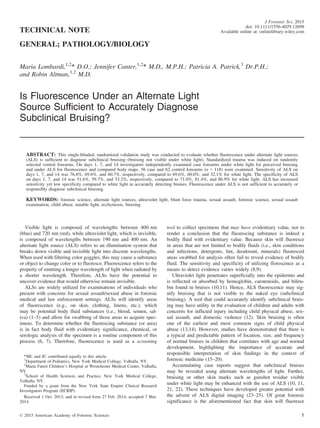
ABSTRACT: This single-blinded, randomized validation study was conducted to evaluate whether fluorescence under alternate light sources
(ALS) is sufficient to diagnose subclinical bruising (bruising not visible under white light). Standardized trauma was induced on randomly
selected ventral forearms. On days 1, 7, and 14 investigators independently examined case forearms under white light for perceived bruising
and under ALS for fluorescence and compared body maps. 56 case and 62 control forearms (n = 118) were examined. Sensitivity of ALS on
days 1, 7, and 14 was 76.8%, 69.6%, and 60.7%, respectively, compared to 69.6%, 60.0%, and 32.1% for white light. The specificity of ALS
on days 1, 7, and 14 was 51.6%, 59.7%, and 53.2%, respectively, compared to 71.0%, 81.4%, and 86.9% for white light. ALS has increased
sensitivity yet low specificity compared to white light in accurately detecting bruises. Fluorescence under ALS is not sufficient to accurately or
responsibly diagnose subclinical bruising.
KEYWORDS: forensic science, alternate light sources, ultraviolet light, blunt force trauma, sexual assault, forensic science, sexual assault
examination, child abuse, tunable light, ecchymosis, bruising
Visible light is composed of wavelengths between 400 nm
(blue) and 720 nm (red), while ultraviolet light, which is invisible,
is composed of wavelengths between 190 nm and 400 nm. An
alternate light source (ALS) refers to an illumination system that
breaks down visible and invisible light into discrete wavelengths.
When used with filtering color goggles, this may cause a substance
or object to change color or to fluoresce. Fluorescence refers to the
property of emitting a longer wavelength of light when radiated by
a shorter wavelength. Therefore, ALSs have the potential to
uncover evidence that would otherwise remain invisible.
ALSs are widely utilized for examinations of individuals who
present with concerns for sexual assault/sexual abuse in forensic
medical and law enforcement settings. ALSs will identify areas
of fluorescence (e.g., on skin, clothing, linens, etc.), which
may be potential body fluid substances (i.e., blood, semen, sal-
iva) (1–5) and allow for swabbing of those areas to acquire spec-
imens. To determine whether the fluorescing substance (or area)
is in fact body fluid with evidentiary significance, chemical, or
serologic analysis of the specimen is a routine component of this
process (6, 7). Therefore, fluorescence is used as a screening
tool to collect specimens that may have evidentiary value, not to
render a conclusion that the fluorescing substance is indeed a
bodily fluid with evidentiary value. Because skin will fluoresce
in areas that are not limited to bodily fluids (i.e., skin conditions
and infections, detergents, lint, deodorant, minerals) fluoresced
areas swabbed for analysis often fail to reveal evidence of bodily
fluid. The sensitivity and specificity of utilizing florescence as a
means to detect evidence varies widely (8,9).
Ultraviolet light penetrates superficially into the epidermis and
is reflected or absorbed by hemoglobin, carotenoids, and biliru-
bin found in bruises (10,11). Hence, ALS fluorescence may sig-
nify bruising that is not visible to the naked eye (subclinical
bruising). A tool that could accurately identify subclinical bruis-
ing may have utility in the evaluation of children and adults with
concerns for inflicted injury including child physical abuse, sex-
ual assault, and domestic violence (12). Skin bruising is often
one of the earliest and most common signs of child physical
abuse (13,14). However, studies have demonstrated that there is
a typical and predictable pattern of location, size, and frequency
of normal bruises in children that correlates with age and normal
development, highlighting the importance of accurate and
responsible interpretation of skin findings in the context of
forensic medicine (15–20).
Accumulating case reports suggest that subclinical bruises
may be revealed using alternate wavelengths of light. Further,
bruising or other skin marks such as gunshot residue visible
under white light may be enhanced with the use of ALS (10, 11,
21, 22). These techniques have developed greater potential with
the advent of ALS digital imaging (23–25). Of great forensic
significance is the aforementioned fact that skin will fluoresce
*ML and JC contributed equally to this article.
1
Department of Pediatrics, New York Medical College, Valhalla, NY.
2
Maria Fareri Children’s Hospital at Westchester Medical Center, Valhalla,
NY.
3
School of Health Sciences and Practice, New York Medical College,
Valhalla, NY.
Funded by a grant from the New York State Empire Clinical Research
Investigators Program (ECRIP).
Received 1 Oct. 2013; and in revised form 27 Feb. 2014; accepted 7 Mar.
2014.
1© 2015 American Academy of Forensic Sciences
J Forensic Sci, 2015
doi: 10.1111/1556-4029.12698
Available online at: onlinelibrary.wiley.com
in areas that are not limited to bruises (i.e., bodily fluids, skin
conditions and infections, detergents, lint, deodorant, minerals)
(26,27) illustrating the importance of understanding the role of
false positives before interpreting ALS fluorescence as a bruise.
In contrast to chemical or serological analysis that confirms the
identity of a bodily fluid such as semen or blood, there is no
similar practical method of testing that can confirm the existence
of a bruise in a fluorescing area. To our knowledge, the sensitiv-
ity and specificity of ALS in diagnosing subclinical bruises has
not been determined. This foundation is critical in forensic meth-
odology to avoid over-interpretation of potential evidence.
Highlighting the relevance of this paper is the emerging use of
ALS fluorescence in the context of sexual assault and domestic
violence by forensic nurse examiners (28). A retrospective chart
review of patients reporting attempted strangulation claimed
“93% of the patients had no visible evidence of external injuries
on physical examination”, yet “ALS revealed positive findings of
intradermal injuries in 98% of that group” (29). This practice has
been utilized in legal proceedings (30) and gained momentum,
with trainings and publications directed at sexual assault nurse
examiners (31–33). Given the lack of established research under-
standing the role of false positives with ALS, the use of this tech-
nique in interpreting bruises is not evidence-based practice (34).
The goal of this project was to evaluate the performance of
ALS technology in the detection of subclinical bruising.
Methods
Study Design, Subjects, and Setting
This was a prospective, randomized, single-blinded validation
study to evaluate the performance of an alternate light source, the
Mini-Crimescopeâ
400 (manufactured/distributed by HORIBA
Scientific, Edison, NJ, USA), in detecting bruises not visible to the
naked eye (subclinical bruises). Subjects were consenting adult
volunteers from the staff and students of New York Medical Col-
lege and Maria Fareri Children’s Hospital during June and July of
2008. Maria Fareri Children’s Hospital at Westchester Medical
Center is the major academic teaching hospital of New York Med-
ical College, located in Valhalla, New York.
The Institutional Review Board of New York Medical College
approved this study.
Recruitment and Inclusion/Exclusion Criteria
Subjects were recruited through a general campus-wide solici-
tation to nurses, attending physicians, residents, administrative
staff, and medical students. Consecutive responders were
instructed to appear at a designated location on random week-
days. The principal investigator approached the potential sub-
jects, explained the study, answered questions, requested
participation, and obtained consent.
Any adult 18–65 years of age regardless of gender, race, eth-
nicity, or socioeconomic group during the designated data col-
lection sessions was eligible for inclusion in the study.
Exclusionary criteria included having any acute systemic illness,
being on a medication that can affect coagulation or bruising,
and having a history of bleeding disorders.
Randomization
Each ventral forearm of a subject was enrolled as a separate
entity. “Case forearms” received a standardized inflicted trauma,
and “control forearms” did not. Once a subject was enrolled in
the study, a computer-generated randomization list was used to
assign the subjects’ forearms independently to either the control
or case groups. Therefore, each subject was assigned to one of
three categories: (i) two control forearms (i.e., no induced
trauma), (ii) two case forearms (i.e., one induced trauma on each
arm); or (iii) one case forearm and one control forearm (i.e., one
arm with an induced trauma and one arm without). All three
investigators were blinded to the randomization process.
Data Collection
A research assistant guided each study subject through com-
pleting a study questionnaire with questions regarding demo-
graphics and pertinent medical history. The investigators were
blinded to questionnaire results.
Day 0—On the first day, the research assistant randomized
subjects’ forearms to either the control or case groups based on
the computer-generated randomization list. All subjects had their
forearms washed with warm water to reduce the possibility of
residue of soaps or lotions that might fluoresce. The research
assistant then left the room. Subsequently, an investigator
blinded to the randomization entered the room and examined the
skin of the ventral surfaces of both of the subject’s forearms
under white light to check for pre-existing marks, such as
bruises, hemangiomas, birthmarks, tattoos, or dermatitis. All skin
findings under white light were recorded and labeled correspond-
ingly on a body map (i.e., pretrauma white light body map). The
subject then entered a different examination room.
Blinded to the questionnaire results, the randomization pro-
cess, and the white light examination findings, two different
investigators examined the skin on the ventral surfaces of the
subject’s forearms using the Mini-Crimescopeâ
400. The room
was darkened for this exam, and the investigators wore special
goggles compatible with the ALS. The study subjects wore ultra-
violet protective eye goggles that are manufactured by the ALS
manufacturer for that purpose. Findings from the ALS examina-
tion were recorded and labeled on a separate but identical body
map (i.e., pretrauma alternate light body map). Two separate
ALS examiners performed this independently and completed
separate post-trauma maps.
After these initial examinations, the research assistant returned
and induced a trauma on the randomly selected case forearms by
dropping a 113.4 g (4 ounce) weight from a height of 152.4 cm
(60 inches) down a tube onto the ventral surface of the subject’s
forearm. The location of this trauma was documented on a new
body map (i.e., inflicted trauma location map) by the assistant
and remained unknown to the investigators throughout the study.
The standardized measurements to locate the point of trauma
were the distances from both the most proximal wrist crease and
the most distal antecubital fossa crease.
Days 1, 7, and 14—All subjects returned on days 1, 7, and 14
postbruise for examinations under white light and alternate light
by different investigators. First, an investigator examined the
ventral surfaces of both forearms under white light in one exam
room. All skin findings under white light were recorded and
labeled correspondingly on a body map (i.e., post-trauma white
light body map). In a second exam room, the subject donned
protective eye gear and two different investigators examined the
ventral surfaces of both forearms using the ALS. Investigators
conducted these examinations using the Mini-Crimescopeâ
400
2 JOURNAL OF FORENSIC SCIENCES
at seven different wavelengths [300 nm, 415 nm, 455 nm, CSS
(Crime Scene Search), 515 nm, 535 nm, 555 nm] while wearing
three different filtering goggles (red, orange, yellow). Areas of
fluorescence were documented independently (i.e., post-trauma
alternate light body maps) for days 1, 7, and 14.
Identification and Location of Skin Lesions
The dimensions of all findings were measured using a stan-
dard metric measuring tape. On the white light examination, the
investigator labeled all findings that were identifiable (i.e., hem-
angioma, scar, bruise, birthmark, tattoo). On the alternate light
source examination, the investigators measured the width and
length of each area of fluorescence. The location of all skin
lesions was documented using the standard metric measuring
tape by measuring the distances of each lesion from the most
distal antecubital fossa crease and from the most proximal wrist
crease. This technique was used to locate all lesions under white
light and all areas of fluorescence under ALS. Findings were
recorded on separate but identical body maps as described
above. Upon completion, each body map was placed in a sepa-
rate prelabeled envelope with the corresponding study subject
number on it. Bruises were not reapplied at any time during the
study period. New body maps were used for all examinations, so
all investigators remained blinded to prior findings including
their own.
Definitions
Positive Fluorescence—An area on the ventral surface of the
arm whereby fluorescence was identified by study examiners
under ALS. This includes true-positive subclinical bruises and
false positives (substances or objects that fluoresce that are
not bruises).
Subclinical Bruise—A case forearm that fluoresced under ALS
yet had no visualized bruise under the white light exam con-
ducted on the same day. This includes only true positives.
True-positive subclinical bruise—a subclinical bruise seen under
ALS within 0.5 cm of the inflicted trauma by both observers,
but not under white light in the same location.
False-positive subclinical bruise—an area of positive fluores-
cence seen under ALS by both observers, but not under white
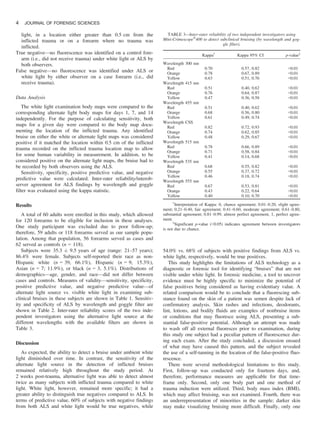
TABLE 1––Performance measures of alternate light source vs. visible white
light in examining subclinical bruises. (N = 118)
Day 1 Day 7 Day 14
(95% CI) (95% CI) (95% CI)
Alternative light source
Sensitivity 76.8%
(63.6, 87.0)
69.6%
(55.9, 81.2)
60.7%
(46.8, 73.5)
Specificity 51.6%
(38.6, 64.5)
59.7%
(46.5, 72.0)
53.2%
(40.1, 66.0)
Positive predictive
value
58.9%
(46.8, 70.3)
60.9%
(47.9, 72.9)
54.0%
(40.9, 66.6)
Negative predictive
value
71.1%
(55.7, 83.6)
68.5%
(54.5, 80.5)
60.0%
(45.9, 73.0)
Visible white light
Sensitivity 69.6%
(55.9, 81.2)
60.0%
(45.9%, 73.0%)
32.1%
(20.0%, 46.3%)
Specificity 71.0%
(58.1, 81.8)
81.4%
(69.1, 90.3)
86.9%
(75.8, 94.2)
Positive predictive
value
68.4%
(54.8, 80.1)
75.0%
(59.7, 86.8)
68.0%
(46.5, 85.1)
Negative Predictive
Value
72.1%
(59.2, 82.9)
68.6%
(56.4, 79.2)
59.6%
(48.6, 70.0)
TABLE 2––Sensitivity and specificity of Mini-Crimescopeâ
400 in detecting subclinical bruising (by wavelength and goggle filter)
Day 1 (%) Day 7 (%) Day 14 (%)
Sensitivity Specificity Sensitivity Specificity Sensitivity Specificity
Wavelength 300 nm
Red 75.0 51.6 69.6 61.3 51.8 54.8
Orange 76.8 51.6 69.6 61.3 53.8 54.8
Yellow 76.8 51.6 67.9 64.5 50.0 53.2
Wavelength 415 nm
Red 75.0 51.6 69.6 59.7 57.1 54.8
Orange 76.8 51.6 69.6 59.7 57.1 54.8
Yellow 76.8 51.6 67.9 62.9 57.8 53.2
Wavelength 455 nm
Red 75.0 51.6 69.6 59.7 57.1 54.8
Orange 76.8 51.6 69.6 59.7 57.1 54.8
Yellow 76.8 51.6 67.9 62.9 51.8 53.2
Wavelength CSS
Red 75.0 51.6 69.6 61.3 58.9 54.8
Orange 76.8 51.6 67.9 61.3 50.0 56.5
Yellow 39.3 79.0 26.8 87.1 8.9 87.1
Wavelength 515 nm
Red 75.0 51.6 67.9 61.3 58.9 54.8
Orange 73.2 54.8 64.3 69.4 42.9 61.3
Yellow 23.2 83.9 16.1 95.2 5.4 95.2
Wavelength 535 nm
Red 75.0 51.6 67.9 62.9 57.1 54.8
Orange 58.9 74.2 33.9 82.3 25.0 74.2
Yellow 19.6 90.3 8.9 98.4 3.6 96.8
Wavelength 555 nm
Red 73.2 51.6 67.9 62.9 57.1 45.2
Orange 37.5 77.4 26.8 90.3 19.6 75.8
Yellow 17.9 90.3 8.9 98.4 3.6 96.8
Bolded areas represent filters and wavelengths indicated by the manufacturer to be optimal in the diagnosis of subclinical bruising at different stages.
LOMBARDI ET AL. . ALS TO DIAGNOSE SUBCLINICAL BRUISING 3
light, in a location either greater than 0.5 cm from the
inflicted trauma or on a forearm where no trauma was
inflicted.
True negative—no fluorescence was identified on a control fore-
arm (i.e., did not receive trauma) under white light or ALS by
both observers.
False negative—no fluorescence was identified under ALS or
white light by either observer on a case forearm (i.e., did
receive trauma).
Data Analysis
The white light examination body maps were compared to the
corresponding alternate light body maps for days 1, 7, and 14
independently. For the purpose of calculating sensitivity, both
maps for a given day were compared to the body map docu-
menting the location of the inflicted trauma. Any identified
bruise on either the white or alternate light maps was considered
positive if it matched the location within 0.5 cm of the inflicted
trauma recorded on the inflicted trauma location map to allow
for some human variability in measurement. In addition, to be
considered positive on the alternate light maps, the bruise had to
be recorded by both observers using the ALS.
Sensitivity, specificity, positive predictive value, and negative
predictive value were calculated. Inter-rater reliability/interob-
server agreement for ALS findings by wavelength and goggle
filter was evaluated using the kappa statistic.
Results
A total of 60 adults were enrolled in this study, which allowed
for 120 forearms to be eligible for inclusion in these analyses.
One study participant was excluded due to poor follow-up;
therefore, 59 adults or 118 forearms served as our sample popu-
lation. Among that population, 56 forearms served as cases and
62 served as controls (n = 118).
Subjects were 35.3 Æ 9.5 years of age (range: 21–57 years);
86.4% were female. Subjects self-reported their race as non-
Hispanic white (n = 39, 66.1%), Hispanic (n = 9, 15.3%),
Asian (n = 7; 11.9%), or black (n = 3, 5.1%). Distributions of
demographics—age, gender, and race—did not differ between
cases and controls. Measures of validity—sensitivity, specificity,
positive predictive value, and negative predictive value—of
alternate light source vs. visible white light in examining sub-
clinical bruises in these subjects are shown in Table 1. Sensitiv-
ity and specificity of ALS by wavelength and goggle filter are
shown in Table 2. Inter-rater reliability scores of the two inde-
pendent investigators using the alternative light source at the
different wavelengths with the available filters are shown in
Table 3.
Discussion
As expected, the ability to detect a bruise under ambient white
light diminished over time. In contrast, the sensitivity of the
alternate light source in the detection of inflicted bruises
remained relatively high throughout the study period. At
2 weeks post-trauma, alternative light was able to detect almost
twice as many subjects with inflicted trauma compared to white
light. White light, however, remained more specific; it had a
greater ability to distinguish true negatives compared to ALS. In
terms of predictive value, 60% of subjects with negative findings
from both ALS and white light would be true negatives, while
54.0% vs. 68% of subjects with positive findings from ALS vs.
white light, respectively, would be true positives.
This study highlights the limitations of ALS technology as a
diagnostic or forensic tool for identifying “bruises” that are not
visible under white light. In forensic medicine, a tool to uncover
evidence must be highly specific to minimize the potential of
false positives being considered as having evidentiary value. A
related comparison would be to conclude that a fluorescing sub-
stance found on the skin of a patient was semen despite lack of
confirmatory analysis. Skin rashes and infections, deodorants,
lint, lotions, and bodily fluids are examples of nonbruise items
or conditions that may fluoresce using ALS, presenting a sub-
stantial false-positive potential. Although an attempt was made
to wash off all external fluoresces prior to examination, during
this study one subject had a peculiar pattern of fluorescence dur-
ing each exam. After the study concluded, a discussion ensued
of what may have caused this pattern, and the subject revealed
the use of a self-tanning in the location of the false-positive fluo-
rescence.
There were several methodological limitations to this study.
First, follow-up was conducted only for fourteen days, and,
therefore, performance measures are applicable for that time-
frame only. Second, only one body part and one method of
trauma induction were utilized. Third, body mass index (BMI),
which may affect bruising, was not examined. Fourth, there was
an underrepresentation of minorities in the sample; darker skin
may make visualizing bruising more difficult. Finally, only one
TABLE 3––Inter-rater reliability of two independent investigators using
Mini-Crimescopeâ
400 to detect subclinical bruising (by wavelength and gog-
gle filter).
Kappa†
Kappa 95% CI p-value‡
Wavelength 300 nm
Red 0.70 0.57, 0.82 <0.01
Orange 0.78 0.67, 0.89 <0.01
Yellow 0.63 0.51, 0.76 <0.01
Wavelength 415 nm
Red 0.51 0.40, 0.62 <0.01
Orange 0.76 0.64, 0.87 <0.01
Yellow 0.47 0.36, 0.58 <0.01
Wavelength 455 nm
Red 0.51 0.40, 0.62 <0.01
Orange 0.68 0.56, 0.80 <0.01
Yellow 0.61 0.49, 0.74 <0.01
Wavelength CSS
Red 0.82 0.72, 0.93 <0.01
Orange 0.74 0.62, 0.85 <0.01
Yellow 0.48 0.29, 0.67 <0.01
Wavelength 515 nm
Red 0.78 0.66, 0.89 <0.01
Orange 0.71 0.58, 0.84 <0.01
Yellow 0.41 0.14, 0.68 <0.01
Wavelength 535 nm
Red 0.68 0.55, 0.82 <0.01
Orange 0.55 0.37, 0.72 <0.01
Yellow 0.46 0.18, 0.74 <0.01
Wavelength 555 nm
Red 0.67 0.53, 0.81 <0.01
Orange 0.43 0.22, 0.64 <0.01
Yellow 0.40 0.10, 0.70 <0.01
†
Interpretation of Kappa: 0, chance agreement; 0.01–0.20, slight agree-
ment; 0.21–0.40, fair agreement; 0.41–0.60, moderate agreement; 0.61–0.80,
substantial agreement; 0.81–0.99, almost perfect agreement, 1, perfect agree-
ment.
‡
Significant p-value (<0.05) indicates agreement between investigators
is not due to chance.
4 JOURNAL OF FORENSIC SCIENCES
alternate light source model was used in this study in this study,
and there was no accompanying photography to document the
findings.
The higher sensitivity of ALS and the ability it has to
enhance visualization makes it a potential screening tool to
identify those subjects that may warrant additional follow-up to
definitively diagnose subclinical bruising. The ability of ALS
fluorescence to enhance the visualization of a known bruise vis-
ible under white light may assist in identifying a clear pattern
that is consistent with the reported mechanism of injury. For
example, a child who reports being hit with a belt who has a
bruise under white light may have better visualization of that
bruise under ALS.
This study highlights the need to interpret ALS findings with
caution given its low specificity and consequential high probabil-
ity of false-positive findings. As these results demonstrate, diag-
nosing bruising (accidental or inflicted) as opposed to many
other types of skin findings using ALS is a precarious practice.
As with any forensic medical practice, future use of this tool
must include development of evidence-based protocols, training,
and standards for practice in addition to photo documentation of
any potential findings. All these measures afford the opportunity
for peer review and critique of both evidence-gathering tech-
niques and clinical interpretation.
Conclusion
These results demonstrate that in an adult population, an
alternate light source has increased sensitivity compared to the
naked eye in detecting known bruises. However, approximately
half of the time, control forearms (i.e., areas that did not have
induced trauma) fluoresced using the alternate light source,
including when the manufacturers recommended filters and
wavelengths were used (27). In other words, our results demon-
strate that more than half of the time, positive fluorescence is
something other than a bruise. There is no evidence base,
therefore, to support the use of an alternate light source as an
independent tool to definitively interpret fluorescence as a sub-
clinical bruise (i.e., bruising that is not visible to the naked
eye). Given the high false-positive rate in detecting subclinical
bruising, it is essential for medical and legal professionals to
understand the resulting implications of promoting the use of
ALS in a forensic setting.
Acknowledgments
We thank Elizabeth Corbo, M.D., and Julie Sweeney, M.D.,
for their capable work in recruiting subjects and collecting data.
We thank Donald Brand, PhD, and Paul Visintainer, PhD, for
their assistance with study design and analysis plan. We
acknowledge the work of Carol Spagnolo-Hye, D.O., Pascal Sar-
emsky, M.D., Chung Chiang, M.D., and Umesh Paudel, M.D.,
in helping with subject enrollment and inducing and document-
ing inflicted bruises.
Special Note
Of note, usage of the tool should always be with UV protec-
tive goggles in accordance with the manufacturer’s instructions.
Further, there are no established safety data demonstrating use of
this tool in the pediatric population. The Mini-Crimescopeâ
400
was utilized for this study following manufacturer’s instructions
for wavelength and goggle filters.
References
1. Lincoln CA, McBride PM, Turkett GR, Garlin CD, Macdonald EJ. The
use of an alternate light source to detect semen in clinical forensic medi-
cal practice. J Clin Med 2006;13(4):215–8.
2. Nelson DG, Santucci KA. An alternate light source to detect semen.
Acad Emerg Med 2002;9(10):1045–8.
3. Wawryk J, Odell M. Fluorescent identification of biological and other
stains on skin by the use of alternative light sources. J Clin Med
2005;12(6):296–301.
4. Vandenberg N, VanOorschot RA. The use of Polilightâ
in the detec-
tion of seminal fluid, saliva, and bloodstains and comparison with
conventional clinical-based screening tests. J Forensic Sci 2006;51
(2):361–70.
5. Carter-Snell C, Soltys K. Forensic ultraviolet lights in clinical practice:
evidence for the evidence. Can J Police Secur Serv 2005;3(2):79–85.
6. West MH, Barsley RE, Hall JE, Hayne S, Cimrmancic M. The detection
and documentation of trace wound patterns by use of an alternative light
source. J Forensic Sci 1992;37:1480–8.
7. U.S. Department of Justice Office on Violence Against Women. National
protocol for sexual assault medical forensic examinations – adults/adoles-
cents. Washington, DC: U.S. Department of Justice Office on Violence
Against Women, 2013.
8. Christian CW, Lavelle JM, De Jong AR, Loiselle J, Brenner L, Joffe M.
Forensic evidence findings in prepubertal victims of sexual assault. Pedi-
atrics 2000;106(1):100–4.
9. Young KL, Jones JG, Worthington T, Simpson P, Casey PH. Forensic
laboratory evidence in sexually abused children and adolescents. Arch
Pediatr Adolesc Med 2006;160:585–8.
10. Lynnerup N, Hjalgrim H, Eriksen B. Routine use of ultraviolet light in
medicolegal examinations to evaluate stains and skin trauma. Med Sci
Law 1995;35(2):165–8.
11. Vogeley E, Pierce MC, Bertocci G. Experience with wood lamp illumi-
nation and digital photography in the documentation of bruises on human
skin. Arch Pediatr Adolesc Med 2002;156:265–8.
12. Shields LB, Corey TS, Weakley-Jones B, Stewart D. Living victims of
strangulation: a 10 year review of cases in a metropolitan community.
Am J Forensic Med Pathol 2010;31(4):320–5.
13. Ellerstein NS. The cutaneous manifestations of child abuse and neglect.
Am J Dis Child 1979;133:906–9.
14. Carpenter RF. The prevalence and distribution of bruising in babies.
Arch Dis Child 1999;80:363–6.
15. Sugar N, Taylor J, Feldman K, and the Puget Sound Pediatric
Research Network. Bruises in infants and toddlers: those who
don’t cruise rarely bruise. Arch Pediatr Adolesc Med 1999;153:
399–403.
16. Pascoe JM, Hildebrandt HM, Tarrier A, Murphy M. Patterns of skin
injury in nonaccidental and accidental injury. Pediatrics 1979;64
(2):245–7.
17. Labbe J, Caouette G. Recent skin injuries in normal children. Pediatrics
2001;108(2):270–6.
18. Roberton DM, Barbor P, Hull D. Unusual injury? Recent injury in nor-
mal children and children with suspected non-accidental injury. BMJ
1982;285:1399–401.
19. Dunstan FD, Guildea ZE, Kontos K, Kemp AM, Sibert JR. A scoring
system for bruise patterns: a tool for identifying abuse. Arch Dis Child
2002;86:330–3.
20. Pierce MC, Kaczor K, Aldridge S, O’Flynn J, Lorenz DJ. Bruising char-
acteristics discriminating physical child abuse from accidental trauma.
Pediatrics 2010;125(1):67–74.
21. West M, Barsley RE, Frair J, Stewart W. Ultraviolet radiation and
its role in wound pattern documentation. J Forensic Sci
1992;37:1466–79.
22. Wright FD. Photography in bite mark and patterned injury documenta-
tion – Part I. J Forensic Sci 1998;43:877–80.
23. Barsley RE, West MH, Frair JA. Forensic photography. Ultraviolet
imaging of wounds on skin. Am J Forensic Med Pathol 1990;11:
300–8.
24. Golden GS. Use of alternative light source illumination in bite mark pho-
tography. J Forensic Sci 1994;39:815–23.
25. Hempling SM. The applications of ultraviolet photography in clinical
forensic medicine. Med Sci Law 1981;21:215–22.
26. http://www.djj.state.ga.us/Policies/DJJPolicies/Chapter11/Attachments/DJJ11.
30AttachmentG.pdf
27. Watkins J. Differentiating fungal skin infections, part 1: Tinea. Br J Sch
Nurs 2012;7(8):387–8.
LOMBARDI ET AL. . ALS TO DIAGNOSE SUBCLINICAL BRUISING 5
28. Smith K. New use of technology shines light on strangulation. The Balti-
more Sun, September 20, 2010; http://www.baltimoresun.com (accessed
on September 24, 2013).
29. Holbrook DS, Jackson MC. Use of an alternative light source to assess
strangulation victims. J Forensic Nurs 2013;9(3):140–5.
30. http://weblogs.baltimoresun.com/news/crime/blog/2010/09/new_technology_
designed_to_det.html
31. https://nursing.advanceweb.com/Features/Articles/Bringing-Evidence-to-
Light.aspx
32. https://www.evawintl.org/WebinarDetail.aspx?webinarid=3
33. http://www.horiba.com/fileadmin/uploads/Scientific/Documents/Forensics/
fls.pdf
34. Sackett DL, Rosenberg WM, Gray JA, Haynes RB, Richardson WS. Evi-
dence based medicine: what it is and what it isn’t. BMJ 1996;312
(7023):71–2.
Additional information and reprint requests:
Jennifer Canter, M.D.
Clinical Pediatrics
New York Medical College
Section of General Pediatrics
40, Sunshine Cottage Road, Room 1N-D15
Valhalla, NY 10595
E-mail: JCanter@wihd.org
6 JOURNAL OF FORENSIC SCIENCES

Alternate Light Source Usage to Detect Bruising - Is This Evidence Based Practice?

  • 1.
    TECHNICAL NOTE GENERAL; PATHOLOGY/BIOLOGY MariaLombardi,1,2 * D.O.; Jennifer Canter,1,2 * M.D., M.P.H.; Patricia A. Patrick,3 Dr.P.H.; and Robin Altman,1,2 M.D. Is Fluorescence Under an Alternate Light Source Sufficient to Accurately Diagnose Subclinical Bruising? ABSTRACT: This single-blinded, randomized validation study was conducted to evaluate whether fluorescence under alternate light sources (ALS) is sufficient to diagnose subclinical bruising (bruising not visible under white light). Standardized trauma was induced on randomly selected ventral forearms. On days 1, 7, and 14 investigators independently examined case forearms under white light for perceived bruising and under ALS for fluorescence and compared body maps. 56 case and 62 control forearms (n = 118) were examined. Sensitivity of ALS on days 1, 7, and 14 was 76.8%, 69.6%, and 60.7%, respectively, compared to 69.6%, 60.0%, and 32.1% for white light. The specificity of ALS on days 1, 7, and 14 was 51.6%, 59.7%, and 53.2%, respectively, compared to 71.0%, 81.4%, and 86.9% for white light. ALS has increased sensitivity yet low specificity compared to white light in accurately detecting bruises. Fluorescence under ALS is not sufficient to accurately or responsibly diagnose subclinical bruising. KEYWORDS: forensic science, alternate light sources, ultraviolet light, blunt force trauma, sexual assault, forensic science, sexual assault examination, child abuse, tunable light, ecchymosis, bruising Visible light is composed of wavelengths between 400 nm (blue) and 720 nm (red), while ultraviolet light, which is invisible, is composed of wavelengths between 190 nm and 400 nm. An alternate light source (ALS) refers to an illumination system that breaks down visible and invisible light into discrete wavelengths. When used with filtering color goggles, this may cause a substance or object to change color or to fluoresce. Fluorescence refers to the property of emitting a longer wavelength of light when radiated by a shorter wavelength. Therefore, ALSs have the potential to uncover evidence that would otherwise remain invisible. ALSs are widely utilized for examinations of individuals who present with concerns for sexual assault/sexual abuse in forensic medical and law enforcement settings. ALSs will identify areas of fluorescence (e.g., on skin, clothing, linens, etc.), which may be potential body fluid substances (i.e., blood, semen, sal- iva) (1–5) and allow for swabbing of those areas to acquire spec- imens. To determine whether the fluorescing substance (or area) is in fact body fluid with evidentiary significance, chemical, or serologic analysis of the specimen is a routine component of this process (6, 7). Therefore, fluorescence is used as a screening tool to collect specimens that may have evidentiary value, not to render a conclusion that the fluorescing substance is indeed a bodily fluid with evidentiary value. Because skin will fluoresce in areas that are not limited to bodily fluids (i.e., skin conditions and infections, detergents, lint, deodorant, minerals) fluoresced areas swabbed for analysis often fail to reveal evidence of bodily fluid. The sensitivity and specificity of utilizing florescence as a means to detect evidence varies widely (8,9). Ultraviolet light penetrates superficially into the epidermis and is reflected or absorbed by hemoglobin, carotenoids, and biliru- bin found in bruises (10,11). Hence, ALS fluorescence may sig- nify bruising that is not visible to the naked eye (subclinical bruising). A tool that could accurately identify subclinical bruis- ing may have utility in the evaluation of children and adults with concerns for inflicted injury including child physical abuse, sex- ual assault, and domestic violence (12). Skin bruising is often one of the earliest and most common signs of child physical abuse (13,14). However, studies have demonstrated that there is a typical and predictable pattern of location, size, and frequency of normal bruises in children that correlates with age and normal development, highlighting the importance of accurate and responsible interpretation of skin findings in the context of forensic medicine (15–20). Accumulating case reports suggest that subclinical bruises may be revealed using alternate wavelengths of light. Further, bruising or other skin marks such as gunshot residue visible under white light may be enhanced with the use of ALS (10, 11, 21, 22). These techniques have developed greater potential with the advent of ALS digital imaging (23–25). Of great forensic significance is the aforementioned fact that skin will fluoresce *ML and JC contributed equally to this article. 1 Department of Pediatrics, New York Medical College, Valhalla, NY. 2 Maria Fareri Children’s Hospital at Westchester Medical Center, Valhalla, NY. 3 School of Health Sciences and Practice, New York Medical College, Valhalla, NY. Funded by a grant from the New York State Empire Clinical Research Investigators Program (ECRIP). Received 1 Oct. 2013; and in revised form 27 Feb. 2014; accepted 7 Mar. 2014. 1© 2015 American Academy of Forensic Sciences J Forensic Sci, 2015 doi: 10.1111/1556-4029.12698 Available online at: onlinelibrary.wiley.com
  • 2.
    in areas thatare not limited to bruises (i.e., bodily fluids, skin conditions and infections, detergents, lint, deodorant, minerals) (26,27) illustrating the importance of understanding the role of false positives before interpreting ALS fluorescence as a bruise. In contrast to chemical or serological analysis that confirms the identity of a bodily fluid such as semen or blood, there is no similar practical method of testing that can confirm the existence of a bruise in a fluorescing area. To our knowledge, the sensitiv- ity and specificity of ALS in diagnosing subclinical bruises has not been determined. This foundation is critical in forensic meth- odology to avoid over-interpretation of potential evidence. Highlighting the relevance of this paper is the emerging use of ALS fluorescence in the context of sexual assault and domestic violence by forensic nurse examiners (28). A retrospective chart review of patients reporting attempted strangulation claimed “93% of the patients had no visible evidence of external injuries on physical examination”, yet “ALS revealed positive findings of intradermal injuries in 98% of that group” (29). This practice has been utilized in legal proceedings (30) and gained momentum, with trainings and publications directed at sexual assault nurse examiners (31–33). Given the lack of established research under- standing the role of false positives with ALS, the use of this tech- nique in interpreting bruises is not evidence-based practice (34). The goal of this project was to evaluate the performance of ALS technology in the detection of subclinical bruising. Methods Study Design, Subjects, and Setting This was a prospective, randomized, single-blinded validation study to evaluate the performance of an alternate light source, the Mini-Crimescopeâ 400 (manufactured/distributed by HORIBA Scientific, Edison, NJ, USA), in detecting bruises not visible to the naked eye (subclinical bruises). Subjects were consenting adult volunteers from the staff and students of New York Medical Col- lege and Maria Fareri Children’s Hospital during June and July of 2008. Maria Fareri Children’s Hospital at Westchester Medical Center is the major academic teaching hospital of New York Med- ical College, located in Valhalla, New York. The Institutional Review Board of New York Medical College approved this study. Recruitment and Inclusion/Exclusion Criteria Subjects were recruited through a general campus-wide solici- tation to nurses, attending physicians, residents, administrative staff, and medical students. Consecutive responders were instructed to appear at a designated location on random week- days. The principal investigator approached the potential sub- jects, explained the study, answered questions, requested participation, and obtained consent. Any adult 18–65 years of age regardless of gender, race, eth- nicity, or socioeconomic group during the designated data col- lection sessions was eligible for inclusion in the study. Exclusionary criteria included having any acute systemic illness, being on a medication that can affect coagulation or bruising, and having a history of bleeding disorders. Randomization Each ventral forearm of a subject was enrolled as a separate entity. “Case forearms” received a standardized inflicted trauma, and “control forearms” did not. Once a subject was enrolled in the study, a computer-generated randomization list was used to assign the subjects’ forearms independently to either the control or case groups. Therefore, each subject was assigned to one of three categories: (i) two control forearms (i.e., no induced trauma), (ii) two case forearms (i.e., one induced trauma on each arm); or (iii) one case forearm and one control forearm (i.e., one arm with an induced trauma and one arm without). All three investigators were blinded to the randomization process. Data Collection A research assistant guided each study subject through com- pleting a study questionnaire with questions regarding demo- graphics and pertinent medical history. The investigators were blinded to questionnaire results. Day 0—On the first day, the research assistant randomized subjects’ forearms to either the control or case groups based on the computer-generated randomization list. All subjects had their forearms washed with warm water to reduce the possibility of residue of soaps or lotions that might fluoresce. The research assistant then left the room. Subsequently, an investigator blinded to the randomization entered the room and examined the skin of the ventral surfaces of both of the subject’s forearms under white light to check for pre-existing marks, such as bruises, hemangiomas, birthmarks, tattoos, or dermatitis. All skin findings under white light were recorded and labeled correspond- ingly on a body map (i.e., pretrauma white light body map). The subject then entered a different examination room. Blinded to the questionnaire results, the randomization pro- cess, and the white light examination findings, two different investigators examined the skin on the ventral surfaces of the subject’s forearms using the Mini-Crimescopeâ 400. The room was darkened for this exam, and the investigators wore special goggles compatible with the ALS. The study subjects wore ultra- violet protective eye goggles that are manufactured by the ALS manufacturer for that purpose. Findings from the ALS examina- tion were recorded and labeled on a separate but identical body map (i.e., pretrauma alternate light body map). Two separate ALS examiners performed this independently and completed separate post-trauma maps. After these initial examinations, the research assistant returned and induced a trauma on the randomly selected case forearms by dropping a 113.4 g (4 ounce) weight from a height of 152.4 cm (60 inches) down a tube onto the ventral surface of the subject’s forearm. The location of this trauma was documented on a new body map (i.e., inflicted trauma location map) by the assistant and remained unknown to the investigators throughout the study. The standardized measurements to locate the point of trauma were the distances from both the most proximal wrist crease and the most distal antecubital fossa crease. Days 1, 7, and 14—All subjects returned on days 1, 7, and 14 postbruise for examinations under white light and alternate light by different investigators. First, an investigator examined the ventral surfaces of both forearms under white light in one exam room. All skin findings under white light were recorded and labeled correspondingly on a body map (i.e., post-trauma white light body map). In a second exam room, the subject donned protective eye gear and two different investigators examined the ventral surfaces of both forearms using the ALS. Investigators conducted these examinations using the Mini-Crimescopeâ 400 2 JOURNAL OF FORENSIC SCIENCES
  • 3.
    at seven differentwavelengths [300 nm, 415 nm, 455 nm, CSS (Crime Scene Search), 515 nm, 535 nm, 555 nm] while wearing three different filtering goggles (red, orange, yellow). Areas of fluorescence were documented independently (i.e., post-trauma alternate light body maps) for days 1, 7, and 14. Identification and Location of Skin Lesions The dimensions of all findings were measured using a stan- dard metric measuring tape. On the white light examination, the investigator labeled all findings that were identifiable (i.e., hem- angioma, scar, bruise, birthmark, tattoo). On the alternate light source examination, the investigators measured the width and length of each area of fluorescence. The location of all skin lesions was documented using the standard metric measuring tape by measuring the distances of each lesion from the most distal antecubital fossa crease and from the most proximal wrist crease. This technique was used to locate all lesions under white light and all areas of fluorescence under ALS. Findings were recorded on separate but identical body maps as described above. Upon completion, each body map was placed in a sepa- rate prelabeled envelope with the corresponding study subject number on it. Bruises were not reapplied at any time during the study period. New body maps were used for all examinations, so all investigators remained blinded to prior findings including their own. Definitions Positive Fluorescence—An area on the ventral surface of the arm whereby fluorescence was identified by study examiners under ALS. This includes true-positive subclinical bruises and false positives (substances or objects that fluoresce that are not bruises). Subclinical Bruise—A case forearm that fluoresced under ALS yet had no visualized bruise under the white light exam con- ducted on the same day. This includes only true positives. True-positive subclinical bruise—a subclinical bruise seen under ALS within 0.5 cm of the inflicted trauma by both observers, but not under white light in the same location. False-positive subclinical bruise—an area of positive fluores- cence seen under ALS by both observers, but not under white TABLE 1––Performance measures of alternate light source vs. visible white light in examining subclinical bruises. (N = 118) Day 1 Day 7 Day 14 (95% CI) (95% CI) (95% CI) Alternative light source Sensitivity 76.8% (63.6, 87.0) 69.6% (55.9, 81.2) 60.7% (46.8, 73.5) Specificity 51.6% (38.6, 64.5) 59.7% (46.5, 72.0) 53.2% (40.1, 66.0) Positive predictive value 58.9% (46.8, 70.3) 60.9% (47.9, 72.9) 54.0% (40.9, 66.6) Negative predictive value 71.1% (55.7, 83.6) 68.5% (54.5, 80.5) 60.0% (45.9, 73.0) Visible white light Sensitivity 69.6% (55.9, 81.2) 60.0% (45.9%, 73.0%) 32.1% (20.0%, 46.3%) Specificity 71.0% (58.1, 81.8) 81.4% (69.1, 90.3) 86.9% (75.8, 94.2) Positive predictive value 68.4% (54.8, 80.1) 75.0% (59.7, 86.8) 68.0% (46.5, 85.1) Negative Predictive Value 72.1% (59.2, 82.9) 68.6% (56.4, 79.2) 59.6% (48.6, 70.0) TABLE 2––Sensitivity and specificity of Mini-Crimescopeâ 400 in detecting subclinical bruising (by wavelength and goggle filter) Day 1 (%) Day 7 (%) Day 14 (%) Sensitivity Specificity Sensitivity Specificity Sensitivity Specificity Wavelength 300 nm Red 75.0 51.6 69.6 61.3 51.8 54.8 Orange 76.8 51.6 69.6 61.3 53.8 54.8 Yellow 76.8 51.6 67.9 64.5 50.0 53.2 Wavelength 415 nm Red 75.0 51.6 69.6 59.7 57.1 54.8 Orange 76.8 51.6 69.6 59.7 57.1 54.8 Yellow 76.8 51.6 67.9 62.9 57.8 53.2 Wavelength 455 nm Red 75.0 51.6 69.6 59.7 57.1 54.8 Orange 76.8 51.6 69.6 59.7 57.1 54.8 Yellow 76.8 51.6 67.9 62.9 51.8 53.2 Wavelength CSS Red 75.0 51.6 69.6 61.3 58.9 54.8 Orange 76.8 51.6 67.9 61.3 50.0 56.5 Yellow 39.3 79.0 26.8 87.1 8.9 87.1 Wavelength 515 nm Red 75.0 51.6 67.9 61.3 58.9 54.8 Orange 73.2 54.8 64.3 69.4 42.9 61.3 Yellow 23.2 83.9 16.1 95.2 5.4 95.2 Wavelength 535 nm Red 75.0 51.6 67.9 62.9 57.1 54.8 Orange 58.9 74.2 33.9 82.3 25.0 74.2 Yellow 19.6 90.3 8.9 98.4 3.6 96.8 Wavelength 555 nm Red 73.2 51.6 67.9 62.9 57.1 45.2 Orange 37.5 77.4 26.8 90.3 19.6 75.8 Yellow 17.9 90.3 8.9 98.4 3.6 96.8 Bolded areas represent filters and wavelengths indicated by the manufacturer to be optimal in the diagnosis of subclinical bruising at different stages. LOMBARDI ET AL. . ALS TO DIAGNOSE SUBCLINICAL BRUISING 3
  • 4.
    light, in alocation either greater than 0.5 cm from the inflicted trauma or on a forearm where no trauma was inflicted. True negative—no fluorescence was identified on a control fore- arm (i.e., did not receive trauma) under white light or ALS by both observers. False negative—no fluorescence was identified under ALS or white light by either observer on a case forearm (i.e., did receive trauma). Data Analysis The white light examination body maps were compared to the corresponding alternate light body maps for days 1, 7, and 14 independently. For the purpose of calculating sensitivity, both maps for a given day were compared to the body map docu- menting the location of the inflicted trauma. Any identified bruise on either the white or alternate light maps was considered positive if it matched the location within 0.5 cm of the inflicted trauma recorded on the inflicted trauma location map to allow for some human variability in measurement. In addition, to be considered positive on the alternate light maps, the bruise had to be recorded by both observers using the ALS. Sensitivity, specificity, positive predictive value, and negative predictive value were calculated. Inter-rater reliability/interob- server agreement for ALS findings by wavelength and goggle filter was evaluated using the kappa statistic. Results A total of 60 adults were enrolled in this study, which allowed for 120 forearms to be eligible for inclusion in these analyses. One study participant was excluded due to poor follow-up; therefore, 59 adults or 118 forearms served as our sample popu- lation. Among that population, 56 forearms served as cases and 62 served as controls (n = 118). Subjects were 35.3 Æ 9.5 years of age (range: 21–57 years); 86.4% were female. Subjects self-reported their race as non- Hispanic white (n = 39, 66.1%), Hispanic (n = 9, 15.3%), Asian (n = 7; 11.9%), or black (n = 3, 5.1%). Distributions of demographics—age, gender, and race—did not differ between cases and controls. Measures of validity—sensitivity, specificity, positive predictive value, and negative predictive value—of alternate light source vs. visible white light in examining sub- clinical bruises in these subjects are shown in Table 1. Sensitiv- ity and specificity of ALS by wavelength and goggle filter are shown in Table 2. Inter-rater reliability scores of the two inde- pendent investigators using the alternative light source at the different wavelengths with the available filters are shown in Table 3. Discussion As expected, the ability to detect a bruise under ambient white light diminished over time. In contrast, the sensitivity of the alternate light source in the detection of inflicted bruises remained relatively high throughout the study period. At 2 weeks post-trauma, alternative light was able to detect almost twice as many subjects with inflicted trauma compared to white light. White light, however, remained more specific; it had a greater ability to distinguish true negatives compared to ALS. In terms of predictive value, 60% of subjects with negative findings from both ALS and white light would be true negatives, while 54.0% vs. 68% of subjects with positive findings from ALS vs. white light, respectively, would be true positives. This study highlights the limitations of ALS technology as a diagnostic or forensic tool for identifying “bruises” that are not visible under white light. In forensic medicine, a tool to uncover evidence must be highly specific to minimize the potential of false positives being considered as having evidentiary value. A related comparison would be to conclude that a fluorescing sub- stance found on the skin of a patient was semen despite lack of confirmatory analysis. Skin rashes and infections, deodorants, lint, lotions, and bodily fluids are examples of nonbruise items or conditions that may fluoresce using ALS, presenting a sub- stantial false-positive potential. Although an attempt was made to wash off all external fluoresces prior to examination, during this study one subject had a peculiar pattern of fluorescence dur- ing each exam. After the study concluded, a discussion ensued of what may have caused this pattern, and the subject revealed the use of a self-tanning in the location of the false-positive fluo- rescence. There were several methodological limitations to this study. First, follow-up was conducted only for fourteen days, and, therefore, performance measures are applicable for that time- frame only. Second, only one body part and one method of trauma induction were utilized. Third, body mass index (BMI), which may affect bruising, was not examined. Fourth, there was an underrepresentation of minorities in the sample; darker skin may make visualizing bruising more difficult. Finally, only one TABLE 3––Inter-rater reliability of two independent investigators using Mini-Crimescopeâ 400 to detect subclinical bruising (by wavelength and gog- gle filter). Kappa† Kappa 95% CI p-value‡ Wavelength 300 nm Red 0.70 0.57, 0.82 <0.01 Orange 0.78 0.67, 0.89 <0.01 Yellow 0.63 0.51, 0.76 <0.01 Wavelength 415 nm Red 0.51 0.40, 0.62 <0.01 Orange 0.76 0.64, 0.87 <0.01 Yellow 0.47 0.36, 0.58 <0.01 Wavelength 455 nm Red 0.51 0.40, 0.62 <0.01 Orange 0.68 0.56, 0.80 <0.01 Yellow 0.61 0.49, 0.74 <0.01 Wavelength CSS Red 0.82 0.72, 0.93 <0.01 Orange 0.74 0.62, 0.85 <0.01 Yellow 0.48 0.29, 0.67 <0.01 Wavelength 515 nm Red 0.78 0.66, 0.89 <0.01 Orange 0.71 0.58, 0.84 <0.01 Yellow 0.41 0.14, 0.68 <0.01 Wavelength 535 nm Red 0.68 0.55, 0.82 <0.01 Orange 0.55 0.37, 0.72 <0.01 Yellow 0.46 0.18, 0.74 <0.01 Wavelength 555 nm Red 0.67 0.53, 0.81 <0.01 Orange 0.43 0.22, 0.64 <0.01 Yellow 0.40 0.10, 0.70 <0.01 † Interpretation of Kappa: 0, chance agreement; 0.01–0.20, slight agree- ment; 0.21–0.40, fair agreement; 0.41–0.60, moderate agreement; 0.61–0.80, substantial agreement; 0.81–0.99, almost perfect agreement, 1, perfect agree- ment. ‡ Significant p-value (<0.05) indicates agreement between investigators is not due to chance. 4 JOURNAL OF FORENSIC SCIENCES
  • 5.
    alternate light sourcemodel was used in this study in this study, and there was no accompanying photography to document the findings. The higher sensitivity of ALS and the ability it has to enhance visualization makes it a potential screening tool to identify those subjects that may warrant additional follow-up to definitively diagnose subclinical bruising. The ability of ALS fluorescence to enhance the visualization of a known bruise vis- ible under white light may assist in identifying a clear pattern that is consistent with the reported mechanism of injury. For example, a child who reports being hit with a belt who has a bruise under white light may have better visualization of that bruise under ALS. This study highlights the need to interpret ALS findings with caution given its low specificity and consequential high probabil- ity of false-positive findings. As these results demonstrate, diag- nosing bruising (accidental or inflicted) as opposed to many other types of skin findings using ALS is a precarious practice. As with any forensic medical practice, future use of this tool must include development of evidence-based protocols, training, and standards for practice in addition to photo documentation of any potential findings. All these measures afford the opportunity for peer review and critique of both evidence-gathering tech- niques and clinical interpretation. Conclusion These results demonstrate that in an adult population, an alternate light source has increased sensitivity compared to the naked eye in detecting known bruises. However, approximately half of the time, control forearms (i.e., areas that did not have induced trauma) fluoresced using the alternate light source, including when the manufacturers recommended filters and wavelengths were used (27). In other words, our results demon- strate that more than half of the time, positive fluorescence is something other than a bruise. There is no evidence base, therefore, to support the use of an alternate light source as an independent tool to definitively interpret fluorescence as a sub- clinical bruise (i.e., bruising that is not visible to the naked eye). Given the high false-positive rate in detecting subclinical bruising, it is essential for medical and legal professionals to understand the resulting implications of promoting the use of ALS in a forensic setting. Acknowledgments We thank Elizabeth Corbo, M.D., and Julie Sweeney, M.D., for their capable work in recruiting subjects and collecting data. We thank Donald Brand, PhD, and Paul Visintainer, PhD, for their assistance with study design and analysis plan. We acknowledge the work of Carol Spagnolo-Hye, D.O., Pascal Sar- emsky, M.D., Chung Chiang, M.D., and Umesh Paudel, M.D., in helping with subject enrollment and inducing and document- ing inflicted bruises. Special Note Of note, usage of the tool should always be with UV protec- tive goggles in accordance with the manufacturer’s instructions. Further, there are no established safety data demonstrating use of this tool in the pediatric population. The Mini-Crimescopeâ 400 was utilized for this study following manufacturer’s instructions for wavelength and goggle filters. References 1. Lincoln CA, McBride PM, Turkett GR, Garlin CD, Macdonald EJ. The use of an alternate light source to detect semen in clinical forensic medi- cal practice. J Clin Med 2006;13(4):215–8. 2. Nelson DG, Santucci KA. An alternate light source to detect semen. Acad Emerg Med 2002;9(10):1045–8. 3. Wawryk J, Odell M. Fluorescent identification of biological and other stains on skin by the use of alternative light sources. J Clin Med 2005;12(6):296–301. 4. Vandenberg N, VanOorschot RA. The use of Polilightâ in the detec- tion of seminal fluid, saliva, and bloodstains and comparison with conventional clinical-based screening tests. J Forensic Sci 2006;51 (2):361–70. 5. Carter-Snell C, Soltys K. Forensic ultraviolet lights in clinical practice: evidence for the evidence. Can J Police Secur Serv 2005;3(2):79–85. 6. West MH, Barsley RE, Hall JE, Hayne S, Cimrmancic M. The detection and documentation of trace wound patterns by use of an alternative light source. J Forensic Sci 1992;37:1480–8. 7. U.S. Department of Justice Office on Violence Against Women. National protocol for sexual assault medical forensic examinations – adults/adoles- cents. Washington, DC: U.S. Department of Justice Office on Violence Against Women, 2013. 8. Christian CW, Lavelle JM, De Jong AR, Loiselle J, Brenner L, Joffe M. Forensic evidence findings in prepubertal victims of sexual assault. Pedi- atrics 2000;106(1):100–4. 9. Young KL, Jones JG, Worthington T, Simpson P, Casey PH. Forensic laboratory evidence in sexually abused children and adolescents. Arch Pediatr Adolesc Med 2006;160:585–8. 10. Lynnerup N, Hjalgrim H, Eriksen B. Routine use of ultraviolet light in medicolegal examinations to evaluate stains and skin trauma. Med Sci Law 1995;35(2):165–8. 11. Vogeley E, Pierce MC, Bertocci G. Experience with wood lamp illumi- nation and digital photography in the documentation of bruises on human skin. Arch Pediatr Adolesc Med 2002;156:265–8. 12. Shields LB, Corey TS, Weakley-Jones B, Stewart D. Living victims of strangulation: a 10 year review of cases in a metropolitan community. Am J Forensic Med Pathol 2010;31(4):320–5. 13. Ellerstein NS. The cutaneous manifestations of child abuse and neglect. Am J Dis Child 1979;133:906–9. 14. Carpenter RF. The prevalence and distribution of bruising in babies. Arch Dis Child 1999;80:363–6. 15. Sugar N, Taylor J, Feldman K, and the Puget Sound Pediatric Research Network. Bruises in infants and toddlers: those who don’t cruise rarely bruise. Arch Pediatr Adolesc Med 1999;153: 399–403. 16. Pascoe JM, Hildebrandt HM, Tarrier A, Murphy M. Patterns of skin injury in nonaccidental and accidental injury. Pediatrics 1979;64 (2):245–7. 17. Labbe J, Caouette G. Recent skin injuries in normal children. Pediatrics 2001;108(2):270–6. 18. Roberton DM, Barbor P, Hull D. Unusual injury? Recent injury in nor- mal children and children with suspected non-accidental injury. BMJ 1982;285:1399–401. 19. Dunstan FD, Guildea ZE, Kontos K, Kemp AM, Sibert JR. A scoring system for bruise patterns: a tool for identifying abuse. Arch Dis Child 2002;86:330–3. 20. Pierce MC, Kaczor K, Aldridge S, O’Flynn J, Lorenz DJ. Bruising char- acteristics discriminating physical child abuse from accidental trauma. Pediatrics 2010;125(1):67–74. 21. West M, Barsley RE, Frair J, Stewart W. Ultraviolet radiation and its role in wound pattern documentation. J Forensic Sci 1992;37:1466–79. 22. Wright FD. Photography in bite mark and patterned injury documenta- tion – Part I. J Forensic Sci 1998;43:877–80. 23. Barsley RE, West MH, Frair JA. Forensic photography. Ultraviolet imaging of wounds on skin. Am J Forensic Med Pathol 1990;11: 300–8. 24. Golden GS. Use of alternative light source illumination in bite mark pho- tography. J Forensic Sci 1994;39:815–23. 25. Hempling SM. The applications of ultraviolet photography in clinical forensic medicine. Med Sci Law 1981;21:215–22. 26. http://www.djj.state.ga.us/Policies/DJJPolicies/Chapter11/Attachments/DJJ11. 30AttachmentG.pdf 27. Watkins J. Differentiating fungal skin infections, part 1: Tinea. Br J Sch Nurs 2012;7(8):387–8. LOMBARDI ET AL. . ALS TO DIAGNOSE SUBCLINICAL BRUISING 5
  • 6.
    28. Smith K.New use of technology shines light on strangulation. The Balti- more Sun, September 20, 2010; http://www.baltimoresun.com (accessed on September 24, 2013). 29. Holbrook DS, Jackson MC. Use of an alternative light source to assess strangulation victims. J Forensic Nurs 2013;9(3):140–5. 30. http://weblogs.baltimoresun.com/news/crime/blog/2010/09/new_technology_ designed_to_det.html 31. https://nursing.advanceweb.com/Features/Articles/Bringing-Evidence-to- Light.aspx 32. https://www.evawintl.org/WebinarDetail.aspx?webinarid=3 33. http://www.horiba.com/fileadmin/uploads/Scientific/Documents/Forensics/ fls.pdf 34. Sackett DL, Rosenberg WM, Gray JA, Haynes RB, Richardson WS. Evi- dence based medicine: what it is and what it isn’t. BMJ 1996;312 (7023):71–2. Additional information and reprint requests: Jennifer Canter, M.D. Clinical Pediatrics New York Medical College Section of General Pediatrics 40, Sunshine Cottage Road, Room 1N-D15 Valhalla, NY 10595 E-mail: JCanter@wihd.org 6 JOURNAL OF FORENSIC SCIENCES