ALREADY
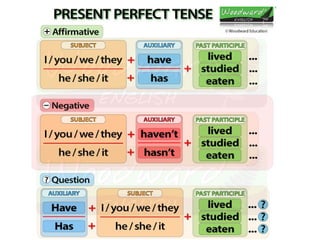
• Used inthe present perfect tense. Never in
the future tense.
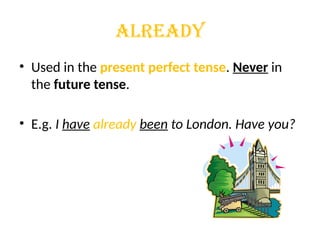
• E.g. I have already been to London. Have you?
3.
ALREADY
• Means: ‘somethinghas happened early / or
earlier than it might have happened.
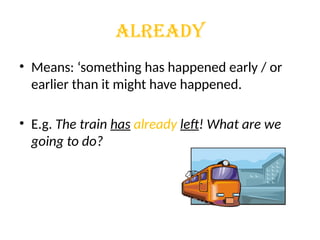
• E.g. The train has already left! What are we
going to do?
4.
ALREADY
• How touse it?
• ‘already’ comes before the main verb.
• E.g. I have already known what to do.
5.
YET
• Used inquestions and negatives.
• TIP: to avoid mistakes, do not use it in
affirmative statements.
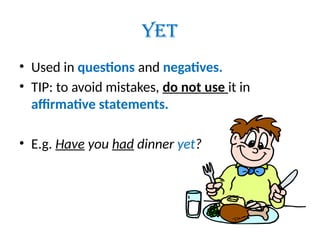
• E.g. Have you had dinner yet?
6.
YET
• Means: ‘anaction is expected to happen – at
any time up to now’.
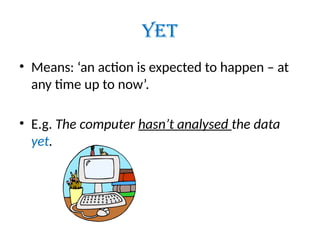
• E.g. The computer hasn’t analysed the data
yet.
7.
YET
• How touse it?
• ‘yet’ comes at the end of a sentence or
question.
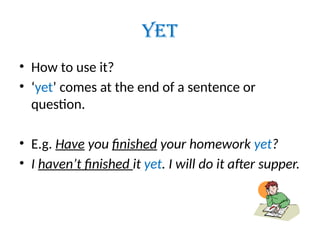
• E.g. Have you finished your homework yet?
• I haven’t finished it yet. I will do it after supper.