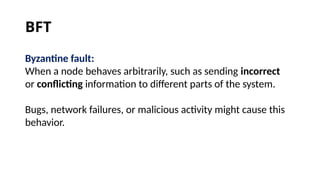
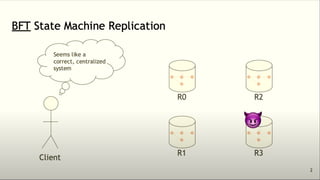
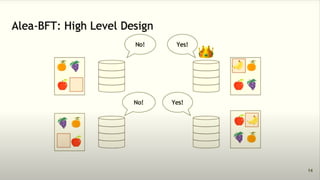
Byzantine fault:
When a node behaves arbitrarily, such as sending incorrect
or conflicting information to different parts of the system.
Bugs, network failures, or malicious activity might cause this
behavior.
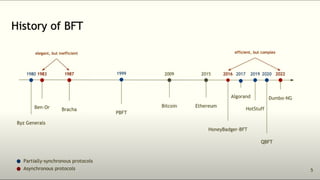
BFT
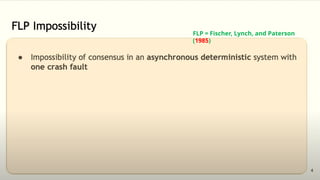
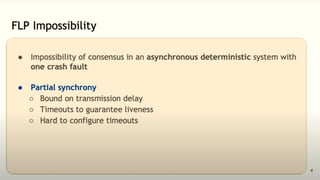
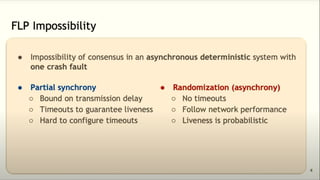
FLP = Fischer, Lynch, and Paterson
(1985)
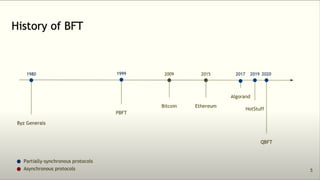
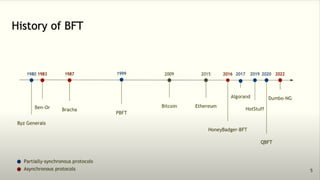
Asynchronous BFT protocols:
• Remove the need for bounds on message delivery times
• Still fall short of gaining practical adoption
(They could not combine good performance with a simple
design that can be readily understood and adopted.)
It does not outperform most previous works
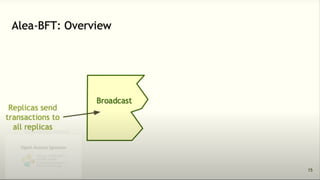
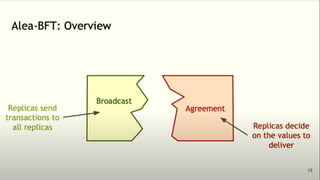
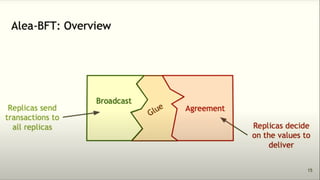
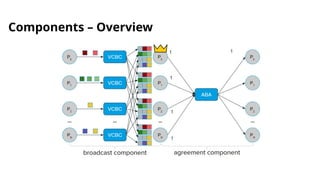
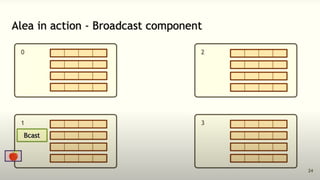
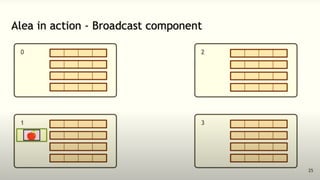
Components – Overview
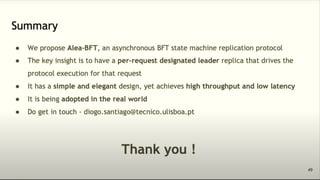
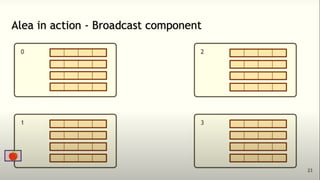
AleaBFT is a highly efficient, peer-reviewed asynchronous Byzantine Fault Tolerance (BFT) consensus protocol.

AleaBFT is a highly efficient, peer-reviewed asynchronous Byzantine Fault Tolerance (BFT) consensus protocol.

  • 2.
    Byzantine fault: When anode behaves arbitrarily, such as sending incorrect or conflicting information to different parts of the system. Bugs, network failures, or malicious activity might cause this behavior. BFT
  • 8.
    FLP = Fischer,Lynch, and Paterson (1985)
  • 14.
    Asynchronous BFT protocols: •Remove the need for bounds on message delivery times • Still fall short of gaining practical adoption (They could not combine good performance with a simple design that can be readily understood and adopted.)
  • 15.
    It does notoutperform most previous works
  • 54.