ALCOHOL ABUSE AND ITS
DISORDERS
By DHEERAJ THAKRAN
B. PHARM 6TH SEM.
WHAT IS ALCOHOLISM ?
• The American medical association and world health organization
declared alcoholism a disease over 50 years ago.
• Alcoholism is not a psychiatric illness and it is not a psychological
problem.
• Alcoholism is also not a WILLPOWER problem.
• It is not a character issue.
• And it isn’t learned.
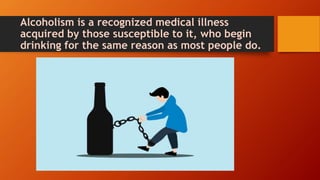
Alcoholism is a recognized medical illness
acquired by those susceptible to it, who begin
drinking for the same reason as most people do.
Why people drink ?
• Reduce tension.
• Increase feeling of power.
• Decrease the psychological pain.
• Decrease the feeling of nervousness.
• Helps to cope with stress.
• Enhanced feeling of well being.
• Improve ease of interaction.
• The rate of alcohol problem increases with the no. of alcoholic relatives.
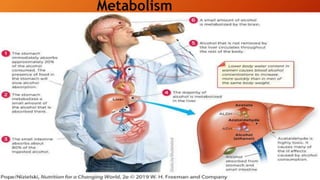
Metabolism
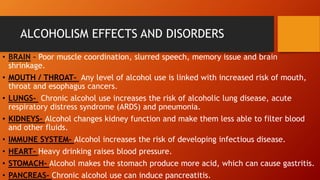
ALCOHOLISM EFFECTS AND DISORDERS
• BRAIN – Poor muscle coordination, slurred speech, memory issue and brain
shrinkage.
• MOUTH / THROAT- Any level of alcohol use is linked with increased risk of mouth,
throat and esophagus cancers.
• LUNGS- Chronic alcohol use increases the risk of alcoholic lung disease, acute
respiratory distress syndrome (ARDS) and pneumonia.
• KIDNEYS- Alcohol changes kidney function and make them less able to filter blood
and other fluids.
• IMMUNE SYSTEM- Alcohol increases the risk of developing infectious disease.
• HEART- Heavy drinking raises blood pressure.
• STOMACH- Alcohol makes the stomach produce more acid, which can cause gastritis.
• PANCREAS- Chronic alcohol use can induce pancreatitis.
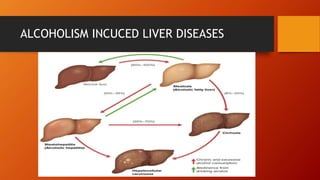
ALCOHOLISM INCUCED LIVER DISEASES
TREATMENT
• The most effective treatment is a combination of individual and group
therapy.
• Hold each other accountable and became support to them.
• MEDICATIONS- Disulfiram, Naltrexone, Acamprosate.
• DISULFIRAM- inhibits the enzyme ACETALDEHYDE DEHYDROGENASE and
leads to build up of ACETALDEHYDE which causes the hangover
immediately after consumption of alcohol.
THANKS

ALCOHOL ABUSE AND ITS DISORDERS.pptx

  • 1.
    ALCOHOL ABUSE ANDITS DISORDERS By DHEERAJ THAKRAN B. PHARM 6TH SEM.
  • 2.
    WHAT IS ALCOHOLISM? • The American medical association and world health organization declared alcoholism a disease over 50 years ago. • Alcoholism is not a psychiatric illness and it is not a psychological problem. • Alcoholism is also not a WILLPOWER problem. • It is not a character issue. • And it isn’t learned.
  • 3.
    Alcoholism is arecognized medical illness acquired by those susceptible to it, who begin drinking for the same reason as most people do.
  • 4.
    Why people drink? • Reduce tension. • Increase feeling of power. • Decrease the psychological pain. • Decrease the feeling of nervousness. • Helps to cope with stress. • Enhanced feeling of well being. • Improve ease of interaction. • The rate of alcohol problem increases with the no. of alcoholic relatives.
  • 5.
  • 6.
    ALCOHOLISM EFFECTS ANDDISORDERS • BRAIN – Poor muscle coordination, slurred speech, memory issue and brain shrinkage. • MOUTH / THROAT- Any level of alcohol use is linked with increased risk of mouth, throat and esophagus cancers. • LUNGS- Chronic alcohol use increases the risk of alcoholic lung disease, acute respiratory distress syndrome (ARDS) and pneumonia. • KIDNEYS- Alcohol changes kidney function and make them less able to filter blood and other fluids. • IMMUNE SYSTEM- Alcohol increases the risk of developing infectious disease. • HEART- Heavy drinking raises blood pressure. • STOMACH- Alcohol makes the stomach produce more acid, which can cause gastritis. • PANCREAS- Chronic alcohol use can induce pancreatitis.
  • 7.
  • 8.
    TREATMENT • The mosteffective treatment is a combination of individual and group therapy. • Hold each other accountable and became support to them. • MEDICATIONS- Disulfiram, Naltrexone, Acamprosate. • DISULFIRAM- inhibits the enzyme ACETALDEHYDE DEHYDROGENASE and leads to build up of ACETALDEHYDE which causes the hangover immediately after consumption of alcohol.
  • 9.