Sand Dunes


These sand dunes at the mouth of the Pololu valley were created in 1946 by a
tsunami that brought large quantities of sand into the valley. The dunes also hold
briny water in the valley like a dam and make it difficult to farm the taro that was
traditionally grown there. The dunes are stabilized by ironwood trees, which have
wide root systems and dense wood.
Seismograph


These seismographs at the Jagger Museum at Volcanoes National Park show
seismic activity around the island. All seismographs measure seismic activity by
detecting minute vibrations and record them using a needle that lays ink onto a
constantly moving roll of paper. These instruments are important because they
can detect earthquakes, which may precede other events such as tsunamis or
volcanic eruptions.
Steam Vents


Steam vents are caused by heated rainwater being released from the ground.
Rainwater seeps into the ground where it is heated by rocks. These rocks conduct
heat from lava located deep below the surface. The heated water is under
pressure and is squeezed through cracks and fissures. It turns to steam when it
reaches the surface.
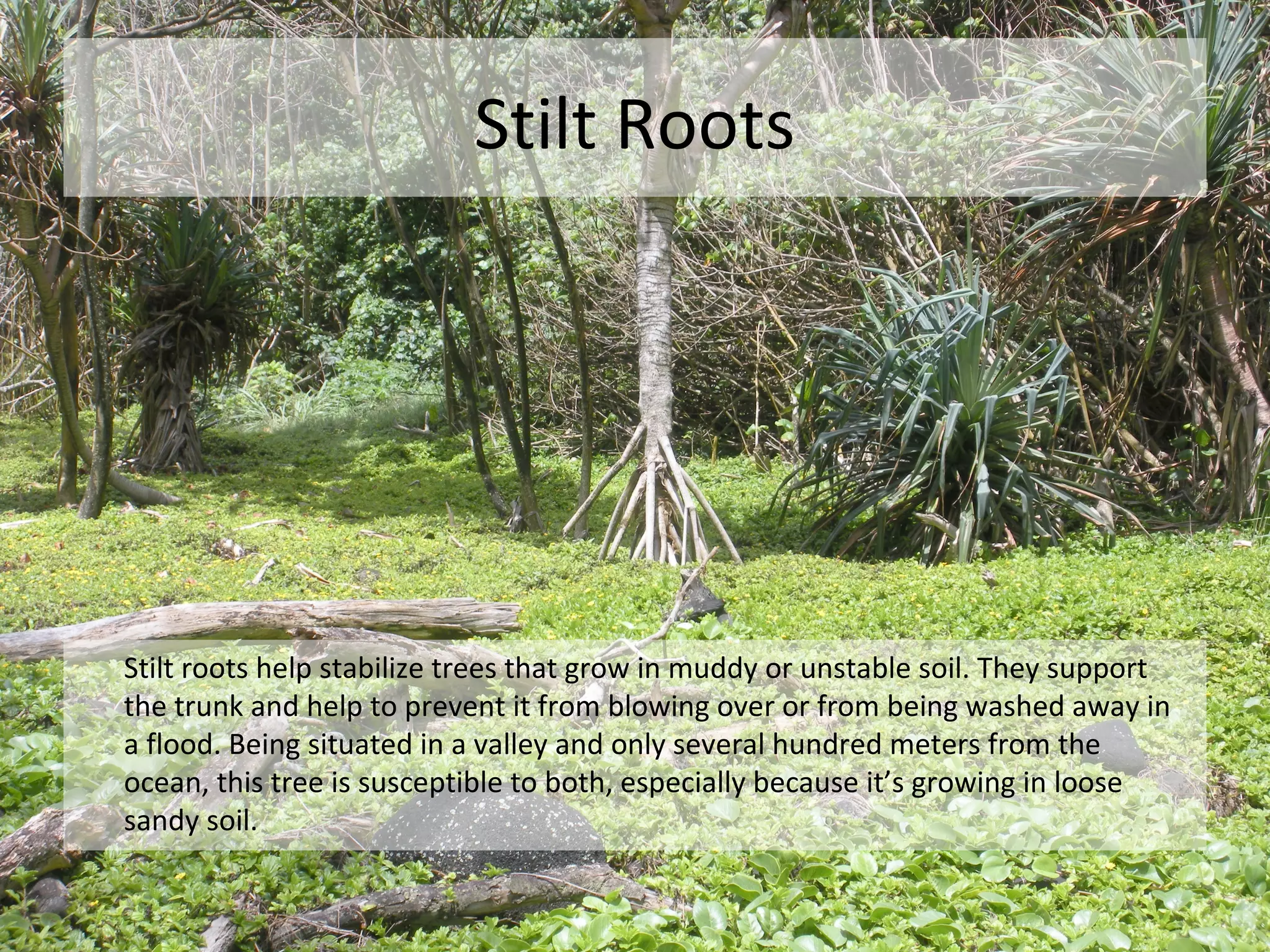
Stilt Roots


Stilt roots help stabilize trees that grow in muddy or unstable soil. They support
the trunk and help to prevent it from blowing over or from being washed away in
a flood. Being situated in a valley and only several hundred meters from the
ocean, this tree is susceptible to both, especially because it’s growing in loose
sandy soil.
Pele


Pele is the Hawaiian goddess of the volcano. It was believed that her current home
was in whichever of the volcanoes was active. She was revered and feared
because she had such a huge impact on the lives of the Hawaiians. Pele could
create new land, but she could also take away what ever was built on the lad she
created. Lava flows could destroy homes, farmland and pastures, so Hawaiians
were very careful to please her. Her current home is in Kilauea, the most active
volcano on the island. However, there is another spot more active than Kilauea off
the south side of the island, where lava is flowing to the surface of the crust, but it
is still far below the surface of the ocean.

Aidan Manning Hawaii 5/6

  • 1.
    Sand Dunes These sanddunes at the mouth of the Pololu valley were created in 1946 by a tsunami that brought large quantities of sand into the valley. The dunes also hold briny water in the valley like a dam and make it difficult to farm the taro that was traditionally grown there. The dunes are stabilized by ironwood trees, which have wide root systems and dense wood.
  • 2.
    Seismograph These seismographs atthe Jagger Museum at Volcanoes National Park show seismic activity around the island. All seismographs measure seismic activity by detecting minute vibrations and record them using a needle that lays ink onto a constantly moving roll of paper. These instruments are important because they can detect earthquakes, which may precede other events such as tsunamis or volcanic eruptions.
  • 3.
    Steam Vents Steam ventsare caused by heated rainwater being released from the ground. Rainwater seeps into the ground where it is heated by rocks. These rocks conduct heat from lava located deep below the surface. The heated water is under pressure and is squeezed through cracks and fissures. It turns to steam when it reaches the surface.
  • 4.
    Stilt Roots Stilt rootshelp stabilize trees that grow in muddy or unstable soil. They support the trunk and help to prevent it from blowing over or from being washed away in a flood. Being situated in a valley and only several hundred meters from the ocean, this tree is susceptible to both, especially because it’s growing in loose sandy soil.
  • 5.
    Pele Pele is theHawaiian goddess of the volcano. It was believed that her current home was in whichever of the volcanoes was active. She was revered and feared because she had such a huge impact on the lives of the Hawaiians. Pele could create new land, but she could also take away what ever was built on the lad she created. Lava flows could destroy homes, farmland and pastures, so Hawaiians were very careful to please her. Her current home is in Kilauea, the most active volcano on the island. However, there is another spot more active than Kilauea off the south side of the island, where lava is flowing to the surface of the crust, but it is still far below the surface of the ocean.