1/15
AI-based credit scoring
leewayhertz.com/ai-based-credit-scoring
In the complex realm of finance, liquidity access is paramount. It plays a pivotal role in
personal life milestones such as acquiring housing, education, and vehicles and is equally
crucial in entrepreneurship, affecting business initiation, growth, and expansion. Transactions
involving lending and borrowing are fraught with uncertainties, influencing both creditors and
potential debtors significantly. Creditors usually seek extensive information to gauge a
borrower’s ability to fulfill loan obligations. Conversely, potential debtors navigate through a
somewhat opaque process, where the criteria for approval are not always clear, making it
difficult to improve their creditworthiness.
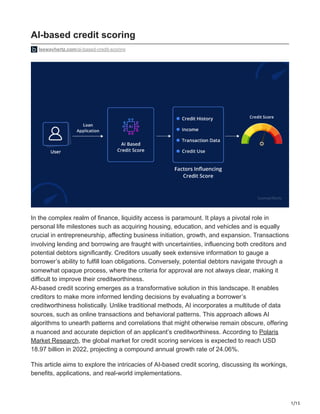
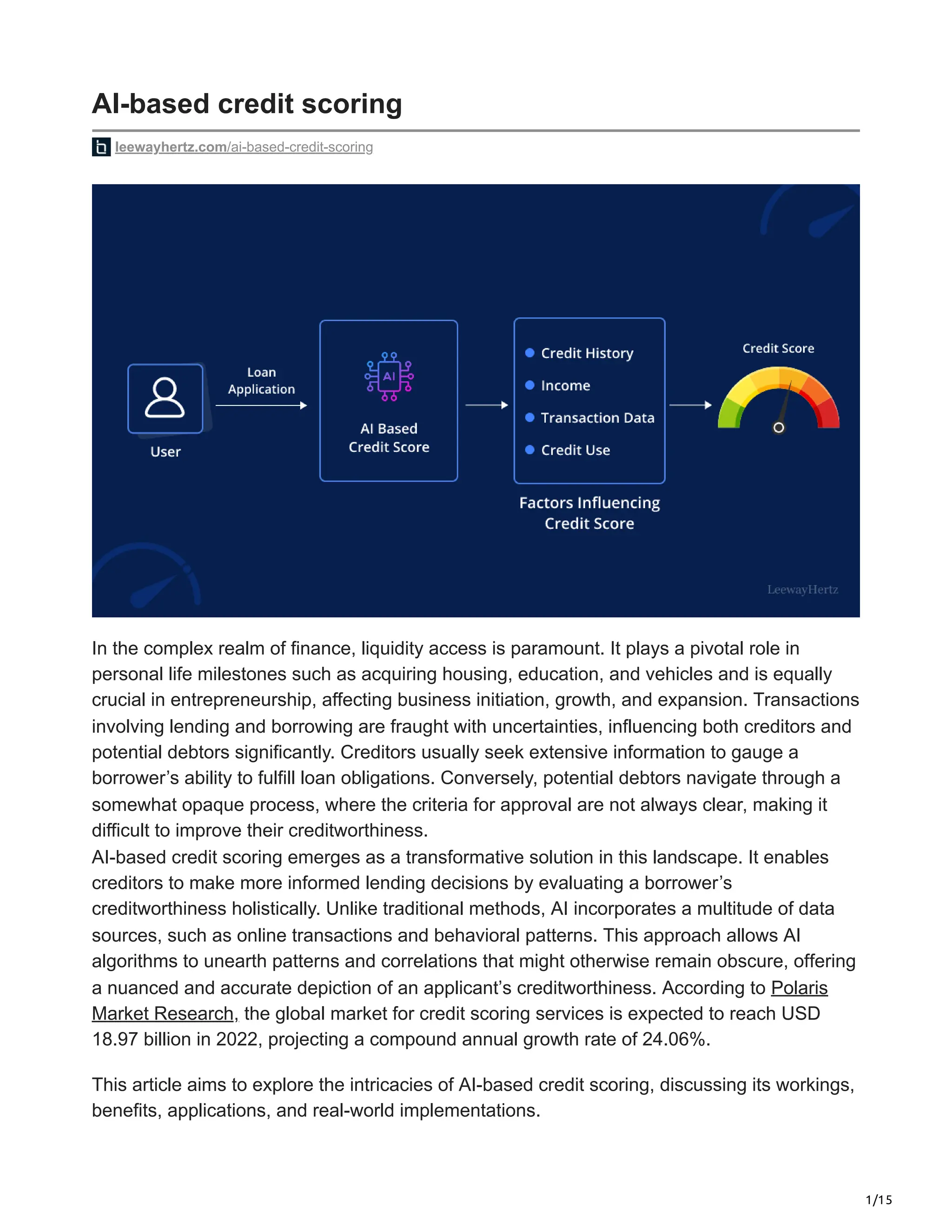
AI-based credit scoring emerges as a transformative solution in this landscape. It enables
creditors to make more informed lending decisions by evaluating a borrower’s
creditworthiness holistically. Unlike traditional methods, AI incorporates a multitude of data
sources, such as online transactions and behavioral patterns. This approach allows AI
algorithms to unearth patterns and correlations that might otherwise remain obscure, offering
a nuanced and accurate depiction of an applicant’s creditworthiness. According to Polaris
Market Research, the global market for credit scoring services is expected to reach USD
18.97 billion in 2022, projecting a compound annual growth rate of 24.06%.
This article aims to explore the intricacies of AI-based credit scoring, discussing its workings,
benefits, applications, and real-world implementations.
2/15
What is credit scoring and its key metrics?
What is AI-based credit scoring?
How does AI-based credit scoring work?
How can AI in credit scoring enhance risk assessment?
Types of credit scoring models
Traditional vs. advanced credit scoring models
Use cases of AI-based credit scoring
How does LeewayHertz’s generative AI platform enhance credit scoring workflows?
Differences between traditional credit scoring and AI-based credit scoring
Benefits of AI-based credit scoring
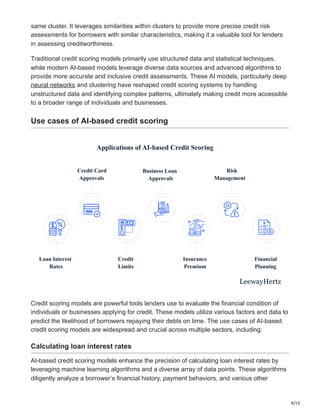
What is credit scoring and its key metrics?
Key Factors That Influence Credit Scoring
Payment
History
Credit
Utilization
Credit History Credit Use New Credit
LeewayHertz
Credit scoring is a complex process that involves assessing an individual’s or business’s
creditworthiness to determine their ability to pay a loan or credit. This assessment takes into
account a wide range of factors, both quantitative and qualitative. Let’s delve deeper into
these factors and how they influence the credit scoring process. Key factors include:
3/15
Quantitative factors
Income: The borrower’s income is a fundamental factor. Lenders want to ensure
borrowers have a stable and sufficient income to meet their debt obligations. Higher
income levels generally indicate lower credit risk.
Monthly expenses: The borrower’s monthly expenses, including rent or mortgage
payments, utilities, insurance, and other recurring costs, can be analyzed to determine
how much disposable income is available for loan repayments.
Cash flow analysis: For businesses, a cash flow analysis is crucial. The business’s
cash flows are evaluated to assess its ability to generate consistent revenue and meet
financial obligations.
Qualitative factors
Marital status: It can be considered an important factor because it can impact an
individual’s financial stability. For instance, dual-income households may have more
financial resources and stability than single-income households.
Education: Some lenders may consider an individual’s education level. Higher
education can correlate with higher earning potential and financial responsibility,
although this factor is less commonly used.
Employment type: Lenders assess the stability of a borrower’s employment.
Permanent or long-term employment is generally viewed more favorably than
temporary or unstable employment.
Legal form (for enterprises): For business borrowers, their legal structure (e.g., sole
proprietorship, LLC, corporation) can affect creditworthiness. Each legal form has its
implications for liability and financial stability.
Industry: For business borrowers, their industry can impact credit risk. Some
industries are more stable and recession-resistant than others, affecting a lender’s
willingness to extend credit.
Accounting practices: Lenders may consider how a business keeps its financial
records. Proper accounting practices and transparent financial reporting can instill
confidence in lenders.
It is important to note that the specific factors and their relative importance can vary among
lenders and credit scoring models. Different lenders may place different emphasis on certain
factors based on their risk tolerance and lending policies.
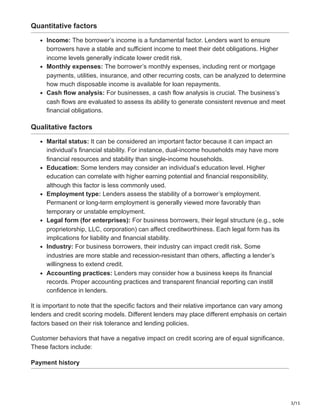
Customer behaviors that have a negative impact on credit scoring are of equal significance.
These factors include:
Payment history
4/15
Payment history is one of the most crucial factors in the credit score. It reflects the track
record of making on-time payments for credit accounts, loans, and bills. Consistently making
on-time payments and having a clean record without any public records for lawsuits, liens, or
bankruptcies will positively impact the credit score. Late payments, on the other hand, are
viewed negatively, and the more overdue a payment is, the greater the negative impact it will
have on your credit score.
Credit utilization
Credit utilization reflects the proportion of your available credit currently in use, determined
by comparing your credit card balances with credit card limits. Maintaining a lower credit
utilization ratio, ideally below 30%, is generally considered good for credit score.
Credit history
The credit history refers to the length of time you’ve had credit accounts. Credit scoring
models can favorably view a longer credit history, providing a more substantial history of your
credit management behavior.
Credit use
Credit use refers to the types of credit and how well you manage them. A mix of credit, like
credit cards, mortgage or rent, auto loans, and utilities, shows a diverse credit history.
Responsible and regular use of credit can help establish a positive credit history as long as
you make on-time payments and manage your accounts well.
New credit
The “new credit” factor in credit scoring models considers recent credit inquiries and the
opening of new credit accounts. The key concern here is how you go about applying for
credit. Applying for credit cards, mortgages, or auto loans is generally acceptable. However,
applying for multiple credit cards simultaneously or both an auto loan and a credit card at
once may raise concerns about your intention to use one form of credit to settle other debts.
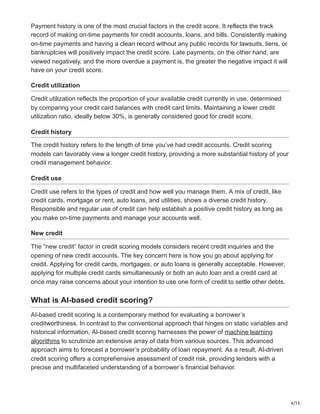
What is AI-based credit scoring?
AI-based credit scoring is a contemporary method for evaluating a borrower’s
creditworthiness. In contrast to the conventional approach that hinges on static variables and
historical information, AI-based credit scoring harnesses the power of machine learning
algorithms to scrutinize an extensive array of data from various sources. This advanced
approach aims to forecast a borrower’s probability of loan repayment. As a result, AI-driven
credit scoring offers a comprehensive assessment of credit risk, providing lenders with a
precise and multifaceted understanding of a borrower’s financial behavior.
5/15
Credit bureaus and lenders employ credit scoring models to analyze the creditworthiness of
individuals or businesses and gauge the likelihood of default on credit obligations. These
models consider multiple factors such as payment history, credit utilization, credit history,
types of credit accounts, and recent inquiries. Each factor is assigned a weight, and a credit
score is computed using a formula based on this evaluation.
Credit scores typically range from 300 to 850, with higher scores indicating lower default risk.
Lenders utilize these scores to determine loan terms, encompassing interest rates,
repayment durations, and loan amounts. A higher credit score can result in more favorable
loan terms, while a lower score may lead to less advantageous terms, including higher
interest rates and stricter repayment requirements.
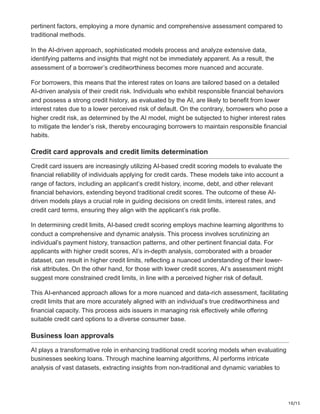
How does AI-based credit scoring work?
Data
Collection
Data Processing
& Feature
Engineering
Credit Score
Model Training
Prediction
Assessment
of Credit Risk
Data Sources
Transaction
Data
Internet
Browsing
Other
Sources
LeewayHertz
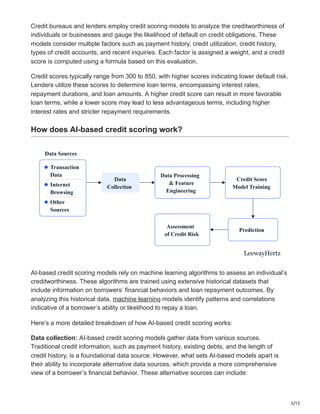
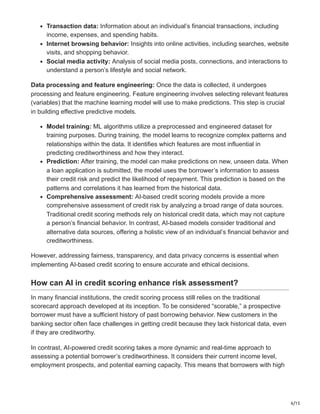
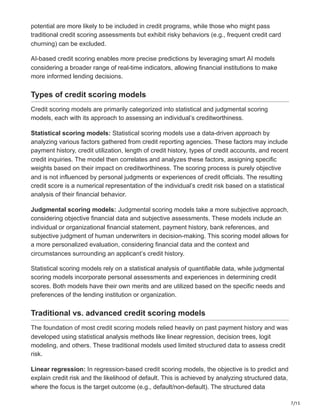
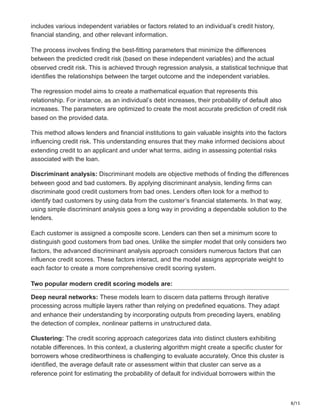
AI-based credit scoring models rely on machine learning algorithms to assess an individual’s
creditworthiness. These algorithms are trained using extensive historical datasets that
include information on borrowers’ financial behaviors and loan repayment outcomes. By
analyzing this historical data, machine learning models identify patterns and correlations
indicative of a borrower’s ability or likelihood to repay a loan.
Here’s a more detailed breakdown of how AI-based credit scoring works:
Data collection: AI-based credit scoring models gather data from various sources.
Traditional credit information, such as payment history, existing debts, and the length of
credit history, is a foundational data source. However, what sets AI-based models apart is
their ability to incorporate alternative data sources, which provide a more comprehensive
view of a borrower’s financial behavior. These alternative sources can include:
6/15
Transaction data: Information about an individual’s financial transactions, including
income, expenses, and spending habits.
Internet browsing behavior: Insights into online activities, including searches, website
visits, and shopping behavior.
Social media activity: Analysis of social media posts, connections, and interactions to
understand a person’s lifestyle and social network.
Data processing and feature engineering: Once the data is collected, it undergoes
processing and feature engineering. Feature engineering involves selecting relevant features
(variables) that the machine learning model will use to make predictions. This step is crucial
in building effective predictive models.
Model training: ML algorithms utilize a preprocessed and engineered dataset for
training purposes. During training, the model learns to recognize complex patterns and
relationships within the data. It identifies which features are most influential in
predicting creditworthiness and how they interact.
Prediction: After training, the model can make predictions on new, unseen data. When
a loan application is submitted, the model uses the borrower’s information to assess
their credit risk and predict the likelihood of repayment. This prediction is based on the
patterns and correlations it has learned from the historical data.
Comprehensive assessment: AI-based credit scoring models provide a more
comprehensive assessment of credit risk by analyzing a broad range of data sources.
Traditional credit scoring methods rely on historical credit data, which may not capture
a person’s financial behavior. In contrast, AI-based models consider traditional and
alternative data sources, offering a holistic view of an individual’s financial behavior and
creditworthiness.
However, addressing fairness, transparency, and data privacy concerns is essential when
implementing AI-based credit scoring to ensure accurate and ethical decisions.
How can AI in credit scoring enhance risk assessment?
In many financial institutions, the credit scoring process still relies on the traditional
scorecard approach developed at its inception. To be considered “scorable,” a prospective
borrower must have a sufficient history of past borrowing behavior. New customers in the
banking sector often face challenges in getting credit because they lack historical data, even
if they are creditworthy.
In contrast, AI-powered credit scoring takes a more dynamic and real-time approach to
assessing a potential borrower’s creditworthiness. It considers their current income level,
employment prospects, and potential earning capacity. This means that borrowers with high
7/15
potential are more likely to be included in credit programs, while those who might pass
traditional credit scoring assessments but exhibit risky behaviors (e.g., frequent credit card
churning) can be excluded.
AI-based credit scoring enables more precise predictions by leveraging smart AI models
considering a broader range of real-time indicators, allowing financial institutions to make
more informed lending decisions.
Types of credit scoring models
Credit scoring models are primarily categorized into statistical and judgmental scoring
models, each with its approach to assessing an individual’s creditworthiness.
Statistical scoring models: Statistical scoring models use a data-driven approach by
analyzing various factors gathered from credit reporting agencies. These factors may include
payment history, credit utilization, length of credit history, types of credit accounts, and recent
credit inquiries. The model then correlates and analyzes these factors, assigning specific
weights based on their impact on creditworthiness. The scoring process is purely objective
and is not influenced by personal judgments or experiences of credit officials. The resulting
credit score is a numerical representation of the individual’s credit risk based on a statistical
analysis of their financial behavior.
Judgmental scoring models: Judgmental scoring models take a more subjective approach,
considering objective financial data and subjective assessments. These models include an
individual or organizational financial statement, payment history, bank references, and
subjective judgment of human underwriters in decision-making. This scoring model allows for
a more personalized evaluation, considering financial data and the context and
circumstances surrounding an applicant’s credit history.
Statistical scoring models rely on a statistical analysis of quantifiable data, while judgmental
scoring models incorporate personal assessments and experiences in determining credit
scores. Both models have their own merits and are utilized based on the specific needs and
preferences of the lending institution or organization.
Traditional vs. advanced credit scoring models
The foundation of most credit scoring models relied heavily on past payment history and was
developed using statistical analysis methods like linear regression, decision trees, logit
modeling, and others. These traditional models used limited structured data to assess credit
risk.
Linear regression: In regression-based credit scoring models, the objective is to predict and
explain credit risk and the likelihood of default. This is achieved by analyzing structured data,
where the focus is the target outcome (e.g., default/non-default). The structured data
8/15
includes various independent variables or factors related to an individual’s credit history,
financial standing, and other relevant information.
The process involves finding the best-fitting parameters that minimize the differences
between the predicted credit risk (based on these independent variables) and the actual
observed credit risk. This is achieved through regression analysis, a statistical technique that
identifies the relationships between the target outcome and the independent variables.
The regression model aims to create a mathematical equation that represents this
relationship. For instance, as an individual’s debt increases, their probability of default also
increases. The parameters are optimized to create the most accurate prediction of credit risk
based on the provided data.
This method allows lenders and financial institutions to gain valuable insights into the factors
influencing credit risk. This understanding ensures that they make informed decisions about
extending credit to an applicant and under what terms, aiding in assessing potential risks
associated with the loan.
Discriminant analysis: Discriminant models are objective methods of finding the differences
between good and bad customers. By applying discriminant analysis, lending firms can
discriminate good credit customers from bad ones. Lenders often look for a method to
identify bad customers by using data from the customer’s financial statements. In that way,
using simple discriminant analysis goes a long way in providing a dependable solution to the
lenders.
Each customer is assigned a composite score. Lenders can then set a minimum score to
distinguish good customers from bad ones. Unlike the simpler model that only considers two
factors, the advanced discriminant analysis approach considers numerous factors that can
influence credit scores. These factors interact, and the model assigns appropriate weight to
each factor to create a more comprehensive credit scoring system.
Two popular modern credit scoring models are:
Deep neural networks: These models learn to discern data patterns through iterative
processing across multiple layers rather than relying on predefined equations. They adapt
and enhance their understanding by incorporating outputs from preceding layers, enabling
the detection of complex, nonlinear patterns in unstructured data.
Clustering: The credit scoring approach categorizes data into distinct clusters exhibiting
notable differences. In this context, a clustering algorithm might create a specific cluster for
borrowers whose creditworthiness is challenging to evaluate accurately. Once this cluster is
identified, the average default rate or assessment within that cluster can serve as a
reference point for estimating the probability of default for individual borrowers within the
9/15
same cluster. It leverages similarities within clusters to provide more precise credit risk
assessments for borrowers with similar characteristics, making it a valuable tool for lenders
in assessing creditworthiness.
Traditional credit scoring models primarily use structured data and statistical techniques,
while modern AI-based models leverage diverse data sources and advanced algorithms to
provide more accurate and inclusive credit assessments. These AI models, particularly deep
neural networks and clustering have reshaped credit scoring systems by handling
unstructured data and identifying complex patterns, ultimately making credit more accessible
to a broader range of individuals and businesses.
Use cases of AI-based credit scoring
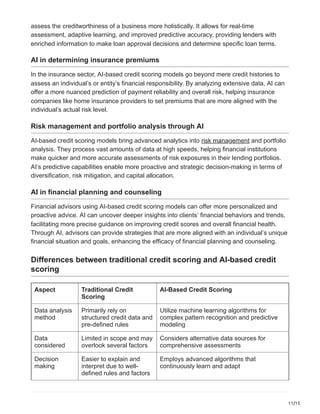
Applications of AI-based Credit Scoring
LeewayHertz
Loan Interest
Rates
Credit Card
Approvals
Credit
Limits
Business Loan
Approvals
Insurance
Premium
Risk
Management
Financial
Planning
Credit scoring models are powerful tools lenders use to evaluate the financial condition of
individuals or businesses applying for credit. These models utilize various factors and data to
predict the likelihood of borrowers repaying their debts on time. The use cases of AI-based
credit scoring models are widespread and crucial across multiple sectors, including:
Calculating loan interest rates
AI-based credit scoring models enhance the precision of calculating loan interest rates by
leveraging machine learning algorithms and a diverse array of data points. These algorithms
diligently analyze a borrower’s financial history, payment behaviors, and various other
10/15
pertinent factors, employing a more dynamic and comprehensive assessment compared to
traditional methods.
In the AI-driven approach, sophisticated models process and analyze extensive data,
identifying patterns and insights that might not be immediately apparent. As a result, the
assessment of a borrower’s creditworthiness becomes more nuanced and accurate.
For borrowers, this means that the interest rates on loans are tailored based on a detailed
AI-driven analysis of their credit risk. Individuals who exhibit responsible financial behaviors
and possess a strong credit history, as evaluated by the AI, are likely to benefit from lower
interest rates due to a lower perceived risk of default. On the contrary, borrowers who pose a
higher credit risk, as determined by the AI model, might be subjected to higher interest rates
to mitigate the lender’s risk, thereby encouraging borrowers to maintain responsible financial
habits.
Credit card approvals and credit limits determination
Credit card issuers are increasingly utilizing AI-based credit scoring models to evaluate the
financial reliability of individuals applying for credit cards. These models take into account a
range of factors, including an applicant’s credit history, income, debt, and other relevant
financial behaviors, extending beyond traditional credit scores. The outcome of these AI-
driven models plays a crucial role in guiding decisions on credit limits, interest rates, and
credit card terms, ensuring they align with the applicant’s risk profile.
In determining credit limits, AI-based credit scoring employs machine learning algorithms to
conduct a comprehensive and dynamic analysis. This process involves scrutinizing an
individual’s payment history, transaction patterns, and other pertinent financial data. For
applicants with higher credit scores, AI’s in-depth analysis, corroborated with a broader
dataset, can result in higher credit limits, reflecting a nuanced understanding of their lower-
risk attributes. On the other hand, for those with lower credit scores, AI’s assessment might
suggest more constrained credit limits, in line with a perceived higher risk of default.
This AI-enhanced approach allows for a more nuanced and data-rich assessment, facilitating
credit limits that are more accurately aligned with an individual’s true creditworthiness and
financial capacity. This process aids issuers in managing risk effectively while offering
suitable credit card options to a diverse consumer base.
Business loan approvals
AI plays a transformative role in enhancing traditional credit scoring models when evaluating
businesses seeking loans. Through machine learning algorithms, AI performs intricate
analysis of vast datasets, extracting insights from non-traditional and dynamic variables to
11/15
assess the creditworthiness of a business more holistically. It allows for real-time
assessment, adaptive learning, and improved predictive accuracy, providing lenders with
enriched information to make loan approval decisions and determine specific loan terms.
AI in determining insurance premiums
In the insurance sector, AI-based credit scoring models go beyond mere credit histories to
assess an individual’s or entity’s financial responsibility. By analyzing extensive data, AI can
offer a more nuanced prediction of payment reliability and overall risk, helping insurance
companies like home insurance providers to set premiums that are more aligned with the
individual’s actual risk level.
Risk management and portfolio analysis through AI
AI-based credit scoring models bring advanced analytics into risk management and portfolio
analysis. They process vast amounts of data at high speeds, helping financial institutions
make quicker and more accurate assessments of risk exposures in their lending portfolios.
AI’s predictive capabilities enable more proactive and strategic decision-making in terms of
diversification, risk mitigation, and capital allocation.
AI in financial planning and counseling
Financial advisors using AI-based credit scoring models can offer more personalized and
proactive advice. AI can uncover deeper insights into clients’ financial behaviors and trends,
facilitating more precise guidance on improving credit scores and overall financial health.
Through AI, advisors can provide strategies that are more aligned with an individual’s unique
financial situation and goals, enhancing the efficacy of financial planning and counseling.
Differences between traditional credit scoring and AI-based credit
scoring
Aspect Traditional Credit
Scoring
AI-Based Credit Scoring
Data analysis
method
Primarily rely on
structured credit data and
pre-defined rules
Utilize machine learning algorithms for
complex pattern recognition and predictive
modeling
Data
considered
Limited in scope and may
overlook several factors
Considers alternative data sources for
comprehensive assessments
Decision
making
Easier to explain and
interpret due to well-
defined rules and factors
Employs advanced algorithms that
continuously learn and adapt
12/15
Processing
speed
May have longer
processing time and
delays
Offer faster and more efficient credit
evaluation
Handling of
missing data
May struggle with
missing data, potentially
leading to inaccurate
assessments.
Can handle missing data more effectively
through imputation techniques and feature
engineering.
Bias and
fairness
Dependent on human
judgement that may lead
to discrimination and
biasness.
Minimum biases as there is no human
judgement. AI algorithm takes decision
based on relevant factors.
Model
accuracy and
predictiveness
Generally less accurate
due to simplicity and
limited data sources.
Has the potential for higher accuracy due to
advanced algorithms and access to diverse
data types, leading to more precise credit
risk assessments.
Reviews May require manual
review for borderline
cases or individuals with
limited credit history.
Can make automated decisions for a
broader range of individuals, potentially
reducing the need for manual reviews.
It’s important to note that traditional and AI-based credit scoring models have their own
strengths and weaknesses. The choice between them depends on factors like data
availability, regulatory considerations, and the desired level of predictive accuracy for a given
lending institution’s specific needs.
How does LeewayHertz’s generative AI platform enhance credit
scoring workflows?
LeewayHertz’s generative AI platform, ZBrain, plays a transformative role in optimizing credit
scoring processes, empowering businesses to enhance risk assessment, streamline credit
approval workflows, and optimize lending practices. As a comprehensive, enterprise-ready
platform, ZBrain empowers businesses to design and implement applications tailored to their
specific operational requirements. The platform uses clients’ data, whether in the form of
text, images, or documents, to train advanced LLMs like GPT-4, Vicuna, Llama 2, or GPT-
NeoX for developing contextually aware applications capable of performing diverse tasks.
Challenges such as inaccurate risk evaluation, prolonged approval processes, and complex
decision-making are widespread in credit scoring. ZBrain effectively addresses these
challenges through its distinctive feature called “Flow,” which provides an intuitive interface
that allows users to create intricate business logic for their apps without the need for coding.
13/15
Flow’s easy-to-use drag-and-drop interface enables the seamless integration of large
language models, prompt templates, and media models into your app’s logic for its easy
conceptualization, creation, or modification.
ZBrain’s robust applications improve credit-scoring processes by converting intricate data
into actionable insights, leading to heightened precision, quicker processing times, and an
overall enhancement in credit risk management. ZBrain’s comprehensive solutions
effectively tackle critical challenges within credit scoring processes. Explore the following
section, illustrating how ZBrain enhances credit scoring in the finance and banking sectors:
AI-driven credit scoring in finance and banking
ZBrain transforms credit scoring processes within the finance and banking sector through an
automated approach. It seamlessly gathers financial data, encompassing statements, credit
reports, bank statements, tax returns, employment verification, and public records.
Employing Exploratory Data Analysis (EDA), ZBrain ensures data consistency and
comprehends intricate data structures. Utilizing embedding methods, ZBrain transforms
textual data into numerical representations, adept at capturing semantic nuances for
streamlined retrieval. Upon receiving a query, ZBrain retrieves pertinent data and submits it
to an OpenAI LLM for in-depth analysis. By applying advanced AI algorithms, ZBrain
generates a credit score that precisely reflects creditworthiness, factoring in diverse data
points and current financial indicators as the LLM dynamically constructs a coherent report.
Following report generation, ZBrain meticulously parses and structures the output,
eliminating irrelevant information and adhering to the desired format, sections, and report
guidelines. This meticulous process enhances the accuracy and efficiency of credit scoring.
ZBrain’s LLM applications empower financial institutions to swiftly make data-driven lending
decisions by substantially reducing the time and effort traditionally invested in manual credit
scoring assessments. This results in more efficient credit approval processes, reduced risk
exposure, and an overall enhancement in the lending process, all while upholding strict data
privacy standards. Examine this comprehensive Flow to understand how ZBrain redefines
credit scoring in finance, providing a more accurate and streamlined approach to assessing
creditworthiness and optimizing the lending decision-making process.
Benefits of AI-based credit scoring
AI-powered credit scoring offers several benefits that can significantly improve the efficiency
and accuracy of assessing an individual’s or a business’s creditworthiness. Here’s a detailed
look at the advantages of using AI in credit scoring:
Enhanced accuracy: AI models can analyze vast amounts of data from various sources,
resulting in a more comprehensive and accurate credit risk evaluation. By considering a
wider range of factors, AI can identify subtle patterns and correlations humans may miss,
14/15
reducing the likelihood of false positives (rejecting good applicants) and false negatives
(approving risky applicants).
Faster decision-making: AI algorithms process information much faster than manual
processes. Loan applications can be reviewed and decisions made within seconds, reducing
applicants’ and lenders’ time and effort. This speed is especially important in online and
peer-to-peer lending, where quick decisions are essential to remain competitive.
Risk segmentation: AI can segment borrowers into more precise risk categories, allowing
lenders to offer tailored loan and interest rates. This benefits lenders and borrowers by
matching individuals or businesses with the most suitable financial deals.
Reduced human bias: Traditional credit scoring models can inadvertently introduce biases
based on race, gender, or other factors. AI can be designed to minimize such biases by
focusing on relevant financial indicators rather than personal characteristics. This helps
maintain a standardized approach to credit scoring, ensuring fairness in lending practices.
Scalability: AI credit scoring models can easily scale to accommodate many loan
applications. Whether a lender receives ten or ten thousand applications daily, AI can handle
the workload without compromising quality.
Cost savings: AI credit scoring brings substantial cost savings by automating the risk
assessment process, minimizing reliance on manual labor and improving operational
efficiency. Lenders can lower staffing costs, minimize errors, and process loan applications
more quickly, significantly reducing operational expenses.
Fraud detection: AI algorithms can analyze historical data to detect patterns of fraudulent
behavior. This helps lenders identify and prevent theft, loan stacking, and other fraudulent
activity.
Financial inclusion: AI credit scoring can broaden credit accessibility for individuals and
businesses that may not have traditional credit histories, such as those in emerging markets
or with limited banking histories. By incorporating alternative data sources, AI can make
credit available to more diverse borrowers.
Regulatory compliance: AI credit scoring systems can be designed to comply with
regulatory requirements and can provide transparent explanations for their decisions, aiding
lenders in meeting their legal obligations.
Reduced human error: Manual credit scoring processes are susceptible to errors, leading
to incorrect lending decisions. AI minimizes the risk of human error and ensures consistency
in decision-making.
Endnote
15/15
Integrating AI in credit scoring models represents a significant evolution in the financial
landscape. Artificial intelligence, with its advanced analytical capabilities and ability to
process vast amounts of data, is reshaping how we evaluate borrowers’ creditworthiness. AI
technology introduces a level of precision and sophistication that traditional methods lack.
AI-based credit scoring models drive the industry toward a future where risk assessment
becomes more precise, inclusive, and adaptable. These models adjust and develop using
intricate algorithms and machine learning, aligning with individuals’ evolving financial
behaviors and patterns. This promises a fairer and more comprehensive evaluation of
borrower’s financial condition, expanding financial opportunities to a broader segment of
society.
AI has firmly established itself as a driving force in reshaping credit scoring, offering a future
where financial decisions are made with increased intelligence and a deeper understanding
of individual financial circumstances. The evolution continues, and the possibilities are
limitless, marking a new era of financial inclusivity and accuracy.
Harness the power of AI for more accurate, efficient financial assessments. Contact
LeewayHertz’s AI experts to discover how our AI development solutions can transform your
credit scoring process!

AI-based credit scoring - An Overview.pdf

  • 1.
    1/15 AI-based credit scoring leewayhertz.com/ai-based-credit-scoring Inthe complex realm of finance, liquidity access is paramount. It plays a pivotal role in personal life milestones such as acquiring housing, education, and vehicles and is equally crucial in entrepreneurship, affecting business initiation, growth, and expansion. Transactions involving lending and borrowing are fraught with uncertainties, influencing both creditors and potential debtors significantly. Creditors usually seek extensive information to gauge a borrower’s ability to fulfill loan obligations. Conversely, potential debtors navigate through a somewhat opaque process, where the criteria for approval are not always clear, making it difficult to improve their creditworthiness. AI-based credit scoring emerges as a transformative solution in this landscape. It enables creditors to make more informed lending decisions by evaluating a borrower’s creditworthiness holistically. Unlike traditional methods, AI incorporates a multitude of data sources, such as online transactions and behavioral patterns. This approach allows AI algorithms to unearth patterns and correlations that might otherwise remain obscure, offering a nuanced and accurate depiction of an applicant’s creditworthiness. According to Polaris Market Research, the global market for credit scoring services is expected to reach USD 18.97 billion in 2022, projecting a compound annual growth rate of 24.06%. This article aims to explore the intricacies of AI-based credit scoring, discussing its workings, benefits, applications, and real-world implementations.
  • 2.
    2/15 What is creditscoring and its key metrics? What is AI-based credit scoring? How does AI-based credit scoring work? How can AI in credit scoring enhance risk assessment? Types of credit scoring models Traditional vs. advanced credit scoring models Use cases of AI-based credit scoring How does LeewayHertz’s generative AI platform enhance credit scoring workflows? Differences between traditional credit scoring and AI-based credit scoring Benefits of AI-based credit scoring What is credit scoring and its key metrics? Key Factors That Influence Credit Scoring Payment History Credit Utilization Credit History Credit Use New Credit LeewayHertz Credit scoring is a complex process that involves assessing an individual’s or business’s creditworthiness to determine their ability to pay a loan or credit. This assessment takes into account a wide range of factors, both quantitative and qualitative. Let’s delve deeper into these factors and how they influence the credit scoring process. Key factors include:
  • 3.
    3/15 Quantitative factors Income: Theborrower’s income is a fundamental factor. Lenders want to ensure borrowers have a stable and sufficient income to meet their debt obligations. Higher income levels generally indicate lower credit risk. Monthly expenses: The borrower’s monthly expenses, including rent or mortgage payments, utilities, insurance, and other recurring costs, can be analyzed to determine how much disposable income is available for loan repayments. Cash flow analysis: For businesses, a cash flow analysis is crucial. The business’s cash flows are evaluated to assess its ability to generate consistent revenue and meet financial obligations. Qualitative factors Marital status: It can be considered an important factor because it can impact an individual’s financial stability. For instance, dual-income households may have more financial resources and stability than single-income households. Education: Some lenders may consider an individual’s education level. Higher education can correlate with higher earning potential and financial responsibility, although this factor is less commonly used. Employment type: Lenders assess the stability of a borrower’s employment. Permanent or long-term employment is generally viewed more favorably than temporary or unstable employment. Legal form (for enterprises): For business borrowers, their legal structure (e.g., sole proprietorship, LLC, corporation) can affect creditworthiness. Each legal form has its implications for liability and financial stability. Industry: For business borrowers, their industry can impact credit risk. Some industries are more stable and recession-resistant than others, affecting a lender’s willingness to extend credit. Accounting practices: Lenders may consider how a business keeps its financial records. Proper accounting practices and transparent financial reporting can instill confidence in lenders. It is important to note that the specific factors and their relative importance can vary among lenders and credit scoring models. Different lenders may place different emphasis on certain factors based on their risk tolerance and lending policies. Customer behaviors that have a negative impact on credit scoring are of equal significance. These factors include: Payment history
  • 4.
    4/15 Payment history isone of the most crucial factors in the credit score. It reflects the track record of making on-time payments for credit accounts, loans, and bills. Consistently making on-time payments and having a clean record without any public records for lawsuits, liens, or bankruptcies will positively impact the credit score. Late payments, on the other hand, are viewed negatively, and the more overdue a payment is, the greater the negative impact it will have on your credit score. Credit utilization Credit utilization reflects the proportion of your available credit currently in use, determined by comparing your credit card balances with credit card limits. Maintaining a lower credit utilization ratio, ideally below 30%, is generally considered good for credit score. Credit history The credit history refers to the length of time you’ve had credit accounts. Credit scoring models can favorably view a longer credit history, providing a more substantial history of your credit management behavior. Credit use Credit use refers to the types of credit and how well you manage them. A mix of credit, like credit cards, mortgage or rent, auto loans, and utilities, shows a diverse credit history. Responsible and regular use of credit can help establish a positive credit history as long as you make on-time payments and manage your accounts well. New credit The “new credit” factor in credit scoring models considers recent credit inquiries and the opening of new credit accounts. The key concern here is how you go about applying for credit. Applying for credit cards, mortgages, or auto loans is generally acceptable. However, applying for multiple credit cards simultaneously or both an auto loan and a credit card at once may raise concerns about your intention to use one form of credit to settle other debts. What is AI-based credit scoring? AI-based credit scoring is a contemporary method for evaluating a borrower’s creditworthiness. In contrast to the conventional approach that hinges on static variables and historical information, AI-based credit scoring harnesses the power of machine learning algorithms to scrutinize an extensive array of data from various sources. This advanced approach aims to forecast a borrower’s probability of loan repayment. As a result, AI-driven credit scoring offers a comprehensive assessment of credit risk, providing lenders with a precise and multifaceted understanding of a borrower’s financial behavior.
  • 5.
    5/15 Credit bureaus andlenders employ credit scoring models to analyze the creditworthiness of individuals or businesses and gauge the likelihood of default on credit obligations. These models consider multiple factors such as payment history, credit utilization, credit history, types of credit accounts, and recent inquiries. Each factor is assigned a weight, and a credit score is computed using a formula based on this evaluation. Credit scores typically range from 300 to 850, with higher scores indicating lower default risk. Lenders utilize these scores to determine loan terms, encompassing interest rates, repayment durations, and loan amounts. A higher credit score can result in more favorable loan terms, while a lower score may lead to less advantageous terms, including higher interest rates and stricter repayment requirements. How does AI-based credit scoring work? Data Collection Data Processing & Feature Engineering Credit Score Model Training Prediction Assessment of Credit Risk Data Sources Transaction Data Internet Browsing Other Sources LeewayHertz AI-based credit scoring models rely on machine learning algorithms to assess an individual’s creditworthiness. These algorithms are trained using extensive historical datasets that include information on borrowers’ financial behaviors and loan repayment outcomes. By analyzing this historical data, machine learning models identify patterns and correlations indicative of a borrower’s ability or likelihood to repay a loan. Here’s a more detailed breakdown of how AI-based credit scoring works: Data collection: AI-based credit scoring models gather data from various sources. Traditional credit information, such as payment history, existing debts, and the length of credit history, is a foundational data source. However, what sets AI-based models apart is their ability to incorporate alternative data sources, which provide a more comprehensive view of a borrower’s financial behavior. These alternative sources can include:
  • 6.
    6/15 Transaction data: Informationabout an individual’s financial transactions, including income, expenses, and spending habits. Internet browsing behavior: Insights into online activities, including searches, website visits, and shopping behavior. Social media activity: Analysis of social media posts, connections, and interactions to understand a person’s lifestyle and social network. Data processing and feature engineering: Once the data is collected, it undergoes processing and feature engineering. Feature engineering involves selecting relevant features (variables) that the machine learning model will use to make predictions. This step is crucial in building effective predictive models. Model training: ML algorithms utilize a preprocessed and engineered dataset for training purposes. During training, the model learns to recognize complex patterns and relationships within the data. It identifies which features are most influential in predicting creditworthiness and how they interact. Prediction: After training, the model can make predictions on new, unseen data. When a loan application is submitted, the model uses the borrower’s information to assess their credit risk and predict the likelihood of repayment. This prediction is based on the patterns and correlations it has learned from the historical data. Comprehensive assessment: AI-based credit scoring models provide a more comprehensive assessment of credit risk by analyzing a broad range of data sources. Traditional credit scoring methods rely on historical credit data, which may not capture a person’s financial behavior. In contrast, AI-based models consider traditional and alternative data sources, offering a holistic view of an individual’s financial behavior and creditworthiness. However, addressing fairness, transparency, and data privacy concerns is essential when implementing AI-based credit scoring to ensure accurate and ethical decisions. How can AI in credit scoring enhance risk assessment? In many financial institutions, the credit scoring process still relies on the traditional scorecard approach developed at its inception. To be considered “scorable,” a prospective borrower must have a sufficient history of past borrowing behavior. New customers in the banking sector often face challenges in getting credit because they lack historical data, even if they are creditworthy. In contrast, AI-powered credit scoring takes a more dynamic and real-time approach to assessing a potential borrower’s creditworthiness. It considers their current income level, employment prospects, and potential earning capacity. This means that borrowers with high
  • 7.
    7/15 potential are morelikely to be included in credit programs, while those who might pass traditional credit scoring assessments but exhibit risky behaviors (e.g., frequent credit card churning) can be excluded. AI-based credit scoring enables more precise predictions by leveraging smart AI models considering a broader range of real-time indicators, allowing financial institutions to make more informed lending decisions. Types of credit scoring models Credit scoring models are primarily categorized into statistical and judgmental scoring models, each with its approach to assessing an individual’s creditworthiness. Statistical scoring models: Statistical scoring models use a data-driven approach by analyzing various factors gathered from credit reporting agencies. These factors may include payment history, credit utilization, length of credit history, types of credit accounts, and recent credit inquiries. The model then correlates and analyzes these factors, assigning specific weights based on their impact on creditworthiness. The scoring process is purely objective and is not influenced by personal judgments or experiences of credit officials. The resulting credit score is a numerical representation of the individual’s credit risk based on a statistical analysis of their financial behavior. Judgmental scoring models: Judgmental scoring models take a more subjective approach, considering objective financial data and subjective assessments. These models include an individual or organizational financial statement, payment history, bank references, and subjective judgment of human underwriters in decision-making. This scoring model allows for a more personalized evaluation, considering financial data and the context and circumstances surrounding an applicant’s credit history. Statistical scoring models rely on a statistical analysis of quantifiable data, while judgmental scoring models incorporate personal assessments and experiences in determining credit scores. Both models have their own merits and are utilized based on the specific needs and preferences of the lending institution or organization. Traditional vs. advanced credit scoring models The foundation of most credit scoring models relied heavily on past payment history and was developed using statistical analysis methods like linear regression, decision trees, logit modeling, and others. These traditional models used limited structured data to assess credit risk. Linear regression: In regression-based credit scoring models, the objective is to predict and explain credit risk and the likelihood of default. This is achieved by analyzing structured data, where the focus is the target outcome (e.g., default/non-default). The structured data
  • 8.
    8/15 includes various independentvariables or factors related to an individual’s credit history, financial standing, and other relevant information. The process involves finding the best-fitting parameters that minimize the differences between the predicted credit risk (based on these independent variables) and the actual observed credit risk. This is achieved through regression analysis, a statistical technique that identifies the relationships between the target outcome and the independent variables. The regression model aims to create a mathematical equation that represents this relationship. For instance, as an individual’s debt increases, their probability of default also increases. The parameters are optimized to create the most accurate prediction of credit risk based on the provided data. This method allows lenders and financial institutions to gain valuable insights into the factors influencing credit risk. This understanding ensures that they make informed decisions about extending credit to an applicant and under what terms, aiding in assessing potential risks associated with the loan. Discriminant analysis: Discriminant models are objective methods of finding the differences between good and bad customers. By applying discriminant analysis, lending firms can discriminate good credit customers from bad ones. Lenders often look for a method to identify bad customers by using data from the customer’s financial statements. In that way, using simple discriminant analysis goes a long way in providing a dependable solution to the lenders. Each customer is assigned a composite score. Lenders can then set a minimum score to distinguish good customers from bad ones. Unlike the simpler model that only considers two factors, the advanced discriminant analysis approach considers numerous factors that can influence credit scores. These factors interact, and the model assigns appropriate weight to each factor to create a more comprehensive credit scoring system. Two popular modern credit scoring models are: Deep neural networks: These models learn to discern data patterns through iterative processing across multiple layers rather than relying on predefined equations. They adapt and enhance their understanding by incorporating outputs from preceding layers, enabling the detection of complex, nonlinear patterns in unstructured data. Clustering: The credit scoring approach categorizes data into distinct clusters exhibiting notable differences. In this context, a clustering algorithm might create a specific cluster for borrowers whose creditworthiness is challenging to evaluate accurately. Once this cluster is identified, the average default rate or assessment within that cluster can serve as a reference point for estimating the probability of default for individual borrowers within the
  • 9.
    9/15 same cluster. Itleverages similarities within clusters to provide more precise credit risk assessments for borrowers with similar characteristics, making it a valuable tool for lenders in assessing creditworthiness. Traditional credit scoring models primarily use structured data and statistical techniques, while modern AI-based models leverage diverse data sources and advanced algorithms to provide more accurate and inclusive credit assessments. These AI models, particularly deep neural networks and clustering have reshaped credit scoring systems by handling unstructured data and identifying complex patterns, ultimately making credit more accessible to a broader range of individuals and businesses. Use cases of AI-based credit scoring Applications of AI-based Credit Scoring LeewayHertz Loan Interest Rates Credit Card Approvals Credit Limits Business Loan Approvals Insurance Premium Risk Management Financial Planning Credit scoring models are powerful tools lenders use to evaluate the financial condition of individuals or businesses applying for credit. These models utilize various factors and data to predict the likelihood of borrowers repaying their debts on time. The use cases of AI-based credit scoring models are widespread and crucial across multiple sectors, including: Calculating loan interest rates AI-based credit scoring models enhance the precision of calculating loan interest rates by leveraging machine learning algorithms and a diverse array of data points. These algorithms diligently analyze a borrower’s financial history, payment behaviors, and various other
  • 10.
    10/15 pertinent factors, employinga more dynamic and comprehensive assessment compared to traditional methods. In the AI-driven approach, sophisticated models process and analyze extensive data, identifying patterns and insights that might not be immediately apparent. As a result, the assessment of a borrower’s creditworthiness becomes more nuanced and accurate. For borrowers, this means that the interest rates on loans are tailored based on a detailed AI-driven analysis of their credit risk. Individuals who exhibit responsible financial behaviors and possess a strong credit history, as evaluated by the AI, are likely to benefit from lower interest rates due to a lower perceived risk of default. On the contrary, borrowers who pose a higher credit risk, as determined by the AI model, might be subjected to higher interest rates to mitigate the lender’s risk, thereby encouraging borrowers to maintain responsible financial habits. Credit card approvals and credit limits determination Credit card issuers are increasingly utilizing AI-based credit scoring models to evaluate the financial reliability of individuals applying for credit cards. These models take into account a range of factors, including an applicant’s credit history, income, debt, and other relevant financial behaviors, extending beyond traditional credit scores. The outcome of these AI- driven models plays a crucial role in guiding decisions on credit limits, interest rates, and credit card terms, ensuring they align with the applicant’s risk profile. In determining credit limits, AI-based credit scoring employs machine learning algorithms to conduct a comprehensive and dynamic analysis. This process involves scrutinizing an individual’s payment history, transaction patterns, and other pertinent financial data. For applicants with higher credit scores, AI’s in-depth analysis, corroborated with a broader dataset, can result in higher credit limits, reflecting a nuanced understanding of their lower- risk attributes. On the other hand, for those with lower credit scores, AI’s assessment might suggest more constrained credit limits, in line with a perceived higher risk of default. This AI-enhanced approach allows for a more nuanced and data-rich assessment, facilitating credit limits that are more accurately aligned with an individual’s true creditworthiness and financial capacity. This process aids issuers in managing risk effectively while offering suitable credit card options to a diverse consumer base. Business loan approvals AI plays a transformative role in enhancing traditional credit scoring models when evaluating businesses seeking loans. Through machine learning algorithms, AI performs intricate analysis of vast datasets, extracting insights from non-traditional and dynamic variables to
  • 11.
    11/15 assess the creditworthinessof a business more holistically. It allows for real-time assessment, adaptive learning, and improved predictive accuracy, providing lenders with enriched information to make loan approval decisions and determine specific loan terms. AI in determining insurance premiums In the insurance sector, AI-based credit scoring models go beyond mere credit histories to assess an individual’s or entity’s financial responsibility. By analyzing extensive data, AI can offer a more nuanced prediction of payment reliability and overall risk, helping insurance companies like home insurance providers to set premiums that are more aligned with the individual’s actual risk level. Risk management and portfolio analysis through AI AI-based credit scoring models bring advanced analytics into risk management and portfolio analysis. They process vast amounts of data at high speeds, helping financial institutions make quicker and more accurate assessments of risk exposures in their lending portfolios. AI’s predictive capabilities enable more proactive and strategic decision-making in terms of diversification, risk mitigation, and capital allocation. AI in financial planning and counseling Financial advisors using AI-based credit scoring models can offer more personalized and proactive advice. AI can uncover deeper insights into clients’ financial behaviors and trends, facilitating more precise guidance on improving credit scores and overall financial health. Through AI, advisors can provide strategies that are more aligned with an individual’s unique financial situation and goals, enhancing the efficacy of financial planning and counseling. Differences between traditional credit scoring and AI-based credit scoring Aspect Traditional Credit Scoring AI-Based Credit Scoring Data analysis method Primarily rely on structured credit data and pre-defined rules Utilize machine learning algorithms for complex pattern recognition and predictive modeling Data considered Limited in scope and may overlook several factors Considers alternative data sources for comprehensive assessments Decision making Easier to explain and interpret due to well- defined rules and factors Employs advanced algorithms that continuously learn and adapt
  • 12.
    12/15 Processing speed May have longer processingtime and delays Offer faster and more efficient credit evaluation Handling of missing data May struggle with missing data, potentially leading to inaccurate assessments. Can handle missing data more effectively through imputation techniques and feature engineering. Bias and fairness Dependent on human judgement that may lead to discrimination and biasness. Minimum biases as there is no human judgement. AI algorithm takes decision based on relevant factors. Model accuracy and predictiveness Generally less accurate due to simplicity and limited data sources. Has the potential for higher accuracy due to advanced algorithms and access to diverse data types, leading to more precise credit risk assessments. Reviews May require manual review for borderline cases or individuals with limited credit history. Can make automated decisions for a broader range of individuals, potentially reducing the need for manual reviews. It’s important to note that traditional and AI-based credit scoring models have their own strengths and weaknesses. The choice between them depends on factors like data availability, regulatory considerations, and the desired level of predictive accuracy for a given lending institution’s specific needs. How does LeewayHertz’s generative AI platform enhance credit scoring workflows? LeewayHertz’s generative AI platform, ZBrain, plays a transformative role in optimizing credit scoring processes, empowering businesses to enhance risk assessment, streamline credit approval workflows, and optimize lending practices. As a comprehensive, enterprise-ready platform, ZBrain empowers businesses to design and implement applications tailored to their specific operational requirements. The platform uses clients’ data, whether in the form of text, images, or documents, to train advanced LLMs like GPT-4, Vicuna, Llama 2, or GPT- NeoX for developing contextually aware applications capable of performing diverse tasks. Challenges such as inaccurate risk evaluation, prolonged approval processes, and complex decision-making are widespread in credit scoring. ZBrain effectively addresses these challenges through its distinctive feature called “Flow,” which provides an intuitive interface that allows users to create intricate business logic for their apps without the need for coding.
  • 13.
    13/15 Flow’s easy-to-use drag-and-dropinterface enables the seamless integration of large language models, prompt templates, and media models into your app’s logic for its easy conceptualization, creation, or modification. ZBrain’s robust applications improve credit-scoring processes by converting intricate data into actionable insights, leading to heightened precision, quicker processing times, and an overall enhancement in credit risk management. ZBrain’s comprehensive solutions effectively tackle critical challenges within credit scoring processes. Explore the following section, illustrating how ZBrain enhances credit scoring in the finance and banking sectors: AI-driven credit scoring in finance and banking ZBrain transforms credit scoring processes within the finance and banking sector through an automated approach. It seamlessly gathers financial data, encompassing statements, credit reports, bank statements, tax returns, employment verification, and public records. Employing Exploratory Data Analysis (EDA), ZBrain ensures data consistency and comprehends intricate data structures. Utilizing embedding methods, ZBrain transforms textual data into numerical representations, adept at capturing semantic nuances for streamlined retrieval. Upon receiving a query, ZBrain retrieves pertinent data and submits it to an OpenAI LLM for in-depth analysis. By applying advanced AI algorithms, ZBrain generates a credit score that precisely reflects creditworthiness, factoring in diverse data points and current financial indicators as the LLM dynamically constructs a coherent report. Following report generation, ZBrain meticulously parses and structures the output, eliminating irrelevant information and adhering to the desired format, sections, and report guidelines. This meticulous process enhances the accuracy and efficiency of credit scoring. ZBrain’s LLM applications empower financial institutions to swiftly make data-driven lending decisions by substantially reducing the time and effort traditionally invested in manual credit scoring assessments. This results in more efficient credit approval processes, reduced risk exposure, and an overall enhancement in the lending process, all while upholding strict data privacy standards. Examine this comprehensive Flow to understand how ZBrain redefines credit scoring in finance, providing a more accurate and streamlined approach to assessing creditworthiness and optimizing the lending decision-making process. Benefits of AI-based credit scoring AI-powered credit scoring offers several benefits that can significantly improve the efficiency and accuracy of assessing an individual’s or a business’s creditworthiness. Here’s a detailed look at the advantages of using AI in credit scoring: Enhanced accuracy: AI models can analyze vast amounts of data from various sources, resulting in a more comprehensive and accurate credit risk evaluation. By considering a wider range of factors, AI can identify subtle patterns and correlations humans may miss,
  • 14.
    14/15 reducing the likelihoodof false positives (rejecting good applicants) and false negatives (approving risky applicants). Faster decision-making: AI algorithms process information much faster than manual processes. Loan applications can be reviewed and decisions made within seconds, reducing applicants’ and lenders’ time and effort. This speed is especially important in online and peer-to-peer lending, where quick decisions are essential to remain competitive. Risk segmentation: AI can segment borrowers into more precise risk categories, allowing lenders to offer tailored loan and interest rates. This benefits lenders and borrowers by matching individuals or businesses with the most suitable financial deals. Reduced human bias: Traditional credit scoring models can inadvertently introduce biases based on race, gender, or other factors. AI can be designed to minimize such biases by focusing on relevant financial indicators rather than personal characteristics. This helps maintain a standardized approach to credit scoring, ensuring fairness in lending practices. Scalability: AI credit scoring models can easily scale to accommodate many loan applications. Whether a lender receives ten or ten thousand applications daily, AI can handle the workload without compromising quality. Cost savings: AI credit scoring brings substantial cost savings by automating the risk assessment process, minimizing reliance on manual labor and improving operational efficiency. Lenders can lower staffing costs, minimize errors, and process loan applications more quickly, significantly reducing operational expenses. Fraud detection: AI algorithms can analyze historical data to detect patterns of fraudulent behavior. This helps lenders identify and prevent theft, loan stacking, and other fraudulent activity. Financial inclusion: AI credit scoring can broaden credit accessibility for individuals and businesses that may not have traditional credit histories, such as those in emerging markets or with limited banking histories. By incorporating alternative data sources, AI can make credit available to more diverse borrowers. Regulatory compliance: AI credit scoring systems can be designed to comply with regulatory requirements and can provide transparent explanations for their decisions, aiding lenders in meeting their legal obligations. Reduced human error: Manual credit scoring processes are susceptible to errors, leading to incorrect lending decisions. AI minimizes the risk of human error and ensures consistency in decision-making. Endnote
  • 15.
    15/15 Integrating AI incredit scoring models represents a significant evolution in the financial landscape. Artificial intelligence, with its advanced analytical capabilities and ability to process vast amounts of data, is reshaping how we evaluate borrowers’ creditworthiness. AI technology introduces a level of precision and sophistication that traditional methods lack. AI-based credit scoring models drive the industry toward a future where risk assessment becomes more precise, inclusive, and adaptable. These models adjust and develop using intricate algorithms and machine learning, aligning with individuals’ evolving financial behaviors and patterns. This promises a fairer and more comprehensive evaluation of borrower’s financial condition, expanding financial opportunities to a broader segment of society. AI has firmly established itself as a driving force in reshaping credit scoring, offering a future where financial decisions are made with increased intelligence and a deeper understanding of individual financial circumstances. The evolution continues, and the possibilities are limitless, marking a new era of financial inclusivity and accuracy. Harness the power of AI for more accurate, efficient financial assessments. Contact LeewayHertz’s AI experts to discover how our AI development solutions can transform your credit scoring process!