โ€ข Participants are divided into 4 groups, each given a case study
of a classroom that integrates technology into assessments.
โ€ข Each group analyzes the benefits and challenges faced
by teachers and students in these scenarios.
โ€ข Discussion on how assessments impact student engagement
and achievement.
ACTIVITY: Group Discussion
Case Study: Adaptive Learning
Systems in Social Studies
A high school social studies class uses an
adaptive learning platform (e.g., Edmentum
or iReady) to assess understanding of
historical events and timelines.
Benefits
โ€ข Engagement Through Interactivity
โ€ข The digital format often incorporates multimedia elements (videos,
quizzes, simulations) that make learning about historical events more
engaging. Gamification features like badges or progress tracking can
further motivate students.
โ€ข Efficiency
โ€ข Saves teachers time by automating assessment and progress tracking,
enabling them to focus on personalized instruction and student
engagement.
Case Study: Adaptive Learning
Systems in Social Studies
Challenges
โ€ข Technology Access and Equity
โ€ข Not all students may have access to reliable devices or
internet connections, potentially widening the digital divide.
โ€ข Over-Reliance on Technology
โ€ข Overusing adaptive platforms may reduce opportunities for
collaborative learning and in-depth discussions that are
vital in social studies.
Case Study: Adaptive Learning
Systems in Social Studies
How assessments impact
student engagement?
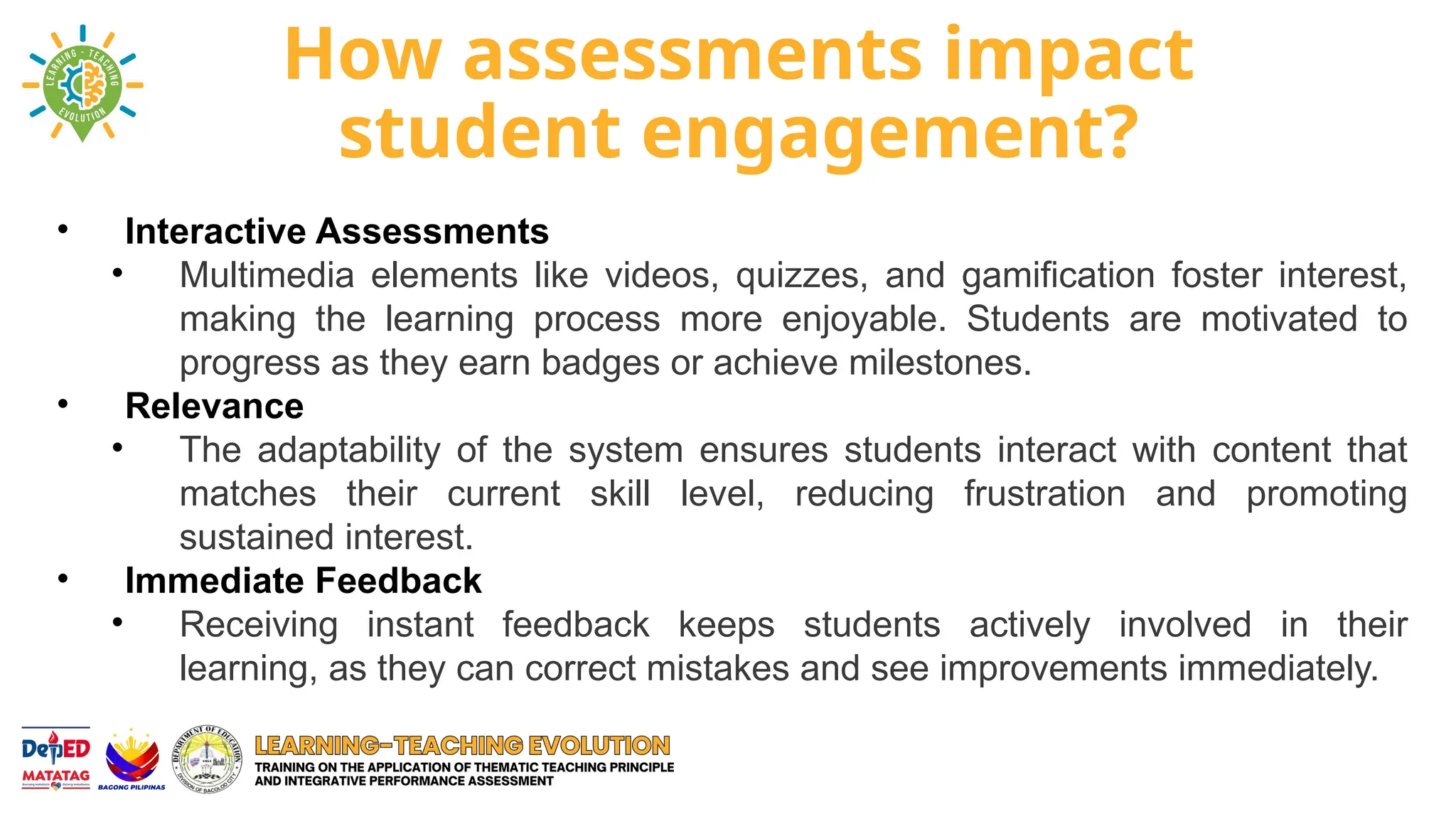
โ€ข Interactive Assessments
โ€ข Multimedia elements like videos, quizzes, and gamification foster interest,
making the learning process more enjoyable. Students are motivated to
progress as they earn badges or achieve milestones.
โ€ข Relevance
โ€ข The adaptability of the system ensures students interact with content that
matches their current skill level, reducing frustration and promoting
sustained interest.
โ€ข Immediate Feedback
โ€ข Receiving instant feedback keeps students actively involved in their
learning, as they can correct mistakes and see improvements immediately.
How assessments impact
student achievement?
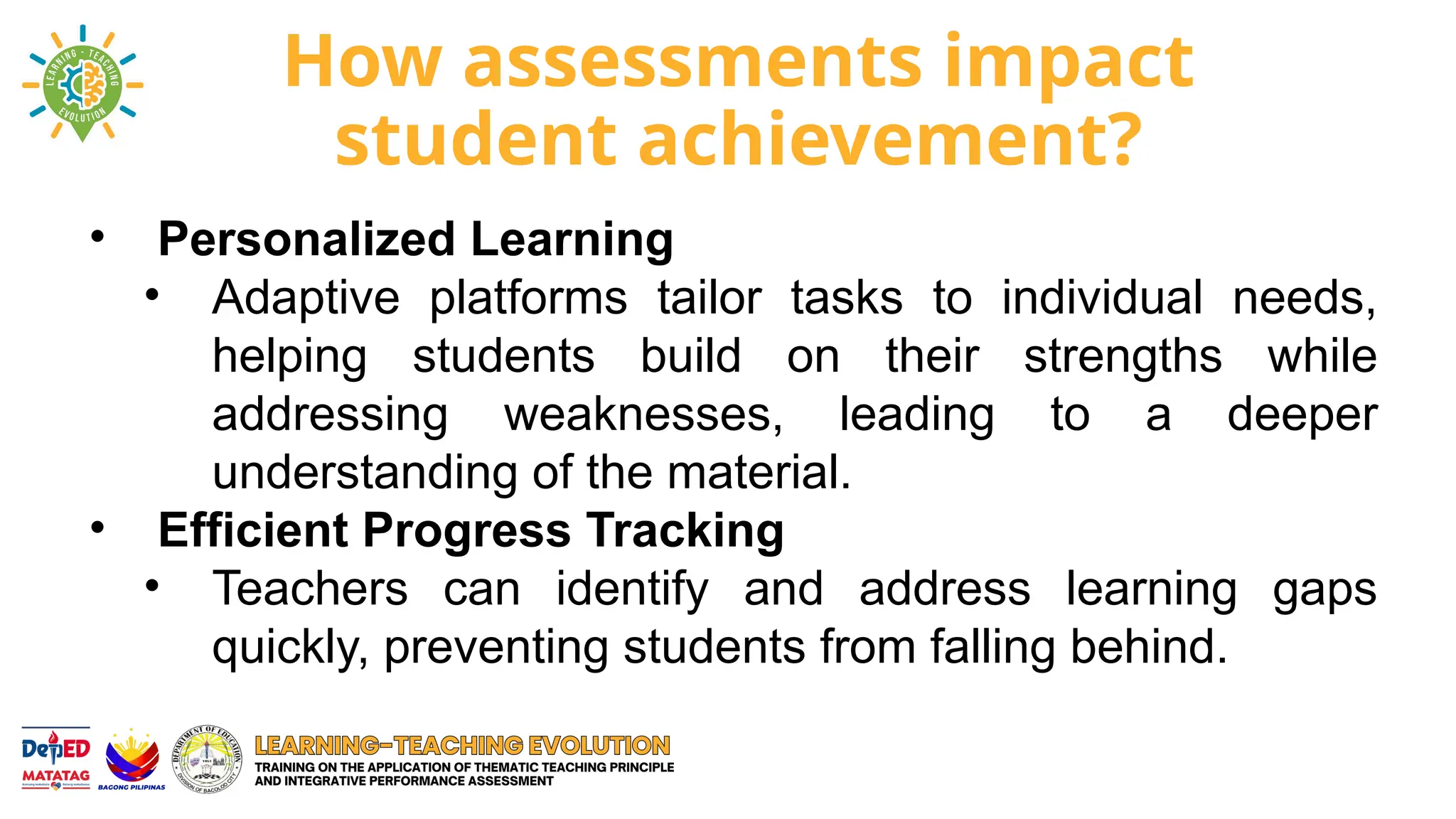
โ€ข Personalized Learning
โ€ข Adaptive platforms tailor tasks to individual needs,
helping students build on their strengths while
addressing weaknesses, leading to a deeper
understanding of the material.
โ€ข Efficient Progress Tracking
โ€ข Teachers can identify and address learning gaps
quickly, preventing students from falling behind.
Case Study 1: Online Quizzes
and Immediate Feedback
A high school English teacher uses
online quiz platforms like Mentimeter
for formative assessments. The quizzes
provide instant feedback to students.
Benefits
โ€ข
โ€ข
โ€ข
Case Study 1: Online Quizzes and
Immediate Feedback
Challenges
โ€ข
โ€ข
โ€ข
Case Study 1: Online Quizzes and
Immediate Feedback
How assessments impact
student engagement?
โ€ข
โ€ข
โ€ข
How assessments impact
student achievement?
โ€ข
โ€ข
โ€ข
Case Study 2:
Collaborative Peer Assessments
on Digital Platforms
High school science students use
Google Classroom to submit
assignments and provide peer feedback
through guided rubrics.
Benefits
โ€ข
โ€ข
โ€ข
Case Study 2: Collaborative Peer
Assessments on Digital Platforms
Challenges
โ€ข
โ€ข
โ€ข
Case Study 2: Collaborative Peer
Assessments on Digital Platforms
How assessments impact
student engagement?
โ€ข
โ€ข
โ€ข
How assessments impact
student achievement?
โ€ข
โ€ข
โ€ข
Case Study 3: Game-Based
Assessments in Mathematics
A junior high school teacher uses a math
gamification platform (e.g., Kahoot! or Quizizz)
to assess students' understanding of algebra
concepts. Each session provides immediate
feedback on student performance.
Benefits
โ€ข
โ€ข
โ€ข
Case Study 3: Game-Based
Assessments in Mathematics
Challenges
โ€ข
โ€ข
โ€ข
Case Study 3: Game-Based
Assessments in Mathematics
How assessments impact
student engagement?
โ€ข
โ€ข
โ€ข
How assessments impact
student achievement?
โ€ข
โ€ข
โ€ข
Case Study 4: Virtual Reality
(VR) for Experiential
Assessments
A history teacher integrates VR to simulate
historical events and assesses students
through immersive experience-based
projects.
Benefits
โ€ข Engagement: Immersive experiences increase student interest and
motivation.
โ€ข Deeper Learning: Enhances understanding and retention through realistic
simulations.
โ€ข Skill Development: Builds critical thinking, creativity, and digital literacy.
โ€ข Accessibility: Provides access to otherwise unreachable historical sites or
events.
โ€ข Empathy: Encourages emotional connection to historical events and diverse
perspectives.
Case Study 4: Virtual Reality (VR)
for Experiential Assessments
Challenges
โ€ข High initial investment for VR equipment and software.
โ€ข Technical Issues: Requires reliable infrastructure and technical support.
โ€ข Learning Curve: Teachers and students need training to use VR effectively.
โ€ข Equity: Access to VR may be limited in underfunded schools.
โ€ข Assessment Design: Creating meaningful, fair experiential assessments can
be complex.
Case Study 4: Virtual Reality (VR)
for Experiential Assessments
How assessments impact
student engagement?
โ€ข 1. Sets Clear Expectations
Well-structured assessments help students understand what is expected of them, giving them a sense of direction and purpose. โ€ข
Clear criteria motivate students to engage with the material to meet learning objectives.
โ€ข 2. Encourages Active Participation
Formative assessments, like quizzes or discussions, involve students actively, making learning more interactive and engaging.
Project-based or authentic assessments allow students to apply knowledge in meaningful, hands-on ways.
โ€ข 3. Fosters a Sense of Achievement
Success on assessments builds confidence and encourages students to stay invested in their learning. Immediate feedback
reinforces progress and sustains motivation.
4. Promotes Curiosity and Interest
Creative or challenging assessments, such as problem-solving tasks, stimulate curiosity and encourage exploration beyond rote
learning. Gamified assessments or those incorporating technology (e.g., VR or simulations) can make learning enjoyable.
5. Builds Relevance and Real-World Connections
Authentic assessments tied to real-world applications engage students by showing the relevance of their learning to future goals
or careers.
6. Drives Peer Collaboration
Group assessments, such as presentations or projects, foster collaboration and social engagement among students. Collaborative tasks
encourage teamwork and shared responsibility for learning.
โ€ข
โ€ข
How assessments impact
student achievement?
โ€ข 1. Guides Learning Goals
Clear, well-designed assessments help students understand what they are expected to learn and achieve. Students focus their
efforts on mastering assessed content, aligning their study strategies with learning objectives.
โ€ข 2. Provides Feedback for Improvement
Formative assessments offer timely, specific feedback, enabling students to identify strengths and areas for improvement.
Feedback fosters a growth mindset, encouraging students to view learning as an ongoing process.
โ€ข 3. Motivates Effort and Engagement
Regular assessments can motivate students to stay engaged and committed to their studies, especially when aligned with
meaningful goals. Positive experiences with assessments build confidence, while poorly designed ones may discourage effort.
โ€ข 4. Enhances Skill Development
Authentic assessments (e.g., projects or problem-solving tasks) encourage critical thinking, collaboration, and real-world skill
application. Performance-based assessments push students to deepen understanding rather than memorize facts.
โ€ข 5. Identifies Learning Gaps
Assessments help teachers and students recognize areas of struggle, allowing targeted interventions and support. Diagnostic
assessments ensure instruction is tailored to individual or group needs.
โ€ข 6. Promotes Accountability
Assessments hold students accountable for their learning and encourage responsibility. They also help teachers refine their
methods to ensure all students meet academic standards.
BENEFITS
โ€ข Increased engagement through gamification
โ€ข Promotes collaboration and critical thinking
โ€ข Enhances engagement and retention
โ€ข Increased Student Engagement
โ€ข Immediate Feedback
โ€ข Collaborative Learning
CHALLENGES
โ€ข Limited access to devices for all students
โ€ข Potential for unfair feedback
โ€ข High cost of equipment
โ€ข Overemphasis on Speed
โ€ข Accessibility and Equity
โ€ข Potential Classroom Distractions
โ€ข Teacher Learning Curve
โ€ข Shallow Learning Risks
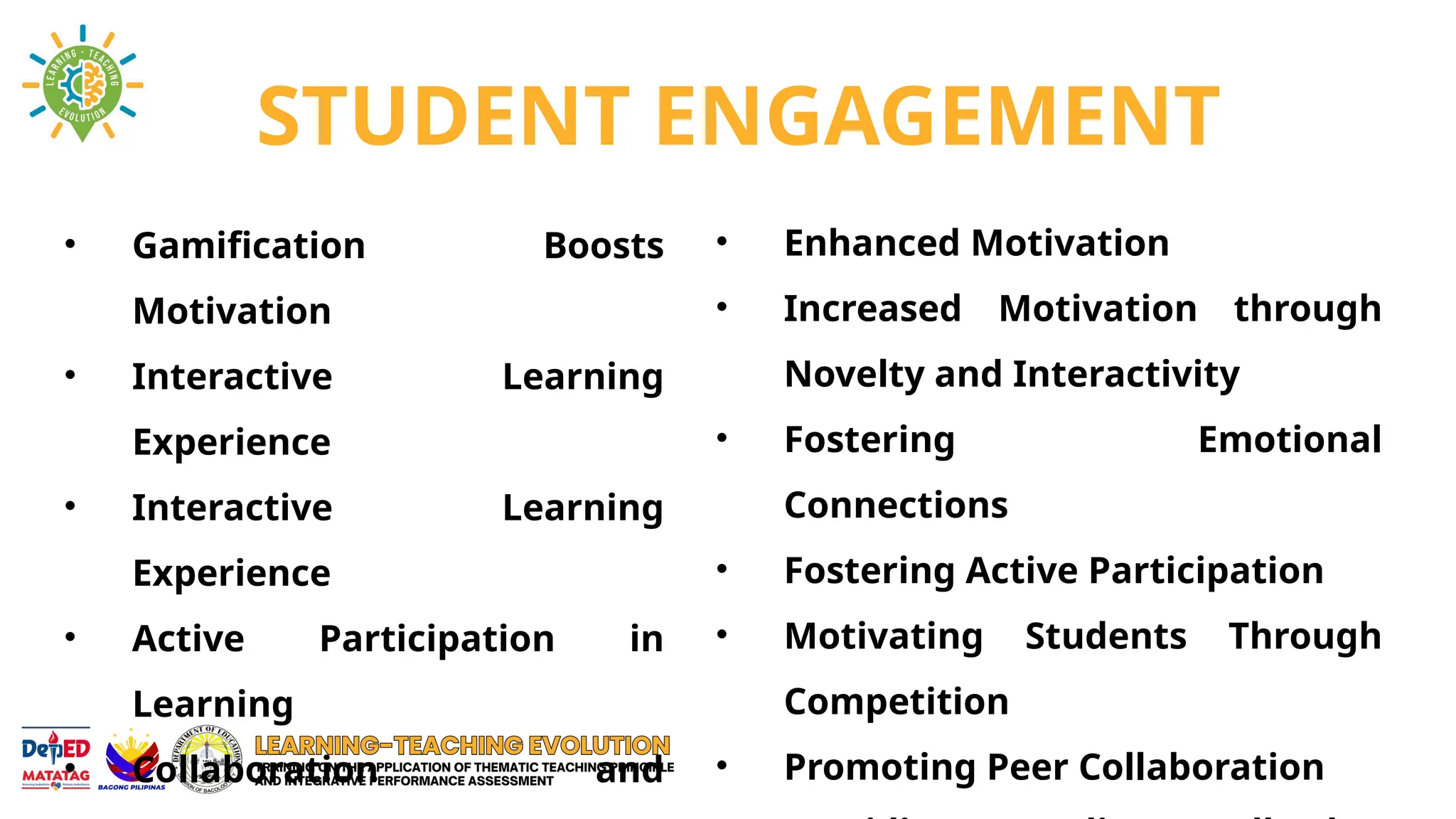
STUDENT ENGAGEMENT
โ€ข Gamification Boosts
Motivation
โ€ข Interactive Learning
Experience
โ€ข Interactive Learning
Experience
โ€ข Active Participation in
Learning
โ€ข Collaboration and
โ€ข Enhanced Motivation
โ€ข Increased Motivation through
Novelty and Interactivity
โ€ข Fostering Emotional
Connections
โ€ข Fostering Active Participation
โ€ข Motivating Students Through
Competition
โ€ข Promoting Peer Collaboration
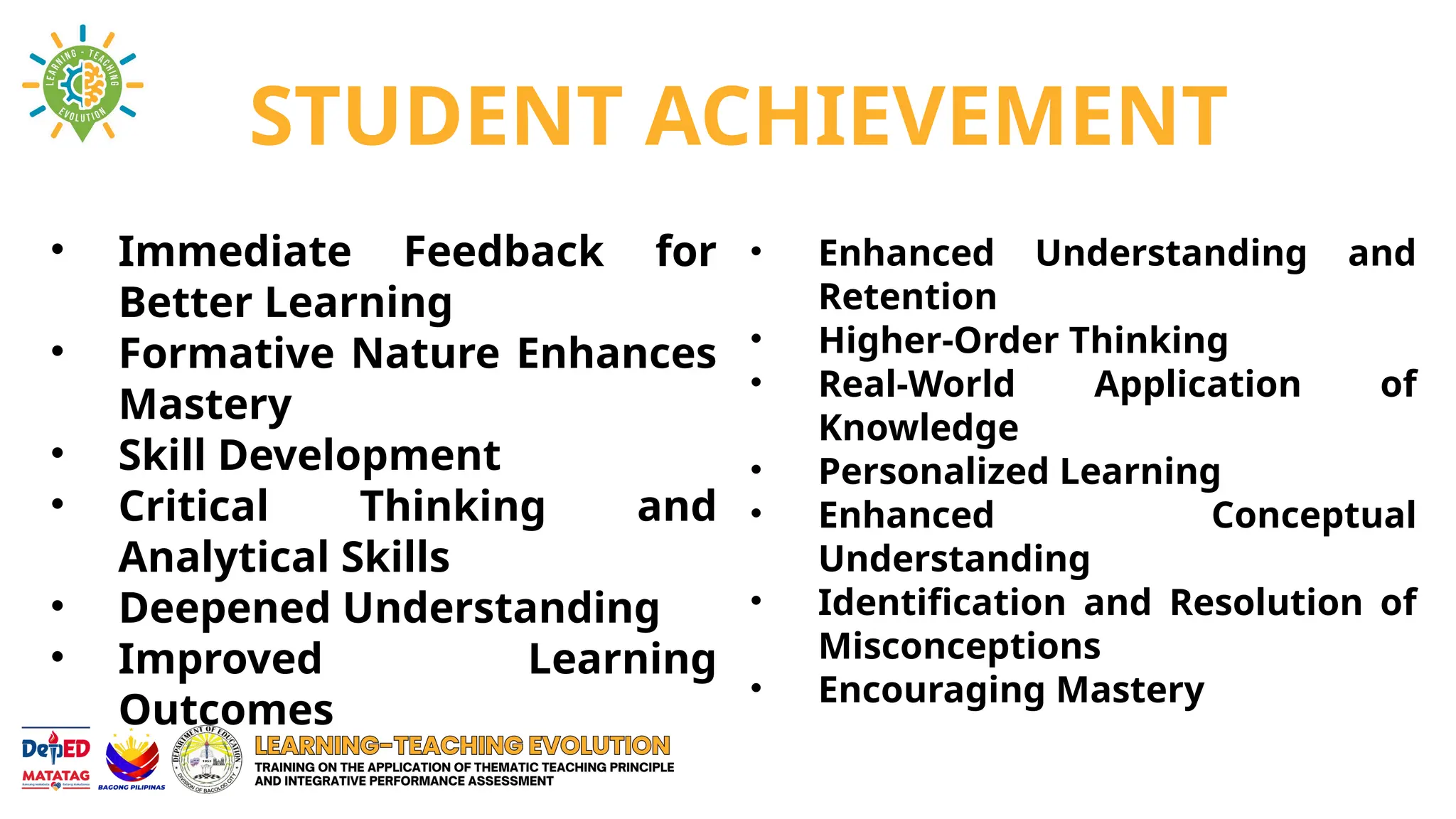
STUDENT ACHIEVEMENT
โ€ข Immediate Feedback for
Better Learning
โ€ข Formative Nature Enhances
Mastery
โ€ข Skill Development
โ€ข Critical Thinking and
Analytical Skills
โ€ข Deepened Understanding
โ€ข Improved Learning
Outcomes
โ€ข Enhanced Understanding and
Retention
โ€ข Higher-Order Thinking
โ€ข Real-World Application of
Knowledge
โ€ข Personalized Learning
โ€ข Enhanced Conceptual
Understanding
โ€ข Identification and Resolution of
Misconceptions
โ€ข Encouraging Mastery

AI presentation on Group Discussion on integration of Grasps

  • 1.
    โ€ข Participants aredivided into 4 groups, each given a case study of a classroom that integrates technology into assessments. โ€ข Each group analyzes the benefits and challenges faced by teachers and students in these scenarios. โ€ข Discussion on how assessments impact student engagement and achievement. ACTIVITY: Group Discussion
  • 2.
    Case Study: AdaptiveLearning Systems in Social Studies A high school social studies class uses an adaptive learning platform (e.g., Edmentum or iReady) to assess understanding of historical events and timelines.
  • 3.
    Benefits โ€ข Engagement ThroughInteractivity โ€ข The digital format often incorporates multimedia elements (videos, quizzes, simulations) that make learning about historical events more engaging. Gamification features like badges or progress tracking can further motivate students. โ€ข Efficiency โ€ข Saves teachers time by automating assessment and progress tracking, enabling them to focus on personalized instruction and student engagement. Case Study: Adaptive Learning Systems in Social Studies
  • 4.
    Challenges โ€ข Technology Accessand Equity โ€ข Not all students may have access to reliable devices or internet connections, potentially widening the digital divide. โ€ข Over-Reliance on Technology โ€ข Overusing adaptive platforms may reduce opportunities for collaborative learning and in-depth discussions that are vital in social studies. Case Study: Adaptive Learning Systems in Social Studies
  • 5.
    How assessments impact studentengagement? โ€ข Interactive Assessments โ€ข Multimedia elements like videos, quizzes, and gamification foster interest, making the learning process more enjoyable. Students are motivated to progress as they earn badges or achieve milestones. โ€ข Relevance โ€ข The adaptability of the system ensures students interact with content that matches their current skill level, reducing frustration and promoting sustained interest. โ€ข Immediate Feedback โ€ข Receiving instant feedback keeps students actively involved in their learning, as they can correct mistakes and see improvements immediately.
  • 6.
    How assessments impact studentachievement? โ€ข Personalized Learning โ€ข Adaptive platforms tailor tasks to individual needs, helping students build on their strengths while addressing weaknesses, leading to a deeper understanding of the material. โ€ข Efficient Progress Tracking โ€ข Teachers can identify and address learning gaps quickly, preventing students from falling behind.
  • 7.
    Case Study 1:Online Quizzes and Immediate Feedback A high school English teacher uses online quiz platforms like Mentimeter for formative assessments. The quizzes provide instant feedback to students.
  • 8.
    Benefits โ€ข โ€ข โ€ข Case Study 1:Online Quizzes and Immediate Feedback
  • 9.
    Challenges โ€ข โ€ข โ€ข Case Study 1:Online Quizzes and Immediate Feedback
  • 10.
    How assessments impact studentengagement? โ€ข โ€ข โ€ข
  • 11.
    How assessments impact studentachievement? โ€ข โ€ข โ€ข
  • 12.
    Case Study 2: CollaborativePeer Assessments on Digital Platforms High school science students use Google Classroom to submit assignments and provide peer feedback through guided rubrics.
  • 13.
    Benefits โ€ข โ€ข โ€ข Case Study 2:Collaborative Peer Assessments on Digital Platforms
  • 14.
    Challenges โ€ข โ€ข โ€ข Case Study 2:Collaborative Peer Assessments on Digital Platforms
  • 15.
    How assessments impact studentengagement? โ€ข โ€ข โ€ข
  • 16.
    How assessments impact studentachievement? โ€ข โ€ข โ€ข
  • 17.
    Case Study 3:Game-Based Assessments in Mathematics A junior high school teacher uses a math gamification platform (e.g., Kahoot! or Quizizz) to assess students' understanding of algebra concepts. Each session provides immediate feedback on student performance.
  • 18.
    Benefits โ€ข โ€ข โ€ข Case Study 3:Game-Based Assessments in Mathematics
  • 19.
    Challenges โ€ข โ€ข โ€ข Case Study 3:Game-Based Assessments in Mathematics
  • 20.
    How assessments impact studentengagement? โ€ข โ€ข โ€ข
  • 21.
    How assessments impact studentachievement? โ€ข โ€ข โ€ข
  • 22.
    Case Study 4:Virtual Reality (VR) for Experiential Assessments A history teacher integrates VR to simulate historical events and assesses students through immersive experience-based projects.
  • 23.
    Benefits โ€ข Engagement: Immersiveexperiences increase student interest and motivation. โ€ข Deeper Learning: Enhances understanding and retention through realistic simulations. โ€ข Skill Development: Builds critical thinking, creativity, and digital literacy. โ€ข Accessibility: Provides access to otherwise unreachable historical sites or events. โ€ข Empathy: Encourages emotional connection to historical events and diverse perspectives. Case Study 4: Virtual Reality (VR) for Experiential Assessments
  • 24.
    Challenges โ€ข High initialinvestment for VR equipment and software. โ€ข Technical Issues: Requires reliable infrastructure and technical support. โ€ข Learning Curve: Teachers and students need training to use VR effectively. โ€ข Equity: Access to VR may be limited in underfunded schools. โ€ข Assessment Design: Creating meaningful, fair experiential assessments can be complex. Case Study 4: Virtual Reality (VR) for Experiential Assessments
  • 25.
    How assessments impact studentengagement? โ€ข 1. Sets Clear Expectations Well-structured assessments help students understand what is expected of them, giving them a sense of direction and purpose. โ€ข Clear criteria motivate students to engage with the material to meet learning objectives. โ€ข 2. Encourages Active Participation Formative assessments, like quizzes or discussions, involve students actively, making learning more interactive and engaging. Project-based or authentic assessments allow students to apply knowledge in meaningful, hands-on ways. โ€ข 3. Fosters a Sense of Achievement Success on assessments builds confidence and encourages students to stay invested in their learning. Immediate feedback reinforces progress and sustains motivation. 4. Promotes Curiosity and Interest Creative or challenging assessments, such as problem-solving tasks, stimulate curiosity and encourage exploration beyond rote learning. Gamified assessments or those incorporating technology (e.g., VR or simulations) can make learning enjoyable. 5. Builds Relevance and Real-World Connections Authentic assessments tied to real-world applications engage students by showing the relevance of their learning to future goals or careers. 6. Drives Peer Collaboration Group assessments, such as presentations or projects, foster collaboration and social engagement among students. Collaborative tasks encourage teamwork and shared responsibility for learning. โ€ข โ€ข
  • 26.
    How assessments impact studentachievement? โ€ข 1. Guides Learning Goals Clear, well-designed assessments help students understand what they are expected to learn and achieve. Students focus their efforts on mastering assessed content, aligning their study strategies with learning objectives. โ€ข 2. Provides Feedback for Improvement Formative assessments offer timely, specific feedback, enabling students to identify strengths and areas for improvement. Feedback fosters a growth mindset, encouraging students to view learning as an ongoing process. โ€ข 3. Motivates Effort and Engagement Regular assessments can motivate students to stay engaged and committed to their studies, especially when aligned with meaningful goals. Positive experiences with assessments build confidence, while poorly designed ones may discourage effort. โ€ข 4. Enhances Skill Development Authentic assessments (e.g., projects or problem-solving tasks) encourage critical thinking, collaboration, and real-world skill application. Performance-based assessments push students to deepen understanding rather than memorize facts. โ€ข 5. Identifies Learning Gaps Assessments help teachers and students recognize areas of struggle, allowing targeted interventions and support. Diagnostic assessments ensure instruction is tailored to individual or group needs. โ€ข 6. Promotes Accountability Assessments hold students accountable for their learning and encourage responsibility. They also help teachers refine their methods to ensure all students meet academic standards.
  • 27.
    BENEFITS โ€ข Increased engagementthrough gamification โ€ข Promotes collaboration and critical thinking โ€ข Enhances engagement and retention โ€ข Increased Student Engagement โ€ข Immediate Feedback โ€ข Collaborative Learning
  • 28.
    CHALLENGES โ€ข Limited accessto devices for all students โ€ข Potential for unfair feedback โ€ข High cost of equipment โ€ข Overemphasis on Speed โ€ข Accessibility and Equity โ€ข Potential Classroom Distractions โ€ข Teacher Learning Curve โ€ข Shallow Learning Risks
  • 29.
    STUDENT ENGAGEMENT โ€ข GamificationBoosts Motivation โ€ข Interactive Learning Experience โ€ข Interactive Learning Experience โ€ข Active Participation in Learning โ€ข Collaboration and โ€ข Enhanced Motivation โ€ข Increased Motivation through Novelty and Interactivity โ€ข Fostering Emotional Connections โ€ข Fostering Active Participation โ€ข Motivating Students Through Competition โ€ข Promoting Peer Collaboration
  • 30.
    STUDENT ACHIEVEMENT โ€ข ImmediateFeedback for Better Learning โ€ข Formative Nature Enhances Mastery โ€ข Skill Development โ€ข Critical Thinking and Analytical Skills โ€ข Deepened Understanding โ€ข Improved Learning Outcomes โ€ข Enhanced Understanding and Retention โ€ข Higher-Order Thinking โ€ข Real-World Application of Knowledge โ€ข Personalized Learning โ€ข Enhanced Conceptual Understanding โ€ข Identification and Resolution of Misconceptions โ€ข Encouraging Mastery