Photography for Charcoal Portrait Reference
From the time we are little
our parents or loved ones
have been taking pictures of
us- documenting our every
move. When we think of
standard portraits most of us
think of the classic “school
picture”.
BOOOORING!
There are far more creative
ways to capture our subjects;
we just have to think outside of
the box!
There are essentially three profiles to begin
with:
 Front Profile – face is straight on
 Side Profile- head is turned 90 degrees
 ThreeQuarter Profile- held turned 45 degrees
four different approaches that can be taken in
photographic portraiture — the
constructionist, environmental, candid
and creative approaches. Each approach
has been used over time for different
reasons such as technical, artistic or cultural.
There are also four different
approaches that can be taken in
photographic portraiture — the
constructionist, environmental,
candid and creative approaches.
Each approach has been used over
time for different reasons such as
technical, artistic or cultural.
This when the photographer in their
portraiture constructs an idea around the
subject — happy family, romantic couple,
trustworthy executive. It is the approach used
in most studio and social photography. It is
also used extensively in advertising and
marketing when an idea has to be put across.
Depicts the subject in their environment
such as work, leisure, social or family
environments.They are often shown as doing
something; a teacher in a classroom, an artist
in a studio, a child in a playground.The
environmental approach helps to reveal more
about the subject.
 Candid Photography is portrait pictures taken
when the subject is not posing or does not
realize a picture is being taken.
 Though it is impossible to take a candid
picture of yourself- if you have a picture a
friend took of you that is candid that could
work!
 Creative Portraiture is fine art portraiture that
is created in a studio.The photographer is
responsible for every detail- from styling the
subject all the way up to lighting.
 Head shots focus on the face and may include
the shoulders and sometimes waist.
 Props may be used- such as glasses,
umbrella, etc.
 Lighting can add mood,
texture and contrast, all while
enhancing the focal point.
 There are almost unlimited
possibilities when it comes to
using light in portraits.
 Side-lighting can create
mood, backlighting and
silhouetting your subject to
hide their features can be
powerful.
Skin/HairTones vs. BackgroundTone:
To help your subject stand out think about
contrast.
• Darker skin tones stand out dramatically on
white backgrounds.
• Lighter skin tones stand out fantastically on
black backgrounds.
**Hair (depending on the tone) can either be
brought forward by contrast with the back
ground or become part of the background when
matching hair and background tones- leading to
dramatic focus on the face.
Look at the Camera:
The most commonly used
stance, looking at the camera
when creating a portrait helps
to achieve a heightened
connection between the
audience and the subject.
Look within the frame:
A child looking at a ball, a
woman looking at her new
baby, a singer looking at her
microphone…. When you give
your subject something to look
at that is inside the frame you
create a second point of
interest and a relationship
between it and your primary
subject. It also helps create
’story’ within the image.
Add a prop and
you can create
another point of
interest that can
enhance your
shot.The prop
should tell the
audience
something
about the
subject.
Creating lines with movement:
• Add movement by using a fan to blow
hair or shaking your head; creating
implied lines and framing of the face
Framing is a technique where by you draw attention
to one element of an image by framing it with
another element of the image. Framing gives an
imaginative depth and draws the eye to a point of
interest in the image.
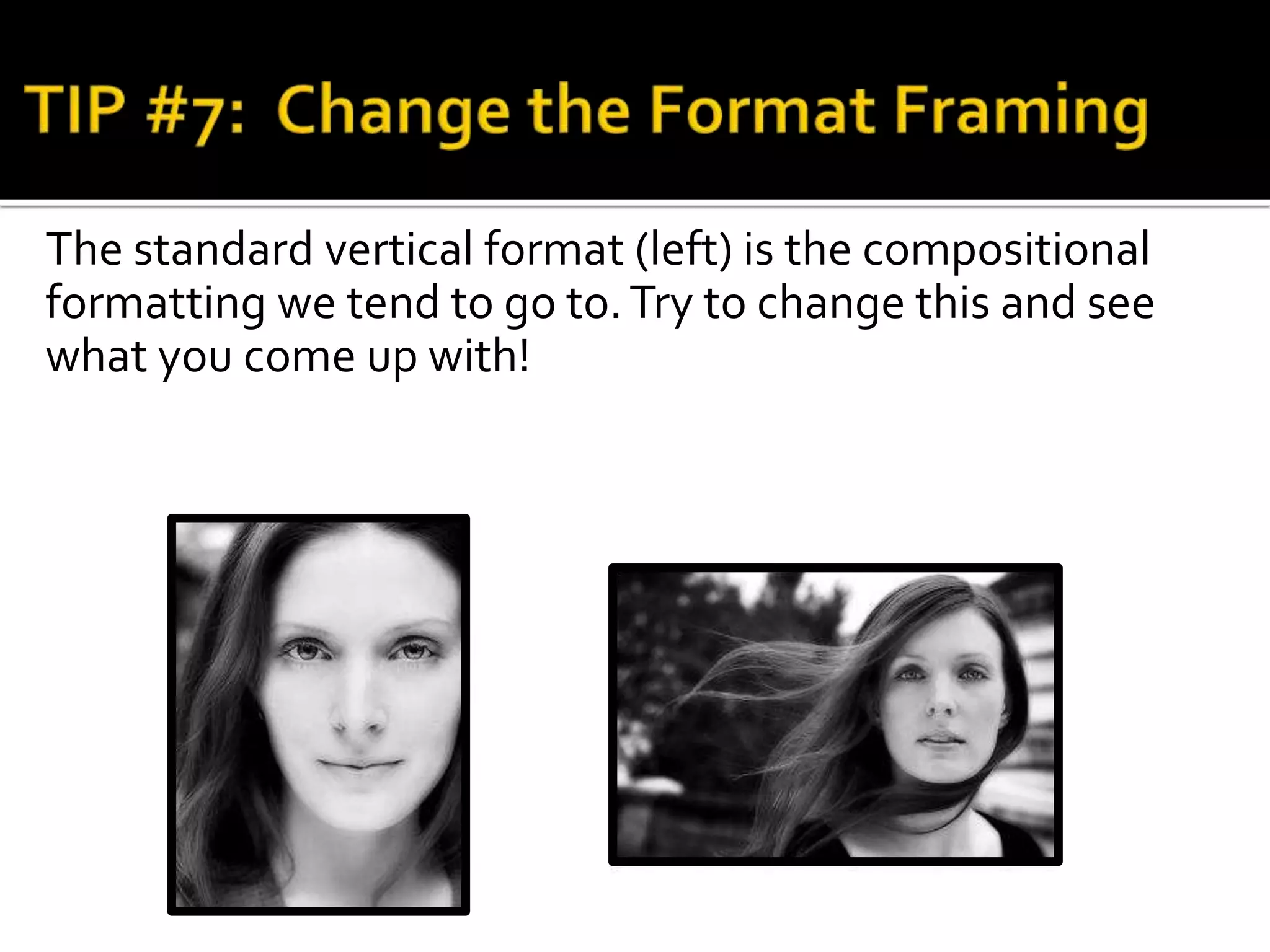
The standard vertical format (left) is the compositional
formatting we tend to go to.Try to change this and see
what you come up with!
 In some portraits it is the expression on the face of your
subject that makes the image.
 Get your subject to experiment with different moods and
emotions in your image. Play with extreme emotions
Instead of taking the picture
head on change perspectives!
 Shoot from really high up
 Shoot from laying down on
the ground
 Look at foreshortening
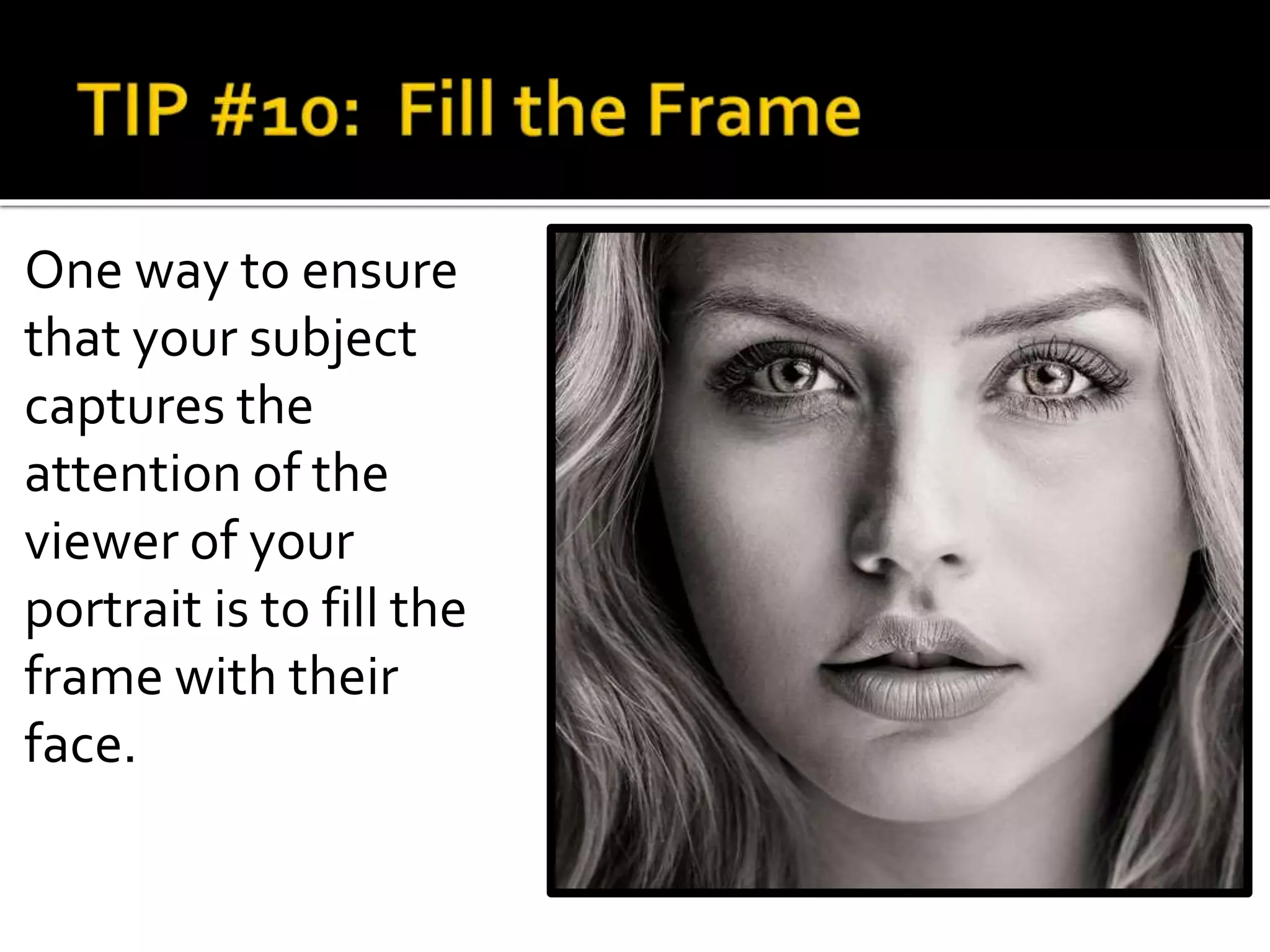
One way to ensure
that your subject
captures the
attention of the
viewer of your
portrait is to fill the
frame with their
face.
 These pictures will be used as a reference for a
drawing you will be doing of yourself.You are
responsible for EVERYTHING in the frame of the
picture.Though things can be changed, it take
more time and experience to do this!
 Take a few minutes to read “Choosing & Using
Picture Photo References”
 Make sure the idea sheet is filled out and given
to teacher to check before take final pictures.
 Take 10 pictures of yourself that you would
want to use for the final.
Get your friends and family to help!
 All 10 pictures must be quality pictures that
could be used- that means you will most
likely need to take way more than 10 and
choose the 10 best.
 If the pictures do not work then you will be
asked to retake them.
 I will be photographing all students’ head
shots in class tomorrow – so be ready!
 We will use these for completing the
preliminary work of individual features… its
best to practiceYOU because the final is of
YOU!

AHSArt: Portrait Photography Tips for Reference Pictures

  • 1.
    Photography for CharcoalPortrait Reference
  • 2.
    From the timewe are little our parents or loved ones have been taking pictures of us- documenting our every move. When we think of standard portraits most of us think of the classic “school picture”. BOOOORING! There are far more creative ways to capture our subjects; we just have to think outside of the box!
  • 3.
    There are essentiallythree profiles to begin with:  Front Profile – face is straight on  Side Profile- head is turned 90 degrees  ThreeQuarter Profile- held turned 45 degrees four different approaches that can be taken in photographic portraiture — the constructionist, environmental, candid and creative approaches. Each approach has been used over time for different reasons such as technical, artistic or cultural.
  • 4.
    There are alsofour different approaches that can be taken in photographic portraiture — the constructionist, environmental, candid and creative approaches. Each approach has been used over time for different reasons such as technical, artistic or cultural.
  • 5.
    This when thephotographer in their portraiture constructs an idea around the subject — happy family, romantic couple, trustworthy executive. It is the approach used in most studio and social photography. It is also used extensively in advertising and marketing when an idea has to be put across.
  • 10.
    Depicts the subjectin their environment such as work, leisure, social or family environments.They are often shown as doing something; a teacher in a classroom, an artist in a studio, a child in a playground.The environmental approach helps to reveal more about the subject.
  • 14.
     Candid Photographyis portrait pictures taken when the subject is not posing or does not realize a picture is being taken.  Though it is impossible to take a candid picture of yourself- if you have a picture a friend took of you that is candid that could work!
  • 17.
     Creative Portraitureis fine art portraiture that is created in a studio.The photographer is responsible for every detail- from styling the subject all the way up to lighting.  Head shots focus on the face and may include the shoulders and sometimes waist.  Props may be used- such as glasses, umbrella, etc.
  • 21.
     Lighting canadd mood, texture and contrast, all while enhancing the focal point.  There are almost unlimited possibilities when it comes to using light in portraits.  Side-lighting can create mood, backlighting and silhouetting your subject to hide their features can be powerful.
  • 23.
    Skin/HairTones vs. BackgroundTone: Tohelp your subject stand out think about contrast. • Darker skin tones stand out dramatically on white backgrounds. • Lighter skin tones stand out fantastically on black backgrounds. **Hair (depending on the tone) can either be brought forward by contrast with the back ground or become part of the background when matching hair and background tones- leading to dramatic focus on the face.
  • 24.
    Look at theCamera: The most commonly used stance, looking at the camera when creating a portrait helps to achieve a heightened connection between the audience and the subject.
  • 25.
    Look within theframe: A child looking at a ball, a woman looking at her new baby, a singer looking at her microphone…. When you give your subject something to look at that is inside the frame you create a second point of interest and a relationship between it and your primary subject. It also helps create ’story’ within the image.
  • 26.
    Add a propand you can create another point of interest that can enhance your shot.The prop should tell the audience something about the subject.
  • 27.
    Creating lines withmovement: • Add movement by using a fan to blow hair or shaking your head; creating implied lines and framing of the face
  • 28.
    Framing is atechnique where by you draw attention to one element of an image by framing it with another element of the image. Framing gives an imaginative depth and draws the eye to a point of interest in the image.
  • 29.
    The standard verticalformat (left) is the compositional formatting we tend to go to.Try to change this and see what you come up with!
  • 30.
     In someportraits it is the expression on the face of your subject that makes the image.  Get your subject to experiment with different moods and emotions in your image. Play with extreme emotions
  • 31.
    Instead of takingthe picture head on change perspectives!  Shoot from really high up  Shoot from laying down on the ground  Look at foreshortening
  • 32.
    One way toensure that your subject captures the attention of the viewer of your portrait is to fill the frame with their face.
  • 33.
     These pictureswill be used as a reference for a drawing you will be doing of yourself.You are responsible for EVERYTHING in the frame of the picture.Though things can be changed, it take more time and experience to do this!  Take a few minutes to read “Choosing & Using Picture Photo References”  Make sure the idea sheet is filled out and given to teacher to check before take final pictures.
  • 34.
     Take 10pictures of yourself that you would want to use for the final. Get your friends and family to help!  All 10 pictures must be quality pictures that could be used- that means you will most likely need to take way more than 10 and choose the 10 best.  If the pictures do not work then you will be asked to retake them.
  • 35.
     I willbe photographing all students’ head shots in class tomorrow – so be ready!  We will use these for completing the preliminary work of individual features… its best to practiceYOU because the final is of YOU!