NAME- AFZAL KHAN
BATCH- 20A
ENROLLMENT NO.- KSE20A006
SUBJECT- PERSONALITY DEVELOPMENT
TOPIC- QUALITIES OF GOOD LEADER
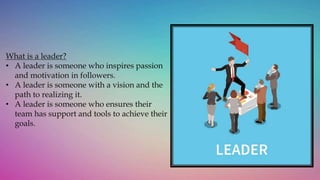
What is a leader?
• A leader is someone who inspires passion
and motivation in followers.
• A leader is someone with a vision and the
path to realizing it.
• A leader is someone who ensures their
team has support and tools to achieve their
goals.
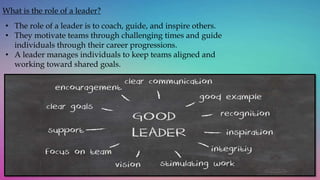
What is the role of a leader?
• The role of a leader is to coach, guide, and inspire others.
• They motivate teams through challenging times and guide
individuals through their career progressions.
• A leader manages individuals to keep teams aligned and
working toward shared goals.
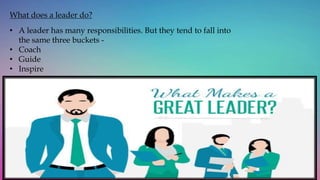
What does a leader do?
• A leader has many responsibilities. But they tend to fall into
the same three buckets -
• Coach
• Guide
• Inspire
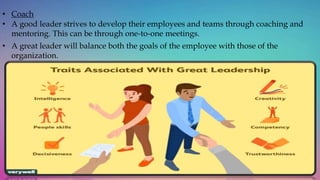
• Coach
• A good leader strives to develop their employees and teams through coaching and
mentoring. This can be through one-to-one meetings.
• A great leader will balance both the goals of the employee with those of the
organization.
Guide
• This comes through building and
organizing teams, setting goals, devising
ways to achieve those goals, and leading
employees through the process.
Inspire
• One undervalued role of a leader is to
inspire. A great leader can leverage
their storytelling, empathy, and
communication skills to inspire their
employees and key stakeholders.
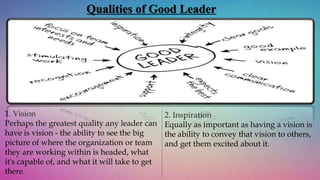
Qualities of Good Leader
1. Vision
Perhaps the greatest quality any leader can
have is vision - the ability to see the big
picture of where the organization or team
they are working within is headed, what
it's capable of, and what it will take to get
there.
2. Inspiration
Equally as important as having a vision is
the ability to convey that vision to others,
and get them excited about it.
3. Strategic & Critical Thinking
A good leader will be able to think
critically about the organization or team
they work within, and develop a clear
understanding of its strengths,
weaknesses, opportunities, and threats
(and how they as an individual can work
to support or overcome these).
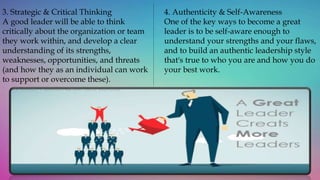
4. Authenticity & Self-Awareness
One of the key ways to become a great
leader is to be self-aware enough to
understand your strengths and your flaws,
and to build an authentic leadership style
that's true to who you are and how you do
your best work.
6. Flexibility
Leadership also means being adaptable and
nimble when the situation calls for it.
Nothing ever goes according to plan -
whether you encounter minor roadblocks
or large obstacles, you will need to be
prepared to stop, reassess, and determine a
new course of action.
7. Responsibility & Dependability
One of the most important qualities a
leader can have is a sense of responsibility
and dependability. This means displaying
those traits in your individual work, but
also demonstrating them in your
interactions with others.
8. Patience & Tenacity
A good leader knows how to take the long view,
whether it's of a strategy, a situation, or a goal.
9. Continuous Improvement
True leaders know that perfection is a myth - there is
always room for improvement on all levels, from the
personal to the team to the overall organization.
THANK YOU

Afzal Pd ppt.pptx

  • 1.
    NAME- AFZAL KHAN BATCH-20A ENROLLMENT NO.- KSE20A006 SUBJECT- PERSONALITY DEVELOPMENT TOPIC- QUALITIES OF GOOD LEADER
  • 2.
    What is aleader? • A leader is someone who inspires passion and motivation in followers. • A leader is someone with a vision and the path to realizing it. • A leader is someone who ensures their team has support and tools to achieve their goals.
  • 3.
    What is therole of a leader? • The role of a leader is to coach, guide, and inspire others. • They motivate teams through challenging times and guide individuals through their career progressions. • A leader manages individuals to keep teams aligned and working toward shared goals.
  • 4.
    What does aleader do? • A leader has many responsibilities. But they tend to fall into the same three buckets - • Coach • Guide • Inspire
  • 5.
    • Coach • Agood leader strives to develop their employees and teams through coaching and mentoring. This can be through one-to-one meetings. • A great leader will balance both the goals of the employee with those of the organization.
  • 6.
    Guide • This comesthrough building and organizing teams, setting goals, devising ways to achieve those goals, and leading employees through the process.
  • 7.
    Inspire • One undervaluedrole of a leader is to inspire. A great leader can leverage their storytelling, empathy, and communication skills to inspire their employees and key stakeholders.
  • 8.
    Qualities of GoodLeader 1. Vision Perhaps the greatest quality any leader can have is vision - the ability to see the big picture of where the organization or team they are working within is headed, what it's capable of, and what it will take to get there. 2. Inspiration Equally as important as having a vision is the ability to convey that vision to others, and get them excited about it.
  • 9.
    3. Strategic &Critical Thinking A good leader will be able to think critically about the organization or team they work within, and develop a clear understanding of its strengths, weaknesses, opportunities, and threats (and how they as an individual can work to support or overcome these). 4. Authenticity & Self-Awareness One of the key ways to become a great leader is to be self-aware enough to understand your strengths and your flaws, and to build an authentic leadership style that's true to who you are and how you do your best work.
  • 10.
    6. Flexibility Leadership alsomeans being adaptable and nimble when the situation calls for it. Nothing ever goes according to plan - whether you encounter minor roadblocks or large obstacles, you will need to be prepared to stop, reassess, and determine a new course of action. 7. Responsibility & Dependability One of the most important qualities a leader can have is a sense of responsibility and dependability. This means displaying those traits in your individual work, but also demonstrating them in your interactions with others.
  • 11.
    8. Patience &Tenacity A good leader knows how to take the long view, whether it's of a strategy, a situation, or a goal. 9. Continuous Improvement True leaders know that perfection is a myth - there is always room for improvement on all levels, from the personal to the team to the overall organization.
  • 12.