1
 Introduction
 Brick Cladding
 Stone Cladding
 Metal Cladding
 Wood Cladding
 Fiber Cement Cladding
 Glass Cladding
2
Building Facade Cladding
 A building facade cladding is a way to cover the exterior of a structure with a
protective layer.
 This layer can range from a simple paint job to a more complex installation of
materials that offer protection from the elements.
3
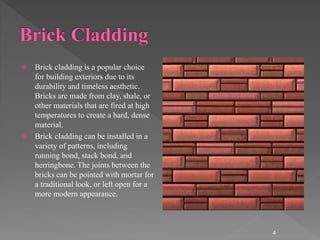
 Brick cladding is a popular choice
for building exteriors due to its
durability and timeless aesthetic.
Bricks are made from clay, shale, or
other materials that are fired at high
temperatures to create a hard, dense
material.
 Brick cladding can be installed in a
variety of patterns, including
running bond, stack bond, and
herringbone. The joints between the
bricks can be pointed with mortar for
a traditional look, or left open for a
more modern appearance.
4
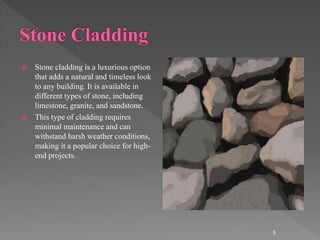
 Stone cladding is a luxurious option
that adds a natural and timeless look
to any building. It is available in
different types of stone, including
limestone, granite, and sandstone.
 This type of cladding requires
minimal maintenance and can
withstand harsh weather conditions,
making it a popular choice for high-
end projects.
5
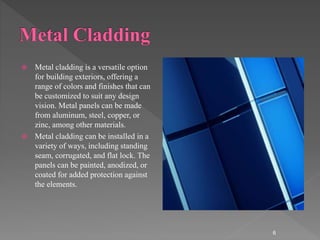
 Metal cladding is a versatile option
for building exteriors, offering a
range of colors and finishes that can
be customized to suit any design
vision. Metal panels can be made
from aluminum, steel, copper, or
zinc, among other materials.
 Metal cladding can be installed in a
variety of ways, including standing
seam, corrugated, and flat lock. The
panels can be painted, anodized, or
coated for added protection against
the elements.
6
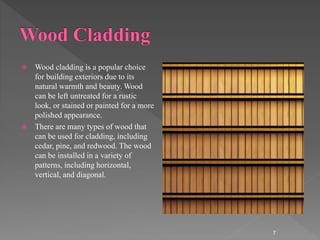
 Wood cladding is a popular choice
for building exteriors due to its
natural warmth and beauty. Wood
can be left untreated for a rustic
look, or stained or painted for a more
polished appearance.
 There are many types of wood that
can be used for cladding, including
cedar, pine, and redwood. The wood
can be installed in a variety of
patterns, including horizontal,
vertical, and diagonal.
7
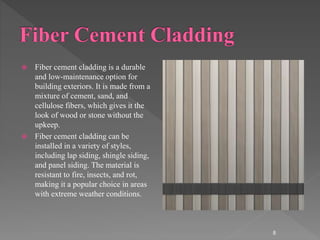
 Fiber cement cladding is a durable
and low-maintenance option for
building exteriors. It is made from a
mixture of cement, sand, and
cellulose fibers, which gives it the
look of wood or stone without the
upkeep.
 Fiber cement cladding can be
installed in a variety of styles,
including lap siding, shingle siding,
and panel siding. The material is
resistant to fire, insects, and rot,
making it a popular choice in areas
with extreme weather conditions.
8
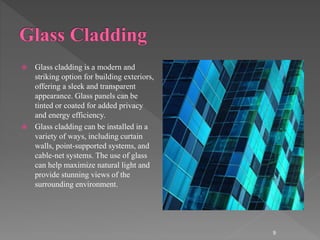
 Glass cladding is a modern and
striking option for building exteriors,
offering a sleek and transparent
appearance. Glass panels can be
tinted or coated for added privacy
and energy efficiency.
 Glass cladding can be installed in a
variety of ways, including curtain
walls, point-supported systems, and
cable-net systems. The use of glass
can help maximize natural light and
provide stunning views of the
surrounding environment.
9
10
11

ADVANCED CONSTRUCTION MATERIALS PPT.pptx

  • 1.
  • 2.
     Introduction  BrickCladding  Stone Cladding  Metal Cladding  Wood Cladding  Fiber Cement Cladding  Glass Cladding 2
  • 3.
    Building Facade Cladding A building facade cladding is a way to cover the exterior of a structure with a protective layer.  This layer can range from a simple paint job to a more complex installation of materials that offer protection from the elements. 3
  • 4.
     Brick claddingis a popular choice for building exteriors due to its durability and timeless aesthetic. Bricks are made from clay, shale, or other materials that are fired at high temperatures to create a hard, dense material.  Brick cladding can be installed in a variety of patterns, including running bond, stack bond, and herringbone. The joints between the bricks can be pointed with mortar for a traditional look, or left open for a more modern appearance. 4
  • 5.
     Stone claddingis a luxurious option that adds a natural and timeless look to any building. It is available in different types of stone, including limestone, granite, and sandstone.  This type of cladding requires minimal maintenance and can withstand harsh weather conditions, making it a popular choice for high- end projects. 5
  • 6.
     Metal claddingis a versatile option for building exteriors, offering a range of colors and finishes that can be customized to suit any design vision. Metal panels can be made from aluminum, steel, copper, or zinc, among other materials.  Metal cladding can be installed in a variety of ways, including standing seam, corrugated, and flat lock. The panels can be painted, anodized, or coated for added protection against the elements. 6
  • 7.
     Wood claddingis a popular choice for building exteriors due to its natural warmth and beauty. Wood can be left untreated for a rustic look, or stained or painted for a more polished appearance.  There are many types of wood that can be used for cladding, including cedar, pine, and redwood. The wood can be installed in a variety of patterns, including horizontal, vertical, and diagonal. 7
  • 8.
     Fiber cementcladding is a durable and low-maintenance option for building exteriors. It is made from a mixture of cement, sand, and cellulose fibers, which gives it the look of wood or stone without the upkeep.  Fiber cement cladding can be installed in a variety of styles, including lap siding, shingle siding, and panel siding. The material is resistant to fire, insects, and rot, making it a popular choice in areas with extreme weather conditions. 8
  • 9.
     Glass claddingis a modern and striking option for building exteriors, offering a sleek and transparent appearance. Glass panels can be tinted or coated for added privacy and energy efficiency.  Glass cladding can be installed in a variety of ways, including curtain walls, point-supported systems, and cable-net systems. The use of glass can help maximize natural light and provide stunning views of the surrounding environment. 9
  • 10.
  • 11.