The Basics of Autism
Spectrum Disorders
  Training Series
    Regional Autism Advisory Council of

       Southwest Ohio (RAAC-SWO)

   Adults with Autism Spectrum Disorders

                Task Force
Adult Training Series Modules

 Module One: Autism Defined, Autism Prevalence
  and Primary Characteristics
 Module Two: Physical Characteristics of Autism
 Module Three: Cognition and Learning in Autism
 Module Four: Autism and Sensory Differences
 Module Five: Communication and Autism
Adult Training Series Modules
 Module Six: Behavior Challenges and Autism
 Module Seven: Understanding Behavior in
  Persons with Autism
 Module Eight: Functional Behavior Assessment
 Module Nine: Autism and Leisure Skills to Teach
 Module Ten: Special Issues of Adolescence and
  Adulthood
 Module Eleven: Safety and Autism
Big Idea


We must first understand
 why a behavior occurs
 before we are able to
       change it.
Steps to Understanding
 Reasons for Behavior
Step One: Describe What Was
  Happening Before the Behavior
             Started

Who, What, When, Where, and then Why?
 Where does the behavior happen?
 When does the behavior happen?
 Who is there when the behavior occurs?
 What was happening right before the
 behavior started?
Step Two: Describe the Behavior
  Describe the behavior exactly.
 What did it look like (as if you had a
 video camera)?
 Who was involved?
 How long did it last?
 What was being said?
Step Three: What Happened
  Immediately Following the Behavior?
 What happened to end the behavior?
 What did the person do?
 Was someone else involved in ending the
 behavior?
 Did the person get what he wanted?
 What was it?
Big Idea


All behavior happens for
a reason and it is
motivated by something.
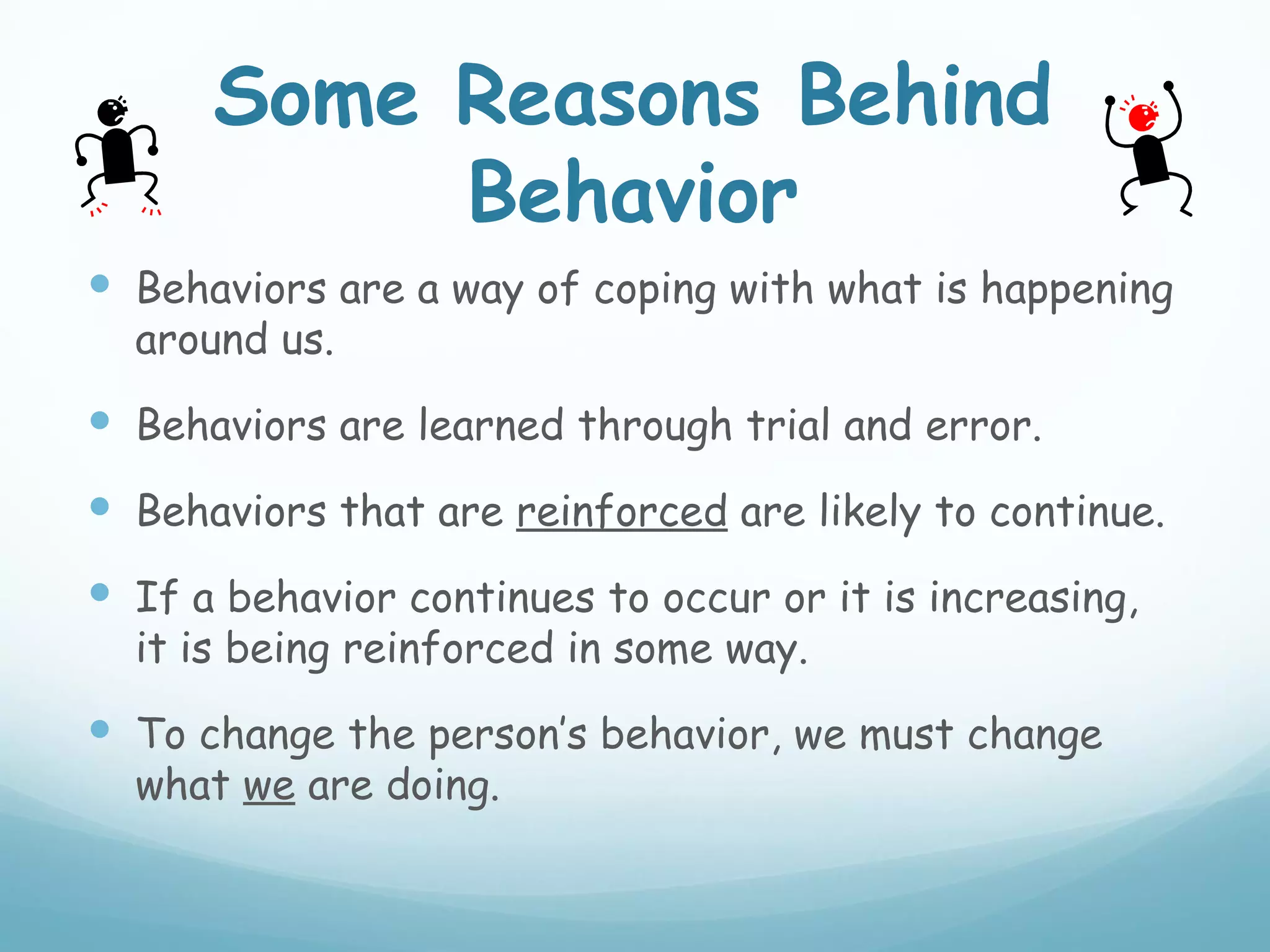
Some Reasons Behind
           Behavior
 Behaviors are a way of coping with what is happening
  around us.
 Behaviors are learned through trial and error.
 Behaviors that are reinforced are likely to continue.
 If a behavior continues to occur or it is increasing,
  it is being reinforced in some way.
 To change the person’s behavior, we must change
  what we are doing.
Reinforcement
  Reinforcement is something that follows a
  behavior that either makes it occur more often
  or less often. Examples:
 a baby says “mama” for the first time and mommy
  smiles, claps, and yells her excitement. (Positive)
 loud buzz in some cars when ignition is turned on in
      order for driver to put on seat belt to
  eliminate irritating buzz. (Negative)
 I receive a paycheck every 2 weeks. (Positive)
Reinforcement is Important
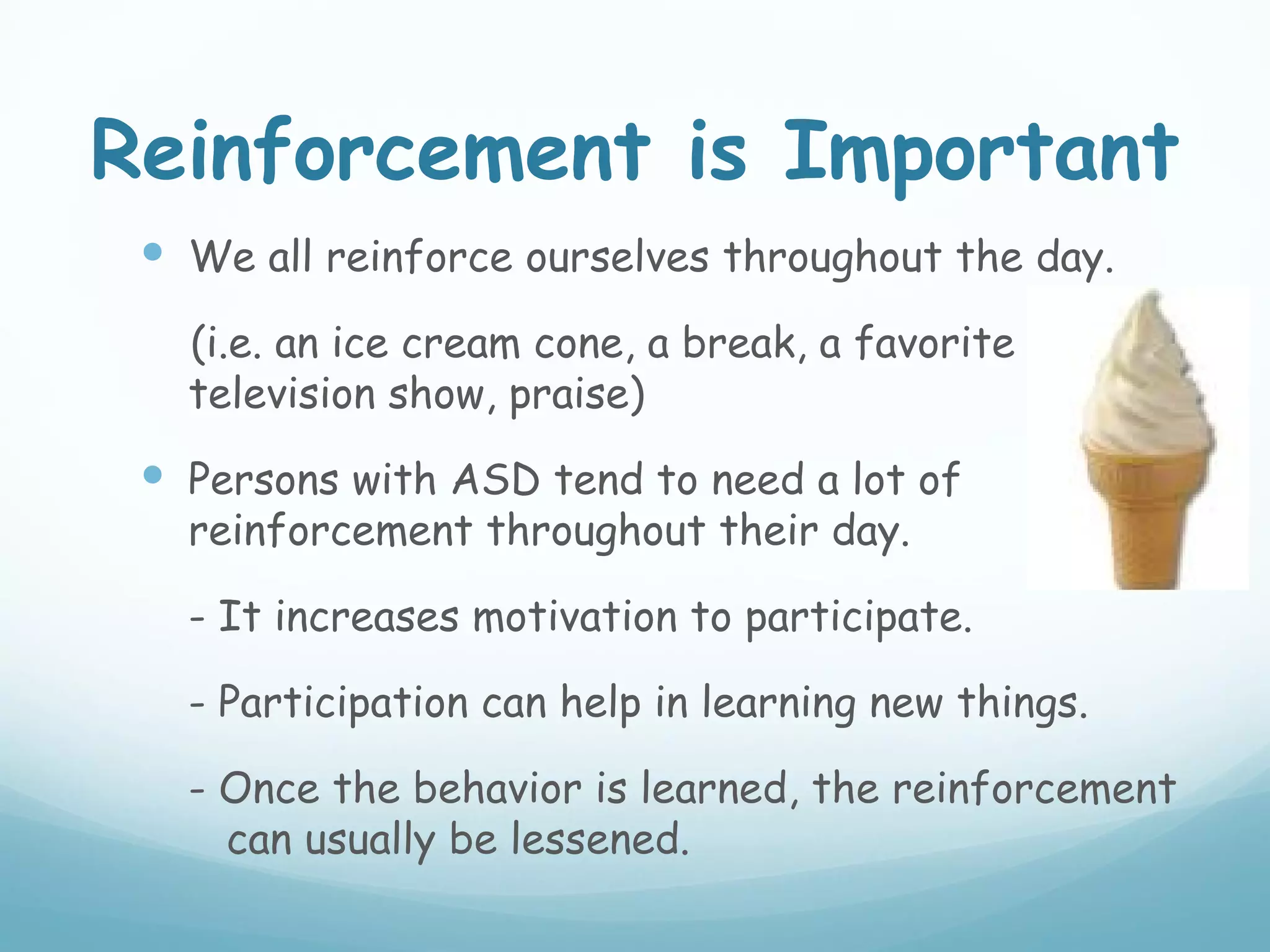
  We all reinforce ourselves throughout the day.
   (i.e. an ice cream cone, a break, a favorite
   television show, praise)
  Persons with ASD tend to need a lot of
   reinforcement throughout their day.

   - It increases motivation to participate.

   - Participation can help in learning new things.

   - Once the behavior is learned, the reinforcement
     can usually be lessened.
Big Idea

Everyone’s reinforcers are
different. We have to find
 out what works for each
          person.

Understanding Behavior in Persons with Autism

  • 1.
    The Basics ofAutism Spectrum Disorders Training Series Regional Autism Advisory Council of Southwest Ohio (RAAC-SWO) Adults with Autism Spectrum Disorders Task Force
  • 2.
    Adult Training SeriesModules  Module One: Autism Defined, Autism Prevalence and Primary Characteristics  Module Two: Physical Characteristics of Autism  Module Three: Cognition and Learning in Autism  Module Four: Autism and Sensory Differences  Module Five: Communication and Autism
  • 3.
    Adult Training SeriesModules  Module Six: Behavior Challenges and Autism  Module Seven: Understanding Behavior in Persons with Autism  Module Eight: Functional Behavior Assessment  Module Nine: Autism and Leisure Skills to Teach  Module Ten: Special Issues of Adolescence and Adulthood  Module Eleven: Safety and Autism
  • 4.
    Big Idea We mustfirst understand why a behavior occurs before we are able to change it.
  • 5.
    Steps to Understanding Reasons for Behavior
  • 6.
    Step One: DescribeWhat Was Happening Before the Behavior Started Who, What, When, Where, and then Why?  Where does the behavior happen?  When does the behavior happen?  Who is there when the behavior occurs?  What was happening right before the behavior started?
  • 7.
    Step Two: Describethe Behavior Describe the behavior exactly.  What did it look like (as if you had a video camera)?  Who was involved?  How long did it last?  What was being said?
  • 8.
    Step Three: WhatHappened Immediately Following the Behavior?  What happened to end the behavior?  What did the person do?  Was someone else involved in ending the behavior?  Did the person get what he wanted?  What was it?
  • 9.
    Big Idea All behaviorhappens for a reason and it is motivated by something.
  • 10.
    Some Reasons Behind Behavior  Behaviors are a way of coping with what is happening around us.  Behaviors are learned through trial and error.  Behaviors that are reinforced are likely to continue.  If a behavior continues to occur or it is increasing, it is being reinforced in some way.  To change the person’s behavior, we must change what we are doing.
  • 11.
    Reinforcement Reinforcementis something that follows a behavior that either makes it occur more often or less often. Examples:  a baby says “mama” for the first time and mommy smiles, claps, and yells her excitement. (Positive)  loud buzz in some cars when ignition is turned on in order for driver to put on seat belt to eliminate irritating buzz. (Negative)  I receive a paycheck every 2 weeks. (Positive)
  • 12.
    Reinforcement is Important  We all reinforce ourselves throughout the day. (i.e. an ice cream cone, a break, a favorite television show, praise)  Persons with ASD tend to need a lot of reinforcement throughout their day. - It increases motivation to participate. - Participation can help in learning new things. - Once the behavior is learned, the reinforcement can usually be lessened.
  • 13.
    Big Idea Everyone’s reinforcersare different. We have to find out what works for each person.