Addressing Harassment and
Discrimination: Tackling Overlapping
Workplace Challenges
Harassment and discrimination are deeply connected
issues that undermine workplace harmony and employee
well-being. These behaviours damage morale, erode trust,
and harm productivity when ignored. Yet, organisations
often fail to recognise how harassment and discrimination
overlap. Understanding this intersection is essential for
creating policies and practices that prevent harm and foster
inclusivity.
Understanding the Link Between Harassment
and Discrimination
Discrimination occurs when individuals are mistreated due
to characteristics such as race, gender, age, or disability.
Harassment often stems from the same biases, taking the
form of unwanted behaviour that humiliates or intimidates.
These issues frequently intersect, compounding their
effects.
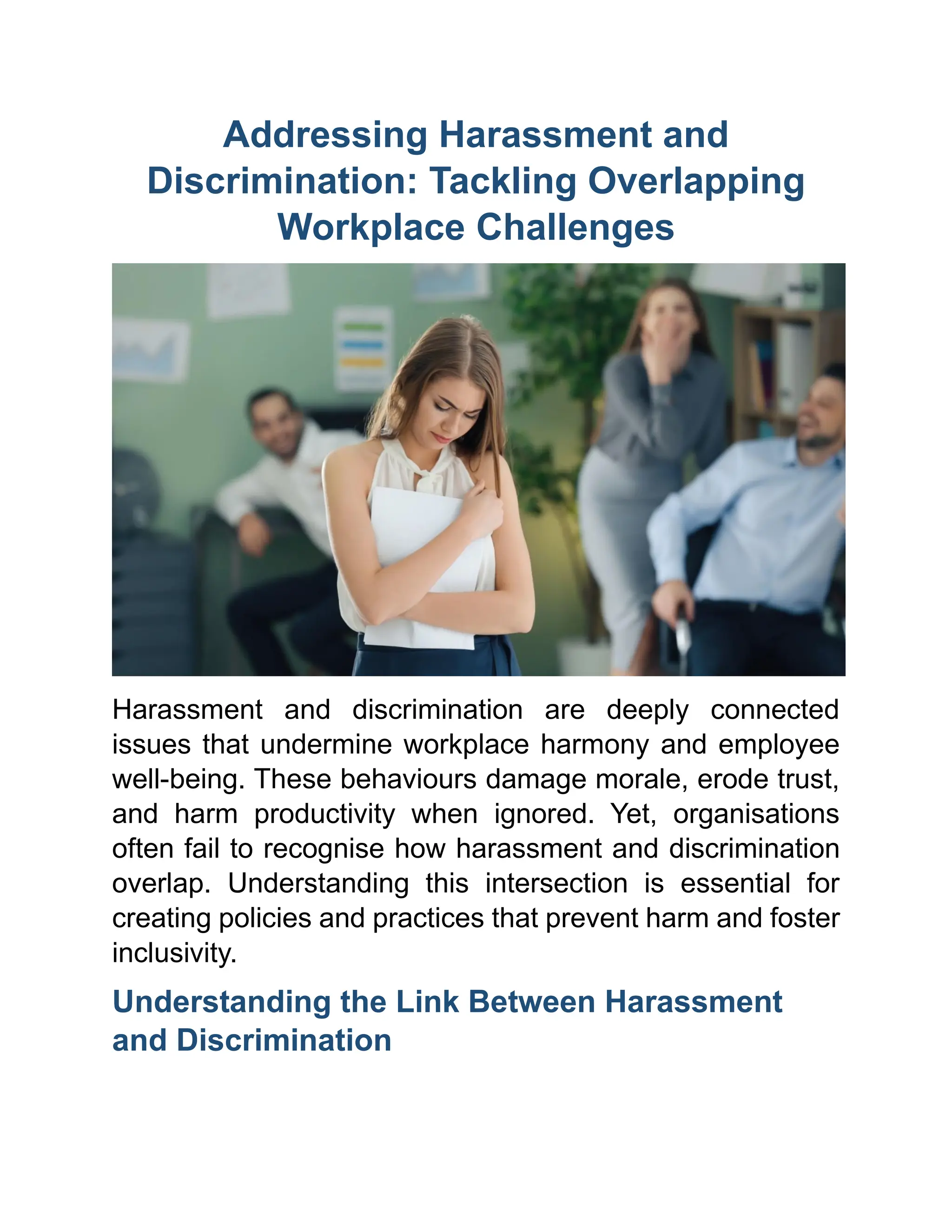
For instance, an employee excluded from projects due to
ethnicity may also face derogatory remarks or colleague
jokes. This overlap intensifies the harm, making it vital for
organisations to address both issues together. Recognising
this connection allows employers to tackle the root causes
of workplace inequities.
The Cost of Overlapping Behaviours
Harassment and discrimination don’t just harm individuals—they
impact entire teams and organisations. Employees subjected to
both often experience greater levels of stress, anxiety, and
disengagement. This results in:
• Reduced Productivity: Teams affected by exclusion and
hostility struggle to collaborate effectively.
• Higher Turnover Rates: Employees are more likely to leave
when they feel unsupported, increasing recruitment and
training costs.
• Reputational Damage: A workplace known for ignoring
harassment and discrimination risks losing talent and
credibility within its industry.
Addressing these issues proactively prevents long-term
consequences, creating a healthier and more efficient workplace.
Spotting Subtle Patterns
Harassment and discrimination aren’t always present as overt acts.
Subtle behaviours, such as microaggressions or implicit bias, often
go unnoticed but have significant impacts. Examples include:
• Excluding individuals from social or professional opportunities
based on assumptions about their background.
• Making casual comments or jokes that reinforce harmful
stereotypes.
• Overlooking certain employees for promotions despite their
qualifications.
These patterns may seem minor, but they contribute to a culture
where harmful behaviours persist. Recognising and addressing
subtle signs is a key step in preventing escalation.
Developing Comprehensive Policies
Effective policies address both harassment and discrimination as
interconnected issues. Organisations should prioritise policies that:
• Provide Clear Definitions: Include detailed examples of
behaviours that constitute harassment and discrimination.
• Outline Consequences: Specify the steps taken when
policies are violated, ensuring fairness and transparency.
• Encourage Reporting: Offer multiple confidential reporting
channels to make it easier for employees to come forward.
Updating policies to address the intersection of these behaviours
explicitly demonstrates an organisation’s commitment to protecting
its workforce.
Creating a Supportive Workplace Culture
Policies alone won’t eliminate harassment and discrimination—
they must be supported by a culture that values respect and
accountability. Steps to foster this culture include:
• Regular Training: Equip employees with the tools to identify
and address harmful behaviours. Include specific sessions on
recognising implicit bias and intervening as bystanders.
• Leadership Commitment: Leaders must actively model
inclusive behaviours, addressing issues swiftly and visibly.
• Open Dialogue: Create safe spaces for employees to
discuss workplace concerns, encouraging a culture of mutual
understanding.
A supportive culture helps prevent harmful behaviours while giving
employees confidence that their concerns will be addressed.
Providing Support for Affected Employees
Employees who experience harassment and discrimination often
need tailored support to feel safe and valued. Organisations
should:
• Offer access to mental health resources, such as counselling
or employee assistance programmes.
• Provide clear communication about how complaints are
handled to build trust.
• Ensure all employees, regardless of role, have equal access
to support.
Visible efforts to care for employees affected by these issues foster
loyalty and improve overall workplace morale.
Measuring Success Through Continuous
Improvement
Tackling harassment and discrimination requires ongoing
commitment. Organisations must regularly assess the
effectiveness of their policies and initiatives by:
• Gathering anonymous feedback from employees about
workplace culture.
• Tracking complaint trends to identify recurring issues or gaps.
• Adjusting policies and practices based on findings to ensure
continued progress.
Sharing updates about improvements demonstrates accountability
and reassures employees that their voices drive change.
Strengthening Workplaces by Addressing
Overlapping Issues
Acknowledging the connection between harassment and
discrimination allows organisations to address their shared causes
effectively. Employers create workplaces where respect and
equality thrive by combining strong policies with a supportive
culture. Proactive efforts protect employees and enhance
productivity, innovation, and morale.
FAQs
Why is it essential to address harassment and
discrimination together?
These behaviours often stem from the same biases and amplify
each other’s impact. Addressing them together ensures a more
comprehensive approach to creating a respectful workplace.
What are some early signs of overlapping harassment
and discrimination?
Subtle behaviours, such as excluding certain employees from
opportunities or making stereotypical comments, often signal
underlying issues. Identifying and addressing these patterns early
prevents escalation.
How can organisations support employees affected by
both harassment and discrimination?
Providing access to counselling, ensuring transparent
communication about complaints, and offering equal support to all
employees help rebuild trust and confidence for those affected.
© Tell Jane

Addressing Harassment and Discrimination - Tackling Overlapping Workplace Challenges.pdf

  • 1.
    Addressing Harassment and Discrimination:Tackling Overlapping Workplace Challenges Harassment and discrimination are deeply connected issues that undermine workplace harmony and employee well-being. These behaviours damage morale, erode trust, and harm productivity when ignored. Yet, organisations often fail to recognise how harassment and discrimination overlap. Understanding this intersection is essential for creating policies and practices that prevent harm and foster inclusivity. Understanding the Link Between Harassment and Discrimination
  • 2.
    Discrimination occurs whenindividuals are mistreated due to characteristics such as race, gender, age, or disability. Harassment often stems from the same biases, taking the form of unwanted behaviour that humiliates or intimidates. These issues frequently intersect, compounding their effects. For instance, an employee excluded from projects due to ethnicity may also face derogatory remarks or colleague jokes. This overlap intensifies the harm, making it vital for organisations to address both issues together. Recognising this connection allows employers to tackle the root causes of workplace inequities. The Cost of Overlapping Behaviours Harassment and discrimination don’t just harm individuals—they impact entire teams and organisations. Employees subjected to both often experience greater levels of stress, anxiety, and disengagement. This results in: • Reduced Productivity: Teams affected by exclusion and hostility struggle to collaborate effectively. • Higher Turnover Rates: Employees are more likely to leave when they feel unsupported, increasing recruitment and training costs. • Reputational Damage: A workplace known for ignoring harassment and discrimination risks losing talent and credibility within its industry. Addressing these issues proactively prevents long-term consequences, creating a healthier and more efficient workplace.
  • 3.
    Spotting Subtle Patterns Harassmentand discrimination aren’t always present as overt acts. Subtle behaviours, such as microaggressions or implicit bias, often go unnoticed but have significant impacts. Examples include: • Excluding individuals from social or professional opportunities based on assumptions about their background. • Making casual comments or jokes that reinforce harmful stereotypes. • Overlooking certain employees for promotions despite their qualifications. These patterns may seem minor, but they contribute to a culture where harmful behaviours persist. Recognising and addressing subtle signs is a key step in preventing escalation. Developing Comprehensive Policies Effective policies address both harassment and discrimination as interconnected issues. Organisations should prioritise policies that: • Provide Clear Definitions: Include detailed examples of behaviours that constitute harassment and discrimination. • Outline Consequences: Specify the steps taken when policies are violated, ensuring fairness and transparency. • Encourage Reporting: Offer multiple confidential reporting channels to make it easier for employees to come forward. Updating policies to address the intersection of these behaviours explicitly demonstrates an organisation’s commitment to protecting its workforce. Creating a Supportive Workplace Culture
  • 4.
    Policies alone won’teliminate harassment and discrimination— they must be supported by a culture that values respect and accountability. Steps to foster this culture include: • Regular Training: Equip employees with the tools to identify and address harmful behaviours. Include specific sessions on recognising implicit bias and intervening as bystanders. • Leadership Commitment: Leaders must actively model inclusive behaviours, addressing issues swiftly and visibly. • Open Dialogue: Create safe spaces for employees to discuss workplace concerns, encouraging a culture of mutual understanding. A supportive culture helps prevent harmful behaviours while giving employees confidence that their concerns will be addressed. Providing Support for Affected Employees Employees who experience harassment and discrimination often need tailored support to feel safe and valued. Organisations should: • Offer access to mental health resources, such as counselling or employee assistance programmes. • Provide clear communication about how complaints are handled to build trust. • Ensure all employees, regardless of role, have equal access to support. Visible efforts to care for employees affected by these issues foster loyalty and improve overall workplace morale. Measuring Success Through Continuous Improvement
  • 5.
    Tackling harassment anddiscrimination requires ongoing commitment. Organisations must regularly assess the effectiveness of their policies and initiatives by: • Gathering anonymous feedback from employees about workplace culture. • Tracking complaint trends to identify recurring issues or gaps. • Adjusting policies and practices based on findings to ensure continued progress. Sharing updates about improvements demonstrates accountability and reassures employees that their voices drive change. Strengthening Workplaces by Addressing Overlapping Issues Acknowledging the connection between harassment and discrimination allows organisations to address their shared causes effectively. Employers create workplaces where respect and equality thrive by combining strong policies with a supportive culture. Proactive efforts protect employees and enhance productivity, innovation, and morale. FAQs Why is it essential to address harassment and discrimination together? These behaviours often stem from the same biases and amplify each other’s impact. Addressing them together ensures a more comprehensive approach to creating a respectful workplace. What are some early signs of overlapping harassment and discrimination?
  • 6.
    Subtle behaviours, suchas excluding certain employees from opportunities or making stereotypical comments, often signal underlying issues. Identifying and addressing these patterns early prevents escalation. How can organisations support employees affected by both harassment and discrimination? Providing access to counselling, ensuring transparent communication about complaints, and offering equal support to all employees help rebuild trust and confidence for those affected. © Tell Jane