Addressing Poverty: A
ComprehensiveApproach
This document presents a detailed situational analysis, causal model, strategic approach, and a
comprehensive set of interventions to effectively address the complex challenge of poverty. By taking a
multifaceted and evidence-based approach, we aim to develop sustainable solutions that empower
individuals, strengthen communities, and create lasting positive change.
by Farmanullah Khan
2.
Situational Analysis
The situationalanalysis provides a deep understanding of the factors contributing to poverty in the target
region. Key findings include the prevalence of low-wage jobs, lack of access to education and skills training,
inadequate healthcare infrastructure, and high rates of food insecurity and homelessness. Additionally,
systemic inequities and discrimination based on race, gender, and socioeconomic status have exacerbated
the challenges faced by marginalized communities. This holistic assessment lays the foundation for a
strategic, multi-pronged approach to address the root causes of poverty.
3.
Causal Model
1 Unemploymentand
Underemployment
Limited access to well-paying jobs and job
opportunities, leading to financial instability
and an inability to afford basic necessities.
2 Lack of Education and Skills
Insufficient access to quality education and
skills training, hindering social mobility and
limiting economic opportunities.
3 Health Disparities
Inadequate healthcare infrastructure and
barriers to accessing affordable, quality
healthcare, contributing to poor health
outcomes and financial burdens.
4 Systemic Inequities
Entrenched societal biases and
discriminatory policies that perpetuate
disparities in wealth, resources, and
opportunities for marginalized communities.
4.
Strategic Approach
Our strategicapproach to addressing poverty encompasses a multifaceted
and evidence-based framework that targets the root causes identified in the
causal model. This approach focuses on three key pillars: economic
empowerment, social inclusion, and community resilience. By investing in
initiatives that create sustainable livelihoods, improve access to essential
services, and foster collaborative partnerships, we aim to break the cycle of
poverty and promote long-term, holistic well-being for individuals and
communities.
5.
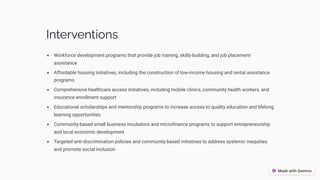
Interventions
Workforce development programsthat provide job training, skills-building, and job placement
assistance
Affordable housing initiatives, including the construction of low-income housing and rental assistance
programs
Comprehensive healthcare access initiatives, including mobile clinics, community health workers, and
insurance enrollment support
Educational scholarships and mentorship programs to increase access to quality education and lifelong
learning opportunities
Community-based small business incubators and microfinance programs to support entrepreneurship
and local economic development
Targeted anti-discrimination policies and community-based initiatives to address systemic inequities
and promote social inclusion
6.
Feasibility Matrix
Intervention ImpactCost Feasibility
Workforce
Development
High Medium High
Affordable Housing High High Medium
Healthcare Access High High Medium
Educational
Scholarships
High Medium High
Small Business
Incubators
Medium Medium High
Anti-Discrimination
Initiatives
High Low High
7.
Preventive Goals
Reducing
Unemployment
Implement comprehensive
workforcedevelopment
programs to increase access to
well-paying jobs and expand
economic opportunities for
individuals and communities.
Improving Educational
Outcomes
Invest in quality education and
skills training initiatives to
empower individuals, promote
social mobility, and break the
intergenerational cycle of
poverty.
Enhancing Healthcare
Access
Strengthen the healthcare
infrastructure and ensure
equitable access to affordable,
quality healthcare services to
improve overall health and well-
being.
8.
Proposed Interventions
Job Trainingand Placement
Implement comprehensive workforce
development programs that provide job
training, skills-building, and job placement
assistance to help individuals secure
sustainable livelihoods.
Affordable Housing
Develop and expand affordable housing
initiatives, including the construction of low-
income housing and rental assistance
programs, to ensure access to stable and
affordable living conditions.
Community-Based Healthcare
Establish community-based healthcare
initiatives, such as mobile clinics and
community health worker programs, to improve
access to quality and affordable healthcare
services.
Educational Scholarships
Provide educational scholarships and
mentorship programs to increase access to
quality education and lifelong learning
opportunities, empowering individuals to
achieve social and economic mobility.
9.
Final Recommendations
By implementinga comprehensive and evidence-based approach that
addresses the root causes of poverty, we can create sustainable and
transformative change. The proposed interventions, spanning economic
empowerment, social inclusion, and community resilience, are designed to
work in harmony to break the cycle of poverty and promote holistic well-
being. Through robust partnerships, community engagement, and continuous
monitoring and evaluation, we are confident in our ability to make a lasting
positive impact and improve the lives of those affected by poverty.




![[English Version]Maker-Ray Product Brochure V3 .pdf](https://cdn.slidesharecdn.com/ss_thumbnails/englishversionmaker-rayproductbrochurev3-260113094444-0156dbdc-thumbnail.jpg?width=640&height=640&fit=bounds)


