DR AADHANARVEE M
FIRST YEAR PG
M6 UNIT- PROF DR A SAMUEL DINESH MD
MMC AND RGGGH
ACUTE VIRAL
HEPATITIS
TABLE OF CONTENTS
DEFINITION
01
CAUSES
02
PATHOLOGY
03 Y
TREATMENT AND
PROPHYLAXIS
04
Acute Hepatitis
• Acute hepatitis implies a recent onset
inflammatory condition of the liver lasting
less than 6 months.
• Can either culminate in complete resolution
and return to normal function or progress to
extensive necrosis
• CAUSES:
1. Viral
2. Drugs(DILI)
3. Alcohol
4. Autoimmune hepatitis
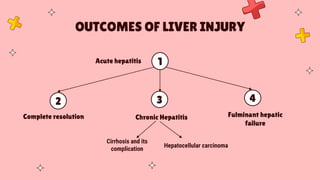
OUTCOMES OF LIVER INJURY
1
Acute hepatitis
3
Hepatocellular carcinoma
Complete resolution
2
Cirrhosis and its
complication
Chronic Hepatitis
4
Fulminant hepatic
failure
HEPATITIS A
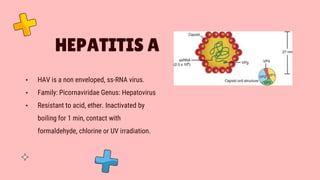
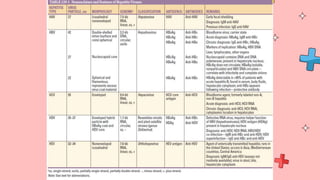
• HAV is a non enveloped, ss-RNA virus.
• Family: Picornaviridae Genus: Hepatovirus
• Resistant to acid, ether. Inactivated by
boiling for 1 min, contact with
formaldehyde, chlorine or UV irradiation.
MODES OF TRANSMISSION
HAV:
• Person to Person contact:
1. Transmission within households, hospitals, daycare centers, hospitals via
feco oral route.
2. Sexual transmission
• Contact with contaminated food and water:
1. Consumption of raw or undercooked vegetables, shell fish.
2. Contamination of food by infected food handlers
• Illicit drug use
• Blood transfusion
PATHOGENESIS
• Viral replication occurs in the cytoplasm of hepatocytes.
• CD-8 lymphocytes mediated damage and destruction of infected
hepatocytes.
• The degree of host response determines the severity of hepatitis and
the magnitude of derangement in laboratory parameters.
• Interferon gamma plays a central role in promoting the clearance of
infected hepatocytes.
• HAV is a self-limiting disease. The degree of symptoms depends on the age of the patient. Only 30% of infected children
are symptomatic whereas 80% of adults show symtoms.
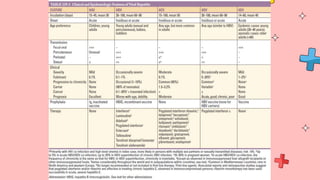
• Incubation period: 15 to 45 days (4weeks)
1. PRODROMAL STAGE/ANICTERIC PHASE: (1-2 WEEKS)
Characterized by constitutional symptoms like anorexia, nausea and vomiting, fatigue, malaise, arthralgias, myalgias,
headache.
A low grade fever may be present especially in HAV and HEV.
2. ICTERIC PHASE:
With the onset of clinical jaundice, the constitutional symptoms disappear. The patients usually present at this
stage. On examination, a right upper quadrant tenderness with hepatomegaly is present. A small number of patients may
have splenomegaly and arthralgia with rash. Pale coloured stools and dark coloured urine precede the icteric phase by 1 to
5 days.
3. POST ICTERIC PHASE: (2 TO 12 WEEKS):
Constitutional symptoms disappear, jaundice disappear and
CLINICAL FEATURES
COMPLICATIONS
â—Ź FULMINANT HEPATIC FAILURE:
Occurs in less than 1% cases characterized by acute encephalopathy and coagulopathy. Risk
factors include age >50 years and pre-existing liver disease, most commonly chronic hepatitis C.
â—Ź CHOLESTATIC HEPATITIS:
Occurs in less than 5% of cases. characterized by marked jaundice lasting >3 months, pruritus,
fever, weight loss, diarrhea, and malaise.
â—Ź RELAPSING HEPATITIS:
Upto 10% of patients experience a relapse during the initial 6 months after the acute episode. The
duration of relapse is usually around 3 weeks and the severity is mild compared to the initial illness. HAV
can be recovered from stool during relapse episodes, so such patients should be considered infectious.
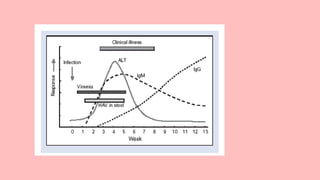
â—Ź The diagnosis is established by detection of serum IgM anti-HAV antibodies.
Serum IgM antibodies are detectable at the time of symptom onset, peak
during the acute or early convalescent phase of the disease, and remain
detectable for approximately three to six months,
â—Ź Among patients with relapsing hepatitis, serum IgM antibodies persist for the
duration of this disease.
â—Ź Serum IgG antibodies appear early in the convalescent phase of the disease,
remain detectable for decades, and are associated with lifelong protective
immunity
DIAGNOSIS
â—Ź Acute HAV is a self limiting condition that requires only supportive care.
â—Ź Two types of vaccines are available for prophylaxis:
1. Single antigen inactivated Hepatitis A vaccine
2. Live attenuated vaccine which is available in India
â—Ź WHO recommends vaccination strategy based on the local endemicity of the disease and not
routinely in the vaccination schedule of all countries.
TREATMENT And PROPHYLAXIS
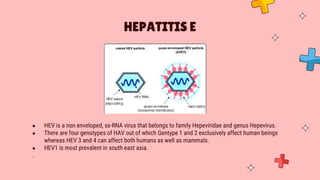
â—Ź HEV is a non enveloped, ss-RNA virus that belongs to family Hepeviridae and genus Hepevirus.
â—Ź There are four genotypes of HAV out of which Gentype 1 and 2 exclusively affect human beings
whereas HEV 3 and 4 can affect both humans as well as mammals.
â—Ź HEV1 is most prevalent in south east asia.
.
HEPATITIS E
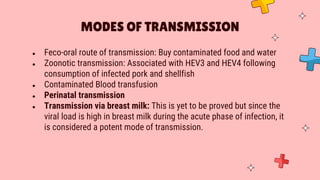
â—Ź Feco-oral route of transmission: Buy contaminated food and water
â—Ź Zoonotic transmission: Associated with HEV3 and HEV4 following
consumption of infected pork and shellfish
â—Ź Contaminated Blood transfusion
â—Ź Perinatal transmission
â—Ź Transmission via breast milk: This is yet to be proved but since the
viral load is high in breast milk during the acute phase of infection, it
is considered a potent mode of transmission.
MODES OF TRANSMISSION
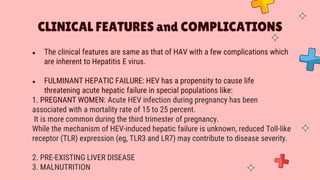
â—Ź The clinical features are same as that of HAV with a few complications which
are inherent to Hepatitis E virus.
â—Ź FULMINANT HEPATIC FAILURE: HEV has a propensity to cause life
threatening acute hepatic failure in special populations like:
1. PREGNANT WOMEN: Acute HEV infection during pregnancy has been
associated with a mortality rate of 15 to 25 percent.
It is more common during the third trimester of pregnancy.
While the mechanism of HEV-induced hepatic failure is unknown, reduced Toll-like
receptor (TLR) expression (eg, TLR3 and LR7) may contribute to disease severity.
2. PRE-EXISTING LIVER DISEASE
3. MALNUTRITION
CLINICAL FEATURES and COMPLICATIONS
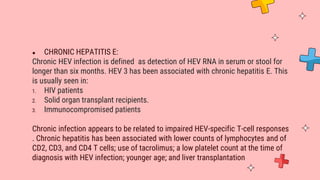
â—Ź CHRONIC HEPATITIS E:
Chronic HEV infection is defined as detection of HEV RNA in serum or stool for
longer than six months. HEV 3 has been associated with chronic hepatitis E. This
is usually seen in:
1. HIV patients
2. Solid organ transplant recipients.
3. Immunocompromised patients
Chronic infection appears to be related to impaired HEV-specific T-cell responses
. Chronic hepatitis has been associated with lower counts of lymphocytes and of
CD2, CD3, and CD4 T cells; use of tacrolimus; a low platelet count at the time of
diagnosis with HEV infection; younger age; and liver transplantation
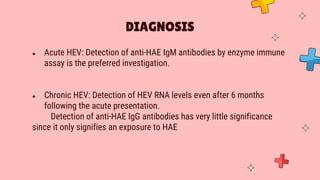
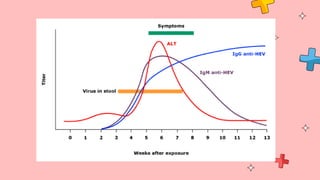
â—Ź Acute HEV: Detection of anti-HAE IgM antibodies by enzyme immune
assay is the preferred investigation.
â—Ź Chronic HEV: Detection of HEV RNA levels even after 6 months
following the acute presentation.
Detection of anti-HAE IgG antibodies has very little significance
since it only signifies an exposure to HAE
DIAGNOSIS
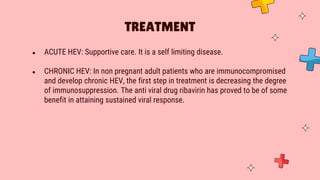
â—Ź ACUTE HEV: Supportive care. It is a self limiting disease.
â—Ź CHRONIC HEV: In non pregnant adult patients who are immunocompromised
and develop chronic HEV, the first step in treatment is decreasing the degree
of immunosuppression. The anti viral drug ribavirin has proved to be of some
benefit in attaining sustained viral response.
TREATMENT
acute viral hepatitis.pptx

acute viral hepatitis.pptx

  • 1.
    DR AADHANARVEE M FIRSTYEAR PG M6 UNIT- PROF DR A SAMUEL DINESH MD MMC AND RGGGH ACUTE VIRAL HEPATITIS
  • 2.
  • 3.
    Acute Hepatitis • Acutehepatitis implies a recent onset inflammatory condition of the liver lasting less than 6 months. • Can either culminate in complete resolution and return to normal function or progress to extensive necrosis • CAUSES: 1. Viral 2. Drugs(DILI) 3. Alcohol 4. Autoimmune hepatitis
  • 4.
    OUTCOMES OF LIVERINJURY 1 Acute hepatitis 3 Hepatocellular carcinoma Complete resolution 2 Cirrhosis and its complication Chronic Hepatitis 4 Fulminant hepatic failure
  • 5.
    HEPATITIS A • HAVis a non enveloped, ss-RNA virus. • Family: Picornaviridae Genus: Hepatovirus • Resistant to acid, ether. Inactivated by boiling for 1 min, contact with formaldehyde, chlorine or UV irradiation.
  • 6.
    MODES OF TRANSMISSION HAV: •Person to Person contact: 1. Transmission within households, hospitals, daycare centers, hospitals via feco oral route. 2. Sexual transmission • Contact with contaminated food and water: 1. Consumption of raw or undercooked vegetables, shell fish. 2. Contamination of food by infected food handlers • Illicit drug use • Blood transfusion
  • 7.
    PATHOGENESIS • Viral replicationoccurs in the cytoplasm of hepatocytes. • CD-8 lymphocytes mediated damage and destruction of infected hepatocytes. • The degree of host response determines the severity of hepatitis and the magnitude of derangement in laboratory parameters. • Interferon gamma plays a central role in promoting the clearance of infected hepatocytes.
  • 8.
    • HAV isa self-limiting disease. The degree of symptoms depends on the age of the patient. Only 30% of infected children are symptomatic whereas 80% of adults show symtoms. • Incubation period: 15 to 45 days (4weeks) 1. PRODROMAL STAGE/ANICTERIC PHASE: (1-2 WEEKS) Characterized by constitutional symptoms like anorexia, nausea and vomiting, fatigue, malaise, arthralgias, myalgias, headache. A low grade fever may be present especially in HAV and HEV. 2. ICTERIC PHASE: With the onset of clinical jaundice, the constitutional symptoms disappear. The patients usually present at this stage. On examination, a right upper quadrant tenderness with hepatomegaly is present. A small number of patients may have splenomegaly and arthralgia with rash. Pale coloured stools and dark coloured urine precede the icteric phase by 1 to 5 days. 3. POST ICTERIC PHASE: (2 TO 12 WEEKS): Constitutional symptoms disappear, jaundice disappear and CLINICAL FEATURES
  • 10.
    COMPLICATIONS â—Ź FULMINANT HEPATICFAILURE: Occurs in less than 1% cases characterized by acute encephalopathy and coagulopathy. Risk factors include age >50 years and pre-existing liver disease, most commonly chronic hepatitis C. â—Ź CHOLESTATIC HEPATITIS: Occurs in less than 5% of cases. characterized by marked jaundice lasting >3 months, pruritus, fever, weight loss, diarrhea, and malaise. â—Ź RELAPSING HEPATITIS: Upto 10% of patients experience a relapse during the initial 6 months after the acute episode. The duration of relapse is usually around 3 weeks and the severity is mild compared to the initial illness. HAV can be recovered from stool during relapse episodes, so such patients should be considered infectious.
  • 11.
    â—Ź The diagnosisis established by detection of serum IgM anti-HAV antibodies. Serum IgM antibodies are detectable at the time of symptom onset, peak during the acute or early convalescent phase of the disease, and remain detectable for approximately three to six months, â—Ź Among patients with relapsing hepatitis, serum IgM antibodies persist for the duration of this disease. â—Ź Serum IgG antibodies appear early in the convalescent phase of the disease, remain detectable for decades, and are associated with lifelong protective immunity DIAGNOSIS
  • 12.
    â—Ź Acute HAVis a self limiting condition that requires only supportive care. â—Ź Two types of vaccines are available for prophylaxis: 1. Single antigen inactivated Hepatitis A vaccine 2. Live attenuated vaccine which is available in India â—Ź WHO recommends vaccination strategy based on the local endemicity of the disease and not routinely in the vaccination schedule of all countries. TREATMENT And PROPHYLAXIS
  • 13.
    â—Ź HEV isa non enveloped, ss-RNA virus that belongs to family Hepeviridae and genus Hepevirus. â—Ź There are four genotypes of HAV out of which Gentype 1 and 2 exclusively affect human beings whereas HEV 3 and 4 can affect both humans as well as mammals. â—Ź HEV1 is most prevalent in south east asia. . HEPATITIS E
  • 14.
    â—Ź Feco-oral routeof transmission: Buy contaminated food and water â—Ź Zoonotic transmission: Associated with HEV3 and HEV4 following consumption of infected pork and shellfish â—Ź Contaminated Blood transfusion â—Ź Perinatal transmission â—Ź Transmission via breast milk: This is yet to be proved but since the viral load is high in breast milk during the acute phase of infection, it is considered a potent mode of transmission. MODES OF TRANSMISSION
  • 15.
    â—Ź The clinicalfeatures are same as that of HAV with a few complications which are inherent to Hepatitis E virus. â—Ź FULMINANT HEPATIC FAILURE: HEV has a propensity to cause life threatening acute hepatic failure in special populations like: 1. PREGNANT WOMEN: Acute HEV infection during pregnancy has been associated with a mortality rate of 15 to 25 percent. It is more common during the third trimester of pregnancy. While the mechanism of HEV-induced hepatic failure is unknown, reduced Toll-like receptor (TLR) expression (eg, TLR3 and LR7) may contribute to disease severity. 2. PRE-EXISTING LIVER DISEASE 3. MALNUTRITION CLINICAL FEATURES and COMPLICATIONS
  • 16.
    â—Ź CHRONIC HEPATITISE: Chronic HEV infection is defined as detection of HEV RNA in serum or stool for longer than six months. HEV 3 has been associated with chronic hepatitis E. This is usually seen in: 1. HIV patients 2. Solid organ transplant recipients. 3. Immunocompromised patients Chronic infection appears to be related to impaired HEV-specific T-cell responses . Chronic hepatitis has been associated with lower counts of lymphocytes and of CD2, CD3, and CD4 T cells; use of tacrolimus; a low platelet count at the time of diagnosis with HEV infection; younger age; and liver transplantation
  • 17.
    â—Ź Acute HEV:Detection of anti-HAE IgM antibodies by enzyme immune assay is the preferred investigation. â—Ź Chronic HEV: Detection of HEV RNA levels even after 6 months following the acute presentation. Detection of anti-HAE IgG antibodies has very little significance since it only signifies an exposure to HAE DIAGNOSIS
  • 19.
    â—Ź ACUTE HEV:Supportive care. It is a self limiting disease. â—Ź CHRONIC HEV: In non pregnant adult patients who are immunocompromised and develop chronic HEV, the first step in treatment is decreasing the degree of immunosuppression. The anti viral drug ribavirin has proved to be of some benefit in attaining sustained viral response. TREATMENT