Activity Based Management Improving Processes And Profitability Brian Plowman
Activity Based Management Improving Processes And Profitability Brian Plowman
Activity Based Management Improving Processes And Profitability Brian Plowman
Activity Based Management Improving Processes And Profitability Brian Plowman
Activity Based Management Improving Processes And Profitability Brian Plowman
1.
Activity Based ManagementImproving Processes
And Profitability Brian Plowman download
https://ebookbell.com/product/activity-based-management-
improving-processes-and-profitability-brian-plowman-51343674
Explore and download more ebooks at ebookbell.com
2.
Here are somerecommended products that we believe you will be
interested in. You can click the link to download.
Activitybased Management For Financial Institutions Driving Bottomline
Results Brent J Bahnub
https://ebookbell.com/product/activitybased-management-for-financial-
institutions-driving-bottomline-results-brent-j-bahnub-2290428
Getting Started With Sas Activitybased Management 64 Second Edition
2nd Edition Sas Publishing
https://ebookbell.com/product/getting-started-with-sas-activitybased-
management-64-second-edition-2nd-edition-sas-publishing-2193468
Supply Chain Cost Control Using Activitybased Management Supply Chain
Integration 1st Edition Sameer Kumar
https://ebookbell.com/product/supply-chain-cost-control-using-
activitybased-management-supply-chain-integration-1st-edition-sameer-
kumar-1720904
Activitybased Cost Management An Executives Guide 1st Edition Gary
Cokins
https://ebookbell.com/product/activitybased-cost-management-an-
executives-guide-1st-edition-gary-cokins-1626622
3.
Activitybased Cost AndEnvironmental Management A Different Approach
To Iso 14000 Compliance 1st Edition Jan Emblemsvg
https://ebookbell.com/product/activitybased-cost-and-environmental-
management-a-different-approach-to-iso-14000-compliance-1st-edition-
jan-emblemsvg-4264874
Implementing Management Innovations Lessons Learned From Activity
Based Costing In The Us Automobile Industry 1st Edition Shannon W
Anderson
https://ebookbell.com/product/implementing-management-innovations-
lessons-learned-from-activity-based-costing-in-the-us-automobile-
industry-1st-edition-shannon-w-anderson-4265056
Activitybased Protein Profiling 1st Edition Matthew B Nodwell
https://ebookbell.com/product/activitybased-protein-profiling-1st-
edition-matthew-b-nodwell-2582420
Activity Based Costing For Construction Companies Yongwoo Kim
https://ebookbell.com/product/activity-based-costing-for-construction-
companies-yongwoo-kim-5634038
Activitybased Proteomics Methods And Protocols 1st Edition Herman S
Overkleeft
https://ebookbell.com/product/activitybased-proteomics-methods-and-
protocols-1st-edition-herman-s-overkleeft-5674982
Contents
List of figuresand tables xi
Foreword xv
1 Introduction 1
Customers 1
The twenty-first century is electronic 2
The missing dimension 2
Can all customers be kings? 3
Activity Based Management 4
Key points 5
Part I The Context
2 Historical perspective 9
The first serious questions 9
New costing approaches gather pace 10
Key points 11
3 What is ABM? 13
Costing and profitability 13
Process improvement 16
Key points 17
4 Frameworks for measurement and
improvement 19
The Balanced Scorecard 19
The Business Excellence Model 21
Shareholder Value Added 22
Positioning and capability 22
Key points 25
v
Contents 9/24/01 2:59 PM Page v
10.
5 The ABMframework 27
Traditional resource accounting 27
ABM versus traditional treatments of costs 31
Key points 50
Part II ABM in Practice
6 The ABM flow of costs 55
Resources 56
Functions 56
Activities and drivers 57
Products, channels and customers 59
Infrastructure and sustaining costs 62
Product and customer profitability 64
Attribute analysis 65
Processes and process improvement 65
Embedding the model 67
Key points 68
7 The basic principles of building models 71
The flow of costs in the model 71
The general ledger 75
Categories of costs and activities 75
Assigning costs from the general ledger 76
Understanding cost drivers 79
Cost driver variability 82
Activity data 84
Assigning costs from the ledger to activities 85
Reassigning internal service department costs
to other departments 86
Reassigning IT department costs to other
departments 87
Product and customer profitability 88
Using unit costs for analysis 90
Key points 92
8 Undertaking an ABM project 95
Objectives of the project 95
Key steps 96
Areas of potential difficulty 98
Software 99
Team resources 100
CONTENTS
vi
Contents 9/24/01 2:59 PM Page vi
11.
Use of consultants100
Embedding and refreshing 101
Using ABM outputs for performance improvement 102
Using ABM for commercial decision support 103
Key points 105
9 Integrating improvement approaches 107
ABM and Business Process Re-engineering 107
ABM and Value Based Management 111
ABM and Customer Relationship Management 114
Key points 115
Part III Case Studies
10 How ABM made a difference: lessons from
case studies 119
A manufacturing company: distortions caused by
costing using Overhead Recovery Rates 120
A manufacturing company: understanding
overheads makes a real difference to product
costs 122
A printing company: tunnelling deeper uncovers
the real drivers of cost 125
A finance company: breaking out one-off costs
from recurring costs 127
A trading company: the costs of different
customer relationships vary 129
A fast-moving consumer goods company: activity
data can highlight process failures 131
A retail chain company: a flawed internal charging
mechanism can have severe consequences 134
A merchant bank: proper costing and charging
for central support or shared services removes
the angst in the relationship with business
divisions 136
A Head Office function: activity and value-for-
money analysis create enhanced effectiveness 138
An IT services division: achieving a proper basis
for costing and charging IT services 141
A utility company: selling off the IT services
function meant understanding the dynamics
of the new business 145
CONTENTS
vii
Contents 9/24/01 2:59 PM Page vii
12.
A courier company:the devil is in the detail,
which is only known by the people doing the
work 150
A manufacturing and technical services company:
a simple pricing mechanism masks complex
and costly customer relationships 153
A wholesale and distribution company: treating
major costs as fixed masked the real differences
in customer profitability 157
A manufacturing company: an increasing number
and changing mix of distributors eroded
profitability 159
A bakery company: when margins are small,
detailed analysis is required to unravel the
complexities of many different products going
to many different customers 163
A university: the real costs of ‘products’ and
‘customers’ remained invisible in the
conventional management information
system 167
An airline company: seeing costs from different
business perspectives helps optimize corporate
performance 170
A power generation equipment manufacturing
company: a focus on profitability rather than
volume highlighted process failures and better
market opportunities 172
A merchanting company: customer profitability
analysis exposed poor performance measures
that were eroding profits 177
A global manufacturer and supplier of orthopaedic
implants and surgical instrumentation: when
the profitable segments are found, enhancing
service levels helps to retain customers 182
A specialist distribution company: uncovering
the complexity of having many suppliers of
many products going to many customers 186
An advertising directory company: better
information to support product costing,
customer profitability, benchmarking and
process improvement 191
CONTENTS
viii
Contents 9/24/01 2:59 PM Page viii
13.
A high streetretailing company: subtle changes
can make dramatic improvements 196
An electricity supply company: uncovering the
true impact on profitability of the behaviour
of millions of customers 200
Part IV Conclusions
11 Pulling it all together 207
ABM comes of age 207
ABM brings a different perspective 208
Making ABM happen 209
ABM does make a difference 210
Appendix: Glossary of terms 211
Index 227
CONTENTS
ix
Contents 9/24/01 2:59 PM Page ix
List of figuresand tables
FIGURES
3.1 ABM Product and Customer Contributions 15
4.1 The four perspectives of the Balanced Scorecard 20
4.2 The nine elements of the Business Excellence Model 21
4.3 The journey of change 23
5.1 Conventional product costing 33
5.2 Comparing product costing methods 34
5.3 The cumulative product contribution curve 35
5.4 The cumulative customer contribution curve 37
5.5 Customer contribution and volume 38
5.6 Product contribution and volume 39
5.7 The purchasing process 43
5.8 Use of time in a sales process 46
6.1 Overall flow of costs 55
6.2 Resources on the ledger 56
6.3 Functions and activity categories 57
6.4 Assigning resources to activities 58
6.5 Reassigning an internal service (for example, training) 59
6.6 Assigning activities to cost objects (for example, products) 60
6.7 Assigning activities to cost objects (for example, customers) 61
6.8 Assigning activities to cost objects (for example, sustaining and
infrastructure) 63
6.9 Activity attributes 66
6.10 The complete ABM model 67
7.1 The cascade of assignments in an ABM model 72
7.2 Cost pools 77
7.3 Categorizing costs 79
7.4 Levels of detail to collect activity data 84
xi
List of figs 9/24/01 3:00 PM Page xi
16.
7.5 Activity andtime data 85
7.6 The multi-stage process to assign IT costs 88
7.7 Cumulative costs: best and worst case 91
7.8 An event chart 91
9.1 The two steps of the BPR journey 108
10.1 The impact of set-up times 122
10.2 Assigning costs using cost driver volumes 123
10.3 Old and new basis to assign costs 135
10.4 Use of time by activity attribute 139
10.5 Cost of servicing the user applications 142
10.6 Cost of solving problems 143
10.7 Drivers of IT costs 146
10.8 A rate card for IT services 147
10.9 Cumulative profitability by region 154
10.10 Country and customer profitability 154
10.11 Cumulative customer contribution 158
10.12 The revenue cascade 159
10.13 The order satisfaction process 161
10.14 The cost of a product 164
10.15 The cost of a customer 164
10.16 The cost of a typical Law student 168
10.17 An airline’s costs 170
10.18 The old plan to double the business 175
10.19 The new strategy to double profitability 175
10.20 Cumulative trading and gross profit 178
10.21 Cumulative product group profitability 182
10.22 Cumulative customer contribution 183
10.23 The new salesforce strategy 184
10.24 Breakdown of logistics costs 186
10.25 The potential for further cost savings 188
10.26 Cost to produce directories 193
10.27 Benchmarking and searching for best practice 194
10.28 Unit costs focus on process failures and customer behaviours 195
10.29 Retail store profit per square metre 197
10.30 Planning a new strategy for the retail store 199
10.31 Cumulative profitability of domestic customers 200
10.32 Activities quickly erode profitability to zero 201
LIST OF FIGURES AND TABLES
xii
List of figs 9/24/01 3:00 PM Page xii
17.
TABLES
7.1 Example ofa simple ledger 77
8.1 ABM process checklist 96
LIST OF FIGURES AND TABLES
xiii
List of figs 9/24/01 3:00 PM Page xiii
Foreword
The battle tosustain and increase corporate profitability grows ever more arduous
in most sectors of the economy. Margins are caught in a pincer movement by, on
the one hand, the steady improvement in competition and, on the other, the
increasing awareness of customers. Things are ever changing. Now we see more
businesses moving into the e-world. This has provided major opportunities to
increase business, but comes at a price. From aware customers comes the
demand for lower prices; a share of the lower costs assumed to come from doing
e-business.
There is no room for complacency. We need to grasp every opportunity not only
to be ever more effective at what we do, but also to be truly competitive, winning
more market share of the customers both nationally and globally. For success, a
full understanding of costs and cost structures is necessary. Conventional account-
ing and management reporting throw little light on the real cost dynamics in a
business. As a result we are not in control of profitability at a level of detail that
supports substantive decision-making.
Activity Based Management (ABM) is an approach that has now come of age.
ABM is not a technique; it is about management. ABM needs to be understood
and implemented by all functions so its power can be unleashed and the benefits
obtained.
Over time, ABM has evolved considerably and is now being applied in manu-
facturing, service companies, utilities, logistics, telecommunications, government
bodies and many other sectors. With ABM, businesses can make dramatic
improvements in measuring product and process costs, and more importantly
customer profitability.
Brian Plowman has created a reader-friendly, comprehensive narrative covering
the key aspects of the theory and practice of ABM. Executives and managers in all
functions in all types of organizations, as well as students, will appreciate this
book’s practical and down-to-earth approach with many practical illustrations
drawn from experience.
xv
Foreword 9/24/01 3:02 PM Page xv
20.
As well asstep-by-step guidance on basic principles, comparisons with tradi-
tional methods, definitions of processes, activities, cost-drivers, data collection
techniques and implementation steps, this book uses numerous detailed examples
drawn from practice to build a logical picture of how to obtain the benefits of ABM.
On its own, ABM help will change management decision-making. By under-
standing how ABM also supports other profit improvement initiatives such as
Business Process Reengineering, Shareholder Value Added and Customer
Relationship Management, managers will learn how they can have the best
possible toolkit to help put the business firmly on the road to leaps in profitability.
This book should be required reading for anyone within an organization who
has the responsibility to grow their business profitably.
Professor Michael Bromwich
CIMA Professor of Accounting
Department of Accounting and Finance
London School of Economics
FOREWORD
xvi
Foreword 9/24/01 3:02 PM Page xvi
21.
1 Introduction
CUSTOMERS
We knowthat customers are important to us. But even when we achieve the right
orientation towards customers, we know, instinctively, that some customers are
more profitable than others. We also know that some are probably loss-making.
For some businesses, this doesn’t matter much. If margins are good enough, for
whatever reason (a captive market, or a patent, or regulatory protection, and so
on), overall profitability is sufficient. But few businesses have that luxury.
We may also have some idea of which customers are the least profitable, and
which are the most profitable. A walk around the business listening to anecdotes
in different departments will tell us which customers are demanding of time and
effort and cost: these are the customers who order unpredictably, amend their
orders, change specifications at the last minute, delay payment, require special
deliveries, and so on. Every department will have its own, separate experiences of
customer behaviour. Nobody will have the whole picture. So anecdotal evidence
will pick up the extremes – the ‘worst’ and the ‘best’ customers. What about the
others?
Customer profitability is a black hole in most managers’ understanding of their
business. Identifying customer revenue is easy: it’s shown in the sales ledger.
Identifying what individual customers cost – so we can understand whether or not
they are profitable – is difficult. In a world in which competition, and often regula-
tion, put increasing pressure on margins, it is vital to understand both product and
customer profitability.
As if competition were not enough to put pressure on margins, electronic
commerce (e-commerce) promises lower unit costs and creates customer expec-
tations of lower prices.
1
Chapter 01 9/24/01 3:03 PM Page 1
22.
THE TWENTY-FIRST CENTURYIS ELECTRONIC
Technology advances, rapidly. Now companies can record and process all avail-
able facts about their customers, logging their every purchase and preference,
storing details of each transaction and interaction – be it through call-centre,
e-mail or post. If customers visit a Web site, a company can know their every key-
stroke and click. And it is possible to analyse the information to death. If the
marketeers have got it right, they can predict customers’ every need and antici-
pate their every whim. Web routings, pages and menus can be programmed to
reflect the history of the customer and the actions taken on-line. Just like good
salespeople, but at a fraction of the cost, they can package and price offers not to
target a niche, but an individual. Welcome to the world of one-to-one marketing.
Buying decisions become quicker and easier because customers are proposi-
tioned only with what they find attractive, in a process they judge convenient, safe
and painless. Soon customers will have forgotten how on earth they managed in
the scrum of mass marketing when they had to do the donkey work. And on top of
all this, sales costs plummet as the need for expensive salespeople and high street
outlets, and for slow-turning showroom stock, disappears.
It is enough to make a chief executive salivate. So where’s the catch? In fact
there are two. The first is that all the competitors will be doing the same thing.
Unless a company can take an early lead and then defend its additional market
share, or unless the concoction of technology and marketing in this brave new
world increases the size of the total market, the only hope is to do it better than the
competitors – which is what organizations try to do every day. The second catch is
that all the hyperbole about e-commerce usually has a special message to the
customer. It says ‘lower prices’. After all, why do we put up with the DIY purgatory
of supermarket shopping if it isn’t for cheaper groceries? Instead of being able
to pass on to the customer the cost of all the expensive technical wizardry,
companies will find that margins are squeezed even more!
So is electronic commerce merely a development in which companies are
forced to participate as a defensive measure, to the benefit only of customers and
systems suppliers? Not necessarily.
THE MISSING DIMENSION
Customer Relationship Management (CRM) is aimed at capturing information
that will allow companies to create the circumstances in which customers will buy.
It maximizes the attractiveness of the offer and the convenience of the sale by
matching the selling process to the customer. But in making the match, it risks
driving hidden costs into the business, be it by shortening delivery lead times, by
ACTIVITY BASED MANAGEMENT
2
Chapter 01 9/24/01 3:03 PM Page 2
23.
encouraging complex productvariants, by offering high levels of personal service,
or by attracting customers who trigger excessive costs. It’s as if CRM provides a
more extravagant, indulgent courtship display, but pays no attention to the slog of
making the marriage work in the long term.
It is not enough for companies to use CRM to anticipate every interaction the
customer might have with the business, before, during and after the sale. They
must understand the costs driven by those interactions.
When the dust has settled on the expensive new e-commerce implementation
and its bewildering array of ‘bundled’ products and services, customer profitability
becomes the missing dimension, hidden deep in the business. Understanding all
the costs that are driven by customer behaviours, some of them maddeningly
cryptic, is vital to designing the processes and setting the prices that companies
offer. Otherwise, they risk making customer promises they cannot profitably fulfil.
CAN ALL CUSTOMERS BE KINGS?
Not all customers are created equal in the sight of the supplier. They behave differ-
ently from one another and have a variety of characteristics, so they generate
different costs and margins. Some are highly profitable, others are spectacularly
unprofitable, and many lie in between. Often, a small, anonymous group of
customers contributes the major share of profits, while an equally invisible seg-
ment erodes it.
A clear understanding of customer profitability allows a business to differentiate
the level of service it provides to various customer segments according to their
needs and their value to the company. For example, it may offer individual atten-
tion to prized customers in the form of dedicated telephone lines, free delivery,
incentive pricing or customized products. At the same time, it might choose to
reduce service to unprofitable customers – or to increase prices – even at the risk
of losing them. A comprehensive view of the costs that customers drive allows a
business to refine its processes and policies and focus its resources where they
will have the greatest effect on profits: cementing customer relationships; avoid-
ing excessive costs; matching prices to the service given.
In many sectors, the customer continues to provide revenue and to drive costs
well after the initial sale, through after-sales service, repeat purchasing or general
administration. All these costs, as well as the revenues, need to be identified and
analysed to ensure that the initial terms are profitable and that the customer
segments a company targets have a high probability of being profitable over the
lifetime of the relationship.
An added benefit of customer profitability analysis is that it highlights the costs
of poorly designed internal processes. As the true costs of processes emerge,
INTRODUCTION
3
Chapter 01 9/24/01 3:03 PM Page 3
24.
managers can sensewhich costs are suspiciously high. This triggers a cycle of
further investigation, problem identification and process improvement, thereby
correcting profit-harming defects that would otherwise continue undetected.
ACTIVITY BASED MANAGEMENT
Activity Based Management (ABM) enables managers to understand product and
customer profitability, the cost of business processes, and how to improve them.
Since conventional management accounts and standard costing systems do not
provide this information, it is perhaps surprising that ABM is not more widely
used. Unlike many management techniques, research shows that 80 per cent
of companies that have employed activity-based techniques found them to be
successful.
Why? Activities consume resources – people, materials and equipment – and
this consumption can be measured. Activities are triggered by events, which can
be counted, or decisions, which can be reviewed. Activities produce outputs –
products and services, which can be counted and measured. Activities can be
undertaken by different methods, which will vary the unit cost. Activities are
linked together to form business processes. Understanding what activities are,
what they cost, what drives them, what they produce, how they are done and how
they are linked together is useful.
We have understood manufacturing activities in this way for years. We measure
the consumption of direct labour and materials in making products. On average,
however, direct labour, materials and components account for around two-thirds
of total costs in manufacturing businesses. The other, unmeasured, third is over-
head activities and costs. In service industries, the ratio is the other way round –
the unmeasured ‘overhead’ accounts for two-thirds or more of costs.
Overhead costs are the black hole in conventional management information
systems. ABM shines light into the hole. Knowledge of a business at the level of
activities is the basic building block upon which new understanding can be built
of where profits are being made and where they are being eroded.
By making visible what was previously invisible, ABM throws a spotlight on
those aspects of a business where action can directly improve business perfor-
mance. Because it deals with ‘financial numbers’, ABM is often seen as the pre-
serve of the Finance function. In fact, its real strength lies in providing genuinely
useful information for all functions in an organization. Managers throughout the
business need the right information to understand and address two key issues:
● how the company can position itself better in the market – for which accurate
product and customer profitability information is vital
ACTIVITY BASED MANAGEMENT
4
Chapter 01 9/24/01 3:03 PM Page 4
25.
● how itcan improve its internal capability and lower unit costs – for this, it needs
to understand and change the procedures, systems and processes that create
products and deliver services to customers.
Most organizations are complex. Building an ABM model of a business requires a
structured approach and the dedication of a team to achieve a result in a reason-
able timescale. But building a model is only the start. Embedding ABM into the
business means giving managers not only a new understanding of what drives
costs, but the means to measure and act on the drivers to reverse adverse trends.
ABM is about management. This book is intended for ‘general management’ in
any type of organization. The following chapters discuss the basic principles of
the approach, describe how to approach the development of ABM models and the
implementation of ABM thinking in a business, and use numerous case studies to
illustrate how ABM can make a difference to business performance.
KEY POINTS
● We know customers are important but without knowing the costs that
customers impose on us, we’ll never know which ones are profitable.
● When we know the costs that are driven by customer behaviours, we can differ-
entiate the level of service we provide to various customer segments.
● In manufacturing businesses, direct labour, materials and components
account for around two-thirds of total costs. The other, unmeasured, third is
overhead activities and costs. In service industries, the unmeasured ‘overhead’
accounts for two-thirds or more of costs.
● ABM helps companies position themselves more advantageously in the
market by providing accurate product and customer profitability information.
● ABM helps companies to improve their internal capability and lower unit costs.
● ABM is often seen as the preserve of the Finance function. In fact, its real
strength lies in providing genuinely useful information for all functions in an
organization.
● E-commerce channels currently give certain companies cost advantages. But
not for long. Competitors will soon be doing the same thing.
● In e-commerce, customers want a share of lower costs, reflected in lower
prices. In the future, it will be even more important to know customer
profitability.
INTRODUCTION
5
Chapter 01 9/24/01 3:03 PM Page 5
2 Historical perspective
THEFIRST SERIOUS QUESTIONS
In the late 1980s and throughout the 1990s, the relevance of traditional accounting
practices was seriously questioned. Conventional costing, budgeting and manage-
ment accounts became ever less able to support the business decisions that were
now relevant. The relevance debate was founded on three key criticisms.
The first criticism was levelled at the lack of technical developments in manage-
ment accounting practice despite major changes in manufacturing technology.
These major changes had resulted in greatly increased productivity, flexibility and
quality, together with reduced lead times and inventory. Further, the significant
changes in the proportions of ‘direct’ costs to ‘overheads’ had created major distor-
tions in calculating product costs based on simplistic overhead recovery rates.
The second criticism held that management accounting was nothing more than
financial reporting, leading to information that was too distorted, too aggregated
and too late to be of much value to management.
The final criticism was concerned with the history of management accounting.
A mature management accounting tradition was well established in the 1920s. In
those days, traditional accounting had served business needs well in terms of cost
management, management controls and performance measurement. However,
the worldwide dominance of accountancy practice, standard training and examina-
tions means that significant inertia towards change still exists.
The relevance discussions were published during a period of concerns over
America’s need to regenerate its industry in the context of the emergent global
economy and the lessons from the success of Japan at that time. The moves in
management accountancy were towards cost management and away from cost
accounting. Developments since have included a concern with understanding
such aspects as value-adding processes, life cycle costing, market-driven target
costing, product and customer profitability, customer relationship management,
Shareholder Value Added and the emergence of e-commerce.
9
Chapter 02 9/24/01 3:04 PM Page 9
30.
NEW COSTING APPROACHESGATHER PACE
Costs have been addressed in many ways in businesses, although traditional prac-
tice had formed around the major manufacturing sectors. The key problems with
trying to determine accurate product costs started to gain the attention of a body
called CAM-I (Consortium for Advanced Manufacturing – International). This
body researches all aspects of the manufacturing sector in its struggle to come to
terms with the changes that modern methods have introduced.
The CAM-I Cost Management Systems (CMS) Program is internationally
recognized as a leading forum for the advancement of cost and resource manage-
ment practices. Organized in 1986 as a coalition of leading thinkers from industry,
government and academia, the CMS Program has accomplished extensive
research and development of new management methods. The CMS Program is
acknowledged worldwide for raising the awareness of Activity Based Costing
(ABC) and Activity Based Management.
Although the manufacturing sector was the first to find that traditional account-
ing had lost its relevance, the service sector began to catch up. In financial
services, what is a direct cost, and what is an overhead? Tracking the real cost of
its products, services and customers became an issue as the recession and severe
competition started to erode the traditional safe profits in banks and insurance
companies.
In the utilities sector, the problem had grown rapidly with the changes in legis-
lation that created greater competition. The ‘regulator’, who wanted to ensure
visibility in a company’s costs and put constant downward pressure on prices,
further complicated the situation. Where there are virtual monopoly suppliers of
services, the UK Monopolies and Mergers Commission is keen to gain access to
the real costs of providing products and services, and handling customers.
Another perspective is through the value chain. The term Efficient Consumer
Response (ECR) has been coined to encapsulate improving the chain that
stretches from the basic raw material sources of a business through to the ultimate
consumer. Generally, firms are only involved in part of the overall chain of value-
creating activities, and therefore must endeavour to develop information that
permits internal cost management and allows information to cross the company’s
boundaries. Activity-based approaches form the foundation on which information
and costs are analysed throughout the value chain.
The new millennium has brought the prospect of a new dawn to many busi-
nesses. But all types of companies are finding that they are still in the dark. Their
traditional accounting and costing methods remain unable to provide the answers
to very relevant business questions, such as:
PART I: THE CONTEXT
10
Chapter 02 9/24/01 3:04 PM Page 10
31.
● How dowe measure commercial success?
● Which parts of our process add value, or not?
● Do we make profitable products, and provide profitable services?
● Which is our most profitable customer?
● What can we afford to negotiate away?
● Which type of distributor is important to us?
● Do some products subsidize others, and if so, by how much?
● Are some of our customers targets for our competitors?
● Are we going for volume at the expense of profits?
● What is the real contribution from our product range?
● How should we invest this contribution from our current products?
● Should we go for new products or new markets?
● Will our new e-commerce channel provide the profits we yearn for?
Most of these questions have always been asked. It is management’s job to answer
them. But while struggling to feed ever more irrelevant budgeting systems and
answer monthly management accounts variance queries, management has had to
fall back on ‘gut feel’. This is a poor substitute for appropriate information. ABM
fills the chasm so long filled with inappropriate information.
KEY POINTS
● The relevance of traditional accounting practices has been seriously ques-
tioned. Criticisms concern the distortions in calculating product costs based on
simplistic overhead recovery rates, financial reporting that is too distorted to
be of much value to management, and the worldwide dominance of accoun-
tancy practice, standard training and examinations, creating a significant
inertia towards change.
● The foundations of ABM were built on the manufacturing sector, but the
service sector has rapidly caught up, driven by regulatory and competitive
pressures.
● Activity-based approaches form the foundation on which information and costs
are analysed throughout the value chain.
● Traditional accounting and costing methods remain unable to provide the
answers to very relevant business questions. ABM has filled the gap.
HISTORICAL PERSPECTIVE
11
Chapter 02 9/24/01 3:04 PM Page 11
3 What isABM?
Initially, Activity Based Costing (ABC) was presented as a means of establishing
product costs more accurately. The emergence of Activity Based Management
(ABM) provided a means of enhancing profitability. ABM is underpinned by a
theory of resource consumption, with activities viewed as giving rise to costs, as in
ABC, but taking the analysis further in a way that provides management with
insights into managing the business overall. Essentially, these insights are
focused on a process view of the business and a deeper understanding of product,
channel and customer profitability.
COSTING AND PROFITABILITY
The ledger, budgeting and monthly management accounts are based on reporting
resources: those planned to be used, the consumption month on month and the
variances from plan. Resources are those things that provide the means to allow
work to be done in the organization: salary costs for the people doing the work,
accommodation costs so that people can work in buildings, utilities so that people
can see what they are doing and keep warm, vehicles so that goods can be
delivered and customers visited. In some cases, the list of types of resource on the
ledger may seem endless.
But no matter how long the list of resources, nothing in the ledger or the man-
agement accounts tells us how the resources are being consumed in doing things,
to what purpose, or in what way. Resources are consumed by activities and it is at
this level of analysis that we see what is actually being done. At this level we can
also take a view on whether the activities that are being performed are necessary.
We can also find out whether the activities are being done well and use the best
methods, and so take the business forward, or whether they are really only sorting
out problems that are dragging the business back.
13
Chapter 03 9/24/01 3:05 PM Page 13
34.
Activities are undertakenfor many purposes. Some directly manufacture prod-
ucts, while others indirectly support manufacture, such as the Quality department
or materials handling. Some activities support the business as a whole, such as
recruitment and training or the parts of the IT department that keep the network
running.
Other activities are directly associated with customers, such as the salesforce,
or more indirectly within the Credit Control department. Other parts of the busi-
ness are working on activities to create a better future, such as New Product
Development, and others are working on influencing potential customers, such as
Marketing and Advertising.
Some parts of the business have little to do with products, services or customers
but are necessary to keep the business legal, such as statutory reporting or orga-
nizing the shareholders’ annual general meeting or preparing for the annual audit.
Activities are the very engine at the heart of the organization. Understanding
what is done, how it is done, what causes it to be done and why we are doing it
gives us a better chance of deciding whether we are getting the best value from the
resources we deploy. As a simple analogy, budgeting and reporting on the differ-
ent amount of food we eat may be mildly interesting but what people then do with
their time having consumed the resources is what influences the world around
them, for better or worse.
In conventional accounting, and particularly in manufacturing companies, costs
are categorized into two main types: direct costs and overheads. Direct costs
include the employees manufacturing the products, and the raw material they use.
Overheads are the rest. The problem then arises when the costs of the products
need to be calculated. Although we will look at this in greater detail in later
chapters, we can say at this point that an ABM analysis accurately assigns the
costs of those overheads that are actually influenced by the products being made
or the services being provided.
Having derived accurate product costs, ABM goes further and analyses the
costs of servicing each customer or specific segments of the customer base.
Customers create a wide range of differing costs for a host of reasons.
The key insight that ABM exposes arises when revenue is brought into the
equation. When the actual costs of the products or services going to a particular
customer are calculated and the actual costs of servicing that customer derived,
we can compare these figures to the revenue from the customer, as shown in
Figure 3.1. Revenue minus the product costs gives the ABM Product Contribution.
Revenue minus the product costs minus the costs of servicing the customer gives
the ABM Customer Contribution. The sum of all the customer contributions has to
pay for all those remaining costs that are not associated with the current products
or customers, such as new product development and statutory accounting.
Anything left after that is the profit.
PART I: THE CONTEXT
14
Chapter 03 9/24/01 3:05 PM Page 14
35.
It is atthe level of ABM Product or Customer Contribution that we use the term
‘Product and Customer Profitability’, as it is at this level that meaningful compar-
isons can be made between products and between customers. It is this type of
analysis that exposes small or negative values prompting a serious review of which
products or customers to keep, or at least a decision to take action to try to turn the
relationship into one that provides positive contributions. We will look at this later
in greater detail, as this insight into a company’s costs is the central advantage of
using ABM analysis.
By understanding how costs relate to those factors that drive the costs, we
can use the powerful approach of Activity Based Budgeting (ABB). Rather than a
futile circular argument revolving around resources, such as just asking for more
people, the debate focuses on the drivers of cost that influence how much activity
is actually required. ABB analyses the products or services to be produced, and so
determines the level of the activities required. The level of activities then deter-
mines the resources to be budgeted. When automated, ABB can rapidly and
accurately produce financial plans and models based on varying levels of volume
assumptions.
The more obvious volume assumptions would take into account levels of
WHAT IS ABM?
15
Figure 3.1 ABM Product and Customer Contributions
Sales
revenue
Manufacture
indirect
Direct
materials
Direct
labour
Other
manufacture
overheads
ABM
Product
Contribution
Direct
materials
Direct
labour
Gross
margin
Manufacture
indirect
Direct
materials
Direct
labour
Other
manufacture
overheads
ABM
Customer
Contribution
Customer-
related
overheads
Chapter 03 9/24/01 3:05 PM Page 15
36.
product or servicebeing provided. More subtle assumptions would take into
account, say, the projected numbers of staff to be recruited, and hence the impacts
back into the personnel and human resources activities, and thus resources. From
the customer perspective, providing more volume of the same products to the
same customers would have one set of impacts on activities. In another scenario,
additional new customers placing orders for half the previous average quantity per
order line but for an average of double the number of order lines per order would
have a quite different impact on activities, and thus overall resources, in various
functions. This is the stuff of the real world, where real things are happening.
Sitting in a functional silo with no knowledge of what actually drives the costs in a
function makes guessing the resources required for the next twelve months one of
the most futile exercises that has ever been invented. This probably accounts for
the long, sad faces when the budget round is announced.
Using activity-based target costs throughout the product design and develop-
ment process brings the real world of the competitive marketplace right into the
start of the process that creates costs. Gone are the days when companies could
design a product, work out its costs, add a bit for overheads, then announce the
price. To grab market share and ensure sustainable growth, a company has to
know beforehand the price that will ensure the product’s success. At the design
and development stage, more than just the direct costs are designed in. At this
stage, the company has to think through all aspects of the processes in the busi-
ness affected by the product or service so that it does not breach the target cost.
PROCESS IMPROVEMENT
An organization is a series of activities that combine in processes to create valu-
able products or services for customers. It is the effectiveness of an organization in
performing these processes – to create high value at low cost – which marks out a
successful company. Most of a company’s significant processes travel across func-
tional boundaries, and it is at these boundaries that delays and quality problems
occur.
ABM focuses on the company’s processes. If the processes are understood then
failure activities can be eliminated from those processes. Value-adding activities
can be examined to see whether better methods can be used. Time delays and
quality issues can be addressed at the point in the process where they occur. ABM
is the management of improvement through the analysis of business processes,
and their associated activities. This analysis is carried out systematically and
cross-functionally so that improvement projects can be readily implemented and
the changes monitored.
ABM is an approach that involves many people within the organization, and is:
PART I: THE CONTEXT
16
Chapter 03 9/24/01 3:05 PM Page 16
37.
● a vehiclefor creating process improvement – both incremental, continuous
improvement and radical restructuring of the organization
● a model to show how costs (and revenues) are created through processes and
activities – if you understand the activities, then you can understand the costs;
if you understand the processes, then you understand the business
● a means of measuring the company’s progress in the key areas of the business
that need change and improvement.
We will look at this use of ABM in greater detail later, as the insights gained from
process analysis are central to reducing unit costs, eliminating waste and improv-
ing levels of service to customers.
Although ABM can be used to address a specific project or process that needs
improvement, it is at its most effective when the company uses ABM as a standard
approach to business improvement. This way, the entire organization can be
involved in process improvement, and over time every process within the com-
pany can be studied, and changes initiated.
KEY POINTS
● Nothing in the ledger or the management accounts tells us how resources are
being consumed in doing things, to what purpose, or in what way.
● Activity analysis allows us to find out whether the activities are being done well
and use the best methods to take the business forward, or whether they are
really only sorting out problems that are dragging the business back.
● Revenue minus the total product costs gives the ABM Product Contribution.
Revenue minus the product costs minus the total costs of servicing the
customer gives the ABM Customer Contribution.
● The sum of all the customer contributions has to pay for all those remaining
costs that are not associated with the current products or customers, such as
new product development and statutory accounting. Anything left after that is
the profit.
● It is at the level of ABM Product or Customer Contribution that we use the
term ‘Product and Customer Profitability’, as it is at this level that meaningful
comparisons can be made between products and between customers.
● Activity Based Budgeting (ABB) focuses on the drivers of cost that influence
how much activity is actually required. ABB analyses the products or services
to be produced, and so determines the level of the activities required. The level
of activities then determines the resources to be budgeted.
WHAT IS ABM?
17
Chapter 03 9/24/01 3:05 PM Page 17
38.
● An organizationis a series of activities that combine in processes to create valu-
able products or services for customers. It is the effectiveness of an organiza-
tion in performing these processes which marks out a successful company.
● ABM includes the management of improvement through the analysis of busi-
ness processes, and their associated activities.
PART I: THE CONTEXT
18
Chapter 03 9/24/01 3:05 PM Page 18
39.
Frameworks for measurement
4and improvement
Although ABM can be used as a stand-alone approach to understand processes,
product and customer costs and profitability, it provides a more powerful means of
decision support if it exists as part of a larger framework of measures.
Over the years, a number of frameworks have been developed, each endeavour-
ing to arrive at a more rounded perspective on the business and a reduced empha-
sis on the previous domination of financial measures.
Although traditionally profit has assumed the dominant role as a measure, the
many means of its attainment are recognized as being much more varied and com-
plex to measure and control. Consequently, as well as being concerned with sales
and margins, it is necessary to have information on such things as production
times, component commonality, quality initiatives, customer satisfaction, cus-
tomer service activity, employee skill development, employee turnover, legislation
changes, environmental impacts and many other variables in the business. In fact,
any element of performance can be important if it is related to success in the
marketplace. Their integration has been more formally recognized by the use of a
number of frameworks that attempt to bring a more rational balance to the variety
of measures used in the business. ABM is a key component of these measurement
frameworks.
THE BALANCED SCORECARD
Professors Kaplan and Norton first described the Balanced Scorecard in an article
in the Harvard Business Review in 1992. The term ‘balanced’ reflects the objective
of reporting to stakeholders other than the owners of the business, as well as in
ways quite different to financial reporting. The Balanced Scorecard includes four
perspectives, as shown in Figure 4.1. As well as the more traditional measures
found in the financial perspective, the scorecard includes customer, internal
business, and learning perspectives.
19
Chapter 04 9/24/01 3:06 PM Page 19
40.
The customer perspectivecan include measures of quality, lead times, reliability
and customer service as these impact on customer satisfaction, repeat business
and referrals. The internal business perspective is concerned with processes and
productivity. Crucially, there is a recognition that the workforce is a vital stake-
holder whose skills and commitment to the organization cannot be taken for
granted. The fourth perspective, that of learning and innovation, is concerned with
performance improvements and the ability to introduce successful new products
and services. All four perspectives reflect the need to sustain a strategic position in
the marketplace to create value for shareholders, provide challenging employ-
ment opportunities for the workforce and enjoy a sustained partnership with
customers, both corporate and consumers. It is therefore imperative that an
appropriate range of measures exists to integrate in the scorecard.
A by-product of using a Balanced Scorecard is that, throughout the organization,
it raises the awareness of measures, in a language that people can understand in
their own areas of responsibility and influence. However, where useful informa-
tion is lacking, ABM becomes a powerful tool to understand and answer funda-
mental questions that arise around processes, products and customers. Profitable
customers served by ineffective processes will not lead to success. Impeccable
processes serving unprofitable customer segments will also drag the company
down. If employees focus their learning and innovation on products and services
PART I: THE CONTEXT
20
Financial
Internal Innovation & learning
Customer
On course Change course!
On course On course
On course
Change course!
Change course!
Change course!
Figure 4.1 The four perspectives of the Balanced Scorecard
Chapter 04 9/24/01 3:06 PM Page 20
41.
that attract disproportionatelyhigh but largely invisible costs, it can bring a busi-
ness to its knees. The Balanced Scorecard by itself is not a guarantee of corporate
success. The underlying behaviour of costs and an understanding of what drives
costs provide the knowledge and insights to drive improvements. In this respect,
ABM is a fundamental building block.
THE BUSINESS EXCELLENCE MODEL
The European Foundation for Quality Management (EFQM) Business Excellence
Model arose during the time that ‘quality’ and ‘total quality’ had ascended to the
highest point of management’s consciousness. The quality movement had tended
to follow the course of ISO 9000, an international standard that focuses on quality
systems within the business. In response to this trend, a number of companies
leading the quality movement searched for a means of describing a business
across a range of features that went beyond just looking at the internal quality
systems.
This endeavour led to the formation of the EFQM and the publication of the
Business Excellence Model. The model defines nine elements as shown in Figure
4.2. Five elements are known as enablers, and the remaining four are the results.
Each element has a weighting, and when taken as a score, a company with a total
of 80 per cent or more is recognized as achieving excellence. In Europe, such high
scores put a company in the running for the annual European Quality Awards.
Interestingly, a company that states that it has implemented ABM as an
approach to inform and change its scoring on a number of elements only achieves
an enhanced score if it actually produces the ABM information and acts on it.
FRAMEWORKS FOR MEASUREMENT AND IMPROVEMENT
21
Figure 4.2 The nine elements of the Business Excellence Model
Leadership
People
management
Policy &
strategy
Partnerships
& resources
Processes
People
results
Customer
results
Society
results
Business
results
Enablers 50% Results 50%
10%
9%
8%
9%
14%
9%
20%
6%
15%
Innovation & learning
Chapter 04 9/24/01 3:06 PM Page 21
42.
Setting up anABM programme but failing to apply its findings will count against a
company.
SHAREHOLDER VALUE ADDED
The measure of Shareholder Value Added (SVA) is unashamedly financial. SVA,
the generic term (also known as Economic Value Added), was introduced as a
measure by the American consulting firm Stern Stewart & Co. Their term and the
three-letter acronym, EVA are both trademarks of their company. The definition is
simply: Shareholder Value Added equals the net operating profit after tax minus
the capital charge.
The net operating profit after tax brings into focus prices, volumes, the cost of
sales and all the operating expenses in the business, as well as taxes. It is therefore
imperative that the business knows which products and customers are profitable,
and why, and that its processes operate at the lowest unit cost. Whatever tech-
niques or approaches are used to achieve these ends, it is important that informa-
tion in the business is structured to support the right decision-making. ABM is a
building block to create this knowledge.
The capital charge is all capital (net working capital plus net fixed capital) multi-
plied by the cost of capital. Capital comprises working capital (debtors, creditors
and inventory) plus fixed capital (property, plant and equipment). Actions to
reduce debtor days and work in progress would be simple examples of increasing
the value in the business. Investing in capital equipment focused on profitable
products to profitable customers requires greater finesse in ensuring that the
right decisions are made.
All financial measures, including SVA, tell us the outcome of many different
things, but they usually hide the causes of good or bad profitability. The good or
bad performance of individual processes is seldom visible in financial performance
measures, and the real profitability of products and customers is completely
obscured.
Depending on the type of business, actions to increase value will differ. Inside
an SVA measurement framework, ABM is the means to actually influence the
value drivers in the business. It is this knowledge that makes a difference so that
people can make decisions and take actions to increase value.
POSITIONING AND CAPABILITY
The collection of measures encapsulated within the term ‘positioning and
capability’ was developed by the UK consulting firm Develin & Partners, and is
PART I: THE CONTEXT
22
Chapter 04 9/24/01 3:06 PM Page 22
43.
founded on theprinciple that organizations need to make a series of steps from
where they are now to some future goal. To guide the company on its journey to a
future goal, a ‘map’ is required, where the axes of the map are positioning and
capability. The basic map is shown in Figure 4.3.
Positioning is to do with external factors, such as:
● understanding customer needs
● understanding product and customer profitability
● understanding competitor initiatives
● determining the business’s financial needs
● complying with changing legislation
● meeting environmental constraints.
Getting positioning right leads to higher levels of revenue through providing prof-
itable products and services, increasing market share, increasing the size of the
market, and by retaining profitable customers.
Capability is to do with internal factors, such as:
● key business processes
● procedures and systems
● competencies, skills, education and training
● attitudes, style and behaviours.
FRAMEWORKS FOR MEASUREMENT AND IMPROVEMENT
23
Where we
are now
Where we
want to be
Capability
(internal)
Positioning
(external)
Figure 4.3 The journey of change
Chapter 04 9/24/01 3:06 PM Page 23
44.
The capability ischanged to deliver the desired positioning. Capability creates the
costs in the business. The journey joins revenue and cost. Getting the balance
right between positioning and capability enhances profits and the value of the busi-
ness.
ABM is the vehicle by which companies journey along their chosen route. ABM
informs key aspects of positioning, particularly when used to provide accurate
product costing and to derive product and customer profitability. ABM informs
key aspects of capability, particularly when used to understand process costs, fail-
ures within processes, and to establish the link between costs and the drivers of
cost.
ABM provides the basis for management to make better informed decisions,
both on positioning and capability. In other words, the company can determine
which products, markets and customer segments it wishes to retain, it can make
relative pricing decisions based on competitor initiatives, and it will be able to
focus on those aspects of capability which leverage profitability through process
improvement and a reduction in unit costs.
Using ABM during the positioning work provides an opportunity to undertake
customer engineering as an action to guide changes in capability. Avoiding a cer-
tain activity may then be an initial action, rather than spending effort on improving
what could be an unnecessary process. ABM analysis of the current business,
prior to making changes to any processes, can answer a number of positioning
questions:
● Can the salesforce be directed towards more profitable segments in relation to
the costs of servicing the business that is generated?
● Will a switch away from volume selling to focused selling improve short-term
profitability?
● Can some customers or product lines be dropped and achieve an increase in
company profitability?
● Can we apply discounts more effectively to achieve volume and know that we
will remain profitable?
● Can we switch some customers to wholesalers or other third parties, rather
than service every customer ourselves?
ABM is the way to link a company’s trading relationships (positioning) to its
internal cost structure (capability). The basic premise is that activities consume
resources and convert them into products and services to customers. Costs are
therefore the consequence of resource decisions, and income is the consequence
of linked activities, the business processes. The requirement is therefore to
improve resourcing decisions as the means of managing costs, and to improve
processes as the means of improving business effectiveness and thus customer
service and revenue.
24
PART I: THE CONTEXT
Chapter 04 9/24/01 3:06 PM Page 24
45.
In the positioningand capability framework, ABM plays a key role in informing
the journey. On the positioning axis, ABM is used for profitability management,
such as costing and profitability analysis, customer and product mix decisions,
and support for marketing decisions. On the capability axis, ABM is used for
resource and performance management, such as resource and service level
changes, activity-based budgeting and cost driver analysis, and for process
improvement to eliminate process failures and reduce unit costs.
KEY POINTS
● The integration of many elements of performance has been more formally
recognized by the use of a number of frameworks that attempt to bring a more
rational balance to the variety of measures used in the business. ABM is a key
component of these measurement frameworks.
● The Balanced Scorecard includes four perspectives: financial, customer,
internal business, and learning. The underlying behaviour of costs and an
understanding of what drives costs provide the knowledge and insights to
drive improvements. In this respect, ABM is a fundamental building block.
● The EFQM’s Business Excellence Model defines nine elements. Five ele-
ments are known as enablers and the remaining four are the results. ABM is an
approach to inform and improve the scoring on a number of elements.
● Shareholder Value Added equals the net operating profit after tax minus the
capital charge. ABM is the means to influence the value drivers in the business
that will help increase SVA.
● Positioning is to do with external factors, and getting this right leads to higher
levels of revenue through providing profitable products and services, increas-
ing market share, increasing the size of the market, and by retaining profitable
customers.
● Capability is to do with internal factors, a change to which delivers the desired
positioning. Capability creates the costs in the business. Positioning and capa-
bility thus join revenue and cost. Getting the balance right enhances profits
and the value of the business.
● The journey of change can be mapped using the two axes of positioning and
capability. ABM provides the information for both axes, to plan the journey and
measure how far you have travelled.
FRAMEWORKS FOR MEASUREMENT AND IMPROVEMENT
25
Chapter 04 9/24/01 3:06 PM Page 25
5 The ABMframework
In Chapter 4, we saw how ABM fits into a number of overarching frameworks of
measurement and improvement. In Chapter 6, we will see how ABM is used in a
real-life example, to illustrate how ABM handles costs, assigning them to activities
then onwards to products, channels and customers.
However, before going into an example it is wise to take a few moments to
describe how ABM views the treatment of costs, which differentiates it from tradi-
tional accounting approaches. This chapter explains the way ABM handles costs
and the characteristics of activities compared to conventional approaches, as well
as introducing the language of ABM.
TRADITIONAL RESOURCE ACCOUNTING
Most established accounting systems usually capture and distribute resource
costs based on one or more of the following methods:
1. organization structure or cost centre accounting
2. budgetary accounting
3. cost allocation accounting.
From their longevity of practice, we must assume that in the past they have
met the needs of organizations to some degree. Yet every one of them fails to meet
the full requirement for management information that will adequately support
decision-making in today’s competitive environment.
COST CENTRE ACCOUNTING
This is a popular method for applying resource costs to an organization. The
accounting system identifies each of the organizational parts of the traditional
functional structure and applies the identifiable costs to that part of the structure.
27
Chapter 05 9/24/01 3:07 PM Page 27
48.
In many traditionalorganizations, the only costs that are identified to the organiza-
tion’s functional departments are the salary costs. Although overhead costs are
sometimes distributed to cost centres, it is more common to find that these costs
are ignored at the unit level. Many overhead costs are held centrally by the
providers of services, and not sub-divided to the users of the services. For exam-
ple, the cost of ‘vehicles’ would be held in the function or department that looks
after the vehicles. The cost of ‘postage’ would be held in the postroom where the
mailing physically takes place.
This system was created to provide management with some information on the
costs of the organization’s departments. Some argued at the time that this would
make ‘controllable’ costs visible to those managers that have to control the costs.
However, under cost pressure the owners of resources supplied to others would
turn the tap down or off. The Stationery department refusing to issue paper for
other departments’ photocopiers is a result of this approach to cost control.
Where attempts to obtain a true picture of departmental costs are applied, man-
agers of resources that are supplied to others apply cross-charges to users, based
on a rate for the service. The rate is based on a collection of costs the service
department actually incurs, such as its own staff salaries, to which it adds a
mysterious amount to cover its own overheads and the costs that it has received as
cross-charges from others. The cross-charging game can reach heights of absur-
dity when internal sub-divisions of the organization are made into profit centres.
The charge-out rate then includes a bit extra, which it calls ‘profit’. In some
instances, this accumulating figure is then used to purchase something from out-
side on the basis that it is using spare income, and not a departmental cost. From
the organization’s perspective, this is real money going out the door. However,
trying to get accurate costs to the place in the organization where the budget for
the funds is held can also create absurd situations, as the following example aptly
illustrates.
CASE STUDY
A company introduced a simple method to improve the cost-effectiveness of the
use of taxis. By arranging to use a single supplier, any travellers only had to
print and sign their name against the meter cost recorded on the taxi’s log
sheet. To prevent fraud, the passenger retained a tear-off copy slip showing the
cost. On a monthly basis, the taxi company presented its itemized bill, which a
clerk in Accounts dutifully used to look up where each passenger worked. The
cost centre manager’s name and cost centre number were also looked up and
noted. The annotated invoice then started its journey around the site for each
manager to authorize and add the cost centre allocation number for taxi
PART I: THE CONTEXT
28
Chapter 05 9/24/01 3:07 PM Page 28
49.
journeys to theinvoice. Later, these costs would be accumulated and reported
to each cost centre manager.
Three months later, the irate taxi company would begin to demand payment.
The problem for the Accounts department was knowing where the invoice was
in its journey around the site. In a year, 40 per cent of the invoices never found
their way back to the Finance function. The taxi company would regularly
threaten court action to secure payment. Accounts Payable would just ask for a
faxed copy of the invoice and pay the same day on receipt of the fax.
Finally, someone did question whether the whole process added any value,
or whether it just added unnecessary cost.
In all this striving for accuracy, accountability and control, hardly any real attempt
is ever made to trace costs to the activities or process flows in organizations or to
the ultimate output, the products and services for customers.
BUDGETARY ACCOUNTING
The tracking of costs to a budgetary account is often combined with cost centre
accounting. In this case, the major concern of the spenders of resources is to
ensure that their total expenditures do not exceed the allocated budgetary
amounts. Consequently, accounting systems become a safeguard mechanism to
capture commitments, undelivered orders, and expenditures, normally divided
into the cost centres that reflect the organization structures, to enable tracking of
actuals, budgets and variances. The measure of success, and thus the major objec-
tive of each accountable manager, is to use the resources assigned fully, rather
than enhancing productivity or reducing expenses. In some types of organization,
any attempt to conserve resources or work more effectively to come under budget
runs the risk of prompting a reduction in the future budget resource level. The
budgetary control mechanism can reach heights of absurdity.
CASE STUDY
In a government research organization, the scientists received funds to under-
take research projects. Towards the financial year end, the researchers had
unspent funds, but there were insufficient hours of research capacity to conduct
the research before the year end. The fund providers wanted the funds spent
(for fear of their own funds for the following year being reduced), but were only
concerned that the money was spent on ‘project-related’ costs. In this case, buy-
ing equipment was acceptable. As specialist equipment would be pointless, the
THE ABM FRAMEWORK
29
Chapter 05 9/24/01 3:07 PM Page 29
50.
researchers looked forsomething more generic. Two weeks later, three large
vehicles arrived on site delivering top-of-the-range-desktop computers.
As there was no immediate scientific purpose for the computers, they
remained in their boxes and researchers used them as additional seats. Among
the support departments, frustrations reached boiling point when they saw the
vehicles being unloaded. The cap on their costs always prevented them procur-
ing decent equipment. Worse was to come. Given the different funding regimes
for the two groups, the overhead functions were not allowed to use the spare
computers languishing in their boxes.
Like cost centre accounting systems, budgetary control mechanisms make no
attempt to cost the outputs of all the work, or in many cases to even bother to
define the output. If real customers are at the end of a supply chain of activities in
such environments, then their needs can be well down the list of priorities, with
‘meeting the budget’ firmly at the top.
COST ALLOCATION ACCOUNTING
Where an organization has the characteristics of a business then it generally has a
need to distribute its costs to an output so that it can price its products or services.
Revenues also come into the picture, and we talk about ‘revenues minus total cost
leaves us the profit’. To make the costs visible, ‘true’ cost accounting systems were
established to capture and distribute costs to the outputs, such as goods or ser-
vices. These cost accounting systems use the classic model of cost distribution
which was designed around the major sector of the economy at the time: manu-
facturing. In this system, the focus of gathering costs and collecting them under
generic headings relied upon the simple classifications of direct labour, direct
materials, and overhead. Businesses and business-like organizations have relied
upon the historical model of cost accounting for over a hundred years.
However, the traditional cost accounting methodology does create significant
inaccuracies in output costs because of the manner in which overhead costs
are apportioned to output rather than assigned or traced to output. When this
erroneous method of cost distribution finds its way into the ultimate price of the
output, it leads to poor management decisions about which products or services to
promote hard, or which to discontinue, and which customers it should sell to or
drop.
As traditional accounting has such a grip on most organizations, we would argue
that it is in the areas of the fundamental flaws it contains that ABM really makes a
difference. In particular, ABM is superior to traditional accounting in a number of
ways:
PART I: THE CONTEXT
30
Chapter 05 9/24/01 3:07 PM Page 30
51.
● ABM providesvisibility in the way costs flow through the business.
● ABM establishes the links between activities and those factors, internal or
external, that drive the level of activity up or down.
● ABM eliminates the false divide between direct costs and overheads.
● ABM separates out those costs that deal with today’s business from those that
secure the future.
● ABM ignores gross margin and uses accurate product and customer contribu-
tions as the basis for comparing product and customer profitability.
● ABM exchanges functional myopia for a cross-functional process view of the
organization.
● ABM exchanges the stilted definitions of value-added and non-value-added for
sensitive categories that highlight the subtle impact of internal process failures
and external customer behaviour.
ABM VERSUS TRADITIONAL TREATMENTS OF COSTS
At many levels, ABM brings a different perspective to how costs are treated. ABM
challenges the traditional approaches to product costing, gross margins, profit-
ability, functions and hierarchies, value-added and non-value-added, and budget-
ing.
TRADITIONAL PRODUCT COSTING
It is in the area of product costing that serious weaknesses in the traditional
approach first became a cause for concern. In the days when traditional account-
ing practices were being formed and internationalized, the dominant industries
were in the manufacturing sector. In a typical large manufacturing company, there
would be large numbers of employees concerned with direct manufacturing and a
much smaller number in the overhead departments.
In a situation where the direct labour costs could be as high as 90 per cent and
overheads 10 per cent of total costs, it was important to achieve some accuracy in
terms of the hours, and therefore costs, required to make components and assem-
blies. Work-study and other techniques found a ready use in determining the
direct labour content of any product. The direct material costs were also simple to
calculate for each product, based on raw material content, scrap rates, bought-out
parts and so on. Working out how much of the overhead activity was actually asso-
ciated with each product was seen as a lot of effort for such a small improvement in
the accuracy of the product cost. This led to the use of the Overhead Recovery
Rate (ORR) as the fundamental method of product costing.
To derive a method of calculating the proportion of overheads to allocate to each
THE ABM FRAMEWORK
31
Chapter 05 9/24/01 3:07 PM Page 31
52.
product, a simpleratio was derived, known as the ORR. A company would simply
find the overall ratio between total overhead costs and total direct labour, say 10
per cent. The direct labour for each product made, and any new ones developed,
would then have 10 per cent added to account for the overhead, and so give the
product cost.
As manufacturing became more complex, the proportion of overhead activities
to direct activities started to increase. Product costs now became far more sensi-
tive to the indirect and overhead costs associated with each product. The tradi-
tional ORR became highly suspect as a means of calculating product costs. Some
products could be seriously under-costed, and thus probably highly competitive,
but an increase in sales volume would actually erode profitability. Conversely,
over-costed products would be unattractively priced, and few sales made.
As the proportion of overhead costs increased in a business, the more serious
the distortion in product costing became through using the ORR method.
ABM PRODUCT COSTING
In ABM, the indirect and overhead costs are determined for each product. The
characteristics of two products can be quite different in the way they need over-
head activity to support manufacture.
CASE STUDY
A company that had traditionally made its name manufacturing bogies for rail-
way trucks and carriages had branched out into making braking systems for
long-haul diesel road vehicles. While the technology surrounding the railway
business had not developed significantly over the years, the road vehicle tech-
nologies had advanced in complexity at a rapid rate. Using direct labour as the
determinant of the proportion of overhead costs had led to over-priced railway
products and under-priced road vehicle products. The growth in the road
vehicle business then seriously eroded overall profits, and the stable rail
business was drifting to competitors.
Figure 5.1 shows two of the company’s products costed using the conven-
tional ORR, in this case 300 per cent. For product Pr1, the direct labour had 50
units of cost, so the manufacturing overhead was assumed to be 300 per cent of
this: 150 units of cost. Product Pr2 again used 300 per cent, and this was applied
to the direct labour cost of 200 units, giving a manufacturing overhead of 600
units of cost. Using a conventional ORR took no account of the real differences
in the amount of overheads that either product required.
PART I: THE CONTEXT
32
Chapter 05 9/24/01 3:07 PM Page 32
53.
Product Pr1, aroad vehicle braking system, was complex, had many produc-
tion changes, and used difficult manufacturing technology. There were also
many discussions with specialist suppliers.
Product Pr2, a railway truck bogie, used simple manufacturing technology,
enjoyed a steady demand with few changes to schedules, and had used the
same suppliers of raw material over a long period.
Using the ABM approach, the direct and actual overhead costs reflected the
real situation, as shown in Figure 5.2. Note that for Pr1 the conventional
approach gave a contribution nearly double what it actually was. In other words,
in reality the product was less profitable than they thought. Conversely, Pr2
was much more profitable than they thought. Using the overhead recovery
approach meant that Pr1 was under-priced. They had orders, but made little
profit. Sales of Pr2 could be higher if it wasn’t over-priced.
THE ABM FRAMEWORK
33
Conventional approach
Products
Pr1 Pr2
Direct material 200 100
Direct labour 50 200
Calculate overhead 50 x 200 x
using ORR based on direct labour 300% 300%
Calculated production
overhead 150 600
Total direct + overhead 400 900
Revenue 1250 1300
Gross margin 1000 1000
Product contribution 850 400
Figure 5.1 Conventional product costing
Chapter 05 9/24/01 3:07 PM Page 33
54.
TRADITIONAL VIEW OFGROSS MARGIN
In traditional accounting, we find the term ‘gross margin’, defined as the revenue
minus the direct costs. As long as the gross margin is a positive number, then the
product is deemed to make a ‘contribution to overheads’. In other words, whatever
the overheads actually are, at least there are some funds to pay for them. The issue
is that we do not know, other than at the overall company level, whether this con-
tribution has any bearing whatsoever on the real overheads involved in producing
each particular product.
ABM VIEW OF PRODUCT CONTRIBUTION (PRODUCT PROFITABILITY)
In the product costing examples above, the ABM analysis uncovered the actual
indirect and overhead costs associated with producing each product. Now when
we calculate the revenue less the actual product costs, we have a number that is
called the ABM Product Contribution. In other words, if this is a positive number,
then we know that product costs are covered and the sum left over now con-
tributes to the other overhead costs in the business such as sales, R&D, invoicing
and so on.
PART I: THE CONTEXT
34
Conventional approach
Products
Pr1 Pr2
Direct material 200 100
Direct labour 50 200
Calculate overhead 50 x 200 x
using ORR based 300% 300%
on direct labour
Calculated production
overhead 150 600
Total direct + overhead 400 900
Revenue 1250 1300
Gross margin 1000 1000
Product contribution 850 400
ABM approach
Products
Pr1 Pr2
Direct material 200 100
Direct labour 50 200
Actual overhead
activity costs
Purchasing 120 30
Planning 50 80
Material handling 100 50
Inspection 180 40
Maintenance 80 20
ABM production
overhead 530 220
Total direct + overhead 780 520
Revenue 1250 1300
Gross margin 1000 1000
Product contribution 470 780
Figure 5.2 Comparing product costing methods
Chapter 05 9/24/01 3:07 PM Page 34
NOTES
[1] Sacrifices ofthe same kind were continued. Livy, xxii. 57: “Interim ex
fatalibus libris sacrificia aliquot extraordinaria facta: inter quæ Gallus et
Galla, Græcus et Græca, in Foro Boario sub terra vivi demissi sunt in
locum saxo conseptum, jam ante hostiis humanis, minime Romano sacro,
imbutum.”
[2] Jovienus Pontanus, in the fifth Book of his History of his own Times.
He died 1503.
[3] These cauldrons walled into the sides of the churches are probably the
old sacrificial cauldrons of the Teutons and Norse. When heathenism was
abandoned, the instrument of the old Pagan rites was planted in the
church wall in token of the abolition of heathenism.
[4] There is a rare copper-plate, representing the story, published in
Cologne in 1604, from a painting that used to be in the church, but which
was destroyed in 1783. After her resurrection, Richmod, who was a real
person, is said to have borne her husband three sons.
[5] Magdeburg, Danzig, Glückstadt, Dünkirchen, Hamburg, Nürnberg,
Dresden, etc. (see Petersen: “Die Pferdekópfe auf den Bauerhäusern,”
Kiel, 1860).
[6] Herodotus, iv. 103: “Enemies whom the Scythians have subdued they
treat as follows: each having cut off a head, carries it home with him,
then hoisting it on a long pole, he raises it above the roof of his house—
and they say that these act as guardians to the household.”
[7] The floreated points of metal or stone at the apex of a gable are a
reminiscence of the bunch of grain offered to Odin’s horse.
[8] Aigla, c. 60. An Icelandic law forbade a vessel coming within sight of
the island without first removing its figure-head, lest it should frighten
away the guardian spirits of the land. Thattr Thorsteins Uxafots, i.
[9] Finnboga saga, c. 34.
57.
[10] Hood isWood or Woden. The Wood-dove in Devon is Hood-dove, and
Wood Hill in Yorkshire is Hood Hill.
[11] See numerous examples in “The Western Antiquary,” November,
1881.
[12] On a discovery of horse-heads in Elsdon Church, by E. C. Robertson,
Alnwick, 1882.
[13] “Sir Tristram,” by Thomas of Erceldoune, ed. Sir Walter Scott, 1806,
p. 153.
[14] See an interesting paper and map, by Dr. Prowse, in the Transactions
of the Devon Association, 1891.
[15] Two types, the earliest, convex on both faces. The later, flat on one
side, convex on the other. The earlier type (Chelles) is the same as our
Drift implements. Till the two types have been found, the one superposed
on the other, we cannot be assured of their sequence.
[16] In the artistic faculty. The sketches on bone of the reindeer race were
not approached in beauty by any other early race.
[17] “The Past and the Present,” by A. Mitchell, M.D., 1880.
[18] The author found and planned some hut circles very similar to those
found in Cornwall and Down, on a height above Laruns. There was a
dolmen at Buzy at the opening of the valley.
[19] Hor. Sat. ii. 8.
[20] Fornaldar Sögur. iii. p. 387.
[21] Heimskringla, i., c. 12.
[22] I have given an account of the Carro already in my book, “In
Troubadour Land.”
[23] Roman and Greek ladies employed parasols to shade their faces from
the sun, and to keep off showers. See s. v. Umbraculum in Smith’s
Dictionary of Greek and Roman Antiquities.
[24] A good deal of information relative to umbrellas may be got out of
Sangster (W.). “Umbrellas and their History.” London: Cassell & Co., Ltd.
[25] The first Englishman who carried an umbrella was Jonas Hanway,
who died in 1786, but it was known in England earlier. Beaumont and
Fletcher allude to it in “Rule a Wife and Have a Wife”:
“Now are you glad, now is your mind at ease;
Now you have got a shadow, an umbrella,
To keep the scorching world’s opinion
58.
From your faircredit.”
And Ben Jonson, in “The Devil is an Ass”:
“And there she lay, flat spread as an umbrella.”
Kersey in his Dictionary, 1708, describes an umbrella as a “screen
commonly used by women to keep off rain.”
[26] Castrén, Nordische Reisen, St. Petersburg, 1853, p. 290.
[27] “The Beggynhof,” London, 1869, p. 68.
[28] Ed. Viger, IV., p. 161.
[29] So Grimm and others following him; but I am more inclined to see in
Herodias, Herr-raud the Red Lord, i.e., Thor.
[30] “A Dyalogue describing the orygynall ground of these Lutheran
facyons,” 1531. A later work on the excesses of sectaries is Featley’s (D.)
Dippers Dipt, 1660.
[31] Quoted in Westminster Review, Jan., 1860, p. 194.
[32] “Autobiography of Peter Cartwright.” London, 1862 (7th ed.)
[33] “The Epidemics of the Middle Ages.” London, 1859.
[34] The word is, of course, derived from Instrumentum.
[35] See “Fretella,” in Ducange, “Fistulæ species.”
[36] M. Gilbert prints, “As the dew flies,” etc.; this is a mistake—“doo” is
dove.
[37] Possibly we may have this in the still popular Cornish lament, “Have
you seen my Billy coming?”
[38] On December 14, 1624, as many as 128 ballads were licensed, the
names of which are given. “The Blind Beggar (of Bethnal Green);”
“Maudline of Bristowe (The Merchant’s Daughter of Bristol);” “Sweet
Nansie I doe love thee;” “The Lady’s Fall;” “My minde to me a kingdom is”
(Sir Edward Dyer’s famous song); “Margaret, my sweetest;” “In London
dwelt a merchantman;” “I am sorry, I am sorry;” “In May when flowers
springe;” “I am a poore woman and blinde;” “The Devil and the Paritor
(Apparitor);” “It was a Lady’s daughter;” “Roger’s Will;” “Bateman (Lord);”
“Bride’s Good Morrow;” “The King and the Shepherd;” “As I went forth
one summer’s day;” “Amintas on a summer’s day;” “Ah me, not to thee
alone;” “Sir John Barley Corne;” “It was a youthful knight;” “Jane Shore;”
“Before my face;” “George Barnwell;” “From Sluggish Sleepe;” “Down by a
forrest;” “The Miller and the King;” “Chevie Chase;” “How shall we good
59.
husbands live;” “Jerusalem,my happie home;” “The King and the Tanner;”
“Single life the only way;” “The Lord of Lorne;” “In the daies of old;” “I
spide a Nymph trip over the plaine;” “Shakeing hay;” “Troy Toun;”
“Walking of late abroad;” “Kisse and bide me welcome home;” “The
chirping larke;” “John Carelesse;” “Tell me, Susan, certenly;” “Spanish
Lady;” “When Arthur first in Court;” “Diana and her darlings;” “Dear love,
regard my life;” “Bride’s buryal;” “Shakeing of the sheets;” “A rich
merchantman;” “Gilian of Bramfield;” “Fortune my Foe;” “Cripple of
Cornwall;” “Whipping the catt at Abingdon;” “On yonder hill there
springs;” “Upon a summertime;” “The Miser of Norfolk.”
[39] Friedrich (J.B.) Geschichte des Räthsels, Dresden, 1860.
[40] “Le Dieu Gaulois du Soleil,” Paris, 1886.
[41] “Scriptores rer. German. Frankof.,” 1718, p. 508.
[42] “Eckhard, Monument. Jutreboc,” p. 59.
[43] “Anton, Versaml. uber Sitten d. alten Slawen,” II. p. 97.
[44] The date on this stone is only 1807, so that the practice must be very
modern.
[45] Other dolmens with holes at Trye-le-Château, Presles, les Mauduits,
in Seine et Oise; at Vic-sur-Aisne; at Bellehaye, and at Villicor—Saint
Sépulcre (Oise); and others are in the Morbihan, Charente, etc.
[46] What we in England term cromlechs, the French more correctly call
dolmens.
[47] The building up of part of the circle round a cairn was probably to
block the way of the spirit in the direction of the village occupied by the
living.
[48] Bull. de la Soc. d’anthropologie de Paris, t. ix., p. 198.
[49] Reinsberg Düringsfeld. “Trad. et Legendes de la Belgique,” 1870, T.
II., p. 239.
[50] Journal of the British Archæological Association, vol. xxxviii., 1882.
[51] They are found, for instance, on tombstones near Inverness.
[52] The majority of these vessels, which abound in the West of England,
were unquestionably measures of corn. But all were not so; those that
have rounded hollows like cups, and not square cut, were for holy water.
[53] “Heimskringla,” Saga III., c. 8.
60.
Transcriber’s Notes:
Variations inspelling and hyphenation remain as in
the original unless noted below.
Caption Fig. 17, “BO H” changed to “BO’H”.
Page 130, comma changed to period after “the
stick of the umbrella.”
Page 173, period added after “a dancing or
jumping mania.”
Page 210, “th” inserted in “they” (“they do not
wholly agree”).
Ads section, punctuation and format regularized.
Note 35, single quotation mark changed to
double after “Fretella.”
Original scans of this book can be found here.
61.
*** END OFTHE PROJECT GUTENBERG EBOOK STRANGE
SURVIVALS: SOME CHAPTERS IN THE HISTORY OF MAN ***
Updated editions will replace the previous one—the old editions will
be renamed.
Creating the works from print editions not protected by U.S.
copyright law means that no one owns a United States copyright in
these works, so the Foundation (and you!) can copy and distribute it
in the United States without permission and without paying
copyright royalties. Special rules, set forth in the General Terms of
Use part of this license, apply to copying and distributing Project
Gutenberg™ electronic works to protect the PROJECT GUTENBERG™
concept and trademark. Project Gutenberg is a registered trademark,
and may not be used if you charge for an eBook, except by following
the terms of the trademark license, including paying royalties for use
of the Project Gutenberg trademark. If you do not charge anything
for copies of this eBook, complying with the trademark license is
very easy. You may use this eBook for nearly any purpose such as
creation of derivative works, reports, performances and research.
Project Gutenberg eBooks may be modified and printed and given
away—you may do practically ANYTHING in the United States with
eBooks not protected by U.S. copyright law. Redistribution is subject
to the trademark license, especially commercial redistribution.
START: FULL LICENSE
PLEASE READ THISBEFORE YOU DISTRIBUTE OR USE THIS WORK
To protect the Project Gutenberg™ mission of promoting the free
distribution of electronic works, by using or distributing this work (or
any other work associated in any way with the phrase “Project
Gutenberg”), you agree to comply with all the terms of the Full
Project Gutenberg™ License available with this file or online at
www.gutenberg.org/license.
Section 1. General Terms of Use and
Redistributing Project Gutenberg™
electronic works
1.A. By reading or using any part of this Project Gutenberg™
electronic work, you indicate that you have read, understand, agree
to and accept all the terms of this license and intellectual property
(trademark/copyright) agreement. If you do not agree to abide by all
the terms of this agreement, you must cease using and return or
destroy all copies of Project Gutenberg™ electronic works in your
possession. If you paid a fee for obtaining a copy of or access to a
Project Gutenberg™ electronic work and you do not agree to be
bound by the terms of this agreement, you may obtain a refund
from the person or entity to whom you paid the fee as set forth in
paragraph 1.E.8.
1.B. “Project Gutenberg” is a registered trademark. It may only be
used on or associated in any way with an electronic work by people
who agree to be bound by the terms of this agreement. There are a
few things that you can do with most Project Gutenberg™ electronic
works even without complying with the full terms of this agreement.
See paragraph 1.C below. There are a lot of things you can do with
Project Gutenberg™ electronic works if you follow the terms of this
agreement and help preserve free future access to Project
Gutenberg™ electronic works. See paragraph 1.E below.
64.
1.C. The ProjectGutenberg Literary Archive Foundation (“the
Foundation” or PGLAF), owns a compilation copyright in the
collection of Project Gutenberg™ electronic works. Nearly all the
individual works in the collection are in the public domain in the
United States. If an individual work is unprotected by copyright law
in the United States and you are located in the United States, we do
not claim a right to prevent you from copying, distributing,
performing, displaying or creating derivative works based on the
work as long as all references to Project Gutenberg are removed. Of
course, we hope that you will support the Project Gutenberg™
mission of promoting free access to electronic works by freely
sharing Project Gutenberg™ works in compliance with the terms of
this agreement for keeping the Project Gutenberg™ name associated
with the work. You can easily comply with the terms of this
agreement by keeping this work in the same format with its attached
full Project Gutenberg™ License when you share it without charge
with others.
1.D. The copyright laws of the place where you are located also
govern what you can do with this work. Copyright laws in most
countries are in a constant state of change. If you are outside the
United States, check the laws of your country in addition to the
terms of this agreement before downloading, copying, displaying,
performing, distributing or creating derivative works based on this
work or any other Project Gutenberg™ work. The Foundation makes
no representations concerning the copyright status of any work in
any country other than the United States.
1.E. Unless you have removed all references to Project Gutenberg:
1.E.1. The following sentence, with active links to, or other
immediate access to, the full Project Gutenberg™ License must
appear prominently whenever any copy of a Project Gutenberg™
work (any work on which the phrase “Project Gutenberg” appears,
or with which the phrase “Project Gutenberg” is associated) is
accessed, displayed, performed, viewed, copied or distributed:
65.
This eBook isfor the use of anyone anywhere in the United
States and most other parts of the world at no cost and with
almost no restrictions whatsoever. You may copy it, give it away
or re-use it under the terms of the Project Gutenberg License
included with this eBook or online at www.gutenberg.org. If you
are not located in the United States, you will have to check the
laws of the country where you are located before using this
eBook.
1.E.2. If an individual Project Gutenberg™ electronic work is derived
from texts not protected by U.S. copyright law (does not contain a
notice indicating that it is posted with permission of the copyright
holder), the work can be copied and distributed to anyone in the
United States without paying any fees or charges. If you are
redistributing or providing access to a work with the phrase “Project
Gutenberg” associated with or appearing on the work, you must
comply either with the requirements of paragraphs 1.E.1 through
1.E.7 or obtain permission for the use of the work and the Project
Gutenberg™ trademark as set forth in paragraphs 1.E.8 or 1.E.9.
1.E.3. If an individual Project Gutenberg™ electronic work is posted
with the permission of the copyright holder, your use and distribution
must comply with both paragraphs 1.E.1 through 1.E.7 and any
additional terms imposed by the copyright holder. Additional terms
will be linked to the Project Gutenberg™ License for all works posted
with the permission of the copyright holder found at the beginning
of this work.
1.E.4. Do not unlink or detach or remove the full Project
Gutenberg™ License terms from this work, or any files containing a
part of this work or any other work associated with Project
Gutenberg™.
1.E.5. Do not copy, display, perform, distribute or redistribute this
electronic work, or any part of this electronic work, without
prominently displaying the sentence set forth in paragraph 1.E.1
66.
with active linksor immediate access to the full terms of the Project
Gutenberg™ License.
1.E.6. You may convert to and distribute this work in any binary,
compressed, marked up, nonproprietary or proprietary form,
including any word processing or hypertext form. However, if you
provide access to or distribute copies of a Project Gutenberg™ work
in a format other than “Plain Vanilla ASCII” or other format used in
the official version posted on the official Project Gutenberg™ website
(www.gutenberg.org), you must, at no additional cost, fee or
expense to the user, provide a copy, a means of exporting a copy, or
a means of obtaining a copy upon request, of the work in its original
“Plain Vanilla ASCII” or other form. Any alternate format must
include the full Project Gutenberg™ License as specified in
paragraph 1.E.1.
1.E.7. Do not charge a fee for access to, viewing, displaying,
performing, copying or distributing any Project Gutenberg™ works
unless you comply with paragraph 1.E.8 or 1.E.9.
1.E.8. You may charge a reasonable fee for copies of or providing
access to or distributing Project Gutenberg™ electronic works
provided that:
• You pay a royalty fee of 20% of the gross profits you derive
from the use of Project Gutenberg™ works calculated using the
method you already use to calculate your applicable taxes. The
fee is owed to the owner of the Project Gutenberg™ trademark,
but he has agreed to donate royalties under this paragraph to
the Project Gutenberg Literary Archive Foundation. Royalty
payments must be paid within 60 days following each date on
which you prepare (or are legally required to prepare) your
periodic tax returns. Royalty payments should be clearly marked
as such and sent to the Project Gutenberg Literary Archive
Foundation at the address specified in Section 4, “Information
67.
about donations tothe Project Gutenberg Literary Archive
Foundation.”
• You provide a full refund of any money paid by a user who
notifies you in writing (or by e-mail) within 30 days of receipt
that s/he does not agree to the terms of the full Project
Gutenberg™ License. You must require such a user to return or
destroy all copies of the works possessed in a physical medium
and discontinue all use of and all access to other copies of
Project Gutenberg™ works.
• You provide, in accordance with paragraph 1.F.3, a full refund of
any money paid for a work or a replacement copy, if a defect in
the electronic work is discovered and reported to you within 90
days of receipt of the work.
• You comply with all other terms of this agreement for free
distribution of Project Gutenberg™ works.
1.E.9. If you wish to charge a fee or distribute a Project Gutenberg™
electronic work or group of works on different terms than are set
forth in this agreement, you must obtain permission in writing from
the Project Gutenberg Literary Archive Foundation, the manager of
the Project Gutenberg™ trademark. Contact the Foundation as set
forth in Section 3 below.
1.F.
1.F.1. Project Gutenberg volunteers and employees expend
considerable effort to identify, do copyright research on, transcribe
and proofread works not protected by U.S. copyright law in creating
the Project Gutenberg™ collection. Despite these efforts, Project
Gutenberg™ electronic works, and the medium on which they may
be stored, may contain “Defects,” such as, but not limited to,
incomplete, inaccurate or corrupt data, transcription errors, a
copyright or other intellectual property infringement, a defective or
68.
damaged disk orother medium, a computer virus, or computer
codes that damage or cannot be read by your equipment.
1.F.2. LIMITED WARRANTY, DISCLAIMER OF DAMAGES - Except for
the “Right of Replacement or Refund” described in paragraph 1.F.3,
the Project Gutenberg Literary Archive Foundation, the owner of the
Project Gutenberg™ trademark, and any other party distributing a
Project Gutenberg™ electronic work under this agreement, disclaim
all liability to you for damages, costs and expenses, including legal
fees. YOU AGREE THAT YOU HAVE NO REMEDIES FOR
NEGLIGENCE, STRICT LIABILITY, BREACH OF WARRANTY OR
BREACH OF CONTRACT EXCEPT THOSE PROVIDED IN PARAGRAPH
1.F.3. YOU AGREE THAT THE FOUNDATION, THE TRADEMARK
OWNER, AND ANY DISTRIBUTOR UNDER THIS AGREEMENT WILL
NOT BE LIABLE TO YOU FOR ACTUAL, DIRECT, INDIRECT,
CONSEQUENTIAL, PUNITIVE OR INCIDENTAL DAMAGES EVEN IF
YOU GIVE NOTICE OF THE POSSIBILITY OF SUCH DAMAGE.
1.F.3. LIMITED RIGHT OF REPLACEMENT OR REFUND - If you
discover a defect in this electronic work within 90 days of receiving
it, you can receive a refund of the money (if any) you paid for it by
sending a written explanation to the person you received the work
from. If you received the work on a physical medium, you must
return the medium with your written explanation. The person or
entity that provided you with the defective work may elect to provide
a replacement copy in lieu of a refund. If you received the work
electronically, the person or entity providing it to you may choose to
give you a second opportunity to receive the work electronically in
lieu of a refund. If the second copy is also defective, you may
demand a refund in writing without further opportunities to fix the
problem.
1.F.4. Except for the limited right of replacement or refund set forth
in paragraph 1.F.3, this work is provided to you ‘AS-IS’, WITH NO
OTHER WARRANTIES OF ANY KIND, EXPRESS OR IMPLIED,
69.
INCLUDING BUT NOTLIMITED TO WARRANTIES OF
MERCHANTABILITY OR FITNESS FOR ANY PURPOSE.
1.F.5. Some states do not allow disclaimers of certain implied
warranties or the exclusion or limitation of certain types of damages.
If any disclaimer or limitation set forth in this agreement violates the
law of the state applicable to this agreement, the agreement shall be
interpreted to make the maximum disclaimer or limitation permitted
by the applicable state law. The invalidity or unenforceability of any
provision of this agreement shall not void the remaining provisions.
1.F.6. INDEMNITY - You agree to indemnify and hold the Foundation,
the trademark owner, any agent or employee of the Foundation,
anyone providing copies of Project Gutenberg™ electronic works in
accordance with this agreement, and any volunteers associated with
the production, promotion and distribution of Project Gutenberg™
electronic works, harmless from all liability, costs and expenses,
including legal fees, that arise directly or indirectly from any of the
following which you do or cause to occur: (a) distribution of this or
any Project Gutenberg™ work, (b) alteration, modification, or
additions or deletions to any Project Gutenberg™ work, and (c) any
Defect you cause.
Section 2. Information about the Mission
of Project Gutenberg™
Project Gutenberg™ is synonymous with the free distribution of
electronic works in formats readable by the widest variety of
computers including obsolete, old, middle-aged and new computers.
It exists because of the efforts of hundreds of volunteers and
donations from people in all walks of life.
Volunteers and financial support to provide volunteers with the
assistance they need are critical to reaching Project Gutenberg™’s
goals and ensuring that the Project Gutenberg™ collection will
70.
remain freely availablefor generations to come. In 2001, the Project
Gutenberg Literary Archive Foundation was created to provide a
secure and permanent future for Project Gutenberg™ and future
generations. To learn more about the Project Gutenberg Literary
Archive Foundation and how your efforts and donations can help,
see Sections 3 and 4 and the Foundation information page at
www.gutenberg.org.
Section 3. Information about the Project
Gutenberg Literary Archive Foundation
The Project Gutenberg Literary Archive Foundation is a non-profit
501(c)(3) educational corporation organized under the laws of the
state of Mississippi and granted tax exempt status by the Internal
Revenue Service. The Foundation’s EIN or federal tax identification
number is 64-6221541. Contributions to the Project Gutenberg
Literary Archive Foundation are tax deductible to the full extent
permitted by U.S. federal laws and your state’s laws.
The Foundation’s business office is located at 809 North 1500 West,
Salt Lake City, UT 84116, (801) 596-1887. Email contact links and up
to date contact information can be found at the Foundation’s website
and official page at www.gutenberg.org/contact
Section 4. Information about Donations to
the Project Gutenberg Literary Archive
Foundation
Project Gutenberg™ depends upon and cannot survive without
widespread public support and donations to carry out its mission of
increasing the number of public domain and licensed works that can
be freely distributed in machine-readable form accessible by the
widest array of equipment including outdated equipment. Many
71.
small donations ($1to $5,000) are particularly important to
maintaining tax exempt status with the IRS.
The Foundation is committed to complying with the laws regulating
charities and charitable donations in all 50 states of the United
States. Compliance requirements are not uniform and it takes a
considerable effort, much paperwork and many fees to meet and
keep up with these requirements. We do not solicit donations in
locations where we have not received written confirmation of
compliance. To SEND DONATIONS or determine the status of
compliance for any particular state visit www.gutenberg.org/donate.
While we cannot and do not solicit contributions from states where
we have not met the solicitation requirements, we know of no
prohibition against accepting unsolicited donations from donors in
such states who approach us with offers to donate.
International donations are gratefully accepted, but we cannot make
any statements concerning tax treatment of donations received from
outside the United States. U.S. laws alone swamp our small staff.
Please check the Project Gutenberg web pages for current donation
methods and addresses. Donations are accepted in a number of
other ways including checks, online payments and credit card
donations. To donate, please visit: www.gutenberg.org/donate.
Section 5. General Information About
Project Gutenberg™ electronic works
Professor Michael S. Hart was the originator of the Project
Gutenberg™ concept of a library of electronic works that could be
freely shared with anyone. For forty years, he produced and
distributed Project Gutenberg™ eBooks with only a loose network of
volunteer support.
72.
Project Gutenberg™ eBooksare often created from several printed
editions, all of which are confirmed as not protected by copyright in
the U.S. unless a copyright notice is included. Thus, we do not
necessarily keep eBooks in compliance with any particular paper
edition.
Most people start at our website which has the main PG search
facility: www.gutenberg.org.
This website includes information about Project Gutenberg™,
including how to make donations to the Project Gutenberg Literary
Archive Foundation, how to help produce our new eBooks, and how
to subscribe to our email newsletter to hear about new eBooks.
73.
Welcome to ourwebsite – the perfect destination for book lovers and
knowledge seekers. We believe that every book holds a new world,
offering opportunities for learning, discovery, and personal growth.
That’s why we are dedicated to bringing you a diverse collection of
books, ranging from classic literature and specialized publications to
self-development guides and children's books.
More than just a book-buying platform, we strive to be a bridge
connecting you with timeless cultural and intellectual values. With an
elegant, user-friendly interface and a smart search system, you can
quickly find the books that best suit your interests. Additionally,
our special promotions and home delivery services help you save time
and fully enjoy the joy of reading.
Join us on a journey of knowledge exploration, passion nurturing, and
personal growth every day!
ebookbell.com



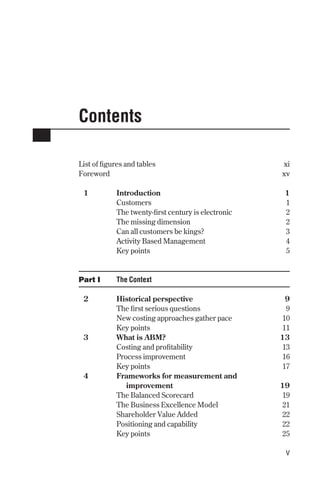
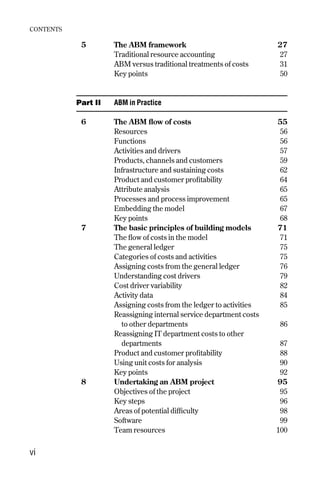






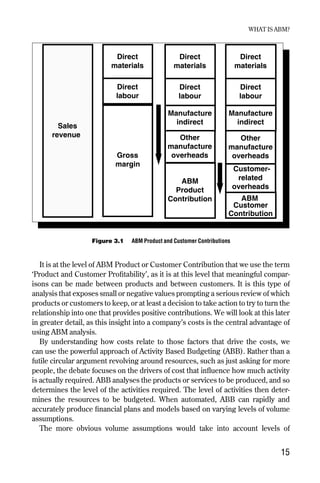
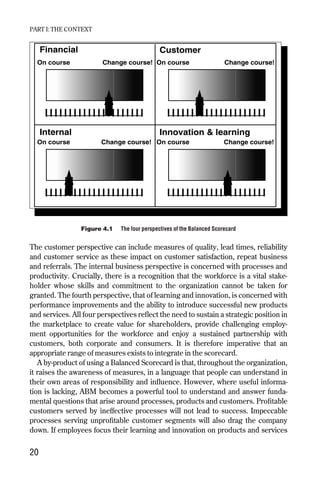
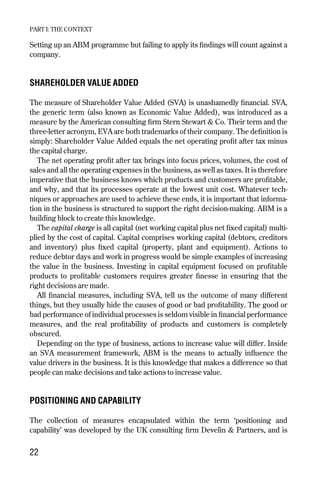
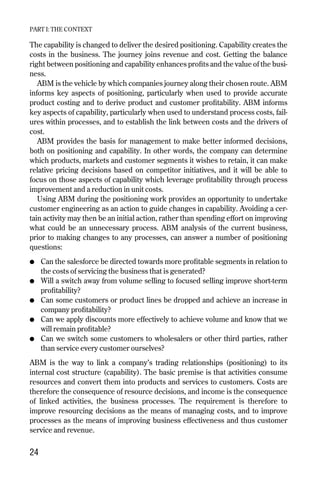
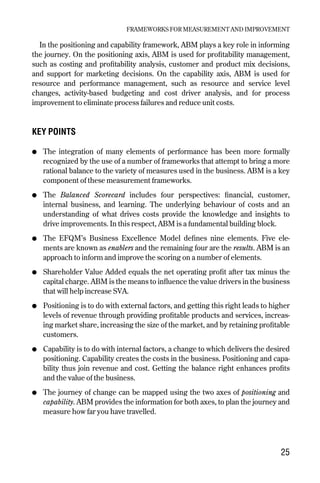

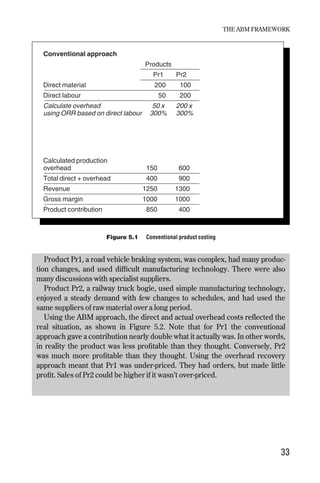
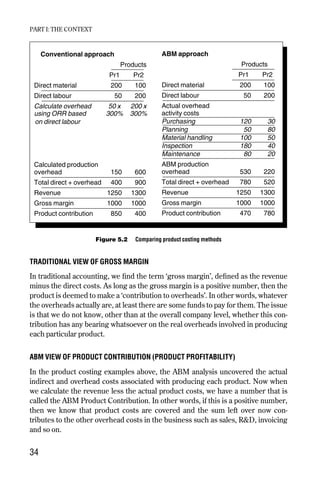

![NOTES
[1] Sacrifices of the same kind were continued. Livy, xxii. 57: “Interim ex
fatalibus libris sacrificia aliquot extraordinaria facta: inter quæ Gallus et
Galla, Græcus et Græca, in Foro Boario sub terra vivi demissi sunt in
locum saxo conseptum, jam ante hostiis humanis, minime Romano sacro,
imbutum.”
[2] Jovienus Pontanus, in the fifth Book of his History of his own Times.
He died 1503.
[3] These cauldrons walled into the sides of the churches are probably the
old sacrificial cauldrons of the Teutons and Norse. When heathenism was
abandoned, the instrument of the old Pagan rites was planted in the
church wall in token of the abolition of heathenism.
[4] There is a rare copper-plate, representing the story, published in
Cologne in 1604, from a painting that used to be in the church, but which
was destroyed in 1783. After her resurrection, Richmod, who was a real
person, is said to have borne her husband three sons.
[5] Magdeburg, Danzig, Glückstadt, Dünkirchen, Hamburg, Nürnberg,
Dresden, etc. (see Petersen: “Die Pferdekópfe auf den Bauerhäusern,”
Kiel, 1860).
[6] Herodotus, iv. 103: “Enemies whom the Scythians have subdued they
treat as follows: each having cut off a head, carries it home with him,
then hoisting it on a long pole, he raises it above the roof of his house—
and they say that these act as guardians to the household.”
[7] The floreated points of metal or stone at the apex of a gable are a
reminiscence of the bunch of grain offered to Odin’s horse.
[8] Aigla, c. 60. An Icelandic law forbade a vessel coming within sight of
the island without first removing its figure-head, lest it should frighten
away the guardian spirits of the land. Thattr Thorsteins Uxafots, i.
[9] Finnboga saga, c. 34.](https://image.slidesharecdn.com/25671837-250524014510-094a3f22/85/Activity-Based-Management-Improving-Processes-And-Profitability-Brian-Plowman-56-320.jpg)
![[10] Hood is Wood or Woden. The Wood-dove in Devon is Hood-dove, and
Wood Hill in Yorkshire is Hood Hill.
[11] See numerous examples in “The Western Antiquary,” November,
1881.
[12] On a discovery of horse-heads in Elsdon Church, by E. C. Robertson,
Alnwick, 1882.
[13] “Sir Tristram,” by Thomas of Erceldoune, ed. Sir Walter Scott, 1806,
p. 153.
[14] See an interesting paper and map, by Dr. Prowse, in the Transactions
of the Devon Association, 1891.
[15] Two types, the earliest, convex on both faces. The later, flat on one
side, convex on the other. The earlier type (Chelles) is the same as our
Drift implements. Till the two types have been found, the one superposed
on the other, we cannot be assured of their sequence.
[16] In the artistic faculty. The sketches on bone of the reindeer race were
not approached in beauty by any other early race.
[17] “The Past and the Present,” by A. Mitchell, M.D., 1880.
[18] The author found and planned some hut circles very similar to those
found in Cornwall and Down, on a height above Laruns. There was a
dolmen at Buzy at the opening of the valley.
[19] Hor. Sat. ii. 8.
[20] Fornaldar Sögur. iii. p. 387.
[21] Heimskringla, i., c. 12.
[22] I have given an account of the Carro already in my book, “In
Troubadour Land.”
[23] Roman and Greek ladies employed parasols to shade their faces from
the sun, and to keep off showers. See s. v. Umbraculum in Smith’s
Dictionary of Greek and Roman Antiquities.
[24] A good deal of information relative to umbrellas may be got out of
Sangster (W.). “Umbrellas and their History.” London: Cassell & Co., Ltd.
[25] The first Englishman who carried an umbrella was Jonas Hanway,
who died in 1786, but it was known in England earlier. Beaumont and
Fletcher allude to it in “Rule a Wife and Have a Wife”:
“Now are you glad, now is your mind at ease;
Now you have got a shadow, an umbrella,
To keep the scorching world’s opinion](https://image.slidesharecdn.com/25671837-250524014510-094a3f22/85/Activity-Based-Management-Improving-Processes-And-Profitability-Brian-Plowman-57-320.jpg)
![From your fair credit.”
And Ben Jonson, in “The Devil is an Ass”:
“And there she lay, flat spread as an umbrella.”
Kersey in his Dictionary, 1708, describes an umbrella as a “screen
commonly used by women to keep off rain.”
[26] Castrén, Nordische Reisen, St. Petersburg, 1853, p. 290.
[27] “The Beggynhof,” London, 1869, p. 68.
[28] Ed. Viger, IV., p. 161.
[29] So Grimm and others following him; but I am more inclined to see in
Herodias, Herr-raud the Red Lord, i.e., Thor.
[30] “A Dyalogue describing the orygynall ground of these Lutheran
facyons,” 1531. A later work on the excesses of sectaries is Featley’s (D.)
Dippers Dipt, 1660.
[31] Quoted in Westminster Review, Jan., 1860, p. 194.
[32] “Autobiography of Peter Cartwright.” London, 1862 (7th ed.)
[33] “The Epidemics of the Middle Ages.” London, 1859.
[34] The word is, of course, derived from Instrumentum.
[35] See “Fretella,” in Ducange, “Fistulæ species.”
[36] M. Gilbert prints, “As the dew flies,” etc.; this is a mistake—“doo” is
dove.
[37] Possibly we may have this in the still popular Cornish lament, “Have
you seen my Billy coming?”
[38] On December 14, 1624, as many as 128 ballads were licensed, the
names of which are given. “The Blind Beggar (of Bethnal Green);”
“Maudline of Bristowe (The Merchant’s Daughter of Bristol);” “Sweet
Nansie I doe love thee;” “The Lady’s Fall;” “My minde to me a kingdom is”
(Sir Edward Dyer’s famous song); “Margaret, my sweetest;” “In London
dwelt a merchantman;” “I am sorry, I am sorry;” “In May when flowers
springe;” “I am a poore woman and blinde;” “The Devil and the Paritor
(Apparitor);” “It was a Lady’s daughter;” “Roger’s Will;” “Bateman (Lord);”
“Bride’s Good Morrow;” “The King and the Shepherd;” “As I went forth
one summer’s day;” “Amintas on a summer’s day;” “Ah me, not to thee
alone;” “Sir John Barley Corne;” “It was a youthful knight;” “Jane Shore;”
“Before my face;” “George Barnwell;” “From Sluggish Sleepe;” “Down by a
forrest;” “The Miller and the King;” “Chevie Chase;” “How shall we good](https://image.slidesharecdn.com/25671837-250524014510-094a3f22/85/Activity-Based-Management-Improving-Processes-And-Profitability-Brian-Plowman-58-320.jpg)
![husbands live;” “Jerusalem, my happie home;” “The King and the Tanner;”
“Single life the only way;” “The Lord of Lorne;” “In the daies of old;” “I
spide a Nymph trip over the plaine;” “Shakeing hay;” “Troy Toun;”
“Walking of late abroad;” “Kisse and bide me welcome home;” “The
chirping larke;” “John Carelesse;” “Tell me, Susan, certenly;” “Spanish
Lady;” “When Arthur first in Court;” “Diana and her darlings;” “Dear love,
regard my life;” “Bride’s buryal;” “Shakeing of the sheets;” “A rich
merchantman;” “Gilian of Bramfield;” “Fortune my Foe;” “Cripple of
Cornwall;” “Whipping the catt at Abingdon;” “On yonder hill there
springs;” “Upon a summertime;” “The Miser of Norfolk.”
[39] Friedrich (J.B.) Geschichte des Räthsels, Dresden, 1860.
[40] “Le Dieu Gaulois du Soleil,” Paris, 1886.
[41] “Scriptores rer. German. Frankof.,” 1718, p. 508.
[42] “Eckhard, Monument. Jutreboc,” p. 59.
[43] “Anton, Versaml. uber Sitten d. alten Slawen,” II. p. 97.
[44] The date on this stone is only 1807, so that the practice must be very
modern.
[45] Other dolmens with holes at Trye-le-Château, Presles, les Mauduits,
in Seine et Oise; at Vic-sur-Aisne; at Bellehaye, and at Villicor—Saint
Sépulcre (Oise); and others are in the Morbihan, Charente, etc.
[46] What we in England term cromlechs, the French more correctly call
dolmens.
[47] The building up of part of the circle round a cairn was probably to
block the way of the spirit in the direction of the village occupied by the
living.
[48] Bull. de la Soc. d’anthropologie de Paris, t. ix., p. 198.
[49] Reinsberg Düringsfeld. “Trad. et Legendes de la Belgique,” 1870, T.
II., p. 239.
[50] Journal of the British Archæological Association, vol. xxxviii., 1882.
[51] They are found, for instance, on tombstones near Inverness.
[52] The majority of these vessels, which abound in the West of England,
were unquestionably measures of corn. But all were not so; those that
have rounded hollows like cups, and not square cut, were for holy water.
[53] “Heimskringla,” Saga III., c. 8.](https://image.slidesharecdn.com/25671837-250524014510-094a3f22/85/Activity-Based-Management-Improving-Processes-And-Profitability-Brian-Plowman-59-320.jpg)