Activity Based Intelligence Principles and Applications Patrick Biltgen
Activity Based Intelligence Principles and Applications Patrick Biltgen
Activity Based Intelligence Principles and Applications Patrick Biltgen
Activity Based Intelligence Principles and Applications Patrick Biltgen
Activity Based Intelligence Principles and Applications Patrick Biltgen
1.
Activity Based IntelligencePrinciples and
Applications Patrick Biltgen pdf download
https://ebookfinal.com/download/activity-based-intelligence-
principles-and-applications-patrick-biltgen/
Explore and download more ebooks or textbooks
at ebookfinal.com
2.
We have selectedsome products that you may be interested in
Click the link to download now or visit ebookfinal.com
for more options!.
Data Fusion Support to Activity Based Intelligence 1st
Edition Richard Antony
https://ebookfinal.com/download/data-fusion-support-to-activity-based-
intelligence-1st-edition-richard-antony/
GIS Based Chemical Fate Modeling Principles and
Applications 1st Edition Alberto Pistocchi
https://ebookfinal.com/download/gis-based-chemical-fate-modeling-
principles-and-applications-1st-edition-alberto-pistocchi/
Activity Based Management for Financial Institutions Brent
J. Bahnub
https://ebookfinal.com/download/activity-based-management-for-
financial-institutions-brent-j-bahnub/
Coated Textiles Principles and Applications Principles and
Applications Second Edition Ashish Kumar Sen
https://ebookfinal.com/download/coated-textiles-principles-and-
applications-principles-and-applications-second-edition-ashish-kumar-
sen/
3.
Business Applications AndComputational Intelligence Kevin
E. Voges
https://ebookfinal.com/download/business-applications-and-
computational-intelligence-kevin-e-voges/
Practical Cyber Intelligence How action based intelligence
can be an effective response to incidents Wilson Bautista
https://ebookfinal.com/download/practical-cyber-intelligence-how-
action-based-intelligence-can-be-an-effective-response-to-incidents-
wilson-bautista/
Principles of Quantum Artificial Intelligence 1st Edition
Andreas Wichert
https://ebookfinal.com/download/principles-of-quantum-artificial-
intelligence-1st-edition-andreas-wichert/
FISMA Principles and Best Practices Beyond Compliance 1st
Edition Patrick D. Howard
https://ebookfinal.com/download/fisma-principles-and-best-practices-
beyond-compliance-1st-edition-patrick-d-howard/
Pricing for Profitability Activity Based Pricing for
Competitive Advantage 1st Edition John L. Daly
https://ebookfinal.com/download/pricing-for-profitability-activity-
based-pricing-for-competitive-advantage-1st-edition-john-l-daly/
5.
Activity Based IntelligencePrinciples and Applications
Patrick Biltgen Digital Instant Download
Author(s): Patrick Biltgen; Stephen Ryan
ISBN(s): 9781608078769, 1608078760
Edition: Hardcover
File Details: PDF, 30.95 MB
Year: 2015
Language: english
Contents
Foreword
Preface
1 Introduction andMotivation
1.1 The Fourth Age of Intelligence
1.1.1 An Era of Dynamic Change and Diverse Threats
1.1.2 The Convergence of Technology and the Dawn of Big Data
1.1.3 Multi-INT Tradecraft: Visualization, Statistics, and Spatiotemporal Analysis
1.1.4 The Need for a New Methodology
1.2 Introducing ABI
1.2.1 The Primacy of Location
1.2.2 From Target-Based to Activity-Based
1.2.3 Shifting the Focus to Discovery
1.2.4 Discovery Versus Search
1.2.5 Discovery: An Example
1.2.6 Summary: The Key Attributes of ABI
1.3 Organization of this Textbook
1.4 Disclaimer About Sources and Methods
1.5 A Focus on Geospatial Intelligence (GEOINT)
1.6 Suggested Readings
References
2 ABI History and Origins
2.1 Wartime Beginnings
2.2 OUSD(I) Studies and the Origin of the Term ABI
2.3 Human Domain Analytics
2.4 ABI Research and Development
2.5 ABI-Enabling Technology Accelerates
2.6 Evolution of the Terminology
2.7 Summary
References
3 Discovering the Pillars of ABI
3.1 The First Day of a Different War
3.2 Georeference to Discover: “Everything Happens Somewhere”
3.2.1 First-Degree Direct Georeference
3.2.2 First-Degree Indirect Georeference
3.2.3 Second-Degree Georeference
3.3 Discover to Georeference Versus Georeference to Discover
3.4 Data Neutrality: Seeding the Multi-INT Spatial Data Environment
7
13.
3.5 Integration BeforeExploitation: From Correlation to Discovery
3.6 Sequence Neutrality: Temporal Implications for Data Correlation
3.6.1 Sequence Neutrality’s Focus on Metadata: Section 215 and the Bulk Telephony Metadata Program Under
the USA Patriot Act
3.7 After Next: From Pillars, to Concepts, to Practical Applications
3.8 Summary
References
4 The Lexicon of ABI
4.1 Ontology for ABI
4.2 Activity Data: “Things People Do”
4.2.1 “Activity” Versus “Activities”
4.2.2 Events and Transactions
4.2.3 Transactions: Temporal Registration
4.2.4 Event or Transaction? The Answer is (Sometimes) Yes
4.3 Contextual Data: Providing the Backdrop to Understand Activity
4.4 Biographical Data: Attributes of Entities
4.5 Relational Data: Networks of Entities
4.6 Analytical and Technological Implications
4.7 Summary
References
5 Analytical Methods and ABI
5.1 Revisiting the Modern Intelligence Framework
5.2 The Case for Discovery
5.3 The Spectrum of “INTS” and Exploitation Versus Finished Intelligence
5.4 Decomposing an Intelligence Problem for ABI
5.5 The W3 Approaches: Locations Connected Through People and People Connected Through Locations
5.5.1 Relating Entities Through Common Locations
5.5.2 Relating Locations Through Common Entities
5.6 Assessments: What Is Known Versus What Is Believed
5.7 Facts: What Is Known
5.8 Assessments: What Is Believed or “Thought”
5.9 Gaps: What Is Unknown
5.10 Unfinished Threads
5.11 Leaving Room for Art And Intuition
References
6 Disambiguation and Entity Resolution
6.1 A World of Proxies
6.2 Disambiguation
6.3 Unique Identifiers—“Better” Proxies
6.4 Resolving the Entity
8
14.
6.5 Two BasicTypes of Entity Resolution
6.5.1 Proxy-to-Proxy Resolution
6.5.2 Proxy-to-Entity Resolution: Indexing
6.6 Iterative Resolution and Limitations on Entity Resolution
References
7 Discreteness and Durability in the Analytical Process
7.1 Real World Limits of Disambiguation and Entity Resolution
7.2 Applying Discreteness to Space-Time
7.3 A Spectrum for Describing Locational Discreteness
7.4 Discreteness and Temporal Sensitivity
7.5 Durability of Proxy-Entity Associations
7.6 Summary
References
8 Patterns of Life and Activity Patterns
8.1 Entities and Patterns of Life
8.2 Pattern-of-Life Elements
8.3 The Importance of Activity Patterns
8.4 Normalcy and Intelligence
8.5 Representing Patterns of Life While Resolving Entities
8.5.1 Graph Representation
8.5.2 Quantitative and Temporal Representation
8.6 Enabling Action Through Patterns of Life
References
9 Incidental Collection
9.1 A Legacy of Targets
9.2 Bonus Collection from Known Targets
9.3 Defining Incidental Collection
9.4 Dumpster Diving and Spatial Archive and Retrieval
9.5 Rethinking the Balance Between Tasking and Exploitation
9.6 Collecting to Maximize Incidental Gain
9.7 Incidental Collection and Privacy
9.8 Summary
References
10 Data, Big Data, and Datafication
10.1 Data
10.1.1 Classifying Data: Structured, Unstructured, and Semistructured
10.1.2 Metadata
10.1.3 Taxonomies, Ontologies, and Folksonomies
10.2 Big Data
10.2.1 Volume, Velocity, and Variety…
9
15.
10.2.2 Big DataArchitecture
10.2.3 Big Data in the Intelligence Community
10.3 The Datafication of Intelligence
10.3.1 Collecting It “All”
10.3.2 Object-Based Production (OBP)
10.3.3 Relationship Between OBP and ABI
10.4 The Future of Data and Big Data
10.5 Summary
References
11 Collection
11.1 Introduction to Collection
11.2 MOVINT with Motion Imagery
11.2.1 FMV
11.2.2 WAMI
11.3 MOVINT from Radar
11.3.1 Basic Principles of GMTI
11.3.2 Evolution of GMTI Collection Systems
11.4 Additional Sources of Activities and Transactions
11.5 Collection to Enable ABI
11.6 Persistence: The All-Seeing Eye (?)
11.7 The Persistence “Master Equation”
11.8 Space-Based Persistent Surveillance
11.8.1 Space-Based GMTI
11.8.2 Commercial Space Radar Applications
11.8.3 Space-Based Persistent EO Imagery
11.9 Summary
References
12 Automated Activity Extraction
12.1 The Need for Automation
12.2 Data Conditioning
12.3 Georeferenced Entity and Activity Extraction
12.4 Object and Activity Extraction from Still Imagery
12.5 Object and Activity Extraction from Motion Imagery
12.5.1 Activity Extraction from Video
12.5.2 Activity and Event Extraction from WAMI
12.6 Tracking and Track Extraction
12.6.1 The Role of Sampling Rate and Resolution
12.6.2 Terminology: Tracks and Tracklets
12.6.3 The Kalman Filter
12.6.4 Probabilistic Tracking Frameworks
12.6.5 Clustering, Track Association, and Multihypothesis Tracking (MHT)
12.6.6 Detecting Anomalous Tracks
12.7 Metrics for Automated Algorithms
10
16.
12.8 The Needfor Multiple, Complimentary Sources
12.9 Summary
12.10 Acknowledgments
References
13 Analysis and Visualization
13.1 Introduction to Analysis and Visualization
13.1.1 The Sexiest Job of the 21st Century…
13.1.2 Asking Questions and Getting Answers
13.2 Statistical Visualization
13.2.1 Scatterplots
13.2.2 Pareto Charts
13.2.3 Factor Profiling
13.3 Visual Analytics
13.4 Spatial Statistics and Visualization
13.4.1 Spatial Data Aggregation
13.4.2 Tree Maps
13.4.3 Three-Dimensional Scatterplot Matrix
13.4.4 Spatial Storytelling
13.5 The Way Ahead
References
14 Correlation and Fusion
14.1 Correlation
14.1.1 Correlation Versus Causality
14.2 Fusion
14.2.1 A Taxonomy for Fusion Techniques
14.2.2 Architectures for Data Fusion
14.2.3 Upstream Versus Downstream Fusion
14.3 Mathematical Correlation and Fusion Techniques
14.3.1 Bayesian Probability and Application of Bayes’s Theorem
14.3.2 Dempster-Shafer Theory
14.3.3 Belief Networks
14.4 Multi-INT Fusion For ABI
14.5 Examples of Multi-INT Fusion Programs
14.5.1 Example: A Multi-INT Fusion Architecture
14.5.2 Example: The DARPA Insight Program
14.6 Summary
References
15 Knowledge Management
15.1 The Need for Knowledge Management
15.1.1 Types of Knowledge
15.2 Discovery of What We Know
15.2.1 Recommendation Engines
15.2.2 Data Finds Data
15.2.3 Queries as Data
11
17.
15.3 The SemanticWeb
15.3.1 XML
15.3.2 Resource Description Framework (RDF)
15.4 Graphs for Knowledge and Discovery
15.4.1 Graphs and Linked Data
15.4.2 Provenance
15.4.3 Using Graphs for Multianalyst Collaboration
15.5 Information and Knowledge Sharing
15.6 Wikis, Blogs, Chat, and Sharing
15.7 Crowdsourcing
15.8 Summary
References
16 Anticipatory Intelligence
16.1 Introduction to Anticipatory Intelligence
16.1.1 Prediction, Forecasting, and Anticipation
16.2 Modeling for Anticipatory Intelligence
16.2.1 Models and Modeling
16.2.2 Descriptive Versus Anticipatory/Predictive Models
16.3 Machine Learning, Data Mining, and Statistical Models
16.3.1 Rule-Based Learning
16.3.2 Case-Based Learning
16.3.3 Unsupervised Learning
16.3.4 Sensemaking
16.4 Rule Sets and Event-Driven Architectures
16.4.1 Event Processing Engines
16.4.2 Simple Event Processing: Geofencing, Watchboxes, and Tripwires
16.4.3 CEP
16.4.4 Tipping and Cueing
16.5 Exploratory Models
16.5.1 Basic Exploratory Modeling Techniques
16.5.2 Advanced Exploratory Modeling Techniques
16.5.3 ABM
16.5.4 System Dynamics Model
16.6 Model Aggregation
16.7 The Wisdom of Crowds
16.8 Shortcomings of Model-Based Anticipatory Analytics
16.9 Modeling in ABI
16.10 Summary
References
17 ABI in Policing
17.1 The Future of Policing
17.2 Intelligence-Led Policing: An Introduction
17.2.1 Statistical Analysis and CompStat
17.2.2 Routine Activities Theory
12
18.
17.3 Crime Mapping
17.3.1Standardized Reporting Enables Crime Mapping
17.3.2 Spatial and Temporal Analysis of Patterns
17.4 Unraveling the Network
17.5 Predictive Policing
17.6 Summary
17.7 Further Reading
17.8 Chapter Author Biography
References
18 ABI and the D.C. Beltway Sniper
18.1 Introduction
18.2 Georeference to Discover
18.3 Integration Before Exploitation
18.4 Sequence Neutrality
18.5 Data Neutrality
18.6 Summary
18.7 Chapter Author Biography
References
19 Analyzing Transactions in a Network
19.1 Analyzing Transactions with Graph Analytics
19.2 Discerning the Anomalous
19.3 Becoming Familiar with the Data Set
19.4 Analyzing Activity Patterns
19.4.1 Method: Location Classification
19.4.2 Method: Average Time Distance
19.4.3 Method: Activity Volume
19.4.4 Activity Tracing
19.5 Analyzing High-Priority Locations with a Graph
19.6 Validation
19.7 Summary
19.8 Chapter Author Biography
References
20 ABI and the Search for Malaysian Airlines Flight 370
20.1 Introduction
20.2 Data Sparsity, Suppositions, and Misdirections
20.3 The Next Days: Fixating on the Wrong Entity
20.4 Wide Area Search and Commercial Satellite Imagery
20.4.1 A Tradecraft Breakthrough: Crowdsourced Imagery Exploitation
20.4.2 Lessons Learned in Crowdsourced Imagery Search
20.5 A Breakthrough: Sequence and Data Neutral Analysis of Incidentally Collected Data
13
19.
20.6 Summary: TheSearch Continues
20.7 Chapter Author Biography
References
21 Visual Analytics for Pattern-of-Life Analysis
21.1 Applying Visual Analytics to Pattern-of-Life Analysis
21.1.1 Overview of the Data Set
21.1.2 Exploring the Activities and Transactions of Two Randomly Selected Users
21.1.3 Identification of Cotravelers/Pairs in Social Network Data
21.2 Discovering Paired Entities in a Large Data Set
21.3 Summary
21.4 Acknowledgements
References
22 Multi-INT Spatiotemporal Analysis
22.1 Overview
22.2 Human Interface Basics
22.2.1 Map View
22.2.2 Timeline View
22.2.3 Relational View
22.3 Analytic Concepts of Operations
22.3.1 Discovery and Filtering
22.3.2 Forensic Backtracking
22.3.3 Watchboxes and Alerts
22.3.4 Track Linking
22.4 Advanced Analytics
22.5 Information Sharing and Data Export
22.6 Summary
References
23 Pattern Analysis of Ubiquitous Sensors
23.1 Entity Resolution Through Activity Patterns
23.2 Temporal Pattern of Life
23.3 Integrating Multiple Data Sources from Ubiquitous Sensors
23.4 Summary
References
24 ABI Now and Into the Future
24.1 An Era of Increasing Change
24.2 ABI and a Revolution in Geospatial Intelligence
24.3 ABI and Object-Based Production
24.4 ABI Applied to Overhead Reconnaissance
24.5 The Future of ABI in the Intelligence Community
24.6 Conclusion
24.7 Chapter Author Biography
14
Foreword
ABI is themost important development in intelligence analysis to come out of the wars in Iraq and Afghanistan. I
first encountered it a few years ago when I was engaged in a RAND project looking at how the intelligence
community was exploiting social media, like Twitter and Facebook. A team at the National Geospatial-
Intelligence Agency (NGA) heard about the project and asked me to meet with them. Their use of social media
was relatively incidental—they were scraping openly available sources, like Wikimapia and Google Earth, for
geolocated data. But their work was stunning—all the more so for someone like me whose experience with
intelligence had focused on strategic issues for which data usually was in short supply.
The team was providing support to warfighters by assembling data about particular locations. Then, if some
event of potential interest occurred—say, a truck pulling up to a farmhouse—they could search the database for
information about that location to see if this current event was of interest. If it was, then analysts could dig deeper
into the data. If it wasn’t, then the activity would be recorded in the database in case later events made it of
interest. In either case, the video was unimportant; it was the activity that mattered.
ABI represents a fundamentally different way of doing intelligence analysis, one that is important in its own
terms but that also offers the promise of creatively disrupting what is by now a pretty tired paradigm for thinking
about the intelligence process. Cold war targets of intelligence often were large (e.g., missiles or army formations).
Perhaps more important, they had a signature: We knew what a T-72 Soviet tank looked like. And typically, those
signatures were embedded in doctrine: If imagery captured one T-72, it was likely to be accompanied by a number
of its brethren.
The terrorist targets that drove the creation of ABI are utterly different. They are small—networks or even
individuals—not large, and they have neither signature nor doctrine. If a suspected terrorist has a signature, a cell
phone number for instance, it is fleeting, for he or she can change it at will. The fight against terror marked the
transition from reporting on known targets to discovering the unknown. ABI enables discovery as a core principle.
Discovery—how to do it and what it means—is an exciting challenge, one that the intelligence community is only
beginning to confront, and so this book is especially timely.
The prevailing intelligence paradigm is still very linear when the world is not: Set requirements, collect against
those requirements, then analyze. Or as one wag put it: “Record, write, print, repeat.” That paradigm may have
made sense when trying to solve the puzzles surrounding the Soviet Union, when the target was secretive but
ponderous. It makes much less sense now, and ABI disrupts that linear collection, exploitation, dissemination
cycle of intelligence. It is focused on combining data—any data—where it is found. It does not prize data from
secret sources but combines unstructured text, geospatial data, and sensor-collected intelligence. It marked an
important passage in intelligence fusion and was the first manual evolution of “big data” analysis by real
practitioners. ABI’s initial focus on counterterrorism impelled it to develop patterns of life on individuals by
correlating their activities, or events and transactions in time and space.
ABI is based on four fundamental pillars that are distinctly different from other intelligence methods. The first
is georeference to discover. Sometimes the only thing data has in common is time and location, but that can be
enough to enable discovery of important correlations, not just reporting what happened. The second is sequence
neutrality: We may find a critical puzzle piece before we know there is a puzzle. Think how often that occurs in
daily life, when you don’t really realize you were puzzled by something until you see the answer.
The third principle is data neutrality. Data is data, and there is no bias toward classified secrets. ABI does not
prize exquisite data from intelligence sources over other sources the way that the traditional paradigm does. The
fourth principle comes full circle to the first: integrate before exploitation. The data is integrated in time and
location so it can be discovered, but that integration happens before any analyst turns to the data.
ABI necessarily has pushed advances in dealing with “big data,” enabling technologies that automate manual
workflows, thus letting analysts do what they do best. In particular, to be discoverable, the metadata, like time and
location, have to be normalized. That requires techniques for filtering metadata and drawing correlations. It also
requires new techniques for visualization, especially geospatial visualization, as well as tools for geotemporal
16
22.
pattern analysis. Automatedactivity extraction increases the volume of georeferenced data available for analysis.
ABI is also enabled by new algorithms for correlation and fusion, including rapidly evolving advanced modeling
and machine learning techniques.
This book is an introduction to the core principles of ABI as described by ABI practitioners. It introduces
students to ABI-enhancing technologies and provides a survey overview of the advanced analytics associated with
ABI, as well as rich, unclassified examples of data exploration techniques with a focus on analytic discovery. The
examples apply the principles of ABI to open data sets.
To be sure, ABI still suffers growing pains. As a catchphrase currently hot in intelligence circles, there is a
temptation to make everything ABI, which risks making it nothing. Thus, this book’s purpose is to carefully lay
out ABI’s core methods, enhancing technologies, and related applications. One of ABI’s watchwords is “mass is
more.” With cellphones in every pocket and cameras on every street corner, data is more and more ubiquitous.
Collecting it en masse, though, runs first into technical challenges. The data sets are larger. The metadata is not
standardized. There are more varieties of stovepiped and isolated data sets. The ultimate challenge, though, is
enabling access while protecting privacy.
ABI came of age in the fight against terror, but it is an intelligence method that can be extended to other
problems—especially those that require identifying the bad guys among the good in areas like counternarcotics or
maritime domain awareness. Beyond that, ABI’s emphasis on correlation instead of causation can disrupt all-too-
comfortable assumptions. Sure, analysts will find lots of spurious correlations, but they will also find intriguing
connections in interesting places, not full-blown warnings but, rather, hints about where to look and new
connections to explore. At least, by using the methods and techniques in this book, analysts will spend more time
unraveling mysteries and less time digging for data.
Gregory F. Treverton
Washington, DC
17
23.
Preface
Writing about anew field, under the best of circumstances, is a difficult endeavor. This is doubly true when
writing about the field of intelligence, which by its nature must operate in the shadows, hidden from the public
view. Developments in intelligence, particularly in analytic tradecraft, are veiled in secrecy in order to protect
sources and methods; some of these are technical, like spy satellites; others are people, brave individuals risking
their lives. This textbook describes a revolutionary intelligence analysis methodology using approved, open-source,
or commercial examples to introduce the student to the basic principles and applications of activity-based
intelligence (ABI).
We view this as the beginning of the conversation on ABI—a “new” term that has proliferated across the
intelligence vernacular over the past five years. Although the use of the term is new, the principles of this discipline
are endemic and enduring in the study of intelligence.
A recent survey, Foundational Technologies for Activity-Based Intelligence: A Review of the Literature, by Dr. James
Llinas, research professor at the State University of New York at Buffalo and Dr. James Scrofani of the Naval
Postgraduate School noted that “much has been said about ABI in the trade publications of the intelligence
community…but there has been very little published in the scientific literature that describes particular and novel
technical methods that are explicitly supportive of and traceable to an ABI application.” Industry and academic
experts lamented the lack of a seminal text on this emergent discipline despite its initial developments more than
10 years ago. The training of analysts and engineers to support intelligence requirements has lagged demand from
government and industry. We have developed this text through extensive research, synthesis, discussion, and
collaboration with more than two dozen experts in this shadowy and nascent field.
Activity-Based Intelligence: Principles and Applications is aimed at students of intelligence studies, entry-level
analysts, technologists, and senior-level policy makers and executives who need a basic primer on this emergent
series of methods. This text is authoritative in the sense that it documents, for the first time, an entire series of
difficult concepts and processes used by analysts during the wars in Iraq and Afghanistan to great effect. It also
summarizes basic enabling techniques, technologies, and methodologies that have become associated with ABI.
We believe that this text provides the security, defense, and law enforcement communities with a common base
upon which to further expand development.
The authors are in many ways products of our environment. Ryan is a career intelligence professional with a
master’s degree in security studies from Georgetown University’s Walsh School of Foreign Service and a bachelor’s
degree in international affairs from The George Washington University’s Elliott School of International Affairs.
Ryan provides the analytic and operational perspective: He was on the ground for almost a year in Afghanistan,
where he practiced ABI as an analytic methodology. Between 2013 and 2014, he worked to institutionalize the
concepts for other analysts and issue types beyond counterterrorism and counterinsurgency operations. He
supports numerous studies and panels as a subject-matter expert on ABI techniques and methods. Ryan brings this
analytic perspective to his work in mission-oriented engineering and technology development, where he leads a
diverse research portfolio for a major defense contractor and works with government and military clients to solve
their hardest problems.
Biltgen holds a Ph.D. in aerospace engineering from the Georgia Institute of Technology with a focus on
modeling, simulation, and analysis of complex systems. He was introduced to the ABI method while working on
the conceptual design of a processing system for persistent surveillance system in 2010. As a trained engineer,
Biltgen brings a process and technology perspective to ABI, focusing on sensor data and making it usable to
analysts. Today, he supports government clients in the design and development of processing and analysis software
for multi-intelligence data.
Biltgen and Ryan were introduced in 2012 through a mutual government colleague and mentor, Gerry. They
began collaborating on the new field and its implications for intelligence that has spanned their combined service
across intelligence agencies and the special operations community. Perhaps most importantly, their professional
collaboration grew into a personal friendship that today stretches from Washington to Los Angeles.
18
24.
The pair joinedforces based on a mutual passion for the topic, but their discussions often diverged
(constructively) based on their collective experiences, creating profound discussions on the subjects contained in
this book, including automation, big data analytics, and intelligence analysis. The interplay between agreement
and disagreement crystallized many of the topics in this book, and their differing perspectives enrich the
experience for the intelligence student. In the end, the authors believe that this combined perspective offers a
highly complete understanding of a difficult field, and hope that academia, government, industry, and law
enforcement can identify with these perspectives on ABI.
Stephen has numerous people to thank, far more than there is room for here. Numerous intelligence officers,
still serving in government capacities, were and remain instrumental in the continuing development and practical
application of ABI on the battlefield. Victoria Nguyen, formerly of NGA and now of Whitespace Solutions, was
Stephen’s partner in helping bring ABI to the broader national security enterprise; she made critical contributions
day in and day out. Without her efforts, this book would not exist. Timothy and Charles were also part of the core
team that helped define much of this work for the National Geospatial-Intelligence Agency, without whom
Stephen could not have written this text. Dr. Gregory Treverton, first of RAND Corporation and now chairman
of the National Intelligence Council, was and continues to be a valued colleague and friend whose research on ABI
contributed much to the field. A superb team of engineers from the MITRE Corporation created many of the
early technology prototypes and wrote original white papers on the technology enabling ABI, which contributed
much to the foundation of the second half of this book. Jackie Barbieri and Schuyler Kellogg, now of Whitespace
Solutions, among others still serving in government, helped breathe life into the very first course to train
intelligence analysts in these principles. Melanie Corcoran, now of Analytic Fusions, was and remains an
incredible colleague and friend whose tireless efforts to create technology and programs for the nascent field of
ABI are worthy of recognition. Stephen’s colleagues at Northrop Grumman Corporation provided a wonderfully
collaborative environment and encouraged Stephen’s work on this project. Bruce Hoffman, Paul Pillar, John
Gannon, Anthony Arend, Chuck Cushman, and Matt O’Gara were world-class teachers and mentors in studying
terrorism, insurgency, intelligence, international law, and national security. Susan Kaplan and Helen Crowley
fostered Stephen’s lifelong love of social sciences, history, and politics many years ago. Finally, Stephen would like
to thank his parents Adrianne and John for a lifetime of love and support, without which this undertaking would
have been impossible.
Patrick would like to thank the engineers and technologists at BAE Systems, especially Don Miller, Terri Ward,
and Curtis McConnell who led the development of one of the first systems built for use by ABI analysts. His work
in this area would not have been possible without the friendship and mentoring of Kent Murdoch. He is eternally
grateful to Jim MacLeay, another friend and mentor, who recruited him into the field of intelligence. Patrick
would also like to thank George Logue and Barry Barlow of Vencore for their mentorship and support throughout
the production of this work. Dr. Dimitri Mavris, regents professor at the Georgia Institute of Technology, taught
Patrick how to innovate and tackle open-ended problems, which was critical in making his transition from
aerospace engineering to intelligence processing and analysis. Patrick would like to thank his parents, Bill and
Judy, who provided him with every opportunity, often through great personal sacrifice. Most importantly, Patrick
thanks his wonderful wife, Janel, not only for her encouragement and support but also for her key insights and
collaboration across the breakfast table.
Both authors would like to thank Mark Phillips, author of the USD(I) Strategic Advantage series of papers,
which coined the phrase “activity-based intelligence” and brought it to the attention of the entire national security
establishment, contributing much to the ideas herein through frequent discussion and collaboration. Mark served
as mentor to both authors over the last five years and was instrumental in guiding both authors’ careers along a
positive and rewarding trajectory.
David Gauthier of NGA engaged regularly with both authors and, through his work leading the ABI
roundtable, helped foster many of the discussions that lead to this book. Representing the public face of ABI since
2012, Gauthier’s descriptions of complex concepts frequently form the basis of educational lesson in this book. He
continues to serve as a friend and mentor to both authors.
The authors would also like to acknowledge the tireless efforts of Jason Moses from the Office of the Director
of National Intelligence (ODNI), who today continues to address the difficult challenge of coordinating a
common approach to ABI across different agencies and military services with far different institutional
perspectives and incentives.
19
25.
Ed Waltz, serieseditor for Intelligence and Information Warfare and legendary luminary in the field of
intelligence, brought his immense perspective and experience to bear in the development of this text. It was at his
insistence that the authors came together and put finger to keyboard, bringing this into being.
Many colleagues provided insights and examples to enhance this work. Jeff Wilson from ClearTerra helpfully
provided expert opinion and software illustrations for technology enabling georeference to discover. Gregg Sypeck
of Mav6 contributed material on the Blue Devil II airship. Heidi Buck of Navy SPAWAR contributed material on
the RAPIER automated processing system. Paul Runkle, Levi Kennedy, Jonathan Woodworth, and Peter Shargo
of the Signal Innovations Group contributed extensive material on tracking technologies and methods. David
Waldrop of the Illumina Consulting Group developed an example using the LUX processor. Greg Bottomley
from Northrop Grumman conducted some of the important work cited in Chapter 14 regarding mathematical
approaches to data fusion. Diana Levey of the SAS Institute contributed the JMP analysis software used for many
of the visual analytic examples throughout the text.
Rich LaValley reviewed and provided input on the entire manuscript, an onerous task for which both Biltgen
and Ryan are immensely grateful. Marissa Koors at Artech House was responsive and positive throughout the
entire writing process and ensured that the authors stayed on task and schedule. Mark Phillips, William Raetz,
Alex Shernoff, Sarah Hank, and David Gauthier all contributed chapters to this text, and it is the richer for it.
The last acknowledgement—and perhaps most important—is for Gerry. He laid the intellectual foundation for
what this book now brings to paper. His innovative thinking, tireless pursuit of reforming the analytical process,
numerous overseas deployments, and keen technological skills set the stage for both the artists and technologists
who would follow in his footsteps. He has been a personal friend, confidante, and mentor to both authors. The
nation owes him a great debt for his service.
This book has been reviewed by the National Geospatial-Intelligence Agency (Case #15-198), Central
Intelligence Agency, and National Reconnaissance Office (Case #2015-01706 and Case #2015-01987) to prevent
the release of classified information. Any factual errors or omissions, however, are the responsibility of the authors.
The opinions, assessments, and conclusions contained herein are ours alone.
Patrick Biltgen,
Clifton, VA
Stephen Ryan
Los Angeles, CA
20
Intrinsic Value ofa Horse.
Although it is a common axiom that "the value of a thing is exactly
what it will fetch," yet in the hunting field the price at which a horse
has been sold is very rarely a criterion of his real worth, the reason
being that his performances are made up of three items, of which he
himself forms only one, the other two being stable management and
good riding, for neither of which is the quadruped entitled to claim
the smallest amount of credit; and yet, on the principle that
"handsome is that handsome does," it is a usual error, especially
among young sportsmen, to estimate that a horse which goes
brilliantly must be a good one, and vice versâ; whereas an ordinary
description of animal, in splendid condition, and judiciously ridden,
cannot fail to leave far behind him a superior one injudiciously
ridden, made up of flesh instead of muscle, of impure instead of
pure blood, and of bloated, unpractised, instead of healthy, well-
exercised lungs. For these reasons it continually happens that a
horse that has been observed to go what is called "brilliantly"
throughout a run, is, at its conclusion, sold for a considerable sum,
in addition to another horse, on which the purchaser, in a few
weeks, leaves behind him the animal he had sold, whose owner now
to his cost discovers that
"The lovely toy so keenly sought
Has lost its charms by being caught"
by him.
But the price of a hunter is materially affected by the quality as well
as the qualifications of his rider, whose position in the world often
confers upon his horses a fictitious value; and accordingly the
hunting stud of the late Sir Richard Sutton—sold by public auction
shortly after his death—realised sums exceeding by at least 40 per
28.
cent. what subsequentlyproved to be their current value when
transferred to the stables of people of less renown.
Again, a respectable, first-rate horse dealer succeeds in his
profession, not so much by his superior knowledge of the animals he
buys, but by the quantity and quality of the eloquence he exerts in
selling them. Every hunter, therefore, that is purchased from a great
man of this description is necessarily composed of, 1st, his intrinsic
value; and 2nd, of the anecdotes, smiles, compliments, and praises,
which, although when duly mixed up with an evident carelessness
about selling him, captivated the listener to purchase him, like a
bottle of uncorked ardent spirits evaporate, or, like a swarm of bees,
fly away, almost as soon as the transaction is concluded, leaving
behind them nothing but the animal's intrinsic value.
29.
On Shying.
It oftenhappens that a horse brimfull of qualifications of the very
best description is most reluctantly sold by his master "because he
shies so dreadfully," a frolic which, to a good rider, is perfectly
harmless, and which, if he deems it worth the trouble, he is almost
certain to cure.
A timid horseman, however, not only believes that his horse is
frightened at the little heap of stones at which he shies, but for this
very reason he becomes frightened at it himself; whereas the truth
is that the animal's sensations in passing it are usually compounded
as follows:—
Of fear of {the little heap 1/10.
{whip and spur 9/10.
Now, if this be the case, which no one of experience will deny, it is
evident that the simple remedy to be adopted is, first, at once to
remove the great cause of the evil complained of, by ceasing to
apply either whip or spur; and, secondly, gradually to remove the
lesser cause by a little patient management which shall briefly be
explained.
When a horse has been overloaded with a heavy charge of oats and
beans, which may be termed jumping powder, and primed by a very
short allowance of work, his spirits, like the hair trigger of a rifle, are
prepared on the smallest touch to cause a very violent explosion. In
fact, without metaphor, on the slightest occurrence he is not only
ready, but exceedingly desirous, to jump for joy.
The casus belli which the animal would perhaps most enjoy would
be to meet a temperance run-away awning-covered waggon full of
stout, healthy young women in hysterics, all screaming; or to have a
30.
house fall downjust as he was passing it. However, as a great
conqueror, if he cannot discover a large excuse for invading the
territory of his neighbour, is sure to pick out a very little one, so does
the high mettled horse who has nothing to start at, proceed under
his rider with his eyes searching in all directions for something which
he may pretend to be afraid of. Influenced by these explosive
propensities he cocks his ears at a large leaf which the air had gently
roused from its sleep, as if it were a crouching tiger; and shortly
afterwards a fore leg drops under him as suddenly as if it had been
carried away by a cannon shot, because in the hedge beside him a
wren has just hopped from one twig to another nearly an inch.
Now, of course, the effective cure for all these symptoms of
exuberant, pent up spirits is a long, steady hand-gallop up and down
hill across rather deep ground. Before, however, this opportunity
offers, man can offer to the brute beneath him a more reasonable
remedy.
The instant that a horse at a walk sees at a short distance before
him, say a heap of stones, at which he pretends to be or really is
afraid, instead of forcing him on, he should be allowed or, if it be
necessary, forced to stop, not only till he has ceased to fear it, but
until, dead tired of looking at it, he averts his eyes elsewhere.
While advancing towards it, so often as his fear, or pretended fear,
breaks out, by instantly bringing him to a stand-still it should in like
manner be over-appeased.
In slowly passing any object which a horse appears to be afraid of,
the error which is almost invariably committed is to turn his head
towards it, in which case, revolving upon his bit as on a pivot, the
animal turns his hind-quarters from it, and in that position with great
ease shies more or less away from it; whereas, if the rein opposite
to it be pulled firmly, he not only instantly ascertains that his rider's
desire is in opposition to, instead of in favour of forcing him towards
the object of his fear, but when his head is drawn away from it,
31.
although he isable to rush forwards, it is out of his power to shy
laterally.
Now, instead of endeavouring thus to triumph over instinct by
reason, instead of allowing a horse more time even than he requires
to appease his own apprehensions, be they real or pretended, the
course which a gentleman's groom usually adopts is, like giving fuel
to fire, to add to the animal's fear of the object he is unwilling to
approach, his infinitely greater fear of a pair of plated spurs.
The oftener and the stronger this ignorant prescription is applied,
the more violent becomes the disease it undertakes to alleviate,
until, on its being declared to be incurable, the poor frightened
animal is sold for a fault almost entirely created by human hands
and inhuman heels.
The extent to which a timid animal can be appeased by kindness is,
at the present moment, beautifully exemplified by a deer, which has
been so divested of its fears by Tom Hill, the huntsman of the Surrey
fox-hounds, that the animal not only accompanies the hounds when
taken out for exercise, but eats biscuit, and actually sleeps with
them in the kennel.
If, during their meal, two of the hounds fight, by a pat with his fore
feet he tries to separate them. If, at exercise, anything alarms him,
with a bound or two he vaults for safety into the middle of the pack.
And yet, when in this citadel, if any strange dog approaches them,
with malice prepense he rushes out at him, as if determined to kill
him. In short, by kind superintendence the deer has become as fond
of blood-thirsty hounds as they of him.
32.
Singeing.
As it isincumbent on all civilized communities to be kind to every
living being,—as our laws profess to maintain this Christian axiom,—
and as there exists among us a Society self-constituted for the
especial purpose of "the Prevention of Cruelty to Animals," it would
be very difficult satisfactorily to explain, at least to them, why, in
violation of so benign a theory, we deliberately practise the following
fashions:—
1. Of cutting off all our sheep's tails.
2. Of dittoing the tails of all dogs that take care of sheep.
3. Of dittoing the ears of terriers.
4. Of dittoing a portion of the tails, and occasionally of the ears,
of our horses.
5. Of piercing with a sharp awl the ears of all our daughters, in
order to insert therein golden rings, which, by equalizing all, can
confer no possible benefit on any one: that is to say, provided
Euclid is correct in declaring that "when equals are added to
equals, their sums are equal."
If any person among us defaces a statue, he is liable to punishment
and to the execration of the public; and yet there can be no doubt
that in every sense of the word it is more barbarous to mutilate the
living original of an Almighty Creator than a cold stone or marble
copy thereof, chiselled more or less imperfectly by human hands.
About forty years ago it was the general custom to dock the tails of
all hunters, covert-hacks, and waggon-horses, so close, that nothing
remained of this picturesque, beautiful ornament of Nature but an
33.
ugly, stiff stump,very little longer than the human thumb, which,
especially in summer time, was seen continually wagging to the right
or left, in impotent attempts to brush off a hungry fly, biting the skin
more than a yard off. At about the same period an officer in our
army took to the Cape of Good Hope a gentle, beautiful,
thoroughbred mare, which, to his astonishment, the natives
appeared exceedingly unwilling to approach. The reason was, that
her ears had been cropped; and as among themselves that
punishment was inflicted for crimes, they were induced to infer that
the handsome mutilated animal had suffered from a similar cause—
in fact, that she was vicious.
From the same premises, and by the same reasoning faculties, they
might as erroneously have conceived that the holes bored through
most of the English ladies' ears denoted the existence of a uniform
speck of some sort or other in their characters.
Having briefly enumerated only a few of the mutilations which, in
different regions of the earth, man inflicts, not only upon the animals
around him, but upon himself, we will proceed to notice a
prescription of modern date which has produced very astonishing
results.
As in crime there exists an essential difference between cutting off a
man's head, and cutting off only his hair, so in cruelty does there
exist a similar difference between the fashion which mutilates the
body of an animal, and that which deprives him only of its covering:
still, however, the practice of clipping, shaving, and singeing horses
must, to every person, at first sight appear so incomprehensible that
a slight notice of the subject may possibly be deemed worthy of a
few minutes' consideration.
To a wild horse, roaming in a state of perfect freedom, Nature grants
an allowance very similar to that which every inhabitant of
Grosvenor Square gives to each of his tall powdered footmen:
namely, board, lodging, and two suits of clothing per annum; with
this important difference, however, that while the poor pampered,
34.
gaudy menial isignorantly dressed throughout the whole year in
cloth and plush of the same thickness, the animal is beneficently
provided with two different descriptions of clothing, namely, a light
thin silky coat for summer wear, and a thick fur one to keep him
warm and comfortable throughout the winter months.
Now it might be expected that if man undertook to interfere with
this provision, he would, in accordance with the spirit and meaning
of the act by which it had been decreed, extend its principle by
relieving the horse of a portion of his covering during the excessive
heat of summer, and by bestowing upon him a little extra warmth in
winter; whereas, by the operation about to be described, he makes
the animal's cold weather coat infinitely less able to resist cold than
that purposely created for sunshine only.
About fifty years ago, during the Peninsular war, it was observed that
the Spanish muleteers gave to the animals they had charge of great
apparent relief by rudely shearing off the hair that covered their
bodies; and on the idea being imported into England, our hunting
men, principally at Melton, commenced the practice by "clipping," at
a cost at first of about five guineas, their hunters.
This operation, which, in its infancy, occupied four or five days, was
succeeded by the practice of shaving, which, in about as many
hours, left the animal as bare as the hide of a pig that had just been
killed, scalded, and scraped.
This latter operation, however, was found to be attended with two
opposite disadvantages: for, if perpetrated too soon, it required to be
repeated, or rather to be succeeded by clipping; and if delayed till
the growth of the thick coat had subsided, the horse remained
throughout the winter naked like an elephant.
In order therefore to shorten the coat exactly in proportion to its
uncertain growth, it was determined gradually and repeatedly to
burn it by fire to the minimum length prescribed, that is, leaving only
sufficient to conceal the bare skin.
35.
When the animalhas thus been denuded of his coat, so long as he
remains in his hot stable it is restored to him with compound
interest, by two, and occasionally by three suits of warm clothing,
which he might expect would, like that worn by his lord and master,
be increased as soon as he should be led from his covered domicile
into the open air. But the contrary operation takes place; for while
his owner is swathing himself in his extra flannel hunting clothing,
the singed quadruped at the same moment, in order to be taken to
the meet, at one haul is denuded of the whole of his indoor clothing,
a bridle is put into his mouth, a saddle on his bare back, and in this
state, literally, without metaphor, more naked than he was born, he
is suddenly led or ridden ten or fifteen miles through perhaps wind,
rain, sleet, or snow, to be exposed throughout the whole day to
sudden sweats and sudden chills, in temperatures and at elevations
of the most trying description.
Now, of course, in theory, nothing can be more unnatural, and it
might be added more barbarous, than this treatment; and yet,
strange to say, by acclamation it would be declared by every horse-
owner who has tried it that, in practice, it produces to the animal not
only beneficial, but unexpected, results.
The lungs appear to become stouter.
Hot swelled legs suddenly get cool and fine.
The appetite grows stronger.
The flesh increases.
The muscles thicken.
In consequence of greatly diminished perspiration the amount of
food necessary to recruit the body may be reduced, at least, one
feed per day.
After hunting, the skin, instead of breaking out from internal debility
and exhaustion, remains dry.
36.
Lastly, as mudand dirt cannot take hold of a singed coat, and
consequently as little or no grooming is required, the animal, on
reaching his stable, soon enjoys rest, instead of being for an hour or
two teased, excited, and irritated, by being tied up, hissed at, and
cleaned.
But, against all these advantages, it is only fair to weigh the amount
of suffering which it is supposed by us a horse endures by being
stripped of his coat and clothing, and in that naked state being
suddenly plunged, during winter, into the external air.
In ascertaining this amount of suffering, however, we must not
commit the error of estimating a horse's sensation by what, under
similar circumstances, we imagine would be our own, for the cases
are quite different.
Throughout the frame or fabric of man, his blood, however proud it
may be, circulates so feebly, that on being subjected to a low
temperature it actually, like fluid in a pipe, freezes in his veins;
whereas throughout the body of a horse it is propelled with such
violence, that, like the deep water in the Canada lakes, it is beyond
the power of cold, however intense, to stop it; and accordingly,
when everything else around stands frozen, it triumphantly
continues its fluent course. In fact, the relative power of the two
animals to resist cold is fully proportionate to the difference between
their muscular strength; and as the human being, notwithstanding
its weakness, is strong enough to endure the sudden transition from
a hot bath to a cold one, or, as is the custom in Russia, to a roll on
the snow, so, à fortiori, is a hunter gifted by Nature with a
circulation of blood powerful enough to enable him, without injury or
suffering, to bear an apparently unnatural mode of treatment,
which, although it makes us almost shiver to think of, is productive
to his stouter frame of beneficial results, of inestimable value.
37.
Meet of thePytchley Hounds at
Arthingworth.
Among hunting men there is nothing so unpopular as what is called
by the rest of the world a most beautiful, clear, bright day. The
gaudy thing is disagreeable to eyes because it is dangerous to the
bodies to which they respectively belong; for when every twig
glitters in the sunshine, and every drop of dew that hangs upon
them looks like a diamond, the fences so dazzle the eyes of riders,
and especially of horses, that a number of extra falls are very
commonly the result. Soft ground, dull weather, an easterly wind,
and a cloudy sky, form the compound that is most approved of. On
such a day, and under such circumstances, we beg leave to invite
our readers to sit with us patiently for a very few minutes in a
balloon, as, like a hawk hovering above a partridge, it hangs over
the quiet little village of Arthingworth, in Northamptonshire. Those
hounds, headed by that whipper-in riding so lightly and neatly on his
horse, and surrounding their huntsman Charles Payne, jogging
along, seated in his saddle as if he had grown there, are on that
portion of the Queen's highway which connects Northampton with
Market Harborough. They are the Pytchley hounds, the hereditary
property, not of the present master, but of the hunt. They are on
their way from their kennel at Brixworth to a park at Arthingworth to
draw "Waterloo Gorse," which means that every man who intends to
come (and their name is legion) will send there, not his best-looking,
but, what is infinitely better, that which he knows to be "his best
horse," simply because the covert of Waterloo not only usually holds
a good fox, but because it is encircled by very large grass-fields,
enlivened in every direction by the severest fences in
Northamptonshire. See how quietly along every high-road, bye-road,
and footpath, horses and riders, of various sizes and sorts, walking,
38.
jogging, or gentlytrotting, are converging towards a central point!
Schoolboys are coming to see the start on ponies; farmers on clever
nags; others on young horses of great price; neatly-dressed grooms,
some heavy and some light, are riding, or riding and leading, horses
magnificent in shape and breeding, in the most beautiful condition,
all as clean and well-appointed as if they had been prepared to do
miserable penance in Rotten Row. And are all these noble and
ignoble animals beneath us going to the hunt? Yes, and many more
that we cannot see. Look at those straight streams of white steam
that through green fields are concentrating from north, south, east,
and west upon Market Harborough, from Leicester, from
Northampton, from Stamford, and from Rugby—denoting trains that,
at the rate of thirty or forty miles an hour, are hurrying boxes all
containing hunters for the meet.
On the huntsman and hounds slowly entering and taking up their
positions in the small park at Arthingworth, excepting two or three
farmers, no one is there to receive or notice them. However, in a few
minutes, through large gates and through smaller ones, grooms on
and with their horses walk steadily in; while Charles Payne,
occasionally chucking from his coat-pocket a few crumbs of bread to
his hounds, most of whom are looking upwards at him, leaning over
his horse, is holding confidential conversation with a keeper. "It's too
bad!" whispers an old farmer, who had just been entrusted with the
secret that another fox had last night been shot by poachers; "and,
what's more, it's been a-going on IN MANY WAYS a long time."
"Yes!" replies Charles Payne, looking as calmly and philosophically as
Hamlet when he was moralising over Yorick's skull; "you may rely
upon it that, what with greyhounds,—and poachers,—and traps,—
and poison,—there are very few foxes now-a-days that die a natural
death"—meaning that they were not eaten up alive by the Pytchley
hounds.
But during all this precious time where are all the scarlet coats? Oh!
here they come, trotting, riding, and galloping to the meet from
every point of the compass, and apparently from every region of the
39.
habitable globe, someof the young ones—diverging as usual from
their path of rectitude—to lark over a fence or two. Along the
turnpike and country roads, drags with four horses, light dog-carts
with two, post-chaises and gigs, each laden with men muffled up in
heavy clothing, showing no pink, save a little bit peeping out at the
collar, are all hurrying onwards to the same goal; and as these living
bundles, with cigars in their mouths, are rapidly landing in the park,
it will be advisable that we also should descend there to observe
them.
By about a quarter before eleven the grass in front of the hospitable
hunting-box of one of the late masters of the Pytchley—who, take
him all in all, is one of the very best riders in the hunt—becomes as
crowded as a fair with sportsmen of all classes, from the highest
rank in the peerage down to—not exactly those who rent a 6l.
house,—but who can afford money and time enough to "hoont," as
they call it. While two or three well-appointed servants in livery are
very quietly, from a large barrel, handing glasses of bright-looking
ale to any farmer or groom who, after his long ride, may happen to
feel a little thirsty, and while others from white wicker-baskets are
distributing bits of bread and lumps of cheese to any man who may
feel that beneath his waistcoat there is house-room to receive them,
the honourable and gallant proprietor of the brown barrel and white
baskets, lounging in his red coat, &c., on his exalted lawn, with
sundry small scratches (from bull-finches) on his face, with
something now and then smoking a little from his mouth, and with
that placid and easy manner which in every situation of life
distinguishes him, says to any friend in pink that happens to pass
him, "Won't ye go in for a moment?" But, without invitation, most of
the aristocrats, leaving their horses with their grooms, to ascend a
flight of ladder steps which raises them to the lawn, walk slowly and
majestically across it, adjusting their hair, "just to make their bow."
When that compliment has been paid, they pause for a second or
two in the hall, and then recross the lawn, indolently munching, and
with perfumed handkerchiefs carefully wiping lips or mustachios (as
the case may be), which, if they were very closely approached,
40.
might possibly smellpartly of cherries, to proceed to their respective
grooms, and mount their horses.
"Moveon,Sir?" says Charles Payne, in his sharp, quick tone, touching
his cap to the master, who slightly nods to him. "Now-then,-
gentlemen!" he adds, "ware hounds, if you please!" and accordingly,
surrounded by them, onwards he, his two whips, and about two
hundred horsemen, proceed at a walk to cross for nearly half a mile
magnificent fields of grass of from eighty to a hundred acres. As the
Pytchley and Quorn men are, for the reasons we have explained,
each mounted on the very best of their stud, it need hardly be
stated that the lot of horses before us are an accumulation of the
finest specimens in the world; and yet with the highest breeding,
courage, and condition, with magnificent figures, and with bone and
substance sufficient to carry, through deep ground, from twelve to
eighteen stone, there is a calm, unassuming demeanour in their
walk, which it seems almost impossible sufficiently to admire. In like
manner, among the riders, nobody appears to have the smallest
disposition to talk about what he is going to do, or apparently even
to think of where he is proceeding. A man from Warwickshire will
perhaps describe the run he had there on Thursday; while another
will fashionably say to a Leicestershire friend—"Did you do anything
on Friday?"—but most of the field are conversing as they ride along,
not at all about foxes, but about Lords Palmerston, Derby, Italy, the
Pope, &c.
On arriving close to Waterloo Gorse, Charles Payne pulls up to
remain stationary for a couple of minutes, surrounded by his
hounds, who, instead of gazing at his face, are all looking most
eagerly at the covert, until the two whips, getting round it, have
each taken up a position on the other side. "Now-then-little-bitches!"
says Charles, as, with a twitch corresponding with his voice, he
waves forwards his right hand, in which is grasped the silver horn
presented to him by the farmers. Without taking the smallest offence
at the appellation (which after all is a just one, for, as they are the
fastest of his two packs, Charles does not object to bringing them to
41.
"Waterloo"), in theydash; and in a second Charles and his horse are
over the low flight of rails, to gallop along a briary path which
conducts them to a small open space in the centre of the covert. The
greater portion of the field, in coats of many colours, congregate on
its right.
But "quanto sono insensibili questi Inglesi!" Instead of evincing the
smallest degree of anxiety, the conversations we have described are
renewed; and though certainly nobody seems to care the hundred-
thousandth part of a farthing about what his lips are saying, and
though the countenance of every man appears to acknowledge that,
on the whole, he is well enough satisfied with this world, yet men
and horses remain perfectly cool, and occasionally cold, until it might
be fancied by any old soldier standing a mile off that a shell had
suddenly burst in the middle of them. "Pray, don't holla!" exclaims an
old sportsman in a loud whisper. "By Jove, He's Away!" screams a very
young one in pink, pointing to a shepherd who, grasping a struggling
dog with one hand, is holding up his hat with the other. Half a dozen
loud, slow, decisive, monotonous blasts from Charles Payne's horn
are instantly heard, while his hounds, tumbling over each other,
jump almost together over a small hedge and ditch out of the
covert, with their beautiful heads all pointing towards Leicestershire.
As they and reynard take the opposite side of the large grass field in
which the riders had assembled, the start of the latter is very nearly
as sudden as that of the former. Packed together almost as closely
as the wild young creatures that on Epsom course run for the Derby,
the best men and the best horses belonging to the Pytchley, Quorn,
Cottesmore, and Warwickshire hounds start together over turf down
a gentle declivity, at the bottom of which runs an insignificant
stream. Steady horsemanship in every rider is necessary to prevent
treading on those immediately before, or jostling those on each side.
Many a horse, by shaking his head, clearly enough shows how
unwelcome to him is the restraint. From this conglomeration nearly a
dozen men extricate themselves by the superior speed and
management of their horses. Before them[G] is a well-known broad
and strong fence, which, without competing against each other, they
42.
most gallantly charge,"magnâ comitante catervâ," followed by the
great ruck. One,—two,—three,—four,—five,—six men and horses
take it almost together in their stride, and, to the astonishment of
the remainder, all disappear! Every horse had well cleared the broad
ditch on the other side, but all nearly simultaneously had landed in
an artificial bog beyond it, made for draining purposes only a few
days before, and in which the six men and the six horses, each
perfectly unhurt, are now as prostrate and as "comfortable" as if
they had, to use the old nurse's expression, "just been put to bed."
The Hon. Fred. Villiers and Harry Everard are the first over and
down. As they lie together in the mud, looking upwards, they see
coming over the stakes of the hedge the Fitzwilliam girths of the
horses of Henry Forrester and Thomas Atkinson (Vive L'Empereur!),
followed almost instantly by two strangers. However, nearly as
quickly as they all fell, they severally arise, mount their horses, and
gallantly regain the hounds. The field of riders, unable to
comprehend what has happened, and moreover unable as well as
unwilling to stop their horses, as it were by word of command, all
gracefully swerve together in a curve to the right to take two stiff
fences instead of one. About half a dozen, on perfect timber-
jumpers, cross a ditch overhung by a stout ash rail, firmly fixed
between two trees; the remainder break their way through a bull-
finch, and then, throwing their right shoulders forward, at a very
honest pace, all make every proper effort to catch Charles Payne
and the few others who with him had followed the line of the
hounds.
We should certainly tire and jolt our readers very grievously were we
to presume to hustle them through the well-known and splendid run
that ensued. Not only, however, do our limits forbid us to do so, but
as we shall shortly have to quote hunting-anecdotes from a very
superior pen, we willingly pull up to make, in cool blood instead of in
hot, a very few remarks.
[G] This scene we happened to witness.
43.
Effects Caused bythe Sight of Hounds.
A description of a fox-hunt is not very agreeable either to read or to
write,—firstly, because it records a series of events of no very great
importance when they are over; and secondly, because the picture
generally bears the appearance of exaggeration; the reason being,
that it is composed of two parts, one of which it is almost impossible
accurately to delineate. The danger or difficulty which a man and
horse incur in taking any particular leap depends on the one hand
upon the size of the fence, and on the other upon the combined
amount of weight, strength, and activity which the horse can bring
up to it. In trade, if a given weight, whether small or great, be put
into one scale, it can be at once over-balanced by putting a still
greater weight into the other scale. But while the dimensions of a
fence can accurately be measured, it would be not only very difficult
to determine the physical powers of a hunter, but, even if the
statement could be made, ninety-nine people out of every hundred
would most certainly disbelieve it; for, as the old proverb says,
"seeing is believing;" so when a man has ridden a horse across his
farm for many years, he is fully persuaded that,—to use another
common expression,—"he knows what he is made of." But the truth
is, he only knows what he has done, and what he can do under the
maximum of excitement he hitherto has ever experienced; what he
does not know, and indeed what without trial he can have no idea
of, is the enormous amount of latent physical power in his horse
which even the sight of hounds will develop.
For instance, in riding a hack along the road, the confidence or, as it
may be termed, the courage of the rider depends not on himself, but
on the strength and action of the animal he is bestriding. If the nag
picks up his feet quickly, and pops them down firmly—if he goes
stout in his canter and strong in his gallop, his owner rides boldly. If,
however, the very same hero crosses a poor, weak, weedy animal,
44.
with strait action,tripping in all his paces, and with his toes sending
almost every loose stone rolling on before him, he declares the
instant he dismounts that he has been frightened; which difference,
in truth, only means that, on trial, he has satisfactorily and
unsatisfactorily ascertained the physical powers of the first horse to
be amply sufficient, and those of the last totally insufficient, to
perform the given amount of work he requires. Now it is really no
exaggeration to say, that the excitement to a horse caused by the
presence of hounds creates in his physical powers as wide a
difference as exists between those of the two nags just described.
The old, jaded, worn-out, "groggy" hunter, who came hobbling out
of his stable, and who has been fumbling and blundering under his
groom along the road, no sooner reaches the covert side than, like a
lion "shaking the dew-drops from his shaggy mane," he in a moment
casts away the ills which flesh is heir to—in short, his prostrated
powers suddenly revive; and accordingly it is on record, that in one
of the severest runs with stag-hounds ever known in Essex, the
leading horse was aged, twenty-two. Again, on the road, when a
horse has travelled thirty or forty miles, he usually becomes more or
less tired; whereas, during the ten or twelve hours that a hunter is
out of his stable, he will, with the utmost cheerfulness, besides
trotting more than that distance on the road, follow the hounds for
many hours across a heavy country and large fences; and as it is
well known that, in harness, a horse is less fatigued by trotting
before a carriage on a hard macadamized road for forty miles than in
dragging it through an earth road for ten, it would appear almost
fabulous to state how many miles on the road, or especially on dry
turf, could be performed by the amount of excitement, activity, and
strength expended by a hunter during a long and severe day's work.
For the foregoing reasons, if a man during summer rides his hunters,
he will see a variety of fences which, as he quietly ruminates, he will
pronounce to himself to be impracticable, simply because he can
both see and feel that they are greater than the powers he is
bestriding; and yet, when the trees are leafless and the hounds
running, if he happens on the same horse to come to these very
45.
fences, he crossesthem without the smallest thought or difficulty—
not because he is excited (for the cooler he rides the better he will
go), but because, while the height and breadth of each fence have
not since he last saw them increased, the physical powers of his
horse, developed by hunting, have been, to say the least, doubled.
The scales which in summer had turned against him now
preponderate in his favour; and accordingly Prudence, who but a
few months before, with uplifted hand, had sternly warned him to
"beware!" with smiling face and joyous aspect now beckons to him
to "Come on!"
The feats which the mere skin and bones of a horse can perform
during hunting are surprising. The comparatively small shin-bone of
his hind legs will, without receiving the smallest blemish, smash any
ordinary description of dry oak or elm-rail, and occasionally shiver
the top of a five-barred gate, and yet, strange to say, though the
frail bone so often fractures the timber, the timber is never able to
fracture the frail bone, which, generally speaking, receives not the
smallest injury from the conflict. Again, when even a singed horse at
great speed has forced his way through a high, strong, spiteful-
looking thorn-hedge, frightening almost into hysterics the poor little
"bull-finch" that is sitting there, he almost invariably passes through
the ordeal with his skin perfectly uncut, and often not even
scratched!—nay, a horse going at great speed may be thrown head
over heels by a wire fence without receiving from it the smallest
blemish!
The trifling facts we have just stated will, we believe, not only
explain the courage and physical powers of a hunter, but the
difficulty of describing to non-hunting readers, without an
appearance of exaggeration, the feats which, during a run, he can
without danger or difficulty perform; for, instead of boasting about a
large fence, it is an indisputable fact that it is infinitely safer for the
horse, and consequently for his rider, than a little one, at which
almost all their worst accidents occur: indeed when a liberal
landlord, for the benefit of his tenants, cuts through their fields a
46.
series of narrowdeep drains, to be loosely filled up with earth, it is
good-humouredly said by hunting men, that he is "collar-boning"
them!
And now it is an extraordinary truth that the excitement which the
horse feels in simply witnessing the chase of one set of animals after
another, seems to pervade every living creature on the surface of the
globe. In savage life, the whole object, occupation, and enjoyment
of man, whenever he is not engaged in war, consists in catching and
killing almost any of the creatures that inhabit the wilderness
through which he roams. In a drop of putrid water a microscope
informs us that animalcules of all shapes and sizes, with the same
malice prepense, are hunting and slaying each other. The 600 boys
at Eton, if collected together, would resolve readily among
themselves to receive with decorum, and no doubt with youthful
dignity, any great personages about to honour them with a visit; and
yet, while the grand procession was approaching them, or even just
after it had arrived, if a rat were to run about among them, all their
good intentions in one moment would be destroyed.
During the grand reviews in France of the Allied armies under the
command of Wellington, although the British troops had behaved
steadily enough at Waterloo, it was found that the presence and
authority of "the Iron Duke" were utterly unable to keep them
immoveable as soon as the hares began to jump up among them.
Nay, at Inkerman, while the battle was raging, several men of the
Guards were observed by their officers suddenly to cease firing at
the Russians, who were close to them, in order to "prog" with their
bayonets a poor little scared hare that was running among their feet!
In like manner, although the Anglo-Saxon race are proverbially
phlegmatic (a word described by Johnson to mean "dull; cold;
frigid"), yet no sooner do they hear, in the language of Shakspeare,
"The musical confusion
Of hounds and echo in conjunction,"
47.
than the windowsof manufactories are crowded with pale eager
faces, the lanes, paths, and fields become dotted with the feet and
ankles of people of various classes and ages, whose eyes are all
straining to get a glimpse of the run. If Dolly be among them, her
cow, wherever she may be, is quite as curious as herself.
As the fox, who has distanced his pursuers, lightly canters along the
hedge-side of a large grass field, the sheep instantly not only
congregate to stare at him, but for a considerable time remain spell-
bound, gazing in the direction of his course. Herds of bullocks with
noses almost touching the ground, and with long straight tails
slanting upwards, jump sometimes into the air, and sometimes
sideways, with joy. As soon as the hounds appear, the timid sheep
instantly follow them, and accordingly, almost before the leading
rider can make for and get through perhaps the only gap in an
impracticable fence, eighty or a hundred of these "muttons," with
fat, throbbing, jolting sides, rush to and block up the little passage,
in and around which they stand, forming a dense mass of panting
wool, on which no blow from a hunting-whip or from a hedge-stake
produces the slightest effect; and thus the whole field of gentlemen
sportsmen, to their utter disgust, are completely stopped. "I had no
idea," lisps a very young hard-riding dandy, in as feminine and
drawling a voice as he can concoct, "I really hadn't the slightest idea,
before, that sheep were such —— fools!" But their offspring are, in
their generation, no wiser. A poor little lamb, almost just born, the
instant it sees the hounds, will not only leave its mother to follow
them, but under the legs of a crowd of horses—that if they can
possibly avoid it will never tread upon it—canters along, until, its
weak knees and lungs failing, it reels, and is left lying on its side,
apparently dead.
48.
Cruelty of HuntingConsidered.
Over the closed eyes, panting flank, and exhausted frame of this
tiny, innocent, and yet seduced orphan, who had never known its
father, and has just lost its mother, we will venture to offer to our
readers a very few remarks on the strange dissolving view that has
just vanished, or rather galloped, from their sight.
"It's just," said Andrew Fairservice to Frank Osbaldistone,
"amaist as silly as our auld daft laird here and his gomerils o'
sons, wi' his huntsmen and his hounds, and his hunting cattle
and horns, riding haill days after a bit beast that winna weigh
sax punds when they hae catched it."
To the foregoing observation it might also have been added, that in
the extraordinary exertions we have described, the pleasures
enjoyed by the "bit beast" in being hunted, when compared with
those of the two or three hundred animals, human, equine, and
canine, that are hunting him, are as disproportionate as is his weight
when compared to the sum total of theirs.
"No!" said the haughty Countess of —— to an aged huntsman, who,
cap in hand, had humbly invited her ladyship to do him the honour
to come and see his hounds, "No! I dislike everything belonging to
hunting—it is so cruel."
"Cruel!!" replied the old man, with apparent astonishment, "why, my
lady, it can't possibly be cruel, for," logically holding up three fingers
in succession,
"We all knows that the gentlemen like it,
49.
"And we allknows that the hosses like it,
"And we all knows that the hounds like it,
"And," after a long pause, "none on us, my lady, can know for
certain, that the foxes don't like it."
It may strongly be suspected, however, that they do not enjoy being
hunted to death, and consequently that the operation, whenever
and wherever it is performed, is, to a certain degree, an act of
cruelty; which it is only hypocritical to vindicate by pretending to
argue that Puggy has been sentenced to death to expiate his sins;
for if, instead of robbing a hen roost, it had been his habit to come
in all weathers secretly to sit on its nests to help and hatch the
chickens, "The Times" newspaper would have advertised "hunting
appointments" which would have been as numerously attended,—
the hounds would have thrown off with the same punctuality,—and
men and horses would have ridden just as eagerly and as gallantly
to be in at the death of the saint as of a sinner, whose destruction all
barn-door fowls, geese, turkeys, pheasants, and rabbits in his
neighbourhood would certainly not be disposed to regret.
As regards, however, the hunted animal, as well as the creatures
that hunt him, we will observe that the sufferings of a fox that is
eaten up by hounds are probably not much greater and possibly a
little less than those of the poor worm that on our hook catches the
fish,—of the fish that catches the worm,—of the live eels that we
skin,—or of the sheep and bullocks that are every day in thousands
driven foot-sore to our slaughter-houses.
If our Arthingworth fox had taken in "The Times," the Waterloo
covert, after all the preparations we have described, would most
certainly have been drawn "blank." But while undertakers in scarlet,
in black, and in brown coats, were expending many thousand
pounds in preparations for his funeral, he, totally unconscious of
them, was creeping within it, in the rude health and perfect
happiness he had enjoyed in Leicestershire, his native county.
50.
Welcome to ourwebsite – the ideal destination for book lovers and
knowledge seekers. With a mission to inspire endlessly, we offer a
vast collection of books, ranging from classic literary works to
specialized publications, self-development books, and children's
literature. Each book is a new journey of discovery, expanding
knowledge and enriching the soul of the reade
Our website is not just a platform for buying books, but a bridge
connecting readers to the timeless values of culture and wisdom. With
an elegant, user-friendly interface and an intelligent search system,
we are committed to providing a quick and convenient shopping
experience. Additionally, our special promotions and home delivery
services ensure that you save time and fully enjoy the joy of reading.
Let us accompany you on the journey of exploring knowledge and
personal growth!
ebookfinal.com











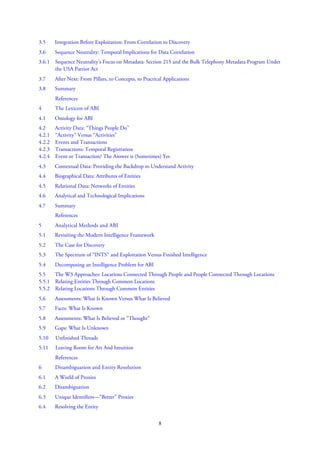


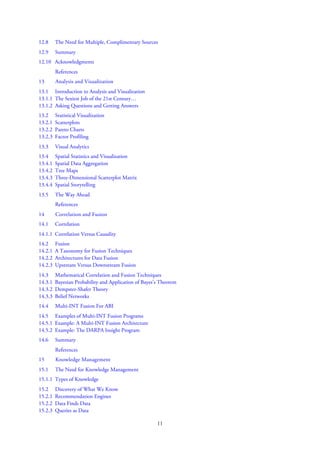









!["Waterloo"), in they dash; and in a second Charles and his horse are
over the low flight of rails, to gallop along a briary path which
conducts them to a small open space in the centre of the covert. The
greater portion of the field, in coats of many colours, congregate on
its right.
But "quanto sono insensibili questi Inglesi!" Instead of evincing the
smallest degree of anxiety, the conversations we have described are
renewed; and though certainly nobody seems to care the hundred-
thousandth part of a farthing about what his lips are saying, and
though the countenance of every man appears to acknowledge that,
on the whole, he is well enough satisfied with this world, yet men
and horses remain perfectly cool, and occasionally cold, until it might
be fancied by any old soldier standing a mile off that a shell had
suddenly burst in the middle of them. "Pray, don't holla!" exclaims an
old sportsman in a loud whisper. "By Jove, He's Away!" screams a very
young one in pink, pointing to a shepherd who, grasping a struggling
dog with one hand, is holding up his hat with the other. Half a dozen
loud, slow, decisive, monotonous blasts from Charles Payne's horn
are instantly heard, while his hounds, tumbling over each other,
jump almost together over a small hedge and ditch out of the
covert, with their beautiful heads all pointing towards Leicestershire.
As they and reynard take the opposite side of the large grass field in
which the riders had assembled, the start of the latter is very nearly
as sudden as that of the former. Packed together almost as closely
as the wild young creatures that on Epsom course run for the Derby,
the best men and the best horses belonging to the Pytchley, Quorn,
Cottesmore, and Warwickshire hounds start together over turf down
a gentle declivity, at the bottom of which runs an insignificant
stream. Steady horsemanship in every rider is necessary to prevent
treading on those immediately before, or jostling those on each side.
Many a horse, by shaking his head, clearly enough shows how
unwelcome to him is the restraint. From this conglomeration nearly a
dozen men extricate themselves by the superior speed and
management of their horses. Before them[G] is a well-known broad
and strong fence, which, without competing against each other, they](https://image.slidesharecdn.com/3676-250412185652-eb77746d/85/Activity-Based-Intelligence-Principles-and-Applications-Patrick-Biltgen-41-320.jpg)
![most gallantly charge, "magnâ comitante catervâ," followed by the
great ruck. One,—two,—three,—four,—five,—six men and horses
take it almost together in their stride, and, to the astonishment of
the remainder, all disappear! Every horse had well cleared the broad
ditch on the other side, but all nearly simultaneously had landed in
an artificial bog beyond it, made for draining purposes only a few
days before, and in which the six men and the six horses, each
perfectly unhurt, are now as prostrate and as "comfortable" as if
they had, to use the old nurse's expression, "just been put to bed."
The Hon. Fred. Villiers and Harry Everard are the first over and
down. As they lie together in the mud, looking upwards, they see
coming over the stakes of the hedge the Fitzwilliam girths of the
horses of Henry Forrester and Thomas Atkinson (Vive L'Empereur!),
followed almost instantly by two strangers. However, nearly as
quickly as they all fell, they severally arise, mount their horses, and
gallantly regain the hounds. The field of riders, unable to
comprehend what has happened, and moreover unable as well as
unwilling to stop their horses, as it were by word of command, all
gracefully swerve together in a curve to the right to take two stiff
fences instead of one. About half a dozen, on perfect timber-
jumpers, cross a ditch overhung by a stout ash rail, firmly fixed
between two trees; the remainder break their way through a bull-
finch, and then, throwing their right shoulders forward, at a very
honest pace, all make every proper effort to catch Charles Payne
and the few others who with him had followed the line of the
hounds.
We should certainly tire and jolt our readers very grievously were we
to presume to hustle them through the well-known and splendid run
that ensued. Not only, however, do our limits forbid us to do so, but
as we shall shortly have to quote hunting-anecdotes from a very
superior pen, we willingly pull up to make, in cool blood instead of in
hot, a very few remarks.
[G] This scene we happened to witness.](https://image.slidesharecdn.com/3676-250412185652-eb77746d/85/Activity-Based-Intelligence-Principles-and-Applications-Patrick-Biltgen-42-320.jpg)