BOARD REVIEW FROM MEDSCAPE
   Case-Based Internal Medicine
    Self-Assessment Questions


                    CLINICAL ESSENTIALS
                    CARDIOVASCULAR MEDICINE
                    DERMATOLOGY
                    ENDOCRINOLOGY
                    GASTROENTEROLOGY
                    HEMATOLOGY
                    IMMUNOLOGY/ALLERGY
                    INFECTIOUS DISEASE
                    INTERDISCIPLINARY MEDICINE
                    METABOLISM
                    NEPHROLOGY
                    NEUROLOGY
                    ONCOLOGY
                    PSYCHIATRY
                    RESPIRATORY MEDICINE
                    RHEUMATOLOGY


       www.acpmedicine.com
BOARD REVIEW FROM MEDSCAPE

  Case-Based Internal Medicine
   Self-Assessment Questions
Director of Publishing                    Cynthia M. Chevins
Director, Electronic Publishing           Liz Pope
Managing Editor                           Erin Michael Kelly
Development Editors                       Nancy Terry, John Heinegg
Senior Copy Editor                        John J. Anello
Copy Editor                               David Terry
Art and Design Editor                     Elizabeth Klarfeld
Electronic Composition                    Diane Joiner, Jennifer Smith
Manufacturing Producer                    Derek Nash


© 2005 WebMD Inc. All rights reserved.

No part of this book may be reproduced in any form by any means, including photocopying, or translated, trans-
mitted, framed, or stored in a retrieval system other than for personal use without the written permission of the
publisher.

Printed in the United States of America

ISBN: 0-9748327-7-4

Published by WebMD Inc.

Board Review from Medscape
WebMD Professional Publishing
111 Eighth Avenue
Suite 700, 7th Floor
New York, NY 10011

    1-800-545-0554
      1-203-790-2087
    1-203-790-2066
    acpmedicine@webmd.net

The authors, editors, and publisher have conscientiously and carefully tried to ensure that recommended measures and drug dosages
in these pages are accurate and conform to the standards that prevailed at the time of publication. The reader is advised, however, to
check the product information sheet accompanying each drug to be familiar with any changes in the dosage schedule or in the contra-
indications. This advice should be taken with particular seriousness if the agent to be administered is a new one or one that is infre-
quently used. Board Review from Medscape describes basic principles of diagnosis and therapy. Because of the uniqueness of each patient and
the need to take into account a number of concurrent considerations, however, this information should be used by physicians only as a general
guide to clinical decision making.

Board Review from Medscape is derived from the ACP Medicine CME program, which is accredited by the University of Alabama School of
Medicine and Medscape, both of whom are accredited by the ACCME to provide continuing medical education for physicians. Board Review
from Medscape is intended for use in self-assessment, not as a way to earn CME credits.
EDITORIAL BOARD

Editor-in-Chief                                              Janet B. Henrich, M.D.
David C. Dale, M.D., F.A.C.P.                                Associate Professor of Medicine and Obstetrics and
Professor of Medicine, University of Washington              Gynecology, Yale University School of Medicine, New
Medical Center, Seattle, Washington                          Haven, Connecticut
(Hematology, Infectious Disease, and General Internal        (Women’s Health)
Medicine)
                                                             William L. Henrich, M.D., F.A.C.P.
Founding Editor                                              Professor and Chairman, Department of Medicine,
Daniel D. Federman, M.D., M.A.C.P.                           University of Maryland School of Medicine, Baltimore,
The Carl W. Walter Distinguished Professor of Medicine       Maryland
and Medical Education and Senior Dean for Alumni             (Nephrology)
Relations and Clinical Teaching, Harvard Medical
School, Boston, Massachusetts                                Michael J. Holtzman, M.D.
                                                             Selma and Herman Seldin Professor of Medicine, and
                                                             Director, Division of Pulmonary and Critical Care
Associate Editors                                            Medicine, Washington University School of Medicine,
Karen H. Antman, M.D.                                        St. Louis, Missouri
Deputy Director for Translational and Clinical Science,      (Respiratory Medicine)
National Cancer Institute, National Institutes of Health,
Bethesda, Maryland                                           Mark G. Lebwohl, M.D.
(Oncology)                                                   Sol and Clara Kest Professor and Chairman, Department
                                                             of Dermatology, Mount Sinai School of Medicine, New
John P. Atkinson, M.D., F.A.C.P.                             York, New York
Samuel B. Grant Professor and Professor of Medicine          (Dermatology)
and Molecular Microbiology, Washington University
School of Medicine, St. Louis, Missouri                      Wendy Levinson, M.D., F.A.C.P.
(Immunology)                                                 Vice Chairman, Department of Medicine, The
                                                             University of Toronto, and Associate Director, Research
Christine K. Cassel, M.D., M.A.C.P.                          Administration, Saint Michael’s Hospital, Toronto,
President, American Board of Internal Medicine,              Ontario, Canada
Philadelphia, Pennsylvania                                   (Evidence-Based Medicine and General Internal Medicine)
(Ethics, Geriatrics, and General Internal Medicine)

Mark Feldman, M.D., F.A.C.P.                                 D. Lynn Loriaux, M.D., Ph.D., M.A.C.P.
                                                             Professor of Medicine and Chair, Department of
William O. Tschumy, Jr., M.D., Chair of Internal
                                                             Medicine, Oregon Health Sciences University, Portland,
Medicine and Clinical Professor of Internal Medicine,
                                                             Oregon
University of Texas Southwestern Medical School of
                                                             (Endocrinology and Metabolism)
Dallas; and Director, Internal Medicine Residency
Program, Presbyterian Hospital of Dallas, Dallas, Texas
(Gastroenterology)                                           Shaun Ruddy, M.D., F.A.C.P.
                                                             Elam C. Toone Professor of Internal Medicine,
Raymond J. Gibbons, M.D.                                     Microbiology and Immunology, and Professor Emeritus,
Director, Nuclear Cardiology Laboratory, The Mayo            Division of Rheumatology, Allergy and Immunology,
Clinic, Rochester, Minnesota                                 Medical College of Virginia at Commonwealth
(Cardiology)                                                 University, Richmond, Virginia
                                                             (Rheumatology)
Brian Haynes, M.D., Ph.D., F.A.C.P.
Professor of Clinical Epidemiology and Medicine and          Jerry S. Wolinsky, M.D.
Chair, Department of Clinical Epidemiology and               The Bartels Family Professor of Neurology, The
Biostatistics, McMaster University Health Sciences           University of Texas Health Science Center at Houston
Centre, Hamilton, Ontario, Canada                            Medical School, and Attending Neurologist, Hermann
(Evidence-Based Medicine, Medical Informatics, and General   Hospital, Houston, Texas
Internal Medicine)                                           (Neurology)
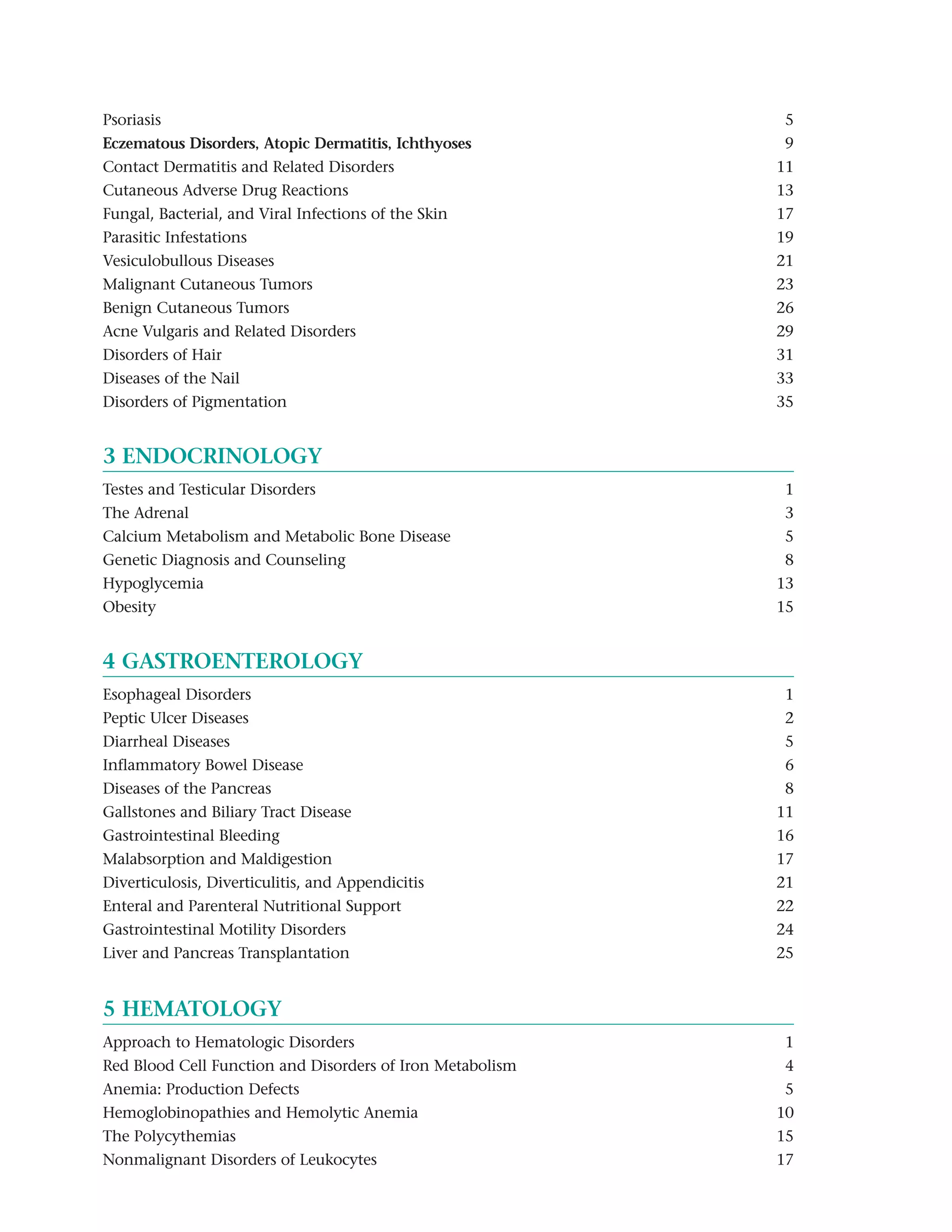
CONTENTS

EDITORIAL BOARD
PREFACE


CLINICAL ESSENTIALS
Ethical and Social Issues                          1
Reducing Risk of Injury and Disease                 2
Diet and Exercise                                   3
Adult Preventive Health Care                        7
Health Advice for International Travelers           7
Quantitative Aspects of Clinical Decision Making   11
Palliative Medicine                                12
Symptom Management in Palliative Medicine          15
Psychosocial Issues in Terminal Illnessc           17
Complementary and Alternative Medicine             20


1 CARDIOVASCULAR MEDICINE
Heart Failure                                       1
Hypertension                                        7
Atrial Fibrillation                                12
Supraventricular Tachycardia                       14
Pacemaker Therapy                                  15
Acute Myocardial Infarction                        18
Chronic Stable Anginai                             25
Unstable Angina/Non–ST Segment Elevation MI        30
Diseases of the Aorta                              31
Pericardium, Cardiac Tumors, and Cardiac Trauma    35
Congenital Heart Disease                           39
Peripheral Arterial Disease                        43
Venous Thromboembolism                             45

2 DERMATOLOGY
Cutaneous Manifestations of Systemic Diseases      1
Papulosquamous Disorders                           3
Psoriasis                                                  5
Eczematous Disorders, Atopic Dermatitis, Ichthyoses and    9
Contact Dermatitis and Related Disorders                   11
Cutaneous Adverse Drug Reactions                           13
Fungal, Bacterial, and Viral Infections of the Skin        17
Parasitic Infestations                                     19
Vesiculobullous Diseases                                   21
Malignant Cutaneous Tumors                                 23
Benign Cutaneous Tumors                                    26
Acne Vulgaris and Related Disorders                        29
Disorders of Hair                                          31
Diseases of the Nail                                       33
Disorders of Pigmentation                                  35


3 ENDOCRINOLOGY
Testes and Testicular Disorders                            1
The Adrenal                                                3
Calcium Metabolism and Metabolic Bone Disease              5
Genetic Diagnosis and Counseling                           8
Hypoglycemia                                               13
Obesity                                                    15


4 GASTROENTEROLOGY
Esophageal Disorders                                       1
Peptic Ulcer Diseases                                      2
Diarrheal Diseases                                         5
Inflammatory Bowel Disease                                 6
Diseases of the Pancreas                                   8
Gallstones and Biliary Tract Disease                       11
Gastrointestinal Bleeding                                  16
Malabsorption and Maldigestion                             17
Diverticulosis, Diverticulitis, and Appendicitis           21
Enteral and Parenteral Nutritional Support                 22
Gastrointestinal Motility Disorders                        24
Liver and Pancreas Transplantation                         25


5 HEMATOLOGY
Approach to Hematologic Disorders                          1
Red Blood Cell Function and Disorders of Iron Metabolism   4
Anemia: Production Defects                                 5
Hemoglobinopathies and Hemolytic Anemia                    10
The Polycythemias                                          15
Nonmalignant Disorders of Leukocytes                       17
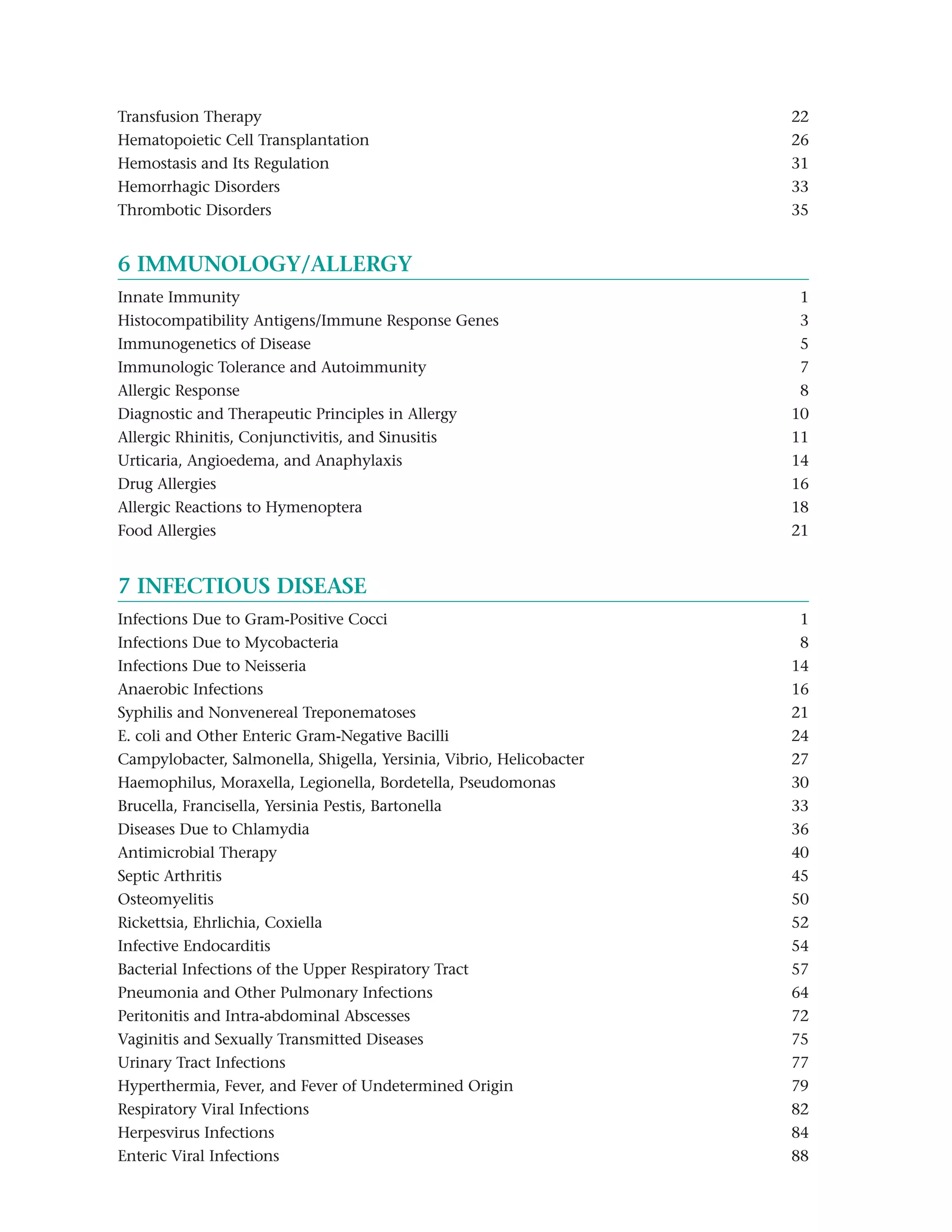
Transfusion Therapy                                                   22
Hematopoietic Cell Transplantation                                    26
Hemostasis and Its Regulation                                         31
Hemorrhagic Disorders                                                 33
Thrombotic Disorders                                                  35


6 IMMUNOLOGY/ALLERGY
Innate Immunity                                                        1
Histocompatibility Antigens/Immune Response Genes                      3
Immunogenetics of Disease                                              5
Immunologic Tolerance and Autoimmunity                                 7
Allergic Response                                                      8
Diagnostic and Therapeutic Principles in Allergy                      10
Allergic Rhinitis, Conjunctivitis, and Sinusitis                      11
Urticaria, Angioedema, and Anaphylaxis                                14
Drug Allergies                                                        16
Allergic Reactions to Hymenoptera                                     18
Food Allergies                                                        21


7 INFECTIOUS DISEASE
Infections Due to Gram-Positive Cocci                                  1
Infections Due to Mycobacteria                                         8
Infections Due to Neisseria                                           14
Anaerobic Infections                                                  16
Syphilis and Nonvenereal Treponematoses                               21
E. coli and Other Enteric Gram-Negative Bacilli                       24
Campylobacter, Salmonella, Shigella, Yersinia, Vibrio, Helicobacter   27
Haemophilus, Moraxella, Legionella, Bordetella, Pseudomonas           30
Brucella, Francisella, Yersinia Pestis, Bartonella                    33
Diseases Due to Chlamydia                                             36
Antimicrobial Therapy                                                 40
Septic Arthritis                                                      45
Osteomyelitis                                                         50
Rickettsia, Ehrlichia, Coxiella                                       52
Infective Endocarditis                                                54
Bacterial Infections of the Upper Respiratory Tract                   57
Pneumonia and Other Pulmonary Infections                              64
Peritonitis and Intra-abdominal Abscesses                             72
Vaginitis and Sexually Transmitted Diseases                           75
Urinary Tract Infections                                              77
Hyperthermia, Fever, and Fever of Undetermined Origin                 79
Respiratory Viral Infections                                          82
Herpesvirus Infections                                                84
Enteric Viral Infections                                              88
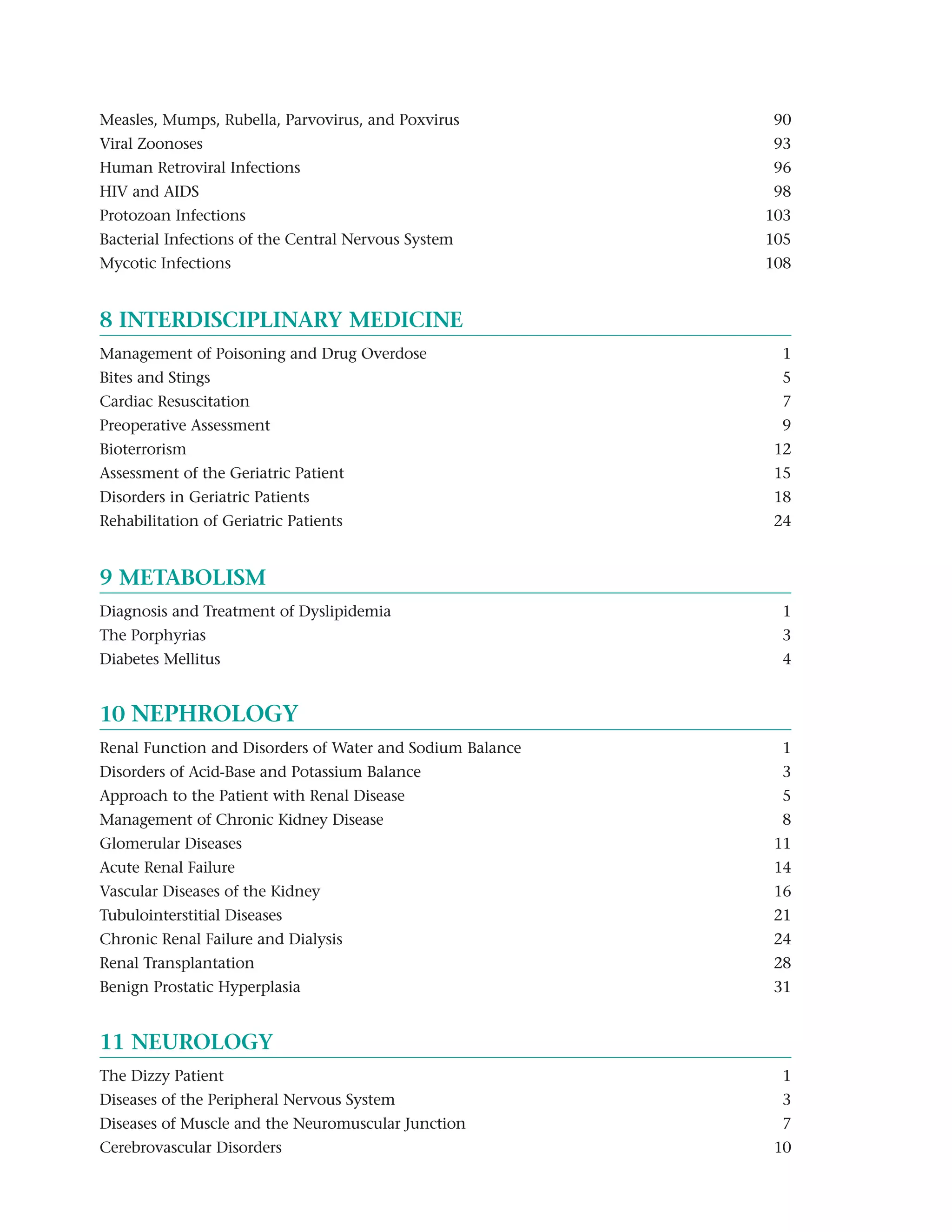
Measles, Mumps, Rubella, Parvovirus, and Poxvirus          90
Viral Zoonoses                                             93
Human Retroviral Infections                                96
HIV and AIDS                                               98
Protozoan Infections                                       103
Bacterial Infections of the Central Nervous System         105
Mycotic Infections                                         108


8 INTERDISCIPLINARY MEDICINE
Management of Poisoning and Drug Overdose                   1
Bites and Stings                                            5
Cardiac Resuscitation                                       7
Preoperative Assessment                                     9
Bioterrorism                                               12
Assessment of the Geriatric Patient                        15
Disorders in Geriatric Patients                            18
Rehabilitation of Geriatric Patients                       24


9 METABOLISM
Diagnosis and Treatment of Dyslipidemia                     1
The Porphyrias                                              3
Diabetes Mellitus                                           4


10 NEPHROLOGY
Renal Function and Disorders of Water and Sodium Balance    1
Disorders of Acid-Base and Potassium Balance                3
Approach to the Patient with Renal Disease                  5
Management of Chronic Kidney Disease                        8
Glomerular Diseases                                        11
Acute Renal Failure                                        14
Vascular Diseases of the Kidney                            16
Tubulointerstitial Diseases                                21
Chronic Renal Failure and Dialysis                         24
Renal Transplantation                                      28
Benign Prostatic Hyperplasia                               31


11 NEUROLOGY
The Dizzy Patient                                           1
Diseases of the Peripheral Nervous System                   3
Diseases of Muscle and the Neuromuscular Junction           7
Cerebrovascular Disorders                                  10
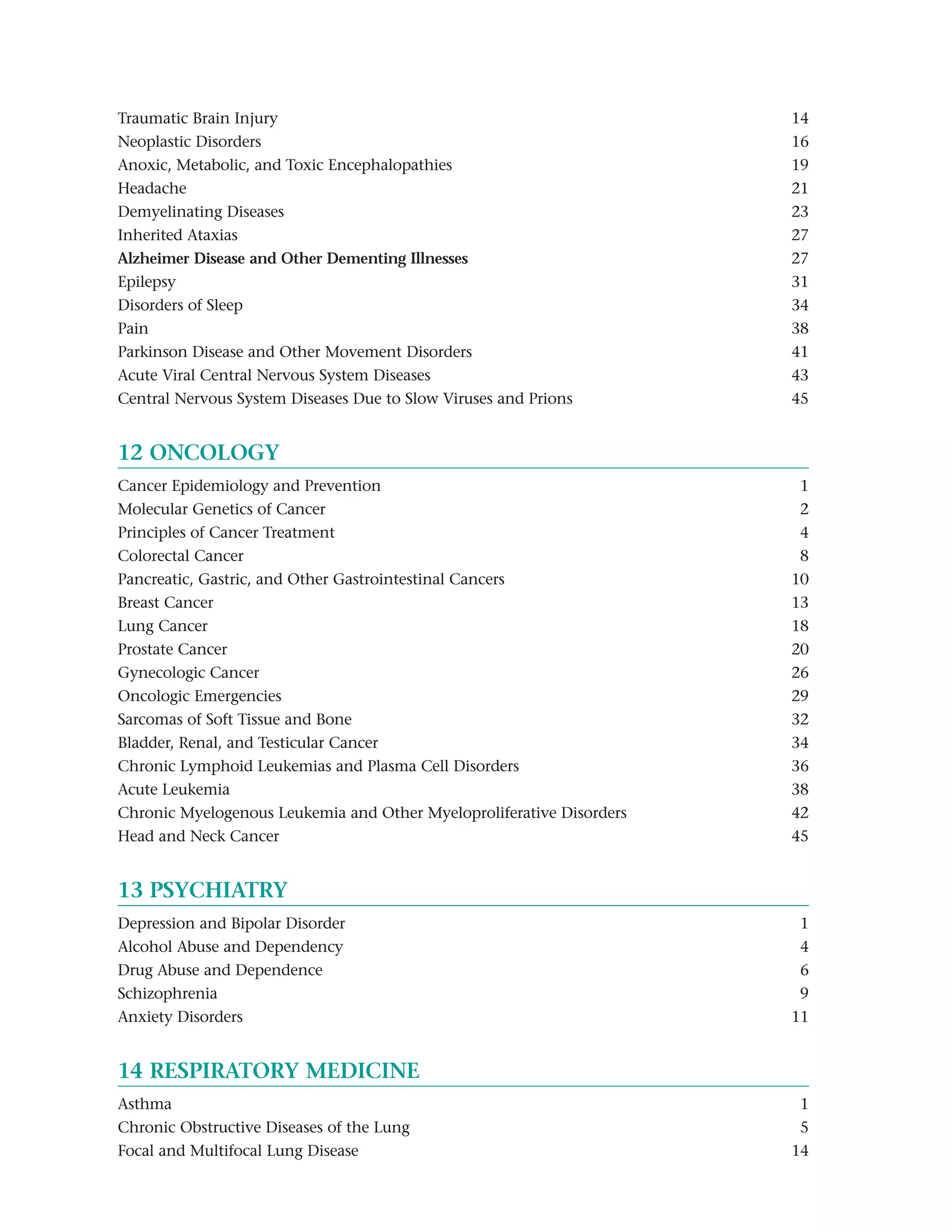
Traumatic Brain Injury                                                14
Neoplastic Disorders                                                  16
Anoxic, Metabolic, and Toxic Encephalopathies                         19
Headache                                                              21
Demyelinating Diseases                                                23
Inherited Ataxias                                                     27
Alzheimer Disease and Other Dementing Illnesses Major                 27
Epilepsy                                                              31
Disorders of Sleep                                                    34
Pain                                                                  38
Parkinson Disease and Other Movement Disorders                        41
Acute Viral Central Nervous System Diseases                           43
Central Nervous System Diseases Due to Slow Viruses and Prions        45


12 ONCOLOGY
Cancer Epidemiology and Prevention                                    1
Molecular Genetics of Cancer                                          2
Principles of Cancer Treatment                                        4
Colorectal Cancer                                                     8
Pancreatic, Gastric, and Other Gastrointestinal Cancers               10
Breast Cancer                                                         13
Lung Cancer                                                           18
Prostate Cancer                                                       20
Gynecologic Cancer                                                    26
Oncologic Emergencies                                                 29
Sarcomas of Soft Tissue and Bone                                      32
Bladder, Renal, and Testicular Cancer                                 34
Chronic Lymphoid Leukemias and Plasma Cell Disorders                  36
Acute Leukemia                                                        38
Chronic Myelogenous Leukemia and Other Myeloproliferative Disorders   42
Head and Neck Cancer                                                  45


13 PSYCHIATRY
Depression and Bipolar Disorder                                       1
Alcohol Abuse and Dependency                                          4
Drug Abuse and Dependence                                             6
Schizophrenia                                                         9
Anxiety Disorders                                                     11


14 RESPIRATORY MEDICINE
Asthma                                                                1
Chronic Obstructive Diseases of the Lung                              5
Focal and Multifocal Lung Disease                                     14
Chronic Diffuse Infiltrative Lung Disease                                        16
Ventilatory Control during Wakefulness and Sleep                                 20
Disorders of the Chest Wall                                                      22
Respiratory Failure                                                              26
Disorders of the Pleura, Hila, and Mediastinum                                   29
Pulmonary Edema                                                                  32
Pulmonary Hypertension, Cor Pulmonale, and Primary Pulmonary Vascular Diseases   35


15 RHEUMATOLOGY
Introduction to the Rheumatic Diseases                                            1
Rheumatoid Arthritis                                                              3
Seronegative Spondyloarthropathies                                                9
Systemic Lupus Erythematosus                                                     13
Scleroderma and Related Diseases                                                 15
Idiopathic Inflammatory Myopathies                                               16
Systemic Vasculitis Syndromes                                                    20
Crystal-Induced Joint Disease                                                    22
Osteoarthritis                                                                   26
Back Pain and Common Musculoskeletal Problems                                    31
Fibromyalgia                                                                     33
PREFACE

   The idea behind the creation of this book is to provide time-pressed physicians with a con-
venient way to measure and sharpen their medical knowledge across all of the topics in adult
internal medicine, possibly with preparation for recertification as a final goal.

   With this idea in mind, we have collected 981 case-based questions and created Board Review
from Medscape. The list of topics is comprehensive, providing physicians an extensive review
library covering all of adult internal medicine, as well as such subspecialties as psychiatry, neu-
rology, dermatology, and others. The questions present cases of the kind commonly encountered
in daily practice. The accompanying answers and explanations highlight key educational con-
cepts and provide a full discussion of both the correct and incorrect answers. The cases have
been reviewed by experts in clinical practice from the nation’s leading medical institutions.

   Board Review from Medscape is derived from the respected ACP Medicine CME program. A
continually updated, evidence-based reference of adult internal medicine, ACP Medicine is also
the first such comprehensive reference to carry the name of the American College of Physicians.
At the end of each set of questions, we provide a cross-reference for further study in ACP
Medicine. You can learn more about this publication on the Web at www.acpmedicine.com.

   This review ebook has been produced in a convenient PDF format to allow you to test your
medical knowledge wherever you choose. You are free to print out copies to carry with you, or
just leave the file on your computer or handheld device for a quick look during free moments.
This format also allows you to buy only the sections you need, if you so choose.

  I hope you find this ebook helpful. Please feel free to send any questions or comments you
might have to danfedermanmd@webmd.net. You will help us improve future editions.

Daniel D. Federman, M.D., M.A.C.P.
Founding Editor, ACP Medicine
The Carl W. Walter Distinguished Professor of Medicine
and Medical Education and Senior Dean for Alumni Relations and Clinical Teaching
Harvard Medical School
CLINICAL ESSENTIALS 1


 CLINICAL ESSENTIALS

Ethical and Social Issues
1.   An 81-year-old woman recently became ill and is now dying of metastatic cancer. She wishes to have her
     life preserved at all costs. Her physician is concerned that such an effort would be medically futile and
     extremely costly. Until recently, the patient had an active social life, which included regular participa-
     tion in many church activities. Her closest relatives are two nieces, whom she does not know well.
     At this time, it would be most appropriate for which of the following groups to become involved in
     decisions about this patient?
         ❏ A. Social workers
         ❏ B. The patient's family
         ❏ C. Clergy
         ❏ D. Ethics committee
         ❏ E. Risk management personnel

         Key Concept/Objective: To understand that the patient's beliefs and support systems can often
         guide health care providers in engaging others in support of the patient

         The patient's active involvement in church activities may mean that she will be receptive
         to the involvement of clergy. Communication regarding prolongation of suffering by
         aggressive measures to preserve life at all costs and discussion of spiritual dimensions may
         help this patient resolve the issue. Although courts have generally upheld the wishes of
         individuals regardless of issues involving the utilization of resources, the appropriate use
         of resources continues to be a legitimate and difficult problem. (Answer: C—Clergy)


2.   An 80-year-old woman presents with severe acute abdominal pain. She is found to have bowel ischemia,
     severe metabolic acidosis, and renal failure. She has Alzheimer disease and lives in a nursing home.
     Surgical consultation is obtained, and the surgeon feels strongly that she would not survive surgery.

     When you approach the patient's family at this time, what would be the best way to begin the
     discussion?
         ❑ A. Explain that DNR status is indicated because of medical futility
         ❑ B. Find out exactly what the family members know about the patient's
              wishes
         ❑ C. Explain that the patient could have surgery if the family wishes but
              that the patient would probably not survive
         ❑ D. Discuss the patient's religious beliefs
         ❏ E. Explain to the family that the patient is dying and tell them that you
              will make sure she is not in pain

         Key Concept/Objective: To understand the duties of the physician regarding the offering of choic-
         es to patients and families in urgent situations when the patient is dying

         Although the issues underlying each of these choices might be fruitfully discussed with the
         family, ethicists have affirmed the duty of physicians to lead and guide such discussions
2 BOARD REVIEW


         on the basis of their knowledge and experience. Health care providers should not inflict
         unrealistic choices on grieving families; rather, they should reassure them and describe the
         efficacy of aggressive palliative care in relieving the suffering of patients who are dying. In
         this case, a direct approach involving empathy and reassurance would spare the family of
         having to make difficult decisions when there is no realistic chance of changing the out-
         come. (Answer: E—Explain to the family that the patient is dying and tell them that you will make
         sure she is not in pain)


3.   An 86-year-old man with Alzheimer disease is admitted to the hospital for treatment of pneumonia. The
     patient has chronic obstructive pulmonary disease; coronary artery disease, which developed after he
     underwent four-vessel coronary artery bypass grafting (CABG) 10 years ago; and New York Heart
     Association class 3 congestive heart failure. His living will, created at the time of his CABG, calls for full
     efforts to resuscitate him if necessary. A family meeting is scheduled for the next morning. At 2 A.M., a
     nurse discovers that the patient is blue in color and has no pulse; the nurse initiates CPR and alerts you
     regarding the need for emergent resuscitation. An electrocardiogram shows no electrical activity.

     What should you do at this time?
         ❏ A. Proceed with resuscitation because of the patient's living will
         ❏ B. Proceed with resuscitation until permission to stop resuscitation is
              obtained from the family
         ❏ C. Decline to proceed with resuscitation on the basis of medical futility
         ❏ D. Continue resuscitation for 30 minutes because the nurse initiated CPR
         ❏ E. Decline to proceed with resuscitation because the patient's previous living
              will is void, owing to the fact that it was not updated at the time of
              admission

         Key Concept/Objective: To understand the concept of medical futility as the rationale for not per-
         forming CPR

         It would be medically futile to continue CPR and attempts at resuscitation, given the
         absence of ECG activity. In this case, the patient's likelihood of being successfully resusci-
         tated is less than 1%, owing to his multiple medical conditions. (Answer: C—Decline to pro-
         ceed with resuscitation on the basis of medical futility)

         For more information, see Cassel CK, Purtilo RB, McParland ET: Clinical Essentials: II
         Contemporary Ethical and Social Issues in Medicine. ACP Medicine Online (www.
         acpmedicine.com). Dale DC, Federman DD, Eds. WebMD Inc., New York, July 2001


Reducing Risk of Injury and Disease
4.   A 26-year-old woman presents to clinic for routine examination. The patient has no significant medical
     history and takes oral contraceptives. She smokes half a pack of cigarettes a day and reports having had
     three male sexual partners over her lifetime. As part of the clinic visit, you wish to counsel the patient
     on reducing the risk of injury and disease.

     Of the following, which is the leading cause of loss of potential years of life before age 65?
         ❏ A. HIV/AIDS
         ❏ B. Motor vehicle accidents
         ❏ C. Tobacco use
         ❏ D. Domestic violence

         Key Concept/Objective: To understand that motor vehicle accidents are the leading cause of loss
         of potential years of life before age 65

         Motor vehicle accidents are the leading cause of loss of potential years of life before age 65.
         Alcohol-related accidents account for 44% of all motor vehicle deaths. One can experience
CLINICAL ESSENTIALS 3


         a motor vehicle accident as an occupant, as a pedestrian, or as a bicycle or motorcycle
         rider. In 1994, 33,861 people died of injuries sustained in motor vehicle accidents in the
         United States. The two greatest risk factors for death while one is driving a motor vehicle
         are driving while intoxicated and failing to use a seat belt. The physician's role is to iden-
         tify patients with alcoholism, to inquire about seat-belt use, and to counsel people to use
         seat belts and child car seats routinely. In one study, 53.5% of patients in a university inter-
         nal medicine practice did not use seat belts. Problem drinking, physical inactivity, obesi-
         ty, and low income were indicators of nonuse. The prevalence of nonuse was 91% in peo-
         ple with all four indicators and only 25% in those with no indicators. Seat belts confer con-
         siderable protection, yet in one survey, only 3.9% of university clinic patients reported that
         a physician had counseled them about using seat belts. Three-point restraints reduce the
         risk of death or serious injury by 45%. Air bags reduce the risk of death by an additional
         9% in drivers using seat belts. Because air bags reduce the risk of death by only 20% in
         unbelted drivers, physicians must tell their patients not to rely on air bags. (Answer: B—
         Motor vehicle accidents)

         For more information, see Sox HC Jr.: Clinical Essentials: III Reducing Risk of Injury and
         Disease. ACP Medicine Online (www.acpmedicine.com). Dale DC, Federman DD, Eds.
         WebMD Inc., New York, July 2003


Diet and Exercise
5.   A 78-year-old woman with hypertension presents for a 3-month follow-up visit for her hypertension. A
     year ago, she moved to a retirement community, where she began to eat meals more regularly; during
     the past year, she has gained 15 lb. She is sedentary. She weighs 174 lb, and her height is 5 ft 1 in. She
     is a lifelong smoker; she smokes one pack of cigarettes a day and has repeatedly refused to receive coun-
     seling regarding smoking cessation. She has occasional stiffness on waking in the morning. Her blood
     pressure is 120/80 mm Hg. She reports taking the prescribed antihypertensive therapy almost every day.
     She is concerned about her weight gain because this is the most she has ever weighed. She has reported
     that she has stopped eating desserts at most meals and is aware that she needs to reduce the amount of
     fat she eats. She has never exercised regularly, but her daughter has told her to ask about an aerobic exer-
     cise program. She has asked for exercise recommendations, although she does not know whether it will
     make much difference.

     Which of the following would you recommend for this patient?
         ❏ A. Attendance at a structured aerobic exercise program at least three times a
              week
         ❏ B. Membership in the neighborhood YMCA for swimming
         ❏ C. Walking three times a week, preferably with a partner
         ❏ D. Contacting a personal trainer to develop an individualized exercise
              program
         ❏ E. No additional exercise because she has symptoms of osteoarthritis

         Key Concept/Objective: To recognize that even modest levels of physical activity such as walking
         and gardening are protective even if they are not started until midlife to late in life

         Changes attributed to aging closely resemble those that result from inactivity. In sedentary
         patients, cardiac output, red cell mass, glucose tolerance, and muscle mass decrease.
         Systolic blood pressure, serum cholesterol levels, and body fat increase. Regular exercise
         appears to retard these age-related changes. In elderly individuals, physical activity is also
         associated with increased functional status and decreased mortality. Although more stud-
         ies are needed to clarify the effects of exercise in the elderly, enough evidence exists to war-
         rant a recommendation of mild exercise for this patient, along with counseling concern-
         ing the benefits of exercise at her age. Walking programs increase aerobic capacity in indi-
         viduals in their 70s with few injuries. Although structured exercise is most often recom-
         mended by physicians, recent studies demonstrate that even modest levels of physical
         activity such as walking and gardening are beneficial. Such exercise is protective even if it
         is not started until midlife or late in life. Because this patient is used to a sedentary lifestyle
4 BOARD REVIEW


         and is not strongly motivated to begin exercising, compliance with exercise recommen-
         dations may be an issue. Lifestyle interventions appear to be as effective as formal exercise
         programs of similar intensity in improving cardiopulmonary fitness, blood pressure, and
         body composition. Exercise does not appear to cause or accelerate osteoarthritis. However,
         counseling concerning warm-ups, stretches, and a graded increase in exercise intensity can
         help prevent musculoskeletal problems as a side effect of exercise. (Answer: C—Walking three
         times a week, preferably with a partner)


6.   A 50-year-old woman presents for a follow-up visit to discuss the laboratory results from her annual
     physical examination and a treatment plan. Her total serum cholesterol level is 260 mg/dl, which is up
     from 200 mg/dl the previous year. Her blood pressure is 140/100 mm Hg, which is up from 135/90 mm
     Hg; she weighs 165 lb, a gain of 12 lb from the previous year. Results from other tests and her physical
     examination are normal. Her height is 5 ft 3 in. She is postmenopausal and has been receiving hormonal
     replacement therapy for 2 years. You discuss her increased lipid levels and increased blood pressure in
     the context of her weight gain and dietary habits. When asked about her dietary habits, she says that
     she has heard that putting salt on food causes high blood pressure. She asks if she should stop putting
     salt on her food because her blood pressure is high.

     How would you describe for this patient the relationship between sodium and hypertension?
         ❏ A. Tell her that reducing sodium intake usually leads to significant reduc-
              tions in blood pressure
         ❏ B. Tell her that reducing intake of sodium and fats while increasing intake
              of fruits, vegetables, and whole grains usually leads to significant reduc-
              tions in hypertension
         ❏ C. Explain to her that decreasing sodium is only important in elderly patients
         ❏ D. Tell her that research studies are unclear about the role of sodium in
              hypertension
         ❏ E. Explain to her that antihypertensive medication is effective in reducing
              hypertension, making sodium reduction unnecessary

         Key Concept/Objective: To understand current evidence that supports the relationship between
         sodium and hypertension

         The Dietary Approaches to Stop Hypertension (DASH) trial1 demonstrated that the combi-
         nation of eating fruits, vegetables, and whole grains along with reducing fat and sodium
         levels can lower systolic blood pressure an average of 11.5 mm Hg in patients with hyper-
         tension. Reductions in dietary sodium can contribute to substantial reductions in the risk
         of stroke and coronary artery disease. In addition, for this patient, a reduction in sodium
         intake will decrease urinary calcium excretion and thus reduce her risk of osteoporosis.
         Because the patient has asked about putting salt on food, she should also be counseled that
         80% of dietary sodium comes from processed food. It is important to review these hidden
         sources of salt with patients who would benefit from sodium restriction. The average
         American diet contains more than 4,000 mg of sodium a day. There is no recommended
         daily allowance for sodium, but the American Heart Association (AHA) recommends that
         daily consumption of sodium not exceed 2,400 mg, with substantially lower sodium
         intake for patients with hypertension. (Answer: B—Tell her that reducing intake of sodium and
         fats while increasing intake of fruits, vegetables, and whole grains usually leads to significant reductions
         in hypertension)

         1. Sacks FM, Svetkey LP, Vollmer WM, et al: Effects on blood pressure of reduced dietary sodium and the Dietary
         Approaches to Stop Hypertension (DASH) diet. DASH-Sodium Collaborative Research Group. N Engl J Med 344:3,
         2001


7.   A 64-year-old man comes to your clinic for a routine visit. He has a history of myocardial infarction,
     which was diagnosed 1 year ago. Since that time, he has been asymptomatic, and he has been taking all
     his medications and following an exercise program. His physical examination is unremarkable. He has
     been getting some information on the Internet about the use of omega-3 polyunsaturated fatty acids as
     part of a cardioprotective diet.
CLINICAL ESSENTIALS 5


     Which of the following statements is most accurate concerning the use of omega-3 fatty acids?
         ❏ A. Consumption of omega-3 polyunsaturated fatty acids has been shown to
              decrease the incidence of recurrent myocardial infarctions
         ❏ B. Omega-3 polyunsaturated fatty acids have been shown to decrease low-
              density lipoprotein (LDL) cholesterol levels
         ❏ C. Consumption of omega-3 polyunsaturated fatty acids is inversely related
              to the incidence of atherosclerosis and the risk of sudden death and stroke
         ❏ D. Omega-3 polyunsaturated fatty acids have been shown to elevate triglyc-
              eride levels

         Key Concept/Objective: To understand the benefits of omega-3 polyunsaturated fatty acids

         Omega-3 polyunsaturated fatty acids have been shown to have a cardioprotective effect.
         Consumption of omega-3 fatty acids is inversely related to the incidence of atherosclero-
         sis and the risk of sudden death and stroke. In high doses, omega-3 fatty acids may reduce
         blood triglyceride levels, but in dietary amounts, they have little effect on blood lipids.
         Even in modest amounts, however, omega-3 fatty acids reduce platelet aggregation, there-
         by impairing thrombogenesis. They may also have antiarrhythmic and plaque-stabilizing
         properties. (Answer: C—Consumption of omega-3 polyunsaturated fatty acids is inversely related to
         the incidence of atherosclerosis and the risk of sudden death and stroke)


8.   A 52-year-old woman is diagnosed with diabetes on a blood sugar screening test. She is started on a diet
     and undergoes education about diabetes. After a month, she comes back for a follow-up visit and asks
     you why she should eat complex carbohydrates instead of simple carbohydrates if they are all the same.

     Which of the following statements about simple and complex carbohydrates is true?
         ❏ A. Simple and complex carbohydrates are indeed of the same caloric value,
              and there is no advantage in using one over the other
         ❏ B. Simple carbohydrates have a higher glycemic index than complex carbo-
              hydrates, and they may decrease high-density lipoprotein (HDL) choles-
              terol levels
         ❏ C. Simple carbohydrates have a higher glycemic index than complex carbo-
              hydrates, and they may increase HDL cholesterol levels
         ❏ D. Simple carbohydrates have a lower glycemic index than complex carbo-
              hydrates, and they may decrease HDL cholesterol levels

         Key Concept/Objective: To understand the difference between simple and complex carbohydrates

         Plants are the principal sources of carbohydrates. Simple carbohydrates include monosac-
         charides such as glucose, fructose, and galactose and disaccharides such as sucrose, malt-
         ose, and lactose. Sugars, starches, and glycogen provide 4 cal/g; because fiber is indi-
         gestible, it has no caloric value. Complex carbohydrates include polysaccharides and fiber.
         Carbohydrates contribute about 50% of the calories in the average American diet; half of
         those calories come from sugar and half from complex carbohydrates. Because sugars are
         more rapidly absorbed, they have a higher glycemic index than starches. In addition to
         provoking higher insulin levels, carbohydrates with a high glycemic index appear to
         reduce HDL cholesterol levels and may increase the risk of coronary artery disease. Food
         rich in complex carbohydrates also provides vitamins, trace minerals, and other valuable
         nutrients. (Answer: B—Simple carbohydrates have a higher glycemic index than complex carbohy-
         drates, and they may decrease high-density lipoprotein [HDL] cholesterol levels)


9.   A 52-year-old woman comes to your clinic to establish primary care. She has not seen a doctor in years.
     She describes herself as being very healthy. She has no significant medical history, nor has she ever used
     tobacco or ethanol. She underwent menopause 3 years ago. Her physical examination is unremarkable.
     You ask about her dietary habits and find that the amount of fat that she is eating is in accordance with
     the AHA recommendations for healthy adults. She does not drink milk. Results of routine laboratory test-
     ing are within normal limits.
6 BOARD REVIEW


    Which of the following additional dietary recommendations would be appropriate for this patient?
         ❏ A. Take supplements of calcium, vitamin D, and vitamin A
         ❏ B. Take supplements of calcium and vitamin D, and restrict the amount of
              sodium to less than 2,400 mg a day
         ❏ C. Take supplements of iron, vitamin D, and vitamin A
         ❏ D. Continue with the present diet

         Key Concept/Objective: To know the general recommendations for vitamin and mineral
         consumption

         It is becoming clear that many Americans, particularly the elderly and the poor, do not
         consume adequate amounts of vitamin-rich foods. There is conflicting information regard-
         ing the effects that the use of vitamins and minerals has on health; some recommenda-
         tions, however, have been accepted. Women of childbearing age, the elderly, and people
         with suboptimal nutrition should take a single multivitamin daily. Strict vegetarians
         should take vitamin B12. Use of so-called megadose vitamins should be discouraged.
         Multivitamin supplements may also be necessary to avert vitamin D deficiencies, particu-
         larly in the elderly. Population studies demonstrate conclusively that a high sodium intake
         increases blood pressure, especially in older people. There is no conclusive evidence that
         sodium restriction is beneficial to normotensive persons. Pending such information, the
         AHA recommends that daily consumption of sodium not exceed 2,400 mg, and the
         National Academy of Sciences proposes a 2,000 mg maximum. Calcium intake is related
         to bone density; at present, fewer than 50% of Americans consume the recommended daily
         allowance of calcium. Routine administration of iron is indicated in infants and pregnant
         women. A high intake of iron may be harmful for patients with hemochromatosis and for
         others at risk of iron overload. (Answer: B—Take supplements of calcium and vitamin D, and
         restrict the amount of sodium to less than 2,400 mg a day)


10. A 34-year-old man comes to your clinic to establish primary care. He has no significant medical history.
    He takes no medications and does not smoke. His family history is significant only with regard to his
    father, who contracted lung cancer at 70 years of age. You discuss the benefits of exercise with the patient
    and encourage him to start a regular exercise program.

    Which of the following assessment measures would be appropriate in the evaluation of this patient
    before he starts an exercise program?
         ❏ A. History, physical examination, complete blood count, and urinalysis
         ❏ B. History, physical examination, chest x-ray, and electrocardiogram
         ❏ C. History, physical examination, and echocardiography
         ❏ D. History, physical examination, exercise, and electrocardiography

         Key Concept/Objective: To understand the evaluation of patients starting an exercise program

         Physicians can provide important incentives for their patients by educating them about
         the risks and benefits of habitual exercise. A careful history and physical examination are
         central to the medical evaluation of all potential exercisers. Particular attention should be
         given to a family history of coronary artery disease, hypertension, stroke, or sudden death
         and to symptoms suggestive of cardiovascular disease. Cigarette smoking, sedentary living,
         hypertension, diabetes, and obesity all increase the risks of exercise and may indicate the
         need for further testing. Physical findings suggestive of pulmonary, cardiac, or peripheral
         vascular disease are obvious causes of concern. A musculoskeletal evaluation is also impor-
         tant. The choice of screening tests for apparently healthy individuals in controversial. A
         complete blood count and urinalysis are reasonable for all patients. Young adults who are
         free of risk factors, symptoms, and abnormal physical findings do not require further eval-
         uation. Although electrocardiography and echocardiography might reveal asymptomatic
         hypertrophic cardiomyopathy in some patients, the infrequency of this problem makes
         routine screening impractical. The AHA no longer recommends routine exercise electro-
         cardiography for asymptomatic individuals. (Answer: A—History, physical examination, com-
         plete blood count, and urinalysis)
CLINICAL ESSENTIALS 7


         For more information, see Simon HB: Clinical Essentials: IV Diet and Exercise. ACP Medicine
         Online (www.acpmedicine.com). Dale DC, Federman DD, Eds. WebMD Inc., New York,
         September 2003


Adult Preventive Health Care
11. A healthy 50-year-old mother of three moves to your town from an inner-city area where she received
    no regular health care. She has never had any immunizations, will be working as a librarian, and plans
    no international travel. History and physical examination do not suggest any underlying chronic
    illnesses.

    Which of the following immunizations would you recommend for this patient?
         ❏ A. Measles, mumps, rubella
         ❏ B. Hepatitis B
         ❏ C. Tetanus-diphtheria
         ❏ D. Pneumococcal
         ❏ D. All of the above

         Key Concept/Objective: To know the recommendations for routine adult immunization

         Only 65 cases of tetanus occur in the United States each year, and most occur in individu-
         als who have never received the primary immunization series, whose immunity has
         waned, or who have received improper wound prophylaxis. The case-fatality rate is 42%
         in individuals older than 50 years. This patient should therefore receive the primary series
         of three immunizations with tetanus-diphtheria toxoids. Because she was born before
         1957, she is likely to be immune to measles, mumps, and rubella. She does not appear to
         fall into one of the high-risk groups for whom hepatitis A, hepatitis B, and pneumococcal
         vaccinations are recommended. (Answer: C—Tetanus-diphtheria)


         For more information, see Snow CF: Clinical Essentials: V Adult Preventive Health Care. ACP
         Medicine Online (www.acpmedicine.com). Dale DC, Federman DD, Eds. WebMD Inc., New
         York, March 2002


Health Advice for International Travelers
12. A 43-year-old man with asymptomatic HIV infection (stage A1; CD4+ T cell count, 610; viral load, < 50
    copies/ml) seeks your advice regarding immunizations for a planned adventure bicycle tour in Africa. He
    is otherwise healthy, takes no medications, and has no known allergies. He is known to be immune to
    hepatitis B but is seronegative for hepatitis A. His trip will last approximately 3 weeks and will include
    travel to rural areas and to areas beyond usual tourist routes. You counsel him about safe food practices,
    safe sex, and mosquito-avoidance measures.

    What should you recommend for malaria prophylaxis?
         ❏ A. No prophylaxis
         ❏ B. Chloroquine
         ❏ C. Pyrimethamine-sulfadoxine
         ❏ D. Mefloquine
         ❏ E. Amoxicillin

         Key Concept/Objective: To know the specific indications and options for malaria prophylaxis for
         the international traveler

         Appropriate malaria chemoprophylaxis is the most important preventive measure for trav-
         elers to malarial areas. In addition to advice about the avoidance of mosquitos and the use
         of repellants, most visitors to areas endemic for malaria should receive chemoprophylax-
8 BOARD REVIEW


         is, regardless of the duration of exposure. In most parts of the world where malaria is
         found, including Africa, chloroquine resistance is common, so chloroquine would not be
         recommended as prophylaxis for this patient. Pyrimethamine-sulfadoxine is no longer rec-
         ommended for prophylaxis because of the associated risk of serious mucocutaneous reac-
         tions. Amoxicillin does not have known efficacy against Plasmodium. Mefloquine is the
         preferred agent for malaria chemoprophylaxis in areas of the world where chloroquine-
         resistant malaria is present. (Answer: D—Mefloquine)


13. A 56-year-old man seeks your advice regarding malaria prophylaxis before a planned 10-day business trip
    to New Delhi, India. His medical problems include atrial fibrillation and medication-controlled bipolar
    disorder. He has no known allergies; his regular medications include diltiazem and lithium.

    What should you recommend to this patient regarding malaria prophylaxis?
         ❏ A. No prophylaxis is required because his trip will be less than 14 days long
         ❏ B. Chloroquine
         ❏ C. Mefloquine
         ❏ D. Pyrimethamine-sulfadoxine
         ❏ E. Doxycycline

         Key Concept/Objective: To understand the options for prophylaxis of chloroquine-resistant
         malaria

         Chloroquine-resistant malaria is widespread and occurs in India. Thus, chloroquine would
         not be appropriate. Pyrimethamine-sulfadoxine is generally not used for prophylaxis
         because of the risk of severe mucocutaneous reactions. Mefloquine and doxycycline are the
         most commonly used chemoprophylactic agents for travelers to chloroquine-resistant
         malarial areas. Although mefloquine is generally well-tolerated in prophylactic doses,
         underlying cardiac conduction abnormalities and neuropsychiatric disorders or seizures
         are generally considered contraindications for mefloquine use. Thus, daily doxycycline
         taken from the start of the travel period until 4 weeks after departure from malarial areas
         would be the best choice for malaria chemoprophylaxis for this patient. (Answer: E—
         Doxycycline)


14. A 48-year-old woman seeks your advice about prevention of traveler's diarrhea. Her only medical prob-
    lems include diet-controlled diabetes mellitus and occasional candidal vaginitis. She will be visiting
    Bombay and several rural villages for a total of 8 days as an inspector of sewage-treatment facilities. Given
    her tight schedule, it is imperative that she not lose any time as a result of diarrhea. You counsel her about
    safe food practices, prescribe mefloquine for malaria prophylaxis, and immunize her appropriately.

    Which of the following would be the best choice for prevention of traveler's diarrhea in this patient?
         ❏ A. Loperamide daily
         ❏ B. Ciprofloxacin daily
         ❏ C. Doxycycline daily
         ❏ D. Trimethoprim-sulfamethoxazole daily
         ❏ E. Erythromycin daily

         Key Concept/Objective: To know the prophylactic options for traveler's diarrhea

         Traveler's diarrhea is most commonly caused by bacteria (particularly enterotoxigenic
         Escherichia coli). Travelers should follow safe food practices and may take either chemo-
         prophylaxis or begin treatment after onset. For the patient in this question (whose visit
         will be relatively short and who cannot afford to have her schedule interrupted by an
         episode of diarrhea), chemoprophylaxis is a reasonable approach. A quinolone, trimetho-
         prim-sulfamethoxazole, bismuth subsalicylate, and doxycycline are all options. Resistance
         to trimethoprim-sulfamethoxazole is widespread, so this drug would be less than optimal.
         Vaginal candidiasis is a common complication of doxycycline (particularly in a patient
CLINICAL ESSENTIALS 9


         with diabetes and a history of candidal vaginitis), and therefore doxycycline would not be
         suitable for this patient. Of the choices, ciprofloxacin would be the best option.
         Loperamide or erythromycin would not be an appropriate choice for the chemoprophy-
         laxis of traveler's diarrhea. (Answer: B—Ciprofloxacin daily)


15. A 35-year-old woman in excellent health is planning a trip to remote areas of Asia. She has not traveled
    abroad before, and she wants some information on travel-related illnesses and risks. She has had her
    childhood immunizations, and her tetanus immunization was updated last year. She has an aversion to
    immunizations and medications but will accept them if needed.

    What is the most common preventable acquired infection associated with travel for this person?
         ❏ A. Malaria
         ❏ B. Typhus
         ❏ C. Hepatitis A
         ❏ D. Cholera
         ❏ E. Yellow fever

         Key Concept/Objective: To understand the risks of infection associated with travel to various
         parts of the world

         Travel-related risks of infection are dependent on which part of the world an individual
         will be traveling to, the length of stay, and any underlying predisposing medical factors.
         Hepatitis A is prevalent in many underdeveloped countries and is the most common pre-
         ventable infection acquired by travelers. Malaria is also a risk for this individual, but it is
         not acquired as commonly as hepatitis A. Sexually transmitted diseases are a frequent risk
         for travelers and should be discussed with patients. Typhus vaccine is no longer made in
         the United States and is not indicated for most travelers. Cholera vaccination is not very
         effective and is not recommended for travelers. Yellow fever is not a risk for this individ-
         ual, who will be traveling in Asia; yellow fever would be a risk if she were traveling to parts
         of Africa or South America. (Answer: C—Hepatitis A)


16. A 42-year-old male executive who works for a multinational company will be flying to several countries
    in Asia over a 2-week period. He has not traveled overseas before. His past medical history is significant
    for mild hypertension, for which he takes medication, and for a splenectomy that he underwent for
    injuries from an automobile accident. He had routine childhood immunizations, but he has received
    none since. The itinerary for his business trip includes 4 days in India, 5 days in Singapore, and 3 days
    in Malaysia.

    Which of the following would NOT be recommended for this patient?
         ❏ A. Hepatitis A vaccination
         ❏ B. Meningococcal vaccination
         ❏ C. Yellow fever vaccination
         ❏ D. Malaria prophylaxis
         ❏ E. Tetanus booster

         Key Concept/Objective: To understand pretravel evaluation and immunizations

         Yellow fever is endemic in Africa and South America but not in Asia, and therefore, yellow
         fever vaccination is not recommended for this person. Medical consultation for travel
         should be obtained at least 1 month before travel to allow for immunizations. A travel itin-
         erary and a general medical history should be obtained to define pertinent underlying
         medical conditions. Hepatitis A is the most common preventable acquired infection
         among travelers, and therefore, hepatitis A vaccine should be offered. Because this patient
         has undergone a splenectomy, meningococcal vaccination should be recommended
         because he is predisposed to more severe infections with encapsulated bacteria, specifical-
         ly, more severe babesiosis or malaria. Malaria is a risk for travelers in this area of the world,
10 BOARD REVIEW


         and therefore, chemoprophylaxis is recommended. A tetanus-diphtheria booster should be
         administered every 10 years, and boosters should be administered before travel. (Answer:
         C—Yellow fever vaccination)


17. A 26-year-old asymptomatic man who was recently diagnosed as being HIV positive will be traveling in
    South America. He has no planned itinerary and has not started any medications. He has had routine
    childhood immunizations and has not previously traveled overseas. He has a severe allergy to egg
    proteins.

    Which of the following should this patient receive before he travels?
         ❏ A. Oral typhoid vaccine
         ❏ B. Oral polio vaccine
         ❏ C. Yellow fever vaccine
         ❏ D. Measles vaccine
         ❏ E. Meningococcal vaccine

         Key Concept/Objective: To know the contraindications for common travel immunizations

         Vaccines that contain live, attenuated viruses should not be given to pregnant women or
         persons who are immunodeficient or who are potentially immunodeficient. Oral typhoid
         and oral polio vaccines are both live, attenuated vaccines and should not be given to an
         HIV-positive individual. An alternative to both vaccines is the killed parenteral vaccines.
         Yellow fever is also a live vaccine; the risks of the use of this vaccine in HIV-infected
         patients have not been established. However, severe allergic reaction to egg proteins is a
         contraindication for yellow fever vaccinations, and therefore, that vaccine should not be
         given to this person. Some countries in South America may require proof of yellow fever
         vaccination, and the patient should be advised of this before travel. The one exception to
         the use of live, attenuated vaccines in immunocompromised individuals is measles vacci-
         nations. Measles can be severe in HIV-positive patients, and therefore, measles immuniza-
         tion should be provided if the patient is not severely immunocompromised and if he was
         immunized for measles before 1980. (Answer: D—Measles vaccine)


18. A middle-aged couple is planning a 1-week trip to Africa. They are both in excellent health and are not
    taking any medications. They have previously been to Africa and were given mefloquine prophylacti-
    cally for malaria because of the presence of chloroquine-resistant strains of malaria in this area. However,
    both had to discontinue the medication before completing the regimen because of severe side effects,
    which included nausea and dizziness.

    Which of the following is an acceptable recommendation for the prevention of malaria for this couple?
         ❏ A. Recommend no prophylaxis because their risk is minimal, owing to the
              length of their stay, and the side effects from prophylaxis outweigh the
              benefits
         ❏ B. Recommend chloroquine because its side effects are milder than those of
              mefloquine
         ❏ C. Recommend doxycycline and emphasize the need to use sun protection
         ❏ D. Recommend that additional general preventive measures such as the use
              of strong insect repellent, staying indoors in the evenings and at night-
              time, and covering exposed areas are unnecessary when taking medica-
              tions for prophylaxis
         ❏ E. Recommend seeking immediate medical attention for any febrile illnesses
              that occur during travel or within the first week upon return

         Key Concept/Objective: To understand general and chemoprophylatic measures for preventing
         travel-associated malaria

         Malaria is prevalent in various parts of the world. Chloroquine resistance is increasing
         worldwide and is very common in sub-Saharan Africa. Mefloquine and malarone are
CLINICAL ESSENTIALS 11


        treatments of choice for chemoprophylaxis. Mefloquine's side effects are usually minor,
        but mefloquine can cause severe nausea and dizziness, which can lead some patients to dis-
        continue treatment. Because even brief exposure to infected mosquitoes can produce
        malaria, travel in endemic regions, no matter how brief the duration, mandates the use of
        chemoprophylaxis in addition to general precautions, such as covering exposed skin, stay-
        ing indoors in the evenings and at night, and using insect repellent. Doxycycline is an
        acceptable alternative to mefloquine and should be recommended when persons are trav-
        eling to regions in which chloroquine-resistant malaria is known to occur. Doxycycline
        increases photosensitivity skin reactions, and avoidance of sun exposure should be empha-
        sized. Despite chemoprophylaxis, travelers can still contract malaria; symptoms begin 8
        days to 2 months after infection. (Answer: C—Recommend doxycycline and emphasize the need to
        use sun protection)


        For more information, see Weller PF: Clinical Essentials: VII Health Advice for International
        Travelers. ACP Medicine Online (www.acpmedicine.com). Dale DC, Federman DD, Eds.
        WebMD Inc., New York, January 2005


Quantitative Aspects of Clinical Decision Making
19. A 56-year-old black man presents to your office for evaluation. For the past 6 months, the patient has
    been experiencing fatigue and mild dyspnea on exertion. He has no pertinent medical history. He denies
    having chest pain, orthopnea, edema, fever, or chills, but he does state that he has developed intermit-
    tent numbness and tingling of his distal extremities. Physical examination is significant only for con-
    junctival pallor and decreased vibratory sensation in both feet. CBC reveals normal WBC and platelet
    counts, a hematocrit of 28%, and a mean corpuscular volume of 115 fl. Blood smear is significant for
    multiple hypersegmented neutrophils. Alcohol screening by history is negative. The patient takes no
    medications, and he denies having any risk factor for HIV infection. Further laboratory testing reveals
    normal liver function, a low reticulocyte count, and normal serum vitamin B12 and RBC folate levels.

    Which of the following statements regarding the necessity of further testing for vitamin B12 deficien-
    cy is true?
        ❏ A. Assuming the serum vitamin B12 test has a low sensitivity and high speci-
             ficity, no further testing is needed
        ❏ B. Assuming the serum vitamin B12 test has a low sensitivity and low speci-
             ficity, no further testing is needed
        ❏ C. Assuming the serum vitamin B12 test is 100% specific, no further testing
             is needed
        ❏ D. Considering this patient's high pretest probability for vitamin B12 defi-
             ciency and knowing that the vitamin B12 assay is not perfect (i.e., that it
             has a sensitivity of less than 100%), further testing is required

        Key Concept/Objective: To understand the importance of sensitivity and specificity and pretest
        probability in the interpretation of test results

        The vast majority of tests used in the daily practice of medicine are less than perfect. For
        any given test, four possible results are possible. Of these results, two are true and two are
        false. The two true results are (a) a positive result when disease is present (true positive),
        and (b) a negative result when disease is absent (true negative). Two false results are always
        possible for any given test: (a) the test can be negative when disease is present (false nega-
        tive), and (b) the test can be positive when disease is absent (false positive). A test with high
        sensitivity has mostly true positive results and few false negative results; a test with high
        specificity has mostly true negative results and few false positive results. In addition, cli-
        nicians need to recognize the importance of the likelihood of disease before using a test
        (i.e., pretest probability). If in a given patient the likelihood of disease is high (as in this
        patient with vitamin B12 deficiency), then only a test with 100% sensitivity would exclude
        the diagnosis. Because the sensitivity of the B12 assay is less than 100%, the clinician
        should continue to pursue this diagnosis if the patient has a high pretest probability.
12 BOARD REVIEW


        Proceeding with a measurement of methylmalonic acid is indicated for this patient.
        (Answer: D—Considering this patient's high pretest probability for vitamin B12 deficiency and knowing
        that the vitamin B12 assay is not perfect [i.e., that it has a sensitivity of less than 100%], further test-
        ing is required)


20. A childhood friend who has recently become a father contacts you for advice. The pediatrician has
    informed him and his wife that their child has tested positive on a screening for phenylketonuria (PKU).
    Your friend would like you to comment on the accuracy of this screening test. You realize that PKU is a
    very uncommon illness in newborns in North America, occurring in less than one in 10,000 newborns.
    You also know that the commonly used test for the detection of PKU is highly sensitive and, therefore,
    almost never results in a false negative test. You know of no good data regarding the specificity of the
    test.

    Which of the following statements is most appropriate as a response to this concerned father?
        ❏ A. The child has PKU with 100% certainty
        ❏ B. Considering the high sensitivity of the test, false positive test results are
             very unlikely
        ❏ C. On the basis of the very low prevalence of PKU, further testing must be
             undertaken to determine whether or not the infant has this illness
        ❏ D. Additional testing, employing a test with even greater sensitivity, is needed

        Key Concept/Objective: To understand the importance of sensitivity and prevalence on the inter-
        pretation of test results

        In the absence of perfectly sensitive or specific tests, clinicians need to be prepared to order
        tests in a sequential manner. A perfect test for screening should have both high sensitivity
        (i.e., the test would miss few diseased patients) and high specificity (i.e., few of the patients
        being tested would be incorrectly identified as having a disease). If asked to choose
        between a screening test with high sensitivity and one with high specificity, a highly sen-
        sitive test would be preferred to minimize false negative results; this high sensitivity usu-
        ally comes at the expense of lower specificity. This case concerns a highly sensitive test that
        is applied to a large population (all newborns in the United States). Because of the high
        sensitivity of the test, very few cases of disease will be missed. However, a few newborns
        will be misidentified as having PKU, because the specificity of the test is less than perfect.
        To confirm the diagnosis suggested by the screening test, a confirmatory test that has high-
        er specificity is needed (such tests are usually more expensive or difficult to perform).
        (Answer: C—On the basis of the very low prevalence of PKU, further testing must be undertaken to deter-
        mine whether or not the infant has this illness)

        For more information, see Haynes B, Sox HC: Clinical Essentials: VIII Quantitative Aspects
        of Clinical Decision Making. ACP Medicine Online (www.acpmedicine.com). Dale DC,
        Federman DD, Eds. WebMD Inc., New York, April 2004


Palliative Medicine
21. A 55-year-old man is discharged from the hospital after presenting with a myocardial infarction. Before
    discharge, an echocardiogram shows an ejection fraction of 20%. The patient is free of chest pain; how-
    ever, he experiences shortness of breath with minimal physical activity. The patient and his family tell
    you that they have a neighbor who is on a hospice program, and they ask you if the patient could be
    referred for hospice.

    Which of the following would be the most appropriate course of action for this patient?
        ❏ A. Palliative care together with medical treatment of his condition
        ❏ B. Referral to hospice
        ❏ C. The prognosis is unknown at this time, so palliative care and hospice are
             not indicated; the patient should continue receiving medical care for his
             heart failure
CLINICAL ESSENTIALS 13


        ❏ D. Pain is not a component of his disease at this time, so neither hospice nor
             palliative care are indicated; medical therapy should be continued

        Key Concept/Objective: To understand the indications for palliative care and hospice

        This patient's condition is not terminal at this time, and he may benefit from symptomatic
        management. The palliative medicine model applies not only to patients who are clearly
        at the end of life but also to those with chronic illnesses that, although not imminently
        fatal, cause significant impairment in function, quality of life, and independence.
        Palliative medicine for patients with serious illness thus should no longer be seen as the
        alternative to traditional life-prolonging care. Instead, it should be viewed as part of an
        integrated approach to medical care. Hospice is one way to deliver palliative care. Hospice
        provides home nursing, support for the family, spiritual counseling, pain treatment, med-
        ications for the illness that prompted the referral, medical care, and some inpatient care.
        Palliative care differs from hospice care in that palliative care can be provided at any time
        during an illness; it may be provided in a variety of settings, and may be combined with
        curative treatments. It is independent of the third-party payer. Medicare requires that
        recipients of hospice spend 80% of care days at home, which means that to qualify for hos-
        pice, the patient must have a home and have caregivers capable of providing care. In addi-
        tion, Medicare requires that recipients have an estimated survival of 6 months or less and
        that their care be focused on comfort rather than cure. (Answer: A—Palliative care together with
        medical treatment of his condition)


22. A 77-year-old African-American woman is admitted to the hospital with severe shortness of breath. She
    lives in a nursing home. The patient has a history of dementia and left hemiplegia. A chest x-ray shows
    a large pneumonia and several masses that are consistent with metastatic disease. The patient is a widow
    and does not have a designated health care proxy. You discuss the situation with her granddaughter, who
    used to live with her before the patient was transferred to the nursing home. She asks you to do every-
    thing that is in your hands to save her life. The rest of the family lives 2 hours from the hospital.

    Which of the following would be the most appropriate course of action in the care of this patient?
        ❏ A. Ignore the granddaughter's requests because any further medical care
             would be futile
        ❏ B. Ask the granddaughter to bring the rest of the family, and then discuss
             the condition and prognosis with them
        ❏ C. Follow the granddaughter's requests and proceed with mechanical venti-
             lation if needed
        ❏ D. Obtain an ethics consult

        Key Concept/Objective: To understand cultural differences in approaching end-of-life issues

        The ability to communicate well with both patient and family is paramount in palliative
        care. Patients whose cultural background and language differ from those of the physician
        present special challenges and rewards and need to be approached in a culturally sensitive
        manner. People from other cultures may be less willing to discuss resuscitation status, less
        likely to forgo life-sustaining treatment, and more reluctant to complete advance direc-
        tives. For example, because of their history of receiving inappropriate undertreatment,
        African-American patients and their families may continue to request aggressive care, even
        in terminal illness. Further interventions in this patient may not be indicated, and the
        physician may decide that doing more procedures on the patient would be unethical; how-
        ever, it would be more appropriate to have a discussion with the family and to educate
        them about the condition and prognosis. Not uncommonly, the family will understand,
        and a consensus decision to avoid further interventions can be obtained. If the medical
        condition is irreversible and the family insists on continuing with aggressive therapies, the
        physician may decide that further treatments would be inhumane; in such a circumstance,
        the physician is not obligated to proceed with those interventions. An ethical consult may
        also be helpful under these circumstances. (Answer: B—Ask the granddaughter to bring the rest
        of the family, and then discuss the condition and prognosis with them)
14 BOARD REVIEW


23. A 66-year-old man with Parkinson disease comes to your clinic for a follow-up visit. He was diagnosed
    with Parkinson disease 3 years ago. His wife tells you that he is very independent and is able to perform
    his activities of daily living. While reviewing his chart, you find that there are no advance directives.

    Which of the following would be the most appropriate step to take with regard to a discussion about
    advance directives for this patient?
         ❏ A. Postpone the discussion until his disease progresses to the point where
              the patient is unable to perform his activities of daily living, making the
              discussion more relevant
         ❏ B. Ask the patient to come alone on the next visit so that you can discuss
              these difficult issues without making the patient feel uncomfortable in
              the presence of his wife
         ❏ C. Wait until the patient has a life-threatening illness so that the discussion
              would be more appropriate
         ❏ D. Start the discussion on this visit

         Key Concept/Objective: To know the appropriate timing for discussing advance directives

         Public opinion polls in the United States have revealed that close to 90% of adults would
         not want to be maintained on life-support systems without prospect of recovery. A survey
         of emergency departments found that 77% did not have advance directives, and of those
         patients who had one, only 5% had discussed their advance directives with their primary
         care physician. Primary care physicians are in an excellent position to speak with patients
         about their care preferences because of the therapeutic relationship that already exists
         between patient and doctor. Conversations about preferences of care should be a routine
         aspect of care, even in healthy older patients. Determination of the patient's preferences
         can be made over two or three visits and then updated on a regular basis. Reevaluation is
         indicated if the patient's condition changes acutely. In general, it is preferable that a close
         family member or friend accompany the patient during these discussions, so that these
         care preferences can be witnessed and any potential surprises or conflicts can be explored
         with the family. (Answer: D—Start the discussion on this visit)


24. A 66-year-old man with a history of amyotrophic lateral sclerosis comes to the emergency department
    with a pulmonary thromboembolism. The patient is unable to talk but can communicate with gestures;
    his cognitive function is preserved. When asked about advance directives, the patient expresses his wish-
    es not to be mechanically ventilated or resuscitated but to focus on comfort care only. The family is pres-
    ent and disagrees with his decision, saying that he is not competent to make such a decision because of
    his medical condition. The patient's respiratory status suddenly deteriorates, and he becomes cyanotic
    and unresponsive. The family demands that you proceed with all the measures needed to save his life.

    Which of the following would be the most appropriate intervention for this patient?
         ❏ A. Proceed with intubation and obtain an ethics consult
         ❏ B. Follow the patient’s wishes and continue with comfort measures only
         ❏ C. Proceed with intubation and life support while obtaining a court opinion
              on the patient's competence because of the possibility of litigation
         ❏ D. Proceed with life support interventions and follow the family’s wishes

         Key Concept/Objective: To know the criteria for decision-making capacity

         Decision-making capacity refers to the capacity to provide informed consent to treatment.
         This is different from competence, which is a legal term; competence is determined by a
         court. Any physician who has adequate training can determine capacity. A patient must
         meet three key criteria to demonstrate decision-making capacity: (1) the ability to under-
         stand information about diagnosis and treatment; (2) the ability to evaluate, deliberate,
         weigh alternatives, and compare risks and benefits; and (3) the ability to communicate a
         choice, either verbally, in writing, or with a nod or gesture. In eliciting patient preferences,
         the clinician should explore the patient’s values. This patient met these three criteria when
         he made his decision about advance directives, and his wishes should be respected. There
CLINICAL ESSENTIALS 15


         is no need for an ethics consult under these circumstances. Fear of litigation should not
         influence the decision to follow the patient's wishes. (Answer: B—Follow the patient's wishes
         and continue with comfort measures only)

         For more information, see Pann C: Clinical Essentials: IX Palliative Medicine. ACP Medicine
         Online (www.acpmedicine.com). Dale DC, Federman DD, Eds. WebMD Inc., New York,
         September 2003


Symptom Management in Palliative Medicine
25. A patient with terminal lung cancer on home hospice is brought to the hospital by his family for admis-
    sion. He is agitated and confused, and his family is unable to care for him at home. Upon examination,
    the patient is disoriented and appears to be having visual hallucinations.

    Which of the following statements is true regarding delirium in terminal patients?
         ❏ A. Benzodiazepines are first-line therapy for treatment of delirium
         ❏ B. If the patient's condition is deemed terminal, there is no point in address-
              ing the specific underlying cause of the dementia
         ❏ C. Physical restraints should generally be used for patient safety in the set-
              ting of delirium
         ❏ D. The subcutaneous route is a viable option for the administration of
              benzodiazepines
         ❏ E. Delirium generally occurs only in patients with underlying dementia

         Key Concept/Objective: To understand the treatment of delirium in the terminally ill patient

         Pharmacologic treatment for relief of symptoms of delirium is best achieved through the
         use of antipsychotic agents such as haloperidol or risperidone. Benzodiazepines and seda-
         tives should be used only if antipsychotic agents fail. In as many as 25% of terminally ill
         patients who experience delirium characterized by escalating restlessness, agitation, or hal-
         lucinations, relief is achieved only with sedation. Even in a terminally ill patient, treat-
         ment of the underlying cause (e.g., infection, hypoxemia) can be the best way to improve
         the delirium. Physical restraints can actually be a precipitating factor for delirium and
         should be avoided in the delirious patient whenever possible. In patients who cannot take
         oral medications and in whom a functional intravenous line is not available, the subcuta-
         neous route is a rapidly effective way to administer certain medications, including mida-
         zolam. Patients with underlying dementia are predisposed to delirium, but delirium can
         occur in patients with other comorbidities. (Answer: D—The subcutaneous route is a viable
         option for the administration of benzodiazepines)


26. An 80-year-old man with very poor functional status who has a history of cerebrovascular accident pre-
    sents to the emergency department from the nursing home with severe shortness of breath. Chest x-ray
    shows that he has severe pneumonia. The patient is intubated immediately and transferred to the ICU.
    His condition worsens over the next several days, despite aggressive therapy. His family decides that
    because of the severity of the patient's illness and his poor functional status before this illness, they want
    him taken off the ventilator. They approach you with this request.

    Which of the following statements accurately characterizes ventilator withdrawal in this situation?
         ❏ A. You should refuse the family's request on ethical grounds
         ❏ B. To protect the family's emotions, you should not allow them to be with
              the patient until after the endotracheal tube has been removed
         ❏ C. Pulse oximetry should be followed to help guide the family through the
              dying process
         ❏ D. You should demonstrate that the patient is comfortable receiving a lower
              fraction of inspired oxygen (FIO2) before withdrawing the endotracheal
              tube
16 BOARD REVIEW


         ❏ E. Such patients generally die within 30 minutes to an hour after the endo-
              tracheal tube is removed

         Key Concept/Objective: To understand how to appropriately perform the process of terminal ven-
         tilation withdrawal

         Every physician has his or her own level of comfort with regard to terminal ventilation
         withdrawal. However, in a situation in which the family makes a very reasonable request
         and the patient's wishes are not known, the family's wishes should generally be followed.
         The family should be given the opportunity to be with the patient when the endotracheal
         tube is removed. The decision should be theirs to make. All monitors should be turned off
         at the initiation of the process. The patient's comfort will guide therapy. FIO2 should be
         diminished to 20%, and the patient should be observed for respiratory distress before
         removing the endotracheal tube. Distress can be treated with opioids and benzodiazepines.
         It is important to inform the family that a patient may live for hours to days after the ven-
         tilator is removed and to reassure them that all measures necessary to ensure comfort dur-
         ing the dying process will be used. (Answer: D—You should demonstrate that the patient is com-
         fortable receiving a lower fraction of inspired oxygen [FIO2] before withdrawing the endotracheal tube)


27. A patient with severe dementia has developed worsening anorexia and nausea over the past 6 weeks. You
    have turned your attention to symptom management.

    Which of the following statements accurately characterizes treatment of these complications of
    severe dementia?
         ❏ A. Haloperidol has minimal effects against nausea
         ❏ B. Even though this patient has severe dementia, it would be unethical to
              withhold nutrition and hydration
         ❏ C. A feeding tube will reduce the risk of aspiration pneumonia
         ❏ D. Prochlorperazine relieves nausea by blocking serotonin at its site of
              action in the vomiting center of the brain
         ❏ E. Impaction may explain all the symptoms

         Key Concept/Objective: To understand the management of nausea and anorexia near the end of
         life

         Haloperidol is highly effective against nausea and may be less sedating than many com-
         monly used agents, such as prochlorperazine. Because of the terminal and irreversible
         nature of end-stage dementia and the substantial burden that continued life-prolonging
         care may pose, palliative care focused predominantly on the comfort of the patient is often
         viewed as preferable to life-prolonging measures by a substantial proportion of nursing
         home patients and family members. Every physician must make his or her own decision,
         but it is never unethical to withhold nutrition and hydration if these are not helping the
         patient. There is no evidence that tube feeding reduces the risk of pneumonia in such
         patients, and it may even increase it. Dopamine-mediated nausea is probably the most
         common form of nausea, and it is the form of nausea most frequently targeted for initial
         symptom management. Prochlorperazine relieves dopamine-mediated nausea. Bowel
         impaction could easily explain the gradually worsening anorexia and nausea in a bedrid-
         den patient. (Answer: E—Impaction may explain all the symptoms)


28. In a palliative care unit, a patient with terminal ovarian cancer became dramatically less responsive sev-
    eral hours ago. Her breathing pattern has changed, and it appears that she is actively dying.

    Which of the following statements accurately characterizes appropriate physician management dur-
    ing the last hours of living?
         ❏ A. Subcutaneous hydration prevents the discomfort that terminal dehydra-
              tion causes
         ❏ B. The body should be removed very soon after death for the emotional
              well-being of the family
CLINICAL ESSENTIALS 17


        ❏ C. Scopolamine can be useful for diminishing pharyngeal secretions
        ❏ D. At this point, the unconscious patient is unaware of the surroundings
        ❏ E. Physician contact of the family after the death implies concern about
             improper management on the part of the physician

        Key Concept/Objective: To understand basic management principles that should be employed
        during the final hours of life

        Dehydration in the final hours of living does not cause distress and may stimulate endor-
        phin release that adds to the patient's sense of well-being. The removal of the body too
        soon after death can be even more upsetting to the family than the moment of death, so
        the family should be given the time they need with the body. Scopolamine, an anti-
        cholinergic, can diminish pharyngeal secretions and relieve the so-called death rattle:
        noisy respirations caused by secretions as they move up and down with expiration and
        inspiration. Always presume that the unconscious patient hears everything. This very well
        may be true and will be comforting to the family. The physician should consider contact-
        ing the family during the bereavement period by letter or visit. Physician contact during
        this period can help the family deal with grief and does not imply that a medical error was
        made. (Answer: C—Scopolamine can be useful for diminishing pharyngeal secretions)


        For more information, see Carney MT, Rhodes-Kropf J: Clinical Essentials: X Symptom
        Management in Palliative Medicine. ACP Medicine Online (www.acpmedicine.com). Dale
        DC, Federman DD, Eds. WebMD Inc., New York, July 2002


Psychosocial Issues in Terminal Illness
29. A 64-year-old man presented to the emergency department complaining of substernal chest pressure that
    radiated to his left arm. Subsequent evaluation revealed that the patient had suffered myocardial infarc-
    tion. He received appropriate treatment, and his condition improved. Over the first 2 days of his hospi-
    talization, the patient expressed fears of death and was anxious. However, on hospital day 3, his fears
    and anxiety seem to subside.

    Which of the following emotions does such a patient usually experience?
        ❏ A. Jubilance
        ❏ B. Acceptance
        ❏ C. Depression
        ❏ D. Denial

        Key Concept/Objective: To know the sequence of emotions experienced by those coping with
        acute illness

        Studies have been conducted in patients with myocardial infarction regarding the
        patients' emotional reactions to their illness. The general sequence of these emotions is fear
        and anxiety, stabilization, denial, confirmation of illness, and then despondency. It is
        important to be familiar with these concepts; patients in the denial stage have been known
        to sign themselves out of the hospital against medical advice. The physician should gen-
        tly reassure the patient and remind the patient of the plan of treatment, the benefits of
        continued care, and the risks of deviating from the management plan. Family and friends
        should also be involved if possible. (Answer: D—Denial)


30. A 67-year-old woman is diagnosed as having adenocarcinoma of the breast, which has metastasized to
    bone. She has been admitted to the hospital for pain control. During hospitalization, the patient devel-
    ops sadness and anhedonia accompanied by continued problems with her pain and frequent crying
    spells. You worry that she has developed depression and would like to provide symptomatic relief in the
    next few days.

    Which of the following is NOT a use for methylphenidate (Ritalin) and pemolin (Cylert) in the pal-
    liative care setting?
18 BOARD REVIEW


         ❏ A. Short-term treatment of depression
         ❏ B. To stimulate appetite
         ❏ C. To counteract opiate sedation
         ❏ D. To potentiate opiate analgesia

         Key Concept/Objective: To understand alternative medications that can hasten relief of symp-
         toms of depression in the palliative care setting

         Because standard therapies for depression typically require several weeks to take full effect,
         other treatment modalities have been sought for use as palliative care for those with
         depression and for short-term treatment. Methylphenidate and pemolin are psychostimu-
         lants that are useful for the short-term treatment of depression. They are also useful in
         counteracting opiate sedation, and they potentiate opiate analgesia. These medications
         may suppress appetite. (Answer: B—To stimulate appetite)


31. A 70-year-old woman has just lost her husband to prostate cancer. She comes to your office for a routine
    health maintenance visit. You note that she seems more reserved and less interactive than normal. You
    ask her how she is handling the loss of her husband.

    What is the best predictor of later problems associated with abnormal grieving?
         ❏ A. Inability to grieve immediately after loss (e.g., an absence of weeping)
         ❏ B. A close relationship with the deceased
         ❏ C. Unresolved issues with the deceased
         ❏ D. Somatic symptoms

         Key Concept/Objective: To know the best predictor of problems associated with abnormal griev-
         ing in a patient who has lost a loved one

         Grief is the psychological process by which an individual copes with loss. One of the great-
         est losses—and stressors—that one may suffer is the loss of a spouse. There are many rec-
         ognized features of normal grieving that can be mistaken for pathologic conditions.
         Normal grieving can include somatic symptoms, feelings of guilt, preoccupation with the
         deceased person, hostile reactions, irritability, and some disruption of normal patterns of
         behavior. The best predictor of later problems associated with abnormal grieving is an
         inability to grieve immediately after the loss, as evidenced by the absence of weeping.
         Other important predictors of abnormal grieving include prolonged hysteria that is exces-
         sive in terms of the patient's own cultural norms; overactivity in the absence of a sense of
         loss; and furious hostility against specific persons, such as caregivers, to the exclusion of
         the other concerns associated with normal grief. (Answer: A—Inability to grieve immediately
         after loss [e.g., an absence of weeping])

32. A 78-year-old man is brought to you by his family because he has not been acting himself since his wife
    passed away 2 months ago. The family is worried about him and states that he has become more reclu-
    sive and less active over the past few weeks. They even worry that he is hearing his dead wife's voice and
    seeing visions of her.

    Which of the following features is NOT an aspect of normal grieving?
         ❏ A. Somatic symptoms
         ❏ B. Guilt
         ❏ C. A feeling that one is hearing, is seeing, or is touched by the dead person
         ❏ D. Giving away personal belongings

         Key Concept/Objective: To be able to distinguish normal from abnormal grieving

         Features of normal grieving are easily mistaken as pathologic. However, these features
         have been well established in those suffering serious loss, such as the loss of a spouse.
CLINICAL ESSENTIALS 19


         Somatic symptoms such as fatigue, gastrointestinal symptoms, and choking are promi-
         nent, as are feelings of guilt. Preoccupation with the image of the deceased can manifest
         as continual mental conversations with them as well as the feeling that one is hearing, see-
         ing, or being touched by the dead person. Hostile reactions, irritability, and disruption of
         normal patterns of conduct are also common. Self-destructive behavior such as giving
         away belongings, ill-advised business deals, and other self-punitive actions are early indi-
         cators of abnormal grieving. Patients showing evidence of abnormal grieving should
         receive counseling to help bring their feelings into the open and facilitate recovery.
         (Answer: D—Giving away personal belongings)


33. A 34-year-old woman has lost her husband in a traffic accident. She comes to see you for a health main-
    tenance visit but seems despondent. You speak with her at length, and it seems that she is suffering a
    normal grief reaction to the loss of her husband.

    Which of the following will NOT facilitate this patient's grieving?
         ❏ A. The opportunity for the patient to see her husband's remains
         ❏ B. The patient's returning to her job
         ❏ C. The patient's joining a self-help group
         ❏ D. The health care provider's pointing out that life must go on and that the
              patient should do her best to be cheerful

         Key Concept/Objective: To know measures that will facilitate normal grieving

         The bereaved tend to be isolated from society. Many persons in our society are uncom-
         fortable around people who are in grieving, and the bereaved are often encouraged—and
         subsequently force themselves—to suppress the manifestations of their grief. Survivors are
         at high risk for abnormal or complicated bereavement if their loved one died unexpect-
         edly or suddenly, if the death was violent, and if no bodily remains were found. Seeing the
         body of the deceased facilitates grieving, and returning to one's job helps with recovery
         and return to normalcy. Self-help groups allow the bereaved to express feelings, relate to
         others with similar experiences, and rebuild self-esteem. Statements that negate or argue
         against grieving should be avoided. (Answer: D—The health care provider's pointing out that life
         must go on and that the patient should do her best to be cheerful)


34. A 78-year-old woman with widely metastatic ovarian cancer is admitted to the hospital for intractable
    pain. High doses of opiates are required to control her pain, but she is intermittently alert and interac-
    tive. Several family members visit her. During rounds, one of her sons asks you whether the patient's 8-
    year-old great-granddaughter should be brought to see her.

    Which of the following is the most appropriate answer to this relative's question?
         ❏ A. Children should not see loved ones in such a condition
         ❏ B. He should ask the patient
         ❏ C. The child's parents should decide
         ❏ D. The child should be asked if she would like to see her great-grandmother

         Key Concept/Objective: To understand that the visits of children can be of great comfort to ter-
         minally ill patients and that the best way to determine if a particular child should visit a
         patient is to ask the child if he or she would like to do so

         Visits of children are among the most effective ways to bring comfort to the terminally ill
         patient. In addition, allowing children to be present during the dying process provides an
         opportunity for them to learn that death is not necessarily a terrifying or violent process.
         Although it is preferable that the entire family agree that it is appropriate for a child to see
         their dying relative, the best criterion for determining whether such a visit should occur is
         to ask the child if he or she would like to see the loved one. (Answer: D—The child should be
         asked if she would like to see her great-grandmother)
20 BOARD REVIEW


         For more information, see Rhodes-Kropf J, Cassern NH: Clinical Essentials: XI Management
         of Psychosocial Issues in Terminal Illness. ACP Medicine Online (www.acpmedicine.com).
         Dale DC, Federman DD, Eds. WebMD Inc., New York, May 2002


Complementary and Alternative Medicine
35. A patient comes to your office and states that she is absolutely convinced that acupuncture will help her
    fibromyalgia. You would like to present data to her that either refute or support this practice.

    Which of the following statements regarding complementary and alternative medicine (CAM) is
    false?
         ❏ A. Critical reviews of published studies on CAM therapies from a number of
              countries have shown that they are almost universally positive
         ❏ B. Establishment of adequate control groups is frequently difficult
         ❏ C. The therapies themselves are not standardized and are therefore difficult
              to compare
         ❏ D. Studies are funded by special interest groups and therefore have potential
              to be biased
         ❏ E. Many patients do not feel a need to communicate their use of alternative
              medicine modalities to their physician

         Key Concept/Objective: To understand the inherent difficulties in obtaining and interpreting
         research information on CAM

         One of the defining characteristics of alternative medicine is the paucity of definitive evi-
         dence supporting mechanism of action, efficacy, and safety. Although a number of clini-
         cal trials on CAM have been published, the overall quality of these trials is quite poor, pri-
         marily because of insufficient sample size and a lack of randomization and blinding. One
         concern is that only studies that report positive results make it to press. Another concern
         is that establishing adequate control groups is very difficult because, by their very nature,
         the therapies cannot preserve subject blinding. Another issue is that the therapies them-
         selves lack standardization. For example, different forms of acupuncture may utilize com-
         pletely unique sets of points for treatment of the same condition. If the physician is not
         aware that the patient is using some form of CAM, it can be very difficult to advise the
         patient properly. Many patients do not feel a need to communicate their use of CAM
         because of a perception that their physician would be unable to understand and incorpo-
         rate that information into the treatment plan. Thus, it is very important that the physi-
         cian inquire about the use of alternative medicine modalities. Physician funding for large-
         scale studies in CAM emanate almost exclusively from governmental resources. There is lit-
         tle private funding for large, well-controlled trials of most CAM treatment modalities.
         (Answer: D—Studies are funded by special interest groups and therefore have potential to be biased)


36. A patient in your clinic states that her entire family is using acupuncture for everything that ails them.

    Which of the following statements regarding the practice of acupuncture is true?
         ❏ A. Clear evidence supports the use of acupuncture for chemotherapy-
              induced vomiting
         ❏ B. There are essentially no adverse events associated with acupuncture
         ❏ C. Acupuncture was proven ineffective for postoperative vomiting
         ❏ D. Acupuncture likely has a role in smoking cessation
         ❏ E. Acupuncture works by stimulating nerves at the needle site

         Key Concept/Objective: To understand basic concepts of acupuncture and in which settings it
         has been proven to be useful
         To date, no clear mechanism of action has emerged to explain the potential therapeutic
         response to acupuncture. In 1997, the National Institutes of Health held a Consensus
CLINICAL ESSENTIALS 21


         Development Conference on Acupuncture, which concluded that there is clear evidence to
         support the use of acupuncture for postoperative, chemotherapy-induced, and probably
         pregnancy-associated nausea and vomiting.1 Current evidence does not support its use for
         smoking cessation. Performed correctly, acupuncture is quite safe. Rare case reports of seri-
         ous adverse events, including skin infections, hepatitis, pneumothorax, and cardiac tam-
         ponade, seem to stem from inadequate sterilization of needles and practitioner negligence.
         (Answer: A—Clear evidence supports the use of acupuncture for chemotherapy-induced vomiting)

         1. Acupuncture. NIH Consensus Statement 15(5):1, 1997


37. A 65-year-old woman with a medical history of paroxysmal atrial fibrillation with episodes of rapid
    response, congestive heart failure, and osteoarthritis comes to your office for a routine follow-up visit.
    She states that she has been taking herbs and nonherbal supplements to help alleviate the symptoms of
    menopause, combat depression and anxiety, and improve her arthritis.

    Which of the following statements regarding CAM treatments is false?
         ❏ A. St. John’s wort (used to treat depression and anxiety) can decrease serum
              levels of digoxin
         ❏ B. Dong quai (used to treat the symptoms of menopause) can prolong the
              international normalized ratio (INR) in patients taking warfarin
         ❏ C. The cardioprotective effects of garlic are as yet unproven
         ❏ D. Kava kava (used to treat anxiety) may potentiate the effect of benzodi-
              azepines and other sedatives
         ❏ E. Glucosamine and chondroitin have been proven to be ineffective in treat-
              ing osteoarthritis

         Key Concept/Objective: To become aware of drug interactions of some very commonly used
         herbal and nonherbal supplements, as well as the effectiveness of these supplements

         Several drug interactions are associated with herbal and nonherbal supplements: St. John’s
         wort can decrease serum digoxin levels; dong quai can prolong INR; and kava kava is
         known to potentiate sedatives. The definitive beneficial effects of garlic in cardioprotec-
         tion are unproven. Glucosamine and chondroitin are some of the few supplements for
         which there are data showing efficacy. Current data suggest symptomatic improvement
         for osteoarthritis of the hips and knees. There are data supporting the use of St. John’s wort
         in the treatment of mild to moderate depression. (Answer: E—Glucosamine and chondroitin
         have been proven to be ineffective in treating osteoarthritis)


38. A patient with chronic back and neck pain reports that he has finally gotten some relief through a local
    chiropractor. He wants your opinion about the safety and efficacy of chiropractic therapy for such con-
    ditions.

    Which of the following statements is false regarding chiropractic therapy?
         ❏ A. Very little data support the use of chiropractic manipulation to treat
              hypertension, menstrual pain, or fibromyalgia
         ❏ B. Research may be insufficient to prove a benefit for patients with acute
              or chronic lower back pain
         ❏ C. Patients with coagulopathy should be advised against chiropractic
              therapy
         ❏ D. Patients who try chiropractic therapy become dissatisfied after the first
              several treatments
         ❏ E. Serious complications can occur with cervical manipulation

         Key Concept/Objective: To understand the efficacy and contraindications of chiropractic therapy

         Chiropractic manipulation has been touted as a treatment for a number of conditions,
         including hypertension, asthma, menstrual pain, and fibromyalgia. However, very little
22 BOARD REVIEW


        data support its use for these conditions. Much of the current use of chiropractic care stems
        from its utility in cases of low back pain. A number of controlled trials on chiropractic
        treatment for low back pain have been done, with conflicting results. A meta-analysis sug-
        gested that research was insufficient to prove a benefit for acute or chronic low back pain.
        In general, however, patient satisfaction is high with chiropractic therapy. Patients with
        coagulopathy, osteoporosis, rheumatoid arthritis, spinal neoplasms, or spinal infections
        should be advised against such treatments. Serious complications have been reported as a
        result of cervical manipulation, including brain stem or cerebellar infarction, vertebral
        fracture, tracheal rupture, internal carotid artery dissection, and diaphragmatic paralysis.
        It is therefore difficult to advocate routine use of cervical manipulation for treatment of
        head and neck disorders. (Answer: D—Patients who try chiropractic therapy become dissatisfied after
        the first several treatments)


39. One of your patients tells you that she attended a seminar on the use of mind-body interventions to treat
    various conditions. She has been using various methods to overcome problems with asthma, anxiety,
    and substance abuse.

    Which of the following statements is false regarding mind-body interventions?
        ❏ A. The success of hypnotherapy depends on patient attitude toward hyp-
             nosis
        ❏ B. Biofeedback is a relaxation technique in which the patient continually
             subjectively assesses his or her level of relaxation and makes appropri-
             ate adjustments
        ❏ C. Aromatherapy involves the use of essential oils to induce a relaxation
             response
        ❏ D. Mind-body interventions likely affect hormonal balance in a positive
             manner

        Key Concept/Objective: To understand various forms of mind-body interventions

        Hypnotherapy is the induction of a trancelike state to induce relaxation and susceptibili-
        ty to positive suggestion. Success of therapy likely depends on patient susceptibility and
        attitude toward hypnosis. Biofeedback involves self-regulation of the physiologic response
        to stress through relaxation techniques. Instrumentation (electroencephalography, elec-
        tromyography, skin temperature/sweat monitors) is used to assess and guide therapy. Thus,
        biofeedback is one of the least subjective of the mind-body interventions. Aroma-
        therapy involves the use of essential oils (e.g., jasmine and lavender) to induce a relaxation
        response. The proposed mechanism of action of mind-body interventions involves hor-
        monal changes (e.g., a decrease in epinephrine levels) and reversal of the physiologic con-
        sequences of stress. Counteracting the physiologic effects of stress can presumably help
        combat the manifestations of various disease states. (Answer: B—Biofeedback is a relaxation
        technique in which the patient continually subjectively assesses his or her level of relaxation and makes
        appropriate adjustments)


40. A 54-year-old woman whom you have followed for years in clinic for benign hypertension, osteoporo-
    sis, and chronic low back pain returns for her annual examination. She has no new complaints, but she
    is interested in alternative forms of treatment for her low back pain.

    Which of the following statements concerning chiropractic treatment is true?
        ❏ A. Spinal manipulation is considered a first-line treatment for low back
             pain because there are no known side effects
        ❏ B. Studies have suggested that spinal manipulation is an effective treat-
             ment option for patients with chronic back pain
        ❏ C. Health care insurance plans do not cover chiropractic treatments
        ❏ D. Osteoporosis does not preclude this patient’s use of chiropractic treat-
             ment for low back pain
CLINICAL ESSENTIALS 23


         Key Concept/Objective: To understand the uses and limitations of chiropractic treatments

         Health care insurance plans, including Medicare, cover many of the services performed dur-
         ing chiropractic visits. Most chiropractic visits are for musculoskeletal problems, including
         low back pain, neck pain, and extremity pain. Much of the current use of chiropractic care
         stems from its utility in cases of low back pain. A number of controlled trials on chiro-
         practic treatment for low back pain have been done, with conflicting results. A recent sys-
         tematic review suggested that spinal manipulation is effective and is a viable treatment
         option for patients with acute or chronic low back pain. Patient satisfaction also seems to
         be high with such therapy. Serious complications from lumbar spinal manipulation seem
         to be uncommon, although there are reports of cauda equina syndrome. Many patients,
         however, experience mild to moderate side effects, including localized discomfort,
         headache, or tiredness. These reactions usually disappear within 24 hours. Brain stem or
         cerebellar infarction, vertebral fracture, tracheal rupture, internal carotid artery dissection,
         and diaphragmatic paralysis are rare but have all been reported with cervical manipulation.
         Given the lack of efficacy data and the risk (although small) of catastrophic adverse events,
         it is difficult to advocate routine use of this technique for treatment of neck or headache
         disorders. Physicians should also recognize potential contraindications to chiropractic ther-
         apy. Patients with coagulopathy, osteoporosis, rheumatoid arthritis, spinal neoplasms, or
         spinal infections should be advised against such treatments. (Answer: B—Studies have suggest-
         ed that spinal manipulation is an effective treatment option for patients with chronic back pain)


41. A 63-year-old man presents to your clinic for an initial evaluation. He has a history of coronary artery
    disease, congestive heart failure, atrial fibrillation, benign prostatic hyperplasia, and erectile dysfunction.
    His current medical regimen includes hydrochlorothiazide, metoprolol, enalapril, digoxin, coumarin,
    and terazosin. During the visit, the patient pulls out a bag of vitamins and herbal supplements that he
    recently began taking. He hands you several Internet printouts regarding the supplements and asks your
    advice.

    Which of the following statements about dietary supplements is true?
         ❏ A. Under the Dietary Supplement Health and Education Act (DSHEA), all
              supplements are now required to undergo premarket testing for safety
              and efficacy
         ❏ B. Because they are natural products, dietary supplements are uniformly
              safe, with no significant drug-drug interactions
         ❏ C. The dietary-supplement industry has little incentive for research because
              natural substances cannot be patented
         ❏ D. The Food and Drug Administration regulates dietary supplements under
              the same guidelines as pharmaceuticals

         Key Concept/Objective: To understand the potential for toxicity and drug-drug interactions asso-
         ciated with dietary supplements

         The supplement industry has become a billion-dollar business, largely as a result of loos-
         ening of federal regulations. In 1994, DSHEA expanded the definition of dietary supple-
         ments to include vitamins, amino acids, herbs, and other botanicals. Furthermore, under
         DSHEA, supplements no longer require premarket testing for safety and efficacy. Dietary
         supplements, such as herbs, may have a significant profit potential, but the incentive for
         research is weakened by the fact that herbs, like other natural substances, cannot be
         patented. In addition, foods and natural products are regulated under rules different from
         those for pharmaceuticals, which must meet stringent standards of efficacy and safety.
         Although most dietary supplements are well tolerated and are associated with few adverse
         effects, the potential for harm from the lack of regulation can be seen from examples of
         misidentification of plant species, contamination with heavy metals, and addition of
         pharmaceutical agents. Overall, there is only limited evidence supporting the use of most
         dietary supplements. Most clinical trials have been small, nonrandomized, or unblinded.
         The potential for significant toxicity and drug interactions does exist. (Answer: C—The
         dietary-supplement industry has little incentive for research because natural substances cannot be
         patented)
24 BOARD REVIEW


       For more information, see Dobs AS, Ashar BH: Clinical Essentials: XII Complementary and
       Alternative Medicine. ACP Medicine Online (www.acpmedicine.com). Dale DC, Federman
       DD, Eds. WebMD Inc., New York, November 2004
1 CARDIOVASCULAR MEDICINE 1


 SECTION 1


 CARDIOVASCULAR MEDICINE

Heart Failure
1.   A 56-year-old man with a history of coronary artery disease and a documented ejection fraction of 40%
     by echocardiography presents for further management. At this visit, the patient denies having shortness
     of breath, dyspnea on exertion, orthopnea, or lower extremity edema. He has never been admitted to
     the hospital for congestive heart failure (CHF).

     According to the new American College of Cardiology/American Heart Association (ACC/AHA)
     guidelines for the evaluation and management of heart failure, in what stage of heart failure does
     this patient belong?
         ❏ A. Stage A
         ❏ B. Stage B
         ❏ C. Stage C
         ❏ D. Stage D

         Key Concept/Objective: To understand the new classification of heart failure proposed by the
         ACC/AHA

         The ACC/AHA classification is a departure from the traditional New York Heart
         Association (NYHA) classification, which characterizes patients by symptom severity. The
         aim of the new ACC/AHA guidelines is to identify patients at risk for developing heart
         failure. Early recognition of contributing risk factors, as well as the identification and
         treatment of asymptomatic patients with ventricular dysfunction, can prevent pathologic
         progression to symptomatic heart failure. Stage A identifies patients who are at high risk
         for developing heart failure but who have no apparent structural abnormality of the heart.
         Stage B denotes patients with a structural abnormality of the heart but in whom symp-
         toms of heart failure have not yet developed. Stage C refers to patients with a structural
         abnormality of the heart and symptoms of heart failure. Stage D includes the patient with
         end-stage heart failure that is refractory to standard treatment. This patient has stage B
         heart failure. The goal of therapy is aimed at preventing progression to stage C or D.
         (Answer: B—Stage B)


2.   A 67-year-old man presents for evaluation of worsening dyspnea. The patient reports that his symptoms
     have been worsening over the past several months. He also mentions that he has developed some
     swelling in his legs and notes that he is easily fatigued. His medical history is remarkable for type 2
     (non–insulin-dependent) diabetes mellitus, presumed cytogenic cirrhosis, and “arthritis” in his hands.
     The patient denies ever using alcohol. On physical examination, the patient's vital signs are normal;
     examination of the jugular venous pulse shows the height to be 10 cm; no thyromegaly is present; pul-
     monary examination reveals faint basilar crackles; cardiac examination shows nondisplaced point of
     maximal impulse and no audible murmur; no hepatosplenomegaly is noted; and 2+ bilateral lower
     extremity edema is noted. An ECG is unremarkable. An echocardiogram reveals normal ejection fraction
     and normal valvular function. You order lab work that includes iron studies and make the diagnosis of
     hemochromatosis.

     What is the pathogenesis of heart failure in this patient?
         ❏ A. Ischemic cardiomyopathy
2 BOARD REVIEW


         ❏ B. Infiltrative cardiomyopathy
         ❏ C. Valvular cardiomyopathy
         ❏ D. Idiopathic cardiomyopathy

         Key Concept/Objective: To recognize infiltrative cardiomyopathy as a cause of dyspnea in a
         patient with normal ejection fraction but symptoms of both left- and right-side heart failure

         Infiltrative causes of ventricular dysfunction, which are usually associated with restrictive
         cardiomyopathy, include amyloidosis, hemochromatosis, and sarcoidosis. This patient's
         symptoms are the result of impaired diastolic filling leading to increased pulmonary
         venous pressure and subsequent symptoms of right heart failure (elevated jugular venous
         pulse and edema). It should be noted that patients with hemochromatosis may develop
         dilated cardiomyopathy. The pathogenesis of this patient's heart failure is the result of iron
         deposition in the heart, leading to impaired myocardial relaxation. The normal ECG and
         the absence of wall motion abnormalities on the echocardiogram make ischemic car-
         diomyopathy an unlikely diagnosis. The normal ejection fraction and normal size of the
         ventricles exclude the diagnosis of idiopathic cardiomyopathy. Finally, there is no echocar-
         diographic evidence of valvular heart disease. (Answer: B—Infiltrative cardiomyopathy)


3.   A 56-year-old patient with stage D ischemic cardiomyopathy comes to you for a second opinion. He is
     already receiving furosemide, an angiotensin-converting enzyme (ACE) inhibitor, a beta blocker, and
     spironolactone. He has been told by a specialist that he needs a device to avoid dying from an irregular
     heart rhythm.

     What nonpharmacologic treatments are available for the prevention of sudden cardiac death in
     patients with ischemic cardiomyopathy?
         ❏ A. Ventricular assist device (VAD)
         ❏ B. Implantable cardioverter defibrillator (ICD)
         ❏ C. Biventricular pacemaker
         ❏ D. Intra-aortic balloon pump (IABP)

         Key Concept/Objective: To understand that sudden cardiac death contributes significantly to the
         mortality of patients with heart failure

         The management of heart failure has evolved from primarily noninvasive medical thera-
         pies to include invasive medical devices. In addition to contributing to worsening heart
         failure, ventricular arrhythmias are a likely direct cause of death in many of these patients;
         the rate of sudden cardiac death in persons with heart failure is six to nine times that seen
         in the general population. The use of ICDs for the primary prevention of sudden death in
         patients with left ventricular dysfunction has grown enormously in recent years. There is
         increasing evidence that ICD placement reduces mortality in patients with ischemic car-
         diomyopathy, regardless of whether they have nonsustained ventricular arrhythmias. The
         role of these devices in patients with heart failure of a nonischemic cause has yet to be elu-
         cidated and is the subject of several ongoing trials. Biventricular pacing improves progno-
         sis in patients with severe CHF but has no role in the management of lethal arrhythmias.
         Both IABP and VAD are mechanical devices utilized as a bridge to cardiac transplantation
         for patients with very severe CHF. (Answer: B—Implantable cardioverter defibrillator [ICD])


4.   A 38-year-old man with stage C CHF remains symptomatic in spite of diuretic therapy. You are consid-
     ering adding a second and perhaps even a third agent to his regimen.

     Which of the following pharmacologic agents used in the management of heart failure lacks trial
     data indicating a mortality benefit and does not prevent maladaptive ventricular remodeling?
         ❏ A. ACE inhibitors or angiotensin receptor blockers (ARBs)
         ❏ B. Spironolactone
         ❏ C. Beta blockers
         ❏ D. Digoxin
1 CARDIOVASCULAR MEDICINE 3


         Key Concept/Objective: To be aware of proven pharmacologic therapy aimed at counterbalancing
         the activation of the renin-angiotensin and sympathetic systems

         Left ventricular dysfunction begins with an injury to the myocardium. The unanswered
         question is why ventricular systolic dysfunction continues to worsen in the absence of
         recurrent insults. This pathologic process, which has been termed remodeling, is the struc-
         tural response to the initial injury. Mechanical, neurohormonal, and possibly genetic fac-
         tors alter ventricular size, shape, and function to decrease wall stress and compensate for
         the initial injury. Remodeling involves hypertrophy, loss of myocytes, and increased fibro-
         sis, and it is secondary to both neurohormonal activation and other mechanical factors. In
         patients with heart failure, ACE inhibitors have been shown to improve survival and car-
         diac performance, to decrease symptoms and hospitalizations, and to decrease or slow the
         remodeling process. ARBs block the effects of angiotensin II at the angiotensin II type 1
         receptor site. ACC/AHA guidelines recommend the use of ARBs only in patients who can-
         not tolerate ACE inhibitors because of cough or angioedema; the guidelines stress that
         ARBs are comparable to ACE inhibitors but are not superior. Since publication of the guide-
         lines, however, several key trials have reported successful intervention with ARBs in
         patients in stage A and stage B. The primary action of beta blockers is to counteract the
         harmful effects of the increased sympathetic nervous system activity in heart failure. Beta
         blockers improve survival, ejection fraction, and quality of life; they also decrease mor-
         bidity, hospitalizations, sudden death, and the maladaptive effects of remodeling.
         Aldosterone also works locally within the myocardium, contributing to hypertrophy and
         fibrosis in the failing heart. A large randomized trial has shown that the addition of low-
         dose spironolactone (25 mg daily) to standard treatment reduces morbidity and mortality
         in patients with NYHA class III and IV heart failure (stage C and D patients). A large ran-
         domized study demonstrated that digoxin was successful in decreasing hospitalization for
         heart failure—an important clinical end point—but did not decrease mortality. It has no
         role in preventing maladaptive ventricular remodeling. (Answer: D—Digoxin)


5.   A 60-year-old woman with a history of hypertension and mild chronic obstructive pulmonary disease
     (COPD) presents with a new complaint of progressive dyspnea.

     Which of the following would best support a definite diagnosis of left-sided systolic heart failure as
     the cause of this patient's new symptoms?
         ❏ A. Grade IV to VI murmur at the apex that radiates to the axilla
         ❏ B. Fixed splitting of S2
         ❏ C. Recumbent dyspnea
         ❏ D. Pulsus alternans
         ❏ E. S4 gallop

         Key Concept/Objective: To understand the physical examination findings of left-sided systolic
         heart failure

         Mitral regurgitation resulting from annular dilatation is commonly audible in systolic heart
         failure. However, the regurgitant murmur is generally no louder than grade II to grade III
         in intensity and will wax and wane, depending on the extent of left ventricular dilatation.
         Murmurs of greater intensity should suggest intrinsic rather than functional valve disease.
         Paradoxical splitting of S2 can occur in systolic chronic heart failure as a result of either left
         bundle branch block or reversal of A2 and P2 caused by prolonged ejection of blood by the
         impaired left ventricle. Fixed splitting of S2 is associated with atrial septal defect or right
         ventricular failure. Orthopnea is not specific to CHF. Patients with COPD also find it easier
         to breathe with the head of the bed and thorax elevated. A presystolic, or S4, gallop indi-
         cates reduced compliance of the left ventricle but not a failing left ventricle per se. Pulsus
         alternans, characterized by alternating weaker and stronger pulsations in the peripheral
         arteries, indicates a diseased left ventricle with poor systolic function. Pulsus alternans will
         usually be accompanied by an S3 gallop. (Answer: D—Pulsus alternans)


6.   A 60-year-old man presents with progressive symmetrical lower extremity edema.
4 BOARD REVIEW


     Which of the following findings would be inconsistent with a diagnosis of right-sided heart failure?
         ❏ A. The Kussmaul sign
         ❏ B. Prolonged prothrombin time
         ❏ C. Diarrhea
         ❏ D. Elevated bilirubin level
         ❏ E. Pulsus paradoxus

         Key Concept/Objective: To understand the clinical findings of right-sided heart failure

         In right ventricular failure, constrictive pericarditis, or tricuspid stenosis, the compromised
         right ventricle cannot accommodate the normal increased venous return that occurs dur-
         ing inspiration. This causes a rise, rather than the normal fall, in jugular venous pressure
         during inspiration (a positive Kussmaul sign). This sign is a subtle indicator of right ven-
         tricular dysfunction and may be seen even in the presence of normal jugular venous pres-
         sure. In patients with severe and chronic systemic venous congestion, the prothrombin
         time can be prolonged. Thus, an abnormal international normalized ratio does not auto-
         matically indicate liver disease. Similarly, chronic congestion may produce mild elevations
         in bilirubin and alkaline phosphatase levels. An elevation of transaminase levels is more
         likely to be associated with acute liver congestion with hypoxia and hepatocellular dam-
         age. Splanchnic congestion in right heart failure can lead to nausea, diarrhea, and malab-
         sorption. Pulsus paradoxus consists of a greater than normal (10 mm Hg) inspiratory
         decline in systolic arterial pressure. It can occur in cases of cardiac tamponade, constric-
         tive pericarditis, hypovolemic shock, pulmonary embolus, and COPD. It would not be
         expected in isolated right-sided heart failure. (Answer: E—Pulsus paradoxus)


7.   A 54-year-old man presents to your clinic to establish primary care. He has a history of diabetes, CHF,
     and hypertension. His blood pressure is 160/90 mm Hg, 2+ edema is present, and mild crackles are heard
     in the bases of his lungs. He takes no medications.

     Which of the following statements incorrectly characterizes attributes of the medications to be con-
     sidered for this patient?
         ❏ A. Hydrochlorothiazide may exacerbate hyperglycemia
         ❏ B. Without a loading dose, the blood level of digoxin will plateau in 7
              days
         ❏ C. Oral bioavailability of loop diuretics varies little from drug to drug
         ❏ D. Spironolactone has been associated with gynecomastia
         ❏ E. Nonsteroidal anti-inflammatory drugs (NSAIDs) may cause diuretic
              unresponsiveness

         Key Concept/Objective: To understand the fundamental pharmacology and side effects of med-
         ications commonly used in the treatment of heart failure

         Thiazides may precipitate or exacerbate hyperglycemia, worsen hyperuricemia, and
         decrease sexual function. The blood level of digoxin will plateau 7 days (four to five half-
         lives) after initiation of regular maintenance doses without loading, making this approach
         satisfactory for gradually increasing the digoxin levels of outpatients. The oral bioavail-
         ability of furosemide varies widely (10% to 100%), but absorption of torsemide and
         bumetanide is nearly complete, ranging from 80% to 100%. Of the potassium-sparing
         diuretics, spironolactone has been associated with gynecomastia; amiloride has been asso-
         ciated with impotence; and triamterene has been associated with kidney stones. Diuretic
         unresponsiveness may be caused by excessive sodium intake, use of agents that antagonize
         their effects (NSAIDs), chronic renal dysfunction, or compromised renal blood flow.
         (Answer: C—Oral bioavailability of loop diuretics varies little from drug to drug)


8.   A patient with CHF asks about his prognosis.

     Which of the following statements regarding the clinical course of CHF and the prognosis of patients
     with this condition is true?
1 CARDIOVASCULAR MEDICINE 5


         ❏ A. Arrhythmias cause the majority of deaths in patients with CHF
         ❏ B. Signs of chronic right-sided heart failure portend a poorer prognosis
         ❏ C. A persistent fourth heart sound portends a poorer prognosis
         ❏ D. Annual mortality increases by 5% to 7% for each NYHA class (i.e., from
              class I to IV)
         ❏ E. Once heart failure has developed, sex has no prognostic significance

         Key Concept/Objective: To understand factors affecting the prognosis of patients with CHF

         For patients with CHF, progressive heart failure accounts for the majority of deaths.
         Sudden cardiac death caused by ventricular tachycardia, fibrillation, bradycardia, or
         electromechanical dissociation occurs in 20% to 40% of patients with CHF. Syncope, a per-
         sistent third heart sound, signs of chronic right-sided heart failure, extensive conduction
         system disease, and ventricular tachyarrhythmias portend a poor prognosis. Annual mor-
         tality for patients with CHF caused by impaired systolic function is less than 5% for
         patients with asymptomatic left ventricular dysfunction; annual mortality is 10% to 20%
         for patients with mild to moderate symptoms (NYHA class II or III symptoms); it often
         exceeds 40% for patients with advanced class IV symptoms. Overall, female sex is associ-
         ated with a better prognosis than male sex in CHF. (Answer: B—Signs of chronic right-sided heart
         failure portend a poorer prognosis)


9.   A 65-year-old woman with long-standing hypertension has dyspnea associated with the classic symp-
     toms and physical findings of CHF. Her chest x-ray shows signs of pulmonary edema. Her echocardio-
     gram, however, shows slightly thickened myocardium and a normal left ventricular ejection fraction. A
     diagnosis of diastolic dysfunction is made.

     Which of the following would improve this patient's symptoms?
         ❏ A. Digoxin
         ❏ B. Furosemide
         ❏ C. Enalapril
         ❏ D. Metoprolol
         ❏ E. None of the above

         Key Concept/Objective: To understand the treatment of CHF caused by diastolic dysfunction

         One important goal in the management of CHF is to distinguish CHF caused by systolic
         dysfunction from CHF caused by diastolic dysfunction, because therapies for the two dif-
         fer distinctly. The goal of treatment for CHF caused by diastolic dysfunction is to reduce
         symptoms by lowering filling pressures without significantly compromising forward car-
         diac output. Symptom control is best achieved with nitrates and mild diuresis. Other goals
         of therapy are control of hypertension and tachycardia and alleviation of myocardial
         ischemia. No pharmacologic agents have been shown to effectively improve diastolic dis-
         tensibility or mortality. (Answer: B—Furosemide)


10. A 55-year-old patient of yours presents for routine follow-up of CHF. An echocardiogram done 6 months
    ago showed a left ventricular ejection fraction of 20%. He feels quite well, has unlimited exercise toler-
    ance while exercising on flat ground, and has dyspnea only with climbing more than two flights of stairs.
    His current regimen is enalapril, 40 mg/day, and furosemide, 40 mg b.i.d. On physical examination, his
    blood pressure is 135/80 mm Hg, his pulse is 88 beats/min, and his respirations are normal. The rest of
    his examination is remarkable only for moderate obesity and 1+ pretibial edema. He has heard that med-
    ications called beta blockers could be helpful for people with heart trouble and wonders if he should be
    taking them.

     Which of the following statements regarding beta-blocker use is true?
         ❏ A. Beta blockers are contraindicated in patients with CHF
         ❏ B. Beta blockers are contraindicated in this patient because his ejection
6 BOARD REVIEW


              fraction is so severely diminished
        ❏ D. Beta blockers are not indicated in this patient because his blood pres-
             sure is already well controlled
        ❏ E. Beta blockers are not indicated in this patient because his CHF is well
             controlled by his current therapy
        ❏ F. Beta blockers are indicated in this patient

        Key Concept/Objective: To know the indications for use of beta blockers in patients with CHF

        The use of beta blockers in CHF represents a major change in pharmacotherapy for this
        disease. These agents were once thought to be contraindicated because of their negative
        effects on cardiac inotropy (and they still are contraindicated in patients with NYHA class
        IV symptoms). It is now recognized that beta blockers play an important role in inter-
        rupting the catecholamine cascade that is brought on by the low flow state. They have sig-
        nificant benefit with regard to mortality for CHF patients with NYHA class II and class III
        symptoms. No specific beta blocker has been shown to be preferable to the others. (Answer:
        F—Beta blockers are indicated in this patient)


11. An 80-year-old man presents with dyspnea and is found to have CHF caused by systolic dysfunction. He
    also has mild renal insufficiency, with a creatinine level of 1.4.

    Which of the following statements is true regarding ACE inhibitor therapy in this patient?
        ❏ A. It is contraindicated because of his age
        ❏ B. It is contraindicated because of his renal insufficiency
        ❏ C. Angiotensin II receptor blockers are preferred for CHF in elderly
             patients
        ❏ D. ACE inhibitor therapy can be started, provided it is accompanied by
             careful monitoring of his creatinine and potassium levels
        ❏ E. ACE inhibitor therapy can be started but must be discontinued if his
             creatinine level rises above its current level

        Key Concept/Objective: To be able to identify patients with CHF for whom ACE inhibitor thera-
        py is indicated

        All patients with CHF should be on an ACE inhibitor unless there is a very good reason not
        to use one. The only patients with CHF in whom an ACE inhibitor cannot be used are those
        in whom an ACE inhibitor causes hypersensitivity, hyperkalemia, or cough or those with
        bilateral renal artery stenosis. Neither this patient's age nor his creatinine level is a con-
        traindication to ACE inhibitor use (in fact, the improved forward flow may actually
        increase his glomerular filtration rate and improve his renal function). His creatinine and
        potassium levels should be checked 1 to 2 weeks after starting the medication to ensure
        that the creatinine level has not increased by more than 25% and that his potassium level
        is less than 5.0 mmol/L. Preliminary data suggested that angiotensin II receptor blockers
        were preferred over ACE inhibitors in older patients, but a larger trial failed to confirm
        these results. (Answer: D—ACE inhibitor therapy can be started, provided it is accompanied by care-
        ful monitoring of his creatinine and potassium levels)


12. A 70-year-old woman presents to the emergency department with acute pulmonary edema with evi-
    dence of myocardial ischemia on ECG. In spite of maximal medical management, she develops cardio-
    genic shock. A second ECG shows ST segment elevation of 3 mm in the precordial leads. She has no con-
    traindications to thrombolytic therapy.

    Which of the following statements regarding thrombolytic therapy is true?
        ❏ A. Thrombolytic therapy is indicated, but direct revascularization is
             preferable if it can be obtained quickly
        ❏ B. Thrombolytic therapy is contraindicated because of her age
1 CARDIOVASCULAR MEDICINE 7


         ❏ C. Thrombolytic therapy is contraindicated because of the presence of
              cardiogenic shock
         ❏ D. Thrombolytic therapy will establish antegrade coronary artery perfu-
              sion in 75% of cases
         ❏ E. Thrombolytic therapy is contraindicated because of the risks of bleed-
              ing associated with it

         Key Concept/Objective: To understand the indications for thrombolytic therapy in patients with
         cardiogenic shock caused by myocardial infarction

         Patients who develop cardiogenic shock because of a myocardial infarction have dismal
         mortality rates; however, mortality can be lowered from 85% to less than 60% if flow can
         be reestablished in the infarct-related artery. Thrombolytic therapy is able to achieve this
         in about 50% of cases, making percutaneous angioplasty preferable; however, if angio-
         plasty cannot be administered quickly or is not available, thrombolytic therapy is indi-
         cated. This patient's age is not a contraindication to thrombolytic therapy, nor is the pres-
         ence of cardiogenic shock (patients with cardiogenic shock benefit most from throm-
         bolytic therapy). (Answer: A—Thrombolytic therapy is indicated, but direct revascularization is prefer-
         able if it can be obtained quickly)


         For more information, see Winakur S, Jessup M: 1 Cardiovascular Medicine: II Heart Failure.
         ACP Medicine Online (www.acpmedicine.com). Dale DC, Federman DD, Eds. WebMD Inc.,
         New York, November 2003


Hypertension
13. A 42-year-old white man presents to your office as a new patient. He has been in good health and has
    not seen a physician in many years. While attending a local health fair recently, the patient was told that
    he had high blood pressure, and he was advised to seek medical help. He seeks your advice about hyper-
    tension. His blood pressure is 145/95 mm Hg.

    Which of the following general statements about hypertension is false?
         ❏ A. Hypertension is the most common chronic disorder in the United
              States, affecting 24% of the adult population
         ❏ B. Hypertension is a major risk factor for stroke, myocardial infarction,
              heart failure, chronic kidney disease, progressive atherosclerosis, and
              dementia
         ❏ C. For a normotensive middle-aged person in the United States, the life-
              time risk of developing hypertension approaches 90%
         ❏ D. Hypertension is the third most common reason adults visit the doctor's
              office; it is surpassed only by visits for upper respiratory complaints
              and low back pain

         Key Concept/Objective: To understand the dramatic impact of hypertension on health care in the
         United States

         Hypertension is the most common chronic disorder in the United States, affecting 24% of
         the adult population. In the year 2000, hypertension accounted for more than 1 million
         office visits to health care providers. The prevalence increases with age: for a normoten-
         sive middle-aged person in the United States, the lifetime risk of developing hypertension
         approaches 90%. With the increasing age of the population in most developed and devel-
         oping societies, it seems safe to assume that hypertension will become steadily more wide-
         spread in the coming years. Hypertension is a major risk factor for stroke, myocardial
         infarction, heart failure, chronic kidney disease, progressive atherosclerosis, and dementia.
         Hypertension is the most common reason adults visit the doctor's office. (Answer: D—
         Hypertension is the third most common reason adults visit the doctor's office; it is surpassed only by vis-
         its for upper respiratory complaints and low back pain)
8 BOARD REVIEW


14. A 64-year-old black man presents to your office for routine follow-up care. You have treated him for
    many years for hypertension with a calcium channel blocker and a thiazide diuretic. His hypertension
    has been moderately well controlled with this regimen. He asks you whether having a home blood pres-
    sure monitor would be useful for his care.

    Which of the following statements regarding ambulatory blood pressure monitoring (ABPM) is true?
        ❏ A. ABPM is not useful in patients whose office blood pressure is normal
             and who have hypertensive target organ injury
        ❏ B. ABPM is not a useful tool in the evaluation of suspected autonomic
             dysfunction in patients with orthostatic hypotension
        ❏ C. Cross-sectional studies show that blood pressure averages obtained dur-
             ing office visits correlate better with the presence of target-organ
             injury (especially LVH) than those obtained with ABPM
        ❏ D. ABPM is useful in establishing a diagnosis of white-coat hypertension

        Key Concept/Objective: To understand the usefulness of ABPM

        Cross-sectional studies show that blood pressure averages from ABPM correlate better with
        the presence of target-organ injury (especially left ventricular hypertrophy [LVH]) than
        office blood pressure averages. Also, prospective studies and population-based observa-
        tional studies have shown that average blood pressure derived from ABPM predicts addi-
        tional risk of cardiovascular (CV) events after adjustment for clinic or office blood pres-
        sure. ABPM is the best method to establish the presence of isolated clinic hypertension (so-
        called white-coat hypertension), which is defined as an elevation in BP that occurs only in
        the clinic setting, with normal BP in all other settings, in the absence of evidence of tar-
        get-organ injury. Screening for white-coat hypertension is currently a reimbursable indi-
        cation for ABPM by Medicare. Other uses for ABPM include assessment of hypotensive
        symptoms, episodic hypertension, and suspected autonomic dysfunction in patients with
        postural hypotension. ABPM is also useful in the evaluation of the occasional patient with
        hypertensive target-organ injury (LVH, stroke) whose office blood pressure is normal.
        (Answer: D—ABPM is useful in establishing a diagnosis of white-coat hypertension)


15. A 25-year-old black man presents to your office seeking to establish primary care. The patient has no
    complaints and denies any known medical history. His blood pressure is noted to be 185/115; otherwise,
    his physical examination is normal. After measuring the patient's blood pressure a total of four times
    during two office visits, you diagnose hypertension.

    Which of the following statements regarding the initial evaluation of hypertension in this patient is
    true?
        ❏ A. A retinal examination should now be performed on this patient
        ❏ B. Because this patient has been diagnosed with hypertension, obtaining
             a family history of hypertension or early CV disease is no longer useful
        ❏ C. During the initial examination, only a single careful blood pressure
             measurement is needed
        ❏ D. This patient has no findings consistent with secondary hypertension

        Key Concept/Objective: To understand the importance of the initial evaluation of hypertension

        Secondary hypertension may be suspected on finding features that are not consistent with
        essential hypertension. Such features include age at onset younger than 30 years or older
        than 50 years; blood pressure higher than 180/110 mm Hg at diagnosis; significant target-
        organ injury at diagnosis; hemorrhages and exudates on fundus examination; renal insuf-
        ficiency; LVH; poor response to appropriate three-drug therapy; and accelerated or malig-
        nant hypertension. The clinician should inquire about a family history of hypertension,
        premature CV disease, and disorders that would increase the possibility of secondary
        hypertension. The examination should include at least two standardized measurements of
        blood pressure with the patient in the seated position. Initially, blood pressure should also
        be measured in the opposite arm (to identify arterial narrowing, which can cause an inac-
1 CARDIOVASCULAR MEDICINE 9


         curately low reading in one arm) and in the standing position, especially in diabetic
         patients and older patients (to identify orthostatic declines). Retinal examination should
         be performed, primarily to identify retinal changes of diabetes or severe hypertension (i.e.,
         hemorrhages, exudates, or papilledema). (Answer: A—A retinal examination should now be per-
         formed on this patient)


16. A 51-year-old white man recently relocated to the area and presents to your office as a new patient. He
    denies having any history of medical problems. He made very infrequent visits to a primary care provider
    where he previously lived. He is on no medicines and denies having any significant family medical his-
    tory. He is a current smoker with a 40 pack-year smoking history. His blood pressure is 170/95 mm Hg,
    and a fourth heart sound is present. His physical examination is otherwise unremarkable.

    Which of the following statements regarding treatment of this patient's hypertension is true?
         ❏ A. The most appropriate initial medical therapy for this patient is an
              alpha blocker
         ❏ B. The most appropriate initial medical therapy for this patient is a thi-
              azide diuretic
         ❏ C. The most appropriate initial medical therapy for this patient is a thi-
              azide diuretic in combination with another antihypertensive agent
              that works via a different blood pressure regulatory pathway
         ❏ D. To have this patient stop smoking cigarettes would have little or no
              effect on the control of his hypertension

         Key Concept/Objective: To understand the importance of appropriate drug therapy and lifestyle
         modifications in the treatment of hypertension

         The Seventh Report of the Joint National Committee on Prevention, Detection, Evaluation,
         and Treatment of High Blood Pressure (JNC VII) recommends thiazide diuretics as initial
         drugs of choice for most patients with hypertension; this recommendation is based on the
         totality of data from randomized trials, including the Antihypertensive and Lipid
         Lowering Treatment to Prevent Heart Attack Trial (ALLHAT). The JNC VII report suggests
         initiation of therapy with two drugs rather than a single agent if the systolic blood pres-
         sure is higher than 20 mm Hg above the treatment goal or if the diastolic blood pressure
         is higher than 10 mm Hg above the goal. Generally, a two-drug regimen should include a
         diuretic appropriate for the level of renal function. The alpha-blocker arm of the ALLHAT
         trial was terminated early because of an almost twofold increase in the risk of heart fail-
         ure, compared with the diuretic group. On the basis of these results, alpha blockers are no
         longer considered an appropriate initial therapy for hypertension. Tobacco use should be
         discouraged because, in addition to being a powerful CV risk factor, each cigarette smoked
         elevates blood pressure for 15 to 30 minutes, and multiple cigarettes can raise blood pres-
         sure for most of the day. (Answer: C—The most appropriate initial medical therapy for this patient
         is a thiazide diuretic in combination with another antihypertensive agent that works via a different blood
         pressure regulatory pathway)


17. A 40-year-old white woman whom you have been treating for resistant hypertension presents for rou-
    tine follow-up. Laboratory results of screening tests were normal. There is electrocardiographic evidence
    of LVH. The patient's lipid profile is normal. The patient has been receiving a thiazide diuretic, a calci-
    um channel blocker, and an ACE inhibitor at near maximal doses for several weeks. Her blood pressure
    today remains very elevated, at 175/100 mm Hg. She experienced a minimal response to titration of her
    antihypertensive medicines. With the exception of elevated blood presure and a fourth heart sound, the
    patient's physical examinations have been consistently normal. Today, the physical examination is
    unchanged, except that you notice a soft bruit in the left upper quadrant.

    Which of the following statements regarding renovascular hypertension is true?
         ❏ A. Renovascular hypertension is an exceptionally rare cause of hyperten-
              sion in patients with treatment-resistant hypertension
         ❏ B. Stenosing lesions of the renal circulation cause hypertension through
              ischemia-mediated activation of the renin-angiotensin-aldosterone system
10 BOARD REVIEW


         ❏ C. Fibromuscular disease is an uncommon cause of renovascular hyper-
              tension in patients of this age
         ❏ D. Atheromatous disease and fibromuscular disease are equally frequent
              causes of renovascular hypertension

         Key Concept/Objective: To know the characteristics of renovascular hypertension that is mediat-
         ed by atheromatous lesions and fibromuscular disease

         Renovascular hypertension is the most common form of potentially curable secondary
         hypertension. It probably occurs in 1% to 2% of the overall hypertensive population. The
         prevalence may be as high as 10% in patients with resistant hypertension, and it may be
         even higher in patients with accelerated or malignant hypertension. Stenosing lesions of
         the renal circulation cause hypertension through ischemia-mediated stimulation of the
         renin-angiotensin-aldosterone axis. Fibromuscular disease is the most common cause of
         renovascular hypertension in younger patients, especially women between 15 and 50 years
         of age; it accounts for approximately 10% of cases of renovascular hypertension. Athero-
         matous disease is the most common cause of renovascular hypertension in middle-aged
         and older patients and accounts for approximately 90% of cases of renovascular hyper-
         tension. The prevalence of atheromatous renal artery disease increases with age and is
         common in older hypertensive patients, especially in those with diabetes or with athero-
         sclerosis in other vascular beds. Most patients with atheromatous renal vascular disease
         and hypertension have essential hypertension. (Answer: B—Stenosing lesions of the renal circu-
         lation cause hypertension through ischemia-mediated activation of the renin-angiotensin-aldosterone
         system)


18. A 55-year-old man presents to establish primary care. His medical history is significant only for 40 pack-
    years of smoking. He drinks four beers a night. He is minimally physically active. On physical examina-
    tion, the patient’s blood pressure is 158/98 mm Hg, and he is moderately obese (body mass index, 27);
    the rest of his examination is normal. His laboratory examination, including a chem 7, CBC, TSH, and
    urinalysis, is normal, as is his electrocardiogram. Repeated blood pressure measurements over the next
    month are similar to the values first obtained.

    With respect to this patient’s blood pressure, what therapeutic option should be offered to this
    patient now?
         ❏ A. No treatment
         ❏ B. Continued monitoring for 6 months
         ❏ C. Lifestyle modifications, including decreased alcohol consumption,
              weight loss, smoking cessation, and moderate exercise for 6 months
         ❏ D. Pharmacologic therapy

         Key Concept/Objective: To know the appropriate intervention, based on the patient's hyperten-
         sive stage and risk group

         This patient has stage 1 (systolic, 140 to 159 mm Hg; diastolic, 90 to 99 mm Hg), or mild,
         hypertension. Given his smoking history, he has greater than or equal to 1 risk factor for
         CV disease, which puts him in risk group 2. On the basis of the JNC VI (Joint National
         Committee on Prevention, Detection, and Treatment of High Blood Presssure) recommen-
         dations, it is appropriate to try lifestyle modifications (weight loss, dietary modification
         such as adherence to the DASH [Dietary Approaches to Stop Hypertension] diet, and mod-
         erate exercise) for 6 months before starting medications. (Answer: C—Lifestyle modifications,
         including decreased alcohol consumption, weight loss, smoking cessation, and moderate exercise for 6
         months)


19. The patient in Question 18 adhered to your recommendations, but his blood pressure remains elevated
    to the same degree. He is interested in controlling his blood pressure but is worried about the cost of
    medications.

    What should be the first-line pharmacologic therapy for this patient?
1 CARDIOVASCULAR MEDICINE 11


         ❏ A. Lisinopril, 5 mg/day
         ❏ B. Extended-release diltiazem, 120 mg/day
         ❏ C. Amlodipine, 5 mg/day
         ❏ D. Hydrochlorothiazide, 25 mg/day

         Key Concept/Objective: To know the recommended first-line medications for treatment of hyper-
         tension

         Thiazide diuretics for the treatment of high blood pressure have been shown most consis-
         tently to have the best outcomes with respect to stroke and CV disease, mortality, and
         patient compliance. Given that the benefits of treating high blood pressure accrue only
         over the long term, the last of these attributes is especially important. Also, hydrochloro-
         thiazide is by far the least expensive of all of the medications listed. (Answer: D—
         Hydrochlorothiazide, 25 mg/day)


20. Three months after starting therapy, the patient in Question 18 returns for follow-up. His blood pressure
    is 145/92 mm Hg, and blood pressure values that he has obtained outside the clinic are similar. He says
    that he has been taking hydrochlorothiazide as directed and has noted no unpleasant side effects. He is
    doing his best to adhere to the lifestyle modifications that you recommended.

    What is the best step to take next in the management of this patient?
         ❏ A. Continue present management
         ❏ B. Add atenolol, 25 mg/day
         ❏ C. Double the dose of hydrochlorothiazide to 50 mg/day
         ❏ D. Add amlodipine, 5 mg/day

         Key Concept/Objective: To understand the goals of antihypertensive therapy and to be able to
         select an appropriate second medication to achieve those goals

         The goal for the treatment of hypertension is a blood pressure lower than 140/90 for most
         people (although this number is arbitrary, and some experts recommend still lower tar-
         gets). Given that your patient is compliant with his current therapy and has done as much
         as he can to achieve lifestyle modification, it is appropriate to add a second agent. Atenolol
         is the best choice because of its low cost and proven mortality benefit. Doses of
         hydrochlorothiazide higher than 25 mg/day will not improve blood pressure control, and
         higher doses of hydrochlorothiazide have been associated with increased mortality.
         Amlodipine is a reasonable choice, but it is expensive, and there are no data to suggest that
         the calcium channel blockers improve mortality. (Answer: B—Add atenolol, 25 mg/day)


21. A 72-year-old woman comes to see you to establish care, after her previous physician retired. Her med-
    ical history is significant for diet-controlled diabetes and a myocardial infarction. She is taking aspirin,
    simvastatin, and amlodipine. On examination, her blood pressure is 170/95 mm Hg. She has an S4 gal-
    lop and 1+ pretibial edema.

    What should be the target blood pressure in the long term for this patient?
         ❏ A. < 150/90 mm Hg
         ❏ B. < 140/90 mm Hg
         ❏ C. < 130/85 mm Hg
         ❏ D. < 120/70 mm Hg

         Key Concept/Objective: To know the goal for blood pressure control for patients with evidence of
         target-organ disease and diabetes

         This patient has stage 2 (moderate) hypertension and is in risk group C because of her his-
         tory of myocardial infarction and diabetes (either one alone would suffice to put her in
         this risk group). As such, her target blood pressure is less than 130/85 mm Hg. Note that
12 BOARD REVIEW


         there is some evidence that lowering patients' diastolic blood pressure to less than 70 mm
         Hg is associated with increased mortality. (Answer: C— < 130/85 mm Hg)


22. Your nurse alerts you that a patient in your clinic has severely elevated blood pressure. The patient is a
    45-year-old man without other significant medical history. The patient’s blood pressure is 220/125 mm
    Hg; blood pressure measurements are essentially the same in both arms. The patient says that he is feel-
    ing fine. He has had no symptoms of flushing, sweating, or headache, nor has he had visual changes,
    focal weakness, numbness, chest pain, dyspnea, or decreased urine output. On examination, neurologic
    status is normal. An S4 gallop and trace pretibial edema are noted. The lungs are clear to auscultation.
    An ECG shows sinus rhythm with LVH. There is no evidence of ischemia or infarction.

    How should you manage this patient?
         ❏ A. Administer sublingual nifedipine, 10 mg
         ❏ B. Administer atenolol, 50 mg, and follow up in 24 hours
         ❏ C. Prescribe atenolol, 50 mg, and follow up in 1 week
         ❏ D. Admit him to the intensive care unit for cardiac and blood pressure
              monitoring and intravenous nitroprusside therapy

         Key Concept/Objective: To be able to recognize and treat severe high blood pressure

         This patient has severe hypertension but no evidence of acute target-organ (brain, heart,
         aorta, kidney) damage or secondary causes of hypertension. In all likelihood, his hyper-
         tension has been long-standing, as suggested by his S4 gallop and LVH. Thus, he is best
         managed by a long-acting antihypertensive and very close follow-up to ensure that the
         hypertension has not worsened. He should also be educated about the symptoms of target-
         organ damage and told to seek emergency care should they occur. Sublingual short-acting
         nifedipine has been associated with stroke, myocardial infarction, and death, and its use
         is very strongly discouraged. Because the patient does not have evidence of acute target-
         organ damage, hospital admission is not necessary. (Answer: B—Administer atenolol, 50 mg,
         and follow up in 24 hours)


         For more information, see Schwartz GL, Sheps SG: 1 Cardiovascular Medicine: III
         Hyptertension. ACP Medicine Online (www.acpmedicine.com). Dale DC, Federman DD, Eds.
         WebMD Inc., New York, January 2004


Atrial Fibrillation
23. A previously healthy 47-year-old woman presents with a complaint of palpitations of sudden onset. Her
    symptoms have been present for 12 hours. Her evaluation includes an electrocardiogram, which reveals
    atrial fibrillation (AF) with a ventricular response of 135 beats/min. Her cardiac examination is unre-
    markable except for an irregularly irregular pulse. She has no other medical problems and takes no med-
    ications. A transthoracic echocardiogram (TTE) is normal.

    Which of the following is the most likely classification of this patient's AF according to guidelines
    from the American College of Cardiology (ACC), the American Heart Association (AHA), and the
    European Society of Cardiology (ESC)?
         ❏ A. Permanent
         ❏ B. Persistent
         ❏ C. Recurrent
         ❏ D. Lone

         Key Concept/Objective: To understand the appropriate classification of AF

         The ACC/AHA/ESC guidelines include the following categories: recurrent—more than one
         episode of AF has occurred; lone—AF occurring in a patient younger than 60 years who has
         no clinical or echocardiographic evidence of cardiopulmonary disease; valvular—AF
1 CARDIOVASCULAR MEDICINE 13


        occurring in a patient with evidence or history of rheumatic mitral valve disease or pros-
        thetic heart valves is defined as valvular; paroxysmal—AF that typically lasts 7 days or less,
        with spontaneous conversion to sinus rhythm; persistent—AF that typically lasts longer
        than 7 days or requires pharmacologic or direct current (DC) cardioversion; permanent—
        AF that is refractory to cardioversion or that has persisted for longer than 1 year.
        Paroxysmal, persistent, and permanent AF categories do not apply to episodes of AF last-
        ing 30 seconds or less or to episodes precipitated by a reversible medical condition.
        Reversible conditions include acute myocardial infarction, cardiac surgery, pericarditis,
        myocarditis, hyperthyroidism, pulmonary embolism, and acute pulmonary disease.
        (Answer: D—Lone)


24. A 75-year-old woman with a history of symptomatic, recurrent, persistent nonvalvular AF comes to your
    office. She has been told that there are several options for the treatment of her AF.

    Which of the following is true regarding establishment and maintenance of normal sinus rhythm,
    as compared with pharmacologic rate control?
        ❏ A. Establishment and maintenance of sinus rhythm provides no survival
             advantage
        ❏ B. Establishment and maintenance of sinus rhythm reduces thromboem-
             bolic risk
        ❏ C. Establishment and maintenance of sinus rhythm improves the degree
             of symptomatic impairment
        ❏ D. Conversion to normal sinus rhythm is rarely needed for patients with
             unstable angina, acute myocardial infarction, heart failure, or pulmo-
             nary edema

        Key Concept/Objective: To understand that establishment and maintenance of sinus rhythm is
        not superior to ventricular rate control in patients with AF

        Several trials compared restoration of sinus rhythm with control of ventricular rate in
        patients with AF. Evaluated outcomes included overall mortality, stroke, symptoms, and
        quality of life. Contrary to the expectations of many experts, maintenance of sinus rhythm
        provided no survival advantage and possibly a higher mortality when compared with ven-
        tricular rate control. Maintenance of sinus rhythm frequently requires the use of antiar-
        rhythmic medications that may precipitate ventricular arrhythmias, bradycardia, and
        depression of left ventricular function. It was further theorized that maintenance of sinus
        rhythm would reduce rates of thromboembolism and the need for anticoagulation; how-
        ever, trial results demonstrated no significant reduction in thromboembolic risk. Peak
        exercise capacity may improve with maintenance of sinus rhythm, but the two treatment
        strategies result in a similar degree of perceived symptomatic impairment. Nevertheless,
        ventricular rate control frequently is not feasible because of the complications that
        patients experience while in AF. AF often cannot be tolerated by patients with unstable
        angina, acute myocardial infarction, heart failure, or pulmonary edema. (Answer: A—
        Establishment and maintenance of sinus rhythm provides no survival advantage)


25. An 81-year-old man with a history of symptomatic permanent AF presents to your office to discuss
    options for reestablishing sinus rhythm. He hopes to decrease his symptoms of dyspnea. In addition to
    AF, the patient has congestive heart failure and echocardiographically documented significant mitral
    regurgitation.

    Which of the following is NOT a risk factor for cardioversion failure in this patient?
        ❏ A. Duration of AF of longer than 1 year
        ❏ B. Older age
        ❏ C. Left atrial enlargement
        ❏ D. Normal-sized heart

        Key Concept/Objective: To know the risk factors associated with failed synchronized DC
        cardioversion
14 BOARD REVIEW


         Although success rates are high with DC cardioversion, a number of risk factors for car-
         dioversion failure have been identified. These include longer duration of AF (notably,
         longer than 1 year), older age, left atrial enlargement, cardiomegaly, rheumatic heart dis-
         ease, and transthoracic impedance. Pretreatment with amiodarone, ibutilide, sotalol, fle-
         cainide, propafenone, disopyramide, and quinidine have been shown to increase DC car-
         dioversion success rates. (Answer: D—Normal-sized heart)


         For more information, see Aizer A, Fuster F: 1 Cardiovascular Medicine: IV Atrial
         Fibrillation. ACP Medicine Online (www.acpmedicine.com). Dale DC, Federman DD, Eds.
         WebMD Inc., New York, December 2003


Supraventricular Tachycardia
26. A 29-year-old white woman presents to the emergency department with the complaint that her heart is
    “racing away.” The patient reports that this symptom began 1 hour ago and that it is associated with
    mild shortness of breath. She also reports having had similar episodes in her life, but she says they never
    lasted this long and that they usually abated with a simple cough. On examination, the patient’s pulse
    is regular at 175 beats/min. Her lungs are clear, and she is in mild distress. Electrocardiography reveals
    atrioventricular nodal reentry tachycardia (AVNRT).

    Which of the following statements regarding AVNRT is false?
         ❏ A. Most cases of AVNRT begin with a premature ventricular contraction
              (PVC)
         ❏ B. Acute therapy includes carotid sinus massage and I.V. adenosine
         ❏ C. Long-term therapy includes beta blockers, calcium channel blockers,
              and digoxin
         ❏ D. Catheter ablation for AVNRT is clearly the procedure of choice for
              patients in whom drug therapy fails

         Key Concept/Objective: To understand the pathogenesis of and therapy for AVNRT

         The normal AV node has a single transmission pathway. In two to three persons per 1,000
         population, however, the AV node has both a normal (fast) pathway and a second (slow)
         pathway. In such persons, the sinus impulse is ordinarily transmitted over the fast path-
         way to the ventricle, and slow-pathway conduction is preempted. However, if an atrial pre-
         mature complex (APC) occurs at a critical point in the conduction cycle, the impulse can
         become blocked in the fast pathway, thus allowing for anterograde (forward) conduction
         over the slow pathway and retrograde (backward) conduction over the fast pathway. This
         may produce a single echo beat (a beat that returns to the chamber of origin), or it may
         stabilize into a circus-movement tachycardia. The diagnosis of AVNRT can usually be made
         by careful analysis of the 12-lead ECG. Because retrograde conduction over the AV node is
         occurring more or less simultaneously with anterograde conduction to the ventricles, the
         P wave is either buried within the QRS complex or inscribed just after the QRS. AVNRT
         may respond to carotid sinus massage but is highly responsive to intravenous adenosine,
         beta blockers, or calcium channel blockers. If carotid massage fails to convert supraven-
         tricular tachycardia, the drug of choice is intravenous adenosine, which is effective in 95%
         of cases. A wide variety of drugs have proved effective for controlling episodes of AVNRT,
         including beta blockers, calcium channel blockers, and digoxin. Long-term drug therapy
         is associated with frequent recurrences and adverse effects, however. Catheter ablation for
         AVNRT has proved so safe and effective that it is clearly the procedure of choice for
         patients in whom drug therapy fails. Moreover, it can be offered to those patients with
         milder symptoms who prefer to avoid long-term drug therapy. (Answer: A—Most cases of
         AVNRT begin with a premature ventricular contraction [PVC])


27. A 19-year-old man presents to the emergency department complaining of dyspnea and palpitations of
    acute onset. He has been short of breath for 2 hours now but denies having any chest pain. He has never
    had these symptoms before, and he denies having any cardiac disorders in the past. He is taking no med-
1 CARDIOVASCULAR MEDICINE 15


    icines and has no significant family history of sudden cardiac death or arrhythmias. On examination,
    the patient is tachycardic but the heartbeat is regular. The patient’s lungs are clear. His blood pressure is
    110/72 mm Hg, and he is afebrile. ECG reveals a narrow complex tachycardia with a retrograde P wave
    noted in the ST segment. You diagnose the patient as having atrioventricular reentry tachycardia (AVRT).

    Which of the following statements regarding AVRT is true?
        ❏ A. AVRT usually improves during pregnancy
        ❏ B. Because of the location of the reentrant pathway, catheter ablation is
             contraindicated
        ❏ C. During an episode of atrial fibrillation in a patient with Wolff-
             Parkinson-White (WPW) syndrome, the drug of choice for initial man-
             agement is a calcium channel blocker
        ❏ D. Patients with WPW syndrome are at risk for sudden cardiac death
             from ventricular fibrillation

        Key Concept/Objective: To understand the pathogenesis and treatment of WPW syndrome

        The most prominent manifestation of accessory atrioventricular pathways is the WPW
        syndrome. In this syndrome, the accessory pathway can be located at various regions
        around the tricuspid and the mitral atrioventricular rings, but it is most commonly sited
        at the left free wall of the mitral annulus. The basic mechanism of tachycardia in AVRT is
        similar to that of AVNRT. Electrical impulses can travel down both the AV node and the
        accessory pathway to activate the ventricles, with ventricular activation occurring earlier
        at sites near the accessory pathway than at sites activated normally (i.e., ventricular pre-
        excitation). The most feared arrhythmia in the WPW syndrome involves atrial fibrillation
        with dominant conduction over an accessory pathway that has rapid conduction proper-
        ties. These patients may experience extraordinarily rapid ventricular rates and are at risk
        for sudden cardiac death from ventricular fibrillation. Symptomatic tachyarrhythmias
        associated with the WPW syndrome generally begin in the teenage years or during early
        adulthood. Pregnancy may produce an initial attack in some women. Pregnancy can also
        be associated with an increasing frequency of attacks and more symptomatic episodes.
        Ventricular preexcitation may be evident on a baseline ECG as fusion complexes (WPW
        pattern). The WPW pattern comprises a short PR interval and an earlier-than-normal
        deflection on the QRS complex (delta wave). The ECG during AVRT will usually show a
        narrow complex with the retrograde P wave falling in the ST segment, because atrial acti-
        vation occurs well after ventricular depolarization. The acute management of AVRT is sim-
        ilar to that for AVNRT: adenosine is the drug of choice, but calcium channel blockers or
        beta blockers are also effective. Long-term therapy for AVRT may be directed at interfering
        with conduction either through the AV node (i.e., with beta blockers or calcium channel
        blockers) or through the accessory pathway (i.e., with class IC or class III antiarrhythmic
        agents). The remarkable efficacy and safety of ablation make this mode of therapy more
        attractive than long-term drug therapy for symptomatic patients. Drug therapy carries the
        possibility of recurrent arrhythmias, including atrial fibrillation. Hence, ablation is cur-
        rently recommended for all patients with symptomatic WPW. (Answer: D—Patients with
        WPW syndrome are at risk for sudden cardiac death from ventricular fibrillation)


        For more information, see Tchou PJ, Trohman RG: 1 Cardiovascular Medicine: V
        Supraventricular Tachycardia. ACP Medicine Online (www.acpmedicine.com). Dale DC,
        Federman DD, Eds. WebMD Inc., New York, August 2004


Pacemaker Therapy
28. A 60-year-old man presents to his primary care physician for evaluation of dizziness and increased
    fatigue. An electrocardiogram is performed as part of his evaluation. The ECG demonstrates complete
    heart block, with a ventricular rate of 44 beats/min. The patient is referred for implantation of a pace-
    maker.
16 BOARD REVIEW


    Which of the following is NOT an indication for implantation of a cardiac pacemaker?
        ❏ A. Temporary pacing in the setting of acute myocardial infarction com-
             plicated by conduction abnormalities and hemodynamic instability
        ❏ B. Resynchronization in the treatment of heart failure
        ❏ C. Type I second-degree atrioventricular (AV) block in an asymptomatic
             athlete
        ❏ D. Complete AV block
        ❏ E. Neurocardiogenic syncope with significant bradycardia

        Key Concept/Objective: To know the various indications for cardiac pacing

        Conduction abnormalities are common in the setting of acute myocardial infarction.
        Patients with acute inferior infarction can manifest a variety of abnormalities, including
        sinoatrial (SA) node dysfunction, first-degree AV block, type I second-degree block, and
        third-degree block at the level of the AV node. It is uncommon for any of these conduc-
        tion disturbances to persist after the acute phase of the infarction. These patients often
        require temporary pacing if they manifest hemodynamic instability. Cardiac resynchro-
        nization therapy is an exciting new development in the treatment of heart failure.
        Complete AV block with bradycardia and the presence of symptoms is an indication for
        permanent cardiac pacing. Classic neurocardiogenic syncope involves sinus tachycardia
        followed by bradycardia, vasodilatation, and syncope. Some patients have primarily a
        vasodepressive (vasodilatation) syndrome, whereas others have a syndrome with a signif-
        icant cardioinhibitory component (bradycardia). In the setting of bradycardia, cardiac
        pacemaker implantation is necessary. It is not uncommon for trained athletes to have type
        I second-degree AV block and be asymptomatic. Pacemaker therapy is not indicated.
        (Answer: C—Type I second-degree atrioventricular (AV) block in an asymptomatic athlete)


29. A 67-year-old female patient of yours is admitted to the hospital. She has a permanent pacemaker and
    sees a cardiologist. In reviewing her chart, you note that her pacemaker program code is VVI, with a
    lower rate of 60 beats/min.

    Which of the following statements regarding this patient's pacemaker program code is false?
        ❏ A. Both the atria and ventricles are programmed to be paced
        ❏ B. The sensing lead is in the ventricle
        ❏ C. When the intrinsic heart rate falls below 60 beats/min, pacing will
             occur
        ❏ D. After a paced beat, the pacemaker clock resets and senses the next ven-
             tricular contraction
        ❏ E. VVI is also referred to as ventricular demand pacing or ventricular
             inhibited pacing

        Key Concept/Objective: To understand the three-letter code for describing the basic functions of
        cardiac pacemakers

        The three basic functions of a pacemaker—pacing, sensing, and action—are determined by
        basic pacemaker programming. In 1974, the American Heart Association and the
        American College of Cardiology proposed a three-letter code for describing the basic func-
        tions of pacemakers. Under the guidance of the North American Society of Pacing and
        Electrophysiology (NASPE) and the British Pacing and Electrophysiology Group (BPEG),
        this code evolved into the five-position code currently in use. The first position denotes the
        chamber or chambers paced; the second denotes the chamber or chambers sensed; the
        third denotes the action or actions performed; the fourth denotes rate response; and the
        fifth denotes multiple site pacing. The simplest mode of pacing is VVI, otherwise known
        as ventricular demand pacing or ventricular inhibited pacing. The most commonly used
        mode in dual-chamber pacing is DDD. The most basic timing cycle is the lower rate, which
        reflects how long the pacemaker will wait after a paced or sensed beat before initiating
1 CARDIOVASCULAR MEDICINE 17


        pacing. If the pacemaker is set to VVI mode at a lower rate of 60 beats/min, then as long
        the interval between intrinsic beats is less then 1,000 msec, the pacemaker will reset the
        lower rate clock with each sensed QRS complex, and pacing will not occur. If, however,
        the intrinsic heart rate falls below 60 beats/min, the pacemaker’s lower rate clock will time
        out before an intrinsic beat is sensed, and pacing will occur. After a paced beat, the lower-
        rate clock is reset and the cycle repeats. (Answer: A—Both the atria and ventricles are programmed
        to be paced)


30. A 56-year-old woman is admitted for implantation of a permanent pacemaker for management of sick
    sinus syndrome. The procedure is successful.

    Which of the following statements regarding further care of this patient is true?
        ❏ A. It is standard practice to discharge the patient the day of the procedure
             if no obvious complications occurred
        ❏ B. There is no need for telemetric monitoring if admitted
        ❏ C. A chest radiograph is routinely performed to verify lead position and
             to evaluate for pneumothorax
        ❏ D. The rate of adverse events associated with pacemaker implantation is
             1%
        ❏ E. Once the pacemaker has been installed, there is no need for interrogat-
             ing the device

        Key Concept/Objective: To understand the immediate complications associated with pacemaker
        implantation and appropriate postimplantation care

        Overall, transvenous pacemaker implantation is both safe and well tolerated. The risk of
        major adverse events (e.g., death, myocardial infarction, stroke, and the need for emer-
        gency thoracotomy) is approximately 0.1%. Other complications sometimes encountered
        include pneuomothorax, vascular injury, cardiac perforation, tamponade, local bleeding,
        pocket hematoma, infection, and venous thrombosis. At most institutions, it is standard
        practice to admit patients for overnight observation after routine pacemaker implanta-
        tion. Patients are monitored via continuous telemetry. We routinely obtain a portable
        chest x-ray and a 12-lead ECG immediately after implantation. The day after the proce-
        dure, the pacemaker is interrogated and the final settings confirmed. Posteroanterior and
        lateral chest x-rays are obtained both to verify the positioning of the leads and to rule out
        the possibility of a slowly accumulating pneumothorax. (Answer: C—A chest radiograph is rou-
        tinely performed to verify lead position and to evaluate for pneumothorax)


31. A 76-year-old man with a permanent pacemaker is admitted to the hospital with a diagnosis of pneu-
    monia. The patient unfortunately develops respiratory failure and is intubated. A central venous line is
    placed for administration of antibiotics and pressors. He improves clinically but develops fever. Blood
    cultures are positive for Staphylococcus aureus. Appropriate antimicrobial therapy is instituted, and the
    central line is removed. The patient remains febrile with persistently positive cultures.

    Which of the following statements regarding pacemaker infection is true?
        ❏ A. The most common organism causing pacemaker infection is S. aureus
        ❏ B. Pacemaker infection is easily treated with appropriate antimicrobial
             therapy
        ❏ C. Patients with S. aureus bacteremia are not at significant risk for sec-
             ondary pacemaker infection
        ❏ D. Infected pacemaker leads can simply be exchanged, as opposed to
             removing the entire unit
        ❏ E. Patients with infected pacemaker hardware need to be sent to a refer-
             ral center with experience in removing these devices

        Key Concept/Objective: To understand that pacemaker infection requires special expertise and
18 BOARD REVIEW


        that patients should be referred to special centers with experience in device removal and pace-
        maker infection therapy

        Bacterial infections can affect any part of the pacemaker system, and the consequences can
        be devastating. The most common pathogens are staphylococci, especially S. epidermidis.
        Once a pacemaker infection is established, it is difficult to eradicate with antibiotics; thus,
        infected pacemaker systems usually must be removed in their entirety. Patients with pace-
        makers in place who acquire S. aureus bacteremia are at significant risk for a secondary
        device infection. If an infection of an implanted cardiac device is suspected, prompt refer-
        ral to an experienced center is critical. (Answer: E—Patients with infected pacemaker hardware
        need to be sent to a referral center with experience in removing these devices)


        For more information, see Lowy J, Freedman RA: 1 Cardiovasculaar Medicine: VII Pacemaker
        Therapy. ACP Medicine Online (www.acpmedicine.com). Dale DC, Federman DD, Eds.
        WebMD Inc., New York, May 2004


Acute Myocardial Infarction
32. A 53-year-old black man presents to the emergency department with a complaint of chest pain of 2
    hours’ duration. The pain woke him from sleep. It is substernal and radiates to his left shoulder. The
    patient has vomited twice and is diaphoretic. He has no history of coronary artery disease but has hyper-
    tension and hypercholesterolemia.

    Which of the following statements regarding acute myocardial infarction (MI) is false?
        ❏ A. The presence of a severe stenosis (i.e., a stenosis ≥ 70% of the diameter
             of the artery), as seen on coronary angiography, correlates well with
             the most vulnerable sites for plaque rupture and occlusion of the coro-
             nary artery
        ❏ B. Within 10 minutes of arrival at the emergency department, a patient
             with symptoms suggestive of an MI should be evaluated; subsequently,
             the patient should be evaluated with a 12-lead electrocardiogram, and
             oxygen and aspirin should be administered
        ❏ C. Morphine sulfate is acceptable for pain control in a patient with an
             acute MI
        ❏ D. In the second International Study of Infarct Survival (ISIS-2) trial,
             aspirin was found to be nearly as effective as streptokinase in reducing
             30-day mortality

        Key Concept/Objective: To understand the basic pathophysiology and the initial treatment of
        acute MI

        Although to produce anginal symptoms, a stenosis of a coronary artery must be severe (i.e.,
        ≥ 70% of the diameter of the artery), such stenoses tend to have dense fibrotic caps and are
        less prone to rupture than mild to moderate stenoses, which are generally more lipid
        laden. Studies of patients in whom angiography was performed before and after an MI
        revealed that in most cases, acute coronary occlusion occurred at sites in the coronary cir-
        culation with stenoses of less than 70%, as demonstrated on the preinfarction angiogram.
        A patient with symptoms suggestive of MI should be evaluated within 10 minutes after
        arrival in the emergency department. Early steps should include the assessment of hemo-
        dynamic stability by measurement of the patient’s heart rate and blood pressure; the per-
        formance of a 12-lead ECG; and the administration of oxygen by nasal prongs, of I.V. anal-
        gesia (most commonly morphine sulfate), of oral aspirin, and of sublingual nitroglycerin
        if the blood pressure is greater than 90 mm Hg. (Answer: A—The presence of a severe stenosis
        [i.e., a stenosis ≥ 70% of the diameter of the artery], as seen on coronary angiography, correlates well
        with the most vulnerable sites for plaque rupture and occlusion of the coronary artery)


33. A 62-year-old white woman with a history of coronary artery disease presents to the emergency depart-
1 CARDIOVASCULAR MEDICINE 19


    ment with substernal, squeezing chest tightness of 2 hours’ duration. The pain is identical to the pain
    she experienced with her first MI. On physical examination, the patient’s heart rate is found to be 105
    beats/min; a tachycardic regular rhythm without gallop is noted. The patient’s lung fields are clear. A
    chest radiograph is normal, but ECG reveals ST segment elevation in leads I, aVL, V5, and V6.

    Which of the following statements regarding the management of this patient is true?
        ❏ A. Thrombolytic therapy has been studied in patients with ECG findings
             other than ST segment elevation or bundle branch block and has been
             found to be superior to conventional therapy
        ❏ B. Current recommendations are that the time between a patient’s pres-
             entation to the emergency department and the administration of
             thrombolytic therapy not exceed 2 hours
        ❏ C. Coronary angiography is recommended in all patients after throm-
             bolytic therapy has been administered, once they become hemody-
             namically stable
        ❏ D. Streptokinase therapy is contraindicated in patients who have recently
             received a dose of streptokinase because of antibodies that form
             against the drug

        Key Concept/Objective: To understand the basic principles of thrombolytic therapy

        The time between a patient’s presentation to the emergency department and the adminis-
        tration of thrombolytic therapy should not exceed 60 minutes. Front-loaded tissue plas-
        minogen activator (t-PA) has been found to be superior to the other thrombolytic regi-
        mens. However, some physicians prefer the less expensive streptokinase therapy, particu-
        larly for patients at low risk of dying (e.g., those with uncomplicated inferior infarctions)
        and the elderly, who are more likely to have hemorrhagic complications with t-PA than
        with streptokinase. Streptokinase is contraindicated in patients who have recently
        received a dose of streptokinase because of antibodies that form against the drug; these
        antibodies limit the efficacy of repeat doses and increase the risk of allergic reactions.
        Thrombolytic therapy has been studied in patients with ECG findings other than ST seg-
        ment elevation or bundle branch block and has been found to be either of no use or dele-
        terious. Patients treated with thrombolytic therapy in whom complications do not occur
        are at low risk for reinfarction and death after discharge, and routine performance of coro-
        nary angiography and coronary angioplasty does not reduce the occurrence of these
        adverse events. Coronary angiography is recommended only for patients with hemody-
        namic instability or for patients in whom spontaneous or exercise-induced ischemia
        occurs. (Answer: D—Streptokinase therapy is contraindicated in patients who have recently received a
        dose of streptokinase because of antibodies that form against the drug)


34. A 49-year-old white man who presented to the emergency department with an ST segment elevation MI
    was given thrombolytics, oxygen, and aspirin. He is now free of chest pain and will be admitted to the
    coronary care unit for further monitoring.

    Which of the following statements regarding adjuvant medical therapy for acute MI is false?
        ❏ A. Early administration of beta blockers reduces the mortality and the
             reinfarction rate
        ❏ B. Unless contraindicated, angiotensin-converting enzyme (ACE)
             inhibitors are indicated in patients with significant ventricular dys-
             function after acute MI
        ❏ C. When given within 6 hours after presentation to the hospital, I.V.
             nitroglycerin reduces mortality in patients with MI
        ❏ D. Prophylactic therapy with lidocaine does not reduce and may actually
             increase mortality because of an increase in the occurrence of fatal
             bradyarrhythmia and asystole

        Key Concept/Objective: To understand the adjuvant medical therapies available for patients with
        acute MI after reperfusion therapy has been administered
20 BOARD REVIEW


         Early administration of beta blockers may reduce infarct size by reducing heart rate, blood
         pressure, and myocardial contractility. It is recommended that all patients with acute MI
         without contraindications receive I.V. beta blockers as early as possible, whether or not
         they receive reperfusion therapy. Several large, randomized, controlled clinical trials eval-
         uated the use of ACE inhibitors early after acute MI; all but one trial revealed a significant
         reduction in mortality. To determine whether nitroglycerin therapy is beneficial in
         patients treated with reperfusion, 58,050 patients with acute MI in the ISIS-4 trial were ran-
         domized to receive either oral controlled-release mononitrate therapy or placebo; throm-
         bolytic therapy was administered to patients in both groups. The results of this study
         revealed no benefit from the routine administration of oral nitrate therapy in this setting.
         Previously, routine prophylactic antiarrhythmic therapy with I.V. lidocaine was recom-
         mended for all patients in the early stages of acute MI. However, studies have revealed that
         prophylactic therapy with lidocaine does not reduce and may actually increase mortality
         because of an increase in the occurrence of fatal bradyarrhythmia and asystole. (Answer:
         C—When given within 6 hours after presentation to the hospital, I.V. nitroglycerin reduces mortality in
         patients with MI)


35. A 49-year-old white woman was admitted last night with an acute ST segment elevation MI. She under-
    went left heart catheterization with restoration of blood flow to her left circumflex artery and is currently
    in the CCU. She has received anticoagulation therapy and has been started on an ACE inhibitor, aspirin,
    and a beta blocker.

    Which of the following statements regarding possible complications of acute MI is true?
         ❏ A. The Atrial Fibrillation Follow-up Investigation of Rhythm Management
              (AFFIRM) trial showed that rhythm-control strategies provided a signif-
              icant survival advantage when compared with rate-control strategies
         ❏ B. Beta blockers may reduce the early occurrence of ventricular fibrilla-
              tion
         ❏ C. Severe mitral regurgitation is 10 times more likely to occur with anteri-
              or MI than with inferior MI
         ❏ D. When patients have right ventricular infarction, the left ventricle is
              almost always spared of any damage

         Key Concept/Objective: To know the complications associated with acute MI

         Although lidocaine has been shown to reduce the occurrence of primary ventricular fib-
         rillation, mortality in patients receiving lidocaine was increased because of an increase in
         fatal bradycardia and asystole, and prophylactic lidocaine is no longer recommended if
         defibrillation can rapidly be performed. Beta blockers may reduce the early occurrence of
         ventricular fibrillation and should be administered to patients who have no contraindica-
         tions. The treatment of atrial fibrillation in acute MI should be similar to the treatment of
         atrial fibrillation in other settings. If atrial fibrillation recurs, antiarrhythmic agents may
         be used, although their impact on clinical outcomes is unproven. Mild mitral regurgita-
         tion is common in acute MI and is present in nearly 50% of patients. The posterior papil-
         lary muscle receives blood only from the dominant coronary artery (the right coronary
         artery in nearly 90% of patients); thrombotic occlusion of this artery may cause rupture of
         the posterior papillary muscle, resulting in severe mitral regurgitation. Although nearly all
         patients with right ventricular infarction suffer both right and left ventricular infarction,
         the characteristic hemodynamic findings of right ventricular infarction generally domi-
         nate the clinical course and must be the main focus of therapy. (Answer: B—Beta blockers may
         reduce the early occurrence of ventricular fibrillation)


36. A 55-year-old white man presented to the emergency department with crushing substernal chest pain of
    1 hour's duration that radiated to his left arm; associated with this pain were dyspnea, diaphoresis, nau-
    sea, and vomiting. The patient's cardiac risk factors include hypertension of 10 years' duration, current
    tobacco use, and a strong family history of CAD. Examination findings were as follows: BP, 158/87 mm
    Hg; pulse, 105 beats/min; and lung crackles at bases. ECG showed an ST segment elevation of 3 mm in
    leads V2 through V5 with reciprocal ST segment depression in leads II, III, and aVF. Laboratory results
1 CARDIOVASCULAR MEDICINE 21


    showed normal CK and troponin I levels and an LDL level of 120. After administration of O2, aspirin,
    nitrates, and morphine, the chest pain subsided, but the ECG still shows an ST segment elevation in
    leads V2 through V5.

    Which of the following would you consider for initial treatment of this patient?
         ❏ A. Reperfusion therapy
         ❏ B. Statin therapy
         ❏ C. ACE inhibitor
         ❏ D. Glycoprotein IIb-IIIa inhibitor

         Key Concept/Objective: To understand the indications and contraindications for reperfusion therapy

         This patient was initially treated for acute MI, and he now needs to receive reperfusion
         therapy as rapidly as possible to restore normal antegrade blood flow in the occluded
         artery. Reperfusion may be accomplished by thrombolytic therapy or by percutaneous
         transluminal coronary angioplasty (PTCA). In prospective trials, thrombolytic therapy has
         been shown to reduce mortality by 29% in patients with ST segment elevation who have
         been treated within 6 hours of the onset of chest pain. In prospective, randomized clinical
         trials comparing thrombolytic therapy with direct coronary angioplasty, direct coronary
         angioplasty was associated with lower morbidity and mortality than thrombolytic thera-
         py. PTCA, therefore, is the preferred choice in facilities that have surgical backup where it
         can be performed quickly and that have a high angiographic success rate. Reperfusion
         therapy is contraindicated in patients who present with conditions that predispose them
         to significant bleeding. Thrombolytic therapy is contraindicated in patients who have
         ECG abnormalities other than ST segment elevation or bundle branch block. A complete
         and rapid assessment needs to be conducted to ensure that the right course of action is
         taken. The potential benefits of thrombolytic therapy may outweigh the risks of reperfu-
         sion therapy. (Answer: A— Reperfusion therapy)


37. The patient described in Question 36 has now been treated with thrombolytic therapy with t-PA.

    Adding which of the following at or before the time of administration of thrombolytic therapy
    would likely improve this patient's outcome?
         ❏ A. Statin therapy
         ❏ B. I.V. nitroglycerin
         ❏ C. Glycoprotein IIb-IIIa inhibitor
         ❏ D. I.V. beta-blocker therapy

         Key Concept/Objective: To understand the value of beta blockers early in the treatment of MI

         A number of studies of beta-blocker therapy in patients with acute MI have documented
         improved patient outcomes, including reductions in hospital stay and improved long-
         term mortality. Early administration of beta blockers may reduce infarct size by reducing
         heart rate, blood pressure, and myocardial contractility, all of which diminish myocar-
         dial oxygen demand. Use of I.V. beta-blocker therapy as soon as possible is recommend-
         ed for all patients with acute MI in whom beta-blocker therapy is not contraindicated,
         whether or not patients receive reperfusion therapy. Those with the largest infarcts ben-
         efit the most from the use of beta blockers. In the absence of side effects and contraindi-
         cations, beta-blocker therapy should be continued indefinitely. (Answer: D—I.V. beta-block-
         er therapy)


38. A 56-year-old man presents to the emergency department with complaint of chest pain of 20 minutes’
    duration. The pain is severe, crushing, substernal, and without radiation. He has associated nausea and
    diaphoresis without vomiting. He has had no previous episodes of chest discomfort. He has not seen a
    doctor for over 20 years and takes no medications. He has smoked two packs of cigarettes a day for the
    past 35 years and has lived a sedentary lifestyle. His family history is remarkable for an MI in his father
    at 49 years of age. Physical examination reveals a thin man, sitting upright, breathing rapidly on 2 L of
22 BOARD REVIEW


    oxygen. His vital signs include the following: temperature, 98.8° F (37.1° C); pulse, 98 beats/min; respir-
    atory rate, 22 breaths/min; blood pressure, 150/95 mm Hg. Cardiac examination reveals normal rate and
    rhythm without murmur, and neck veins are not elevated. Lungs are clear to auscultation. ECG shows
    normal sinus rhythm with occasional premature ventricular contractions and ST segment elevations of
    0.2 mV in leads II, III, and aVF.

    Which of the following interventions is NOT indicated for this patient at this time?
        ❏ A. Morphine sulfate I.V.
        ❏ B. Lidocaine
        ❏ C. Aspirin
        ❏ D. Metoprolol
        ❏ E. Streptokinase

        Key Concept/Objective: To understand the initial management of acute MI

        This patient meets criteria for acute MI with a characteristic history and ECG changes.
        Emergent therapy should include oxygen, aspirin, analgesia, nitrates, beta blockers, and
        early reperfusion. The prophylactic administration of antiarrhythmic agents in the
        absence of significant arrhythmias does not reduce mortality and may actually increase
        mortality through increased incidence of bradyarrhythmias and asystole. (Answer: B—
        Lidocaine)


39. The patient in Question 38 receives thrombolytic therapy with streptokinase within 30 minutes of the
    onset of his chest pain. Soon after administration of streptokinase, the ECG changes revert to baseline.
    He is monitored on telemetry for 48 hours without any arrhythmias. He is able to walk around the ward
    without difficulty.

    Further diagnostic tests during the immediate discharge period should include which of the following?
        ❏ A. Cardiac catheterization
        ❏ B. Nuclear imaging with pharmacologic stress
        ❏ C. Stress echocardiogram
        ❏ D. Low-level exercise treadmill test at 1 week post-MI
        ❏ E. Symptom-limited exercise treadmill test at 1 week post-MI

        Key Concept/Objective: To understand the post-MI risk-stratification strategies

        The utility of cardiac catheterization post-MI has not been extensively studied, and pat-
        terns of practice vary widely. In the setting of a patient with acute MI who has successful-
        ly been treated with thrombolytic agents, the utility of post-MI catheterization has been
        studied in two clinical trials and has been found not to reduce the risk of reinfarction or
        death. The recommendation of the American College of Cardiology/American Heart
        Association is to use a submaximal exercise test at 5 to 7 days or a symptom-limited exer-
        cise test at 14 to 21 days. The stress echocardiogram and nuclear imaging are to be used in
        patients who are unable to exercise or in those whose baseline ECG has abnormalities,
        such as left bundle branch block or left ventricular hypertrophy with strain, that preclude
        interpretation of a stress test. The symptom-limited exercise treadmill test is recommend-
        ed not in the immediate postdischarge period but at 3 to 6 weeks. Coronary angioplasty
        following positive exercise treadmill tests has been shown to improve the rates of nonfa-
        tal MI and unstable angina in the Danish Acute Myocardial Infarction (DANAMI) study.
        (Answer: D—Low-level exercise treadmill test at 1 week post-MI)


40. A 72-year-old woman is seen by her primary care physician. She reports 5 days of shortness of breath on
    exertion. Five days ago, she reported having several hours of chest discomfort, which she ascribed to
    indigestion, and did not seek medical attention. She currently denies any chest discomfort. Her medical
    history is remarkable for hypertension, type 2 diabetes mellitus, and obesity. Medications include gly-
    buride and hydrochlorothiazide. She is a nonsmoker. Physical examination reveals a moderately obese
1 CARDIOVASCULAR MEDICINE 23


    woman, seated in a chair, breathing comfortably. Vital signs are as follows: pulse, 90 beats/min; blood
    pressure, 145/90 mm Hg; respiratory rate, 20 breaths/min. Examination of the heart shows a regular rate
    and rhythm and the presence of an S3 gallop. Neck veins cannot be assessed because of obesity. Lungs
    are clear to auscultation. Laboratory data are remarkable for a low-density-lipoprotein (LDL) cholesterol
    level of 135 mg/dl, a high-density-lipoprotein (HDL) cholesterol level of 41 mg/dl, and a triglyceride level
    of 220 mg/dl. ECG shows normal sinus rhythm; Q waves in V1, V2, and V3; and poor R-wave progres-
    sion, which are new changes compared with an ECG of 2 years ago. Echocardiography reveals a
    depressed ejection fraction of 35% and no valvular pathology.

    Which of the following medications is not likely to prolong survival in this patient?
         ❏ A. Carvedilol
         ❏ B. Simvastatin
         ❏ C. Aspirin
         ❏ D. Enalapril
         ❏ E. Estrogen/progesterone

         Key Concept/Objective: To understand the pharmacotherapy of secondary prevention after acute MI

         Beta blockers have been shown to increase survival and are recommended in all post-MI
         patients without contraindications. Carvedilol has been studied specifically in the setting
         of nondecompensated congestive heart failure and has been shown to prolong survival.
         Lipid-lowering therapy with HMG-CoA reductase inhibitors (statins) has been shown to
         reduce both cardiac and all-cause mortality. Treatment guidelines in patients with known
         coronary heart disease establish a treatment-goal LDL cholesterol level of less than 100
         mg/dl. Aspirin therapy has been shown to have significant reductions in the rate of non-
         fatal MI, nonfatal stroke, and vascular death. ACE inhibitors have been shown to reduce
         mortality post-MI and are recommended in all patients with anterior MI or with clinical
         heart failure in the absence of hypotension. The recently published Heart and Estrogen/
         Progestin Replacement Study (HERS) showed no overall cardiovascular benefit at 5 years
         from estrogen/progestin replacement and an increase in early cardiovascular events com-
         pared with placebo. On the basis of this study, estrogen/progestin is not recommended as
         secondary prevention after acute MI. Women who are already taking hormone replace-
         ment therapy at the time of acute MI may continue to do so. (Answer: E—Estrogen/progesterone)


41. An 80-year-old man presents to the emergency department with chest pain of 30 minutes' duration. He
    has a history of an inferior MI that was treated with streptokinase 6 months ago. He has hypertension,
    with a controlled blood pressure of 130/80 mm Hg, and has not taken his medications for several days.
    He says his current symptoms are similar to those he experienced previously. His medical history is
    remarkable for gout, hypertension, and an ischemic stroke 8 years ago. Current medications include
    atenolol, aspirin, and allopurinol. The patient is afebrile, his blood pressure is 170/100 mm Hg, his pulse
    is 90 beats/min, and his respiratory rate is 20 breaths/min. He is diaphoretic and in apparent pain.
    Cardiovascular examination shows a regular rate and rhythm without murmur. Lungs are clear to aus-
    cultation. ECG shows ST segment elevation greater than 0.2 mV in V2 to V6.

    Which of the following features in this case would be an absolute contraindication to thrombolytic
    therapy?
         ❏ A. Failure to meet ECG criteria
         ❏ B. Age greater than 75 years
         ❏ C. History of stroke
         ❏ D. Elevated blood pressure
         ❏ E. There are no absolute contraindications

         Key Concept/Objective: To understand the indications and contraindications for thrombolytic
         therapy

         The patient clearly meets ECG criteria for the administration of thrombolytic therapy: ST
         segment elevation greater than 0.1 mV in two contiguous leads. Age greater than 75 years
24 BOARD REVIEW


         is not a contraindication to thrombolysis. There is increased mortality in this group with
         and without thrombolytic therapy. In patients older than 75 years, there is an increased
         risk of hemorrhagic stroke, but overall mortality is reduced in such patients without con-
         traindications. A prior history of hemorrhagic stroke is an absolute contraindication to
         thrombolytics, but a history of an ischemic stroke more than 1 year before presentation is
         a relative contraindication. Severe uncontrolled hypertension (blood pressure > 180/110
         mm Hg) is a relative contraindication to thrombolytic therapy, but this patient does not
         have that degree of hypertension. Because this patient has had exposure to streptokinase
         within the past 2 years, this agent should be avoided, as antibodies against the drug will
         reduce its efficacy and create potential for allergic reactions. (Answer: E—There are no absolute
         contraindications)


42. A 77-year-old woman presents with 2 hours of chest pain, which varies in intensity from mild to severe.
    Her pain is described as "pressure" felt over the left chest, with radiation to the left arm. It occurred at
    rest and is worsened by any activity. She has nausea without vomiting. Her medical history is remark-
    able for an inferior MI 5 years ago, diabetes, and hypertension. Her medications include lisinopril and
    metformin. Physical examination reveals a moderately obese woman in apparent discomfort. Vital signs
    include pulse, 84 beats/min; BP, 130/80 mm Hg; respiratory rate, 16; oxygen saturation, 96% on room
    air. Cardiac and lung examinations are normal. Her ECG shows Q waves in III and aVF; 2 mV ST segment
    depression in leads V3 to V6; and 1 mV ST segment elevation in V1. She is treated initially with oxygen,
    sublingual nitroglycerin, aspirin, metoprolol, and morphine, and her symptoms improve. She still rates
    her pain as moderate, and repeat ECG is unchanged.

    Which of the following would NOT be an appropriate intervention for this patient?

         ❏ A. Low-molecular-weight heparin
         ❏ B. Cardiac catheterization
         ❏ C. Abciximab
         ❏ D. Thrombolytics
         ❏ E. Eptifibatide

         Key Concept/Objective: To understand the management of acute coronary syndromes with a
         nondiagnostic ECG

         This case represents an acute coronary syndrome that is not diagnostic for acute MI and
         does not represent chronic stable angina. Patients with nondiagnostic ECGs on presenta-
         tion may have noncardiac chest pain, unstable angina, or MI. The use of low-molecular-
         weight heparin in this setting has been studied in several trials and has been shown to
         have a clear benefit. Glycoprotein IIb/IIIa inhibitors (abciximab, eptifibatide, and
         tirofiban) block the final common pathway of platelet aggregation and have been shown
         to reduce the risk of death, MI, and revascularization procedures. The use of cardiac
         catheterization in the setting of non–ST segment acute coronary syndromes has been
         shown to reduce the length of stay with initial hospitalization and the need for rehospi-
         talization. In a recent trial, an invasive strategy combined with antiplatelet therapy was
         shown to reduce the rate of death or MI when compared with a noninvasive strategy.
         Current recommendations of the American College of Cardiology/American Heart
         Association include catheterization and revascularization of high-risk patients (defined by
         prior MI, left ventricular dysfunction, widespread ECG changes, or recurrent ischemia).
         Thrombolytics have been studied in the setting of acute coronary syndromes without ST
         segment elevation or bundle branch block and have been found to be deleterious, so they
         are contraindicated in this setting. (Answer: D—Thrombolytics)


         For more information, see Berger PB, Orford JL: 1 Cardiovascular Medicine: VIII Acute
         Myocardial Infarction. ACP Medicine Online (www.acpmedicine.com). Dale DC, Federman
         DD, Eds. WebMD Inc., New York, September 2004
1 CARDIOVASCULAR MEDICINE 25


Chronic Stable Angina
43. A previously healthy 52-year-old man presents with complaints of intermittent substernal chest dis-
    comfort. The pain does not radiate. The symptoms occur with exercise, and they are not relieved by rest.
    The patient does not have shortness of breath. The resting ECG is normal. You determine that the patient
    has an intermediate pretest probability of having significant coronary artery disease, and you elect to
    have him undergo exercise ECG testing to further evaluate his symptoms.

    Which of the following findings would be most highly suggestive of significant ischemic heart disease
    (IHD) on exercise ECG testing?
         ❏ A. Chest discomfort before completion of the test
         ❏ B. Hypertension during the test
         ❏ C. An S3 heart sound during the test
         ❏ D. A 0.5 mm ST segment depression during the test

         Key Concept/Objective: To understand the significant positive findings during exercise ECG testing

         Recently published guidelines from the American College of Cardiology/American Heart
         Association/American College of Physicians (ACC/AHA/ACP) recommend exercise ECG as
         the diagnostic test of choice for the average patient with an intermediate pretest proba-
         bility of IHD and a normal resting ECG. Exercise-induced falls in blood pressure or the
         development of an exercise-induced S3 heart sound are strongly suggestive of ischemic left
         ventricular dysfunction. Specific exercise-induced ECG changes include changes ≥ 1 mm
         horizontal or downward-sloping ST segment depression or elevation during or after exer-
         cise. Exercise-induced changes in lead V5 are most reliable for the diagnosis of IHD.
         (Answer: C—An S3 heart sound during the test)


44. A 56-year-old man with hypertension presents to your clinic for a routine health maintenance visit. He
    is asymptomatic and takes only hydrochlorothiazide. His blood pressure is 138/78 mm Hg. His total cho-
    lesterol level is 190 mg/dl, and his high-density liproprotein (HDL) cholesterol level is 36 mg/dl. He is a
    nonsmoker. He tells you he is concerned about IHD and that he has read about new methods to detect
    early disease, including CT imaging. He is interested in this screening test in hope of detecting any dis-
    ease he may have before it becomes a problem.

    How should you advise this patient with regard to electron-beam computed tomography (EBCT)?
         ❏ A. You should tell him that EBCT is a safe and effective method of detect-
              ing early coronary artery disease
         ❏ B. You should recommend this test because it will hopefully alleviate his
              concerns about IHD
         ❏ C. You should recommend against this form of testing because his risk of
              heart disease can be equally well determined by the information
              already known about him
         ❏ D. You should recommend against this test because even if the test is neg-
              ative, he would still have a high likelihood of having significant
              lesions

         Key Concept/Objective: To understand the limitations of new technology in the diagnosis of IHD

         Although the sensitivity of EBCT for the diagnosis of significant coronary artery stenosis
         is high, the specificity of EBCT for significant coronary artery stenosis ranges from only
         41% to 76%, yielding many false positive results. To date, no prospective, population-based
         studies have been performed to investigate a potential association between the calcium
         score derived from EBCT and the risk of future coronary events, and no studies have
         shown that screening for IHD with EBCT reduces mortality. Asymptomatic patients for
         whom EBCT results indicate a potentially high risk of cardiac events may suffer anxiety
         and unnecessary procedures as a result of the study. The ACC/AHA do not currently rec-
         ommend EBCT and other imaging procedures, such as magnetic resonance imaging
26 BOARD REVIEW


         angiography, in asymptomatic patients. (Answer: C—You should recommend against this form of
         testing because his risk of heart disease can be equally well determined by the information already known
         about him)


45. A 61-year-old woman was recently admitted to the hospital with acute coronary syndrome. She was
    found to have coronary artery disease that is not amenable to revascularization procedures. She is hyper-
    tensive and has hyperlipidemia. She smokes approximately 1 pack of cigarettes a day. She currently has
    stable angina. Medical therapy and lifestyle changes are recommended for this patient.

    Which of the following statements is true regarding the management of this patient?
         ❏ A. Clopidogrel and ticlopidine are equally effective in reducing future
              cardiovascular events
         ❏ B. Smoking cessation is as effective as or more effective than any current
              medical therapy in reducing the risk of future cardiovascular events
         ❏ C. Patients with chronic stable angina should be placed on statin therapy
              only if their low-density lipoprotein (LDL) cholesterol level is greater
              than 100 mg/dl
         ❏ D. It is clear that patients who walk for at least 1 hour five to seven times
              a week derive more benefit than patients who walk only for 30 min-
              utes five to seven times a week

         Key Concept/Objective: To understand the management of patients with IHD and chronic stable
         angina

         A systematic review of prospective cohort studies of smokers with IHD found a striking
         29% to 36% relative risk reduction in all-cause mortality for patients who were able to quit
         smoking. The magnitude of the risk reduction for smoking cessation was as great as or
         greater than that expected to result from use of aspirin, statins, beta blockers, or
         angiotensin-converting enzyme (ACE) inhibitors. Patients with chronic stable angina
         should be encouraged to include moderate aerobic activity in their daily lives. Moderate
         physical activity consists of walking briskly for 30 minutes or more five to seven times a
         week or the equivalent. There are no studies demonstrating that ticlopidine reduces car-
         diovascular events in outpatients with chronic stable angina. Results of the Heart
         Protection Study indicate that all patients with chronic stable angina should be treated
         with a statin, barring specific allergy. (Answer: B—Smoking cessation is as effective as or more
         effective than any current medical therapy in reducing the risk of future cardiovascular events)


46. A 72-year-old male patient has long-standing IHD. He has significant angina that is stable but causes him
    considerable distress and limits his activities of daily living. You hope to improve his anginal symptoms.

    For this patient, which of the following statements regarding the management of the symptoms of
    chronic stable angina is true?
         ❏ A. Because of bronchospasm, beta blockers are usually not well tolerated
              in patients with chronic obstructive pulmonary disease
         ❏ B. Although both beta blockers and calcium channel blockers are effec-
              tive in the treatment of angina, the combination of these two medi-
              cines offers little additional benefit
         ❏ C. Patients with left ventricular systolic dysfunction should never be
              started on calcium channel blockers because of their negative inotrop-
              ic effects
         ❏ D. Nitrates should not be used as treatment for anginal symptoms within
              24 hours of taking sildenafil for erectile dysfunction

         Key Concept/Objective: Understand the appropriate management of the symptoms of chronic
         stable angina
1 CARDIOVASCULAR MEDICINE 27


         Beta blockers are generally well tolerated in patients with chronic obstructive pulmonary
         disease, although they may exacerbate bronchospasm in patients with severe asthma.
         Calcium channel blockers can be used as monotherapy in the treatment of chronic stable
         angina, although combinations of beta blockers and calcium channel blockers relieve
         angina more effectively than either agent alone. Calcium channel blockers are con-
         traindicated in the presence of decompensated congestive heart failure, although the
         vasoselective dihydropyridine agents amlodipine and felodipine are tolerated in patients
         with clinically stable left ventricular dysfunction. Nitroglycerin and nitrates should not be
         used within 24 hours of taking sildenafil or other phosphodiesterase inhibitors used in the
         treatment of erectile dysfunction, because of the potential for life-threatening hypoten-
         sion. (Answer: D—Nitrates should not be used as treatment for anginal symptoms within 24 hours of
         taking sildenafil for erectile dysfunction)


47. A 70-year-old man presents to establish care. His medical history is remarkable for hypertension and a
    myocardial infarction 3 years ago. His medications include aspirin, 325 mg daily; metoprolol, 100 mg
    twice daily; and isosorbide mononitrate, 120 mg daily. He reports that when walking more than one
    block he has substernal chest pressure, which is relieved by rest. He had a cardiac catheterization 2
    months ago that showed a left main coronary artery stenosis of 80%, a proximal left anterior descend-
    ing artery stenosis of 60%, and a 70% stenosis of the first obtuse marginal branch. The left ventricular
    ejection fraction (LVEF) was estimated at 45%.

    Which of the following therapies would be most beneficial for this patient?
         ❏ A. Continuing the patient's current medication regimen without
              modification
         ❏ B. Percutaneous transluminal angioplasty (PCTA)
         ❏ C. Coronary artery bypass graft (CABG)
         ❏ D. Enhanced external counterpulsation therapy (EECP)
         ❏ E. Transmyocardial revascularization procedure (TMR)

         Key Concept/Objective: To know the indications for coronary artery bypass surgery

         CABG is recommended in patients with any of the following criteria: significant left main
         coronary artery disease, three-vessel disease (in patients with three-vessel disease, those
         with LVEF < 50% have the greatest survival benefit), and two-vessel disease with signifi-
         cant left anterior descending coronary artery involvement or abnormal LV function (LVEF
         < 50%). In patients with three-vessel disease and abnormal LVEF, the survival benefit and
         symptom relief of CABG are superior to those of PCTA or medical therapy. EECP involves
         leg cuffs that inflate and deflate to augment venous return. This therapy may be helpful
         in decreasing angina in patients who have refractory angina and are not candidates for
         revascularization. In TMR, a laser is used to create channels in the myocardium to relieve
         angina. This procedure has been shown to improve severe refractory angina in patients
         who could not be treated with conventional revascularization techniques (PCTA or CABG).
         For the patient described here, CABG is the preferred procedure. (Answer: C—Coronary artery
         bypass graft [CABG])


48. A 65-year-old woman presents to the emergency department with anterior chest pain that has been radi-
    ating to her left arm for the past 10 minutes. She had just run one block to catch a bus before she called
    the paramedics. Her pain was quickly relieved by two sublingual nitroglycerin tablets given by the para-
    medics. She said she has had similar pain with exertion over the past 3 years and has been using her hus-
    band's nitroglycerin occasionally. Her medical history is remarkable for diabetes. Her only medication is
    glyburide, 5 mg daily. Her blood pressure is 110/60 mm Hg; pulse, 80 beats/min; and respirations, 20
    breaths/min. Examination reveals a moderately obese woman in no apparent distress. Heart rate and
    rhythm are regular, without murmur, and the lungs are clear to auscultation.

    Which of the following medications should not be used to treat this patient's angina?
         ❏ A. Metoprolol extended release, 100 mg p.o., q.d.
         ❏ B. Aspirin, 325 mg p.o., q.d.
28 BOARD REVIEW


         ❏ C. Nifedipine, 20 mg p.o., t.i.d.
         ❏ D. Isosorbide dinitrate, 10 mg p.o., t.i.d.
         ❏ E. Nitroglycerin sublingual, 0.4 mg, q. 5 min, p.r.n. chest discomfort

         Key Concept/Objective: To understand the agents used in the pharmacologic treatment of angina

         Although not an antianginal, aspirin, 75 to 325 mg daily, should be used in all patients
         who have angina without specific contraindications, because it has been shown to reduce
         the risk of adverse cardiovascular events by 33%. Beta blockers, such as metoprolol, are the
         cornerstone of angina treatment because they are the only antianginals shown to reduce
         the risk of death and myocardial infarction. Diabetes and use of hypoglycemic medica-
         tions are not contraindications to beta-blocker therapy, because there is no increase in
         hypoglycemic events or hypoglycemic unawareness with the use of beta blockers. Nitrates,
         such as isosorbide dinitrate and nitroglycerin, are effective antianginals, but they do not
         reduce the risk of cardiac events or death. Calcium channel blockers are effective antiang-
         inals. Short-acting agents such as immediate-release nifedipine may increase the risk of
         vascular events and are associated with hypotension, and therefore, they should be avoid-
         ed. If calcium channel blockers are used, those agents with a long half-life or slow-release
         formulations should be used. (Answer: C—Nifedipine, 20 mg p.o., t.i.d.)


49. A 72-year-old man with a history of myocardial infarction 10 years ago and angina presents with com-
    plaints of recurrent chest pain, which he has been experiencing over the past 4 months. This pain is ret-
    rosternal, is brought on by exertion, and is relieved by rest. The patient has been taking aspirin, long-
    acting diltiazem, simvastatin, atenolol, and isosorbide dinitrate at maximal doses. His blood pressure is
    130/80 mm Hg; pulse, 62 beats/min; and respirations, 16 breaths/min. Physical examination is normal.
    ECG shows normal sinus rhythm, with left bundle branch block.

    Which of the following tests would be most useful in the evaluation of this patient's angina?
         ❏ A. Exercise treadmill ECG
         ❏ B. Exercise treadmill cardiac nuclear imaging
         ❏ C. Exercise treadmill echocardiography
         ❏ D. Dobutamine echocardiography
         ❏ E. Cardiac catheterization

         Key Concept/Objective: To understand the modalities available for diagnostic testing and the
         utility of these tests in various patients

         This patient has known coronary artery disease and angina that is refractory to maximal
         medical management. The diagnosis of angina is firmly established with high probability
         because this patient has known coronary artery disease and typical symptoms. The
         patient's baseline ECG has left bundle branch block, and therefore, exercise stress testing
         is not interpretable. Exercise treadmill cardiac nuclear imaging, exercise treadmill echocar-
         diography, and pharmacologic stress echocardiography all have higher specificity and sen-
         sitivity than conventional exercise tolerance testing and give information about function-
         al anatomy. However, the most useful test for this patient would be cardiac catheterization,
         because he has symptoms despite maximal medical management, is therefore highly like-
         ly to need revascularization, and needs to have his cardiac vascular anatomy defined with
         cardiac catheterization. (Answer: E—Cardiac catheterization)


50. A 60-year-old man with complaints of substernal chest pressure, brought on only by vigorous activity and
    relieved by rest, returns for a follow-up appointment. He takes no medications and has smoked one pack
    of cigarettes a day for 40 years. His blood pressure is 120/70 mm Hg; pulse, 75 beats/min; and respirations,
    16. Examination reveals a thin man in no distress. Heart examination reveals a regular rhythm, with no
    murmurs. Jugular venous pressure is estimated at 5 cm, lungs are clear to auscultation, and extremities are
    without edema. The patient had an exercise treadmill thallium study that showed a small reversible defect,
    which prompted cardiac catheterization. This revealed a 70% stenosis of the circumflex artery. His ejection
    fraction was estimated at 60%. His serum LDL cholesterol is 120 mg/dl, and HDL cholesterol is 35 mg/dl.
1 CARDIOVASCULAR MEDICINE 29


    Which of the following measures would not be appropriate in this setting?
         ❏ A. Atorvastatin, 80 mg p.o., q.d.
         ❏ B. Nitroglycerin, 0.4 mg sublingual, p.r.n. chest pain
         ❏ C. Coronary artery bypass graft (CABG)
         ❏ D. Ramipril, 10 mg p.o., q.d.
         ❏ E. Atenolol, 50 mg p.o., q.d.

         Key Concept/Objective: To understand the management of single-vessel and two-vessel coronary
         artery disease (CAD)

         Patients who have one- or two-vessel CAD without significant proximal left anterior
         descending artery stenosis, who have mild symptoms or have not received adequate
         antianginal therapy, and who have a small area of reversible ischemia do not benefit from
         revascularization with CABG or PCTA. Patients with known CAD should be treated to
         achieve a target LDL < 100 mg/dl. Beta blockers are effective antianginals and reduce mor-
         tality. Nitrates are useful as antianginals but do not alter mortality. Ramipril, 10 mg daily,
         was studied in the HOPE trial1 and was found to significantly reduce the risks of death,
         myocardial infarction, and stroke. The patients in that study were older than 55 years, had
         known cerebrovasular disease or diabetes, had one cardiovascular risk factor (e.g., smok-
         ing, hypertension, hyperlipidemia), and did not have heart failure or known low ejection
         fraction. (Answer: C—Coronary artery bypass graft [CABG])

         1. Yusuf S, Sleight P, Pogue J, et al: Effects of an angiotensin-converting- enzyme inhibitor, ramipril, on cardiovas-
         cular events in high-risk patients: The Heart Outcomes Prevention Evaluation Study Investigators. N Engl J Med
         342:145, 2000


51. A 70-year-old man presents to his physician with complaints of chest tightness. The sensation is sub-
    sternal, is brought on by exertion, and is relieved by rest. He is able to walk several blocks before he notes
    chest pressure. His medical history is remarkable only for hypertension and hyperlipidemia. His med-
    ications are hydrochlorothiazide, 25 mg daily, and aspirin, 325 mg daily.

    Which of the following statements is true for this patient regarding exercise treadmill testing?
         ❏ A. It is helpful to rule out angina
         ❏ B. It is helpful to establish the diagnosis of angina
         ❏ C. It is helpful to either establish or exclude the diagnosis of angina
         ❏ D. It is helpful to neither establish nor exclude the diagnosis of angina
         ❏ E. It will not give any prognostic information about morbidity

         Key Concept/Objective: To understand the pretest probability of angina and the effect of diag-
         nostic testing on the posttest probability of angina

         In this male patient, who is older than 65 years and has typical angina, the pretest proba-
         bility of significant coronary atherosclerosis is 93% to 97%. Exercise treadmill ECG has
         limited sensitivity and specificity. Therefore, the posttest probability after a positive or a
         negative test is only a few percentage points different from the pretest probability in a
         patient such as this one, who has a high pretest probability of coronary artery disease. In
         this patient, then, exercise treadmill testing (ETT) is not helpful for diagnosing angina (sus-
         picion was sufficiently high before a test was conducted), nor is it helpful in excluding the
         diagnosis (because a negative test would most likely be a false negative). Exercise testing is
         most useful for diagnosing coronary artery disease in patients with an intermediate pretest
         probability (e.g., 20% to 80%). The ETT does provide useful information about the severi-
         ty of disease and prognosis. (Answer: D—It is helpful to neither establish nor exclude the diagnosis
         of angina)


         For more information, see Sutton PR, Fihn SD: 1 Cardiovascular Medicine: IX Chronic Stable
         Angina. ACP Medicine Online (www.acpmedicine.com). Dale DC, Federman DD, Eds.
         WebMD Inc., New York, December 2004
30 BOARD REVIEW


Unstable Angina/Non–ST Segment Elevation MI
52. A 76-year-old woman presents to the emergency department for evaluation of nausea and mild epigas-
    tric pain that started suddenly 45 minutes ago. She denies having chest pain. Her medical history
    includes diabetes mellitus, hypertension, and hyperlipidemia. An electrocardiogram is interpreted as
    being normal.

    For this patient, which of the following statements regarding the diagnosis of unstable angina is
    false?
        ❏ A. Chest pain must be present to make a diagnosis of unstable angina
        ❏ B. The physical examination is normal in many patients presenting with
             unstable angina
        ❏ C. The initial serum troponin level is likely to be normal
        ❏ D. Up to 60% of patients with unstable angina have normal ECGs
        ❏ E. Serum myoglobin levels might be the first marker to be elevated in
             patients presenting with unstable angina

        Key Concept/Objectives: To know that a significant portion of patients with unstable angina
        present in atypical fashion

        Approximately 35% to 50% of patients with unstable angina will not have chest pain as
        their presenting symptom. In the National Registry of Myocardial Infarction, which
        included 440,000 patients, one third had atypical symptoms. In the Alabama Unstable
        Angina Study of Medicare beneficiaries, which included over 4,000 patients, 51.7% of
        patients with unstable angina had the following atypical symptoms: dyspnea (69.4%),
        nausea (37.7%), diaphoresis (25.2%), syncope (10.6%), arm pain (11.5%), epigastric pain
        (8.1%), shoulder pain (7.4%), and neck pain (5.9%). Atypical symptoms were more com-
        mon in young patients (i.e., those 25 to 40 years of age), the elderly (i.e., those older than
        75 years), diabetic patients, and women. In many cases, the physical examination will be
        normal. Troponin I and T (TnI and TnT) are cardiac-specific subunits of the thin fila-
        ment–associated troponin-tropomyosin complex, which regulates striated muscle contrac-
        tion. Troponins have become the primary biomarkers in the evaluation of patients with
        acute coronary syndrome. These markers are detected in about one third of patients with-
        out elevation in the level of creatine kinase–myocardial band. Troponins may be
        detectable 3 to 4 hours after the onset of ischemic symptoms; they peak at 12 to 48 hours
        and persist for 4 to 10 days. Myoglobin is a nonspecific biomarker found in both cardiac
        and skeletal muscle. It is released rapidly in response to muscle injury and is detectable 2
        hours after the onset of ischemia. Interestingly, a quarter of patients diagnosed with unsta-
        ble angina/non–ST segment elevation myocardial infarction (NSTEMI) will go on to devel-
        op Q waves, and up to 60% may have a normal 12-lead ECG. (Answer: A—Chest pain must be
        present to make a diagnosis of unstable angina)


53. A 69-year-old woman presents to the emergency department for evaluation of dyspnea and nausea. An
    ECG reveals ST segment depression of 1 mm in leads II, III, and aVF. The patient is given an aspirin, a
    beta blocker, and nitroglycerin sublingually, and the ST segment depression resolves. A diagnosis of
    unstable angina is made.

    For this patient, which of the following statements regarding antiplatelet therapy with a thienopyri-
    dine is false?
        ❏ A. Thienopyridines irreversibly bind the adenosine diphosphate (ADP)
             receptor on platelets, preventing fibrinogen binding and platelet aggre-
             gation
        ❏ B. The use of ticlodipine has been limited by severe neutropenia and,
             rarely, thrombotic thrombocytopenic purpura
        ❏ C. Clopidogrel should be stopped 5 to 7 days before the patient undergoes
             elective surgical revascularization
        ❏ D. In patients undergoing percutaneous coronary intervention (PCI),
1 CARDIOVASCULAR MEDICINE 31


              guidelines recommend indefinite use of clopidogrel
        ❏ E. Pretreatment with clopidogrel before PCI should be initiated more
             than 6 hours before the procedure

        Key Concept/Objectives: To understand the use of thienopyridines in unstable angina and as an
        adjunct in PCI

        Thienopyridines irreversibly bind the ADP receptor on platelets, preventing fibrinogen
        binding and platelet aggregation. In the Clopidogrel for the Reduction of Events During
        Observation (CREDO) study, benefit was observed for patients who received combination
        therapy with aspirin and clopidogrel in a bolus load administered 6 to 24 hours before PCI.
        The principal adverse reaction that has limited the clinical use of ticlopidine is severe neu-
        tropenia and, rarely, thrombotic thrombocytopenic purpura, which may occur within the
        first 3 months of therapy. An important issue with clopidogrel is bleeding during surgery;
        for this reason, surgery should be avoided for 5 and preferably 7 days after the last dose,
        because of the prolonged duration of action. Patients with unstable angina/NSTEMI for
        whom a percutaneous coronary intervention is planned and who are not at high risk for
        bleeding should receive clopidogrel for at least 1 month and for up to 9 months. (Answer:
        D—In patients undergoing percutaneous coronary intervention [PCI], guidelines recommend indefinite
        use of clopidogrel)


        For more information, see Kupersmith J, Raval A: 1 Cardiovascular Medicine: X Unstable
        Angina and Non–ST Segment Elevation Myocardial Infarction. ACP Medicine Online
        (www.acpmedicine.com). Dale DC, Federman DD, Eds. WebMD Inc., New York, February
        2004


Diseases of the Aorta
54. A 68-year-old woman presents to your office for a routine follow-up visit. She has no complaints. Her
    medical history is notable for type 2 (non–insulin-dependent) diabetes mellitus and hypertension. She
    has a 60-pack-year history of cigarette smoking. The physical examination is notable for a 4 to 6 cm pul-
    satile, nontender abdominal mass. The patient denies having abdominal pain, and she has no family his-
    tory of abdominal aortic aneurysm.

    Which of the following is the best step to take next in the workup of this patient?
        ❏ A. The patient should return every 3 months for serial physical examina-
             tions to follow the suspected aneurysm
        ❏ B. The patient should be immediately referred for surgical evaluation
        ❏ C. An abdominal ultrasound should be ordered to evaluate the possible
             aneurysm
        ❏ D. No further intervention is necessary

        Key Concept/Objective: To understand the importance of early detection of abdominal aortic
        aneurysms

        Early recognition of abdominal aortic aneurysms can be lifesaving. Most abdominal aor-
        tic aneurysms produce no symptoms and are discovered during a routine physical exami-
        nation or as a result of noninvasive screening. Periods of rapid expansion or impending
        rupture are often marked by severe discomfort in the lower abdomen or back; the pain
        may radiate to the buttocks, groin, or legs. Patients with impending or actual rupture must
        be managed as a surgical emergency in a manner similar to that of patients with major
        trauma. The fact that this patient is completely asymptomatic makes simple aortic imag-
        ing a more reasonable first step than urgent surgical referral. Current recommendations
        are for noninvasive screening of patients of appropriate age, which is typically defined as
        older than 65 years but younger if there is a significant family history of or risk factors for
        aneurysms. Abdominal ultrasonography is the most frequently used and most practical
        method. Ultrasonography has a sensitivity of nearly 100% for diagnosing aneurysms of
32 BOARD REVIEW


        significant size and can discriminate size to within ± 3 mm. Assessment by physical exam-
        ination alone is unreliable; therefore, an imaging study is needed to confirm the diagno-
        sis of aortic aneurysm and, if present, to determine the size. Aneurysms larger than 6 cm
        in diameter are generally referred for surgery; those less than 4 cm in diameter are gener-
        ally watched. (Answer: C—An abdominal ultrasound should be ordered to evaluate the possible
        aneurysm)


55. A 62-year-old man with long-standing hypertension presents to your office for evaluation of a nonpro-
    ductive cough. He has had the cough for 2 or 3 months, and it is getting progressively worse. He is with-
    out other complaint. The patient's blood pressure is 168/94 mm Hg; other vital signs are unremarkable.
    A chest x-ray reveals a widening of the mediastinum. Spiral CT reveals a thoracic aortic aneurysm with
    impingement upon the trachea.

    Which of the following statements regarding thoracic aortic aneurysms is true?
        ❏ A. Aneurysms that are invading local structures should usually be resected
        ❏ B. In contrast to abdominal aortic aneurysms, the size of a thoracic aortic
              aneurysm is not a critical issue in terms of risk of rupture
        ❏ C. In contrast to abdominal aortic aneurysms, careful control of blood
             pressure is not a crucial issue for patients with thoracic aortic
             aneurysms
        ❏ D. Most thoracic centers recommend surgery for thoracic aortic
             aneurysms that exceed 7 cm in otherwise suitable surgical candidates

        Key Concept/Objective: To understand the importance of surgical referral for symptomatic tho-
        racic aortic aneurysms

        This patient has a cough secondary to impingement by a thoracic aortic aneurysm on his
        trachea. The fact that his cough is a new problem likely reflects expansion of his
        aneurysm. Aneurysms that are invading local structures or creating a marked vascular
        effect should usually be resected. Because size is a critical issue in terms of the risk of rup-
        ture, the initial size and potential growth of an aneurysm are important factors in the
        decision whether to operate on asymptomatic aneurysms. Careful control of blood pres-
        sure is crucial for all patients and may require medical therapy, particularly with beta
        blockers, which may also slow the rate of aneurysm growth. Currently, most thoracic cen-
        ters recommend surgery for aneurysms that exceed 5.5 to 6 cm in an otherwise suitable
        surgical candidate. (Answer: A—Aneurysms that are invading local structures should usually be
        resected)


56. A 75-year-old male patient is seen in the emergency department with a severe midscapular pain. He has
    been experiencing this pain for 3 hours. His pain does not radiate, and he states that it has a “tearing
    quality.” He has no shortness of breath, anterior chest pain, or change in pain with change in position.
    He denies having a personal or family history of heart disease, and he denies any history of chest pain.
    Current vital signs are unremarkable, with the exception of his blood pressure, which is 190/105 mm
    Hg. His pain does not respond to sublingual nitroglycerin and intravenous beta blockade. There is no
    difference in pulse or blood pressure between the upper extremities. Cardiac examination is normal, with
    the exception of a loud fourth heart sound. Electrocardiography reveals nonspecific ST-T wave changes,
    along with findings consistent with left ventricular hypertrophy. A chest x-ray reveals a widening of the
    mediastinum and a large cardiac silhouette without pleural effusions.

    Which of the following is the most appropriate step to take next in the workup of this patient?
        ❏ A. Initiate anticoagulation therapy immediately and activate the heart
             catheterization laboratory
        ❏ B. Order a stat spiral CT to rule out thoracic aortic dissection
        ❏ C. Order stat aortography to rule out thoracic aortic dissection
        ❏ D. Admit the patient for serial cardiac enzyme assays and ECGs to rule
             out myocardial infarction
1 CARDIOVASCULAR MEDICINE 33


         Key Concept/Objective: To understand the importance of rapid diagnosis of thoracic aortic dis-
         section

         The most typical presentation of type B dissection is onset of severe interscapular pain,
         which may radiate down the back toward the legs. Type B dissection is frequently accom-
         panied by hypertension, whereas type A dissection more often occurs in the presence of
         normal or low blood pressure. Although myocardial infarction remains a possibility, this
         patient’s history and examination are consistent with aortic dissection. In lieu of the con-
         siderable pretest likelihood of aortic dissection, anticoagulation should be withheld until
         dissection is ruled out by spiral CT or another acceptable imaging modality. Although aor-
         tography is still used in some hospitals, it is seldom the initial test for aortic dissection. The
         reported false negative rate for aortography is in the range of 5% to 15%. Spiral or ultrafast
         CT scanning gives even greater resolution than the older scanners and has a reported sen-
         sitivity and specificity for aortic dissection that exceed 95%. Blood pressure control is also
         an urgent consideration. (Answer: B—Order a stat spiral CT to rule out thoracic aortic dissection)


57. An 84-year-old man comes to your office complaining of a severe left temporal headache, which he has
    had for the past 2 days. In addition, the patient states that over the past 2 days, he has had a low-grade
    fever, fatigue, and loss of appetite. Upon questioning, the patient admits to muscle weakness and jaw
    pain with mastication but has no visual complaint. The physical examination is within normal limits,
    with the exception of a tender, palpable left temporal artery. Laboratory evaluation reveals a slight ele-
    vation in the white blood cell count and a marked elevation in the erythrocyte sedimentation rate.

    Which of the following statements regarding giant cell arteritis is true?
         ❏ A. Giant cell arteritis often affects the branches of the proximal aorta
         ❏ B. Giant cell arteritis commonly occurs in patients 50 years of age or
              younger
         ❏ C. Giant cell arteritis never results in complete blindness despite the high
              frequency of visual complaints
         ❏ D. Standard therapy for this arteritis is prednisone, 5 to 15 mg/day

         Key Concept/Objective: To recognize that giant cell arteritis affects the branches of the proximal
         aorta

         Giant cell arteritis often affects the branches of the proximal aorta, particularly the
         branches supplying the head and neck, the extracranial structures (including the tempo-
         ral arteries), and the upper extremities. Aortic involvement often coexists with temporal
         arteritis and polymyalgia rheumatica. This illness is more commonly seen in patients older
         than 50 years (the mean age at onset of disease is 67 years). A serious complication of this
         syndrome is blindness, which results when arteritis affects the ophthalmic artery.
         Progression to total blindness may be rapid. Visual symptoms of some type occur in as
         many as 50% of patients. Standard therapy for giant cell arteritis is high-dose glucocorti-
         coid therapy (e.g., prednisone, 40 to 60 mg/day). (Answer: A—Giant cell arteritis often affects
         the branches of the proximal aorta)


58. A 68-year-old man with a long history of cigarette smoking presents for routine evaluation. On physical
    examination, he has a pulsatile abdominal mass. An ultrasound shows a 4.5 cm infrarenal aortic
    aneurysm. He reports no symptoms of abdominal pain or back pain.

    What would you recommend for this patient?
         ❏ A. Referral for surgical repair
         ❏ B. Aortogram for further evaluation of aneurysm
         ❏ C. Repeat ultrasound in 6 to 12 months
         ❏ D. Treatment with a beta blocker

         Key Concept/Objective: To understand the approach to the treatment of abdominal aortic
         aneurysms
34 BOARD REVIEW


        Studies have shown that the likelihood of rupture is highest in patients with symptomatic
        or large aneurysms. Aneurysms smaller than 4 cm in diameter have a low risk (< 2%) of
        rupture. Aneurysms exceeding 10 cm have a 25% risk of rupture over 2 years. Current man-
        agement strategies call for identification and observation of aneurysms that are asympto-
        matic and sufficiently small so as not to have a high risk of rupture. The median rate of
        expansion is slightly less than 0.5 cm a year. Aneurysms that are expanding more rapidly
        are more likely to rupture than stable aneurysms. Patients with aneurysms larger than 6
        cm are generally referred for surgery, whereas patients with aneurysms smaller than 4 cm
        generally undergo observation. Evidence of expansion, particularly if the aneurysm is larg-
        er than 5 or 5.5 cm, is often taken as an indication to operate. This patient has an asymp-
        tomatic aneurysm 4.5 cm in diameter. It would be appropriate to assess its growth with
        ultrasonography over the next few years to see whether it is expanding more rapidly than
        expected. The rate of expansion is an important variable in assessing the risk of aneurys-
        mal rupture. If the patient becomes symptomatic at any time, urgent imaging is appro-
        priate. Aortography carries risk of contrast exposure and of atheromatous emboli, and it
        offers no advantages over ultrasonography for assessing the size of aneurysms. Beta block-
        ers are not known to reduce the risk of rupture of abdominal aortic aneurysms. (Answer:
        C—Repeat ultrasound in 6 to 12 months)


59. A 53-year-old man presents for evaluation of severe chest pain. The pain has been present for 2 hours
    and is radiating down both arms. He reports no previous similar episodes of chest pain. On examination,
    he is diaphoretic. His blood pressure is 160/100 mm Hg bilaterally, and his pulse is 100 beats/min. Chest
    and cardiac examinations are normal. An electrocardiogram shows sinus tachycardia but no ST segment
    changes. A chest x-ray is unremarkable.

    What would you recommend as the next step in the workup of this patient?
        ❏ A. Aortogram
        ❏ B. Abdominal ultrasound
        ❏ C. Admission to cardiac care unit to rule out myocardial infarction
        ❏ D. Transesophageal echocardiography (TEE)
        ❏ E. Repeat chest x-ray

        Key Concept/Objective: To be able to recognize aortic dissection and to know the appropriate
        workup

        This patient with hypertension has had a severe episode of chest pain, with the pain radi-
        ating to the arm. Aortic dissection should be strongly considered, and the patient should
        undergo urgent evaluation. The fact that there is no discrepancy in the blood pressure
        measurements in the patient’s arms or that the patient’s chest x-ray is unremarkable does
        not rule out the diagnosis of aortic dissection. Pulse deficits are seen in approximately 25%
        of patients with type A dissection and in perhaps 5% to 10% of patients with type B dis-
        section. The chest x-ray of patients with aortic dissection typically shows widening of the
        mediastinal silhouette, and it may also demonstrate evidence of a pleural effusion, car-
        diomegaly, or congestive heart failure if severe aortic regurgitation is present. The chest x-
        ray is normal in more than 15% of cases. TEE has a high sensitivity and specificity in diag-
        nosing aortic dissections. If it is not available on an urgent basis, a chest CT or MRI is use-
        ful in establishing a diagnosis. Aortography is seldom used as an initial test for aortic dis-
        section. The reported false negative rate for aortography ranges from 2% to 5%. More
        important, aortography frequently fails to detect lesions such as intramural hematomas.
        In addition, it takes less time to obtain a TEE using a portable device than to move a
        patient to an angiography suite. (Answer: D—Transesophageal echocardiography [TEE])


60. Further testing of the patient in Question 59 reveals that he has a type B aortic dissection. He has no
    neurologic symptoms and his renal function is normal.

    What would you recommend for this patient at this time?
        ❏ A. Heparin drip
        ❏ B. Aggressive treatment of hypertension with beta blockers
1 CARDIOVASCULAR MEDICINE 35


         ❏ C. Aggressive treatment of hypertension with vasodilators
         ❏ D. Surgical repair of aneurysm with Dacron prosthesis
         ❏ E. Surgical repair with endoprosthesis

         Key Concept/Objective: To understand the treatment of type B aortic aneurysms

         Emergency surgery is crucial for patients with type A aortic dissections. This patient has a
         type B dissection. Most such cases are managed medically by means of aggressive blood
         pressure control with beta blockers. If blood pressure is not adequately controlled after
         beta-blocker treatment, then vasodilators can be added to the beta blockers. Vasodilators
         should not be used in place of beta blockers. Surgery for type B dissection is indicated pre-
         dominantly for patients with life-threatening complications requiring a surgical approach.
         Such conditions include ischemia of both kidneys, leading to reversible renal failure; the
         development of ischemic bowel; or ischemia involving an extremity. (Answer: B—Aggressive
         treatment of hypertension with beta blockers)


61. A 67-year-old man with type 2 diabetes and a long history of cigarette smoking develops severe exer-
    tional chest pain. Cardiac catheterization reveals three-vessel disease. Twenty-four hours later, he devel-
    ops abdominal pain, painful toes, and a rash. On examination, he has purple discoloration of the sec-
    ond and fourth toes on his right foot and a lacy rash on both legs. Laboratory results are as follows: Hb,
    13; HCT, 39; WBC, 9.0; BUN, 26; and Cr, 1.8.

    What is the most likely diagnosis for this patient?
         ❏ A. Contrast nephropathy
         ❏ B. Aortic dissection
         ❏ C. Atheromatous emboli syndrome
         ❏ D. Abdominal aortic aneurysmal rupture

         Key Concept/Objective: To be able to recognize atheromatous emboli syndrome

         This patient experienced the onset of abdominal pain, purple toes, and livedo reticularis
         shortly after undergoing cardiac catheterization. These symptoms are consistent with
         atheromatous emboli syndrome. The patient also has renal insufficiency, a common fea-
         ture of the syndrome. Contrast nephropathy is common in patients with diabetes, but that
         condition would not account for the cutaneous findings. Aortic dissection and rupture
         could cause abdominal pain and renal insufficiency, but that should not cause livedo retic-
         ularis or purple toes. The abdominal pain this patient experienced was most likely the
         result of pancreatitis caused by atheromatous emboli. (Answer: C—Atheromatous emboli syn-
         drome)


         For more information, see Eagle KA, Armstrong WF: 1 Cardiovascular Medicine: XII Diseases
         of the Aorta. ACP Medicine Online (www.acpmedicine.com). Dale DC, Federman DD, Eds.
         WebMD Inc., New York, November 2003


Pericardium, Cardiac Tumors, and Cardiac Trauma
62. A 24-year-old man presents to the emergency department complaining of chest pain. He reports having
    substernal chest pain of 2 days’ duration. The pain is worse with inspiration and is alleviated by main-
    taining an upright position. He also reports having had a fever recently. His medical history and physi-
    cal examination are unremarkable. An ECG shows 2 mm elevation of the ST segment in precordial leads,
    without reciprocal changes and with concomitant PR segment depression. An echocardiogram is nor-
    mal.

    What is the most likely diagnosis and the most appropriate treatment approach for this patient?
         ❏ A. Acute pericarditis; start a nonsteroidal anti-inflammatory drug (NSAID)
         ❏ B. Acute pericarditis; start prednisone
36 BOARD REVIEW


        ❏ C. Acute pericarditis; repeat echocardiogram in 1 week to confirm diagnosis
        ❏ D. ST elevation myocardial infarction; start thrombolytics

        Key Concept/Objective: To understand the diagnosis and treatment of acute pericarditis

        The clinical diagnosis of acute pericarditis rests primarily on the findings of chest pain,
        pericardial friction rub, and electrocardiographic changes. The chest pain of acute peri-
        carditis typically develops suddenly and is severe and constant over the anterior chest. In
        acute pericarditis, the pain worsens with inspiration—a response that helps distinguish
        acute pericarditis from myocardial infarction. Low-grade fever and sinus tachycardia also
        are usually present. A pericardial friction rub can be detected in most patients when symp-
        toms are acute. Electrocardiographic changes are common in most forms of acute peri-
        carditis, particularly those of an infectious etiology in which the associated inflammation
        in the superficial layer of myocardium is prominent. The characteristic change is an ele-
        vation in the ST segment in diffuse leads. The diffuse distribution and the absence of recip-
        rocal ST segment depression distinguish the characteristic pattern of acute pericarditis
        from acute myocardial infarction. Depression of the PR segment, which reflects superficial
        injury of the atrial myocardium, is as frequent and specific as ST segment elevation and is
        often the earliest electrocardiographic manifestation. Analgesic agents, salicylates, or
        NSAIDs are often effective in reducing pericardial inflammation. Corticosteroids should be
        reserved for severe cases that are unresponsive to other therapy, because symptoms may
        recur after steroid withdrawal. The absence of a significant effusion on echocardiography
        is not evidence against acute pericarditis. (Answer: A—Acute pericarditis; start a nonsteroidal
        anti-inflammatory drug [NSAID])


63. A 40-year-old woman is being evaluated for fever. She started having fever 6 weeks ago. Other symptoms
    include an erythematous rash, fatigue, and weight loss. Her medical history is significant for hyperten-
    sion. She takes hydrochlorothiazide. On physical examination, the patient’s temperature is found to be
    100.6° F (38.1° C), a 3/6 murmur is noted in the mitral area, and an erythematous rash is seen on both
    legs. A complete blood count shows anemia; the patient’s erythrocyte sedimentation rate (ESR) is ele-
    vated at 80 mm/hr. A transthoracic echocardiogram shows a 2 cm pedunculated mass in the left atrium.

    Which of the following is the most likely diagnosis for this patient?
        ❏ A. Metastatic colon adenocarcinoma
        ❏ B. Cardiac rhabdomyosarcoma
        ❏ C. Papillary fibroelastoma
        ❏ D. Cardiac myxoma

        Key Concept/Objective: To be able to recognize cardiac myxomas

        Cardiac tumors may be either primary or secondary and either benign or malignant.
        Metastatic cardiac involvement occurs 20 to 40 times more frequently than primary
        tumors. Eighty percent of all primary cardiac tumors are benign; myxomas account for
        more than half of these in adults. Myxomas consist of scattered stellate cells embedded in
        a mucinous matrix. They are found in the cavities of the heart, attached to the endocar-
        dial wall or heart valves by either a narrow stalk or a broader pedicle. About 70% of myx-
        omas are in the left atrium. Myxomas are most often manifested clinically by mechanical
        hemodynamic effects, which often simulate mitral or tricuspid stenoses or regurgitation.
        Intermittent obstruction of the valve orifice can lead to syncope or to remarkable changes
        in physical signs that are sometimes related to changes in body position. Another mani-
        festation is a constitutional disturbance consisting of fatigue, fever, erythematous rash,
        myalgias, and weight loss, accompanied by anemia and an increased ESR. The constitu-
        tional symptoms may be caused by production of interleukin-6 by the myxoma. Papillary
        fibroelastomas are small tumors, usually attached to cardiac valves; they can be a cause of
        cardioembolic stroke. Rhabdomyosarcoma is a malignant primary tumor of the heart.
        About 10% of patients who die of malignant disease have metastatic cardiac involvement,
        but the metastases produce symptoms in only 5% to 10% of the affected patients. The most
        frequent clinical manifestation is pericardial effusion with cardiac tamponade. Extensive
1 CARDIOVASCULAR MEDICINE 37


         solid tumor in and around the heart is less common but may resemble constrictive peri-
         carditis or effusive-constrictive pericarditis. Invasion of the myocardium most often man-
         ifests clinically as arrhythmias; atrial flutter and atrial fibrillation are particularly com-
         mon. (Answer: D—Cardiac myxoma)


64. A 16-year-old male becomes unresponsive immediately after being hit in the chest by a baseball in a local
    game. A family member reports that the patient has a “heart murmur.” He takes no medications. The
    emergency medical service is called and finds the patient to be pulseless. Resuscitation attempts are start-
    ed and are unfortunately unsuccessful.

    Which of the following is the most likely mechanism behind this patient’s cardiac arrest?
         ❏ A. Impaired wall motion secondary to myocardial necrosis
         ❏ B. Ruptured myocardium and pericardial tamponade secondary to car-
              diac trauma
         ❏ C. Ventricular tachycardia secondary to hypertrophic cardiomyopathy
         ❏ D. Ventricular fibrillation secondary to trauma during repolarization

         Key Concept/Objective: To understand the mechanisms of blunt cardiac trauma

         Cardiovascular injury may be either blunt (i.e., nonpenetrating) or penetrating.
         Automobile accidents are the most common cause of blunt cardiovascular trauma; gun-
         shots and stabbings are the most common causes of penetrating trauma. Both types of
         injury can damage the myocardium, the valves, the coronary arteries, the pericardium,
         and the great vessels, especially the aorta. Myocardial contusion is the most common blunt
         injury. The right ventricle, because of its location immediately beneath the sternum, is the
         chamber most often involved. The pathologic changes in myocardial contusion consist of
         myocardial necrosis with hemorrhage, which may range in severity from scattered
         petechiae to intramural extravasations with associated transmural necrosis. In some
         instances, coronary arterial occlusion with secondary myocardial infarction is present.
         Seemingly innocuous blows to the chest by missiles such as baseballs or hockey pucks may
         cause sudden arrhythmic death, probably when they strike directly over the heart during
         the vulnerable portion of the T wave and induce ventricular fibrillation. The most impor-
         tant complication of myocardial contusion is cardiac arrhythmia. Hypotension, intracar-
         diac thrombus, congestive heart failure, and cardiac tamponade occur occasionally. Blunt
         trauma may injure any of the cardiac valves and lead to valvular regurgitation. Traumatic
         valvular regurgitation is more likely to be recognized after the patient has recovered from
         the acute injury; it is less likely to play a major role in the early postinjury course. (Answer:
         D—Ventricular fibrillation secondary to trauma during repolarization)


65. A 23-year-old man reports a 3-day history of a constant left-sided chest pain, which worsens with inspi-
    ration and activity. His symptoms were preceded by several days of fatigue, rhinorrhea, and cough. He
    is worried that he has broken a rib from coughing. He reports no other symptoms and has no risk fac-
    tors for cardiovascular disease. On examination, he is comfortable. Other findings on physical exami-
    nation are as follows: blood pressure, 120/70 mm Hg; pulse, 94 beats/min; respiratory rate, 12
    breaths/min; temperature, 100.2° F (37.9° C). His lungs are clear. Cardiovascular examination shows
    tachycardia, but otherwise the results are normal.

    Which of the following should be the appropriate step to take next in this patient’s workup?
         ❏ A. Chest x-ray
         ❏ B. Complete blood count
         ❏ C. Arterial blood gas test
         ❏ D. Electrocardiogram
         ❏ E. None of the above

         Key Concept/Objective: To be able to recognize the presentation of acute benign viral pericarditis

         This patient’s presentation is classic for acute viral pericarditis: constant anterior chest
         pain that is worse with inspiration, tachycardia, and a low-grade fever. A pericardial fric-
38 BOARD REVIEW


         tion rub is often heard when patients are symptomatic but may be missed on examina-
         tion. The differential diagnosis includes pneumonia, spontaneous pneumothorax, and
         musculoskeletal pain; an electrocardiogram would be the appropriate first step in the
         evaluation. A finding of diffuse ST segment elevations without reciprocal changes or PR
         depressions would confirm the diagnosis of viral pericarditis. (Answer: D—
         Electrocardiogram)


66. The patient in Question 65 is found to have PR depressions on electrocardiography.

    What should be the next step in this patient’s management?
         ❏ A. Hospital admission
         ❏ B. Treatment with antibiotics
         ❏ C. Treatment with NSAIDs
         ❏ D. Treatment with prednisone
         ❏ E. Treatment with codeine

         Key Concept/Objective: To understand the management of acute pericarditis

         This patient has acute benign pericarditis. Anti-inflammatory medications, including
         aspirin, are usually effective for reducing pericardial inflammation and decreasing pain.
         Codeine or another narcotic may be added for pain relief if needed. Although prednisone
         is effective as well, steroids are generally reserved for patients who are unresponsive to
         other treatments, because symptoms may recur after steroid withdrawal. Most acute peri-
         carditis is viral in origin. Patients do not require hospitalization unless they have other
         complications such as arrhythmia or tamponade. (Answer: C—Treatment with NSAIDs)


67. A 44-year-old man on long-term dialysis for lupus nephritis presents with progressive dyspnea on exer-
    tion. He has no chest pain or lower extremity edema, nor does he have any other symptoms. His weight
    has remained stable. Other results of his physical examination are as follows: blood pressure, 130/70 mm
    Hg; pulse, 84 beats/min; respiratory rate, 14 breaths/min. His neck veins are elevated, and the elevation
    increases upon inspiration. His lungs are clear. His cardiovascular examination is remarkable for an extra
    sound in early diastole, and he has no paradoxical pulse. His hematocrit is normal, and the results of
    pulmonary function studies and electrocardiography are unremarkable.

    What would be the definitive diagnostic workup for this patient?
         ❏ A. High-resolution chest CT
         ❏ B. Transthoracic echocardiogram
         ❏ C. Right and left cardiac catheterization
         ❏ D. Bronchoscopy
         ❏ E. A and C

         Key Concept/Objective: To be able to recognize constrictive pericarditis

         Given this patient’s symptoms and his history of dialysis, he most likely has constrictive
         pericarditis. Definitive diagnosis requires demonstration of a thickened pericardium and
         equalization of right and left heart pressures. Findings of elevated central pressures in the
         absence of other signs of congestive heart failure are very helpful. In contrast to cardiac
         tamponade, paradoxical pulse is present, and the Kussmaul sign can occasionally be seen.
         (Answer: E—A and C)


         For more information, see Eagle KA, Armstrong WF: 1 Cardiovascular Medicine: XII Diseases
         of the Aorta. ACP Medicine Online (www.acpmedicine.com). Dale DC, Federman DD, Eds.
         WebMD Inc., New York, November 2003
1 CARDIOVASCULAR MEDICINE 39


Congenital Heart Disease
68. A 26-year-old woman is being evaluated for dyspnea, which she experiences when she engages in phys-
    ical activity. She has been having these symptoms for the past 4 months. She denies having chest pain,
    orthopnea, or paroxysmal nocturnal dyspnea. The patient’s medical history is significant for her having
    one episode of atrial fibrillation 1 month ago. Her physical examination shows fixed splitting of S2 and
    a 2/6 systolic murmur in the pulmonic area. An electrocardiogram shows mild right axis deviation and
    an rSR’ pattern in V1. A chest x-ray reveals an enlarged right atrium and main pulmonary artery.

    Which of the following is the most likely diagnosis for this patient?
        ❏ A. Atrioventricular septal defect (AVSD)
        ❏ B. Ostium secundum atrial septal defect (ASD)
        ❏ C. Ventricular septal defect (VSD)
        ❏ D. Dextrotransposition of the great arteries

        Key Concept/Objective: To be able to recognize an ASD

        ASDs occur in three main locations: the region of the fossa ovalis (such defects are termed
        ostium secundum ASDs); the superior portion of the atrial septum (sinus venosus ASDs);
        and the inferior portion of the atrial septum near the tricuspid valve annulus (ostium pri-
        mum ASDs). The last two are considered to be part of the spectrum of AVSDs. Ostium
        secundum ASDs are the most common variety, accounting for over half of ASDs. Most
        patients with ostium secundum ASDs are asymptomatic through young adulthood. As the
        patient reaches middle age, compliance of the left ventricle may decrease, increasing the
        magnitude of left-to-right shunting. Long-standing atrial dilatation may lead to a variety
        of atrial arrhythmias, including atrial fibrillation. A substantial number of middle-aged
        patients report dyspnea. The hallmark of the physical examination in ASD is the wide and
        fixed splitting of the second heart sound. A systolic murmur (from increased pulmonary
        flow) is common. On electrocardiography, the QRS axis is usually normal in patients with
        ostium secundum ASD but may be slightly rightward, and an rSR’ pattern is common in
        the right precordial leads. The chest x-ray reveals an enlarged right atrium, right ventricle,
        and main pulmonary artery. The diagnosis is confirmed by echocardiography. AVSDs
        include a complex spectrum of disorders involving abnormalities of the atrioventricular
        septum and, frequently, the atrioventricular valves. Patients with AVSDs can present with
        symptoms and physical findings similar to patients with ostium secundum ASD. An addi-
        tional pansystolic murmur can be found in patients with a complete AVSD. Left axis devi-
        ation is present in the majority of patients with AVSD; in contrast, right axis deviation is
        found in patients with ostium secundum ASD. The classic physical finding of a VSD is a
        harsh pansystolic murmur, heard best at the left lower sternal border. Electrocardiography
        may be normal or show evidence of left ventricular hypertrophy and a pattern of diastolic
        overload. Dextrotransposition of the great arteries is a cyanotic congenital cardiopathy.
        Survival beyond the first year without surgical repair is uncommon. (Answer: B—Ostium
        secundum atrial septal defect [ASD])


69. A 35-year-old man presents to a hospital with fatigue and fever of 3 weeks’ duration. He denies having
    chest pain, dyspnea, or orthopnea. When giving his medical history, he reports that he has had a “heart
    murmur” since birth. On physical examination, the patient is found to have a temperature of 101° F
    (38.3° C); a 3/6 harsh murmur is heard in the left lower sternal border; and the presence of small, ten-
    der nodules are noted on two fingers. These are the only abnormal findings on physical examination.

    Which of the following cardiac anomalies is most consistent with this patient’s clinical presentation?
        ❏ A. Ostium primum ASD
        ❏ B. Patent ductus arteriosus (PDA)
        ❏ C. Eisenmenger syndrome
        ❏ D. VSD

        Key Concept/Objective: To be able to recognize VSD
40 BOARD REVIEW


        This patient has had an asymptomatic heart murmur for a long time, and he now presents
        with symptoms and signs consistent with infectious endocarditis. VSDs are among the
        most common congenital cardiac disorders seen at birth but are less frequently seen as iso-
        lated lesions in adulthood. This is because most VSDs in infants either are large and lead
        to heart failure, necessitating early surgical closure, or are small and close spontaneously.
        With the exception of patients who contract infective endocarditis or those with
        Eisenmenger syndrome, adults with VSD are asymptomatic. The classic physical finding of
        VSD is a harsh, frequently palpable, pansystolic murmur heard best at the left lower ster-
        nal border. Echocardiography is the procedure of choice for determining the location, size,
        and hemodynamic significance of a VSD. ASDs are characterized by the presence of wide
        and fixed splitting of the second heart sound. The murmur seen in PDA is a continuous
        murmur. Eisenmenger syndrome is a serious complication of long-standing left-to-right
        shunts, in which severe, irreversible pulmonary hypertension develops. The presence of
        cyanosis is characteristic; symptoms such as dyspnea and chest discomfort can be seen.
        (Answer: D—VSD)


70. A 40-year-old man comes to your office as a new patient to establish primary care. He is asymptomatic.
    His physical examination reveals an early systolic click and a 2/6 murmur in the aortic area. An ECG is
    normal. An echocardiogram shows a bicuspid aortic valve without significant flow obstruction. His ven-
    tricle size and function are normal.

    Which of the following is the most appropriate therapeutic intervention for this patient at this time?
        ❏ A. Instructions about endocarditis prophylaxis
        ❏ B. Aortic valve replacement
        ❏ C. Balloon valvuloplasty
        ❏ D. No intervention is required

        Key Concept/Objective: To understand the treatment of a bicuspid aortic valve

        As much as 2% of the population have congenitally bicuspid aortic valves. A bicuspid aor-
        tic valve may present as an incidental finding on physical examination or echocardiogra-
        phy done for other reasons; as significant aortic stenosis (AS); as regurgitation; or as infec-
        tive endocarditis. On physical examination, the cardinal sign of a bicuspid aortic valve is
        an early systolic ejection click. If no significant hemodynamic abnormality is present,
        either no murmur or a soft ejection murmur may be heard; a very mild murmur of aortic
        regurgitation (AR) is not uncommon, even with hemodynamically insignificant bicuspid
        aortic valves. AS or AR from any other cause will produce similar findings. Both the pres-
        ence of a bicuspid aortic valve and its hemodynamic significance can be determined by
        echocardiography. Serial studies are useful in following the progression of the lesion. All
        patients with bicuspid aortic valves—even those with no significant stenosis or regurgita-
        tion—should be given instructions regarding endocarditis prophylaxis. Patients with AR
        from a bicuspid valve who are asymptomatic and have normal systolic function are fol-
        lowed with echocardiograms and physical examinations at regular intervals. If they begin
        to show decreasing systolic function, symptoms of heart failure, or progressive dilation of
        the left ventricle, surgical replacement of the aortic valve is indicated. (Answer: A—
        Instructions about endocarditis prophylaxis)


71. A 15-year-old girl is being evaluated for a heart murmur. She is asymptomatic. On physical examination,
    her blood pressure is 174/104 mm Hg on her right arm. Her pulses are 2+ on her upper extremities. The
    femoral pulses are slightly lower in amplitude than the radial pulses. Her cardiac examination reveals a
    short midsystolic murmur in the left infrascapular area.

    For this patient, which of the following is most likely to be found on additional studies?
        ❏ A. Downward displacement of the tricuspid valve annulus toward the
             right ventricle apex on echocardiogram
        ❏ B. Stenotic pulmonic valve on echocardiogram
        ❏ C. Rib notching and dilatation of the aorta on chest x-ray
1 CARDIOVASCULAR MEDICINE 41


        ❏ D. Cardiomegaly and pulmonary engorgement on chest x-ray

        Key Concept/Objective: To be able to recognize aortic coarctation

        In this patient, the findings on physical examination are consistent with coarctation of the
        aorta. Coarctation is a common cause of secondary hypertension. Although lower-extrem-
        ity claudication may occur, patients are commonly asymptomatic. The cardinal feature on
        physical examination is the differences in pulses and blood pressures above the coarcta-
        tion as compared to below the coarctation. In coarctation of the aorta, the femoral pulse
        will occur later than the radial pulse, and it is often lower in amplitude. Because of varia-
        tions in anatomy, blood pressure should be evaluated in both arms and in either leg when
        evaluating for coarctation of the aorta. When the coarctation is distal to the origin of the
        left subclavian artery, both arms will be in the high-pressure zone and both legs in the low-
        pressure zone. However, some coarctations are proximal to the left subclavian. Thus, the
        left arm and both legs will be in the low-pressure zone, and the diagnosis may be missed
        if only the left arm is used for measuring blood pressure. In addition to differential blood
        pressures, physical examination may also reveal a murmur across the coarctation that can
        be best heard in the left infrascapular area. Dilatation of the aorta proximal and distal to
        the coarctation site may lead to a so-called 3 sign on chest x-ray. Rib notching is often pres-
        ent; this term refers to apparent effacement or so-called scalloping of the lower edges of
        ribs because of large, high-flow intercostal collateral vessels that develop as a compensa-
        tory mechanism to bypass the narrowing at the coarctation site. In patients with Ebstein
        anomaly, downward displacement of the tricuspid valve annulus toward the right ventri-
        cle apex is seen on echocardiogram. (Answer: C—Rib notching and dilatation of the aorta on chest
        x-ray)


72. A 32-year-old man presents to establish care. His medical history is unremarkable. On physical exami-
    nation, the patient’s blood pressure is 132/84 mm Hg, and his pulse is 88 beats/min. Cardiac examina-
    tion reveals a soft systolic murmur, heard best at the left upper sternal border. The second heart sound
    is split and has no variability with respirations. There is no evidence of cyanosis.

    What is the most likely diagnosis for this patient?
        ❏ A. Coronary arteriovenous fistula
        ❏ B. Bicuspid aortic valve
        ❏ C. Ostium secundum defect
        ❏ D. Tetralogy of Fallot
        ❏ E. Pulmonary insufficiency

        Key Concept/Objective: To be able to recognize the presentation of ASD

        This patient presents with a soft systolic murmur. The remarkable finding is that of a fixed-
        split second heart sound. This is seen in a number of clinical situations, related to either
        delayed closure of the pulmonary valve or early closure of the aortic valve. Delayed pul-
        monary valve can occur in ASD, right bundle branch block, pulmonary stenosis, pul-
        monary hypertension, and right ventricular failure. The aortic valve may close early in
        VSD or severe mitral insufficiency. The most common variant of the ASD is the ostium
        secundum. (Answer: C—Ostium secundum defect)


73. What would be the most appropriate initial diagnostic study for the patient in Question 72?
        ❏ A. Left heart catheterization
        ❏ B. Transthoracic echocardiography
        ❏ C. Transesophageal echocardiography
        ❏ D. Cardiac MRI
        ❏ E. Right heart catheterization

        Key Concept/Objective: To understand the appropriate evaluation of ASD
42 BOARD REVIEW


         The patient presented most likely has an ASD. The most appropriate initial test would be
         a transthoracic echocardiogram. If this test is not helpful, one might proceed to trans-
         esophageal echocardiography. Cardiac catheterization is reserved for situations in which
         ventricular failure, pulmonary hypertension, or both are clinically likely. (Answer: B—
         Transthoracic echocardiography)


74. A 23-year-old woman with Down syndrome (trisomy 21) presents to establish care. In general, she
    appears comfortable. There is no evidence of cyanosis. Her cardiac examination reveals a soft systolic
    murmur with a midsystolic click. The clinical diagnosis of mitral valve prolapse is made. The patient’s
    mother wonders if there are any other cardiac issues.

    Which congenital heart anomaly is this patient most likely to have?
         ❏ A. Ostium primum defect
         ❏ B. PDA
         ❏ C. Tetralogy of Fallot
         ❏ D. Pulmonary stenosis
         ❏ E. Transposition of great vessels

         Key Concept/Objective: To be able to recognize cardiac manifestations of Down syndrome

         Patients with Down syndrome have roughly a 40% chance of congenital cardiac anom-
         alies. The most common are the endocardial cushion defects (especially ostium primum
         defects). They are also at risk for AR, tetralogy of Fallot, and pulmonary hypertension.
         Tetralogy of Fallot is much less common than the endocardial cushion defects.
         Interestingly, these patients are also at increased risk for mitral valve prolapse. (Answer: A—
         Ostium primum defect)


75. A 54-year-old man has been referred to you by a local dentist. He states that he has been told that he has
    a heart murmur, and the dentist recommended evaluation before planned dental extractions. On exam-
    ination, the patient is found to have a III/VI systolic murmur along the right upper sternal border.
    Carotid upstroke is brisk. Transthoracic echocardiography reveals a bicuspid aortic valve. No allergies are
    noted.

    What is the most appropriate action to take next for this patient?
         ❏ A. No prophylaxis is necessary
         ❏ B. Prophylaxis with ceftriaxone, 1 g I.M. 1 hour before procedure
         ❏ C. Prophylaxis with azithromycin, 1 g p.o. 1 hour before procedure
         ❏ D. Prophylaxis with vancomycin, 1 g I.V. 1 hour before procedure
         ❏ E. Prophylaxis with amoxicillin, 2 g p.o. 1 hour before procedure

         Key Concept/Objective: To understand the appropriate use of prophylactic antibiotics

         According to the most recent American Heart Association (AHA) recommendations, this
         patient is a candidate for prophylactic antibiotics, preferably amoxicillin. Most congenital
         cardiac malformations are deemed to be in the moderate-risk category. Complex cyanotic
         congenital anomalies are considered high risk (along with prosthetic valves and previous
         history of endocarditis). The exceptions, in which prophylaxis is not recommended,
         include isolated secundum ASD, surgical repairs of septal defects (both atrial and ventric-
         ular), and PDA. Refer to the AHA guidelines for full details on antibiotic choices and indi-
         cations. (Answer: E—Prophylaxis with amoxicillin, 2 g p.o. 1 hour before procedure)


76. A 19-year-old woman presents with complaint of dyspnea on exertion and mild fatigue. She has no sig-
    nificant medical history. She does not use tobacco. She is on no regular medications. On examination,
    her lungs are clear. Cardiac examination reveals a II/VI systolic murmur at the second left intercostal
    space, which varies with inspiration.
1 CARDIOVASCULAR MEDICINE 43


    What is the most likely diagnosis for this patient?
         ❏ A. Pulmonary stenosis
         ❏ B. ASD
         ❏ C. VSD
         ❏ D. Bicuspid aortic valve
         ❏ E. Idiopathic hypertrophic subaortic stenosis

         Key Concept/Objective: To be able to recognize the clinical presentation of pulmonary stenosis

         This patient presents with a systolic murmur that varies with respiration. This makes it
         likely that the etiology is right sided. Given the location, pulmonary stenosis is more like-
         ly than tricuspid regurgitation. These murmurs vary with respiration because filling of the
         right heart is significantly affected by inspiration (as blood is returning from outside the
         chest and is therefore influenced by the negative thoracic pressure). Treatment for this dis-
         order is most commonly done via transcatheter balloon dilatation. (Answer: A—Pulmonary
         stenosis)


         For more information, see Mahoney LT, Skorton DJ: 1 Cardiovascular Medicine: XV
         Congenital Heart Disease. ACP Medicine Online (www.acpmedicine.com). Dale DC,
         Federman DD, Eds. WebMD Inc., New York, October 2003


Peripheral Arterial Disease
77. A 35-year-old man with a history of superficial thrombophlebitis and bronchitis reports with bilateral
    foot pain of two days’ duration. Over the past year, he has had several episodes of severe burning pain
    involving the foot arches and several toes. On a scale of 1 to 10, the severity of the pain is 7 to 9, and
    the pain persists both at rest and with ambulation. The patient smokes one to two packs of cigarettes a
    day, drinks one or two beers daily, and uses no illicit drugs. On examination, he is slender; his feet are
    red and cold, and there are ulcerations around the margins of several toenails. The femoral pulses are
    intact, and the dorsalis pedis and posterior tibialis pulses are absent bilaterally. The pain is not worsened
    by deep palpation. Microscopic capillaroscopy is negative for dilated capillaries.

    What is the most likely diagnosis for this patient?
         ❏ A. Plantar fasciitis
         ❏ B. Spinal stenosis
         ❏ C. Raynaud phenomenon
         ❏ D. Atherosclerotic claudication
         ❏ E. Thromboangiitis obliterans

         Key Concept/Objective: To know the features of thromboangiitis obliterans and to be able to dis-
         tinguish this disorder from other diseases in the differential diagnosis of foot pain

         Thromboangiitis obliterans (also called Buerger disease) causes inflammatory blockage of
         arterioles in the distal extremities and is seen in male smokers who are less than 40 years
         of age. Other typical features include a history of recurrent thrombophlebitis, rest pain,
         and findings of dependent rubor and an absence of distal pulses. Plantar fasciitis is usual-
         ly not painful when the patient is at rest; it is exacerbated by weight bearing and deep pal-
         pation on examination and is not accompanied by loss of distal pulses. Spinal stenosis usu-
         ally occurs in older patients and presents as lower extremity pain that is exacerbated by
         standing or walking and is relieved by rest. Atherosclerotic claudication is also seen in
         older patients. It follows a steadily progressive course, beginning with exercise-induced
         pain and progressing slowly (over months to years) to pain at rest. In addition, larger, more
         proximal vessels are usually affected, with corresponding exercise-induced pain in the but-
         tocks, thighs, or calves. Raynaud phenomenon is seen mostly in women; it is caused by
         vasospasm of small arterioles, more often in the hands than in the feet. The vasospasm is
44 BOARD REVIEW


         precipitated by cold or stress and causes sequential color changes in the digits from white
         to blue to red. These changes in color may be accompanied by a sensation of cold, numb-
         ness, or paresthesias but usually not severe pain. Peripheral pulses usually remain intact
         even during episodes of vasospasm. (Answer: E—Thromboangiitis obliterans)


78. A 63-year-old woman with a history of obesity, diabetes, hypertension, hyperlipidemia, and severe hip
    arthritis is found to have a foot ulcer. She does not know how long it has been present but reports noc-
    turnal foot pain of several months’ duration that improves when she dangles her foot over the edge of
    the bed. She denies having fever or leg swelling. On examination, an ulcer 2 cm in diameter is seen under
    the first metatarsal head of her left foot; the base of the ulcer is necrotic, and there is no visible granu-
    lation tissue. As the patient sits in the clinic chair, her distal extremities are seen to be a deep red, and
    the skin of the distal extremities is smooth and thin, without hair. She is able to detect a monofilament
    on sensory examination of the feet. The dorsalis pedis and posterior tibialis pulses cannot be palpated.
    Her ankle brachial index is 0.35.

    What is the most likely cause of this patient’s foot ulcer?
         ❏ A. Diabetic neuropathy
         ❏ B. Venous stasis
         ❏ C. Vasculitis
         ❏ D. Arterial insufficiency
         ❏ E. Pyoderma gangrenosum

         Key Concept/Objective: To be able to recognize ulceration associated with arterial insufficiency

         The findings of rest pain that worsens when the patient is in the horizontal position and
         an ankle brachial index of less than 0.4 suggest severe arterial insufficiency. Loss of distal
         pulses and trophic skin changes, such as loss of subcutaneous tissue and hair, are also sug-
         gestive of arterial insufficiency. In patients with arterial insufficiency, ulcers commonly
         occur on the feet, particularly in weight-bearing areas or at sites of trauma. These areas
         include the area under the metatarsal heads, the ends of toes and the area between the toes,
         and the heel. Diabetic nephropathy also can lead to ulceration in these areas, although in
         patients with diabetic nephropathy, the foot is usually insensate, and therefore such
         patients are unable to detect a monofilament on examination. Ulcers that result from
         venous stasis are usually associated with edema, skin thickening, and hyperpigmentation
         or erythema. The base of these ulcers usually contains red, bumpy granulation tissue.
         Vasculitic ulcers are often associated with systemic signs of disease. With vasculitic ulcers,
         livedo reticularis may be present on the legs and trunk; there is no loss of distal pulses, nor
         would vasculitis lower the ankle brachial index. Pyoderma gangrenosum is usually seen
         on the anterior calf. Onset is abrupt. Pyoderma gangrenosum ulcers have a violet under-
         mined edge, a ragged heaped-up border, and a surrounding red halo. Pyoderma gan-
         grenosum is not associated with loss of distal pulses nor with an altered ankle brachial
         index. (Answer: D—Arterial insufficiency)


79. A 63-year-old woman with diet-controlled diabetes, hypertension, and a 45-pack-year history of cigarette
    smoking has intermittent left leg claudication and exercise-induced calf pain, which occurs when she
    walks three to four blocks. Her ankle brachial index is 0.7.

    The patient is most likely to experience which of the following adverse health outcomes in the next 5
    years?
         ❏ A. Myocardial infarction
         ❏ B. Hypoglycemic event
         ❏ C. Limb amputation
         ❏ D. Ischemic limb
         ❏ E. Lung cancer

         Key Concept/Objective: To understand the high risk of coronary disease in patients with athero-
         sclerotic claudication
1 CARDIOVASCULAR MEDICINE 45


         This woman most likely has atherosclerotic peripheral arterial occlusive disease. She has
         multiple risk factors for this disorder (hypertension, a history of cigarette smoking, and
         diabetes), she experiences exercise-induced claudication, and her ankle-brachial index is
         low. Most patients with peripheral vascular atherosclerosis also have coronary atheroscle-
         rosis; mortality in patients with peripheral vascular disease is usually caused by myocar-
         dial infarction or stroke. This patient’s risk of myocardial infarction far outweighs her risk
         of developing limb ischemia or of requiring limb amputation. Although the risk of lung
         cancer is 10-fold higher in cigarette smokers than in nonsmokers, this patient is less still
         likely to develop lung cancer than myocardial infarction: annual deaths from myocardial
         infarction attributable to smoking are estimated at 170,000, whereas deaths from lung can-
         cer that are attributable to smoking number 100,000. Moreover, this patient’s coronary risk
         factors would place her more at risk than would be indicated by these statistics. Because
         this patient does not use hypoglycemic agents, she is unlikely to experience hypoglycemia.
         Although 2% to 4% of patients with intermittent claudication develop critical limb
         ischemia annually, death and morbidity from myocardial infarction are much more like-
         ly. (Answer: A—Myocardial infarction)


80. A 45-year-old woman is receiving enoxaparin and warfarin for deep vein thrombosis (DVT) of the right
    thigh, which developed after she underwent an abdominal hysterectomy 3 weeks ago. On day 5 of treat-
    ment, she reports abrupt onset of pain in her left leg. On examination, her blood pressure is 150/90 mm
    Hg; she has a regular heart rate of 95 beats/min without murmur; and she has lower extremity petechiae.
    Her left foot is pale, pulseless, and cold, and there is an absence of sensation. Results of laboratory testing
    are as follows: prothrombin time, 45; INR for prothrombin time, 2.0; platelets, 15; and hematocrit, 36.

    Which of the following changes in this patient’s medication regimen should be made next?
         ❏ A. Increase the heparin dose
         ❏ B. Increase the warfarin dose
         ❏ C. Administer tissue plasminogen activator
         ❏ D. Discontinue heparin therapy
         ❏ E. Discontinue warfarin therapy

         Key Concept/Objective: To be able to recognize heparin-induced thrombocytopenia and associat-
         ed acute arterial thrombosis and to understand that heparin must be discontinued immediately
         in patients with this condition

         This patient is experiencing an acute arterial occlusion. Given her heparin use and her low
         platelet count, heparin-induced thrombocytopenia is the likely diagnosis. Discontinuance
         of heparin therapy as soon as possible is key in reversing this antibody-mediated process.
         Increasing the heparin dose or even continued exposure to low doses of heparin (as
         through heparin I.V. catheter flushes) will worsen, not improve, the arterial clotting and
         thrombocytopenia. Although therapy with catheter-directed tissue plasminogen activator
         (t-PA) is used for acute arterial occlusion in many cases, this patient’s recent abdominal
         surgery is an absolute contraindication to t-PA therapy. This patient’s low platelet count
         and her use of oral warfarin are relative contraindications to the use of thrombolytic ther-
         apy. She needs continued anticoagulation for her DVT and new arterial thrombus; there-
         fore, warfarin should be continued at its currently therapeutic dosage. (Answer: D—
         Discontinue heparin therapy)


         For more information, see Creager MA: 1 Cardiovascular Medicine: XVI Peripheral Arterial
         Disease. ACP Medicine Online (www.acpmedicine.com). Dale DC, Federman DD, Eds.
         WebMD Inc., New York, July 2001


Venous Thromboembolism
81. A 44-year-old man presents to your office complaining of right leg pain and swelling of 3 days’ duration.
    The patient was well until he had a wreck while riding his dirt bike 1 week ago. The patient states that
46 BOARD REVIEW


    he injured his right leg in this accident. Initially, his leg was moderately sore on weight bearing, but
    swelling and persistent pain have now developed. On physical examination, you note an extensive
    bruise on the patient’s right calf and 2+ edema from the foot to the midthigh. You suspect trauma-asso-
    ciated deep vein thrombosis (DVT).

    Which of the following statements regarding DVT is true?
         ❏ A. Thrombi confined to the calf are large and typically result in pul-
              monary venous thromboembolism (VTE)
         ❏ B. The postthrombotic syndrome is a rare sequela of DVT and is associat-
              ed with low morbidity
         ❏ C. Most patients presenting with a new DVT have an underlying inherit-
              ed thrombophilia
         ❏ D. The most common cause of inherited thrombophilia associated with
              this illness is activated protein C resistance (factor V Leiden)

         Key Concept/Objective: To understand the general features of DVT

         Seventy percent of patients with symptomatic pulmonary embolism have DVT, which is
         usually clinically silent. Thrombi confined to calf veins are usually small and are rarely
         associated with pulmonary embolism. An inherited thrombophilic defect known as acti-
         vated protein C resistance, or factor V Leiden, has now been established as the most com-
         mon cause of inherited thrombophilia, occurring in about 5% of whites who do not have
         a family history of venous thrombosis and in about 20% of patients with a first episode of
         venous thrombosis. The second most common thrombophilic defect is a mutation
         (G20210A) in the 3’ untranslated region of the prothrombin gene that results in about a
         25% increase in prothrombin levels. This mutation is found in about 2% of whites who
         have no family history of venous thrombosis and in about 5% of patients with a first
         episode of venous thrombosis. Elevated levels of clotting factors VIII and XI and of homo-
         cysteine also predispose patients to thrombosis. Although inherited thrombophilia is a
         well-described and important cause of venous thrombosis, the large majority of patients
         with venous thrombosis do not have an inherited thrombophilia. The postthrombotic syn-
         drome occurs as a long-term complication in about 25% (and is severe in about 10%) of
         patients with symptomatic proximal vein thrombosis in the 8 years after the acute event,
         with most cases developing within 2 years. Clinically, the postthrombotic syndrome may
         mimic acute venous thrombosis but typically presents as chronic leg pain that is associat-
         ed with edema and that worsens at the end of the day. Some patients also have stasis pig-
         mentation, induration, and skin ulceration; a smaller number of patients have venous
         claudication on walking, caused by persistent obstruction of the iliac veins. (Answer: D—
         The most common cause of inherited thrombophilia associated with this illness is activated protein C
         resistance [factor V Leiden])


82. A 43-year-old man presents to the emergency department complaining of chest pain of 2 hours’ dura-
    tion. The patient denies having any dyspnea. He has no significant medical history, nor does he have a
    family history of early coronary artery disease. He is a nonsmoker and an avid jogger. His chest pain is
    constant, is pleuritic, and does not radiate. His chest x-ray is clear, and his ECG reveals only sinus tachy-
    cardia. Blood gas measurements reveal a partial pressure of oxygen (PO2) of 58 mm Hg with a widened
    alveolar-arterial difference in oxygen (A-aDO2). Helical CT reveals segmental and subsegmental filling
    defects in the right lung.

    Which of the following statements regarding anticoagulation and thrombolysis for thromboem-
    bolism is true?
         ❏ A. When using unfractionated heparin, the therapeutic range for the acti-
              vated partial thromboplastin time (aPTT) is 2.5 to 3.5 times the normal
              value
         ❏ B. Low-molecular-weight heparin (LMWH) is safe and effective for the
              treatment of pulmonary thromboembolism
         ❏ C. Because of a delay in achieving a therapeutic INR with lower doses, a
              starting dose of warfarin should be no less than 10 mg
1 CARDIOVASCULAR MEDICINE 47


         ❏ D. In contrast to other thrombolytic agents, recombinant tissue plasmino-
              gen activator (rt-PA) stimulates antibody production and can induce
              allergic reactions

         Key Concept/Objective: To understand individual therapies for pulmonary thromboembolism

         When using unfractionated heparin, the dose should be adjusted as necessary to achieve a
         therapeutic range, which for many aPTT reagents corresponds to an aPTT ratio of 1.5 to
         2.5. The published research on LMWHs, which includes over 3,000 patients treated with
         either once-daily or twice-daily subcutaneous doses, has established this class of anticoag-
         ulants as being safe, effective, and convenient for treating venous thrombosis and pul-
         monary embolism. Evidence indicates that it might be safer to use a starting dose of 5 mg
         of warfarin because, compared with 10 mg, the 5 mg starting dose does not result in a
         delay in achieving a therapeutic INR and is associated with a lower incidence of suprather-
         apeutic INR values during the first 5 days of treatment. Because streptokinase is a bacteri-
         al product, it stimulates antibody production and can prompt allergic reactions.
         Antistreptococcal antibodies, which are present in variable titers in most patients before
         streptokinase treatment, induce an amnestic response that makes repeated treatment with
         streptokinase difficult or impossible for a period of months or years after an initial course
         of treatment. (Answer: B—Low-molecular-weight heparin [LMWH] is safe and effective for the treat-
         ment of pulmonary thromboembolism)


83. A 72-year-old man presents to the hospital with a hip fracture. An orthopedist is planning surgical repair
    and asks you to see the patient in consultation for preoperative assessment and advice. In particular, the
    orthopedist asks you to assess the patient’s need for prophylaxis against venous thrombosis and to com-
    ment on the best prophylactic regimen for the patient.

    Which of the following statements regarding primary prophylaxis against venous thrombosis and
    thromboembolism is true?
         ❏ A. Oral anticoagulation is the method of choice for moderate-risk general
              surgical and medical patients
         ❏ B. Prophylactic therapy should typically be discontinued at the time of
              discharge for patients who have undergone major orthopedic surgery
         ❏ C. LMWH is more effective than standard low-dose heparin in patients
              undergoing elective hip surgery
         ❏ D. For patients undergoing genitourinary, neurologic, or ocular surgery,
              the most appropriate method of prophylaxis is oral anticoagulation

         Key Concept/Objective: To know the correct methods of prophylaxis for venous thrombosis and
         thromboembolism in medical and surgical patients

         Low-dose-heparin prophylaxis is the method of choice for moderate-risk general surgical
         and medical patients. It reduces the risk of VTE by 50% to 70% and is simple, inexpensive,
         convenient, and safe. Extended prophylaxis with LWMH or warfarin for an additional 3
         weeks after hospital discharge should be considered after major orthopedic surgery.
         Extended prophylaxis is strongly recommended for high-risk patients (e.g., those with pre-
         vious VTE or active cancer). LMWH is more effective than standard low-dose heparin in
         general surgical patients, patients undergoing elective hip surgery, and patients with
         stroke or spinal injury. For those undergoing genitourinary, neurologic, or ocular surgery,
         intermittent pneumatic compression, with or without graduated compression stockings, is
         effective prophylaxis against venous thrombosis and does not increase the risk of bleed-
         ing. (Answer: C—LMWH is more effective than standard low-dose heparin in patients undergoing elec-
         tive hip surgery)


84. An 80-year-old patient of yours is scheduled to undergo total knee replacement. He is in excellent health,
    and except for osteoarthritis, his medical history is not significant. The orthopedic surgeon asks you for
    advice regarding VTE prophylaxis.
48 BOARD REVIEW


    What would you advise for this patient?
        ❏ A. LMWH is contraindicated because of the risk of bleeding; intermittent
             pneumatic compression devices would be preferable
        ❏ B. Intermittent pneumatic compression devices are contraindicated
             because of the location of the surgery; LMWH is preferable
        ❏ C. Aspirin, 325 mg q.d., should be started immediately after surgery
        ❏ D. LMWH and intermittent pneumatic compression devices are equally
             effective in preventing VTE after knee surgery
        ❏ E. The risk of VTE after knee replacement is so low as to make prophylax-
             is unnecessary

        Key Concept/Objective: To know the prophylaxis for DVT after knee-replacement surgery

        LMWH and intermittent pneumatic compression devices have been shown to be equally
        effective in preventing DVT after knee-replacement surgery. Aspirin has been shown to
        decrease the risk of DVT after hip fracture, but its efficacy relative to LMWH or intermit-
        tent pneumatic compression devices has never been studied, and the standard of care for
        postoperative DVT prophylaxis in North America does not call for its use. After knee-
        replacement surgery, the risk of postoperative DVT is 10% to 20%, and the rate of fatal pul-
        monary embolism is 1% to 5%, so prophylaxis is indicated. Prophylaxis is also cost-effec-
        tive. (Answer: D—LMWH and intermittent pneumatic compression devices are equally effective in pre-
        venting VTE after knee surgery)

85. A 28-year-old woman who is 18 weeks pregnant and is G1P0 is referred to you by her obstetrician for
    advice regarding management of a possible VTE diathesis. Although she has no personal history of VTE,
    she reports that her mother and a cousin both had blood clots during pregnancy; she does not know
    whether they were tested for clotting disorders. She is feeling well, and her physical examination is
    remarkable only for her pregnancy.

    Which of the following actions would you take for this patient?
        ❏ A. Educate her about the symptoms of VTE and advise her to seek care
             immediately if she notes one of them; otherwise, no further testing or
             treatment is necessary
        ❏ B. Start warfarin therapy with a target INR of 2 to 3
        ❏ C. Start LMWH, 100 anti-10a U/kg subcutaneously q.d.
        ❏ D. Start aspirin therapy, 325 mg q.d.
        ❏ E. Test for antithrombin-III deficiency; if she has the deficiency, start
             LMWH therapy

        Key Concept/Objective: To understand the management of inherited thrombophilias in pregnancy

        It is possible that this woman has an inherited thrombophilia. Pregnant women with
        antithrombin-III deficiency have an especially high rate of VTE. If this patient tests posi-
        tive, she should receive prophylactic anticoagulation therapy throughout the rest of her
        pregnancy. The benefits of prophylactic anticoagulation in pregnant women with protein
        C or protein S deficiency outweigh the risks only if they have a history of VTE. Because
        this patient has never had VTE, the results of testing her for these disorders would not lead
        to a change in management. In pregnant women with factor V Leiden mutation or
        G20210A prothrombin mutation, no anticoagulation therapy is recommended unless they
        develop a clot during the current pregnancy. In any case, LMWH is preferable to warfarin
        therapy because of the teratogenic effects of warfarin. Aspirin does not provide effective
        anticoagulation therapy for VTE. Although this woman should be educated about the
        signs and symptoms of VTE, this alone is not sufficient. (Answer: E—Test for antithrombin-III
        deficiency; if she has the deficiency, start LMWH therapy)

        For more information, see Kearon C, Hirsch J: 1 Cardiovascular Medicine: XVIII Venous
        Thromboembolism. ACP Medicine Online (www.acpmedicine.com). Dale DC, Federman DD,
        Eds. WebMD Inc., New York, December 2003
2 DERMATOLOGY 1


 SECTION 2


 DERMATOLOGY

Cutaneous Manifestations of Systemic Diseases
1.   A 56-year-old white man presents to you in clinic complaining of increasing shortness of breath. His
     symptom began several months ago and has gotten progressively worse over time. It is primarily exer-
     tional. On further review of systems, he reports chronic sinusitis, some fatigue, and a new nonpainful,
     nonpruritic rash on his lower extremities. His medical history is significant only for hypertension. On
     physical examination, you note nasal ulcerations and a mildly erythematous, papular rash with occa-
     sional nodules on his lower extremities. His pulmonary examination is notable for fine, bilateral crack-
     les. Urine dipstick testing reveals proteinuria and hematuria. Among other tests, you order a blood test
     for cytoplasmic antineutrophil cytoplasmic antibodies (c-ANCA) and a chest x-ray. The chest x-ray
     reveals interstitial abnormalities bilaterally. A subsequent biopsy reveals a necrotizing granulomatous
     vasculitis. The c-ANCA is positive.

     This patient's findings are most consistent with which of the following diagnoses?
         ❑ A. Lymphomatoid granulomatosis
         ❑ B. Systemic lupus erythematosus (SLE)
         ❑ C. Wegener granulomatosis
         ❑ D. Churg-Strauss syndrome

         Key Concept/Objective: To know the clinical presentation of Wegener granulomatosis

         Wegener granulomatosis is associated with both distinctive and nonspecific mucocuta-
         neous signs. Palpable purpura is one of the most common skin findings, but ulcers,
         papules, nodules, and bullae have also been described. In addition to upper and lower pul-
         monary symptoms, saddle-nose deformity, nasal ulcerations, and septal perforation
         should suggest the diagnosis of Wegener granulomatosis. Definitive diagnosis is made by
         the demonstration of a necrotizing granulomatous vasculitis in a patient with upper and
         lower respiratory tract disease and glomerulonephritis. ANCA autoantibodies are often
         present. The absence of asthma makes the diagnosis of Churg-Strauss syndrome unlikely.
         Although SLE would explain the skin rash, the abnormal urine dipstick result, and the pro-
         gressive shortness of breath, the presence of nasal ulcerations, ANCA autoantibodies, and
         necrotizing granulomatous vasculitis would not be explained by SLE. Patients with lym-
         phomatoid granulomatosis present with a predominance of pulmonary and nervous sys-
         tem manifestations; tests for ANCA autoantibodies are usually negative. (Answer: C—
         Wegener granulomatosis)


2.   A 48-year-old African-American man with a history of diabetes and hypertension presents to your clin-
     ic complaining of a rash on his leg. It has been present for several months and is progressively getting
     worse. His diabetes is poorly controlled; diabetic complications include both chronic renal insufficiency
     and retinopathy. On physical examination, you note an 8 cm atrophic patch with a yellow central area
     and enlarging erythematous borders.

     This patient's symptoms are most consistent with which of the following cutaneous manifestations
     of diabetes?
         ❑ A. Acanthosis nigricans
         ❑ B. Necrobiosis lipoidica
2 BOARD REVIEW


         ❑ C. Scleroderma
         ❑ D. Erythrasma

         Key Concept/Objective: To recognize necrobiosis lipoidica as a potential skin manifestation of
         diabetes

         Necrobiosis lipoidica is a specific cutaneous manifestation of diabetes. Lesions consist of
         chronic atrophic patches with enlarging erythematous borders. The legs are most com-
         monly affected. The center of lesions appears yellow because of subcutaneous fat that is
         visible through the atrophic dermis and epidermis. Occasionally, the lesions ulcerate.
         Necrobiosis lipoidica is often associated with diabetic nephropathy or retinopathy.
         Acanthosis nigricans has been reported in patients with insulin resistance syndrome; how-
         ever, the lesions are velvety to the touch, are black in color, and are located predominant-
         ly in contact areas such as the axilla. Scleroderma causes subcutaneous infiltration of the
         skin, mostly in the trunk of patients with long-standing diabetes. Erythrasma is a fungal
         infection affecting the fifth intertriginous space. (Answer: B—Necrobiosis lipoidica)


3.   A 29-year-old Japanese-American man comes to the emergency department complaining of a rash on his
     lower extremity. The rash began in a small area on his calf 1 day ago and has progressed rapidly. The
     patient has recently noticed erythematous streaks toward the groin. There is a large blisterlike lesion at
     the initial site. The patient also complains of fever and dizziness, which began a few hours ago. The
     patient’s medical history is significant only for hemachromatosis. He has lived in the United States since
     he was 10 years old. He lives alone and works as a sushi chef at a local restaurant. On physical exami-
     nation, the patient is ill appearing. His temperature is 102.5° F (39.2° C), his heart rate is 120 beats/min,
     and his blood pressure is 90/40 mm Hg. His left lower extremity is notable for hemorrhagic bullous
     lesions and erythema tracking into the groin, with inguinal lymphadenopathy.

     Which of the following organisms is most likely responsible for this patient’s condition?
         ❑ A Neisseria meningitidis
         ❑ B. Staphylococcus aureus
         ❑ C. Borrelia burgdorferi
         ❑ D. Vibrio vulnificus

         Key Concept/Objective: To know the clinical presentation and risk factors for V. vulnificus
         infection

         V. vulnificus infection can present as two distinct clinical syndromes: one arises from minor
         trauma sustained while swimming in lakes or the ocean or while cleaning seafood.
         Cellulitis occurs, with lymphangitis and bacteremia. In patients with hepatic cirrhosis, a
         systemic infection can occur after eating raw oysters. These patients develop hemorrhagic
         bullae, with leukopenia and disseminated intravascular coagulation (DIC). Other groups at
         risk for the systemic form of the disease are those with hemosiderosis, chronic alcohol
         abuse, and chronic liver disease other than cirrhosis. B. burgdorferi is the causative agent of
         Lyme disease; the characteristic rash is erythema chronicum migrans. The characteristic
         rash of N. meningitidis infection is petechiae, which in some patients progresses to purpu-
         ra. Staphylococcal infections can produce bullous lesions, but these lesions are usually asso-
         ciated with severe cellulitis and are not usually hemorrhagic. (Answer: D—Vibrio vulnificus)


4.   A 37-year-old white woman presents to you in clinic complaining of skin changes. She notes that the
     changes began on her face and hands but that they are becoming widespread. She complains that her
     skin feels tight and is beginning to change the appearance of her face. Physical examination confirms
     her report, and you note pursed lips and bound-down skin on her nose, creating a beaklike appearance.
     You suspect scleroderma and order several laboratory tests for further workup.

     In patients with progressive systemic sclerosis, the presence of antibodies to which of the following
     portends a poor prognosis?
         ❑ A. Scleroderma-70 (Scl-70)
         ❑ B. Anticentromere antibody
2 DERMATOLOGY 3


         ❑ C. Anti-Ro and anti-La
         ❑ D. Antiphospholipids

         Key Concept/Objective: To understand the significance of antibodies to Scl-70 in a patient with
         scleroderma

         Progressive systemic sclerosis, also known as systemic scleroderma, is a frequently fatal dis-
         ease in which patients present with Raynaud phenomenon and sclerodactyly (induration
         of the skin of the digits). Cutaneous induration can become widespread. Involvement of
         the face can lead to a characteristic appearance with pursed lips and bound-down skin of
         the nose that creates a beaklike appearance. Patients with antibodies to Scl-70 have a poor
         prognosis, often succumbing to renal disease and malignant hypertension. Patients with
         anticentromere antibodies have a more slowly progressive variant of scleroderma known
         as the CREST syndrome, which is characterized by cutaneous calcinosis, Raynaud phe-
         nomenon, esophageal dysmotility, sclerodactyly, and telangiectasia; with time, pulmonary
         fibrosis, pulmonary hypertension, and right-sided heart failure develop. Anti-Ro and anti-
         La antibodies are more commonly associated with Sjögren syndrome and SLE. The pres-
         ence of antiphospholipid antibodies are characterized clinically by recurrent venous and
         arterial thrombosis, recurrent fetal loss, and prolongation of partial thromboplastin time;
         these findings are most likely to be seen in patients with SLE. (Answer: A—Scleroderma-70
         [Scl-70])


         For more information, see Lebwohl M: 2 Dermatology: I Cutaneous Manifestations of
         Systemic Diseases. ACP Medicine Online (www.acpmedicine.com). Dale DC, Federman DD,
         Eds. WebMD Inc., New York, July 2003


Papulosquamous Disorders
5.   A 24-year-old man comes to your office with complaints of a diffuse, mildly pruritic rash that developed
     over the past 1 to 2 weeks. Examination reveals a papular eruption involving the trunk and extremities.
     You suspect pityriasis rosea.

     Which of the following statements regarding the clinical features of pityriasis rosea is false?
         ❑ A. Lesions typically occur on the trunk in a symmetrical fashion and
              form cleavage planes on the skin
         ❑ B. The development of a herald-patch lesion 7 to 10 days before the onset
              of the diffuse eruption helps establish the diagnosis
         ❑ C. Pityriasis rosea typically involves the palms and soles
         ❑ D. The disorder is usually self-limited

         Key Concept/Objective: To understand the distinguishing features of pityriasis rosea

         Pityriasis rosea is a self-limited, exanthematous disease that manifests as oval papulosqua-
         mous lesions typically distributed in a symmetrical fashion over the trunk and extremi-
         ties. The exact etiology is unclear, but viral triggers have been suggested. The eruption is
         usually preceded by a primary lesion consisting of a slightly raised, salmon-colored oval
         patch with fine scaling (the “herald patch”). Lesions tend to follow lines of cleavage on the
         skin and may appear on the back in a typical “fir tree” or “Christmas tree” distribution.
         The differential diagnosis of pityriasis rosea lesions includes secondary syphilis, tinea cor-
         poris, and tinea versicolor. The appearance of lesions on the palms and soles is more typi-
         cal of secondary syphilis and may help distinguish this rash from pityriasis rosea. If there
         is high suspicion of syphilis or if the diagnosis is unclear, a serologic test for syphilis is war-
         ranted. The lesions of pityriasis rosea typically resolve spontaneously in 6 to 8 weeks.
         (Answer: C—Pityriasis rosea typically involves the palms and soles)


6.   For an otherwise healthy individual with typical pityriasis rosea, which of the following would NOT
     be an appropriate option for treating symptoms?
4 BOARD REVIEW


         ❑ A. Low-potency topical steroids for lesions on the trunk
         ❑ B. Oral antihistamines
         ❑ C. Oral erythromycin
         ❑ D. Use of ultraviolet B (UVB) or exposure to sunlight early in the course
              of the eruption
         ❑ E. Retinoic acid

         Key Concept/Objective: To understand the treatment options for pityriasis rosea

         Pityriasis rosea is typically self-limited, but several treatment options exist. Foremost,
         patients should be reassured and educated about the benign nature of the disease. If pru-
         ritis is a prominent symptom, oral antihistamines are usually effective. Low-potency top-
         ical steroids have been shown to be of benefit. Exposure to ultraviolet light has been
         shown to shorten the duration of the eruption, especially if treatment is started within the
         first week of onset. A single trial demonstrated that a 14-day course of oral erythromycin
         was safe and led to complete resolution of the eruption within 2 weeks in a third of
         patients. Retinoic acid has not commonly been employed to treat pityriasis rosea. (Answer:
         E—Retinoic acid)


7.   A 40-year-old man comes to clinic complaining of an itchy rash on his wrist and hands, which he first
     noted 3 weeks ago. He has a history of hypertension but has otherwise been healthy. Skin examination
     reveals several small, polygonal papules on the dorsa of both hands and on the flexor surface of the left
     wrist. A few of the wrist lesions appear in a linear distribution. You also notice a papular lesion on the
     buccal mucosa; a white, lacy pattern appears on the surface of the lesion.

     Which of the following is the most likely diagnosis?
         ❑ A. Psoriasis
         ❑ B. Lichen planus
         ❑ C. Tinea versicolor
         ❑ D. Pityriasis rosea
         ❑ E. Candidiasis

         Key Concept/Objective: To know the typical appearance of lichen planus

         Lichen planus is a localized or generalized inflammatory mucocutaneous eruption con-
         sisting of violaceous, flat-topped, polygonal papules; it occurs most commonly in patients
         30 to 60 years of age. The etiology is unknown, but a variety of drugs (e.g., beta blockers,
         methyldopa, and nonsteroidal anti-inflammatory drugs) have been reported to cause
         lichenoid reactions in the skin. Common sites of involvement include the flexor surfaces
         of the wrists, the dorsal surfaces of the hands, the sacrum, oral mucous membranes, and
         the genitalia. Mucous membrane lesions typically have a white, reticulated appearance on
         the papule surface (Wickham striae), which helps establish the diagnosis. Linear lesions
         that appear in areas of local skin trauma (the Koebner phenomenon) are also typical.
         Patients usually complain of mild itching. Over 50% of patients with cutaneous lesions
         experience involvement of the oral mucosa. This finding, along with the typical appear-
         ance and distribution of the lesions, helps distinguish it from the other conditions listed.
         Patients with acute lichen planus have a good prognosis, but the chronic form may last for
         several years. Treatment generally consists of emollients and topical steroids, but systemic
         steroids may also be of use. A corticosteroid in a vehicle that adheres to the mucosal sur-
         face (e.g., Orabase) is useful for treating mouth lesions. (Answer: B—Lichen planus)


8.   A 59-year-old man with long-standing psoriasis has had a recent worsening of his disease. About 2 weeks
     ago, several new psoriatic lesions developed; this was followed by diffuse skin involvement with erythe-
     ma and subsequent scaling. The patient complains of skin tightness, pruritus, fever, and malaise of 2
     days’ duration. You suspect an exfoliative erythroderma reaction.

     Which of the following statements regarding this patient’s condition is true?
2 DERMATOLOGY 5


         ❑ A. The majority of cases are spontaneous and are not associated with an
              underlying skin condition or systemic illness
         ❑ B. Dehydration and high-output cardiac failure secondary to transepider-
              mal water loss can occur
         ❑ C. Bacterial infection is the likely cause
         ❑ D. The condition most commonly occurs in females younger than 20
              years

         Key Concept/Objective: To understand that erythroderma is a potentially serious generalized skin
         reaction that can occur in patients with underlying dermatologic or systemic disease

         This patient has exfoliative erythroderma, which is a generalized scaling erythematous
         dermatitis involving all or almost all of the cutaneous surface. The condition most com-
         monly occurs in patients with underlying dermatoses such as psoriasis, atopic dermatitis,
         drug eruptions, or contact dermatitis. It may occur in patients with other systemic illness-
         es, including lymphoma and leukemia. It most commonly occurs in patients older than
         40 years and is twice as common in men than in women. In severe cases, hospitalization
         may be necessary to treat significant fluid losses that occur as a result of disruption of the
         skin barrier. Treatment includes restoration of fluid and electrolytes and prevention of
         large, insensible fluid losses through the skin. Wet dressings applied over intermediate-
         strength topical steroid preparations are useful. Although infection is not the primary
         cause of the disorder, there is substantial risk of secondary skin infection, which may war-
         rant the use of systemic antibiotics. (Answer: B—Dehydration and high-output cardiac failure sec-
         ondary to transepidermal water loss can occur)


         For more information, see Abel EA: 2 Dermatology: II Papulosquamous Disorders. ACP
         Medicine Online (www.acpmedicine.com). Dale DC, Federman DD, Eds. WebMD Inc., New
         York, June 2002


Psoriasis
9.   A 26-year-old woman presents to your primary care clinic for the evaluation of a rash. The patient has
     no significant medical history and is not taking any medications. The family history is unrevealing.
     Physical examination reveals sharply demarcated, erythematous scaling plaques at both elbows and
     knees. Examination of the fingernails reveals groups of tiny pits. A presumptive diagnosis of psoriasis is
     made.

     Which of the following statements regarding the epidemiology of psoriasis is accurate?
         ❑ A. Psoriasis occurs more commonly in women than in men
         ❑ B. On average, onset of psoriasis occurs during the fifth decade
         ❑ C. In northern latitudes, exacerbations of psoriasis commonly occur dur-
              ing the spring and summer
         ❑ D. In persons with earlier age of onset, psoriasis is more likely to be severe

         Key Concept/Objective: To understand the epidemiology of psoriasis

         The estimated prevalence of psoriasis ranges from 0.5% to 4.6% worldwide. The reasons
         for the geographic variation in prevalence are unknown, but climatic factors and genetics
         may play a role. On the basis of a survey mailed to 50,000 households, the prevalence in
         the United States is estimated to be 2.6%. Psoriasis can occur in patients of any age, with
         some cases being reported at birth and others being reported in patients older than 100
         years. The average age of onset is 23 years in the United States. Psoriasis occurs with equal
         frequency in men and women. In populations in which there is a high prevalence of pso-
         riasis, onset tends to occur at an earlier age. In persons with earlier age of onset, psoriasis
         is more likely to be severe, with involvement of a large area of skin surface. It has long been
         known that psoriasis improves when patients are exposed to sunny climates and to regions
         of lower latitude. In northern latitudes, exacerbation of psoriasis commonly occurs during
6 BOARD REVIEW


         the fall and winter. (Answer: D—In persons with earlier age of onset, psoriasis is more likely to be
         severe)


10. An 18-year-old college student presents to the student health clinic for evaluation of a rash. The patient
    was recently evaluated for sore throat and diagnosed with streptococcal pharyngitis. Physical examina-
    tion reveals small, scaling erythematous papules on the trunk and bilateral extremities.

    This patient’s clinical presentation is most consistent with which clinical variant of psoriasis?
         ❑ A. Plaque-type
         ❑ B. Guttate
         ❑ C. Erythrodermic
         ❑ D. Pustular

         Key Concept/Objective: To be able to differentiate among the clinical variants of psoriasis

         Nearly 90% of psoriasis patients have plaque-type psoriasis, a form that is characterized by
         sharply demarcated, erythematous scaling plaques. The elbows, knees, and scalp are the
         most commonly affected sites. The intergluteal cleft, palms, soles, and genitals are also
         commonly affected, but psoriasis can involve any part of the body. Lesions frequently
         occur in a symmetrical pattern of distribution. Many patients have only one or a few
         lesions that persist for years and that occasionally resolve after exposure to sunlight. Other
         patients can be covered with plaques that become confluent, affecting nearly 100% of the
         body surface area. Nail involvement is common, particularly in patients with severe dis-
         ease. The second most common form of psoriasis, guttate psoriasis, affects fewer than 10%
         of patients and is characterized by the development of small, scaling erythematous
         papules on the trunk and extremities. This form of psoriasis often occurs after streptococ-
         cal infection. Patients with plaque-type psoriasis can develop guttate psoriasis. Conversely,
         patients with guttate psoriasis frequently develop plaque-type psoriasis.
             Erythrodermic psoriasis is a severe form of psoriasis that often affects the entire cuta-
         neous surface. Patients present with an exfoliative erythroderma in which the skin is very
         red and inflamed and is constantly scaling. Patients are acutely ill, their skin having lost
         all protective function. Loss of temperature control, loss of fluids and nutrients through
         the impaired skin, and susceptibility to infection make this a life-threatening condition.
         Some patients present with erythrodermic psoriasis de novo; others develop erythrodermic
         psoriasis after having typical plaque-type or guttate psoriasis. Erythrodermic psoriasis can
         occur after withdrawal of systemic corticosteroids, after phototherapy burns, as a result of
         antimalarial treatment, as a result of a drug-induced hypersensitivity reaction, or for no
         apparent reason. Erythrodermic psoriasis has been associated with cutaneous T cell lym-
         phoma.
             Pustular psoriasis, another severe form of the disease, can occur in patients with pre-
         existing psoriasis, or it can arise de novo. Pustular psoriasis can be generalized (von
         Zumbusch-type) or localized to the palms and soles. In either case, the condition is severe
         and debilitating. In generalized pustular psoriasis, the body is covered with sterile pustules.
         As with erythrodermic psoriasis, the protective functions of the skin are lost, and patients
         may succumb to infection or hypovolemia and electrolyte imbalance caused by loss of
         fluid through the skin. Although fever and leukocytosis are commonly found in patients
         with pustular psoriasis, the possibility of infection should not be overlooked; patients with
         pustular psoriasis have died of staphylococcal sepsis. As with erythrodermic psoriasis, pus-
         tular psoriasis is most commonly precipitated by withdrawal of systemic corticosteroids,
         but it can also result from therapy with antimalarial drugs or lithium, and it can develop
         spontaneously. (Answer: B—Guttate)
11. A 32-year-old woman presents to clinic to establish primary care. She has recently relocated from anoth-
    er city. The patient’s medical history is significant for psoriasis, for which she has been treated with
    methotrexate, 20 mg a week for 6 years.

    Which of the following should NOT be done to monitor for methotrexate toxicity?
         ❑ A. Monitoring of liver function tests (LFTs)
         ❑ B. Liver biopsy
2 DERMATOLOGY 7


         ❑ C. Monitoring of the complete blood cell count (CBC)
         ❑ D. Bone marrow biopsy

         Key Concept/Objective: To understand monitoring for methotrexate toxicity in patients with
         psoriasis

         The antimetabolite methotrexate was considered effective for the treatment of psoriasis
         because of its antimitotic effect on proliferating keratinocytes. However, tissue culture
         studies have suggested that activated lymphoid cells in the lymph nodes, blood, and skin
         are a likely target of methotrexate; proliferating macrophages and T cells are 100 times
         more sensitive to methotrexate than proliferating epithelial cells. These findings may be
         relevant to the mechanism of action of methotrexate in other immunologically based dis-
         orders, including psoriatic arthritis, rheumatoid arthritis, and Crohn disease. Methotrexate
         is best given in a single weekly oral dose of up to 30 mg or in three divided doses at 12-
         hour intervals during a 24-hour period (e.g., at 8:00 A.M., at 8:00 P.M., and again at 8:00
         A.M.).
             Side effects of methotrexate therapy include bone marrow suppression, nausea, diar-
         rhea, stomatitis, and hepatotoxicity. Methotrexate is teratogenic and can cause reversible
         oligospermia. Evaluation by tests of liver function, renal function, and blood elements
         must be made before and throughout the course of methotrexate therapy. Cases of pancy-
         topenia after low-dose methotrexate therapy underscore the hazards of use of the drug in
         patients with renal insufficiency or in patients who are concomitantly receiving drugs that
         increase methotrexate toxicity.
             The use of liver biopsy to monitor patients on methotrexate has been a source of great
         controversy. Liver biopsies are not routinely performed in patients with rheumatoid
         arthritis who are undergoing treatment with methotrexate, but liver biopsy has been advo-
         cated in patients with psoriasis. Patients with psoriasis who are treated with methotrexate
         are more prone to hepatic fibrosis, possibly because of their underlying disease or because
         of the concomitant treatments they are given. Current guidelines call for the use of liver
         biopsy in patients with psoriasis who have received a cumulative dose of 1 to 1.5 g of
         methotrexate and who do not have a history of liver disease or alcoholism. Biopsy should
         be performed early in the course of treatment in patients with a history of hepatitis C, alco-
         holism, or other liver disease. Risk factors for hepatotoxicity include heavy alcohol intake,
         obesity, a history of diabetes or hepatitis, and abnormal results on liver function testing.
             Although methotrexate causes bone marrow suppression, routine bone marrow biop-
         sies are not indicated. Close monitoring with a monthly CBC is needed. (Answer: D—Bone
         marrow biopsy)


12. A 32-year-old high school teacher reports a mildly itchy new rash over the past week. He has been gen-
    erally healthy, although he did take a course of penicillin for culture-positive streptococcal pharyngitis
    several weeks ago. He does not smoke, drinks alcohol only occasionally, and has been monogamous with
    his wife over the 5 years they have been married. He has had no fever, chills, eye symptoms, anorexia,
    nausea, diarrhea, bloody stool, abdominal pain, penile sores or discharge, dysuria, or joint pains. On
    examination, the patient is afebrile, with multiple sharply demarcated scaly papules 3 to 10 mm in diam-
    eter distributed symmetrically on his trunk, arms, palms, and penis. There are no target lesions or oral
    lesions, and no lymphadenopathy is found.

    What is the most likely cause of this patient’s rash?
         ❑ A. Primary HIV infection
         ❑ B. Secondary syphilis
         ❑ C. Reiter syndrome
         ❑ D. Guttate psoriasis
         ❑ E. Drug reaction

         Key Concept/Objective: To be able to recognize guttate psoriasis

         This is a classic presentation of guttate psoriasis, with onset after a recent streptococcal
         infection; a symmetrical distribution involving trunk, extremities, palms, and penis; and
8 BOARD REVIEW


         well-demarcated, small, scaly, erythematous papules. In contrast, the rash of primary HIV
         infection is a maculopapular, diffuse eruption, with poorly defined borders and no scal-
         ing, usually accompanied by low-grade fever, malaise, lymphadenopathy, and other flu-
         like symptoms. Secondary syphilis can cause a scaly rash that may include the palms and
         soles, but the rash is not itchy and is usually accompanied by lymphadenopathy and/or
         oral lesions. Secondary syphilis is also accompanied by a positive rapid plasma reagin test.
         Reiter syndrome usually presents as a tetrad of arthritis, urethritis, conjunctivitis/uveitis,
         and mucocutaneous lesions. The skin and nail lesions of Reiter syndrome can be difficult
         to distinguish clinically from psoriasis. For example, the balanitis of Reiter syndrome can
         look scaly or pustular as in psoriasis; the keratoderma blennorrhagicum can cause a scaly
         or pustular rash on the palms or soles that can be indistinguishable from psoriasis; and
         Reiter syndrome nail changes (ridging, pitting, onycholysis) can mimic psoriasis. Though
         this patient does have penile lesions that could be confused with balanitis, he does not
         have the rest of the tetrad of symptoms. Most patients with Reiter syndrome also describe
         a preceding diarrheal illness or sexually transmitted infection, which this patient did not
         report. Drug reactions usually occur sooner after use of antibiotics than was seen in this
         patient, who took penicillin several weeks before his rash developed. Additionally, though
         drug reactions are often symmetrical, they are usually more diffuse, maculopapular erup-
         tions and are worse on the trunk than on the extremities. If scaly at all, a drug reaction is
         then usually diffuse, involving the entire skin surface with an erythroderma or exfoliative
         dermatitis rather than with the small, discrete papules seen in this patient. (Answer: D—
         Guttate psoriasis)


13. A 62-year-old man wishes to continue oral therapy begun by another physician for onychomycosis. He
    reports disfigured nails over the past year, and he began daily oral ketoconazole 2 months ago without
    much change in the appearance of his nails. His past medical history includes hyperuricemia, chronic
    neck and back pain, sciatica, and excessive alcohol ingestion. On review of systems, he also reports fin-
    ger stiffness and pain, especially in the distal interphalangeal (DIP) joints of multiple fingers. On exam-
    ination, the patient’s fingers are red, tender, and slightly swollen, appearing somewhat sausage-shaped,
    without obvious synovitis. Multiple fingernails show deep longitudinal ridging with some pitting, thick-
    ening, yellowish discoloration, and onycholysis. The distal ends of multiple fingers are encased in
    heaped-up scale, debridement of which reveals necrotic tissue underneath. No lymphadenopathy is
    found in the neck, axillae, or epitrochlear areas. Laboratory testing shows mild anemia with a normal
    white blood cell count; negative rheumatoid factor, rapid plasma reagin, and antinuclear antibody tests;
    and a mildly elevated uric acid and ESR. Hand x-rays show erosions in some DIP joints without hyper-
    ostosis or bone-cyst formation.

    Which of the following is the most likely diagnosis for this patient?
         ❑ A. Chronic gout
         ❑ B. Osteoarthritis
         ❑ C. Psoriatic arthritis
         ❑ D. Rheumatoid arthritis
         ❑ E. Systemic lupus erythematosus (SLE)

         Key Concept/Objective: To be able to recognize psoriatic arthritis

         Arthritis involving DIP joints and associated with characteristic psoriatic fingernail
         changes, including pitting, yellow discoloration, onycholysis, ridging, and subungual
         hyperkeratosis, is most likely to be psoriatic arthritis. Elevated uric acid and mild iron
         deficiency anemia can also accompany psoriasis because of high skin turnover. Careful
         examination of this patient’s scalp, umbilicus, gluteal fold, and groin may reveal more
         characteristic scaly plaques. Chronic gouty arthritis can occur with chronic elevations of
         uric acid, but it is usually accompanied by tophi, seen on examination as gross deformi-
         ties in or near the affected joints, and punched-out erosions with overhanging cortical
         bone (also called “rat-bite” lesions) adjacent to tophaceous deposits, seen on x-ray: find-
         ings that are not present in this patient. Additionally, gouty arthritis would not explain
         the skin findings. Osteoarthritis, like psoriatic arthritis, can affect DIP joints; but unlike
         psoriatic arthritis, osteoarthritis will cause Heberden nodes at the DIP joints and will dis-
2 DERMATOLOGY 9


         play x-ray findings of hyperostosis and sometimes bone-cyst formation. Rheumatoid
         arthritis usually spares the DIP joints and causes a spongy swelling of synovial tissue at the
         metacarpophalangeal and/or wrist joints. SLE can present with rash and joint problems.
         Unlike the rash of psoriasis, that of SLE characteristically appears on the face or other sun-
         exposed areas and produces localized red plaques, follicular plugging, atrophy, and telang-
         iectasias: quite unlike the isolated periungual scaling seen in this patient. The arthropathy
         of SLE does not cause bony erosions. (Answer: C—Psoriatic arthritis)


14. A 23-year-old man presents with worsening pain and swelling in his right ankle, which he has had for
    the past month. He is otherwise healthy, though he admits to an unhealthy lifestyle, including night-
    shift work, heavy alcohol use on the weekends, and occasional unprotected sex with men, though he
    has had none in the past 12 months. He denies any history of sexually transmitted disease or intra-
    venous drug use, diarrheal illness, fever, chills, weight loss, dysuria, penile discharge, or other joint pains.
    On examination, he is in no apparent distress. Removal of his baseball cap reveals a 6 × 15 cm patch of
    a sharply demarcated, erythematous, scaly rash on his anterior scalp and forehead. Skin and nail exam-
    ination reveals no further rashes in the groin, gluteal fold, or umbilicus and no nail pitting. A few 1 cm
    nodes are found in his neck and groin. His right ankle is normal in color but swollen and boggy, with
    decreased range of motion and mild tenderness to palpation. Biopsy of his scalp suggests psoriasis.

     What other testing should be performed on this patient?
         ❑ A. HIV test
         ❑ B. Uric acid level
         ❑ C. Urethral, anal, and pharyngeal swabs for gonorrhea
         ❑ D. HLA-B27 test
         ❑ E. Antinuclear antibody test

         Key Concept/Objective: To understand that new psoriasis can be associated with HIV infection,
         especially in patients who have risk factors for sexually transmitted disease or who have exami-
         nation findings that suggest HIV infection

         This patient is presenting with new-onset psoriasis and likely psoriatic arthritis. He also
         has a risk factor for HIV infection (unprotected sex with men), as well as unexplained lym-
         phadenopathy. More careful examination may reveal other clues to HIV infection, includ-
         ing oral candidiasis, oral hairy leukoplakia, gingivitis, or seborrheic dermatitis. HIV test-
         ing is most wise in this case. Though gout can affect the ankle joint, there is usually much
         greater pain and inflammation associated with acute gouty arthritis. Furthermore, uric
         acid levels are not always helpful in making a diagnosis of gout, because they can be nor-
         mal in up to 25% of patients with gout. Swabs for gonorrhea can be helpful in diagnosing
         septic arthritis, though as with gout, the involved joint is usually more obviously inflamed
         (warm, red, very tender to any movement). HLA-B27 testing has no role in the diagnosis
         or treatment of psoriatic arthritis. The HLA-B27 test is often positive in patients with Reiter
         syndrome, although this patient does not have the classic tetrad of symptoms (see
         Question 12). Antinuclear antibody test is not warranted, because this patient does not
         have any symptoms or findings that suggest SLE. (Answer: A—HIV test)


         For more information, see Abel EA: 2 Dermatology: III Psoriasis. ACP Medicine Online
         (www.acpmedicine.com). Dale DC, Federman DD, Eds. WebMD Inc., New York, June 2002


Eczematous Disorders, Atopic Dermatitis, Ichthyoses
15. A 35-year-old woman presents to clinic complaining of a pruritic rash on her hands. She denies recent-
    ly changing the detergents and soaps she uses, and she does not wear jewelry. She admits to being under
    a great deal of stress at work over the past few days. Examination is notable for small, clear vesicles on
    the sides of her fingers, and there is associated evidence of excoriation.

     What is the most likely diagnosis for this patient?
10 BOARD REVIEW


         ❑ A. Nummular eczema
         ❑ B. Contact dermatitis
         ❑ C. Dyshidrotic eczema (pompholyx)
         ❑ D. Seborrheic dermatitis

         Key Concept/Objective: To know the differential diagnosis of eczematous disorders and to recog-
         nize the presentation of dyshidrotic eczema

         Eczema is a skin disease characterized by erythematous, vesicular, weeping, and crusting
         patches associated with pruritus. The term is also commonly used to describe atopic der-
         matitis. Examples of eczematous disorders include contact dermatitis, seborrheic dermati-
         tis, nummular eczema, and dyshidrotic eczema (pompholyx). Contact dermatitis is very
         common and can be induced by allergic or irritant triggers. The distribution of the rash in
         contact dermatitis coincides with the specific areas of skin that were exposed to the irri-
         tant (e.g., in patients sensitive to nickel, rashes may appear on fingers on which rings con-
         taining nickel are worn; in patients sensitive to detergent, rashes may appear on areas cov-
         ered by clothing containing detergent). This patient does not have a history of any partic-
         ular exposure, and the rash occurs only on the sides of several fingers. Seborrheic der-
         matitis is also common and is characterized by involvement of the scalp, eyebrows, mus-
         tache area, nasolabial folds, and upper chest. Nummular eczema is characterized by coin-
         shaped patches occurring in well-demarcated areas of involvement. This patient most like-
         ly suffers from dyshidrotic eczema, which tends to occur on the side of the fingers, is
         intensely pruritic, and often flares during times of stress. The treatment includes com-
         presses, soaks, antipruritics, and topical steroids. Severe cases may require systemic
         steroids. (Answer: C—Dyshidrotic eczema [pompholyx])


16. A 21-year-old man presents to the acute care clinic complaining of itching. He states that since child-
    hood, he has had a recurrent rash characterized by “red, itchy, dry patches” of skin. Sometimes the rash
    is associated with “little bumps.” Examination of his skin reveals erythematous, scaling plaques on the
    flexural surfaces of his arms with associated excoriations. You suspect the patient has atopic dermatitis.

    Of the following findings, which is NOT among the major diagnostic criteria of atopic dermatitis?
         ❑ A. Personal or family history of atopy
         ❑ B. Pruritus
         ❑ C. Chronic or chronically recurring dermatosis
         ❑ D. Elevated serum IgE level

         Key Concept/Objective: To recognize the clinical presentation of atopic dermatitis and to know
         the major diagnostic criteria

         Atopic dermatitis is a clinical diagnosis. The major diagnostic criteria for atopic dermati-
         tis include a personal or family history of atopy (including asthma, allergic rhinitis, aller-
         gic conjunctivitis, and allergic blepharitis); characteristic morphology and distribution of
         lesions (usually eczematous patches in flexural areas in adults and extensor surfaces in
         children who crawl; lichenification can occur with nodule formation in chronic cases);
         pruritus (virtually always present); and a chronic or chronically recurring course. An ele-
         vated serum IgE level is not a major diagnostic criterion. This patient is somewhat unusu-
         al in that his childhood atopic dermatitis has persisted past puberty (this occurs in only
         10% to 15% of cases). (Answer: D—Elevated serum IgE level)


17. An 18-year-old woman presents for treatment of chronic dry skin and scaling. The rash typically involves
    the extensor surfaces of her extremities. She notes that she has had this condition since infancy and that
    her father has it as well. Her medical records indicate that she has been diagnosed with ichthyosis vul-
    garis by a dermatologist.

    Which of the following statements is false?
         ❑ A. The ichthyoses are a group of diseases characterized by abnormal
              cornification of the skin leading to excessive scaling
2 DERMATOLOGY 11


        ❑ B. Ichthyosis can be an acquired condition associated with
             endocrinopathies, autoimmune diseases, HIV infection, lymphomas,
             and carcinomas
        ❑ C. The most common form of ichthyosis is acquired ichthyosis
        ❑ D. Treatment of ichthyosis includes emollients and keratolytics

        Key Concept/Objective: To know the presentation of ichthyosis vulgaris and to be familiar with
        the ichthyoses

        Etiologies of the ichthyoses are diverse, but the ichthyoses share common manifestations
        and treatments. The most common form is ichthyosis vulgaris, which is inherited in an
        autosomal dominant fashion (as seen in this patient); disease onset occurs in patients 3 to
        12 months of age. Other forms of ichthyoses include recessive X-linked ichthyosis, lamel-
        lar ichthyosis, congenital ichthyosiform erythroderma, epidermolytic hyperkeratosis, and
        acquired ichthyosis. Acquired ichthyosis is associated with multiple disorders, including
        HIV infection and endocrinopathies; it can also occur as a paraneoplastic syndrome that
        is usually associated with lymphomas and carcinomas. Epidermolytic hyperkeratosis is the
        most difficult form to treat because therapeutic agents can induce blistering. Standard
        therapies are emollients (such as petrolatum) and keratolytics (such as lactic acid with or
        without propylene glycol). Antimicrobial agents are also frequently used to combat the
        odor and other complications of bacterial colonization of the affected skin. (Answer: C—The
        most common form of ichthyosis is acquired ichthyosis)


        For more information, see Stevens SR, Cooper KD, Kang K: 2 Dermatology: IV Eczematous
        Disorders, Atopic Dermatitis, and Ichthyoses. ACP Medicine Online (www.acpmedicine.com).
        Dale DC, Federman DD, Eds. WebMD Inc., New York, March 2002


Contact Dermatitis and Related Disorders
18. A 45-year-old woman with a history of malaise, weight loss, and recurrent upper respiratory infections
    of several months’ duration was picnicking with friends. Within a few minutes, most of the picnickers
    realized that they were developing a pruritic, erythematous skin reaction on skin exposed to the lush
    ground cover around them. One person belatedly recognized the plant as poison ivy. The patient, how-
    ever, did not develop a reaction.

    What is the most likely reason for this patient’s failure to develop a reaction?
        ❑ A. She had anergy related to weight loss
        ❑ B. She had impaired T cell immunity related to as yet undiagnosed AIDS
        ❑ C. She had not been previously exposed to the allergen found in poison ivy
        ❑ D. She was wearing sunscreen, which formed a barrier to the allergen
        ❑ E. Before the picnic, she had taken a dose of diphenhydramine for her
             persistent rhinorrhea

        Key Concept/Objective: To understand immediate-type sensitivity and the role that a history of
        previous exposure to an allergen plays in making a diagnosis

        This woman did not experience an immediate reaction to poison ivy, which is a type I
        immediate hypersensitivity reaction mediated by circulating antibodies; in this case, the
        reaction would have been to toxicodendron antigens associated with poison ivy, poison
        oak, and sumac. Although it is possible that the patient had impaired immunity second-
        ary to weight loss or possibly to HIV infection, even in these cases the immediate type I
        hypersensitivity reaction would likely occur. A barrier cream would not protect a patient
        from a contact dermatitis; the cream would only be an additional vector for the spread of
        the hapten or allergen. Although a dose of diphenhydramine before exposure to an aller-
        gen may diminish an allergic reaction, the primary reaction would still occur. (Answer: C—
        She had not been previously exposed to the allergen found in poison ivy)
12 BOARD REVIEW


19. A 30-year-old salesman in a party supply store that specializes in balloons develops a severe pruritic ery-
    thematous diffuse skin reaction after eating avocado.

    What is the most likely explanation for this patient’s reaction?
         ❑ A. Delayed type IV reactivity to the avocado as the primary allergen
         ❑ B. Immediate type I reactivity to the avocado as the primary allergen
         ❑ C. Irritant contact dermatitis reaction to the avocado
         ❑ D. Immediate type I cross-reactivity reaction to the avocado with primary
              latex allergy as the underlying allergic cause
         ❑ E. IgM-mediated allergic reaction

         Key Concept/Objective: To understand natural rubber and latex allergy and cross-reactivity with
         certain fruits, including avocados, chestnuts, kiwi, and bananas

         The patient has a history of exposure to latex through his work with balloons, and he
         develops a systemic pruritic reaction after eating avocado. The immediate reaction time
         rules out a type IV reaction, which usually takes 12 to 48 hours to occur. This patient would
         not be having an irritant reaction, because his exposure reaction is diffuse, not focal, as
         would be the case with irritant contact dermatitis. The latex allergic reaction is mediated
         through IgE, not IgM. (Answer: D—Immediate type I cross-reactivity reaction to the avocado with
         primary latex allergy as the underlying allergic cause)


20. What is the best method of distinguishing irritant contact dermatitis from allergic contact dermatitis?
         ❑ A. History of exposure frequency
         ❑ B. Examination of clinical features and distribution of rash
         ❑ C. Patch testing
         ❑ D. Histologic evaluation of skin biopsy of rash
         ❑ E. Family and travel history

         Key Concept/Objective: To understand the value of patch testing in distinguishing irritant con-
         tact dermatitis from allergic contact dermatitis

         Determining the etiology of a contact dermatitis is difficult. The gold standard is patch
         testing, although its sensitivity and specificity vary with the tested allergen. Although his-
         tory of exposure and examination of the distribution and quality of the reaction are valu-
         able, the best method of distinguishing a contact irritant reaction from an allergic contact
         reaction is patch testing. The histologies of contact irritant dermatitis and allergic der-
         matitis are identical, and therefore, histologic evaluation would not be useful in deter-
         mining whether a reaction is allergy-related. (Answer: C—Patch testing)


21. A 43-year-old woman with a long history of chronic actinic dermatitis was experiencing frequent upper
    respiratory infections, weight loss, and malaise. She was pleased that her chronic actinic dermatitis was
    improving to the point of being nearly resolved but was concerned about her recurrent infections and
    weight loss. She presented to a physician, who diagnosed HIV in her blood; the patient had a high viral
    load count and a very low helper T cell count. The physician started her on didanosine (DDI), zidovu-
    dine (AZT), and indinavir. A week later, the patient felt better, but there was evidence of her rash recur-
    ring in its previous pattern of distribution.

    What is the probable reason for the recurrence of this patient’s dermatitis?
         ❑ A. Allergic reaction to DDI
         ❑ B. Allergic reaction to AZT, DDI, and the antiretroviral therapy
         ❑ C. Cytomegalovirus dermatitis
         ❑ D. T cell–mediated dermatitis
         ❑ E. Kaposi sarcoma manifesting in the same distribution pattern as the
              previous chronic actinic dermatitis
2 DERMATOLOGY 13


        Key Concept/Objective: To understand the important role of the T cell in the pathophysiology of
        chronic actinic dermatitis

        In this case, a woman with a chronic actinic dermatitis mediated by type IV hypersensi-
        tivity via the T cells is compromised through development of AIDS. After therapy that
        restores her T cell function, she again develops dermatitis. A cytomegalovirus dermatitis
        would not have the same pattern, type, and distribution as chronic actinic dermatitis.
        Kaposi sarcoma would be more focal and distinctly pigmented, very unlike chronic con-
        tact dermatitis. Although allergic dermatitis can often be seen in the sites of previous skin
        trauma, such a reaction to the HIV drugs at a time of impaired T cell immunity would be
        hard to explain, especially in the absence of previous exposure to the medications. (Answer:
        D—T cell–mediated dermatitis)


22. A 24-year-old female emergency department nurse with a history of spina bifida with resultant neuro-
    genic bladder and spastic paresis of the legs died of anaphylactic shock after intercourse during which
    her partner used a condom.

    Which of the following is the most likely cause of this patient’s shock?
        ❑ A. Peritonitis after rupture of the bladder
        ❑ B. Allergic anaphylactic reaction to latex in her partner’s condom
        ❑ C. Allergic anaphylactic reaction to a meal consumed less than an hour
             before death
        ❑ D. Blood loss associated with retroperitoneal hemorrhage for which she
             was predisposed because of the underlying spina bifida
        ❑ E. Sepsis from a urinary tract infection (UTI)

        Key Concept/Objective: To be able to recognize latex allergy

        Risk factors for development of a natural rubber and latex (NRL) allergy include exposure
        through the workplace, which in this case involves use of latex gloves in the emergency
        department. Spina bifida patients have a 30% to 65% prevalence of NRL allergy. Cross-sen-
        sitization to NRL through exposure to chestnuts, kiwi, bananas, or avocado is also recog-
        nized. The reaction is mediated by IgE and the T cell. In this case, the latex in the partner’s
        condom was the most likely allergen to cause anaphylaxis. (Answer: B—Allergic anaphylactic
        reaction to latex in her partner’s condom)


        For more information, see Taylor JS: 2 Dermatology: V Contact Dermatitis and Related
        Disorders. ACP Medicine Online (www.acpmedicine.com). Dale DC, Federman DD, Eds.
        WebMD Inc., New York, March 2001


Cutaneous Adverse Drug Reactions
23. A 23-year-old man presented with fever and sore throat; physical examination revealed an erythematous
    oropharynx and cervical lymphadenopathy. The patient had no known history of drug allergy. He was
    started on an empirical regimen of amoxicillin for streptococcal pharyngitis. Three days later, he
    returned to your office complaining that his symptoms had continued and that he had developed a rash.
    An erythematous maculopapular rash was noted on physical examination. A monospot test was per-
    formed. The results come back positive.

    Which of the following statements regarding this patient’s exanthematous drug eruption is true?
        ❑ A. Persistence of fever is not helpful in determining whether the symp-
             toms are the result of an allergic reaction, because fever is common in
             simple exanthematous eruptions
        ❑ B. Systemic corticosteroids are always required to treat this drug eruption
        ❑ C. After the patient’s infectious process resolves, he will be able to tolerate
             all β-lactam antibiotics, including ampicillin
14 BOARD REVIEW


         ❑ D. In patients with viral infections, the mechanism of exanthematous
              eruption caused by ampicillin is IgE-mediated mast cell degranulation
         ❑ E. This patient’s rash can be expected to progress to a vesicular stage
              before resolution

         Key Concept/Objective: To understand that ampicillin-amoxicillin–related exanthematous erup-
         tions that occur in patients with viral infections do not appear to be IgE-mediated and that
         patients can tolerate penicillins and cephalosporins once the infection resolves

         The etiology of the ampicillin rash that occurs in association with a viral infection is
         unknown, but the rash does not appear to be IgE-mediated. Patients can tolerate all β-lac-
         tam antibiotics, including ampicillin, once the infectious process has resolved. Fever is not
         associated with simple exanthematous eruptions. These eruptions usually occur within 1
         week after the beginning of therapy and generally resolve within 7 to 14 days. The exan-
         them’s turning from bright red to brownish red marks resolution. Resolution may be fol-
         lowed by scaling or desquamation. The treatment of simple exanthematous eruptions is
         generally supportive. For example, oral antihistamines used in conjunction with soothing
         baths may help relieve pruritus. Topical corticosteroids are indicated when antihistamines
         do not provide relief. Systemic corticosteroids are used only in severe cases.
         Discontinuance of the offending agent is recommended. (Answer: C—After the patient’s infec-
         tious process resolves, he will be able to tolerate all β-lactam antibiotics, including ampicillin)


24. A 35-year-old woman with HIV was recently started on trimethoprim-sulfamethoxazole for Pneumocystis
    carinii prophylaxis. She now presents with fever, sore throat, malaise, and a desquamating rash on her
    trunk. Laboratory studies are notable for the following abnormalities: serum creatinine, 2.1 mg/dl; aspar-
    tate transaminase (AST), 215 mg/dl; and alanine transaminase (ALT), 222 mg/dl.

    Which of the following statements regarding the care of this patient is true?
         ❑ A. She may become hypothyroid as a result of the development of
              autoimmune thyroiditis within 2 months after the initiation of symp-
              toms
         ❑ B. In the future, she should avoid sulfonylureas, thiazide diuretics,
              furosemide, and acetazolamide
         ❑ C. An elevated serum IgE level confirms the diagnosis of hypersensitivity
              syndrome reaction
         ❑ D. Her first-degree relatives have the same risk of experiencing a hyper-
              sensitivity syndrome reaction as the general population

         Key Concept/Objective: To understand the basic pathophysiology, epidemiology, and clinical
         manifestations of hypersensitivity drug reactions

         Sulfonamide antibiotics can cause hypersensitivity syndrome reactions in susceptible per-
         sons. This kind of adverse drug reaction is caused by the accumulation of toxic metabo-
         lites; it is not the result of an IgE-mediated reaction. The primary metabolic pathway for
         sulfonamides involves acetylation of the drug to a nontoxic metabolite and renal excre-
         tion. An alternative metabolic pathway, quantitatively more important in patients who
         are slow acetylators, engages the cytochrome P-450 mixed-function oxidase system. These
         enzymes transform the parent compound to reactive metabolites—namely, hydroxy-
         lamines and nitroso compounds, which produce cytotoxicity independently of preformed
         drug-specific antibody. In most people, detoxification of the metabolite occurs. However,
         hypersensitivity syndrome reactions may occur in patients who are unable to detoxify this
         metabolite (e.g., those who are glutathione deficient). Other aromatic amines, such as pro-
         cainamide, dapsone, and acebutolol, are also metabolized to chemically reactive com-
         pounds. The risk of first-degree relatives’ developing hypersensitivity reactions to sulfon-
         amides is higher than in the general population. Cross-reactivity should not occur between
         sulfonamides and drugs that are not aromatic amines (e.g., sulfonylureas, thiazide diuret-
         ics, furosemide, and acetazolamide); therefore, these drugs can be safely used in the future.
         Most systemic manifestations of the hypersensitivity reaction syndrome occur at the time
2 DERMATOLOGY 15


         of skin manifestations. However, a subgroup of patients may become hypothyroid as part
         of an autoimmune thyroiditis up to 2 months after the initiation of symptoms. (Answer:
         A—She may become hypothyroid as a result of the development of autoimmune thyroiditis within 2
         months after the initiation of symptoms)


25. A 19-year-old female college student is taking ampicillin and clavulanate for pharyngitis. After 5 days of
    treatment, she develops a generalized erythematous maculopapular rash. She is given a monospot test,
    and the result is positive.

    For this patient, which of the following statements is true?
         ❑ A. Exanthematous rashes may occur in up to 80% of patients with infec-
              tious mononucleosis that is treated with ampicillin
         ❑ B. The patient should undergo skin testing with penicilloyl polylysine
              and graded desensitization before any treatment with penicillins
         ❑ C. Treatment should include changing to a macrolide antibiotic
         ❑ D. The patient is experiencing a type II, or cytotoxic, hypersensitivity
              reaction
         ❑ E. The rash will worsen until ampicillin is stopped

         Key Concept/Objective: To be able to recognize typical ampicillin rash

         The causal mechanism of an exanthematous ampicillin rash in the setting of a concurrent
         viral illness is unclear. It does not appear to be mediated by IgE, so β-lactams can be toler-
         ated and sensitivity testing is not warranted. Although stopping ampicillin is suggested,
         the rash will generally resolve even if ampicillin is continued. (Answer: A—Exanthematous
         rashes may occur in up to 80% of patients with infectious mononucleosis that is treated with ampicillin)


26. In contrast to exanthematous rashes, which of the following is true of urticaria that develops after
    drug exposure?
         ❑ A. Type I immediate hyersensitivity reactions cause all urticarial rashes
         ❑ B. In severe reactions with angioedema and bronchospasm, plasmaphere-
              sis should be initiated early in treatment
         ❑ C. Urticarial rashes remain fixed for up to several days and may recur in
              the same location with repeated exposure to the causative drug
         ❑ D. Because of the risk of severe reactions, patients with drug-induced
              urticaria should not undergo skin testing or desensitization
         ❑ E. Biopsy should be considered for urticarial lesions that persist for
              longer than 24 hours

         Key Concept/Objective: To know the complications associated with urticarial rashes

         For lesions that persist for longer than 24 hours, consideration should be given to the use
         of biopsy to exclude vasculitis. Biopsy may show deposits of IgM and C3 immune com-
         plexes within the lesions. Besides being associated with type I reactions, urticaria may
         occur with type III hypersensitivity reactions and as a result of nonimmunologic release of
         histamine caused by certain drugs, such as morphine. Treatment of severe allergic reac-
         tions includes epinephrine, antihistamines, bronchodilators, corticosteroids, and support-
         ive treatment with fluids and pressors if needed. Patients can be desensitized if there is no
         therapeutic alternative to the causative drug. (Answer: E—Biopsy should be considered for urticar-
         ial lesions that persist for longer than 24 hours)


27. A 55-year-old woman has a well-demarcated reddish brown macular rash on her arm. The lesion recurs
    periodically and resolves slowly, with some persisting hyperpigmentation. She is otherwise healthy and
    takes no medications except an occasional laxative.
16 BOARD REVIEW


    Which of the following is the most likely diagnosis for this patient?
        ❑ A. Urticaria
        ❑ B. Lichen planus
        ❑ C. Pemphigus
        ❑ D. Fixed drug eruption
        ❑ E. Contact dermatitis

        Key Concept/Objective: To be able to diagnose fixed drug eruption in the appropriate setting

        Fixed drug eruptions may occur after ingestion of several over-the-counter medications,
        including phenolphthalein laxatives and ibuprofen. After an exacerbation, a refractory
        period may occur during which reexposure does not produce a recurrence of the rash, so
        the diagnosis may be elusive. The most common site of involvement is the genitalia, so
        fixed drug eruptions must be distinguished from various sexually transmittable afflictions.
        (Answer: D—Fixed drug eruption)


28. Which of the following is true concerning the development of cutaneous necrosis in a patient taking
    warfarin?
        ❑ A. Skin lesions appear weeks to months after beginning treatment
        ❑ B. The pretibial area is the most common site
        ❑ C. Lesions generally occur only when the INR exceeds 3.5
        ❑ D. Treatment includes heparinization
        ❑ E. Patients with lupus anticoagulant or antithrombin III deficiency are
             predisposed

        Key Concept/Objective: To understand the pathogenesis and treatment of warfarin-induced skin
        necrosis

        Patients with protein C or protein S deficiency may be predisposed to develop warfarin-
        induced skin necrosis. They develop a paradoxical hypercoagulable state at the onset of
        treatment because of suppression of protein C anticoagulant activity, resulting in venous
        thrombosis and necrosis 3 to 5 days later. Fatty areas are most frequently affected. Heparin,
        vitamin K, and fresh frozen plasma are the mainstays of treatment. (Answer: D—Treatment
        includes heparinization)


29. One month after starting phenytoin after a head injury, a 24-year-old man developed a low-grade fever,
    cervical lymphadenopathy, and a generalized erythematous maculopapular rash with subsequent exfo-
    liation in some areas.

    Which of the following statements is true of this condition?
        ❑ A. It is commonly associated with penicillins and ACE inhibitors
        ❑ B. Limited laboratory investigation consisting of a complete blood count
             and a urinalysis is warranted
        ❑ C. Graves disease is a late complication
        ❑ D. First-degree relatives of the patient are at increased risk for similar
             reactions
        ❑ E. After the cutaneous reactions, rechallenge and desensitization are
             advised before reinstituting therapy

        Key Concept/Objective: To be able to recognize the signs and complications of hypersensitivity
        syndrome

        Hypersensitivity syndrome is a potentially serious reaction occurring from 1 week to sev-
        eral weeks after exposure to aromatic anticonvulsants (e.g., phenytoin, carbamazepine),
2 DERMATOLOGY 17


        sulfonamides, or other drugs with an aromatic amine chemical structure (procainamide).
        Inheritable defects in the metabolic pathways for these agents may place close relatives at
        increased risk as well. Eosinophilia, hepatitis, and interstitial nephritis may be detected
        initially, and autoimmune thyroiditis can cause late hypothyroidism. The rash may range
        from an exanthem to severe Stevens-Johnson syndrome or toxic epidermal necrolysis.
        Because these reactions are severe (and not IgE-mediated), patients and family members
        are advised to avoid the causative drug and drugs that are chemically similar to it. (Answer:
        D—First-degree relatives of the patient are at increased risk for similar reactions)


        For more information, see Shear NH, Knowles S, Shapiro L: 2 Dermatology: VI Cutaneous
        Adverse Reactions. ACP Medicine Online (www.acpmedicine.com). Dale DC, Federman DD,
        Eds. WebMD Inc., New York, March 2004


Fungal, Bacterial, and Viral Infections of the Skin
30. A 6-year-old boy comes with his mother to your clinic with a scalp lesion. He developed this lesion a few
    weeks ago. On physical examination, the patient has an area of alopecia on his scalp; associated with the
    alopecia is a painful inflammatory mass with pus and sinus tracts. A skin specimen treated with potassi-
    um hydroxide (KOH) shows the presence of dermatophytes. A Gram stain shows no bacterial organisms.

    What is the likely diagnosis for this patient, what is the causal organism, and how should his con-
    dition be treated?
        ❑ A. Kerion; Microsporum or Trycophyton; oral griseofulvin
        ❑ B. Bacterial abscess; Staphylococcus aureus; oral dicloxacillin
        ❑ C. Fungal and bacterial coinfection; Trychophyton and Staphylococcus
             aureus; oral itraconazole and dicloxacillin
        ❑ D. Sebaceous tumor; surgical removal

        Key Concept/Objective: To understand the clinical picture and treatment of kerion

        Tinea capitis occurs primarily in children. Only Microsporum and Trychophyton species can
        cause tinea capitis. Zoophilic species, such as Microsporum or Trycophyton, can provoke
        intense inflammation, which can result in a kerion—a painful, boggy mass in which fol-
        licles may discharge pus and in which sinus tracts form. Crusting and matting of adjacent
        hairs are common, and cervical lymph nodes may enlarge. The diagnosis is confirmed by
        obtaining a sample from the lesion, treating it with KOH (which digests the keratin of the
        skin and hair), and examining it under the microscope for the presence of organisms.
        Although a bacterial infection or coinfection needs to be considered in the differential
        diagnosis, the presence of pus in this case is related to the intense inflammatory reaction
        against the fungus and does not necessarily mean that the patient has a bacterial infection.
        Oral therapy is necessary when treating fungal infections involving the hair or hair folli-
        cles or in extensive lesions. The agents of choice for the treatment of tinea capitis are grise-
        ofulvin and terbinafine. (Answer: A—Kerion; Microsporum or Trycophyton; oral griseofulvin)


31. A 26-year-old white man presents to a walk-in clinic complaining of a rash on his back. He noticed the
    rash 4 or 5 weeks ago. He describes small, whitish lesions that are not painful and do not itch on his
    back. On physical examination, the patient is seen to have several small, dark macules that coalesce on
    his upper back. When the lesions are scratched, fine scales are produced.

    How should you proceed in the management of this patient?
        ❑ A. A fungal culture from the lesion should be obtained
        ❑ B. A skin biopsy should be performed
        ❑ C. The lesions should be scraped and a KOH stain should be performed
        ❑ D. The patient should be started on oral terbinafine
18 BOARD REVIEW


        Key Concept/Objective: To know the clinical picture of and diagnostic approach to tinea versicolor

        This patient’s presentation is consistent with tinea versicolor. Tinea (or pityriasis) versicol-
        or is a yeast infection caused by Malassezia furfur. The lesions are small, discrete macules
        that tend to be darker than the surrounding skin in light-skinned patients and hypopig-
        mented in patients with dark skin. They often coalesce to form large patches of various
        colors ranging from white to tan. Scratching the lesions produces a fine scale. This infec-
        tion most commonly involves the upper trunk, but the arms, axillae, abdomen, and groin
        may also be affected. To confirm the diagnosis, a KOH preparation of scrapings from the
        lesions can be done, which can demonstrate pseudohyphae and yeasts resembling spaghet-
        ti and meatballs. Because these yeasts form part of the normal cutaneous flora, growth of
        the organism on cultures from the skin is not very helpful diagnostically. Treatment of
        tinea versicolor involves applying selenium sulfide shampoo topically. An alternative is
        the use of topical azoles such as ketoconazole, miconazole, and clotrimazole. For patients
        who have difficulty using topical agents, oral ketoconazole or fluconazole is an alterna-
        tive. Terbinafine is not active against yeasts. (Answer: C—The lesions should be scraped and a
        KOH stain should be performed)


32. A 34-year-old man comes to your office complaining of a skin ulcer. He first noticed a skin lesion 6 or 7
    days ago. It started as a small, painless papule on his right arm. Over the next few hours, the lesion
    enlarged, and the patient noticed significant swelling around the lesion. After a few days, he developed
    a black eschar, which sloughed the day before the visit, leaving a painless ulcer. On physical examina-
    tion, the patient has a painless ulcer measuring 2 × 2 cm that is surrounded by significant edema and
    that has a tender, epitrochlear node. A Gram stain of the ulcer shows broad gram-positive rods. The
    patient is not allergic to penicillin. You have heard of similar cases in a local hospital.

    What is the next step in the treatment of this patient?
        ❑ A. Start penicillin V, 500 mg p.o., q.i.d., for 60 days and send cultures and
             serology to confirm your clinical diagnosis; change antibiotics accord-
             ing to the culture results
        ❑ B. Start ciprofloxacin, 500 mg p.o., q.d., for 10 days and send cultures
             and serology to confirm your clinical diagnosis; change antibiotics
             according to the culture results
        ❑ C. Start amoxicillin, 500 mg p.o., t.i.d., for 10 days and send cultures and
             serology to confirm your clinical diagnosis; change antibiotics accord-
             ing to the culture results
        ❑ D. Start ciprofloxacin, 500 mg p.o., q.i.d., for 60 days and send cultures
             and serology to confirm your clinical diagnosis; change antibiotics
             according to the culture results

        Key Concept/Objective: To know the appropriate treatment of cutaneous anthrax

        Anthrax was very rare in the United States until 2002, when spores of Bacillus anthracis
        were sent through the mail as an act of terrorism. Except for cases associated with bioter-
        rorism, humans usually develop anthrax from exposure to affected animals or their prod-
        ucts. Occasionally, laboratory-acquired cases can occur. The cutaneous form develops
        when spores enter the skin through abrasions and then transform into bacilli, which pro-
        duce edema and necrosis. After an incubation period of about 1 to 7 days, a painless, pru-
        ritic papule forms at the entry site. Over the next few hours, the lesion enlarges and a ring
        of erythema appears. Painless edema surrounds the lesion, often spreading to the adjacent
        skin and soft tissue. In the center of the lesion, a black eschar appears and sloughs within
        1 to 2 weeks, leaving a shallow ulcer that heals with minimal scarring. Regional lymph
        nodes often enlarge, causing pain and tenderness. B. anthracis is a broad, encapsulated
        gram-positive rod, which can be seen on a Gram stain of material from the skin lesion. It
        grows readily on blood agar media. Skin biopsies reveal necrosis, hemorrhage, and edema.
        Organisms are demonstrable with tissue Gram stain or immunohistochemical staining.
        Because serologic testing requires acute and convalescent blood specimens, such testing is
        unhelpful for immediate diagnosis but may establish a retrospective diagnosis of a sus-
        pected but unconfirmed case. The treatment for cutaneous anthrax that is not associated
2 DERMATOLOGY 19


        with bioterrorism is a regimen of penicillin V or amoxicillin for 7 to 10 days. In this
        patient, there is a chance that anthrax is related to a bioterrorist attack because similar
        cases have been seen in the past few days; therefore, ciprofloxacin should be started. The
        recommended regimen for cases associated with bioterrorism is 60 days because of the pos-
        sibility of simultaneous aerosol exposure. (Answer: D—Start ciprofloxacin, 500 mg p.o., q.i.d., for
        60 days and send cultures and serology to confirm your clinical diagnosis; change antibiotics according
        to the culture results)


        For more information, see Hirschmann JV: 2 Dermatology: VII Fungal, Bacterial, and Viral
        Infections of the Skin. ACP Medicine Online (www.acpmedicine.com). Dale DC, Federman
        DD, Eds. WebMD Inc., New York, March 2003


Parasitic Infestations
33. A 22-year-old graduate student recently returned from a trip to central Mexico. She subsequently devel-
    oped several nontender nodules on her lower back that intermittently drain brown fluid. She received
    treatment with dicloxacillin, without improvement. On examination, she has five purple, firm nodules
    that measure approximately 2 cm; the nodules have tiny central openings that intermittently drain
    serosanguineous fluid.

    What would you do next for this patient?
        ❑ A. Give her a 10-day course of oral cephalexin
        ❑ B. Give her a 10-day course of oral levofloxacin
        ❑ C. Excise a nodule for pathologic evaluation
        ❑ D. Give her a 10-day course of I.V. gentamicin
        ❑ E. Apply fatty bacon over the nodules

        Key Concept/Objective: To be able to identify and manage patients with myiasis

        This patient has just returned from an area endemic for the botfly. The nodules with a cen-
        tral punctum that intermittently drain are a characteristic of infestation with larvae of that
        insect. Not infrequently, patients with myiasis are misdiagnosed as having bacterial furun-
        culosis and are managed with a variety of antibiotics that have no effect. It is important to
        consider the diagnosis of myiasis because occluding the punctum with fatty bacon causes
        the larvae to protrude. The larvae can then be removed with forceps. Other occlusive sub-
        stances, such as petroleum jelly and nail polish, have also been effective. Excising the nod-
        ule for pathologic evaluation is not needed. (Answer: E—Apply fatty bacon over the nodules)


34. A 37-year-old woman presents with intense perineal itching. On examination, she has both red papules
    and blue macules on the inner thighs. In addition, there are excoriated, crusted lesions in the same
    region. Tiny tan swellings are seen at the bases of some of the pubic hair shafts.

    What is your diagnosis?
        ❑ A. Dermatitis herpetiformis
        ❑ B. Genital herpesvirus
        ❑ C. Pediculosis
        ❑ D. Scabies
        ❑ E. Contact dermatitis

        Key Concept/Objective: To know the distinguishing characteristics of diseases that cause pruritic
        skin lesions

        This patient has pediculosis pubis, caused by Phthirus pubis. Its characteristic blue-gray
        macules (maculae ceruleae) are caused by the pubic lice sucking blood from the dermis.
        The tan swellings are nits: lice eggs cemented to the hair shaft. None of the other diseases
20 BOARD REVIEW


        listed have these findings. Scabies is caused by a burrowing mite that can at times be seen
        as a line in the stratum corneum. The mite’s eggs are deposited in the burrows rather than
        as nits. Dermatitis herpetiformis is an autoimmune vesicular dermatitis characterized by
        grouped vesicles symmetrically distributed over the extensor skin surfaces. Genital herpes
        can be pruritic but is more often painful. Contact dermatitis can cause pruritic lesions but
        is not caused by a parasitic infestation. (Answer: C—Pediculosis)


35. A 32-year-old man returns from a vacation to the Caribbean. He spent time swimming and sunbathing
    at the local beaches. He now has intensely pruritic skin lesions on the abdomen. Examination reveals
    several serpiginous thin lines in the skin.

    Which of the following organisms is most likely responsible for this disease?
        ❑ A. Botfly larvae
        ❑ B. Avian schistosome free-swimming larvae (cercariae)
        ❑ C. Hookworm larvae
        ❑ D. Thimble jellyfish larvae
        ❑ E. Sandfleas

        Key Concept/Objective: To understand the causes and presentations of skin lesions that can
        occur during travel to tropical regions

        Tungiasis (sandflea cutaneous infestation), seabather’s eruption (infestation with larvae of
        the thimble jellyfish), swimmer’s itch (infestation with cercarial larvae of an avian schis-
        tosome), and cutaneous larva migrans (infestation with hookworm larvae) can all cause
        intensely pruritic skin lesions. It is the migration of larval hookworms that causes the ser-
        piginous or linear tracks in the skin. Tungiasis causes erythematous edematous papules in
        clusters. Seabather’s eruption presents as a pruritic dermatitis in areas covered by
        swimwear. Swimmer’s itch is a papulovesicular eruption on exposed skin sites. The larvae
        of the botfly cause myiasis, a nonpruritic nodular skin lesion mimicking an infected cyst
        or abscess. (Answer: C—Hookworm larvae)


36. Two months after returning from an expedition to the Amazon, a 42-year-old archeologist notices a red-
    brown papule on her nose. On skin examination, she is suntanned. She also has a verrucous nodule with
    early ulceration where she first noted the papule on the nose.

    What would you do for this patient at this point?
        ❑ A. Perform biopsy of the nodule for histopathology
        ❑ B. Treat with oral sodium stibogluconate (a pentavalent antimony com-
             pound)
        ❑ C. Ablate with cryosurgery
        ❑ D. Inject the nodule intralesionally with antimonials
        ❑ E. Treat with oral ivermectin

        Key Concept/Objective: To understand the presentation of cutaneous leishmaniasis and its
        management

        This patient’s clinical examination and course fit the diagnosis of New World cutaneous
        leishmaniasis. The differential diagnosis includes various inflammatory and neoplastic
        disorders, including squamous cell carcinoma. The safest course in this case would be to
        perform biopsy of the lesion to confirm the diagnosis. Once the diagnosis is confirmed, the
        patient could be treated with oral sodium stibogluconate. Old World leishmaniasis is usu-
        ally limited to the skin and can be treated with cryosurgery, heat therapy, or intralesional
        injection of antimonials. Ivermectin is therapy for scabies, pediculosis, and cutaneous
        larva migrans. (Answer: A—Perform biopsy of the nodule for histopathology)
2 DERMATOLOGY 21


37. A 17-year-old boy living at home with his parents presents with an intensely pruritic papulovesicular erup-
    tion involving the hands and wrists. Skin scrapings identify eggs and waste products of Sarcoptes scabiei.

    Which of the following management options is most appropriate?
         ❑ A. Treat the patient and symptomatic household members with perme-
              thrin 5% cream, and tell them to wash all clothing and linens with
              which they have come in contact over the past 2 days
         ❑ B. Treat the patient and all household members with permethrin 5%
              cream, and tell them to wash all clothing and linens with which they
              have come in contact over the past 2 days
         ❑ C. Treat the patient and symptomatic household members with perme-
              thrin 5% cream, and tell them to wash all clothing and linens with
              which they have come in contact over the past 10 days
         ❑ D. Treat the patient and all household members with permethrin 5%
              cream, and tell them to wash all clothing and linens with which they
              have come in contact over the past 10 days
         ❑ E. Treat the patient and symptomatic household members with lindane
              lotion, and tell them to wash all clothing and linens with which they
              have come in contact over the past 10 days

         Key Concept/Objective: To understand the treatment of scabies

         Both permethrin 5% cream and lindane are effective therapies for scabies. However, treat-
         ment involves more than just choosing a scabicidal agent. Because the skin flakes that are
         shed by patients contain large numbers of mites, fomites can spread. The recommendation
         is to treat all members of the household, not just those who are symptomatic. The organ-
         ism’s ability to survive for 48 hours away from a host dictates thorough laundering of
         materials that might have been contaminated within the previous 2 days. (Answer: B—Treat
         the patient and all household members with permethrin 5% cream, and tell them to wash all clothing
         and linens with which they have come in contact over the past 2 days)


         For more information, see Abel EA: 2 Dermatology: VIII Parasitic Infestations. ACP Medicine
         Online (www.acpmedicine.com). Dale DC, Federman DD, Eds. WebMD Inc., New York,
         March 2001


Vesiculobullous Diseases
38. A 45-year-old man comes to your clinic complaining of skin and mouth lesions. Painful oral ulcers start-
    ed to appear in his mouth 1 month ago. Over the past week, he has also noticed some skin lesions on
    his upper chest and back. He has no significant medical history and is not taking any medications. His
    physical examination is unremarkable except for the presence of several superficial tender ulcers on his
    oral mucosa and six superficial coin-sized lesions on his back and chest, which are surrounded by nor-
    mal skin. The Nikolsky sign is positive.

    On the basis of clinical presentation, which of the following is the most likely diagnosis for this
    patient?
         ❑ A. Bullous pemphigoid
         ❑ B. Pemphigus vulgaris
         ❑ C. Pemphigus foliaceus
         ❑ D. Porphyria cutanea tarda

         Key Concept/Objective: To know the typical presentation of pemphigus vulgaris

         Pemphigus is characterized by blisters that arise within the epidermis and by a loss of
         cohesion of the epidermal cells. Pemphigus vulgaris is the most common form of pem-
         phigus. It can develop at any age but usually occurs in persons between 30 and 60 years
22 BOARD REVIEW


         old. Pemphigus vulgaris usually begins with chronic, painful, nonhealing ulcerations in
         the oral cavity. Skin lesions can also be the initial manifestation, beginning as small fluid-
         filled bullae on otherwise normal-looking skin. The blisters are usually flaccid because the
         overlying epidermis cannot sustain much pressure. Bullae therefore rupture rapidly, usu-
         ally in several days, and may be absent when the patient is examined. Sharply outlined,
         coin-sized, superficial erosions with a collarette of loose epidermis around the periphery of
         the erosions may appear instead. The upper chest, back, scalp, and face are common sites
         of involvement. A characteristic feature of all active forms of pemphigus is the Nikolsky
         sign, in which sliding firm pressure on normal-appearing skin causes the epidermis to sep-
         arate from the dermis. Pemphigus foliaceus usually begins with crusted, pruritic lesions
         resembling corn flakes on the upper torso and face; oral involvement is very rare. Bullous
         pemphigus is characterized by recurrent crops of large, tense blisters arising from urticar-
         ial bases. Porphyria cutanea tarda appears as blistering lesions in sun-exposed areas, typi-
         cally on the dorsa of hands. (Answer: B—Pemphigus vulgaris)


39. A 40-year-old man comes to clinic complaining of skin lesions. His symptoms started 6 weeks ago, with
    crusted lesions localized on his face, back, and chest; he denies having any oral lesions. He has no med-
    ical history and is not taking any medications. On physical examination, the patient has several crusted
    lesions on his face, upper chest, and back. Results of a skin biopsy are consistent with pemphigus foliaceus.

    Of the following, which is the most appropriate treatment for this patient?
         ❑ A. Plasmapheresis
         ❑ B. Intravenous immunoglobulin
         ❑ C. Cyclophosphamide
         ❑ D. Prednisone

         Key Concept/Objective: To understand the treatment of pemphigus foliaceus

         Initial therapy for pemphigus is determined by the extent and rate of progression of
         lesions. Localized, slowly progressive disease can be treated with intralesional injections of
         corticosteroids or topical application of high-potency corticosteroids. New lesions that
         continue to appear in increasing numbers can be controlled in some cases with low-dose
         systemic corticosteroids (prednisone, 20 mg/day). Patients with extensive or rapidly pro-
         gressive disease are treated with moderately high doses of corticosteroids. If disease activ-
         ity persists despite high doses of corticosteroids, one of the following approaches should
         be considered for rapid control: plasmapheresis; intravenous immunoglobulin; or pulse
         therapy with high-dose intravenous methylprednisolone. Although pemphigus foliaceus is
         less severe than pemphigus vulgaris, the doses of medications required for treatment of
         both diseases are similar. (Answer: D—Prednisone)


40. A 30-year-old woman comes to clinic complaining of blisters on her body. She started developing these
    lesions a week ago. The lesions consist of very pruritic, small blisters on her arms, buttocks, and back.
    She says she had a similar lesion a few months ago that resolved on its own after a few weeks. Physical
    examination is significant for multiple small papules and vesicles on the elbows, buttocks, and lower
    back; there are signs of previous scratching. A skin biopsy specimen shows microabscesses at the tips of
    dermal papillae and granular deposits of IgA on the basement membrane zone.

    On the basis of this patient’s clinical presentation, what is the most likely diagnosis, and what
    treatment would you prescribe?
         ❑ A. Erythema multiforme; prednisone
         ❑ B. Pemphigus vulgaris; prednisone
         ❑ C. Dermatitis herpetiformis; dapsone
         ❑ D. Pemphigus foliaceus; azathioprine

         Key Concept/Objective: To know the clinical presentation and management of dermatitis
         herpetiformis
2 DERMATOLOGY 23


         Dermatitis herpetiformis is a vesiculobullous disease characterized by intensely pruritic,
         small vesicles that are grouped in small clusters and typically appear on the extensor
         aspects of extremities and on the buttocks, scalp, and back. The condition is believed to be
         an immune-mediated disorder and is associated with abnormal granular deposits of IgA at
         the basement membrane zone and with asymptomatic, gluten-sensitive, spruelike
         enteropathy. The disease is chronic, with periods of exacerbation and remission. Lesions
         may clear if patients follow a strict gluten-free diet. Dermatitis herpetiformis responds rap-
         idly and dramatically to dapsone. Erythema multiforme is characterized by the presence
         of target lesions; it commonly affects mucosal surfaces. The histologic findings include
         subepidermal edema and a deep perivascular mononuclear infiltrate, sometimes with
         granular deposits of C3 or IgM. Pemphigus vulgaris and foliaceus show acantholysis; on
         immunofluorescence, intercellular autoantibodies, IgG, IgM, or IgA is seen. (Answer: C—
         Dermatitis herpetiformis; dapsone)


         For more information, see Abel EA, Bystern JC: 2 Dermatology: IX Vesiculobullous Diseases.
         ACP Medicine Online (www.acpmedicine.com). Dale DC, Federman DD, Eds. WebMD Inc.,
         New York, July 2003


Malignant Cutaneous Tumors
41. A 64-year-old retired Navy officer presents to clinic for a routine health maintenance visit. He has no
    complaints, but when asked about a pinkish papular lesion near the corner of his left eye, he states that
    it has been present “for years” and that it has become irritated on occasion with minor trauma or rub-
    bing. The lesion is 4 to 5 mm in diameter and appears pearly. You recommend that the patient undergo
    biopsy because you are concerned about the possibility of basal cell carcinoma (BCC).

    Which of the following epidemiologic and clinical statements is NOT true of BCC?
         ❑ A. BCC is the most common skin cancer
         ❑ B. The vast majority of BCCs occur on the head and neck
         ❑ C. Based on appearance, this patient’s lesion is likely a nodular BCC
         ❑ D. Metastatic disease and deaths associated with BCC have been reported
         ❑ E. BCC arises from cells in the dermis

         Key Concept/Objective: To understand fundamental aspects of basal cell carcinoma, a form of
         nonmelanoma skin cancer

         Malignant tumors can arise from cells of any layer of the skin, and epidermal skin cancers
         are the most common cancers in humans. Basal cell carcinoma (BCC) and squamous cell
         carcinoma (SCC) arise from keratinocytes of the epidermis, whereas malignant melanoma
         arises from the melanocytes of the epidermis. Because BCC and SCC share many features,
         they are often lumped together under the term nonmelanoma skin cancer. BCC is the most
         common skin cancer and is more prevalent in people with lighter skin pigmentation. Over
         90% of BCC lesions appear on the head and neck. Sun exposure is the most important risk
         factor. The two most common forms are nodular BCC (which is likely the type that this
         patient demonstrates) and superficial BCC, which appears as a pink patch of skin.
         Although rare, metastases and death from BCC have been known to occur, and any suspi-
         cious lesions (especially long-standing ones in a sun-exposed area that easily bleed with
         minor trauma) should be excised and submitted for pathologic examination. (Answer: E—
         BCC arises from cells in the dermis)


42. A 50-year-old construction worker with hypertension presents for a return office visit. His blood pressure
    appears well controlled, and you are discussing other health maintenance issues as you examine him.
    You notice several rough-surfaced, irregularly shaped lesions on his face, scalp, and dorsa of the hands.
    On closer inspection, they appear hyperkeratotic and have a small rim of surrounding erythema. He says
    they are not painful, do not itch, and have been appearing over the course of years.

    Which of the following statements regarding this patient’s risk of skin cancer is true?
24 BOARD REVIEW


         ❑ A. The lesions are precursors to melanoma and should be removed
         ❑ B. This patient’s risk of developing a cutaneous malignancy in relation to
              the lesions is less than 2%, and he should be reassured that they are
              completely benign
         ❑ C. Treatment of the lesions by methods such as cryotherapy, curettage, or
              topical chemotherapy has been found to be effective in preventing the
              progression of such lesions to carcinoma
         ❑ D. Small squamous cell carcinomas arising in the areas described are
              more likely to metastasize than are more undifferentiated lesions
              developing in non–sun-exposed areas
         ❑ E. The most important risk factor in the development of these lesions is
              family history

         Key Concept/Objective: To know that actinic keratosis is a potential precursor to squamous cell
         carcinoma of the skin

         This patient has hyperkeratotic lesions typical of actinic keratosis in sun-exposed areas.
         Actinic keratosis is seen in areas of chronically sun-damaged skin and is considered a pre-
         cursor lesion to the development of SCC. The majority of patients with actinic keratosis
         have multiple lesions, and the risk of SCC in these patients is estimated to be as high as
         20%. Thus, it is important that the patient be followed regularly and evaluated by a der-
         matologist: the removal of these lesions through various techniques can prevent progres-
         sion to cancer. Small SCCs that arise from actinic keratosis lesions are actually less likely
         to metastasize than more atypical SCCs, such as those that are poorly differentiated or
         appear in non–sun-exposed areas or oral or genital mucosa. Sunlight exposure is the most
         important risk factor for developing actinic keratosis and SCC, although radiation, chem-
         ical burns, and chronic nonhealing wounds may also predispose to squamous cell cancer.
         (Answer: C—Treatment of the lesions by methods such as cryotherapy, curettage, or topical chemother-
         apy has been found to be effective in preventing the progression of such lesions to carcinoma)


43. A 59-year-old white woman with rheumatoid arthritis who was treated in the past with methotrexate
    and courses of steroids presents for evaluation of a mole on her chest. She states that it has been present
    for years but that, in the past 6 to 8 months, she noticed more irregularity at the borders and an increase
    in the size of the lesion. Examination reveals an asymmetrical lesion approximately 8 mm in diameter
    that is variably pigmented from brown to black. You recommend biopsy of the lesion because you are
    concerned about malignant melanoma.

    If a primary cutaneous melanoma is confirmed, which of the following factors would be the most
    important with regard to outcome in this patient?
         ❑ A. Evolution of the lesion from a dysplastic nevus
         ❑ B. History of immunosuppressive therapies
         ❑ C. Tumor diameter greater than 6 mm
         ❑ D. Tumor thickness
         ❑ E. Location of the melanoma

         Key Concept/Objective: To understand the importance of tumor thickness as a prognostic factor
         in primary cutaneous melanoma

         Malignant melanoma is the most aggressive of the primary cutaneous malignancies, and
         the clinician should have a high index of suspicion when evaluating moles with the char-
         acteristics of melanoma. The “ABCD” mnemonic is useful for remembering the features of
         melanoma: asymmetry, border irregularity, color variation, and diameter greater than 6
         mm. Such features warrant biopsy of the lesion. In this patient, the change in the size of a
         mole over time also warrants prompt evaluation. The single strongest prognostic factor in
         melanoma is stage of disease at the time of diagnosis. Staging takes into account tumor
         size, nodal involvement, and distant metastases. For primary tumors, the most consistent
         factor predictive of outcome is tumor thickness, as described by the Breslow depth.
2 DERMATOLOGY 25


         Patients with dysplastic nevi are at increased risk for the development of melanomas; the
         presence of dysplastic nevi does not consistently relate to the prognosis of patients with
         melanoma. (Answer: D—Tumor thickness)


44. A 35-year-old white man presents at a walk-in clinic with a complaint of lesions in his mouth and over
    his trunk. These lesions developed over the past several months. His medical history is unremarkable. He
    states that he is homosexual, that he has practiced unsafe sex in the past, and that he has had the same
    partner for the past 18 months. He denies having previously had any sexually transmitted diseases, but
    he says he has not had regular health care visits since high school. On examination, you note numer-
    ous purple-red, oval papules distributed on the trunk and two deep-purple plaques on the soft palate and
    buccal mucosa. The patient also has several small, firm, nontender, palpable lymph nodes in the poste-
    rior cervical, axillary, and inguinal chains. Results of routine blood work are unremarkable except for a
    white blood cell count of 3,000 cells/mm3 and a differential with 5% lymphocytes.

    Which of the following statements regarding our current knowledge of Kaposi sarcoma (KS) is false?
         ❑ A. Human herpesvirus 8 (HHV-8) plays an etiologic role exclusively in
              HIV-associated KS
         ❑ B. Visceral organ (i.e., lung and GI tract) involvement is relatively com-
              mon in HIV-associated KS
         ❑ C. If HIV infection is confirmed, initiation of highly active antiretroviral
              therapy (HAART) in this patient would likely lead to dramatic
              improvements in the lesions during the first few months of therapy
         ❑ D. Male sex is a significant risk factor for the condition, especially in the
              classic form of the disease
         ❑ E. Total CD4+ T cell count is the most important factor predictive of sur-
              vival in the form of this disease associated with HIV

         Key Concept/Objective: To be able to recognize KS and appreciate important aspects of its diag-
         nosis and treatment

         This patient is a homosexual man who presents with skin and oral lesions typical of KS.
         The additional findings of generalized lymphadenopathy and lymphopenia strongly sug-
         gest that the patient is infected with HIV. In its classic form, KS affects elderly men, pri-
         marily of Mediterranean descent, and manifests as violaceous plaques and nodules on the
         lower extremities. The disease was rare in the United States before the AIDS epidemic.
         Among HIV-infected patients, homosexual men have by far the highest incidence of KS.
         Recently, it has been shown that HHV-8 can be detected in all variants of KS, suggesting an
         etiologic role. HIV-associated KS presents as oral lesions or cutaneous lesions on the upper
         body. They often follow the skin lines in a pityriasis rosea-like distribution. KS can involve
         the pulmonary and gastrointestinal systems and can cause hemorrhage at these sites. As
         such, a chest x-ray and fecal occult blood test should be considered when evaluating
         patients newly diagnosed with HIV-associated KS. The single most important prognostic
         factor in HIV-associated KS is the CD4+ T cell count. Large tumor burdens, lymphedema,
         and pulmonary involvement also portend a poorer outcome. HAART is often first-line
         therapy in treating KS, especially in a patient with newly diagnosed AIDS. The improve-
         ment in viral load and CD4+ T cell counts is often accompanied by regression of KS lesions.
         Other therapeutic options include radiation, intralesional chemotherapy injections, and
         systemic chemotherapy, including liposomally encapsulated anthracyclines such as dox-
         orubicin and daunorubicin. (Answer: A—Human herpesvirus 8 [HHV-8] plays an etiologic role
         exclusively in HIV-associated KS)


45. A middle-aged woman comes to clinic complaining of a long-standing rash involving her chest and left
    thigh, which she first noted over a year ago. She says the areas are chronically red and scaly and are occa-
    sionally mildly pruritic. She has not been able to identify any precipitating factors or irritants that have
    come into contact with those particular areas. She states that exposure to the sun has intermittently
    made the lesions improve to an extent. Approximately 6 months ago, she was prescribed a topical steroid
    cream, which did seem to cause improvement of the rash, but the rash soon returned after discontinu-
    ation. She thought that the rash likely represented psoriasis, and she had not been overly concerned
26 BOARD REVIEW


    about it until recently, when she has noticed that the lesions had become larger and more prominent.
    On examination, you note a large erythematous, scaly patch on the trunk. The lesion on the upper thigh
    is a thicker plaque that is deeper red in color. Skin biopsy reveals atypical lymphoid cells in the epider-
    mis that have hyperconvoluted (cerebriform) nuclei. There is also a bandlike lymphocytic infiltrate in
    the upper dermis. A diagnosis of mycosis fungoides is made on the basis of the histologic report.

    Which of the following clinical and therapeutic statements is NOT characteristic of this disorder?
        ❑ A. The rash is caused by a cutaneous lymphoma that is most commonly
             of B cell origin
        ❑ B. The condition can be associated with generalized erythroderma and
             circulating atypical lymphocytes with cerebriform nuclei
        ❑ C. Early-stage disease that is confined to patches or plaques in the skin is
             primarily treated with topical therapy involving steroids or
             chemotherapeutic agents
        ❑ D. Ulcerations from the cutaneous lesions should be monitored closely
             and treated aggressively because sepsis originating from these lesions is
             a common cause of death in these patients
        ❑ E. Patients with visceral involvement have a poor prognosis; the median
             survival is 2.5 years

        Key Concept/Objective: To be able to recognize the clinical manifestations of cutaneous T cell
        lymphoma (CTCL)

        Non-Hodgkin lymphomas may primarily involve the skin and present as chronic, erythe-
        matous patches or plaques. The vast majority of these are T cell in origin and are known
        as cutaneous T cell lymphomas (CTCLs). Mycosis fungoides is the name commonly applied
        to this condition, although there are other variants. Five percent of patients with CTCL
        present with Sézary syndrome and have generalized erythroderma and circulating atypi-
        cal T cells (Sézary cells); this condition represents the leukemic variant of CTCL. CTCL can
        be difficult to diagnose, given its indolent course and the fact that its appearance is simi-
        lar to those of other benign inflammatory conditions of the skin, including psoriasis,
        eczema, contact dermatitis, and drug reactions. The lesions typically appear in a bathing
        trunk distribution. Staging of the disease is based on the surface area of skin involved with
        patches or plaques and the involvement of lymph nodes, visceral organs, and blood. Early-
        stage disease is primarily treated with topical therapy (such as corticosteroids, nitrogen
        mustard, or carmustine) and radiation of the lesions. Advanced disease is associated with
        a poor prognosis. The most serious complications of CTCL are infections: sepsis from ulcer-
        ated cutaneous tumors is a common cause of death in these patients. (Answer: A—The rash
        is caused by a cutaneous lymphoma that is most commonly of B cell origin)

        For more information, see Halpern AC: 2 Dermatology: X Malignant Cutaneous Tumors.
        ACP Medicine Online (www.acpmedicine.com). Dale DC, Federman DD, Eds. WebMD Inc.,
        New York, October 2002


Benign Cutaneous Tumors
46. A 56-year-old white man presents to your office for evaluation of bumps on his upper back and chest.
    His wife reports that he has had them for years, but they seem to be increasing in number. He states that
    they do not itch or hurt. Examination reveals several sharply circumscribed papules measuring from 2
    mm to 2 cm in diameter on the patient’s upper back and chest. The lesions are light brown and have a
    stuck-on appearance. Closer examination reveals follicular plugging.

    What is the most likely diagnosis for this patient?
        ❑ A. Nevus cell nevus
        ❑ B. Pigmented basal cell carcinoma
        ❑ C. Seborrheic keratosis
        ❑ D. Dermatosis papulosa nigra
2 DERMATOLOGY 27


         Key Concept/Objective: To be able to recognize seborrheic keratosis and to be familiar with the
         differential diagnosis of lesions with a similar appearance

         This patient’s lesions are consistent with seborrheic keratosis (seborrheic wart). Seborrheic
         keratosis is a very common epithelial tumor that tends to occur on the upper trunks of
         light-skinned adults. They occur more frequently with increasing age. The color can range
         from dirty yellow to dark brown, and their size varies from 1 mm to several cm. They may
         be rough or smooth but often have a waxy surface. Dermatosis papulosa nigra is similar to
         seborrheic keratosis but tends to occur in dark-skinned individuals (this patient is white)
         and is usually localized on the face. In addition, dermatosis papulosa nigra tends to pres-
         ent at an earlier age than does seborrheic keratosis. The differential diagnosis of seborrhe-
         ic keratosis also includes lentigo, warts, nevus cell nevus, and pigmented basal cell carci-
         noma. Inflamed seborrheic keratosis can be difficult to distinguish from malignant
         melanoma and squamous cell carcinoma. Transient development of seborrheic keratosis
         has been associated with inflammatory skin conditions such as drug-related erythroderma
         and psoriasis. The sign of Leser-Trelat is transient eruptive seborrheic keratosis that is asso-
         ciated with internal malignancy (especially adenocarcinoma); the validity of this sign is a
         subject of debate. (Answer: C—Seborrheic keratosis)


47. A 35-year-old woman presents with a lump on her back. She is worried about having cancer. The lump
    has been there for several months and has grown some over time. Otherwise, the patient is in good
    health and takes no medications. There is no family history of malignancy. Examination is notable for
    a firm, rubbery nodule measuring 1 cm on her upper back. The nodule seems to be just under the sur-
    face of the skin and is not fixed in place. The borders are smooth, there is no abnormal pigmentation,
    and there is a small pore in the center of the lesion. You tell the patient she most likely has an epider-
    moid cyst, and you attempt to reassure her.

    Which of the following is NOT a treatment option for epidermoid cysts?
         ❑ A. Systemic antibiotics and warm-water compresses if the cyst becomes
              infected or inflamed
         ❑ B. Incision of the cyst with a pointed scalpel, and expression of the cyst
              wall and its contents
         ❑ C. Excision of the entire cyst
         ❑ D. Cryotherapy

         Key Concept/Objective: To be able to recognize the presentation of an epidermoid cyst and to be
         familiar with treatment options for such a lesion

         Epidermoid cysts, or wens, are common and appear to be derived from hair follicles. They
         are frequently found on the back as firm nodules measuring 0.2 to 5.0 cm in diameter.
         They are slow-growing and often have a central pore. They are asymptomatic unless they
         become inflamed or infected. In such cases, the patient should receive antibiotics and have
         warm-water compresses applied three or four times a day. After the inflammation or infec-
         tion has resolved, the patient can have the cyst removed. Removal in other cases is usual-
         ly for cosmetic reasons. The cyst may recur if the cyst wall is not removed. Therefore, treat-
         ment options include simple incision and expression of the cyst’s contents and wall or, for
         more fibrotic cysts, surgical excision of the entire cyst. Cryotherapy is not useful for
         removal of the cyst. Pilar cysts are very similar in appearance to wens but have a semiflu-
         id, malodorous core. Milia are smaller and firmer than wens, and they tend to be located
         on the face and in scars. Treatment is similar for all these cysts. (Answer: D—Cryotherapy)


48. A 56-year-old farmer presents for a routine health examination. He states that he has been doing well.
    On examination, you note that the patient has some sun damage to his skin and that he has a dark com-
    plexion. There is a hyperpigmented, slightly raised lesion measuring 1 cm on his left forearm. There is
    no lymphadenopathy in his arm or axilla. The patient states that he does not really remember noticing
    this lesion before; he denies using any sunscreen. You are worried that the lesion on his forearm may be
    a dysplastic nevus or melanoma.

    Which of the following features of this patient’s hyperpigmented lesion would NOT make it more
    likely to be a dysplastic nevus or melanoma?
28 BOARD REVIEW


        ❑ A. Small size (< 5 mm)
        ❑ B. Flatness
        ❑ C. Irregular pigmentation
        ❑ D. Indistinct borders

        Key Concept/Objective: To understand the features of hyperpigmented lesions that make them
        more likely to be a dysplastic nevus or melanoma than a nevus cell nevus (melanocytic nevus)

        Nevus cell nevus (melanocytic nevus) is the most common skin tumor, and most young
        adults have 20 to 40 of these lesions. The incidence increases with age up to the second or
        third decade, then declines. These nevi are more common in sun-exposed areas. It is
        important to realize that the risk of melanoma increases with the number of melanocytic
        nevi. However, the presence of even one dysplastic nevus increases a person’s risk of
        melanoma. Therefore, it is important to be familiar with the appearance of dysplastic nevi
        (the features of which are similar to those of melanoma). Features include large size (> 5
        mm), flatness, irregular pigmentation, asymmetry, and indistinct borders. (Answer: A—
        Small size [< 5 mm])


49. A woman brings her 13-year-old son to your clinic for evaluation of multiple lumps and bumps. She
    states that her husband had similar problems and died of a nervous system disease. She does not remem-
    ber the name of her husband’s disease, but notes that his tumors were at times large and painful and that
    on numerous occasions he had to have some surgically removed. The patient has just experienced his
    “growth spurt” and is having some troubles with acne. He denies having any pain but admits that other
    children make fun of him at school. On examination, you note multiple large, skin-colored, peduncu-
    lated tumors. He also has evidence of acne, and there is a tan, oval macule measuring 3 cm on his chest.
    You believe he may have neurofibromatosis-1 (NF-1, also known as von Recklinghausen disease).

    Which of the following statements about neurofibromatosis is false?
        ❑ A. There are two major forms, NF-1 and neurofibromatosis-2 (NF-2)
        ❑ B. Both NF-1 and NF-2 are inherited in an autosomal recessive pattern
        ❑ C. NF-1 is characterized by neurofibromas, café au lait spots, iris hamar-
             tomas (Lisch nodules), neurologic impairment, and bone abnormalities
        ❑ D. NF-2 is less common and is characterized by bilateral acoustic neuro-
             mas; skin findings are less common than in NF-1

        Key Concept/Objective: To understand the key features of the two major forms of neurofibro-
        matosis and their pattern of inheritance

        It is most likely that this patient has NF-1 (von Recklinghausen disease) and that he inher-
        ited it from his father. Neurofibromas typically appear at puberty and are progressive, as
        are the other manifestations of neurofibromatosis. Such manifestations include café au lait
        spots; Lisch nodules; involvement of the spine and peripheral nerves with tumors; neuro-
        logic impairment; bony abnormalities; and a predisposition to malignancy. NF-2 is char-
        acterized by bilateral acoustic neuromas; NF-2 usually presents as hearing loss in the sec-
        ond or third decade of life. This form of neurofibromatosis is less common than NF-1 and
        is less likely to present with skin findings. Other features of NF-2 include meningiomas,
        gliomas, and cataracts. Both of these forms of neurofibromatosis are inherited in an auto-
        somal dominant fashion, with near complete penetrance. (Answer: B—Both NF-1 and NF-2
        are inherited in an autosomal recessive pattern)


50. A 17-year-old African-American adolescent presents with swelling of her earlobes; she had them pierced
    a few months ago. She can no longer put her earrings on and is distraught about her appearance. She
    notes that the involved areas itch and burn. Examination is remarkable for hyperpigmented, shiny,
    smooth tumors measuring 1 to 2 cm that are located around the areas of her ear piercing. There are small,
    crablike extensions from the lesions. There is no evidence of erythema or purulence. You believe the
    patient has developed keloids at the sites of her ear piercing.
2 DERMATOLOGY 29


    Which of the following statements about keloids is false?
        ❑ A. They are more common in African Americans, Hispanics, and those
             with a family history of keloids
        ❑ B. Cryotherapy is ineffective
        ❑ C. Intralesional steroids can flatten the keloids
        ❑ D. Risk factors for the development of keloids include wound tension, ear
             piercing, healing by second intention, young age, and deep laceration

        Key Concept/Objective: To understand the presentation of keloids, to know those who are at
        greatest risk for developing them, and to be aware of some of the common methods of treatment

        Keloids represent an abnormal response to tissue injury, manifested as delayed, excessive
        proliferation of scar tissue. They do not regress and often cause pain, burning, and pruri-
        tus. They are more common in African Americans, Hispanics, and those with a family his-
        tory of keloids. Risk factors for their development include wound tension, ear piercing,
        healing by second intention, young age, and deep laceration. Intralesional steroids admin-
        istered at doses of 10 to 40 mg/ml every month for up to 6 months have been shown to
        effectively flatten keloids, although several side effects may occur. Cryotherapy given as a
        30-second application once a month for 3 months has been found to be a safe and effec-
        tive treatment. (Answer: B—Cryotherapy is ineffective)


        For more information, see Abel EA: 2 Dermatology: XI Benign Cutaneous Tumors. ACP
        Medicine Online (www.acpmedicine.com). Dale DC, Federman DD, Eds. WebMD Inc., New
        York, July 2002


Acne Vulgaris and Related Disorders
51. A 16-year-old female patient comes to your office complaining of acne, which she has had for 3 years.
    The lesions have been small in size, not painful, and not swollen, and they have not progressed over this
    period. She says the acne is bothering her, and she would like to be treated. On physical examination,
    the patient is found to have multiple comedones measuring 0.5 to 1 mm that are open and closed on
    the face. Her arms, chest, and shoulders are not involved. There are no inflammatory lesions and no
    cysts. She is not sexually active.

    Which of the following is the most appropriate treatment for this patient?
        ❑ A. Educate the patient about diet and about trying to avoid chocolate and
             fatty meals
        ❑ B. Start oral doxycycline
        ❑ C. Start topical retinoids
        ❑ D. Start oral isotretinoin
        ❑ E. Start oral contraceptives

        Key Concept/Objective: To know the appropriate treatment of comedonal acne

        Comedones consist of keratinized cells and sebum. Comedonal acne consists of a pre-
        dominance of open and closed comedones, without inflammatory findings such as ery-
        thematous papules, pustules, nodules, or cysts. The treatment for this form of acne should
        be directed toward improving the abnormal follicular keratinization process. The best
        option is topical retinoids, such as tretinoin or adapalene. Also, comedolytic agents such
        as salicylic acid may be used. Oral agents are not indicated in this mild and noninflam-
        matory form of the disease. There is no role for dietary change in the management of acne.
        Oral contraceptives can be beneficial for patients with acne; these agents are ideal in
        women who are seeking birth control methods and in women who are not candidates for
        or have not responded to other treatments. (Answer: C—Start topical retinoids)
30 BOARD REVIEW


52. A 23-year-old man has a 5-year history of severe acne with scarring. His acne involves the face, shoul-
    ders, and chest. He has been treated in the past with multiple courses of topical agents, including
    retinoids, benzoyl, topical antibiotics, and oral antibiotics for 1 year. His lesions have not improved sig-
    nificantly through these agents. On physical examination, the patient has multiple large cysts and
    abscesses that are confluent and form sinus tracts.

    Which of the following options are indicated in the management of this patient?
         ❑ A. Change the oral antibiotic being used, because the presence of a resist-
              ant organism is very likely
         ❑ B. Refer to a physician who is authorized to administer oral isotretinoin
              to consider starting this therapy
         ❑ C. Start antiandrogenic therapy (e.g., spironolactone)
         ❑ D. Perform a fungal culture of the lesions to exclude Malassezia folliculitis
         ❑ E. Reassure the patient that acne is a disease of adolescents and that his
              symptoms should improve in the next few months

         Key Concept/Objective: To know the indications for oral isotretinoin

         Acne conglobata is a severe, scarring form of acne, with cysts, abscesses, and sinus tracts.
         This form of acne responds poorly to topical agents or oral antibiotics alone. Intralesional
         injections of corticosteroids and drainage of the abscesses are temporarily helpful, but
         these patients usually need oral isotretinoin for lasting improvement. Oral isotretinoin is
         the most effective agent available for the treatment of acne. It results in long-lasting remis-
         sions or cures in the majority of patients treated; however, it can produce severe side
         effects, so it should be used for severe forms of the disease only. To be able to prescribe and
         administer isotretinoin, physicians and pharmacists must be authorized and registered by
         the manufacturers of isotretinoin. Malassezia folliculitis does not respond to typical acne
         therapies with erythematous acneiform papules; however, it usually affects the extremities
         and is not characterized by the presence of abscess or sinus tracts. The resistance of
         Propionibacterium acnes to antibiotics has been well documented; however, antibiotic
         resistance is uncommon when benzoyl peroxide is used concomitantly with antibiotics.
         Furthermore, the severe form of acne seen in this patient usually does not respond to top-
         ical or antibiotic therapy. (Answer: B—Refer to a physician who is authorized to administer oral
         isotretinoin to consider starting this therapy)


53. A 21-year-old woman presents to the emergency department complaining of severe abdominal pain,
    which she has been experiencing for 2 days. The pain is epigastric and is accompanied by nausea and
    vomiting. Her medications include isotretinoin and oral contraceptives. She is sexually active and says
    she is using condoms in addition to oral contraceptives. On physical examination, the patient has mod-
    erately severe acne on her face and chest, and she has cheilitis. Her abdominal examination is remark-
    able for tenderness in the epigastric area and decreased bowel sounds.

    Of the following, which one is the most likely diagnosis?
         ❑ A. Ectopic pregnancy
         ❑ B. Peptic ulcer disease
         ❑ C. Ovarian cyst torsion
         ❑ D. Acute pancreatitis
         ❑ E. Appendicitis

         Key Concept/Objective: To know the side effects of isotretinoin

         Isotretinoin use is associated with important side effects. Some of the reported side effects
         are cheilitis, dryness of mucous membranes and skin, myalgias, pseudotumor cerebri, and
         hypercholesterolemia. Triglyceride levels can rise significantly: enough to cause acute pan-
         creatitis, which is the most likely diagnosis in this case. Because teratogenicity occurs with
         even a single dose of isotretinoin, patients should undergo pregnancy testing repeatedly
         and should use two different methods of contraception. There have been reports of depres-
2 DERMATOLOGY 31


        sion and suicide in isotretinoin-treated patients. This association remains controversial,
        but this risk must be discussed with the patient before starting therapy. (Answer: D—Acute
        pancreatitis)


54. A 16-year-old female patient comes to your office complaining of pimples. She states that the pimples
    appeared on her face 2 to 3 months ago. She has also noticed some deepening of her voice and the
    appearance of an increasing amount of hair on her chin and breasts. Her menses were regular until 4 or
    5 months ago, when she started noticing irregular and short-lasting periods. On physical examination,
    the patient has papules and pustules on her face. Hirsutism is noted on her face, arms, breasts, and
    infraumbilical area, and she has an enlarged clitoris.

    Which of the following is the most appropriate step to take next in the treatment of this patient?
        ❑ A. Evaluate the patient for the possibility of ovarian or adrenal tumors
        ❑ B. Start oral contraceptives for presumed polycystic ovarian syndrome
             (PCOS) and provide reassurance
        ❑ C. Start low-dose hydrocortisone for presumed late-onset congenital adre-
             nal hyperplasia and follow up in 2 months
        ❑ D. Start benzoyl peroxide with topical metronidazole in the morning and
             topical retinoids at night
        ❑ E. Administer a pregnancy test and consider isotretinoin therapy

        Key Concept/Objective: To know the secondary causes of acne

        Acne is very common in the adolescent population; however, it is important to recognize
        acne as a secondary manifestation of a primary process. Acne can be caused by medica-
        tions such as isoniazid, corticosteroids, phenytoin, lithium, and progestins. Acne can also
        be a manifestation of androgen excess; this patient had acne of rapid onset, and there were
        other manifestations of androgen excess, such as changes in her voice, oligomenorrhea,
        clitoromegaly, and hirsutism. This rapid onset is characteristic of tumors producing andro-
        gens, which are frequently located in the ovarian or adrenal glands. Levels of testosterone,
        free testosterone, and dehydroepiandrosterone sulfate should be measured; if the results
        are high, imaging studies are indicated. PCOS can cause oligomenorrhea, hirsutism, and
        acne; however, it should not cause clitoromegaly or voice changes. Late-onset congenital
        adrenal hyperplasia (CAH)—21-hydroxylase deficiency in particular—is in the differential
        diagnosis. However, it would be atypical for it to present in such a rapid manner. If the
        workup for the presence of a tumor is negative, further workup for CAH would be indi-
        cated. (Answer: A—Evaluate the patient for the possibility of ovarian or adrenal tumors)


        For more information, see Lebwohl M: 2 Dermatology: XII Acne Vulgaris and Related
        Disorders. ACP Medicine Online (www.acpmedicine.com). Dale DC, Federman DD, Eds.
        WebMD Inc., New York, November 2002


Disorders of Hair
55. A 38-year-old man presents to your clinic complaining of hair loss. He reports that the hair loss began
    several years ago but is more noticeable now. His hair has been thinning out on the sides as well as on
    the top of his head. He reports that several family members have the same problem.

    Which of the following is the most appropriate therapy for this patient’s condition?
        ❑ A. Topical 2% minoxidil applied to the scalp twice daily
        ❑ B. Medium- to high-potency topical steroids applied daily
        ❑ C. Topical immunotherapy with the sensitizing chemical diphencyprone
        ❑ D. Short-contact topical therapy with 0.25% anthralin cream applied
             daily
32 BOARD REVIEW


        Key Concept/Objective: To be able to recognize and appropriately treat androgenetic alopecia

        Androgenetic alopecia is the most common type of nonscarring hair loss affecting the
        crown. It results from a genetically determined end-organ sensitivity to androgens. It is
        often referred to as common baldness, male-pattern alopecia, and female-pattern alopecia.
        Androgenetic alopecia affects at least 50% of men by 50 years of age and 50% of women
        by 60 years of age. Men have more androgen than women and therefore are usually affect-
        ed earlier and more severely. Male-pattern alopecia often starts in persons between 15 and
        25 years of age. Male-pattern alopecia has two characteristic components, bitemporal reces-
        sion and vertex balding, which in pronounced cases can progress to complete balding of
        the crown. Depending on the severity of the condition, management of androgenetic
        alopecia ranges from watchful inactivity to medical and surgical treatment; a hairpiece or
        wig may be used in the most refractory cases. Minoxidil is applied twice daily with a drop-
        per, spread over the top of the scalp, and gently rubbed in. The drug should be tried for at
        least a year. Minoxidil acts by initiating and prolonging anagen. It produces visible hair
        growth in approximately one third of male and female patients, fine-hair growth in
        approximately one third, and no growth in approximately one third. It is more effective as
        a preventive agent, retarding hair loss in approximately 80% of patients. Topical steroid
        therapy, topical immunotherapy, and use of anthralin cream are therapeutic choices for
        the treatment of alopecia areata. (Answer: A—Topical 2% minoxidil applied to the scalp twice daily)


56. A 42-year-old woman presents to the walk-in clinic complaining of hair loss. She notes the hair loss
    mostly on the top of her head but also on the sides. She reports a history of hypertension and diabetes
    but is currently on no medications. On review of systems, she reports some menstrual irregularities but
    is otherwise without complaint. She has tried some over-the-counter products for facial hair growth, but
    they have not helped the hair loss on her scalp. She would like to try something “prescription strength.”

    Of the following, which is the most appropriate step to take next in the treatment of this patient?
        ❑ A. Begin therapy with topical 2% minoxidil applied twice daily and see
             her again in 3 to 6 months
        ❑ B. Begin daily therapy with ethinyl estradiol-ethynodiol diacetate and see
             her again in 6 weeks
        ❑ C. Explain the risks and benefits of hormone replacement therapy for
             perimenopausal symptom relief and see her again in 1 to 2 months
        ❑ D. Screen the patient for hyperandrogenism and see her again in 1 to 2
             weeks

        Key Concept/Objective: To be able to differentiate simple androgenetic alopecia from hyperandro-
        genism

        The constellation of symptoms seen in this patient should raise concern about the possi-
        bility of excess circulating androgen. The diagnosis of androgenetic alopecia is usually
        obvious from the clinical pattern of hair loss from the top of the head. In some men, a
        female pattern of alopecia causes diagnostic confusion but has no other significance. In
        women, a male pattern of alopecia (i.e., bitemporal recession and vertex balding) in asso-
        ciation with menstrual irregularities, acne, hirsutism, and a deep voice is significant. The
        virilism indicates significant hyperandrogenism, the cause of which must be identified
        and treated. Local therapy with either topical minoxidil or ethinyl estradiol-ethynodiol
        diacetate is reasonable for women with a diagnosis of androgenetic alopecia; however, in
        this case, the cause of virilism should be thoroughly investigated before initiating any ther-
        apy. (Answer: D—Screen the patient for hyperandrogenism and see her again in 1 to 2 weeks)


57. A 32-year-old woman presents to your office complaining of hair loss. The hair loss is occurring all over
    her head and seems to spare no area. She notes that it worsens when she showers, and she has begun
    showering every other day in an attempt to decrease the hair loss. She has been healthy all her life, and
    other than an uneventful pregnancy and vaginal delivery 3 months ago, she has no medical history.

    This patient’s clinical presentation and history are most consistent with which of the following hair
    disorders?
2 DERMATOLOGY 33


         ❑ A. Androgenetic alopecia
         ❑ B. Telogen effluvium
         ❑ C. Alopecia areata
         ❑ D. Cicatricial alopecia

         Key Concept/Objective: To know the clinical presentation of telogen effluvium

         Telogen effluvium is the most common form of diffuse alopecia. It presents as a general-
         ized shedding of telogen hairs from normal resting follicles. The basic cause of telogen
         effluvium is a premature interruption of anagen, which leads to an increase in the num-
         ber of hairs phased into telogen. When the 3-month telogen period ends, new anagen hairs
         grow in and numerous telogen hairs fall out. Patients may need reassurance that this
         apparent loss of hair is actually a sign of regrowth. Acute telogen effluvium can be caused
         by childbirth, febrile illnesses, surgery, chronic systemic diseases, crash diets, traction,
         severe emotional stress, and drug reactions. It can also be a physiologic reaction in
         neonates. During acute telogen effluvium, pull tests are positive all over the scalp, yield-
         ing two to 10 club hairs. Telogen effluvium is often accompanied by bitemporal recession;
         this is a useful diagnostic sign in women. The acute form usually ends within 3 to 6
         months. The diagnosis is usually made on the basis of the history of an initiating event 3
         months before the onset of shedding. No treatment is needed for acute telogen effluvium,
         because the hair invariably regrows within a short time. Alopecia areata is characterized
         by patchy areas of hair loss, not the diffuse hair loss seen in this patient. The pattern of
         hair loss in this female patient is not consistent with androgenetic alopecia (thinning of
         hair in the crown). The lack of skin changes makes the possibility of cicatricial alopecia
         remote. (Answer: B—Telogen effluvium)

         For more information, see Whiting DA: 2 Dermatology: XIII Disorders of Hair. ACP Medicine
         Online (www.acpmedicine.com). Dale DC, Federman DD, Eds. WebMD Inc., New York,
         January 2003


Diseases of the Nail
58. A 36-year-old man comes to your clinic for the first time for a check-up. He has no active complaints.
    Review of systems is negative. His medical history is significant only for hypertension. He neither smokes
    nor drinks. His only medication is hydrochlorothiazide. Physical examination is unremarkable except
    for the presence of digital clubbing bilaterally. You asked the patient about this finding, and he says his
    nails have always looked like this and that his father had similar nails.

    What would be an appropriate workup for this patient?
         ❑ A. Obtain a chest x-ray to rule out intrathoracic pathology
         ❑ B. Obtain an echocardiogram to rule out congenital heart disease
         ❑ C. Order hand x-rays to further document the presence of clubbing
         ❑ D. No further workup is necessary

         Key Concept/Objective: To understand the differential diagnosis of clubbing

         When the normal angle between the proximal nail fold and the nail plate exceeds 180°,
         digital clubbing is present. The morphologic changes of clubbing typically include hyper-
         trophy of the surrounding soft tissue of the nail folds as a result of hyperplasia of dermal
         fibrovasculature and edematous infiltration of the pulp tip. Clubbing may be hereditary,
         or it may be seen in association with several underlying disease states, such as hyper-
         trophic pulmonary osteoarthropathy, chronic congestive heart failure, congenital heart
         disease associated with cyanosis, polycythemias associated with hypoxia, Graves disease,
         chronic hepatic cirrhosis, lung cancer, and Crohn disease. This patient has no signs of dis-
         eases associated with clubbing, he has had clubbing for many years, and he has a family
         history of clubbing; therefore, further workup is not indicated. When clubbing is unilat-
         eral, consideration should be given to underlying causes of impaired circulation. (Answer:
         D—No further workup is necessary)
34 BOARD REVIEW


59. A 22-year-old woman presents to a walk-in clinic complaining of pain and swelling on one of her fin-
    gers. The swelling and pain are located on the second finger of her right hand, just proximal to her nail.
    She has also noticed some pus coming from this area. The symptoms started 3 days ago. She reports that
    she has been cutting her cuticle constantly for cosmetic reasons. Examination reveals erythema,
    swelling, and purulence of the nail fold of her second finger, and the area is very tender to palpation.

    What is the appropriate treatment for this patient’s condition?
         ❑ A. Drainage of the focal abscess and administration of oral antibiotics
              active against Staphylococcus aureus
         ❑ B. Oral fluconazole therapy for presumed Candida paronychia
         ❑ C. Administration of steroid cream for presumed contact dermatitis
              affecting the nail fold
         ❑ D. Hand x-ray to rule out osteomyelitis

         Key Concept/Objective: To understand the differential diagnosis and management of paronychia

         The nail folds are the cutaneous soft tissue that houses the nail unit, invaginating proxi-
         mally and laterally to encompass the emerging nail plate. The term paronychia denotes
         inflammation of the nail folds. Paronychia may be acute or chronic and may occur sec-
         ondary to a variety of conditions, including contact dermatitis, psoriasis, bacterial infec-
         tions, and fungal infections. The cuticle is a thin, keratinized membrane that serves as a
         seal to protect the nail fold from exposure to external irritants, allergens, and pathogens.
         Bacterial paronychia is usually acute in nature. It is characterized by swelling, erythema,
         discomfort, and sometimes purulence. The most common etiologic pathogen is
         Staphylococcus aureus. Treatment requires drainage of a focal abscess, if present, and oral
         antibiotic therapy. Chronic paronychia results from chronic irritant dermatitis and loss of
         cuticle from trauma or nail-care practices; it also occurs secondary to candidal infection.
         (Answer: A—Drainage of the focal abscess and administration of oral antibiotics active against
         Staphylococcus aureus)


60. A 33-year-old man comes to your clinic complaining of weight loss. He has also been experiencing occa-
    sional diarrhea. He started to have these symptoms 4 months ago. He says he has been trying to eat
    more, but he is still losing weight. Physical examination shows bitemporal wasting, diffuse cervical lym-
    phadenopathy, and proximal white subungual lesions. These lesions show dermatophytes on potassium
    hydroxide (KOH) staining.

    What is the most likely diagnosis for this patient?
         ❑ A. Graves disease
         ❑ B. HIV infection
         ❑ C. Lymphoma
         ❑ D. Inflammatory bowel disease

         Key Concept/Objective: To know the clinical presentation of white proximal onychomycosis

         Onychomycosis, the most common infection of the nail, is a fungal infection character-
         ized by nail-bed and nail-plate involvement. Dermatophyte onychomycosis is the most
         common type of fungal nail infection. The most characteristic clinical features of der-
         matophyte onychomycosis are distal onycholysis, subungual hyperkeratosis, and a dys-
         trophic, discolored nail plate. Because this combination of features is also seen in persons
         with nail psoriasis, accurate diagnosis may require KOH preparation and fungal culture.
         The clinical presentation of proximal white subungual onychomycosis has been reported
         in association with systemic immunosuppression, including immunosuppression associat-
         ed with HIV disease. The presence of this pattern of onychomycosis should prompt an
         evaluation for HIV disease. This patient has a very high probability of having HIV infec-
         tion, given the clinical presentation. Candida onychomycosis is far less common than der-
         matophyte onychomycosis and is also often associated with immunosuppression. (Answer:
         B—HIV infection)
2 DERMATOLOGY 35


        For more information, see Del Rosso JQ, Daniel CR III: 2 Dermatology: XIV Diseases of the
        Nails. ACP Medicine Online (www.acpmedicine.com). Dale DC, Federman DD, Eds. WebMD
        Inc., New York, February 2003


Disorders of Pigmentation
61. A 34-year-old African-American woman comes to your clinic for evaluation of dark spots on her face.
    These dark patches have been appearing over the past 2 or 3 months. She denies having any itching or
    other symptoms in this area. She has no history of similar skin lesions in the past. The patient has just
    delivered a healthy baby girl by cesarean section. She has no significant medical history; her only med-
    ication is a multivitamin. Physical examination shows hyperpigmented patches in the malar region
    bilaterally. The rest of her skin examination is normal.

    What is the most likely diagnosis, and how would you treat this patient?
        ❑ A. Lentigines; start hydroquinone
        ❑ B. Melasma; start a sunscreen and hydroquinone
        ❑ C. Postinflammatory hyperpigmentation; start azelaic acid
        ❑ D. Vitiligo; start topical corticosteroids

        Key Concept/Objective: To know the clinical picture and treatment of melasma

        Melasma is a common acquired symmetrical hypermelanosis characterized by irregular
        light-brown to gray-brown macules involving the face. Melasma is commonly observed in
        females; men constitute only 10% of the cases. It occurs more commonly in geographic
        regions that receive intense ultraviolet radiation, such as tropical or subtropical regions.
        Clinically, the light-brown patches are commonly evident on the malar prominences, fore-
        head, chin, nose, and upper lip. The patches may have a centrofacial or mandibular dis-
        tribution. Current treatments for melasma include broad-spectrum sunscreens, hydro-
        quinone formulations, azelaic acid, kojic acid, α-hydroxy acid products, retinoic acid,
        retinol, superficial chemical peels, and microdermabrasion. Although all these therapies
        improve melasma, none are curative. It is essential for patients to adhere to a regimen of
        daily sun protection. A lentigo is a well-circumscribed, brown-black macule that appears
        at birth or early childhood. Postinflammatory hyperpigmentation is characterized by an
        acquired increase in cutaneous pigmentation secondary to an inflammatory process; there
        is no such history in this patient. Vitiligo is a common skin disorder characterized by one
        or more patches of depigmented skin. (Answer: B—Melasma; start a sunscreen and hydroquinone)


62. A 16-year-old white male comes to your clinic for evaluation of skin pigmentation. For the past 6 weeks,
    he has been experiencing progressive dark pigmentation in both arms. He denies having had such an ill-
    ness in the past. The patient has acne, which was first diagnosed 2 years ago. His acne affects his face
    and upper back. He says he is not taking any medications except for an “acne pill.” Physical examina-
    tion is remarkable for the presence of comedones and pustules on his face and upper back. The patient
    also has hyperpigmented skin in both arms. No other skin lesions are present; the rest of the examina-
    tion is normal.

    Which of the following is the most likely diagnosis for this patient?
        ❑ A. Postinflammatory hyperpigmentation
        ❑ B. Addison disease
        ❑ C. Erythema dyschromicum perstans
        ❑ D. Drug-induced hyperpigmentation

        Key Concept/Objective: To recognize hyperpigmentation as a possible side effect of different
        medications

        Medications are a common cause of cutaneous hyperpigmentation. Lesions may be local-
        ized or generalized. Medications can also cause hyperpigmentation of the oral mucosa and
36 BOARD REVIEW


        nails. Medications causing drug-induced hyperpigmentation include oral contraceptives,
        hormone replacement therapies, antibiotics, antidepressants, antiviral agents, antimalari-
        als, antihypertensives, and chemotherapeutic agents. This patient has acne, for which he
        is taking medication. This medication could be minocycline or tetracycline—antibiotics
        that are commonly used for treatment of acne and that can cause hyperpigmentation. This
        makes drug-induced hyperpigmentation the most likely etiology. Postinflammatory hy-
        perpigmentation can be a sequela of several dermatologic conditions, including acne;
        however, the hyperpigmentation in this patient is not located where the acne lesions are.
        Addison disease can cause hyperpigmentation on the skin and mucosal surfaces; however,
        this patient has no other signs and symptoms of this disorder. Erythema dyschromicum
        perstans is an acquired benign condition characterized by the presence of slate-gray to vio-
        laceous macules. The lesions are usually symmetrically distributed and vary in size from
        small macules to very large patches. Common sites of involvement include the face, neck,
        trunk, and upper extremities. This patient’s clinical picture is not consistent with this dis-
        order. (Answer: D—Drug-induced hyperpigmentation)


63. A 40-year-old African-American woman with a history of hypertension comes to your clinic for a follow-
    up visit. She is in her usual state of health. Her only medication is hydrochlorothiazide. Physical exam-
    ination reveals an area of hypopigmented skin measuring 5 × 7 cm on her right foot.

    Which of the following is the most likely diagnosis for this patient, and what further workup is
    indicated?
        ❑ A. Albinism; skin biopsy
        ❑ B. Vitiligo; no further workup is indicated
        ❑ C. Vitiligo; complete blood count, sedimentation rate, comprehensive
             metabolic panel, and autoantibody tests
        ❑ D. Idiopathic guttate hypomelanosis; skin biopsy

        Key Concept/Objective: To know the clinical picture and appropriate work-up of vitiligo

        Vitiligo is a common acquired, idiopathic skin disorder characterized by one or more
        patches of depigmented skin caused by loss of cutaneous melanocytes. Onset may begin at
        any age, but peak incidences occur in the second or third decade of life. There is no racial
        predilection; females are affected more often than males. Vitiliginous lesions are typically
        asymptomatic depigmented macules without signs of inflammation. Occasionally, they
        may show signs of inflammation or pruritus. Areas of depigmentation vary in size from a
        few millimeters to many centimeters. In view of the association of vitiligo with myriad
        other autoimmune diseases, the routine evaluation of a patient should include a thorough
        history and physical examination. Recommended laboratory tests include a complete
        blood count, sedimentation rate, comprehensive metabolic panel, and autoantibody tests
        (antinuclear antibody, thyroid peroxidase, and parietal cell antibodies). Albinism is an
        uncommon congenital disorder characterized by hypopigmentation of the hair, eyes, and
        skin. Idiopathic guttate hypomelanosis is a common asymptomatic disorder characterized
        by hypopigmentation and depigmented polygonal macules ranging from approximately
        2 to 8 mm in diameter. (Answer: C—Vitiligo; complete blood count, sedimentation rate, comprehen-
        sive metabolic panel, and autoantibody tests)


64. A 1-year-old boy is being evaluated for recurrent pneumonia. His history includes three episodes of pneu-
    monia and one episode of skin infection. His family history is unremarkable. Physical examination
    shows ocular hypopigmentation; there are also two areas of skin hypopigmentation, one on his face and
    one on his left arm. His peripheral blood smear is remarkable for the presence of giant cytoplasmic gran-
    ules in the neutrophils.

    Which of the following is the most likely diagnosis for this patient?
        ❑ A. Chédiak-Higashi syndrome
        ❑ B. Prader-Willi syndrome
        ❑ C. Hermansky-Pudlak syndrome
        ❑ D. Cross-McKusick-Breen syndrome
2 DERMATOLOGY 37


         Key Concept/Objective: To know the classic features of Chédiak-Higashi syndrome

         Chédiak-Higashi syndrome is characterized by recurrent infections, peripheral neuropa-
         thy, and oculocutaneous hypopigmentation. This disorder leads to death at an early age as
         a result of lymphoreticular malignancies or infections. The presence of giant lysomal gran-
         ules in the neutrophils is characteristic of Chédiak-Higashi syndrome. Prader-Willi syn-
         drome is a developmental syndrome characterized initially by mental retardation, neona-
         tal hypotonia, and poor feeding, followed by hyperphagia and obesity. Patients have ocu-
         lar abnormalities and skin and hair hypopigmentation consistent with oculocutaneous
         albinism. Hermansky-Pudlak syndrome presents as a hemorrhagic diathesis. Skin and hair
         color varies from white to light brown. Freckles and lentigines develop with age. Cross-
         McKusick-Breen syndrome is characterized by hypopigmentation, microphthalmia, nys-
         tagmus, and severe mental and physical retardation. (Answer: A—Chédiak-Higashi syndrome)


65. A 22-year-old woman requests birth control pills. She has just moved to the United States from Poland
    with her new husband. She has no history of illness or current illness and has not seen a doctor in a long
    time. On examination, multiple flat, brown, uniformly pigmented 1 to 3 cm macules, as well as several
    fleshy, almost pedunculated, nodules are seen on her left leg, hip, and buttock. These lesions stop abrupt-
    ly at midline on her back. None of these lesions are seen elsewhere on her body. She recalls having these
    all her life.

    Which of the following steps will be useful in the management of this patient’s skin lesions?
         ❑ A. No further interventions are required
         ❑ B. Referral for genetic counseling
         ❑ C. Ophthalmologic screening
         ❑ D. Diagnostic skin biopsy
         ❑ E. Topical steroid therapy

         Key Concept/Objective: To recognize segmental neurofibromas and café au lait spots as the
         result of a focal mutation (type 5 neurofibromatosis) that is not associated with systemic or heri-
         table disease

         Type 5 neurofibromatosis manifests as skin lesions in a focal dermatomal segment caused
         by a localized mutation occurring during embryonic development. It does not carry the
         risk of the CNS tumors, cortical cataracts, or multiorgan system involvement seen with
         other types of neurofibromatosis. Additionally, focal dermatomal mutations do not affect
         the germline cells and are therefore not heritable, in contrast to the autosomal dominant
         pattern of inheritance of the other neurofibromatosis disorders. Therefore, there is no need
         for genetic counseling. Although ophthalmologic screening can confirm neurofibromato-
         sis type 1 by finding Lisch nodules (iris hamartomas), this screening is not necessary in
         patients with type 5 neurofibromatosis because there is no associated eye disorder.
         Diagnosis of type 5 neurofibromatosis is made by inspection of the skin lesions, and no
         biopsy is required. Topical steroids have no effect on café au lait spots or neurofibromas.
         (Answer: A—No further interventions are required)


66. A 5-year-old girl is brought to the office by her mother after a fall that caused a forehead laceration. The
    fall was unwitnessed and occurred during the care of a babysitter. The child has been in good health,
    though she has been slower than other children her age in reaching the usual milestones in cognitive
    development. On examination, the patient is a fair-skinned, dark-haired child with a streak of gray hair
    on the left scalp. She has a 2 cm laceration on her forehead, with considerable associated swelling.
    Several papules are apparent on her face. A Wood lamp examination reveals four pale, elongated mac-
    ules on her trunk.

    Which disorder best accounts for the findings in this case?
         ❑ A. Neurofibromatosis
         ❑ B. Pityriasis alba
         ❑ C. Vitiligo
38 BOARD REVIEW


        ❑ D. Piebaldism
        ❑ E. Tuberous sclerosis

        Key Concept/Objective: To be able to recognize tuberous sclerosis by a finding of hypopigmented
        macules in the setting of likely mental retardation, seizures, and facial angiofibromas

        Tuberous sclerosis presents in infants and young children with a classic triad of hypopig-
        mented, ash-leaf-shaped macules (including those in the scalp, which cause gray streaks of
        hair), mental retardation, and seizures, though the last two can be absent. This child’s
        unwitnessed fall could have been a seizure, and her slowness to attain developmental mile-
        stones may be a sign of mental retardation. The finding of facial neurofibromas, skin-col-
        ored-to-red papules, is pathognomonic. In contrast, skin findings in neurofibromatosis
        include hyperpigmented, not hypopigmented, macules, as well as nodular neurofibromas
        in distributions other than the face. Pityriasis alba affects young children, usually those
        with dark skin. The lesions are usually on the face and may begin with subtle erythema
        and slightly raised borders. The lesions then become scaly, hypopigmented macules with
        indistinct borders and regress spontaneously after several months. Vitiligo causes depig-
        mentation of skin and hair that develops in older children and young adults, usually those
        of darker skin color. Associated conditions include autoimmune endocrine disorders but
        not seizures or retardation. Piebaldism causes a white forelock in 90% of patients, as well
        as amelanotic macules on the trunk, extremities, and mucous membranes. These are pres-
        ent at birth and remain stable over time, unlike vitiligo, which develops later in life and
        is often progressive. (Answer: E—Tuberous sclerosis)


67. A 24-year-old Hispanic woman has been using oral contraceptives and was treated with ciprofloxacin for
    a bladder infection several months ago. She presents with concerns about some spots on her face that
    she would like to have removed. The spots appeared suddenly over the past few weeks. They are not
    itchy or painful. On examination, the patient has blotchy, hyperpigmented, brown macules over the
    central face, without scaling or induration, involving the nose, nasolabial folds, upper lip, cheeks, and
    forehead. There are no lesions on the oral mucosa and no rashes elsewhere on her body.

    What is the most likely cause of this patient’s hyperpigmented lesions?
        ❑ A. Melasma
        ❑ B. Tinea faciei
        ❑ C. Lichen planus
        ❑ D. Lupus erythematosus
        ❑ E. Drug-induced sun sensitivity

        Key Concept/Objective: To recognize melasma in patients with risk factors and characteristic
        skin findings

        Melasma causes hyperpigmented macules in the central areas of the face. Risk factors for
        melasma include dark skin, female gender, oral contraceptive use, pregnancy, and sun
        exposure. Tinea faciei can cause hyperpigmented lesions on the face, but these are usually
        scaly, with annular accentuation of hyperpigmentation and central clearing. Lichen
        planus is usually quite itchy and usually occurs in locations such as the wrists, back, shins,
        and buccal mucosa, but it can also involve the eyelids, tongue, lips, or scalp. Lichen planus
        is usually more violaceous in color and contains fine, parallel, lacy white lines called
        Wickham striae. Lupus can cause a malar rash, which is usually erythematous rather than
        brown and usually confluent rather than blotchy, with some associated fine scaling. Like
        melasma, this classic malar rash can worsen with sun exposure, but it spares the nasolabi-
        al folds. Drug-induced sun sensitivity should also spare the nasolabial folds and upper lip
        because these areas receive less sun exposure than do other areas of the face. (Answer: A—
        Melasma)


        For more information, see Grimes PE: 2 Dermatology: XV Disorders of Pigmentation. ACP
        Medicine Online (www.acpmedicine.com). Dale DC, Federman DD, Eds. WebMD Inc., New
        York, February 2003
3 ENDOCRINOLOGY 1


 SECTION 3


 ENDOCRINOLOGY

Testes and Testicular Disorders
1.   A 76-year-old man is being evaluated for osteoporosis. He had a hip fracture 4 weeks ago. A dual-energy
     absorptiometry scan showed a decrease in bone mineral density consistent with osteoporosis. The serum
     concentration of total testosterone is in the low-normal range.

     Which of the following is the most accurate description of the physiologic changes in testosterone
     seen with senescence?
         ❑ A. With aging, there is a large decrease in serum total testosterone level;
              this decrease is related to a decrease in the concentration of sex hor-
              mone-binding globulin (SHBG)
         ❑ B. With aging, there is a relatively small decrease in serum total testos-
              terone level; free testosterone decreases to a greater degree; SHBG
              increases
         ❑ C. With aging, serum estradiol concentration increases secondary to a
              decrease in the total testosterone concentration
         ❑ D. With aging, the total testosterone level remains unchanged

         Key Concept/Objective: To understand the physiologic changes in testosterone levels seen with
         aging

         As men age, their serum total testosterone concentration decreases. The decrease in the
         serum concentration of total testosterone is very gradual and of relatively small magni-
         tude. SHBG, however, increases with increasing age, so the free testosterone concentration
         decreases to a greater degree than the total. By 80 years of age, according to cross-section-
         al studies, the free testosterone concentration is one half to one third that at 20 years of
         age. The decrease in testosterone appears to result from both decreased luteinizing hor-
         mone (LH) secretion and decreased responsiveness of the Leydig cells. The serum estradi-
         ol concentration also decreases with increasing age. (Answer: B—With aging, there is a relatively
         small decrease in serum total testosterone level; free testosterone decreases to a greater degree; SHBG
         increases)


2.   A 36-year-old man comes to your clinic complaining of lack of energy. He was diagnosed with diabetes
     2 years ago. Review of systems is positive for decreased libido and energy for the past several months. He
     has been married for 3 years. He and his wife have been trying to conceive a child for the past year.
     Physical examination shows decreased pubic and axillary hair; his testicular volume is 15 ml. Total
     testosterone levels are low; LH and follicle-stimulating hormone (FSH) are in the low-normal range. The
     prolactin level is normal.

     Which of the following would be the most appropriate test in the evaluation of this patient?
         ❑ A. Testicular biopsy
         ❑ B. Head MRI
         ❑ C. Testicular ultrasound
         ❑ D. Karyotype

         Key Concept/Objective: To be able to recognize secondary hypogonadism
2 BOARD REVIEW


         Male hypogonadism can occur as a consequence of a disease of the testes (primary hypo-
         gonadism) or as a consequence of a disease of the pituitary or hypothalamus (secondary
         hypogonadism). The clinical findings of hypogonadism result from either decreased sper-
         matogenesis or decreased testosterone secretion. The sole clinical finding of decreased sper-
         matogenesis is infertility. In contrast, decreased testosterone secretion causes a wide vari-
         ety of clinical findings; specific findings depend on the stage of life in which the deficien-
         cy occurs. In adults, common manifestations are decreases in energy, libido, sexual hair,
         muscle mass, and bone mineral density, as well as the presence of anemia. Once the diag-
         nosis of hypogonadism is suspected on the basis of symptoms and physical examination,
         the diagnosis must be confirmed by documenting decreased production of sperm or testos-
         terone. If hypogonadism is confirmed, the next step is to measure LH and FSH levels.
         Elevated serum concentrations of LH and FSH indicate primary hypogonadism, whereas
         subnormal or normal values indicate secondary hypogonadism. In patients with second-
         ary hypogonadism, MRI of the sellar region is indicated. This patient has secondary hypo-
         gonadism, so testicular biopsy and ultrasound are not indicated. Furthermore, testicular
         biopsy usually provides no more information about spermatogenesis than does sperm
         analysis. Karyotype should be considered in the evaluation of some congenital disorders,
         such as Klinefelter syndrome; however, this disorder causes primary hypogonadism.
         (Answer: B—Head MRI)


3.   A 55-year-old man presents to your clinic complaining of swollen breasts. His symptoms started 3 or 4
     months ago, when he noticed tenderness and swelling in both breasts. His medical history includes con-
     gestive heart failure and hypertension. His medications are benazepril, metoprolol, furosemide, and
     spironolactone. Review of systems is positive only for occasional dyspnea on exertion. Physical exami-
     nation shows bilateral gynecomastia in the periareolar area, with some tenderness to palpation.
     Testicular examination is normal.

     Which of the following would be the best step to take next in the evaluation and management of
     this patient?
         ❑ A. Liver ultrasound
         ❑ B. Mammography
         ❑ C. Testicular ultrasound
         ❑ D. Cessation of spironolactone

         Key Concept/Objective: To know that spironolactone can cause gynecomastia

         Gynecomastia is the development of glandular breast tissue in a man. In most cases of
         gynecomastia, the stimulation of glandular tissue appears to result from an increased ratio
         of estrogen to androgen. Mechanisms behind this change in the estrogen-to-androgen ratio
         include exposure to exogenous estrogen, increased estrogen secretion, increased peripher-
         al conversion of androgens to estrogens, and inhibition of androgen binding. The diagno-
         sis of gynecomastia is confirmed by physical examination. Mammography is usually
         unnecessary. Gynecomastia is generally bilateral, although it is occasionally unilateral. If
         the tissue is tender, the gynecomastia is more likely to be of recent origin. Gynecomastia
         must be distinguished from carcinoma of the breast. Breast cancer should be suspected
         when the breast enlargement is unilateral, nontender, not centered directly under the nip-
         ple, and hard. Many drugs that cause gynecomastia appear to do so by binding to the
         androgen receptor and thereby blocking endogenous testosterone. Spironolactone is one
         of these drugs. Although gynecomastia can be a sign of testicular cancer or cirrhosis, there
         is no other evidence of these disorders in this patient, and further imaging studies would
         not be indicated at this time. The most likely etiology is gynecomastia secondary to
         spironolactone, and the best intervention would be to stop this medication and then
         reevaluate the patient. (Answer: D—Cessation of spironolactone)


         For more information, see Snyder PJ: 3 Endocrinology: II Testes and Testicular Disorders. ACP
         Medicine Online (www.acpmedicine.com). Dale DC, Federman DD, Eds. WebMD Inc., New
         York, September 2003
3 ENDOCRINOLOGY 3


The Adrenal
4.   A 44-year-old African-American woman presents to your clinic with a complaint of weight gain. She
     reports increasing weight gain over the past year despite any noticeable change in her dietary intake. She
     notes that most of the added weight is around her abdomen. During the review of symptoms, she notes
     recent onset of amenorrhea without associated hot flushes. All women in her family experienced
     menopause after 50 years of age. On physical examination, the patient is hypertensive, with a blood
     pressure of 152/94 mm Hg. You notice that she has classic moon facies with purple abdominal striae.

     Which of the following statements regarding the testing for Cushing syndrome is true?
         ❑ A. The single best biochemical marker of Cushing syndrome is an eleva-
              tion in the 8:00 A.M. cortisol count of greater than 20 µg/dl
         ❑ B. Patients with a random plasma adrenocorticotropic hormone (ACTH)
              level of greater than 10 pg/ml should undergo a corticotropin-releasing
              hormone (CRH) challenge
         ❑ C. A random plasma ACTH level greater than 10 µg/ml is indicative of
              ACTH-dependent Cushing syndrome
         ❑ D. Patients with ACTH-independent Cushing syndrome should undergo
              inferior petrosal sinus sampling

         Key Concept/Objective: To understand the diagnosis of Cushing syndrome

         The classic clinical presentation of Cushing syndrome includes central obesity, striae,
         moon facies, supraclavicular fat pads, diabetes mellitus, hypertension, hirsutism and
         oligomenorrhea in women, and erectile dysfunction in men. The diagnosis of Cushing
         syndrome is principally clinical. Typically, patients will have some, but not all, of the clin-
         ical manifestations of Cushing syndrome. The diagnosis is confirmed by an elevation in
         urinary free cortisol excretion on 24-hour urine testing; this is the single best biochemical
         marker of Cushing syndrome. Once the diagnosis is secure, the first step in the differential
         diagnosis is to determine whether the condition is ACTH-dependent or ACTH-independ-
         ent. This is most easily done by measuring the level of circulating plasma ACTH. Although
         an ACTH level greater than 10 pg/ml indicates ACTH dependence, this threshold will fail
         to identify 5% of ACTH-dependent cases. Consequently, patients with a random plasma
         ACTH level of less than 10 pg/ml should undergo a corticotropin-releasing hormone chal-
         lenge. Patients with ACTH-dependent Cushing syndrome should undergo an inferior pe-
         trosal sampling procedure to search for a gradient in ACTH levels between blood draining
         the pituitary gland (inferior petrosal sinus blood) and peripheral antecubital blood. An
         ACTH gradient of greater than 3 between simultaneously sampled central and peripheral
         blood confirms a pituitary etiology for Cushing syndrome. If the gradient is less than 3,
         the search for an ectopic source of ACTH should be undertaken. (Answer: C—A random plas-
         ma ACTH level greater than 10 µg/ml is indicative of ACTH-dependent Cushing syndrome)


5.   A woman was admitted this morning in the medical intensive care unit for elective cholecystectomy.
     Before surgery, her physical examination, including vital signs, was normal. The procedure went well,
     and there were no noticeable complications. However, 3 hours after returning to her room, she was
     noted to be unresponsive and her blood pressure was barely palpable. She was intubated for respiratory
     failure. Her blood pressure has been refractory to intravenous fluids and pressors. You are consulted to
     help in the workup of suspected adrenal insufficiency.

     Which of the following statements regarding adrenal insufficiency is true?
         ❑ A. The most common cause of adrenal insufficiency in the United States
              is tuberculosis
         ❑ B. The critical test for the diagnosis of chronic adrenal insufficiency is
              the cosyntropin test
         ❑ C. Chronic secondary adrenal insufficiency is treated with hydrocortisone
              and fludrocortisone, whereas chronic primary adrenal insufficiency is
              treated with hydrocortisone alone
4 BOARD REVIEW


         ❑ D. In idiopathic or autoimmune adrenal insufficiency, CT of the abdomen
              shows enlarged adrenal glands

         Key Concept/Objective: To understand the diagnosis and treatment of adrenal insufficiency

         Primary adrenal insufficiency results from destruction of the adrenal cortex. The list of
         causes of primary adrenal insufficiency is long. In the industrialized nations, idiopathic or
         autoimmune adrenal destruction is the most common cause. Secondary adrenal insuffi-
         ciency results from disruption of pituitary secretion of ACTH. By far the most common
         cause of secondary adrenal insufficiency is prolonged treatment with exogenous gluco-
         corticoids. The acute syndrome is closely analogous to cardiogenic or septic shock and
         involves reduced cardiac output and a dilated and unresponsive vascular system.
         Symptoms include prostration, as well as all of the signs and symptoms of the shock syn-
         drome. With both chronic and acute syndromes, the diagnosis should be suspected on
         clinical grounds but requires laboratory confirmation. The critical test for the diagnosis of
         chronic adrenal insufficiency is the cosyntropin stimulation test. Synthetic ACTH (cosyn-
         tropin) is administered in a 250 µg intravenous bolus, and plasma cortisol levels are meas-
         ured 45 and 60 minutes afterward. Values greater than 20 µg/dl exclude adrenal insuffi-
         ciency as a cause of the clinical findings. Values less than 20 µg/dl suggest that adrenal
         compromise could be a contributing factor. In this situation, treatment with a glucocorti-
         coid is mandatory until the clinical situation is clarified with more precision. The differ-
         ential diagnosis of adrenal insufficiency requires the discrimination of primary and sec-
         ondary causes. The most useful test for this is measurement of the circulating plasma
         ACTH level. ACTH levels greater than normal define primary disease; values in the normal
         range or below define secondary disease. Primary chronic adrenal insufficiency is treated
         with 12 to 15 mg/m2 of oral hydrocortisone a day. Hydrocortisone is best given as a single
         daily dose with breakfast. Fludrocortisone is given at a dose of 0.1 mg a day. Chronic sec-
         ondary adrenal insufficiency is treated in the same way as chronic primary disease but
         with replacement of hydrocortisone only, not aldosterone. (Answer: B—The critical test for the
         diagnosis of chronic adrenal insufficiency is the cosyntropin test)


6.   A 32-year-old man presents to your clinic for evaluation of headaches. He has had episodic pounding
     headaches for 6 months. He never had headaches like this before in his life. He denies using illicit drugs.
     He has no family history of hypertension. On physical examination, the patient is hypertensive, with a
     blood pressure of 180/105 mm Hg. No further abnormalities are noted. You begin a workup for second-
     ary causes of hypertension.

     Which of the following statements regarding pheochromocytomas is true?
         ❑ A. 90% of pheochromocytomas are malignant
         ❑ B. Almost all patients with pheochromocytomas have episodic hyperten-
              sion, making diagnosis difficult in a single clinic visit
         ❑ C. The incidence of pheochromocytoma is increased in patients with
              multiple endocrine neoplasia type 1
         ❑ D. Treatment of pheochromocytoma is surgical; alpha blockade should be
              induced with phenoxybenzamine, beginning 7 days before surgery

         Key Concept/Objective: To understand the clinical presentation and treatment of pheochromo-
         cytoma

         The primary disease of the adrenal medulla is pheochromocytoma; 90% of pheochromo-
         cytomas occur in the adrenal medulla. The main clinical manifestation of pheochromo-
         cytomas is hypertension. The hypertension can be sustained or episodic; the two forms
         occur with equal frequency. The incidence of pheochromocytoma is markedly increased
         in several genetic syndromes: multiple endocrine neoplasia type 2a and type 2b; and the
         phakomatoses, including neurofibromatosis, cerebelloretinal hemangioblastosis, tuberous
         sclerosis, and Sturge-Weber syndrome. The treatment of pheochromocytoma is surgical.
         Before the surgical procedure, complete alpha blockade should be induced to avoid intra-
         operative hypertensive crisis. Preparation should begin 7 days before the planned proce-
         dure, using phenoxybenzamine at an initial dosage of 10 mg by mouth twice daily. The
3 ENDOCRINOLOGY 5


         dose should be increased daily so that by the seventh day, the patient is taking at least 1
         mg/kg/day in three divided doses. (Answer: D—Treatment of pheochromocytoma is surgical; alpha
         blockade should be induced with phenoxybenzamine, beginning 7 days before surgery)


7.   A 32-year-old man presents to your clinic as a new patient to establish primary care. He has a 2-year his-
     tory of hypertension, which is managed with a calcium channel blocker. He has no knowledge of the
     cause of his hypertension. He is currently without complaints and only wants a refill on his medication.
     His physical examination is unremarkable, but laboratory results show hypokalemia.

     Which of the following statements regarding hyperaldosteronism is true?
         ❑ A. The most common causes of secondary hyperaldosteronism are conges-
              tive heart failure and cirrhosis with ascites
         ❑ B. Treatment of primary adrenal hyperaldosteronism is spironolactone
         ❑ C. Patients with primary adrenal hyperaldosteronism usually present
              with hypertension, hypokalemia, and metabolic acidosis
         ❑ D. Diagnosis of primary adrenal hyperaldosteronism is confirmed by ele-
              vations in the levels of both renin and aldosterone

         Key Concept/Objective: To understand the clinical presentation, diagnosis, and treatment of
         hyperaldosteronism

         Hyperaldosteronism can be primary or secondary. In primary hyperaldosteronism, there is
         disordered function of the renin-aldosterone feedback axis; in secondary hyperaldoster-
         onism, the renin-aldosterone axis responds normally to chronic intravascular volume defi-
         ciency. Primary hyperaldosteronism is caused by benign adrenal adenomas, which are typ-
         ically unilateral and are usually less than 2.5 cm in diameter. They secrete aldosterone
         independently of renin-angiotensin stimulation. Patients present with hypertension.
         Primary adrenal hypersecretion of aldosterone is thought to account for about 2% of cases
         of hypertension. Laboratory testing shows hypokalemia and metabolic alkalosis, with a
         serum sodium level that is usually in the high normal range. Diagnosis is confirmed by
         demonstrating normal or elevated plasma aldosterone levels (> 14 ng/dl) in the presence
         of suppressed stimulated plasma renin activity (< 2 ng/ml/hr). The treatment of primary
         adrenal hyperaldosteronism is unilateral adrenalectomy, preferably by a laparoscopic pro-
         cedure. Secondary hyperaldosteronism may or may not be associated with hypertension.
         Probably the most common causes are chronic heart failure and cirrhosis of the liver with
         ascites. (Answer: A—The most common causes of secondary hyperaldosteronism are congestive heart
         failure and cirrhosis with ascites)


         For more information, see Loriaux DL: 3 Endocrinology: IV The Adrenal. ACP Medicine
         Online (www.acpmedicine.com). Dale DC, Federman DD, Eds. WebMD Inc., New York,
         October 2004


Calcium Metabolism and Metabolic Bone Disease
8.   A 54-year-old woman comes to your clinic for a routine visit. She has no active complaints. Her medical
     history is positive only for mild asthma and arterial hypertension. Her only medications are albuterol,
     which she administers with a measured-dose inhaler as needed, and an angiotensin-converting enzyme
     inhibitor. She smokes one pack of cigarettes a day. She has a strong family history of osteoporosis. Her
     physical examination is unremarkable. You have a discussion with her regarding her risk of osteoporo-
     sis, and you decide to obtain a dual-energy x-ray absorptiometry (DEXA) scan for screening. The results
     show a T score of –2.6. Her creatinine and albumin levels are normal, her liver function tests are normal
     except for a slightly elevated alkaline phosphatase level, and her calcium level is 11 mg/dl.

     What is the most appropriate step to take next in the treatment of this patient?
         ❑ A. Start bisphosphonate, calcium, and vitamin D, and reassess in 6
              months
6 BOARD REVIEW


         ❑ B. Measure the parathyroid hormone (PTH) level with a two-site
              immunoradiometric assay (IRMA, or so-called intact PTH) and assess
              24-hour urinary calcium output
         ❑ C. Order CT scans of the chest and abdomen to look for an occult
              malignancy
         ❑ D. Start hormone replacement therapy with estrogens and progestins

         Key Concept/Objective: To understand the appropriate initial evaluation of a patient with hyper-
         calcemia

         This patient presents with mild, asymptomatic hypercalcemia. The most common cause
         of hypercalcemia in outpatients is hyperparathyroidism. The differential diagnosis of
         hypercalcemia is extensive. Once hypercalcemia is confirmed, the next step is to measure
         the serum PTH concentration. Several PTH assays are commercially available. The most
         commonly utilized test is the intact PTH. Other helpful tests include blood urea nitrogen
         (BUN), serum creatinine, alkaline phosphatase, and serum inorganic phosphorus assays;
         an electrolyte panel; and an assessment of 24-hour urinary calcium output. If the levels of
         PTH are elevated or inappropriately normal, the hypercalcemia is said to be PTH mediat-
         ed. When PTH levels are suppressed, the hypercalcemia is said to be non–PTH mediated.
         Patients with hyperparathyroidism typically have a serum calcium concentration of less
         than 12 mg/dl; mild to moderate hypophosphatemia; and non–anion gap acidosis (from
         renal tubular acidosis). Urinary calcium excretion is usually increased; in these patients,
         the reduction of fractional calcium excretion by PTH is overcome by the high filtered cal-
         cium load, which may result in nephrolithiasis. The levels of alkaline phosphatase can be
         elevated as well. Before starting a more extensive evaluation in this patient, it is necessary
         to exclude the possibility of primary hyperparathyroidism. (Answer: B—Measure the parathy-
         roid hormone [PTH] level with a two-site immunoradiometric assay [IRMA, or so-called intact PTH] and
         assess 24-hour urinary calcium output)


9.   A 45-year-old man with a history of primary hyperparathyroidism comes to your clinic for a follow-up
     visit. He was diagnosed 3 years ago after routine blood tests revealed an elevation in calcium level. He
     has no complaints. Review of systems is negative, and his physical examination is unremarkable. His
     family history is negative for similar problems. His calcium level is 11.5 mg/dl. A DEXA scan shows a T
     score of –2 at the hip.

     What is the most appropriate treatment regimen for this patient?
         ❑ A. Observation, with routine follow-up visits that include assessment of
              calcium levels and DEXA scans
         ❑ B. Start a bisphosphonate
         ❑ C. Refer to an experienced surgeon for parathyroid surgery
         ❑ D. Administer calcium, 1,000 to 1,500 mg/day, and vitamin D, 400 to 800
              IU/day

         Key Concept/Objective: To understand the surgical indications for hyperparathyroidism

         Treatment of the patient with hyperparathyroidism must take into account the degree of
         the hypercalcemia, the presence of symptoms, and the severity of any end-organ damage.
         Because many patients with hyperparathyroidism are either asymptomatic or minimally
         symptomatic, there is controversy over which patients require definitive therapy with sur-
         gery. The 2002 National Institutes of Health Workshop on Asymptomatic Primary
         Hyperparathyroidism defined the following indications for surgical intervention: (1) sig-
         nificant bone, renal, gastrointestinal, or neuromuscular symptoms typical of primary
         hyperparathyroidism; (2) elevation of serum calcium by 1 mg/dl or more above the nor-
         mal range; (3) marked elevation of 24-hour urine calcium excretion (> 400 mg); (4)
         decreased creatinine clearance (reduced by 30%); (5) significant reduction in bone density
         (T score < –2.5); (6) consistent follow-up is not possible or is undesirable because of coex-
         isting medical conditions; and (7) age less than 50 years. Because of this patient's age, sur-
         gery is indicated. (Answer: C—Refer to an experienced surgeon for parathyroid surgery)
3 ENDOCRINOLOGY 7


10. A 66-year-old woman presents to a walk-in clinic with muscle spasms. She complains that for the past 2
    days she has had muscle spasms in her hands, arms, and legs. She has a medical history of cervical
    Hodgkin lymphoma, which was treated with radiation. She does not take any medications or vitamins.
    On physical examination, the Trousseau sign is positive. Her calcium level is 6.8 mg/dl; the albumin level
    is normal.

    On the basis of this patient's history, what is the most likely diagnosis, and what should be the
    treatment?
         ❑ A. Hypoparathyroidism secondary to radiation therapy; start PTH injec-
              tions
         ❑ B. Vitamin D deficiency secondary to poor intake and lack of sunlight;
              start calcitriol
         ❑ C. Vitamin D deficiency secondary to poor intake and lack of sunlight;
              start cholecalciferol
         ❑ D. Hypoparathyroidism secondary to radiation therapy; start calcium and
              calcitriol

         Key Concept/Objective: To understand the most common causes of hypocalcemia and its
         treatment

         Hypocalcemia is defined as a serum calcium level of less than 9 mg/dl. Hypocalcemia is
         most often related to disorders of the parathyroid glands. Removal of or vascular injury to
         the parathyroids during neck surgery can result in hypoparathyroidism, which is mani-
         fested by hypocalcemia, hyperphosphatemia, and inappropriately low concentrations of
         PTH. Autoimmune destruction of the parathyroid glands may be seen in other autoim-
         mune conditions, such as polyglandular syndrome type 1. Certain infiltrative diseases,
         such as hemochromatosis, may also adversely affect parathyroid function, as may external
         beam radiation to the neck. In this patient, the history of radiation to the neck suggests the
         possibility of hypoparathyroidism secondary to radiation injury. Despite the fact that vita-
         min D deficiency is common in elderly patients, serum calcium concentrations are usual-
         ly not severely affected thanks to compensatory increases in PTH levels. In patients with
         symptoms associated with hypocalcemia (e.g., neuromuscular irritability), calcium volume
         should be repleted with a slow intravenous infusion of calcium salts. In most patients, vita-
         min D should also be provided. If dietary deficiency is suspected, plain cholecalciferol is
         adequate. In cases of hypoparathyroidism, however, calcitriol will be required. (Answer: D—
         Hypoparathyroidism secondary to radiation therapy; start calcium and calcitriol)


11. A 55-year-old woman comes to your office with the results of a screening DEXA scan. Her T score is –2.7.
    She has not had any symptoms and denies having any previous fractures. She underwent menopause 3
    years ago. Six months ago, she underwent mammography and had a Pap smear, both of which were neg-
    ative. She has no family history of breast cancer. Her physical examination, including examination of
    the breasts, is normal. Her laboratory workup shows no evidence of conditions that are secondary caus-
    es of osteoporosis.

    What is the most appropriate recommendation regarding the management of this patient's
    osteoporosis?
         ❑ A. Start bisphosphonate therapy, start calcium and vitamin D therapy,
              and recommend exercise
         ❑ B. Start hormone replacement therapy, start calcium and vitamin D ther-
              apy, and recommend exercise
         ❑ C. Start calcitonin, calcium, and vitamin D therapy, and recommend
              exercise
         ❑ D. Do not start therapy until the osteoporosis becomes symptomatic

         Key Concept/Objective: To understand the appropriate management of osteoporosis

         Osteoporosis is defined as decreased bone mass (or density) with abnormal skeletal
         microarchitecture that increases the risk of fracture. The diagnostic criteria of the World
8 BOARD REVIEW


         Health Organization are based on the results of standardized bone mass measurements:
         osteoporosis is present when the bone mineral density (BMD) is decreased to more than 2.5
         standard deviations below that of a normal, young control population (T score).
         Osteopenia is present when the BMD falls between –1.0 and –2.5 from peak bone mass. In
         patients with osteoporosis, an adequate amount of calcium should be provided. This
         patient should take 1,000 to 1,500 mg of calcium a day. Also, the patient should receive
         400 to 800 IU of vitamin D. Osteoporosis is most often treated with antiresorptive agents;
         these drugs include bisphosphonates, estrogen, selective estrogen receptor modulators
         (e.g., raloxifene), and calcitonin. All of these agents reduce fracture rates substantially, but
         estrogen and bisphosphonates appear to produce the greatest improvement in bone den-
         sity. Until recently, estrogen replacement therapy was widely recommended as first-line
         therapy for both prevention and treatment of osteoporosis. Advocates argued that estro-
         gen directly corrected the chief pathophysiologic defect of the menopause-estrogen defi-
         ciency. They also cited other benefits, such as relief from vasomotor disturbances, mood
         swings, sleep disturbance, and urogenital atrophy. Estrogen therapy was also thought to
         offer cardiovascular benefits, possibly related to its positive effects on plasma lipid levels.
         Recently, the multicentric Women's Health Initiative study was stopped prematurely
         because of a significant increase in the risk of breast cancer, myocardial infarction, strokes,
         and thromboembolic events. As a result of these findings, estrogen should no longer be
         considered the optimal first-line preventive or therapeutic agent for osteoporosis.
         Bisphosphonates should be considered the optimal choice for the initial therapy for osteo-
         porosis. Calcitonin's effects on bone density appear to be weaker than those of estrogen or
         the bisphosphonates. Raloxifene can be used for osteoporosis prevention and treatment; it
         appears to have a less potent effect on bone density than either estrogens or bisphospho-
         nates. (Answer: A—Start bisphosphonate therapy, start calcium and vitamin D therapy, and recom-
         mend exercise)


         For more information, see Inzucchi SE: 3 Endocrinology: VI Diseases of Calcium Metabolism
         and Metabolic Bone Disease. ACP Medicine Online (www.acpmedicine.com). Dale DC,
         Federman DD, Eds. WebMD Inc., New York, March 2003


Genetic Diagnosis and Counseling
12. A 37-year-old man presents to the local emergency department with a swollen and tender right calf. The
    patient has had these symptoms for 4 days. He denies having undergone any trauma. He has no histo-
    ry of cancer, and he has had no similar episodes in the past. He denies having a family history of venous
    thrombosis. Ultrasound confirms deep vein thrombosis, and the patient is provided with appropriate
    anticoagulation. Several days later, the patient sees you for a follow-up visit. The laboratory studies made
    in the emergency department included a factor V Leiden mutation analysis.

    Which of the following statements is true regarding this patient's test for factor V Leiden mutation?
         ❑ A. The clinical setting and the patient's risk factors for deep vein throm-
              bosis have no bearing on the decision to conduct factor V Leiden
              mutation testing
         ❑ B. It is estimated that 25% of whites and 50% of those with venous
              thromboembolism are heterozygous for factor V Leiden mutation
         ❑ C. Factor V Leiden mutation analysis is a DNA test with low sensitivity,
              low specificity, and high positive predictive value for this mutation
         ❑ D. Factor V Leiden mutation analysis is a DNA test with high sensitivity,
              low specificity, and low positive predictive value for this mutation

         Key Concept/Objective: To understand the limitations and characteristics of DNA-based testing

         The clinical setting and risk factors given for a particular patient have great implications
         on the use of genetic testing. Although factor V Leiden is the most common known throm-
         bophilic risk factor, only a small proportion of patients with this genetic disorder ever
         experience an episode of thrombosis (the risk of thrombosis is 2.4-fold greater in those
3 ENDOCRINOLOGY 9


         with the mutation than in those without the mutation). It is estimated that 5% of whites
         are heterozygous for factor V Leiden and that approximately 20% of all persons with
         venous thromboembolism are heterozygous for factor V Leiden. Factor V Leiden mutation
         analysis, the most commonly ordered genetic test, is an example of a direct DNA-based test
         with 100% sensitivity but low specificity and low positive predictive value. (Answer: D—
         Factor V Leiden mutation analysis is a DNA test with high sensitivity, low specificity, and low positive
         predictive value for this mutation)


13. A 21-year-old man comes to your office to establish primary care. He states that he has been generally
    healthy but that he has multiple colon polyps. He states that he tested positive for familial adenomatous
    polyposis (FAP). He says that his former physician told him that this illness can run in families, and he
    asks your opinion on whether or not his family needs further testing.

    Which of the following statements regarding FAP and the APC gene mutation is true?
         ❑ A. Persons with the APC gene mutation develop colorectal adenomas
              starting at around age 30
         ❑ B. FAP is an autosomal dominant disorder with 50% to 70% penetrance
              of the disease-causing gene mutation
         ❑ C. Presymptomatic testing has never been shown to reduce morbidity or
              increase life expectancy
         ❑ D. Testing of the APC gene has been shown to be cost-effective when used
              to identify carriers of the APC gene mutation among at-risk relatives of
              individuals with FAP

         Key Concept/Objective: To understand the value and utility of presymptomatic genetic testing

         FAP is a devastating, life-shortening condition when it is not recognized. FAP is an auto-
         somal dominant disorder with 100% penetrance of the disease-causing gene. Persons with
         an APC gene mutation develop adenomas in the colorectum starting at around 16 years of
         age; in these individuals, the number of adenomas increases to hundreds or thousands,
         and colorectal cancer develops at a mean age of 39 years. The mean age at death is 42 years
         in those who go untreated. Testing of the APC gene has been shown to be cost-effective
         when used to identify carriers of the disease-causing APC gene mutation among at-risk rel-
         atives of individuals with FAP. Early diagnosis via presymptomatic testing reduces mor-
         bidity and increases life expectancy through improved surveillance and timely prophy-
         lactic colectomy. FAP is an example of a condition in which presymptomatic testing may
         be lifesaving. (Answer: D—Testing of the APC gene has been shown to be cost-effective when used to
         identify carriers of the APC gene mutation among at-risk relatives of individuals with FAP)


14. A 23-year-old female patient presents to your office for a routine annual visit. She mentions that her
    mother tested positive for the "breast cancer genes." She asks you for general information regarding these
    tests and about the need for her and her family to be tested for these mutations.

    Which of the following statements is correct regarding BRCA1 and BRCA2 testing?
         ❑ A. It is clear that all women should have genetic testing for the BRCA1
              and BRCA2 mutations, because the efficacy of measures to reduce can-
              cer risk for individuals with these mutations is well described
         ❑ B. In general, breast cancer is a simple disorder caused by heritable gene
              mutations only
         ❑ C. Only 5% to 10% of cases of breast cancer are attributed to mutations in
              single genes, including BRCA1 and BRCA2
         ❑ D. If this patient tests negative for the BRCA1 and BRCA2 mutations, she
              will have no future need for routine breast cancer screening

         Key Concept/Objective: To understand the importance and limitations of testing for BRCA
         mutations
10 BOARD REVIEW


        The efficacy of measures to reduce cancer risk for individuals with BRCA1 and BRCA2 can-
        cer-predisposing mutations is unknown. Breast cancer, like such other common disorders
        as coronary artery disease, diabetes mellitus, and Alzheimer disease, is regarded as a com-
        plex disorder. Complex disorders have multiple etiologies, including heritable single
        genes, multiple genes with an additive effect that interact with often undefined environ-
        mental influences, and acquired environmental or genetic changes. Single heritable genes
        may represent a relatively small contribution to the overall incidence and morbidity from
        common diseases, including breast cancer, which affects one in nine women. Only 5% to
        10% of cases of breast cancer are attributed to mutations in single genes, including BRCA1
        and BRCA2. For a woman whose relatives have a known BRCA1 mutation but who has
        tested negative for the mutation known to be in the family, the chance of the development
        of breast cancer is still one in nine. This patient therefore has the same need for close sur-
        veillance as women in the general population. (Answer: C—Only 5% to 10% of cases of breast
        cancer are attributed to mutations in single genes, including BRCA1 and BRCA2)


15. A 24-year-old man with a history of increasing muscle cramps, myalgias, and calf muscle hypertrophy
    was recently diagnosed with Becker muscular dystrophy (BMD) through muscle biopsy. The lab report
    of the patient's leukocyte DNA analysis, however, states, "no mutation known to be associated with BMD
    found." On further questioning, you discover that the patient has a reportedly healthy 2-year-old daugh-
    ter; a 16-year-old maternal cousin who recently began suffering from muscle cramps similar to those of
    the patient; a sister in her teens who is reportedly healthy; a mother with a "big heart"; and a maternal
    grandfather who died of an unspecified heart problem 20 years ago. You suggest further genetic linkage
    analysis and counseling for this patient and his extended family.

    Which of the following facts would serve as the basis of your recommendation?
        ❑ A. Even though the patient cannot pass on the gene for BMD, his appar-
             ently healthy sister might be a carrier
        ❑ B. This patient's offspring and other relatives are at risk for BMD, and a
             genetic linkage analysis would help define their genotypic risk status
        ❑ C. Analysis of family members might help define the mutation in this
             patient and therefore help guide his therapies
        ❑ D. You should not suggest further counseling or testing because the lack
             of a specific gene mutation in the proband means you will not be able
             to determine the degree to which the patient's asymptomatic relatives
             are at risk
        ❑ E. The mother's mutation probably represents germline mosaicism; link-
             age analysis would help determine both her risk and her other chil-
             dren's risk

        Key Concept/Objective: To understand the pattern of inheritance of X-linked diseases and to
        know their implications

        Because dystrophinopathes are inherited in an X-linked recessive manner, the risk to the
        siblings of a proband depends upon the carrier status of the mother. In this case, the moth-
        er is an obligate heterozygote (because both her son and nephew have a disease-causing
        gene). As such, she is a carrier with a 50% chance of transmitting the BMD mutation to
        each of her children. Her sons who inherit the mutation will develop clinical symptoms
        of BMD; her daughters who inherit the mutation will be carriers. Were men with BMD to
        have daughters, those daughters would be carriers; were men with BMD to have sons,
        those sons would inherit their father's BMD mutation. When it is likely that a family mem-
        ber of a pregnant woman has the BMD gene, prenatal testing of the fetus for the presence
        of the gene is possible; such testing involves a search for linked markers. It is important
        that all female carriers be identified so that they can be advised of their risk for dilated car-
        diomyopathy and that the appropriate surveillance can be provided. Unfortunately, there
        is no therapy for BMD. (Answer: B—This patient's offspring and other relatives are at risk for BMD,
        and a genetic linkage analysis would help define their genotypic risk status)
3 ENDOCRINOLOGY 11


16. A 34-year-old banker has just finished 6 months of warfarin therapy after a pulmonary embolus result-
    ing from deep vein thrombosis. During her hospital stay, she was told she has a factor V Leiden muta-
    tion, which makes her prone to clotting. Her husband and two children have now all been tested as well;
    those test results are as follows:

    Patient: Arg 506 Gln; increased activated protein C (APC) resistance
    Husband: Normal
    Daughter 1: Arg 506 Gln; increased APC resistance
    Son 1: Normal

    On the basis of these test results, what steps should be taken now?
         ❑ A. The proband and the daughter carrying her mutant allele will require
              anticoagulation for a minimum of 6 months to 2 years
         ❑ B. The patient and her family should be advised that heterozygosity for
              factor V Leiden is associated with neither an increase in mortality nor
              a reduction in normal life expectancy
         ❑ C. The daughter with a factor V Leiden mutation should be counseled not
              to take oral contraceptives
         ❑ D. The family should be tested for other thrombophilic disorders as well,
              such as lupus anticoagulant
         ❑ E. The proband should be counseled about her need for anticoagulant
              therapy if she should choose to become pregnant again

         Key Concept/Objective: To understand that in cases involving factor V Leiden mutation, treat-
         ment decisions should be guided by the clinical situation of each patient and family member,
         not the presence or absence of a mutation

         Heterozygosity for the factor V Leiden allele confers only a mildly increased risk of throm-
         bosis. Routine testing of family members at risk is not recommended. In the absence of evi-
         dence that early diagnosis of the heterozygous state reduces morbidity or mortality, the
         decision to test family members who are at risk should be made on a case-by-case basis.
         Individuals requesting screening for factor V Leiden should be counseled regarding the
         implications of the diagnosis. Specifically, they should be informed that although the fac-
         tor V Leiden mutation is an established risk factor, it does not predict the occurrence of
         pathologic thrombosis with certainty, even among heterozygotes of the same family. With
         this in mind, symptomatic individuals with a known factor V Leiden mutation should be
         screened for other potentially comorbid thrombophilias. Finally, the minimum period
         that symptomatic patients with factor V Leiden mutations should remain on anticoagu-
         lant therapy is unclear; current recommendations are that they receive therapy for a min-
         imum of 6 months. (Answer: B—The patient and her family should be advised that heterozygosity
         for factor V Leiden is associated with neither an increase in mortality nor a reduction in normal life
         expectancy)


17. A 12-month-old baby is brought in for a well-baby visit, during which the baby is noted to have leukoko-
    ria (a white pupillary reflex). On further evaluation, it is determined that the child has an ablatable, uni-
    focal retinoblastoma, with an RB1 cancer-predisposing mutation in a tumor and no evidence of a
    germline RB1 in white cell DNA. The parents are concerned about the risk of retinoblastoma if they have
    other children.

    Regarding these parents’ concern, which of the following statements is true?
         ❑ A. Absence of a germline RB1 mutation on the patient's DNA screening
              reduces the risk in the rest of the family to chance; there is no need for
              further family testing
         ❑ B. Both parents should be screened; if a germline mutation is not identi-
              fied, the risk to future siblings is not increased
         ❑ C. The patient's future siblings may be at increased risk and should have
              aggressive surveillance and genetic screening
12 BOARD REVIEW


        ❑ D. The patient's future siblings would not be at increased risk, but the
             patient's offspring would be and should be screened for RB1 mutations
             prenatally
        ❑ E. Testing for RB1 is presymptomatic, and the patient—but not future sib-
             lings—will need continued aggressive surveillance to ensure that
             another retinoblastoma does not arise de novo

        Key Concept/Objective: To understand genetic mosaicism

        The gold standard for detecting RB1 gene defects is gene sequencing, which detects muta-
        tions in 80% of patients. Because the proband does not have a germline mutation for RB1,
        there is most likely a genetic mosaicism for the mutation, which must have arisen as a
        postzygotic event. This means that the parents and future siblings are not at increased risk
        for retinoblastoma, but the patient's children would be (they would have a 3% to 5% risk).
        DNA-based testing of the proband's children, however, could reduce the need for screen-
        ing for retinoblastoma. Without DNA screening, offspring would need to be reevaluated
        regularly by an ophthalmologist. Children who test negative for an RB1 mutation could
        be spared unnecessary screening protocols. It is important to note that DNA screening for
        RB1 is predispositional, and even patients who have unilateral retinoblastoma with RB1
        cancer-predisposing mutations in a tumor and no evidence of a germline RB1 cancer-pre-
        disposing mutation are at increased risk for developing additional tumors. (Answer: D—The
        patient's future siblings would not be at increased risk, but the patient's offspring would be and should
        be screened for RB1 mutations prenatally)


18. A 25-year-old Ashkenazi Jewish woman is concerned about her risk of breast cancer. Her 60-year-old
    mother was recently diagnosed with stage II breast cancer and underwent bilateral mastectomy. Her
    grandmother was killed in World War II, so she does not know whether her grandmother had breast can-
    cer. She read in a newspaper article that the prevalence of BRCA1 and BRCA2 genes is increased in
    Ashkenazi Jewish women and that, as a result, this population is at increased risk for breast cancer. Now
    she would like to be tested for these genes because she is concerned about her risk status and wonders
    whether she needs a prophylactic mastectomy.

    Of the following statements, which would be appropriate to tell this patient?
        ❑ A. Testing for the BRCA1 and BRCA2 genes is not indicated, because the
             efficacy of measures to reduce risk in asymptomatic patients, even
             those with a mutation, is not known
        ❑ B. You would be happy to arrange for BRCA mutation screening, but she
             should undergo testing in conjunction with appropriate genetic coun-
             seling
        ❑ C. It would be more appropriate for the patient's mother to be tested first;
             if a cancer-predisposing mutation were found, then—and only then—
             would genetic testing for the patient be appropriate
        ❑ D. Testing in this patient is not indicated; even if she tests negative for an
             inherited cancer-predisposing mutation in the BRCA1 or BRCA2 gene,
             she may still have a mutation in another gene that predisposes to
             breast cancer
        ❑ E. It is very important that the patient and her family undergo genetic
             analysis of both the BRCA loci and other cancer-predisposing loci as
             soon as possible, because her mother's breast cancer demonstrates that
             her family is at increased risk

        Key Concept/Objective: To understand the role of testing in determining whether a disease-modi-
        fying gene is contributing to a complex disorder

        BRCA1 or BRCA2 mutations are more likely to be found in families of Ashkenazi Jewish
        ancestry; in families in which a family member was diagnosed with breast cancer before
        50 years of age; and in families in which a family member was diagnosed with bilateral
        breast cancer, ovarian cancer, or both breast cancer and ovarian cancer. It is important to
3 ENDOCRINOLOGY 13


        note, however, that BRCA1 and BRCA2 mutations cause only a small increase in the over-
        all incidence of breast cancer. In patients undergoing genetic testing because of a sugges-
        tive family history, it is highly recommended that there be pretest and posttest counseling.
        If a cancer-predisposing mutation is identified, BRCA1 or BRCA2 mutation analysis is
        more informative for unaffected relatives. However, depending on the type of analysis
        done, mutations of uncertain clinical significance may be identified; such findings are dif-
        ficult (at best) to interpret. If a cancer-predisposing mutation is found in the mother, the
        patient should be counseled not to desist from rigorous screening for breast cancer.
            Given the high prevalence of breast cancer in the general population and in the
        Ashkenazi Jewish population in particular, regardless of this patient's BRCA status, a neg-
        ative result would not indicate that she is at reduced risk relative to that of the general pop-
        ulation. Furthermore, in individuals from high-risk ethnic groups, such as Ashkenazi Jews,
        it might be reasonable to test for all the cancer-predisposing mutations known to be com-
        mon in that population, even if a single cancer-predisposing mutation had already been
        identified in an affected family member. Unfortunately, there are no unique interventions
        of proven benefit for those individuals in whom a genetic susceptibility to breast cancer is
        found, beyond the routine mammography screening recommended for women of average
        risk beginning at 40 or 50 years of age. Additional recommendations for women in high-
        er risk categories are made on the basis of presumptive benefit and have not yet been sup-
        ported in clinical studies. (Answer: C—It would be more appropriate for the patient's mother to be
        tested first; if a cancer-predisposing mutation were found, then—and only then—would genetic testing
        for the patient be appropriate)


        For more information, see Pagon RA: 3 Endocrinology: VIII Genetic Diagnosis and
        Counseling. ACP Medicine Online (www.acpmedicine.com). Dale DC, Federman DD, Eds.
        WebMD Inc., New York, May 2002


Hypoglycemia
19. A 32-year-old man presents to your clinic for a routine follow-up visit. He complains of intermittent
    episodes of shaking, palpitations, sweating, and anxiety. The episodes generally occur between meals. He
    has a friend who is a hypoglycemic and is on a special diet, and he wonders if he too may have low blood
    sugar. While in the waiting room, he develops symptoms, and your nurse obtains a blood glucose level.
    The result is 74 mg/dl.

    What is the most appropriate step to take next in the workup of this patient?
        ❑ A. Admit the patient to the hospital for a prolonged fast
        ❑ B. Send the patient for an endoscopic ultrasound, looking for insulinoma
        ❑ C. Measure the insulin and C-peptide levels, assess for insulin antibodies,
             and have the patient follow up in 1 month
        ❑ D. Refer the patient directly to surgery for resection of presumed
             insulinoma
        ❑ E. No further workup for hypoglycemic disorder is necessary at this time

        Key Concept/Objective: To understand that a normal serum glucose concentration in a sympto-
        matic patient rules out hypoglycemic disorders

        A normal serum glucose concentration, reliably obtained during the occurrence of spon-
        taneous symptoms, eliminates the possibility of a hypoglycemic disorder; no further eval-
        uation for hypoglycemia is required. Glucometer measurements made by the patient dur-
        ing the occurrence of symptoms often are unreliable, because nondiabetic patients usual-
        ly are not experienced in this technique and the measurements are obtained under adverse
        circumstances. However, a reliably measured capillary glucose level that is in the normal
        range eliminates the possibility of hypoglycemia as the cause of symptoms.
        Normoglycemia during symptoms cannot be ascribed to spontaneous recovery from pre-
        vious hypoglycemia. In fact, the reverse is true; symptoms ease before the serum glucose
        achieves a normal level. Workup for insulinoma is not warranted. (Answer: E—No further
        workup for hypoglycemic disorder is necessary at this time)
14 BOARD REVIEW


20. A 53-year-old woman presents to your clinic complaining of transient episodes of diaphoresis, asthenia,
    near syncope, and clouding of thought process; she has had these symptoms for several months. These
    episodes most commonly occur several hours after she eats. She has no other significant medical histo-
    ry and takes no medications. A prolonged fast is begun, during which the patient becomes symptomatic.
    Her serum glucose concentration at the time is 43 mg/dl. The insulin level is elevated, and no insulin
    antibodies are present. The C-peptide level is high, and tests for the use of sulfonylureas and meglitinides
    are negative.

    What is the most effective therapy for this patient's condition?
         ❑ A. Observe the patient and schedule a follow-up fast 2 to 3 months from
              now
         ❑ B. Adjust the patient's diet to include smaller, more frequent meals
         ❑ C. Obtain a transabdominal ultrasound and refer the patient to surgery
              for resection
         ❑ D. Begin diazoxide, 400 mg t.i.d., and verapamil, 180 mg q.d., and have
              the patient appear for a follow-up visit in 3 months
         ❑ E. Begin phenytoin and octreotide and have the patient appear for a fol-
              low-up visit in 3 months

         Key Concept/Objective: To understand the diagnosis and treatment of insulinoma

         Insulinoma is characterized by hypoglycemia caused by elevated levels of endogenous
         insulin. Confirmation of the diagnosis requires exclusion of hypoglycemia from exoge-
         nous sources. Once a biochemical diagnosis of insulinoma is made, the next step is local-
         ization. The effective modalities are center dependent and include abdominal ultrasound,
         triple-phase spiral computed tomography, magnetic resonance imaging, and octreotide
         scan. After localization, the treatment of choice for insulinomas is surgical removal.
         Depending on the lesion, surgery may range from enucleation of the insulinoma to total
         pancreatectomy. Medical therapy is less effective than tumor resection but can be used in
         patients who are not candidates for surgery. The most effective medication for controlling
         symptomatic hypoglycemia is diazoxide, which lowers insulin production. Other medica-
         tions for insulinomas include verapamil, phenytoin, and octreotide. (Answer: C—Obtain a
         transabdominal ultrasound and refer the patient to surgery for resection)


21. A 31-year-old woman presents to the emergency department complaining of episodes of dizziness, light-
    headedness, palpitations, sweats, anxiety, and confusion. On the morning of admission, she reports that
    she almost passed out. Her husband, who is a diabetic patient who requires insulin, checked her blood
    sugar level and noted it to be low. Her symptoms resolved after drinking some orange juice. She is admit-
    ted to the hospital for a prolonged fast. After 18 hours, she becomes symptomatic, and her blood is
    drawn. The serum glucose concentration is 48 mg/dl, the serum insulin level is high, and test results are
    negative for insulin antibodies. The C-peptide level is low, and tests for sulfonylurea and meglitinides are
    negative.

    Which of the following is the most likely diagnosis for this patient?
         ❑ A. Insulinoma
         ❑ B. Factitial hypoglycemia
         ❑ C. Noninsulinoma pancreatogenous hypoglycemia syndrome (NIPHS)
         ❑ D. Insulin autoimmune hypoglycemia

         Key Concept/Objective: To be able to recognize the patient with factitial hypoglycemia

         Factitial hypoglycemia is more common in women and occurs most often in the third or
         fourth decade of life. Many of these patients work in health-related occupations. Factitial
         hypoglycemia results from the use of insulin or drugs that stimulate insulin secretion, such
         as sulfonylureas or meglitinides. The possibility of factitial hypoglycemia should be con-
         sidered in every patient undergoing evaluation for a hypoglycemic disorder, especially
         when the hypoglycemia has a chaotic occurrence—that is, when it has no relation to meals
3 ENDOCRINOLOGY 15


         or fasting. The diagnosis of factitial hypoglycemia can usually be established by measur-
         ing serum insulin, sulfonylurea, and C-peptide levels when the patient is hypoglycemic. In
         a patient whose hypoglycemia results from covert use of a hypoglycemic agent, the agent
         will be present in the blood. In insulin-mediated factitial hypoglycemia, the serum insulin
         level is high and the C-peptide level is suppressed, usually close to the lower limit of detec-
         tion, as seen in this patient. (Answer: B—Factitial hypoglycemia)


22. A 38-year-old man is brought to the emergency department after a generalized seizure. Blood glucose in
    the field is noted to be 45 mg/dl. The complete blood count and results of a blood chemistry 7 panel are
    normal, with the exception of a low glucose level. A head CT is negative, and a lumbar puncture reveals
    no evidence of infection. After the patient is stabilized and able to give a history, he tells you that he has
    been experiencing episodes of dizziness, confusion, headache, blurred vision, and weakness for the past
    month. The episodes always occur about 2 hours after he eats. He has no other significant medical his-
    tory and takes no medications. He is admitted. Results of a supervised 72-hour fast are normal.

    Which of the following is the probable diagnosis for this patient?
         ❑ A. NIPHS
         ❑ B. Insulinoma
         ❑ C. Factitial hypoglycemia
         ❑ D. Insulin autoimmune hypoglycemia

         Key Concept/Objective: To be able to distinguish NIPHS from insulinoma

         NIPHS is a recently described entity. Like insulinoma, it affects patients across a broad age
         range (16 to 78 years) and causes severe neurohypoglycemia, with loss of consciousness
         and, in some cases, generalized seizures. Unlike insulinoma, it occurs predominantly in
         males (70%). Histologic analysis of pancreatic tissue from patients with NIPHS shows cells
         budding off ducts, seen best by chromogranin A immunohistochemical staining. Islet cell
         hypertrophy is also evident. No gross or microscopic tumor has been identified in any
         patient with NIPHS. Symptoms of NIPHS occur primarily in a postprandial state, usually
         2 to 4 hours after eating. Although patients with insulinoma may experience symptoms
         postprandially, they also have symptoms during food deprivation. It is extremely rare for
         insulinoma patients to have symptoms solely in the postprandial state. Results of super-
         vised 72-hour fasts have always been negative in NIPHS patients. A negative 72-hour fast
         in a patient with insulinoma is a rare occurrence. Gradient-guided partial pancreatectomy
         has been effective in relieving symptoms in patients with NIPHS, though recurrence of
         hypoglycemia after a few symptom-free years has been reported in a few patients. (Answer:
         A—NIPHS)


         For more information, see Service FJ: 3 Endocrinology: IX Hypoglycemia. ACP Medicine Online
         (www.acpmedicine.com). Dale DC, Federman DD, Eds. WebMD Inc., New York, May 2002


Obesity
23. A 42-year-old white woman comes to your office to establish primary care. She reports no previous med-
    ical history except "fibroids," for which she underwent a vaginal hysterectomy. She currently takes no
    medications. The results of physical examination are as follows: blood pressure, 136/81 mm Hg; heart
    rate, 87 beats/min; weight, 180 lb (82 kg); height, 5'7" (1.71 m). Other than the fact that she appears
    obese, there are no pertinent findings on physical examination. You are concerned with the long-term
    implications related to her being overweight.

    On the basis of the available data, what is the calculated body mass index (BMI) for this patient?
         ❑ A. 28
         ❑ B. 24
         ❑ C. 32
         ❑ D. 34
16 BOARD REVIEW


         Key Concept/Objective: To understand how to calculate BMI

         Measures that were once used to determine excess mortality risk of obesity included the
         percentage of what was termed desirable weight or ideal body weight, which was based on
         data from the life-insurance industry. This form of measurement has been replaced by a
         classification system that attempts to allow comparison of weights independent of stature
         across populations. It is based on the BMI, which is calculated by dividing the body weight
         (in kilograms) divided by height (in meters) squared. In nonselected populations, BMI does
         correlate with percentage of body fat, but this relationship is independently influenced by
         sex, age, and race. In this patient, BMI is calculated as follows: 82 kg ÷ (1.71 m × 1.71 m) =
         28 kg/m2. (Answer: A—28)


24. A 38-year-old woman who is a longtime patient of yours comes to the clinic for her annual appointment.
    Despite multiple attempts at dietary and behavior modification, she has been gaining weight regularly
    since she was 23 years of age. In addition to obesity, she has moderately controlled hypertension and
    glucose intolerance and worsening osteoarthritis in her knees bilaterally. She requests to be placed on a
    more intensive weight-loss therapy.

    On the basis of this patient's current BMI of 36 kg/m2, which of the following would likely be the
    most appropriate therapy?
         ❑ A. 3 to 6 months of intensive dietary restriction
         ❑ B. 3 to 6 months of intensive dietary restriction and exercise
         ❑ C. Initiation of pharmacologic therapy
         ❑ D. Referral for bariatric surgery

         Key Concept/Objective: To understand how BMI determines treatment of obese patients

         The approach to the treatment of obesity is similar to that of other chronic conditions,
         such as hypertension, hypercholesterolemia, and diabetes. Patients are first managed with
         lifestyle measures for 3 to 6 months. For obesity, these lifestyle interventions include
         improved diet and increased activity. For patients whose weight does not change with
         lifestyle intervention alone or whose weight loss is insufficient to lower their long-term
         health risk, consideration is then given to pharmacologic or surgical management. A
         National Institutes of Health expert panel has suggested that patients whose BMI is 30
         kg/m2 or more or who have a BMI of 27 kg/m2 or more plus obesity-related risk factors
         (i.e., diabetes, hypertension, or hyperlipidemia) could be considered for pharmacologic
         therapy. Patients with a BMI of 40 kg/m2 or more or a BMI of 35 kg/m2 or more plus obe-
         sity-related risk factors could be considered for surgical therapy. In this patient, the com-
         bination of hypertension, glucose intolerance, osteoarthritis, and a BMI greater than 35
         kg/m2 warrants referral for bariatric surgery. (Answer: D—Referral for bariatric surgery)


25. A 46-year-old African-American man presents to your office for a routine visit. On his last visit, which
    was 18 months ago, he was noted to be mildly hypertensive and obese. He underwent blood test screen-
    ing for high lipid levels, thyroid disease, and glucose intolerance; all results were normal. His chief com-
    plaint today is excess fatigue. He reports that he frequently falls asleep during the day, occasionally when
    driving a car. He also reports occasional morning headaches.

    Which of the following approaches are more likely to disclose the cause of this patient's fatigue?
         ❑ A. Repeat thyroid function tests
         ❑ B. Transthoracic echocardiogram
         ❑ C. Pulmonary function tests
         ❑ D. The patient should be asked about his sleeping habits and referred for
              a sleep study

         Key Concept/Objective: To understand that sleep apnea is a common complication of obesity

         In epidemiologic studies, persons who are overweight or obese and have central adiposity
         are at increased risk for hyperlipidemia, hypertension, and cardiovascular disease mortal-
3 ENDOCRINOLOGY 17


         ity. Sleep apnea is likely underdiagnosed in overweight and obese patients and should be
         strongly considered in patients with complaints of fatigue, daytime somnolence, snoring,
         restless sleep, and morning headaches. In this patient, the results of repeat thyroid func-
         tion tests are likely to be normal, given this patient's constellation of symptoms and the
         fact that the results of recent testing were normal. Although fatigue can be attributed to
         primary cardiac or pulmonary disease, neither would explain the daytime somnolence
         and the morning headaches. (Answer: D—The patient should be asked about his sleeping habits
         and referred for a sleep study)


26. A 35-year-old white woman comes to your office requesting your opinion on how to lose weight. She
    has no known complications or associated comorbidities secondary to obesity. She read on the Internet
    that approaches to weight loss are based on the calculation of BMI. She tells you that because her BMI
    is 33 kg/m2, medical therapy is indicated. Her sister has had great success taking orlistat, having lost 20
    lb without having any significant side effects.

    Which of the following statements regarding the use of orlistat therapy in this patient is true?
         ❑ A. Orlistat is generally safe and well tolerated by most patients; the
              patient should be started on orlistat therapy in conjunction with a
              diet-and-exercise program
         ❑ B. The patient should be started on orlistat therapy; there is no need to
              prescribe
         ❑ C. Orlistat is generally safe, but a significant number of patients experi-
              ence side effects; the patient should be started on orlistat therapy in
              conjunction with a diet-and-exercise program
         ❑ D. Orlistat is poorly tolerated by most patients and has life-threatening
              side effects

         Key Concept/Objective: To know the side effects of orlistat

         Diet and exercise are the cornerstones of any weight loss program. Medication, including
         orlistat, should be considered as an adjunct to diet and exercise. Orlistat inhibits lipases in
         the gastrointestinal lumen, thereby antagonizing triglyceride hydrolysis and reducing fat
         absorption by roughly 30%. Gastrointestinal side effects may occur in up to 80% of
         patients when they begin therapy with orlistat (such side effects are also seen in 50% to
         60% of patients given placebo), but this incidence diminishes with time. Symptoms
         include abdominal discomfort, flatus, fecal urgency, oily spotting, and fecal incontinence.
         When administered to patients who adhere to a low-fat diet, orlistat is generally well tol-
         erated. Other than the gastrointestinal symptoms, orlistat is well tolerated without any
         other significant side effects. In one study, only 2.4%, 3.1%, and 1.6% of orlistat-treated
         patients had documented below-normal levels of β-carotene, vitamin D, and vitamin E,
         respectively. Nevertheless, orlistat should not be given to patients with existing malab-
         sorptive states, and it is recommended that a daily multivitamin supplement be taken by
         patients during therapy. (Answer: C—Orlistat is generally safe, but a significant number of patients
         experience side effects; the patient should be started on orlistat therapy in conjunction with a diet-and-
         exercise program)


         For more information, see Purnell JQ: 3 Endocrinology: X Obesity. ACP Medicine Online
         (www.acpmedicine.com). Dale DC, Federman DD, Eds. WebMD Inc., New York, June 2003
4 GASTROENTEROLOGY 1


 SECTION 4


 GASTROENTEROLOGY

Esophageal Disorders
1.   A 55-year-old man with long-standing gastroesophageal reflux disease (GERD) is found to have Barrett
     esophagus on a routine upper GI endoscopy. Four-quadrant biopsies show no dysplasia. He takes proton
     pump inhibitor (PPI) therapy every day, and he reports that his heartburn is under reasonable control.
     His physical examination is unremarkable.
     What would you recommend regarding the treatment of this patient’s Barrett esophagus?
         ❑ A. Start an endoscopic surveillance program to look for dysplastic lesions
         ❑ B. Increase the PPI dose to maximally suppress acid secretion
         ❑ C. Refer for antireflux surgery to decrease the chances of progression to
              esophageal adenocarcinoma
         ❑ D. Refer for esophagectomy

         Key Concept/Objective: To understand the treatment of Barrett esophagus

         Barrett esophagus is a sequela of chronic GERD in which the stratified squamous epitheli-
         um that normally lines the distal esophagus is replaced by abnormal columnar epitheli-
         um. The diagnosis of Barrett esophagus is established when the endoscopist sees columnar
         epithelium lining the distal esophagus. Regular endoscopic surveillance for esophageal
         cancer has been recommended in patients with Barrett esophagus. Esophageal biopsy spec-
         imens are taken during surveillance endoscopy primarily to identify dysplasia, a histolog-
         ic diagnosis suggesting a premalignant lesion. For fit patients with identified high-grade
         dysplasia, three management options are available: esophagectomy, endoscopic ablative
         therapy, or intensive surveillance (withholding invasive therapy until the biopsies show
         adenocarcinoma). This patient has no active dysplasia, so invasive therapy is not indicat-
         ed; he needs active surveillance. There is no evidence that increasing the doses of PPI helps
         with the dysplastic changes. Several studies have shown that antireflux surgery does not
         effect a permanent cure for GERD in the majority of patients (they still need to take PPI
         after the surgery), and surgery is no better than medication for preventing the peptic and
         neoplastic complications of GERD. (Answer: A—Start an endoscopic surveillance program to look
         for dysplastic lesions)


2.   A 36-year-old woman comes to a walk-in clinic complaining of dysphagia. She has not seen a doctor in
     many years. She says her swallowing difficulty started 10 days ago. She has lost 30 lb in the past 6
     months. She also complains of diarrhea with bloody stools and decreased visual acuity. She has had occa-
     sional fevers for the past 4 or 5 months. An enzyme-linked immunosorbent assay (ELISA) is positive for
     HIV; the patient’s CD4+ T cell count is 25 cells/mm3. Her physical examination reveals fever and cachex-
     ia. Her funduscopic examination shows evidence of retinitis. There is no thrush in the mouth cavity. The
     patient’s chest and abdominal examinations are unremarkable; her cardiovascular examination shows
     tachycardia; and her stools are heme positive. Endoscopy reveals one large (12 cm), shallow ulceration
     in the esophagus, surrounded by normal-appearing mucosa.

     What is the most likely organism causing this patient’s esophagitis?
         ❑ A. Epstein-Barr virus
         ❑ B. Herpes simplex virus (HSV)
2 BOARD REVIEW


         ❑ C. Candida esophagitis
         ❑ D. Cytomegalovirus (CMV)

         Key Concept/Objective: To identify the most common etiologic agents for infectious esophagitis

         Most esophageal infections are caused by Candida, HSV, or CMV, either alone or in com-
         bination. These organisms rarely infect the esophagus of normal persons but often cause
         esophagitis in patients whose immune system has been compromised by AIDS, by
         advanced malignancy, or by organ transplantation and the subsequent administration of
         immunosuppressive drugs. Other conditions that can be associated with esophagitis are
         diabetes, alcoholism, corticosteroid therapy, scleroderma, achalasia, and esophageal stric-
         tures. Dysphagia and odynophagia are the presenting symptoms in the majority of
         patients. CMV esophagitis often is only one component of a generalized CMV infection,
         and some 20% to 40% of patients with CMV esophagitis have systemic symptoms. In con-
         trast, candidal and HSV esophagitis usually are not associated with infection in other
         organs, and systemic symptoms caused by these pathogens are uncommon. Oral lesions,
         thrush, or ulcers are commonly found in patients with candidal or HSV esophagitis, but
         not in those with CMV esophagitis. Epstein-Barr virus has not been associated with
         esophagitis. CMV tends to cause discrete, shallow esophageal ulcerations that are very
         elongated (up to 15 cm in length) and surrounded by normal-appearing mucosa. Some
         patients with AIDS can develop large esophageal ulcers in which no pathogenic organism
         can be identified by culture or biopsy. These ulcers resemble CMV ulcers. They do not
         respond to antibiotics; steroids and thalidomide have been used with success. Tissue sam-
         pling is necessary to differentiate these giant CMV ulcerations from the giant idiopathic
         esophageal ulcerations that can be associated with HIV infection. In this patient, the pres-
         ence of a large solitary esophageal ulcer, signs of colitis and retinitis (suggesting a dissem-
         inated CMV infection), and the absence of mouth lesions make CMV the most likely diag-
         nosis. (Answer: D—Cytomegalovirus [CMV])


         For more information, see Spechler SJ: 4 Gastroenterology: I Esophageal Disorders. ACP
         Medicine Online (www.acpmedicine.com). Dale DC, Federman DD, Eds. WebMD Inc., New
         York, March 2003


Peptic Ulcer Diseases
3.   A 57-year-old white man presents with a 2-week history of gnawing epigastric pain that seems to be
     relieved with food and antacid. His medical history is significant for hypertension. His medications
     include hydrochlorothiazide and 81 mg enteric-coated aspirin. He does not smoke.
     Which of the following statements regarding ulcerogenesis is true?
         ❑ A. The prevalence of Helicobacter pylori infection is much higher in
              patients with peptic ulcer disease than in age-matched control sub-
              jects, and it is clear that the presence of H. pylori is sufficient to cause
              peptic ulcers
         ❑ B. Epidemiologic studies suggest that nonsteroidal anti-inflammatory
              drugs (NSAIDs) vary in their propensity to cause ulcers; the risk of
              ulcer is dependent on dosage, but that risk is moderated by buffering
              and enteric coating
         ❑ C. Gastrinoma causes 10% of all peptic ulcers
         ❑ D. Idiopathic peptic ulcers account for up to 20% of gastric and duodenal
              ulcers in the United States

         Key Concept/Objective: To understand the pathogenesis of peptic ulcer diseases

         Up to 20% of gastric and duodenal ulcers in the United States occur in patients who have
         no evidence of H. pylori infection, who deny taking NSAIDs, and who have normal serum
         gastrin concentrations. These ulcers are referred to as idiopathic peptic ulcers. The preva-
         lence of H. pylori infection of the stomach is much higher in patients with duodenal ulcers
4 GASTROENTEROLOGY 3


         and, to a somewhat lesser extent, in patients with gastric ulcers than in age-matched con-
         trol subjects. In addition, cure of H. pylori infection with antimicrobial therapy markedly
         reduces recurrences of duodenal and gastric ulcers. The etiologic mechanism linking H.
         pylori infection and ulcerogenesis is not yet absolutely established, for the following rea-
         sons: (1) voluntary ingestion of H. pylori led to gastric H. pylori infection and to gastritis
         but not to ulcers; (2) duodenal or gastric ulcers develop in only 10% to 20% of individuals
         with H. pylori gastritis, implying that only certain people with additional genetic, anatom-
         ic, physiologic, or environmental risk factors are predisposed to ulcers or that only certain
         H. pylori strains are ulcerogenic; (3) H. pylori induces diffuse inflammation in the stomach,
         yet the strongest link between H. pylori and peptic ulcer is with focal duodenal bulbar
         ulcer; and (4) gastric H. pylori infection is as common in women as in men, yet duodenal
         ulcer is two to three times less common in women. Currently, H. pylori can be considered
         the most important risk factor for duodenal and gastric ulcers, but it is clear that the mere
         presence of H. pylori in the stomach is not sufficient to cause peptic ulcers. Epidemiologic
         studies suggest that NSAIDs vary in their ability to cause ulcers, but this issue is compli-
         cated by the difficulty of comparing equipotent doses of NSAIDs. All prescription or over-
         the-counter NSAIDs should be considered ulcerogenic, with the risk of ulcer dependent on
         dosages and other patient-related factors, particularly advanced age and previous ulcer his-
         tory. Even low doses of aspirin used for prophylaxis of cardiovascular disease (75 to 325
         mg/day) are ulcerogenic in humans. Neither buffering of aspirin nor enteric coating
         appears to reduce the incidence of clinically detected ulcer formation. Gastrinoma causes
         less than 1% of all peptic ulcers. Peptic ulcers develop in 95% of patients with gastrinoma
         (Zollinger-Ellison syndrome); ulcers occur most commonly in the duodenal bulb but are
         also seen in the postbulbar duodenum, jejunum, lower esophagus, and stomach. Multiple
         ulcers are present in up to 25% of cases of Zollinger-Ellison syndrome. (Answer: D—Idiopathic
         peptic ulcers account for up to 20% of gastric and duodenal ulcers in the United States)


4.   Two months ago, a 53-year-old white man was diagnosed by esophagogastroduodenoscopy (EGD) as
     having an uncomplicated duodenal ulcer. At that time, the patient tested positive on rapid urease test-
     ing and was appropriately treated with a clarithromycin-based regimen for H. pylori. He now returns with
     recurrent epigastric pain. He has no other medical conditions. He has been maintained on a proton
     pump inhibitor. He denies using NSAIDs. His vital signs and physical examination are unremarkable. His
     complete blood count, serum electrolyte levels, and serum calcium level are all within normal limits. He
     is referred for an upper GI series and is found to have a recurrent duodenal ulcer. The patient’s fasting
     gastrin level is 500 pg/ml (normal value, < 100 pg/ml).

     For this patient, which of the following statements is true?
         ❑ A. An upper GI series that is diagnostic of a bulbar duodenal ulcer will
              preclude endoscopy
         ❑ B. Treatment failure with clarithromycin-based regimens occurs in
              approximately 30% of cases of H. pylori infection
         ❑ C. A positive serum antibody test (sensitivity and specificity > 90%)
              would indicate persistent infection and require retreatment with
              metronidazole, tetracycline, and bismuth, as well as continuation of a
              proton pump inhibitor
         ❑ D. Ulcers refractory to pharmacotherapy are seen in acid hypersecretory
              states; this patient’s fasting gastrin level is diagnostic of the Zollinger-
              Ellison syndrome

         Key Concept/Objective: To understand the diagnostic modalities used in peptic ulcer disease

         Despite having a lower sensitivity and specificity than endoscopy, an upper GI series using
         barium and air (double contrast) may be favored by primary care physicians and patients
         over referral for endoscopy for suspected uncomplicated ulcer. An upper GI series offers
         lower cost, wider availability, and fewer complications. However, for troublesome and
         undiagnosed dyspepsia, an upper GI series may be superfluous, because a normal result
         will often necessitate endoscopy (endoscopy is more sensitive than radiography) and
         because an upper GI series showing a gastric ulcer will also necessitate endoscopy and
         biopsy to exclude gastric malignancy. In many patients, only a finding of a duodenal bul-
4 BOARD REVIEW


         bar ulcer on an upper GI series will preclude endoscopy.
             Antimicrobial agents with activity against H. pylori include metronidazole, tetracy-
         cline, amoxicillin, and clarithromycin. A 2-week course of a three-drug regimen that
         includes a proton pump inhibitor, clarithromycin, and amoxicillin has a success rate
         approaching 90%. The major causes of treatment failure are poor compliance with the reg-
         imen and clarithromycin resistance; the latter occurs in around 10% of current strains and
         is increasing with increased macrolide use in the population. Breath testing is more useful
         than serology in diagnosing failure of eradication of H. pylori or reinfection in patients
         who were previously treated for H. pylori infection, because the serology will usually
         remain positive for several months even after successful treatment. A fasting serum gastrin
         concentration can be used to screen for an acid hypersecretory state resulting from
         Zollinger-Ellison syndrome. Antisecretory drugs (especially proton pump inhibitors) can
         also raise serum gastrin levels modestly (to 150 to 600 pg/ml). Definitive documentation
         of an acid hypersecretory state requires quantitative gastric acid measurement (gastric
         analysis). (Answer: A—An upper GI series that is diagnostic of a bulbar duodenal ulcer will preclude
         endoscopy)


5.   A 54-year-old man with a history of COPD and tobacco abuse presents for evaluation of burning epi-
     gastric pain and melena. The epigastric pain has persisted for several weeks; the melena began several
     hours ago. His current medical regimen includes albuterol and ipratropium bromide nebulizers, long-
     term oral steroids, and theophylline. He also reports that he recently used an NSAID for joint pain. On
     physical examination, the patient’s heart rate is 115 beats/min and his blood pressure is 98/45 mm Hg.
     There is evidence of orthostasis. Abdominal examination does not demonstrate tenderness, rebound, or
     rigidity. A complete blood count is significant for a hematocrit of 39%; serum electrolytes are within nor-
     mal limits. The patient is admitted for volume resuscitation. EGD is performed, and the patient is found
     to have a gastric ulcer with a visible vessel. The lesion is treated by injection of epinephrine.

     For this patient, which of the following statements is true?
         ❑ A. Corticosteroids not only are ulcerogenic but also impair healing of pre-
              existing ulcers
         ❑ B. The patient’s hemoglobin concentration makes a significant GI bleed
              unlikely
         ❑ C. To exclude a diagnosis of ulcerated gastric cancer, gastric ulcers should
              be followed endoscopically until they are completely healed
         ❑ D. Patients with H. pylori–related gastric ulcers should be managed with
              antibiotics and a 4-week regimen of a high-dose proton pump
              inhibitor

         Key Concept/Objective: To understand the treatment of a bleeding gastric ulcer

         Patients with gastric ulcers should be followed endoscopically until complete healing has
         been achieved so that an ulcerated gastric cancer is not missed. Corticosteroids, which
         block cyclooxygenase-2 (COX-2) but not COX-1, are not ulcerogenic when used alone,
         though they impair healing of preexisting ulcers. However, when corticosteroids are used
         in combination with NSAIDs, the risk of ulcer formation is much greater than when
         NSAIDs are used alone. In the first several hours after an episode of acute ulcer bleeding,
         the hemoglobin concentration will not completely reflect the severity of the blood loss
         until compensatory hemodilution occurs or until intravenous fluids such as isotonic saline
         are administered. Thus, the pulse rate and blood pressure in the supine and upright posi-
         tions are better initial indicators of the extent of blood loss than are red cell counts. Gastric
         ulcer associated with H. pylori should be treated with antibiotics. Because they are larger
         than duodenal ulcers, gastric ulcers take longer to heal. Thus, after antibiotic administra-
         tion, the patient should be treated with an acid antisecretory agent for an additional 4 to
         8 weeks. (Answer: C—To exclude a diagnosis of ulcerated gastric cancer, gastric ulcers should be fol-
         lowed endoscopically until they are completely healed)


6.   A 43-year-old woman presents to establish primary care. Her medical history is significant for an uncom-
     plicated duodenal ulcer, which she experienced 18 months ago. At the time of diagnosis, she was treat-
4 GASTROENTEROLOGY 5


     ed with a clarithromycin-based regimen for H. pylori. She has since been asymptomatic.

     For this patient, which of the following statements is true?
         ❑ A. Given a success rate of only 90%, eradication of H. pylori should be
              confirmed after completion of a course of ulcer therapy
         ❑ B. Reinfection with H. pylori is common in the United States
         ❑ C. Patients who experience recurrence of ulcer symptoms during the first
              2 years after therapy should be assessed by EGD, a urea breath test, or
              fecal antigen test
         ❑ D. The sensitivity of the urea breath test is unaffected by use of a proton
              pump inhibitor

         Key Concept/Objective: To understand the mechanism and diagnosis of treatment failure for
         eradication of H. pylori

         After a patient has completed a course of ulcer therapy for an H. pylori–related uncompli-
         cated duodenal ulcer, it is acceptable to follow the patient clinically without confirming
         eradication, because most compliant patients will be successfully cured of their H. pylori
         infection. Reinfection with H. pylori remains an uncommon event in the United States
         (approximately one reinfection per 100 patients a year). If symptoms of an H. pylori–relat-
         ed duodenal ulcer do not recur within 2 years after antimicrobial therapy, the patient is
         probably cured. Those in whom recurrent ulcer symptoms develop within 2 years after
         therapy should be assessed by endoscopy, a urea breath test, or fecal antigen test. Because
         proton pump inhibitors can suppress H. pylori without eradicating it, use of these drugs
         should be avoided for 2 weeks before the urea breath test is administered to minimize false
         negative results. (Answer: C—Patients who experience recurrence of ulcer symptoms during the first 2
         years after therapy should be assessed by EGD, a urea breath test, or fecal antigen test)


         For more information, see Feldman M: 4 Gastroenterology: II Peptic Ulcer Diseases. ACP
         Medicine Online (www.acpmedicine.com). Dale DC, Federman DD, Eds. WebMD Inc., New
         York, November 2004


Diarrheal Diseases
7.   A 28-year-old man comes to your clinic complaining of diarrhea of 10 months’ duration. He is a gradu-
     ate student and is currently writing a thesis. He has been sexually active with men in the past but not
     during the past 2 years. He denies experiencing weight loss or other constitutional symptoms. He notes
     no blood in the stool. He has no medical history. He explains that he has not sought attention before
     now because the problem is intermittent, and he notes that he sometimes experiences constipation
     rather than diarrhea. You include irritable bowel syndrome in your differential diagnosis.

     Which of the following descriptions is characteristic of irritable bowel syndrome?
         ❑ A. Painless diarrhea that occurs during the day or night
         ❑ B. Abdominal pain with defecation and an altered bowel habit
         ❑ C. Painless, chronic watery diarrhea of moderate severity
         ❑ D. Diarrhea associated with postprandial flushing and a drop in blood
              pressure

         Key Concept/Objective: To know the characteristic clinical presentation of irritable bowel
         syndrome

         Patients with chronic diarrhea in whom no other etiology is established are commonly
         diagnosed with irritable bowel syndrome or functional diarrhea. Irritable bowel syndrome
         is characterized chiefly by abdominal pain that is associated with altered bowel function,
         including constipation, diarrhea, or alternating diarrhea and constipation. A diagnosis of
         functional diarrhea is made when patients do not have prominent abdominal pain and
6 BOARD REVIEW


         have no evidence of other specific causes of diarrhea. Obviously, these diagnoses are reli-
         able only if a thorough evaluation has been done to exclude other causes of diarrhea.
         Nevertheless, there are certain clues to the diagnosis of irritable bowel syndrome or func-
         tional diarrhea that should be sought by the physician. Features that suggest a diagnosis
         of irritable bowel syndrome include a long history of diarrhea, dating back to adolescence
         or young adulthood; passage of mucus; and exacerbation of symptoms with stress.
         Historical points that argue against irritable bowel syndrome include recent onset of diar-
         rhea, especially in older patients; nocturnal diarrhea; weight loss; blood in stools; volumi-
         nous stools (> 400 g/24 hr); blood tests indicating anemia, leukocytosis, or low serum albu-
         min concentration; or a high erythrocyte sedimentation rate. (Answer: B—Abdominal pain
         with defecation and an altered bowel habit)


8.   A 32-year-old woman presents as a walk-in patient in the emergency department. She complains of nau-
     sea and diarrhea that began early that evening. She reports that she ate a sandwich at a fast-food estab-
     lishment for lunch, and she began experiencing symptoms several hours later. She denies seeing blood
     in the stool. She reports no similar experiences in the past; she has no recent travel history, nor has she
     had any contacts with sick persons. She was treated with a 3-day course of antibiotics for an upper uri-
     nary tract infection 2 months ago and is otherwise healthy.

     Which organism is the most likely cause of this patient’s acute diarrheal illness?
         ❑ A. Campylobacter jejuni
         ❑ B. Salmonella enteritidis
         ❑ C. Staphylococcus aureus
         ❑ D. C. difficile

         Key Concept/Objective: To understand that diarrhea caused by preformed toxin occurs within
         hours of exposure

         Most acute diarrheas (i.e., those lasting < 4 weeks) are caused by infections and are self-lim-
         iting. Most are caused by viruses (e.g., adenovirus, Norwalk agent, rotavirus), but some are
         caused by bacteria (e.g., Campylobacter, Salmonella, Shigella, Escherichia coli) and others by
         protozoa (e.g., Giardia lamblia, Entamoeba histolytica). One mechanism for acute diarrhea
         is ingestion of a preformed toxin. Several species of bacteria, such as S. aureus, C. perfrin-
         gens, and Bacillus cereus, can produce toxins that produce so-called food poisoning (i.e.,
         vomiting and diarrhea) within 4 hours of ingestion. In such cases, the bacteria do not need
         to establish an intraluminal infection; ingestion of the toxin alone can produce the dis-
         ease. Symptoms subside after the toxin is cleared, usually by the next day; evidence of tox-
         icity (e.g., fever) is minimal. (Answer: C—Staphylococcus aureus)


         For more information, see Schiller LR: 4 Gastroenterology: III Diarrheal Diseases. ACP
         Medicine Online (www.acpmedicine.com). Dale DC, Federman DD, Eds. WebMD Inc., New
         York, April 2003


Inflammatory Bowel Disease
9.   A 26-year-old man presents with intermittent crampy abdominal pain, diarrhea without noticeable
     blood, and weight loss of 15 lb over 10 months. The bowel symptoms, including the diarrhea, wake him
     from sleep. On a few occasions, he has had fevers, nausea, and vomiting. The patient is an architect, and
     he describes his work as being stressful; he resumed smoking cigarettes a year ago. His older brother has
     had similar symptoms but has not yet been evaluated. On examination, the patient is a slender man with
     normal vital signs. He has an oral aphthous ulcer and poorly localized lower abdominal to midabdomi-
     nal tenderness without peritoneal signs. Anal and rectal examinations are normal, and a stool guaiac test
     is negative. Stool leukocytes are present. The hematocrit is 34%. Results of examination with flexible
     sigmoidoscopy are normal.

     Which of the following is the most likely diagnosis for this patient?
4 GASTROENTEROLOGY 7


         ❑ A. Irritable bowel syndrome
         ❑ B. Acute appendicitis
         ❑ C. Crohn disease
         ❑ D. Ulcerative colitis
         ❑ E. Colon cancer

         Key Concept/Objective: To be able to distinguish inflammatory bowel disease from other disor-
         ders, and to be able to distinguish between Crohn disease and ulcerative colitis

         The diagnosis of inflammatory bowel disease is suggested by the fact that the patient’s
         symptoms developed over a number of months, that the patient has an oral aphthous
         ulcer, that fecal leukocytes are present, that the patient has experienced weight loss and
         has anemia, and by the possibility that the patient’s brother has a similar problem. The
         presence of nocturnal symptoms and fecal leukocytes eliminates irritable bowel syndrome.
         The long course makes acute appendicitis unlikely, though either irritable bowel syndrome
         or acute appendicitis can occur in patients with inflammatory bowel disease. The history
         is not suggestive of colon cancer, especially given this patient’s young age and in the
         absence of an inherited polyposis syndrome. The factors favoring a diagnosis of Crohn dis-
         ease over that of ulcerative colitis at this stage in the evaluation include the association of
         smoking with the onset of symptoms. Crohn disease is strongly associated with smoking,
         but smoking decreases the risk of ulcerative colitis. In addition, the negative results on
         flexible sigmoidoscopy essentially eliminate ulcerative colitis from consideration. (Answer:
         C—Crohn disease)


10. A 33-year-old woman with Crohn disease presents with a flare of disease activity consisting of fever, right
    lower quadrant pain, weight loss of more than 10% of body weight, guaiac-positive diarrhea, and macro-
    cytic anemia. Her disease is limited to the small intestine and terminal ileum. Her examination is sig-
    nificant for a temperature 100.2° F (37.9° C), active bowel sounds, and right lower quadrant tenderness.

    Which of the following statements is true for this patient?
         ❑ A. The anemia is probably caused by folate deficiency
         ❑ B. Sulfasalazine is first-line therapy and will probably be sufficient to
              control her symptoms
         ❑ C. An aminosalicylate will be required to control this flare
         ❑ D. Corticosteroids will be necessary to control her symptoms
         ❑ E. She should be hospitalized and given infliximab

         Key Concept/Objective: To understand the treatment of inflammatory bowel disease

         This patient has moderate to severe Crohn disease, as judged on the basis of her fever,
         weight loss, abdominal pain without obstruction, and ability to continue oral intake.
         Sulfasalazine is unlikely to deliver much anti-inflammatory activity to the small bowel
         because sulfasalazine is poorly hydrolyzed into its component sulfa and active salicylate
         moieties until it comes into contact with colonic bacteria. Aminosalicylate would be help-
         ful, but for symptoms of this severity, a corticosteroid will be necessary. Infliximab, an
         anti–tumor necrosis factor monoclonal antibody, is an option for treatment of severe
         Crohn disease in patients who are not responsive to salicylates, antibiotics, or steroids.
         Unless the small bowel mucosal disease is very extensive, the macrocytic anemia is most
         likely caused by a deficiency of vitamin B12, which is absorbed in the terminal ileum.
         (Answer: D—Corticosteroids will be necessary to control her symptoms)


11. Two 28-year-old men with inflammatory colonic disease are seen in clinic; one has ulcerative colitis and
    the other has Crohn disease. Each is concerned about complications of his disease.

    Which of the following is a correct assessment of these two patients?
         ❑ A. Each may have arthritis in both HLA-B27–related and non–HLA-
              B27–related distributions
8 BOARD REVIEW


         ❑ B. Kidney stones can occur in each but are more common in patients
              who have ulcerative colitis
         ❑ C. Sclerosing cholangitis in a spectrum from mild to severe can occur in
              ulcerative colitis but not in Crohn disease
         ❑ D. Erythema nodosum and peripheral joint manifestations of colitis sec-
              ondary to inflammatory bowel disease follow a course independent of
              the bowel disease and should be treated with NSAIDs
         ❑ E. These two men have toxic megacolon, which is a complication unique
              to ulcerative colitis

         Key Concept/Objective: To know the extraintestinal manifestations of inflammatory bowel dis-
         ease

         Inflammatory bowel disease is associated with peripheral joint arthritis and other condi-
         tions, such as erythema nodosum, that are not HLA-B27–associated and whose manifesta-
         tions correlate with those of inflammatory bowel disease. NSAIDs worsen inflammatory
         bowel disease and can lead to bowel disease becoming refractory. Arthritis of the axial
         skeleton is HLA-B27–related and progresses independently of intestinal disease. Kidney
         stones are seen primarily in Crohn disease of the small intestine and are caused by
         increased oxalate absorption associated with malabsorption of intestinal fat and the bind-
         ing of calcium to fatty acids. Cholangitis occurs in both ulcerative colitis and Crohn coli-
         tis. Toxic megacolon can occur in infectious colitis and Crohn disease as well as ulcerative
         colitis. (Answer: A—Each may have arthritis in both HLA-B27–related and non–HLA-B27–related dis-
         tributions)


         For more information, see Hanauer SB: 4 Gastroenterology: IV Inflammatory Bowel Disease.
         ACP Medicine Online (www.acpmedicine.com). Dale DC, Federman DD, Eds. WebMD Inc.,
         New York, June 2001


Diseases of the Pancreas
12. A 64-year-old woman presents to the emergency department with abdominal pain, nausea, and vomit-
    ing of 3 days’ duration. The pain is epigastric and radiates to her back. She takes no medications. The
    physical examination reveals a patient with mild obesity; the patient’s temperature is 100.3° F (37.9° C),
    and epigastric tenderness is present. An abdominal CT scan with contrast shows pancreatitis with
    enhancement of the entire gland and a 5 cm collection of fluid next to the pancreas.

    Which of the following is the most accurate diagnosis for this patient?
         ❑ A. Interstitial pancreatitis with an acute fluid collection
         ❑ B. Interstitial pancreatitis with an uncomplicated pseudocyst
         ❑ C. Necrotizing pancreatitis with a peripancreatic phlegmon
         ❑ D. Interstitial pancreatitis with a pancreatic abscess

         Key Concept/Objective: To understand the diagnosis of acute pancreatitis

         The definitions used to differentiate acute from chronic pancreatitis have changed recent-
         ly, and more precise definitions were developed to describe the complications of acute pan-
         creatitis. An acute fluid collection is defined as a collection of fluid occurring in or around
         the pancreas early in the course of acute pancreatitis. These collections are seen as areas of
         low attenuation without a visible capsule on CT. They are quite common in acute pancre-
         atitis, occurring in 30% to 50% of cases. Many of these acute fluid collections resolve, but
         some may persist and develop a visible capsule, at which time they should be termed a
         pseudocyst. Pseudocysts are defined as collections of fluid surrounded by a fibrous capsule.
         It takes at least 4 to 6 weeks for an acute fluid collection to develop a capsule and become
         a pseudocyst. Pseudocysts may remain sterile or may become secondarily infected.
         Pancreatic necrosis is defined as an absence of enhancement of pancreatic parenchyma
         after the infusion of intravenous contrast on contrast-enhanced CT (CECT). Acute necro-
4 GASTROENTEROLOGY 9


         tizing pancreatitis is defined by the presence of necrosis on CECT; it is subclassified as
         either sterile necrosis or infected necrosis. Acute interstitial pancreatitis is defined by the
         absence of these CECT findings of necrosis. Finally, pancreatic abscess is defined as a cir-
         cumscribed collection of pus containing little necrotic tissue. What was formerly called
         infected pseudocyst is now termed pancreatic abscess. The term phlegmon was aban-
         doned, because no consensus could be reached as to its definition. (Answer: A—Interstitial
         pancreatitis with an acute fluid collection)


13. A 52-year-old man with a history of poorly controlled diabetes mellitus presents to the emergency
    department with severe abdominal pain of 36 hours’ duration. He had a similar episode 4 months ago.
    Physical examination is significant for tachycardia, diminished bowel sounds, epigastric tenderness, and
    a papular rash on his knees. Laboratory studies are significant for the following: leukocytes, 15,000
    cells/mm3; blood glucose level, 450 mg/dl; amylase level, normal.

    Which of the following is the most likely diagnosis for this patient?
         ❑ A. Acute on chronic pancreatitis
         ❑ B. Gallstone pancreatitis
         ❑ C. Alcoholic pancreatitis
         ❑ D. Pancreatitis secondary to hypertriglyceridemia

         Key Concept/Objective: To be able to recognize hypertriglyceridemia as a cause of pancreatitis

         Many factors have been implicated as causes of acute pancreatitis. Gallstones and alcohol
         abuse account for 70% to 80% of all cases of acute pancreatitis. Other etiologies include
         sphincter of Oddi dysfunction; benign and malignant strictures of the pancreatic duct;
         congenital anatomic abnormalities and genetic disorders; drugs; toxins; trauma; infec-
         tions; and metabolic causes. Some cases are idiopathic. Metabolic causes of acute pancre-
         atitis include hypertriglyceridemia and hypercalcemia. Serum triglycerides generally need
         to be in excess of 1,000 mg/dl to produce acute pancreatitis. This is most commonly seen
         in type V hyperlipoproteinemia and is usually associated with diabetes mellitus. Acute
         pancreatitis can itself raise triglyceride levels, but not to this degree. The diagnosis is usu-
         ally confirmed with a combination of laboratory tests and imaging studies. Serum amy-
         lase measurement has long been the most widely used confirmatory laboratory test. At
         least 75% of all patients will have elevations in serum amylase at the time of initial eval-
         uation. The serum amylase level may be normal in some patients with acute pancreatitis
         associated with alcohol use and in those with hyperlipidemic pancreatitis (marked eleva-
         tions in the triglyceride level can interfere with the laboratory assay for amylase); the
         serum amylase level may be normal in patients with acute pancreatitis if the measurement
         is made several days after the onset of symptoms. Measurement of serum lipase is often
         used as an adjunct to or in place of serum amylase as a confirmatory test. The presence of
         a papular rash on this patient is consistent with eruptive xanthomas, supporting the diag-
         nosis of pancreatitis secondary to hypertriglyceridemia. (Answer: D—Pancreatitis secondary to
         hypertriglyceridemia)


14. A 22-year-old man comes to your clinic for evaluation of chronic abdominal pain. The patient has been
    experiencing pain for 1 year. Initially, the pain was episodic, but lately it has become constant. It is felt
    in the epigastrium and radiates to the back. Sometimes the pain is accompanied by nausea and vomit-
    ing. The patient denies having diarrhea. Physical examination is unremarkable. An upper endoscopy and
    abdominal CT scan are unremarkable. You suspect chronic idiopathic pancreatitis.

    Which of the following would be the most appropriate test to confirm the diagnosis?
         ❑ A. Measurement of serum trypsinogen
         ❑ B. Measurement of serum amylase and lipase
         ❑ C Direct pancreatic function tests
         ❑ D. Abdominal ultrasound

         Key Concept/Objective: To understand the different tests for assessing pancreatic function
10 BOARD REVIEW


         Diagnostic tests for chronic pancreatitis include those tests that detect functional abnor-
         malities and those that detect abnormalities of pancreatic structure. Serum amylase or
         lipase levels may be elevated during acute exacerbations, but these elevations are usually
         modest and are neither routinely present nor diagnostic for chronic pancreatitis. A low
         serum trypsinogen level (< 20 ng/ml) is highly specific for chronic pancreatitis, but the
         trypsinogen level only drops to this level in advanced disease. The bentiromide test utilizes
         the measurement in urine of a metabolite that can only be produced by the action of pan-
         creatic enzymes. The bentiromide test is no longer available in the United States. A 72-hour
         stool collection for fat is the gold standard to detect steatorrhea. Steatorrhea is only seen
         in far-advanced chronic pancreatitis. Fecal levels of elastase and chymotrypsin are reduced
         in more advanced cases of chronic pancreatitis. Direct pancreatic function tests involve
         placing a tube into the duodenum to collect pancreatic juice. This test directly measures
         pancreatic output of enzymes or bicarbonate after stimulation with a secretagogue. These
         tests are the most sensitive tests available and are able to detect chronic pancreatitis at an
         earlier stage than any other test. They are particularly useful in diagnosing those patients
         with small-duct chronic pancreatitis, in whom alternative diagnostic tests are likely to
         miss the diagnosis. Abdominal ultrasonography is most likely to detect advanced abnor-
         malities of pancreatic structure and is diagnostic in only 60% of patients. (Answer: C—Direct
         pancreatic function tests)


15. A 38-year-old woman is being evaluated for abdominal pain, which has been present for 2 months. Her
    medical history and physical examination are unremarkable, and she takes no medications. An abdom-
    inal CT scan reveals a 5 cm cystic structure in the pancreas.

    Which of the following is the most appropriate step to take next in the treatment of this patient?
         ❑ A. Percutaneous drainage
         ❑ B. Endoscopic drainage
         ❑ C. Surgical resection
         ❑ D. Follow-up and repeat imaging in 6 weeks

         Key Concept/Objective: To be able to recognize mucinous cystic neoplasms

         Besides the commonly seen pseudocysts, a number of other cystic lesions may occur in the
         pancreas, including true cysts and cystic neoplasms. Serous cystic neoplasms are benign,
         but mucin-producing cystic neoplasms may follow a more malignant course. Mucinous
         cystic neoplasms present as large cystic collections (cystadenomas and cystadenocarcino-
         mas) and may be relatively asymptomatic. Most cystic neoplasms occur in middle-aged
         patients, particularly women. They are often mistaken for pseudocysts and inappropriate-
         ly treated as such. These cystic neoplasms may follow an initially benign course, but when
         they undergo malignant degeneration, outcomes are as poor as in patients with standard
         adenocarcinoma. The presence of a cystic collection of the pancreas in a middle-aged (par-
         ticularly female) patient without a previous history of pancreatitis should immediately
         suggest a cystic neoplasm, not a pseudocyst. The diagnosis of a cystic neoplasm requires
         histologic evidence of epithelial or neoplastic tissue in the cyst wall. When these collec-
         tions are mistaken for pseudocysts, treatment involves drainage, and no tissue is obtained
         to allow differentiation of a cystic neoplasm from a pseudocyst. The therapy of choice for
         cystic neoplasms is surgical resection, not drainage. (Answer: C—Surgical resection)


16. A 62-year-old woman presents to the emergency department complaining of intense abdominal pain,
    nausea, and vomiting for the past 48 hours. On physical examination, the patient is visibly uncomfort-
    able, with a low-grade fever, mild tachycardia, and normal blood pressure; her upper abdomen is marked-
    ly tender. Laboratory tests are remarkable for an amylase of 1150, bilirubin of 2.5, and creatinine of 2.3.

    Which of the following is the most useful imaging test to determine whether this patient’s pancreati-
    tis is caused by gallstones?
         ❑ A. Plain film
         ❑ B. Ultrasonography
4 GASTROENTEROLOGY 11


         ❑ C. CT scan
         ❑ D. Endoscopic retrograde cholangiopancreatography (ERCP)

         Key Concept/Objective: To understand the role of abdominal ultrasonography in acute pancreatitis

         Ultrasonography is recommended in the initial evaluation of all pancreatitis to rule out
         obstruction caused by gallstones. It is more sensitive than CT for the diagnosis of gallstone
         disease, though CT is usually better at demonstrating morphologic changes in the pancreas
         caused by inflammation. Findings on plain film (such as the colon cutoff sign; enhance-
         ment of perirenal fat caused by retroperitoneal inflammation that creates a halo around
         the left kidney; or an abnormal duodenal loop) can suggest the diagnosis of pancreatitis
         but do not reveal its cause. ERCP does not play a role in the diagnosis of pancreatitis but
         can be useful in its management. (Answer: B—Ultrasonography)


17. A 50-year-old man comes to your clinic complaining of intermittent upper abdominal pain that radiates
    to his back and worsens with meals. He has a long history of binge drinking. He notes that lately he has
    been losing weight and that his stools have been loose.

    Which of the following should be the first test to determine whether this patient has chronic
    pancreatitis?
         ❑ A. Plain film
         ❑ B. Ultrasonography
         ❑ C. CT of the abdomen
         ❑ D. ERCP
         ❑ E. Secretin test

         Key Concept/Objective: To know the stepwise approach to the diagnosis of chronic pancreatitis

         The diagnosis of chronic pancreatitis can be made with an appropriate clinical history and
         demonstration of calcification of the pancreas on plain film. This should therefore be the
         first imaging test, though at most only 30% of patients with chronic pancreatitis will have
         this finding. If plain films are unrevealing, ultrasonography may demonstrate the charac-
         teristic findings of focal or diffuse enlargement of the pancreas, ductal irregularity and
         dilatation, and fluid collections adjacent to the gland. CT has a higher sensitivity than
         ultrasound (> 90%) and is the next step in diagnostic imaging. ERCP is the gold standard
         for diagnosing chronic pancreatitis on the basis of ductal abnormalities; the degree of duc-
         tal abnormalities correlates roughly with exocrine dysfunction. The secretin test, in which
         duodenal contents are sampled before and after secretin is administered intravenously, is
         probably the most sensitive direct assessment of pancreatic exocrine function, but because
         of improvement in imaging tests, the secretin test is used infrequently. (Answer: A—Plain
         film)


         For more information, see Forsmark CE: 4 Gastroenterology: V Diseases of the Pancreas. ACP
         Medicine Online (www.acpmedicine.com). Dale DC, Federman DD, Eds. WebMD Inc., New
         York, October 2003


Gallstones and Biliary Tract Disease
18. A 15-year-old girl presents to the emergency department complaining of right upper quadrant pain. She
    has had two similar episodes in the past 3 months. The pain started 3 hours ago and increased rapidly.
    The pain is located in the epigastrium and radiates to the right shoulder. The patient is also complaining
    of nausea and vomiting. At presentation, she says the pain is starting to disappear. On physical exami-
    nation, the patient has tenderness to palpation in the right upper quadrant. Laboratory testing shows a
    white cell count of 7,000, a hematocrit of 26%, and a normal platelet count. Her liver function test results
    are significant only for an indirect bilirubin of 2 mg/dl. Ultrasonography shows three stones in the gall-
    bladder, no pericholecystic fluid, and no gallbladder wall edema. The common bile duct measures 4 mm.
12 BOARD REVIEW


    Which of the following statements is the most accurate regarding this patient?
         ❑ A. The patient should be started on antibiotic therapy; in 2 to 3 days,
              after this acute process resolves, a cholecystectomy should be per-
              formed
         ❑ B. The patient has acute viral hepatitis; the gallstones are an incidental
              finding
         ❑ C. If the patient undergoes a cholecystectomy, an analysis of the gall-
              stones is likely to show black pigment stones
         ❑ D. An endoscopic retrograde cholangiopancreatography (ERCP) should be
              done, because it is likely that a stone has passed to the common bile
              duct and is now causing obstruction

         Key Concept/Objective: To understand the processes that lead to the formation of gallstones

         Two principal types of stone, the cholesterol stone and the pigment stone, form in the gall-
         bladder and biliary tract. The cholesterol stone is composed mainly of cholesterol (> 50%
         of the stone) and comprises multiple layers of cholesterol crystals and mucin glycopro-
         teins. Mixed gallstones contain 20% to 50% cholesterol. The pigment stones contain a vari-
         ety of organic and inorganic components, including calcium bilirubinate (40% to 50% of
         dry weight). Black pigment stones are most often seen in patients with cirrhosis or
         hemolytic anemia and are found predominantly in the gallbladder. This patient likely has
         biliary colic secondary to gallstones. Her laboratory results show evidence of hemolysis
         (low hematocrit, increased indirect bilirubin). Acute cholecystitis is unlikely in this clini-
         cal scenario because the pain is starting to disappear after 3 hours, there is no fever, and
         there is no evidence of leukocytosis on complete blood count. Also, ultrasonography did
         not show evidence of acute cholecystitis, such as the presence of pericholecystic fluid or
         edema of the gallbladder. Acute viral hepatitis can present as right upper quadrant pain;
         however, it is unlikely in this case because the pain is acute and is starting to resolve, and
         the only abnormal liver function test result is the indirect bilirubin value, suggesting
         hemolysis. An ERCP is not indicated because there is no evidence of obstruction or
         cholestasis, such as an elevation in the direct bilirubin level or the alkaline phosphatase
         level or a finding of a dilated common bile duct on ultrasound. (Answer: C—If the patient
         undergoes a cholecystectomy, an analysis of the gallstones is likely to show black pigment stones)


19. You are asked to consult regarding a 52-year-old man with fever who is in the surgical intensive care unit.
    The patient has been in the hospital for 6 weeks after being injured in a car accident. He had a cranial
    fracture and multiple rib fractures; three feet of his jejunum were surgically removed, and he has had
    multiple complications since then, including pneumonia, sinusitis, and coagulase-negative
    Staphylococcus bacteremia. All of these complications seem to have resolved with adequate treatment.
    Over the past 2 days, he has developed increasing fever. He is still intubated and on total parenteral nutri-
    tion. On physical examination, the patient’s temperature is 102° F (38.9° C), his heart rate is 104
    beats/min, and his blood pressure is 124/76 mm Hg. The patient has jaundice, and there is tenderness
    in the right upper quadrant. The examination is otherwise unchanged from previous notes in the chart.
    His complete blood count shows a white blood cell (WBC) count of 22,000 with left shift; the WBC
    count has been increasing over the past 2 days. Liver function testing shows a direct bilirubin level of
    2.5 mg/dl and an alkaline phosphatase level of 415 mg/dl; these values were normal 3 days ago. An
    abdominal ultrasound done yesterday shows a thickened gallbladder wall with pericholecystic fluid and
    no sludge or stones. The chest x-ray is unchanged; blood cultures done yesterday are negative so far. The
    patient is receiving vancomycin for his Staphylococcus bacteremia. The primary team thinks that the
    ultrasound findings are not significant in this case, and they are looking for another source of fever.

    Which of the following would be your recommendation?
         ❑ A. Continue to follow cultures and wait for results before doing further
              workup
         ❑ B. Recommend cholescintigraphy (HIDA scan) to evaluate for acute
              cholecystitis; add antibiotics to cover gram-negative and anaerobic
              organisms
4 GASTROENTEROLOGY 13


         ❑ C. Recommend that a repeat abdominal ultrasound be performed in 72
              hours; continue current antibiotic regimen
         ❑ D. Recommend performing a CT scan to look for other sources of infection

         Key Concept/Objective: To understand the presentation of acute acalculous cholecystitis

         Cholelithiasis is present in 90% to 95% of patients with acute cholecystitis, and most
         patients have had previous attacks of biliary colic. Acute cholecystitis may present as an
         acalculous cholecystitis in 5% to 10% of patients. It is predominantly noted in older men
         who are critically ill after major surgery, severe trauma, or extensive burn injury. This
         patient has fever, right upper quadrant pain, elevated bilirubin and alkaline phosphatase
         levels, and ultrasound findings suggestive of acute cholecystitis. Cholescintigraphy is the
         most accurate method of confirming the clinical diagnosis of acute cholecystitis (calculous
         or acalculous); this procedure involves the intravenous injection of technetium-99m–
         labeled hepatoiminodiacetic acid, which is selectively excreted into the biliary tree and
         enters the gallbladder. In the presence of cholecystitis, radiolabeled material enters the
         common bile duct but not the gallbladder. Because in this case the primary team does not
         think cholecystitis is an active problem, cholescintigraphy would be indicated to help con-
         firm your presumptive diagnosis of acute acalculous cholecystitis; if confirmed, cholecys-
         tectomy would be recommended. Broad-spectrum antibiotic coverage is indicated in this
         patient, but there is still a need to find the etiology for his clinical deterioration. A CT scan
         would be appropriate only if the results of cholescintigraphy are negative. (Answer: B—
         Recommend cholescintigraphy [HIDA scan] to evaluate for acute cholecystitis; add antibiotics to cover
         gram-negative and anaerobic organisms)


20. A 54-year-old white man with a history of hypertension and diabetes presents to your clinic for follow-
    up after he was seen in a local emergency department with left flank pain. At that time, he had hema-
    turia, and an ultrasound showed kidney stones. His liver function test results were normal. The report
    describes two stones in the left kidney. Also, as an incidental finding, three gallstones measuring 1 × 1
    cm were seen; otherwise, the gallbladder was normal. The patient is concerned about the presence of
    these gallstones. On being asked about pain, he reports no episodes of pain except for the episode that
    caused him to visit the emergency department.

    What would be your recommendation regarding the management of this patient’s gallstones?
         ❑ A. Recommend not having surgery and continue to monitor clinically
         ❑ B. Recommend cholecystectomy, because he has diabetes and he is at
              high risk for developing complications from acute cholecystitis in the
              future
         ❑ C. Recommend surgery, because he is at high risk for developing gallblad-
              der cancer in the next few years
         ❑ D. Recommend oral ursodiol for dissolution of the stones

         Key Concept/Objective: To know the appropriate treatment of asymptomatic cholelithiasis

         Most gallstones are asymptomatic and are an incidental finding on ultrasonography per-
         formed for other reasons. Silent gallstones seldom lead to problems. Cholecystectomy is
         generally not indicated. Exceptions may be made for patients at increased risk for gall-
         bladder cancer. In this case, the pain was related to nephrolithiasis (hematuria, left-sided
         pain, left kidney stones), and the patient has been otherwise asymptomatic. He has no risk
         factors for gallbladder cancer. Oral dissolution therapy is usually unsuccessful and requires
         long-term treatment. On the basis of this information, prophylactic cholecystectomy is
         not indicated for this patient; observation is the appropriate management. (Answer: A—
         Recommend not having surgery and continue to monitor clinically)


21. A 35-year-old man comes in for evaluation because his wife thinks he looks yellow. He feels fine, his med-
    ical history is unremarkable, and he takes no medications. On review of systems, he has no weight loss,
    anorexia, fevers, chills, or abdominal pains. He has no personal or family history of gallbladder prob-
    lems. Lately, he has noted dark urine and pale stools. On examination, the patient’s vital signs are nor-
14 BOARD REVIEW


    mal, but he is clearly jaundiced. His abdomen is nontender and free of organomegaly. Complete blood
    count and electrolyte and amylase levels are normal. An abdominal ultrasound shows multiple small
    gallstones in the gallbladder but none in the common bile duct. The common bile duct, however, is
    dilated.

    Which of the following should be the next step in diagnosing this patient?
         ❑ A. ERCP
         ❑ B. Transhepatic cholangiography
         ❑ C. CT
         ❑ D. Repeat ultrasound
         ❑ E. Cholescintigraphy

         Key Concept/Objective: To understand the role of different imaging modalities in evaluating
         cholestatic jaundice and their ability to detect common bile duct stones

         This patient has posthepatic cholestasis. Although ultrasound can often detect dilatation
         of the common bile duct, it may detect only 50% of common bile duct stones. CT and cho-
         lescintigraphy have similar limitations. In this case, ERCP is the procedure of choice
         because it will provide not only direct visualization of the common bile duct but also an
         opportunity to intervene therapeutically. If ERCP cannot be performed, transhepatic
         cholangiography is an alternative method for visualizing the bile ducts. (Answer: A—ERCP)


22. A 49-year-old man presents with right upper quadrant abdominal pain that began 8 hours ago. The pain
    is constant and is associated with nausea, vomiting, and fever. Over the past few months, he has had
    intermittent episodes of similar pain, but those were less intense, resolved spontaneously within 1 or 2
    hours, and were never associated with vomiting or fever. Results of physical examination are as follows:
    temperature, 101.3° F (38.5° C); blood pressure, 130/90 mm Hg; pulse, 90 beats/min; and respirations,
    16 breaths/min. The patient looks tired and moderately uncomfortable. Bowel sounds are present, but
    he has right upper quadrant tenderness. There is no palpable liver or gallbladder. Laboratory results are
    remarkable for a white blood cell count of 14,000, with a left shift. Bilirubin, amylase, and alkaline phos-
    phatase levels are normal.

    Which of the following is the best diagnostic imaging test for this patient?
         ❑ A. Oral cholecystogram
         ❑ B. HIDA scan
         ❑ C. Ultrasound
         ❑ D. CT scan
         ❑ E. Plain abdominal x-ray

         Key Concept/Objective: To understand the roles of various imaging modalities in the setting of
         acute cholecystitis

         Ultrasound is the imaging test of choice. For detecting gallstones, it has a sensitivity of 88%
         to 90% and a specificity of 97% to 98%. It is noninvasive and readily available in most
         areas. If ultrasound results are equivocal, a HIDA scan can be performed to confirm the
         diagnosis of acute cholecystitis. HIDA scans are highly accurate, but they can be con-
         founded by cirrhosis and can be misleading in patients who are fasting or who are receiv-
         ing parenteral nutrition. CT is less sensitive than ultrasound. Oral cholecystograms are
         time-consuming. Because most gallstones are radiolucent, plain x-rays have limited use-
         fulness. (Answer: C—Ultrasound)


23. The obese sister of the patient in Question 22 comes in the week after her brother’s visit with severe epi-
    gastric right upper quadrant pain that has been unrelenting for 24 hours. She has fevers, rigors, nausea,
    and vomiting. Results of physical examination are as follows: temperature, 102.2° F (39° C); blood pres-
    sure, 120/65 mm Hg; pulse, 100 beats/min; and respirations, 18 breaths/min. The patient looks ill and
    slightly jaundiced. She is shivering beneath a pile of blankets. Bowel sounds are hypoactive. There is
4 GASTROENTEROLOGY 15


    marked right upper quadrant tenderness but no palpable liver or gallbladder. Laboratory results show a
    white blood cell count of 16,000 with a left shift. Bilirubin is 4.5, and alkaline phosphatase is 260. Her
    amylase level is normal.

    Which of the following represents the diagnosis and best treatment for this patient?
         ❑ A. Acute cholecystitis; treat with ampicillin-sulbactam
         ❑ B. Acute cholecystitis; treat with ceftriaxone
         ❑ C. Cholangitis; treat with ampicillin-sulbactam
         ❑ D. Cholangitis; treat with ceftriaxone
         ❑ E. None of the above

         Key Concept/Objective: To be able to recognize the characteristic signs and symptoms of cholan-
         gitis and to select the appropriate antibiotic to cover likely organisms

         This patient has the classic triad of jaundice, right upper quadrant pain, and fever with rig-
         ors (Charcot triad), which suggests cholangitis. If she also had shock and mental status
         changes (Reynold pentad), her prognosis would be grave: mortality in such patients
         approaches 50%. In addition to antibiotics and supportive care, patients who are very ill
         should be considered for biliary tract decompression (percutaneous or surgical decompres-
         sion, or decompression with ERCP). The organisms that most commonly cause cholangitis
         are Escherichia coli, Klebsiella, enterococci, and Bacteroides fragilis. Ceftriaxone is not rec-
         ommended in this case because it does not cover enterococci and has been associated with
         the development of gallbladder sludge. (Answer: C—Cholangitis; treat with ampicillin-sulbactam)


24. A 75-year-old man presents with gradually worsening pruritus, jaundice, and vague right upper quad-
    rant abdominal ache. He has a 30-year history of ulcerative colitis. On exam, he has normal vital signs,
    scleral icterus, and hepatomegaly. His abdominal ultrasound shows dilated intrahepatic and extrahepat-
    ic ducts but no evidence of stones. His bilirubin level is 10, alkaline phosphatase level is 400, and amy-
    lase level is normal. An abdominal CT scan finds no pancreatic masses or adenopathy.

    The differential diagnosis for this patient should include which of the following?
         ❑ A. Primary biliary cirrhosis
         ❑ B. Sclerosing cholangitis
         ❑ C. Carcinoma of the biliary tract
         ❑ D. Drug-induced cholestasis
         ❑ E. B and C

         Key Concept/Objective: To know that the differential diagnosis of cholestasis with ductal dilata-
         tion includes sclerosing cholangitis and ductal carcinoma

         In this case, other possible diagnoses include a solitary common bile duct stone that
         escaped detection on ultrasound and CT, occult pancreatic carcinoma, bile duct stricture,
         and extrahepatic compression of the biliary tract. Although sclerosing cholangitis usually
         develops in younger men (aged 20 to 50 years), it is often associated with ulcerative coli-
         tis. About 60% of patients will also have a positive perinuclear antineutrophil cytoplasmic
         antibody (p-ANCA) test result. The hallmark finding on ERCP is segmental stenosis of the
         biliary tree. Primary biliary cirrhosis is an autoimmune disease that typically affects
         women. About 95% of patients have antimitochondrial antibodies. Both primary biliary
         cirrhosis and drug-induced cholestasis cause intrahepatic cholestasis without extrahepatic
         duct dilatation. (Answer: E—B and C)


         For more information, see Ahmed A, Keeffe EB: 4 Gastroenterology: VI Gallstones and Biliary
         Tract Disease. ACP Medicine Online (www.acpmedicine.com). Dale DC, Federman DD, Eds.
         WebMD Inc., New York, December 2002
16 BOARD REVIEW


Gastrointestinal Bleeding
25. A 55-year-old man presents to the emergency department with a 2-day history of “coffee-ground eme-
    sis.” On physical examination, the patient is noted to have tachycardia and orthostatic hypotension.
    Volume resuscitation with intravenous normal saline is initiated; a complete blood count, coagulation
    studies, and routine chemistries are done, and esophagogastroduodenoscopy (EGD) is planned for fur-
    ther evaluation and management.

    Which of the following is the most common cause of upper GI bleeding?
        ❑ A. Mallory-Weiss tear
        ❑ B. Variceal hemorrhage
        ❑ C. Dieulafoy lesion
        ❑ D. Peptic ulcer disease (PUD)

        Key Concept/Objective: To understand that PUD is the most common cause of upper GI bleeding

        Upper GI bleeding is arbitrarily defined as hemorrhage from a source proximal to the lig-
        ament of Treitz. Hematemesis essentially always reflects upper GI bleeding. Stools may
        range from black (melena) to bright red (hematochezia), depending on rates of bleeding
        and intestinal transit. The most common cause of upper GI bleeding is PUD, accounting
        for 60% of cases found on emergency endoscopy. About 50% of cases will have a clean-
        based ulcer with a low probability of rebleeding, so that pharmacologic intervention is
        required. Adherent clots, visible vessels, or active bleeding portend less favorable outcomes
        unless endoscopic or surgical treatment is applied. Use of NSAIDs and Helicobacter pylori
        infection are the two most important risk factors; heavy alcohol ingestion and smoking
        are also associated with PUD bleeding risk. (Answer: D—Peptic ulcer disease [PUD])


26. A 39-year-old woman with a history of cirrhosis presents to the emergency department with massive
    hematemesis. Volume resuscitation with intravenous normal saline is initiated, and emergent EGD is
    planned for further evaluation and management. You are concerned about variceal bleeding.

    Which of the following endoscopic interventions is considered first-line therapy in the management
    of esophageal varices?
        ❑ A. Sclerotherapy
        ❑ B. Band ligation
        ❑ C. Thermal therapy
        ❑ D. Injection therapy

        Key Concept/Objective: To understand that band ligation is first-line therapy for the manage-
        ment of esophageal varices

        With variceal bleeding, endoscopic treatment is used primarily for esophageal varices; the
        techniques include sclerotherapy and band ligation. Sclerotherapy utilizes a variety of scle-
        rosants to induce variceal thrombosis, with sodium tetradecyl sulfate and ethanolamine
        oleate used most frequently. Complications include retrosternal chest pain, low-grade
        fever, ulceration (usually deep ulcers that heal within 3 weeks), dysphagia, delayed perfo-
        ration (1 to 4 weeks later), and stricture formation. Complication rates vary from 19% to
        35%. The popularity of sclerotherapy has diminished as a result of these complications.
        Intravariceal injections are more effective than paraesophageal injections in controlling
        bleeding. Band ligation is now considered the first-line endoscopic therapy for esophageal
        varices. The band ligator is readily attached to the distal end of the endoscope, which is
        advanced to the varix; the endoscopist then suctions the varix into the ligator cap and
        deploys a rubber band around the varix. This results in the plication of the varices and sur-
        rounding submucosal tissue, with fibrosis and eventual obliteration of varices.
        Comparative studies report better initial control of bleeding (91% versus 77%) and rebleed-
        ing rates (24% versus 47%) with band ligation than with sclerotherapy. Complications of
        banding include retrosternal chest pain, dysphagia from compromise of the esophageal
        lumen, band ulceration (usually superficial ulcers that heal within 2 weeks), overtube
4 GASTROENTEROLOGY 17


         injury, and perforation. Complication rates vary from 2% to 19%. (Answer: B—Band
         ligation)


         For more information, see Rajan E, Ahlquist DA: 4 Gastroenterology: X Gastrointestinal
         Bleeding. ACP Medicine Online (www.acpmedicine.com). Dale DC, Federman DD, Eds.
         WebMD Inc., New York, July 2003


Malabsorption and Maldigestion
27. A 36-year-old man presents to your clinic complaining of fatigue. His fatigue started 3 or 4 months ago.
    His medical history is unremarkable. Review of systems is positive for occasional diarrhea, which the
    patient has been experiencing for several months, and for a 20-lb weight loss. Physical examination
    shows pallor. Occult blood is found on rectal examination. The rest of the examination is normal.
    Laboratory tests reveal iron deficiency anemia, and the patient tests positive on a qualitative fecal fat test.
    Results of an upper endoscopy and a colonoscopy are normal.

    Which of the following tests would be most likely to provide helpful information in the workup of
    this patient?
         ❑ A. Selenium-75–labeled homocholic acid-taurine (75SeHCAT) absorption test
         ❑ B. Xylose absorption test
         ❑ C. Bentiromide test
         ❑ D. Tissue transglutaminase antibody

         Key Concept/Objective: To understand that gluten-sensitive enteropathy (GSE) is a cause of iron
         deficiency anemia

         Patients with GSE may present with a variety of complaints, including weight loss, fatigue,
         abdominal cramps, distention, bloating, and diarrhea. Other presentations include iron
         deficiency anemia, osteoporosis, and easy bruising. In a patient in whom the suspicion of
         GSE is high, a positive tissue transglutaminase antibody test makes the diagnosis almost
         certain. Alternatively, the diagnosis might rest on small bowel biopsy findings. Another
         helpful test is the identification of an endomysial antibody. The presence of fecal fat is
         helpful in this patient because it confirms the suspicion of an underlying malabsorptive
         disorder. The xylose absorption test evaluates the absorptive surface area of the small
         bowel. The bentiromide test is a noninvasive test to evaluate for pancreatic exocrine insuf-
         ficiency. All of these tests can, however, be helpful in the evaluation of a patient with mal-
         absorption and diarrhea. On the basis of this patient’s clinical presentation, the tissue
         transglutaminase antibody test is the one most likely to be helpful with the diagnosis.
         (Answer: D—Tissue transglutaminase antibody)


28. A 44-year-old woman with a history of GSE is evaluated for refractory disease. She was diagnosed with GSE
    8 years ago. Her disease was initially well controlled with a gluten-free diet. Over the past few months, she
    has had persistent diarrhea and malabsorption that has not responded to her usual diet. Findings on phys-
    ical examination are consistent with chronic malnutrition. An abdominal CT scan shows no masses or
    anatomic abnormalities that would account for her symptoms. An endoscopy is obtained, and small
    bowel biopsy shows villous atrophy and a layer of collagen underneath the enterocytes.

    Which of the following is the most likely explanation for this patient’s symptoms?
         ❑ A. Poor adherence to gluten-exclusion diet
         ❑ B. Collagenous sprue
         ❑ C. Small bowel lymphoma
         ❑ D. Tropical sprue

         Key Concept/Objective: To know that collagenous sprue is a possible complication of gluten-sen-
         sitive enteropathy
18 BOARD REVIEW


         Collagenous sprue is a rare, devastating disease in which there is a layer of collagen under-
         neath the enterocytes of the small bowel. The origin of collagenous colitis is unknown, but
         it develops in approximately half the patients who have refractory celiac disease. The
         symptoms are severe and include obvious malabsorption. The diagnosis is made on the
         basis of the classic histologic picture of villous atrophy and subepithelial collagen deposi-
         tion. Therapy for collagenous sprue is uncertain; some patients respond to steroids. Poor
         adherence to gluten-exclusion diet is common; however, it would not explain the histo-
         logic changes seen in this patient. Small bowel lymphoma can be a complication of GSE;
         however, there is no evidence of this disorder on the imaging studies and biopsy. Tropical
         sprue is a malabsorptive disorder that appears in certain areas of the world. The diagnosis
         is based on the history of travel to endemic areas and a biopsy showing villous atrophy
         and inflammatory cells. (Answer: B—Collagenous sprue)


29. A 60-year-old man is being evaluated in your clinic for diarrhea. He started having diarrhea 6 months
    ago. He has undergone extensive evaluation over the past 2 months. His stool studies were consistent
    with steatorrhea. A stool culture for bacterial organisms was negative, as were stool studies for the pres-
    ence of ova and parasites. An abdominal CT scan was normal. The patient has had arthritis for 5 years.
    Review of systems is positive for weight loss and occasional fever over the past 3 months. On physical
    examination, the patient’s temperature is 100.4° F (38° C). Skin hyperpigmentation and cervical lym-
    phadenopathy are noted. You order an upper endoscopy. A small bowel biopsy shows villous atrophy
    and macrophages with sickleform particles. A periodic acid–Schiff (PAS) stain is positive.

    Which of the following therapies is indicated for this patient?
         ❑ A. Gluten-exclusion diet
         ❑ B. Steroids
         ❑ C. Trimethoprim-sulfamethoxazole (TMP-SMX)
         ❑ D. Cholestyramine

         Key Concept/Objective: To be able to recognize Whipple disease

         The patient has clinical and laboratory findings consistent with the diagnosis of Whipple
         disease. This is a rare multisystem disease caused by infection with Tropheryma whippelii.
         Classically, the disease begins in a middle-aged man with a nondeforming arthritis that
         usually starts years before the onset of the intestinal symptoms. Arthralgias, diarrhea,
         abdominal pain, and weight loss are the cardinal manifestations of Whipple disease. Other
         complaints include fever, abdominal distention, lymphadenopathy, hyperpigmentation of
         the skin, and steatorrhea. The diagnosis rests on identifying the classic PAS-positive
         macrophages, which contain sickleform particles. The histologic lesion shows distended
         villi filled with the foamy, PAS-positive macrophages. Lymphatic dilatation is also present.
         A flat, villous surface can be seen in extreme cases. For treatment of Whipple disease, TMP-
         SMX is given for 1 year. Gluten-exclusion diet is indicated in cases of GSE. Prednisone has
         no role in the treatment of Whipple disease. Cholestyramine is a resin that binds bile acids
         and can be used in cases of diarrhea related to bile acid malabsorption. (Answer: C—
         Trimethoprim-sulfamethoxazole [TMP-SMX])


30. A 10-year-old boy is evaluated for edema. He developed unilateral left upper and lower extremity edema
    1 year ago. On review of systems, abdominal swelling and occasional diarrhea are noted. The physical
    examination is remarkable for unilateral edema and abdominal shifting dullness to percussion. A com-
    plete blood count shows lymphopenia. The serum albumin level is low at 1 g/dl. Urinalysis shows no
    protein; liver function tests are within normal limits.

    Which of the following would be the most likely finding on small bowel biopsy for this patient?
         ❑ A. Dilated lymphatics with club-shaped villi
         ❑ B. Intense lymphocyte infiltration of the lamina propria
         ❑ C. Eosinophilic invasion of the crypts on the small intestine
         ❑ D. Lack of plasma cells
4 GASTROENTEROLOGY 19


         Key Concept/Objective: To be able to recognize intestinal lymphangiectasia

         This patient has classic findings of congenital intestinal lymphangiectasia. Intestinal lym-
         phangiectasia is often a congenital condition in which deformed lymphatics impair the
         transport of chylomicrons from the enterocytes to the mesenteric lymph duct. The block-
         age of lymphatic drainage may result in chylous ascites. Protein-losing enteropathy and
         lymphopenia are prominent features. Modest steatorrhea is also present. In the congenital
         form of the disease, lymphedema of the legs or of one leg and one arm is seen. With endo-
         scopic examination, white villi, white nodules, and submucosal elevations may be noted.
         The white appearance of the mucosa is undoubtedly caused by retained chylomicron tria-
         cylglycerol. Double-contrast barium x-ray examination shows smooth nodular protrusions
         and thick mucosal folds without ulceration. On histologic examination, dilated lymphat-
         ics with club-shaped villi are seen. Lymphocytic infiltration of the lamina propria can be
         found in other disorders, such as lymphomas and immunoproliferative disease of the
         small intestine. Eosinophilic invasion of the crypts on the small intestine can be found in
         eosinophilic gastroenteritis. Lack of plasma cells can be found in patients with hypogam-
         maglobulinemic sprue. (Answer: A—Dilated lymphatics with club-shaped villi)


31. A 32-year-old woman presents for evaluation of a sensitive tongue, which she has been experiencing for
    2 weeks. She describes loss of appetite, weight loss of 15 lb over 3 months, and frequent (four or five
    times a day) loose stools. She denies having bloody stools, risk factors for HIV infection, or a personal or
    family history of gastrointestinal disease. She does recall briefly taking ciprofloxacin for traveler’s diar-
    rhea while in Indonesia 18 months ago, which resolved with therapy. Review of systems is otherwise
    negative. Examination reveals normal conjunctiva; a swollen, tender tongue; a normal abdomen; and
    trace pedal edema. Laboratory tests show a hematocrit of 27, mild hypokalemia, and hypomagnesemia.

    Which of the following pairs of interventions is most likely to help with this patient’s condition?
         ❑ A. Folate and niacin
         ❑ B. Iron sulfate and tetracycline
         ❑ C. Gluten-free diet and prednisone
         ❑ D. Folate and tetracycline
         ❑ E. Azathioprine and prednisone

         Key Concept/Objective: To be able to recognize the presentation and potential time course of
         tropical sprue and to understand the initial approach to therapy

         Tropical sprue is a malabsorptive disease that occurs primarily in tropical locales among
         both residents and visitors. Its cause is unclear, but coliform bacteria have been selective-
         ly isolated from the jejunum of tropical sprue patients. The disease can occur while the
         patient is in the tropical locale, or it can present as late as 10 years after return. This patient
         spent time in Indonesia 18 months before presentation. Symptoms are generally much
         more apparent than in GSE and include prominent anorexia, weight loss, and diarrhea, as
         well as a high frequency of folate and vitamin B12 deficiencies with accompanying mani-
         festations (macrocytic anemia, glossitis) and lower extremity edema. Folate should be
         administered as initial therapy; if the patient has had symptoms for a period longer than
         4 months before the time of presentation, antibiotic therapy with tetracycline or a sul-
         fonamide should be administered. Other than having glossitis, this patient has no evi-
         dence of niacin deficiency (pellagra). The patient’s anemia could be that of iron deficien-
         cy, but in light of the normal conjunctiva and other physical findings, that is less likely. A
         gluten-free diet and, in some cases, prednisone are required for treatment of GSE.
         Azathioprine and prednisone may be the initial regimen for a patient with Crohn disease.
         (Answer: D—Folate and tetracycline)


32. A 64-year-old man presents to his primary care physician with a complaint of foul-smelling diarrhea,
    which he has had for the past 4 to 5 months. He has three or four stools a day, which he describes as
    oily in nature. He denies experiencing a change in the caliber of his stools, and he also denies having
    abdominal pain, melena, or blood per rectum. His appetite is still fairly good, but he has lost 10 lb over
    the past 2 months and is somewhat fatigued. His medical history is notable for hypertension, hyperlipi-
20 BOARD REVIEW


    demia, type 2 diabetes with retinopathy and mild neuropathy, and gastroesophageal reflux disease. His
    medications include metformin, insulin, atenolol, simvastatin, aspirin, and omeprazole. The neurologic
    examination is notable only for mild stocking-glove neuropathy, and an S4 is heard on cardiac exami-
    nation. Laboratory tests reveal macrocytic anemia and mild hypoalbuminemia.

    Which of the following is the most likely diagnosis for this patient?
        ❑ A. Crohn disease
        ❑ B. Intestinal lymphoma
        ❑ C. Bacterial overgrowth syndrome
        ❑ D. Hemochromatosis
        ❑ E. Chronic pancreatitis

        Key Concept/Objective: To understand the precipitants for the bacterial overgrowth syndrome

        This patient has a subacute to chronic presentation with steatorrhea and likely folate defi-
        ciency, vitamin B12 deficiency, or both. He has diabetes mellitus, which can cause stasis
        through autonomic neuropathy, which is not uncommon in a patient with other diabetic
        complications. Anything that causes intestinal stasis allows a proliferation of bacteria,
        which leads to changes in bile salt metabolism and impaired absorption, primarily of vita-
        min B12. In addition, this patient is taking a proton pump inhibitor, which can both
        reduce motility and change the acid milieu of the proximal small bowel, often precipitat-
        ing symptoms in a predisposed patient. Therapy usually entails repeated courses of antibi-
        otics active against anaerobes. There is no convincing evidence for the effectiveness of any
        of the other choices presented. (Answer: C—Bacterial overgrowth syndrome)


33. A 38-year-old man with debilitating Crohn disease who is status post a 40 cm ileal resection presents for
    evaluation. He recounts progressive nonbloody diarrhea since his surgery 9 months ago, which is worse
    in the evening. He denies having abdominal pain, nausea or vomiting, fevers, chills, or sweats. He
    reports no recent travel, camping, or use of antibiotics. The exam is unrevealing. Chemistries show mod-
    est hypokalemia and a mild non–anion gap acidosis. Fecal fat quantitative analysis reveals minimal
    steatorrhea.

    Which therapy is most likely to help this patient?
        ❑ A. Cholestyramine
        ❑ B. Loperamide
        ❑ C. Tetracycline
        ❑ D. High-protein, low-fat diet
        ❑ E. Safflower oil before meals

        Key Concept/Objective: To understand the effects of ileal resection on absorption, and recognize
        the appropriate therapy to minimize these effects

        Ileal involvement is a common component of Crohn disease (regional enteritis) and may
        result in a poorly functioning ileum or even require resection. With moderate resections
        (30 to 100 cm), as in this case, malabsorption of bile salts is significant and results in bile
        salts entering the colon. This can lead to a secretory diarrhea known as choleretic
        enteropathy, the causal mechanism of which is bile salt-induced chloride secretion.
        Cholestyramine reduces the distal delivery of bile salts, thus lessening the diarrhea, and
        would be the most appropriate therapy in this patient. With larger ileal resections (> 100
        cm), steatorrhea predominates, and cholestyramine may actually exacerbate the diarrhea.
        Therapy for patients undergoing larger resections is similar to that for patients with short
        bowel syndrome and includes antimotility agents such as loperamide and steps to increase
        the proportion of medium-chain fatty acids, which do not require bile salts for absorption.
        Safflower oil may also be used preprandially to act via peptide YY to slow gastric empty-
        ing, but it would be less useful in bile salt-induced diarrhea. Tetracycline is used to treat
        the bacterial overgrowth syndrome. (Answer: A—Cholestyramine)
4 GASTROENTEROLOGY 21


         For more information, see Mansbach CM III: 4 Gastroenterology: XI Diseases Producing
         Malabsorption and Maldigestion. ACP Medicine Online (www.acpmedicine.com). Dale DC,
         Federman DD, Eds. WebMD Inc., New York, September 2003


Diverticulosis, Diverticulitis, and Appendicitis
34. A 54-year-old man presents with a 3-day history of left lower quadrant pain. He reports that his appetite
    has decreased and that he has been experiencing mild nausea. He denies having any significant change
    in bowel function, hematochezia, or melena. On examination, his temperature is 101.3° F (38.5° C) and
    his blood pressure is 145/84 mm Hg. He has significant tenderness in the left lower quadrant, with some
    mild local fullness. No rebound is appreciated. The white blood cell count is 13,400.

    What is the most appropriate diagnostic test for this patient?
         ❑ A. Barium enema
         ❑ B. Colonoscopy
         ❑ C. Abdominal CT
         ❑ D. Anoscopy
         ❑ E. Diagnostic laparotomy

         Key Concept/Objective: To understand appropriate diagnostic testing in presumptive diverticulitis

         This patient presents with fairly severe clinical diverticulitis, and hospitalization is appro-
         priate. Abdominal CT is the most useful test in this situation. It allows confirmation of the
         diagnosis as well as identification of complications. In this case, the possibility of abscess
         raised by the examination would be evaluated. Also, feasibility of percutaneous drainage
         would be determined. Colonoscopy is relatively contraindicated in cases of suspected
         diverticulitis because its use increases the risk of perforation. Barium enema is also not
         advisable, because its use increases the risk of peritoneal contamination if perforation is
         present. Water-soluble enema would be safer but would not provide the same degree of
         information as CT scanning. Most authorities would not recommend surgical intervention
         without initial diagnostic evaluation, because most patients do well without urgent sur-
         gery. Anoscopy would not be helpful; it is used primarily to evaluate very distal sources of
         GI bleeding. (Answer: C—Abdominal CT)


35. A 67-year-old woman presents to the office with 6 days of mild left-lower-quadrant cramping. She
    describes previous bouts of diverticulitis similar in character. She denies having fever, chills, nausea, or
    evidence of gastrointestinal bleeding. On examination, she is afebrile with mild left-lower-quadrant ten-
    derness. A presumptive diagnosis of diverticulitis is made. She denies having any allergies to medication.

    What is the most appropriate choice for antibiotic monotherapy?
         ❑ A. Metronidazole
         ❑ B. Amoxicillin-clavulanate
         ❑ C. Cephalexin
         ❑ D. Clindamycin
         ❑ E. Azithromycin

         Key Concept/Objective: To understand appropriate antimicrobial choice in diverticulitis

         This patient presents with mild diverticulitis. It is important to use an antibiotic that pro-
         vides good anaerobic and gram-negative coverage, making amoxicillin-clavulanate a good
         choice. Metronidazole and clindamycin provide good anaerobic coverage but insufficient
         coverage against gram-negative rods. These two drugs are frequently used in combination
         with trimethoprim-sulfamethoxazole or quinolones (to cover gram-negative rods).
         Azithromycin and cephalexin provide inadequate coverage for both anaerobes and gram-
         negative rods. (Answer: B—Amoxicillin-clavulanate)
22 BOARD REVIEW


36. A 52-year-old man presents for follow-up after undergoing colonoscopy because he has a history of colon
    cancer. He was reassured to learn that no polyps or tumors were seen but was told that he has divertic-
    ulosis. He asks what the chances are that this will cause future difficulties.

    What is the likelihood that a patient with asymptomatic diverticulosis will go on to develop
    diverticulitis?
         ❑ A. < 5%
         ❑ B. 10% to 25%
         ❑ C. 40% to 50%
         ❑ D. 70% to 80%
         ❑ E. > 90%

         Key Concept/Objective: To understand the natural history of minimally symptomatic diverticulosis

         Diverticulosis is common and is often discovered during evaluation for another problem
         (e.g., colon cancer). As more individuals undergo colon evaluation, more cases of asymp-
         tomatic diverticular disease will be identified. It is important to be able to educate patients
         on symptoms to watch for. It is also important to be able to inform them about the prog-
         nosis. Current data suggest that the likelihood of developing diverticulitis is 10% to 25%.
         An estimated 80% of patients with diverticulosis are completely asymptomatic. (Answer:
         B—10% to 25%)


37. Some months later, the patient in Question 36 comes to you for evaluation after experiencing two brief
    episodes of left-lower-quadrant cramping. He denies having any bleeding or severe symptoms. He has
    not required antibiotics or hospitalization. He is not particularly bothered by these symptoms but asks
    if there is anything he should be doing with respect to the diverticulosis.

    Which of the following interventions would be most appropriate at this time?
         ❑ A. Narcotic analgesic
         ❑ B. Anticholinergic agent
         ❑ C. Colonic resection
         ❑ D. Fiber supplementation
         ❑ E. Repeat colonoscopy

         Key Concept/Objective: To understand the management of mild diverticulosis

         In patients with asymptomatic or minimally symptomatic diverticulosis, an increase in
         the amount of fiber consumed—as would occur through eating more fruits and vegeta-
         bles—appears to reduce the risk of symptoms and complications. Bran has been shown to
         improve constipation but not pain. There is no evidence to support the use of narcotic or
         anticholinergic agents. This patient underwent colonoscopy within the past year, so repeat
         colonscopy would be very unlikely to offer any additional information. (Answer: D—Fiber
         supplementation)


         For more information, see Harford WV: 4 Gastroenterology: XII Diverticulosis, Diverticulitis,
         and Appendicitis. ACP Medicine Online (www.acpmedicine.com). Dale DC, Federman DD,
         Eds. WebMD Inc., New York, April 2001


Enteral and Parenteral Nutritional Support
38. A 74-year-old man is transported to the emergency department by ambulance for evaluation of cough,
    dyspnea, and altered mental status. Upon arrival, the patient is noted to be minimally responsive. Results
    of physical examination are as follows: temperature, 102.1° F (38.9° C); heart rate, 116 beats/min; blood
    pressure, 94/62 mm Hg; respiratory rate, 34 breaths/min; and O2 saturation, 72% on 100% O2 with a
    nonrebreather mask. The patient is intubated in the emergency department, and mechanical ventilation
4 GASTROENTEROLOGY 23


    is initiated. Coarse rhonchi are noted bilaterally. A portable chest x-ray reveals good placement of the
    endotracheal tube and lobar consolidation of the right lower lobe. Laboratory data are obtained, includ-
    ing sputum Gram stain and culture and blood cultures. Empirical antimicrobial therapy is initiated, and
    the patient is admitted to the medical intensive care unit for further management. The intern on call
    inquires about the appropriateness of initiating nutritional support (enteral or parenteral feeds) at this
    time.

    Which of the following statements regarding nutritional support is true?
         ❑ A. Enteral nutrition is less likely to cause infection than parenteral nutrition
         ❑ B. Parenteral nutrition has consistently been shown to result in a
              decrease in mortality, compared with standard care
         ❑ C. The use of oral supplements in hospitalized elderly patients has been
              shown to be harmful
         ❑ D. Parenteral nutrition is the preferred mode of nutrition in cancer
              patients because of its lower incidence of infections

         Key Concept/Objective: To understand that enteral nutrition is less likely to cause infection than
         parenteral nutrition

         Comparisons of enteral nutrition with parenteral nutrition have consistently shown fewer
         infectious complications with enteral nutrition. Elderly patients should receive supple-
         mental feeding or enteral nutrition if they are incapable of eating adequately. A trial in 501
         hospitalized elderly patients randomized to oral supplements or a ward diet showed that,
         irrespective of their initial nutritional status, the patients receiving oral supplements had
         lower mortality, better mobility, and a shorter hospital stay. The difference between ward
         diet and supplementation was even more pronounced in a secondary analysis of patients
         with weight loss. (Answer: A—Enteral nutrition is less likely to cause infection than parenteral
         nutrition)


39. A 32-year-old man with AIDS who is experiencing chronic diarrhea, anorexia, and wasting is referred for
    evaluation for nutritional support. Results of physical examination are as follows: temperature, 97.6° F
    (36.4° C); heart rate, 67 beats/min; blood pressure, 102/62 mm Hg; respiratory rate, 12 breaths/min;
    height, 70 in; and weight, 50 kg. The patient appears chronically ill; there is bitemporal wasting, and his
    hair is easily pluckable. The patient says he has friends with AIDS who are receiving “I.V. nutrition,” and
    he would like to know if such therapy would benefit him.

    Which of the following statements regarding home total parenteral nutrition (TPN) is true?
         ❑ A. Evidence demonstrates improved survival and quality of life in
              patients with metastatic cancer who are receiving home TPN
         ❑ B. Evidence demonstrates improved survival and quality of life in
              patients with AIDS who are receiving home TPN
         ❑ C. Evidence demonstrates improved survival and quality of life in
              patients with short bowel from Crohn disease who are receiving home
              TPN
         ❑ D. No evidence supports the use of home TPN in any patient population

         Key Concept/Objective: To understand which patients clearly benefit from home TPN

         Patients with intestinal failure from a short bowel, chronic bowel obstruction, radiation
         enteritis, or untreatable malabsorption can be nourished by TPN at home. Long-term suc-
         cess has been achieved with a tunneled silicone rubber catheter or an implanted reservoir.
         Premixed nutrients are infused overnight. The catheter is then disconnected and a heparin
         lock applied, leaving the patient free to attend to daily activities. Survival of patients with
         short bowel resulting from the treatment of Crohn disease or pseudo-obstruction is excel-
         lent. Home TPN increases quality-adjusted years of life in these patients and is cost-effec-
         tive. On the other hand, mean survival in AIDS patients or those with metastatic cancer
         who receive home TPN is about 3 months. There is no evidence that home TPN prolongs
24 BOARD REVIEW


         survival for these patients or enhances their quality of life. Trials are urgently required to
         justify the use of home TPN in patients with terminal cancer and AIDS. (Answer: C—Evidence
         demonstrates improved survival and quality of life in patients with short bowel from Crohn disease who
         are receiving home TPN)

         For more information, see Jeejeebhoy KN: 4 Gastroenterology: XIII Enteral and Parenteral
         Nutritonal Support. ACP Medicine Online (www.acpmedicine.com). Dale DC, Federman DD,
         Eds. WebMD Inc., New York, January 2003


Gastrointestinal Motility Disorders
40. A 45-year-old man presents to your office complaining of nausea, early satiety, anorexia, and abdominal
    discomfort. His medical history is remarkable for a Roux-en-Y partial gastrectomy a few months ago. You
    suspect that the surgery has resulted in disruption of gastric motility.

    Which of the following is most likely to relieve this patient’s symptoms?
         ❑ A. Metoclopramide, 10 to 20 mg up to four times a day
         ❑ B. Erythromycin lactobionate, 3 to 6 mg/kg every 8 hours
         ❑ C. Further resection of the gastric remnant
         ❑ D. Omeprazole, 20 mg two times a day

         Key Concept/Objective: To know the most effective treatment for a patient with upper gut stasis
         resulting from gastric surgery

         This patient most likely has upper gut stasis caused by his gastric surgery. This is most com-
         monly the result of uncoordinated phasic pressure waves in the Roux limb. The vago-
         tomized gastric remnant may also contribute to the development of symptoms because of
         derangements in its relaxation and contraction. In general, pharmacologic agents are inef-
         fective in relieving symptoms in these patients. Further resection of the gastric remnant
         gives symptomatic relief in approximately two thirds of patients. (Answer: C—Further resec-
         tion of the gastric remnant)


41. A 25-year-old woman presents to your clinic complaining of lower abdominal pain and periods of con-
    stipation alternating with episodes of diarrhea. Her previous physician diagnosed her with an irritable
    bowel after an extensive evaluation. She takes a selective serotonin reuptake inhibitor for depression but
    has no other significant medical history.

    Which of the following abnormalities is NOT present in patients with functional gastrointestinal
    disorders?
         ❑ A. Histologic changes, such as loss of normal villi, can be seen in small
              bowel biopsy
         ❑ B. Abnormal gastrointestinal motility
         ❑ C. Heightened visceral sensation
         ❑ D. Psychosocial disturbance

         Key Concept/Objective: To be able to identify the common pathogenetic features of the function-
         al gastrointestinal disorders

         Functional gastrointestinal disorders are characterized by disturbances in motor or senso-
         ry function in the absence of any known mucosal, structural, biochemical, or metabolic
         abnormality. These disorders include irritable bowel syndrome, functional dysphagia,
         nonulcer dyspepsia, slow-transit constipation, and outlet obstruction to defecation. The
         shared common pathogenetic features of these disorders are abnormal motility, height-
         ened visceral sensation, and psychosocial disturbance. The loss of villi, as demonstrated on
         small bowel biopsy, is evidence of a mucosal abnormality and should prompt considera-
         tion of another diagnosis, such as celiac sprue. (Answer: A—Histologic changes, such as loss of
         normal villi, can be seen in small bowel biopsy)
4 GASTROENTEROLOGY 25


42. For the past several months, a 50-year-old man has been experiencing upper abdominal discomfort, nau-
    sea, and bloating; these symptoms are worse exclusively after eating. You diagnose the patient with dys-
    pepsia.

    Which of the following is NOT one of the alarm features associated with dyspepsia caused by ulcers
    or cancer?
         ❑ A. Dysphagia
         ❑ B. Emesis
         ❑ C. Weight loss
         ❑ D. Bleeding

         Key Concept/Objective: To know the clinical findings associated with dyspepsia caused by ulcers
         or cancer

         Dyspepsia refers to symptoms of nausea, vomiting, upper abdominal discomfort, bloating,
         anorexia, and early satiety that usually occurs in the postprandial period. When such
         symptoms occur in the absence of a gastric or duodenal ulcer, the condition is referred to
         as nonulcer dyspepsia. This condition affects approximately 20% of the population of the
         United States. Certain clinical features suggest that dyspepsia may be associated with
         mucosal diseases, such as ulcers or cancer. The presence of these features makes exclusion
         of these disorders imperative. These alarm features include dysphagia, bleeding, and
         weight loss. Emesis is a nonspecific symptom frequently present in patients with dyspep-
         sia. It should be noted, however, that cancer may be present in patients with dyspepsia
         despite the absence of these symptoms. (Answer: B—Emesis)


43. A 64-year-old man with a long history of poorly controlled diabetes is diagnosed as having gastropare-
    sis on the basis of his medical history and transit tests showing delayed gastric emptying. He is referred
    to you for long-term treatment.

    Which of the following should NOT be included in your treatment strategy?
         ❑ A. Correction of dehydration and electrolyte and nutritional deficiencies
         ❑ B. Prokinetic therapy with metoclopramide or erythromycin
         ❑ C. Vagotomy
         ❑ D. Antiemetics as needed

         Key Concept/Objective: To know the major modalities used in the treatment of gastroparesis

         The major treatment approaches for the patient with a gastric or small bowel motility dis-
         order include correction of fluid, electrolyte, and nutritional deficiencies; the use of pro-
         kinetic agents such as metoclopramide and erythromycin; the use of antiemetic agents for
         symptomatic relief; suppression of bacterial overgrowth (if present); decompression in
         severe cases; and surgical resection if the disorder is determined to be isolated to one dis-
         crete area of the gut. Vagotomy can actually cause gastroparesis and should be avoided.
         (Answer: C—Vagotomy)


         For more information, see Camilleri M: 4 Gastroenterology: XIV Gastrointestinal Motility
         Disorders. ACP Medicine Online (www.acpmedicine.com). Dale DC, Federman DD, Eds.
         WebMD Inc., New York, October 2002


Liver and Pancreas Transplantation
44. A patient with known chronic hepatitis C and cirrhosis comes to your office wondering about liver trans-
    plantation. He read on the Internet that the waiting time for liver transplantation is long and that one
    should be included “early” to improve the chances of getting a timely transplantation. The patient
    stopped smoking over 20 years ago and does not drink alcohol. He is otherwise in good health.
26 BOARD REVIEW


    Which of the following is NOT a contraindication for orthotopic liver transplantation?
        ❑ A. Ongoing abuse of drugs or alcohol
        ❑ B. Significant cardiovascular or neurologic disease
        ❑ C. Infection with hepatitis B or C
        ❑ D. Extrahepatic malignancy
        ❑ E. Extensive portal and splanchnic venous thrombosis

        Key Concept/Objective: To know the contraindications for liver transplantation

        Contraindications for liver transplanatation can be categorized into issues of abuse, under-
        lying significant medical problems, malignancy, and technical limitations. Ongoing abuse
        of drugs or alcohol is one of the most frequent contraindications to transplantation.
        Patients with significant cardiovascular or neurologic disease cannot withstand the stress
        of transplantation. Although transplantation is often performed for hepatocellular carci-
        noma, extrahepatic malignancy is a contraindication. Extensive portal and splanchnic
        venous thrombosis prevents viable blood flow to the transplanted liver. Although patients
        with hepatitis B or C may require antiviral therapy before and after transplantation, hav-
        ing hepatitis B or C is not a contraindication. (Answer: C—Infection with hepatitis B or C)


45. A 40-year-old man with cirrhosis secondary to hepatitis B is being evaluated for orthotopic liver trans-
    plantation. He asks you what he should expect after his operation.

    Which of the following statements is true regarding this patient?
        ❑ A. There is a 1% to 2% chance of failure of his transplanted organ in the
             immediate postoperative period
        ❑ B. Although he may develop progressive jaundice over time, suggesting
             ductopenic rejection, this has little consequence
        ❑ C. His hepatitis B will most likely be cured after transplantation, so he
             will not need his antiviral medications anymore
        ❑ D. Infections are among the most serious complications after liver trans-
             plantation
        ❑ E. Thirty percent of patients taking cyclosporine or tacrolimus develop
             kidney failure within 10 years after transplantation

        Key Concept/Objective: To know the most common and serious complications after liver trans-
        plantation

        From 5% to 10% of liver transplant patients experience immediate graft failure. Although
        ductopenic rejection is a more indolent process, it usually creates a need for retransplan-
        tation. Hepatitis B is not cured by transplantation and can even cause rapidly progressive
        liver disease after transplantation; however, aggressive antiviral therapy before and after
        transplantation has been associated with prolonged graft longevity. Approximately 10% of
        patients treated with the calcineurin inhibitors cyclosporine or tacrolimus develop renal
        failure after transplantation. Because of the strong immunosuppressive agents required,
        infections remain among the most serious complications, both short-term and long-term,
        after transplantation. (Answer: D—Infections are among the most serious complications after liver
        transplantation)


46. A 37-year-old woman with a history of cryptogenic cirrhosis who underwent orthotopic liver transpla-
    nation 1 year ago asks you to assume her posttransplantation care.

    Which of the following is true regarding this patient?
        ❑ A. She can expect to return to work, but it is unlikely that she will be
             able to tolerate vigorous activity
        ❑ B. The phenytoin she takes for her seizure disorder may result in an ele-
4 GASTROENTEROLOGY 27


               vation in serum cyclosporine level, leading to a need for lower doses of
               cyclosporine
         ❑ C. Infection is the leading cause of death in the posttransplantation pop-
              ulation
         ❑ D. Most transplant centers report 75% to 80% 5-year survival rates
         ❑ E. If she develops hyperlipidemia as a result of taking cyclosporine, she is
              unlikely to benefit from a change in immunosuppressive medications

         Key Concept/Objective: To understand the long-term prognosis of liver transplant recipients, in
         terms of both mortality and functional status

         Many posttransplantation patients not only return to work but are able to participate in
         such vigorous activities as marathon running. Phenytoin induces the cytochrome P-450
         system, leading to decreased serum levels of cyclosporine. Age-related cardiovascular dis-
         ease is the leading cause of death in posttransplantation patients. Many patients receiving
         cyclosporine develop hyperlipidemia; some can be helped by changing this medication to
         tacrolimus. Because of advances in immunosuppressive medications and surgical tech-
         niques, most transplant centers report 5-year survival rates of 75% to 80%. (Answer: D—Most
         transplant centers report 75% to 80% 5-year survival rates)


47. A 28-year-old patient with type 1 diabetes mellitus of 5 years’ duration asks your opinion regarding pan-
    creas transplantation. He is concerned that in spite of his best efforts, it is very likely that he will devel-
    op both microvascular and macrovascular complications.

    Which of the following statements about pancreas transplantation is false?
         ❑ A. Recipients of pancreas transplantation usually have normal insulin
              levels after successful transplantation
         ❑ B. Pancreas transplantation can prevent or reduce nephropathy in diabet-
              ic patients with kidney transplants
         ❑ C. The graft pancreas is usually placed in the right lower quadrant, with
              vascular anastomoses to the common iliac artery and common iliac
              vein or portal vein
         ❑ D. Rejection is the leading cause of graft loss after transplantation
         ❑ E. A major difficulty with islet cell transplantation is that more than one
              pancreas is required to provide enough islets for the recipient to
              become euglycemic

         Key Concept/Objective: To understand the metabolic benefits of pancreas transplantation and
         the complications associated with this type of transplantation

         Pancreas transplantation has been shown to prevent or reduce the nephropathy that often
         develops in kidney grafts in diabetic patients. The favored placement of the graft is the
         right lower quadrant, with vascular anastomoses to the common iliac artery and the com-
         mon iliac vein or portal vein; in simultaneous pancreas and kidney transplantations, the
         preferred placement is the left lower quadrant. Rejection is the leading cause of graft loss;
         vascular thrombosis is the leading nonimmunologic cause. Glucose tolerance tests are usu-
         ally normal or near normal for pancreas transplant recipients. However, insulin levels are
         much higher than normal in these patients. (Answer: A—Recipients of pancreas transplantation
         usually have normal insulin levels after successful transplantation)


48. Three months after liver transplantation for chronic hepatitis C infection, a 45-year-old man develops
    biochemical abnormalities suggestive of cholestatic hepatitis.

    Which of the following evaluation strategies is most important for this patient at this time?
         ❑ A. Cytomegalovirus (CMV) culture of the blood
         ❑ B. Hepatitis C virus (HCV) RNA levels
28 BOARD REVIEW


        ❑ C. Endoscopic retrograde cholangiopancreatography (ERCP)
        ❑ D. Doppler ultrasonography to look for hepatic artery thrombosis
        ❑ E. Liver biopsy

        Key Concept/Objective: To understand the evaluation of liver dysfunction 1 month and longer
        after liver transplantation

        It is important to use liver biopsy to determine the specific cause of allograft dysfunction
        that occurs more than 30 days after transplantation. Neither serum hepatic enzyme levels
        nor measures of viral load can be reliably used to determine the specific cause of allograft
        dysfunction occurring as cholestatic hepatitis. Because HCV hepatitis, CMV hepatitis, and
        transplant rejection differ histologically, liver biopsy is important. If the biopsy results sug-
        gest biliary tract disease, ERCP would be performed. Doppler studies would be performed
        if there were histoloic evidence of ischemia. (Answer: E—Liver biopsy)


49. A 38-year-old woman with long-standing insulin-dependent diabetes mellitus has complications of
    nephropathy, retinopathy, peripheral neuropathy, and mild gastroparesis. She has been missing more
    and more time from work as a nurse administrator. She asks you about being referred for simultaneous
    pancreas and kidney transplantation. Assuming she is a candidate, your patient asks about what she
    might expect if she undergoes the procedure.

    Which of the following outcomes has been shown to occur following successful simultaneous pan-
    creas and kidney transplantation?
        ❑ A. Improvement in macrovascular disease
        ❑ B. Improvement in gastroparesis
        ❑ C. Improvement in retinopathy
        ❑ D. Lowered use of immunosuppressive agents because of normoglycemia
        ❑ E. Increased likelihood of returning to full-time work

        Key Concept/Objective: To understand outcomes associated with simultaneous pancreas and kid-
        ney transplantation

        Well-controlled, prospective studies assessing the long-term benefits of improved glucose
        control have yet to be carried out. The studies that have been reported reveal no improve-
        ment for patients with macroangiopathy, retinopathy, and gastroparesis. Glucose control
        does occur but does not diminish the need for immunosuppressive agents. Quality of life
        improves, including the capacity to return to full-time or part-time work. (Answer: E—
        Increased likelihood of returning to full-time work)


        For more information, see Carithers RL Jr., Perkins JD: 4 Gastroenterology: XV Liver and
        Pancreas Transplantation. ACP Medicine Online (www.acpmedicine.com). Dale DC,
        Federman DD, Eds. WebMD Inc., New York, November 2003
5 HEMATOLOGY 1


 SECTION 5


 HEMATOLOGY

Approach to Hematologic Disorders
1.   A 43-year-old woman presents for the evaluation of bleeding gums. The patient reports that for the past
     2 months, her gums have bled more easily when she brushes her teeth. Physical examination reveals
     palatal petechiae and scattered petechiae over the lower extremities bilaterally.

     Which of the following laboratory tests is most likely to identify the abnormality responsible for this
     patient's bleeding disorder?
         ❑ A. Prothrombin time (PT) and international normalized ratio (INR)
         ❑ B. Complete blood count (CBC)
         ❑ C. Partial thromboplastin time (PTT)
         ❑ D. A mixing study

         Key Concept/Objective: To understand that thrombocytopenia usually presents as petechial
         bleeding

         Bleeding occurs as a consequence of thrombocytopenia, deficiencies of coagulation fac-
         tors, or both. Thrombocytopenia usually presents as petechial bleeding that is first
         observed in the lower extremities. Deficiencies in coagulation factor more often cause
         bleeding into the gastrointestinal tract or joints. Intracranial bleeding, however, can occur
         with a deficiency of platelets or coagulation factors and can be catastrophic. CBCs are rou-
         tinely performed in most laboratories through the use of an electronic particle counter,
         which determines the total white blood cell and platelet counts and calculates the hema-
         tocrit and hemoglobin from the erythrocyte count and the dimensions of the red cells. For
         this patient, a CBC would likely disclose a decreased platelet count (thrombocytopenia).
         Impaired hepatic synthetic function and vitamin K deficiency would result in prolonga-
         tion of the PT and INR. Coagulation factor deficiencies and coagulation factor inhibitors
         would result in prolongation of the PTT. A mixing study is obtained to differentiate
         between a coagulation factor deficiency and a coagulation factor inhibitor by mixing
         patient plasma with normal plasma in the laboratory. (Answer: B—Complete blood count
         [CBC])


2.   A 53-year-old man presents with fatigue, weight loss, and a petechial rash. A CBC reveals anemia and
     thrombocytopenia, with a peripheral smear containing 20% blast cells. A bone marrow biopsy is per-
     formed, revealing acute myelogenous leukemia (AML). The patient is treated with cytarabine and
     daunorubicin induction chemotherapy.

     Which of the following blood cell lineages has the shortest blood half-life and is therefore most likely
     to become deficient as a result of this patient's chemotherapy treatment?
         ❑ A. Red blood cells (RBCs)
         ❑ B. Platelets
         ❑ C. Megakaryocytes
         ❑ D. Neutrophils

         Key Concept/Objective: To understand differences in the dynamics of erythrocytes, platelets, and
         leukocytes in the blood
2 BOARD REVIEW


         There are important differences in the dynamics or kinetics of erythrocytes, platelets, and
         leukocytes in the blood. For instance, neutrophils have a blood half-life of only 6 to 8
         hours; essentially, a new blood population of neutrophils is formed every 24 hours.
         Erythrocytes last the longest by far: the normal life span is about 100 days. These differ-
         ences partially account for why neutrophils and their precursors are the predominant mar-
         row cells, whereas in the blood, erythrocytes far outnumber neutrophils. Similarly, the
         short half-life and high turnover rate of neutrophils account for why neutropenia is the
         most frequent hematologic consequence when bone marrow is damaged by drugs or radi-
         ation. Transfusion of erythrocytes and platelets is feasible because of their relatively long
         life span, whereas the short life span of neutrophils has greatly impeded efforts to develop
         neutrophil transfusion therapy. (Answer: D—Neutrophils)


3.   A 54-year-old man presents with fatigue, weakness, and dyspnea on exertion. Physical examination
     reveals conjunctival pallor, palatal petechiae, and splenomegaly. A CBC reveals profound anemia and
     thrombocytopenia. A bone marrow biopsy reveals agnogenic myeloid metaplasia (myelofibrosis). The
     patient’s splenomegaly is attributed to increased production of blood cells in the spleen.

     Which of the following terms indicates blood cell production outside the bone marrow in the spleen,
     liver, and other locations?
         ❑ A. Adjunctive hematopoiesis
         ❑ B. Remote hematopoiesis
         ❑ C. Accessory hematopoiesis
         ❑ D. Extramedullary hematopoiesis

         Key Concept/Objective: To understand the nomenclature of hematopoiesis

         Hematopoiesis begins in the fetal yolk sac and later occurs predominantly in the liver and
         the spleen. Recent studies demonstrate that islands of hematopoiesis develop in these tis-
         sues from hemangioblasts, which are the common progenitors for both hematopoietic and
         endothelial cells. These islands then involute as the marrow becomes the primary site for
         blood cell formation by the seventh month of fetal development. Barring serious damage,
         such as that which occurs with myelofibrosis or radiation injury, the bone marrow
         remains the site of blood cell formation throughout the rest of life. In childhood, there is
         active hematopoiesis in the marrow spaces of the central axial skeleton (i.e., the ribs, ver-
         tebrae, and pelvis) and the extremities, extending to the wrists, the ankles, and the cal-
         varia. With normal growth and development, hematopoiesis gradually withdraws from
         the periphery. This change is reversible, however; distal marrow extension can result from
         intensive stimulation, as occurs with severe hemolytic anemias, long-term administration
         of hematopoietic growth factors, and hematologic malignancies. The term medullary
         hematopoiesis refers to the production of blood cells in the bone marrow; the term
         extramedullary hematopoiesis indicates blood cell production outside the marrow in the
         spleen, liver, and other locations. (Answer: D—Extramedullary hematopoiesis)


4.   A 35-year-old woman with advanced HIV disease complicated by anemia is seen for routine follow-up.
     The patient is started on erythropoeitin to decrease the severity of her anemia and to provide sympto-
     matic improvement.

     Which of the following laboratory findings is the most easily monitored immediate effect of erythro-
     poietin therapy?
         ❑ A. An increase in the reticulocyte count
         ❑ B. An increase in the mean corpuscular volume
         ❑ C. An increase in the hemoglobin level
         ❑ D. An increase in the mean corpuscular hemoglobin level

         Key Concept/Objective: To understand that an increase in the reticulocyte count is the most easi-
         ly monitored immediate effect of erythropoietin therapy
5 HEMATOLOGY 3


         Erythropoietin is a glycosylated protein that modulates erythropoiesis by affecting several
         steps in red cell development. The peritubular interstitial cells located in the inner cortex
         and outer medulla of the kidney are the primary sites for erythropoietin production.
         Erythropoietin can be administered intravenously or subcutaneously for the treatment of
         anemia caused by inadequate endogenous production of erythropoietin. Treatment is
         maximally effective when the marrow has a generous supply of iron and other nutrients,
         such as cobalamin and folic acid. For patients with renal failure, who have very low ery-
         thropoietin levels, the starting dosage is 50 to 100 units subcutaneously three times a week.
         The most easily monitored immediate effect of increased endogenous or exogenous ery-
         thropoietin is an increase in the blood reticulocyte count. Normally, as red cell precursors
         mature, the cells extrude their nucleus at the normal blast stage. The resulting reticulo-
         cytes, identified by the supravital stain of their residual ribosomes, persist for about 3 days
         in the marrow and 1 day in the blood. Erythropoietin shortens the transit time through
         the marrow, leading to an increase in the number and proportion of blood reticulocytes
         within a few days. In some conditions, particularly chronic inflammatory diseases, the
         effectiveness of erythropoietin can be predicted from measurement of the serum erythro-
         poietin level by immunoassay. It may be cost-effective to measure the level before initiat-
         ing treatment in patients with anemia attributable to suppressed erythropoietin produc-
         tion, such as patients with HIV infection, cancer, and chronic inflammatory diseases.
         Several studies have shown that erythropoietin treatment decreases the severity of anemia
         and improves the quality of life for these patients. In patients with anemia caused by can-
         cer and cancer chemotherapy, current guidelines recommend erythropoietin treatment if
         the hemoglobin level is less than 10 g/dl. (Answer: A—An increase in the reticulocyte count)


5.   A 55-year-old man with type 1 diabetes undergoes dialysis three times a week for end-stage renal disease.
     You recently started him on erythropoietin injections for chronic anemia (hematocrit, 25%).

     Which of the following is the best test to determine whether this patient will respond to the erythro-
     poietin treatment?
         ❑ A. Erythropoietin level
         ❑ B. Hematocrit
         ❑ C. Creatinine level
         ❑ D. Reticulocyte count
         ❑ E. Blood urea nitrogen

         Key Concept/Objective: To understand the site of production, effect, and therapeutic monitoring
         of erythropoietin

         In many renal diseases, the kidneys fail to produce sufficient amounts of erythropoietin.
         Replacement of endogenous erythropoietin stimulates red cell precursors in the bone mar-
         row to mature more quickly. If the patient has normal bone marrow, an elevated reticulo-
         cyte count should be seen several days after initiation of therapy. (Answer: D—Reticulocyte
         count)


6.   A 34-year-old woman undergoes chemotherapy for advanced-stage breast cancer. As expected, she devel-
     ops pancytopenia.

     Which cell line would you expect to be the last to recover in this patient?
         ❑ A. Eosinophils
         ❑ B. Platelets
         ❑ C. Basophils
         ❑ D. Monocytes
         ❑ E. RBCs

         Key Concept/Objective: To understand the time needed for cell-line recovery after bone marrow
         damage
4 BOARD REVIEW


         The proliferation and maturation of platelets take longer than those of either red blood
         cells (7 to 10 days) or white blood cells (10 to 14 days) and thus are the slowest to recover
         from an acute bone marrow injury, such as occurs with chemotherapy. (Answer: B—Platelets)

         For more information, see Dale DC: 5 Hematology: I Approach to Hematologic Disorders.
         ACP Medicine Online (www.acpmedicine.com). Dale DC, Federman DD, Eds. WebMD Inc.,
         New York, June 2003


Red Blood Cell Function and Disorders of Iron Metabolism
7.   An 86-year-old man visits your clinic for routine follow-up. Upon questioning, the patient admits to
     worsening dyspnea on exertion and generalized fatigue. He denies having fever, chills, cough, dysuria,
     blood loss, or weight loss. Routine laboratory studies reveal a hemoglobin concentration of 8.0 g/dl, a
     hematocrit of 24%, and a mean cell volume of 70 fl. The patient denies eating nonfood substances but
     does admit to craving and eating large amounts of ice daily. The patient’s stool is positive for occult blood
     by guaiac testing.

     For this patient, which of the following statements regarding iron deficiency anemia is true?
         ❑ A. In men and postmenopausal women, pica and a poor supply of dietary
              iron are the most common causes of iron deficiency anemia
         ❑ B. Pagophagia, or pica with ice, is a symptom that is believed to be spe-
              cific for iron deficiency
         ❑ C. Measurement of the serum iron concentration is the most useful test in
              the detection of iron deficiency
         ❑ D. The preferred method of iron replacement for this patient is parenteral
              therapy

         Key Concept/Objective: To understand the historical components, laboratory diagnosis, and
         treatment of iron deficiency anemia

         Blood loss is the most common cause of increased iron requirements that lead to iron defi-
         ciency. In men and postmenopausal women, iron deficiency is almost always the result of
         gastrointestinal blood loss. In older children, men, and postmenopausal women, a poor
         supply of dietary iron is almost never the only factor responsible for iron deficiency; there-
         fore, other etiologic factors must be sought, especially blood loss. Pagophagia, or pica with
         ice, is thought to be a highly specific symptom of iron deficiency and disappears shortly
         after iron therapy is begun. Measurement of the serum ferritin concentration is the most
         useful test for the detection of iron deficiency, because serum ferritin concentrations
         decrease as body iron stores decline. A serum ferritin concentration below 12 mg/L is vir-
         tually diagnostic of absent iron stores. In contrast, a normal serum ferritin concentration
         does not confirm the presence of storage iron, because serum ferritin may be increased
         independently of body iron by infection, inflammation, liver disease, malignancy, and
         other conditions. Oral and parenteral replacement therapy yield similar results, but for
         almost all patients, oral iron therapy is the treatment of choice. Oral iron therapy is effec-
         tive, safe, and inexpensive. (Answer: B—Pagophagia, or pica with ice, is a symptom that is believed
         to be specific for iron deficiency)


8.   A 55-year-old white man with type 2 diabetes mellitus and dyslipidemia presents to your clinic for follow-
     up. He has been a patient of yours for 2 years. His diabetes has been well controlled for the past year. On
     review of systems, the patient states that his skin has become tan over the past several months. Routine
     laboratory studies show that the patient’s alanine aminotransferase level is elevated today; there are no
     other liver function abnormalities. Physical examination confirms that the patient’s skin is hyperpig-
     mented with a bronze hue. You strongly suspect that this patient may have hereditary hemochromatosis.

     For this patient, which of the following statements regarding HFE-associated hereditary hemochro-
     matosis is true?
         ❑ A. The classic tetrad of clinical signs associated with hemochromatosis is
              liver disease, diabetes mellitus, skin pigmentation, and gonadal failure
5 HEMATOLOGY 5


         ❑ B. Measurement of the serum iron level is usually recommended as initial
              phenotypic screening, followed by genotypic testing
         ❑ C. The treatment of choice for hemochromatosis is chelation therapy or
              intermittent phlebotomy for 2 or 3 months
         ❑ D. In patients with hemochromatosis and cirrhosis, the rates of develop-
              ment of hepatocellular carcinoma equal that of the standard population

         Key Concept/Objective: To know the clinical features of and appropriate therapy for HFE-associ-
         ated hemochromatosis

         In homozygotes who present with hereditary hemochromatosis in middle age or later, the
         classic tetrad of clinical signs is liver disease, diabetes mellitus, skin pigmentation, and
         gonadal failure. Measurement of serum transferrin saturation is usually recommended as
         the initial phenotypic screening determination. Although individual laboratories may
         have their own reference ranges, a persistent value of 45% or higher is often recommend-
         ed as a threshold value for further investigation. The serum ferritin level is then used as a
         biochemical indicator of iron overload; in the absence of complicating factors, elevated
         concentrations suggest increased iron stores. Genetic testing should be considered in
         patients with abnormal elevations in transferrin saturation, serum ferritin, or both. The
         treatment of choice for hereditary hemochromatosis is phlebotomy to reduce the body
         iron to normal or near-normal levels and to maintain it in that range. The phlebotomy
         program should remove 500 ml of blood once weekly or, for heavily loaded patients, twice
         weekly, until the patient is iron deficient. In patients with hereditary hemochromatosis,
         prolonged treatment is often needed. For example, if the initial body iron burden is 25 g,
         complete removal of the iron burden with weekly phlebotomy may require therapy for 2
         years or more. If phlebotomy therapy removes the iron load before diabetes mellitus or cir-
         rhosis develops, the patient’s life expectancy is normal. If cirrhosis develops, however, the
         risk of hepatocellular carcinoma is increased by more than 200-fold. (Answer: A—The classic
         tetrad of clinical signs associated with hemochromatosis is liver disease, diabetes mellitus, skin pigmen-
         tation, and gonadal failure)


         For more information, see Brittenham GM: 5 Hematology: II Red Blood Cell Function and
         Disorders of Iron Metabolism. ACP Medicine Online (www.acpmedicine.com). Dale DC,
         Federman DD, Eds. WebMD Inc., New York, March 2004


Anemia: Production Defects
9.   A 30-year-old African-American woman presents to your office with a chief complaint of weakness. She
     states that she has been feeling “run down” for several weeks now. Further questioning reveals that she
     is diffusely weak. She is without focal deficits. She has experienced dyspnea on exertion, and she has a
     new rash. Physical examination is notable for mild tachycardia, pale conjunctiva, petechiae on her
     mucus membranes and lower extremities, and an absence of hepatomegaly or splenomegaly. Results of
     a complete blood cell count (CBC) are as follows: hematocrit, 21%; white blood cell count (WBC), 1,200
     cells/mm3; and platelet count, 12,000 cells/mm3. The results of a bone marrow biopsy with aspirate are
     consistent with aplastic anemia.

     Which of the following statements regarding aplastic anemia is false?
         ❑ A. Aplasia can be a prodrome to hairy-cell leukemia, acute lymphoblastic
              leukemia, or acute myeloblastic leukemia
         ❑ B. Viral infections remain one of the major causes of aplastic anemia
         ❑ C. Ionizing irradiation and chemotherapeutic drugs that can be used to
              treat malignant or immunologic disorders can cause aplastic anemia
         ❑ D. Approximately 20% of patients with hepatitis can experience aplastic
              anemia 2 to 3 weeks after they experience a typical case of acute hepatitis

         Key Concept/Objective: To understand the etiologies of aplastic anemia
6 BOARD REVIEW


        Pancytopenia (i.e., anemia, neutropenia, and thrombocytopenia) and a finding of aplastic
        marrow on biopsy establish a working diagnosis of aplastic anemia. Aplastic anemia has a
        number of causes, although in many cases the exact cause cannot be determined. Ionizing
        irradiation and chemotherapeutic drugs used in the management of malignant and
        immunologic disorders have the capacity to destroy hematopoietic stem cells. With care-
        ful dosing and scheduling, recovery is expected. Certain drugs, such as chloramphenicol,
        produce marrow aplasia that is not dose dependent. Gold therapy and the inhalation of
        organic solvent vapors (e.g., benzene or glue) can also cause fatal marrow failure. In 2% to
        10% of hepatitis patients, severe aplasia occurs 2 to 3 months after a seemingly typical case
        of acute disease. Often, the hepatitis has no obvious cause, and tests for hepatitis A, B, and
        C are negative. Aplasia can also be part of a prodrome to hairy-cell leukemia, acute lym-
        phoblastic leukemia, or, in rare cases, acute myeloid leukemia, or it can develop in the
        course of myelodysplasia. Parvovirus infection is the cause of the transient aplastic crises
        that occur in patients who have severe hemolytic disorders. The marrow in patients with
        such disorders must compensate for the peripheral hemolysis by increasing its production
        up to sevenfold. Although parvovirus can affect all precursor cells, the red cell precursors
        are the most profoundly affected. Anemia causes fatigue and shortness of breath; throm-
        bocytopenia causes petechiae, oral blood blisters, gingival bleeding, and hematuria,
        depending on the level of the platelet count. By far the major problem is the recurrent bac-
        terial infections caused by the profound neutropenia. The diagnosis of aplastic anemia
        requires a marrow aspirate and biopsy, as well as a thorough history of drug exposures,
        infections, and especially symptoms suggesting viral illnesses and serologic test results for
        hepatitis, infectious mononucleosis, HIV, and parvovirus. Measurement of red cell CD59
        is helpful in the diagnosis of paroxysmal nocturnal hemoglobinuria. (Answer: D—
        Approximately 20% of patients with hepatitis can experience aplastic anemia 2 to 3 weeks after they
        experience a typical case of acute hepatitis)


10. A 43-year-old white man presents to your clinic complaining of fatigue and paresthesias. He is a vegetar-
    ian and does not take a multivitamin. His examination reveals pallor, an absence of hepatosplenomegaly,
    normal muscle strength throughout, and loss of position sensation and vibratory sensation distally. A
    CBC reveals anemia, with a mean corpuscular volume (MCV) of 106 fl. His WBC, platelet count, and
    serum chemistries are normal. He has had no toxic exposures and is taking no medications.

    Which of the following statements about megaloblastic anemia is false?
        ❑ A. Absorption of cobalamin in the small intestine is dependent on pro-
             teins produced in the mouth and stomach
        ❑ B. Megaloblastic erythropoiesis is characterized by defective DNA synthe-
             sis and arrest at the G2 phase, with impaired maturation and a
             buildup of cells that do not synthesize DNA and that contain anom-
             alous DNA
        ❑ C. In most patients with severe cobalamin deficiency, the neurologic
             examination is normal
        ❑ D. Cobalamin deficiency is treated with parenteral cobalamin therapy

        Key Concept/Objective: To understand the etiology, diagnosis, and treatment of pernicious anemia

        Megaloblastic erythropoiesis is characterized by defective DNA synthesis and arrest at the
        G2 phase, with impaired maturation and a buildup of cells that do not synthesize DNA
        and that contain anomalous DNA. This condition leads to asynchronous maturation
        between the nucleus and cytoplasm. RNA production and protein synthesis continue; thus,
        larger cells, or megaloblasts, are produced. In addition to macrocytic and megaloblastic
        anemia, the patient with cobalamin deficiency may have weakness, lethargy, or dementia,
        as well as atrophy of the lingual papillae and glossitis. Neuropathy is the presenting fea-
        ture in about 12% of patients with cobalamin (vitamin B12) deficiency without concomi-
        tant anemia. Patients with severe cobalamin deficiency initially complain of paresthesia.
        The sense of touch and temperature sensitivity may be minimally impaired. Memory
        impairment and depression may be prominent. The disease may progress, involving the
        dorsal columns, causing ataxia and weakness. The physical examination reveals a broad-
        based gait, the Romberg sign, slowed reflexes, and a loss of sense of position and feeling of
5 HEMATOLOGY 7


         vibration (especially when tested with a 256 Hz tuning fork). (Answer: C—In most patients
         with severe cobalamin deficiency, the neurologic examination is normal)


11. A 53-year-old woman is referred to your office by her gynecologist for management of anemia. She expe-
    rienced menopause at 48 years of age and has had no further vaginal bleeding. Two years ago, her hema-
    tocrit was 36%. During her last office visit, her hematocrit was 29%, and her MCV was 107 fl. The patient
    is dependent on alcohol. She admits to drinking a pint of wine daily, and she engages in occasional binge
    drinking on weekends. She denies any other sources of blood loss or icterus. She is apparently only mild-
    ly symptomatic with some fatigue.

    Which of the following statements regarding megaloblastic anemia caused by folic acid deficiency is
    false?
         ❑ A. Serum folic acid levels more accurately reflect tissue stores than do red
              blood cell folic acid levels
         ❑ B. Folic acid deficiency can be differentiated from cobalamin deficiency
              by measuring methylmalonic acid and homocysteine levels; both are
              elevated in cobalamin deficiency, but only homocysteine is elevated in
              folic acid deficiency
         ❑ C. Megaloblastic anemia caused by folic acid deficiency can be masked by
              concurrent iron deficiency anemia, but hypersegmented polymor-
              phonuclear cells (PMNs) should still be present on the peripheral smear
         ❑ D. Folinic acid can be used to treat patients with megaloblastosis and
              bone marrow suppression associated with the use of methotrexate

         Key Concept/Objective: To understand the diagnosis and treatment of megaloblastic anemia
         caused by folic acid deficiency

         Patients with megaloblastic anemia who do not have glossitis, a family history of perni-
         cious anemia, or the neurologic features described for cobalamin deficiency may have folic
         acid deficiency. Tests to determine folic acid deficiency vary in their accuracy. Serum folic
         acid levels are less reliable than red blood cell folic acid levels. A serum folic acid level of
         less than 2 ng/ml is consistent with folic acid deficiency, as is a red blood cell folic acid
         level of less than 150 ng/ml. Because the combination of folic acid and iron deficiency is
         common, full expression of megaloblastosis is often blocked, and the patient will have a
         dimorphic anemia rather than the easily identifiable macro-ovalocytosis. Hypersegmen-
         tation of PMNs persists. The serum folic acid level decreases within 2 weeks after dietary
         folic acid ingestion completely ceases. Therefore, many hospitalized patients have low
         serum folic acid levels without real tissue folic acid deprivation. In evaluating patients for
         folic acid deficiency, values for the levels of serum folic acid, serum cobalamin, and red
         blood cell folic acid must be obtained. The red blood cell folic acid level reflects tissue
         stores. When it is difficult but necessary to distinguish the megaloblastosis of cobalamin
         deficiency from that of folic acid deficiency, measurements of the serum methylmalonic
         acid and homocysteine levels are helpful. (Answer: A—Serum folic acid levels more accurately
         reflect tissue stores than do red blood cell folic acid levels)


12. A 47-year-old man with a 10-year history of type 2 diabetes presents for a routine physical examination.
    His diabetes is poorly controlled, and there is evidence of retinopathy and neuropathy. He is currently
    receiving maximum doses of oral glipizide and metformin. His ROS is negative for cardiorespiratory
    symptoms. His examination reveals a blood pressure of 148/92 mm Hg and retinal changes consistent
    with diabetic background retinopathy. He also has decreased sensation in his feet, as evidenced by his
    results on monofilament neuropathy testing. Laboratory studies reveal a hemoglobin A1C level of 10.6%,
    a microalbumin excretion rate of 300 µg/min, and a serum creatinine level of 1.4 mg/dl. His CBC reveals
    normal levels of leukocytes and platelets and a hemoglobin level of 9.1 g/dl, with a mean cell volume of
    85. Three follow-up examinations for the presence of fecal occult blood were negative. On repeat test-
    ing, the hemoglobin level is 9.4 g/dl; the serum iron level is 35 µg/dl; total iron-binding capacity is 230;
    and the ferritin level is 170 ng/L.

    Which of the following is the most likely cause of this patient’s anemia?
8 BOARD REVIEW


         ❑ A. Bone marrow suppression
         ❑ B. Sequestration of iron in the reticuloendothelial system
         ❑ C. Lack of erythropoietin
         ❑ D. Inhibition of folate metabolism
         ❑ E. A hemolytic process

         Key Concept/Objective: To understand the mechanism by which chronic disease can cause anemia

         Anemia of chronic disease is generally associated with conditions that release cytokines
         (tumor necrosis factor–α, interleukin-1, and other inflammatory cytokines). These
         cytokines decrease erythropoietin production, decrease the levels of iron released from the
         reticuloendothelial system, and increase serum ferritin levels. Administration of erythro-
         poietin in pharmacologic doses corrects the anemia of chronic disease by compensating
         for the decreased production of erythropoietin. (Answer: B—Sequestration of iron in the reticu-
         loendothelial system)


13. A 75-year-old man is brought to the clinic for evaluation of forgetfulness that has developed slowly over
    the past 6 months. His wife indicates that he has occasionally become lost while out shopping and sever-
    al times a day demonstrates forgetfulness in the course of attempting to complete a task. He has a history
    of controlled hypertension and is receiving lisinopril, 10 mg daily. He denies using alcohol, and review of
    systems is otherwise negative. His examination reveals a well-groomed man who appears to be as old as
    his stated age. His vital signs are normal, as is the rest of his examination. His Folstein Mini-Mental State
    Examination score is 24/30, with deficits noted in short-term memory. Thyroid-stimulating hormone test
    results and serum chemistries are normal. His CBC reveals a hemoglobin of 11.8 g/dl, with normal leuko-
    cyte and platelet counts. The differential reveals several granulocytes with 5 nuclear segments.

    What should be the next step in the treatment of this patient?
         ❑ A. Order T4 and T3 resin uptake tests
         ❑ B. Start donepezil, 10 mg daily
         ❑ C. Refer for a neuropsychiatric evaluation
         ❑ D. Obtain an MRI of the brain
         ❑ E. Determine the vitamin B12 serum level

         Key Concept/Objective: To understand that neuropsychiatric symptoms may occur in patients
         with vitamin B12 deficiency before many of the typical hematologic changes of vitamin B12 defi-
         ciency occur

         Memory impairment in the absence of hematologic changes can be a presenting symptom
         of vitamin B12 deficiency. Studies have shown that in 20% to 30% of patients who are defi-
         cient in vitamin B12, anemia and macrocytosis are absent. A diagnosis of vitamin B12 defi-
         ciency should be entertained in patients with neurologic disturbances in the absence of
         anemia and macrocytosis. The indications for vitamin B12 deficiency have broadened to
         include nonspecific forms of cerebral dysfunction. The finding of hypersegmented neu-
         trophils remains a sensitive indicator of vitamin B12 deficiency. (Answer: E—Determine the
         vitamin B12 serum level)


14. A 27-year-old African-American man presents to the hospital with increased fatigue, which he has been
    experiencing for the past several months. He has been treated for sickle cell anemia in the past and has
    received many blood transfusions. He has been hospitalized multiple times in the past for apparent
    crises. He currently has no fever, and his general ROS is negative. On physical examination, his vital signs
    are normal. His cardiothoracic examination is normal, as is his extremity examination. His abdominal
    examination reveals diffuse tenderness without guarding or organomegaly. Laboratory studies reveal a
    hemoglobin level of 8.0 g/dl, with a mean cell volume of 90 and a reticulocyte count of 0.8%.
    Hemoglobin electrophoresis reveals 96% hemoglobin A and 4% hemoglobin A2. Serum chemistries
    reveal an LDH level of 600.

    What should be the next step in the treatment of this patient?
5 HEMATOLOGY 9


        ❑ A. CT scan of the abdomen
        ❑ B. Bone marrow aspiration and biopsy
        ❑ C. Direct Coombs test
        ❑ D. Serum folate level test
        ❑ E. Administration of 2 units of packed RBCs

        Key Concept/Objective: To understand the importance of a bone marrow examination in evalu-
        ating anemia of unclear etiology

        A bone marrow examination is necessary to identify several of the different types of ane-
        mia associated with impaired production of RBCs. This patient presents with a history of
        sickle cell disease, but his current clinical symptoms are not consistent with either a
        hemolytic crisis (low reticulocyte count) or a pain crisis. An aplastic crisis should be enter-
        tained but is not likely, given his normal WBC and platelet counts. Although parvovirus
        B19 infection should be considered because it can produce pure red cell aplasia in patients
        with sickle cell anemia, the normal results on hemoglobin electrophoresis rule out sickle
        cell disease in this patient. Therefore, the specific diagnosis of his anemia is in doubt.
        (Answer: B—Bone marrow aspiration and biopsy)


15. A previously healthy 66-year-old man presents with a 1-month history of increasing fatigue and easy
    bruising. He is on no medications and consumes no alcohol. He has been retired for the past 2 years from
    an accounting job. His examination reveals mild pallor of the palpebral conjunctiva, brisk carotid
    upstrokes, and a grade 2/6 systolic ejection murmur at the left sternal border, without radiation. His
    abdominal examination is normal. Examination of his extremities reveals many ecchymoses in various
    stages of healing and a few nonpalpable petechaie on his lower extremities. A CBC reveals a WBC count
    of 2.4, with 20% PMNs; hemoglobin of 9.7 g/dl; a reticulocyte count of 0.5%; and a platelet count of
    20,000. Bone marrow aspiration and biopsy reveal 25% normal cellularity. A diagnosis of aplastic ane-
    mia is made.

    Which of the following statements is true regarding this patient’s prognosis?
        ❑ A. Prognosis is relatively good, with a 70% rate of spontaneous remission
             within 1 year
        ❑ B. Prognosis is poor, with a 70% mortality within 1 year
        ❑ C. A complete cure can be expected with immunosuppressive treatment
        ❑ D. Allogeneic bone marrow transplantation is associated with an 80%
             5-year survival rate

        Key Concept/Objective: To understand the poor prognosis for patients with severe aplastic anemia

        Severe aplastic anemia is defined by a bone marrow cellularity of less than 25% normal or
        a cellularity of less than 50% normal with fewer than 30% hematopoeitic cells and low
        peripheral cell lines. The likelihood of spontaneous remission is very low, and mortality
        within 1 year is 70%. For mild cases, supportive treatment with blood product replacement
        and hematopoietic growth factor treatment is indicated; in severe cases, either immuno-
        suppresive treatment—which would not be curative—or bone marrow transplantation
        may be indicated. The 5-year survival rate after bone marrow transplantation is excellent
        in patients younger than 49 years (86%) but drops to 54% in patients older than 60 years.
        (Answer: B—Prognosis is poor, with a 70% mortality within 1 year)


16. A 30-year-old woman presents for evaluation. Over the past month, she has been experiencing increas-
    ing dyspnea with exertion. She has otherwise been in good health and has no known cardiorespiratory
    problems. She has been consuming three or four alcoholic drinks an evening for the past 6 years. She is
    on no medications. In giving her family history, she reports having a sibling with anemia. Her exami-
    nation reveals normal vital signs and mild pallor in the conjunctiva. Her cardiorespiratory examination
    is normal. A CBC reveals a WBC count of 3.5 × 10³, a platelet count of 144,000, and a hemoglobin level
    of 8.4 g/dl, with a mean cell volume of 84 and a reticulocyte count of 0.8%.
10 BOARD REVIEW


    What would be the most likely finding on this bone marrow examination?
        ❑ A. Ringed sideroblasts and ineffective erythropoiesis
        ❑ B. Hypercellularity of RBC precursors
        ❑ C. Hypocellularity of the marrow blood-forming elements
        ❑ D. Normal cellularity
        ❑ E. Marrow fibrosis

        Key Concept/Objective: To understand the acquired form of sideroblastic anemia

        Sideroblastic anemias are a heterogeneous group of disorders characterized by anemia and
        the presence of ringed sideroblasts in the marrow. There are hereditary forms and acquired
        forms, which are further subdivided into benign and malignant variants. Abnormalities of
        heme synthesis are the usual causes. Iron enters the RBC precursor but cannot be incorpo-
        rated and accumulates to form ringed sideroblasts. The diagnosis is established by the pres-
        ence of reticulcytopenia and ringed sideroblasts in the bone marrow. Cytogenetic studies
        of the bone marrow may reveal changes seen in myelodysplastic syndromes. Alcohol abuse
        can cause a reversible form of sideroblastic anemia, and stopping alcohol is an important
        aspect of patient care. (Answer: A—Ringed sideroblasts and ineffective erythropoiesis)


        For more information, see Schrier SL: 5 Hematology: III Anemia: Production Defects. ACP
        Medicine Online (www.acpmedicine.com). Dale DC, Federman DD, Eds. WebMD Inc., New
        York, June 2004


Hemoglobinopathies and Hemolytic Anemia
17. A 31-year-old woman presents to you for follow-up after a visit to the emergency department 1 week ago.
    The patient went to the emergency department because of severe right upper quadrant pain of 2 days’
    duration. An abdominal CT was normal—there was no evidence of biliary disease, nephrolithiasis, or
    pelvic disease. The patient was sent home that day with minimal pain control. She now states that her
    abdominal pain has persisted and is unimproved. She also states that she now has bloody urine in the
    morning and that she has developed severe lower extremity swelling and abdominal distention. Physical
    examination is significant for marked ascites, tender hepatomegaly, and 3+ bilateral lower extremity pit-
    ting edema. You order magnetic resonance imaging of the abdomen, which reveals the presence of a
    hepatic vein thrombosis.

    Which of the following statements regarding paroxysmal nocturnal hemoglobinuria (PNH) is true?
        ❑ A. PNH is the result of a mutation that causes a deficiency of a mem-
             brane-anchoring protein, which in turn results in an inability to prop-
             erly modulate complement attack
        ❑ B. PNH causes anemia but has no effect on other cell lines
        ❑ C. PNH can cause thromboses in unusual sites, such as in the mesenteric
             or hepatic vein; however, lower extremity thromboses and associated
             pulmonary emboli are not seen
        ❑ D. The diagnosis of PNH is a diagnosis of exclusion because there are no
             specific tests available for PNH

        Key Concept/Objective: To know the clinical characteristics of PNH

        The mutation associated with PNH results in a deficiency of the membrane-anchoring pro-
        tein phosphatidylinositol glycan class A. Normal human erythrocytes, and probably
        platelets and neutrophils, modulate complement attack by at least three glycosylphos-
        phatidylinositol (GPI) membrane-bound proteins: DAF (CD55), C8-binding protein
        (C8BP), and MIRL (CD59). Because the defective synthesis of GPI affects all hematopoietic
        cells, patients with PNH may have variable degrees of anemia, neutropenia, or thrombo-
        cytopenia, or they may have complete bone marrow failure. Recurrent venous occlusions
        lead to pulmonary embolism and hepatic and mesenteric vein thrombosis, possibly result-
5 HEMATOLOGY 11


         ing from the release of procoagulant microparticles derived from platelets. Diagnosis is
         made by specific tests based on fluorescence-activated cell sorter analysis using antibodies
         that quantitatively assess DAF (CD55) and particularly MIRL (CD59) on the erythrocyte or
         on the leukocyte surface. (Answer: A—PNH is the result of a mutation that causes a deficiency of a
         membrane-anchoring protein, which in turn results in an inability to properly modulate complement
         attack)


18. A 48-year-old black man presents to the emergency department for evaluation of severe fatigue. He has
    been HIV positive for several years. He reports that his last known CD4+ T cell count was “around 100.”
    The patient is receiving drugs for prophylaxis against Pneumocystis carinii pneumonia (PCP). He was in
    his usual state of moderate health until 2 days ago. His only complaints are severe fatigue and some dys-
    pnea on exertion. He denies having fever, chills, cough, abdominal pain, or dysuria. He states that his
    doctor recently changed his “PCP pill” because of a persistent rash. A chest x-ray is within normal lim-
    its. Laboratory values are remarkable for a hematocrit of 22% and a urinalysis that shows 4+ blood and
    0–2 RBCs.

    Which of the following statements regarding glucose-6-phosphate dehydrogenase (G6PD) deficiency
    is true?
         ❑ A. G6PD is an enzyme that catalyzes the conversion of adenosine diphos-
              phate (ADP) to adenosine triphosphate (ATP), a powerful reducing
              agent
         ❑ B. G6PD deficiency is very rare in the United States
         ❑ C. G6PD deficiency occurs with equal frequency in males and females
         ❑ D. Potential users of dapsone should be screened for G6PD deficiency

         Key Concept/Objective: To understand the function of G6PD and the epidemiology of G6PD
         deficiency

         G6PD is the first enzyme in the pentose phosphate pathway, or hexose monophosphate
         shunt. It catalyzes the conversion of the oxidized form of nicotinamide-adenine dinu-
         cleotide phosphate (NADP+) to the reduced form (NADPH), which is a powerful reducing
         agent. NADPH is a cofactor for glutathione reductase and thus plays a role in protecting
         the cell against oxidative attack. G6PD deficiency is one of the most common disorders in
         the world; approximately 10% of male blacks in the United States are affected. The gene
         for G6PD is on the X chromosome at band q28; males carry only one gene for this enzyme,
         so those males that are affected by the disorder are hemizygous. Females are affected much
         less frequently because they would have to carry two defective G6PD genes to show clini-
         cal disease of the same severity as that in males. Dapsone, which is capable of inducing
         oxidant-type hemolysis, has increasingly come into use as prophylaxis for PCP in patients
         infected with HIV. Therefore, it is important to screen potential users of dapsone for G6PD
         deficiency with the standard enzymatic tests. (Answer: D—Potential users of dapsone should be
         screened for G6PD deficiency)


19. A 25-year-old black man comes for a routine office visit. You have followed the patient for many years
    for his sickle cell disease. The patient takes very good care of himself and has only required hospital
    admission four times in the past 5 years. Two of these admissions occurred in the past 6 months. You
    feel that the patient’s clinical course is worsening. He has recently required the addition of narcotics to
    his home regimen of nonsteroidal anti-inflammatory drug therapy. The patient states that he now has
    moderately severe pain in long bones two to three times monthly. He has also developed worsening left
    hip pain over the past month.

    Which of the following statements regarding sickle cell disease is true?
         ❑ A. In patients with homozygous sickle cell disease, roughly 50% of total
              hemoglobin is hemoglobin S
         ❑ B. Risk factors that predispose to painful crises include a hemoglobin
              level greater than 8.5 g/dl, pregnancy, cold weather, and a high reticu-
              locyte count
12 BOARD REVIEW


         ❑ C. The most definitive test for the diagnosis of sickle cell anemia is the
              sodium metabisulfite test
         ❑ D. Hydroxyurea has never been shown to be of benefit in the therapy of
              sickle cell disease

         Key Concept/Objective: To know the clinical features of sickle cell disease

         Sickle cell disease develops in persons who are homozygous for the sickle gene (HbSS), in
         whom 70% to 98% of hemoglobin is of the S type. About 0.2% of African Americans have
         sickle cell anemia. Risk factors that predispose to painful crises include a hemoglobin level
         greater than 8.5 g/dl, pregnancy, cold weather, and a high reticulocyte count. Conversely,
         the low hematocrit in sickle cell anemia reduces blood viscosity and is protective. The
         most definitive tests for sickle cell anemia are hemoglobin electrophoresis or high-per-
         formance liquid chromatography, which indicate the relative percentages of HbS and HbF.
         Hydroxyurea produces an increase in F reticulocyte and HbF levels. In a phase III trial,
         patients treated with hydroxyurea (starting dosage, 15 mg/kg/day) had fewer painful
         crises, fewer admissions for crisis, and fewer episodes of acute chest syndrome and required
         fewer transfusions than patients given a placebo. There was no effect on stroke; however,
         after 8 years of follow-up, mortality was reduced by 40%. (Answer: B—Risk factors that predis-
         pose to painful crises include a hemoglobin level greater than 8.5 g/dl, pregnancy, cold weather, and a
         high reticulocyte count)


20. A 47-year-old woman presents to your office with a complaint of severe fatigue, weakness, and dyspnea
    on exertion. She has had these symptoms for 2 days. The patient denies having fever, chills, weight
    changes, or dysuria. Her medical history is significant for pernicious anemia and hypothyroidism.
    Results of thyroid studies were within normal limits 1 week ago. Her physical examination is positive for
    mild icterus and hepatosplenomegaly. CBC is normal, with the exception of a hematocrit of 21%. Her
    hematocrit was 36% 3 months ago. Liver function tests show the total bilirubin level to be 4.6 mg/dl and
    the indirect bilirubin level to be 4.2 mg/dl. Other results are within normal limits. A direct Coombs test
    is positive.

    Which of the following statements regarding autoimmune hemolytic anemia is true?
         ❑ A. Autoimmune hemolytic anemia typically results in intravascular
              hemolysis
         ❑ B. Autoimmune hemolytic anemia may be idiopathic or secondary to dis-
              orders such as systemic lupus erythematosus, chronic lymphocytic
              leukemia (CLL), HIV infection, or hepatitis C infection
         ❑ C. Most patients with autoimmune hemolytic anemia are cured with
              steroid therapy
         ❑ D. Splenectomy is curative for those patients who do not respond to sim-
              ple steroid therapy

         Key Concept/Objective: To understand the clinical features and chronic nature of autoimmune
         hemolytic anemia

         Intravascular hemolysis in autoimmune hemolytic anemia is rare and indicates that an
         extremely rapid rate of erythrocyte destruction is occurring or that the extravascular
         removal mechanisms have been overwhelmed. Erythrocytes sensitized to IgG alone are
         usually removed in the spleen, whereas RBCs sensitized to IgG plus complement or to
         complement alone are generally destroyed in the liver, because hepatic Kupffer cells carry
         receptors specific for complement component C3b. Both an idiopathic variety of autoim-
         mune hemolytic anemia and a variety that occurs secondary to other disorders have been
         described. Such primary disorders include systemic lupus erythematosus, non-Hodgkin
         lymphoma (especially chronic lymphocytic leukemia), Hodgkin disease, cancer, myeloma,
         dermoid cyst, HIV infection, angioimmunoblastic lymphadenopathy with dysproteine-
         mia, hepatitis C infection, and chronic ulcerative colitis. Approximately 20% of patients
         remain well indefinitely after steroid therapy, but the majority suffer from a chronic,
         treacherous disease that can produce sudden relapses with abrupt anemia. If the cortico-
5 HEMATOLOGY 13


        steroid dose required for long-term therapy produces significant morbidity, one can pro-
        ceed empirically either to splenectomy or to the use of immunosuppressive agents.
        Splenectomy rarely results in extended remission but is valuable as a prednisone-sparing
        measure. (Answer: B—Autoimmune hemolytic anemia may be idiopathic or secondary to disorders
        such as systemic lupus erythematosus, chronic lymphocytic leukemia [CLL], HIV infection, or hepatitis
        C infection)


21. A 19-year-old African-American man comes to establish primary care. He knows that both of his parents
    are carriers of sickle cell anemia. He also knows that one of the parents has a second hemoglobin defect.
    He has never experienced pain crises.

    Which of the following compound heterozygote states, if present, would make the patient susceptible
    to symptoms such as pain crises and avascular necrosis?
        ❑ A. HbS/HbC
        ❑ B. HbS/HbE
        ❑ C. HbS/α-thalassemia
        ❑ D. HbS/α+-thalassemia
        ❑ E. HbS/α0-thalassemia

        Key Concept/Objective: To understand the mechanisms of sickling and the protective role of glo-
        bin chains

        Certain physiologic stresses make deoxygenated HbS more likely to polymerize and pre-
        cipitate, forming a gel-like substance. Known stressors are a low pH, an increase in the level
        of intracorpuscular hemoglobin (MCHC), a high concentration of HbS, a low concentra-
        tion of HbF, and slow transit time. Patients with α+-thalassemia traits produce enough αA-
        globin chains to maintain an HbA concentration greater than 25%, thus decreasing the
        amount of HbS. Patients with α-thalassemia tend to have lower levels of MCHC and, thus,
        decreased concentrations of HbS. HbE is an unstable hemoglobin in which lysine is sub-
        stituted for glutamic acid in position 26 of the α-globin chain. Heterozygous patients are
        asymptomatic. Homozygous patients present with a clinical picture similar to that of
        patients with α+-thalassemia. Similarly, patients with HbS/HbE have a clinical picture sim-
        ilar to that of patients with HbS/α+-thalassemia. In patients with HbS/HbC, 50% of the
        hemoglobin is HbS. Although HbS/HbC disease is less severe than HbSS disease, patients
        with HbS/HbC frequently tend to have avascular necrosis of the femoral head. Patients
        with α0-thalassemia have a very low concentration of HbA; in these patients, HbS consti-
        tutes more than 50% of the intracorpuscular hemoglobin. In extreme cases, the clinical
        picture of α0-thalassemia is identical to that of HbSS. As HbS decreases, the clinical picture
        comes to resemble that of patients with HbS/HbC disease. (Answer: E—HbS/α0-thalassemia)


22. A 38-year-old African-American man is admitted to the hospital with congestive heart failure (CHF) of
    new onset. He is noted to have a blood pressure of 210/140 mm Hg. Therapy with intravenous
    furosemide, intravenous nitroglycerin, and oral angiotensin-converting enzymes controls his symptoms
    and blood pressure over the next 48 hours. On the third day, a 10% drop of his hematocrit is noted.
    Laboratory data show the following: Hb, 11 g/dl (admission Hb, 14.5 g/dl); Hct, 35% (admission Hct,
    45%); total bilirubin, 3.5 mg/dl (indirect, 2.8 mg/dl); LDH, 550 mg/dl; haptoglobin level, undetectable.

    Which of the following tests is most likely to establish the diagnosis?
        ❑ A. A test for immune hemolysis (i.e., direct Coombs test, indirect Coombs
             test, or both)
        ❑ B. A test for membrane fragility (i.e., sucrose lysis test)
        ❑ C. A test for red cell enzyme deficiency (e.g., pyruvate kinase assay)
        ❑ D. Hemoglobin electrophoresis

        Key Concept/Objective: To understand hemolysis secondary to use of oxidating agents
        (furosemide and nitroglycerin) and the timing of the G6PD assay
14 BOARD REVIEW


        This patient experienced an episode of acute hemolysis after being hospitalized. It is like-
        ly that this is a case of drug-induced hemolysis. There are several mechanisms by which
        drugs can induce hemolysis; two well-recognized mechanisms are immunologic media-
        tion (e.g., hemolysis caused by penicillin and methyldopa) and an increase in oxidative
        stress on red cells. Oxidative stress can occur as a result of hemoglobins becoming unsta-
        ble or through a decrease in reduction capacity (as would result from G6PD deficiency).
        Penicillins and cephalosporins produce immune hemolysis by acting as a hapten in the
        red cell membrane. The protein/drug complex elicits an immune response. An IgG anti-
        body is generated that acts against the drug-red cell complex. In such patients, the direct
        Coombs test is positive, but the indirect Coombs test is negative. Other drugs induce
        hemolysis by altering a membrane antigen. IgG autoantibodies that cross-react with the
        native antigen are produced. The direct Coombs test is also positive in this form of drug
        reaction. Methyldopa is the classic example of this form of interaction, although other
        drugs such as procainamide and diclofenac have been clearly implicated. Diclofenac can
        produce massive hemolysis with concomitant disseminated intravascular coagulation and
        shock. Sucrose lysis is still used to screen for membrane fragility. The most common dis-
        order associated with this abnormality is paroxysmal nocturnal hemoglobinuria (PNH).
        The lack of associated cytopenias, the acuteness of the onset of symptoms, and the lack of
        history of venous thrombosis (especially thrombosis at unusual sites such as the inferior
        vena cava or the portal mesenteric system or thrombosis that produces Budd-Chiari syn-
        drome) makes PNH an unlikely cause of this patient’s symptoms. Some unstable hemo-
        globins, such as HbE, are susceptible to hemolysis from oxidative stress. This patient was
        exposed to both furosemide (a drug with a sulfa moiety) and nitroglycerin. This hemoglo-
        binopathy is diagnosed by hemoglobin electrophoresis. However, this disease is seen
        almost exclusively in individuals from Southeast Asia (Cambodia, Thailand, and Vietnam).
        The most likely diagnosis in this case is G6PD deficiency. This enzymopathy affects 10%
        of the world population. It is commonly seen in African Americans. The red cell becomes
        hemolyzed when exposed to an oxidative stress. Older red cells are more susceptible to
        hemolysis because levels of G6PD decrease as red cells age. The results of the G6PD assay
        should be interpreted carefully. On occasion, the results of the G6PD assay will be normal
        in patients with G6PD deficiency; this occurs when the assay detects G6PD in very young
        cells (reticulocytes) that are being released as a result of the brisk hemolysis. (Answer: D—
        Hemoglobin electrophoresis)


23. A 17-year-old African-American woman is referred to you from the blood bank for evaluation of micro-
    cytic anemia detected at the time of screening for blood donation. She is unaware of this problem. She
    has no symptoms of fatigue or dyspnea. Her menstrual period appears to be normal in frequency and
    volume of blood loss. There is no history of GI bleeding. She has not been pregnant before. Her physi-
    cal examination is unremarkable. Her laboratory values are as follows: Hb, 10.5 g/dl; Hct, 32%; MCV, 61;
    WBC, 7,500 with normal differential; platelet count, 235,000; peripheral smear shows hypochromia and
    microcytosis; red cell count, 5 million cells/mm3; Hb electrophoresis: HbA, 97%; HbA2, 2%; HbF, < 1%.

    What is the most likely diagnosis for this patient?
        ❑ A. Iron deficiency anemia
        ❑ B. α-Thalassemia minor
        ❑ C. Heterozygous α-thalassemia-1
        ❑ D. Hemoglobin H disease
        ❑ E. Homozygous α-thalassemia-2

        Key Concept/Objective: To understand the interpretation of the red cell count in patients with
        anemia, the results of hemoglobin electrophoresis in patients with thalassemia, and differences
        in genotype among the thalassemias

        Microcytic and hypochromic anemia is common in clinical practice. The most likely cause
        is iron deficiency anemia, especially in women of childbearing age. In iron deficiency ane-
        mia, the production of red cells is deficient. Thus, the red cell count tends to be low when
        anemia is present. This patient has a normal red cell count and mild to moderate anemia.
        This combination should suggest a problem in red cell production. Both α- and β-tha-
5 HEMATOLOGY 15


        lassemia can present as an asymptomatic microcytic/hypochromic anemia. In β-tha-
        lassemia, there is a decrease in production of β-globin chains. The α-globin chains are pro-
        duced in normal amounts and combine with other globin chains. As such, HbA2 produc-
        tion is increased. This change in hemoglobin patterns enables the diagnosis of β-tha-
        lassemia to be made through use of hemoglobin electrophoresis. With α-thalassemias, the
        hemoglobin electrophoresis pattern is normal. This globin chain is under control of two
        different loci with a total of four alleles. The absence of both the α-globin gene and the β-
        globin gene causes hemoglobin Barts syndrome during fetal life. This hemoglobinopathy
        results in children being born with hydrops fetalis. When three alleles are missing, the
        patient develops HbH disease. This disease is seen exclusively in patients of Mediterranean
        origin and is characterized clinically by chronic hemolysis and the presence of
        splenomegaly. All three features are absent in this patient. Of the two remaining possibil-
        ities, we can conclude that the patient has α-thalassemia-2 because of the ethnic origin.
        This disease is characterized by homozygous inheritance (--α/-- α) and is seen exclusively
        in African Americans. The heterozygous patient of this genotype (--α/α α) is the silent car-
        rier. On the other hand, patients with α-thalassemia-1 have lost two α-chain genes in one
        chromosome (-- --/α α). This genotype is seen almost exclusively in Asians. (Answer: E—
        Homozygous α-thalassemia-2)


        For more information, see Schrier SL: 5 Hematology: IV Hemoglobinopathies and Hemolytic
        Anemias. ACP Medicine Online (www.acpmedicine.com). Dale DC, Federman DD, Eds.
        WebMD Inc., New York, April 2004


The Polycythemias
24. A 60-year-old man presents with complaints of headache, light-headedness, blurry vision, and fatigue;
    these symptoms have been increasing over the past month. He reports that he has felt weak and has not
    had much energy. He also reports generalized itching, which usually occurs after he takes a hot shower.
    Physical examination reveals facial plethora. His spleen is palpable 2 cm below the left costophrenic
    angle. Laboratory results reveal the following: Hb, 18; Hct, 61; platelets, 500,000; leukocytes, 17,000.

    Which of the following is the most appropriate diagnosis for this patient?
        ❑ A. Gaisböck syndrome (relative polycythemia)
        ❑ B. Pickwickian syndrome
        ❑ C. Polycythemia vera
        ❑ D. Acute myeloid leukemia
        ❑ E. Chronic myeloid leukemia

        Key Concept/Objective: To understand the clinical characteristics of polycythemia vera and primary
        polycythemia and differentiate these characteristics from those of other types of polycythemia

        Polycythemia vera is an acquired myeloproliferative disorder that is characterized by over-
        production of all three hematopoietic cell lines with predominant elevation in red cell
        counts. This overproduction is independent of erythropoietin. Facial plethora is charac-
        teristic of all patients with polycythemia vera. Polycythemia vera is slightly more common
        in men than in women and is most frequently diagnosed in persons between 60 and 75
        years of age. Patients commonly complain of pruritus, especially after a hot bath.
        Splenomegaly is also common. Gaisböck syndrome, also known as relative polycythemia,
        is usually found in men from 45 to 55 years of age; they are most often obese, hyperten-
        sive men who may also be heavy smokers. Pickwickian syndrome, or obesity-hypoventi-
        lation syndrome, is characterized by obesity with hypoxemia and hypercapnia; some
        patients experience nocturnal obstructive sleep apnea and daytime hypersomnolence.
        Although polycythemia vera and chronic myeloid leukemia are both classified as myelo-
        proliferative disorders, the dominant features of chronic myeloid leukemia are dramatic
        leukocytosis, the presence of the Philadelphia chromosome, and certain evolution to acute
        myeloid leukemia. (Answer: C—Polycythemia vera)
16 BOARD REVIEW


25. A 62-year-old woman presents with a history of intermittent headache and vertigo. She finds it hard to
    concentrate. On questioning, she also complains of tinnitus. She has lost 10 lb over the past 6 months
    and frequently feels tired. She also complains of excessive sweating. On physical examination, she has
    facial plethora, her temperature is normal, her blood pressure is 130/80 mm Hg, and her heart rate is 90
    beats/min. There is a soft systolic murmur at the lower sternal border, the lungs are clear on ausculta-
    tion, and the spleen can be palpated 6 cm below the left costal margin. Laboratory evaluation reveals the
    following: Hct, 60%; WBC, 15,000/mm3; platelets, 400,000/mm3; oxygen saturation, 98%.

    What is the most appropriate initial treatment for this patient?
         ❑ A. Allogeneic stem cell transplantation
         ❑ B. Phlebotomy
         ❑ C. Hydroxyurea
         ❑ D. Anagrelide

         Key Concept/Objective: To recognize phlebotomy as a frequently used treatment for polycythemia

         This patient has signs and symptoms characteristic of polycythemia vera; initial treatment
         might include phlebotomy, although no consensus has emerged about the best treatment
         approach. If phlebotomy is chosen as a treatment option, it should be continued at the rate
         of once or twice a week until the target hematocrit value of less than 45% is achieved. The
         patient must be instructed not to take multivitamins that contain iron. Modest iron defi-
         ciency is a desirable consequence of phlebotomy, as it helps maintain the hematocrit in
         the desired range. Most patients who are initially treated with phlebotomy alone will even-
         tually require myelosuppressive therapy. Hydroxyurea is generally used for patients older
         than 70 years or for those who have previously had a thrombotic event or who require
         high-maintenance phlebotomy. Anagrelide is very expensive and has a number of side
         effects; it is useful in patients with polycythemia vera who require a supplemental agent
         for optimal control of thrombocytosis. Allogeneic stem cell transplantation is a highly
         investigational approach; only a few patients with polycythemia vera have undergone
         myeloablative therapy and allogeneic bone marrow transplantion. (Answer: B—Phlebotomy)


26. A 75-year-old man presents complaining of headache and memory difficulties. He has lost 10 lb since
    his last office visit 6 months ago. He smoked cigarettes for 40 years but was successful in quitting 10 years
    ago. He has a history of deep vein thrombosis in his left leg, which was successfully treated by medica-
    tion. His blood pressure is 135/85 mm Hg, and his temperature is 101° F (38.3° C). He complains of feel-
    ing flushed and of sweating. His laboratory values are as follows: Hct, 60%; WBC, 15,000/mm3; platelets,
    400,000/mm3; serum erythropoietin, 0.5 U/L.

    What is the most appropriate treatment for this patient?
         ❑ A. Phlebotomy
         ❑ B. Phlebotomy and hydroxyurea
         ❑ C. Hydroxyurea
         ❑ D. Anagrelide

         Key Concept/Objective: To understand that patients with polycythemia vera who are older than
         70 years should be treated with a myelosuppressive agent such as hydroxyurea in combination
         with phlebotomy

         The elevated hematocrit level, reduced serum erythropoietin level, headache, fever, mem-
         ory difficulties, and weight loss seen in this patient are characteristic of polycythemia vera.
         Although there is not an overall consensus on treatment of polycythemia vera, phleboto-
         my is frequently used as an initial treatment. Because this patient is older than 70 years
         and has previously had a thrombotic event, a myelosuppressive agent such as hydroxyurea
         should be used in addition to phlebotomy. This combination of hydroxyurea and phle-
         botomy has been demonstrated to be an effective therapeutic regimen in controlling the
         hematocrit in most patients with polycythemia vera and in lowering the risk of thrombo-
         sis that occurs with use of phlebotomy alone. When hydroxyurea is used, complete blood
5 HEMATOLOGY 17


         counts should be frequently monitored to avoid excessive myelosuppression. Patients may
         experience painful leg ulcers. Two reports have shown an increased risk of acute myeloid
         leukemia in patients taking hydroxyurea, although it remains controversial whether the
         use of hydroxyurea increases the risk of acute myeloid leukemia. (Answer: B—Phlebotomy and
         hydroxyurea)


27. A 45-year-old man presents with weakness and shortness of breath. He complains of a headache, fatigue,
    light-headedness, and ringing in his ears. He smokes three packs of cigarettes a day and has smoked for
    30 years. He is 5 ft 8 in tall and weighs 280 lb. On physical examination, his complexion is ruddy. His
    blood pressure is 140/85 mm Hg. There is a history of heart disease in his family. He has been treated for
    hypertension for the past 10 years with a therapeutic regimen consisting of an antihypertensive agent
    and a diuretic. Laboratory reports reveal the following: Hct, 57%; red cell mass, 34 ml/kg; low-normal
    plasma volume; oxygen saturation, 97%.

    Which of the following is the most likely diagnosis for this patient?
         ❑ A. Gaisböck syndrome (relative polycythemia)
         ❑ B. Pickwickian syndrome
         ❑ C. Polycythemia vera
         ❑ D. Acute myeloid leukemia
         ❑ E. Chronic myeloid leukemia

         Key Concept/Objective: To recognize that middle-aged, obese, hypertensive men who are heavy
         smokers and who are being treated with diuretics may have Gaisböck syndrome even if their
         hematocrit levels are lower than 60%

         The red cell mass of less than 36 ml/kg, reduced oxygen levels, and low-normal plasma
         volume seen in this patient suggest a diagnosis of Gaisböck syndrome. Gaisböck syndrome,
         or relative polycythemia, is often seen at an earlier age (45 to 55 years) than polycythemia
         vera. In the male population in the United States, 5% to 7% have Gaisböck syndrome.
         Those affected are usually middle-aged, obese, hypertensive men who may also be heavy
         smokers. Smoking-induced elevations in the level of carboxyhemoglobin or hypoxemia
         may play a role in the development of Gaisböck syndrome. Long-term exposure to carbon
         monoxide results in chronically high levels of carboxyhemoglobin. Carbon monoxide
         binds to hemoglobin with an affinity many times greater than oxygen, decreasing the
         quantity of hemoglobin available for oxygen transport. Thus, long-term carbon monoxide
         exposure in cigarette and cigar smokers may cause polycythemia. In this patient, diuretic
         use for treatment of hypertension may also have exacerbated the deficit in plasma volume.
         Before treatment with phlebotomy, patients may be taken off diuretics and encouraged to
         lose weight and stop smoking. (Answer: A—Gaisböck syndrome [relative polycythemia])


         For more information, see Broudy VC: 5 Hematology: V The Polycythemias. ACP Medicine
         Online (www.acpmedicine.com). Dale DC, Federman DD, Eds. WebMD Inc., New York,
         August 2004


Nonmalignant Disorders of Leukocytes
28. A 21-year-old man presents to the emergency department for evaluation of pain and fever. One week
    ago, the patient was involved in a head-on motor vehicle accident; he was not wearing a seat belt. At
    that time, the patient underwent an emergent resection of his spleen. The patient states that for the past
    2 days, he has been experiencing swelling and redness of his incision site, as well as fever. On physical
    examination, the patient’s temperature is 102° F (38.9° C). Diffuse swelling and induration is noted at
    his incision site, and diffuse erythema surrounds the incision. Laboratory values are remarkable for a
    white blood cell (WBC) count of 26,000/mm3 and a differential with 50% neutrophils and 22% band
    forms.

    Which of the following statements regarding neutrophilia is true?
18 BOARD REVIEW


         ❑ A. Neutrophilia is usually defined as a neutrophil count greater than
              1,000/mm3
         ❑ B. Thrombocytosis is commonly associated with splenectomy, but
              splenectomy has no association with neutrophilia
         ❑ C. Serious bacterial infections are usually associated with changes in the
              number of circulating neutrophils, as well as the presence of younger
              cells, but they are not associated with changes in neutrophil morphology
         ❑ D. With serious bacterial infections, characteristic morphologic changes
              of the neutrophils include increased numbers of band forms and
              increased numbers of cells with Dohle bodies and toxic granulations

         Key Concept/Objective: To know the definition and morphologic characteristics of neutrophilia

         Neutrophilia, or granulocytosis, is usually defined as a neutrophil count greater than
         10,000/mm3. Neutrophilia most often occurs secondary to inflammation, stress, or corti-
         costeroid therapy. Neutrophilia is also associated with splenectomy. Serious bacterial infec-
         tions and chronic inflammation are usually associated with changes in both the number
         of circulating neutrophils and their morphology. Characteristic changes include increased
         numbers of young cells (bands), increased numbers of cells with residual endoplasmic retic-
         ulum (Dohle bodies), and increased numbers of cells with more prominent primary gran-
         ules (toxic granulation). These changes are probably caused by the endogenous production
         of granulocyte colony-stimulating factor or granulocyte-macrophage colony-stimulating
         factor and are also seen with the administration of these growth factors. (Answer: D—With
         serious bacterial infections, characteristic morphologic changes of the neutrophils include increased num-
         bers of band forms and increased numbers of cells with Dohle bodies and toxic granulations)


29. A 61-year-old woman visits your clinic for a follow-up visit. She has been coming to you for several weeks
    with complaints of diffuse rash, intermittent fevers, persistent cough, and dyspnea. Laboratory results
    were significant only for a WBC count of 15,000/mm3 with 40% eosinophils. You have completed an
    extensive workup for underlying allergy, connective tissue disease, malignancy, and parasitic infection,
    with negative results. A bone marrow biopsy revealed hypercellular marrow with eosinophils constitut-
    ing 50% of the marrow elements. Your working diagnosis is hypereosinophilic syndrome (HES).

    Which of the following statements regarding HES and eosinophilia is true?
         ❑ A. The criteria used to diagnose HES are an unexplained eosinophil count
              of greater than 1,500/mm3 for longer than 6 months and signs or
              symptoms of infiltration of eosinophils into tissues
         ❑ B. The term HES is often used for patients with chronic eosinophilia
              resulting from parasitic infection
         ❑ C. Eosinophilia is defined as an eosinophil count greater than 500/mm3
         ❑ D. Long-term corticosteroid therapy is the only available therapy for HES

         Key Concept/Objective: To understand HES

         Evaluation of the patient with eosinophilia (i.e., a patient with an eosinophil count greater
         than 700/mm3) is difficult because the causes of this disorder are multiple and diverse. The
         term HES is often used for patients with chronic eosinophilia of unknown cause. The cri-
         teria used to diagnose HES are an unexplained eosinophil count of greater than 1,500/mm3
         for longer than 6 months and signs or symptoms of infiltration of eosinophils into tissues.
         If symptoms involving the lungs or the heart are present, prednisone at a dosage of 1
         mg/kg/day should be given for 2 weeks, followed by 1 mg/kg every other day for 3 months
         or longer. If this treatment fails or if an alternative is necessary to avoid steroid side effects,
         hydroxyurea at a dosage of 0.5 to 1.5 g/day should be given to lower the WBC count to less
         than 10,000/mm3 and the eosinophil count to less than 5,000/mm3. Studies suggest that
         treatment with imatinib mesylate is effective. Alternative agents include interferon alfa,
         cyclosporine, and etoposide. (Answer: A—The criteria used to diagnose HES are an unexplained
         eosinophil count of greater than 1,500/mm3 for longer than 6 months and signs or symptoms of infil-
         tration of eosinophils into tissues)
5 HEMATOLOGY 19


30. A 52-year-old man presents to your office for his yearly physical examination. He is completely asymp-
    tomatic and is tolerating his single blood pressure medication well. On review of systems, the patient
    states that for several weeks, he has had severe pruritus after showering and that lately his face has been
    feeling “flushed.” He has no history of food allergy or other allergy. Physical examination is significant
    only for facial plethora and moderate nontender splenomegaly. CBC reveals a WBC of 13,000/mm3 with
    6% basophils, a hematocrit of 60%, and a platelet count of 640,000/mm3. Hemoglobin oxygen satura-
    tion on room air is 98% with a normal respiratory rate. The serum erythropoietin level is low.

    Which of the following statements regarding basophils or basophilia is true?
         ❑ A. Thrombocytosis is commonly associated with splenectomy, but
              splenectomy has no association with basophilia
         ❑ B. Basophilia is defined as a basophil count greater than 500/mm3
         ❑ C. Basophilia is seen in myeloproliferative disorders (MPDs) such as
              chronic myelogenous leukemia (CML), polycythemia vera (PV), and
              myeloid metaplasia, as well as in some hemolytic anemias and
              Hodgkin disease
         ❑ D. Granules in the basophil do not contain histamine

         Key Concept/Objective: To understand basophil physiology and the clinical significance of
         basophilia

         Basophilia (i.e., a basophil count of greater than 150/mm3) is seen in MPDs such as CML,
         PV, and myeloid metaplasia; after splenectomy; in some hemolytic anemias; and in
         Hodgkin disease. The basophil count can also be increased in patients with ulcerative coli-
         tis or varicella infection. Although basophils and mast cells are involved in immediate
         hypersensitivity reactions and basophils are often seen in areas of contact dermatitis,
         basophilia is not seen in patients with these disorders. Most, if not all, of the circulating his-
         tamine in the body is synthesized by the basophil and stored in its granules. Degranulation
         causes the release of histamine, which mediates many immediate hypersensitivity effects
         and which, because it is a potent eosinophil chemoattractant, draws eosinophils to the site
         of degranulation. Other substances that are released on basophil degranulation include
         additional eosinophil chemotactic factors and a variety of arachidonic acid metabolites,
         the most important of which is leukotriene C4. (Answer: C—Basophilia is seen in myeloprolifer-
         ative disorders [MPDs] such as chronic myelogenous leukemia [CML], polycythemia vera [PV], and
         myeloid metaplasia, as well as in some hemolytic anemias and Hodgkin disease)


31. You are asked to consult on a case involving a 26-year-old man who developed leukocytosis after a
    motorcycle accident 3 days ago. The patient has multiple fractures of the pelvis and lower extremities,
    extensive soft-tissue injury, and aspiration pneumonia. His leukocyte count was 35,000 on admission
    and has subsequently ranged up to 50,000. Currently, the patient is sedated and is on a ventilator. He is
    being treated with I.V. antibiotics. Physical examination is remarkable for right lower lateral consolida-
    tion, ecchymoses of the lower extremities, and the absence of hepatosplenomegaly. Laboratory values
    are as follows: hemoglobin, 9.5 g/dl; platelets, 140,000/mm3; WBC, 55,000/mm3, with 95% neutrophils
    and bands. No myelocytes or metamyelocytes are noted, and there is no elevation of the basophil or
    eosinophil count. The leukocyte alkaline phosphatase (LAP) score is 140 µm/L.

    Which of the following cannot be the cause of this patient’s elevated neutrophil count?
         ❑ A. Sepsis
         ❑ B. Hemorrhage
         ❑ C. Tissue injury
         ❑ D. CML
         ❑ E. Cytokine release

         Key Concept/Objective: To understand the causes of the leukemoid reaction and distinguish
         them from malignant causes

         The term leukemoid reaction is used to describe a profound leukocytosis (generally
         defined as a leukocyte count exceeding 25,000 to 30,000/mm3) that is not leukemic in eti-
20 BOARD REVIEW


        ology. Leukemoid reactions are the response of normal bone marrow to cytokine release
        by lymphocytes, macrophages, and other cells in response to infection or trauma. In a
        leukemoid reaction, the circulating neutrophils are usually mature and are not clonally
        derived. The major differential diagnosis is with regard to CML. Leukemoid reactions
        should also be distinguished from leukoerythroblastic reactions: the presence of immature
        white cells and nucleated red cells in the peripheral blood irrespective of the total leuko-
        cyte count. Although less common than leukemoid reactions in adults, leukoerythroblas-
        tosis reflects serious marrow stimulation or dysfunction and should prompt bone marrow
        aspiration and biopsy, unless it occurs in association with severe hemolytic anemia, sepsis
        in a patient with hyposplenism, or massive trauma. In such patients, trauma, hemorrhage,
        and infection all will contribute to a potent cytokine release and marrow stimulation. The
        absence of splenomegaly, leukocyte precursors (myelocytes, metamyelocytes), basophilia,
        or eosinophilia all point away from CML, and the elevated LAP score confirms the diag-
        nosis of a leukemoid reaction. (Answer: D—CML)


32. On routine examination, a 45-year-old man is found to have a neutrophil count of 1,100/mm3. He feels
    well, takes no medications, and has no history of infection. His medical records reveal a persistent,
    asymptomatic neutropenia of 1,000 to 1,800 neutrophils/mm3 over the past 10 years.

    Which of the following ethnicities would help explain this patient’s low leukocyte count?
        ❑ A. Native American
        ❑ B. Ashkenazi Jew
        ❑ C. Yemenite Jew
        ❑ D. Hmong
        ❑ E. Inuit

        Key Concept/Objective: To be able to recognize constitutional causes of neutropenia in certain
        populations

        Neutropenia is present when the peripheral neutrophil count is less than 1,000 to 2,000
        cells/mm3. The normal range in Africans, African Americans, and Yemenite Jews is lower.
        In these populations, neutrophil counts of 1,500/mm3 are common, and neutrophil counts
        as low as 100/mm3 are probably normal. Evaluation should focus on a history of unusual
        infections, medications, or toxic exposures. If these factors are absent and if previous
        asymptomatic neutropenia can be documented, no further evaluation or special precau-
        tions are needed. (Answer: C—Yemenite Jew)


33. A 59-year-old woman with severe, progressive rheumatoid arthritis is found to have a neutrophil count
    of 1,200/mm3 on routine hematologic testing. She takes methotrexate and prednisone for her rheuma-
    toid arthritis. In addition to rheumatoid nodules and rheumatoid joint deformities, moderate spleno-
    megaly is noted on physical examination.

    Which of the following would not be contributing to this patient’s neutropenia?
        ❑ A. Methotrexate
        ❑ B. Corticosteroids
        ❑ C. Antineutrophil antibodies
        ❑ D. Felty syndrome
        ❑ E. Large granular lymphocyte syndrome

        Key Concept/Objective: To understand the various causes of neutropenia in rheumatoid arthritis

        With the exception of prednisone, each of the listed factors can lead to neutropenia in
        patients with rheumatoid arthritis. Methotrexate (as well as gold, penicillamine, and other
        disease-modifying agents) can cause severe leukopenia and neutropenia and require CBC
        monitoring during therapy. Prednisone and other corticosteroids, however, do not lower
        the neutrophil count. Indeed, the neutrophil count rises acutely after corticosteroid
5 HEMATOLOGY 21


         administration, owing to demargination. Felty syndrome is the triad of rheumatoid arthri-
         tis, splenomegaly, and neutropenia and frequently includes hepatomegaly, lym-
         phadenopathy, fever, weight loss, anemia, and thrombocytopenia. Leg ulcers and hyper-
         pigmentation may also be seen. This syndrome develops late in the course of chronic,
         seropositive rheumatoid arthritis, often after the inflammatory arthritis has resolved.
         Recurrent infections with gram-positive organisms can be a serious clinical problem, and
         infections do not always correlate with the severity of neutropenia. Large granular lym-
         phocyte syndrome is a clonal expansion of CD2+, CD3+, CD8+, CD16+, and CD57+ cells and
         is frequently associated with rheumatoid arthritis. Patients present with neutropenia,
         infections, and possibly splenomegaly and may be misdiagnosed as having Felty syn-
         drome. Unlike patients with Felty syndrome, however, these patients present at an older
         age. Their neutropenia may develop within months of the onset of arthritis and is usually
         associated with a normal or elevated blood leukocyte (mostly lymphocytes) count. The
         clonal expansion may evolve into a lymphocytic leukemia. Peripheral blood smear shows
         increased numbers of large granular lymphocytes with abundant pale cytoplasm and
         prominent azurophilic granules. (Answer: B—Corticosteroids)


34. A 56-year-old man has felt unwell for 6 months. He complains of cough, exertional shortness of breath,
    paroxysmal nocturnal dyspnea, diarrhea, low-grade fever, and weight loss. He takes no medications and
    has not traveled outside the United States. On examination, his blood pressure is 110/50 mm Hg; his
    pulse is 96 beats/min and irregular; his respiration rate is 20; and his temperature is 99.3° F (37.4° C). Fine
    rales are present in the lower two thirds of the lung fields. The jugular venous pressure is estimated to be
    15 cm, and a large V wave is present. A 3/6 holosystolic murmur is noted at the apex. A distinct S3 gal-
    lop is audible; 2+ pitting edema is present in the ankles. Chemistry panel is normal, but the CBC reveals
    a WBC of 22,000, of which 60% are eosinophils. Electrocardiogram shows atrial fibrillation. Chest x-ray
    shows interstitial and alveolar edema and Kerley B lines. Echocardiogram reveals mitral regurgitation and
    features suggesting a restrictive cardiomyopathy. Multiple stool samples are negative for ova and para-
    sites.

    Which of the following is the most likely diagnosis for this patient?
         ❑ A. Asthma
         ❑ B. Parasitic infestation
         ❑ C. Eosinophilic leukemia
         ❑ D. Hypersensitivity pneumonitis
         ❑ E. Hypereosinophilic syndrome

         Key Concept/Objective: To understand the diagnosis of hypereosinophilic syndrome

         Hypereosinophilic syndrome consists of a chronic, unexplained eosinophilia without
         obvious cause (such causes would include parasitic infections, drug reactions, allergic reac-
         tions, hypersensitivity reactions, lymphoproliferative disorders, connective tissue disor-
         ders, and hematologic malignancies). The condition may be caused by excessive IL-5 pro-
         duction by a T cell clone. Eosinophils are found in the involved tissues and are thought to
         cause damage by the local deposition of toxic eosinophil products such as eosinophil
         major basic protein. Manifestations are multisystemic: fever, rash, cough and dyspnea,
         diarrhea, congestive heart failure, and peripheral neuropathy. The most severe complica-
         tions involve the heart and CNS. Careful evaluation is necessary to exclude other causes of
         eosinophilia. Endomyocardial fibrosis (Löffler endocarditis) is a cardiac manifestation of
         hypereosinophilic syndrome. Eosinophilic deposits may lead to direct injury of the endo-
         cardium, followed by platelet thrombi and fibrosis. The cardiac apices can become oblit-
         erated, creating a characteristic finding on echocardiography. The mitral and tricuspid
         valves are affected by the same fibrotic process, resulting in valvular regurgitation. (Answer:
         E—Hypereosinophilic syndrome)


         For more information, see Dale DC: 5 Hematology: VII Nonmalignant Disorders of
         Leukocytes. ACP Medicine Online (www.acpmedicine.com). Dale DC, Federman DD, Eds.
         WebMD Inc., New York, April 2004
22 BOARD REVIEW


Transfusion Therapy
35. A 57-year-old diabetic man presents to your office for presurgical evaluation for total hip replacement.
    After a thorough history and physical examination, you ask the patient if he has any questions. He says
    that the orthopedic surgeon told him that there was a possibility he will need blood products during or
    after the surgery, and the patient is concerned about the risks of contracting a contagious disease from
    blood products.

    Which of the following statements about the risk of infection associated with transfusion is true?
         ❑ A. Risk of transfusion-associated hepatitis A is higher in pooled products
              such as factor concentrates than in single-donor products
         ❑ B. Postdonation screening to identify donors likely to transmit blood-
              borne infections has produced the biggest decrease in the risk of trans-
              fusion-transmitted disease
         ❑ C. Directed donation offers a small but significant reduction in the risk of
              transfusion-associated infections
         ❑ D. Currently, there is no postdonation test available for West Nile virus

         Key Concept/Objective: To understand the screening process used to reduce transmission of infec-
         tious diseases through transfusion of blood products

         Available prevalence data show that the risk of infectious disease from directed donors is
         no different from that of first-time donors. Predonation donor screening to identify clini-
         cal and lifestyle characteristics associated with higher incidences of infection has produced
         the biggest decrease in the risk of transfusion-transmitted disease. Postdonation testing is
         essential in identifying donors likely to transmit blood-borne infections who are missed in
         the initial screening process. Because the viremic phase of hepatitis A lasts about 17 days
         in humans before signs and symptoms develop, hepatitis A transmission from single-
         donor products is extremely rare. Pooled products, such as factor concentrates, however,
         carry a substantially higher risk. Transmission of West Nile virus by blood products has led
         to new donor questions to eliminate donors at risk for this disease. A nucleic acid–based
         test for all donated units was introduced in June 2003. (Answer: A—Risk of transfusion-associ-
         ated hepatitis A is higher in pooled products such as factor concentrates than in single-donor products)


36. A 49-year-old woman is admitted to the hospital with newly diagnosed severe anemia. Her hemoglobin
    level is 7 g/dl, and she has shortness of breath and fatigue. She denies any obvious source of blood loss,
    such as menorrhagia or rectal bleeding. On examination, the patient is pale. She is tachycardic, with a
    pulse of 110 beats/min. Her blood pressure is 105/62 mm Hg. Rectal examination shows heme-positive
    brown stool. Before you leave the room to write your orders, you explain the risks and benefits of blood
    product transfusion.

    Which of the following statements about blood components is true?
         ❑ A. Whole blood transfusion would be preferable to red cell transfusion in
              this patient
         ❑ B. Leukocyte reduction reduces febrile transfusion reactions
         ❑ C. Cryoprecipitate consists of albumin and platelets
         ❑ D. Single-donor platelet transfusions carry a higher risk of blood-borne
              infection than platelet concentrates

         Key Concept/Objective: To understand the components of whole blood

         Except for some autologous blood programs that use whole blood rather than packed red
         cells, use of whole blood has now been almost completely supplanted by therapy employ-
         ing specific blood components. To prevent transfusion reactions or to delay alloimmu-
         nization, red cells are further processed by leukocyte reduction or washing to remove
         plasma proteins. Current filter technology reduces white cell counts to less than 5 × 10⁶
         cells per unit, a concentration that is sufficient to reduce febrile transfusion reactions and
5 HEMATOLOGY 23


         delay alloimmunization and platelet refractoriness. With single-donor platelet therapy,
         there is a reduction in the risk of blood-borne infection and antigen exposure, because the
         product is from one donor rather than four to six; disadvantages are a longer collection
         time, greater cost, and often limited supply. Fresh frozen plasma (FFP) that is frozen with-
         in 8 hours of collection contains all the procoagulants at normal plasma concentrations.
         Cryoprecipitate consists of the cryoproteins recovered from FFP when it is rapidly frozen
         and then allowed to thaw at 2° to 6° C. These cryoproteins include fibrinogen, factor VIII,
         von Willebrand factor, factor XIII, and fibronectin. (Answer: B—Leukocyte reduction reduces
         febrile transfusion reactions)


37. A 58-year-old man with acute myelogenous leukemia received chemotherapy 10 days ago. He now pres-
    ents to the emergency department with severe fatigue and shortness of breath. He has had no fever.
    Results of complete blood count are as follows: white cell count, 800/µl; hemoglobin level, 7.5 g/dl;
    platelet count, 43,000/µl.

    Which of the following statements regarding indications for transfusion of blood products is true?
         ❑ A. In patients with acute blood loss, the first treatment goal is transfusion
              of packed red blood cells
         ❑ B. Platelet transfusions are contraindicated in autoimmune thrombocy-
              topenia
         ❑ C. The prevalence of bleeding increases significantly below a threshold of
              about 10,000 platelets/µl in otherwise asymptomatic patients
         ❑ D. In chronically anemic patients, red cell 2,3-diphosphoglycerate pro-
              duction is decreased to maximize the red blood cells’ oxygen affinity

         Key Concept/Objective: To know the indications for transfusion of blood products

         The decision whether to use red cells depends on the etiology and duration of the anemia,
         the rate of change of the anemia, and assessment of the patient’s ability to compensate for
         the diminished capacity to carry oxygen that results from the decrease in red cell mass.
         Restoration of intravascular volume, usually with crystalloid, ensures adequate perfusion
         of peripheral tissue and is the first treatment goal for a patient with acute blood loss. In
         general, the decision to transfuse platelets rests on the answers to two questions: (1) Is the
         thrombocytopenia the result of underproduction or increased consumption of platelets?
         and (2) Do the existing platelets function normally? Thrombocytopenia can result from
         decreased production caused by marrow hypoplasia or from increased consumption
         caused by conditions such as idiopathic thrombocytopenic purpura (ITP). Studies have
         shown that the prevalence of bleeding increases significantly below a threshold of about
         10,000 platelets/µl in otherwise asymptomatic patients. Transfusion is appropriate in a
         bleeding patient whose platelet count is adequate but whose platelets are nonfunctional
         as a result of medications such as aspirin or nonsteroidal anti-inflammatory drugs or as a
         result of bypass surgery. Proper investigation of the causes of thrombocytopenia will iden-
         tify clinical situations in which platelets should be withheld because they contribute to
         evolution of the illness. These disorders include thrombotic microangiopathies such as
         thrombotic thrombocytopenic purpura, hemolytic-uremic syndrome, and the HELLP syn-
         drome (hemolysis, elevated liver enzymes, and a low platelet count). Platelet transfusions
         will not help patients with autoimmune thrombocytopenia (e.g., ITP), but they also will
         not harm them. (Answer: C—The prevalence of bleeding increases significantly below a threshold of
         about 10,000 platelets/µl in otherwise asymptomatic patients)


38. A 33-year-old white man presents with an exacerbation of Crohn disease, which is manifested by bright-
    red blood from the rectum; abdominal pain; and anemia. You begin therapy for exacerbation of Crohn
    disease, and you also order the transfusion of 2 units of red blood cells. Approximately 30 minutes after
    the first unit of red cells is begun, the nurse calls and says the patient has a fever and “doesn’t feel well.”

    Which of the following statements regarding transfusion complications is true?
         ❑ A. Immediate hemolytic reactions are the result of an anamnestic
              response to an antigen to which the recipient is already sensitized
24 BOARD REVIEW


        ❑ B. Delayed hemolytic reactions occur during primary sensitization and
             can be as severe as immediate hemolytic reactions
        ❑ C. Until the cause of the hemolytic transfusion reaction is identified, the
             patient may only receive type O red cells or AB plasma
        ❑ D. Fever without signs of hemolysis can be managed with acetamino-
             phen; no further laboratory workup is necessary

        Key Concept/Objective: To understand the potential complications of transfusions

        Hemolytic transfusion reactions are classified as immediate or delayed, depending on their
        pathophysiology. Immediate hemolytic reactions are the result of a preexisting antibody
        in the recipient that was not detected during pretransfusion testing. Delayed hemolytic
        reactions are the result of an anamnestic response to an antigen to which the recipient is
        already sensitized. Clinical evidence of hemolysis is likely to be more severe in immediate
        hemolytic reactions and may include back pain, pain along the vein into which the blood
        is being transfused, changes in vital signs, evidence of acute renal failure, and signs of
        developing disseminated intravascular coagulation. Until the antibody causing the
        immune hemolysis is identified, only type O red cells and AB plasma should be used.
        Febrile reactions are characterized by the development of fever during transfusion or with-
        in 5 hours after transfusion. The differential diagnosis for a patient undergoing a non-
        hemolytic febrile transfusion reaction should always include unrecognized sepsis. When
        febrile reaction is suspected, immediate management consists of discontinuing the trans-
        fusion, obtaining appropriate cultures, and returning the product to the blood bank.
        (Answer: C—Until the cause of the hemolytic transfusion reaction is identified, the patient may only
        receive type O red cells or AB plasma)


39. A 65-year-old man presents to you for preoperative workup before undergoing aortic valve replacement
    for aortic regurgitation (indicated because of progressive left ventricular dysfunction, as revealed on
    echocardiogram) and coronary artery bypass surgery. He is interested in autologous blood donation. He
    has had chronic stable angina for the past 2 years, which is brought on by maximal exertion; his angi-
    na has remained unchanged for 1 year. For the past 2 days he has had increased urgency for urination
    and dysuria. On physical examination, he has a 2/4 diastolic murmur and suprapubic tenderness; oth-
    erwise, his examination is normal.

    What absolute contraindication to autologous blood donation does this man have?
        ❑ A. Angina
        ❑ B. Aortic regurgitation
        ❑ C. Active bacterial infection
        ❑ D. Age older than 60 years

        Key Concept/Objective: To know the absolute contraindications to autologous blood donation

        This patient appears to have a UTI, so he cannot donate blood until that is resolved. Active
        bacterial infection is one of the three absolute contraindications to autologous blood dona-
        tion; the other two are tight aortic stenosis and unstable angina. Although this man’s sta-
        ble angina might temper one’s willingness to recommend autologous blood donation
        (especially because the risk of disease transmission in donated blood is low enough to
        make potential clerical error in the transfusion of autologous blood more of a concern), it
        is not an absolute contraindication, nor is aortic regurgitation or his age. (Answer: C—Active
        bacterial infection)


40. A 25-year-old woman who is 28 weeks pregnant is brought to the emergency department after an auto-
    mobile collision. She complains of abdominal pain; her blood pressure is 85/60; and her pulse is 130.
    Normal fetal heart activity is found on fetal monitoring. Abdominal ultrasound reveals free fluid in the
    peritoneum.

    Which of the following is the appropriate transfusion therapy for this patient?
5 HEMATOLOGY 25


        ❑ A. Whole blood
        ❑ B. Packed red cells
        ❑ C. Irradiated red cells
        ❑ D. Leukocyte-reduced red cells

        Key Concept/Objective: To know the appropriate choice for transfusion of red cells in a pregnant
        woman

        This question highlights the concern about transmission of cytomegalovirus (CMV) dur-
        ing pregnancy. Whole blood, packed red cells, and irradiated red cells all carry the risk of
        CMV transmission. Blood from a CMV-negative donor is another choice, but because the
        prevalence of CMV infection varies widely from region to region in the United States, it is
        not always available. Use of cellular blood components that contain fewer than 5 × 10⁶
        leukocytes is effective in preventing the transmission of CMV. (Answer: D—Leukocyte-reduced
        red cells)


41. A 22-year-old man with hemophilia A is going to have impacted molars extracted. He has a history of
    prolonged bleeding after minor surgeries.

    Which of the following is the most appropriate transfusion therapy for this patient during his den-
    tal procedure?
        ❑ A. Cryoprecipitate
        ❑ B. Factor VIII concentrate
        ❑ C. Fresh frozen plasma
        ❑ D. Platelets

        Key Concept/Objective: To know the most appropriate transfusion support therapy for a patient
        with hemophilia A who is undergoing surgery in which there is a possibility of major bleeding

        Factor VIII concentrate is the most appropriate of the choices because its means of prepa-
        ration minimizes the risk of transmission of blood-borne infections to recipients. Cryopre-
        cipitate is another option, but because it relies on the pooling of blood products from mul-
        tiple donors, the risk of infection with blood-borne pathogens is much increased. Fresh
        frozen plasma does contain factor VIII, but only in low concentrations so that a much
        greater transfusion volume would be required. Platelet transfusion does not help to correct
        the underlying disorder. (Answer: B—Factor VIII concentrate)


42. Which of the following patients absolutely requires platelet transfusion?
        ❑ A. A patient who has been taking aspirin for a headache and who is now
             scheduled for emergent evacuation of his subdural hemorrhage;
             platelet count, 100,000/µl
        ❑ B. A patient with idiopathic thrombocytopenia; platelet count, 10,000/µl
        ❑ C. A patient with thrombotic thrombocytopenic purpura; platelet count,
             9,000/µl
        ❑ D. A patient with end-stage liver disease who is complaining of easy
             bruising; platelet count, 50,000/µl

        Key Concept/Objective: To know the indications for platelet transfusion

        Although a platelet count of 100,000/µl is adequate for major surgery, because of this
        patient’s use of aspirin, those platelets are nonfunctional, and so platelet transfusion would
        be required. Although the platelet count of a patient with idiopathic thrombocytopenia is
        very close to the “trigger level” for platelet transfusion for an asymptomatic patient
        (< 10,000/µl), platelet transfusion is not absolutely required, especially owing to the fact
        that the platelets in these patients tend to function very well. Platelet transfusion is con-
        traindicated in patients with thrombotic thrombocytopenic purpura; in such patients,
26 BOARD REVIEW


        plasmapheresis with fresh frozen plasma is indicated. In a patient with end-stage liver dis-
        ease who has a platelet count of 50,000/µl, mild bleeding (easy bruising) is not an indica-
        tion for platelet transfusion. (Answer: A—A patient who has been taking aspirin for a headache and
        who is now scheduled for emergent evacuation of his subdural hemorrhage; platelet count, 100,000/µl)


43. A 63-year-old multiparous woman is receiving packed red cells to treat symptomatic anemia after hip
    replacement surgery. Fifteen minutes into the transfusion, she has rigors. On physical examination, she
    appears anxious and diaphoretic; her temperature is 102.2° F (39° C); the rest of her examination is
    normal.

    What is the first step in the diagnosis and management of this transfusion reaction?
        ❑ A. Administer acetaminophen or meperidine for symptomatic relief
        ❑ B. Draw blood for culturing
        ❑ C. Stop the transfusion
        ❑ D. Send the untransfused blood back to the blood bank for analysis

        Key Concept/Objective: To understand the management of febrile transfusion reactions

        The most important first step in managing febrile transfusion reactions is to stop the infu-
        sion immediately. Because bacterial infection can be a complication of transfusion or sur-
        gery, drawing blood for culturing is indicated but would not be the first step. Acetamino-
        phen or, if the rigors are particularly severe, meperidine is helpful in the management of
        febrile transfusion reaction but should be preceded by discontinuance of the infusion.
        Sending the untransfused blood back to the blood bank is important so that the blood
        bank can obtain cultures from the product and verify that there have not been any errors
        in its production. (Answer: C—Stop the transfusion)


        For more information, see Churchill WH: 5 Hematology: X Transfusion Therapy. ACP
        Medicine Online (www.acpmedicine.com). Dale DC, Federman DD, Eds. WebMD Inc., New
        York, October 2004


Hematopoietic Cell Transplantation
44. A 42-year-old white woman presented 2 months ago with menorrhagia. She was noted to be pancy-
    topenic on initial laboratory evaluation. After an exhaustive workup, a diagnosis of aplastic anemia was
    made. The patient is being considered for hematopoietic cell transplantation.

    Which of the following statements regarding hematopoietic cell transplantation is false?
        ❑ A. Hematopoietic stem cells for transplantation may derive from bone
             marrow, peripheral blood, or umbilical cord blood
        ❑ B. Syngeneic transplantations come from identical twins; identical twins
             are the best possible donors of stem cells
        ❑ C. In allogeneic transplantations, if two persons do not share the same
             HLA antigens, B cells taken from one person will react vigorously to
             the mismatched HLA molecules on the surface of the cells from the
             other person
        ❑ D. When compared with allogeneic transplantation, autologous trans-
             plantation has the advantage of avoiding graft versus host disease
             (GVHD) and associated complications

        Key Concept/Objective: To understand the different types of hematopoietic stem cell transplantations

        Hematopoietic stem cell transplantation can be categorized according to the relation
        between the donor and the recipient and according to the anatomic source of the stem cell.
        Hematopoietic stem cells for transplantation may derive from bone marrow, peripheral
        blood, or umbilical cord blood and may be harvested from a syngeneic, allogeneic, or
5 HEMATOLOGY 27


        autologous donor. Identical twins are the best possible donors of stem cells. When syn-
        geneic donors are used, neither graft rejection nor GVHD will develop in the recipient.
        Only about one in 100 patients undergoing transplantation will have an identical twin.
        Allogeneic transplantation, which involves a related or unrelated donor, is more compli-
        cated than syngeneic or autologous transplantation because of immunologic differences
        between donor and host. With allogeneic hematopoietic cell transplantation, in which the
        immune system of the patient is provided by the graft, the clinical concerns are not only
        with the prevention of graft rejection by host cells surviving the pretransplant preparative
        regimen but also with the prevention of donor cells from causing immune-mediated
        injury to the patient (i.e., GVHD). Immunologic reactivity between donor and host is large-
        ly mediated by immunocompetent cells that react with HLAs, which are encoded by genes
        of the major histocompatibility complex. HLA molecules display both exogenous peptides
        (for example, from an infecting virus) and endogenous peptides, presenting them to T
        cells, an important step in the initiation of an immune response. If two persons do not
        share the same HLA antigens, T cells taken from one person will react vigorously to the
        mismatched HLA molecules on the surface of the cells from the other. These are reactions
        against so-called major HLA determinants. When compared with allogeneic transplanta-
        tion, autologous transplantation has the advantage of avoiding GVHD and associated
        complications; disadvantages are that the autologous cells lack the antitumor effect of an
        infusion of allogeneic leukocytes (the so-called graft versus tumor effect) and may contain
        viable tumor cells. (Answer: C—In allogeneic transplantations, if two persons do not share the same
        HLA antigens, B cells taken from one person will react vigorously to the mismatched HLA molecules on
        the surface of the cells from the other person)


45. A 20-year-old African-American patient with sickle cell disease was recently evaluated for hematopoiet-
    ic stem cell transplantation by his hematologist. He comes in to see you and is excited about the possi-
    bilities of cure but is concerned about possible complications of transplantations.

    Which of the following statements regarding transplant complications is true?
        ❑ A. Late toxicity (occurring weeks to months after transplantation) is usu-
             ally the result of the preparative regimen and can include nausea,
             vomiting, skin rash, mucositis, and alopecia
        ❑ B. Graft failure that occurs after autologous transplantation can result
             from marrow damage before harvesting, during ex vivo treatment,
             during storage, after exposure to myelotoxic agents, or as a result of
             infections with cytomegalovirus (CMV) or human herpesvirus type 6
             (HHV-6)
        ❑ C. Treatment of graft failure requires the use of higher doses of myelosup-
             pressive agents
        ❑ D. Veno-occlusive disease of the liver usually occurs after the first year
             and only rarely occurs in the subacute setting

        Key Concept/Objective: To understand the complications of hematopoietic stem cell trans-
        plantation

        Pretransplant preparative regimens are associated with a substantial array of toxicities,
        which vary considerably depending on the specific regimen used. For example, after the
        standard cyclophosphamide–total body irradiation regimen, nausea, vomiting, and mild
        skin erythema develop immediately in almost all patients. Oral mucositis inevitably devel-
        ops about 5 to 7 days after transplantation and usually requires narcotic analgesia. By 10
        days after transplantation, complete alopecia and profound granulocytopenia have devel-
        oped in most patients. Veno-occlusive disease of the liver (also referred to as sinusoidal
        obstruction syndrome) is a serious complication of high-dose chemoradiotherapy; it devel-
        ops in approximately 10% to 20% of patients. Veno-occlusive disease of the liver, charac-
        terized by the development of ascites, tender hepatomegaly, jaundice, and fluid retention,
        may occur at any time during the first month after transplantation; the peak incidence
        occurs at around day 16. Approximately 30% of patients who develop veno-occlusive dis-
        ease of the liver die as a result of the disease, with progressive hepatic failure leading to a
        terminal hepatorenal syndrome. Although complete and sustained engraftment is the gen-
28 BOARD REVIEW


         eral rule after transplantation, in some cases marrow function does not return; in other
         cases, after temporary engraftment, marrow function is lost. Graft failure after autologous
         transplantation can result from marrow damage before harvesting, during ex vivo treat-
         ment, during storage, or after exposure to myelotoxic agents after transplantation. Infec-
         tions with CMV or HHV-6 may also result in poor marrow function. Graft failure after allo-
         geneic transplantation may be the result of immunologically mediated graft rejection and
         is more common after conditioning regimens that are less immunosuppressive, in recipi-
         ents of T cell–depleted marrow, and in recipients of HLA-mismatched marrow. The treat-
         ment of graft failure begins with removal of all potentially myelosuppressive agents.
         (Answer: B—Graft failure that occurs after autologous transplantation can result from marrow damage
         before harvesting, during ex vivo treatment, during storage, after exposure to myelotoxic agents, or as a
         result of infections with cytomegalovirus [CMV] or human herpesvirus type 6 [HHV-6])


46. A 49-year-old woman is admitted to the hospital for weight loss, fatigue, and night sweats. A CBC
    ordered in the emergency department revealed anemia, thrombocytosis, and pronounced leukocytosis
    with a relatively normal differential consistent with a myeloproliferative disorder. You are concerned that
    her symptoms may be caused by a hematologic malignancy.

    Which of the following statements regarding hematopoietic stem cell transplantation for malignant
    disease is false?
         ❑ A. Hematopoietic stem cell transplantation is first-line therapy for chronic
              lymphocytic leukemia (CLL) and has a cure rate of 80%
         ❑ B. The best results with allogeneic transplantation for acute myeloid
              leukemia (AML) are obtained in patients undergoing transplantation
              in first remission
         ❑ C. Allogeneic transplantation can cure 15% to 20% of patients with acute
              lymphocytic leukemia (ALL) who fail induction therapy or in whom
              chemotherapy-resistant disease develops
         ❑ D. In CML, the best results from allogeneic transplants are obtained in
              patients who receive transplants within 1 year of diagnosis

         Key Concept/Objective: To know the indications for hematopoietic stem cell transplantation in
         malignant diseases

         Allogeneic marrow transplantation cures 15% to 20% of patients with AML who fail induc-
         tion therapy; indeed, it is the only form of therapy that can cure such patients. Thus, all
         patients 55 years of age or younger with newly diagnosed AML should have their HLA type
         determined, as should their families, soon after diagnosis to enable transplantation for those
         who fail induction therapy. The best results with allogeneic transplantation for AML are
         obtained in patients undergoing transplantation in first remission, in whom a cure rate of
         40% to 70% is reported. As with AML, allogeneic transplantation can cure 15% to 20% of
         patients with ALL who fail induction therapy or in whom chemotherapy-resistant disease
         develops; thus, these patients are candidates for the procedure. Allogeneic and syngeneic
         marrow transplantations are the only forms of therapy known to cure CML. Time from
         diagnosis influences the outcome of transplantation during the chronic phase. The best
         results are obtained in patients who receive transplants within 1 year of diagnosis; progres-
         sively worse results are seen the longer the procedure is delayed. Use of marrow transplan-
         tation in CLL has received only limited attention, probably because of the indolent nature
         of the disease and its propensity to occur in older patients. (Answer: A—Hematopoietic stem cell
         transplantation is first-line therapy for chronic lymphoctic leukemia [CLL] and has a cure rate of 80%)


47. You are called to see a 26-year-old man in the hematology-oncology service because of fever and a low
    WBC count. He recently underwent induction chemotherapy for acute myelogenous leukemia. Yesterday,
    his absolute neutrophil count (ANC) was 500/mm3, and today it is 100/mm3. He has been anemic and
    thrombocytopenic but has not required transfusion. This morning, he developed a fever of 103.1° F
    (39.5° F). He has no focal central nervous sytem, respiratory, gastrointestinal, or urinary complaints other
    than severe stomatitis, caused by the chemotherapy. A careful physical examination fails to reveal any
    source of infection. Chest x-ray, blood and urine cultures, and a repeat complete blood count are ordered.
5 HEMATOLOGY 29


    Which of the following would you recommend for this patient at this time?
        ❑ A. No treatment until culture results are known
        ❑ B. Lumbar puncture
        ❑ C. Intravenous gentamicin and piperacillin
        ❑ D. Oral ciprofloxacin
        ❑ E. Administration of granulocyte colony-stimulating factor (G-CSF) and
             granulocyte-macrophage colony-stimulating factor (GM-CSF)

        Key Concept/Objective: To know the indications for empirical treatment of febrile neutropenia
        and the best antibiotic combination

        Febrile neutropenia (ANC < 500/mm3) is an urgent indication for careful history and phys-
        ical examination, expedient collection of cultures, expedient use of radiography (e.g., chest
        x-ray), and initiation of empirical antibiotics. In febrile neutropenic patients, the most
        common sources of infection are the lungs, the genitourinary system, the GI tract, the
        oropharynx, and the skin. Initially, the infecting organisms are the usual flora or are infect-
        ing agents commonly found at the anatomic site of infection. However, in patients with
        recurrent infections or those who require prolonged courses of antibiotics, unusual organ-
        isms can be responsible for the infection. Frequently, the usual signs and symptoms of
        infection are attenuated or absent in these patients because of the absence of the inflam-
        matory responses to infection. In the neutropenic patient, minor infections that might oth-
        erwise have been well localized can become serious disseminated infections very quickly.
        Management includes careful evaluation of the oropharynx, skin, lungs, GI tract, and gen-
        itourinary tract for subtle signs of infection. Cultures and a chest x-ray are obtained, and
        empirical antibiotics are started. Clinicians can select traditional combinations of a β-lac-
        tam antibiotic active against Pseudomonas (e.g., piperacillin) and an aminoglycoside (e.g.,
        gentamicin or tobramycin). Although colony-stimulating factors may be considered for
        adjunctive use in selected high-risk, severely ill neutropenic patients, they are not indicat-
        ed in most febrile neutropenic patients. (Answer: C—Intravenous gentamicin and piperacillin)


48. A 23-year-old woman underwent allogeneic bone marrow transplantation for acute myelogenous
    leukemia. On day 11, she began to complain of right upper quadrant pain, and her weight began to
    climb. On examination, peripheral edema and tender hepatomegaly were appreciated. Skin examination
    was unremarkable. Laboratory testing revealed a bilirubin level of 2.4 mg/dl and an alanine amino-
    transferase level of 146 U/L. Over the next several days, she developed increasing abdominal girth, and
    her bilirubin level increased to 12 mg/dl.

    What is the most likely diagnosis for this patient?
        ❑ A. Graft versus host disease (GVHD)
        ❑ B. Acute hepatitis A infection
        ❑ C. Acute cytomegalovirus infection
        ❑ D. Graft rejection
        ❑ E. Veno-occlusive disease of the liver

        Key Concept/Objective: To recognize veno-occlusive disease as a potential complication of
        hematopoietic stem cell transplantation

        This patient presents with typical findings of veno-occlusive disease, including ascites,
        hepatomegaly, jaundice, and fluid retention. Veno-occlusive disease typically occurs in the
        first few weeks after transplantation. Pathologically, there is cytotoxic injury to the hepat-
        ic venulae and sinusoidal endothelium, resulting in vascular blockage (the clinical picture
        is similar to that of Budd-Chiari syndrome). There is a high mortality, and research contin-
        ues in the fields of treatment and prevention. Other possible causes include GVHD, viral
        hepatitis, drug reaction, sepsis, heart failure, and tumor invasion. However, acute ascites
        and fluid retention are more typical of veno-occlusive disease. (Answer: E—Veno-occlusive dis-
        ease of the liver)
30 BOARD REVIEW


49. A 42-year-old man presents with fatigue and progressive left upper quadrant pain. On examination, the
    spleen is palpable. CBC reveals a hematocrit of 32% and a WBC count of 97,000/mm3. Bone marrow
    biopsy reveals hyperplasia of the granulocytic series, and the cytogenetic analysis confirms the presence
    of the Philadelphia chromosome. A diagnosis of chronic myeloid leukemia (CML) is made.

    What is the most appropriate step to take next for this patient?
         ❑ A. Search for HLA-matched sibling
         ❑ B. Initiate busulfan therapy
         ❑ C. Initiate interferon-alfa therapy
         ❑ D. Initiate hydroxyurea therapy
         ❑ E. Leukapheresis

         Key Concept/Objective: To understand the role of allogeneic transplantation in chronic myeloge-
         nous leukemia

         If an appropriate HLA-matched sibling can be found, most experts would recommend allo-
         geneic transplantation as initial therapy for a person younger than 50 years who is diag-
         nosed with CML. In older patients, therapy with interferon alfa or hydroxyurea may be
         more appropriate. Therefore, the search for potential donors is the critical first step.
         Leukapheresis is only infrequently used (primarily in chronic lymphocyte leukemia) when
         white cell counts are extremely elevated and there are acute CNS symptoms. (Answer: A—
         Search for HLA-matched sibling)


50. What is the chance that the sister of the patient in Question 48 will be an HLA match?
         ❑ A. 0%
         ❑ B. 10%
         ❑ C. 25%
         ❑ D. 50%
         ❑ E. 75%

         Key Concept/Objective: To know the odds of finding an appropriate donor in a transplant candidate

         The genes that encode HLA class I and II antigens are tightly linked and are typically inher-
         ited together. Therefore, there is a one-in-four chance of inheriting the identical haplotype
         of a sibling. (Answer: C—25%)


51. An 18-year-old woman underwent allogeneic bone marrow transplantation for Hodgkin disease that had
    failed to respond to first-line chemotherapy. Roughly 6 weeks after transplantation, she is diagnosed with
    acute GVHD.

    Which of the following is not typically associated with GVHD?
         ❑ A. Abdominal pain
         ❑ B. Acute renal failure
         ❑ C. Maculopapular rash
         ❑ D. Diarrhea
         ❑ E. Elevation of hepatic transaminase levels

         Key Concept/Objective: To understand the clinical presentation of acute GVHD

         GVHD is quite common in patients receiving allogeneic transplants. The most common
         manifestation is that of a maculopapular rash, frequently involving the palms and soles.
         The second most common organ affected is the liver. Symptoms of liver involvement typ-
         ically include an elevation in levels of transaminase, alkaline phosphatase, and conjugat-
         ed bilirubin; these changes are the result of damage to the small bile ducts. GI symptoms
5 HEMATOLOGY 31


        include diarrhea, anorexia, and crampy abdominal pain. Efforts to prevent GVHD include
        the use of immunosuppressive agents in the early posttransplantation period. GVHD is
        most frequently treated with glucocorticoids. (Answer: B—Acute renal failure)


52. A 43-year-old man with CML is being evaluated for allogeneic bone marrow transplantation. On ques-
    tioning, he states that in the past, he had an allergic rash to trimethoprim-sulfamethoxazole.

    What would be the most appropriate regimen for Pneumocystis carinii prophylaxis for this patient?
        ❑ A. Dapsone
        ❑ B. Atovaquone
        ❑ C. Attempted desensitization to sulfa before transplantation
        ❑ D. Intravenous pentamidine
        ❑ E. Aerosolized pentamidine

        Key Concept/Objective: To appreciate the superiority of sulfa in preventing P. carinii infection in
        the transplant patient

        P. carinii once caused pneumonia in up to 10% of transplant patients. The risk of this com-
        plication is nearly eliminated through the use of appropriate prophylaxis. Trimethoprim-
        sulfamethoxazole given 1 week before transplantation and then twice weekly after
        engraftment is very effective. The other agents listed as choices are all active against
        Pneumocystis, but trimethoprim-sulfamethoxazole is the most effective. Efforts should be
        made to desensitize the patient to sulfa. If these efforts are unsuccessful, dapsone is typi-
        cally used. (Answer: C—Attempted desensitization to sulfa before transplantation)


        For more information, see Appelbaum FR: 5 Hematology: XI Hematopoietic Cell
        Transplantation. ACP Medicine Online (www.acpmedicine.com). Dale DC, Federman DD,
        Eds. WebMD Inc., New York, April 2004


Hemostasis and Its Regulation
53. A newborn develops significant bleeding from the circumcision site. The family history indicates that one
    cousin has a bleeding disorder. The patient’s platelet count and morphology are normal; however, the
    bleeding time is very prolonged. A platelet function assay-100 (PFA-100) is abnormal; prothrombin time
    (PT) and partial thromboplastin time (PTT) are normal. Platelet aggregometry shows poor aggregation.

    Which of the following molecules is most likely to be deficient in this newborn?
        ❑ A. von Willebrand factor
        ❑ B. Glycoprotein (GP) Ib-IX-V
        ❑ C. GPIIb-IIIa
        ❑ D. Tissue plasminogen activator

        Key Concept/Objective: To understand the mechanisms of platelet activation

        Platelets are activated at the site of vascular injury to form a plug to stop bleeding. Platelet
        activation involves four distinct processes: adhesion, aggregation, secretion, and procoag-
        ulant activity. Platelet adhesion is primarily mediated by the binding of GPIb-IX-V com-
        plex to von Willebrand protein. Aggregation involves binding of fibrinogen to the platelet
        fibrinogen receptor GPIIb-IIIa. Congenital deficiency of GPIIb-IIIa or fibrinogen leads to
        Glanzmann thrombasthenia and afibrinogenemia. The GPIIb-IIIa fibrinogen pathway is
        the final common course for platelet aggregation. Platelet protein secretion occurs after
        platelet stimulation, with the release of granules containing serotonin and adenosine
        diphosphate (ADP), which stimulate and recruit more platelets. Platelet procoagulation
        involves the assembly of the enzyme complexes in the clotting cascade on the platelet sur-
        face. Tissue plasminogen activator is a fibrinolytic factor; its deficiency causes a hyperco-
        agulable state. (Answer: C—GPIIb-IIIa)
32 BOARD REVIEW


54. A 42-year-old man with advanced AIDS presents to a walk-in clinic complaining of leg pain that started
    4 days ago. The patient has no history of deep vein thrombosis (DVT) and no family history of DVT. He
    denies experiencing any recent trauma, fractures, or surgeries. On physical examination, the patient
    looks chronically ill. His left leg has moderate edema and tenderness to palpation. Compression ultra-
    sonography shows a proximal DVT. His platelet count, PT, and PTT are within normal limits.

    Which of the following is the most likely cause of this patient’s hypercoagulable state?
        ❑ A. Antiphospholipid syndrome
        ❑ B. Decreased levels of free protein S
        ❑ C. Decreased levels of factor XIII
        ❑ D. Congenital protein S deficiency

        Key Concept/Objectives: To understand the mechanisms for acquired protein S deficiency

        Antithrombin III, protein C, and protein S are important components of the control mech-
        anisms that modulate coagulation. Protein S circulates in two forms: a free form, in which
        it is active as an anticoagulant; and a bound, inactive form, in which it is complexed to
        C4b-binding protein of the complement system. C4b-binding protein acts as an acute
        phase reactant. The resultant increase in inflammatory state reduces the activity of free
        protein S, enhancing the likelihood of thrombosis. In this patient, advanced HIV disease
        is causing an inflammatory state in which the levels of free functional protein S are
        decreased. Antiphospholipid syndrome can be a cause of a hypercoagulable state; com-
        monly seen laboratory abnormalities are thrombocytopenia and a prolonged PTT second-
        ary to the presence of an inhibitor. Factor XIII deficiency causes a bleeding disorder.
        (Answer: B—Decreased levels of free protein S)


55. A 37-year-old woman was scheduled to undergo elective cholecystectomy. As part of her preoperative
    evaluation, her surgeon ordered an assessment of bleeding time, which showed that bleeding time was
    prolonged. The patient has now been referred to you for evaluation. She remembers having one episode
    of moderate bleeding after a tooth extraction a few years ago. Her father had a history of mild to mod-
    erate bleeding after surgical procedures. Her physical examination is unremarkable, and her platelet
    count is normal.

    Which of the following tests would be appropriate for the initial evaluation of this patient?
        ❑ A. Thrombin time
        ❑ B. Assessment of factor VII levels
        ❑ C. Assessment of factor XIII levels
        ❑ D. PFA-100

        Key Concept/Objective: To understand the uses of different coagulation tests

        This patient has a prolonged bleeding time and a history of a previous bleeding episode.
        She also has a family history of a mild bleeding disorder. Von Willebrand disease is the
        most likely etiology. The testing of bleeding time primarily measures platelet function. A
        prolonged bleeding time with a platelet count over 100,000/µl suggests impaired platelet
        function. The bleeding time is difficult to standardize, and a normal bleeding time does
        not predict the safety of a surgical procedure. Bleeding time should not be used as a gen-
        eral screening test in a preoperative setting. Although once used commonly for screening
        of platelet disorders, bleeding time has been replaced by the PFA-100. PFA-100 is a newly
        developed automated test of platelet function. Citrated blood from the patient is aspirat-
        ed onto a membrane coated with collagen and epinephrine or collagen and ADP in which
        a central aperture is made. The time it takes for blood flow through the membrane to stop
        is denoted as the closure time and is a measure of platelet function. The closure time is pro-
        longed in patients with von Willebrand disease or other platelet functional defects. PFA-
        100 should be considered the first-line test for platelet function disorders. Thrombin time
        is used to test for abnormalities of the conversion of fibrinogen to fibrin. Thrombin time
        is prolonged in patients with severe liver disease and DIC and those undergoing heparin
        therapy. Factor VII levels are measured in patients who have a prolonged PT; it is a test of
5 HEMATOLOGY 33


         the extrinsic system. Factor XIII is the only clotting factor whose activity is not assessed in
         PT or PTT; a deficiency should be suspected in an infant who experiences bleeding after
         circumcision or in an adult with unexplained bleeding. (Answer: D—PFA-100)


56. A 25-year-old man comes to your clinic for follow-up after being discharged from a local hospital, where
    he presented with a DVT. He did not have any previous episodes of DVT, and he denied having any obvi-
    ous precipitating factor. He says his older brother was diagnosed with a DVT 1 year ago. At the hospital,
    the patient was started on heparin and warfarin as an inpatient; he was discharged on warfarin, with
    instructions to take it for 6 months. The discharge summary from the hospital contains some laborato-
    ry information from blood obtained at the moment of discharge. His PTT was slightly prolonged; his INR
    was 2.2; his protein C levels were decreased at 70% of normal; and his protein S levels were decreased at
    40% of normal.

    On the basis of this information, which of the following is the most likely diagnosis for this patient?
         ❑ A. No diagnosis can be made on the basis of this information
         ❑ B. Antiphospholipid syndrome
         ❑ C. Protein S deficiency
         ❑ D. Combined protein S and protein C deficiencies

         Key Concept/Objective: To understand the appropriate timing of tests for inhibitors of hemostasis

         This patient is a young man with a DVT and a family history of DVT. He likely has a hered-
         itary condition causing a hypercoagulable state. Levels of protein C and protein S were
         obtained to assess for the possibility of an occult hypercoagulable state. Levels of protein
         C and protein S can be obtained by functional and immunologic methods. Because pro-
         tein C and protein S are vitamin K dependent, their measurement can be problematic in
         patients taking warfarin. It is best to measure protein C or protein S when the patient has
         been off warfarin for 3 to 4 weeks. The low values seen in this patient could be explained
         by the use of warfarin; in addition, the formation of a clot will per se cause a decrease in
         both protein C and protein S levels. A prolonged PTT can be caused by a clotting factor
         deficiency or an inhibitor. Antiphospholipid syndrome can cause an inhibitor that can be
         associated with a hypercoagulable state. A mixing study will still show the PTT to be pro-
         longed if an inhibitor is present. The most likely explanation of the slightly prolonged PTT
         in this patient is the patient’s receiving heparin as an inpatient, just before the blood sam-
         ple was obtained. (Answer: A—No diagnosis can be made on the basis of this information)

         For more information, see Leung LLK: 5 Hematology: XII Hemostasis and its Regulation.
         ACP Medicine Online (www.acpmedicine.com). Dale DC, Federman DD, Eds. WebMD Inc.,
         New York, June 2003


Hemorrhagic Disorders
57. A 25-year-old woman presents for routine examination. She has been well, but she has a long history of
    having heavier menstrual periods than other women she knows. This has not caused her any major
    problems. On review of systems, she notes a history of easy bleeding after dental work. Physical exami-
    nation is normal except for petechiae on her shins. Results of coagulation studies are normal; her hema-
    tocrit is 32, with a platelet count of 56,000/µl. Your differential diagnosis includes idiopathic thrombo-
    cytopenic purpura (ITP).

    Which of the following statements about ITP is false?
         ❑ A. ITP is associated with splenomegaly
         ❑ B. ITP is associated with HIV infection, acute viral illnesses, and some
              autoimmune diseases
         ❑ C. Patients with platelet counts over 50,000/µl do not routinely require
              treatment
         ❑ D. Treatment is indicated for patients with platelet counts below 20,000
              to 30,000/µl or for those whose platelet count is less than 50,000/µl
34 BOARD REVIEW


               and who have risk factors for bleeding (including hypertension, peptic
               ulcer disease, or a vigorous lifestyle)
         ❑ E. The disorder is relatively benign; the most common cause of death in
              adult patients with this disorder is intracranial bleeding

         Key Concept/Objective: To be familiar with the presentation, course, associations, and platelet
         levels requiring treatment in cases of ITP

         The presentation of ITP as a chronic illness with a mild bleeding diathesis is not uncom-
         mon in adults. Women are affected more frequently than men. In most adult patients
         (90%), ITP will follow a course characterized by chronic thrombocytopenia; in most chil-
         dren, platelet counts will return to normal within 3 months. ITP is infrequently associat-
         ed with splenomegaly. In patients with this finding, other causes of thrombocytopenia,
         such as hypersplenism associated with liver disease, should be considered. Other diagnoses
         to be considered in patients with ITP and splenomegaly are lymphoma and systemic lupus
         erythematosus (SLE). Although most cases of ITP are idiopathic, it is well known that ITP
         can be associated with a number of underlying conditions, including HIV, viral illnesses
         (e.g., Epstein-Barr virus [EBV] infection), and autoimmune disease, most notably SLE. In
         adults, in contrast to children, ITP can present as a smoldering disease. Therapy is recom-
         mended for asymptomatic patients whose platelet counts are persistently lower than
         20,000 to 30,000/µl and for patients with significant bleeding complications. Although in
         most patients ITP follows a relatively benign course, serious bleeding complications are
         occasionally seen. Of these bleeding complications, intracranial bleeding is the most
         dreaded because it is commonly fatal. Intracranial bleeding is more commonly seen when
         the platelet count drops below 10,000/µl; other risk factors include advanced age and con-
         comitant medical illness. (Answer: A—ITP is associated with splenomegaly)


58. A 33-year-old woman is admitted to the hospital with altered mental status. Her physician calls you for
    consultation; he is concerned that the patient may have thrombotic thrombocytopenic purpura (TTP).
    He notes that she has anemia, thrombocytopenia, and a high fever and that she is disoriented. He asks
    your opinion regarding certain laboratory tests he has sent.

    Which of the following findings is NOT consistent with a diagnosis of TTP?
         ❑ A. Schistocytes and helmet cells seen on blood smear
         ❑ B. A positive direct Coombs test
         ❑ C. Normal results on coagulation testing
         ❑ D. An elevated serum LDH level
         ❑ E. Neutrophilic leukocytosis

         Key Concept/Objective: To be able to recognize the laboratory abnormalities associated with TTP

         Patients with TTP typically present with the following pentad of signs and symptoms: (1)
         thrombocytopenia; (2) microangiopathic hemolytic anemia with schistocytes and helmet
         cells; (3) renal dysfunction, which is usually mild; (4) fever, which can be very high; and
         (5) neurologic symptoms, including seizures and a clouded sensorium. TTP is not associ-
         ated with a positive direct Coombs test; hemolysis is not immune mediated. This finding
         should make one consider autoimmune hemolytic anemias (such as those associated with
         Evan syndrome and SLE, both of which should be considered in the differential diagno-
         sis). The other findings are consistent with TTP and are helpful in establishing the diag-
         nosis and differentiating it from other causes of anemia and thrombocytopenia (such as
         disseminated intravascular coagulation). Prompt plasmapheresis should be instituted in
         patients with TTP. (Answer: B—A positive direct Coombs test)


59. A dentist wishes to learn more about von Willebrand disease (vWD); he recently had a patient who has
    the disorder suffer excessive bleeding after dental work. In your discussion, you outline several key facts
    about vWD, including how these patients may require treatment before dental procedures and other
    surgeries.
5 HEMATOLOGY 35


    Which of the following statements is true about vWD?
         ❑ A. Results of coagulation studies are normal in patients with vWD
         ❑ B. Patients with vWD have thrombocytopenia
         ❑ C. Most cases are the result of impaired function of von Willebrand factor
              (vWF)
         ❑ D. An abnormal result on the ristocetin-induced platelet aggregation test
              is consistent with abnormal function of the patient’s vWF (type 2
              vWD)
         ❑ E. It affects very few people

         Key Concept/Objective: To know some common facts about vWD

         vWD is the most common hereditary bleeding disorder. It may be the result of low levels
         of vWF (type I vWD, which accounts for 75% of cases); qualitative defects in vWF function
         (type II vWD), which can be determined by use of the ristocetin-induced platelet aggrega-
         tion test; or a severe or total deficiency of vWF (type 3 vWD, the least common form). vWF
         acts as a carrier molecule for factor VIII and is important in the stability and half-life of fac-
         tor VIII; therefore, vWD is associated with a prolonged activated partial thromboplastin
         time. The disorders of platelet function associated with vWD are not associated with
         decreases in platelet count. (Answer: D—An abnormal result on the ristocetin-induced platelet aggre-
         gation test is consistent with abnormal function of the patient’s vWF [type 2 vWD])


60. A 7-year-old boy with advanced pancreatic adenocarcinoma is diagnosed with Trousseau syndrome
    (chronic disseminated intravascular coagulation [DIC] secondary to malignancy). Approximately 2
    months ago, he was found to have a deep vein thrombosis (DVT).

    Which of the following is seen in cases of chronic (compensated) DIC?
         ❑ A. Thrombocytopenia
         ❑ B. Elevated coagulation studies
         ❑ C. Elevated D-dimer level
         ❑ D. Predisposition toward bleeding rather than thrombosis

         Key Concept/Objective: To be familiar with the common laboratory and clinical findings of
         chronic (compensated) DIC

         Trousseau syndrome is a chronic form of DIC. When onset of DIC is slow, as is seen in some
         patients with cancer, compensation can occur. In these patients, a procoagulant state
         exists, and the patient has a predisposition for arterial and venous thrombosis (unlike in
         the acute forms of DIC, in which bleeding predominates). The typical laboratory abnor-
         malities associated with acute DIC (thrombocytopenia, elevations in levels of coagulation
         factors, microangiopathic hemolytic anemia, decreased fibrinogen levels, and elevated D-
         dimer levels) are usually not present in patients with the chronic form; the exception to
         this is an elevated D-dimer level. Therapy is directed at the underlying disease. This patient
         with Trousseau syndrome and DVT should receive subcutaneous heparin if its use is not
         contraindicated. (Answer: C—Elevated D-dimer level)


         For more information, see Leung LLK: 5 Hematology: XIII Hemorrhagic Disorders. ACP
         Medicine Online (www.acpmedicine.com). Dale DC, Federman DD, Eds. WebMD Inc., New
         York, January 2002


Thrombotic Disorders
61. A 38-year-old woman develops a deep vein thrombosis (DVT) in her left leg during a cross-country car
    trip. She is treated with heparin for 3 days, and she is started on warfarin. She is discharged from the hos-
    pital with an international normalized ratio (INR) of 2.5. Three days later, she presents with severe pain
36 BOARD REVIEW


    in her left hand. Examination reveals an infarction of the third digit, with severe pain, purpura, and ery-
    thema. Her INR is 2.4. She has been compliant with regard to her medication regimen.

    Which of the following is most consistent with this patient’s disease process?
         ❑ A. Protein S deficiency
         ❑ B. Protein C deficiency
         ❑ C. Hyperhomocysteinemia
         ❑ D. Antithrombin III (AT-III) deficiency

         Key Concept/Objective: To understand the diagnosis of protein C deficiency

         Protein C deficiency results in a loss of ability to inactivate factor VIIa and factor Va, two
         major cofactors that regulate the clotting cascade. Warfarin lowers protein C levels as well
         as the levels of all the vitamin K-dependent clotting factors. Because the half-lives of fac-
         tor Xa and prothrombin are longer than that of protein C, initiation of warfarin therapy
         can induce a paradoxical state of hypercoagulability. This patient likely has a heterozygous
         protein C deficiency that was uncovered when she was treated with warfarin. In patients
         in whom protein C deficiency is suspected, heparin and warfarin should be initiated con-
         comitantly. Heparin therapy is initially started on an inpatient basis; warfarin is indicated
         for outpatient treatment. Another rare complication of warfarin therapy is skin necrosis,
         which can be severe. (Answer: B—Protein C deficiency)


62. A 58-year-old man with type 2 diabetes mellitus, hypertension, and coronary artery disease presents to
    your clinic for pain and swelling of his left leg. He states that his symptoms have been progressively wors-
    ening for 3 days and that he has now developed pain with ambulation. He denies having fever, short-
    ness of breath, palpitations, or rash, but he adds that he was admitted to the hospital 10 days ago for
    chest pain. He states that he was treated with “medicine” and was told that he had had a small heart
    attack. On physical examination, the circumference of his left calf is 49 cm; the circumference of his
    right calf is 45 cm. The Homan sign is negative. On review of laboratory data, the complete blood count
    (CBC) is normal except for the platelet count, which is 60,000/µl. In the past, his CBC has been normal.
    Doppler ultrasound reveals a left superficial femoral DVT.

    Which of the following statements regarding this patient is true?
         ❑ A. Heparin-induced thrombocytopenia (HIT) is not likely in this patient
              because he developed symptoms more than 5 days after treatment was
              initiated
         ❑ B. DVT is the most common event leading to the diagnosis of HIT
         ❑ C. Diagnosis of HIT should be made by heparin-induced platelet aggrega-
              tion assay because of the high sensitivity of this test
         ❑ D. The patient can be safely treated with warfarin and low-molecular-
              weight heparin because of the low immunogenicity of this type of
              heparin

         Key Concept/Objective: To understand heparin-induced thrombocytopenia

         HIT is a relatively frequent drug reaction that can potentially cause life-threatening arte-
         rial and venous thrombosis. HIT typically develops 5 to 10 days after initiation of therapy;
         it can, however, develop up to 2 1 weeks afterward. In patients who received heparin with-
                                           2


         in the previous 100 days and are being retreated, the onset can be rapid—within hours
         after starting heparin. HIT is generally defined as a platelet count below 150 × 109 or a drop
         in the platelet count by more than 50% of the pretreatment peak. Venous thrombosis is
         more common than arterial thrombosis; DVT is the most common event leading to diag-
         nosis of HIT. Diagnosis of HIT should be based on history and clinical findings; treatment
         should be initiated before laboratory confirmation. The most widely used assay in the
         diagnosis of HIT is heparin-induced platelet aggregation; however, this test has a low sen-
         sitivity. Treatment of HIT involves discontinuing all forms of heparin, including the use of
         heparin in flushes of subcutaneous lines. Various anticoagulants have been approved,
         including danaparoid, hirudin, lepirudin, and argatroban. Low-molecular-weight heparin
5 HEMATOLOGY 37


         is not safe to use in patients with HIT because of its high cross-reactivity with standard
         heparin. (Answer: B—DVT is the most common event leading to the diagnosis of HIT)


63. A 24-year-old woman presents with a 1-day history of pain and swelling in her right leg. She had a DVT
    once before, when she was receiving oral contraceptives; she now takes no medications. On physical
    examination, the circumference of her right leg is increased. Ultrasound reveals a DVT in her thigh.

    Which of the following tests would be helpful in the acute setting to determine the cause of her sus-
    pected hypercoagulable state?
         ❑ A. Protein S level
         ❑ B. Protein C level
         ❑ C. Factor V Leiden
         ❑ D. AT-III level

         Key Concept/Objective: To understand the implications of timing on the workup of a hypercoag-
         ulable state

         In this young woman with a history of DVTs, a hypercoagulable state should be suspect-
         ed. In acute thrombosis, many clotting factor inhibitors are consumed, and therefore, an
         assessment of the levels of these inhibitors would not be useful. If plasma levels are high,
         it would be possible to argue that the patient does not have a hereditary deficiency; levels
         could be low secondary to the acute event or to an inherited cause. Some of the coagula-
         tion cascade inhibitors that are consumed immediately after a clotting event are protein
         C, protein S, and AT-III. Factor V Leiden mutations can be tested at any time. (Answer: C—
         Factor V Leiden)


64. A 44-year-old white woman presents with pain and swelling in her left lower extremity. Ultrasound
    reveals a left superficial femoral DVT. In the past, she experienced one other episode of DVT, for which
    she underwent treatment with warfarin for 6 months. She takes no medications except oral contracep-
    tive pills. Her family history is significant in that, last year, a younger sister was diagnosed as having DVT.

    Which of the following statements is true regarding the treatment of this patient?
         ❑ A. She should again be treated with warfarin for 6 months
         ❑ B. She should avoid the use of oral contraceptives
         ❑ C. She should be tested for factor V Leiden after her anticoagulation ther-
              apy is terminated
         ❑ D. All family members need to be screened for factor V Leiden

         Key Concept/Objective: To understand the management of factor V Leiden mutations

         Factor V Leiden, now considered the most common hereditary hypercoagulable state, is a
         defect caused by a mutated form of factor V that is resistant to the anticoagulation effects
         of activated protein C. In patients with thrombophilia, its prevalence is as high as 20% to
         50%. The clinical manifestations are similar to other anticoagulant deficiencies and con-
         sist mainly of venous thrombosis. Management of factor V Leiden is also similar to that of
         other hypercoagulable states; warfarin is the mainstay of therapy. Patients with a first
         episode of thrombosis should undergo anticoagulation therapy for a period of 6 months.
         Patients with recurrent thromboses require lifelong therapy. Although the lifetime relative
         risk of thrombosis for patients with this deficiency is comparatively lower than that asso-
         ciated with protein C, protein S, and AT-III deficiencies, there is a synergistic relationship
         with the use of oral contraceptives. As such, women with factor V Leiden should avoid the
         use of oral contraceptives. Routine screening of family members is not warranted and is
         not cost-efficient. (Answer: B—She should avoid the use of oral contraceptives)


65. An 18-year-old man presented to the emergency department with complaints of shortness of breath. He
    reported that the symptoms came on suddenly 2 days ago and that they had been progressively wors-
38 BOARD REVIEW


    ening. He complained of left-sided chest pain that occurred when he took a deep breath; the pain did
    not radiate, nor was it associated with nausea, vomiting, or diaphoresis. He stated that he had had a bicy-
    cle accident 1 week earlier but that otherwise he had been doing well. On examination, the patient was
    tachypneic and tachycardic; his heart rate was 110 beats/min. With the patient receiving 2 L of oxygen
    by nasal cannula, the oxygen saturation was 94%. Physical examination revealed some crackles in the
    left base but was otherwise unremarkable. CBC and blood chemistries were within normal limits, and a
    chest x-ray was normal. Arterial blood gas measurements were made; the arterial oxygen tension (PaO2)
    was 60 mm Hg on room air. Ventilation-perfusion scanning showed a large right lower lobe perfusion
    defect, which was interpreted as indicating a high probability of pulmonary embolism. The patient
    underwent anticoagulation therapy for 6 months. At follow-up, with the patient off medication, a hyper-
    coagulable workup is performed. Laboratory results are all within normal limits except for the AT-III
    level, which is low.

    Which of the following statements regarding AT-III deficiency is false?
        ❑ A. AT-III deficiency can be inherited or acquired
        ❑ B. AT-III inactivates factor Xa and thrombin
        ❑ C. AT-III deficiency causes severe arterial thrombosis
        ❑ D. For patients with AT-III deficiency, the risk of thrombosis increases
             with age

        Key Concept/Objective: To understand AT-III deficiency

        AT-III deficiency is an autosomal dominant trait that affects nearly 1 in 2,000 people.
        There are two types of AT-III deficiency: inherited and acquired. The inherited form has
        two subsets: quantitative deficiency and qualitative deficiency. In some cases, AT-III defi-
        ciency may be acquired, as with disseminated intravascular coagulation or severe liver dis-
        ease or through the administration of I.V. heparin. AT-III normally inactivates factor Xa
        and thrombin; patients with AT-III deficiency show evidence of continuous factor X acti-
        vation and thrombin generation. The typical presentation of AT-III deficiency is similar to
        that of other hypercoagulable states. There is no evidence that AT-III deficiency increases
        the risk of arterial thrombosis. The two hypercoagulable states more closely related to arte-
        rial thrombosis are the antiphospholipid syndrome and hyperhomocystinemia. (Answer:
        C—AT-III deficiency causes severe arterial thrombosis)


66. A 26-year-old man presents with new-onset left lower extremity swelling and pain of 6 hours’ duration.
    He takes no medications and has no history of trauma, immobilization, or prior thrombosis. His family
    history is remarkable for two “blood clots” in his mother. Compression ultrasonography confirms occlu-
    sive thrombus in the left superficial femoral vein.

    Which of the following is the most appropriate sequence of interventions for this patient?
        ❑ A. Start heparin and warfarin immediately, send tests for the hypercoagu-
             lable state before warfarin reaches therapeutic levels, and discontinue
             heparin after the international normalized ratio (INR) reaches thera-
             peutic levels
        ❑ B. Send tests for the hypercoagulable state, then start heparin and war-
             farin concurrently, and discontinue heparin after 5 days’ overlap
        ❑ C. Send tests for the hypercoagulable state, then start heparin and war-
             farin concurrently, and discontinue heparin when the INR reaches
             therapeutic levels
        ❑ D. Start heparin and warfarin immediately, discontinue heparin after 5
             days’ overlap, and evaluate for the hypercoagulable state after warfarin
             therapy is completed
        ❑ E. Evaluate for the hypercoagulable state, but no anticoagulation is indi-
             cated for superficial thrombophlebitis

        Key Concept/Objective: To understand the timing of workup and duration of therapy for patients
        presenting with a new DVT
5 HEMATOLOGY 39


         A 26-year-old man presenting with new-onset thrombosis and a positive family history is
         highly suspicious for a hereditary hypercoagulable state and should be worked up for this.
         Because the levels of protein C and antithrombin III can be diminished in the setting of
         acute thrombosis and because heparin and warfarin also alter these levels, the optimal
         time for the workup is after the patient has completed therapy. Exceptions to this rule
         include the antiphospholipid antibody syndrome, in which early diagnosis can affect ther-
         apy and disorders for which specific genotypic tests are available (e.g., factor V Leiden),
         which will be accurate at any time. Because the INR (prothrombin time) is heavily depend-
         ent on factor VII, which has a short half-life, it rises fairly quickly after warfarin is begun.
         However, therapeutic anticoagulation may take several days longer because of the persist-
         ence of factor X and prothrombin. Overlapping heparin and warfarin by 5 days is thought
         to limit the risk of propagation of thrombus caused by delayed therapeutic anticoagula-
         tion. The confusingly named superficial femoral vein is in fact in the deep system and war-
         rants therapy. (Answer: D—Start heparin and warfarin immediately, discontinue heparin after 5 days’
         overlap, and evaluate for the hypercoagulable state after warfarin therapy is completed)


67. A 58-year-old woman is 2 days’ status post–total hip replacement. She has been receiving subcutaneous
    heparin as prophylaxis for DVT. You are asked to see the patient to evaluate new-onset dyspnea. On
    examination, the patient is tachypneic, tachycardic, and diaphoretic. She is agitated and complains of
    substernal chest pain. Chest examination reveals few bibasilar crackles. Cardiac, abdominal, and extrem-
    ity examinations are normal except for her surgical wounds, which seem to be healing well. Laboratory
    results are as follows: pH, 7.47; PaCO2, 31; PO2, 65; WBC, 11,500; Hb, 11.2; HCT, 33; platelets, 54,000/µl;
    prothrombin time, 14 sec; INR, 1.1; PTT, 44 sec (normal, 24–32; therapeutic range for heparin, 60–80);
    and chemistry panel, within normal limits. ECG reveals a 2 mm ST depression in leads II, III, and aVf;
    and chest x-ray is normal.

    Which of the following is the best course of action for this patient at this point?
         ❑ A. Bolus with I.V. heparin; begin heparin infusion; and arrange for urgent
              coronary angiography
         ❑ B. Bolus with I.V. heparin; begin heparin infusion; and arrange for urgent
              ventilation-perfusion scan
         ❑ C. Switch to low-molecular-weight heparin (LMWH) subcutaneously
              while arranging further diagnostic testing
         ❑ D. Stop all heparin, and bolus with I.V. methylprednisolone and diphen-
              hydramine for allergic reaction to heparin
         ❑ E. Stop all heparin, and anticoagulate with hirudin while arranging fur-
              ther diagnostic testing

         Key Concept/Objective: To understand heparin-induced thrombocytopenia and its therapy

         This patient is status post-hip surgery and has been receiving heparin for 2 days. She now
         presents with a clinical scenario that suggests pulmonary embolism or myocardial
         ischemia, or both, as well as a platelet count of 54,000/µl. In this setting, one should be
         highly suspicious of heparin-induced thrombocytopenia, which can present with venous
         or arterial thrombosis. While the next diagnostic test is a matter of clinical judgment, the
         crucial first step is discontinuing all heparin, including I.V. flushes, and initiating antico-
         agulation with hirudin (a potent thrombin inhibitor derived from medicinal leeches).
         Other alternatives would be lepirudin or danaparoid. LMWH, unfortunately, is not con-
         sidered safe in the setting of heparin-induced thrombocytopenia and would not be a good
         alternative in this setting. (Answer: E—Stop all heparin, and anticoagulate with hirudin while
         arranging further diagnostic testing)


68. A 68-year-old man presents with new onset of right-sided DVT without apparent risk factors. Therapy is
    initiated, and the possibility of underlying cancer is raised. You are consulted regarding appropriate eval-
    uation for occult malignancy.

    What would you recommend for this patient?
40 BOARD REVIEW


       ❑ A. Careful history, physical examination, routine blood counts and
            chemistries, chest x-ray (CXR), fecal occult blood testing (FOBT), and
            prostate-specific antigen (PSA); if these are not revealing, no further
            evaluation is necessary
       ❑ B. Careful history, physical examination, routine blood counts and
            chemistries, CXR, FOBT, and PSA; if these are not revealing, proceed
            with colonoscopy
       ❑ C. Careful history, physical examination, routine blood counts and
            chemistries, CXR, FOBT, and PSA; if these are not revealing, proceed
            with CT scan of the chest, abdomen, and pelvis
       ❑ D. Careful history, physical examination, routine blood counts and
            chemistries, CXR, FOBT, and PSA; if these are not revealing, proceed
            with bone scan

       Key Concept/Objective: To understand the malignancy workup in a patient presenting with new-
       onset DVT

       There is a documented association between malignancy and thrombosis; in a recent
       prospective trial, patients with idiopathic DVT had an 8% incidence of diagnosis of can-
       cer in the following 2 years, with an odds ratio of 2.3. However, it has never been shown
       that an exhaustive workup for malignancy is cost-effective or beneficial. On the basis of a
       recent large cohort study, it has been recommended that the evaluation of idiopathic DVT
       be limited to a careful history, physical examination, CXR, routine blood counts and
       chemistries, FOBT, and possibly PSA in men and pelvic ultrasound in women. Further stud-
       ies should be directed by this initial evaluation; if it is unrevealing, then additional tests
       will not likely help and may produce substantial psychological stress in the patient.
       (Answer: A—Careful history, physical examination, routine blood counts and chemistries, chest x-ray
       [CXR], fecal occult blood testing [FOBT], and prostate-specific antigen [PSA]; if these are not revealing,
       no further evaluation is necessary)


       For more information, see Leung LLK: 5 Hematology: XIV Thrombotic Disorders. ACP
       Medicine Online (www.acpmedicine.com). Dale DC, Federman DD, Eds. WebMD Inc., New
       York, January 2005
6 IMMUNOLOGY/ALLERGY 1


 SECTION 6


 IMMUNOLOGY/ALLERGY

Innate Immunity
1.   A 58-year-old white man presents with weight loss, night sweats, and dyspnea. On examination, the
     patient appears chronically ill and is pale. Laboratory testing reveals leukocytosis, anemia, and throm-
     bocytopenia. A bone marrow biopsy with aspirate is performed, and a diagnosis of acute myelogenous
     leukemia is confirmed. In counseling the patient about chemotherapy, you inform him that he is going
     to be at increased risk for infections and that a major source of infection will be his own gastrointestinal
     tract.

     Which of the following statements regarding the innate immune system and the epithelial barrier in
     the GI tract is false?
         ❑ A. Lectins found in secretions bind sugars on pathogens and activate the
              lectin pathway of complement activation
         ❑ B. Granulocytes marginate in small blood vessels throughout much of the
              barrier tissues and are available for rapid recruitment to a possible site
              of infection
         ❑ C. Mucus itself is a protective barrier that traps organisms and debris
         ❑ D. Secretions on the epithelial barrier concentrate complement in such a
              way that the concentration of complement in secretions is higher than
              the concentration in plasma
         ❑ E. Monocytes are present in secretions and in most tissues, where they
              phagocytose unwanted microbes

         Key Concept/Objective: To understand the basic principles of the innate immune system

         The innate immune system is particularly active at the interface between the environment
         and the surfaces of the body that are lined with epithelial cells—namely, the skin and the
         GI, genitourinary, and sinopulmonary tracts. Intact physical barriers are critically impor-
         tant for preventing infections. In addition to the epithelial barrier itself, the fluids in these
         tracts contain mucus, natural antibodies (IgG and IgA), a complement system, and lectins.
         The complement system in secretions is present at about 10% to 20% of the concentration
         found in plasma. The lectins in these secretions bind sugars on pathogens and thereby acti-
         vate the lectin pathway of complement activation. Granulocytes marginate in small blood
         vessels throughout much of these barrier tissues and are available for rapid recruitment to
         a possible site of infection. Monocytes/macrophages are also present in secretions and in
         most tissues, where they phagocytose unwanted microbes. Mucus itself is a protective film
         that traps organisms and debris; it also contains antibacterial substances. (Answer: D—
         Secretions on the epithelial barrier concentrate complement in such a way that the concentration of com-
         plement in secretions is higher than the concentration in plasma)


2.   A 26-year-old female patient has had recurrent infections with pyogenic organisms. She has a follow-up
     appointment with you today to discuss her options. You remember that complement is a major mech-
     anism by which the innate immune system can act and that certain complement deficiencies can cause
     disease.

     Which of the following statements regarding the complement cascade is false?
2 BOARD REVIEW


         ❑ A. The alternative pathway requires antibodies for initiation
         ❑ B. The three complement pathways are the classical pathway, the alterna-
              tive pathway, and the lectin pathway
         ❑ C. The membrane attack complex (MAC) allows perforation via channel
              or pore formation into the foreign membrane
         ❑ D. C3 degradation occurs spontaneously all the time, and C3 fragments
              bind to host cells and foreign cells; however, regulatory proteins on
              host cells protect cells by inactivating such fragments

         Key Concept/Objective: To understand the complement system and its pathways

         The complement system lies at the interface between innate and acquired immunity. As a
         key component of innate immunity, it promotes the inflammatory response and attacks
         and destroys foreign substances. Inherited deficiencies of components in the activating
         cascade predispose to infectious diseases, primarily of a pyogenic type; surprisingly, such
         deficiencies also predispose to autoimmunity, especially systemic lupus erythematosus
         (SLE). The early part of the complement system is divided into three branches: the anti-
         body-initiated classical pathway; the antibody-independent (i.e., innate) alternative path-
         way; and the more recently described lectin pathway. Although each branch is triggered
         differently, all share the common goal of depositing clusters of C3b on a target. This dep-
         osition results in the assembly of a common lytic mechanism called the MAC or C5b-9. The
         alternative pathway is an ancient pathway of innate immunity. Unlike the classical path-
         way, the alternative pathway does not require antibody for initiation. Rather, the natural
         breakdown (low-grade turnover) of plasma C3 via spontaneous cleavage of a highly reac-
         tive thioester bond allows such C3 to attach to any nearby host or foreign surface.
         Regulatory proteins on host cells protect cells by inactivating such fragments. However,
         foreign membranes usually do not possess such inhibitors, so amplification (the feedback
         loop of the alternative pathway) becomes engaged. As a further assault against a pathogen,
         the alternative pathway assembles the MAC. In this case, the C5 convertase (C3bBbC3bP)
         cleaves C5 to C5b. This promotes assembly of C6 + C7 + C8 and multiple C9s to allow per-
         foration (channel or pore formation) into the foreign membrane. (Answer: A—The alterna-
         tive pathway requires antibodies for initiation)


3.   A 32-year-old African-American woman with systemic lupus erythematosus (SLE) presents to your office
     for an examination. Her disease course has been complicated by hemolytic anemia, renal disease, syn-
     ovitis, and rash. Her current regimen consists of low-dose prednisone. During her visit, she says she
     has done some research on the Internet and wants to know if her SLE is caused by a problem with
     complement.

     Which of the following statements regarding complement is false?
         ❑ A. Almost all inherited complement deficiencies are inherited as autoso-
              mal dominant traits
         ❑ B. Immune complexes can lodge in blood vessel walls and activate com-
              plement to produce synovitis, vasculitis, dermatitis, and glomerulo-
              nephritis
         ❑ C. A deficiency of complement regulatory proteins usually causes exces-
              sive activation
         ❑ D. Deficiencies of early components (e.g., C1q, C1r/C1s, C4, and C2) pre-
              dispose to SLE, whereas deficiencies of C3, MBL, or MAC components
              lead to recurrent bacterial infections

         Key Concept/Objective: To understand the basic principles of complement and disease states

         The pathophysiology of many inflammatory diseases involves the synthesis of autoanti-
         bodies and the presence of excessive quantities of immune complexes. If immune com-
         plexes lodge in blood vessel walls, they may activate complement to produce synovitis,
         vasculitis, dermatitis, and glomerulonephritis. Similarly, a powerful complement barrage
         may follow ischemia-reperfusion injury as the alternative pathway elicits C3b deposition
6 IMMUNOLOGY/ALLERGY 3


         on the damaged tissue, which is regarded as foreign. Complement component deficiencies,
         although rare, predispose to autoimmune diseases (e.g., SLE) and bacterial infections.
         Deficiencies of complement regulatory proteins allow for excessive activation. These con-
         ditions are usually inherited as autosomal codominant traits (i.e., recessive), with the
         exception of C1-Inh (autosomal dominant) and properdin (X-linked). Deficiencies of early
         components (e.g., C1q, C1r/C1s, C4, and C2) predispose to SLE, whereas deficiency of C3,
         MBL, or MAC components leads to recurrent bacterial infections. (Answer: A—Almost all
         inherited complement deficiencies are inherited as autosomal dominant traits)


         For more information, see Atkinson JP, Liszewski MK: 6 Immunology/Allergy: II Innate
         Immunity. ACP Medicine Online (www.acpmedicine.com). Dale DC, Federman DD, Eds.
         WebMD Inc., New York, June 2004


Histocompatibility Antigens/Immune Response Genes
4.   A 43-year-old man comes for a routine follow-up. Several months ago, the patient presented for evalua-
     tion of weight loss, rash, and iron-deficiency anemia. You diagnosed him as having celiac disease. The
     patient states he is doing well on his gluten-free diet. He has gained 10 lb since his last visit 2 months
     ago. Today his anemia is also seen to have improved. You remember that celiac disease results from
     immune dysregulation, and you are stimulated to learn more about adaptive immunity.

     Which of the following statements regarding the antigens of the major histocompatibility complex
     (MHC) is false?
         ❑ A. There are two structural types of MHC molecules, called class I and
              class II
         ❑ B. Clonally determined antigen receptors on B cells recognize and bind to
              specific peptide-MHC complexes
         ❑ C. MHC molecules act by binding peptide fragments of antigens that
              have been processed in specialized antigen-presenting cells
         ❑ D. Class II antigens are encoded by the HLA-D region

         Key Concept/Objective: To understand MHC molecules

         There are two structural types of MHC molecules, called class I and class II. The molecules
         of both classes are active in antigen recognition and help focus immune defenses during
         invasions from the microbial world. They are also engaged in the communication that
         occurs between cells during the immune response. MHC molecules act by binding peptide
         fragments of antigens that have been processed in specialized antigen-presenting cells.
         Clonally determined antigen receptors on T cells then recognize and bind to specific pep-
         tide-MHC complexes, setting into motion the appropriate immune response. Class II anti-
         gens are encoded by the HLA-D region, which is divided into at least three subregions:
         HLA-DP, HLA-DQ, and HLA-DR. Class I heavy chains are the gene products of three MHC
         loci, designated HLA-A, HLA-B, and HLA-C. (Answer: B—Clonally determined antigen receptors
         on B cells recognize and bind to specific peptide-MHC complexes)


5.   A 22-year-old man presents to establish primary care. He has been healthy most of his life, but he does
     have type 1 diabetes mellitus, which he reports has been under very good control. He informs you that
     when last measured, his hemoglobin A1C value was 5.2%. He has no history of retinopathy or neuropa-
     thy, and he states that he saw his ophthalmologist 6 weeks ago. The patient has had protein in his urine,
     and he takes an angiotensin-converting enzyme (ACE) inhibitor. He asks you, “What causes type 1 dia-
     betes?” You explain that the underlying problem is that his body has mistaken its own pancreatic mol-
     ecules for foreign molecules. Later that day, you decide to read further on adaptive immunity.

     Which of the following statements regarding antigen processing and presentation is false?
         ❑ A. Class I molecules are expressed on virtually all tissues and are impor-
              tant in the recognition of virally infected cells
4 BOARD REVIEW


         ❑ B. Class II molecules are expressed on a limited variety of cells known as
              antigen-presenting cells
         ❑ C. MHC molecules first bind peptide fragments after the MHC molecules
              reach the cell surface
         ❑ D. Exogenous proteins are taken up by endosomes or lysosomes, where
              they are catabolized; their peptides are then bound to MHC class II
              molecules

         Key Concept/Objective: To understand the processing of foreign proteins and their relationship to
         the MHC system

         The breakdown of protein molecules into peptide fragments is an important part of the
         process by which antigens are presented to T cells and other immune effector cells. MHC
         molecules come to the cell surface with peptides already bound. Proteins are first degrad-
         ed internally, and the peptide fragments are bound to MHC class I and MHC class II mol-
         ecules within the cell. Class I molecules are expressed on virtually all tissues. Virally infect-
         ed cells are recognized principally by class I-restricted T cells, usually those with a cyto-
         toxic function. In contrast, class II-directed T cells are restricted to antigen-presenting cells
         of the immune system (i.e., B cells, macrophages, dendritic cells, or Langerhans cells) that
         are principally concerned with defense against external infectious agents. Exogenous and
         endogenous antigens reach the cell surface by different pathways. Exogenous proteins are
         taken up into endosomes or lysosomes, where they are catabolized. Peptides from exoge-
         nous proteins are generally bound to MHC class II molecules, and the class II–peptide com-
         plexes are then brought to the surface for presentation to T cells. Peptides from endoge-
         nous proteins (e.g., secretory proteins or products of viral infection) appear to be com-
         plexed in the endoplasmic reticulum to MHC class I molecules. (Answer: C—MHC molecules
         first bind peptide fragments after the MHC molecules reach the cell surface)


6.   A 23-year-old primigravida who is known to be Rh-negative is told by her obstetrician that she needs a
     medication to prevent complications (i.e., erythroblastosis fetalis) of her next pregnancy. She wonders
     why she should be using this medication.

     Which of the following immunologic responses is prevented by the use of anti–Rh-positive antibodies
     (RhoGAM)?
         ❑ A. Primary immune response to antigen
         ❑ B. Secondary immune response (anamnestic or booster response)
         ❑ C. Somatic hypermutation
         ❑ D. Class switch recombination

         Key Concept/Objective: To understand the genesis and prevention of the secondary immune
         response

         If an antigen is encountered a second time, a secondary response (also called an anamnes-
         tic or booster response) occurs because of the existence of memory B cells. Administration
         of RhoGAM to the mother at the time of delivery prevents the fetal red blood cells, which
         are Rh positive, from generating a primary response in the Rh-negative mother, thus
         decreasing significantly the possibility of an anamnestic response in future pregnancies.
         Both IgM and IgG titers rise exponentially, without the lag phase seen in the primary
         response. Whereas the peak IgM level during the secondary response may be the same as,
         or slightly higher than, the peak IgM level during the primary response, the IgG peak level
         during the secondary response is much greater and lasts longer than the peak level during
         the primary response. This variation in response is an apt illustration of immunologic
         memory and is caused by a proliferation of antigen-specific B cells and helper T cells dur-
         ing the primary response. The primary immune response characterizes the first exposure
         to antigen and is largely IgM mediated; later production of IgG is not as great in magni-
         tude or duration as that produced during the secondary response. Somatic hypermutation,
         class switch recombination, and immunoglobulin class switching are all mechanisms
         involved in producing the appropriate immunoglobulin with the highest antigen speci-
         ficity. (Answer: B—Secondary immune response [anamnestic or booster response])
6 IMMUNOLOGY/ALLERGY 5


7.   A 48-year-old woman with severe rheumatoid arthritis (RA) is advised by a rheumatologist to consider a
     novel antibody, because her arthritis is not responding to therapy with methotrexate. She asks you about
     this new medication.

     Of the following, which is the therapeutic target of approved engineered human monoclonal anti-
     bodies in the management of RA?
         ❑ A. Interleukin-6 (IL-6)
         ❑ B. IL-10
         ❑ C. Tumor necrosis factor–α (TNF-α)
         ❑ D. IL-1

         Key Concept/Objective: To understand the clinical application of engineered monoclonal
         antibodies

         Humanized monoclonal antibodies to TNF-α have been used successfully in the treatment
         of Crohn disease and RA. These monoclonal antibodies are indicated for patients with
         moderate to severe RA that is not responsive to methotrexate or for patients in whom
         methotrexate toxicity has occurred. IL-1 is a proinfammatory cytokine implicated in the
         pathogenesis of RA. There is an FDA-approved IL-1 receptor antagonist, but it is not a mon-
         oclonal antibody. Monoclonal antibodies against IL-6 have been used in clinical trials, but
         they failed to demonstrate clinical benefit and are not approved for use at this time. IL-10
         is an endogenous inhibitor of IL-1, TNF-α, and interferon gamma; attempts at using IL-10
         in the treatment of RA failed. Clinical therapeutics utilizing monoclonal antibodies will
         expand with the emergence of new understanding of the underlying pathophysiology of
         various disease processes. (Answer: C—Tumor necrosis factor–α [TNF-α])


         For more information, see Carpenter CB, Terhorst CP: 6 Immunology/Allergy: V Adaptive
         Immunity: Histocompatibility Antigens and Immune Response Genes. ACP Medicine Online
         (www.acpmedicine.com). Dale DC, Federman DD, Eds. WebMD Inc., New York, July 2004


Immunogenetics of Disease
8.   A 42-year-old white man presents to primary care clinic complaining of fatigue. Physical examination is
     significant for splenomegaly. Laboratory data reveal a leukocytosis with 3% blasts and numerous imma-
     ture cells of the granulocytic lineage, and a low leukocyte alkaline phosphatase (LAP) level. Cytogenetic
     analysis reveals the Philadelphia chromosome [t(9;22)], and a diagnosis of chronic myelogenous
     leukemia (CML) is made. Subsequently, the patient seeks evaluation for allogeneic stem cell transplan-
     tation. During your discussion with him, you explain the importance of human leukocyte antigen (HLA)
     matching of donor and recipient to reduce the incidence of graft-versus-host disease.

     Which cluster of highly polymorphic genes encodes these cell surface markers?
         ❑ A. The cytokine cluster loci
         ❑ B. The major histocompatibility complex (MHC)
         ❑ C. The cytokine histocompatibility complex
         ❑ D. The chemokine histocompatibility cluster

         Key Concept/Objective: To understand that MHC encodes HLA

         The MHC—so called because of its prominent role in rejection of allogeneic tissue—is a pri-
         mary barrier to transplantation of solid organ, tissue, and hematopoietic stem cells. This
         closely linked cluster of highly polymorphic genes, grouped on the short arm of chromo-
         some 6, encodes cell surface molecules (e.g., HLA). The normal role of the MHC is presen-
         tation of endogenous and exogenous peptide antigen fragments to T lymphocytes, there-
         by initiating an immune response against the molecule (or pathogenic organism) from
         which the peptide was derived. The extreme variability of molecular structure in the MHC
         antigens permits a wide range of different peptides to be presented by autologous human
6 BOARD REVIEW


         antigen-presenting cells, although individual subjects may have a specific repertoire of
         MHC antigens that do not present certain antigens effectively. The focused immunogenic-
         ity of MHC molecules and the variability of these molecules among individuals render
         them prominent targets for the immune response in the context of solid organ and bone
         marrow transplantation. In cases in which live allogeneic cells are the target of the
         immune response, the apparent target is the nonself MHC molecule itself. Freedom from
         rejection and, in the case of bone marrow transplantation, graft-versus-host disease is
         improved with HLA matching of donor and recipient. (Answer: B—The major histocompati-
         bility complex [MHC])


9.   A 72-year-old woman with emphysema presents for evaluation for possible lung transplantation.
     Laboratory evaluation for cytokine polymorphism of the transforming growth factor (TGF) gene, con-
     sidered as homozygosity for TGF-α, is associated with graft fibrosis in 93% of lung transplant recipients.
     TGF-α has two well-studied dimorphic positions within the leader sequence of the gene whose variants
     are found in concert with one another.

     What designation is given to variants at polymorphic positions that display this relationship?
         ❑ A. Hardy-Weinberg equilibrium
         ❑ B. Allelic equilibrium
         ❑ C. Linkage disequilibrium
         ❑ D. Allelic disequilibrium

         Key Concept/Objective: To understand the relationships between polymorphic nucleotide posi-
         tions in or near an expressed gene on the same chromosome with regards to whether they occur
         in populations independently of one another

         There can be multiple polymorphic nucleotide positions in or near an expressed gene on
         the same chromosome. In such cases, it is desirable to know whether specific variants at
         each of the polymorphic positions are independent of the variants at the other positions.
         If examination of a population shows that the variants at the different positions occur
         independently of one another, the system is said to be in Hardy-Weinberg equilibrium. If
         certain variants at one of the positions are statistically associated with specific variants at
         another of the linked positions, the system is said to exhibit linkage disequilibrium.
         Hardy-Weinberg equilibrium can be reestablished over many generations through recom-
         bination events. The closer the polymorphic loci are to each other on the chromosome, the
         less likelihood there is of a recombination, and the specific alleles at the two linked loci
         are more likely to be inherited en bloc as a haplotype. (Answer: C—Linkage disequilibrium)


10. A clinical investigator studying the genetic predisposition of individuals with a family history of diabetes
    mellitus to develop clinical diabetes discovers a novel genetic polymorphism in a cohort of such patients.

     Which of the following describes a mutation whose frequency becomes established at more than 1%
     to 2% of the population?
         ❑ A. A haplotype
         ❑ B. An allele
         ❑ C. A unique polymorphism
         ❑ D. A single nucleotide polymorphism

         Key Concept/Objective: To understand that genetic polymorphisms with a frequency of more
         than 1% to 2% are alleles

         The fundamental basis of genetic polymorphism in a population is variation of the
         nucleotide sequence of DNA at homologous locations in the genome. These differences in
         sequence can result from mutations involving a single nucleotide or deletions or insertions
         of variable numbers of contiguous nucleotides. Each of these variants presumably occurred
         in a single ancestor in the distant past. Most new mutations are extinguished through ran-
         dom genetic drift and never become established in the population at any significant fre-
6 IMMUNOLOGY/ALLERGY 7


        quency. When the gene frequency of a mutation becomes established at more than 1% to
        2%, it is often given the appellation of allele. If there are two polymorphic positions with-
        in a gene, each of which has two alleles, a given individual will have up to four definable
        alleles. These are inherited as two parental haplotypes, each of which carries one allele
        from each of the two loci. Extensive population studies permit sophisticated maximum-
        likelihood estimates of haplotype frequencies within the population. The ability to deduce
        haplotypes provides a much higher degree of specificity to the analysis of genetic poly-
        morphism, because the haplotype more accurately defines a larger inherited region of
        DNA. (Answer: B—An allele)


        For more information, see Milford EL, Carpenter CB: 6 Immunology/Allergy: VII
        Immunogenetics of Disease. ACP Medicine Online (www.acpmedicine.com). Dale DC,
        Federman DD, Eds. WebMD Inc., New York, March 2003


Immunologic Tolerance and Autoimmunity
11. A 24-year-old black woman comes to your office complaining of bilateral hand pain, a painful mouth,
    and a rash on her face that is particularly bothersome when she is exposed to the sun. She has had these
    symptoms for 6 weeks. Her examination is remarkable for patchy alopecia and multiple mouth ulcers;
    the musculoskeletal examination is normal. The patient tests positive for both ANA and anti–double-
    stranded DNA. You make a diagnosis of systemic lupus erythematous, a disease in which autoimmunity
    is known to play a central role.

    Which of the following is NOT a possible mechanism of tolerance?
        ❑ A. Clonal deletion in the thymus
        ❑ B. Failure of T cells bearing low-affinity receptors to recognize antigens in
             the periphery
        ❑ C. Sequestration of an antigen from the immune system as a result of
             anatomic barriers
        ❑ D. Acquisition of anergy after ligation of the T cell receptor complex in
             the absence of costimulation
        ❑ E. T cells in the thymus with high affinity for a self-antigen undergo pos-
             itive selection

        Key Concept/Objective: To know the mechanisms of tolerance

        Immature lymphocytes are more susceptible to induction of tolerance. Tolerance can be
        induced in immature lymphocytes either centrally (thymus for T cells, bone marrow for B
        cells) or in the periphery. If a T cell has a high affinity for a self-antigen in the thymus, it
        can undergo negative selection with activation-induced death (apoptosis). Positive selec-
        tion in the thymus occurs when T cells bearing receptors with a moderate affinity for self-
        antigens receive survival and maturation signals and are exported to the periphery.
        Normally, these cells do not cause autoimmune phenomena because of peripheral toler-
        ance. The most common mechanism of peripheral tolerance is the failure of T cells bear-
        ing low-affinity receptors to recognize an antigen. T cells bearing receptors with high affin-
        ity for an antigen can remain in an inactivated state if that antigen is sequestered from the
        immune effector cells. Apoptosis is also a mechanism of peripheral tolerance. A third
        mechanism of peripheral tolerance involves the acquisition of anergy after ligation with
        the T cell receptor complex. The most extensively characterized mechanism of anergy
        induction occurs when the T cell receptor is ligated in the absence of costimulation.
        Another mechanism of tolerance is T cell-mediated suppression, in which regulatory T
        cells actively inhibit an immune response to an antigen. (Answer: E—T cells in the thymus with
        high affinity for a self-antigen undergo positive selection)


12. You are asked to see a 34-year-old pregnant woman in the emergency department who is experiencing
    shortness of breath. She has pulmonary edema, and an echocardiogram shows mitral stenosis. She is
    from South America. When asked, she says that many years ago, she had an illness with rash, fever, and
8 BOARD REVIEW


    joint pain that kept her in bed for a few weeks. On the basis of this history, you make a presumptive
    diagnosis of rheumatic mitral stenosis.

    Which of the following constitutes the best immunologic causative mechanism of rheumatic fever?
        ❑ A. Direct bacterial infection of the heart
        ❑ B. Antistreptocococcal antibodies cross-reacting with myocardial antigens
        ❑ C. Toxins released by group A Streptococcus that cause valvular damage
        ❑ D. Pathogenic autoantibodies directed against the endocardium of heart
             valves

        Key Concept/Objective: To understand the mechanism of molecular mimicry

        In rare cases, the normal immune response to a specific microbial peptide can trigger
        immunity to a related self-peptide, a phenomenon known as molecular mimicry. This
        mechanism has been described in rheumatic heart disease and Lyme disease. In the case of
        rheumatic heart disease, antistreptococcal antibodies cross-react with myocardial anti-
        gens. The specific peptides have not been identified. Pathogenic autoantibodies have been
        clearly associated with myasthenia gravis, pemphigus, and a number of endocrinopathies
        but not rheumatic fever. (Answer: B—Antistreptocococcal antibodies cross-reacting with myocardial
        antigens)

        For more information, see Anderson P: 6 Immunology/Allergy: IX Immunologic Tolerance and
        Autoimmunity. ACP Medicine Online (www.acpmedicine.com). Dale DC, Federman DD, Eds.
        WebMD Inc., New York, November 2002


Allergic Response
13. A 35-year-old woman with a history of asthma and atopic dermatitis presents to your office for follow-
    up. She was recently hospitalized for community-acquired pneumonia complicated by an acute exacer-
    bation of her asthma.

    Which of the following statements most accurately describes the T cell response to allergenic pep-
    tides in an atopic patient?
        ❑ A. In the TH2 response, T cells form interleukin-4 (IL-4), IL-5, and IL-13,
             thereby directing the production of allergen-specific antibodies
        ❑ B. In the TH1 response, T cells produce interferon gamma (IFN-γ), thereby
             inducing T cell differentiation
        ❑ C. In the THO response, T cells produce IL-12 and IL-18, thereby causing
             differentiation from THO cells to TH1 cells
        ❑ D. In the TH response, naive helper T cells differentiate into mature T
             lymphocytes, producing IgG1 and IgG4 antibodies

        Key Concept/Objective: To recognize T cell response in an atopic host

        The pathophysiologic response to allergenic peptides such as bacterial DNA sequences dif-
        fers in a normal person from an atopic patient. Bacterial DNA sequences have immuno-
        stimulatory regions containing deoxycytidine-phosphate-deoxyguanosine (CpG) repeats.
        CpG repeats are recognized as foreign by pattern recognition receptors called Toll-like
        receptor-9 (TLR-9) on antigen-presenting cells. These CpG repeats stimulate macrophages
        and dendritic cells to secrete inflammatory cytokines, including IL-12 and IL-18. These
        cytokines then induce T cells and natural-killer (NK) cells to produce IFN-γ, a cytokine
        known to promote nonallergic, protective responses. This pattern of response by helper
        T cells is termed a TH1 response, because it is associated with the differentiation of naive
        T helper (TH0) lymphocytes into mature TH1 lymphocytes. Similarly, the T helper cells
        of persons without atopy respond to presentation of potentially allergenic peptides
        by producing IFN-γ and directing the production of allergen-specific IgG1 and IgG4 anti-
        bodies.
6 IMMUNOLOGY/ALLERGY 9


             In contrast, T helper cells of atopic persons respond to processed aeroallergens by form-
         ing IL-4, IL-5, and IL-13 and by directing the production of allergen-specific IgE antibod-
         ies. This type of T helper cell response is termed a TH2 response. IL-4 and IL-13 share a num-
         ber of functions, which are mediated through the IL-4Rα/IL-13Rα heterodimer. However,
         only IL-4 is able to induce the differentiation of TH0 cells to TH2 cells and to antagonize the
         differentiation of TH0 cells to TH1 cells, resulting in IgE-mediated allergic inflammation. In
         contrast, both IL-12 and IFN-γ induce the differentiation to TH1 cells; TH2 cell differentia-
         tion is inhibited by IFN-γ. Differentiation to TH1 cells results in cell-mediated immunity
         and inflammation. Therefore, the differentiation of TH0 cells to either TH1 cells or TH2 cells
         appears to be the crucial event that determines which type of immune response will fol-
         low. (Answer: A—In the TH2 response, T cells form interleukin-4 [IL-4], IL-5, and IL-13, thereby direct-
         ing the production of allergen-specific antibodies)


14. A 28-year-old graduate student with a history of chronic allergic rhinitis and asthma presents to your
    clinic. His symptoms, which are continuous, have been somewhat refractory to the therapies you have
    tried thus far. He recently ran across a proposed new drug therapy for asthma while reading a scientific
    journal. The name of this drug is omalizumab, and he asks you to explain how it works.

    Which of the following responses is the most accurate answer to this patient’s question?
         ❑ A. Omalizumab is a monoclonal antibody that is directed against the
              tumor necrosis factor (TNF) receptor; it inhibits the action of TNF
         ❑ B. Omalizumab is a monoclonal antibody directed against the Fcε portion
              of IgE; it inhibits activation of mast cells
         ❑ C. Omalizumab is a monoclonal antibody directed against the IL-5 recep-
              tor; it inhibits eosinophil development
         ❑ D. Omalizumab is a cyclic polypeptide immunosuppressant that suppress-
              es inflammation

         Key Concept/Objective: To understand the mechanism of action of omalizumab, a promising
         new therapeutic agent directed against allergic response

         Clearly, treatment that interferes with IgE activation of mast cells and basophils may be
         beneficial. Omalizumab, a recombinant, humanized monoclonal antibody directed
         against the Fcε portion of IgE, has recently been developed. Important features of this anti-
         IgE molecule are (1) it does not bind IgE already attached to FcεRI and, therefore, does not
         cause anaphylaxis; (2) it does not activate complement; and (3) it has a much longer half-
         life than IgE. In phase III trials, omalizumab was administered by subcutaneous injections
         given every 2 or 4 weeks to patients with allergic rhinitis or with allergic asthma of vary-
         ing severity. All studies showed dramatic reductions in free IgE levels that were dependent
         on omalizumab dose as well as baseline IgE levels. The posttreatment level of free IgE
         directly correlated with reduced symptom scores, reduced use of rescue medication, and
         improved quality of life. For asthma, significant reductions in asthma exacerbations, in
         hospitalizations for asthma, and in the dose of inhaled or oral steroids were also found. As
         levels of serum IgE decreased, so did surface expression of FcåRI on basophils. (Answer: B—
         Omalizumab is a monoclonal antibody directed against the Fcε portion of IgE; it inhibits activation of
         mast cells)


15. An 18-year-old woman is brought to the emergency department after a bee sting. She is flushed and in
    mild respiratory distress. She is afebrile. Her heart rate is 110 beats/min; her blood pressure is 80/40 mm
    Hg; and her respiratory rate is 28 breaths/min. As you prepare to initiate supportive therapy and empir-
    ical treatment for anaphylaxis, the nurse, who has drawn blood, asks what tests you would like to order.

    Which of the following serum markers, if elevated, most consistently suggests anaphylaxis as the
    cause of hypotension?
         ❑ A. Histamine
         ❑ B. Chymase
         ❑ C. Cathepsin G
         ❑ D. Tryptase
10 BOARD REVIEW


        Key Concept/Objective: To know a serum marker that identifies anaphylaxis as a cause of
        hypotension

        Peak plasma levels of histamine occur 5 minutes after insect-sting-induced anaphylaxis
        begins and decline to baseline within 20 minutes. Because they are relatively transient,
        these histamine elevations in plasma are difficult to utilize for the clinical determination
        of anaphylaxis as a cause of hypotension. However, tryptase diffuses into, and is removed
        from, the circulation more slowly than histamine. Tryptase levels peak in the circulation
        15 minutes to 2 hours after mast cell degranulation and decline with a half-life of about 2
        hours. Peak levels during insect-sting–induced anaphylaxis correlate closely to the drop in
        mean arterial blood pressure, which is an important measure of clinical severity. For that
        reason, serum or plasma tryptase levels have recently been recognized as a clinically use-
        ful marker for the diagnosis of systemic anaphylaxis. (Answer: D—Tryptase)


16. A 42-year-old woman presents to your clinic complaining of continuing allergic rhinitis. A biopsy of her
    nasal mucosa would almost certainly reveal eosinophils. There are several mechanisms that lead to the
    preferential accumulation of eosinophils, rather than neutrophils, at sites of allergic inflammation.

    Of the following mediators and receptors, which is specifically involved with eosinophil chemotaxis?
        ❑ A. Leukotriene C4 (LTC4)
        ❑ B. CCR3 chemokine receptor
        ❑ C. Very late antigen–4 (VLA-4)
        ❑ D. All of the above

        Key Concept/Objective: To understand the different receptors and mediators involved in the pref-
        erential accumulation of eosinophils as compared with neutrophils

        Receptors for complement (C3a and C5a); the lipid mediators platelet-activating factor
        (PAF), LTC4, and LTB4; and numerous cytokines and chemokines bind to and activate
        eosinophils. Chemokines of the C-C family play an important chemotactic role for
        eosinophils. Chemokines of this family have the same receptors. A particular C-C
        chemokine receptor, CCR3, is found abundantly on eosinophils but not on neutrophils.
        CCR3 binds at least four chemokines that play crucial roles in the homing of eosinophils
        to epithelial tissues and that activate eosinophils to release mediators. Another mecha-
        nism, which leads to preferential accumulation of eosinophils rather than neutrophils at
        sites of allergic inflammation, relates to differences in expression of surface adhesion mol-
        ecules. Eosinophils and neutrophils share several selectins and integrins that initiate
        rolling of circulating cells along the endothelium, as well as the subsequent firm adhesion,
        diapedesis, and transmigration of these cells through the vessel wall. However,
        eosinophils—but not neutrophils—express an integrin, VLA-4, whose ligand on endothe-
        lial cells (VCAM-1) is upregulated by IL-4 and IL-13, cytokines that are present during TH2
        responses. (Answer: D—All of the above)


        For more information, see Daffern PJ, Schwartz LB: 6 Immunology/Allergy: X Allergic
        Response. ACP Medicine Online (www.acpmedicine.com). Dale DC, Federman DD, Eds.
        WebMD Inc., New York, February 2003


Diagnostic and Therapeutic Principles in Allergy
17. A 28-year-old man presents to your clinic for evaluation of allergies. He has a long history consistent
    with allergic rhinoconjunctivitis but also experiences urticarial lesions when he eats certain types of
    food. He also occasionally has back pain from a recent sports injury. His medications include loratadine
    and low-dose corticosteroids, which were prescribed by his primary care doctor, as well as ibuprofen and
    a daily baby aspirin. You decide to perform skin testing on the patient.

    Which of the following interventions should you recommend before performing epicutaneous
    testing?
6 IMMUNOLOGY/ALLERGY 11


         ❑ A. The patient should discontinue all medications 1 week before testing
         ❑ B. The patient should discontinue loratadine and steroids 3 days before
              testing
         ❑ C. The patient should discontinue loratadine 1 week before testing
         ❑ D. The patient should discontinue loratadine, steroids, and ibuprofen 1
              week before testing

         Key Concept/Objective: To understand the use and preparation of skin tests

         Of the two most common tests for allergy, skin testing and serologic testing, the former is
         the more rapid and sensitive. The premise for allergy testing is the interaction of an aller-
         gen with specific IgE that is either mast cell-bound or basophil-bound. To elicit a positive
         reaction, degranulation of mast cells or basophils must occur and histamine must be
         released. Therefore, medications that inhibit histamine release and activity must be dis-
         continued before testing. These medications mainly include antihistamines; however,
         other medications, such as tricyclic antidepressants, may have some antihistaminic activ-
         ity as well. Most antihistamines need to be discontinued 1 week before testing; however,
         diphenhydramine and chlorpheniramine can be discontinued 3 days before testing.
         Medications such as corticosteroids do not inhibit the immediate-phase response of anti-
         histamines and therefore can be continued. Aspirin and ibuprofen have no effect on
         degranulation and histamine release. (Answer: C—The patient should discontinue loratadine
         1 week before testing)


18. A 35-year-old man comes to your office with symptoms of nasal congestion and itchy eyes and throat.
    He has been experiencing such symptoms for several years. Symptoms are present throughout the year,
    and he is able to enjoy outdoor activities without worsening of the symptoms. He owns a cat, which
    does not sleep in the same room with him. You order allergy skin testing and receive a report indicating
    a positive response to dust mites and cat dander.

    Which of the following therapeutic interventions is the most effective for this patient’s symptoms?
         ❑ A. Antihistamines
         ❑ B. Removal of the allergen from the patient’s environment
         ❑ C. Leukotriene receptor antagonists
         ❑ D. Cromolyn sodium

         Key Concept/Objective: To understand the importance of environmental control of atopic disease

         Despite the advances in medications and pharmacologic therapy for allergic illnesses, the
         most effective therapeutic intervention is still removal of the offending agent or allergen
         from the patient’s environment. This includes appropriate linens for mattresses and pil-
         lows, adequate cleaning, and lowering the ambient humidity in the house to minimize
         mold spores. Pets should be removed from the house or kept out of the room at all times.
         Patients sensitive to pollen should try to minimize the amount of time spent outdoors dur-
         ing those times of the year when the specific pollen is prevalent. (Answer: B—Removal of the
         allergen from the patient’s environment)


         For more information, see Grayson MH, Korenblat P: 6 Immunology/Allergy: XI Diagnostic
         and Therapeutic Principles in Allergy. ACP Medicine Online (www.acpmedicine.com). Dale
         DC, Federman DD, Eds. WebMD Inc., New York, September 2002


Allergic Rhinitis, Conjunctivitis, and Sinusitis
19. A 20-year-old woman comes to your office in early spring with complaints of nasal congestion, runny
    nose, and paroxysms of sneezing. She has been experiencing these symptoms for 10 days. She denies
    having fever, cough, myalgias, or malaise. She states that she typically experiences bouts of similar symp-
    toms in September and October. Her medical history includes mild intermittent asthma since childhood.
12 BOARD REVIEW


    On examination, she has dark rings under her eyes but no sinus tenderness. The nasal mucosa appears
    pale and swollen, and there is clear rhinorrhea.

    Which of the following statements regarding this patient’s condition is false?
        ❑ A. Nasal smear is likely to show a preponderance of eosinophils
        ❑ B. Her symptoms are the result of the IgE-mediated release of substances
             such as histamine that increase epithelial permeability
        ❑ C. Treatment of the condition can result in improvement of coexisting
             asthma in certain patients
        ❑ D. Although daily nasal steroid sprays can alleviate symptoms, they are gen-
             erally not recommended because of the risk of rhinitis medicamentosa
        ❑ E. Immunotherapy can be employed in patients whose symptoms persist
             despite the avoidance of triggers and the use of pharmacotherapy

        Key Concept/Objective: To understand the diagnosis and treatment of allergic rhinitis

        Allergic rhinitis is the most common atopic disorder in children and adults in the United
        States. The airborne allergens responsible for the condition may be seasonal (such as
        pollen, grass, and mold) or perennial (such as dust mites, pet dander, and insects). In genet-
        ically predisposed persons, the antigens crosslink IgE molecules that are attached to mast
        cells and basophils, resulting in the release of mediators such as histamine that cause
        increased epithelial permeability, vasodilatation, and stimulation of a parasympathetic
        reflex. In addition to the common nasal symptoms, patients may display dark circles
        under their eyes (“allergic shiners”) and a nasal crease caused by continual upward rub-
        bing of the tip of the nose (the “allergic salute”). Nasal smear often shows a preponderance
        of eosinophils (in infectious rhinitis, neutrophils predominate). In patients with coexist-
        ing asthma, control of allergic rhinitis may improve asthma control. The three arms of
        treatment of allergic rhinitis include trigger avoidance, pharmacotherapy (with antihista-
        mines, decongestants, and nasal steroids), and, in certain cases, immunotherapy. The daily
        use of inhaled corticosteroids is the most effective therapy. Their use is not generally asso-
        ciated with systemic side effects. Long-term use of nasal decongestants should be avoided
        because this can result in rhinitis medicamentosa: an overuse syndrome in which symp-
        toms are perpetuated. (Answer: D—Although daily nasal steroid sprays can alleviate symptoms, they
        are generally not recommended because of the risk of rhinitis medicamentosa)


20. A 45-year-old man with a history of seasonal allergic rhinitis presents with complaints of itching, tear-
    ing, and mild burning of both eyes. He has had these symptoms for several days. He has not had any
    vision changes or systemic symptoms. He reports that the ocular symptoms began in association with
    nasal congestion and rhinorrhea, a pattern he has experienced in the past. You suspect that he has aller-
    gic conjunctivitis.

    Which of the following statements regarding the diagnosis and treatment of allergic conjunctivitis is
    false?
        ❑ A. Bilateral involvement, although not universal, helps to distinguish the
             condition from acute infectious conjunctivitis
        ❑ B. The presence of another atopic disorder such as allergic rhinitis, asth-
             ma, or atopic dermatitis (eczema) is present in approximately three
             fourths of patients with ocular allergy
        ❑ C. Corticosteroid eyedrops are the most effective treatment and are gener-
             ally given as first-line agents
        ❑ D. Patients with viral or bacterial conjunctivitis are more likely to com-
             plain of pain and to display matting of the eyelids and purulent ocular
             discharge

        Key Concept/Objective: To understand the diagnosis and treatment of allergic conjunctivitis
6 IMMUNOLOGY/ALLERGY 13


         Allergic conjunctivitis is the ocular counterpart of allergic rhinitis. A majority of patients
         with this condition (approximately 70%) have another atopic condition, such as asthma,
         eczema, or allergic rhinitis. Symptoms usually include bilateral itching, tearing, and burn-
         ing of the eyes. Findings on examination include conjunctival injection and periocular
         edema and erythema. If the patient has had direct hand-to-eye contact with an allergen
         such as pet dander, there may be unilateral involvement. The differential diagnosis
         includes viral or bacterial conjunctivitis: patients with infectious conjunctivitis more often
         have mucopurulent discharge with matting of eyelids, deeply red conjunctivae, and less
         bothersome itching than patients with allergic conjunctivitis. The first-line treatment con-
         sists of over-the-counter eyedrops containing a combination of antihistamine and decon-
         gestant (e.g., antazoline and naphazoline). Other treatments include selective H1 receptor
         antihistamine drops and, in severe or refractory cases, ophthalmic glucocorticoid prepa-
         rations. Steroid eyedrops should be given only in consultation with an ophthalmologist
         because long-term use of these agents is associated with an increased risk of cataracts, glau-
         coma, and secondary ocular infection. (Answer: C—Corticosteroid eyedrops are the most effective
         treatment and are generally given as first-line agents)


21. An 18-year-old man comes to clinic complaining of nasal stuffiness, left-sided maxillary tooth pain, and
    postnasal drip. He has had these symptoms for more than 2 months. After the first 2 weeks of symp-
    toms, he was seen in a walk-in clinic and given a 5-day course of antibiotics, but his symptoms did not
    improve significantly. He has not had fever or chills but complains that he wakes up with a sore throat
    on most days; the throat pain tends to get better as the day goes on. On examination, he is afebrile, with
    mild tenderness to palpation over the left maxilla and left forehead. His posterior oropharynx is slight-
    ly erythematous, with yellowish drainage present, but there is no tonsillar exudate. Examination of the
    nares reveals hyperemic mucosa and mucopurulent discharge.

    Which of the following statements regarding this patient’s condition is true?
         ❑ A. Chronic sinusitis can be defined as sinus inflammation that persists for
              more than 3 weeks
         ❑ B. Sinus radiographs are the procedure of choice for evaluating patients
              suspected of having chronic sinusitis
         ❑ C. It is likely that anaerobic bacteria are the primary pathogens responsi-
              ble for this patient’s condition
         ❑ D. Nasal culture has sufficient sensitivity and specificity to guide further
              antimicrobial therapy
         ❑ E. In patients with medically resistant chronic sinusitis, further workup
              for conditions such as cystic fibrosis, structural abnormality, or fungal
              infection is appropriate

         Key Concept/Objective: To understand the approach to chronic sinusitis

         Rhinosinusitis can be classified as acute or chronic. Acute rhinosinusitis is defined as
         sinusitis that persists for more than 8 weeks in adults and for more than 12 weeks in chil-
         dren. Chronic sinusitis is defined as sinusitis that persists from 8 to 12 weeks or as docu-
         mented sinus inflammation that persists for more than 4 weeks after initiation of appro-
         priate medical therapy. This patient has findings consistent with chronic sinusitis, which
         may occur after acute sinusitis if mucopus is not sufficiently evacuated. Patients often have
         unilateral nasal congestion and discharge, purulent postnasal secretions, fetid breath, and
         facial pain. Although it was previously thought that anaerobic organisms were responsible
         for chronic sinusitis, it has recently been shown that aerobes are likely the primary
         pathogens. Chronic inflammation, rather than infection, may be the most important eti-
         ologic factor in many patients. Alhough nasal culture does not adequately reflect the bac-
         terial pathogens that may play a role in sinusitis, microscopic examination of nasal secre-
         tions may help in diagnosis; for instance, sheets of polymorphonuclear leukocytes and
         bacteria suggest sinusitis, whereas predominance of eosinophils suggests allergic rhinitis.
         The diagnostic value of plain films (which may demonstrate mucosal thickening, air-fluid
         levels, or opacification) is controversial; currently, limited coronal computed tomography
         of the paranasal sinuses is considered the radiographic test of choice. Whereas cost was
14 BOARD REVIEW


         once prohibitive, costs are roughly comparable between the two imaging techniques at
         present. CT may additionally give useful anatomic detail that radiographs cannot and can
         better rule out the possibility of an anatomic abnormality that has predisposed the patient
         to chronic obstruction of sinus drainage. Other important considerations in a patient who
         has failed to respond to appropriate therapy include cystic fibrosis (especially in a younger
         patient with recurrent or chronic sinusitis), infection with an atypical organism such as a
         fungus, and Wegener granulomatosis. (Answer: E—In patients with medically resistant chronic
         sinusitis, further workup for conditions such as cystic fibrosis, structural abnormality, or fungal infection
         is appropriate)


         For more information, see Slavin RG: 6 Immunology/Allergy: XII Allergic Rhinitis,
         Conjunctivitis, and Sinusitis. ACP Medicine Online (www.acpmedicine.com). Dale DC,
         Federman DD, Eds. WebMD Inc., New York, January 2005


Urticaria, Angioedema, and Anaphylaxis
22. A 43-year-old woman comes to your clinic complaining of nonhealing hives. She says that she started
    having hives 6 weeks ago. The hives are mildly pruritic. When asked, she says that each individual hive
    lasts for 2 or 3 days. Physical examination reveals multiple urticarial papules that do not blanch on dias-
    copy. You ask the patient to come back to your clinic after 3 days, and you confirm that some of the
    lesions are still present.

    On the basis of this patient’s history and physical examination, what would be the next step in the
    workup?
         ❑ A. Administer thyroid function tests
         ❑ B. Perform an abdominal CT scan to rule out an intra-abdominal malignancy
         ❑ C. Check sinus films, hepatitis serology, and stool studies for ova and
              parasites
         ❑ D. Perform a biopsy of one of the lesions

         Key Concept/Objective: To understand the indication for biopsy in cases of urticaria

         Urticaria is a very common disorder, and an etiology cannot be found in the majority of
         cases. The patient described here has urticarial lesions, each of which persists for more
         than 24 hours. Generalized urticarial lesions that persist for longer than 24 hours, produce
         a burning sensation, or are not very pruritic may be a manifestation of vasculitis. Lesions
         associated with rheumatic illness usually do not blanch on diascopy and may result in
         ecchymosis and eventually hyperpigmentation. A biopsy should be performed on any
         urticaria that lasts more than 24 hours, is only mildly pruritic or nonpruritic, is associated
         with vesicles or bullae, or does not respond to appropriate therapy. The subtleties of the
         histologic variances demand interpretation by a dermatopathologist. Approximately 5%
         to 10% of patients with chronic urticaria have been reported to have antithyroid antibod-
         ies, but there is only anecdotal evidence that treating these patients with thyroid hormone
         leads to a significant improvement. Lymphomas and carcinomas may promote urticaria,
         but urticaria in patients with neoplasms is usually coincidental. In most cases the malig-
         nancy is known, and current evidence does not warrant routinely subjecting patients with
         unexplained urticaria to an exhaustive evaluation for an occult neoplasm. Urticaria has
         been associated with several different infections, but extensive searches for infections as
         the cause of urticaria are consistently unsuccessful. (Answer: D—Perform a biopsy of one of the
         lesions)


23. A 34-year-old man presents to your clinic complaining of a recurrent, extremely pruritic rash on his
    trunk and back. The rash started a few months ago. The rash comes and goes; the patient thinks it
    appears when he exercises or eats spicy foods. Physical examination reveals multiple 2 to 3 mm scattered
    papular wheals surrounded by large, erythematous flares.
6 IMMUNOLOGY/ALLERGY 15


    Which of the following is a likely diagnosis for this patient?
        ❑ A. Cholinergic urticaria
        ❑ B. Pressure urticaria
        ❑ C. Idiopathic urticaria
        ❑ D. Aquagenic urticaria

        Key Concept/Objective: To understand the different forms of urticaria

        There are several forms of physical urticaria with distinct clinical presentations. Papular
        urticaria consists of 4 to 8 mm wheals, often grouped in clusters and especially appearing
        in areas of exposed skin. Papular urticaria is very pruritic; it is usually caused by insect
        bites. Delayed pressure urticaria results from localized, continuous pressure (4 to 6 hours).
        The lesions of cold urticaria develop 5 to 30 minutes after exposure to cold, and cold
        urticaria can be caused by wind, water, and contact. Solar urticaria is a rare idiopathic dis-
        order in which erythema heralds a pruritic wheal that appears within 5 minutes of expo-
        sure to a specific wavelength of light and dissipates within 15 minutes to 3 hours after
        onset. Aquagenic urticaria appears 2 to 30 minutes after water immersion, regardless of
        water temperature. The lesions of cholinergic urticaria are highly distinctive: they consist
        of 2 to 3 mm scattered papular wheals surrounded by large, erythematous flares. These
        lesions are extremely pruritic; they may affect the entire body but often spare the palms,
        soles, and axilla. Precipitating stimuli include exercise, warm temperature, ingestion of
        hot or spicy foods, and possibly emotional stress. The condition often remits within sev-
        eral years but can last for more than 30 years. The diagnosis can be made by provocation
        with exercise or a hot bath. (Answer: A—Cholinergic urticaria)


24. While traveling in an airplane, a flight attendant asks you to evaluate a 44-year-old woman who has sud-
    den onset or urticaria, flushing, pruritus, shortness of breath, nausea, and vomiting. You learn that she
    has a history of allergy to peanuts and that she may have eaten some without knowing it. On physical
    examination, the patient is alert and is in moderate respiratory distress. Her blood pressure is 90/50 mm
    Hg, and her heart rate 120 beats/min. She has diffuse inspiratory and expiratory wheezing, and she is
    experiencing diffuse urticaria.

    What is the most appropriate treatment for this patient?
        ❑ A. Administer oxygen and start I.V. steroids and I.V. fluids; the flight can
             be continued
        ❑ B. Start an I.V., inject 1 mg of epinephrine I.V., and give I.V. steroids, I.V.
             fluids, and oxygen; the flight can be continued
        ❑ C. Administer oxygen and epinephrine subcutaneously or intramuscular-
             ly, give I.V. antihistamines and I.V. fluids, start steroids, and ask the
             pilot to land and transport the patient to an emergency care facility
        ❑ D. Give oral antihistamines and oral prednisone and continue to watch
             the patient for further clinical deterioration

        Key Concept/Objective: To understand the appropriate treatment of anaphylaxis

        Anaphylaxis is an explosive, massive activation of mast cells, with release of their inflam-
        matory mediators to the skin, respiratory tract, and circulatory system. The classic symp-
        toms of anaphylaxis include flushing, urticaria, angioedema, pruritus, bronchospasm, and
        abdominal cramping with nausea, vomiting, and diarrhea. Hypotension and shock can
        result from intravascular volume loss, vasodilation, and myocardial dysfunction. The
        essential steps in the treatment of anaphylaxis are prevention, recognition, prompt thera-
        py, and early transport to an emergency care facility. Anaphylaxis can rarely be overtreat-
        ed. Treatment must be expeditious and appropriate. Supplemental oxygen should be
        given, and aqueous epinephrine (1:1,000) should be administered subcutaneously or
        intramuscularly. The epinephrine dose is 0.2 to 0.5 mg in adults and 0.01 mg/kg in chil-
        dren. If the patient is in cardiopulmonary arrest, epinephrine (1:10,000) should be admin-
        istered intravenously in a dose of 0.1 to 1 mg in adults and 0.001 to 0.002 mg in children.
16 BOARD REVIEW


         Intravenous H1 antihistamines and H2 antihistamines should be given. Once the reaction
         is under control, systemic corticosteroids may be administered, and the patient should be
         transferred to an emergency care facility. (Answer: C—Administer oxygen and epinephrine sub-
         cutaneously or intramuscularly, give I.V. antihistamines and I.V. fluids, start steroids, and ask the pilot
         to land and transport the patient to an emergency care facility)


         For more information, see Beltrani VS: 6 Immunology/Allergy: XIII Urticaria, Angioedema,
         and Anaphylaxis. ACP Medicine Online (www.acpmedicine.com). Dale DC, Federman DD,
         Eds. WebMD Inc., New York, February 2003


Drug Allergies
25. A 50-year-old woman is admitted to the hospital with a history of subjective fever of 2 weeks’ duration.
    The patient underwent mitral valve replacement surgery 5 years ago; in addition, she once experienced
    an allergic reaction to penicillin, which she describes as a rash that occurred a few minutes after she
    received a single dose of I.V. penicillin. Physical examination is remarkable for the presence of a diastolic
    and systolic murmur in the mitral area. Transthoracic echocardiography shows a vegetation in the mitral
    valve. Blood cultures show penicillin-sensitive viridans streptococci.

    On the basis of this patient’s history of penicillin allergy, which of the following would be the most
    appropriate course of action?
         ❑ A. Start a cephalosporin
         ❑ B. Administer a penicillin skin test before starting antibiotics
         ❑ C. Start a different β-lactam, such as imipenem
         ❑ D. Start vancomycin

         Key Concept/Objective: To understand the management of penicillin allergy

         Penicillin is among the most common causes of immunologic drug reactions. Most deaths
         from penicillin allergies occur in patients who have no history of penicillin allergy.
         Nonimmunologic rashes are frequently seen with ampicillin or amoxicillin in patients
         who have concomitant viral infections, chronic lymphocytic leukemia, or hyperuricemia,
         as well as in those taking allopurinol. These rashes are typically nonpruritic and are not
         associated with an increased risk of future intolerance of penicillin antibiotics. Most
         immunologic reactions to penicillins are directed against β-lactam core determinants and
         are IgE dependent. Patients who have suffered IgE-mediated penicillin reactions tend to
         lose their sensitivity over time if penicillin is avoided. By 5 years after an immediate reac-
         tion, 50% of patients have negative skin tests. Skin testing with a major determinant
         preparation and penicillin G identifies 90% to 93% of patients at risk for immediate reac-
         tion to penicillin. Not everyone with a history of a reaction to penicillin should undergo
         skin testing, but it is important to perform such tests in patients who have a history of
         anaphylaxis or urticaria associated with penicillin use. Patients who have had macu-
         lopapular or morbilliform skin rashes are not at higher risk for immediate skin reaction,
         but skin testing may be considered because studies have demonstrated that patient histo-
         ries can be unreliable. Cephalosporins and penicillin share a similar bicyclic β-lactam
         structure; patients with a history of penicillin allergy are more likely than the general pop-
         ulation to have a reaction. Carbapenems (imipenem) and carbacephems can have signifi-
         cant cross-reactivity with penicillin. Vancomycin would not be indicated in this patient if
         a skin test can be obtained; if the skin test is positive, desensitization to penicillin can be
         performed. (Answer: B—Administer a penicillin skin test before starting antibiotics)


26. A 33-year-old man is admitted to the hospital with fever, knee pain, and swelling. Physical examination
    is remarkable for fever and a swollen, red, painful right knee. Arthrocentesis shows gram-positive cocci
    in clusters and 150,000 white blood cells. The patient is started on vancomycin. After a few minutes, you
    are called to see the patient, who is complaining of flushing and back pain. His blood pressure is 90/60
    mm Hg, and he has a diffuse erythematous macular rash on his trunk, abdomen, and legs.
6 IMMUNOLOGY/ALLERGY 17


    Which of the following would be the most appropriate course of action for this patient?
         ❑ A. Administer 0.3 mg of epinephrine I.M., 50 mg of diphenhydramine
              I.V., and 125 mg of methylprednisolone I.V.
         ❑ B. Discontinue vancomycin; await culture results and sensitivities before
              restarting antibiotics
         ❑ C. Slow down the vancomycin infusion rate and premedicate with
              diphenhydramine
         ❑ D. Obtain a vancomycin skin test

         Key Concept/Objective: To be able to recognize the red-man syndrome

         This patient has the characteristic clinical presentation of the vancomycin-related red-man
         syndrome, which is characterized by hypotension, flushing, erythema, pruritus, urticaria,
         and pain or muscle spasms of the chest and back. The syndrome is caused by non–IgE-medi-
         ated histamine release that is more likely with rapid infusion rates (> 10 mg/min). Tol-
         erance of readministration is promoted by reduction of the infusion rate and pretreatment
         with H1 (but not H2) antihistamines. Anaphylaxis is treated with epinephrine, H1 and H2
         blockers, and steroids. However, this patient’s clinical picture is more suggestive of the red-
         man syndrome. The patient has septic arthritis, so antibiotics are indicated and cannot be
         stopped at this time. Rarer IgE-mediated reactions to vancomycin can be identified by skin
         tests if the clinical picture suggests an IgE-mediated mechanism. (Answer: C—Slow down the
         vancomycin infusion rate and premedicate with diphenhydramine)


27. A 45-year-old man with a history of diabetes and hypertension comes to the emergency department with
    chest pain. He is found to have a myocardial infarction with ST segment depression. After 4 days in the
    hospital, the patient has recurrent chest pain; ECG changes are consistent with further ischemia. His car-
    diologist schedules cardiac catheterization; however, the patient says that 10 years ago, when he had an
    abdominal CT scan, he had a bad reaction to intravenous contrast.

    Which of the following would be the most appropriate approach in the management of this patient?
         ❑ A. Proceed with the catheterization; premedicate with corticosteroids and
              antihistamines; use nonionic contrast
         ❑ B. Perform a contrast media radioallergosorbent test (RAST)
         ❑ C. Continue with medical management
         ❑ D. Obtain a contrast media skin test

         Key Concept/Objective: To understand the management of patients who are allergic to contrast
         media

         Radiographic contrast media cause non–IgE-mediated anaphylactoid reactions that
         involve direct mast cell and perhaps complement activation. A previous anaphylactoid
         reaction to contrast at any time in a patient’s history is predictive of persistently increased
         risk of a repeated anaphylactoid reaction, even though the patient may have tolerated con-
         trast without a reaction in the interim. The use of nonionic contrast media and medica-
         tion pretreatment can reduce the risk of reaction. One commonly used pretreatment regi-
         men consists of corticosteroids, antihistamines, and oral adrenergic agents. This patient
         has a clear indication for cardiac catheterization and should undergo the procedure after
         premedication. Skin tests, RAST, and test dosing are not helpful in predicting a reaction.
         (Answer: A—Proceed with the catheterization; premedicate with corticosteroids and antihistamines; use
         nonionic contrast)


28. A 34-year-old woman with AIDS is admitted to the hospital with altered mental status. During workup,
    she is found to test positive on a Venereal Disease Research Laboratory (VDRL) test and to have elevated
    levels of white cells in her cerebrospinal fluid. The patient is diagnosed with neurosyphilis. Her sister
    reports that 15 years ago, the patient had an allergic reaction to penicillin; she describes this reaction as
    involving lip swelling, hives that appeared all over the patient’s body, shortness of breath, low blood
    pressure, and diarrhea. These symptoms occurred 10 minutes after receiving a penicillin shot.
18 BOARD REVIEW


    Which of the following would be the most appropriate course of action for this patient?
         ❑ A. Premedicate with corticosteroids and antihistamines; start penicillin
         ❑ B. Start ceftriaxone
         ❑ C. Do not start penicillin; consider erythromycin
         ❑ D. Consult an allergist for desensitization

         Key Concept/Objective: To understand the indications for desensitization

         This patient had a life-threatening reaction to penicillin in the past; however, she current-
         ly has an infection that is best treated with penicillin. If the probability of a drug allergy is
         high and drug administration is essential, one may consider desensitization, in which the
         drug is administered in increasing doses in small increments. Because of the risk of adverse
         reactions, only experienced physicians should perform desensitization. Once desensitiza-
         tion is achieved, the drug must be continued or desensitization will be lost; the patient
         would then require repeated desensitization before readministration. Pretreatment with
         antihistamines and corticosteroids is not reliable for preventing IgE-mediated anaphylax-
         is. Patients with a history of penicillin allergy are more likely than the general population
         to have a reaction, which can be severe. Cephalosporins and erythromycin are not appro-
         priate treatment options for neurosyphilis. (Answer: D—Consult an allergist for desensitization)

         For more information, see Dykewicz MS, Gray H: 6 Immunology/Allergy: XIV Drug Allergies.
         ACP Medicine Online (www.acpmedicine.com). Dale DC, Federman DD, Eds. WebMD Inc.,
         New York, August 2003


Allergic Reactions to Hymenoptera
29. Allergic reactions to insect stings can be either local or systemic. They result primarily from the stings of
    insects of the Hymenoptera order, which includes bees, wasps, and imported fire ants. In the United
    States, at least 40 deaths occur each year as a result of insect stings.

    Which of the following statements is false?
         ❑ A. A person who has suffered a number of uneventful stings in the past
              has no risk of a significant allergic reaction to future stings
         ❑ B. Although almost 20% of adults demonstrate allergic antibodies to
              Hymenoptera venom, only 3% of adults and 1% of children suffer
              from anaphylaxis as the result of being stung
         ❑ C. Fatalities from systemic allergic reactions are more common in people
              older than 45 years
         ❑ D. A person’s risk of anaphylaxis varies in accordance with reactions to
              previous stings and with results of venom skin tests and radioaller-
              gosorbent tests (RASTs) for specific IgE antibodies

         Key Concept/Objective: To understand important epidemiologic aspects of allergic reactions to
         Hymenoptera stings

         Insect stings, which usually cause only minor local injury to the victim, can cause both
         local and systemic allergic reactions. Such reactions can occur in patients of all ages and
         may be preceded by a number of uneventful stings. Systemic (anaphylactic) reactions to
         Hymenoptera stings occur in approximately 1% of children and 3% of adults. An estimat-
         ed 10% of adults may experience large local reactions that consist of prolonged swelling
         at the site of envenomation. Fatal anaphylactic reactions can occur at any age but are more
         common in adults older than 45 years. Half of the persons who experience a fatal reaction
         has no history of allergy to insect stings. RAST can detect venom-specific IgE antibodies in
         the bloodstream of patients with Hymenoptera allergy, although these antibodies are also
         found in a large number of adults (17% to 26% of the adult population) who have no his-
         tory of allergic reactions. (Answer: A—A person who has suffered a number of uneventful stings in
         the past has no risk of a significant allergic reaction to future stings)
6 IMMUNOLOGY/ALLERGY 19


30. A patient who in the past suffered from anaphylaxis after a bee sting has recently moved from New York
    to the southeastern United States. She is concerned about increased exposure to stinging insects in this
    part of the country and asks your advice.

    Which one of the following statements might you include in a discussion with this patient regarding
    the distribution and behavior of various families of Hymenoptera?
        ❑ A. Africanized honeybees (“killer bees”) are present in the southeastern
             United States and pose a larger threat in terms of anaphylaxis because
             the antigen in their venom is unique and is more potent than that
             found in typical honeybees and bumblebees
        ❑ B. Yellow jackets are relatively docile and tend to stay away from human
             beings, and they thus pose little threat to this patient
        ❑ C. Imported fire ants have increasingly become a problem in the south-
             east but do not tend to cause allergic reactions, because they cause
             injury only by biting, not stinging
        ❑ D. Paper wasps, which often build open nests under windowsills or eaves,
             have the ability to sting multiple times

        Key Concept/Objective: To know general aspects about the behavior of Hymenoptera to appropri-
        ately counsel a patient regarding avoidance

        A basic familiarity with the families of the Hymenoptera order can help the clinician to
        establish the cause of an allergic reaction and to educate patients regarding avoidance.
        Many insects are more abundant in warmer climates, such as those in the southeastern
        United States; if this patient spends a significant amount of time outdoors, she may be at
        increased risk of exposure to stinging insects. The three most important families of
        Hymenoptera in terms of allergic reactions are the bees (including honeybees and bum-
        blebees), the vespids (including yellow jackets, hornets, and wasps), and imported fire
        ants. Honeybees are relatively docile and usually do not sting unless provoked. Often,
        exposure occurs as a result of gardening or stepping on a bee with a bare foot. Africanized
        honeybees (“killer bees”) are present in the southern United States; they have a tendency
        to swarm with little provocation and to sting in large numbers. Their venom is identical
        to that of the common honeybee, and an individual sting is no more potent. Unlike hon-
        eybees, vespids, such as yellow jackets and wasps, can sting multiple times. Yellow jackets
        scavenge food and are often found around picnics and garbage cans. They are aggressive
        and will sting without provocation: thus, allergic persons should be on the lookout for yel-
        low jackets in the appropriate settings. Paper wasps are abundant in the southeastern
        United States and along the Gulf Coast; they build nests under overhangs. Imported fire
        ants have become an increasing hazard; their sting induces a unique sterile pustule that is
        readily recognized. (Answer: D—Paper wasps, which often build open nests under windowsills or
        eaves, have the ability to sting multiple times)


31. A mother and her 14-year-old son are in your office. Several months ago, the boy was stung by a wasp.
    He subsequently developed severe swelling at the site of envenomation; the swelling increased over 24
    hours and persisted for several days. He did not, however, develop generalized urticaria, dyspnea, dys-
    phonia, or weakness. The mother is concerned about the possibility of his having a life-threatening reac-
    tion to stings and wants to know what to look for and what tests can be done to determine his risk.

    Which of the following statements is false?
        ❑ A. Involvement of the pulmonary and circulatory systems distinguishes a
             systemic allergic reaction from a severe localized cutaneous reaction
        ❑ B. RAST must be interpreted in light of the patient’s allergic history
             because venom-specific IgE antibodies may be present in patients who
             have never demonstrated an allergic reaction to stings
        ❑ C. RAST is less sensitive than skin testing, and up to 15% to 20% of
             patients with a documented anaphylactic reaction and positive skin-
             test results may have undetectable levels of venom-specific IgE anti-
             bodies
20 BOARD REVIEW


         ❑ D. The degree of reaction to a venom skin test (as measured by the size of
              the wheal and flare) closely correlates with the severity of a patient’s
              allergic reaction to stings

         Key Concept/Objective: To be able to use clinical and laboratory information to diagnose allergic
         reactions to Hymenoptera stings

         Allergic reactions to stings are IgE mediated and may be local or systemic. Local reactions
         are late-phase reactions consisting of swelling at the site of the sting: they may be massive
         and cause considerable pain. Systemic reactions, although sometimes localized to the skin
         (especially in children, who may develop only generalized urticaria), may also involve the
         pulmonary, circulatory, and gastrointestinal systems and are a medical emergency. Skin
         testing and RAST can help establish the diagnosis of allergy in a patient with a history that
         suggests the patient is at risk. Skin testing is more sensitive for detecting allergy (up to 20%
         of patients with a positive skin test and documented allergic reaction to a sting may not
         have detectable IgE with RAST), but the size of the wheal and flare reaction has absolute-
         ly no relation to the severity of the allergic response to a sting. RAST should not be per-
         formed as a screening test in patients without an appropriate clinical history, because
         adults who never develop allergic reactions may demonstrate venom-specific IgE antibod-
         ies. (Answer: D—The degree of reaction to a venom skin test [as measured by the size of the wheal and
         flare] closely correlates with the severity of a patient’s allergic reaction to stings)


32. A 25-year-old woman with a history of eczema presents to the emergency department 2 hours after being
    stung by a bee while gardening. Initially, swelling occurred at the site of the sting; this was followed by
    a diffuse urticarial eruption, dyspnea, wheezing, and dizziness. At the triage station, she is awake but
    somewhat lethargic. She is using accessory muscles to breathe. Her blood pressure is 94/32 mm Hg, and
    her heart rate is 112 beats/min.

    Which of the following statements concerning this patient is false?
         ❑ A. Epinephrine is the initial drug of choice for anaphylactic reactions and
              may be lifesaving
         ❑ B. If the patient demonstrates initial improvement after treatment, it is
              safe to discharge her home after observing her for 2 to 4 hours
         ❑ C. Corticosteroids such as hydrocortisone are appropriate to administer,
              although their ability to prevent late-phase reactions is debated
         ❑ D. Before discharge, the patient should be instructed on the use of self-
              administered epinephrine

         Key Concept/Objective: To understand the acute treatment of anaphylaxis

         Anaphylactic reactions to insect stings must be recognized promptly and treated urgently;
         failure to do so can result in patient mortality. Patients with evidence of laryngeal edema,
         bronchospasm, or hypotension should receive intravenous or intramuscular epinephrine
         without delay because it has the potential to reverse these effects. Milder reactions can be
         treated with subcutaneous epinephrine. It should be noted that patients taking beta block-
         ers may be resistant to the effects of epinephrine in this setting. Other supportive measures
         include continuous pulse oximetry, administration of intravenous fluids, and frequent
         monitoring of vital signs. Additional pharmacologic adjuncts include H1 and H2 receptor
         antagonists, such as diphenhydramine and ranitidine; pressors, such as dopamine; and
         corticosteroids. There is conflicting evidence on the ability of steroids to prevent late-phase
         reactions, but their relatively low risk-to-benefit ratio warrants their use in most cases. In
         some cases, anaphylaxis is prolonged or recurrent for 6 to 24 hours and may require inten-
         sive medical care. Patients with moderate to severe systemic allergic reactions should be
         admitted to the hospital for observation, even if they are initially stabilized. All patients
         who have suffered an anaphylactic reaction should be prescribed an epinephrine autoin-
         jector and educated on its use. (Answer: B—If the patient demonstrates initial improvement after
         treatment, it is safe to discharge her home after observing her for 2 to 4 hours)
6 IMMUNOLOGY/ALLERGY 21


33. A 32-year-old woman whose medical history includes an anaphylactic reaction to a yellow jacket sting
    would like to know if there are any measures she can take to decrease her risk of anaphylaxis in the event
    of a future insect sting. You recommend immunotherapy.

    Which of the following statements best supports your recommendation of immunotherapy for this
    patient?
         ❑ A. Children and adults with a history of large local reactions to stings are
              at relatively high risk for developing anaphylaxis, and venom
              immunotherapy in these patients is required
         ❑ B. Although standard venom immunotherapy is generally well tolerated,
              it is only 40% to 50% effective in completely preventing systemic aller-
              gic reactions to stings
         ❑ C. In a patient who has had a single anaphylactic reaction to a sting and
              whose skin test is positive, immunotherapy is indicated
         ❑ D. In a patient receiving immunotherapy, the skin test usually becomes
              negative within the first 4 to 6 months; failure to do so may indicate a
              lack of response to the treatment

         Key Concept/Objective: To understand the indications for and typical outcomes of venom
         immunotherapy

         Patients with anaphylactic reactions to Hymenoptera stings should be educated about the
         risk of future reactions and about avoiding exposure. These patients should also under-
         stand the need for an epinephrine kit, and in most cases they should be evaluated by an
         allergist. The indications for venom immunotherapy are a history of a systemic allergic
         reaction to a sting and a positive venom skin test. In patients with these indications, the
         risk of anaphylaxis after subsequent stings approaches 50%. On the other hand, children
         and adults with a history of large local reactions have only a 10% chance of developing
         anaphylaxis after subsequent stings; in these patients, immunotherapy is an option (which
         many patients choose) but is not required. Standard immunotherapy is quite effective; it
         completely prevents subsequent systemic allergic reactions in 85% to 98% of patients. In
         the initial weeks of treatment, patients may develop a systemic allergic reaction, which is
         usually mild. Skin-test results generally remain unchanged during the first 2 to 3 years of
         treatment but usually decline after 4 to 6 years. The risk of life-threatening systemic aller-
         gic reactions occurring after 5 years of immunotherapy is low. Currently, it is recom-
         mended that immunotherapy be continued for an indefinite period. (Answer: C—In a patient
         who has had a single anaphylactic reaction to a sting and whose skin test is positive, immunotherapy is
         indicated)


         For more information, see Golden DBK: 6 Immunology/Allergy: XV Allergic Reactions to
         Hymenoptera. ACP Medicine Online (www.acpmedicine.com). Dale DC, Federman DD, Eds.
         WebMD Inc., New York, October 2002


Food Allergies
34. A 36-year-old man is being evaluated for diarrhea. The patient has a 3-month history of diarrhea, post-
    prandial nausea and vomiting, and weight loss. There is no specific food that he can relate to his symp-
    toms. A complete blood count reveals anemia and eosinophilia. His serum IgE level is increased. Small
    bowel biopsy reveals eosinophilic infiltration without vasculitis.

    Which of the following is the most likely diagnosis for this patient?
         ❑ A. Oral allergy syndrome
         ❑ B. Churg-Strauss syndrome
         ❑ C. Eosinophilic gastroenteropathy
         ❑ D. Immediate gastrointestinal hypersensitivity
22 BOARD REVIEW


         Key Concept/Objective: To be able to recognize allergic eosinophilic gastroenteropathy

         Allergic eosinophilic gastroenteropathy is a disorder characterized by infiltration of the
         gastric or intestinal walls with eosinophils; absence of vasculitis; and, frequently, peripher-
         al blood eosinophilia. The symptoms include postprandial nausea and vomiting, abdomi-
         nal pain, diarrhea, and, occasionally, steatorrhea. Young infants have failure to thrive, and
         adults have weight loss. There appears to be a subset of patients with allergic eosinophilic
         gastroenteritis who have symptoms secondary to food. These patients generally have the
         mucosal form of this disease, with IgE-staining cells in jejunal tissue, elevated IgE in duo-
         denal fluids, atopic disease, elevated serum IgE concentrations, positive prick skin tests to
         a variety of foods and inhalants, peripheral blood eosinophilia, iron deficiency anemia,
         and hypoalbuminemia. The diagnosis of eosinophilic gastroenteropathy is based on an
         appropriate history and a GI biopsy demonstrating a characteristic eosinophilic infiltra-
         tion. The oral allergy syndrome is a form of contact urticaria that is confined almost ex-
         clusively to the oropharynx and rarely involves other target organs. Patients with imme-
         diate GI hypersensitivity present with GI symptoms after the ingestion of a specific food.
         Churg-Strauss syndrome is a form of small-vessel vasculitis; patients present with asthma,
         sinusitis, and eosinophilia. It can have GI manifestations as well. (Answer: C—Eosinophilic
         gastroenteropathy)


35. A 3-year-old boy is brought to your office by his mother, who relates that her son was diagnosed as hav-
    ing peanut hypersensitivity 1 year ago. He developed urticaria and nasal congestion after ingestion of
    peanuts. Since then, he has had two more episodes of hypersensitivity, with similar symptoms. His
    mother asks about treatment.

    Which of the following is the most appropriate treatment for this patient?
         ❑ A. Long-term use of antihistamines
         ❑ B. Immunotherapy
         ❑ C. Elimination diet
         ❑ D. Ketotifen

         Key Concept/Objective: To understand the management of food allergy

         The only proven therapy for food allergy is the strict elimination of that food from the
         patient’s diet. Elimination diets should be supervised, because they may lead to malnutri-
         tion or eating disorders, especially if they involve the elimination of a large number of
         foods or are utilized for extended periods of time. Studies have shown that symptomatic
         food sensitivity generally is lost over time, except for sensitivity to peanuts, tree nuts, and
         seafood. Symptomatic food sensitivity is usually very specific; patients rarely react to more
         than one member of a botanical family or animal species. Consequently, clinicians should
         confirm that patients are not unnecessarily limiting their diet for fear of allergic reactions.
         Except in the case of patients who are at risk for life-threatening reactions to minuscule
         amounts of peanuts, immunotherapy is not useful in food allergies. The importance of
         prompt administration of epinephrine when symptoms of systemic reactions to foods
         develop cannot be overemphasized. (Answer: C—Elimination diet)


36. A 30-year-old woman presents with shortness of breath, angioedema, urticaria, and hypotension after
    eating shellfish. She is successfully treated with epinephrine, intravenous fluids, and antihistamines. She
    has a history of asthma and hypertension. She takes lisinopril and inhaled beclomethasone.
    Radioallergosorbent testing reveals the presence of shellfish-specific IgE.

    Which of the following statements regarding this patient’s condition is the most accurate?
         ❑ A. She had a type III hypersensitivity reaction
         ❑ B. This allergy is likely to disappear in a few years
         ❑ C. She should avoid other highly allergenic foods, such as peanuts and
              tree nuts, as well as shellfish
         ❑ D. She is at high risk for developing a more severe anaphylactic reaction
              in the future if she ingests shellfish
6 IMMUNOLOGY/ALLERGY 23


Key Concept/Objective: To know the risk factors for severe anaphylactic reactions

Risk factors for severe anaphylaxis include the following: (1) a history of a previous ana-
phylactic reaction; (2) a history of asthma, especially if the asthma is poorly controlled; (3)
allergy to peanuts, nuts, fish, or shellfish; (4) current treatment with beta blockers or
angiotensin-converting enzyme (ACE) inhibitors; and, possibly, (5) female sex. This patient
had a type I, or IgE-mediated, hypersensitivity reaction. A type III reaction is antigen-anti-
body complex mediated. Allergies to foods such as tree nuts, fish, and seafood are gener-
ally not outgrown, regardless of the age at which they develop. Persons with these aller-
gies are likely to retain their allergic sensitivity throughout their lifetime. (Answer: D—She
is at high risk for developing a more severe anaphylactic reaction in the future if she ingests shellfish)


For more information, see Burks AW: 6 Immunology/Allergy: XVI Food Allergies. ACP
Medicine Online (www.acpmedicine.com). Dale DC, Federman DD, Eds. WebMD Inc., New
York, September 2003
7 INFECTIOUS DISEASE 1


 SECTION 7


 INFECTIOUS DISEASE

Infections Due to Gram-Positive Cocci
1.   A 43-year-old man presents to the emergency department with fever, cough, and shortness of breath.
     He has no chronic medical illnesses. He was in his usual state of health until 2 days ago, when he devel-
     oped fatigue and anorexia. During the previous night, he developed fever of 103° F (39.4° C), a shaking
     chill, and copious, thick sputum production. He denies having nausea, emesis, diarrhea, or rash or hav-
     ing come into contact with anyone who was sick. He has smoked one pack of cigarettes a day for the
     past 25 years. On physical examination, the patient’s temperature is found to be 102.4° F (39.1° C). Rales
     are heard in the left posterior midlung field, with associated egophony and increased palpable fremitus.
     Chest x-ray reveals consolidation of the left lower lobe. Sputum Gram stain reveals gram-positive diplo-
     cocci. The patient’s white blood cell count is 25,000/mm3, with a marked left shift.

     Which of the following statements regarding pneumococcal pneumonia is true?
           ❑ A. Pneumococcal pneumonia accounts for up to 90% of community-
                acquired pneumonias
           ❑ B. Pneumococcal pneumonia typically causes significant tissue necro-
                sis, resulting in prominent fibrosis
           ❑ C. In patients with pneumococcal pneumonia, a bronchopneumonic
                pattern is radiographically more common than lobar consolidation
           ❑ D. This patient’s fever and marked leukocytosis reflect an unfavorable
                host response to his infection

           Key Concept/Objective: To know the important clinical features of pneumococcal pneumonia

           The classic physical and radiographic findings of lobar consolidation may be absent in
           patients with pneumococcal pneumonia. In fact, a bronchopneumonic pattern is radi-
           ographically more common than lobar consolidation. Dehydration may minimize pul-
           monary findings, and underlying chronic lung disease may predispose to patchy areas
           of pulmonary infiltration. The pneumococcus accounts for up to 40% of community-
           acquired pneumonias, causing or contributing to 40,000 deaths annually. Because
           pneumococci only rarely produce significant tissue necrosis, healing is usually com-
           plete and residual fibrosis is minimal. Interestingly, a lack of febrile response and a nor-
           mal or low white blood cell count are readily measurable factors that are associated
           with worse outcome. Thus, although white blood cell counts of 25,000 to 30,000/mm3
           with a left shift may be alarming, they indicate a favorable host response to infection.
           (Answer: C—In patients with pneumococcal pneumonia, a bronchopneumonic pattern is radi-
           ographically more common than lobar consolidation)


2.   A 71-year-old man presents to your office for evaluation of fever and cough. His illnesses include hyper-
     tension with chronic renal disease; diabetes; and ischemic cardiomyopathy. He was in his usual state of
     health until yesterday morning, when he awoke with fatigue and dizziness. In addition, his wife told
     him he was not “acting right.” Later that day, he developed cough with minimal sputum and fever.
     Currently, his temperature is 101° F (38.3° C). Marked orthostasis is noted, and the patient’s respiratory
     rate is 30 breaths/min. On the basis of his vital signs, you admit him to the hospital for additional stud-
     ies and therapy. In the hospital, rales are noted bilaterally in his lung bases. Chest x-ray reveals bron-
     chopneumonic infiltrate in the right middle lobe. Laboratory testing reveals a leukocytosis with left shift
     and a worsening of his chronic renal failure. Blood cultures are positive for gram-positive cocci.
2 BOARD REVIEW


     Which of the following statements regarding the treatment and prevention of pneumococcal disease
     is true?
           ❑ A. Pneumococci often display plasmid-mediated penicillinase produc-
                tion, requiring the addition of a β-lactamase inhibitor to penicillin
                therapy
           ❑ B. Typically, penicillin-nonsusceptible pneumococci are also resistant
                to both third-generation cephalosporins and the newer fluoro-
                quinolones
           ❑ C. The pneumococcal vaccine is often associated with serious and dis-
                tressing reactions, such as fever or severe local reactions
           ❑ D. The pneumococcal vaccine is recommended for healthy adults older
                than 65 years and for patients with chronic medical illnesses

           Key Concept/Objective: To understand the prevention and treatment of pneumococcal disease

           Pneumococci do not produce plasmid-mediated penicillinase, but they can develop
           chromosomal mutations that confer resistance to penicillin by altering the affinity of
           the penicillin-binding proteins in their cell walls. Pneumococci that are resistant to
           penicillin are often resistant to other antimicrobial drugs. First- and second-generation
           cephalosporins are generally ineffective against these organisms, but third-generation
           cephalosporins (particularly ceftriaxone and cefotaxime) and carbapenems are usually
           active. Whereas many pneumococci have become resistant to the older fluoro-
           quinolones, such as ciprofloxacin, newer agents in this class, such as levofloxacin,
           sparfloxacin, gatifloxacin, and moxifloxacin, are generally active against penicillin-
           resistant pneumococci. The pneumococcal vaccine is recommended for healthy adults
           older than 65 years and for patients with chronic cardiopulmonary disease, functional
           or anatomic asplenia (including sickle cell disease), Hodgkin disease, multiple myelo-
           ma, cirrhosis, alcoholism, renal failure, cerebrospinal fluid leaks, immunosuppression,
           or HIV infection. (Answer: D—The pneumococcal vaccine is recommended for healthy adults older
           than 65 years and for patients with chronic medical illnesses)


3.   A 47-year-old woman is in the hospital waiting to undergo a gastric bypass procedure. A central venous
     line is placed in the subclavian position for vascular access. Her procedure is completed without com-
     plication. On the fifth day after her procedure, she develops a fever of 103.5° F (39.7° C). On physical
     examination, the patient’s postoperative wounds are normal. Her lung fields are clear to auscultation,
     and she denies having any abdominal pain, dysuria, or cough. Urinalysis is negative for pyuria. Sputum
     Gram stain reveals normal flora. Blood cultures grow gram-positive cocci in clusters.

     Which of the following statements regarding Staphylococcus aureus bacteremia is true?
           ❑ A. In recent years, community-acquired methicillin-resistant S. aureus
                (MRSA) infections have decreased in prevalence throughout the
                United States.
           ❑ B. Patients with community-acquired S. aureus bacteremias are more
                likely to have endocarditis and secondary metastatic infections than
                patients with nosocomial infections
           ❑ C. All patients with S. aureus bacteremia should be treated for a mini-
                mum of 7 days with parenteral intravenous antibiotic therapy
           ❑ D. When compared with monotherapy, combination antibiotic therapy
                reduces long-term mortality in patients with S. aureus bacteremia
                and endocarditis

           Key Concept/Objective: To understand the important clinical features of S. aureus bacteremia

           Patients with community-acquired bacteremias are more likely to have endocarditis
           and secondary metastatic infections than patients with nosocomial infections, who are
           more likely to have an evident portal of entry and severe underlying diseases. In recent
           years, community-acquired MRSA infections have increased in prevalence in many
7 INFECTIOUS DISEASE 3


           regions of the United States, Japan, and Southeast Asia. Controlled trials are necessary
           to determine the safety and efficacy of short-term therapy for staphylococcal bac-
           teremia. It may therefore be prudent to treat patients with staphylococcal bacteremia
           as though they have endocarditis. I.V. antibiotic therapy should, in any case, be con-
           tinued for at least 10 to 15 days. Because of the high mortality associated with staphy-
           lococcal bacteremia and endocarditis, combination therapies utilizing nafcillin or van-
           comicin with gentamycin or rifampin are being studied. Thus far, combination thera-
           py appears to reduce the duration of bacteremia but not to change the long-term mor-
           tality. (Answer: B—Patients with community-acquired S. aureus bacteremias are more likely to have
           endocarditis and secondary metastatic infections than patients with nosocomial infections)


4.   A 37-year-old woman underwent elective laparoscopic cholecystectomy without complications. On
     postoperative day 3, the patient developed fever. At that time, chest x-ray and urinalysis were unre-
     markable. A careful inspection of previous I.V. access sites revealed no induration or erythema. Because
     of some persistent right-upper-quadrant pain, the patient’s primary physician ordered a CT with con-
     trast of the abdomen and pelvis on postoperative day 6. This study revealed a 5 × 7 cm fluid collection
     in the right upper quadrant. It is now day 7. You have been asked to evaluate the patient. You request
     a drainage procedure by interventional radiology, which reveals straw-colored fluid with gram-positive
     cocci in clusters on Gram stain. Culture of the fluid reveals methicillin MRSA.

     Which of the following statements regarding MRSA is true?
           ❑ A. MRSA is strictly a nosocomial pathogen confined to hospitals and
                other long-term care facilities
           ❑ B. MRSA is more virulent than methicillin-susceptible S. aureus
           ❑ C. Vancomycin is less effective than nafcillin for isolates sensitive to
                both agents
           ❑ D. There is no reported resistance to vancomycin for S. aureus

           Key Concept/Objective: To know the important clinical concepts of treatment for MRSA infection

           Vancomycin is less effective than nafcillin for strains sensitive to both agents. The vir-
           ulence and clinical manifestations of MRSA are no different from those of methicillin-
           susceptible S. aureus; compared with methicillin-sensitive strains, however, a higher
           percentage of MRSA strains may possess the toxins toxic-shock syndrome toxin–1
           (TSST-1), enterotoxins, and the Panton-Valentine leukocidin. With the increase in use
           of vancomycin, strains of S. aureus with reduced susceptibility to vancomycin have
           begun to appear. Daptomycin and linezolid have excellent activity against van-
           comycin-intermediate and vancomycin-resistant Staphylococcus. (Answer: C—Vancomycin
           is less effective than nafcillin for isolates sensitive to both agents)


5.   A 34-year-old African-American woman presents to the emergency department complaining of fever,
     chills, pain in the right upper quadrant, and productive cough with blood-tinged sputum. She reports
     that she recently had a cold and that about 2 days ago she had a severe chill lasting about 20 minutes.
     Subsequently, she developed a temperature of 105° F (40.5° C), cough, and pain in her right side. She
     reports that initially she was able to control the fever with antipyretics, but now the fever will not sub-
     side with medications. She reports that she has sickle cell anemia and that she smokes two packs of cig-
     arettes daily. On examination, she appears toxic; her temperature is 104.8° F (40.4° C); and upon aus-
     cultation, fine rales are noted in the right lower lung field. Chest x-ray shows a bronchopneumonic pat-
     tern in the right lower lung field. Sputum Gram stain reveals many polymorphonuclear leukocytes and
     abundant lancet-shaped gram-positive diplococci.

     For this patient, which of the following statements is false?
           ❑ A. The virulence of this infectious agent is related to surface protein A
                and penicillinase production
           ❑ B. This patient's smoking history is the strongest independent risk factor
                for invasive disease
4 BOARD REVIEW


           ❑ C. The case-fatality rate for this infection is 5% to 12%; bacteremia is the
                most common extrathoracic complication, increasing the case-fatality
                rate to 20%
           ❑ D. This patient should be treated with ceftriaxone or cefotaxime until the
                results of susceptibility testing are available
           ❑ E. A vaccine is available for the infectious agent causing this patient's ill-
                ness and should be recommended

           Key Concept/Objective: To understand the pathogenesis, diagnosis, and treatment of pneumo-
           coccal infections

           The pneumococcal polysaccharide capsule is crucial to virulence. The capsule allows
           the bacteria to resist phagocytosis by leukocytes. Although the polysaccharide capsule
           is the critical factor in determining the virulence of the pneumococci, several proteins,
           including surface protein A, contribute to the pathogenesis of pneumococcal infections.
           Pneumococcal infections typically occur after a viral respiratory infection. Patients
           present with severe rigor or chill and pleurisy. Chest x-rays display findings of lobar
           consolidation or bronchopneumonic involvement. The key to diagnosis is Gram stain
           of a sputum smear, which typically reveals many polymorphonuclear leukocytes and
           abundant lancet-shaped gram-positive diplococci. Pneumococci display penicillin
           resistance, the mechanism of which is chromosomal mutation, not penicillinase pro-
           duction. Cigarette smoking is the strongest independent risk factor for invasive pneu-
           mococcal disease in immunocompetent adults who are not elderly. Other patients at
           increased risk are those with cirrhosis, sickle cell anemia, chronic lung disease, or can-
           cer. Pneumococci cause or contribute to 40,000 deaths annually; the overall case-fatali-
           ty rate of this pneumonia is 5% to 12%. Bacteremia is an adverse prognostic sign and
           increases the case-fatality rate to 20%: a rate that has not changed over the past 40 years.
           First- and second-generation cephalosporins are generally ineffective against these
           organisms, but third-generation cephalosporins, particularly ceftriaxone and cefo-
           taxime, are usually active. Until the results of susceptibility testing are available, it may
           be advisable to add vancomycin to this regimen for life-threatening pneumococcal
           infections. A vaccine containing 23 pneumococcal types is available and should be
           given to adults older than 65 years and patients with chronic cardiopulmonary disease,
           asplenia or splenic dysfunction, sickle cell disease, immunosuppression, or renal failure.
           The efficacy of this vaccine varies among patients. (Answer: A—The virulence of this infec-
           tious agent is related to surface protein A and penicillinase production)


6.   A 16-year-old male adolescent presents to the emergency department with chest pain, dyspnea, fever,
     and pain in several joints. He was treated for streptococcal pharyngitis 2 weeks ago with an injection.
     His sore throat seemed to improve, but over the past 4 days, he has developed fever and dyspnea, and
     his chest pain has worsened. On examination, he has a temperature of 101° F (38.3° C), he is tachy-
     pneic, and he has a pericardial friction rub. Chest x-ray shows early evidence of congestive heart failure,
     electrocardiogram shows a first-degree heart block, and the laboratory results show an elevated erythro-
     cyte sedimentation rate (ESR).

     For this patient, which of the following statements is true?
           ❑ A. Bacterial culture of the infectious agent responsible for this patient's
                symptoms is likely to show alpha hemolysis and no inhibition with
                bacitracin
           ❑ B. In this patient, the pathogenesis of the infectious agent is by the elabo-
                 ration of exotoxin
           ❑ C. This patient's symptoms fulfill four major Jones criteria
           ❑ D. This patient should be given antibiotics for prophylaxis against recur-
                rent infections
           ❑ E. The class of infectious agent responsible for this patient's symptoms is
                also the leading cause of subacute bacterial endocarditis
7 INFECTIOUS DISEASE 5


           Key Concept/Objective: To understand the pathogenesis, diagnosis, and treatment of strepto-
           coccal infections

           Patients with a history of acute rheumatic fever are particularly susceptible to recurrent
           attacks. Consequently, they should receive continuous prophylaxis for at least 5 years.
           Prophylaxis can be discontinued when patients who are at low risk of recurrence reach
           adulthood. Acute rheumatic fever is strictly a sequela of streptococcal pharyngitis and
           usually begins 1 to 3 weeks after a group A streptococcal infection. Streptococci are
           gram-positive organisms; although they can appear in pairs, they more commonly
           appear in chains of varying length. Streptococcal infections can cause disease through
           direct invasion (e.g., upper respiratory tract infections, pneumonia, wound infections,
           lymphadenitis, necrotizing fasciitis), elaboration of exotoxins (e.g., streptococcal toxic-
           shock syndrome, scarlet fever), and host immune response reactions (e.g., acute rheu-
           matic fever, acute glomerulonephritis). Acute rheumatic fever is caused by group A
           streptococci, which produce α-hemolysis and are inhibited by low concentrations of
           bacitracin. Group A streptococci cause acute rheumatic fever through a host immune
           response that causes tissue damage. Elaboration of exotoxins is responsible for scarlet
           fever and toxic-shock syndrome. The Jones criteria are clinical findings used in making
           the diagnosis of acute rheumatic fever and consist of either two major criteria or one
           major and two minor criteria. The major criteria are carditis, polyarthritis, chorea, sub-
           cutaneous nodules, and erythema marginatum. The minor criteria are fever, arthralgias,
           and inflammation, as demonstrated by an elevated ESR. The leading cause of subacute
           bacterial endocarditis is viridans streptococci. (Answer: D—This patient should be given
           antibiotics for prophylaxis against recurrent infections)


7.   A 72-year-old man presents with fever and chills of 2 days' duration. He denies having any respiratory
     or gastrointestinal symptoms but reports some frequency in urination. He states that he has poorly con-
     trolled diabetes and a history of prostate surgery. He takes a daily dose of trimethoprim-sulfamethoxa-
     zole for prophylaxis against urinary tract infections. On physical examination, the patient appears ill.
     His temperature is 101.3° F (38.5° C). He has tenderness in the suprapubic region and has bilateral cos-
     tovertebral tenderness. After admission, urine culture grows Enterococcus.

     Which of the following statements regarding this patient is false?
           ❑ A. The infectious agent that is causing this patient's symptoms is uni-
                formly resistant to penicillin
           ❑ B. The type of infection seen in this patient is most common in persons
                with underlying genitourinary disease and in the elderly
           ❑ C. Changing resistance patterns will necessitate changes in antibiotic
                therapy for this patient's enterococcal infection
           ❑ D. The infectious agent responsible for this patient's symptoms is mor-
                phologically and immunologically similar to Streptococcus
           ❑ E. Vancomycin is the drug of choice for treatment of this patient's ente-
                rococcal infection

           Key Concept/Objective: To understand the pathogenesis, diagnosis, and treatment of entero-
           coccal infections

           Traditionally, ampicillin has been the drug of choice for enterococcal urinary tract
           infections. Recently, vancomycin-resistant enterococci have been recognized as noso-
           comial pathogens. Enterococci are morphologically and immunologically similar to
           group D streptococci, but unlike streptococci, they are uniformly penicillin-resistant.
           They have unique penicillin-binding proteins that permit cell wall synthesis to proceed
           even in the presence of β-lactam antibiotics. Enterococcal infections are most common
           in persons with underlying genitourinary or gastrointestinal disease, in the elderly, and
           in debilitated persons. The primary reason that enterococci have emerged as major
           pathogens is that these organisms are resistant to many antibiotics. Changing resistance
           patterns will necessitate changes in antibiotic therapy for patients with enterococcal
           infections. (Answer: E—Vancomycin is the drug of choice for treatment of this patient's enterococ-
           cal infection)
6 BOARD REVIEW


8.   A 33-year-old woman who is a known intravenous drug abuser and who is HIV positive presents with
     fever and chills. She has been injecting in her right femoral vein and reports a red swollen mass in the
     area. She has been hospitalized multiple times in the past for infections as a result of her intravenous
     drug abuse. On examination, the patient appears toxic and has a temperature of 105° F (40.5° C). She
     has a large, tender, erythematous mass in the right groin. Gram stain shows gram-positive cocci in grape-
     like clusters.

     Which of the following statements regarding this patient's condition is true?
           ❑ A. The virulence of this bacteria is related to the fact that teichoic acid is
                a component of its cell wall
           ❑ B. The incidence of serious infection from this bacteria is decreasing
                because of the availability of powerful antibiotics
           ❑ C. This patient is at high risk for osteomyelitis, endocarditis, meningitis,
                and pneumonia
           ❑ D. This patient should be treated with oral antibiotics for 14 days
           ❑ E. Surgical drainage of the right groin mass should not be performed
                until the bacteremia resolves

           Key Concept/Objective: To understand the pathogenesis, diagnosis, and treatment of staphylo-
           coccal infections

           Hematogenous spread of staphylococci is among the principal causes of septic arthritis,
           osteomyelitis, aseptic meningitis, and pneumonia. Patients with community-acquired
           bacteremias are most likely to have endocarditis and secondary metastatic infections; half
           of such patients are intravenous drug abusers. Staphylococcus aureus can cause skin and soft
           tissue infections, bone and joint infections, respiratory infections (including pneumo-
           nia), and bacteremia. Teichoic acid is a carbohydrate antigen in the cell wall of staphy-
           lococci. Antibodies to teichoic acid can be detected in normal human serum. Teichoic
           acid has no established role in virulence, and antibodies to this antigen are not protec-
           tive. For serious staphylococcal infections, parenteral antibiotics are mandatory and are
           generally administered for 4 to 6 weeks. Unlike other gram-positive cocci, the incidence
           of serious staphylococcal infection increased after the introduction of antibiotics.
           (Answer: C—This patient is at high risk for osteomyelitis, endocarditis, meningitis, and pneumonia)


9.   An 84-year-old woman who resides in a nursing home presents for evaluation of fever of unknown ori-
     gin. Two weeks ago, she was transferred to the nursing home after undergoing 3 months of inpatient
     treatment for a cerebrovascular accident. After readmission, bacterial cultures grow MRSA.

     What is the most appropriate antibiotic choice for this patient?
           ❑ A. Ceftriaxone
           ❑ B. Vancomycin
           ❑ C. Linezolid
           ❑ D. Erythromycin
           ❑ E. Cefuroxime

           Key Concept/Objective: To understand the pathogenesis, diagnosis, and treatment of MRSA
           infections

           Vancomycin is the drug of choice for MRSA infections; its results are comparable to
           those achieved with β-lactam antibiotic treatment of infections caused by methicillin-
           sensitive strains. MRSA is a growing problem. It first appeared as nosocomial pathogens
           in university hospitals, but it now also occurs in long-term care facilities. The virulence
           and clinical manifestations of MRSA are no different from those of methicillin-suscep-
           tible species. Linezolid is also active against MRSA, but until more experience is avail-
           able, it should probably be reserved for infections in which vancomycin is ineffective
           or unsuitable. Most MRSA strains are resistant to penicillin, cephalosporins, ery-
           thromycins, and chloramphenicol. Even if the organisms appear to be sensitive to
7 INFECTIOUS DISEASE 7


           cephalosporins in disk diffusion testing, cephalosporins should not be relied upon in
           cases involving MRSA. (Answer: B—Vancomycin)


10. A 70-year-old man is evaluated in the emergency department for fever, confusion, and a stiff neck. His
    medical history is notable for Hodgkin lymphoma (20 years ago), diet-controlled diabetes mellitus, and
    hypertension. His only medication is lisinopril, 5 mg daily, and he has no known allergies. Routine lab-
    oratory tests, including blood cultures, are obtained, and a lumbar puncture is performed. A Gram stain
    of the cerebrospinal fluid indicates Streptococcus pneumoniae infection.

     Which of the following choices represents the most appropriate empirical antibiotic therapy (pend-
     ing final culture and sensitivity results)?
           ❑ A. High-dose trimethoprim-sulfamethoxazole
           ❑ B. Ceftazidime
           ❑ C. Ceftriaxone
           ❑ D. Ceftriaxone plus vancomycin
           ❑ E. Rifampin

           Key Concept/Objective: To know the appropriate empirical antibiotic management of suspect-
           ed Streptococcus pneumoniae meningitis

           Pneumococcal resistance to penicillin is an increasing problem and is seen with a
           greater frequency among patients who have been using antibiotics, children younger
           than 6 years, and adults older than 65 years. Higher doses of penicillin or
           cephalosporins may be adequate for pneumonia or upper respiratory infections caused
           by penicillin-nonsusceptible pneumococci. For life-threatening infections such as
           meningitis caused by S. pneumoniae, however, most authorities would recommend
           adding vancomycin to either ceftriaxone or cefotaxime until susceptibility data are
           available. If the organism is proven to be susceptible, the vancomycin may be discon-
           tinued. (Answer: D—Ceftriaxone plus vancomycin)


11. Which of the following statements regarding pneumococcal infection in persons infected with HIV is
    true?
           ❑ A. Pneumococcal infection typically occurs only in HIV-infected persons
                with CD4+ T cell counts < 50 cells/µl
           ❑ B. The mortality rate of pneumococcal pneumonia is two to three times
                greater among HIV-infected persons than among non–HIV-infected
                persons
           ❑ C. The incidence of pneumococcal infection is significantly increased
                among HIV-infected persons
           ❑ D. The pneumococcal serotypes causing infection among HIV-infected
                persons are significantly different from those among non–HIV-infected
                persons
           ❑ E. Relapse of pneumococcal pneumonia is very rare

           Key Concept/Objective: To know the similarities and differences in pneumococcal infections
           between HIV-positive persons and HIV-negative persons

           The pneumococcus is the leading cause of invasive bacterial respiratory tract infection
           in HIV-positive persons. The clinical features, causative serotypes, antimicrobial-resist-
           ance patterns, and mortality rates of pneumococcal infection in HIV-seropositive
           patients are similar to those in HIV-seronegative patients. However, unusual extrapul-
           monary manifestations and late relapses can occur in those infected with HIV. (Answer:
           C—The incidence of pneumococcal infection is significantly increased among HIV-infected persons)


12. A 68-year-old man is evaluated for symptoms of fever, weight loss, and dyspnea on exertion. Physical
    examination reveals a new diastolic murmur and stigmata of peripheral emboli. He is admitted to the
8 BOARD REVIEW


     hospital for further evaluation and management of endocarditis. A cardiac echocardiogram shows a
     1 cm aortic valve vegetation, and two of two blood cultures subsequently grow Streptococcus bovis that
     is susceptible to penicillin.

     After appropriate management of this patient's endocarditis, the patient should undergo which of
     the following?
            ❑ A. Glucose tolerance test
            ❑ B. Chest radiograph to screen for lung cancer
            ❑ C. Upper endoscopy
            ❑ D. Colonoscopy
            ❑ E. No specific further evaluation is warranted

            Key Concept/Objective: To understand the association between Streptococcus bovis and colon
            carcinoma

            The patient in this case has Streptococcus bovis bacteremia with endocarditis. There is a
            strong association between S. bovis and carcinoma of the colon, and any patient with
            documented S. bovis bacteremia should be evaluated specifically for the possibility of
            colon carcinoma. (Answer: D—Colonoscopy)

13. Which of the following statements about pneumococcal resistance to penicillin is true?
            ❑ A. Penicillin resistance is usually mediated by a plasmid-encoded β-lactamase
            ❑ B. The frequency of penicillin resistance is significantly higher among
                 HIV-infected patients than among others
            ❑ C. Penicillin resistance is usually mediated by a chromosomally mediated
                 β-lactamase
            ❑ D. Most penicillin-resistant pneumococci are also vancomycin-resistant
            ❑ E. Penicillin resistance is mediated by altered penicillin-binding proteins

            Key Concept/Objective: To understand the mechanism of penicillin resistance in Streptococcus
            pneumoniae

            Penicillin resistance among pneumococci is becoming increasingly common. The usual
            mechanism of resistance is alteration of penicillin-binding proteins, not production of
            either plasmid or chromosomal β-lactamase. Penicillin resistance is commonly associ-
            ated with resistance to other classes of antibiotics, further complicating treatment of
            such infections. The prevalence of penicillin-resistant pneumococci appears to be high-
            er in patients taking antibiotics, children younger than 6 years, and adults older than
            65 years. (Answer: E—Penicillin resistance is mediated by altered penicillin-binding proteins)


            For more information, see Stevens DL: 7 Infectious Disease: I Infections Due to Gram-
            Positive Cocci. ACP Medicine Online (www.acpmedicine.com). Dale DC, Federman DD,
            Eds. WebMD Inc., New York, September 2004


Infections Due to Mycobacteria
14. A young woman presents to your office and states that her roommate has just been diagnosed with
    active tuberculosis. She is concerned about her own health. She recently had a fever, a nonproductive
    cough, and pleuritic chest pain. A chest x-ray shows no infiltrate, but there is a moderate-sized left pleu-
    ral effusion.

     Which of the following statements is true regarding this patient?
            ❑ A. If this patient has become infected, the most likely initial site of infec-
                 tion is the lung apices
7 INFECTIOUS DISEASE 9


            ❑ B. This patient should be tested for HIV
            ❑ C. A test with purified protein derivative (PPD) should have 10 mm of
                 induration to be considered positive
            ❑ D. If this patient does have tuberculous pleuritis, the diagnosis can be reli-
                 ably made on the basis of an acid-fast smear of pleural fluid
            ❑ E. This patient's presentation is very common for patients with primary
                 tuberculosis infection

            Key Concept/Objective: To understand the epidemiology and possible features of primary tuber-
            culosis infection

            This patient is a close contact of a person known to have active tuberculosis, so 5 mm
            of induration would be a positive result on PPD testing. Tuberculosis is transmitted by
            inhalation of a tubercle bacillus into the pulmonary alveoli. Initial infection usually
            occurs in the lower lung fields, not the apices, because of gravity and the greater venti-
            lation of the lung bases. Reactivation (in an immunocompetent host) tends to occur in
            the apices because the bacillus has a propensity to disseminate to areas of higher Po2.
            About 90% of patients with primary tuberculosis infection are asymptomatic. Thus,
            pleuritis is fairly uncommon, as are the three other potential manifestations of symp-
            tomatic primary infection (atypical pneumonia, extrapulmonary tuberculosis, and
            direct progression to upper lobe disease). Patients who are HIV positive, who are
            immunologically suppressed, or who are in some way debilitated are at increased risk
            for symptomatic primary infection. Thus, this patient should be tested for HIV. Patients
            with tuberculous pleuritis present with a high fever, cough, and pleuritic chest pain.
            Only one third of patients will have a positive result on acid-fast smear of the pleural
            fluid; for two thirds of patients, noncaseating granulomas will be found on pleural
            biopsy. (Answer: B—This patient should be tested for HIV)


15. A 27-year-old man known to have HIV presents to the emergency department with fever, mild short-
    ness of breath, and a productive cough with streaky hemoptysis. Recent records show his CD4+ T cell
    count to be 150 cells/µl. He is not receiving antiretroviral medication. A chest x-ray shows bilateral lower
    lobe consolidation. Results of acid-fast staining of the first sputum sample obtained are positive.

     Which of the following statements is accurate?
            ❑ A. Because this patient is immunocompromised and has lower lobe dis-
                 ease, he most likely has a primary tuberculosis infection
            ❑ B. The infection should quickly improve if antiretroviral therapy is
                 initiated
            ❑ C. Plans to initiate highly active antiretroviral therapy (HAART) do not
                 affect the choice of antituberculous chemotherapy regimen
            ❑ D. Because the patient has HIV, he should receive an empirical four-
                 drug regimen regardless of the rate of isoniazid resistance in his
                 community
            ❑ E. This patient very likely has tuberculous involvement of one or more
                 extrapulmonary sites

            Key Concept/Objective: To understand the ways in which reactivation tuberculosis in a patient
            with HIV differs from that in an immunocompetent patient

            Symptomatic tuberculosis in a patient with HIV is usually caused by reactivation of
            latent infection, just as in the immunocompetent population. When tuberculosis occurs
            early in the course of HIV infection, before severe immunosuppression has occurred, the
            clinical and radiographic features resemble tuberculosis in patients who are HIV nega-
            tive. With more advanced immunosuppression, M. tuberculosis tends to produce infec-
            tions that are more widespread, severe, and unusual than conventional tuberculosis.
            The chest x-ray is normal in 10% to 15% of patients with HIV; the chest x-ray may sim-
            ply show intrathoracic adenopathy. When infiltrates occur, lower lobe consolidation of
10 BOARD REVIEW


           diffuse infiltrates are much more common than upper lobe abnormalities. Up to 70%
           of symptomatic patients with AIDS have tuberculous involvement of one or more extra-
           pulmonary sites.
                If this patient does not begin antiretroviral therapy, he can be treated in the same
           way as a patient with tuberculosis who is not infected with HIV. He should initially
           receive a three-drug regimen unless the rate of isoniazid resistance in his community is
           greater than 4%. Rifampin is contraindicated in patients receiving protease inhibitors
           or nonnucleoside reverse transcriptase inhibitors (NNRTIs). This is because rifampin
           activates the hepatic cytochrome CYP450 enzyme system, thus reducing levels of pro-
           tease inhibitors and NNRTIs. Without rifampin, an initial regimen of four drugs is
           required. Because of immune reconstitution, this patient's tuberculosis infection may
           worsen on initiation of antiretroviral therapy. (Answer: E—This patient very likely has tuber-
           culous involvement of one or more extrapulmonary sites)


16. A 54-year-old man with fairly severe chronic obstructive pulmonary disease (COPD) presents to the
    emergency department with increased shortness of breath (i.e., shortness of breath that is worse than
    his baseline), fever, and mildly productive cough. His symptoms have been progressing for about 2
    months. His chest x-ray shows apical pulmonary infiltrates. He has had no previous tuberculosis expo-
    sure. Gram stain and culture of sputum are negative for routine bacteria. Infection with either atypical
    mycobacteria or tuberculosis is considered.

     Which statement is true regarding the diagnosis and management of this patient?
           ❑ A. Isolation of one colony of atypical mycobacteria from one of four
                sputum specimens would prove the existence of active infection
           ❑ B. Regimens for the treatment of all atypical mycobacteria should
                include isoniazid or rifampin
           ❑ C. If the patient has an atypical mycobacterial infection, presence of a
                cavity on chest x-ray would be diagnostic of Mycobacterium kansasii
                infection
           ❑ D. Surgery may have a role in the management of atypical mycobacter-
                ial disease
           ❑ E. Patients infected with nontuberculous bacteria would have a nega-
                tive result on PPD testing

           Key Concept/Objective: To understand basic concepts of the diagnosis and treatment of atypi-
           cal myobacterial pulmonary disease

           In a presumably immunocompetent patient, diagnosis of atypical mycobacterial pul-
           monary infection is difficult because the mycobacteria are ubiquitous in the environ-
           ment and could simply be contaminants. Risk factors for the development of such an
           infection are preexisting lung disease (including COPD), cancer, cystic fibrosis, and
           bronchiectasis. In a patient who is not infected with HIV, a diagnosis of atypical
           mycobacterial disease requires evidence of disease on chest imaging in addition to the
           repeated isolation of multiple colonies of the same strain. Different atypical mycobac-
           teria are sensitive to different antibiotics. For example, M. kansasii responds well to reg-
           imens containing rifampin, ethambutol, and isoniazid, and M. avium intracellulare
           complex (MAC) is most sensitive to the macrolides azithromycin and clarithromycin.
           Cavitary disease is not specific to M. kansasii, because it can occur with MAC infection
           or infections with other atypical mycobacteria. Partial lung resection may have a role
           in the treatment of patients who do not respond to therapy, especially if they appear to
           have localized disease. It is important to note that persons can become sensitized by
           nontuberculous mycobacteria, and this can lead to a positive result on PPD testing.
           (Answer: D—Surgery may have a role in the management of atypical mycobacterial disease)


17. A 72-year-old woman with a history of tuberculosis presents to your clinic with fever, headache, weight
    loss, cough, dyspnea, and dysuria of 2 months' duration. Her examination is remarkable for coarse
    breath sounds. The neurologic examination is normal. Chest x-ray shows a miliary reticulonodular pat-
    tern. Laboratory results are remarkable for an elevated alkaline phosphatase level.
7 INFECTIOUS DISEASE 11


     Which of the following statements is true regarding this patient's presentation?
            ❑ A. Her presentation is typical of tuberculous meningitis
            ❑ B. Because there is evidence of pulmonary involvement, the diagnosis
                 can be reliably made with an acid-fast sputum stain
            ❑ C. An acid-fast stain of the urine can be helpful in determining
                 whether renal tuberculosis is present
            ❑ D. Liver biopsy can confirm a diagnosis of miliary tuberculosis
            ❑ E. Clinical response to appropriate chemotherapy for miliary tubercu-
                 losis is generally rapid and dramatic

            Key Concept/Objective: To understand the presentation of miliary tuberculosis and some organ-
            specific manifestations of tuberculosis

            Although the lungs are the portal of entry of tuberculosis, it is truly a disseminated dis-
            ease. After a few weeks multiplying in the lungs, bacilli invade lymphatics, spread to
            regional lymph nodes, and then reach the bloodstream. It is not uncommon for
            patients with miliary tuberculosis to have a history of tuberculosis, but it is not the
            norm. Virtually all of those patients who have a history of tuberculosis and who devel-
            op an extrapulmonary manifestation were inadequately treated initially.
                 Tuberculous meningitis is the most rapidly progressive form of tuberculosis.
            Without therapy, the illness progresses from headache, fever, and meningismus to cra-
            nial nerve palsies or other focal deficits, alterations of sensorium, seizures, coma, and
            eventually death. Renal tuberculosis generally presents with symptoms and signs of
            UTI, such as hematuria, dysuria, and pyuria. However, asymptomatic sterile pyuria
            occurs in up to 20% of patients with tuberculosis. Acid-fast staining of the urine should
            not be performed because of the significant likelihood that nonpathogenic mycobacte-
            ria exist in the urine. Instead, three first-morning urine specimens should be submitted
            for analysis; positive cultures will be obtained in at least 90% of patients with renal
            tuberculosis. Acid-fast sputum staining is positive in only 30% of patients with miliary
            tuberculosis, despite the presence of pulmonary infiltrates. Bronchoscopy with biopsy
            can establish the diagnosis in 70% of patients with an abnormal chest x-ray. Liver biop-
            sy is especially helpful, revealing granulomas in 60% of patients. However, these gran-
            ulomas are often noncaseating and nonspecific. Clinical improvement is often very
            slow, with fever persisting for 1 to 3 weeks. Despite therapy, mortality is 5% to 35%.
            (Answer: D—Liver biopsy can confirm a diagnosis of miliary tuberculosis)


18. A 55-year-old businessman is brought to the clinic for an evaluation of personality change. His wife
    describes several weeks of lassitude, fatigue, malaise, low-grade fever, headache, and irritability. In the
    past few days, he has become intermittently confused. Results of physical examination are as follows:
    temperature, 100.6° F (38.1° C); heart rate, 78 beats/min; blood pressure, 145/90 mm Hg. The patient is
    confused and scores 22/30 on the Folstein Mini-Mental State Examination. Mild meningismus and a left
    cranial nerve VI palsy are noted. Chest x-ray is negative except for an old Ghon complex. Results of cere-
    brospinal fluid examination are as follows: opening pressure, 160 mm Hg; glucose, 45 mg/dl; protein,
    140 mg/dl; 250 cells/mm3 (75% lymphocytes). Gram stain and rapid tests for fungal and bacterial anti-
    gens are negative.

     Which of the following is the most likely diagnosis for this patient?
            ❑ A. Bacterial meningitis
            ❑ B. Brain tumor
            ❑ C. Fungal meningitis
            ❑ D. Viral meningitis
            ❑ E. Tuberculous meningitis

            Key Concept/Objective: To be able to recognize tuberculous meningitis

            Although uncommon in HIV-seronegative patients, this is one of the most serious and
            rapidly progressive forms of tuberculosis. Adults characteristically experience an indo-
12 BOARD REVIEW


            lent phase of headache, malaise, low-grade fever, and personality changes. After sever-
            al weeks, more characteristic CNS signs and symptoms develop, including meningis-
            mus, cranial nerve palsies, seizures, and signs of increased intracranial pressure (vomit-
            ing, altered consciousness, severe headache). Some patients present with a rapidly pro-
            gressive picture resembling bacterial meningitis. Only a minority will have a clinical
            history of prior tuberculosis. An early CSF examination is critical to accurate diagnosis.
            Characteristic findings include lowered CSF glucose (hypoglycorrhachia), elevated CSF
            protein, and a lymphocytic pleocytosis. A high index of suspicion is needed to make the
            diagnosis, because mycobacterial CSF cultures are positive in no more than 75% of
            cases, and acid-fast smears are positive in only 25% of cases. A number of biochemical,
            immunologic, and molecular biologic tests are currently available, but none has yet
            emerged as the gold standard. At times, a clinical diagnosis depends on response to anti-
            tuberculous therapy. (Answer: E—Tuberculous meningitis)


19. A 32-year-old resident of the state penitentiary is found to test positive on a purified protein derivative
    skin test (PPD), with 10 mm of induration. One year ago, his PPD was negative. He is asymptomatic,
    and his chest x-ray is negative.

     Which of the following would you recommend at this time?
            ❑ A. No therapy; follow chest x-rays yearly
            ❑ B. Induced sputum cultures; treat only if positive
            ❑ C. Daily isoniazid (INH) for 6 months
            ❑ D. Daily INH for 12 months
            ❑ E. Daily therapy with pyrazinamide and rifampin for 2 months

            Key Concept/Objective: To understand the indications for INH prophylaxis

            The decision to initiate chemoprophylactic therapy depends on several variables: the
            patient's age, HIV status, strength of PPD reaction, socioeconomic status, and risk fac-
            tors for the development of active tuberculosis. HIV-seropositive patients with a PPD of
            5 mm or greater should receive 9 to 12 months of INH chemoprophylaxis. Patients
            younger than 35 years with a recent PPD conversion of 10 mm or greater and patients
            older than 35 years with a 15 mm PPD conversion are candidates for chemoprophy-
            laxis. Several other factors lower the threshold for chemoprophylaxis, including recent
            exposure, an abnormal chest x-ray consistent with old TB, and membership in high-
            incidence population groups (e.g., prisoners, immigrants, medically underserved popu-
            lations). INH chemoprophylaxis is no longer administered for 1 year; therapy for 6 to 9
            months achieves the best balance between reducing the risk of active TB and minimiz-
            ing the risk of hepatitis. Rifampin and pyrazinamide for 2 months can be substituted
            for INH chemoprophylaxis in patients who are unable to take INH or in whom INH
            resistance is suspected. (Answer: C—Daily isoniazid [INH] for 6 months)


20. A 48-year-old physician from New York City develops fever, night sweats, cough, weight loss, and
    malaise. Chest x-ray reveals an infiltrate in the posterior-apical segment of the right upper lobe. CT scan
    of the lesion reveals cavitation. Sputum examination reveals acid-fast bacteria. Cultures are pending.

     Which of the following treatment options would you institute for this patient at this time?
            ❑ A. Await cultures and sensitivity testing before instituting therapy
            ❑ B. INH and rifampin
            ❑ C. INH, rifampin, and ethambutol
            ❑ D. INH, rifampin, ethambutol, and pyrazinamide
            ❑ E. INH, rifampin, ethambutol, pyrazinamide, and streptomycin

            Key Concept/Objective: To understand the treatment of active tuberculosis
7 INFECTIOUS DISEASE 13


           This patient has a clinical syndrome very suggestive of tuberculosis. He is smear-posi-
           tive, and treatment should be initiated immediately, pending the results of mycobacte-
           rial culture and antimicrobial sensitivity. He should be hospitalized and placed in a neg-
           ative-pressure isolation room for induction of chemotherapy until his symptoms
           improve and he becomes smear-negative. The United States Public Health Service rec-
           ommends initiation of therapy with INH, rifampin, ethambutol, and pyrazinamide
           unless the INH-resistance rate in the community is low (< 4%), in which case ethamb-
           utol can be withheld. Treatment is continued for 2 months. In drug-sensitive cases,
           treatment is then changed to INH and rifampin for an additional 4 months (until spu-
           tum cultures have been negative for at least 3 months). (Answer: D—INH, rifampin, etham-
           butol, and pyrazinamide)


21. A 27-year-old HIV-seropositive Haitian man develops cough, fever, and weight loss. Chest x-ray reveals
    a cavitary lesion in the left upper lobe. Sputum culture is found to be smear-positive and, subsequently,
    culture-positive for Mycobacterium tuberculosis. He is hospitalized and placed in isolation. Medications
    include zidovudine, lamivudine, and indinavir, as well as trimethoprim-sulfamethoxazole.

     Which of the following drugs is contraindicated in this patient?
           ❑ A. Rifampin
           ❑ B. Ethambutol
           ❑ C. Isoniazid
           ❑ D. Streptomycin
           ❑ E. Pyrazinamide

           Key Concept/Objective: To know the major drug interactions between antiretroviral and anti-
           tuberculosis drugs

           Rifampin is contraindicated in patients receiving protease inhibitors (PIs). It is also con-
           traindicated in patients taking nonnucleoside reverse transcriptase inhibitors (NNRTIs)
           such as nevirapine, delavirdine, and efavirenz. Rifampin is a potent inductor of the
           cytochrome P-450 enzyme system, and reduced levels of both the PIs and NNRTIs can
           result from coadministration. Conversely, PIs can raise rifampin concentrations to
           potentially toxic levels. The other four drugs listed may be used to treat HIV-seroposi-
           tive patients with tuberculosis. Rifabutin (in lower than usual doses) is also used in
           place of rifampin. (Answer: A—Rifampin)


22. A 32-year-old I.V. drug abuser has been HIV-seropositive for 3 years. He has had several courses of anti-
    retroviral therapy but has been intermittently noncompliant with treatment. He is admitted to the hos-
    pital with fevers, chills, night sweats, severe diarrhea, and weight loss. He has no cough. Chest x-ray
    reveals fibrotic changes at the bases but no infiltrates. Results of physical examination are as follows:
    temperature, 101.3° F (38.5° C); blood pressure, 108/50 mm Hg; heart rate, 94 beats/min; respiratory
    rate, 18 breaths/min. Generalized lymphadenopathy and hepatosplenomegaly are present. No skin
    lesions are noted.

     Which of the following cultures is most likely to reveal the diagnosis for this patient?
           ❑ A. Sputum
           ❑ B. Blood
           ❑ C. Bone marrow
           ❑ D. Lymph node
           ❑ E. Stool

           Key Concept/Objective: To be able to recognize Mycobacterium avium complex infection in
           AIDS

           M. avium complex infection is a frequent opportunistic infection in AIDS patients with
           low CD4+ T cell counts. Patients present with a disseminated infection, and symptoms
14 BOARD REVIEW


            can be protean. Systemic symptoms (fever, sweats, weight loss) are common. Diarrhea
            and malabsorption may overshadow pulmonary symptoms. Hepatosplenomegaly may
            be present. Aggressive culturing may be necessary to make the diagnosis. The organism
            may be recovered from blood, bone marrow, lymph nodes, stool, and many other sites.
            Blood culture using special media has the highest yield and should be the first diag-
            nostic test. Bacteremia may be intermittent, so repeat cultures on subsequent days may
            be necessary to make the diagnosis. (Answer: B—Blood)

            For more information, see Simon HB: 7 Infectious Disease: II Infections Due to
            Mycobacteria. ACP Medicine Online (www.acpmedicine.com). Dale DC, Federman DD,
            Eds. WebMD Inc., New York, February 2002


Infections Due to Neisseria
23. A 21-year-old man is brought to the emergency department of your hospital by the emergency medical
    service. The patient has altered mental status, fever, and rash. He is critically ill and requires endotra-
    cheal intubation by the resident in the emergency department. The patient is then transferred to the
    medical intensive care unit. The patient is started on a third-generation cephalosporin. Lumbar punc-
    ture shows purulent fluid with gram-negative cocci in pairs. You are asked to give recommendations
    regarding the use of prophylactic antibiotics for Neisseria meningitidis in people who have been near the
    patient.

     Which of the following people should receive prophylactic antibiotics?
            ❑ A. The patients who were seen in the emergency department on the
                 same day
            ❑ B. The resident who performed the endotracheal intubation in the
                 emergency department
            ❑ C. The paramedics who brought the patient to the emergency
                 department
            ❑ D. The persons who attended the restaurant where the patient had
                 lunch the previous day

            Key Concept/Objective: To know the indications for postexposure prophylaxis in persons in con-
            tact with a patient with N. meningitidis meningitis

            Although outbreaks account for only 2% to 3% of all cases of meningococcal disease in
            the United States, prevention of the spread of the disease carries high priority. The risk
            of invasive disease in family members of persons with invasive meningococcal disease
            is increased by a factor of 400 to 800. Prophylaxis is recommended for close contacts of
            infected persons. Close contacts are defined as household members, day care center
            contacts, and anyone directly exposed to the patient's oral secretions (as might occur
            through kissing, via mouth-to-mouth resuscitation, during endotracheal intubation, or
            during endotracheal tube management by health care workers not wearing appropriate
            masks). The likelihood of contracting invasive disease from close contacts is highest in
            the first few days after exposure. Prophylaxis should therefore be administered within
            24 hours after identification of the index case; it is unlikely to be of value if given 14
            days or longer after onset of illness in the index case. The patients seen in the emer-
            gency department on the same day, the paramedics who brought the patient to the
            emergency department, and the persons who were in the same restaurant are not con-
            sidered close contacts and do not need prophylaxis with antibiotics. (Answer: B—The res-
            ident who performed the endotracheal intubation in the emergency department)

24. You live in a town with a population of 80,000 people. Last year, one case of meningitis caused by
    N. meningitidis was reported, and one case was reported 2 months ago. As part of a community initiative,
    you are asked to give recommendations regarding the use of vaccines against N. meningitidis in your town.

     Vaccination is warranted for which of the following groups of people?
            ❑ A. Military recruits at a nearby base
7 INFECTIOUS DISEASE 15


            ❑ B. Patients with HIV infection
            ❑ C. People older than 2 years living in your town, because of the recent
                 outbreak
            ❑ D. Every child younger than 2 years

            Key Concept/Objective: To know the indications for vaccination against N. meningitidis

            A quadrivalent polysaccharide vaccine for protection against N. meningitidis serogroups
            A, C, Y, and W-135 is currently available. Vaccination is recommended for persons at
            increased risk, for prospective travelers, and for the control of outbreaks. Persons at
            increased risk include military recruits and persons with terminal complement path-
            way deficiencies or functional or anatomic asplenia. Vaccination is recommended for
            travelers to areas endemic for invasive meningococcal disease, including parts of sub-
            Saharan Africa during peak periods of disease incidence. Vaccination may be consid-
            ered as a means of controlling outbreaks caused by serogroups covered by the vaccine.
            The Advisory Committee on Immunization Practices (ACIP) recommends that mass
            vaccination of persons 2 years of age or older be considered when three cases of sero-
            goup C meningococcal disease occur within a 3-month period in a community or
            organization with an incidence of 10 cases per 100,000 or greater. Routine vaccination
            of infants is not recommended because of the poor immune response to the vaccine in
            this age group. (Answer: A—Military recruits at a nearby base)


25. A 21-year-old woman comes to your office complaining of fever, joint pain, and a rash; she has had
    these symptoms for the past 4 days. Her last menstrual period was 1 week ago. On physical examina-
    tion, the patient has signs of arthritis in her left knee and right wrist, and there is tenderness and ery-
    thema on her tendon sheaths in both ankles. She also has a few pustules on her hands and knees. She
    recently traveled to Hawaii, where she had unprotected sex with a new partner. You order a ligase chain
    reaction test of her urine; the results are positive for N. gonorrhoeae and negative for Chlamydia. You make
    a diagnosis of disseminated gonococcal infection.

     What is the antibiotic agent of choice for this patient?
            ❑ A. Penicillin
            ❑ B. Tetracycline
            ❑ C. Ceftriaxone
            ❑ D. Ciprofloxacin

            Key Concept/Objective: To know the patterns of N. gonorrhoeae resistance in different geo-
            graphic areas

            N. gonorrhoeae has multiple means of resistance to antibiotics. Plasmid-mediated mech-
            anisms confer resistance to penicillin by encoding altered penicillin-binding proteins.
            Resistance to tetracycline is mediated by chromosomal mechanisms. Resistance to flu-
            oroquinolones is conferred by production of an altered DNA gyrase, to which these
            antibiotics are unable to bind. According to the CDC's 2002 Sexually Transmitted
            Disease Treatment Guidelines, 14% of the gonococcal isolates in Hawaii exhibit resist-
            ance to fluoroquinolones. Patients in whom physicians should consider the possibility
            of quinolone-resistant N. gonorrhoeae include those in whom treatment with fluoro-
            quinolone therapy has failed, those who have traveled to Hawaii or Southeast Asia, or
            those who reside in California, where recent data indicate an increasing prevalence of
            fluoroquinolone-resistant N. gonorrhoeae. In 2000, 25% of N. gonorrhoeae isolates were
            resistant to penicillin, tetracycline, or both. Ciprofloxacin remains effective in the other
            geographic areas of the United States. Cefixime and ceftriaxone continue to have excel-
            lent activity against N. gonorrhoeae. (Answer: C—Ceftriaxone)

            For more information, see Marrazzo JM: 7 Infectious Disease: III Infections Due to
            Neisseria. ACP Medicine Online (www.acpmedicine.com). Dale DC, Federman DD, Eds.
            WebMD Inc., New York, January 2003
16 BOARD REVIEW


Anaerobic Infections
26. A 72-year-old woman presents to clinic with diarrhea of 7 days' duration. She was hospitalized briefly 1
    month ago for community-acquired pneumonia, for which she was treated successfully with ceftriax-
    one. She describes having frequent watery stools that are greenish in color and are associated with
    abdominal cramping. She denies having fever, nausea, or vomiting. Examination reveals slight lower
    abdominal tenderness without peritoneal signs. Initial laboratory evaluation of stool is significant for
    the presence of fecal leukocytes. Clostridium difficile–associated diarrhea (CDAD) is suspected.

     Which of the following statements regarding the diagnosis and treatment of CDAD is false?
           ❑ A. The risk of developing CDAD after antibiotic treatment is highest
                with the use of cephalosporins, clindamycin, and amoxicillin
           ❑ B. Patient-to-patient spread in the hospital setting is a clinically signif-
                icant mode of transmission
           ❑ C. For the detection of C. difficile enterotoxin in stool, enzyme-linked
                immunosorbent assay (ELISA) has a sensitivity approaching 95%
                when used with multiple samples
           ❑ D. Treatment with oral metronidazole and loperamide is indicated if
                the results of toxin assay are positive
           ❑ E. Use of intravenous metronidazole and vancomycin is an appropriate
                alternative if oral agents are not tolerated

           Key Concept/Objective: To be able to recognize CDAD and to understand its management

           C. difficile is the major etiologic agent of antibiotic-associated diarrhea and is capable
           of causing a spectrum of clinical syndromes, ranging from asymptomatic carriage to
           toxic megacolon. C. difficile is part of the normal fecal flora of humans, and about 80%
           of people acquire it in infancy. Adult carriers can spread the organism to others in the
           hospital setting, and medical personnel likely contribute to this spread through inade-
           quate hand washing. Individuals who acquire the organism in the hospital setting have
           a higher risk of developing CDAD than asymptomatic carriers; this is possibly related
           to the development of antitoxin antibodies in the carriers.
              The patient described has findings typical of CDAD, including loose, watery stools
           and abdominal cramping. The diarrhea may begin several days to several weeks after
           treatment with antibiotics. Hospital stay longer than 15 days and the use of
           cephalosporins are factors that have been associated with positive results on C. difficile
           toxin assays in patients who experience diarrhea after the use of antibiotics.
           Clindamycin and amoxicillin are also commonly associated with the development of
           CDAD. A cytotoxin tissue-culture assay has traditionally been used to demonstrate the
           presence of the organism's enterotoxins, but newer enzyme-linked immunoassays have
           recently been employed. The sensitivity of such assays for detecting toxin in patients
           with pseudomembranous colitis is over 95%. Treatment consists of cessation of the
           offending antibiotic (if still being administered) and initiation of oral metronidazole or,
           alternatively, vancomycin. Intravenous therapy is appropriate if oral therapy is not tol-
           erated. Antimotility agents are generally contraindicated, as they may predispose to the
           development of toxic megacolon. (Answer: D—Treatment with oral metronidazole and lop-
           eramide is indicated if the results of toxin assay are positive)


27. A 29-year-old construction worker presents to the emergency department with a puncture wound on
    his left foot, which he suffered when he stepped on a board with protruding nails at a job site. The
    wound appears to be contaminated with dirt. The patient reports that he received all immunizations as
    a child and was last given a tetanus booster in high school at 16 years of age. He is otherwise healthy.

     Which of the following is the most appropriate choice for tetanus prophylaxis in this patient?
           ❑ A. Tetanus immune globulin (TIG) administered intravenously
           ❑ B. Adult tetanus and diphtheroid toxoid (Td) given intramuscularly
           ❑ C. Td and TIG
7 INFECTIOUS DISEASE 17


           ❑ D. Diphtheria and tetanus toxoid combined with pertussis vaccine
                (DTP)
           ❑ E. Vigorous cleansing of the wound and oral administration of an
                antibiotic with activity against anaerobes (e.g., amoxicillin-clavu-
                lanate) for 3 days

           Key Concept/Objective: To understand the indications for and appropriate use of tetanus prophylaxis

           Tetanus is a life-threatening infection caused by the spore-forming anaerobic bacteria
           C. tetani. The organism exists throughout the world in soil and feces and produces a
           potent neurotoxin that induces intense muscle spasm. Tetanus is rare in industrialized
           nations because of widespread active immunization with tetanus toxoid.
           Immunization is recommended for all infants (in the form of DTP or diphtheria-
           tetanus-acellular pertussis vaccine) at ages 2, 4, 6, and 18 months and again at 4 to 5
           years of age. A booster dose of the Td vaccine is recommended at 16 years of age.
           Immunization with tetanus toxoid does not confer lifelong immunity, and booster
           doses are recommended every decade thereafter.
                There are well-established guidelines for the prevention of tetanus after wounds are
           sustained. The need for tetanus toxoid or TIG depends on the nature of the wound and
           the patient's immunization status. TIG, which confers short-term passive immunity, is
           reserved for cases in which the following criteria are met: (1) the patient has received
           fewer than three doses of tetanus toxoid or the patient's immunization status is
           unknown, and (2) the injury is not a clean, minor wound (e.g., there is contamination
           with dirt, or the injury is a puncture wound or is an avulsion injury). If a patient's
           immunity is insufficient or the patient's immune status is unknown but the wound is
           minor, tetanus toxoid alone (in the form of Td) provides sufficient protection. Patients
           who have received more than three doses of tetanus toxoid previously, as this patient
           has, and who have a contaminated wound or a puncture wound will require Td if the
           last booster was given more than 5 years ago; patients who have received three doses of
           tetanus toxoid previously and who have a clean, minor wound will require Td if the
           last booster was given more than 10 years ago. Wound cleansing is an important com-
           ponent of management, but routine use of antibiotics has no role in tetanus prophy-
           laxis. (Answer: B—Adult tetanus and diphtheroid toxoid [Td] given intramuscularly)


28. An elderly man with complaints of weakness and shortness of breath is brought to the emergency
    department by his neighbor. He awoke that morning with nausea, vomiting, and abdominal cramping,
    and several hours later he began to experience blurred vision and weakness in his arms. The neighbor
    reports that the patient appeared well yesterday. The patient lives alone; he cooks and cleans for him-
    self. He is known to consume home-canned vegetables, which he grows in a garden during the spring
    months. Within 3 hours of arriving at the emergency department, he is intubated for respiratory failure.
    You suspect food-borne botulism.

     Which of the following statements regarding this patient's condition is false?
           ❑ A. His neurologic symptoms are caused by irreversible binding of
                toxin to presynaptic nerve endings, which prevents the release of
                acetylcholine
           ❑ B. Diagnosis can be established by demonstration of toxin in serum or
                stool specimens
           ❑ C. Clinical disease is caused by ingestion of spores, which germinate
                and allow colonization of the intestinal tract with toxin-producing
                organisms
           ❑ D. Antitoxin is only effective in neutralizing toxin before it binds to
                cholinergic synapses and therefore must be administered promptly

           Key Concept/Objective: To understand the pathogenesis and management of food-borne botulism
           Botulism is caused by the spore-forming anaerobe C. botulinum, which produces the
           potent botulinum neurotoxin. There are three major forms of illness caused by C. bot-
           ulinum: food-borne botulism, wound botulism, and infantile botulism. Food-borne bot-
18 BOARD REVIEW


            ulism, which this patient has, is an intoxication (i.e., toxin is directly ingested). Spores
            of the organism may contaminate foods such as home-processed canned goods; these
            spores subsequently germinate into organisms that produce the neurotoxin. The toxin
            is heat labile, but if food is heated insufficiently, the intact toxin will be ingested and
            can be absorbed from the gastrointestinal tract. The toxin binds to peripheral choliner-
            gic synapses and induces weakness, which progresses to flaccid paralysis. Infant botu-
            lism is an infection caused by the ingestion of spores (typically in honey), which repli-
            cate in the GI tract and produce toxin. Wound botulism is caused by direct inoculation
            of a wound with the organisms or its spores; heroin use is an important predisposing
            factor.
                 Proper recognition and diagnosis of this relatively rare illness can be difficult with-
            out a high index of suspicion: the presentation can resemble Guillain-Barré syndrome,
            myasthenia gravis, or stroke. Analysis of serum, stool, and suspected contaminated food
            is useful for confirming the diagnosis of botulism.
                 Antitoxin is administered early in the course of illness in an attempt to neutralize
            the toxin before it has bound to the cholinergic synapses. Hypersensitivity reactions to
            the equine-derived product are a serious adverse effect. Treatment is otherwise largely
            supportive and often includes mechanical ventilation, infection control, and nutri-
            tional support. (Answer: C—Clinical disease is caused by ingestion of spores, which germinate and
            allow colonization of the intestinal tract with toxin-producing organisms)


29. A 50-year-old man with type 2 diabetes, hypertension, and peripheral vascular disease is admitted to the
    hospital 2 days after injuring his right leg. While mowing the grass, he was struck in the calf by a rock,
    which resulted in a deep puncture wound. On the day of admission, he noted the rather abrupt onset
    of pain in the area of the wound, followed by the development of localized edema and the discharge of
    a thin, bloody fluid. On examination, he appears ill. His vital signs are as follows: temperature, 100.4° F
    (38° C); heart rate, 112 beats/min; blood pressure, 102/44 mm Hg; respiratory rate, 18 breaths/min. The
    right leg appears markedly swollen in the area around the wound; the skin of the lower leg is pale and
    cool, and there is slight crepitus over the calf muscle. Radiographs of the leg reveal gas formation in the
    surrounding soft tissue.

     Which of the following statements is false regarding this patient's condition?
            ❑ A. Gram stain of wound exudate is likely to demonstrate large gram-
                 positive rods and a paucity of inflammatory cells
            ❑ B. The most appropriate initial antibiotic therapy consists of intra-
                 venous clindamycin and high-dose penicillin G
            ❑ C. Urgent surgical debridement is indicated, and amputation may be
                 necessary
            ❑ D. Initial treatment should be guided by the results of anaerobic culture
            ❑ E. With adequate treatment, the mortality is 10% to 25%

            Key Concept/Objective: To be able to recognize clostridial myonecrosis and to understand the
            need for prompt treatment

            Clostridial myonecrosis (gas gangrene, clostridial myositis) is a rapidly progressive but
            relatively rare infection that occurs in deep necrotic wounds. Infection is usually caused
            by C. perfringens. It often occurs after trauma. It can also occur in the setting of necrot-
            ic bowel; after surgery involving the biliary tract; and in association with vascular insuf-
            ficiency, as in this patient. The incubation period is short, usually ranging from 1 to 3
            days. After inoculation of a wound with spores (which are ubiquitous in the environ-
            ment), replicative organisms are generated. These organisms elaborate several toxins,
            including α-toxin. α-Toxin lyses myofibrils and allows for rapid invasion and destruc-
            tion of surrounding healthy tissue. Typical features of severe infection include pain and
            swelling at the wound site, pallor, tachycardia, and diaphoresis. Progression to
            hypotension, acute renal failure, shock, and death occur in the absence of definitive
            treatment. Radiographs often reveal gas formation, for which the infection receives its
            common name. Gram stain may demonstrate the pathogenic Clostridia species and
            mixed anaerobic flora; a typical finding is the absence of a prominent inflammatory
7 INFECTIOUS DISEASE 19


           response. If meticulously collected, anaerobic cultures will often grow C. perfringens,
           but given the rapid clinical course, these cultures serve no useful purpose in guiding ini-
           tial therapy. Prompt surgical debridement of necrotic tissue is the mainstay of therapy.
           Adjuvant antibiotic therapy with high-dose penicillin G has been routinely recom-
           mended; studies have demonstrated that combination therapy with clindamycin
           appears superior to penicillin alone. Despite adequate medical and surgical manage-
           ment, there remains significant morbidity and mortality associated with clostridial
           myonecrosis. (Answer: D—Initial treatment should be guided by the results of anaerobic culture)


30. You are treating a 75-year-old woman for severe community-acquired pneumonia with ceftriaxone and
    azithromycin. By hospital day 6, she has improved markedly with respect to her pulmonary status but
    has developed frequent watery diarrhea with cramping abdominal pain. You suspect C. difficile colitis,
    and stool toxin tests confirm this.

     Which of the following is the most cost-effective initial treatment for this patient's condition?
           ❑ A. I.V. vancomycin
           ❑ B. Oral vancomycin
           ❑ C. I.V. metronidazole
           ❑ D. Oral metronidazole
           ❑ E. Oral bacitracin

           Key Concept/Objective: To know the most cost-effective therapy for C. difficile colitis

           Metronidazole and vancomycin are equally effective as initial therapy for C. difficile coli-
           tis. Metronidazole is considerably less expensive, however, and the oral route is prefer-
           able over the I.V. route when the patient can tolerate oral therapy. Bacitracin is as effec-
           tive as vancomycin and metronidazole in treating the symptoms of C. difficile colitis but
           is not as effective as these two agents in eradicating the organism. (Answer: D—Oral
           metronidazole)


31. A 46-year-old woman presents to the emergency department complaining of facial spasms and muscle
    stiffness. Five days ago, while working with barbed wire on her ranch, she sustained a deep puncture
    wound of the left thenar eminence. This morning during breakfast, she experienced difficulty opening
    her mouth and felt pain with swallowing; this has progressed to stiffness and pain in her back, neck,
    thighs, and abdomen. On examination, the patient’s face is held in a stiff grimace. Any sudden stimu-
    lus produces tonic muscle contractions.

     Which of the following therapies will best treat this patient’s muscle spasms?
           ❑ A. Penicillin G, 10 million units/day I.V.
           ❑ B. Diazepam
           ❑ C. Tetanus antitoxin (immune globulin)
           ❑ D. Propranolol
           ❑ E. Tetanus toxoid

           Key Concept/Objective: To know the symptomatic management of patients who present with
           tetanospasm

           The use of muscle relaxants is essential to the control of muscle spasms and rigidity, and
           diazepam is the drug of choice because it acts rapidly as a muscle relaxant and produces
           a sedative effect without inducing depression. The value of antimicrobial agents in the
           treatment of tetanus is doubtful; the only beneficial effects of antibiotics would be to
           eradicate from the wound vegetative cells of C. tetani that could produce additional
           toxin. Tetanus antitoxin binds circulating toxin, but its administration does not alter
           those manifestations of tetanus already evident. Propranolol can be useful in treating
           sympathetic overactivity (hypertension, tachycardia, sweating) but not muscle spasm.
           Tetanus toxoid must be administered after an episode of tetanus because clinical
20 BOARD REVIEW


            tetanus does not establish natural immunity, but tetanus toxoid will not control
            tetanospasm once it is established. (Answer: B—Diazepam)


32. Metronidazole is effective as monotherapy for which of the following infections?
            ❑ A. Bacteroides fragilis brain abscess
            ❑ B. Vincent angina (trench mouth)
            ❑ C. Mixed intra-abdominal infections
            ❑ D. Lung abscess caused by Actinomyces

            Key Concept/Objective: To know the antimicrobial activity of metronidazole

            Metronidazole is the drug of choice for B. fragilis brain abscess because of its excellent
            penetration into the central nervous system and its virtually universal activity against
            Bacteroides species. Some Actinomyces, Propionibacterium acnes, and microaerophilic
            streptococci are resistant, however, as are facultative anaerobes. Thus, the addition of a
            second antimicrobial agent is indicated for mixed facultative-anaerobic infections,
            such as intra-abdominal or pulmonary infections. Metronidazole or penicillin very
            effectively treats Vincent angina or trench mouth, but the mainstay of therapy is sur-
            gery initially. (Answer: A—Bacteroides fragilis brain abscess)


33. A 52-year-old man with a history of alcoholism presents with a complaint of recurring fever, malaise,
    and cough with occasional hemoptysis. He has had these symptoms for the past 3 months. On physi-
    cal examination, the patient appears chronically ill, and he has a low-grade fever of 100.8° F (38.2° C).
    On the posterior chest wall there is a sinus tract draining fluid with a few sulfur granules. Chest x-ray
    shows a pleural-based cavitary lesion in the superior segment of the right lower lobe that appears to cor-
    respond with the fistulous tract. A smear of the fluid from the sinus tract shows slender, branching,
    gram-positive filamentous organisms.

     What is the appropriate treatment of this patient's infection?
            ❑ A. Penicillin G, 10 to 20 million units/day I.V. for 2 weeks
            ❑ B. Penicillin G, 10 to 20 million units/day I.V. for 6 weeks
            ❑ C. Resection of the cavitary lesion, followed by penicillin G, 10 to 20
                 million units/day I.V. for 6 weeks
            ❑ D. Penicillin G, 10 to 20 million units/day I.V. for 2 weeks, followed by
                 oral therapy for 3 to 6 weeks
            ❑ E. Penicillin G, 10 to 20 million units/day I.V. for 2 weeks, followed by
                 oral therapy for 3 to 6 months

            Key Concept/Objective: To know the appropriate course of therapy for Actinomyces infection

            Antibiotics are the mainstay of therapy for Actinomyces infections, and penicillin is the
            drug of choice. Daily doses of 10 to 20 million units are usually administered intra-
            venously for a period of 2 to 4 weeks, followed by oral therapy for 3 to 6 months. These
            prolonged treatment schedules are designed to prevent recurrent infection. Resection
            does not play a role in the management of actinomycotic lung abscess. Tetracycline is
            the drug of choice for those patients allergic to penicillin; clindamycin, ceftriaxone,
            and ciprofloxacin have also been used with success. (Answer: E—Penicillin G, 10 to 20 mil-
            lion units/day I.V. for 2 weeks, followed by oral therapy for 3 to 6 months)


34. A 65-year-old man with poorly controlled diabetes underwent transurethral resection of the prostate
    2 days ago. Today he presents with a complaint of scrotal pain. On physical examination, the patient is
    somnolent but arousable. His temperature is 101.7° F (38.7° C), his blood pressure is 100/70 mm Hg,
    and his pulse is 120 beats/min. His scrotum is markedly swollen, erythematous, and exquisitely tender.

     What is the best step to take next in the treatment of this patient?
            ❑ A. Immediate institution of broad-spectrum antibiotics
7 INFECTIOUS DISEASE 21


            ❑ B. Immediate institution of broad-spectrum antibiotics and hyperbaric
                 oxygen therapy
            ❑ C. Immediate surgical exploration and resection without regard to
                 reconstruction
            ❑ D. Immediate surgical exploration and resection with caution with
                 regard to future reconstruction

            Key Concept/Objective: To be able to recognize and treat Fournier gangrene

            Fournier gangrene is a form of necrotizing fasciitis occurring in the male genitals. It is
            a life-threatening infection with mortality ranging from 13% to 22%. Predisposing fac-
            tors include diabetes mellitus, local trauma, paraphimosis, periurethral extravasation of
            urine, perirectal or perianal infections, and surgery in the area. When the clinical situ-
            ation is suspected, surgery should be performed urgently to define the nature and
            extent of the infectious process, with resection of the involved tissue. Antibiotics are an
            important adjunct to surgery. Because anaerobes play a prominent role in this diseases
            pathogenesis, empirical therapy should be directed toward them, usually with a com-
            bination of ampicillin, clindamycin, and gentamicin. Hyperbaric oxygen therapy is
            sometimes advocated along with surgery and antibiotics, but data supporting its effi-
            cacy are lacking, and its precise role in treating serious soft tissue anaerobic infections
            remains to be defined. (Answer: C—Immediate surgical exploration and resection without regard
            to reconstruction)

            For more information, see Simon HB: 7 Infectious Disease: V Anaerobic Infections. ACP
            Medicine Online (www.acpmedicine.com). Dale DC, Federman DD, Eds. WebMD Inc.,
            New York, January 2002


Syphilis and Nonvenereal Treponematoses
35. Syphilis in its various manifestations has been recognized for many centuries. After the introduction of
    penicillin in the 1940s, there was a steady decline in incidence of the disease in the United States. In the
    late 1980s, there occurred a surge in the incidence of primary and secondary syphilis. The incidence of
    new cases peaked around 1990; since then, the number of new cases has declined and is currently at his-
    torically low levels. The Centers for Disease Control and Prevention has recently initiated a program to
    eliminate syphilis in the United States.

     Which of the following statements regarding the epidemiology of syphilis is false?
            ❑ A. Although vertical transmission occurs, sexual contact remains the
                 primary mode of transmission of the disease
            ❑ B. In the United States, transmissible syphilis is primarily concentrated
                 in a few geographic regions in the Southeast
            ❑ C. The resurgence of new cases of syphilis in the late 1980s has been
                 linked to the epidemic use of crack cocaine and the exchange of sex
                 for drugs
            ❑ D. White and minority populations are affected with equal frequency
            ❑ E. Incidence rates are higher in inner-city populations than in rural ones

            Key Concept/Objective: To understand the epidemiology of syphilis

            Disease caused by the spirochete Treponema pallidum has been recognized for centuries.
            With advances in drug therapy and diagnostic methods, the control and, possibly, the
            eradication of syphilis in the United States have become realistic goals. The goals of the
            CDC's program are to reduce primary and secondary syphilis cases to fewer than 1,000
            cases in a given year and to increase the number of syphilis-free counties to 90% or
            greater by the year 2005. Syphilis is transmitted through sexual contact primarily, with
            few cases associated with nonsexual exposure. The highest rates of infection occur in
            inner-city populations with lower socioeconomic status and are largely confined in the
22 BOARD REVIEW


            southeastern United States. Minorities are affected to a much higher degree than whites
            (25:1 in some studies). The high rates of new syphilis cases among inner-city popula-
            tions in the late 1980s and early 1990s has been linked strongly to the epidemic use of
            crack cocaine. (Answer: D—White and minority populations are affected with equal frequency)


36. Infection with T. pallidum typically progresses through well-described stages if left untreated.

     Which of the following findings would NOT be consistent with the secondary stage of syphilis?
            ❑ A. Diffuse, painless lymphadenopathy and patchy alopecia
            ❑ B. A hyperpigmented maculopapular rash involving the trunk, extrem-
                 ities, palms, and soles
            ❑ C. Signs and symptoms of meningitis (fever, stiff neck, photophobia)
                 accompanied by abnormalities of the cerebrospinal fluid
            ❑ D. A single indurated and nontender ulcerative genital lesion accompa-
                 nied by nonsuppurative regional lymphadenopathy
            ❑ E. Raised, moist, nontender plaques in intertriginous areas and on
                 mucosal surfaces, the swabbing of which reveals spirochetes on
                 darkfield microscopy

            Key Concept/Objective: To know the distinguishing features of secondary syphilis

            Once T. pallidum has penetrated the epithelium, typically through sexual contact, the
            organism replicates locally and in regional lymph nodes. The characteristic lesion of
            primary syphilis is the chancre, an indurated, painless ulcer that can be up to 1 to 2 cm
            in size. Without treatment, the chancre typically resolves in 2 to 8 weeks; in a majority
            of cases, the chancre is not present by the time signs and symptoms of dissemination
            (secondary syphilis) develop. The clinical findings of secondary syphilis are varied but
            often include fever, malaise, diffuse lymphadenopathy, patchy alopecia, and a charac-
            teristic maculopapular rash, which involves the palms and soles. Condylomata lata,
            which are moist, indurated plaques (not truly ulcers) that occur primarily in intertrigi-
            nous areas, are typically seen in patients with secondary syphilis. They are teeming with
            organisms and are highly infectious. Although symptomatic parenchymal neu-
            rosyphilis is commonly associated with late-stage (tertiary) syphilis, up to 40% of
            patients with secondary disease have involvement of the CNS, manifested clinically as
            meningitis. A positive CSF–Venereal Disease Research Laboratory (CSF-VDRL) test result
            confirms neurosyphilis in this setting, but the sensitivity ranges only from 30% to 70%.
            (Answer: D—A single indurated and nontender ulcerative genital lesion accompanied by nonsuppu-
            rative regional lymphadenopathy)


37. A 32-year-old man presents to the health department to establish primary care. He has not seen a physi-
    cian since childhood and reports no chronic medical problems. On review of systems, he relates that
    approximately 1 year ago he developed an illness consisting of fever, "swollen glands," and a diffuse rash,
    which involved the palms. The illness resolved after a few weeks, and he did not seek medical care. Over
    the past 2 years, he has had several sexual partners, and he states he has not routinely used condoms.
    He currently feels well and has no complaints.

     For this patient, which of the following findings would be most consistent with latent syphilis
     infection?
            ❑ A. Diffuse, painless lymphadenopathy and a faint, widespread macular
                 rash
            ❑ B. A rapid plasma reagin (RPR) titer of 1:32 and negative results on flu-
                 orescent treponemal antibody-absorption (FTA-ABS) testing
            ❑ C. An RPR titer of 1:16 and positive results on FTA-ABS testing
            ❑ D. An RPR titer of 1:256 and positive results on FTA-ABS testing
            ❑ E. Negative results on RPR and FTA-ABS testing
7 INFECTIOUS DISEASE 23


           Key Concept/Objective: To know the clinical and laboratory findings of latent syphilis

           Latency refers to the period after resolution of secondary disease during which there are
           no signs or symptoms of disease: thus, by definition, there are no clinical findings to
           suggest active infection. Results of serologic testing, however, will usually remain posi-
           tive. Because of the immune response to the infection, levels of nontreponemal titers
           (e.g., RPR) typically fall to low to moderate levels (often 1:1 to 1:16). Treponemal-spe-
           cific tests (e.g., FTA-ABS), which confirm the diagnosis of syphilis in people with a pos-
           itive RPR, remain positive. During the first few years of latency (early latency), there is
           a higher chance of recurrence of the symptoms of secondary syphilis, which are typi-
           cally accompanied by a rise in nontreponemal serologic titers such as RPR. A high-titer
           RPR (e.g., 1:256) coupled with a positive FTA-ABS would generally suggest such a recur-
           rence of active disease. A positive RPR accompanied by a negative FTA-ABS is not con-
           sistent with latent syphilis infection but instead indicates false positivity of the RPR. In
           1% to 2% of the general population, nontreponemal serologic tests may be falsely reac-
           tive; false reactive results occur more frequently in patients with collagen vascular dis-
           eases (e.g., systemic lupus erythematosus), pregnant women, and the elderly. Negative
           results on RPR and FTA-ABS testing suggest the absence of infection in an untreated
           individual. (Answer: C—An RPR titer of 1:16 and positive results on FTA-ABS testing)


38. A 30-year-old woman with a history of pelvic inflammatory disease has recently tested positive for HIV.
    On a follow-up visit, she expresses concern about the possibility of other sexually transmitted diseases.
    As part of her initial workup, you recommend that she undergo testing for syphilis.

     Which of the following statements regarding coinfection with HIV and syphilis is false?
           ❑ A. Early-stage syphilis has been demonstrated to enhance the transmis-
                sion of HIV
           ❑ B. Some studies have shown that the progression of early-stage syphilis
                to neurosyphilis is accelerated in HIV-infected individuals, com-
                pared with patients who are not infected with HIV
           ❑ C. Single-dose penicillin therapy for early syphilis is just as likely to be
                effective in a patient infected with both HIV and syphilis as in a
                patient infected with syphilis alone
           ❑ D. There is a higher incidence of false positive results on nontrepone-
                mal serologic testing in HIV-infected individuals, compared with
                those not infected with HIV
           ❑ E. CNS involvement is common in HIV patients with syphilis

           Key Concept/Objective: To understand the relationship between HIV and syphilis and the
           impact each of these diseases may have on the other

           Syphilis and HIV are both sexually transmitted diseases, and risk behaviors that con-
           tribute to the transmission of syphilis are clearly associated with transmission of HIV.
           Thus, coinfection is common. Each disease has been shown to have an important
           impact on the course of the other. Primary syphilis enhances the transmission of HIV,
           probably because of the increased ability of the HIV virus to enter a sexual partner at
           the site of a genital ulcer (chancre). Since the beginning of the HIV epidemic, multiple
           reports have suggested that syphilis may follow an accelerated course in HIV-infected
           individuals and that it has a propensity to involve the CNS in such patients. It has
           repeatedly been demonstrated that single-dose penicillin therapy for early symptomatic
           syphilis is more likely to fail in an HIV-infected patient than in a patient with syphilis
           alone. HIV-infected patients have higher rates of false positive nontreponemal serolog-
           ic test results. (Answer: C—Single-dose penicillin therapy for early syphilis is just as likely to be
           effective in a patient infected with both HIV and syphilis as in a patient infected with syphilis alone)

           For more information, see Augenbraun M: 7 Infectious Disease: VI Syphilis and the
           Nonvenereal Treponematoses. ACP Medicine Online (www.acpmedicine.com). Dale DC,
           Federman DD, Eds. WebMD Inc., New York, April 2002
24 BOARD REVIEW


E. coli and Other Enteric Gram-Negative Bacilli
39. Escherichia coli is a facultative anaerobe that colonizes the human intestine. At least six pathotypes have
    been identified that can cause diarrhea, urinary tract infections (UTIs), and nosocomial illness.

     Which of the following does NOT contribute to the pathogenicity of the various E. coli strains?
            ❑ A. Production of Shiga toxin
            ❑ B. Direct binding of enterocytes and destruction of microvilli
            ❑ C. Production of catalase
            ❑ D. Production of coagulase
            ❑ E. Production of heat-labile enterotoxins

            Key Concept/Objective: To understand the pathogenic mechanisms of E. coli

            Several distinct pathotypes of E. coli are known to induce a wide range of disease.
            Among the common virulence factors shared by all pathotypes of E. coli is the catalase
            enzyme, which helps protect the organism from host respiratory burst defenses by
            reducing hydrogen peroxide to water and oxygen. The enterotoxigenic pathotypes of E.
            coli also produce heat-labile and heat-stable enterotoxins that bind to intestinal cells
            and cause the efflux of chloride, sodium, and water into the intestinal lumen, resulting
            in diarrhea. The enterohemorrhagic pathotypes (among which serotype O157:H7 is the
            most important) cause diarrhea by binding to the apical surface of enterocytes, which
            results in destruction of microvilli (described histologically as the attaching and effac-
            ing effect). In addition, these enterohemorrhagic strains share with Shigella the ability
            to release Shiga toxin, which induces cell death and is responsible for the serious sys-
            temic complications of infection with these strains, including hemolytic-uremic syn-
            drome (HUS). Coagulase production is not a significant means of pathogenesis for
            E. coli. (Answer: D—Production of coagulase)


40. A 24-year-old man presents to clinic after recently returning from a weeklong trip to Mexico. On the day
    of his return, he developed watery, nonbloody diarrhea that has persisted for 3 days. He reports passing
    up to 10 diarrheal stools a day but denies having significant pain or fever. Examination reveals a soft,
    nondistended abdomen with active bowel sounds that is mildly and diffusely tender. You suspect tur-
    ista, or traveler's diarrhea.

     Which of the following statements regarding this patient's illness is false?
            ❑ A. It is likely that the causative agent is an enterotoxigenic strain of
                 E. coli
            ❑ B. Person-to-person transmission is a significant means of spread of the
                 agent
            ❑ C. Examination of stool is unlikely to reveal blood and fecal leukocytes
            ❑ D. Treatment with an oral fluoroquinolone and an antimotility agent
                 may reduce the duration of symptoms
            ❑ E. Disease is usually self-limited and often lasts fewer than 5 days

            Key Concept/Objective: To be able to recognize and appropriately treat diarrhea caused by
            enterotoxigenic E. coli

            Enterotoxigenic strains of E. coli (ETEC) are a frequent cause of watery diarrhea in chil-
            dren living in developing nations and in travelers to these regions (hence the name
            traveler's diarrhea, or turista). The disease is spread by ingestion of food or water con-
            taminated with the bacteria. Because a large inoculum is required to cause disease, per-
            son-to-person spread of the illness is uncommon. Diarrhea is caused primarily by the
            effects of the bacteria's enterotoxin, which is similar to cholera toxin in its ability to
            induce a secretory diarrhea. The organism does not directly invade the intestinal
            mucosa or cause extensive inflammatory changes. Thus, diarrhea is typically non-
            bloody, and examination of stool does not reveal fecal leukocytes. Patients typically
7 INFECTIOUS DISEASE 25


           present with watery diarrhea and do not have fever or severe cramps. In travelers, the
           disease is generally self-limited, but the course can be shortened with the use of any of
           several regimens of antibiotics and antimotility agents (e.g., ciprofloxacin and lop-
           eramide for 3 days). Adequate fluid replacement in patients with diarrhea is the main-
           stay of therapy. Prevention can be accomplished most effectively in travelers by avoid-
           ing contaminated foods in endemic areas (including raw fruits and vegetables) and
           water that is not bottled. (Answer: B—Person-to-person transmission is a significant means of
           spread of the agent)


41. A 75-year-old man who lives alone is brought to the emergency department by his daughter because of
    diarrhea and lethargy. He was well until 4 days ago, when he developed severe abdominal cramps and
    watery diarrhea. The diarrhea persisted despite the use of loperamide and subsequently became bloody.
    His daughter reports that over the past 24 hours, he has produced little urine and has become progres-
    sively lethargic and intermittently confused. On examination, the patient appears dehydrated and is ori-
    ented to person and place only. The abdomen is soft but diffusely tender to palpation. Results of labo-
    ratory studies include the following: hematocrit, 23%; platelet count, 55,000/µl; white blood cell count,
    15,000/µl; blood urea nitrogen, 60 mg/dl; serum creatinine, 3.9 mg/dl. Examination of the stool reveals
    blood and numerous fecal leukocytes; review of the peripheral blood smear demonstrates schistocytes.

     Which of the following statements regarding this patient's diarrheal illness and its complications is
     false?
           ❑ A. Systemic effects are the result of bacterial production of a toxin that
                damages endothelial cells
           ❑ B. The pathogenic organism causes disease in outbreaks associated
                with contaminated food, including undercooked beef
           ❑ C. A relatively small inoculum is required to cause disease, increasing
                the likelihood of person-to-person spread in facilities such as day
                care centers and nursing homes
           ❑ D. Early treatment with antibiot
Acp board review
Acp board review
Acp board review
Acp board review
Acp board review
Acp board review
Acp board review
Acp board review
Acp board review
Acp board review
Acp board review
Acp board review
Acp board review
Acp board review
Acp board review
Acp board review
Acp board review
Acp board review
Acp board review
Acp board review
Acp board review
Acp board review
Acp board review
Acp board review
Acp board review
Acp board review
Acp board review
Acp board review
Acp board review
Acp board review
Acp board review
Acp board review
Acp board review
Acp board review
Acp board review
Acp board review
Acp board review
Acp board review
Acp board review
Acp board review
Acp board review
Acp board review
Acp board review
Acp board review
Acp board review
Acp board review
Acp board review
Acp board review
Acp board review
Acp board review
Acp board review
Acp board review
Acp board review
Acp board review
Acp board review
Acp board review
Acp board review
Acp board review
Acp board review
Acp board review
Acp board review
Acp board review
Acp board review
Acp board review
Acp board review
Acp board review
Acp board review
Acp board review
Acp board review
Acp board review
Acp board review
Acp board review
Acp board review
Acp board review
Acp board review
Acp board review
Acp board review
Acp board review
Acp board review
Acp board review
Acp board review
Acp board review
Acp board review
Acp board review
Acp board review
Acp board review
Acp board review
Acp board review
Acp board review
Acp board review
Acp board review
Acp board review
Acp board review
Acp board review
Acp board review
Acp board review
Acp board review
Acp board review
Acp board review
Acp board review
Acp board review
Acp board review
Acp board review
Acp board review
Acp board review
Acp board review
Acp board review
Acp board review
Acp board review
Acp board review
Acp board review
Acp board review
Acp board review
Acp board review
Acp board review
Acp board review
Acp board review
Acp board review
Acp board review
Acp board review
Acp board review
Acp board review
Acp board review
Acp board review
Acp board review
Acp board review
Acp board review
Acp board review
Acp board review
Acp board review
Acp board review
Acp board review
Acp board review
Acp board review
Acp board review
Acp board review
Acp board review
Acp board review
Acp board review
Acp board review
Acp board review
Acp board review
Acp board review
Acp board review
Acp board review
Acp board review
Acp board review
Acp board review
Acp board review
Acp board review
Acp board review
Acp board review
Acp board review
Acp board review
Acp board review
Acp board review
Acp board review
Acp board review
Acp board review
Acp board review
Acp board review
Acp board review
Acp board review
Acp board review
Acp board review
Acp board review
Acp board review
Acp board review
Acp board review
Acp board review
Acp board review
Acp board review
Acp board review
Acp board review
Acp board review
Acp board review
Acp board review
Acp board review
Acp board review
Acp board review
Acp board review
Acp board review
Acp board review
Acp board review
Acp board review
Acp board review
Acp board review
Acp board review
Acp board review
Acp board review
Acp board review
Acp board review
Acp board review
Acp board review
Acp board review
Acp board review
Acp board review
Acp board review
Acp board review
Acp board review
Acp board review
Acp board review
Acp board review
Acp board review
Acp board review
Acp board review
Acp board review
Acp board review
Acp board review
Acp board review
Acp board review
Acp board review
Acp board review
Acp board review
Acp board review
Acp board review
Acp board review
Acp board review
Acp board review
Acp board review
Acp board review
Acp board review
Acp board review
Acp board review
Acp board review
Acp board review
Acp board review
Acp board review
Acp board review
Acp board review
Acp board review
Acp board review
Acp board review
Acp board review
Acp board review
Acp board review
Acp board review
Acp board review
Acp board review
Acp board review
Acp board review
Acp board review
Acp board review
Acp board review
Acp board review
Acp board review
Acp board review
Acp board review
Acp board review
Acp board review
Acp board review
Acp board review
Acp board review
Acp board review
Acp board review
Acp board review
Acp board review
Acp board review
Acp board review
Acp board review
Acp board review
Acp board review
Acp board review
Acp board review
Acp board review
Acp board review
Acp board review
Acp board review
Acp board review
Acp board review
Acp board review
Acp board review
Acp board review
Acp board review
Acp board review
Acp board review
Acp board review
Acp board review
Acp board review
Acp board review
Acp board review
Acp board review
Acp board review
Acp board review
Acp board review
Acp board review
Acp board review
Acp board review
Acp board review
Acp board review
Acp board review
Acp board review
Acp board review
Acp board review
Acp board review
Acp board review
Acp board review
Acp board review
Acp board review
Acp board review
Acp board review
Acp board review
Acp board review
Acp board review
Acp board review
Acp board review
Acp board review
Acp board review
Acp board review
Acp board review
Acp board review
Acp board review
Acp board review
Acp board review
Acp board review
Acp board review
Acp board review
Acp board review
Acp board review
Acp board review
Acp board review
Acp board review
Acp board review
Acp board review
Acp board review
Acp board review
Acp board review
Acp board review
Acp board review
Acp board review
Acp board review
Acp board review
Acp board review
Acp board review
Acp board review
Acp board review
Acp board review
Acp board review
Acp board review

Acp board review

  • 1.
    BOARD REVIEW FROMMEDSCAPE Case-Based Internal Medicine Self-Assessment Questions CLINICAL ESSENTIALS CARDIOVASCULAR MEDICINE DERMATOLOGY ENDOCRINOLOGY GASTROENTEROLOGY HEMATOLOGY IMMUNOLOGY/ALLERGY INFECTIOUS DISEASE INTERDISCIPLINARY MEDICINE METABOLISM NEPHROLOGY NEUROLOGY ONCOLOGY PSYCHIATRY RESPIRATORY MEDICINE RHEUMATOLOGY www.acpmedicine.com
  • 2.
    BOARD REVIEW FROMMEDSCAPE Case-Based Internal Medicine Self-Assessment Questions
  • 3.
    Director of Publishing Cynthia M. Chevins Director, Electronic Publishing Liz Pope Managing Editor Erin Michael Kelly Development Editors Nancy Terry, John Heinegg Senior Copy Editor John J. Anello Copy Editor David Terry Art and Design Editor Elizabeth Klarfeld Electronic Composition Diane Joiner, Jennifer Smith Manufacturing Producer Derek Nash © 2005 WebMD Inc. All rights reserved. No part of this book may be reproduced in any form by any means, including photocopying, or translated, trans- mitted, framed, or stored in a retrieval system other than for personal use without the written permission of the publisher. Printed in the United States of America ISBN: 0-9748327-7-4 Published by WebMD Inc. Board Review from Medscape WebMD Professional Publishing 111 Eighth Avenue Suite 700, 7th Floor New York, NY 10011 1-800-545-0554 1-203-790-2087 1-203-790-2066 acpmedicine@webmd.net The authors, editors, and publisher have conscientiously and carefully tried to ensure that recommended measures and drug dosages in these pages are accurate and conform to the standards that prevailed at the time of publication. The reader is advised, however, to check the product information sheet accompanying each drug to be familiar with any changes in the dosage schedule or in the contra- indications. This advice should be taken with particular seriousness if the agent to be administered is a new one or one that is infre- quently used. Board Review from Medscape describes basic principles of diagnosis and therapy. Because of the uniqueness of each patient and the need to take into account a number of concurrent considerations, however, this information should be used by physicians only as a general guide to clinical decision making. Board Review from Medscape is derived from the ACP Medicine CME program, which is accredited by the University of Alabama School of Medicine and Medscape, both of whom are accredited by the ACCME to provide continuing medical education for physicians. Board Review from Medscape is intended for use in self-assessment, not as a way to earn CME credits.
  • 4.
    EDITORIAL BOARD Editor-in-Chief Janet B. Henrich, M.D. David C. Dale, M.D., F.A.C.P. Associate Professor of Medicine and Obstetrics and Professor of Medicine, University of Washington Gynecology, Yale University School of Medicine, New Medical Center, Seattle, Washington Haven, Connecticut (Hematology, Infectious Disease, and General Internal (Women’s Health) Medicine) William L. Henrich, M.D., F.A.C.P. Founding Editor Professor and Chairman, Department of Medicine, Daniel D. Federman, M.D., M.A.C.P. University of Maryland School of Medicine, Baltimore, The Carl W. Walter Distinguished Professor of Medicine Maryland and Medical Education and Senior Dean for Alumni (Nephrology) Relations and Clinical Teaching, Harvard Medical School, Boston, Massachusetts Michael J. Holtzman, M.D. Selma and Herman Seldin Professor of Medicine, and Director, Division of Pulmonary and Critical Care Associate Editors Medicine, Washington University School of Medicine, Karen H. Antman, M.D. St. Louis, Missouri Deputy Director for Translational and Clinical Science, (Respiratory Medicine) National Cancer Institute, National Institutes of Health, Bethesda, Maryland Mark G. Lebwohl, M.D. (Oncology) Sol and Clara Kest Professor and Chairman, Department of Dermatology, Mount Sinai School of Medicine, New John P. Atkinson, M.D., F.A.C.P. York, New York Samuel B. Grant Professor and Professor of Medicine (Dermatology) and Molecular Microbiology, Washington University School of Medicine, St. Louis, Missouri Wendy Levinson, M.D., F.A.C.P. (Immunology) Vice Chairman, Department of Medicine, The University of Toronto, and Associate Director, Research Christine K. Cassel, M.D., M.A.C.P. Administration, Saint Michael’s Hospital, Toronto, President, American Board of Internal Medicine, Ontario, Canada Philadelphia, Pennsylvania (Evidence-Based Medicine and General Internal Medicine) (Ethics, Geriatrics, and General Internal Medicine) Mark Feldman, M.D., F.A.C.P. D. Lynn Loriaux, M.D., Ph.D., M.A.C.P. Professor of Medicine and Chair, Department of William O. Tschumy, Jr., M.D., Chair of Internal Medicine, Oregon Health Sciences University, Portland, Medicine and Clinical Professor of Internal Medicine, Oregon University of Texas Southwestern Medical School of (Endocrinology and Metabolism) Dallas; and Director, Internal Medicine Residency Program, Presbyterian Hospital of Dallas, Dallas, Texas (Gastroenterology) Shaun Ruddy, M.D., F.A.C.P. Elam C. Toone Professor of Internal Medicine, Raymond J. Gibbons, M.D. Microbiology and Immunology, and Professor Emeritus, Director, Nuclear Cardiology Laboratory, The Mayo Division of Rheumatology, Allergy and Immunology, Clinic, Rochester, Minnesota Medical College of Virginia at Commonwealth (Cardiology) University, Richmond, Virginia (Rheumatology) Brian Haynes, M.D., Ph.D., F.A.C.P. Professor of Clinical Epidemiology and Medicine and Jerry S. Wolinsky, M.D. Chair, Department of Clinical Epidemiology and The Bartels Family Professor of Neurology, The Biostatistics, McMaster University Health Sciences University of Texas Health Science Center at Houston Centre, Hamilton, Ontario, Canada Medical School, and Attending Neurologist, Hermann (Evidence-Based Medicine, Medical Informatics, and General Hospital, Houston, Texas Internal Medicine) (Neurology)
  • 5.
    CONTENTS EDITORIAL BOARD PREFACE CLINICAL ESSENTIALS Ethicaland Social Issues 1 Reducing Risk of Injury and Disease 2 Diet and Exercise 3 Adult Preventive Health Care 7 Health Advice for International Travelers 7 Quantitative Aspects of Clinical Decision Making 11 Palliative Medicine 12 Symptom Management in Palliative Medicine 15 Psychosocial Issues in Terminal Illnessc 17 Complementary and Alternative Medicine 20 1 CARDIOVASCULAR MEDICINE Heart Failure 1 Hypertension 7 Atrial Fibrillation 12 Supraventricular Tachycardia 14 Pacemaker Therapy 15 Acute Myocardial Infarction 18 Chronic Stable Anginai 25 Unstable Angina/Non–ST Segment Elevation MI 30 Diseases of the Aorta 31 Pericardium, Cardiac Tumors, and Cardiac Trauma 35 Congenital Heart Disease 39 Peripheral Arterial Disease 43 Venous Thromboembolism 45 2 DERMATOLOGY Cutaneous Manifestations of Systemic Diseases 1 Papulosquamous Disorders 3
  • 6.
    Psoriasis 5 Eczematous Disorders, Atopic Dermatitis, Ichthyoses and 9 Contact Dermatitis and Related Disorders 11 Cutaneous Adverse Drug Reactions 13 Fungal, Bacterial, and Viral Infections of the Skin 17 Parasitic Infestations 19 Vesiculobullous Diseases 21 Malignant Cutaneous Tumors 23 Benign Cutaneous Tumors 26 Acne Vulgaris and Related Disorders 29 Disorders of Hair 31 Diseases of the Nail 33 Disorders of Pigmentation 35 3 ENDOCRINOLOGY Testes and Testicular Disorders 1 The Adrenal 3 Calcium Metabolism and Metabolic Bone Disease 5 Genetic Diagnosis and Counseling 8 Hypoglycemia 13 Obesity 15 4 GASTROENTEROLOGY Esophageal Disorders 1 Peptic Ulcer Diseases 2 Diarrheal Diseases 5 Inflammatory Bowel Disease 6 Diseases of the Pancreas 8 Gallstones and Biliary Tract Disease 11 Gastrointestinal Bleeding 16 Malabsorption and Maldigestion 17 Diverticulosis, Diverticulitis, and Appendicitis 21 Enteral and Parenteral Nutritional Support 22 Gastrointestinal Motility Disorders 24 Liver and Pancreas Transplantation 25 5 HEMATOLOGY Approach to Hematologic Disorders 1 Red Blood Cell Function and Disorders of Iron Metabolism 4 Anemia: Production Defects 5 Hemoglobinopathies and Hemolytic Anemia 10 The Polycythemias 15 Nonmalignant Disorders of Leukocytes 17
  • 7.
    Transfusion Therapy 22 Hematopoietic Cell Transplantation 26 Hemostasis and Its Regulation 31 Hemorrhagic Disorders 33 Thrombotic Disorders 35 6 IMMUNOLOGY/ALLERGY Innate Immunity 1 Histocompatibility Antigens/Immune Response Genes 3 Immunogenetics of Disease 5 Immunologic Tolerance and Autoimmunity 7 Allergic Response 8 Diagnostic and Therapeutic Principles in Allergy 10 Allergic Rhinitis, Conjunctivitis, and Sinusitis 11 Urticaria, Angioedema, and Anaphylaxis 14 Drug Allergies 16 Allergic Reactions to Hymenoptera 18 Food Allergies 21 7 INFECTIOUS DISEASE Infections Due to Gram-Positive Cocci 1 Infections Due to Mycobacteria 8 Infections Due to Neisseria 14 Anaerobic Infections 16 Syphilis and Nonvenereal Treponematoses 21 E. coli and Other Enteric Gram-Negative Bacilli 24 Campylobacter, Salmonella, Shigella, Yersinia, Vibrio, Helicobacter 27 Haemophilus, Moraxella, Legionella, Bordetella, Pseudomonas 30 Brucella, Francisella, Yersinia Pestis, Bartonella 33 Diseases Due to Chlamydia 36 Antimicrobial Therapy 40 Septic Arthritis 45 Osteomyelitis 50 Rickettsia, Ehrlichia, Coxiella 52 Infective Endocarditis 54 Bacterial Infections of the Upper Respiratory Tract 57 Pneumonia and Other Pulmonary Infections 64 Peritonitis and Intra-abdominal Abscesses 72 Vaginitis and Sexually Transmitted Diseases 75 Urinary Tract Infections 77 Hyperthermia, Fever, and Fever of Undetermined Origin 79 Respiratory Viral Infections 82 Herpesvirus Infections 84 Enteric Viral Infections 88
  • 8.
    Measles, Mumps, Rubella,Parvovirus, and Poxvirus 90 Viral Zoonoses 93 Human Retroviral Infections 96 HIV and AIDS 98 Protozoan Infections 103 Bacterial Infections of the Central Nervous System 105 Mycotic Infections 108 8 INTERDISCIPLINARY MEDICINE Management of Poisoning and Drug Overdose 1 Bites and Stings 5 Cardiac Resuscitation 7 Preoperative Assessment 9 Bioterrorism 12 Assessment of the Geriatric Patient 15 Disorders in Geriatric Patients 18 Rehabilitation of Geriatric Patients 24 9 METABOLISM Diagnosis and Treatment of Dyslipidemia 1 The Porphyrias 3 Diabetes Mellitus 4 10 NEPHROLOGY Renal Function and Disorders of Water and Sodium Balance 1 Disorders of Acid-Base and Potassium Balance 3 Approach to the Patient with Renal Disease 5 Management of Chronic Kidney Disease 8 Glomerular Diseases 11 Acute Renal Failure 14 Vascular Diseases of the Kidney 16 Tubulointerstitial Diseases 21 Chronic Renal Failure and Dialysis 24 Renal Transplantation 28 Benign Prostatic Hyperplasia 31 11 NEUROLOGY The Dizzy Patient 1 Diseases of the Peripheral Nervous System 3 Diseases of Muscle and the Neuromuscular Junction 7 Cerebrovascular Disorders 10
  • 9.
    Traumatic Brain Injury 14 Neoplastic Disorders 16 Anoxic, Metabolic, and Toxic Encephalopathies 19 Headache 21 Demyelinating Diseases 23 Inherited Ataxias 27 Alzheimer Disease and Other Dementing Illnesses Major 27 Epilepsy 31 Disorders of Sleep 34 Pain 38 Parkinson Disease and Other Movement Disorders 41 Acute Viral Central Nervous System Diseases 43 Central Nervous System Diseases Due to Slow Viruses and Prions 45 12 ONCOLOGY Cancer Epidemiology and Prevention 1 Molecular Genetics of Cancer 2 Principles of Cancer Treatment 4 Colorectal Cancer 8 Pancreatic, Gastric, and Other Gastrointestinal Cancers 10 Breast Cancer 13 Lung Cancer 18 Prostate Cancer 20 Gynecologic Cancer 26 Oncologic Emergencies 29 Sarcomas of Soft Tissue and Bone 32 Bladder, Renal, and Testicular Cancer 34 Chronic Lymphoid Leukemias and Plasma Cell Disorders 36 Acute Leukemia 38 Chronic Myelogenous Leukemia and Other Myeloproliferative Disorders 42 Head and Neck Cancer 45 13 PSYCHIATRY Depression and Bipolar Disorder 1 Alcohol Abuse and Dependency 4 Drug Abuse and Dependence 6 Schizophrenia 9 Anxiety Disorders 11 14 RESPIRATORY MEDICINE Asthma 1 Chronic Obstructive Diseases of the Lung 5 Focal and Multifocal Lung Disease 14
  • 10.
    Chronic Diffuse InfiltrativeLung Disease 16 Ventilatory Control during Wakefulness and Sleep 20 Disorders of the Chest Wall 22 Respiratory Failure 26 Disorders of the Pleura, Hila, and Mediastinum 29 Pulmonary Edema 32 Pulmonary Hypertension, Cor Pulmonale, and Primary Pulmonary Vascular Diseases 35 15 RHEUMATOLOGY Introduction to the Rheumatic Diseases 1 Rheumatoid Arthritis 3 Seronegative Spondyloarthropathies 9 Systemic Lupus Erythematosus 13 Scleroderma and Related Diseases 15 Idiopathic Inflammatory Myopathies 16 Systemic Vasculitis Syndromes 20 Crystal-Induced Joint Disease 22 Osteoarthritis 26 Back Pain and Common Musculoskeletal Problems 31 Fibromyalgia 33
  • 11.
    PREFACE The idea behind the creation of this book is to provide time-pressed physicians with a con- venient way to measure and sharpen their medical knowledge across all of the topics in adult internal medicine, possibly with preparation for recertification as a final goal. With this idea in mind, we have collected 981 case-based questions and created Board Review from Medscape. The list of topics is comprehensive, providing physicians an extensive review library covering all of adult internal medicine, as well as such subspecialties as psychiatry, neu- rology, dermatology, and others. The questions present cases of the kind commonly encountered in daily practice. The accompanying answers and explanations highlight key educational con- cepts and provide a full discussion of both the correct and incorrect answers. The cases have been reviewed by experts in clinical practice from the nation’s leading medical institutions. Board Review from Medscape is derived from the respected ACP Medicine CME program. A continually updated, evidence-based reference of adult internal medicine, ACP Medicine is also the first such comprehensive reference to carry the name of the American College of Physicians. At the end of each set of questions, we provide a cross-reference for further study in ACP Medicine. You can learn more about this publication on the Web at www.acpmedicine.com. This review ebook has been produced in a convenient PDF format to allow you to test your medical knowledge wherever you choose. You are free to print out copies to carry with you, or just leave the file on your computer or handheld device for a quick look during free moments. This format also allows you to buy only the sections you need, if you so choose. I hope you find this ebook helpful. Please feel free to send any questions or comments you might have to danfedermanmd@webmd.net. You will help us improve future editions. Daniel D. Federman, M.D., M.A.C.P. Founding Editor, ACP Medicine The Carl W. Walter Distinguished Professor of Medicine and Medical Education and Senior Dean for Alumni Relations and Clinical Teaching Harvard Medical School
  • 12.
    CLINICAL ESSENTIALS 1 CLINICAL ESSENTIALS Ethical and Social Issues 1. An 81-year-old woman recently became ill and is now dying of metastatic cancer. She wishes to have her life preserved at all costs. Her physician is concerned that such an effort would be medically futile and extremely costly. Until recently, the patient had an active social life, which included regular participa- tion in many church activities. Her closest relatives are two nieces, whom she does not know well. At this time, it would be most appropriate for which of the following groups to become involved in decisions about this patient? ❏ A. Social workers ❏ B. The patient's family ❏ C. Clergy ❏ D. Ethics committee ❏ E. Risk management personnel Key Concept/Objective: To understand that the patient's beliefs and support systems can often guide health care providers in engaging others in support of the patient The patient's active involvement in church activities may mean that she will be receptive to the involvement of clergy. Communication regarding prolongation of suffering by aggressive measures to preserve life at all costs and discussion of spiritual dimensions may help this patient resolve the issue. Although courts have generally upheld the wishes of individuals regardless of issues involving the utilization of resources, the appropriate use of resources continues to be a legitimate and difficult problem. (Answer: C—Clergy) 2. An 80-year-old woman presents with severe acute abdominal pain. She is found to have bowel ischemia, severe metabolic acidosis, and renal failure. She has Alzheimer disease and lives in a nursing home. Surgical consultation is obtained, and the surgeon feels strongly that she would not survive surgery. When you approach the patient's family at this time, what would be the best way to begin the discussion? ❑ A. Explain that DNR status is indicated because of medical futility ❑ B. Find out exactly what the family members know about the patient's wishes ❑ C. Explain that the patient could have surgery if the family wishes but that the patient would probably not survive ❑ D. Discuss the patient's religious beliefs ❏ E. Explain to the family that the patient is dying and tell them that you will make sure she is not in pain Key Concept/Objective: To understand the duties of the physician regarding the offering of choic- es to patients and families in urgent situations when the patient is dying Although the issues underlying each of these choices might be fruitfully discussed with the family, ethicists have affirmed the duty of physicians to lead and guide such discussions
  • 13.
    2 BOARD REVIEW on the basis of their knowledge and experience. Health care providers should not inflict unrealistic choices on grieving families; rather, they should reassure them and describe the efficacy of aggressive palliative care in relieving the suffering of patients who are dying. In this case, a direct approach involving empathy and reassurance would spare the family of having to make difficult decisions when there is no realistic chance of changing the out- come. (Answer: E—Explain to the family that the patient is dying and tell them that you will make sure she is not in pain) 3. An 86-year-old man with Alzheimer disease is admitted to the hospital for treatment of pneumonia. The patient has chronic obstructive pulmonary disease; coronary artery disease, which developed after he underwent four-vessel coronary artery bypass grafting (CABG) 10 years ago; and New York Heart Association class 3 congestive heart failure. His living will, created at the time of his CABG, calls for full efforts to resuscitate him if necessary. A family meeting is scheduled for the next morning. At 2 A.M., a nurse discovers that the patient is blue in color and has no pulse; the nurse initiates CPR and alerts you regarding the need for emergent resuscitation. An electrocardiogram shows no electrical activity. What should you do at this time? ❏ A. Proceed with resuscitation because of the patient's living will ❏ B. Proceed with resuscitation until permission to stop resuscitation is obtained from the family ❏ C. Decline to proceed with resuscitation on the basis of medical futility ❏ D. Continue resuscitation for 30 minutes because the nurse initiated CPR ❏ E. Decline to proceed with resuscitation because the patient's previous living will is void, owing to the fact that it was not updated at the time of admission Key Concept/Objective: To understand the concept of medical futility as the rationale for not per- forming CPR It would be medically futile to continue CPR and attempts at resuscitation, given the absence of ECG activity. In this case, the patient's likelihood of being successfully resusci- tated is less than 1%, owing to his multiple medical conditions. (Answer: C—Decline to pro- ceed with resuscitation on the basis of medical futility) For more information, see Cassel CK, Purtilo RB, McParland ET: Clinical Essentials: II Contemporary Ethical and Social Issues in Medicine. ACP Medicine Online (www. acpmedicine.com). Dale DC, Federman DD, Eds. WebMD Inc., New York, July 2001 Reducing Risk of Injury and Disease 4. A 26-year-old woman presents to clinic for routine examination. The patient has no significant medical history and takes oral contraceptives. She smokes half a pack of cigarettes a day and reports having had three male sexual partners over her lifetime. As part of the clinic visit, you wish to counsel the patient on reducing the risk of injury and disease. Of the following, which is the leading cause of loss of potential years of life before age 65? ❏ A. HIV/AIDS ❏ B. Motor vehicle accidents ❏ C. Tobacco use ❏ D. Domestic violence Key Concept/Objective: To understand that motor vehicle accidents are the leading cause of loss of potential years of life before age 65 Motor vehicle accidents are the leading cause of loss of potential years of life before age 65. Alcohol-related accidents account for 44% of all motor vehicle deaths. One can experience
  • 14.
    CLINICAL ESSENTIALS 3 a motor vehicle accident as an occupant, as a pedestrian, or as a bicycle or motorcycle rider. In 1994, 33,861 people died of injuries sustained in motor vehicle accidents in the United States. The two greatest risk factors for death while one is driving a motor vehicle are driving while intoxicated and failing to use a seat belt. The physician's role is to iden- tify patients with alcoholism, to inquire about seat-belt use, and to counsel people to use seat belts and child car seats routinely. In one study, 53.5% of patients in a university inter- nal medicine practice did not use seat belts. Problem drinking, physical inactivity, obesi- ty, and low income were indicators of nonuse. The prevalence of nonuse was 91% in peo- ple with all four indicators and only 25% in those with no indicators. Seat belts confer con- siderable protection, yet in one survey, only 3.9% of university clinic patients reported that a physician had counseled them about using seat belts. Three-point restraints reduce the risk of death or serious injury by 45%. Air bags reduce the risk of death by an additional 9% in drivers using seat belts. Because air bags reduce the risk of death by only 20% in unbelted drivers, physicians must tell their patients not to rely on air bags. (Answer: B— Motor vehicle accidents) For more information, see Sox HC Jr.: Clinical Essentials: III Reducing Risk of Injury and Disease. ACP Medicine Online (www.acpmedicine.com). Dale DC, Federman DD, Eds. WebMD Inc., New York, July 2003 Diet and Exercise 5. A 78-year-old woman with hypertension presents for a 3-month follow-up visit for her hypertension. A year ago, she moved to a retirement community, where she began to eat meals more regularly; during the past year, she has gained 15 lb. She is sedentary. She weighs 174 lb, and her height is 5 ft 1 in. She is a lifelong smoker; she smokes one pack of cigarettes a day and has repeatedly refused to receive coun- seling regarding smoking cessation. She has occasional stiffness on waking in the morning. Her blood pressure is 120/80 mm Hg. She reports taking the prescribed antihypertensive therapy almost every day. She is concerned about her weight gain because this is the most she has ever weighed. She has reported that she has stopped eating desserts at most meals and is aware that she needs to reduce the amount of fat she eats. She has never exercised regularly, but her daughter has told her to ask about an aerobic exer- cise program. She has asked for exercise recommendations, although she does not know whether it will make much difference. Which of the following would you recommend for this patient? ❏ A. Attendance at a structured aerobic exercise program at least three times a week ❏ B. Membership in the neighborhood YMCA for swimming ❏ C. Walking three times a week, preferably with a partner ❏ D. Contacting a personal trainer to develop an individualized exercise program ❏ E. No additional exercise because she has symptoms of osteoarthritis Key Concept/Objective: To recognize that even modest levels of physical activity such as walking and gardening are protective even if they are not started until midlife to late in life Changes attributed to aging closely resemble those that result from inactivity. In sedentary patients, cardiac output, red cell mass, glucose tolerance, and muscle mass decrease. Systolic blood pressure, serum cholesterol levels, and body fat increase. Regular exercise appears to retard these age-related changes. In elderly individuals, physical activity is also associated with increased functional status and decreased mortality. Although more stud- ies are needed to clarify the effects of exercise in the elderly, enough evidence exists to war- rant a recommendation of mild exercise for this patient, along with counseling concern- ing the benefits of exercise at her age. Walking programs increase aerobic capacity in indi- viduals in their 70s with few injuries. Although structured exercise is most often recom- mended by physicians, recent studies demonstrate that even modest levels of physical activity such as walking and gardening are beneficial. Such exercise is protective even if it is not started until midlife or late in life. Because this patient is used to a sedentary lifestyle
  • 15.
    4 BOARD REVIEW and is not strongly motivated to begin exercising, compliance with exercise recommen- dations may be an issue. Lifestyle interventions appear to be as effective as formal exercise programs of similar intensity in improving cardiopulmonary fitness, blood pressure, and body composition. Exercise does not appear to cause or accelerate osteoarthritis. However, counseling concerning warm-ups, stretches, and a graded increase in exercise intensity can help prevent musculoskeletal problems as a side effect of exercise. (Answer: C—Walking three times a week, preferably with a partner) 6. A 50-year-old woman presents for a follow-up visit to discuss the laboratory results from her annual physical examination and a treatment plan. Her total serum cholesterol level is 260 mg/dl, which is up from 200 mg/dl the previous year. Her blood pressure is 140/100 mm Hg, which is up from 135/90 mm Hg; she weighs 165 lb, a gain of 12 lb from the previous year. Results from other tests and her physical examination are normal. Her height is 5 ft 3 in. She is postmenopausal and has been receiving hormonal replacement therapy for 2 years. You discuss her increased lipid levels and increased blood pressure in the context of her weight gain and dietary habits. When asked about her dietary habits, she says that she has heard that putting salt on food causes high blood pressure. She asks if she should stop putting salt on her food because her blood pressure is high. How would you describe for this patient the relationship between sodium and hypertension? ❏ A. Tell her that reducing sodium intake usually leads to significant reduc- tions in blood pressure ❏ B. Tell her that reducing intake of sodium and fats while increasing intake of fruits, vegetables, and whole grains usually leads to significant reduc- tions in hypertension ❏ C. Explain to her that decreasing sodium is only important in elderly patients ❏ D. Tell her that research studies are unclear about the role of sodium in hypertension ❏ E. Explain to her that antihypertensive medication is effective in reducing hypertension, making sodium reduction unnecessary Key Concept/Objective: To understand current evidence that supports the relationship between sodium and hypertension The Dietary Approaches to Stop Hypertension (DASH) trial1 demonstrated that the combi- nation of eating fruits, vegetables, and whole grains along with reducing fat and sodium levels can lower systolic blood pressure an average of 11.5 mm Hg in patients with hyper- tension. Reductions in dietary sodium can contribute to substantial reductions in the risk of stroke and coronary artery disease. In addition, for this patient, a reduction in sodium intake will decrease urinary calcium excretion and thus reduce her risk of osteoporosis. Because the patient has asked about putting salt on food, she should also be counseled that 80% of dietary sodium comes from processed food. It is important to review these hidden sources of salt with patients who would benefit from sodium restriction. The average American diet contains more than 4,000 mg of sodium a day. There is no recommended daily allowance for sodium, but the American Heart Association (AHA) recommends that daily consumption of sodium not exceed 2,400 mg, with substantially lower sodium intake for patients with hypertension. (Answer: B—Tell her that reducing intake of sodium and fats while increasing intake of fruits, vegetables, and whole grains usually leads to significant reductions in hypertension) 1. Sacks FM, Svetkey LP, Vollmer WM, et al: Effects on blood pressure of reduced dietary sodium and the Dietary Approaches to Stop Hypertension (DASH) diet. DASH-Sodium Collaborative Research Group. N Engl J Med 344:3, 2001 7. A 64-year-old man comes to your clinic for a routine visit. He has a history of myocardial infarction, which was diagnosed 1 year ago. Since that time, he has been asymptomatic, and he has been taking all his medications and following an exercise program. His physical examination is unremarkable. He has been getting some information on the Internet about the use of omega-3 polyunsaturated fatty acids as part of a cardioprotective diet.
  • 16.
    CLINICAL ESSENTIALS 5 Which of the following statements is most accurate concerning the use of omega-3 fatty acids? ❏ A. Consumption of omega-3 polyunsaturated fatty acids has been shown to decrease the incidence of recurrent myocardial infarctions ❏ B. Omega-3 polyunsaturated fatty acids have been shown to decrease low- density lipoprotein (LDL) cholesterol levels ❏ C. Consumption of omega-3 polyunsaturated fatty acids is inversely related to the incidence of atherosclerosis and the risk of sudden death and stroke ❏ D. Omega-3 polyunsaturated fatty acids have been shown to elevate triglyc- eride levels Key Concept/Objective: To understand the benefits of omega-3 polyunsaturated fatty acids Omega-3 polyunsaturated fatty acids have been shown to have a cardioprotective effect. Consumption of omega-3 fatty acids is inversely related to the incidence of atherosclero- sis and the risk of sudden death and stroke. In high doses, omega-3 fatty acids may reduce blood triglyceride levels, but in dietary amounts, they have little effect on blood lipids. Even in modest amounts, however, omega-3 fatty acids reduce platelet aggregation, there- by impairing thrombogenesis. They may also have antiarrhythmic and plaque-stabilizing properties. (Answer: C—Consumption of omega-3 polyunsaturated fatty acids is inversely related to the incidence of atherosclerosis and the risk of sudden death and stroke) 8. A 52-year-old woman is diagnosed with diabetes on a blood sugar screening test. She is started on a diet and undergoes education about diabetes. After a month, she comes back for a follow-up visit and asks you why she should eat complex carbohydrates instead of simple carbohydrates if they are all the same. Which of the following statements about simple and complex carbohydrates is true? ❏ A. Simple and complex carbohydrates are indeed of the same caloric value, and there is no advantage in using one over the other ❏ B. Simple carbohydrates have a higher glycemic index than complex carbo- hydrates, and they may decrease high-density lipoprotein (HDL) choles- terol levels ❏ C. Simple carbohydrates have a higher glycemic index than complex carbo- hydrates, and they may increase HDL cholesterol levels ❏ D. Simple carbohydrates have a lower glycemic index than complex carbo- hydrates, and they may decrease HDL cholesterol levels Key Concept/Objective: To understand the difference between simple and complex carbohydrates Plants are the principal sources of carbohydrates. Simple carbohydrates include monosac- charides such as glucose, fructose, and galactose and disaccharides such as sucrose, malt- ose, and lactose. Sugars, starches, and glycogen provide 4 cal/g; because fiber is indi- gestible, it has no caloric value. Complex carbohydrates include polysaccharides and fiber. Carbohydrates contribute about 50% of the calories in the average American diet; half of those calories come from sugar and half from complex carbohydrates. Because sugars are more rapidly absorbed, they have a higher glycemic index than starches. In addition to provoking higher insulin levels, carbohydrates with a high glycemic index appear to reduce HDL cholesterol levels and may increase the risk of coronary artery disease. Food rich in complex carbohydrates also provides vitamins, trace minerals, and other valuable nutrients. (Answer: B—Simple carbohydrates have a higher glycemic index than complex carbohy- drates, and they may decrease high-density lipoprotein [HDL] cholesterol levels) 9. A 52-year-old woman comes to your clinic to establish primary care. She has not seen a doctor in years. She describes herself as being very healthy. She has no significant medical history, nor has she ever used tobacco or ethanol. She underwent menopause 3 years ago. Her physical examination is unremarkable. You ask about her dietary habits and find that the amount of fat that she is eating is in accordance with the AHA recommendations for healthy adults. She does not drink milk. Results of routine laboratory test- ing are within normal limits.
  • 17.
    6 BOARD REVIEW Which of the following additional dietary recommendations would be appropriate for this patient? ❏ A. Take supplements of calcium, vitamin D, and vitamin A ❏ B. Take supplements of calcium and vitamin D, and restrict the amount of sodium to less than 2,400 mg a day ❏ C. Take supplements of iron, vitamin D, and vitamin A ❏ D. Continue with the present diet Key Concept/Objective: To know the general recommendations for vitamin and mineral consumption It is becoming clear that many Americans, particularly the elderly and the poor, do not consume adequate amounts of vitamin-rich foods. There is conflicting information regard- ing the effects that the use of vitamins and minerals has on health; some recommenda- tions, however, have been accepted. Women of childbearing age, the elderly, and people with suboptimal nutrition should take a single multivitamin daily. Strict vegetarians should take vitamin B12. Use of so-called megadose vitamins should be discouraged. Multivitamin supplements may also be necessary to avert vitamin D deficiencies, particu- larly in the elderly. Population studies demonstrate conclusively that a high sodium intake increases blood pressure, especially in older people. There is no conclusive evidence that sodium restriction is beneficial to normotensive persons. Pending such information, the AHA recommends that daily consumption of sodium not exceed 2,400 mg, and the National Academy of Sciences proposes a 2,000 mg maximum. Calcium intake is related to bone density; at present, fewer than 50% of Americans consume the recommended daily allowance of calcium. Routine administration of iron is indicated in infants and pregnant women. A high intake of iron may be harmful for patients with hemochromatosis and for others at risk of iron overload. (Answer: B—Take supplements of calcium and vitamin D, and restrict the amount of sodium to less than 2,400 mg a day) 10. A 34-year-old man comes to your clinic to establish primary care. He has no significant medical history. He takes no medications and does not smoke. His family history is significant only with regard to his father, who contracted lung cancer at 70 years of age. You discuss the benefits of exercise with the patient and encourage him to start a regular exercise program. Which of the following assessment measures would be appropriate in the evaluation of this patient before he starts an exercise program? ❏ A. History, physical examination, complete blood count, and urinalysis ❏ B. History, physical examination, chest x-ray, and electrocardiogram ❏ C. History, physical examination, and echocardiography ❏ D. History, physical examination, exercise, and electrocardiography Key Concept/Objective: To understand the evaluation of patients starting an exercise program Physicians can provide important incentives for their patients by educating them about the risks and benefits of habitual exercise. A careful history and physical examination are central to the medical evaluation of all potential exercisers. Particular attention should be given to a family history of coronary artery disease, hypertension, stroke, or sudden death and to symptoms suggestive of cardiovascular disease. Cigarette smoking, sedentary living, hypertension, diabetes, and obesity all increase the risks of exercise and may indicate the need for further testing. Physical findings suggestive of pulmonary, cardiac, or peripheral vascular disease are obvious causes of concern. A musculoskeletal evaluation is also impor- tant. The choice of screening tests for apparently healthy individuals in controversial. A complete blood count and urinalysis are reasonable for all patients. Young adults who are free of risk factors, symptoms, and abnormal physical findings do not require further eval- uation. Although electrocardiography and echocardiography might reveal asymptomatic hypertrophic cardiomyopathy in some patients, the infrequency of this problem makes routine screening impractical. The AHA no longer recommends routine exercise electro- cardiography for asymptomatic individuals. (Answer: A—History, physical examination, com- plete blood count, and urinalysis)
  • 18.
    CLINICAL ESSENTIALS 7 For more information, see Simon HB: Clinical Essentials: IV Diet and Exercise. ACP Medicine Online (www.acpmedicine.com). Dale DC, Federman DD, Eds. WebMD Inc., New York, September 2003 Adult Preventive Health Care 11. A healthy 50-year-old mother of three moves to your town from an inner-city area where she received no regular health care. She has never had any immunizations, will be working as a librarian, and plans no international travel. History and physical examination do not suggest any underlying chronic illnesses. Which of the following immunizations would you recommend for this patient? ❏ A. Measles, mumps, rubella ❏ B. Hepatitis B ❏ C. Tetanus-diphtheria ❏ D. Pneumococcal ❏ D. All of the above Key Concept/Objective: To know the recommendations for routine adult immunization Only 65 cases of tetanus occur in the United States each year, and most occur in individu- als who have never received the primary immunization series, whose immunity has waned, or who have received improper wound prophylaxis. The case-fatality rate is 42% in individuals older than 50 years. This patient should therefore receive the primary series of three immunizations with tetanus-diphtheria toxoids. Because she was born before 1957, she is likely to be immune to measles, mumps, and rubella. She does not appear to fall into one of the high-risk groups for whom hepatitis A, hepatitis B, and pneumococcal vaccinations are recommended. (Answer: C—Tetanus-diphtheria) For more information, see Snow CF: Clinical Essentials: V Adult Preventive Health Care. ACP Medicine Online (www.acpmedicine.com). Dale DC, Federman DD, Eds. WebMD Inc., New York, March 2002 Health Advice for International Travelers 12. A 43-year-old man with asymptomatic HIV infection (stage A1; CD4+ T cell count, 610; viral load, < 50 copies/ml) seeks your advice regarding immunizations for a planned adventure bicycle tour in Africa. He is otherwise healthy, takes no medications, and has no known allergies. He is known to be immune to hepatitis B but is seronegative for hepatitis A. His trip will last approximately 3 weeks and will include travel to rural areas and to areas beyond usual tourist routes. You counsel him about safe food practices, safe sex, and mosquito-avoidance measures. What should you recommend for malaria prophylaxis? ❏ A. No prophylaxis ❏ B. Chloroquine ❏ C. Pyrimethamine-sulfadoxine ❏ D. Mefloquine ❏ E. Amoxicillin Key Concept/Objective: To know the specific indications and options for malaria prophylaxis for the international traveler Appropriate malaria chemoprophylaxis is the most important preventive measure for trav- elers to malarial areas. In addition to advice about the avoidance of mosquitos and the use of repellants, most visitors to areas endemic for malaria should receive chemoprophylax-
  • 19.
    8 BOARD REVIEW is, regardless of the duration of exposure. In most parts of the world where malaria is found, including Africa, chloroquine resistance is common, so chloroquine would not be recommended as prophylaxis for this patient. Pyrimethamine-sulfadoxine is no longer rec- ommended for prophylaxis because of the associated risk of serious mucocutaneous reac- tions. Amoxicillin does not have known efficacy against Plasmodium. Mefloquine is the preferred agent for malaria chemoprophylaxis in areas of the world where chloroquine- resistant malaria is present. (Answer: D—Mefloquine) 13. A 56-year-old man seeks your advice regarding malaria prophylaxis before a planned 10-day business trip to New Delhi, India. His medical problems include atrial fibrillation and medication-controlled bipolar disorder. He has no known allergies; his regular medications include diltiazem and lithium. What should you recommend to this patient regarding malaria prophylaxis? ❏ A. No prophylaxis is required because his trip will be less than 14 days long ❏ B. Chloroquine ❏ C. Mefloquine ❏ D. Pyrimethamine-sulfadoxine ❏ E. Doxycycline Key Concept/Objective: To understand the options for prophylaxis of chloroquine-resistant malaria Chloroquine-resistant malaria is widespread and occurs in India. Thus, chloroquine would not be appropriate. Pyrimethamine-sulfadoxine is generally not used for prophylaxis because of the risk of severe mucocutaneous reactions. Mefloquine and doxycycline are the most commonly used chemoprophylactic agents for travelers to chloroquine-resistant malarial areas. Although mefloquine is generally well-tolerated in prophylactic doses, underlying cardiac conduction abnormalities and neuropsychiatric disorders or seizures are generally considered contraindications for mefloquine use. Thus, daily doxycycline taken from the start of the travel period until 4 weeks after departure from malarial areas would be the best choice for malaria chemoprophylaxis for this patient. (Answer: E— Doxycycline) 14. A 48-year-old woman seeks your advice about prevention of traveler's diarrhea. Her only medical prob- lems include diet-controlled diabetes mellitus and occasional candidal vaginitis. She will be visiting Bombay and several rural villages for a total of 8 days as an inspector of sewage-treatment facilities. Given her tight schedule, it is imperative that she not lose any time as a result of diarrhea. You counsel her about safe food practices, prescribe mefloquine for malaria prophylaxis, and immunize her appropriately. Which of the following would be the best choice for prevention of traveler's diarrhea in this patient? ❏ A. Loperamide daily ❏ B. Ciprofloxacin daily ❏ C. Doxycycline daily ❏ D. Trimethoprim-sulfamethoxazole daily ❏ E. Erythromycin daily Key Concept/Objective: To know the prophylactic options for traveler's diarrhea Traveler's diarrhea is most commonly caused by bacteria (particularly enterotoxigenic Escherichia coli). Travelers should follow safe food practices and may take either chemo- prophylaxis or begin treatment after onset. For the patient in this question (whose visit will be relatively short and who cannot afford to have her schedule interrupted by an episode of diarrhea), chemoprophylaxis is a reasonable approach. A quinolone, trimetho- prim-sulfamethoxazole, bismuth subsalicylate, and doxycycline are all options. Resistance to trimethoprim-sulfamethoxazole is widespread, so this drug would be less than optimal. Vaginal candidiasis is a common complication of doxycycline (particularly in a patient
  • 20.
    CLINICAL ESSENTIALS 9 with diabetes and a history of candidal vaginitis), and therefore doxycycline would not be suitable for this patient. Of the choices, ciprofloxacin would be the best option. Loperamide or erythromycin would not be an appropriate choice for the chemoprophy- laxis of traveler's diarrhea. (Answer: B—Ciprofloxacin daily) 15. A 35-year-old woman in excellent health is planning a trip to remote areas of Asia. She has not traveled abroad before, and she wants some information on travel-related illnesses and risks. She has had her childhood immunizations, and her tetanus immunization was updated last year. She has an aversion to immunizations and medications but will accept them if needed. What is the most common preventable acquired infection associated with travel for this person? ❏ A. Malaria ❏ B. Typhus ❏ C. Hepatitis A ❏ D. Cholera ❏ E. Yellow fever Key Concept/Objective: To understand the risks of infection associated with travel to various parts of the world Travel-related risks of infection are dependent on which part of the world an individual will be traveling to, the length of stay, and any underlying predisposing medical factors. Hepatitis A is prevalent in many underdeveloped countries and is the most common pre- ventable infection acquired by travelers. Malaria is also a risk for this individual, but it is not acquired as commonly as hepatitis A. Sexually transmitted diseases are a frequent risk for travelers and should be discussed with patients. Typhus vaccine is no longer made in the United States and is not indicated for most travelers. Cholera vaccination is not very effective and is not recommended for travelers. Yellow fever is not a risk for this individ- ual, who will be traveling in Asia; yellow fever would be a risk if she were traveling to parts of Africa or South America. (Answer: C—Hepatitis A) 16. A 42-year-old male executive who works for a multinational company will be flying to several countries in Asia over a 2-week period. He has not traveled overseas before. His past medical history is significant for mild hypertension, for which he takes medication, and for a splenectomy that he underwent for injuries from an automobile accident. He had routine childhood immunizations, but he has received none since. The itinerary for his business trip includes 4 days in India, 5 days in Singapore, and 3 days in Malaysia. Which of the following would NOT be recommended for this patient? ❏ A. Hepatitis A vaccination ❏ B. Meningococcal vaccination ❏ C. Yellow fever vaccination ❏ D. Malaria prophylaxis ❏ E. Tetanus booster Key Concept/Objective: To understand pretravel evaluation and immunizations Yellow fever is endemic in Africa and South America but not in Asia, and therefore, yellow fever vaccination is not recommended for this person. Medical consultation for travel should be obtained at least 1 month before travel to allow for immunizations. A travel itin- erary and a general medical history should be obtained to define pertinent underlying medical conditions. Hepatitis A is the most common preventable acquired infection among travelers, and therefore, hepatitis A vaccine should be offered. Because this patient has undergone a splenectomy, meningococcal vaccination should be recommended because he is predisposed to more severe infections with encapsulated bacteria, specifical- ly, more severe babesiosis or malaria. Malaria is a risk for travelers in this area of the world,
  • 21.
    10 BOARD REVIEW and therefore, chemoprophylaxis is recommended. A tetanus-diphtheria booster should be administered every 10 years, and boosters should be administered before travel. (Answer: C—Yellow fever vaccination) 17. A 26-year-old asymptomatic man who was recently diagnosed as being HIV positive will be traveling in South America. He has no planned itinerary and has not started any medications. He has had routine childhood immunizations and has not previously traveled overseas. He has a severe allergy to egg proteins. Which of the following should this patient receive before he travels? ❏ A. Oral typhoid vaccine ❏ B. Oral polio vaccine ❏ C. Yellow fever vaccine ❏ D. Measles vaccine ❏ E. Meningococcal vaccine Key Concept/Objective: To know the contraindications for common travel immunizations Vaccines that contain live, attenuated viruses should not be given to pregnant women or persons who are immunodeficient or who are potentially immunodeficient. Oral typhoid and oral polio vaccines are both live, attenuated vaccines and should not be given to an HIV-positive individual. An alternative to both vaccines is the killed parenteral vaccines. Yellow fever is also a live vaccine; the risks of the use of this vaccine in HIV-infected patients have not been established. However, severe allergic reaction to egg proteins is a contraindication for yellow fever vaccinations, and therefore, that vaccine should not be given to this person. Some countries in South America may require proof of yellow fever vaccination, and the patient should be advised of this before travel. The one exception to the use of live, attenuated vaccines in immunocompromised individuals is measles vacci- nations. Measles can be severe in HIV-positive patients, and therefore, measles immuniza- tion should be provided if the patient is not severely immunocompromised and if he was immunized for measles before 1980. (Answer: D—Measles vaccine) 18. A middle-aged couple is planning a 1-week trip to Africa. They are both in excellent health and are not taking any medications. They have previously been to Africa and were given mefloquine prophylacti- cally for malaria because of the presence of chloroquine-resistant strains of malaria in this area. However, both had to discontinue the medication before completing the regimen because of severe side effects, which included nausea and dizziness. Which of the following is an acceptable recommendation for the prevention of malaria for this couple? ❏ A. Recommend no prophylaxis because their risk is minimal, owing to the length of their stay, and the side effects from prophylaxis outweigh the benefits ❏ B. Recommend chloroquine because its side effects are milder than those of mefloquine ❏ C. Recommend doxycycline and emphasize the need to use sun protection ❏ D. Recommend that additional general preventive measures such as the use of strong insect repellent, staying indoors in the evenings and at night- time, and covering exposed areas are unnecessary when taking medica- tions for prophylaxis ❏ E. Recommend seeking immediate medical attention for any febrile illnesses that occur during travel or within the first week upon return Key Concept/Objective: To understand general and chemoprophylatic measures for preventing travel-associated malaria Malaria is prevalent in various parts of the world. Chloroquine resistance is increasing worldwide and is very common in sub-Saharan Africa. Mefloquine and malarone are
  • 22.
    CLINICAL ESSENTIALS 11 treatments of choice for chemoprophylaxis. Mefloquine's side effects are usually minor, but mefloquine can cause severe nausea and dizziness, which can lead some patients to dis- continue treatment. Because even brief exposure to infected mosquitoes can produce malaria, travel in endemic regions, no matter how brief the duration, mandates the use of chemoprophylaxis in addition to general precautions, such as covering exposed skin, stay- ing indoors in the evenings and at night, and using insect repellent. Doxycycline is an acceptable alternative to mefloquine and should be recommended when persons are trav- eling to regions in which chloroquine-resistant malaria is known to occur. Doxycycline increases photosensitivity skin reactions, and avoidance of sun exposure should be empha- sized. Despite chemoprophylaxis, travelers can still contract malaria; symptoms begin 8 days to 2 months after infection. (Answer: C—Recommend doxycycline and emphasize the need to use sun protection) For more information, see Weller PF: Clinical Essentials: VII Health Advice for International Travelers. ACP Medicine Online (www.acpmedicine.com). Dale DC, Federman DD, Eds. WebMD Inc., New York, January 2005 Quantitative Aspects of Clinical Decision Making 19. A 56-year-old black man presents to your office for evaluation. For the past 6 months, the patient has been experiencing fatigue and mild dyspnea on exertion. He has no pertinent medical history. He denies having chest pain, orthopnea, edema, fever, or chills, but he does state that he has developed intermit- tent numbness and tingling of his distal extremities. Physical examination is significant only for con- junctival pallor and decreased vibratory sensation in both feet. CBC reveals normal WBC and platelet counts, a hematocrit of 28%, and a mean corpuscular volume of 115 fl. Blood smear is significant for multiple hypersegmented neutrophils. Alcohol screening by history is negative. The patient takes no medications, and he denies having any risk factor for HIV infection. Further laboratory testing reveals normal liver function, a low reticulocyte count, and normal serum vitamin B12 and RBC folate levels. Which of the following statements regarding the necessity of further testing for vitamin B12 deficien- cy is true? ❏ A. Assuming the serum vitamin B12 test has a low sensitivity and high speci- ficity, no further testing is needed ❏ B. Assuming the serum vitamin B12 test has a low sensitivity and low speci- ficity, no further testing is needed ❏ C. Assuming the serum vitamin B12 test is 100% specific, no further testing is needed ❏ D. Considering this patient's high pretest probability for vitamin B12 defi- ciency and knowing that the vitamin B12 assay is not perfect (i.e., that it has a sensitivity of less than 100%), further testing is required Key Concept/Objective: To understand the importance of sensitivity and specificity and pretest probability in the interpretation of test results The vast majority of tests used in the daily practice of medicine are less than perfect. For any given test, four possible results are possible. Of these results, two are true and two are false. The two true results are (a) a positive result when disease is present (true positive), and (b) a negative result when disease is absent (true negative). Two false results are always possible for any given test: (a) the test can be negative when disease is present (false nega- tive), and (b) the test can be positive when disease is absent (false positive). A test with high sensitivity has mostly true positive results and few false negative results; a test with high specificity has mostly true negative results and few false positive results. In addition, cli- nicians need to recognize the importance of the likelihood of disease before using a test (i.e., pretest probability). If in a given patient the likelihood of disease is high (as in this patient with vitamin B12 deficiency), then only a test with 100% sensitivity would exclude the diagnosis. Because the sensitivity of the B12 assay is less than 100%, the clinician should continue to pursue this diagnosis if the patient has a high pretest probability.
  • 23.
    12 BOARD REVIEW Proceeding with a measurement of methylmalonic acid is indicated for this patient. (Answer: D—Considering this patient's high pretest probability for vitamin B12 deficiency and knowing that the vitamin B12 assay is not perfect [i.e., that it has a sensitivity of less than 100%], further test- ing is required) 20. A childhood friend who has recently become a father contacts you for advice. The pediatrician has informed him and his wife that their child has tested positive on a screening for phenylketonuria (PKU). Your friend would like you to comment on the accuracy of this screening test. You realize that PKU is a very uncommon illness in newborns in North America, occurring in less than one in 10,000 newborns. You also know that the commonly used test for the detection of PKU is highly sensitive and, therefore, almost never results in a false negative test. You know of no good data regarding the specificity of the test. Which of the following statements is most appropriate as a response to this concerned father? ❏ A. The child has PKU with 100% certainty ❏ B. Considering the high sensitivity of the test, false positive test results are very unlikely ❏ C. On the basis of the very low prevalence of PKU, further testing must be undertaken to determine whether or not the infant has this illness ❏ D. Additional testing, employing a test with even greater sensitivity, is needed Key Concept/Objective: To understand the importance of sensitivity and prevalence on the inter- pretation of test results In the absence of perfectly sensitive or specific tests, clinicians need to be prepared to order tests in a sequential manner. A perfect test for screening should have both high sensitivity (i.e., the test would miss few diseased patients) and high specificity (i.e., few of the patients being tested would be incorrectly identified as having a disease). If asked to choose between a screening test with high sensitivity and one with high specificity, a highly sen- sitive test would be preferred to minimize false negative results; this high sensitivity usu- ally comes at the expense of lower specificity. This case concerns a highly sensitive test that is applied to a large population (all newborns in the United States). Because of the high sensitivity of the test, very few cases of disease will be missed. However, a few newborns will be misidentified as having PKU, because the specificity of the test is less than perfect. To confirm the diagnosis suggested by the screening test, a confirmatory test that has high- er specificity is needed (such tests are usually more expensive or difficult to perform). (Answer: C—On the basis of the very low prevalence of PKU, further testing must be undertaken to deter- mine whether or not the infant has this illness) For more information, see Haynes B, Sox HC: Clinical Essentials: VIII Quantitative Aspects of Clinical Decision Making. ACP Medicine Online (www.acpmedicine.com). Dale DC, Federman DD, Eds. WebMD Inc., New York, April 2004 Palliative Medicine 21. A 55-year-old man is discharged from the hospital after presenting with a myocardial infarction. Before discharge, an echocardiogram shows an ejection fraction of 20%. The patient is free of chest pain; how- ever, he experiences shortness of breath with minimal physical activity. The patient and his family tell you that they have a neighbor who is on a hospice program, and they ask you if the patient could be referred for hospice. Which of the following would be the most appropriate course of action for this patient? ❏ A. Palliative care together with medical treatment of his condition ❏ B. Referral to hospice ❏ C. The prognosis is unknown at this time, so palliative care and hospice are not indicated; the patient should continue receiving medical care for his heart failure
  • 24.
    CLINICAL ESSENTIALS 13 ❏ D. Pain is not a component of his disease at this time, so neither hospice nor palliative care are indicated; medical therapy should be continued Key Concept/Objective: To understand the indications for palliative care and hospice This patient's condition is not terminal at this time, and he may benefit from symptomatic management. The palliative medicine model applies not only to patients who are clearly at the end of life but also to those with chronic illnesses that, although not imminently fatal, cause significant impairment in function, quality of life, and independence. Palliative medicine for patients with serious illness thus should no longer be seen as the alternative to traditional life-prolonging care. Instead, it should be viewed as part of an integrated approach to medical care. Hospice is one way to deliver palliative care. Hospice provides home nursing, support for the family, spiritual counseling, pain treatment, med- ications for the illness that prompted the referral, medical care, and some inpatient care. Palliative care differs from hospice care in that palliative care can be provided at any time during an illness; it may be provided in a variety of settings, and may be combined with curative treatments. It is independent of the third-party payer. Medicare requires that recipients of hospice spend 80% of care days at home, which means that to qualify for hos- pice, the patient must have a home and have caregivers capable of providing care. In addi- tion, Medicare requires that recipients have an estimated survival of 6 months or less and that their care be focused on comfort rather than cure. (Answer: A—Palliative care together with medical treatment of his condition) 22. A 77-year-old African-American woman is admitted to the hospital with severe shortness of breath. She lives in a nursing home. The patient has a history of dementia and left hemiplegia. A chest x-ray shows a large pneumonia and several masses that are consistent with metastatic disease. The patient is a widow and does not have a designated health care proxy. You discuss the situation with her granddaughter, who used to live with her before the patient was transferred to the nursing home. She asks you to do every- thing that is in your hands to save her life. The rest of the family lives 2 hours from the hospital. Which of the following would be the most appropriate course of action in the care of this patient? ❏ A. Ignore the granddaughter's requests because any further medical care would be futile ❏ B. Ask the granddaughter to bring the rest of the family, and then discuss the condition and prognosis with them ❏ C. Follow the granddaughter's requests and proceed with mechanical venti- lation if needed ❏ D. Obtain an ethics consult Key Concept/Objective: To understand cultural differences in approaching end-of-life issues The ability to communicate well with both patient and family is paramount in palliative care. Patients whose cultural background and language differ from those of the physician present special challenges and rewards and need to be approached in a culturally sensitive manner. People from other cultures may be less willing to discuss resuscitation status, less likely to forgo life-sustaining treatment, and more reluctant to complete advance direc- tives. For example, because of their history of receiving inappropriate undertreatment, African-American patients and their families may continue to request aggressive care, even in terminal illness. Further interventions in this patient may not be indicated, and the physician may decide that doing more procedures on the patient would be unethical; how- ever, it would be more appropriate to have a discussion with the family and to educate them about the condition and prognosis. Not uncommonly, the family will understand, and a consensus decision to avoid further interventions can be obtained. If the medical condition is irreversible and the family insists on continuing with aggressive therapies, the physician may decide that further treatments would be inhumane; in such a circumstance, the physician is not obligated to proceed with those interventions. An ethical consult may also be helpful under these circumstances. (Answer: B—Ask the granddaughter to bring the rest of the family, and then discuss the condition and prognosis with them)
  • 25.
    14 BOARD REVIEW 23.A 66-year-old man with Parkinson disease comes to your clinic for a follow-up visit. He was diagnosed with Parkinson disease 3 years ago. His wife tells you that he is very independent and is able to perform his activities of daily living. While reviewing his chart, you find that there are no advance directives. Which of the following would be the most appropriate step to take with regard to a discussion about advance directives for this patient? ❏ A. Postpone the discussion until his disease progresses to the point where the patient is unable to perform his activities of daily living, making the discussion more relevant ❏ B. Ask the patient to come alone on the next visit so that you can discuss these difficult issues without making the patient feel uncomfortable in the presence of his wife ❏ C. Wait until the patient has a life-threatening illness so that the discussion would be more appropriate ❏ D. Start the discussion on this visit Key Concept/Objective: To know the appropriate timing for discussing advance directives Public opinion polls in the United States have revealed that close to 90% of adults would not want to be maintained on life-support systems without prospect of recovery. A survey of emergency departments found that 77% did not have advance directives, and of those patients who had one, only 5% had discussed their advance directives with their primary care physician. Primary care physicians are in an excellent position to speak with patients about their care preferences because of the therapeutic relationship that already exists between patient and doctor. Conversations about preferences of care should be a routine aspect of care, even in healthy older patients. Determination of the patient's preferences can be made over two or three visits and then updated on a regular basis. Reevaluation is indicated if the patient's condition changes acutely. In general, it is preferable that a close family member or friend accompany the patient during these discussions, so that these care preferences can be witnessed and any potential surprises or conflicts can be explored with the family. (Answer: D—Start the discussion on this visit) 24. A 66-year-old man with a history of amyotrophic lateral sclerosis comes to the emergency department with a pulmonary thromboembolism. The patient is unable to talk but can communicate with gestures; his cognitive function is preserved. When asked about advance directives, the patient expresses his wish- es not to be mechanically ventilated or resuscitated but to focus on comfort care only. The family is pres- ent and disagrees with his decision, saying that he is not competent to make such a decision because of his medical condition. The patient's respiratory status suddenly deteriorates, and he becomes cyanotic and unresponsive. The family demands that you proceed with all the measures needed to save his life. Which of the following would be the most appropriate intervention for this patient? ❏ A. Proceed with intubation and obtain an ethics consult ❏ B. Follow the patient’s wishes and continue with comfort measures only ❏ C. Proceed with intubation and life support while obtaining a court opinion on the patient's competence because of the possibility of litigation ❏ D. Proceed with life support interventions and follow the family’s wishes Key Concept/Objective: To know the criteria for decision-making capacity Decision-making capacity refers to the capacity to provide informed consent to treatment. This is different from competence, which is a legal term; competence is determined by a court. Any physician who has adequate training can determine capacity. A patient must meet three key criteria to demonstrate decision-making capacity: (1) the ability to under- stand information about diagnosis and treatment; (2) the ability to evaluate, deliberate, weigh alternatives, and compare risks and benefits; and (3) the ability to communicate a choice, either verbally, in writing, or with a nod or gesture. In eliciting patient preferences, the clinician should explore the patient’s values. This patient met these three criteria when he made his decision about advance directives, and his wishes should be respected. There
  • 26.
    CLINICAL ESSENTIALS 15 is no need for an ethics consult under these circumstances. Fear of litigation should not influence the decision to follow the patient's wishes. (Answer: B—Follow the patient's wishes and continue with comfort measures only) For more information, see Pann C: Clinical Essentials: IX Palliative Medicine. ACP Medicine Online (www.acpmedicine.com). Dale DC, Federman DD, Eds. WebMD Inc., New York, September 2003 Symptom Management in Palliative Medicine 25. A patient with terminal lung cancer on home hospice is brought to the hospital by his family for admis- sion. He is agitated and confused, and his family is unable to care for him at home. Upon examination, the patient is disoriented and appears to be having visual hallucinations. Which of the following statements is true regarding delirium in terminal patients? ❏ A. Benzodiazepines are first-line therapy for treatment of delirium ❏ B. If the patient's condition is deemed terminal, there is no point in address- ing the specific underlying cause of the dementia ❏ C. Physical restraints should generally be used for patient safety in the set- ting of delirium ❏ D. The subcutaneous route is a viable option for the administration of benzodiazepines ❏ E. Delirium generally occurs only in patients with underlying dementia Key Concept/Objective: To understand the treatment of delirium in the terminally ill patient Pharmacologic treatment for relief of symptoms of delirium is best achieved through the use of antipsychotic agents such as haloperidol or risperidone. Benzodiazepines and seda- tives should be used only if antipsychotic agents fail. In as many as 25% of terminally ill patients who experience delirium characterized by escalating restlessness, agitation, or hal- lucinations, relief is achieved only with sedation. Even in a terminally ill patient, treat- ment of the underlying cause (e.g., infection, hypoxemia) can be the best way to improve the delirium. Physical restraints can actually be a precipitating factor for delirium and should be avoided in the delirious patient whenever possible. In patients who cannot take oral medications and in whom a functional intravenous line is not available, the subcuta- neous route is a rapidly effective way to administer certain medications, including mida- zolam. Patients with underlying dementia are predisposed to delirium, but delirium can occur in patients with other comorbidities. (Answer: D—The subcutaneous route is a viable option for the administration of benzodiazepines) 26. An 80-year-old man with very poor functional status who has a history of cerebrovascular accident pre- sents to the emergency department from the nursing home with severe shortness of breath. Chest x-ray shows that he has severe pneumonia. The patient is intubated immediately and transferred to the ICU. His condition worsens over the next several days, despite aggressive therapy. His family decides that because of the severity of the patient's illness and his poor functional status before this illness, they want him taken off the ventilator. They approach you with this request. Which of the following statements accurately characterizes ventilator withdrawal in this situation? ❏ A. You should refuse the family's request on ethical grounds ❏ B. To protect the family's emotions, you should not allow them to be with the patient until after the endotracheal tube has been removed ❏ C. Pulse oximetry should be followed to help guide the family through the dying process ❏ D. You should demonstrate that the patient is comfortable receiving a lower fraction of inspired oxygen (FIO2) before withdrawing the endotracheal tube
  • 27.
    16 BOARD REVIEW ❏ E. Such patients generally die within 30 minutes to an hour after the endo- tracheal tube is removed Key Concept/Objective: To understand how to appropriately perform the process of terminal ven- tilation withdrawal Every physician has his or her own level of comfort with regard to terminal ventilation withdrawal. However, in a situation in which the family makes a very reasonable request and the patient's wishes are not known, the family's wishes should generally be followed. The family should be given the opportunity to be with the patient when the endotracheal tube is removed. The decision should be theirs to make. All monitors should be turned off at the initiation of the process. The patient's comfort will guide therapy. FIO2 should be diminished to 20%, and the patient should be observed for respiratory distress before removing the endotracheal tube. Distress can be treated with opioids and benzodiazepines. It is important to inform the family that a patient may live for hours to days after the ven- tilator is removed and to reassure them that all measures necessary to ensure comfort dur- ing the dying process will be used. (Answer: D—You should demonstrate that the patient is com- fortable receiving a lower fraction of inspired oxygen [FIO2] before withdrawing the endotracheal tube) 27. A patient with severe dementia has developed worsening anorexia and nausea over the past 6 weeks. You have turned your attention to symptom management. Which of the following statements accurately characterizes treatment of these complications of severe dementia? ❏ A. Haloperidol has minimal effects against nausea ❏ B. Even though this patient has severe dementia, it would be unethical to withhold nutrition and hydration ❏ C. A feeding tube will reduce the risk of aspiration pneumonia ❏ D. Prochlorperazine relieves nausea by blocking serotonin at its site of action in the vomiting center of the brain ❏ E. Impaction may explain all the symptoms Key Concept/Objective: To understand the management of nausea and anorexia near the end of life Haloperidol is highly effective against nausea and may be less sedating than many com- monly used agents, such as prochlorperazine. Because of the terminal and irreversible nature of end-stage dementia and the substantial burden that continued life-prolonging care may pose, palliative care focused predominantly on the comfort of the patient is often viewed as preferable to life-prolonging measures by a substantial proportion of nursing home patients and family members. Every physician must make his or her own decision, but it is never unethical to withhold nutrition and hydration if these are not helping the patient. There is no evidence that tube feeding reduces the risk of pneumonia in such patients, and it may even increase it. Dopamine-mediated nausea is probably the most common form of nausea, and it is the form of nausea most frequently targeted for initial symptom management. Prochlorperazine relieves dopamine-mediated nausea. Bowel impaction could easily explain the gradually worsening anorexia and nausea in a bedrid- den patient. (Answer: E—Impaction may explain all the symptoms) 28. In a palliative care unit, a patient with terminal ovarian cancer became dramatically less responsive sev- eral hours ago. Her breathing pattern has changed, and it appears that she is actively dying. Which of the following statements accurately characterizes appropriate physician management dur- ing the last hours of living? ❏ A. Subcutaneous hydration prevents the discomfort that terminal dehydra- tion causes ❏ B. The body should be removed very soon after death for the emotional well-being of the family
  • 28.
    CLINICAL ESSENTIALS 17 ❏ C. Scopolamine can be useful for diminishing pharyngeal secretions ❏ D. At this point, the unconscious patient is unaware of the surroundings ❏ E. Physician contact of the family after the death implies concern about improper management on the part of the physician Key Concept/Objective: To understand basic management principles that should be employed during the final hours of life Dehydration in the final hours of living does not cause distress and may stimulate endor- phin release that adds to the patient's sense of well-being. The removal of the body too soon after death can be even more upsetting to the family than the moment of death, so the family should be given the time they need with the body. Scopolamine, an anti- cholinergic, can diminish pharyngeal secretions and relieve the so-called death rattle: noisy respirations caused by secretions as they move up and down with expiration and inspiration. Always presume that the unconscious patient hears everything. This very well may be true and will be comforting to the family. The physician should consider contact- ing the family during the bereavement period by letter or visit. Physician contact during this period can help the family deal with grief and does not imply that a medical error was made. (Answer: C—Scopolamine can be useful for diminishing pharyngeal secretions) For more information, see Carney MT, Rhodes-Kropf J: Clinical Essentials: X Symptom Management in Palliative Medicine. ACP Medicine Online (www.acpmedicine.com). Dale DC, Federman DD, Eds. WebMD Inc., New York, July 2002 Psychosocial Issues in Terminal Illness 29. A 64-year-old man presented to the emergency department complaining of substernal chest pressure that radiated to his left arm. Subsequent evaluation revealed that the patient had suffered myocardial infarc- tion. He received appropriate treatment, and his condition improved. Over the first 2 days of his hospi- talization, the patient expressed fears of death and was anxious. However, on hospital day 3, his fears and anxiety seem to subside. Which of the following emotions does such a patient usually experience? ❏ A. Jubilance ❏ B. Acceptance ❏ C. Depression ❏ D. Denial Key Concept/Objective: To know the sequence of emotions experienced by those coping with acute illness Studies have been conducted in patients with myocardial infarction regarding the patients' emotional reactions to their illness. The general sequence of these emotions is fear and anxiety, stabilization, denial, confirmation of illness, and then despondency. It is important to be familiar with these concepts; patients in the denial stage have been known to sign themselves out of the hospital against medical advice. The physician should gen- tly reassure the patient and remind the patient of the plan of treatment, the benefits of continued care, and the risks of deviating from the management plan. Family and friends should also be involved if possible. (Answer: D—Denial) 30. A 67-year-old woman is diagnosed as having adenocarcinoma of the breast, which has metastasized to bone. She has been admitted to the hospital for pain control. During hospitalization, the patient devel- ops sadness and anhedonia accompanied by continued problems with her pain and frequent crying spells. You worry that she has developed depression and would like to provide symptomatic relief in the next few days. Which of the following is NOT a use for methylphenidate (Ritalin) and pemolin (Cylert) in the pal- liative care setting?
  • 29.
    18 BOARD REVIEW ❏ A. Short-term treatment of depression ❏ B. To stimulate appetite ❏ C. To counteract opiate sedation ❏ D. To potentiate opiate analgesia Key Concept/Objective: To understand alternative medications that can hasten relief of symp- toms of depression in the palliative care setting Because standard therapies for depression typically require several weeks to take full effect, other treatment modalities have been sought for use as palliative care for those with depression and for short-term treatment. Methylphenidate and pemolin are psychostimu- lants that are useful for the short-term treatment of depression. They are also useful in counteracting opiate sedation, and they potentiate opiate analgesia. These medications may suppress appetite. (Answer: B—To stimulate appetite) 31. A 70-year-old woman has just lost her husband to prostate cancer. She comes to your office for a routine health maintenance visit. You note that she seems more reserved and less interactive than normal. You ask her how she is handling the loss of her husband. What is the best predictor of later problems associated with abnormal grieving? ❏ A. Inability to grieve immediately after loss (e.g., an absence of weeping) ❏ B. A close relationship with the deceased ❏ C. Unresolved issues with the deceased ❏ D. Somatic symptoms Key Concept/Objective: To know the best predictor of problems associated with abnormal griev- ing in a patient who has lost a loved one Grief is the psychological process by which an individual copes with loss. One of the great- est losses—and stressors—that one may suffer is the loss of a spouse. There are many rec- ognized features of normal grieving that can be mistaken for pathologic conditions. Normal grieving can include somatic symptoms, feelings of guilt, preoccupation with the deceased person, hostile reactions, irritability, and some disruption of normal patterns of behavior. The best predictor of later problems associated with abnormal grieving is an inability to grieve immediately after the loss, as evidenced by the absence of weeping. Other important predictors of abnormal grieving include prolonged hysteria that is exces- sive in terms of the patient's own cultural norms; overactivity in the absence of a sense of loss; and furious hostility against specific persons, such as caregivers, to the exclusion of the other concerns associated with normal grief. (Answer: A—Inability to grieve immediately after loss [e.g., an absence of weeping]) 32. A 78-year-old man is brought to you by his family because he has not been acting himself since his wife passed away 2 months ago. The family is worried about him and states that he has become more reclu- sive and less active over the past few weeks. They even worry that he is hearing his dead wife's voice and seeing visions of her. Which of the following features is NOT an aspect of normal grieving? ❏ A. Somatic symptoms ❏ B. Guilt ❏ C. A feeling that one is hearing, is seeing, or is touched by the dead person ❏ D. Giving away personal belongings Key Concept/Objective: To be able to distinguish normal from abnormal grieving Features of normal grieving are easily mistaken as pathologic. However, these features have been well established in those suffering serious loss, such as the loss of a spouse.
  • 30.
    CLINICAL ESSENTIALS 19 Somatic symptoms such as fatigue, gastrointestinal symptoms, and choking are promi- nent, as are feelings of guilt. Preoccupation with the image of the deceased can manifest as continual mental conversations with them as well as the feeling that one is hearing, see- ing, or being touched by the dead person. Hostile reactions, irritability, and disruption of normal patterns of conduct are also common. Self-destructive behavior such as giving away belongings, ill-advised business deals, and other self-punitive actions are early indi- cators of abnormal grieving. Patients showing evidence of abnormal grieving should receive counseling to help bring their feelings into the open and facilitate recovery. (Answer: D—Giving away personal belongings) 33. A 34-year-old woman has lost her husband in a traffic accident. She comes to see you for a health main- tenance visit but seems despondent. You speak with her at length, and it seems that she is suffering a normal grief reaction to the loss of her husband. Which of the following will NOT facilitate this patient's grieving? ❏ A. The opportunity for the patient to see her husband's remains ❏ B. The patient's returning to her job ❏ C. The patient's joining a self-help group ❏ D. The health care provider's pointing out that life must go on and that the patient should do her best to be cheerful Key Concept/Objective: To know measures that will facilitate normal grieving The bereaved tend to be isolated from society. Many persons in our society are uncom- fortable around people who are in grieving, and the bereaved are often encouraged—and subsequently force themselves—to suppress the manifestations of their grief. Survivors are at high risk for abnormal or complicated bereavement if their loved one died unexpect- edly or suddenly, if the death was violent, and if no bodily remains were found. Seeing the body of the deceased facilitates grieving, and returning to one's job helps with recovery and return to normalcy. Self-help groups allow the bereaved to express feelings, relate to others with similar experiences, and rebuild self-esteem. Statements that negate or argue against grieving should be avoided. (Answer: D—The health care provider's pointing out that life must go on and that the patient should do her best to be cheerful) 34. A 78-year-old woman with widely metastatic ovarian cancer is admitted to the hospital for intractable pain. High doses of opiates are required to control her pain, but she is intermittently alert and interac- tive. Several family members visit her. During rounds, one of her sons asks you whether the patient's 8- year-old great-granddaughter should be brought to see her. Which of the following is the most appropriate answer to this relative's question? ❏ A. Children should not see loved ones in such a condition ❏ B. He should ask the patient ❏ C. The child's parents should decide ❏ D. The child should be asked if she would like to see her great-grandmother Key Concept/Objective: To understand that the visits of children can be of great comfort to ter- minally ill patients and that the best way to determine if a particular child should visit a patient is to ask the child if he or she would like to do so Visits of children are among the most effective ways to bring comfort to the terminally ill patient. In addition, allowing children to be present during the dying process provides an opportunity for them to learn that death is not necessarily a terrifying or violent process. Although it is preferable that the entire family agree that it is appropriate for a child to see their dying relative, the best criterion for determining whether such a visit should occur is to ask the child if he or she would like to see the loved one. (Answer: D—The child should be asked if she would like to see her great-grandmother)
  • 31.
    20 BOARD REVIEW For more information, see Rhodes-Kropf J, Cassern NH: Clinical Essentials: XI Management of Psychosocial Issues in Terminal Illness. ACP Medicine Online (www.acpmedicine.com). Dale DC, Federman DD, Eds. WebMD Inc., New York, May 2002 Complementary and Alternative Medicine 35. A patient comes to your office and states that she is absolutely convinced that acupuncture will help her fibromyalgia. You would like to present data to her that either refute or support this practice. Which of the following statements regarding complementary and alternative medicine (CAM) is false? ❏ A. Critical reviews of published studies on CAM therapies from a number of countries have shown that they are almost universally positive ❏ B. Establishment of adequate control groups is frequently difficult ❏ C. The therapies themselves are not standardized and are therefore difficult to compare ❏ D. Studies are funded by special interest groups and therefore have potential to be biased ❏ E. Many patients do not feel a need to communicate their use of alternative medicine modalities to their physician Key Concept/Objective: To understand the inherent difficulties in obtaining and interpreting research information on CAM One of the defining characteristics of alternative medicine is the paucity of definitive evi- dence supporting mechanism of action, efficacy, and safety. Although a number of clini- cal trials on CAM have been published, the overall quality of these trials is quite poor, pri- marily because of insufficient sample size and a lack of randomization and blinding. One concern is that only studies that report positive results make it to press. Another concern is that establishing adequate control groups is very difficult because, by their very nature, the therapies cannot preserve subject blinding. Another issue is that the therapies them- selves lack standardization. For example, different forms of acupuncture may utilize com- pletely unique sets of points for treatment of the same condition. If the physician is not aware that the patient is using some form of CAM, it can be very difficult to advise the patient properly. Many patients do not feel a need to communicate their use of CAM because of a perception that their physician would be unable to understand and incorpo- rate that information into the treatment plan. Thus, it is very important that the physi- cian inquire about the use of alternative medicine modalities. Physician funding for large- scale studies in CAM emanate almost exclusively from governmental resources. There is lit- tle private funding for large, well-controlled trials of most CAM treatment modalities. (Answer: D—Studies are funded by special interest groups and therefore have potential to be biased) 36. A patient in your clinic states that her entire family is using acupuncture for everything that ails them. Which of the following statements regarding the practice of acupuncture is true? ❏ A. Clear evidence supports the use of acupuncture for chemotherapy- induced vomiting ❏ B. There are essentially no adverse events associated with acupuncture ❏ C. Acupuncture was proven ineffective for postoperative vomiting ❏ D. Acupuncture likely has a role in smoking cessation ❏ E. Acupuncture works by stimulating nerves at the needle site Key Concept/Objective: To understand basic concepts of acupuncture and in which settings it has been proven to be useful To date, no clear mechanism of action has emerged to explain the potential therapeutic response to acupuncture. In 1997, the National Institutes of Health held a Consensus
  • 32.
    CLINICAL ESSENTIALS 21 Development Conference on Acupuncture, which concluded that there is clear evidence to support the use of acupuncture for postoperative, chemotherapy-induced, and probably pregnancy-associated nausea and vomiting.1 Current evidence does not support its use for smoking cessation. Performed correctly, acupuncture is quite safe. Rare case reports of seri- ous adverse events, including skin infections, hepatitis, pneumothorax, and cardiac tam- ponade, seem to stem from inadequate sterilization of needles and practitioner negligence. (Answer: A—Clear evidence supports the use of acupuncture for chemotherapy-induced vomiting) 1. Acupuncture. NIH Consensus Statement 15(5):1, 1997 37. A 65-year-old woman with a medical history of paroxysmal atrial fibrillation with episodes of rapid response, congestive heart failure, and osteoarthritis comes to your office for a routine follow-up visit. She states that she has been taking herbs and nonherbal supplements to help alleviate the symptoms of menopause, combat depression and anxiety, and improve her arthritis. Which of the following statements regarding CAM treatments is false? ❏ A. St. John’s wort (used to treat depression and anxiety) can decrease serum levels of digoxin ❏ B. Dong quai (used to treat the symptoms of menopause) can prolong the international normalized ratio (INR) in patients taking warfarin ❏ C. The cardioprotective effects of garlic are as yet unproven ❏ D. Kava kava (used to treat anxiety) may potentiate the effect of benzodi- azepines and other sedatives ❏ E. Glucosamine and chondroitin have been proven to be ineffective in treat- ing osteoarthritis Key Concept/Objective: To become aware of drug interactions of some very commonly used herbal and nonherbal supplements, as well as the effectiveness of these supplements Several drug interactions are associated with herbal and nonherbal supplements: St. John’s wort can decrease serum digoxin levels; dong quai can prolong INR; and kava kava is known to potentiate sedatives. The definitive beneficial effects of garlic in cardioprotec- tion are unproven. Glucosamine and chondroitin are some of the few supplements for which there are data showing efficacy. Current data suggest symptomatic improvement for osteoarthritis of the hips and knees. There are data supporting the use of St. John’s wort in the treatment of mild to moderate depression. (Answer: E—Glucosamine and chondroitin have been proven to be ineffective in treating osteoarthritis) 38. A patient with chronic back and neck pain reports that he has finally gotten some relief through a local chiropractor. He wants your opinion about the safety and efficacy of chiropractic therapy for such con- ditions. Which of the following statements is false regarding chiropractic therapy? ❏ A. Very little data support the use of chiropractic manipulation to treat hypertension, menstrual pain, or fibromyalgia ❏ B. Research may be insufficient to prove a benefit for patients with acute or chronic lower back pain ❏ C. Patients with coagulopathy should be advised against chiropractic therapy ❏ D. Patients who try chiropractic therapy become dissatisfied after the first several treatments ❏ E. Serious complications can occur with cervical manipulation Key Concept/Objective: To understand the efficacy and contraindications of chiropractic therapy Chiropractic manipulation has been touted as a treatment for a number of conditions, including hypertension, asthma, menstrual pain, and fibromyalgia. However, very little
  • 33.
    22 BOARD REVIEW data support its use for these conditions. Much of the current use of chiropractic care stems from its utility in cases of low back pain. A number of controlled trials on chiropractic treatment for low back pain have been done, with conflicting results. A meta-analysis sug- gested that research was insufficient to prove a benefit for acute or chronic low back pain. In general, however, patient satisfaction is high with chiropractic therapy. Patients with coagulopathy, osteoporosis, rheumatoid arthritis, spinal neoplasms, or spinal infections should be advised against such treatments. Serious complications have been reported as a result of cervical manipulation, including brain stem or cerebellar infarction, vertebral fracture, tracheal rupture, internal carotid artery dissection, and diaphragmatic paralysis. It is therefore difficult to advocate routine use of cervical manipulation for treatment of head and neck disorders. (Answer: D—Patients who try chiropractic therapy become dissatisfied after the first several treatments) 39. One of your patients tells you that she attended a seminar on the use of mind-body interventions to treat various conditions. She has been using various methods to overcome problems with asthma, anxiety, and substance abuse. Which of the following statements is false regarding mind-body interventions? ❏ A. The success of hypnotherapy depends on patient attitude toward hyp- nosis ❏ B. Biofeedback is a relaxation technique in which the patient continually subjectively assesses his or her level of relaxation and makes appropri- ate adjustments ❏ C. Aromatherapy involves the use of essential oils to induce a relaxation response ❏ D. Mind-body interventions likely affect hormonal balance in a positive manner Key Concept/Objective: To understand various forms of mind-body interventions Hypnotherapy is the induction of a trancelike state to induce relaxation and susceptibili- ty to positive suggestion. Success of therapy likely depends on patient susceptibility and attitude toward hypnosis. Biofeedback involves self-regulation of the physiologic response to stress through relaxation techniques. Instrumentation (electroencephalography, elec- tromyography, skin temperature/sweat monitors) is used to assess and guide therapy. Thus, biofeedback is one of the least subjective of the mind-body interventions. Aroma- therapy involves the use of essential oils (e.g., jasmine and lavender) to induce a relaxation response. The proposed mechanism of action of mind-body interventions involves hor- monal changes (e.g., a decrease in epinephrine levels) and reversal of the physiologic con- sequences of stress. Counteracting the physiologic effects of stress can presumably help combat the manifestations of various disease states. (Answer: B—Biofeedback is a relaxation technique in which the patient continually subjectively assesses his or her level of relaxation and makes appropriate adjustments) 40. A 54-year-old woman whom you have followed for years in clinic for benign hypertension, osteoporo- sis, and chronic low back pain returns for her annual examination. She has no new complaints, but she is interested in alternative forms of treatment for her low back pain. Which of the following statements concerning chiropractic treatment is true? ❏ A. Spinal manipulation is considered a first-line treatment for low back pain because there are no known side effects ❏ B. Studies have suggested that spinal manipulation is an effective treat- ment option for patients with chronic back pain ❏ C. Health care insurance plans do not cover chiropractic treatments ❏ D. Osteoporosis does not preclude this patient’s use of chiropractic treat- ment for low back pain
  • 34.
    CLINICAL ESSENTIALS 23 Key Concept/Objective: To understand the uses and limitations of chiropractic treatments Health care insurance plans, including Medicare, cover many of the services performed dur- ing chiropractic visits. Most chiropractic visits are for musculoskeletal problems, including low back pain, neck pain, and extremity pain. Much of the current use of chiropractic care stems from its utility in cases of low back pain. A number of controlled trials on chiro- practic treatment for low back pain have been done, with conflicting results. A recent sys- tematic review suggested that spinal manipulation is effective and is a viable treatment option for patients with acute or chronic low back pain. Patient satisfaction also seems to be high with such therapy. Serious complications from lumbar spinal manipulation seem to be uncommon, although there are reports of cauda equina syndrome. Many patients, however, experience mild to moderate side effects, including localized discomfort, headache, or tiredness. These reactions usually disappear within 24 hours. Brain stem or cerebellar infarction, vertebral fracture, tracheal rupture, internal carotid artery dissection, and diaphragmatic paralysis are rare but have all been reported with cervical manipulation. Given the lack of efficacy data and the risk (although small) of catastrophic adverse events, it is difficult to advocate routine use of this technique for treatment of neck or headache disorders. Physicians should also recognize potential contraindications to chiropractic ther- apy. Patients with coagulopathy, osteoporosis, rheumatoid arthritis, spinal neoplasms, or spinal infections should be advised against such treatments. (Answer: B—Studies have suggest- ed that spinal manipulation is an effective treatment option for patients with chronic back pain) 41. A 63-year-old man presents to your clinic for an initial evaluation. He has a history of coronary artery disease, congestive heart failure, atrial fibrillation, benign prostatic hyperplasia, and erectile dysfunction. His current medical regimen includes hydrochlorothiazide, metoprolol, enalapril, digoxin, coumarin, and terazosin. During the visit, the patient pulls out a bag of vitamins and herbal supplements that he recently began taking. He hands you several Internet printouts regarding the supplements and asks your advice. Which of the following statements about dietary supplements is true? ❏ A. Under the Dietary Supplement Health and Education Act (DSHEA), all supplements are now required to undergo premarket testing for safety and efficacy ❏ B. Because they are natural products, dietary supplements are uniformly safe, with no significant drug-drug interactions ❏ C. The dietary-supplement industry has little incentive for research because natural substances cannot be patented ❏ D. The Food and Drug Administration regulates dietary supplements under the same guidelines as pharmaceuticals Key Concept/Objective: To understand the potential for toxicity and drug-drug interactions asso- ciated with dietary supplements The supplement industry has become a billion-dollar business, largely as a result of loos- ening of federal regulations. In 1994, DSHEA expanded the definition of dietary supple- ments to include vitamins, amino acids, herbs, and other botanicals. Furthermore, under DSHEA, supplements no longer require premarket testing for safety and efficacy. Dietary supplements, such as herbs, may have a significant profit potential, but the incentive for research is weakened by the fact that herbs, like other natural substances, cannot be patented. In addition, foods and natural products are regulated under rules different from those for pharmaceuticals, which must meet stringent standards of efficacy and safety. Although most dietary supplements are well tolerated and are associated with few adverse effects, the potential for harm from the lack of regulation can be seen from examples of misidentification of plant species, contamination with heavy metals, and addition of pharmaceutical agents. Overall, there is only limited evidence supporting the use of most dietary supplements. Most clinical trials have been small, nonrandomized, or unblinded. The potential for significant toxicity and drug interactions does exist. (Answer: C—The dietary-supplement industry has little incentive for research because natural substances cannot be patented)
  • 35.
    24 BOARD REVIEW For more information, see Dobs AS, Ashar BH: Clinical Essentials: XII Complementary and Alternative Medicine. ACP Medicine Online (www.acpmedicine.com). Dale DC, Federman DD, Eds. WebMD Inc., New York, November 2004
  • 36.
    1 CARDIOVASCULAR MEDICINE1 SECTION 1 CARDIOVASCULAR MEDICINE Heart Failure 1. A 56-year-old man with a history of coronary artery disease and a documented ejection fraction of 40% by echocardiography presents for further management. At this visit, the patient denies having shortness of breath, dyspnea on exertion, orthopnea, or lower extremity edema. He has never been admitted to the hospital for congestive heart failure (CHF). According to the new American College of Cardiology/American Heart Association (ACC/AHA) guidelines for the evaluation and management of heart failure, in what stage of heart failure does this patient belong? ❏ A. Stage A ❏ B. Stage B ❏ C. Stage C ❏ D. Stage D Key Concept/Objective: To understand the new classification of heart failure proposed by the ACC/AHA The ACC/AHA classification is a departure from the traditional New York Heart Association (NYHA) classification, which characterizes patients by symptom severity. The aim of the new ACC/AHA guidelines is to identify patients at risk for developing heart failure. Early recognition of contributing risk factors, as well as the identification and treatment of asymptomatic patients with ventricular dysfunction, can prevent pathologic progression to symptomatic heart failure. Stage A identifies patients who are at high risk for developing heart failure but who have no apparent structural abnormality of the heart. Stage B denotes patients with a structural abnormality of the heart but in whom symp- toms of heart failure have not yet developed. Stage C refers to patients with a structural abnormality of the heart and symptoms of heart failure. Stage D includes the patient with end-stage heart failure that is refractory to standard treatment. This patient has stage B heart failure. The goal of therapy is aimed at preventing progression to stage C or D. (Answer: B—Stage B) 2. A 67-year-old man presents for evaluation of worsening dyspnea. The patient reports that his symptoms have been worsening over the past several months. He also mentions that he has developed some swelling in his legs and notes that he is easily fatigued. His medical history is remarkable for type 2 (non–insulin-dependent) diabetes mellitus, presumed cytogenic cirrhosis, and “arthritis” in his hands. The patient denies ever using alcohol. On physical examination, the patient's vital signs are normal; examination of the jugular venous pulse shows the height to be 10 cm; no thyromegaly is present; pul- monary examination reveals faint basilar crackles; cardiac examination shows nondisplaced point of maximal impulse and no audible murmur; no hepatosplenomegaly is noted; and 2+ bilateral lower extremity edema is noted. An ECG is unremarkable. An echocardiogram reveals normal ejection fraction and normal valvular function. You order lab work that includes iron studies and make the diagnosis of hemochromatosis. What is the pathogenesis of heart failure in this patient? ❏ A. Ischemic cardiomyopathy
  • 37.
    2 BOARD REVIEW ❏ B. Infiltrative cardiomyopathy ❏ C. Valvular cardiomyopathy ❏ D. Idiopathic cardiomyopathy Key Concept/Objective: To recognize infiltrative cardiomyopathy as a cause of dyspnea in a patient with normal ejection fraction but symptoms of both left- and right-side heart failure Infiltrative causes of ventricular dysfunction, which are usually associated with restrictive cardiomyopathy, include amyloidosis, hemochromatosis, and sarcoidosis. This patient's symptoms are the result of impaired diastolic filling leading to increased pulmonary venous pressure and subsequent symptoms of right heart failure (elevated jugular venous pulse and edema). It should be noted that patients with hemochromatosis may develop dilated cardiomyopathy. The pathogenesis of this patient's heart failure is the result of iron deposition in the heart, leading to impaired myocardial relaxation. The normal ECG and the absence of wall motion abnormalities on the echocardiogram make ischemic car- diomyopathy an unlikely diagnosis. The normal ejection fraction and normal size of the ventricles exclude the diagnosis of idiopathic cardiomyopathy. Finally, there is no echocar- diographic evidence of valvular heart disease. (Answer: B—Infiltrative cardiomyopathy) 3. A 56-year-old patient with stage D ischemic cardiomyopathy comes to you for a second opinion. He is already receiving furosemide, an angiotensin-converting enzyme (ACE) inhibitor, a beta blocker, and spironolactone. He has been told by a specialist that he needs a device to avoid dying from an irregular heart rhythm. What nonpharmacologic treatments are available for the prevention of sudden cardiac death in patients with ischemic cardiomyopathy? ❏ A. Ventricular assist device (VAD) ❏ B. Implantable cardioverter defibrillator (ICD) ❏ C. Biventricular pacemaker ❏ D. Intra-aortic balloon pump (IABP) Key Concept/Objective: To understand that sudden cardiac death contributes significantly to the mortality of patients with heart failure The management of heart failure has evolved from primarily noninvasive medical thera- pies to include invasive medical devices. In addition to contributing to worsening heart failure, ventricular arrhythmias are a likely direct cause of death in many of these patients; the rate of sudden cardiac death in persons with heart failure is six to nine times that seen in the general population. The use of ICDs for the primary prevention of sudden death in patients with left ventricular dysfunction has grown enormously in recent years. There is increasing evidence that ICD placement reduces mortality in patients with ischemic car- diomyopathy, regardless of whether they have nonsustained ventricular arrhythmias. The role of these devices in patients with heart failure of a nonischemic cause has yet to be elu- cidated and is the subject of several ongoing trials. Biventricular pacing improves progno- sis in patients with severe CHF but has no role in the management of lethal arrhythmias. Both IABP and VAD are mechanical devices utilized as a bridge to cardiac transplantation for patients with very severe CHF. (Answer: B—Implantable cardioverter defibrillator [ICD]) 4. A 38-year-old man with stage C CHF remains symptomatic in spite of diuretic therapy. You are consid- ering adding a second and perhaps even a third agent to his regimen. Which of the following pharmacologic agents used in the management of heart failure lacks trial data indicating a mortality benefit and does not prevent maladaptive ventricular remodeling? ❏ A. ACE inhibitors or angiotensin receptor blockers (ARBs) ❏ B. Spironolactone ❏ C. Beta blockers ❏ D. Digoxin
  • 38.
    1 CARDIOVASCULAR MEDICINE3 Key Concept/Objective: To be aware of proven pharmacologic therapy aimed at counterbalancing the activation of the renin-angiotensin and sympathetic systems Left ventricular dysfunction begins with an injury to the myocardium. The unanswered question is why ventricular systolic dysfunction continues to worsen in the absence of recurrent insults. This pathologic process, which has been termed remodeling, is the struc- tural response to the initial injury. Mechanical, neurohormonal, and possibly genetic fac- tors alter ventricular size, shape, and function to decrease wall stress and compensate for the initial injury. Remodeling involves hypertrophy, loss of myocytes, and increased fibro- sis, and it is secondary to both neurohormonal activation and other mechanical factors. In patients with heart failure, ACE inhibitors have been shown to improve survival and car- diac performance, to decrease symptoms and hospitalizations, and to decrease or slow the remodeling process. ARBs block the effects of angiotensin II at the angiotensin II type 1 receptor site. ACC/AHA guidelines recommend the use of ARBs only in patients who can- not tolerate ACE inhibitors because of cough or angioedema; the guidelines stress that ARBs are comparable to ACE inhibitors but are not superior. Since publication of the guide- lines, however, several key trials have reported successful intervention with ARBs in patients in stage A and stage B. The primary action of beta blockers is to counteract the harmful effects of the increased sympathetic nervous system activity in heart failure. Beta blockers improve survival, ejection fraction, and quality of life; they also decrease mor- bidity, hospitalizations, sudden death, and the maladaptive effects of remodeling. Aldosterone also works locally within the myocardium, contributing to hypertrophy and fibrosis in the failing heart. A large randomized trial has shown that the addition of low- dose spironolactone (25 mg daily) to standard treatment reduces morbidity and mortality in patients with NYHA class III and IV heart failure (stage C and D patients). A large ran- domized study demonstrated that digoxin was successful in decreasing hospitalization for heart failure—an important clinical end point—but did not decrease mortality. It has no role in preventing maladaptive ventricular remodeling. (Answer: D—Digoxin) 5. A 60-year-old woman with a history of hypertension and mild chronic obstructive pulmonary disease (COPD) presents with a new complaint of progressive dyspnea. Which of the following would best support a definite diagnosis of left-sided systolic heart failure as the cause of this patient's new symptoms? ❏ A. Grade IV to VI murmur at the apex that radiates to the axilla ❏ B. Fixed splitting of S2 ❏ C. Recumbent dyspnea ❏ D. Pulsus alternans ❏ E. S4 gallop Key Concept/Objective: To understand the physical examination findings of left-sided systolic heart failure Mitral regurgitation resulting from annular dilatation is commonly audible in systolic heart failure. However, the regurgitant murmur is generally no louder than grade II to grade III in intensity and will wax and wane, depending on the extent of left ventricular dilatation. Murmurs of greater intensity should suggest intrinsic rather than functional valve disease. Paradoxical splitting of S2 can occur in systolic chronic heart failure as a result of either left bundle branch block or reversal of A2 and P2 caused by prolonged ejection of blood by the impaired left ventricle. Fixed splitting of S2 is associated with atrial septal defect or right ventricular failure. Orthopnea is not specific to CHF. Patients with COPD also find it easier to breathe with the head of the bed and thorax elevated. A presystolic, or S4, gallop indi- cates reduced compliance of the left ventricle but not a failing left ventricle per se. Pulsus alternans, characterized by alternating weaker and stronger pulsations in the peripheral arteries, indicates a diseased left ventricle with poor systolic function. Pulsus alternans will usually be accompanied by an S3 gallop. (Answer: D—Pulsus alternans) 6. A 60-year-old man presents with progressive symmetrical lower extremity edema.
  • 39.
    4 BOARD REVIEW Which of the following findings would be inconsistent with a diagnosis of right-sided heart failure? ❏ A. The Kussmaul sign ❏ B. Prolonged prothrombin time ❏ C. Diarrhea ❏ D. Elevated bilirubin level ❏ E. Pulsus paradoxus Key Concept/Objective: To understand the clinical findings of right-sided heart failure In right ventricular failure, constrictive pericarditis, or tricuspid stenosis, the compromised right ventricle cannot accommodate the normal increased venous return that occurs dur- ing inspiration. This causes a rise, rather than the normal fall, in jugular venous pressure during inspiration (a positive Kussmaul sign). This sign is a subtle indicator of right ven- tricular dysfunction and may be seen even in the presence of normal jugular venous pres- sure. In patients with severe and chronic systemic venous congestion, the prothrombin time can be prolonged. Thus, an abnormal international normalized ratio does not auto- matically indicate liver disease. Similarly, chronic congestion may produce mild elevations in bilirubin and alkaline phosphatase levels. An elevation of transaminase levels is more likely to be associated with acute liver congestion with hypoxia and hepatocellular dam- age. Splanchnic congestion in right heart failure can lead to nausea, diarrhea, and malab- sorption. Pulsus paradoxus consists of a greater than normal (10 mm Hg) inspiratory decline in systolic arterial pressure. It can occur in cases of cardiac tamponade, constric- tive pericarditis, hypovolemic shock, pulmonary embolus, and COPD. It would not be expected in isolated right-sided heart failure. (Answer: E—Pulsus paradoxus) 7. A 54-year-old man presents to your clinic to establish primary care. He has a history of diabetes, CHF, and hypertension. His blood pressure is 160/90 mm Hg, 2+ edema is present, and mild crackles are heard in the bases of his lungs. He takes no medications. Which of the following statements incorrectly characterizes attributes of the medications to be con- sidered for this patient? ❏ A. Hydrochlorothiazide may exacerbate hyperglycemia ❏ B. Without a loading dose, the blood level of digoxin will plateau in 7 days ❏ C. Oral bioavailability of loop diuretics varies little from drug to drug ❏ D. Spironolactone has been associated with gynecomastia ❏ E. Nonsteroidal anti-inflammatory drugs (NSAIDs) may cause diuretic unresponsiveness Key Concept/Objective: To understand the fundamental pharmacology and side effects of med- ications commonly used in the treatment of heart failure Thiazides may precipitate or exacerbate hyperglycemia, worsen hyperuricemia, and decrease sexual function. The blood level of digoxin will plateau 7 days (four to five half- lives) after initiation of regular maintenance doses without loading, making this approach satisfactory for gradually increasing the digoxin levels of outpatients. The oral bioavail- ability of furosemide varies widely (10% to 100%), but absorption of torsemide and bumetanide is nearly complete, ranging from 80% to 100%. Of the potassium-sparing diuretics, spironolactone has been associated with gynecomastia; amiloride has been asso- ciated with impotence; and triamterene has been associated with kidney stones. Diuretic unresponsiveness may be caused by excessive sodium intake, use of agents that antagonize their effects (NSAIDs), chronic renal dysfunction, or compromised renal blood flow. (Answer: C—Oral bioavailability of loop diuretics varies little from drug to drug) 8. A patient with CHF asks about his prognosis. Which of the following statements regarding the clinical course of CHF and the prognosis of patients with this condition is true?
  • 40.
    1 CARDIOVASCULAR MEDICINE5 ❏ A. Arrhythmias cause the majority of deaths in patients with CHF ❏ B. Signs of chronic right-sided heart failure portend a poorer prognosis ❏ C. A persistent fourth heart sound portends a poorer prognosis ❏ D. Annual mortality increases by 5% to 7% for each NYHA class (i.e., from class I to IV) ❏ E. Once heart failure has developed, sex has no prognostic significance Key Concept/Objective: To understand factors affecting the prognosis of patients with CHF For patients with CHF, progressive heart failure accounts for the majority of deaths. Sudden cardiac death caused by ventricular tachycardia, fibrillation, bradycardia, or electromechanical dissociation occurs in 20% to 40% of patients with CHF. Syncope, a per- sistent third heart sound, signs of chronic right-sided heart failure, extensive conduction system disease, and ventricular tachyarrhythmias portend a poor prognosis. Annual mor- tality for patients with CHF caused by impaired systolic function is less than 5% for patients with asymptomatic left ventricular dysfunction; annual mortality is 10% to 20% for patients with mild to moderate symptoms (NYHA class II or III symptoms); it often exceeds 40% for patients with advanced class IV symptoms. Overall, female sex is associ- ated with a better prognosis than male sex in CHF. (Answer: B—Signs of chronic right-sided heart failure portend a poorer prognosis) 9. A 65-year-old woman with long-standing hypertension has dyspnea associated with the classic symp- toms and physical findings of CHF. Her chest x-ray shows signs of pulmonary edema. Her echocardio- gram, however, shows slightly thickened myocardium and a normal left ventricular ejection fraction. A diagnosis of diastolic dysfunction is made. Which of the following would improve this patient's symptoms? ❏ A. Digoxin ❏ B. Furosemide ❏ C. Enalapril ❏ D. Metoprolol ❏ E. None of the above Key Concept/Objective: To understand the treatment of CHF caused by diastolic dysfunction One important goal in the management of CHF is to distinguish CHF caused by systolic dysfunction from CHF caused by diastolic dysfunction, because therapies for the two dif- fer distinctly. The goal of treatment for CHF caused by diastolic dysfunction is to reduce symptoms by lowering filling pressures without significantly compromising forward car- diac output. Symptom control is best achieved with nitrates and mild diuresis. Other goals of therapy are control of hypertension and tachycardia and alleviation of myocardial ischemia. No pharmacologic agents have been shown to effectively improve diastolic dis- tensibility or mortality. (Answer: B—Furosemide) 10. A 55-year-old patient of yours presents for routine follow-up of CHF. An echocardiogram done 6 months ago showed a left ventricular ejection fraction of 20%. He feels quite well, has unlimited exercise toler- ance while exercising on flat ground, and has dyspnea only with climbing more than two flights of stairs. His current regimen is enalapril, 40 mg/day, and furosemide, 40 mg b.i.d. On physical examination, his blood pressure is 135/80 mm Hg, his pulse is 88 beats/min, and his respirations are normal. The rest of his examination is remarkable only for moderate obesity and 1+ pretibial edema. He has heard that med- ications called beta blockers could be helpful for people with heart trouble and wonders if he should be taking them. Which of the following statements regarding beta-blocker use is true? ❏ A. Beta blockers are contraindicated in patients with CHF ❏ B. Beta blockers are contraindicated in this patient because his ejection
  • 41.
    6 BOARD REVIEW fraction is so severely diminished ❏ D. Beta blockers are not indicated in this patient because his blood pres- sure is already well controlled ❏ E. Beta blockers are not indicated in this patient because his CHF is well controlled by his current therapy ❏ F. Beta blockers are indicated in this patient Key Concept/Objective: To know the indications for use of beta blockers in patients with CHF The use of beta blockers in CHF represents a major change in pharmacotherapy for this disease. These agents were once thought to be contraindicated because of their negative effects on cardiac inotropy (and they still are contraindicated in patients with NYHA class IV symptoms). It is now recognized that beta blockers play an important role in inter- rupting the catecholamine cascade that is brought on by the low flow state. They have sig- nificant benefit with regard to mortality for CHF patients with NYHA class II and class III symptoms. No specific beta blocker has been shown to be preferable to the others. (Answer: F—Beta blockers are indicated in this patient) 11. An 80-year-old man presents with dyspnea and is found to have CHF caused by systolic dysfunction. He also has mild renal insufficiency, with a creatinine level of 1.4. Which of the following statements is true regarding ACE inhibitor therapy in this patient? ❏ A. It is contraindicated because of his age ❏ B. It is contraindicated because of his renal insufficiency ❏ C. Angiotensin II receptor blockers are preferred for CHF in elderly patients ❏ D. ACE inhibitor therapy can be started, provided it is accompanied by careful monitoring of his creatinine and potassium levels ❏ E. ACE inhibitor therapy can be started but must be discontinued if his creatinine level rises above its current level Key Concept/Objective: To be able to identify patients with CHF for whom ACE inhibitor thera- py is indicated All patients with CHF should be on an ACE inhibitor unless there is a very good reason not to use one. The only patients with CHF in whom an ACE inhibitor cannot be used are those in whom an ACE inhibitor causes hypersensitivity, hyperkalemia, or cough or those with bilateral renal artery stenosis. Neither this patient's age nor his creatinine level is a con- traindication to ACE inhibitor use (in fact, the improved forward flow may actually increase his glomerular filtration rate and improve his renal function). His creatinine and potassium levels should be checked 1 to 2 weeks after starting the medication to ensure that the creatinine level has not increased by more than 25% and that his potassium level is less than 5.0 mmol/L. Preliminary data suggested that angiotensin II receptor blockers were preferred over ACE inhibitors in older patients, but a larger trial failed to confirm these results. (Answer: D—ACE inhibitor therapy can be started, provided it is accompanied by care- ful monitoring of his creatinine and potassium levels) 12. A 70-year-old woman presents to the emergency department with acute pulmonary edema with evi- dence of myocardial ischemia on ECG. In spite of maximal medical management, she develops cardio- genic shock. A second ECG shows ST segment elevation of 3 mm in the precordial leads. She has no con- traindications to thrombolytic therapy. Which of the following statements regarding thrombolytic therapy is true? ❏ A. Thrombolytic therapy is indicated, but direct revascularization is preferable if it can be obtained quickly ❏ B. Thrombolytic therapy is contraindicated because of her age
  • 42.
    1 CARDIOVASCULAR MEDICINE7 ❏ C. Thrombolytic therapy is contraindicated because of the presence of cardiogenic shock ❏ D. Thrombolytic therapy will establish antegrade coronary artery perfu- sion in 75% of cases ❏ E. Thrombolytic therapy is contraindicated because of the risks of bleed- ing associated with it Key Concept/Objective: To understand the indications for thrombolytic therapy in patients with cardiogenic shock caused by myocardial infarction Patients who develop cardiogenic shock because of a myocardial infarction have dismal mortality rates; however, mortality can be lowered from 85% to less than 60% if flow can be reestablished in the infarct-related artery. Thrombolytic therapy is able to achieve this in about 50% of cases, making percutaneous angioplasty preferable; however, if angio- plasty cannot be administered quickly or is not available, thrombolytic therapy is indi- cated. This patient's age is not a contraindication to thrombolytic therapy, nor is the pres- ence of cardiogenic shock (patients with cardiogenic shock benefit most from throm- bolytic therapy). (Answer: A—Thrombolytic therapy is indicated, but direct revascularization is prefer- able if it can be obtained quickly) For more information, see Winakur S, Jessup M: 1 Cardiovascular Medicine: II Heart Failure. ACP Medicine Online (www.acpmedicine.com). Dale DC, Federman DD, Eds. WebMD Inc., New York, November 2003 Hypertension 13. A 42-year-old white man presents to your office as a new patient. He has been in good health and has not seen a physician in many years. While attending a local health fair recently, the patient was told that he had high blood pressure, and he was advised to seek medical help. He seeks your advice about hyper- tension. His blood pressure is 145/95 mm Hg. Which of the following general statements about hypertension is false? ❏ A. Hypertension is the most common chronic disorder in the United States, affecting 24% of the adult population ❏ B. Hypertension is a major risk factor for stroke, myocardial infarction, heart failure, chronic kidney disease, progressive atherosclerosis, and dementia ❏ C. For a normotensive middle-aged person in the United States, the life- time risk of developing hypertension approaches 90% ❏ D. Hypertension is the third most common reason adults visit the doctor's office; it is surpassed only by visits for upper respiratory complaints and low back pain Key Concept/Objective: To understand the dramatic impact of hypertension on health care in the United States Hypertension is the most common chronic disorder in the United States, affecting 24% of the adult population. In the year 2000, hypertension accounted for more than 1 million office visits to health care providers. The prevalence increases with age: for a normoten- sive middle-aged person in the United States, the lifetime risk of developing hypertension approaches 90%. With the increasing age of the population in most developed and devel- oping societies, it seems safe to assume that hypertension will become steadily more wide- spread in the coming years. Hypertension is a major risk factor for stroke, myocardial infarction, heart failure, chronic kidney disease, progressive atherosclerosis, and dementia. Hypertension is the most common reason adults visit the doctor's office. (Answer: D— Hypertension is the third most common reason adults visit the doctor's office; it is surpassed only by vis- its for upper respiratory complaints and low back pain)
  • 43.
    8 BOARD REVIEW 14.A 64-year-old black man presents to your office for routine follow-up care. You have treated him for many years for hypertension with a calcium channel blocker and a thiazide diuretic. His hypertension has been moderately well controlled with this regimen. He asks you whether having a home blood pres- sure monitor would be useful for his care. Which of the following statements regarding ambulatory blood pressure monitoring (ABPM) is true? ❏ A. ABPM is not useful in patients whose office blood pressure is normal and who have hypertensive target organ injury ❏ B. ABPM is not a useful tool in the evaluation of suspected autonomic dysfunction in patients with orthostatic hypotension ❏ C. Cross-sectional studies show that blood pressure averages obtained dur- ing office visits correlate better with the presence of target-organ injury (especially LVH) than those obtained with ABPM ❏ D. ABPM is useful in establishing a diagnosis of white-coat hypertension Key Concept/Objective: To understand the usefulness of ABPM Cross-sectional studies show that blood pressure averages from ABPM correlate better with the presence of target-organ injury (especially left ventricular hypertrophy [LVH]) than office blood pressure averages. Also, prospective studies and population-based observa- tional studies have shown that average blood pressure derived from ABPM predicts addi- tional risk of cardiovascular (CV) events after adjustment for clinic or office blood pres- sure. ABPM is the best method to establish the presence of isolated clinic hypertension (so- called white-coat hypertension), which is defined as an elevation in BP that occurs only in the clinic setting, with normal BP in all other settings, in the absence of evidence of tar- get-organ injury. Screening for white-coat hypertension is currently a reimbursable indi- cation for ABPM by Medicare. Other uses for ABPM include assessment of hypotensive symptoms, episodic hypertension, and suspected autonomic dysfunction in patients with postural hypotension. ABPM is also useful in the evaluation of the occasional patient with hypertensive target-organ injury (LVH, stroke) whose office blood pressure is normal. (Answer: D—ABPM is useful in establishing a diagnosis of white-coat hypertension) 15. A 25-year-old black man presents to your office seeking to establish primary care. The patient has no complaints and denies any known medical history. His blood pressure is noted to be 185/115; otherwise, his physical examination is normal. After measuring the patient's blood pressure a total of four times during two office visits, you diagnose hypertension. Which of the following statements regarding the initial evaluation of hypertension in this patient is true? ❏ A. A retinal examination should now be performed on this patient ❏ B. Because this patient has been diagnosed with hypertension, obtaining a family history of hypertension or early CV disease is no longer useful ❏ C. During the initial examination, only a single careful blood pressure measurement is needed ❏ D. This patient has no findings consistent with secondary hypertension Key Concept/Objective: To understand the importance of the initial evaluation of hypertension Secondary hypertension may be suspected on finding features that are not consistent with essential hypertension. Such features include age at onset younger than 30 years or older than 50 years; blood pressure higher than 180/110 mm Hg at diagnosis; significant target- organ injury at diagnosis; hemorrhages and exudates on fundus examination; renal insuf- ficiency; LVH; poor response to appropriate three-drug therapy; and accelerated or malig- nant hypertension. The clinician should inquire about a family history of hypertension, premature CV disease, and disorders that would increase the possibility of secondary hypertension. The examination should include at least two standardized measurements of blood pressure with the patient in the seated position. Initially, blood pressure should also be measured in the opposite arm (to identify arterial narrowing, which can cause an inac-
  • 44.
    1 CARDIOVASCULAR MEDICINE9 curately low reading in one arm) and in the standing position, especially in diabetic patients and older patients (to identify orthostatic declines). Retinal examination should be performed, primarily to identify retinal changes of diabetes or severe hypertension (i.e., hemorrhages, exudates, or papilledema). (Answer: A—A retinal examination should now be per- formed on this patient) 16. A 51-year-old white man recently relocated to the area and presents to your office as a new patient. He denies having any history of medical problems. He made very infrequent visits to a primary care provider where he previously lived. He is on no medicines and denies having any significant family medical his- tory. He is a current smoker with a 40 pack-year smoking history. His blood pressure is 170/95 mm Hg, and a fourth heart sound is present. His physical examination is otherwise unremarkable. Which of the following statements regarding treatment of this patient's hypertension is true? ❏ A. The most appropriate initial medical therapy for this patient is an alpha blocker ❏ B. The most appropriate initial medical therapy for this patient is a thi- azide diuretic ❏ C. The most appropriate initial medical therapy for this patient is a thi- azide diuretic in combination with another antihypertensive agent that works via a different blood pressure regulatory pathway ❏ D. To have this patient stop smoking cigarettes would have little or no effect on the control of his hypertension Key Concept/Objective: To understand the importance of appropriate drug therapy and lifestyle modifications in the treatment of hypertension The Seventh Report of the Joint National Committee on Prevention, Detection, Evaluation, and Treatment of High Blood Pressure (JNC VII) recommends thiazide diuretics as initial drugs of choice for most patients with hypertension; this recommendation is based on the totality of data from randomized trials, including the Antihypertensive and Lipid Lowering Treatment to Prevent Heart Attack Trial (ALLHAT). The JNC VII report suggests initiation of therapy with two drugs rather than a single agent if the systolic blood pres- sure is higher than 20 mm Hg above the treatment goal or if the diastolic blood pressure is higher than 10 mm Hg above the goal. Generally, a two-drug regimen should include a diuretic appropriate for the level of renal function. The alpha-blocker arm of the ALLHAT trial was terminated early because of an almost twofold increase in the risk of heart fail- ure, compared with the diuretic group. On the basis of these results, alpha blockers are no longer considered an appropriate initial therapy for hypertension. Tobacco use should be discouraged because, in addition to being a powerful CV risk factor, each cigarette smoked elevates blood pressure for 15 to 30 minutes, and multiple cigarettes can raise blood pres- sure for most of the day. (Answer: C—The most appropriate initial medical therapy for this patient is a thiazide diuretic in combination with another antihypertensive agent that works via a different blood pressure regulatory pathway) 17. A 40-year-old white woman whom you have been treating for resistant hypertension presents for rou- tine follow-up. Laboratory results of screening tests were normal. There is electrocardiographic evidence of LVH. The patient's lipid profile is normal. The patient has been receiving a thiazide diuretic, a calci- um channel blocker, and an ACE inhibitor at near maximal doses for several weeks. Her blood pressure today remains very elevated, at 175/100 mm Hg. She experienced a minimal response to titration of her antihypertensive medicines. With the exception of elevated blood presure and a fourth heart sound, the patient's physical examinations have been consistently normal. Today, the physical examination is unchanged, except that you notice a soft bruit in the left upper quadrant. Which of the following statements regarding renovascular hypertension is true? ❏ A. Renovascular hypertension is an exceptionally rare cause of hyperten- sion in patients with treatment-resistant hypertension ❏ B. Stenosing lesions of the renal circulation cause hypertension through ischemia-mediated activation of the renin-angiotensin-aldosterone system
  • 45.
    10 BOARD REVIEW ❏ C. Fibromuscular disease is an uncommon cause of renovascular hyper- tension in patients of this age ❏ D. Atheromatous disease and fibromuscular disease are equally frequent causes of renovascular hypertension Key Concept/Objective: To know the characteristics of renovascular hypertension that is mediat- ed by atheromatous lesions and fibromuscular disease Renovascular hypertension is the most common form of potentially curable secondary hypertension. It probably occurs in 1% to 2% of the overall hypertensive population. The prevalence may be as high as 10% in patients with resistant hypertension, and it may be even higher in patients with accelerated or malignant hypertension. Stenosing lesions of the renal circulation cause hypertension through ischemia-mediated stimulation of the renin-angiotensin-aldosterone axis. Fibromuscular disease is the most common cause of renovascular hypertension in younger patients, especially women between 15 and 50 years of age; it accounts for approximately 10% of cases of renovascular hypertension. Athero- matous disease is the most common cause of renovascular hypertension in middle-aged and older patients and accounts for approximately 90% of cases of renovascular hyper- tension. The prevalence of atheromatous renal artery disease increases with age and is common in older hypertensive patients, especially in those with diabetes or with athero- sclerosis in other vascular beds. Most patients with atheromatous renal vascular disease and hypertension have essential hypertension. (Answer: B—Stenosing lesions of the renal circu- lation cause hypertension through ischemia-mediated activation of the renin-angiotensin-aldosterone system) 18. A 55-year-old man presents to establish primary care. His medical history is significant only for 40 pack- years of smoking. He drinks four beers a night. He is minimally physically active. On physical examina- tion, the patient’s blood pressure is 158/98 mm Hg, and he is moderately obese (body mass index, 27); the rest of his examination is normal. His laboratory examination, including a chem 7, CBC, TSH, and urinalysis, is normal, as is his electrocardiogram. Repeated blood pressure measurements over the next month are similar to the values first obtained. With respect to this patient’s blood pressure, what therapeutic option should be offered to this patient now? ❏ A. No treatment ❏ B. Continued monitoring for 6 months ❏ C. Lifestyle modifications, including decreased alcohol consumption, weight loss, smoking cessation, and moderate exercise for 6 months ❏ D. Pharmacologic therapy Key Concept/Objective: To know the appropriate intervention, based on the patient's hyperten- sive stage and risk group This patient has stage 1 (systolic, 140 to 159 mm Hg; diastolic, 90 to 99 mm Hg), or mild, hypertension. Given his smoking history, he has greater than or equal to 1 risk factor for CV disease, which puts him in risk group 2. On the basis of the JNC VI (Joint National Committee on Prevention, Detection, and Treatment of High Blood Presssure) recommen- dations, it is appropriate to try lifestyle modifications (weight loss, dietary modification such as adherence to the DASH [Dietary Approaches to Stop Hypertension] diet, and mod- erate exercise) for 6 months before starting medications. (Answer: C—Lifestyle modifications, including decreased alcohol consumption, weight loss, smoking cessation, and moderate exercise for 6 months) 19. The patient in Question 18 adhered to your recommendations, but his blood pressure remains elevated to the same degree. He is interested in controlling his blood pressure but is worried about the cost of medications. What should be the first-line pharmacologic therapy for this patient?
  • 46.
    1 CARDIOVASCULAR MEDICINE11 ❏ A. Lisinopril, 5 mg/day ❏ B. Extended-release diltiazem, 120 mg/day ❏ C. Amlodipine, 5 mg/day ❏ D. Hydrochlorothiazide, 25 mg/day Key Concept/Objective: To know the recommended first-line medications for treatment of hyper- tension Thiazide diuretics for the treatment of high blood pressure have been shown most consis- tently to have the best outcomes with respect to stroke and CV disease, mortality, and patient compliance. Given that the benefits of treating high blood pressure accrue only over the long term, the last of these attributes is especially important. Also, hydrochloro- thiazide is by far the least expensive of all of the medications listed. (Answer: D— Hydrochlorothiazide, 25 mg/day) 20. Three months after starting therapy, the patient in Question 18 returns for follow-up. His blood pressure is 145/92 mm Hg, and blood pressure values that he has obtained outside the clinic are similar. He says that he has been taking hydrochlorothiazide as directed and has noted no unpleasant side effects. He is doing his best to adhere to the lifestyle modifications that you recommended. What is the best step to take next in the management of this patient? ❏ A. Continue present management ❏ B. Add atenolol, 25 mg/day ❏ C. Double the dose of hydrochlorothiazide to 50 mg/day ❏ D. Add amlodipine, 5 mg/day Key Concept/Objective: To understand the goals of antihypertensive therapy and to be able to select an appropriate second medication to achieve those goals The goal for the treatment of hypertension is a blood pressure lower than 140/90 for most people (although this number is arbitrary, and some experts recommend still lower tar- gets). Given that your patient is compliant with his current therapy and has done as much as he can to achieve lifestyle modification, it is appropriate to add a second agent. Atenolol is the best choice because of its low cost and proven mortality benefit. Doses of hydrochlorothiazide higher than 25 mg/day will not improve blood pressure control, and higher doses of hydrochlorothiazide have been associated with increased mortality. Amlodipine is a reasonable choice, but it is expensive, and there are no data to suggest that the calcium channel blockers improve mortality. (Answer: B—Add atenolol, 25 mg/day) 21. A 72-year-old woman comes to see you to establish care, after her previous physician retired. Her med- ical history is significant for diet-controlled diabetes and a myocardial infarction. She is taking aspirin, simvastatin, and amlodipine. On examination, her blood pressure is 170/95 mm Hg. She has an S4 gal- lop and 1+ pretibial edema. What should be the target blood pressure in the long term for this patient? ❏ A. < 150/90 mm Hg ❏ B. < 140/90 mm Hg ❏ C. < 130/85 mm Hg ❏ D. < 120/70 mm Hg Key Concept/Objective: To know the goal for blood pressure control for patients with evidence of target-organ disease and diabetes This patient has stage 2 (moderate) hypertension and is in risk group C because of her his- tory of myocardial infarction and diabetes (either one alone would suffice to put her in this risk group). As such, her target blood pressure is less than 130/85 mm Hg. Note that
  • 47.
    12 BOARD REVIEW there is some evidence that lowering patients' diastolic blood pressure to less than 70 mm Hg is associated with increased mortality. (Answer: C— < 130/85 mm Hg) 22. Your nurse alerts you that a patient in your clinic has severely elevated blood pressure. The patient is a 45-year-old man without other significant medical history. The patient’s blood pressure is 220/125 mm Hg; blood pressure measurements are essentially the same in both arms. The patient says that he is feel- ing fine. He has had no symptoms of flushing, sweating, or headache, nor has he had visual changes, focal weakness, numbness, chest pain, dyspnea, or decreased urine output. On examination, neurologic status is normal. An S4 gallop and trace pretibial edema are noted. The lungs are clear to auscultation. An ECG shows sinus rhythm with LVH. There is no evidence of ischemia or infarction. How should you manage this patient? ❏ A. Administer sublingual nifedipine, 10 mg ❏ B. Administer atenolol, 50 mg, and follow up in 24 hours ❏ C. Prescribe atenolol, 50 mg, and follow up in 1 week ❏ D. Admit him to the intensive care unit for cardiac and blood pressure monitoring and intravenous nitroprusside therapy Key Concept/Objective: To be able to recognize and treat severe high blood pressure This patient has severe hypertension but no evidence of acute target-organ (brain, heart, aorta, kidney) damage or secondary causes of hypertension. In all likelihood, his hyper- tension has been long-standing, as suggested by his S4 gallop and LVH. Thus, he is best managed by a long-acting antihypertensive and very close follow-up to ensure that the hypertension has not worsened. He should also be educated about the symptoms of target- organ damage and told to seek emergency care should they occur. Sublingual short-acting nifedipine has been associated with stroke, myocardial infarction, and death, and its use is very strongly discouraged. Because the patient does not have evidence of acute target- organ damage, hospital admission is not necessary. (Answer: B—Administer atenolol, 50 mg, and follow up in 24 hours) For more information, see Schwartz GL, Sheps SG: 1 Cardiovascular Medicine: III Hyptertension. ACP Medicine Online (www.acpmedicine.com). Dale DC, Federman DD, Eds. WebMD Inc., New York, January 2004 Atrial Fibrillation 23. A previously healthy 47-year-old woman presents with a complaint of palpitations of sudden onset. Her symptoms have been present for 12 hours. Her evaluation includes an electrocardiogram, which reveals atrial fibrillation (AF) with a ventricular response of 135 beats/min. Her cardiac examination is unre- markable except for an irregularly irregular pulse. She has no other medical problems and takes no med- ications. A transthoracic echocardiogram (TTE) is normal. Which of the following is the most likely classification of this patient's AF according to guidelines from the American College of Cardiology (ACC), the American Heart Association (AHA), and the European Society of Cardiology (ESC)? ❏ A. Permanent ❏ B. Persistent ❏ C. Recurrent ❏ D. Lone Key Concept/Objective: To understand the appropriate classification of AF The ACC/AHA/ESC guidelines include the following categories: recurrent—more than one episode of AF has occurred; lone—AF occurring in a patient younger than 60 years who has no clinical or echocardiographic evidence of cardiopulmonary disease; valvular—AF
  • 48.
    1 CARDIOVASCULAR MEDICINE13 occurring in a patient with evidence or history of rheumatic mitral valve disease or pros- thetic heart valves is defined as valvular; paroxysmal—AF that typically lasts 7 days or less, with spontaneous conversion to sinus rhythm; persistent—AF that typically lasts longer than 7 days or requires pharmacologic or direct current (DC) cardioversion; permanent— AF that is refractory to cardioversion or that has persisted for longer than 1 year. Paroxysmal, persistent, and permanent AF categories do not apply to episodes of AF last- ing 30 seconds or less or to episodes precipitated by a reversible medical condition. Reversible conditions include acute myocardial infarction, cardiac surgery, pericarditis, myocarditis, hyperthyroidism, pulmonary embolism, and acute pulmonary disease. (Answer: D—Lone) 24. A 75-year-old woman with a history of symptomatic, recurrent, persistent nonvalvular AF comes to your office. She has been told that there are several options for the treatment of her AF. Which of the following is true regarding establishment and maintenance of normal sinus rhythm, as compared with pharmacologic rate control? ❏ A. Establishment and maintenance of sinus rhythm provides no survival advantage ❏ B. Establishment and maintenance of sinus rhythm reduces thromboem- bolic risk ❏ C. Establishment and maintenance of sinus rhythm improves the degree of symptomatic impairment ❏ D. Conversion to normal sinus rhythm is rarely needed for patients with unstable angina, acute myocardial infarction, heart failure, or pulmo- nary edema Key Concept/Objective: To understand that establishment and maintenance of sinus rhythm is not superior to ventricular rate control in patients with AF Several trials compared restoration of sinus rhythm with control of ventricular rate in patients with AF. Evaluated outcomes included overall mortality, stroke, symptoms, and quality of life. Contrary to the expectations of many experts, maintenance of sinus rhythm provided no survival advantage and possibly a higher mortality when compared with ven- tricular rate control. Maintenance of sinus rhythm frequently requires the use of antiar- rhythmic medications that may precipitate ventricular arrhythmias, bradycardia, and depression of left ventricular function. It was further theorized that maintenance of sinus rhythm would reduce rates of thromboembolism and the need for anticoagulation; how- ever, trial results demonstrated no significant reduction in thromboembolic risk. Peak exercise capacity may improve with maintenance of sinus rhythm, but the two treatment strategies result in a similar degree of perceived symptomatic impairment. Nevertheless, ventricular rate control frequently is not feasible because of the complications that patients experience while in AF. AF often cannot be tolerated by patients with unstable angina, acute myocardial infarction, heart failure, or pulmonary edema. (Answer: A— Establishment and maintenance of sinus rhythm provides no survival advantage) 25. An 81-year-old man with a history of symptomatic permanent AF presents to your office to discuss options for reestablishing sinus rhythm. He hopes to decrease his symptoms of dyspnea. In addition to AF, the patient has congestive heart failure and echocardiographically documented significant mitral regurgitation. Which of the following is NOT a risk factor for cardioversion failure in this patient? ❏ A. Duration of AF of longer than 1 year ❏ B. Older age ❏ C. Left atrial enlargement ❏ D. Normal-sized heart Key Concept/Objective: To know the risk factors associated with failed synchronized DC cardioversion
  • 49.
    14 BOARD REVIEW Although success rates are high with DC cardioversion, a number of risk factors for car- dioversion failure have been identified. These include longer duration of AF (notably, longer than 1 year), older age, left atrial enlargement, cardiomegaly, rheumatic heart dis- ease, and transthoracic impedance. Pretreatment with amiodarone, ibutilide, sotalol, fle- cainide, propafenone, disopyramide, and quinidine have been shown to increase DC car- dioversion success rates. (Answer: D—Normal-sized heart) For more information, see Aizer A, Fuster F: 1 Cardiovascular Medicine: IV Atrial Fibrillation. ACP Medicine Online (www.acpmedicine.com). Dale DC, Federman DD, Eds. WebMD Inc., New York, December 2003 Supraventricular Tachycardia 26. A 29-year-old white woman presents to the emergency department with the complaint that her heart is “racing away.” The patient reports that this symptom began 1 hour ago and that it is associated with mild shortness of breath. She also reports having had similar episodes in her life, but she says they never lasted this long and that they usually abated with a simple cough. On examination, the patient’s pulse is regular at 175 beats/min. Her lungs are clear, and she is in mild distress. Electrocardiography reveals atrioventricular nodal reentry tachycardia (AVNRT). Which of the following statements regarding AVNRT is false? ❏ A. Most cases of AVNRT begin with a premature ventricular contraction (PVC) ❏ B. Acute therapy includes carotid sinus massage and I.V. adenosine ❏ C. Long-term therapy includes beta blockers, calcium channel blockers, and digoxin ❏ D. Catheter ablation for AVNRT is clearly the procedure of choice for patients in whom drug therapy fails Key Concept/Objective: To understand the pathogenesis of and therapy for AVNRT The normal AV node has a single transmission pathway. In two to three persons per 1,000 population, however, the AV node has both a normal (fast) pathway and a second (slow) pathway. In such persons, the sinus impulse is ordinarily transmitted over the fast path- way to the ventricle, and slow-pathway conduction is preempted. However, if an atrial pre- mature complex (APC) occurs at a critical point in the conduction cycle, the impulse can become blocked in the fast pathway, thus allowing for anterograde (forward) conduction over the slow pathway and retrograde (backward) conduction over the fast pathway. This may produce a single echo beat (a beat that returns to the chamber of origin), or it may stabilize into a circus-movement tachycardia. The diagnosis of AVNRT can usually be made by careful analysis of the 12-lead ECG. Because retrograde conduction over the AV node is occurring more or less simultaneously with anterograde conduction to the ventricles, the P wave is either buried within the QRS complex or inscribed just after the QRS. AVNRT may respond to carotid sinus massage but is highly responsive to intravenous adenosine, beta blockers, or calcium channel blockers. If carotid massage fails to convert supraven- tricular tachycardia, the drug of choice is intravenous adenosine, which is effective in 95% of cases. A wide variety of drugs have proved effective for controlling episodes of AVNRT, including beta blockers, calcium channel blockers, and digoxin. Long-term drug therapy is associated with frequent recurrences and adverse effects, however. Catheter ablation for AVNRT has proved so safe and effective that it is clearly the procedure of choice for patients in whom drug therapy fails. Moreover, it can be offered to those patients with milder symptoms who prefer to avoid long-term drug therapy. (Answer: A—Most cases of AVNRT begin with a premature ventricular contraction [PVC]) 27. A 19-year-old man presents to the emergency department complaining of dyspnea and palpitations of acute onset. He has been short of breath for 2 hours now but denies having any chest pain. He has never had these symptoms before, and he denies having any cardiac disorders in the past. He is taking no med-
  • 50.
    1 CARDIOVASCULAR MEDICINE15 icines and has no significant family history of sudden cardiac death or arrhythmias. On examination, the patient is tachycardic but the heartbeat is regular. The patient’s lungs are clear. His blood pressure is 110/72 mm Hg, and he is afebrile. ECG reveals a narrow complex tachycardia with a retrograde P wave noted in the ST segment. You diagnose the patient as having atrioventricular reentry tachycardia (AVRT). Which of the following statements regarding AVRT is true? ❏ A. AVRT usually improves during pregnancy ❏ B. Because of the location of the reentrant pathway, catheter ablation is contraindicated ❏ C. During an episode of atrial fibrillation in a patient with Wolff- Parkinson-White (WPW) syndrome, the drug of choice for initial man- agement is a calcium channel blocker ❏ D. Patients with WPW syndrome are at risk for sudden cardiac death from ventricular fibrillation Key Concept/Objective: To understand the pathogenesis and treatment of WPW syndrome The most prominent manifestation of accessory atrioventricular pathways is the WPW syndrome. In this syndrome, the accessory pathway can be located at various regions around the tricuspid and the mitral atrioventricular rings, but it is most commonly sited at the left free wall of the mitral annulus. The basic mechanism of tachycardia in AVRT is similar to that of AVNRT. Electrical impulses can travel down both the AV node and the accessory pathway to activate the ventricles, with ventricular activation occurring earlier at sites near the accessory pathway than at sites activated normally (i.e., ventricular pre- excitation). The most feared arrhythmia in the WPW syndrome involves atrial fibrillation with dominant conduction over an accessory pathway that has rapid conduction proper- ties. These patients may experience extraordinarily rapid ventricular rates and are at risk for sudden cardiac death from ventricular fibrillation. Symptomatic tachyarrhythmias associated with the WPW syndrome generally begin in the teenage years or during early adulthood. Pregnancy may produce an initial attack in some women. Pregnancy can also be associated with an increasing frequency of attacks and more symptomatic episodes. Ventricular preexcitation may be evident on a baseline ECG as fusion complexes (WPW pattern). The WPW pattern comprises a short PR interval and an earlier-than-normal deflection on the QRS complex (delta wave). The ECG during AVRT will usually show a narrow complex with the retrograde P wave falling in the ST segment, because atrial acti- vation occurs well after ventricular depolarization. The acute management of AVRT is sim- ilar to that for AVNRT: adenosine is the drug of choice, but calcium channel blockers or beta blockers are also effective. Long-term therapy for AVRT may be directed at interfering with conduction either through the AV node (i.e., with beta blockers or calcium channel blockers) or through the accessory pathway (i.e., with class IC or class III antiarrhythmic agents). The remarkable efficacy and safety of ablation make this mode of therapy more attractive than long-term drug therapy for symptomatic patients. Drug therapy carries the possibility of recurrent arrhythmias, including atrial fibrillation. Hence, ablation is cur- rently recommended for all patients with symptomatic WPW. (Answer: D—Patients with WPW syndrome are at risk for sudden cardiac death from ventricular fibrillation) For more information, see Tchou PJ, Trohman RG: 1 Cardiovascular Medicine: V Supraventricular Tachycardia. ACP Medicine Online (www.acpmedicine.com). Dale DC, Federman DD, Eds. WebMD Inc., New York, August 2004 Pacemaker Therapy 28. A 60-year-old man presents to his primary care physician for evaluation of dizziness and increased fatigue. An electrocardiogram is performed as part of his evaluation. The ECG demonstrates complete heart block, with a ventricular rate of 44 beats/min. The patient is referred for implantation of a pace- maker.
  • 51.
    16 BOARD REVIEW Which of the following is NOT an indication for implantation of a cardiac pacemaker? ❏ A. Temporary pacing in the setting of acute myocardial infarction com- plicated by conduction abnormalities and hemodynamic instability ❏ B. Resynchronization in the treatment of heart failure ❏ C. Type I second-degree atrioventricular (AV) block in an asymptomatic athlete ❏ D. Complete AV block ❏ E. Neurocardiogenic syncope with significant bradycardia Key Concept/Objective: To know the various indications for cardiac pacing Conduction abnormalities are common in the setting of acute myocardial infarction. Patients with acute inferior infarction can manifest a variety of abnormalities, including sinoatrial (SA) node dysfunction, first-degree AV block, type I second-degree block, and third-degree block at the level of the AV node. It is uncommon for any of these conduc- tion disturbances to persist after the acute phase of the infarction. These patients often require temporary pacing if they manifest hemodynamic instability. Cardiac resynchro- nization therapy is an exciting new development in the treatment of heart failure. Complete AV block with bradycardia and the presence of symptoms is an indication for permanent cardiac pacing. Classic neurocardiogenic syncope involves sinus tachycardia followed by bradycardia, vasodilatation, and syncope. Some patients have primarily a vasodepressive (vasodilatation) syndrome, whereas others have a syndrome with a signif- icant cardioinhibitory component (bradycardia). In the setting of bradycardia, cardiac pacemaker implantation is necessary. It is not uncommon for trained athletes to have type I second-degree AV block and be asymptomatic. Pacemaker therapy is not indicated. (Answer: C—Type I second-degree atrioventricular (AV) block in an asymptomatic athlete) 29. A 67-year-old female patient of yours is admitted to the hospital. She has a permanent pacemaker and sees a cardiologist. In reviewing her chart, you note that her pacemaker program code is VVI, with a lower rate of 60 beats/min. Which of the following statements regarding this patient's pacemaker program code is false? ❏ A. Both the atria and ventricles are programmed to be paced ❏ B. The sensing lead is in the ventricle ❏ C. When the intrinsic heart rate falls below 60 beats/min, pacing will occur ❏ D. After a paced beat, the pacemaker clock resets and senses the next ven- tricular contraction ❏ E. VVI is also referred to as ventricular demand pacing or ventricular inhibited pacing Key Concept/Objective: To understand the three-letter code for describing the basic functions of cardiac pacemakers The three basic functions of a pacemaker—pacing, sensing, and action—are determined by basic pacemaker programming. In 1974, the American Heart Association and the American College of Cardiology proposed a three-letter code for describing the basic func- tions of pacemakers. Under the guidance of the North American Society of Pacing and Electrophysiology (NASPE) and the British Pacing and Electrophysiology Group (BPEG), this code evolved into the five-position code currently in use. The first position denotes the chamber or chambers paced; the second denotes the chamber or chambers sensed; the third denotes the action or actions performed; the fourth denotes rate response; and the fifth denotes multiple site pacing. The simplest mode of pacing is VVI, otherwise known as ventricular demand pacing or ventricular inhibited pacing. The most commonly used mode in dual-chamber pacing is DDD. The most basic timing cycle is the lower rate, which reflects how long the pacemaker will wait after a paced or sensed beat before initiating
  • 52.
    1 CARDIOVASCULAR MEDICINE17 pacing. If the pacemaker is set to VVI mode at a lower rate of 60 beats/min, then as long the interval between intrinsic beats is less then 1,000 msec, the pacemaker will reset the lower rate clock with each sensed QRS complex, and pacing will not occur. If, however, the intrinsic heart rate falls below 60 beats/min, the pacemaker’s lower rate clock will time out before an intrinsic beat is sensed, and pacing will occur. After a paced beat, the lower- rate clock is reset and the cycle repeats. (Answer: A—Both the atria and ventricles are programmed to be paced) 30. A 56-year-old woman is admitted for implantation of a permanent pacemaker for management of sick sinus syndrome. The procedure is successful. Which of the following statements regarding further care of this patient is true? ❏ A. It is standard practice to discharge the patient the day of the procedure if no obvious complications occurred ❏ B. There is no need for telemetric monitoring if admitted ❏ C. A chest radiograph is routinely performed to verify lead position and to evaluate for pneumothorax ❏ D. The rate of adverse events associated with pacemaker implantation is 1% ❏ E. Once the pacemaker has been installed, there is no need for interrogat- ing the device Key Concept/Objective: To understand the immediate complications associated with pacemaker implantation and appropriate postimplantation care Overall, transvenous pacemaker implantation is both safe and well tolerated. The risk of major adverse events (e.g., death, myocardial infarction, stroke, and the need for emer- gency thoracotomy) is approximately 0.1%. Other complications sometimes encountered include pneuomothorax, vascular injury, cardiac perforation, tamponade, local bleeding, pocket hematoma, infection, and venous thrombosis. At most institutions, it is standard practice to admit patients for overnight observation after routine pacemaker implanta- tion. Patients are monitored via continuous telemetry. We routinely obtain a portable chest x-ray and a 12-lead ECG immediately after implantation. The day after the proce- dure, the pacemaker is interrogated and the final settings confirmed. Posteroanterior and lateral chest x-rays are obtained both to verify the positioning of the leads and to rule out the possibility of a slowly accumulating pneumothorax. (Answer: C—A chest radiograph is rou- tinely performed to verify lead position and to evaluate for pneumothorax) 31. A 76-year-old man with a permanent pacemaker is admitted to the hospital with a diagnosis of pneu- monia. The patient unfortunately develops respiratory failure and is intubated. A central venous line is placed for administration of antibiotics and pressors. He improves clinically but develops fever. Blood cultures are positive for Staphylococcus aureus. Appropriate antimicrobial therapy is instituted, and the central line is removed. The patient remains febrile with persistently positive cultures. Which of the following statements regarding pacemaker infection is true? ❏ A. The most common organism causing pacemaker infection is S. aureus ❏ B. Pacemaker infection is easily treated with appropriate antimicrobial therapy ❏ C. Patients with S. aureus bacteremia are not at significant risk for sec- ondary pacemaker infection ❏ D. Infected pacemaker leads can simply be exchanged, as opposed to removing the entire unit ❏ E. Patients with infected pacemaker hardware need to be sent to a refer- ral center with experience in removing these devices Key Concept/Objective: To understand that pacemaker infection requires special expertise and
  • 53.
    18 BOARD REVIEW that patients should be referred to special centers with experience in device removal and pace- maker infection therapy Bacterial infections can affect any part of the pacemaker system, and the consequences can be devastating. The most common pathogens are staphylococci, especially S. epidermidis. Once a pacemaker infection is established, it is difficult to eradicate with antibiotics; thus, infected pacemaker systems usually must be removed in their entirety. Patients with pace- makers in place who acquire S. aureus bacteremia are at significant risk for a secondary device infection. If an infection of an implanted cardiac device is suspected, prompt refer- ral to an experienced center is critical. (Answer: E—Patients with infected pacemaker hardware need to be sent to a referral center with experience in removing these devices) For more information, see Lowy J, Freedman RA: 1 Cardiovasculaar Medicine: VII Pacemaker Therapy. ACP Medicine Online (www.acpmedicine.com). Dale DC, Federman DD, Eds. WebMD Inc., New York, May 2004 Acute Myocardial Infarction 32. A 53-year-old black man presents to the emergency department with a complaint of chest pain of 2 hours’ duration. The pain woke him from sleep. It is substernal and radiates to his left shoulder. The patient has vomited twice and is diaphoretic. He has no history of coronary artery disease but has hyper- tension and hypercholesterolemia. Which of the following statements regarding acute myocardial infarction (MI) is false? ❏ A. The presence of a severe stenosis (i.e., a stenosis ≥ 70% of the diameter of the artery), as seen on coronary angiography, correlates well with the most vulnerable sites for plaque rupture and occlusion of the coro- nary artery ❏ B. Within 10 minutes of arrival at the emergency department, a patient with symptoms suggestive of an MI should be evaluated; subsequently, the patient should be evaluated with a 12-lead electrocardiogram, and oxygen and aspirin should be administered ❏ C. Morphine sulfate is acceptable for pain control in a patient with an acute MI ❏ D. In the second International Study of Infarct Survival (ISIS-2) trial, aspirin was found to be nearly as effective as streptokinase in reducing 30-day mortality Key Concept/Objective: To understand the basic pathophysiology and the initial treatment of acute MI Although to produce anginal symptoms, a stenosis of a coronary artery must be severe (i.e., ≥ 70% of the diameter of the artery), such stenoses tend to have dense fibrotic caps and are less prone to rupture than mild to moderate stenoses, which are generally more lipid laden. Studies of patients in whom angiography was performed before and after an MI revealed that in most cases, acute coronary occlusion occurred at sites in the coronary cir- culation with stenoses of less than 70%, as demonstrated on the preinfarction angiogram. A patient with symptoms suggestive of MI should be evaluated within 10 minutes after arrival in the emergency department. Early steps should include the assessment of hemo- dynamic stability by measurement of the patient’s heart rate and blood pressure; the per- formance of a 12-lead ECG; and the administration of oxygen by nasal prongs, of I.V. anal- gesia (most commonly morphine sulfate), of oral aspirin, and of sublingual nitroglycerin if the blood pressure is greater than 90 mm Hg. (Answer: A—The presence of a severe stenosis [i.e., a stenosis ≥ 70% of the diameter of the artery], as seen on coronary angiography, correlates well with the most vulnerable sites for plaque rupture and occlusion of the coronary artery) 33. A 62-year-old white woman with a history of coronary artery disease presents to the emergency depart-
  • 54.
    1 CARDIOVASCULAR MEDICINE19 ment with substernal, squeezing chest tightness of 2 hours’ duration. The pain is identical to the pain she experienced with her first MI. On physical examination, the patient’s heart rate is found to be 105 beats/min; a tachycardic regular rhythm without gallop is noted. The patient’s lung fields are clear. A chest radiograph is normal, but ECG reveals ST segment elevation in leads I, aVL, V5, and V6. Which of the following statements regarding the management of this patient is true? ❏ A. Thrombolytic therapy has been studied in patients with ECG findings other than ST segment elevation or bundle branch block and has been found to be superior to conventional therapy ❏ B. Current recommendations are that the time between a patient’s pres- entation to the emergency department and the administration of thrombolytic therapy not exceed 2 hours ❏ C. Coronary angiography is recommended in all patients after throm- bolytic therapy has been administered, once they become hemody- namically stable ❏ D. Streptokinase therapy is contraindicated in patients who have recently received a dose of streptokinase because of antibodies that form against the drug Key Concept/Objective: To understand the basic principles of thrombolytic therapy The time between a patient’s presentation to the emergency department and the adminis- tration of thrombolytic therapy should not exceed 60 minutes. Front-loaded tissue plas- minogen activator (t-PA) has been found to be superior to the other thrombolytic regi- mens. However, some physicians prefer the less expensive streptokinase therapy, particu- larly for patients at low risk of dying (e.g., those with uncomplicated inferior infarctions) and the elderly, who are more likely to have hemorrhagic complications with t-PA than with streptokinase. Streptokinase is contraindicated in patients who have recently received a dose of streptokinase because of antibodies that form against the drug; these antibodies limit the efficacy of repeat doses and increase the risk of allergic reactions. Thrombolytic therapy has been studied in patients with ECG findings other than ST seg- ment elevation or bundle branch block and has been found to be either of no use or dele- terious. Patients treated with thrombolytic therapy in whom complications do not occur are at low risk for reinfarction and death after discharge, and routine performance of coro- nary angiography and coronary angioplasty does not reduce the occurrence of these adverse events. Coronary angiography is recommended only for patients with hemody- namic instability or for patients in whom spontaneous or exercise-induced ischemia occurs. (Answer: D—Streptokinase therapy is contraindicated in patients who have recently received a dose of streptokinase because of antibodies that form against the drug) 34. A 49-year-old white man who presented to the emergency department with an ST segment elevation MI was given thrombolytics, oxygen, and aspirin. He is now free of chest pain and will be admitted to the coronary care unit for further monitoring. Which of the following statements regarding adjuvant medical therapy for acute MI is false? ❏ A. Early administration of beta blockers reduces the mortality and the reinfarction rate ❏ B. Unless contraindicated, angiotensin-converting enzyme (ACE) inhibitors are indicated in patients with significant ventricular dys- function after acute MI ❏ C. When given within 6 hours after presentation to the hospital, I.V. nitroglycerin reduces mortality in patients with MI ❏ D. Prophylactic therapy with lidocaine does not reduce and may actually increase mortality because of an increase in the occurrence of fatal bradyarrhythmia and asystole Key Concept/Objective: To understand the adjuvant medical therapies available for patients with acute MI after reperfusion therapy has been administered
  • 55.
    20 BOARD REVIEW Early administration of beta blockers may reduce infarct size by reducing heart rate, blood pressure, and myocardial contractility. It is recommended that all patients with acute MI without contraindications receive I.V. beta blockers as early as possible, whether or not they receive reperfusion therapy. Several large, randomized, controlled clinical trials eval- uated the use of ACE inhibitors early after acute MI; all but one trial revealed a significant reduction in mortality. To determine whether nitroglycerin therapy is beneficial in patients treated with reperfusion, 58,050 patients with acute MI in the ISIS-4 trial were ran- domized to receive either oral controlled-release mononitrate therapy or placebo; throm- bolytic therapy was administered to patients in both groups. The results of this study revealed no benefit from the routine administration of oral nitrate therapy in this setting. Previously, routine prophylactic antiarrhythmic therapy with I.V. lidocaine was recom- mended for all patients in the early stages of acute MI. However, studies have revealed that prophylactic therapy with lidocaine does not reduce and may actually increase mortality because of an increase in the occurrence of fatal bradyarrhythmia and asystole. (Answer: C—When given within 6 hours after presentation to the hospital, I.V. nitroglycerin reduces mortality in patients with MI) 35. A 49-year-old white woman was admitted last night with an acute ST segment elevation MI. She under- went left heart catheterization with restoration of blood flow to her left circumflex artery and is currently in the CCU. She has received anticoagulation therapy and has been started on an ACE inhibitor, aspirin, and a beta blocker. Which of the following statements regarding possible complications of acute MI is true? ❏ A. The Atrial Fibrillation Follow-up Investigation of Rhythm Management (AFFIRM) trial showed that rhythm-control strategies provided a signif- icant survival advantage when compared with rate-control strategies ❏ B. Beta blockers may reduce the early occurrence of ventricular fibrilla- tion ❏ C. Severe mitral regurgitation is 10 times more likely to occur with anteri- or MI than with inferior MI ❏ D. When patients have right ventricular infarction, the left ventricle is almost always spared of any damage Key Concept/Objective: To know the complications associated with acute MI Although lidocaine has been shown to reduce the occurrence of primary ventricular fib- rillation, mortality in patients receiving lidocaine was increased because of an increase in fatal bradycardia and asystole, and prophylactic lidocaine is no longer recommended if defibrillation can rapidly be performed. Beta blockers may reduce the early occurrence of ventricular fibrillation and should be administered to patients who have no contraindica- tions. The treatment of atrial fibrillation in acute MI should be similar to the treatment of atrial fibrillation in other settings. If atrial fibrillation recurs, antiarrhythmic agents may be used, although their impact on clinical outcomes is unproven. Mild mitral regurgita- tion is common in acute MI and is present in nearly 50% of patients. The posterior papil- lary muscle receives blood only from the dominant coronary artery (the right coronary artery in nearly 90% of patients); thrombotic occlusion of this artery may cause rupture of the posterior papillary muscle, resulting in severe mitral regurgitation. Although nearly all patients with right ventricular infarction suffer both right and left ventricular infarction, the characteristic hemodynamic findings of right ventricular infarction generally domi- nate the clinical course and must be the main focus of therapy. (Answer: B—Beta blockers may reduce the early occurrence of ventricular fibrillation) 36. A 55-year-old white man presented to the emergency department with crushing substernal chest pain of 1 hour's duration that radiated to his left arm; associated with this pain were dyspnea, diaphoresis, nau- sea, and vomiting. The patient's cardiac risk factors include hypertension of 10 years' duration, current tobacco use, and a strong family history of CAD. Examination findings were as follows: BP, 158/87 mm Hg; pulse, 105 beats/min; and lung crackles at bases. ECG showed an ST segment elevation of 3 mm in leads V2 through V5 with reciprocal ST segment depression in leads II, III, and aVF. Laboratory results
  • 56.
    1 CARDIOVASCULAR MEDICINE21 showed normal CK and troponin I levels and an LDL level of 120. After administration of O2, aspirin, nitrates, and morphine, the chest pain subsided, but the ECG still shows an ST segment elevation in leads V2 through V5. Which of the following would you consider for initial treatment of this patient? ❏ A. Reperfusion therapy ❏ B. Statin therapy ❏ C. ACE inhibitor ❏ D. Glycoprotein IIb-IIIa inhibitor Key Concept/Objective: To understand the indications and contraindications for reperfusion therapy This patient was initially treated for acute MI, and he now needs to receive reperfusion therapy as rapidly as possible to restore normal antegrade blood flow in the occluded artery. Reperfusion may be accomplished by thrombolytic therapy or by percutaneous transluminal coronary angioplasty (PTCA). In prospective trials, thrombolytic therapy has been shown to reduce mortality by 29% in patients with ST segment elevation who have been treated within 6 hours of the onset of chest pain. In prospective, randomized clinical trials comparing thrombolytic therapy with direct coronary angioplasty, direct coronary angioplasty was associated with lower morbidity and mortality than thrombolytic thera- py. PTCA, therefore, is the preferred choice in facilities that have surgical backup where it can be performed quickly and that have a high angiographic success rate. Reperfusion therapy is contraindicated in patients who present with conditions that predispose them to significant bleeding. Thrombolytic therapy is contraindicated in patients who have ECG abnormalities other than ST segment elevation or bundle branch block. A complete and rapid assessment needs to be conducted to ensure that the right course of action is taken. The potential benefits of thrombolytic therapy may outweigh the risks of reperfu- sion therapy. (Answer: A— Reperfusion therapy) 37. The patient described in Question 36 has now been treated with thrombolytic therapy with t-PA. Adding which of the following at or before the time of administration of thrombolytic therapy would likely improve this patient's outcome? ❏ A. Statin therapy ❏ B. I.V. nitroglycerin ❏ C. Glycoprotein IIb-IIIa inhibitor ❏ D. I.V. beta-blocker therapy Key Concept/Objective: To understand the value of beta blockers early in the treatment of MI A number of studies of beta-blocker therapy in patients with acute MI have documented improved patient outcomes, including reductions in hospital stay and improved long- term mortality. Early administration of beta blockers may reduce infarct size by reducing heart rate, blood pressure, and myocardial contractility, all of which diminish myocar- dial oxygen demand. Use of I.V. beta-blocker therapy as soon as possible is recommend- ed for all patients with acute MI in whom beta-blocker therapy is not contraindicated, whether or not patients receive reperfusion therapy. Those with the largest infarcts ben- efit the most from the use of beta blockers. In the absence of side effects and contraindi- cations, beta-blocker therapy should be continued indefinitely. (Answer: D—I.V. beta-block- er therapy) 38. A 56-year-old man presents to the emergency department with complaint of chest pain of 20 minutes’ duration. The pain is severe, crushing, substernal, and without radiation. He has associated nausea and diaphoresis without vomiting. He has had no previous episodes of chest discomfort. He has not seen a doctor for over 20 years and takes no medications. He has smoked two packs of cigarettes a day for the past 35 years and has lived a sedentary lifestyle. His family history is remarkable for an MI in his father at 49 years of age. Physical examination reveals a thin man, sitting upright, breathing rapidly on 2 L of
  • 57.
    22 BOARD REVIEW oxygen. His vital signs include the following: temperature, 98.8° F (37.1° C); pulse, 98 beats/min; respir- atory rate, 22 breaths/min; blood pressure, 150/95 mm Hg. Cardiac examination reveals normal rate and rhythm without murmur, and neck veins are not elevated. Lungs are clear to auscultation. ECG shows normal sinus rhythm with occasional premature ventricular contractions and ST segment elevations of 0.2 mV in leads II, III, and aVF. Which of the following interventions is NOT indicated for this patient at this time? ❏ A. Morphine sulfate I.V. ❏ B. Lidocaine ❏ C. Aspirin ❏ D. Metoprolol ❏ E. Streptokinase Key Concept/Objective: To understand the initial management of acute MI This patient meets criteria for acute MI with a characteristic history and ECG changes. Emergent therapy should include oxygen, aspirin, analgesia, nitrates, beta blockers, and early reperfusion. The prophylactic administration of antiarrhythmic agents in the absence of significant arrhythmias does not reduce mortality and may actually increase mortality through increased incidence of bradyarrhythmias and asystole. (Answer: B— Lidocaine) 39. The patient in Question 38 receives thrombolytic therapy with streptokinase within 30 minutes of the onset of his chest pain. Soon after administration of streptokinase, the ECG changes revert to baseline. He is monitored on telemetry for 48 hours without any arrhythmias. He is able to walk around the ward without difficulty. Further diagnostic tests during the immediate discharge period should include which of the following? ❏ A. Cardiac catheterization ❏ B. Nuclear imaging with pharmacologic stress ❏ C. Stress echocardiogram ❏ D. Low-level exercise treadmill test at 1 week post-MI ❏ E. Symptom-limited exercise treadmill test at 1 week post-MI Key Concept/Objective: To understand the post-MI risk-stratification strategies The utility of cardiac catheterization post-MI has not been extensively studied, and pat- terns of practice vary widely. In the setting of a patient with acute MI who has successful- ly been treated with thrombolytic agents, the utility of post-MI catheterization has been studied in two clinical trials and has been found not to reduce the risk of reinfarction or death. The recommendation of the American College of Cardiology/American Heart Association is to use a submaximal exercise test at 5 to 7 days or a symptom-limited exer- cise test at 14 to 21 days. The stress echocardiogram and nuclear imaging are to be used in patients who are unable to exercise or in those whose baseline ECG has abnormalities, such as left bundle branch block or left ventricular hypertrophy with strain, that preclude interpretation of a stress test. The symptom-limited exercise treadmill test is recommend- ed not in the immediate postdischarge period but at 3 to 6 weeks. Coronary angioplasty following positive exercise treadmill tests has been shown to improve the rates of nonfa- tal MI and unstable angina in the Danish Acute Myocardial Infarction (DANAMI) study. (Answer: D—Low-level exercise treadmill test at 1 week post-MI) 40. A 72-year-old woman is seen by her primary care physician. She reports 5 days of shortness of breath on exertion. Five days ago, she reported having several hours of chest discomfort, which she ascribed to indigestion, and did not seek medical attention. She currently denies any chest discomfort. Her medical history is remarkable for hypertension, type 2 diabetes mellitus, and obesity. Medications include gly- buride and hydrochlorothiazide. She is a nonsmoker. Physical examination reveals a moderately obese
  • 58.
    1 CARDIOVASCULAR MEDICINE23 woman, seated in a chair, breathing comfortably. Vital signs are as follows: pulse, 90 beats/min; blood pressure, 145/90 mm Hg; respiratory rate, 20 breaths/min. Examination of the heart shows a regular rate and rhythm and the presence of an S3 gallop. Neck veins cannot be assessed because of obesity. Lungs are clear to auscultation. Laboratory data are remarkable for a low-density-lipoprotein (LDL) cholesterol level of 135 mg/dl, a high-density-lipoprotein (HDL) cholesterol level of 41 mg/dl, and a triglyceride level of 220 mg/dl. ECG shows normal sinus rhythm; Q waves in V1, V2, and V3; and poor R-wave progres- sion, which are new changes compared with an ECG of 2 years ago. Echocardiography reveals a depressed ejection fraction of 35% and no valvular pathology. Which of the following medications is not likely to prolong survival in this patient? ❏ A. Carvedilol ❏ B. Simvastatin ❏ C. Aspirin ❏ D. Enalapril ❏ E. Estrogen/progesterone Key Concept/Objective: To understand the pharmacotherapy of secondary prevention after acute MI Beta blockers have been shown to increase survival and are recommended in all post-MI patients without contraindications. Carvedilol has been studied specifically in the setting of nondecompensated congestive heart failure and has been shown to prolong survival. Lipid-lowering therapy with HMG-CoA reductase inhibitors (statins) has been shown to reduce both cardiac and all-cause mortality. Treatment guidelines in patients with known coronary heart disease establish a treatment-goal LDL cholesterol level of less than 100 mg/dl. Aspirin therapy has been shown to have significant reductions in the rate of non- fatal MI, nonfatal stroke, and vascular death. ACE inhibitors have been shown to reduce mortality post-MI and are recommended in all patients with anterior MI or with clinical heart failure in the absence of hypotension. The recently published Heart and Estrogen/ Progestin Replacement Study (HERS) showed no overall cardiovascular benefit at 5 years from estrogen/progestin replacement and an increase in early cardiovascular events com- pared with placebo. On the basis of this study, estrogen/progestin is not recommended as secondary prevention after acute MI. Women who are already taking hormone replace- ment therapy at the time of acute MI may continue to do so. (Answer: E—Estrogen/progesterone) 41. An 80-year-old man presents to the emergency department with chest pain of 30 minutes' duration. He has a history of an inferior MI that was treated with streptokinase 6 months ago. He has hypertension, with a controlled blood pressure of 130/80 mm Hg, and has not taken his medications for several days. He says his current symptoms are similar to those he experienced previously. His medical history is remarkable for gout, hypertension, and an ischemic stroke 8 years ago. Current medications include atenolol, aspirin, and allopurinol. The patient is afebrile, his blood pressure is 170/100 mm Hg, his pulse is 90 beats/min, and his respiratory rate is 20 breaths/min. He is diaphoretic and in apparent pain. Cardiovascular examination shows a regular rate and rhythm without murmur. Lungs are clear to aus- cultation. ECG shows ST segment elevation greater than 0.2 mV in V2 to V6. Which of the following features in this case would be an absolute contraindication to thrombolytic therapy? ❏ A. Failure to meet ECG criteria ❏ B. Age greater than 75 years ❏ C. History of stroke ❏ D. Elevated blood pressure ❏ E. There are no absolute contraindications Key Concept/Objective: To understand the indications and contraindications for thrombolytic therapy The patient clearly meets ECG criteria for the administration of thrombolytic therapy: ST segment elevation greater than 0.1 mV in two contiguous leads. Age greater than 75 years
  • 59.
    24 BOARD REVIEW is not a contraindication to thrombolysis. There is increased mortality in this group with and without thrombolytic therapy. In patients older than 75 years, there is an increased risk of hemorrhagic stroke, but overall mortality is reduced in such patients without con- traindications. A prior history of hemorrhagic stroke is an absolute contraindication to thrombolytics, but a history of an ischemic stroke more than 1 year before presentation is a relative contraindication. Severe uncontrolled hypertension (blood pressure > 180/110 mm Hg) is a relative contraindication to thrombolytic therapy, but this patient does not have that degree of hypertension. Because this patient has had exposure to streptokinase within the past 2 years, this agent should be avoided, as antibodies against the drug will reduce its efficacy and create potential for allergic reactions. (Answer: E—There are no absolute contraindications) 42. A 77-year-old woman presents with 2 hours of chest pain, which varies in intensity from mild to severe. Her pain is described as "pressure" felt over the left chest, with radiation to the left arm. It occurred at rest and is worsened by any activity. She has nausea without vomiting. Her medical history is remark- able for an inferior MI 5 years ago, diabetes, and hypertension. Her medications include lisinopril and metformin. Physical examination reveals a moderately obese woman in apparent discomfort. Vital signs include pulse, 84 beats/min; BP, 130/80 mm Hg; respiratory rate, 16; oxygen saturation, 96% on room air. Cardiac and lung examinations are normal. Her ECG shows Q waves in III and aVF; 2 mV ST segment depression in leads V3 to V6; and 1 mV ST segment elevation in V1. She is treated initially with oxygen, sublingual nitroglycerin, aspirin, metoprolol, and morphine, and her symptoms improve. She still rates her pain as moderate, and repeat ECG is unchanged. Which of the following would NOT be an appropriate intervention for this patient? ❏ A. Low-molecular-weight heparin ❏ B. Cardiac catheterization ❏ C. Abciximab ❏ D. Thrombolytics ❏ E. Eptifibatide Key Concept/Objective: To understand the management of acute coronary syndromes with a nondiagnostic ECG This case represents an acute coronary syndrome that is not diagnostic for acute MI and does not represent chronic stable angina. Patients with nondiagnostic ECGs on presenta- tion may have noncardiac chest pain, unstable angina, or MI. The use of low-molecular- weight heparin in this setting has been studied in several trials and has been shown to have a clear benefit. Glycoprotein IIb/IIIa inhibitors (abciximab, eptifibatide, and tirofiban) block the final common pathway of platelet aggregation and have been shown to reduce the risk of death, MI, and revascularization procedures. The use of cardiac catheterization in the setting of non–ST segment acute coronary syndromes has been shown to reduce the length of stay with initial hospitalization and the need for rehospi- talization. In a recent trial, an invasive strategy combined with antiplatelet therapy was shown to reduce the rate of death or MI when compared with a noninvasive strategy. Current recommendations of the American College of Cardiology/American Heart Association include catheterization and revascularization of high-risk patients (defined by prior MI, left ventricular dysfunction, widespread ECG changes, or recurrent ischemia). Thrombolytics have been studied in the setting of acute coronary syndromes without ST segment elevation or bundle branch block and have been found to be deleterious, so they are contraindicated in this setting. (Answer: D—Thrombolytics) For more information, see Berger PB, Orford JL: 1 Cardiovascular Medicine: VIII Acute Myocardial Infarction. ACP Medicine Online (www.acpmedicine.com). Dale DC, Federman DD, Eds. WebMD Inc., New York, September 2004
  • 60.
    1 CARDIOVASCULAR MEDICINE25 Chronic Stable Angina 43. A previously healthy 52-year-old man presents with complaints of intermittent substernal chest dis- comfort. The pain does not radiate. The symptoms occur with exercise, and they are not relieved by rest. The patient does not have shortness of breath. The resting ECG is normal. You determine that the patient has an intermediate pretest probability of having significant coronary artery disease, and you elect to have him undergo exercise ECG testing to further evaluate his symptoms. Which of the following findings would be most highly suggestive of significant ischemic heart disease (IHD) on exercise ECG testing? ❏ A. Chest discomfort before completion of the test ❏ B. Hypertension during the test ❏ C. An S3 heart sound during the test ❏ D. A 0.5 mm ST segment depression during the test Key Concept/Objective: To understand the significant positive findings during exercise ECG testing Recently published guidelines from the American College of Cardiology/American Heart Association/American College of Physicians (ACC/AHA/ACP) recommend exercise ECG as the diagnostic test of choice for the average patient with an intermediate pretest proba- bility of IHD and a normal resting ECG. Exercise-induced falls in blood pressure or the development of an exercise-induced S3 heart sound are strongly suggestive of ischemic left ventricular dysfunction. Specific exercise-induced ECG changes include changes ≥ 1 mm horizontal or downward-sloping ST segment depression or elevation during or after exer- cise. Exercise-induced changes in lead V5 are most reliable for the diagnosis of IHD. (Answer: C—An S3 heart sound during the test) 44. A 56-year-old man with hypertension presents to your clinic for a routine health maintenance visit. He is asymptomatic and takes only hydrochlorothiazide. His blood pressure is 138/78 mm Hg. His total cho- lesterol level is 190 mg/dl, and his high-density liproprotein (HDL) cholesterol level is 36 mg/dl. He is a nonsmoker. He tells you he is concerned about IHD and that he has read about new methods to detect early disease, including CT imaging. He is interested in this screening test in hope of detecting any dis- ease he may have before it becomes a problem. How should you advise this patient with regard to electron-beam computed tomography (EBCT)? ❏ A. You should tell him that EBCT is a safe and effective method of detect- ing early coronary artery disease ❏ B. You should recommend this test because it will hopefully alleviate his concerns about IHD ❏ C. You should recommend against this form of testing because his risk of heart disease can be equally well determined by the information already known about him ❏ D. You should recommend against this test because even if the test is neg- ative, he would still have a high likelihood of having significant lesions Key Concept/Objective: To understand the limitations of new technology in the diagnosis of IHD Although the sensitivity of EBCT for the diagnosis of significant coronary artery stenosis is high, the specificity of EBCT for significant coronary artery stenosis ranges from only 41% to 76%, yielding many false positive results. To date, no prospective, population-based studies have been performed to investigate a potential association between the calcium score derived from EBCT and the risk of future coronary events, and no studies have shown that screening for IHD with EBCT reduces mortality. Asymptomatic patients for whom EBCT results indicate a potentially high risk of cardiac events may suffer anxiety and unnecessary procedures as a result of the study. The ACC/AHA do not currently rec- ommend EBCT and other imaging procedures, such as magnetic resonance imaging
  • 61.
    26 BOARD REVIEW angiography, in asymptomatic patients. (Answer: C—You should recommend against this form of testing because his risk of heart disease can be equally well determined by the information already known about him) 45. A 61-year-old woman was recently admitted to the hospital with acute coronary syndrome. She was found to have coronary artery disease that is not amenable to revascularization procedures. She is hyper- tensive and has hyperlipidemia. She smokes approximately 1 pack of cigarettes a day. She currently has stable angina. Medical therapy and lifestyle changes are recommended for this patient. Which of the following statements is true regarding the management of this patient? ❏ A. Clopidogrel and ticlopidine are equally effective in reducing future cardiovascular events ❏ B. Smoking cessation is as effective as or more effective than any current medical therapy in reducing the risk of future cardiovascular events ❏ C. Patients with chronic stable angina should be placed on statin therapy only if their low-density lipoprotein (LDL) cholesterol level is greater than 100 mg/dl ❏ D. It is clear that patients who walk for at least 1 hour five to seven times a week derive more benefit than patients who walk only for 30 min- utes five to seven times a week Key Concept/Objective: To understand the management of patients with IHD and chronic stable angina A systematic review of prospective cohort studies of smokers with IHD found a striking 29% to 36% relative risk reduction in all-cause mortality for patients who were able to quit smoking. The magnitude of the risk reduction for smoking cessation was as great as or greater than that expected to result from use of aspirin, statins, beta blockers, or angiotensin-converting enzyme (ACE) inhibitors. Patients with chronic stable angina should be encouraged to include moderate aerobic activity in their daily lives. Moderate physical activity consists of walking briskly for 30 minutes or more five to seven times a week or the equivalent. There are no studies demonstrating that ticlopidine reduces car- diovascular events in outpatients with chronic stable angina. Results of the Heart Protection Study indicate that all patients with chronic stable angina should be treated with a statin, barring specific allergy. (Answer: B—Smoking cessation is as effective as or more effective than any current medical therapy in reducing the risk of future cardiovascular events) 46. A 72-year-old male patient has long-standing IHD. He has significant angina that is stable but causes him considerable distress and limits his activities of daily living. You hope to improve his anginal symptoms. For this patient, which of the following statements regarding the management of the symptoms of chronic stable angina is true? ❏ A. Because of bronchospasm, beta blockers are usually not well tolerated in patients with chronic obstructive pulmonary disease ❏ B. Although both beta blockers and calcium channel blockers are effec- tive in the treatment of angina, the combination of these two medi- cines offers little additional benefit ❏ C. Patients with left ventricular systolic dysfunction should never be started on calcium channel blockers because of their negative inotrop- ic effects ❏ D. Nitrates should not be used as treatment for anginal symptoms within 24 hours of taking sildenafil for erectile dysfunction Key Concept/Objective: Understand the appropriate management of the symptoms of chronic stable angina
  • 62.
    1 CARDIOVASCULAR MEDICINE27 Beta blockers are generally well tolerated in patients with chronic obstructive pulmonary disease, although they may exacerbate bronchospasm in patients with severe asthma. Calcium channel blockers can be used as monotherapy in the treatment of chronic stable angina, although combinations of beta blockers and calcium channel blockers relieve angina more effectively than either agent alone. Calcium channel blockers are con- traindicated in the presence of decompensated congestive heart failure, although the vasoselective dihydropyridine agents amlodipine and felodipine are tolerated in patients with clinically stable left ventricular dysfunction. Nitroglycerin and nitrates should not be used within 24 hours of taking sildenafil or other phosphodiesterase inhibitors used in the treatment of erectile dysfunction, because of the potential for life-threatening hypoten- sion. (Answer: D—Nitrates should not be used as treatment for anginal symptoms within 24 hours of taking sildenafil for erectile dysfunction) 47. A 70-year-old man presents to establish care. His medical history is remarkable for hypertension and a myocardial infarction 3 years ago. His medications include aspirin, 325 mg daily; metoprolol, 100 mg twice daily; and isosorbide mononitrate, 120 mg daily. He reports that when walking more than one block he has substernal chest pressure, which is relieved by rest. He had a cardiac catheterization 2 months ago that showed a left main coronary artery stenosis of 80%, a proximal left anterior descend- ing artery stenosis of 60%, and a 70% stenosis of the first obtuse marginal branch. The left ventricular ejection fraction (LVEF) was estimated at 45%. Which of the following therapies would be most beneficial for this patient? ❏ A. Continuing the patient's current medication regimen without modification ❏ B. Percutaneous transluminal angioplasty (PCTA) ❏ C. Coronary artery bypass graft (CABG) ❏ D. Enhanced external counterpulsation therapy (EECP) ❏ E. Transmyocardial revascularization procedure (TMR) Key Concept/Objective: To know the indications for coronary artery bypass surgery CABG is recommended in patients with any of the following criteria: significant left main coronary artery disease, three-vessel disease (in patients with three-vessel disease, those with LVEF < 50% have the greatest survival benefit), and two-vessel disease with signifi- cant left anterior descending coronary artery involvement or abnormal LV function (LVEF < 50%). In patients with three-vessel disease and abnormal LVEF, the survival benefit and symptom relief of CABG are superior to those of PCTA or medical therapy. EECP involves leg cuffs that inflate and deflate to augment venous return. This therapy may be helpful in decreasing angina in patients who have refractory angina and are not candidates for revascularization. In TMR, a laser is used to create channels in the myocardium to relieve angina. This procedure has been shown to improve severe refractory angina in patients who could not be treated with conventional revascularization techniques (PCTA or CABG). For the patient described here, CABG is the preferred procedure. (Answer: C—Coronary artery bypass graft [CABG]) 48. A 65-year-old woman presents to the emergency department with anterior chest pain that has been radi- ating to her left arm for the past 10 minutes. She had just run one block to catch a bus before she called the paramedics. Her pain was quickly relieved by two sublingual nitroglycerin tablets given by the para- medics. She said she has had similar pain with exertion over the past 3 years and has been using her hus- band's nitroglycerin occasionally. Her medical history is remarkable for diabetes. Her only medication is glyburide, 5 mg daily. Her blood pressure is 110/60 mm Hg; pulse, 80 beats/min; and respirations, 20 breaths/min. Examination reveals a moderately obese woman in no apparent distress. Heart rate and rhythm are regular, without murmur, and the lungs are clear to auscultation. Which of the following medications should not be used to treat this patient's angina? ❏ A. Metoprolol extended release, 100 mg p.o., q.d. ❏ B. Aspirin, 325 mg p.o., q.d.
  • 63.
    28 BOARD REVIEW ❏ C. Nifedipine, 20 mg p.o., t.i.d. ❏ D. Isosorbide dinitrate, 10 mg p.o., t.i.d. ❏ E. Nitroglycerin sublingual, 0.4 mg, q. 5 min, p.r.n. chest discomfort Key Concept/Objective: To understand the agents used in the pharmacologic treatment of angina Although not an antianginal, aspirin, 75 to 325 mg daily, should be used in all patients who have angina without specific contraindications, because it has been shown to reduce the risk of adverse cardiovascular events by 33%. Beta blockers, such as metoprolol, are the cornerstone of angina treatment because they are the only antianginals shown to reduce the risk of death and myocardial infarction. Diabetes and use of hypoglycemic medica- tions are not contraindications to beta-blocker therapy, because there is no increase in hypoglycemic events or hypoglycemic unawareness with the use of beta blockers. Nitrates, such as isosorbide dinitrate and nitroglycerin, are effective antianginals, but they do not reduce the risk of cardiac events or death. Calcium channel blockers are effective antiang- inals. Short-acting agents such as immediate-release nifedipine may increase the risk of vascular events and are associated with hypotension, and therefore, they should be avoid- ed. If calcium channel blockers are used, those agents with a long half-life or slow-release formulations should be used. (Answer: C—Nifedipine, 20 mg p.o., t.i.d.) 49. A 72-year-old man with a history of myocardial infarction 10 years ago and angina presents with com- plaints of recurrent chest pain, which he has been experiencing over the past 4 months. This pain is ret- rosternal, is brought on by exertion, and is relieved by rest. The patient has been taking aspirin, long- acting diltiazem, simvastatin, atenolol, and isosorbide dinitrate at maximal doses. His blood pressure is 130/80 mm Hg; pulse, 62 beats/min; and respirations, 16 breaths/min. Physical examination is normal. ECG shows normal sinus rhythm, with left bundle branch block. Which of the following tests would be most useful in the evaluation of this patient's angina? ❏ A. Exercise treadmill ECG ❏ B. Exercise treadmill cardiac nuclear imaging ❏ C. Exercise treadmill echocardiography ❏ D. Dobutamine echocardiography ❏ E. Cardiac catheterization Key Concept/Objective: To understand the modalities available for diagnostic testing and the utility of these tests in various patients This patient has known coronary artery disease and angina that is refractory to maximal medical management. The diagnosis of angina is firmly established with high probability because this patient has known coronary artery disease and typical symptoms. The patient's baseline ECG has left bundle branch block, and therefore, exercise stress testing is not interpretable. Exercise treadmill cardiac nuclear imaging, exercise treadmill echocar- diography, and pharmacologic stress echocardiography all have higher specificity and sen- sitivity than conventional exercise tolerance testing and give information about function- al anatomy. However, the most useful test for this patient would be cardiac catheterization, because he has symptoms despite maximal medical management, is therefore highly like- ly to need revascularization, and needs to have his cardiac vascular anatomy defined with cardiac catheterization. (Answer: E—Cardiac catheterization) 50. A 60-year-old man with complaints of substernal chest pressure, brought on only by vigorous activity and relieved by rest, returns for a follow-up appointment. He takes no medications and has smoked one pack of cigarettes a day for 40 years. His blood pressure is 120/70 mm Hg; pulse, 75 beats/min; and respirations, 16. Examination reveals a thin man in no distress. Heart examination reveals a regular rhythm, with no murmurs. Jugular venous pressure is estimated at 5 cm, lungs are clear to auscultation, and extremities are without edema. The patient had an exercise treadmill thallium study that showed a small reversible defect, which prompted cardiac catheterization. This revealed a 70% stenosis of the circumflex artery. His ejection fraction was estimated at 60%. His serum LDL cholesterol is 120 mg/dl, and HDL cholesterol is 35 mg/dl.
  • 64.
    1 CARDIOVASCULAR MEDICINE29 Which of the following measures would not be appropriate in this setting? ❏ A. Atorvastatin, 80 mg p.o., q.d. ❏ B. Nitroglycerin, 0.4 mg sublingual, p.r.n. chest pain ❏ C. Coronary artery bypass graft (CABG) ❏ D. Ramipril, 10 mg p.o., q.d. ❏ E. Atenolol, 50 mg p.o., q.d. Key Concept/Objective: To understand the management of single-vessel and two-vessel coronary artery disease (CAD) Patients who have one- or two-vessel CAD without significant proximal left anterior descending artery stenosis, who have mild symptoms or have not received adequate antianginal therapy, and who have a small area of reversible ischemia do not benefit from revascularization with CABG or PCTA. Patients with known CAD should be treated to achieve a target LDL < 100 mg/dl. Beta blockers are effective antianginals and reduce mor- tality. Nitrates are useful as antianginals but do not alter mortality. Ramipril, 10 mg daily, was studied in the HOPE trial1 and was found to significantly reduce the risks of death, myocardial infarction, and stroke. The patients in that study were older than 55 years, had known cerebrovasular disease or diabetes, had one cardiovascular risk factor (e.g., smok- ing, hypertension, hyperlipidemia), and did not have heart failure or known low ejection fraction. (Answer: C—Coronary artery bypass graft [CABG]) 1. Yusuf S, Sleight P, Pogue J, et al: Effects of an angiotensin-converting- enzyme inhibitor, ramipril, on cardiovas- cular events in high-risk patients: The Heart Outcomes Prevention Evaluation Study Investigators. N Engl J Med 342:145, 2000 51. A 70-year-old man presents to his physician with complaints of chest tightness. The sensation is sub- sternal, is brought on by exertion, and is relieved by rest. He is able to walk several blocks before he notes chest pressure. His medical history is remarkable only for hypertension and hyperlipidemia. His med- ications are hydrochlorothiazide, 25 mg daily, and aspirin, 325 mg daily. Which of the following statements is true for this patient regarding exercise treadmill testing? ❏ A. It is helpful to rule out angina ❏ B. It is helpful to establish the diagnosis of angina ❏ C. It is helpful to either establish or exclude the diagnosis of angina ❏ D. It is helpful to neither establish nor exclude the diagnosis of angina ❏ E. It will not give any prognostic information about morbidity Key Concept/Objective: To understand the pretest probability of angina and the effect of diag- nostic testing on the posttest probability of angina In this male patient, who is older than 65 years and has typical angina, the pretest proba- bility of significant coronary atherosclerosis is 93% to 97%. Exercise treadmill ECG has limited sensitivity and specificity. Therefore, the posttest probability after a positive or a negative test is only a few percentage points different from the pretest probability in a patient such as this one, who has a high pretest probability of coronary artery disease. In this patient, then, exercise treadmill testing (ETT) is not helpful for diagnosing angina (sus- picion was sufficiently high before a test was conducted), nor is it helpful in excluding the diagnosis (because a negative test would most likely be a false negative). Exercise testing is most useful for diagnosing coronary artery disease in patients with an intermediate pretest probability (e.g., 20% to 80%). The ETT does provide useful information about the severi- ty of disease and prognosis. (Answer: D—It is helpful to neither establish nor exclude the diagnosis of angina) For more information, see Sutton PR, Fihn SD: 1 Cardiovascular Medicine: IX Chronic Stable Angina. ACP Medicine Online (www.acpmedicine.com). Dale DC, Federman DD, Eds. WebMD Inc., New York, December 2004
  • 65.
    30 BOARD REVIEW UnstableAngina/Non–ST Segment Elevation MI 52. A 76-year-old woman presents to the emergency department for evaluation of nausea and mild epigas- tric pain that started suddenly 45 minutes ago. She denies having chest pain. Her medical history includes diabetes mellitus, hypertension, and hyperlipidemia. An electrocardiogram is interpreted as being normal. For this patient, which of the following statements regarding the diagnosis of unstable angina is false? ❏ A. Chest pain must be present to make a diagnosis of unstable angina ❏ B. The physical examination is normal in many patients presenting with unstable angina ❏ C. The initial serum troponin level is likely to be normal ❏ D. Up to 60% of patients with unstable angina have normal ECGs ❏ E. Serum myoglobin levels might be the first marker to be elevated in patients presenting with unstable angina Key Concept/Objectives: To know that a significant portion of patients with unstable angina present in atypical fashion Approximately 35% to 50% of patients with unstable angina will not have chest pain as their presenting symptom. In the National Registry of Myocardial Infarction, which included 440,000 patients, one third had atypical symptoms. In the Alabama Unstable Angina Study of Medicare beneficiaries, which included over 4,000 patients, 51.7% of patients with unstable angina had the following atypical symptoms: dyspnea (69.4%), nausea (37.7%), diaphoresis (25.2%), syncope (10.6%), arm pain (11.5%), epigastric pain (8.1%), shoulder pain (7.4%), and neck pain (5.9%). Atypical symptoms were more com- mon in young patients (i.e., those 25 to 40 years of age), the elderly (i.e., those older than 75 years), diabetic patients, and women. In many cases, the physical examination will be normal. Troponin I and T (TnI and TnT) are cardiac-specific subunits of the thin fila- ment–associated troponin-tropomyosin complex, which regulates striated muscle contrac- tion. Troponins have become the primary biomarkers in the evaluation of patients with acute coronary syndrome. These markers are detected in about one third of patients with- out elevation in the level of creatine kinase–myocardial band. Troponins may be detectable 3 to 4 hours after the onset of ischemic symptoms; they peak at 12 to 48 hours and persist for 4 to 10 days. Myoglobin is a nonspecific biomarker found in both cardiac and skeletal muscle. It is released rapidly in response to muscle injury and is detectable 2 hours after the onset of ischemia. Interestingly, a quarter of patients diagnosed with unsta- ble angina/non–ST segment elevation myocardial infarction (NSTEMI) will go on to devel- op Q waves, and up to 60% may have a normal 12-lead ECG. (Answer: A—Chest pain must be present to make a diagnosis of unstable angina) 53. A 69-year-old woman presents to the emergency department for evaluation of dyspnea and nausea. An ECG reveals ST segment depression of 1 mm in leads II, III, and aVF. The patient is given an aspirin, a beta blocker, and nitroglycerin sublingually, and the ST segment depression resolves. A diagnosis of unstable angina is made. For this patient, which of the following statements regarding antiplatelet therapy with a thienopyri- dine is false? ❏ A. Thienopyridines irreversibly bind the adenosine diphosphate (ADP) receptor on platelets, preventing fibrinogen binding and platelet aggre- gation ❏ B. The use of ticlodipine has been limited by severe neutropenia and, rarely, thrombotic thrombocytopenic purpura ❏ C. Clopidogrel should be stopped 5 to 7 days before the patient undergoes elective surgical revascularization ❏ D. In patients undergoing percutaneous coronary intervention (PCI),
  • 66.
    1 CARDIOVASCULAR MEDICINE31 guidelines recommend indefinite use of clopidogrel ❏ E. Pretreatment with clopidogrel before PCI should be initiated more than 6 hours before the procedure Key Concept/Objectives: To understand the use of thienopyridines in unstable angina and as an adjunct in PCI Thienopyridines irreversibly bind the ADP receptor on platelets, preventing fibrinogen binding and platelet aggregation. In the Clopidogrel for the Reduction of Events During Observation (CREDO) study, benefit was observed for patients who received combination therapy with aspirin and clopidogrel in a bolus load administered 6 to 24 hours before PCI. The principal adverse reaction that has limited the clinical use of ticlopidine is severe neu- tropenia and, rarely, thrombotic thrombocytopenic purpura, which may occur within the first 3 months of therapy. An important issue with clopidogrel is bleeding during surgery; for this reason, surgery should be avoided for 5 and preferably 7 days after the last dose, because of the prolonged duration of action. Patients with unstable angina/NSTEMI for whom a percutaneous coronary intervention is planned and who are not at high risk for bleeding should receive clopidogrel for at least 1 month and for up to 9 months. (Answer: D—In patients undergoing percutaneous coronary intervention [PCI], guidelines recommend indefinite use of clopidogrel) For more information, see Kupersmith J, Raval A: 1 Cardiovascular Medicine: X Unstable Angina and Non–ST Segment Elevation Myocardial Infarction. ACP Medicine Online (www.acpmedicine.com). Dale DC, Federman DD, Eds. WebMD Inc., New York, February 2004 Diseases of the Aorta 54. A 68-year-old woman presents to your office for a routine follow-up visit. She has no complaints. Her medical history is notable for type 2 (non–insulin-dependent) diabetes mellitus and hypertension. She has a 60-pack-year history of cigarette smoking. The physical examination is notable for a 4 to 6 cm pul- satile, nontender abdominal mass. The patient denies having abdominal pain, and she has no family his- tory of abdominal aortic aneurysm. Which of the following is the best step to take next in the workup of this patient? ❏ A. The patient should return every 3 months for serial physical examina- tions to follow the suspected aneurysm ❏ B. The patient should be immediately referred for surgical evaluation ❏ C. An abdominal ultrasound should be ordered to evaluate the possible aneurysm ❏ D. No further intervention is necessary Key Concept/Objective: To understand the importance of early detection of abdominal aortic aneurysms Early recognition of abdominal aortic aneurysms can be lifesaving. Most abdominal aor- tic aneurysms produce no symptoms and are discovered during a routine physical exami- nation or as a result of noninvasive screening. Periods of rapid expansion or impending rupture are often marked by severe discomfort in the lower abdomen or back; the pain may radiate to the buttocks, groin, or legs. Patients with impending or actual rupture must be managed as a surgical emergency in a manner similar to that of patients with major trauma. The fact that this patient is completely asymptomatic makes simple aortic imag- ing a more reasonable first step than urgent surgical referral. Current recommendations are for noninvasive screening of patients of appropriate age, which is typically defined as older than 65 years but younger if there is a significant family history of or risk factors for aneurysms. Abdominal ultrasonography is the most frequently used and most practical method. Ultrasonography has a sensitivity of nearly 100% for diagnosing aneurysms of
  • 67.
    32 BOARD REVIEW significant size and can discriminate size to within ± 3 mm. Assessment by physical exam- ination alone is unreliable; therefore, an imaging study is needed to confirm the diagno- sis of aortic aneurysm and, if present, to determine the size. Aneurysms larger than 6 cm in diameter are generally referred for surgery; those less than 4 cm in diameter are gener- ally watched. (Answer: C—An abdominal ultrasound should be ordered to evaluate the possible aneurysm) 55. A 62-year-old man with long-standing hypertension presents to your office for evaluation of a nonpro- ductive cough. He has had the cough for 2 or 3 months, and it is getting progressively worse. He is with- out other complaint. The patient's blood pressure is 168/94 mm Hg; other vital signs are unremarkable. A chest x-ray reveals a widening of the mediastinum. Spiral CT reveals a thoracic aortic aneurysm with impingement upon the trachea. Which of the following statements regarding thoracic aortic aneurysms is true? ❏ A. Aneurysms that are invading local structures should usually be resected ❏ B. In contrast to abdominal aortic aneurysms, the size of a thoracic aortic aneurysm is not a critical issue in terms of risk of rupture ❏ C. In contrast to abdominal aortic aneurysms, careful control of blood pressure is not a crucial issue for patients with thoracic aortic aneurysms ❏ D. Most thoracic centers recommend surgery for thoracic aortic aneurysms that exceed 7 cm in otherwise suitable surgical candidates Key Concept/Objective: To understand the importance of surgical referral for symptomatic tho- racic aortic aneurysms This patient has a cough secondary to impingement by a thoracic aortic aneurysm on his trachea. The fact that his cough is a new problem likely reflects expansion of his aneurysm. Aneurysms that are invading local structures or creating a marked vascular effect should usually be resected. Because size is a critical issue in terms of the risk of rup- ture, the initial size and potential growth of an aneurysm are important factors in the decision whether to operate on asymptomatic aneurysms. Careful control of blood pres- sure is crucial for all patients and may require medical therapy, particularly with beta blockers, which may also slow the rate of aneurysm growth. Currently, most thoracic cen- ters recommend surgery for aneurysms that exceed 5.5 to 6 cm in an otherwise suitable surgical candidate. (Answer: A—Aneurysms that are invading local structures should usually be resected) 56. A 75-year-old male patient is seen in the emergency department with a severe midscapular pain. He has been experiencing this pain for 3 hours. His pain does not radiate, and he states that it has a “tearing quality.” He has no shortness of breath, anterior chest pain, or change in pain with change in position. He denies having a personal or family history of heart disease, and he denies any history of chest pain. Current vital signs are unremarkable, with the exception of his blood pressure, which is 190/105 mm Hg. His pain does not respond to sublingual nitroglycerin and intravenous beta blockade. There is no difference in pulse or blood pressure between the upper extremities. Cardiac examination is normal, with the exception of a loud fourth heart sound. Electrocardiography reveals nonspecific ST-T wave changes, along with findings consistent with left ventricular hypertrophy. A chest x-ray reveals a widening of the mediastinum and a large cardiac silhouette without pleural effusions. Which of the following is the most appropriate step to take next in the workup of this patient? ❏ A. Initiate anticoagulation therapy immediately and activate the heart catheterization laboratory ❏ B. Order a stat spiral CT to rule out thoracic aortic dissection ❏ C. Order stat aortography to rule out thoracic aortic dissection ❏ D. Admit the patient for serial cardiac enzyme assays and ECGs to rule out myocardial infarction
  • 68.
    1 CARDIOVASCULAR MEDICINE33 Key Concept/Objective: To understand the importance of rapid diagnosis of thoracic aortic dis- section The most typical presentation of type B dissection is onset of severe interscapular pain, which may radiate down the back toward the legs. Type B dissection is frequently accom- panied by hypertension, whereas type A dissection more often occurs in the presence of normal or low blood pressure. Although myocardial infarction remains a possibility, this patient’s history and examination are consistent with aortic dissection. In lieu of the con- siderable pretest likelihood of aortic dissection, anticoagulation should be withheld until dissection is ruled out by spiral CT or another acceptable imaging modality. Although aor- tography is still used in some hospitals, it is seldom the initial test for aortic dissection. The reported false negative rate for aortography is in the range of 5% to 15%. Spiral or ultrafast CT scanning gives even greater resolution than the older scanners and has a reported sen- sitivity and specificity for aortic dissection that exceed 95%. Blood pressure control is also an urgent consideration. (Answer: B—Order a stat spiral CT to rule out thoracic aortic dissection) 57. An 84-year-old man comes to your office complaining of a severe left temporal headache, which he has had for the past 2 days. In addition, the patient states that over the past 2 days, he has had a low-grade fever, fatigue, and loss of appetite. Upon questioning, the patient admits to muscle weakness and jaw pain with mastication but has no visual complaint. The physical examination is within normal limits, with the exception of a tender, palpable left temporal artery. Laboratory evaluation reveals a slight ele- vation in the white blood cell count and a marked elevation in the erythrocyte sedimentation rate. Which of the following statements regarding giant cell arteritis is true? ❏ A. Giant cell arteritis often affects the branches of the proximal aorta ❏ B. Giant cell arteritis commonly occurs in patients 50 years of age or younger ❏ C. Giant cell arteritis never results in complete blindness despite the high frequency of visual complaints ❏ D. Standard therapy for this arteritis is prednisone, 5 to 15 mg/day Key Concept/Objective: To recognize that giant cell arteritis affects the branches of the proximal aorta Giant cell arteritis often affects the branches of the proximal aorta, particularly the branches supplying the head and neck, the extracranial structures (including the tempo- ral arteries), and the upper extremities. Aortic involvement often coexists with temporal arteritis and polymyalgia rheumatica. This illness is more commonly seen in patients older than 50 years (the mean age at onset of disease is 67 years). A serious complication of this syndrome is blindness, which results when arteritis affects the ophthalmic artery. Progression to total blindness may be rapid. Visual symptoms of some type occur in as many as 50% of patients. Standard therapy for giant cell arteritis is high-dose glucocorti- coid therapy (e.g., prednisone, 40 to 60 mg/day). (Answer: A—Giant cell arteritis often affects the branches of the proximal aorta) 58. A 68-year-old man with a long history of cigarette smoking presents for routine evaluation. On physical examination, he has a pulsatile abdominal mass. An ultrasound shows a 4.5 cm infrarenal aortic aneurysm. He reports no symptoms of abdominal pain or back pain. What would you recommend for this patient? ❏ A. Referral for surgical repair ❏ B. Aortogram for further evaluation of aneurysm ❏ C. Repeat ultrasound in 6 to 12 months ❏ D. Treatment with a beta blocker Key Concept/Objective: To understand the approach to the treatment of abdominal aortic aneurysms
  • 69.
    34 BOARD REVIEW Studies have shown that the likelihood of rupture is highest in patients with symptomatic or large aneurysms. Aneurysms smaller than 4 cm in diameter have a low risk (< 2%) of rupture. Aneurysms exceeding 10 cm have a 25% risk of rupture over 2 years. Current man- agement strategies call for identification and observation of aneurysms that are asympto- matic and sufficiently small so as not to have a high risk of rupture. The median rate of expansion is slightly less than 0.5 cm a year. Aneurysms that are expanding more rapidly are more likely to rupture than stable aneurysms. Patients with aneurysms larger than 6 cm are generally referred for surgery, whereas patients with aneurysms smaller than 4 cm generally undergo observation. Evidence of expansion, particularly if the aneurysm is larg- er than 5 or 5.5 cm, is often taken as an indication to operate. This patient has an asymp- tomatic aneurysm 4.5 cm in diameter. It would be appropriate to assess its growth with ultrasonography over the next few years to see whether it is expanding more rapidly than expected. The rate of expansion is an important variable in assessing the risk of aneurys- mal rupture. If the patient becomes symptomatic at any time, urgent imaging is appro- priate. Aortography carries risk of contrast exposure and of atheromatous emboli, and it offers no advantages over ultrasonography for assessing the size of aneurysms. Beta block- ers are not known to reduce the risk of rupture of abdominal aortic aneurysms. (Answer: C—Repeat ultrasound in 6 to 12 months) 59. A 53-year-old man presents for evaluation of severe chest pain. The pain has been present for 2 hours and is radiating down both arms. He reports no previous similar episodes of chest pain. On examination, he is diaphoretic. His blood pressure is 160/100 mm Hg bilaterally, and his pulse is 100 beats/min. Chest and cardiac examinations are normal. An electrocardiogram shows sinus tachycardia but no ST segment changes. A chest x-ray is unremarkable. What would you recommend as the next step in the workup of this patient? ❏ A. Aortogram ❏ B. Abdominal ultrasound ❏ C. Admission to cardiac care unit to rule out myocardial infarction ❏ D. Transesophageal echocardiography (TEE) ❏ E. Repeat chest x-ray Key Concept/Objective: To be able to recognize aortic dissection and to know the appropriate workup This patient with hypertension has had a severe episode of chest pain, with the pain radi- ating to the arm. Aortic dissection should be strongly considered, and the patient should undergo urgent evaluation. The fact that there is no discrepancy in the blood pressure measurements in the patient’s arms or that the patient’s chest x-ray is unremarkable does not rule out the diagnosis of aortic dissection. Pulse deficits are seen in approximately 25% of patients with type A dissection and in perhaps 5% to 10% of patients with type B dis- section. The chest x-ray of patients with aortic dissection typically shows widening of the mediastinal silhouette, and it may also demonstrate evidence of a pleural effusion, car- diomegaly, or congestive heart failure if severe aortic regurgitation is present. The chest x- ray is normal in more than 15% of cases. TEE has a high sensitivity and specificity in diag- nosing aortic dissections. If it is not available on an urgent basis, a chest CT or MRI is use- ful in establishing a diagnosis. Aortography is seldom used as an initial test for aortic dis- section. The reported false negative rate for aortography ranges from 2% to 5%. More important, aortography frequently fails to detect lesions such as intramural hematomas. In addition, it takes less time to obtain a TEE using a portable device than to move a patient to an angiography suite. (Answer: D—Transesophageal echocardiography [TEE]) 60. Further testing of the patient in Question 59 reveals that he has a type B aortic dissection. He has no neurologic symptoms and his renal function is normal. What would you recommend for this patient at this time? ❏ A. Heparin drip ❏ B. Aggressive treatment of hypertension with beta blockers
  • 70.
    1 CARDIOVASCULAR MEDICINE35 ❏ C. Aggressive treatment of hypertension with vasodilators ❏ D. Surgical repair of aneurysm with Dacron prosthesis ❏ E. Surgical repair with endoprosthesis Key Concept/Objective: To understand the treatment of type B aortic aneurysms Emergency surgery is crucial for patients with type A aortic dissections. This patient has a type B dissection. Most such cases are managed medically by means of aggressive blood pressure control with beta blockers. If blood pressure is not adequately controlled after beta-blocker treatment, then vasodilators can be added to the beta blockers. Vasodilators should not be used in place of beta blockers. Surgery for type B dissection is indicated pre- dominantly for patients with life-threatening complications requiring a surgical approach. Such conditions include ischemia of both kidneys, leading to reversible renal failure; the development of ischemic bowel; or ischemia involving an extremity. (Answer: B—Aggressive treatment of hypertension with beta blockers) 61. A 67-year-old man with type 2 diabetes and a long history of cigarette smoking develops severe exer- tional chest pain. Cardiac catheterization reveals three-vessel disease. Twenty-four hours later, he devel- ops abdominal pain, painful toes, and a rash. On examination, he has purple discoloration of the sec- ond and fourth toes on his right foot and a lacy rash on both legs. Laboratory results are as follows: Hb, 13; HCT, 39; WBC, 9.0; BUN, 26; and Cr, 1.8. What is the most likely diagnosis for this patient? ❏ A. Contrast nephropathy ❏ B. Aortic dissection ❏ C. Atheromatous emboli syndrome ❏ D. Abdominal aortic aneurysmal rupture Key Concept/Objective: To be able to recognize atheromatous emboli syndrome This patient experienced the onset of abdominal pain, purple toes, and livedo reticularis shortly after undergoing cardiac catheterization. These symptoms are consistent with atheromatous emboli syndrome. The patient also has renal insufficiency, a common fea- ture of the syndrome. Contrast nephropathy is common in patients with diabetes, but that condition would not account for the cutaneous findings. Aortic dissection and rupture could cause abdominal pain and renal insufficiency, but that should not cause livedo retic- ularis or purple toes. The abdominal pain this patient experienced was most likely the result of pancreatitis caused by atheromatous emboli. (Answer: C—Atheromatous emboli syn- drome) For more information, see Eagle KA, Armstrong WF: 1 Cardiovascular Medicine: XII Diseases of the Aorta. ACP Medicine Online (www.acpmedicine.com). Dale DC, Federman DD, Eds. WebMD Inc., New York, November 2003 Pericardium, Cardiac Tumors, and Cardiac Trauma 62. A 24-year-old man presents to the emergency department complaining of chest pain. He reports having substernal chest pain of 2 days’ duration. The pain is worse with inspiration and is alleviated by main- taining an upright position. He also reports having had a fever recently. His medical history and physi- cal examination are unremarkable. An ECG shows 2 mm elevation of the ST segment in precordial leads, without reciprocal changes and with concomitant PR segment depression. An echocardiogram is nor- mal. What is the most likely diagnosis and the most appropriate treatment approach for this patient? ❏ A. Acute pericarditis; start a nonsteroidal anti-inflammatory drug (NSAID) ❏ B. Acute pericarditis; start prednisone
  • 71.
    36 BOARD REVIEW ❏ C. Acute pericarditis; repeat echocardiogram in 1 week to confirm diagnosis ❏ D. ST elevation myocardial infarction; start thrombolytics Key Concept/Objective: To understand the diagnosis and treatment of acute pericarditis The clinical diagnosis of acute pericarditis rests primarily on the findings of chest pain, pericardial friction rub, and electrocardiographic changes. The chest pain of acute peri- carditis typically develops suddenly and is severe and constant over the anterior chest. In acute pericarditis, the pain worsens with inspiration—a response that helps distinguish acute pericarditis from myocardial infarction. Low-grade fever and sinus tachycardia also are usually present. A pericardial friction rub can be detected in most patients when symp- toms are acute. Electrocardiographic changes are common in most forms of acute peri- carditis, particularly those of an infectious etiology in which the associated inflammation in the superficial layer of myocardium is prominent. The characteristic change is an ele- vation in the ST segment in diffuse leads. The diffuse distribution and the absence of recip- rocal ST segment depression distinguish the characteristic pattern of acute pericarditis from acute myocardial infarction. Depression of the PR segment, which reflects superficial injury of the atrial myocardium, is as frequent and specific as ST segment elevation and is often the earliest electrocardiographic manifestation. Analgesic agents, salicylates, or NSAIDs are often effective in reducing pericardial inflammation. Corticosteroids should be reserved for severe cases that are unresponsive to other therapy, because symptoms may recur after steroid withdrawal. The absence of a significant effusion on echocardiography is not evidence against acute pericarditis. (Answer: A—Acute pericarditis; start a nonsteroidal anti-inflammatory drug [NSAID]) 63. A 40-year-old woman is being evaluated for fever. She started having fever 6 weeks ago. Other symptoms include an erythematous rash, fatigue, and weight loss. Her medical history is significant for hyperten- sion. She takes hydrochlorothiazide. On physical examination, the patient’s temperature is found to be 100.6° F (38.1° C), a 3/6 murmur is noted in the mitral area, and an erythematous rash is seen on both legs. A complete blood count shows anemia; the patient’s erythrocyte sedimentation rate (ESR) is ele- vated at 80 mm/hr. A transthoracic echocardiogram shows a 2 cm pedunculated mass in the left atrium. Which of the following is the most likely diagnosis for this patient? ❏ A. Metastatic colon adenocarcinoma ❏ B. Cardiac rhabdomyosarcoma ❏ C. Papillary fibroelastoma ❏ D. Cardiac myxoma Key Concept/Objective: To be able to recognize cardiac myxomas Cardiac tumors may be either primary or secondary and either benign or malignant. Metastatic cardiac involvement occurs 20 to 40 times more frequently than primary tumors. Eighty percent of all primary cardiac tumors are benign; myxomas account for more than half of these in adults. Myxomas consist of scattered stellate cells embedded in a mucinous matrix. They are found in the cavities of the heart, attached to the endocar- dial wall or heart valves by either a narrow stalk or a broader pedicle. About 70% of myx- omas are in the left atrium. Myxomas are most often manifested clinically by mechanical hemodynamic effects, which often simulate mitral or tricuspid stenoses or regurgitation. Intermittent obstruction of the valve orifice can lead to syncope or to remarkable changes in physical signs that are sometimes related to changes in body position. Another mani- festation is a constitutional disturbance consisting of fatigue, fever, erythematous rash, myalgias, and weight loss, accompanied by anemia and an increased ESR. The constitu- tional symptoms may be caused by production of interleukin-6 by the myxoma. Papillary fibroelastomas are small tumors, usually attached to cardiac valves; they can be a cause of cardioembolic stroke. Rhabdomyosarcoma is a malignant primary tumor of the heart. About 10% of patients who die of malignant disease have metastatic cardiac involvement, but the metastases produce symptoms in only 5% to 10% of the affected patients. The most frequent clinical manifestation is pericardial effusion with cardiac tamponade. Extensive
  • 72.
    1 CARDIOVASCULAR MEDICINE37 solid tumor in and around the heart is less common but may resemble constrictive peri- carditis or effusive-constrictive pericarditis. Invasion of the myocardium most often man- ifests clinically as arrhythmias; atrial flutter and atrial fibrillation are particularly com- mon. (Answer: D—Cardiac myxoma) 64. A 16-year-old male becomes unresponsive immediately after being hit in the chest by a baseball in a local game. A family member reports that the patient has a “heart murmur.” He takes no medications. The emergency medical service is called and finds the patient to be pulseless. Resuscitation attempts are start- ed and are unfortunately unsuccessful. Which of the following is the most likely mechanism behind this patient’s cardiac arrest? ❏ A. Impaired wall motion secondary to myocardial necrosis ❏ B. Ruptured myocardium and pericardial tamponade secondary to car- diac trauma ❏ C. Ventricular tachycardia secondary to hypertrophic cardiomyopathy ❏ D. Ventricular fibrillation secondary to trauma during repolarization Key Concept/Objective: To understand the mechanisms of blunt cardiac trauma Cardiovascular injury may be either blunt (i.e., nonpenetrating) or penetrating. Automobile accidents are the most common cause of blunt cardiovascular trauma; gun- shots and stabbings are the most common causes of penetrating trauma. Both types of injury can damage the myocardium, the valves, the coronary arteries, the pericardium, and the great vessels, especially the aorta. Myocardial contusion is the most common blunt injury. The right ventricle, because of its location immediately beneath the sternum, is the chamber most often involved. The pathologic changes in myocardial contusion consist of myocardial necrosis with hemorrhage, which may range in severity from scattered petechiae to intramural extravasations with associated transmural necrosis. In some instances, coronary arterial occlusion with secondary myocardial infarction is present. Seemingly innocuous blows to the chest by missiles such as baseballs or hockey pucks may cause sudden arrhythmic death, probably when they strike directly over the heart during the vulnerable portion of the T wave and induce ventricular fibrillation. The most impor- tant complication of myocardial contusion is cardiac arrhythmia. Hypotension, intracar- diac thrombus, congestive heart failure, and cardiac tamponade occur occasionally. Blunt trauma may injure any of the cardiac valves and lead to valvular regurgitation. Traumatic valvular regurgitation is more likely to be recognized after the patient has recovered from the acute injury; it is less likely to play a major role in the early postinjury course. (Answer: D—Ventricular fibrillation secondary to trauma during repolarization) 65. A 23-year-old man reports a 3-day history of a constant left-sided chest pain, which worsens with inspi- ration and activity. His symptoms were preceded by several days of fatigue, rhinorrhea, and cough. He is worried that he has broken a rib from coughing. He reports no other symptoms and has no risk fac- tors for cardiovascular disease. On examination, he is comfortable. Other findings on physical exami- nation are as follows: blood pressure, 120/70 mm Hg; pulse, 94 beats/min; respiratory rate, 12 breaths/min; temperature, 100.2° F (37.9° C). His lungs are clear. Cardiovascular examination shows tachycardia, but otherwise the results are normal. Which of the following should be the appropriate step to take next in this patient’s workup? ❏ A. Chest x-ray ❏ B. Complete blood count ❏ C. Arterial blood gas test ❏ D. Electrocardiogram ❏ E. None of the above Key Concept/Objective: To be able to recognize the presentation of acute benign viral pericarditis This patient’s presentation is classic for acute viral pericarditis: constant anterior chest pain that is worse with inspiration, tachycardia, and a low-grade fever. A pericardial fric-
  • 73.
    38 BOARD REVIEW tion rub is often heard when patients are symptomatic but may be missed on examina- tion. The differential diagnosis includes pneumonia, spontaneous pneumothorax, and musculoskeletal pain; an electrocardiogram would be the appropriate first step in the evaluation. A finding of diffuse ST segment elevations without reciprocal changes or PR depressions would confirm the diagnosis of viral pericarditis. (Answer: D— Electrocardiogram) 66. The patient in Question 65 is found to have PR depressions on electrocardiography. What should be the next step in this patient’s management? ❏ A. Hospital admission ❏ B. Treatment with antibiotics ❏ C. Treatment with NSAIDs ❏ D. Treatment with prednisone ❏ E. Treatment with codeine Key Concept/Objective: To understand the management of acute pericarditis This patient has acute benign pericarditis. Anti-inflammatory medications, including aspirin, are usually effective for reducing pericardial inflammation and decreasing pain. Codeine or another narcotic may be added for pain relief if needed. Although prednisone is effective as well, steroids are generally reserved for patients who are unresponsive to other treatments, because symptoms may recur after steroid withdrawal. Most acute peri- carditis is viral in origin. Patients do not require hospitalization unless they have other complications such as arrhythmia or tamponade. (Answer: C—Treatment with NSAIDs) 67. A 44-year-old man on long-term dialysis for lupus nephritis presents with progressive dyspnea on exer- tion. He has no chest pain or lower extremity edema, nor does he have any other symptoms. His weight has remained stable. Other results of his physical examination are as follows: blood pressure, 130/70 mm Hg; pulse, 84 beats/min; respiratory rate, 14 breaths/min. His neck veins are elevated, and the elevation increases upon inspiration. His lungs are clear. His cardiovascular examination is remarkable for an extra sound in early diastole, and he has no paradoxical pulse. His hematocrit is normal, and the results of pulmonary function studies and electrocardiography are unremarkable. What would be the definitive diagnostic workup for this patient? ❏ A. High-resolution chest CT ❏ B. Transthoracic echocardiogram ❏ C. Right and left cardiac catheterization ❏ D. Bronchoscopy ❏ E. A and C Key Concept/Objective: To be able to recognize constrictive pericarditis Given this patient’s symptoms and his history of dialysis, he most likely has constrictive pericarditis. Definitive diagnosis requires demonstration of a thickened pericardium and equalization of right and left heart pressures. Findings of elevated central pressures in the absence of other signs of congestive heart failure are very helpful. In contrast to cardiac tamponade, paradoxical pulse is present, and the Kussmaul sign can occasionally be seen. (Answer: E—A and C) For more information, see Eagle KA, Armstrong WF: 1 Cardiovascular Medicine: XII Diseases of the Aorta. ACP Medicine Online (www.acpmedicine.com). Dale DC, Federman DD, Eds. WebMD Inc., New York, November 2003
  • 74.
    1 CARDIOVASCULAR MEDICINE39 Congenital Heart Disease 68. A 26-year-old woman is being evaluated for dyspnea, which she experiences when she engages in phys- ical activity. She has been having these symptoms for the past 4 months. She denies having chest pain, orthopnea, or paroxysmal nocturnal dyspnea. The patient’s medical history is significant for her having one episode of atrial fibrillation 1 month ago. Her physical examination shows fixed splitting of S2 and a 2/6 systolic murmur in the pulmonic area. An electrocardiogram shows mild right axis deviation and an rSR’ pattern in V1. A chest x-ray reveals an enlarged right atrium and main pulmonary artery. Which of the following is the most likely diagnosis for this patient? ❏ A. Atrioventricular septal defect (AVSD) ❏ B. Ostium secundum atrial septal defect (ASD) ❏ C. Ventricular septal defect (VSD) ❏ D. Dextrotransposition of the great arteries Key Concept/Objective: To be able to recognize an ASD ASDs occur in three main locations: the region of the fossa ovalis (such defects are termed ostium secundum ASDs); the superior portion of the atrial septum (sinus venosus ASDs); and the inferior portion of the atrial septum near the tricuspid valve annulus (ostium pri- mum ASDs). The last two are considered to be part of the spectrum of AVSDs. Ostium secundum ASDs are the most common variety, accounting for over half of ASDs. Most patients with ostium secundum ASDs are asymptomatic through young adulthood. As the patient reaches middle age, compliance of the left ventricle may decrease, increasing the magnitude of left-to-right shunting. Long-standing atrial dilatation may lead to a variety of atrial arrhythmias, including atrial fibrillation. A substantial number of middle-aged patients report dyspnea. The hallmark of the physical examination in ASD is the wide and fixed splitting of the second heart sound. A systolic murmur (from increased pulmonary flow) is common. On electrocardiography, the QRS axis is usually normal in patients with ostium secundum ASD but may be slightly rightward, and an rSR’ pattern is common in the right precordial leads. The chest x-ray reveals an enlarged right atrium, right ventricle, and main pulmonary artery. The diagnosis is confirmed by echocardiography. AVSDs include a complex spectrum of disorders involving abnormalities of the atrioventricular septum and, frequently, the atrioventricular valves. Patients with AVSDs can present with symptoms and physical findings similar to patients with ostium secundum ASD. An addi- tional pansystolic murmur can be found in patients with a complete AVSD. Left axis devi- ation is present in the majority of patients with AVSD; in contrast, right axis deviation is found in patients with ostium secundum ASD. The classic physical finding of a VSD is a harsh pansystolic murmur, heard best at the left lower sternal border. Electrocardiography may be normal or show evidence of left ventricular hypertrophy and a pattern of diastolic overload. Dextrotransposition of the great arteries is a cyanotic congenital cardiopathy. Survival beyond the first year without surgical repair is uncommon. (Answer: B—Ostium secundum atrial septal defect [ASD]) 69. A 35-year-old man presents to a hospital with fatigue and fever of 3 weeks’ duration. He denies having chest pain, dyspnea, or orthopnea. When giving his medical history, he reports that he has had a “heart murmur” since birth. On physical examination, the patient is found to have a temperature of 101° F (38.3° C); a 3/6 harsh murmur is heard in the left lower sternal border; and the presence of small, ten- der nodules are noted on two fingers. These are the only abnormal findings on physical examination. Which of the following cardiac anomalies is most consistent with this patient’s clinical presentation? ❏ A. Ostium primum ASD ❏ B. Patent ductus arteriosus (PDA) ❏ C. Eisenmenger syndrome ❏ D. VSD Key Concept/Objective: To be able to recognize VSD
  • 75.
    40 BOARD REVIEW This patient has had an asymptomatic heart murmur for a long time, and he now presents with symptoms and signs consistent with infectious endocarditis. VSDs are among the most common congenital cardiac disorders seen at birth but are less frequently seen as iso- lated lesions in adulthood. This is because most VSDs in infants either are large and lead to heart failure, necessitating early surgical closure, or are small and close spontaneously. With the exception of patients who contract infective endocarditis or those with Eisenmenger syndrome, adults with VSD are asymptomatic. The classic physical finding of VSD is a harsh, frequently palpable, pansystolic murmur heard best at the left lower ster- nal border. Echocardiography is the procedure of choice for determining the location, size, and hemodynamic significance of a VSD. ASDs are characterized by the presence of wide and fixed splitting of the second heart sound. The murmur seen in PDA is a continuous murmur. Eisenmenger syndrome is a serious complication of long-standing left-to-right shunts, in which severe, irreversible pulmonary hypertension develops. The presence of cyanosis is characteristic; symptoms such as dyspnea and chest discomfort can be seen. (Answer: D—VSD) 70. A 40-year-old man comes to your office as a new patient to establish primary care. He is asymptomatic. His physical examination reveals an early systolic click and a 2/6 murmur in the aortic area. An ECG is normal. An echocardiogram shows a bicuspid aortic valve without significant flow obstruction. His ven- tricle size and function are normal. Which of the following is the most appropriate therapeutic intervention for this patient at this time? ❏ A. Instructions about endocarditis prophylaxis ❏ B. Aortic valve replacement ❏ C. Balloon valvuloplasty ❏ D. No intervention is required Key Concept/Objective: To understand the treatment of a bicuspid aortic valve As much as 2% of the population have congenitally bicuspid aortic valves. A bicuspid aor- tic valve may present as an incidental finding on physical examination or echocardiogra- phy done for other reasons; as significant aortic stenosis (AS); as regurgitation; or as infec- tive endocarditis. On physical examination, the cardinal sign of a bicuspid aortic valve is an early systolic ejection click. If no significant hemodynamic abnormality is present, either no murmur or a soft ejection murmur may be heard; a very mild murmur of aortic regurgitation (AR) is not uncommon, even with hemodynamically insignificant bicuspid aortic valves. AS or AR from any other cause will produce similar findings. Both the pres- ence of a bicuspid aortic valve and its hemodynamic significance can be determined by echocardiography. Serial studies are useful in following the progression of the lesion. All patients with bicuspid aortic valves—even those with no significant stenosis or regurgita- tion—should be given instructions regarding endocarditis prophylaxis. Patients with AR from a bicuspid valve who are asymptomatic and have normal systolic function are fol- lowed with echocardiograms and physical examinations at regular intervals. If they begin to show decreasing systolic function, symptoms of heart failure, or progressive dilation of the left ventricle, surgical replacement of the aortic valve is indicated. (Answer: A— Instructions about endocarditis prophylaxis) 71. A 15-year-old girl is being evaluated for a heart murmur. She is asymptomatic. On physical examination, her blood pressure is 174/104 mm Hg on her right arm. Her pulses are 2+ on her upper extremities. The femoral pulses are slightly lower in amplitude than the radial pulses. Her cardiac examination reveals a short midsystolic murmur in the left infrascapular area. For this patient, which of the following is most likely to be found on additional studies? ❏ A. Downward displacement of the tricuspid valve annulus toward the right ventricle apex on echocardiogram ❏ B. Stenotic pulmonic valve on echocardiogram ❏ C. Rib notching and dilatation of the aorta on chest x-ray
  • 76.
    1 CARDIOVASCULAR MEDICINE41 ❏ D. Cardiomegaly and pulmonary engorgement on chest x-ray Key Concept/Objective: To be able to recognize aortic coarctation In this patient, the findings on physical examination are consistent with coarctation of the aorta. Coarctation is a common cause of secondary hypertension. Although lower-extrem- ity claudication may occur, patients are commonly asymptomatic. The cardinal feature on physical examination is the differences in pulses and blood pressures above the coarcta- tion as compared to below the coarctation. In coarctation of the aorta, the femoral pulse will occur later than the radial pulse, and it is often lower in amplitude. Because of varia- tions in anatomy, blood pressure should be evaluated in both arms and in either leg when evaluating for coarctation of the aorta. When the coarctation is distal to the origin of the left subclavian artery, both arms will be in the high-pressure zone and both legs in the low- pressure zone. However, some coarctations are proximal to the left subclavian. Thus, the left arm and both legs will be in the low-pressure zone, and the diagnosis may be missed if only the left arm is used for measuring blood pressure. In addition to differential blood pressures, physical examination may also reveal a murmur across the coarctation that can be best heard in the left infrascapular area. Dilatation of the aorta proximal and distal to the coarctation site may lead to a so-called 3 sign on chest x-ray. Rib notching is often pres- ent; this term refers to apparent effacement or so-called scalloping of the lower edges of ribs because of large, high-flow intercostal collateral vessels that develop as a compensa- tory mechanism to bypass the narrowing at the coarctation site. In patients with Ebstein anomaly, downward displacement of the tricuspid valve annulus toward the right ventri- cle apex is seen on echocardiogram. (Answer: C—Rib notching and dilatation of the aorta on chest x-ray) 72. A 32-year-old man presents to establish care. His medical history is unremarkable. On physical exami- nation, the patient’s blood pressure is 132/84 mm Hg, and his pulse is 88 beats/min. Cardiac examina- tion reveals a soft systolic murmur, heard best at the left upper sternal border. The second heart sound is split and has no variability with respirations. There is no evidence of cyanosis. What is the most likely diagnosis for this patient? ❏ A. Coronary arteriovenous fistula ❏ B. Bicuspid aortic valve ❏ C. Ostium secundum defect ❏ D. Tetralogy of Fallot ❏ E. Pulmonary insufficiency Key Concept/Objective: To be able to recognize the presentation of ASD This patient presents with a soft systolic murmur. The remarkable finding is that of a fixed- split second heart sound. This is seen in a number of clinical situations, related to either delayed closure of the pulmonary valve or early closure of the aortic valve. Delayed pul- monary valve can occur in ASD, right bundle branch block, pulmonary stenosis, pul- monary hypertension, and right ventricular failure. The aortic valve may close early in VSD or severe mitral insufficiency. The most common variant of the ASD is the ostium secundum. (Answer: C—Ostium secundum defect) 73. What would be the most appropriate initial diagnostic study for the patient in Question 72? ❏ A. Left heart catheterization ❏ B. Transthoracic echocardiography ❏ C. Transesophageal echocardiography ❏ D. Cardiac MRI ❏ E. Right heart catheterization Key Concept/Objective: To understand the appropriate evaluation of ASD
  • 77.
    42 BOARD REVIEW The patient presented most likely has an ASD. The most appropriate initial test would be a transthoracic echocardiogram. If this test is not helpful, one might proceed to trans- esophageal echocardiography. Cardiac catheterization is reserved for situations in which ventricular failure, pulmonary hypertension, or both are clinically likely. (Answer: B— Transthoracic echocardiography) 74. A 23-year-old woman with Down syndrome (trisomy 21) presents to establish care. In general, she appears comfortable. There is no evidence of cyanosis. Her cardiac examination reveals a soft systolic murmur with a midsystolic click. The clinical diagnosis of mitral valve prolapse is made. The patient’s mother wonders if there are any other cardiac issues. Which congenital heart anomaly is this patient most likely to have? ❏ A. Ostium primum defect ❏ B. PDA ❏ C. Tetralogy of Fallot ❏ D. Pulmonary stenosis ❏ E. Transposition of great vessels Key Concept/Objective: To be able to recognize cardiac manifestations of Down syndrome Patients with Down syndrome have roughly a 40% chance of congenital cardiac anom- alies. The most common are the endocardial cushion defects (especially ostium primum defects). They are also at risk for AR, tetralogy of Fallot, and pulmonary hypertension. Tetralogy of Fallot is much less common than the endocardial cushion defects. Interestingly, these patients are also at increased risk for mitral valve prolapse. (Answer: A— Ostium primum defect) 75. A 54-year-old man has been referred to you by a local dentist. He states that he has been told that he has a heart murmur, and the dentist recommended evaluation before planned dental extractions. On exam- ination, the patient is found to have a III/VI systolic murmur along the right upper sternal border. Carotid upstroke is brisk. Transthoracic echocardiography reveals a bicuspid aortic valve. No allergies are noted. What is the most appropriate action to take next for this patient? ❏ A. No prophylaxis is necessary ❏ B. Prophylaxis with ceftriaxone, 1 g I.M. 1 hour before procedure ❏ C. Prophylaxis with azithromycin, 1 g p.o. 1 hour before procedure ❏ D. Prophylaxis with vancomycin, 1 g I.V. 1 hour before procedure ❏ E. Prophylaxis with amoxicillin, 2 g p.o. 1 hour before procedure Key Concept/Objective: To understand the appropriate use of prophylactic antibiotics According to the most recent American Heart Association (AHA) recommendations, this patient is a candidate for prophylactic antibiotics, preferably amoxicillin. Most congenital cardiac malformations are deemed to be in the moderate-risk category. Complex cyanotic congenital anomalies are considered high risk (along with prosthetic valves and previous history of endocarditis). The exceptions, in which prophylaxis is not recommended, include isolated secundum ASD, surgical repairs of septal defects (both atrial and ventric- ular), and PDA. Refer to the AHA guidelines for full details on antibiotic choices and indi- cations. (Answer: E—Prophylaxis with amoxicillin, 2 g p.o. 1 hour before procedure) 76. A 19-year-old woman presents with complaint of dyspnea on exertion and mild fatigue. She has no sig- nificant medical history. She does not use tobacco. She is on no regular medications. On examination, her lungs are clear. Cardiac examination reveals a II/VI systolic murmur at the second left intercostal space, which varies with inspiration.
  • 78.
    1 CARDIOVASCULAR MEDICINE43 What is the most likely diagnosis for this patient? ❏ A. Pulmonary stenosis ❏ B. ASD ❏ C. VSD ❏ D. Bicuspid aortic valve ❏ E. Idiopathic hypertrophic subaortic stenosis Key Concept/Objective: To be able to recognize the clinical presentation of pulmonary stenosis This patient presents with a systolic murmur that varies with respiration. This makes it likely that the etiology is right sided. Given the location, pulmonary stenosis is more like- ly than tricuspid regurgitation. These murmurs vary with respiration because filling of the right heart is significantly affected by inspiration (as blood is returning from outside the chest and is therefore influenced by the negative thoracic pressure). Treatment for this dis- order is most commonly done via transcatheter balloon dilatation. (Answer: A—Pulmonary stenosis) For more information, see Mahoney LT, Skorton DJ: 1 Cardiovascular Medicine: XV Congenital Heart Disease. ACP Medicine Online (www.acpmedicine.com). Dale DC, Federman DD, Eds. WebMD Inc., New York, October 2003 Peripheral Arterial Disease 77. A 35-year-old man with a history of superficial thrombophlebitis and bronchitis reports with bilateral foot pain of two days’ duration. Over the past year, he has had several episodes of severe burning pain involving the foot arches and several toes. On a scale of 1 to 10, the severity of the pain is 7 to 9, and the pain persists both at rest and with ambulation. The patient smokes one to two packs of cigarettes a day, drinks one or two beers daily, and uses no illicit drugs. On examination, he is slender; his feet are red and cold, and there are ulcerations around the margins of several toenails. The femoral pulses are intact, and the dorsalis pedis and posterior tibialis pulses are absent bilaterally. The pain is not worsened by deep palpation. Microscopic capillaroscopy is negative for dilated capillaries. What is the most likely diagnosis for this patient? ❏ A. Plantar fasciitis ❏ B. Spinal stenosis ❏ C. Raynaud phenomenon ❏ D. Atherosclerotic claudication ❏ E. Thromboangiitis obliterans Key Concept/Objective: To know the features of thromboangiitis obliterans and to be able to dis- tinguish this disorder from other diseases in the differential diagnosis of foot pain Thromboangiitis obliterans (also called Buerger disease) causes inflammatory blockage of arterioles in the distal extremities and is seen in male smokers who are less than 40 years of age. Other typical features include a history of recurrent thrombophlebitis, rest pain, and findings of dependent rubor and an absence of distal pulses. Plantar fasciitis is usual- ly not painful when the patient is at rest; it is exacerbated by weight bearing and deep pal- pation on examination and is not accompanied by loss of distal pulses. Spinal stenosis usu- ally occurs in older patients and presents as lower extremity pain that is exacerbated by standing or walking and is relieved by rest. Atherosclerotic claudication is also seen in older patients. It follows a steadily progressive course, beginning with exercise-induced pain and progressing slowly (over months to years) to pain at rest. In addition, larger, more proximal vessels are usually affected, with corresponding exercise-induced pain in the but- tocks, thighs, or calves. Raynaud phenomenon is seen mostly in women; it is caused by vasospasm of small arterioles, more often in the hands than in the feet. The vasospasm is
  • 79.
    44 BOARD REVIEW precipitated by cold or stress and causes sequential color changes in the digits from white to blue to red. These changes in color may be accompanied by a sensation of cold, numb- ness, or paresthesias but usually not severe pain. Peripheral pulses usually remain intact even during episodes of vasospasm. (Answer: E—Thromboangiitis obliterans) 78. A 63-year-old woman with a history of obesity, diabetes, hypertension, hyperlipidemia, and severe hip arthritis is found to have a foot ulcer. She does not know how long it has been present but reports noc- turnal foot pain of several months’ duration that improves when she dangles her foot over the edge of the bed. She denies having fever or leg swelling. On examination, an ulcer 2 cm in diameter is seen under the first metatarsal head of her left foot; the base of the ulcer is necrotic, and there is no visible granu- lation tissue. As the patient sits in the clinic chair, her distal extremities are seen to be a deep red, and the skin of the distal extremities is smooth and thin, without hair. She is able to detect a monofilament on sensory examination of the feet. The dorsalis pedis and posterior tibialis pulses cannot be palpated. Her ankle brachial index is 0.35. What is the most likely cause of this patient’s foot ulcer? ❏ A. Diabetic neuropathy ❏ B. Venous stasis ❏ C. Vasculitis ❏ D. Arterial insufficiency ❏ E. Pyoderma gangrenosum Key Concept/Objective: To be able to recognize ulceration associated with arterial insufficiency The findings of rest pain that worsens when the patient is in the horizontal position and an ankle brachial index of less than 0.4 suggest severe arterial insufficiency. Loss of distal pulses and trophic skin changes, such as loss of subcutaneous tissue and hair, are also sug- gestive of arterial insufficiency. In patients with arterial insufficiency, ulcers commonly occur on the feet, particularly in weight-bearing areas or at sites of trauma. These areas include the area under the metatarsal heads, the ends of toes and the area between the toes, and the heel. Diabetic nephropathy also can lead to ulceration in these areas, although in patients with diabetic nephropathy, the foot is usually insensate, and therefore such patients are unable to detect a monofilament on examination. Ulcers that result from venous stasis are usually associated with edema, skin thickening, and hyperpigmentation or erythema. The base of these ulcers usually contains red, bumpy granulation tissue. Vasculitic ulcers are often associated with systemic signs of disease. With vasculitic ulcers, livedo reticularis may be present on the legs and trunk; there is no loss of distal pulses, nor would vasculitis lower the ankle brachial index. Pyoderma gangrenosum is usually seen on the anterior calf. Onset is abrupt. Pyoderma gangrenosum ulcers have a violet under- mined edge, a ragged heaped-up border, and a surrounding red halo. Pyoderma gan- grenosum is not associated with loss of distal pulses nor with an altered ankle brachial index. (Answer: D—Arterial insufficiency) 79. A 63-year-old woman with diet-controlled diabetes, hypertension, and a 45-pack-year history of cigarette smoking has intermittent left leg claudication and exercise-induced calf pain, which occurs when she walks three to four blocks. Her ankle brachial index is 0.7. The patient is most likely to experience which of the following adverse health outcomes in the next 5 years? ❏ A. Myocardial infarction ❏ B. Hypoglycemic event ❏ C. Limb amputation ❏ D. Ischemic limb ❏ E. Lung cancer Key Concept/Objective: To understand the high risk of coronary disease in patients with athero- sclerotic claudication
  • 80.
    1 CARDIOVASCULAR MEDICINE45 This woman most likely has atherosclerotic peripheral arterial occlusive disease. She has multiple risk factors for this disorder (hypertension, a history of cigarette smoking, and diabetes), she experiences exercise-induced claudication, and her ankle-brachial index is low. Most patients with peripheral vascular atherosclerosis also have coronary atheroscle- rosis; mortality in patients with peripheral vascular disease is usually caused by myocar- dial infarction or stroke. This patient’s risk of myocardial infarction far outweighs her risk of developing limb ischemia or of requiring limb amputation. Although the risk of lung cancer is 10-fold higher in cigarette smokers than in nonsmokers, this patient is less still likely to develop lung cancer than myocardial infarction: annual deaths from myocardial infarction attributable to smoking are estimated at 170,000, whereas deaths from lung can- cer that are attributable to smoking number 100,000. Moreover, this patient’s coronary risk factors would place her more at risk than would be indicated by these statistics. Because this patient does not use hypoglycemic agents, she is unlikely to experience hypoglycemia. Although 2% to 4% of patients with intermittent claudication develop critical limb ischemia annually, death and morbidity from myocardial infarction are much more like- ly. (Answer: A—Myocardial infarction) 80. A 45-year-old woman is receiving enoxaparin and warfarin for deep vein thrombosis (DVT) of the right thigh, which developed after she underwent an abdominal hysterectomy 3 weeks ago. On day 5 of treat- ment, she reports abrupt onset of pain in her left leg. On examination, her blood pressure is 150/90 mm Hg; she has a regular heart rate of 95 beats/min without murmur; and she has lower extremity petechiae. Her left foot is pale, pulseless, and cold, and there is an absence of sensation. Results of laboratory testing are as follows: prothrombin time, 45; INR for prothrombin time, 2.0; platelets, 15; and hematocrit, 36. Which of the following changes in this patient’s medication regimen should be made next? ❏ A. Increase the heparin dose ❏ B. Increase the warfarin dose ❏ C. Administer tissue plasminogen activator ❏ D. Discontinue heparin therapy ❏ E. Discontinue warfarin therapy Key Concept/Objective: To be able to recognize heparin-induced thrombocytopenia and associat- ed acute arterial thrombosis and to understand that heparin must be discontinued immediately in patients with this condition This patient is experiencing an acute arterial occlusion. Given her heparin use and her low platelet count, heparin-induced thrombocytopenia is the likely diagnosis. Discontinuance of heparin therapy as soon as possible is key in reversing this antibody-mediated process. Increasing the heparin dose or even continued exposure to low doses of heparin (as through heparin I.V. catheter flushes) will worsen, not improve, the arterial clotting and thrombocytopenia. Although therapy with catheter-directed tissue plasminogen activator (t-PA) is used for acute arterial occlusion in many cases, this patient’s recent abdominal surgery is an absolute contraindication to t-PA therapy. This patient’s low platelet count and her use of oral warfarin are relative contraindications to the use of thrombolytic ther- apy. She needs continued anticoagulation for her DVT and new arterial thrombus; there- fore, warfarin should be continued at its currently therapeutic dosage. (Answer: D— Discontinue heparin therapy) For more information, see Creager MA: 1 Cardiovascular Medicine: XVI Peripheral Arterial Disease. ACP Medicine Online (www.acpmedicine.com). Dale DC, Federman DD, Eds. WebMD Inc., New York, July 2001 Venous Thromboembolism 81. A 44-year-old man presents to your office complaining of right leg pain and swelling of 3 days’ duration. The patient was well until he had a wreck while riding his dirt bike 1 week ago. The patient states that
  • 81.
    46 BOARD REVIEW he injured his right leg in this accident. Initially, his leg was moderately sore on weight bearing, but swelling and persistent pain have now developed. On physical examination, you note an extensive bruise on the patient’s right calf and 2+ edema from the foot to the midthigh. You suspect trauma-asso- ciated deep vein thrombosis (DVT). Which of the following statements regarding DVT is true? ❏ A. Thrombi confined to the calf are large and typically result in pul- monary venous thromboembolism (VTE) ❏ B. The postthrombotic syndrome is a rare sequela of DVT and is associat- ed with low morbidity ❏ C. Most patients presenting with a new DVT have an underlying inherit- ed thrombophilia ❏ D. The most common cause of inherited thrombophilia associated with this illness is activated protein C resistance (factor V Leiden) Key Concept/Objective: To understand the general features of DVT Seventy percent of patients with symptomatic pulmonary embolism have DVT, which is usually clinically silent. Thrombi confined to calf veins are usually small and are rarely associated with pulmonary embolism. An inherited thrombophilic defect known as acti- vated protein C resistance, or factor V Leiden, has now been established as the most com- mon cause of inherited thrombophilia, occurring in about 5% of whites who do not have a family history of venous thrombosis and in about 20% of patients with a first episode of venous thrombosis. The second most common thrombophilic defect is a mutation (G20210A) in the 3’ untranslated region of the prothrombin gene that results in about a 25% increase in prothrombin levels. This mutation is found in about 2% of whites who have no family history of venous thrombosis and in about 5% of patients with a first episode of venous thrombosis. Elevated levels of clotting factors VIII and XI and of homo- cysteine also predispose patients to thrombosis. Although inherited thrombophilia is a well-described and important cause of venous thrombosis, the large majority of patients with venous thrombosis do not have an inherited thrombophilia. The postthrombotic syn- drome occurs as a long-term complication in about 25% (and is severe in about 10%) of patients with symptomatic proximal vein thrombosis in the 8 years after the acute event, with most cases developing within 2 years. Clinically, the postthrombotic syndrome may mimic acute venous thrombosis but typically presents as chronic leg pain that is associat- ed with edema and that worsens at the end of the day. Some patients also have stasis pig- mentation, induration, and skin ulceration; a smaller number of patients have venous claudication on walking, caused by persistent obstruction of the iliac veins. (Answer: D— The most common cause of inherited thrombophilia associated with this illness is activated protein C resistance [factor V Leiden]) 82. A 43-year-old man presents to the emergency department complaining of chest pain of 2 hours’ dura- tion. The patient denies having any dyspnea. He has no significant medical history, nor does he have a family history of early coronary artery disease. He is a nonsmoker and an avid jogger. His chest pain is constant, is pleuritic, and does not radiate. His chest x-ray is clear, and his ECG reveals only sinus tachy- cardia. Blood gas measurements reveal a partial pressure of oxygen (PO2) of 58 mm Hg with a widened alveolar-arterial difference in oxygen (A-aDO2). Helical CT reveals segmental and subsegmental filling defects in the right lung. Which of the following statements regarding anticoagulation and thrombolysis for thromboem- bolism is true? ❏ A. When using unfractionated heparin, the therapeutic range for the acti- vated partial thromboplastin time (aPTT) is 2.5 to 3.5 times the normal value ❏ B. Low-molecular-weight heparin (LMWH) is safe and effective for the treatment of pulmonary thromboembolism ❏ C. Because of a delay in achieving a therapeutic INR with lower doses, a starting dose of warfarin should be no less than 10 mg
  • 82.
    1 CARDIOVASCULAR MEDICINE47 ❏ D. In contrast to other thrombolytic agents, recombinant tissue plasmino- gen activator (rt-PA) stimulates antibody production and can induce allergic reactions Key Concept/Objective: To understand individual therapies for pulmonary thromboembolism When using unfractionated heparin, the dose should be adjusted as necessary to achieve a therapeutic range, which for many aPTT reagents corresponds to an aPTT ratio of 1.5 to 2.5. The published research on LMWHs, which includes over 3,000 patients treated with either once-daily or twice-daily subcutaneous doses, has established this class of anticoag- ulants as being safe, effective, and convenient for treating venous thrombosis and pul- monary embolism. Evidence indicates that it might be safer to use a starting dose of 5 mg of warfarin because, compared with 10 mg, the 5 mg starting dose does not result in a delay in achieving a therapeutic INR and is associated with a lower incidence of suprather- apeutic INR values during the first 5 days of treatment. Because streptokinase is a bacteri- al product, it stimulates antibody production and can prompt allergic reactions. Antistreptococcal antibodies, which are present in variable titers in most patients before streptokinase treatment, induce an amnestic response that makes repeated treatment with streptokinase difficult or impossible for a period of months or years after an initial course of treatment. (Answer: B—Low-molecular-weight heparin [LMWH] is safe and effective for the treat- ment of pulmonary thromboembolism) 83. A 72-year-old man presents to the hospital with a hip fracture. An orthopedist is planning surgical repair and asks you to see the patient in consultation for preoperative assessment and advice. In particular, the orthopedist asks you to assess the patient’s need for prophylaxis against venous thrombosis and to com- ment on the best prophylactic regimen for the patient. Which of the following statements regarding primary prophylaxis against venous thrombosis and thromboembolism is true? ❏ A. Oral anticoagulation is the method of choice for moderate-risk general surgical and medical patients ❏ B. Prophylactic therapy should typically be discontinued at the time of discharge for patients who have undergone major orthopedic surgery ❏ C. LMWH is more effective than standard low-dose heparin in patients undergoing elective hip surgery ❏ D. For patients undergoing genitourinary, neurologic, or ocular surgery, the most appropriate method of prophylaxis is oral anticoagulation Key Concept/Objective: To know the correct methods of prophylaxis for venous thrombosis and thromboembolism in medical and surgical patients Low-dose-heparin prophylaxis is the method of choice for moderate-risk general surgical and medical patients. It reduces the risk of VTE by 50% to 70% and is simple, inexpensive, convenient, and safe. Extended prophylaxis with LWMH or warfarin for an additional 3 weeks after hospital discharge should be considered after major orthopedic surgery. Extended prophylaxis is strongly recommended for high-risk patients (e.g., those with pre- vious VTE or active cancer). LMWH is more effective than standard low-dose heparin in general surgical patients, patients undergoing elective hip surgery, and patients with stroke or spinal injury. For those undergoing genitourinary, neurologic, or ocular surgery, intermittent pneumatic compression, with or without graduated compression stockings, is effective prophylaxis against venous thrombosis and does not increase the risk of bleed- ing. (Answer: C—LMWH is more effective than standard low-dose heparin in patients undergoing elec- tive hip surgery) 84. An 80-year-old patient of yours is scheduled to undergo total knee replacement. He is in excellent health, and except for osteoarthritis, his medical history is not significant. The orthopedic surgeon asks you for advice regarding VTE prophylaxis.
  • 83.
    48 BOARD REVIEW What would you advise for this patient? ❏ A. LMWH is contraindicated because of the risk of bleeding; intermittent pneumatic compression devices would be preferable ❏ B. Intermittent pneumatic compression devices are contraindicated because of the location of the surgery; LMWH is preferable ❏ C. Aspirin, 325 mg q.d., should be started immediately after surgery ❏ D. LMWH and intermittent pneumatic compression devices are equally effective in preventing VTE after knee surgery ❏ E. The risk of VTE after knee replacement is so low as to make prophylax- is unnecessary Key Concept/Objective: To know the prophylaxis for DVT after knee-replacement surgery LMWH and intermittent pneumatic compression devices have been shown to be equally effective in preventing DVT after knee-replacement surgery. Aspirin has been shown to decrease the risk of DVT after hip fracture, but its efficacy relative to LMWH or intermit- tent pneumatic compression devices has never been studied, and the standard of care for postoperative DVT prophylaxis in North America does not call for its use. After knee- replacement surgery, the risk of postoperative DVT is 10% to 20%, and the rate of fatal pul- monary embolism is 1% to 5%, so prophylaxis is indicated. Prophylaxis is also cost-effec- tive. (Answer: D—LMWH and intermittent pneumatic compression devices are equally effective in pre- venting VTE after knee surgery) 85. A 28-year-old woman who is 18 weeks pregnant and is G1P0 is referred to you by her obstetrician for advice regarding management of a possible VTE diathesis. Although she has no personal history of VTE, she reports that her mother and a cousin both had blood clots during pregnancy; she does not know whether they were tested for clotting disorders. She is feeling well, and her physical examination is remarkable only for her pregnancy. Which of the following actions would you take for this patient? ❏ A. Educate her about the symptoms of VTE and advise her to seek care immediately if she notes one of them; otherwise, no further testing or treatment is necessary ❏ B. Start warfarin therapy with a target INR of 2 to 3 ❏ C. Start LMWH, 100 anti-10a U/kg subcutaneously q.d. ❏ D. Start aspirin therapy, 325 mg q.d. ❏ E. Test for antithrombin-III deficiency; if she has the deficiency, start LMWH therapy Key Concept/Objective: To understand the management of inherited thrombophilias in pregnancy It is possible that this woman has an inherited thrombophilia. Pregnant women with antithrombin-III deficiency have an especially high rate of VTE. If this patient tests posi- tive, she should receive prophylactic anticoagulation therapy throughout the rest of her pregnancy. The benefits of prophylactic anticoagulation in pregnant women with protein C or protein S deficiency outweigh the risks only if they have a history of VTE. Because this patient has never had VTE, the results of testing her for these disorders would not lead to a change in management. In pregnant women with factor V Leiden mutation or G20210A prothrombin mutation, no anticoagulation therapy is recommended unless they develop a clot during the current pregnancy. In any case, LMWH is preferable to warfarin therapy because of the teratogenic effects of warfarin. Aspirin does not provide effective anticoagulation therapy for VTE. Although this woman should be educated about the signs and symptoms of VTE, this alone is not sufficient. (Answer: E—Test for antithrombin-III deficiency; if she has the deficiency, start LMWH therapy) For more information, see Kearon C, Hirsch J: 1 Cardiovascular Medicine: XVIII Venous Thromboembolism. ACP Medicine Online (www.acpmedicine.com). Dale DC, Federman DD, Eds. WebMD Inc., New York, December 2003
  • 84.
    2 DERMATOLOGY 1 SECTION 2 DERMATOLOGY Cutaneous Manifestations of Systemic Diseases 1. A 56-year-old white man presents to you in clinic complaining of increasing shortness of breath. His symptom began several months ago and has gotten progressively worse over time. It is primarily exer- tional. On further review of systems, he reports chronic sinusitis, some fatigue, and a new nonpainful, nonpruritic rash on his lower extremities. His medical history is significant only for hypertension. On physical examination, you note nasal ulcerations and a mildly erythematous, papular rash with occa- sional nodules on his lower extremities. His pulmonary examination is notable for fine, bilateral crack- les. Urine dipstick testing reveals proteinuria and hematuria. Among other tests, you order a blood test for cytoplasmic antineutrophil cytoplasmic antibodies (c-ANCA) and a chest x-ray. The chest x-ray reveals interstitial abnormalities bilaterally. A subsequent biopsy reveals a necrotizing granulomatous vasculitis. The c-ANCA is positive. This patient's findings are most consistent with which of the following diagnoses? ❑ A. Lymphomatoid granulomatosis ❑ B. Systemic lupus erythematosus (SLE) ❑ C. Wegener granulomatosis ❑ D. Churg-Strauss syndrome Key Concept/Objective: To know the clinical presentation of Wegener granulomatosis Wegener granulomatosis is associated with both distinctive and nonspecific mucocuta- neous signs. Palpable purpura is one of the most common skin findings, but ulcers, papules, nodules, and bullae have also been described. In addition to upper and lower pul- monary symptoms, saddle-nose deformity, nasal ulcerations, and septal perforation should suggest the diagnosis of Wegener granulomatosis. Definitive diagnosis is made by the demonstration of a necrotizing granulomatous vasculitis in a patient with upper and lower respiratory tract disease and glomerulonephritis. ANCA autoantibodies are often present. The absence of asthma makes the diagnosis of Churg-Strauss syndrome unlikely. Although SLE would explain the skin rash, the abnormal urine dipstick result, and the pro- gressive shortness of breath, the presence of nasal ulcerations, ANCA autoantibodies, and necrotizing granulomatous vasculitis would not be explained by SLE. Patients with lym- phomatoid granulomatosis present with a predominance of pulmonary and nervous sys- tem manifestations; tests for ANCA autoantibodies are usually negative. (Answer: C— Wegener granulomatosis) 2. A 48-year-old African-American man with a history of diabetes and hypertension presents to your clin- ic complaining of a rash on his leg. It has been present for several months and is progressively getting worse. His diabetes is poorly controlled; diabetic complications include both chronic renal insufficiency and retinopathy. On physical examination, you note an 8 cm atrophic patch with a yellow central area and enlarging erythematous borders. This patient's symptoms are most consistent with which of the following cutaneous manifestations of diabetes? ❑ A. Acanthosis nigricans ❑ B. Necrobiosis lipoidica
  • 85.
    2 BOARD REVIEW ❑ C. Scleroderma ❑ D. Erythrasma Key Concept/Objective: To recognize necrobiosis lipoidica as a potential skin manifestation of diabetes Necrobiosis lipoidica is a specific cutaneous manifestation of diabetes. Lesions consist of chronic atrophic patches with enlarging erythematous borders. The legs are most com- monly affected. The center of lesions appears yellow because of subcutaneous fat that is visible through the atrophic dermis and epidermis. Occasionally, the lesions ulcerate. Necrobiosis lipoidica is often associated with diabetic nephropathy or retinopathy. Acanthosis nigricans has been reported in patients with insulin resistance syndrome; how- ever, the lesions are velvety to the touch, are black in color, and are located predominant- ly in contact areas such as the axilla. Scleroderma causes subcutaneous infiltration of the skin, mostly in the trunk of patients with long-standing diabetes. Erythrasma is a fungal infection affecting the fifth intertriginous space. (Answer: B—Necrobiosis lipoidica) 3. A 29-year-old Japanese-American man comes to the emergency department complaining of a rash on his lower extremity. The rash began in a small area on his calf 1 day ago and has progressed rapidly. The patient has recently noticed erythematous streaks toward the groin. There is a large blisterlike lesion at the initial site. The patient also complains of fever and dizziness, which began a few hours ago. The patient’s medical history is significant only for hemachromatosis. He has lived in the United States since he was 10 years old. He lives alone and works as a sushi chef at a local restaurant. On physical exami- nation, the patient is ill appearing. His temperature is 102.5° F (39.2° C), his heart rate is 120 beats/min, and his blood pressure is 90/40 mm Hg. His left lower extremity is notable for hemorrhagic bullous lesions and erythema tracking into the groin, with inguinal lymphadenopathy. Which of the following organisms is most likely responsible for this patient’s condition? ❑ A Neisseria meningitidis ❑ B. Staphylococcus aureus ❑ C. Borrelia burgdorferi ❑ D. Vibrio vulnificus Key Concept/Objective: To know the clinical presentation and risk factors for V. vulnificus infection V. vulnificus infection can present as two distinct clinical syndromes: one arises from minor trauma sustained while swimming in lakes or the ocean or while cleaning seafood. Cellulitis occurs, with lymphangitis and bacteremia. In patients with hepatic cirrhosis, a systemic infection can occur after eating raw oysters. These patients develop hemorrhagic bullae, with leukopenia and disseminated intravascular coagulation (DIC). Other groups at risk for the systemic form of the disease are those with hemosiderosis, chronic alcohol abuse, and chronic liver disease other than cirrhosis. B. burgdorferi is the causative agent of Lyme disease; the characteristic rash is erythema chronicum migrans. The characteristic rash of N. meningitidis infection is petechiae, which in some patients progresses to purpu- ra. Staphylococcal infections can produce bullous lesions, but these lesions are usually asso- ciated with severe cellulitis and are not usually hemorrhagic. (Answer: D—Vibrio vulnificus) 4. A 37-year-old white woman presents to you in clinic complaining of skin changes. She notes that the changes began on her face and hands but that they are becoming widespread. She complains that her skin feels tight and is beginning to change the appearance of her face. Physical examination confirms her report, and you note pursed lips and bound-down skin on her nose, creating a beaklike appearance. You suspect scleroderma and order several laboratory tests for further workup. In patients with progressive systemic sclerosis, the presence of antibodies to which of the following portends a poor prognosis? ❑ A. Scleroderma-70 (Scl-70) ❑ B. Anticentromere antibody
  • 86.
    2 DERMATOLOGY 3 ❑ C. Anti-Ro and anti-La ❑ D. Antiphospholipids Key Concept/Objective: To understand the significance of antibodies to Scl-70 in a patient with scleroderma Progressive systemic sclerosis, also known as systemic scleroderma, is a frequently fatal dis- ease in which patients present with Raynaud phenomenon and sclerodactyly (induration of the skin of the digits). Cutaneous induration can become widespread. Involvement of the face can lead to a characteristic appearance with pursed lips and bound-down skin of the nose that creates a beaklike appearance. Patients with antibodies to Scl-70 have a poor prognosis, often succumbing to renal disease and malignant hypertension. Patients with anticentromere antibodies have a more slowly progressive variant of scleroderma known as the CREST syndrome, which is characterized by cutaneous calcinosis, Raynaud phe- nomenon, esophageal dysmotility, sclerodactyly, and telangiectasia; with time, pulmonary fibrosis, pulmonary hypertension, and right-sided heart failure develop. Anti-Ro and anti- La antibodies are more commonly associated with Sjögren syndrome and SLE. The pres- ence of antiphospholipid antibodies are characterized clinically by recurrent venous and arterial thrombosis, recurrent fetal loss, and prolongation of partial thromboplastin time; these findings are most likely to be seen in patients with SLE. (Answer: A—Scleroderma-70 [Scl-70]) For more information, see Lebwohl M: 2 Dermatology: I Cutaneous Manifestations of Systemic Diseases. ACP Medicine Online (www.acpmedicine.com). Dale DC, Federman DD, Eds. WebMD Inc., New York, July 2003 Papulosquamous Disorders 5. A 24-year-old man comes to your office with complaints of a diffuse, mildly pruritic rash that developed over the past 1 to 2 weeks. Examination reveals a papular eruption involving the trunk and extremities. You suspect pityriasis rosea. Which of the following statements regarding the clinical features of pityriasis rosea is false? ❑ A. Lesions typically occur on the trunk in a symmetrical fashion and form cleavage planes on the skin ❑ B. The development of a herald-patch lesion 7 to 10 days before the onset of the diffuse eruption helps establish the diagnosis ❑ C. Pityriasis rosea typically involves the palms and soles ❑ D. The disorder is usually self-limited Key Concept/Objective: To understand the distinguishing features of pityriasis rosea Pityriasis rosea is a self-limited, exanthematous disease that manifests as oval papulosqua- mous lesions typically distributed in a symmetrical fashion over the trunk and extremi- ties. The exact etiology is unclear, but viral triggers have been suggested. The eruption is usually preceded by a primary lesion consisting of a slightly raised, salmon-colored oval patch with fine scaling (the “herald patch”). Lesions tend to follow lines of cleavage on the skin and may appear on the back in a typical “fir tree” or “Christmas tree” distribution. The differential diagnosis of pityriasis rosea lesions includes secondary syphilis, tinea cor- poris, and tinea versicolor. The appearance of lesions on the palms and soles is more typi- cal of secondary syphilis and may help distinguish this rash from pityriasis rosea. If there is high suspicion of syphilis or if the diagnosis is unclear, a serologic test for syphilis is war- ranted. The lesions of pityriasis rosea typically resolve spontaneously in 6 to 8 weeks. (Answer: C—Pityriasis rosea typically involves the palms and soles) 6. For an otherwise healthy individual with typical pityriasis rosea, which of the following would NOT be an appropriate option for treating symptoms?
  • 87.
    4 BOARD REVIEW ❑ A. Low-potency topical steroids for lesions on the trunk ❑ B. Oral antihistamines ❑ C. Oral erythromycin ❑ D. Use of ultraviolet B (UVB) or exposure to sunlight early in the course of the eruption ❑ E. Retinoic acid Key Concept/Objective: To understand the treatment options for pityriasis rosea Pityriasis rosea is typically self-limited, but several treatment options exist. Foremost, patients should be reassured and educated about the benign nature of the disease. If pru- ritis is a prominent symptom, oral antihistamines are usually effective. Low-potency top- ical steroids have been shown to be of benefit. Exposure to ultraviolet light has been shown to shorten the duration of the eruption, especially if treatment is started within the first week of onset. A single trial demonstrated that a 14-day course of oral erythromycin was safe and led to complete resolution of the eruption within 2 weeks in a third of patients. Retinoic acid has not commonly been employed to treat pityriasis rosea. (Answer: E—Retinoic acid) 7. A 40-year-old man comes to clinic complaining of an itchy rash on his wrist and hands, which he first noted 3 weeks ago. He has a history of hypertension but has otherwise been healthy. Skin examination reveals several small, polygonal papules on the dorsa of both hands and on the flexor surface of the left wrist. A few of the wrist lesions appear in a linear distribution. You also notice a papular lesion on the buccal mucosa; a white, lacy pattern appears on the surface of the lesion. Which of the following is the most likely diagnosis? ❑ A. Psoriasis ❑ B. Lichen planus ❑ C. Tinea versicolor ❑ D. Pityriasis rosea ❑ E. Candidiasis Key Concept/Objective: To know the typical appearance of lichen planus Lichen planus is a localized or generalized inflammatory mucocutaneous eruption con- sisting of violaceous, flat-topped, polygonal papules; it occurs most commonly in patients 30 to 60 years of age. The etiology is unknown, but a variety of drugs (e.g., beta blockers, methyldopa, and nonsteroidal anti-inflammatory drugs) have been reported to cause lichenoid reactions in the skin. Common sites of involvement include the flexor surfaces of the wrists, the dorsal surfaces of the hands, the sacrum, oral mucous membranes, and the genitalia. Mucous membrane lesions typically have a white, reticulated appearance on the papule surface (Wickham striae), which helps establish the diagnosis. Linear lesions that appear in areas of local skin trauma (the Koebner phenomenon) are also typical. Patients usually complain of mild itching. Over 50% of patients with cutaneous lesions experience involvement of the oral mucosa. This finding, along with the typical appear- ance and distribution of the lesions, helps distinguish it from the other conditions listed. Patients with acute lichen planus have a good prognosis, but the chronic form may last for several years. Treatment generally consists of emollients and topical steroids, but systemic steroids may also be of use. A corticosteroid in a vehicle that adheres to the mucosal sur- face (e.g., Orabase) is useful for treating mouth lesions. (Answer: B—Lichen planus) 8. A 59-year-old man with long-standing psoriasis has had a recent worsening of his disease. About 2 weeks ago, several new psoriatic lesions developed; this was followed by diffuse skin involvement with erythe- ma and subsequent scaling. The patient complains of skin tightness, pruritus, fever, and malaise of 2 days’ duration. You suspect an exfoliative erythroderma reaction. Which of the following statements regarding this patient’s condition is true?
  • 88.
    2 DERMATOLOGY 5 ❑ A. The majority of cases are spontaneous and are not associated with an underlying skin condition or systemic illness ❑ B. Dehydration and high-output cardiac failure secondary to transepider- mal water loss can occur ❑ C. Bacterial infection is the likely cause ❑ D. The condition most commonly occurs in females younger than 20 years Key Concept/Objective: To understand that erythroderma is a potentially serious generalized skin reaction that can occur in patients with underlying dermatologic or systemic disease This patient has exfoliative erythroderma, which is a generalized scaling erythematous dermatitis involving all or almost all of the cutaneous surface. The condition most com- monly occurs in patients with underlying dermatoses such as psoriasis, atopic dermatitis, drug eruptions, or contact dermatitis. It may occur in patients with other systemic illness- es, including lymphoma and leukemia. It most commonly occurs in patients older than 40 years and is twice as common in men than in women. In severe cases, hospitalization may be necessary to treat significant fluid losses that occur as a result of disruption of the skin barrier. Treatment includes restoration of fluid and electrolytes and prevention of large, insensible fluid losses through the skin. Wet dressings applied over intermediate- strength topical steroid preparations are useful. Although infection is not the primary cause of the disorder, there is substantial risk of secondary skin infection, which may war- rant the use of systemic antibiotics. (Answer: B—Dehydration and high-output cardiac failure sec- ondary to transepidermal water loss can occur) For more information, see Abel EA: 2 Dermatology: II Papulosquamous Disorders. ACP Medicine Online (www.acpmedicine.com). Dale DC, Federman DD, Eds. WebMD Inc., New York, June 2002 Psoriasis 9. A 26-year-old woman presents to your primary care clinic for the evaluation of a rash. The patient has no significant medical history and is not taking any medications. The family history is unrevealing. Physical examination reveals sharply demarcated, erythematous scaling plaques at both elbows and knees. Examination of the fingernails reveals groups of tiny pits. A presumptive diagnosis of psoriasis is made. Which of the following statements regarding the epidemiology of psoriasis is accurate? ❑ A. Psoriasis occurs more commonly in women than in men ❑ B. On average, onset of psoriasis occurs during the fifth decade ❑ C. In northern latitudes, exacerbations of psoriasis commonly occur dur- ing the spring and summer ❑ D. In persons with earlier age of onset, psoriasis is more likely to be severe Key Concept/Objective: To understand the epidemiology of psoriasis The estimated prevalence of psoriasis ranges from 0.5% to 4.6% worldwide. The reasons for the geographic variation in prevalence are unknown, but climatic factors and genetics may play a role. On the basis of a survey mailed to 50,000 households, the prevalence in the United States is estimated to be 2.6%. Psoriasis can occur in patients of any age, with some cases being reported at birth and others being reported in patients older than 100 years. The average age of onset is 23 years in the United States. Psoriasis occurs with equal frequency in men and women. In populations in which there is a high prevalence of pso- riasis, onset tends to occur at an earlier age. In persons with earlier age of onset, psoriasis is more likely to be severe, with involvement of a large area of skin surface. It has long been known that psoriasis improves when patients are exposed to sunny climates and to regions of lower latitude. In northern latitudes, exacerbation of psoriasis commonly occurs during
  • 89.
    6 BOARD REVIEW the fall and winter. (Answer: D—In persons with earlier age of onset, psoriasis is more likely to be severe) 10. An 18-year-old college student presents to the student health clinic for evaluation of a rash. The patient was recently evaluated for sore throat and diagnosed with streptococcal pharyngitis. Physical examina- tion reveals small, scaling erythematous papules on the trunk and bilateral extremities. This patient’s clinical presentation is most consistent with which clinical variant of psoriasis? ❑ A. Plaque-type ❑ B. Guttate ❑ C. Erythrodermic ❑ D. Pustular Key Concept/Objective: To be able to differentiate among the clinical variants of psoriasis Nearly 90% of psoriasis patients have plaque-type psoriasis, a form that is characterized by sharply demarcated, erythematous scaling plaques. The elbows, knees, and scalp are the most commonly affected sites. The intergluteal cleft, palms, soles, and genitals are also commonly affected, but psoriasis can involve any part of the body. Lesions frequently occur in a symmetrical pattern of distribution. Many patients have only one or a few lesions that persist for years and that occasionally resolve after exposure to sunlight. Other patients can be covered with plaques that become confluent, affecting nearly 100% of the body surface area. Nail involvement is common, particularly in patients with severe dis- ease. The second most common form of psoriasis, guttate psoriasis, affects fewer than 10% of patients and is characterized by the development of small, scaling erythematous papules on the trunk and extremities. This form of psoriasis often occurs after streptococ- cal infection. Patients with plaque-type psoriasis can develop guttate psoriasis. Conversely, patients with guttate psoriasis frequently develop plaque-type psoriasis. Erythrodermic psoriasis is a severe form of psoriasis that often affects the entire cuta- neous surface. Patients present with an exfoliative erythroderma in which the skin is very red and inflamed and is constantly scaling. Patients are acutely ill, their skin having lost all protective function. Loss of temperature control, loss of fluids and nutrients through the impaired skin, and susceptibility to infection make this a life-threatening condition. Some patients present with erythrodermic psoriasis de novo; others develop erythrodermic psoriasis after having typical plaque-type or guttate psoriasis. Erythrodermic psoriasis can occur after withdrawal of systemic corticosteroids, after phototherapy burns, as a result of antimalarial treatment, as a result of a drug-induced hypersensitivity reaction, or for no apparent reason. Erythrodermic psoriasis has been associated with cutaneous T cell lym- phoma. Pustular psoriasis, another severe form of the disease, can occur in patients with pre- existing psoriasis, or it can arise de novo. Pustular psoriasis can be generalized (von Zumbusch-type) or localized to the palms and soles. In either case, the condition is severe and debilitating. In generalized pustular psoriasis, the body is covered with sterile pustules. As with erythrodermic psoriasis, the protective functions of the skin are lost, and patients may succumb to infection or hypovolemia and electrolyte imbalance caused by loss of fluid through the skin. Although fever and leukocytosis are commonly found in patients with pustular psoriasis, the possibility of infection should not be overlooked; patients with pustular psoriasis have died of staphylococcal sepsis. As with erythrodermic psoriasis, pus- tular psoriasis is most commonly precipitated by withdrawal of systemic corticosteroids, but it can also result from therapy with antimalarial drugs or lithium, and it can develop spontaneously. (Answer: B—Guttate) 11. A 32-year-old woman presents to clinic to establish primary care. She has recently relocated from anoth- er city. The patient’s medical history is significant for psoriasis, for which she has been treated with methotrexate, 20 mg a week for 6 years. Which of the following should NOT be done to monitor for methotrexate toxicity? ❑ A. Monitoring of liver function tests (LFTs) ❑ B. Liver biopsy
  • 90.
    2 DERMATOLOGY 7 ❑ C. Monitoring of the complete blood cell count (CBC) ❑ D. Bone marrow biopsy Key Concept/Objective: To understand monitoring for methotrexate toxicity in patients with psoriasis The antimetabolite methotrexate was considered effective for the treatment of psoriasis because of its antimitotic effect on proliferating keratinocytes. However, tissue culture studies have suggested that activated lymphoid cells in the lymph nodes, blood, and skin are a likely target of methotrexate; proliferating macrophages and T cells are 100 times more sensitive to methotrexate than proliferating epithelial cells. These findings may be relevant to the mechanism of action of methotrexate in other immunologically based dis- orders, including psoriatic arthritis, rheumatoid arthritis, and Crohn disease. Methotrexate is best given in a single weekly oral dose of up to 30 mg or in three divided doses at 12- hour intervals during a 24-hour period (e.g., at 8:00 A.M., at 8:00 P.M., and again at 8:00 A.M.). Side effects of methotrexate therapy include bone marrow suppression, nausea, diar- rhea, stomatitis, and hepatotoxicity. Methotrexate is teratogenic and can cause reversible oligospermia. Evaluation by tests of liver function, renal function, and blood elements must be made before and throughout the course of methotrexate therapy. Cases of pancy- topenia after low-dose methotrexate therapy underscore the hazards of use of the drug in patients with renal insufficiency or in patients who are concomitantly receiving drugs that increase methotrexate toxicity. The use of liver biopsy to monitor patients on methotrexate has been a source of great controversy. Liver biopsies are not routinely performed in patients with rheumatoid arthritis who are undergoing treatment with methotrexate, but liver biopsy has been advo- cated in patients with psoriasis. Patients with psoriasis who are treated with methotrexate are more prone to hepatic fibrosis, possibly because of their underlying disease or because of the concomitant treatments they are given. Current guidelines call for the use of liver biopsy in patients with psoriasis who have received a cumulative dose of 1 to 1.5 g of methotrexate and who do not have a history of liver disease or alcoholism. Biopsy should be performed early in the course of treatment in patients with a history of hepatitis C, alco- holism, or other liver disease. Risk factors for hepatotoxicity include heavy alcohol intake, obesity, a history of diabetes or hepatitis, and abnormal results on liver function testing. Although methotrexate causes bone marrow suppression, routine bone marrow biop- sies are not indicated. Close monitoring with a monthly CBC is needed. (Answer: D—Bone marrow biopsy) 12. A 32-year-old high school teacher reports a mildly itchy new rash over the past week. He has been gen- erally healthy, although he did take a course of penicillin for culture-positive streptococcal pharyngitis several weeks ago. He does not smoke, drinks alcohol only occasionally, and has been monogamous with his wife over the 5 years they have been married. He has had no fever, chills, eye symptoms, anorexia, nausea, diarrhea, bloody stool, abdominal pain, penile sores or discharge, dysuria, or joint pains. On examination, the patient is afebrile, with multiple sharply demarcated scaly papules 3 to 10 mm in diam- eter distributed symmetrically on his trunk, arms, palms, and penis. There are no target lesions or oral lesions, and no lymphadenopathy is found. What is the most likely cause of this patient’s rash? ❑ A. Primary HIV infection ❑ B. Secondary syphilis ❑ C. Reiter syndrome ❑ D. Guttate psoriasis ❑ E. Drug reaction Key Concept/Objective: To be able to recognize guttate psoriasis This is a classic presentation of guttate psoriasis, with onset after a recent streptococcal infection; a symmetrical distribution involving trunk, extremities, palms, and penis; and
  • 91.
    8 BOARD REVIEW well-demarcated, small, scaly, erythematous papules. In contrast, the rash of primary HIV infection is a maculopapular, diffuse eruption, with poorly defined borders and no scal- ing, usually accompanied by low-grade fever, malaise, lymphadenopathy, and other flu- like symptoms. Secondary syphilis can cause a scaly rash that may include the palms and soles, but the rash is not itchy and is usually accompanied by lymphadenopathy and/or oral lesions. Secondary syphilis is also accompanied by a positive rapid plasma reagin test. Reiter syndrome usually presents as a tetrad of arthritis, urethritis, conjunctivitis/uveitis, and mucocutaneous lesions. The skin and nail lesions of Reiter syndrome can be difficult to distinguish clinically from psoriasis. For example, the balanitis of Reiter syndrome can look scaly or pustular as in psoriasis; the keratoderma blennorrhagicum can cause a scaly or pustular rash on the palms or soles that can be indistinguishable from psoriasis; and Reiter syndrome nail changes (ridging, pitting, onycholysis) can mimic psoriasis. Though this patient does have penile lesions that could be confused with balanitis, he does not have the rest of the tetrad of symptoms. Most patients with Reiter syndrome also describe a preceding diarrheal illness or sexually transmitted infection, which this patient did not report. Drug reactions usually occur sooner after use of antibiotics than was seen in this patient, who took penicillin several weeks before his rash developed. Additionally, though drug reactions are often symmetrical, they are usually more diffuse, maculopapular erup- tions and are worse on the trunk than on the extremities. If scaly at all, a drug reaction is then usually diffuse, involving the entire skin surface with an erythroderma or exfoliative dermatitis rather than with the small, discrete papules seen in this patient. (Answer: D— Guttate psoriasis) 13. A 62-year-old man wishes to continue oral therapy begun by another physician for onychomycosis. He reports disfigured nails over the past year, and he began daily oral ketoconazole 2 months ago without much change in the appearance of his nails. His past medical history includes hyperuricemia, chronic neck and back pain, sciatica, and excessive alcohol ingestion. On review of systems, he also reports fin- ger stiffness and pain, especially in the distal interphalangeal (DIP) joints of multiple fingers. On exam- ination, the patient’s fingers are red, tender, and slightly swollen, appearing somewhat sausage-shaped, without obvious synovitis. Multiple fingernails show deep longitudinal ridging with some pitting, thick- ening, yellowish discoloration, and onycholysis. The distal ends of multiple fingers are encased in heaped-up scale, debridement of which reveals necrotic tissue underneath. No lymphadenopathy is found in the neck, axillae, or epitrochlear areas. Laboratory testing shows mild anemia with a normal white blood cell count; negative rheumatoid factor, rapid plasma reagin, and antinuclear antibody tests; and a mildly elevated uric acid and ESR. Hand x-rays show erosions in some DIP joints without hyper- ostosis or bone-cyst formation. Which of the following is the most likely diagnosis for this patient? ❑ A. Chronic gout ❑ B. Osteoarthritis ❑ C. Psoriatic arthritis ❑ D. Rheumatoid arthritis ❑ E. Systemic lupus erythematosus (SLE) Key Concept/Objective: To be able to recognize psoriatic arthritis Arthritis involving DIP joints and associated with characteristic psoriatic fingernail changes, including pitting, yellow discoloration, onycholysis, ridging, and subungual hyperkeratosis, is most likely to be psoriatic arthritis. Elevated uric acid and mild iron deficiency anemia can also accompany psoriasis because of high skin turnover. Careful examination of this patient’s scalp, umbilicus, gluteal fold, and groin may reveal more characteristic scaly plaques. Chronic gouty arthritis can occur with chronic elevations of uric acid, but it is usually accompanied by tophi, seen on examination as gross deformi- ties in or near the affected joints, and punched-out erosions with overhanging cortical bone (also called “rat-bite” lesions) adjacent to tophaceous deposits, seen on x-ray: find- ings that are not present in this patient. Additionally, gouty arthritis would not explain the skin findings. Osteoarthritis, like psoriatic arthritis, can affect DIP joints; but unlike psoriatic arthritis, osteoarthritis will cause Heberden nodes at the DIP joints and will dis-
  • 92.
    2 DERMATOLOGY 9 play x-ray findings of hyperostosis and sometimes bone-cyst formation. Rheumatoid arthritis usually spares the DIP joints and causes a spongy swelling of synovial tissue at the metacarpophalangeal and/or wrist joints. SLE can present with rash and joint problems. Unlike the rash of psoriasis, that of SLE characteristically appears on the face or other sun- exposed areas and produces localized red plaques, follicular plugging, atrophy, and telang- iectasias: quite unlike the isolated periungual scaling seen in this patient. The arthropathy of SLE does not cause bony erosions. (Answer: C—Psoriatic arthritis) 14. A 23-year-old man presents with worsening pain and swelling in his right ankle, which he has had for the past month. He is otherwise healthy, though he admits to an unhealthy lifestyle, including night- shift work, heavy alcohol use on the weekends, and occasional unprotected sex with men, though he has had none in the past 12 months. He denies any history of sexually transmitted disease or intra- venous drug use, diarrheal illness, fever, chills, weight loss, dysuria, penile discharge, or other joint pains. On examination, he is in no apparent distress. Removal of his baseball cap reveals a 6 × 15 cm patch of a sharply demarcated, erythematous, scaly rash on his anterior scalp and forehead. Skin and nail exam- ination reveals no further rashes in the groin, gluteal fold, or umbilicus and no nail pitting. A few 1 cm nodes are found in his neck and groin. His right ankle is normal in color but swollen and boggy, with decreased range of motion and mild tenderness to palpation. Biopsy of his scalp suggests psoriasis. What other testing should be performed on this patient? ❑ A. HIV test ❑ B. Uric acid level ❑ C. Urethral, anal, and pharyngeal swabs for gonorrhea ❑ D. HLA-B27 test ❑ E. Antinuclear antibody test Key Concept/Objective: To understand that new psoriasis can be associated with HIV infection, especially in patients who have risk factors for sexually transmitted disease or who have exami- nation findings that suggest HIV infection This patient is presenting with new-onset psoriasis and likely psoriatic arthritis. He also has a risk factor for HIV infection (unprotected sex with men), as well as unexplained lym- phadenopathy. More careful examination may reveal other clues to HIV infection, includ- ing oral candidiasis, oral hairy leukoplakia, gingivitis, or seborrheic dermatitis. HIV test- ing is most wise in this case. Though gout can affect the ankle joint, there is usually much greater pain and inflammation associated with acute gouty arthritis. Furthermore, uric acid levels are not always helpful in making a diagnosis of gout, because they can be nor- mal in up to 25% of patients with gout. Swabs for gonorrhea can be helpful in diagnosing septic arthritis, though as with gout, the involved joint is usually more obviously inflamed (warm, red, very tender to any movement). HLA-B27 testing has no role in the diagnosis or treatment of psoriatic arthritis. The HLA-B27 test is often positive in patients with Reiter syndrome, although this patient does not have the classic tetrad of symptoms (see Question 12). Antinuclear antibody test is not warranted, because this patient does not have any symptoms or findings that suggest SLE. (Answer: A—HIV test) For more information, see Abel EA: 2 Dermatology: III Psoriasis. ACP Medicine Online (www.acpmedicine.com). Dale DC, Federman DD, Eds. WebMD Inc., New York, June 2002 Eczematous Disorders, Atopic Dermatitis, Ichthyoses 15. A 35-year-old woman presents to clinic complaining of a pruritic rash on her hands. She denies recent- ly changing the detergents and soaps she uses, and she does not wear jewelry. She admits to being under a great deal of stress at work over the past few days. Examination is notable for small, clear vesicles on the sides of her fingers, and there is associated evidence of excoriation. What is the most likely diagnosis for this patient?
  • 93.
    10 BOARD REVIEW ❑ A. Nummular eczema ❑ B. Contact dermatitis ❑ C. Dyshidrotic eczema (pompholyx) ❑ D. Seborrheic dermatitis Key Concept/Objective: To know the differential diagnosis of eczematous disorders and to recog- nize the presentation of dyshidrotic eczema Eczema is a skin disease characterized by erythematous, vesicular, weeping, and crusting patches associated with pruritus. The term is also commonly used to describe atopic der- matitis. Examples of eczematous disorders include contact dermatitis, seborrheic dermati- tis, nummular eczema, and dyshidrotic eczema (pompholyx). Contact dermatitis is very common and can be induced by allergic or irritant triggers. The distribution of the rash in contact dermatitis coincides with the specific areas of skin that were exposed to the irri- tant (e.g., in patients sensitive to nickel, rashes may appear on fingers on which rings con- taining nickel are worn; in patients sensitive to detergent, rashes may appear on areas cov- ered by clothing containing detergent). This patient does not have a history of any partic- ular exposure, and the rash occurs only on the sides of several fingers. Seborrheic der- matitis is also common and is characterized by involvement of the scalp, eyebrows, mus- tache area, nasolabial folds, and upper chest. Nummular eczema is characterized by coin- shaped patches occurring in well-demarcated areas of involvement. This patient most like- ly suffers from dyshidrotic eczema, which tends to occur on the side of the fingers, is intensely pruritic, and often flares during times of stress. The treatment includes com- presses, soaks, antipruritics, and topical steroids. Severe cases may require systemic steroids. (Answer: C—Dyshidrotic eczema [pompholyx]) 16. A 21-year-old man presents to the acute care clinic complaining of itching. He states that since child- hood, he has had a recurrent rash characterized by “red, itchy, dry patches” of skin. Sometimes the rash is associated with “little bumps.” Examination of his skin reveals erythematous, scaling plaques on the flexural surfaces of his arms with associated excoriations. You suspect the patient has atopic dermatitis. Of the following findings, which is NOT among the major diagnostic criteria of atopic dermatitis? ❑ A. Personal or family history of atopy ❑ B. Pruritus ❑ C. Chronic or chronically recurring dermatosis ❑ D. Elevated serum IgE level Key Concept/Objective: To recognize the clinical presentation of atopic dermatitis and to know the major diagnostic criteria Atopic dermatitis is a clinical diagnosis. The major diagnostic criteria for atopic dermati- tis include a personal or family history of atopy (including asthma, allergic rhinitis, aller- gic conjunctivitis, and allergic blepharitis); characteristic morphology and distribution of lesions (usually eczematous patches in flexural areas in adults and extensor surfaces in children who crawl; lichenification can occur with nodule formation in chronic cases); pruritus (virtually always present); and a chronic or chronically recurring course. An ele- vated serum IgE level is not a major diagnostic criterion. This patient is somewhat unusu- al in that his childhood atopic dermatitis has persisted past puberty (this occurs in only 10% to 15% of cases). (Answer: D—Elevated serum IgE level) 17. An 18-year-old woman presents for treatment of chronic dry skin and scaling. The rash typically involves the extensor surfaces of her extremities. She notes that she has had this condition since infancy and that her father has it as well. Her medical records indicate that she has been diagnosed with ichthyosis vul- garis by a dermatologist. Which of the following statements is false? ❑ A. The ichthyoses are a group of diseases characterized by abnormal cornification of the skin leading to excessive scaling
  • 94.
    2 DERMATOLOGY 11 ❑ B. Ichthyosis can be an acquired condition associated with endocrinopathies, autoimmune diseases, HIV infection, lymphomas, and carcinomas ❑ C. The most common form of ichthyosis is acquired ichthyosis ❑ D. Treatment of ichthyosis includes emollients and keratolytics Key Concept/Objective: To know the presentation of ichthyosis vulgaris and to be familiar with the ichthyoses Etiologies of the ichthyoses are diverse, but the ichthyoses share common manifestations and treatments. The most common form is ichthyosis vulgaris, which is inherited in an autosomal dominant fashion (as seen in this patient); disease onset occurs in patients 3 to 12 months of age. Other forms of ichthyoses include recessive X-linked ichthyosis, lamel- lar ichthyosis, congenital ichthyosiform erythroderma, epidermolytic hyperkeratosis, and acquired ichthyosis. Acquired ichthyosis is associated with multiple disorders, including HIV infection and endocrinopathies; it can also occur as a paraneoplastic syndrome that is usually associated with lymphomas and carcinomas. Epidermolytic hyperkeratosis is the most difficult form to treat because therapeutic agents can induce blistering. Standard therapies are emollients (such as petrolatum) and keratolytics (such as lactic acid with or without propylene glycol). Antimicrobial agents are also frequently used to combat the odor and other complications of bacterial colonization of the affected skin. (Answer: C—The most common form of ichthyosis is acquired ichthyosis) For more information, see Stevens SR, Cooper KD, Kang K: 2 Dermatology: IV Eczematous Disorders, Atopic Dermatitis, and Ichthyoses. ACP Medicine Online (www.acpmedicine.com). Dale DC, Federman DD, Eds. WebMD Inc., New York, March 2002 Contact Dermatitis and Related Disorders 18. A 45-year-old woman with a history of malaise, weight loss, and recurrent upper respiratory infections of several months’ duration was picnicking with friends. Within a few minutes, most of the picnickers realized that they were developing a pruritic, erythematous skin reaction on skin exposed to the lush ground cover around them. One person belatedly recognized the plant as poison ivy. The patient, how- ever, did not develop a reaction. What is the most likely reason for this patient’s failure to develop a reaction? ❑ A. She had anergy related to weight loss ❑ B. She had impaired T cell immunity related to as yet undiagnosed AIDS ❑ C. She had not been previously exposed to the allergen found in poison ivy ❑ D. She was wearing sunscreen, which formed a barrier to the allergen ❑ E. Before the picnic, she had taken a dose of diphenhydramine for her persistent rhinorrhea Key Concept/Objective: To understand immediate-type sensitivity and the role that a history of previous exposure to an allergen plays in making a diagnosis This woman did not experience an immediate reaction to poison ivy, which is a type I immediate hypersensitivity reaction mediated by circulating antibodies; in this case, the reaction would have been to toxicodendron antigens associated with poison ivy, poison oak, and sumac. Although it is possible that the patient had impaired immunity second- ary to weight loss or possibly to HIV infection, even in these cases the immediate type I hypersensitivity reaction would likely occur. A barrier cream would not protect a patient from a contact dermatitis; the cream would only be an additional vector for the spread of the hapten or allergen. Although a dose of diphenhydramine before exposure to an aller- gen may diminish an allergic reaction, the primary reaction would still occur. (Answer: C— She had not been previously exposed to the allergen found in poison ivy)
  • 95.
    12 BOARD REVIEW 19.A 30-year-old salesman in a party supply store that specializes in balloons develops a severe pruritic ery- thematous diffuse skin reaction after eating avocado. What is the most likely explanation for this patient’s reaction? ❑ A. Delayed type IV reactivity to the avocado as the primary allergen ❑ B. Immediate type I reactivity to the avocado as the primary allergen ❑ C. Irritant contact dermatitis reaction to the avocado ❑ D. Immediate type I cross-reactivity reaction to the avocado with primary latex allergy as the underlying allergic cause ❑ E. IgM-mediated allergic reaction Key Concept/Objective: To understand natural rubber and latex allergy and cross-reactivity with certain fruits, including avocados, chestnuts, kiwi, and bananas The patient has a history of exposure to latex through his work with balloons, and he develops a systemic pruritic reaction after eating avocado. The immediate reaction time rules out a type IV reaction, which usually takes 12 to 48 hours to occur. This patient would not be having an irritant reaction, because his exposure reaction is diffuse, not focal, as would be the case with irritant contact dermatitis. The latex allergic reaction is mediated through IgE, not IgM. (Answer: D—Immediate type I cross-reactivity reaction to the avocado with primary latex allergy as the underlying allergic cause) 20. What is the best method of distinguishing irritant contact dermatitis from allergic contact dermatitis? ❑ A. History of exposure frequency ❑ B. Examination of clinical features and distribution of rash ❑ C. Patch testing ❑ D. Histologic evaluation of skin biopsy of rash ❑ E. Family and travel history Key Concept/Objective: To understand the value of patch testing in distinguishing irritant con- tact dermatitis from allergic contact dermatitis Determining the etiology of a contact dermatitis is difficult. The gold standard is patch testing, although its sensitivity and specificity vary with the tested allergen. Although his- tory of exposure and examination of the distribution and quality of the reaction are valu- able, the best method of distinguishing a contact irritant reaction from an allergic contact reaction is patch testing. The histologies of contact irritant dermatitis and allergic der- matitis are identical, and therefore, histologic evaluation would not be useful in deter- mining whether a reaction is allergy-related. (Answer: C—Patch testing) 21. A 43-year-old woman with a long history of chronic actinic dermatitis was experiencing frequent upper respiratory infections, weight loss, and malaise. She was pleased that her chronic actinic dermatitis was improving to the point of being nearly resolved but was concerned about her recurrent infections and weight loss. She presented to a physician, who diagnosed HIV in her blood; the patient had a high viral load count and a very low helper T cell count. The physician started her on didanosine (DDI), zidovu- dine (AZT), and indinavir. A week later, the patient felt better, but there was evidence of her rash recur- ring in its previous pattern of distribution. What is the probable reason for the recurrence of this patient’s dermatitis? ❑ A. Allergic reaction to DDI ❑ B. Allergic reaction to AZT, DDI, and the antiretroviral therapy ❑ C. Cytomegalovirus dermatitis ❑ D. T cell–mediated dermatitis ❑ E. Kaposi sarcoma manifesting in the same distribution pattern as the previous chronic actinic dermatitis
  • 96.
    2 DERMATOLOGY 13 Key Concept/Objective: To understand the important role of the T cell in the pathophysiology of chronic actinic dermatitis In this case, a woman with a chronic actinic dermatitis mediated by type IV hypersensi- tivity via the T cells is compromised through development of AIDS. After therapy that restores her T cell function, she again develops dermatitis. A cytomegalovirus dermatitis would not have the same pattern, type, and distribution as chronic actinic dermatitis. Kaposi sarcoma would be more focal and distinctly pigmented, very unlike chronic con- tact dermatitis. Although allergic dermatitis can often be seen in the sites of previous skin trauma, such a reaction to the HIV drugs at a time of impaired T cell immunity would be hard to explain, especially in the absence of previous exposure to the medications. (Answer: D—T cell–mediated dermatitis) 22. A 24-year-old female emergency department nurse with a history of spina bifida with resultant neuro- genic bladder and spastic paresis of the legs died of anaphylactic shock after intercourse during which her partner used a condom. Which of the following is the most likely cause of this patient’s shock? ❑ A. Peritonitis after rupture of the bladder ❑ B. Allergic anaphylactic reaction to latex in her partner’s condom ❑ C. Allergic anaphylactic reaction to a meal consumed less than an hour before death ❑ D. Blood loss associated with retroperitoneal hemorrhage for which she was predisposed because of the underlying spina bifida ❑ E. Sepsis from a urinary tract infection (UTI) Key Concept/Objective: To be able to recognize latex allergy Risk factors for development of a natural rubber and latex (NRL) allergy include exposure through the workplace, which in this case involves use of latex gloves in the emergency department. Spina bifida patients have a 30% to 65% prevalence of NRL allergy. Cross-sen- sitization to NRL through exposure to chestnuts, kiwi, bananas, or avocado is also recog- nized. The reaction is mediated by IgE and the T cell. In this case, the latex in the partner’s condom was the most likely allergen to cause anaphylaxis. (Answer: B—Allergic anaphylactic reaction to latex in her partner’s condom) For more information, see Taylor JS: 2 Dermatology: V Contact Dermatitis and Related Disorders. ACP Medicine Online (www.acpmedicine.com). Dale DC, Federman DD, Eds. WebMD Inc., New York, March 2001 Cutaneous Adverse Drug Reactions 23. A 23-year-old man presented with fever and sore throat; physical examination revealed an erythematous oropharynx and cervical lymphadenopathy. The patient had no known history of drug allergy. He was started on an empirical regimen of amoxicillin for streptococcal pharyngitis. Three days later, he returned to your office complaining that his symptoms had continued and that he had developed a rash. An erythematous maculopapular rash was noted on physical examination. A monospot test was per- formed. The results come back positive. Which of the following statements regarding this patient’s exanthematous drug eruption is true? ❑ A. Persistence of fever is not helpful in determining whether the symp- toms are the result of an allergic reaction, because fever is common in simple exanthematous eruptions ❑ B. Systemic corticosteroids are always required to treat this drug eruption ❑ C. After the patient’s infectious process resolves, he will be able to tolerate all β-lactam antibiotics, including ampicillin
  • 97.
    14 BOARD REVIEW ❑ D. In patients with viral infections, the mechanism of exanthematous eruption caused by ampicillin is IgE-mediated mast cell degranulation ❑ E. This patient’s rash can be expected to progress to a vesicular stage before resolution Key Concept/Objective: To understand that ampicillin-amoxicillin–related exanthematous erup- tions that occur in patients with viral infections do not appear to be IgE-mediated and that patients can tolerate penicillins and cephalosporins once the infection resolves The etiology of the ampicillin rash that occurs in association with a viral infection is unknown, but the rash does not appear to be IgE-mediated. Patients can tolerate all β-lac- tam antibiotics, including ampicillin, once the infectious process has resolved. Fever is not associated with simple exanthematous eruptions. These eruptions usually occur within 1 week after the beginning of therapy and generally resolve within 7 to 14 days. The exan- them’s turning from bright red to brownish red marks resolution. Resolution may be fol- lowed by scaling or desquamation. The treatment of simple exanthematous eruptions is generally supportive. For example, oral antihistamines used in conjunction with soothing baths may help relieve pruritus. Topical corticosteroids are indicated when antihistamines do not provide relief. Systemic corticosteroids are used only in severe cases. Discontinuance of the offending agent is recommended. (Answer: C—After the patient’s infec- tious process resolves, he will be able to tolerate all β-lactam antibiotics, including ampicillin) 24. A 35-year-old woman with HIV was recently started on trimethoprim-sulfamethoxazole for Pneumocystis carinii prophylaxis. She now presents with fever, sore throat, malaise, and a desquamating rash on her trunk. Laboratory studies are notable for the following abnormalities: serum creatinine, 2.1 mg/dl; aspar- tate transaminase (AST), 215 mg/dl; and alanine transaminase (ALT), 222 mg/dl. Which of the following statements regarding the care of this patient is true? ❑ A. She may become hypothyroid as a result of the development of autoimmune thyroiditis within 2 months after the initiation of symp- toms ❑ B. In the future, she should avoid sulfonylureas, thiazide diuretics, furosemide, and acetazolamide ❑ C. An elevated serum IgE level confirms the diagnosis of hypersensitivity syndrome reaction ❑ D. Her first-degree relatives have the same risk of experiencing a hyper- sensitivity syndrome reaction as the general population Key Concept/Objective: To understand the basic pathophysiology, epidemiology, and clinical manifestations of hypersensitivity drug reactions Sulfonamide antibiotics can cause hypersensitivity syndrome reactions in susceptible per- sons. This kind of adverse drug reaction is caused by the accumulation of toxic metabo- lites; it is not the result of an IgE-mediated reaction. The primary metabolic pathway for sulfonamides involves acetylation of the drug to a nontoxic metabolite and renal excre- tion. An alternative metabolic pathway, quantitatively more important in patients who are slow acetylators, engages the cytochrome P-450 mixed-function oxidase system. These enzymes transform the parent compound to reactive metabolites—namely, hydroxy- lamines and nitroso compounds, which produce cytotoxicity independently of preformed drug-specific antibody. In most people, detoxification of the metabolite occurs. However, hypersensitivity syndrome reactions may occur in patients who are unable to detoxify this metabolite (e.g., those who are glutathione deficient). Other aromatic amines, such as pro- cainamide, dapsone, and acebutolol, are also metabolized to chemically reactive com- pounds. The risk of first-degree relatives’ developing hypersensitivity reactions to sulfon- amides is higher than in the general population. Cross-reactivity should not occur between sulfonamides and drugs that are not aromatic amines (e.g., sulfonylureas, thiazide diuret- ics, furosemide, and acetazolamide); therefore, these drugs can be safely used in the future. Most systemic manifestations of the hypersensitivity reaction syndrome occur at the time
  • 98.
    2 DERMATOLOGY 15 of skin manifestations. However, a subgroup of patients may become hypothyroid as part of an autoimmune thyroiditis up to 2 months after the initiation of symptoms. (Answer: A—She may become hypothyroid as a result of the development of autoimmune thyroiditis within 2 months after the initiation of symptoms) 25. A 19-year-old female college student is taking ampicillin and clavulanate for pharyngitis. After 5 days of treatment, she develops a generalized erythematous maculopapular rash. She is given a monospot test, and the result is positive. For this patient, which of the following statements is true? ❑ A. Exanthematous rashes may occur in up to 80% of patients with infec- tious mononucleosis that is treated with ampicillin ❑ B. The patient should undergo skin testing with penicilloyl polylysine and graded desensitization before any treatment with penicillins ❑ C. Treatment should include changing to a macrolide antibiotic ❑ D. The patient is experiencing a type II, or cytotoxic, hypersensitivity reaction ❑ E. The rash will worsen until ampicillin is stopped Key Concept/Objective: To be able to recognize typical ampicillin rash The causal mechanism of an exanthematous ampicillin rash in the setting of a concurrent viral illness is unclear. It does not appear to be mediated by IgE, so β-lactams can be toler- ated and sensitivity testing is not warranted. Although stopping ampicillin is suggested, the rash will generally resolve even if ampicillin is continued. (Answer: A—Exanthematous rashes may occur in up to 80% of patients with infectious mononucleosis that is treated with ampicillin) 26. In contrast to exanthematous rashes, which of the following is true of urticaria that develops after drug exposure? ❑ A. Type I immediate hyersensitivity reactions cause all urticarial rashes ❑ B. In severe reactions with angioedema and bronchospasm, plasmaphere- sis should be initiated early in treatment ❑ C. Urticarial rashes remain fixed for up to several days and may recur in the same location with repeated exposure to the causative drug ❑ D. Because of the risk of severe reactions, patients with drug-induced urticaria should not undergo skin testing or desensitization ❑ E. Biopsy should be considered for urticarial lesions that persist for longer than 24 hours Key Concept/Objective: To know the complications associated with urticarial rashes For lesions that persist for longer than 24 hours, consideration should be given to the use of biopsy to exclude vasculitis. Biopsy may show deposits of IgM and C3 immune com- plexes within the lesions. Besides being associated with type I reactions, urticaria may occur with type III hypersensitivity reactions and as a result of nonimmunologic release of histamine caused by certain drugs, such as morphine. Treatment of severe allergic reac- tions includes epinephrine, antihistamines, bronchodilators, corticosteroids, and support- ive treatment with fluids and pressors if needed. Patients can be desensitized if there is no therapeutic alternative to the causative drug. (Answer: E—Biopsy should be considered for urticar- ial lesions that persist for longer than 24 hours) 27. A 55-year-old woman has a well-demarcated reddish brown macular rash on her arm. The lesion recurs periodically and resolves slowly, with some persisting hyperpigmentation. She is otherwise healthy and takes no medications except an occasional laxative.
  • 99.
    16 BOARD REVIEW Which of the following is the most likely diagnosis for this patient? ❑ A. Urticaria ❑ B. Lichen planus ❑ C. Pemphigus ❑ D. Fixed drug eruption ❑ E. Contact dermatitis Key Concept/Objective: To be able to diagnose fixed drug eruption in the appropriate setting Fixed drug eruptions may occur after ingestion of several over-the-counter medications, including phenolphthalein laxatives and ibuprofen. After an exacerbation, a refractory period may occur during which reexposure does not produce a recurrence of the rash, so the diagnosis may be elusive. The most common site of involvement is the genitalia, so fixed drug eruptions must be distinguished from various sexually transmittable afflictions. (Answer: D—Fixed drug eruption) 28. Which of the following is true concerning the development of cutaneous necrosis in a patient taking warfarin? ❑ A. Skin lesions appear weeks to months after beginning treatment ❑ B. The pretibial area is the most common site ❑ C. Lesions generally occur only when the INR exceeds 3.5 ❑ D. Treatment includes heparinization ❑ E. Patients with lupus anticoagulant or antithrombin III deficiency are predisposed Key Concept/Objective: To understand the pathogenesis and treatment of warfarin-induced skin necrosis Patients with protein C or protein S deficiency may be predisposed to develop warfarin- induced skin necrosis. They develop a paradoxical hypercoagulable state at the onset of treatment because of suppression of protein C anticoagulant activity, resulting in venous thrombosis and necrosis 3 to 5 days later. Fatty areas are most frequently affected. Heparin, vitamin K, and fresh frozen plasma are the mainstays of treatment. (Answer: D—Treatment includes heparinization) 29. One month after starting phenytoin after a head injury, a 24-year-old man developed a low-grade fever, cervical lymphadenopathy, and a generalized erythematous maculopapular rash with subsequent exfo- liation in some areas. Which of the following statements is true of this condition? ❑ A. It is commonly associated with penicillins and ACE inhibitors ❑ B. Limited laboratory investigation consisting of a complete blood count and a urinalysis is warranted ❑ C. Graves disease is a late complication ❑ D. First-degree relatives of the patient are at increased risk for similar reactions ❑ E. After the cutaneous reactions, rechallenge and desensitization are advised before reinstituting therapy Key Concept/Objective: To be able to recognize the signs and complications of hypersensitivity syndrome Hypersensitivity syndrome is a potentially serious reaction occurring from 1 week to sev- eral weeks after exposure to aromatic anticonvulsants (e.g., phenytoin, carbamazepine),
  • 100.
    2 DERMATOLOGY 17 sulfonamides, or other drugs with an aromatic amine chemical structure (procainamide). Inheritable defects in the metabolic pathways for these agents may place close relatives at increased risk as well. Eosinophilia, hepatitis, and interstitial nephritis may be detected initially, and autoimmune thyroiditis can cause late hypothyroidism. The rash may range from an exanthem to severe Stevens-Johnson syndrome or toxic epidermal necrolysis. Because these reactions are severe (and not IgE-mediated), patients and family members are advised to avoid the causative drug and drugs that are chemically similar to it. (Answer: D—First-degree relatives of the patient are at increased risk for similar reactions) For more information, see Shear NH, Knowles S, Shapiro L: 2 Dermatology: VI Cutaneous Adverse Reactions. ACP Medicine Online (www.acpmedicine.com). Dale DC, Federman DD, Eds. WebMD Inc., New York, March 2004 Fungal, Bacterial, and Viral Infections of the Skin 30. A 6-year-old boy comes with his mother to your clinic with a scalp lesion. He developed this lesion a few weeks ago. On physical examination, the patient has an area of alopecia on his scalp; associated with the alopecia is a painful inflammatory mass with pus and sinus tracts. A skin specimen treated with potassi- um hydroxide (KOH) shows the presence of dermatophytes. A Gram stain shows no bacterial organisms. What is the likely diagnosis for this patient, what is the causal organism, and how should his con- dition be treated? ❑ A. Kerion; Microsporum or Trycophyton; oral griseofulvin ❑ B. Bacterial abscess; Staphylococcus aureus; oral dicloxacillin ❑ C. Fungal and bacterial coinfection; Trychophyton and Staphylococcus aureus; oral itraconazole and dicloxacillin ❑ D. Sebaceous tumor; surgical removal Key Concept/Objective: To understand the clinical picture and treatment of kerion Tinea capitis occurs primarily in children. Only Microsporum and Trychophyton species can cause tinea capitis. Zoophilic species, such as Microsporum or Trycophyton, can provoke intense inflammation, which can result in a kerion—a painful, boggy mass in which fol- licles may discharge pus and in which sinus tracts form. Crusting and matting of adjacent hairs are common, and cervical lymph nodes may enlarge. The diagnosis is confirmed by obtaining a sample from the lesion, treating it with KOH (which digests the keratin of the skin and hair), and examining it under the microscope for the presence of organisms. Although a bacterial infection or coinfection needs to be considered in the differential diagnosis, the presence of pus in this case is related to the intense inflammatory reaction against the fungus and does not necessarily mean that the patient has a bacterial infection. Oral therapy is necessary when treating fungal infections involving the hair or hair folli- cles or in extensive lesions. The agents of choice for the treatment of tinea capitis are grise- ofulvin and terbinafine. (Answer: A—Kerion; Microsporum or Trycophyton; oral griseofulvin) 31. A 26-year-old white man presents to a walk-in clinic complaining of a rash on his back. He noticed the rash 4 or 5 weeks ago. He describes small, whitish lesions that are not painful and do not itch on his back. On physical examination, the patient is seen to have several small, dark macules that coalesce on his upper back. When the lesions are scratched, fine scales are produced. How should you proceed in the management of this patient? ❑ A. A fungal culture from the lesion should be obtained ❑ B. A skin biopsy should be performed ❑ C. The lesions should be scraped and a KOH stain should be performed ❑ D. The patient should be started on oral terbinafine
  • 101.
    18 BOARD REVIEW Key Concept/Objective: To know the clinical picture of and diagnostic approach to tinea versicolor This patient’s presentation is consistent with tinea versicolor. Tinea (or pityriasis) versicol- or is a yeast infection caused by Malassezia furfur. The lesions are small, discrete macules that tend to be darker than the surrounding skin in light-skinned patients and hypopig- mented in patients with dark skin. They often coalesce to form large patches of various colors ranging from white to tan. Scratching the lesions produces a fine scale. This infec- tion most commonly involves the upper trunk, but the arms, axillae, abdomen, and groin may also be affected. To confirm the diagnosis, a KOH preparation of scrapings from the lesions can be done, which can demonstrate pseudohyphae and yeasts resembling spaghet- ti and meatballs. Because these yeasts form part of the normal cutaneous flora, growth of the organism on cultures from the skin is not very helpful diagnostically. Treatment of tinea versicolor involves applying selenium sulfide shampoo topically. An alternative is the use of topical azoles such as ketoconazole, miconazole, and clotrimazole. For patients who have difficulty using topical agents, oral ketoconazole or fluconazole is an alterna- tive. Terbinafine is not active against yeasts. (Answer: C—The lesions should be scraped and a KOH stain should be performed) 32. A 34-year-old man comes to your office complaining of a skin ulcer. He first noticed a skin lesion 6 or 7 days ago. It started as a small, painless papule on his right arm. Over the next few hours, the lesion enlarged, and the patient noticed significant swelling around the lesion. After a few days, he developed a black eschar, which sloughed the day before the visit, leaving a painless ulcer. On physical examina- tion, the patient has a painless ulcer measuring 2 × 2 cm that is surrounded by significant edema and that has a tender, epitrochlear node. A Gram stain of the ulcer shows broad gram-positive rods. The patient is not allergic to penicillin. You have heard of similar cases in a local hospital. What is the next step in the treatment of this patient? ❑ A. Start penicillin V, 500 mg p.o., q.i.d., for 60 days and send cultures and serology to confirm your clinical diagnosis; change antibiotics accord- ing to the culture results ❑ B. Start ciprofloxacin, 500 mg p.o., q.d., for 10 days and send cultures and serology to confirm your clinical diagnosis; change antibiotics according to the culture results ❑ C. Start amoxicillin, 500 mg p.o., t.i.d., for 10 days and send cultures and serology to confirm your clinical diagnosis; change antibiotics accord- ing to the culture results ❑ D. Start ciprofloxacin, 500 mg p.o., q.i.d., for 60 days and send cultures and serology to confirm your clinical diagnosis; change antibiotics according to the culture results Key Concept/Objective: To know the appropriate treatment of cutaneous anthrax Anthrax was very rare in the United States until 2002, when spores of Bacillus anthracis were sent through the mail as an act of terrorism. Except for cases associated with bioter- rorism, humans usually develop anthrax from exposure to affected animals or their prod- ucts. Occasionally, laboratory-acquired cases can occur. The cutaneous form develops when spores enter the skin through abrasions and then transform into bacilli, which pro- duce edema and necrosis. After an incubation period of about 1 to 7 days, a painless, pru- ritic papule forms at the entry site. Over the next few hours, the lesion enlarges and a ring of erythema appears. Painless edema surrounds the lesion, often spreading to the adjacent skin and soft tissue. In the center of the lesion, a black eschar appears and sloughs within 1 to 2 weeks, leaving a shallow ulcer that heals with minimal scarring. Regional lymph nodes often enlarge, causing pain and tenderness. B. anthracis is a broad, encapsulated gram-positive rod, which can be seen on a Gram stain of material from the skin lesion. It grows readily on blood agar media. Skin biopsies reveal necrosis, hemorrhage, and edema. Organisms are demonstrable with tissue Gram stain or immunohistochemical staining. Because serologic testing requires acute and convalescent blood specimens, such testing is unhelpful for immediate diagnosis but may establish a retrospective diagnosis of a sus- pected but unconfirmed case. The treatment for cutaneous anthrax that is not associated
  • 102.
    2 DERMATOLOGY 19 with bioterrorism is a regimen of penicillin V or amoxicillin for 7 to 10 days. In this patient, there is a chance that anthrax is related to a bioterrorist attack because similar cases have been seen in the past few days; therefore, ciprofloxacin should be started. The recommended regimen for cases associated with bioterrorism is 60 days because of the pos- sibility of simultaneous aerosol exposure. (Answer: D—Start ciprofloxacin, 500 mg p.o., q.i.d., for 60 days and send cultures and serology to confirm your clinical diagnosis; change antibiotics according to the culture results) For more information, see Hirschmann JV: 2 Dermatology: VII Fungal, Bacterial, and Viral Infections of the Skin. ACP Medicine Online (www.acpmedicine.com). Dale DC, Federman DD, Eds. WebMD Inc., New York, March 2003 Parasitic Infestations 33. A 22-year-old graduate student recently returned from a trip to central Mexico. She subsequently devel- oped several nontender nodules on her lower back that intermittently drain brown fluid. She received treatment with dicloxacillin, without improvement. On examination, she has five purple, firm nodules that measure approximately 2 cm; the nodules have tiny central openings that intermittently drain serosanguineous fluid. What would you do next for this patient? ❑ A. Give her a 10-day course of oral cephalexin ❑ B. Give her a 10-day course of oral levofloxacin ❑ C. Excise a nodule for pathologic evaluation ❑ D. Give her a 10-day course of I.V. gentamicin ❑ E. Apply fatty bacon over the nodules Key Concept/Objective: To be able to identify and manage patients with myiasis This patient has just returned from an area endemic for the botfly. The nodules with a cen- tral punctum that intermittently drain are a characteristic of infestation with larvae of that insect. Not infrequently, patients with myiasis are misdiagnosed as having bacterial furun- culosis and are managed with a variety of antibiotics that have no effect. It is important to consider the diagnosis of myiasis because occluding the punctum with fatty bacon causes the larvae to protrude. The larvae can then be removed with forceps. Other occlusive sub- stances, such as petroleum jelly and nail polish, have also been effective. Excising the nod- ule for pathologic evaluation is not needed. (Answer: E—Apply fatty bacon over the nodules) 34. A 37-year-old woman presents with intense perineal itching. On examination, she has both red papules and blue macules on the inner thighs. In addition, there are excoriated, crusted lesions in the same region. Tiny tan swellings are seen at the bases of some of the pubic hair shafts. What is your diagnosis? ❑ A. Dermatitis herpetiformis ❑ B. Genital herpesvirus ❑ C. Pediculosis ❑ D. Scabies ❑ E. Contact dermatitis Key Concept/Objective: To know the distinguishing characteristics of diseases that cause pruritic skin lesions This patient has pediculosis pubis, caused by Phthirus pubis. Its characteristic blue-gray macules (maculae ceruleae) are caused by the pubic lice sucking blood from the dermis. The tan swellings are nits: lice eggs cemented to the hair shaft. None of the other diseases
  • 103.
    20 BOARD REVIEW listed have these findings. Scabies is caused by a burrowing mite that can at times be seen as a line in the stratum corneum. The mite’s eggs are deposited in the burrows rather than as nits. Dermatitis herpetiformis is an autoimmune vesicular dermatitis characterized by grouped vesicles symmetrically distributed over the extensor skin surfaces. Genital herpes can be pruritic but is more often painful. Contact dermatitis can cause pruritic lesions but is not caused by a parasitic infestation. (Answer: C—Pediculosis) 35. A 32-year-old man returns from a vacation to the Caribbean. He spent time swimming and sunbathing at the local beaches. He now has intensely pruritic skin lesions on the abdomen. Examination reveals several serpiginous thin lines in the skin. Which of the following organisms is most likely responsible for this disease? ❑ A. Botfly larvae ❑ B. Avian schistosome free-swimming larvae (cercariae) ❑ C. Hookworm larvae ❑ D. Thimble jellyfish larvae ❑ E. Sandfleas Key Concept/Objective: To understand the causes and presentations of skin lesions that can occur during travel to tropical regions Tungiasis (sandflea cutaneous infestation), seabather’s eruption (infestation with larvae of the thimble jellyfish), swimmer’s itch (infestation with cercarial larvae of an avian schis- tosome), and cutaneous larva migrans (infestation with hookworm larvae) can all cause intensely pruritic skin lesions. It is the migration of larval hookworms that causes the ser- piginous or linear tracks in the skin. Tungiasis causes erythematous edematous papules in clusters. Seabather’s eruption presents as a pruritic dermatitis in areas covered by swimwear. Swimmer’s itch is a papulovesicular eruption on exposed skin sites. The larvae of the botfly cause myiasis, a nonpruritic nodular skin lesion mimicking an infected cyst or abscess. (Answer: C—Hookworm larvae) 36. Two months after returning from an expedition to the Amazon, a 42-year-old archeologist notices a red- brown papule on her nose. On skin examination, she is suntanned. She also has a verrucous nodule with early ulceration where she first noted the papule on the nose. What would you do for this patient at this point? ❑ A. Perform biopsy of the nodule for histopathology ❑ B. Treat with oral sodium stibogluconate (a pentavalent antimony com- pound) ❑ C. Ablate with cryosurgery ❑ D. Inject the nodule intralesionally with antimonials ❑ E. Treat with oral ivermectin Key Concept/Objective: To understand the presentation of cutaneous leishmaniasis and its management This patient’s clinical examination and course fit the diagnosis of New World cutaneous leishmaniasis. The differential diagnosis includes various inflammatory and neoplastic disorders, including squamous cell carcinoma. The safest course in this case would be to perform biopsy of the lesion to confirm the diagnosis. Once the diagnosis is confirmed, the patient could be treated with oral sodium stibogluconate. Old World leishmaniasis is usu- ally limited to the skin and can be treated with cryosurgery, heat therapy, or intralesional injection of antimonials. Ivermectin is therapy for scabies, pediculosis, and cutaneous larva migrans. (Answer: A—Perform biopsy of the nodule for histopathology)
  • 104.
    2 DERMATOLOGY 21 37.A 17-year-old boy living at home with his parents presents with an intensely pruritic papulovesicular erup- tion involving the hands and wrists. Skin scrapings identify eggs and waste products of Sarcoptes scabiei. Which of the following management options is most appropriate? ❑ A. Treat the patient and symptomatic household members with perme- thrin 5% cream, and tell them to wash all clothing and linens with which they have come in contact over the past 2 days ❑ B. Treat the patient and all household members with permethrin 5% cream, and tell them to wash all clothing and linens with which they have come in contact over the past 2 days ❑ C. Treat the patient and symptomatic household members with perme- thrin 5% cream, and tell them to wash all clothing and linens with which they have come in contact over the past 10 days ❑ D. Treat the patient and all household members with permethrin 5% cream, and tell them to wash all clothing and linens with which they have come in contact over the past 10 days ❑ E. Treat the patient and symptomatic household members with lindane lotion, and tell them to wash all clothing and linens with which they have come in contact over the past 10 days Key Concept/Objective: To understand the treatment of scabies Both permethrin 5% cream and lindane are effective therapies for scabies. However, treat- ment involves more than just choosing a scabicidal agent. Because the skin flakes that are shed by patients contain large numbers of mites, fomites can spread. The recommendation is to treat all members of the household, not just those who are symptomatic. The organ- ism’s ability to survive for 48 hours away from a host dictates thorough laundering of materials that might have been contaminated within the previous 2 days. (Answer: B—Treat the patient and all household members with permethrin 5% cream, and tell them to wash all clothing and linens with which they have come in contact over the past 2 days) For more information, see Abel EA: 2 Dermatology: VIII Parasitic Infestations. ACP Medicine Online (www.acpmedicine.com). Dale DC, Federman DD, Eds. WebMD Inc., New York, March 2001 Vesiculobullous Diseases 38. A 45-year-old man comes to your clinic complaining of skin and mouth lesions. Painful oral ulcers start- ed to appear in his mouth 1 month ago. Over the past week, he has also noticed some skin lesions on his upper chest and back. He has no significant medical history and is not taking any medications. His physical examination is unremarkable except for the presence of several superficial tender ulcers on his oral mucosa and six superficial coin-sized lesions on his back and chest, which are surrounded by nor- mal skin. The Nikolsky sign is positive. On the basis of clinical presentation, which of the following is the most likely diagnosis for this patient? ❑ A. Bullous pemphigoid ❑ B. Pemphigus vulgaris ❑ C. Pemphigus foliaceus ❑ D. Porphyria cutanea tarda Key Concept/Objective: To know the typical presentation of pemphigus vulgaris Pemphigus is characterized by blisters that arise within the epidermis and by a loss of cohesion of the epidermal cells. Pemphigus vulgaris is the most common form of pem- phigus. It can develop at any age but usually occurs in persons between 30 and 60 years
  • 105.
    22 BOARD REVIEW old. Pemphigus vulgaris usually begins with chronic, painful, nonhealing ulcerations in the oral cavity. Skin lesions can also be the initial manifestation, beginning as small fluid- filled bullae on otherwise normal-looking skin. The blisters are usually flaccid because the overlying epidermis cannot sustain much pressure. Bullae therefore rupture rapidly, usu- ally in several days, and may be absent when the patient is examined. Sharply outlined, coin-sized, superficial erosions with a collarette of loose epidermis around the periphery of the erosions may appear instead. The upper chest, back, scalp, and face are common sites of involvement. A characteristic feature of all active forms of pemphigus is the Nikolsky sign, in which sliding firm pressure on normal-appearing skin causes the epidermis to sep- arate from the dermis. Pemphigus foliaceus usually begins with crusted, pruritic lesions resembling corn flakes on the upper torso and face; oral involvement is very rare. Bullous pemphigus is characterized by recurrent crops of large, tense blisters arising from urticar- ial bases. Porphyria cutanea tarda appears as blistering lesions in sun-exposed areas, typi- cally on the dorsa of hands. (Answer: B—Pemphigus vulgaris) 39. A 40-year-old man comes to clinic complaining of skin lesions. His symptoms started 6 weeks ago, with crusted lesions localized on his face, back, and chest; he denies having any oral lesions. He has no med- ical history and is not taking any medications. On physical examination, the patient has several crusted lesions on his face, upper chest, and back. Results of a skin biopsy are consistent with pemphigus foliaceus. Of the following, which is the most appropriate treatment for this patient? ❑ A. Plasmapheresis ❑ B. Intravenous immunoglobulin ❑ C. Cyclophosphamide ❑ D. Prednisone Key Concept/Objective: To understand the treatment of pemphigus foliaceus Initial therapy for pemphigus is determined by the extent and rate of progression of lesions. Localized, slowly progressive disease can be treated with intralesional injections of corticosteroids or topical application of high-potency corticosteroids. New lesions that continue to appear in increasing numbers can be controlled in some cases with low-dose systemic corticosteroids (prednisone, 20 mg/day). Patients with extensive or rapidly pro- gressive disease are treated with moderately high doses of corticosteroids. If disease activ- ity persists despite high doses of corticosteroids, one of the following approaches should be considered for rapid control: plasmapheresis; intravenous immunoglobulin; or pulse therapy with high-dose intravenous methylprednisolone. Although pemphigus foliaceus is less severe than pemphigus vulgaris, the doses of medications required for treatment of both diseases are similar. (Answer: D—Prednisone) 40. A 30-year-old woman comes to clinic complaining of blisters on her body. She started developing these lesions a week ago. The lesions consist of very pruritic, small blisters on her arms, buttocks, and back. She says she had a similar lesion a few months ago that resolved on its own after a few weeks. Physical examination is significant for multiple small papules and vesicles on the elbows, buttocks, and lower back; there are signs of previous scratching. A skin biopsy specimen shows microabscesses at the tips of dermal papillae and granular deposits of IgA on the basement membrane zone. On the basis of this patient’s clinical presentation, what is the most likely diagnosis, and what treatment would you prescribe? ❑ A. Erythema multiforme; prednisone ❑ B. Pemphigus vulgaris; prednisone ❑ C. Dermatitis herpetiformis; dapsone ❑ D. Pemphigus foliaceus; azathioprine Key Concept/Objective: To know the clinical presentation and management of dermatitis herpetiformis
  • 106.
    2 DERMATOLOGY 23 Dermatitis herpetiformis is a vesiculobullous disease characterized by intensely pruritic, small vesicles that are grouped in small clusters and typically appear on the extensor aspects of extremities and on the buttocks, scalp, and back. The condition is believed to be an immune-mediated disorder and is associated with abnormal granular deposits of IgA at the basement membrane zone and with asymptomatic, gluten-sensitive, spruelike enteropathy. The disease is chronic, with periods of exacerbation and remission. Lesions may clear if patients follow a strict gluten-free diet. Dermatitis herpetiformis responds rap- idly and dramatically to dapsone. Erythema multiforme is characterized by the presence of target lesions; it commonly affects mucosal surfaces. The histologic findings include subepidermal edema and a deep perivascular mononuclear infiltrate, sometimes with granular deposits of C3 or IgM. Pemphigus vulgaris and foliaceus show acantholysis; on immunofluorescence, intercellular autoantibodies, IgG, IgM, or IgA is seen. (Answer: C— Dermatitis herpetiformis; dapsone) For more information, see Abel EA, Bystern JC: 2 Dermatology: IX Vesiculobullous Diseases. ACP Medicine Online (www.acpmedicine.com). Dale DC, Federman DD, Eds. WebMD Inc., New York, July 2003 Malignant Cutaneous Tumors 41. A 64-year-old retired Navy officer presents to clinic for a routine health maintenance visit. He has no complaints, but when asked about a pinkish papular lesion near the corner of his left eye, he states that it has been present “for years” and that it has become irritated on occasion with minor trauma or rub- bing. The lesion is 4 to 5 mm in diameter and appears pearly. You recommend that the patient undergo biopsy because you are concerned about the possibility of basal cell carcinoma (BCC). Which of the following epidemiologic and clinical statements is NOT true of BCC? ❑ A. BCC is the most common skin cancer ❑ B. The vast majority of BCCs occur on the head and neck ❑ C. Based on appearance, this patient’s lesion is likely a nodular BCC ❑ D. Metastatic disease and deaths associated with BCC have been reported ❑ E. BCC arises from cells in the dermis Key Concept/Objective: To understand fundamental aspects of basal cell carcinoma, a form of nonmelanoma skin cancer Malignant tumors can arise from cells of any layer of the skin, and epidermal skin cancers are the most common cancers in humans. Basal cell carcinoma (BCC) and squamous cell carcinoma (SCC) arise from keratinocytes of the epidermis, whereas malignant melanoma arises from the melanocytes of the epidermis. Because BCC and SCC share many features, they are often lumped together under the term nonmelanoma skin cancer. BCC is the most common skin cancer and is more prevalent in people with lighter skin pigmentation. Over 90% of BCC lesions appear on the head and neck. Sun exposure is the most important risk factor. The two most common forms are nodular BCC (which is likely the type that this patient demonstrates) and superficial BCC, which appears as a pink patch of skin. Although rare, metastases and death from BCC have been known to occur, and any suspi- cious lesions (especially long-standing ones in a sun-exposed area that easily bleed with minor trauma) should be excised and submitted for pathologic examination. (Answer: E— BCC arises from cells in the dermis) 42. A 50-year-old construction worker with hypertension presents for a return office visit. His blood pressure appears well controlled, and you are discussing other health maintenance issues as you examine him. You notice several rough-surfaced, irregularly shaped lesions on his face, scalp, and dorsa of the hands. On closer inspection, they appear hyperkeratotic and have a small rim of surrounding erythema. He says they are not painful, do not itch, and have been appearing over the course of years. Which of the following statements regarding this patient’s risk of skin cancer is true?
  • 107.
    24 BOARD REVIEW ❑ A. The lesions are precursors to melanoma and should be removed ❑ B. This patient’s risk of developing a cutaneous malignancy in relation to the lesions is less than 2%, and he should be reassured that they are completely benign ❑ C. Treatment of the lesions by methods such as cryotherapy, curettage, or topical chemotherapy has been found to be effective in preventing the progression of such lesions to carcinoma ❑ D. Small squamous cell carcinomas arising in the areas described are more likely to metastasize than are more undifferentiated lesions developing in non–sun-exposed areas ❑ E. The most important risk factor in the development of these lesions is family history Key Concept/Objective: To know that actinic keratosis is a potential precursor to squamous cell carcinoma of the skin This patient has hyperkeratotic lesions typical of actinic keratosis in sun-exposed areas. Actinic keratosis is seen in areas of chronically sun-damaged skin and is considered a pre- cursor lesion to the development of SCC. The majority of patients with actinic keratosis have multiple lesions, and the risk of SCC in these patients is estimated to be as high as 20%. Thus, it is important that the patient be followed regularly and evaluated by a der- matologist: the removal of these lesions through various techniques can prevent progres- sion to cancer. Small SCCs that arise from actinic keratosis lesions are actually less likely to metastasize than more atypical SCCs, such as those that are poorly differentiated or appear in non–sun-exposed areas or oral or genital mucosa. Sunlight exposure is the most important risk factor for developing actinic keratosis and SCC, although radiation, chem- ical burns, and chronic nonhealing wounds may also predispose to squamous cell cancer. (Answer: C—Treatment of the lesions by methods such as cryotherapy, curettage, or topical chemother- apy has been found to be effective in preventing the progression of such lesions to carcinoma) 43. A 59-year-old white woman with rheumatoid arthritis who was treated in the past with methotrexate and courses of steroids presents for evaluation of a mole on her chest. She states that it has been present for years but that, in the past 6 to 8 months, she noticed more irregularity at the borders and an increase in the size of the lesion. Examination reveals an asymmetrical lesion approximately 8 mm in diameter that is variably pigmented from brown to black. You recommend biopsy of the lesion because you are concerned about malignant melanoma. If a primary cutaneous melanoma is confirmed, which of the following factors would be the most important with regard to outcome in this patient? ❑ A. Evolution of the lesion from a dysplastic nevus ❑ B. History of immunosuppressive therapies ❑ C. Tumor diameter greater than 6 mm ❑ D. Tumor thickness ❑ E. Location of the melanoma Key Concept/Objective: To understand the importance of tumor thickness as a prognostic factor in primary cutaneous melanoma Malignant melanoma is the most aggressive of the primary cutaneous malignancies, and the clinician should have a high index of suspicion when evaluating moles with the char- acteristics of melanoma. The “ABCD” mnemonic is useful for remembering the features of melanoma: asymmetry, border irregularity, color variation, and diameter greater than 6 mm. Such features warrant biopsy of the lesion. In this patient, the change in the size of a mole over time also warrants prompt evaluation. The single strongest prognostic factor in melanoma is stage of disease at the time of diagnosis. Staging takes into account tumor size, nodal involvement, and distant metastases. For primary tumors, the most consistent factor predictive of outcome is tumor thickness, as described by the Breslow depth.
  • 108.
    2 DERMATOLOGY 25 Patients with dysplastic nevi are at increased risk for the development of melanomas; the presence of dysplastic nevi does not consistently relate to the prognosis of patients with melanoma. (Answer: D—Tumor thickness) 44. A 35-year-old white man presents at a walk-in clinic with a complaint of lesions in his mouth and over his trunk. These lesions developed over the past several months. His medical history is unremarkable. He states that he is homosexual, that he has practiced unsafe sex in the past, and that he has had the same partner for the past 18 months. He denies having previously had any sexually transmitted diseases, but he says he has not had regular health care visits since high school. On examination, you note numer- ous purple-red, oval papules distributed on the trunk and two deep-purple plaques on the soft palate and buccal mucosa. The patient also has several small, firm, nontender, palpable lymph nodes in the poste- rior cervical, axillary, and inguinal chains. Results of routine blood work are unremarkable except for a white blood cell count of 3,000 cells/mm3 and a differential with 5% lymphocytes. Which of the following statements regarding our current knowledge of Kaposi sarcoma (KS) is false? ❑ A. Human herpesvirus 8 (HHV-8) plays an etiologic role exclusively in HIV-associated KS ❑ B. Visceral organ (i.e., lung and GI tract) involvement is relatively com- mon in HIV-associated KS ❑ C. If HIV infection is confirmed, initiation of highly active antiretroviral therapy (HAART) in this patient would likely lead to dramatic improvements in the lesions during the first few months of therapy ❑ D. Male sex is a significant risk factor for the condition, especially in the classic form of the disease ❑ E. Total CD4+ T cell count is the most important factor predictive of sur- vival in the form of this disease associated with HIV Key Concept/Objective: To be able to recognize KS and appreciate important aspects of its diag- nosis and treatment This patient is a homosexual man who presents with skin and oral lesions typical of KS. The additional findings of generalized lymphadenopathy and lymphopenia strongly sug- gest that the patient is infected with HIV. In its classic form, KS affects elderly men, pri- marily of Mediterranean descent, and manifests as violaceous plaques and nodules on the lower extremities. The disease was rare in the United States before the AIDS epidemic. Among HIV-infected patients, homosexual men have by far the highest incidence of KS. Recently, it has been shown that HHV-8 can be detected in all variants of KS, suggesting an etiologic role. HIV-associated KS presents as oral lesions or cutaneous lesions on the upper body. They often follow the skin lines in a pityriasis rosea-like distribution. KS can involve the pulmonary and gastrointestinal systems and can cause hemorrhage at these sites. As such, a chest x-ray and fecal occult blood test should be considered when evaluating patients newly diagnosed with HIV-associated KS. The single most important prognostic factor in HIV-associated KS is the CD4+ T cell count. Large tumor burdens, lymphedema, and pulmonary involvement also portend a poorer outcome. HAART is often first-line therapy in treating KS, especially in a patient with newly diagnosed AIDS. The improve- ment in viral load and CD4+ T cell counts is often accompanied by regression of KS lesions. Other therapeutic options include radiation, intralesional chemotherapy injections, and systemic chemotherapy, including liposomally encapsulated anthracyclines such as dox- orubicin and daunorubicin. (Answer: A—Human herpesvirus 8 [HHV-8] plays an etiologic role exclusively in HIV-associated KS) 45. A middle-aged woman comes to clinic complaining of a long-standing rash involving her chest and left thigh, which she first noted over a year ago. She says the areas are chronically red and scaly and are occa- sionally mildly pruritic. She has not been able to identify any precipitating factors or irritants that have come into contact with those particular areas. She states that exposure to the sun has intermittently made the lesions improve to an extent. Approximately 6 months ago, she was prescribed a topical steroid cream, which did seem to cause improvement of the rash, but the rash soon returned after discontinu- ation. She thought that the rash likely represented psoriasis, and she had not been overly concerned
  • 109.
    26 BOARD REVIEW about it until recently, when she has noticed that the lesions had become larger and more prominent. On examination, you note a large erythematous, scaly patch on the trunk. The lesion on the upper thigh is a thicker plaque that is deeper red in color. Skin biopsy reveals atypical lymphoid cells in the epider- mis that have hyperconvoluted (cerebriform) nuclei. There is also a bandlike lymphocytic infiltrate in the upper dermis. A diagnosis of mycosis fungoides is made on the basis of the histologic report. Which of the following clinical and therapeutic statements is NOT characteristic of this disorder? ❑ A. The rash is caused by a cutaneous lymphoma that is most commonly of B cell origin ❑ B. The condition can be associated with generalized erythroderma and circulating atypical lymphocytes with cerebriform nuclei ❑ C. Early-stage disease that is confined to patches or plaques in the skin is primarily treated with topical therapy involving steroids or chemotherapeutic agents ❑ D. Ulcerations from the cutaneous lesions should be monitored closely and treated aggressively because sepsis originating from these lesions is a common cause of death in these patients ❑ E. Patients with visceral involvement have a poor prognosis; the median survival is 2.5 years Key Concept/Objective: To be able to recognize the clinical manifestations of cutaneous T cell lymphoma (CTCL) Non-Hodgkin lymphomas may primarily involve the skin and present as chronic, erythe- matous patches or plaques. The vast majority of these are T cell in origin and are known as cutaneous T cell lymphomas (CTCLs). Mycosis fungoides is the name commonly applied to this condition, although there are other variants. Five percent of patients with CTCL present with Sézary syndrome and have generalized erythroderma and circulating atypi- cal T cells (Sézary cells); this condition represents the leukemic variant of CTCL. CTCL can be difficult to diagnose, given its indolent course and the fact that its appearance is simi- lar to those of other benign inflammatory conditions of the skin, including psoriasis, eczema, contact dermatitis, and drug reactions. The lesions typically appear in a bathing trunk distribution. Staging of the disease is based on the surface area of skin involved with patches or plaques and the involvement of lymph nodes, visceral organs, and blood. Early- stage disease is primarily treated with topical therapy (such as corticosteroids, nitrogen mustard, or carmustine) and radiation of the lesions. Advanced disease is associated with a poor prognosis. The most serious complications of CTCL are infections: sepsis from ulcer- ated cutaneous tumors is a common cause of death in these patients. (Answer: A—The rash is caused by a cutaneous lymphoma that is most commonly of B cell origin) For more information, see Halpern AC: 2 Dermatology: X Malignant Cutaneous Tumors. ACP Medicine Online (www.acpmedicine.com). Dale DC, Federman DD, Eds. WebMD Inc., New York, October 2002 Benign Cutaneous Tumors 46. A 56-year-old white man presents to your office for evaluation of bumps on his upper back and chest. His wife reports that he has had them for years, but they seem to be increasing in number. He states that they do not itch or hurt. Examination reveals several sharply circumscribed papules measuring from 2 mm to 2 cm in diameter on the patient’s upper back and chest. The lesions are light brown and have a stuck-on appearance. Closer examination reveals follicular plugging. What is the most likely diagnosis for this patient? ❑ A. Nevus cell nevus ❑ B. Pigmented basal cell carcinoma ❑ C. Seborrheic keratosis ❑ D. Dermatosis papulosa nigra
  • 110.
    2 DERMATOLOGY 27 Key Concept/Objective: To be able to recognize seborrheic keratosis and to be familiar with the differential diagnosis of lesions with a similar appearance This patient’s lesions are consistent with seborrheic keratosis (seborrheic wart). Seborrheic keratosis is a very common epithelial tumor that tends to occur on the upper trunks of light-skinned adults. They occur more frequently with increasing age. The color can range from dirty yellow to dark brown, and their size varies from 1 mm to several cm. They may be rough or smooth but often have a waxy surface. Dermatosis papulosa nigra is similar to seborrheic keratosis but tends to occur in dark-skinned individuals (this patient is white) and is usually localized on the face. In addition, dermatosis papulosa nigra tends to pres- ent at an earlier age than does seborrheic keratosis. The differential diagnosis of seborrhe- ic keratosis also includes lentigo, warts, nevus cell nevus, and pigmented basal cell carci- noma. Inflamed seborrheic keratosis can be difficult to distinguish from malignant melanoma and squamous cell carcinoma. Transient development of seborrheic keratosis has been associated with inflammatory skin conditions such as drug-related erythroderma and psoriasis. The sign of Leser-Trelat is transient eruptive seborrheic keratosis that is asso- ciated with internal malignancy (especially adenocarcinoma); the validity of this sign is a subject of debate. (Answer: C—Seborrheic keratosis) 47. A 35-year-old woman presents with a lump on her back. She is worried about having cancer. The lump has been there for several months and has grown some over time. Otherwise, the patient is in good health and takes no medications. There is no family history of malignancy. Examination is notable for a firm, rubbery nodule measuring 1 cm on her upper back. The nodule seems to be just under the sur- face of the skin and is not fixed in place. The borders are smooth, there is no abnormal pigmentation, and there is a small pore in the center of the lesion. You tell the patient she most likely has an epider- moid cyst, and you attempt to reassure her. Which of the following is NOT a treatment option for epidermoid cysts? ❑ A. Systemic antibiotics and warm-water compresses if the cyst becomes infected or inflamed ❑ B. Incision of the cyst with a pointed scalpel, and expression of the cyst wall and its contents ❑ C. Excision of the entire cyst ❑ D. Cryotherapy Key Concept/Objective: To be able to recognize the presentation of an epidermoid cyst and to be familiar with treatment options for such a lesion Epidermoid cysts, or wens, are common and appear to be derived from hair follicles. They are frequently found on the back as firm nodules measuring 0.2 to 5.0 cm in diameter. They are slow-growing and often have a central pore. They are asymptomatic unless they become inflamed or infected. In such cases, the patient should receive antibiotics and have warm-water compresses applied three or four times a day. After the inflammation or infec- tion has resolved, the patient can have the cyst removed. Removal in other cases is usual- ly for cosmetic reasons. The cyst may recur if the cyst wall is not removed. Therefore, treat- ment options include simple incision and expression of the cyst’s contents and wall or, for more fibrotic cysts, surgical excision of the entire cyst. Cryotherapy is not useful for removal of the cyst. Pilar cysts are very similar in appearance to wens but have a semiflu- id, malodorous core. Milia are smaller and firmer than wens, and they tend to be located on the face and in scars. Treatment is similar for all these cysts. (Answer: D—Cryotherapy) 48. A 56-year-old farmer presents for a routine health examination. He states that he has been doing well. On examination, you note that the patient has some sun damage to his skin and that he has a dark com- plexion. There is a hyperpigmented, slightly raised lesion measuring 1 cm on his left forearm. There is no lymphadenopathy in his arm or axilla. The patient states that he does not really remember noticing this lesion before; he denies using any sunscreen. You are worried that the lesion on his forearm may be a dysplastic nevus or melanoma. Which of the following features of this patient’s hyperpigmented lesion would NOT make it more likely to be a dysplastic nevus or melanoma?
  • 111.
    28 BOARD REVIEW ❑ A. Small size (< 5 mm) ❑ B. Flatness ❑ C. Irregular pigmentation ❑ D. Indistinct borders Key Concept/Objective: To understand the features of hyperpigmented lesions that make them more likely to be a dysplastic nevus or melanoma than a nevus cell nevus (melanocytic nevus) Nevus cell nevus (melanocytic nevus) is the most common skin tumor, and most young adults have 20 to 40 of these lesions. The incidence increases with age up to the second or third decade, then declines. These nevi are more common in sun-exposed areas. It is important to realize that the risk of melanoma increases with the number of melanocytic nevi. However, the presence of even one dysplastic nevus increases a person’s risk of melanoma. Therefore, it is important to be familiar with the appearance of dysplastic nevi (the features of which are similar to those of melanoma). Features include large size (> 5 mm), flatness, irregular pigmentation, asymmetry, and indistinct borders. (Answer: A— Small size [< 5 mm]) 49. A woman brings her 13-year-old son to your clinic for evaluation of multiple lumps and bumps. She states that her husband had similar problems and died of a nervous system disease. She does not remem- ber the name of her husband’s disease, but notes that his tumors were at times large and painful and that on numerous occasions he had to have some surgically removed. The patient has just experienced his “growth spurt” and is having some troubles with acne. He denies having any pain but admits that other children make fun of him at school. On examination, you note multiple large, skin-colored, peduncu- lated tumors. He also has evidence of acne, and there is a tan, oval macule measuring 3 cm on his chest. You believe he may have neurofibromatosis-1 (NF-1, also known as von Recklinghausen disease). Which of the following statements about neurofibromatosis is false? ❑ A. There are two major forms, NF-1 and neurofibromatosis-2 (NF-2) ❑ B. Both NF-1 and NF-2 are inherited in an autosomal recessive pattern ❑ C. NF-1 is characterized by neurofibromas, café au lait spots, iris hamar- tomas (Lisch nodules), neurologic impairment, and bone abnormalities ❑ D. NF-2 is less common and is characterized by bilateral acoustic neuro- mas; skin findings are less common than in NF-1 Key Concept/Objective: To understand the key features of the two major forms of neurofibro- matosis and their pattern of inheritance It is most likely that this patient has NF-1 (von Recklinghausen disease) and that he inher- ited it from his father. Neurofibromas typically appear at puberty and are progressive, as are the other manifestations of neurofibromatosis. Such manifestations include café au lait spots; Lisch nodules; involvement of the spine and peripheral nerves with tumors; neuro- logic impairment; bony abnormalities; and a predisposition to malignancy. NF-2 is char- acterized by bilateral acoustic neuromas; NF-2 usually presents as hearing loss in the sec- ond or third decade of life. This form of neurofibromatosis is less common than NF-1 and is less likely to present with skin findings. Other features of NF-2 include meningiomas, gliomas, and cataracts. Both of these forms of neurofibromatosis are inherited in an auto- somal dominant fashion, with near complete penetrance. (Answer: B—Both NF-1 and NF-2 are inherited in an autosomal recessive pattern) 50. A 17-year-old African-American adolescent presents with swelling of her earlobes; she had them pierced a few months ago. She can no longer put her earrings on and is distraught about her appearance. She notes that the involved areas itch and burn. Examination is remarkable for hyperpigmented, shiny, smooth tumors measuring 1 to 2 cm that are located around the areas of her ear piercing. There are small, crablike extensions from the lesions. There is no evidence of erythema or purulence. You believe the patient has developed keloids at the sites of her ear piercing.
  • 112.
    2 DERMATOLOGY 29 Which of the following statements about keloids is false? ❑ A. They are more common in African Americans, Hispanics, and those with a family history of keloids ❑ B. Cryotherapy is ineffective ❑ C. Intralesional steroids can flatten the keloids ❑ D. Risk factors for the development of keloids include wound tension, ear piercing, healing by second intention, young age, and deep laceration Key Concept/Objective: To understand the presentation of keloids, to know those who are at greatest risk for developing them, and to be aware of some of the common methods of treatment Keloids represent an abnormal response to tissue injury, manifested as delayed, excessive proliferation of scar tissue. They do not regress and often cause pain, burning, and pruri- tus. They are more common in African Americans, Hispanics, and those with a family his- tory of keloids. Risk factors for their development include wound tension, ear piercing, healing by second intention, young age, and deep laceration. Intralesional steroids admin- istered at doses of 10 to 40 mg/ml every month for up to 6 months have been shown to effectively flatten keloids, although several side effects may occur. Cryotherapy given as a 30-second application once a month for 3 months has been found to be a safe and effec- tive treatment. (Answer: B—Cryotherapy is ineffective) For more information, see Abel EA: 2 Dermatology: XI Benign Cutaneous Tumors. ACP Medicine Online (www.acpmedicine.com). Dale DC, Federman DD, Eds. WebMD Inc., New York, July 2002 Acne Vulgaris and Related Disorders 51. A 16-year-old female patient comes to your office complaining of acne, which she has had for 3 years. The lesions have been small in size, not painful, and not swollen, and they have not progressed over this period. She says the acne is bothering her, and she would like to be treated. On physical examination, the patient is found to have multiple comedones measuring 0.5 to 1 mm that are open and closed on the face. Her arms, chest, and shoulders are not involved. There are no inflammatory lesions and no cysts. She is not sexually active. Which of the following is the most appropriate treatment for this patient? ❑ A. Educate the patient about diet and about trying to avoid chocolate and fatty meals ❑ B. Start oral doxycycline ❑ C. Start topical retinoids ❑ D. Start oral isotretinoin ❑ E. Start oral contraceptives Key Concept/Objective: To know the appropriate treatment of comedonal acne Comedones consist of keratinized cells and sebum. Comedonal acne consists of a pre- dominance of open and closed comedones, without inflammatory findings such as ery- thematous papules, pustules, nodules, or cysts. The treatment for this form of acne should be directed toward improving the abnormal follicular keratinization process. The best option is topical retinoids, such as tretinoin or adapalene. Also, comedolytic agents such as salicylic acid may be used. Oral agents are not indicated in this mild and noninflam- matory form of the disease. There is no role for dietary change in the management of acne. Oral contraceptives can be beneficial for patients with acne; these agents are ideal in women who are seeking birth control methods and in women who are not candidates for or have not responded to other treatments. (Answer: C—Start topical retinoids)
  • 113.
    30 BOARD REVIEW 52.A 23-year-old man has a 5-year history of severe acne with scarring. His acne involves the face, shoul- ders, and chest. He has been treated in the past with multiple courses of topical agents, including retinoids, benzoyl, topical antibiotics, and oral antibiotics for 1 year. His lesions have not improved sig- nificantly through these agents. On physical examination, the patient has multiple large cysts and abscesses that are confluent and form sinus tracts. Which of the following options are indicated in the management of this patient? ❑ A. Change the oral antibiotic being used, because the presence of a resist- ant organism is very likely ❑ B. Refer to a physician who is authorized to administer oral isotretinoin to consider starting this therapy ❑ C. Start antiandrogenic therapy (e.g., spironolactone) ❑ D. Perform a fungal culture of the lesions to exclude Malassezia folliculitis ❑ E. Reassure the patient that acne is a disease of adolescents and that his symptoms should improve in the next few months Key Concept/Objective: To know the indications for oral isotretinoin Acne conglobata is a severe, scarring form of acne, with cysts, abscesses, and sinus tracts. This form of acne responds poorly to topical agents or oral antibiotics alone. Intralesional injections of corticosteroids and drainage of the abscesses are temporarily helpful, but these patients usually need oral isotretinoin for lasting improvement. Oral isotretinoin is the most effective agent available for the treatment of acne. It results in long-lasting remis- sions or cures in the majority of patients treated; however, it can produce severe side effects, so it should be used for severe forms of the disease only. To be able to prescribe and administer isotretinoin, physicians and pharmacists must be authorized and registered by the manufacturers of isotretinoin. Malassezia folliculitis does not respond to typical acne therapies with erythematous acneiform papules; however, it usually affects the extremities and is not characterized by the presence of abscess or sinus tracts. The resistance of Propionibacterium acnes to antibiotics has been well documented; however, antibiotic resistance is uncommon when benzoyl peroxide is used concomitantly with antibiotics. Furthermore, the severe form of acne seen in this patient usually does not respond to top- ical or antibiotic therapy. (Answer: B—Refer to a physician who is authorized to administer oral isotretinoin to consider starting this therapy) 53. A 21-year-old woman presents to the emergency department complaining of severe abdominal pain, which she has been experiencing for 2 days. The pain is epigastric and is accompanied by nausea and vomiting. Her medications include isotretinoin and oral contraceptives. She is sexually active and says she is using condoms in addition to oral contraceptives. On physical examination, the patient has mod- erately severe acne on her face and chest, and she has cheilitis. Her abdominal examination is remark- able for tenderness in the epigastric area and decreased bowel sounds. Of the following, which one is the most likely diagnosis? ❑ A. Ectopic pregnancy ❑ B. Peptic ulcer disease ❑ C. Ovarian cyst torsion ❑ D. Acute pancreatitis ❑ E. Appendicitis Key Concept/Objective: To know the side effects of isotretinoin Isotretinoin use is associated with important side effects. Some of the reported side effects are cheilitis, dryness of mucous membranes and skin, myalgias, pseudotumor cerebri, and hypercholesterolemia. Triglyceride levels can rise significantly: enough to cause acute pan- creatitis, which is the most likely diagnosis in this case. Because teratogenicity occurs with even a single dose of isotretinoin, patients should undergo pregnancy testing repeatedly and should use two different methods of contraception. There have been reports of depres-
  • 114.
    2 DERMATOLOGY 31 sion and suicide in isotretinoin-treated patients. This association remains controversial, but this risk must be discussed with the patient before starting therapy. (Answer: D—Acute pancreatitis) 54. A 16-year-old female patient comes to your office complaining of pimples. She states that the pimples appeared on her face 2 to 3 months ago. She has also noticed some deepening of her voice and the appearance of an increasing amount of hair on her chin and breasts. Her menses were regular until 4 or 5 months ago, when she started noticing irregular and short-lasting periods. On physical examination, the patient has papules and pustules on her face. Hirsutism is noted on her face, arms, breasts, and infraumbilical area, and she has an enlarged clitoris. Which of the following is the most appropriate step to take next in the treatment of this patient? ❑ A. Evaluate the patient for the possibility of ovarian or adrenal tumors ❑ B. Start oral contraceptives for presumed polycystic ovarian syndrome (PCOS) and provide reassurance ❑ C. Start low-dose hydrocortisone for presumed late-onset congenital adre- nal hyperplasia and follow up in 2 months ❑ D. Start benzoyl peroxide with topical metronidazole in the morning and topical retinoids at night ❑ E. Administer a pregnancy test and consider isotretinoin therapy Key Concept/Objective: To know the secondary causes of acne Acne is very common in the adolescent population; however, it is important to recognize acne as a secondary manifestation of a primary process. Acne can be caused by medica- tions such as isoniazid, corticosteroids, phenytoin, lithium, and progestins. Acne can also be a manifestation of androgen excess; this patient had acne of rapid onset, and there were other manifestations of androgen excess, such as changes in her voice, oligomenorrhea, clitoromegaly, and hirsutism. This rapid onset is characteristic of tumors producing andro- gens, which are frequently located in the ovarian or adrenal glands. Levels of testosterone, free testosterone, and dehydroepiandrosterone sulfate should be measured; if the results are high, imaging studies are indicated. PCOS can cause oligomenorrhea, hirsutism, and acne; however, it should not cause clitoromegaly or voice changes. Late-onset congenital adrenal hyperplasia (CAH)—21-hydroxylase deficiency in particular—is in the differential diagnosis. However, it would be atypical for it to present in such a rapid manner. If the workup for the presence of a tumor is negative, further workup for CAH would be indi- cated. (Answer: A—Evaluate the patient for the possibility of ovarian or adrenal tumors) For more information, see Lebwohl M: 2 Dermatology: XII Acne Vulgaris and Related Disorders. ACP Medicine Online (www.acpmedicine.com). Dale DC, Federman DD, Eds. WebMD Inc., New York, November 2002 Disorders of Hair 55. A 38-year-old man presents to your clinic complaining of hair loss. He reports that the hair loss began several years ago but is more noticeable now. His hair has been thinning out on the sides as well as on the top of his head. He reports that several family members have the same problem. Which of the following is the most appropriate therapy for this patient’s condition? ❑ A. Topical 2% minoxidil applied to the scalp twice daily ❑ B. Medium- to high-potency topical steroids applied daily ❑ C. Topical immunotherapy with the sensitizing chemical diphencyprone ❑ D. Short-contact topical therapy with 0.25% anthralin cream applied daily
  • 115.
    32 BOARD REVIEW Key Concept/Objective: To be able to recognize and appropriately treat androgenetic alopecia Androgenetic alopecia is the most common type of nonscarring hair loss affecting the crown. It results from a genetically determined end-organ sensitivity to androgens. It is often referred to as common baldness, male-pattern alopecia, and female-pattern alopecia. Androgenetic alopecia affects at least 50% of men by 50 years of age and 50% of women by 60 years of age. Men have more androgen than women and therefore are usually affect- ed earlier and more severely. Male-pattern alopecia often starts in persons between 15 and 25 years of age. Male-pattern alopecia has two characteristic components, bitemporal reces- sion and vertex balding, which in pronounced cases can progress to complete balding of the crown. Depending on the severity of the condition, management of androgenetic alopecia ranges from watchful inactivity to medical and surgical treatment; a hairpiece or wig may be used in the most refractory cases. Minoxidil is applied twice daily with a drop- per, spread over the top of the scalp, and gently rubbed in. The drug should be tried for at least a year. Minoxidil acts by initiating and prolonging anagen. It produces visible hair growth in approximately one third of male and female patients, fine-hair growth in approximately one third, and no growth in approximately one third. It is more effective as a preventive agent, retarding hair loss in approximately 80% of patients. Topical steroid therapy, topical immunotherapy, and use of anthralin cream are therapeutic choices for the treatment of alopecia areata. (Answer: A—Topical 2% minoxidil applied to the scalp twice daily) 56. A 42-year-old woman presents to the walk-in clinic complaining of hair loss. She notes the hair loss mostly on the top of her head but also on the sides. She reports a history of hypertension and diabetes but is currently on no medications. On review of systems, she reports some menstrual irregularities but is otherwise without complaint. She has tried some over-the-counter products for facial hair growth, but they have not helped the hair loss on her scalp. She would like to try something “prescription strength.” Of the following, which is the most appropriate step to take next in the treatment of this patient? ❑ A. Begin therapy with topical 2% minoxidil applied twice daily and see her again in 3 to 6 months ❑ B. Begin daily therapy with ethinyl estradiol-ethynodiol diacetate and see her again in 6 weeks ❑ C. Explain the risks and benefits of hormone replacement therapy for perimenopausal symptom relief and see her again in 1 to 2 months ❑ D. Screen the patient for hyperandrogenism and see her again in 1 to 2 weeks Key Concept/Objective: To be able to differentiate simple androgenetic alopecia from hyperandro- genism The constellation of symptoms seen in this patient should raise concern about the possi- bility of excess circulating androgen. The diagnosis of androgenetic alopecia is usually obvious from the clinical pattern of hair loss from the top of the head. In some men, a female pattern of alopecia causes diagnostic confusion but has no other significance. In women, a male pattern of alopecia (i.e., bitemporal recession and vertex balding) in asso- ciation with menstrual irregularities, acne, hirsutism, and a deep voice is significant. The virilism indicates significant hyperandrogenism, the cause of which must be identified and treated. Local therapy with either topical minoxidil or ethinyl estradiol-ethynodiol diacetate is reasonable for women with a diagnosis of androgenetic alopecia; however, in this case, the cause of virilism should be thoroughly investigated before initiating any ther- apy. (Answer: D—Screen the patient for hyperandrogenism and see her again in 1 to 2 weeks) 57. A 32-year-old woman presents to your office complaining of hair loss. The hair loss is occurring all over her head and seems to spare no area. She notes that it worsens when she showers, and she has begun showering every other day in an attempt to decrease the hair loss. She has been healthy all her life, and other than an uneventful pregnancy and vaginal delivery 3 months ago, she has no medical history. This patient’s clinical presentation and history are most consistent with which of the following hair disorders?
  • 116.
    2 DERMATOLOGY 33 ❑ A. Androgenetic alopecia ❑ B. Telogen effluvium ❑ C. Alopecia areata ❑ D. Cicatricial alopecia Key Concept/Objective: To know the clinical presentation of telogen effluvium Telogen effluvium is the most common form of diffuse alopecia. It presents as a general- ized shedding of telogen hairs from normal resting follicles. The basic cause of telogen effluvium is a premature interruption of anagen, which leads to an increase in the num- ber of hairs phased into telogen. When the 3-month telogen period ends, new anagen hairs grow in and numerous telogen hairs fall out. Patients may need reassurance that this apparent loss of hair is actually a sign of regrowth. Acute telogen effluvium can be caused by childbirth, febrile illnesses, surgery, chronic systemic diseases, crash diets, traction, severe emotional stress, and drug reactions. It can also be a physiologic reaction in neonates. During acute telogen effluvium, pull tests are positive all over the scalp, yield- ing two to 10 club hairs. Telogen effluvium is often accompanied by bitemporal recession; this is a useful diagnostic sign in women. The acute form usually ends within 3 to 6 months. The diagnosis is usually made on the basis of the history of an initiating event 3 months before the onset of shedding. No treatment is needed for acute telogen effluvium, because the hair invariably regrows within a short time. Alopecia areata is characterized by patchy areas of hair loss, not the diffuse hair loss seen in this patient. The pattern of hair loss in this female patient is not consistent with androgenetic alopecia (thinning of hair in the crown). The lack of skin changes makes the possibility of cicatricial alopecia remote. (Answer: B—Telogen effluvium) For more information, see Whiting DA: 2 Dermatology: XIII Disorders of Hair. ACP Medicine Online (www.acpmedicine.com). Dale DC, Federman DD, Eds. WebMD Inc., New York, January 2003 Diseases of the Nail 58. A 36-year-old man comes to your clinic for the first time for a check-up. He has no active complaints. Review of systems is negative. His medical history is significant only for hypertension. He neither smokes nor drinks. His only medication is hydrochlorothiazide. Physical examination is unremarkable except for the presence of digital clubbing bilaterally. You asked the patient about this finding, and he says his nails have always looked like this and that his father had similar nails. What would be an appropriate workup for this patient? ❑ A. Obtain a chest x-ray to rule out intrathoracic pathology ❑ B. Obtain an echocardiogram to rule out congenital heart disease ❑ C. Order hand x-rays to further document the presence of clubbing ❑ D. No further workup is necessary Key Concept/Objective: To understand the differential diagnosis of clubbing When the normal angle between the proximal nail fold and the nail plate exceeds 180°, digital clubbing is present. The morphologic changes of clubbing typically include hyper- trophy of the surrounding soft tissue of the nail folds as a result of hyperplasia of dermal fibrovasculature and edematous infiltration of the pulp tip. Clubbing may be hereditary, or it may be seen in association with several underlying disease states, such as hyper- trophic pulmonary osteoarthropathy, chronic congestive heart failure, congenital heart disease associated with cyanosis, polycythemias associated with hypoxia, Graves disease, chronic hepatic cirrhosis, lung cancer, and Crohn disease. This patient has no signs of dis- eases associated with clubbing, he has had clubbing for many years, and he has a family history of clubbing; therefore, further workup is not indicated. When clubbing is unilat- eral, consideration should be given to underlying causes of impaired circulation. (Answer: D—No further workup is necessary)
  • 117.
    34 BOARD REVIEW 59.A 22-year-old woman presents to a walk-in clinic complaining of pain and swelling on one of her fin- gers. The swelling and pain are located on the second finger of her right hand, just proximal to her nail. She has also noticed some pus coming from this area. The symptoms started 3 days ago. She reports that she has been cutting her cuticle constantly for cosmetic reasons. Examination reveals erythema, swelling, and purulence of the nail fold of her second finger, and the area is very tender to palpation. What is the appropriate treatment for this patient’s condition? ❑ A. Drainage of the focal abscess and administration of oral antibiotics active against Staphylococcus aureus ❑ B. Oral fluconazole therapy for presumed Candida paronychia ❑ C. Administration of steroid cream for presumed contact dermatitis affecting the nail fold ❑ D. Hand x-ray to rule out osteomyelitis Key Concept/Objective: To understand the differential diagnosis and management of paronychia The nail folds are the cutaneous soft tissue that houses the nail unit, invaginating proxi- mally and laterally to encompass the emerging nail plate. The term paronychia denotes inflammation of the nail folds. Paronychia may be acute or chronic and may occur sec- ondary to a variety of conditions, including contact dermatitis, psoriasis, bacterial infec- tions, and fungal infections. The cuticle is a thin, keratinized membrane that serves as a seal to protect the nail fold from exposure to external irritants, allergens, and pathogens. Bacterial paronychia is usually acute in nature. It is characterized by swelling, erythema, discomfort, and sometimes purulence. The most common etiologic pathogen is Staphylococcus aureus. Treatment requires drainage of a focal abscess, if present, and oral antibiotic therapy. Chronic paronychia results from chronic irritant dermatitis and loss of cuticle from trauma or nail-care practices; it also occurs secondary to candidal infection. (Answer: A—Drainage of the focal abscess and administration of oral antibiotics active against Staphylococcus aureus) 60. A 33-year-old man comes to your clinic complaining of weight loss. He has also been experiencing occa- sional diarrhea. He started to have these symptoms 4 months ago. He says he has been trying to eat more, but he is still losing weight. Physical examination shows bitemporal wasting, diffuse cervical lym- phadenopathy, and proximal white subungual lesions. These lesions show dermatophytes on potassium hydroxide (KOH) staining. What is the most likely diagnosis for this patient? ❑ A. Graves disease ❑ B. HIV infection ❑ C. Lymphoma ❑ D. Inflammatory bowel disease Key Concept/Objective: To know the clinical presentation of white proximal onychomycosis Onychomycosis, the most common infection of the nail, is a fungal infection character- ized by nail-bed and nail-plate involvement. Dermatophyte onychomycosis is the most common type of fungal nail infection. The most characteristic clinical features of der- matophyte onychomycosis are distal onycholysis, subungual hyperkeratosis, and a dys- trophic, discolored nail plate. Because this combination of features is also seen in persons with nail psoriasis, accurate diagnosis may require KOH preparation and fungal culture. The clinical presentation of proximal white subungual onychomycosis has been reported in association with systemic immunosuppression, including immunosuppression associat- ed with HIV disease. The presence of this pattern of onychomycosis should prompt an evaluation for HIV disease. This patient has a very high probability of having HIV infec- tion, given the clinical presentation. Candida onychomycosis is far less common than der- matophyte onychomycosis and is also often associated with immunosuppression. (Answer: B—HIV infection)
  • 118.
    2 DERMATOLOGY 35 For more information, see Del Rosso JQ, Daniel CR III: 2 Dermatology: XIV Diseases of the Nails. ACP Medicine Online (www.acpmedicine.com). Dale DC, Federman DD, Eds. WebMD Inc., New York, February 2003 Disorders of Pigmentation 61. A 34-year-old African-American woman comes to your clinic for evaluation of dark spots on her face. These dark patches have been appearing over the past 2 or 3 months. She denies having any itching or other symptoms in this area. She has no history of similar skin lesions in the past. The patient has just delivered a healthy baby girl by cesarean section. She has no significant medical history; her only med- ication is a multivitamin. Physical examination shows hyperpigmented patches in the malar region bilaterally. The rest of her skin examination is normal. What is the most likely diagnosis, and how would you treat this patient? ❑ A. Lentigines; start hydroquinone ❑ B. Melasma; start a sunscreen and hydroquinone ❑ C. Postinflammatory hyperpigmentation; start azelaic acid ❑ D. Vitiligo; start topical corticosteroids Key Concept/Objective: To know the clinical picture and treatment of melasma Melasma is a common acquired symmetrical hypermelanosis characterized by irregular light-brown to gray-brown macules involving the face. Melasma is commonly observed in females; men constitute only 10% of the cases. It occurs more commonly in geographic regions that receive intense ultraviolet radiation, such as tropical or subtropical regions. Clinically, the light-brown patches are commonly evident on the malar prominences, fore- head, chin, nose, and upper lip. The patches may have a centrofacial or mandibular dis- tribution. Current treatments for melasma include broad-spectrum sunscreens, hydro- quinone formulations, azelaic acid, kojic acid, α-hydroxy acid products, retinoic acid, retinol, superficial chemical peels, and microdermabrasion. Although all these therapies improve melasma, none are curative. It is essential for patients to adhere to a regimen of daily sun protection. A lentigo is a well-circumscribed, brown-black macule that appears at birth or early childhood. Postinflammatory hyperpigmentation is characterized by an acquired increase in cutaneous pigmentation secondary to an inflammatory process; there is no such history in this patient. Vitiligo is a common skin disorder characterized by one or more patches of depigmented skin. (Answer: B—Melasma; start a sunscreen and hydroquinone) 62. A 16-year-old white male comes to your clinic for evaluation of skin pigmentation. For the past 6 weeks, he has been experiencing progressive dark pigmentation in both arms. He denies having had such an ill- ness in the past. The patient has acne, which was first diagnosed 2 years ago. His acne affects his face and upper back. He says he is not taking any medications except for an “acne pill.” Physical examina- tion is remarkable for the presence of comedones and pustules on his face and upper back. The patient also has hyperpigmented skin in both arms. No other skin lesions are present; the rest of the examina- tion is normal. Which of the following is the most likely diagnosis for this patient? ❑ A. Postinflammatory hyperpigmentation ❑ B. Addison disease ❑ C. Erythema dyschromicum perstans ❑ D. Drug-induced hyperpigmentation Key Concept/Objective: To recognize hyperpigmentation as a possible side effect of different medications Medications are a common cause of cutaneous hyperpigmentation. Lesions may be local- ized or generalized. Medications can also cause hyperpigmentation of the oral mucosa and
  • 119.
    36 BOARD REVIEW nails. Medications causing drug-induced hyperpigmentation include oral contraceptives, hormone replacement therapies, antibiotics, antidepressants, antiviral agents, antimalari- als, antihypertensives, and chemotherapeutic agents. This patient has acne, for which he is taking medication. This medication could be minocycline or tetracycline—antibiotics that are commonly used for treatment of acne and that can cause hyperpigmentation. This makes drug-induced hyperpigmentation the most likely etiology. Postinflammatory hy- perpigmentation can be a sequela of several dermatologic conditions, including acne; however, the hyperpigmentation in this patient is not located where the acne lesions are. Addison disease can cause hyperpigmentation on the skin and mucosal surfaces; however, this patient has no other signs and symptoms of this disorder. Erythema dyschromicum perstans is an acquired benign condition characterized by the presence of slate-gray to vio- laceous macules. The lesions are usually symmetrically distributed and vary in size from small macules to very large patches. Common sites of involvement include the face, neck, trunk, and upper extremities. This patient’s clinical picture is not consistent with this dis- order. (Answer: D—Drug-induced hyperpigmentation) 63. A 40-year-old African-American woman with a history of hypertension comes to your clinic for a follow- up visit. She is in her usual state of health. Her only medication is hydrochlorothiazide. Physical exam- ination reveals an area of hypopigmented skin measuring 5 × 7 cm on her right foot. Which of the following is the most likely diagnosis for this patient, and what further workup is indicated? ❑ A. Albinism; skin biopsy ❑ B. Vitiligo; no further workup is indicated ❑ C. Vitiligo; complete blood count, sedimentation rate, comprehensive metabolic panel, and autoantibody tests ❑ D. Idiopathic guttate hypomelanosis; skin biopsy Key Concept/Objective: To know the clinical picture and appropriate work-up of vitiligo Vitiligo is a common acquired, idiopathic skin disorder characterized by one or more patches of depigmented skin caused by loss of cutaneous melanocytes. Onset may begin at any age, but peak incidences occur in the second or third decade of life. There is no racial predilection; females are affected more often than males. Vitiliginous lesions are typically asymptomatic depigmented macules without signs of inflammation. Occasionally, they may show signs of inflammation or pruritus. Areas of depigmentation vary in size from a few millimeters to many centimeters. In view of the association of vitiligo with myriad other autoimmune diseases, the routine evaluation of a patient should include a thorough history and physical examination. Recommended laboratory tests include a complete blood count, sedimentation rate, comprehensive metabolic panel, and autoantibody tests (antinuclear antibody, thyroid peroxidase, and parietal cell antibodies). Albinism is an uncommon congenital disorder characterized by hypopigmentation of the hair, eyes, and skin. Idiopathic guttate hypomelanosis is a common asymptomatic disorder characterized by hypopigmentation and depigmented polygonal macules ranging from approximately 2 to 8 mm in diameter. (Answer: C—Vitiligo; complete blood count, sedimentation rate, comprehen- sive metabolic panel, and autoantibody tests) 64. A 1-year-old boy is being evaluated for recurrent pneumonia. His history includes three episodes of pneu- monia and one episode of skin infection. His family history is unremarkable. Physical examination shows ocular hypopigmentation; there are also two areas of skin hypopigmentation, one on his face and one on his left arm. His peripheral blood smear is remarkable for the presence of giant cytoplasmic gran- ules in the neutrophils. Which of the following is the most likely diagnosis for this patient? ❑ A. Chédiak-Higashi syndrome ❑ B. Prader-Willi syndrome ❑ C. Hermansky-Pudlak syndrome ❑ D. Cross-McKusick-Breen syndrome
  • 120.
    2 DERMATOLOGY 37 Key Concept/Objective: To know the classic features of Chédiak-Higashi syndrome Chédiak-Higashi syndrome is characterized by recurrent infections, peripheral neuropa- thy, and oculocutaneous hypopigmentation. This disorder leads to death at an early age as a result of lymphoreticular malignancies or infections. The presence of giant lysomal gran- ules in the neutrophils is characteristic of Chédiak-Higashi syndrome. Prader-Willi syn- drome is a developmental syndrome characterized initially by mental retardation, neona- tal hypotonia, and poor feeding, followed by hyperphagia and obesity. Patients have ocu- lar abnormalities and skin and hair hypopigmentation consistent with oculocutaneous albinism. Hermansky-Pudlak syndrome presents as a hemorrhagic diathesis. Skin and hair color varies from white to light brown. Freckles and lentigines develop with age. Cross- McKusick-Breen syndrome is characterized by hypopigmentation, microphthalmia, nys- tagmus, and severe mental and physical retardation. (Answer: A—Chédiak-Higashi syndrome) 65. A 22-year-old woman requests birth control pills. She has just moved to the United States from Poland with her new husband. She has no history of illness or current illness and has not seen a doctor in a long time. On examination, multiple flat, brown, uniformly pigmented 1 to 3 cm macules, as well as several fleshy, almost pedunculated, nodules are seen on her left leg, hip, and buttock. These lesions stop abrupt- ly at midline on her back. None of these lesions are seen elsewhere on her body. She recalls having these all her life. Which of the following steps will be useful in the management of this patient’s skin lesions? ❑ A. No further interventions are required ❑ B. Referral for genetic counseling ❑ C. Ophthalmologic screening ❑ D. Diagnostic skin biopsy ❑ E. Topical steroid therapy Key Concept/Objective: To recognize segmental neurofibromas and café au lait spots as the result of a focal mutation (type 5 neurofibromatosis) that is not associated with systemic or heri- table disease Type 5 neurofibromatosis manifests as skin lesions in a focal dermatomal segment caused by a localized mutation occurring during embryonic development. It does not carry the risk of the CNS tumors, cortical cataracts, or multiorgan system involvement seen with other types of neurofibromatosis. Additionally, focal dermatomal mutations do not affect the germline cells and are therefore not heritable, in contrast to the autosomal dominant pattern of inheritance of the other neurofibromatosis disorders. Therefore, there is no need for genetic counseling. Although ophthalmologic screening can confirm neurofibromato- sis type 1 by finding Lisch nodules (iris hamartomas), this screening is not necessary in patients with type 5 neurofibromatosis because there is no associated eye disorder. Diagnosis of type 5 neurofibromatosis is made by inspection of the skin lesions, and no biopsy is required. Topical steroids have no effect on café au lait spots or neurofibromas. (Answer: A—No further interventions are required) 66. A 5-year-old girl is brought to the office by her mother after a fall that caused a forehead laceration. The fall was unwitnessed and occurred during the care of a babysitter. The child has been in good health, though she has been slower than other children her age in reaching the usual milestones in cognitive development. On examination, the patient is a fair-skinned, dark-haired child with a streak of gray hair on the left scalp. She has a 2 cm laceration on her forehead, with considerable associated swelling. Several papules are apparent on her face. A Wood lamp examination reveals four pale, elongated mac- ules on her trunk. Which disorder best accounts for the findings in this case? ❑ A. Neurofibromatosis ❑ B. Pityriasis alba ❑ C. Vitiligo
  • 121.
    38 BOARD REVIEW ❑ D. Piebaldism ❑ E. Tuberous sclerosis Key Concept/Objective: To be able to recognize tuberous sclerosis by a finding of hypopigmented macules in the setting of likely mental retardation, seizures, and facial angiofibromas Tuberous sclerosis presents in infants and young children with a classic triad of hypopig- mented, ash-leaf-shaped macules (including those in the scalp, which cause gray streaks of hair), mental retardation, and seizures, though the last two can be absent. This child’s unwitnessed fall could have been a seizure, and her slowness to attain developmental mile- stones may be a sign of mental retardation. The finding of facial neurofibromas, skin-col- ored-to-red papules, is pathognomonic. In contrast, skin findings in neurofibromatosis include hyperpigmented, not hypopigmented, macules, as well as nodular neurofibromas in distributions other than the face. Pityriasis alba affects young children, usually those with dark skin. The lesions are usually on the face and may begin with subtle erythema and slightly raised borders. The lesions then become scaly, hypopigmented macules with indistinct borders and regress spontaneously after several months. Vitiligo causes depig- mentation of skin and hair that develops in older children and young adults, usually those of darker skin color. Associated conditions include autoimmune endocrine disorders but not seizures or retardation. Piebaldism causes a white forelock in 90% of patients, as well as amelanotic macules on the trunk, extremities, and mucous membranes. These are pres- ent at birth and remain stable over time, unlike vitiligo, which develops later in life and is often progressive. (Answer: E—Tuberous sclerosis) 67. A 24-year-old Hispanic woman has been using oral contraceptives and was treated with ciprofloxacin for a bladder infection several months ago. She presents with concerns about some spots on her face that she would like to have removed. The spots appeared suddenly over the past few weeks. They are not itchy or painful. On examination, the patient has blotchy, hyperpigmented, brown macules over the central face, without scaling or induration, involving the nose, nasolabial folds, upper lip, cheeks, and forehead. There are no lesions on the oral mucosa and no rashes elsewhere on her body. What is the most likely cause of this patient’s hyperpigmented lesions? ❑ A. Melasma ❑ B. Tinea faciei ❑ C. Lichen planus ❑ D. Lupus erythematosus ❑ E. Drug-induced sun sensitivity Key Concept/Objective: To recognize melasma in patients with risk factors and characteristic skin findings Melasma causes hyperpigmented macules in the central areas of the face. Risk factors for melasma include dark skin, female gender, oral contraceptive use, pregnancy, and sun exposure. Tinea faciei can cause hyperpigmented lesions on the face, but these are usually scaly, with annular accentuation of hyperpigmentation and central clearing. Lichen planus is usually quite itchy and usually occurs in locations such as the wrists, back, shins, and buccal mucosa, but it can also involve the eyelids, tongue, lips, or scalp. Lichen planus is usually more violaceous in color and contains fine, parallel, lacy white lines called Wickham striae. Lupus can cause a malar rash, which is usually erythematous rather than brown and usually confluent rather than blotchy, with some associated fine scaling. Like melasma, this classic malar rash can worsen with sun exposure, but it spares the nasolabi- al folds. Drug-induced sun sensitivity should also spare the nasolabial folds and upper lip because these areas receive less sun exposure than do other areas of the face. (Answer: A— Melasma) For more information, see Grimes PE: 2 Dermatology: XV Disorders of Pigmentation. ACP Medicine Online (www.acpmedicine.com). Dale DC, Federman DD, Eds. WebMD Inc., New York, February 2003
  • 122.
    3 ENDOCRINOLOGY 1 SECTION 3 ENDOCRINOLOGY Testes and Testicular Disorders 1. A 76-year-old man is being evaluated for osteoporosis. He had a hip fracture 4 weeks ago. A dual-energy absorptiometry scan showed a decrease in bone mineral density consistent with osteoporosis. The serum concentration of total testosterone is in the low-normal range. Which of the following is the most accurate description of the physiologic changes in testosterone seen with senescence? ❑ A. With aging, there is a large decrease in serum total testosterone level; this decrease is related to a decrease in the concentration of sex hor- mone-binding globulin (SHBG) ❑ B. With aging, there is a relatively small decrease in serum total testos- terone level; free testosterone decreases to a greater degree; SHBG increases ❑ C. With aging, serum estradiol concentration increases secondary to a decrease in the total testosterone concentration ❑ D. With aging, the total testosterone level remains unchanged Key Concept/Objective: To understand the physiologic changes in testosterone levels seen with aging As men age, their serum total testosterone concentration decreases. The decrease in the serum concentration of total testosterone is very gradual and of relatively small magni- tude. SHBG, however, increases with increasing age, so the free testosterone concentration decreases to a greater degree than the total. By 80 years of age, according to cross-section- al studies, the free testosterone concentration is one half to one third that at 20 years of age. The decrease in testosterone appears to result from both decreased luteinizing hor- mone (LH) secretion and decreased responsiveness of the Leydig cells. The serum estradi- ol concentration also decreases with increasing age. (Answer: B—With aging, there is a relatively small decrease in serum total testosterone level; free testosterone decreases to a greater degree; SHBG increases) 2. A 36-year-old man comes to your clinic complaining of lack of energy. He was diagnosed with diabetes 2 years ago. Review of systems is positive for decreased libido and energy for the past several months. He has been married for 3 years. He and his wife have been trying to conceive a child for the past year. Physical examination shows decreased pubic and axillary hair; his testicular volume is 15 ml. Total testosterone levels are low; LH and follicle-stimulating hormone (FSH) are in the low-normal range. The prolactin level is normal. Which of the following would be the most appropriate test in the evaluation of this patient? ❑ A. Testicular biopsy ❑ B. Head MRI ❑ C. Testicular ultrasound ❑ D. Karyotype Key Concept/Objective: To be able to recognize secondary hypogonadism
  • 123.
    2 BOARD REVIEW Male hypogonadism can occur as a consequence of a disease of the testes (primary hypo- gonadism) or as a consequence of a disease of the pituitary or hypothalamus (secondary hypogonadism). The clinical findings of hypogonadism result from either decreased sper- matogenesis or decreased testosterone secretion. The sole clinical finding of decreased sper- matogenesis is infertility. In contrast, decreased testosterone secretion causes a wide vari- ety of clinical findings; specific findings depend on the stage of life in which the deficien- cy occurs. In adults, common manifestations are decreases in energy, libido, sexual hair, muscle mass, and bone mineral density, as well as the presence of anemia. Once the diag- nosis of hypogonadism is suspected on the basis of symptoms and physical examination, the diagnosis must be confirmed by documenting decreased production of sperm or testos- terone. If hypogonadism is confirmed, the next step is to measure LH and FSH levels. Elevated serum concentrations of LH and FSH indicate primary hypogonadism, whereas subnormal or normal values indicate secondary hypogonadism. In patients with second- ary hypogonadism, MRI of the sellar region is indicated. This patient has secondary hypo- gonadism, so testicular biopsy and ultrasound are not indicated. Furthermore, testicular biopsy usually provides no more information about spermatogenesis than does sperm analysis. Karyotype should be considered in the evaluation of some congenital disorders, such as Klinefelter syndrome; however, this disorder causes primary hypogonadism. (Answer: B—Head MRI) 3. A 55-year-old man presents to your clinic complaining of swollen breasts. His symptoms started 3 or 4 months ago, when he noticed tenderness and swelling in both breasts. His medical history includes con- gestive heart failure and hypertension. His medications are benazepril, metoprolol, furosemide, and spironolactone. Review of systems is positive only for occasional dyspnea on exertion. Physical exami- nation shows bilateral gynecomastia in the periareolar area, with some tenderness to palpation. Testicular examination is normal. Which of the following would be the best step to take next in the evaluation and management of this patient? ❑ A. Liver ultrasound ❑ B. Mammography ❑ C. Testicular ultrasound ❑ D. Cessation of spironolactone Key Concept/Objective: To know that spironolactone can cause gynecomastia Gynecomastia is the development of glandular breast tissue in a man. In most cases of gynecomastia, the stimulation of glandular tissue appears to result from an increased ratio of estrogen to androgen. Mechanisms behind this change in the estrogen-to-androgen ratio include exposure to exogenous estrogen, increased estrogen secretion, increased peripher- al conversion of androgens to estrogens, and inhibition of androgen binding. The diagno- sis of gynecomastia is confirmed by physical examination. Mammography is usually unnecessary. Gynecomastia is generally bilateral, although it is occasionally unilateral. If the tissue is tender, the gynecomastia is more likely to be of recent origin. Gynecomastia must be distinguished from carcinoma of the breast. Breast cancer should be suspected when the breast enlargement is unilateral, nontender, not centered directly under the nip- ple, and hard. Many drugs that cause gynecomastia appear to do so by binding to the androgen receptor and thereby blocking endogenous testosterone. Spironolactone is one of these drugs. Although gynecomastia can be a sign of testicular cancer or cirrhosis, there is no other evidence of these disorders in this patient, and further imaging studies would not be indicated at this time. The most likely etiology is gynecomastia secondary to spironolactone, and the best intervention would be to stop this medication and then reevaluate the patient. (Answer: D—Cessation of spironolactone) For more information, see Snyder PJ: 3 Endocrinology: II Testes and Testicular Disorders. ACP Medicine Online (www.acpmedicine.com). Dale DC, Federman DD, Eds. WebMD Inc., New York, September 2003
  • 124.
    3 ENDOCRINOLOGY 3 TheAdrenal 4. A 44-year-old African-American woman presents to your clinic with a complaint of weight gain. She reports increasing weight gain over the past year despite any noticeable change in her dietary intake. She notes that most of the added weight is around her abdomen. During the review of symptoms, she notes recent onset of amenorrhea without associated hot flushes. All women in her family experienced menopause after 50 years of age. On physical examination, the patient is hypertensive, with a blood pressure of 152/94 mm Hg. You notice that she has classic moon facies with purple abdominal striae. Which of the following statements regarding the testing for Cushing syndrome is true? ❑ A. The single best biochemical marker of Cushing syndrome is an eleva- tion in the 8:00 A.M. cortisol count of greater than 20 µg/dl ❑ B. Patients with a random plasma adrenocorticotropic hormone (ACTH) level of greater than 10 pg/ml should undergo a corticotropin-releasing hormone (CRH) challenge ❑ C. A random plasma ACTH level greater than 10 µg/ml is indicative of ACTH-dependent Cushing syndrome ❑ D. Patients with ACTH-independent Cushing syndrome should undergo inferior petrosal sinus sampling Key Concept/Objective: To understand the diagnosis of Cushing syndrome The classic clinical presentation of Cushing syndrome includes central obesity, striae, moon facies, supraclavicular fat pads, diabetes mellitus, hypertension, hirsutism and oligomenorrhea in women, and erectile dysfunction in men. The diagnosis of Cushing syndrome is principally clinical. Typically, patients will have some, but not all, of the clin- ical manifestations of Cushing syndrome. The diagnosis is confirmed by an elevation in urinary free cortisol excretion on 24-hour urine testing; this is the single best biochemical marker of Cushing syndrome. Once the diagnosis is secure, the first step in the differential diagnosis is to determine whether the condition is ACTH-dependent or ACTH-independ- ent. This is most easily done by measuring the level of circulating plasma ACTH. Although an ACTH level greater than 10 pg/ml indicates ACTH dependence, this threshold will fail to identify 5% of ACTH-dependent cases. Consequently, patients with a random plasma ACTH level of less than 10 pg/ml should undergo a corticotropin-releasing hormone chal- lenge. Patients with ACTH-dependent Cushing syndrome should undergo an inferior pe- trosal sampling procedure to search for a gradient in ACTH levels between blood draining the pituitary gland (inferior petrosal sinus blood) and peripheral antecubital blood. An ACTH gradient of greater than 3 between simultaneously sampled central and peripheral blood confirms a pituitary etiology for Cushing syndrome. If the gradient is less than 3, the search for an ectopic source of ACTH should be undertaken. (Answer: C—A random plas- ma ACTH level greater than 10 µg/ml is indicative of ACTH-dependent Cushing syndrome) 5. A woman was admitted this morning in the medical intensive care unit for elective cholecystectomy. Before surgery, her physical examination, including vital signs, was normal. The procedure went well, and there were no noticeable complications. However, 3 hours after returning to her room, she was noted to be unresponsive and her blood pressure was barely palpable. She was intubated for respiratory failure. Her blood pressure has been refractory to intravenous fluids and pressors. You are consulted to help in the workup of suspected adrenal insufficiency. Which of the following statements regarding adrenal insufficiency is true? ❑ A. The most common cause of adrenal insufficiency in the United States is tuberculosis ❑ B. The critical test for the diagnosis of chronic adrenal insufficiency is the cosyntropin test ❑ C. Chronic secondary adrenal insufficiency is treated with hydrocortisone and fludrocortisone, whereas chronic primary adrenal insufficiency is treated with hydrocortisone alone
  • 125.
    4 BOARD REVIEW ❑ D. In idiopathic or autoimmune adrenal insufficiency, CT of the abdomen shows enlarged adrenal glands Key Concept/Objective: To understand the diagnosis and treatment of adrenal insufficiency Primary adrenal insufficiency results from destruction of the adrenal cortex. The list of causes of primary adrenal insufficiency is long. In the industrialized nations, idiopathic or autoimmune adrenal destruction is the most common cause. Secondary adrenal insuffi- ciency results from disruption of pituitary secretion of ACTH. By far the most common cause of secondary adrenal insufficiency is prolonged treatment with exogenous gluco- corticoids. The acute syndrome is closely analogous to cardiogenic or septic shock and involves reduced cardiac output and a dilated and unresponsive vascular system. Symptoms include prostration, as well as all of the signs and symptoms of the shock syn- drome. With both chronic and acute syndromes, the diagnosis should be suspected on clinical grounds but requires laboratory confirmation. The critical test for the diagnosis of chronic adrenal insufficiency is the cosyntropin stimulation test. Synthetic ACTH (cosyn- tropin) is administered in a 250 µg intravenous bolus, and plasma cortisol levels are meas- ured 45 and 60 minutes afterward. Values greater than 20 µg/dl exclude adrenal insuffi- ciency as a cause of the clinical findings. Values less than 20 µg/dl suggest that adrenal compromise could be a contributing factor. In this situation, treatment with a glucocorti- coid is mandatory until the clinical situation is clarified with more precision. The differ- ential diagnosis of adrenal insufficiency requires the discrimination of primary and sec- ondary causes. The most useful test for this is measurement of the circulating plasma ACTH level. ACTH levels greater than normal define primary disease; values in the normal range or below define secondary disease. Primary chronic adrenal insufficiency is treated with 12 to 15 mg/m2 of oral hydrocortisone a day. Hydrocortisone is best given as a single daily dose with breakfast. Fludrocortisone is given at a dose of 0.1 mg a day. Chronic sec- ondary adrenal insufficiency is treated in the same way as chronic primary disease but with replacement of hydrocortisone only, not aldosterone. (Answer: B—The critical test for the diagnosis of chronic adrenal insufficiency is the cosyntropin test) 6. A 32-year-old man presents to your clinic for evaluation of headaches. He has had episodic pounding headaches for 6 months. He never had headaches like this before in his life. He denies using illicit drugs. He has no family history of hypertension. On physical examination, the patient is hypertensive, with a blood pressure of 180/105 mm Hg. No further abnormalities are noted. You begin a workup for second- ary causes of hypertension. Which of the following statements regarding pheochromocytomas is true? ❑ A. 90% of pheochromocytomas are malignant ❑ B. Almost all patients with pheochromocytomas have episodic hyperten- sion, making diagnosis difficult in a single clinic visit ❑ C. The incidence of pheochromocytoma is increased in patients with multiple endocrine neoplasia type 1 ❑ D. Treatment of pheochromocytoma is surgical; alpha blockade should be induced with phenoxybenzamine, beginning 7 days before surgery Key Concept/Objective: To understand the clinical presentation and treatment of pheochromo- cytoma The primary disease of the adrenal medulla is pheochromocytoma; 90% of pheochromo- cytomas occur in the adrenal medulla. The main clinical manifestation of pheochromo- cytomas is hypertension. The hypertension can be sustained or episodic; the two forms occur with equal frequency. The incidence of pheochromocytoma is markedly increased in several genetic syndromes: multiple endocrine neoplasia type 2a and type 2b; and the phakomatoses, including neurofibromatosis, cerebelloretinal hemangioblastosis, tuberous sclerosis, and Sturge-Weber syndrome. The treatment of pheochromocytoma is surgical. Before the surgical procedure, complete alpha blockade should be induced to avoid intra- operative hypertensive crisis. Preparation should begin 7 days before the planned proce- dure, using phenoxybenzamine at an initial dosage of 10 mg by mouth twice daily. The
  • 126.
    3 ENDOCRINOLOGY 5 dose should be increased daily so that by the seventh day, the patient is taking at least 1 mg/kg/day in three divided doses. (Answer: D—Treatment of pheochromocytoma is surgical; alpha blockade should be induced with phenoxybenzamine, beginning 7 days before surgery) 7. A 32-year-old man presents to your clinic as a new patient to establish primary care. He has a 2-year his- tory of hypertension, which is managed with a calcium channel blocker. He has no knowledge of the cause of his hypertension. He is currently without complaints and only wants a refill on his medication. His physical examination is unremarkable, but laboratory results show hypokalemia. Which of the following statements regarding hyperaldosteronism is true? ❑ A. The most common causes of secondary hyperaldosteronism are conges- tive heart failure and cirrhosis with ascites ❑ B. Treatment of primary adrenal hyperaldosteronism is spironolactone ❑ C. Patients with primary adrenal hyperaldosteronism usually present with hypertension, hypokalemia, and metabolic acidosis ❑ D. Diagnosis of primary adrenal hyperaldosteronism is confirmed by ele- vations in the levels of both renin and aldosterone Key Concept/Objective: To understand the clinical presentation, diagnosis, and treatment of hyperaldosteronism Hyperaldosteronism can be primary or secondary. In primary hyperaldosteronism, there is disordered function of the renin-aldosterone feedback axis; in secondary hyperaldoster- onism, the renin-aldosterone axis responds normally to chronic intravascular volume defi- ciency. Primary hyperaldosteronism is caused by benign adrenal adenomas, which are typ- ically unilateral and are usually less than 2.5 cm in diameter. They secrete aldosterone independently of renin-angiotensin stimulation. Patients present with hypertension. Primary adrenal hypersecretion of aldosterone is thought to account for about 2% of cases of hypertension. Laboratory testing shows hypokalemia and metabolic alkalosis, with a serum sodium level that is usually in the high normal range. Diagnosis is confirmed by demonstrating normal or elevated plasma aldosterone levels (> 14 ng/dl) in the presence of suppressed stimulated plasma renin activity (< 2 ng/ml/hr). The treatment of primary adrenal hyperaldosteronism is unilateral adrenalectomy, preferably by a laparoscopic pro- cedure. Secondary hyperaldosteronism may or may not be associated with hypertension. Probably the most common causes are chronic heart failure and cirrhosis of the liver with ascites. (Answer: A—The most common causes of secondary hyperaldosteronism are congestive heart failure and cirrhosis with ascites) For more information, see Loriaux DL: 3 Endocrinology: IV The Adrenal. ACP Medicine Online (www.acpmedicine.com). Dale DC, Federman DD, Eds. WebMD Inc., New York, October 2004 Calcium Metabolism and Metabolic Bone Disease 8. A 54-year-old woman comes to your clinic for a routine visit. She has no active complaints. Her medical history is positive only for mild asthma and arterial hypertension. Her only medications are albuterol, which she administers with a measured-dose inhaler as needed, and an angiotensin-converting enzyme inhibitor. She smokes one pack of cigarettes a day. She has a strong family history of osteoporosis. Her physical examination is unremarkable. You have a discussion with her regarding her risk of osteoporo- sis, and you decide to obtain a dual-energy x-ray absorptiometry (DEXA) scan for screening. The results show a T score of –2.6. Her creatinine and albumin levels are normal, her liver function tests are normal except for a slightly elevated alkaline phosphatase level, and her calcium level is 11 mg/dl. What is the most appropriate step to take next in the treatment of this patient? ❑ A. Start bisphosphonate, calcium, and vitamin D, and reassess in 6 months
  • 127.
    6 BOARD REVIEW ❑ B. Measure the parathyroid hormone (PTH) level with a two-site immunoradiometric assay (IRMA, or so-called intact PTH) and assess 24-hour urinary calcium output ❑ C. Order CT scans of the chest and abdomen to look for an occult malignancy ❑ D. Start hormone replacement therapy with estrogens and progestins Key Concept/Objective: To understand the appropriate initial evaluation of a patient with hyper- calcemia This patient presents with mild, asymptomatic hypercalcemia. The most common cause of hypercalcemia in outpatients is hyperparathyroidism. The differential diagnosis of hypercalcemia is extensive. Once hypercalcemia is confirmed, the next step is to measure the serum PTH concentration. Several PTH assays are commercially available. The most commonly utilized test is the intact PTH. Other helpful tests include blood urea nitrogen (BUN), serum creatinine, alkaline phosphatase, and serum inorganic phosphorus assays; an electrolyte panel; and an assessment of 24-hour urinary calcium output. If the levels of PTH are elevated or inappropriately normal, the hypercalcemia is said to be PTH mediat- ed. When PTH levels are suppressed, the hypercalcemia is said to be non–PTH mediated. Patients with hyperparathyroidism typically have a serum calcium concentration of less than 12 mg/dl; mild to moderate hypophosphatemia; and non–anion gap acidosis (from renal tubular acidosis). Urinary calcium excretion is usually increased; in these patients, the reduction of fractional calcium excretion by PTH is overcome by the high filtered cal- cium load, which may result in nephrolithiasis. The levels of alkaline phosphatase can be elevated as well. Before starting a more extensive evaluation in this patient, it is necessary to exclude the possibility of primary hyperparathyroidism. (Answer: B—Measure the parathy- roid hormone [PTH] level with a two-site immunoradiometric assay [IRMA, or so-called intact PTH] and assess 24-hour urinary calcium output) 9. A 45-year-old man with a history of primary hyperparathyroidism comes to your clinic for a follow-up visit. He was diagnosed 3 years ago after routine blood tests revealed an elevation in calcium level. He has no complaints. Review of systems is negative, and his physical examination is unremarkable. His family history is negative for similar problems. His calcium level is 11.5 mg/dl. A DEXA scan shows a T score of –2 at the hip. What is the most appropriate treatment regimen for this patient? ❑ A. Observation, with routine follow-up visits that include assessment of calcium levels and DEXA scans ❑ B. Start a bisphosphonate ❑ C. Refer to an experienced surgeon for parathyroid surgery ❑ D. Administer calcium, 1,000 to 1,500 mg/day, and vitamin D, 400 to 800 IU/day Key Concept/Objective: To understand the surgical indications for hyperparathyroidism Treatment of the patient with hyperparathyroidism must take into account the degree of the hypercalcemia, the presence of symptoms, and the severity of any end-organ damage. Because many patients with hyperparathyroidism are either asymptomatic or minimally symptomatic, there is controversy over which patients require definitive therapy with sur- gery. The 2002 National Institutes of Health Workshop on Asymptomatic Primary Hyperparathyroidism defined the following indications for surgical intervention: (1) sig- nificant bone, renal, gastrointestinal, or neuromuscular symptoms typical of primary hyperparathyroidism; (2) elevation of serum calcium by 1 mg/dl or more above the nor- mal range; (3) marked elevation of 24-hour urine calcium excretion (> 400 mg); (4) decreased creatinine clearance (reduced by 30%); (5) significant reduction in bone density (T score < –2.5); (6) consistent follow-up is not possible or is undesirable because of coex- isting medical conditions; and (7) age less than 50 years. Because of this patient's age, sur- gery is indicated. (Answer: C—Refer to an experienced surgeon for parathyroid surgery)
  • 128.
    3 ENDOCRINOLOGY 7 10.A 66-year-old woman presents to a walk-in clinic with muscle spasms. She complains that for the past 2 days she has had muscle spasms in her hands, arms, and legs. She has a medical history of cervical Hodgkin lymphoma, which was treated with radiation. She does not take any medications or vitamins. On physical examination, the Trousseau sign is positive. Her calcium level is 6.8 mg/dl; the albumin level is normal. On the basis of this patient's history, what is the most likely diagnosis, and what should be the treatment? ❑ A. Hypoparathyroidism secondary to radiation therapy; start PTH injec- tions ❑ B. Vitamin D deficiency secondary to poor intake and lack of sunlight; start calcitriol ❑ C. Vitamin D deficiency secondary to poor intake and lack of sunlight; start cholecalciferol ❑ D. Hypoparathyroidism secondary to radiation therapy; start calcium and calcitriol Key Concept/Objective: To understand the most common causes of hypocalcemia and its treatment Hypocalcemia is defined as a serum calcium level of less than 9 mg/dl. Hypocalcemia is most often related to disorders of the parathyroid glands. Removal of or vascular injury to the parathyroids during neck surgery can result in hypoparathyroidism, which is mani- fested by hypocalcemia, hyperphosphatemia, and inappropriately low concentrations of PTH. Autoimmune destruction of the parathyroid glands may be seen in other autoim- mune conditions, such as polyglandular syndrome type 1. Certain infiltrative diseases, such as hemochromatosis, may also adversely affect parathyroid function, as may external beam radiation to the neck. In this patient, the history of radiation to the neck suggests the possibility of hypoparathyroidism secondary to radiation injury. Despite the fact that vita- min D deficiency is common in elderly patients, serum calcium concentrations are usual- ly not severely affected thanks to compensatory increases in PTH levels. In patients with symptoms associated with hypocalcemia (e.g., neuromuscular irritability), calcium volume should be repleted with a slow intravenous infusion of calcium salts. In most patients, vita- min D should also be provided. If dietary deficiency is suspected, plain cholecalciferol is adequate. In cases of hypoparathyroidism, however, calcitriol will be required. (Answer: D— Hypoparathyroidism secondary to radiation therapy; start calcium and calcitriol) 11. A 55-year-old woman comes to your office with the results of a screening DEXA scan. Her T score is –2.7. She has not had any symptoms and denies having any previous fractures. She underwent menopause 3 years ago. Six months ago, she underwent mammography and had a Pap smear, both of which were neg- ative. She has no family history of breast cancer. Her physical examination, including examination of the breasts, is normal. Her laboratory workup shows no evidence of conditions that are secondary caus- es of osteoporosis. What is the most appropriate recommendation regarding the management of this patient's osteoporosis? ❑ A. Start bisphosphonate therapy, start calcium and vitamin D therapy, and recommend exercise ❑ B. Start hormone replacement therapy, start calcium and vitamin D ther- apy, and recommend exercise ❑ C. Start calcitonin, calcium, and vitamin D therapy, and recommend exercise ❑ D. Do not start therapy until the osteoporosis becomes symptomatic Key Concept/Objective: To understand the appropriate management of osteoporosis Osteoporosis is defined as decreased bone mass (or density) with abnormal skeletal microarchitecture that increases the risk of fracture. The diagnostic criteria of the World
  • 129.
    8 BOARD REVIEW Health Organization are based on the results of standardized bone mass measurements: osteoporosis is present when the bone mineral density (BMD) is decreased to more than 2.5 standard deviations below that of a normal, young control population (T score). Osteopenia is present when the BMD falls between –1.0 and –2.5 from peak bone mass. In patients with osteoporosis, an adequate amount of calcium should be provided. This patient should take 1,000 to 1,500 mg of calcium a day. Also, the patient should receive 400 to 800 IU of vitamin D. Osteoporosis is most often treated with antiresorptive agents; these drugs include bisphosphonates, estrogen, selective estrogen receptor modulators (e.g., raloxifene), and calcitonin. All of these agents reduce fracture rates substantially, but estrogen and bisphosphonates appear to produce the greatest improvement in bone den- sity. Until recently, estrogen replacement therapy was widely recommended as first-line therapy for both prevention and treatment of osteoporosis. Advocates argued that estro- gen directly corrected the chief pathophysiologic defect of the menopause-estrogen defi- ciency. They also cited other benefits, such as relief from vasomotor disturbances, mood swings, sleep disturbance, and urogenital atrophy. Estrogen therapy was also thought to offer cardiovascular benefits, possibly related to its positive effects on plasma lipid levels. Recently, the multicentric Women's Health Initiative study was stopped prematurely because of a significant increase in the risk of breast cancer, myocardial infarction, strokes, and thromboembolic events. As a result of these findings, estrogen should no longer be considered the optimal first-line preventive or therapeutic agent for osteoporosis. Bisphosphonates should be considered the optimal choice for the initial therapy for osteo- porosis. Calcitonin's effects on bone density appear to be weaker than those of estrogen or the bisphosphonates. Raloxifene can be used for osteoporosis prevention and treatment; it appears to have a less potent effect on bone density than either estrogens or bisphospho- nates. (Answer: A—Start bisphosphonate therapy, start calcium and vitamin D therapy, and recom- mend exercise) For more information, see Inzucchi SE: 3 Endocrinology: VI Diseases of Calcium Metabolism and Metabolic Bone Disease. ACP Medicine Online (www.acpmedicine.com). Dale DC, Federman DD, Eds. WebMD Inc., New York, March 2003 Genetic Diagnosis and Counseling 12. A 37-year-old man presents to the local emergency department with a swollen and tender right calf. The patient has had these symptoms for 4 days. He denies having undergone any trauma. He has no histo- ry of cancer, and he has had no similar episodes in the past. He denies having a family history of venous thrombosis. Ultrasound confirms deep vein thrombosis, and the patient is provided with appropriate anticoagulation. Several days later, the patient sees you for a follow-up visit. The laboratory studies made in the emergency department included a factor V Leiden mutation analysis. Which of the following statements is true regarding this patient's test for factor V Leiden mutation? ❑ A. The clinical setting and the patient's risk factors for deep vein throm- bosis have no bearing on the decision to conduct factor V Leiden mutation testing ❑ B. It is estimated that 25% of whites and 50% of those with venous thromboembolism are heterozygous for factor V Leiden mutation ❑ C. Factor V Leiden mutation analysis is a DNA test with low sensitivity, low specificity, and high positive predictive value for this mutation ❑ D. Factor V Leiden mutation analysis is a DNA test with high sensitivity, low specificity, and low positive predictive value for this mutation Key Concept/Objective: To understand the limitations and characteristics of DNA-based testing The clinical setting and risk factors given for a particular patient have great implications on the use of genetic testing. Although factor V Leiden is the most common known throm- bophilic risk factor, only a small proportion of patients with this genetic disorder ever experience an episode of thrombosis (the risk of thrombosis is 2.4-fold greater in those
  • 130.
    3 ENDOCRINOLOGY 9 with the mutation than in those without the mutation). It is estimated that 5% of whites are heterozygous for factor V Leiden and that approximately 20% of all persons with venous thromboembolism are heterozygous for factor V Leiden. Factor V Leiden mutation analysis, the most commonly ordered genetic test, is an example of a direct DNA-based test with 100% sensitivity but low specificity and low positive predictive value. (Answer: D— Factor V Leiden mutation analysis is a DNA test with high sensitivity, low specificity, and low positive predictive value for this mutation) 13. A 21-year-old man comes to your office to establish primary care. He states that he has been generally healthy but that he has multiple colon polyps. He states that he tested positive for familial adenomatous polyposis (FAP). He says that his former physician told him that this illness can run in families, and he asks your opinion on whether or not his family needs further testing. Which of the following statements regarding FAP and the APC gene mutation is true? ❑ A. Persons with the APC gene mutation develop colorectal adenomas starting at around age 30 ❑ B. FAP is an autosomal dominant disorder with 50% to 70% penetrance of the disease-causing gene mutation ❑ C. Presymptomatic testing has never been shown to reduce morbidity or increase life expectancy ❑ D. Testing of the APC gene has been shown to be cost-effective when used to identify carriers of the APC gene mutation among at-risk relatives of individuals with FAP Key Concept/Objective: To understand the value and utility of presymptomatic genetic testing FAP is a devastating, life-shortening condition when it is not recognized. FAP is an auto- somal dominant disorder with 100% penetrance of the disease-causing gene. Persons with an APC gene mutation develop adenomas in the colorectum starting at around 16 years of age; in these individuals, the number of adenomas increases to hundreds or thousands, and colorectal cancer develops at a mean age of 39 years. The mean age at death is 42 years in those who go untreated. Testing of the APC gene has been shown to be cost-effective when used to identify carriers of the disease-causing APC gene mutation among at-risk rel- atives of individuals with FAP. Early diagnosis via presymptomatic testing reduces mor- bidity and increases life expectancy through improved surveillance and timely prophy- lactic colectomy. FAP is an example of a condition in which presymptomatic testing may be lifesaving. (Answer: D—Testing of the APC gene has been shown to be cost-effective when used to identify carriers of the APC gene mutation among at-risk relatives of individuals with FAP) 14. A 23-year-old female patient presents to your office for a routine annual visit. She mentions that her mother tested positive for the "breast cancer genes." She asks you for general information regarding these tests and about the need for her and her family to be tested for these mutations. Which of the following statements is correct regarding BRCA1 and BRCA2 testing? ❑ A. It is clear that all women should have genetic testing for the BRCA1 and BRCA2 mutations, because the efficacy of measures to reduce can- cer risk for individuals with these mutations is well described ❑ B. In general, breast cancer is a simple disorder caused by heritable gene mutations only ❑ C. Only 5% to 10% of cases of breast cancer are attributed to mutations in single genes, including BRCA1 and BRCA2 ❑ D. If this patient tests negative for the BRCA1 and BRCA2 mutations, she will have no future need for routine breast cancer screening Key Concept/Objective: To understand the importance and limitations of testing for BRCA mutations
  • 131.
    10 BOARD REVIEW The efficacy of measures to reduce cancer risk for individuals with BRCA1 and BRCA2 can- cer-predisposing mutations is unknown. Breast cancer, like such other common disorders as coronary artery disease, diabetes mellitus, and Alzheimer disease, is regarded as a com- plex disorder. Complex disorders have multiple etiologies, including heritable single genes, multiple genes with an additive effect that interact with often undefined environ- mental influences, and acquired environmental or genetic changes. Single heritable genes may represent a relatively small contribution to the overall incidence and morbidity from common diseases, including breast cancer, which affects one in nine women. Only 5% to 10% of cases of breast cancer are attributed to mutations in single genes, including BRCA1 and BRCA2. For a woman whose relatives have a known BRCA1 mutation but who has tested negative for the mutation known to be in the family, the chance of the development of breast cancer is still one in nine. This patient therefore has the same need for close sur- veillance as women in the general population. (Answer: C—Only 5% to 10% of cases of breast cancer are attributed to mutations in single genes, including BRCA1 and BRCA2) 15. A 24-year-old man with a history of increasing muscle cramps, myalgias, and calf muscle hypertrophy was recently diagnosed with Becker muscular dystrophy (BMD) through muscle biopsy. The lab report of the patient's leukocyte DNA analysis, however, states, "no mutation known to be associated with BMD found." On further questioning, you discover that the patient has a reportedly healthy 2-year-old daugh- ter; a 16-year-old maternal cousin who recently began suffering from muscle cramps similar to those of the patient; a sister in her teens who is reportedly healthy; a mother with a "big heart"; and a maternal grandfather who died of an unspecified heart problem 20 years ago. You suggest further genetic linkage analysis and counseling for this patient and his extended family. Which of the following facts would serve as the basis of your recommendation? ❑ A. Even though the patient cannot pass on the gene for BMD, his appar- ently healthy sister might be a carrier ❑ B. This patient's offspring and other relatives are at risk for BMD, and a genetic linkage analysis would help define their genotypic risk status ❑ C. Analysis of family members might help define the mutation in this patient and therefore help guide his therapies ❑ D. You should not suggest further counseling or testing because the lack of a specific gene mutation in the proband means you will not be able to determine the degree to which the patient's asymptomatic relatives are at risk ❑ E. The mother's mutation probably represents germline mosaicism; link- age analysis would help determine both her risk and her other chil- dren's risk Key Concept/Objective: To understand the pattern of inheritance of X-linked diseases and to know their implications Because dystrophinopathes are inherited in an X-linked recessive manner, the risk to the siblings of a proband depends upon the carrier status of the mother. In this case, the moth- er is an obligate heterozygote (because both her son and nephew have a disease-causing gene). As such, she is a carrier with a 50% chance of transmitting the BMD mutation to each of her children. Her sons who inherit the mutation will develop clinical symptoms of BMD; her daughters who inherit the mutation will be carriers. Were men with BMD to have daughters, those daughters would be carriers; were men with BMD to have sons, those sons would inherit their father's BMD mutation. When it is likely that a family mem- ber of a pregnant woman has the BMD gene, prenatal testing of the fetus for the presence of the gene is possible; such testing involves a search for linked markers. It is important that all female carriers be identified so that they can be advised of their risk for dilated car- diomyopathy and that the appropriate surveillance can be provided. Unfortunately, there is no therapy for BMD. (Answer: B—This patient's offspring and other relatives are at risk for BMD, and a genetic linkage analysis would help define their genotypic risk status)
  • 132.
    3 ENDOCRINOLOGY 11 16.A 34-year-old banker has just finished 6 months of warfarin therapy after a pulmonary embolus result- ing from deep vein thrombosis. During her hospital stay, she was told she has a factor V Leiden muta- tion, which makes her prone to clotting. Her husband and two children have now all been tested as well; those test results are as follows: Patient: Arg 506 Gln; increased activated protein C (APC) resistance Husband: Normal Daughter 1: Arg 506 Gln; increased APC resistance Son 1: Normal On the basis of these test results, what steps should be taken now? ❑ A. The proband and the daughter carrying her mutant allele will require anticoagulation for a minimum of 6 months to 2 years ❑ B. The patient and her family should be advised that heterozygosity for factor V Leiden is associated with neither an increase in mortality nor a reduction in normal life expectancy ❑ C. The daughter with a factor V Leiden mutation should be counseled not to take oral contraceptives ❑ D. The family should be tested for other thrombophilic disorders as well, such as lupus anticoagulant ❑ E. The proband should be counseled about her need for anticoagulant therapy if she should choose to become pregnant again Key Concept/Objective: To understand that in cases involving factor V Leiden mutation, treat- ment decisions should be guided by the clinical situation of each patient and family member, not the presence or absence of a mutation Heterozygosity for the factor V Leiden allele confers only a mildly increased risk of throm- bosis. Routine testing of family members at risk is not recommended. In the absence of evi- dence that early diagnosis of the heterozygous state reduces morbidity or mortality, the decision to test family members who are at risk should be made on a case-by-case basis. Individuals requesting screening for factor V Leiden should be counseled regarding the implications of the diagnosis. Specifically, they should be informed that although the fac- tor V Leiden mutation is an established risk factor, it does not predict the occurrence of pathologic thrombosis with certainty, even among heterozygotes of the same family. With this in mind, symptomatic individuals with a known factor V Leiden mutation should be screened for other potentially comorbid thrombophilias. Finally, the minimum period that symptomatic patients with factor V Leiden mutations should remain on anticoagu- lant therapy is unclear; current recommendations are that they receive therapy for a min- imum of 6 months. (Answer: B—The patient and her family should be advised that heterozygosity for factor V Leiden is associated with neither an increase in mortality nor a reduction in normal life expectancy) 17. A 12-month-old baby is brought in for a well-baby visit, during which the baby is noted to have leukoko- ria (a white pupillary reflex). On further evaluation, it is determined that the child has an ablatable, uni- focal retinoblastoma, with an RB1 cancer-predisposing mutation in a tumor and no evidence of a germline RB1 in white cell DNA. The parents are concerned about the risk of retinoblastoma if they have other children. Regarding these parents’ concern, which of the following statements is true? ❑ A. Absence of a germline RB1 mutation on the patient's DNA screening reduces the risk in the rest of the family to chance; there is no need for further family testing ❑ B. Both parents should be screened; if a germline mutation is not identi- fied, the risk to future siblings is not increased ❑ C. The patient's future siblings may be at increased risk and should have aggressive surveillance and genetic screening
  • 133.
    12 BOARD REVIEW ❑ D. The patient's future siblings would not be at increased risk, but the patient's offspring would be and should be screened for RB1 mutations prenatally ❑ E. Testing for RB1 is presymptomatic, and the patient—but not future sib- lings—will need continued aggressive surveillance to ensure that another retinoblastoma does not arise de novo Key Concept/Objective: To understand genetic mosaicism The gold standard for detecting RB1 gene defects is gene sequencing, which detects muta- tions in 80% of patients. Because the proband does not have a germline mutation for RB1, there is most likely a genetic mosaicism for the mutation, which must have arisen as a postzygotic event. This means that the parents and future siblings are not at increased risk for retinoblastoma, but the patient's children would be (they would have a 3% to 5% risk). DNA-based testing of the proband's children, however, could reduce the need for screen- ing for retinoblastoma. Without DNA screening, offspring would need to be reevaluated regularly by an ophthalmologist. Children who test negative for an RB1 mutation could be spared unnecessary screening protocols. It is important to note that DNA screening for RB1 is predispositional, and even patients who have unilateral retinoblastoma with RB1 cancer-predisposing mutations in a tumor and no evidence of a germline RB1 cancer-pre- disposing mutation are at increased risk for developing additional tumors. (Answer: D—The patient's future siblings would not be at increased risk, but the patient's offspring would be and should be screened for RB1 mutations prenatally) 18. A 25-year-old Ashkenazi Jewish woman is concerned about her risk of breast cancer. Her 60-year-old mother was recently diagnosed with stage II breast cancer and underwent bilateral mastectomy. Her grandmother was killed in World War II, so she does not know whether her grandmother had breast can- cer. She read in a newspaper article that the prevalence of BRCA1 and BRCA2 genes is increased in Ashkenazi Jewish women and that, as a result, this population is at increased risk for breast cancer. Now she would like to be tested for these genes because she is concerned about her risk status and wonders whether she needs a prophylactic mastectomy. Of the following statements, which would be appropriate to tell this patient? ❑ A. Testing for the BRCA1 and BRCA2 genes is not indicated, because the efficacy of measures to reduce risk in asymptomatic patients, even those with a mutation, is not known ❑ B. You would be happy to arrange for BRCA mutation screening, but she should undergo testing in conjunction with appropriate genetic coun- seling ❑ C. It would be more appropriate for the patient's mother to be tested first; if a cancer-predisposing mutation were found, then—and only then— would genetic testing for the patient be appropriate ❑ D. Testing in this patient is not indicated; even if she tests negative for an inherited cancer-predisposing mutation in the BRCA1 or BRCA2 gene, she may still have a mutation in another gene that predisposes to breast cancer ❑ E. It is very important that the patient and her family undergo genetic analysis of both the BRCA loci and other cancer-predisposing loci as soon as possible, because her mother's breast cancer demonstrates that her family is at increased risk Key Concept/Objective: To understand the role of testing in determining whether a disease-modi- fying gene is contributing to a complex disorder BRCA1 or BRCA2 mutations are more likely to be found in families of Ashkenazi Jewish ancestry; in families in which a family member was diagnosed with breast cancer before 50 years of age; and in families in which a family member was diagnosed with bilateral breast cancer, ovarian cancer, or both breast cancer and ovarian cancer. It is important to
  • 134.
    3 ENDOCRINOLOGY 13 note, however, that BRCA1 and BRCA2 mutations cause only a small increase in the over- all incidence of breast cancer. In patients undergoing genetic testing because of a sugges- tive family history, it is highly recommended that there be pretest and posttest counseling. If a cancer-predisposing mutation is identified, BRCA1 or BRCA2 mutation analysis is more informative for unaffected relatives. However, depending on the type of analysis done, mutations of uncertain clinical significance may be identified; such findings are dif- ficult (at best) to interpret. If a cancer-predisposing mutation is found in the mother, the patient should be counseled not to desist from rigorous screening for breast cancer. Given the high prevalence of breast cancer in the general population and in the Ashkenazi Jewish population in particular, regardless of this patient's BRCA status, a neg- ative result would not indicate that she is at reduced risk relative to that of the general pop- ulation. Furthermore, in individuals from high-risk ethnic groups, such as Ashkenazi Jews, it might be reasonable to test for all the cancer-predisposing mutations known to be com- mon in that population, even if a single cancer-predisposing mutation had already been identified in an affected family member. Unfortunately, there are no unique interventions of proven benefit for those individuals in whom a genetic susceptibility to breast cancer is found, beyond the routine mammography screening recommended for women of average risk beginning at 40 or 50 years of age. Additional recommendations for women in high- er risk categories are made on the basis of presumptive benefit and have not yet been sup- ported in clinical studies. (Answer: C—It would be more appropriate for the patient's mother to be tested first; if a cancer-predisposing mutation were found, then—and only then—would genetic testing for the patient be appropriate) For more information, see Pagon RA: 3 Endocrinology: VIII Genetic Diagnosis and Counseling. ACP Medicine Online (www.acpmedicine.com). Dale DC, Federman DD, Eds. WebMD Inc., New York, May 2002 Hypoglycemia 19. A 32-year-old man presents to your clinic for a routine follow-up visit. He complains of intermittent episodes of shaking, palpitations, sweating, and anxiety. The episodes generally occur between meals. He has a friend who is a hypoglycemic and is on a special diet, and he wonders if he too may have low blood sugar. While in the waiting room, he develops symptoms, and your nurse obtains a blood glucose level. The result is 74 mg/dl. What is the most appropriate step to take next in the workup of this patient? ❑ A. Admit the patient to the hospital for a prolonged fast ❑ B. Send the patient for an endoscopic ultrasound, looking for insulinoma ❑ C. Measure the insulin and C-peptide levels, assess for insulin antibodies, and have the patient follow up in 1 month ❑ D. Refer the patient directly to surgery for resection of presumed insulinoma ❑ E. No further workup for hypoglycemic disorder is necessary at this time Key Concept/Objective: To understand that a normal serum glucose concentration in a sympto- matic patient rules out hypoglycemic disorders A normal serum glucose concentration, reliably obtained during the occurrence of spon- taneous symptoms, eliminates the possibility of a hypoglycemic disorder; no further eval- uation for hypoglycemia is required. Glucometer measurements made by the patient dur- ing the occurrence of symptoms often are unreliable, because nondiabetic patients usual- ly are not experienced in this technique and the measurements are obtained under adverse circumstances. However, a reliably measured capillary glucose level that is in the normal range eliminates the possibility of hypoglycemia as the cause of symptoms. Normoglycemia during symptoms cannot be ascribed to spontaneous recovery from pre- vious hypoglycemia. In fact, the reverse is true; symptoms ease before the serum glucose achieves a normal level. Workup for insulinoma is not warranted. (Answer: E—No further workup for hypoglycemic disorder is necessary at this time)
  • 135.
    14 BOARD REVIEW 20.A 53-year-old woman presents to your clinic complaining of transient episodes of diaphoresis, asthenia, near syncope, and clouding of thought process; she has had these symptoms for several months. These episodes most commonly occur several hours after she eats. She has no other significant medical histo- ry and takes no medications. A prolonged fast is begun, during which the patient becomes symptomatic. Her serum glucose concentration at the time is 43 mg/dl. The insulin level is elevated, and no insulin antibodies are present. The C-peptide level is high, and tests for the use of sulfonylureas and meglitinides are negative. What is the most effective therapy for this patient's condition? ❑ A. Observe the patient and schedule a follow-up fast 2 to 3 months from now ❑ B. Adjust the patient's diet to include smaller, more frequent meals ❑ C. Obtain a transabdominal ultrasound and refer the patient to surgery for resection ❑ D. Begin diazoxide, 400 mg t.i.d., and verapamil, 180 mg q.d., and have the patient appear for a follow-up visit in 3 months ❑ E. Begin phenytoin and octreotide and have the patient appear for a fol- low-up visit in 3 months Key Concept/Objective: To understand the diagnosis and treatment of insulinoma Insulinoma is characterized by hypoglycemia caused by elevated levels of endogenous insulin. Confirmation of the diagnosis requires exclusion of hypoglycemia from exoge- nous sources. Once a biochemical diagnosis of insulinoma is made, the next step is local- ization. The effective modalities are center dependent and include abdominal ultrasound, triple-phase spiral computed tomography, magnetic resonance imaging, and octreotide scan. After localization, the treatment of choice for insulinomas is surgical removal. Depending on the lesion, surgery may range from enucleation of the insulinoma to total pancreatectomy. Medical therapy is less effective than tumor resection but can be used in patients who are not candidates for surgery. The most effective medication for controlling symptomatic hypoglycemia is diazoxide, which lowers insulin production. Other medica- tions for insulinomas include verapamil, phenytoin, and octreotide. (Answer: C—Obtain a transabdominal ultrasound and refer the patient to surgery for resection) 21. A 31-year-old woman presents to the emergency department complaining of episodes of dizziness, light- headedness, palpitations, sweats, anxiety, and confusion. On the morning of admission, she reports that she almost passed out. Her husband, who is a diabetic patient who requires insulin, checked her blood sugar level and noted it to be low. Her symptoms resolved after drinking some orange juice. She is admit- ted to the hospital for a prolonged fast. After 18 hours, she becomes symptomatic, and her blood is drawn. The serum glucose concentration is 48 mg/dl, the serum insulin level is high, and test results are negative for insulin antibodies. The C-peptide level is low, and tests for sulfonylurea and meglitinides are negative. Which of the following is the most likely diagnosis for this patient? ❑ A. Insulinoma ❑ B. Factitial hypoglycemia ❑ C. Noninsulinoma pancreatogenous hypoglycemia syndrome (NIPHS) ❑ D. Insulin autoimmune hypoglycemia Key Concept/Objective: To be able to recognize the patient with factitial hypoglycemia Factitial hypoglycemia is more common in women and occurs most often in the third or fourth decade of life. Many of these patients work in health-related occupations. Factitial hypoglycemia results from the use of insulin or drugs that stimulate insulin secretion, such as sulfonylureas or meglitinides. The possibility of factitial hypoglycemia should be con- sidered in every patient undergoing evaluation for a hypoglycemic disorder, especially when the hypoglycemia has a chaotic occurrence—that is, when it has no relation to meals
  • 136.
    3 ENDOCRINOLOGY 15 or fasting. The diagnosis of factitial hypoglycemia can usually be established by measur- ing serum insulin, sulfonylurea, and C-peptide levels when the patient is hypoglycemic. In a patient whose hypoglycemia results from covert use of a hypoglycemic agent, the agent will be present in the blood. In insulin-mediated factitial hypoglycemia, the serum insulin level is high and the C-peptide level is suppressed, usually close to the lower limit of detec- tion, as seen in this patient. (Answer: B—Factitial hypoglycemia) 22. A 38-year-old man is brought to the emergency department after a generalized seizure. Blood glucose in the field is noted to be 45 mg/dl. The complete blood count and results of a blood chemistry 7 panel are normal, with the exception of a low glucose level. A head CT is negative, and a lumbar puncture reveals no evidence of infection. After the patient is stabilized and able to give a history, he tells you that he has been experiencing episodes of dizziness, confusion, headache, blurred vision, and weakness for the past month. The episodes always occur about 2 hours after he eats. He has no other significant medical his- tory and takes no medications. He is admitted. Results of a supervised 72-hour fast are normal. Which of the following is the probable diagnosis for this patient? ❑ A. NIPHS ❑ B. Insulinoma ❑ C. Factitial hypoglycemia ❑ D. Insulin autoimmune hypoglycemia Key Concept/Objective: To be able to distinguish NIPHS from insulinoma NIPHS is a recently described entity. Like insulinoma, it affects patients across a broad age range (16 to 78 years) and causes severe neurohypoglycemia, with loss of consciousness and, in some cases, generalized seizures. Unlike insulinoma, it occurs predominantly in males (70%). Histologic analysis of pancreatic tissue from patients with NIPHS shows cells budding off ducts, seen best by chromogranin A immunohistochemical staining. Islet cell hypertrophy is also evident. No gross or microscopic tumor has been identified in any patient with NIPHS. Symptoms of NIPHS occur primarily in a postprandial state, usually 2 to 4 hours after eating. Although patients with insulinoma may experience symptoms postprandially, they also have symptoms during food deprivation. It is extremely rare for insulinoma patients to have symptoms solely in the postprandial state. Results of super- vised 72-hour fasts have always been negative in NIPHS patients. A negative 72-hour fast in a patient with insulinoma is a rare occurrence. Gradient-guided partial pancreatectomy has been effective in relieving symptoms in patients with NIPHS, though recurrence of hypoglycemia after a few symptom-free years has been reported in a few patients. (Answer: A—NIPHS) For more information, see Service FJ: 3 Endocrinology: IX Hypoglycemia. ACP Medicine Online (www.acpmedicine.com). Dale DC, Federman DD, Eds. WebMD Inc., New York, May 2002 Obesity 23. A 42-year-old white woman comes to your office to establish primary care. She reports no previous med- ical history except "fibroids," for which she underwent a vaginal hysterectomy. She currently takes no medications. The results of physical examination are as follows: blood pressure, 136/81 mm Hg; heart rate, 87 beats/min; weight, 180 lb (82 kg); height, 5'7" (1.71 m). Other than the fact that she appears obese, there are no pertinent findings on physical examination. You are concerned with the long-term implications related to her being overweight. On the basis of the available data, what is the calculated body mass index (BMI) for this patient? ❑ A. 28 ❑ B. 24 ❑ C. 32 ❑ D. 34
  • 137.
    16 BOARD REVIEW Key Concept/Objective: To understand how to calculate BMI Measures that were once used to determine excess mortality risk of obesity included the percentage of what was termed desirable weight or ideal body weight, which was based on data from the life-insurance industry. This form of measurement has been replaced by a classification system that attempts to allow comparison of weights independent of stature across populations. It is based on the BMI, which is calculated by dividing the body weight (in kilograms) divided by height (in meters) squared. In nonselected populations, BMI does correlate with percentage of body fat, but this relationship is independently influenced by sex, age, and race. In this patient, BMI is calculated as follows: 82 kg ÷ (1.71 m × 1.71 m) = 28 kg/m2. (Answer: A—28) 24. A 38-year-old woman who is a longtime patient of yours comes to the clinic for her annual appointment. Despite multiple attempts at dietary and behavior modification, she has been gaining weight regularly since she was 23 years of age. In addition to obesity, she has moderately controlled hypertension and glucose intolerance and worsening osteoarthritis in her knees bilaterally. She requests to be placed on a more intensive weight-loss therapy. On the basis of this patient's current BMI of 36 kg/m2, which of the following would likely be the most appropriate therapy? ❑ A. 3 to 6 months of intensive dietary restriction ❑ B. 3 to 6 months of intensive dietary restriction and exercise ❑ C. Initiation of pharmacologic therapy ❑ D. Referral for bariatric surgery Key Concept/Objective: To understand how BMI determines treatment of obese patients The approach to the treatment of obesity is similar to that of other chronic conditions, such as hypertension, hypercholesterolemia, and diabetes. Patients are first managed with lifestyle measures for 3 to 6 months. For obesity, these lifestyle interventions include improved diet and increased activity. For patients whose weight does not change with lifestyle intervention alone or whose weight loss is insufficient to lower their long-term health risk, consideration is then given to pharmacologic or surgical management. A National Institutes of Health expert panel has suggested that patients whose BMI is 30 kg/m2 or more or who have a BMI of 27 kg/m2 or more plus obesity-related risk factors (i.e., diabetes, hypertension, or hyperlipidemia) could be considered for pharmacologic therapy. Patients with a BMI of 40 kg/m2 or more or a BMI of 35 kg/m2 or more plus obe- sity-related risk factors could be considered for surgical therapy. In this patient, the com- bination of hypertension, glucose intolerance, osteoarthritis, and a BMI greater than 35 kg/m2 warrants referral for bariatric surgery. (Answer: D—Referral for bariatric surgery) 25. A 46-year-old African-American man presents to your office for a routine visit. On his last visit, which was 18 months ago, he was noted to be mildly hypertensive and obese. He underwent blood test screen- ing for high lipid levels, thyroid disease, and glucose intolerance; all results were normal. His chief com- plaint today is excess fatigue. He reports that he frequently falls asleep during the day, occasionally when driving a car. He also reports occasional morning headaches. Which of the following approaches are more likely to disclose the cause of this patient's fatigue? ❑ A. Repeat thyroid function tests ❑ B. Transthoracic echocardiogram ❑ C. Pulmonary function tests ❑ D. The patient should be asked about his sleeping habits and referred for a sleep study Key Concept/Objective: To understand that sleep apnea is a common complication of obesity In epidemiologic studies, persons who are overweight or obese and have central adiposity are at increased risk for hyperlipidemia, hypertension, and cardiovascular disease mortal-
  • 138.
    3 ENDOCRINOLOGY 17 ity. Sleep apnea is likely underdiagnosed in overweight and obese patients and should be strongly considered in patients with complaints of fatigue, daytime somnolence, snoring, restless sleep, and morning headaches. In this patient, the results of repeat thyroid func- tion tests are likely to be normal, given this patient's constellation of symptoms and the fact that the results of recent testing were normal. Although fatigue can be attributed to primary cardiac or pulmonary disease, neither would explain the daytime somnolence and the morning headaches. (Answer: D—The patient should be asked about his sleeping habits and referred for a sleep study) 26. A 35-year-old white woman comes to your office requesting your opinion on how to lose weight. She has no known complications or associated comorbidities secondary to obesity. She read on the Internet that approaches to weight loss are based on the calculation of BMI. She tells you that because her BMI is 33 kg/m2, medical therapy is indicated. Her sister has had great success taking orlistat, having lost 20 lb without having any significant side effects. Which of the following statements regarding the use of orlistat therapy in this patient is true? ❑ A. Orlistat is generally safe and well tolerated by most patients; the patient should be started on orlistat therapy in conjunction with a diet-and-exercise program ❑ B. The patient should be started on orlistat therapy; there is no need to prescribe ❑ C. Orlistat is generally safe, but a significant number of patients experi- ence side effects; the patient should be started on orlistat therapy in conjunction with a diet-and-exercise program ❑ D. Orlistat is poorly tolerated by most patients and has life-threatening side effects Key Concept/Objective: To know the side effects of orlistat Diet and exercise are the cornerstones of any weight loss program. Medication, including orlistat, should be considered as an adjunct to diet and exercise. Orlistat inhibits lipases in the gastrointestinal lumen, thereby antagonizing triglyceride hydrolysis and reducing fat absorption by roughly 30%. Gastrointestinal side effects may occur in up to 80% of patients when they begin therapy with orlistat (such side effects are also seen in 50% to 60% of patients given placebo), but this incidence diminishes with time. Symptoms include abdominal discomfort, flatus, fecal urgency, oily spotting, and fecal incontinence. When administered to patients who adhere to a low-fat diet, orlistat is generally well tol- erated. Other than the gastrointestinal symptoms, orlistat is well tolerated without any other significant side effects. In one study, only 2.4%, 3.1%, and 1.6% of orlistat-treated patients had documented below-normal levels of β-carotene, vitamin D, and vitamin E, respectively. Nevertheless, orlistat should not be given to patients with existing malab- sorptive states, and it is recommended that a daily multivitamin supplement be taken by patients during therapy. (Answer: C—Orlistat is generally safe, but a significant number of patients experience side effects; the patient should be started on orlistat therapy in conjunction with a diet-and- exercise program) For more information, see Purnell JQ: 3 Endocrinology: X Obesity. ACP Medicine Online (www.acpmedicine.com). Dale DC, Federman DD, Eds. WebMD Inc., New York, June 2003
  • 139.
    4 GASTROENTEROLOGY 1 SECTION 4 GASTROENTEROLOGY Esophageal Disorders 1. A 55-year-old man with long-standing gastroesophageal reflux disease (GERD) is found to have Barrett esophagus on a routine upper GI endoscopy. Four-quadrant biopsies show no dysplasia. He takes proton pump inhibitor (PPI) therapy every day, and he reports that his heartburn is under reasonable control. His physical examination is unremarkable. What would you recommend regarding the treatment of this patient’s Barrett esophagus? ❑ A. Start an endoscopic surveillance program to look for dysplastic lesions ❑ B. Increase the PPI dose to maximally suppress acid secretion ❑ C. Refer for antireflux surgery to decrease the chances of progression to esophageal adenocarcinoma ❑ D. Refer for esophagectomy Key Concept/Objective: To understand the treatment of Barrett esophagus Barrett esophagus is a sequela of chronic GERD in which the stratified squamous epitheli- um that normally lines the distal esophagus is replaced by abnormal columnar epitheli- um. The diagnosis of Barrett esophagus is established when the endoscopist sees columnar epithelium lining the distal esophagus. Regular endoscopic surveillance for esophageal cancer has been recommended in patients with Barrett esophagus. Esophageal biopsy spec- imens are taken during surveillance endoscopy primarily to identify dysplasia, a histolog- ic diagnosis suggesting a premalignant lesion. For fit patients with identified high-grade dysplasia, three management options are available: esophagectomy, endoscopic ablative therapy, or intensive surveillance (withholding invasive therapy until the biopsies show adenocarcinoma). This patient has no active dysplasia, so invasive therapy is not indicat- ed; he needs active surveillance. There is no evidence that increasing the doses of PPI helps with the dysplastic changes. Several studies have shown that antireflux surgery does not effect a permanent cure for GERD in the majority of patients (they still need to take PPI after the surgery), and surgery is no better than medication for preventing the peptic and neoplastic complications of GERD. (Answer: A—Start an endoscopic surveillance program to look for dysplastic lesions) 2. A 36-year-old woman comes to a walk-in clinic complaining of dysphagia. She has not seen a doctor in many years. She says her swallowing difficulty started 10 days ago. She has lost 30 lb in the past 6 months. She also complains of diarrhea with bloody stools and decreased visual acuity. She has had occa- sional fevers for the past 4 or 5 months. An enzyme-linked immunosorbent assay (ELISA) is positive for HIV; the patient’s CD4+ T cell count is 25 cells/mm3. Her physical examination reveals fever and cachex- ia. Her funduscopic examination shows evidence of retinitis. There is no thrush in the mouth cavity. The patient’s chest and abdominal examinations are unremarkable; her cardiovascular examination shows tachycardia; and her stools are heme positive. Endoscopy reveals one large (12 cm), shallow ulceration in the esophagus, surrounded by normal-appearing mucosa. What is the most likely organism causing this patient’s esophagitis? ❑ A. Epstein-Barr virus ❑ B. Herpes simplex virus (HSV)
  • 140.
    2 BOARD REVIEW ❑ C. Candida esophagitis ❑ D. Cytomegalovirus (CMV) Key Concept/Objective: To identify the most common etiologic agents for infectious esophagitis Most esophageal infections are caused by Candida, HSV, or CMV, either alone or in com- bination. These organisms rarely infect the esophagus of normal persons but often cause esophagitis in patients whose immune system has been compromised by AIDS, by advanced malignancy, or by organ transplantation and the subsequent administration of immunosuppressive drugs. Other conditions that can be associated with esophagitis are diabetes, alcoholism, corticosteroid therapy, scleroderma, achalasia, and esophageal stric- tures. Dysphagia and odynophagia are the presenting symptoms in the majority of patients. CMV esophagitis often is only one component of a generalized CMV infection, and some 20% to 40% of patients with CMV esophagitis have systemic symptoms. In con- trast, candidal and HSV esophagitis usually are not associated with infection in other organs, and systemic symptoms caused by these pathogens are uncommon. Oral lesions, thrush, or ulcers are commonly found in patients with candidal or HSV esophagitis, but not in those with CMV esophagitis. Epstein-Barr virus has not been associated with esophagitis. CMV tends to cause discrete, shallow esophageal ulcerations that are very elongated (up to 15 cm in length) and surrounded by normal-appearing mucosa. Some patients with AIDS can develop large esophageal ulcers in which no pathogenic organism can be identified by culture or biopsy. These ulcers resemble CMV ulcers. They do not respond to antibiotics; steroids and thalidomide have been used with success. Tissue sam- pling is necessary to differentiate these giant CMV ulcerations from the giant idiopathic esophageal ulcerations that can be associated with HIV infection. In this patient, the pres- ence of a large solitary esophageal ulcer, signs of colitis and retinitis (suggesting a dissem- inated CMV infection), and the absence of mouth lesions make CMV the most likely diag- nosis. (Answer: D—Cytomegalovirus [CMV]) For more information, see Spechler SJ: 4 Gastroenterology: I Esophageal Disorders. ACP Medicine Online (www.acpmedicine.com). Dale DC, Federman DD, Eds. WebMD Inc., New York, March 2003 Peptic Ulcer Diseases 3. A 57-year-old white man presents with a 2-week history of gnawing epigastric pain that seems to be relieved with food and antacid. His medical history is significant for hypertension. His medications include hydrochlorothiazide and 81 mg enteric-coated aspirin. He does not smoke. Which of the following statements regarding ulcerogenesis is true? ❑ A. The prevalence of Helicobacter pylori infection is much higher in patients with peptic ulcer disease than in age-matched control sub- jects, and it is clear that the presence of H. pylori is sufficient to cause peptic ulcers ❑ B. Epidemiologic studies suggest that nonsteroidal anti-inflammatory drugs (NSAIDs) vary in their propensity to cause ulcers; the risk of ulcer is dependent on dosage, but that risk is moderated by buffering and enteric coating ❑ C. Gastrinoma causes 10% of all peptic ulcers ❑ D. Idiopathic peptic ulcers account for up to 20% of gastric and duodenal ulcers in the United States Key Concept/Objective: To understand the pathogenesis of peptic ulcer diseases Up to 20% of gastric and duodenal ulcers in the United States occur in patients who have no evidence of H. pylori infection, who deny taking NSAIDs, and who have normal serum gastrin concentrations. These ulcers are referred to as idiopathic peptic ulcers. The preva- lence of H. pylori infection of the stomach is much higher in patients with duodenal ulcers
  • 141.
    4 GASTROENTEROLOGY 3 and, to a somewhat lesser extent, in patients with gastric ulcers than in age-matched con- trol subjects. In addition, cure of H. pylori infection with antimicrobial therapy markedly reduces recurrences of duodenal and gastric ulcers. The etiologic mechanism linking H. pylori infection and ulcerogenesis is not yet absolutely established, for the following rea- sons: (1) voluntary ingestion of H. pylori led to gastric H. pylori infection and to gastritis but not to ulcers; (2) duodenal or gastric ulcers develop in only 10% to 20% of individuals with H. pylori gastritis, implying that only certain people with additional genetic, anatom- ic, physiologic, or environmental risk factors are predisposed to ulcers or that only certain H. pylori strains are ulcerogenic; (3) H. pylori induces diffuse inflammation in the stomach, yet the strongest link between H. pylori and peptic ulcer is with focal duodenal bulbar ulcer; and (4) gastric H. pylori infection is as common in women as in men, yet duodenal ulcer is two to three times less common in women. Currently, H. pylori can be considered the most important risk factor for duodenal and gastric ulcers, but it is clear that the mere presence of H. pylori in the stomach is not sufficient to cause peptic ulcers. Epidemiologic studies suggest that NSAIDs vary in their ability to cause ulcers, but this issue is compli- cated by the difficulty of comparing equipotent doses of NSAIDs. All prescription or over- the-counter NSAIDs should be considered ulcerogenic, with the risk of ulcer dependent on dosages and other patient-related factors, particularly advanced age and previous ulcer his- tory. Even low doses of aspirin used for prophylaxis of cardiovascular disease (75 to 325 mg/day) are ulcerogenic in humans. Neither buffering of aspirin nor enteric coating appears to reduce the incidence of clinically detected ulcer formation. Gastrinoma causes less than 1% of all peptic ulcers. Peptic ulcers develop in 95% of patients with gastrinoma (Zollinger-Ellison syndrome); ulcers occur most commonly in the duodenal bulb but are also seen in the postbulbar duodenum, jejunum, lower esophagus, and stomach. Multiple ulcers are present in up to 25% of cases of Zollinger-Ellison syndrome. (Answer: D—Idiopathic peptic ulcers account for up to 20% of gastric and duodenal ulcers in the United States) 4. Two months ago, a 53-year-old white man was diagnosed by esophagogastroduodenoscopy (EGD) as having an uncomplicated duodenal ulcer. At that time, the patient tested positive on rapid urease test- ing and was appropriately treated with a clarithromycin-based regimen for H. pylori. He now returns with recurrent epigastric pain. He has no other medical conditions. He has been maintained on a proton pump inhibitor. He denies using NSAIDs. His vital signs and physical examination are unremarkable. His complete blood count, serum electrolyte levels, and serum calcium level are all within normal limits. He is referred for an upper GI series and is found to have a recurrent duodenal ulcer. The patient’s fasting gastrin level is 500 pg/ml (normal value, < 100 pg/ml). For this patient, which of the following statements is true? ❑ A. An upper GI series that is diagnostic of a bulbar duodenal ulcer will preclude endoscopy ❑ B. Treatment failure with clarithromycin-based regimens occurs in approximately 30% of cases of H. pylori infection ❑ C. A positive serum antibody test (sensitivity and specificity > 90%) would indicate persistent infection and require retreatment with metronidazole, tetracycline, and bismuth, as well as continuation of a proton pump inhibitor ❑ D. Ulcers refractory to pharmacotherapy are seen in acid hypersecretory states; this patient’s fasting gastrin level is diagnostic of the Zollinger- Ellison syndrome Key Concept/Objective: To understand the diagnostic modalities used in peptic ulcer disease Despite having a lower sensitivity and specificity than endoscopy, an upper GI series using barium and air (double contrast) may be favored by primary care physicians and patients over referral for endoscopy for suspected uncomplicated ulcer. An upper GI series offers lower cost, wider availability, and fewer complications. However, for troublesome and undiagnosed dyspepsia, an upper GI series may be superfluous, because a normal result will often necessitate endoscopy (endoscopy is more sensitive than radiography) and because an upper GI series showing a gastric ulcer will also necessitate endoscopy and biopsy to exclude gastric malignancy. In many patients, only a finding of a duodenal bul-
  • 142.
    4 BOARD REVIEW bar ulcer on an upper GI series will preclude endoscopy. Antimicrobial agents with activity against H. pylori include metronidazole, tetracy- cline, amoxicillin, and clarithromycin. A 2-week course of a three-drug regimen that includes a proton pump inhibitor, clarithromycin, and amoxicillin has a success rate approaching 90%. The major causes of treatment failure are poor compliance with the reg- imen and clarithromycin resistance; the latter occurs in around 10% of current strains and is increasing with increased macrolide use in the population. Breath testing is more useful than serology in diagnosing failure of eradication of H. pylori or reinfection in patients who were previously treated for H. pylori infection, because the serology will usually remain positive for several months even after successful treatment. A fasting serum gastrin concentration can be used to screen for an acid hypersecretory state resulting from Zollinger-Ellison syndrome. Antisecretory drugs (especially proton pump inhibitors) can also raise serum gastrin levels modestly (to 150 to 600 pg/ml). Definitive documentation of an acid hypersecretory state requires quantitative gastric acid measurement (gastric analysis). (Answer: A—An upper GI series that is diagnostic of a bulbar duodenal ulcer will preclude endoscopy) 5. A 54-year-old man with a history of COPD and tobacco abuse presents for evaluation of burning epi- gastric pain and melena. The epigastric pain has persisted for several weeks; the melena began several hours ago. His current medical regimen includes albuterol and ipratropium bromide nebulizers, long- term oral steroids, and theophylline. He also reports that he recently used an NSAID for joint pain. On physical examination, the patient’s heart rate is 115 beats/min and his blood pressure is 98/45 mm Hg. There is evidence of orthostasis. Abdominal examination does not demonstrate tenderness, rebound, or rigidity. A complete blood count is significant for a hematocrit of 39%; serum electrolytes are within nor- mal limits. The patient is admitted for volume resuscitation. EGD is performed, and the patient is found to have a gastric ulcer with a visible vessel. The lesion is treated by injection of epinephrine. For this patient, which of the following statements is true? ❑ A. Corticosteroids not only are ulcerogenic but also impair healing of pre- existing ulcers ❑ B. The patient’s hemoglobin concentration makes a significant GI bleed unlikely ❑ C. To exclude a diagnosis of ulcerated gastric cancer, gastric ulcers should be followed endoscopically until they are completely healed ❑ D. Patients with H. pylori–related gastric ulcers should be managed with antibiotics and a 4-week regimen of a high-dose proton pump inhibitor Key Concept/Objective: To understand the treatment of a bleeding gastric ulcer Patients with gastric ulcers should be followed endoscopically until complete healing has been achieved so that an ulcerated gastric cancer is not missed. Corticosteroids, which block cyclooxygenase-2 (COX-2) but not COX-1, are not ulcerogenic when used alone, though they impair healing of preexisting ulcers. However, when corticosteroids are used in combination with NSAIDs, the risk of ulcer formation is much greater than when NSAIDs are used alone. In the first several hours after an episode of acute ulcer bleeding, the hemoglobin concentration will not completely reflect the severity of the blood loss until compensatory hemodilution occurs or until intravenous fluids such as isotonic saline are administered. Thus, the pulse rate and blood pressure in the supine and upright posi- tions are better initial indicators of the extent of blood loss than are red cell counts. Gastric ulcer associated with H. pylori should be treated with antibiotics. Because they are larger than duodenal ulcers, gastric ulcers take longer to heal. Thus, after antibiotic administra- tion, the patient should be treated with an acid antisecretory agent for an additional 4 to 8 weeks. (Answer: C—To exclude a diagnosis of ulcerated gastric cancer, gastric ulcers should be fol- lowed endoscopically until they are completely healed) 6. A 43-year-old woman presents to establish primary care. Her medical history is significant for an uncom- plicated duodenal ulcer, which she experienced 18 months ago. At the time of diagnosis, she was treat-
  • 143.
    4 GASTROENTEROLOGY 5 ed with a clarithromycin-based regimen for H. pylori. She has since been asymptomatic. For this patient, which of the following statements is true? ❑ A. Given a success rate of only 90%, eradication of H. pylori should be confirmed after completion of a course of ulcer therapy ❑ B. Reinfection with H. pylori is common in the United States ❑ C. Patients who experience recurrence of ulcer symptoms during the first 2 years after therapy should be assessed by EGD, a urea breath test, or fecal antigen test ❑ D. The sensitivity of the urea breath test is unaffected by use of a proton pump inhibitor Key Concept/Objective: To understand the mechanism and diagnosis of treatment failure for eradication of H. pylori After a patient has completed a course of ulcer therapy for an H. pylori–related uncompli- cated duodenal ulcer, it is acceptable to follow the patient clinically without confirming eradication, because most compliant patients will be successfully cured of their H. pylori infection. Reinfection with H. pylori remains an uncommon event in the United States (approximately one reinfection per 100 patients a year). If symptoms of an H. pylori–relat- ed duodenal ulcer do not recur within 2 years after antimicrobial therapy, the patient is probably cured. Those in whom recurrent ulcer symptoms develop within 2 years after therapy should be assessed by endoscopy, a urea breath test, or fecal antigen test. Because proton pump inhibitors can suppress H. pylori without eradicating it, use of these drugs should be avoided for 2 weeks before the urea breath test is administered to minimize false negative results. (Answer: C—Patients who experience recurrence of ulcer symptoms during the first 2 years after therapy should be assessed by EGD, a urea breath test, or fecal antigen test) For more information, see Feldman M: 4 Gastroenterology: II Peptic Ulcer Diseases. ACP Medicine Online (www.acpmedicine.com). Dale DC, Federman DD, Eds. WebMD Inc., New York, November 2004 Diarrheal Diseases 7. A 28-year-old man comes to your clinic complaining of diarrhea of 10 months’ duration. He is a gradu- ate student and is currently writing a thesis. He has been sexually active with men in the past but not during the past 2 years. He denies experiencing weight loss or other constitutional symptoms. He notes no blood in the stool. He has no medical history. He explains that he has not sought attention before now because the problem is intermittent, and he notes that he sometimes experiences constipation rather than diarrhea. You include irritable bowel syndrome in your differential diagnosis. Which of the following descriptions is characteristic of irritable bowel syndrome? ❑ A. Painless diarrhea that occurs during the day or night ❑ B. Abdominal pain with defecation and an altered bowel habit ❑ C. Painless, chronic watery diarrhea of moderate severity ❑ D. Diarrhea associated with postprandial flushing and a drop in blood pressure Key Concept/Objective: To know the characteristic clinical presentation of irritable bowel syndrome Patients with chronic diarrhea in whom no other etiology is established are commonly diagnosed with irritable bowel syndrome or functional diarrhea. Irritable bowel syndrome is characterized chiefly by abdominal pain that is associated with altered bowel function, including constipation, diarrhea, or alternating diarrhea and constipation. A diagnosis of functional diarrhea is made when patients do not have prominent abdominal pain and
  • 144.
    6 BOARD REVIEW have no evidence of other specific causes of diarrhea. Obviously, these diagnoses are reli- able only if a thorough evaluation has been done to exclude other causes of diarrhea. Nevertheless, there are certain clues to the diagnosis of irritable bowel syndrome or func- tional diarrhea that should be sought by the physician. Features that suggest a diagnosis of irritable bowel syndrome include a long history of diarrhea, dating back to adolescence or young adulthood; passage of mucus; and exacerbation of symptoms with stress. Historical points that argue against irritable bowel syndrome include recent onset of diar- rhea, especially in older patients; nocturnal diarrhea; weight loss; blood in stools; volumi- nous stools (> 400 g/24 hr); blood tests indicating anemia, leukocytosis, or low serum albu- min concentration; or a high erythrocyte sedimentation rate. (Answer: B—Abdominal pain with defecation and an altered bowel habit) 8. A 32-year-old woman presents as a walk-in patient in the emergency department. She complains of nau- sea and diarrhea that began early that evening. She reports that she ate a sandwich at a fast-food estab- lishment for lunch, and she began experiencing symptoms several hours later. She denies seeing blood in the stool. She reports no similar experiences in the past; she has no recent travel history, nor has she had any contacts with sick persons. She was treated with a 3-day course of antibiotics for an upper uri- nary tract infection 2 months ago and is otherwise healthy. Which organism is the most likely cause of this patient’s acute diarrheal illness? ❑ A. Campylobacter jejuni ❑ B. Salmonella enteritidis ❑ C. Staphylococcus aureus ❑ D. C. difficile Key Concept/Objective: To understand that diarrhea caused by preformed toxin occurs within hours of exposure Most acute diarrheas (i.e., those lasting < 4 weeks) are caused by infections and are self-lim- iting. Most are caused by viruses (e.g., adenovirus, Norwalk agent, rotavirus), but some are caused by bacteria (e.g., Campylobacter, Salmonella, Shigella, Escherichia coli) and others by protozoa (e.g., Giardia lamblia, Entamoeba histolytica). One mechanism for acute diarrhea is ingestion of a preformed toxin. Several species of bacteria, such as S. aureus, C. perfrin- gens, and Bacillus cereus, can produce toxins that produce so-called food poisoning (i.e., vomiting and diarrhea) within 4 hours of ingestion. In such cases, the bacteria do not need to establish an intraluminal infection; ingestion of the toxin alone can produce the dis- ease. Symptoms subside after the toxin is cleared, usually by the next day; evidence of tox- icity (e.g., fever) is minimal. (Answer: C—Staphylococcus aureus) For more information, see Schiller LR: 4 Gastroenterology: III Diarrheal Diseases. ACP Medicine Online (www.acpmedicine.com). Dale DC, Federman DD, Eds. WebMD Inc., New York, April 2003 Inflammatory Bowel Disease 9. A 26-year-old man presents with intermittent crampy abdominal pain, diarrhea without noticeable blood, and weight loss of 15 lb over 10 months. The bowel symptoms, including the diarrhea, wake him from sleep. On a few occasions, he has had fevers, nausea, and vomiting. The patient is an architect, and he describes his work as being stressful; he resumed smoking cigarettes a year ago. His older brother has had similar symptoms but has not yet been evaluated. On examination, the patient is a slender man with normal vital signs. He has an oral aphthous ulcer and poorly localized lower abdominal to midabdomi- nal tenderness without peritoneal signs. Anal and rectal examinations are normal, and a stool guaiac test is negative. Stool leukocytes are present. The hematocrit is 34%. Results of examination with flexible sigmoidoscopy are normal. Which of the following is the most likely diagnosis for this patient?
  • 145.
    4 GASTROENTEROLOGY 7 ❑ A. Irritable bowel syndrome ❑ B. Acute appendicitis ❑ C. Crohn disease ❑ D. Ulcerative colitis ❑ E. Colon cancer Key Concept/Objective: To be able to distinguish inflammatory bowel disease from other disor- ders, and to be able to distinguish between Crohn disease and ulcerative colitis The diagnosis of inflammatory bowel disease is suggested by the fact that the patient’s symptoms developed over a number of months, that the patient has an oral aphthous ulcer, that fecal leukocytes are present, that the patient has experienced weight loss and has anemia, and by the possibility that the patient’s brother has a similar problem. The presence of nocturnal symptoms and fecal leukocytes eliminates irritable bowel syndrome. The long course makes acute appendicitis unlikely, though either irritable bowel syndrome or acute appendicitis can occur in patients with inflammatory bowel disease. The history is not suggestive of colon cancer, especially given this patient’s young age and in the absence of an inherited polyposis syndrome. The factors favoring a diagnosis of Crohn dis- ease over that of ulcerative colitis at this stage in the evaluation include the association of smoking with the onset of symptoms. Crohn disease is strongly associated with smoking, but smoking decreases the risk of ulcerative colitis. In addition, the negative results on flexible sigmoidoscopy essentially eliminate ulcerative colitis from consideration. (Answer: C—Crohn disease) 10. A 33-year-old woman with Crohn disease presents with a flare of disease activity consisting of fever, right lower quadrant pain, weight loss of more than 10% of body weight, guaiac-positive diarrhea, and macro- cytic anemia. Her disease is limited to the small intestine and terminal ileum. Her examination is sig- nificant for a temperature 100.2° F (37.9° C), active bowel sounds, and right lower quadrant tenderness. Which of the following statements is true for this patient? ❑ A. The anemia is probably caused by folate deficiency ❑ B. Sulfasalazine is first-line therapy and will probably be sufficient to control her symptoms ❑ C. An aminosalicylate will be required to control this flare ❑ D. Corticosteroids will be necessary to control her symptoms ❑ E. She should be hospitalized and given infliximab Key Concept/Objective: To understand the treatment of inflammatory bowel disease This patient has moderate to severe Crohn disease, as judged on the basis of her fever, weight loss, abdominal pain without obstruction, and ability to continue oral intake. Sulfasalazine is unlikely to deliver much anti-inflammatory activity to the small bowel because sulfasalazine is poorly hydrolyzed into its component sulfa and active salicylate moieties until it comes into contact with colonic bacteria. Aminosalicylate would be help- ful, but for symptoms of this severity, a corticosteroid will be necessary. Infliximab, an anti–tumor necrosis factor monoclonal antibody, is an option for treatment of severe Crohn disease in patients who are not responsive to salicylates, antibiotics, or steroids. Unless the small bowel mucosal disease is very extensive, the macrocytic anemia is most likely caused by a deficiency of vitamin B12, which is absorbed in the terminal ileum. (Answer: D—Corticosteroids will be necessary to control her symptoms) 11. Two 28-year-old men with inflammatory colonic disease are seen in clinic; one has ulcerative colitis and the other has Crohn disease. Each is concerned about complications of his disease. Which of the following is a correct assessment of these two patients? ❑ A. Each may have arthritis in both HLA-B27–related and non–HLA- B27–related distributions
  • 146.
    8 BOARD REVIEW ❑ B. Kidney stones can occur in each but are more common in patients who have ulcerative colitis ❑ C. Sclerosing cholangitis in a spectrum from mild to severe can occur in ulcerative colitis but not in Crohn disease ❑ D. Erythema nodosum and peripheral joint manifestations of colitis sec- ondary to inflammatory bowel disease follow a course independent of the bowel disease and should be treated with NSAIDs ❑ E. These two men have toxic megacolon, which is a complication unique to ulcerative colitis Key Concept/Objective: To know the extraintestinal manifestations of inflammatory bowel dis- ease Inflammatory bowel disease is associated with peripheral joint arthritis and other condi- tions, such as erythema nodosum, that are not HLA-B27–associated and whose manifesta- tions correlate with those of inflammatory bowel disease. NSAIDs worsen inflammatory bowel disease and can lead to bowel disease becoming refractory. Arthritis of the axial skeleton is HLA-B27–related and progresses independently of intestinal disease. Kidney stones are seen primarily in Crohn disease of the small intestine and are caused by increased oxalate absorption associated with malabsorption of intestinal fat and the bind- ing of calcium to fatty acids. Cholangitis occurs in both ulcerative colitis and Crohn coli- tis. Toxic megacolon can occur in infectious colitis and Crohn disease as well as ulcerative colitis. (Answer: A—Each may have arthritis in both HLA-B27–related and non–HLA-B27–related dis- tributions) For more information, see Hanauer SB: 4 Gastroenterology: IV Inflammatory Bowel Disease. ACP Medicine Online (www.acpmedicine.com). Dale DC, Federman DD, Eds. WebMD Inc., New York, June 2001 Diseases of the Pancreas 12. A 64-year-old woman presents to the emergency department with abdominal pain, nausea, and vomit- ing of 3 days’ duration. The pain is epigastric and radiates to her back. She takes no medications. The physical examination reveals a patient with mild obesity; the patient’s temperature is 100.3° F (37.9° C), and epigastric tenderness is present. An abdominal CT scan with contrast shows pancreatitis with enhancement of the entire gland and a 5 cm collection of fluid next to the pancreas. Which of the following is the most accurate diagnosis for this patient? ❑ A. Interstitial pancreatitis with an acute fluid collection ❑ B. Interstitial pancreatitis with an uncomplicated pseudocyst ❑ C. Necrotizing pancreatitis with a peripancreatic phlegmon ❑ D. Interstitial pancreatitis with a pancreatic abscess Key Concept/Objective: To understand the diagnosis of acute pancreatitis The definitions used to differentiate acute from chronic pancreatitis have changed recent- ly, and more precise definitions were developed to describe the complications of acute pan- creatitis. An acute fluid collection is defined as a collection of fluid occurring in or around the pancreas early in the course of acute pancreatitis. These collections are seen as areas of low attenuation without a visible capsule on CT. They are quite common in acute pancre- atitis, occurring in 30% to 50% of cases. Many of these acute fluid collections resolve, but some may persist and develop a visible capsule, at which time they should be termed a pseudocyst. Pseudocysts are defined as collections of fluid surrounded by a fibrous capsule. It takes at least 4 to 6 weeks for an acute fluid collection to develop a capsule and become a pseudocyst. Pseudocysts may remain sterile or may become secondarily infected. Pancreatic necrosis is defined as an absence of enhancement of pancreatic parenchyma after the infusion of intravenous contrast on contrast-enhanced CT (CECT). Acute necro-
  • 147.
    4 GASTROENTEROLOGY 9 tizing pancreatitis is defined by the presence of necrosis on CECT; it is subclassified as either sterile necrosis or infected necrosis. Acute interstitial pancreatitis is defined by the absence of these CECT findings of necrosis. Finally, pancreatic abscess is defined as a cir- cumscribed collection of pus containing little necrotic tissue. What was formerly called infected pseudocyst is now termed pancreatic abscess. The term phlegmon was aban- doned, because no consensus could be reached as to its definition. (Answer: A—Interstitial pancreatitis with an acute fluid collection) 13. A 52-year-old man with a history of poorly controlled diabetes mellitus presents to the emergency department with severe abdominal pain of 36 hours’ duration. He had a similar episode 4 months ago. Physical examination is significant for tachycardia, diminished bowel sounds, epigastric tenderness, and a papular rash on his knees. Laboratory studies are significant for the following: leukocytes, 15,000 cells/mm3; blood glucose level, 450 mg/dl; amylase level, normal. Which of the following is the most likely diagnosis for this patient? ❑ A. Acute on chronic pancreatitis ❑ B. Gallstone pancreatitis ❑ C. Alcoholic pancreatitis ❑ D. Pancreatitis secondary to hypertriglyceridemia Key Concept/Objective: To be able to recognize hypertriglyceridemia as a cause of pancreatitis Many factors have been implicated as causes of acute pancreatitis. Gallstones and alcohol abuse account for 70% to 80% of all cases of acute pancreatitis. Other etiologies include sphincter of Oddi dysfunction; benign and malignant strictures of the pancreatic duct; congenital anatomic abnormalities and genetic disorders; drugs; toxins; trauma; infec- tions; and metabolic causes. Some cases are idiopathic. Metabolic causes of acute pancre- atitis include hypertriglyceridemia and hypercalcemia. Serum triglycerides generally need to be in excess of 1,000 mg/dl to produce acute pancreatitis. This is most commonly seen in type V hyperlipoproteinemia and is usually associated with diabetes mellitus. Acute pancreatitis can itself raise triglyceride levels, but not to this degree. The diagnosis is usu- ally confirmed with a combination of laboratory tests and imaging studies. Serum amy- lase measurement has long been the most widely used confirmatory laboratory test. At least 75% of all patients will have elevations in serum amylase at the time of initial eval- uation. The serum amylase level may be normal in some patients with acute pancreatitis associated with alcohol use and in those with hyperlipidemic pancreatitis (marked eleva- tions in the triglyceride level can interfere with the laboratory assay for amylase); the serum amylase level may be normal in patients with acute pancreatitis if the measurement is made several days after the onset of symptoms. Measurement of serum lipase is often used as an adjunct to or in place of serum amylase as a confirmatory test. The presence of a papular rash on this patient is consistent with eruptive xanthomas, supporting the diag- nosis of pancreatitis secondary to hypertriglyceridemia. (Answer: D—Pancreatitis secondary to hypertriglyceridemia) 14. A 22-year-old man comes to your clinic for evaluation of chronic abdominal pain. The patient has been experiencing pain for 1 year. Initially, the pain was episodic, but lately it has become constant. It is felt in the epigastrium and radiates to the back. Sometimes the pain is accompanied by nausea and vomit- ing. The patient denies having diarrhea. Physical examination is unremarkable. An upper endoscopy and abdominal CT scan are unremarkable. You suspect chronic idiopathic pancreatitis. Which of the following would be the most appropriate test to confirm the diagnosis? ❑ A. Measurement of serum trypsinogen ❑ B. Measurement of serum amylase and lipase ❑ C Direct pancreatic function tests ❑ D. Abdominal ultrasound Key Concept/Objective: To understand the different tests for assessing pancreatic function
  • 148.
    10 BOARD REVIEW Diagnostic tests for chronic pancreatitis include those tests that detect functional abnor- malities and those that detect abnormalities of pancreatic structure. Serum amylase or lipase levels may be elevated during acute exacerbations, but these elevations are usually modest and are neither routinely present nor diagnostic for chronic pancreatitis. A low serum trypsinogen level (< 20 ng/ml) is highly specific for chronic pancreatitis, but the trypsinogen level only drops to this level in advanced disease. The bentiromide test utilizes the measurement in urine of a metabolite that can only be produced by the action of pan- creatic enzymes. The bentiromide test is no longer available in the United States. A 72-hour stool collection for fat is the gold standard to detect steatorrhea. Steatorrhea is only seen in far-advanced chronic pancreatitis. Fecal levels of elastase and chymotrypsin are reduced in more advanced cases of chronic pancreatitis. Direct pancreatic function tests involve placing a tube into the duodenum to collect pancreatic juice. This test directly measures pancreatic output of enzymes or bicarbonate after stimulation with a secretagogue. These tests are the most sensitive tests available and are able to detect chronic pancreatitis at an earlier stage than any other test. They are particularly useful in diagnosing those patients with small-duct chronic pancreatitis, in whom alternative diagnostic tests are likely to miss the diagnosis. Abdominal ultrasonography is most likely to detect advanced abnor- malities of pancreatic structure and is diagnostic in only 60% of patients. (Answer: C—Direct pancreatic function tests) 15. A 38-year-old woman is being evaluated for abdominal pain, which has been present for 2 months. Her medical history and physical examination are unremarkable, and she takes no medications. An abdom- inal CT scan reveals a 5 cm cystic structure in the pancreas. Which of the following is the most appropriate step to take next in the treatment of this patient? ❑ A. Percutaneous drainage ❑ B. Endoscopic drainage ❑ C. Surgical resection ❑ D. Follow-up and repeat imaging in 6 weeks Key Concept/Objective: To be able to recognize mucinous cystic neoplasms Besides the commonly seen pseudocysts, a number of other cystic lesions may occur in the pancreas, including true cysts and cystic neoplasms. Serous cystic neoplasms are benign, but mucin-producing cystic neoplasms may follow a more malignant course. Mucinous cystic neoplasms present as large cystic collections (cystadenomas and cystadenocarcino- mas) and may be relatively asymptomatic. Most cystic neoplasms occur in middle-aged patients, particularly women. They are often mistaken for pseudocysts and inappropriate- ly treated as such. These cystic neoplasms may follow an initially benign course, but when they undergo malignant degeneration, outcomes are as poor as in patients with standard adenocarcinoma. The presence of a cystic collection of the pancreas in a middle-aged (par- ticularly female) patient without a previous history of pancreatitis should immediately suggest a cystic neoplasm, not a pseudocyst. The diagnosis of a cystic neoplasm requires histologic evidence of epithelial or neoplastic tissue in the cyst wall. When these collec- tions are mistaken for pseudocysts, treatment involves drainage, and no tissue is obtained to allow differentiation of a cystic neoplasm from a pseudocyst. The therapy of choice for cystic neoplasms is surgical resection, not drainage. (Answer: C—Surgical resection) 16. A 62-year-old woman presents to the emergency department complaining of intense abdominal pain, nausea, and vomiting for the past 48 hours. On physical examination, the patient is visibly uncomfort- able, with a low-grade fever, mild tachycardia, and normal blood pressure; her upper abdomen is marked- ly tender. Laboratory tests are remarkable for an amylase of 1150, bilirubin of 2.5, and creatinine of 2.3. Which of the following is the most useful imaging test to determine whether this patient’s pancreati- tis is caused by gallstones? ❑ A. Plain film ❑ B. Ultrasonography
  • 149.
    4 GASTROENTEROLOGY 11 ❑ C. CT scan ❑ D. Endoscopic retrograde cholangiopancreatography (ERCP) Key Concept/Objective: To understand the role of abdominal ultrasonography in acute pancreatitis Ultrasonography is recommended in the initial evaluation of all pancreatitis to rule out obstruction caused by gallstones. It is more sensitive than CT for the diagnosis of gallstone disease, though CT is usually better at demonstrating morphologic changes in the pancreas caused by inflammation. Findings on plain film (such as the colon cutoff sign; enhance- ment of perirenal fat caused by retroperitoneal inflammation that creates a halo around the left kidney; or an abnormal duodenal loop) can suggest the diagnosis of pancreatitis but do not reveal its cause. ERCP does not play a role in the diagnosis of pancreatitis but can be useful in its management. (Answer: B—Ultrasonography) 17. A 50-year-old man comes to your clinic complaining of intermittent upper abdominal pain that radiates to his back and worsens with meals. He has a long history of binge drinking. He notes that lately he has been losing weight and that his stools have been loose. Which of the following should be the first test to determine whether this patient has chronic pancreatitis? ❑ A. Plain film ❑ B. Ultrasonography ❑ C. CT of the abdomen ❑ D. ERCP ❑ E. Secretin test Key Concept/Objective: To know the stepwise approach to the diagnosis of chronic pancreatitis The diagnosis of chronic pancreatitis can be made with an appropriate clinical history and demonstration of calcification of the pancreas on plain film. This should therefore be the first imaging test, though at most only 30% of patients with chronic pancreatitis will have this finding. If plain films are unrevealing, ultrasonography may demonstrate the charac- teristic findings of focal or diffuse enlargement of the pancreas, ductal irregularity and dilatation, and fluid collections adjacent to the gland. CT has a higher sensitivity than ultrasound (> 90%) and is the next step in diagnostic imaging. ERCP is the gold standard for diagnosing chronic pancreatitis on the basis of ductal abnormalities; the degree of duc- tal abnormalities correlates roughly with exocrine dysfunction. The secretin test, in which duodenal contents are sampled before and after secretin is administered intravenously, is probably the most sensitive direct assessment of pancreatic exocrine function, but because of improvement in imaging tests, the secretin test is used infrequently. (Answer: A—Plain film) For more information, see Forsmark CE: 4 Gastroenterology: V Diseases of the Pancreas. ACP Medicine Online (www.acpmedicine.com). Dale DC, Federman DD, Eds. WebMD Inc., New York, October 2003 Gallstones and Biliary Tract Disease 18. A 15-year-old girl presents to the emergency department complaining of right upper quadrant pain. She has had two similar episodes in the past 3 months. The pain started 3 hours ago and increased rapidly. The pain is located in the epigastrium and radiates to the right shoulder. The patient is also complaining of nausea and vomiting. At presentation, she says the pain is starting to disappear. On physical exami- nation, the patient has tenderness to palpation in the right upper quadrant. Laboratory testing shows a white cell count of 7,000, a hematocrit of 26%, and a normal platelet count. Her liver function test results are significant only for an indirect bilirubin of 2 mg/dl. Ultrasonography shows three stones in the gall- bladder, no pericholecystic fluid, and no gallbladder wall edema. The common bile duct measures 4 mm.
  • 150.
    12 BOARD REVIEW Which of the following statements is the most accurate regarding this patient? ❑ A. The patient should be started on antibiotic therapy; in 2 to 3 days, after this acute process resolves, a cholecystectomy should be per- formed ❑ B. The patient has acute viral hepatitis; the gallstones are an incidental finding ❑ C. If the patient undergoes a cholecystectomy, an analysis of the gall- stones is likely to show black pigment stones ❑ D. An endoscopic retrograde cholangiopancreatography (ERCP) should be done, because it is likely that a stone has passed to the common bile duct and is now causing obstruction Key Concept/Objective: To understand the processes that lead to the formation of gallstones Two principal types of stone, the cholesterol stone and the pigment stone, form in the gall- bladder and biliary tract. The cholesterol stone is composed mainly of cholesterol (> 50% of the stone) and comprises multiple layers of cholesterol crystals and mucin glycopro- teins. Mixed gallstones contain 20% to 50% cholesterol. The pigment stones contain a vari- ety of organic and inorganic components, including calcium bilirubinate (40% to 50% of dry weight). Black pigment stones are most often seen in patients with cirrhosis or hemolytic anemia and are found predominantly in the gallbladder. This patient likely has biliary colic secondary to gallstones. Her laboratory results show evidence of hemolysis (low hematocrit, increased indirect bilirubin). Acute cholecystitis is unlikely in this clini- cal scenario because the pain is starting to disappear after 3 hours, there is no fever, and there is no evidence of leukocytosis on complete blood count. Also, ultrasonography did not show evidence of acute cholecystitis, such as the presence of pericholecystic fluid or edema of the gallbladder. Acute viral hepatitis can present as right upper quadrant pain; however, it is unlikely in this case because the pain is acute and is starting to resolve, and the only abnormal liver function test result is the indirect bilirubin value, suggesting hemolysis. An ERCP is not indicated because there is no evidence of obstruction or cholestasis, such as an elevation in the direct bilirubin level or the alkaline phosphatase level or a finding of a dilated common bile duct on ultrasound. (Answer: C—If the patient undergoes a cholecystectomy, an analysis of the gallstones is likely to show black pigment stones) 19. You are asked to consult regarding a 52-year-old man with fever who is in the surgical intensive care unit. The patient has been in the hospital for 6 weeks after being injured in a car accident. He had a cranial fracture and multiple rib fractures; three feet of his jejunum were surgically removed, and he has had multiple complications since then, including pneumonia, sinusitis, and coagulase-negative Staphylococcus bacteremia. All of these complications seem to have resolved with adequate treatment. Over the past 2 days, he has developed increasing fever. He is still intubated and on total parenteral nutri- tion. On physical examination, the patient’s temperature is 102° F (38.9° C), his heart rate is 104 beats/min, and his blood pressure is 124/76 mm Hg. The patient has jaundice, and there is tenderness in the right upper quadrant. The examination is otherwise unchanged from previous notes in the chart. His complete blood count shows a white blood cell (WBC) count of 22,000 with left shift; the WBC count has been increasing over the past 2 days. Liver function testing shows a direct bilirubin level of 2.5 mg/dl and an alkaline phosphatase level of 415 mg/dl; these values were normal 3 days ago. An abdominal ultrasound done yesterday shows a thickened gallbladder wall with pericholecystic fluid and no sludge or stones. The chest x-ray is unchanged; blood cultures done yesterday are negative so far. The patient is receiving vancomycin for his Staphylococcus bacteremia. The primary team thinks that the ultrasound findings are not significant in this case, and they are looking for another source of fever. Which of the following would be your recommendation? ❑ A. Continue to follow cultures and wait for results before doing further workup ❑ B. Recommend cholescintigraphy (HIDA scan) to evaluate for acute cholecystitis; add antibiotics to cover gram-negative and anaerobic organisms
  • 151.
    4 GASTROENTEROLOGY 13 ❑ C. Recommend that a repeat abdominal ultrasound be performed in 72 hours; continue current antibiotic regimen ❑ D. Recommend performing a CT scan to look for other sources of infection Key Concept/Objective: To understand the presentation of acute acalculous cholecystitis Cholelithiasis is present in 90% to 95% of patients with acute cholecystitis, and most patients have had previous attacks of biliary colic. Acute cholecystitis may present as an acalculous cholecystitis in 5% to 10% of patients. It is predominantly noted in older men who are critically ill after major surgery, severe trauma, or extensive burn injury. This patient has fever, right upper quadrant pain, elevated bilirubin and alkaline phosphatase levels, and ultrasound findings suggestive of acute cholecystitis. Cholescintigraphy is the most accurate method of confirming the clinical diagnosis of acute cholecystitis (calculous or acalculous); this procedure involves the intravenous injection of technetium-99m– labeled hepatoiminodiacetic acid, which is selectively excreted into the biliary tree and enters the gallbladder. In the presence of cholecystitis, radiolabeled material enters the common bile duct but not the gallbladder. Because in this case the primary team does not think cholecystitis is an active problem, cholescintigraphy would be indicated to help con- firm your presumptive diagnosis of acute acalculous cholecystitis; if confirmed, cholecys- tectomy would be recommended. Broad-spectrum antibiotic coverage is indicated in this patient, but there is still a need to find the etiology for his clinical deterioration. A CT scan would be appropriate only if the results of cholescintigraphy are negative. (Answer: B— Recommend cholescintigraphy [HIDA scan] to evaluate for acute cholecystitis; add antibiotics to cover gram-negative and anaerobic organisms) 20. A 54-year-old white man with a history of hypertension and diabetes presents to your clinic for follow- up after he was seen in a local emergency department with left flank pain. At that time, he had hema- turia, and an ultrasound showed kidney stones. His liver function test results were normal. The report describes two stones in the left kidney. Also, as an incidental finding, three gallstones measuring 1 × 1 cm were seen; otherwise, the gallbladder was normal. The patient is concerned about the presence of these gallstones. On being asked about pain, he reports no episodes of pain except for the episode that caused him to visit the emergency department. What would be your recommendation regarding the management of this patient’s gallstones? ❑ A. Recommend not having surgery and continue to monitor clinically ❑ B. Recommend cholecystectomy, because he has diabetes and he is at high risk for developing complications from acute cholecystitis in the future ❑ C. Recommend surgery, because he is at high risk for developing gallblad- der cancer in the next few years ❑ D. Recommend oral ursodiol for dissolution of the stones Key Concept/Objective: To know the appropriate treatment of asymptomatic cholelithiasis Most gallstones are asymptomatic and are an incidental finding on ultrasonography per- formed for other reasons. Silent gallstones seldom lead to problems. Cholecystectomy is generally not indicated. Exceptions may be made for patients at increased risk for gall- bladder cancer. In this case, the pain was related to nephrolithiasis (hematuria, left-sided pain, left kidney stones), and the patient has been otherwise asymptomatic. He has no risk factors for gallbladder cancer. Oral dissolution therapy is usually unsuccessful and requires long-term treatment. On the basis of this information, prophylactic cholecystectomy is not indicated for this patient; observation is the appropriate management. (Answer: A— Recommend not having surgery and continue to monitor clinically) 21. A 35-year-old man comes in for evaluation because his wife thinks he looks yellow. He feels fine, his med- ical history is unremarkable, and he takes no medications. On review of systems, he has no weight loss, anorexia, fevers, chills, or abdominal pains. He has no personal or family history of gallbladder prob- lems. Lately, he has noted dark urine and pale stools. On examination, the patient’s vital signs are nor-
  • 152.
    14 BOARD REVIEW mal, but he is clearly jaundiced. His abdomen is nontender and free of organomegaly. Complete blood count and electrolyte and amylase levels are normal. An abdominal ultrasound shows multiple small gallstones in the gallbladder but none in the common bile duct. The common bile duct, however, is dilated. Which of the following should be the next step in diagnosing this patient? ❑ A. ERCP ❑ B. Transhepatic cholangiography ❑ C. CT ❑ D. Repeat ultrasound ❑ E. Cholescintigraphy Key Concept/Objective: To understand the role of different imaging modalities in evaluating cholestatic jaundice and their ability to detect common bile duct stones This patient has posthepatic cholestasis. Although ultrasound can often detect dilatation of the common bile duct, it may detect only 50% of common bile duct stones. CT and cho- lescintigraphy have similar limitations. In this case, ERCP is the procedure of choice because it will provide not only direct visualization of the common bile duct but also an opportunity to intervene therapeutically. If ERCP cannot be performed, transhepatic cholangiography is an alternative method for visualizing the bile ducts. (Answer: A—ERCP) 22. A 49-year-old man presents with right upper quadrant abdominal pain that began 8 hours ago. The pain is constant and is associated with nausea, vomiting, and fever. Over the past few months, he has had intermittent episodes of similar pain, but those were less intense, resolved spontaneously within 1 or 2 hours, and were never associated with vomiting or fever. Results of physical examination are as follows: temperature, 101.3° F (38.5° C); blood pressure, 130/90 mm Hg; pulse, 90 beats/min; and respirations, 16 breaths/min. The patient looks tired and moderately uncomfortable. Bowel sounds are present, but he has right upper quadrant tenderness. There is no palpable liver or gallbladder. Laboratory results are remarkable for a white blood cell count of 14,000, with a left shift. Bilirubin, amylase, and alkaline phos- phatase levels are normal. Which of the following is the best diagnostic imaging test for this patient? ❑ A. Oral cholecystogram ❑ B. HIDA scan ❑ C. Ultrasound ❑ D. CT scan ❑ E. Plain abdominal x-ray Key Concept/Objective: To understand the roles of various imaging modalities in the setting of acute cholecystitis Ultrasound is the imaging test of choice. For detecting gallstones, it has a sensitivity of 88% to 90% and a specificity of 97% to 98%. It is noninvasive and readily available in most areas. If ultrasound results are equivocal, a HIDA scan can be performed to confirm the diagnosis of acute cholecystitis. HIDA scans are highly accurate, but they can be con- founded by cirrhosis and can be misleading in patients who are fasting or who are receiv- ing parenteral nutrition. CT is less sensitive than ultrasound. Oral cholecystograms are time-consuming. Because most gallstones are radiolucent, plain x-rays have limited use- fulness. (Answer: C—Ultrasound) 23. The obese sister of the patient in Question 22 comes in the week after her brother’s visit with severe epi- gastric right upper quadrant pain that has been unrelenting for 24 hours. She has fevers, rigors, nausea, and vomiting. Results of physical examination are as follows: temperature, 102.2° F (39° C); blood pres- sure, 120/65 mm Hg; pulse, 100 beats/min; and respirations, 18 breaths/min. The patient looks ill and slightly jaundiced. She is shivering beneath a pile of blankets. Bowel sounds are hypoactive. There is
  • 153.
    4 GASTROENTEROLOGY 15 marked right upper quadrant tenderness but no palpable liver or gallbladder. Laboratory results show a white blood cell count of 16,000 with a left shift. Bilirubin is 4.5, and alkaline phosphatase is 260. Her amylase level is normal. Which of the following represents the diagnosis and best treatment for this patient? ❑ A. Acute cholecystitis; treat with ampicillin-sulbactam ❑ B. Acute cholecystitis; treat with ceftriaxone ❑ C. Cholangitis; treat with ampicillin-sulbactam ❑ D. Cholangitis; treat with ceftriaxone ❑ E. None of the above Key Concept/Objective: To be able to recognize the characteristic signs and symptoms of cholan- gitis and to select the appropriate antibiotic to cover likely organisms This patient has the classic triad of jaundice, right upper quadrant pain, and fever with rig- ors (Charcot triad), which suggests cholangitis. If she also had shock and mental status changes (Reynold pentad), her prognosis would be grave: mortality in such patients approaches 50%. In addition to antibiotics and supportive care, patients who are very ill should be considered for biliary tract decompression (percutaneous or surgical decompres- sion, or decompression with ERCP). The organisms that most commonly cause cholangitis are Escherichia coli, Klebsiella, enterococci, and Bacteroides fragilis. Ceftriaxone is not rec- ommended in this case because it does not cover enterococci and has been associated with the development of gallbladder sludge. (Answer: C—Cholangitis; treat with ampicillin-sulbactam) 24. A 75-year-old man presents with gradually worsening pruritus, jaundice, and vague right upper quad- rant abdominal ache. He has a 30-year history of ulcerative colitis. On exam, he has normal vital signs, scleral icterus, and hepatomegaly. His abdominal ultrasound shows dilated intrahepatic and extrahepat- ic ducts but no evidence of stones. His bilirubin level is 10, alkaline phosphatase level is 400, and amy- lase level is normal. An abdominal CT scan finds no pancreatic masses or adenopathy. The differential diagnosis for this patient should include which of the following? ❑ A. Primary biliary cirrhosis ❑ B. Sclerosing cholangitis ❑ C. Carcinoma of the biliary tract ❑ D. Drug-induced cholestasis ❑ E. B and C Key Concept/Objective: To know that the differential diagnosis of cholestasis with ductal dilata- tion includes sclerosing cholangitis and ductal carcinoma In this case, other possible diagnoses include a solitary common bile duct stone that escaped detection on ultrasound and CT, occult pancreatic carcinoma, bile duct stricture, and extrahepatic compression of the biliary tract. Although sclerosing cholangitis usually develops in younger men (aged 20 to 50 years), it is often associated with ulcerative coli- tis. About 60% of patients will also have a positive perinuclear antineutrophil cytoplasmic antibody (p-ANCA) test result. The hallmark finding on ERCP is segmental stenosis of the biliary tree. Primary biliary cirrhosis is an autoimmune disease that typically affects women. About 95% of patients have antimitochondrial antibodies. Both primary biliary cirrhosis and drug-induced cholestasis cause intrahepatic cholestasis without extrahepatic duct dilatation. (Answer: E—B and C) For more information, see Ahmed A, Keeffe EB: 4 Gastroenterology: VI Gallstones and Biliary Tract Disease. ACP Medicine Online (www.acpmedicine.com). Dale DC, Federman DD, Eds. WebMD Inc., New York, December 2002
  • 154.
    16 BOARD REVIEW GastrointestinalBleeding 25. A 55-year-old man presents to the emergency department with a 2-day history of “coffee-ground eme- sis.” On physical examination, the patient is noted to have tachycardia and orthostatic hypotension. Volume resuscitation with intravenous normal saline is initiated; a complete blood count, coagulation studies, and routine chemistries are done, and esophagogastroduodenoscopy (EGD) is planned for fur- ther evaluation and management. Which of the following is the most common cause of upper GI bleeding? ❑ A. Mallory-Weiss tear ❑ B. Variceal hemorrhage ❑ C. Dieulafoy lesion ❑ D. Peptic ulcer disease (PUD) Key Concept/Objective: To understand that PUD is the most common cause of upper GI bleeding Upper GI bleeding is arbitrarily defined as hemorrhage from a source proximal to the lig- ament of Treitz. Hematemesis essentially always reflects upper GI bleeding. Stools may range from black (melena) to bright red (hematochezia), depending on rates of bleeding and intestinal transit. The most common cause of upper GI bleeding is PUD, accounting for 60% of cases found on emergency endoscopy. About 50% of cases will have a clean- based ulcer with a low probability of rebleeding, so that pharmacologic intervention is required. Adherent clots, visible vessels, or active bleeding portend less favorable outcomes unless endoscopic or surgical treatment is applied. Use of NSAIDs and Helicobacter pylori infection are the two most important risk factors; heavy alcohol ingestion and smoking are also associated with PUD bleeding risk. (Answer: D—Peptic ulcer disease [PUD]) 26. A 39-year-old woman with a history of cirrhosis presents to the emergency department with massive hematemesis. Volume resuscitation with intravenous normal saline is initiated, and emergent EGD is planned for further evaluation and management. You are concerned about variceal bleeding. Which of the following endoscopic interventions is considered first-line therapy in the management of esophageal varices? ❑ A. Sclerotherapy ❑ B. Band ligation ❑ C. Thermal therapy ❑ D. Injection therapy Key Concept/Objective: To understand that band ligation is first-line therapy for the manage- ment of esophageal varices With variceal bleeding, endoscopic treatment is used primarily for esophageal varices; the techniques include sclerotherapy and band ligation. Sclerotherapy utilizes a variety of scle- rosants to induce variceal thrombosis, with sodium tetradecyl sulfate and ethanolamine oleate used most frequently. Complications include retrosternal chest pain, low-grade fever, ulceration (usually deep ulcers that heal within 3 weeks), dysphagia, delayed perfo- ration (1 to 4 weeks later), and stricture formation. Complication rates vary from 19% to 35%. The popularity of sclerotherapy has diminished as a result of these complications. Intravariceal injections are more effective than paraesophageal injections in controlling bleeding. Band ligation is now considered the first-line endoscopic therapy for esophageal varices. The band ligator is readily attached to the distal end of the endoscope, which is advanced to the varix; the endoscopist then suctions the varix into the ligator cap and deploys a rubber band around the varix. This results in the plication of the varices and sur- rounding submucosal tissue, with fibrosis and eventual obliteration of varices. Comparative studies report better initial control of bleeding (91% versus 77%) and rebleed- ing rates (24% versus 47%) with band ligation than with sclerotherapy. Complications of banding include retrosternal chest pain, dysphagia from compromise of the esophageal lumen, band ulceration (usually superficial ulcers that heal within 2 weeks), overtube
  • 155.
    4 GASTROENTEROLOGY 17 injury, and perforation. Complication rates vary from 2% to 19%. (Answer: B—Band ligation) For more information, see Rajan E, Ahlquist DA: 4 Gastroenterology: X Gastrointestinal Bleeding. ACP Medicine Online (www.acpmedicine.com). Dale DC, Federman DD, Eds. WebMD Inc., New York, July 2003 Malabsorption and Maldigestion 27. A 36-year-old man presents to your clinic complaining of fatigue. His fatigue started 3 or 4 months ago. His medical history is unremarkable. Review of systems is positive for occasional diarrhea, which the patient has been experiencing for several months, and for a 20-lb weight loss. Physical examination shows pallor. Occult blood is found on rectal examination. The rest of the examination is normal. Laboratory tests reveal iron deficiency anemia, and the patient tests positive on a qualitative fecal fat test. Results of an upper endoscopy and a colonoscopy are normal. Which of the following tests would be most likely to provide helpful information in the workup of this patient? ❑ A. Selenium-75–labeled homocholic acid-taurine (75SeHCAT) absorption test ❑ B. Xylose absorption test ❑ C. Bentiromide test ❑ D. Tissue transglutaminase antibody Key Concept/Objective: To understand that gluten-sensitive enteropathy (GSE) is a cause of iron deficiency anemia Patients with GSE may present with a variety of complaints, including weight loss, fatigue, abdominal cramps, distention, bloating, and diarrhea. Other presentations include iron deficiency anemia, osteoporosis, and easy bruising. In a patient in whom the suspicion of GSE is high, a positive tissue transglutaminase antibody test makes the diagnosis almost certain. Alternatively, the diagnosis might rest on small bowel biopsy findings. Another helpful test is the identification of an endomysial antibody. The presence of fecal fat is helpful in this patient because it confirms the suspicion of an underlying malabsorptive disorder. The xylose absorption test evaluates the absorptive surface area of the small bowel. The bentiromide test is a noninvasive test to evaluate for pancreatic exocrine insuf- ficiency. All of these tests can, however, be helpful in the evaluation of a patient with mal- absorption and diarrhea. On the basis of this patient’s clinical presentation, the tissue transglutaminase antibody test is the one most likely to be helpful with the diagnosis. (Answer: D—Tissue transglutaminase antibody) 28. A 44-year-old woman with a history of GSE is evaluated for refractory disease. She was diagnosed with GSE 8 years ago. Her disease was initially well controlled with a gluten-free diet. Over the past few months, she has had persistent diarrhea and malabsorption that has not responded to her usual diet. Findings on phys- ical examination are consistent with chronic malnutrition. An abdominal CT scan shows no masses or anatomic abnormalities that would account for her symptoms. An endoscopy is obtained, and small bowel biopsy shows villous atrophy and a layer of collagen underneath the enterocytes. Which of the following is the most likely explanation for this patient’s symptoms? ❑ A. Poor adherence to gluten-exclusion diet ❑ B. Collagenous sprue ❑ C. Small bowel lymphoma ❑ D. Tropical sprue Key Concept/Objective: To know that collagenous sprue is a possible complication of gluten-sen- sitive enteropathy
  • 156.
    18 BOARD REVIEW Collagenous sprue is a rare, devastating disease in which there is a layer of collagen under- neath the enterocytes of the small bowel. The origin of collagenous colitis is unknown, but it develops in approximately half the patients who have refractory celiac disease. The symptoms are severe and include obvious malabsorption. The diagnosis is made on the basis of the classic histologic picture of villous atrophy and subepithelial collagen deposi- tion. Therapy for collagenous sprue is uncertain; some patients respond to steroids. Poor adherence to gluten-exclusion diet is common; however, it would not explain the histo- logic changes seen in this patient. Small bowel lymphoma can be a complication of GSE; however, there is no evidence of this disorder on the imaging studies and biopsy. Tropical sprue is a malabsorptive disorder that appears in certain areas of the world. The diagnosis is based on the history of travel to endemic areas and a biopsy showing villous atrophy and inflammatory cells. (Answer: B—Collagenous sprue) 29. A 60-year-old man is being evaluated in your clinic for diarrhea. He started having diarrhea 6 months ago. He has undergone extensive evaluation over the past 2 months. His stool studies were consistent with steatorrhea. A stool culture for bacterial organisms was negative, as were stool studies for the pres- ence of ova and parasites. An abdominal CT scan was normal. The patient has had arthritis for 5 years. Review of systems is positive for weight loss and occasional fever over the past 3 months. On physical examination, the patient’s temperature is 100.4° F (38° C). Skin hyperpigmentation and cervical lym- phadenopathy are noted. You order an upper endoscopy. A small bowel biopsy shows villous atrophy and macrophages with sickleform particles. A periodic acid–Schiff (PAS) stain is positive. Which of the following therapies is indicated for this patient? ❑ A. Gluten-exclusion diet ❑ B. Steroids ❑ C. Trimethoprim-sulfamethoxazole (TMP-SMX) ❑ D. Cholestyramine Key Concept/Objective: To be able to recognize Whipple disease The patient has clinical and laboratory findings consistent with the diagnosis of Whipple disease. This is a rare multisystem disease caused by infection with Tropheryma whippelii. Classically, the disease begins in a middle-aged man with a nondeforming arthritis that usually starts years before the onset of the intestinal symptoms. Arthralgias, diarrhea, abdominal pain, and weight loss are the cardinal manifestations of Whipple disease. Other complaints include fever, abdominal distention, lymphadenopathy, hyperpigmentation of the skin, and steatorrhea. The diagnosis rests on identifying the classic PAS-positive macrophages, which contain sickleform particles. The histologic lesion shows distended villi filled with the foamy, PAS-positive macrophages. Lymphatic dilatation is also present. A flat, villous surface can be seen in extreme cases. For treatment of Whipple disease, TMP- SMX is given for 1 year. Gluten-exclusion diet is indicated in cases of GSE. Prednisone has no role in the treatment of Whipple disease. Cholestyramine is a resin that binds bile acids and can be used in cases of diarrhea related to bile acid malabsorption. (Answer: C— Trimethoprim-sulfamethoxazole [TMP-SMX]) 30. A 10-year-old boy is evaluated for edema. He developed unilateral left upper and lower extremity edema 1 year ago. On review of systems, abdominal swelling and occasional diarrhea are noted. The physical examination is remarkable for unilateral edema and abdominal shifting dullness to percussion. A com- plete blood count shows lymphopenia. The serum albumin level is low at 1 g/dl. Urinalysis shows no protein; liver function tests are within normal limits. Which of the following would be the most likely finding on small bowel biopsy for this patient? ❑ A. Dilated lymphatics with club-shaped villi ❑ B. Intense lymphocyte infiltration of the lamina propria ❑ C. Eosinophilic invasion of the crypts on the small intestine ❑ D. Lack of plasma cells
  • 157.
    4 GASTROENTEROLOGY 19 Key Concept/Objective: To be able to recognize intestinal lymphangiectasia This patient has classic findings of congenital intestinal lymphangiectasia. Intestinal lym- phangiectasia is often a congenital condition in which deformed lymphatics impair the transport of chylomicrons from the enterocytes to the mesenteric lymph duct. The block- age of lymphatic drainage may result in chylous ascites. Protein-losing enteropathy and lymphopenia are prominent features. Modest steatorrhea is also present. In the congenital form of the disease, lymphedema of the legs or of one leg and one arm is seen. With endo- scopic examination, white villi, white nodules, and submucosal elevations may be noted. The white appearance of the mucosa is undoubtedly caused by retained chylomicron tria- cylglycerol. Double-contrast barium x-ray examination shows smooth nodular protrusions and thick mucosal folds without ulceration. On histologic examination, dilated lymphat- ics with club-shaped villi are seen. Lymphocytic infiltration of the lamina propria can be found in other disorders, such as lymphomas and immunoproliferative disease of the small intestine. Eosinophilic invasion of the crypts on the small intestine can be found in eosinophilic gastroenteritis. Lack of plasma cells can be found in patients with hypogam- maglobulinemic sprue. (Answer: A—Dilated lymphatics with club-shaped villi) 31. A 32-year-old woman presents for evaluation of a sensitive tongue, which she has been experiencing for 2 weeks. She describes loss of appetite, weight loss of 15 lb over 3 months, and frequent (four or five times a day) loose stools. She denies having bloody stools, risk factors for HIV infection, or a personal or family history of gastrointestinal disease. She does recall briefly taking ciprofloxacin for traveler’s diar- rhea while in Indonesia 18 months ago, which resolved with therapy. Review of systems is otherwise negative. Examination reveals normal conjunctiva; a swollen, tender tongue; a normal abdomen; and trace pedal edema. Laboratory tests show a hematocrit of 27, mild hypokalemia, and hypomagnesemia. Which of the following pairs of interventions is most likely to help with this patient’s condition? ❑ A. Folate and niacin ❑ B. Iron sulfate and tetracycline ❑ C. Gluten-free diet and prednisone ❑ D. Folate and tetracycline ❑ E. Azathioprine and prednisone Key Concept/Objective: To be able to recognize the presentation and potential time course of tropical sprue and to understand the initial approach to therapy Tropical sprue is a malabsorptive disease that occurs primarily in tropical locales among both residents and visitors. Its cause is unclear, but coliform bacteria have been selective- ly isolated from the jejunum of tropical sprue patients. The disease can occur while the patient is in the tropical locale, or it can present as late as 10 years after return. This patient spent time in Indonesia 18 months before presentation. Symptoms are generally much more apparent than in GSE and include prominent anorexia, weight loss, and diarrhea, as well as a high frequency of folate and vitamin B12 deficiencies with accompanying mani- festations (macrocytic anemia, glossitis) and lower extremity edema. Folate should be administered as initial therapy; if the patient has had symptoms for a period longer than 4 months before the time of presentation, antibiotic therapy with tetracycline or a sul- fonamide should be administered. Other than having glossitis, this patient has no evi- dence of niacin deficiency (pellagra). The patient’s anemia could be that of iron deficien- cy, but in light of the normal conjunctiva and other physical findings, that is less likely. A gluten-free diet and, in some cases, prednisone are required for treatment of GSE. Azathioprine and prednisone may be the initial regimen for a patient with Crohn disease. (Answer: D—Folate and tetracycline) 32. A 64-year-old man presents to his primary care physician with a complaint of foul-smelling diarrhea, which he has had for the past 4 to 5 months. He has three or four stools a day, which he describes as oily in nature. He denies experiencing a change in the caliber of his stools, and he also denies having abdominal pain, melena, or blood per rectum. His appetite is still fairly good, but he has lost 10 lb over the past 2 months and is somewhat fatigued. His medical history is notable for hypertension, hyperlipi-
  • 158.
    20 BOARD REVIEW demia, type 2 diabetes with retinopathy and mild neuropathy, and gastroesophageal reflux disease. His medications include metformin, insulin, atenolol, simvastatin, aspirin, and omeprazole. The neurologic examination is notable only for mild stocking-glove neuropathy, and an S4 is heard on cardiac exami- nation. Laboratory tests reveal macrocytic anemia and mild hypoalbuminemia. Which of the following is the most likely diagnosis for this patient? ❑ A. Crohn disease ❑ B. Intestinal lymphoma ❑ C. Bacterial overgrowth syndrome ❑ D. Hemochromatosis ❑ E. Chronic pancreatitis Key Concept/Objective: To understand the precipitants for the bacterial overgrowth syndrome This patient has a subacute to chronic presentation with steatorrhea and likely folate defi- ciency, vitamin B12 deficiency, or both. He has diabetes mellitus, which can cause stasis through autonomic neuropathy, which is not uncommon in a patient with other diabetic complications. Anything that causes intestinal stasis allows a proliferation of bacteria, which leads to changes in bile salt metabolism and impaired absorption, primarily of vita- min B12. In addition, this patient is taking a proton pump inhibitor, which can both reduce motility and change the acid milieu of the proximal small bowel, often precipitat- ing symptoms in a predisposed patient. Therapy usually entails repeated courses of antibi- otics active against anaerobes. There is no convincing evidence for the effectiveness of any of the other choices presented. (Answer: C—Bacterial overgrowth syndrome) 33. A 38-year-old man with debilitating Crohn disease who is status post a 40 cm ileal resection presents for evaluation. He recounts progressive nonbloody diarrhea since his surgery 9 months ago, which is worse in the evening. He denies having abdominal pain, nausea or vomiting, fevers, chills, or sweats. He reports no recent travel, camping, or use of antibiotics. The exam is unrevealing. Chemistries show mod- est hypokalemia and a mild non–anion gap acidosis. Fecal fat quantitative analysis reveals minimal steatorrhea. Which therapy is most likely to help this patient? ❑ A. Cholestyramine ❑ B. Loperamide ❑ C. Tetracycline ❑ D. High-protein, low-fat diet ❑ E. Safflower oil before meals Key Concept/Objective: To understand the effects of ileal resection on absorption, and recognize the appropriate therapy to minimize these effects Ileal involvement is a common component of Crohn disease (regional enteritis) and may result in a poorly functioning ileum or even require resection. With moderate resections (30 to 100 cm), as in this case, malabsorption of bile salts is significant and results in bile salts entering the colon. This can lead to a secretory diarrhea known as choleretic enteropathy, the causal mechanism of which is bile salt-induced chloride secretion. Cholestyramine reduces the distal delivery of bile salts, thus lessening the diarrhea, and would be the most appropriate therapy in this patient. With larger ileal resections (> 100 cm), steatorrhea predominates, and cholestyramine may actually exacerbate the diarrhea. Therapy for patients undergoing larger resections is similar to that for patients with short bowel syndrome and includes antimotility agents such as loperamide and steps to increase the proportion of medium-chain fatty acids, which do not require bile salts for absorption. Safflower oil may also be used preprandially to act via peptide YY to slow gastric empty- ing, but it would be less useful in bile salt-induced diarrhea. Tetracycline is used to treat the bacterial overgrowth syndrome. (Answer: A—Cholestyramine)
  • 159.
    4 GASTROENTEROLOGY 21 For more information, see Mansbach CM III: 4 Gastroenterology: XI Diseases Producing Malabsorption and Maldigestion. ACP Medicine Online (www.acpmedicine.com). Dale DC, Federman DD, Eds. WebMD Inc., New York, September 2003 Diverticulosis, Diverticulitis, and Appendicitis 34. A 54-year-old man presents with a 3-day history of left lower quadrant pain. He reports that his appetite has decreased and that he has been experiencing mild nausea. He denies having any significant change in bowel function, hematochezia, or melena. On examination, his temperature is 101.3° F (38.5° C) and his blood pressure is 145/84 mm Hg. He has significant tenderness in the left lower quadrant, with some mild local fullness. No rebound is appreciated. The white blood cell count is 13,400. What is the most appropriate diagnostic test for this patient? ❑ A. Barium enema ❑ B. Colonoscopy ❑ C. Abdominal CT ❑ D. Anoscopy ❑ E. Diagnostic laparotomy Key Concept/Objective: To understand appropriate diagnostic testing in presumptive diverticulitis This patient presents with fairly severe clinical diverticulitis, and hospitalization is appro- priate. Abdominal CT is the most useful test in this situation. It allows confirmation of the diagnosis as well as identification of complications. In this case, the possibility of abscess raised by the examination would be evaluated. Also, feasibility of percutaneous drainage would be determined. Colonoscopy is relatively contraindicated in cases of suspected diverticulitis because its use increases the risk of perforation. Barium enema is also not advisable, because its use increases the risk of peritoneal contamination if perforation is present. Water-soluble enema would be safer but would not provide the same degree of information as CT scanning. Most authorities would not recommend surgical intervention without initial diagnostic evaluation, because most patients do well without urgent sur- gery. Anoscopy would not be helpful; it is used primarily to evaluate very distal sources of GI bleeding. (Answer: C—Abdominal CT) 35. A 67-year-old woman presents to the office with 6 days of mild left-lower-quadrant cramping. She describes previous bouts of diverticulitis similar in character. She denies having fever, chills, nausea, or evidence of gastrointestinal bleeding. On examination, she is afebrile with mild left-lower-quadrant ten- derness. A presumptive diagnosis of diverticulitis is made. She denies having any allergies to medication. What is the most appropriate choice for antibiotic monotherapy? ❑ A. Metronidazole ❑ B. Amoxicillin-clavulanate ❑ C. Cephalexin ❑ D. Clindamycin ❑ E. Azithromycin Key Concept/Objective: To understand appropriate antimicrobial choice in diverticulitis This patient presents with mild diverticulitis. It is important to use an antibiotic that pro- vides good anaerobic and gram-negative coverage, making amoxicillin-clavulanate a good choice. Metronidazole and clindamycin provide good anaerobic coverage but insufficient coverage against gram-negative rods. These two drugs are frequently used in combination with trimethoprim-sulfamethoxazole or quinolones (to cover gram-negative rods). Azithromycin and cephalexin provide inadequate coverage for both anaerobes and gram- negative rods. (Answer: B—Amoxicillin-clavulanate)
  • 160.
    22 BOARD REVIEW 36.A 52-year-old man presents for follow-up after undergoing colonoscopy because he has a history of colon cancer. He was reassured to learn that no polyps or tumors were seen but was told that he has divertic- ulosis. He asks what the chances are that this will cause future difficulties. What is the likelihood that a patient with asymptomatic diverticulosis will go on to develop diverticulitis? ❑ A. < 5% ❑ B. 10% to 25% ❑ C. 40% to 50% ❑ D. 70% to 80% ❑ E. > 90% Key Concept/Objective: To understand the natural history of minimally symptomatic diverticulosis Diverticulosis is common and is often discovered during evaluation for another problem (e.g., colon cancer). As more individuals undergo colon evaluation, more cases of asymp- tomatic diverticular disease will be identified. It is important to be able to educate patients on symptoms to watch for. It is also important to be able to inform them about the prog- nosis. Current data suggest that the likelihood of developing diverticulitis is 10% to 25%. An estimated 80% of patients with diverticulosis are completely asymptomatic. (Answer: B—10% to 25%) 37. Some months later, the patient in Question 36 comes to you for evaluation after experiencing two brief episodes of left-lower-quadrant cramping. He denies having any bleeding or severe symptoms. He has not required antibiotics or hospitalization. He is not particularly bothered by these symptoms but asks if there is anything he should be doing with respect to the diverticulosis. Which of the following interventions would be most appropriate at this time? ❑ A. Narcotic analgesic ❑ B. Anticholinergic agent ❑ C. Colonic resection ❑ D. Fiber supplementation ❑ E. Repeat colonoscopy Key Concept/Objective: To understand the management of mild diverticulosis In patients with asymptomatic or minimally symptomatic diverticulosis, an increase in the amount of fiber consumed—as would occur through eating more fruits and vegeta- bles—appears to reduce the risk of symptoms and complications. Bran has been shown to improve constipation but not pain. There is no evidence to support the use of narcotic or anticholinergic agents. This patient underwent colonoscopy within the past year, so repeat colonscopy would be very unlikely to offer any additional information. (Answer: D—Fiber supplementation) For more information, see Harford WV: 4 Gastroenterology: XII Diverticulosis, Diverticulitis, and Appendicitis. ACP Medicine Online (www.acpmedicine.com). Dale DC, Federman DD, Eds. WebMD Inc., New York, April 2001 Enteral and Parenteral Nutritional Support 38. A 74-year-old man is transported to the emergency department by ambulance for evaluation of cough, dyspnea, and altered mental status. Upon arrival, the patient is noted to be minimally responsive. Results of physical examination are as follows: temperature, 102.1° F (38.9° C); heart rate, 116 beats/min; blood pressure, 94/62 mm Hg; respiratory rate, 34 breaths/min; and O2 saturation, 72% on 100% O2 with a nonrebreather mask. The patient is intubated in the emergency department, and mechanical ventilation
  • 161.
    4 GASTROENTEROLOGY 23 is initiated. Coarse rhonchi are noted bilaterally. A portable chest x-ray reveals good placement of the endotracheal tube and lobar consolidation of the right lower lobe. Laboratory data are obtained, includ- ing sputum Gram stain and culture and blood cultures. Empirical antimicrobial therapy is initiated, and the patient is admitted to the medical intensive care unit for further management. The intern on call inquires about the appropriateness of initiating nutritional support (enteral or parenteral feeds) at this time. Which of the following statements regarding nutritional support is true? ❑ A. Enteral nutrition is less likely to cause infection than parenteral nutrition ❑ B. Parenteral nutrition has consistently been shown to result in a decrease in mortality, compared with standard care ❑ C. The use of oral supplements in hospitalized elderly patients has been shown to be harmful ❑ D. Parenteral nutrition is the preferred mode of nutrition in cancer patients because of its lower incidence of infections Key Concept/Objective: To understand that enteral nutrition is less likely to cause infection than parenteral nutrition Comparisons of enteral nutrition with parenteral nutrition have consistently shown fewer infectious complications with enteral nutrition. Elderly patients should receive supple- mental feeding or enteral nutrition if they are incapable of eating adequately. A trial in 501 hospitalized elderly patients randomized to oral supplements or a ward diet showed that, irrespective of their initial nutritional status, the patients receiving oral supplements had lower mortality, better mobility, and a shorter hospital stay. The difference between ward diet and supplementation was even more pronounced in a secondary analysis of patients with weight loss. (Answer: A—Enteral nutrition is less likely to cause infection than parenteral nutrition) 39. A 32-year-old man with AIDS who is experiencing chronic diarrhea, anorexia, and wasting is referred for evaluation for nutritional support. Results of physical examination are as follows: temperature, 97.6° F (36.4° C); heart rate, 67 beats/min; blood pressure, 102/62 mm Hg; respiratory rate, 12 breaths/min; height, 70 in; and weight, 50 kg. The patient appears chronically ill; there is bitemporal wasting, and his hair is easily pluckable. The patient says he has friends with AIDS who are receiving “I.V. nutrition,” and he would like to know if such therapy would benefit him. Which of the following statements regarding home total parenteral nutrition (TPN) is true? ❑ A. Evidence demonstrates improved survival and quality of life in patients with metastatic cancer who are receiving home TPN ❑ B. Evidence demonstrates improved survival and quality of life in patients with AIDS who are receiving home TPN ❑ C. Evidence demonstrates improved survival and quality of life in patients with short bowel from Crohn disease who are receiving home TPN ❑ D. No evidence supports the use of home TPN in any patient population Key Concept/Objective: To understand which patients clearly benefit from home TPN Patients with intestinal failure from a short bowel, chronic bowel obstruction, radiation enteritis, or untreatable malabsorption can be nourished by TPN at home. Long-term suc- cess has been achieved with a tunneled silicone rubber catheter or an implanted reservoir. Premixed nutrients are infused overnight. The catheter is then disconnected and a heparin lock applied, leaving the patient free to attend to daily activities. Survival of patients with short bowel resulting from the treatment of Crohn disease or pseudo-obstruction is excel- lent. Home TPN increases quality-adjusted years of life in these patients and is cost-effec- tive. On the other hand, mean survival in AIDS patients or those with metastatic cancer who receive home TPN is about 3 months. There is no evidence that home TPN prolongs
  • 162.
    24 BOARD REVIEW survival for these patients or enhances their quality of life. Trials are urgently required to justify the use of home TPN in patients with terminal cancer and AIDS. (Answer: C—Evidence demonstrates improved survival and quality of life in patients with short bowel from Crohn disease who are receiving home TPN) For more information, see Jeejeebhoy KN: 4 Gastroenterology: XIII Enteral and Parenteral Nutritonal Support. ACP Medicine Online (www.acpmedicine.com). Dale DC, Federman DD, Eds. WebMD Inc., New York, January 2003 Gastrointestinal Motility Disorders 40. A 45-year-old man presents to your office complaining of nausea, early satiety, anorexia, and abdominal discomfort. His medical history is remarkable for a Roux-en-Y partial gastrectomy a few months ago. You suspect that the surgery has resulted in disruption of gastric motility. Which of the following is most likely to relieve this patient’s symptoms? ❑ A. Metoclopramide, 10 to 20 mg up to four times a day ❑ B. Erythromycin lactobionate, 3 to 6 mg/kg every 8 hours ❑ C. Further resection of the gastric remnant ❑ D. Omeprazole, 20 mg two times a day Key Concept/Objective: To know the most effective treatment for a patient with upper gut stasis resulting from gastric surgery This patient most likely has upper gut stasis caused by his gastric surgery. This is most com- monly the result of uncoordinated phasic pressure waves in the Roux limb. The vago- tomized gastric remnant may also contribute to the development of symptoms because of derangements in its relaxation and contraction. In general, pharmacologic agents are inef- fective in relieving symptoms in these patients. Further resection of the gastric remnant gives symptomatic relief in approximately two thirds of patients. (Answer: C—Further resec- tion of the gastric remnant) 41. A 25-year-old woman presents to your clinic complaining of lower abdominal pain and periods of con- stipation alternating with episodes of diarrhea. Her previous physician diagnosed her with an irritable bowel after an extensive evaluation. She takes a selective serotonin reuptake inhibitor for depression but has no other significant medical history. Which of the following abnormalities is NOT present in patients with functional gastrointestinal disorders? ❑ A. Histologic changes, such as loss of normal villi, can be seen in small bowel biopsy ❑ B. Abnormal gastrointestinal motility ❑ C. Heightened visceral sensation ❑ D. Psychosocial disturbance Key Concept/Objective: To be able to identify the common pathogenetic features of the function- al gastrointestinal disorders Functional gastrointestinal disorders are characterized by disturbances in motor or senso- ry function in the absence of any known mucosal, structural, biochemical, or metabolic abnormality. These disorders include irritable bowel syndrome, functional dysphagia, nonulcer dyspepsia, slow-transit constipation, and outlet obstruction to defecation. The shared common pathogenetic features of these disorders are abnormal motility, height- ened visceral sensation, and psychosocial disturbance. The loss of villi, as demonstrated on small bowel biopsy, is evidence of a mucosal abnormality and should prompt considera- tion of another diagnosis, such as celiac sprue. (Answer: A—Histologic changes, such as loss of normal villi, can be seen in small bowel biopsy)
  • 163.
    4 GASTROENTEROLOGY 25 42.For the past several months, a 50-year-old man has been experiencing upper abdominal discomfort, nau- sea, and bloating; these symptoms are worse exclusively after eating. You diagnose the patient with dys- pepsia. Which of the following is NOT one of the alarm features associated with dyspepsia caused by ulcers or cancer? ❑ A. Dysphagia ❑ B. Emesis ❑ C. Weight loss ❑ D. Bleeding Key Concept/Objective: To know the clinical findings associated with dyspepsia caused by ulcers or cancer Dyspepsia refers to symptoms of nausea, vomiting, upper abdominal discomfort, bloating, anorexia, and early satiety that usually occurs in the postprandial period. When such symptoms occur in the absence of a gastric or duodenal ulcer, the condition is referred to as nonulcer dyspepsia. This condition affects approximately 20% of the population of the United States. Certain clinical features suggest that dyspepsia may be associated with mucosal diseases, such as ulcers or cancer. The presence of these features makes exclusion of these disorders imperative. These alarm features include dysphagia, bleeding, and weight loss. Emesis is a nonspecific symptom frequently present in patients with dyspep- sia. It should be noted, however, that cancer may be present in patients with dyspepsia despite the absence of these symptoms. (Answer: B—Emesis) 43. A 64-year-old man with a long history of poorly controlled diabetes is diagnosed as having gastropare- sis on the basis of his medical history and transit tests showing delayed gastric emptying. He is referred to you for long-term treatment. Which of the following should NOT be included in your treatment strategy? ❑ A. Correction of dehydration and electrolyte and nutritional deficiencies ❑ B. Prokinetic therapy with metoclopramide or erythromycin ❑ C. Vagotomy ❑ D. Antiemetics as needed Key Concept/Objective: To know the major modalities used in the treatment of gastroparesis The major treatment approaches for the patient with a gastric or small bowel motility dis- order include correction of fluid, electrolyte, and nutritional deficiencies; the use of pro- kinetic agents such as metoclopramide and erythromycin; the use of antiemetic agents for symptomatic relief; suppression of bacterial overgrowth (if present); decompression in severe cases; and surgical resection if the disorder is determined to be isolated to one dis- crete area of the gut. Vagotomy can actually cause gastroparesis and should be avoided. (Answer: C—Vagotomy) For more information, see Camilleri M: 4 Gastroenterology: XIV Gastrointestinal Motility Disorders. ACP Medicine Online (www.acpmedicine.com). Dale DC, Federman DD, Eds. WebMD Inc., New York, October 2002 Liver and Pancreas Transplantation 44. A patient with known chronic hepatitis C and cirrhosis comes to your office wondering about liver trans- plantation. He read on the Internet that the waiting time for liver transplantation is long and that one should be included “early” to improve the chances of getting a timely transplantation. The patient stopped smoking over 20 years ago and does not drink alcohol. He is otherwise in good health.
  • 164.
    26 BOARD REVIEW Which of the following is NOT a contraindication for orthotopic liver transplantation? ❑ A. Ongoing abuse of drugs or alcohol ❑ B. Significant cardiovascular or neurologic disease ❑ C. Infection with hepatitis B or C ❑ D. Extrahepatic malignancy ❑ E. Extensive portal and splanchnic venous thrombosis Key Concept/Objective: To know the contraindications for liver transplantation Contraindications for liver transplanatation can be categorized into issues of abuse, under- lying significant medical problems, malignancy, and technical limitations. Ongoing abuse of drugs or alcohol is one of the most frequent contraindications to transplantation. Patients with significant cardiovascular or neurologic disease cannot withstand the stress of transplantation. Although transplantation is often performed for hepatocellular carci- noma, extrahepatic malignancy is a contraindication. Extensive portal and splanchnic venous thrombosis prevents viable blood flow to the transplanted liver. Although patients with hepatitis B or C may require antiviral therapy before and after transplantation, hav- ing hepatitis B or C is not a contraindication. (Answer: C—Infection with hepatitis B or C) 45. A 40-year-old man with cirrhosis secondary to hepatitis B is being evaluated for orthotopic liver trans- plantation. He asks you what he should expect after his operation. Which of the following statements is true regarding this patient? ❑ A. There is a 1% to 2% chance of failure of his transplanted organ in the immediate postoperative period ❑ B. Although he may develop progressive jaundice over time, suggesting ductopenic rejection, this has little consequence ❑ C. His hepatitis B will most likely be cured after transplantation, so he will not need his antiviral medications anymore ❑ D. Infections are among the most serious complications after liver trans- plantation ❑ E. Thirty percent of patients taking cyclosporine or tacrolimus develop kidney failure within 10 years after transplantation Key Concept/Objective: To know the most common and serious complications after liver trans- plantation From 5% to 10% of liver transplant patients experience immediate graft failure. Although ductopenic rejection is a more indolent process, it usually creates a need for retransplan- tation. Hepatitis B is not cured by transplantation and can even cause rapidly progressive liver disease after transplantation; however, aggressive antiviral therapy before and after transplantation has been associated with prolonged graft longevity. Approximately 10% of patients treated with the calcineurin inhibitors cyclosporine or tacrolimus develop renal failure after transplantation. Because of the strong immunosuppressive agents required, infections remain among the most serious complications, both short-term and long-term, after transplantation. (Answer: D—Infections are among the most serious complications after liver transplantation) 46. A 37-year-old woman with a history of cryptogenic cirrhosis who underwent orthotopic liver transpla- nation 1 year ago asks you to assume her posttransplantation care. Which of the following is true regarding this patient? ❑ A. She can expect to return to work, but it is unlikely that she will be able to tolerate vigorous activity ❑ B. The phenytoin she takes for her seizure disorder may result in an ele-
  • 165.
    4 GASTROENTEROLOGY 27 vation in serum cyclosporine level, leading to a need for lower doses of cyclosporine ❑ C. Infection is the leading cause of death in the posttransplantation pop- ulation ❑ D. Most transplant centers report 75% to 80% 5-year survival rates ❑ E. If she develops hyperlipidemia as a result of taking cyclosporine, she is unlikely to benefit from a change in immunosuppressive medications Key Concept/Objective: To understand the long-term prognosis of liver transplant recipients, in terms of both mortality and functional status Many posttransplantation patients not only return to work but are able to participate in such vigorous activities as marathon running. Phenytoin induces the cytochrome P-450 system, leading to decreased serum levels of cyclosporine. Age-related cardiovascular dis- ease is the leading cause of death in posttransplantation patients. Many patients receiving cyclosporine develop hyperlipidemia; some can be helped by changing this medication to tacrolimus. Because of advances in immunosuppressive medications and surgical tech- niques, most transplant centers report 5-year survival rates of 75% to 80%. (Answer: D—Most transplant centers report 75% to 80% 5-year survival rates) 47. A 28-year-old patient with type 1 diabetes mellitus of 5 years’ duration asks your opinion regarding pan- creas transplantation. He is concerned that in spite of his best efforts, it is very likely that he will devel- op both microvascular and macrovascular complications. Which of the following statements about pancreas transplantation is false? ❑ A. Recipients of pancreas transplantation usually have normal insulin levels after successful transplantation ❑ B. Pancreas transplantation can prevent or reduce nephropathy in diabet- ic patients with kidney transplants ❑ C. The graft pancreas is usually placed in the right lower quadrant, with vascular anastomoses to the common iliac artery and common iliac vein or portal vein ❑ D. Rejection is the leading cause of graft loss after transplantation ❑ E. A major difficulty with islet cell transplantation is that more than one pancreas is required to provide enough islets for the recipient to become euglycemic Key Concept/Objective: To understand the metabolic benefits of pancreas transplantation and the complications associated with this type of transplantation Pancreas transplantation has been shown to prevent or reduce the nephropathy that often develops in kidney grafts in diabetic patients. The favored placement of the graft is the right lower quadrant, with vascular anastomoses to the common iliac artery and the com- mon iliac vein or portal vein; in simultaneous pancreas and kidney transplantations, the preferred placement is the left lower quadrant. Rejection is the leading cause of graft loss; vascular thrombosis is the leading nonimmunologic cause. Glucose tolerance tests are usu- ally normal or near normal for pancreas transplant recipients. However, insulin levels are much higher than normal in these patients. (Answer: A—Recipients of pancreas transplantation usually have normal insulin levels after successful transplantation) 48. Three months after liver transplantation for chronic hepatitis C infection, a 45-year-old man develops biochemical abnormalities suggestive of cholestatic hepatitis. Which of the following evaluation strategies is most important for this patient at this time? ❑ A. Cytomegalovirus (CMV) culture of the blood ❑ B. Hepatitis C virus (HCV) RNA levels
  • 166.
    28 BOARD REVIEW ❑ C. Endoscopic retrograde cholangiopancreatography (ERCP) ❑ D. Doppler ultrasonography to look for hepatic artery thrombosis ❑ E. Liver biopsy Key Concept/Objective: To understand the evaluation of liver dysfunction 1 month and longer after liver transplantation It is important to use liver biopsy to determine the specific cause of allograft dysfunction that occurs more than 30 days after transplantation. Neither serum hepatic enzyme levels nor measures of viral load can be reliably used to determine the specific cause of allograft dysfunction occurring as cholestatic hepatitis. Because HCV hepatitis, CMV hepatitis, and transplant rejection differ histologically, liver biopsy is important. If the biopsy results sug- gest biliary tract disease, ERCP would be performed. Doppler studies would be performed if there were histoloic evidence of ischemia. (Answer: E—Liver biopsy) 49. A 38-year-old woman with long-standing insulin-dependent diabetes mellitus has complications of nephropathy, retinopathy, peripheral neuropathy, and mild gastroparesis. She has been missing more and more time from work as a nurse administrator. She asks you about being referred for simultaneous pancreas and kidney transplantation. Assuming she is a candidate, your patient asks about what she might expect if she undergoes the procedure. Which of the following outcomes has been shown to occur following successful simultaneous pan- creas and kidney transplantation? ❑ A. Improvement in macrovascular disease ❑ B. Improvement in gastroparesis ❑ C. Improvement in retinopathy ❑ D. Lowered use of immunosuppressive agents because of normoglycemia ❑ E. Increased likelihood of returning to full-time work Key Concept/Objective: To understand outcomes associated with simultaneous pancreas and kid- ney transplantation Well-controlled, prospective studies assessing the long-term benefits of improved glucose control have yet to be carried out. The studies that have been reported reveal no improve- ment for patients with macroangiopathy, retinopathy, and gastroparesis. Glucose control does occur but does not diminish the need for immunosuppressive agents. Quality of life improves, including the capacity to return to full-time or part-time work. (Answer: E— Increased likelihood of returning to full-time work) For more information, see Carithers RL Jr., Perkins JD: 4 Gastroenterology: XV Liver and Pancreas Transplantation. ACP Medicine Online (www.acpmedicine.com). Dale DC, Federman DD, Eds. WebMD Inc., New York, November 2003
  • 167.
    5 HEMATOLOGY 1 SECTION 5 HEMATOLOGY Approach to Hematologic Disorders 1. A 43-year-old woman presents for the evaluation of bleeding gums. The patient reports that for the past 2 months, her gums have bled more easily when she brushes her teeth. Physical examination reveals palatal petechiae and scattered petechiae over the lower extremities bilaterally. Which of the following laboratory tests is most likely to identify the abnormality responsible for this patient's bleeding disorder? ❑ A. Prothrombin time (PT) and international normalized ratio (INR) ❑ B. Complete blood count (CBC) ❑ C. Partial thromboplastin time (PTT) ❑ D. A mixing study Key Concept/Objective: To understand that thrombocytopenia usually presents as petechial bleeding Bleeding occurs as a consequence of thrombocytopenia, deficiencies of coagulation fac- tors, or both. Thrombocytopenia usually presents as petechial bleeding that is first observed in the lower extremities. Deficiencies in coagulation factor more often cause bleeding into the gastrointestinal tract or joints. Intracranial bleeding, however, can occur with a deficiency of platelets or coagulation factors and can be catastrophic. CBCs are rou- tinely performed in most laboratories through the use of an electronic particle counter, which determines the total white blood cell and platelet counts and calculates the hema- tocrit and hemoglobin from the erythrocyte count and the dimensions of the red cells. For this patient, a CBC would likely disclose a decreased platelet count (thrombocytopenia). Impaired hepatic synthetic function and vitamin K deficiency would result in prolonga- tion of the PT and INR. Coagulation factor deficiencies and coagulation factor inhibitors would result in prolongation of the PTT. A mixing study is obtained to differentiate between a coagulation factor deficiency and a coagulation factor inhibitor by mixing patient plasma with normal plasma in the laboratory. (Answer: B—Complete blood count [CBC]) 2. A 53-year-old man presents with fatigue, weight loss, and a petechial rash. A CBC reveals anemia and thrombocytopenia, with a peripheral smear containing 20% blast cells. A bone marrow biopsy is per- formed, revealing acute myelogenous leukemia (AML). The patient is treated with cytarabine and daunorubicin induction chemotherapy. Which of the following blood cell lineages has the shortest blood half-life and is therefore most likely to become deficient as a result of this patient's chemotherapy treatment? ❑ A. Red blood cells (RBCs) ❑ B. Platelets ❑ C. Megakaryocytes ❑ D. Neutrophils Key Concept/Objective: To understand differences in the dynamics of erythrocytes, platelets, and leukocytes in the blood
  • 168.
    2 BOARD REVIEW There are important differences in the dynamics or kinetics of erythrocytes, platelets, and leukocytes in the blood. For instance, neutrophils have a blood half-life of only 6 to 8 hours; essentially, a new blood population of neutrophils is formed every 24 hours. Erythrocytes last the longest by far: the normal life span is about 100 days. These differ- ences partially account for why neutrophils and their precursors are the predominant mar- row cells, whereas in the blood, erythrocytes far outnumber neutrophils. Similarly, the short half-life and high turnover rate of neutrophils account for why neutropenia is the most frequent hematologic consequence when bone marrow is damaged by drugs or radi- ation. Transfusion of erythrocytes and platelets is feasible because of their relatively long life span, whereas the short life span of neutrophils has greatly impeded efforts to develop neutrophil transfusion therapy. (Answer: D—Neutrophils) 3. A 54-year-old man presents with fatigue, weakness, and dyspnea on exertion. Physical examination reveals conjunctival pallor, palatal petechiae, and splenomegaly. A CBC reveals profound anemia and thrombocytopenia. A bone marrow biopsy reveals agnogenic myeloid metaplasia (myelofibrosis). The patient’s splenomegaly is attributed to increased production of blood cells in the spleen. Which of the following terms indicates blood cell production outside the bone marrow in the spleen, liver, and other locations? ❑ A. Adjunctive hematopoiesis ❑ B. Remote hematopoiesis ❑ C. Accessory hematopoiesis ❑ D. Extramedullary hematopoiesis Key Concept/Objective: To understand the nomenclature of hematopoiesis Hematopoiesis begins in the fetal yolk sac and later occurs predominantly in the liver and the spleen. Recent studies demonstrate that islands of hematopoiesis develop in these tis- sues from hemangioblasts, which are the common progenitors for both hematopoietic and endothelial cells. These islands then involute as the marrow becomes the primary site for blood cell formation by the seventh month of fetal development. Barring serious damage, such as that which occurs with myelofibrosis or radiation injury, the bone marrow remains the site of blood cell formation throughout the rest of life. In childhood, there is active hematopoiesis in the marrow spaces of the central axial skeleton (i.e., the ribs, ver- tebrae, and pelvis) and the extremities, extending to the wrists, the ankles, and the cal- varia. With normal growth and development, hematopoiesis gradually withdraws from the periphery. This change is reversible, however; distal marrow extension can result from intensive stimulation, as occurs with severe hemolytic anemias, long-term administration of hematopoietic growth factors, and hematologic malignancies. The term medullary hematopoiesis refers to the production of blood cells in the bone marrow; the term extramedullary hematopoiesis indicates blood cell production outside the marrow in the spleen, liver, and other locations. (Answer: D—Extramedullary hematopoiesis) 4. A 35-year-old woman with advanced HIV disease complicated by anemia is seen for routine follow-up. The patient is started on erythropoeitin to decrease the severity of her anemia and to provide sympto- matic improvement. Which of the following laboratory findings is the most easily monitored immediate effect of erythro- poietin therapy? ❑ A. An increase in the reticulocyte count ❑ B. An increase in the mean corpuscular volume ❑ C. An increase in the hemoglobin level ❑ D. An increase in the mean corpuscular hemoglobin level Key Concept/Objective: To understand that an increase in the reticulocyte count is the most easi- ly monitored immediate effect of erythropoietin therapy
  • 169.
    5 HEMATOLOGY 3 Erythropoietin is a glycosylated protein that modulates erythropoiesis by affecting several steps in red cell development. The peritubular interstitial cells located in the inner cortex and outer medulla of the kidney are the primary sites for erythropoietin production. Erythropoietin can be administered intravenously or subcutaneously for the treatment of anemia caused by inadequate endogenous production of erythropoietin. Treatment is maximally effective when the marrow has a generous supply of iron and other nutrients, such as cobalamin and folic acid. For patients with renal failure, who have very low ery- thropoietin levels, the starting dosage is 50 to 100 units subcutaneously three times a week. The most easily monitored immediate effect of increased endogenous or exogenous ery- thropoietin is an increase in the blood reticulocyte count. Normally, as red cell precursors mature, the cells extrude their nucleus at the normal blast stage. The resulting reticulo- cytes, identified by the supravital stain of their residual ribosomes, persist for about 3 days in the marrow and 1 day in the blood. Erythropoietin shortens the transit time through the marrow, leading to an increase in the number and proportion of blood reticulocytes within a few days. In some conditions, particularly chronic inflammatory diseases, the effectiveness of erythropoietin can be predicted from measurement of the serum erythro- poietin level by immunoassay. It may be cost-effective to measure the level before initiat- ing treatment in patients with anemia attributable to suppressed erythropoietin produc- tion, such as patients with HIV infection, cancer, and chronic inflammatory diseases. Several studies have shown that erythropoietin treatment decreases the severity of anemia and improves the quality of life for these patients. In patients with anemia caused by can- cer and cancer chemotherapy, current guidelines recommend erythropoietin treatment if the hemoglobin level is less than 10 g/dl. (Answer: A—An increase in the reticulocyte count) 5. A 55-year-old man with type 1 diabetes undergoes dialysis three times a week for end-stage renal disease. You recently started him on erythropoietin injections for chronic anemia (hematocrit, 25%). Which of the following is the best test to determine whether this patient will respond to the erythro- poietin treatment? ❑ A. Erythropoietin level ❑ B. Hematocrit ❑ C. Creatinine level ❑ D. Reticulocyte count ❑ E. Blood urea nitrogen Key Concept/Objective: To understand the site of production, effect, and therapeutic monitoring of erythropoietin In many renal diseases, the kidneys fail to produce sufficient amounts of erythropoietin. Replacement of endogenous erythropoietin stimulates red cell precursors in the bone mar- row to mature more quickly. If the patient has normal bone marrow, an elevated reticulo- cyte count should be seen several days after initiation of therapy. (Answer: D—Reticulocyte count) 6. A 34-year-old woman undergoes chemotherapy for advanced-stage breast cancer. As expected, she devel- ops pancytopenia. Which cell line would you expect to be the last to recover in this patient? ❑ A. Eosinophils ❑ B. Platelets ❑ C. Basophils ❑ D. Monocytes ❑ E. RBCs Key Concept/Objective: To understand the time needed for cell-line recovery after bone marrow damage
  • 170.
    4 BOARD REVIEW The proliferation and maturation of platelets take longer than those of either red blood cells (7 to 10 days) or white blood cells (10 to 14 days) and thus are the slowest to recover from an acute bone marrow injury, such as occurs with chemotherapy. (Answer: B—Platelets) For more information, see Dale DC: 5 Hematology: I Approach to Hematologic Disorders. ACP Medicine Online (www.acpmedicine.com). Dale DC, Federman DD, Eds. WebMD Inc., New York, June 2003 Red Blood Cell Function and Disorders of Iron Metabolism 7. An 86-year-old man visits your clinic for routine follow-up. Upon questioning, the patient admits to worsening dyspnea on exertion and generalized fatigue. He denies having fever, chills, cough, dysuria, blood loss, or weight loss. Routine laboratory studies reveal a hemoglobin concentration of 8.0 g/dl, a hematocrit of 24%, and a mean cell volume of 70 fl. The patient denies eating nonfood substances but does admit to craving and eating large amounts of ice daily. The patient’s stool is positive for occult blood by guaiac testing. For this patient, which of the following statements regarding iron deficiency anemia is true? ❑ A. In men and postmenopausal women, pica and a poor supply of dietary iron are the most common causes of iron deficiency anemia ❑ B. Pagophagia, or pica with ice, is a symptom that is believed to be spe- cific for iron deficiency ❑ C. Measurement of the serum iron concentration is the most useful test in the detection of iron deficiency ❑ D. The preferred method of iron replacement for this patient is parenteral therapy Key Concept/Objective: To understand the historical components, laboratory diagnosis, and treatment of iron deficiency anemia Blood loss is the most common cause of increased iron requirements that lead to iron defi- ciency. In men and postmenopausal women, iron deficiency is almost always the result of gastrointestinal blood loss. In older children, men, and postmenopausal women, a poor supply of dietary iron is almost never the only factor responsible for iron deficiency; there- fore, other etiologic factors must be sought, especially blood loss. Pagophagia, or pica with ice, is thought to be a highly specific symptom of iron deficiency and disappears shortly after iron therapy is begun. Measurement of the serum ferritin concentration is the most useful test for the detection of iron deficiency, because serum ferritin concentrations decrease as body iron stores decline. A serum ferritin concentration below 12 mg/L is vir- tually diagnostic of absent iron stores. In contrast, a normal serum ferritin concentration does not confirm the presence of storage iron, because serum ferritin may be increased independently of body iron by infection, inflammation, liver disease, malignancy, and other conditions. Oral and parenteral replacement therapy yield similar results, but for almost all patients, oral iron therapy is the treatment of choice. Oral iron therapy is effec- tive, safe, and inexpensive. (Answer: B—Pagophagia, or pica with ice, is a symptom that is believed to be specific for iron deficiency) 8. A 55-year-old white man with type 2 diabetes mellitus and dyslipidemia presents to your clinic for follow- up. He has been a patient of yours for 2 years. His diabetes has been well controlled for the past year. On review of systems, the patient states that his skin has become tan over the past several months. Routine laboratory studies show that the patient’s alanine aminotransferase level is elevated today; there are no other liver function abnormalities. Physical examination confirms that the patient’s skin is hyperpig- mented with a bronze hue. You strongly suspect that this patient may have hereditary hemochromatosis. For this patient, which of the following statements regarding HFE-associated hereditary hemochro- matosis is true? ❑ A. The classic tetrad of clinical signs associated with hemochromatosis is liver disease, diabetes mellitus, skin pigmentation, and gonadal failure
  • 171.
    5 HEMATOLOGY 5 ❑ B. Measurement of the serum iron level is usually recommended as initial phenotypic screening, followed by genotypic testing ❑ C. The treatment of choice for hemochromatosis is chelation therapy or intermittent phlebotomy for 2 or 3 months ❑ D. In patients with hemochromatosis and cirrhosis, the rates of develop- ment of hepatocellular carcinoma equal that of the standard population Key Concept/Objective: To know the clinical features of and appropriate therapy for HFE-associ- ated hemochromatosis In homozygotes who present with hereditary hemochromatosis in middle age or later, the classic tetrad of clinical signs is liver disease, diabetes mellitus, skin pigmentation, and gonadal failure. Measurement of serum transferrin saturation is usually recommended as the initial phenotypic screening determination. Although individual laboratories may have their own reference ranges, a persistent value of 45% or higher is often recommend- ed as a threshold value for further investigation. The serum ferritin level is then used as a biochemical indicator of iron overload; in the absence of complicating factors, elevated concentrations suggest increased iron stores. Genetic testing should be considered in patients with abnormal elevations in transferrin saturation, serum ferritin, or both. The treatment of choice for hereditary hemochromatosis is phlebotomy to reduce the body iron to normal or near-normal levels and to maintain it in that range. The phlebotomy program should remove 500 ml of blood once weekly or, for heavily loaded patients, twice weekly, until the patient is iron deficient. In patients with hereditary hemochromatosis, prolonged treatment is often needed. For example, if the initial body iron burden is 25 g, complete removal of the iron burden with weekly phlebotomy may require therapy for 2 years or more. If phlebotomy therapy removes the iron load before diabetes mellitus or cir- rhosis develops, the patient’s life expectancy is normal. If cirrhosis develops, however, the risk of hepatocellular carcinoma is increased by more than 200-fold. (Answer: A—The classic tetrad of clinical signs associated with hemochromatosis is liver disease, diabetes mellitus, skin pigmen- tation, and gonadal failure) For more information, see Brittenham GM: 5 Hematology: II Red Blood Cell Function and Disorders of Iron Metabolism. ACP Medicine Online (www.acpmedicine.com). Dale DC, Federman DD, Eds. WebMD Inc., New York, March 2004 Anemia: Production Defects 9. A 30-year-old African-American woman presents to your office with a chief complaint of weakness. She states that she has been feeling “run down” for several weeks now. Further questioning reveals that she is diffusely weak. She is without focal deficits. She has experienced dyspnea on exertion, and she has a new rash. Physical examination is notable for mild tachycardia, pale conjunctiva, petechiae on her mucus membranes and lower extremities, and an absence of hepatomegaly or splenomegaly. Results of a complete blood cell count (CBC) are as follows: hematocrit, 21%; white blood cell count (WBC), 1,200 cells/mm3; and platelet count, 12,000 cells/mm3. The results of a bone marrow biopsy with aspirate are consistent with aplastic anemia. Which of the following statements regarding aplastic anemia is false? ❑ A. Aplasia can be a prodrome to hairy-cell leukemia, acute lymphoblastic leukemia, or acute myeloblastic leukemia ❑ B. Viral infections remain one of the major causes of aplastic anemia ❑ C. Ionizing irradiation and chemotherapeutic drugs that can be used to treat malignant or immunologic disorders can cause aplastic anemia ❑ D. Approximately 20% of patients with hepatitis can experience aplastic anemia 2 to 3 weeks after they experience a typical case of acute hepatitis Key Concept/Objective: To understand the etiologies of aplastic anemia
  • 172.
    6 BOARD REVIEW Pancytopenia (i.e., anemia, neutropenia, and thrombocytopenia) and a finding of aplastic marrow on biopsy establish a working diagnosis of aplastic anemia. Aplastic anemia has a number of causes, although in many cases the exact cause cannot be determined. Ionizing irradiation and chemotherapeutic drugs used in the management of malignant and immunologic disorders have the capacity to destroy hematopoietic stem cells. With care- ful dosing and scheduling, recovery is expected. Certain drugs, such as chloramphenicol, produce marrow aplasia that is not dose dependent. Gold therapy and the inhalation of organic solvent vapors (e.g., benzene or glue) can also cause fatal marrow failure. In 2% to 10% of hepatitis patients, severe aplasia occurs 2 to 3 months after a seemingly typical case of acute disease. Often, the hepatitis has no obvious cause, and tests for hepatitis A, B, and C are negative. Aplasia can also be part of a prodrome to hairy-cell leukemia, acute lym- phoblastic leukemia, or, in rare cases, acute myeloid leukemia, or it can develop in the course of myelodysplasia. Parvovirus infection is the cause of the transient aplastic crises that occur in patients who have severe hemolytic disorders. The marrow in patients with such disorders must compensate for the peripheral hemolysis by increasing its production up to sevenfold. Although parvovirus can affect all precursor cells, the red cell precursors are the most profoundly affected. Anemia causes fatigue and shortness of breath; throm- bocytopenia causes petechiae, oral blood blisters, gingival bleeding, and hematuria, depending on the level of the platelet count. By far the major problem is the recurrent bac- terial infections caused by the profound neutropenia. The diagnosis of aplastic anemia requires a marrow aspirate and biopsy, as well as a thorough history of drug exposures, infections, and especially symptoms suggesting viral illnesses and serologic test results for hepatitis, infectious mononucleosis, HIV, and parvovirus. Measurement of red cell CD59 is helpful in the diagnosis of paroxysmal nocturnal hemoglobinuria. (Answer: D— Approximately 20% of patients with hepatitis can experience aplastic anemia 2 to 3 weeks after they experience a typical case of acute hepatitis) 10. A 43-year-old white man presents to your clinic complaining of fatigue and paresthesias. He is a vegetar- ian and does not take a multivitamin. His examination reveals pallor, an absence of hepatosplenomegaly, normal muscle strength throughout, and loss of position sensation and vibratory sensation distally. A CBC reveals anemia, with a mean corpuscular volume (MCV) of 106 fl. His WBC, platelet count, and serum chemistries are normal. He has had no toxic exposures and is taking no medications. Which of the following statements about megaloblastic anemia is false? ❑ A. Absorption of cobalamin in the small intestine is dependent on pro- teins produced in the mouth and stomach ❑ B. Megaloblastic erythropoiesis is characterized by defective DNA synthe- sis and arrest at the G2 phase, with impaired maturation and a buildup of cells that do not synthesize DNA and that contain anom- alous DNA ❑ C. In most patients with severe cobalamin deficiency, the neurologic examination is normal ❑ D. Cobalamin deficiency is treated with parenteral cobalamin therapy Key Concept/Objective: To understand the etiology, diagnosis, and treatment of pernicious anemia Megaloblastic erythropoiesis is characterized by defective DNA synthesis and arrest at the G2 phase, with impaired maturation and a buildup of cells that do not synthesize DNA and that contain anomalous DNA. This condition leads to asynchronous maturation between the nucleus and cytoplasm. RNA production and protein synthesis continue; thus, larger cells, or megaloblasts, are produced. In addition to macrocytic and megaloblastic anemia, the patient with cobalamin deficiency may have weakness, lethargy, or dementia, as well as atrophy of the lingual papillae and glossitis. Neuropathy is the presenting fea- ture in about 12% of patients with cobalamin (vitamin B12) deficiency without concomi- tant anemia. Patients with severe cobalamin deficiency initially complain of paresthesia. The sense of touch and temperature sensitivity may be minimally impaired. Memory impairment and depression may be prominent. The disease may progress, involving the dorsal columns, causing ataxia and weakness. The physical examination reveals a broad- based gait, the Romberg sign, slowed reflexes, and a loss of sense of position and feeling of
  • 173.
    5 HEMATOLOGY 7 vibration (especially when tested with a 256 Hz tuning fork). (Answer: C—In most patients with severe cobalamin deficiency, the neurologic examination is normal) 11. A 53-year-old woman is referred to your office by her gynecologist for management of anemia. She expe- rienced menopause at 48 years of age and has had no further vaginal bleeding. Two years ago, her hema- tocrit was 36%. During her last office visit, her hematocrit was 29%, and her MCV was 107 fl. The patient is dependent on alcohol. She admits to drinking a pint of wine daily, and she engages in occasional binge drinking on weekends. She denies any other sources of blood loss or icterus. She is apparently only mild- ly symptomatic with some fatigue. Which of the following statements regarding megaloblastic anemia caused by folic acid deficiency is false? ❑ A. Serum folic acid levels more accurately reflect tissue stores than do red blood cell folic acid levels ❑ B. Folic acid deficiency can be differentiated from cobalamin deficiency by measuring methylmalonic acid and homocysteine levels; both are elevated in cobalamin deficiency, but only homocysteine is elevated in folic acid deficiency ❑ C. Megaloblastic anemia caused by folic acid deficiency can be masked by concurrent iron deficiency anemia, but hypersegmented polymor- phonuclear cells (PMNs) should still be present on the peripheral smear ❑ D. Folinic acid can be used to treat patients with megaloblastosis and bone marrow suppression associated with the use of methotrexate Key Concept/Objective: To understand the diagnosis and treatment of megaloblastic anemia caused by folic acid deficiency Patients with megaloblastic anemia who do not have glossitis, a family history of perni- cious anemia, or the neurologic features described for cobalamin deficiency may have folic acid deficiency. Tests to determine folic acid deficiency vary in their accuracy. Serum folic acid levels are less reliable than red blood cell folic acid levels. A serum folic acid level of less than 2 ng/ml is consistent with folic acid deficiency, as is a red blood cell folic acid level of less than 150 ng/ml. Because the combination of folic acid and iron deficiency is common, full expression of megaloblastosis is often blocked, and the patient will have a dimorphic anemia rather than the easily identifiable macro-ovalocytosis. Hypersegmen- tation of PMNs persists. The serum folic acid level decreases within 2 weeks after dietary folic acid ingestion completely ceases. Therefore, many hospitalized patients have low serum folic acid levels without real tissue folic acid deprivation. In evaluating patients for folic acid deficiency, values for the levels of serum folic acid, serum cobalamin, and red blood cell folic acid must be obtained. The red blood cell folic acid level reflects tissue stores. When it is difficult but necessary to distinguish the megaloblastosis of cobalamin deficiency from that of folic acid deficiency, measurements of the serum methylmalonic acid and homocysteine levels are helpful. (Answer: A—Serum folic acid levels more accurately reflect tissue stores than do red blood cell folic acid levels) 12. A 47-year-old man with a 10-year history of type 2 diabetes presents for a routine physical examination. His diabetes is poorly controlled, and there is evidence of retinopathy and neuropathy. He is currently receiving maximum doses of oral glipizide and metformin. His ROS is negative for cardiorespiratory symptoms. His examination reveals a blood pressure of 148/92 mm Hg and retinal changes consistent with diabetic background retinopathy. He also has decreased sensation in his feet, as evidenced by his results on monofilament neuropathy testing. Laboratory studies reveal a hemoglobin A1C level of 10.6%, a microalbumin excretion rate of 300 µg/min, and a serum creatinine level of 1.4 mg/dl. His CBC reveals normal levels of leukocytes and platelets and a hemoglobin level of 9.1 g/dl, with a mean cell volume of 85. Three follow-up examinations for the presence of fecal occult blood were negative. On repeat test- ing, the hemoglobin level is 9.4 g/dl; the serum iron level is 35 µg/dl; total iron-binding capacity is 230; and the ferritin level is 170 ng/L. Which of the following is the most likely cause of this patient’s anemia?
  • 174.
    8 BOARD REVIEW ❑ A. Bone marrow suppression ❑ B. Sequestration of iron in the reticuloendothelial system ❑ C. Lack of erythropoietin ❑ D. Inhibition of folate metabolism ❑ E. A hemolytic process Key Concept/Objective: To understand the mechanism by which chronic disease can cause anemia Anemia of chronic disease is generally associated with conditions that release cytokines (tumor necrosis factor–α, interleukin-1, and other inflammatory cytokines). These cytokines decrease erythropoietin production, decrease the levels of iron released from the reticuloendothelial system, and increase serum ferritin levels. Administration of erythro- poietin in pharmacologic doses corrects the anemia of chronic disease by compensating for the decreased production of erythropoietin. (Answer: B—Sequestration of iron in the reticu- loendothelial system) 13. A 75-year-old man is brought to the clinic for evaluation of forgetfulness that has developed slowly over the past 6 months. His wife indicates that he has occasionally become lost while out shopping and sever- al times a day demonstrates forgetfulness in the course of attempting to complete a task. He has a history of controlled hypertension and is receiving lisinopril, 10 mg daily. He denies using alcohol, and review of systems is otherwise negative. His examination reveals a well-groomed man who appears to be as old as his stated age. His vital signs are normal, as is the rest of his examination. His Folstein Mini-Mental State Examination score is 24/30, with deficits noted in short-term memory. Thyroid-stimulating hormone test results and serum chemistries are normal. His CBC reveals a hemoglobin of 11.8 g/dl, with normal leuko- cyte and platelet counts. The differential reveals several granulocytes with 5 nuclear segments. What should be the next step in the treatment of this patient? ❑ A. Order T4 and T3 resin uptake tests ❑ B. Start donepezil, 10 mg daily ❑ C. Refer for a neuropsychiatric evaluation ❑ D. Obtain an MRI of the brain ❑ E. Determine the vitamin B12 serum level Key Concept/Objective: To understand that neuropsychiatric symptoms may occur in patients with vitamin B12 deficiency before many of the typical hematologic changes of vitamin B12 defi- ciency occur Memory impairment in the absence of hematologic changes can be a presenting symptom of vitamin B12 deficiency. Studies have shown that in 20% to 30% of patients who are defi- cient in vitamin B12, anemia and macrocytosis are absent. A diagnosis of vitamin B12 defi- ciency should be entertained in patients with neurologic disturbances in the absence of anemia and macrocytosis. The indications for vitamin B12 deficiency have broadened to include nonspecific forms of cerebral dysfunction. The finding of hypersegmented neu- trophils remains a sensitive indicator of vitamin B12 deficiency. (Answer: E—Determine the vitamin B12 serum level) 14. A 27-year-old African-American man presents to the hospital with increased fatigue, which he has been experiencing for the past several months. He has been treated for sickle cell anemia in the past and has received many blood transfusions. He has been hospitalized multiple times in the past for apparent crises. He currently has no fever, and his general ROS is negative. On physical examination, his vital signs are normal. His cardiothoracic examination is normal, as is his extremity examination. His abdominal examination reveals diffuse tenderness without guarding or organomegaly. Laboratory studies reveal a hemoglobin level of 8.0 g/dl, with a mean cell volume of 90 and a reticulocyte count of 0.8%. Hemoglobin electrophoresis reveals 96% hemoglobin A and 4% hemoglobin A2. Serum chemistries reveal an LDH level of 600. What should be the next step in the treatment of this patient?
  • 175.
    5 HEMATOLOGY 9 ❑ A. CT scan of the abdomen ❑ B. Bone marrow aspiration and biopsy ❑ C. Direct Coombs test ❑ D. Serum folate level test ❑ E. Administration of 2 units of packed RBCs Key Concept/Objective: To understand the importance of a bone marrow examination in evalu- ating anemia of unclear etiology A bone marrow examination is necessary to identify several of the different types of ane- mia associated with impaired production of RBCs. This patient presents with a history of sickle cell disease, but his current clinical symptoms are not consistent with either a hemolytic crisis (low reticulocyte count) or a pain crisis. An aplastic crisis should be enter- tained but is not likely, given his normal WBC and platelet counts. Although parvovirus B19 infection should be considered because it can produce pure red cell aplasia in patients with sickle cell anemia, the normal results on hemoglobin electrophoresis rule out sickle cell disease in this patient. Therefore, the specific diagnosis of his anemia is in doubt. (Answer: B—Bone marrow aspiration and biopsy) 15. A previously healthy 66-year-old man presents with a 1-month history of increasing fatigue and easy bruising. He is on no medications and consumes no alcohol. He has been retired for the past 2 years from an accounting job. His examination reveals mild pallor of the palpebral conjunctiva, brisk carotid upstrokes, and a grade 2/6 systolic ejection murmur at the left sternal border, without radiation. His abdominal examination is normal. Examination of his extremities reveals many ecchymoses in various stages of healing and a few nonpalpable petechaie on his lower extremities. A CBC reveals a WBC count of 2.4, with 20% PMNs; hemoglobin of 9.7 g/dl; a reticulocyte count of 0.5%; and a platelet count of 20,000. Bone marrow aspiration and biopsy reveal 25% normal cellularity. A diagnosis of aplastic ane- mia is made. Which of the following statements is true regarding this patient’s prognosis? ❑ A. Prognosis is relatively good, with a 70% rate of spontaneous remission within 1 year ❑ B. Prognosis is poor, with a 70% mortality within 1 year ❑ C. A complete cure can be expected with immunosuppressive treatment ❑ D. Allogeneic bone marrow transplantation is associated with an 80% 5-year survival rate Key Concept/Objective: To understand the poor prognosis for patients with severe aplastic anemia Severe aplastic anemia is defined by a bone marrow cellularity of less than 25% normal or a cellularity of less than 50% normal with fewer than 30% hematopoeitic cells and low peripheral cell lines. The likelihood of spontaneous remission is very low, and mortality within 1 year is 70%. For mild cases, supportive treatment with blood product replacement and hematopoietic growth factor treatment is indicated; in severe cases, either immuno- suppresive treatment—which would not be curative—or bone marrow transplantation may be indicated. The 5-year survival rate after bone marrow transplantation is excellent in patients younger than 49 years (86%) but drops to 54% in patients older than 60 years. (Answer: B—Prognosis is poor, with a 70% mortality within 1 year) 16. A 30-year-old woman presents for evaluation. Over the past month, she has been experiencing increas- ing dyspnea with exertion. She has otherwise been in good health and has no known cardiorespiratory problems. She has been consuming three or four alcoholic drinks an evening for the past 6 years. She is on no medications. In giving her family history, she reports having a sibling with anemia. Her exami- nation reveals normal vital signs and mild pallor in the conjunctiva. Her cardiorespiratory examination is normal. A CBC reveals a WBC count of 3.5 × 10³, a platelet count of 144,000, and a hemoglobin level of 8.4 g/dl, with a mean cell volume of 84 and a reticulocyte count of 0.8%.
  • 176.
    10 BOARD REVIEW What would be the most likely finding on this bone marrow examination? ❑ A. Ringed sideroblasts and ineffective erythropoiesis ❑ B. Hypercellularity of RBC precursors ❑ C. Hypocellularity of the marrow blood-forming elements ❑ D. Normal cellularity ❑ E. Marrow fibrosis Key Concept/Objective: To understand the acquired form of sideroblastic anemia Sideroblastic anemias are a heterogeneous group of disorders characterized by anemia and the presence of ringed sideroblasts in the marrow. There are hereditary forms and acquired forms, which are further subdivided into benign and malignant variants. Abnormalities of heme synthesis are the usual causes. Iron enters the RBC precursor but cannot be incorpo- rated and accumulates to form ringed sideroblasts. The diagnosis is established by the pres- ence of reticulcytopenia and ringed sideroblasts in the bone marrow. Cytogenetic studies of the bone marrow may reveal changes seen in myelodysplastic syndromes. Alcohol abuse can cause a reversible form of sideroblastic anemia, and stopping alcohol is an important aspect of patient care. (Answer: A—Ringed sideroblasts and ineffective erythropoiesis) For more information, see Schrier SL: 5 Hematology: III Anemia: Production Defects. ACP Medicine Online (www.acpmedicine.com). Dale DC, Federman DD, Eds. WebMD Inc., New York, June 2004 Hemoglobinopathies and Hemolytic Anemia 17. A 31-year-old woman presents to you for follow-up after a visit to the emergency department 1 week ago. The patient went to the emergency department because of severe right upper quadrant pain of 2 days’ duration. An abdominal CT was normal—there was no evidence of biliary disease, nephrolithiasis, or pelvic disease. The patient was sent home that day with minimal pain control. She now states that her abdominal pain has persisted and is unimproved. She also states that she now has bloody urine in the morning and that she has developed severe lower extremity swelling and abdominal distention. Physical examination is significant for marked ascites, tender hepatomegaly, and 3+ bilateral lower extremity pit- ting edema. You order magnetic resonance imaging of the abdomen, which reveals the presence of a hepatic vein thrombosis. Which of the following statements regarding paroxysmal nocturnal hemoglobinuria (PNH) is true? ❑ A. PNH is the result of a mutation that causes a deficiency of a mem- brane-anchoring protein, which in turn results in an inability to prop- erly modulate complement attack ❑ B. PNH causes anemia but has no effect on other cell lines ❑ C. PNH can cause thromboses in unusual sites, such as in the mesenteric or hepatic vein; however, lower extremity thromboses and associated pulmonary emboli are not seen ❑ D. The diagnosis of PNH is a diagnosis of exclusion because there are no specific tests available for PNH Key Concept/Objective: To know the clinical characteristics of PNH The mutation associated with PNH results in a deficiency of the membrane-anchoring pro- tein phosphatidylinositol glycan class A. Normal human erythrocytes, and probably platelets and neutrophils, modulate complement attack by at least three glycosylphos- phatidylinositol (GPI) membrane-bound proteins: DAF (CD55), C8-binding protein (C8BP), and MIRL (CD59). Because the defective synthesis of GPI affects all hematopoietic cells, patients with PNH may have variable degrees of anemia, neutropenia, or thrombo- cytopenia, or they may have complete bone marrow failure. Recurrent venous occlusions lead to pulmonary embolism and hepatic and mesenteric vein thrombosis, possibly result-
  • 177.
    5 HEMATOLOGY 11 ing from the release of procoagulant microparticles derived from platelets. Diagnosis is made by specific tests based on fluorescence-activated cell sorter analysis using antibodies that quantitatively assess DAF (CD55) and particularly MIRL (CD59) on the erythrocyte or on the leukocyte surface. (Answer: A—PNH is the result of a mutation that causes a deficiency of a membrane-anchoring protein, which in turn results in an inability to properly modulate complement attack) 18. A 48-year-old black man presents to the emergency department for evaluation of severe fatigue. He has been HIV positive for several years. He reports that his last known CD4+ T cell count was “around 100.” The patient is receiving drugs for prophylaxis against Pneumocystis carinii pneumonia (PCP). He was in his usual state of moderate health until 2 days ago. His only complaints are severe fatigue and some dys- pnea on exertion. He denies having fever, chills, cough, abdominal pain, or dysuria. He states that his doctor recently changed his “PCP pill” because of a persistent rash. A chest x-ray is within normal lim- its. Laboratory values are remarkable for a hematocrit of 22% and a urinalysis that shows 4+ blood and 0–2 RBCs. Which of the following statements regarding glucose-6-phosphate dehydrogenase (G6PD) deficiency is true? ❑ A. G6PD is an enzyme that catalyzes the conversion of adenosine diphos- phate (ADP) to adenosine triphosphate (ATP), a powerful reducing agent ❑ B. G6PD deficiency is very rare in the United States ❑ C. G6PD deficiency occurs with equal frequency in males and females ❑ D. Potential users of dapsone should be screened for G6PD deficiency Key Concept/Objective: To understand the function of G6PD and the epidemiology of G6PD deficiency G6PD is the first enzyme in the pentose phosphate pathway, or hexose monophosphate shunt. It catalyzes the conversion of the oxidized form of nicotinamide-adenine dinu- cleotide phosphate (NADP+) to the reduced form (NADPH), which is a powerful reducing agent. NADPH is a cofactor for glutathione reductase and thus plays a role in protecting the cell against oxidative attack. G6PD deficiency is one of the most common disorders in the world; approximately 10% of male blacks in the United States are affected. The gene for G6PD is on the X chromosome at band q28; males carry only one gene for this enzyme, so those males that are affected by the disorder are hemizygous. Females are affected much less frequently because they would have to carry two defective G6PD genes to show clini- cal disease of the same severity as that in males. Dapsone, which is capable of inducing oxidant-type hemolysis, has increasingly come into use as prophylaxis for PCP in patients infected with HIV. Therefore, it is important to screen potential users of dapsone for G6PD deficiency with the standard enzymatic tests. (Answer: D—Potential users of dapsone should be screened for G6PD deficiency) 19. A 25-year-old black man comes for a routine office visit. You have followed the patient for many years for his sickle cell disease. The patient takes very good care of himself and has only required hospital admission four times in the past 5 years. Two of these admissions occurred in the past 6 months. You feel that the patient’s clinical course is worsening. He has recently required the addition of narcotics to his home regimen of nonsteroidal anti-inflammatory drug therapy. The patient states that he now has moderately severe pain in long bones two to three times monthly. He has also developed worsening left hip pain over the past month. Which of the following statements regarding sickle cell disease is true? ❑ A. In patients with homozygous sickle cell disease, roughly 50% of total hemoglobin is hemoglobin S ❑ B. Risk factors that predispose to painful crises include a hemoglobin level greater than 8.5 g/dl, pregnancy, cold weather, and a high reticu- locyte count
  • 178.
    12 BOARD REVIEW ❑ C. The most definitive test for the diagnosis of sickle cell anemia is the sodium metabisulfite test ❑ D. Hydroxyurea has never been shown to be of benefit in the therapy of sickle cell disease Key Concept/Objective: To know the clinical features of sickle cell disease Sickle cell disease develops in persons who are homozygous for the sickle gene (HbSS), in whom 70% to 98% of hemoglobin is of the S type. About 0.2% of African Americans have sickle cell anemia. Risk factors that predispose to painful crises include a hemoglobin level greater than 8.5 g/dl, pregnancy, cold weather, and a high reticulocyte count. Conversely, the low hematocrit in sickle cell anemia reduces blood viscosity and is protective. The most definitive tests for sickle cell anemia are hemoglobin electrophoresis or high-per- formance liquid chromatography, which indicate the relative percentages of HbS and HbF. Hydroxyurea produces an increase in F reticulocyte and HbF levels. In a phase III trial, patients treated with hydroxyurea (starting dosage, 15 mg/kg/day) had fewer painful crises, fewer admissions for crisis, and fewer episodes of acute chest syndrome and required fewer transfusions than patients given a placebo. There was no effect on stroke; however, after 8 years of follow-up, mortality was reduced by 40%. (Answer: B—Risk factors that predis- pose to painful crises include a hemoglobin level greater than 8.5 g/dl, pregnancy, cold weather, and a high reticulocyte count) 20. A 47-year-old woman presents to your office with a complaint of severe fatigue, weakness, and dyspnea on exertion. She has had these symptoms for 2 days. The patient denies having fever, chills, weight changes, or dysuria. Her medical history is significant for pernicious anemia and hypothyroidism. Results of thyroid studies were within normal limits 1 week ago. Her physical examination is positive for mild icterus and hepatosplenomegaly. CBC is normal, with the exception of a hematocrit of 21%. Her hematocrit was 36% 3 months ago. Liver function tests show the total bilirubin level to be 4.6 mg/dl and the indirect bilirubin level to be 4.2 mg/dl. Other results are within normal limits. A direct Coombs test is positive. Which of the following statements regarding autoimmune hemolytic anemia is true? ❑ A. Autoimmune hemolytic anemia typically results in intravascular hemolysis ❑ B. Autoimmune hemolytic anemia may be idiopathic or secondary to dis- orders such as systemic lupus erythematosus, chronic lymphocytic leukemia (CLL), HIV infection, or hepatitis C infection ❑ C. Most patients with autoimmune hemolytic anemia are cured with steroid therapy ❑ D. Splenectomy is curative for those patients who do not respond to sim- ple steroid therapy Key Concept/Objective: To understand the clinical features and chronic nature of autoimmune hemolytic anemia Intravascular hemolysis in autoimmune hemolytic anemia is rare and indicates that an extremely rapid rate of erythrocyte destruction is occurring or that the extravascular removal mechanisms have been overwhelmed. Erythrocytes sensitized to IgG alone are usually removed in the spleen, whereas RBCs sensitized to IgG plus complement or to complement alone are generally destroyed in the liver, because hepatic Kupffer cells carry receptors specific for complement component C3b. Both an idiopathic variety of autoim- mune hemolytic anemia and a variety that occurs secondary to other disorders have been described. Such primary disorders include systemic lupus erythematosus, non-Hodgkin lymphoma (especially chronic lymphocytic leukemia), Hodgkin disease, cancer, myeloma, dermoid cyst, HIV infection, angioimmunoblastic lymphadenopathy with dysproteine- mia, hepatitis C infection, and chronic ulcerative colitis. Approximately 20% of patients remain well indefinitely after steroid therapy, but the majority suffer from a chronic, treacherous disease that can produce sudden relapses with abrupt anemia. If the cortico-
  • 179.
    5 HEMATOLOGY 13 steroid dose required for long-term therapy produces significant morbidity, one can pro- ceed empirically either to splenectomy or to the use of immunosuppressive agents. Splenectomy rarely results in extended remission but is valuable as a prednisone-sparing measure. (Answer: B—Autoimmune hemolytic anemia may be idiopathic or secondary to disorders such as systemic lupus erythematosus, chronic lymphocytic leukemia [CLL], HIV infection, or hepatitis C infection) 21. A 19-year-old African-American man comes to establish primary care. He knows that both of his parents are carriers of sickle cell anemia. He also knows that one of the parents has a second hemoglobin defect. He has never experienced pain crises. Which of the following compound heterozygote states, if present, would make the patient susceptible to symptoms such as pain crises and avascular necrosis? ❑ A. HbS/HbC ❑ B. HbS/HbE ❑ C. HbS/α-thalassemia ❑ D. HbS/α+-thalassemia ❑ E. HbS/α0-thalassemia Key Concept/Objective: To understand the mechanisms of sickling and the protective role of glo- bin chains Certain physiologic stresses make deoxygenated HbS more likely to polymerize and pre- cipitate, forming a gel-like substance. Known stressors are a low pH, an increase in the level of intracorpuscular hemoglobin (MCHC), a high concentration of HbS, a low concentra- tion of HbF, and slow transit time. Patients with α+-thalassemia traits produce enough αA- globin chains to maintain an HbA concentration greater than 25%, thus decreasing the amount of HbS. Patients with α-thalassemia tend to have lower levels of MCHC and, thus, decreased concentrations of HbS. HbE is an unstable hemoglobin in which lysine is sub- stituted for glutamic acid in position 26 of the α-globin chain. Heterozygous patients are asymptomatic. Homozygous patients present with a clinical picture similar to that of patients with α+-thalassemia. Similarly, patients with HbS/HbE have a clinical picture sim- ilar to that of patients with HbS/α+-thalassemia. In patients with HbS/HbC, 50% of the hemoglobin is HbS. Although HbS/HbC disease is less severe than HbSS disease, patients with HbS/HbC frequently tend to have avascular necrosis of the femoral head. Patients with α0-thalassemia have a very low concentration of HbA; in these patients, HbS consti- tutes more than 50% of the intracorpuscular hemoglobin. In extreme cases, the clinical picture of α0-thalassemia is identical to that of HbSS. As HbS decreases, the clinical picture comes to resemble that of patients with HbS/HbC disease. (Answer: E—HbS/α0-thalassemia) 22. A 38-year-old African-American man is admitted to the hospital with congestive heart failure (CHF) of new onset. He is noted to have a blood pressure of 210/140 mm Hg. Therapy with intravenous furosemide, intravenous nitroglycerin, and oral angiotensin-converting enzymes controls his symptoms and blood pressure over the next 48 hours. On the third day, a 10% drop of his hematocrit is noted. Laboratory data show the following: Hb, 11 g/dl (admission Hb, 14.5 g/dl); Hct, 35% (admission Hct, 45%); total bilirubin, 3.5 mg/dl (indirect, 2.8 mg/dl); LDH, 550 mg/dl; haptoglobin level, undetectable. Which of the following tests is most likely to establish the diagnosis? ❑ A. A test for immune hemolysis (i.e., direct Coombs test, indirect Coombs test, or both) ❑ B. A test for membrane fragility (i.e., sucrose lysis test) ❑ C. A test for red cell enzyme deficiency (e.g., pyruvate kinase assay) ❑ D. Hemoglobin electrophoresis Key Concept/Objective: To understand hemolysis secondary to use of oxidating agents (furosemide and nitroglycerin) and the timing of the G6PD assay
  • 180.
    14 BOARD REVIEW This patient experienced an episode of acute hemolysis after being hospitalized. It is like- ly that this is a case of drug-induced hemolysis. There are several mechanisms by which drugs can induce hemolysis; two well-recognized mechanisms are immunologic media- tion (e.g., hemolysis caused by penicillin and methyldopa) and an increase in oxidative stress on red cells. Oxidative stress can occur as a result of hemoglobins becoming unsta- ble or through a decrease in reduction capacity (as would result from G6PD deficiency). Penicillins and cephalosporins produce immune hemolysis by acting as a hapten in the red cell membrane. The protein/drug complex elicits an immune response. An IgG anti- body is generated that acts against the drug-red cell complex. In such patients, the direct Coombs test is positive, but the indirect Coombs test is negative. Other drugs induce hemolysis by altering a membrane antigen. IgG autoantibodies that cross-react with the native antigen are produced. The direct Coombs test is also positive in this form of drug reaction. Methyldopa is the classic example of this form of interaction, although other drugs such as procainamide and diclofenac have been clearly implicated. Diclofenac can produce massive hemolysis with concomitant disseminated intravascular coagulation and shock. Sucrose lysis is still used to screen for membrane fragility. The most common dis- order associated with this abnormality is paroxysmal nocturnal hemoglobinuria (PNH). The lack of associated cytopenias, the acuteness of the onset of symptoms, and the lack of history of venous thrombosis (especially thrombosis at unusual sites such as the inferior vena cava or the portal mesenteric system or thrombosis that produces Budd-Chiari syn- drome) makes PNH an unlikely cause of this patient’s symptoms. Some unstable hemo- globins, such as HbE, are susceptible to hemolysis from oxidative stress. This patient was exposed to both furosemide (a drug with a sulfa moiety) and nitroglycerin. This hemoglo- binopathy is diagnosed by hemoglobin electrophoresis. However, this disease is seen almost exclusively in individuals from Southeast Asia (Cambodia, Thailand, and Vietnam). The most likely diagnosis in this case is G6PD deficiency. This enzymopathy affects 10% of the world population. It is commonly seen in African Americans. The red cell becomes hemolyzed when exposed to an oxidative stress. Older red cells are more susceptible to hemolysis because levels of G6PD decrease as red cells age. The results of the G6PD assay should be interpreted carefully. On occasion, the results of the G6PD assay will be normal in patients with G6PD deficiency; this occurs when the assay detects G6PD in very young cells (reticulocytes) that are being released as a result of the brisk hemolysis. (Answer: D— Hemoglobin electrophoresis) 23. A 17-year-old African-American woman is referred to you from the blood bank for evaluation of micro- cytic anemia detected at the time of screening for blood donation. She is unaware of this problem. She has no symptoms of fatigue or dyspnea. Her menstrual period appears to be normal in frequency and volume of blood loss. There is no history of GI bleeding. She has not been pregnant before. Her physi- cal examination is unremarkable. Her laboratory values are as follows: Hb, 10.5 g/dl; Hct, 32%; MCV, 61; WBC, 7,500 with normal differential; platelet count, 235,000; peripheral smear shows hypochromia and microcytosis; red cell count, 5 million cells/mm3; Hb electrophoresis: HbA, 97%; HbA2, 2%; HbF, < 1%. What is the most likely diagnosis for this patient? ❑ A. Iron deficiency anemia ❑ B. α-Thalassemia minor ❑ C. Heterozygous α-thalassemia-1 ❑ D. Hemoglobin H disease ❑ E. Homozygous α-thalassemia-2 Key Concept/Objective: To understand the interpretation of the red cell count in patients with anemia, the results of hemoglobin electrophoresis in patients with thalassemia, and differences in genotype among the thalassemias Microcytic and hypochromic anemia is common in clinical practice. The most likely cause is iron deficiency anemia, especially in women of childbearing age. In iron deficiency ane- mia, the production of red cells is deficient. Thus, the red cell count tends to be low when anemia is present. This patient has a normal red cell count and mild to moderate anemia. This combination should suggest a problem in red cell production. Both α- and β-tha-
  • 181.
    5 HEMATOLOGY 15 lassemia can present as an asymptomatic microcytic/hypochromic anemia. In β-tha- lassemia, there is a decrease in production of β-globin chains. The α-globin chains are pro- duced in normal amounts and combine with other globin chains. As such, HbA2 produc- tion is increased. This change in hemoglobin patterns enables the diagnosis of β-tha- lassemia to be made through use of hemoglobin electrophoresis. With α-thalassemias, the hemoglobin electrophoresis pattern is normal. This globin chain is under control of two different loci with a total of four alleles. The absence of both the α-globin gene and the β- globin gene causes hemoglobin Barts syndrome during fetal life. This hemoglobinopathy results in children being born with hydrops fetalis. When three alleles are missing, the patient develops HbH disease. This disease is seen exclusively in patients of Mediterranean origin and is characterized clinically by chronic hemolysis and the presence of splenomegaly. All three features are absent in this patient. Of the two remaining possibil- ities, we can conclude that the patient has α-thalassemia-2 because of the ethnic origin. This disease is characterized by homozygous inheritance (--α/-- α) and is seen exclusively in African Americans. The heterozygous patient of this genotype (--α/α α) is the silent car- rier. On the other hand, patients with α-thalassemia-1 have lost two α-chain genes in one chromosome (-- --/α α). This genotype is seen almost exclusively in Asians. (Answer: E— Homozygous α-thalassemia-2) For more information, see Schrier SL: 5 Hematology: IV Hemoglobinopathies and Hemolytic Anemias. ACP Medicine Online (www.acpmedicine.com). Dale DC, Federman DD, Eds. WebMD Inc., New York, April 2004 The Polycythemias 24. A 60-year-old man presents with complaints of headache, light-headedness, blurry vision, and fatigue; these symptoms have been increasing over the past month. He reports that he has felt weak and has not had much energy. He also reports generalized itching, which usually occurs after he takes a hot shower. Physical examination reveals facial plethora. His spleen is palpable 2 cm below the left costophrenic angle. Laboratory results reveal the following: Hb, 18; Hct, 61; platelets, 500,000; leukocytes, 17,000. Which of the following is the most appropriate diagnosis for this patient? ❑ A. Gaisböck syndrome (relative polycythemia) ❑ B. Pickwickian syndrome ❑ C. Polycythemia vera ❑ D. Acute myeloid leukemia ❑ E. Chronic myeloid leukemia Key Concept/Objective: To understand the clinical characteristics of polycythemia vera and primary polycythemia and differentiate these characteristics from those of other types of polycythemia Polycythemia vera is an acquired myeloproliferative disorder that is characterized by over- production of all three hematopoietic cell lines with predominant elevation in red cell counts. This overproduction is independent of erythropoietin. Facial plethora is charac- teristic of all patients with polycythemia vera. Polycythemia vera is slightly more common in men than in women and is most frequently diagnosed in persons between 60 and 75 years of age. Patients commonly complain of pruritus, especially after a hot bath. Splenomegaly is also common. Gaisböck syndrome, also known as relative polycythemia, is usually found in men from 45 to 55 years of age; they are most often obese, hyperten- sive men who may also be heavy smokers. Pickwickian syndrome, or obesity-hypoventi- lation syndrome, is characterized by obesity with hypoxemia and hypercapnia; some patients experience nocturnal obstructive sleep apnea and daytime hypersomnolence. Although polycythemia vera and chronic myeloid leukemia are both classified as myelo- proliferative disorders, the dominant features of chronic myeloid leukemia are dramatic leukocytosis, the presence of the Philadelphia chromosome, and certain evolution to acute myeloid leukemia. (Answer: C—Polycythemia vera)
  • 182.
    16 BOARD REVIEW 25.A 62-year-old woman presents with a history of intermittent headache and vertigo. She finds it hard to concentrate. On questioning, she also complains of tinnitus. She has lost 10 lb over the past 6 months and frequently feels tired. She also complains of excessive sweating. On physical examination, she has facial plethora, her temperature is normal, her blood pressure is 130/80 mm Hg, and her heart rate is 90 beats/min. There is a soft systolic murmur at the lower sternal border, the lungs are clear on ausculta- tion, and the spleen can be palpated 6 cm below the left costal margin. Laboratory evaluation reveals the following: Hct, 60%; WBC, 15,000/mm3; platelets, 400,000/mm3; oxygen saturation, 98%. What is the most appropriate initial treatment for this patient? ❑ A. Allogeneic stem cell transplantation ❑ B. Phlebotomy ❑ C. Hydroxyurea ❑ D. Anagrelide Key Concept/Objective: To recognize phlebotomy as a frequently used treatment for polycythemia This patient has signs and symptoms characteristic of polycythemia vera; initial treatment might include phlebotomy, although no consensus has emerged about the best treatment approach. If phlebotomy is chosen as a treatment option, it should be continued at the rate of once or twice a week until the target hematocrit value of less than 45% is achieved. The patient must be instructed not to take multivitamins that contain iron. Modest iron defi- ciency is a desirable consequence of phlebotomy, as it helps maintain the hematocrit in the desired range. Most patients who are initially treated with phlebotomy alone will even- tually require myelosuppressive therapy. Hydroxyurea is generally used for patients older than 70 years or for those who have previously had a thrombotic event or who require high-maintenance phlebotomy. Anagrelide is very expensive and has a number of side effects; it is useful in patients with polycythemia vera who require a supplemental agent for optimal control of thrombocytosis. Allogeneic stem cell transplantation is a highly investigational approach; only a few patients with polycythemia vera have undergone myeloablative therapy and allogeneic bone marrow transplantion. (Answer: B—Phlebotomy) 26. A 75-year-old man presents complaining of headache and memory difficulties. He has lost 10 lb since his last office visit 6 months ago. He smoked cigarettes for 40 years but was successful in quitting 10 years ago. He has a history of deep vein thrombosis in his left leg, which was successfully treated by medica- tion. His blood pressure is 135/85 mm Hg, and his temperature is 101° F (38.3° C). He complains of feel- ing flushed and of sweating. His laboratory values are as follows: Hct, 60%; WBC, 15,000/mm3; platelets, 400,000/mm3; serum erythropoietin, 0.5 U/L. What is the most appropriate treatment for this patient? ❑ A. Phlebotomy ❑ B. Phlebotomy and hydroxyurea ❑ C. Hydroxyurea ❑ D. Anagrelide Key Concept/Objective: To understand that patients with polycythemia vera who are older than 70 years should be treated with a myelosuppressive agent such as hydroxyurea in combination with phlebotomy The elevated hematocrit level, reduced serum erythropoietin level, headache, fever, mem- ory difficulties, and weight loss seen in this patient are characteristic of polycythemia vera. Although there is not an overall consensus on treatment of polycythemia vera, phleboto- my is frequently used as an initial treatment. Because this patient is older than 70 years and has previously had a thrombotic event, a myelosuppressive agent such as hydroxyurea should be used in addition to phlebotomy. This combination of hydroxyurea and phle- botomy has been demonstrated to be an effective therapeutic regimen in controlling the hematocrit in most patients with polycythemia vera and in lowering the risk of thrombo- sis that occurs with use of phlebotomy alone. When hydroxyurea is used, complete blood
  • 183.
    5 HEMATOLOGY 17 counts should be frequently monitored to avoid excessive myelosuppression. Patients may experience painful leg ulcers. Two reports have shown an increased risk of acute myeloid leukemia in patients taking hydroxyurea, although it remains controversial whether the use of hydroxyurea increases the risk of acute myeloid leukemia. (Answer: B—Phlebotomy and hydroxyurea) 27. A 45-year-old man presents with weakness and shortness of breath. He complains of a headache, fatigue, light-headedness, and ringing in his ears. He smokes three packs of cigarettes a day and has smoked for 30 years. He is 5 ft 8 in tall and weighs 280 lb. On physical examination, his complexion is ruddy. His blood pressure is 140/85 mm Hg. There is a history of heart disease in his family. He has been treated for hypertension for the past 10 years with a therapeutic regimen consisting of an antihypertensive agent and a diuretic. Laboratory reports reveal the following: Hct, 57%; red cell mass, 34 ml/kg; low-normal plasma volume; oxygen saturation, 97%. Which of the following is the most likely diagnosis for this patient? ❑ A. Gaisböck syndrome (relative polycythemia) ❑ B. Pickwickian syndrome ❑ C. Polycythemia vera ❑ D. Acute myeloid leukemia ❑ E. Chronic myeloid leukemia Key Concept/Objective: To recognize that middle-aged, obese, hypertensive men who are heavy smokers and who are being treated with diuretics may have Gaisböck syndrome even if their hematocrit levels are lower than 60% The red cell mass of less than 36 ml/kg, reduced oxygen levels, and low-normal plasma volume seen in this patient suggest a diagnosis of Gaisböck syndrome. Gaisböck syndrome, or relative polycythemia, is often seen at an earlier age (45 to 55 years) than polycythemia vera. In the male population in the United States, 5% to 7% have Gaisböck syndrome. Those affected are usually middle-aged, obese, hypertensive men who may also be heavy smokers. Smoking-induced elevations in the level of carboxyhemoglobin or hypoxemia may play a role in the development of Gaisböck syndrome. Long-term exposure to carbon monoxide results in chronically high levels of carboxyhemoglobin. Carbon monoxide binds to hemoglobin with an affinity many times greater than oxygen, decreasing the quantity of hemoglobin available for oxygen transport. Thus, long-term carbon monoxide exposure in cigarette and cigar smokers may cause polycythemia. In this patient, diuretic use for treatment of hypertension may also have exacerbated the deficit in plasma volume. Before treatment with phlebotomy, patients may be taken off diuretics and encouraged to lose weight and stop smoking. (Answer: A—Gaisböck syndrome [relative polycythemia]) For more information, see Broudy VC: 5 Hematology: V The Polycythemias. ACP Medicine Online (www.acpmedicine.com). Dale DC, Federman DD, Eds. WebMD Inc., New York, August 2004 Nonmalignant Disorders of Leukocytes 28. A 21-year-old man presents to the emergency department for evaluation of pain and fever. One week ago, the patient was involved in a head-on motor vehicle accident; he was not wearing a seat belt. At that time, the patient underwent an emergent resection of his spleen. The patient states that for the past 2 days, he has been experiencing swelling and redness of his incision site, as well as fever. On physical examination, the patient’s temperature is 102° F (38.9° C). Diffuse swelling and induration is noted at his incision site, and diffuse erythema surrounds the incision. Laboratory values are remarkable for a white blood cell (WBC) count of 26,000/mm3 and a differential with 50% neutrophils and 22% band forms. Which of the following statements regarding neutrophilia is true?
  • 184.
    18 BOARD REVIEW ❑ A. Neutrophilia is usually defined as a neutrophil count greater than 1,000/mm3 ❑ B. Thrombocytosis is commonly associated with splenectomy, but splenectomy has no association with neutrophilia ❑ C. Serious bacterial infections are usually associated with changes in the number of circulating neutrophils, as well as the presence of younger cells, but they are not associated with changes in neutrophil morphology ❑ D. With serious bacterial infections, characteristic morphologic changes of the neutrophils include increased numbers of band forms and increased numbers of cells with Dohle bodies and toxic granulations Key Concept/Objective: To know the definition and morphologic characteristics of neutrophilia Neutrophilia, or granulocytosis, is usually defined as a neutrophil count greater than 10,000/mm3. Neutrophilia most often occurs secondary to inflammation, stress, or corti- costeroid therapy. Neutrophilia is also associated with splenectomy. Serious bacterial infec- tions and chronic inflammation are usually associated with changes in both the number of circulating neutrophils and their morphology. Characteristic changes include increased numbers of young cells (bands), increased numbers of cells with residual endoplasmic retic- ulum (Dohle bodies), and increased numbers of cells with more prominent primary gran- ules (toxic granulation). These changes are probably caused by the endogenous production of granulocyte colony-stimulating factor or granulocyte-macrophage colony-stimulating factor and are also seen with the administration of these growth factors. (Answer: D—With serious bacterial infections, characteristic morphologic changes of the neutrophils include increased num- bers of band forms and increased numbers of cells with Dohle bodies and toxic granulations) 29. A 61-year-old woman visits your clinic for a follow-up visit. She has been coming to you for several weeks with complaints of diffuse rash, intermittent fevers, persistent cough, and dyspnea. Laboratory results were significant only for a WBC count of 15,000/mm3 with 40% eosinophils. You have completed an extensive workup for underlying allergy, connective tissue disease, malignancy, and parasitic infection, with negative results. A bone marrow biopsy revealed hypercellular marrow with eosinophils constitut- ing 50% of the marrow elements. Your working diagnosis is hypereosinophilic syndrome (HES). Which of the following statements regarding HES and eosinophilia is true? ❑ A. The criteria used to diagnose HES are an unexplained eosinophil count of greater than 1,500/mm3 for longer than 6 months and signs or symptoms of infiltration of eosinophils into tissues ❑ B. The term HES is often used for patients with chronic eosinophilia resulting from parasitic infection ❑ C. Eosinophilia is defined as an eosinophil count greater than 500/mm3 ❑ D. Long-term corticosteroid therapy is the only available therapy for HES Key Concept/Objective: To understand HES Evaluation of the patient with eosinophilia (i.e., a patient with an eosinophil count greater than 700/mm3) is difficult because the causes of this disorder are multiple and diverse. The term HES is often used for patients with chronic eosinophilia of unknown cause. The cri- teria used to diagnose HES are an unexplained eosinophil count of greater than 1,500/mm3 for longer than 6 months and signs or symptoms of infiltration of eosinophils into tissues. If symptoms involving the lungs or the heart are present, prednisone at a dosage of 1 mg/kg/day should be given for 2 weeks, followed by 1 mg/kg every other day for 3 months or longer. If this treatment fails or if an alternative is necessary to avoid steroid side effects, hydroxyurea at a dosage of 0.5 to 1.5 g/day should be given to lower the WBC count to less than 10,000/mm3 and the eosinophil count to less than 5,000/mm3. Studies suggest that treatment with imatinib mesylate is effective. Alternative agents include interferon alfa, cyclosporine, and etoposide. (Answer: A—The criteria used to diagnose HES are an unexplained eosinophil count of greater than 1,500/mm3 for longer than 6 months and signs or symptoms of infil- tration of eosinophils into tissues)
  • 185.
    5 HEMATOLOGY 19 30.A 52-year-old man presents to your office for his yearly physical examination. He is completely asymp- tomatic and is tolerating his single blood pressure medication well. On review of systems, the patient states that for several weeks, he has had severe pruritus after showering and that lately his face has been feeling “flushed.” He has no history of food allergy or other allergy. Physical examination is significant only for facial plethora and moderate nontender splenomegaly. CBC reveals a WBC of 13,000/mm3 with 6% basophils, a hematocrit of 60%, and a platelet count of 640,000/mm3. Hemoglobin oxygen satura- tion on room air is 98% with a normal respiratory rate. The serum erythropoietin level is low. Which of the following statements regarding basophils or basophilia is true? ❑ A. Thrombocytosis is commonly associated with splenectomy, but splenectomy has no association with basophilia ❑ B. Basophilia is defined as a basophil count greater than 500/mm3 ❑ C. Basophilia is seen in myeloproliferative disorders (MPDs) such as chronic myelogenous leukemia (CML), polycythemia vera (PV), and myeloid metaplasia, as well as in some hemolytic anemias and Hodgkin disease ❑ D. Granules in the basophil do not contain histamine Key Concept/Objective: To understand basophil physiology and the clinical significance of basophilia Basophilia (i.e., a basophil count of greater than 150/mm3) is seen in MPDs such as CML, PV, and myeloid metaplasia; after splenectomy; in some hemolytic anemias; and in Hodgkin disease. The basophil count can also be increased in patients with ulcerative coli- tis or varicella infection. Although basophils and mast cells are involved in immediate hypersensitivity reactions and basophils are often seen in areas of contact dermatitis, basophilia is not seen in patients with these disorders. Most, if not all, of the circulating his- tamine in the body is synthesized by the basophil and stored in its granules. Degranulation causes the release of histamine, which mediates many immediate hypersensitivity effects and which, because it is a potent eosinophil chemoattractant, draws eosinophils to the site of degranulation. Other substances that are released on basophil degranulation include additional eosinophil chemotactic factors and a variety of arachidonic acid metabolites, the most important of which is leukotriene C4. (Answer: C—Basophilia is seen in myeloprolifer- ative disorders [MPDs] such as chronic myelogenous leukemia [CML], polycythemia vera [PV], and myeloid metaplasia, as well as in some hemolytic anemias and Hodgkin disease) 31. You are asked to consult on a case involving a 26-year-old man who developed leukocytosis after a motorcycle accident 3 days ago. The patient has multiple fractures of the pelvis and lower extremities, extensive soft-tissue injury, and aspiration pneumonia. His leukocyte count was 35,000 on admission and has subsequently ranged up to 50,000. Currently, the patient is sedated and is on a ventilator. He is being treated with I.V. antibiotics. Physical examination is remarkable for right lower lateral consolida- tion, ecchymoses of the lower extremities, and the absence of hepatosplenomegaly. Laboratory values are as follows: hemoglobin, 9.5 g/dl; platelets, 140,000/mm3; WBC, 55,000/mm3, with 95% neutrophils and bands. No myelocytes or metamyelocytes are noted, and there is no elevation of the basophil or eosinophil count. The leukocyte alkaline phosphatase (LAP) score is 140 µm/L. Which of the following cannot be the cause of this patient’s elevated neutrophil count? ❑ A. Sepsis ❑ B. Hemorrhage ❑ C. Tissue injury ❑ D. CML ❑ E. Cytokine release Key Concept/Objective: To understand the causes of the leukemoid reaction and distinguish them from malignant causes The term leukemoid reaction is used to describe a profound leukocytosis (generally defined as a leukocyte count exceeding 25,000 to 30,000/mm3) that is not leukemic in eti-
  • 186.
    20 BOARD REVIEW ology. Leukemoid reactions are the response of normal bone marrow to cytokine release by lymphocytes, macrophages, and other cells in response to infection or trauma. In a leukemoid reaction, the circulating neutrophils are usually mature and are not clonally derived. The major differential diagnosis is with regard to CML. Leukemoid reactions should also be distinguished from leukoerythroblastic reactions: the presence of immature white cells and nucleated red cells in the peripheral blood irrespective of the total leuko- cyte count. Although less common than leukemoid reactions in adults, leukoerythroblas- tosis reflects serious marrow stimulation or dysfunction and should prompt bone marrow aspiration and biopsy, unless it occurs in association with severe hemolytic anemia, sepsis in a patient with hyposplenism, or massive trauma. In such patients, trauma, hemorrhage, and infection all will contribute to a potent cytokine release and marrow stimulation. The absence of splenomegaly, leukocyte precursors (myelocytes, metamyelocytes), basophilia, or eosinophilia all point away from CML, and the elevated LAP score confirms the diag- nosis of a leukemoid reaction. (Answer: D—CML) 32. On routine examination, a 45-year-old man is found to have a neutrophil count of 1,100/mm3. He feels well, takes no medications, and has no history of infection. His medical records reveal a persistent, asymptomatic neutropenia of 1,000 to 1,800 neutrophils/mm3 over the past 10 years. Which of the following ethnicities would help explain this patient’s low leukocyte count? ❑ A. Native American ❑ B. Ashkenazi Jew ❑ C. Yemenite Jew ❑ D. Hmong ❑ E. Inuit Key Concept/Objective: To be able to recognize constitutional causes of neutropenia in certain populations Neutropenia is present when the peripheral neutrophil count is less than 1,000 to 2,000 cells/mm3. The normal range in Africans, African Americans, and Yemenite Jews is lower. In these populations, neutrophil counts of 1,500/mm3 are common, and neutrophil counts as low as 100/mm3 are probably normal. Evaluation should focus on a history of unusual infections, medications, or toxic exposures. If these factors are absent and if previous asymptomatic neutropenia can be documented, no further evaluation or special precau- tions are needed. (Answer: C—Yemenite Jew) 33. A 59-year-old woman with severe, progressive rheumatoid arthritis is found to have a neutrophil count of 1,200/mm3 on routine hematologic testing. She takes methotrexate and prednisone for her rheuma- toid arthritis. In addition to rheumatoid nodules and rheumatoid joint deformities, moderate spleno- megaly is noted on physical examination. Which of the following would not be contributing to this patient’s neutropenia? ❑ A. Methotrexate ❑ B. Corticosteroids ❑ C. Antineutrophil antibodies ❑ D. Felty syndrome ❑ E. Large granular lymphocyte syndrome Key Concept/Objective: To understand the various causes of neutropenia in rheumatoid arthritis With the exception of prednisone, each of the listed factors can lead to neutropenia in patients with rheumatoid arthritis. Methotrexate (as well as gold, penicillamine, and other disease-modifying agents) can cause severe leukopenia and neutropenia and require CBC monitoring during therapy. Prednisone and other corticosteroids, however, do not lower the neutrophil count. Indeed, the neutrophil count rises acutely after corticosteroid
  • 187.
    5 HEMATOLOGY 21 administration, owing to demargination. Felty syndrome is the triad of rheumatoid arthri- tis, splenomegaly, and neutropenia and frequently includes hepatomegaly, lym- phadenopathy, fever, weight loss, anemia, and thrombocytopenia. Leg ulcers and hyper- pigmentation may also be seen. This syndrome develops late in the course of chronic, seropositive rheumatoid arthritis, often after the inflammatory arthritis has resolved. Recurrent infections with gram-positive organisms can be a serious clinical problem, and infections do not always correlate with the severity of neutropenia. Large granular lym- phocyte syndrome is a clonal expansion of CD2+, CD3+, CD8+, CD16+, and CD57+ cells and is frequently associated with rheumatoid arthritis. Patients present with neutropenia, infections, and possibly splenomegaly and may be misdiagnosed as having Felty syn- drome. Unlike patients with Felty syndrome, however, these patients present at an older age. Their neutropenia may develop within months of the onset of arthritis and is usually associated with a normal or elevated blood leukocyte (mostly lymphocytes) count. The clonal expansion may evolve into a lymphocytic leukemia. Peripheral blood smear shows increased numbers of large granular lymphocytes with abundant pale cytoplasm and prominent azurophilic granules. (Answer: B—Corticosteroids) 34. A 56-year-old man has felt unwell for 6 months. He complains of cough, exertional shortness of breath, paroxysmal nocturnal dyspnea, diarrhea, low-grade fever, and weight loss. He takes no medications and has not traveled outside the United States. On examination, his blood pressure is 110/50 mm Hg; his pulse is 96 beats/min and irregular; his respiration rate is 20; and his temperature is 99.3° F (37.4° C). Fine rales are present in the lower two thirds of the lung fields. The jugular venous pressure is estimated to be 15 cm, and a large V wave is present. A 3/6 holosystolic murmur is noted at the apex. A distinct S3 gal- lop is audible; 2+ pitting edema is present in the ankles. Chemistry panel is normal, but the CBC reveals a WBC of 22,000, of which 60% are eosinophils. Electrocardiogram shows atrial fibrillation. Chest x-ray shows interstitial and alveolar edema and Kerley B lines. Echocardiogram reveals mitral regurgitation and features suggesting a restrictive cardiomyopathy. Multiple stool samples are negative for ova and para- sites. Which of the following is the most likely diagnosis for this patient? ❑ A. Asthma ❑ B. Parasitic infestation ❑ C. Eosinophilic leukemia ❑ D. Hypersensitivity pneumonitis ❑ E. Hypereosinophilic syndrome Key Concept/Objective: To understand the diagnosis of hypereosinophilic syndrome Hypereosinophilic syndrome consists of a chronic, unexplained eosinophilia without obvious cause (such causes would include parasitic infections, drug reactions, allergic reac- tions, hypersensitivity reactions, lymphoproliferative disorders, connective tissue disor- ders, and hematologic malignancies). The condition may be caused by excessive IL-5 pro- duction by a T cell clone. Eosinophils are found in the involved tissues and are thought to cause damage by the local deposition of toxic eosinophil products such as eosinophil major basic protein. Manifestations are multisystemic: fever, rash, cough and dyspnea, diarrhea, congestive heart failure, and peripheral neuropathy. The most severe complica- tions involve the heart and CNS. Careful evaluation is necessary to exclude other causes of eosinophilia. Endomyocardial fibrosis (Löffler endocarditis) is a cardiac manifestation of hypereosinophilic syndrome. Eosinophilic deposits may lead to direct injury of the endo- cardium, followed by platelet thrombi and fibrosis. The cardiac apices can become oblit- erated, creating a characteristic finding on echocardiography. The mitral and tricuspid valves are affected by the same fibrotic process, resulting in valvular regurgitation. (Answer: E—Hypereosinophilic syndrome) For more information, see Dale DC: 5 Hematology: VII Nonmalignant Disorders of Leukocytes. ACP Medicine Online (www.acpmedicine.com). Dale DC, Federman DD, Eds. WebMD Inc., New York, April 2004
  • 188.
    22 BOARD REVIEW TransfusionTherapy 35. A 57-year-old diabetic man presents to your office for presurgical evaluation for total hip replacement. After a thorough history and physical examination, you ask the patient if he has any questions. He says that the orthopedic surgeon told him that there was a possibility he will need blood products during or after the surgery, and the patient is concerned about the risks of contracting a contagious disease from blood products. Which of the following statements about the risk of infection associated with transfusion is true? ❑ A. Risk of transfusion-associated hepatitis A is higher in pooled products such as factor concentrates than in single-donor products ❑ B. Postdonation screening to identify donors likely to transmit blood- borne infections has produced the biggest decrease in the risk of trans- fusion-transmitted disease ❑ C. Directed donation offers a small but significant reduction in the risk of transfusion-associated infections ❑ D. Currently, there is no postdonation test available for West Nile virus Key Concept/Objective: To understand the screening process used to reduce transmission of infec- tious diseases through transfusion of blood products Available prevalence data show that the risk of infectious disease from directed donors is no different from that of first-time donors. Predonation donor screening to identify clini- cal and lifestyle characteristics associated with higher incidences of infection has produced the biggest decrease in the risk of transfusion-transmitted disease. Postdonation testing is essential in identifying donors likely to transmit blood-borne infections who are missed in the initial screening process. Because the viremic phase of hepatitis A lasts about 17 days in humans before signs and symptoms develop, hepatitis A transmission from single- donor products is extremely rare. Pooled products, such as factor concentrates, however, carry a substantially higher risk. Transmission of West Nile virus by blood products has led to new donor questions to eliminate donors at risk for this disease. A nucleic acid–based test for all donated units was introduced in June 2003. (Answer: A—Risk of transfusion-associ- ated hepatitis A is higher in pooled products such as factor concentrates than in single-donor products) 36. A 49-year-old woman is admitted to the hospital with newly diagnosed severe anemia. Her hemoglobin level is 7 g/dl, and she has shortness of breath and fatigue. She denies any obvious source of blood loss, such as menorrhagia or rectal bleeding. On examination, the patient is pale. She is tachycardic, with a pulse of 110 beats/min. Her blood pressure is 105/62 mm Hg. Rectal examination shows heme-positive brown stool. Before you leave the room to write your orders, you explain the risks and benefits of blood product transfusion. Which of the following statements about blood components is true? ❑ A. Whole blood transfusion would be preferable to red cell transfusion in this patient ❑ B. Leukocyte reduction reduces febrile transfusion reactions ❑ C. Cryoprecipitate consists of albumin and platelets ❑ D. Single-donor platelet transfusions carry a higher risk of blood-borne infection than platelet concentrates Key Concept/Objective: To understand the components of whole blood Except for some autologous blood programs that use whole blood rather than packed red cells, use of whole blood has now been almost completely supplanted by therapy employ- ing specific blood components. To prevent transfusion reactions or to delay alloimmu- nization, red cells are further processed by leukocyte reduction or washing to remove plasma proteins. Current filter technology reduces white cell counts to less than 5 × 10⁶ cells per unit, a concentration that is sufficient to reduce febrile transfusion reactions and
  • 189.
    5 HEMATOLOGY 23 delay alloimmunization and platelet refractoriness. With single-donor platelet therapy, there is a reduction in the risk of blood-borne infection and antigen exposure, because the product is from one donor rather than four to six; disadvantages are a longer collection time, greater cost, and often limited supply. Fresh frozen plasma (FFP) that is frozen with- in 8 hours of collection contains all the procoagulants at normal plasma concentrations. Cryoprecipitate consists of the cryoproteins recovered from FFP when it is rapidly frozen and then allowed to thaw at 2° to 6° C. These cryoproteins include fibrinogen, factor VIII, von Willebrand factor, factor XIII, and fibronectin. (Answer: B—Leukocyte reduction reduces febrile transfusion reactions) 37. A 58-year-old man with acute myelogenous leukemia received chemotherapy 10 days ago. He now pres- ents to the emergency department with severe fatigue and shortness of breath. He has had no fever. Results of complete blood count are as follows: white cell count, 800/µl; hemoglobin level, 7.5 g/dl; platelet count, 43,000/µl. Which of the following statements regarding indications for transfusion of blood products is true? ❑ A. In patients with acute blood loss, the first treatment goal is transfusion of packed red blood cells ❑ B. Platelet transfusions are contraindicated in autoimmune thrombocy- topenia ❑ C. The prevalence of bleeding increases significantly below a threshold of about 10,000 platelets/µl in otherwise asymptomatic patients ❑ D. In chronically anemic patients, red cell 2,3-diphosphoglycerate pro- duction is decreased to maximize the red blood cells’ oxygen affinity Key Concept/Objective: To know the indications for transfusion of blood products The decision whether to use red cells depends on the etiology and duration of the anemia, the rate of change of the anemia, and assessment of the patient’s ability to compensate for the diminished capacity to carry oxygen that results from the decrease in red cell mass. Restoration of intravascular volume, usually with crystalloid, ensures adequate perfusion of peripheral tissue and is the first treatment goal for a patient with acute blood loss. In general, the decision to transfuse platelets rests on the answers to two questions: (1) Is the thrombocytopenia the result of underproduction or increased consumption of platelets? and (2) Do the existing platelets function normally? Thrombocytopenia can result from decreased production caused by marrow hypoplasia or from increased consumption caused by conditions such as idiopathic thrombocytopenic purpura (ITP). Studies have shown that the prevalence of bleeding increases significantly below a threshold of about 10,000 platelets/µl in otherwise asymptomatic patients. Transfusion is appropriate in a bleeding patient whose platelet count is adequate but whose platelets are nonfunctional as a result of medications such as aspirin or nonsteroidal anti-inflammatory drugs or as a result of bypass surgery. Proper investigation of the causes of thrombocytopenia will iden- tify clinical situations in which platelets should be withheld because they contribute to evolution of the illness. These disorders include thrombotic microangiopathies such as thrombotic thrombocytopenic purpura, hemolytic-uremic syndrome, and the HELLP syn- drome (hemolysis, elevated liver enzymes, and a low platelet count). Platelet transfusions will not help patients with autoimmune thrombocytopenia (e.g., ITP), but they also will not harm them. (Answer: C—The prevalence of bleeding increases significantly below a threshold of about 10,000 platelets/µl in otherwise asymptomatic patients) 38. A 33-year-old white man presents with an exacerbation of Crohn disease, which is manifested by bright- red blood from the rectum; abdominal pain; and anemia. You begin therapy for exacerbation of Crohn disease, and you also order the transfusion of 2 units of red blood cells. Approximately 30 minutes after the first unit of red cells is begun, the nurse calls and says the patient has a fever and “doesn’t feel well.” Which of the following statements regarding transfusion complications is true? ❑ A. Immediate hemolytic reactions are the result of an anamnestic response to an antigen to which the recipient is already sensitized
  • 190.
    24 BOARD REVIEW ❑ B. Delayed hemolytic reactions occur during primary sensitization and can be as severe as immediate hemolytic reactions ❑ C. Until the cause of the hemolytic transfusion reaction is identified, the patient may only receive type O red cells or AB plasma ❑ D. Fever without signs of hemolysis can be managed with acetamino- phen; no further laboratory workup is necessary Key Concept/Objective: To understand the potential complications of transfusions Hemolytic transfusion reactions are classified as immediate or delayed, depending on their pathophysiology. Immediate hemolytic reactions are the result of a preexisting antibody in the recipient that was not detected during pretransfusion testing. Delayed hemolytic reactions are the result of an anamnestic response to an antigen to which the recipient is already sensitized. Clinical evidence of hemolysis is likely to be more severe in immediate hemolytic reactions and may include back pain, pain along the vein into which the blood is being transfused, changes in vital signs, evidence of acute renal failure, and signs of developing disseminated intravascular coagulation. Until the antibody causing the immune hemolysis is identified, only type O red cells and AB plasma should be used. Febrile reactions are characterized by the development of fever during transfusion or with- in 5 hours after transfusion. The differential diagnosis for a patient undergoing a non- hemolytic febrile transfusion reaction should always include unrecognized sepsis. When febrile reaction is suspected, immediate management consists of discontinuing the trans- fusion, obtaining appropriate cultures, and returning the product to the blood bank. (Answer: C—Until the cause of the hemolytic transfusion reaction is identified, the patient may only receive type O red cells or AB plasma) 39. A 65-year-old man presents to you for preoperative workup before undergoing aortic valve replacement for aortic regurgitation (indicated because of progressive left ventricular dysfunction, as revealed on echocardiogram) and coronary artery bypass surgery. He is interested in autologous blood donation. He has had chronic stable angina for the past 2 years, which is brought on by maximal exertion; his angi- na has remained unchanged for 1 year. For the past 2 days he has had increased urgency for urination and dysuria. On physical examination, he has a 2/4 diastolic murmur and suprapubic tenderness; oth- erwise, his examination is normal. What absolute contraindication to autologous blood donation does this man have? ❑ A. Angina ❑ B. Aortic regurgitation ❑ C. Active bacterial infection ❑ D. Age older than 60 years Key Concept/Objective: To know the absolute contraindications to autologous blood donation This patient appears to have a UTI, so he cannot donate blood until that is resolved. Active bacterial infection is one of the three absolute contraindications to autologous blood dona- tion; the other two are tight aortic stenosis and unstable angina. Although this man’s sta- ble angina might temper one’s willingness to recommend autologous blood donation (especially because the risk of disease transmission in donated blood is low enough to make potential clerical error in the transfusion of autologous blood more of a concern), it is not an absolute contraindication, nor is aortic regurgitation or his age. (Answer: C—Active bacterial infection) 40. A 25-year-old woman who is 28 weeks pregnant is brought to the emergency department after an auto- mobile collision. She complains of abdominal pain; her blood pressure is 85/60; and her pulse is 130. Normal fetal heart activity is found on fetal monitoring. Abdominal ultrasound reveals free fluid in the peritoneum. Which of the following is the appropriate transfusion therapy for this patient?
  • 191.
    5 HEMATOLOGY 25 ❑ A. Whole blood ❑ B. Packed red cells ❑ C. Irradiated red cells ❑ D. Leukocyte-reduced red cells Key Concept/Objective: To know the appropriate choice for transfusion of red cells in a pregnant woman This question highlights the concern about transmission of cytomegalovirus (CMV) dur- ing pregnancy. Whole blood, packed red cells, and irradiated red cells all carry the risk of CMV transmission. Blood from a CMV-negative donor is another choice, but because the prevalence of CMV infection varies widely from region to region in the United States, it is not always available. Use of cellular blood components that contain fewer than 5 × 10⁶ leukocytes is effective in preventing the transmission of CMV. (Answer: D—Leukocyte-reduced red cells) 41. A 22-year-old man with hemophilia A is going to have impacted molars extracted. He has a history of prolonged bleeding after minor surgeries. Which of the following is the most appropriate transfusion therapy for this patient during his den- tal procedure? ❑ A. Cryoprecipitate ❑ B. Factor VIII concentrate ❑ C. Fresh frozen plasma ❑ D. Platelets Key Concept/Objective: To know the most appropriate transfusion support therapy for a patient with hemophilia A who is undergoing surgery in which there is a possibility of major bleeding Factor VIII concentrate is the most appropriate of the choices because its means of prepa- ration minimizes the risk of transmission of blood-borne infections to recipients. Cryopre- cipitate is another option, but because it relies on the pooling of blood products from mul- tiple donors, the risk of infection with blood-borne pathogens is much increased. Fresh frozen plasma does contain factor VIII, but only in low concentrations so that a much greater transfusion volume would be required. Platelet transfusion does not help to correct the underlying disorder. (Answer: B—Factor VIII concentrate) 42. Which of the following patients absolutely requires platelet transfusion? ❑ A. A patient who has been taking aspirin for a headache and who is now scheduled for emergent evacuation of his subdural hemorrhage; platelet count, 100,000/µl ❑ B. A patient with idiopathic thrombocytopenia; platelet count, 10,000/µl ❑ C. A patient with thrombotic thrombocytopenic purpura; platelet count, 9,000/µl ❑ D. A patient with end-stage liver disease who is complaining of easy bruising; platelet count, 50,000/µl Key Concept/Objective: To know the indications for platelet transfusion Although a platelet count of 100,000/µl is adequate for major surgery, because of this patient’s use of aspirin, those platelets are nonfunctional, and so platelet transfusion would be required. Although the platelet count of a patient with idiopathic thrombocytopenia is very close to the “trigger level” for platelet transfusion for an asymptomatic patient (< 10,000/µl), platelet transfusion is not absolutely required, especially owing to the fact that the platelets in these patients tend to function very well. Platelet transfusion is con- traindicated in patients with thrombotic thrombocytopenic purpura; in such patients,
  • 192.
    26 BOARD REVIEW plasmapheresis with fresh frozen plasma is indicated. In a patient with end-stage liver dis- ease who has a platelet count of 50,000/µl, mild bleeding (easy bruising) is not an indica- tion for platelet transfusion. (Answer: A—A patient who has been taking aspirin for a headache and who is now scheduled for emergent evacuation of his subdural hemorrhage; platelet count, 100,000/µl) 43. A 63-year-old multiparous woman is receiving packed red cells to treat symptomatic anemia after hip replacement surgery. Fifteen minutes into the transfusion, she has rigors. On physical examination, she appears anxious and diaphoretic; her temperature is 102.2° F (39° C); the rest of her examination is normal. What is the first step in the diagnosis and management of this transfusion reaction? ❑ A. Administer acetaminophen or meperidine for symptomatic relief ❑ B. Draw blood for culturing ❑ C. Stop the transfusion ❑ D. Send the untransfused blood back to the blood bank for analysis Key Concept/Objective: To understand the management of febrile transfusion reactions The most important first step in managing febrile transfusion reactions is to stop the infu- sion immediately. Because bacterial infection can be a complication of transfusion or sur- gery, drawing blood for culturing is indicated but would not be the first step. Acetamino- phen or, if the rigors are particularly severe, meperidine is helpful in the management of febrile transfusion reaction but should be preceded by discontinuance of the infusion. Sending the untransfused blood back to the blood bank is important so that the blood bank can obtain cultures from the product and verify that there have not been any errors in its production. (Answer: C—Stop the transfusion) For more information, see Churchill WH: 5 Hematology: X Transfusion Therapy. ACP Medicine Online (www.acpmedicine.com). Dale DC, Federman DD, Eds. WebMD Inc., New York, October 2004 Hematopoietic Cell Transplantation 44. A 42-year-old white woman presented 2 months ago with menorrhagia. She was noted to be pancy- topenic on initial laboratory evaluation. After an exhaustive workup, a diagnosis of aplastic anemia was made. The patient is being considered for hematopoietic cell transplantation. Which of the following statements regarding hematopoietic cell transplantation is false? ❑ A. Hematopoietic stem cells for transplantation may derive from bone marrow, peripheral blood, or umbilical cord blood ❑ B. Syngeneic transplantations come from identical twins; identical twins are the best possible donors of stem cells ❑ C. In allogeneic transplantations, if two persons do not share the same HLA antigens, B cells taken from one person will react vigorously to the mismatched HLA molecules on the surface of the cells from the other person ❑ D. When compared with allogeneic transplantation, autologous trans- plantation has the advantage of avoiding graft versus host disease (GVHD) and associated complications Key Concept/Objective: To understand the different types of hematopoietic stem cell transplantations Hematopoietic stem cell transplantation can be categorized according to the relation between the donor and the recipient and according to the anatomic source of the stem cell. Hematopoietic stem cells for transplantation may derive from bone marrow, peripheral blood, or umbilical cord blood and may be harvested from a syngeneic, allogeneic, or
  • 193.
    5 HEMATOLOGY 27 autologous donor. Identical twins are the best possible donors of stem cells. When syn- geneic donors are used, neither graft rejection nor GVHD will develop in the recipient. Only about one in 100 patients undergoing transplantation will have an identical twin. Allogeneic transplantation, which involves a related or unrelated donor, is more compli- cated than syngeneic or autologous transplantation because of immunologic differences between donor and host. With allogeneic hematopoietic cell transplantation, in which the immune system of the patient is provided by the graft, the clinical concerns are not only with the prevention of graft rejection by host cells surviving the pretransplant preparative regimen but also with the prevention of donor cells from causing immune-mediated injury to the patient (i.e., GVHD). Immunologic reactivity between donor and host is large- ly mediated by immunocompetent cells that react with HLAs, which are encoded by genes of the major histocompatibility complex. HLA molecules display both exogenous peptides (for example, from an infecting virus) and endogenous peptides, presenting them to T cells, an important step in the initiation of an immune response. If two persons do not share the same HLA antigens, T cells taken from one person will react vigorously to the mismatched HLA molecules on the surface of the cells from the other. These are reactions against so-called major HLA determinants. When compared with allogeneic transplanta- tion, autologous transplantation has the advantage of avoiding GVHD and associated complications; disadvantages are that the autologous cells lack the antitumor effect of an infusion of allogeneic leukocytes (the so-called graft versus tumor effect) and may contain viable tumor cells. (Answer: C—In allogeneic transplantations, if two persons do not share the same HLA antigens, B cells taken from one person will react vigorously to the mismatched HLA molecules on the surface of the cells from the other person) 45. A 20-year-old African-American patient with sickle cell disease was recently evaluated for hematopoiet- ic stem cell transplantation by his hematologist. He comes in to see you and is excited about the possi- bilities of cure but is concerned about possible complications of transplantations. Which of the following statements regarding transplant complications is true? ❑ A. Late toxicity (occurring weeks to months after transplantation) is usu- ally the result of the preparative regimen and can include nausea, vomiting, skin rash, mucositis, and alopecia ❑ B. Graft failure that occurs after autologous transplantation can result from marrow damage before harvesting, during ex vivo treatment, during storage, after exposure to myelotoxic agents, or as a result of infections with cytomegalovirus (CMV) or human herpesvirus type 6 (HHV-6) ❑ C. Treatment of graft failure requires the use of higher doses of myelosup- pressive agents ❑ D. Veno-occlusive disease of the liver usually occurs after the first year and only rarely occurs in the subacute setting Key Concept/Objective: To understand the complications of hematopoietic stem cell trans- plantation Pretransplant preparative regimens are associated with a substantial array of toxicities, which vary considerably depending on the specific regimen used. For example, after the standard cyclophosphamide–total body irradiation regimen, nausea, vomiting, and mild skin erythema develop immediately in almost all patients. Oral mucositis inevitably devel- ops about 5 to 7 days after transplantation and usually requires narcotic analgesia. By 10 days after transplantation, complete alopecia and profound granulocytopenia have devel- oped in most patients. Veno-occlusive disease of the liver (also referred to as sinusoidal obstruction syndrome) is a serious complication of high-dose chemoradiotherapy; it devel- ops in approximately 10% to 20% of patients. Veno-occlusive disease of the liver, charac- terized by the development of ascites, tender hepatomegaly, jaundice, and fluid retention, may occur at any time during the first month after transplantation; the peak incidence occurs at around day 16. Approximately 30% of patients who develop veno-occlusive dis- ease of the liver die as a result of the disease, with progressive hepatic failure leading to a terminal hepatorenal syndrome. Although complete and sustained engraftment is the gen-
  • 194.
    28 BOARD REVIEW eral rule after transplantation, in some cases marrow function does not return; in other cases, after temporary engraftment, marrow function is lost. Graft failure after autologous transplantation can result from marrow damage before harvesting, during ex vivo treat- ment, during storage, or after exposure to myelotoxic agents after transplantation. Infec- tions with CMV or HHV-6 may also result in poor marrow function. Graft failure after allo- geneic transplantation may be the result of immunologically mediated graft rejection and is more common after conditioning regimens that are less immunosuppressive, in recipi- ents of T cell–depleted marrow, and in recipients of HLA-mismatched marrow. The treat- ment of graft failure begins with removal of all potentially myelosuppressive agents. (Answer: B—Graft failure that occurs after autologous transplantation can result from marrow damage before harvesting, during ex vivo treatment, during storage, after exposure to myelotoxic agents, or as a result of infections with cytomegalovirus [CMV] or human herpesvirus type 6 [HHV-6]) 46. A 49-year-old woman is admitted to the hospital for weight loss, fatigue, and night sweats. A CBC ordered in the emergency department revealed anemia, thrombocytosis, and pronounced leukocytosis with a relatively normal differential consistent with a myeloproliferative disorder. You are concerned that her symptoms may be caused by a hematologic malignancy. Which of the following statements regarding hematopoietic stem cell transplantation for malignant disease is false? ❑ A. Hematopoietic stem cell transplantation is first-line therapy for chronic lymphocytic leukemia (CLL) and has a cure rate of 80% ❑ B. The best results with allogeneic transplantation for acute myeloid leukemia (AML) are obtained in patients undergoing transplantation in first remission ❑ C. Allogeneic transplantation can cure 15% to 20% of patients with acute lymphocytic leukemia (ALL) who fail induction therapy or in whom chemotherapy-resistant disease develops ❑ D. In CML, the best results from allogeneic transplants are obtained in patients who receive transplants within 1 year of diagnosis Key Concept/Objective: To know the indications for hematopoietic stem cell transplantation in malignant diseases Allogeneic marrow transplantation cures 15% to 20% of patients with AML who fail induc- tion therapy; indeed, it is the only form of therapy that can cure such patients. Thus, all patients 55 years of age or younger with newly diagnosed AML should have their HLA type determined, as should their families, soon after diagnosis to enable transplantation for those who fail induction therapy. The best results with allogeneic transplantation for AML are obtained in patients undergoing transplantation in first remission, in whom a cure rate of 40% to 70% is reported. As with AML, allogeneic transplantation can cure 15% to 20% of patients with ALL who fail induction therapy or in whom chemotherapy-resistant disease develops; thus, these patients are candidates for the procedure. Allogeneic and syngeneic marrow transplantations are the only forms of therapy known to cure CML. Time from diagnosis influences the outcome of transplantation during the chronic phase. The best results are obtained in patients who receive transplants within 1 year of diagnosis; progres- sively worse results are seen the longer the procedure is delayed. Use of marrow transplan- tation in CLL has received only limited attention, probably because of the indolent nature of the disease and its propensity to occur in older patients. (Answer: A—Hematopoietic stem cell transplantation is first-line therapy for chronic lymphoctic leukemia [CLL] and has a cure rate of 80%) 47. You are called to see a 26-year-old man in the hematology-oncology service because of fever and a low WBC count. He recently underwent induction chemotherapy for acute myelogenous leukemia. Yesterday, his absolute neutrophil count (ANC) was 500/mm3, and today it is 100/mm3. He has been anemic and thrombocytopenic but has not required transfusion. This morning, he developed a fever of 103.1° F (39.5° F). He has no focal central nervous sytem, respiratory, gastrointestinal, or urinary complaints other than severe stomatitis, caused by the chemotherapy. A careful physical examination fails to reveal any source of infection. Chest x-ray, blood and urine cultures, and a repeat complete blood count are ordered.
  • 195.
    5 HEMATOLOGY 29 Which of the following would you recommend for this patient at this time? ❑ A. No treatment until culture results are known ❑ B. Lumbar puncture ❑ C. Intravenous gentamicin and piperacillin ❑ D. Oral ciprofloxacin ❑ E. Administration of granulocyte colony-stimulating factor (G-CSF) and granulocyte-macrophage colony-stimulating factor (GM-CSF) Key Concept/Objective: To know the indications for empirical treatment of febrile neutropenia and the best antibiotic combination Febrile neutropenia (ANC < 500/mm3) is an urgent indication for careful history and phys- ical examination, expedient collection of cultures, expedient use of radiography (e.g., chest x-ray), and initiation of empirical antibiotics. In febrile neutropenic patients, the most common sources of infection are the lungs, the genitourinary system, the GI tract, the oropharynx, and the skin. Initially, the infecting organisms are the usual flora or are infect- ing agents commonly found at the anatomic site of infection. However, in patients with recurrent infections or those who require prolonged courses of antibiotics, unusual organ- isms can be responsible for the infection. Frequently, the usual signs and symptoms of infection are attenuated or absent in these patients because of the absence of the inflam- matory responses to infection. In the neutropenic patient, minor infections that might oth- erwise have been well localized can become serious disseminated infections very quickly. Management includes careful evaluation of the oropharynx, skin, lungs, GI tract, and gen- itourinary tract for subtle signs of infection. Cultures and a chest x-ray are obtained, and empirical antibiotics are started. Clinicians can select traditional combinations of a β-lac- tam antibiotic active against Pseudomonas (e.g., piperacillin) and an aminoglycoside (e.g., gentamicin or tobramycin). Although colony-stimulating factors may be considered for adjunctive use in selected high-risk, severely ill neutropenic patients, they are not indicat- ed in most febrile neutropenic patients. (Answer: C—Intravenous gentamicin and piperacillin) 48. A 23-year-old woman underwent allogeneic bone marrow transplantation for acute myelogenous leukemia. On day 11, she began to complain of right upper quadrant pain, and her weight began to climb. On examination, peripheral edema and tender hepatomegaly were appreciated. Skin examination was unremarkable. Laboratory testing revealed a bilirubin level of 2.4 mg/dl and an alanine amino- transferase level of 146 U/L. Over the next several days, she developed increasing abdominal girth, and her bilirubin level increased to 12 mg/dl. What is the most likely diagnosis for this patient? ❑ A. Graft versus host disease (GVHD) ❑ B. Acute hepatitis A infection ❑ C. Acute cytomegalovirus infection ❑ D. Graft rejection ❑ E. Veno-occlusive disease of the liver Key Concept/Objective: To recognize veno-occlusive disease as a potential complication of hematopoietic stem cell transplantation This patient presents with typical findings of veno-occlusive disease, including ascites, hepatomegaly, jaundice, and fluid retention. Veno-occlusive disease typically occurs in the first few weeks after transplantation. Pathologically, there is cytotoxic injury to the hepat- ic venulae and sinusoidal endothelium, resulting in vascular blockage (the clinical picture is similar to that of Budd-Chiari syndrome). There is a high mortality, and research contin- ues in the fields of treatment and prevention. Other possible causes include GVHD, viral hepatitis, drug reaction, sepsis, heart failure, and tumor invasion. However, acute ascites and fluid retention are more typical of veno-occlusive disease. (Answer: E—Veno-occlusive dis- ease of the liver)
  • 196.
    30 BOARD REVIEW 49.A 42-year-old man presents with fatigue and progressive left upper quadrant pain. On examination, the spleen is palpable. CBC reveals a hematocrit of 32% and a WBC count of 97,000/mm3. Bone marrow biopsy reveals hyperplasia of the granulocytic series, and the cytogenetic analysis confirms the presence of the Philadelphia chromosome. A diagnosis of chronic myeloid leukemia (CML) is made. What is the most appropriate step to take next for this patient? ❑ A. Search for HLA-matched sibling ❑ B. Initiate busulfan therapy ❑ C. Initiate interferon-alfa therapy ❑ D. Initiate hydroxyurea therapy ❑ E. Leukapheresis Key Concept/Objective: To understand the role of allogeneic transplantation in chronic myeloge- nous leukemia If an appropriate HLA-matched sibling can be found, most experts would recommend allo- geneic transplantation as initial therapy for a person younger than 50 years who is diag- nosed with CML. In older patients, therapy with interferon alfa or hydroxyurea may be more appropriate. Therefore, the search for potential donors is the critical first step. Leukapheresis is only infrequently used (primarily in chronic lymphocyte leukemia) when white cell counts are extremely elevated and there are acute CNS symptoms. (Answer: A— Search for HLA-matched sibling) 50. What is the chance that the sister of the patient in Question 48 will be an HLA match? ❑ A. 0% ❑ B. 10% ❑ C. 25% ❑ D. 50% ❑ E. 75% Key Concept/Objective: To know the odds of finding an appropriate donor in a transplant candidate The genes that encode HLA class I and II antigens are tightly linked and are typically inher- ited together. Therefore, there is a one-in-four chance of inheriting the identical haplotype of a sibling. (Answer: C—25%) 51. An 18-year-old woman underwent allogeneic bone marrow transplantation for Hodgkin disease that had failed to respond to first-line chemotherapy. Roughly 6 weeks after transplantation, she is diagnosed with acute GVHD. Which of the following is not typically associated with GVHD? ❑ A. Abdominal pain ❑ B. Acute renal failure ❑ C. Maculopapular rash ❑ D. Diarrhea ❑ E. Elevation of hepatic transaminase levels Key Concept/Objective: To understand the clinical presentation of acute GVHD GVHD is quite common in patients receiving allogeneic transplants. The most common manifestation is that of a maculopapular rash, frequently involving the palms and soles. The second most common organ affected is the liver. Symptoms of liver involvement typ- ically include an elevation in levels of transaminase, alkaline phosphatase, and conjugat- ed bilirubin; these changes are the result of damage to the small bile ducts. GI symptoms
  • 197.
    5 HEMATOLOGY 31 include diarrhea, anorexia, and crampy abdominal pain. Efforts to prevent GVHD include the use of immunosuppressive agents in the early posttransplantation period. GVHD is most frequently treated with glucocorticoids. (Answer: B—Acute renal failure) 52. A 43-year-old man with CML is being evaluated for allogeneic bone marrow transplantation. On ques- tioning, he states that in the past, he had an allergic rash to trimethoprim-sulfamethoxazole. What would be the most appropriate regimen for Pneumocystis carinii prophylaxis for this patient? ❑ A. Dapsone ❑ B. Atovaquone ❑ C. Attempted desensitization to sulfa before transplantation ❑ D. Intravenous pentamidine ❑ E. Aerosolized pentamidine Key Concept/Objective: To appreciate the superiority of sulfa in preventing P. carinii infection in the transplant patient P. carinii once caused pneumonia in up to 10% of transplant patients. The risk of this com- plication is nearly eliminated through the use of appropriate prophylaxis. Trimethoprim- sulfamethoxazole given 1 week before transplantation and then twice weekly after engraftment is very effective. The other agents listed as choices are all active against Pneumocystis, but trimethoprim-sulfamethoxazole is the most effective. Efforts should be made to desensitize the patient to sulfa. If these efforts are unsuccessful, dapsone is typi- cally used. (Answer: C—Attempted desensitization to sulfa before transplantation) For more information, see Appelbaum FR: 5 Hematology: XI Hematopoietic Cell Transplantation. ACP Medicine Online (www.acpmedicine.com). Dale DC, Federman DD, Eds. WebMD Inc., New York, April 2004 Hemostasis and Its Regulation 53. A newborn develops significant bleeding from the circumcision site. The family history indicates that one cousin has a bleeding disorder. The patient’s platelet count and morphology are normal; however, the bleeding time is very prolonged. A platelet function assay-100 (PFA-100) is abnormal; prothrombin time (PT) and partial thromboplastin time (PTT) are normal. Platelet aggregometry shows poor aggregation. Which of the following molecules is most likely to be deficient in this newborn? ❑ A. von Willebrand factor ❑ B. Glycoprotein (GP) Ib-IX-V ❑ C. GPIIb-IIIa ❑ D. Tissue plasminogen activator Key Concept/Objective: To understand the mechanisms of platelet activation Platelets are activated at the site of vascular injury to form a plug to stop bleeding. Platelet activation involves four distinct processes: adhesion, aggregation, secretion, and procoag- ulant activity. Platelet adhesion is primarily mediated by the binding of GPIb-IX-V com- plex to von Willebrand protein. Aggregation involves binding of fibrinogen to the platelet fibrinogen receptor GPIIb-IIIa. Congenital deficiency of GPIIb-IIIa or fibrinogen leads to Glanzmann thrombasthenia and afibrinogenemia. The GPIIb-IIIa fibrinogen pathway is the final common course for platelet aggregation. Platelet protein secretion occurs after platelet stimulation, with the release of granules containing serotonin and adenosine diphosphate (ADP), which stimulate and recruit more platelets. Platelet procoagulation involves the assembly of the enzyme complexes in the clotting cascade on the platelet sur- face. Tissue plasminogen activator is a fibrinolytic factor; its deficiency causes a hyperco- agulable state. (Answer: C—GPIIb-IIIa)
  • 198.
    32 BOARD REVIEW 54.A 42-year-old man with advanced AIDS presents to a walk-in clinic complaining of leg pain that started 4 days ago. The patient has no history of deep vein thrombosis (DVT) and no family history of DVT. He denies experiencing any recent trauma, fractures, or surgeries. On physical examination, the patient looks chronically ill. His left leg has moderate edema and tenderness to palpation. Compression ultra- sonography shows a proximal DVT. His platelet count, PT, and PTT are within normal limits. Which of the following is the most likely cause of this patient’s hypercoagulable state? ❑ A. Antiphospholipid syndrome ❑ B. Decreased levels of free protein S ❑ C. Decreased levels of factor XIII ❑ D. Congenital protein S deficiency Key Concept/Objectives: To understand the mechanisms for acquired protein S deficiency Antithrombin III, protein C, and protein S are important components of the control mech- anisms that modulate coagulation. Protein S circulates in two forms: a free form, in which it is active as an anticoagulant; and a bound, inactive form, in which it is complexed to C4b-binding protein of the complement system. C4b-binding protein acts as an acute phase reactant. The resultant increase in inflammatory state reduces the activity of free protein S, enhancing the likelihood of thrombosis. In this patient, advanced HIV disease is causing an inflammatory state in which the levels of free functional protein S are decreased. Antiphospholipid syndrome can be a cause of a hypercoagulable state; com- monly seen laboratory abnormalities are thrombocytopenia and a prolonged PTT second- ary to the presence of an inhibitor. Factor XIII deficiency causes a bleeding disorder. (Answer: B—Decreased levels of free protein S) 55. A 37-year-old woman was scheduled to undergo elective cholecystectomy. As part of her preoperative evaluation, her surgeon ordered an assessment of bleeding time, which showed that bleeding time was prolonged. The patient has now been referred to you for evaluation. She remembers having one episode of moderate bleeding after a tooth extraction a few years ago. Her father had a history of mild to mod- erate bleeding after surgical procedures. Her physical examination is unremarkable, and her platelet count is normal. Which of the following tests would be appropriate for the initial evaluation of this patient? ❑ A. Thrombin time ❑ B. Assessment of factor VII levels ❑ C. Assessment of factor XIII levels ❑ D. PFA-100 Key Concept/Objective: To understand the uses of different coagulation tests This patient has a prolonged bleeding time and a history of a previous bleeding episode. She also has a family history of a mild bleeding disorder. Von Willebrand disease is the most likely etiology. The testing of bleeding time primarily measures platelet function. A prolonged bleeding time with a platelet count over 100,000/µl suggests impaired platelet function. The bleeding time is difficult to standardize, and a normal bleeding time does not predict the safety of a surgical procedure. Bleeding time should not be used as a gen- eral screening test in a preoperative setting. Although once used commonly for screening of platelet disorders, bleeding time has been replaced by the PFA-100. PFA-100 is a newly developed automated test of platelet function. Citrated blood from the patient is aspirat- ed onto a membrane coated with collagen and epinephrine or collagen and ADP in which a central aperture is made. The time it takes for blood flow through the membrane to stop is denoted as the closure time and is a measure of platelet function. The closure time is pro- longed in patients with von Willebrand disease or other platelet functional defects. PFA- 100 should be considered the first-line test for platelet function disorders. Thrombin time is used to test for abnormalities of the conversion of fibrinogen to fibrin. Thrombin time is prolonged in patients with severe liver disease and DIC and those undergoing heparin therapy. Factor VII levels are measured in patients who have a prolonged PT; it is a test of
  • 199.
    5 HEMATOLOGY 33 the extrinsic system. Factor XIII is the only clotting factor whose activity is not assessed in PT or PTT; a deficiency should be suspected in an infant who experiences bleeding after circumcision or in an adult with unexplained bleeding. (Answer: D—PFA-100) 56. A 25-year-old man comes to your clinic for follow-up after being discharged from a local hospital, where he presented with a DVT. He did not have any previous episodes of DVT, and he denied having any obvi- ous precipitating factor. He says his older brother was diagnosed with a DVT 1 year ago. At the hospital, the patient was started on heparin and warfarin as an inpatient; he was discharged on warfarin, with instructions to take it for 6 months. The discharge summary from the hospital contains some laborato- ry information from blood obtained at the moment of discharge. His PTT was slightly prolonged; his INR was 2.2; his protein C levels were decreased at 70% of normal; and his protein S levels were decreased at 40% of normal. On the basis of this information, which of the following is the most likely diagnosis for this patient? ❑ A. No diagnosis can be made on the basis of this information ❑ B. Antiphospholipid syndrome ❑ C. Protein S deficiency ❑ D. Combined protein S and protein C deficiencies Key Concept/Objective: To understand the appropriate timing of tests for inhibitors of hemostasis This patient is a young man with a DVT and a family history of DVT. He likely has a hered- itary condition causing a hypercoagulable state. Levels of protein C and protein S were obtained to assess for the possibility of an occult hypercoagulable state. Levels of protein C and protein S can be obtained by functional and immunologic methods. Because pro- tein C and protein S are vitamin K dependent, their measurement can be problematic in patients taking warfarin. It is best to measure protein C or protein S when the patient has been off warfarin for 3 to 4 weeks. The low values seen in this patient could be explained by the use of warfarin; in addition, the formation of a clot will per se cause a decrease in both protein C and protein S levels. A prolonged PTT can be caused by a clotting factor deficiency or an inhibitor. Antiphospholipid syndrome can cause an inhibitor that can be associated with a hypercoagulable state. A mixing study will still show the PTT to be pro- longed if an inhibitor is present. The most likely explanation of the slightly prolonged PTT in this patient is the patient’s receiving heparin as an inpatient, just before the blood sam- ple was obtained. (Answer: A—No diagnosis can be made on the basis of this information) For more information, see Leung LLK: 5 Hematology: XII Hemostasis and its Regulation. ACP Medicine Online (www.acpmedicine.com). Dale DC, Federman DD, Eds. WebMD Inc., New York, June 2003 Hemorrhagic Disorders 57. A 25-year-old woman presents for routine examination. She has been well, but she has a long history of having heavier menstrual periods than other women she knows. This has not caused her any major problems. On review of systems, she notes a history of easy bleeding after dental work. Physical exami- nation is normal except for petechiae on her shins. Results of coagulation studies are normal; her hema- tocrit is 32, with a platelet count of 56,000/µl. Your differential diagnosis includes idiopathic thrombo- cytopenic purpura (ITP). Which of the following statements about ITP is false? ❑ A. ITP is associated with splenomegaly ❑ B. ITP is associated with HIV infection, acute viral illnesses, and some autoimmune diseases ❑ C. Patients with platelet counts over 50,000/µl do not routinely require treatment ❑ D. Treatment is indicated for patients with platelet counts below 20,000 to 30,000/µl or for those whose platelet count is less than 50,000/µl
  • 200.
    34 BOARD REVIEW and who have risk factors for bleeding (including hypertension, peptic ulcer disease, or a vigorous lifestyle) ❑ E. The disorder is relatively benign; the most common cause of death in adult patients with this disorder is intracranial bleeding Key Concept/Objective: To be familiar with the presentation, course, associations, and platelet levels requiring treatment in cases of ITP The presentation of ITP as a chronic illness with a mild bleeding diathesis is not uncom- mon in adults. Women are affected more frequently than men. In most adult patients (90%), ITP will follow a course characterized by chronic thrombocytopenia; in most chil- dren, platelet counts will return to normal within 3 months. ITP is infrequently associat- ed with splenomegaly. In patients with this finding, other causes of thrombocytopenia, such as hypersplenism associated with liver disease, should be considered. Other diagnoses to be considered in patients with ITP and splenomegaly are lymphoma and systemic lupus erythematosus (SLE). Although most cases of ITP are idiopathic, it is well known that ITP can be associated with a number of underlying conditions, including HIV, viral illnesses (e.g., Epstein-Barr virus [EBV] infection), and autoimmune disease, most notably SLE. In adults, in contrast to children, ITP can present as a smoldering disease. Therapy is recom- mended for asymptomatic patients whose platelet counts are persistently lower than 20,000 to 30,000/µl and for patients with significant bleeding complications. Although in most patients ITP follows a relatively benign course, serious bleeding complications are occasionally seen. Of these bleeding complications, intracranial bleeding is the most dreaded because it is commonly fatal. Intracranial bleeding is more commonly seen when the platelet count drops below 10,000/µl; other risk factors include advanced age and con- comitant medical illness. (Answer: A—ITP is associated with splenomegaly) 58. A 33-year-old woman is admitted to the hospital with altered mental status. Her physician calls you for consultation; he is concerned that the patient may have thrombotic thrombocytopenic purpura (TTP). He notes that she has anemia, thrombocytopenia, and a high fever and that she is disoriented. He asks your opinion regarding certain laboratory tests he has sent. Which of the following findings is NOT consistent with a diagnosis of TTP? ❑ A. Schistocytes and helmet cells seen on blood smear ❑ B. A positive direct Coombs test ❑ C. Normal results on coagulation testing ❑ D. An elevated serum LDH level ❑ E. Neutrophilic leukocytosis Key Concept/Objective: To be able to recognize the laboratory abnormalities associated with TTP Patients with TTP typically present with the following pentad of signs and symptoms: (1) thrombocytopenia; (2) microangiopathic hemolytic anemia with schistocytes and helmet cells; (3) renal dysfunction, which is usually mild; (4) fever, which can be very high; and (5) neurologic symptoms, including seizures and a clouded sensorium. TTP is not associ- ated with a positive direct Coombs test; hemolysis is not immune mediated. This finding should make one consider autoimmune hemolytic anemias (such as those associated with Evan syndrome and SLE, both of which should be considered in the differential diagno- sis). The other findings are consistent with TTP and are helpful in establishing the diag- nosis and differentiating it from other causes of anemia and thrombocytopenia (such as disseminated intravascular coagulation). Prompt plasmapheresis should be instituted in patients with TTP. (Answer: B—A positive direct Coombs test) 59. A dentist wishes to learn more about von Willebrand disease (vWD); he recently had a patient who has the disorder suffer excessive bleeding after dental work. In your discussion, you outline several key facts about vWD, including how these patients may require treatment before dental procedures and other surgeries.
  • 201.
    5 HEMATOLOGY 35 Which of the following statements is true about vWD? ❑ A. Results of coagulation studies are normal in patients with vWD ❑ B. Patients with vWD have thrombocytopenia ❑ C. Most cases are the result of impaired function of von Willebrand factor (vWF) ❑ D. An abnormal result on the ristocetin-induced platelet aggregation test is consistent with abnormal function of the patient’s vWF (type 2 vWD) ❑ E. It affects very few people Key Concept/Objective: To know some common facts about vWD vWD is the most common hereditary bleeding disorder. It may be the result of low levels of vWF (type I vWD, which accounts for 75% of cases); qualitative defects in vWF function (type II vWD), which can be determined by use of the ristocetin-induced platelet aggrega- tion test; or a severe or total deficiency of vWF (type 3 vWD, the least common form). vWF acts as a carrier molecule for factor VIII and is important in the stability and half-life of fac- tor VIII; therefore, vWD is associated with a prolonged activated partial thromboplastin time. The disorders of platelet function associated with vWD are not associated with decreases in platelet count. (Answer: D—An abnormal result on the ristocetin-induced platelet aggre- gation test is consistent with abnormal function of the patient’s vWF [type 2 vWD]) 60. A 7-year-old boy with advanced pancreatic adenocarcinoma is diagnosed with Trousseau syndrome (chronic disseminated intravascular coagulation [DIC] secondary to malignancy). Approximately 2 months ago, he was found to have a deep vein thrombosis (DVT). Which of the following is seen in cases of chronic (compensated) DIC? ❑ A. Thrombocytopenia ❑ B. Elevated coagulation studies ❑ C. Elevated D-dimer level ❑ D. Predisposition toward bleeding rather than thrombosis Key Concept/Objective: To be familiar with the common laboratory and clinical findings of chronic (compensated) DIC Trousseau syndrome is a chronic form of DIC. When onset of DIC is slow, as is seen in some patients with cancer, compensation can occur. In these patients, a procoagulant state exists, and the patient has a predisposition for arterial and venous thrombosis (unlike in the acute forms of DIC, in which bleeding predominates). The typical laboratory abnor- malities associated with acute DIC (thrombocytopenia, elevations in levels of coagulation factors, microangiopathic hemolytic anemia, decreased fibrinogen levels, and elevated D- dimer levels) are usually not present in patients with the chronic form; the exception to this is an elevated D-dimer level. Therapy is directed at the underlying disease. This patient with Trousseau syndrome and DVT should receive subcutaneous heparin if its use is not contraindicated. (Answer: C—Elevated D-dimer level) For more information, see Leung LLK: 5 Hematology: XIII Hemorrhagic Disorders. ACP Medicine Online (www.acpmedicine.com). Dale DC, Federman DD, Eds. WebMD Inc., New York, January 2002 Thrombotic Disorders 61. A 38-year-old woman develops a deep vein thrombosis (DVT) in her left leg during a cross-country car trip. She is treated with heparin for 3 days, and she is started on warfarin. She is discharged from the hos- pital with an international normalized ratio (INR) of 2.5. Three days later, she presents with severe pain
  • 202.
    36 BOARD REVIEW in her left hand. Examination reveals an infarction of the third digit, with severe pain, purpura, and ery- thema. Her INR is 2.4. She has been compliant with regard to her medication regimen. Which of the following is most consistent with this patient’s disease process? ❑ A. Protein S deficiency ❑ B. Protein C deficiency ❑ C. Hyperhomocysteinemia ❑ D. Antithrombin III (AT-III) deficiency Key Concept/Objective: To understand the diagnosis of protein C deficiency Protein C deficiency results in a loss of ability to inactivate factor VIIa and factor Va, two major cofactors that regulate the clotting cascade. Warfarin lowers protein C levels as well as the levels of all the vitamin K-dependent clotting factors. Because the half-lives of fac- tor Xa and prothrombin are longer than that of protein C, initiation of warfarin therapy can induce a paradoxical state of hypercoagulability. This patient likely has a heterozygous protein C deficiency that was uncovered when she was treated with warfarin. In patients in whom protein C deficiency is suspected, heparin and warfarin should be initiated con- comitantly. Heparin therapy is initially started on an inpatient basis; warfarin is indicated for outpatient treatment. Another rare complication of warfarin therapy is skin necrosis, which can be severe. (Answer: B—Protein C deficiency) 62. A 58-year-old man with type 2 diabetes mellitus, hypertension, and coronary artery disease presents to your clinic for pain and swelling of his left leg. He states that his symptoms have been progressively wors- ening for 3 days and that he has now developed pain with ambulation. He denies having fever, short- ness of breath, palpitations, or rash, but he adds that he was admitted to the hospital 10 days ago for chest pain. He states that he was treated with “medicine” and was told that he had had a small heart attack. On physical examination, the circumference of his left calf is 49 cm; the circumference of his right calf is 45 cm. The Homan sign is negative. On review of laboratory data, the complete blood count (CBC) is normal except for the platelet count, which is 60,000/µl. In the past, his CBC has been normal. Doppler ultrasound reveals a left superficial femoral DVT. Which of the following statements regarding this patient is true? ❑ A. Heparin-induced thrombocytopenia (HIT) is not likely in this patient because he developed symptoms more than 5 days after treatment was initiated ❑ B. DVT is the most common event leading to the diagnosis of HIT ❑ C. Diagnosis of HIT should be made by heparin-induced platelet aggrega- tion assay because of the high sensitivity of this test ❑ D. The patient can be safely treated with warfarin and low-molecular- weight heparin because of the low immunogenicity of this type of heparin Key Concept/Objective: To understand heparin-induced thrombocytopenia HIT is a relatively frequent drug reaction that can potentially cause life-threatening arte- rial and venous thrombosis. HIT typically develops 5 to 10 days after initiation of therapy; it can, however, develop up to 2 1 weeks afterward. In patients who received heparin with- 2 in the previous 100 days and are being retreated, the onset can be rapid—within hours after starting heparin. HIT is generally defined as a platelet count below 150 × 109 or a drop in the platelet count by more than 50% of the pretreatment peak. Venous thrombosis is more common than arterial thrombosis; DVT is the most common event leading to diag- nosis of HIT. Diagnosis of HIT should be based on history and clinical findings; treatment should be initiated before laboratory confirmation. The most widely used assay in the diagnosis of HIT is heparin-induced platelet aggregation; however, this test has a low sen- sitivity. Treatment of HIT involves discontinuing all forms of heparin, including the use of heparin in flushes of subcutaneous lines. Various anticoagulants have been approved, including danaparoid, hirudin, lepirudin, and argatroban. Low-molecular-weight heparin
  • 203.
    5 HEMATOLOGY 37 is not safe to use in patients with HIT because of its high cross-reactivity with standard heparin. (Answer: B—DVT is the most common event leading to the diagnosis of HIT) 63. A 24-year-old woman presents with a 1-day history of pain and swelling in her right leg. She had a DVT once before, when she was receiving oral contraceptives; she now takes no medications. On physical examination, the circumference of her right leg is increased. Ultrasound reveals a DVT in her thigh. Which of the following tests would be helpful in the acute setting to determine the cause of her sus- pected hypercoagulable state? ❑ A. Protein S level ❑ B. Protein C level ❑ C. Factor V Leiden ❑ D. AT-III level Key Concept/Objective: To understand the implications of timing on the workup of a hypercoag- ulable state In this young woman with a history of DVTs, a hypercoagulable state should be suspect- ed. In acute thrombosis, many clotting factor inhibitors are consumed, and therefore, an assessment of the levels of these inhibitors would not be useful. If plasma levels are high, it would be possible to argue that the patient does not have a hereditary deficiency; levels could be low secondary to the acute event or to an inherited cause. Some of the coagula- tion cascade inhibitors that are consumed immediately after a clotting event are protein C, protein S, and AT-III. Factor V Leiden mutations can be tested at any time. (Answer: C— Factor V Leiden) 64. A 44-year-old white woman presents with pain and swelling in her left lower extremity. Ultrasound reveals a left superficial femoral DVT. In the past, she experienced one other episode of DVT, for which she underwent treatment with warfarin for 6 months. She takes no medications except oral contracep- tive pills. Her family history is significant in that, last year, a younger sister was diagnosed as having DVT. Which of the following statements is true regarding the treatment of this patient? ❑ A. She should again be treated with warfarin for 6 months ❑ B. She should avoid the use of oral contraceptives ❑ C. She should be tested for factor V Leiden after her anticoagulation ther- apy is terminated ❑ D. All family members need to be screened for factor V Leiden Key Concept/Objective: To understand the management of factor V Leiden mutations Factor V Leiden, now considered the most common hereditary hypercoagulable state, is a defect caused by a mutated form of factor V that is resistant to the anticoagulation effects of activated protein C. In patients with thrombophilia, its prevalence is as high as 20% to 50%. The clinical manifestations are similar to other anticoagulant deficiencies and con- sist mainly of venous thrombosis. Management of factor V Leiden is also similar to that of other hypercoagulable states; warfarin is the mainstay of therapy. Patients with a first episode of thrombosis should undergo anticoagulation therapy for a period of 6 months. Patients with recurrent thromboses require lifelong therapy. Although the lifetime relative risk of thrombosis for patients with this deficiency is comparatively lower than that asso- ciated with protein C, protein S, and AT-III deficiencies, there is a synergistic relationship with the use of oral contraceptives. As such, women with factor V Leiden should avoid the use of oral contraceptives. Routine screening of family members is not warranted and is not cost-efficient. (Answer: B—She should avoid the use of oral contraceptives) 65. An 18-year-old man presented to the emergency department with complaints of shortness of breath. He reported that the symptoms came on suddenly 2 days ago and that they had been progressively wors-
  • 204.
    38 BOARD REVIEW ening. He complained of left-sided chest pain that occurred when he took a deep breath; the pain did not radiate, nor was it associated with nausea, vomiting, or diaphoresis. He stated that he had had a bicy- cle accident 1 week earlier but that otherwise he had been doing well. On examination, the patient was tachypneic and tachycardic; his heart rate was 110 beats/min. With the patient receiving 2 L of oxygen by nasal cannula, the oxygen saturation was 94%. Physical examination revealed some crackles in the left base but was otherwise unremarkable. CBC and blood chemistries were within normal limits, and a chest x-ray was normal. Arterial blood gas measurements were made; the arterial oxygen tension (PaO2) was 60 mm Hg on room air. Ventilation-perfusion scanning showed a large right lower lobe perfusion defect, which was interpreted as indicating a high probability of pulmonary embolism. The patient underwent anticoagulation therapy for 6 months. At follow-up, with the patient off medication, a hyper- coagulable workup is performed. Laboratory results are all within normal limits except for the AT-III level, which is low. Which of the following statements regarding AT-III deficiency is false? ❑ A. AT-III deficiency can be inherited or acquired ❑ B. AT-III inactivates factor Xa and thrombin ❑ C. AT-III deficiency causes severe arterial thrombosis ❑ D. For patients with AT-III deficiency, the risk of thrombosis increases with age Key Concept/Objective: To understand AT-III deficiency AT-III deficiency is an autosomal dominant trait that affects nearly 1 in 2,000 people. There are two types of AT-III deficiency: inherited and acquired. The inherited form has two subsets: quantitative deficiency and qualitative deficiency. In some cases, AT-III defi- ciency may be acquired, as with disseminated intravascular coagulation or severe liver dis- ease or through the administration of I.V. heparin. AT-III normally inactivates factor Xa and thrombin; patients with AT-III deficiency show evidence of continuous factor X acti- vation and thrombin generation. The typical presentation of AT-III deficiency is similar to that of other hypercoagulable states. There is no evidence that AT-III deficiency increases the risk of arterial thrombosis. The two hypercoagulable states more closely related to arte- rial thrombosis are the antiphospholipid syndrome and hyperhomocystinemia. (Answer: C—AT-III deficiency causes severe arterial thrombosis) 66. A 26-year-old man presents with new-onset left lower extremity swelling and pain of 6 hours’ duration. He takes no medications and has no history of trauma, immobilization, or prior thrombosis. His family history is remarkable for two “blood clots” in his mother. Compression ultrasonography confirms occlu- sive thrombus in the left superficial femoral vein. Which of the following is the most appropriate sequence of interventions for this patient? ❑ A. Start heparin and warfarin immediately, send tests for the hypercoagu- lable state before warfarin reaches therapeutic levels, and discontinue heparin after the international normalized ratio (INR) reaches thera- peutic levels ❑ B. Send tests for the hypercoagulable state, then start heparin and war- farin concurrently, and discontinue heparin after 5 days’ overlap ❑ C. Send tests for the hypercoagulable state, then start heparin and war- farin concurrently, and discontinue heparin when the INR reaches therapeutic levels ❑ D. Start heparin and warfarin immediately, discontinue heparin after 5 days’ overlap, and evaluate for the hypercoagulable state after warfarin therapy is completed ❑ E. Evaluate for the hypercoagulable state, but no anticoagulation is indi- cated for superficial thrombophlebitis Key Concept/Objective: To understand the timing of workup and duration of therapy for patients presenting with a new DVT
  • 205.
    5 HEMATOLOGY 39 A 26-year-old man presenting with new-onset thrombosis and a positive family history is highly suspicious for a hereditary hypercoagulable state and should be worked up for this. Because the levels of protein C and antithrombin III can be diminished in the setting of acute thrombosis and because heparin and warfarin also alter these levels, the optimal time for the workup is after the patient has completed therapy. Exceptions to this rule include the antiphospholipid antibody syndrome, in which early diagnosis can affect ther- apy and disorders for which specific genotypic tests are available (e.g., factor V Leiden), which will be accurate at any time. Because the INR (prothrombin time) is heavily depend- ent on factor VII, which has a short half-life, it rises fairly quickly after warfarin is begun. However, therapeutic anticoagulation may take several days longer because of the persist- ence of factor X and prothrombin. Overlapping heparin and warfarin by 5 days is thought to limit the risk of propagation of thrombus caused by delayed therapeutic anticoagula- tion. The confusingly named superficial femoral vein is in fact in the deep system and war- rants therapy. (Answer: D—Start heparin and warfarin immediately, discontinue heparin after 5 days’ overlap, and evaluate for the hypercoagulable state after warfarin therapy is completed) 67. A 58-year-old woman is 2 days’ status post–total hip replacement. She has been receiving subcutaneous heparin as prophylaxis for DVT. You are asked to see the patient to evaluate new-onset dyspnea. On examination, the patient is tachypneic, tachycardic, and diaphoretic. She is agitated and complains of substernal chest pain. Chest examination reveals few bibasilar crackles. Cardiac, abdominal, and extrem- ity examinations are normal except for her surgical wounds, which seem to be healing well. Laboratory results are as follows: pH, 7.47; PaCO2, 31; PO2, 65; WBC, 11,500; Hb, 11.2; HCT, 33; platelets, 54,000/µl; prothrombin time, 14 sec; INR, 1.1; PTT, 44 sec (normal, 24–32; therapeutic range for heparin, 60–80); and chemistry panel, within normal limits. ECG reveals a 2 mm ST depression in leads II, III, and aVf; and chest x-ray is normal. Which of the following is the best course of action for this patient at this point? ❑ A. Bolus with I.V. heparin; begin heparin infusion; and arrange for urgent coronary angiography ❑ B. Bolus with I.V. heparin; begin heparin infusion; and arrange for urgent ventilation-perfusion scan ❑ C. Switch to low-molecular-weight heparin (LMWH) subcutaneously while arranging further diagnostic testing ❑ D. Stop all heparin, and bolus with I.V. methylprednisolone and diphen- hydramine for allergic reaction to heparin ❑ E. Stop all heparin, and anticoagulate with hirudin while arranging fur- ther diagnostic testing Key Concept/Objective: To understand heparin-induced thrombocytopenia and its therapy This patient is status post-hip surgery and has been receiving heparin for 2 days. She now presents with a clinical scenario that suggests pulmonary embolism or myocardial ischemia, or both, as well as a platelet count of 54,000/µl. In this setting, one should be highly suspicious of heparin-induced thrombocytopenia, which can present with venous or arterial thrombosis. While the next diagnostic test is a matter of clinical judgment, the crucial first step is discontinuing all heparin, including I.V. flushes, and initiating antico- agulation with hirudin (a potent thrombin inhibitor derived from medicinal leeches). Other alternatives would be lepirudin or danaparoid. LMWH, unfortunately, is not con- sidered safe in the setting of heparin-induced thrombocytopenia and would not be a good alternative in this setting. (Answer: E—Stop all heparin, and anticoagulate with hirudin while arranging further diagnostic testing) 68. A 68-year-old man presents with new onset of right-sided DVT without apparent risk factors. Therapy is initiated, and the possibility of underlying cancer is raised. You are consulted regarding appropriate eval- uation for occult malignancy. What would you recommend for this patient?
  • 206.
    40 BOARD REVIEW ❑ A. Careful history, physical examination, routine blood counts and chemistries, chest x-ray (CXR), fecal occult blood testing (FOBT), and prostate-specific antigen (PSA); if these are not revealing, no further evaluation is necessary ❑ B. Careful history, physical examination, routine blood counts and chemistries, CXR, FOBT, and PSA; if these are not revealing, proceed with colonoscopy ❑ C. Careful history, physical examination, routine blood counts and chemistries, CXR, FOBT, and PSA; if these are not revealing, proceed with CT scan of the chest, abdomen, and pelvis ❑ D. Careful history, physical examination, routine blood counts and chemistries, CXR, FOBT, and PSA; if these are not revealing, proceed with bone scan Key Concept/Objective: To understand the malignancy workup in a patient presenting with new- onset DVT There is a documented association between malignancy and thrombosis; in a recent prospective trial, patients with idiopathic DVT had an 8% incidence of diagnosis of can- cer in the following 2 years, with an odds ratio of 2.3. However, it has never been shown that an exhaustive workup for malignancy is cost-effective or beneficial. On the basis of a recent large cohort study, it has been recommended that the evaluation of idiopathic DVT be limited to a careful history, physical examination, CXR, routine blood counts and chemistries, FOBT, and possibly PSA in men and pelvic ultrasound in women. Further stud- ies should be directed by this initial evaluation; if it is unrevealing, then additional tests will not likely help and may produce substantial psychological stress in the patient. (Answer: A—Careful history, physical examination, routine blood counts and chemistries, chest x-ray [CXR], fecal occult blood testing [FOBT], and prostate-specific antigen [PSA]; if these are not revealing, no further evaluation is necessary) For more information, see Leung LLK: 5 Hematology: XIV Thrombotic Disorders. ACP Medicine Online (www.acpmedicine.com). Dale DC, Federman DD, Eds. WebMD Inc., New York, January 2005
  • 207.
    6 IMMUNOLOGY/ALLERGY 1 SECTION 6 IMMUNOLOGY/ALLERGY Innate Immunity 1. A 58-year-old white man presents with weight loss, night sweats, and dyspnea. On examination, the patient appears chronically ill and is pale. Laboratory testing reveals leukocytosis, anemia, and throm- bocytopenia. A bone marrow biopsy with aspirate is performed, and a diagnosis of acute myelogenous leukemia is confirmed. In counseling the patient about chemotherapy, you inform him that he is going to be at increased risk for infections and that a major source of infection will be his own gastrointestinal tract. Which of the following statements regarding the innate immune system and the epithelial barrier in the GI tract is false? ❑ A. Lectins found in secretions bind sugars on pathogens and activate the lectin pathway of complement activation ❑ B. Granulocytes marginate in small blood vessels throughout much of the barrier tissues and are available for rapid recruitment to a possible site of infection ❑ C. Mucus itself is a protective barrier that traps organisms and debris ❑ D. Secretions on the epithelial barrier concentrate complement in such a way that the concentration of complement in secretions is higher than the concentration in plasma ❑ E. Monocytes are present in secretions and in most tissues, where they phagocytose unwanted microbes Key Concept/Objective: To understand the basic principles of the innate immune system The innate immune system is particularly active at the interface between the environment and the surfaces of the body that are lined with epithelial cells—namely, the skin and the GI, genitourinary, and sinopulmonary tracts. Intact physical barriers are critically impor- tant for preventing infections. In addition to the epithelial barrier itself, the fluids in these tracts contain mucus, natural antibodies (IgG and IgA), a complement system, and lectins. The complement system in secretions is present at about 10% to 20% of the concentration found in plasma. The lectins in these secretions bind sugars on pathogens and thereby acti- vate the lectin pathway of complement activation. Granulocytes marginate in small blood vessels throughout much of these barrier tissues and are available for rapid recruitment to a possible site of infection. Monocytes/macrophages are also present in secretions and in most tissues, where they phagocytose unwanted microbes. Mucus itself is a protective film that traps organisms and debris; it also contains antibacterial substances. (Answer: D— Secretions on the epithelial barrier concentrate complement in such a way that the concentration of com- plement in secretions is higher than the concentration in plasma) 2. A 26-year-old female patient has had recurrent infections with pyogenic organisms. She has a follow-up appointment with you today to discuss her options. You remember that complement is a major mech- anism by which the innate immune system can act and that certain complement deficiencies can cause disease. Which of the following statements regarding the complement cascade is false?
  • 208.
    2 BOARD REVIEW ❑ A. The alternative pathway requires antibodies for initiation ❑ B. The three complement pathways are the classical pathway, the alterna- tive pathway, and the lectin pathway ❑ C. The membrane attack complex (MAC) allows perforation via channel or pore formation into the foreign membrane ❑ D. C3 degradation occurs spontaneously all the time, and C3 fragments bind to host cells and foreign cells; however, regulatory proteins on host cells protect cells by inactivating such fragments Key Concept/Objective: To understand the complement system and its pathways The complement system lies at the interface between innate and acquired immunity. As a key component of innate immunity, it promotes the inflammatory response and attacks and destroys foreign substances. Inherited deficiencies of components in the activating cascade predispose to infectious diseases, primarily of a pyogenic type; surprisingly, such deficiencies also predispose to autoimmunity, especially systemic lupus erythematosus (SLE). The early part of the complement system is divided into three branches: the anti- body-initiated classical pathway; the antibody-independent (i.e., innate) alternative path- way; and the more recently described lectin pathway. Although each branch is triggered differently, all share the common goal of depositing clusters of C3b on a target. This dep- osition results in the assembly of a common lytic mechanism called the MAC or C5b-9. The alternative pathway is an ancient pathway of innate immunity. Unlike the classical path- way, the alternative pathway does not require antibody for initiation. Rather, the natural breakdown (low-grade turnover) of plasma C3 via spontaneous cleavage of a highly reac- tive thioester bond allows such C3 to attach to any nearby host or foreign surface. Regulatory proteins on host cells protect cells by inactivating such fragments. However, foreign membranes usually do not possess such inhibitors, so amplification (the feedback loop of the alternative pathway) becomes engaged. As a further assault against a pathogen, the alternative pathway assembles the MAC. In this case, the C5 convertase (C3bBbC3bP) cleaves C5 to C5b. This promotes assembly of C6 + C7 + C8 and multiple C9s to allow per- foration (channel or pore formation) into the foreign membrane. (Answer: A—The alterna- tive pathway requires antibodies for initiation) 3. A 32-year-old African-American woman with systemic lupus erythematosus (SLE) presents to your office for an examination. Her disease course has been complicated by hemolytic anemia, renal disease, syn- ovitis, and rash. Her current regimen consists of low-dose prednisone. During her visit, she says she has done some research on the Internet and wants to know if her SLE is caused by a problem with complement. Which of the following statements regarding complement is false? ❑ A. Almost all inherited complement deficiencies are inherited as autoso- mal dominant traits ❑ B. Immune complexes can lodge in blood vessel walls and activate com- plement to produce synovitis, vasculitis, dermatitis, and glomerulo- nephritis ❑ C. A deficiency of complement regulatory proteins usually causes exces- sive activation ❑ D. Deficiencies of early components (e.g., C1q, C1r/C1s, C4, and C2) pre- dispose to SLE, whereas deficiencies of C3, MBL, or MAC components lead to recurrent bacterial infections Key Concept/Objective: To understand the basic principles of complement and disease states The pathophysiology of many inflammatory diseases involves the synthesis of autoanti- bodies and the presence of excessive quantities of immune complexes. If immune com- plexes lodge in blood vessel walls, they may activate complement to produce synovitis, vasculitis, dermatitis, and glomerulonephritis. Similarly, a powerful complement barrage may follow ischemia-reperfusion injury as the alternative pathway elicits C3b deposition
  • 209.
    6 IMMUNOLOGY/ALLERGY 3 on the damaged tissue, which is regarded as foreign. Complement component deficiencies, although rare, predispose to autoimmune diseases (e.g., SLE) and bacterial infections. Deficiencies of complement regulatory proteins allow for excessive activation. These con- ditions are usually inherited as autosomal codominant traits (i.e., recessive), with the exception of C1-Inh (autosomal dominant) and properdin (X-linked). Deficiencies of early components (e.g., C1q, C1r/C1s, C4, and C2) predispose to SLE, whereas deficiency of C3, MBL, or MAC components leads to recurrent bacterial infections. (Answer: A—Almost all inherited complement deficiencies are inherited as autosomal dominant traits) For more information, see Atkinson JP, Liszewski MK: 6 Immunology/Allergy: II Innate Immunity. ACP Medicine Online (www.acpmedicine.com). Dale DC, Federman DD, Eds. WebMD Inc., New York, June 2004 Histocompatibility Antigens/Immune Response Genes 4. A 43-year-old man comes for a routine follow-up. Several months ago, the patient presented for evalua- tion of weight loss, rash, and iron-deficiency anemia. You diagnosed him as having celiac disease. The patient states he is doing well on his gluten-free diet. He has gained 10 lb since his last visit 2 months ago. Today his anemia is also seen to have improved. You remember that celiac disease results from immune dysregulation, and you are stimulated to learn more about adaptive immunity. Which of the following statements regarding the antigens of the major histocompatibility complex (MHC) is false? ❑ A. There are two structural types of MHC molecules, called class I and class II ❑ B. Clonally determined antigen receptors on B cells recognize and bind to specific peptide-MHC complexes ❑ C. MHC molecules act by binding peptide fragments of antigens that have been processed in specialized antigen-presenting cells ❑ D. Class II antigens are encoded by the HLA-D region Key Concept/Objective: To understand MHC molecules There are two structural types of MHC molecules, called class I and class II. The molecules of both classes are active in antigen recognition and help focus immune defenses during invasions from the microbial world. They are also engaged in the communication that occurs between cells during the immune response. MHC molecules act by binding peptide fragments of antigens that have been processed in specialized antigen-presenting cells. Clonally determined antigen receptors on T cells then recognize and bind to specific pep- tide-MHC complexes, setting into motion the appropriate immune response. Class II anti- gens are encoded by the HLA-D region, which is divided into at least three subregions: HLA-DP, HLA-DQ, and HLA-DR. Class I heavy chains are the gene products of three MHC loci, designated HLA-A, HLA-B, and HLA-C. (Answer: B—Clonally determined antigen receptors on B cells recognize and bind to specific peptide-MHC complexes) 5. A 22-year-old man presents to establish primary care. He has been healthy most of his life, but he does have type 1 diabetes mellitus, which he reports has been under very good control. He informs you that when last measured, his hemoglobin A1C value was 5.2%. He has no history of retinopathy or neuropa- thy, and he states that he saw his ophthalmologist 6 weeks ago. The patient has had protein in his urine, and he takes an angiotensin-converting enzyme (ACE) inhibitor. He asks you, “What causes type 1 dia- betes?” You explain that the underlying problem is that his body has mistaken its own pancreatic mol- ecules for foreign molecules. Later that day, you decide to read further on adaptive immunity. Which of the following statements regarding antigen processing and presentation is false? ❑ A. Class I molecules are expressed on virtually all tissues and are impor- tant in the recognition of virally infected cells
  • 210.
    4 BOARD REVIEW ❑ B. Class II molecules are expressed on a limited variety of cells known as antigen-presenting cells ❑ C. MHC molecules first bind peptide fragments after the MHC molecules reach the cell surface ❑ D. Exogenous proteins are taken up by endosomes or lysosomes, where they are catabolized; their peptides are then bound to MHC class II molecules Key Concept/Objective: To understand the processing of foreign proteins and their relationship to the MHC system The breakdown of protein molecules into peptide fragments is an important part of the process by which antigens are presented to T cells and other immune effector cells. MHC molecules come to the cell surface with peptides already bound. Proteins are first degrad- ed internally, and the peptide fragments are bound to MHC class I and MHC class II mol- ecules within the cell. Class I molecules are expressed on virtually all tissues. Virally infect- ed cells are recognized principally by class I-restricted T cells, usually those with a cyto- toxic function. In contrast, class II-directed T cells are restricted to antigen-presenting cells of the immune system (i.e., B cells, macrophages, dendritic cells, or Langerhans cells) that are principally concerned with defense against external infectious agents. Exogenous and endogenous antigens reach the cell surface by different pathways. Exogenous proteins are taken up into endosomes or lysosomes, where they are catabolized. Peptides from exoge- nous proteins are generally bound to MHC class II molecules, and the class II–peptide com- plexes are then brought to the surface for presentation to T cells. Peptides from endoge- nous proteins (e.g., secretory proteins or products of viral infection) appear to be com- plexed in the endoplasmic reticulum to MHC class I molecules. (Answer: C—MHC molecules first bind peptide fragments after the MHC molecules reach the cell surface) 6. A 23-year-old primigravida who is known to be Rh-negative is told by her obstetrician that she needs a medication to prevent complications (i.e., erythroblastosis fetalis) of her next pregnancy. She wonders why she should be using this medication. Which of the following immunologic responses is prevented by the use of anti–Rh-positive antibodies (RhoGAM)? ❑ A. Primary immune response to antigen ❑ B. Secondary immune response (anamnestic or booster response) ❑ C. Somatic hypermutation ❑ D. Class switch recombination Key Concept/Objective: To understand the genesis and prevention of the secondary immune response If an antigen is encountered a second time, a secondary response (also called an anamnes- tic or booster response) occurs because of the existence of memory B cells. Administration of RhoGAM to the mother at the time of delivery prevents the fetal red blood cells, which are Rh positive, from generating a primary response in the Rh-negative mother, thus decreasing significantly the possibility of an anamnestic response in future pregnancies. Both IgM and IgG titers rise exponentially, without the lag phase seen in the primary response. Whereas the peak IgM level during the secondary response may be the same as, or slightly higher than, the peak IgM level during the primary response, the IgG peak level during the secondary response is much greater and lasts longer than the peak level during the primary response. This variation in response is an apt illustration of immunologic memory and is caused by a proliferation of antigen-specific B cells and helper T cells dur- ing the primary response. The primary immune response characterizes the first exposure to antigen and is largely IgM mediated; later production of IgG is not as great in magni- tude or duration as that produced during the secondary response. Somatic hypermutation, class switch recombination, and immunoglobulin class switching are all mechanisms involved in producing the appropriate immunoglobulin with the highest antigen speci- ficity. (Answer: B—Secondary immune response [anamnestic or booster response])
  • 211.
    6 IMMUNOLOGY/ALLERGY 5 7. A 48-year-old woman with severe rheumatoid arthritis (RA) is advised by a rheumatologist to consider a novel antibody, because her arthritis is not responding to therapy with methotrexate. She asks you about this new medication. Of the following, which is the therapeutic target of approved engineered human monoclonal anti- bodies in the management of RA? ❑ A. Interleukin-6 (IL-6) ❑ B. IL-10 ❑ C. Tumor necrosis factor–α (TNF-α) ❑ D. IL-1 Key Concept/Objective: To understand the clinical application of engineered monoclonal antibodies Humanized monoclonal antibodies to TNF-α have been used successfully in the treatment of Crohn disease and RA. These monoclonal antibodies are indicated for patients with moderate to severe RA that is not responsive to methotrexate or for patients in whom methotrexate toxicity has occurred. IL-1 is a proinfammatory cytokine implicated in the pathogenesis of RA. There is an FDA-approved IL-1 receptor antagonist, but it is not a mon- oclonal antibody. Monoclonal antibodies against IL-6 have been used in clinical trials, but they failed to demonstrate clinical benefit and are not approved for use at this time. IL-10 is an endogenous inhibitor of IL-1, TNF-α, and interferon gamma; attempts at using IL-10 in the treatment of RA failed. Clinical therapeutics utilizing monoclonal antibodies will expand with the emergence of new understanding of the underlying pathophysiology of various disease processes. (Answer: C—Tumor necrosis factor–α [TNF-α]) For more information, see Carpenter CB, Terhorst CP: 6 Immunology/Allergy: V Adaptive Immunity: Histocompatibility Antigens and Immune Response Genes. ACP Medicine Online (www.acpmedicine.com). Dale DC, Federman DD, Eds. WebMD Inc., New York, July 2004 Immunogenetics of Disease 8. A 42-year-old white man presents to primary care clinic complaining of fatigue. Physical examination is significant for splenomegaly. Laboratory data reveal a leukocytosis with 3% blasts and numerous imma- ture cells of the granulocytic lineage, and a low leukocyte alkaline phosphatase (LAP) level. Cytogenetic analysis reveals the Philadelphia chromosome [t(9;22)], and a diagnosis of chronic myelogenous leukemia (CML) is made. Subsequently, the patient seeks evaluation for allogeneic stem cell transplan- tation. During your discussion with him, you explain the importance of human leukocyte antigen (HLA) matching of donor and recipient to reduce the incidence of graft-versus-host disease. Which cluster of highly polymorphic genes encodes these cell surface markers? ❑ A. The cytokine cluster loci ❑ B. The major histocompatibility complex (MHC) ❑ C. The cytokine histocompatibility complex ❑ D. The chemokine histocompatibility cluster Key Concept/Objective: To understand that MHC encodes HLA The MHC—so called because of its prominent role in rejection of allogeneic tissue—is a pri- mary barrier to transplantation of solid organ, tissue, and hematopoietic stem cells. This closely linked cluster of highly polymorphic genes, grouped on the short arm of chromo- some 6, encodes cell surface molecules (e.g., HLA). The normal role of the MHC is presen- tation of endogenous and exogenous peptide antigen fragments to T lymphocytes, there- by initiating an immune response against the molecule (or pathogenic organism) from which the peptide was derived. The extreme variability of molecular structure in the MHC antigens permits a wide range of different peptides to be presented by autologous human
  • 212.
    6 BOARD REVIEW antigen-presenting cells, although individual subjects may have a specific repertoire of MHC antigens that do not present certain antigens effectively. The focused immunogenic- ity of MHC molecules and the variability of these molecules among individuals render them prominent targets for the immune response in the context of solid organ and bone marrow transplantation. In cases in which live allogeneic cells are the target of the immune response, the apparent target is the nonself MHC molecule itself. Freedom from rejection and, in the case of bone marrow transplantation, graft-versus-host disease is improved with HLA matching of donor and recipient. (Answer: B—The major histocompati- bility complex [MHC]) 9. A 72-year-old woman with emphysema presents for evaluation for possible lung transplantation. Laboratory evaluation for cytokine polymorphism of the transforming growth factor (TGF) gene, con- sidered as homozygosity for TGF-α, is associated with graft fibrosis in 93% of lung transplant recipients. TGF-α has two well-studied dimorphic positions within the leader sequence of the gene whose variants are found in concert with one another. What designation is given to variants at polymorphic positions that display this relationship? ❑ A. Hardy-Weinberg equilibrium ❑ B. Allelic equilibrium ❑ C. Linkage disequilibrium ❑ D. Allelic disequilibrium Key Concept/Objective: To understand the relationships between polymorphic nucleotide posi- tions in or near an expressed gene on the same chromosome with regards to whether they occur in populations independently of one another There can be multiple polymorphic nucleotide positions in or near an expressed gene on the same chromosome. In such cases, it is desirable to know whether specific variants at each of the polymorphic positions are independent of the variants at the other positions. If examination of a population shows that the variants at the different positions occur independently of one another, the system is said to be in Hardy-Weinberg equilibrium. If certain variants at one of the positions are statistically associated with specific variants at another of the linked positions, the system is said to exhibit linkage disequilibrium. Hardy-Weinberg equilibrium can be reestablished over many generations through recom- bination events. The closer the polymorphic loci are to each other on the chromosome, the less likelihood there is of a recombination, and the specific alleles at the two linked loci are more likely to be inherited en bloc as a haplotype. (Answer: C—Linkage disequilibrium) 10. A clinical investigator studying the genetic predisposition of individuals with a family history of diabetes mellitus to develop clinical diabetes discovers a novel genetic polymorphism in a cohort of such patients. Which of the following describes a mutation whose frequency becomes established at more than 1% to 2% of the population? ❑ A. A haplotype ❑ B. An allele ❑ C. A unique polymorphism ❑ D. A single nucleotide polymorphism Key Concept/Objective: To understand that genetic polymorphisms with a frequency of more than 1% to 2% are alleles The fundamental basis of genetic polymorphism in a population is variation of the nucleotide sequence of DNA at homologous locations in the genome. These differences in sequence can result from mutations involving a single nucleotide or deletions or insertions of variable numbers of contiguous nucleotides. Each of these variants presumably occurred in a single ancestor in the distant past. Most new mutations are extinguished through ran- dom genetic drift and never become established in the population at any significant fre-
  • 213.
    6 IMMUNOLOGY/ALLERGY 7 quency. When the gene frequency of a mutation becomes established at more than 1% to 2%, it is often given the appellation of allele. If there are two polymorphic positions with- in a gene, each of which has two alleles, a given individual will have up to four definable alleles. These are inherited as two parental haplotypes, each of which carries one allele from each of the two loci. Extensive population studies permit sophisticated maximum- likelihood estimates of haplotype frequencies within the population. The ability to deduce haplotypes provides a much higher degree of specificity to the analysis of genetic poly- morphism, because the haplotype more accurately defines a larger inherited region of DNA. (Answer: B—An allele) For more information, see Milford EL, Carpenter CB: 6 Immunology/Allergy: VII Immunogenetics of Disease. ACP Medicine Online (www.acpmedicine.com). Dale DC, Federman DD, Eds. WebMD Inc., New York, March 2003 Immunologic Tolerance and Autoimmunity 11. A 24-year-old black woman comes to your office complaining of bilateral hand pain, a painful mouth, and a rash on her face that is particularly bothersome when she is exposed to the sun. She has had these symptoms for 6 weeks. Her examination is remarkable for patchy alopecia and multiple mouth ulcers; the musculoskeletal examination is normal. The patient tests positive for both ANA and anti–double- stranded DNA. You make a diagnosis of systemic lupus erythematous, a disease in which autoimmunity is known to play a central role. Which of the following is NOT a possible mechanism of tolerance? ❑ A. Clonal deletion in the thymus ❑ B. Failure of T cells bearing low-affinity receptors to recognize antigens in the periphery ❑ C. Sequestration of an antigen from the immune system as a result of anatomic barriers ❑ D. Acquisition of anergy after ligation of the T cell receptor complex in the absence of costimulation ❑ E. T cells in the thymus with high affinity for a self-antigen undergo pos- itive selection Key Concept/Objective: To know the mechanisms of tolerance Immature lymphocytes are more susceptible to induction of tolerance. Tolerance can be induced in immature lymphocytes either centrally (thymus for T cells, bone marrow for B cells) or in the periphery. If a T cell has a high affinity for a self-antigen in the thymus, it can undergo negative selection with activation-induced death (apoptosis). Positive selec- tion in the thymus occurs when T cells bearing receptors with a moderate affinity for self- antigens receive survival and maturation signals and are exported to the periphery. Normally, these cells do not cause autoimmune phenomena because of peripheral toler- ance. The most common mechanism of peripheral tolerance is the failure of T cells bear- ing low-affinity receptors to recognize an antigen. T cells bearing receptors with high affin- ity for an antigen can remain in an inactivated state if that antigen is sequestered from the immune effector cells. Apoptosis is also a mechanism of peripheral tolerance. A third mechanism of peripheral tolerance involves the acquisition of anergy after ligation with the T cell receptor complex. The most extensively characterized mechanism of anergy induction occurs when the T cell receptor is ligated in the absence of costimulation. Another mechanism of tolerance is T cell-mediated suppression, in which regulatory T cells actively inhibit an immune response to an antigen. (Answer: E—T cells in the thymus with high affinity for a self-antigen undergo positive selection) 12. You are asked to see a 34-year-old pregnant woman in the emergency department who is experiencing shortness of breath. She has pulmonary edema, and an echocardiogram shows mitral stenosis. She is from South America. When asked, she says that many years ago, she had an illness with rash, fever, and
  • 214.
    8 BOARD REVIEW joint pain that kept her in bed for a few weeks. On the basis of this history, you make a presumptive diagnosis of rheumatic mitral stenosis. Which of the following constitutes the best immunologic causative mechanism of rheumatic fever? ❑ A. Direct bacterial infection of the heart ❑ B. Antistreptocococcal antibodies cross-reacting with myocardial antigens ❑ C. Toxins released by group A Streptococcus that cause valvular damage ❑ D. Pathogenic autoantibodies directed against the endocardium of heart valves Key Concept/Objective: To understand the mechanism of molecular mimicry In rare cases, the normal immune response to a specific microbial peptide can trigger immunity to a related self-peptide, a phenomenon known as molecular mimicry. This mechanism has been described in rheumatic heart disease and Lyme disease. In the case of rheumatic heart disease, antistreptococcal antibodies cross-react with myocardial anti- gens. The specific peptides have not been identified. Pathogenic autoantibodies have been clearly associated with myasthenia gravis, pemphigus, and a number of endocrinopathies but not rheumatic fever. (Answer: B—Antistreptocococcal antibodies cross-reacting with myocardial antigens) For more information, see Anderson P: 6 Immunology/Allergy: IX Immunologic Tolerance and Autoimmunity. ACP Medicine Online (www.acpmedicine.com). Dale DC, Federman DD, Eds. WebMD Inc., New York, November 2002 Allergic Response 13. A 35-year-old woman with a history of asthma and atopic dermatitis presents to your office for follow- up. She was recently hospitalized for community-acquired pneumonia complicated by an acute exacer- bation of her asthma. Which of the following statements most accurately describes the T cell response to allergenic pep- tides in an atopic patient? ❑ A. In the TH2 response, T cells form interleukin-4 (IL-4), IL-5, and IL-13, thereby directing the production of allergen-specific antibodies ❑ B. In the TH1 response, T cells produce interferon gamma (IFN-γ), thereby inducing T cell differentiation ❑ C. In the THO response, T cells produce IL-12 and IL-18, thereby causing differentiation from THO cells to TH1 cells ❑ D. In the TH response, naive helper T cells differentiate into mature T lymphocytes, producing IgG1 and IgG4 antibodies Key Concept/Objective: To recognize T cell response in an atopic host The pathophysiologic response to allergenic peptides such as bacterial DNA sequences dif- fers in a normal person from an atopic patient. Bacterial DNA sequences have immuno- stimulatory regions containing deoxycytidine-phosphate-deoxyguanosine (CpG) repeats. CpG repeats are recognized as foreign by pattern recognition receptors called Toll-like receptor-9 (TLR-9) on antigen-presenting cells. These CpG repeats stimulate macrophages and dendritic cells to secrete inflammatory cytokines, including IL-12 and IL-18. These cytokines then induce T cells and natural-killer (NK) cells to produce IFN-γ, a cytokine known to promote nonallergic, protective responses. This pattern of response by helper T cells is termed a TH1 response, because it is associated with the differentiation of naive T helper (TH0) lymphocytes into mature TH1 lymphocytes. Similarly, the T helper cells of persons without atopy respond to presentation of potentially allergenic peptides by producing IFN-γ and directing the production of allergen-specific IgG1 and IgG4 anti- bodies.
  • 215.
    6 IMMUNOLOGY/ALLERGY 9 In contrast, T helper cells of atopic persons respond to processed aeroallergens by form- ing IL-4, IL-5, and IL-13 and by directing the production of allergen-specific IgE antibod- ies. This type of T helper cell response is termed a TH2 response. IL-4 and IL-13 share a num- ber of functions, which are mediated through the IL-4Rα/IL-13Rα heterodimer. However, only IL-4 is able to induce the differentiation of TH0 cells to TH2 cells and to antagonize the differentiation of TH0 cells to TH1 cells, resulting in IgE-mediated allergic inflammation. In contrast, both IL-12 and IFN-γ induce the differentiation to TH1 cells; TH2 cell differentia- tion is inhibited by IFN-γ. Differentiation to TH1 cells results in cell-mediated immunity and inflammation. Therefore, the differentiation of TH0 cells to either TH1 cells or TH2 cells appears to be the crucial event that determines which type of immune response will fol- low. (Answer: A—In the TH2 response, T cells form interleukin-4 [IL-4], IL-5, and IL-13, thereby direct- ing the production of allergen-specific antibodies) 14. A 28-year-old graduate student with a history of chronic allergic rhinitis and asthma presents to your clinic. His symptoms, which are continuous, have been somewhat refractory to the therapies you have tried thus far. He recently ran across a proposed new drug therapy for asthma while reading a scientific journal. The name of this drug is omalizumab, and he asks you to explain how it works. Which of the following responses is the most accurate answer to this patient’s question? ❑ A. Omalizumab is a monoclonal antibody that is directed against the tumor necrosis factor (TNF) receptor; it inhibits the action of TNF ❑ B. Omalizumab is a monoclonal antibody directed against the Fcε portion of IgE; it inhibits activation of mast cells ❑ C. Omalizumab is a monoclonal antibody directed against the IL-5 recep- tor; it inhibits eosinophil development ❑ D. Omalizumab is a cyclic polypeptide immunosuppressant that suppress- es inflammation Key Concept/Objective: To understand the mechanism of action of omalizumab, a promising new therapeutic agent directed against allergic response Clearly, treatment that interferes with IgE activation of mast cells and basophils may be beneficial. Omalizumab, a recombinant, humanized monoclonal antibody directed against the Fcε portion of IgE, has recently been developed. Important features of this anti- IgE molecule are (1) it does not bind IgE already attached to FcεRI and, therefore, does not cause anaphylaxis; (2) it does not activate complement; and (3) it has a much longer half- life than IgE. In phase III trials, omalizumab was administered by subcutaneous injections given every 2 or 4 weeks to patients with allergic rhinitis or with allergic asthma of vary- ing severity. All studies showed dramatic reductions in free IgE levels that were dependent on omalizumab dose as well as baseline IgE levels. The posttreatment level of free IgE directly correlated with reduced symptom scores, reduced use of rescue medication, and improved quality of life. For asthma, significant reductions in asthma exacerbations, in hospitalizations for asthma, and in the dose of inhaled or oral steroids were also found. As levels of serum IgE decreased, so did surface expression of FcåRI on basophils. (Answer: B— Omalizumab is a monoclonal antibody directed against the Fcε portion of IgE; it inhibits activation of mast cells) 15. An 18-year-old woman is brought to the emergency department after a bee sting. She is flushed and in mild respiratory distress. She is afebrile. Her heart rate is 110 beats/min; her blood pressure is 80/40 mm Hg; and her respiratory rate is 28 breaths/min. As you prepare to initiate supportive therapy and empir- ical treatment for anaphylaxis, the nurse, who has drawn blood, asks what tests you would like to order. Which of the following serum markers, if elevated, most consistently suggests anaphylaxis as the cause of hypotension? ❑ A. Histamine ❑ B. Chymase ❑ C. Cathepsin G ❑ D. Tryptase
  • 216.
    10 BOARD REVIEW Key Concept/Objective: To know a serum marker that identifies anaphylaxis as a cause of hypotension Peak plasma levels of histamine occur 5 minutes after insect-sting-induced anaphylaxis begins and decline to baseline within 20 minutes. Because they are relatively transient, these histamine elevations in plasma are difficult to utilize for the clinical determination of anaphylaxis as a cause of hypotension. However, tryptase diffuses into, and is removed from, the circulation more slowly than histamine. Tryptase levels peak in the circulation 15 minutes to 2 hours after mast cell degranulation and decline with a half-life of about 2 hours. Peak levels during insect-sting–induced anaphylaxis correlate closely to the drop in mean arterial blood pressure, which is an important measure of clinical severity. For that reason, serum or plasma tryptase levels have recently been recognized as a clinically use- ful marker for the diagnosis of systemic anaphylaxis. (Answer: D—Tryptase) 16. A 42-year-old woman presents to your clinic complaining of continuing allergic rhinitis. A biopsy of her nasal mucosa would almost certainly reveal eosinophils. There are several mechanisms that lead to the preferential accumulation of eosinophils, rather than neutrophils, at sites of allergic inflammation. Of the following mediators and receptors, which is specifically involved with eosinophil chemotaxis? ❑ A. Leukotriene C4 (LTC4) ❑ B. CCR3 chemokine receptor ❑ C. Very late antigen–4 (VLA-4) ❑ D. All of the above Key Concept/Objective: To understand the different receptors and mediators involved in the pref- erential accumulation of eosinophils as compared with neutrophils Receptors for complement (C3a and C5a); the lipid mediators platelet-activating factor (PAF), LTC4, and LTB4; and numerous cytokines and chemokines bind to and activate eosinophils. Chemokines of the C-C family play an important chemotactic role for eosinophils. Chemokines of this family have the same receptors. A particular C-C chemokine receptor, CCR3, is found abundantly on eosinophils but not on neutrophils. CCR3 binds at least four chemokines that play crucial roles in the homing of eosinophils to epithelial tissues and that activate eosinophils to release mediators. Another mecha- nism, which leads to preferential accumulation of eosinophils rather than neutrophils at sites of allergic inflammation, relates to differences in expression of surface adhesion mol- ecules. Eosinophils and neutrophils share several selectins and integrins that initiate rolling of circulating cells along the endothelium, as well as the subsequent firm adhesion, diapedesis, and transmigration of these cells through the vessel wall. However, eosinophils—but not neutrophils—express an integrin, VLA-4, whose ligand on endothe- lial cells (VCAM-1) is upregulated by IL-4 and IL-13, cytokines that are present during TH2 responses. (Answer: D—All of the above) For more information, see Daffern PJ, Schwartz LB: 6 Immunology/Allergy: X Allergic Response. ACP Medicine Online (www.acpmedicine.com). Dale DC, Federman DD, Eds. WebMD Inc., New York, February 2003 Diagnostic and Therapeutic Principles in Allergy 17. A 28-year-old man presents to your clinic for evaluation of allergies. He has a long history consistent with allergic rhinoconjunctivitis but also experiences urticarial lesions when he eats certain types of food. He also occasionally has back pain from a recent sports injury. His medications include loratadine and low-dose corticosteroids, which were prescribed by his primary care doctor, as well as ibuprofen and a daily baby aspirin. You decide to perform skin testing on the patient. Which of the following interventions should you recommend before performing epicutaneous testing?
  • 217.
    6 IMMUNOLOGY/ALLERGY 11 ❑ A. The patient should discontinue all medications 1 week before testing ❑ B. The patient should discontinue loratadine and steroids 3 days before testing ❑ C. The patient should discontinue loratadine 1 week before testing ❑ D. The patient should discontinue loratadine, steroids, and ibuprofen 1 week before testing Key Concept/Objective: To understand the use and preparation of skin tests Of the two most common tests for allergy, skin testing and serologic testing, the former is the more rapid and sensitive. The premise for allergy testing is the interaction of an aller- gen with specific IgE that is either mast cell-bound or basophil-bound. To elicit a positive reaction, degranulation of mast cells or basophils must occur and histamine must be released. Therefore, medications that inhibit histamine release and activity must be dis- continued before testing. These medications mainly include antihistamines; however, other medications, such as tricyclic antidepressants, may have some antihistaminic activ- ity as well. Most antihistamines need to be discontinued 1 week before testing; however, diphenhydramine and chlorpheniramine can be discontinued 3 days before testing. Medications such as corticosteroids do not inhibit the immediate-phase response of anti- histamines and therefore can be continued. Aspirin and ibuprofen have no effect on degranulation and histamine release. (Answer: C—The patient should discontinue loratadine 1 week before testing) 18. A 35-year-old man comes to your office with symptoms of nasal congestion and itchy eyes and throat. He has been experiencing such symptoms for several years. Symptoms are present throughout the year, and he is able to enjoy outdoor activities without worsening of the symptoms. He owns a cat, which does not sleep in the same room with him. You order allergy skin testing and receive a report indicating a positive response to dust mites and cat dander. Which of the following therapeutic interventions is the most effective for this patient’s symptoms? ❑ A. Antihistamines ❑ B. Removal of the allergen from the patient’s environment ❑ C. Leukotriene receptor antagonists ❑ D. Cromolyn sodium Key Concept/Objective: To understand the importance of environmental control of atopic disease Despite the advances in medications and pharmacologic therapy for allergic illnesses, the most effective therapeutic intervention is still removal of the offending agent or allergen from the patient’s environment. This includes appropriate linens for mattresses and pil- lows, adequate cleaning, and lowering the ambient humidity in the house to minimize mold spores. Pets should be removed from the house or kept out of the room at all times. Patients sensitive to pollen should try to minimize the amount of time spent outdoors dur- ing those times of the year when the specific pollen is prevalent. (Answer: B—Removal of the allergen from the patient’s environment) For more information, see Grayson MH, Korenblat P: 6 Immunology/Allergy: XI Diagnostic and Therapeutic Principles in Allergy. ACP Medicine Online (www.acpmedicine.com). Dale DC, Federman DD, Eds. WebMD Inc., New York, September 2002 Allergic Rhinitis, Conjunctivitis, and Sinusitis 19. A 20-year-old woman comes to your office in early spring with complaints of nasal congestion, runny nose, and paroxysms of sneezing. She has been experiencing these symptoms for 10 days. She denies having fever, cough, myalgias, or malaise. She states that she typically experiences bouts of similar symp- toms in September and October. Her medical history includes mild intermittent asthma since childhood.
  • 218.
    12 BOARD REVIEW On examination, she has dark rings under her eyes but no sinus tenderness. The nasal mucosa appears pale and swollen, and there is clear rhinorrhea. Which of the following statements regarding this patient’s condition is false? ❑ A. Nasal smear is likely to show a preponderance of eosinophils ❑ B. Her symptoms are the result of the IgE-mediated release of substances such as histamine that increase epithelial permeability ❑ C. Treatment of the condition can result in improvement of coexisting asthma in certain patients ❑ D. Although daily nasal steroid sprays can alleviate symptoms, they are gen- erally not recommended because of the risk of rhinitis medicamentosa ❑ E. Immunotherapy can be employed in patients whose symptoms persist despite the avoidance of triggers and the use of pharmacotherapy Key Concept/Objective: To understand the diagnosis and treatment of allergic rhinitis Allergic rhinitis is the most common atopic disorder in children and adults in the United States. The airborne allergens responsible for the condition may be seasonal (such as pollen, grass, and mold) or perennial (such as dust mites, pet dander, and insects). In genet- ically predisposed persons, the antigens crosslink IgE molecules that are attached to mast cells and basophils, resulting in the release of mediators such as histamine that cause increased epithelial permeability, vasodilatation, and stimulation of a parasympathetic reflex. In addition to the common nasal symptoms, patients may display dark circles under their eyes (“allergic shiners”) and a nasal crease caused by continual upward rub- bing of the tip of the nose (the “allergic salute”). Nasal smear often shows a preponderance of eosinophils (in infectious rhinitis, neutrophils predominate). In patients with coexist- ing asthma, control of allergic rhinitis may improve asthma control. The three arms of treatment of allergic rhinitis include trigger avoidance, pharmacotherapy (with antihista- mines, decongestants, and nasal steroids), and, in certain cases, immunotherapy. The daily use of inhaled corticosteroids is the most effective therapy. Their use is not generally asso- ciated with systemic side effects. Long-term use of nasal decongestants should be avoided because this can result in rhinitis medicamentosa: an overuse syndrome in which symp- toms are perpetuated. (Answer: D—Although daily nasal steroid sprays can alleviate symptoms, they are generally not recommended because of the risk of rhinitis medicamentosa) 20. A 45-year-old man with a history of seasonal allergic rhinitis presents with complaints of itching, tear- ing, and mild burning of both eyes. He has had these symptoms for several days. He has not had any vision changes or systemic symptoms. He reports that the ocular symptoms began in association with nasal congestion and rhinorrhea, a pattern he has experienced in the past. You suspect that he has aller- gic conjunctivitis. Which of the following statements regarding the diagnosis and treatment of allergic conjunctivitis is false? ❑ A. Bilateral involvement, although not universal, helps to distinguish the condition from acute infectious conjunctivitis ❑ B. The presence of another atopic disorder such as allergic rhinitis, asth- ma, or atopic dermatitis (eczema) is present in approximately three fourths of patients with ocular allergy ❑ C. Corticosteroid eyedrops are the most effective treatment and are gener- ally given as first-line agents ❑ D. Patients with viral or bacterial conjunctivitis are more likely to com- plain of pain and to display matting of the eyelids and purulent ocular discharge Key Concept/Objective: To understand the diagnosis and treatment of allergic conjunctivitis
  • 219.
    6 IMMUNOLOGY/ALLERGY 13 Allergic conjunctivitis is the ocular counterpart of allergic rhinitis. A majority of patients with this condition (approximately 70%) have another atopic condition, such as asthma, eczema, or allergic rhinitis. Symptoms usually include bilateral itching, tearing, and burn- ing of the eyes. Findings on examination include conjunctival injection and periocular edema and erythema. If the patient has had direct hand-to-eye contact with an allergen such as pet dander, there may be unilateral involvement. The differential diagnosis includes viral or bacterial conjunctivitis: patients with infectious conjunctivitis more often have mucopurulent discharge with matting of eyelids, deeply red conjunctivae, and less bothersome itching than patients with allergic conjunctivitis. The first-line treatment con- sists of over-the-counter eyedrops containing a combination of antihistamine and decon- gestant (e.g., antazoline and naphazoline). Other treatments include selective H1 receptor antihistamine drops and, in severe or refractory cases, ophthalmic glucocorticoid prepa- rations. Steroid eyedrops should be given only in consultation with an ophthalmologist because long-term use of these agents is associated with an increased risk of cataracts, glau- coma, and secondary ocular infection. (Answer: C—Corticosteroid eyedrops are the most effective treatment and are generally given as first-line agents) 21. An 18-year-old man comes to clinic complaining of nasal stuffiness, left-sided maxillary tooth pain, and postnasal drip. He has had these symptoms for more than 2 months. After the first 2 weeks of symp- toms, he was seen in a walk-in clinic and given a 5-day course of antibiotics, but his symptoms did not improve significantly. He has not had fever or chills but complains that he wakes up with a sore throat on most days; the throat pain tends to get better as the day goes on. On examination, he is afebrile, with mild tenderness to palpation over the left maxilla and left forehead. His posterior oropharynx is slight- ly erythematous, with yellowish drainage present, but there is no tonsillar exudate. Examination of the nares reveals hyperemic mucosa and mucopurulent discharge. Which of the following statements regarding this patient’s condition is true? ❑ A. Chronic sinusitis can be defined as sinus inflammation that persists for more than 3 weeks ❑ B. Sinus radiographs are the procedure of choice for evaluating patients suspected of having chronic sinusitis ❑ C. It is likely that anaerobic bacteria are the primary pathogens responsi- ble for this patient’s condition ❑ D. Nasal culture has sufficient sensitivity and specificity to guide further antimicrobial therapy ❑ E. In patients with medically resistant chronic sinusitis, further workup for conditions such as cystic fibrosis, structural abnormality, or fungal infection is appropriate Key Concept/Objective: To understand the approach to chronic sinusitis Rhinosinusitis can be classified as acute or chronic. Acute rhinosinusitis is defined as sinusitis that persists for more than 8 weeks in adults and for more than 12 weeks in chil- dren. Chronic sinusitis is defined as sinusitis that persists from 8 to 12 weeks or as docu- mented sinus inflammation that persists for more than 4 weeks after initiation of appro- priate medical therapy. This patient has findings consistent with chronic sinusitis, which may occur after acute sinusitis if mucopus is not sufficiently evacuated. Patients often have unilateral nasal congestion and discharge, purulent postnasal secretions, fetid breath, and facial pain. Although it was previously thought that anaerobic organisms were responsible for chronic sinusitis, it has recently been shown that aerobes are likely the primary pathogens. Chronic inflammation, rather than infection, may be the most important eti- ologic factor in many patients. Alhough nasal culture does not adequately reflect the bac- terial pathogens that may play a role in sinusitis, microscopic examination of nasal secre- tions may help in diagnosis; for instance, sheets of polymorphonuclear leukocytes and bacteria suggest sinusitis, whereas predominance of eosinophils suggests allergic rhinitis. The diagnostic value of plain films (which may demonstrate mucosal thickening, air-fluid levels, or opacification) is controversial; currently, limited coronal computed tomography of the paranasal sinuses is considered the radiographic test of choice. Whereas cost was
  • 220.
    14 BOARD REVIEW once prohibitive, costs are roughly comparable between the two imaging techniques at present. CT may additionally give useful anatomic detail that radiographs cannot and can better rule out the possibility of an anatomic abnormality that has predisposed the patient to chronic obstruction of sinus drainage. Other important considerations in a patient who has failed to respond to appropriate therapy include cystic fibrosis (especially in a younger patient with recurrent or chronic sinusitis), infection with an atypical organism such as a fungus, and Wegener granulomatosis. (Answer: E—In patients with medically resistant chronic sinusitis, further workup for conditions such as cystic fibrosis, structural abnormality, or fungal infection is appropriate) For more information, see Slavin RG: 6 Immunology/Allergy: XII Allergic Rhinitis, Conjunctivitis, and Sinusitis. ACP Medicine Online (www.acpmedicine.com). Dale DC, Federman DD, Eds. WebMD Inc., New York, January 2005 Urticaria, Angioedema, and Anaphylaxis 22. A 43-year-old woman comes to your clinic complaining of nonhealing hives. She says that she started having hives 6 weeks ago. The hives are mildly pruritic. When asked, she says that each individual hive lasts for 2 or 3 days. Physical examination reveals multiple urticarial papules that do not blanch on dias- copy. You ask the patient to come back to your clinic after 3 days, and you confirm that some of the lesions are still present. On the basis of this patient’s history and physical examination, what would be the next step in the workup? ❑ A. Administer thyroid function tests ❑ B. Perform an abdominal CT scan to rule out an intra-abdominal malignancy ❑ C. Check sinus films, hepatitis serology, and stool studies for ova and parasites ❑ D. Perform a biopsy of one of the lesions Key Concept/Objective: To understand the indication for biopsy in cases of urticaria Urticaria is a very common disorder, and an etiology cannot be found in the majority of cases. The patient described here has urticarial lesions, each of which persists for more than 24 hours. Generalized urticarial lesions that persist for longer than 24 hours, produce a burning sensation, or are not very pruritic may be a manifestation of vasculitis. Lesions associated with rheumatic illness usually do not blanch on diascopy and may result in ecchymosis and eventually hyperpigmentation. A biopsy should be performed on any urticaria that lasts more than 24 hours, is only mildly pruritic or nonpruritic, is associated with vesicles or bullae, or does not respond to appropriate therapy. The subtleties of the histologic variances demand interpretation by a dermatopathologist. Approximately 5% to 10% of patients with chronic urticaria have been reported to have antithyroid antibod- ies, but there is only anecdotal evidence that treating these patients with thyroid hormone leads to a significant improvement. Lymphomas and carcinomas may promote urticaria, but urticaria in patients with neoplasms is usually coincidental. In most cases the malig- nancy is known, and current evidence does not warrant routinely subjecting patients with unexplained urticaria to an exhaustive evaluation for an occult neoplasm. Urticaria has been associated with several different infections, but extensive searches for infections as the cause of urticaria are consistently unsuccessful. (Answer: D—Perform a biopsy of one of the lesions) 23. A 34-year-old man presents to your clinic complaining of a recurrent, extremely pruritic rash on his trunk and back. The rash started a few months ago. The rash comes and goes; the patient thinks it appears when he exercises or eats spicy foods. Physical examination reveals multiple 2 to 3 mm scattered papular wheals surrounded by large, erythematous flares.
  • 221.
    6 IMMUNOLOGY/ALLERGY 15 Which of the following is a likely diagnosis for this patient? ❑ A. Cholinergic urticaria ❑ B. Pressure urticaria ❑ C. Idiopathic urticaria ❑ D. Aquagenic urticaria Key Concept/Objective: To understand the different forms of urticaria There are several forms of physical urticaria with distinct clinical presentations. Papular urticaria consists of 4 to 8 mm wheals, often grouped in clusters and especially appearing in areas of exposed skin. Papular urticaria is very pruritic; it is usually caused by insect bites. Delayed pressure urticaria results from localized, continuous pressure (4 to 6 hours). The lesions of cold urticaria develop 5 to 30 minutes after exposure to cold, and cold urticaria can be caused by wind, water, and contact. Solar urticaria is a rare idiopathic dis- order in which erythema heralds a pruritic wheal that appears within 5 minutes of expo- sure to a specific wavelength of light and dissipates within 15 minutes to 3 hours after onset. Aquagenic urticaria appears 2 to 30 minutes after water immersion, regardless of water temperature. The lesions of cholinergic urticaria are highly distinctive: they consist of 2 to 3 mm scattered papular wheals surrounded by large, erythematous flares. These lesions are extremely pruritic; they may affect the entire body but often spare the palms, soles, and axilla. Precipitating stimuli include exercise, warm temperature, ingestion of hot or spicy foods, and possibly emotional stress. The condition often remits within sev- eral years but can last for more than 30 years. The diagnosis can be made by provocation with exercise or a hot bath. (Answer: A—Cholinergic urticaria) 24. While traveling in an airplane, a flight attendant asks you to evaluate a 44-year-old woman who has sud- den onset or urticaria, flushing, pruritus, shortness of breath, nausea, and vomiting. You learn that she has a history of allergy to peanuts and that she may have eaten some without knowing it. On physical examination, the patient is alert and is in moderate respiratory distress. Her blood pressure is 90/50 mm Hg, and her heart rate 120 beats/min. She has diffuse inspiratory and expiratory wheezing, and she is experiencing diffuse urticaria. What is the most appropriate treatment for this patient? ❑ A. Administer oxygen and start I.V. steroids and I.V. fluids; the flight can be continued ❑ B. Start an I.V., inject 1 mg of epinephrine I.V., and give I.V. steroids, I.V. fluids, and oxygen; the flight can be continued ❑ C. Administer oxygen and epinephrine subcutaneously or intramuscular- ly, give I.V. antihistamines and I.V. fluids, start steroids, and ask the pilot to land and transport the patient to an emergency care facility ❑ D. Give oral antihistamines and oral prednisone and continue to watch the patient for further clinical deterioration Key Concept/Objective: To understand the appropriate treatment of anaphylaxis Anaphylaxis is an explosive, massive activation of mast cells, with release of their inflam- matory mediators to the skin, respiratory tract, and circulatory system. The classic symp- toms of anaphylaxis include flushing, urticaria, angioedema, pruritus, bronchospasm, and abdominal cramping with nausea, vomiting, and diarrhea. Hypotension and shock can result from intravascular volume loss, vasodilation, and myocardial dysfunction. The essential steps in the treatment of anaphylaxis are prevention, recognition, prompt thera- py, and early transport to an emergency care facility. Anaphylaxis can rarely be overtreat- ed. Treatment must be expeditious and appropriate. Supplemental oxygen should be given, and aqueous epinephrine (1:1,000) should be administered subcutaneously or intramuscularly. The epinephrine dose is 0.2 to 0.5 mg in adults and 0.01 mg/kg in chil- dren. If the patient is in cardiopulmonary arrest, epinephrine (1:10,000) should be admin- istered intravenously in a dose of 0.1 to 1 mg in adults and 0.001 to 0.002 mg in children.
  • 222.
    16 BOARD REVIEW Intravenous H1 antihistamines and H2 antihistamines should be given. Once the reaction is under control, systemic corticosteroids may be administered, and the patient should be transferred to an emergency care facility. (Answer: C—Administer oxygen and epinephrine sub- cutaneously or intramuscularly, give I.V. antihistamines and I.V. fluids, start steroids, and ask the pilot to land and transport the patient to an emergency care facility) For more information, see Beltrani VS: 6 Immunology/Allergy: XIII Urticaria, Angioedema, and Anaphylaxis. ACP Medicine Online (www.acpmedicine.com). Dale DC, Federman DD, Eds. WebMD Inc., New York, February 2003 Drug Allergies 25. A 50-year-old woman is admitted to the hospital with a history of subjective fever of 2 weeks’ duration. The patient underwent mitral valve replacement surgery 5 years ago; in addition, she once experienced an allergic reaction to penicillin, which she describes as a rash that occurred a few minutes after she received a single dose of I.V. penicillin. Physical examination is remarkable for the presence of a diastolic and systolic murmur in the mitral area. Transthoracic echocardiography shows a vegetation in the mitral valve. Blood cultures show penicillin-sensitive viridans streptococci. On the basis of this patient’s history of penicillin allergy, which of the following would be the most appropriate course of action? ❑ A. Start a cephalosporin ❑ B. Administer a penicillin skin test before starting antibiotics ❑ C. Start a different β-lactam, such as imipenem ❑ D. Start vancomycin Key Concept/Objective: To understand the management of penicillin allergy Penicillin is among the most common causes of immunologic drug reactions. Most deaths from penicillin allergies occur in patients who have no history of penicillin allergy. Nonimmunologic rashes are frequently seen with ampicillin or amoxicillin in patients who have concomitant viral infections, chronic lymphocytic leukemia, or hyperuricemia, as well as in those taking allopurinol. These rashes are typically nonpruritic and are not associated with an increased risk of future intolerance of penicillin antibiotics. Most immunologic reactions to penicillins are directed against β-lactam core determinants and are IgE dependent. Patients who have suffered IgE-mediated penicillin reactions tend to lose their sensitivity over time if penicillin is avoided. By 5 years after an immediate reac- tion, 50% of patients have negative skin tests. Skin testing with a major determinant preparation and penicillin G identifies 90% to 93% of patients at risk for immediate reac- tion to penicillin. Not everyone with a history of a reaction to penicillin should undergo skin testing, but it is important to perform such tests in patients who have a history of anaphylaxis or urticaria associated with penicillin use. Patients who have had macu- lopapular or morbilliform skin rashes are not at higher risk for immediate skin reaction, but skin testing may be considered because studies have demonstrated that patient histo- ries can be unreliable. Cephalosporins and penicillin share a similar bicyclic β-lactam structure; patients with a history of penicillin allergy are more likely than the general pop- ulation to have a reaction. Carbapenems (imipenem) and carbacephems can have signifi- cant cross-reactivity with penicillin. Vancomycin would not be indicated in this patient if a skin test can be obtained; if the skin test is positive, desensitization to penicillin can be performed. (Answer: B—Administer a penicillin skin test before starting antibiotics) 26. A 33-year-old man is admitted to the hospital with fever, knee pain, and swelling. Physical examination is remarkable for fever and a swollen, red, painful right knee. Arthrocentesis shows gram-positive cocci in clusters and 150,000 white blood cells. The patient is started on vancomycin. After a few minutes, you are called to see the patient, who is complaining of flushing and back pain. His blood pressure is 90/60 mm Hg, and he has a diffuse erythematous macular rash on his trunk, abdomen, and legs.
  • 223.
    6 IMMUNOLOGY/ALLERGY 17 Which of the following would be the most appropriate course of action for this patient? ❑ A. Administer 0.3 mg of epinephrine I.M., 50 mg of diphenhydramine I.V., and 125 mg of methylprednisolone I.V. ❑ B. Discontinue vancomycin; await culture results and sensitivities before restarting antibiotics ❑ C. Slow down the vancomycin infusion rate and premedicate with diphenhydramine ❑ D. Obtain a vancomycin skin test Key Concept/Objective: To be able to recognize the red-man syndrome This patient has the characteristic clinical presentation of the vancomycin-related red-man syndrome, which is characterized by hypotension, flushing, erythema, pruritus, urticaria, and pain or muscle spasms of the chest and back. The syndrome is caused by non–IgE-medi- ated histamine release that is more likely with rapid infusion rates (> 10 mg/min). Tol- erance of readministration is promoted by reduction of the infusion rate and pretreatment with H1 (but not H2) antihistamines. Anaphylaxis is treated with epinephrine, H1 and H2 blockers, and steroids. However, this patient’s clinical picture is more suggestive of the red- man syndrome. The patient has septic arthritis, so antibiotics are indicated and cannot be stopped at this time. Rarer IgE-mediated reactions to vancomycin can be identified by skin tests if the clinical picture suggests an IgE-mediated mechanism. (Answer: C—Slow down the vancomycin infusion rate and premedicate with diphenhydramine) 27. A 45-year-old man with a history of diabetes and hypertension comes to the emergency department with chest pain. He is found to have a myocardial infarction with ST segment depression. After 4 days in the hospital, the patient has recurrent chest pain; ECG changes are consistent with further ischemia. His car- diologist schedules cardiac catheterization; however, the patient says that 10 years ago, when he had an abdominal CT scan, he had a bad reaction to intravenous contrast. Which of the following would be the most appropriate approach in the management of this patient? ❑ A. Proceed with the catheterization; premedicate with corticosteroids and antihistamines; use nonionic contrast ❑ B. Perform a contrast media radioallergosorbent test (RAST) ❑ C. Continue with medical management ❑ D. Obtain a contrast media skin test Key Concept/Objective: To understand the management of patients who are allergic to contrast media Radiographic contrast media cause non–IgE-mediated anaphylactoid reactions that involve direct mast cell and perhaps complement activation. A previous anaphylactoid reaction to contrast at any time in a patient’s history is predictive of persistently increased risk of a repeated anaphylactoid reaction, even though the patient may have tolerated con- trast without a reaction in the interim. The use of nonionic contrast media and medica- tion pretreatment can reduce the risk of reaction. One commonly used pretreatment regi- men consists of corticosteroids, antihistamines, and oral adrenergic agents. This patient has a clear indication for cardiac catheterization and should undergo the procedure after premedication. Skin tests, RAST, and test dosing are not helpful in predicting a reaction. (Answer: A—Proceed with the catheterization; premedicate with corticosteroids and antihistamines; use nonionic contrast) 28. A 34-year-old woman with AIDS is admitted to the hospital with altered mental status. During workup, she is found to test positive on a Venereal Disease Research Laboratory (VDRL) test and to have elevated levels of white cells in her cerebrospinal fluid. The patient is diagnosed with neurosyphilis. Her sister reports that 15 years ago, the patient had an allergic reaction to penicillin; she describes this reaction as involving lip swelling, hives that appeared all over the patient’s body, shortness of breath, low blood pressure, and diarrhea. These symptoms occurred 10 minutes after receiving a penicillin shot.
  • 224.
    18 BOARD REVIEW Which of the following would be the most appropriate course of action for this patient? ❑ A. Premedicate with corticosteroids and antihistamines; start penicillin ❑ B. Start ceftriaxone ❑ C. Do not start penicillin; consider erythromycin ❑ D. Consult an allergist for desensitization Key Concept/Objective: To understand the indications for desensitization This patient had a life-threatening reaction to penicillin in the past; however, she current- ly has an infection that is best treated with penicillin. If the probability of a drug allergy is high and drug administration is essential, one may consider desensitization, in which the drug is administered in increasing doses in small increments. Because of the risk of adverse reactions, only experienced physicians should perform desensitization. Once desensitiza- tion is achieved, the drug must be continued or desensitization will be lost; the patient would then require repeated desensitization before readministration. Pretreatment with antihistamines and corticosteroids is not reliable for preventing IgE-mediated anaphylax- is. Patients with a history of penicillin allergy are more likely than the general population to have a reaction, which can be severe. Cephalosporins and erythromycin are not appro- priate treatment options for neurosyphilis. (Answer: D—Consult an allergist for desensitization) For more information, see Dykewicz MS, Gray H: 6 Immunology/Allergy: XIV Drug Allergies. ACP Medicine Online (www.acpmedicine.com). Dale DC, Federman DD, Eds. WebMD Inc., New York, August 2003 Allergic Reactions to Hymenoptera 29. Allergic reactions to insect stings can be either local or systemic. They result primarily from the stings of insects of the Hymenoptera order, which includes bees, wasps, and imported fire ants. In the United States, at least 40 deaths occur each year as a result of insect stings. Which of the following statements is false? ❑ A. A person who has suffered a number of uneventful stings in the past has no risk of a significant allergic reaction to future stings ❑ B. Although almost 20% of adults demonstrate allergic antibodies to Hymenoptera venom, only 3% of adults and 1% of children suffer from anaphylaxis as the result of being stung ❑ C. Fatalities from systemic allergic reactions are more common in people older than 45 years ❑ D. A person’s risk of anaphylaxis varies in accordance with reactions to previous stings and with results of venom skin tests and radioaller- gosorbent tests (RASTs) for specific IgE antibodies Key Concept/Objective: To understand important epidemiologic aspects of allergic reactions to Hymenoptera stings Insect stings, which usually cause only minor local injury to the victim, can cause both local and systemic allergic reactions. Such reactions can occur in patients of all ages and may be preceded by a number of uneventful stings. Systemic (anaphylactic) reactions to Hymenoptera stings occur in approximately 1% of children and 3% of adults. An estimat- ed 10% of adults may experience large local reactions that consist of prolonged swelling at the site of envenomation. Fatal anaphylactic reactions can occur at any age but are more common in adults older than 45 years. Half of the persons who experience a fatal reaction has no history of allergy to insect stings. RAST can detect venom-specific IgE antibodies in the bloodstream of patients with Hymenoptera allergy, although these antibodies are also found in a large number of adults (17% to 26% of the adult population) who have no his- tory of allergic reactions. (Answer: A—A person who has suffered a number of uneventful stings in the past has no risk of a significant allergic reaction to future stings)
  • 225.
    6 IMMUNOLOGY/ALLERGY 19 30.A patient who in the past suffered from anaphylaxis after a bee sting has recently moved from New York to the southeastern United States. She is concerned about increased exposure to stinging insects in this part of the country and asks your advice. Which one of the following statements might you include in a discussion with this patient regarding the distribution and behavior of various families of Hymenoptera? ❑ A. Africanized honeybees (“killer bees”) are present in the southeastern United States and pose a larger threat in terms of anaphylaxis because the antigen in their venom is unique and is more potent than that found in typical honeybees and bumblebees ❑ B. Yellow jackets are relatively docile and tend to stay away from human beings, and they thus pose little threat to this patient ❑ C. Imported fire ants have increasingly become a problem in the south- east but do not tend to cause allergic reactions, because they cause injury only by biting, not stinging ❑ D. Paper wasps, which often build open nests under windowsills or eaves, have the ability to sting multiple times Key Concept/Objective: To know general aspects about the behavior of Hymenoptera to appropri- ately counsel a patient regarding avoidance A basic familiarity with the families of the Hymenoptera order can help the clinician to establish the cause of an allergic reaction and to educate patients regarding avoidance. Many insects are more abundant in warmer climates, such as those in the southeastern United States; if this patient spends a significant amount of time outdoors, she may be at increased risk of exposure to stinging insects. The three most important families of Hymenoptera in terms of allergic reactions are the bees (including honeybees and bum- blebees), the vespids (including yellow jackets, hornets, and wasps), and imported fire ants. Honeybees are relatively docile and usually do not sting unless provoked. Often, exposure occurs as a result of gardening or stepping on a bee with a bare foot. Africanized honeybees (“killer bees”) are present in the southern United States; they have a tendency to swarm with little provocation and to sting in large numbers. Their venom is identical to that of the common honeybee, and an individual sting is no more potent. Unlike hon- eybees, vespids, such as yellow jackets and wasps, can sting multiple times. Yellow jackets scavenge food and are often found around picnics and garbage cans. They are aggressive and will sting without provocation: thus, allergic persons should be on the lookout for yel- low jackets in the appropriate settings. Paper wasps are abundant in the southeastern United States and along the Gulf Coast; they build nests under overhangs. Imported fire ants have become an increasing hazard; their sting induces a unique sterile pustule that is readily recognized. (Answer: D—Paper wasps, which often build open nests under windowsills or eaves, have the ability to sting multiple times) 31. A mother and her 14-year-old son are in your office. Several months ago, the boy was stung by a wasp. He subsequently developed severe swelling at the site of envenomation; the swelling increased over 24 hours and persisted for several days. He did not, however, develop generalized urticaria, dyspnea, dys- phonia, or weakness. The mother is concerned about the possibility of his having a life-threatening reac- tion to stings and wants to know what to look for and what tests can be done to determine his risk. Which of the following statements is false? ❑ A. Involvement of the pulmonary and circulatory systems distinguishes a systemic allergic reaction from a severe localized cutaneous reaction ❑ B. RAST must be interpreted in light of the patient’s allergic history because venom-specific IgE antibodies may be present in patients who have never demonstrated an allergic reaction to stings ❑ C. RAST is less sensitive than skin testing, and up to 15% to 20% of patients with a documented anaphylactic reaction and positive skin- test results may have undetectable levels of venom-specific IgE anti- bodies
  • 226.
    20 BOARD REVIEW ❑ D. The degree of reaction to a venom skin test (as measured by the size of the wheal and flare) closely correlates with the severity of a patient’s allergic reaction to stings Key Concept/Objective: To be able to use clinical and laboratory information to diagnose allergic reactions to Hymenoptera stings Allergic reactions to stings are IgE mediated and may be local or systemic. Local reactions are late-phase reactions consisting of swelling at the site of the sting: they may be massive and cause considerable pain. Systemic reactions, although sometimes localized to the skin (especially in children, who may develop only generalized urticaria), may also involve the pulmonary, circulatory, and gastrointestinal systems and are a medical emergency. Skin testing and RAST can help establish the diagnosis of allergy in a patient with a history that suggests the patient is at risk. Skin testing is more sensitive for detecting allergy (up to 20% of patients with a positive skin test and documented allergic reaction to a sting may not have detectable IgE with RAST), but the size of the wheal and flare reaction has absolute- ly no relation to the severity of the allergic response to a sting. RAST should not be per- formed as a screening test in patients without an appropriate clinical history, because adults who never develop allergic reactions may demonstrate venom-specific IgE antibod- ies. (Answer: D—The degree of reaction to a venom skin test [as measured by the size of the wheal and flare] closely correlates with the severity of a patient’s allergic reaction to stings) 32. A 25-year-old woman with a history of eczema presents to the emergency department 2 hours after being stung by a bee while gardening. Initially, swelling occurred at the site of the sting; this was followed by a diffuse urticarial eruption, dyspnea, wheezing, and dizziness. At the triage station, she is awake but somewhat lethargic. She is using accessory muscles to breathe. Her blood pressure is 94/32 mm Hg, and her heart rate is 112 beats/min. Which of the following statements concerning this patient is false? ❑ A. Epinephrine is the initial drug of choice for anaphylactic reactions and may be lifesaving ❑ B. If the patient demonstrates initial improvement after treatment, it is safe to discharge her home after observing her for 2 to 4 hours ❑ C. Corticosteroids such as hydrocortisone are appropriate to administer, although their ability to prevent late-phase reactions is debated ❑ D. Before discharge, the patient should be instructed on the use of self- administered epinephrine Key Concept/Objective: To understand the acute treatment of anaphylaxis Anaphylactic reactions to insect stings must be recognized promptly and treated urgently; failure to do so can result in patient mortality. Patients with evidence of laryngeal edema, bronchospasm, or hypotension should receive intravenous or intramuscular epinephrine without delay because it has the potential to reverse these effects. Milder reactions can be treated with subcutaneous epinephrine. It should be noted that patients taking beta block- ers may be resistant to the effects of epinephrine in this setting. Other supportive measures include continuous pulse oximetry, administration of intravenous fluids, and frequent monitoring of vital signs. Additional pharmacologic adjuncts include H1 and H2 receptor antagonists, such as diphenhydramine and ranitidine; pressors, such as dopamine; and corticosteroids. There is conflicting evidence on the ability of steroids to prevent late-phase reactions, but their relatively low risk-to-benefit ratio warrants their use in most cases. In some cases, anaphylaxis is prolonged or recurrent for 6 to 24 hours and may require inten- sive medical care. Patients with moderate to severe systemic allergic reactions should be admitted to the hospital for observation, even if they are initially stabilized. All patients who have suffered an anaphylactic reaction should be prescribed an epinephrine autoin- jector and educated on its use. (Answer: B—If the patient demonstrates initial improvement after treatment, it is safe to discharge her home after observing her for 2 to 4 hours)
  • 227.
    6 IMMUNOLOGY/ALLERGY 21 33.A 32-year-old woman whose medical history includes an anaphylactic reaction to a yellow jacket sting would like to know if there are any measures she can take to decrease her risk of anaphylaxis in the event of a future insect sting. You recommend immunotherapy. Which of the following statements best supports your recommendation of immunotherapy for this patient? ❑ A. Children and adults with a history of large local reactions to stings are at relatively high risk for developing anaphylaxis, and venom immunotherapy in these patients is required ❑ B. Although standard venom immunotherapy is generally well tolerated, it is only 40% to 50% effective in completely preventing systemic aller- gic reactions to stings ❑ C. In a patient who has had a single anaphylactic reaction to a sting and whose skin test is positive, immunotherapy is indicated ❑ D. In a patient receiving immunotherapy, the skin test usually becomes negative within the first 4 to 6 months; failure to do so may indicate a lack of response to the treatment Key Concept/Objective: To understand the indications for and typical outcomes of venom immunotherapy Patients with anaphylactic reactions to Hymenoptera stings should be educated about the risk of future reactions and about avoiding exposure. These patients should also under- stand the need for an epinephrine kit, and in most cases they should be evaluated by an allergist. The indications for venom immunotherapy are a history of a systemic allergic reaction to a sting and a positive venom skin test. In patients with these indications, the risk of anaphylaxis after subsequent stings approaches 50%. On the other hand, children and adults with a history of large local reactions have only a 10% chance of developing anaphylaxis after subsequent stings; in these patients, immunotherapy is an option (which many patients choose) but is not required. Standard immunotherapy is quite effective; it completely prevents subsequent systemic allergic reactions in 85% to 98% of patients. In the initial weeks of treatment, patients may develop a systemic allergic reaction, which is usually mild. Skin-test results generally remain unchanged during the first 2 to 3 years of treatment but usually decline after 4 to 6 years. The risk of life-threatening systemic aller- gic reactions occurring after 5 years of immunotherapy is low. Currently, it is recom- mended that immunotherapy be continued for an indefinite period. (Answer: C—In a patient who has had a single anaphylactic reaction to a sting and whose skin test is positive, immunotherapy is indicated) For more information, see Golden DBK: 6 Immunology/Allergy: XV Allergic Reactions to Hymenoptera. ACP Medicine Online (www.acpmedicine.com). Dale DC, Federman DD, Eds. WebMD Inc., New York, October 2002 Food Allergies 34. A 36-year-old man is being evaluated for diarrhea. The patient has a 3-month history of diarrhea, post- prandial nausea and vomiting, and weight loss. There is no specific food that he can relate to his symp- toms. A complete blood count reveals anemia and eosinophilia. His serum IgE level is increased. Small bowel biopsy reveals eosinophilic infiltration without vasculitis. Which of the following is the most likely diagnosis for this patient? ❑ A. Oral allergy syndrome ❑ B. Churg-Strauss syndrome ❑ C. Eosinophilic gastroenteropathy ❑ D. Immediate gastrointestinal hypersensitivity
  • 228.
    22 BOARD REVIEW Key Concept/Objective: To be able to recognize allergic eosinophilic gastroenteropathy Allergic eosinophilic gastroenteropathy is a disorder characterized by infiltration of the gastric or intestinal walls with eosinophils; absence of vasculitis; and, frequently, peripher- al blood eosinophilia. The symptoms include postprandial nausea and vomiting, abdomi- nal pain, diarrhea, and, occasionally, steatorrhea. Young infants have failure to thrive, and adults have weight loss. There appears to be a subset of patients with allergic eosinophilic gastroenteritis who have symptoms secondary to food. These patients generally have the mucosal form of this disease, with IgE-staining cells in jejunal tissue, elevated IgE in duo- denal fluids, atopic disease, elevated serum IgE concentrations, positive prick skin tests to a variety of foods and inhalants, peripheral blood eosinophilia, iron deficiency anemia, and hypoalbuminemia. The diagnosis of eosinophilic gastroenteropathy is based on an appropriate history and a GI biopsy demonstrating a characteristic eosinophilic infiltra- tion. The oral allergy syndrome is a form of contact urticaria that is confined almost ex- clusively to the oropharynx and rarely involves other target organs. Patients with imme- diate GI hypersensitivity present with GI symptoms after the ingestion of a specific food. Churg-Strauss syndrome is a form of small-vessel vasculitis; patients present with asthma, sinusitis, and eosinophilia. It can have GI manifestations as well. (Answer: C—Eosinophilic gastroenteropathy) 35. A 3-year-old boy is brought to your office by his mother, who relates that her son was diagnosed as hav- ing peanut hypersensitivity 1 year ago. He developed urticaria and nasal congestion after ingestion of peanuts. Since then, he has had two more episodes of hypersensitivity, with similar symptoms. His mother asks about treatment. Which of the following is the most appropriate treatment for this patient? ❑ A. Long-term use of antihistamines ❑ B. Immunotherapy ❑ C. Elimination diet ❑ D. Ketotifen Key Concept/Objective: To understand the management of food allergy The only proven therapy for food allergy is the strict elimination of that food from the patient’s diet. Elimination diets should be supervised, because they may lead to malnutri- tion or eating disorders, especially if they involve the elimination of a large number of foods or are utilized for extended periods of time. Studies have shown that symptomatic food sensitivity generally is lost over time, except for sensitivity to peanuts, tree nuts, and seafood. Symptomatic food sensitivity is usually very specific; patients rarely react to more than one member of a botanical family or animal species. Consequently, clinicians should confirm that patients are not unnecessarily limiting their diet for fear of allergic reactions. Except in the case of patients who are at risk for life-threatening reactions to minuscule amounts of peanuts, immunotherapy is not useful in food allergies. The importance of prompt administration of epinephrine when symptoms of systemic reactions to foods develop cannot be overemphasized. (Answer: C—Elimination diet) 36. A 30-year-old woman presents with shortness of breath, angioedema, urticaria, and hypotension after eating shellfish. She is successfully treated with epinephrine, intravenous fluids, and antihistamines. She has a history of asthma and hypertension. She takes lisinopril and inhaled beclomethasone. Radioallergosorbent testing reveals the presence of shellfish-specific IgE. Which of the following statements regarding this patient’s condition is the most accurate? ❑ A. She had a type III hypersensitivity reaction ❑ B. This allergy is likely to disappear in a few years ❑ C. She should avoid other highly allergenic foods, such as peanuts and tree nuts, as well as shellfish ❑ D. She is at high risk for developing a more severe anaphylactic reaction in the future if she ingests shellfish
  • 229.
    6 IMMUNOLOGY/ALLERGY 23 KeyConcept/Objective: To know the risk factors for severe anaphylactic reactions Risk factors for severe anaphylaxis include the following: (1) a history of a previous ana- phylactic reaction; (2) a history of asthma, especially if the asthma is poorly controlled; (3) allergy to peanuts, nuts, fish, or shellfish; (4) current treatment with beta blockers or angiotensin-converting enzyme (ACE) inhibitors; and, possibly, (5) female sex. This patient had a type I, or IgE-mediated, hypersensitivity reaction. A type III reaction is antigen-anti- body complex mediated. Allergies to foods such as tree nuts, fish, and seafood are gener- ally not outgrown, regardless of the age at which they develop. Persons with these aller- gies are likely to retain their allergic sensitivity throughout their lifetime. (Answer: D—She is at high risk for developing a more severe anaphylactic reaction in the future if she ingests shellfish) For more information, see Burks AW: 6 Immunology/Allergy: XVI Food Allergies. ACP Medicine Online (www.acpmedicine.com). Dale DC, Federman DD, Eds. WebMD Inc., New York, September 2003
  • 230.
    7 INFECTIOUS DISEASE1 SECTION 7 INFECTIOUS DISEASE Infections Due to Gram-Positive Cocci 1. A 43-year-old man presents to the emergency department with fever, cough, and shortness of breath. He has no chronic medical illnesses. He was in his usual state of health until 2 days ago, when he devel- oped fatigue and anorexia. During the previous night, he developed fever of 103° F (39.4° C), a shaking chill, and copious, thick sputum production. He denies having nausea, emesis, diarrhea, or rash or hav- ing come into contact with anyone who was sick. He has smoked one pack of cigarettes a day for the past 25 years. On physical examination, the patient’s temperature is found to be 102.4° F (39.1° C). Rales are heard in the left posterior midlung field, with associated egophony and increased palpable fremitus. Chest x-ray reveals consolidation of the left lower lobe. Sputum Gram stain reveals gram-positive diplo- cocci. The patient’s white blood cell count is 25,000/mm3, with a marked left shift. Which of the following statements regarding pneumococcal pneumonia is true? ❑ A. Pneumococcal pneumonia accounts for up to 90% of community- acquired pneumonias ❑ B. Pneumococcal pneumonia typically causes significant tissue necro- sis, resulting in prominent fibrosis ❑ C. In patients with pneumococcal pneumonia, a bronchopneumonic pattern is radiographically more common than lobar consolidation ❑ D. This patient’s fever and marked leukocytosis reflect an unfavorable host response to his infection Key Concept/Objective: To know the important clinical features of pneumococcal pneumonia The classic physical and radiographic findings of lobar consolidation may be absent in patients with pneumococcal pneumonia. In fact, a bronchopneumonic pattern is radi- ographically more common than lobar consolidation. Dehydration may minimize pul- monary findings, and underlying chronic lung disease may predispose to patchy areas of pulmonary infiltration. The pneumococcus accounts for up to 40% of community- acquired pneumonias, causing or contributing to 40,000 deaths annually. Because pneumococci only rarely produce significant tissue necrosis, healing is usually com- plete and residual fibrosis is minimal. Interestingly, a lack of febrile response and a nor- mal or low white blood cell count are readily measurable factors that are associated with worse outcome. Thus, although white blood cell counts of 25,000 to 30,000/mm3 with a left shift may be alarming, they indicate a favorable host response to infection. (Answer: C—In patients with pneumococcal pneumonia, a bronchopneumonic pattern is radi- ographically more common than lobar consolidation) 2. A 71-year-old man presents to your office for evaluation of fever and cough. His illnesses include hyper- tension with chronic renal disease; diabetes; and ischemic cardiomyopathy. He was in his usual state of health until yesterday morning, when he awoke with fatigue and dizziness. In addition, his wife told him he was not “acting right.” Later that day, he developed cough with minimal sputum and fever. Currently, his temperature is 101° F (38.3° C). Marked orthostasis is noted, and the patient’s respiratory rate is 30 breaths/min. On the basis of his vital signs, you admit him to the hospital for additional stud- ies and therapy. In the hospital, rales are noted bilaterally in his lung bases. Chest x-ray reveals bron- chopneumonic infiltrate in the right middle lobe. Laboratory testing reveals a leukocytosis with left shift and a worsening of his chronic renal failure. Blood cultures are positive for gram-positive cocci.
  • 231.
    2 BOARD REVIEW Which of the following statements regarding the treatment and prevention of pneumococcal disease is true? ❑ A. Pneumococci often display plasmid-mediated penicillinase produc- tion, requiring the addition of a β-lactamase inhibitor to penicillin therapy ❑ B. Typically, penicillin-nonsusceptible pneumococci are also resistant to both third-generation cephalosporins and the newer fluoro- quinolones ❑ C. The pneumococcal vaccine is often associated with serious and dis- tressing reactions, such as fever or severe local reactions ❑ D. The pneumococcal vaccine is recommended for healthy adults older than 65 years and for patients with chronic medical illnesses Key Concept/Objective: To understand the prevention and treatment of pneumococcal disease Pneumococci do not produce plasmid-mediated penicillinase, but they can develop chromosomal mutations that confer resistance to penicillin by altering the affinity of the penicillin-binding proteins in their cell walls. Pneumococci that are resistant to penicillin are often resistant to other antimicrobial drugs. First- and second-generation cephalosporins are generally ineffective against these organisms, but third-generation cephalosporins (particularly ceftriaxone and cefotaxime) and carbapenems are usually active. Whereas many pneumococci have become resistant to the older fluoro- quinolones, such as ciprofloxacin, newer agents in this class, such as levofloxacin, sparfloxacin, gatifloxacin, and moxifloxacin, are generally active against penicillin- resistant pneumococci. The pneumococcal vaccine is recommended for healthy adults older than 65 years and for patients with chronic cardiopulmonary disease, functional or anatomic asplenia (including sickle cell disease), Hodgkin disease, multiple myelo- ma, cirrhosis, alcoholism, renal failure, cerebrospinal fluid leaks, immunosuppression, or HIV infection. (Answer: D—The pneumococcal vaccine is recommended for healthy adults older than 65 years and for patients with chronic medical illnesses) 3. A 47-year-old woman is in the hospital waiting to undergo a gastric bypass procedure. A central venous line is placed in the subclavian position for vascular access. Her procedure is completed without com- plication. On the fifth day after her procedure, she develops a fever of 103.5° F (39.7° C). On physical examination, the patient’s postoperative wounds are normal. Her lung fields are clear to auscultation, and she denies having any abdominal pain, dysuria, or cough. Urinalysis is negative for pyuria. Sputum Gram stain reveals normal flora. Blood cultures grow gram-positive cocci in clusters. Which of the following statements regarding Staphylococcus aureus bacteremia is true? ❑ A. In recent years, community-acquired methicillin-resistant S. aureus (MRSA) infections have decreased in prevalence throughout the United States. ❑ B. Patients with community-acquired S. aureus bacteremias are more likely to have endocarditis and secondary metastatic infections than patients with nosocomial infections ❑ C. All patients with S. aureus bacteremia should be treated for a mini- mum of 7 days with parenteral intravenous antibiotic therapy ❑ D. When compared with monotherapy, combination antibiotic therapy reduces long-term mortality in patients with S. aureus bacteremia and endocarditis Key Concept/Objective: To understand the important clinical features of S. aureus bacteremia Patients with community-acquired bacteremias are more likely to have endocarditis and secondary metastatic infections than patients with nosocomial infections, who are more likely to have an evident portal of entry and severe underlying diseases. In recent years, community-acquired MRSA infections have increased in prevalence in many
  • 232.
    7 INFECTIOUS DISEASE3 regions of the United States, Japan, and Southeast Asia. Controlled trials are necessary to determine the safety and efficacy of short-term therapy for staphylococcal bac- teremia. It may therefore be prudent to treat patients with staphylococcal bacteremia as though they have endocarditis. I.V. antibiotic therapy should, in any case, be con- tinued for at least 10 to 15 days. Because of the high mortality associated with staphy- lococcal bacteremia and endocarditis, combination therapies utilizing nafcillin or van- comicin with gentamycin or rifampin are being studied. Thus far, combination thera- py appears to reduce the duration of bacteremia but not to change the long-term mor- tality. (Answer: B—Patients with community-acquired S. aureus bacteremias are more likely to have endocarditis and secondary metastatic infections than patients with nosocomial infections) 4. A 37-year-old woman underwent elective laparoscopic cholecystectomy without complications. On postoperative day 3, the patient developed fever. At that time, chest x-ray and urinalysis were unre- markable. A careful inspection of previous I.V. access sites revealed no induration or erythema. Because of some persistent right-upper-quadrant pain, the patient’s primary physician ordered a CT with con- trast of the abdomen and pelvis on postoperative day 6. This study revealed a 5 × 7 cm fluid collection in the right upper quadrant. It is now day 7. You have been asked to evaluate the patient. You request a drainage procedure by interventional radiology, which reveals straw-colored fluid with gram-positive cocci in clusters on Gram stain. Culture of the fluid reveals methicillin MRSA. Which of the following statements regarding MRSA is true? ❑ A. MRSA is strictly a nosocomial pathogen confined to hospitals and other long-term care facilities ❑ B. MRSA is more virulent than methicillin-susceptible S. aureus ❑ C. Vancomycin is less effective than nafcillin for isolates sensitive to both agents ❑ D. There is no reported resistance to vancomycin for S. aureus Key Concept/Objective: To know the important clinical concepts of treatment for MRSA infection Vancomycin is less effective than nafcillin for strains sensitive to both agents. The vir- ulence and clinical manifestations of MRSA are no different from those of methicillin- susceptible S. aureus; compared with methicillin-sensitive strains, however, a higher percentage of MRSA strains may possess the toxins toxic-shock syndrome toxin–1 (TSST-1), enterotoxins, and the Panton-Valentine leukocidin. With the increase in use of vancomycin, strains of S. aureus with reduced susceptibility to vancomycin have begun to appear. Daptomycin and linezolid have excellent activity against van- comycin-intermediate and vancomycin-resistant Staphylococcus. (Answer: C—Vancomycin is less effective than nafcillin for isolates sensitive to both agents) 5. A 34-year-old African-American woman presents to the emergency department complaining of fever, chills, pain in the right upper quadrant, and productive cough with blood-tinged sputum. She reports that she recently had a cold and that about 2 days ago she had a severe chill lasting about 20 minutes. Subsequently, she developed a temperature of 105° F (40.5° C), cough, and pain in her right side. She reports that initially she was able to control the fever with antipyretics, but now the fever will not sub- side with medications. She reports that she has sickle cell anemia and that she smokes two packs of cig- arettes daily. On examination, she appears toxic; her temperature is 104.8° F (40.4° C); and upon aus- cultation, fine rales are noted in the right lower lung field. Chest x-ray shows a bronchopneumonic pat- tern in the right lower lung field. Sputum Gram stain reveals many polymorphonuclear leukocytes and abundant lancet-shaped gram-positive diplococci. For this patient, which of the following statements is false? ❑ A. The virulence of this infectious agent is related to surface protein A and penicillinase production ❑ B. This patient's smoking history is the strongest independent risk factor for invasive disease
  • 233.
    4 BOARD REVIEW ❑ C. The case-fatality rate for this infection is 5% to 12%; bacteremia is the most common extrathoracic complication, increasing the case-fatality rate to 20% ❑ D. This patient should be treated with ceftriaxone or cefotaxime until the results of susceptibility testing are available ❑ E. A vaccine is available for the infectious agent causing this patient's ill- ness and should be recommended Key Concept/Objective: To understand the pathogenesis, diagnosis, and treatment of pneumo- coccal infections The pneumococcal polysaccharide capsule is crucial to virulence. The capsule allows the bacteria to resist phagocytosis by leukocytes. Although the polysaccharide capsule is the critical factor in determining the virulence of the pneumococci, several proteins, including surface protein A, contribute to the pathogenesis of pneumococcal infections. Pneumococcal infections typically occur after a viral respiratory infection. Patients present with severe rigor or chill and pleurisy. Chest x-rays display findings of lobar consolidation or bronchopneumonic involvement. The key to diagnosis is Gram stain of a sputum smear, which typically reveals many polymorphonuclear leukocytes and abundant lancet-shaped gram-positive diplococci. Pneumococci display penicillin resistance, the mechanism of which is chromosomal mutation, not penicillinase pro- duction. Cigarette smoking is the strongest independent risk factor for invasive pneu- mococcal disease in immunocompetent adults who are not elderly. Other patients at increased risk are those with cirrhosis, sickle cell anemia, chronic lung disease, or can- cer. Pneumococci cause or contribute to 40,000 deaths annually; the overall case-fatali- ty rate of this pneumonia is 5% to 12%. Bacteremia is an adverse prognostic sign and increases the case-fatality rate to 20%: a rate that has not changed over the past 40 years. First- and second-generation cephalosporins are generally ineffective against these organisms, but third-generation cephalosporins, particularly ceftriaxone and cefo- taxime, are usually active. Until the results of susceptibility testing are available, it may be advisable to add vancomycin to this regimen for life-threatening pneumococcal infections. A vaccine containing 23 pneumococcal types is available and should be given to adults older than 65 years and patients with chronic cardiopulmonary disease, asplenia or splenic dysfunction, sickle cell disease, immunosuppression, or renal failure. The efficacy of this vaccine varies among patients. (Answer: A—The virulence of this infec- tious agent is related to surface protein A and penicillinase production) 6. A 16-year-old male adolescent presents to the emergency department with chest pain, dyspnea, fever, and pain in several joints. He was treated for streptococcal pharyngitis 2 weeks ago with an injection. His sore throat seemed to improve, but over the past 4 days, he has developed fever and dyspnea, and his chest pain has worsened. On examination, he has a temperature of 101° F (38.3° C), he is tachy- pneic, and he has a pericardial friction rub. Chest x-ray shows early evidence of congestive heart failure, electrocardiogram shows a first-degree heart block, and the laboratory results show an elevated erythro- cyte sedimentation rate (ESR). For this patient, which of the following statements is true? ❑ A. Bacterial culture of the infectious agent responsible for this patient's symptoms is likely to show alpha hemolysis and no inhibition with bacitracin ❑ B. In this patient, the pathogenesis of the infectious agent is by the elabo- ration of exotoxin ❑ C. This patient's symptoms fulfill four major Jones criteria ❑ D. This patient should be given antibiotics for prophylaxis against recur- rent infections ❑ E. The class of infectious agent responsible for this patient's symptoms is also the leading cause of subacute bacterial endocarditis
  • 234.
    7 INFECTIOUS DISEASE5 Key Concept/Objective: To understand the pathogenesis, diagnosis, and treatment of strepto- coccal infections Patients with a history of acute rheumatic fever are particularly susceptible to recurrent attacks. Consequently, they should receive continuous prophylaxis for at least 5 years. Prophylaxis can be discontinued when patients who are at low risk of recurrence reach adulthood. Acute rheumatic fever is strictly a sequela of streptococcal pharyngitis and usually begins 1 to 3 weeks after a group A streptococcal infection. Streptococci are gram-positive organisms; although they can appear in pairs, they more commonly appear in chains of varying length. Streptococcal infections can cause disease through direct invasion (e.g., upper respiratory tract infections, pneumonia, wound infections, lymphadenitis, necrotizing fasciitis), elaboration of exotoxins (e.g., streptococcal toxic- shock syndrome, scarlet fever), and host immune response reactions (e.g., acute rheu- matic fever, acute glomerulonephritis). Acute rheumatic fever is caused by group A streptococci, which produce α-hemolysis and are inhibited by low concentrations of bacitracin. Group A streptococci cause acute rheumatic fever through a host immune response that causes tissue damage. Elaboration of exotoxins is responsible for scarlet fever and toxic-shock syndrome. The Jones criteria are clinical findings used in making the diagnosis of acute rheumatic fever and consist of either two major criteria or one major and two minor criteria. The major criteria are carditis, polyarthritis, chorea, sub- cutaneous nodules, and erythema marginatum. The minor criteria are fever, arthralgias, and inflammation, as demonstrated by an elevated ESR. The leading cause of subacute bacterial endocarditis is viridans streptococci. (Answer: D—This patient should be given antibiotics for prophylaxis against recurrent infections) 7. A 72-year-old man presents with fever and chills of 2 days' duration. He denies having any respiratory or gastrointestinal symptoms but reports some frequency in urination. He states that he has poorly con- trolled diabetes and a history of prostate surgery. He takes a daily dose of trimethoprim-sulfamethoxa- zole for prophylaxis against urinary tract infections. On physical examination, the patient appears ill. His temperature is 101.3° F (38.5° C). He has tenderness in the suprapubic region and has bilateral cos- tovertebral tenderness. After admission, urine culture grows Enterococcus. Which of the following statements regarding this patient is false? ❑ A. The infectious agent that is causing this patient's symptoms is uni- formly resistant to penicillin ❑ B. The type of infection seen in this patient is most common in persons with underlying genitourinary disease and in the elderly ❑ C. Changing resistance patterns will necessitate changes in antibiotic therapy for this patient's enterococcal infection ❑ D. The infectious agent responsible for this patient's symptoms is mor- phologically and immunologically similar to Streptococcus ❑ E. Vancomycin is the drug of choice for treatment of this patient's ente- rococcal infection Key Concept/Objective: To understand the pathogenesis, diagnosis, and treatment of entero- coccal infections Traditionally, ampicillin has been the drug of choice for enterococcal urinary tract infections. Recently, vancomycin-resistant enterococci have been recognized as noso- comial pathogens. Enterococci are morphologically and immunologically similar to group D streptococci, but unlike streptococci, they are uniformly penicillin-resistant. They have unique penicillin-binding proteins that permit cell wall synthesis to proceed even in the presence of β-lactam antibiotics. Enterococcal infections are most common in persons with underlying genitourinary or gastrointestinal disease, in the elderly, and in debilitated persons. The primary reason that enterococci have emerged as major pathogens is that these organisms are resistant to many antibiotics. Changing resistance patterns will necessitate changes in antibiotic therapy for patients with enterococcal infections. (Answer: E—Vancomycin is the drug of choice for treatment of this patient's enterococ- cal infection)
  • 235.
    6 BOARD REVIEW 8. A 33-year-old woman who is a known intravenous drug abuser and who is HIV positive presents with fever and chills. She has been injecting in her right femoral vein and reports a red swollen mass in the area. She has been hospitalized multiple times in the past for infections as a result of her intravenous drug abuse. On examination, the patient appears toxic and has a temperature of 105° F (40.5° C). She has a large, tender, erythematous mass in the right groin. Gram stain shows gram-positive cocci in grape- like clusters. Which of the following statements regarding this patient's condition is true? ❑ A. The virulence of this bacteria is related to the fact that teichoic acid is a component of its cell wall ❑ B. The incidence of serious infection from this bacteria is decreasing because of the availability of powerful antibiotics ❑ C. This patient is at high risk for osteomyelitis, endocarditis, meningitis, and pneumonia ❑ D. This patient should be treated with oral antibiotics for 14 days ❑ E. Surgical drainage of the right groin mass should not be performed until the bacteremia resolves Key Concept/Objective: To understand the pathogenesis, diagnosis, and treatment of staphylo- coccal infections Hematogenous spread of staphylococci is among the principal causes of septic arthritis, osteomyelitis, aseptic meningitis, and pneumonia. Patients with community-acquired bacteremias are most likely to have endocarditis and secondary metastatic infections; half of such patients are intravenous drug abusers. Staphylococcus aureus can cause skin and soft tissue infections, bone and joint infections, respiratory infections (including pneumo- nia), and bacteremia. Teichoic acid is a carbohydrate antigen in the cell wall of staphy- lococci. Antibodies to teichoic acid can be detected in normal human serum. Teichoic acid has no established role in virulence, and antibodies to this antigen are not protec- tive. For serious staphylococcal infections, parenteral antibiotics are mandatory and are generally administered for 4 to 6 weeks. Unlike other gram-positive cocci, the incidence of serious staphylococcal infection increased after the introduction of antibiotics. (Answer: C—This patient is at high risk for osteomyelitis, endocarditis, meningitis, and pneumonia) 9. An 84-year-old woman who resides in a nursing home presents for evaluation of fever of unknown ori- gin. Two weeks ago, she was transferred to the nursing home after undergoing 3 months of inpatient treatment for a cerebrovascular accident. After readmission, bacterial cultures grow MRSA. What is the most appropriate antibiotic choice for this patient? ❑ A. Ceftriaxone ❑ B. Vancomycin ❑ C. Linezolid ❑ D. Erythromycin ❑ E. Cefuroxime Key Concept/Objective: To understand the pathogenesis, diagnosis, and treatment of MRSA infections Vancomycin is the drug of choice for MRSA infections; its results are comparable to those achieved with β-lactam antibiotic treatment of infections caused by methicillin- sensitive strains. MRSA is a growing problem. It first appeared as nosocomial pathogens in university hospitals, but it now also occurs in long-term care facilities. The virulence and clinical manifestations of MRSA are no different from those of methicillin-suscep- tible species. Linezolid is also active against MRSA, but until more experience is avail- able, it should probably be reserved for infections in which vancomycin is ineffective or unsuitable. Most MRSA strains are resistant to penicillin, cephalosporins, ery- thromycins, and chloramphenicol. Even if the organisms appear to be sensitive to
  • 236.
    7 INFECTIOUS DISEASE7 cephalosporins in disk diffusion testing, cephalosporins should not be relied upon in cases involving MRSA. (Answer: B—Vancomycin) 10. A 70-year-old man is evaluated in the emergency department for fever, confusion, and a stiff neck. His medical history is notable for Hodgkin lymphoma (20 years ago), diet-controlled diabetes mellitus, and hypertension. His only medication is lisinopril, 5 mg daily, and he has no known allergies. Routine lab- oratory tests, including blood cultures, are obtained, and a lumbar puncture is performed. A Gram stain of the cerebrospinal fluid indicates Streptococcus pneumoniae infection. Which of the following choices represents the most appropriate empirical antibiotic therapy (pend- ing final culture and sensitivity results)? ❑ A. High-dose trimethoprim-sulfamethoxazole ❑ B. Ceftazidime ❑ C. Ceftriaxone ❑ D. Ceftriaxone plus vancomycin ❑ E. Rifampin Key Concept/Objective: To know the appropriate empirical antibiotic management of suspect- ed Streptococcus pneumoniae meningitis Pneumococcal resistance to penicillin is an increasing problem and is seen with a greater frequency among patients who have been using antibiotics, children younger than 6 years, and adults older than 65 years. Higher doses of penicillin or cephalosporins may be adequate for pneumonia or upper respiratory infections caused by penicillin-nonsusceptible pneumococci. For life-threatening infections such as meningitis caused by S. pneumoniae, however, most authorities would recommend adding vancomycin to either ceftriaxone or cefotaxime until susceptibility data are available. If the organism is proven to be susceptible, the vancomycin may be discon- tinued. (Answer: D—Ceftriaxone plus vancomycin) 11. Which of the following statements regarding pneumococcal infection in persons infected with HIV is true? ❑ A. Pneumococcal infection typically occurs only in HIV-infected persons with CD4+ T cell counts < 50 cells/µl ❑ B. The mortality rate of pneumococcal pneumonia is two to three times greater among HIV-infected persons than among non–HIV-infected persons ❑ C. The incidence of pneumococcal infection is significantly increased among HIV-infected persons ❑ D. The pneumococcal serotypes causing infection among HIV-infected persons are significantly different from those among non–HIV-infected persons ❑ E. Relapse of pneumococcal pneumonia is very rare Key Concept/Objective: To know the similarities and differences in pneumococcal infections between HIV-positive persons and HIV-negative persons The pneumococcus is the leading cause of invasive bacterial respiratory tract infection in HIV-positive persons. The clinical features, causative serotypes, antimicrobial-resist- ance patterns, and mortality rates of pneumococcal infection in HIV-seropositive patients are similar to those in HIV-seronegative patients. However, unusual extrapul- monary manifestations and late relapses can occur in those infected with HIV. (Answer: C—The incidence of pneumococcal infection is significantly increased among HIV-infected persons) 12. A 68-year-old man is evaluated for symptoms of fever, weight loss, and dyspnea on exertion. Physical examination reveals a new diastolic murmur and stigmata of peripheral emboli. He is admitted to the
  • 237.
    8 BOARD REVIEW hospital for further evaluation and management of endocarditis. A cardiac echocardiogram shows a 1 cm aortic valve vegetation, and two of two blood cultures subsequently grow Streptococcus bovis that is susceptible to penicillin. After appropriate management of this patient's endocarditis, the patient should undergo which of the following? ❑ A. Glucose tolerance test ❑ B. Chest radiograph to screen for lung cancer ❑ C. Upper endoscopy ❑ D. Colonoscopy ❑ E. No specific further evaluation is warranted Key Concept/Objective: To understand the association between Streptococcus bovis and colon carcinoma The patient in this case has Streptococcus bovis bacteremia with endocarditis. There is a strong association between S. bovis and carcinoma of the colon, and any patient with documented S. bovis bacteremia should be evaluated specifically for the possibility of colon carcinoma. (Answer: D—Colonoscopy) 13. Which of the following statements about pneumococcal resistance to penicillin is true? ❑ A. Penicillin resistance is usually mediated by a plasmid-encoded β-lactamase ❑ B. The frequency of penicillin resistance is significantly higher among HIV-infected patients than among others ❑ C. Penicillin resistance is usually mediated by a chromosomally mediated β-lactamase ❑ D. Most penicillin-resistant pneumococci are also vancomycin-resistant ❑ E. Penicillin resistance is mediated by altered penicillin-binding proteins Key Concept/Objective: To understand the mechanism of penicillin resistance in Streptococcus pneumoniae Penicillin resistance among pneumococci is becoming increasingly common. The usual mechanism of resistance is alteration of penicillin-binding proteins, not production of either plasmid or chromosomal β-lactamase. Penicillin resistance is commonly associ- ated with resistance to other classes of antibiotics, further complicating treatment of such infections. The prevalence of penicillin-resistant pneumococci appears to be high- er in patients taking antibiotics, children younger than 6 years, and adults older than 65 years. (Answer: E—Penicillin resistance is mediated by altered penicillin-binding proteins) For more information, see Stevens DL: 7 Infectious Disease: I Infections Due to Gram- Positive Cocci. ACP Medicine Online (www.acpmedicine.com). Dale DC, Federman DD, Eds. WebMD Inc., New York, September 2004 Infections Due to Mycobacteria 14. A young woman presents to your office and states that her roommate has just been diagnosed with active tuberculosis. She is concerned about her own health. She recently had a fever, a nonproductive cough, and pleuritic chest pain. A chest x-ray shows no infiltrate, but there is a moderate-sized left pleu- ral effusion. Which of the following statements is true regarding this patient? ❑ A. If this patient has become infected, the most likely initial site of infec- tion is the lung apices
  • 238.
    7 INFECTIOUS DISEASE9 ❑ B. This patient should be tested for HIV ❑ C. A test with purified protein derivative (PPD) should have 10 mm of induration to be considered positive ❑ D. If this patient does have tuberculous pleuritis, the diagnosis can be reli- ably made on the basis of an acid-fast smear of pleural fluid ❑ E. This patient's presentation is very common for patients with primary tuberculosis infection Key Concept/Objective: To understand the epidemiology and possible features of primary tuber- culosis infection This patient is a close contact of a person known to have active tuberculosis, so 5 mm of induration would be a positive result on PPD testing. Tuberculosis is transmitted by inhalation of a tubercle bacillus into the pulmonary alveoli. Initial infection usually occurs in the lower lung fields, not the apices, because of gravity and the greater venti- lation of the lung bases. Reactivation (in an immunocompetent host) tends to occur in the apices because the bacillus has a propensity to disseminate to areas of higher Po2. About 90% of patients with primary tuberculosis infection are asymptomatic. Thus, pleuritis is fairly uncommon, as are the three other potential manifestations of symp- tomatic primary infection (atypical pneumonia, extrapulmonary tuberculosis, and direct progression to upper lobe disease). Patients who are HIV positive, who are immunologically suppressed, or who are in some way debilitated are at increased risk for symptomatic primary infection. Thus, this patient should be tested for HIV. Patients with tuberculous pleuritis present with a high fever, cough, and pleuritic chest pain. Only one third of patients will have a positive result on acid-fast smear of the pleural fluid; for two thirds of patients, noncaseating granulomas will be found on pleural biopsy. (Answer: B—This patient should be tested for HIV) 15. A 27-year-old man known to have HIV presents to the emergency department with fever, mild short- ness of breath, and a productive cough with streaky hemoptysis. Recent records show his CD4+ T cell count to be 150 cells/µl. He is not receiving antiretroviral medication. A chest x-ray shows bilateral lower lobe consolidation. Results of acid-fast staining of the first sputum sample obtained are positive. Which of the following statements is accurate? ❑ A. Because this patient is immunocompromised and has lower lobe dis- ease, he most likely has a primary tuberculosis infection ❑ B. The infection should quickly improve if antiretroviral therapy is initiated ❑ C. Plans to initiate highly active antiretroviral therapy (HAART) do not affect the choice of antituberculous chemotherapy regimen ❑ D. Because the patient has HIV, he should receive an empirical four- drug regimen regardless of the rate of isoniazid resistance in his community ❑ E. This patient very likely has tuberculous involvement of one or more extrapulmonary sites Key Concept/Objective: To understand the ways in which reactivation tuberculosis in a patient with HIV differs from that in an immunocompetent patient Symptomatic tuberculosis in a patient with HIV is usually caused by reactivation of latent infection, just as in the immunocompetent population. When tuberculosis occurs early in the course of HIV infection, before severe immunosuppression has occurred, the clinical and radiographic features resemble tuberculosis in patients who are HIV nega- tive. With more advanced immunosuppression, M. tuberculosis tends to produce infec- tions that are more widespread, severe, and unusual than conventional tuberculosis. The chest x-ray is normal in 10% to 15% of patients with HIV; the chest x-ray may sim- ply show intrathoracic adenopathy. When infiltrates occur, lower lobe consolidation of
  • 239.
    10 BOARD REVIEW diffuse infiltrates are much more common than upper lobe abnormalities. Up to 70% of symptomatic patients with AIDS have tuberculous involvement of one or more extra- pulmonary sites. If this patient does not begin antiretroviral therapy, he can be treated in the same way as a patient with tuberculosis who is not infected with HIV. He should initially receive a three-drug regimen unless the rate of isoniazid resistance in his community is greater than 4%. Rifampin is contraindicated in patients receiving protease inhibitors or nonnucleoside reverse transcriptase inhibitors (NNRTIs). This is because rifampin activates the hepatic cytochrome CYP450 enzyme system, thus reducing levels of pro- tease inhibitors and NNRTIs. Without rifampin, an initial regimen of four drugs is required. Because of immune reconstitution, this patient's tuberculosis infection may worsen on initiation of antiretroviral therapy. (Answer: E—This patient very likely has tuber- culous involvement of one or more extrapulmonary sites) 16. A 54-year-old man with fairly severe chronic obstructive pulmonary disease (COPD) presents to the emergency department with increased shortness of breath (i.e., shortness of breath that is worse than his baseline), fever, and mildly productive cough. His symptoms have been progressing for about 2 months. His chest x-ray shows apical pulmonary infiltrates. He has had no previous tuberculosis expo- sure. Gram stain and culture of sputum are negative for routine bacteria. Infection with either atypical mycobacteria or tuberculosis is considered. Which statement is true regarding the diagnosis and management of this patient? ❑ A. Isolation of one colony of atypical mycobacteria from one of four sputum specimens would prove the existence of active infection ❑ B. Regimens for the treatment of all atypical mycobacteria should include isoniazid or rifampin ❑ C. If the patient has an atypical mycobacterial infection, presence of a cavity on chest x-ray would be diagnostic of Mycobacterium kansasii infection ❑ D. Surgery may have a role in the management of atypical mycobacter- ial disease ❑ E. Patients infected with nontuberculous bacteria would have a nega- tive result on PPD testing Key Concept/Objective: To understand basic concepts of the diagnosis and treatment of atypi- cal myobacterial pulmonary disease In a presumably immunocompetent patient, diagnosis of atypical mycobacterial pul- monary infection is difficult because the mycobacteria are ubiquitous in the environ- ment and could simply be contaminants. Risk factors for the development of such an infection are preexisting lung disease (including COPD), cancer, cystic fibrosis, and bronchiectasis. In a patient who is not infected with HIV, a diagnosis of atypical mycobacterial disease requires evidence of disease on chest imaging in addition to the repeated isolation of multiple colonies of the same strain. Different atypical mycobac- teria are sensitive to different antibiotics. For example, M. kansasii responds well to reg- imens containing rifampin, ethambutol, and isoniazid, and M. avium intracellulare complex (MAC) is most sensitive to the macrolides azithromycin and clarithromycin. Cavitary disease is not specific to M. kansasii, because it can occur with MAC infection or infections with other atypical mycobacteria. Partial lung resection may have a role in the treatment of patients who do not respond to therapy, especially if they appear to have localized disease. It is important to note that persons can become sensitized by nontuberculous mycobacteria, and this can lead to a positive result on PPD testing. (Answer: D—Surgery may have a role in the management of atypical mycobacterial disease) 17. A 72-year-old woman with a history of tuberculosis presents to your clinic with fever, headache, weight loss, cough, dyspnea, and dysuria of 2 months' duration. Her examination is remarkable for coarse breath sounds. The neurologic examination is normal. Chest x-ray shows a miliary reticulonodular pat- tern. Laboratory results are remarkable for an elevated alkaline phosphatase level.
  • 240.
    7 INFECTIOUS DISEASE11 Which of the following statements is true regarding this patient's presentation? ❑ A. Her presentation is typical of tuberculous meningitis ❑ B. Because there is evidence of pulmonary involvement, the diagnosis can be reliably made with an acid-fast sputum stain ❑ C. An acid-fast stain of the urine can be helpful in determining whether renal tuberculosis is present ❑ D. Liver biopsy can confirm a diagnosis of miliary tuberculosis ❑ E. Clinical response to appropriate chemotherapy for miliary tubercu- losis is generally rapid and dramatic Key Concept/Objective: To understand the presentation of miliary tuberculosis and some organ- specific manifestations of tuberculosis Although the lungs are the portal of entry of tuberculosis, it is truly a disseminated dis- ease. After a few weeks multiplying in the lungs, bacilli invade lymphatics, spread to regional lymph nodes, and then reach the bloodstream. It is not uncommon for patients with miliary tuberculosis to have a history of tuberculosis, but it is not the norm. Virtually all of those patients who have a history of tuberculosis and who devel- op an extrapulmonary manifestation were inadequately treated initially. Tuberculous meningitis is the most rapidly progressive form of tuberculosis. Without therapy, the illness progresses from headache, fever, and meningismus to cra- nial nerve palsies or other focal deficits, alterations of sensorium, seizures, coma, and eventually death. Renal tuberculosis generally presents with symptoms and signs of UTI, such as hematuria, dysuria, and pyuria. However, asymptomatic sterile pyuria occurs in up to 20% of patients with tuberculosis. Acid-fast staining of the urine should not be performed because of the significant likelihood that nonpathogenic mycobacte- ria exist in the urine. Instead, three first-morning urine specimens should be submitted for analysis; positive cultures will be obtained in at least 90% of patients with renal tuberculosis. Acid-fast sputum staining is positive in only 30% of patients with miliary tuberculosis, despite the presence of pulmonary infiltrates. Bronchoscopy with biopsy can establish the diagnosis in 70% of patients with an abnormal chest x-ray. Liver biop- sy is especially helpful, revealing granulomas in 60% of patients. However, these gran- ulomas are often noncaseating and nonspecific. Clinical improvement is often very slow, with fever persisting for 1 to 3 weeks. Despite therapy, mortality is 5% to 35%. (Answer: D—Liver biopsy can confirm a diagnosis of miliary tuberculosis) 18. A 55-year-old businessman is brought to the clinic for an evaluation of personality change. His wife describes several weeks of lassitude, fatigue, malaise, low-grade fever, headache, and irritability. In the past few days, he has become intermittently confused. Results of physical examination are as follows: temperature, 100.6° F (38.1° C); heart rate, 78 beats/min; blood pressure, 145/90 mm Hg. The patient is confused and scores 22/30 on the Folstein Mini-Mental State Examination. Mild meningismus and a left cranial nerve VI palsy are noted. Chest x-ray is negative except for an old Ghon complex. Results of cere- brospinal fluid examination are as follows: opening pressure, 160 mm Hg; glucose, 45 mg/dl; protein, 140 mg/dl; 250 cells/mm3 (75% lymphocytes). Gram stain and rapid tests for fungal and bacterial anti- gens are negative. Which of the following is the most likely diagnosis for this patient? ❑ A. Bacterial meningitis ❑ B. Brain tumor ❑ C. Fungal meningitis ❑ D. Viral meningitis ❑ E. Tuberculous meningitis Key Concept/Objective: To be able to recognize tuberculous meningitis Although uncommon in HIV-seronegative patients, this is one of the most serious and rapidly progressive forms of tuberculosis. Adults characteristically experience an indo-
  • 241.
    12 BOARD REVIEW lent phase of headache, malaise, low-grade fever, and personality changes. After sever- al weeks, more characteristic CNS signs and symptoms develop, including meningis- mus, cranial nerve palsies, seizures, and signs of increased intracranial pressure (vomit- ing, altered consciousness, severe headache). Some patients present with a rapidly pro- gressive picture resembling bacterial meningitis. Only a minority will have a clinical history of prior tuberculosis. An early CSF examination is critical to accurate diagnosis. Characteristic findings include lowered CSF glucose (hypoglycorrhachia), elevated CSF protein, and a lymphocytic pleocytosis. A high index of suspicion is needed to make the diagnosis, because mycobacterial CSF cultures are positive in no more than 75% of cases, and acid-fast smears are positive in only 25% of cases. A number of biochemical, immunologic, and molecular biologic tests are currently available, but none has yet emerged as the gold standard. At times, a clinical diagnosis depends on response to anti- tuberculous therapy. (Answer: E—Tuberculous meningitis) 19. A 32-year-old resident of the state penitentiary is found to test positive on a purified protein derivative skin test (PPD), with 10 mm of induration. One year ago, his PPD was negative. He is asymptomatic, and his chest x-ray is negative. Which of the following would you recommend at this time? ❑ A. No therapy; follow chest x-rays yearly ❑ B. Induced sputum cultures; treat only if positive ❑ C. Daily isoniazid (INH) for 6 months ❑ D. Daily INH for 12 months ❑ E. Daily therapy with pyrazinamide and rifampin for 2 months Key Concept/Objective: To understand the indications for INH prophylaxis The decision to initiate chemoprophylactic therapy depends on several variables: the patient's age, HIV status, strength of PPD reaction, socioeconomic status, and risk fac- tors for the development of active tuberculosis. HIV-seropositive patients with a PPD of 5 mm or greater should receive 9 to 12 months of INH chemoprophylaxis. Patients younger than 35 years with a recent PPD conversion of 10 mm or greater and patients older than 35 years with a 15 mm PPD conversion are candidates for chemoprophy- laxis. Several other factors lower the threshold for chemoprophylaxis, including recent exposure, an abnormal chest x-ray consistent with old TB, and membership in high- incidence population groups (e.g., prisoners, immigrants, medically underserved popu- lations). INH chemoprophylaxis is no longer administered for 1 year; therapy for 6 to 9 months achieves the best balance between reducing the risk of active TB and minimiz- ing the risk of hepatitis. Rifampin and pyrazinamide for 2 months can be substituted for INH chemoprophylaxis in patients who are unable to take INH or in whom INH resistance is suspected. (Answer: C—Daily isoniazid [INH] for 6 months) 20. A 48-year-old physician from New York City develops fever, night sweats, cough, weight loss, and malaise. Chest x-ray reveals an infiltrate in the posterior-apical segment of the right upper lobe. CT scan of the lesion reveals cavitation. Sputum examination reveals acid-fast bacteria. Cultures are pending. Which of the following treatment options would you institute for this patient at this time? ❑ A. Await cultures and sensitivity testing before instituting therapy ❑ B. INH and rifampin ❑ C. INH, rifampin, and ethambutol ❑ D. INH, rifampin, ethambutol, and pyrazinamide ❑ E. INH, rifampin, ethambutol, pyrazinamide, and streptomycin Key Concept/Objective: To understand the treatment of active tuberculosis
  • 242.
    7 INFECTIOUS DISEASE13 This patient has a clinical syndrome very suggestive of tuberculosis. He is smear-posi- tive, and treatment should be initiated immediately, pending the results of mycobacte- rial culture and antimicrobial sensitivity. He should be hospitalized and placed in a neg- ative-pressure isolation room for induction of chemotherapy until his symptoms improve and he becomes smear-negative. The United States Public Health Service rec- ommends initiation of therapy with INH, rifampin, ethambutol, and pyrazinamide unless the INH-resistance rate in the community is low (< 4%), in which case ethamb- utol can be withheld. Treatment is continued for 2 months. In drug-sensitive cases, treatment is then changed to INH and rifampin for an additional 4 months (until spu- tum cultures have been negative for at least 3 months). (Answer: D—INH, rifampin, etham- butol, and pyrazinamide) 21. A 27-year-old HIV-seropositive Haitian man develops cough, fever, and weight loss. Chest x-ray reveals a cavitary lesion in the left upper lobe. Sputum culture is found to be smear-positive and, subsequently, culture-positive for Mycobacterium tuberculosis. He is hospitalized and placed in isolation. Medications include zidovudine, lamivudine, and indinavir, as well as trimethoprim-sulfamethoxazole. Which of the following drugs is contraindicated in this patient? ❑ A. Rifampin ❑ B. Ethambutol ❑ C. Isoniazid ❑ D. Streptomycin ❑ E. Pyrazinamide Key Concept/Objective: To know the major drug interactions between antiretroviral and anti- tuberculosis drugs Rifampin is contraindicated in patients receiving protease inhibitors (PIs). It is also con- traindicated in patients taking nonnucleoside reverse transcriptase inhibitors (NNRTIs) such as nevirapine, delavirdine, and efavirenz. Rifampin is a potent inductor of the cytochrome P-450 enzyme system, and reduced levels of both the PIs and NNRTIs can result from coadministration. Conversely, PIs can raise rifampin concentrations to potentially toxic levels. The other four drugs listed may be used to treat HIV-seroposi- tive patients with tuberculosis. Rifabutin (in lower than usual doses) is also used in place of rifampin. (Answer: A—Rifampin) 22. A 32-year-old I.V. drug abuser has been HIV-seropositive for 3 years. He has had several courses of anti- retroviral therapy but has been intermittently noncompliant with treatment. He is admitted to the hos- pital with fevers, chills, night sweats, severe diarrhea, and weight loss. He has no cough. Chest x-ray reveals fibrotic changes at the bases but no infiltrates. Results of physical examination are as follows: temperature, 101.3° F (38.5° C); blood pressure, 108/50 mm Hg; heart rate, 94 beats/min; respiratory rate, 18 breaths/min. Generalized lymphadenopathy and hepatosplenomegaly are present. No skin lesions are noted. Which of the following cultures is most likely to reveal the diagnosis for this patient? ❑ A. Sputum ❑ B. Blood ❑ C. Bone marrow ❑ D. Lymph node ❑ E. Stool Key Concept/Objective: To be able to recognize Mycobacterium avium complex infection in AIDS M. avium complex infection is a frequent opportunistic infection in AIDS patients with low CD4+ T cell counts. Patients present with a disseminated infection, and symptoms
  • 243.
    14 BOARD REVIEW can be protean. Systemic symptoms (fever, sweats, weight loss) are common. Diarrhea and malabsorption may overshadow pulmonary symptoms. Hepatosplenomegaly may be present. Aggressive culturing may be necessary to make the diagnosis. The organism may be recovered from blood, bone marrow, lymph nodes, stool, and many other sites. Blood culture using special media has the highest yield and should be the first diag- nostic test. Bacteremia may be intermittent, so repeat cultures on subsequent days may be necessary to make the diagnosis. (Answer: B—Blood) For more information, see Simon HB: 7 Infectious Disease: II Infections Due to Mycobacteria. ACP Medicine Online (www.acpmedicine.com). Dale DC, Federman DD, Eds. WebMD Inc., New York, February 2002 Infections Due to Neisseria 23. A 21-year-old man is brought to the emergency department of your hospital by the emergency medical service. The patient has altered mental status, fever, and rash. He is critically ill and requires endotra- cheal intubation by the resident in the emergency department. The patient is then transferred to the medical intensive care unit. The patient is started on a third-generation cephalosporin. Lumbar punc- ture shows purulent fluid with gram-negative cocci in pairs. You are asked to give recommendations regarding the use of prophylactic antibiotics for Neisseria meningitidis in people who have been near the patient. Which of the following people should receive prophylactic antibiotics? ❑ A. The patients who were seen in the emergency department on the same day ❑ B. The resident who performed the endotracheal intubation in the emergency department ❑ C. The paramedics who brought the patient to the emergency department ❑ D. The persons who attended the restaurant where the patient had lunch the previous day Key Concept/Objective: To know the indications for postexposure prophylaxis in persons in con- tact with a patient with N. meningitidis meningitis Although outbreaks account for only 2% to 3% of all cases of meningococcal disease in the United States, prevention of the spread of the disease carries high priority. The risk of invasive disease in family members of persons with invasive meningococcal disease is increased by a factor of 400 to 800. Prophylaxis is recommended for close contacts of infected persons. Close contacts are defined as household members, day care center contacts, and anyone directly exposed to the patient's oral secretions (as might occur through kissing, via mouth-to-mouth resuscitation, during endotracheal intubation, or during endotracheal tube management by health care workers not wearing appropriate masks). The likelihood of contracting invasive disease from close contacts is highest in the first few days after exposure. Prophylaxis should therefore be administered within 24 hours after identification of the index case; it is unlikely to be of value if given 14 days or longer after onset of illness in the index case. The patients seen in the emer- gency department on the same day, the paramedics who brought the patient to the emergency department, and the persons who were in the same restaurant are not con- sidered close contacts and do not need prophylaxis with antibiotics. (Answer: B—The res- ident who performed the endotracheal intubation in the emergency department) 24. You live in a town with a population of 80,000 people. Last year, one case of meningitis caused by N. meningitidis was reported, and one case was reported 2 months ago. As part of a community initiative, you are asked to give recommendations regarding the use of vaccines against N. meningitidis in your town. Vaccination is warranted for which of the following groups of people? ❑ A. Military recruits at a nearby base
  • 244.
    7 INFECTIOUS DISEASE15 ❑ B. Patients with HIV infection ❑ C. People older than 2 years living in your town, because of the recent outbreak ❑ D. Every child younger than 2 years Key Concept/Objective: To know the indications for vaccination against N. meningitidis A quadrivalent polysaccharide vaccine for protection against N. meningitidis serogroups A, C, Y, and W-135 is currently available. Vaccination is recommended for persons at increased risk, for prospective travelers, and for the control of outbreaks. Persons at increased risk include military recruits and persons with terminal complement path- way deficiencies or functional or anatomic asplenia. Vaccination is recommended for travelers to areas endemic for invasive meningococcal disease, including parts of sub- Saharan Africa during peak periods of disease incidence. Vaccination may be consid- ered as a means of controlling outbreaks caused by serogroups covered by the vaccine. The Advisory Committee on Immunization Practices (ACIP) recommends that mass vaccination of persons 2 years of age or older be considered when three cases of sero- goup C meningococcal disease occur within a 3-month period in a community or organization with an incidence of 10 cases per 100,000 or greater. Routine vaccination of infants is not recommended because of the poor immune response to the vaccine in this age group. (Answer: A—Military recruits at a nearby base) 25. A 21-year-old woman comes to your office complaining of fever, joint pain, and a rash; she has had these symptoms for the past 4 days. Her last menstrual period was 1 week ago. On physical examina- tion, the patient has signs of arthritis in her left knee and right wrist, and there is tenderness and ery- thema on her tendon sheaths in both ankles. She also has a few pustules on her hands and knees. She recently traveled to Hawaii, where she had unprotected sex with a new partner. You order a ligase chain reaction test of her urine; the results are positive for N. gonorrhoeae and negative for Chlamydia. You make a diagnosis of disseminated gonococcal infection. What is the antibiotic agent of choice for this patient? ❑ A. Penicillin ❑ B. Tetracycline ❑ C. Ceftriaxone ❑ D. Ciprofloxacin Key Concept/Objective: To know the patterns of N. gonorrhoeae resistance in different geo- graphic areas N. gonorrhoeae has multiple means of resistance to antibiotics. Plasmid-mediated mech- anisms confer resistance to penicillin by encoding altered penicillin-binding proteins. Resistance to tetracycline is mediated by chromosomal mechanisms. Resistance to flu- oroquinolones is conferred by production of an altered DNA gyrase, to which these antibiotics are unable to bind. According to the CDC's 2002 Sexually Transmitted Disease Treatment Guidelines, 14% of the gonococcal isolates in Hawaii exhibit resist- ance to fluoroquinolones. Patients in whom physicians should consider the possibility of quinolone-resistant N. gonorrhoeae include those in whom treatment with fluoro- quinolone therapy has failed, those who have traveled to Hawaii or Southeast Asia, or those who reside in California, where recent data indicate an increasing prevalence of fluoroquinolone-resistant N. gonorrhoeae. In 2000, 25% of N. gonorrhoeae isolates were resistant to penicillin, tetracycline, or both. Ciprofloxacin remains effective in the other geographic areas of the United States. Cefixime and ceftriaxone continue to have excel- lent activity against N. gonorrhoeae. (Answer: C—Ceftriaxone) For more information, see Marrazzo JM: 7 Infectious Disease: III Infections Due to Neisseria. ACP Medicine Online (www.acpmedicine.com). Dale DC, Federman DD, Eds. WebMD Inc., New York, January 2003
  • 245.
    16 BOARD REVIEW AnaerobicInfections 26. A 72-year-old woman presents to clinic with diarrhea of 7 days' duration. She was hospitalized briefly 1 month ago for community-acquired pneumonia, for which she was treated successfully with ceftriax- one. She describes having frequent watery stools that are greenish in color and are associated with abdominal cramping. She denies having fever, nausea, or vomiting. Examination reveals slight lower abdominal tenderness without peritoneal signs. Initial laboratory evaluation of stool is significant for the presence of fecal leukocytes. Clostridium difficile–associated diarrhea (CDAD) is suspected. Which of the following statements regarding the diagnosis and treatment of CDAD is false? ❑ A. The risk of developing CDAD after antibiotic treatment is highest with the use of cephalosporins, clindamycin, and amoxicillin ❑ B. Patient-to-patient spread in the hospital setting is a clinically signif- icant mode of transmission ❑ C. For the detection of C. difficile enterotoxin in stool, enzyme-linked immunosorbent assay (ELISA) has a sensitivity approaching 95% when used with multiple samples ❑ D. Treatment with oral metronidazole and loperamide is indicated if the results of toxin assay are positive ❑ E. Use of intravenous metronidazole and vancomycin is an appropriate alternative if oral agents are not tolerated Key Concept/Objective: To be able to recognize CDAD and to understand its management C. difficile is the major etiologic agent of antibiotic-associated diarrhea and is capable of causing a spectrum of clinical syndromes, ranging from asymptomatic carriage to toxic megacolon. C. difficile is part of the normal fecal flora of humans, and about 80% of people acquire it in infancy. Adult carriers can spread the organism to others in the hospital setting, and medical personnel likely contribute to this spread through inade- quate hand washing. Individuals who acquire the organism in the hospital setting have a higher risk of developing CDAD than asymptomatic carriers; this is possibly related to the development of antitoxin antibodies in the carriers. The patient described has findings typical of CDAD, including loose, watery stools and abdominal cramping. The diarrhea may begin several days to several weeks after treatment with antibiotics. Hospital stay longer than 15 days and the use of cephalosporins are factors that have been associated with positive results on C. difficile toxin assays in patients who experience diarrhea after the use of antibiotics. Clindamycin and amoxicillin are also commonly associated with the development of CDAD. A cytotoxin tissue-culture assay has traditionally been used to demonstrate the presence of the organism's enterotoxins, but newer enzyme-linked immunoassays have recently been employed. The sensitivity of such assays for detecting toxin in patients with pseudomembranous colitis is over 95%. Treatment consists of cessation of the offending antibiotic (if still being administered) and initiation of oral metronidazole or, alternatively, vancomycin. Intravenous therapy is appropriate if oral therapy is not tol- erated. Antimotility agents are generally contraindicated, as they may predispose to the development of toxic megacolon. (Answer: D—Treatment with oral metronidazole and lop- eramide is indicated if the results of toxin assay are positive) 27. A 29-year-old construction worker presents to the emergency department with a puncture wound on his left foot, which he suffered when he stepped on a board with protruding nails at a job site. The wound appears to be contaminated with dirt. The patient reports that he received all immunizations as a child and was last given a tetanus booster in high school at 16 years of age. He is otherwise healthy. Which of the following is the most appropriate choice for tetanus prophylaxis in this patient? ❑ A. Tetanus immune globulin (TIG) administered intravenously ❑ B. Adult tetanus and diphtheroid toxoid (Td) given intramuscularly ❑ C. Td and TIG
  • 246.
    7 INFECTIOUS DISEASE17 ❑ D. Diphtheria and tetanus toxoid combined with pertussis vaccine (DTP) ❑ E. Vigorous cleansing of the wound and oral administration of an antibiotic with activity against anaerobes (e.g., amoxicillin-clavu- lanate) for 3 days Key Concept/Objective: To understand the indications for and appropriate use of tetanus prophylaxis Tetanus is a life-threatening infection caused by the spore-forming anaerobic bacteria C. tetani. The organism exists throughout the world in soil and feces and produces a potent neurotoxin that induces intense muscle spasm. Tetanus is rare in industrialized nations because of widespread active immunization with tetanus toxoid. Immunization is recommended for all infants (in the form of DTP or diphtheria- tetanus-acellular pertussis vaccine) at ages 2, 4, 6, and 18 months and again at 4 to 5 years of age. A booster dose of the Td vaccine is recommended at 16 years of age. Immunization with tetanus toxoid does not confer lifelong immunity, and booster doses are recommended every decade thereafter. There are well-established guidelines for the prevention of tetanus after wounds are sustained. The need for tetanus toxoid or TIG depends on the nature of the wound and the patient's immunization status. TIG, which confers short-term passive immunity, is reserved for cases in which the following criteria are met: (1) the patient has received fewer than three doses of tetanus toxoid or the patient's immunization status is unknown, and (2) the injury is not a clean, minor wound (e.g., there is contamination with dirt, or the injury is a puncture wound or is an avulsion injury). If a patient's immunity is insufficient or the patient's immune status is unknown but the wound is minor, tetanus toxoid alone (in the form of Td) provides sufficient protection. Patients who have received more than three doses of tetanus toxoid previously, as this patient has, and who have a contaminated wound or a puncture wound will require Td if the last booster was given more than 5 years ago; patients who have received three doses of tetanus toxoid previously and who have a clean, minor wound will require Td if the last booster was given more than 10 years ago. Wound cleansing is an important com- ponent of management, but routine use of antibiotics has no role in tetanus prophy- laxis. (Answer: B—Adult tetanus and diphtheroid toxoid [Td] given intramuscularly) 28. An elderly man with complaints of weakness and shortness of breath is brought to the emergency department by his neighbor. He awoke that morning with nausea, vomiting, and abdominal cramping, and several hours later he began to experience blurred vision and weakness in his arms. The neighbor reports that the patient appeared well yesterday. The patient lives alone; he cooks and cleans for him- self. He is known to consume home-canned vegetables, which he grows in a garden during the spring months. Within 3 hours of arriving at the emergency department, he is intubated for respiratory failure. You suspect food-borne botulism. Which of the following statements regarding this patient's condition is false? ❑ A. His neurologic symptoms are caused by irreversible binding of toxin to presynaptic nerve endings, which prevents the release of acetylcholine ❑ B. Diagnosis can be established by demonstration of toxin in serum or stool specimens ❑ C. Clinical disease is caused by ingestion of spores, which germinate and allow colonization of the intestinal tract with toxin-producing organisms ❑ D. Antitoxin is only effective in neutralizing toxin before it binds to cholinergic synapses and therefore must be administered promptly Key Concept/Objective: To understand the pathogenesis and management of food-borne botulism Botulism is caused by the spore-forming anaerobe C. botulinum, which produces the potent botulinum neurotoxin. There are three major forms of illness caused by C. bot- ulinum: food-borne botulism, wound botulism, and infantile botulism. Food-borne bot-
  • 247.
    18 BOARD REVIEW ulism, which this patient has, is an intoxication (i.e., toxin is directly ingested). Spores of the organism may contaminate foods such as home-processed canned goods; these spores subsequently germinate into organisms that produce the neurotoxin. The toxin is heat labile, but if food is heated insufficiently, the intact toxin will be ingested and can be absorbed from the gastrointestinal tract. The toxin binds to peripheral choliner- gic synapses and induces weakness, which progresses to flaccid paralysis. Infant botu- lism is an infection caused by the ingestion of spores (typically in honey), which repli- cate in the GI tract and produce toxin. Wound botulism is caused by direct inoculation of a wound with the organisms or its spores; heroin use is an important predisposing factor. Proper recognition and diagnosis of this relatively rare illness can be difficult with- out a high index of suspicion: the presentation can resemble Guillain-Barré syndrome, myasthenia gravis, or stroke. Analysis of serum, stool, and suspected contaminated food is useful for confirming the diagnosis of botulism. Antitoxin is administered early in the course of illness in an attempt to neutralize the toxin before it has bound to the cholinergic synapses. Hypersensitivity reactions to the equine-derived product are a serious adverse effect. Treatment is otherwise largely supportive and often includes mechanical ventilation, infection control, and nutri- tional support. (Answer: C—Clinical disease is caused by ingestion of spores, which germinate and allow colonization of the intestinal tract with toxin-producing organisms) 29. A 50-year-old man with type 2 diabetes, hypertension, and peripheral vascular disease is admitted to the hospital 2 days after injuring his right leg. While mowing the grass, he was struck in the calf by a rock, which resulted in a deep puncture wound. On the day of admission, he noted the rather abrupt onset of pain in the area of the wound, followed by the development of localized edema and the discharge of a thin, bloody fluid. On examination, he appears ill. His vital signs are as follows: temperature, 100.4° F (38° C); heart rate, 112 beats/min; blood pressure, 102/44 mm Hg; respiratory rate, 18 breaths/min. The right leg appears markedly swollen in the area around the wound; the skin of the lower leg is pale and cool, and there is slight crepitus over the calf muscle. Radiographs of the leg reveal gas formation in the surrounding soft tissue. Which of the following statements is false regarding this patient's condition? ❑ A. Gram stain of wound exudate is likely to demonstrate large gram- positive rods and a paucity of inflammatory cells ❑ B. The most appropriate initial antibiotic therapy consists of intra- venous clindamycin and high-dose penicillin G ❑ C. Urgent surgical debridement is indicated, and amputation may be necessary ❑ D. Initial treatment should be guided by the results of anaerobic culture ❑ E. With adequate treatment, the mortality is 10% to 25% Key Concept/Objective: To be able to recognize clostridial myonecrosis and to understand the need for prompt treatment Clostridial myonecrosis (gas gangrene, clostridial myositis) is a rapidly progressive but relatively rare infection that occurs in deep necrotic wounds. Infection is usually caused by C. perfringens. It often occurs after trauma. It can also occur in the setting of necrot- ic bowel; after surgery involving the biliary tract; and in association with vascular insuf- ficiency, as in this patient. The incubation period is short, usually ranging from 1 to 3 days. After inoculation of a wound with spores (which are ubiquitous in the environ- ment), replicative organisms are generated. These organisms elaborate several toxins, including α-toxin. α-Toxin lyses myofibrils and allows for rapid invasion and destruc- tion of surrounding healthy tissue. Typical features of severe infection include pain and swelling at the wound site, pallor, tachycardia, and diaphoresis. Progression to hypotension, acute renal failure, shock, and death occur in the absence of definitive treatment. Radiographs often reveal gas formation, for which the infection receives its common name. Gram stain may demonstrate the pathogenic Clostridia species and mixed anaerobic flora; a typical finding is the absence of a prominent inflammatory
  • 248.
    7 INFECTIOUS DISEASE19 response. If meticulously collected, anaerobic cultures will often grow C. perfringens, but given the rapid clinical course, these cultures serve no useful purpose in guiding ini- tial therapy. Prompt surgical debridement of necrotic tissue is the mainstay of therapy. Adjuvant antibiotic therapy with high-dose penicillin G has been routinely recom- mended; studies have demonstrated that combination therapy with clindamycin appears superior to penicillin alone. Despite adequate medical and surgical manage- ment, there remains significant morbidity and mortality associated with clostridial myonecrosis. (Answer: D—Initial treatment should be guided by the results of anaerobic culture) 30. You are treating a 75-year-old woman for severe community-acquired pneumonia with ceftriaxone and azithromycin. By hospital day 6, she has improved markedly with respect to her pulmonary status but has developed frequent watery diarrhea with cramping abdominal pain. You suspect C. difficile colitis, and stool toxin tests confirm this. Which of the following is the most cost-effective initial treatment for this patient's condition? ❑ A. I.V. vancomycin ❑ B. Oral vancomycin ❑ C. I.V. metronidazole ❑ D. Oral metronidazole ❑ E. Oral bacitracin Key Concept/Objective: To know the most cost-effective therapy for C. difficile colitis Metronidazole and vancomycin are equally effective as initial therapy for C. difficile coli- tis. Metronidazole is considerably less expensive, however, and the oral route is prefer- able over the I.V. route when the patient can tolerate oral therapy. Bacitracin is as effec- tive as vancomycin and metronidazole in treating the symptoms of C. difficile colitis but is not as effective as these two agents in eradicating the organism. (Answer: D—Oral metronidazole) 31. A 46-year-old woman presents to the emergency department complaining of facial spasms and muscle stiffness. Five days ago, while working with barbed wire on her ranch, she sustained a deep puncture wound of the left thenar eminence. This morning during breakfast, she experienced difficulty opening her mouth and felt pain with swallowing; this has progressed to stiffness and pain in her back, neck, thighs, and abdomen. On examination, the patient’s face is held in a stiff grimace. Any sudden stimu- lus produces tonic muscle contractions. Which of the following therapies will best treat this patient’s muscle spasms? ❑ A. Penicillin G, 10 million units/day I.V. ❑ B. Diazepam ❑ C. Tetanus antitoxin (immune globulin) ❑ D. Propranolol ❑ E. Tetanus toxoid Key Concept/Objective: To know the symptomatic management of patients who present with tetanospasm The use of muscle relaxants is essential to the control of muscle spasms and rigidity, and diazepam is the drug of choice because it acts rapidly as a muscle relaxant and produces a sedative effect without inducing depression. The value of antimicrobial agents in the treatment of tetanus is doubtful; the only beneficial effects of antibiotics would be to eradicate from the wound vegetative cells of C. tetani that could produce additional toxin. Tetanus antitoxin binds circulating toxin, but its administration does not alter those manifestations of tetanus already evident. Propranolol can be useful in treating sympathetic overactivity (hypertension, tachycardia, sweating) but not muscle spasm. Tetanus toxoid must be administered after an episode of tetanus because clinical
  • 249.
    20 BOARD REVIEW tetanus does not establish natural immunity, but tetanus toxoid will not control tetanospasm once it is established. (Answer: B—Diazepam) 32. Metronidazole is effective as monotherapy for which of the following infections? ❑ A. Bacteroides fragilis brain abscess ❑ B. Vincent angina (trench mouth) ❑ C. Mixed intra-abdominal infections ❑ D. Lung abscess caused by Actinomyces Key Concept/Objective: To know the antimicrobial activity of metronidazole Metronidazole is the drug of choice for B. fragilis brain abscess because of its excellent penetration into the central nervous system and its virtually universal activity against Bacteroides species. Some Actinomyces, Propionibacterium acnes, and microaerophilic streptococci are resistant, however, as are facultative anaerobes. Thus, the addition of a second antimicrobial agent is indicated for mixed facultative-anaerobic infections, such as intra-abdominal or pulmonary infections. Metronidazole or penicillin very effectively treats Vincent angina or trench mouth, but the mainstay of therapy is sur- gery initially. (Answer: A—Bacteroides fragilis brain abscess) 33. A 52-year-old man with a history of alcoholism presents with a complaint of recurring fever, malaise, and cough with occasional hemoptysis. He has had these symptoms for the past 3 months. On physi- cal examination, the patient appears chronically ill, and he has a low-grade fever of 100.8° F (38.2° C). On the posterior chest wall there is a sinus tract draining fluid with a few sulfur granules. Chest x-ray shows a pleural-based cavitary lesion in the superior segment of the right lower lobe that appears to cor- respond with the fistulous tract. A smear of the fluid from the sinus tract shows slender, branching, gram-positive filamentous organisms. What is the appropriate treatment of this patient's infection? ❑ A. Penicillin G, 10 to 20 million units/day I.V. for 2 weeks ❑ B. Penicillin G, 10 to 20 million units/day I.V. for 6 weeks ❑ C. Resection of the cavitary lesion, followed by penicillin G, 10 to 20 million units/day I.V. for 6 weeks ❑ D. Penicillin G, 10 to 20 million units/day I.V. for 2 weeks, followed by oral therapy for 3 to 6 weeks ❑ E. Penicillin G, 10 to 20 million units/day I.V. for 2 weeks, followed by oral therapy for 3 to 6 months Key Concept/Objective: To know the appropriate course of therapy for Actinomyces infection Antibiotics are the mainstay of therapy for Actinomyces infections, and penicillin is the drug of choice. Daily doses of 10 to 20 million units are usually administered intra- venously for a period of 2 to 4 weeks, followed by oral therapy for 3 to 6 months. These prolonged treatment schedules are designed to prevent recurrent infection. Resection does not play a role in the management of actinomycotic lung abscess. Tetracycline is the drug of choice for those patients allergic to penicillin; clindamycin, ceftriaxone, and ciprofloxacin have also been used with success. (Answer: E—Penicillin G, 10 to 20 mil- lion units/day I.V. for 2 weeks, followed by oral therapy for 3 to 6 months) 34. A 65-year-old man with poorly controlled diabetes underwent transurethral resection of the prostate 2 days ago. Today he presents with a complaint of scrotal pain. On physical examination, the patient is somnolent but arousable. His temperature is 101.7° F (38.7° C), his blood pressure is 100/70 mm Hg, and his pulse is 120 beats/min. His scrotum is markedly swollen, erythematous, and exquisitely tender. What is the best step to take next in the treatment of this patient? ❑ A. Immediate institution of broad-spectrum antibiotics
  • 250.
    7 INFECTIOUS DISEASE21 ❑ B. Immediate institution of broad-spectrum antibiotics and hyperbaric oxygen therapy ❑ C. Immediate surgical exploration and resection without regard to reconstruction ❑ D. Immediate surgical exploration and resection with caution with regard to future reconstruction Key Concept/Objective: To be able to recognize and treat Fournier gangrene Fournier gangrene is a form of necrotizing fasciitis occurring in the male genitals. It is a life-threatening infection with mortality ranging from 13% to 22%. Predisposing fac- tors include diabetes mellitus, local trauma, paraphimosis, periurethral extravasation of urine, perirectal or perianal infections, and surgery in the area. When the clinical situ- ation is suspected, surgery should be performed urgently to define the nature and extent of the infectious process, with resection of the involved tissue. Antibiotics are an important adjunct to surgery. Because anaerobes play a prominent role in this diseases pathogenesis, empirical therapy should be directed toward them, usually with a com- bination of ampicillin, clindamycin, and gentamicin. Hyperbaric oxygen therapy is sometimes advocated along with surgery and antibiotics, but data supporting its effi- cacy are lacking, and its precise role in treating serious soft tissue anaerobic infections remains to be defined. (Answer: C—Immediate surgical exploration and resection without regard to reconstruction) For more information, see Simon HB: 7 Infectious Disease: V Anaerobic Infections. ACP Medicine Online (www.acpmedicine.com). Dale DC, Federman DD, Eds. WebMD Inc., New York, January 2002 Syphilis and Nonvenereal Treponematoses 35. Syphilis in its various manifestations has been recognized for many centuries. After the introduction of penicillin in the 1940s, there was a steady decline in incidence of the disease in the United States. In the late 1980s, there occurred a surge in the incidence of primary and secondary syphilis. The incidence of new cases peaked around 1990; since then, the number of new cases has declined and is currently at his- torically low levels. The Centers for Disease Control and Prevention has recently initiated a program to eliminate syphilis in the United States. Which of the following statements regarding the epidemiology of syphilis is false? ❑ A. Although vertical transmission occurs, sexual contact remains the primary mode of transmission of the disease ❑ B. In the United States, transmissible syphilis is primarily concentrated in a few geographic regions in the Southeast ❑ C. The resurgence of new cases of syphilis in the late 1980s has been linked to the epidemic use of crack cocaine and the exchange of sex for drugs ❑ D. White and minority populations are affected with equal frequency ❑ E. Incidence rates are higher in inner-city populations than in rural ones Key Concept/Objective: To understand the epidemiology of syphilis Disease caused by the spirochete Treponema pallidum has been recognized for centuries. With advances in drug therapy and diagnostic methods, the control and, possibly, the eradication of syphilis in the United States have become realistic goals. The goals of the CDC's program are to reduce primary and secondary syphilis cases to fewer than 1,000 cases in a given year and to increase the number of syphilis-free counties to 90% or greater by the year 2005. Syphilis is transmitted through sexual contact primarily, with few cases associated with nonsexual exposure. The highest rates of infection occur in inner-city populations with lower socioeconomic status and are largely confined in the
  • 251.
    22 BOARD REVIEW southeastern United States. Minorities are affected to a much higher degree than whites (25:1 in some studies). The high rates of new syphilis cases among inner-city popula- tions in the late 1980s and early 1990s has been linked strongly to the epidemic use of crack cocaine. (Answer: D—White and minority populations are affected with equal frequency) 36. Infection with T. pallidum typically progresses through well-described stages if left untreated. Which of the following findings would NOT be consistent with the secondary stage of syphilis? ❑ A. Diffuse, painless lymphadenopathy and patchy alopecia ❑ B. A hyperpigmented maculopapular rash involving the trunk, extrem- ities, palms, and soles ❑ C. Signs and symptoms of meningitis (fever, stiff neck, photophobia) accompanied by abnormalities of the cerebrospinal fluid ❑ D. A single indurated and nontender ulcerative genital lesion accompa- nied by nonsuppurative regional lymphadenopathy ❑ E. Raised, moist, nontender plaques in intertriginous areas and on mucosal surfaces, the swabbing of which reveals spirochetes on darkfield microscopy Key Concept/Objective: To know the distinguishing features of secondary syphilis Once T. pallidum has penetrated the epithelium, typically through sexual contact, the organism replicates locally and in regional lymph nodes. The characteristic lesion of primary syphilis is the chancre, an indurated, painless ulcer that can be up to 1 to 2 cm in size. Without treatment, the chancre typically resolves in 2 to 8 weeks; in a majority of cases, the chancre is not present by the time signs and symptoms of dissemination (secondary syphilis) develop. The clinical findings of secondary syphilis are varied but often include fever, malaise, diffuse lymphadenopathy, patchy alopecia, and a charac- teristic maculopapular rash, which involves the palms and soles. Condylomata lata, which are moist, indurated plaques (not truly ulcers) that occur primarily in intertrigi- nous areas, are typically seen in patients with secondary syphilis. They are teeming with organisms and are highly infectious. Although symptomatic parenchymal neu- rosyphilis is commonly associated with late-stage (tertiary) syphilis, up to 40% of patients with secondary disease have involvement of the CNS, manifested clinically as meningitis. A positive CSF–Venereal Disease Research Laboratory (CSF-VDRL) test result confirms neurosyphilis in this setting, but the sensitivity ranges only from 30% to 70%. (Answer: D—A single indurated and nontender ulcerative genital lesion accompanied by nonsuppu- rative regional lymphadenopathy) 37. A 32-year-old man presents to the health department to establish primary care. He has not seen a physi- cian since childhood and reports no chronic medical problems. On review of systems, he relates that approximately 1 year ago he developed an illness consisting of fever, "swollen glands," and a diffuse rash, which involved the palms. The illness resolved after a few weeks, and he did not seek medical care. Over the past 2 years, he has had several sexual partners, and he states he has not routinely used condoms. He currently feels well and has no complaints. For this patient, which of the following findings would be most consistent with latent syphilis infection? ❑ A. Diffuse, painless lymphadenopathy and a faint, widespread macular rash ❑ B. A rapid plasma reagin (RPR) titer of 1:32 and negative results on flu- orescent treponemal antibody-absorption (FTA-ABS) testing ❑ C. An RPR titer of 1:16 and positive results on FTA-ABS testing ❑ D. An RPR titer of 1:256 and positive results on FTA-ABS testing ❑ E. Negative results on RPR and FTA-ABS testing
  • 252.
    7 INFECTIOUS DISEASE23 Key Concept/Objective: To know the clinical and laboratory findings of latent syphilis Latency refers to the period after resolution of secondary disease during which there are no signs or symptoms of disease: thus, by definition, there are no clinical findings to suggest active infection. Results of serologic testing, however, will usually remain posi- tive. Because of the immune response to the infection, levels of nontreponemal titers (e.g., RPR) typically fall to low to moderate levels (often 1:1 to 1:16). Treponemal-spe- cific tests (e.g., FTA-ABS), which confirm the diagnosis of syphilis in people with a pos- itive RPR, remain positive. During the first few years of latency (early latency), there is a higher chance of recurrence of the symptoms of secondary syphilis, which are typi- cally accompanied by a rise in nontreponemal serologic titers such as RPR. A high-titer RPR (e.g., 1:256) coupled with a positive FTA-ABS would generally suggest such a recur- rence of active disease. A positive RPR accompanied by a negative FTA-ABS is not con- sistent with latent syphilis infection but instead indicates false positivity of the RPR. In 1% to 2% of the general population, nontreponemal serologic tests may be falsely reac- tive; false reactive results occur more frequently in patients with collagen vascular dis- eases (e.g., systemic lupus erythematosus), pregnant women, and the elderly. Negative results on RPR and FTA-ABS testing suggest the absence of infection in an untreated individual. (Answer: C—An RPR titer of 1:16 and positive results on FTA-ABS testing) 38. A 30-year-old woman with a history of pelvic inflammatory disease has recently tested positive for HIV. On a follow-up visit, she expresses concern about the possibility of other sexually transmitted diseases. As part of her initial workup, you recommend that she undergo testing for syphilis. Which of the following statements regarding coinfection with HIV and syphilis is false? ❑ A. Early-stage syphilis has been demonstrated to enhance the transmis- sion of HIV ❑ B. Some studies have shown that the progression of early-stage syphilis to neurosyphilis is accelerated in HIV-infected individuals, com- pared with patients who are not infected with HIV ❑ C. Single-dose penicillin therapy for early syphilis is just as likely to be effective in a patient infected with both HIV and syphilis as in a patient infected with syphilis alone ❑ D. There is a higher incidence of false positive results on nontrepone- mal serologic testing in HIV-infected individuals, compared with those not infected with HIV ❑ E. CNS involvement is common in HIV patients with syphilis Key Concept/Objective: To understand the relationship between HIV and syphilis and the impact each of these diseases may have on the other Syphilis and HIV are both sexually transmitted diseases, and risk behaviors that con- tribute to the transmission of syphilis are clearly associated with transmission of HIV. Thus, coinfection is common. Each disease has been shown to have an important impact on the course of the other. Primary syphilis enhances the transmission of HIV, probably because of the increased ability of the HIV virus to enter a sexual partner at the site of a genital ulcer (chancre). Since the beginning of the HIV epidemic, multiple reports have suggested that syphilis may follow an accelerated course in HIV-infected individuals and that it has a propensity to involve the CNS in such patients. It has repeatedly been demonstrated that single-dose penicillin therapy for early symptomatic syphilis is more likely to fail in an HIV-infected patient than in a patient with syphilis alone. HIV-infected patients have higher rates of false positive nontreponemal serolog- ic test results. (Answer: C—Single-dose penicillin therapy for early syphilis is just as likely to be effective in a patient infected with both HIV and syphilis as in a patient infected with syphilis alone) For more information, see Augenbraun M: 7 Infectious Disease: VI Syphilis and the Nonvenereal Treponematoses. ACP Medicine Online (www.acpmedicine.com). Dale DC, Federman DD, Eds. WebMD Inc., New York, April 2002
  • 253.
    24 BOARD REVIEW E.coli and Other Enteric Gram-Negative Bacilli 39. Escherichia coli is a facultative anaerobe that colonizes the human intestine. At least six pathotypes have been identified that can cause diarrhea, urinary tract infections (UTIs), and nosocomial illness. Which of the following does NOT contribute to the pathogenicity of the various E. coli strains? ❑ A. Production of Shiga toxin ❑ B. Direct binding of enterocytes and destruction of microvilli ❑ C. Production of catalase ❑ D. Production of coagulase ❑ E. Production of heat-labile enterotoxins Key Concept/Objective: To understand the pathogenic mechanisms of E. coli Several distinct pathotypes of E. coli are known to induce a wide range of disease. Among the common virulence factors shared by all pathotypes of E. coli is the catalase enzyme, which helps protect the organism from host respiratory burst defenses by reducing hydrogen peroxide to water and oxygen. The enterotoxigenic pathotypes of E. coli also produce heat-labile and heat-stable enterotoxins that bind to intestinal cells and cause the efflux of chloride, sodium, and water into the intestinal lumen, resulting in diarrhea. The enterohemorrhagic pathotypes (among which serotype O157:H7 is the most important) cause diarrhea by binding to the apical surface of enterocytes, which results in destruction of microvilli (described histologically as the attaching and effac- ing effect). In addition, these enterohemorrhagic strains share with Shigella the ability to release Shiga toxin, which induces cell death and is responsible for the serious sys- temic complications of infection with these strains, including hemolytic-uremic syn- drome (HUS). Coagulase production is not a significant means of pathogenesis for E. coli. (Answer: D—Production of coagulase) 40. A 24-year-old man presents to clinic after recently returning from a weeklong trip to Mexico. On the day of his return, he developed watery, nonbloody diarrhea that has persisted for 3 days. He reports passing up to 10 diarrheal stools a day but denies having significant pain or fever. Examination reveals a soft, nondistended abdomen with active bowel sounds that is mildly and diffusely tender. You suspect tur- ista, or traveler's diarrhea. Which of the following statements regarding this patient's illness is false? ❑ A. It is likely that the causative agent is an enterotoxigenic strain of E. coli ❑ B. Person-to-person transmission is a significant means of spread of the agent ❑ C. Examination of stool is unlikely to reveal blood and fecal leukocytes ❑ D. Treatment with an oral fluoroquinolone and an antimotility agent may reduce the duration of symptoms ❑ E. Disease is usually self-limited and often lasts fewer than 5 days Key Concept/Objective: To be able to recognize and appropriately treat diarrhea caused by enterotoxigenic E. coli Enterotoxigenic strains of E. coli (ETEC) are a frequent cause of watery diarrhea in chil- dren living in developing nations and in travelers to these regions (hence the name traveler's diarrhea, or turista). The disease is spread by ingestion of food or water con- taminated with the bacteria. Because a large inoculum is required to cause disease, per- son-to-person spread of the illness is uncommon. Diarrhea is caused primarily by the effects of the bacteria's enterotoxin, which is similar to cholera toxin in its ability to induce a secretory diarrhea. The organism does not directly invade the intestinal mucosa or cause extensive inflammatory changes. Thus, diarrhea is typically non- bloody, and examination of stool does not reveal fecal leukocytes. Patients typically
  • 254.
    7 INFECTIOUS DISEASE25 present with watery diarrhea and do not have fever or severe cramps. In travelers, the disease is generally self-limited, but the course can be shortened with the use of any of several regimens of antibiotics and antimotility agents (e.g., ciprofloxacin and lop- eramide for 3 days). Adequate fluid replacement in patients with diarrhea is the main- stay of therapy. Prevention can be accomplished most effectively in travelers by avoid- ing contaminated foods in endemic areas (including raw fruits and vegetables) and water that is not bottled. (Answer: B—Person-to-person transmission is a significant means of spread of the agent) 41. A 75-year-old man who lives alone is brought to the emergency department by his daughter because of diarrhea and lethargy. He was well until 4 days ago, when he developed severe abdominal cramps and watery diarrhea. The diarrhea persisted despite the use of loperamide and subsequently became bloody. His daughter reports that over the past 24 hours, he has produced little urine and has become progres- sively lethargic and intermittently confused. On examination, the patient appears dehydrated and is ori- ented to person and place only. The abdomen is soft but diffusely tender to palpation. Results of labo- ratory studies include the following: hematocrit, 23%; platelet count, 55,000/µl; white blood cell count, 15,000/µl; blood urea nitrogen, 60 mg/dl; serum creatinine, 3.9 mg/dl. Examination of the stool reveals blood and numerous fecal leukocytes; review of the peripheral blood smear demonstrates schistocytes. Which of the following statements regarding this patient's diarrheal illness and its complications is false? ❑ A. Systemic effects are the result of bacterial production of a toxin that damages endothelial cells ❑ B. The pathogenic organism causes disease in outbreaks associated with contaminated food, including undercooked beef ❑ C. A relatively small inoculum is required to cause disease, increasing the likelihood of person-to-person spread in facilities such as day care centers and nursing homes ❑ D. Early treatment with antibiot