Food Tracing: Implications of the Food Safety Modernization ActDavid W K Acheson M.D.1
What are the challengesWhat are the drivers for new requirements What is required in the legislationWhat do regulators want How to stay ahead of new requirements2Outline
3The Supply ChainTrace ForwardTrace Back
ChallengesThe complexityDistribution systems – broad and fast Supply chain unknownsSuppliers - suppliersBrokers sourcesInconsistent record keepingExtent of recordsElectronic v paperChanging names of productsDifferent systems of trackingRepacking of products
Not finding the source fast enough Reduce exposureDetermine the causeNot determining the scope soon enoughDifficult to provide targeted consumer adviceToo many secondary recallsStruggle with one up and one backGaps at the start (farms) and end (consumers)5Why do the regulators care?
Inability for regulators to determine where food is moving in the supply chainSalmonella Saintpaul 2008Peanut products 2009Melamine in Wheat gluten 2007Not able to narrow the scope quicklyConsumer exposure continuesIndustry “damage” remains broadIndustry unhappy about breadth of message6Drivers for Change
A portion of the trace back diagram
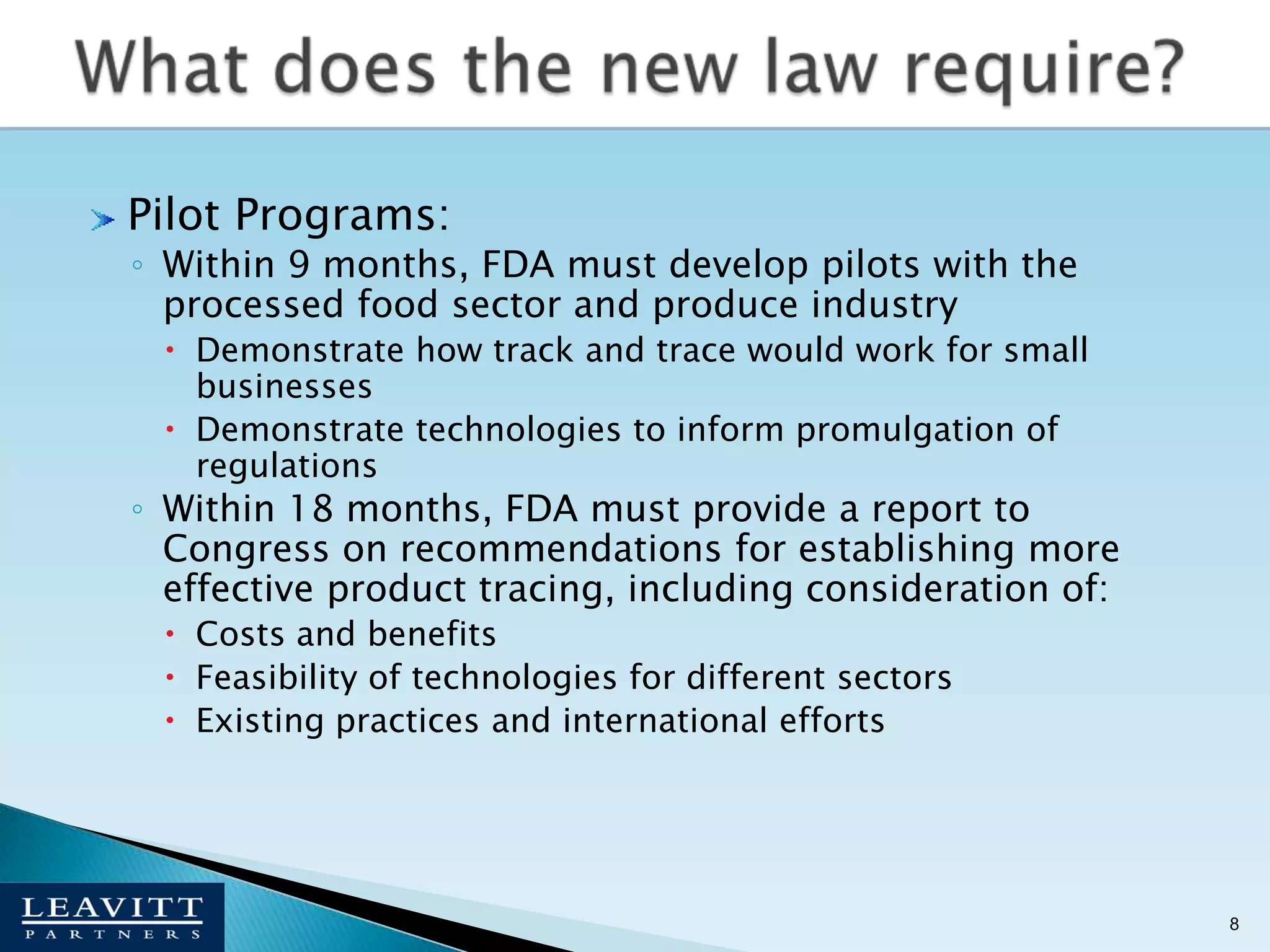
Pilot Programs:Within 9 months, FDA must develop pilots with the processed food sector and produce industryDemonstrate how track and trace would work for small businessesDemonstrate technologies to inform promulgation of regulationsWithin 18 months, FDA must provide a report to Congress on recommendations for establishing more effective product tracing, including consideration of: Costs and benefitsFeasibility of technologies for different sectorsExisting practices and international efforts8What does the new law require?
Establishment of a product tracing systemPrior notice of rule making within 2 years to establish recordkeeping requirements for high-risk foodsRequirements for Regulation:Relate only to information that is reasonably availableConsider cost and public health benefitBe scale-appropriate and similar across commoditiesShould not prescribe specific technologies, require a full pedigree, require a record of recipient of food beyond the immediate subsequent recipient, or product tracking to the case level9What does the new law require?
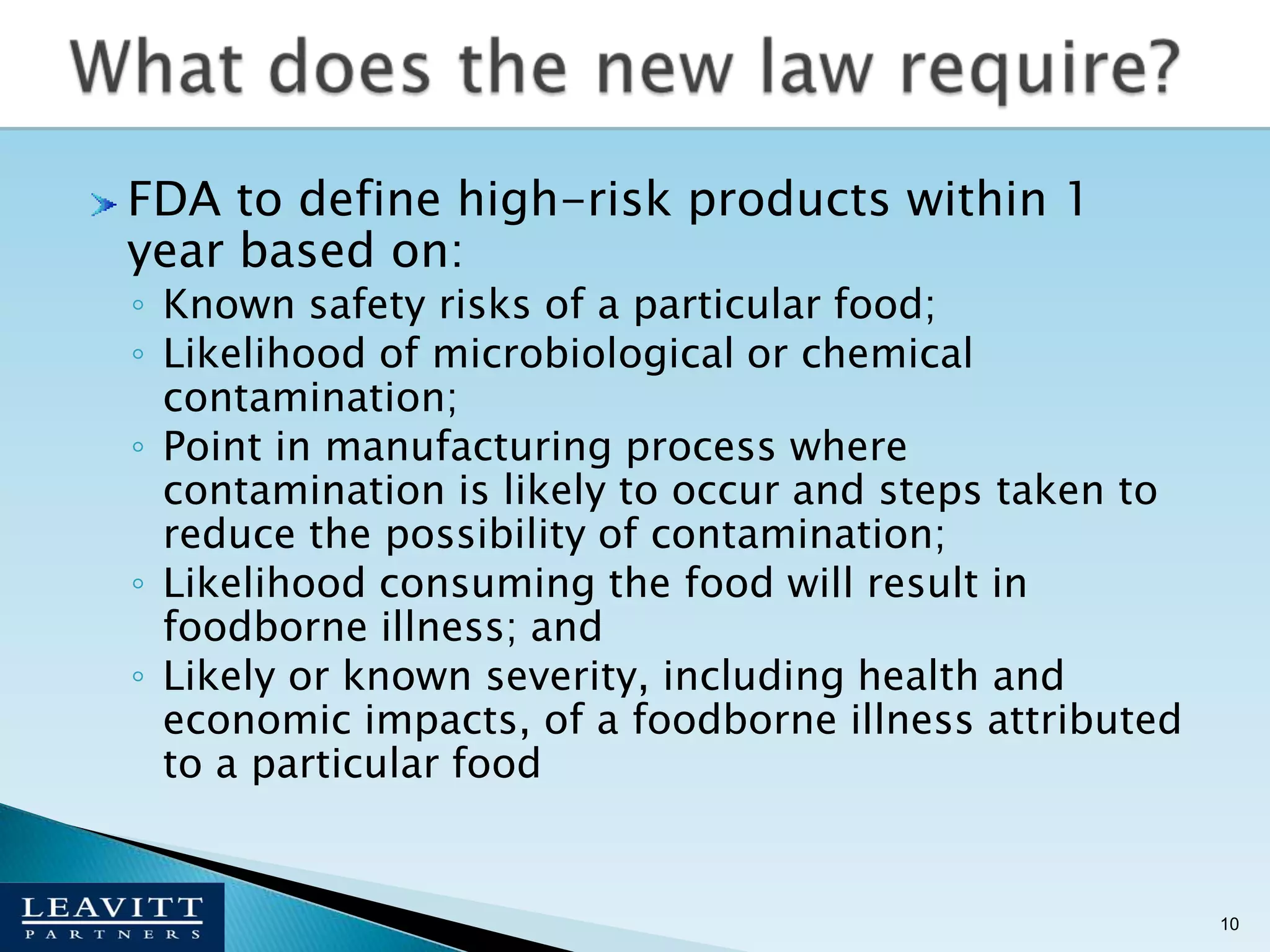
FDA to define high-risk products within 1 year based on: Known safety risks of a particular food;Likelihood of microbiological or chemical contamination;Point in manufacturing process where contamination is likely to occur and steps taken to reduce the possibility of contamination;Likelihood consuming the food will result in foodborne illness; andLikely or known severity, including health and economic impacts, of a foodborne illness attributed to a particular food10What does the new law require?
Exemptions for FarmsHigh-risk food produced and packed on a farm will not be subject to new recordkeeping requirements if: The package maintains the integrity of the product and prevents subsequent contamination, andThe food is labeled with the name, complete address, and business phone number of the farmFDA can request that farms identify immediate recipients, other than consumers, during an active investigation or when deemed necessary to protect public health11What does the new law require?
Requirements for Farm Sales to Consumers and  Grocery StoresFarms will not have to keep any distribution records for food sold directly to a consumer or grocery storeGrocery stores will be required to maintain records showing the farm that was a source of food for up to 180 days Commingled Raw Agricultural CommoditiesRecordkeeping requirements for commingled raw agricultural commodities will be limited to maintaining records that identify the immediate pervious source of such food and the immediate subsequent recipient of such food12What does the new law require?
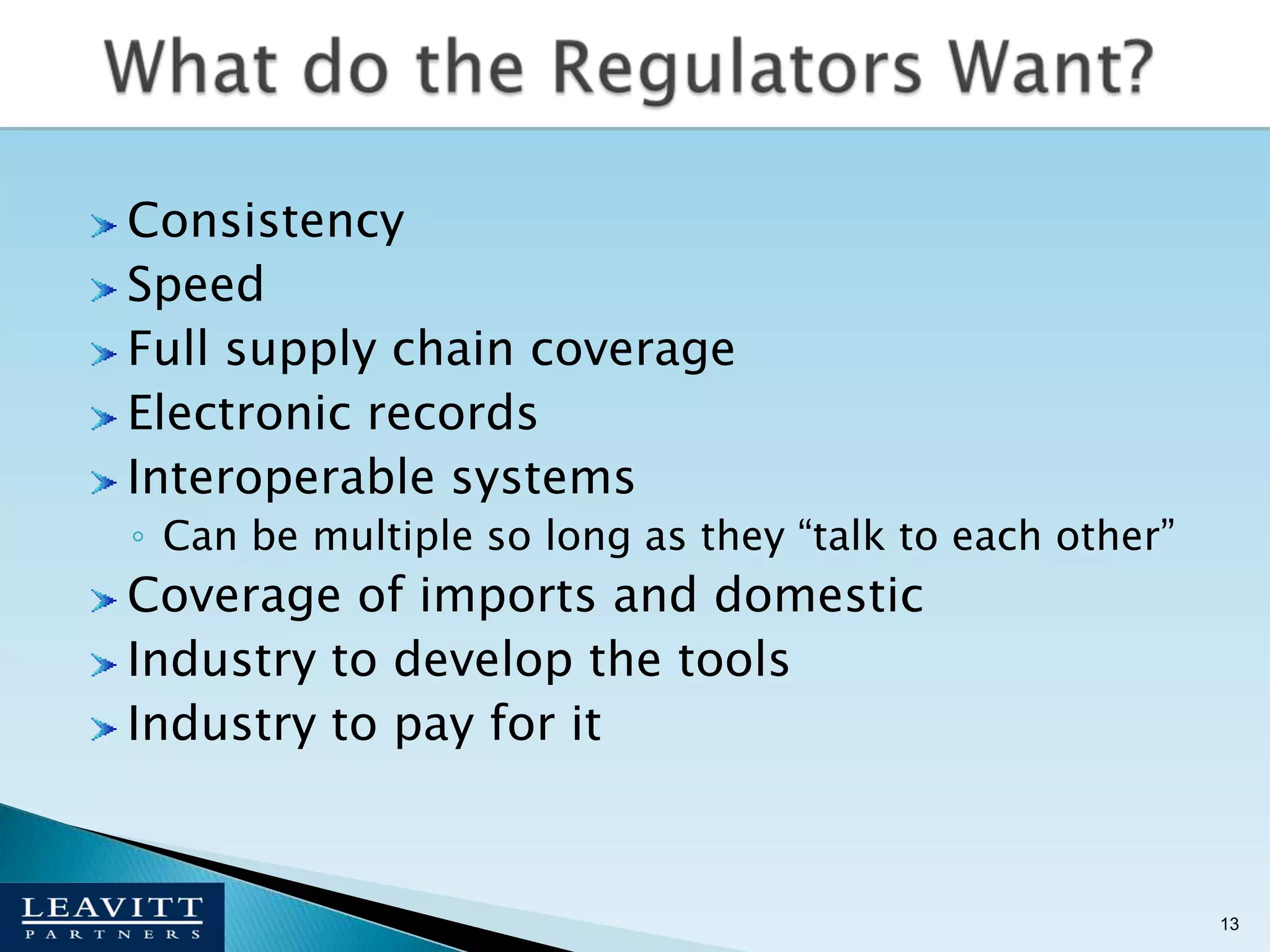
ConsistencySpeedFull supply chain coverageElectronic recordsInteroperable systemsCan be multiple so long as they “talk to each other”Coverage of imports and domesticIndustry to develop the toolsIndustry to pay for it13What do the Regulators Want?
Start with higher risk foodsFocus on speed and interoperability Develop systems that can clear brands, products or food categoriesEarly query of the system when multiple possible sourcesDuring outbreaks to exclude sections of the supply chainAvoid “rolling recalls”Systems that directly inform consumers14How to be an industry leader
FDA will need partnersPossible model for tomato tracking – 2008FDA needs to fully understand the challenges and limitationsTechnological concepts – not specifics.15Opportunities
ConclusionsRequirements for product tracking will changeOpportunities to provide input to FDANew regulations will likely emergeRegulators and Congress will not accept the status quoProduct tracking should be viewed as a food safety toolTracking systems need workDetermine the ROIDevelop cost effective toolsEngage with the regulators
Thank YouDavid Acheson MDdavid@leavittpartners.com801-910-5795www.leavittpartners.com

Acheson FSMA Tracing Webinar 01-07-11

  • 1.
    Food Tracing: Implicationsof the Food Safety Modernization ActDavid W K Acheson M.D.1
  • 2.
    What are thechallengesWhat are the drivers for new requirements What is required in the legislationWhat do regulators want How to stay ahead of new requirements2Outline
  • 3.
    3The Supply ChainTraceForwardTrace Back
  • 4.
    ChallengesThe complexityDistribution systems– broad and fast Supply chain unknownsSuppliers - suppliersBrokers sourcesInconsistent record keepingExtent of recordsElectronic v paperChanging names of productsDifferent systems of trackingRepacking of products
  • 5.
    Not finding thesource fast enough Reduce exposureDetermine the causeNot determining the scope soon enoughDifficult to provide targeted consumer adviceToo many secondary recallsStruggle with one up and one backGaps at the start (farms) and end (consumers)5Why do the regulators care?
  • 6.
    Inability for regulatorsto determine where food is moving in the supply chainSalmonella Saintpaul 2008Peanut products 2009Melamine in Wheat gluten 2007Not able to narrow the scope quicklyConsumer exposure continuesIndustry “damage” remains broadIndustry unhappy about breadth of message6Drivers for Change
  • 7.
    A portion ofthe trace back diagram
  • 8.
    Pilot Programs:Within 9months, FDA must develop pilots with the processed food sector and produce industryDemonstrate how track and trace would work for small businessesDemonstrate technologies to inform promulgation of regulationsWithin 18 months, FDA must provide a report to Congress on recommendations for establishing more effective product tracing, including consideration of: Costs and benefitsFeasibility of technologies for different sectorsExisting practices and international efforts8What does the new law require?
  • 9.
    Establishment of aproduct tracing systemPrior notice of rule making within 2 years to establish recordkeeping requirements for high-risk foodsRequirements for Regulation:Relate only to information that is reasonably availableConsider cost and public health benefitBe scale-appropriate and similar across commoditiesShould not prescribe specific technologies, require a full pedigree, require a record of recipient of food beyond the immediate subsequent recipient, or product tracking to the case level9What does the new law require?
  • 10.
    FDA to definehigh-risk products within 1 year based on: Known safety risks of a particular food;Likelihood of microbiological or chemical contamination;Point in manufacturing process where contamination is likely to occur and steps taken to reduce the possibility of contamination;Likelihood consuming the food will result in foodborne illness; andLikely or known severity, including health and economic impacts, of a foodborne illness attributed to a particular food10What does the new law require?
  • 11.
    Exemptions for FarmsHigh-riskfood produced and packed on a farm will not be subject to new recordkeeping requirements if: The package maintains the integrity of the product and prevents subsequent contamination, andThe food is labeled with the name, complete address, and business phone number of the farmFDA can request that farms identify immediate recipients, other than consumers, during an active investigation or when deemed necessary to protect public health11What does the new law require?
  • 12.
    Requirements for FarmSales to Consumers and Grocery StoresFarms will not have to keep any distribution records for food sold directly to a consumer or grocery storeGrocery stores will be required to maintain records showing the farm that was a source of food for up to 180 days Commingled Raw Agricultural CommoditiesRecordkeeping requirements for commingled raw agricultural commodities will be limited to maintaining records that identify the immediate pervious source of such food and the immediate subsequent recipient of such food12What does the new law require?
  • 13.
    ConsistencySpeedFull supply chaincoverageElectronic recordsInteroperable systemsCan be multiple so long as they “talk to each other”Coverage of imports and domesticIndustry to develop the toolsIndustry to pay for it13What do the Regulators Want?
  • 14.
    Start with higherrisk foodsFocus on speed and interoperability Develop systems that can clear brands, products or food categoriesEarly query of the system when multiple possible sourcesDuring outbreaks to exclude sections of the supply chainAvoid “rolling recalls”Systems that directly inform consumers14How to be an industry leader
  • 15.
    FDA will needpartnersPossible model for tomato tracking – 2008FDA needs to fully understand the challenges and limitationsTechnological concepts – not specifics.15Opportunities
  • 16.
    ConclusionsRequirements for producttracking will changeOpportunities to provide input to FDANew regulations will likely emergeRegulators and Congress will not accept the status quoProduct tracking should be viewed as a food safety toolTracking systems need workDetermine the ROIDevelop cost effective toolsEngage with the regulators
  • 17.
    Thank YouDavid AchesonMDdavid@leavittpartners.com801-910-5795www.leavittpartners.com

Editor's Notes

  • #13 Raw agricultural commodity Includes any commodity that is combine or mixed after harvesting, but before processing Does not include types of fruits and vegetables for which FDA had determined that the produce standards would minimize the risk of serious adverse heath consequences or death