Multiple Regression Analysis of Performance
Ratings
A Statistical Analysis of Factors Influencing Employee
Performance
Presentation Outline
• 1. Introduction and Research Objectives
• 2. Literature Review and Theoretical Framework
• 3. Methodology and Data Collection
• 4. Exploratory Data Analysis
• 5. Multiple Regression Analysis
• 6. Results and Interpretation
• 7. Discussion and Implications
• 8. Limitations and Future Research
• 9. Conclusion
1. Introduction and Research Objectives
Research Objectives
• • To identify key factors influencing employee performance ratings
• • To quantify the relationship between predictors and performance
• • To develop a predictive model for performance evaluation
• • To provide evidence-based recommendations for performance improvement
2. Literature Review and Theoretical Framework
Theoretical Framework
• • Performance Management Theory (Armstrong & Baron, 2005)
• • Human Capital Theory (Becker, 1964)
• • Goal-Setting Theory (Locke & Latham, 1990)
• • Expectancy Theory (Vroom, 1964)
• • Previous empirical studies have identified training, skills, attendance, and
feedback as key performance predictors
3. Methodology and Data Collection
Research Methodology
• • Research Design: Quantitative, cross-sectional study
• • Data Collection: Survey questionnaire administered to employees
• • Sample: Employees from various departments and job levels
• • Variables Measured:
• - Dependent Variable: Performance Rating (1-10 scale)
• - Independent Variables: Training programs, absenteeism, salary, technical skills,
project completion rate, feedback frequency
4. Exploratory Data Analysis
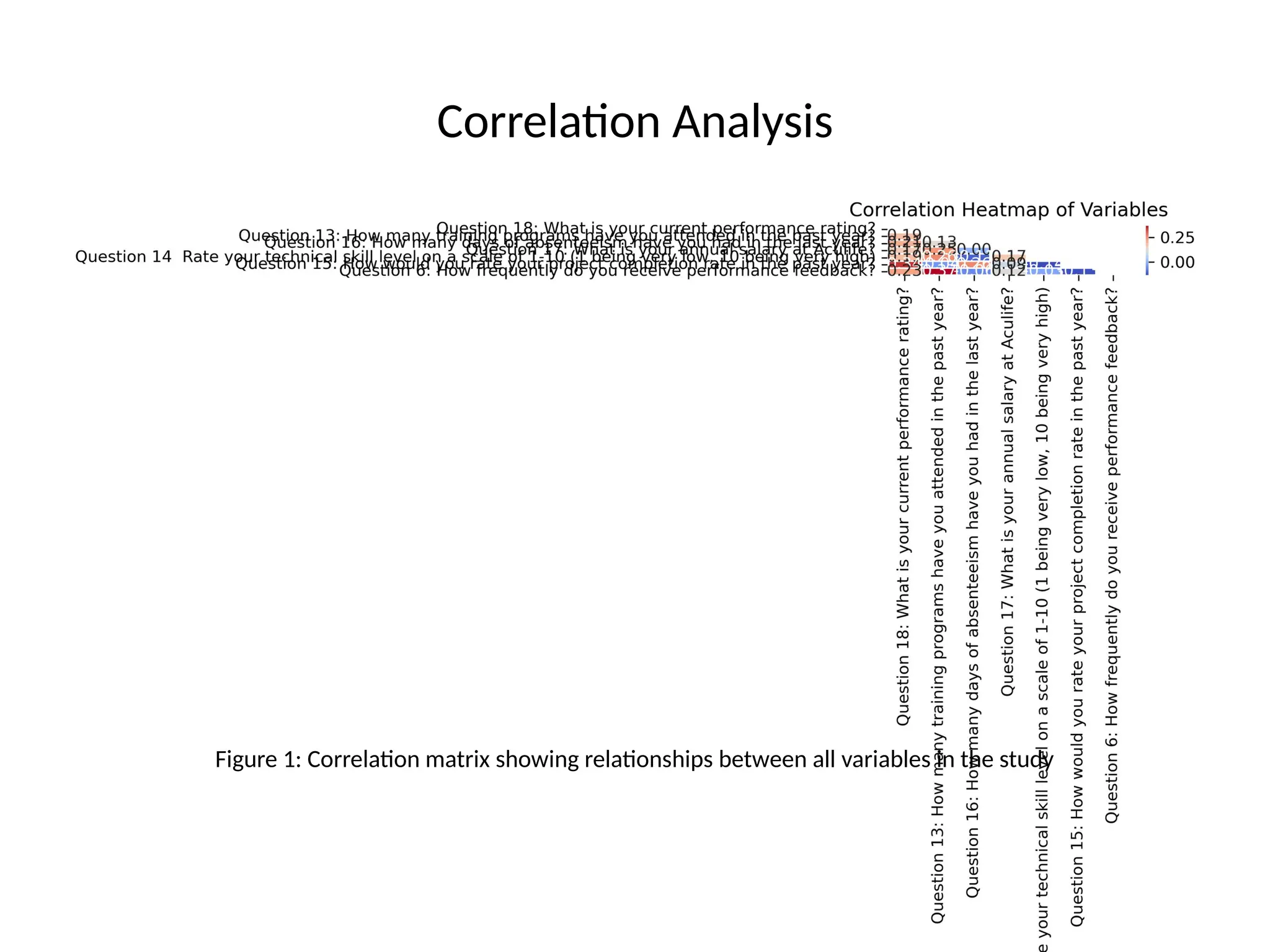
Correlation Analysis
Figure 1: Correlation matrix showing relationships between all variables in the study
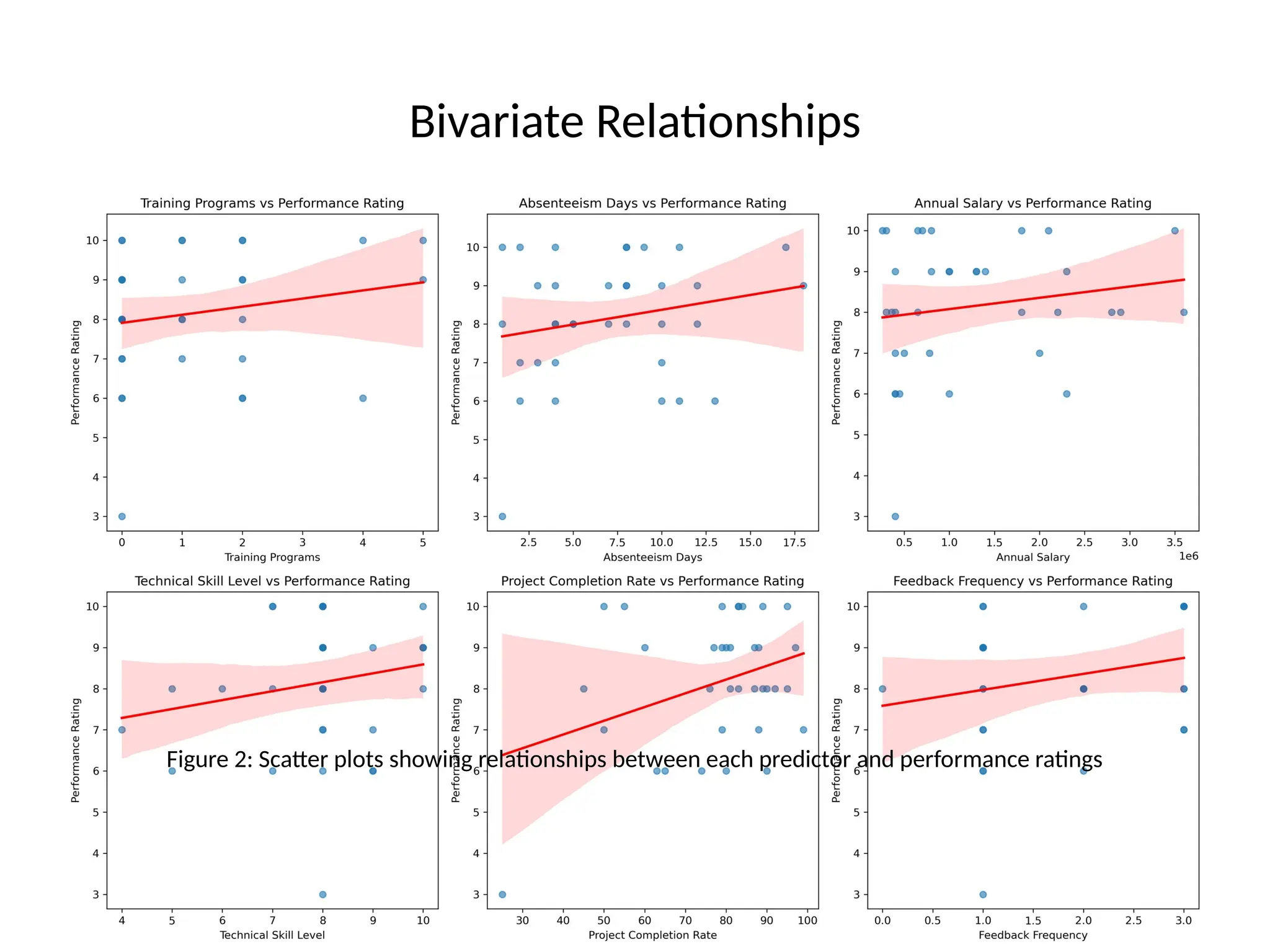
Bivariate Relationships
Figure 2: Scatter plots showing relationships between each predictor and performance ratings
5. Multiple Regression Analysis
Multiple Regression Model
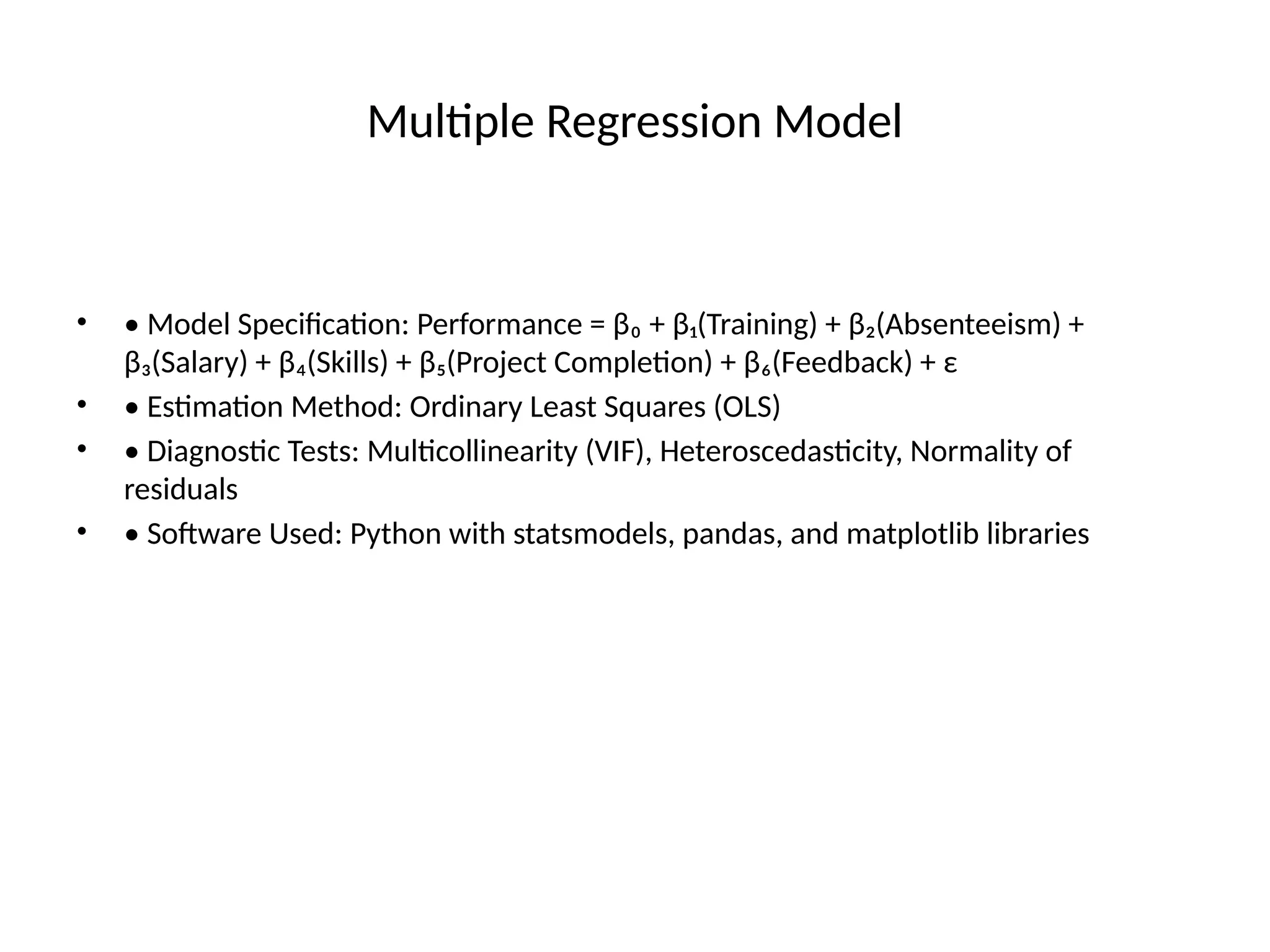
• • Model Specification: Performance = β₀ + β₁(Training) + β₂(Absenteeism) +
β₃(Salary) + β₄(Skills) + β₅(Project Completion) + β₆(Feedback) + ε
• • Estimation Method: Ordinary Least Squares (OLS)
• • Diagnostic Tests: Multicollinearity (VIF), Heteroscedasticity, Normality of
residuals
• • Software Used: Python with statsmodels, pandas, and matplotlib libraries
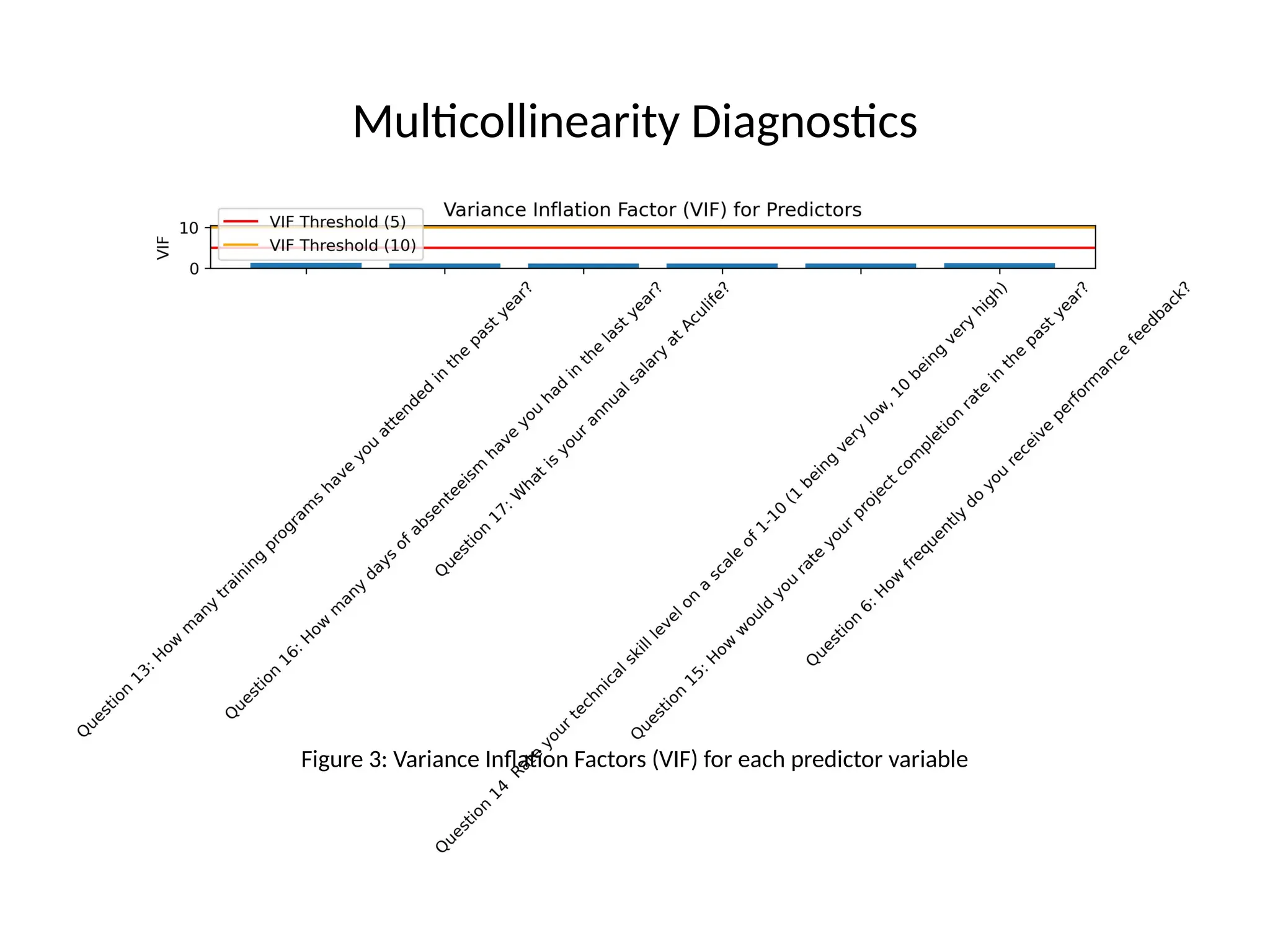
Multicollinearity Diagnostics
Figure 3: Variance Inflation Factors (VIF) for each predictor variable
6. Results and Interpretation
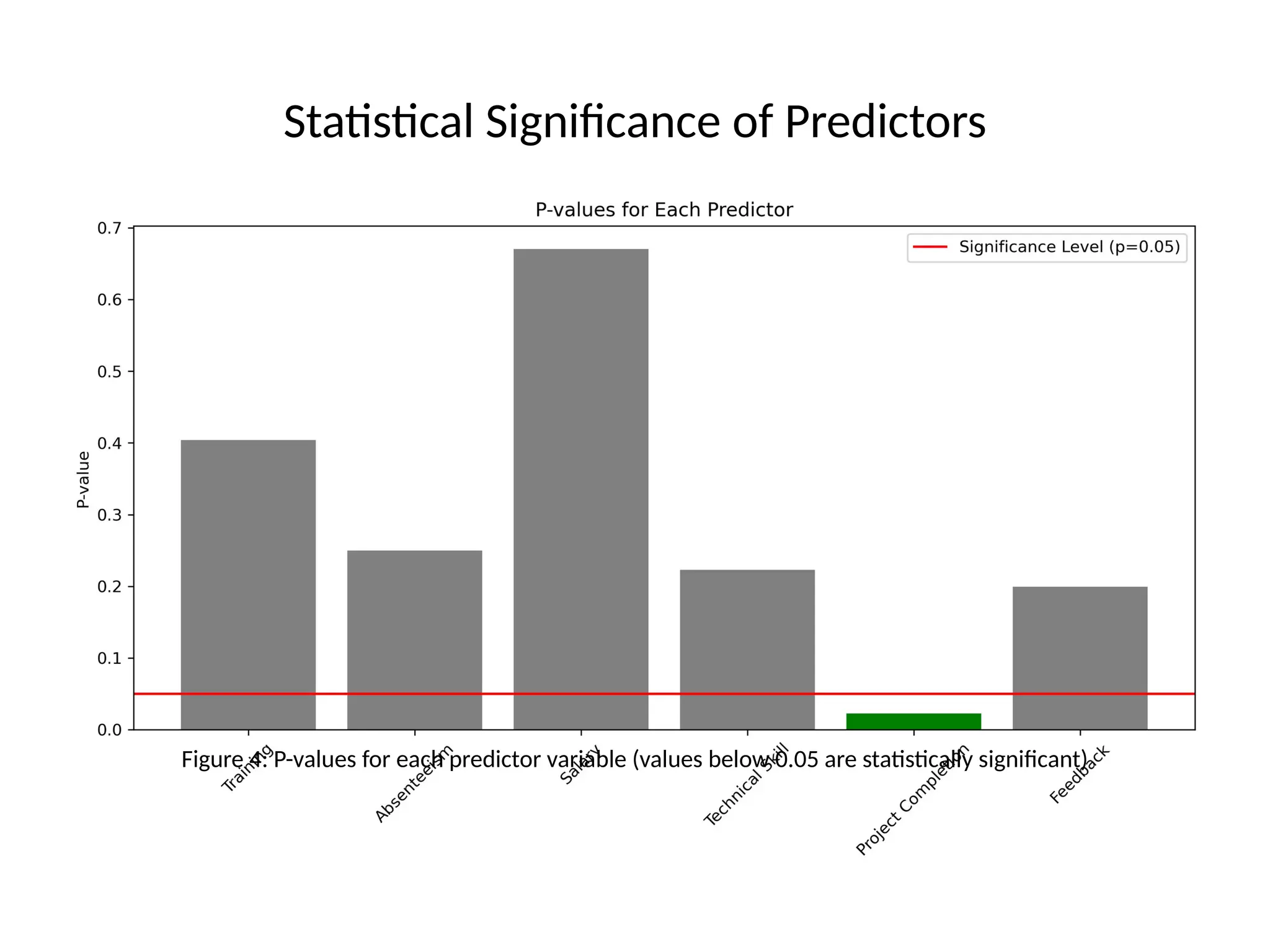
Statistical Significance of Predictors
Figure 4: P-values for each predictor variable (values below 0.05 are statistically significant)
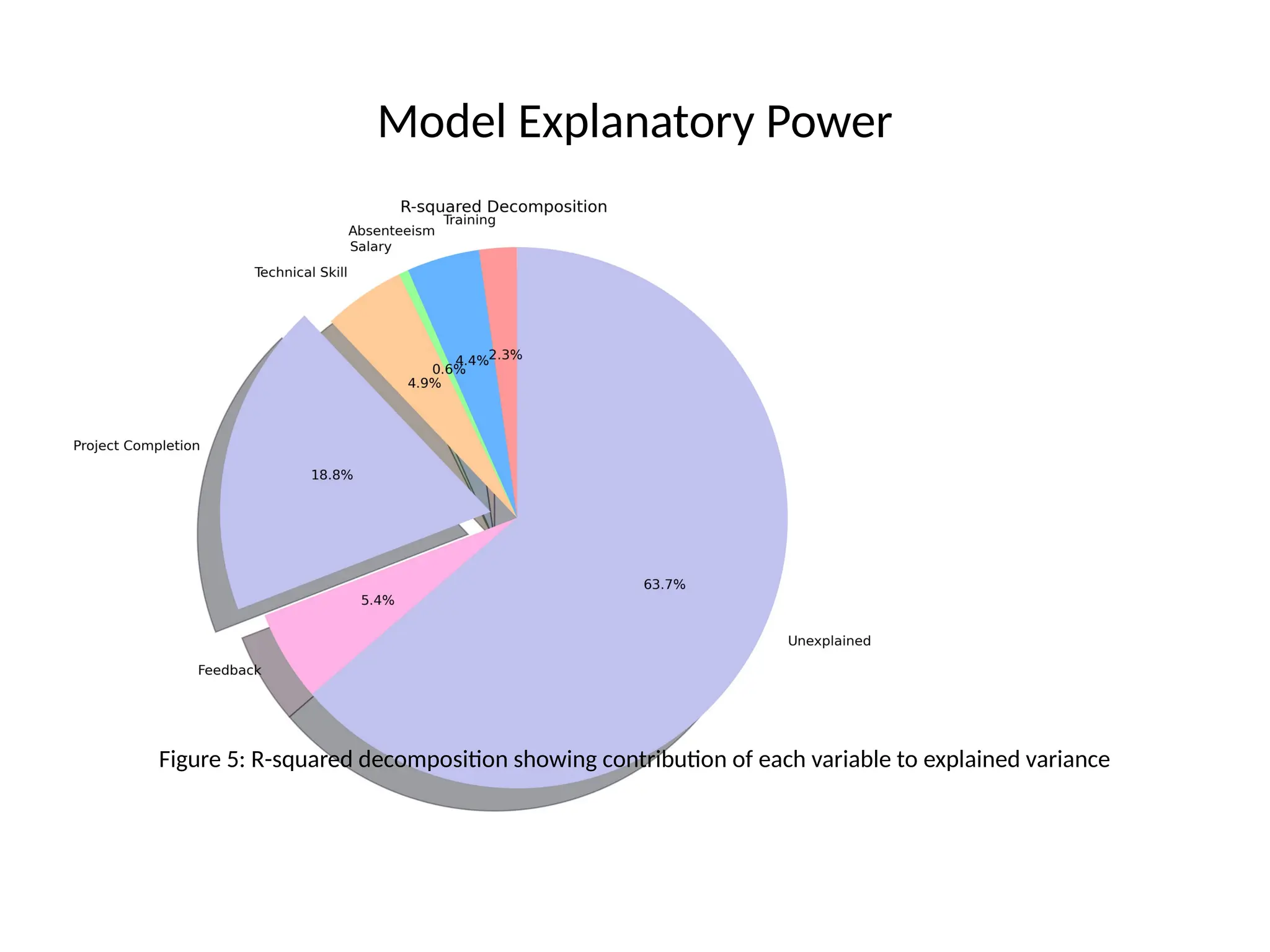
Model Explanatory Power
Figure 5: R-squared decomposition showing contribution of each variable to explained variance
Key Findings
• • The overall model explains 36.3% of variance in performance ratings (R² = 0.363)
• • Project Completion Rate is the only statistically significant predictor (p < 0.05)
• • A 1% increase in Project Completion Rate is associated with a 0.08 increase in
performance rating
• • Other predictors did not reach statistical significance at the 0.05 level
• • No significant multicollinearity issues detected (all VIF values < 5)
7. Discussion and Implications
Discussion and Implications
al Implications:
support Goal-Setting Theory
completion as a key performance indicator
ges traditional views on training and salary as primary motivators
s a task-oriented approach to performance
Practical Implications:
• Focus on project management skills
• Implement project tracking systems
• Set clear project milestones and deadlines
• Recognize and reward project completion
• Reconsider traditional performance metrics
8. Limitations and Future Research
Limitations and Future Research
• Limitations:
• • Cross-sectional design limits causal inferences
• • Self-reported data may introduce bias
• • Sample size and representativeness
• • Unmeasured variables may influence performance
• Future Research Directions:
• • Longitudinal studies to establish causality
• • Include additional predictors (e.g., leadership style, organizational culture)
• • Explore interaction effects between predictors
• • Industry-specific and cross-cultural comparisons
9. Conclusion
Conclusion
• • Project completion rate emerges as the most significant predictor of
performance ratings
• • The findings challenge conventional wisdom about performance drivers
• • Organizations should prioritize project management capabilities and completion
metrics
• • Performance management systems should be redesigned to emphasize task
completion
• • Further research is needed to validate these findings across different contexts
• This study contributes to both theory and practice by identifying key drivers of
employee performance in the modern workplace.
References
strong, M., & Baron, A. (2005). Managing performance: Performance management in action. CIPD Publishing.
er, G. S. (1964). Human capital: A theoretical and empirical analysis, with special reference to education. University of Chicago P
e, E. A., & Latham, G. P. (1990). A theory of goal setting & task performance. Prentice-Hall.
m, V. H. (1964). Work and motivation. Wiley.
J. F., Black, W. C., Babin, B. J., & Anderson, R. E. (2019). Multivariate data analysis (8th ed.). Cengage Learning.
Thank You
Questions & Discussion

Academic_Regression_Analysis_Presentation.pptx

  • 1.
    Multiple Regression Analysisof Performance Ratings A Statistical Analysis of Factors Influencing Employee Performance
  • 2.
    Presentation Outline • 1.Introduction and Research Objectives • 2. Literature Review and Theoretical Framework • 3. Methodology and Data Collection • 4. Exploratory Data Analysis • 5. Multiple Regression Analysis • 6. Results and Interpretation • 7. Discussion and Implications • 8. Limitations and Future Research • 9. Conclusion
  • 3.
    1. Introduction andResearch Objectives
  • 4.
    Research Objectives • •To identify key factors influencing employee performance ratings • • To quantify the relationship between predictors and performance • • To develop a predictive model for performance evaluation • • To provide evidence-based recommendations for performance improvement
  • 5.
    2. Literature Reviewand Theoretical Framework
  • 6.
    Theoretical Framework • •Performance Management Theory (Armstrong & Baron, 2005) • • Human Capital Theory (Becker, 1964) • • Goal-Setting Theory (Locke & Latham, 1990) • • Expectancy Theory (Vroom, 1964) • • Previous empirical studies have identified training, skills, attendance, and feedback as key performance predictors
  • 7.
    3. Methodology andData Collection
  • 8.
    Research Methodology • •Research Design: Quantitative, cross-sectional study • • Data Collection: Survey questionnaire administered to employees • • Sample: Employees from various departments and job levels • • Variables Measured: • - Dependent Variable: Performance Rating (1-10 scale) • - Independent Variables: Training programs, absenteeism, salary, technical skills, project completion rate, feedback frequency
  • 9.
  • 10.
    Correlation Analysis Figure 1:Correlation matrix showing relationships between all variables in the study
  • 11.
    Bivariate Relationships Figure 2:Scatter plots showing relationships between each predictor and performance ratings
  • 12.
  • 13.
    Multiple Regression Model •• Model Specification: Performance = β₀ + β₁(Training) + β₂(Absenteeism) + β₃(Salary) + β₄(Skills) + β₅(Project Completion) + β₆(Feedback) + ε • • Estimation Method: Ordinary Least Squares (OLS) • • Diagnostic Tests: Multicollinearity (VIF), Heteroscedasticity, Normality of residuals • • Software Used: Python with statsmodels, pandas, and matplotlib libraries
  • 14.
    Multicollinearity Diagnostics Figure 3:Variance Inflation Factors (VIF) for each predictor variable
  • 15.
    6. Results andInterpretation
  • 16.
    Statistical Significance ofPredictors Figure 4: P-values for each predictor variable (values below 0.05 are statistically significant)
  • 17.
    Model Explanatory Power Figure5: R-squared decomposition showing contribution of each variable to explained variance
  • 18.
    Key Findings • •The overall model explains 36.3% of variance in performance ratings (R² = 0.363) • • Project Completion Rate is the only statistically significant predictor (p < 0.05) • • A 1% increase in Project Completion Rate is associated with a 0.08 increase in performance rating • • Other predictors did not reach statistical significance at the 0.05 level • • No significant multicollinearity issues detected (all VIF values < 5)
  • 19.
    7. Discussion andImplications
  • 20.
    Discussion and Implications alImplications: support Goal-Setting Theory completion as a key performance indicator ges traditional views on training and salary as primary motivators s a task-oriented approach to performance Practical Implications: • Focus on project management skills • Implement project tracking systems • Set clear project milestones and deadlines • Recognize and reward project completion • Reconsider traditional performance metrics
  • 21.
    8. Limitations andFuture Research
  • 22.
    Limitations and FutureResearch • Limitations: • • Cross-sectional design limits causal inferences • • Self-reported data may introduce bias • • Sample size and representativeness • • Unmeasured variables may influence performance • Future Research Directions: • • Longitudinal studies to establish causality • • Include additional predictors (e.g., leadership style, organizational culture) • • Explore interaction effects between predictors • • Industry-specific and cross-cultural comparisons
  • 23.
  • 24.
    Conclusion • • Projectcompletion rate emerges as the most significant predictor of performance ratings • • The findings challenge conventional wisdom about performance drivers • • Organizations should prioritize project management capabilities and completion metrics • • Performance management systems should be redesigned to emphasize task completion • • Further research is needed to validate these findings across different contexts • This study contributes to both theory and practice by identifying key drivers of employee performance in the modern workplace.
  • 25.
    References strong, M., &Baron, A. (2005). Managing performance: Performance management in action. CIPD Publishing. er, G. S. (1964). Human capital: A theoretical and empirical analysis, with special reference to education. University of Chicago P e, E. A., & Latham, G. P. (1990). A theory of goal setting & task performance. Prentice-Hall. m, V. H. (1964). Work and motivation. Wiley. J. F., Black, W. C., Babin, B. J., & Anderson, R. E. (2019). Multivariate data analysis (8th ed.). Cengage Learning.

  • 26.