
FIRST - AID
 What each of us should know...
 Revision
 Concept
 Education
 Comfort
definition
 It is the care given to an injured person to
STABILIZE until the professional medical
care is available.
 Common sense Vs Anxiety-Panic
FIRST THINGS FIRST!
 It is the FIRST aid... not FINAL.
 STABILIZE
◦ Emotionally
◦ Physically
◦ Haemo-dynamically
◦ Breathing & Circulation
Loss of Consciousness
 AIRWAY
 BREATHING
 CIRCULATION
ABC   step 2...
BLEEDING – types:
Bleeding: steps
 Direct pressure over
the bleeding point
 Elevation of the limb
(unless no #)
 Pressure over the
blood vessel
 Cold application
Specific bleeding: NOSE
 Mostly due to very delicate
capillaries within nose
 Trivial triggers - sneezing
 Pressure & Cold compress
 May vomit dark clots
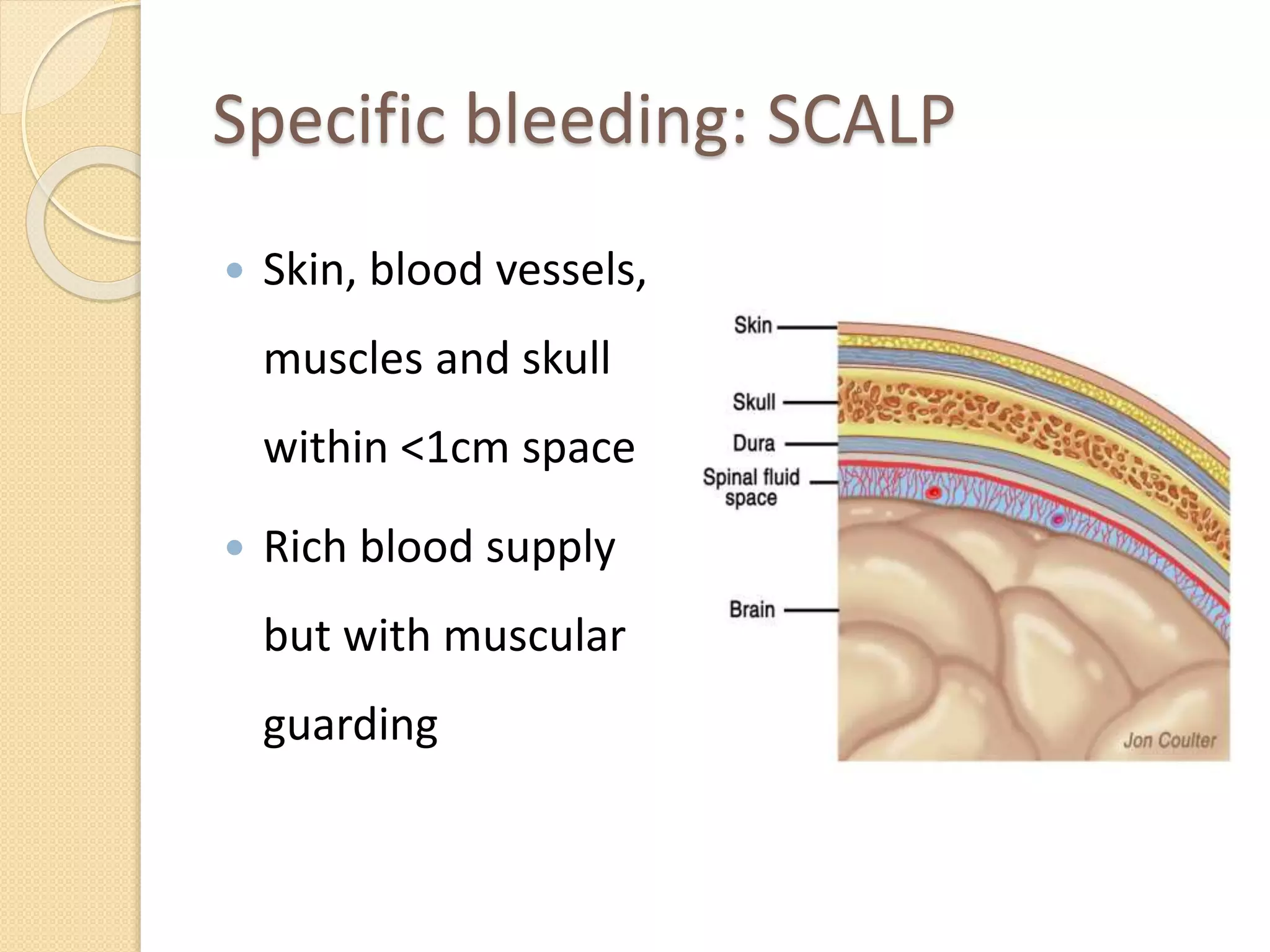
Specific bleeding: SCALP
 Skin, blood vessels,
muscles and skull
within <1cm space
 Rich blood supply
but with muscular
guarding
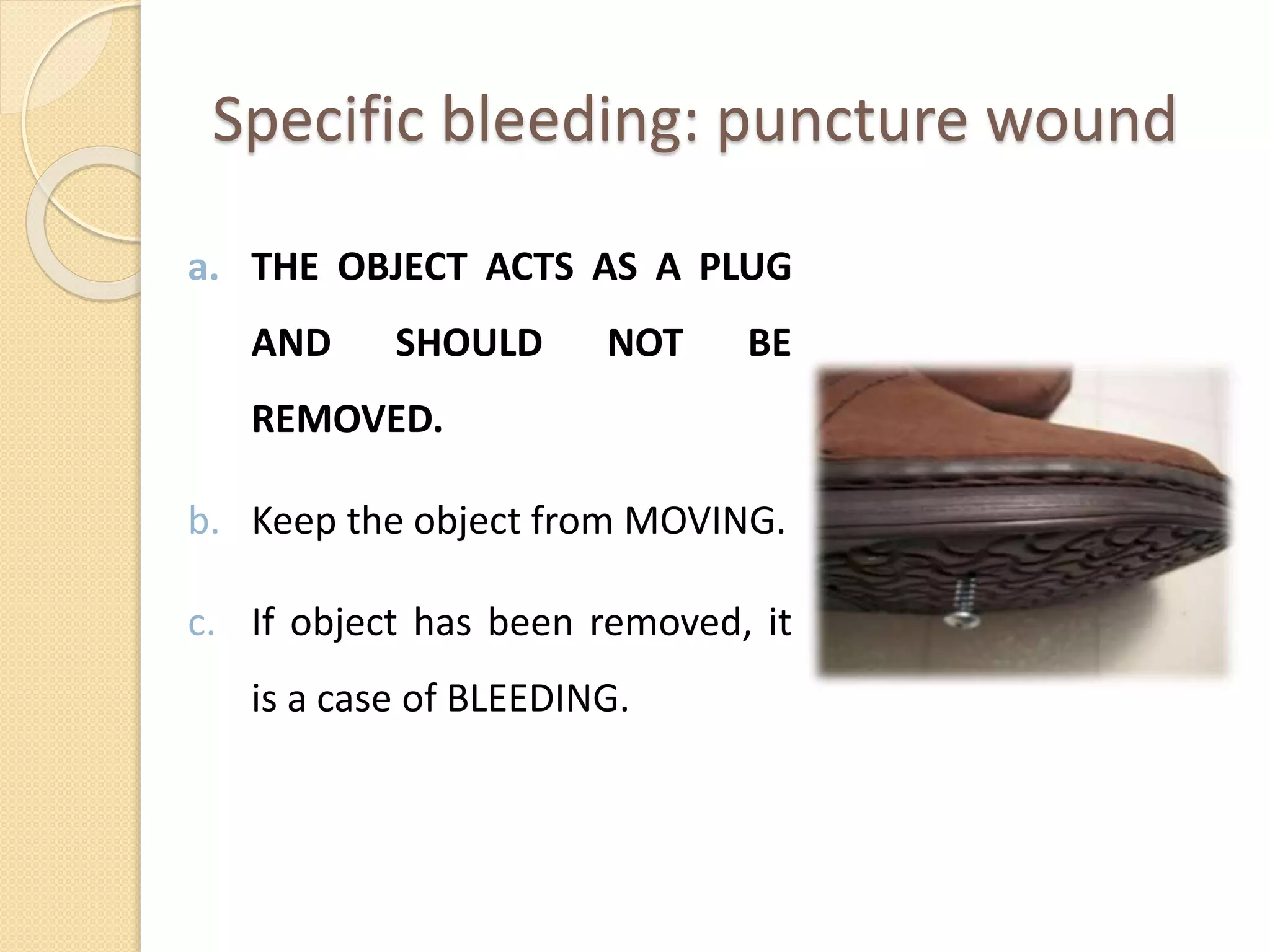
Specific bleeding: puncture wound
a. THE OBJECT ACTS AS A PLUG
AND SHOULD NOT BE
REMOVED.
b. Keep the object from MOVING.
c. If object has been removed, it
is a case of BLEEDING.
Convulsions:
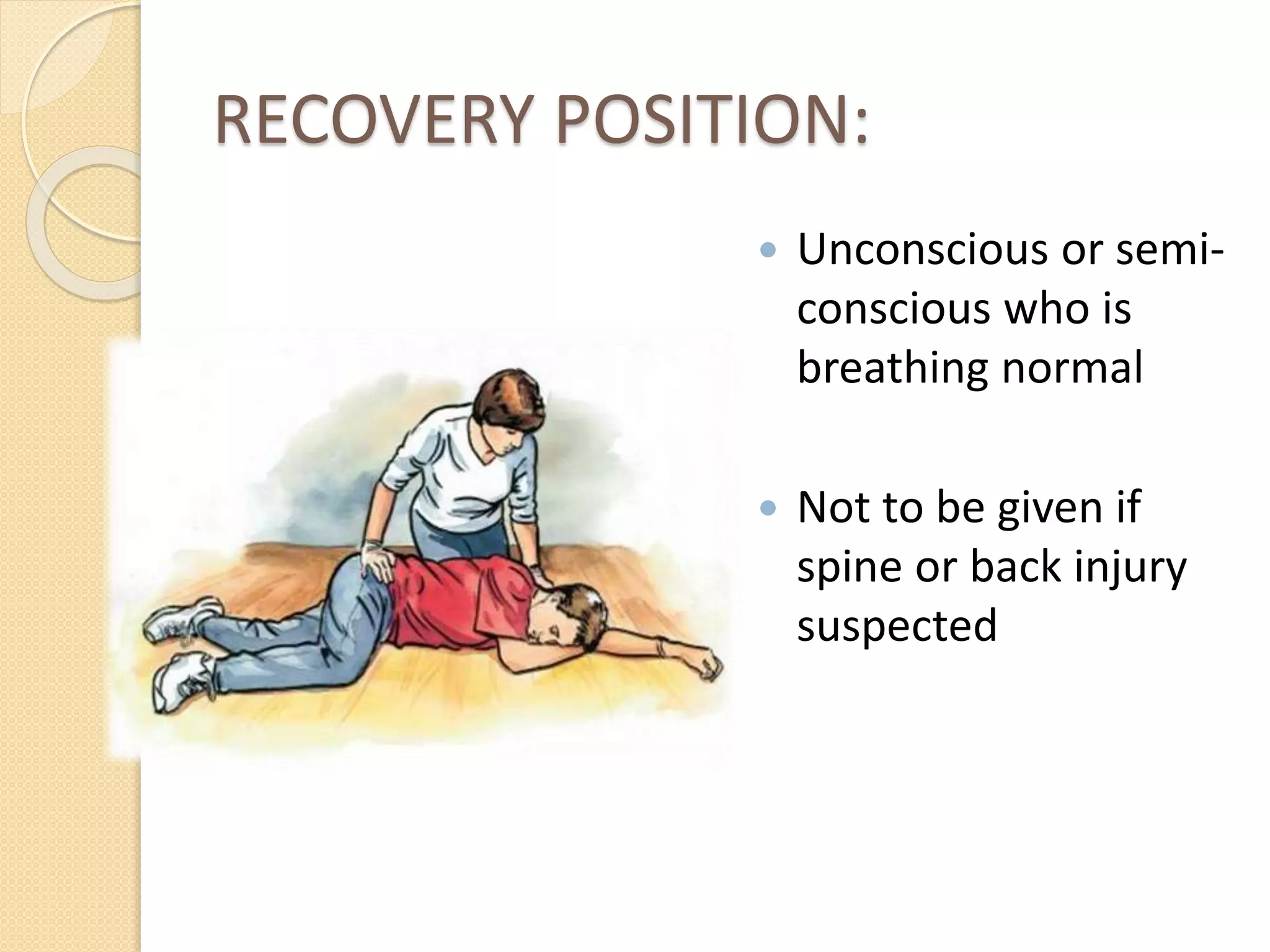
RECOVERY POSITION:
 Unconscious or semi-
conscious who is
breathing normal
 Not to be given if
spine or back injury
suspected
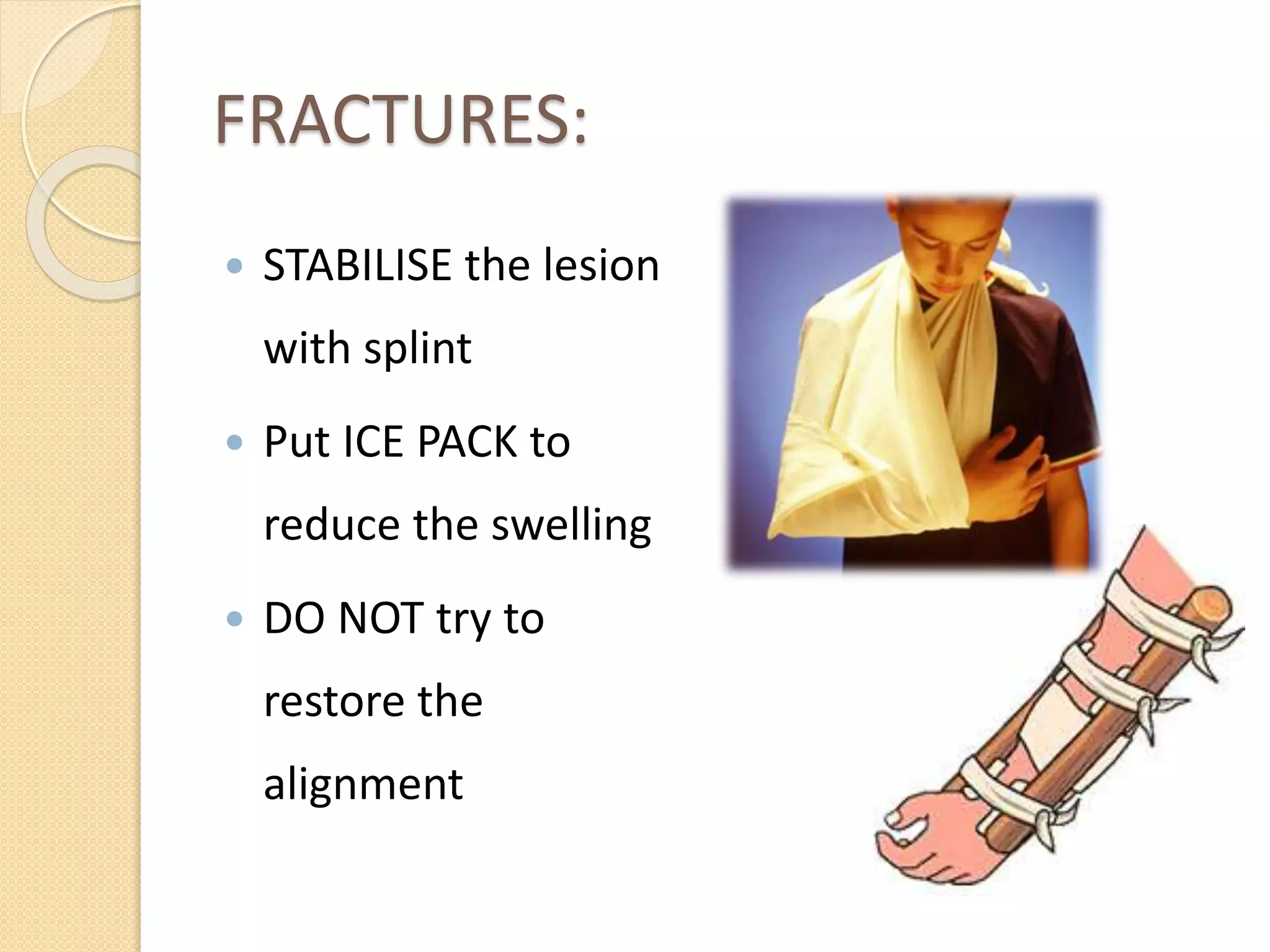
FRACTURES:
 STABILISE the lesion
with splint
 Put ICE PACK to
reduce the swelling
 DO NOT try to
restore the
alignment
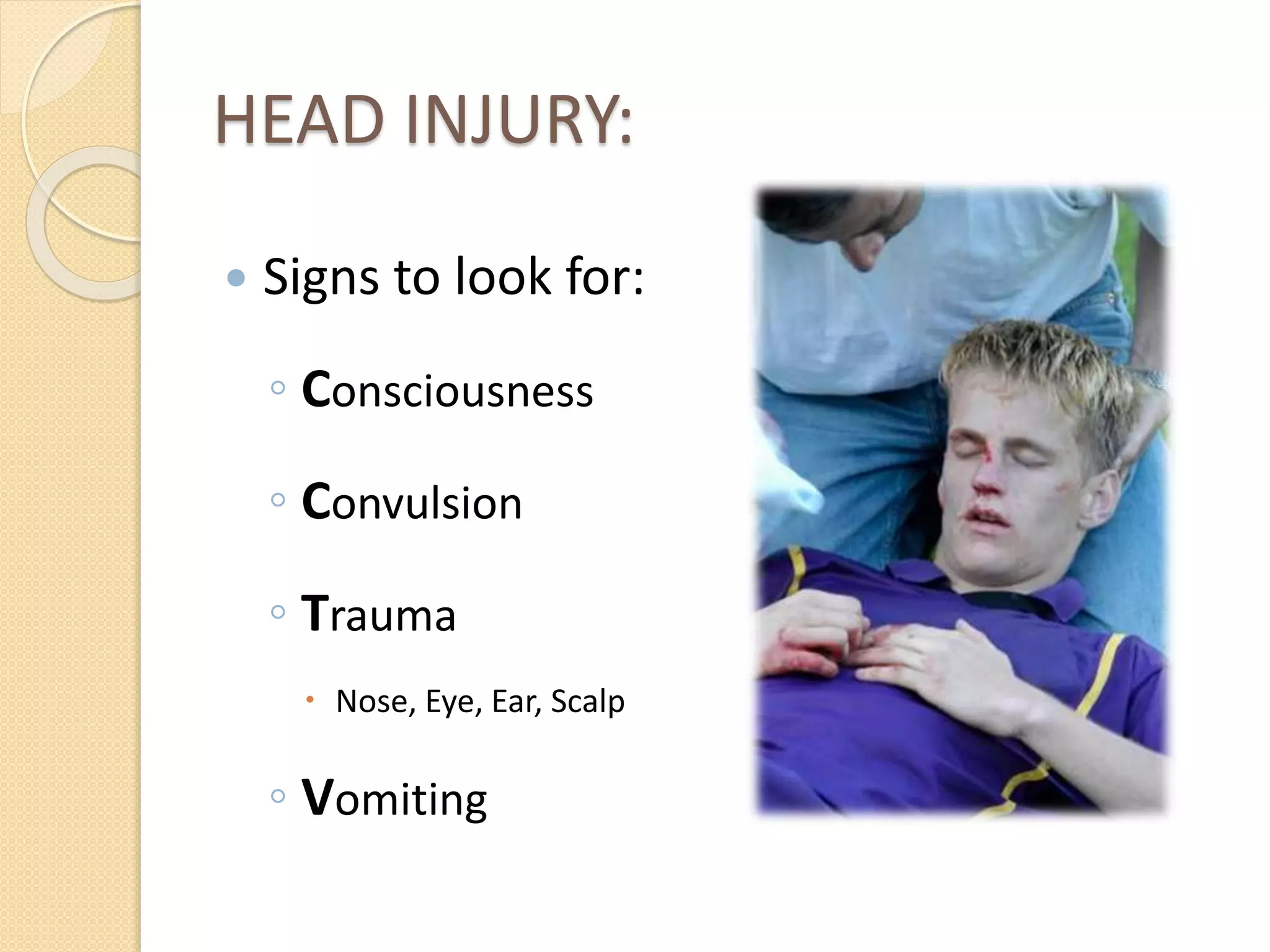
HEAD INJURY:
 Signs to look for:
◦ Consciousness
◦ Convulsion
◦ Trauma
 Nose, Eye, Ear, Scalp
◦ Vomiting
Choking:
BURNs: chemical
 Wash under cold water
for at least TEN minutes
 Do not try to antidote
with other chemical
 Cover with clean cloth
 Ice pack
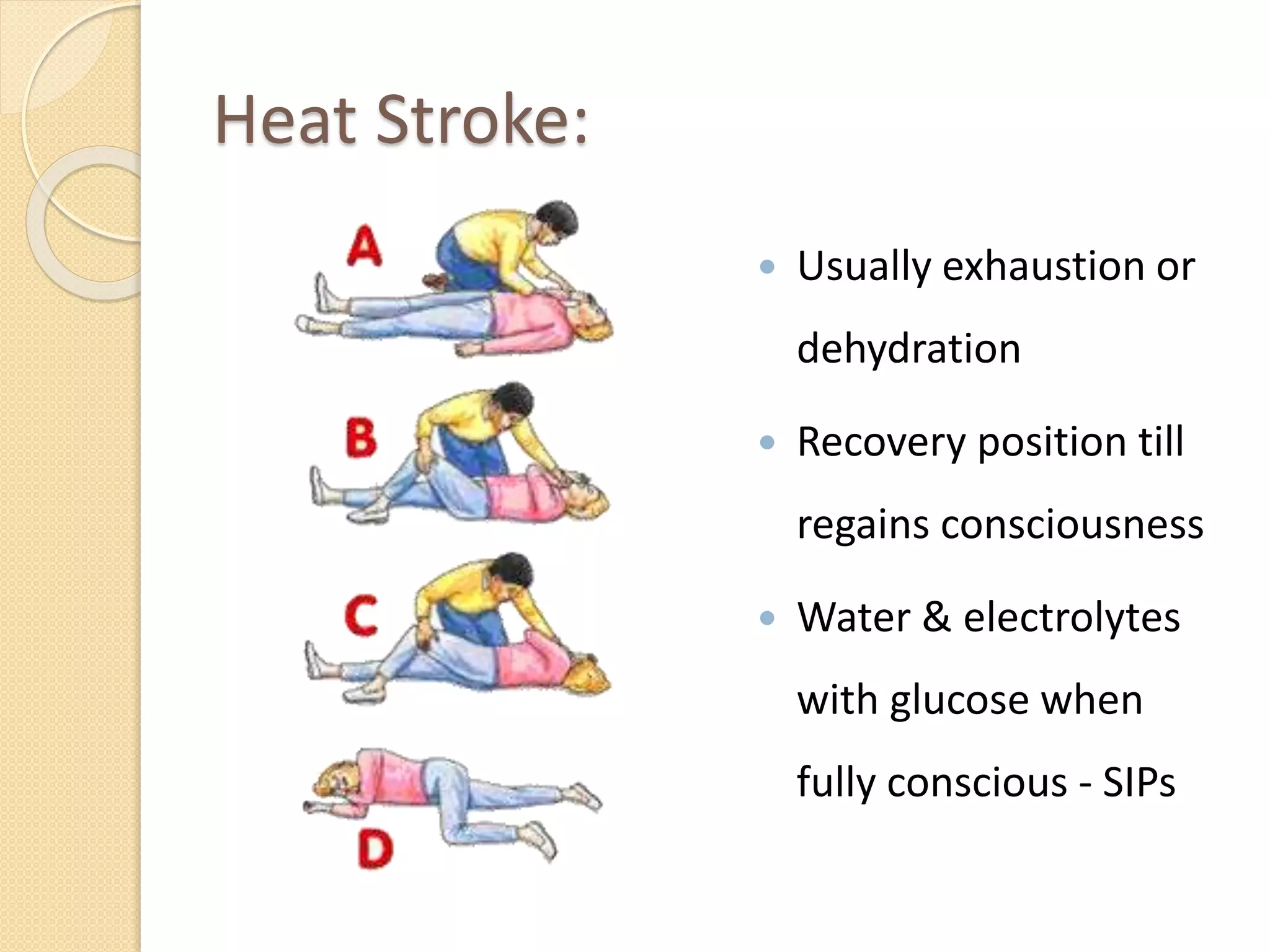
Heat Stroke:
 Usually exhaustion or
dehydration
 Recovery position till
regains consciousness
 Water & electrolytes
with glucose when
fully conscious - SIPs
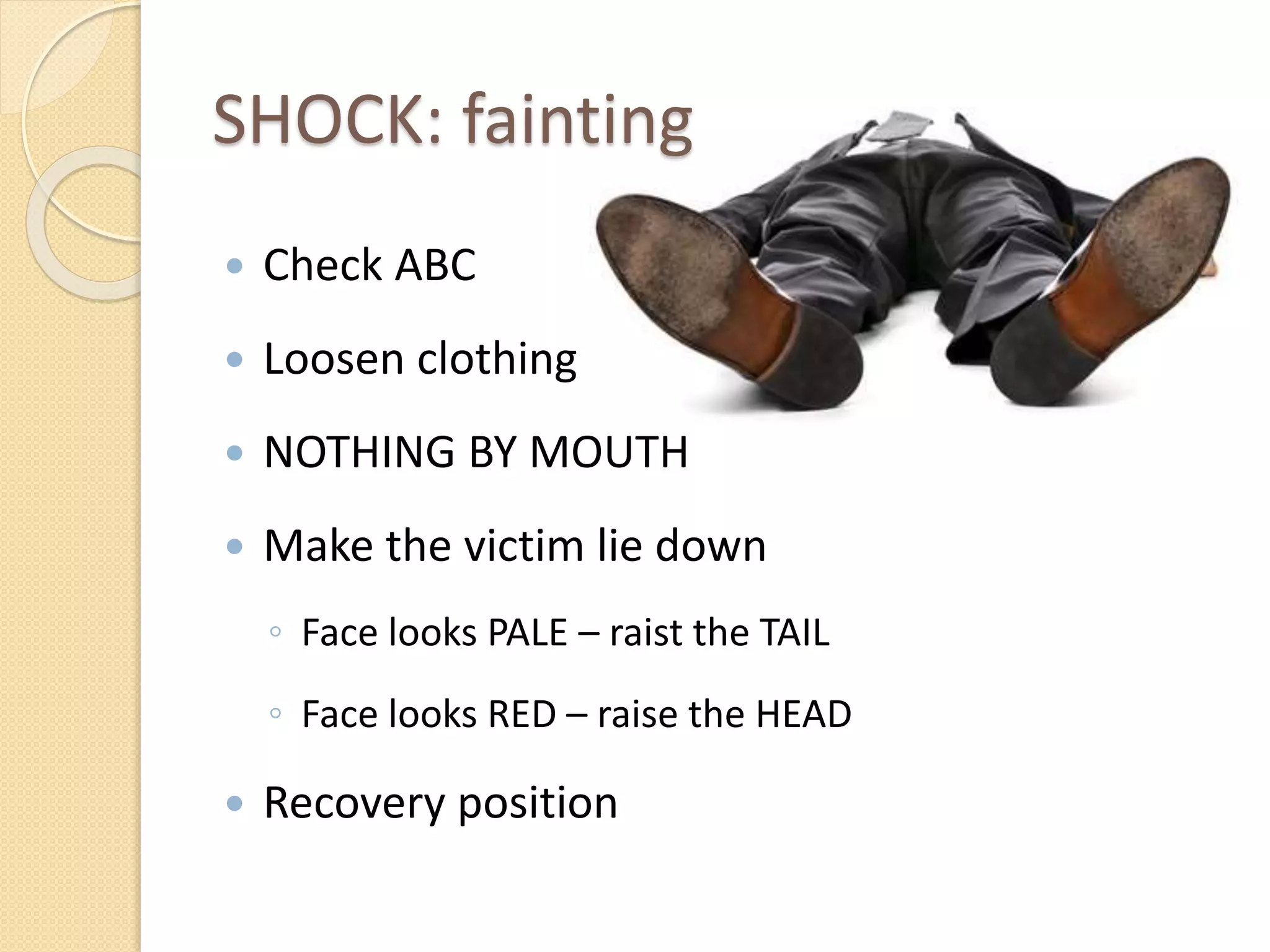
SHOCK: fainting
 Check ABC
 Loosen clothing
 NOTHING BY MOUTH
 Make the victim lie down
◦ Face looks PALE – raist the TAIL
◦ Face looks RED – raise the HEAD
 Recovery position
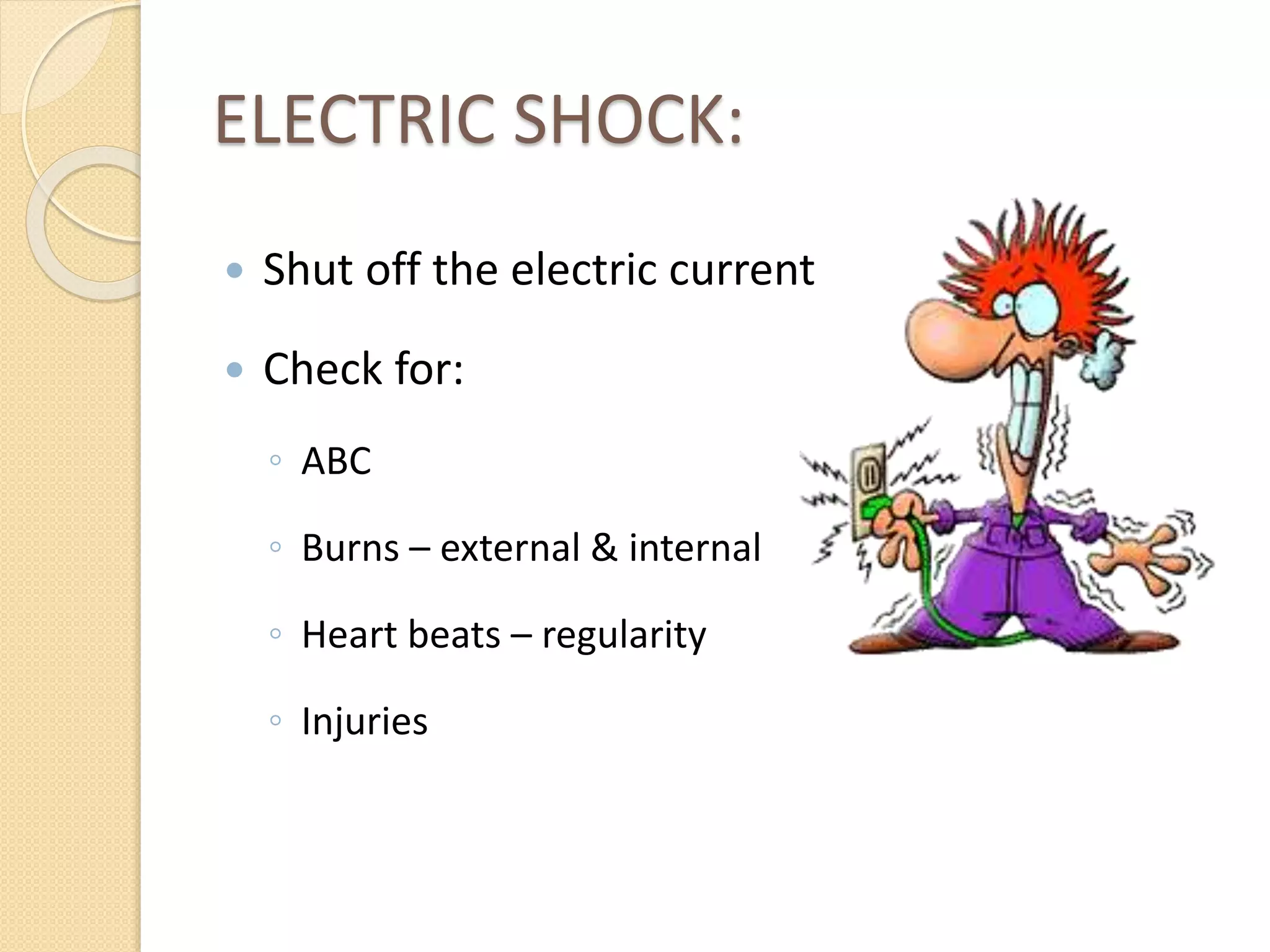
ELECTRIC SHOCK:
 Shut off the electric current
 Check for:
◦ ABC
◦ Burns – external & internal
◦ Heart beats – regularity
◦ Injuries
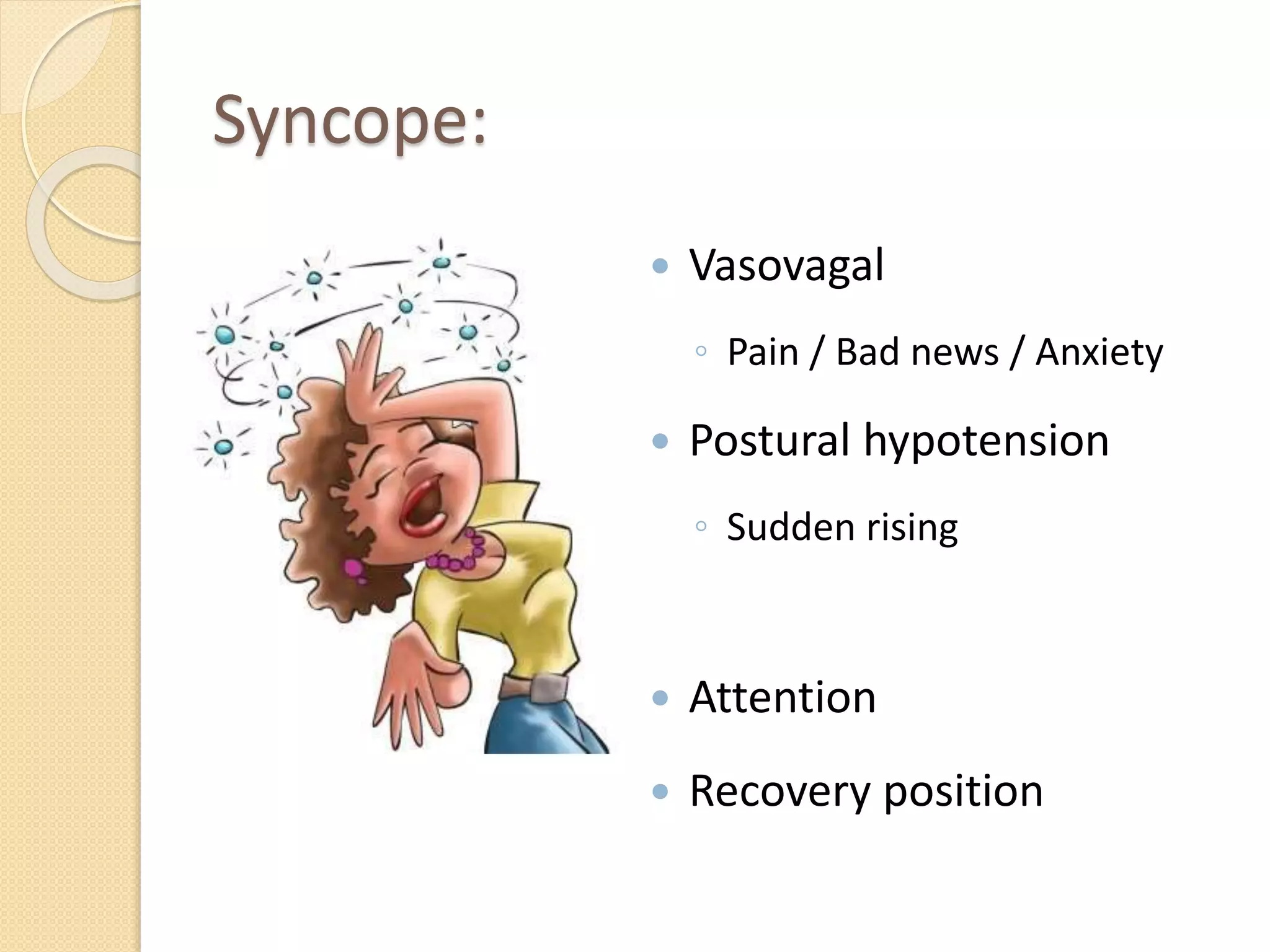
Syncope:
 Vasovagal
◦ Pain / Bad news / Anxiety
 Postural hypotension
◦ Sudden rising
 Attention
 Recovery position
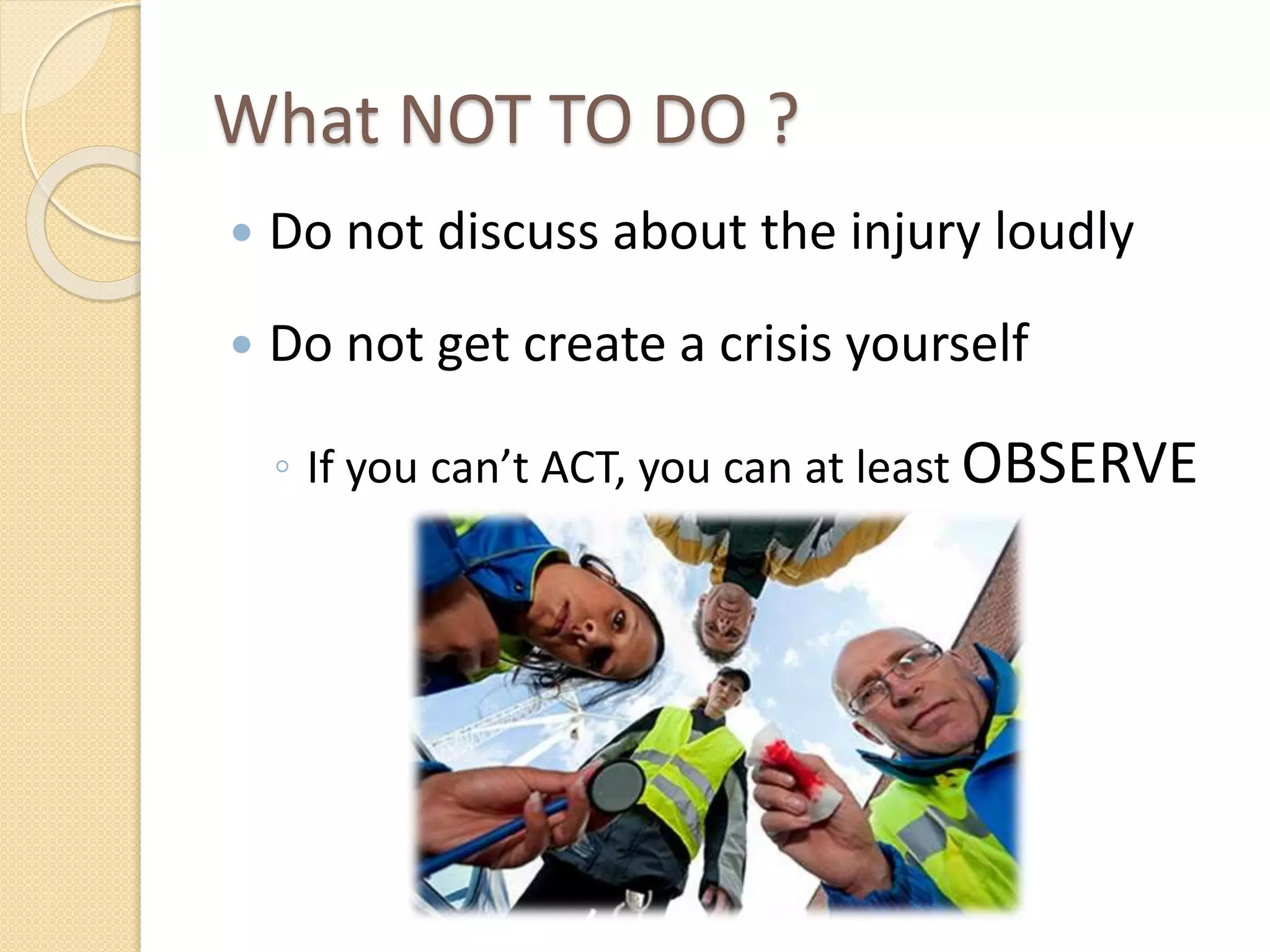
What NOT TO DO ?
 Do not discuss about the injury loudly
 Do not get create a crisis yourself
◦ If you can’t ACT, you can at least OBSERVE
The best aid...
THANKS !!

ABC of First Aid

  • 1.
    FIRST - AID What each of us should know...  Revision  Concept  Education  Comfort
  • 2.
    definition  It isthe care given to an injured person to STABILIZE until the professional medical care is available.  Common sense Vs Anxiety-Panic
  • 3.
    FIRST THINGS FIRST! It is the FIRST aid... not FINAL.  STABILIZE ◦ Emotionally ◦ Physically ◦ Haemo-dynamically ◦ Breathing & Circulation
  • 4.
    Loss of Consciousness AIRWAY  BREATHING  CIRCULATION
  • 5.
    ABC  step 2...
  • 6.
  • 7.
    Bleeding: steps  Directpressure over the bleeding point  Elevation of the limb (unless no #)  Pressure over the blood vessel  Cold application
  • 8.
    Specific bleeding: NOSE Mostly due to very delicate capillaries within nose  Trivial triggers - sneezing  Pressure & Cold compress  May vomit dark clots
  • 9.
    Specific bleeding: SCALP Skin, blood vessels, muscles and skull within <1cm space  Rich blood supply but with muscular guarding
  • 10.
    Specific bleeding: puncturewound a. THE OBJECT ACTS AS A PLUG AND SHOULD NOT BE REMOVED. b. Keep the object from MOVING. c. If object has been removed, it is a case of BLEEDING.
  • 11.
  • 12.
    RECOVERY POSITION:  Unconsciousor semi- conscious who is breathing normal  Not to be given if spine or back injury suspected
  • 13.
    FRACTURES:  STABILISE thelesion with splint  Put ICE PACK to reduce the swelling  DO NOT try to restore the alignment
  • 14.
    HEAD INJURY:  Signsto look for: ◦ Consciousness ◦ Convulsion ◦ Trauma  Nose, Eye, Ear, Scalp ◦ Vomiting
  • 15.
  • 16.
    BURNs: chemical  Washunder cold water for at least TEN minutes  Do not try to antidote with other chemical  Cover with clean cloth  Ice pack
  • 17.
    Heat Stroke:  Usuallyexhaustion or dehydration  Recovery position till regains consciousness  Water & electrolytes with glucose when fully conscious - SIPs
  • 18.
    SHOCK: fainting  CheckABC  Loosen clothing  NOTHING BY MOUTH  Make the victim lie down ◦ Face looks PALE – raist the TAIL ◦ Face looks RED – raise the HEAD  Recovery position
  • 19.
    ELECTRIC SHOCK:  Shutoff the electric current  Check for: ◦ ABC ◦ Burns – external & internal ◦ Heart beats – regularity ◦ Injuries
  • 20.
    Syncope:  Vasovagal ◦ Pain/ Bad news / Anxiety  Postural hypotension ◦ Sudden rising  Attention  Recovery position
  • 21.
    What NOT TODO ?  Do not discuss about the injury loudly  Do not get create a crisis yourself ◦ If you can’t ACT, you can at least OBSERVE
  • 22.