Understanding Endpoint
Security in a SOC
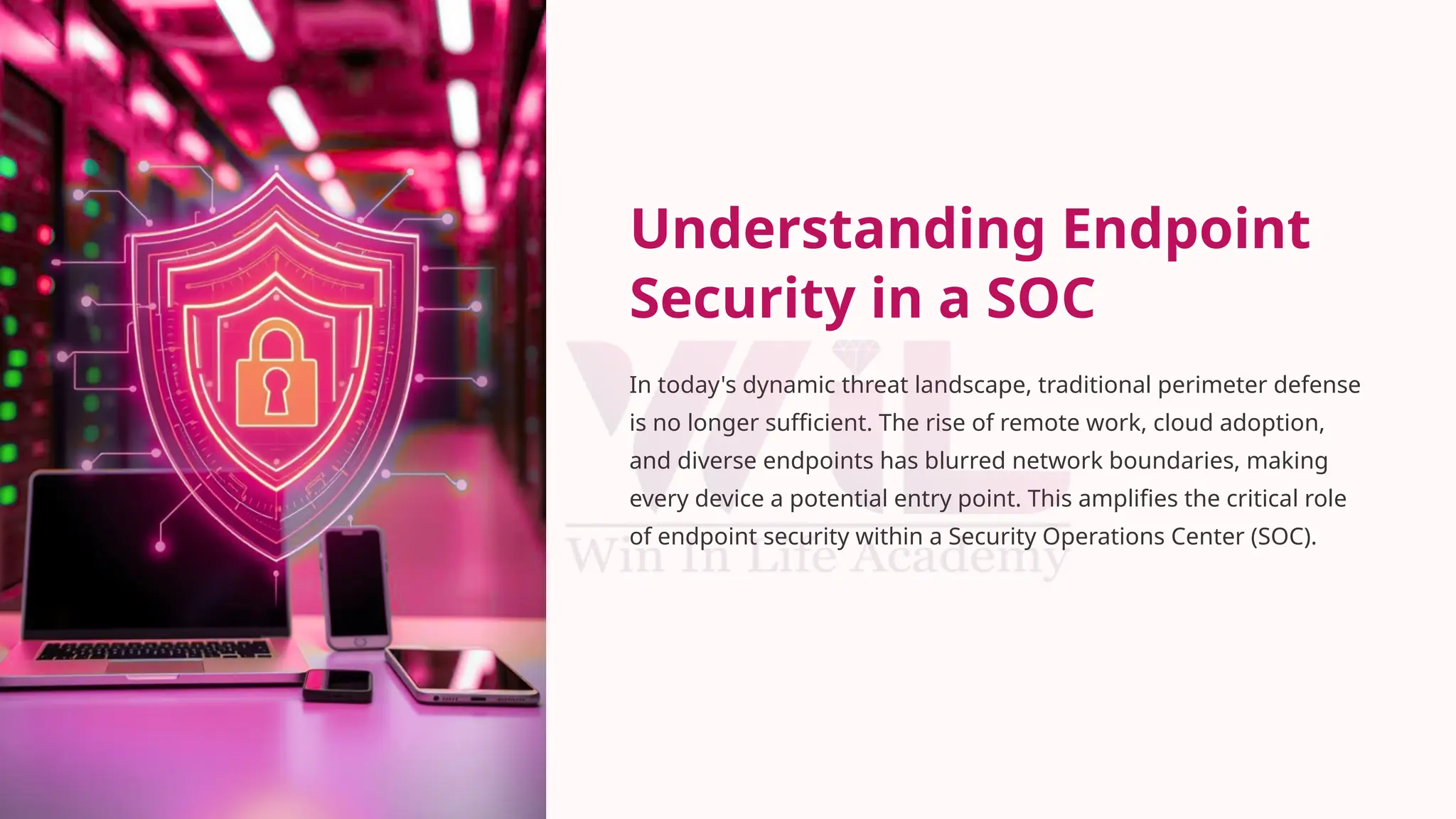
In today's dynamic threat landscape, traditional perimeter defense
is no longer sufficient. The rise of remote work, cloud adoption,
and diverse endpoints has blurred network boundaries, making
every device a potential entry point. This amplifies the critical role
of endpoint security within a Security Operations Center (SOC).
Modern cybercriminals use fileless attacks, zero-day
exploits, ransomware, and APTs, often targeting
endpoints. A compromised endpoint can lead to lateral
movement and data access.
Expanded Attack
Surface
Laptops, desktops, mobile devices, servers, virtual
machines, and IoT devices all represent unique
vulnerabilities. This necessitates a proactive approach
to protection.
The Evolving Threat Landscape
Sophisticated Attacks
Endpoint Security in a SOC
Context
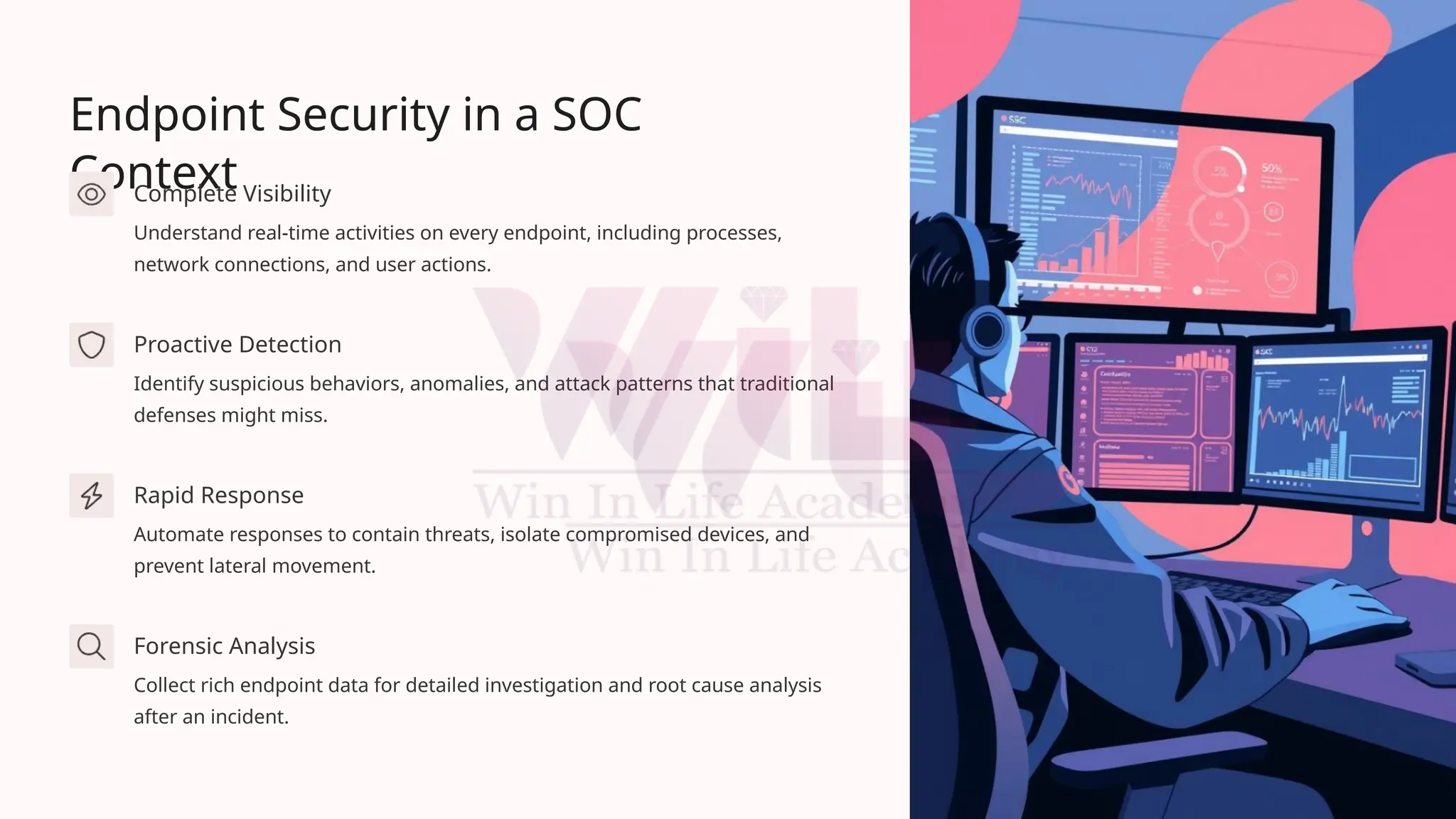
Complete Visibility
Understand real-time activities on every endpoint, including processes,
network connections, and user actions.
Proactive Detection
Identify suspicious behaviors, anomalies, and attack patterns that traditional
defenses might miss.
Rapid Response
Automate responses to contain threats, isolate compromised devices, and
prevent lateral movement.
Forensic Analysis
Collect rich endpoint data for detailed investigation and root cause analysis
after an incident.
Key Components of Modern
Endpoint Security
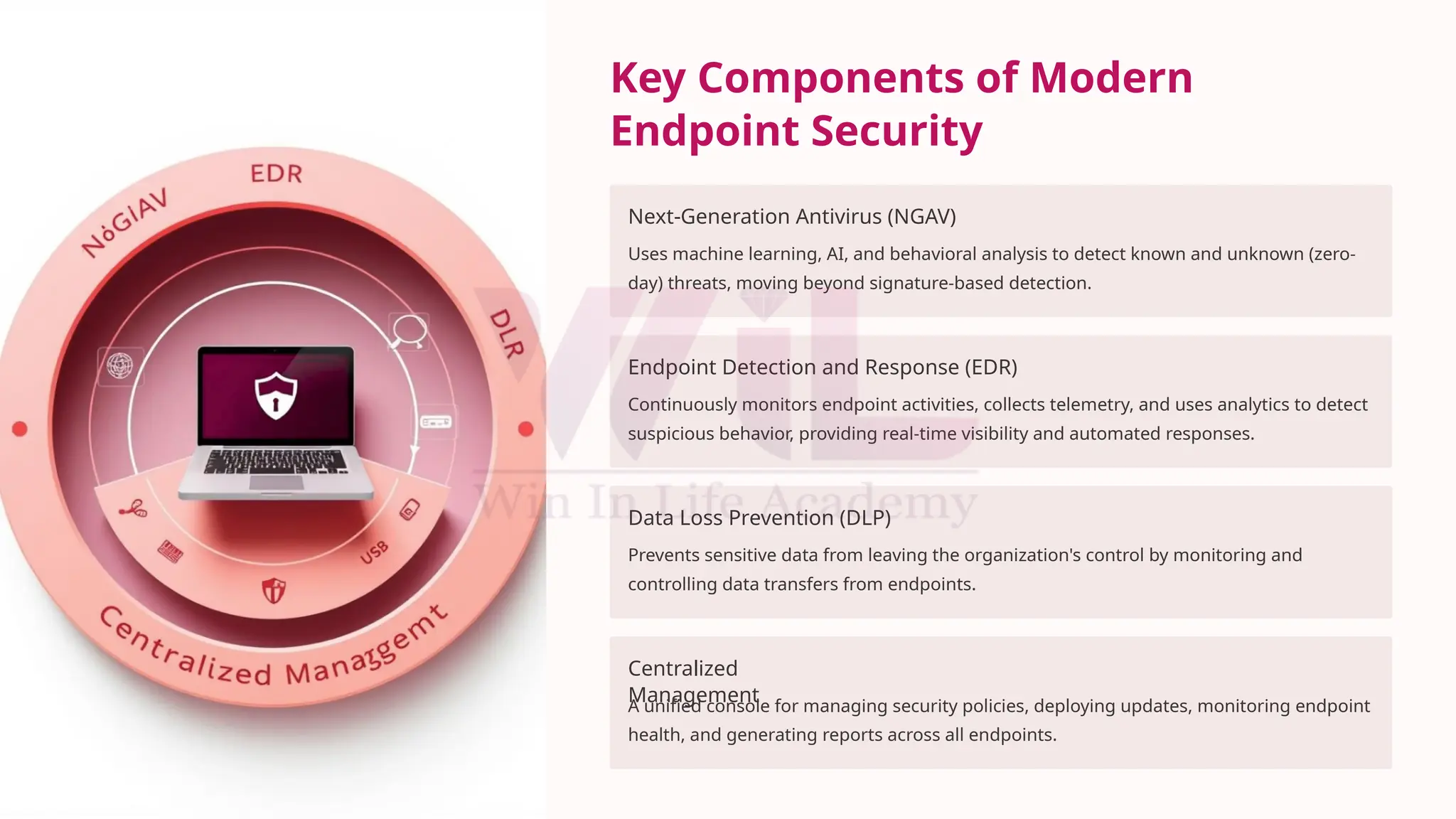
Next-Generation Antivirus (NGAV)
Uses machine learning, AI, and behavioral analysis to detect known and unknown (zero-
day) threats, moving beyond signature-based detection.
Endpoint Detection and Response (EDR)
Continuously monitors endpoint activities, collects telemetry, and uses analytics to detect
suspicious behavior, providing real-time visibility and automated responses.
Data Loss Prevention (DLP)
Prevents sensitive data from leaving the organization's control by monitoring and
controlling data transfers from endpoints.
Centralized
Management
A unified console for managing security policies, deploying updates, monitoring endpoint
health, and generating reports across all endpoints.
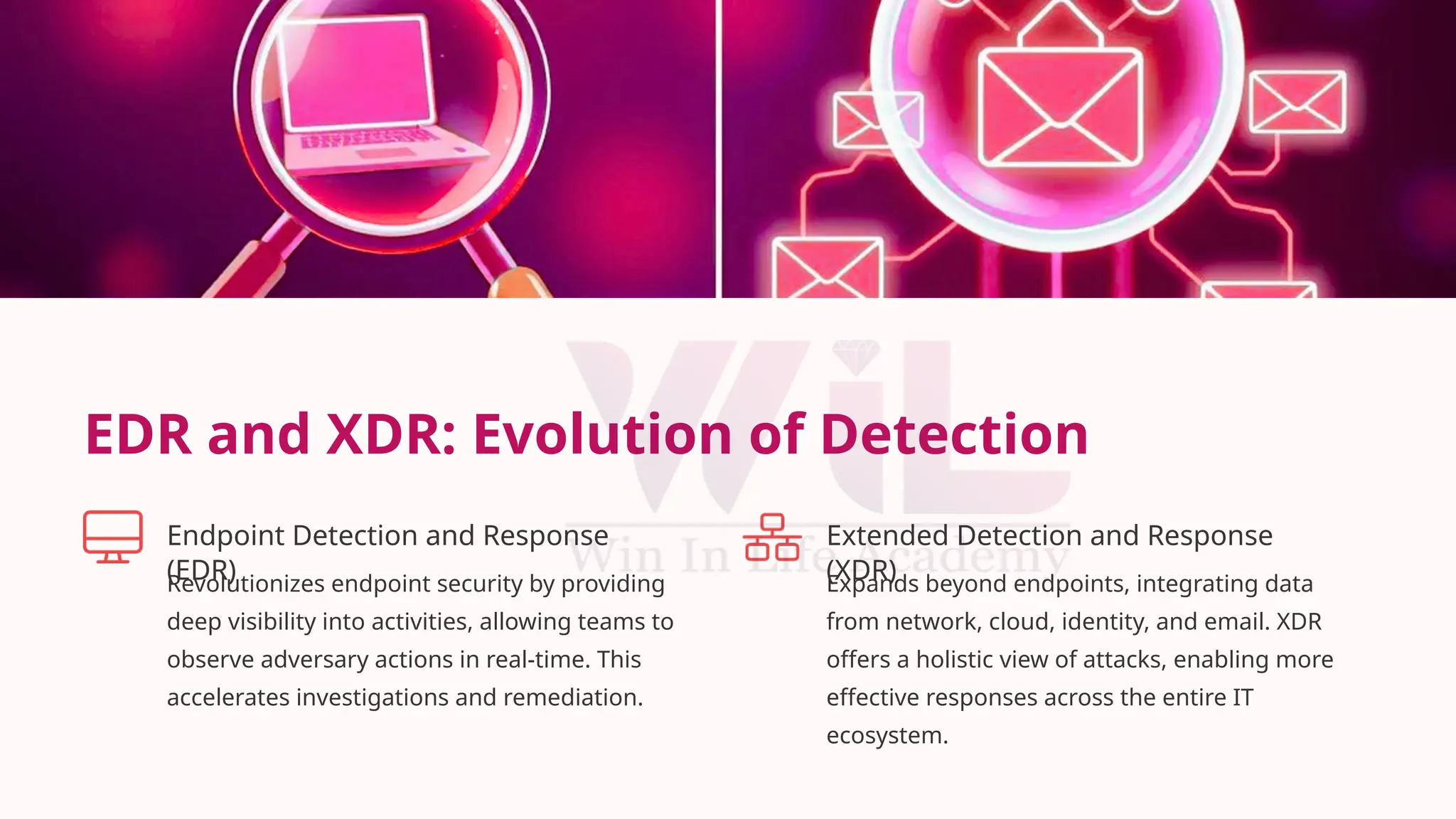
EDR and XDR: Evolution of Detection
Endpoint Detection and Response
(EDR)
Revolutionizes endpoint security by providing
deep visibility into activities, allowing teams to
observe adversary actions in real-time. This
accelerates investigations and remediation.
Extended Detection and Response
(XDR)
Expands beyond endpoints, integrating data
from network, cloud, identity, and email. XDR
offers a holistic view of attacks, enabling more
effective responses across the entire IT
ecosystem.
The Role of AI and Machine
Learning
Predictive Threat
Detection
AI identifies subtle patterns and
anomalies, often before threats fully
materialize.
Behavioral Analysis
ML models learn normal user/device
behavior, flagging deviations that
indicate incidents.
Automated Response
AI triggers rapid, automated
responses to contain threats,
reducing damage time.
Reduced False
Positives
Intelligent algorithms distinguish
benign anomalies from genuine
threats, minimizing alert fatigue.
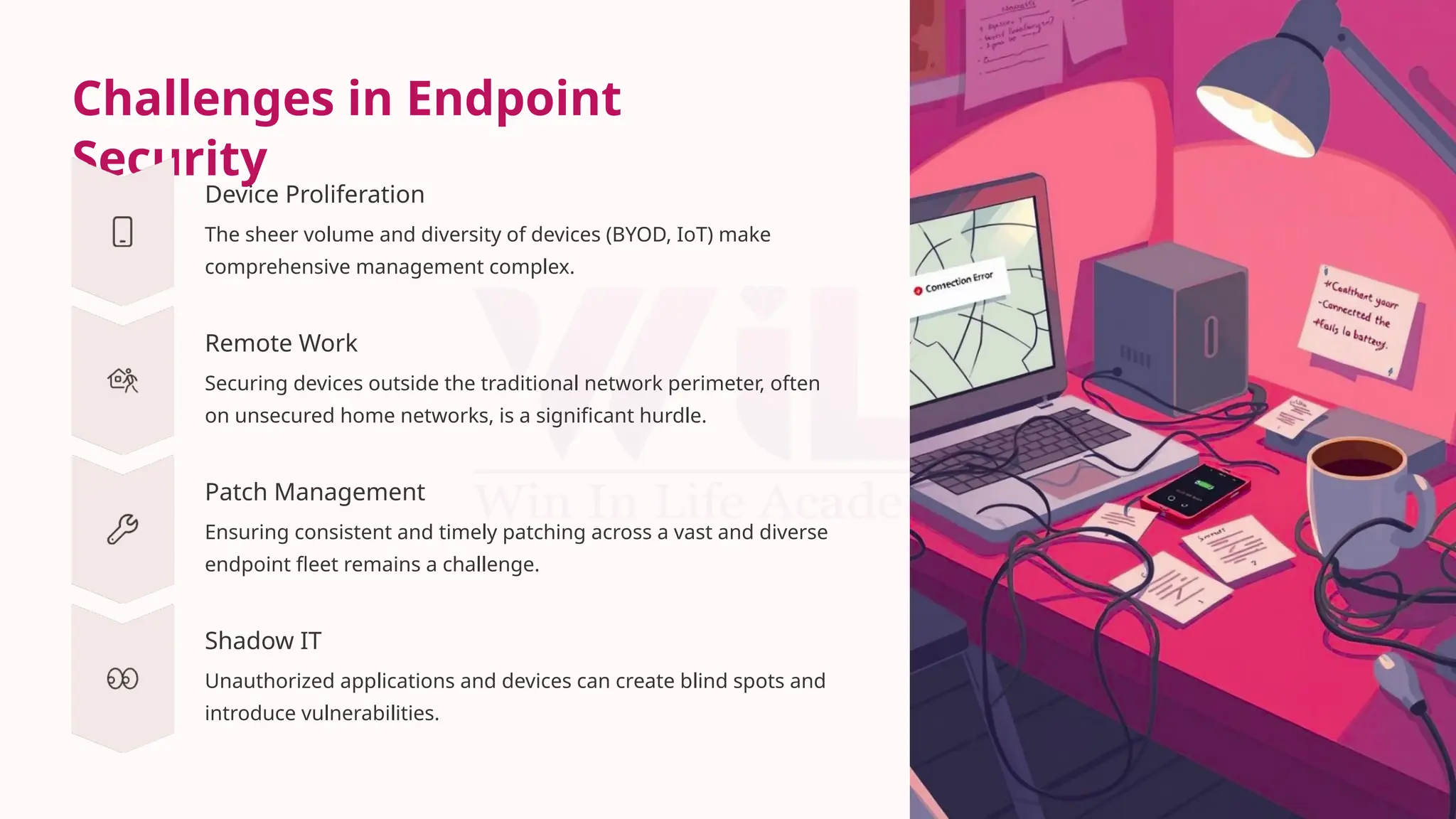
Challenges in Endpoint
Security
Device Proliferation
The sheer volume and diversity of devices (BYOD, IoT) make
comprehensive management complex.
Remote Work
Securing devices outside the traditional network perimeter, often
on unsecured home networks, is a significant hurdle.
Patch Management
Ensuring consistent and timely patching across a vast and diverse
endpoint fleet remains a challenge.
Shadow IT
Unauthorized applications and devices can create blind spots and
introduce vulnerabilities.
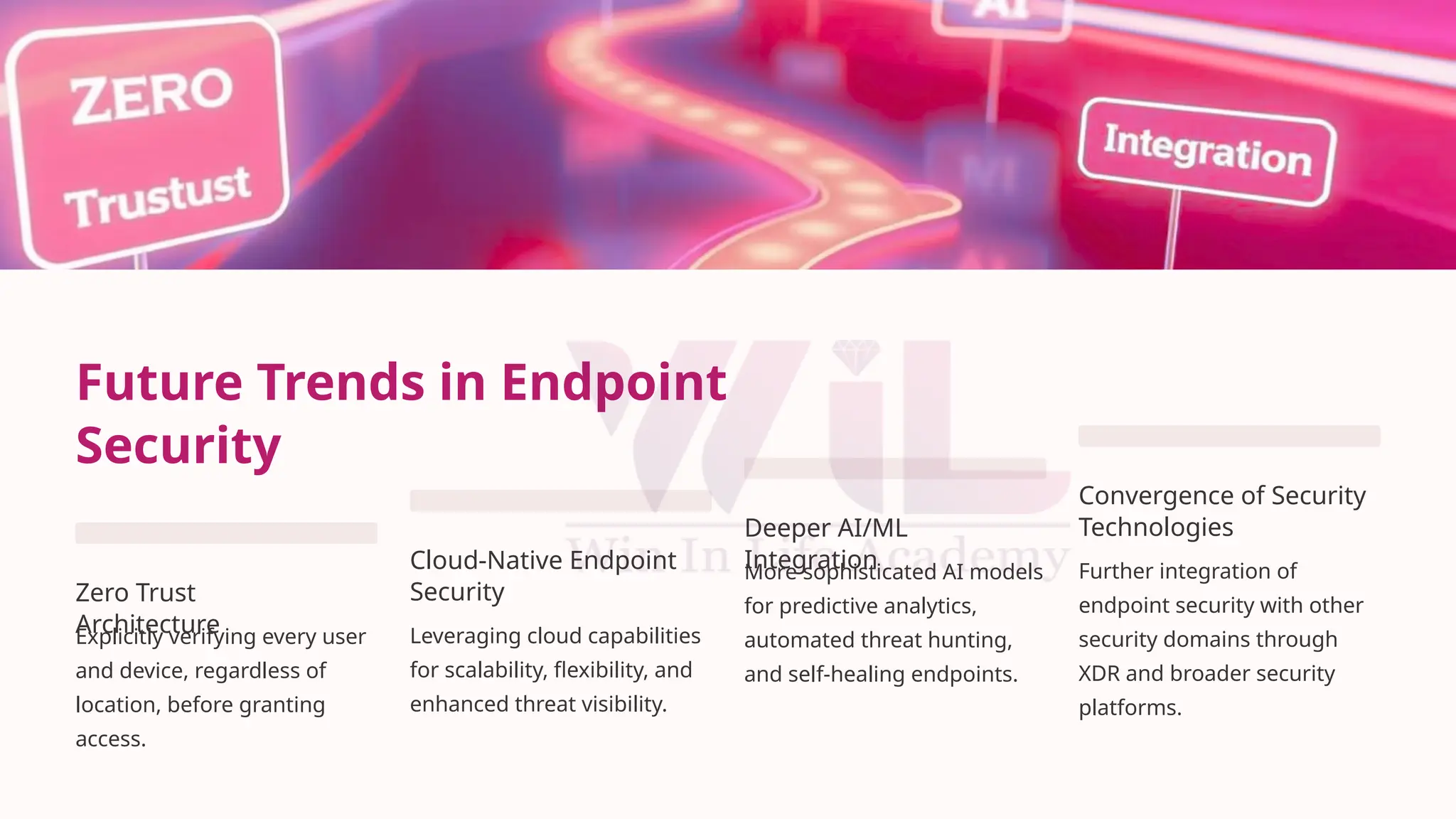
Future Trends in Endpoint
Security
Zero Trust
Architecture
Explicitly verifying every user
and device, regardless of
location, before granting
access.
Cloud-Native Endpoint
Security
Leveraging cloud capabilities
for scalability, flexibility, and
enhanced threat visibility.
Deeper AI/ML
Integration
More sophisticated AI models
for predictive analytics,
automated threat hunting,
and self-healing endpoints.
Convergence of Security
Technologies
Further integration of
endpoint security with other
security domains through
XDR and broader security
platforms.
Conclusion: Building a
Resilient Cybersecurity
Posture
The firewall alone can no longer guarantee an organization's
security. Endpoints are the new battleground, and a robust,
intelligent endpoint security strategy, deeply integrated into the
SOC's operations, is paramount.
By embracing advanced solutions like EDR and XDR, powered by AI
and machine learning, organizations can move beyond traditional
perimeter defenses to build a truly resilient cybersecurity posture.
This proactive approach is essential for detecting, investigating,
and responding to evolving cyber threats effectively.
wininlifeacademy.com

Understanding Endpoint Security in a SOC

  • 1.
    Understanding Endpoint Security ina SOC In today's dynamic threat landscape, traditional perimeter defense is no longer sufficient. The rise of remote work, cloud adoption, and diverse endpoints has blurred network boundaries, making every device a potential entry point. This amplifies the critical role of endpoint security within a Security Operations Center (SOC).
  • 2.
    Modern cybercriminals usefileless attacks, zero-day exploits, ransomware, and APTs, often targeting endpoints. A compromised endpoint can lead to lateral movement and data access. Expanded Attack Surface Laptops, desktops, mobile devices, servers, virtual machines, and IoT devices all represent unique vulnerabilities. This necessitates a proactive approach to protection. The Evolving Threat Landscape Sophisticated Attacks
  • 3.
    Endpoint Security ina SOC Context Complete Visibility Understand real-time activities on every endpoint, including processes, network connections, and user actions. Proactive Detection Identify suspicious behaviors, anomalies, and attack patterns that traditional defenses might miss. Rapid Response Automate responses to contain threats, isolate compromised devices, and prevent lateral movement. Forensic Analysis Collect rich endpoint data for detailed investigation and root cause analysis after an incident.
  • 4.
    Key Components ofModern Endpoint Security Next-Generation Antivirus (NGAV) Uses machine learning, AI, and behavioral analysis to detect known and unknown (zero- day) threats, moving beyond signature-based detection. Endpoint Detection and Response (EDR) Continuously monitors endpoint activities, collects telemetry, and uses analytics to detect suspicious behavior, providing real-time visibility and automated responses. Data Loss Prevention (DLP) Prevents sensitive data from leaving the organization's control by monitoring and controlling data transfers from endpoints. Centralized Management A unified console for managing security policies, deploying updates, monitoring endpoint health, and generating reports across all endpoints.
  • 5.
    EDR and XDR:Evolution of Detection Endpoint Detection and Response (EDR) Revolutionizes endpoint security by providing deep visibility into activities, allowing teams to observe adversary actions in real-time. This accelerates investigations and remediation. Extended Detection and Response (XDR) Expands beyond endpoints, integrating data from network, cloud, identity, and email. XDR offers a holistic view of attacks, enabling more effective responses across the entire IT ecosystem.
  • 6.
    The Role ofAI and Machine Learning Predictive Threat Detection AI identifies subtle patterns and anomalies, often before threats fully materialize. Behavioral Analysis ML models learn normal user/device behavior, flagging deviations that indicate incidents. Automated Response AI triggers rapid, automated responses to contain threats, reducing damage time. Reduced False Positives Intelligent algorithms distinguish benign anomalies from genuine threats, minimizing alert fatigue.
  • 7.
    Challenges in Endpoint Security DeviceProliferation The sheer volume and diversity of devices (BYOD, IoT) make comprehensive management complex. Remote Work Securing devices outside the traditional network perimeter, often on unsecured home networks, is a significant hurdle. Patch Management Ensuring consistent and timely patching across a vast and diverse endpoint fleet remains a challenge. Shadow IT Unauthorized applications and devices can create blind spots and introduce vulnerabilities.
  • 8.
    Future Trends inEndpoint Security Zero Trust Architecture Explicitly verifying every user and device, regardless of location, before granting access. Cloud-Native Endpoint Security Leveraging cloud capabilities for scalability, flexibility, and enhanced threat visibility. Deeper AI/ML Integration More sophisticated AI models for predictive analytics, automated threat hunting, and self-healing endpoints. Convergence of Security Technologies Further integration of endpoint security with other security domains through XDR and broader security platforms.
  • 9.
    Conclusion: Building a ResilientCybersecurity Posture The firewall alone can no longer guarantee an organization's security. Endpoints are the new battleground, and a robust, intelligent endpoint security strategy, deeply integrated into the SOC's operations, is paramount. By embracing advanced solutions like EDR and XDR, powered by AI and machine learning, organizations can move beyond traditional perimeter defenses to build a truly resilient cybersecurity posture. This proactive approach is essential for detecting, investigating, and responding to evolving cyber threats effectively.
  • 10.