A Re Yeng
Group assignment
Introduction
• Tshwane has been in negotiations with the
taxi industry
• This industry has not been agreeable and
trustworthy
• Putco Bus Service also has a poor service
history
– Buses not arriving on time
– Unroadworthy buses
– Drivers not adhering to the rules of the road
Introduction cont.
Due to a string of such reports over the
years, this has left South Africans in pursuit
of their own private transport, with little or no
confidence in transport systems
implemented by government.
Research Problem
In order for a public transport system to be
successful in Pretoria. It must change the
perception that commuters have of public
transport.
Assumptions
• Commuters in Pretoria have a negative
perception of public transport.
• Commuters do not use public transport
because they feel that it is inconvenient
compared to private transport (personal
car).
Research questions
Primary
• Is A Re Yeng doing enough to convince Pretoria commuters
to use the A Re Yeng public transport system?
• In order to establish attitudes and beliefs regarding A Re
Yeng and public transportation in general we have come up
with the following secondary research questions.
Secondary
• What methods have been adopted by A Re Yeng to gain the
confidence and the recognition of commuters?
• What is the current perception of A Re Yeng among daily
commuters and would they make use of it?
Research methodology
Data collection
Open-ended interviews with daily commuters
Data analysis tool
Thematic research design
Ethical problems
No concrete assumptions can be made from data
collected. the study is merely reporting on findings
and further making recommendations based on
such.
Literature review main points
• "Transport is the
heartbeat of South
Africa’s economic
growth and social
development!“
• Providers must
change the current
perceptions of
commuters
• Gauteng, 57,6% of
business travellers
drove themselves
• 2003 to 2011 – 20%
of public transport
took the bus
• A Re Yeng will need
to bridge these
perceptions
Marketing efforts advertise wifi and art but don’t
address these issues and perceptions
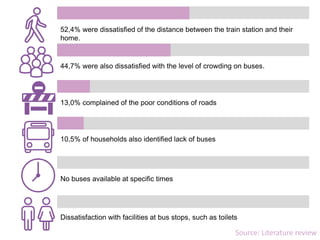
52,4% were dissatisfied of the distance between the train station and their
home.
44,7% were also dissatisfied with the level of crowding on buses.
13,0% complained of the poor conditions of roads
10,5% of households also identified lack of buses
No buses available at specific times
Dissatisfaction with facilities at bus stops, such as toilets
Source: Literature review
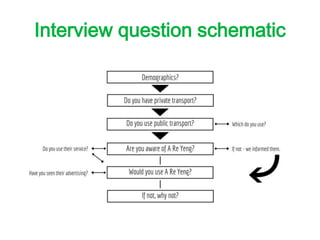
Interview question schematic
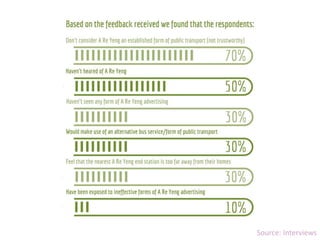
Source: Interviews
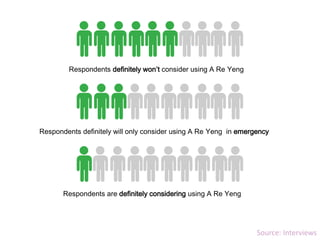
Source: Interviews
Respondents definitely won’t consider using A Re Yeng
Respondents definitely will only consider using A Re Yeng in emergency
Respondents are definitely considering using A Re Yeng
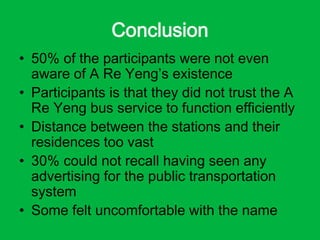
Conclusion
• 50% of the participants were not even
aware of A Re Yeng’s existence
• Participants is that they did not trust the A
Re Yeng bus service to function efficiently
• Distance between the stations and their
residences too vast
• 30% could not recall having seen any
advertising for the public transportation
system
• Some felt uncomfortable with the name
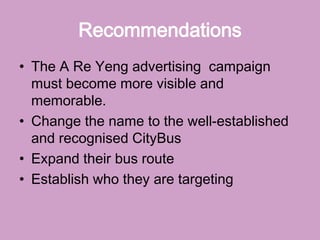
Recommendations
• The A Re Yeng advertising campaign
must become more visible and
memorable.
• Change the name to the well-established
and recognised CityBus
• Expand their bus route
• Establish who they are targeting

A re yeng Research Design

  • 1.
    A Re Yeng Groupassignment
  • 2.
    Introduction • Tshwane hasbeen in negotiations with the taxi industry • This industry has not been agreeable and trustworthy • Putco Bus Service also has a poor service history – Buses not arriving on time – Unroadworthy buses – Drivers not adhering to the rules of the road
  • 3.
    Introduction cont. Due toa string of such reports over the years, this has left South Africans in pursuit of their own private transport, with little or no confidence in transport systems implemented by government.
  • 4.
    Research Problem In orderfor a public transport system to be successful in Pretoria. It must change the perception that commuters have of public transport.
  • 5.
    Assumptions • Commuters inPretoria have a negative perception of public transport. • Commuters do not use public transport because they feel that it is inconvenient compared to private transport (personal car).
  • 6.
    Research questions Primary • IsA Re Yeng doing enough to convince Pretoria commuters to use the A Re Yeng public transport system? • In order to establish attitudes and beliefs regarding A Re Yeng and public transportation in general we have come up with the following secondary research questions. Secondary • What methods have been adopted by A Re Yeng to gain the confidence and the recognition of commuters? • What is the current perception of A Re Yeng among daily commuters and would they make use of it?
  • 7.
    Research methodology Data collection Open-endedinterviews with daily commuters Data analysis tool Thematic research design Ethical problems No concrete assumptions can be made from data collected. the study is merely reporting on findings and further making recommendations based on such.
  • 8.
    Literature review mainpoints • "Transport is the heartbeat of South Africa’s economic growth and social development!“ • Providers must change the current perceptions of commuters • Gauteng, 57,6% of business travellers drove themselves • 2003 to 2011 – 20% of public transport took the bus • A Re Yeng will need to bridge these perceptions Marketing efforts advertise wifi and art but don’t address these issues and perceptions
  • 9.
    52,4% were dissatisfiedof the distance between the train station and their home. 44,7% were also dissatisfied with the level of crowding on buses. 13,0% complained of the poor conditions of roads 10,5% of households also identified lack of buses No buses available at specific times Dissatisfaction with facilities at bus stops, such as toilets Source: Literature review
  • 10.
  • 11.
  • 12.
    Source: Interviews Respondents definitelywon’t consider using A Re Yeng Respondents definitely will only consider using A Re Yeng in emergency Respondents are definitely considering using A Re Yeng
  • 13.
    Conclusion • 50% ofthe participants were not even aware of A Re Yeng’s existence • Participants is that they did not trust the A Re Yeng bus service to function efficiently • Distance between the stations and their residences too vast • 30% could not recall having seen any advertising for the public transportation system • Some felt uncomfortable with the name
  • 14.
    Recommendations • The ARe Yeng advertising campaign must become more visible and memorable. • Change the name to the well-established and recognised CityBus • Expand their bus route • Establish who they are targeting